
Volts
444 episodes — Page 6 of 9
How climate activists can help get things built
In this episode, organizer Jeff Ordower of 350.org talks about how the environmental movement can shift its focus from blocking what it doesn’t like to building what it does.(PDF transcript)(Active transcript)Text transcript:David RobertsIt is a much-discussed fact that the environmental movement cut its teeth blocking things — mines, pipelines, power plants, and what have you. It is structured around blocking things. Habituated to it.However, what we need to do today is build, build, build — new renewable energy, batteries, transmission lines, and all the rest of the infrastructure of the net-zero economy. Green groups are as often an impediment to that as they are a help. So how can the green movement help things get built? How can it organize around saying yes?Recently, the activist organization 350.org hired Jeff Ordower, a 30-year veteran organizer with the labor and queer movements, in part to help figure these questions out. As director of North America for 350, Ordower will help lead a campaign focused on utilities standing in the way of clean energy. I talked with him about organizing around building instead of blocking, the right way to go after utilities, the role green groups can play in connecting vulnerable communities with IRA money, and what it means to focus on power. All right then, with no further ado, Jeff Ordower of 350, welcome to Volts. Thank you so much for coming.Jeff OrdowerThank you so much, David, for having me. I'm excited to be here.David RobertsOkay, well, I want to get to 350 and climate activism in a second, but first I'd like to just hear a little bit about your history in activism, which is mainly on the labor side. And what I'd really like to hear, and this is probably like a whole pot of its own, but insofar as you can summarize, I'd love to hear from your perspective when you were working as an organizer in labor. Looking over the fence at climate activism, what was your sort of take or critique like from the labor perspective? What did you think climate activism was doing right or wrong?Or what did you think you could bring to climate activism from the labor side?Jeff OrdowerYeah, I both did labor organizing and I come out of base-building community organizing. I actually come out of the notorious ACORN was where I spent the first half of my organizing.David RobertsThe late, lamented —Jeff OrdowerYeah. So it's very similar. But I started in labor, moved to ACORN very quickly, and then as ACORN was destroyed, both helped to start new community organizing efforts. And then lately, over the last few years have been involved with labor organizing. And it's interesting because I really started tracking what was happening in climate around Copenhagen, which was 2008, 2009, at the same time where ACORN was going through its difficulties. And we were trying to figure out what to build and how to build it and how to build something that was more intersectional. So I was — the personal piece of my story is I was working in St. Louis, which is where I'm from, and part of what we do as community organizers is think about how do we challenge the local power structure?It's about power and it's about how we build power for folks who don't have the power that they need and help collectively do that. And St. Louis is, like many midwestern towns, is kind of a branch office for many Fortune 500 companies these days. So the most powerful players in the region were coal companies. Peabody Coal was the largest private sector coal company in the world. Arch coal was the second largest in North America.Both were headquartered in the St. Louis region because it's at the confluence of the Missouri and Mississippi rivers. So, as the only Fortune 500 company in the city limits of St. Louis that was getting tax breaks, there were lots of reasons to fight Peabody and so started on a campaign about that, but there was also this tremendous excitement that was happening. So we were both at the beginning of the Obama administration. There was a time of great hope. For those of us who —David RobertsI recall vaguely, vaguely distantly.Jeff OrdowerWell that's interesting. So, for climate folks, they're like, "Oh, this is not a time of great hope." But the fact that after six or seven attempts, depending on how you count it, at winning health care for everyone in the country, I look back at that early days of Obama and say, wow, we got financial reform to some degree, but we got health care was the most important thing that changed so many people's lives. So I actually think climate folks view that era a little bit differently than we might in having really a generational win. And I'm sure we'll get into this a little bit later, but it is how I think about IRA is also the next generation or the next generational win that we've gotten.But, looking at that, I think the sheer number of resources that the climate movement was mustering — you know there were many organizations in St. Louis at the time that had

How to accelerate rooftop solar & household batteries in the US
How can the US make it easier, faster, and cheaper for homeowners to install rooftop solar? In this episode, Sunrun CEO Mary Powell shares her vision for boosting not only residential solar, but other forms of residential electrification too.(PDF transcript)(Active transcript)Text transcript:David RobertsIn Australia, one out of three households has solar panels on the roof. In the US, it’s one out of 25. That probably has something to do with the fact that in the US, rooftop solar is twice as expensive, twice the hassle, and takes twice as long to get installed.Why is the process so broken? And what could be done to make it smoother and faster?To discuss these and related matters, I went to the source: Mary Powell, the CEO of Sunrun, the nation’s largest residential rooftop solar company — or more accurately, the nation’s largest residential electrification company.Before taking the top spot at Sunrun, Powell spent more than 20 years in leadership at Green Mountain Power, Vermont’s largest power utility and a nationally recognized pioneer in clean energy. Sunrun brought her on to help the company move into products — batteries, EV chargers, virtual power plants — that were once thought the province of utilities.I talked with her about how to speed up the rooftop solar interconnection process, the role of net metering, Sunrun’s move into vehicle charging and VPPs, and the future of distributed energy. All right, then, with no further ado, Mary Powell of Sunrun. Welcome to Volts. Thank you so much for coming.Mary PowellOh, my pleasure. I was looking forward to chatting with you.David RobertsMary, I'm looking at my notes here and I have — let me just count real quick — one million questions to ask you. So, we're going to have to move quick here because I've got so much. But just by way of framing, I was in Australia recently and was listening to them talk about their rooftop solar success story there, the sort of rooftop solar miracle. So the US is at, I think, something like 4% rooftop solar penetration. And Australia is up around 30%, 35%, something like that. One out of every three households, mainly because it is two to three times less expensive and way, way, way faster to get on your roof there.Most of what I want to talk about are in different forms. How can the US process be made cheaper and faster? That's kind of, I think, the theme of our discussion here today. But before we get to the reality of why things take so long, let's talk a little bit about perception. So I guess Sunrun is now the biggest residential solar company in the world — I know, in the US.Mary PowellYeah, certainly in the US. Yeah, we're the largest, not just residential solar company, but we are the largest in the combination of solar-plus-storage. So we really see ourselves as a clean energy lifestyle company, and we're really well positioned to meet customers wherever they are on their clean energy journey and help them transform their lives to something that's more affordable, certainly something that's cleaner. So we have solar, we have storage, we have sophisticated electric panels, we have EV chargers, and of course, we have that amazing partnership with Ford on the F-150 that you can use to back up your home.David RobertsGoing to get into all that later.Mary PowellGood.David RobertsBut I assume as part of what you do, you do a lot of consumer research, a lot of talking to homeowners. So the first thing I'm interested in really is what do US homeowners say they want when they come to you? Why are they now installing rooftop solar and batteries? Why are they doing it? Or perhaps even more to the point, what do they say about why they're not doing it? What are the sort of pain points you hear about from customers?Mary PowellSo the reason customers are going solar, and increasingly, as I said, solar-plus-storage in California now we're up to probably about an 80% attachment rate. So customers that are going solar really want the benefits of storing their energy as well and having the resilience and the comfort and the peace of mind that comes with that. Back to what I'm hearing from customers: It's so interesting. I would say for so many years, largely it was an industry where customers were enticed to go solar to save money, so they knew they could save money off of what they were paying their utility.And Dave, that's still true. I mean, in every market that we sell in, the cost per kilowatt hour that you generate on your roof is lower than the cost you're paying your utility. So many customers still find the value of savings to be very appealing, but it really has evolved over time where so many customers, I talk to customers every single week as well as I've worked in our stores and I've been in customers homes. And increasingly what you're hearing is that they just want stability. I mean, I've heard so many customers have said to me, "Mary, like, it's fine if I save money, but honestly, I just want greater independence and

Getting more out of the grid we've already built
Clean-energy transmission lines in the US are horribly congested, and buildout of new ones is agonizingly slow. Yet while other parts of the world use grid-enhancing technologies (GETs) to significantly improve performance of existing transmission lines, the US system has been resistant to deploying them. In this episode, Julia Selker, head of a GETs trade group called the WATT Coalition, discusses the potential of GETs. (PDF transcript)(Active transcript) Text transcript:David RobertsOne of the primary threats to the clean energy buildout spurred by the Inflation Reduction Act is a lack of transmission. Models show that hitting our Paris climate targets would involve building two to three times our current transmission capacity, yet new lines are desperately slow to come online. Meanwhile, existing lines are congested and hundreds of gigawatts of new clean energy sits waiting in interconnection queues.Wouldn’t it be cool if there were some relatively cheap and speedy ways to get more capacity out of the transmission infrastructure we’ve already built? To ease some of that congestion and get more clean energy online while we wait for new lines to be completed?As it happens, there are. They are called grid-enhancing technologies, or GETs, and they can improve the performance of existing transmission lines by as much as 40 percent. It’s just that, in the US at least, utilities aren’t deploying them. They’ve been tested and deployed all over the world, but the US system has resisted using them at scale. I contacted Julia Selker, head of the Working for Advanced Transmission Technologies (WATT) Coalition, a GETs trade group, to discuss exactly what these technologies are, their enormous potential to ease grid congestion, why utilities still resist them, and what kinds of policies can help move them along. So with no further ado, Julia Selker. Welcome to Volts. Thank you so much for coming.Julia SelkerThank you so much for having me.David RobertsThis is, to me, a very exciting topic that is like many exciting topics in the world of energy, somewhat obscured behind a wall of jargon and technical sounding terms. So we're going to do our best up front to decode some of this and lay it out in a simple way so people can grasp it. But before we get to GETs, before we get to the GETs, let's talk just a little bit about the need here, the need for more capacity on the transmission system. Run down a little bit, because I know you've done or have been involved in some research on grid congestion and things like that, give us a little rundown of why this topic is so important right now.Julia SelkerYeah, absolutely. The United States is basically desperate for transmission capacity and there are a few ways that we see that in data, and one is transmission congestion. So this is a quantification of the cost of a transmission constraint. So if you don't have enough transmission to deliver the cheapest electricity, you'll then have to turn on a thermal generator or something more expensive than a wind or solar generator, for instance, and that will increase costs for consumers. So back in the day, let's say 2016, the market monitors found $3.7 billion of congestion in the regional transmission organizations and the independent system operators that actually transparently report congestion data.And if you scale that to the whole US, we're looking at about $6.5 billion in congestion in 2016. But in 2022, the national number was over $20 billion in congestion.David Roberts20 billion.Julia Selker20 billion. It's rising astronomically. And it makes sense: There's more low cost generation available, gas prices are going up. So the redispatch cost is another term for this is going to get higher as you have to curtail more renewables and dispatch more expensive generation because there's just not enough transmission to deliver all the clean energy. So we also see this in clean energy interconnection costs and delays. Back when there was a lot of headroom on the grid from large scale infrastructure expansion back in the day that projects could interconnect at lower costs and with faster timelines.But now projects are seeing bigger and bigger upgrades, all that headroom is used up and projects are seeing tens or hundreds of millions of dollars in transmission upgrades that need to happen in order for them to interconnect to the grid.David RobertsVolts listeners will recall just a few weeks ago had a pod on interconnection queues and they'll recall that sort of you get in a single file line and if you happen to be the project that triggers a need for a transmission upgrade, that whole cost gets added to your project, which renders many projects unviable. And that's just happening more and more often now because the grid is more and more congested and there's more and more upgrades needed. So it's making that process take longer too.Julia SelkerYeah, and beyond the cost. I've heard from clean energy developers that they are looking at se

Volts podcast: the immense promise of a federal green bank, with Reed Hundt
In this episode, Reed Hundt, the CEO of the Coalition for Green Capital, discusses the merits of green banks, quasi-public or nonprofit institutions that provide seed capital to accelerate the growth of clean energy. There are more than 20 active green banks at the state level. Now Biden has proposed a federal green bank. Hundt explains how it could help.Full transcript of Volts podcast featuring Reed Hundt, August 13, 2021(PDF version)(Active version)As we speak, Democrats in Congress are at work putting together a budget reconciliation bill that will include enormous swathes of President Biden’s agenda, including his climate agenda.One of the policies being discussed for inclusion is the creation of a “Clean Energy & Sustainability Accelerator,” more commonly known as a green bank.The idea of a federal green bank has been floating around forever. There was one in the ill-fated Waxman-Markey climate bill of 2009 (which never made it through the Senate) and there’s been one introduced in Congress virtually every year since. But this time it might happen! So it’s time to brush up on what a green bank is and what it does.It would not, contrary to some popular misconceptions, be an agency of the federal government, nor would it finance projects purely with federal money. Rather, it would be an independent, nonprofit entity that uses an initial grant of federal money to pull private capital off the sidelines and into climate-related projects. After the initial grant, the bank would be self-sustaining.The model has been tested: there are green banks in more than a dozen states, which have generated $5.3 billion in clean energy investment since 2011, including $1.5 billion in 2019 alone. And there are more than 20 states where the process of establishing a green bank has begun.These state- and city-level green banks are popular and successful, but because states and cities tend to be short on funds, they too often lack the capital needed to fund worthy projects. Right now there are more than $20 billion worth of projects that are eligible for green bank funding and are now waiting. One of the roles of a federal green bank would be to capitalize all those local banks, to get all those projects rolling.To learn more about green banks, I was happy to talk to their greatest champion: Reed Hundt, the co-founder and CEO of the Coalition for Green Capital. Hundt has been advocating for green banks for over a decade — including seven years on the board of the Connecticut Green Bank — and it is largely through the coalition’s work that the network of state and local green banks has been established.I was eager to talk with Hundt about how a national green bank would work, the kinds of projects it would fund, how it would account for equity, and the potential if it’s done right, for a green bank to accelerate the clean energy transition. Reed Hundt, welcome to Volts, thank you for coming.Reed Hundt:Thank you very much. I was talking to a friend of mine in Tennessee and he told me that you're from Tennessee. He said that you were the best analyst and commentator about energy issues in the whole state of Tennessee.David Roberts:I don't know whether that's damning by faint praise?Reed Hundt:Well then I said to my friend, “No, no, the two of you are,” because the person I was talking to was my high school classmate Al Gore.David Roberts:Oh, funny! Yes, he and I have bonded over our Tennessee roots before. I want to talk about green banks with you, but real quick, by way of setting context before that, let’s talk history. Obama faced a similar situation [to the one Biden faces] — different in a lot of ways, similar in some ways. But you wrote a book about Obama's response to the crises he faced that was extremely critical of Obama. So as we contemplate what Biden should be doing in this similar situation, let's review real quickly, what did Obama do wrong and what does that tell us about how Biden should be approaching this mess?Reed Hundt:You're in a very small club, which is the club of people that know about the book called A Crisis Wasted, and as a founding member of the club, I’m very happy to have a new member. So the problem in 2008-09 was that, as Rahm Emanuel said at the time, a crisis is too good to waste. But all of the advice to the President-elect was small where it should have been big, constrained where it should have been bold, and was short range rather than long range. The people were not badly motivated, but in retrospect and at the time, their counsel was insufficient to meet the needs, not only of the moment, but of the next 10 years. The big difference for the Biden administration, and indeed for the entire Democratic Party in the current year, is the decision from the very beginning of this presidency and of this particular Congress to follow what Larry Summers himself said in 2008: the risks of doing too little are much much worse than the risks of doing too much. Larry didn't follow his own advice then,

Grid-scale batteries do not currently reduce emissions. Here's how they could.
Energy storage as deployed on the US grid today has a dirty secret — it actually increases carbon emissions. In this episode, Tierra Climate founders Jacob Mansfield and Emma Konet discuss their vision to incentivize emission reductions by making batteries and other energy storage eligible for carbon offset.(PDF transcript)(Active transcript)Text transcript:David RobertsIt is widely understood that decarbonizing the grid will require a large amount of energy storage. What is much less widely understood is that batteries on the grid today are generally not reducing carbon emissions — indeed, their day-to-day operation often has the effect of increasing them.Yes, you heard me right: most batteries on today's grid are responsible for net positive carbon emissions.I was quite disturbed when I first found out about this, mostly through the research of Eric Hittinger at the Rochester Institute of Technology, and I wrote a piece on it on Vox way back in 2018.Contemporary research suggests that nothing has changed in the ensuing five years — most batteries still behave in a way that increases emissions. But a new startup called Tierra Climate is trying to change that. It wants to incentivize emission-reducing behavior in batteries by making it an eligible carbon offset. Just as a renewable energy producers can make extra money through the sale of renewable energy credits (RECs), battery operators could make extra money through the sale of carbon offsets on the voluntary market — but only if they change the way they operate.It’s an intriguing idea and the only real solution I’ve seen proposed to a problem that no one else is even talking about. So I wanted to chat with founders Jacob Mansfield and Emma Konet about why batteries increase emissions today, what incentive they would need to change their behavior, and what’s required to set up an offset product. And yes, I recall that Volts recently featured an episode extremely critical of carbon offsets — we’ll get into that too.So, then, with no further ado, Jacob Mansfield and Emma Konet. Welcome to Volts. Thank you so much for coming.Emma KonetThanks for having us.David RobertsEmma, let's start with you. You worked at a battery company before jumping to this startup. Let's walk through a few basics here. Let's just start with this question. If I'm an investor and I want to build a big battery and attach it to the grid, how would I make money? What are the sort of routes through which I could make income with a battery?Emma KonetSo batteries typically have three ways in which they make money. The first one is, I think, what everyone traditionally thinks of a battery doing, and it's called energy arbitrage. And basically that just means that a battery buys power when the price is low and it sells power when the price is high.David RobertsRight.Emma KonetAnd the difference between those prices is what the battery is paid. Of course, some energy is lost through the process of storing it, and so batteries are not 100% efficient. So that's kind of the traditional idea of how batteries operate. But that's actually not really what a lot of batteries are doing on the grid today. Instead they provide what are called ancillary services and those are basically products that help to keep the grid frequency at 60 Hz. It's really important for reliability, just in everyday power grid operations, that that happens and the grid operates more efficiently when it's in a tighter band, around 60 Hz.Batteries are really good at providing those products because they can very quickly ramp up and down and they can provide those products around the clock.David RobertsYeah, this is a really cool thing about batteries, just to sort of insert kind of an aside here is those grid services used to only be able to be provided by giant spinning mass, giant fossil fuel power plants. So it's very cool that we have this basically digital source now of these grid services — is much more precise.Emma KonetExactly. And just much more efficient. So that's the second revenue stream available to batteries and then the third is what's called capacity revenue. And this is not available in every market, but it's basically available in every deregulated market outside of Texas. And it's like long-term grid planning. So the grid operator looks at the expected demand forecast on the time horizons of years rather than days or weeks and determines how much power plant generation capacity it's going to need to satisfy that demand in the future. Then it creates a market to establish the price of what basically it costs to bring new generation online to meet that demand and also to satisfy power plants that are retiring and going offline and that we need to backfill. So that is another service that batteries can offer.David RobertsPaying them to be available basically.Emma KonetExactly. Yeah, exactly.David RobertsAnd you mentioned this, but maybe it's worth clarifying a little bit. Capacity payments are obviously only
The progressive take on the permitting debate
In this episode, Johanna Bozuwa of the Climate and Community Project shares a progressive vision for permitting reform and the factors that could speed up the US clean-energy buildout.(PDF transcript)(Active transcript)Text transcript:David RobertsTo achieve its Paris climate targets, the US is going to have to build out an enormous amount of clean energy and clean-energy infrastructure in coming years. But that buildout is going slowly — painfully, excruciatingly slowly — relative to the pace that is necessary.This has given rise to considerable debate on the left over what, exactly, is slowing things down. Much of that debate has come to focus on permitting, and more specifically, on permitting under the National Environmental Policy Act, or NEPA.A deal that would have put some restrictions on NEPA in exchange for reforms to transmission planning was effectively killed by progressives toward the end of the last congressional session, leading many people inside and outside the climate movement to accuse progressives of being The Problem. They are so attached to slowing down fossil fuel development with NEPA, the accusation goes, that they are willing to live with it slowing clean energy. And that’s a bad trade.Progressives, not surprisingly, disagree! Their take on the whole permitting debate is summarized in a new paper from the Roosevelt Institute and the Climate and Community Project: “A Progressive Vision for Permitting Reform.”The title is slightly misleading, since one of the central points of the paper is that permitting under NEPA is only a small piece of the puzzle — there are many other factors that play a role in slowing clean energy, and many other reforms that could do more to speed it up. I called up one of the paper’s co-authors, Johanna Bozuwa of the Climate and Community Project, to ask her about those other reforms, the larger political debate, and the progressive community’s take on speed. All right, then. With no further ado, Johanna Bozuwa from the Climate and Community Project. Welcome to Volts, and thank you so much for coming.Johanna BozuwaThank you so much for having me, David.David RobertsThis is a hot topic, as you're well aware, permitting and the larger issues around it. And so, before we jump into specifics, I wanted to start with a few sort of broad, call them philosophical, questions.Johanna BozuwaPerfect.David RobertsAs you know, progressives have been under quite a bit of fire lately, not only from their typical opponents on the right and in the fossil fuel industry, but from a lot of sort of centrists and even a lot of sort of allies in the climate movement. For — I think the general idea is they are too attached to stopping fossil fuels and not yet supportive enough of building out renewable energy. And the mechanisms that they rely on to slow and stop fossil fuels are also slowing and stopping renewable energy. And so I think the general critique is that they ought to swing around and be more pro-building and loosen these requirements, et cetera, et cetera. I'm sure you've heard all this.Johanna BozuwaYes.David RobertsSo I guess I'd just start with this question. Is, do you think the progressive — and by the way, I meant to say this by way of a caveat, I'm going to be sort of using you as a spokesperson for progressivism, which I think we both realize is ridiculous.Johanna BozuwaRight, exactly.David RobertsProgressives are heterogeneous just like anybody else. There's no official progressive position. But as a crude, let's just say as a crude instrument here, we're going to ask you to speak for that perspective as you see it.Johanna BozuwaPerfect.David RobertsSo in your opinion, do you think progressives have taken it into their heart that things are moving too slowly and they desperately need to move faster?Johanna BozuwaMy answer to that question is that I think speed is progressive. You know, David, I don't need to tell this to you or any of the people that listen to this podcast or even progressives. We're dealing with the existential threat of the climate crisis and lives are on the line. And so I think that as progressives, we do need to take the speed question seriously. And I think what I would push back on is the fact that people have this myopic focus on permitting as the thing that's slowing everything down. And especially when I'm talking about permitting, NEPA permitting.David RobertsRight. We're going to definitely get to that.Johanna BozuwaYeah. And I just think that when it comes to this question of "Do progressives believe in speed?" I think that they actually very much do. And one of the things that I get frustrated with sometimes, when I hear these arguments like "Oh, progressives don't want to build anything," I think what progressives are interested in is building the right thing. And if we think about the United States and how our energy system rolls out today, we have a real issue that fossil fuels can expand at the same time as renewable energy i
Discussing disinformation and media with Matt Sheffield
In this episode, right-wing media critic Matt Sheffield and I discuss the disinformation crisis and the climate change crisis, and how they are deeply intertwined.(PDF transcript)(Active transcript)Text transcript:David RobertsMatt Sheffield started his first conservative media website, bashing news anchor Dan Rather for liberal bias, way back in 2000, and in subsequent years became a key figure in right-wing media criticism. But the rise of Trump left him disillusioned and he has since become a prominent critic of right-wing media. He now runs a site called Flux dedicated to accurate, inclusive journalism.Last week, Matt and I got together on one of these live Twitter Spaces things — a glorified conference call, basically, to which people can tune in and ask questions — and had a wide-ranging conversation about the disinformation crisis, how it manifested in climate change, and what can be done about it. The audio was archived, available exclusively to Flux and Volts subscribers. I hope you enjoy it.Matt SheffieldWe're doing a space tonight to discuss climate change and the birth of the disinformation economy. And David has been a longtime climate change correspondent and environmental columnist for a while, and he's also the proprietor and publisher, writer, et cetera, of Volts, a newsletter, which he started one year ago today, which he was just recounting that for our previous space, which I accidentally ended somehow. So your experience overall has been pretty good, you were saying? And I think I ended the space inadvertently right after you said you work better alone.David RobertsYes —Matt SheffieldI inadvertently proved your point, I think.David RobertsYes. This is why I don't talk to people. Yeah, it's been going great. I have found that readers are excited to go deeper and wonkier and share my obsessions. I'm sure different writers have different opinions about this, but I much prefer it over writing for a general interest publication.Matt SheffieldAnd you wrote a retrospective on your site today that — one of the things you said is that you appreciated not having to reintroduce topics over and over again in terms of — you assume that your current readers actually know who you are and something about the material, I guess.David RobertsRight, yes. It's the famed return to blogging. It is a persistent audience who will follow me over time and thus who I don't have to explain that climate change is bad in every post anymore.Matt SheffieldYeah. And I guess it's a way of trying to have a continued conversation rather than one that starts over de novo every time. Right?David RobertsYes. And it's explicitly I mean, I did it knowing that I would be writing for a much smaller audience. It's not a mass audience play. It's very much for a self-selecting group of people who are more than average interested in my subject matter. So I think it can still have influence because I think the people who do read it are sprinkled throughout the world, the energy world, in high places. But I've basically transitioned away from mass writing, I guess is what I'd say.Matt SheffieldSo now, before you were doing just for those again who hadn't seen what you were doing before you were working at Vox and then before that you were working at Grist, which is a website that's still out there doing climate coverage. How is it different now compared to your Grist days would you say?David RobertsOh goodness. Well for one thing I didn't know what the hell I was doing back in my Grist days. I was hired at Grist as an editorial assistant in I think like 2004 with no background in journalism and no real background in environmentalism which is what Grist was supposedly about and knowing nothing at all about climate change or anything really. So the ten years I spent at Grist were in retrospect it's something I think journalists don't really get anymore these days, which was it was a place where I could labor in obscurity while I learned what the hell I was doing.Matt SheffieldYeah. And I think that's an interesting observation you make there because that is one of the things that's definitely very different about media now is that you and I are both Gen Xers in our forties and in the old days, the media industry was very sort of anti young people in terms of letting them have public facing work to a large degree. And so basically they had people work as research assistants or as publicists or something like that —David RobertsOr come up through local papers. I'm old enough to remember when the way you came up through the reporting game is through local papers. And it's interesting if you go through that route you're taught a certain set of skills and rules and norms but I wasn't taught those at all. I had never had any experience in that world at all. So all I was reacting to and sort of shaping myself around was what do readers like? What is helpful to readers? And if you just follow that string you don't end up in the model of the inve
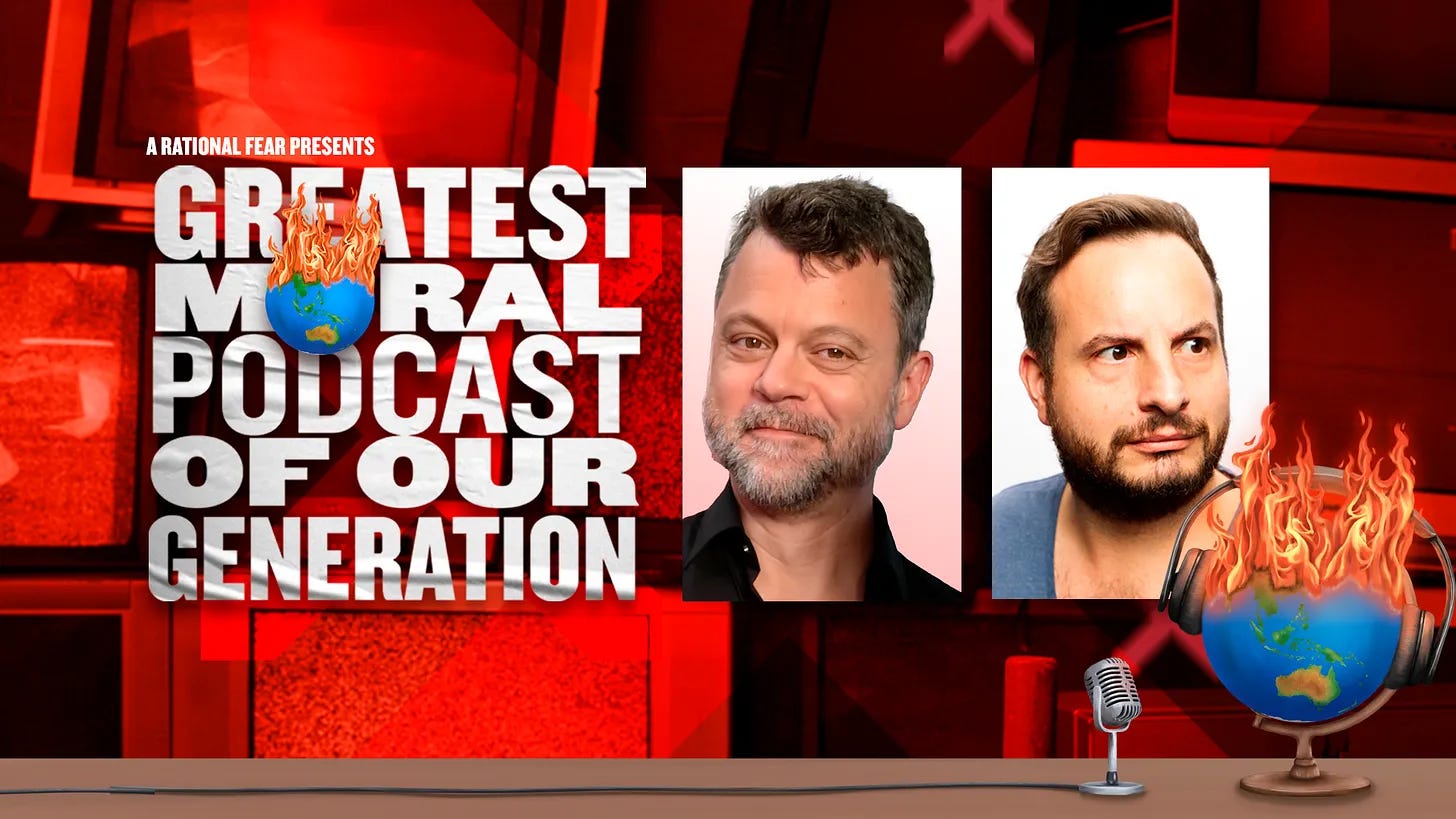
Me, on an Australian pod
In this episode, Australian comedian Dan Ilic hosts me on The Greatest Moral Podcast Of Our Generation.(PDF transcript)(Active transcript)Text transcript:David RobertsWhile I was down under in Australia, I appeared on a show called A Rational Fear, a pod about climate change which is, I’m told, the winner of Australia’s Best Comedy Podcast. More specifically, I appeared on a spinoff show they’re doing called [ahem] The Greatest Moral Podcast Of Our Generation, a series of interviews with climate types hosted by comedian and journalist Dan Ilic.It was short, and fun, so I figured, why not share it with the Volts audience? Enjoy, and do check out A Rational Fear some time — it’s quite delightful.Dan IlicI'm recording this on the land of the Gadigal people of the Eora Nation, and I encourage you all to think about whose land you're on and the wealth of the life that you enjoy on that land and why you enjoy it. As we head into this referendum month, I think it's all upon us all to kind of think about listening more. And if you don't know what the Voice Referendum is all about, go and find out. Let's try listening.David RobertsDespite global warming, A Rational Fear is adding a little more hot air with long form discussions with climate leaders, good and bad.IntroThis is coal, don't be afraid. The — heat waves and drought — Greatest — mass extinction — Moral — we're facing a manmade disaster — Podcast — they're the climate criminals — of Our Generation. All of this with the global warming and that a lot of it's a hoax. The Greatest Moral Podcast of Our Generation. GMPOOG for short.Dan IlicEvery now and then, the A Rational Fear podcast turns green. We talk to someone who is super interested and who lives and breathes climate on a podcast I like to call The Greatest Moral Podcast of Our Generation, or GMPOOG for short. And I'm excited for you all to meet our next GMPOOG guest. Since about 2015, I have been following his writing on Vox.com and the Grist, but in more recent years, I've been listening to his podcast and reading along with his newsletter. It is Volts, or rather the presenter and the writer of Volts podcast, David Roberts. Welcome to A Rational Fear.David RobertsSo glad to be here.Dan IlicOr welcome to The Greatest Moral Podcast of Our Generation.David RobertsYeah, I'm not sure I can keep that acronym in my head.Dan IlicWell, the first guest on The Greatest Moral Podcast of Our Generation was former Prime Minister Kevin Rudd, who coined the phrase that climate change was the greatest moral problem of our generation. So that's why we called GMPOOG, GMPOOG. You are one of the foremost experts when it comes to climate and energy. I love Volts. I devour it, I listen as often as I can. And for such a complex and often combative topic, quite frankly, your voice is so calming and reassuring.David RobertsThank you.Dan IlicI mean, you could sell anything, which is why you're here today. To sell us on small modular nuclear reactors.David RobertsExactly. And carbon capture and sequestration. That's my thing.Dan IlicWell, it's such a sprawling conversation I'd love to have with you. Let's start there. We do hear a lot from a very small subsection of our politics all about small modular nuclear reactors. In fact, Barnaby Joyce, who at one time was a leader of a party in this country, said, "People aren't talking about the cost of living down at the supermarket. They're talking about small modular nuclear reactors."David RobertsAre they?Dan IlicSo I want to ask you, David Roberts, is anybody talking about small modular nuclear reactors?David RobertsI mean, yes, people are talking and talking and talking about them. The more relevant question is anyone building small modular nuclear reactors? And the answer to that is a big no. So I think they play more of a rhetorical role than an actual physical role in the energy system.Dan IlicWhy is there this energy, for better, no pun intended there, around small modular nuclear reactors? Why is this conversation happening now? Why is there a big drumbeat happening not only in Australia but other countries for it when there are no working models anywhere in the world?David RobertsThere's two answers to that a cynical answer and a less cynical answer. The cynical answer is if you need something to say about climate policy and the other party has already claimed renewable energy, you need something to talk about, right? You need a climate policy and there's nothing left to grab but nuclear. And you want to claim to have a policy, but in practical terms, delay any actual real solutions. That's the cynical answer. The less cynical answer is renewable energy is variable. It comes and goes with the weather. So you need what's called firming. You need sources that can firm up renewable energy i.e. that you can turn on and off at will. And right now gas is serving that role. And so in a decarbonized system, you need something else to serve that role. So exactly what will serve that f
A conversation with Saul Griffith
In this episode, Saul Griffith — co-founder of Rewiring America and, more recently, Rewiring Australia — chats about all the things that energy nerds love to chat about.(PDF transcript)(Active transcript)Text transcript:David RobertsIf you are a Volts subscriber, you are almost certainly familiar with Saul Griffith. I've been following him and his work for years, and I think I can say without hyperbole that he is the smartest person I have ever met. An Australian by birth and an MIT PhD by training, he got his start as a tinkerer, inventor, and entrepreneur, responsible for, among other things, the kite-based wind power company Makani and the innovation incubator Otherlab.A few years ago, alarmed by the lack of progress on climate change, he turned his attention to public advocacy, authoring the book Electrify and co-founding Rewiring America. That organization has, in relatively little time, become incredibly influential among US thought leaders and policy makers. It played a key role in the passage of the Inflation Reduction Act.In 2021, Griffith and his family moved back to Australia, where he helped found Rewiring Australia, and sure enough, it has already become as or more influential than its American counterpart. As Volties know, I am currently down in Australia. I was scheduled to do a public event with Griffith, so I thought it would be fun to meet up a little beforehand to record a pod.Neither of us had particularly prepared for said pod, but it will not surprise you to hear that Griffith was nonetheless as fascinating and articulate as always, on subjects ranging from IRA to Australian rooftop solar to green steel. Enjoy.I won't belabor any further introductions. Saul, thanks for coming.Saul GriffithThanks for joining me in a strange little kissing booth in Sydney's central business district.David RobertsYes, we are. This is the second ever Volts recorded in person. And just so the audience knows, this came together at the last minute and neither of us have prepared at all. So we're all just freestyling here and we're just going to have a conversation. So, Saul, let's start with you were intimately involved in the sausage making of IRA. Why don't you just start with telling us a little bit about how on earth someone like you ended up in the halls of DC with the ear of lawmakers. What's the origin story of this?Saul GriffithThe romantic origin story is just before I married my wife and I think it was 2007, I said, if the world hasn't made sufficient progress on climate change by 2020, can I become an ecoterrorist? To which, it was so far in the future, she said yes.David RobertsSurely, well, by then, surely.Saul GriffithAnd then 2019 came around and I said, remember that you made that promise to me. And she said, yes, but we didn't have two children, so you're not allowed to do that. And she sort of actually first planted the idea in my head. You're always complaining that the hardest thing to do in energy technology is the regulatory stack. So why don't you focus on regulatory and policy for a while? I give you leave. We can afford it. See what you can do. Right about then, I was having another conversation with a guy called Alex Laskey. He was a founder of Opower.He wanted to talk to me about heat pumps. We were working on some new heat pump technologies and the conversation spiraled out of control and we said, well, working on heat pumps is good, but these Democrats keep saying climate change. So this is in the primaries. Every time any of them say climate change, they wince a little bit and try to shy away from what you would do. So we started Rewiring America. We booked a few tickets to DC, we took a few trips to DC and we thought that we were going to be an advocacy organization, trying to help Democrats talk positively about what the energy transition could be, how we could save money, how our health outcomes could improve, how we could change local community economics.So we were trundling along with that effort, working with all of the presidential candidates at the time, and I can retroactively say I loved them all exactly equally.David RobertsDidn't you love Jay Inslee just a slight bit more, though?Saul GriffithUnderstanding where you're from, I know why you say that. And I did love Jay Inslee just a little bit more and just a little bit more than Jay Inslee I also loved Elizabeth Warren.David RobertsYes, RIP, I know she's still alive.Saul GriffithI'm sure she's, well, maybe not politically.David RobertsBut RIP to her.Saul GriffithI have a habit of judging people by their staff and it was so obvious to me that her staff loved her and believed in the mission and it was extraordinary to behold. So we were doing that and then the election was won and it became — we'd hired, Alex and I are probably both ADHD to an extreme, so we hired a competent adult to run the organization Rewiring America, a guy called Ari Matusiak. He'd actually worked in the White House under Biden, worked on similarl

What's the deal with Australian climate politics?
In this episode, activist Miriam Lyons gives an overview of Australian climate policy past, present, and future.(PDF transcript)(Active transcript)Text transcript:David RobertsG’day mates! As you all know, I’m in Australia at the moment, on a whirlwind speaking/listening tour regarding this country’s response to the Inflation Reduction Act.I’ve been learning a ton about Australia’s history with climate policy, its clean-energy resources, and its current politics. It’s all much more complex and interesting than I appreciated before coming, so I thought it would be cool to record a podcast “in the field,” while I’m here, with someone who could provide an overview of all that stuff. To my great delight, I was joined — live! in studio! — by Miriam Lyons. Lyons’ resume is … daunting. She founded a progressive think tank called the Centre for Policy Development and led it for seven years; she led the climate justice campaign at GetUp, the Australian equivalent of Moveon.org; she has written or co-written two books on economics and the clean-energy transition; and currently, she is director of the Australian Economic Transformation program at the Sunrise Project, which works to scale social movements and accelerate the transition.Needless to say, she is quite familiar with the ins and outs of Australian climate politics! We had a fascinating and wide-ranging discussion. Enjoy.So, Miriam Lyons. Welcome to Volts. Thanks so much for coming.Miriam LyonsThank you so much. Very excited to be on the pod.David RobertsThis is excellent. Oh, also, Volts listeners might be excited to know that this is the first Volts that I've ever recorded in person in the same room with my guests. That's exciting too. I know usually I'm a hermit at home, so this is cool. I would like to do more of it. Okay, so let's start then with a little bit of capsule history. I think the Volts audience is aware of the agita of climate politics in the US. From sort of Waxman-Markey era of 2009, 2010, all the way through the turbulence, et cetera, through IRA.So let's talk a bit, a little bit about what's been happening in Australia during that same time period. Give us a sort of summary of the history.Miriam LyonsI've been thinking about how to sum up all of Australian climate politics really briefly. Okay, so in a galaxy far, far away. A colonized country was sitting on one of the world's biggest carbon bombs, and what happened next is an epic tale of triumph and betrayal. I think the TL;DR version is that we are one of the world's biggest exporters of climate pollution. We are also the sunniest continent on Earth and one of the windiest. So we have this enormous potential to be a massive exporter of climate solutions. And we're currently hitting our crossroads, which is that moment where we decide whether we want to be a Kodak country that is so attached to its old technology that it's failing to notice —David RobertsOh, that Kodak. For the minute. I had the bear in my head. I was like, wait, what's the bear analogy? Oh, and the photograph analogy.Miriam LyonsYeah, that one. It's just like, oh, there's all this sun and wind. What could we possibly do instead of killing the world with our coal and gas exports? So that informs a whole lot of the history of our climate politics, of course. And our fossil fuel lobby have been experts in using their enormous profits to win friends and influence policy and more importantly, to bully politicians when they don't get their way. And that playbook has worked really well for them for quite a long time, but it is now running out of oomph. And I think, you know, a big question now is whether our major parties will notice that the gun that the industry is holding to their heads doesn't have quite so many bullets in it anymore, but to kind of go back in time:John Howard was our second longest-serving Prime Minister and a climate denier. He was unseated by Kevin Rudd in 2007 for two main reasons. So one was a massive backlash against his attacks on workers' rights, but the other reason was his failure to act on climate change. I saw the polls at the time. Those were the consistent two main reasons that voters switched from him to Kevin Rudd. So Kevin Rudd came in, he signed the Kyoto Protocol and he introduced a very modest emissions trading bill. So it was going to cut emissions by about 5% and any stronger emissions cuts were going to be conditional on what other countries did.David RobertsLet's discuss the political parties here. I forgot, we have different political parties at play. So the Conservative Party here is called the Liberal Party.Miriam LyonsYes. So this is down under everything's topsy turvy. The Liberals are the conservatives.David RobertsExactly, southern hemisphere thing. And the liberal party or the center-left party is the Labor Party.Miriam LyonsThe Labor Party.David RobertsSo Rudd was of the Labor Party.Miriam LyonsRudd was of the Labor Party and the Labor Party was born from the workers' right

Volts podcast: the challenges of building transmission in the US, and how to overcome them, with Liza Reed
The US is nowhere close to being able to build the amount of long-distance power lines it will need for a clean energy transition. In this episode, electricity transmission expert Liza Reed breaks down the many problems with the current dysfunctional system, and what it will take to build up the needed infrastructure. (PDF transcript)(Active transcript)Text transcript:David RobertsElectricity transmission has been having a moment lately, getting more attention from analysts and policymakers than it has in … well, at least in my lifetime. There's good reason for this: every single model of deep decarbonization shows that, to get there, the US will need lots, lots more long-distance high-voltage power lines, to carry renewable energy from the remote areas where it is concentrated to the urban load centers where it is needed. The problem is, the current system for planning and building those long-distance power lines is utterly dysfunctional, at every level, which means they aren't getting built. The US will not decarbonize on time or on budget unless it can figure this out.It's a thorny, complicated subject — not just understanding all the flaws in the current process, but figuring out how to move forward with solutions. Loyal Volts subscribers will recall that I wrote a five-part series on these issues earlier this year, but if you're looking for a more compact & polished version, I highly recommend a newly released report, jointly produced by the Niskanen Center & the Clean Air Task Force, called, "How are we going to build all that clean energy infrastructure?" The report emerged from a workshop held with a variety of professionals across the industry and serves as a plain-language summary of the problems facing transmission in the US today and the candidate solutions. It's remarkably readable, even for non-nerds — I recommend checking it out.To walk through those problems and possible solutions, I'm excited to have as my guest today Liza Reed, the Research Manager for Low Carbon Technology Policy at Niskanen. Reed completed and defended a dissertation on these issues just a few years ago and has been a crucial help to me in parsing through them, so I'm thrilled she's joining me today, so that Volts listeners can also benefit. Liza Reed, welcome to Volts.Liza ReedThank you so much. It's wonderful to be here.David RobertsSo the Niskanen Center has just come out with this report about transmission and its many challenges. So I thought the best way to structure the conversation would be to kind of walk through the report a little bit. But first, sort of by way of context, tell us, what is the transmission challenge in the United States? What are the decarbonization models telling us about what we need?Liza ReedThe challenge is that we don't have enough transmission and that we need more transmission.David RobertsPretty simple.Liza ReedYep, it's that simple.Liza ReedAnd we don't have the right mechanisms in place to get the kind of transmission that we need.David RobertsBut when we say need more relative to what we have, are we talking like a 20% increase, doubling, tripling? Give us a ballpark figure.Liza ReedThere's sort of a range of estimates that come out of reports, but generally in the double to triple in the capacity is what we're seeing coming out of these decarbonization reports. So that's in the gigawatt miles, is sort of the metric.David RobertsAnd we're not building anywhere close to that pace.Liza ReedExactly. Not at the speed we need and particularly not at the type that we need because transmission is being built. And this is one of the challenges when we talk about this decarbonization challenge, is that there is transmission being built. But transmission is generally defined as anything over 100 kilovolts. And the type of transmission that is going to move a lot of power quickly and over long distances is 500 kilovolts on that high range. So there's a ton of gigawatt miles being built between 100 kilovolts and sort of 345 kilovolts compared to what we're getting at these higher voltages that can transfer a lot more power, go a lot longer distances that provide a different kind of resilience and access to different power in different geographic regions.David RobertsRight. So the ones that are getting built are generally, I guess local is not quite the right word, but sort of like a utility will build a line within its territory to connect or strengthen two of it's —Liza ReedExactly.David RobertsAnd what we need are these longer ones between territories, between regions, possibly national. So we're nowhere close on track. And so let's go through — the way you structure the report is around the five P's of transmission. So I thought we would walk through the P's. And what's going wrong with them currently. The first one is planning. So as I understand it, basically utilities have their own planning processes and that's basically what they use to decide on transmission.But then there are other en

What's the deal with interconnection queues?
In this episode, clean grid expert Chaz Teplin demystifies interconnection queues.(PDF transcript)(Active transcript)Text transcript:David RobertsBy now, you’ve probably heard that tons of new renewable energy projects are “stuck in the interconnection queues,” unable to connect to the grid and produce electricity until grid operators get around to approving them, which can take up to five years in some areas. And you might have heard that FERC recently implemented some reforms of the interconnection queue process in hopes of speeding it up.It all seems like a pretty big deal. But as I think about it, it occurs to me that I don’t really know what an interconnection queue is or why they work the way they do. So I’m going to talk to an expert — Chaz Teplin, who works on carbon-free grids with RMI — to get the lowdown.We’re going to talk through the basics of interconnection queues, why they’re so slow, what RTOs and FERC are doing to reform them, and what remains to be done (namely some friggin’ regional transmission planning).With no further ado, Chaz Teplin. Welcome to Volts. Thank you so much for coming.Chaz TeplinThanks for having me.David RobertsYou know, as I said in my intro, it seems like the clean energy community at this point has heard the term interconnection queue enough times that they all know it enough to say it, right. We know on some level that interconnection queues are slowing things down and they're backed up and that's why we're not building renewable energy as fast as we should be. But I suspect that quite a few of my listeners are roughly where I am, which is that's basically where my knowledge runs dry. I can say the words, so I'm excited to talk to you about what the heck they are, why they exist, etc., how to solve them, etc.So maybe let's just start with why is it that all of a sudden everybody's talking about interconnection queues? Why has this come to the top of the pile recently?Chaz TeplinYeah, everybody's talking about interconnection queues and there's been a recent order from FERC amid the hullabaloo. Right. So I think it's a good news, bad news story. The good news is that there's currently two terawatts of generators asking to connect to the US grid. And almost all of that two terawatts is clean energy, wind, solar and storage. So for those of us that have been in the business for a while, this is unbelievably great news. That means there's so many projects out there of clean energy mostly there's some gas, but clean energy mostly that believe it's economic to connect to the grid and they're willing to pay a fee in order to ask to connect.David RobertsAnd how much is that relative to what's currently on the grid?Chaz TeplinYeah, it's not exactly an apples to apples comparison, but two terawatts asking to connect 1.25 terawatts approximately on the US grid today.David RobertsRight. So there's more waiting to get on than exists currently on the grid. Now, we know, I'm sure you're going to say, we're going to say probably 50 times during this pod, just because something's in the queue doesn't mean it will necessarily get built. So it's not like all of that two terawatts is real or inevitable, but still, the fact that more is waiting to get on the grid than currently exists on the grid is quite striking.Chaz TeplinThat's right. And every year more is asking to connect, right? So, yeah, absolutely, it's not going to all get built. But I think it's a fairly clear demand signal that generators and developers are giving. They want to connect to the grid. They believe they can make money doing so, so it's great news.David RobertsAnd yet they are stuck there.Chaz TeplinSo that's the good news. The bad news is twofold. First, say I'm a wind or solar generator developer wanting to connect to the grid. It's going to take me years after I ask, before I even find out if I'm allowed to connect. Three, sometimes even five or more years. It depends on the grid and some of the details, but it takes years. And that adds cost and obviously time to your project that you don't want. And that's unfortunate. And second, it's bad because a lot of times what the grid operator comes back with is a really large bill that could easily make it so that your project is uncompetitive, no longer makes sense.And so you see high dropout rates. So yeah, the queue is huge. That's good. It shows that there's demand, but it's bad because projects take too long to get through the queue and even find out what the cost is going to be to connect. And often those costs are high.David RobertsThis might even be too obvious to say, but I think it's worth emphasizing at the outset that it's just a little crazy. Anyone who's an investor or who's tried to manage a project or build a project, just imagine if you had to say to your investors, not only like, this is a worthy project now, but this will be worthy in three years, or it will be worthy in five years. How do you know? It's just an insane addition of uncertainty and
Voluntary carbon offsets are headed for a crash
In this episode, influential climate blogger Joe Romm discusses whether carbon offsets are, per the title of his recent white paper, “unscalable, unjust, and unfixable.”(PDF transcript)(Active transcript)Text transcript:David RobertsCarbon offsets — whereby one party pays another party to reduce carbon emissions — are an extremely convenient thing to have for people, businesses, and institutions that have money to spend, want to do something green, and either won't or can't reduce their own emissions.So offset markets have flourished for decades, even in the face of investigation after investigation, exposé after exposé, showing that the emissions reductions they represent are dubious or outright fraudulent.Things may be coming to a head, though, especially as it slowly sinks in that the Paris Agreement in many ways renders the entire enterprise of offsets moot. If everyone is trying to get as close as possible to zero emissions by 2050, what is gained by trading those reductions back and forth?A white paper digging deep into these subjects was recently published by none other than Joe Romm. Romm has a PhD in physics from MIT and worked at the Department of Energy in the 1990s, but most people in my world know him as one of the earliest and most influential climate bloggers. He’s also authored numerous books on climate solutions.As of earlier this year, he is now a senior research fellow at the University of Pennsylvania Center for Science, Sustainability, and the Media, being run by climate scientist Michael Mann. His first report is on offsets, and it’s a doozy. I called to talk with him about the role offsets have played in the past, the reforms the UN is attempting to make to them, and their future in a post-Paris world.Okay, with no further ado, Joe Romm, welcome to Volts. Thanks so much for coming.Joe RommOh, well, thank you so much for having me, Dave.David RobertsYou know, it's funny. I'm sure you will resonate with this. Probably the number one question I get asked my entire friggin career is people writing in to say, "Hey, such and such, my utility or some firm or some company is offering me these voluntary offsets. Are they worth it? Is it worth it doing this?" And I've been meaning forever and ever and ever to do something squarely on offsets, because what I always want to tell people is, like, "No, they're kind of junkie," but I don't want to exaggerate or stereotype. And I thought maybe I was missing some nuances.So then I read your paper and realized I was missing a bunch of nuances, but they're all nuances. Showing that offsets are way worse than I imagined. Far worse than I had even dreamed. So let's get into it. Let's just start, though, in case any listeners out there don't know exactly what we're talking about. Just what is a carbon offset? And there's two basic kinds the sort of mandatory kind and the voluntary kind just run real quick through what an offset is.Joe RommSure. Well, I use a definition from the General Accounting Office: Reductions of greenhouse gas emissions from an activity in one place to compensate for emissions elsewhere. So a typical transaction is the developed country or a company, instead of reducing its own CO2 emissions, pays a developing country to reduce its emissions by an equivalent amount instead. And then if the buyer purchases enough offsets, they've been going around calling themselves carbon neutral or net zero. And I would say the interaction that most people have had with offsets, the most common one is when you're buying an airline ticket and you sort of have that option to spend a few dollars to offset your emissions, usually by planting trees.And the short answer is don't waste your money.David RobertsRight. But the idea behind it originally, and they go way, way back, the idea behind it originally is that it's kind of expensive to reduce emissions in developed countries and wealthy democracies, and there's lots of super cheap reductions waiting to be had in developing countries. So the idea was, let's flow some money from developed countries to developing countries. You'll help do some virtuous projects there and we'll reduce emissions. And it doesn't matter where you reduce emissions, right, because it's all one atmosphere and you'll get cheap reductions. That was the driving idea. And conceptually speaking, it's not crazy.It just kind of turns out that every particular turns out to be difficult to do in a rational way. So we're going to get to some specifically sort of modern or contemporary issues around offsets relating to the Paris Agreement and how that kind of changes the whole playing field. But before we even get there, let's just talk about the history of offsets and the issues that face them, the difficulties. This basic idea of like, I reduce emissions here and I sell it to you and then you count it against your total, the basic issues that they have faced.And I feel like every couple of years I see another big comprehensive sort of re
Enhanced geothermal power is finally a reality
Geothermal developer Fervo Energy has successfully brought online the first ever full-scale commercial power plant sourcing from enhanced geothermal systems (EGS) — a groundbreaking development both literally and figuratively. In this episode, Fervo CEO Tim Latimer discusses the company’s accomplishment and where flexible geothermal is headed.(PDF transcript)(Active transcript)Text transcript:David RobertsTraditional geothermal power, which has been around for over a century, exploits naturally occurring fissures underground, pushing water through them to gather heat and run a turbine. Unfortunately, those fissures only occur naturally in particular geographies, limiting geothermal’s reach. For decades, engineers and entrepreneurs have dreamed of creating their own fissures in the underground rock, which would allow them to drill geothermal wells almost anywhere.These kind of enhanced geothermal systems (EGS) have been attempted again and again since the 1970s, with no luck getting costs down low enough to be competitive. Despite dozens of attempts, there has never been a working commercial enhanced geothermal power plant.Until now.Last week, the geothermal developer Fervo Energy announced that its first full-scale power plant passed its production test phase with flying colors. With that, Fervo has, at long last, made it through all the various tests and certifications needed to prove out its technology. It now has a working, fully licensed power plant, selling electricity on the wholesale market, and enough power purchase agreements (PPAs) with eager customers to build many more. EGS is now a real thing — the first new entrant into the power production game in many decades.Here at Volts we are unabashed geothermal nerds, so naturally I was excited to discuss this news with Fervo co-founder and CEO Tim Latimer, an ex-oil-and-gas engineer who moved into geothermal a decade ago with a vision of how to make it work: he would borrow the latest technologies from the oil and gas sector. Ten years later, he’s pulled it off. I talked with Latimer about how EGS works, the current geographical and size limitations, how he plans to get his technology on a rapid learning curve to bring down costs, the value of clean firm power, the future of flexible geothermal, and much more. This is a juicy one.All right then, with no further ado, Tim Latimer. Welcome to Volts. Thank you so much for coming.Tim LatimerThank you for having me.David RobertsTim, this has been a long time coming. I've been tracking your adventures from afar for a few years now, and now you've reached a real milestone here, a real milestone for you, a real milestone for your company, a real milestone for geothermal power, which Volts listeners are like me, big fans of. So to help us appreciate the significance of the milestone in question, I want to back up a little bit and do some background first for listeners who have not, for whatever bizarre reason, heard my previous geothermal pods. So a couple of times we've talked and you've told me kind of this short, potted history of geothermal, the last couple of decades of geothermal, the sort of struggle to align the money and the attention and the technology and everything.So maybe by way of starting just share that with our listeners, sort of like geothermal's struggles to take off in, say, like a post-2000 context.Tim LatimerAbsolutely. Well, to do that, I probably have to explain a little bit about how geothermal works, which is straightforward in the idea, difficult in the implementation, but geothermal has been around for forever. The first geothermal power plant was built in Italy over 100 years ago. Major places like New Zealand, Iceland, and northern California built massive utility-scale power plants going back to the 70s and 80s. But essentially what happened is — as the choicest areas for drilling geothermal, the places that steam was literally coming out of the ground got tapped — we ran out of really good resources and technology couldn't keep up with the challenges needed to go deeper, go into less permeable areas, and still produce economic electricity.So geothermal has been kind of a boom and bust industry. The big technology push for a long time was the idea of something called enhanced geothermal systems, which was a DOE-led effort going all the way back to the 1970s to try to incorporate things like hydraulic fracturing, advanced drilling techniques, better subsurface characterization, to try to solve that problem and let geothermal be a more widespread resource. But many of the early technical attempts came far short of expectations, and so the industry had fits and spurts a lot of unrealized promise that never came about. And kind of the two big waves recently, in the late 2000s, there was a big push to do more geothermal energy development. And you always think about what does it take for a new tech to actually get to market? Well, you got to have the technology there, you've got to ha
What's next for clean energy and climate mitigation
In this episode, I have a conversation (IRL!) with longtime energy analyst Ramez Naam about a wide range of nerdy but fascinating topics.(PDF transcript)(Active transcript)Text transcript:David RobertsAs I previewed a few weeks back, on Wednesday, June 28, Canary Media held a live event in the downtown Seattle home space of beloved local independent radio station KEXP. It’s a gorgeous space, with a coffee shop and a small vinyl store, well worth a visit if you make it up this way.In addition to a lively panel about the IRA and plenty of mixing and mingling with a fascinating, diverse crowd of energy nerds, the event featured a conversation between me and energy analyst/guru Ramez Naam.We had a wide-ranging discussion covering everything from hydrogen to space-based solar power to geoengineering. Then we opened it up to Q&A and got a bunch of geeky questions about grid-enhancing technologies and performance-based ratemaking. It was so fun!As promised, it was recorded for all you wonderful Volts subscribers. Enjoy. David RobertsI just wanted to say before we started, I should have thought in advance how to say this delicately. A lot of us have been to a lot of energy events, a lot of us old hands, and especially in the early years, we got very accustomed to seeing seas of gray hair at said events. And so it's just such a thrill that things have come as far as they have and this room is full of exciting young people doing cool stuff. Makes me feel old, but it's a small price to pay.Ramez NaamAre you saying that we're old now?David RobertsYes, I'm afraid, yeah, if you do the math. Also, this is being recorded for my podcast. This will be an episode of Volts. So maybe everybody in the room say hi to Volts listeners at home. You could have been here, but you were too lazy. I'm joined today by Ramez Naam, who is a longtime energy guru I guess would be the word, forecaster, VC guy, now author of books on climate change and Sci-Fi books and other books, speaker, et cetera, et cetera. Somebody I have been looking to for wisdom since I started this back in the dark ages.So I'm excited to talk just about sort of where things are now that we've been in this game for 20 years and how things have changed and sort of what's next? So the way Mez came to my attention, and I think a lot of people's attention in this world, was a 2011 blog post in which Mez said, here's the rate at which solar is getting cheaper. I'm going to make the bold prediction that it is going to continue doing that, which you'd think wouldn't be that revolutionary of a thing to do. But anybody who knows energy forecasts knows that as long as there has been solar, there have been people forecasting that it's going to stop getting cheaper, that it's going to level out, it's going to plateau.If you look at the forecast, it's just plateau, plateau, plateau. And the reality is just down, down. And Mez just said, yeah, it's going to go down. And if you just project ahead on existing learning curves, you get what looked like ludicrously optimistic projections, which you then updated in 2015 and then updated again in 2020, and both times found that despite having been decried for ludicrous optimism, prices had in fact fallen farther than your forecast. And you did a similar post on batteries, more or less, with the same structure. So I guess the way since, I think we agree that solar, wind and batteries are going to be the core of the electrify everything century, I guess my first question is just do you think solar is going to keep doing that?Ramez NaamYeah. Well, so first, David, it's awesome to be here. We've been together for twelve years now and we met basically on Twitter, arguing with this stuff back then. So, yeah, in 2011 I wrote a piece for Scientific American, a blog post, and at the time, the IEA International Energy Agency had a forecast for solar costs, said the cost of solar would drop by about half from 2010 to 2050. And my forecast was very naive. I'm not that smart. I was very lucky. I came from tech, where we have Moore's Law, and so I just applied the very same sort of very dumb learning model to solar.And because I didn't know enough about energy to know how I was going to be wrong, it worked, more or less. So my forecast was the cost of solar would drop about a factor of ten to 2050, and it actually dropped twice as fast as I thought it would. And again, there were various things wrong in that model and I've updated them since and found where the errors are, I think. Will it keep getting cheap? The future is uncertain, but the odds are yes. So my personal forecast is the cost of solar will drop by another factor of four by the time solar is about a third of all electricity generation on Earth, something like that.Now, could it be twice as fast? Maybe that's pushing it. Could it be half that rate? Yeah, but it's already the point, so I think it is clean electricity, especially solar, and now batteries have gone through, they're entering th

The depthless stupidity of Republicans' anti-ESG campaign
In this episode, Kelly Mitchell of journalistic watchdog group Documented discusses Republicans’ furious pushback against ESG funds due to their ostensible greenness, and the ridiculousness of said vehemence since ESG ratings are actually a poor reflection of companies’ true environmental impact.(PDF transcript)(Active transcript)Text transcript:David RobertsFor the last few years, the fastest growing segment of the global financial services industry has been ESG (environmental, social, and governance) funds.Here’s how it works: one of several ratings firms uses its own proprietary formula to rate how well a company is responding to environmental, social, and governance risks. An environmental risk might be: will the county where you’re locating your data centers have sufficient water supply in coming years? A governance risk might be: have you filed all the proper disclosures?Fund managers like BlackRock then gather highly rated companies into ESG funds, which are sold to investors as socially responsible. Hundreds of billions of dollars flow into ESG funds every year.Note that there’s a bit of a shell game at the heart of the enterprise. What customers and investors generally think is that a company gets high ESG ratings because it goes above and beyond in those areas, that it is trying to “do well by doing good.” But in reality, high ESG ratings simply mean that a company is responding to material risks — maximizing its profits, as public companies are bound by law to do. So Tesla gets no ESG credit for accelerating the electric vehicle market, but it can pull a low ESG rating (and fall out of ESG funds) over vulnerability to lawsuits over working conditions. (This is why Elon calls ESG “the devil incarnate.”) McDonald’s loses no ESG points for the enormous carbon impact of its supply chain, but it gains points for reducing plastic in its packaging, because regulations against plastic packaging are imminent in Europe. So investors get to feel like do-gooders and big companies are rewarded for carrying out their legal obligation to assess risks to their business. There’s not much social benefit to the whole thing, but everyone feels good and green and happy.Except now there’s a problem: Republicans bought it. The whole sales pitch — they believe it. They believe that companies in ESG funds are going out of their way to do social and environmental good … and they’re furious about it. Over the past year or two, an enormous, billionaire-funded backlash against ESG has consumed the GOP, leading to multiple congressional hearings, hundreds of proposed state bills, and red-state treasurers vowing never to do business with woke lefty activist funds like [checks notes] BlackRock. It is stupid almost beyond reckoning. And I’m just brushing the surface. To dig into the deep layers of dumb and where it all might go, I called Kelly Mitchell. She’s a senior analyst at the journalistic watchdog group Documented, which uncovered emails and other communications between the architects of the anti-ESG campaign that led to a New York Times exposé.All right then, let's do this. With us, we have Kelly Mitchell from Documented. Kelly, welcome. Thank you so much for coming to Volts.Kelly MitchellThank you, David.David RobertsKelly, when I first decided to do this episode, I started looking into it, thinking, you know what, this all seems kind of stupid. But what happened is as I dug in and explored it into the nooks and crannies, some of the background, some of the work you've done, some of the work Documented has done, what I discovered is that it is actually so much stupider than I ever could have imagined. The depth of stupidity here is remarkable. So I just want to thank you. I feel like you should get hazard pay for what you do. And I just want to thank you for immersing yourself in this. It must be wearying.Kelly MitchellIt is. It's like the Thunderdome of stupidity. But I'm glad we can talk about it.David RobertsYes, let's talk about the levels. Okay, so let's bracket for the moment what ESG actually is in reality. We'll get to that later. Bracket for the moment the merits of the criticisms that conservatives have of ESG and let's just talk about what's happening. So I think probably normal news consumers are aware that sort of ESG, or the sort of boogeyman of ESG, has come up sort of out of nowhere and is everywhere now. So maybe just tell us a little bit about what has happened here, who's doing what and what are the bills? And tell us the phenomenon we're discussing.Kelly MitchellWell, the current iteration of this phenomenon really kicked into high gear probably in about 2021. And there's been a long history of folks who have opposed corporate social responsibility, who have opposed any restriction on investment in things like coal or natural gas. But a lot of gasoline was thrown on the fire in 2021, probably for two major reasons. So first is that Larry Fink, the CEO of BlackRock, published two back-to-back letters

How can AI help with climate change?
In this episode, Priya Donti, executive director of nonprofit Climate Change AI, speaks to how artificial intelligence and machine learning are affecting the fight against climate change. (PDF transcript)(Active transcript)Text transcript:David RobertsAs you might have noticed, the world is in the midst of a massive wave of hype about artificial intelligence (AI) and machine learning (ML) — hype tinged with no small amount of terror. Here at Volts, though, we’re less worried about theoretical machines that gain sentience and decide to wipe out humanity than we are with the actually existing apocalypse of climate change. Are AI and ML helping in the climate fight, or hurting? Are they generating substantial greenhouse gas emissions on their own? Are they helping to discover and exploit more fossil fuels? Are they unlocking fantastic capabilities that might one day revolutionize climate models or the electricity grid?Yes! They are doing all those things. To try to wrap my head around the extent of their current carbon emissions, the ways they are hurting and helping the climate fight, and how policy might channel them in a positive direction, I contact Priya Donti, an assistant professor at MIT and executive director of Climate Change AI, a nonprofit that investigates these very questions.All right, then, with no further ado, Priya Donti, welcome to Volts. Thank you so much for coming.Priya DontiThanks for having me on.David RobertsWe are going to discuss the effects of artificial intelligence and machine learning on the climate fight. And I think we're going to, for reasons that will become clear as we talk, kind of like taking on an impossible task here. As we'll see, it's going to be very difficult to sort of wrap our heads around the whole thing. But I think we can make a lot of progress and maybe get clear about sort of some of the directions and some of the applications and get a better sense of how things are going, because this is something I've been sort of meaning to think about and talk about for a while.I'm excited. But to start, can we just get some definitions out of the way? Because I think people hear a lot of these terms flying around. There's artificial intelligence, AI. There's machine learning, ML, in the business, and then there's just sort of the digitization of everything, and then there's just sort of more powerful computers. Like, if I'm running a climate model and I want to put more variables in there, but I'm constrained by the amount of computing power it would take, computers that have more power and more processing cores or whatever, then I can do that.So help us understand the distinction between these things, between just sort of more and better and faster computing and something called machine learning and something called artificial intelligence. What do all these things mean?Priya DontiYeah, so I'm going to start with AI: Artificial intelligence. So AI refers to any computational algorithm that can perform a task that we think of as complex so this is things like speech or reasoning or forecasting or something like that. And AI has two kind of main branches. One of them is based on rule-based approaches where you basically write down a set of rules and ask an algorithm to reason over them. So when, for example, Deep Blue beat Gary Kasparov in the game of chess, this was a kind of rule-based scenario where you were able to write down the rules of chess and get an algorithm to understand and reason over what to do given that set of rules. Of course, there are lots of scenarios in the world where it's really difficult to write down a set of rules to capture a task, even though we kind of know how the task goes.David RobertsMost you could say are difficult.Priya DontiExactly. And so, one of these things is, like, if I have an image, what does it mean for that image to contain a picture of a cat? I can probably tell you, okay, there's got to be a thing with ears, a head, a tail, but it doesn't capture that always because you can't always see the tail. Like, how does this work? And so, machine learning is a type of AI that basically tries to automatically learn an underlying set of rules based on examples. So, for example, it takes large amounts of data, like, that it can analyze and use to help kind of figure out what the patterns are in that underlying data, and then apply those patterns to other similar scenarios, like classifying other images that the algorithm hasn't yet seen but are similar to what it saw when actually being created.And yeah, I would say that in terms of what's the distinction between these things and computing, I would say computing is a workhorse behind many of these algorithms. So in order for these algorithms to work, you need fast computers that are able to kind of execute the computations behind the creation of these algorithms. Behind the learning. You also need good data. And with those things together, you can basically create a lot of these more po

Making shipping fuel with off-grid renewables
In this episode, Anthony Wang, co-founder of ETFuels, describes his company’s business model of using renewable energy to make green hydrogen, then using the hydrogen to make carbon-neutral methanol.(PDF transcript)(Active transcript)Text transcript:David RobertsAnthony Wang, a mechanical engineer by training, spent years as a researcher on hydrogen technologies. He worked with governments to develop policy and infrastructure plans — he was project manager on the EU's big hydrogen backbone project — and with private companies like Total and Shell to develop hydrogen technology roadmaps. He has authored or co-authored several industry-defining reports on hydrogen and been cited in countless publications.A few years ago, he decided to throw his hat in the ring and try to actually build hydrogen projects in the real world. All his research and contacts in the energy world led him to a very specific — and, to me, extremely intriguing — business model.ETFuels, the company he co-founded, develops projects that couple giant off-grid renewable energy installations with hydrogen electrolyzers; it then uses the resulting green hydrogen to synthesize carbon-neutral liquid fuels. (First up is methanol for shipping, but the company plans to branch out into other e-fuels.)This model somehow manages to implicate half the stuff I’m interested in these days — green hydrogen, markets for hydrogen fuels, off-grid renewables, coupling renewables directly with industrial loads — so I was eager to talk with Wang about it. We dug into the limits of “electrify everything,” the difficulty of transporting hydrogen, and the economics of e-fuels, among other things.This one gets fairly deep in the weeds, but if you find the real-world challenges of developing clean-energy projects interesting, you don’t want to miss it. All right, then, with no further ado, Anthony Wang. Welcome to Volts. Thanks so much for coming.Anthony WangThank you so much for having me, David.David RobertsSo you were sort of recommended to me as somebody who knows a lot about hydrogen, about sort of green hydrogen, the markets. I know you've worked with public on policy roadmaps. I know you've worked with private companies on technology roadmaps. So I know you've given a lot of thought and sort of analysis to the green hydrogen phenomenon, the green hydrogen market. And you settled when you decided to start a company of your own, you co-founded this company, ETFuels. You settled on a very particular business model, which I just find sort of fascinating as it sort of implicates half the things I'm interested in these days in the energy world.So I wanted to just run through it with you and talk about why you made the choices you did and get into some of the bigger issues that way. So just for listeners' benefit, the idea here is you find a big piece of land somewhere out in the middle of nowhere. You build a bunch of renewable energy, mostly solar, maybe some wind. Instead of hooking the renewable energy up to a grid, you pipe it directly into electrolyzers and make green hydrogen out of it. And then instead of exporting the green hydrogen or selling the green hydrogen, you use the green hydrogen, combine it with CO2 to make methanol, basically, carbon-neutral methanol, which you are then going to sell to shipping companies. So that's a big puzzle. That's a big puzzle with lots of pieces put together. So I want to kind of start at the front end of it. My intuitive reaction to this is you're taking valuable renewable energy and then you're converting it to hydrogen, you lose a lot in that conversion, and then you convert it again to methanol and you lose a lot in that conversion as well. It sounds sort of inefficient.So the question comes up like, why not just sell the renewable energy? So why off-grid in the first place?Anthony WangFor us, obviously, it depends where you're talking in the world, right? So renewable energy, if you can get it connected to the grid, you're completely right, it's extremely valuable. I mean, you've seen what prices of power have done in the last couple of years in Europe and in the US. And if you can use it to electrify your vehicles or heat up a heat pump, that's a very good use of that renewable energy. That said, there are many places in the world where solar and wind, on a levelized cost of production basis, are the lowest cost sources of energy we have.And on top of that, most of these locations are not connected to grids. And so one question that always puzzled me a bit was everyone's talking about renewable energy getting cheaper and cheaper and being the lowest cost source there is. So why, why aren't we seeing that being reflected at all in, in the prices that we see a) on the wholesale market, and b) ultimately on our bills at the end of the month? And thought a lot about this, and I'm not an economist, but it does seem to me that while we've got very good at producing renewable energy in a very cheap way, I'd argue it's the c
Steps toward a unified electricity market in the western US
Unlike other parts of the country, the 11 western US states have not joined together in a regional transmission organization (RTO) to more efficiently and cost-effectively administer their respective electrical transmission systems. In this episode, Michael Wara, director of the Climate and Energy Policy Program at the Stanford Woods Institute for the Environment, discusses the current status of a potential western RTO and the political factors affecting the conversation.(PDF transcript)(Active transcript)Text transcript:David RobertsIn about half the country, power utilities have turned over administration of their electrical transmission systems to regional transmission organizations (RTOs), or what amounts to the same thing, independent system operators (ISOs). RTOs and ISOs oversee wholesale electricity markets and do regional transmission planning, which increases system efficiency and reduces costs for ratepayers.The power utilities in the 11 western US states are not joined together in an RTO. California has its own ISO, but it only covers that one state. In the rest of the region, utilities are islands — they each maintain their own reserves and do their own transmission planning within their own territories. It leads to enormous duplicated efforts and inefficiencies.For years, there has been discussion of creating a western RTO, to bring the western states together to share resources and coordinate transmission planning. Analysts have found that an RTO could save the region’s ratepayers billions of dollars a year.Recently the discussion has begun to heat up again. A regionalization bill in California was tabled this year but promises to return next session. Governor Gavin Newsom expressed his support for the idea. Nonetheless, numerous sticky technical and political issues remain to be hashed out.To explore the promise and risks of a western RTO, I contacted Michael Wara, director of the Climate and Energy Policy Program at the Stanford Woods Institute for the Environment. We discussed the political forces pushing for and against an RTO, the way the west's electrical system has changed since the last time this discussion came up, and incremental steps that can be taken in the direction of greater regional cooperation.All right then, with no further ado, Michael Wara, welcome to Volts. Thank you so much for coming.Michael WaraThanks for having me.David RobertsSo we're here to discuss something that is somewhat complex and rests on a set of concepts that might not be — that everybody might not come in understanding. But because I want to talk about the specifics and I don't just want this to be a 101 kind of thing, I'm going to assume Volts listeners have some basic background. So I think the main thing to know is the US electricity system is sort of divided in two. On the one hand, you have the traditional old school, vertically integrated utilities which own the generation and the transmission and the customer interaction, the whole deal.And then the other half is what's called "deregulated" or "liberalized" or whatever the term is. Basically have created markets, wholesale energy markets, where generators compete and sell into the markets. And then distribution utilities which interact with customers buy power from those markets and sell it to customers. And those areas with energy markets are overseen by organizations called Regional Transmission Operators or sometimes Independent System Operators. RTOs and ISOs, as everyone in our world is so familiar with saying over and over again I'll just use RTO, I think from now on as a shortcut for those. So in these liberalized areas RTOs sort of manage regional transmission planning.And the idea is if a bunch of different utilities can sort of share backup and share reserves and share generally they're going to lower costs for ratepayers. And so there are RTOs in the Midwest, there's one in the Northeast, et cetera. Listeners might be familiar with PJM and MISO. These are all regional transmission operators in various parts of the country. So as it happens, the western states, the eleven western states of the United States are almost all old school vertically integrated utilities which means they operate as islands. There's not a lot of sharing. So California has its own RTO or ISO, in this case California ISO or CAISO, but it only does planning for California.So what we are here to discuss is the long standing discussion about whether the western states should form an RTO of their own, join together into a regional organization so that they can do more of this sharing. That is the question before us. And there are all sorts of ins and outs and details about this but that is the basic background. So maybe the place to start is just at a very general level, sort of abstract level. You could explain what are the advantages of joining an RTO versus just operating as an island? What is the pot of gold at the end of this rainbow?Michael WaraI'd want to start

Will the US have the workforce it needs for a clean-energy transition?
Will the US clean-energy transition be hampered by a shortage of electricians, plumbers, and skilled construction workers? In this episode, Betony Jones, director of the DOE’s Office of Energy Jobs, talks about the challenge of bringing a clean energy workforce to full capacity and the need for job opportunities in communities impacted by diminished reliance on fossil fuels.(PDF transcript)(Active transcript)Text transcript:David RobertsNow that the Inflation Reduction Act has lit a fire under the clean-energy transition, a new worry has begun to emerge: can the US create the workforce it needs to build all of this stuff? And can it care for the fossil fuel workers who are displaced in the process?Across the trades that will be necessary to build out clean energy — electricians, plumbers, construction — industries are reporting worker shortages. Meanwhile, entire communities are being disrupted and displaced by the closure of refineries and other fossil fuel facilities.What can the government do to help growing industries create the job pipelines they need? And what can it do to help cushion the blow to fossil fuel communities?To get to the bottom of these questions, I contacted Betony Jones, the director of the Office of Energy Jobs at the Department of Energy. She has spent years thinking about clean-energy workforce issues and working with industries to create shared job training and apprenticeship programs. We talked about the jobs that are coming, the jobs that are going away, and the need for an active hand in smoothing the transition.With no further ado, Betony Jones. Welcome to Volts. Thank you so much for coming.Betony JonesIt's great to be here. Thank you.David RobertsYou know, ever since the Inflation Reduction Act passed and the rest of the legislation sort of like kicking off a new era of clean energy acceleration, I've been thinking about what are the remaining kind of now the policy log jam has broken, what are the remaining impediments? What are the remaining dangers? And I've sort of narrowed it down to the four Horsemen. The four or four horsemen of the clean energy apocalypse political blowback, which is basically Republicans taking back over and undoing everything NIMBYism, which is the difficulty of building all the things we need to build interconnection queue and transmission i.e. making the grid big and robust enough. And then, fourth, workforce issues. I'm going to try to do a pod on all these eventually, but we're here to talk about workforce issues. So just by way of background, maybe start by telling us what your office is and what it's for and what it's intended to do.Betony JonesFirst, I just want to say when the Inflation Reduction Act passed, that was really game changing for someone like me who's been working at the nexus of climate change and labor issues for so long. And so to answer the question of what my office does, the Office of Energy Jobs at the U.S. Department of Energy is responsible for a few things, but one of them is making sure that the jobs that are being created from these historic investments are good, quality, family sustaining jobs that people want. And so writing the rules around the funding and how it goes out the door and how it's made accessible.David RobertsWas the office created by Biden, or has this been around a while?Betony JonesThis iteration was created by Biden, but it has also been around for a while. I think Obama had an Office of Energy Jobs, and so did President Trump. But our office is really focused on, first and foremost, making sure that the investments are getting out into communities, that the investments are creating broadly shared prosperity and good jobs for American workers, and that we're investing in new industries in the domestic supply chain to provide the materials and equipment for this clean energy transition. So that's really exciting. It's actually just an absolutely incredible opportunity to show that we can address the climate crisis while creating real material benefits for American workers.David RobertsYeah, you're really at the nexus there. That's a white hot area. So when I think about workforce issues and the clean energy transition, there's sort of two sides of it. There are the people in communities who are going to lose fossil fuel based jobs, and then there are the people in communities that are going to gain clean energy jobs. I want to start with the latter, although we will return to the former later. So there's all this work to be done electrifying and everything else. But I wonder, do we have a clear quantitative understanding or projection or good models or a sense of exactly what the job shift is going to be? I.e. Like how many jobs are going to be created in what industries, how many will be lost in what industries, or is there so much uncertainty that we're sort of adapting as we go?Betony JonesThere's always uncertainty because nobody can tell the future. I mean, my office puts out the U.S. Energy Em
Everyone agrees Democrats suck at messaging. How can they do it better?
In this episode, Jenifer Fernandez Ancona of Way to Win discusses the ins and outs of Democrats’ notoriously ineffective political messaging, and what needs to be done about it. (PDF transcript)(Active transcript)Text transcript:David RobertsIf there is one thing upon which almost everyone in US politics agrees, it is that Democrats suck at messaging. They constantly find themselves on the back foot, struggling to respond on culture war issues that make them uncomfortable. Biden's approval rating remains abysmally low and the enormous accomplishments he and congressional Democrats have secured despite the barest of majorities remain almost entirely unknown to most of the public.But why? What exactly is the problem with Democratic messaging? That is where the agreement breaks down.Is it too liberal or not liberal enough? Has a young vanguard distorted the party's perspective and alienated it from swing voters or is an old guard holding back a diverse new coalition? Is Democratic messaging using the wrong words and phrases, or is the problem that it simply doesn't control enough media to ensure its messages are heard?To dig into some of these questions, I wanted to talk to Jenifer Fernandez Ancona, the co-founder, vice president, and chief strategy officer for Way to Win, a Democratic research, analysis, organizing, and fundraising group that came together in the wake of the 2016 election to make sure its mistakes were not repeated.Way to Win just released its final report on the 2022 midterm elections, digging into who exactly bought advertisements, where they ran, and what they said, as well as how they performed with various demographics. I’m excited to talk to Ancona about what Democrats are saying, what they’re not saying, who’s hearing it, and how they can do better.So with no further ado, Jenifer Fernandez Ancona, welcome to Volts. Thank you so much for coming.Jenifer Fernandez AnconaThank you so much for having me.David RobertsI'm excited to do this because like anyone who's followed U.S. politics for many years, I have beefs about Democratic messaging and theories about it and all sorts of stuff to say about it. And I found over the years that everybody has a lot to say about Democratic messaging and everyone feels that they're an expert on it. But what I've come to see over time is most people, probably including me, are full of it and are just going off instincts and hunches and projecting their priors overinterpreting their own particular epistemological bubbles on and on and on.So I'm extremely glad to have, I think, probably the closest thing the world has to an expert on this subject, on the pod to discuss it by way of bolstering that claim. Before we get into the details, let's just talk about Way to Win. Like, why did it come together and what has it been doing since the 2016 election?Jenifer Fernandez AnconaWell, we came together essentially in the wake of that election when we felt like the same strategies that led to that complete failure. And honestly, a lot of the losses that we had seen over the course of the last four years across the country at the state level and local level, that we needed new strategies to change, that we weren't going to get out of this crisis using the same strategies that got us into the crisis. And that is what we were hearing as we were in Democratic big, major donor funding circles at that time, a real inability to recognize that major shifts were needed and an unwillingness to even confront what had led to Trump's rise and ultimate power.David RobertsAnd one wonders what could shake people out of that kind of complacency if not that.Jenifer Fernandez AnconaExactly. Yeah. So a bunch of us came together, and it was those of us who had been working in the field of trying to bring more resources to movement building, progressive movement building, multiracial coalition building. Especially. We had Tory Gavito, who was one of our co-founders, who's now the CEO of Way to Win. She came from Texas. She's in Texas and was part of trying to, over time, flip Texas blue and had learned some really important lessons in the past few years. And we just felt like we needed to nationalize this idea of taking the fight to different places.So we got so stuck in a battleground state world, which was really focused in the Midwest, and yet so much of the population growth is actually happening in the South and Southwest. And we saw the importance of states like Georgia and Arizona coming into power, but not enough resources actually going there. So that was one of the things, is, like, we need to re-imagine the map and actually expand the places where we could go to build power and to take power from Republicans. So we were some of the first coming on the scene to say we need to put major resources into Georgia, just as Stacey Abrams initial campaign was going, but it wasn't on the map of most national political organizations.They still weren't talking about Georgia or even Arizo

Transcripts and a live event
Hey Voltrons! I’ve got no guest today, just a couple of little announcements.First: At long last, we have gotten serious about transcripts around here. I hired a company called Fanfare and they are methodically going back through the Volts catalogue and transcribing everything. I believe they’re back to May 2022. Before too long, every pod will have transcripts. Also, they are transcribing new episodes quickly — usually within a day or two of posting.Each transcript comes in three forms. The first is full text on the episode page; the second is a downloadable PDF, in case you want to print it out or send it to someone; and the third is an “active transcript,” where you can play the sound file and it will follow along in the text for you. The active transcripts are really cool, especially for hearing-challenged subscribers; I encourage you to check them out.(As an example, here's the geothermal pod: text transcript; PDF; active transcript. Once transcripts are done, I add links to the different versions at the top of each episode page.)I considered making the active transcripts available to paid subscribers only, but ultimately, I came back around to the same reasoning I've used thus far: I want this content to be as available to as many people as possible. So they are free to everyonelWhich I guess is a good time to remind everyone that the only way I can keep doing this, keep adding features like this, is through the generosity of my paid subscribers. My gratitude to each and every one of you remains unbounded. (If you’d like to make a one-time donation, you can do so here.)The other thing I wanted to note is for listeners in the Seattle area. On June 28th, Canary Media will be holding a live event in Seattle, at the headquarters of the radio station KEXP. In addition to some other speakers and some mixing and mingling, the main event will be my onstage discussion with Ramez Naam, a well-known clean energy analyst, about the state of the clean energy industry.For those who can't make it, the conversation will be recorded and released as a podcast. But if you are in the area, I encourage you to drop by and say hi. Tickets are $49, which will help raise money for Canary, the best thing to happen to clean energy journalism in ages.I’m cooking up some other cool stuff here in the Volts kitchen, but that’s probably enough for now. As always, to all you listeners, paid and unpaid, thank you so much for your time and attention. I know there's lots of content out there, new outlets clamoring for your subscription dollars, so rest assured that I never take that time for granted.Onward and upward. This is a public episode. If you'd like to discuss this with other subscribers or get access to bonus episodes, visit www.volts.wtf/subscribe
Maryland finds a more just & politically durable way to fund offshore wind
In this episode, Maryland state Delegate Lorig Charkoudian, author and primary sponsor of the state’s newly passed Promoting Offshore Wind Energy Resources (POWER) Act, shares about the exciting policy innovations embedded in the ambitious bill and what they have the chance to accomplish.(PDF transcript)(Active transcript)Text transcript:David RobertsMaryland was one of the first states in the US to see the potential of offshore wind energy. It passed its first offshore wind bill in 2013, and another supportive bill in 2019, but a few weeks ago, the Maryland General Assembly passed, and newly elected Democratic Governor Wes Moore signed, a bill that dwarfs both of those predecessors.Whereas the state’s previous target was 2.5 gigawatts of offshore wind energy, the Promoting Offshore Wind Energy Resources (POWER) Act targets 8.5 gigawatts.But that is just the headline. Underneath that target are clever new policy innovations that promise to make the funding and development of offshore wind energy more politically resilient and economically just for the long term, and to bring thousands of offshore-wind supply-chain jobs to the state. And the whole process is going to be turbocharged by the tax credits in the Inflation Reduction Act.I love me some clever policy innovations, so I was eager to talk to the bill’s author and primary sponsor, Delegate Lorig Charkoudian, about who will pay for the new offshore wind, the transmission backbone that can help accelerate development, and the high-paying union jobs that will be created by the industry.All right, then, without further ado, delegate Lorig Charkoudian. Welcome to Volts. Thank you so much for coming.Lorig CharkoudianThanks for inviting me. It's a thrill to be here.David RobertsI love a good policy talk. I love a good policy.Lorig CharkoudianMe too.David RobertsAnd this Maryland bill is a delight, so I'm excited to get into it. The first thing to say is promoting offshore wind energy resources where you get "power" as an acronym. Just well done, good acronym work. I don't know who on your staff is responsible for that, but I love a good acronym.Lorig CharkoudianAnd I have to say the advocates always give me a hard time because I write brilliant policy and then I have terrible names. So on this one, Jamie from Chesapeake Climate Action Network came up with a name, and they were key on getting the bill passed too.David RobertsAwesome.Lorig CharkoudianThat worked out well.David RobertsThe Power Act. So before we jump into this, this is a bill about offshore wind in Maryland. Just to set everybody's expectations. Before we jump in, though, I want to back up a little bit and talk about offshore wind in Maryland. My understanding is that Maryland passed its first offshore wind bill in 2013, and then there was another bill in 2019. And yet, as far as I'm aware, there is no operating offshore wind off the coast of Maryland. Why is that? What's gone on in the history of this industry in this state that there's kind of so much hype and so little actual wind turbines?Lorig CharkoudianYeah, well, it's a real challenge and it's kind of the story of renewable energy the challenges of renewable energy and offshore wind in a lot of places. So we were first out of the gate in 2013, one of the first on the East Coast, and then we had a couple of things happen. And so first we had the — Ocean City fought really hard against having the wind actually built. The Hogan administration really pandered to the Ocean City opposition. And so there were a bunch of sort of slow walking things that happened at the Public Service Commission.David RobertsYou got nimbied.Lorig CharkoudianYes. So you've heard that before. So we had that going on. And then that ran into the Trump administration and all the things that were going on at the federal level and BOEM and slowing things down from that perspective. And then all of that ran into the buzzsaw of PJM and the interconnection queues and slowing everything down from that end. And then we hit the pandemic and supply chains.David RobertsWell, you really hit the perfect storm of all the things wrong with renewable.Lorig CharkoudianEnergy, everything that could go wrong. But I'm happy to say that those projects are really back on track now, so we expect to see them in the next couple of years. And a lot of things that we have in this bill set us up so that the various delays, transmission in particular, PJM, interconnections, that those don't become the barriers going forward. Got it as disheartening as that has been, all that's going forward now, and we learned from the last ten years and set ourselves up for success on this bill.David RobertsRight, so there's construction underway offshore, or what stage are the current projects at?Lorig CharkoudianWell, yes, some construction. And the really exciting thing just when we keep in mind that offshore wind is not only a really important renewable energy resource, but it's also a really important econ
California's coming transit apocalypse
Many transit systems are reeling financially in the aftermath of the pandemic, and the situation in California is particularly dire. In this episode, Nick Josefowitz of SPUR and Beth Osborne of Transportation for America discuss the urgent need for the state budget to boost transit funding, and the catastrophic implications if it doesn’t.(PDF transcript)(Active transcript)Text transcript:David RobertsThe pandemic was devastating to America's transit systems — not only the lockdowns, but the enduring shift to working from home that followed. It has left transit systems everywhere desperate for riders and funding.Nowhere is that more true than California. The state’s transit systems find themselves at the edge of a fiscal cliff. If they do not receive some new funding from the state in this year's budget — which will be decided and finalized by June 15 — they are going to be forced to implement dramatic cutbacks in service. Bay Area Rapid Transit (BART) could eliminate weekend service! It’s grim.As anyone familiar with municipal transit systems can tell you, once routes and service are cut, it is extremely difficult to bring them back. And without transit, it will be that much more difficult to build infill housing, get people out of cars, or revive flagging downtown districts.It’s a looming catastrophe — for climate, for social justice, for the state’s reputation. So where is the governor? Where is the urgency in the legislature to prevent this? The deadline is rapidly approaching and the escalating urgency of transit activists has largely been met with silence or indifference.To discuss the crisis, I contacted Nick Josefowitz. He’s the chief policy officer at SPUR, a California nonprofit focused on sustainable cities that has been one of the most prominent voices raising alarm about the situation. And to avoid total doom and gloom, I also contacted Beth Osborne, the director of DC-based Transportation for America, so she could share some stories about states that aren’t screwing up their transit systems.With no further ado, Nick Josefowitz and Beth Osborne, thank you so much for coming on Volts.Nick JosefowitzThanks for having us.Beth OsborneGlad to be here.David RobertsI have wanted to do stuff on transit for a while. It's always been a little difficult to know how to wrap my head around it, how to carve off a distinct issue or what angle to approach it from. But helpfully, reality has served up a horrible crisis. So just a wonderful excuse to jump into this subject. So before we back out to a more general picture, let's start there. Nick, with you. Just tell us, what is the transit funding cliff crisis and how the heck did it come to this?Nick JosefowitzWell, the transit fiscal cliff, as we're calling it, is sort of most acute in California, although it's something that's happening elsewhere as well. And as a result of more people working from home, fewer people are commuting every day. Transit agencies rely in part on fare revenue to sustain themselves, and in California, they rely more on fare revenue than in other places. And as a result, we are about to see massive service cuts for California transit agencies with the big transit agencies in the San Francisco Bay Area most impacted. San Francisco Muni is saying that they're going to have to cut one line a month for the next 20 months.David RobertsYikes.Nick JosefowitzBART is saying they would have to stop weekend service, potentially stop serving certain stations. It's a real mess. And it's the type of mess that once you're in it, it's very difficult to get out of it.David RobertsAnd this was just the natural upshot or consequence of the pandemic and work from home. There's nothing beyond that that came and took money out of the transit kitty.Nick JosefowitzNot really, no. It's really just sort of people commuting less. And so much of our transportation infrastructure and our transit systems were built around the commute, and that's what's sort of driven the crisis. But the fact that we've allowed ourselves to be on the precipice is a decision that we've all collectively made, or that I should say in this case, the state government has made. The federal government stepped up during COVID and provided operating support to transit agencies around the country to help them continue to run buses and trains.David RobertsThrough the infrastructure bill.Nick JosefowitzRight, exactly. Through all the COVID relief bills, there was really meaningful support for transit. But that's run out and there's not any more coming. And now it's really up to the state of California to support transit like other states have done.David RobertsAnd this is really coming down to the wire. So what is the wire exactly? What is the deadline here?Nick JosefowitzSo the deadline is June 15. That's when California is constitutionally required to adopt a budget. And so it's a good 15 days away. And so we basically have, I think, two weeks here to convince the state, the governor, the le

How to make small hydro more like solar
In this episode, Emily Morris of startup Emrgy discusses the promise of small-scale hydropower and the opportunities it could provide for both power infrastructure and water management.(PDF transcript)(Active transcript)Text transcript:David RobertsHello Volts listeners! I thought I would start this episode with what I suppose is a disclaimer of sorts. I suspect most of you already understand what I’m about to say, but I think it’s worthwhile being clear.Every so often on this show, like today, I interview a representative from a particular company, often a startup operating in a dynamic, emerging market. It should go without saying that my choice of an interviewee does not amount to an endorsement of their company, a prediction of its future success, or, God forbid, investment advice. If you are coming to me for investment advice, you have serious problems. I make no predictions, provide no warranties.The fact is, in dynamic emerging markets, failure is the norm, not the exception. My entire career is littered with the corpses of startups that I thought had clever, promising products — many of whom I interviewed and enthused about! Business is hard. In most of these markets, a few big winners will emerge, but it will take time, and in the process most promising startups will die. Such is the creative destruction of capitalism. I'm not dumb enough to try to predict any of it.More broadly, I am not a business reporter. I do not have much interest in funding rounds, the new VP, or the latest earnings report. (Please, PR people, quit pitching me business stories.) I do not know or particularly care exactly which companies will end up on top. I am interested in clever ideas and innovations and the smart, driven individuals trying to drag them into the real world. I am interested in people trying to solve problems, not business as such.Anyway, enough about that.Today I bring you one of those clever ideas, in the form of a company called Emrgy, which plops small hydropower generators down into canals.Now I can hear you saying, Dave, plopping generators into canals does not seem all that clever or exciting, but there’s a lot more to the idea than appears at first blush. For one thing, there are lots more canals than you probably think there are, and they are a lot closer to electrical loads than you think.So I’m geeked to talk to Emily Morris, founder and CEO of Emrgy, about the promise of small-scale hydropower, the economics of distributed energy, the ways that small-scale hydro can replicate the modularity and scalability of solar PV, and ways that smart power infrastructure can help enable smarter water management.Alright, then, with no further ado, Emily Morris of Emrgy. Welcome to Volts. Thank you so much for coming.Emily MorrisThank you for having me. It's exciting to be here.David RobertsYou know, I did a pod a couple of weeks ago about hydro and sort of the state of hydro in the world these days. And one of the things we sort of touched on briefly in that pod is kind of small-scale, distributed hydro, but we didn't have time to really get into it. And I'm really fascinated by that subject in general. So it was fortuitous a mere week or two later to sort of run across you and your company and what you're doing. Your sort of model answers a lot of the questions I had about small-scale hydro.Some of the problems I saw in small-scale hydro, just because it just seems to me so at once small, but also kind of bespoke and fiddly. And your model sort of squarely gets at that. So anyway, all of which is just to say I'm excited to talk to you about a model of small-scale hydro that makes sense to me and some of the ins and outs of it.Emily MorrisYeah, absolutely. And I'm thrilled to be here. I'm thrilled to tell you more about our model. And I love that you called small-scale hydro bespoke because I was talking with one of the larger IOUs a few weeks back and they referred to hydro as artisanal energy. And I got such a kick out of that because it is in so many ways, hydro can often be a homeowner's pet project that has a ranch or something like that. And bringing hydro into a world in which solar panels are taking over distributed generation and utility scale, and doing it in such a standardized, modular, repeatable format, bringing that architecture into water, is something that hasn't yet really been done successfully. And what we're trying to do here at Emrgy.David Robertsit is kind of like a lot of this echoes solar. It's sort of an attempt to sort of replicate a lot of what's going on with solar. But we're getting ahead of ourselves. Let's start the business model is, to put it as simply as possible, is you make generators and you plop them down into canals. So let's start then with canals, because I suspect I am not alone in saying that I've gone almost all my life without thinking twice about canals. I know almost nothing about them. Like, what are they? Where are they? How many are there?This water infrastr
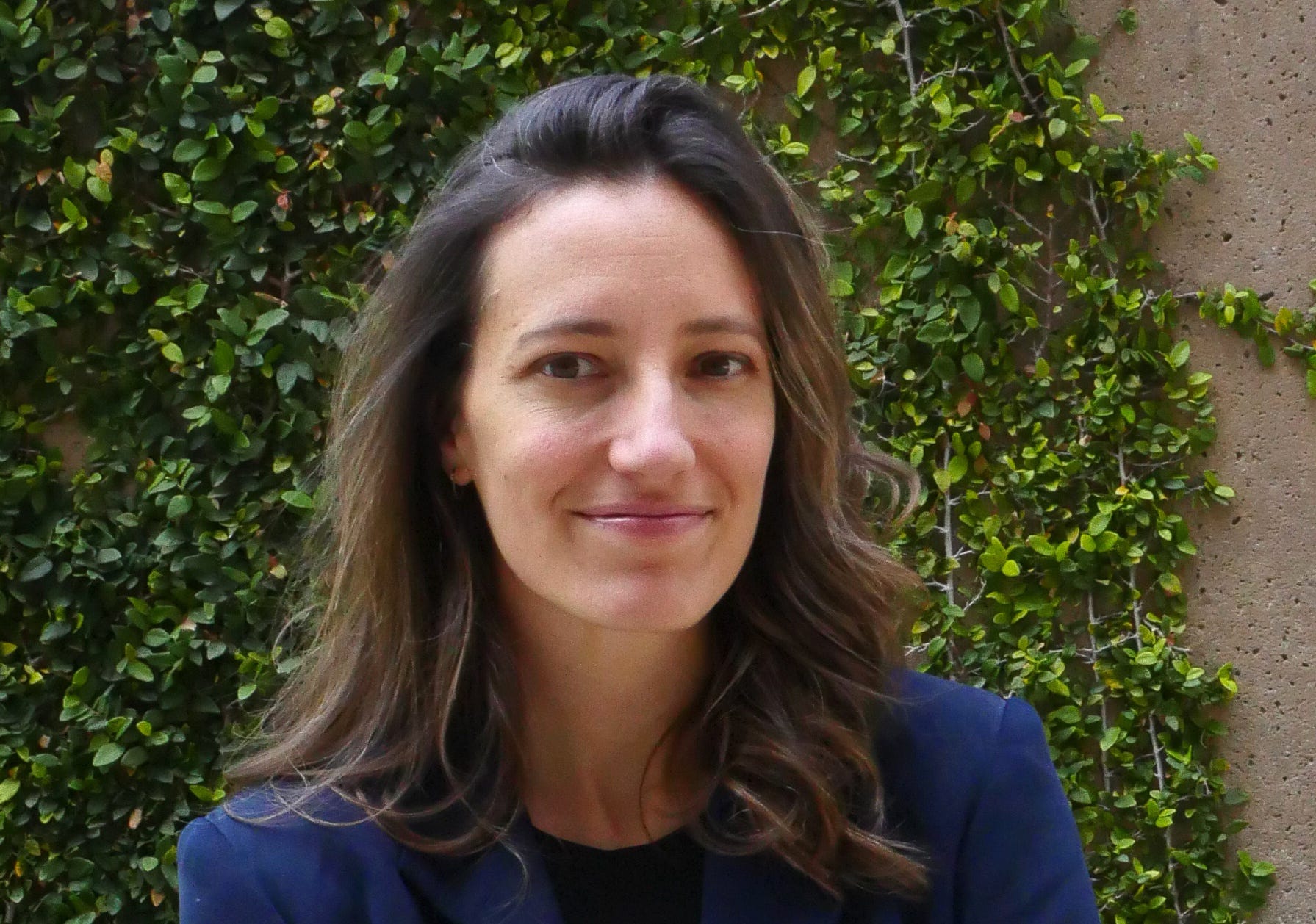
The trouble with net zero
In this episode, environmental social scientist Holly Jean Buck discusses the critique of emissions-focused climate policy that she laid out in her book Ending Fossil Fuels: Why Net Zero Is Not Enough.(PDF transcript)(Active transcript)Text transcript:David RobertsOver the course of the 2010s, the term “net-zero carbon emissions” migrated from climate science to climate modeling to climate politics. Today, it is ubiquitous in the climate world — hundreds upon hundreds of nations, cities, institutions, businesses, and individuals have pledged to reach net-zero emissions by 2050. No one ever formally decided to make net zero the common target of global climate efforts — it just happened.The term has become so common that we barely hear it anymore, which is a shame, because there are lots of buried assumptions and value judgments in the net-zero narrative that we are, perhaps unwittingly, accepting when we adopt it.Holly Jean Buck has a lot to say about that. An environmental social scientist who teaches at the University at Buffalo, Buck has spent years exploring the nuances and limitations of the net-zero framework, leading to a 2021 book — Ending Fossil Fuels: Why Net Zero Is Not Enough — and more recently some new research in Nature Climate Change on residual emissions.Buck is a perceptive commentator on the social dynamics of climate change and a sharp critic of emissions-focused climate policy, so I'm eager to talk to her about the limitations of net zero, what we know and don't know about how to get there, and what a more satisfying climate narrative might include.So with no further ado, Holly Jean Buck. Welcome to Volts. Thank you so much for coming.Holly Jean BuckThanks so much for having me.David RobertsIt's funny. Reading your book really brought it home to me how much net zero had kind of gone from nowhere to worming its way completely into my sort of thinking and dialogue without the middle step of me ever really thinking about it that hard or ever really sort of like exploring it. So let's start with a definition. First of all, a technical definition of what net zero means. And then maybe a little history. Like, where did this come from? It came from nowhere and became ubiquitous, it seemed like, almost overnight. So maybe a little capsule history would be helpful.Holly Jean BuckWell, most simply, net zero is a balance between emissions produced and emissions taken out of the atmosphere. So we're all living in a giant accounting problem, which is what we always dreamed of, right? So how did we get there? I think that there's been a few more recent moments. The Paris agreement obviously one of them, because the Paris agreement talks about a balance between anthropogenic emissions by sources and removals by sinks. So that's kind of part of the moment that it had. The other thing was the Special Report on 1.5 degrees by the Intergovernmental Panel on Climate Change, which further showed that this target is only feasible with some negative emissions.And so I think that was another driver. But the idea of balancing sources and sinks goes back away towards the Kyoto Protocol, towards the inclusion of carbon sinks, and thinking about that sink capacity.David RobertsSo you say, and we're going to get into the kind of the details of your critique in a minute. But the broad thing you say about net zero is that it's not working. We're not on track for it. And I guess intuitively, people might think, well, you set an ambitious target and if you don't meet that target, it's not the target's fault, right. It's not the target's reason you're failing. So what do you mean exactly when you say net zero is not working?Holly Jean BuckWell, I think that people might understandably say, "Hey, we've just started on this journey. It's a mid-century target, let's give it some time, right?" But I do think there's some reasons why it's not going to work. Several reasons. I mean, we have this idea of balancing sources and sinks, but we're not really doing much to specify what those sources are. Are they truly hard to abate or not? We're not pushing the scale up of carbon removal to enhance those sinks, and we don't have a way of matching these emissions and removals yet. Credibly all we have really is the voluntary carbon market.But I think the main problem here is the frame doesn't specify whether or not we're going to phase out fossil fuels. I think that that's the biggest drawback to this frame.David RobertsWell, let's go through those. Let's go through those one at a time, because I think all of those have some interesting nuances and ins and outs. So when we talk about balancing sources and sinks, the way this translates, or I think is supposed to translate the idea, is a country tallies up all of the emissions that it is able to remove and then adds them all up. And then what remains? This kind of stuff, it either can't reduce or is prohibitively expensive to reduce the so called difficult to abate or hard to abate em

It's up to states to implement IRA. Are they ready?
States don’t (yet) have the administrative capacity to smoothly implement the ambitious policies in the IRA; in this episode, policy strategist Sam Ricketts of Evergreen Action discusses how federal programs can help them get there.(PDF transcript)(Active transcript)Text transcript:David RobertsStates are central to climate and energy policy. After the failure of the Waxman-Markey climate bill in 2010, states carried the torch of climate policy during the long decade that Democrats were locked out of majority power in Washington, DC. Now that Dems have actually passed some federal policy — and they are unlikely to pass any more anytime soon — states are once again in the spotlight, tasked with implementing that legislation to maximize its effect.This raises the obvious question of whether states have the administrative capacity — the people, institutions, time, and money — necessary to implement ambitious federal legislation competently.They do not, says Sam Ricketts, but they could, and there are federal programs that can help them get there.Nobody is better positioned than Ricketts to address the issue of state readiness. He played a key role in Jay Inslee's pathbreaking presidential campaign, which was built off of successful policies in Washington and other states. Then, as senior strategist for Evergreen Action, a nonprofit he founded with other Inslee veterans, he helped shape the ambitious trio of bills the Democrats have passed in the last year and a half: the Infrastructure Investment and Jobs Act, the CHIPS act, and the Inflation Reduction Act (or as advocates fondly refer to them, Uncles Bill, Chip, and Ira). Now he’s working with Evergreen and the Center for American Progress to educate and prepare state and local lawmakers for the post-IRA world.I've known Ricketts for years, and there's nobody who better balances detailed knowledge of policy with a practical head for advocacy and activism. I'm excited to talk to him about the crucial role states will play in coming years, the kind of administrative capacity they will need, and the types of federal programs that can fund their capacity building.So, enough of that. With no further ado, Sam Ricketts, welcome to Volts. Thank you so much for coming.Sam RickettsThanks for having me, David. Pleasure to be with you.David RobertsI'm so excited to talk about administrative capacity, the sexiest of all podcast topics loyal listeners know this is an ongoing obsession of mine.Sam RickettsThey've come for the good stuff.David RobertsYes, exactly. So get ready to jump in. So I want to talk about state and local governments and whether they're up for this. But first, let's just briefly talk a little bit about just how central states and local governments have already been in climate policy in the US. So after you and I, well remember all too well the humiliating defeat of the Waxman-Markey Bill back in 2009, 2010. And after that, the sort of national scene was dead for ten years and everyone was off in the wilderness. And the only thing that was going on was states passing good legislation.So maybe let's start by just talking about those states being kind of the laboratories for democracy as it were and how the states sort of pioneered stuff and learned stuff that then went into informing the federal legislation that was just passed.Sam RickettsIndeed. So the first thing to your point, you mentioned that states and local governments have long been sort of the nation's leaders in developing and implementing climate and clean energy policy. And we're going to talk about what they need to do next in terms of implementation. But an important point, as you allude to here, is the progress that's just been given to us from Washington DC. The passage of Uncle Bill, Uncle Ira, Uncle Chip, the three climate uncles, so to speak. And the other initiatives that the Biden administration is advancing are really drawn from, inspired by, informed by the progress that states and local governments have made throughout the country.And this progress, as you mentioned, really jump started over the course of the last decade and sort of in the interregnum period between the last attempt at climate legislation and this ultimately very successful one. But it goes back further, right. States began passing clean energy laws decades ago. Years ago. I mean, the first renewable portfolio standard to require utilities to start utilizing clean renewable electricity was actually passed in Iowa 40 years ago. That activity last went through states red, blue and purple alike through the 1990s. In the early 2000s, you really saw an uptick in states beginning to target greenhouse gas climate pollution directly with laws that like Massachusetts' Global Warming Solutions Act, notably, of course, the AB 32 law passed in California in 2006, sort of set economy-wide programs and sectoral programs advancing climate action.And then in the 2000s, after the last failed attempt at federal climate legislatio
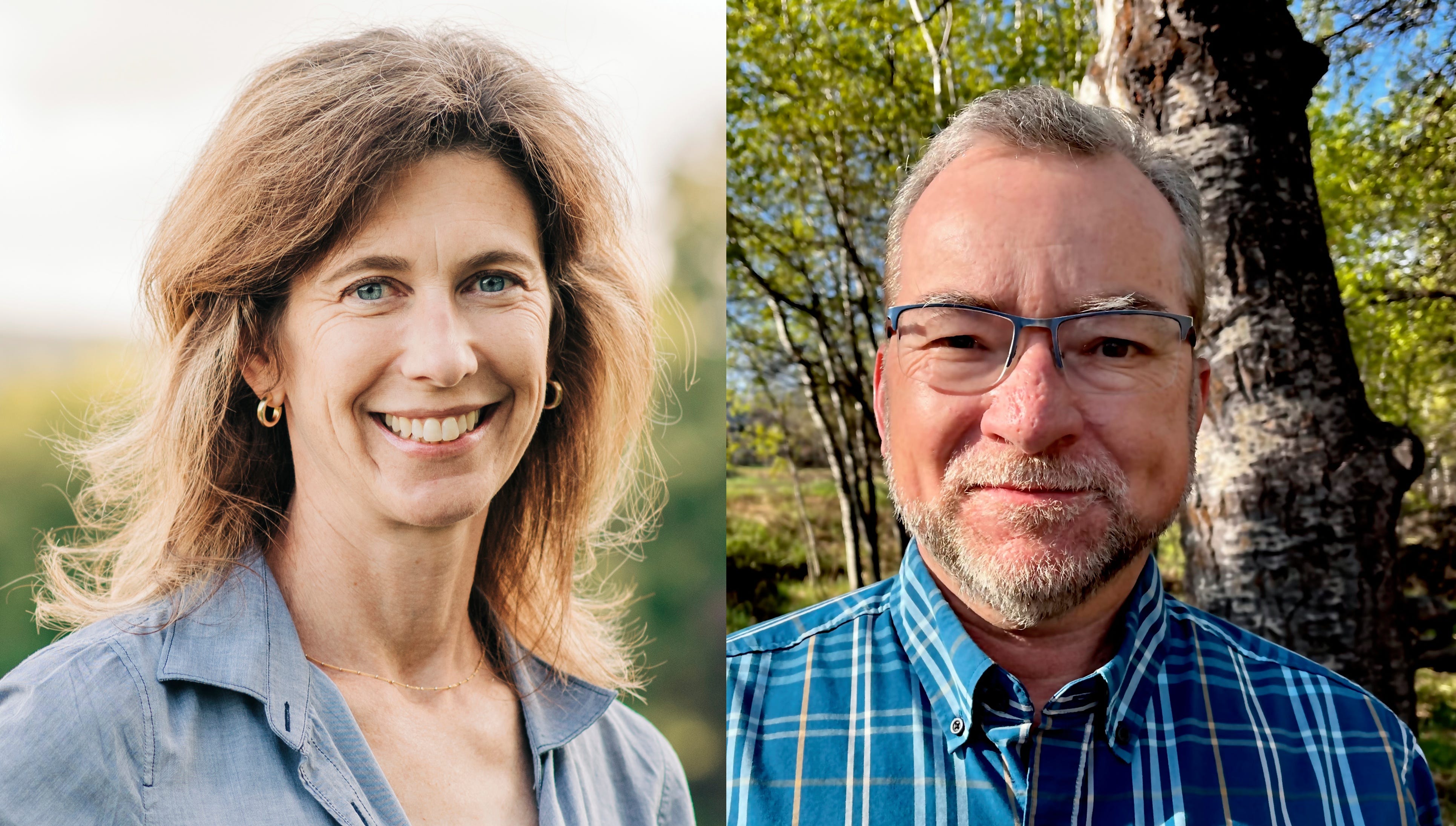
A clean energy transition that avoids environmentally sensitive land
In this episode, Jessica Wilkinson and Nels Johnson of The Nature Conservancy discuss the pathway they see for a rapid, low-cost clean energy transition that minimizes impact on environmentally sensitive land.(PDF transcript)(Active transcript)Text transcript:David RobertsA great deal of confused and misleading information is circulating about the land-use requirements of the energy transition. Everyone agrees that building the amount of clean energy necessary to reach net zero carbon emissions by 2050 will require an enormous amount of land.But is there enough land? Will the transition require industrializing green fields and virgin forests and other environmentally or culturally sensitive lands? Can the energy transition be done big enough and fast enough while still remaining respectful of natural resources and other species? What mix of technologies will go most lightly on the environment?To provide a definitive answer to these questions, The Nature Conservancy launched its Power of Place project — first in California, then for the greater American West, and now, this week, for the entire nation.Using various metrics related to wildlife, ecosystems, cultural resources, and protected natural areas, the Power of Place project attempts to comprehensively map out sensitive land areas. It then tallies up the amount of clean energy required to reach net zero by 2050 and tries to match those needs to the available lands, to see if there is a pathway to net zero that protects them.The good news is that, with some wise planning, the amount of environmentally sensitive land impacted by a business-as-usual clean-energy transition can be substantially reduced at relatively low cost. To discuss this and other findings of the report, I contacted Jessica Wilkinson (Power of Place project manager) and Nels Johnson (the project’s science and technology lead) of The Nature Conservancy. We discussed the technology shifts that will enable a lighter footprint, the policies that could help encourage them, and the best ways to avoid community resistance.Alright, then. Jessica Wilkinson and Nells Johnson. Welcome to Volts. Thank you so much for coming.Jessica WilkinsonThank you for having us.Nels JohnsonYeah, thanks for having us, David.David RobertsJessica, let's start with you. The subject of land-use and renewable energy, there's a lot of weird information and misinformation floating around about this, a lot of weird myths, a lot of sort of people with strong opinions who don't know what they're talking about. So what inspired this series of reports, the Power of Place reports? What inspired you to start undertaking this project?Jessica WilkinsonYeah, this is precisely one of the reasons that we were inspired to do this project under sighting, as usual. Like the way that we're proceeding now with a renewable energy build-out, we are seeing an increase in local opposition, and we are seeing concerns about land-use issues. And land-use and environmental issues are indeed kind of one of the obstacles that's popping up in the way of us being able to meet our clean energy goals and meet our clean energy goals rapidly. So we really started this work in California, which was the first time we kind of developed this Power of Place methodology and that refurbished report came out in 2019.We refined it and then released Power of Place West in 2022. And this is kind of the next iteration where we further refined it. And each time we've kind of added new kind of levels of detail and asked some slightly different questions. But the land-use issue is exactly one of the reasons we've done this. So really what we're trying to do is question the premise of whether or not we really need to make these huge trade offs between conservation and climate.David RobertsI think the conventional wisdom is that if we switch from fossil fuels to renewables there are a lot of advantages. But one of the disadvantages is you need a bunch of land and you're going to end up consuming a bunch of crop land or environmentally sensitive land or land that the locals don't want you on. All this kind of stuff. And so your take is that that stuff is exaggerated. So what is the power of place? What is it meant to convey?Jessica WilkinsonYeah, it's not to say that it's exaggerated, it's real, it's happening. The question is how much of it is avoidable?David RobertsRight.Jessica WilkinsonSo what we are seeking to do is ask that question do we need to make all these huge trade offs for nature and for people on the path to decarbonization? So we've asked in Power of Place, it's a modeling exercise and you can ask the model, okay, go achieve net zero emissions by 2050, economy-wide. And model please kind of exclude these environmental data layers and let's see if that changes, whether we can get there, the pace at which we get to that goal and what the cost differential is.David RobertsRight before we jump into what you found, how would you describe the status quo of land

Washington state Democrats are tackling the housing crisis
In this episode, Washington State House Rep. Jessica Bateman talks about championing an ambitious and successful bill that aims to increase housing density in Washington, and the politics of housing in general.(PDF transcript)(Active transcript)Text transcript:David RobertsAfter decades of effort by urbanists, which often felt like the work of Sisyphus, housing has arrived as a political issue. Big environmental groups have come around to the idea that dense housing is a crucial climate strategy, support is growing from unions worried that their members can’t afford to live where they work, and polls show that the public is increasingly convinced that there is a housing crisis. Over the last five years, a wave of good housing legislation has been building on the West Coast, spreading from California to Oregon and now to Washington state. In this last legislative session, some 50 housing bills were put forward in the Washington legislature and more than a half dozen passed, any one of which would have been historic.One of the most significant bills that passed this session — and one of the biggest surprises — was House Bill 1110, which legalized so-called “missing middle” housing statewide. Every lot in the state will now be permitted to build at least two units of housing, four units when located near transit, and up to six units if some portion are set aside for low-income homeowners.And that's just one bill. Other bills would legalize accessory dwelling units (ADUs) on all lots in the state, require municipalities to integrate climate change into their growth plans, sharply restrict local design review, and ease permitting of multi-unit residential housing. It's a feast.The lead sponsor of HB 1110 is Rep. Jessica Bateman, who represents the capital city of Olympia. She was elected in 2021 and quickly established herself as a champion of equitable housing and a tireless organizer. Through sheer force of will, she brought together a broad coalition that was able to push the bill over the finish line, defying predictions.Like Washington state Rep. Joe Fitzgibbon, who I interviewed for Volts back in 2021, Bateman is widely seen as a rising star in the legislature. I was excited to talk to her about her bill, the wave of other housing bills this session, and the broader politics of housing at the state level.Alright, then. Representative Jessica Bateman. Welcome to Volts. Thank you so much for coming.Jessica BatemanThank you so much for having me.David RobertsI'm so excited to talk to you. I've got so much I've got so much I want to ask you about. But let's just briefly start before we get into the nuts and bolts of the bills, et cetera, maybe just tell us a little bit about you're new to the Washington legislature as of 2021. So maybe just tell us a little bit about your history and how you came to the legislature and how you picked up an interest in housing along the way.Jessica BatemanWell, I am new to the legislature, but I'm not new to legislative politics. I was a legislative assistant for three and a half years to former State Representative Chris Reykdal. He's now the Superintendent of Public Instruction. And before that, I came to Olympia to go to Evergreen. That's how I got involved in politics in my first campaign for I-1163. That's how I got started working as a legislative assistant, and then I became a planning commissioner for the City of Olympia working on comprehensive planning, and then I ran for City Council, was there for five years.On city council. We dealt significantly with a growing unhoused population in Olympia and how we were going to manage and deal with that, which led me to working on permanent supportive housing and also more broadly, housing policy and how we create and build housing in Washington and the systemic barriers to doing that. We also worked on passing middle housing legislation while I was there. And when I came to the legislature, my goal was to legalize middle housing statewide. I didn't know I was going to do that in my second year as a legislator.David RobertsDon't get used to this heady success. I don't think it's typical.Jessica BatemanIt was just by happenstance representative Nicole Macri had sponsored a middle housing bill for a couple of years, and she had other work that she was doing. So last year in 2022, I sponsored House Bill 1782, and then this year it was House Bill 1110.David RobertsWell, we're going to get into that in just a minute. So you've had your hands on housing policy directly at a municipal level, and this is kind of where the rubber hits the road with all this stuff. A slightly more general question, it seems like I and a bunch of other people I mean, not really me. I'm peripherally interested. But I know a bunch of people who have been banging their head on this wall for years. Decades of just urbanism housing in general, the dominance of cars, the lack of housing, et cetera. All this. And it seems like in the last, I don't know, call it

Getting rooftop solar onto low- and middle-income housing
In this episode, Vero Bourg-Meyer of the Clean Energy States Alliance discusses the barriers that keep lower- and medium-income customers from installing rooftop solar, the types of efforts most likely to overcome these barriers, and how to keep momentum moving forward.(PDF transcript)(Active transcript)Text transcript:David RobertsFor all its explosive growth in recent years, rooftop solar is far less frequently installed by low- and middle-income households than by wealthy ones. Though that disparity is diminishing somewhat over time, it remains large.The barriers keeping lower-income consumers from solar go well beyond the financial (though financial barriers are substantial), ranging from credit histories to low-quality and poorly insulated buildings to lack of supportive policy.State policymakers, foundations, and non-profit groups have been trying for years to overcome this problem. Finally, the pieces are beginning to fall in place and it is becoming clearer which kinds of interventions work and which kinds don’t.No one knows more about the history, design, and successes of these programs than Vero Bourg-Meyer of the Clean Energy States Alliance. She has been analyzing and advocating for these policies for years (she just came out with a report on how foundations can help), so I was eager to talk to her about the rationale for low-income solar programs, the features that make them work, what's in the Inflation Reduction Act that can help, and what further policies are needed.Okay, then, with no further ado, Vero Bourg-Meyer, welcome to Volts. Thank you so much for coming.Vero Bourg-MeyerWell, thank you so much for having me. I'm delighted to be here.David RobertsCool, so there's a lot to talk about here with this topic, which I've had sort of, like, in the corner of my eye for years and years now, these programs for low-income and mid-income solar, getting solar to low-income, mid-income people, I sort of had it on my periphery forever. And so I'm happy to jump in directly. My sense of the sort of state of play among the wonks is the best way to help poor people is to give them money. And if you have money to help them and you want to do something other than just give it to them, you need to sort of justify, like, why is this better than just giving them money?Vero Bourg-MeyerYeah.David RobertsSo I guess to start with, my first question is just why should we care about specifically getting solar on these households versus just helping them with money? So what is the sort of justification for this kind of whole area? Why do we want to get solar on low- and middle-income households?Vero Bourg-MeyerWell, so there are two questions in there, right? So one question is that there's a climate question. Obviously, we want solar not because we think it's great for savings and all that, but also because we have a climate crisis that's ongoing and we need to do something about this. So that's the reason why we want solar. But why LMI communities and I'll use LMI in a kind of loose way. LMI stands for low- and moderate-income. LMI sometimes is just low-income and that generally means kind of in this area, generally it means below 80% area median income.Some people also define it as below 120%, but without going too much in the details, that's generally what it means. So the reason why you want to make sure people have access one of the reason you want to make sure those people have access to solar is they spend a much higher percentage of their income on their utility bills as the rest of us. About almost four times as much as you or me. And I'm lumping us in the same income brackets. I don't know if that's correct. So they spend a lot of money on their utility bills.And so obviously when you're giving them away month after month after month to reduce those utility bills, that can have a really outsized effect on them. Right? So it's not just the cost of purchasing the solar to begin with, it's the continuing saving over the lifetime of the asset that you'd have to kind of look at.David RobertsIt's kind of like giving them money every month.Vero Bourg-MeyerYeah, essentially. Yeah. Assuming there is a saving, which it has to be structured that way. It doesn't just happen like that. And then there is the resilience benefit that you can get when paired with batteries. And I was saying earlier, I'm going to use low-income communities as kind of LMI communities, very generally speaking. But we're also talking here about communities of color in communities that generally, because of redlining, have older housing stock houses that are not well insulated. When you start with that and you add storage, you get a really huge resilience benefit for them.LMI also means higher rate of chronic diseases, right. So you need your dialysis machine to work all the time, not just some of the time. So that's another really big reason. But I'd say your question though, about why not just give them money? If you kind of put aside, is i

Building a movement that can take full advantage of the IRA
The Inflation Reduction Act is ambitious climate policy, but history shows that ambitious policy is not always followed by ambitious implementation. In this episode, Hahrie Han of Johns Hopkins University and David Beckman of the Pisces Foundation talk about Mosaic, a grant-making coalition that aims to help build a robust movement infrastructure to ensure that vulnerable and underserved groups can take full advantage of the significant funding offered by the IRA.(PDF transcript)(Active transcript)Text transcript:David RobertsFor all that has been written about the Inflation Reduction Act, the most salient fact about it remains widely underappreciated. What is significant about the bill is not just that it sends an enormous amount of money toward climate solutions, but that the money is almost entirely uncapped.The total amount of federal money that will be spent on climate solutions via the IRA will be determined not by any preset limit, but by demand for the tax credits. The more qualified applicants that seek them, the more will be spent. The Congressional Budget Office estimated the bill’s spending at $391 billion, but a report last year from Credit Suisse put the number at $800 billion and a more recent Goldman Sachs report put it closer to $1.2 trillion.Big companies will have teams of lawyers to tell them when they qualify for the tax credits, but there are also billions of dollars in the IRA that are meant to be spent on vulnerable and underserved communities. Those communities do not typically have teams of lawyers.Who will work to enable them to take full advantage available of the money? Getting that done will require campaigns, relationships, and grassroots mobilization. It will require movement infrastructure.A relatively new grant-making coalition called Mosaic is attempting to help build that infrastructure by dispersing money to the frontline organizations that comprise it. Mosaic is a cooperative effort among large national environmental groups like NRDC, big foundations, and various smaller regional, often BIPOC-led groups.It has pooled philanthropic money and thus far given almost $11 million of it to dozens of relatively small groups and campaigns — 85 percent of them BIPOC-led, 87 percent of them female-led — selected by a governing committee from well over a thousand applicants. The governing committee contains a super-majority of representatives from frontline communities; the foundations have a super-minority.To discuss the need for movement infrastructure, the Mosaic effort, and the possibilities IRA offers for frontline communities, I contacted Dr. Hahrie Han, a professor of political science at Johns Hopkins University, and David Beckman, one of the founders of Mosaic and the current president of the Pisces Foundation. We talked about what movement infrastructure is, the failure of the climate movement to build enough of it, and Mosaic’s theory of change.So, without any further ado, Hahrie Han and David Beckman. Welcome to Volts. Thank you so much for coming.Hahrie HanThanks so much for having us.David BeckmanYes, thanks David.David RobertsI want to start with you, Hahrie. You have written in the past, and one of the themes of your work is that social welfare legislation or policy can often fail to reach, let's say, its full potential if there isn't the sort of civic and movement infrastructure around it to help it succeed. So maybe you can just talk for a little bit about what do we mean by infrastructure here? What does infrastructure mean? And maybe also what I think would be helpful is maybe you could cite some examples of times you think legislation or reforms fell short of what they could have done because of a lack of infrastructure.And then maybe some examples of when there was infrastructure and that was helpful.Hahrie HanYeah, I think that's a great question. There are so many instances when in trying to tackle some of our stickiest social problems, we put an enormous amount of attention and effort into trying to build the coalitions that we need to pass the policies that we want. If we think about any of the landmark legislation that we've had in recent decades, from the Affordable Care Act to the IRA to any other of these big kind of efforts, they've taken years or decades even to pass because of all the work that it takes to get them through. But then what so much research and so much history has taught us is that if there isn't the same kind of effort that goes into the implementation, that the gains that we made with policy alone are really fragile.There's one famous book that looks at some of these gains, these policy wins, and calls them a "hollow hope" if they're not accompanied by the kind of infrastructure that you're talking about. And we just have a lot of those kind of examples throughout history. So to give a couple of them. For example, this book, "The Hollow Hope," starts with landmarks court legislation like Brown v. Board of Education, where, if you act

The wonky but incredibly important changes Biden just made to regulatory policy
In this episode, Sabeel Rahman, former acting administrator of the federal Office of Information and Regulatory Affairs, discusses updates to regulatory policy that reflect a positive new approach to how climate (and other) regulations will be assessed and crafted.(PDF transcript)(Active transcript)Text transcript:David RobertsWhen President Biden first took office, his administration released a series of "Day One executive actions." Among them was reforming the way federal regulations are developed and evaluated. This is not exactly something the public was clamoring for, or even aware of, but it is foundational to the administration's ability to achieve its other goals.The agency in charge of reviewing proposed federal regulations is called the Office of Information and Regulatory Affairs, or OIRA, which sits inside the Office of Management and Budget (OMB). It is a fairly obscure corner of the federal bureaucracy that doesn't come in for much public scrutiny, but as the gateway through which all federal regulations must pass, it is immensely powerful in shaping the space of possibilities for any administration.A few weeks ago, OIRA answered Biden's call by issuing updated versions of two crucial documents: circular A4 and circular A94. The former contains guidance for agencies on how OIRA will evaluate regulations; the latter contains guidance for how it will evaluate public investments.These guidance documents have not been updated in more than 20 years, so this development is long overdue. The new circulars contain some fairly technical updates to the way OIRA does cost-benefit analysis — and the goals toward which it deploys cost-benefit analysis — but they are incredibly important, evidence of a generational philosophical shift.To unpack these changes, I talked with Sabeel Rahman of Brooklyn Law School, who served as acting administrator of OIRA last year while its current leader was being confirmed by the Senate. Rahman was intimately involved in designing the updated guidance, so I was eager to talk to him about the new approach, how it was developed, how it reflects Biden's priorities, and what it means for the future of climate and other regulations.I know this sounds wonky, but it is worth your time. I promise you will come out of it excited about cost-benefit analysis.With no further ado, Sabeel Rahman, welcome to Volts. Thank you so much for coming.Sabeel RahmanThanks so much for having me.David RobertsThis is awesome. I'm so excited to talk about this.Sabeel RahmanIt is wonky, but it is awesome ...David RobertsWonky and awesome. I've had sort of a side obsession with these issues for a long, long time, and this is really a perfect opportunity to jump into them. But before we jump into too many wonky details, I want to do some scene setting just so people know, kind of have a sense of what we're talking about in general. So when Biden came in, he issued this sort of list of "Day One," what they call "Day One priorities." And one of those was to update regulatory policy, basically how regulations get assessed and crafted. This is not something I think the public is beating down the door demanding this.This is something that has a behind the scenes air about it, but it's also clearly a political priority. So maybe just to start with, let's just talk about what is the Office of Management and Budget, OMB, what is OIRA, which is the Office of Information and Regulatory Affairs?Sabeel RahmanYes, absolutely.David RobertsFirst try.Sabeel RahmanThere we go.David RobertsWhat, OIRA is within it, and why what they do seems to have such political presence in the administration that it made its way to the top of this Day One priority list just to sort of set the scene.Sabeel RahmanYeah, absolutely. That's great. And thanks so much, David. And you're exactly right. This is very much kind of behind the scenes type of sets of issues, but really, really important for all the day-to-day stuff that government needs to do, and especially in this moment when we're thinking about the climate crisis or we're thinking about trying to address systemic inequality. So the fact that this was part of the Day One suite of actions from the present is, I think, pretty indicative. So there was the headline stuff, the new climate regulations, the Equity Executive Order, responding to COVID right there's, all of that headline stuff.And then this regulatory review piece was also there because that's actually part of the back-end to make all those other policies work. So we're used to thinking about the President comes in, president can make all kinds of sweeping policy decisions or kind of really important policy decisions. The day to day of how that happens involves the federal agencies. And the agencies, they can make enforcement actions, they can spend money or they can write rules. And it's that rule writing part that goes through the Office of Information and Regulatory Affairs. And so this office that you talked about, OMB

What's going on with hydropower?
In this episode, Jennifer Garson of the Department of Energy’s Water Power Technologies Office discusses the state of hydropower in the US and where the industry is headed.(a)(Active transcript)Text transcript:David RobertsFor decades, hydropower has been most common source of renewable electricity in the world. (In the US, it was passed by wind a few years ago.) Pumped hydro — large hydropower facilities in which water is pumped up and run down hill to store energy — remains the most common form of energy storage, both in the US and in the world.Even as the vast majority of media attention in the clean-energy world goes to wind and solar power, hydropower continues churning away in the background, generating and storing vast amounts of renewable energy.Hydro has a long and storied past, but does it have a future? What's going on with hydropower these days? Is there any prospect of building new dams or of finding more power in existing dams? What's going on with small hydropower, on rivers, streams, and reservoirs? And is ocean energy ever going to be a real thing?I've taken hydropower for granted for a long time, so I decided it was finally time to dig into these questions. To do so, I contacted Jennifer Garson, head of the Department of Energy’s Water Power Technologies Office (WPTO). The WPTO oversees a sprawling network of prizes and grants meant to encourage hydro and marine energy projects. I talked with Garson about the future of large dams in the US, the promise of small-scale hydro for local communities, and the uncertain future of marine energy.Alright, with no further ado, Jennifer Garson, welcome to Volts. Thank you so much for coming.Jennifer GarsonThank you so much for having me.David RobertsAlright, so we normally normally here on Volts, we do the sort of deep dive into one thing. But this here we're going to attempt something slightly different, which is a broad overview of a fairly large category, larger than I think I appreciated before I started digging around and just try to get a sort of global sense of where it's at. Because I know that from my experience in clean energy, I've sort of, like, had hydro in the back of my head as kind of this steady presence, a little bit like nuclear, like a steady presence in the background, but not something where anything kind of dynamic or new is happening. And I think you probably disagree with that.So let's get into it. So just to start with, what are the technologies encompassed by the terms "hydro" and "marine energy" that your office covers? What is the remit?Jennifer GarsonYeah, so glad you asked that. And it is, sort of, just by nature of our office as we're structured that, we have two very interesting, but two very different types of water power technologies. So the first that you mentioned is hydropower. Hydropower really has been delivering power for the last 100 plus years. It's both the conventional hydropower, so very large behind the reservoir, big dams that people usually envision when they're thinking about hydro. We also have smaller non-powered dams that we power with hydropower. We also have run-of-river systems that actually have diversions in addition to dams, where you actually have water flowing to the side of the river. And then we also are thinking about hydropower. Even in conduits and canals, how do you use existing water infrastructure to provide power, whether it's for water treatment or irrigation, a whole number of different ways that you could use existing infrastructure for water power.Jennifer GarsonOn the other side of the portfolio, we have marine renewable energy. So while hydropower is probably the oldest form of renewable power — although potentially, arguably wind is too — marine renewable energy is the most nascent form of renewable energy. And that's really looking out to the power of the ocean. Everything from how do we kinetically capture power, how do we use gradients to capture power. So everything from tidal power, wave power, ocean thermal energy conversion, even salinity gradients and even pressure gradients, really looking at a multitude of ways of when you look out at the ocean and see all the power that's contained in it, how do we use different power capture systems to harness multitude of ways that the ocean generates power?David RobertsGot it. So water on land and water at sea ...Jennifer GarsonWater everywhere.David RobertsWater everywhere. So let's start then with big dams, because I think this is when you say hydropower, this is what springs to people's minds as sort of the conventional form. I think conventional wisdom is that we've got a lot of big dams in the US creating a lot of power and it's steady and it's good, but that's more or less it. And so this is my first question. It's just do you think we're going to build any more large dams in the US or large, dam-wise, are we basically tapped out?Jennifer GarsonSo that's a really excellent question. I think there's a general agreement that

The importance of upcoming EPA regulations on power plants
Various options are at play in the EPA’s planned greenhouse gas standards for new and existing power plants. In this episode, Lissa Lynch of NRDC discusses the implications.(PDF transcript)(Active transcript)Text transcript:David RobertsA couple of weeks ago, the policy analysts at the Rhodium Group put out a new report showing that the Biden administration's legislative achievements are not quite enough to get it to its Paris climate goals. But those goals could be reached if the legislation is supplemented with smart executive action.Some of the most important upcoming executive actions are EPA's greenhouse gas standards for new and existing power plants. The Supreme Court famously struck down Obama's Clean Power Plan — his attempt to address existing power plants — judging it impermissibly expansive. So now EPA has to figure out what to ask of individual plants.The agency's decisions will help shape the future of the US power sector and determine whether the Biden administration gets on track for its climate goals. To talk through those decisions in more detail, I contacted Lissa Lynch, who runs the Federal Legal Group at the NRDC’s Climate & Clean Energy Program. We discussed the options before the EPA, the viability of carbon capture and hydrogen as systems of pollution reduction, and whether Biden will have time to complete all the regulatory work that remains.Alright. With no further ado, Lissa Lynch from NRDC. Welcome to Volts. Thank you so much for coming.Lissa LynchThank you for having me.David RobertsThis is a subject that I used to spend a lot of time thinking about back in the day, and it's sort of receded for a while, and now it's back. So it's very exciting for a nerd like me. So I want to just quickly walk through some history with this and then sort of hand it off to you so you can tell us where things stand now, because I don't want to assume that listeners have been obsessively following this now nearly two decade long saga. So let me just run through some history really briefly. So listeners will recall in 2007, there's a big Supreme Court case, Massachusetts vs. EPA, in which the Supreme Court ruled that CO2 is eligible to be listed as a pollutant under the Clean Air Act if EPA determines it is a threat to human health.And then shortly thereafter, Obama's EPA officially determined that it is a threat to human health via the endangerment finding. So this is one thing I'm not sure everybody understands, and I just want to get it on the table up front. So for context, the combination of those two things, Mass vs. EPA, plus the endangerment finding, means that EPA is lawfully obliged to regulate greenhouse gases. This is not a choice. This is not something it can do or not do, depending on how it feels or who's president. They have to do it. So then that triggers the obligation, three separate obligations.You have to regulate mobile sources, which Obama did with his new fuel economy regulations, which are still in place, as far as I know. Then you have to regulate new stationary sources of greenhouse gases, which Obama did. And as far as I know, we can come back to this in a second, but as far as I know, those new power plant regulations that Obama passed are still in effect. And then thirdly, you have to regulate existing stationary sources of greenhouse gases, which mainly means power plants. And so Obama's effort to regulate existing power plants is called the Clean Power Plan.People may remember the fuss and ado about the Clean Power Plan as it was under development. Lawsuits were immediately launched. Of course, the Supreme Court took the extremely unusual step of putting the law on hold, basically not letting it go into implementation until it had heard this case. And then it heard the case, rejected the Clean Power Plan on the basis of the newly dreamed up, rectally, extracted Major Questions Doctrine. So that's where we stand now is we've got the mobile regs in place, although Biden is updating those too. I think we've got the new power plant regs in place, although Biden is also updating those.But as for existing power plant regulations, there are basically none. It's been a legal mire and so Biden's got to do those too. So let's talk about what Supreme Court said about the Clean Power Plan in their ruling and how that constrains the sort of solution space that we're looking at now.Lissa LynchSo in West Virginia vs. EPA, that was the Supreme Court decision from last summer. The Supreme Court held that this section of the Clean Air Act that we're talking about here, section 111, does not clearly provide authority for the approach that EPA took in the Clean Power Plan. And what they did there we sort of refer to as generation shifting. In the Clean Power Plan, EPA looked at the power sector as a whole and they concluded that the best system for reducing fossil-fuel-fired power plant emissions was a combination of measures including shifting generation away from dirtier fossil power t
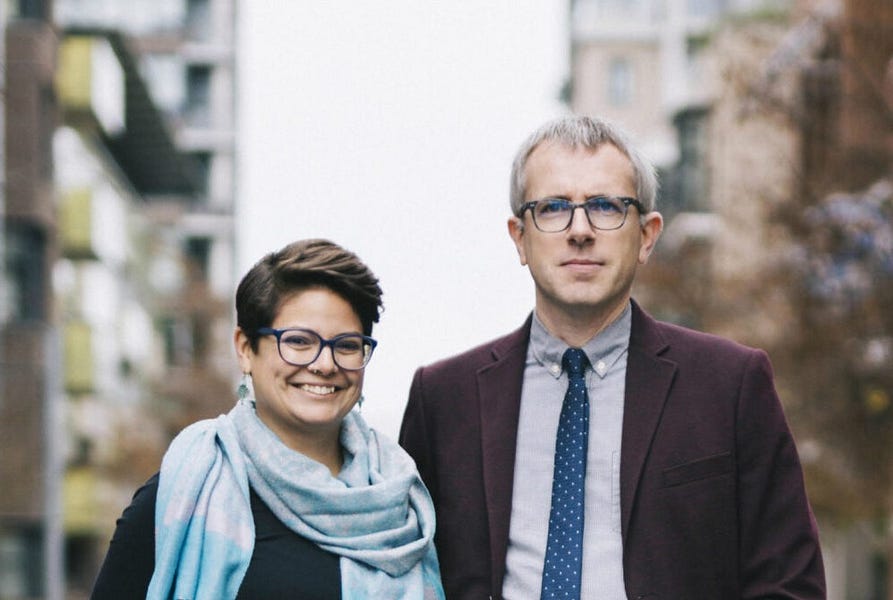
The many social and psychological benefits of low-car cities
A few years ago, Melissa and Chris Bruntlett and their two children moved from Vancouver, Canada, to Delft, a small city in the Netherlands where 80% of journeys are taken by foot, bicycle, or public transit. Their new book, Curbing Traffic: The Human Case for Fewer Cars in Our Lives, is about what it's like to live in a truly low-car city, and how other cities can capture some of the same benefits.Reading the book was a joy for me -- it reinforced so many of my priors! -- so I was excited to talk to Melissa and Chris about how to design streets for people, the connection between urban infrastructure and social trust, the flourishing that Dutch children enjoy, and the myriad evils of cars. This is a public episode. If you'd like to discuss this with other subscribers or get access to bonus episodes, visit www.volts.wtf/subscribe
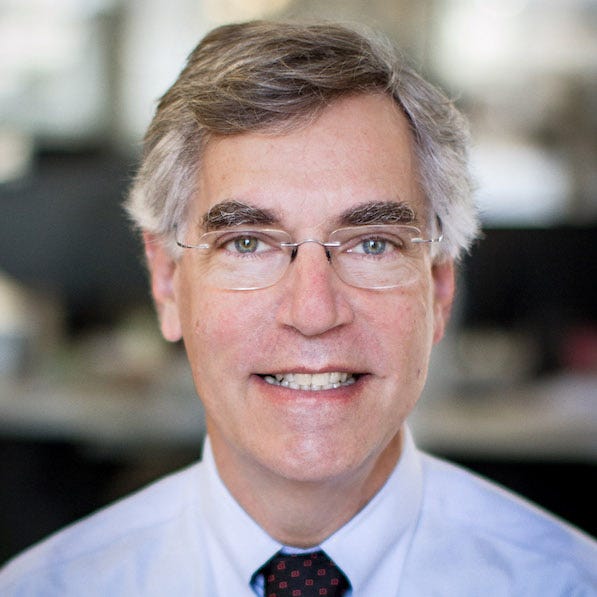
What's going on with biofuels?
In this episode, Dan Lashof of the World Resources Institute discusses the trajectory of biofuels since the early 2000s and the implications of new biofuel standards recently proposed by the US EPA.(PDF transcript)(Active transcript)Text transcript:David RobertsMy fellow olds will recall that, back in the 2000s, biofuels were an extremely big deal in the clean-energy world, one of a tiny handful of decarbonization solutions that seemed viable. Biofuels — and the many advanced versions thereof allegedly on the horizon — dominated discussions of climate change policy.Much has changed since then. Principally, it has become clear that electrification is the cheapest path to decarbonization for most sectors, including the transportation sector. The Biden administration has explicitly put electrification at the center of its transportation decarbonization strategy.Biofuels, in the meantime, have gone exactly nowhere. Advanced biofuels remain almost entirely notional, old-fashioned corn ethanol remains as wasteful as ever, and new scientific evidence suggests that the carbon costs of biofuels are much larger than previously appreciated.It's not clear if anyone has told the EPA. For the first time in 15 years, the agency is on the verge of updating biofuels production mandates first established by the Energy Independence and Security Act of 2007, and its proposed standards do not appear cognizant of these recent developments, or of the administration's larger transportation strategy.To discuss the latest developments in biofuels and the EPA's puzzling blind spot, I talked to Dan Lashof, director of the World Resources Institute. We discussed how biofuels have developed since the early 2000s, the lack of progress in advanced biofuels, and the stakes of EPA's coming decisions.Alright then. Dan Lashof. Welcome to Volts. Thank you so much for coming.Dan LashofReally happy to be here.David RobertsI've been wanting to do an episode on biofuels forever because I often just pause to think, whatever happened to biofuels? Because old people like you and I will recall way back in the day, in the early times, biofuels used to be a very big deal. They used to be the top line item, the sort of the hot subject of conversation, and it's really flipped since then. So maybe just to start, let's use our little time machine squiggly squiggly fingers, time machine, go back to say 2005 to 2010, the early 2000s, and just sort of tell us what was the state of the decarbonization conversation then and what role did biofuels play in it?Dan LashofRight, well, back then, Tesla hadn't built its first car. Photovoltaics cost ten times or more what they do today. And the big fight was to prevent hundreds of new coal plants from being built. So the idea that we would replace gasoline with electricity seemed far-fetched at best. And a lot of environmental advocates were focused on fighting coal. There was some discussion of alternative fuels, but when you looked at the transportation sector, biofuels seemed like one of the best options out there. And then there was this idea, there was a debate about corn ethanol from the beginning, right?David RobertsCorn ethanol goes back. I mean, I kind of want to distinguish between corn ethanol and kind of biofuels. The larger category, like corn ethanol, goes back farther than the rest of this stuff. Right?Dan LashofRight, but back then we weren't making much of it, right? So in 2007, there was about 6 billion gallons of corn ethanol being produced, which is about 4% of gasoline consumption back then. And there was a debate about it. A lot of that debate was like about net energy balance. Remember that one?Does it take more energy and fertilizer and tractor fuel and trucking than is in the fuel? I think that debate sort of missed the point, and it was gradually shifting to, well, we don't really care about BTUs, we care about carbon and what's its net carbon impact.David RobertsAnd I feel like the limitations of corn ethanol were around even then, which is why I remember so much buzz around cellulosic biofuels.Dan LashofYeah, right. At that time, there was new research that seemed very exciting. I was convinced that that was the future of biofuels. Right. We were going to make ethanol not from grain, not from the corn kernels, but from corn stalks, maybe from some perennial grasses like ...David RobertsSwitchgrass.Dan LashofYeah, right. And that was going to be awesome because you wouldn't be competing with food as much, and it was supposed to be cheaper because you weren't ... as waste material or the yields were higher. So that was going to take over.David RobertsYeah. Wow. We were so young then. And so then this is the sort of political atmosphere in which came the Energy Independence and Security Act of 2007, which, among its other sort of puzzling features in retrospect, was a big bipartisan energy bill passed in part to address emissions and I guess just wasn't the poison that it is now, I guess. But s
What's going on with geothermal?
In this episode, Project InnerSpace founder and executive director Jamie Beard, who has been instrumental in influencing oil and gas personnel to move into the geothermal industry, discusses exciting recent developments in geothermal and the opportunities ahead.(PDF transcript)(Active transcript)Text transcript:David RobertsThings are starting to come together for geothermal. Political awareness has seen an uptick. Investment is flowing in. Startups, many staffed by veterans of the oil and gas industry, are swarming to take advantage of existing geothermal opportunities and expand those opportunities. New technologies and techniques are reaching the demonstration phase.It’s an exciting time. At the center of it all is Jamie Beard, who for more than a decade now has served as a kind of pied piper luring people out of oil and gas and into geothermal. (Here’s her 2021 TED Talk.) A one-time energy and regulatory lawyer, Beard founded the Geothermal Entrepreneurship Organization, dedicated to educating and training oil and gas personnel to move into geothermal. (GEO recently helped launch the Texas Geothermal Institute to expand that work.) She is also the founder and executive director of Project InnerSpace, a nonprofit dedicated to advancing the geothermal industry. It recently launched an initiative to build a Global Heat Flow Database, which would help map subsurface resources across the globe. It also plans to invest in new geothermal technology companies that are ready to launch first-of-a-kind demonstration projects.Beard has been my go-to resource on geothermal for years, so I was thrilled to bring her on the pod to discuss the current state of the industry, the migration of personnel and expertise from oil and gas to geothermal, and the path to global scale for the industry.All right then. Jamie Beard of Project InnerSpace. Welcome to Volts. Thank you so much for coming.Jamie BeardOh, my gosh. David Roberts. Hello. It's nice to see you again.David RobertsYeah, it's been a while since we talked. You know, when I was working on a piece on geothermal for Vox a few years ago, I don't know how many years ago, my family makes fun of me because everything pre pandemic is about five years ago. Yeah, I guess it was 2020. And my sense then around geothermal was that there was this sort of kind of a surge of interest, call it ten to 15 years ago, and a surge of investment. And then that kind of tailed off, kind of the air went out of that balloon a little bit lost steam.There you go. That's the pun I was looking for. And then my sense was that as we were talking back in 2020, a bunch of strands trends were just starting to come together for a new big resurgence, a renaissance of geothermal. I want to talk about the future of geothermal, the immediate future, the near term future, the midterm future. But first, I would like to just start with a snapshot of, like, what is happening in the industry now? Is it still the case that only conventional geothermal wells are actually being dug and operating? What's the kind of snapshot of the industry?Jamie BeardWell, no, it's no longer just the case that conventional is being dug, which is really cool. And that's actually a difference between now and 2020. So when we talked back in the day, you're right to use renaissance, we were just about at the beginning of one, right? So it was like there's all this stuff that was very buzzy, but there wasn't really a whole lot in the ground. There were some teams that were kind of thinking about it, but nobody was really doing it yet. So there are some teams that have gotten out and done stuff in the last couple of years, and that means demonstrations, and that means that wells have been drilled, and that means that demonstrations and pilots have been done.And that's also meant that the oil and gas industry has gotten increasingly excited and started investing. So the landscape has changed quite a bit in the last three years in terms of momentum and also investment dollars, which is really cool, I guess, to start with.David RobertsI should have done this at the very beginning, but I shouldn't assume that listeners read that piece on geothermal.Jamie BeardWell, everybody in the world has.David RobertsI would like to think so, but just in case there's a few out there who have it, I just want to make a very basic distinction. Geothermal to date, mostly, almost exclusively has been what's called hydrothermal, which is you go find places where there are natural riffs and reservoirs of thermal activity, and then you go down there and exploit that heat. So that's what geothermal has been from like the dawn of time up until about five minutes ago. You go find these areas where the heat already exists, that's conventional geothermal, and you stick a straw down and get the steam up and make electricity.Then there is coming what's called advanced geothermal, whereas you go make your own reservoir, you dig down and you crack the rock to create ba

We're about to give billions of dollars to clean hydrogen. How should we define it?
The exact definition of “clean” hydrogen, interconnected with the definition of “clean” electricity, has enormous implications for the distribution of federal tax credits to boost the industry. In this episode, hydrogen expert Rachel Fakhry of the Natural Resources Defense Council discusses what’s at stake.(PDF transcript)(Active transcript)Text transcript:David RobertsVolts subscribers understand that a decarbonized energy system will require lots and lots of hydrogen, to store energy and to serve as a fuel in applications that are otherwise difficult to decarbonize. They also understand that while 95 percent of the world's hydrogen is currently produced using fossil fuels, there is a carbon-free way to produce hydrogen.It involves running electrical current through an electrolyzer, which splits hydrogen out of water. (Volts listeners heard all about electrolyzers a few episodes ago.) But the resulting hydrogen is clean only if the electricity that is run through the electrolyzer is clean. That's the recipe for clean hydrogen: clean electricity plus electrolyzers.Democrats also understand the need for clean hydrogen to scale up quickly, and they included tax credits for clean hydrogen production in the Inflation Reduction Act. And therein lies the rub. The IRS is currently in the process of determining exactly how those tax credits will be structured and to whom they will be available. At issue is a question that sounds simple but turns out to be devilishly complex: what exactly counts as clean hydrogen? More specifically, what exactly counts as clean electricity?The details matter enormously — up to $100 billion worth of subsidies are on the line. Big companies from BP to NextEra are lining up to try to make the standards as lax as possible, to maximize their short-term profits. But lax standards could perversely end up increasing greenhouse gas emissions, as electrolyzers come online, gobble up the available clean energy, and push grid managers to start up fossil fuel plants. (For more, read Canary Media’s deep-dive series on the hydrogen tax-credit battle.)To get to the bottom of all this, I’m excited to talk with Rachel Fakhry, who runs the hydrogen and energy innovation portfolio at the Natural Resources Defense Council, about the technical details of this fight, the ability of the industry to meet higher standards, and the enormous stakes involved, for the industry and the larger project of decarbonization, in getting it right.So with no further ado, Rachel Fakhry. Welcome to Volts. Thank you so much for coming.Rachel FakhryThanks so much for having me Dave.David RobertsYou're brave to come on and address this subject. It is big and complex and hairy. There's a lot of ins and outs, "a lot of strands in the Duder's head." So let's start. So we get we need a bunch of hydrogen. We get we need it to be clean. We get basically what clean hydrogen is, sort of. So let's just start first by talking about what are these tax credits? What does the Inflation Reduction Act contain for clean hydrogen?Rachel FakhrySo the IRA offers one of the largest subsidies for clean hydrogen in the world. It is a production tax credit which ranges between $0.6 to up to $3 per kilogram of each hydrogen produced. And the three kilogram, as I'm sure we'll talk, is kind of the big prize that all the projects are gunning for. It is a technology-neutral credit. So there's no colors green, blue, pink, any of that. It all depends and is tied to the life cycle greenhouse gas emissions of hydrogen. That top prize of $3 can only be eligible for clean hydrogen that achieves zero point 45 kilogram of carbon per kilogram of hydrogen relative to today's status quo hydrogen that's gas derived uncontrolled, which is roughly around ten.So to get that top rise, you have to reduce emissions from status quo by 95%, which is a lot.David RobertsRight.Rachel FakhryYou have to be very clean to get that. And it's a very long list credit. It lasts for ten years for each project that gets it, and projects that commence construction as late as early 2033 would still be eligible. So what this means is that by 2045, you could still have hydrogen projects that are getting taxpayers dollars. Even if we think the technology is going to improve and drop in price and so on, there are going to be projects still heavily subsidized.David RobertsYeah, it's a lot of money. One thing I would add, just in case listeners are not familiar ... listeners have probably heard production tax credit and investment tax credit, PTC and ITC, tossed around just for anybody who doesn't know a production credit, you get a certain amount of money per quantity of the subsidized thing produced. So, in other words, this is you get the subsidy per ton or per kilogram of hydrogen produced versus the investment tax credit, which subsidizes capital costs of building the thing in the first place. And these have somewhat different dynamics, which I think we can return to later.But this is spe

What the midterm elections mean for climate & energy
What do the US 2022 midterm elections mean for climate and energy policy? To help go through the results, I contacted Whitney Stanco, a senior analyst at Washington Analysis LLC, an independent research firm out of Washington, DC. She has been tracking energy policy for decades and in particular has kept a close watch on the states. With Whitney's help, I walk through the election results, first at the Congressional level and then in the states, and contemplate their implications for energy policy. We pay special attention to the four states where Democrats have new trifectas and the power see their policy preferences made into law. This is a public episode. If you'd like to discuss this with other subscribers or get access to bonus episodes, visit www.volts.wtf/subscribe

Why electrifying industrial heat is such a big deal
A full quarter of global energy use goes toward heat that powers industrial processes. To provide clean industrial heat but avoid the variability often associated with renewable energy, a company called Rondo makes a thermal battery, storing renewable-energy heat in bricks. In this episode, Rondo CEO John O’Donnell talks about this breakthrough technology and the opportunities that thermal storage promises to open.(PDF transcript)(Active transcript)Text transcript:David RobertsElectricity gets the bulk of the attention in clean-energy discourse (this newsletter is, after all, called Volts) but half of global final energy consumption comes in the form not of electricity, but of heat. When it comes to reaching net zero emissions, heat is half the problem.Roughly half of heat is used for space and water heating, which I have covered on other pods. The other half — a quarter of all energy humans use — is found in high-temperature industrial processes, everything from manufacturing dog food to making steel or cement. The vast bulk of industrial heat today is provided by fossil fuels, usually natural gas or specialized forms of coal. Conventional wisdom has had it that these sectors are “difficult to decarbonize” because alternatives are either more expensive or nowhere to be found. Indeed, when I covered an exhaustive report on industrial heat back in 2019, the conclusion was that the cheapest decarbonization option was probably CCS, capturing carbon post-combustion and burying it.A lot has changed in the last few years. Most notably, renewable energy has gotten extremely cheap, which makes it an attractive source of heat. However, it is variable, while industrial processes cannot afford to start and stop. Enter the thermal battery, a way to store clean electricity as heat until it is needed.A new class of battery — “rocks in a box” — stores renewable energy as heat in a variety of different materials from sand to graphite, delivering a steady supply to various end uses. One of the more promising companies in this area is Rondo, which makes a battery that stores heat in bricks.I talked with Rondo CEO John O'Donnell about the importance of heat in the clean-energy discussion, the technological changes that have made thermal storage viable, and the enormous future opportunities for clean heat and a renewables-based grid to grow together.All right, John O'Donnell of Rondo. Welcome to Volts. Thank you for coming.John O'DonnellThank you. It's a great pleasure.David RobertsI am so excited to talk to you. I've been geeking out about thermal storage for over a year now, just wanting to do something on it, and there's so much there. And I find that unlike a lot of electricity topics which I cover, there's just not a lot of baseline familiarity out there among, let's say, normal people. So there's a ton to cover from the ground up. So I want to start at the highest possible level, which is to say, let's just talk about heat. Like in the clean energy world, electrical power gets a lot of attention, a lot of discussion, a lot of technological development.Everybody's got their favorites, everybody knows what's going on. But then there's also heat, which is the sort of weirdly ignored not so much anymore, but up till pretty recently ignored. So maybe just start with an explanation of why heat is important if you care about clean energy, why you should care about heat?John O'DonnellThank you. Sure. That's a great question. And that context you just provided is, of course, dead on. There's a really simple answer. Heat. Industrial heat is 26% of total world final energy consumption. Whether you are making baby food, or fuel, or cement, or steel, the manufacturing processes vastly predominantly use energy in the form of heat, not electricity. Globally, it's three quarters of all the energy used by industry is in the form of heat. Again, whether you're pasteurizing milk or melting steel. And the DOE has just created a new office focused on this topic. We're thrilled about it.Their assessment is that industrial heat is 11%, I think, of all total US CO2 I'm in California. Here in California, we burn more natural gas for industrial process heat than we do for electric power generation. And to a first approximation, as you just mentioned, no one knows that.David RobertsRight. So heat is a huge portion of final energy consumption. It's a huge portion of global CO2 emissions. So maybe give a sense of like, what percentage of total heat final consumption is industry, like how's the total heat-pie divided up.John O'DonnellSo when I said 26% of world — that's industrial heat, right. So that's not buildings, that's not other heating sources.David RobertsRight. Heat is a bigger category than that.John O'DonnellI mean, if you take actually heat for buildings and heat for industry, together they're like 60% of all the natural gas used in Europe. But within industrial heat, people sort it out by a couple of different things. One of them is the
Putting more climate philanthropy toward economic and racial justice
BIPOC communities are most likely to bear the effects of climate change, but BIPOC-led environmental justice groups are severely underfunded in climate philanthropy. In this episode, Abdul Dosunmu of the Climate Funders Justice Pledge talks about his group’s aim to challenge big donors to give more equitably.(PDF transcript)(Active transcript)Text transcript:David RobertsWhether it’s suffering the effects of fossil fuel pollution or fighting back against it, black, indigenous, and people of color (BIPOC) are on the front lines of climate change. Yet they are starved for resources. More than a billion dollars a year goes toward climate philanthropy, but of that amount, little more than 1 percent goes to BIPOC-led environmental justice groups.The two-year-old Climate Funders Justice Pledge, run by the Donors of Color Network, is trying to change that. It challenges big donors to a) be more transparent about where their grants are going, and b) within two years of signing the pledge, raise the amount going to BIPOC-led groups to 30 percent.The pledge, featured in a just-released report from Morgan Stanley and the Aspen Institute on how to increase the impact of climate philanthropy, has already led to more than $100 million in annual commitments to BIPOC-led groups.I talked with Abdul Dosunmu, who runs the pledge campaign, about why BIPOC leadership is important to the climate fight, how transparency changes the behavior of foundations, and how to improve the relationship between environmental justice groups and big funders.Alright. Abdul Dosunmu. Welcome to Volts. Thank you so much for coming.Abdul DosunmuThank you so much for having me.David RobertsThis is an interesting topic to me with lots of ins and outs, but let's start with just, I'd like to get a sense of what is the pool of philanthropic money available to climate and environmental organizations? And then how much of that currently is going to EJ groups?Abdul DosunmuThe Morgan Stanley-Aspen report, that we were honored to be part of, and was just released really details a stark challenge in terms of what the author of the report, Randall Kempner, says is both the quantity of climate philanthropy and the quality of climate philanthropy. So, on the quantity side, according to the report, only about 2% of all global philanthropy is focused on climate.David RobertsThat's wild to begin with, honestly.Abdul DosunmuInsanely wild. And what's interesting about that, what's hard to square about that is the fact that if you ask philanthropists how urgent the crisis is, 85% of them say it's extremely urgent. So they're talking one game but walking another game.David RobertsRight.Abdul DosunmuSo, of all global philanthropy, only about 2% is focused on climate. And then of that 2%, only about 1.3% of it is focused on BIPOC-led environmental justice organizations. So if you think about the quantity versus quality framework that Randall has, the Morgan Stanley-Aspen report is really focused on the quantity side of it. The climate funders justice pledge, which I lead, is focused on the quality side of it.David RobertsRight. We'll get to that in just one second. I got a bunch of questions about that, but I just want to in terms of quantity, do we know that 2% that goes to climate related stuff. Do we know what that number is? I don't have any sense of scale at all.David RobertsIs that a billion dollars? A few million?Abdul DosunmuSo our data, and I'm not sure Randall goes into this in the report, but our data is really focused on about 1.3 billion or so of climate funding.David RobertsGot it.Abdul DosunmuSo we're looking at single digit billions. But we also know that in recent years, frankly in recent weeks, that number is steadily escalating as new Climate Funders come onto the scene with last names like Bezos, and Powell, Jobs, and others. And so we really don't have a solid sense of what that new number is.David RobertsRight.Abdul DosunmuBut in terms of the 1.3% number that we focus on at CFJP, we're looking at about 1.34 billion of that which was awarded to National Climate Funders. And of that, only about 1.3% is going to BIPOC-led environmental groups.David RobertsSo that's less than 20 million. Say something in that neighborhood, right?Abdul DosunmuAbsolutely.David RobertsOne other distinction on this is I know that there is giving that gets categorized under EJ activities, which is separate from money actually going to EJ led groups.Abdul DosunmuThat's right. So that's a critical distinction, and you've really just jumped in on the core part of the work that I do. We believe that it's important that EJ work is funded when it is BIPOC-led just as much as it's funded when it's not. And currently what we have is a system where EJ work led by communities of color, conceptualizing communities of color is not funded at the same scale that other work might be funded. And the reality of that is that there are deep consequences because as we often say, the communities
How big business sold America the myth of the free market
In this episode, Erik M. Conway discusses his new book The Big Myth: How American Business Taught Us to Loathe Government and Love the Free Market, coauthored with Naomi Oreskes.(PDF transcript)(Active transcript)Text transcript:David RobertsIn 2010, historians of technology Erik M. Conway and Naomi Oreskes released Merchants of Doubt: How a Handful of Scientists Obscured the Truth on Issues from Tobacco Smoke to Global Warming, a book about weaponized misinformation that proved to be extraordinarily prescient and influential.Now Oreskes and Conway are back with a new book: The Big Myth: How American Business Taught Us to Loathe Government and Love the Free Market. It's about the laissez-faire ideology of unfettered, unrestrained markets, which was invented and sold to the American people in the 20th century through waves of well-funded propaganda campaigns. The success of that propaganda has left the US ill-equipped to address its modern challenges.On March 8, I interviewed Conway at an event for Seattle's Town Hall, where we discussed the themes of the book, the hold free-market ideology still has over us, and the prospects for new thinking. The organizers were kind enough to allow me to share the recording with you as an episode of Volts. Enjoy!Megan CastilloGood evening, everybody. My name is Megan Castillo. I'm Town Hall's program manager. On behalf of the staff here at Town Hall Seattle and our friends at Finney books, it's my pleasure to welcome you to our presentation with Eric Conway and David Roberts. Conway's new book, "The Big Myth," is the subject of tonight's talk. Please join me in welcoming Eric Conway and David Roberts.David RobertsHey, everybody. Thanks. I'm just going to jump right in. Several things I'd like to get into, but just to start, one of the things that really the book really gets across well, I thought, which I don't know that I fully appreciated, is the extent to which this idea of unfettered, unregulated free capitalism is an invention of the 20th century. It's not what capitalism ... the founders and architects of capitalism, it very much goes against their larger philosophy and their larger kind of moral sentiments. And the way it does this is by elevating property rights, basically trying to they call it the "indivisibility thesis" that property rights and political freedom are one and the same.And any limitation on property rights is de facto a limitation on political freedom. That's new, that was not original to capitalism. So maybe talk a little bit about property rights and how they sort of what the pivot these groups did with that concept in the 20th century, in the early 20th century.Erik ConwayOkay, so that's a jump forward from a book that starts with child labor laws in the 19th century. What I think you're bringing up is the tripod of freedom that the National Association of Manufacturers concocts in the late 1930s as part of their effort to undo the New Deal of the Roosevelt administration. And the idea of the tripod of freedom was, if you think about a three-legged stool there's what they would call industrial freedom or business freedom, religious freedom, and political freedom are the three legs of the stool. So if you remove industrial freedom, businesses freedom to do what they want, then the stool falls.This is a slippery slope argument that equates business freedom with the other two first amendment freedoms. That's what they spent a decade and millions of dollars, 1930s dollars, promoting through billboard campaigns and materials made for schools and movies and so forth in order to try to convince the public that that's the American way, even though it is a pure invention. In the 19th century, of course, lots of business was regulated and the corporate form itself was primarily a tool used by states. States would create a corporation to accomplish a thing like the Erie Canal Corporation to build and run that canal system for the state.And roads were done this way and so forth. And through a whole complicated process, the corporation sort of slowly gets disentangled from the state in the 19th century so that by 1935, we can imagine corporations that are no longer state functions.David RobertsYeah, one of the wild things is learning that early corporations had to go to states and say, "Can we be a corporation?" And the states would be like justify why? Like tell us why. What public good are you serving? It's just a wild inversion of things. And also another piece of this is, and maybe this doesn't come into it as much until the Austrian economists that get brought over, and I guess this would be in the 60s, kind of 50s and 60s, Hayek and the other one whose name is not coming to my mind. Yeah, but this idea that not only is business freedom core to American freedom but the role of the business person, businessman, I guess they always said back then, is explicitly not to be decent, not to be good, solely to make money.So the idea is that if you have these l

Clean energy's yearly report card
Every year, the Business Council for Sustainable Energy partners with BloombergNEF to produce the Sustainable Energy in America Factbook, a compilation of charts, graphs, and statistics about the US clean-energy industry and where it's headed.The 2023 edition is out and it shows a record year for investment in clean energy and installations of renewables — alongside record demand for natural gas and record investment in gas infrastructure.To chat about some of the numbers, I contacted Lisa Jacobson, president of BCSE. We talked about the momentum behind clean energy, the enormous investments uncorked by the Inflation Reduction Act, the supply-chain difficulties that plagued the industry this year, the backlash to ESG investing, and the surge in energy storage. This is a public episode. If you'd like to discuss this with other subscribers or get access to bonus episodes, visit www.volts.wtf/subscribe

Taking carbon out of the air and putting it into concrete
Under a new partnership, Heirloom Carbon Technologies captures carbon dioxide from the air, then passes it to CarbonCure Technologies, which permanently sequesters it in concrete. In this episode, CEOs Shashank Samala of Heirloom and Robert Niven of CarbonCure give the lowdown on this pioneering carbon removal project. (PDF transcript)(Active transcript)Text transcript:David RobertsLast month saw the announcement of a pioneering project: a company called Heirloom Carbon Technologies will capture carbon dioxide from the ambient air and then hand it off to a company called CarbonCure Technologies, which will inject the CO2 into concrete made by a company called Central Concrete. It will mark the first time ever that carbon from the air is permanently sequestered in concrete.Heirloom, with runs the US’s only operating direct air capture (DAC) facility, does not use the familiar capture technique that involves giant fans. Instead, it binds carbon to exposed rock and then cooks it out using electric kilns — and then binds more carbon to the rock, in a circular process. It claims the capture is cheaper and more efficient than previous methods.CarbonCure injects the CO2 into a concrete mixer, where it mineralizes, becoming permanently captured even if the building using the concrete is demolished. In the process, it strengthens the mix, requiring less cement and cutting costs.Direct air capture (DAC) has faced a great deal of skepticism, and concrete has the reputation as one of the worst carbon offenders, so this project — one of the first that can fairly be called carbon removal — could go a long way toward convincing investors that the former can help the latter change its ways, with a technology that is, at least some day, commercializable.I talked with Heirloom CEO Shashank Samala and CarbonCure CEO Robert Niven about their respective processes, how they work together, and what the project says about the future of carbon removal.All right, Shashank Samala, CEO of Heirloom Carbon Technologies, and Robert Niven, CEO of CarbonCure. Welcome to Volts. Thank you guys for coming.Robert NivenThanks very much for having us.David RobertsThis is really a nifty project you guys are working on together. It's two separate pieces that normally I would probably do a pod on each. So we're going to have to, or at least I'm going to have to be less wordy than normal to squeeze it all in in 1 hour. I want to talk about both halves of it. So let's start with Shashank. The first half of this process is Heirloom’s process of removing carbon from the air. Can you just explain quickly how that process works, what it looks like?Shashank SamalaSure. So, Heirloom, if you're not aware of who we are, our goal is to basically remove a billion tons of CO2 from the atmosphere annually by 2035. And our whole goal is to help reverse climate change. And the way we do that is through a process called limestone looping. Essentially what that means is we use a rock that is very abundant in nature, limestone, that has a natural propensity to pull carbon from the air. What we do is we basically give superpowers to limestone to pull a lot more carbon than it otherwise would naturally.So how it works is we start with limestone, we put that into a kiln, we heat it up, and we pull out the CO2 that's already sequestered in the limestone, which makes the leftover lime highly thirsty for CO2. So we take advantage of that natural property by laying it out on trays. Think about baking trays. I lay them out on trays, and then we vertically stack those trays, very tall, and the air brings in the CO2. And the the lime sitting on the tray acts as a sponge, pulls up the CO2 molecules. From there, it becomes limestone again after it pulls it up. And we do that in about three days.Naturally, it would take many months to pull carbon from the air. We did that in three days using our well treated algorithms and technology.David RobertsSo in three days means the lime is full, absorbed as much CO2 as it can.Shashank SamalaExactly. We don't go all the way up to 100%. We go up to about 85%, which is sort of the optimal point, we realized. And then, yeah, it becomes limestone again, which is great, because that's what you started with. So we can recycle limestone by putting it back into the kiln, pull out the CO2 we captured, and then store it underground or store it into concrete, which you're doing with Carbon here.David RobertsRight. So one of the questions I had is you crush up this lime and spread it out on, well, calcium carbonate is limestone. Calcium carbonate ...The chemical formula. Exactly right, the calcium carbonate.And then after you bake it, take CO2 out. Then what is the chemical remainder?Shashank SamalaCalcium oxide.David RobertsCalcium oxide. Right. So you have calcium oxide laid out on trays, becoming calcium carbonate. Then you take the calcium carbonate, cook it, get the CO2 out of it, and then do the whole thing over again.Shashank SamalaExactly. We
How to think about solar radiation management
Even if greenhouse gas emissions halted entirely right now, we would continue to feel climate change effects for decades due to existing carbon dioxide in the atmosphere — and warming could accelerate, as we reduce the aerosol pollution that happens to be acting as a partial shield. In this episode, Kelly Wanser of nonprofit SilverLining makes the pitch for solar radiation management, the practice of adding our own shielding particles to the atmosphere to buy us some time while we step up our greenhouse gas reductions.(PDF transcript)(Active transcript)Text transcript:David RobertsOne of the more uncomfortable truths about climate change is that temperatures are going to rise for the next 30 to 40 years no matter what we do, just based on carbon dioxide already in the atmosphere and the reduction of aerosol pollutants that are now shielding us from some of the worst of it. That's going to bring about potentially devastating changes that we do not yet well understand and are not prepared for.How can that short-term risk be mitigated? One proposal is to add particles to the atmosphere that would do on purpose what our aerosol pollution has been doing by accident: shield us from some of the rising heat. No one credible who advocates for solar radiation management (SRM) believes that it is a substitute for reducing greenhouse gas emissions. Instead, it would be a way to buy a little more time to reach zero carbon.My guest today, Kelly Wanser, is the head of a non-profit organization called SilverLining that advocates for research and policy around near-term climate risks and direct climate interventions like SRM that can address them.I've long been curious about — and wary of — solar radiation management, so I was eager to talk to Wanser about the case for SRM, what we know and don't know about it, and what we need to research.Okay then. Kelly Wanser of SilverLining, welcome to Volts. Thank you so much for coming.Kelly WanserThank you very much, David. I am a fan and it's a pleasure to be here.David RobertsAwesome. Well, I have wanted to do a pod on this subject forever. I'm going to try to be focused, but I sort of have questions that are all over the place, so let's just jump right in. The way I'm approaching this is, I think, to average people off the street, and maybe I even include myself in this. The idea of reaching up into the atmosphere and fiddling with it directly, thinking that we can dial in the temperature we want, strikes me as crazy. And I think that's probably a lot of people's intuitive response. Obviously, you have thought your way past that, going so far as to found an organization designed to advocate for this stuff.So maybe just tell us a little, to begin with, your personal background and how you came to advocacy for geoengineering, which is not a super crowded field.Kelly WanserI'll say first that you're actually not in the business of advocacy for geoengineering and it will give you some context for how I came to be doing what I do.David RobertsSure.Kelly WanserReally it was about — I was working in the technology sector in an area called IT infrastructure, and that's the sort of plumbing of data in the Internet and was looking at problems like how you keep networks operating. And I started to read about climate change, and I was very curious about the symptoms that we were starting to see in the climate system and where the risk really was. And I started to get to know various senior climate scientists in the Bay Area and other places, and I asked them the question like you might ask, how would you characterize the risk of runaway climate change in our lifetime? And this is maybe twelve years ago.And they said, "Well, it's in the single digits, but not the low single digits."David RobertsNot super comforting.Kelly WanserYeah, I mean, my original degree was economics, so I thought, well, if you had those odds of winning the lottery, you'd be out buying tickets. If you had those odds of cancer, you'd be getting treatment. So that seemed like a really high risk to be exposed to. And then they told me about another feature of what was happening in that carbon dioxide stays in the atmosphere for a long time, keeping things warm. Comes out very slowly. So even if you stop emissions completely and there are other dynamics going on, the system will continue to warm for a while.And so you've got another few decades of warming. So wherever you are and whatever you see, you've got some additional warming that's going to happen, which means that whatever risk point you're at, you reach a higher risk point over that period of time. And so I became very interested in that problem, because there's a mismatch between the increased risk profile of really serious and catastrophic climate events and impacts and the kinds of responses that we had to reduce the risk. So really my organization is focused on what we call "near-term climate risk," which is the 30 to 40 year time horizon where the things we ne
Meet the author of Biden's industrial strategy
In this episode, Brian Deese, outgoing director of the National Economic Council and an influential advisor to President Biden, discusses the opportunities and challenges in Democrats’ new focus on industrial policy.(PDF transcript)(Active transcript)Text transcript:David RobertsBrian Deese has had a remarkable two years. As President Joe Biden’s top economic advisor and director the National Economic Council, he has played a key role in defining and implementing Biden's policy approach. In April of last year, he delivered some “remarks on a modern American industrial strategy” that laid out a vigorous approach to investing in economic sectors deemed important to national and economic security. And by all accounts Deese played a pivotal role in seeing the strategy into law, through the Infrastructure Investment and Jobs Act (IIJA), the CHIPS and Science Act, and the Inflation Reduction Act, which together amount to the greatest reinvestment in US infrastructure and manufacturing — and, specifically, clean energy industries — in generations. The pivot to unapologetic industrial policy is a big change for Democrats. Deese has moved in those circles for a long time — ten years ago he was a young wunderkind advisor to Obama, making The New Republic’s list of “Washington's most powerful, least famous people” — so as he prepares to depart the administration, I was eager to talk with him about what the shift to industrial policy means, why the US needs to onshore key supply chains, and the work ahead for Democrats in implementing their new laws.All right, then. Brian Deese, welcome to Volts. Thank you so much for coming.Brian DeeseOh, I'm really happy to be here.David RobertsI had, I'll say, a little banter, maybe a couple of jokes scheduled here for the front end of the pod. But then I looked at my list of questions for you, and we don't have time for any jokes, Brian. We don't have time for any banter.Brian DeeseVery serious, very quick.David RobertsWe got to get deadly serious right off the bat here. So let's start here in 2012. Ten years ago, you were the deputy director of the NEC under Obama. And in 2022, ten years later, you were the director of the NEC under Biden. And I'm just curious how things have changed, how America's sort of strategic economic outlook has changed in that ten years. And specifically, I'm curious whether the sort of vigorous investment in industrial policy that we're going to talk about here in a little bit, the kind of stuff that has been going on under Biden, whether you were recommending that to Obama at the time, or whether there's something importantly unique about this present moment.Brian DeeseWell, look, I think a lot of the world has changed since that period, both in policy and economic terms. If you think back to 2012, we were both right on the back end of a historic and transformational policy accomplishment in the enactment of the Affordable Care Acts, which changed the fabric of our economic and social safety net in important ways right on the front end of that implementation. And at the same time, in a period of very challenging and slow recovery from the Great Recession that was made worse by a failure of policy, a failure of the ability for Congress to overcome Republican opposition at the time, to invest more, to try to help to drive a stronger recovery. You look over those ten years, we live through a period that a number of people have characterized as secular stagnation where our output was constrained and that had a lot of impacts on quality, on labor markets.And then of course, we lived through this once in a century event of the global pandemic and in many ways historically unprecedented in modern human history. And I think that that helped to bring to the forefront a set of economic challenges that had persisted over that decade and much longer. But we're now really to the floor, particularly the vulnerability of supply chains and the weaknesses in our industrial capacity as a country. And so those things together helped to crystallize the economic strategy that Biden as a candidate put out in 2020 and really have been pursuing, that in some important ways have similarities to things we were promoting at the time.Significant investment in physical infrastructure is something that has been clearly necessary for a long time, but in some ways have important differences. I think we've got a different approach to clean energy and clean energy deployment at scale, which I'm sure we'll get into here, but also the prioritization of key geostrategic priorities like rebuilding semiconductor capacity here in the United States. So I think the landscape looks very different now economically both because of some of these significant economic changes but also policy changes as well.David RobertsWhat you're talking about and sort of what's come to the fore over the last ten years policy wise goes under the umbrella term of industrial policy. There's been a lot of kind of hype
The digital circuit breaker and why it matters
The lowly circuit breaker was first patented by Thomas Edison and hasn’t been updated much since — until Atom Power CEO Ryan Kennedy came along and made a digital version. In this episode, he describes the basics of the digital circuit breaker, the ways it’s making a difference in the EV charging market, and its gamechanging potential. (PDF transcript)(Active transcript)Text transcript:David RobertsThere is perhaps no building block of the electricity grid more fundamental, ubiquitous, and overlooked than the humble circuit breaker. Every electronic device that is attached to the grid runs through a circuit breaker, a device that automatically shuts off current in the case of a fault or surge.Currently, though they have become extremely reliable, circuit breakers still rely on technology that was patented by Thomas Edison. They operate purely through electromechanical forces, with no digital control.My guest today, Ryan Kennedy, is the first person to develop, patent, pass UL testing with, and commercialize a digital circuit breaker. It is solid state — that is, it has no moving parts — and current is controlled entirely through semiconductors.In addition to being faster and safer than electromechanical equivalents, each digital circuit breaker contains within it its own firmware and software, which can be programmed to emulate, and thereby replace, any number of other software-driven devices like demand management systems, load controllers, meters, and surge protectors.Kennedy's company, Atom Power, is currently focused on the electric-vehicle charging market, offering smart load balancing and management from a centralized circuit board, replacing the need for complicated hardware and software in the EV chargers themselves.But the ultimate applications for a digital circuit breaker are endless. Everywhere they are attached, a grid becomes a smart grid and appliances become smart appliances. If even a substantial fraction of today's circuit breakers could be replaced with digital equivalents, it would bring unprecedented visibility and control to millions of distributed energy devices, enabling all sorts of sophisticated demand management.I was extremely geeked to talk to Kennedy about the basics of circuit breakers, their application to EV charging, and the many possibilities that lie beyond.Alright, then. Ryan Kennedy, welcome to Volts. Thank you so much for coming.Ryan KennedyDavid, thank you for having me.David RobertsThis is awesome. I'm so interested in this widget and its possibilities, but I think to help people get their heads around it. Before we get too deep into anything, let's just start at the most basic level. For those of us who were humanities majors and never took any electrical engineering or anything, let's just talk about what is a circuit breaker. I know people are very vaguely aware of circuit breakers. They are in a circuit box in your garage. Occasionally, your power goes out, and you wander out to your garage and flip switches around and try to see what works.But, I think that's probably the extent of most people's knowledge. So let's just start there.Ryan KennedyCircuit breakers, electrically speaking, are one of the oldest products on the market. They first were invented, at least patented by Thomas Edison to show you how far back they go. But, they're effectively a method of interrupting the flow of electricity when things go wrong. Too much current, short circuits, things like that. The purpose of the circuit breaker is to simply open the circuit when those things happen and protect from fire, primarily.David RobertsAnd, presumably, protecting the appliances and the things on the other end of the wire, too right.Ryan KennedyGenerally, that's the assumption, though I don't know that it's necessarily the explicit purpose. I think the more explicit purpose is to prevent fire. That could mean your equipment may go bad, in the process, but generally speaking, to prevent fire and hazardous conditions from electricity.David RobertsAnd so, every appliance, or device, or anything that uses electricity from the grid is connected to the grid through a circuit breaker. Is that true? Is that a universal rule?Ryan KennedyThat's right. Actually, the easiest way to visualize that is to think about the home or apartment, where you have a panel with breakers in it that typically open the front door and you can see breakers in there, and you flip switches and things go wrong. So basically, you have a big power feed from the utility that comes into that home to that panel, and then out of that panel, power gets distributed through each one of those little circuit breakers out to individual loads in your home, such as hot water, HVAC, lights, receptacles. That scales out. Commercial buildings and industrial buildings and data centers are the exact same thing.I mean, there's more breakers, and they often get bigger, but it's the exact same architecture across the entire planet. Or the circuit breake
Minnesota sets out for zero-carbon electricity by 2040
A newly signed state law sets Minnesota on course to use 100 percent carbon-free electricity by 2040. In this episode, Minnesota House Majority Leader Jamie Long describes the decisive legislating that took an ambitious climate bill from introduction to the governor’s desk in the space of one month. (PDF transcript)(Active transcript)Text transcript:David RobertsBack in 2019, I wrote for Vox that there is one weird trick states can use to ensure good climate and energy policy. That trick is: giving Democrats full control of the government. It has worked in California, Washington, Oregon, Colorado, Illinois, New Mexico, Massachusetts, New York, Hawaii — the list goes on.As I covered in a pod a few months ago, the 2022 midterm elections brought Democrats full control — with trifectas of both houses of the legislature and the governor's office — in four new M states: Maryland, Massachusetts, Michigan, and Minnesota.Does the one weird trick still work? Well, you’ll never guess what happened in Minnesota last week. Gov. Tim Walz signed into law a historic piece of legislation that would set the state on a course to carbon-free electricity: 80 percent by 2030, 90 percent by 2035, and 100 percent by 2040.My guest today is the bill’s primary author and sponsor, Minnesota House Majority Leader Jamie Long. Long, formerly legislative director for then–U.S. Rep. Keith Ellison (D-Minn.), was elected to the Minnesota legislature in 2018 and became majority leader this year. He worked closely with Senate sponsor Nick Frentz to shepherd the bill quickly through the legislature, with no extended conference committee. It was an adept and decisive bit of legislating — not necessarily the norm for Democrats. I was excited to talk to Long about some of the ins and outs of the bill, the forces that supported and opposed it, and what's next for Minnesota energy policy. All right, then. Representative Jamie Long of Minnesota, welcome to Volts. Thanks so much for coming. And I guess the first thing I should say is congratulations.Jamie LongThank you. It's a big month out here in Minnesota.David RobertsYeah, big news. I want to get into the actual bill and the actual targets and everything, but just let's do a brief bit of history to start with. You arrived in the Minnesota legislature in 2018. I'm curious when this bill was born, basically, how long has this been cooking?Jamie LongSure. Well, this was my top-priority bill from my very first day I ran for office wanting to work on climate change and clean energy, and knew that 100% clean energy was the big bill that I wanted to focus my efforts on. So, we introduced this pretty early in my very first year in office. So actually, when we had the bill signing, I was looking back, and it was about four years to the week from when we had a bill signing that I'd introduced it. So, that was the first time we'd had 100% clean energy proposal in Minnesota, but we certainly had a lot of other renewable energy standards that had been tried and had failed over the years. The last time we'd updated our renewable energy standard was 2007 in the state.David Roberts2007. And that was, I'm guessing, the last time you had Democratic control over both Houses?Jamie LongNo, in fact, it was broadly bipartisan. It was signed by Governor Tim Pawlenty, Republican governor, who later it became a political issue when he ran for President because the Republican primary voters were not that happy that he was a clean energy leader who took climate change seriously. But it got such broad bipartisan support, it was almost unanimous in the House and Senate at the time.David RobertsWild.Jamie LongAnd that was 25% renewable energy standard by 2025 was what was passed at that time. That seemed really ambitious, but we actually met that in 2017, so we met it eight years early.So, at the time it seemed like it was going to be a big deal.David RobertsIf only we would ever learn from experience.Jamie LongI know, right?David RobertsThat's the same story with every single one of these that's ever passed anywhere.Jamie LongThat's right. But we do have only the second trifecta in the last 30 years in the state. We did have one in 2013, 2014. We didn't update the renewable energy standard then, but we did do some other good climate policy. But yes, unfortunately, since 2007, climate and clean energy has taken a turn for partisanship in the state. And so it has taken until we got this trifecta, and we have it barely in the Senate. This will sound familiar to the congressional story, but we have a one vote margin in the Senate, and we have a two vote margin in the House.David RobertsCrazy. And this was pretty rapid and decisive. Like, you guys have not been in office for that for that long.Jamie LongYou got it. Signed within a month.David RobertsThat's unusual to see the Democratic Party acting with such alacrity and clarity of purpose. I don't know what's going on here.Jamie LongWell, we felt like we heard loud and clear from
Utilities are lobbying against the public interest. Here's how to stop it.
In this episode, utility watchdog David Pomerantz discusses all the ways that utilities use ratepayer money to lobby against the clean-energy transition — and what regulators and policy makers can do to stop it.(PDF transcript)(Active transcript)Text transcript:David RobertsThere are many features of US public life that I believe, perhaps naively, would be the subject of a great deal more anger were they better understood. One of those is the role utilities play in climate policy.A rapid transition to a low-carbon energy system is necessary to avoid the worst of climate change. Happily, that transition is going to be an enormous net benefit to US public health and the US economy. It's good for quality of life, economic growth, international competitiveness, national security, and the long-term inhabitability of the planet.But it’s not necessarily good for the companies that actually sell energy to customers — power and gas utilities. In fact, utilities are using every tool at their disposal to slow the energy transition, from lobbying to PR campaigns to donations to, as the last few years have demonstrated, outright bribery.And here's the even more galling bit: they are fighting against the clean-energy transition using your money. They use ratepayer money — from captive customers over whom they are granted a monopoly — to fund their lobbying. They have effectively conscripted their customers, who have no choice where to get their power and gas, into an involuntary small-donor army working against the public interest.It’s outrageous. In a new report called “Getting Politics Out of Utility Bills,” the Energy and Policy Institute — one of the best utility watchdogs out there — details some of this utility corruption and offers recommendations for how to prevent it. These are not futile recommendations to Congress, but actions that fall within the current powers of state regulators and the Federal Energy Regulatory Commission.I have been ranting about utilities for years, and one of my most reliable sources on the subject has always been the report’s author, Energy and Policy Institute Executive Director David Pomerantz, so I was eager to talk to him to air some shared grievances, hear some enraging tales of utility shenanigans, and discuss what can be done to rein them in. All righty, then. David Pomeranz. Welcome to Volts. Thank you so much for coming.David PomeranzThank you so much for having me.David RobertsI was thinking of you just earlier today as I saw a new story in the Washington Post about how the gas industry is under fire and it is now hiring Democratic politicians to shill for it. And I thought: "Golly, isn't that thematically on point?". So it seems like a perfect time to be covering this report. Before we get into specifics of who's done what and how to stop them from doing it, let's just start with power utilities are out there getting involved in politics. And let's just sort of discuss what is their net effect on politics. Like, what are they pushing for and against out there in the states and at the federal level?David PomeranzThat is a great question, and I think it will be important in context for your listeners who I am count myself as a loyal one, and I know many are thinking about climate change, and energy policy, and decarbonization, and the energy transition. And if they are concerned about those things then they should be concerned about utilities, political power and their political machines. So let's talk about what their political agenda is. And we're talking about both electric and gas utilities. Oftentimes the same companies, but sometimes, you know, there are utilities that sell gas only and electricity only. And they're all relevant to this conversation.So, since you mentioned, gas utilities pushing back against building electrification, and that has certainly been in the news quite a lot this month, so we can start there, because that's really simple. The gas utilities sector is, with almost no exceptions, united in its aggressive political effort to stave off building electrification. They basically see that as an existential threat to their existence. They have for some time.David RobertsAnd it is.David PomeranzYeah, we can be honest about that, I think.David RobertsYeah.David PomeranzWe'll talk about electric utilities, of course. You know, electric utilities have not only a role to play in decarbonized world and a transition from fossil fuels, but really like the very central role to play in it. And I wish they would, more of them would get religion on that. But gas utilities don't really. Their role is, they make money from putting methane gas in pipes and sending it to buildings and factories.David RobertsThese companies that are both, you can sort of see a root out of this for them. But an exclusively gas utility really is, you know, destined for the trash bin of history, and knows it and is fighting it tooth and nail. But some of the stuff electric utilities are fig

Decarbonizing US transportation with an eye toward global justice
Will widespread electrification of the US personal-vehicle sector inevitably be accompanied by a huge rise in environmentally destructive lithium mining? Not necessarily, says a new report. In this episode, lead author Thea Riofrancos discusses options for reducing future lithium demand through density, infrastructure, and smart transportation choices.(PDF transcript)(Active transcript)Text transcript:David RobertsThe transportation sector is the leading carbon emitter in the US economy, and unlike some other sources, it is on the rise. Decarbonizing it is inevitably going to involve wholesale electrification of personal vehicles. We're going to need lots and lots of EVs. That’s going to mean more demand for minerals like lithium, which is mined in environmentally destructive ways and almost everywhere opposed by local and indigenous groups. But lithium can be mined in more or less harmful ways, depending on where and how it’s done and how well it’s governed. And the number of EVs needed in the future — and the consequent demand for lithium — is not fixed. The US transportation sector could decarbonize in more or less car-intensive ways. If US cities densified and built better public transportation and more walking and cycling infrastructure, fewer people would need cars and the cars could get by with smaller batteries. That would mean less demand for lithium, less mining, and less destruction.But how much less? That brings us to a new report: “Achieving Zero Emissions with More Mobility and Less Mining,” from the Climate and Community Project and UC Davis. It models the lithium intensity of several different pathways to decarbonization for the US personal-vehicle market to determine how much lithium demand could be reduced in different zero-carbon scenarios.It’s a novel line of research (hopefully a sign of more to come) and an important step toward deepening and complicating the discussion of US transportation decarbonization. I was thrilled to talk to its lead author, Thea Riofrancos, an Andrew Carnegie Fellow and associate professor of political science at Providence College, about the reality of lithium mining, the coming demand for more lithium, and the ways that demand can be reduced through smart transportation choices.Alright. Thea Riofrancos, welcome to Volts. Thank you so much for coming.Thea RiofrancosThanks for inviting me.David RobertsI've been meeting to get you on forever and waiting for the right occasion, and this is just a humdinger of an occasion here, this report. It's right at the nexus of, like, a lot of things I cover a lot, and a lot of things I feel like I should cover more, bringing them together. So before we jump into the details, I just want to take a step back and summarize the report, the framing of the report as I see it, because I've seen and heard some media coverage of the report, and I'm always just a little frustrated by how other journalists cover things.Thea RiofrancosUnderstandably.David RobertsIt's just this weird oblique... they don't take the time to sort of say, "what is the main thing?" Before getting on into weird little side questions. So I'll just say, as I understand it, the premise of the report here is we need to decarbonize transportation, yes. And electrifying vehicles is a huge and unavoidable part of that and extracting a lot of lithium is an unavoidable part of that. However, and here I will quote the report, "The volume of extraction is not a given. Neither is it a given where that extraction takes place, under what circumstances, the degree of the environmental and social impacts, or how mining is governed."So the idea here is: yes, we have to decarbonize, we have to electrify, we have to electrify transportation. We need electric vehicles, but there are better and worse ways of doing that, more and less just ways of doing that, more and less lithium-intensive ways of doing that, and we should do it the best way we can. Is that fair?Thea RiofrancosThat is fair. And you've also quoted one of actually my personal favorite lines of the report, because I agree with you that it really gets at the heart of what our goals are, the kind of questions that we're asking, and also this desire to align goals that might seem in tension with one another, right? Which is rapid decarbonization on the one hand, and on the other hand, protecting biodiversity, Indigenous' rights, respecting other land uses, and those can feel—and to an extent, materially are—in tension with one another in specific instances. But our goal was to say, "Is there a way to have it all from a climate justice perspective?"What's the win win? Or what's the way to get away from at least a sort of zero-sum framing?David RobertsRight. Or just a north star, a way to look, a goal to pursue rather than just sort of this binary notion of we're going to electrify transportation or not. There's just a ton of room within that to do it in different ways. So that's the main thing here. We're thinking abou