Audio is streamed directly from the publisher (api.substack.com) as published in their RSS feed. Play Podcasts does not host this file. Rights-holders can request removal through the copyright & takedown page.
Show Notes
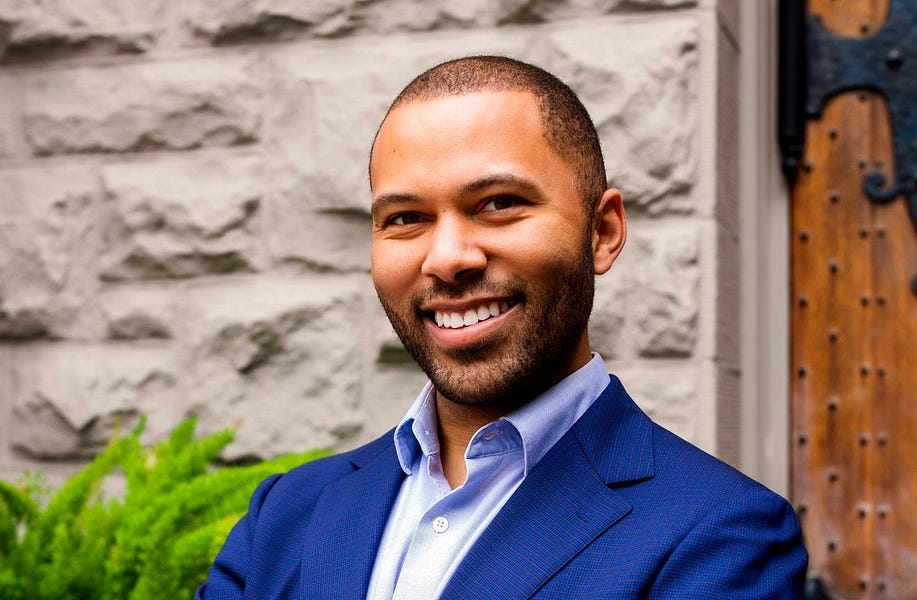
In this episode, transportation planner Warren Logan shares his expertise on how cities can make fast, cheap, impactful improvements to safety and walkability.
Text transcript:
David Roberts
When it comes to reducing transportation emissions, two main ideas compete for mindshare in the climate space. First is switching out internal combustion engine vehicles for electric vehicles. Second is improving the built environment to make walking, biking, and public transit easier, to reduce the amount of miles traveled in cars and trucks altogether.
The conventional wisdom is that the former is faster. There are a few key policy levers that can be pulled to get massive numbers of EVs on the roads, whereas urban improvements proceed one at a time, each facing its own bespoke set of challenges.
But there are people out there at the city level working to increase the speed of those improvements. One of them is Warren Logan, currently a partner at Lighthouse Public Affairs, but before that, policy director of mobility in the Oakland, California, mayor's office, a senior transportation planner for San Francisco, and an intern in the transportation office at Berkeley, California.
In his time working on transportation projects, Logan has given a lot of thought to, and done a lot of work on, improving city processes to make safety and walkability improvements faster and less capital-intensive. He wants cities to free themselves up to make fast, cheap changes that can have big impacts without an enormous investment of time and money.
As listeners will have noticed, I have been somewhat obsessed lately with urban design and transportation issues. I hope you will indulge me in another conversation about the nature of resistance to urban improvements, the kinds of changes that can be made quickly to dramatically improve safety, and the larger need to avoid over-reliance on EVs.
Warren Logan, thank you for coming to Volts and sharing your time.
Warren Logan
Thank you so much for having me, David.
David Roberts
Let's start with a little Warren background, a little Warren history here. Tell us sort of what your position was and what you're more to the point, sort of what your engagement was in transportation and transportation projects. Tell us about your last few years.
Warren Logan
Sure. So before my time at Lighthouse Public Affairs, as a partner in Public Affairs, I was Mayor Libby Schaaf's Policy Director of Transportation and Government Affairs of the City of Oakland, which is two jobs that they pushed together. And I think it's important to share here just quickly that before my time in the mayor's office, I was also a transportation planner in the city and county of San Francisco. And before that was an urban designer as a consultant in the East Bay, in the Bay area here. And before that was a transportation planner again for the city of Berkeley.
So my point here is I've done a lot of different cool transportation work across the Bay.
David Roberts
Yeah, you must know so many NIMBYs. It's like a NIMBY survey you've done with your career.
Warren Logan
Yeah.
David Roberts
Berkeley to Oakland.
Warren Logan
You got it. And this might come out later in our podcast, but most of the subjects I've worked on have been like, "what's the most contentious issue at the time? Changing parking pricing. Let's talk about bike lanes. Let's talk about ... let's keep the city from falling apart during COVID," easy subjects really.
David Roberts
Tell us then at the sort of high level of abstraction, which is just let's address this argument. If I'm Joe Schmo on the street, I know transportation needs to be decarbonized. And I look around and I was like, "oh, there's the decarbonized transportation right there. It's called an electric vehicle. Let's just stop making the gas vehicles, start making the electric vehicles. Problem done. Let's move on to the next problem." I think that is a fairly widespread disposition toward this issue. So just tell us why you think that at the broadest level, why that kind of thinking is insufficient.
Warren Logan
Sure. So to all the Joe Schmos out there, the truth of the matter is that just switching to electric cars is not going to solve all of our climate issues. And I'm sure we'll go into all the different reasons why. But for me, and probably for anyone who's ever been near cars at all, it's not just about the climate that we have to think about. It's like traffic safety as well. And I can only stress this enough, that if you get hit by a car, it doesn't matter if it was an electric vehicle or not. In fact, it might be worse because they're heavier, which is in no way to say we shouldn't be considering electric vehicles.
David Roberts
And you might not hear it coming right?
Warren Logan
And you might not hear it coming, right. So, David, your point is so good, though, that there is certainly room for absolutely decarbonizing our vehicles. I will admit I own an electric vehicle, and I own an electric bike, and that together, those two means of transportation get me really far.
David Roberts
But if you're talking to Joe Schmo and Joe Schmo says, "if I switch out all the cars, what is the remainder? What is left?" What is the ... and remember, we're just talking climate here. Like, there are obviously other issues of urban life, but if we're just focusing on climate, what is the remainder that's left after the electric vehicles?
Warren Logan
Yeah, the remainder also includes public transit, which also we need to work on decarbonizing here in the Bay. And actually, in California, we passed a bill, I want to say last year or the year before that required that all of the transit agencies shift over the next, I think, ten years to electric buses, or electric and hydrogen, alternate fuel sources. So it's not just that we need more EV cars. We need EV trucks for all of the deliveries. We need EVs for the buses and similarly for trains. Not every train is electric. We're very fortunate here in the bay that Bart runs on electricity, but there are plenty of trains across the country that still use gas and diesel, et cetera.
So there's plenty of room for improvement across every subsector of transportation.
David Roberts
Continuing as Joe Schmo here, I don't know why I chose this name, but we're stuck with it now. Another sort of, I think, intuition a lot of people have in this exchange is, "okay, I get it that maybe EVs aren't enough. I get it that there are other goals. We want quality of life, we want walkability, things like this. We want more public space." But in terms of speed, and this is really where the rubber hits the road in this argument.
Warren Logan
Literally.
David Roberts
Yes. I think Joe Schmo thinks, just quitting making ice vehicles and starting making EVs. I can see that happening quickly. The market seems to be accelerating, but it seems like changes in urbanism, changes in urban form, changes in building, changes in the way we do streets, this kind of thing take forever. Aren't they just intrinsically slower?
Warren Logan
They don't have to be. Let me kind of break apart what you just shared, the first of which is that I don't think that speed is the only thing we're trying to optimize when it comes to transportation, even though I think you, Joe, and all the other Joes out there think I want to get there quickly. Absolutely. I'm not here to delay your travel, certainly. And yet, one of the things I've learned in my time as a transportation planner is that people really discount just how bad traffic can get at times and that they're part of that issue, and that once you get to your destination, parking is not typically readily available depending on where you're going.
And so oftentimes when people say, well, my door to door time is only ten minutes, that's not really true. And there are plenty of studies that have been conducted, in fact, by my alma mater at UC Berkeley showcasing that people underestimate how much time it takes to drive somewhere and overestimate how much time they think it will take to take any other form of transportation. And I think that that's incredibly important. The second bit here. And I think this is kind of fascinating, that we've all gotten kind of explore this during COVID Is that the time that it takes for you to travel from point A to B, B to C, and C to A again or wherever you're going may not necessarily be as fast if you are not driving.
But you are able to recoup the value of that time by answering emails or taking phone calls while you're sitting on an ideally quiet train, getting from your place to place. And then the last bit too, is that not everyone can or even wants to drive. Like fundamentally, driving is, I think, an exercise that people have truly believe that it's like the most fun thing you can do. And that's not really true for most people. Like, driving kind of sucks a lot of times.
And we kind of have this idea that if only there was one more lane or if only the seats had air conditioning, I would enjoy this really rote exercise that gets really tough. And you're just I mean, there's a thing for it. It's called road rage.
David Roberts
Well, you'll notice that the number one most notable feature of car commercials is that they only contain one car in them, only the car you're supposed to buy. There are never any other cars on the street. I'm like, "where is that?"
Warren Logan
Like, where's the rest of this? Right? You never see a commercial of a car like, "hi, this is you stuck in traffic all day because this is what it's like to drive in a real city, or even in suburbs for that matter."
David Roberts
All of that is interesting about speed of travel within the city, but that was not exactly the speed I was asking you about. I mean, sure, now I'm fascinated and want to follow up.
Warren Logan
I understand your second question, which is like, the speed of implementation, right?
David Roberts
Yeah, speed of implementation. How fast are we reducing greenhouse gas, I guess, is where the rubber hits the road. Full of automotive metaphors today. This is not on purpose.
Warren Logan
I love it. It's great. I'm going to get my book of idioms, and I'll see if I can go toe to toe with you, which there's one right there. So in terms of speed of implementation, I think that I'm going to call BS, right? Like a. some people really can switch their cars quickly. That's true. There are people with means to go out and buy electric vehicles, but they're a. not free, nor are they cheap. The lowest price EV is, I think, the Nissan Leaf maybe. And you're still pushing like 40K. That's an expensive car for a lot of people.
There are plenty of people ... and I want to just kind of talk about the ways in which people interact with the city, or even with suburbs, or even rural areas, is that there are lots of people who are in some ways so low income they have to drive, which is a really hard thing for people to conceptualize. But let me just unpack that for a second. We in America have actively discouraged people from living near their jobs vis-a-vis suburbanization. And then as more of, I would suppose, like my generation especially, have started shifting back towards city centers the price of housing in, I want to say all the cities, wildly here for a second, has gotten really, really high in places that are close to jobs.
Which means then that the lower income folks, of whatever age we're talking about for a second, are then actively discouraged from both living in a city and actively pushed to farther and farther places that are not well served by transit, not very accessible by buses, or trains, or even bikeways, or by extension jobs. And Oaklanders kind of face this a lot where I live. But it's true of a lot of places that you have no option but to drive, but for the fact that you barely can really afford the car that you're driving, and there isn't an option for you to upgrade to a more efficient car.
I think that that's kind of the fantasy that a lot of people want to live in, that if you own a car, you also have the means to maintain that car properly and by extension, perhaps switch the car that you're driving overnight. Oh, I just decided tomorrow I'm going to go buy a Tesla. That's not real. And so for a whole swath of people who are out there on our streets driving, their option for switching vehicles is really, really limited. And I can't speak for many other cities, but I can at least say for the Bay.
If I step outside of my house right now, I can watch a bunch of cars that were built in the 90s or even early 80s. None of those people, and this is sort of a sweeping generalization, but I would just expect that most of the people driving those vehicles probably can't afford even a moderately priced electric car. Because we're talking about buying a $1,000 car, not a 10, or a 20, or 30, or $40,000 car, let alone financing a car, right. And I'm not even going down a rabbit hole of people's credit and their ability to buy cars.
David Roberts
It's just one more way that we've made it expensive to be poor in the US, right? Like they are paying a ton for gas right now, but do not have the means. They could save money in the long term by buying the electric vehicle, but you have to have that upfront capital. If you don't have it, you're just stuck with these ongoing costs.
Warren Logan
Absolutely. And so that is just one example of many that I will share with you in just a second of why this fantasy that we're living in that everyone can just switch to electric vehicles is just not real. So let's now shift gears to all of the other tools in our toolbox that we do have at our disposal. And this is kind of the thing I've said to lots of people, right, that we choose not to use effectively. So if we wanted tomorrow to have half of our streets dedicated to walking and bicycling, that is actually possible.
And I know it's possible because I did it. And so you probably saw the kind of beginning of COVID, let's rewind two years plus a few months, right. A number of cities started implementing shared streets, healthy streets, slow streets, whatever name we gave them. I think that that movement proved that we've just been sitting on this gold mine of opportunity. And I want people to truly examine why is it that we refuse to exercise our ability to make that type of big shift, why we choose not to use that power, right? And so implicit in that question is holding all of your listeners by having them hold aside their opinions of whether or not we should have done that, just like set that aside for a second, because I've gotten enough heat about that for now.
But to at least focus on the fact that not only was it possible, but it was possible in a lot of different cities with a lot of demographics, a lot of different economics, right, like a lot of different politics, that lots of different places did this really big thing nearly overnight. And not just like when I say nearly overnight, like over a couple of years. I mean, the time and space between a few text messages between myself, Mayor Shaaf and the DOT director here in Oakland, and then them setting up the signs is, I think, 72 hours. So I'm not making this up when I say that truly these types of changes are possible.
However, and this is kind of the big caveat about speed, is that we have to choose to want that reality. And I think that that's the part that really gets me about let's just switch everybody to EVs, is that it maintains the sort of Americana suburbanized fantasy that, like, we all drive a car, we all live in our homes, and everybody has this perfect little access to all their little resources, and that's not real. And so the moment that you acknowledge that that's not happening for a lot of the people who live around us, including perhaps ourselves, you then have to examine, I would hope, what are the other potential futures that we need to not only just start considering, but truly start implementing, right? Like right now.
David Roberts
To pause on that for a second, because that was a fascinating ...
Warren Logan
Diatribe?
David Roberts
Natural experiment, sort of field experiment that nobody had really planned very far in advance. What's your sense of how well that is? Because as a good urbanist, what I would like to be true is everyone saw these open streets, strolled down them, saw fewer cars. It was like, "Ah, it's a new world. We can't ever let this go. We're going to make this permanent." But my understanding is that there's a lot of pushback. A lot of cities are under fire for doing it. A lot of cities have reversed a lot of what they've done.
Do you have a sense sort of overall how well those closures are holding up?
Warren Logan
I think most of them are gone, right? I can even speak for Oakland. Shortly after I left the mayor's office, so did the slow streets. And I won't go down that path right now. But I think that those types of really big decisions require courage and leadership in a way that a lot of people found at the beginning of the pandemic when they said, we have to do something because the sky is on fire here. And in California truly, the confluence of both COVID and the historic fires really felt like the world was falling apart and that suddenly everything was on the table.
I don't think that we stopped. And by we, I mean, like, cities generally stopped doing slow streets just because they weren't working. Because that's not true. They were working, and a lot of people really enjoyed them, and where they weren't working highlighted, and I'll kind of use the Oakland example is the one I know, but for the streets and the folks who lived on slow streets that said, "this hasn't actually made me want to go outside more. I'm not walking more or whatever," we still measured that traffic was down. We still measured that traffic was safer, right.
That speeds were lower, that DMT was lower, right. That they did, in fact, have a positive impact, even if people didn't necessarily want to acknowledge it or that that wasn't their primary sort of metric of success. I think that they went away because, it's kind of difficult to kind of go back to this, right, but I think they went away because we're not comfortable with change. And I feel like we're so close to just completely turning over into this different paradigm.
And honestly, I'm not entirely sure why we look at good ideas and say, "that's not possible. That's not for me, or that's too good for me." And I heard that time and time again as people's feedback about slow streets, not that they didn't want, like, traffic-calm streets, or even cleaner air, but that they felt like, "you're not doing this for me, you're doing it for someone else to try and kick me out of my neighborhood," right. And I completely understand where that distrust comes from because as a Black man myself, I get it. Like, I really do. And we use the G-word gentrification, or by extension, displacement, as a really great tool to actually discourage investments in low income and Black and Brown communities.
And I will try and avoid going down this whole rabbit hole here with you.
David Roberts
But, well, I mean, it's at least worth noting. We have such a dysfunctional urban administration in this country and urban policies that people now basically think, "if you make my neighborhood better, that's a threat to me."
Warren Logan
Exactly right.
David Roberts
"Don't come in here making my neighborhood better," right. When people are out angry and yelling at you because you made their neighborhood better, to me, that is just like the endpoint of so many dysfunctional dynamics.
Warren Logan
It is. It's representative of the history of our country. That's the tough part. That when people ask, just as you did, "why did slow streets fail, right? Or why did they go away?" There's so many like, how much time do you have, right? Like, there's so many different reasons. Part of it is that all of us wanted to go back to normal, even though COVID still raging in a lot of parts of the country, right. The climate didn't get any better. In fact, it got worse at the same time, I think too, continuing to implement slow streets is like a full-time job that a bunch of my staff didn't sign up for.
And in fact, it wasn't really their job. We pulled together this kind of ragtag team that made this program work at the time, but the moment that everybody got back around to saying, "well, I want all of my other goods and services to be delivered to me from the city, or by extension, whoever," right. The priority shifted back to long-term capital planning and long-term delivery of safety improvements. And my primary thesis around that was like, "don't do that. Don't don't go back to doing things the slow, expensive, difficult way," right? Like choose to have a 50 miles network of slow streets that need upgrades on a regular basis, but that you now have a new, a completely different foundation to build from, holding even in that all of the consternation that people felt about them.
But truly, one of the things that I repeatedly told people is like, "I don't want to keep apologizing for not implementing the tools that I know we can." When someone gets hit by a car and yells at me and says, "why didn't you do something?" The underlying answer is, "yeah, I could have done something. And we chose not to because of insert any number of reasons," and I don't want to do that anymore.
David Roberts
One thing I always think about this, that the slow streets always make me think about, is several years ago I went to Barcelona because this guy obviously wasn't just one guy, but he was sort of one of the sort of visionaries who envisioned it in the first place and had been pushing for it for years. Salvador Rueda wanted to turn over more than half of Barcelona streets to public space, basically return them to people. But he didn't just go in and do it, he spent years, he revised the bus system so that it was much more grid-based, and linear, and much more frequent. And you have to deal with walking paths and trees, and you have to put the pieces in place, such that when you get the streets turned over to people, they're nice and functional, which is very different than just like, parachuting in one day and putting up an orange cone.
Warren Logan
Right. And what Barcelona has that virtually no American city, save for parts of San Francisco and New York, right, is density.
David Roberts
Yes.
Warren Logan
And that is such a critical issue. And I think this gets all the way back to, "why can't we do things quickly? Why can't we just shift to electric cars?" It's like, yeah, because if we don't shift to electric cars, we then need to acknowledge that we probably should have built denser housing next to each other.
David Roberts
Shoulda, coulda, woulda.
Warren Logan
Right. And I think the other part too, though, kind of to your point about Barcelona and a number of other places, is that they did that when we had time.
And I think that one of the parts that I'm actively, and I think a lot of other climate resilient folks are on the same bandwagon, is that we don't have time anymore to keep having these debates. We don't have time anymore to just keep talking about what the future could be like if we all got our act together. Because the science has proven time and again and just like literally look outside, that we have run out of time on this issue, and so we got to start making big moves yesterday.
David Roberts
Yeah, well, let me ask about that, because this is a tangled and contentious topic in urbanism, but one of the reasons that things tend to move slowly in big affluent cities when you're trying to free up road space — or get rid of parking, or rezone or whatever — is that the mechanisms of democracy in a city basically end up empowering a relatively narrow set of affluent homeowners.
Warren Logan
Absolutely.
David Roberts
So to the extent there's democracy or what looks like democracy, it's all pushing in the wrong direction. And so when you talk about going faster, when you talk about let's just do things, it's hard to avoid at least the impression of let's have less democracy, let's have less public feedback, let's run roughshod over people. How do you navigate that?
Warren Logan
So, great question. I think that what's interesting, and I got that pushback and continue to, but that what was interesting about, let's say, like "tactical urbanism". I'm going to just zoom out slightly from slow streets themselves.
David Roberts
Define that for our listeners.
Warren Logan
Absolutely. So, dear listener, "tactical urbanism" is when you use kind of not found objects but materials like jersey barriers, water walls, paint, signs to affect the type of right of way change that then hopefully you'll come back and literally and figuratively cement later on.
David Roberts
Right, but that doesn't involve really infrastructure change. It's really jury rigged, cobbled together urbanism.
Warren Logan
Exactly. It's like style on a dime kind of thing over here.
David Roberts
To return to Barcelona, the first superblock they implemented, the first time they actually tried to close the streets and hand them over to people, that's what they did. They parachuted in over one weekend and just put like orange cones and plant pots on the streets and then got the neighbors together the following week and like, "hey, look, you have a superblock. What would you like to do with it?" Not, "should we do this? But now that it's here ..."
Warren Logan
"What now?"
David Roberts
"What would you like to do with it?"
Warren Logan
Well, and that's what's so interesting about to your point about if by going fast, do we lose democracy? And I don't think we do. And let me kind of play out a bit of the ways that all of these different, again, tactical urbanist projects programs that we launched during COVID actually had more engagement. I met with community groups twice a week for half a year just on slow streets.
David Roberts
Oh, my God, you poor man.
Warren Logan
No, but don't get me wrong. I like engagement. I like people. And like well, I don't necessarily enjoy getting yelled at all time. It is actually helpful because once we've really got to the heart of the matter, we found out so many different issues that people had with a lot of the other programs we were running that we would have never found out had we not been engaging with them on such a regular clip. And this gets us back to my point about the trust, or really distrust in government issue, is that you don't build trust by talking about something for ten years and then not doing anything.
David Roberts
Wait, that's Seattle city government's central strategy. What do you mean it doesn't work?
Warren Logan
Well, I'll give them a call. No, I can't help you there. But I lived down here. But I think that that's the other really critical element that multiple people, I think begrudgingly shared with me was that they're like, "listen, we may not like the Slow Streets Program all that much, and we really hate that you didn't call us the day you did it, but it sure is nice to have all of the senior leaders of one department on a regular phone call with us so we can air our grievances on a regular basis. And then, better yet, see the next week that you've made changes that we ask for."
And that that is the seminal thing that I want people to take away from these programs, is that you have to expect that level of service from your government, and that anything short of that is not democracy. And that this whole system that we've built so far really only benefits a few people, and they're really good at making sure it stays that way.
David Roberts
Yeah, a side question related to that. One of the things I heard from city administrators about kind of the COVID thing is, in a sense, by not being able to have meetings in person, they had to have them online. And a lot of them said that actually brought a lot more people into the process and a much more diverse array of people into the process. Like, if you're having a meeting on a Tuesday evening, it's all the old white people in coordinating T-shirts who ...
Warren Logan
Oh, I love coordinating T-shirts, though.
David Roberts
Who have show up. But if you have it online, then, like, normal people can come. Did you find that too?
Warren Logan
Yes, absolutely. And frankly, just from a time standpoint, it was much easier to jump from ... now, granted, this is where my mental health probably suffered ... is jumping from one meeting to another over, and over, and over again. But you cannot discount, just your point. The fact that I could then meet with way more people because I didn't need to travel from one side of the city to the other. The other bit was and again, this kind of goes to, like, boundary setting that I'm working on, of course, is that it's also easy to have meetings with people at night or in the mornings at times that are not the best meeting times.
But if you want to have a 30 minutes phone call with me, that's easier if I can also be cooking dinner for my family at the same time. And that is true not only for myself, but also for the people I'm engaging with that are like, "I don't have time to come down to City Hall and talk to you about this. I'd rather tweet at you and get a response, right?" Like, God forbid any of your listeners go look at any of my tweets. I apologize in advance, but there are plenty of instances where someone or lots of people asked a question, and I took the time to really spell out, "here's how we got here, and if you want to talk more, give me a call, right?"
That type of engagement via zoom, but also digital in the form of social media, can really support a lot of transportation engagement.
David Roberts
And it seems also, I mean, this is slightly speculative on my part, but just psychologically, I feel like a lot of the things people bring up as objections to these kind of projects, like, I'm not telling you anything, but just listeners. Like, if you go watch the CSPAN or read the transcripts from some of these community meetings, the things people cite as objections to bike lanes and apartment buildings are so ...
Warren Logan
They're comical, if not homicidal. It's crazy.
David Roberts
They defy parity. But I feel like a lot of that is a little bit of displaced, like, "you're not listening to me, like I'm not being listened to," and that maybe if people got the sense like, "oh, I do have an open channel, there is someone listening and responsive," that some of that might fade. Is that too optimistic?
Warren Logan
I think that's true, kind of. And here's the important part that I really I must stress this, is that you cannot equate me listening to you getting what you want.
David Roberts
Yes.
Warren Logan
I could have heard you, and the answer might be no.
David Roberts
It could be that you said something, and I did decide it was wrong.
Warren Logan
Right. We're not just like, right and wrong, but that if we use that as the barometer for my listening to everyone, we wouldn't actually which is kind of how government works. We wouldn't get anything done because we'd be going left, right, left, right, left, right, left, right. And that's, I think, kind of to the very end. That's why government is slow, because if you truly listen to everybody, you're like, "okay, I got to hold on. I got to take a tiny little step, did the sky fall?" I think the other bit, though, and this is really important, about, again, like tactical urbanism and big moves, et cetera, is that there are lots of activities that cities engage in every single day, every week, every month, every year, that if you called them something else, you would think that they were actually tactical urbanism.
So I just want to give you and your listeners, like, a couple of examples and hopefully that will elicit ... but like, "yes, it's possible, and we don't have to fight over this so much." One is every single time that someone like a municipal utility does construction on your street, they file for an encroachment permit. It usually doesn't take very long to get that, maybe less than 30 days. So we are, in fact, capable of doing these plans quickly. The next bit is that they go set up a bunch of orange cones and traffic signs and say, "merge left", "road close", "detour", whatever.
And we all accept that on a daily basis in our neighborhoods, on our freeways, on our site, whatever. That's just like, "okay, that's a change, and we'll see what happens," right? And we kind of adapt to it pretty much immediately. That happens all the time. But instead of it being construction for a gas line, take that out and put kids playing in the street. Which in fact brings me to special event activities. It is not uncommon that cities in my own city, and I'm sure Seattle does this too, because I've been there and I've done it, also permits special events, right?
So let's say that there's a concert in downtown, and they've closed some of the streets so that people can walk around more easily. Just take those instances. And then instead of it being once a year, it's every weekend, it's every month, and maybe every day. And that's the kind of thing that we also really kind of encourage through our second program. So, like, we had slow streets and we had flex streets, and for a lot of cities, you probably know these as like, parklets or outdoor eateries. But that's the same concept where instead of saying, "well, this is for COVID," it's like, "maybe it's just nice to sit outside and drink a beer."
David Roberts
This gets to another enduring mystery of the of the kind of sociology of this, which is you do those things, you close down a couple of streets downtown for a farmer's market, or a concert, or just a festival, or whatever, an event. People love it.
Warren Logan
People love it.
David Roberts
And yet it never occurs to them to think ...
"What if we did more of this?"
"What if we did this like, twice a year, right? Hey, what if we did it every week?" Like, why doesn't it translate? Or they're just not channels for people to express that positive feeling.
Warren Logan
Or I think it's scale, and it's ... going all the way back to our engagement, right ... like, we never asked you what I mean. So embedded in Oakland's Flex Street Program was actually the sort of Easter egg that I left that was like, "we should think about this for long-term special events. That what if we didn't say slow streets are for people biking and walking," which I think is a net positive, but people have some feelings about that. "What if we said if you want a festival in your neighborhood or if you want a farmers market?"
Those are things that people say, "oh, yeah, I'd like having a weekly farmers market nearby. Okay, well, we got to close the street for that." And suddenly when you start to identify the activity that people are willing to give up their cars for, effectively, that's where you really get the special sauce. And it's funny because in Oakland, it turns out one of those special activities that I did not expect is rollerblading. Yeah. All of a sudden we have full blown roller discos that popped up across the city, and now there are clubs of people who show up.
And I don't want to say it's like a flash mob situation because it's planned, but it's amazing, right? And I think that that's the part. That ...
David Roberts
These are the car free streets.
Warren Logan
Yeah. So they're not only on car free streets, but they've since taken them to parks. There's like a weekly ... like this is so Oakland, but once a month there's a drag show on wheels called "Rolling with the Homos". And it's fabulous, but it is also an outgrowth of like a bunch of people rollerblading more because of COVID. And that tapping into, like, what activity do you enjoy more than driving? Which, by the way, lots of activities.
David Roberts
Yes, almost all of them.
Warren Logan
That's the trade off that we need to make. And it can't just be, "oh, I want to make the street safer," which don't get me wrong should be enough, but I want to make the street safer for kids to play in, which would be awesome on its own, but that people are selfish, and that's great. Like, I love that people are selfish — and I don't love that, but I'm being facetious. But finding out what they value from like a social activity standpoint is often a really winning strategy, for then having conversations about whether it be tactical or urbanism changes to your streets or long-term capital improvements to a highway, for example.
But I will share even just kind of a similar example is that in Oakland there is a street, I won't name names because then people will be mad. But there is a street that the city planned a protected bikeway on, and a very large number of the businesses were like, "you're going to take away parking spaces, and that's going to spell the end of this district. So hell no, we won't go."
David Roberts
Let me just insert here. This is one of many areas in urbanism where the research question has been answered. It is settled. You do not lose business when you lose parking spaces. When you increase bike and pedestrian flow, you get more business. And yet that evidence never seems to play any role in the next round of argument over this thing. This is one of the mysterious things about urbanism, is like, we learn things, but they never seem to ...
Warren Logan
They never seem to stick.
And I think let me touch on that for just a second, because having helped manage a parking program in the city of Berkeley, I can tell you what's really happening. I felt like such a varied experience in transportation. Like, "wait, I have the answer to that." It turns out, and this is the people are selfish discussion, is that when business owners and employees say, "you're going to remove parking," I think that everybody else hears, "oh, for your customers." Of course you're worried about your customers. That's not true. I mean, they might be worried about their customers, but truly, if you get down to it, what they're actually saying is," I depend on driving to work," for whatever reason.
There's plenty of very good reasons why that happens. We're not going to go into that. But what they're really saying is, I get here via a specific mode, and your restriction on that mode then means that you might be compromising my ability to work and to feed my family. And I've met a number of women, for example, who are like, "I get off work at midnight, I work at a bar, I work at a restaurant, whatever, and you're not going to tell me that I need to walk a quarter of a mile to the bus stop at one in the morning. That's just not happening."
Without diving too far into this, I just want to kind of give air to why people land where they do. That being said, circling back to the sort of tacticle urbanism bit, a lot of these same businesses said, "well, we don't want to live with our parking spaces. Yada, yada." And then when we opened up the Parklet Program, the Flex Street Parklets, suddenly all of them had outdoor eateries. And so I asked them, like, "well, you got rid of 'your parking,' for this dining experience. I thought the sky was going to fall down if you lost your parking."
And like, "oh, well, the trade off was that I got more business. I can guarantee that I will get more business with more space," and there's a lot of things to unpack there. But the salient point that I keep coming back to is that we need to start asking questions in a very different way, other than, "how do you feel about the ways I want to address climate change? How do you feel about a bike lane?" Because that's not working. And what is working is all of these other tools that we don't mean to be using for this strategy, but I genuinely believe that if we started by saying, "hey, this neighborhood has a monthly eatery stroll, they close off the main street for all the restaurants and you take the kids out or whatever."
"What if we did that every weekend?" I bet you most people would be like, "that sounds kind of nice. Yeah, let's do that, right?" And then suddenly you might say, "this has been so lovely, maybe we should extend it to Friday, Saturday, and Sunday." Which is in fact what some, I think it's in Toronto, there's a business district, and forgive me if I have the wrong city. So dear listener, if you have the right city, call me. But that they close their bar district to cars a. because then the businesses really enjoy it, because they have way more people, and it's actually safer.
But the other side of it is that it also means probably fewer emissions because people are like, "well, let's carpool or let's take a Lyft, or let's take the bus, or whatever," because the streets are restricted in a certain way.
David Roberts
Did you ever feel that you had enough of these positive examples under your belt? Like, "look, we closed this every so often here, and it went well. And like, the now the businesses are on board." Did you ever feel like you were able to build momentum off those, such that the next one was easier? Because, like, part of what seems maddening about urbanism to me is that every one of these fights seems to start ...
Warren Logan
All over again.
David Roberts
From friggin ground zero and cover all the same ground again. Did you ever feel like there was momentum, like you were getting ahead of steam?
Warren Logan
I think that we did a little bit. And I kind of want to use an example of "a tale of two different bikeways" as a way that, I think, we are starting to break through some of this ice. So there's Telegraph Avenue in Oakland that spans, it goes from downtown Oakland, like City Hall, basically, to the foot of UC Berkeley, funny enough, and the portion that runs from downtown through uptown Koreatown Northgate, and then through a district called Temescal all has, what was the time, a tactical urbanist paint and post protected bikeway. And that pilot taught us a lot of things, and most importantly, taught us that we we can't do those types of pilots anymore because they took too long.
And people were like ... it just got really messy.
David Roberts
People objected to the bike lane when it was there. Like, it was controversial, impractical.
Warren Logan
Yeah, like super controversial and still remains controversial for a whole host of reasons. I'll kind of break apart in a second. So as we were engaging on 14th street, which is actually like, it starts just where Telegraph begins in downtown that goes East/West instead of North/South, we said, "hey, we want to put a protected bike lane here as well." And this is the business district that was like, "you're going to take away our parking. This is going to kill our neighborhood. And we don't want what you did to Telegraph," right? "We don't want to have that."
And that's like a totally fair statement. That pilot had some really big issues, and pilots shouldn't last five years, they should last five months.
David Roberts
At a certain point. You're making mockery of the idea of tactical urbanism when you're ...
Warren Logan
That's right.
David Roberts
When your flimsy little posts are five years old.
Warren Logan
But what we did learn, and this is where I hope that we have some momentum, is that when we injected the parklet part of all of this because, like insert COVID and this timeline, watching all of these business owners happily, gleefully take away, in some cases, half of the parking on their block, if not more, for outdoor dining, and not a peep from many of them, saying, "well, you took my..." because they're the ones taking it away, right.
We got to realizing that the space allocation, again is a matter of programming, where if you just say, "well, I'm making this space, instead of for your car, I'm making it for someone else's bike," that's a really difficult place to start the conversation. But if you said, "hey, can I make more space for your business on this street," and by extension for more just like vital, vibrant activity of people walking around, they might say, "yeah, that sounds great. That's going to be good for me."
"Oh, well, are you sure? Because that might require taking some of these parking spaces."
"Well, if I get to use that space for myself as well, then that might work."
And that's one of the things that we did see in the 14th street design that just went to council. I want to say two weeks ago, that they passed unanimously was that some of the major changes were based on lessons learned from this Parklet Program, where we actually took away even more parking to make these mega, bulb-out plazas, that suddenly make the street more of a destination.
But it's that type of creative thinking that a. it's just difficult, and b. is the type of thinking that we need to be using to really tackle our obsession with cars.
David Roberts
Oh, my God, are there reforms? I mean, some of this obviously is just psychology, and sociology, and how you approach it, and how you communicate, and all that kind of stuff, and how you think about it. But there are also mechanisms of government, and mechanisms of review, and laws and stuff gumming up the works, in some sense. So are there city government reforms that are relatively simple that you could think of that would just ...
Warren Logan
Fix all of this?
David Roberts
Well, at the very least, ease the flow, at least move things along more quickly.
Warren Logan
So there are a couple, and I have actually written like little mini essays on my Twitter about this, because I genuinely like, I don't want to gatekeep ideas that I have. I want people to be thinking about them too and saying, "wait, no, I don't like this. Let's switch it to this."
I will give you two different ideas that I've come up with so far. One is in the traditional, capital improvement process. And let me kind of just zoom out for a second and explain that. Dear listener, whenever there is a multimillion dollar capital improvement, which is just an infrastructure project on a road in your city, there is a planning and engineering phase, which is both, like, the engagement component, there's design, and then just literally like, the engineering component of, like, "will this stand up? Am I going to dig into a pipe?" Like, all of the very specific minutiae that make sure that your street doesn't completely fall apart. And then there's the actual construction phase, and then you g