
This Sustainable Life
866 episodes — Page 9 of 18

Ep 458458: The Spodek Method: How to Lead Someone to Act Joyfully Sustainably
I’ve taught a half-dozen people the technique I use in this podcast---the hosts of the other branches of the This Sustainable Life podcast. They started calling it The Spodek Method, so now I do too. It's enabled me to reach amazing people, many of global renown, who enjoy the experience. It doesn't alone solve all the world's problems, but it works. The Spodek Method leads a person to share and act on environmental values.You can do it too with communities you’d like to join. You would contribute to a mission of changing culture from seeing stewardship and sustainability as a burden, chore, deprivation, and sacrifice to wanting to do it based on experience, expecting joy, fun, freedom, community, connecting, meaning and value. Why Learn the Spodek Method?Before: Deprivation, Sacrifice, Burden, ChoreAfter: Joy, Freedom, Fun, Community, Connection, Meaning, PurposeIf you would like to lead your community, try it. If you’d like to grow yourself, have others do it on you.This episode presents my teaching Jonathan Hardesty The Spodek Method during our second conversation. No planning. It happened spontaneously because we had a great rapport, he loved his experience, and was interested in leading a community craving leadership on sustainability instead of being told what to do.If you want to start a podcast branch and join the family, contact me. It takes practice, but once you start, you’ll love the experience, the team, and being changing culture.Think about the people you’d like to meet most in the world. The Spodek Method enables you to lead them in a way they enjoy and invite you into your life. Hosted on Acast. See acast.com/privacy for more information.
Ep 457457: Jon Levy, part 1: The Art and Science of Cultivating Influence
Jon is famous for bringing people together and creating community, see the New York Times article on him below. He invited me to a few of his events before the pandemic and they lived up to the reputation.His latest book, You're Invited: The Art and Science of Cultivating Influence comes out the day I'm posting this conversation, May 11. We talk about how the book came to be. We're both geeky and prone to talking theory, but neither of us would stop there. He shares how he put theory into practice. At first he makes it sound simple, but he also talks about the challenges and struggles he went through and how far back he had to start from.For our common interests in creating community, I've wanted to bring him here for years. Hosted on Acast. See acast.com/privacy for more information.
Ep 456456: Jonathan Hardesty, part 2: How to Start a Sustainability Podcast
This episode is really two.Remember that he started art late in life, so the first two-thirds talks about art. Also his experience with his kids and family picking up trash. You'll enjoy hearing his and his family's joy doing it. I imagine you'll also feel sober about his unpleasant surprise at how much trash there was to pick up.I hope you'll feel inspired to pick up trash too. I think you'll find yourself surprised at how much more trash you'll find when you pick it up than you expect from just looking.The second part, I walk him through how to lead someone in my technique for this podcast. He's considering starting a branch in the This Sustainable Life family, specifically to reach evangelicals, especially in Texas, a group I'm enthusiastic to connect with. Most environmentalists approach them judgmentally and critically, which prompts division.As you'll hear, Jonathan and I expect to connect with them so they enjoy acting.If you're interested in starting a branch of This Sustainable Life, this episode shows you how. If you want to meet the top people in any areas you want to become a leader in, email me after listening to this episode. I want to start you off.Jonathan's page: Journey of an Absolute Rookie Hosted on Acast. See acast.com/privacy for more information.
Ep 455455: J. B. MacKinnon, part 2: What happens when you pay for quality?
Our world values cheap and disposable---in food and doof packaging, furniture, cars, and near the top of the list, clothes, especially fast fashion. The world is paying for it in the sense of overfilled landfills, plastic disrupting endocrine systems of animals including us, oil wells everywhere, garbage patches in the ocean, and so on.I see us paying the price. We're always craving. Stuff always breaks. We feel compelled to buy new phones when the old ones should have kept working. We're obese from snacking. We're twisted up inside polluting while trying to convince ourselves we're not.J. B. MacKinnon's new book The Day the World Stops Shopping examines this part of our culture and for this podcast he committed to go against that trend by buying a quality pair of jeans from a place he knew the sourcing, labor practices, and everything else, the opposite of fast fashion. He also paid significantly more for them.Was the premium worth it? Should you do the same? What can we learn from his experience?We talk about these questions and he experience from many perspectives. Here's the description of his new book, The Day the World Stops Shopping:"We can't stop shopping. And yet we must. This is the consumer dilemma."The planet says we consume too much: in North America, we burn the earth's resources at a rate five times faster than they can regenerate. And despite our efforts to "green" our consumption--by recycling, increasing energy efficiency, or using solar power--we have yet to see a decline in global carbon emissions.The economy says we must always consume more, because, as we've seen in the pandemic, even the slightest drop in spending leads to widespread unemployment, bankruptcy and home foreclosures.Addressing this paradox head-on, J.B. MacKinnon asks, What would really happen if we simply stop shopping? Is there a way to reduce our consumption to earth-saving levels without triggering an economic collapse?At first, this question took him around the world, seeking answers: from America's big-box stores, to the hunter-gatherer cultures of Namibia, to communities in Ecuador that consume at an exactly sustainable rate. Then his thought experiment came shockingly true, as the coronavirus brought shopping to a halt and MacKinnon's ideas were tested in real time.Drawing on experts ranging from economists to climate scientists to corporate CEOs, MacKinnon investigates how living with less would change our planet, our society and ourselves. Along the way, he reveals just how much we stand to gain.Imaginative and inspiring, The Day the World Stops Shopping will empower you to imagine another way. (From Random House Canada)J. B. MacKinnon is a journalist and writer who lives in Vancouver. He is also the author of the nonfiction books Dead Man in Paradise and The Once and Future World and is the co-author of the book The 100-Mile Diet, which popularized the local food movement. Hosted on Acast. See acast.com/privacy for more information.
Ep 454454: Richard Rothstein: Racial segregation in generations of U.S. law
Today’s guest, Richard Rothstein, is one of the experts on how the law has clearly and explicitly kept freedom, prosperity, longevity, opportunity, and more from people based on their skin color. This is no hard-to-believe conspiracy, tenuous claim, or cancel culture labeling. He shows laws in black and white the law says you can’t rent to blacks. Across the country in many spheres of life for generations. No secret. Plus he traces the repercussions that occur when one group can do things another can’t and how they ripple throughout society.Is his material valuable? Here’s one measure. I’m happy that my book Leadership Step by Step has over 100 reviews, averaging close to five stars. I know a lot of authors, editors, and book marketers. People seek that three-digit barrier. Richard wrote The Color of Law, a book on laws. That’s like a book on accounting. His book has over twelve thousand reviews, overwhelmingly five-star.As usual, I bring you the personal and leadership aspects of the work. I’ll link in the notes to some videos of him describing his work to whet your appetite to read the book. I’ll focus on bringing you him and the story behind the story.VideosRichard Rothstein discusses The Color of Law on Fresh AirRichard Rothstein in conversation with Ta-Nehisi CoatesFrom his book page:In this groundbreaking history of the modern American metropolis, Richard Rothstein, a leading authority on housing policy, explodes the myth that America’s cities came to be racially divided through de facto segregation—that is, through individual prejudices, income differences, or the actions of private institutions like banks and real estate agencies. Rather, The Color of Law incontrovertibly makes clear that it was de jure segregation—the laws and policy decisions passed by local, state, and federal governments—that actually promoted the discriminatory patterns that continue to this day.Through extraordinary revelations and extensive research that Ta-Nehisi Coates has lauded as "brilliant" (The Atlantic), Rothstein comes to chronicle nothing less than an untold story that begins in the 1920s, showing how this process of de jure segregation began with explicit racial zoning, as millions of African Americans moved in a great historical migration from the south to the north.As Jane Jacobs established in her classic The Death and Life of Great American Cities, it was the deeply flawed urban planning of the 1950s that created many of the impoverished neighborhoods we know. Now, Rothstein expands our understanding of this history, showing how government policies led to the creation of officially segregated public housing and the demolition of previously integrated neighborhoods. While urban areas rapidly deteriorated, the great American suburbanization of the post–World War II years was spurred on by federal subsidies for builders on the condition that no homes be sold to African Americans. Finally, Rothstein shows how police and prosecutors brutally upheld these standards by supporting violent resistance to black families in white neighborhoods.The Fair Housing Act of 1968 prohibited future discrimination but did nothing to reverse residential patterns that had become deeply embedded. Yet recent outbursts of violence in cities like Baltimore, Ferguson, and Minneapolis show us precisely how the legacy of these earlier eras contributes to persistent racial unrest. “The American landscape will never look the same to readers of this important book” (Sherrilyn Ifill, president of the NAACP Legal Defense Fund), as Rothstein’s invaluable examination shows that only by relearning this history can we finally pave the way for the nation to remedy its unconstitutional past. Hosted on Acast. See acast.com/privacy for more information.
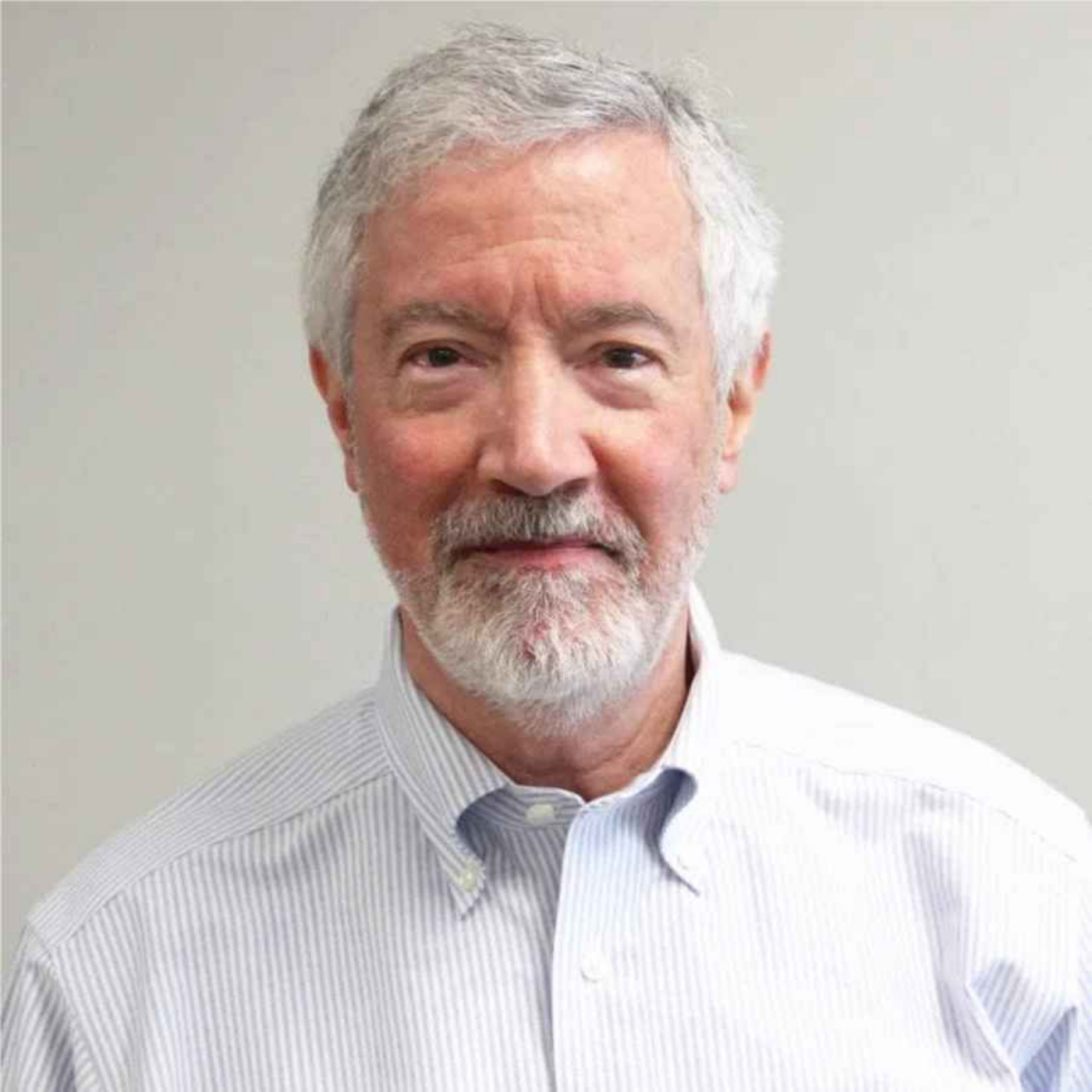
Ep 453453: Bill Ryerson, part 2: How can we talk about population? What can we do?
What's the Earth's carrying capacity? If we're above it and we choose to lower it, what happens to the economy?I've wondered these questions. I know the mainstream view gets it wrong because humans have lived sustainably. Their models say it's impossible, so they're wrong. They must be missing something, at least.Rapid population growth leads to poverty. It might be a party on the way up, but it's unsustainable. We can celebrate lowering population. Other cultures have. We can too.Bill starts by talking about how we can tell we're over the Earth's capacity, the dangers of relying on nonrenewable resources like oil. How do we achieve a soft landing if things collapse? Bill works on these things and speaks with experience and thoughtfulness, not just political bromides. We also cover birth control and immigration, topics relevant to the environment.These topics are critical, but not covered. For me, it's refreshing to talk reasonably about these things. The media doesn't.I also get him acting on his values. As you'll hear, he hits on something in his back yard he's neglected for decades. We switch from abstract facts, however important, to personal emotions. Hosted on Acast. See acast.com/privacy for more information.

Ep 452452: Book Update #1
Started thinking of book when I worked on initiative but put in background, expecting podcast to improveThat's been the case.Started getting serious about a year ago.You may have noticed a lot of guests with backgrounds in abolition: Eric Metaxas, Adam Hochschild, Manisha Sinha, Andres Resendez, Richard Rothstein (more on racial injustice)That's because abolition became major issue, then George Floyd amplified issueSo spent months talking with people and figuring out approach. Everyone said, “Josh, you could cure cancer, but if it touches on these things people will think you're trying to use someone else's issue.” or they'd say “You couldn't possibly understand, or at least people will think you can't” or they'd say “Some things you just don't talk about or compare because they're in another category.”So I went with people who devoted their lives to these issues and learned a ton.Next step: started writing outline, then text, revised three times.Started a writing workshop. Kicked writing into overdrive. Wrote a few thousand words a day, reached 45,000 words plus a proposal and very positive reviews from people who read.It's also why I haven't posted as much to podcast. Focusing on writing and editing.Still, felt out on a limb. No one has read the full manuscript but some people have highly praised the proposal, including a NY Times bestselling author whose book you might know, who said it was one of the best he'd read.So I'm confident I'll get a publishing deal. I understand from when you sign to books in readers' hands about a year. But finish writing after six months, so will start promoting then.What is is about? Partly my views on sustainability.Whom it's for, core message, promise to readerExercises to walk you through enjoying living sustainably, becoming a steward, then how to lead others.Not about facts, for reader. Everyone says it's like nothing they've read but very important.Anyone interested in helping promote mission book is a part of, contact me. I'd love help reviewing and editing it.I hope I covered top line. If curious, let me know what more I can share.Side effects: shoulders and forearms hurt. Some back pain. Eye fatigueBut more than satisfied with result so far. Helped me clarify a lot of my thoughts and how to present them.I hope and expect this book to be of historical value. Builds on everything here. Hosted on Acast. See acast.com/privacy for more information.
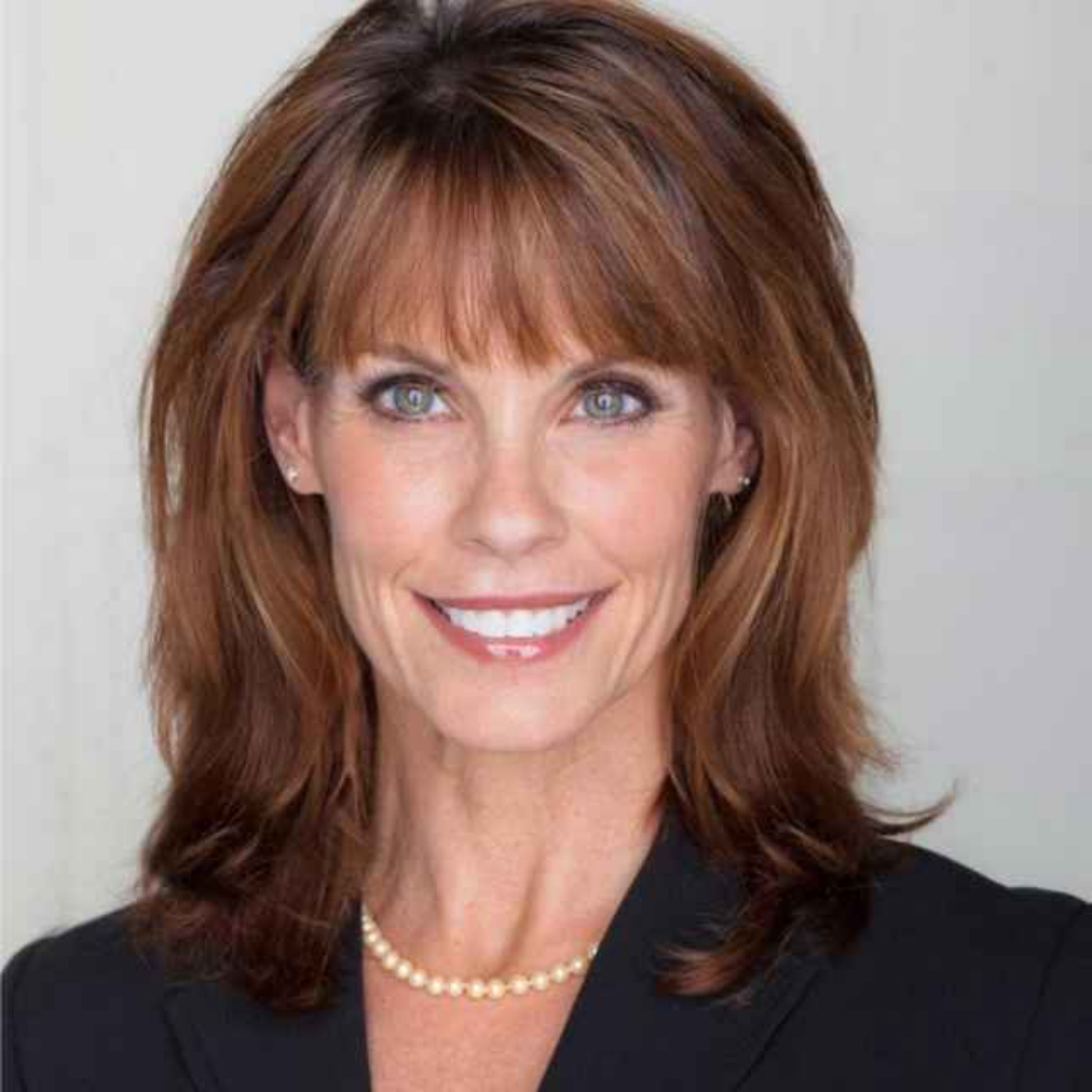
Ep 451451: Alexandra Paul, part 1: A Genuine Celebrity Role Model
I saw a TEDx talk on population where the speaker spoke thoughtfully and persuasively on overpopulation. I consider the topic among the most important on the environment, yet nearly no one talks about it, so I had to find out who she was and invite her to the podcast.She turned out to be a huge celebrity. Most people who talk about population are academics, at least in my experience. They know the facts but tend to present them abstractly. Who was this Alexandra Paul?You could see from her bio that she's acted in movies and television. She cohosts the Switch4Good podcast on veganism with an Olympic athlete. She's also finished Iron Man triathlons and been arrested for non-violent civil disobedience. She's genuine, authentic, and mission-driven. Where others lecture or tell others what to do, she smiles and does it herself.If I hadn't met her, I wouldn't have believed she existed. She does and here's the conversation with her.Her official siteThe Switch4Good podcast Hosted on Acast. See acast.com/privacy for more information.
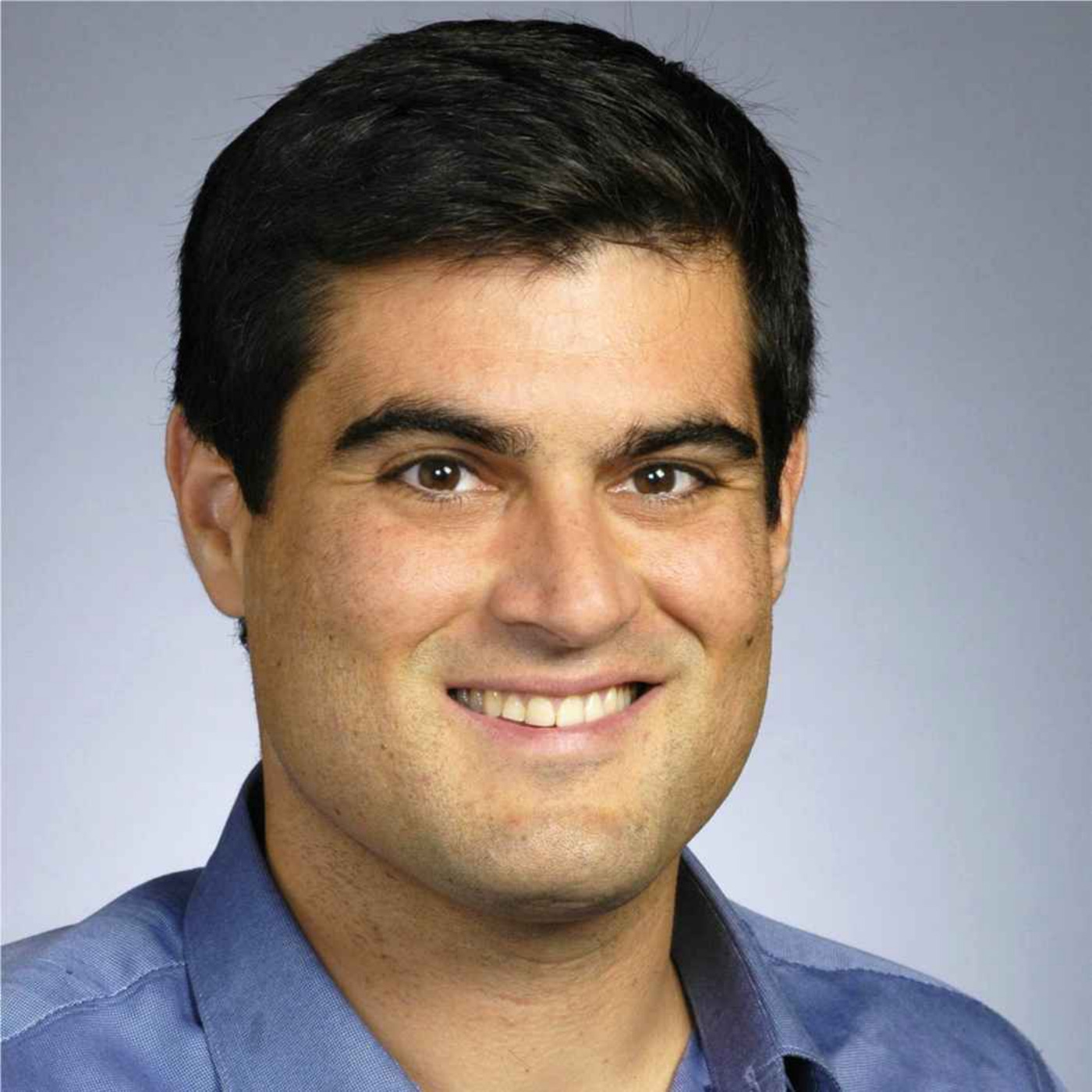
Ep 450450: Brian Keating, Losing the Nobel Prize
Though I haven't actively practiced physics since defending my thesis in 1999, it felt great to talk science with the author of a book named one of the best non-fiction books of all time. The conversation stayed where nonscientists could understand, but we spoke, I think, how physicists do, though I'm out of practice.We talked about values, the difference between theory and experiment, the beauty of experiment, running experiments by the South Pole and tops of mountains, Einstein, Feynman, and technology. Of course, sustainability too.He shared about the writing of his book, the life that led to it, and the life it led to of becoming a spokesman for science.We also closed with him describing his podcast, where he interviewed me.Click here to see the video of our conversation. Hosted on Acast. See acast.com/privacy for more information.
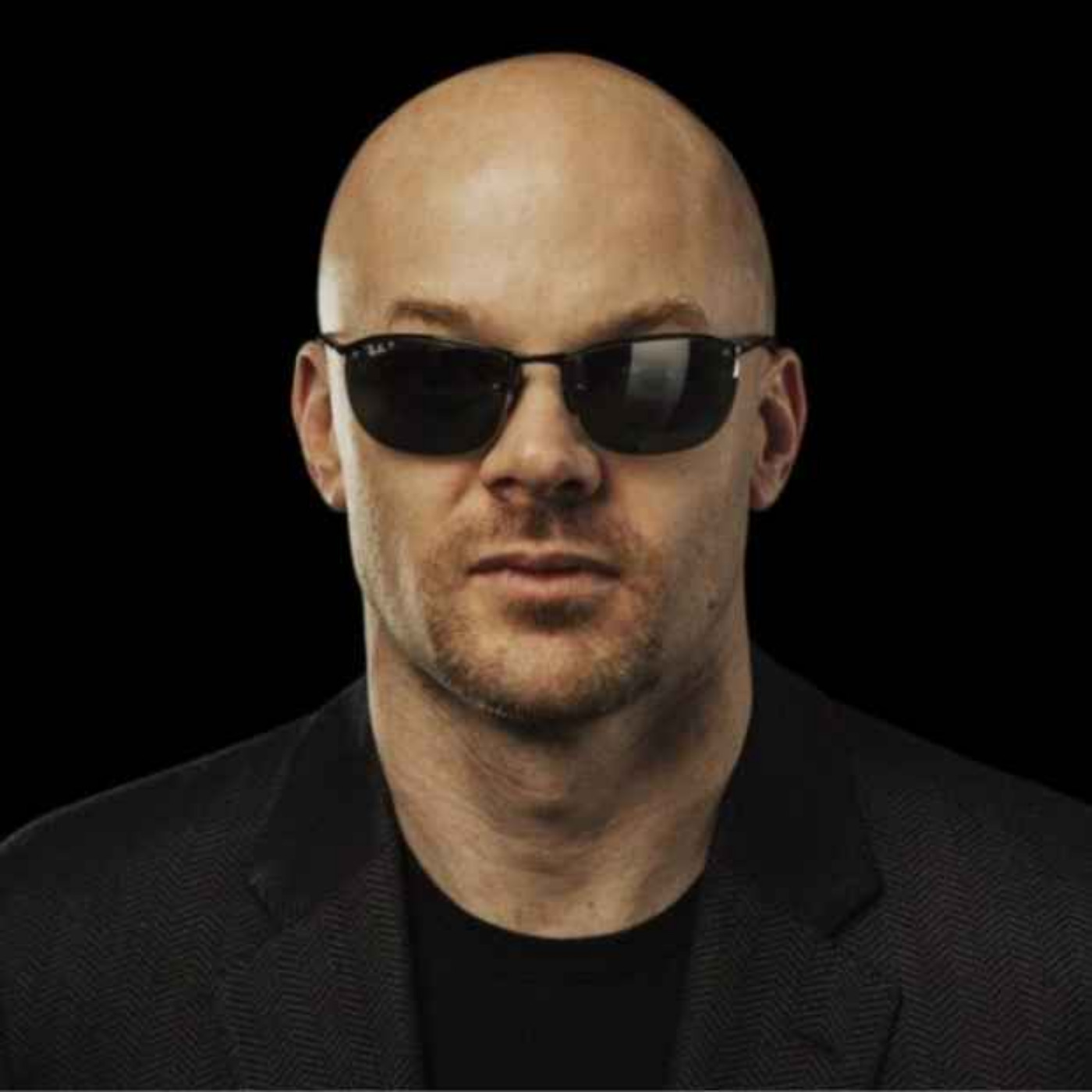
Ep 449449: Chad E. Foster: How Do You Handle Huge Challenges? Not Big. Huge.
How do you face challenges? Not little ones like a pandemic lockdown for a year. Big ones.Regular listeners hear me talk about role models like Viktor Frankl and Nelson Mandela in the context of handling life challenges. During the pandemic, for example, I recognize there was suffering before, there will be suffering after, and there's suffering now. Our challenge is not to take on things outside our control since we can't, but to figure out how to respond, not just to the world but within our hearts and minds.We're locked down. Nelson Mandela was locked down for 27 years. If he could create meaning forced to break rocks, I can find meaning in my home, able to go out every day, with access to communicate with everyone, access all the culture ever digitized, and so on.In the context of sustainability, do we just give up? How do we find hope and resolution to act even when everyone around us says what they do doesn't matter or that only governments and corporations can make a difference? What role models can we find.Today's guest, Chad E. Foster, lost his eyesight as a teenager, but that didn’t stop him from becoming an executive for Red Hat, the world’s largest open source software company and securing over $45 Billion in contracts throughout his career.He is the first blind graduate of the Harvard Business School leadership program and did what Oracle said could not be done; he built a software solution that created job opportunities for hundreds of millions of people. His direct and confident style, combined with a go-for-it inspiring belief system (he is an avid downhill skier… and that’s not a joke), has made him a high-impact speaker for leaders at companies such as Google, Bank of America, Goldman Sachs, GE and Microsoft.He also skis double black diamonds, which he talks about learning.From Chad's Quotable Quotes page:Happiness is not a feeling, happiness is not an emotion, happiness is a decision that each of us make every single day when we wake up.You do not know what you cannot see when you cannot see it.The facts are far less relevant than the stories we tell ourselves.Life without obstacles removes opportunity for growth.If you’re not getting outside of your comfort zone, then you’re not growing.Life begins outside of our comfort zone.You have to take advantage of your disadvantages.It is a great time to go blind.This stuff is so easy I can do it with my eyes closed.All of us are blind. Blind in some aspect.Don't let other people define your vision of your future.If you never dare to be great, you'll always be mediocre.Courage is not the absence of fear. Courage is doing something despite the presence of fear.If you're not failing from time to time, you're not aiming high enough. Hosted on Acast. See acast.com/privacy for more information.
Ep 448448: Robert Bilott: The Lawyer Who Became DuPont’s Worst Nightmare
Your blood contains PFOA, also known as forever chemicals. They cause cancer of several types, birth defects, and more.Dupont and other companies produced this stuff after learning it caused harm and dumped it into our environment. As best we can tell, they chose enormous profits over the health of their employees at first, and eventually all Americans and all humans because this stuff takes millions of years to break down and accumulates in our bodies.We know because Robert Bilott, today's guest, took on a small farmer's case. His cows were dying, we now know from water poisoned from Dupont dumping these chemicals. They pulled on the thread and the whole sweater unraveled. Robert's story became on par with those in the movies Erin Brockovich and A Civil Action.The highly-reviewed 2019 movie Dark Waters featured Mark Ruffalo, Anne Hathaway, and Tim Robbins playing him, his wife, his coworker. The New York Times featured him in its 2016 magazine article The Lawyer Who Became DuPont's Worst Nightmare. The most personal account is his 2019 book Exposure.In our conversation I tried to bring out what we who want to conserve our environment could use: what is it like to face something we feel is right, to fix a great problem, to act on our values, even when it seems like we will have to swim upstream?Because regarding sustainability and nature, we all sense how much easier swimming upstream would be.Or would it? The more I act, the more I find new role models like him who make the choice I feel right more clear. Listen for yourself. Would you like to feel about your life and family how he feels about his? Could acting even when it's hard help?People often call my not flying or taking two years to fill a load of trash extreme. Not by the standards of role models like Robert. The more I act, the more I find people like him and the closer I feel to them.Maybe I could fantasize about living in a world where I could act without caring who feels the consequences of my actions. Not really, because I find caring for others creates value, not ignoring them. In any case, I don't live in such a world. Everything I do connects me to others. I've come to find that connection improves my life, even if it means not flying or ordering takeout.I've got a long way to go to reach his level of giving and his level of getting. He said he wouldn't change a thing.Exposure at Simon and SchusterThe New York Times 2016 profile of Robert Bilott: The Lawyer Who Became DuPont’s Worst NightmareThe Intercept: The Teflon Toxin How DuPont Slipped Past the EPA Hosted on Acast. See acast.com/privacy for more information.
Ep 447447: Kathryn Garcia, part 1: Candidate for New York City Mayor
Kathryn Garcia, candidate for Mayor of New York City joined. No matter where you live, the mayor here matters. Many national trends in politics, business, culture, education, sports, and more start here. Our output in entertainment, culture, but also pollution and population affect the U.S. and world.I wanted to treat two issues: sustainability and leadership. Also hear Kathryn Garcia as a person, not just a candidate.Talk about a welcome change from all-too-common American politics! You'll hear a public servant speaking with experience, knowledge, and heat.There are more issues than a mayoral candidate could talk about in one episode with the city in the midst of a pandemic, ethnic and racial strife, a cultural scene that's been shut down, disparities in wealth greater than before the depression, and so on. I didn't want to leave them out but wanted to focus on these issues that matter to everyone, but are less covered elsewhere.You'll hear for yourself. I heard someone speaking from her heart and experience that she's acted and reflected on that matter to everyone who breathes and pays taxes.Kathryn Garcia for NYC Mayor Hosted on Acast. See acast.com/privacy for more information.

Ep 446446: Wondering how you can make a difference? Action begets action.
I noticed a trend among podcast guests that the people who have already acted the most on sustainability find new things fastest. By contrast, people who do less say they're already doing all they can, or at least all they can think of.That's backward, or would be if you thought there were a limited number of things you could do. The so-called experts who themselves haven't acted promote big, Earth-saving projects which of course I support, but they end up knowing only big, complex things. Most people can't think of what to do when they want to.That the people doing the most find more to do fastest suggests the more we act the more we want to act, the more we know what we can do, the more we enjoy nature.How big or small you start matters less than if you enjoy it. If you enjoy it, you'll keep acting and eventually reach big. You'll also share with others. Big acts that we share add up. Hosted on Acast. See acast.com/privacy for more information.
Ep 445445: Rabbi Yonatan Neril, part 2: Religion, Interpreting the Torah, and Nature
We got into territory I'd wanted to talk to a religious scholar about. I would have expected being recorded would make us more tentative, but I found the opposite. I didn't keep track, but several times I said feel free not to answer. Instead he answered more, sharing what he'd thought and researched about in depth.We cover Joseph, Isaac, the Arch Bishop of Burundi, population, contraception, consumption, and more, both in principle and in ourpersonal lives. We also cover his personal experience in the woods near his home, his family, his work, and how they all interplayed.Family is the number one reason people give about not being able to act. "Josh, you don't have kids, you don't understand how it's impossible." Well, take it up with yet another family man who found nature and stewardship bringing his family closer.This conversation, along with ones with religious guests like Bob Inglis, Brent Suter, and Eric Metaxas, as well as unrecorded ones with friends, make me evaluate the approach of many environmentalists, including myself often. Too often their message comes from a place of "I'm right, you're wrong, let me explain how." I'm not excepting myself.What works? I'm sure I've mentioned the root of convince -- vince as in vanquish. When was the last time someone vanquished you and you responded, "You beat me, now I agree with you."?I find it more interesting to learn from people I disagree with, more fun, more engaging, and I learn more too. I don't want to imply I'm a paragon of humility or even remotely like that ideal, but I've come a long way and am glad for the distance I've traversed. Hosted on Acast. See acast.com/privacy for more information.
Ep 444444: Dar-Lon Chang, part 1: The engineer who made headlines for quitting ExxonMobil
Do you know anyone whose company pollutes more than they'd like, who wants to change things, but whose company keeps not acting?I think that situation describes almost everyone. Even the most sustainably companies aren't close to sustainable. They just pollute a bit less than everyone else, from Patagonia to Greenpeace. Maybe it describes you. Maybe it fits your elected officials, school administration, church leaders, etc as much as your employer.Today's guest worked at Exxon for 16 years. If any place qualifies as the poster child for contributing to climate change, well Dar-Lon Chang can tell us the view from the inside.If you'd like to change but feel frustrated, Dar-Lon probably faced bigger hurdles, with more to lose. After 16 years, with wife and daughter, with no job, he left for a new life. He'll share his story, but a preview of what to listen for, he prepared, but he also shares why he wished he had acted earlier.Another major theme that I consider more valuable coming from someone who knows the science, technology, financing, and history, he found technology has a role but is not the answer. It's much more about culture, which I'm bringing his story to help change.As I told him, once I read his story, I knew I had to do what I could to amplify his story. If you're thinking of acting but think you won't make a difference or your risk is too great, first, consider Dar-Lon's risk and how he wished he'd acted earlier.Over and over I see the people with the most resources, who say others with less can't do it, are actually the ones who feel the most trapped even though they can. Exactly what they got to create freedom traps them. If you feel you can't, consider that you may be more able to.A Disillusioned ExxonMobil Engineer Quits to Take Action on Climate Change and Stop ‘Making the World Worse’The quote I read:Until one is committed, there is hesitancy, the chance to draw back---Concerning all acts of initiative (and creation), there is one elementary truth that ignorance of which kills countless ideas and splendid plans: that the moment one definitely commits oneself, then Providence moves too. All sorts of things occur to help one that would never otherwise have occurred. A whole stream of events issues from the decision, raising in one's favor all manner of unforeseen incidents and meetings and material assistance, which no man could have dreamed would have come his way. Whatever you can do, or dream you can do, begin it. Boldness has genius, power, and magic in it. Hosted on Acast. See acast.com/privacy for more information.

Ep 443443: Nobody understands what's so bad with climate change
Here are my notes I read from for this episode------It hit me recently that nearly nobody knows what's so bad about climate change. I've started asking people and nobody knows. Actually, of the dozens I've asked, one knew, though it took prompting for her to say it.Everyone gets sea level rise, biodiversity, loss of coral reefs.I'll grant we have to move cities. But I'll respond that after some loss, we'd rebuild, which could create meaning.I'll grant more and bigger hurricanes, but I'll respond that we'll learn to build hurricane-proof buildings. Katrina's losses in lives and property, while tragic, are nothing compared to the material gains. Most people see fossil fuels brought billions out of poverty, longevity, prosperity. That trade seems worth it.You've maybe read books like The Uninhabitable Earth or ones describing the hellscape we may turn the Earth into, but most people see science and technology able to fix those problems. We'll live underground or undersea.To describe the problem I have to retell a story regular listeners have heard before. My friend Kevin and the elk.Climate change means looking back doesn't work and the collapse increases. I'll describe the problem in simple terms. It may sound moralistic or ethical, but I'll just state it like if I drop something it will fall. The sun rose this morning in the east and set this evening in the west. Dogs growl. Cats purr. And climate change would result in billions of people dying. This result is why I devote myself to changing course. My podcast is practice leading people. I plan to use my book to help lead more people and to launch big-time to reach the most influential people in society.Business people should get this most. They know how markets can drop in recessions and that companies can have to downsize. They know the pain. The problem with them is that they think, "well, we recover from recessions." They don't distinguish between people losing jobs and people losing lives.So I don't agree with the trade with Katrina, because we don't only lose thousands of lives. But as long as people see that as the loss, climate change doesn't look so bad to them.It looks bad to me. Hosted on Acast. See acast.com/privacy for more information.
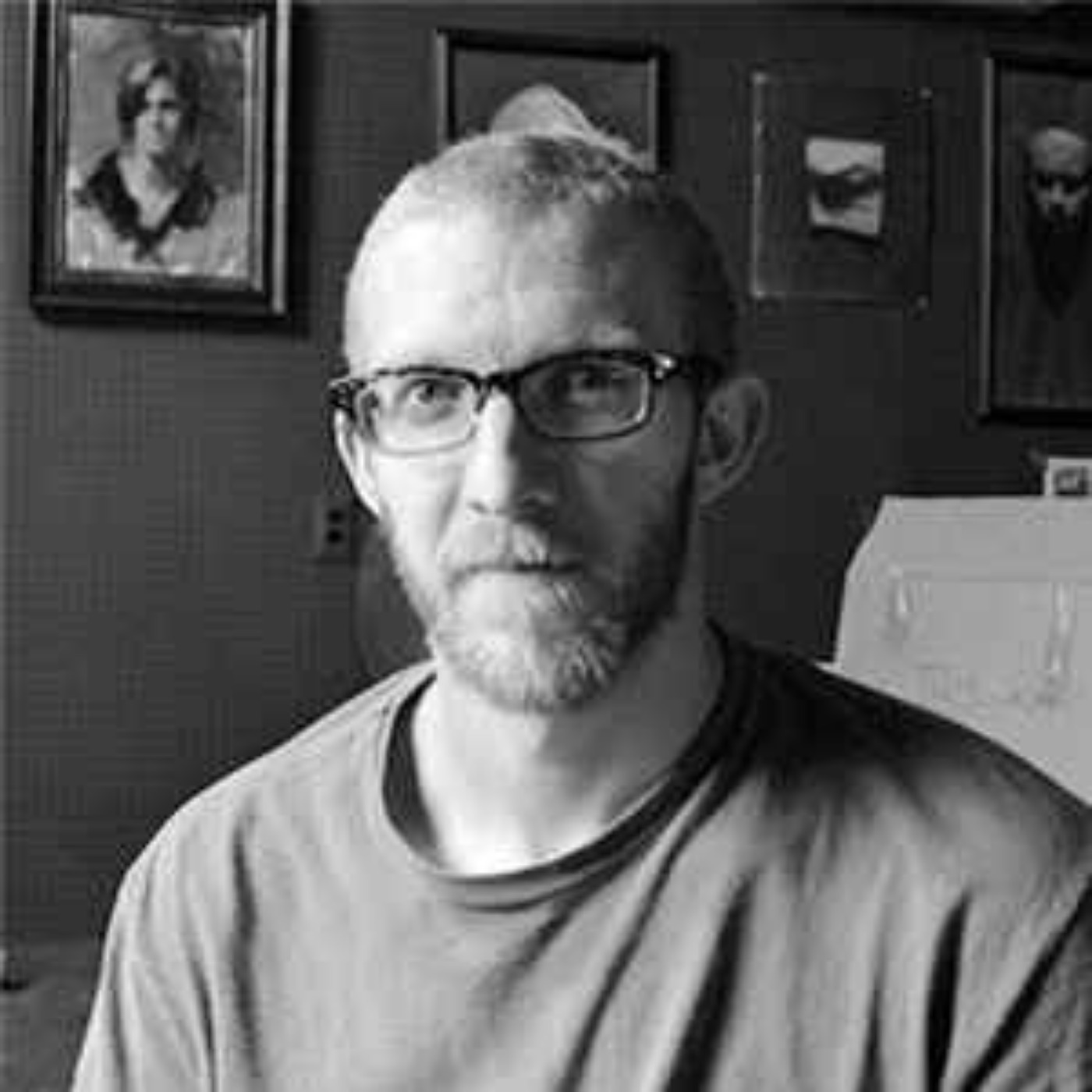
Ep 442442: Jonathan Hardesty, part 1: The Journey from Absolute Rookie to Mastery
Longtime listeners and readers of my books and podcast know I draw the analogy to learning and mastering a skill to learning to play piano or a sport. You start by playing scales or practicing groundstrokes. Likewise with leadership or taking initiative, acting entrepreneurially, both performance arts you can master. Also acting in stewardship. People don't get that learning to cook without producing tons of garbage took training from when I started, producing a bag a week. Maybe I should explain better.Some listeners my have heard how I once found but lost a web page of a guy who sketched every day for a year and posted each day's sketch. Chicken scratches for 300 days, then a month of interesting stuff, then beauty. Anyone can master if they train. It takes neither a lot of time or money, just keep at it. Most people spend much more time and money watching TV or scrolling social media, which they get good at instead.Jonathan Hardesty, today's guest, kept at it. Starting without experience, connections, or resources, he reached mastery. On the way, he recorded and posted his years of development. You can see how rudimentarily, even remedially, he began. Watch that video, Journey of an Absolute Rookie. Prepare to be inspired at how accessible your potential is.He's kept going beyond where that video showed. In this episode he describes where he began and where he went. You'll love how accessible mastery is and how much more you get from it than you expect.It's also one of my most fun conversations. Can you tell how much I learned about self-expression and personal growth?I don't think I'm fooling myself to think acting in stewardship, in service of others is a performance art one can do with sensitivity, nuance, personal discovery, and what other performance art forms bring.Jonathan's video: Journey of an Absolute RookieMy singing episode: I sang every day for two months, unplugged (still going)Abbey Ryan's episodeSteven Pressfield's episode Hosted on Acast. See acast.com/privacy for more information.
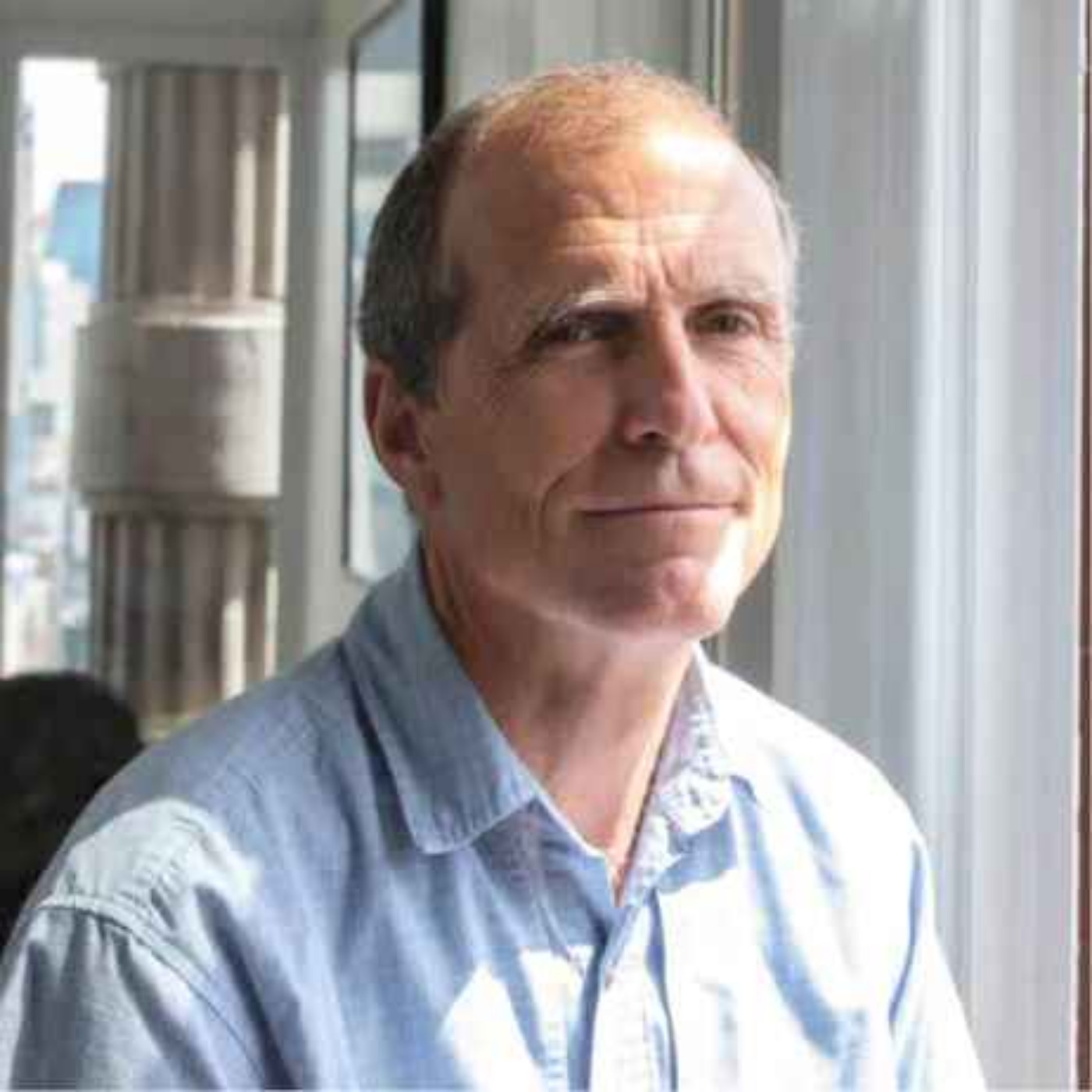
Ep 441441: John Sargent, part 1: The CEO who reduced a Big Five publisher's footprint
I learned of John's work through his statement at Macmillan's Sustainability page while researching Ray Anderson: In 2009, after reading Ray Anderson’s “Confessions of a Radical Industrialist,” I decided it was Macmillan’s responsibility to lessen our impact on the earth, and in particular, to lower our carbon emissions. We created a senior position in the company and spent well over a year measuring our carbon footprint. We then set ourselves the daunting goal of reducing our scope one, two, and “major” three carbon emissions by 65%, and we gave ourselves a decade to get it done. Over the course of the last nine years, we have made sustainability a major component of all our decisions at the company. In 2010 we instituted a carbon offset program to supplement our efforts. Over the last nine years, we have lowered our carbon emissions by roughly 50%, and with our offsets, we have been carbon neutral globally for the last two years.Getting here has not been easy. We have initiated lots of projects. We have often failed, but we have been relentless in our efforts. We always tried to make good common sense decisions along the way, keeping a balanced approach. In the end, we will not reach our goal of a 65% reduction, but we have been relentless in our approach and it has become a matter of great pride in our company.The completion of our ten-year plan leaves us again at the starting line. Climate change is now a burning issue (as I write this the Amazon rainforest is literally burning). We must rededicate ourselves to the cause, and willingly sacrifice when called upon. There is a lot to do, and I’m looking forward to getting after it.I often lament the lack of what I call leadership in the area of sustainability. What I call management, plenty, which I'm glad to see. That's things like measuring, facts, figures, seeking compliance. By leadership I mean stories, images, working on the system not just in it.It looked like John was leading so I brought him to share. I believe I found a role model and leader in business. Hosted on Acast. See acast.com/privacy for more information.
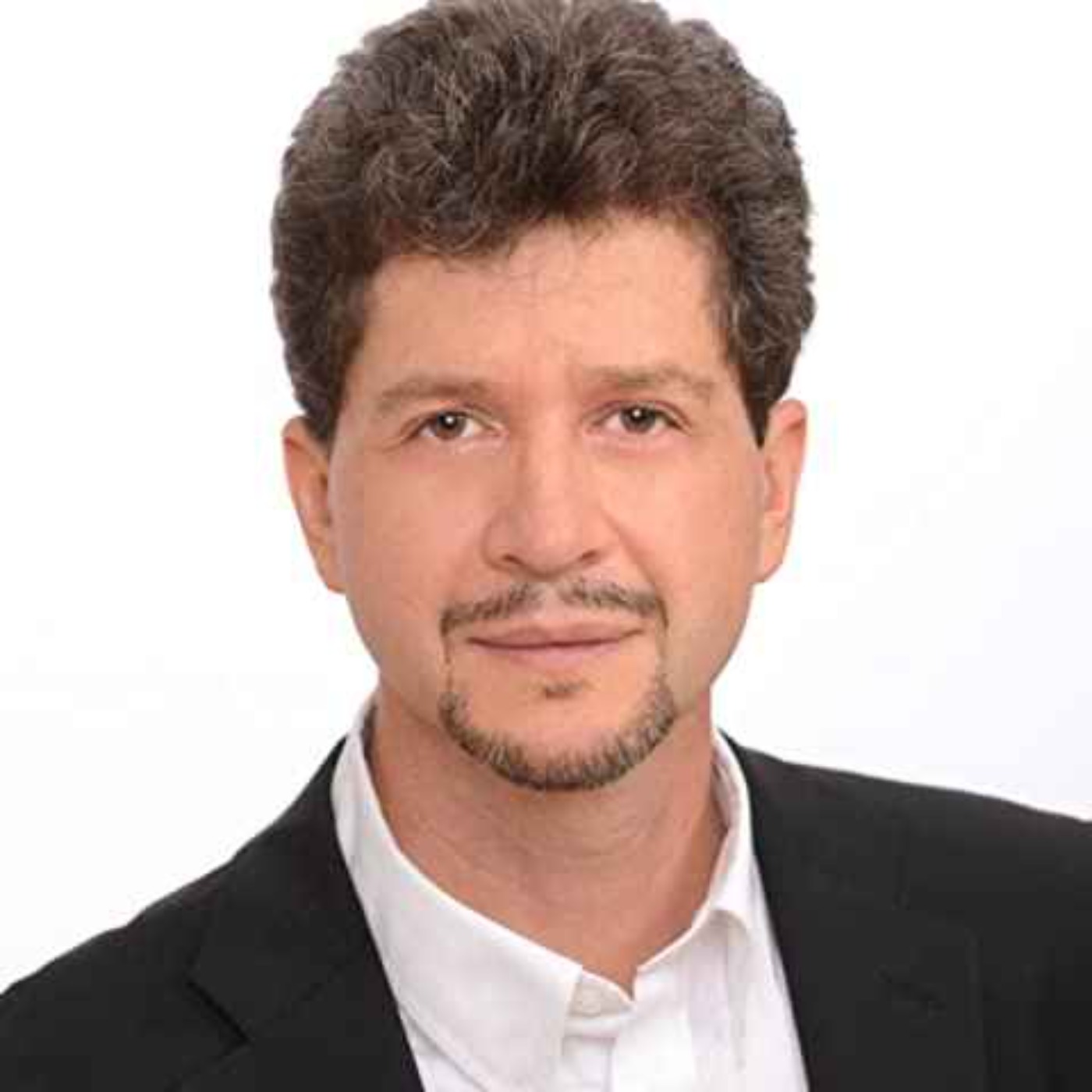
Ep 440440: Andrés Reséndez: The Other Slavery
About six months ago the parallels started forming for me between our global economic system today that creates great suffering on the scale of hundreds of millions of people with nightmarish cruelty, but also people benefiting from it looking the other way or saying "what I do doesn't matter" or "the youth will solve it". . . And the systems of slavery.Also looking for role models who changed systems of that scale.My historical knowledge of abolition and slavery was limited. You've heard guests Adam Hochschild, Manisha Sinha, Eric Metaxas, and others sharing historical background on the systems of slavery and abolition, as well as individual abolitionists. I believe we can learn from them and honor them by learning from them. Our situation is different, but on the scale of billions and we are alive to act.Today's guest, Andrés Reséndez, wrote The Other Slavery, a book on the enslavement of Native Americans, mostly by the Spanish. I knew little about it and what I did know was off. Our conversation covers the different character of the Spanish enslaving Native Americans to mine gold and silver, leading to global trade and a different character.Motivating me was to consider how future generations would look at us. Listeners may recall from, say, my conversation with Rod Schoonover, the scientist in the US State Department who described the suffering facing climate refugees in Central America. Once they cross borders, they face war atrocities. Then there is Syria and more. We can expect those numbers to increase by some estimation into the billions of climate refugees, as one of many places our system generates cruelty for our way of life, which is totally optional. We don't have to extract, exploit, and so on. I believe that there is nothing more meaningful and purposeful than to take responsibility for how our behavior affects others.What more can we do for the past than to learn from it, to avoid repeating the mistakes of exploitation and discounting where our material wealth comes from?I ask myself what I would have done then. Would I have accepted the silver?Would I have said what I did didn't matter?I have to be honest with myself because I can easily say I would do then what I today would. What do I consider right today? Can I look away from those at the receiving end of my plastic, pesticides, jet fuel, and so on?The Other Slavery: The Uncovered Story of Indian Enslavement in America Hosted on Acast. See acast.com/privacy for more information.

Ep 439439: How to Fix Texas
Here are the notes I read from for this episodeHow to fix TexasJust got off conference call a Texas attendee couldn't attend because her power was out.There are helpless people suffering. I empathize with them and feel compassion. I support helping them.If we want to prevent future suffering, we have to look at systems. That's not ignoring present pain or loss. It's preventing future pain and loss.In that call, one person had been in touch with the Texas person. She told us of ice forming inside her house and other problems.The present attendees lamented each mention of a problem as if she were suffering some horrible hardship. For tens of thousands of years, humans have lived without power including in the cold, including sudden, unexpected cold.Is it not obvious that what we call technology and innovation has made us dependent, needy, and the opposite of resilient?I'll repeat that people in hospitals, homeless, elderly, and others have always needed extra help and they do today. Nothing of what I'm saying suggests neglecting them.But she also talked about our Texas friend tweeting. However spotty, she has the internet.Let's talk systems.NYTimes headline: A Glimpse of America’s Future: Climate Change Means Trouble for Power Grids: Systems are designed to handle spikes in demand, but the wild and unpredictable weather linked to global warming will very likely push grids beyond their limits.While the proximal reasons may be technical, the systemic cause is our dual focuses on meeting demand no matter what and growth but not focusing on resilience. The result is that when demand is always met, we grow (population and consumption) until we hit problems like this. Then we build more capacity.It costs a lot to go from 99.99% uptime to 99.999%, but we do it every time.The savings to go from 99.99% uptime to 99.9% is also huge. Most of the world does fine with under 99% and we could too if we built our systems and lives to handle power going down sometimes, even unpredictably. Hospitals, elderly, etc would need special treatment. The rest of us could reduce our needs and learn from how people lived all the time for hundreds of thousands of years.We'd save tons of money, live healthier, and pollute a lot less. We'd learn to treat nature with a bit more humility and respect.Listen to my episode on why I unplugged my fridge. I didn't do it because I expected my power savings would amount to anything divided by 7.8 billion.I did it because other cultures as well as humans for hundreds of thousands of years thrived without power. While some disasters, like Vesuvius erupting, we can't defend ourselves against, we can prepare for cold without polluting.My main results for unplugging my fridge? More delicious food from increasing my skills and experience preparing it. Saving money. Increasing my freedom, decreasing my neediness.Again, repeating my compassion for helpless people in pain now, whose rescue and support I support in the moment, I suggest seeing this weather as impetus to make your life more resilient, less needy, to support a power grid more resilient and less brittle but, and a culture not so entitled, spoiled, dependent and needy that its answer to everything is something polluting more, deepening that entitlement and being spoiled.If you can't live without power dropping for a few days even in terrible weather, and you aren't someone that lions would have eaten in previous eras, you're part of the problem. Fix yourself without drawing more power and polluting everyone else's world.If your society suffers from the only way it handles problems is to use more power, polluting more, leading to suffering from by people who aren't polluting so much, which for Americans means the entire rest of the world outside Saudi Arabia and its oil producing peers and maybe some insanely rich tax havens in the Caribbean, fix your society.Changing culture and systems begins with changing values. In this case from coddling, spoiling, externalizing costs, and ignoring others' suffering to resilience and freedom.Episode 426: Why unplug Hosted on Acast. See acast.com/privacy for more information.
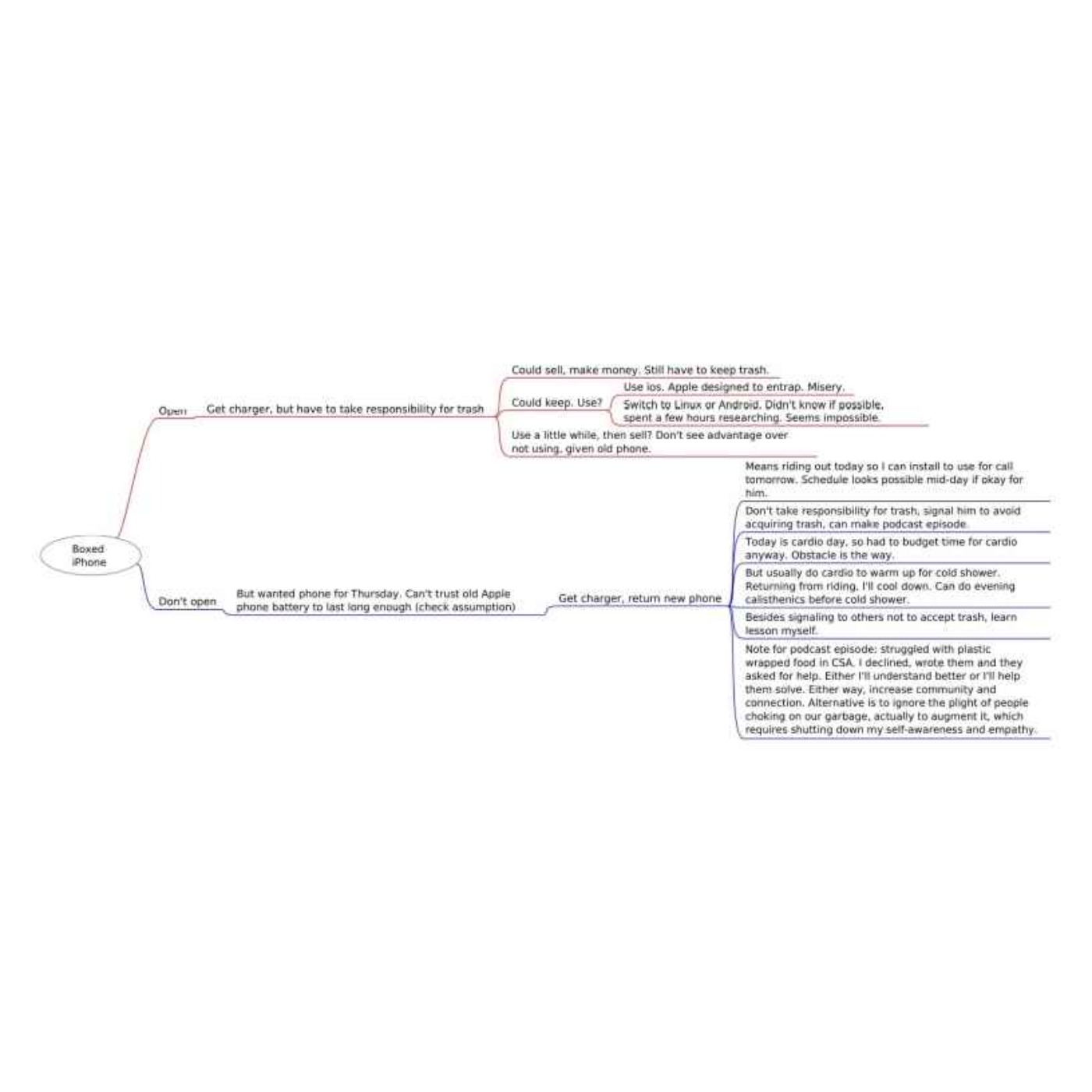
Ep 438438: Avoiding Creating Trash, Advanced Edition
When they hear I take two years to fill a load of trash, people ask how I do it, what's in my trash. In this episode I share a couple stories from last week of facing things entering my life that would result in my having to take responsibility for trash---acquiring a new cell phone and acquiring bagged food.I've done things like these processes enough to know that they result in joy, community, and connection. It may sound like too much effort or annoying. Regarding too much effort, I put the stories in context of how much people put effort and time into TV and gyms, which my practiced lead to saving time and money, resulting in plenty to spare. Regarding annoying, I used to think so, but you'll hear that my interactions as they happen, not how you might erroneously imagine, result in more understanding.Some day our culture will prevent things like these interactions happening. We'll look at single-use packaging how we look at asbestos. Hosted on Acast. See acast.com/privacy for more information.
Ep 437437: Bill Ryerson, part 1: Population matters
No matter what you think we should do, everyone gets that there is some connection between population and sustainability. Everyone knows our population is increasing. We're consuming more than ever.How do we talk about this issue? I think most people shy away from it. I know I did, until recently feeling "what's the point in talking about something we can't do anything about?" I saw problems with overpopulation but the only cures I knew of seemed worse than the disease.Today's guest, Bill Ryerson, has been working on these issues with tremendous effects increasing prosperity, stability, freedom, and things everyone prefers---think the opposite of the One Child policy. He shares what he does, his sources of inspiration, why what he does works, and how it started for him with Mexican soap operas.Actually, it started long before with action of the sort nearly everyone talks about today---laws, information, facts---but it didn't work. The Mexican soap opera started what worked, and has around the globe for decades.After you list, read the book Over. You only have to see a few images to get the value, and understanding that seeing can create.I hope this episode helped loosen the grip of beliefs of mainstream culture. I wish I had heard things like it decades ago.The book we talk about, Over Hosted on Acast. See acast.com/privacy for more information.
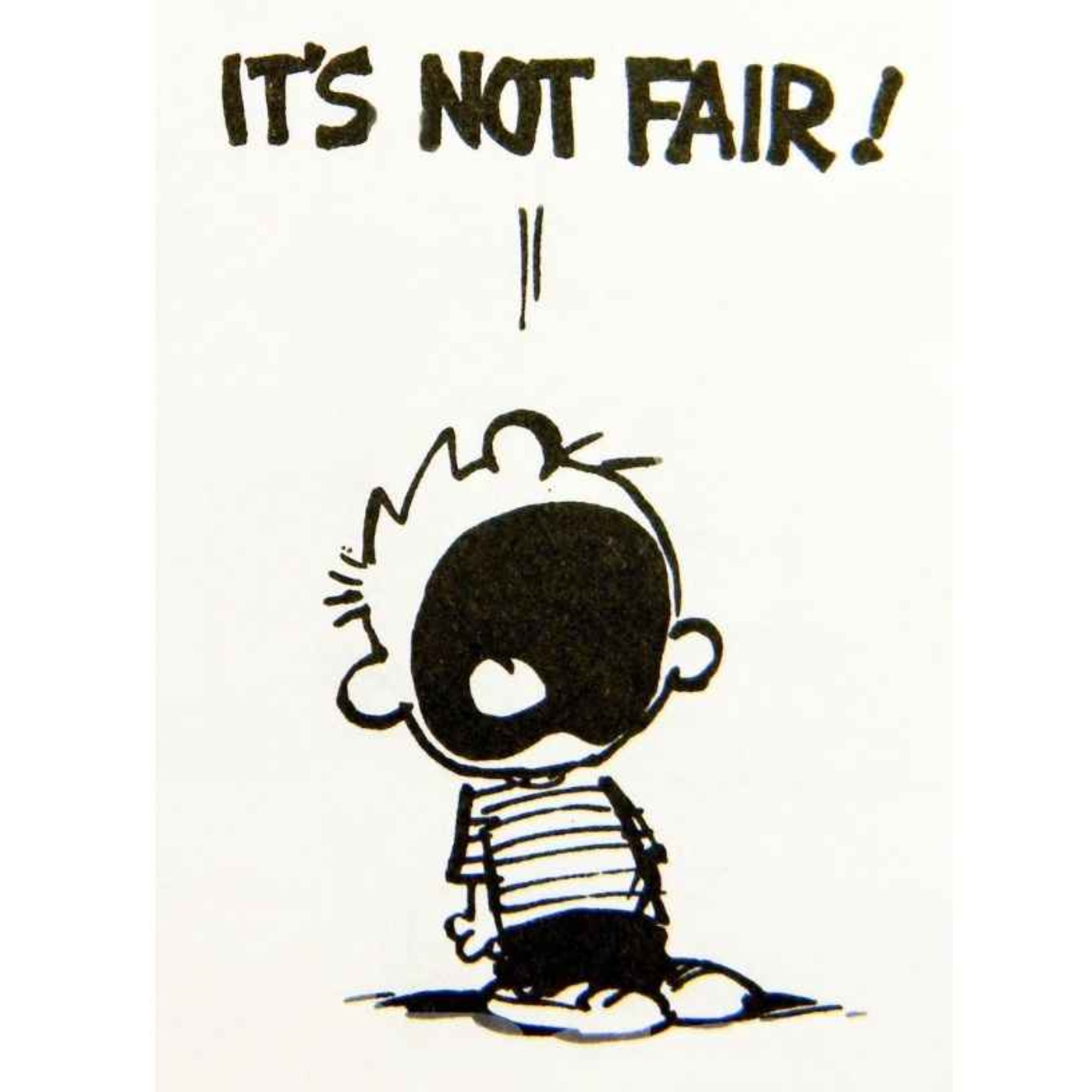
Ep 436436: You're right, it's not fair!
The notes I read from for this episode:It's not fair!Back from picking up litterForecast, a few inches of snowJust want coffee, not to dispose. Ancestors couldJust want to travel, not pollute.Don't want to think about others all the timeJust want to relaxTons of trash from last snowAsked cafe to ask people not to litter around trashNot our responsibility, city, customersSomeone else, some other time, never me, never nowYet improves lifeSo no, it's not fair. Others got to do without thinking what if we do, we hurt others, people far awayBut any parent knows responsibility improves, stewardshipIf we live by their values, tragicIf we live by values of cultures that have endured, joy, community, connectionSo no, it's not fair, but what will you do about itWhat will you do about your contribution?Not zero.Lament? Take responsibility? Live in past? Create future? Hosted on Acast. See acast.com/privacy for more information.
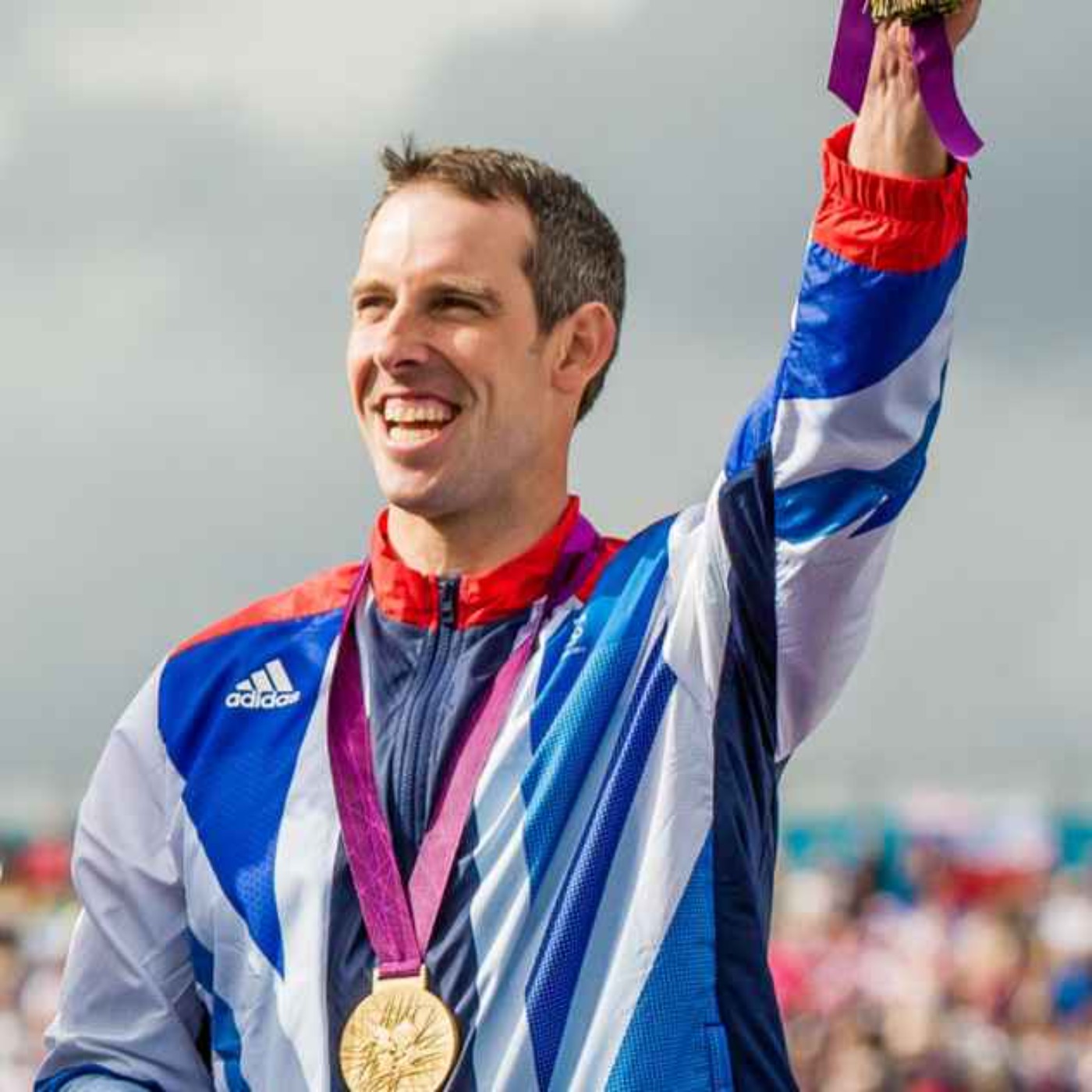
Ep 435435: Etienne Stott MBE, part 1: Olympic gold medalist climate activist
I met Etienne on a holiday conference call of Flight Free UK, which celebrates what life brings when we enjoy people, culture, cuisine, and so forth around us, not flying all over. The concept would have sounded crazy to me before trying, but the attendees had made that transition.Etienne spoke joyfully about his working with Extinction Rebellion in the UK, a wonderful contrast with two things. First, his Olympic gold medal, which he overcame a huge deficit to win in front of a home crowd, after an injury months before that left the tiniest window to recover and retrain from. Second, the joy he spoke of getting arrested in civil disobedience acting with XR.I saw a role model---someone with a prominent voice who acted from internal convictions.Before talking protest, if you know me, you know I love the parts of sports, athletics, and competition that help us reach our potential---physical, mental, spiritual. I love learning of people surpassing imagined limitations to learn more about ourselves as individuals and humans. So of course I started by asking him about sports and Olympics.Then we spoke about the passion we share on stewardship and leadership, not just passively watching, nor accepting that it's hard orundesirable.For Etienne to say, as you'll hear, that he's doing the most important work of his life after the dedication to reach a global pinnacle of sport reinforces to me how valuable stewardship is in our world now. However many people call what we do extreme, role models like Etienne remind me that helping others is not extreme. It's just the start.Baillie/Stott Gold - Men's Canoe Double | London 2012 OlympicsTackling The Rapids For Gold - Etienne Stott & Tim Baillie Etienne Stott & Tim Baillie - Canoe C-2 Gold Medalists | Athlete ProfilesThe Red Thread to Glory: Etienne Stott at TEDxSalfordBritish Olympic gold medal-winning canoeist Etienne Stott joins Extinction Rebellion Hosted on Acast. See acast.com/privacy for more information.

Ep 434434: Manisha Sinha: The Slave’s Cause: A History of Abolition
You've heard me speak and bring guests who are experts in the history of abolition and slavery, particularly in England. I learned about well-known abolitionists like Thomas Clarkson and William Wilberforce. Manisha Sinha, today's guest, goes into more depth and nuance to movements in North America and beyond.She is the Chair in American History at the University of Connecticut and a leading authority on the history of slavery and abolition and the Civil War and Reconstruction. She was born in India and received her Ph.D from Columbia University where her dissertation was nominated for the Bancroft prize. I met her then as a student, around 1989 or 90.She wrote The Counterrevolution of Slavery: Politics and Ideology in Antebellum South Carolina, which was named one of the ten best books on slavery in Politico in 2015 and recently featured in The New York Times’ 1619 Project.Her multiple award winning second book The Slave’s Cause: A History of Abolition brought me back to her. It won many awards, as did she.Among the many new perspectives I picked up from her are the initiative and importance of the enslaved. I'm mostly focusing on helping us who like flying, air conditioning at the slightest warmth or humidity, and such without concern for people half of whose countries will be submerged or the nearly ten million who die just breathing air poisoned by factories making our stuff---helping us to see that acting in stewardship not only isn't futile, but is deeply personally rewarding and effective.I see from her the importance of connecting with people helping themselves elsewhere. How can we get their message and their experience to us, the users of polluting technology, shareholders in those companies, buyers of the products?How can we help us see today that future historians will see us as we saw the people the abolitionists opposed?How can we help us see the parallels and follow their footsteps?If comparing environmental stewardship with abolition seems a stretch, listen to Manisha. Hosted on Acast. See acast.com/privacy for more information.
Ep 433433: Adam Hochschild, part 2: Abolition then and pollution today
If you've followed my development on how to view acting on sustainability, you've seen a marked change when I learned about the British abolition movement of the late 1700s and early 1800s. Today's guest, Adam Hochschild, wrote about that period comprehensively in his book Bury the Chains. We talked about it in our first episode and in more depth this time.Until I learned about this movement and this group of people, not unique but important actors, I saw few to no role models of what Adam points out is rare: people devoting themselves to helping other people become free.We present ourselves as potentially suffering from environmental problems, but we are benefiting from ignoring how others suffer for our way of life. You are almost certainly more like the absentee landlords and shareholders in companies profiting from slave labor thousands of miles away than like the people suffering.Adam's book gives us role models of people who said, "I could benefit and even though everyone around me does so, I cannot support or benefit from this system. I will make it my life's mission to end it." In their cases the distant sufferers were in the Caribbean. In ours it's Indonesia, the Philippines, India, southeast Asia, Africa, Central America, and most of the world.This time I picked up on the importance of slave rebellion, telling me we have to connect with people on the receiving end of our disposing of plastic and the exhaust from our cars, jets, and power plants.I also wanted to learn about the personal side of the people Adam portrayed. How did they persevere through discouraging times? We're facing discouraging times. Most of us could in principle pollute a lot less, but our culture creates resistance.The more I learn about abolition, the more I find their movements and results relevant and inspiring. How better can we honor their legacy than to use it to reduce suffering today? To me, learning that people faced resistance like we face and overcame it as we'd like to. We have the benefit of their history. If you'd like to lead yourself and others to reduce suffering by changing culture and systems, I can't recommend enough to learn about people who have succeeded before. Hosted on Acast. See acast.com/privacy for more information.
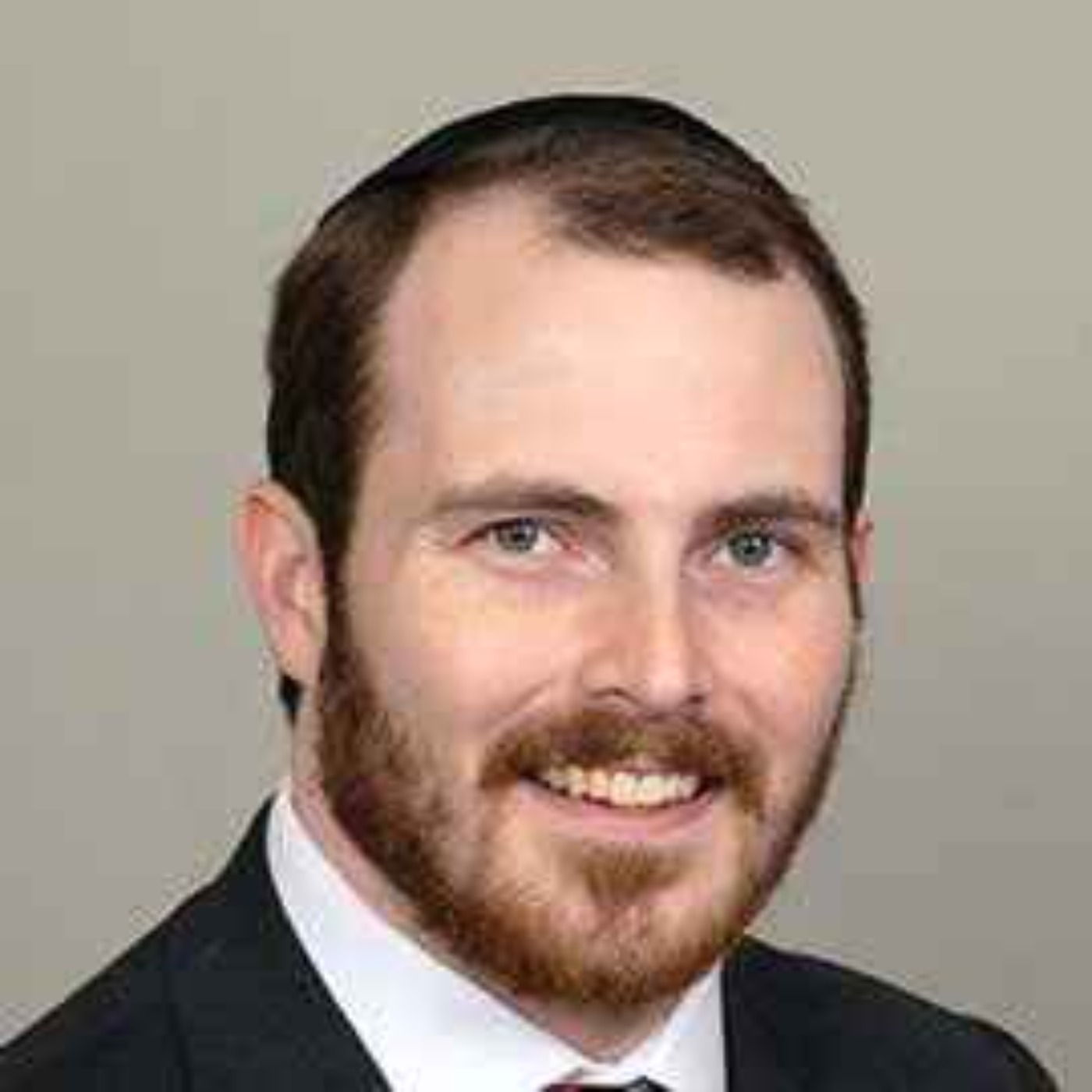
Ep 432432: Matthew Stevenson, part 2: What can environmentalists learn from disarming racism?
Many people talk about responding to threats or people they disagree with with empathy, compassion, treating everyone with respect. In practice, I see people doing the opposite. They don't feel, "I'm right, you're wrong." They feel "I understand reality, you don't. I have to teach you." or often they feel they have to force them.Likewise, on the environment, nearly all environments try to convince people who disagree with them through lecture, facts, figures, and charts. When that doesn't work, they resort to shame, guilt, eventually disengaging and trying to outpower them through legislation.Matthew Stevenson did the opposite. He practiced what many preach and it worked. In our first episode, which I recommend first, he shared how he worked and his mindset. The more I heard, the more fascinating I found it. More to the point, the more practical and effective I found it.The word convince, by the way, comes from the root -vince as in vanquish, to defeat. Attempts to convince generally provoke debate. After all the person was already right in their own mind before you talked to them. Maybe you're wrong. If you aren't open to it, why should they be? When was the last time someone defeated or vanquished you and you said, "Okay, now I agree with you and I'll follow you."I invited Matthew back because he shared how to do what many of us talk about and we know great historical figures practiced, but few of us know of people-on-the-street role models we can follow.Would I have predicted when starting this podcast, this effort to bring leadership to sustainability, that I would talk about a white nationalist website Storm Front with an orthodox Jew? I doubt it, but I find him one of the best role models for me. Most guests I think of as role models for listeners, experimenting sharing environmental values most of us don't, acting on them, doing what almost no one has yet so we can all learn from them.With Matthew, he's doing what I endeavor to. It's emotionally incredibly hard when I feel I know I'm right or that I understand reality but they don't to end up condescending or sounding self-righeous because I feel self-righteous, it's hard then to conjure up humility, empathize, listen, and get to a place where they're right and I'm wrong.So he's a role model for me. His strategy took a long time but it worked and the solution is enduring. Plus he laughs and jokes about it.He didn't convince, vanquish, or win. He made a friend. Hosted on Acast. See acast.com/privacy for more information.
Ep 431431: I sang every day for two months, unplugged (still going)
What do you do if you use less power? No social media? No listening to music? No TV?Sound like a fate worse than death?Inspired by guests on my podcast who find amazing activities to live by their environmental values, I committed to turning off all my electronics to sing every day. I've almost never sung in my life beyond Happy Birthday and The Star Spangled Banner so I'm mortified to play my remedial results live, but I love it. I know I'll keep going so today's recording isn't the end.I recorded singing a couple songs at the beginning. to record I opened the laptop, all other times I sang with the power off. At night I had to open the door to the hallway to read the words until I started singing outside during my daily walks picking up litter.So far I've spent zero dollars on it. The first two weeks I sang fifteen minutes a day. Later I shifted to at least one song, so a few minutes a day.Today's episode starts with my describing the experience and a few stories, then with neither pride nor shame, I play the "before" recording, then the "after."The track listing:Before14:42 The Beatles, Across the Universe19:30 The Beatles, While My Guitar Gently WeepsAfter22:40 The Beatles, Across the Universe26:28 The Beatles, While My Guitar Gently Weeps28:44 John Denver, I'm Leaving on a Jet Plane31:26 Joni Mitchell, Big Yellow Taxi33:01 Spandau Ballet, True36:12 The Cure, Pictures of You38:54 Earth, Wind, and Fire, September42:19 Woody Guthrie, This Land Is Your Land Hosted on Acast. See acast.com/privacy for more information.
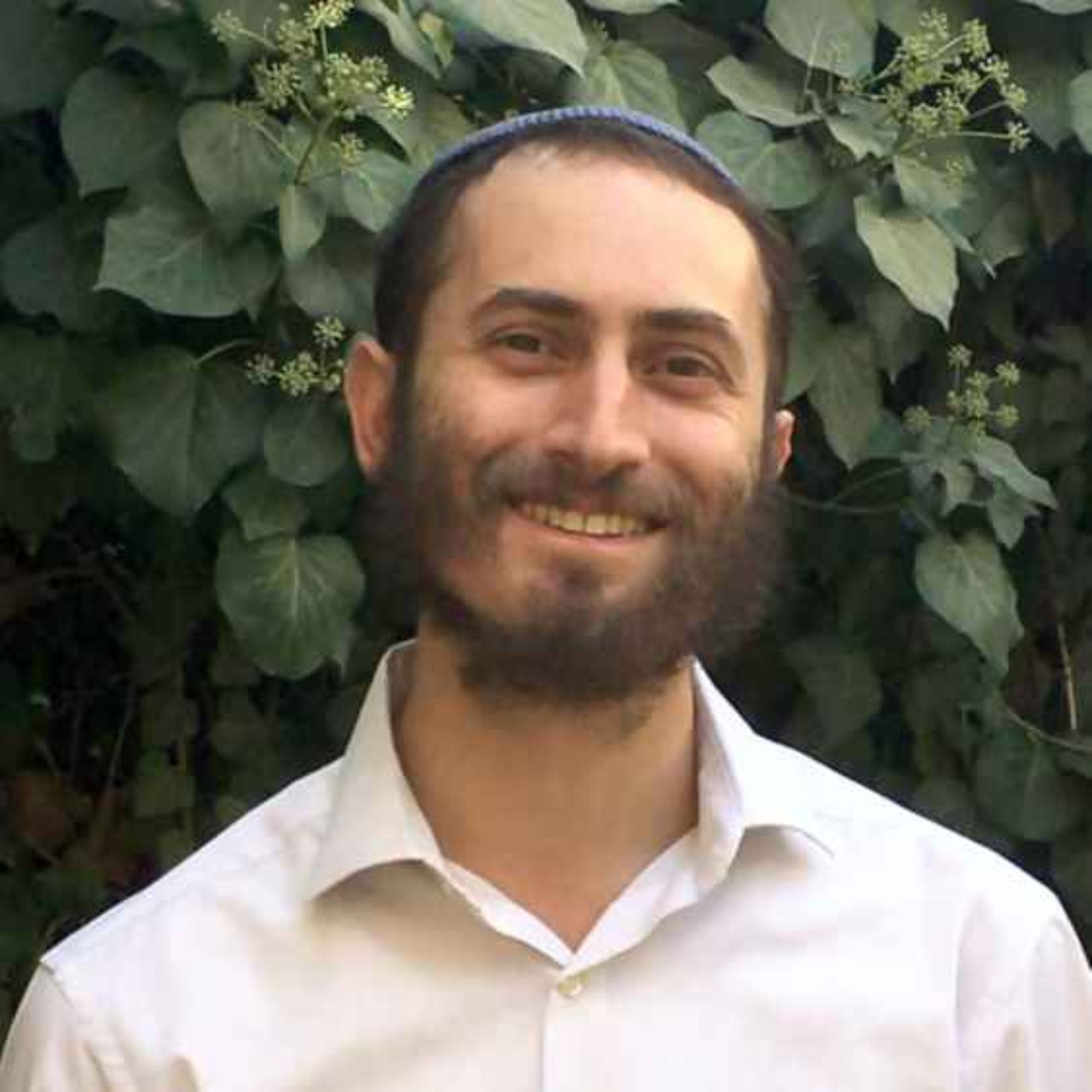
Ep 430430: Rabbi Yonatan Neril, part 1: The Eco Bible
In the midst of several episodes on religious approaches to sustainability I learned of today's guest, Rabbi Yonatan Neril's book The Eco Bible: An Ecological Commentary on Genesis and Exodus.He founded and directs the international Interfaith Center for Sustainable Development, including its Jewish Eco Seminars branch. He wrote the book to shine new light on how the Hebrew Bible and great religious thinkers have urged human care and stewardship of nature for thousands of years as a central message of spiritual wisdom.He has spoken internationally on religion and the environment, including at the UN Environment Assembly, the Fez Climate Conscience Summit, the Parliament of World Religions, and the Pontifical Urban University. He co-organized twelve interfaith environmental conferences in Jerusalem, New York City, Washington D.C., Atlanta, Los Angeles, and elsewhere.On a personal note, I saw the chance to learn about my family and upbringing. My father is the person I know most knowledgeable and practicing about Judaism. He is also among the people I know among the most resistant to reconsidering views on nature, pollution, and considering changing how he interacts with it. I was curious how his religion influences him.Yonatan presented another approach full of joy, community, connection, service, and faith. I can't say others all approach it like a chore or burden, like something we have to do but really don't want to, but I sure see that approach more. I like Yonatan's mood more.We recorded our conversation on video too. See it here. Hosted on Acast. See acast.com/privacy for more information.

Ep 429429: What about jobs?
"What about jobs?" people often ask to counter proposals to constrain some activity. Today's episode answers.Here are the notes I read from:What about jobs?People out of work drain on society, not so happyStore near me that sells trinketsOf any value?I'd prefer a hug, shoulder rub, or make me dinnerMany stages to make: plastic from oil, factory to make, transportation, store clerkFactory, put near landfillWhat about trucks and boats?Better to drive and sail around in circlesAbsurd, but actually better world paying to do worthless work with more hugs, shoulder rubs, and home-made dinners, oil in ground, people not displaced, skies clearerClassic historical case of buggy whipsIf legislated, people wouldn't die.People out of work now clamor to work. People love to serve.I don't know where people's faith in entrepreneurship goes. Constraints breed creativity.Need problem to exist to solve it. If you wait for planned jobs to exist before demand, will never happen. If you keep going in counterproductive industries, we'll destroy Earth's ability to sustain life and society.Economists are incredibly wrong in this area, especially free-market, Ayn Rand types.I'm studying Edwards Deming. Japan: government and industry post WWII did what would be anticompetitive in U.S., but transformed nation and world, more happiness and products, no shortage of competition. Have you seen pictures of Sao Paolo before and after banning billboards.So I'm pretty sure that if we outlawed just producing dioxins and PFOS and carcinogens and created some jobs programs to teach Initiative, which would be enough, or something better if you know, as other nations without our addiction problems do, we'd improve the world by everyone's standards, including the free-market, Ayn Rand types.I think at the root is a belief that people want to be lazy. I just don't see it in at least 99%. If last 1% say 5% scare you, are you really going to let your fears of 5% of people drive economic policy to ecological ruin?I would much rather have shoulder-rubs, dinner made for me, or to make dinner for her, hugs, and what entrepreneurs come up with than destroyed planet. Remember, all those trinkets mean extracting oil for materials, to drive factories, truck, boats, etc to deliver, $1.6B to haul away.When São Paulo introduced its Clean City Law (Lei Cidade Limpa) a decade ago, over 15,000 marketing billboards were taken down.Sao Paulo: The City With No Outdoor AdvertisementsWikipedia's page on Lei Cidade Limpa (Portuguese for clean city law)Five Years After Banning Outdoor Ads, Brazil's Largest City Is More Vibrant Than EverAd Ban in São Paulo São Paulo No LogoAlsoReddit post with many before and after pictures of Poland banning billboards Hosted on Acast. See acast.com/privacy for more information.
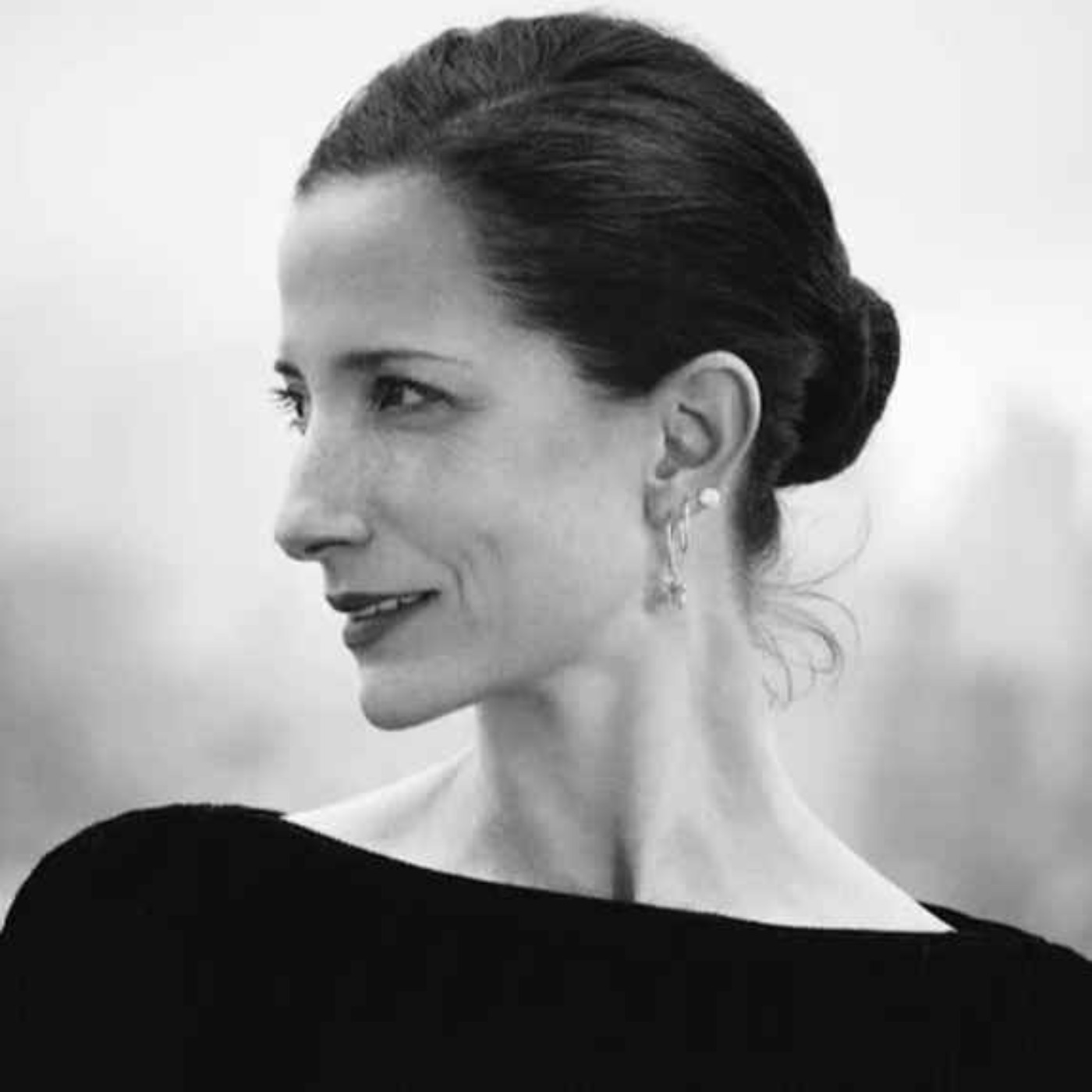
Ep 428428: Vanessa Friedman: The New York Times Fashion Director and Chief Fashion Critic
Vanessa Friedman sees the fashion world from a vantage point few others can as the Fashion Director and Chief Fashion Critic at the New York Times. She arrived there after pioneering roles covering fashion at Financial Times in a first-ever role there, InStyle, Vogue, Vanity Fair, the New Yorker, and Elle.She shares the industry's forays into sustainability---or responsible fashion in her terms---as well as sharing her thoughts on it.Right off the bat she talked about reducing consumption, which I differentiate from reusing and recycling, which most people jump to, but I consider tactical. Reducing is strategic. Harder to get at first, but leads to easier life and work.I was awkward, as I don't know the fashion world, but you can hear from her that environmental responsibility is catching on in fashion. Barely so far, but in some places at least authentically and growing. It looks like there's hope in the industry, though they have a long way to go, a lot of resistance, and many players acting in the opposite direction.I'm also glad to hear Vanessa's personal attention, thoughtfulness, interest, which all sounded heartfelt, thorough, and genuine. At the New York Times she's at a leverage point so I suspect she will influence. I like that celebrities are acting because, however small that change, they influence others. I believe they can help change culture.How Vanessa Friedman Became One of the Foremost Critics in the Fashion Industry Hosted on Acast. See acast.com/privacy for more information.
Ep 427427: Behind the Mic: Attraction and leadership
Former guest and founder of the most popular men’s dating advice website Chase Amante guest-hosted me to continue the conversation I started with Dov Baron on learning attraction, dating, and seduction and applying it to leadership. My conversations with Dov are in earlier Behind the Mic episodes.I start by sharing why I broached this topic at first with Dov, despite it not obviously connecting to sustainability. The short answer is that leadership for me means sharing relevant parts of yourself candidly and openly. While business school leadership classes opened the door for my learning social and emotions skills of leadership, practicing in the world of learning attraction gave me practice on many social and emotional skills for leadership. After mastering them, I honed how to coach and teach them being hired by one of the top gurus in the field.We treat misconceptions about the field, or at least our exposure to it and our practices and community. I'm sure some will retain misconceptions and misapply them.We also shared about our experiences in the field. Hosted on Acast. See acast.com/privacy for more information.

Ep 426426: Why unplug?
I'm in my second month since I unplugged my fridge. Why unplug it?Not because I think its power makes anything more than a negligible difference. This episode describes why.Here are my notes I read from:The other two reasons I unplug the fridge. The first was after reading Vietnam and much of the world ferments, I was curious to learn fermentation. Second is reading how much backup power a grid needs to maintain perfect uptime. Resilience. Each bit after 99% costs a lot more. Alternatively, 95% requires almost no backup. Third is to learn and grow myself. Neediness and entitlement, especially to things that hurt others and nobody needed for hundreds of thousands of years, doesn't make me better person. Do you know anyone spoiled? Do you describe them as "You know what I love about Kate? She's spoiled and acts entitled."Low Tech Magazine's two articles I mentioned, plus a third on how resilience increases security tooVietnam's Low-tech Food System Takes Advantage of DecayHow (Not) to Run a Modern Society on Solar and Wind Power AloneKeeping Some of the Lights On: Redefining Energy Security Hosted on Acast. See acast.com/privacy for more information.
Ep 425425: General William “Kip” Ward, part 1: Security, Stability, and Sustainability Start with People
Kip Ward is a retired General who, among other things, was the first leader of the Africa Command. He shares his background so you can hear it from him. It's extensive, having served at every level of the army. I met him through previous guest Frances Hesselbein and watched a few videos in which he spoke of leadership, which I linked to below.He spoke of things I don't see in sustainability and environmental stewardship but work. I took away from those talksAddressing the conditions that led to a situationGood, effective governance through sustained efforts, which he contrasts with technology or authorityAuthority and force being the last option, despite it being what he was trained in to reach that levelUnderstanding the society and people you want to lead. Their interests and views drive all you do. You have to know your team and goals, but theirs drive strategy.Get to know people and what matters to them.Listen.Do yourself what you expect them to do.I particularly like his commitment for reasons you'll understand when you hear it. Kip is choosing deliberately. I believe action by leaders helps others to follow.Combating Terrorism at the Potomac Institute for Policy Studies, on C-SpanEffective Leadership and Team-building In Complex Technical Environments at the Black Engineer of the Year AwardsFootprints: The Legacy We Leave at TEDxPentagon Hosted on Acast. See acast.com/privacy for more information.

424: Brent Suter, part 3: We don't have to steward. We get to.
If you haven't listened to Brent and my first two episodes, I recommend listening to them first. Also, I recommend reading Milwaukee Brewers’ Brent Suter Sharing Love and Joy.I haven't approached the environment from a religious view and Brent and I spoke about plenty of interesting things the first two times, so we didn't get to it. Lately listeners have probably heard how much William Wilberforce, Thomas Clarkson, Dietrich Bonhoeffer, and their peers have become role models. I wrote Brent to see if he knew more about them and could share.He said he was happy to. I'm not used to talking about religion in public, but he was and was happy to record. I reread the story about his Christianity and was pleasantly surprised to see words he connects with his work that I do---joy, light, love faith, kindness, service, mission---that are the opposite most environmentalists seem to. They look at stewardship like chore, obligation, burden, sacrifice.I've started saying "I don't have to steward. I get to." Taking responsibility for how my acts affect others and changing my behavior to avoid hurting them doesn't hold me back from flying. It connects me with humanity.If you asked if I expected my work would overlap this much with someone based in Jesus relative to nearly any scientist or environmentalist, nearly all of whom tell me they don't want to do more, I wouldn't have believed. As much as science determines the problem, the solution will not come from science but creating purpose and meaning.If you consider yourself religious and religion motivates you to act in stewardship and I sound like I'm missing more than Brent and I covered, contact me. I'd love to learn more. Hosted on Acast. See acast.com/privacy for more information.
Ep 423423: Kelly Allan, part 2: Restoring joy to work through Deming and stewardship
We correct two big misunderstandings.First, most people associate acting on the environment with obligation, chore, deprivation, and sacrifice. We lead them to feel that way when we tell them what to do. We may think we're right because the science says so, but leadership depends not on how right you are but how the person you want to motivate feels.Second, people don't know Deming, or associate him, to the extent they know him, with statistics and how they felt about math problems in school. When you get Deming, you see understanding patterns reveals effective leadership, which is liberating, even fun.Kelly shares how digging dirt and planting plants became fun when led effectively. Since everyone cares about the environment in some way---after all we all breathe, eat, and drink---we can all feel this way.As I speak to more people in the Deming community, I sense we are forming a strategy to apply Deming's work to sustainability. As he turned around Japan in a few years to lead the world, so can we lead our communities.Kelly being on the Deming Institute board, before and after recording this conversation, we talked about involving people who practiced and mastered Deming's approach. Something is going to happen with this community. We are going to contribute to lead people, companies, and industries to embrace sustainability with passion and joy, stopping wrongly expecting burden, chore, deprivation, and sacrifice. Our culture has disconnected us from what brings reward and joy. Great leadership will restore it.If you're into improving your leadership, especially in the style of Deming, you sense we're on the ground floor of a change on the scale of Japan's transformation in 1950, and you want in, contact me. Hosted on Acast. See acast.com/privacy for more information.
Ep 422422: Adam Hochschild, part 1: Abolition and Sustainability
Hosted on Acast. See acast.com/privacy for more information.
Ep 421421: Behind the Mic: Race: Why I've talked about it so much
My second Behind the Mic conversation with Dan McPherson gets to why I've talked about race lately. Why on a podcast about sustainability, leadership, and the environment, do I take the risk as to talk about a topic that straight white men get canceled for?If it didn't further my mission of helping restore Earth's ability to sustain life and society, I wouldn't let another topic divert attention. Whatever problems people struggle over, if anything ties us together, we breathe air, drink water, and eat food that we are sleepwalking as a nation, culture, and species into poisoning.This episode presents a topic connected to race I've talked a lot about with friends and family to figure out how to treat publicly but that I consider too important an approach to sustainability to leave aside, whatever the personal risk. The personal risk doesn't come from this view nor from anyone who understands me, only from people who misunderstand.Listen on and hear the view. I hinted at it in my conversation with Eric Metaxas. This episode with Dan goes into more depth. I'll talk about it more, so consider this episode a sneak preview. Hosted on Acast. See acast.com/privacy for more information.

Ep 420420: Three Years of Leadership and the Environment!
I started this podcast November 30, 2017. In this episode I reflect on before starting the podcast, the fears and hopes driving it, the friends it brought me, some challenges, some joys, accomplishments, and such.I also share how it changed me and how if you want to change the world and love doing it, you can too. I've trained a few new hosts starting their versions.Between my personal growth, the guests, the hosts starting their branches, and feedback from listeners, I can't tell what part I love most.Here's to another three years!Here's to another thirty years! . . . though I hope we will have changed course enough before then not to need it. Hosted on Acast. See acast.com/privacy for more information.
Ep 419419: Balint Horvath, part 4: Fatherhood and sustainability
Let's talk fatherhood and sustainability."Josh, you don't understand since you don't have kids, it's impossible to avoid producing waste," people keep saying. Since they say other things I've done is impossible before learning I've done them, I expect they're making excuses and that I could solve parenthood problems too. Without kids I haven't solved their problems (though guest Bea Johnson has in her family of four that produces less landfill waste than I do), but I expect I could.Balint became a father since he was a guest. We decided to record a new challenge for him as a father. The first episode we just spontaneously started recording, so we didn't set up microphones. I decided to trade catching the moment for sound quality. In the second half we recorded with our good microphones.Since some podcast guests have stopped their challenge shortly after their second episode, I'm gratified to hear a guest continuing it forever and building on it. You could say maybe he's continuing it because it fits with minimalist values he already developed. I contend that sustainability resonates with some values in everyone. He didn't start with an advantage. He found one anybody could. Hosted on Acast. See acast.com/privacy for more information.

Ep 418418: Chester Elton, part 2: The world's number 4 best leadership speaker, trainer, and thought leader
The Global Top 30 Gurus named Chester the world's number 4 best leadership speaker, trainer, and thought leader, as I happened to find while researching before our conversation. I had to ask him about it, which led to him sharing about it. Naturally, he spoke humbly about it, but we get some inside views of his rarified level of the corporate and government leadership world. (The list named two other podcast guests and one who hosted me).When I asked about his path, he shared so many wonderful and helpful stories, I kept asking him for more. I wanted to hear about his bottle commitment, but our conversation became a master class in more than becoming a leadership guru, but also to manifest any passion. You'll hear that his passion wasn't to do what it looks like he's doing when you just look at his behavior. That's what you see.He shares what motivated him to start and what kept him going through failure, working for no pay, fear, anxiety, and the things you don't see if you just see bestselling author. He shares about his experience decreasing pollution. I've had several guests who contacted me midway and said they couldn't figure out how to do their commitment. In all cases, with a little reflection and support from me they've surpassed their expectations.I confess I thought Chester might come back with not knowing what to do. On the contrary, he did it and shared the results. I meant to ask him if he felt "I could have done this a long time ago" because it felt like in the end, after he got past what he described we build up in our heads, he found the action simple and easy.He sounds like he'll find other things too so I hope he takes me up on the future invitation. Hosted on Acast. See acast.com/privacy for more information.
Ep 417417: Dan McPherson, part 2: Recovering from his heart attack, cutting out water bottles
Between asking about recovering from a heart attack in your 40s and about water bottles, where do you start? As it turns out, they're more closely related than you think. We started talking about recovering from the heart attack. Dan has faced his mortality several times before, so fear of death didn't hit him most. We talked more about changes to his lifestyle, particularly diet, which connected with sustainability.As a leadership community leader, Dan noticed and shared about his emotional experiences. Since we're friends who talk a lot, I think you'll find the conversation more friendly than most, so I think you'll hear more intimacy than with many podcast conversations.Dan seemed to reach a greater ratio of change to effort than many guests. He sounds like he's just starting, maybe because he's changing a lot of things in his life now, maybe because he's changed before. I love that he's made the term doof a part of his vocabulary and that it's taken root with his family. Man, it clarifies and simplifies choosing what to buy and put in our mouths.His experience to me reinforces how much we do on autopilot that hurts others and instead of facing we put out of our minds because it superficially makes us feel bad. We don't see the life improvement after the transition. Dan has experienced it. Hosted on Acast. See acast.com/privacy for more information.
Ep 416416: Rod Schoonover, part 1: Resigned in protest after White House tried to delete "basic science" from climate change report
In June and July 2019, you may remember reading about Rod Schoonover in the NY Times, State Dept. Intelligence Analyst Quits to Protest Blocked House Testimony, Washington Post, CBS, and more in the links below. He resigned in protest as a long-time government intelligence and security researcher and analyst, focusing on a field he helped create---climate security. He focused on learning how environmental changes would affect the security of the United States. If you're American, that's your life and mine as our nation leads the world in plunging the Earth into uncharted environmental territory.The White House blocked his testimony to Congress---not disagreed, blocked. Even places like the conservative American Enterprise Institute went on record saying how things like that don't happen in the US. He loved his job, his work, the people he worked with. This episode will share what happened from his inside view.We also cover his personal choice to act. We all face choices between what we think is right versus what's easier, and we're inclined to think if we just keep our heads down doing what we're doing we'll be able to act later or our consciences won't catch up to us. Rarely do we risk our careers, livelihood, he was a new first-time father, or see our choices made public.We can learn from Rod.As Rod and I are both former physicists, it felt heartwarming to hear a systems approach, a view few people get. Many who do haven't practiced them. I love getting to talk to someone experience and fluent in them. On the downside, we who view from systems perspectives see how imminent collapse may be and how futile non-solutions are for treating only elements of the system. On the upside, we see how simple and effective systemic solutions can be. And fun.Ecological Futures: Exploring Ecological Disruption as a Security RiskWhy Climate Change is a Security IssueA New DirectionStatement for the Record, Dr. Rod Schoonover, Senior Analyst Bureau of Intelligence and Research, Department of StateWhite House Tried to Stop Climate Science Testimony, Documents ShowFormer intelligence analyst says White House tried to delete "basic science" from climate change reportState Dept. Intelligence Analyst Quits to Protest Blocked House Testimony Hosted on Acast. See acast.com/privacy for more information.
Ep 415415: Marion Nestle, conversation 2: Let's Ask Marion
Food started me on this journey. If it's not a major source of joy, community, and connection, the opportunity is there to make it so.Marion Nestle does it. She returned after recently launching her book Let's Ask Marion, which I consider her most accessible. I read What To Eat, around 500 pages, and loved it, but Let's Ask Marion is under 200, with quick chapters, though still comprehensive in covering her most important topics.Our conversation covers background not in the book of her and her co-author, Kerry Trueman, who researched the questions, asked them, and planned with Marion the book's structure and content.Since her first appearance on this podcast, I sat in on her class at NYU---one of the benefits of teaching there myself---so got to know her work and history in more depth. She helped found the field of food research. I was glad to get some of that personal touch at the end---the plants Marion grows and her attitude to them.She wrote in the book that her top consideration about food is that it's delicious. It's personal. We can grow it. I hope that connection to our food came out in our conversation and that we can increase it.Most Americans seem to view food, exercise, and the environment with horror, sources of guilt, shame, confusion, and uncertainty. Marion lives the opposite. I think I do too. Knowing all about food and our food systems may seem like work, but it leads to delicious joy, community, and connection. Hosted on Acast. See acast.com/privacy for more information.
Ep 414414: Nir Eyal, part 2: He committed to avoiding flying before the pandemic
We covered two main points: how I inspired him and how he inspired me. If I'm not too presumptuous to say I inspired him, that is, the first part is about his choosing not to fly. Several months into the pandemic at the time, we were all used to not flying, but when he committed, before the pandemic, most people I talked to called not flying impossible.Some backstory: Nir emailed me about 24 hours after our first conversation to say he had already substituted one flight with speaking remotely. In this episode, he shares about how he made it happen.Then we get into a back and forth about technology. We agreed on some and disagreed on other parts. Then I switched to what he inspired me on: barefoot running. When most people say barefoot running, they mean minimal shoe. Nir was the first person I met who ran without shoes. Finally I had a role model who ran in Manhattan without shoes. I had been emailed with him between conversations about it. Finally I could share with him. He shared how he got started, what motivated him.I'm sorry the technology conversation probably sounded annoying. On the one hand it's annoying for everyone, on the other, what do you do when you disagree on something? Not talk about it? Avoiding the conflict doesn't resolve it. It leaves it to fester. That's fine on issues that don't matter, but the air we breathe, water we drink, and soil we eat from matter. I hope to run with him when he gets back so New York can see two old men running barefoot together, laughing.We can not talk about it and just let the ballot box decide. As far as the environment goes, we saw how that worked out in 2016.I closed the episode with a plug based on the couple stories about famous, successful people inspiring me to physical, emotional, and intellectual fitness and life improvement. If you want to bring into your peer group the most amazing people you can think of, start a new branch of Leadership and the Environment. Since we recorded, several branches have started, coming from Sweden, England, Italy, and soon Japan.I will train you in the basics of starting a podcast and the elite skills of connecting with people you only dreamed of.The guy who started Leadership and the Environment Sweden just reported back to me how his third guest was an important government official from his home town and she is putting him in touch with a Parliament member. It happens that fast.If you want to start LatE Acting, LatE Silicon Valley, LatE Hip Hop, LatE Sports, or any field, contact me. I'll train you, you'll meet the people of your dreams, lead them to contribute to a legacy of stewardship, and they'll thank you. It takes some effort, but anyone can do it. Hosted on Acast. See acast.com/privacy for more information.
Ep 413413: Michael Moss, part 1.5: Maybe that was the addiction speaking
Michael wrote me the morning before we scheduled this conversation to say he ended up spending more time on the screen when he intended less. He wondered if we should skip it. Longtime listeners may remember similar results with guests Jim Harshaw and Caspar Craven.I told him I'm not looking for a Disney version implying that acting sustainable was easy. I believe listeners engage more with hearing the challenges than perfection, though it would mean him sounding human. He magnanimously agreed. So we'll get to hear his challenges.As it happens, his next book is called Hooked: Food, Free Will, and How the Food Giants Exploit Our Addictions, which overlaps with getting hooked on screen time. We ended up with some sneak preview of the book and how it relates to polluting behavior, especially Michael's challenge.We describe a parallel between changing eating habits and sustainability habits came across, as well as the techniques doof industries use to establish habits that help them, however unhealthy for you or damaging to Earth's ability to sustain life and human society. Since they work to get past your defenses, often with children too young to have developed defenses, I would call them insidious or creepy, like a tick creeping slowly past your defenses.The challenge in changing these habits, from one perspective, is to create new neural pathways. We focus on the objects of our craving and the craving, but looking past our craving to seeing that we are training ourselves and the feelings of withdrawal will pass seems to make iteasier. Hosted on Acast. See acast.com/privacy for more information.
Ep 412412: George Chmiel, part 2: Teamwork from garbage
"You heard it here first." We start by reviewing George's experience picking up garbage with a team he organized. We started creating a project.It spontaneously arose, but I see a chance that we'll make it happen. Maybe soon, maybe it will take time. Maybe it will go nationwide. Maybe it will fall apart. Maybe it will change culture. Maybe future generations will look back at these changes as what sparked the turning point. George's gym, Spartan, Litterati, SoulBuffalo, Generation 180, Living Lands and Waters, The Story of Stuff, . . . there are a lot of organizations that want to act who are part of this growing community.I want to contrast George's motivation from your typical gym's or most organizations'. Most gyms work you now for a later payoff. For George, the future benefit is nice, but it's a side effect. The effort itself is rewarding. We heard it with Joe DeSena and Spartan. You hear it from me with my sidchas.Listen to the conversation. If interested in participating or contributing, let me know, especially if you like organizing or you know sponsors. Hosted on Acast. See acast.com/privacy for more information.
Ep 411411: Winston Churchill and the environment
The notes I read from:Missing messages on the environment we can learn from Churchill. I'll read from some of his most famous speeches, during WWII, then I'll play the close of one, from June 4, 1940 “We shall never surrender.”Some points:It's bad. It's as bad as it's ever been. There's no escape. Your life is in peril.It's huge. Nations have been wiped off the map. The world is at stake.We are dying. Many of us will die.We must act, ourselves. You, me, everyone. We must put ourselves on the line.We can't delegate or pass this off.We can make it. We must join together.We have done it before. We are a great people.We are humble. “We” are just an island.We have a purpose, not just defense.I will give it to you straight. No lies. No dancing around the issues.I'm in it with you.Despite the depth of our misfortune, we have the means to make it our finest hour. We will. Those who give the most will feel the greatest reward.You know what to do—everything you can.You help yourself by helping everyone.Churchill's contextMost of WWII as we know it hasn't happened yet and they don't know what to expect. Do they expect more, less, or what, we don't know.He's 65.He knows every person in the UK will listen to his speeches, as will probably nearly everyone who speaks English in the US, Canada, Australia, and the commonwealth.The King will. Roosevelt and Stalin will. Hitler will. Mussolini will.Nearly everyone remembers WWI and the tens of millions lost then.England once held the largest empire ever. Now they were an island. The Axis powers had destroyed most of Europe. Who knew if help might come from the US, Australia, India, or any place. Hitler was dominating with strategies, tactics, and equipment nobody knew how to defend against.Excerpts‘Blood, toil, tears and sweat’13 May 1940. House of CommonsChurchill's first speech in office“I would say to the House, as I said to those who have joined this Government: I have nothing to offer but blood, toil, tears and sweat. We have before us an ordeal of the most grievous kind. We have before us many, many long months of struggle and of suffering. You ask, what is our policy? I can say: It is to wage war, by sea, land and air, with all our might and with all the strength that God can give us; to wage war against a monstrous tyranny, never surpassed in the dark, lamentable catalogue of human crime. This is our policy. You ask, what is our aim?I can answer in one word: It is victory, victory at all costs, victory in spite of all terror, victory, however long and hard the road may be, for without victory, there is no survival.”‘We shall never surrender’4 June 1940. House of CommonsAfter Dunkirk.“Even though large tracts of Europe and many old and famous states have fallen or may fall into the grip of the Gestapo and all the odious apparatus of Nazi rule, we shall not flag or fail. We shall go on to the end, we shall fight in France, we shall fight on the seas and oceans, we shall fight with growing confidence and growing strength in the air, we shall defend our island, whatever the cost may be, we shall fight on the beaches, we shall fight on the landing grounds, we shall fight in the fields and in the streets, we shall fight in the hills; we shall never surrender.”‘Their finest hour’18 June 1940. House of CommonsTo the pilots of the RAF.“The battle of France is over. I expect that the Battle of Britain is about to begin. Upon this battle depends the survival of Christian civilisation. Upon it depends our own British life, and the long continuity of our institutions and our Empire. The whole fury and might of the enemy must very soon be turned upon us. Hitler knows that he will have to break us in this island or lose the war.If we can stand up to him, all Europe may be free and the life of the world may move forward into broad, sunlit uplands. But if we fail, then the whole world, including the United States, including all that we have known and cared for, will sink into the abyss of a new Dark Age made more sinister, and perhaps more protracted, by the lights of perverted science. Let us therefore brace ourselves to our duties, and so bear ourselves that, if the British Empire and its Commonwealth last for a thousand years, men will still say, ‘This was their finest hour.’”‘The few’20 August 1940. House of CommonsTo the RAF pilots.“The gratitude of every home in our Island, in our Empire, and indeed throughout the world, except in the abodes of the guilty, goes out to the British airmen who, undaunted by odds, unwearied in their constant challenge and mortal danger, are turning the tide of the World War by their prowess and by their devotion. Never in the field of human conflict was so much owed by so many to so few.”Our contextNow consider our context regarding the environment. How many of these points sound true and how many has anyone shared with you? It's bad. It's as bad as it's ever been. There's no escape. Your life is in peril.It's huge. Nations have been wiped off t
Ep 410410: Race, part 2: How do you learn when people respond to questions with criticism and judgment?
Here is my second episode with guest Dan McPherson of Leaders Must Lead on race. Probably one more after this one.Say someone doesn't know something about race but wants to. If that person sees others talking about the subject get chastised and even fired, how can that person learn? If anything, won't they learn not to ask? If so, won't they remain ignorant? Doesn't ignorance contribute to racism.Dan and I discuss these questions and more. He shares some surprising personal stories of being attacked and more, as do I. Hosted on Acast. See acast.com/privacy for more information.
Ep 409409: Kevin Cahill, part 2: Systems change, fast and effective
Everyone gets we have to change system, which means global economy. They think we have to start huge. If it's not big enough, it's not worth doing.History suggests otherwise, in particular Edwards Deming's results transforming Japan in the 50s, or the U.S. war efforts before that, or several American companies since.Kevin runs the Deming Institute, which trains people in the Deming philosophy and practice. Kevin speaks from experience as the grandson of Dr. Deming. They didn't start by doing big huge things. They started with a systemic perspective, understanding where and how to act. Kevin's personal project of changing light bulbs in his house illustrates how leading this way leads to results beyond what we see with just going big from the start.I won't like that I often felt slack-jawed at Kevin saying exactly what I've tried to share with others but they never get, but Kevin speaks with decades of experience. Actually generations. I also can't wait to start working with leaders and people in organizations who have approached and solved problems systemically, and who saw that they had to change industries and a nation for their personal benefit.What we need to to to reverse our environmental course!Call me crazy, but I see combining my sustainability experience and perspective with Deming company and leadership experience getting results like Japan did in the 50s and beyond.If Japan Can Why Can't We? is the name of the show that restarted Deming's influence in the US. I see the question as poignant today. I believe we can turn around as fast as they did, this time on sustainability.Let's do this.The Deming Institute Hosted on Acast. See acast.com/privacy for more information.