
This Sustainable Life
866 episodes — Page 7 of 18
Ep 558558: Michael Carlino, part 5: Which is the danger, lowering or raising the human population?
This conversation was one of the most fascinating I've had. I couldn't have had it when I was younger. Michael and I are learning each other's world view regarding population, our innate drives, how we create or deplete resources, and related topics.We both agree we want many humans prospering. Our world views differ in what creates the resources we need to live: more humans to create the resources or fewer humans to keep from depleting them. As a result, we each see the strategy the other promotes as grave threats to the mission we agree on: human flourishing.What makes the conversation fascinating and one I couldn't have had before is that we aren't arguing or fighting. We're listening and learning.We start by talking about habits, discipline, virtue, and aligning priorities. I think you'll like this fifth installment of our conversations. Hosted on Acast. See acast.com/privacy for more information.
Ep 557557: Rollie Williams, part 1: Comedy and climate change
I hope you know Climate Town. Watch a bunch of episodes if you haven't. This Sustainable Life listeners and hosts talk about the show. It's funny and fun, yet intelligent and informative. On top of the content, I watch the backgrounds, which often take place where I live in lower Manhattan and where I went to school, at Columbia, where Rollie went to.So I contacted him and his team. We spoke. Within minutes I could tell why Climate Town is so funny. He and his team are funny. Immediately, I could tell I could learn from them.Here he is. We talk about his and his shows' origins and goals. I always thought he was a scientist making humor. He's a humorist taking on science, but not just a little. Enough to go to graduate school for it. That's serious commitment to his craft. (I think he cares more about the environment than he says, but you can judge for yourself).You'll hear commonalities and differences between us. For example, how to influence others and especially population. I describe the Spodek Method with him. You'll hear his commitment and some anticipation of conflict or synthesis in our next episode.Plus, he's funny throughout. This episode isn't as funny and incisive as a typical Climate Town episode, but more of that than one of my normal episode, since Rollie brings it.Climate TownSweatpantsJames Burk's "The Greatest Shot in Television" Hosted on Acast. See acast.com/privacy for more information.
Ep 556556: Judith Enck: Beyond Plastic's Founder and President
Judith shares her work, motivation, and vision on a problem everyone sees killing people and wildlife, but shies from applying themselves to, maybe because we value our polyester clothes, bottled water, laptops, and such. Have we lost the ability to imagine the world before plastic was invented?Her perspective, vision, and plans are common sense, sadly not common, yet, but she's working to bring us there. We do not need to use as much plastic as we do.Beyond Plastic's mission, from its web site:Launched in January 2019, Beyond Plastics is a nationwide project based at Bennington College in Bennington, Vermont, that pairs the wisdom and experience of environmental policy experts with the energy and creativity of college students to build a vibrant and effective anti-plastics movement. Our mission is to end plastic pollution by being a catalyst for change at every level of our society. We use our deep policy and advocacy expertise to build a well-informed, effective movement seeking to achieve the institutional, economic, and societal changes needed to save our planet, and ourselves, from the plastic pollution crisis.Their goals:It will take changes at every level of our economy and civil life to stem the tide of plastic pollution. Individuals need to be moved to act in their personal lives and take action as part of a growing movement; corporations need to feel the pressure to initiate changes in their purchasing and packaging habits; governments need to impose bans and adopt laws that require extended producer responsibility; and new manufacturing of plastic has to be prevented from spreading. Beyond Plastics seeks to educate the media, policymakers, and the public on the plastic pollution crisis; encourage businesses to eliminate single-use plastics; train students to become leaders in the anti-plastics movement; and help block new plastic manufacturing and plastic burning facilities.Judith's pageBeyond PlasticThe Story of PlasticThe New Coal report from Beyond Plastics Hosted on Acast. See acast.com/privacy for more information.

Ep 555555: EJ Perry, part 1: Brown's quarterback on clutch performance
Who doesn't love knowing about something big before everyone else?EJ Perry is something big, a very talented quarterback being scouted by the NFL, coming from the Ivy League. Rarely do people reach pinnacles in multiple areas of life so young. (I'm posting early so you can know to see him play in the Shrine Bowl next week, February 3 at 8pm eastern on the NFL network.)Regular listeners know I like bringing top athletes to the podcast because they've faced challenges, victories, losses, and adversity and had to return to the game and life. We didn't ask to be born into a polluted world, but we did. I believe we can learn from athletes and other leaders.I indulge in asking EJ about playing in clutch situations. He describes preparation, teamwork, mindset, and the types of things we need to face our environmental problems beyond facts, numbers, and instruction. Then we talk about what the environment means to him. He responds with humility and evolves from a mainstream response of what can I do?? to I know what I can do, connecting him more to family, giving him energy.Listen for more. Then watch the game and watch for EJ in the NFL.The Boston Globe: Why were NFL scouts flocking to Brown University football games this fall?The Boston Herald: Brown quarterback EJ Perry chasing NFL dreams Hosted on Acast. See acast.com/privacy for more information.
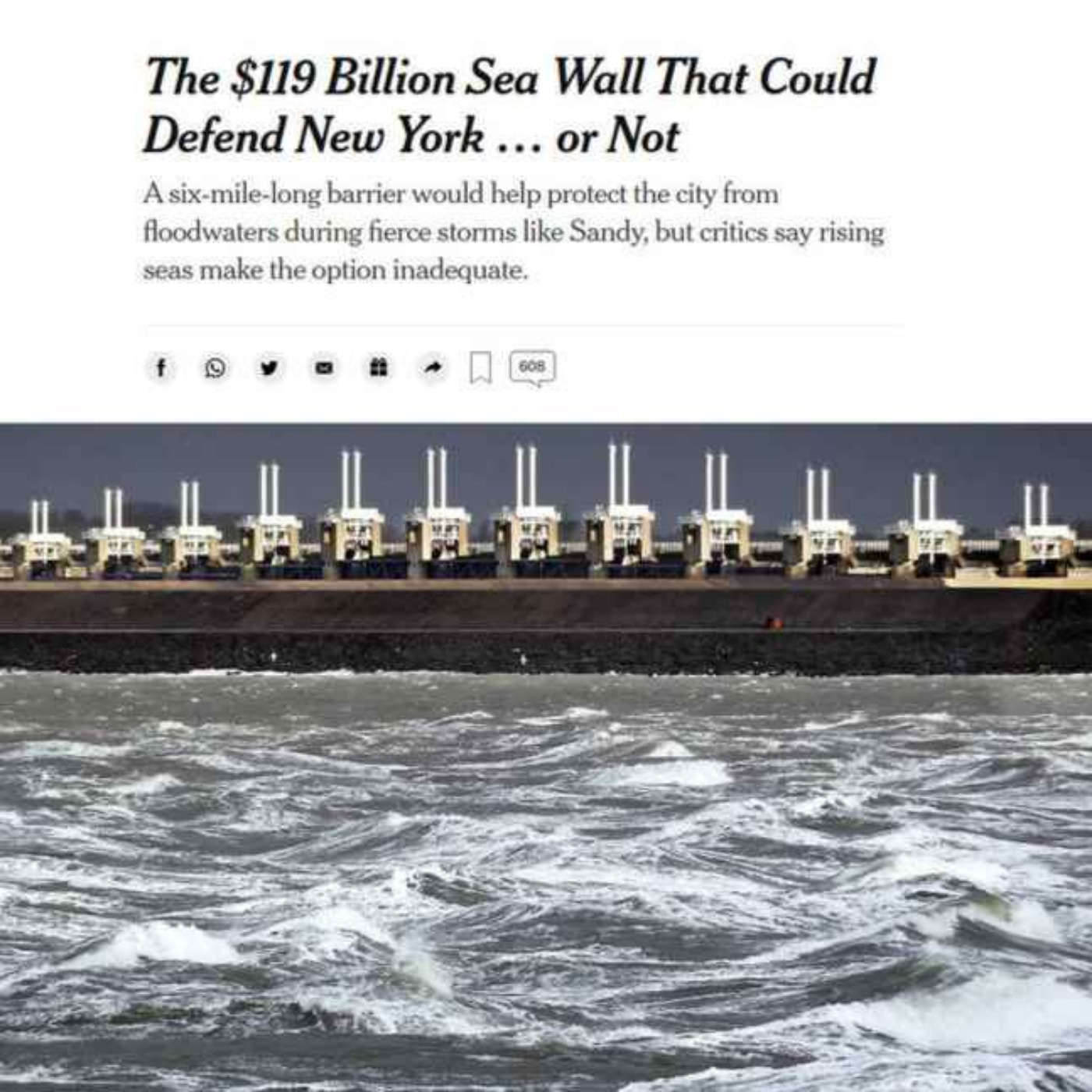
Ep 554554: Sea walls won't protect us from our garbage. Stopping polluting gives us our best chance.
My notes that I read from for this episode:Sea wall for Manhattan, like Holland: expensive, huge, likely won't workControversial already. Natural solutions might work better.Let's say they worked.On Staten Island, Fresh KillsAlso everywhere, all coasts unprotectedNow think of Cancer Alley Gulf coast, oil refineries and global toxic dumpsAll that pollution will be dispersed to seas and biosphereI'd guess hundreds of thousands of yearsThink of the sufferingChallenge is more than energy. Also thermodynamics. Everything will disperse.Best solution: stop using fossil fuels now.Yes, we'll face problems, but we'll solve switching problems more easily than global garbage.Not an option: keep going as we are and maybe the problems won't happen. Hosted on Acast. See acast.com/privacy for more information.

Ep 553553: Gaya Herrington, part 1: How far have we passed our limits to growth? What does that mean?
Five months ago, Gaya's work led to headlines like Yep, it’s bleak, says expert who tested 1970s end-of-the-world prediction. The 1970s predictions weren't exactly predictions, but the headline refers to the book Limits to Growth. If you're not familiar with it, we start by talking about it. We both consider its views and analysis among the most important.The book simulated possible outcomes for humans on Earth. Those outcomes varied from lots of happy people to billions dying. The authors' goals were to show what patterns we might expect.Still, people since have wondered if we and Earth have tracked any of those outcomes. Gaya's work does just that and shows that we have a slim chance of avoiding collapse, but a good chance of hitting it. I am amazed at how well those models track so many measurable outcomes in disparate areas.Our conversation covers her research, what it means, how to understand it, her work with companies, systems, solutions, and how these things affect our personal lives. Limits to Growth, Gaya's work, and what to do about them are among the most important things we can understand. Beyond Growth, Gaya's summary of her workMIT Predicted in 1972 That Society Will Collapse This Century. New Research Shows We’re on Schedule., a Vice article on her workUpdate to Limits to Growth: Comparing the World3 Model with Empirical Data, Gaya's original results Hosted on Acast. See acast.com/privacy for more information.
Ep 552552: Hilary Link, part 2: colleges and universities talk sustainability but rarely act. This college president does.
Hilary describes her commitments as achieving some success and some failure, but learned from both.We start with her personal experiences and memories of ice skating and cross country skiing as a child leading to her sometimes painful lessons today. More than just ice skating again, she took lessons with her child. Listen to her for the lesson and why it was painful, but I'll share that she learned to wear a helmet.She also talked about driving less, which led to what she could do with her community not to accept that not driving has to be hard, but how to improve the situation. She talked about eating less meat, which I heard creating more connection within family.From the personal, we moved to the systemic. As the president of an august institution and connected to peers at peer organizations, she can influence within Allegheny and among university presidents and across academia. It's nice to talk about change and sustainability. It's nice to change institutions. But she points out, everyone sees what you do and your personal behavior affects others.I don't think this episode is the last we'll hear of Dr. Link. I believe she'll implement some of the ideas that came up during her actions and this conversation. Stay tuned.The Game Changers documentary on elite athletes and not eating meat.Bea Johnson's episode on this podcast with links to her TEDx talks and books. Her family of four produces less garbage than I do alone. Hosted on Acast. See acast.com/privacy for more information.
Ep 551551: Chad Foster, part 4: Flying to skiing, but not camping in the back yard
In this episode we talk about how to lead people, but I can't help notice on listening afterward how quick and easy it is for him to fly his whole family across the country several times a season, but impossible to pitch a tent in his back yard. Whatever effect I've had on other guests, it's not happening with Chad.What he shares about leadership, I agree with and his life transformation to adjust to circumstances he couldn't have predicted, we can all learn from, so I recommend listening (sorry about the sound quality on my microphone). He lost his sight, which hasn't led to a worse life, as best I can tell. We're losing our ability to eat meat, have as many babies as we want, and fly without these actions causing others to suffer and die. But unlike losing an ability most people would not want to lose, eating more vegetables and living more sustainably benefits everyone, especially people with lungs.No meaningful change has happened with this guest. I haven't connected with what the environment means to him. Hosted on Acast. See acast.com/privacy for more information.
Ep 550550: Rick Ridgeway: A Life Lived Wild: K2, Everest, and places no human had seen
Prepare to be awed at Rick's stories of adventure, discovery, nature, and humanity. He has summited K2, Everest, and more. He's visited places possibly no other human has. And he's an experienced, brilliant storyteller, so shares his experiences with a vitality that can only come from living it. Hear what it's like for animals that have never seen humans to approach him.His interactions with people show up too, including Sir Edmund Hillary, Patagonia founder Yvon Chouinard, and North Face and Esprit founder Dave Tompkins, and more.He shares what it's like at altitudes where each step requires summoning all the willpower he can just to take the next step.For background, before recording, I checked with him if we could talk about his thoughts on his role as a role model promoting activities that impact the environment, like all that flying. I was glad to hear he was open to it. It just worked out that the stories he shared were so engaging that we didn't get to the topic, or to do the Spodek Method. I hope in a future episode. Still, he shared plenty on his environmental views and work.He just published his latest book. As captivating as I found this conversation, the book's stories transcend them. Beyond individual stories, it's composed with threads running in and out that create a greater message than a collection of stories.Rick's home page, with links to his movies, books, and moreHis latest book, Life Lived Wild, with links to his othersOne EarthTomkins Conservation Hosted on Acast. See acast.com/privacy for more information.
Ep 549549: Abdal Hakim Murad, part 2: High and low tech in the new green mosque in Cambridge, UK
Many people and mainstream society seem to view technology as the solution to our environmental problems---and the more and the newer the better. Abdal Hakim and I agree technology isn't the glowing solution many believe. It can play a role, but as part of a mix, including low-tech and non-tech components.This topic led to the new green mosque in Cambridge that he helped make happen, how to mix technologies and harmonize with its location. It won awards and created networks and support from the community.He shared the role of sacred spaces in life, less available now, as well as natural spaces. Nobody dislikes trees, but there are fewer around than ever for many people.He also shares his commitment on reducing meat with a widespread social and Muslim perspective.Cambridge Central MosqueThe World Architecture Community article, The UK’s first green mosque: "The Cambridge Mosque", with lots of pictures Hosted on Acast. See acast.com/privacy for more information.
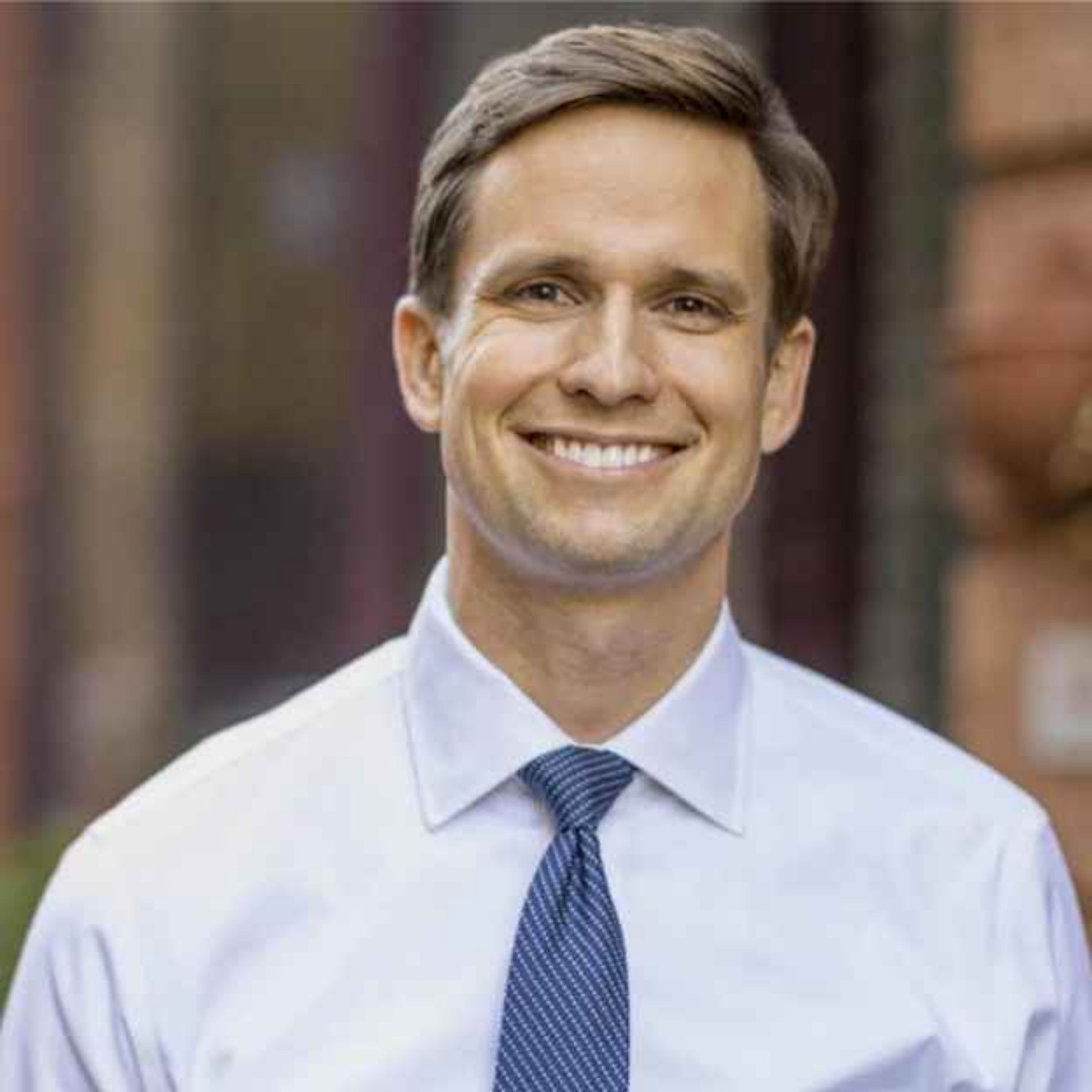
Ep 548548: Erik Bottcher, part 1: a New York City politician awesome enough to pick up litter
Erik Bottcher is my elected legislator. New York City's council presides over a budget bigger than most countries'.Yet I met him picking up litter. He organized weekly clean-ups when the city dropped its sanitation budget during the pandemic. He also sees the problem not as too little cleaning up but too much supply of packaging that becomes litter.Let's pause for a moment. How many politicians have you heard of who bend down and pick up litter, week after week? I think the world would benefit from all of them doing it.We talk about changes to the city we'd like to see. He shares about growing up gay not in Manhattan but the Adirondacks, then coming to the city and how that affects his governing. Hosted on Acast. See acast.com/privacy for more information.
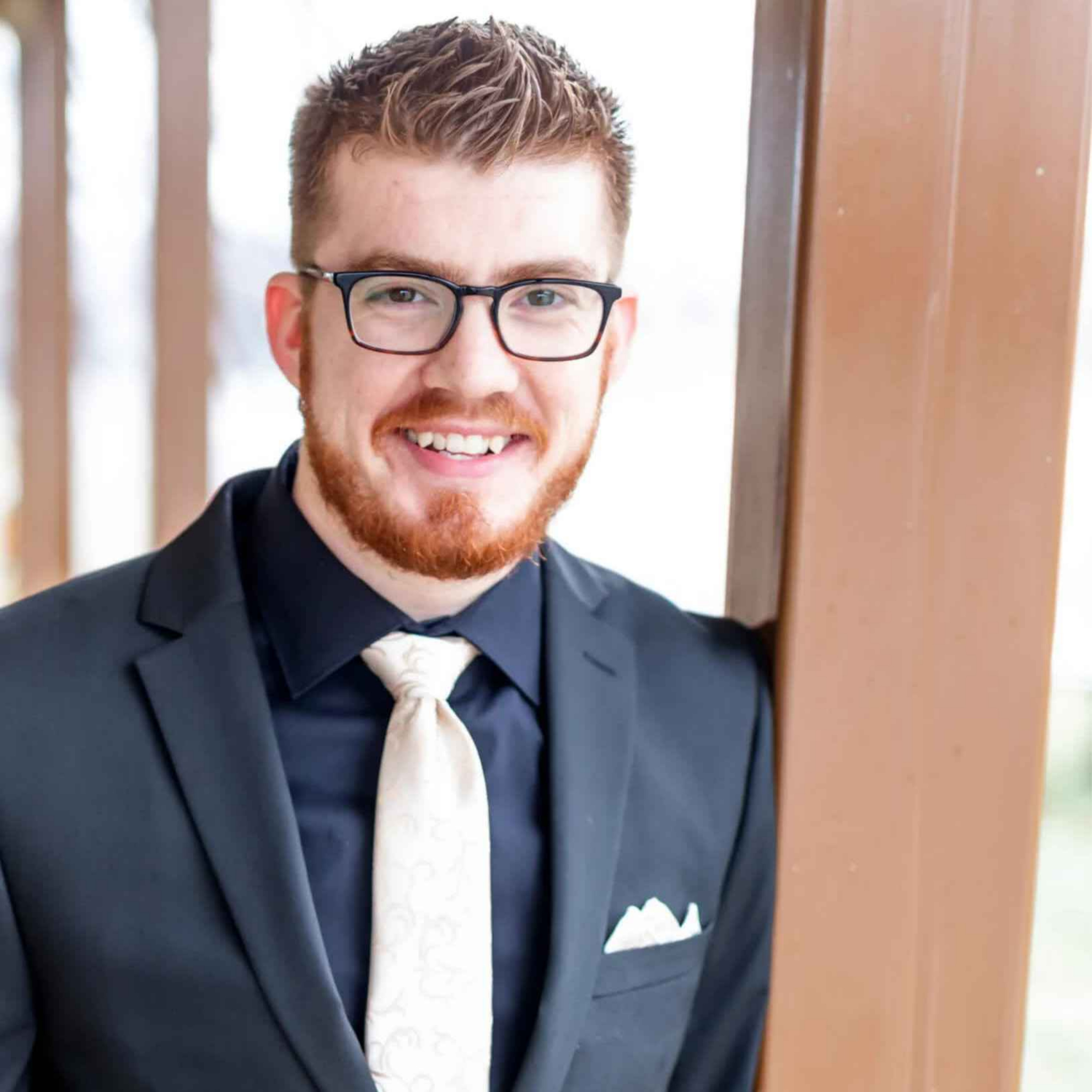
Ep 547547: Michael Carlino, part 4: What does Christian scripture say about population?
Michael is becoming a regular. Would I have expected an extended conversation with a doctoral candidate at the Southern Baptist Theological Seminary when I started? I don't think so, and I don't think many environmentalists engage with evangelicals and conservatives. I think you'll hear genuine friendship, mutual respect, and mutual desire to learn from each other. I think you'll hear actual learning.In this episode we took on a topic we expected to disagree on: population. This time I asked more questions, learning his views and the views of scripture he follows, though I shared my views too.What does the Bible have to say about population? Where do we agree or disagree? What common ground is there, if any, and what can we do about it? Hosted on Acast. See acast.com/privacy for more information.
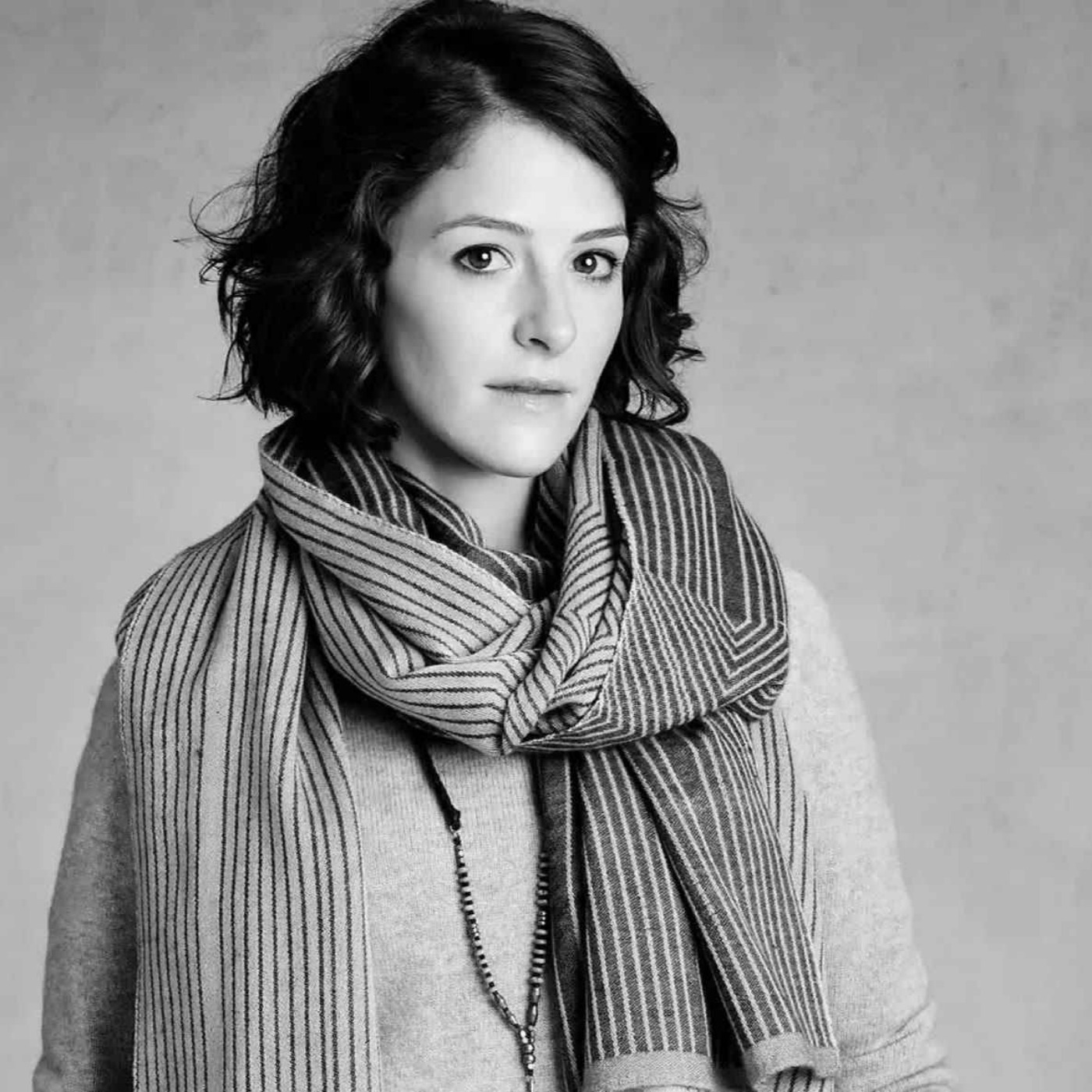
Ep 546546: Maxine Bédat, part 2: Systemic Change Begins With Personal Change
Maxine shares her experience with her commitment across the country. She moved partly to enable living by her values. People often suggest it's easier for someone living in New York not to fly since I have access to so much culture here, but access to many cultures only matters if you value it. Not everyone does. I hope you live where you can access things you value. If you don't, no amount of travel will overcome that you live where you don't like.I mention this because Maxine could live by her values better not in New York. She sounds like she's still flying a bunch, she didn't commit to avoiding flying (yet). As we talk about in our conversation, we build up to bigger changes through smaller ones.Note how often she describes the discomfort that changing to acting on her values liberates her from. I believe we all feel that discomfort when we know we're acting against our values. We know when we're polluting. No amount of rationalization that "everyone else is doing it", "the plane was going to fly anyway", "what I do doesn't matter", and so on can quiet our consciences.I heard her composting commitment liberated her from feelings and behavior she didn't like. Not that she couldn't change any time, but the commitment from our conversation kick started a change. I expect she'll keep developing, maybe not monotonically, but steadily.Vogue: Maxine Bédat Urges the Fashion Industry to Make a Change Now, Not in 2030Maxine in Harper's BazaarElle: Maxine Bédat Unravels The Lies of Greenwashing The author of Unraveled on why she doesn't subscribe to the term "sustainable fashion."Unraveled: The Life and Death of a Garment Hosted on Acast. See acast.com/privacy for more information.
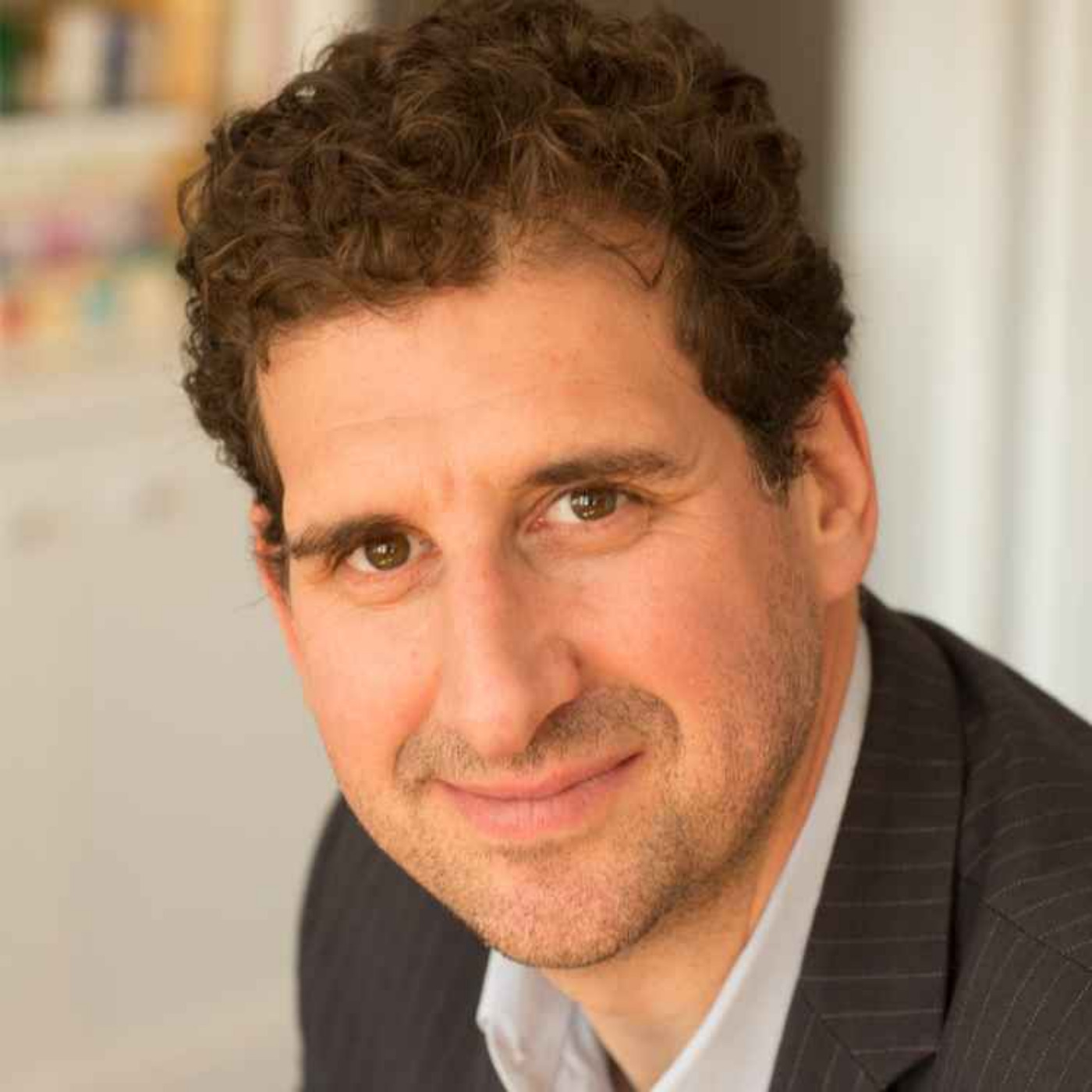
Ep 545545: Jesse Eisinger: Pulitzer-Prize winning investigative reporter for Propublica
How do you become one of the premier investigative journalists at one of the premier publishers of investigative journalism? In general, how do you excel in an area with no established path? I consider figuring out how essential in leading others.I feel sad when I hear people say, "I'd like to help the environment, but there are no jobs in it." Of course not! When culture is the problem, following others won't solve it. Leading others requires leading yourself first.Jesse and I have known each other since college in the 1980s, so he shares his path from the start. On the surface, you'll hear him describe his failures, yet he kept rising to more responsibilities. Listen between the lines to hear what prompted the rise. I heard integrity, passion, persistence, vision, and intangibles that don't show up on resumes, but lead to success. What do you hear?After his personal story, Jesse shares his take of American values and culture and how it's changed in his professional lifetime. He hints at what he's working on next.The Secret IRS Files: Trove of Never-Before-Seen Records Reveal How the Wealthiest Avoid Income TaxThe Chickenshit Club: Why the Justice Department Fails to Prosecute Executives,The Wall Street Money Machine Hosted on Acast. See acast.com/privacy for more information.
Ep 544544: Michael Carlino, part 3: What would Jesus do with an iPhone?
Michael shares about avoiding using a smart phone, or at least using a minimally functional smart phone. Do you remember what life was like without yours? What does solitude mean to you?How much time do you spend on a smart phone? Would you like to reduce it? What would you do instead? What are we missing? How about emotion, love, freedom, and joy?He talks about the irony spending money to help us handle our addiction to those who cause the addiction. It sounds like doof. We talk about addiction, our purposes, and being distracted from them.The above is the starting point of what life is about when not distracted all the time: freedom, family, community, our values, and understanding those things. You'll also hear scripture quoted joyfully than in most conversations.If you've considered a digital fast, I recommend listening as motivation to do it. Hosted on Acast. See acast.com/privacy for more information.
Ep 543543: Hilary Link, part 1: a college president leading her school to carbon neutrality
Allegheny College was one of the first 10 institutions of higher education in the United States to be declared carbon neutral by an organization called Second Nature. Readers of my blog know my skepticism of claims of "net zero" or "carbon neutral," but I look for people in leadership positions acting genuinely and authentically toward sustainability.So I bring you Allegheny's president, Dr. Hilary Link. She shares the college's experience starting a decade ago, before her arrival, and its institutional long-term action. She also shares her helping her peers do similar work at other schools.Allegheny College took on the challenge without a substantial endowment, a large staff, or a big budget. For the last five years, the College's Environmental Science and Sustainability program has been listed among the top five in the U.S. for its interdisciplinary, experiential approach.Like most guests, she agreed to share her environmental values and commit to live by them personally. Hosted on Acast. See acast.com/privacy for more information.
Ep 542542: Chad Foster, part 3: Experiencing nature, people, and sex without sight
Chad shares his experience motivating his family to try to bring them camping with him. You'll hear they didn't make it easy. I couldn't resist asking questions about his experience of nature, people, and sex without sight. I didn't want to ask questions everyone asks, but he graciously answered.His mindset also emerged of how to handle life's challenges, which he shared. If I could give people new technologies for sustainability or his attitude, I would pick his attitude, since it would enable others to solve their problems. If losing your sight would be a greater challenge than living sustainably, well, he sounds pretty happy and successful handling a greater challenge. Hosted on Acast. See acast.com/privacy for more information.
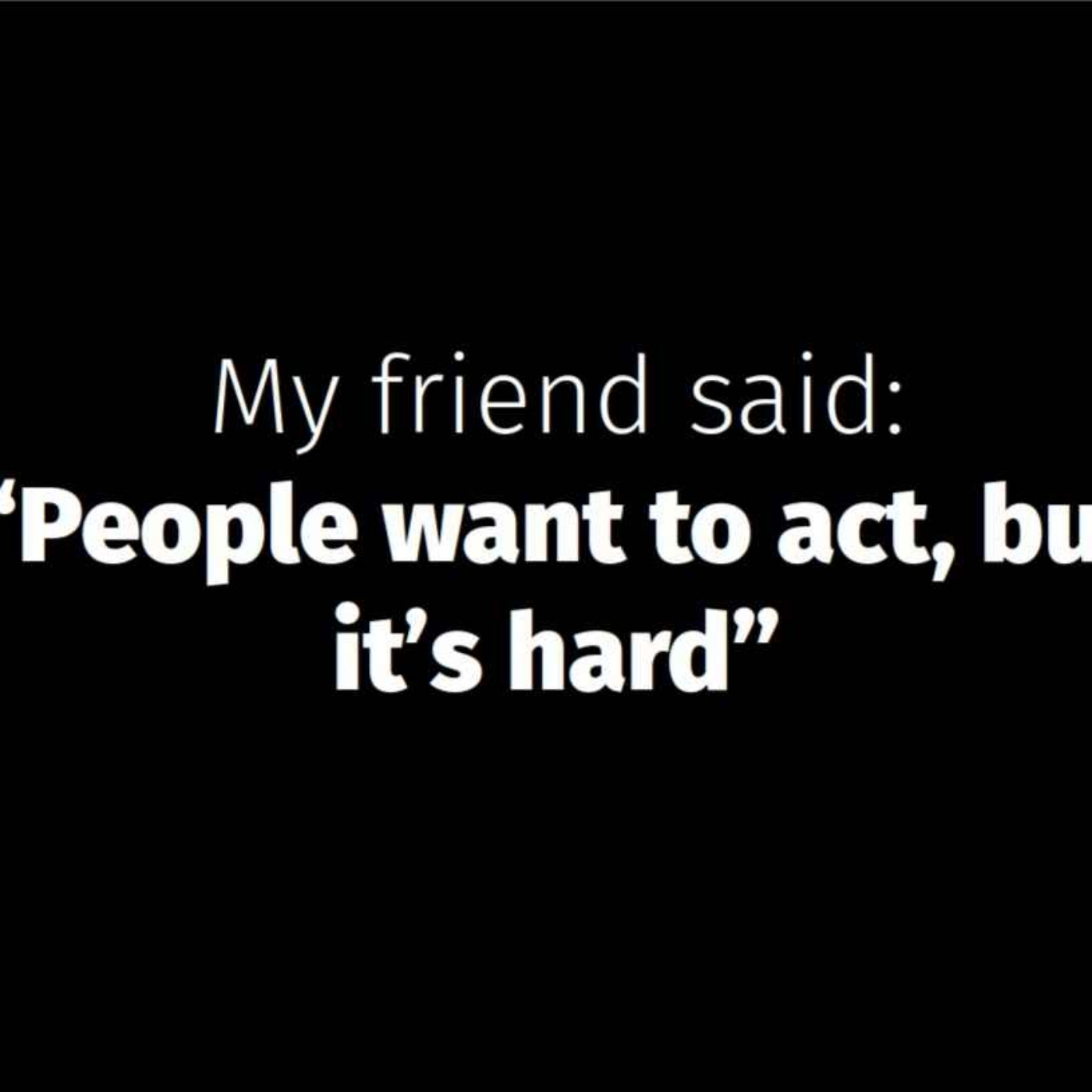
Ep 541541: My "rant" on "People want to act, Josh, but it's hard"
"People want to act, but it's hard," my business friend said to me, speaking on the environment. I said it to myself for most of my life before learning that acting on the environment, however hard, was fun. Raising a child is hard too, but people do it.This time we happened to be speaking over video and recording it. I'm posting what I happened to say extemporaneously. I wouldn't describe it as a rant, but sort of close. I talked about slavery, abolition, learning, doing hard things, and more.I said what I wish someone had said to me twenty years ago. I would have acted earlier. It also shares how someone who has acted more sustainably for more than a few years thinks.The video version, so you can see me saying it Hosted on Acast. See acast.com/privacy for more information.

Ep 540540: Blake Haxton, part 3: Exploring nature from a wheelchair with a shotgun
Blake shares his results about acting on his commitments from last time. He couldn't work much with rowing with temperatures barely above freezing, but he could act on his diet. He also dusted off an old habit of shooting, which he shared about.We also got to talking about nuclear and alternative energy sources. He asked me my views, so I shared the long-term results I saw from it based on humanity's past.We also spoke of the Bible, Job, and ponder the meaning of having dominion over nature in the context of causing extinctions globally.Beneath all the content, I think you'll hear a friendship growing. I find the discipline of athletes, artists, leaders, and others in ASEEP fields develops the skills and experience to act thoughtfully and effectively. Hosted on Acast. See acast.com/privacy for more information.
Ep 539539: Katharine Hayhoe: Saving Us: A Climate Scientist's Case for Hope and Healing in a Divided World
I've been following Katharine for years. If you don't know of her, after our conversation, watch her TED talk and read her book, Saving Us: A Climate Scientist's Case for Hope and Healing in a Divided World. It comprises decades of science, leadership, and efforts to live sustainably, the overlap I consider essential to influencing people on sustainability.Our conversation is about hope, faith, science, love, and our sledding hills. We know the science, but enough to know not to dwell it it, but to know what we're talking about. Then we apply our values to determine what to do.She's worked at this leading in sustainability to know what to do, and it's not just to focus on the science. The value of our actions is not just the footprint but our shadow: whom we affect. The reason to act is not for an abstract "environment" but for our values, especially shared ones. Connect with people, including ourselves, on what we care about.The goal isn't to lecture people but to help connect the dots between what they care about and sustainability, which affects all of us and everything we do, so we can always know how to connect those dots. It may take practice. Read her book. Start now.Katharine's pageHer book, Saving Us: A Climate Scientist's Case for Hope and Healing in a Divided WorldHer TED talk, The most important thing you can do to fight climate change: talk about it Hosted on Acast. See acast.com/privacy for more information.
Ep 538538: How much should I reduce my pollution? How many slaves should Thomas Jefferson have freed?
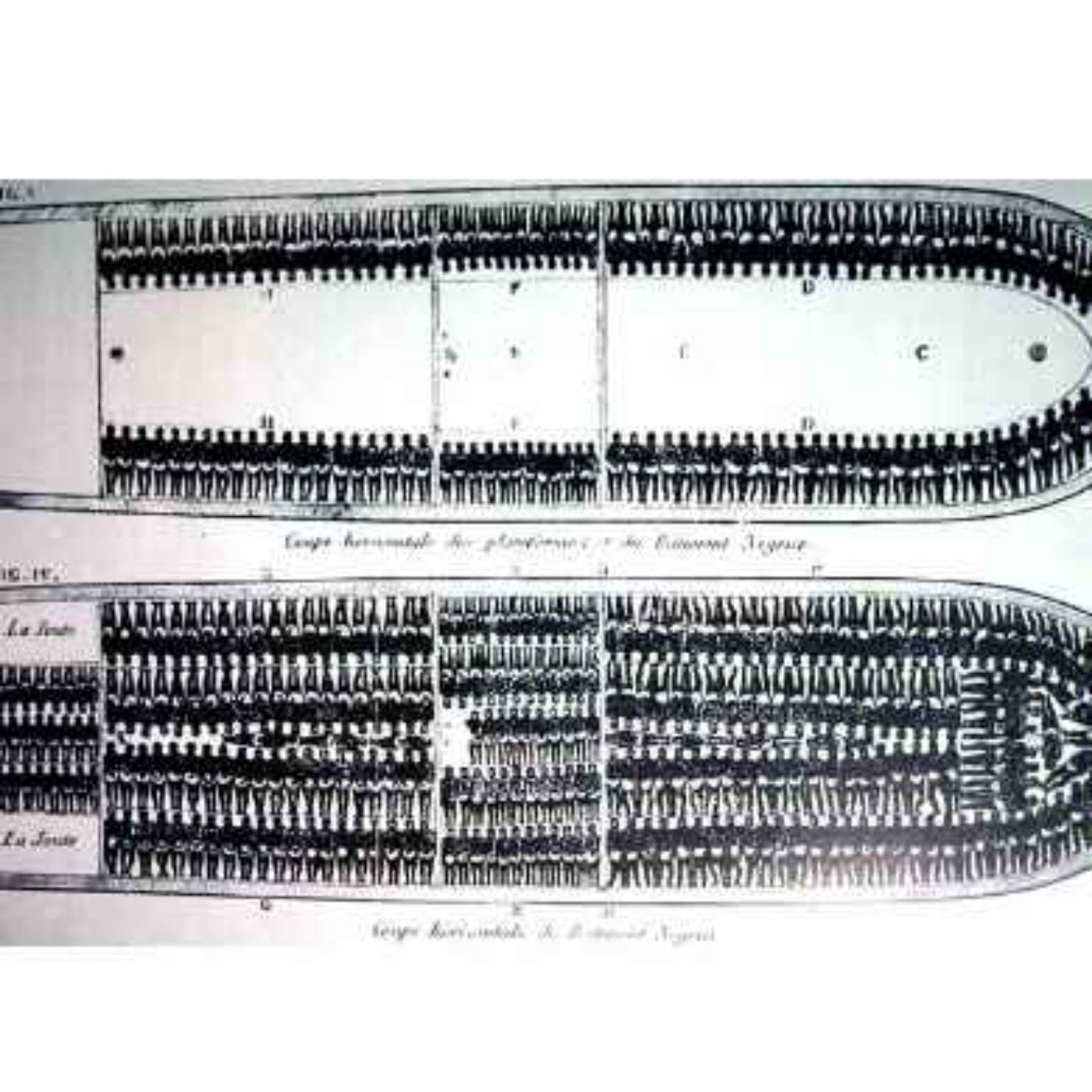
Here are the notes I read from for this episode:Will hit 70 next week.Dawning on people what has dawned on what we now call the global south, that the projections are more serious than they internalized. That their world is going to be rocked. Maybe they realize, that this will be the coldest Christmas for the next ten thousand years and that billions of people may be displaced. Maybe they realize that you can't move billions of people without many of them dying. The global north, including you, will not let more people into the country than are there now..Many people considering polluting less. A few asking me about not flying, which for years no one would consider.But their life depends on polluting activities. They didn't ask for system. What can they do, never see their family again? Think of all the good they can bring the world.They just took down Thomas Jefferson's statue. Should they have? What excuse for owning slaves?He inherited. Didn't ask for. Owning them allowed him to spend more time with family. Look at what it enabled him to doShould he have sold them and made money? What if just freeing them bankrupted him? Left him with no way to contribute to world? It wouldn't have stopped slavery.If your reason for traveling is work, instead of Jefferson, ask about some guy with an empty slave ship in Africa. He got investors and took out mortgages. It was a legal deal. He has investors to pay back. He may even have believed he was bringing backward people to civilization. So he's got an empty ship and he's an ocean from home. They didn't pack people into ships for their own health. Their business model required them to bring that many. If he brings a full load of slaves to the colonies, he can at least get home after dropping them off. Let's say for the sake of argument that if he doesn't trade them, he will make no change whatsoever to the system. How many slaves should he bring on this trip? How many more trips should he take? Is there any question he's hurting people?How many more flights should you take? How much meat should you eat? How much plastic should you use? Do you wonder if your actions are causing people to suffer? Let's say for the sake of argument that your actions won't change the system whatsoever.Why do we learn history if not to learn from it, not repeat its mistakes.I had to struggle with these questions and challenges when I chose to avoid meat, packaged food, and flying. I don't know why you would think it's harder for you than for me, Thomas Jefferson, or the slave trader. It wasn't for me and if you stop and think for a bit you'll realize people will think it was easier for you and you'll realize how dehumanizing and insulting they will be of your struggle, so you may see how ignorant and insensitive you are being toward me.But I do know you'll be glad when you realize what's right for you and the the people in the global south. That history will view you like the slave owner, no matter your skin color. Of course many differences between the system of slavery and the system of pollution, but the biggest one is that our system today produces much more suffering and death. 10M annually versus centuries. But it twists people into acting against their values, thinking more of themselves than the people they torture. What else could I do, not see my family?The liberation and freedom you feel on the other side of the difficulty of realizing you yourself will enjoy life more and be able to get everything you wanted from it when you stop doing what you know kills others.It's not fair. We didn't create this system. We didn't ask for it. If people before hadn't set it up, we'd never create it. We didn't ask to be born. We want to help the people being hurt. But all of that counterfactual doesn't change that we do live in this world as much as Thomas Jefferson did. Hosted on Acast. See acast.com/privacy for more information.
Ep 537537: Nate Hochman, part 1: Toward a Conservative Environmentalism
I met Nate on Citizens Climate Lobby panel on conservatives and climate, then read his National Review piece, Toward a Conservative Environmentalism, which we talk about in this conversation.I've looked forward to a conversation like this for a long time: a thoughtful approach to the environment that isn't politicized. Nate doesn't hide his values and approach, but understands and respects alternative views.He shares views on questions likeHow does an approach to conserving the environment look when based on limited government, free market capitalism, and honoring small communities and family?How have political conservatives responded to his views?How do those responses vary in time and by age?What is the future of conservatives on the environment?What are conservatives doing and how is their approach developing and evolving?Most of all: Is there common ground among Americans with different political views on sustainability? If so, how can we find and build it? Toward a Conservative Environmentalism, by Nate Hochman in National ReviewNate Hochman's Writing Portfolio Hosted on Acast. See acast.com/privacy for more information.
Ep 536536: David Pogue: How to Prepare for Climate Change: A Practical Guide to Surviving the Chaos
Two great reasons to listen to this episode. First, David is a tremendous science communicator. He's experienced, thoughtful, funny, and communicates simply without dumbing down. He's worked with some of the most important sources, like NOVA, the New York Times, TED, CBS Sunday Morning, and more. He's accurate and fun, a rare combination. I think it comes from his passion for knowledge and people.Second, his book fills an important role. As we start our conversation, neither of us could believe no one had written such an important book. On my side, I focus and changing culture. Most focus on lowering emissions. He agrees on the importance of these things. We also have to respond to the changes we can't stop. We can't change the past. Even if we stop polluting today, we'll feel effects of past behavior for decades, centuries, even millennia.His book tackles what to do just to continue with life. Losing composure or panicking doesn't help your life or society. How readable is it? I read the over-600-page book in two sittings, though I skipped the parts not relevant to me, like for homeowners, since I live in an apartment building.I find most books on the environment rehashing what we know already or taking a perspective I disagree with (techno- and market-optimists, for example, though I always hope to be shown something I'm missing). His is a rare book I find valuable and can't believe I didn't think of. I think you'll find the book valuable.Start with this episode.David's personal page Book excerpt: "How to Prepare for Climate Change" Hosted on Acast. See acast.com/privacy for more information.

Ep 535535: The best sledding hill in the world, Tommy's Hill in Philadelphia (from my third TEDx talk)
NOTE: I recommend watching the video of this episode, not just listening to the audio.What does the environment mean to you?We are motivated by what's in our hearts more than facts or numbers so I believe we will act more when we connect with what's in our hearts, which inspires us. The fastest, most effective way to influence governments and corporations is to act ourselves here and now, keep acting, keep learning, and then lead others based on our experience acting.I also ask most of my podcast guests what the environment means to them. I start my third TEDx talk, Stop Suggesting Small Things. Do Meaningful Things, with my answer by saying how I grew up near the best sledding hill in the world.I visited for the first time in a long time, took a few pictures, and narrated them. I hope the experiences put you in touch with what you find meaningful in nature.I couldn't bear in the video to comment how this idyllic appearing spot isn't far from where I got mugged a couple times, my bike stolen, threatened with a wrench in my face by one group of kids and a rock by a couple others demanding my watch, etc. In the beginning of the video I walked past the house of the family that barely escaped Hitler.And everything in between. It was a childhood of diverse living. Hosted on Acast. See acast.com/privacy for more information.

Ep 534534: Mom, part 2: Opportunity and oppression: race and religion in my childhood
I recorded my second conversation with my mom about my childhood and before during the pandemic, in the spring of 2020. Shortly after recording our first conversation, which covered race, George Floyd was murdered. You know the rest. I knew we had spent years as white minorities in India and in a black neighborhood in Philadelphia, at least part time.I was curious to learn more of the time she would have remembered better. In this episode we talk about being redlined, being the victim of race-based violence and objectifying, as well as the access to opportunity to resources for our skin color. Also friends who narrowly escaped Hitler, why my mom converted from Lutheran to Judaism, and bringing classes of her black students from Chicago in the 1960s to where she grew up in South Dakota, where the students declared the Native Americans had it worse.I've never understood the world people describe me coming from. I'm curious to hear the white experience from suburbs, never having lived as a minority, little crime or violence, never mugged, or whatever it's like. I presume it's no easier for them than anyone else, but it's foreign to me. I think if I learned it, I'd understand what people see in me.Anyway, my mom took a long time to agree to post this episode. I'm not sure her reasons, but I think America has so polarized talking about race that non-partisan mainstream people fear the consequences from those who benefit from polarizing from even simply sharing their personal experiences. I hope this episode helps defuse. Hosted on Acast. See acast.com/privacy for more information.

Ep 533533: Laura Coe, part 3: The Nature of Love
Longtime listeners will remember Laura from episodes 192 and 209, over two years ago. Her book, Emotional Obesity, made a big effect on me, as did her warmth and move from success in tech entrepreneurship to her podcast, The Art of Authenticity. She pursued authenticity in herself and her coaching clients.We became friends and kept in touch since. She's continued exploring, where it led. As you'll hear in this episode she shared with me where it's led, which she's sharing in three new books, The Nature of Love, The Nature of Self Love, and The Nature of Boundaries, available here. In them she explores and shares about an energy field called Akasha and its access to otherwise unseen wisdom and more.I'd never heard of Akasha either. As you'll hear, Laura acknowledges her current work lies out of the mainstream and said I didn't have to bring her on if I didn't want. Of course, I'm bringing a longtime guest and friend back. From my perspective, trying to view everyone's perception of the supernatural with an open mind, I'm as curious about her views and perspective as someone's about a mainstream religion. As you'll hear, she shared her teaching with me before this episode and I valued that experience.I'm glad she shared her work with me and I'm happy to share it with you. Hosted on Acast. See acast.com/privacy for more information.
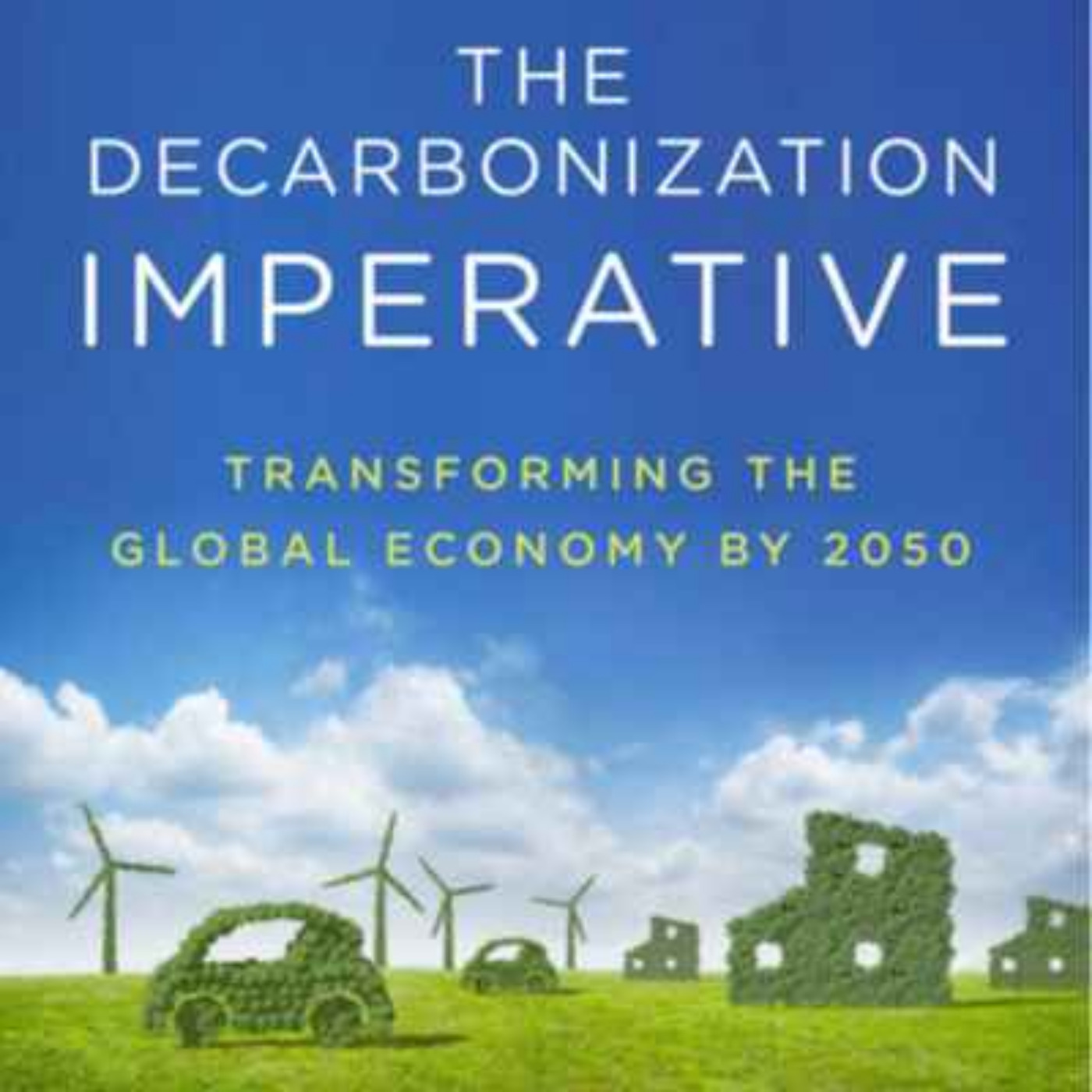
Ep 532532: Michael Lenox, part 3: How to Decarbonize the Global Economy by 2050
At last, a conversation with a knowledgeable economist!Longtime listeners remember Michael here after his last book. He just published a new one, The Decarbonization Imperative: Transforming the Global Economy by 2050. His book and our conversation cover why should we go to net zero by 2050, is it possible, and, if so, how?We agree on the mission of dramatically cutting emissions and most strategies to achieve it. We disagree on the relative importance of some strategies and measures. Listen to hear our respective views, healthy agreement, and healthy disagreement. Hosted on Acast. See acast.com/privacy for more information.
Ep 531531: Scott White, part 1: The Founder/CEO of an Energy Company on Sustainability
Two of this podcast's top goals areTo bring leaders to share and act on their environmental values, from any area, but especially polluting fieldsTo help change culture from expecting sustainability is a chore or burden to expecting joy, lightness, freedom, and reward. Both happened in this episode.On the second, you'll hear when I invite Scott to act, he had something in mind (he knows This Sustainable Life!). It sounded extrinsically motivated so I asked if it connected with the values he had just shared. As we spoke, more personal things emerged. Do you hear a different level of interest and depth of motivation for his second task? Does it sound intrinsic and more motivating?I heard between the two commitments the difference between intrinsic and extrinsic, between leadership and management. Most of what passes for motivating people on sustainability in the media sounds to me more like coercion, implying people don't want to do it.On the first goal, Scott is the CEO/Founder of a company that sells fossil fuels. He chose to change his company. I haven't evaluated the effectiveness of his change. Plenty of companies and people, even with the most sincere intentions, mean to reduce pollution but don't. I'm only looking at him for leading his organization. How hard is the change? How easy? What does it take? How can we motivate more people and organizations polluting less?One lesson: companies want to follow consumer demand. If they don't hear it from you, they don't know to act. It helps no one for consumers to stay silent about their interest to pollute less. Communicate your interest so power companies can hear.He's taking risks and trying. He sounds like a role model.I would have liked more emphasis on reducing use. Nothing keeps fossil fuels in the ground like not taking them out in the first place. Here's my last electric bill:$1.44 for the customer charge. The rest is fixed fees I can't do much about. On life values, I'm as healthy and happy as anyone I know. I couldn't have imagined lowering this much, but now it's normal. Since systemic change begins with personal change, this change allows me to help others achieve it.If a power company had helped, I could have lowered long ago. Could IGS help consumers and businesses live healthily and happily consuming less, like most of the rest of the world? Are power companies motivated to help consumers reduce consumption? How many Americans realize that less power will improve their lives?While I'm at it, here's my evolving footprint compared to the U.S. and world.I see power companies as able to influence consumer behavior. Is it in any of their interests to motivate people using less? A lot less? If so, how? Hosted on Acast. See acast.com/privacy for more information.
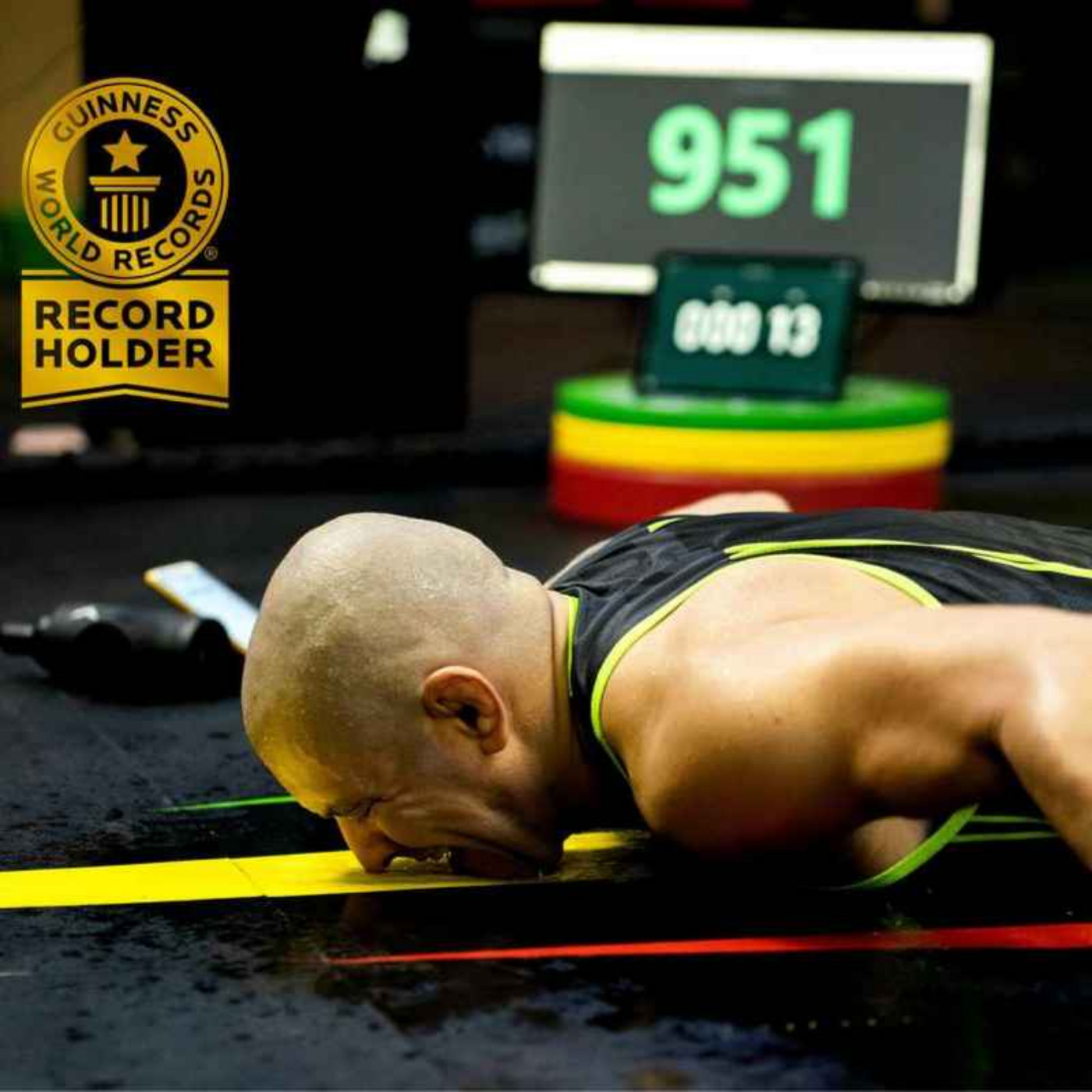
Ep 530Cassiano Laureano, part 2: Burpees for the body, banzai tree for the heart and mind
Cassiano's first episode led to more listener comments than most. People loved his enthusiasm. I find guys who know martial arts tend to speak with a security. The opposite of insecure or desperate. So I think people found him accessible and engaging.I think you'll find him more so this episode. Of course, we talk a bit about his world record for burpees. As you can tell from this episode's title, he fulfilled his commitment by buying a banzai tree. He loved it! He shares his experience buying it, caring for it, and designing it, or grooming it. I'm not sure the right word.Sadly, I lost the video of the tree, but you can hear him describing it. You may remember from his first episode that he saw a missing connection to nature for humans in cities. I think you'll agree that the tree's value and effect on Cassiano transcends just something he takes care of. We talk about values and how to enjoy life. Hosted on Acast. See acast.com/privacy for more information.
Ep 529529: Katie Redford, part 2: No distractions. Keeping oil in the ground.
I see exactly two highest priorities for material goals to restore Earth's ability to sustain life. One is keeping fossil fuels in the ground. Down there it's safe. Above ground, it's poison and deadly. However clear and straightforward, almost no one focuses on this simple, effective, attainable goal.Katie does. Our first conversation was just starting when we had to stop. We mostly talked that time about her past, groundbreaking work. In this episode we talk about her present work with pipelines in the U.S., their disproportionate effects on communities based on class, race, and more, and her work on them.You can hear her passion in every sentence. I felt connected with someone so devoted and passionate, not waiting for others to act. This episode will rouse even the complacent among you.(The second priority is outside the scope of Katie and my conversation: returning global population to a level Earth can sustain through voluntary, noncoercive means such as practiced at national levels by several nations all others could emulate.)The Equation Campaign Hosted on Acast. See acast.com/privacy for more information.

Ep 528528: Don't Bother With Stewardship. It Makes Your Life Worse. Especially If You're American.
I've meant to record this episode for a while, as the idea of saying "fuck it," not trying, forgetting about the future and my effect on others, and enjoying what our society offers seems everyone else's choice.So I'm going full snarky. A rare unedited episode, starting from these minimal notes:Reasons not to careMoneyClothesTravelUnderstandingDisgust, can look awayDisposabilityKids: was going to say I couldn't look them in the eyeSales and marketingGet credit anywayShowersCarsEat anythingCommunitySociety is for youReasons to careHelp other people you don't know and aren't bornAnimalsWhy I can't not careI lack the privilege of scientific ignorance Hosted on Acast. See acast.com/privacy for more information.
Ep 527527: Mike Michalowicz, part 1: Entrepreneurship, stewardship, and engaging, compelling writing
Mike and I are in an online writing group together. For a while I knew him as the funny and diligent guy whose books have thousands of reviews online. Then I read his big one, Profit First. I know entrepreneurship from living it, so I expected to skim it, but two things. His writing is as funny and engaging as he is and what he wrote was new and valuable. Those who have read it know what I mean when I share that I set up my five accounts right after finishing it.Next I read Fix This Next and loved it too. I couldn't skim it because it also contained richness that I couldn't just gloss over. Plus it's fun, funny, and vulnerable. Both books covered values and acting on them. I invited him to the podcast and he loved the idea.I don't know if he realizes how relevant his approach to entrepreneurship is to sustainability. Like previous guest Steven Pressfield's, The War of Art, I could copy Mike's books switching entrepreneurial things like profligate polluting for sustainability things lik profligate spending and humanity suffering for just family suffering. Other areas with parallels:Chasing growth mindlesslyIgnoring costsShame keeping you from change (also hopelessness, futility, community)Imbalance, not knowing or prioritizing valuesUnthinkingly applying old way that seems like it should work but it worsensDelaying what you really want, never getting it (profit / clean air)DesperationMonster destroys family and communityDenialSince I see him often online, I've heard little clues that his commitment from this episode is creating meaning for him. Listen to hear it. I wonder if it will lead him to apply his approach to sustainability.Mike's home page Hosted on Acast. See acast.com/privacy for more information.
Ep 526526: A recent talk on doof, heroin, crack, and sustainability
This talk gets to the root of what I see destroying Earth's ability to sustain life and our health and happiness in the process.Here is the audio a recent talk I gave on doof, building up to what we can do to get rid of it, and improving our world in the process. I compare its effects with those of heroin, crack, and other addictions. I examine what makes something doof, like if it's advertised, packaged, fiber-removed, or the big one: if the manufacturer engineered it to create craving.I consider this audio a great talk. Hosted on Acast. See acast.com/privacy for more information.
Ep 525525: Katie Redford, part 1: She beat a multinational oil company in court just getting started
Katie is the sort of role model I do this podcast to bring to the world. Her challenges are huge, but her passion and determination greater.I can find a million people who say they care about the environment. They probably do. I can find some who act on this caring. I can find a few who do things that sound great like starting companies to do well by doing good. Of them, many are helping restore Earth's ability to sustain life.Then there's Katie. She's devoting everything she's got beyond just cleaning some area. She's going to what I consider as near the root of our problems, and the most effective solution: keeping fossil fuels in the ground. Most "solutions" like renewables, recycling, offsets, and what makes the news, in my view mostly just shuffle pollution around after we already brought fossil fuels out from underground where they were benign.When we recorded, she was in the middle of helping stop a pipeline, working with the local community. We talked about her current work and her past groundbreaking work with Doe v. Unocal and cases that followed its precedent.But I want most to comment on our conversation's tone. I loved talking with her as someone else who saw our problems and dove in to solve them, not dip around the edges, and she's succeeding. I love talking with someone not justifying or making excuses, but enthusiastic.How we feel depends on what we give relative to our potential. I've learned not to judge myself for things outside my control. I loved talking with her because I felt a bond over devoting ourselves to a great cause and giving all we have.https://earthrights.orghttps://earthrights.org/case/doe-v-unocalhttps://youtu.be/FUzG8xfjsWo on Bill MoyersPipeline through the heart: A Black neighborhood’s uphill battle against oil developers shows mapActivists Have Shut Down a Memphis-Area Pipeline — But Their Fight Isn’t OverKatie and Ka Hsaw Wa’s Speech at BioneersKatie’s TedX Talk: What Makes Us HumanTotal Denial Hosted on Acast. See acast.com/privacy for more information.
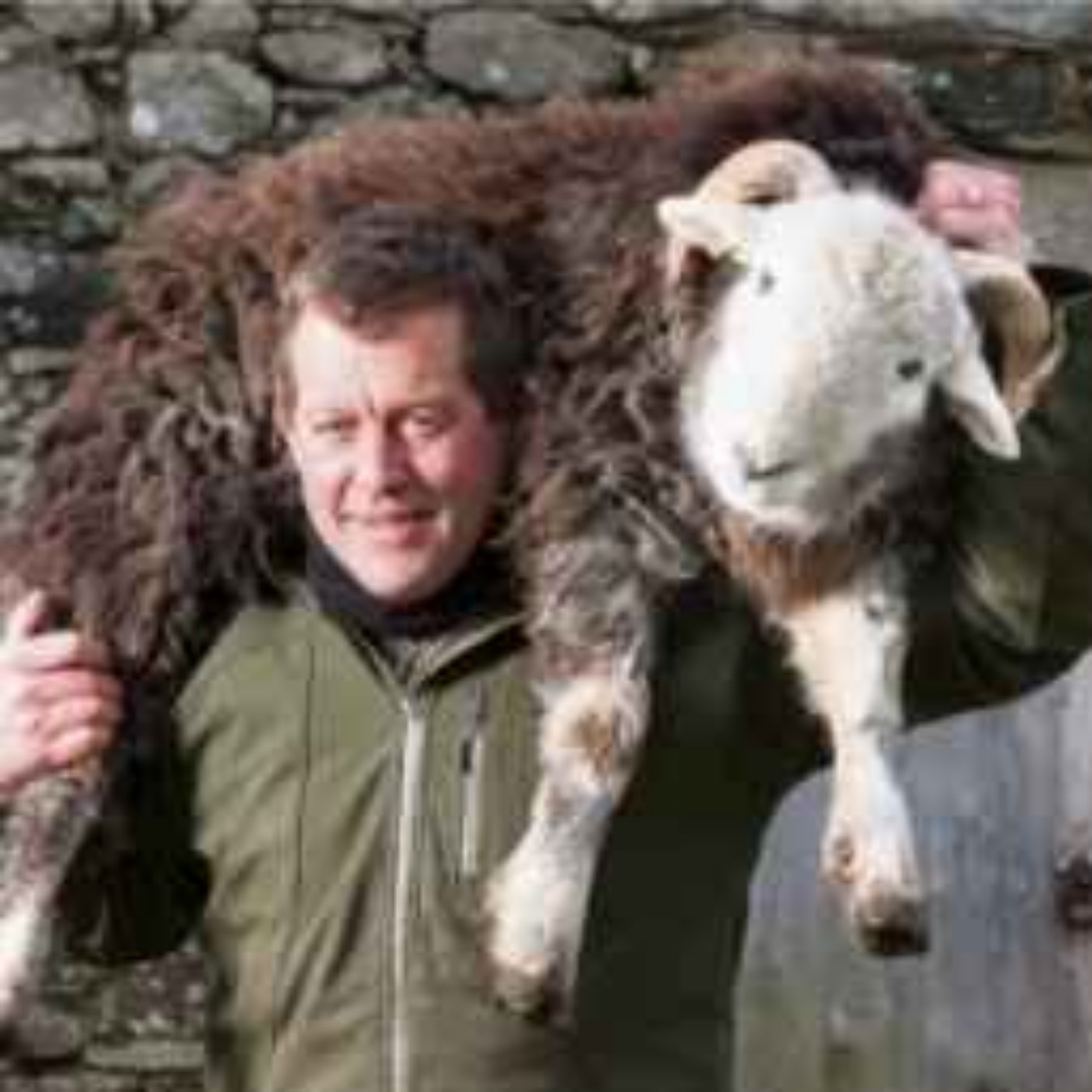
Ep 524524: James Rebanks, part 1: Pastoral Song
James Rebanks' first massively bestselling book, The Shepherd's Life, and the images of that life he posts online, at first make you think he hails from another time. It describes a life both almost unimaginable to most city dwellers like myself and more than half the Earth and traditional, going back centuries or even millennia. He illustrates his relationships with his father and grandfather, the land, the sheep, and history.But he also shows that he is from now, not another time. I sensed myself out of touch with humanity and nature with plastic and not knowing what trees and birds live near me. In his second book, Pastoral Song, also a massive bestsellr, he describes more his conflict and struggle with the invasion of modernity into his life, his foray into acceptance, and ultimate his joyful rejection of it.Many of us dream of rejecting the parts of modernity that stultify us but decline to act out of fear. James rejected it, not easy. You'll love his openness and experiences likely different from anyone you know. When British people talk about the Lake District, they get wistful. I've never been there. James is of that territory.James's views contrast and complement previous guest James Suzman's, who wrote about the San bushmen in the Kalahari Desert. Both speak of living in harmony and balance with nature, struggling at the first world expanding into their territory.In our conversation, James Rebanks shares his views and experience on nature, family, and his life. I mostly bring people from organizations---businesses, political office, sports teams, etc. James comes from family, farms, and England's Lake District. He shares a life unlike anyone I met but probably like thousands of my ancestors.Here is the quote I read:For weeks afterward, as we passed Henry’s farm, Dad would tell me that we were bloody fools. This news confirmed something Dad had always felt in his gut. Deep down he had never really believed in many of the changes, and with every passing year he was becoming more skeptical. We were doing these new things because we had to—getting more cattle and sheep, acquiring bigger machines, making these changes and meanwhile losing good people—and yet where was it all heading? If modern farming made the soil worse, and reduced it to a junkie requiring more and more hits of shop-bought chemicals, then how sustainable was it? Dad couldn’t step out of it entirely, but he saw right through it. Rather than admire our friends and relatives who were creating huge new farming businesses, with enormous buildings and loads of machinery and staff, he worried for them. He thought their world was ugly, built on debt, and increasingly risky and volatile; it would all come crashing down around them someday. And when it began to, and some of the biggest farms went bankrupt, he defended them and said we had all been fools once. There was no pleasure in seeing farmers losing their farms.My father knew the truth lay in Henry’s soil. Hosted on Acast. See acast.com/privacy for more information.
Ep 523523: Dr. Warren Farrell, part 1: Actually listening to men, what they keep to themselves
If I measure a book's quality by how much it changes my perspective and enables me to improve my life, Dr. Farrell's The Myth of Male Power (1993) is one of the best books I've read. He's written valuable book after valuable books since, up to and including The Boy Crisis: Why Our Boys Are Struggling and What We Can Do About It (2018).I grew up believing in equality between the sexes and believe so now more than ever. Dr. Farrell's insight helped illuminate and clarify ways I and society don't empathize with men or realize how men are trapped and suffer. I've written about the chip on my shoulder about how people respond to my sharing my suffering to say my suffering isn't suffering and that I'm actually causing others to suffer or that the best I can do is to shut up and listen. I knew something was missing. His work helped make things fall into place.If I measure someone's leadership by how much that person influences others through inspiration, not coercion or authoritarian means, Dr. Farrell is a great leader. My mentor, Frances Hesselbein, also says the role of a leader is to see what others don't, which he does too.Bringing things back our environment, his leadership in seeing and clearly describing what others don't resembles what I find mission in sustainability. I'll always welcome more science and reporting, but we lack leadership. We lack people who inspire by connecting with their intrinsic motivations. I believe we can learn from him and apply what he's achieved in sustainability.Warren Farrell's home page Hosted on Acast. See acast.com/privacy for more information.
Ep 522522: Abdal Hakim Murad, part 1: Britain’s most influential Muslim thinker
A reader followed up on my conversations with religious figures and authorities from branches of Christianity and Judaism. He wroteYou have presented religious people with «the book». That’s good, and I hope you will find space for a muslim person/scholar and relate it to your concern about the sustainability and climate. I can recommend one person. He is, I believe the leader of Cambridge Muslim College, UK. Abdal Hakim Murad (actually British who converted to islam). He is highly and well respected and also provide guidance on the contemporary society to the community of muslims in UK and also in Europe.While I know about Islam, I don't know many Muslims, so loved the suggestion and connected with Abdal Hakim.Beyond his leadership role in Cambridge, England, his personal story and accomplishments intrigued me. The conversation was for me enlightening, especially his insider view of communities that, to the extent I've learned of them, I got a one-sided, American view. He shared of erudite sophistication. We spoke about cultures intersecting and intermingling.He also share of Islam's long history in Europe, patiently given my knowing little, so if you'd like to learn more and don't know much, I think you'll appreciate our conversation.Religion and the environmentOur conversation also reinforced my impression that religious people connect with sustainability and stewardship with emotions mine are closer to: beauty and joy, for example, more than obligation and chore, which I hear from environmentalists. He recounts examples of Islam and sustainability, practiced naturally, not just following a recent trend.The Cambridge Central MosqueThe University of Cambridge Faculty of Divinity: Dr Timothy WinterThe Independent UK: Timothy Winter: Britain's most influential Muslim - and it was all Hosted on Acast. See acast.com/privacy for more information.
Ep 521521: Blake Haxton, part 2: Teamwork is crucial. How to solve that we're divided
I loved Blake and my conversation so much, I'm releasing our first two conversations back to back. Also, our first one didn't reach to The Spodek Method, so he hadn't taken on a commitment based on his environmental values, so we recorded a week later instead of having to wait for him to finish the commitment. He takes on a commitment in this episode, so he'll come back a third time at least.We talked about how life brings us challenges. In his case a disease led to losing both legs. For everyone, generations of a polluting culture led to the risk of human population collapse. We won't be able to live as before, and possibly billions won't be able to live at all.Blake is coming to grips with the extent of the situation and what anyone can do about it. We talk about value, teamwork, training, and how his experience and lessons could help everyone. By the end, you'll hear how he starts considering potential roles he could take on sustainability. As you can hear in the last episode and this one, I see his experiences, beliefs, and lessons could help everyone, especially Americans, who treat changing our behavior and the culture driving it as deprivation, respond with enthusiasm instead of the usual "what I do doesn't matter" or "only governments and corporations can act on the scale we need."He's thoughtful and shares thoughts he's had before our conversation. You can hear him developing and reconsidering his perspectives during the conversation.I envision Blake taking a leadership role in sustainability leadership. No one has to act on it. Nearly everyone has chosen not to, to hope someone else will take care of things. Only people who want to make sustainability leadership their calling are doing so---nearly no one. But I see him seeing his potential for reaching people in ways no one else can. Hosted on Acast. See acast.com/privacy for more information.

Ep 520520: Blake Haxton, part 1: Paralympic victory and maybe the most important message I've heard on sustainability
I learned of Blake through the mailing list of the maker of my rowing machine, Concept2. Their piece on him described him as a Paralympic bound athlete. I was impressed, but only thought of him as a potential guest on watching his TEDx talk.I think my message to his agent describes what I saw in him and when we talked about in this episode:In Blake's case, I heard a message I've never heard with such clarity and experience I wonder if he realizes how much it applies to stewardship and the environment. It's almost the exact message nearly everyone needs. I can't put it as well as he can, but what he shared starting around minute 3 of his TEDx talk of a system breaking down, where most people would be ready to give up, technology being important, but relationships, faith, support, and laughter being the core of what worked.I see roughly 350 million Americans and 7.9 billion humans ready to give in and accept a system breaking down. Then I see Blake living the opposite of their resignation leading to a better life, and there's been almost a decade since leading to what I read as yet more improvement.In my book coming out next year, I quote Churchill's speeches during the blitz -- that it's bad, it will get worse, but we will fight on the beaches, we will never surrender, it will be our finest hour. I heard in Blake's message from a decade ago what America and the world would benefit most from hearing today. I expect it's stronger today.Since he also just won a silver medal, I also ask him about the training and competing.Blake's TEDx talk, The Advantage of Adversity Hosted on Acast. See acast.com/privacy for more information.
Ep 519519: Terik Weekes, Chief Engineer for Elroy Air: The future of electric flight
Should you prepare for a future of clean air travel, curb your flying, or other?I saw Terik speak on a panel on electric flight. As Chief Engineer at a company winning awards for battery-powered planes, he knew what he was talking about. He has to know about the cutting edge of various fields, including batteries, aeronautics, and materials.When the Wright Brothers first flew a heavier-than-air craft in 1903, nobody could have predicted a 747. Are electric planes today at the Wright Brothers stage of development, with electric 747s around the corner, are they at the closing end of that line of development with few advances left, or something else?The news covers the drone market taking off, advances in batteries, and small planes going short distances. I'm curious about the prospect of planes flying people across oceans. Can it happen? If so, when? If not, why not and what does that mean for a culture that values air travel, or may be addicted to it.What does someone at the frontier of the field anticipate, professionally for electric flying and personally for spending time with his distant family?Terik and I cover all these questions and more.Elroy Air Hosted on Acast. See acast.com/privacy for more information.
Ep 518518: Killing cities, gardens, and parks, New York's cruel "Open Restaurants" overreach
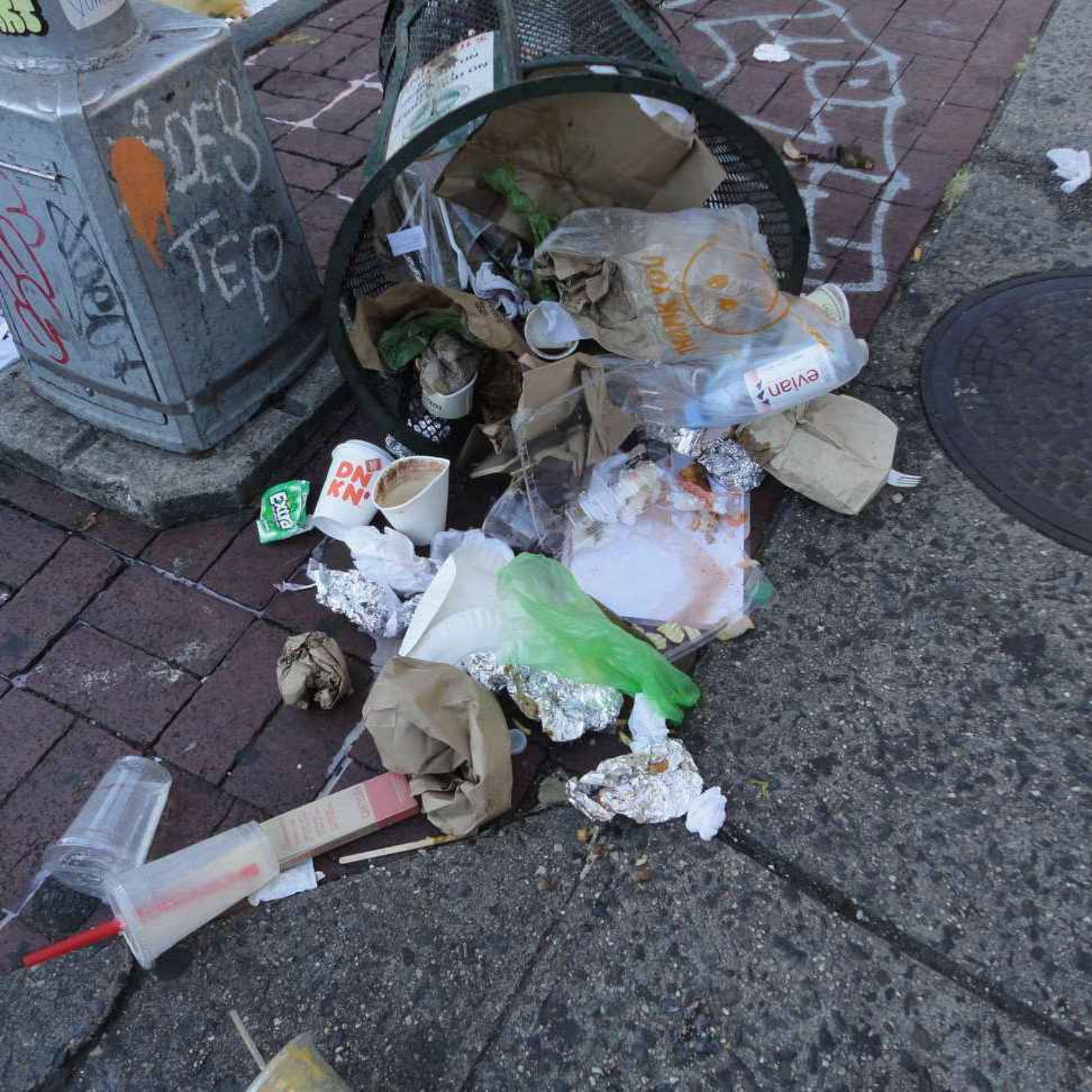
Don't outdoor restaurants sound nice? During the pandemic, New York City allowed restaurants that couldn't host people indoors to serve them outdoors. Many restaurant owners credit the rule for keeping them in business. We neighbors happily supported businesses in need.The landlords saw the huge profit in keeping this public space for their private property, started raising rents---profiting from a deadly pandemic---and tried to get politicians to give them that public land permanently.I might not mind if that space were coming from just car spaces, or if restaurants weren't polluting the area so much with plastic, burning fossil fuels to heat the outdoors while California is on fire, other packaging, and noise.There is a better alternative that no one thought of because we didn't know the city was willing to convert space from parking spaces and open sidewalk. We could turn it to living green spaces: community gardens, playgrounds, farmers markets, bike lanes, public pedestrian spaces, and such. There was already huge demand for such spaces. People wait years for plots in the tiny spaces we have. But search the web for "Manhattan community gardens" and you'll find almost nothing, especially around Greenwich Village.This program is already raising rents, making new restaurants harder to start. It helps a few individuals while hurting the industry it purports to help.Those who know New York City's history will see this land grab from the public on par with the failed Lower Manhattan Expressway. People organized to protect what became global destinations: Soho, Nolita, Tribeca, the Lower East Side.If you have influence with New York City politics, end this program of pollution and destruction.See images and videos I made of what Open Restaurants contributes to:https://joshuaspodek.com/another-morning-walk-seeing-litter-in-my-neighborhoodhttps://joshuaspodek.com/pride-destroyed-the-park-washington-square-park-after-a-parade (video and pictures)https://joshuaspodek.com/video-whats-wrong-with-new-york-city (video and pictures) Hosted on Acast. See acast.com/privacy for more information.
Ep 517517: Michael Carlino, part 2: Faith, God, the Bible, and Values
Nearly everyone I talk to who works on conservation or would call themselves an environmentalist or something like it treats American conservatives and evangelicals as adversaries, lost causes, hurdles, or even the enemy. They love Katharine Hayhoe for being on their side while also practicing a Texas-friendly version of Christianity. They figure she'll fix them for them. (We're scheduling her appearing on this podcast, if you're wondering).What do conservatives and evangelicals believe? If you're so right, why don't they agree? Do you believe they're stupid, ignorant, gullible, greedy, or what?I don't think I've heard anyone talking about them from a place of understanding. I only hear them treated as caricatures with beliefs and motivations they only see as wrong, backward, or ignorant. I never hear them describe their beliefs as reasonable or grounded in something understandable.Frankly, I'm only starting to learn, but I don't believe they're stupid, ignorant, gullible, or greedy. Michael is only speaking for himself, but he's getting an advanced degree at the Southern Baptist Theological Seminary, training to become a Pastor. He worked and studied hard to reach that level and has devoted his life to it. He's knowledgeable, connected, passionate, and studied.In this conversation we continue learning about each other. Well I can only speak for myself, that I'm learning from him. I think he's learning from me. My views and goals tend to be subtly different than nearly anyone expects than mainstream environmental views. In this regard he may understand me better since I see values, beliefs, and behavior as the problem. Most environmental people focus on laws, technology, markets, and extrinsic things. I look at intrinsic. They look to study and recount. I look to act and inspire.Michael and I talk about faith, hope, belief, and more. Hosted on Acast. See acast.com/privacy for more information.
Ep 516516: Geoengineering: Prologue or Epilogue for Humanity?
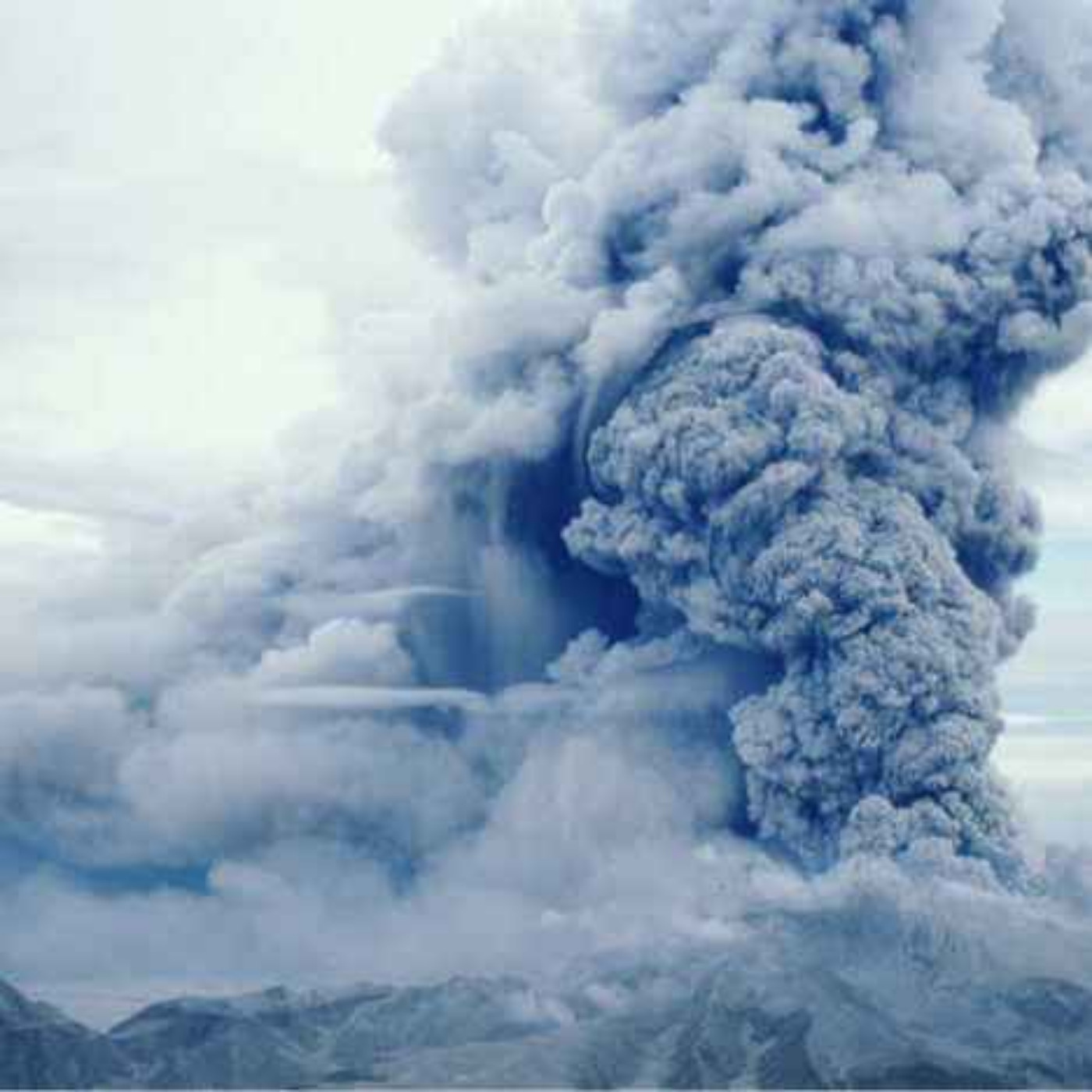
Here are the notes I read from, responding to this op-ed piece and this review for a book I've talked to the author about but haven't read.Geoengineering Prologue or Epilogue for Humanity?Introduction, contextGeoengineering is becoming a more common topic as people feel more desperate. The common theme is that when things get serious, we have to put everything on the table, even things that may not work. The problem isn't if they'll work on their intended goal, but everything else. Over and over again in history, the unintended side-effects dwarf the intended ones. In fact, the story of oil, plastics, and most of our environmental problems today, since nobody chose to pollute but did try to improve people's lives despite side-effects they hoped would be small, geoengineering continues that story. Each time people thought they would solve. Each time it exacerbated and here we are.What got us into this mess won't get us out. It will get us deeper.Two recent pieces on geoengineering: Gernot Wagner book and David Keith NY Times editorial. Both results of months of just writing based on years of research and dedicated practice. I've met Gernot in person. Haven't read book but got some of it vocally. Don't know Keith but mutual friends.David Keith invited to engage by Twitter, which I think is disaster and one of our main problems today. People trying to checkmate each other in 160 characters, as he did in saying, please provide data.I will provide data, but not the kind he thinks. As you'll see, I believe history proves his approach disastrous.Both present unassailable perspective: we have to study, not dismiss out of hand, though I think they miss many have studied and out of thoughtful consideration and with difficulty but confidence reject.With 7.9 billion people, no objection to some studying. Plenty of resources.I don't say don't read the article or book. Besides that I haven't read the book, they mean well and want to save humanity from ecological catastrophe. Both value stopping emissions as primary.I'm not saying don't read them, but I recommend other works first. I'd startI may be misinterpreting, but I see them as approaching in two ways: at science and engineering level, understanding the situation, both the state of nature and the state of our technology, and innovating solutions. At the decision-making level, figuring out what we should do.I have a PhD in physics, I helped launch satellites with NASA and ESA to observe atmospheres, I've invented and patented several inventions, brought them working to the world, raising millions to do it. I also ran businesses, got an MBA, and coach executives at some of the world's largest and most prominent organizations, so I'm not a babe in the woods in these areas.How to look at itWhat data do I suggest and what do I suggest reading first, before their works?While tempting to look at it as engineering issue, I see it as high-stakes decision-making where we don't have the luxury of not responding somehow, can't possibly have all the information we want, and sections of global economy including millions to billions of lives affected, even human extinction in play.There is precedent, which is the data and history to learn from.Caveat: nothing is perfectly relevant. We are in uncharted territory. In all comparisons, more differences than similarities. But we have no alternate universes to practice on, only history of huge decisions. I don't like situation either, but agree on research.Each comparable itself could be studied forever in infinite detail. None had control groups or alternative realities. But like Gernot and Keith, I believe more study. At end I'll get to where lines of research I prefer could lead.Comparables and resourcesVietnamMcNamara and best and brightest from Harvard, etc.Data was last war. Sought numbers in kill ratio, etc.But underlying model was Domino Theory, we're huge and they're third-world, we beat HitlerJohnson focused on domestic agenda, where he was master, and just wanted this to go away. Didn't face it.Military said we have solutions. Believed they could overpower, had to overpower because of Domino Theory.Domino Theory was wrong, without basis. Numbers distracted from hearts and minds.Simple, enjoyable resource on decision-making: Path to War, "Television critic Matt Zoller Seitz in his 2016 book named Path to War as the 6th greatest American TV-movie of all time"Also Fog of War about McNamara's reflections looking backSpace shuttleSome data but not relevant so had to extrapolate. People felt desperate and scared not to act.Lots of ways to interpret. There always will be. In this case they made the wrong choice. They knew if they chose otherwise, people could always second guess and say they were wrong.Resource: One of Harvard's case studies of conflicting interests. As physicist, Richard Feynman's stories of decision-making morass.Building highways into cities, Robert Moses, Jane JacobsRobert Moses always had the data and alwa
Ep 515515: Chad Foster, part 2: A blind man overcoming the trap of feeling you have to fix the world
Our conversation in this episode starts by covering his commitment from last time. After a few minutes, it becomes apparent he picked a commitment based on feeling he had to fix the world---that is, extrinsic motivation disconnected from his heart.We revisited his intrinsic motivations and came up with a new commitment. Acting on intrinsic motivation is leadership. Your emotions create meaning or not. If you've been acting halfheartedly on stewardship, you may have fallen into a trap of feeling you have to act because the media or whoever warned you that you have to but the warnings didn't connect with you. So you feel you have to act for abstract, impersonal reasons.No wonder anyone would fall into that trap. Nearly all loud voices on the environment push them. We feel if we don't do enough to save the world, there's no point in trying.Chad changed his commitment to something more aligned with his connection to nature. See if you can pick up the shift. You'll hear he prefers acting for personal reasons. I predict you'll also hear his motivation increase, even become inspiring. I predict he'll do more and, more importantly, influence more people also to change, by starting where he is, not where others think he should be.If you've felt obliged to act but not inspired, Chad's experience and our conversation may help distance yourself from that burden Hosted on Acast. See acast.com/privacy for more information.
Ep 514514: Jojo Mehta: Ecocide: why you want this law more than you've imagined
First, I'm so used to talking to people who don't act and try to convince themselves and others that individual actions don't matter, I loved talking to someone inspiring a movement to change international law, making progress, and enjoying the process. If you like meeting people improving the world, you'll love this episode.If lowering Earth's ability to sustain life is such a problem, why not just make it illegal? Problem solved, right?It sounds too easy, or simplistic, too naive. Or does it? Genocide wasn't once a crime and now is. Slavery wasn't a crime and now is. Land mines were made illegal and the group to make it happen won a Nobel prize.Making something illegal doesn't end it. People still commit genocide. Slavery exists today, as do land mines. But so do theft and murder and I don't hear anyone proposing making them legal. We want institutions of law enforcement and justice to help reduce them as much as possible.I went from thinking the concept was a crazy distraction to supporting it quickly, which led me to find Jojo Mehta, co-founded Stop Ecocide in 2017, alongside barrister and legal pioneer the late Polly Higgins, to support the establishment of ecocide as a crime at the International Criminal Court. Today she's the Executive Director and speaks on it internationally. I hope you also heard about it recently as the media have picked up on it.In this episode, Jojo goes far beyond the history and goals of making ecocide globally illegal. She laughs within seconds of the episode starting and doesn't let up. She shares her ebullient energy to act, to share her motivation and goals. You'll feel motivated to act, beyond for yourself.I love her leadership tip to start: find what outrages you most and act with what you love to do. Listen for her full explanation and examples.Incidentally, the root eco- comes from the Greek, meaning home. Ecocide means destroying our home. Destroying our home is crazy. Or ignorant.Stop Ecocide International Hosted on Acast. See acast.com/privacy for more information.
Ep 513513: Jon Levy, part 2: Which influences more, shame and guilt or support and love?
Jon and I start by talking about his book, You're Invited: The Art and Science of Cultivating Influence. Some of the celebrities he's met and researched come up.Then we started talking about this podcast and how I could apply his work to cultivate influence among my podcast guests, building community. You get to hear him coaching me on his expertise. Hosted on Acast. See acast.com/privacy for more information.
Ep 512512: Perhaps our greatest lesson, from of a Paralympic athlete who endured catastrophe
"Unearned suffering is redemptive," said Martin Luther King.In today's episode I share what I learned today recording with Blake Haxton, a guest whose episode will appear soon. He lost two legs to flesh-eating disease in 2009.Tragedy? Yes. Reason to give up? On the contrary, according to him, his one unlucky event in life.I contend that his outlook on life and message that we all face setbacks, we can still live to our potential can help us learn to live sustainably than any number of windmills and solar panels.After all, which would you prefer, to live without fossil fuels and take others into account for all you do or to lose both your legs. If you prefer to live sustainably, then his life of fun and reward says you can attain as much fun and reward living sustainably.The Advantage of Adversity: Blake Haxton at TEDxOhioStateUniversity Hosted on Acast. See acast.com/privacy for more information.
Ep 511511: Joe Collins, part 1.5: Can We Clean South Central Los Angeles?
Last time Joe committed to organizing and participating in a beach clean-up as part of his campaign. In today's episode he shares the state of the region, including the extent of homelessness, drugs, and violence, which made acting so far impossible.We revisit the commitment as well as personal thoughts on what's happening to America, at least in its major cities of New York City and Los Angeles.Then Joe recommits and shares his new expectations of success.Joe's campaign page Hosted on Acast. See acast.com/privacy for more information.
Ep 510510: Jonathan Hardesty, part 6: "This method of doing things is making me become a better husband and parent"
Jonathan and I continue practicing the Spodek Method. Since last recording, he practiced it with his wife. This time he shares how it went. I picked up on a nuance, that she picked a commitment disconnected from her intrinsic motivation and ended up not finding the task meaningful.What we covered relates to leadership and relationships in general. The major theme we covered is uncovering people's intrinsic motivations. People often suppress them, sometimes consciously often unconsciously. They make us vulnerable.We also talked about art. I find Jonathan's explanations and insights fascinating for revealing what artists do and how they represent more than what we see, to what we feel.If you want to motivate yourself and others to act more sustainably, this episode reveals a lot. I can't think of anything more valuable for humanity this lifetime. Hosted on Acast. See acast.com/privacy for more information.
Ep 509509: Joe Romm: From science to working with James Cameron, leading through story
Coming from a background in science but realizing that sharing numbers and data didn't influence, Joe had to unlearn a lifetime of mainstream science education. He recognized that the best known scientists, like Darwin and Einstein, were great writers. He followed in their footsteps to learn what works while maintaining scientific integrity, which he shares in this episode.In a world of storytellers and would-be leaders who don't know science and scientists who don't know how to influence, I found talking to Joe relieving. The job ahead is hard, but he shares with us the basics and it's not just avoiding plastic, however important.He's written books on effective communication. He's worked in government and more to see the communication devoid of science we have to face. He's worked with James Cameron, David Letterman, Harrison Ford, and more.If you're unsure about how to communicate keeping emotion in mind, staying consistent with scientific results, listen.Joe's page, with links to all his worksHis books:How to Go Viral and Reach MillionsClimate Change: What Everyone Needs to KnowLanguage Intelligence Hosted on Acast. See acast.com/privacy for more information.