
The Innovation Show
764 episodes — Page 8 of 16
S20 Ep 332From Incremental to Exponential Part 3 with Ismail Amla
Welcome back to another episode in our Exponential Series here on the Innovation Show, where we explore how exponential technologies are colliding and changing the world. This is our grand finale with Ismail Amla on his book From Incremental to Exponential. Over the past two decades, our guest has participated in dozens of innovation exercises with numerous companies. He has guided legacy energy giants in creating marketing opportunities by taking risks on innovations and better business models. He has helped retail chains and supermarkets defend themselves against Amazon and other online-only vendors. He has even helped the British Government create a rapid-response program for adopting innovation and technologies and to rethink the resource allocation and strategy and future requirements of the British Army. Unlike most innovation experts, he has also served as a senior executive overseeing major innovation pushes. At IBM, he lived through one of the most difficult innovation periods in recent history as Big Blue struggled to pivot for a third time. By the same token, he has read as much of the scientific research as he could. In doing so, he realized that much research on innovation is of wildly varying quality. In today's episode, he shares what he has learned as we touch on his Playbook for Building Innovative, Exponential Companies We welcome back the author of From Incremental to Exponential, Ismail Amla
S20 Ep 331Guy Perelmuter - Present Future Part 3
The purpose of today's book is twofold. First, to overthrow this myth that we are "living a period of change." The entire history of civilization is all about change—and, more than that, about technological change. This is what defines us as a species, this is what propels us forward. Change is coming faster and faster, that's for sure—and it will likely accelerate even more. And second, to highlight and explain not only the benefits but also the risks that a tech-driven lifestyle throws at us. The future is already here. We're living in it. It's all around us—a present future—and in this book, we'll take a journey to discover just what that means. It is a pleasure to welcome back the author of "Present Future: Business, Science, and the Deep Tech Revolution" Guy Perelmuter, welcome back to the show. Present future here: http://presentfuturebook.com
S20 Ep 330Red Team: How to Succeed by Thinking Like the Enemy with Micah Zenko
Today's episode is essential content for business leaders and policymakers, an investigation of red teaming, the practice of inhabiting the perspective of potential competitors to gain a strategic advantage. The concept is as old as the Devil's Advocate, the eleventh-century Vatican official charged with discrediting candidates for sainthood. Today, red teams are used widely in both the public and the private sector by those seeking to better understand the interests, intentions, and capabilities of institutional rivals. In the right circumstances, red teams can yield impressive results, giving businesses an edge over their competition, poking holes in vital intelligence estimates, and troubleshooting dangerous military missions long before boots are on the ground. But not all red teams are created equal; indeed, some cause more damage than they prevent. Drawing on a fascinating range of case studies, today's book shows not only how to create and empower red teams, but also what to do with the information they produce. In any truly competitive environment, even the best-laid plans and security procedures will eventually sprout problematic shortcomings and vulnerabilities, which those working in the targeted institution will most likely fail to uncover, or decide not to report, due to the normal institutional pressures and biases that inevitably reemerge. The author of, "Red Team: How to Succeed By Thinking Like the Enemy", Micah Zenko.
S20 Ep 329Guy Perelmuter - Present Future Part 2
The purpose of today's book is twofold. First, to overthrow this myth that we are "living a period of change." The entire history of civilization is all about change—and, more than that, about technological change. This is what defines us as a species, this is what propels us forward. Change is coming faster and faster, that's for sure—and it will likely accelerate even more. And second, to highlight and explain not only the benefits but also the risks that a tech-driven lifestyle throws at us. The future is already here. We're living in it. It's all around us—a present future—and in this book, we'll take a journey to discover just what that means. It is a pleasure to welcome back the author of "Present Future: Business, Science, and the Deep Tech Revolution" Guy Perelmuter, welcome back to the show. Present future here: http://presentfuturebook.com
S20 Ep 328From Incremental to Exponential Part 2 with Ismail Amla
Over and over, we see big legacy businesses getting beaten to the punch by energetic little start-ups. It seems like innovation can come only from the bottom up or from the outside in. But our guest today tells us that "big equals slow and stodgy" is a myth. Based on decades of experience working with both the world's leading brands and disruptive start-ups, his book explores the opportunity legacy companies have to create new markets, supercharge growth, and remake their businesses by combining the mindset and tool belt of start-ups with the benefits of incumbency: boatloads of customer data, decades of brand equity, robust distribution channels, enormous financial assets, and more. He goes deeply into why the pace and dynamics of innovation have changed so dramatically in recent years and show how companies can overcome obstacles like "the Eight Deadly Sins of Stasis". Equally important, he provides a playbook on how to use these insights in your own company, team, or career. This fast-paced, anecdote-rich book rethinks modern innovation. We welcome the author of "From Incremental to Exponential: How Large Companies Can See the Future and Rethink Innovation", Ismail Amla
S20 Ep 327Guy Perelmuter - Present Future Part 1
The purpose of today's book is twofold. First, to overthrow this myth that we are "living a period of change." The entire history of civilization is all about change—and, more than that, about technological change. This is what defines us as a species, this is what propels us forward. Change is coming faster and faster, that's for sure—and it will likely accelerate even more. And second, to highlight and explain not only the benefits but also the risks that a tech-driven lifestyle throws at us. What is remarkable about the current technological changes we are experiencing is that they are sitting at the intersection of a set of extraordinary advances: faster microprocessors, cheaper digital storage, ubiquitous access to information, efficient algorithms, and an increasingly better understanding of the laws of nature. These ingredients, decades in the making, are some of the key enablers of the Deep Tech Revolution. Deep Tech is where science meets technology, where PhDs and subject matter experts are able to apply their knowledge and transform it from intellectual achievements and academic papers into systems, devices, prototypes, products, and methodologies. Deep tech companies are the ones effectively building the future of the world economy, one technology at a time: robotics, biotech, nanotech, artificial intelligence, self-driving vehicles, energy, aerospace, agritech - the list goes on and on. The future is already here. We're living in it. It's all around us—a present future—and in this book we'll take a journey to discover just what that means. Find out more about Guy: https://presentfuturebook.com
S20 Ep 326From Incremental to Exponential with Ismail Amla
Over and over, we see big legacy businesses getting beaten to the punch by energetic little start-ups. It seems like innovation can come only from the bottom up or from the outside in. But our guest today tells us that "big equals slow and stodgy" is a myth. Based on decades of experience working with both the world's leading brands and disruptive start-ups, his book explores the opportunity legacy companies have to create new markets, supercharge growth, and remake their businesses by combining the mindset and tool belt of start-ups with the benefits of incumbency: boatloads of customer data, decades of brand equity, robust distribution channels, enormous financial assets, and more. He goes deeply into why the pace and dynamics of innovation have changed so dramatically in recent years and show how companies can overcome obstacles like "the Eight Deadly Sins of Stasis". Equally important, he provides a playbook on how to use these insights in your own company, team, or career. This fast-paced, anecdote-rich book rethinks modern innovation. We welcome the author of "From Incremental to Exponential: How Large Companies Can See the Future and Rethink Innovation", Ismail Amla
S20 Ep 325The Exponential Era with David Espindola
Today's book introduces the Exponential Era, the extraordinary times we are living where the convergence of technology platforms that grow at exponential rates is creating unprecedented opportunities for companies that know how to benefit from it, and disastrous results for those that don't. In the book we learn about: The megatrends shaping the future of business and society The exponential platforms that are creating astonishing opportunities and risks The types of companies that thrive in this environment and those that are being destroyed We will also learn about a robust methodology called SPX that challenges the current thinking in strategic planning and provides an effective playbook for companies to stay ahead of the exponential curve. Finally, our guest provides a thoughtful discussion about the impact of the Exponential Era on humanity, and how the rapid changes we are experiencing challenge our current societal structures, economics, and ethics. We welcome the co-author of The Exponential Era: Strategies to Stay Ahead of the Curve in an Era of Chaotic Changes and Disruptive Forces David Espindola More about David: https://davidespindola.com
S20 Ep 324The Curiosity Muscle with Diana Kander
Toys 'R' Us. Kodak. Blockbuster. Why is it that some companies evolve while others get left in the dust? How do they lose their relevance with customers? The scary truth is that the only thing harder than getting to the top is staying there. It may sound counterintuitive, but in many cases, it is the success of a company that eventually leads to its downfall. So what does it take to stay competitive and relevant when what customers went wild for yesterday is the boring, banal, bare minimum they'll accept today? Through the story of the rise and plateau of a gym franchise recounted as a novel, today's book shows exactly why most companies reaching the peak of their potential lose their curiosity and crash into irrelevance. From how we develop blind spots about our business to the pitfalls of feeling like an expert, this thought-provoking, engaging tale reveals the smokescreens obscuring imminent threats to long-term viability and walks you through specific ways to boost innovation, uncover customer needs, solve problems, create new value for customers, and increase employee engagement. Most importantly, this book demonstrates why curiosity is your greatest asset, driving constant innovation and improvement and helps you ask the essential questions that will take your business from stagnant to soaring. By continuing to work your curiosity muscle over time, you can help your company thrive and become competitive on more than price alone—ultimately, future-proofing your business. We welcome the author of "The Curiosity Muscle: How Four Simple Questions Can Uncover Powerful Insights and Exponential Growth " Diana Kander. Find Diana here: https://dianakander.com Find her podcast here: https://dianakander.com/podcast/
S20 Ep 323Innovation Accounting with Esther-Emmely Gons and Dan Toma
When a company is committed to growing through innovation standard accounting documents offer insufficient and, oftentimes irrelevant data. Innovation Accounting is a practical guide for these companies to help them measure and track innovation. Most established organizations have understood the need to innovate and become more digital, however the management tools available to leaders seeking to understand the investments in innovation are lacking. Financial accounting in particular is difficult to use in the context of (digital) innovation. Therefore a new complementary system for measuring and tracking innovation is needed. The book provides tools, frameworks, templates, and visualizations that can be easily understood and applied. These can all be used by executives looking for a new way of measuring corporate performance in a world where accounting-recognized assets are becoming commodities, by investors seeking better ways of looking at a company's growth potential, and by managers who need to valuate innovation product teams using more than just financial indicators. Today's book is an essential go-to book for anyone that wants to measure their company's innovation ecosystem. We welcome the co-authors of Innovation Accounting, Esther-Emmely Gons and previous guest and friend of the show, Dan Toma More about Esther here: https://togroundcontrol.com/about/esther-emmely-gons/ More about Dan here: https://weareoutcome.co
S20 Ep 322Aligned with Hortense Le Gentil
Have you ever felt like you were on a roll? Every thing seems to be going your way. Time slows, and you see clearly. Past the noise and distractions, you're able to zoom in on the essential. You take the perfect action at the perfect time. You instinctively know what to do, and you have the profound feeling that you are on the right path. This experience is the manifestation of what our guest calls alignment. Alignment is the congruence of who you are, what you feel, and what you love on a deep and fundamental level with what you do, what you say, what you envision, and where you are going. Alignment is not about falling in step or conforming to others' expectations, but rather it's about becoming more yourself—and, in so doing, transcending what you thought were the limits of your capabilities. You too, if properly aligned, can reach higher than you ever thought possible, effortlessly and joyfully inspiring others to embrace and follow your vision. You too can generate that sense of clarity and ease, even in the face of challenges and setbacks. You too can create that congruence of who you are, what you think, and what you do. We welcome the author of "Aligned: Connecting Your True Self with the Leader You're Meant to Be", Hortense Le Gentil. More about Hortense HLGconsulting.org
S19 Ep 321Education in the Digital Age with Nadav Zeimer
Today's books tell us how digital platforms are inverting our economy and what that means for our public high schools. It is a fascinating read for those interested in transformation, bitcoin, education, and universal basic income. Questions include: - What does the future of work look like as jobs continue to decline? - Why will trends like decentralization and open-source impact education? - When does human bias impact economic viability and how can anti-bias lead to an anti-fragile democracy and economy? - Will artificial intelligence help or hurt us? And - Should we worry about "surveillance capitalism?" We welcome Principal Z, the author of Education in the Digital Age: How We Get There, Nadav Zeimer.

S19 Ep 320Built to Innovate Part 5 with Ben M. Bensaou
In this episode, we deep dive into the Built To Innovate framework. More details on https://www.builttoinnovatethebook.com It's no secret that continuous innovation is the key to seizing and maintaining the competitive edge in today's increasingly challenging business environment. Unfortunately, the process for achieving this holy grail of business has been a mystery—until now. Today's book delivers a proven system for building relentless innovation into your company's DNA. Our guest, a Professor and former Dean of Executive Education at INSEAD explores the essential practices of many of the world's most innovative organizations and demonstrates how you can leverage them in your own company. You'll learn how to drive innovating in product design and creative use of technology―as well as business activities, such as business model redesign, customer service, distribution, finance, talent development, and sales. The big question on the mind of every business leader today is: What can I do to create extra value for my company and the customers we serve? This book provides everything you need to transform your organization into an innovating engine that continually produces new products and processes to generate enormous new value for you and for the customers you serve. It is a pleasure to welcome back the author of "Built to Innovate: Essential Practices to Wire Innovation into Your Company's DNA" Ben Bensaou, welcome to the show
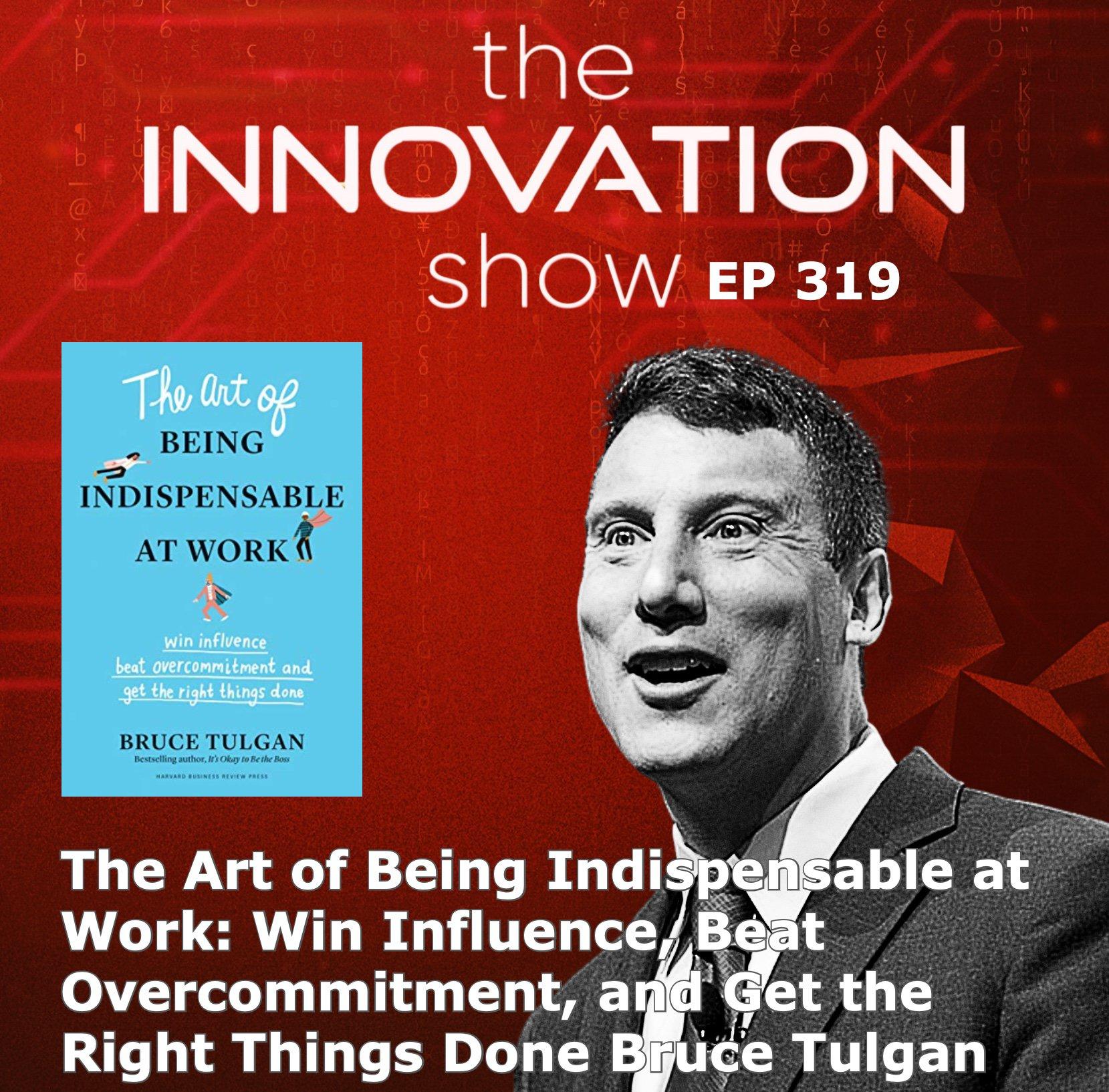
S19 Ep 319The Art of Being Indispensable at Work with Bruce Tulgan
With new technology, constant change and uncertainty, and far-flung virtual teams, getting things done at work is tougher and more complex than ever. We're in the midst of a collaboration revolution, working with everyone, all the time, across silos and platforms. But sometimes it feels like we're stuck in a no-win cycle—dealing with an overwhelming influx of asks, with unclear lines of communication and authority. Overcommitment syndrome looms larger than ever before. But even amid the seeming chaos, there's always that indispensable go-to person who thrives on their many working relationships with people all over the organization chart. How do they do it? Go-to people consistently make themselves valuable to others, maintain a positive attitude of service, are creative and tenacious, and take personal responsibility for getting the right things done. Our guest today reveals the secrets of the go-to person in our new world of work. Based on an intensive study of people at all levels, in all kinds of organizations, He shows how go-to people think and behave differently, building up their influence with others—not by trying to do everything for everybody but by doing the right things at the right times for the right reasons, regardless of whether they have the formal authority. We welcome the author of The Art of Being Indispensable at Work: Win Influence, Beat Overcommitment, and Get the Right Things Done Bruce Tulgan More about Bruce and links mentioned in the episode: Email hygiene: https://rainmakerthinking.com/improve-productivity-by-practicing-good-email-hygiene/ Meetings: https://rainmakerthinking.com/a-guide-to-great-one-on-one-meetings/

S19 Ep 318Built to Innovate Part 4 with Ben M. Bensaou
In this episode, we explore the case study of Bayer and how the 40billion dollar giant diffused a mindset of innovating across the organization. It's no secret that continuous innovation is the key to seizing and maintaining the competitive edge in today's increasingly challenging business environment. Unfortunately, the process for achieving this holy grail of business has been a mystery—until now. Today's book delivers a proven system for building relentless innovation into your company's DNA. Our guest, a Professor and former Dean of Executive Education at INSEAD explores the essential practices of many of the world's most innovative organizations and demonstrates how you can leverage them in your own company. You'll learn how to drive innovating in product design and creative use of technology―as well as business activities, such as business model redesign, customer service, distribution, finance, talent development, and sales. The big question on the mind of every business leader today is: What can I do to create extra value for my company and the customers we serve? This book provides everything you need to transform your organization into an innovating engine that continually produces new products and processes to generate enormous new value for you and for the customers you serve. It is a pleasure to welcome back the author of "Built to Innovate: Essential Practices to Wire Innovation into Your Company's DNA" Ben Bensaou, welcome to the show

S19 Ep 317The Gig Mindset Advantage with Jane McConnell
Companies and organizations around the world are being confronted with alarming challenges—a global pandemic, market shocks, climate change, political instability. But in these unsettled times, today's guest reveals that managers and executives have a secret weapon on their side: an overlooked group of employees that share what she calls "the gig mindset"—a freelancer-style knack for improvisation, adaptability and innovation that offers a crucial key to the future. Found at all levels of the workforce but often stifled by managers, gig mindsetters are disruptors who upend business as usual and bridge gaps while achieving surprising outcomes and charting new directions. Six case studies of early adopters illustrate how it is shaping business in diverse fields: science and technology, industrial energy, healthcare, financial services, agricultural commodity trading and legal services. We welcome author of The Gig Mindset Advantage: Why a Bold New Breed of Employee is Your Organization's Secret Weapon in Volatile Times, Jane McConnell

S19 Ep 316Built to Innovate Part 3 with Ben M. Bensaou
Intro It's no secret that continuous innovation is the key to seizing and maintaining the competitive edge in today's increasingly challenging business environment. Unfortunately, the process for achieving this holy grail of business has been a mystery—until now. Todays book delivers a proven system for building relentless innovation into your company's DNA. Our guest, a Professor and former Dean of Executive Education at INSEAD explores the essential practices of many of the world's most innovative organisations and demonstrates how you can leverage them in your own company. You'll learn how to drive innovating in product design and creative use of technology―as well as business activities, such as business model redesign, customer service, distribution, finance, talent development, and sales. The big question on the mind of every business leader today is: What can I do to create extra value for my company and the customers we serve? This book provides everything you need to transform your organization into an innovating engine that continually produces new products and processes to generate enormous new value for you and for the customers you serve. It is a pleasure to welcome back the author of "Built to Innovate: Essential Practices to Wire Innovation into Your Company's DNA" Ben Bensaou, welcome to the show In this episode, we explore some case studies in innovation including: Samsung The Pentagon The cement company-turned renewables EcoCem The paint company AkzoNobel and many nuggets of wisdom in between

S19 Ep 315Built to Innovate Part 2 with Ben M. Bensaou
Intro It's no secret that continuous innovation is the key to seizing and maintaining the competitive edge in today's increasingly challenging business environment. Unfortunately, the process for achieving this holy grail of business has been a mystery—until now. Today's book delivers a proven system for building relentless innovation into your company's DNA. Our guest, a Professor and former Dean of Executive Education at INSEAD explores the essential practices of many of the world's most innovative organisations and demonstrates how you can leverage them in your own company. You'll learn how to drive innovating in product design and creative use of technology―as well as business activities, such as business model redesign, customer service, distribution, finance, talent development, and sales. The big question on the mind of every business leader today is: What can I do to create extra value for my company and the customers we serve? This book provides everything you need to transform your organization into an innovating engine that continually produces new products and processes to generate enormous new value for you and for the customers you serve. It is a pleasure to welcome back the author of "Built to Innovate: Essential Practices to Wire Innovation into Your Company's DNA" Ben Bensaou, welcome to the show In this episode we get into the nuts and bolts of bringing innovation to life within an organisation. We talk about BASF and William Gore and Sons and creating the right environment for people to have time to innovate.
S19 Ep 314Pierre Wack and the Origins of Scenario Planning with Art Kleiner
bonusIn episode 4, we focus on The Mystics in an episode called "The Age of Heretics Part 4: Pierre Wack and the Origins of Scenario Planning" with Art Kleiner This is part of a longer series based on the book The Age of Heretics with Art Kleiner.

S19 Ep 313Built to Innovate Part 1 with Ben M. Bensaou
Intro It's no secret that continuous innovation is the key to seizing and maintaining the competitive edge in today's increasingly challenging business environment. Unfortunately, the process for achieving this holy grail of business has been a mystery—until now. Today's book delivers a proven system for building relentless innovation into your company's DNA. Our guest, a Professor and former Dean of Executive Education at INSEAD explores the essential practices of many of the world's most innovative organizations and demonstrates how you can leverage them in your own company. You'll learn how to drive innovating in product design and creative use of technology―as well as business activities, such as business model redesign, customer service, distribution, finance, talent development, and sales. The big question on the mind of every business leader today is: What can I do to create extra value for my company and the customers we serve? This book provides everything you need to transform your organization into an innovating engine that continually produces new products and processes to generate enormous new value for you and for the customers you serve. It is a pleasure to welcome the author of "Built to Innovate: Essential Practices to Wire Innovation into Your Company's DNA" Ben Bensaou, welcome to the show. Timestamps of content: 3:08 Innovation v Innovating 6:12 Duality of business: Executing v Innovating 9:03 A company's innovating engine is driven by three key processes of innovating: creation, integration, and reframing 13:10 The Buzzing Fridge of Innovation for Leaders 20:33 The Built To Innovate Framework 34:13 The Power of Thank You The Power of Thank You and Building a Culture of Innovating 40:59 Psychological Safe environments to bring your ideas 48:29 The Importance of a Supportive Board 54:05 Where to start in an organisation and filtering ideas
S19 Ep 312The Age of Heretics with Art Kleiner Part 3
When postwar American business was a vast sea of gray flannel suits and tasteful ties, a few unorthodox individuals were not so quietly shifting the paradigm toward the breezier, Google-ier workplace of today. These change agents include a raft of idealistic social scientists as well as nonacademics. In this episode of the multi-part series, we highlight labor organizer Saul Alinsky, who pioneered the use of shareholder activism to open Kodak's doors to more African Americans. Alinsky was the embodiment of the activist principle that behaving badly is sometimes necessary because, in the words of the civil-rights anthem, "The nice ways always fail." If ever a neighborly company existed, that was Eastman Kodak. to those outside the company, particularly the black people of Rochester, the company was an object of seething resentment. It was the largest employer in Rochester, and it had never let them into the family. In 1964 twenty thousand black residents lived in Rochester, crowded into a few neighborhoods where landlords rented to them. Most of them had come up from the southern states in search of jobs; now they lived in tenements with twenty-four or twenty-eight families squeezed into houses designed for two. Enter Alinsky, whose organization, the Industrial Arts Foundation, had an unparalleled track record for teaching slum dwellers to improve their own neighborhood conditions, often beginning by winning over the neighborhood's delinquent gangs. In principle, Kodak managers agreed that opportunities for blacks should be increased, but they didn't see that this was Kodak's responsibility. Let the blacks pull themselves up, as every other ethnic group in America had done, to the point where Kodak would want to hire them. Anyone who looked at both organizations could see that an impasse was inevitable. We also discuss shareholder activism, CSR, ESG, and corporate activism. We welcome back the author of, "The Age of Heretics: A History of the Radical Thinkers Who Reinvented Corporate Management" More about Art: https://www.linkedin.com/in/artkleiner/
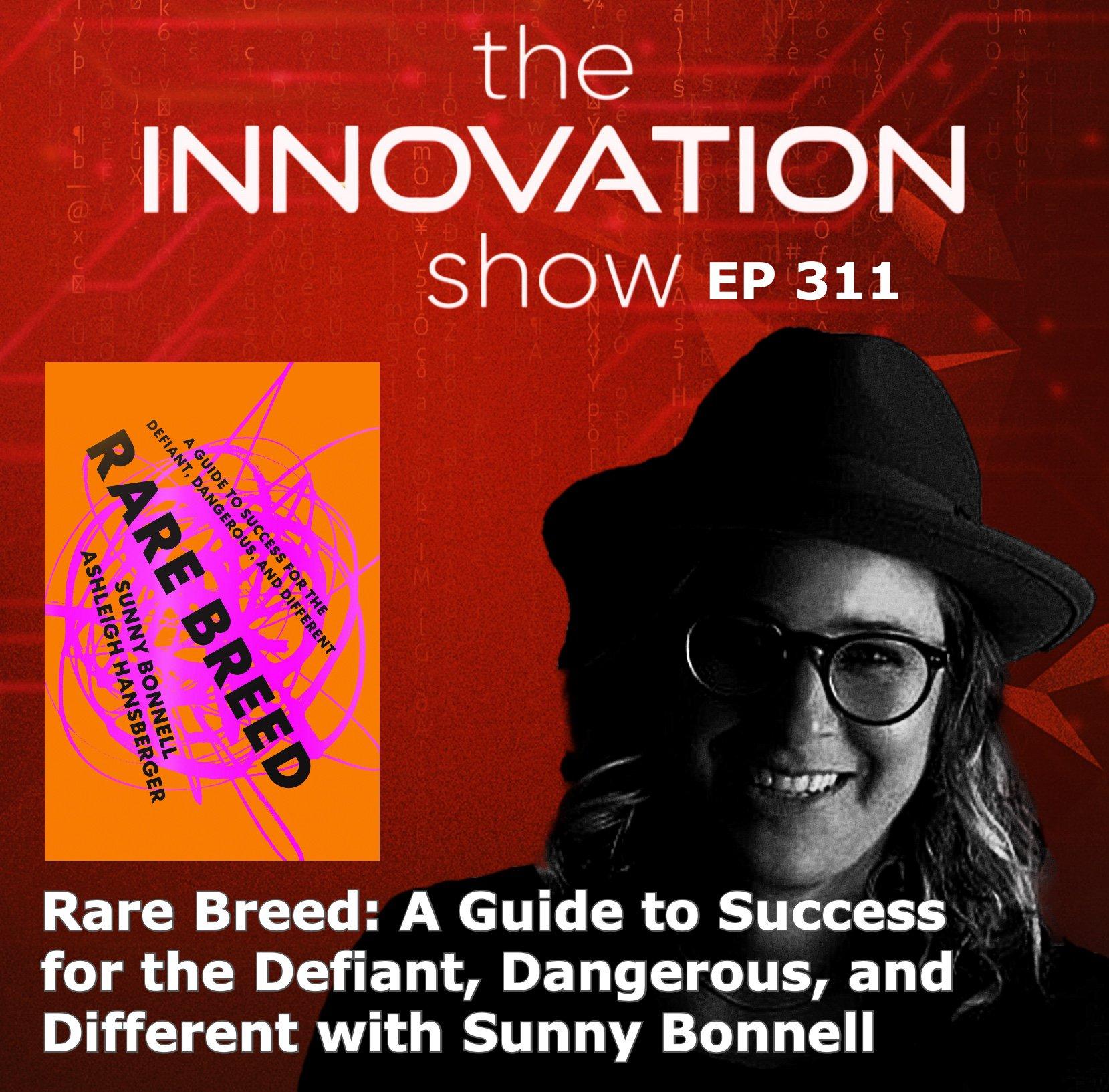
S19 Ep 311Rare Breed with Sunny Bonnell
Whether you're building your career or a business of your own, you have a big advantage: Nobody ever sees the rebel coming. The established players in any industry are always fat, sluggish, and content. You're defiant, swift, and hungry. Because your ideas are daring (and probably defiant), you'll blindside the competition. By the time they catch on, you've picked their pockets, stolen their best customers, and won the admiring press. As a rebel, you will meet resistance, but you look forward to it. Rebellion is an act of war. The established order always counterpunches and usually wears brass knuckles. Rare Breeds don't get what they want by adapting to the conventional rules: instead, they use the traits often considered shortcomings as tools for creation and growth. Combining examples and practical tools, our guest identifies seven vices-turned-virtues—Rebellious, Audacious, Obsessed, Hot-Blooded, Weird, Hypnotic, Emotional—to help disruptors and trailblazers discover their inner Rare Breed and tap into them to realize their full potential in work and life. We welcome the author of Rare Breed: A Guide to Success for the Defiant, Dangerous, and Different, Sunny Bonnell More about Sunny: https://rarebreedleaders.com
S20 Ep 310The Age of Heretics Part 2 with Art Kleiner
Part 2 in this wonderful series When postwar American business was a vast sea of gray flannel suits and tasteful ties, a few unorthodox individuals were not so quietly shifting the paradigm toward the breezier, Google-ier work-place of today. These change agents include a raft of idealistic social scientists as well as nonacademics, like labor organizer Saul Alinsky, who pioneered the use of shareholder activism to open Kodak's doors to more African Americans. Alinsky, who was literally willing to smash dishes to get attention, was the embodiment of the activist principle that behaving badly is sometimes necessary because, in the words of the civil-rights anthem, "The nice ways always fail." Today's guest uses religious terms to title each of the chapters of his book— "Monastics," "Pelagians,""Mystics," and so forth. At first that seems an odd choice for a study of modern corporations and other secular institutions. But he is insightful to do so. Like the heretic whose rejection of religious orthodoxy might send him to the pyre, our guest's organizational heretic "is someone who sees a truth that contradicts the conventional wisdom of the institution to which he or she belongs—and who remains loyal to both entities, to the institution and the new truth." The person who is willing to make a great sacrifice to change an institution he or she loves is a hero as well as a heretic because, our guest writes, "the future of industrial society depends on our ability to transcend the destructive management of the past, and build a better kind of business." We welcome the author of "The Age of Heretics: A History of the Radical Thinkers Who Reinvented Corporate Management" and the earlier subtitle was Heroes, Outlaws, and the Forerunners of Corporate Change, Art Kleiner.

S19 Ep 309Flux with April Rinne
Whether you're leading an organization through new realities, building (or rethinking) your career, forging new relationships, seeking peace, or simply not sure what to do next, you'll gain tools and insights for how to think, learn, work, live, and lead better with a Flux Mindset. Flux shows you how to slow down responsibly, identify what really matters, make wise decisions, and let go of the rest. Flux challenges your assumptions and expectations in ways that enable you to lean into the future with hope rather than fear, and with clarity and confidence anchored in what makes you, you. We welcome the author of Flux, 8 Superpowers for Thriving in Constant Change, April Rinne More about April: https://aprilrinne.com
S19 Ep 308The Age of Heretics with Art Kleiner
When postwar American business was a vast sea of gray flannel suits and tasteful ties, a few unorthodox individuals were not so quietly shifting the paradigm toward the breezier, Google-ier work-place of today. These change agents include a raft of idealistic social scientists as well as nonacademics, like labor organizer Saul Alinsky, who pioneered the use of shareholder activism to open Kodak's doors to more African Americans. Alinsky, who was literally willing to smash dishes to get attention, was the embodiment of the activist principle that behaving badly is sometimes necessary because, in the words of the civil-rights anthem, "The nice ways always fail." Today's guest uses religious terms to title each of the chapters of his book— "Monastics," "Pelagians," Mystics," and so forth. At first, that seems an odd choice for a study of modern corporations and other secular institutions. But he is insightful to do so. Like the heretic whose rejection of religious orthodoxy might send him to the pyre, our guest's organizational heretic "is someone who sees a truth that contradicts the conventional wisdom of the institution to which he or she belongs—and who remains loyal to both entities, to the institution and the new truth." The person who is willing to make a great sacrifice to change an institution he or she loves is a hero as well as a heretic because, our guest writes, "the future of industrial society depends on our ability to transcend the destructive management of the past, and build a better kind of business." We welcome the author of "The Age of Heretics: A History of the Radical Thinkers Who Reinvented Corporate Management" and the earlier subtitle was Heroes, Outlaws, and the Forerunners of Corporate Change, Art Kleiner. More about Art here: https://wiseadvoc8.com
S18 Ep 307Smart Growth with Whitney Johnson
Because the fundamental unit of growth in any organization is the individual, our starting point for talking about growth is you. Some of the questions we will answer are: • Why, despite the desire to learn, can it be so difficult to start something new and stick with it? • What does it take to gain and maintain momentum? • Once we've made considerable progress, why do we sometimes tire of what we're doing and even feel we can no longer do it? Why do we outgrow things so quickly? The more you understand about your deep longing to grow and how to grow yourself, the greater your capacity to grow your people, to grow your company. That's smart growth. The S Curve of Learning is a map to look at your life: where you were, where you are, and where you want to go—a continuous pathway to achieving potential. When you can picture yourself moving along this growth curve, you can more easily plan a trajectory and plot your progress. You can get smart about your growth. We welcome the author of "Smart Growth: How to Grow Your People to Grow Your Company", Whitney Johnson. Timeline: 3.00 To Want to Grow is Human 5.12 S-Curve as a Map, Post-Traumatic Growth 10.15 Speed of Change 13.08 Transforming Leadership, Leaders must lead from the front 15.00 Former Ford CEO Alan Mulally and rituals 16.20 Principles and Values 20.30 Feedback, Collector Phase of S-Curve 29.53 Shadow Values 33.50 Inner Child, Feeling Seen 35.50 New S-Curves don't always work out 39.50 What do you do when you have more than one really great choice? 45.54 Watch your self talk at the launch phase? 48.48 C.A.R. Framework: Origins in Self-Determination Theory Connectedness Autonomy Relatedness 52.15 Myron Scholes, all is explained by the tails 56 When leaders peak 60 An ecosystem of/for growth, keystone species In whose ecosystem are you a keystone species? Whitney is available here: https://whitneyjohnson.com https://smartgrowthbook.com
S18 Ep 306Radical Empathy with Terri Givens
Structural racism has impacted the lives of African Americans in the United States since before the country's founding. Although the country has made some progress towards a more equal society, political developments in the 21st century have shown that deep divides remain. To bridge our divides, our guest, a renowned political scientist calls for 'radical empathy' – moving beyond an understanding of others' lives and pain to understand the origins of our biases. Deftly weaving together her own experiences with the political, she offers practical steps to call out racism and bring about radical social change. We welcome the author of, "Radical Empathy, Finding A Path to Bridging Racial Divides", Terri Givens. More about Terri: https://www.terrigivens.com
S18 Ep 305Behemoth, Amazon Rising with Robin Gaster
Amazon is the most extraordinary and important business story of our time. Facebook has more members and is our social network. Google sits right at the heart of the information tsunami. Apple has by far the prettiest toys. But starting 25 years ago as a tiny online bookstore, Amazon now stands astride the e-powered river of goods that flows through the many economies. It is a retailer, a marketplace, an electronic infrastructure, a publisher, an advertising channel, a distributor. It is increasingly the arbiter of retail, the pacesetter for employment, and private taxing authority, taking its bite of every transaction on its Marketplace. And Amazon is just getting started. Across all its business, Amazon is automating rapidly and leveraging the power of enormous and growing capabilities in AI and machine learning. The sheer range and pace of change is formidable. It's an extraordinary story, and it raises plenty of questions: Where did Amazon come from? How did it grow so big so fast? What can we learn from history? Can we distil key lessons about objectives, strategy, tactics, and especially corporate culture? Where is Amazon going? What will it look like ten years from now? What should we – the collective we – do about it? Is Amazon a threat? Should we simply applaud? Are there characteristics to worry about? And if so, what should we do? Our guest today addresses these questions and many more. We welcome the author of "Behemoth, Amazon Rising: Power and Seduction in the Age of Amazon", Robin Gaster
S18 Ep 304The Uncertainty Mindset with Vaughn Tan
Innovation is how businesses stay ahead of the competition and adapt to market conditions that change in unpredictable and uncertain ways. In the first decade of the twenty-first century, high-end cuisine underwent a profound transformation. Once an industry that prioritized consistency and reliability, it turned into one where constant change was a competitive necessity. A top restaurant's reputation and success have become so closely bound up with its ability to innovate that a new organizational form, the culinary research and development team, has emerged. The best of these R&D teams continually expand the frontiers of food—they invent a constant stream of new dishes, new cooking processes and methods, and even new ways of experiencing food. How do they achieve this nonstop novelty? And what can culinary research and development teach us about how organizations innovate? Our guest opens up the black box of elite culinary R&D to provide essential insights. Drawing on years of unprecedented access to the best and most influential culinary R&D teams in the world, he reveals how they exemplify what he calls the uncertainty mindset. Such a mindset intentionally incorporates uncertainty into organization design rather than simply trying to reduce risk. It changes how organizations hire, set goals, and motivate team members and leads organizations to work in highly unconventional ways. A revelatory look at the R&D kitchen, His book upends conventional wisdom about how to organize for innovation and offers practical insights for businesses trying to become innovative and adaptable. We welcome the author of "The Uncertainty Mindset: Innovation Insights from the Frontiers of Food", Vaughn Tan More about Vaughn: https://uncertaintymindset.org www.productivediscomfort.org https://twitter.com/vaughn_tan
S18 Ep 303The Human Edge Live with Greg Orme
Our first face-to-face live episode with Greg Orme. Even before the pandemic, it seemed the world was spinning so fast it's difficult to keep up. Arguably a lot of the technological disruption that was around in 2019 simply got accelerated – remote working, digitization, and AI to name just three. Our guest today notes in his book: Two hundred and fifty years ago the Industrial Revolution replaced our arms and legs at work. The fourth Industrial Revolution is now replacing our brains. He says The Machine Age is engulfing both organizations and people. This shift is challenging the very essence of what it means to be human. His book The Human Edge, how curiosity and creativity are your superpowers in the digital economy won Business Book of the year in 2020. He explores the skills you need to survive and thrive in a world of smartphones and AI. He urges you to stop competing, and instead do things machines can't. To become a more human, human. We welcome the author of "The Human Edge" Greg Orme. https://gregorme.org
S18 Ep 302The Social Animal with Elliot Aronson
Our guest today is an American psychologist who has carried out experiments on the theory of cognitive dissonance and invented the Jigsaw Classroom, a cooperative teaching technique that facilitates learning while reducing interethnic hostility and prejudice. In his 1972 social psychology textbook, The Social Animal, he stated his First Law: "People who do crazy things are not necessarily crazy," thus asserting the importance of situational factors in bizarre behavior. He is the only person in the 120-year history of the American Psychological Association to have won all three of its major awards: for writing, for teaching, and for research. In 2007 he received the William James Award for Lifetime Achievement from the Association for Psychological Science, in which he was cited as the scientist who "fundamentally changed the way we look at everyday life." A Review of General Psychology survey, published in 2002, ranked him as one of the most cited psychologists of the 20th century. He officially retired in 1994 but continues to teach and write. It is an immense honour to host him on today's show to share his brilliant work. We welcome the author of The Social Animal, amongst a plethora of others, Elliot Aronson, welcome to the show Jigsaw Classroom: https://www.jigsaw.org
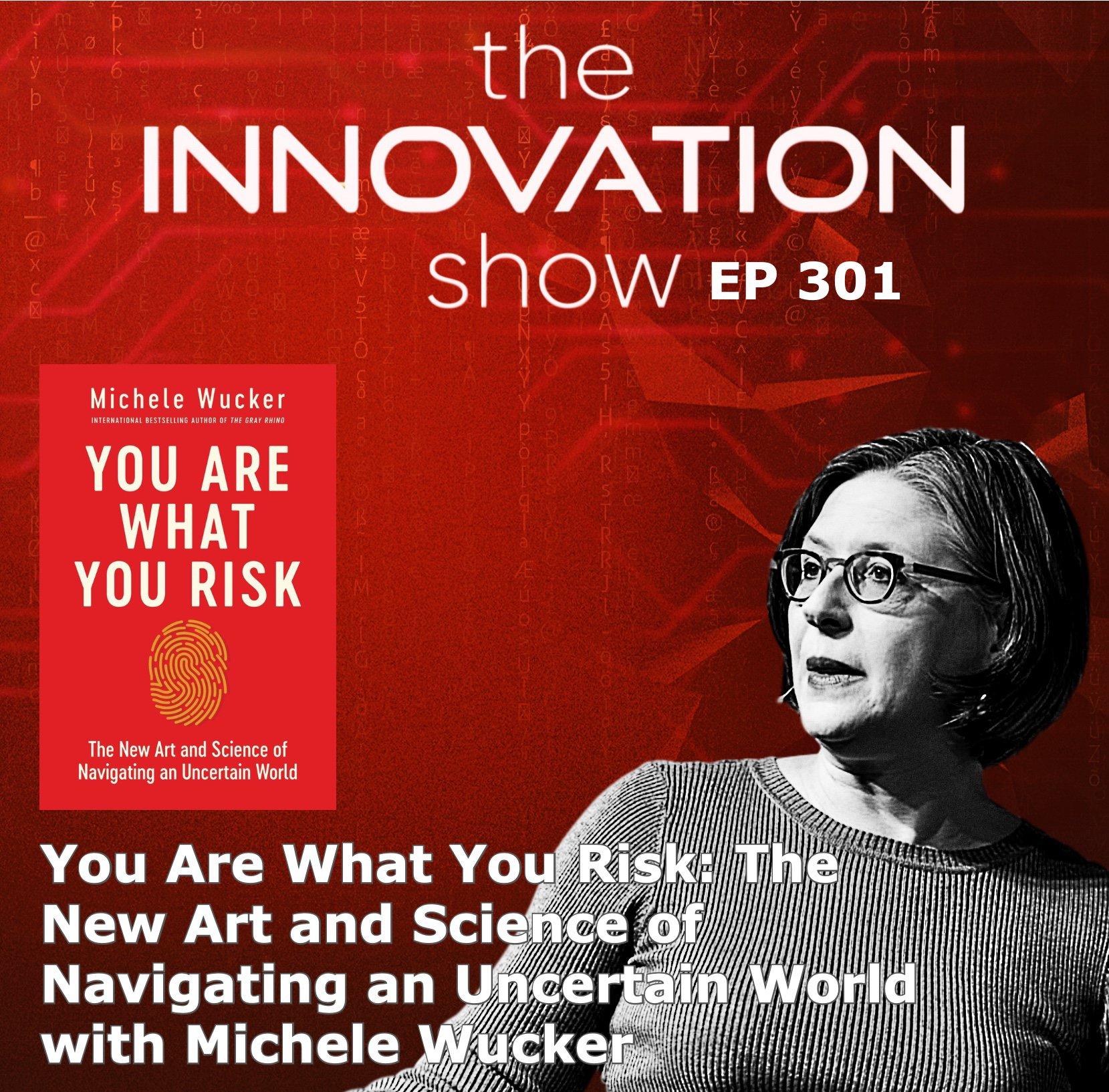
S17 Ep 301You Are What You Risk with Michele Wucker
How you see risk and what you do about it depend on your personality and experiences. How you make these cost-benefit calculations depend on your culture, your values, the people in the room, and even unexpected things like what you've eaten recently, the temperature, the music playing, or the fragrance in the air. Being alert to these often-unconscious influences will help you to seize opportunities and avoid danger. Today's book is a clarion call for an entirely new conversation about our relationship with risk and uncertainty. Our guest examines why it's so important to understand your risk fingerprint and how to make your risk relationship work better in business, life, and the world. She shares insights, practical tools, and proven strategies that will help you to understand what makes you who you are –and, in turn, to make better choices, both big and small. We welcome a friend of the Innovation Show and the author of "You Are What You Risk: The New Art and Science of Navigating an Uncertain World", Michele Wucker, welcome back. More about Michele: https://www.wucker.com
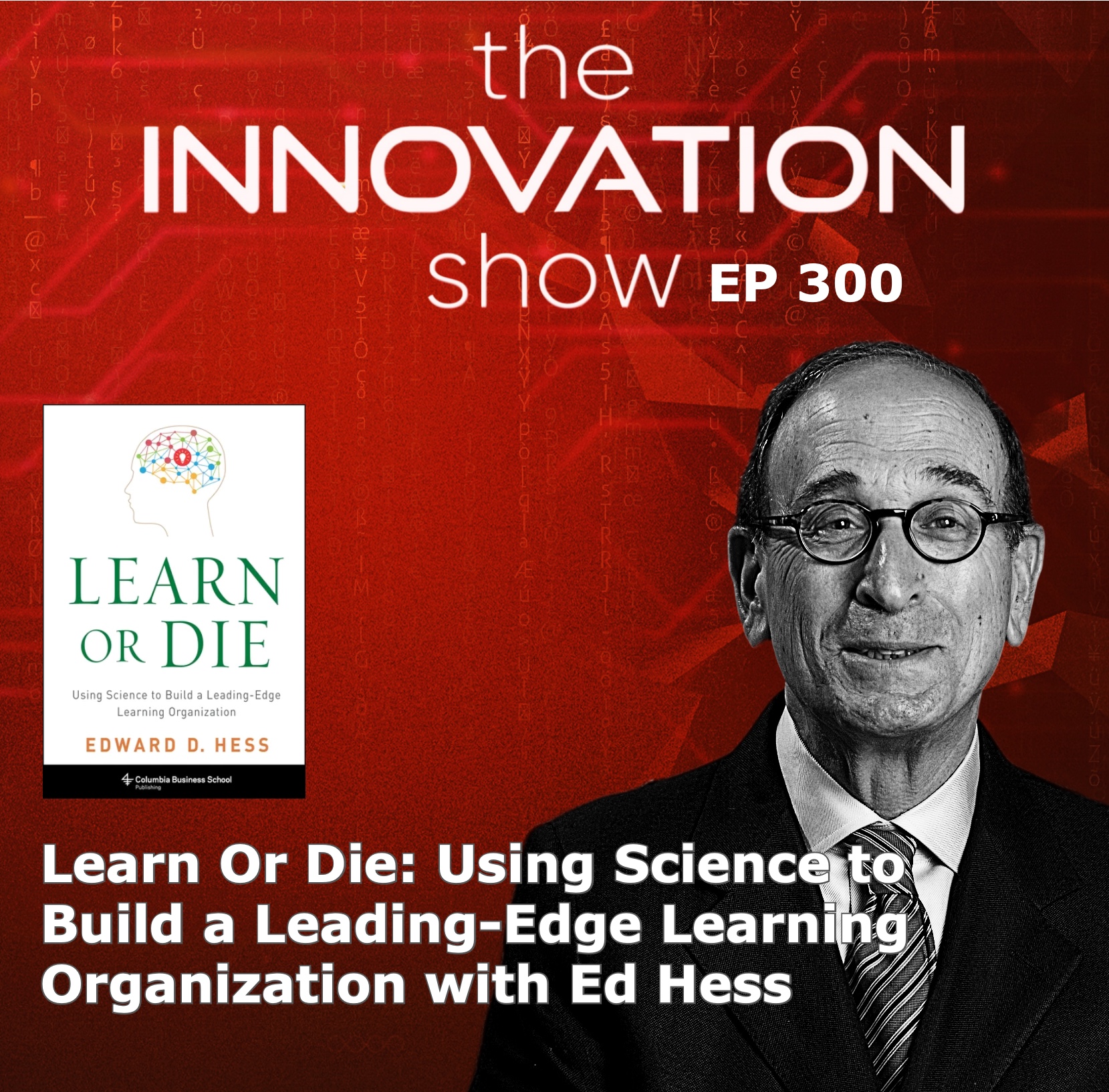
S17 Ep 300Learn or Die with Ed Hess
To compete with today's increasing globalisation and rapidly evolving technologies, individuals and organisations must take their ability to learn to a much higher level. Today's guest combines recent advances in neuroscience, psychology, behavioural economics, and education with key research on high-performance businesses to create an actionable blueprint for becoming a leading-edge learning organisation. Today's book examines the process of learning from an individual and an organisational standpoint. From an individual perspective, the book discusses the cognitive, emotional, motivational, attitudinal, and behavioural factors that promote better learning. Organisationally, it focuses on the kinds of structures, culture, leadership, employee learning behaviours, and human resource policies that are necessary to create an environment that enables critical and innovative thinking, learning conversations, and collaboration. His work also provides strategies to mitigate the reality that humans can be reflexive, lazy thinkers who seek confirmation of what they believe to be true and affirmation of their self-image. Humility is the New Smart is his emotions book. Hyper-Learning is his behavioural and philosophy book. Learn or Die is his science book. It is always a pleasure to welcome a great friend of the Innovation show , Ed Hess. More about Ed: www.edhess.org
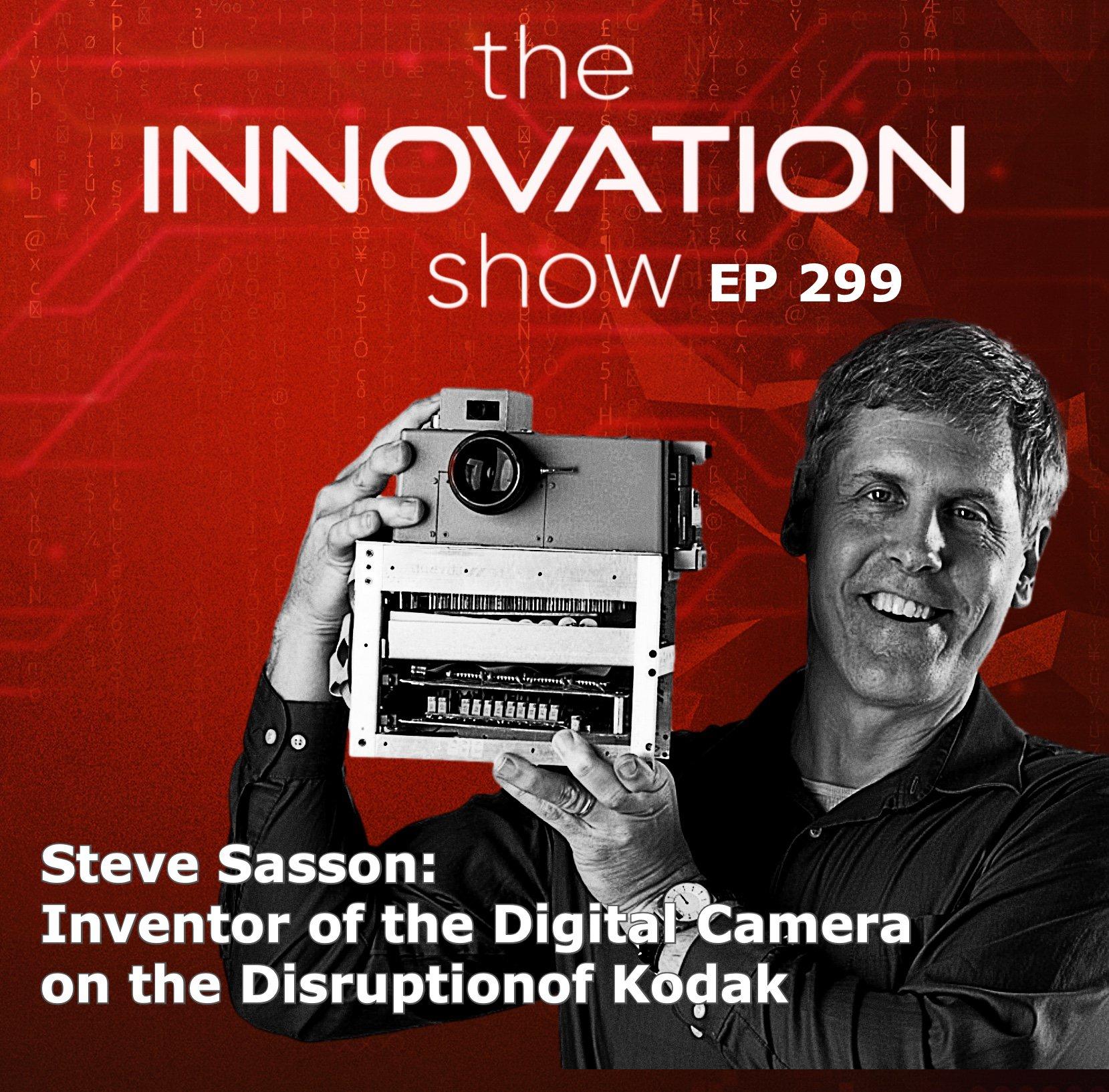
S16 Ep 299Kodak, The Inside Story with Inventor of the Digital Camera - Steve Sasson
We have the real pleasure of exploring what it was like trying to innovate from within Kodak with none other than the Inventor of the Digital Camera - Steve Sasson. We discuss so many aspects of Innovation and the struggle to let go of a successful business model. In 1880, George Eastman invented and patented a dry-plate formula and a machine for preparing large numbers of plates. He also founded the Eastman Kodak Company in Rochester, New York. In 1884, he replaced glass photographic plates with a roll of film, believing in "the future of the film business." Like many startups, Kodak faced severe challenges but soon became a household name. When selling cameras, Kodak used a razor-blade strategy: selling the cameras for a low cost, fuelling growth and profits from the film. With success came blind spots and little by little Kodak leadership paid less and less attention to hardware. This was the case despite Eastman's original guiding principles: mass production at low-cost International distribution extensive advertising customer focus and growth through continuous research. Kodak did spend a lot on R&D but lacked an appetite to bring the findings of their R&D outputs to life and this would contribute to the downfall of an iconic brand. Don't forget Kodak had remarkable engineers, amazing innovators, and even invented the digital camera. It is hard to imagine it today, a world without the smartphone, Instagram, a world where only one company dominated an industry, a world where it was a chore to capture a moment. This was the world in 1975, when a young 24-year-old engineer invented digital photography and built the first digital camera.
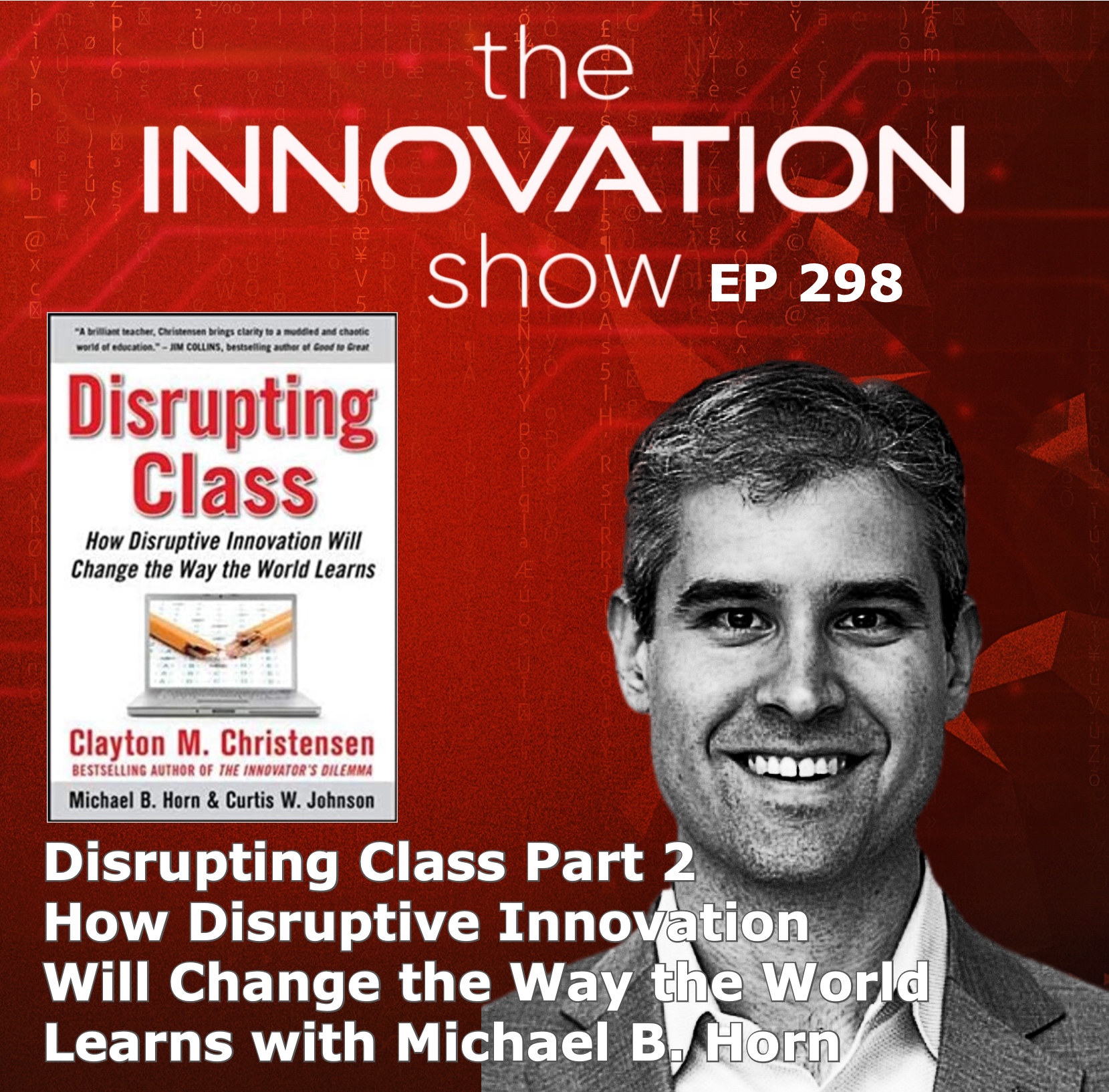
S17 Ep 298Disrupting Class Part 2 with Michael B. Horn
Part 2 leans more on the theories of disruptive innovation: What is Cramming? The Nypro case study The case study of RCA versus Sony Long-life learning The death of "4 in 40" and the growth of adult learning. We welcome back the author of "Disrupting Class, How Disruptive Innovation Will Change the Way the World Learns: Michael B Horn. More about Michael: https://michaelbhorn.com
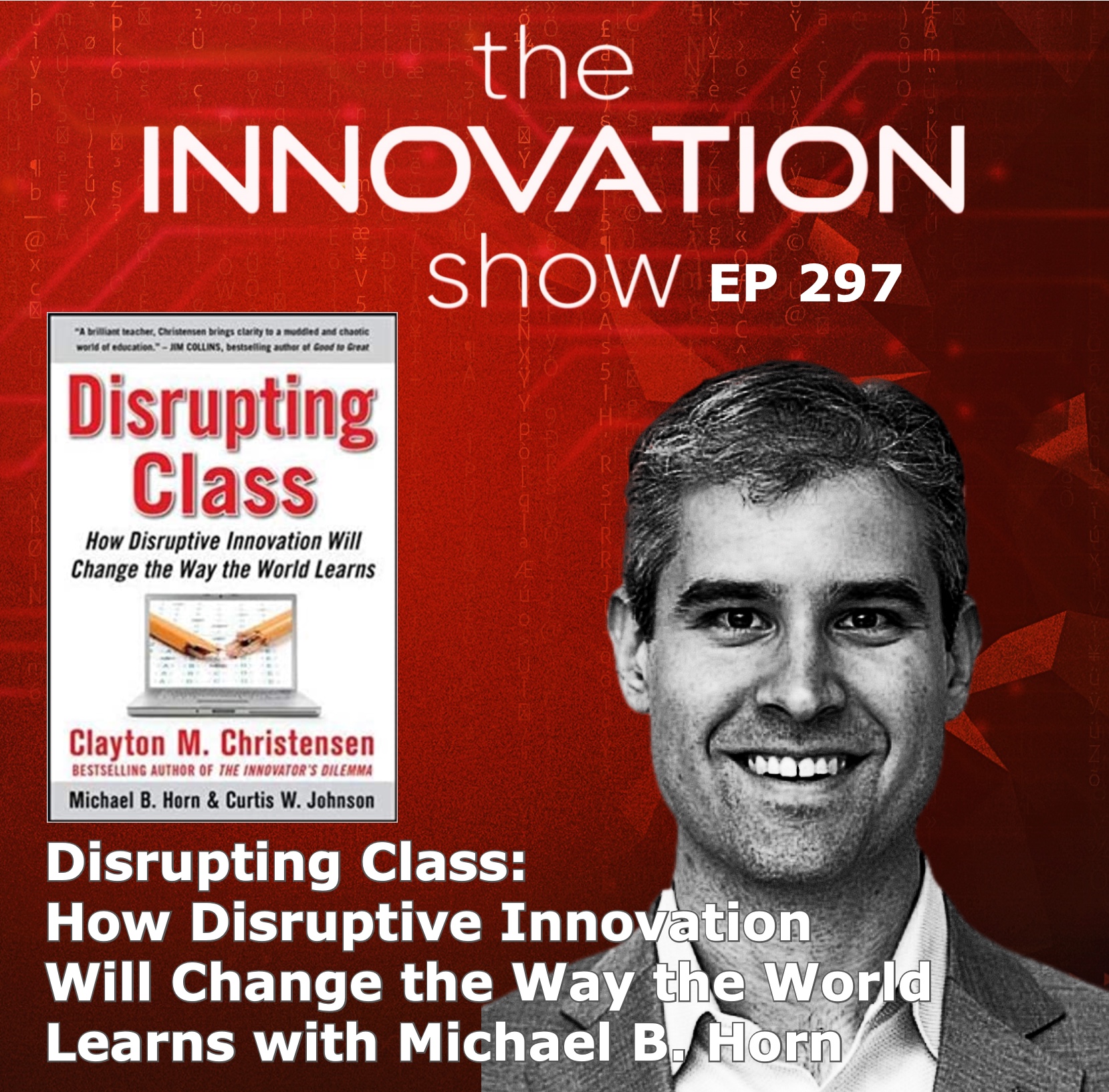
S16 Ep 297Disrupting Class with Michael B. Horn
Part 2 coming week of 25th Oct 2021 A groundbreaking and timely prescription for education reform―from a leading expert in innovation and growth Recent studies in neuroscience reveal that the way we learn doesn't always match up with the way we are taught. To stay competitive―academically, economically, and technologically―we need to rethink our understanding of intelligence and reevaluate our educational system. Disrupting Class offers a groundbreaking and timely prescription for education reform that incorporates customized learning, student-centric classrooms, and new technology. Featuring fascinating case studies, scientific findings, and unprecedented insights on how innovation must be managed, this book will open your eyes to new possibilities, unlock hidden potential, and get you to think differently about learning and education. We welcome the author of "Disrupting Class, How Disruptive Innovation Will Change the Way the World Learns: Michael B Horn. More about Michael here: https://michaelbhorn.com
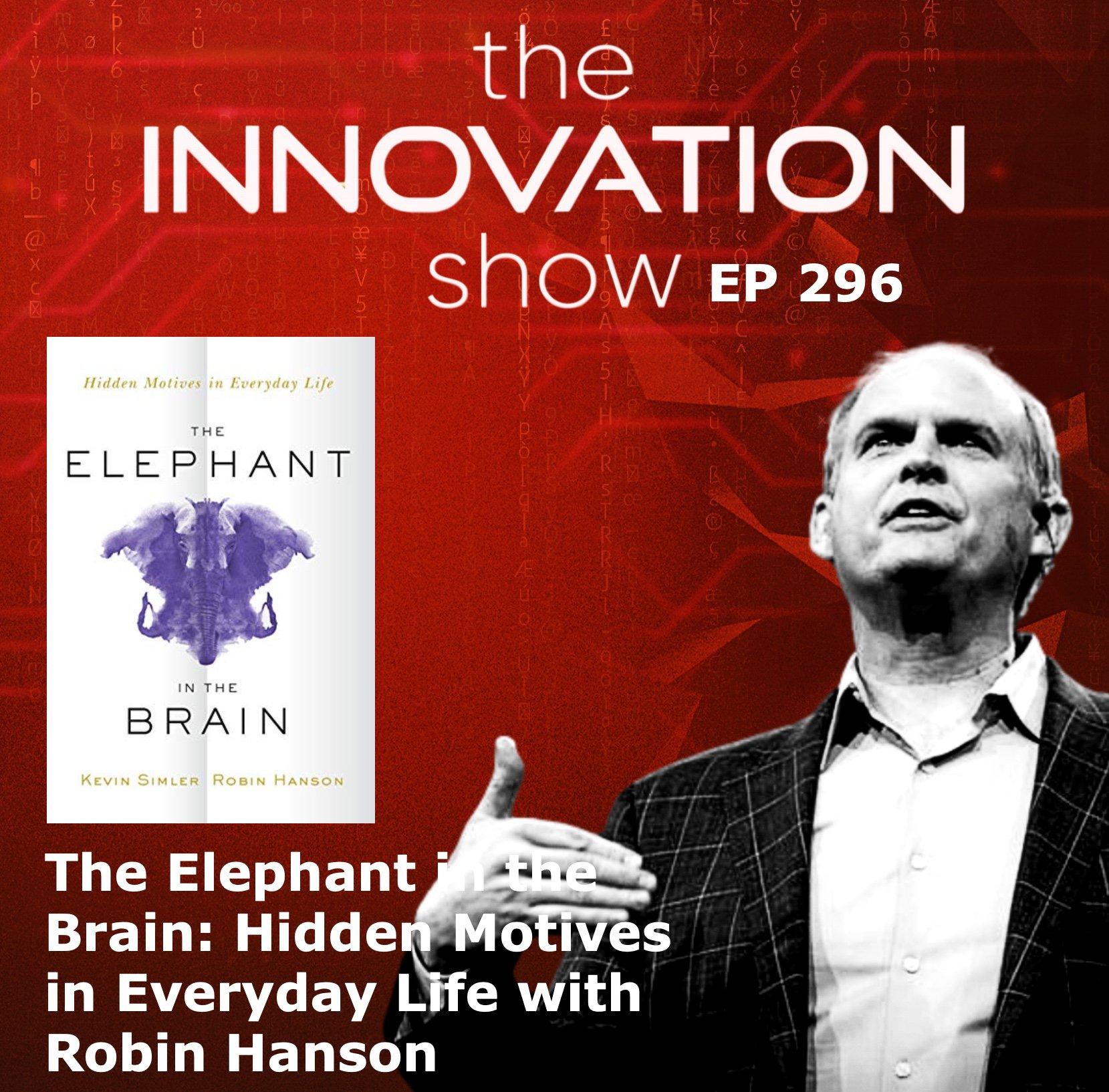
S15 Ep 296The Elephant in the Brain: Hidden Motives in Everyday Life with Robin Hanson
Human beings are primates, and primates are political animals. Our brains, therefore, are designed not just to hunt and gather but also to help us get ahead socially, often via deception and self-deception. But while we may be self-interested schemers, we benefit by pretending otherwise. The less we know about our own ugly motives, the better - and thus, we don't like to talk, or even think, about the extent of our selfishness. This is "the elephant in the brain". Such an introspective taboo makes it hard for us to think clearly about our nature and the explanations for our behaviour. The aim of this book, then, is to confront our hidden motives directly - to track down the darker, unexamined corners of our psyches and blast them with floodlights. Then, once everything is clearly visible, we can work to better understand ourselves: Why do we laugh? Why are artists sexy? Why do we brag about travel? You won't see yourself - or the world - the same after confronting the elephant in the brain. We welcome the author of a multitude of titles including the focus for today's episode: "The Elephant in the Brain: Hidden Motives in Everyday Life" Robin Hanson.

S16 Ep 295Metaphors We Live By with George Lakoff
The now-classic Metaphors We Live By changed our understanding of metaphor and its role in language and the mind. Metaphor, our guest explains, is a fundamental mechanism of mind, one that allows us to use what we know about our physical and social experience to provide an understanding of countless other subjects. Because such metaphors structure our most basic understandings of our experience, they are "metaphors we live by"—metaphors that can shape our perceptions and actions without our ever noticing them. It is an immense honour and real treat to welcome the author of a plethora of titles including the focus of today's show: Metaphors we Live By", George Lakoff.
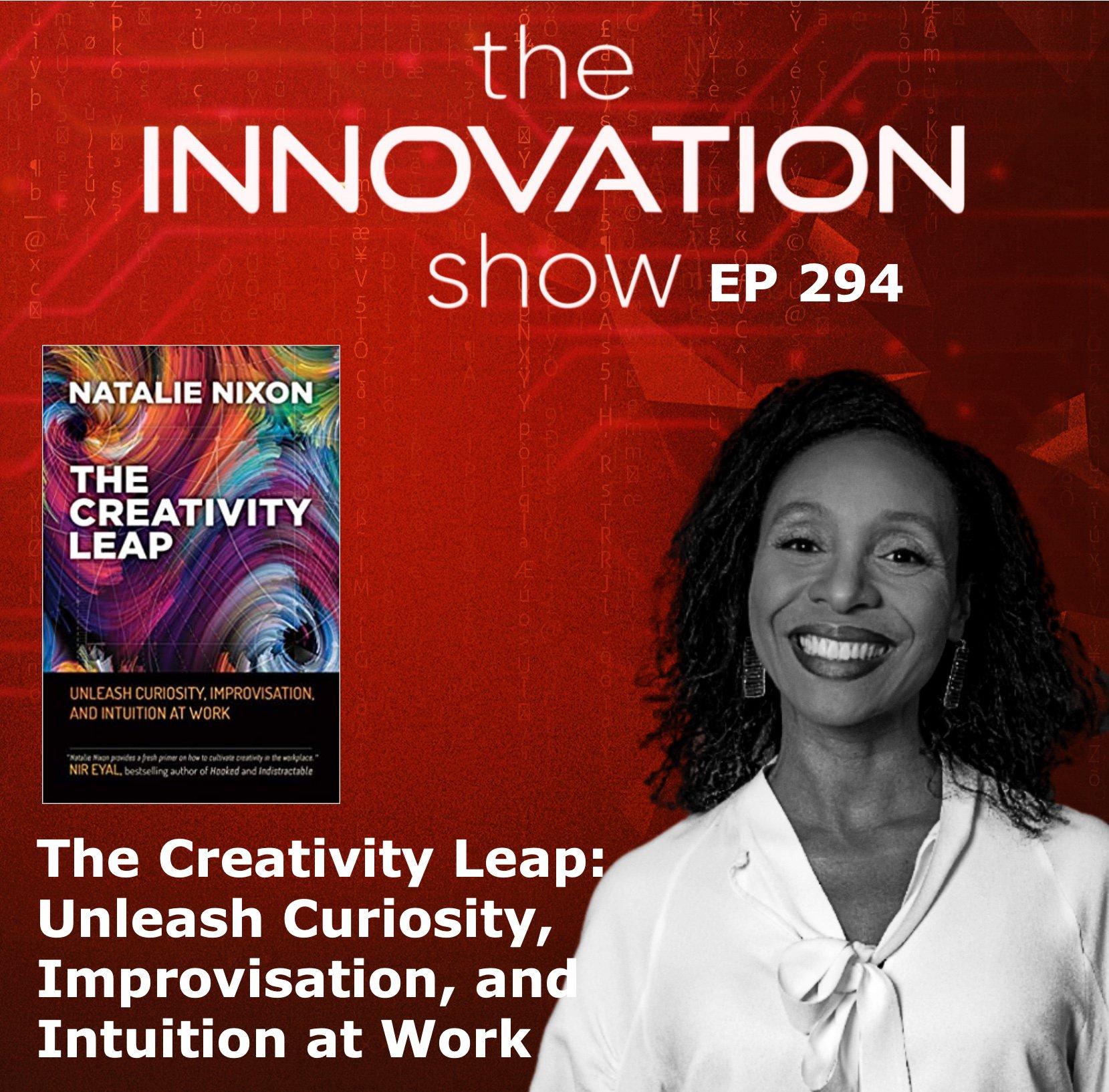
S16 Ep 294The Creativity Leap with Natalie Nixon
Today's book is a provocation. Its goal is to help you to increase your CQ and your organization's CQ. It encourages you to integrate both wonder and rigour into your daily life in order to produce new and novel products, services, and experiences that deliver greater value to your community and your organization. To this end, you'll gain three major tools from this book: Catalyzing inquiry Integrating improvisation, and elevating intuition. When you build these three practices into your work on a daily basis, you will discover true creativity— and its output, innovation— beginning to take place. We welcome the author of "The Creativity Leap: Unleash Curiosity, Improvisation, and Intuition at Work", Natalie Nixon More about Natalie https://www.figure8thinking.com

S15 Ep 293The Heart of Business with Hubert Joly
Our guest today is a learner who courageously took on challenging turnaround roles in industries where he had no prior experience. He used his rigorous French education and elite training as a McKinsey consultant to lead five companies as CEO, culminating in the transformation of Best Buy. During these years, he went through a personal transformation, from seeking to be the smartest person at the table to becoming a passionate and compassionate leader of people. By the time he became CEO of Best Buy in 2012, he had led turnarounds as head of EDS France, Vivendi's video game division, Carlson Wagonlit Travel, and Carlson Companies. Despite his achievements by his early forties he was feeling disillusioned from chasing success. This is what inspired him to take "a step back and spend time looking into his soul to find a better direction for his life." In his study with Catholic monks and a number of CEOs in France, he realized that work is a noble calling to serve others and an expression of love. He believes work must be guided by the pursuit of a purpose with people at its center. This conviction has shaped his life and his career. It is a great pleasure to welcome: Senior lecturer at Harvard Business School, former chairman and CEO of Best Buy, and author of, "The Heart of Business - Leadership Principles for the Next Era of Capitalism", Hubert Joly Find Hubert here: https://www.hubertjoly.org
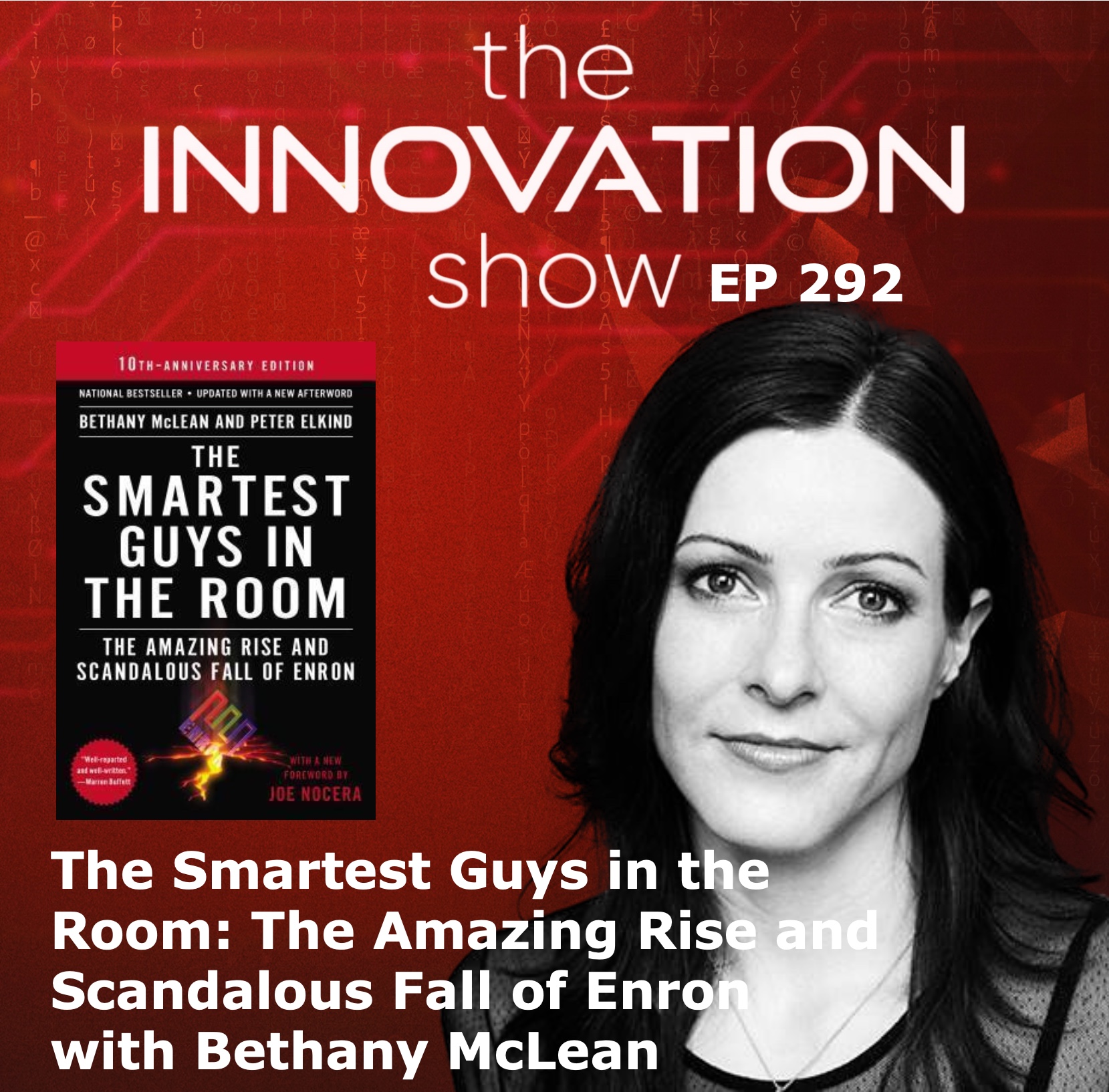
S15 Ep 292The Smartest Guys in the Room: The Amazing Rise and Scandalous Fall of Enron with Bethany McLean
Today's book is an almost anthropological examination of the nature of corporate scandal: Why do values go awry? What happens when the wrong person gets a big job? Why is it so tempting to post false profits instead of telling the truth? How distorting is the prospect of stock market riches? In retrospect, Enron did not conceal their dubious transactions from the investing public, but Enron's brass didn't go out of their way to point them out, but for anyone willing to wade through the company's financial documents, the numbers were clear. We are joined today by a brilliant journalist who did that work, who asked the questions others did not, and whose work would expose one of the biggest scams of all time. We welcome the author of "The Smartest Guys in the Room: The Amazing Rise and Scandalous Fall of Enron", Bethany McLean
S15 Ep 291How to Lead a Quest with Dr Jason Fox
Today's book presents a different approach to enterprise strategy and leadership. A complementary approach the author calls: pioneering leadership. Rather than simply work within existing parameters of operational excellence pioneering leadership sees you embarking upon quests. Such quests allow us to systematically explore complex and uncertain futures. We don't set goals in the hopes that a particular future will manifest — rather, we explore multiple possible futures, and prepare proactive stratagems to capitalize on each. The result of this continuous and dynamic approach is that enterprise strategy and leadership is enriched with viable, alternative options to pursue. Such options allow enterprise leaders to mitigate risk, obtain strategic advantage and ensure meaningful progress as the world changes. Pioneering leadership is challenging to initiate and maintain — especially when compared to the established approach that favours fast results with a bias toward prudence and predictability. But! If we can crack through our default thinking, pioneering leadership offers enterprise leaders the chance to obtain the most important thing of all — enduring relevance. It's a pleasure to welcome the author of How to Lead a Quest A handbook for pioneering executives, the Arch-Wizard of Ambiguity, Dr Jason Fox Find Jason here: https://www.drjasonfox.com https://www.cleverness.com/word
S15 Ep 290Change with John Kotter
Incremental improvement is no longer sufficient in helping organizations navigate the complexity, uncertainty, and volatility of today's world. Our guest today explores how to create non-linear, dramatic change in organizations. He explores the emerging science of change that teaches us about how to build organizations – from businesses to governments – that change and adapt rapidly. It is great pleasure to welcome the author of "Change: How Organizations Achieve Hard-to-Imagine Results in Uncertain and Volatile Times", John Kotter. More about John: https://www.kotterinc.com
S14 Ep 289Getting Things Done with David Allen
Today's guest is widely recognized as the world's leading expert on personal and organizational productivity. Time Magazine called today's book, "the definitive business self-help book of the decade." We welcome the international best-selling author of "Getting Things Done: The Art of Stress-Free Productivity", David Allen
S14 Ep 288The Unfiltered Lessons of a Female Entrepreneur with Victoria Montgomery Brown
Digital Goddess is a book for entrepreneurial women at any stage of life who want to know what it actually takes to build a business, in a world that's not always fair, predictable, or politically correct. It is one woman's story—by no means universal, but common enough to be instructive. It's about how our guest has dealt with the way things are, not the way I hoped things would be or the way I think they should be. It's about sucking it up, making the hard choices, and dealing with the consequences. We welcome author Digital Goddess: The Unfiltered Lessons of a Female Entrepreneur, Victoria Montgomery Brown
S14 Ep 287Indistractable with Nir Eyal
We are living through a crisis of distraction. Plans get sidetracked, friends are ignored, work never seems to get done. Why does it feel like we're distracting our lives away? In "Indistractable", behavioural designer Nir Eyal reveals the hidden psychology driving you to distraction. Empowering and optimistic, this is the book that will help you design your time, realise your ambitions, and live the life you really want. He is a friend of the show, where we previously featured his book "Hooked" and he is with us to share insights from his brilliant best-seller "Indistractable: How to Control Your Attention and Choose Your Life", Nir Eyal. More about Nir: https://www.nirandfar.com
S14 Ep 286Writing to Be Understood with Anne Janzer
What makes your favourite nonfiction books so compelling, understandable, or enjoyable to read? Those works connect with you, as a reader. When you recognize what's happening, you can apply those same methods to your own writing. Whether you're an expert trying to communicate with a mainstream audience or a nonfiction writer hoping to reach more people, our guest offers us the insight we need to reach more people with your words. It's a pleasure to welcome the author of "Writing to Be Understood: What Works and Why", Anne Janzer More about Anne: https://annejanzer.com
S14 Ep 285Everyday Business Storytelling with Janine Kurnoff
You've got one shot to sell your ideas...but you're busy. So you leverage what's available: slides, data, charts, facts… and you end up with scrambled messages and no clear call to action—this is what our guest calls the Frankendeck. Today's book teaches us to organize our ideas, data, and insights to help our audience quickly understand what they need to know and do with the information. It arms us with a framework for crafting influential narratives that up-level the conversation and drive business results. Everyday Business Storytelling with Janine Kurnoff We welcome the author of Everyday Business Storytelling: Create, Simplify, and Adapt A Visual Narrative for Any Audience, Janine Kurnoff More about Janine: https://www.presentation-company.com/team_member/janine-kurnoff
S14 Ep 284Better, Simpler Strategy with Felix Oberholzer-Gee
In the past few decades, strategy has become increasingly sophisticated. If you work for a sizeable organisation, chances are your company has: a marketing strategy a corporate strategy a global strategy an innovation strategy an intellectual property strategy a digital strategy a social strategy and a talent strategy And in each of these domains, talented people work on long lists of urgent initiatives. Our guest today shows how the best companies achieve more by doing less. At a time when rapid technological change and global competition conspire to upend traditional ways of doing business, these companies pursue radically simplified strategies. At a time when many managers struggle not to drown in vast seas of projects and initiatives, these businesses follow simple rules that help them select the few ideas that truly make a difference. We welcome the author of "Better, Simpler Strategy: A Value-Based Guide to Exceptional Performance", Felix Oberholzer-Gee
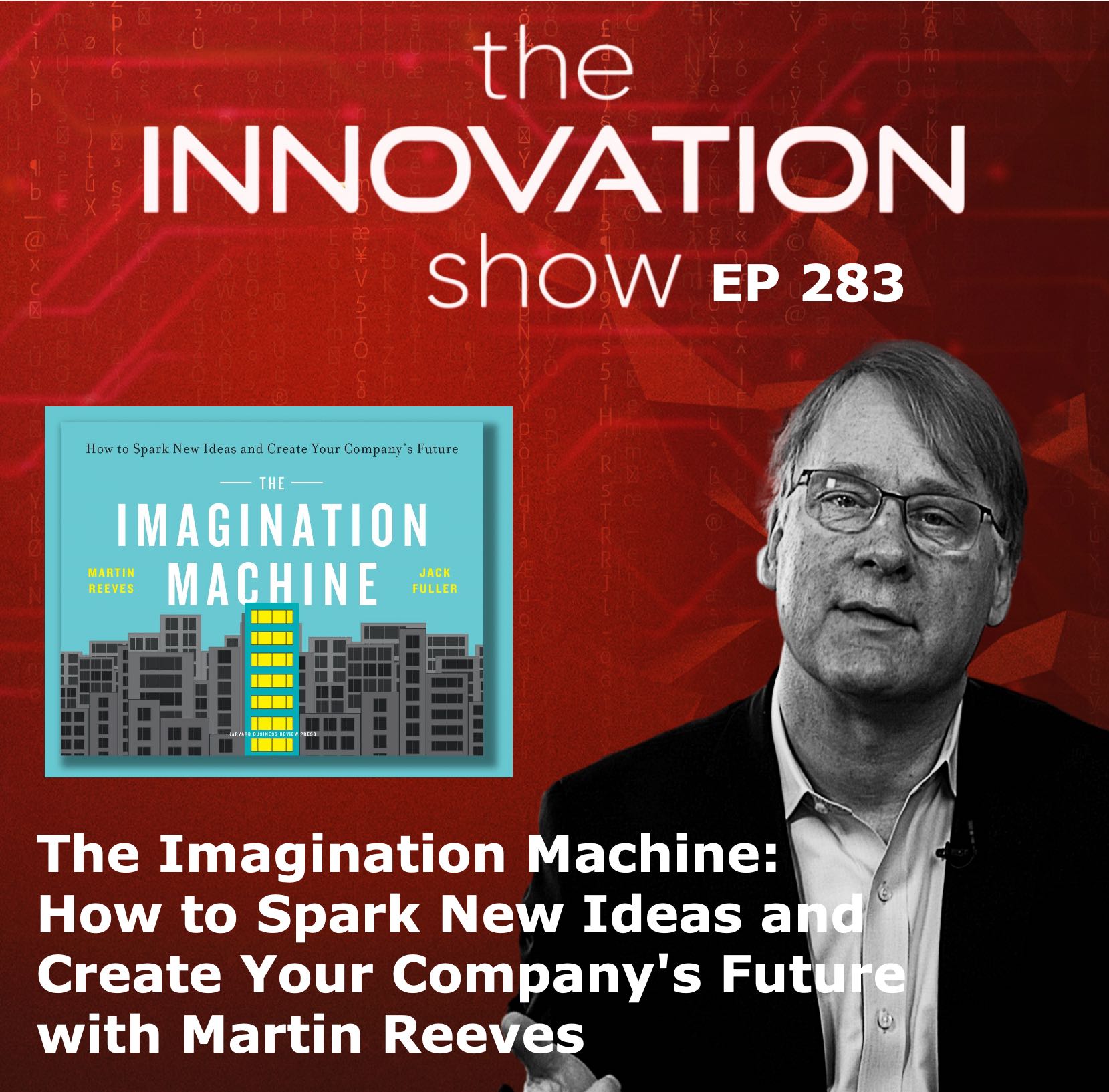
S14 Ep 283The Imagination Machine with Martin Reeves
Corporations have changed the world radically in so many areas: medicine, consumer goods, transport, finance, agriculture, entertainment, communications. And they've done so by combining organizational abilities with the unique human capacity to imagine: the ability to see and create things that had never existed. Imagination is needed now more than ever. Since competitive advantage is increasingly short-lived, driven by rapid evolution of the technological and business environment, companies constantly risk stagnation. Since the 1960s, the average number of companies exiting the Fortune 500 has increased by 36% annually, and the proportion of industries in which the top player has led for more than five years has nearly halved. Outperformance more quickly fades to the mean. We welcome the author of The Imagination Machine: How to Spark New Ideas and Create Your Company's Future, Martin Reeves More about Martin and the book: https://theimaginationmachine.org