
The Innovation Show
764 episodes — Page 9 of 16
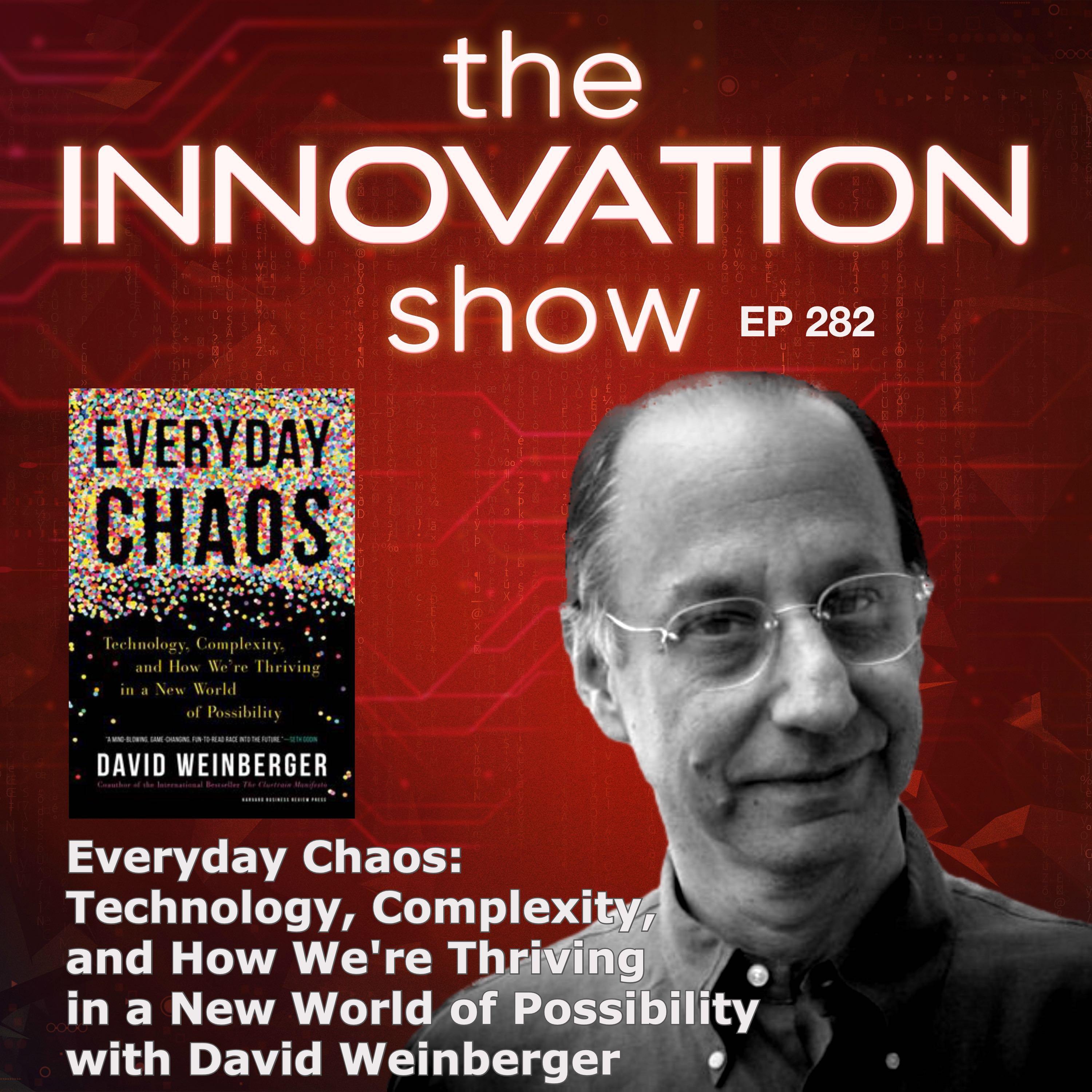
S16 Ep 282Everyday Chaos with David Weinberger
Artificial intelligence, big data, modern science, and the internet are all revealing a fundamental truth: The world is vastly more complex and unpredictable than we've allowed ourselves to see. Now that technology is enabling us to take advantage of all the chaos it's revealing, our understanding of how things happen is changing--and with it our deepest strategies for predicting, preparing for, and managing our world. This affects everything, from how we approach our everyday lives to how we make moral decisions and how we run our businesses. The result: is a world no longer focused on limitations but optimised for possibilities. We welcome the author of the brilliant book: "Everyday Chaos: Technology, Complexity, and How We're Thriving in a New World of Possibility" David Weinberger
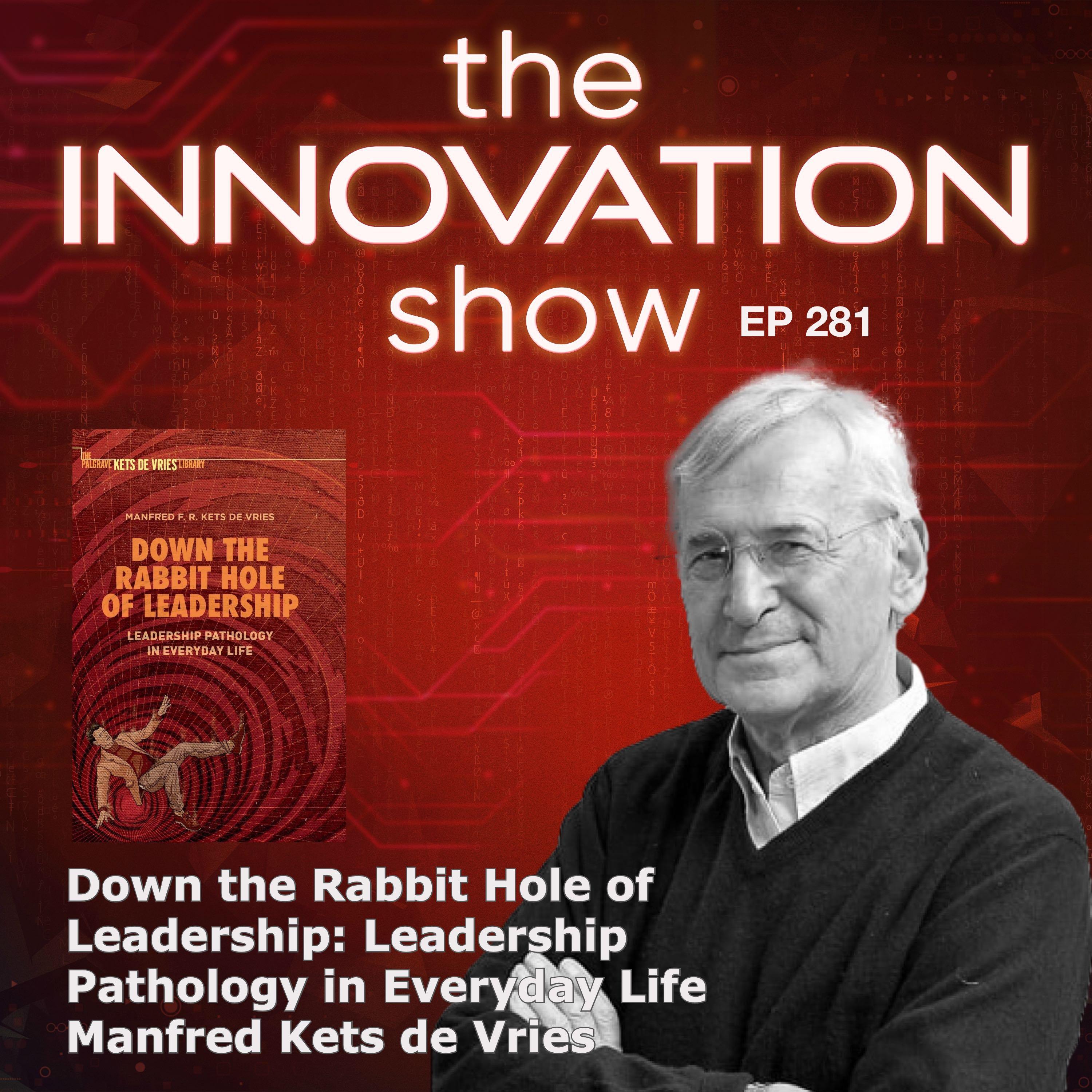
S16 Ep 281Down the Rabbit Hole of Leadership with Manfred Kets de Vries
In the previous book in this series, our guest observed the experiences of leaders on a rollercoaster ride through their professional and personal lives. Now, he follows them down the rabbit hole into the unknown, where, like Lewis Carroll's Alice, they find a dystopian Wonderland in which everyone seems to have gone mad and life functions according to its own crazy logic, throwing up all kinds of obstacles in the search for truth. The first part of this book looks at the psychodynamics of leadership in both a business and a political context. The second focuses on the psychopathology of everyday life in organizations and the seemingly endless ways people can make a mess of things – including mega pay packages, acting out, digital addiction and other dysfunctional behaviour patterns. Each chapter ends with a brief anecdote to illustrate the dilemma it presents. In short, sharp nuggets, our guest helps make sense of how the madness of the present has affected leadership in organizations and the workplace. It's a great honour to welcome one of the world's renowned authorities on leadership and a prolific author, we welcome the author of Down the Rabbit Hole of Leadership: Leadership Pathology in Everyday Life Manfred Kets de Vries welcome.
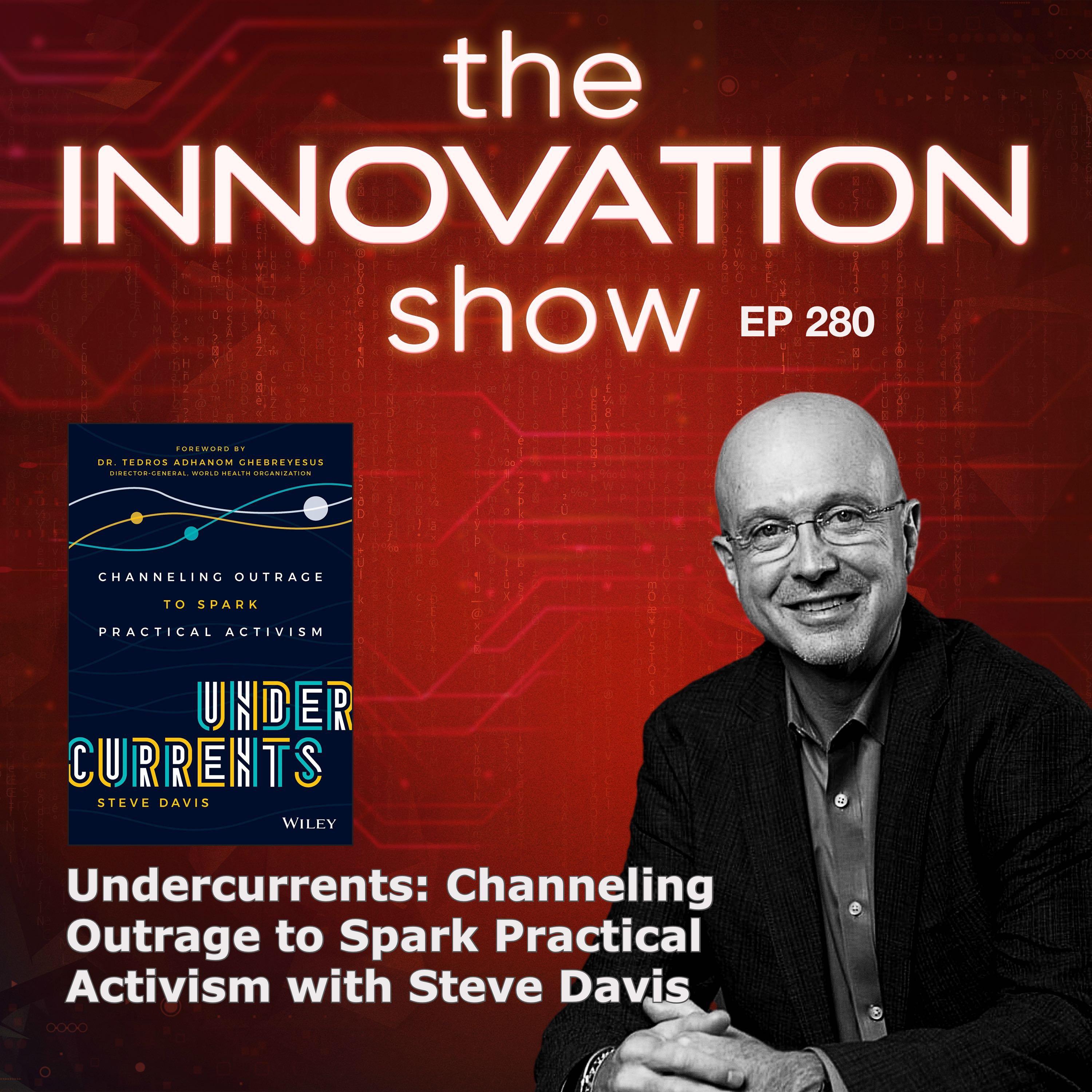
S15 Ep 280Undercurrents with Steve Davis
Today's book brings to bear on some of the most powerful and helpful macrotrends rippling through society today. The book teaches readers how to harness their outrage and capitalize on global trends to instigate and encourage change across the world. The author identifies five global undercurrents with outsized importance that are shaping our world. The book's lessons are supported throughout by stories, experiences, data and observations from across the globe. It is perfect for activists and leaders of all kinds who aim to increase their impact on their organisations and the world at large, as well as the intellectually curious who hope to increase their understanding of the changing world around them. More about Steve: https://www.undercurrentsbook.com
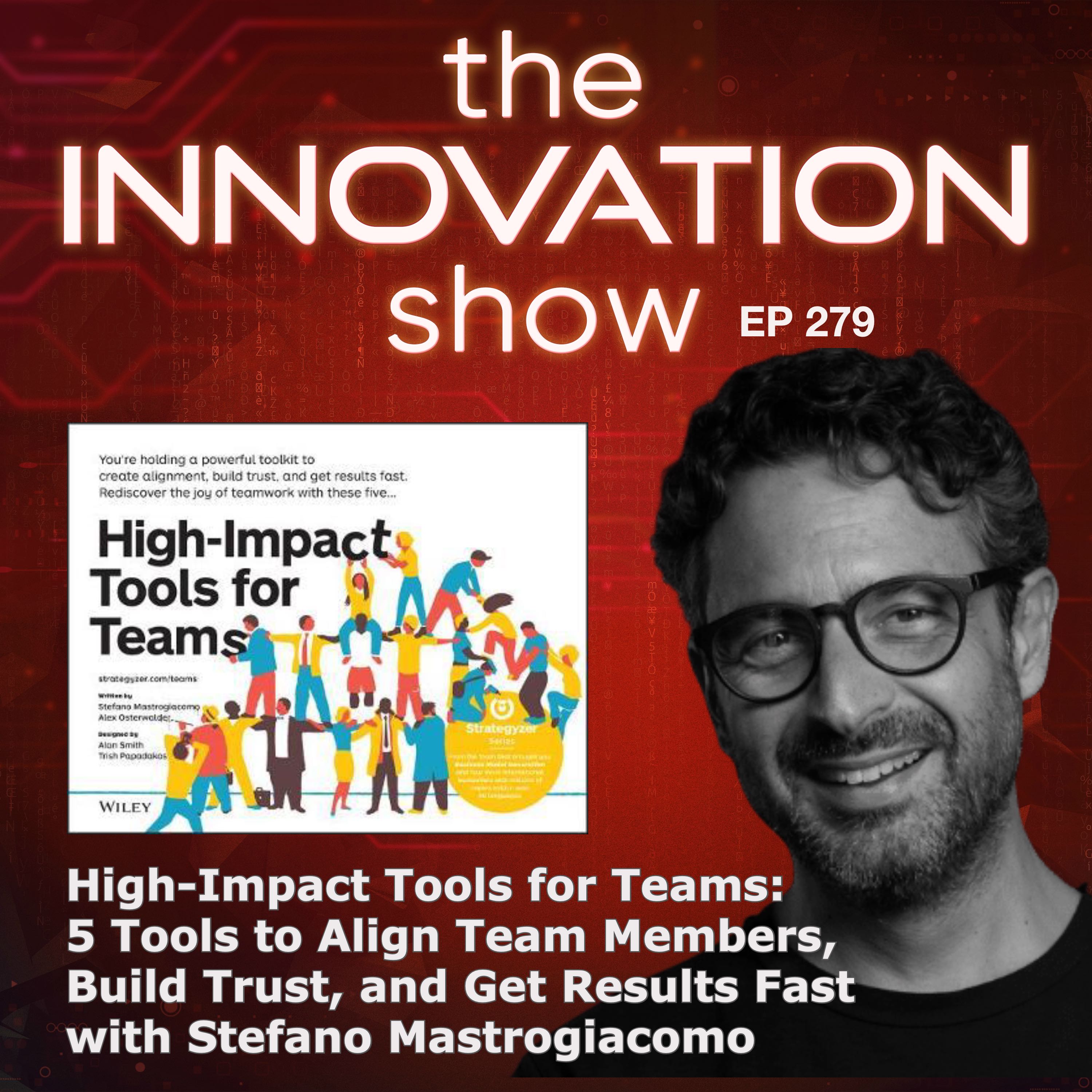
S14 Ep 279High-Impact Tools for Teams with Stefano Mastrogiacomo
59% of U.S. workers say that communication is their team's biggest obstacle to success, followed by accountability at 29% Today's book explains a simple, powerful tool that helps team leaders and members align and get clarity on exactly who is responsible for each part of the team's most important activities and projects. With the guidance of today's book, you can be better prepared as a team leader or team member to plan effectively, reduce risks, and collaborate with others. Your team will be accountable and ready to deliver results! We welcome the author of "High-Impact Tools for Teams" Stefano Mastrogiacomo More about Stefano: https://www.teamalignment.co
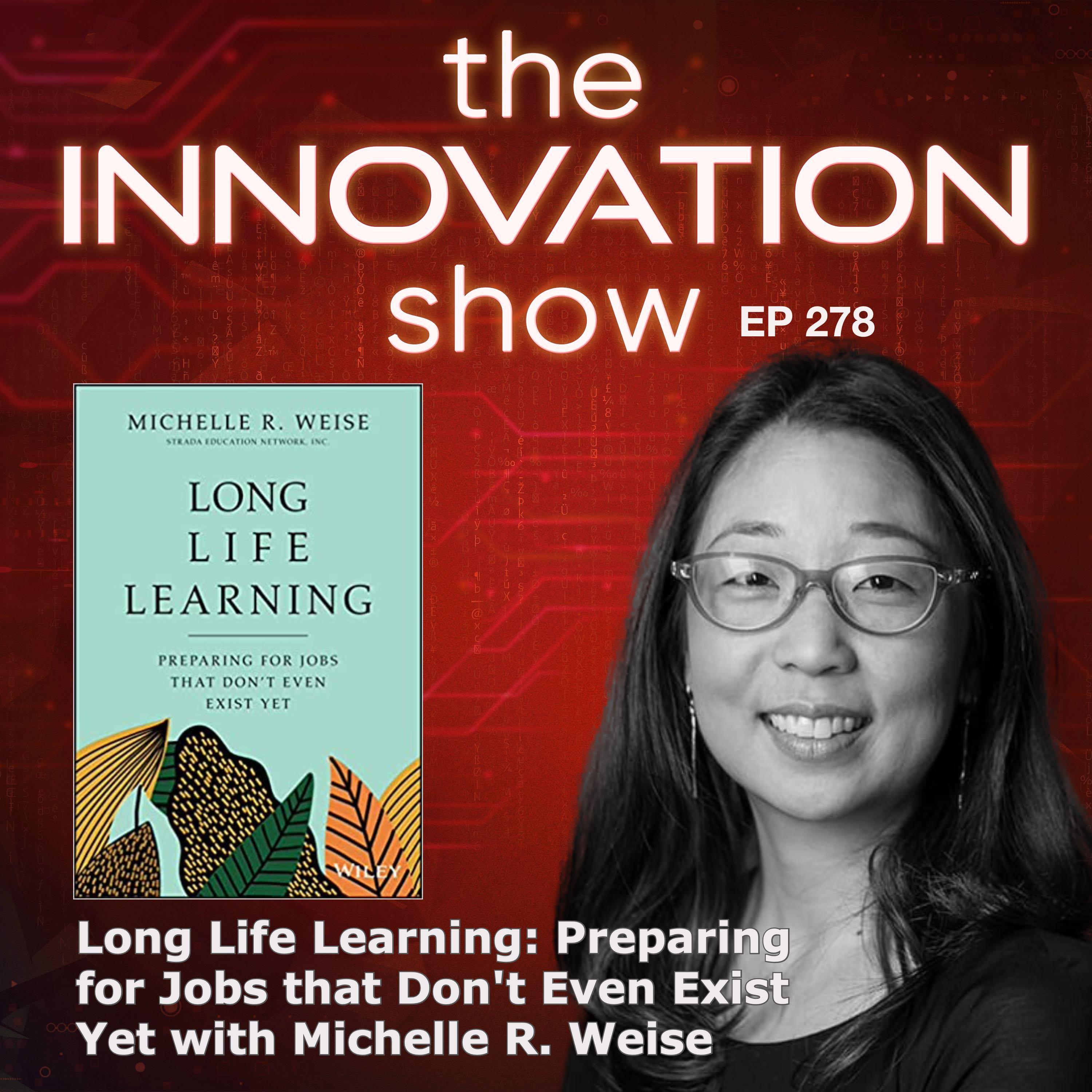
S15 Ep 278Long Life Learning with Michelle R. Weise
Today's guest offers us a fascinating glimpse into a near-future where careers last 100 years, and education lasts a lifetime. Our guest makes the case that learners of the future are going to repeatedly seek out educational opportunities throughout the course of their working lives — which will no longer have a beginning, middle, and end. Her book focuses on the disruptive and burgeoning innovations that are laying the foundation for a new learning model that includes clear navigation, wraparound and funding supports, targeted education, and clear connections to more transparent hiring processes. The book examines: How will a dramatically extended lifespan affect our careers? How will more time in the workforce shape our educational demands? Will a four-year degree earned at the start of a 100-year career adequately prepare us for the challenges ahead? We welcome the author of Long Life Learning: Preparing for Jobs that Don't Even Exist Yet, Michelle Weise, welcome to the show.
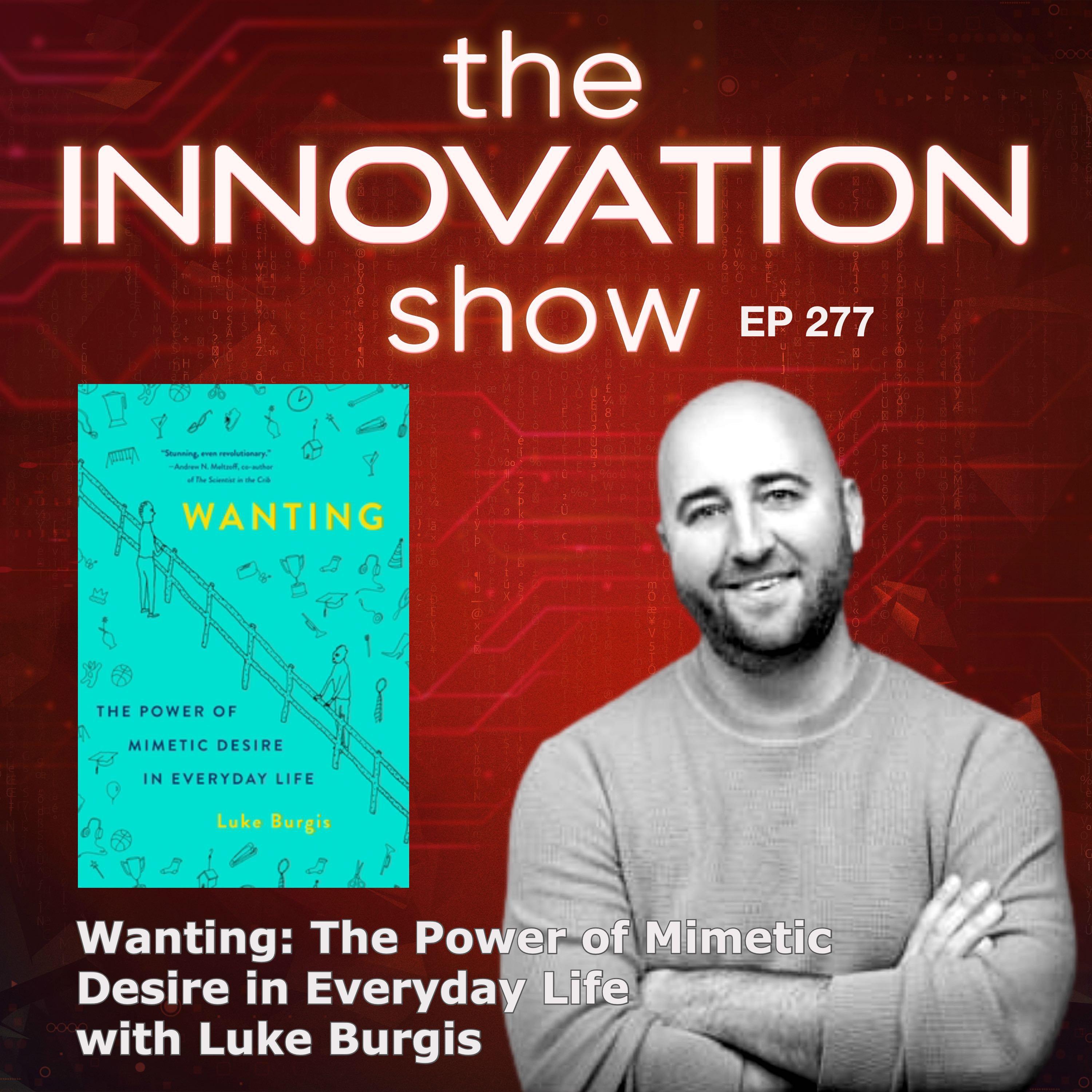
S14 Ep 277Wanting with Luke Burgis
This is a book about why people want what they want. It's based on the notion that, in the end, we will either be masters or slaves of our desires and that we can choose the outcome. True freedom, our guest argues, is the freedom to want what is best for ourselves and for others—and that those need not be different things. The ability to desire in a healthy way is not something we're born with, but a freedom we must earn. And due to one powerful and hidden feature of human desire, that freedom is hard won. More about Luke here: https://lukeburgis.com
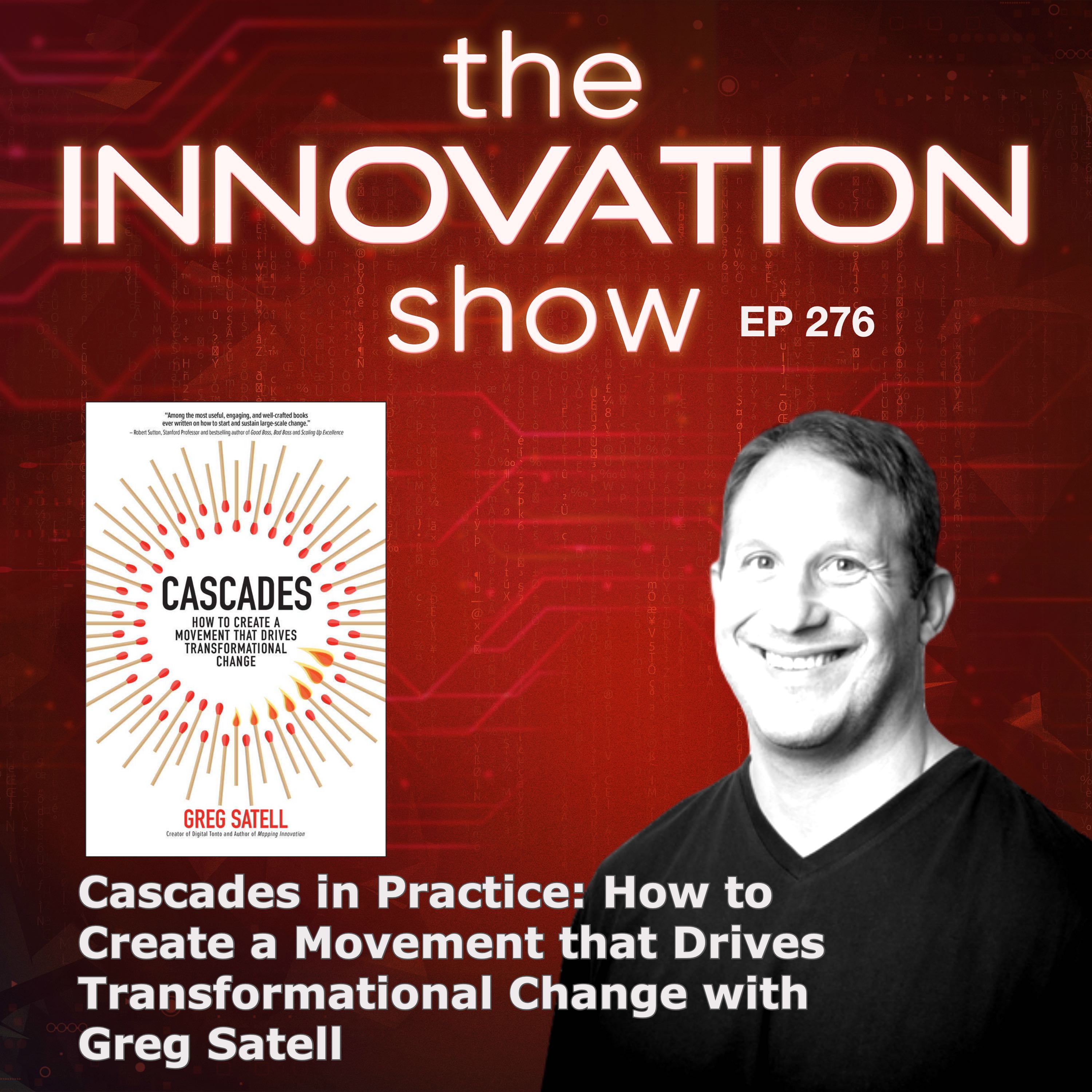
S13 Ep 276Cascades in Practice with Greg Satell
Creating true change is never easy. Most startups don't survive. Most community groups never get beyond small local actions. Even when a spark catches fire and protesters swarm the streets, it often seems to fizzle out almost as fast as it started. The status quo is, almost by definition, well-entrenched and never gives up without a fight. To truly change the world or even just your little corner of it, you don't need a charismatic leader or a catchy slogan. What you need is a cascade: small groups that are loosely connected but united by a common purpose. We welcome back for the 3rd time, Bestselling Author, Keynote Speaker and Innovation Advisor and author of Cascades: How to Create a Movement that Drives Transformational Change, Greg Satell. Links mentioned in the show: https://digitaltonto.com/2020/10-principles-for-transformational-change/ https://www.joinclubhouse.com/join/the-innovation-show/3ovqI5FP/xq5YRvjd
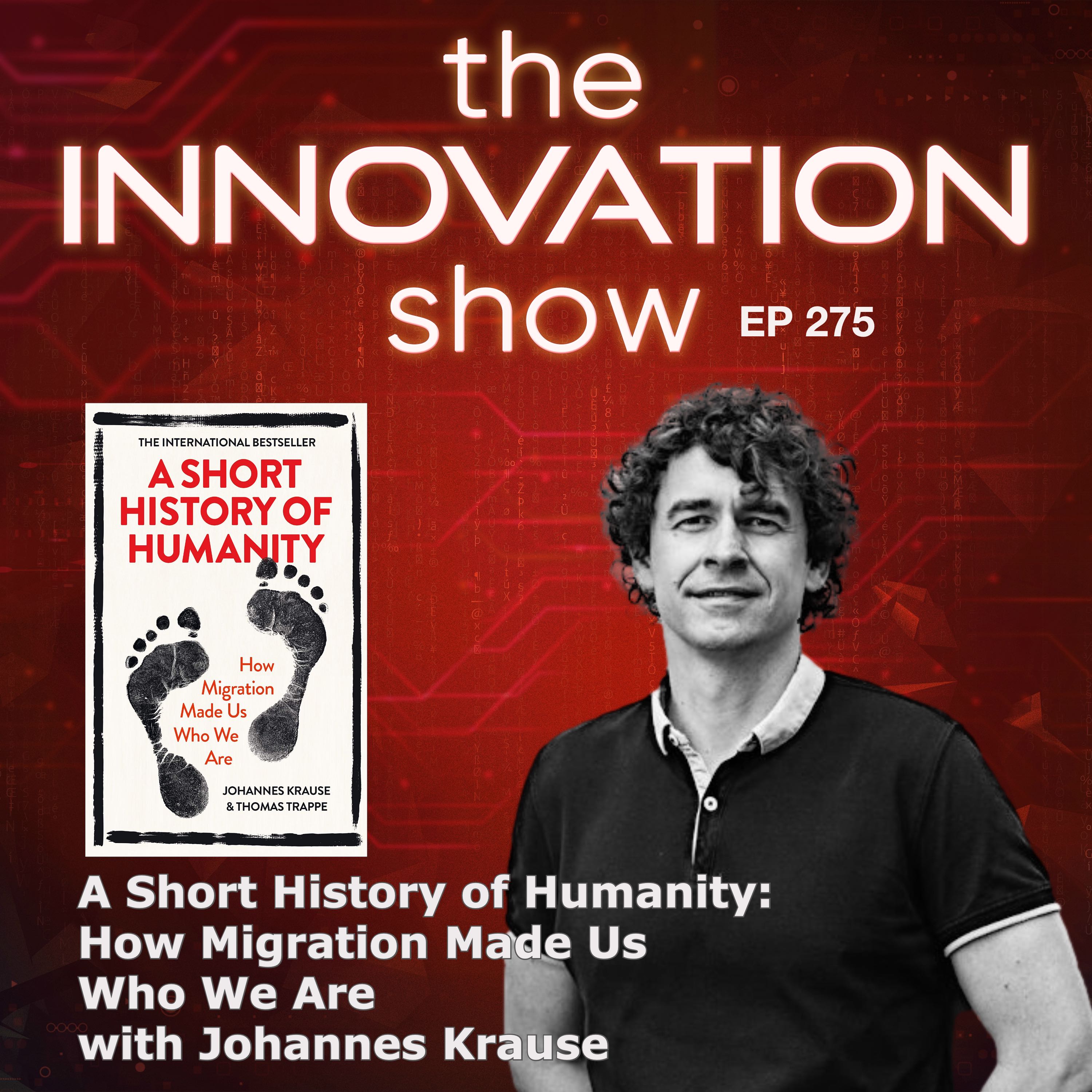
S14 Ep 275A Short History of Humanity with Johannes Krause
Marshalling unique insights from archaeogenetics, an emerging new discipline that allows us to read our ancestors' DNA like journals chronicling personal stories of migration, our guest charts two millennia of adaption, movement and survival, culminating in the triumph of Homo Sapiens as we swept through Europe and beyond in successive waves of migration - developing everything from language, the patriarchy, disease, art and a love of pets as we did so. As well as being a radical new telling of our shared story, today's book is a reminder that the global problems that keep us awake at night - climate catastrophe; the sudden emergence of deadly epidemics; refugee crises; ethnic conflict; over-population - are all things we've faced in the past and overcome. Our guest is one of the most established international experts in the field of archaeogenetics, he is director of the Max Planck Institute for Evolutionary Anthropology Germany and he is the author of "A Short History of Humanity: How Migration Made Us Who We Are", Johannes Krause welcome to the show.
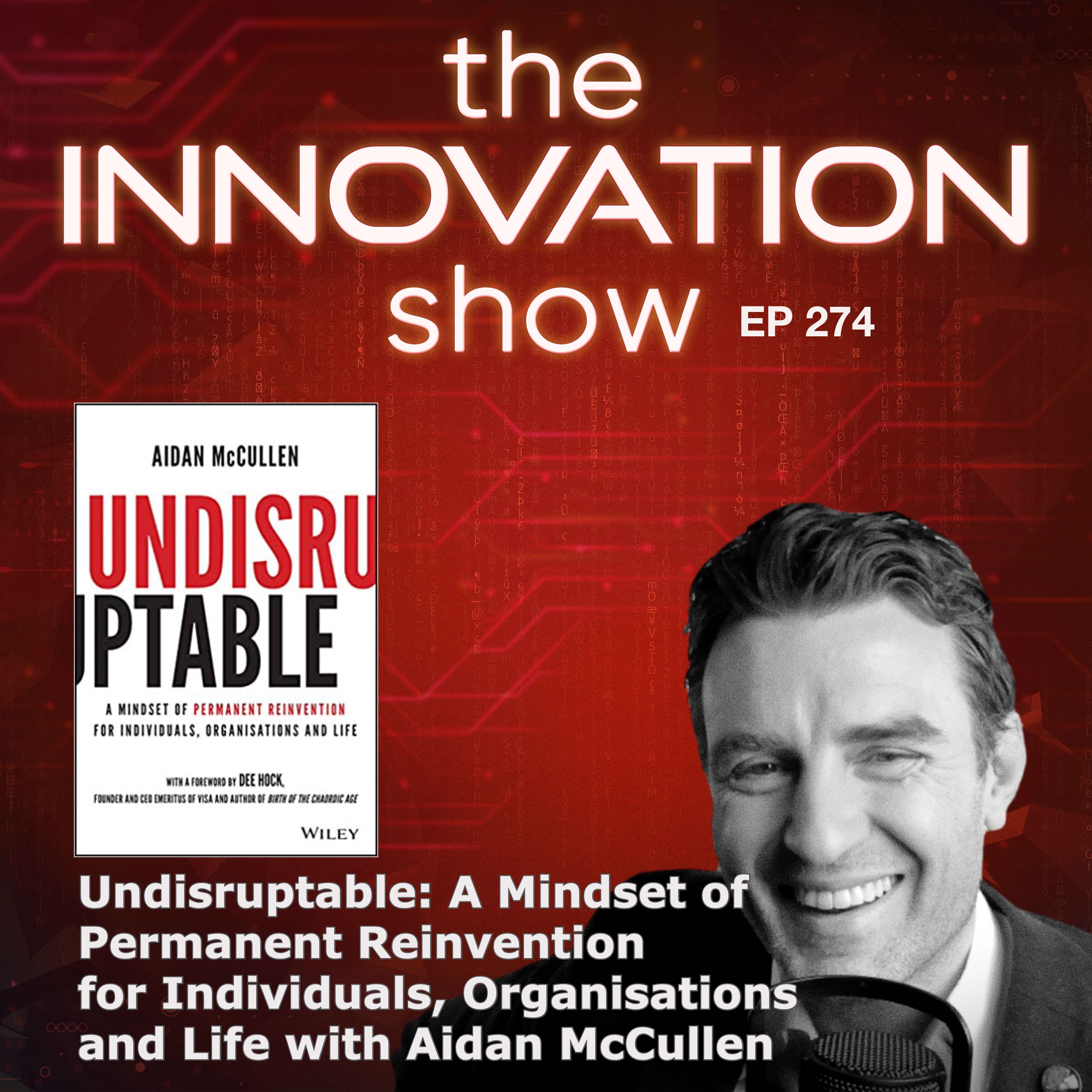
Undisruptable: A Mindset of Permanent Reinvention with Aidan McCullen
bonusIn our world of incessant change, we are all threatened by VUCA volatility, uncertainty, complexity, and ambiguity—at the individual and organizational levels. Today's book offers you a new lens through which to consider change as an opportunity rather than an obstacle. You'll be inspired to consider the big questions of today: What does the future hold? What does the exponential growth of technology mean for the world of work? What does a changing job market mean for future generations? What do waves of disruption mean for business leaders? S ociety is evolving at breakneck speed. What does this mean for all of us? While we cannot see into the future, there are repeatable patterns that we can understand. The first step to becoming Undisruptable is to realize that evolution is a natural part of life, and nature provides many examples. If you haven't guessed already that is the blurb for my own book and because of so many requests from former guests and listeners. I will be interviewed today by guest host, a friend of the innovation and professional friend, Whitney Johnson.
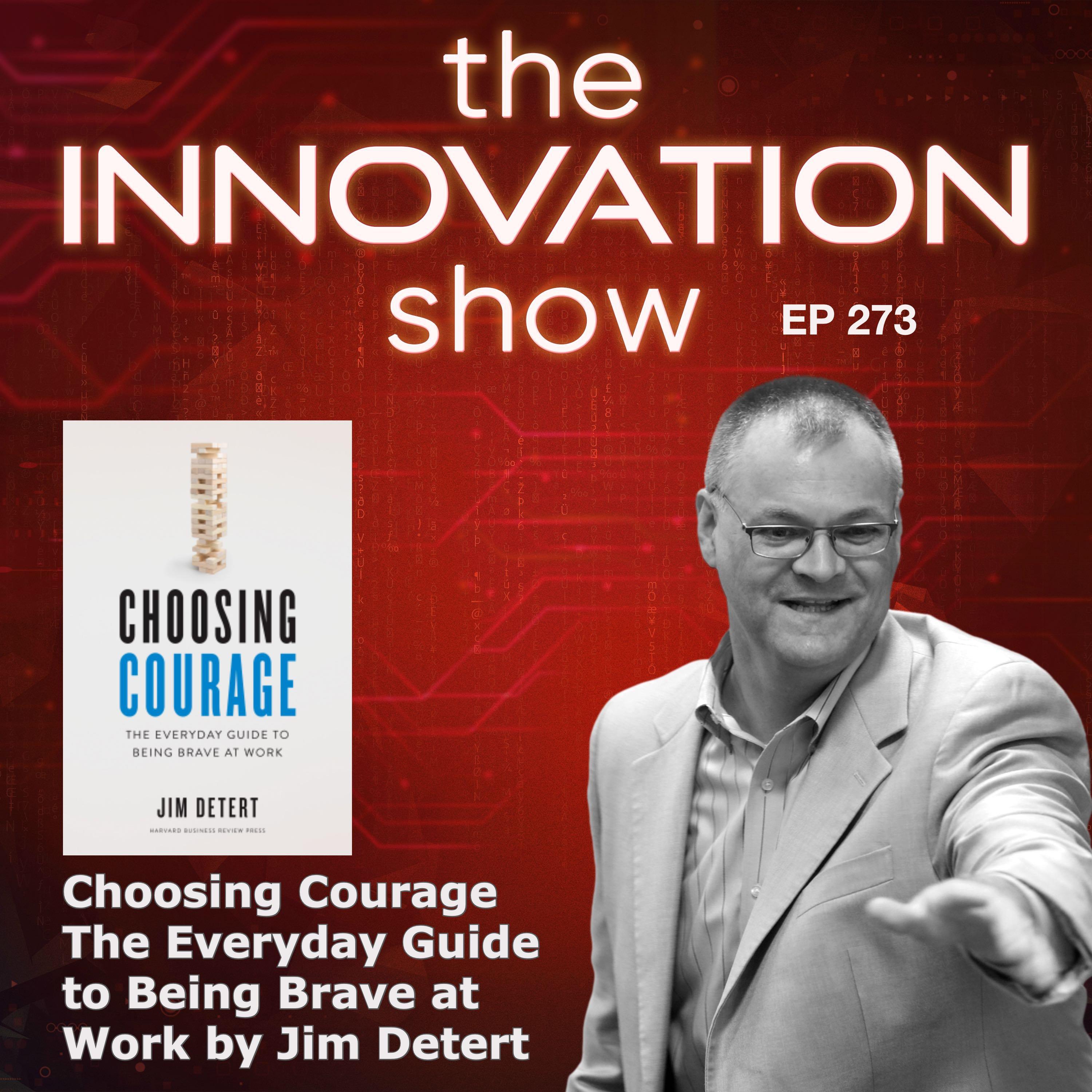
S12 Ep 273Choosing Courage with Jim Detert
Have you ever wanted to disagree with your boss? Speak up about your company's lack of diversity or unequal pay practices? Make a tough decision you knew would be unpopular? We all have opportunities to be courageous at work. But since courage requires risk—to our reputations, our social standing, and, in some cases, our jobs—we often fail to act, which leaves us feeling powerless and regretful for not doing what we know is right. There's a better way to handle these crucial moments—and today's book provides the moral imperative and research-based tactics to help you become more competently courageous at work. Our guest is the world's foremost expert on workplace courage, He explains that courage isn't a character trait that only a few possess; it's a virtue developed through practice. And with the right attitude and approach, you can learn to hone it like any other skill and incorporate it into your everyday life. We welcome a friend of the Innovation Show and one of our very early guests, author of Choosing Courage: The Everyday Guide to Being Brave at Work Jim Detert More about Jim here: https://jimdetert.com
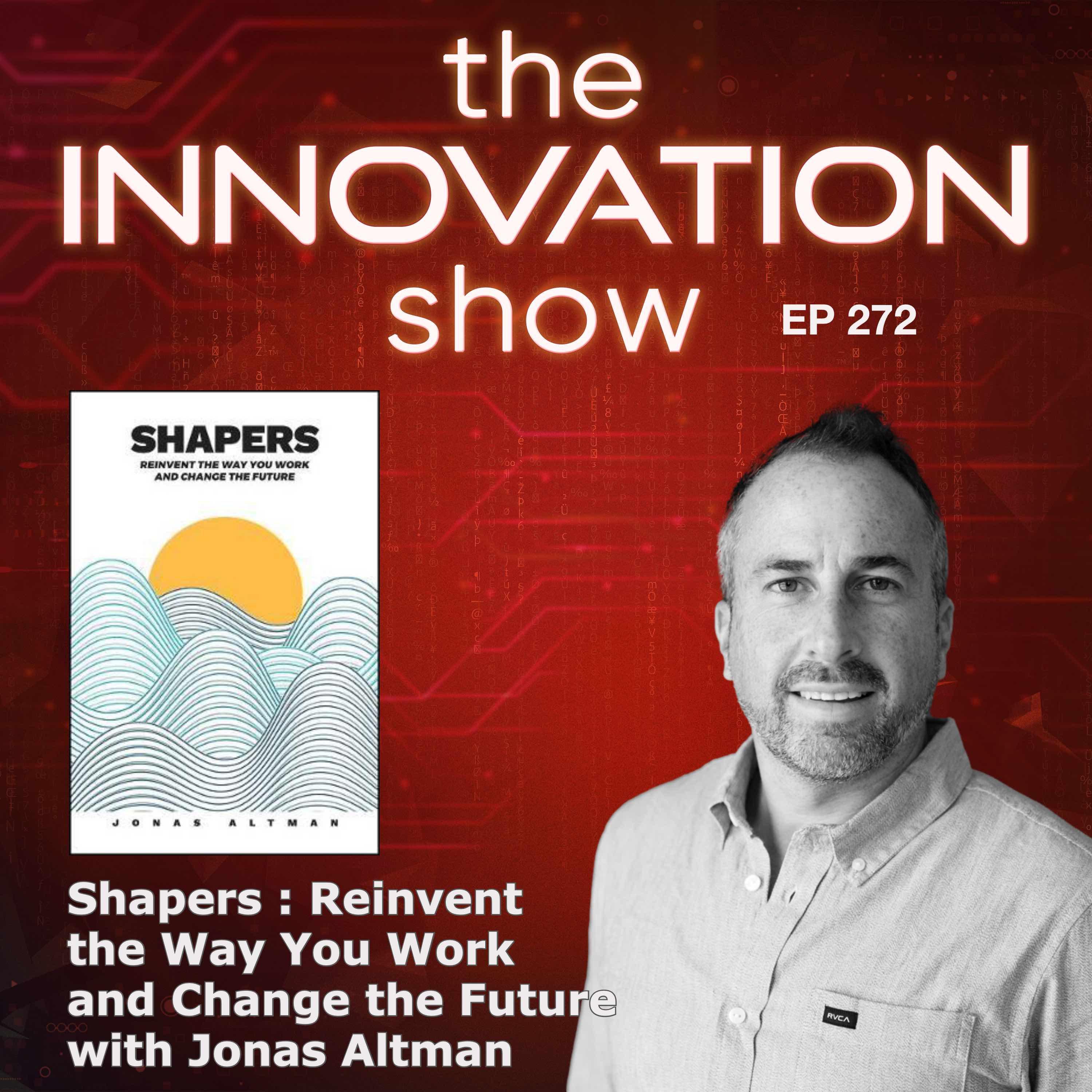
S12 Ep 272Shapers: Reinvent the Way You Work and Change the Future with Jonas Altman
If you're a shaper, you put your stamp on your work. You earn your stripes. You sync with a rhythm of life that lights you up. At times, work may be a frightening obstacle (and obsession), but shapers move through adversity with temperament and tenacity. A determination to continually improve and evolve. A willingness to experiment and learn from mistakes. To create on the fly. To work fluidly. To persevere and be patient in equal measure. To nourish the soul. A shaper is someone who becomes energised by work. The way they work provides for the highest expression of self. They lead deeper and more fulfilling lives because what they do every day serves them and the greater good. We welcome the author of Shapers, Jonas Altman More about Jonas www.shapers.life

S12 Ep 271Flex: Reinventing Work for a Smarter, Happier Life with Annie Auerbach
Flex is a manifesto for living and working on your terms. It means looking at the established, rigid ways of doing things and asking: 'Is this really working for me?' If the answer to that question is 'No' then read on because this book is for you. When we learn how to flex we gain a superpower that allows us to challenge what is holding us back and reinvent the rules for a smarter, happier life. Because things are changing for women across the globe. We are getting married and having children later, if at all. Dual-income families have replaced the traditional template of man as breadwinner and woman as homemaker. Technology allows us to work differently and understand ourselves better. But the old systems still persist. We're continually bashing up against inflexible structures that were built by, and for, men. We are trying to do everything, but following a rulebook, we didn't write. We welcome the author of Flex: Reinventing Work for a Smarter, Happier Life, Annie Auerbach More about Annie: https://starlingstrategy.co.uk
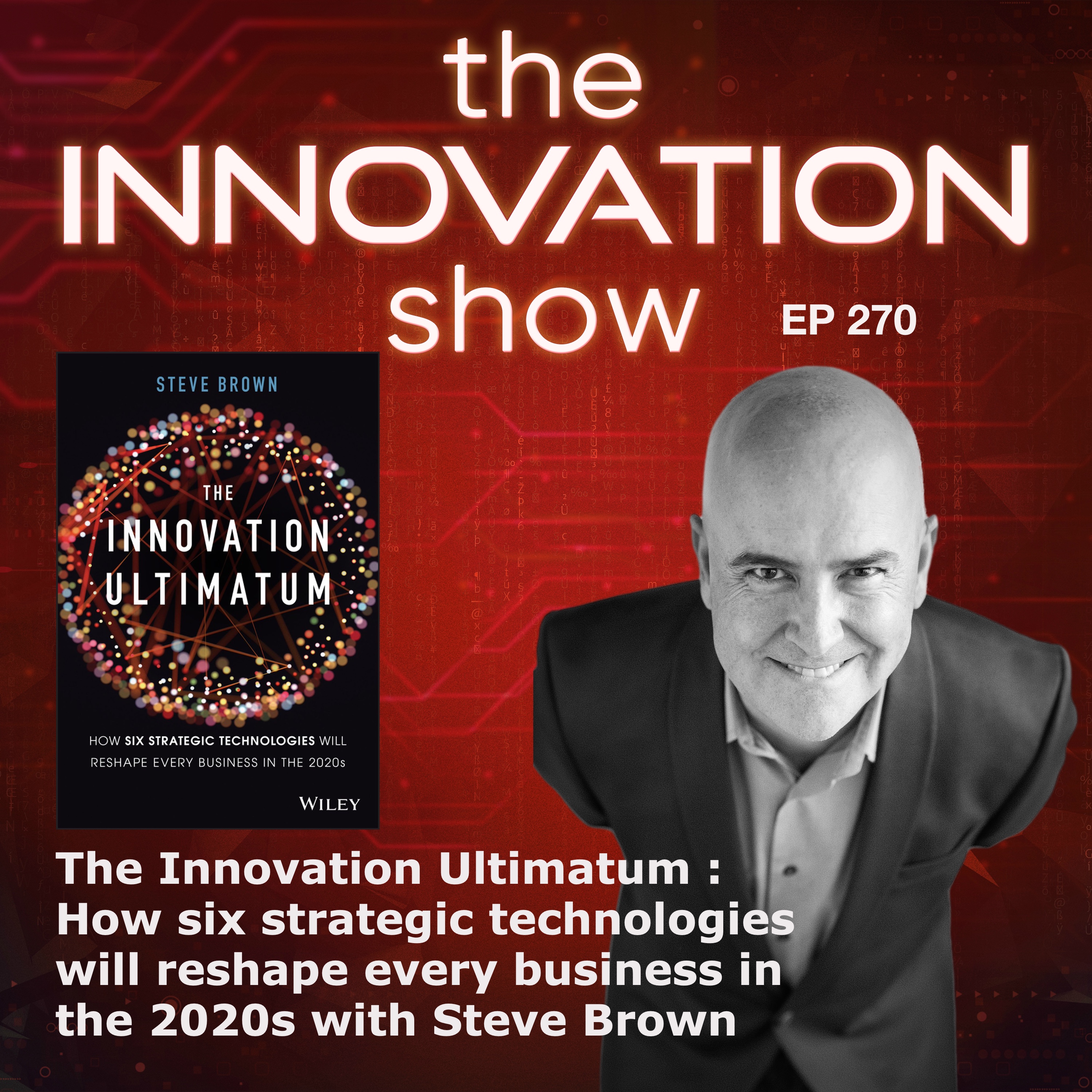
S11 Ep 270The Innovation Ultimatum with The Bald Futurist: Steve Brown
It's no coincidence that most of the top 100 most valuable global brands invest heavily in technology to drive innovation into every aspect of their business: product development, operations, marketing, and customer service. In the next decade, a suite of six strategic technologies—artificial intelligence (AI), Blockchain, the Internet of Things (IoT), augmented reality, autonomous machines, and 5G networks—will drive unprecedented innovation into products and services, creating entirely new business models along the way. Investment in information technology (IT) will be a strategic imperative for every company. Every company will become a technology company, and every company will become a data company. Business operations will be retooled using both process automation and worker augmentation. Today's book is both a call to innovate for survival in a rapidly evolving competitive environment, and a moral imperative to use these six technologies to serve people, elevate work, and make a lasting, positive impact on the world. We welcome the author of "The Innovation Ultimatum How six strategic technologies will reshape every business in the 2020s" Steve Brown More about Steve: https://www.baldfuturist.com
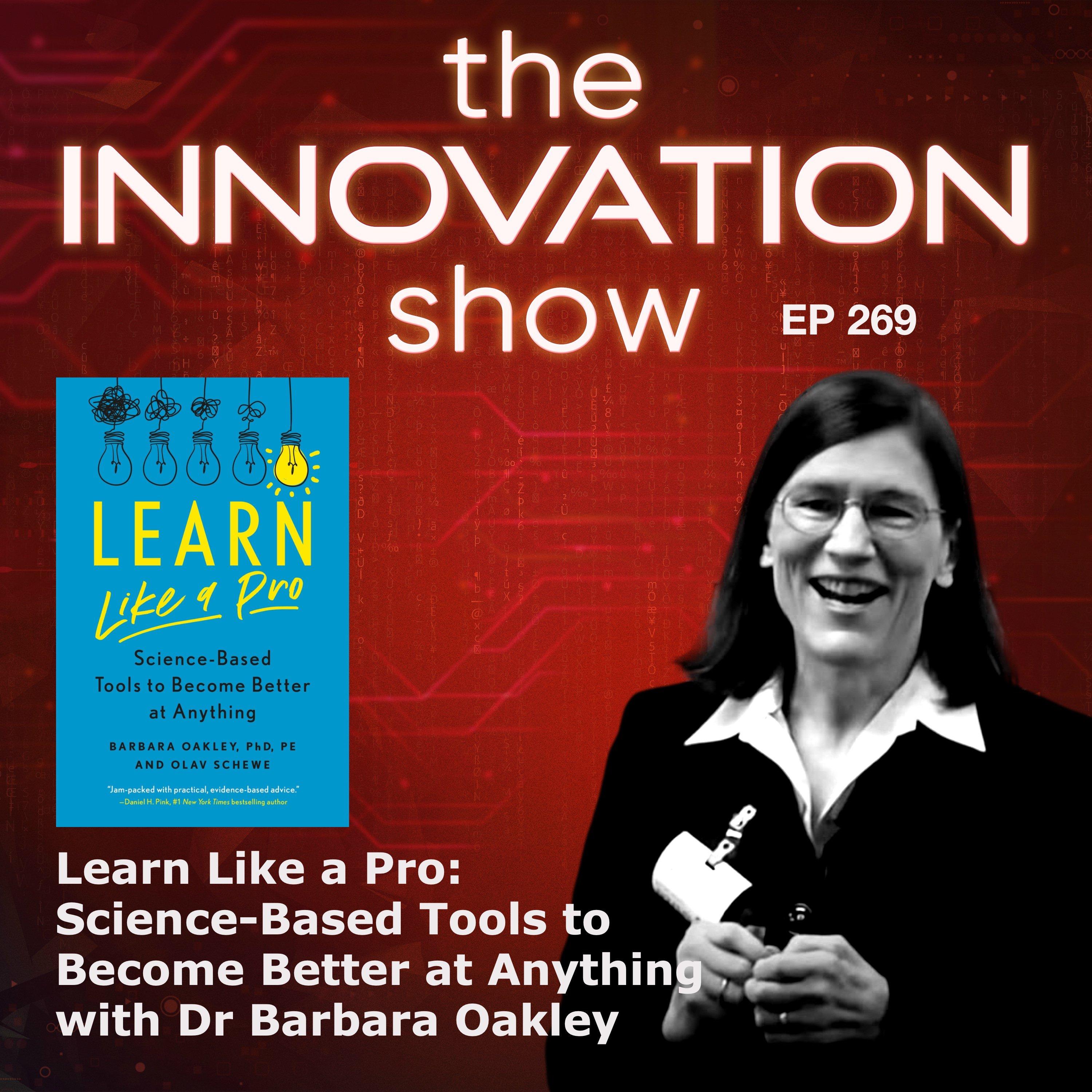
S12 Ep 269Learn Like a Pro: Science-Based Tools to Become Better at Anything with Barbara Oakley
Do you spend too much time learning with disappointing results? Do you find it difficult to remember what you read? Do you put off studying because it's boring and you're easily distracted? Today's book is for you. Our guest struggled in the past with our learning. But has found techniques to help us master material—any material. Building on insights from neuroscience and cognitive psychology, she gives us a crash course to improve your ability to learn, whether you're studying maths, language, coding, karate, cooking, or anything else. You'll see why the strategies work because you'll see what's happening in the brain when you use them. No, this isn't a little book of miracles. But you will find that reducing frustration and improving your study success may sometimes feel miraculous. We welcome author of "Learn Like a Pro", Barbara Oakley
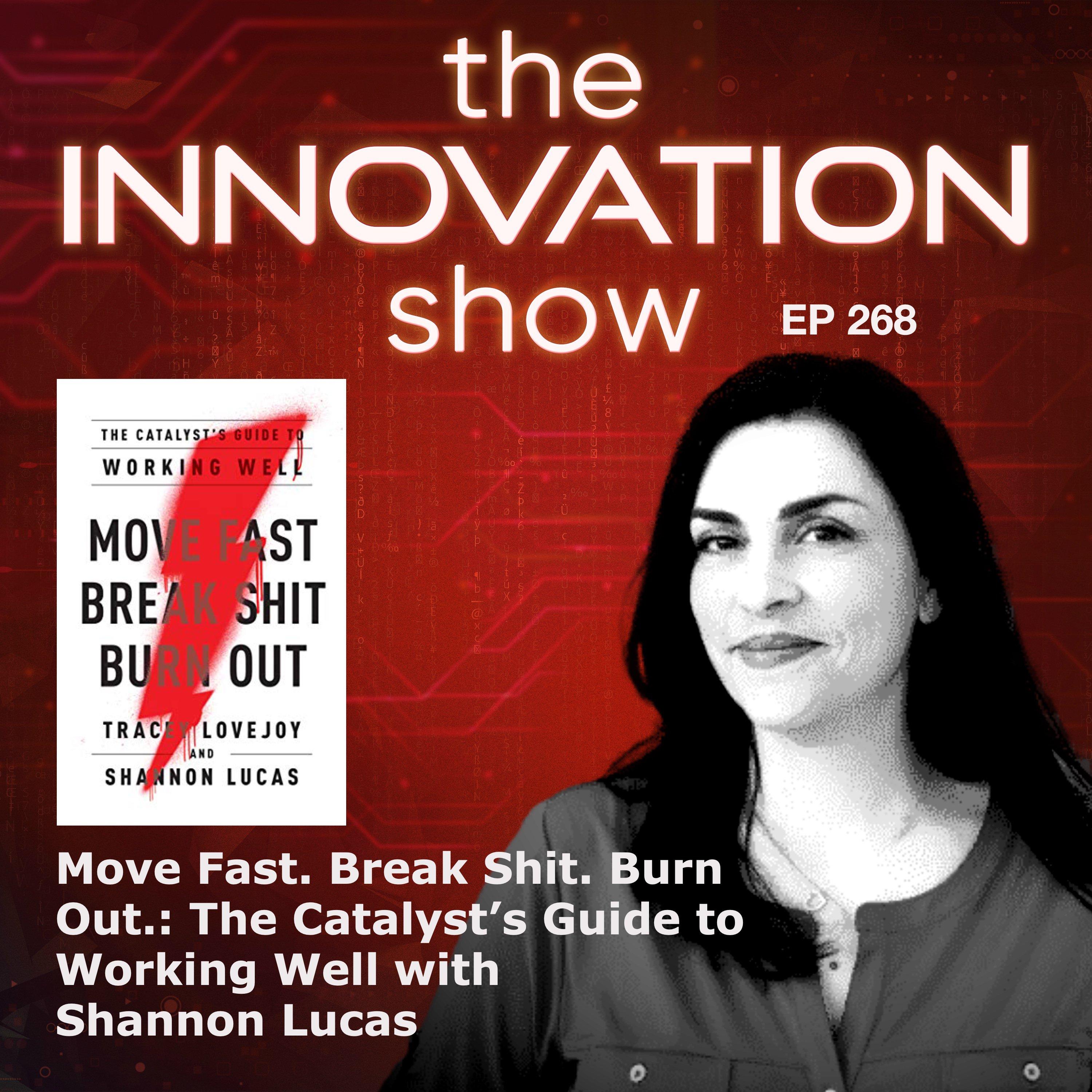
S11 Ep 268Move Fast. Break Stuff. Burn Out. with Shannon Lucas
Innovators. Changemakers. Entrepreneurs. Intrapreneurs. Catalysts. One of these things is not like the other. That is to say, each of these types of people can make a whole lot of change happen in the world, but within any group of innovators, changemakers, entrepreneurs, and intrapreneurs, are those people called Catalysts, Those of us who have a deep-rooted need to create positive change. Among Catalysts, there is an unmet need to be seen and valued for who we are and how we show up in the world. We move so fast that we lose people. We can break shit without intentionality. And all of that can lead to burnout—frequently. Catalysts feel a deep sense of drive toward a better future state. We can't help but see potential change and set it in motion, wherever we are. We're energized and we're driven by it. We welcome the author of Move Fast. Break Stuff. Burn Out.: The Catalyst's Guide to Working Well, Shannon Lucas, welcome to the show.
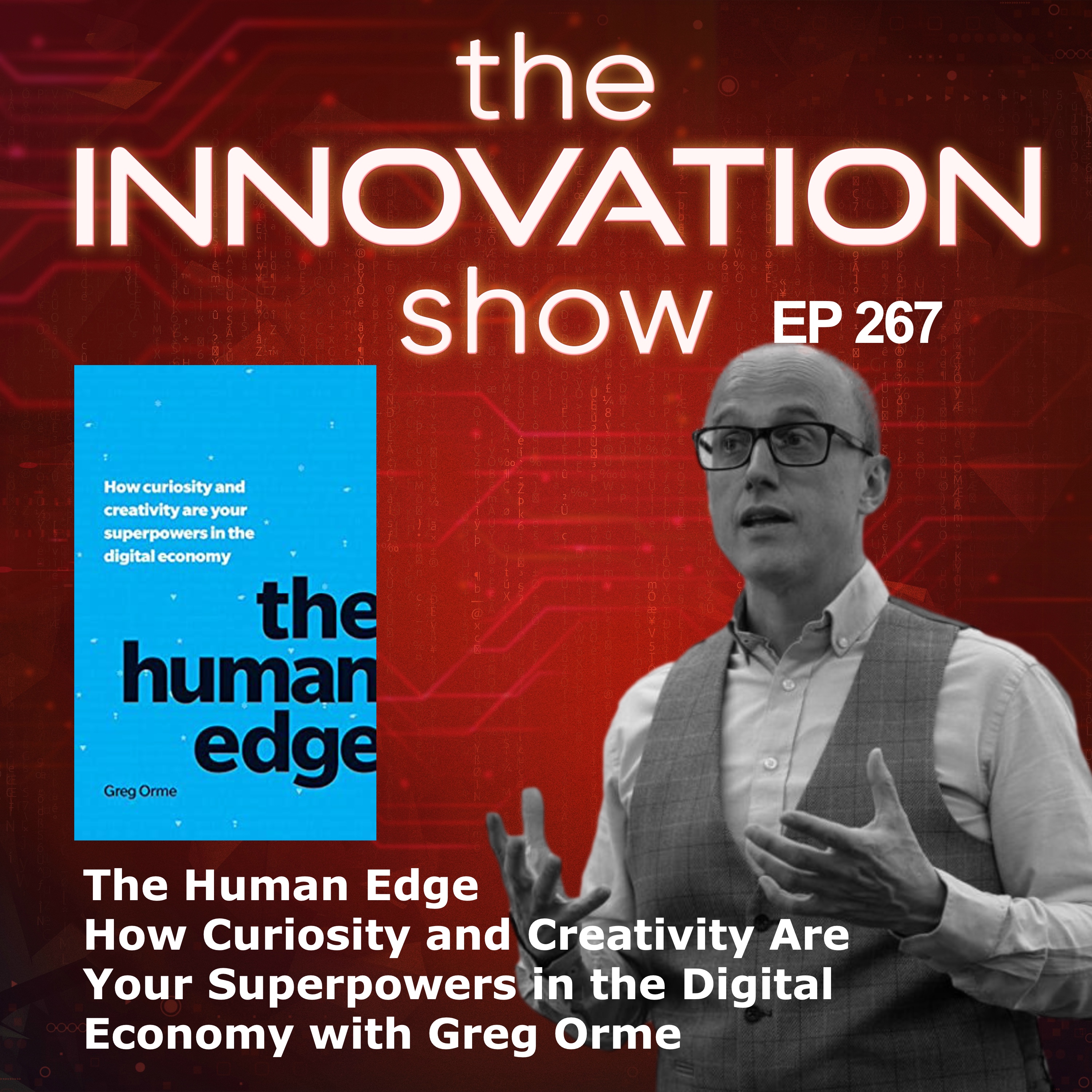
S11 Ep 267The Human Edge with Greg Orme
Even before the pandemic, it seemed the world was spinning so fast it's difficult to keep up. Arguably a lot of the technological disruption that was around in 2019 simply got accelerated – remote working, digitisation and AI to name just three. Our guest today notes in his new book: Two hundred and fifty years ago the Industrial Revolution replaced our arms and legs at work. The fourth Industrial Revolution is now replacing our brains. He says The Machine Age is engulfing both organisations and people. This shift is challenging the very essence of what it means to be human. His book won Business Book of the year in 2020. We welcome the author of The Human Edge: How curiosity and creativity are your superpowers in the digital economy, Greg Orme.
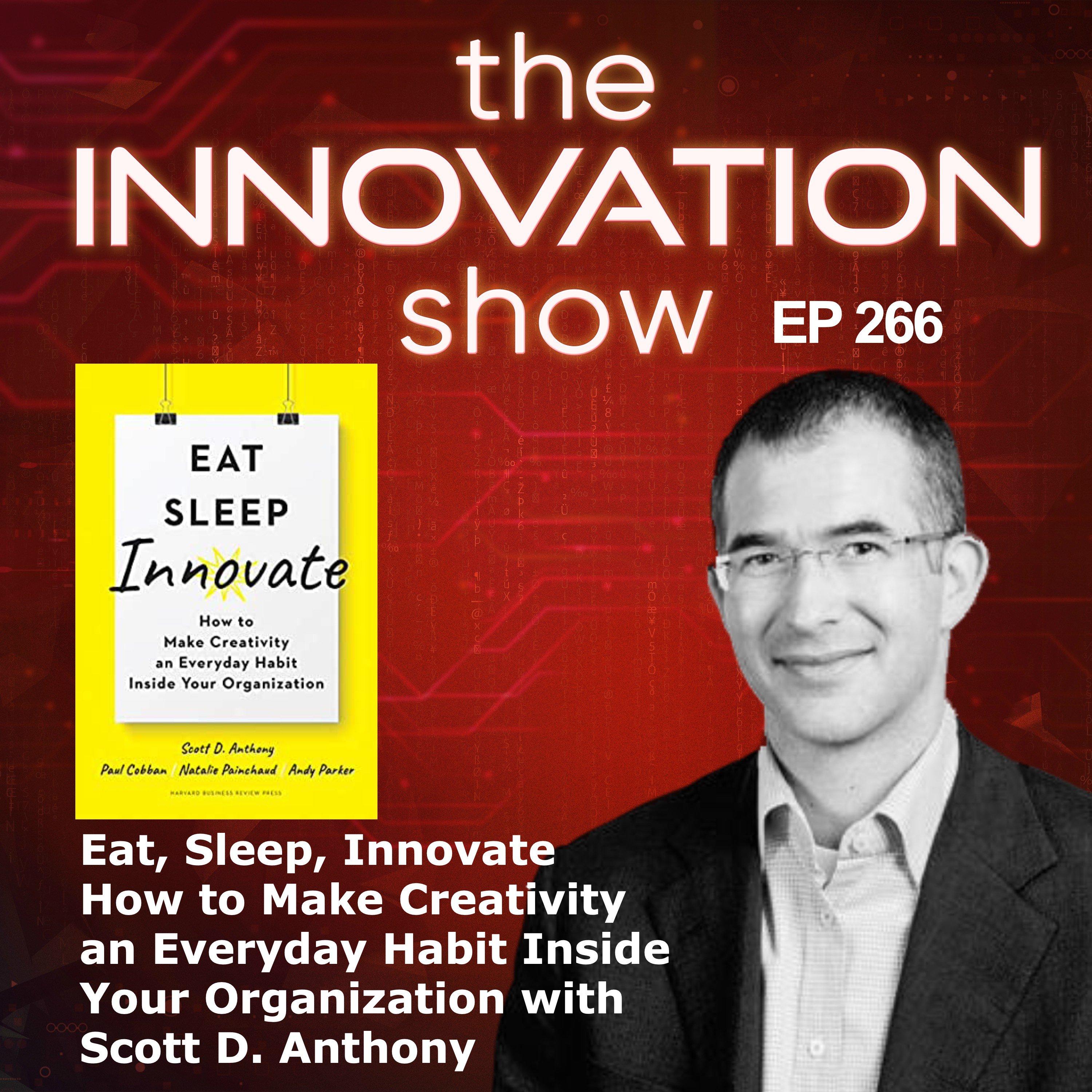
S10 Ep 266Eat, Sleep, Innovate with Scott D. Anthony
Leaders have experimented with open innovation programs, corporate accelerators, venture capital arms, skunkworks, and innovation contests. They've travelled the world to learn from today's hottest, most successful tech companies. Yet most would admit they've failed to create truly innovative cultures. There's a better way. And it all starts with the power of habit. The central argument in today's book is that the world's biggest untapped source of energy isn't the wind, water, or sun. It is inside existing organisations, which are brimming with innovation energy. Today that energy is largely constrained and contained. You need to release, harness, and amplify it. Today's book will show you how. We welcome a friend of the innovation show, 3-time guest and author of a plethora of titles author of Eat, Sleep, Innovate Scott D. Anthony welcome back to the show. More about Scott: https://www.innosight.com/insight/eat-sleep-innovate/

S10 Ep 265Pirates In The Navy with Tendayi Viki
Faced with the choice of starting a company or joining a large corporation, Steve Jobs believed that it was 'more fun to be a pirate than to join the navy'. But for innovators inside established companies, making a distinction between being a pirate and joining the navy is a fallacy. We have to figure out a way to become pirates in the navy! There is nothing harder in business than trying to innovate within large corporations. Innovators in big companies often face internal opposition as well as their external competitors. It is the management of the core business that tends to get in the way of innovation. If you work in corporate innovation, if you run an innovation lab or work in one, if you are a pirate I'm the navy, there is so much in this episode, there are some hard truths to face, some butter pills to swallow, I certainly know I've made some of the mistakes our guest identifies. More about Tendayi here: https://tendayiviki.com
S10 Ep 264Wild Rituals with Caitlin O'Connell
Today's book was born out of a desire to show how and why ritual is critical in our everyday lives, using examples from across the animal world, including elephants, chimpanzees, orangutans, wolves, dogs, lions, zebras, whales, flamingos, fish, and even insects. Although social animals exhibit many rituals, this book focuses on ten important rituals that are essential to our well-being: greeting rituals, group rituals, courtship, gifting, spoken rituals, unspoken rituals, play, grieving and healing, renewal, and travel and migration. Ritualized greetings, such as mouth-licking in wolves or a handshake in humans, are a form of information gathering, and they have evolved among social animals to strengthen bonds and build trust. Let's take play For example, play affords individuals the opportunity to experiment with their surroundings and come up with creative solutions critical to a species' survival. Examples include a lion cub practicing hunting skills by pretending a littermate is prey or a toddler building a fantastical world in a sandbox, which fosters coping skills for later life challenges. Reincorporating the lost art of ritual will better equip us to discover new ways to reconnect to others, to ourselves, and to the natural world. More about Caitlin: https://www.caitlineoconnell.com

S9 Ep 263Seeing Around Corners with Rita McGrath
Paradigmatic shifts in the business landscape, known as inflection points, can either create new, entrepreneurial opportunities (see Amazon and Netflix) or they can lead to devastating consequences (e.g., Blockbuster and Toys R Us). Only those leaders who can "see around corners" - that is, spot the disruptive inflection points developing before they hit - are poised to succeed in this market. Columbia Business School Professor and corporate consultant Rita McGrath contends that inflection points, though they may seem sudden, are not random. Every seemingly overnight shift is the final stage of a process that has been subtly building for some time. Armed with the right strategies and tools, smart businesses can see these inflection points coming and use them to gain a competitive advantage. Seeing Around Corners is the first hands-on guide to anticipating, understanding, and capitalising on the inflection points shaping the marketplace. We welcome author of Seeing Around Corners: How to Spot Inflection Points in Business Before They Happen, Rita McGrath https://www.ritamcgrath.com https://www.valize.com
S9 Ep 262Unlearn with Barry O'Reilly
Barry O'Reilly shares how the Cycle of Unlearning is a new way of thinking and a new way of leading organisations in every industry. It's not difficult to learn more. What is difficult is to know what to unlearn, what to stop, and what to throw away. This is the paradox of success. While thinking and doing certain methods may have brought you success in the past, it's almost certain they won't continue to bring you success in the future. We discuss the importance of unlearning How Serena Williams unlearned her way to success The Origins of Disney's Magic Band And much more. More about Barry here: https://barryoreilly.com
S9 Ep 261Mauro Guillén - 2030 How Today's Biggest Trends Will Collide
This mind-opening episode summarises some of the groundbreaking analysis of the business, economic, and technological trends of today to predict what the world will look like in 2030 – and how the Coronavirus pandemic will accelerate each of these major trends. Our guest is author of "2030: How Today's Biggest Trends Will Collide and Reshape the Future of Everything", Mauro Guillén Some stats from the book: Birthplace of the next industrial revolution: sub-Saharan Africa The reason: 500 million acres of fertile yet undeveloped agricultural land The size of Mexico: 500 million acres Percentage of the world's wealth owned by women in 2000: 15 Percentage of the world's wealth owned by women in 2030: 55 If Lehman Brothers had been Lehman Sisters: global financial crisis averted Worldwide, the number of people who went hungry in 2017: 821 million Worldwide, the number of people who will go hungry in 2030: 200 million Worldwide, the number of people who were obese in 2017: 650 million Worldwide, the number of people who will be obese in 2030: 1.1 billion Percentage of Americans projected to be obese in 2030: 50 Percentage of the world's land occupied by cities in 2030: 1.1 Percentage of the world's population living in cities in 2030: 60 Percentage of worldwide carbon emissions produced by cities in 2030: 87 Percentage of world's urban population exposed to rising sea levels in 2030: 80 The largest middle-class consumer market today: United States and Western Europe The largest middle-class consumer market in 2030: China By 2030, the number of people entering the middle class in emerging markets: 1 billion The number of people currently in the middle class in the United States: 223 million The number of people in the middle class in the United States in 2030: 209 million More about Mauro: http://www.mauroguillen.com
S8 Ep 260The Radical Innovation Playbook with Olga Kokshagina and Allen Alexander
Today's focus is a Playbook that helps innovators and entrepreneurs to harness new, extreme ideas despite complex business barriers. This visual guide provides insight, practical solutions and reusable canvasses to help innovation managers, CEOs, Chief Innovators and directors of innovation labs to develop breakthrough ideas. We welcome, authors of, "The Radical Innovation Playbook: a practical guide for harnessing new, novel or game-changing breakthroughs" Olga Kokshagina and Allen Alexander
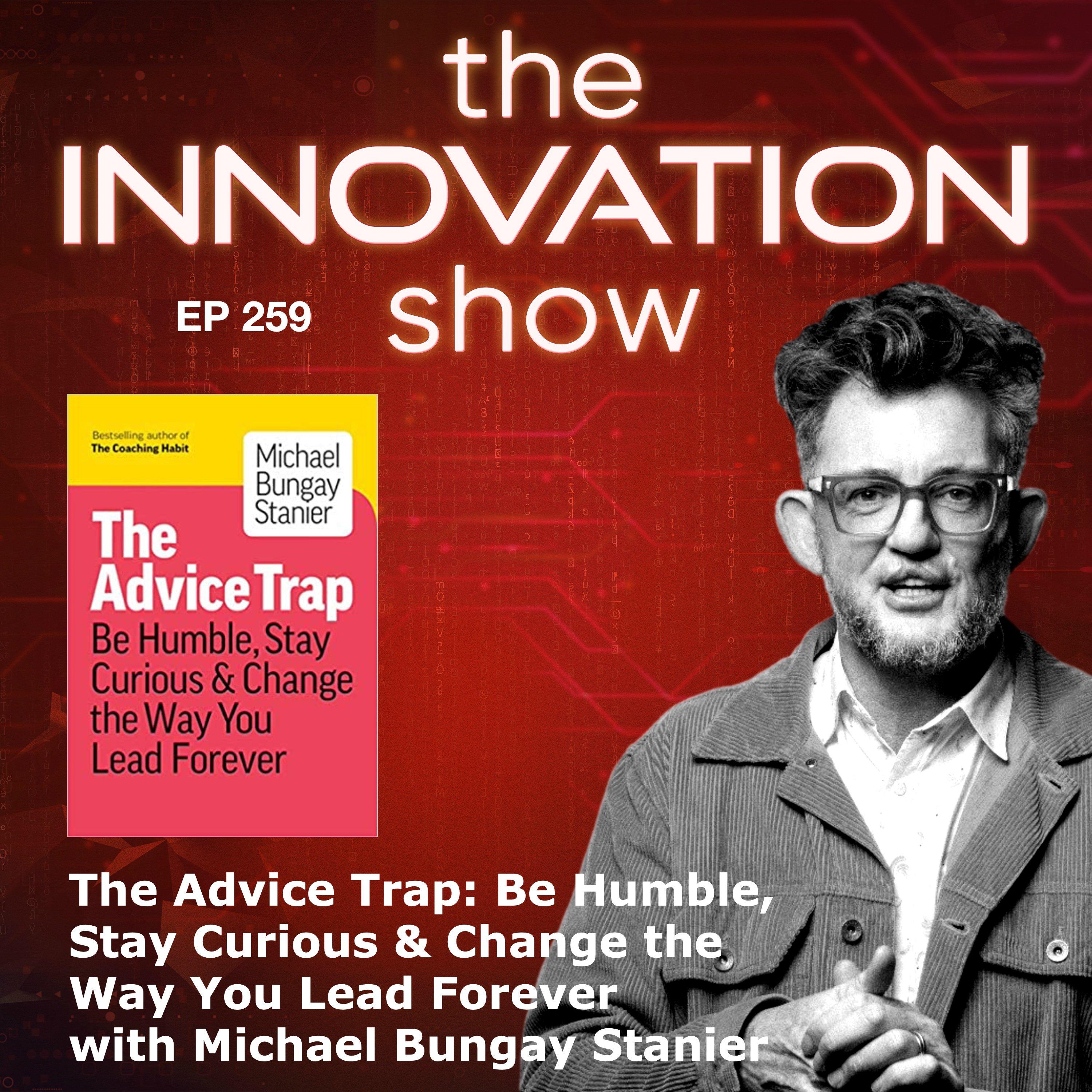
S8 Ep 259EP 259: The Advice Trap with Michael Bungay Stanier
This episode is about getting to grips with how to actually change your behaviour so you stay curious a little bit longer. It sounds like it should be easy, but it's not. You have to tame your Advice Monster, that part of you that jumps in to offer up ideas, opinions, suggestions and advice. And it's taming your Advice Monster that's at the heart of this book. But there are also some specific coaching strategies, particularly on how to focus on what matters most. We welcome author of The Advice Trap: Be Humble, Stay Curious & Change the Way You Lead Forever Michael Bungay Stanier More about Michael here: https://www.mbs.works
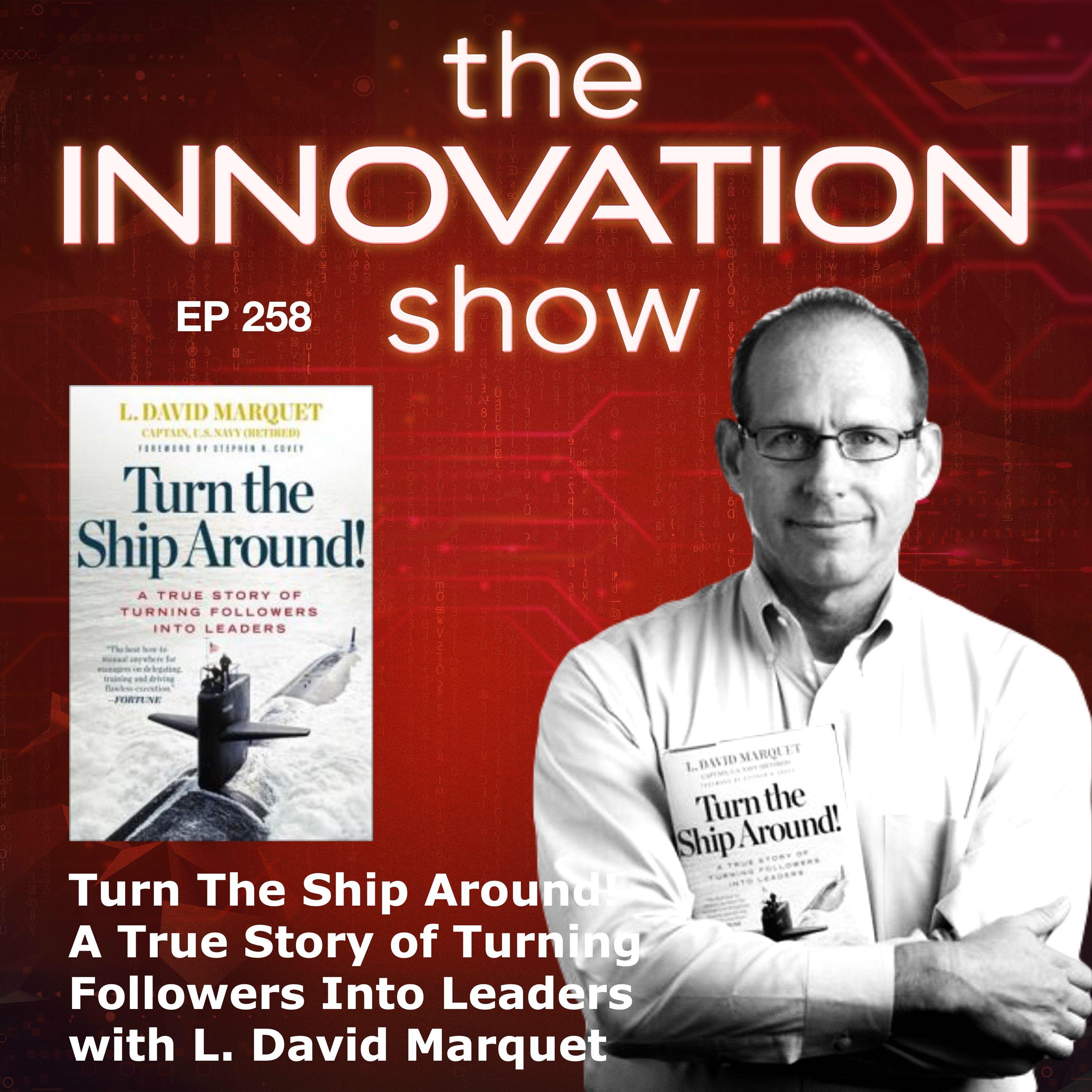
S8 Ep 258EP 258: Turn the Ship Around with L. David Marquet
Our guest was used to giving orders. In the high-stress environment of the USS Santa Fe, a nuclear-powered submarine, it was crucial his men did their job well. But the ship was dogged by poor morale, poor performance and the worst retention in the fleet. One day, he unknowingly gave an impossible order, and his crew tried to follow it anyway. He realised he was leading in a culture of followers, and they were all in danger unless they fundamentally changed the way they did things. He took matters into his own hands and pushed for leadership at every level. Before long, his crew became fully engaged and the Santa Fe skyrocketed from worst to first in the fleet. No matter your business or your position, you can apply his approach to create a workplace where everyone takes responsibility for their actions, people are healthier and happier - and everyone is a leader. We welcome the author of Turn the Ship Around! and his latest book Leadership is Language, Captain David Marquet. More about David here: https://davidmarquet.com
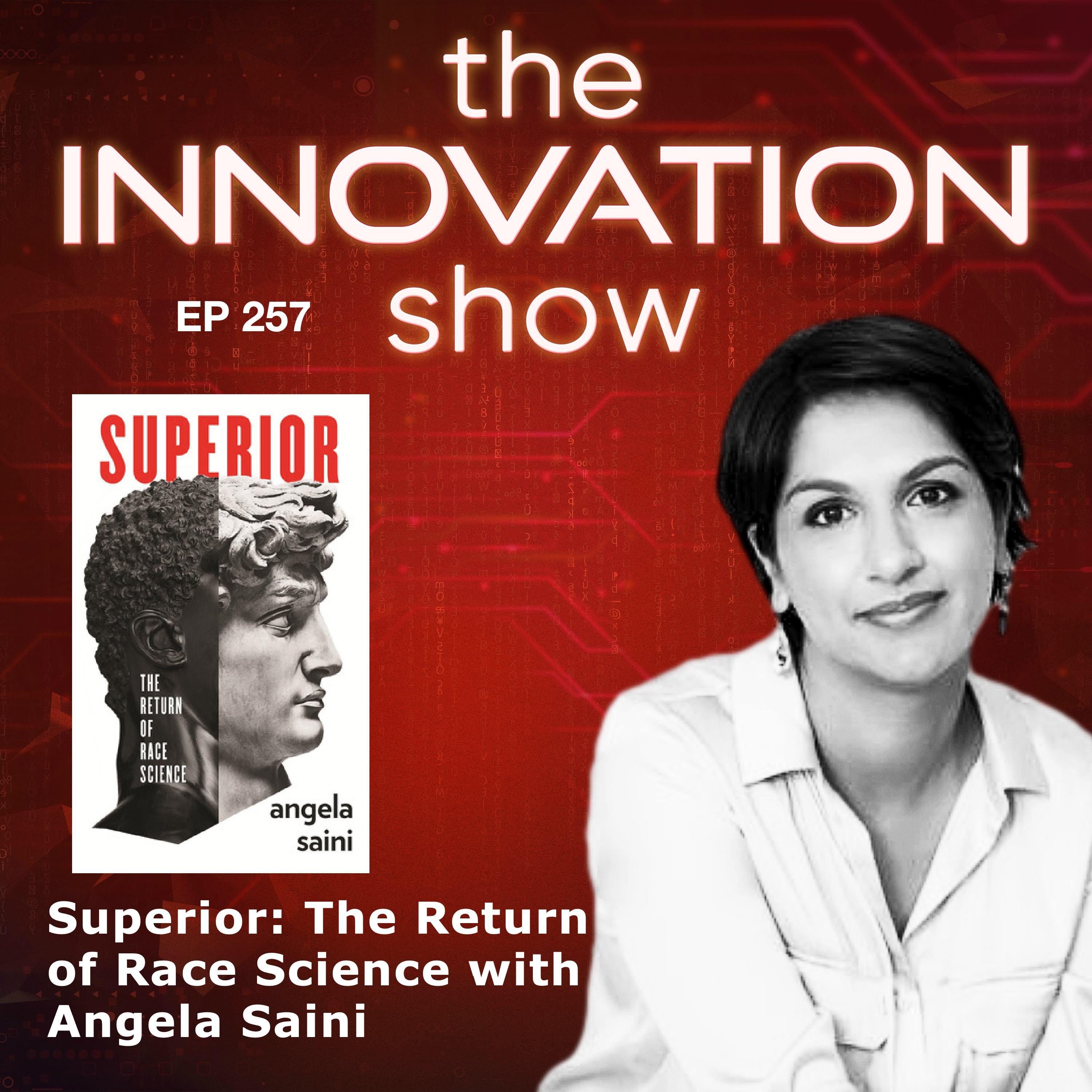
S8 Ep 257EP 257: Superior: The Return of Race Science with Angela Saini
For millennia, dominant groups have had the habit of framing themselves to be the best, deep down: the more powerful they become, the more power begins to be framed as natural. When you see how power has shaped the idea of race, then you can start to understand its meaning. In Superior, celebrated author Angela Saini explores the concepts of race and caste, from their origins to the present day. Engaging with geneticists, anthropologists, historians and social scientists from across the globe, Superior is a rigorous, much needed examination of the insidious and destructive belief that race is biologically real. More about Angela here: https://www.angelasaini.co.uk
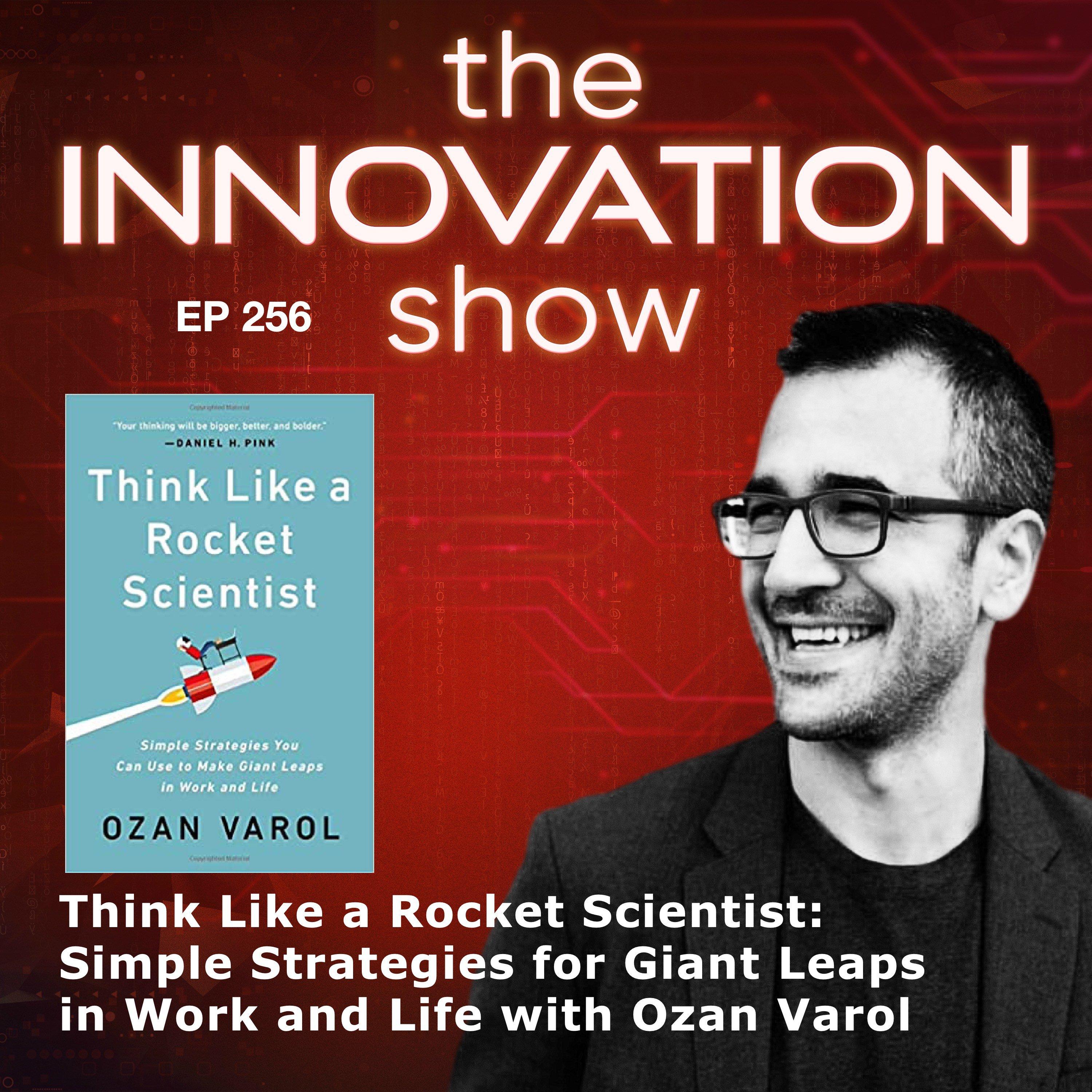
S7 Ep 256EP 256: Think Like a Rocket Scientist: Simple Strategies for Giant Leaps in Work and Life with Ozan Varol
Ozan Varol reveals simple strategies from rocket science that you can use to make your own giant leaps in work and life -- whether it's landing your dream job, accelerating your business, learning a new skill, or creating the next breakthrough product. Today, thinking like a rocket scientist is a necessity. We all encounter complex and unfamiliar problems in our lives. Those who can tackle these problems -- without clear guidelines and with the clock ticking -- enjoy an extraordinary advantage. Think Like a Rocket Scientist will inspire you to take your own moonshot and enable you to achieve lift-off. More about Ozan here: https://ozanvarol.com
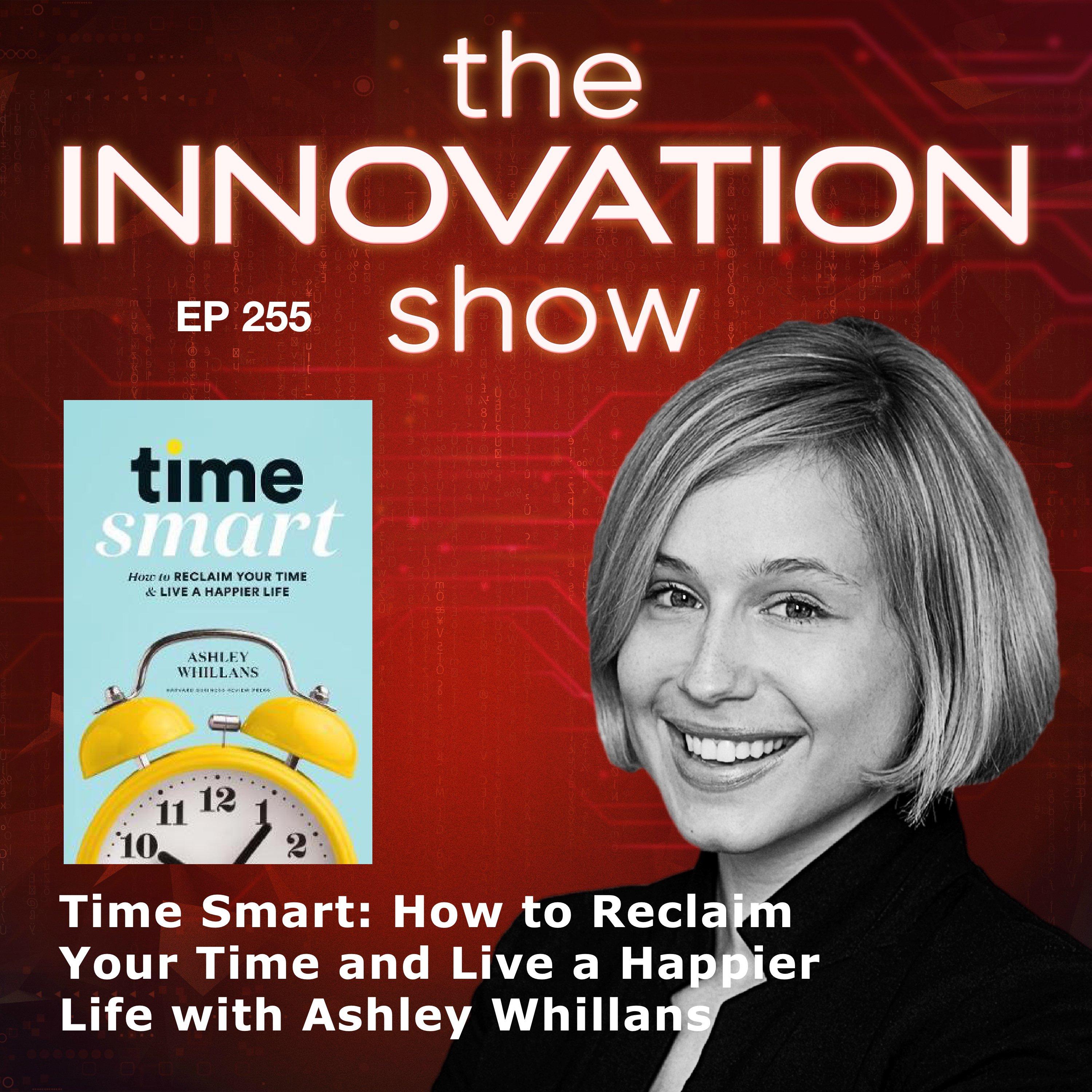
S8 Ep 255EP 255: Time Smart: How to Reclaim Your Time and Live a Happier Life with Ashley Whillans
Four out of five adults report feeling that they have too much to do and not enough time to do it. These time-poor people experience less joy each day. They laugh less. They are less healthy, less productive, and more likely to divorce. In one study, time stress produced a stronger negative effect on happiness than unemployment. Our guest offers us a playbook for taking back the time you lose to mindless tasks and unfulfilling chores. We welcome Author of Time Smart: How to Reclaim Your Time and Live a Happier Life Ashley Whillans. More about Ashley here: https://www.awhillans.com
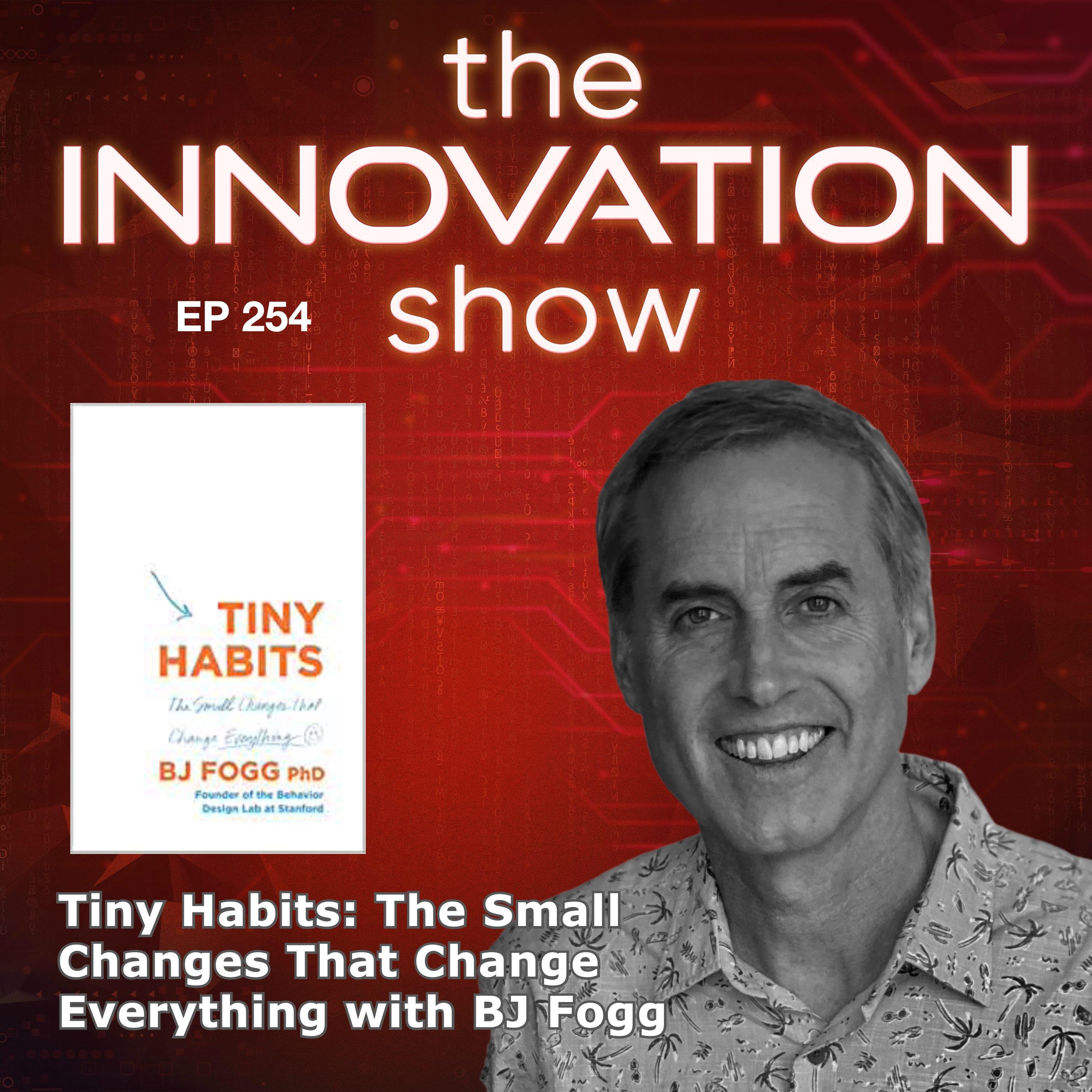
S6 Ep 254EP 254 Tiny Habits with BJ Fogg
There is a painful gap between what people want and what they actually do. The disconnect between want and do has been blamed on a lot of things — but we blame it on ourselves for the most part. We internalize the cultural message of "It's your fault! Our guest is here to say: It isn't your fault. creating positive change isn't as hard as you think and when it comes to change tiny is mighty. We welcome, founder of the Behavior Design Lab at Stanford University and author Tiny Habits, BJ Fogg. Sign up for BJ's free course here: https://www.tinyhabits.com/join
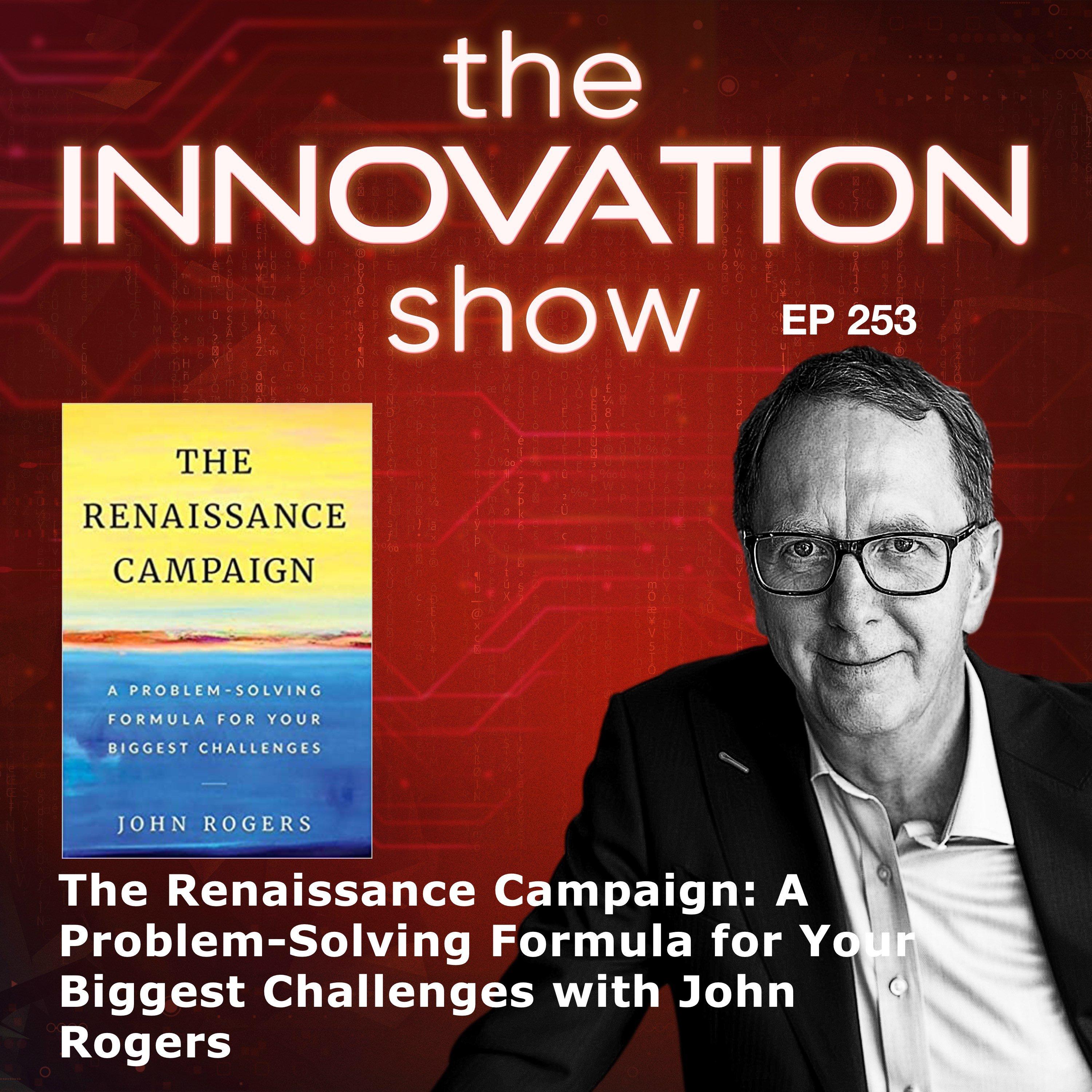
S4 Ep 253EP 253: The Renaissance Campaign: A Problem-Solving Formula with John Rogers
In business, government, and every area of contemporary life, leaders today are struggling to find workable solutions to greater and more complex challenges. As a former senior Pentagon official and CEO of a billion-dollar company, our guest has seen firsthand that the current model for solving diverse problem sets no longer works. Organizations and individuals need to adopt an entirely different approach to the biggest challenges they face and embrace a new model to ensure they emerge triumphant. That model is The Renaissance Campaign. We welcome author of The Renaissance Campaign: A Problem-Solving Formula for Your Biggest Challenges More about John here: https://www.johnrogers360.com
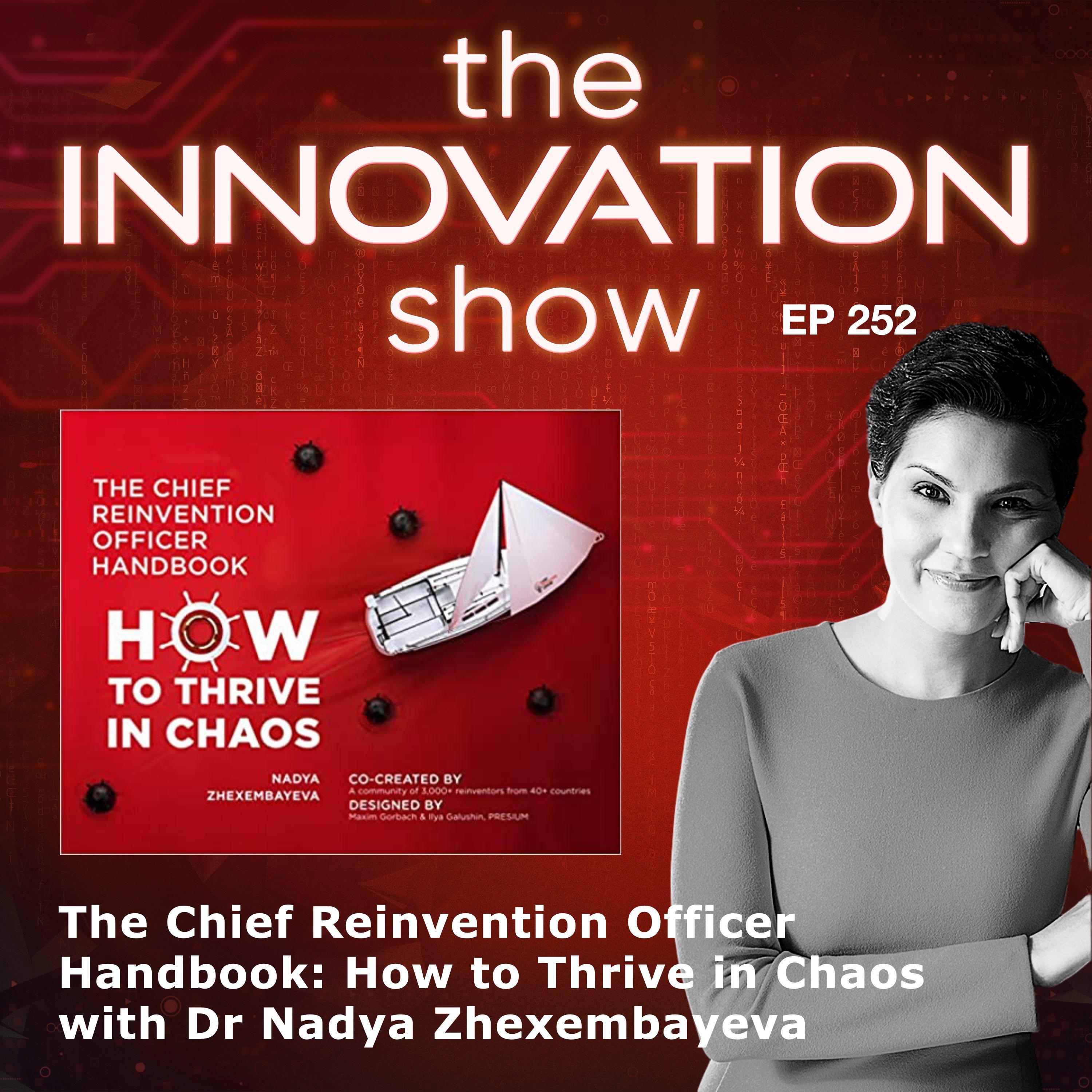
S5 Ep 252EP 252: How to Thrive in Chaos with Nadya Zhexembayeva
Our guest today brings us a powerful blend of cross-disciplinary research and battle-tested tools to help you diagnose, design, and implement a reinvention system that allows your company to stop combatting or resisting change – and instead helps you turn every disruption into your greatest opportunity. We welcome author of "The Chief Reinvention Officer Handbook: How to Thrive in Chaos" Nadya Zhexembayeva More about https://www.learn2reinvent.com

S4 Ep 251EP 251: Full-Spectrum Thinking: How to Escape Boxes in a Post-Categorical Future with Bob Johansen
The future will get even more perplexing over the next decade, and we are not ready. The dilemma is that we're restricted by rigid categorical thinking that freezes people and organizations in neatly defined boxes that often are inaccurate or obsolete. Categories lead us toward certainty but away from clarity, and categorical thinking moves us away from understanding the bigger picture. Sticking with this old way of thinking and seeing isn't just foolish, it's dangerous. Our guest is a Leading futurist and shows how a new way of thinking, enhanced by new technologies, will help leaders break free of limiting labels and see new gradients of possibility in a chaotic world. We welcome the author of Full-Spectrum Thinking: How to Escape Boxes in a Post-Categorical Future, Bob Johansen More about Bob here: https://www.iftf.org/bobjohansen/
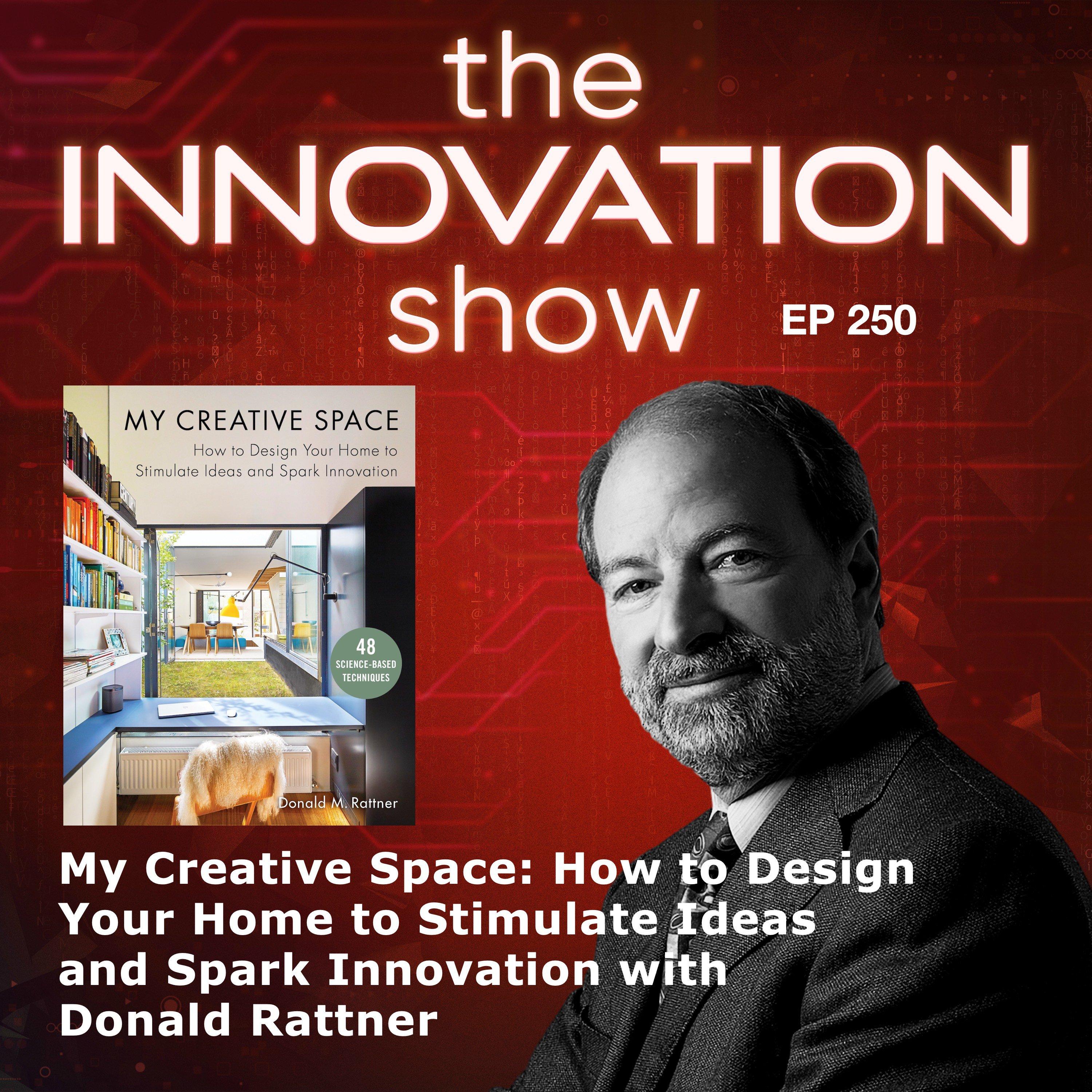
S4 Ep 250EP 250: My Creative Space: How to Design Your Home to Stimulate Ideas and Spark Innovation with Donald M. Rattner
"The relationship between the organism and the environment is transactional—the environment grows the organism, and the organism creates the environment." ― Alan Watts Creativity isn't all in your head. Sometimes it's in what's around you--especially when you're at home. For over twenty years, scientists have been discovering connections between our physical surroundings and the creative mind. Today's book is the first to turn this rich trove of psychological research into practical techniques for shaping a home that will boost your creativity. We welcome Donald Rattner, the author of My Creative Space: How to Design Your Home to Stimulate Ideas and Spark Innovation. More about Donald https://donaldrattner.com
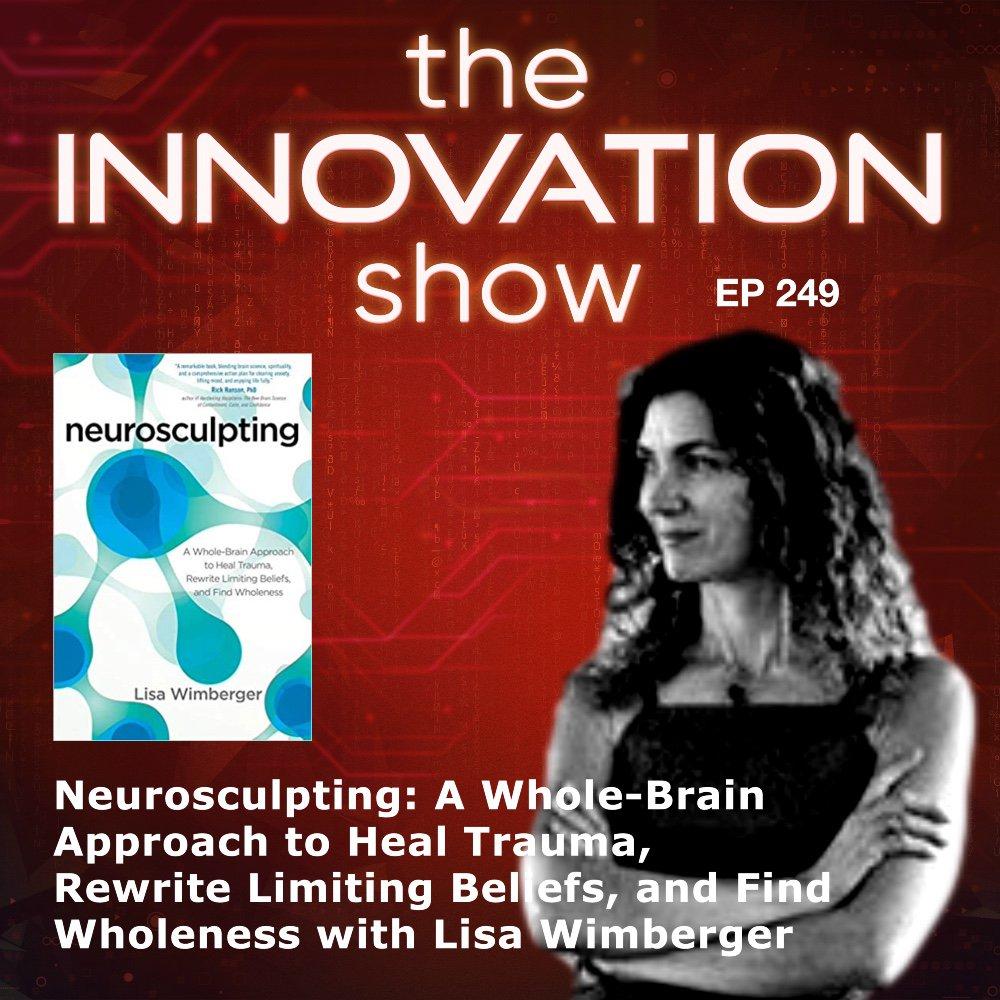
S4 Ep 249EP 249 Neurosculpting: A Whole-Brain Approach to Heal Trauma, Rewrite Limiting Beliefs, and Find Wholeness with Lisa Wimberger
"If you could learn to squeeze the vibrancy and beauty out of each moment of your life, would you say yes to a practice that could get you there?", that is the question our guest asks of us. She then takes us through her technique to do just that. A technique she teaches to first responders, veterans and those who have suffered trauma. It is a please to welcome, author of Neurosculpting: A Whole-Brain Approach to Heal Trauma, Rewrite Limiting Beliefs, and Find Wholeness", Lisa Wimberger More about Lisa here: https://neurosculptinginstitute.com/about-lisa-wimberger-founder-of-the-neurosculpting-institute/

S4 Ep 248EP 248 Robin Dunbar on Friends: Understanding the Power of our Most Important Relationships
Friends matter to us, and they matter more than we think. The single most surprising fact to emerge out of the medical literature over the last decade or so has been that the number and quality of the friendships we have has a bigger influence on our happiness, health and even mortality risk than anything else except giving up smoking. Our guest is the world-renowned psychologist and author who famously discovered Dunbar's number: how our capacity for friendship is limited to around 150 people. In today's book,he explores the way different types of friendship and family relationships intersect, and the complex of psychological and behavioural mechanisms that underpin friendships and make them possible - and just how complicated the business of making and keeping friends actually is. Working at the coalface of the subject at both research and personal levels, he has written the definitive book on how and why we are friends. We welcome evolutionary psychologist and former director of the Institute of Cognitive and Evolutionary Anthropology and the Department of Experimental Psychology at Oxford University. His acclaimed books include How Many Friends Does One Person Need? Grooming, Gossip and the Evolution of Language and so many more.

S4 Ep 247EP 247: Leonard Mlodinow on Stephen Hawking: A Memoir of Friendship and Physics
This episode is an intimate and inspirational exploration of Stephen Hawking— the man and the physicist. It is also a story of friendship, written by his friend also a physicist and renowned author of multiple titles including: Subliminal Elastic Euclid's Window Feynman's Rainbow The Upright Thinkers War of the Worldviews with Deepak Chopra and 2 books coauthored with Stephen Hawking. It is a pleasure to welcome author of Stephen Hawking: A Memoir of Friendship and Physics, Leonard Mlodinow. We discuss Stephen, the human behind the legend, his challenges and his strength. We discuss elements of Elastic thinking and the benefits of Neurodiversity. More on Leonard on twitter: @lmlodinow
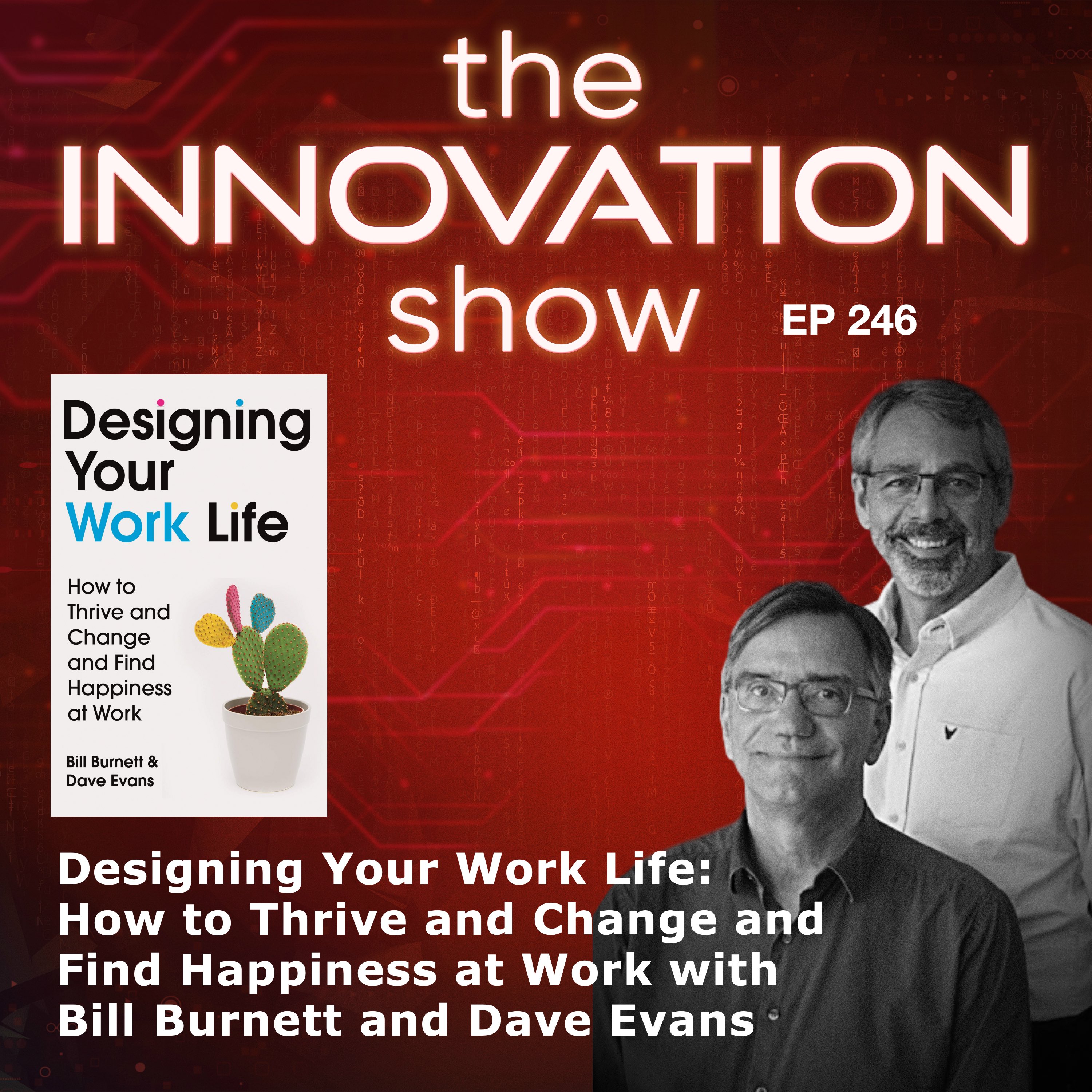
S3 Ep 246EP 246: Designing Your Work Life with Bill Burnett and Dave Evans
Our guests are Silicon Valley design veterans: One created the first Apple mouse The other designed the award-winning Apple PowerBook and the original Hasbro Star Wars action figures! 13 years ago they founded the STANFORD LIFE DESIGN LAB The course - the most popular at Stanford - has led to a global franchise and a New York Times and worldwide bestselling book: Designing Your Life, published in 2016. Today they are here to discuss their follow-up book : Designing Your Work Life: How to Thrive and Change and Find Happiness at Work We welcome Bill Burnett and Dave Evans More about the guys here: https://designingyour.life/
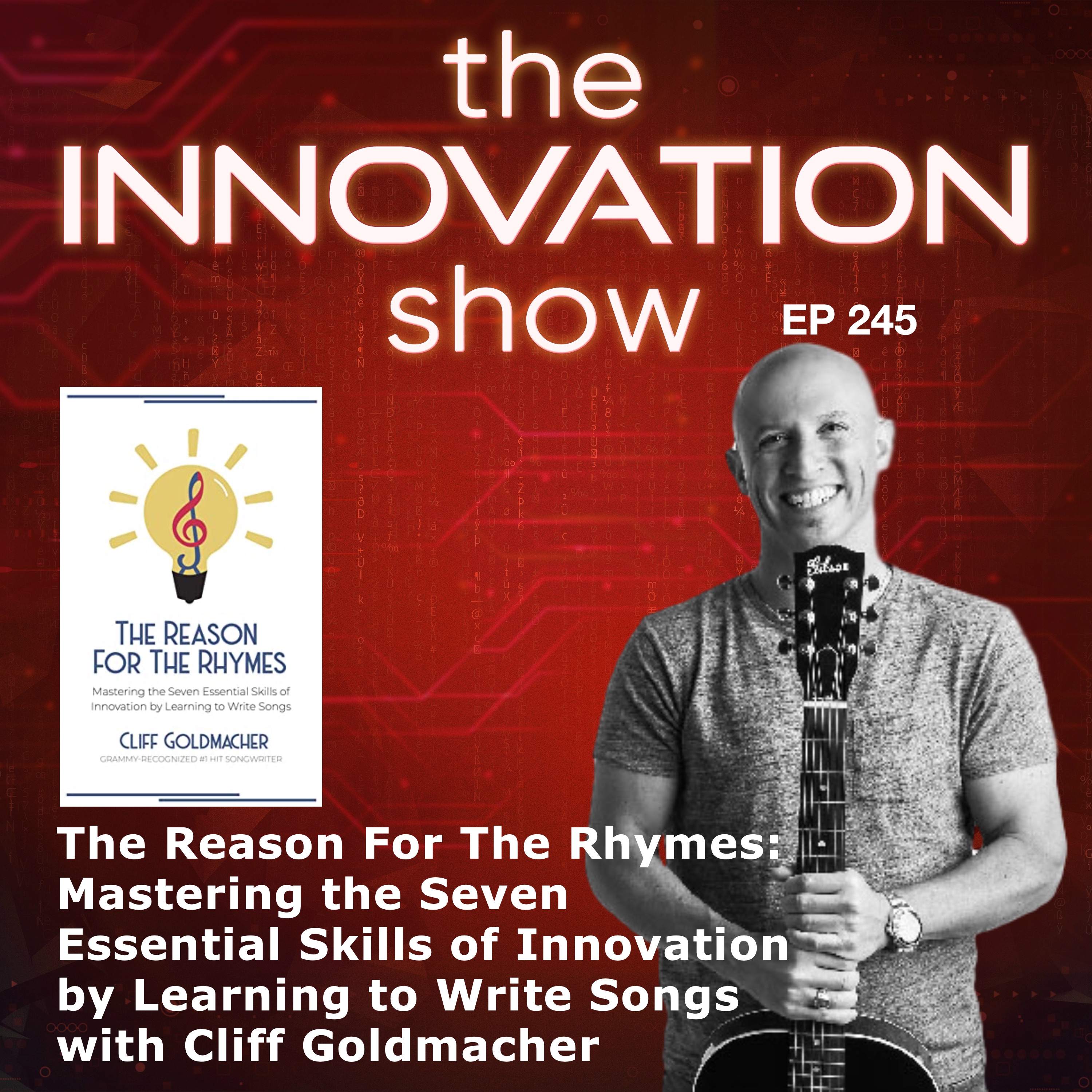
S3 Ep 245EP 245: The Reason For The Rhymes: Mastering the Seven Essential Skills of Innovation by Learning to Write Songs with Cliff Goldmacher
GRAMMY-recognized #1 hit songwriter, Cliff Goldmacher shares how to explore, shape and sell our ideas by teaching us how to write songs. Doing so helps develop the essential skills of: lateral thinking, creativity, communication, empathy, collaboration, risk-taking and the diffusion of ideas for better innovators. It is a pleasure to welcome the author of: "The Reason For The Rhymes: Mastering the Seven Essential Skills of Innovation by Learning to Write Songs", Cliff Goldmacher. More about Cliff and his workshops: https://www.thereasonfortherhymes.com/workshops/
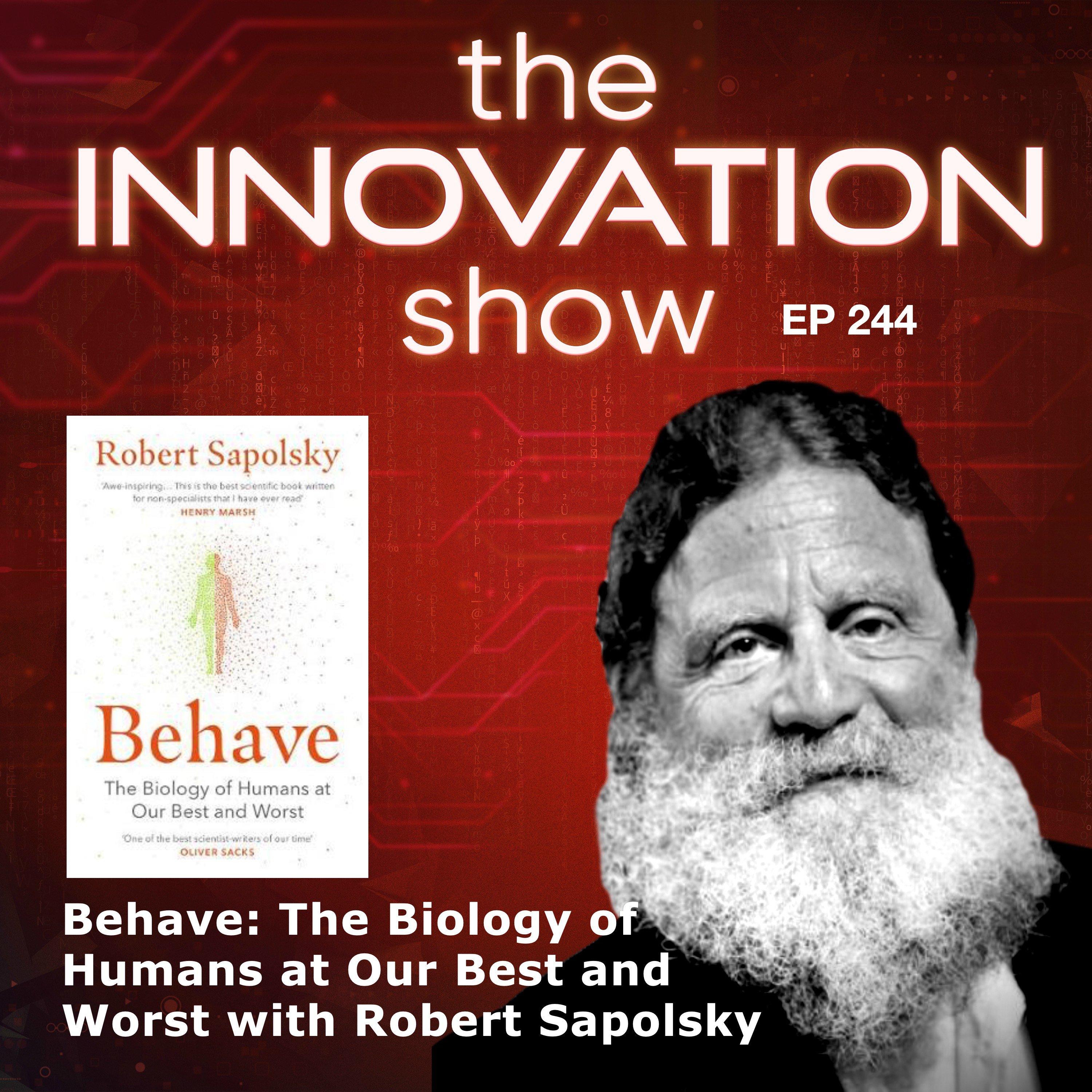
S3 Ep 244EP 244: "Behave: The Biology of Humans at Our Best and Worst" - Robert M. Sapolsky.
One of my favourite episodes of all time. This genre-shattering attempt to answer the question of human behaviour by looking at it from every angle. Our guest starts by looking at the factors that bear on a person's reaction in the precise moment a behavior occurs, and then hops back in time from there, in stages, ultimately ending up at the deep history of our species and its genetic inheritance. And so the first category of explanation is the neurobiological one. What goes on in a person's brain a second before the behavior happens? Then he pulls out to a slightly larger field of vision, a little earlier in time: What sight, sound, or smell triggers the nervous system to produce that behavior? And then, what hormones act hours to days earlier to change how responsive that individual is to the stimuli which trigger the nervous system? By now, our guest has increased our field of vision so that we are thinking about neurobiology and the sensory world of our environment and endocrinology in trying to explain what happened. But he keeps going—next to what features of the environment affected that person's brain, and then back to the childhood of the individual, and then to their genetic makeup. Finally, he expands the view to encompass factors larger than that one individual. How culture has shaped that individual's group, what ecological factors helped shape that culture, and on and on, back to evolutionary factors thousands and even millions of years old. The result is one of the most dazzling tours de horizon of the science of human behavior ever attempted, a majestic synthesis that harvests cutting-edge research across a range of disciplines to provide a subtle and nuanced perspective on why we ultimately do the things we do...for good and for ill. Wise, humane, often hilarious, Behave is a towering achievement, powerfully humanising, and downright heroic in its own right. What a pleasure to welcome author of "Behave: The Biology of Humans at Our Best and Worst" Robert M. Sapolsky
S3 Ep 244EP 244: "Behave: The Biology of Humans at Our Best and Worst" - Robert M. Sapolsky.
One of my favourite episodes of all time. This genre-shattering attempt to answer the question of human behaviour by looking at it from every angle. Our guest starts by looking at the factors that bear on a person's reaction in the precise moment a behavior occurs, and then hops back in time from there, in stages, ultimately ending up at the deep history of our species and its genetic inheritance. And so the first category of explanation is the neurobiological one. What goes on in a person's brain a second before the behavior happens? Then he pulls out to a slightly larger field of vision, a little earlier in time: What sight, sound, or smell triggers the nervous system to produce that behavior? And then, what hormones act hours to days earlier to change how responsive that individual is to the stimuli which trigger the nervous system? By now, our guest has increased our field of vision so that we are thinking about neurobiology and the sensory world of our environment and endocrinology in trying to explain what happened. But he keeps going—next to what features of the environment affected that person's brain, and then back to the childhood of the individual, and then to their genetic makeup. Finally, he expands the view to encompass factors larger than that one individual. How culture has shaped that individual's group, what ecological factors helped shape that culture, and on and on, back to evolutionary factors thousands and even millions of years old. The result is one of the most dazzling tours de horizon of the science of human behavior ever attempted, a majestic synthesis that harvests cutting-edge research across a range of disciplines to provide a subtle and nuanced perspective on why we ultimately do the things we do...for good and for ill. Wise, humane, often hilarious, Behave is a towering achievement, powerfully humanising, and downright heroic in its own right. What a pleasure to welcome author of "Behave: The Biology of Humans at Our Best and Worst" Robert M. Sapolsky
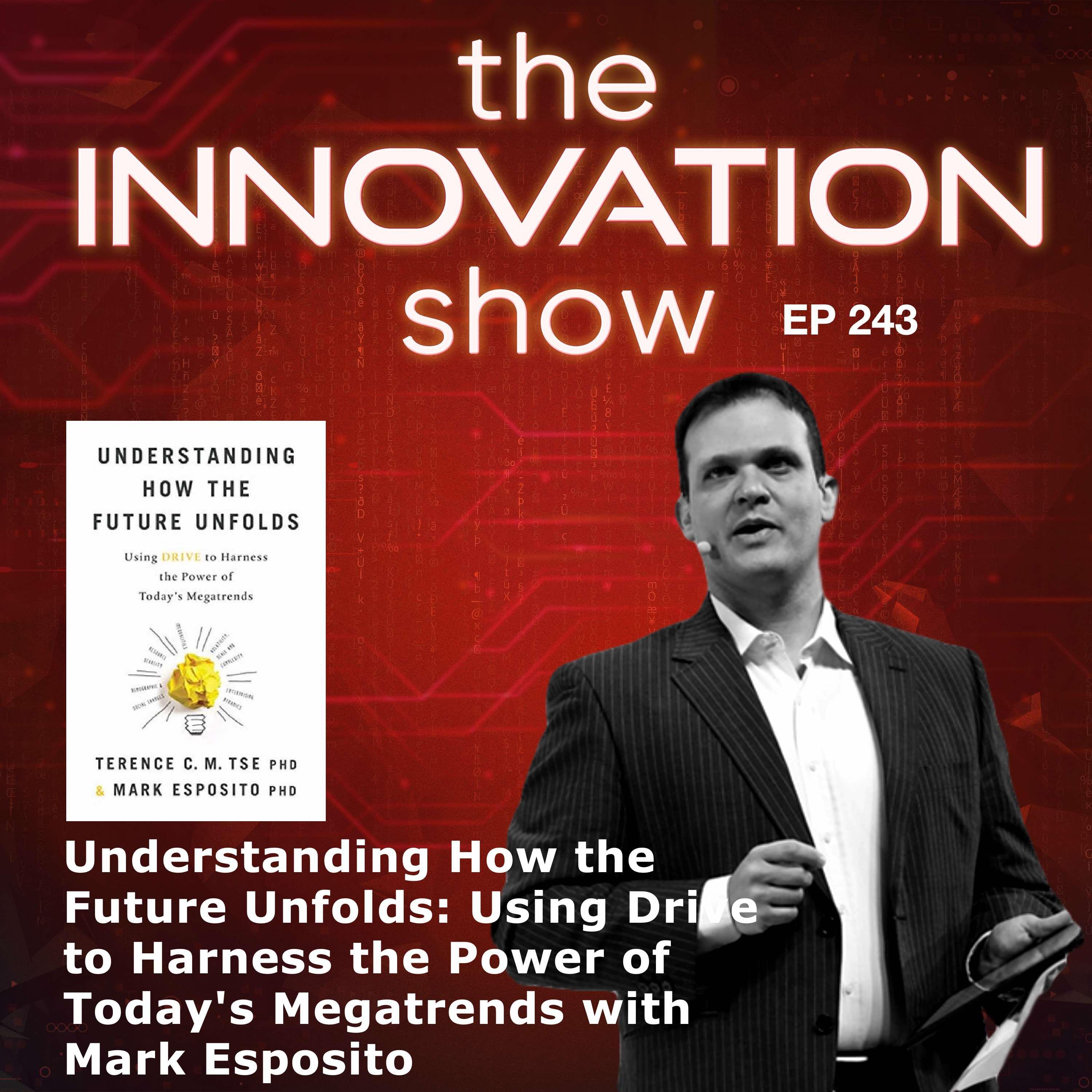
S3 Ep 243EP 243: Understanding How the Future Unfolds: Using Drive to Harness the Power of Today's Megatrends with Mark Esposito
Your business's success depends on how you prepare for the future. While business leaders of the past looked in the rear-view mirror to predict the road ahead, we must look at the greater forces affecting the social, business and economic world today—megatrends. Our guest today is here to share a fresh, holistic way to think about tomorrow by preparing for it today: He calls it DRIVE. The DRIVE framework examines five interrelated megatrends: • Demographic and social changes • Resource scarcity • Inequalities • Volatility, complexity, and scale • Enterprising dynamics It is a great pleasure to welcome Mark Esposito, the author of "Understanding How the Future Unfolds: Using Drive to Harness the Power of Today's Megatrends". Some great news as ever, Mark has kindly offered a copy of the book for the innovation show community, just sign up to our newsletter on www.theinnovationshow.io
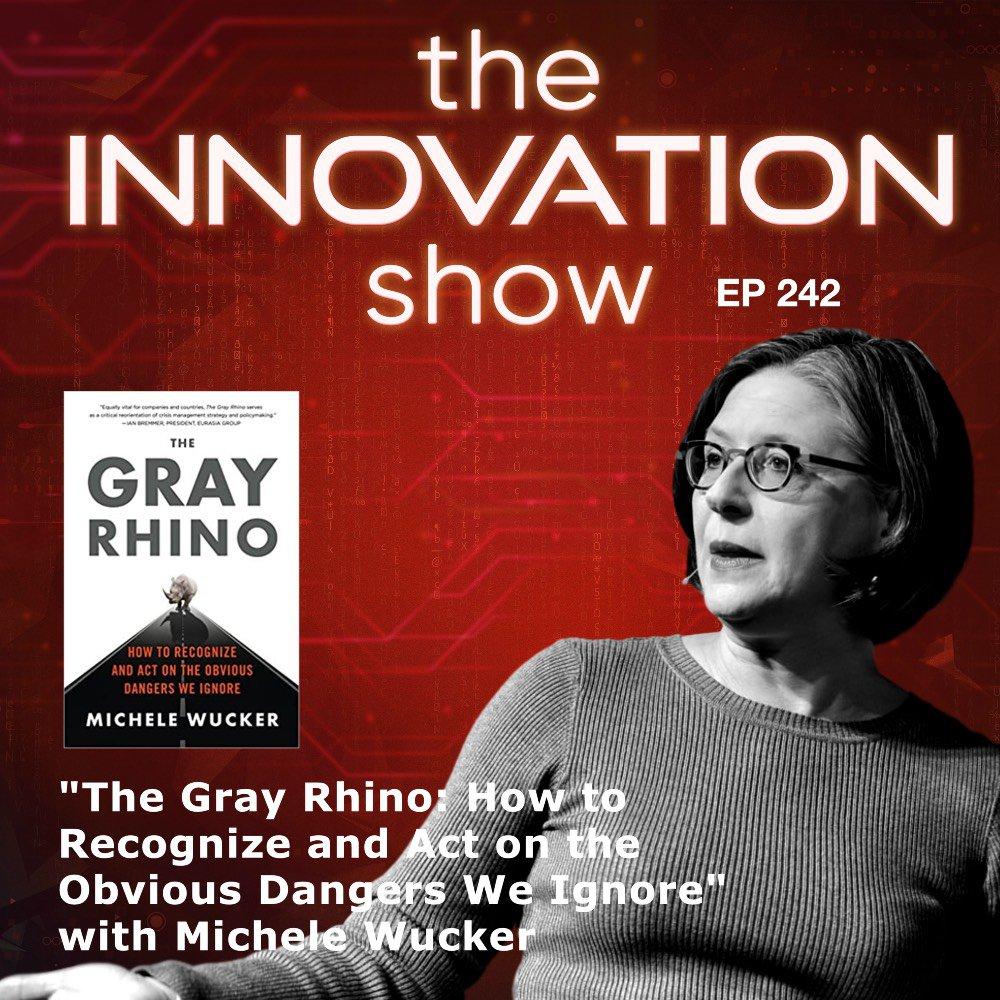
S3 Ep 242EP 242: The Gray Rhino: How to Recognize and Act on the Obvious Dangers We Ignore with Michele Wucker
When facing a rhino that's about to charge, doing nothing is seldom the best option. Yet all too often that's exactly what happens. Danger rarely comes as a complete surprise; instead, it follows many missed opportunities for taking precautions, reading and responding to warning signals. The impulse to freeze is hard to overcome. Sometimes the grip of denial is so strong that we do nothing at all; or, even worse, as in many market booms leading to bust, we do more of what was dangerous in the first place. We welcome the author of "The Gray Rhino: How to Recognize and Act on the Obvious Dangers We Ignore", Michele Wucker. More about Michele:https://thegrayrhino.com
S3 Ep 241EP 241: The Nocturnal Brain: Tales of Nightmares and Neuroscience with Guy Leschziner
The Nocturnal Brain: Tales of Nightmares and Neuroscience with Guy Leschziner You can survive longer without food than without sleep. The fact that sleep is fundamental to life is unarguable, but in modern society, at least until recently, we have taken for granted that sleep simply happens, and is a necessary evil to allow us to live our waking lives. Recently, however, there has been a shift in how we view sleep. Rather than being a hindrance to our working and social lives, a biological process that keeps us from being productive, the concept of the importance of sleep is percolating through. Its role in the maintenance of our physical and mental health, our sporting prowess, our cognitive abilities, even in our happiness, is slowly being appreciated. And rightly so. People are taking sleep seriously The normal expectation of waking up feeling ready for the day ahead is rarely found among our guests patients. Their nights are tormented by a range of conditions, such as terrifying nocturnal hallucinations, sleep paralysis, acting out their dreams or debilitating insomnia. The array of activities in sleep reflects the spectrum of human behaviour in our waking lives. Sometimes these medical problems have a biological explanation, at other times a psychological one, and the focus of the clinical work that He and his colleagues do is to unravel the causes for their sleep disorders and attempt to find a treatment or cure. More about Guy here: https://guyleschziner.com/
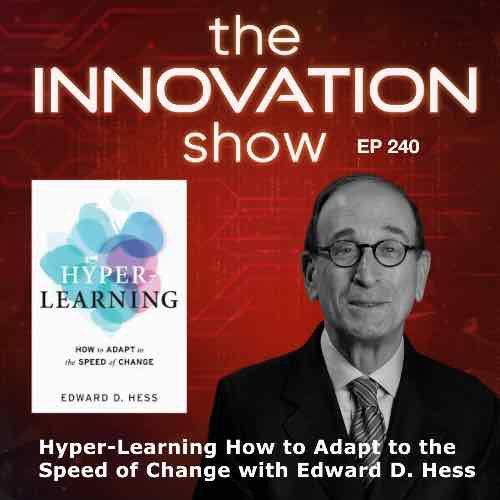
S3 Ep 240EP 240: Hyper-Learning: How to Adapt to the Speed of Change with Edward D. Hess
The Digital Age will raise the question of how humans will stay relevant in the workplace. To stay relevant, we have to be able to excel cognitively, behaviourally, and emotionally in ways that technology can't. Our guest believes, this requires us to become Hyper-Learners: continuously learning, unlearning, and relearning at the speed of change. To do that, we have to overcome our reflexive ways of being: seeking confirmation of what we believe, emotionally defending our beliefs and our ego, and seeking cohesiveness of our mental models. Hyper-Learning requires a new way of being… and a radical new way of working. We welcome a great friend of the innovation show, hyper learner and author of "Hyper-Learning: How to Adapt to the Speed of Change", Ed Hess. More about Ed: https://www.edhess.org/
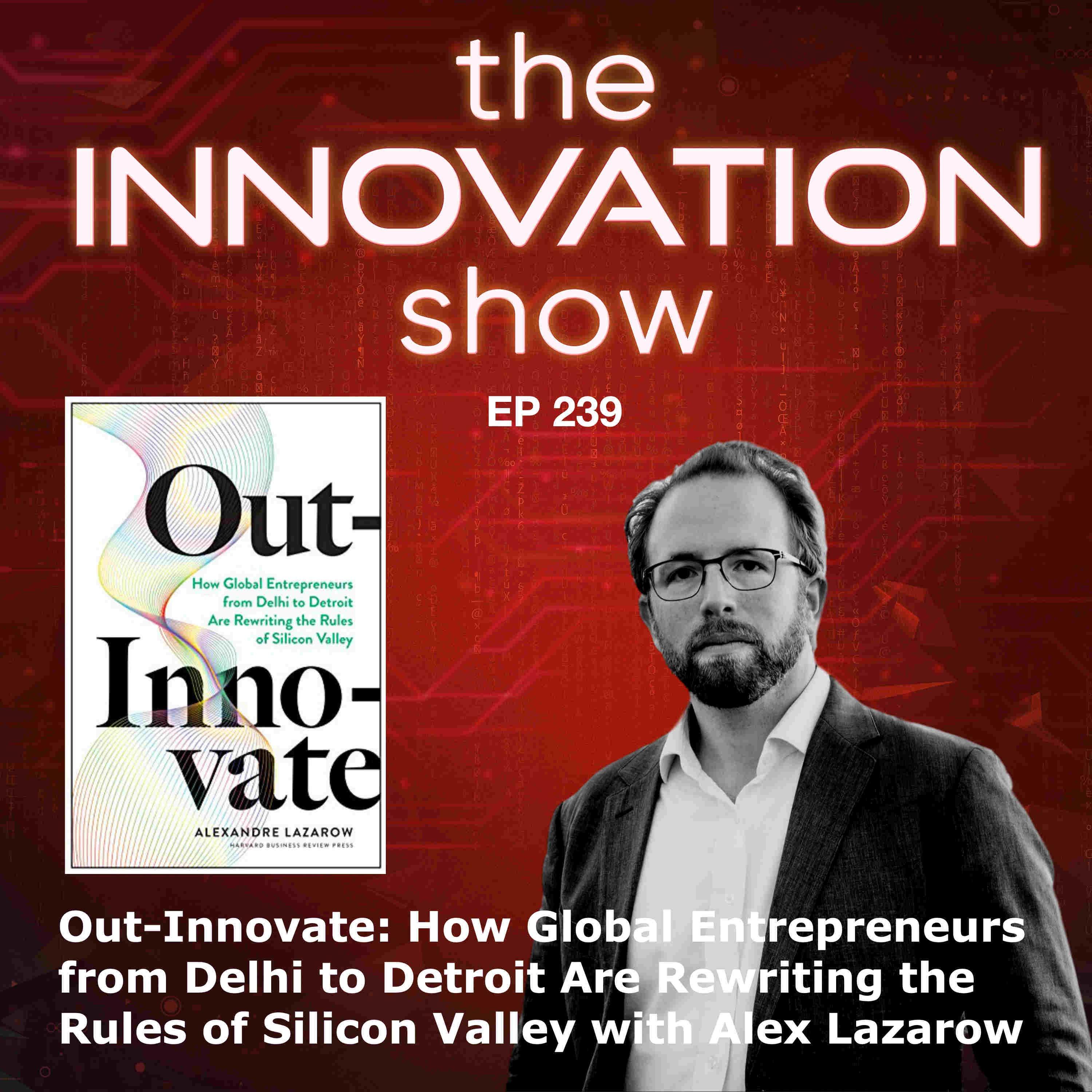
S3 Ep 239EP 239: Out-Innovate: How Global Entrepreneurs from Delhi to Detroit Are Rewriting the Rules of Silicon Valley with Alex Lazarow
Startups have changed the world. In the United States, many startups, such as Tesla, Apple, and Amazon, have become household names. The economic value of startups has doubled since 1992 and is projected to double again in the next fifteen years. For decades, the hot centre of this phenomenon has been Silicon Valley. This is changing fast. Thanks to technology, startups are now taking root everywhere, from Delhi to Detroit to Nairobi to Sao Paulo. Yet despite this globalisation of startup activity, our knowledge of how to build successful startups is still drawn primarily from Silicon Valley. As venture capitalist Alex Lazarow shows in this insightful and instructive book, this Silicon Valley "gospel" is due for a refresh--and it comes from what he calls the "frontier," the growing constellation of startup ecosystems, outside of the Valley and other major economic centres, that now stretches across the globe. The frontier is a truly different world where startups often must cope with political or economic instability and lack of infrastructure, and where there might be little or no access to angel investors, venture capitalists, or experienced employee pools. Under such conditions, entrepreneurs must be creators who build industries rather than disruptors who change them because there are few existing businesses to disrupt. The companies they create must be global from birth because local markets are too small. They focus on resiliency and sustainability rather than unicorn-style growth at any cost. With rich and wide-ranging stories of frontier innovators from around the world, Out-Innovate is the new playbook for innovation-wherever it has the potential to happen. More about Alex: https://www.alexlazarow.com

S3 Ep 238EP 238: The Death of the Artist: How Creators Are Struggling to Survive in the Age of Billionaires and Big Tech with William Deresiewicz
There are two stories you hear about making a living as an artist in the digital age, and they are diametrically opposed. One comes from Silicon Valley and its boosters in the media. There's never been a better time to be an artist, it goes. If you've got a laptop, you've got a recording studio. If you've got an iPhone, you've got a movie camera. GarageBand, Final Cut Pro: all the tools are at your fingertips. And if production is cheap, distribution is free. It's called the Internet: YouTube, Spotify, Instagram, Kindle Direct Publishing. Everyone's an artist; just tap your creativity and put your stuff out there. Soon, you too can make a living doing what you love, just like all those viral stars you read about. The other story comes from artists themselves, especially musicians but also writers, filmmakers, people who do comedy. Sure, it goes, you can put your stuff out there, but who is going to pay you for it? Digital content has been demonetised: music is free, writing is free, video is free, even images you put up on Facebook or Instagram are free, because people can (and do) just take them. Everyone is not an artist. Making art takes years of dedication, and that requires a means of support. If things don't change, a lot of art will cease to be sustainable. We welcome back Bill Deresiewicz, friend of the Innovation Show and author of "The Death of the Artist: How Creators Are Struggling to Survive in the Age of Billionaires and Big Tech" https://billderesiewicz.com/ Previous episode "Excellent Sheep": https://bit.ly/2ZlQ6OI Bill is here: https://billderesiewicz.com/
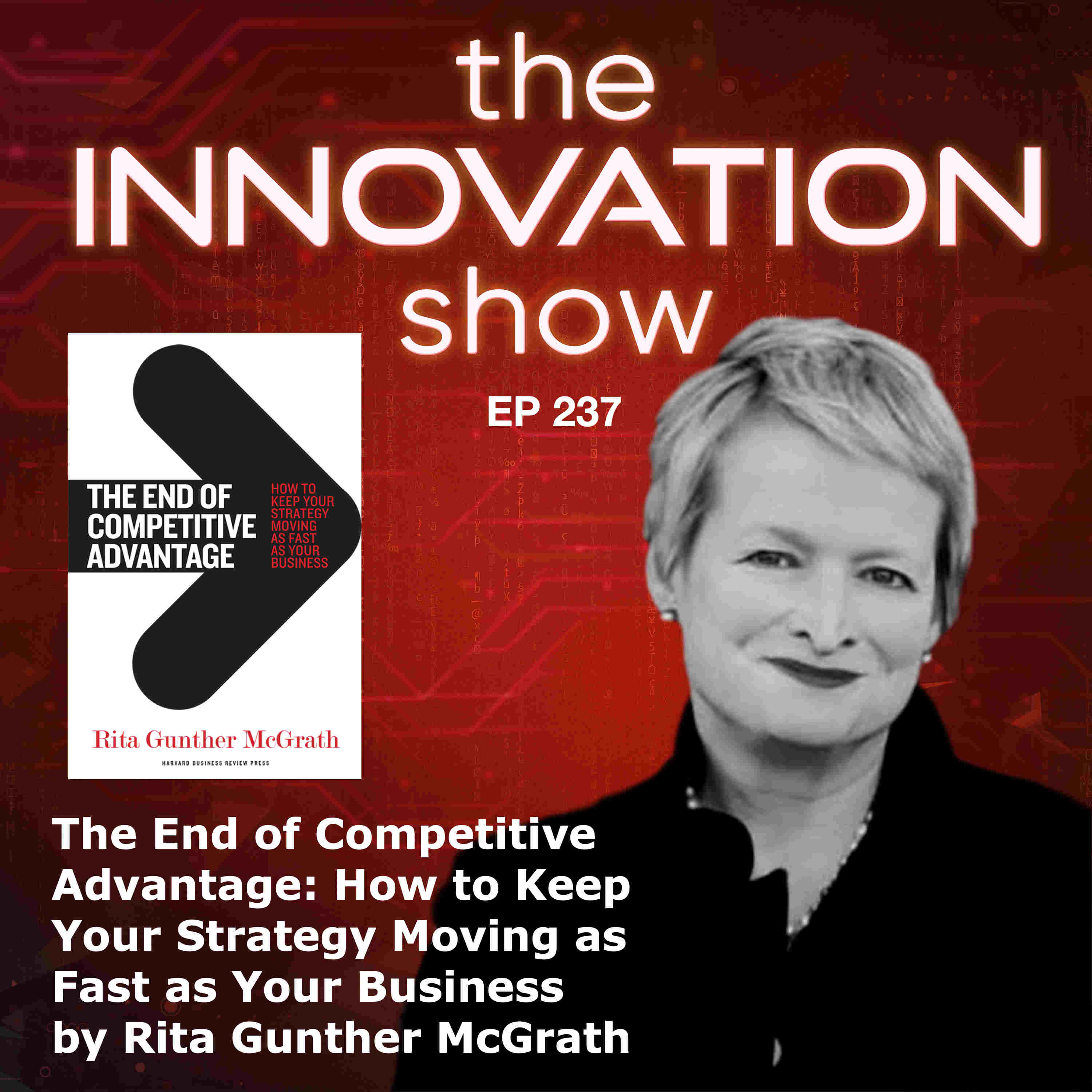
S3 Ep 237EP 237: End of Competitive Advantage: How to Keep Your Strategy Moving as Fast as Your Business with Rita McGrath
The context of business has changed so rapidly over the past few decades that it may be time for a new lexicon. At the very least, it's time to challenge some of the established thinking about strategy and competition that used to drive business advantage - but no longer does. In this episode, strategy expert and Columbia Business School professor Rita McGrath takes on one of most fundamental and recognised notions in strategy: that of sustainable competitive advantage. She argues this can no longer be the Holy Grail for companies because in a constantly changing environment, deeply ingrained structures and systems designed to extract value actually become a liability. The new path to winning includes taking advantage of shorter term opportunities, as well as relying on new organisational talents like speed and decisiveness. Our guest defines the new transient life cycle of competitive advantage and shows how successful firms manage through it by using an updated philosophy. She offers a bold new set of principles for competing in what we now understand is a continuously volatile and uncertain environment. Consider this your fresh strategy playbook for competing in an accelerating world.
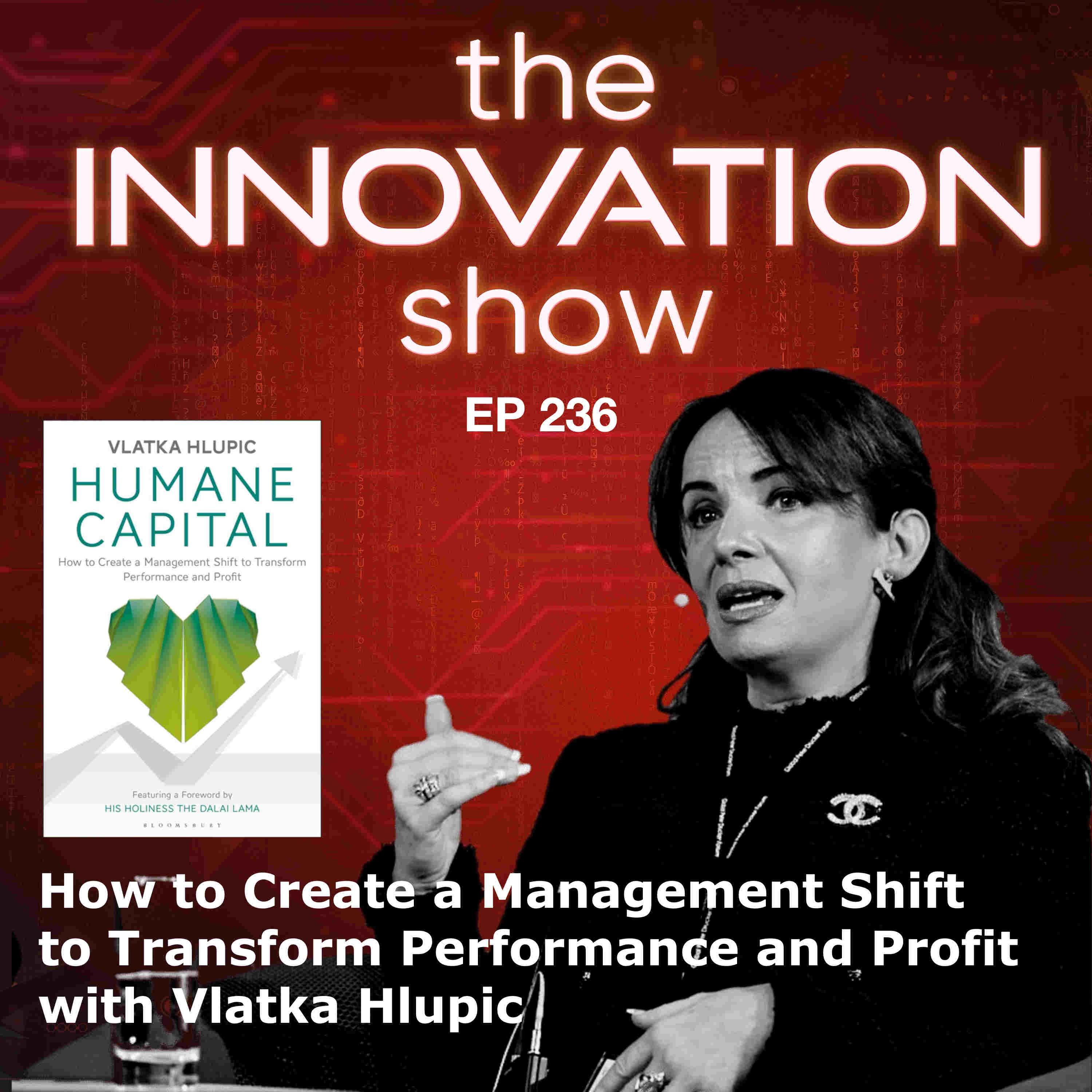
S3 Ep 236EP 236: Humane Capital with Vlatka Hlupic
Despite decades of research illustrating the benefits of enlightened leadership, the high-performance workplace is still not the norm. Our guest has spent 20 years investigating this paradox, and in this book she forms a penetrating critique of why such strong evidence has had limited impact, and provides an alternative practical approach that any employer can implement to overcome these challenges. She shows that there is a clear correlation between those companies that are good companies and those that do well, with 'good meaning an organization that works with stakeholders, employees, society and customers. While a 'bad' company can do well, its success isn t sustainable - her book explores the steps needed to be taken to become a good organization with long-term, sustainable results. She brings together management wisdom and shows how successful leaders have moved their organizations from controlled and orderly, to enthusiastic and collaborative. Supported by insights from 59 of the leading thinkers and practitioners in the field, the book will guide readers through the arguments for a radical reassessment of current business models, and the successful stories of employers from the private and public sectors who have made the transition. We welcome Vlatka Hlupic , the author of Humane Capital: How to Create a Management Shift to Transform Performance and Profit
S3 Ep 235EP 235: Open, Honest, and Direct with Aaron Levy
Building a business requires more than just a good product and talented people; it requires you to take a hard look at how you show up as a leader. Open, Honest, and Direct helps you dive into the heart of your business and your people, identifying changes you can make to transform the way you and your managers lead. Part business book, part personal-development guide, this is a how-to full of practical ways to not only build and lead a high-performance team but also bring out the best in your people. Being a successful manager is less about staying constantly on top of your team and more about providing clarity and context for people. Levy's method for creating open, honest, and direct leaders within an organization provides you with tactical tools you can put to use right away. This is a toolkit for designing a culture that supports employee performance and future-proofs your business. Many managers are promoted because they are great at what they do, but that doesn't necessarily translate into their ability to manage a team and get the most out of their people. In today's business environment where the competition for top talent is intense, it's integral to not only keep your top talent but also be able to coach all of your people and unlock their full potential. Open, Honest, and Direct is a field guide and powerful movement for leading that will give your organization the competitive edge it needs.
S2 Ep 234EP 234: The Art of Ideas: Creative Thinking for Work and Life with William Duggan
Great ideas don't just happen. Innovation springs from creative thinking—a method of the human mind that we can study and learn. In The Art of Ideas, our guest brings together business concepts with stories of creativity in art, politics, and history to provide a visual and accessible guide to the art and science of new and useful ideas. He details how to spark your own ideas and what to do while waiting for inspiration to strike. He shows that regardless of the field, innovations happen in the same way: examples from history, presence of mind, creative combination, and resolution to action. The Art of Ideas features case studies and exercises that explain how to break down problems, search for precedents, and creatively combine past models to form new ideas. It showcases how Picasso developed his painting style, how Gandhi became the man we know today, and how Netflix came to disrupt the movie-rental business.