
The Innovation Show
764 episodes — Page 7 of 16
S19 Ep 382Helena Boschi - Why We Do What We Do Part 1
The brain is the basis of everything we do: how we behave, communicate, feel, remember, pay attention, create, influence, and decide. Today's book combines scientific research with concrete examples and illustrative stories to clarify the complex mechanisms of the human brain. It offers valuable insights into how our brain works every day, at home and at work, and provides practical ideas and tips to help us lead happy, healthy, and productive lives. The thoughts you have and the words that you speak all have an effect on your neural architecture - and this book explains what that means in a way you can understand. We welcome Helena Boschi, the author of "Why We Do What We Do Understanding our brain to get the best out of ourselves and others" Find Helena here: https://www.chequeredleopard.com
S18 Ep 380Anna Lembke - Dopamine Nation Part 1
EToday's book aims to unpack the neuroscience of reward and, in so doing, enable us to find a better, healthier balance between pleasure and pain. But neuroscience is not enough. We also need the lived experience of human beings. Who better to teach us how to overcome compulsive overconsumption than those most vulnerable to it: people with addiction. Whether it's sugar or shopping, voyeuring or vaping, social media posts or The Washington Post, we all engage in behaviours we wish we didn't, or to an extent we regret. This book offers practical solutions for how to manage compulsive overconsumption in a world where consumption has become the all-encompassing motive of our lives." It's a pleasure and a reward to welcome the author of Finding Balance in the Age of Indulgence With Dr Anna Lembke Find Anna here: https://www.annalembke.com
S18 Ep 381Anna Lembke - Dopamine Nation Part 2
It's a dopamine hit to welcome back Dr Anna Lembke, the author of "Dopamine Nation: Finding Balance in the Age of Indulgence". 00:00:00 Sponsor Message 00:00:33 What is Dopamine? 00:02:50 Access is Easy Now in a Digital World 00:10:14 Opioid-induced Hyperalgesia 00:11:27 Expectation Let Down Children 00:13:54 Cannabis Addiction and Dopamine Fasting 00:17:27 How Reminders of our Drug Can Trigger Desire to Use 00:21:43 Gambling Addiction 00:25:56 The DOPAMINE Acronym 00:36:09 Replace a reward with another reward 00:39:17 Understanding Stress and Pain 00:44:54 Final Message
S18 Ep 379David Fubini - Hidden Truths Part 2
In Hidden Truths, David Fubini delivers is that awareness of the critical capabilities and issues that come with the territory - capabilities and issues that often take leaders by surprise - goes a long way toward helping leaders perform at a high level. He presents the essential skills that will keep leaders delivering success - both professionally and within their organizations. We welcome the author of Hidden Truths: What Leaders Need to Hear but Are Rarely Told, David Fubini Time stamps: 00:00 Sponsor Message Zai 01:38 CEOs Shocked by the Volume of Demands 06:17 Failure to Delegate 07:58 All Eyes Watching You as CEO 10:06 Jeff Clarke and Kodak in Free Fall 13:12 Information Vacuums and Managing Constituencies 17:30 Change Management Starts With Changing the Management 21:21 The How And Then The What 23:37 The Tradeoff: New Team V Retraining the Old One 25:40 Roger Smith and The Allure of Changing Slowly 27:33 Change: Slow and Polite V Fast and Pragmatic 29:55 Successfully Transitioning After A Merger Or Acquisition and The Case Of American Airlines 34:04 Sponsor Message Zai
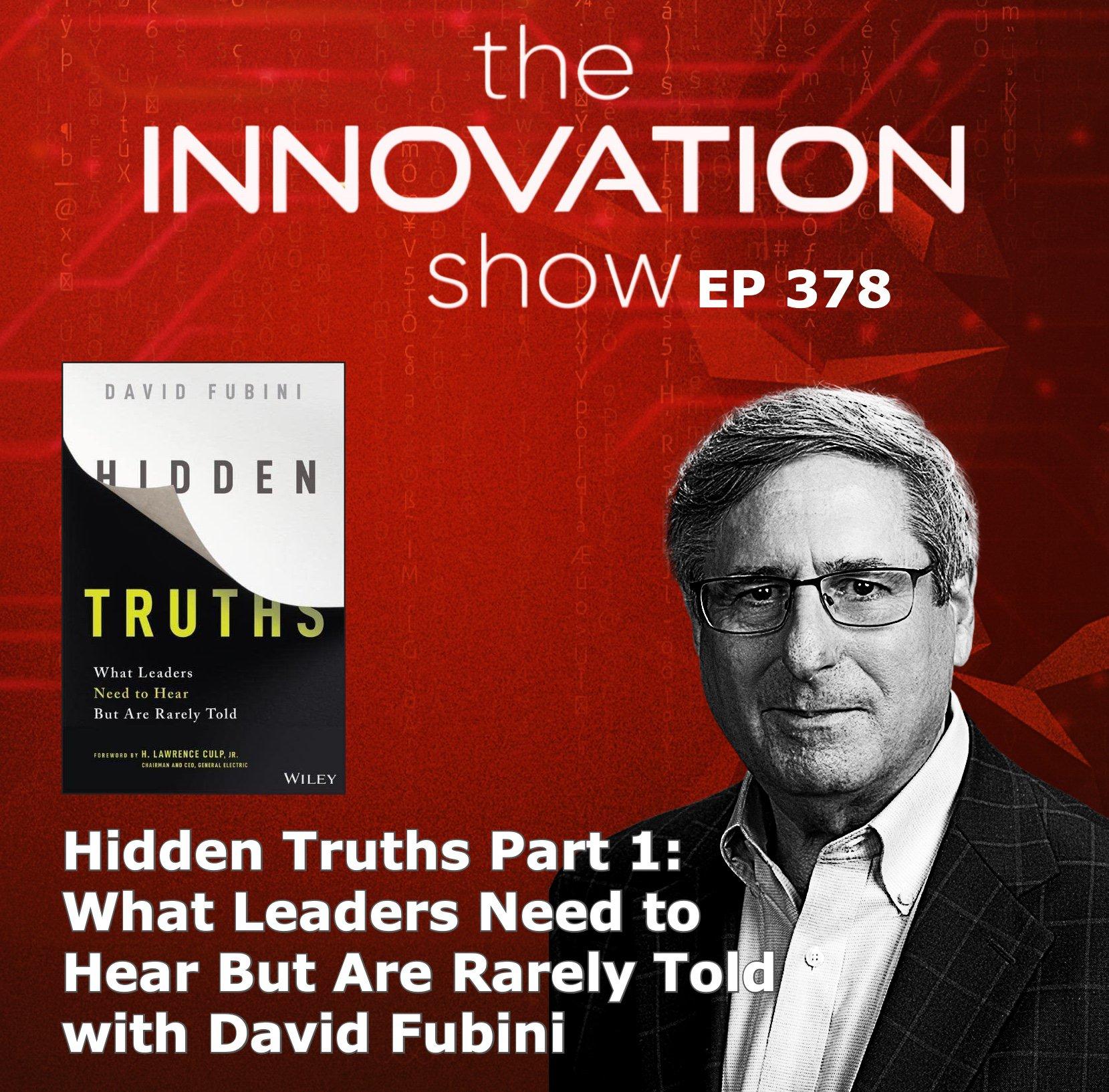
S18 Ep 378Hidden Truths with David Fubini Part 1
Today's episode provides practical knowledge that will not only help leaders do their jobs better, but assist boards, HR, consultants, and others in working effectively with these executives. One of the book's themes is that appearance is not reality. Much has been written and discussed about the apparent roles and responsibilities of CEOs and managing directors and other leaders. Courses are taught in MBA and executive development programs that provide a lot of information about the job. Direct reports and teams also observe leaders in action. But it's not until you assume a leadership job that the reality of the position hits home. The reality is that leaders operate in a crucible, one in which emotions run high and interpersonal relationships are at risk. Being in the spotlight, not having nearly enough hours in the day to address key issues, confronting right-versus-right decisions - all of this ratchets up the degree of difficulty. The good news that our guest and his book delivers is that awareness of the critical capabilities and issues that come with the territory - capabilities and issues that often take leaders by surprise - goes a long way toward helping leaders perform at a high level. He presents the essential skills that will keep leaders delivering success - both professionally and within their organizations. We welcome the author of Hidden Truths: What Leaders Need to Hear but Are Rarely Told, David Fubini Find David here: https://www.hbs.edu/faculty/Pages/profile.aspx?facId=102821
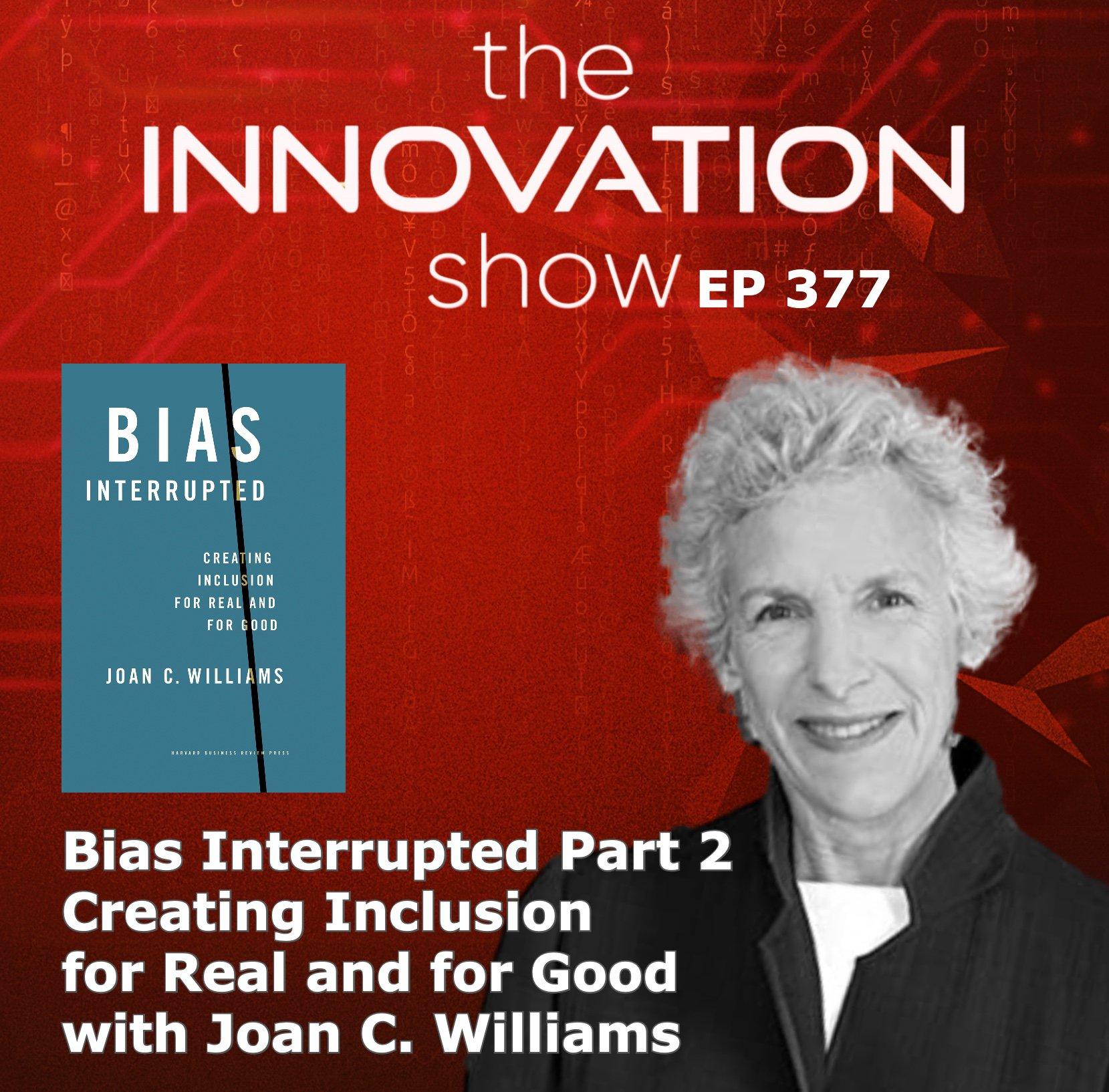
S18 Ep 377Joan C. Williams - Bias Interrupted Part 2
Companies spend billions of dollars annually on diversity efforts with remarkably few results. Too often diversity efforts rest on the assumption that all that's needed is an earnest conversation about "privilege." That's not enough. To truly make progress we need to stop celebrating the problem and instead take effective steps to solve it. Through her own exhaustive research, fresh evidence and first-hand work with companies our guest shows how it's done, and, reassuringly, how easy it is to get started. We welcome the author of Bias Interrupted: Creating Inclusion for Real and for Good, Joan C. Williams, welcome to the show. Find Joan here: https://joancwilliams.com Find bias interrupters here: https://biasinterrupters.org
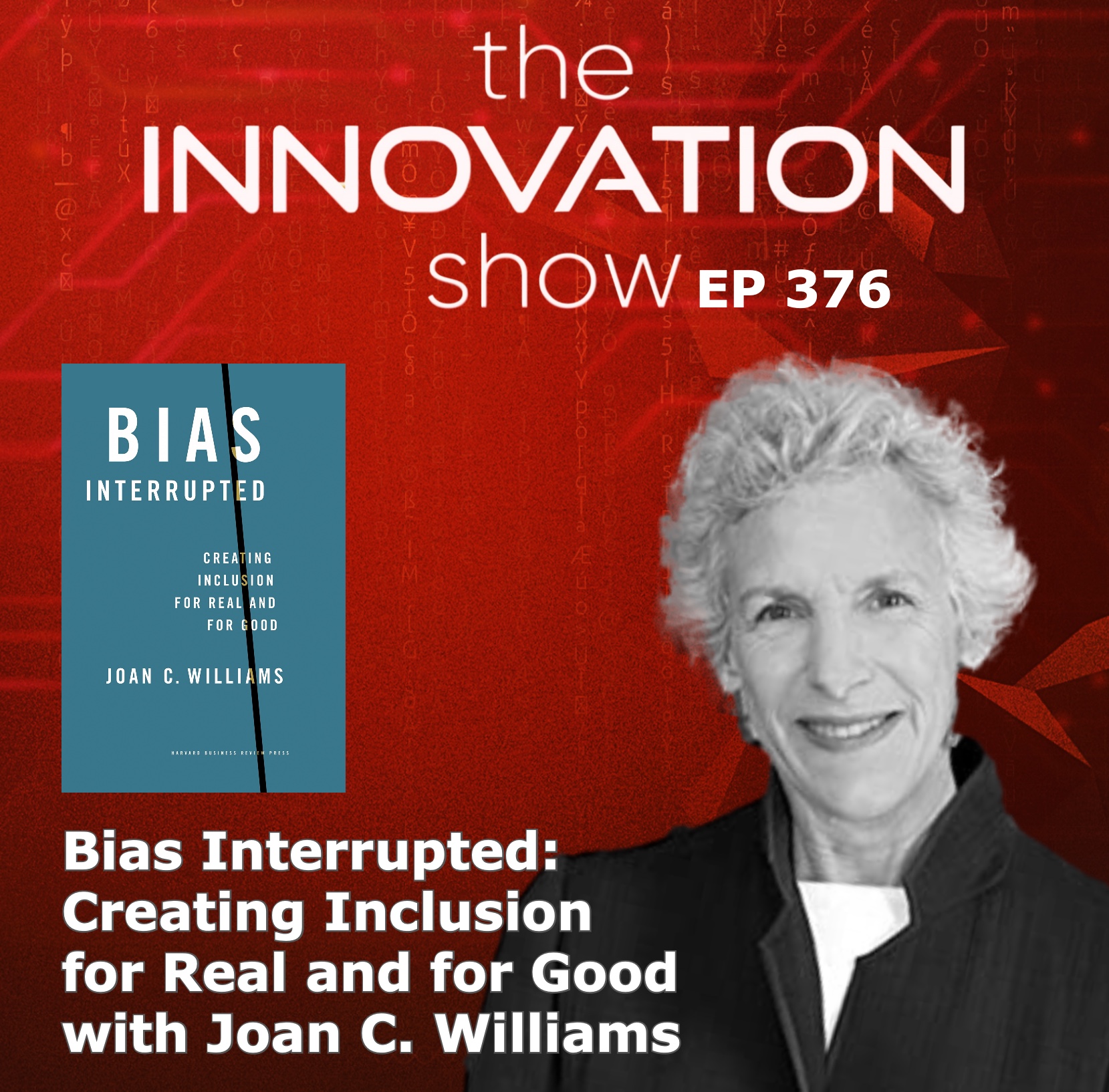
S18 Ep 376Bias Interrupted with Joan C. Williams
Companies spend billions of dollars annually on diversity efforts with remarkably few results. Too often diversity efforts rest on the assumption that all that's needed is an earnest conversation about "privilege." That's not enough. To truly make progress we need to stop celebrating the problem and instead take effective steps to solve it. Through her own exhaustive research, fresh evidence and first-hand work with companies our guest shows how it's done, and, reassuringly, how easy it is to get started. Chapter titles include 1. What's the path forward? 2. Is bias training worthless? 3. We're a meritocracy. Are you asking us to change that? 4. Why do some groups need to be politically savvier to succeed? 5. Are you saying that white men have it easy? I don't feel privileged. 6. We cherish our culture. Can we retain that and still achieve DEI goals? 7. Can we make progress on DEI without getting all rigid and bureaucratic? 8. Women's priorities change after having kids. Are you saying I should ignore that? 9. Isn't it natural—and inevitable—that people who work harder go further? 10. If we hire more women and people of colour, won't the DEI problem take care of itself? What does the CEO need to do to finally deliver on DEI goals? How can a company change who gets access to opportunities? (Hint: Only the CEO can) How can CDOs and HR get buy-in—and deliver— on DEI goals? How can HR and DEI departments work together to interrupt bias in basic business systems? How can individual managers help move the needle—and manage more effectively? We welcome the author of Bias Interrupted: Creating Inclusion for Real and for Good, Joan C. Williams, welcome to the show. Find Joan here: https://joancwilliams.com Find bias interrupters here: https://biasinterrupters.org
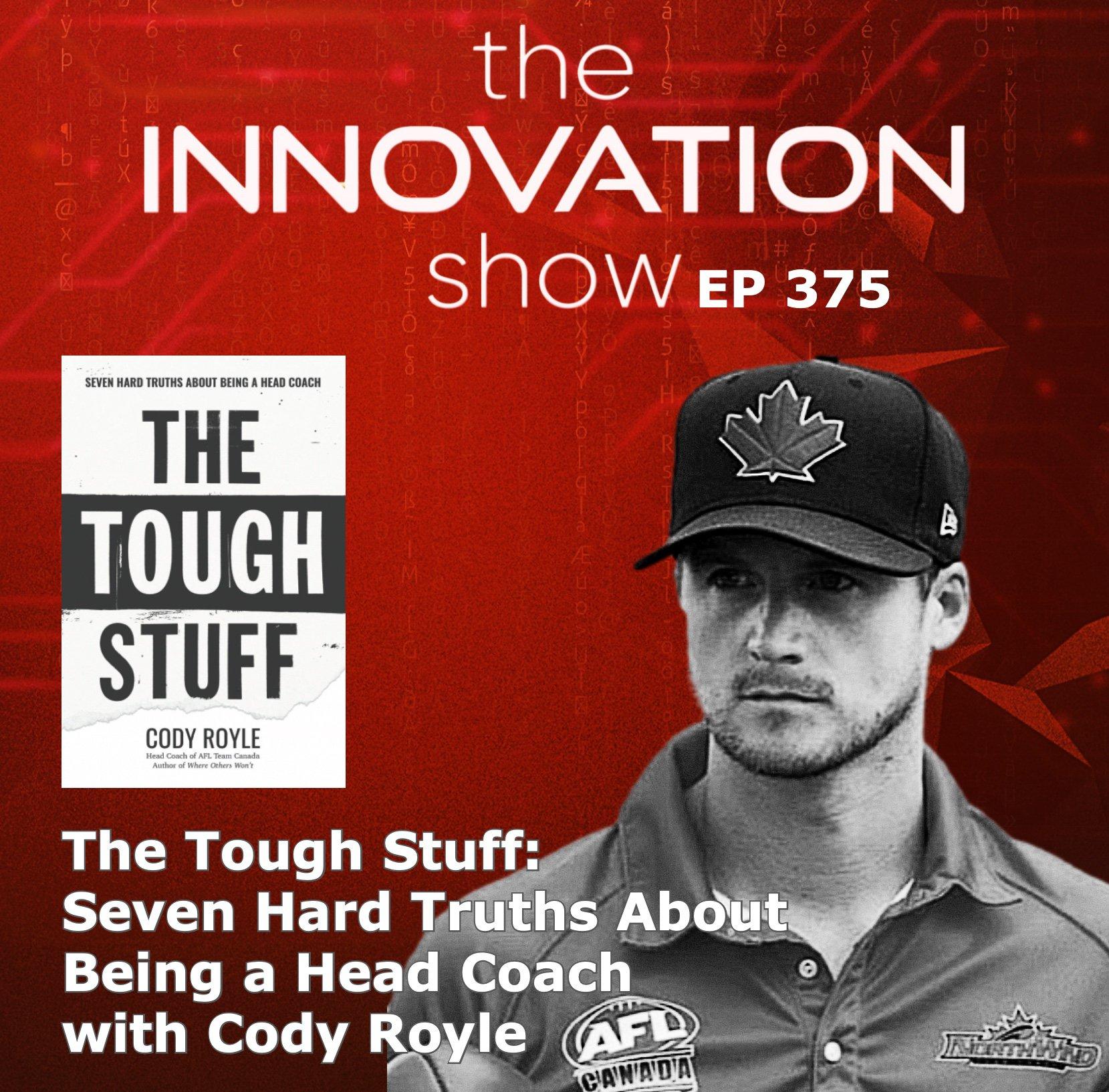
S18 Ep 375The Tough Stuff Live with Cody Royle
It's you. As the speed of change in elite sports has increased, the support infrastructure around head coaches has not kept up. This has left many coaches--supposedly experts in human performance--walking zombies who don't sleep, don't exercise and don't see their families. To succeed in the modern sporting world, head coaches must face some hard truths. By grappling with these truths, which cut to the very core of who they are as human beings, head coaches can get out of their own way and achieve all-new levels of personal performance. We welcome author of "The Tough Stuff: Seven Hard Truths About Being a Head Coach" Cody Royle Find Cody here: https://www.codyroyle.com
S18 Ep 374Change: How to Make Big Things Happen with Damon Centola
From the spread of COVID-19 to the rise of political polarisation, from implicit bias to genetically modified food, from NASA to Netflix - it's time to think differently about how change works. Our guest is the world expert in the new science of networks. His ground-breaking research across areas as disparate as voting, health, technology and finance has highlighted powerful and highly effective new ways to ensure lasting change. In today's book, he distils more than a decade of deep experience into a fascinating new theory that challenges previous assumptions that new ideas are either contagious or not. He shows that beliefs and behaviours are not transmitted from person to person in the simple way that a virus is. The real story of social change is more complex and much more interesting. When we are exposed to a new idea, our social networks guide our responses in striking and surprising ways. Drawing on deep yet accessible research and fascinating examples, his book presents a paradigm-shifting new science for understanding what drives change, recognising our blind spots and how we can change the world around us. We welcome the author of "Change: How to Make Big Things Happen", Damon Centola Find Damon here: https://www.damoncentola.com and here: http://leighbureaultd.com/speakers/dcentola
S17 Ep 373Jack Lewis - Sort Your Brain Out Part 2
We all know that we're capable of more than what we're already accomplishing. But what if we discovered the tools we need to get the most out of our brain and achieve unheard-of mental performance? With expert guidance from today's guest we can discover how to unlock the hidden potential of our brain. Using simple tools and techniques we can use each day, his book will show us how to: Utilise the principle of neuroplasticity to transform your daily life Harness straightforward strategies to learn new behaviours Turn these behaviours into lasting habits and new skills Understand the latest developments in brain-enhancement Create better strategies for team innovation and problem solving We welcome the author of Sort Your Brain Out: Boost Your Performance, Manage Stress and Achieve More, Dr Jack Lewis, welcome to the show Find Jack here: https://www.drjack.co.uk Brain man VR: https://www.brainmanvr.co.uk
S16 Ep 372Sort Your Brain Out Part 1 with Jack Lewis
We all know that we're capable of more than what we're already accomplishing. But what if we discovered the tools we need to get the most out of our brain and achieve unheard-of mental performance? With expert guidance from today's guest we can discover how to unlock the hidden potential of our brain. Using simple tools and techniques we can use each day, his book will show us how to: Utilise the principle of neuroplasticity to transform your daily life Harness straightforward strategies to learn new behaviours Turn these behaviours into lasting habits and new skills Understand the latest developments in brain-enhancement Create better strategies for team innovation and problem solving We welcome the author of Sort Your Brain Out: Boost Your Performance, Manage Stress and Achieve More, Dr Jack Lewis, welcome to the show Find Jack here: https://www.brainmanvr.co.uk Brain man VR: https://www.brainmanvr.co.uk
S1 Ep 371Bank 4.0 with Brett King
When we talk about a Bank 4.0 it is good to establish both a timeline and a definition for clarity: BANK1.0: Historical, traditional banking centred around the branch as the primary access point. Started with the Medici family in the 12th century. BANK 2.0: The emergence of self-service banking, defined by the first attempts to provide access outside of bank working hours. Commenced with ATM machines and accelerated in 1995 with the commercial internet. BANK 3.0: Banking when and where you needed it as redefined by the emergence of the smartphone in 2007, and accelerated with a shift to mobile payments, P2P and challenger banks built on top of mobile; channel agnostic. BANK4.0: Embedded, ubiquitous banking delivered in real-time through the technology layer. Dominated by real-time, contextual experiences, frictionless engagement and a smart, AI-based advice layer. Largely digital omni-channel with zero requirements for physical distribution. We welcome Founder of Moven Host of Breaking Banks Radio author of multiple titles but today we focus on Bank 4.0, Banking Everywhere, Never at a Bank Brett King. Find Brett here: http://brettking.com
S28 Ep 370The Human Element with David Schonthal
Today's book is for anyone who wants to introduce a new idea or innovation into the world. Most marketers, innovators, executives, activists, or anyone else in the business of creating change, operate on a deep assumption. It is the belief that the best (and perhaps only) way to convince people to embrace a new idea is to heighten the appeal of the idea itself. We instinctively believe that if we add enough value, people will eventually say "yes." This reflex leads us down a path of adding features and benefits to our ideas or increasing the sizzle of our messaging - all in the hope of getting others on board. Our guest calls this instinct the "Fuel-based mindset." The Fuel-based mindset explains so much of what we do, from adding countless trivial features to software to bolting a sixth blade onto a shaving razor. By focusing on Fuel, innovators neglect the other half of the equation – the psychological Frictions that oppose change. Frictions create drag on innovation. And though they are rarely considered, overcoming these Frictions is essential for bringing new ideas into the world. In his book, Our guest highlights the four Frictions that operate against innovation. It is a pleasure to welcome the author of The Human Element: Overcoming the Resistance That Awaits New Ideas David Schonthal Find David here: https://www.davidschonthal.com
S369 Ep 27Framers Part 3 with Kenneth Cukier
Framing is a cognitive muscle we can strengthen to improve our lives, work and future. Today's book shows us how." We heartily welcome back the author of "Framers: Make Better Decisions In The Age of Big Data", Kenneth Cukier Find Kenneth here: http://www.cukier.com @kncukier https://www.economist.com/books-and-arts/2021/05/11/imaginative-framing-is-the-key-to-problem-solving
S368 Ep 27Framers Part 2 with Kenneth Cukier
Framing is a cognitive muscle we can strengthen to improve our lives, work and future. Today's book shows us how." We welcome the author of Framers: Make Better Decisions In The Age of Big Data Kenneth Cukier Find Kenneth here: http://www.cukier.com @kncukier https://www.economist.com/books-and-arts/2021/05/11/imaginative-framing-is-the-key-to-problem-solving
S27 Ep 367VISA founder Dee Hock Tribute R.I.P.
bonus52 years ago, our guest foresaw and implemented the foundations for the world's first trillion-dollar organization. Back then, Visa was little more than a set of unorthodox convictions about organization slowly growing in the mind of a young corporate rebel. Today, according to the Visa 2019 annual report, payments and cash volume for the year was a staggering $11.6 trillion dollars, transactions processed on Visa's networks totalled $138.3 trillion dollars and the year saw some 3.4 billion Visa cards in operation. Our guest is the man who imagined this reality, who had a once-deemed-impossible vision 52 years ago, a vision which has become a concrete reality today. He is a man who has a different view on what the next 50 years can deliver, but that vision will require a radical shift in mindset for every single one of us. His book, "One from Many" is much more than the story of the scarcely believable events that brought Visa into being and led to its extraordinary success. It is also the story of an introverted, small-town child, passionate to read, dream, and wander the woods, the youngest of six, born to parents with but an eighth-grade education. It is a story of crushing confinement and interminable boredom in school and church, along with sharp, rising awareness of the chasm between how institutions profess to function and how they actually do; what they claim to do for people and what they actually do to them. It is about three compelling questions arising from that awareness that came to dominate his life: Why are institutions, everywhere, whether political, commercial, or social, increasingly unable to manage their affairs? Why are individuals, everywhere, increasingly in conflict with and alienated from the institutions of which they are part? Why are society and the biosphere increasingly in disarray? This is the story of a lifelong search for the answer to those questions, which had everything to do with the formation of Visa. It is a story of harbouring four beasts that inevitably devour their keeper; ego, envy, avarice, and ambition; and of a great bargain, trading ego for humility, envy for equanimity, avarice for time, and ambition for liberty. It is a story of events impossible to foresee, that sent (a man of 92) him at 55 on (a journey) an odyssey more improbable than Visa, and infinitely more important. At 91, he is still in the midst of that odyssey Beyond all else, it is a story of the future; of something trying to happen; of a four-hundred-year-old age rattling in its deathbed as another struggles to be born. It is not just the story of today's guest, although he is central to it. It is not just your story, or my story, (although you} although we are both in it. It is a story of everyone A story of us all. It is such an immense honour to welcome the founder and CEO Emeritus of Visa and author of the pioneering work "The Birth of the Chaordic Age" and its updated version "One from Many: VISA and the Rise of Chaordic Organization", Dee Hock
S27 Ep 366Byron Reese ACT III of Stories, Dice, and Rocks That Think
There are reasons we are the way we are; we are optimized for other purposes, not the least of which is thinking in stories not logic. So we did something else instead: we taught rocks how to think. Intrigued? So was I and I'm delighted to host the man who'll answer this strange question in Act III of "Stories, Dice, and Rocks That Think: How Humans Learned to See the Future--and Shape It" Byron Reese, welcome back to the show Find Byron here: www.byronreese.com
S27 Ep 365Framers with Kenneth Cukier: Make Better Decisions In The Age of Big Data
We're often told that humans make bad decisions and that more data is better. But this is backwards: people are good at decisions precisely because we use mental models and can envision new realities outside of data. Great outcomes don't depend so much on the final moment of choosing but on generating better alternatives to choose between. That's framing. It's a cognitive muscle we can strengthen to improve our lives, work and future. Today's book shows us how. We welcome the author of Framers: Make Better Decisions In The Age of Big Data Kenneth Cukier. Find Kenneth here: http://www.cukier.com @kncukier https://www.economist.com/books-and-arts/2021/05/11/imaginative-framing-is-the-key-to-problem-solving
S27 Ep 364The Rise of Superman with Steven Kotler
Today's book is about the impossible, but it starts with the invisible. Over the four decades, an unlikely collection of men and women have pushed human performance farther and faster than at any other point in the 150,000-year history of our species. In this evolutionary eyeblink, they have completely redefined the limits of the possible. But here's the stranger part: this unprecedented flowering of human potential has taken place in plain sight, occasionally with millions of people watching–yet almost no one has noticed. Today's guest will explain why, he is a friend of the show and author of multiple titles and the focus of today's episode is "The Rise of Superman: Decoding the Science of Ultimate Human Performance", Steven Kotler, welcome. More about Steven: https://www.flowresearchcollective.com/flow-blocker-quiz
S27 Ep 363The Matter With Things Part 3 with Iain McGilchrist
It is a pleasure to welcome back the author of "The Matter With Things: Our Brains, Our Delusions, and the Unmaking of the World", Iain McGilchrist In this episode, we explore intuition, imagination and more. Find Iain here: http://channelmcgilchrist.com
S27 Ep 362Stories, Dice, and Rocks That Think Act II with Byron Reese
Today we focus on ACT II of Stories, Dice, and Rocks That Think: How Humans Learned to See the Future and Shape It with Byron Reese Act II is set In 17th century France, the mathematical framework known as 'probability theory' is born—a science for seeing into the future that we used to build the modern world. We welcome back the author of "Stories, Dice, and Rocks That Think: How Humans Learned to See the Future--and Shape It" friend of the show, Byron Reese. Find Byron here: www.byronreese.com
S26 Ep 361The Matter With Things Part 2 with Iain McGilchrist
In Part I of "The Matter With Things: Our Brains, Our Delusions, and the Unmaking of the World" Iain McGilchrist addresses the means to truth, in the sense of the faculties with which we are endowed for this task. He takes these to be: attention, perception, judgment, apprehension, emotional and social intelligence, cognitive intelligence and creativity. In each case, he looks at what either hemisphere contributes to the process. We don't stand a hope of diving into each but I felt we should share some of your writing on attention and Perception before we focus today on some of the more philosophical chapters such as intuition. We touched on it on the last day, but for those who know your work! We will know how we attend to the work is of utmost importance to what and how we experience the world? "Attention changes the world. How you attend to it changes what it is you find there. What you find then governs the kind of attention you will think it appropriate to pay in the future. And so it is that the world you recognise (which will not be exactly the same as my world) is 'firmed up' – and brought into being. This raises a core question then, What is attention?
S26 Ep 360Stories, Dice, and Rocks That Think Act I with Byron Reese
Look around. Clearly, we humans are radically different from the other creatures on this planet. But why? Where are the Bronze Age beavers? The Iron Age iguanas? In today's episode, our guest argues that we humans owe our special status to our ability to imagine the future and recall the past, escaping the perpetual present that all other living creatures are trapped in. Envisioning human history as the development of a societal superorganism he names Agora, our guest shows us how this escape enabled us to share knowledge on an unprecedented scale, and predict—and eventually master—the future. He unravels our history as an intelligent species in three acts: Act I: Ancient humans undergo "the awakening," developing the cognitive ability to mentally time-travel using language Act II: In 17th century France, the mathematical framework known as 'probability theory' is born—a science for seeing into the future that we used to build the modern world Act III: Beginning with the invention of the computer chip, humanity creates machines to gaze into the future with even more precision, overcoming the limits of our brains We welcome back the author of "Stories, Dice, and Rocks That Think: How Humans Learned to See the Future--and Shape It" friend of the show, Byron Reese. Find Byron here: www.byronreese.com

S25 Ep 359The Magic of Sleep Thinking Part 2 with Eric Maisel
Part 2 of this extended episode with Eric Maisel Imagine solving problems and increasing creativity while you sleep. Grounded in current brain research, today's book introduces a simple but revolutionary program that shows how to do just that by learning to tune into your deepest intuitions. Case studies illustrate the effects of sleep thinking on ordinary individuals, from a failing college student to an engineer with anger management issues. This tool for idea generation and life-purpose clarification offers answers that lead to actions and result in positive changes, all by getting clear on the real nature of a problem and learning to listen for the answers. We welcome back for part 2 the author "The Magic of Sleep Thinking: How to Solve Problems, Reduce Stress, and Increase Creativity While You Sleep", Eric Maisel More about Eric: https://ericmaisel.com

S25 Ep 358The Magic of Sleep Thinking Part 1 with Eric Maisel
Imagine solving problems and increasing creativity while you sleep. Grounded in current brain research, today's book introduces a simple but revolutionary program that shows how to do just that by learning to tune into your deepest intuitions. Case studies illustrate the effects of sleep thinking on ordinary individuals, from a failing college student to an engineer with anger management issues. This tool for idea generation and life-purpose clarification offers answers that lead to actions and result in positive changes, all by getting clear on the real nature of a problem and learning to listen for the answers. We welcome the author of a multitude of titles but the focus of today's episode is, The Magic of Sleep Thinking: How to Solve Problems, Reduce Stress, and Increase Creativity While You Sleep, Eric Maisel More about Eric: https://ericmaisel.com
S25 Ep 357Iain McGilchrist - The Matter With Things Part 1
In this landmark new book, our guest addresses some of the oldest and hardest questions humanity faces – ones that have a practical urgency for all of us today. Who are we? What is the world? How can we understand consciousness, matter, space and time? Is the cosmos without purpose or value? Can we really neglect the sacred and divine? In doing so, he argues that we have become enslaved to an account of things dominated by the brain's left hemisphere, one that blinds us to an awe-inspiring reality that is all around us, had we but eyes to see it. He suggests that in order to understand ourselves and the world we need science and intuition, reason and imagination, not just one or two; that they are in any case far from being in conflict; and that the brain's right hemisphere plays the most important part in each. And he shows us how to recognise the 'signature' of the left hemisphere in our thinking, so as to avoid making decisions that bring disaster in their wake. Following the paths of cutting-edge neurology, philosophy and physics, he reveals how each leads us to a similar vision of the world, one that is both profound and beautiful – and happens to be in line with the deepest traditions of human wisdom. It is a vision that returns the world to life, and us to a better way of living in it: one we must embrace if we are to survive. He is one of my favourite writers and his previous appearance on the show remains one of my favourites and each time I listen to I learn something new, he is back to introduce his latest book, which I consider an oeuvre as in the French word for a body of work and this is a magnificent oeuvre. It is a pleasure to welcome the author of "The Matter With Things: Our Brains, Our Delusions, and the Unmaking of the World" Iain McGilchrist, you are very welcome. More about Iain: http://channelmcgilchrist.com
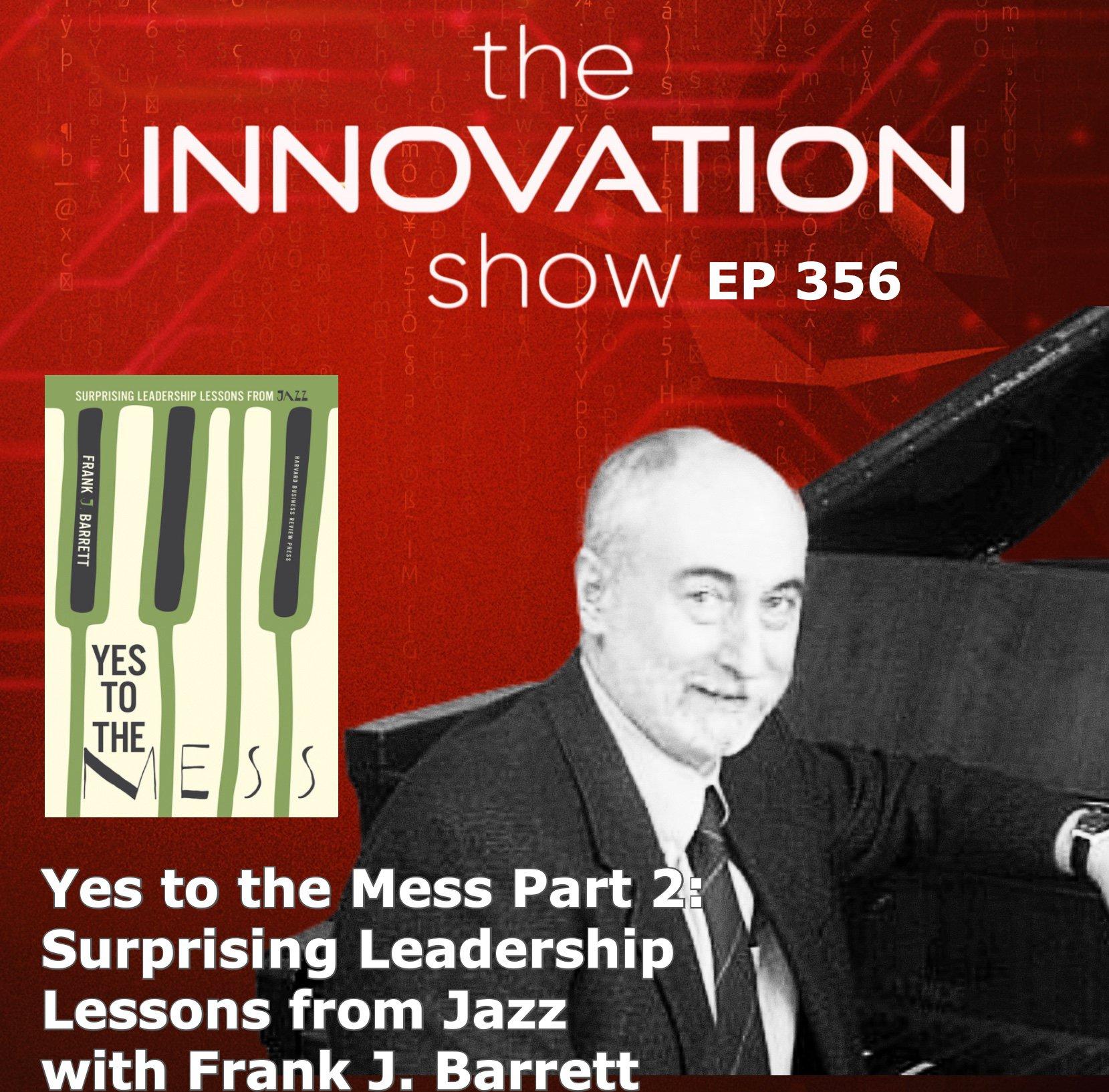
S24 Ep 356Yes to the Mess Part 2: Surprising Leadership Lessons from Jazz with Frank Barrett
The premise of today's book is that nurturing spontaneity, creativity , experimentation, and dynamic synchronization is no longer an optional approach to leadership. It's the only approach. The current velocity of change demands nothing less. It demands paying attention to the mental models, the cultural beliefs and values, the practices and structures that support improvisation. We welcome back the author of: "Yes to the Mess: Surprising Leadership Lessons from Jazz", Frank Barrett. More about Frank: http://yestothemess.org
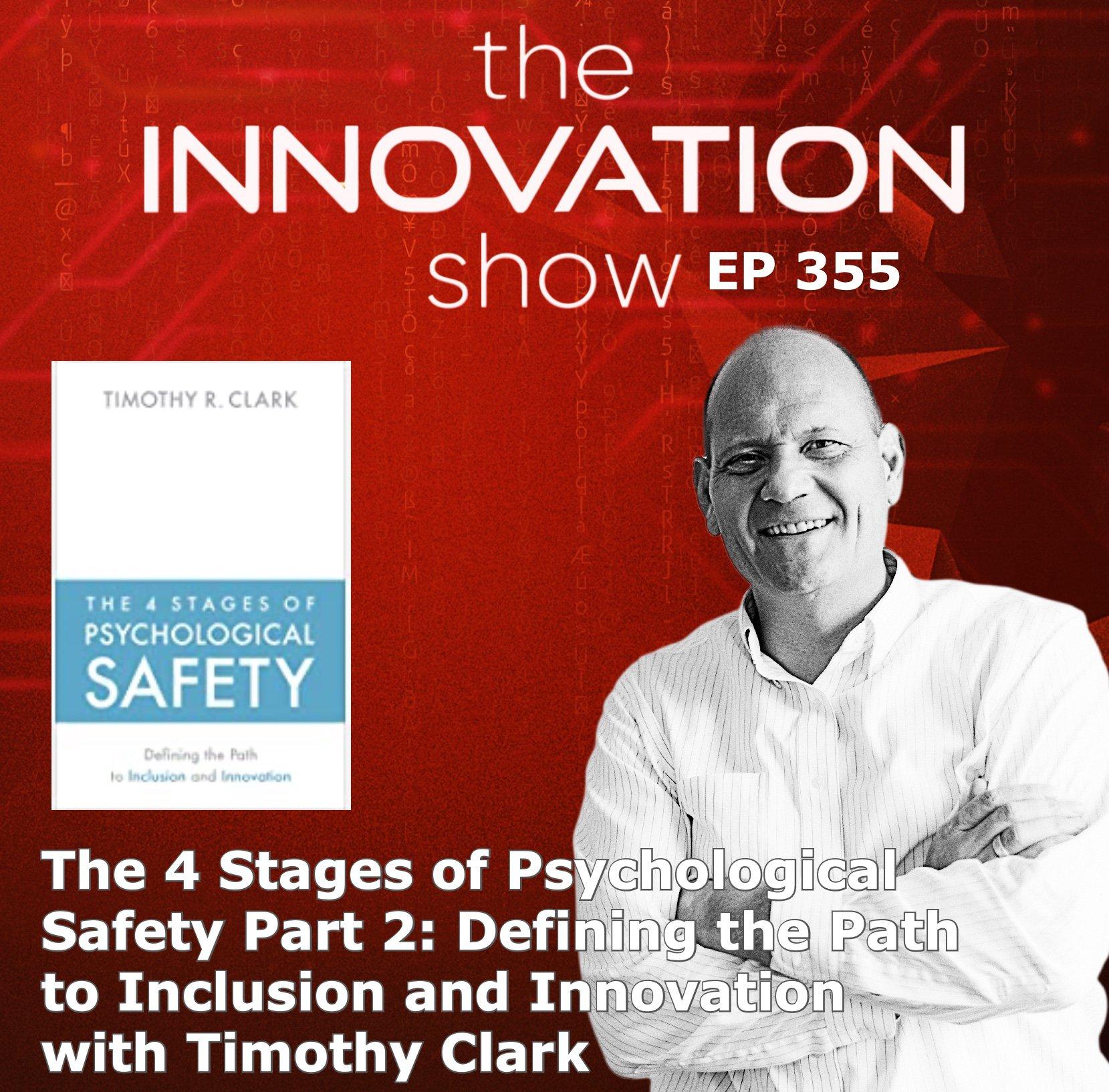
S24 Ep 355The 4 Stages of Psychological Safety Part 2 with Tim Clark
Today's guest has four questions for us…. First, do you truly believe that all men and women are created equal, and do you accept others and welcome them into your society simply because they possess flesh and blood even if their values differ from your own? Second, without bias or discrimination, do you encourage others to learn and grow, and do you support them in that process even when they lack confidence or make mistakes? Third, do you grant others maximum autonomy to contribute in their own way as they demonstrate their ability to deliver results? Fourth, do you consistently invite others to challenge the status quo in order to make things better, and are you personally prepared to be wrong based on the humility and learning mindset you have developed? In large measure, the way you answer these questions will define the way you value human beings and your relationships with them. It will define the way you draw people out or shut them down, create confidence or induce fear, encourage or discourage. It will determine how you lead and influence others and yourself? We welcome back for part 2 the author of "The 4 Stages of Psychological Safety: Defining the Path to Inclusion and Innovation" Timothy Clark More about Tim: https://www.leaderfactor.com/team
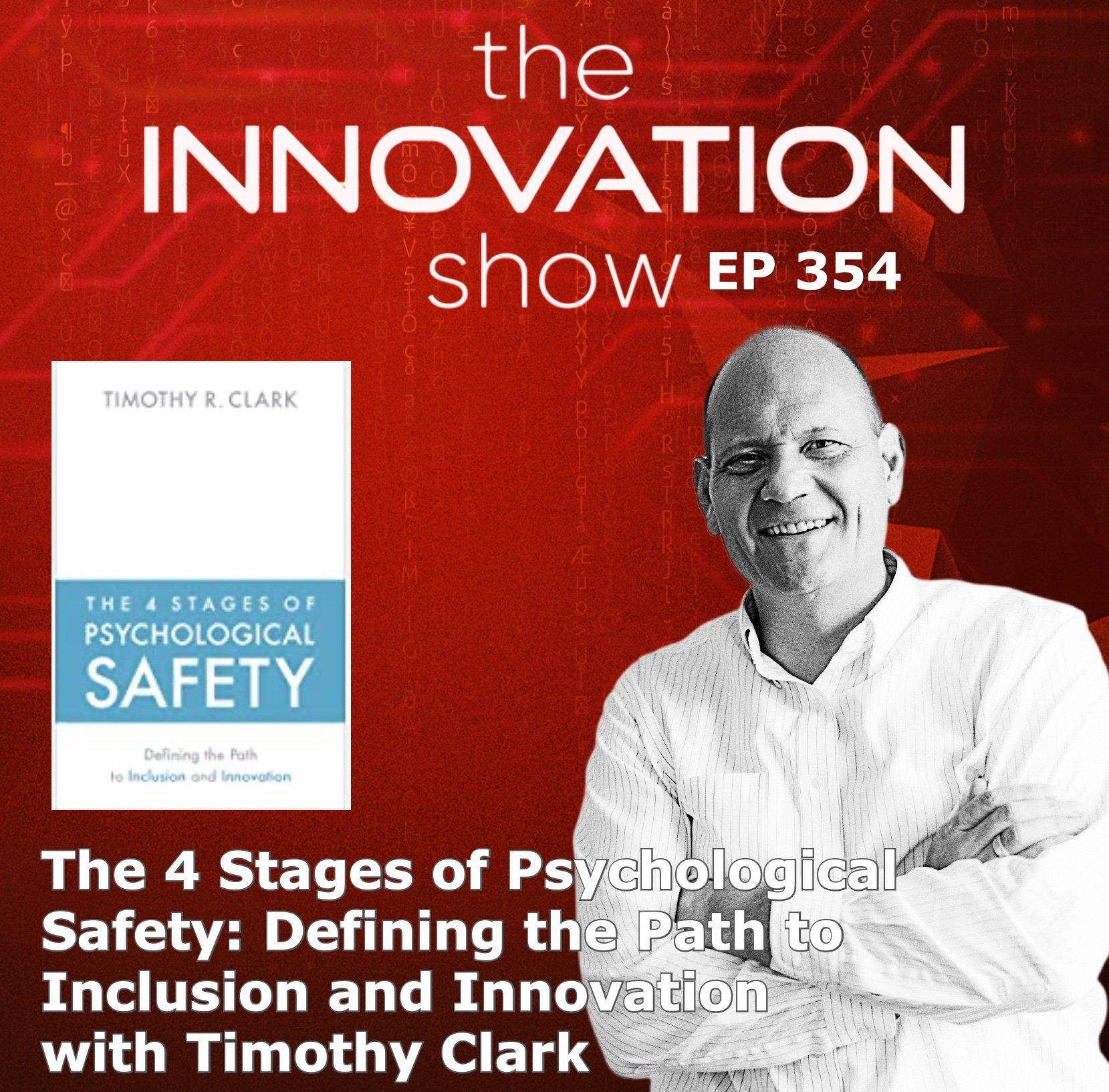
S24 Ep 354The 4 Stages of Psychological Safety with Tim Clark
Today's guest has four questions for us…. First, do you truly believe that all men and women are created equal, and do you accept others and welcome them into your society simply because they possess flesh and blood even if their values differ from your own? Second, without bias or discrimination, do you encourage others to learn and grow, and do you support them in that process even when they lack confidence or make mistakes? Third, do you grant others maximum autonomy to contribute in their own way as they demonstrate their ability to deliver results? Fourth, do you consistently invite others to challenge the status quo in order to make things better, and are you personally prepared to be wrong based on the humility and learning mindset you have developed? In large measure, the way you answer these questions will define the way you value human beings and your relationships with them. It will define the way you draw people out or shut them down, create confidence or induce fear, encourage or discourage. It will determine how you lead and influence others and yourself? We welcome the author of "The 4 Stages of Psychological Safety: Defining the Path to Inclusion and Innovation" Timothy Clark More about Tim: https://www.leaderfactor.com/team
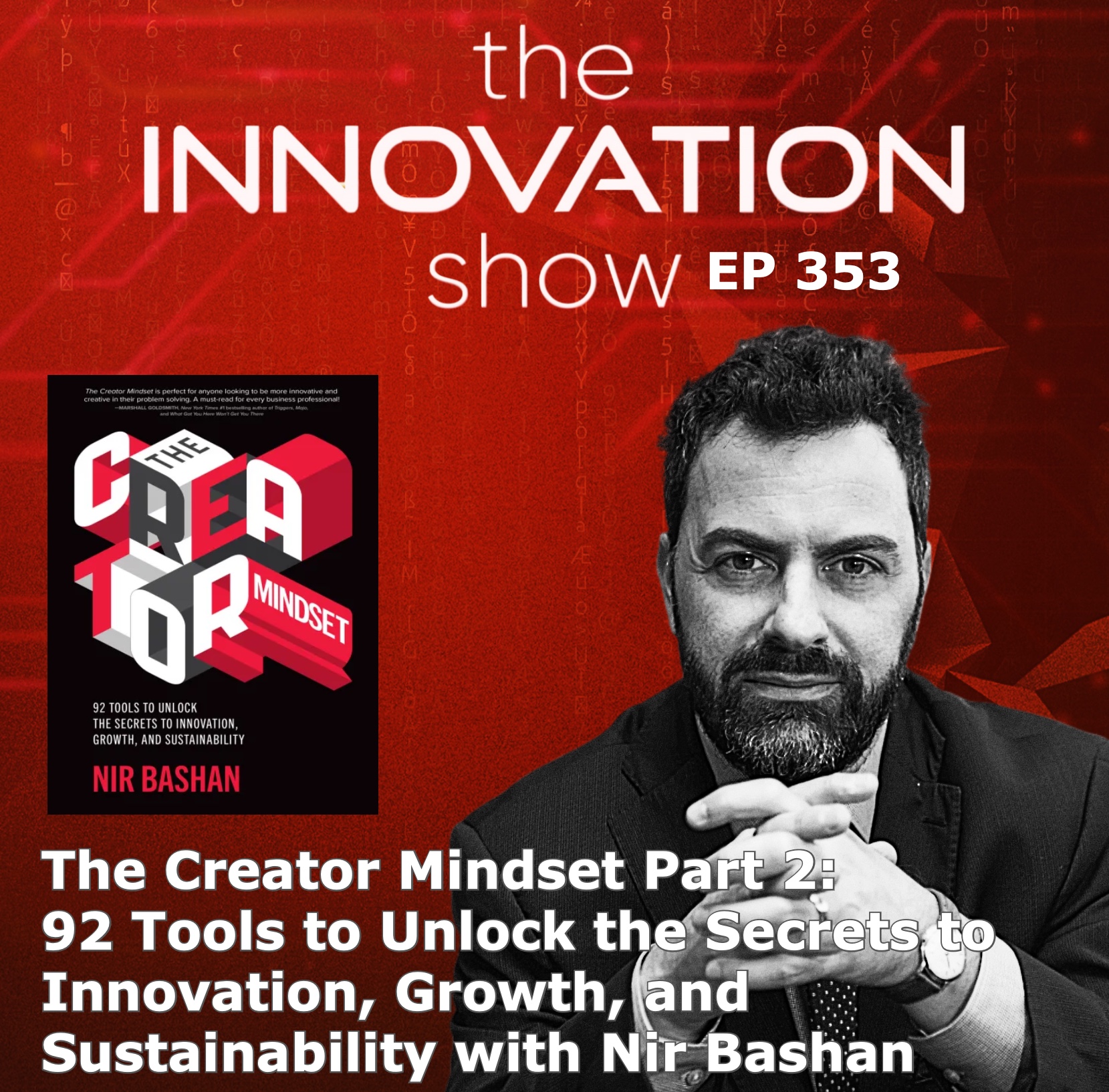
S24 Ep 353The Creator Mindset with Nir Bashan Part 2
Today's book is designed to bring you simple, sound, and practical tools to awaken your creativity at work—even if you don't think you are creative. Not fluff or theories. No bull or fillers. Our guest draws on a lifetime of success in business to give you real actionable tools that you can use to become more creative. And each chapter brims with businesslike action items on how to make creativity happen at work. Meant to be used as a manual which you can draw upon at the office, in business, or in your career, this book is all about teaching you how to awaken your long-lost creativity in order to see the world as it can be, not as it is. We welcome the author of "The Creator Mindset: 92 Tools to Unlock the Secrets to Innovation, Growth, and Sustainability" Nir Bashan Find Nir, well, here: https://www.nirbashan.com
S24 Ep 352The Creator Mindset with Nir Bashan Part 1
Today's book is designed to bring you simple, sound, and practical tools to awaken your creativity at work—even if you don't think you are creative. Not fluff or theories. No bull or fillers. Our guest draws on a lifetime of success in business to give you real actionable tools that you can use to become more creative. And each chapter brims with businesslike action items on how to make creativity happen at work. Meant to be used as a manual which you can draw upon at the office, in business, or in your career, this book is all about teaching you how to awaken your long-lost creativity in order to see the world as it can be, not as it is. We welcome the author of "The Creator Mindset: 92 Tools to Unlock the Secrets to Innovation, Growth, and Sustainability" Nir Bashan More about Nir: https://www.nirbashan.com
S24 Ep 352Smart Change with Art Markman Part 2
Part 2 of this great episode: Habits may help us to carry out our daily routine but they often cause us trouble, from unhealthy eating and smoking, to poor study skills and work routines. We've all experienced that endless frustration when we try to kick a bad habit. The frustration you have now will soon be over. Our guest is a premier cognitive scientist and draws on all the latest scientific research to help us succeed in beating bad habits. With the help of today's book, not only does he help us to understand just how habits are formed and maintained but he equips us with 5 essential tools to help us change our behaviour for the better and, what's more, influence the behaviour of others at work and at home. These same tools can also be used to help people around us change their behaviours, and this book shows us how. It is a great instruction manual for influencing others. It is a pleasure to welcome the author of "Smart Change: Break the habits that hold you back and form the habits of success", Art Markman. More about Art here: http://smartchangebook.com
S24 Ep 350Smart Change with Art Markman Part 1
Habits may help us to carry out our daily routine but they often cause us trouble, from unhealthy eating and smoking, to poor study skills and work routines. We've all experienced that endless frustration when we try to kick a bad habit. The frustration you have now will soon be over. Our guest is a premier cognitive scientist and draws on all the latest scientific research to help us succeed in beating bad habits. With the help of today's book, not only does he help us to understand just how habits are formed and maintained but he equips us with 5 essential tools to help us change our behaviour for the better and, what's more, influence the behaviour of others at work and at home. These same tools can also be used to help people around us change their behaviours, and this book shows us how. It is a great instruction manual for influencing others. It is a pleasure to welcome the author of "Smart Change: Break the habits that hold you back and form the habits of success", Art Markman, welcome to the show More about Art here: http://smartchangebook.com
S24 Ep 349The Perils of Perception with Bobby Duffy
One in ten French people still believe the earth may be flat; One-quarter of Australians think that cavemen and dinosaurs existed at the same time; One in nine Brits think the 9/11 attacks were a US government conspiracy; 15 per cent of Americans believe that the media or government adds secret mind-controlling signals to television transmissions. Our main interest is not niche stupidity or minority belief in conspiracies, but much more general and widespread misperceptions about individual, social and political realities. Do you eat too much sugar? Is violence in the world increasing or decreasing? What proportion of your country are Muslim? What does it cost to raise a child? How much do we need to save for retirement? How much tax do the rich pay? When we estimate the answers to these fundamental questions that directly affect our lives, we tend to be vastly wrong, irrespective of how educated we are. Today's book - informed by over ten exclusive major polling studies by IPSOS across 40 countries - asks why in the age of the internet, where information should be more accessible than ever, we remain so poorly informed. It is a pleasure to welcome the author of The Perils of Perception: Why We're Wrong About Nearly Everything, Bobby Duffy, welcome to the show.

S24 Ep 348LIVE: Choosing Courage LIVE with Jim Detert
Whoop, live in-studio guest in our new studio Choosing Courage LIVE with Jim Detert. Jim is the world's foremost expert on workplace courage, He explains that courage isn't a character trait that only a few possess; it's a virtue developed through practice. We welcome a friend of the Innovation Show and a previous 2-time guest, He is the author of Choosing Courage: The Everyday Guide to Being Brave at Work we welcome Jim Detert. More about Jim: https://jimdetert.com
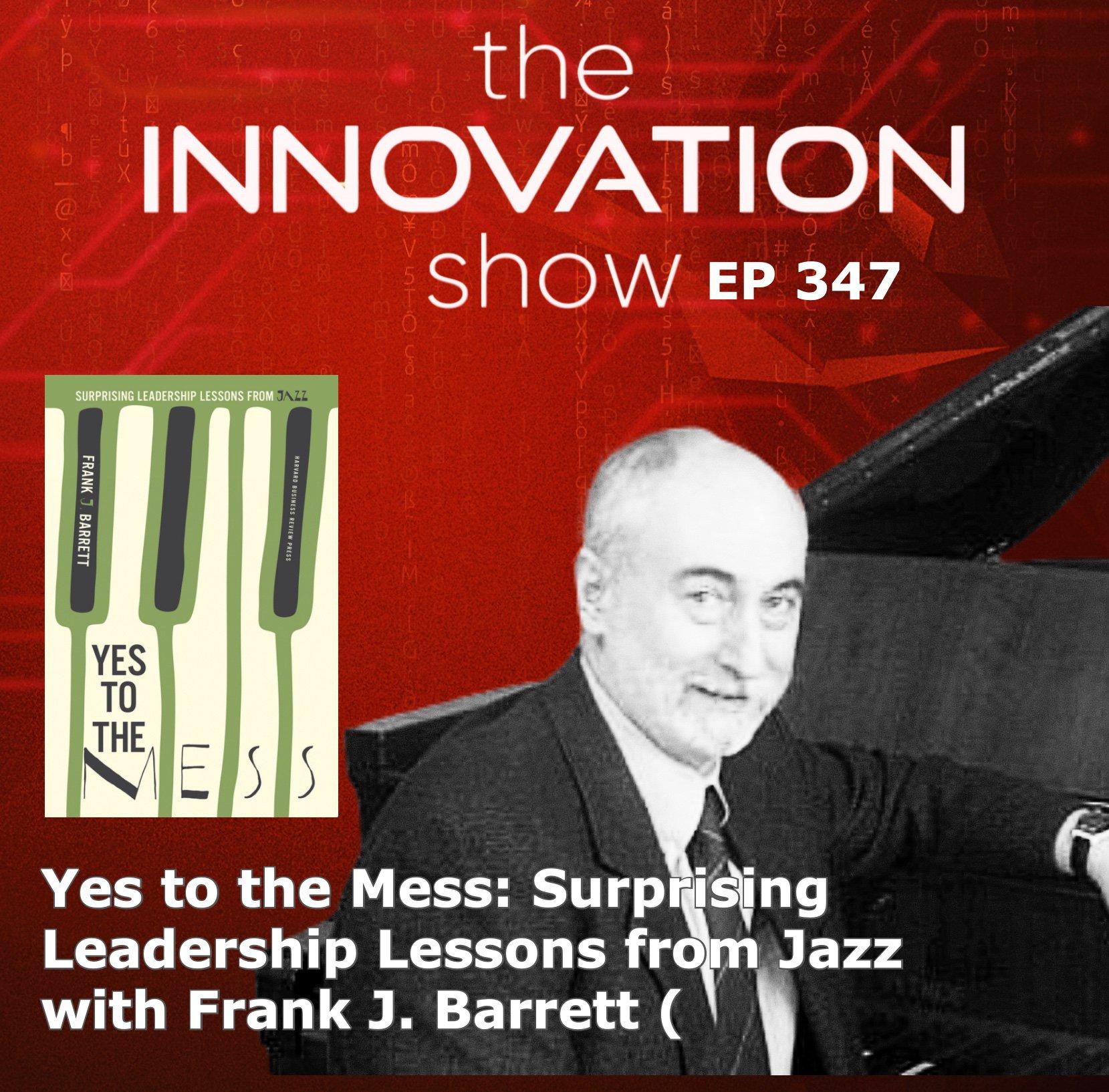
S23 Ep 347Yes to the Mess with Frank Barrett
How do you cope when faced with complexity and constant change at work? Here's what the world's best leaders and teams do: they improvise. They invent novel responses and take calculated risks without a scripted plan or a safety net that guarantees specific outcomes. They negotiate with each other as they proceed, and they don't dwell on mistakes or stifle each other's ideas. In short, they say "yes to the mess" that is today's hurried, harried, yet enormously innovative and fertile world of work. Today's guest describes how, like skilled jazz players, leaders need to master the art of unlearning, perform and experiment simultaneously, and take turns soloing and supporting each other. And with examples that range from manufacturing to the military to high-tech, he illustrates how organizations must take an inventive approach to crisis management, economic volatility, and all the rapidly evolving realities of our globally connected world. It is a pleasure to welcome the author of: Yes to the Mess: Surprising Leadership Lessons from Jazz, Frank Barrett, welcome to the show. More about Frank here: https://www.yestothemess.org
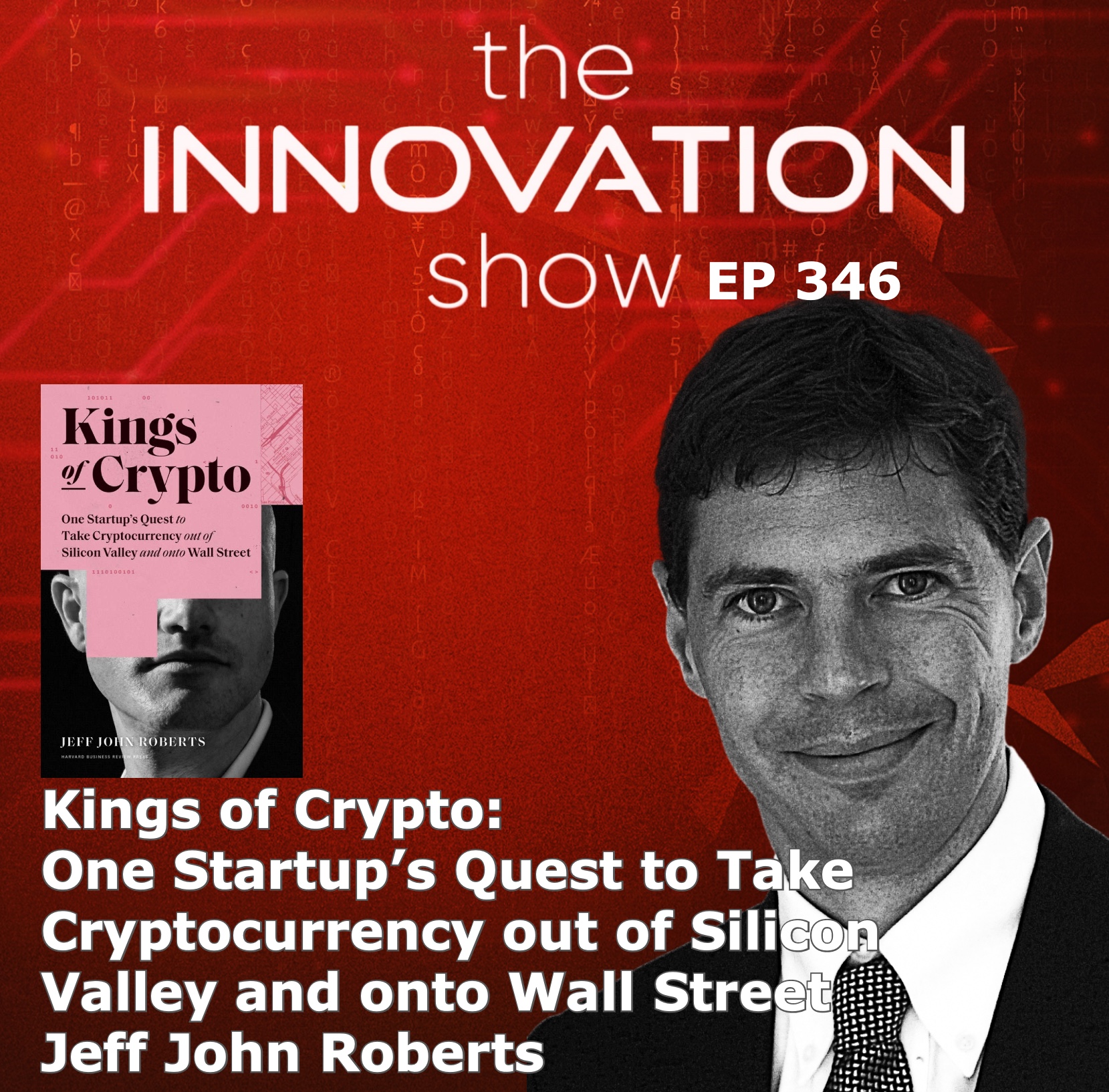
S22 Ep 346Kings of Crypto with Jeff John Roberts
For a moment late in 2018, one bitcoin, which physically amounts to a few electrons blipping on a tiny bit of silicon, was worth $20,000—the same as a pound of gold. Libertarian technologists who believed bitcoin would be the foundation of a new world order saw the moment as an apotheosis. Everyone else saw a bubble. Everyone else was right, and the bubble burst. But bitcoin survived, and the battle for its soul rages on. Today's book drops us into the unfolding drama, tracing the rise, fall, and rebirth of cryptocurrency through the experiences of major players across the globe. We follow Silicon Valley entrepreneur Brian Armstrong and the turbulent rocket ride of his startup, Coinbase, as he tries to take bitcoin mainstream while fighting off hackers, thieves, and zealots. Our guest today keenly observes the world of virtual currencies and what happens when startups try to disrupt the world of high finance. Clear explanations of crypto technology are woven into an amazing landscape full of meme-fueled startup hijinks, hacking (so much hacking!), shady investors, government investigations, billionaire bros and their Lambos, and closed-door meetings with Jamie Dimon. This is the surprising story of the origins of cryptocurrency and how it is changing money forever. We welcome The author of Kings of Crypto One Startup's Quest to Take Cryptocurrency out of Silicon Valley and onto Wall Street Jeff John Roberts
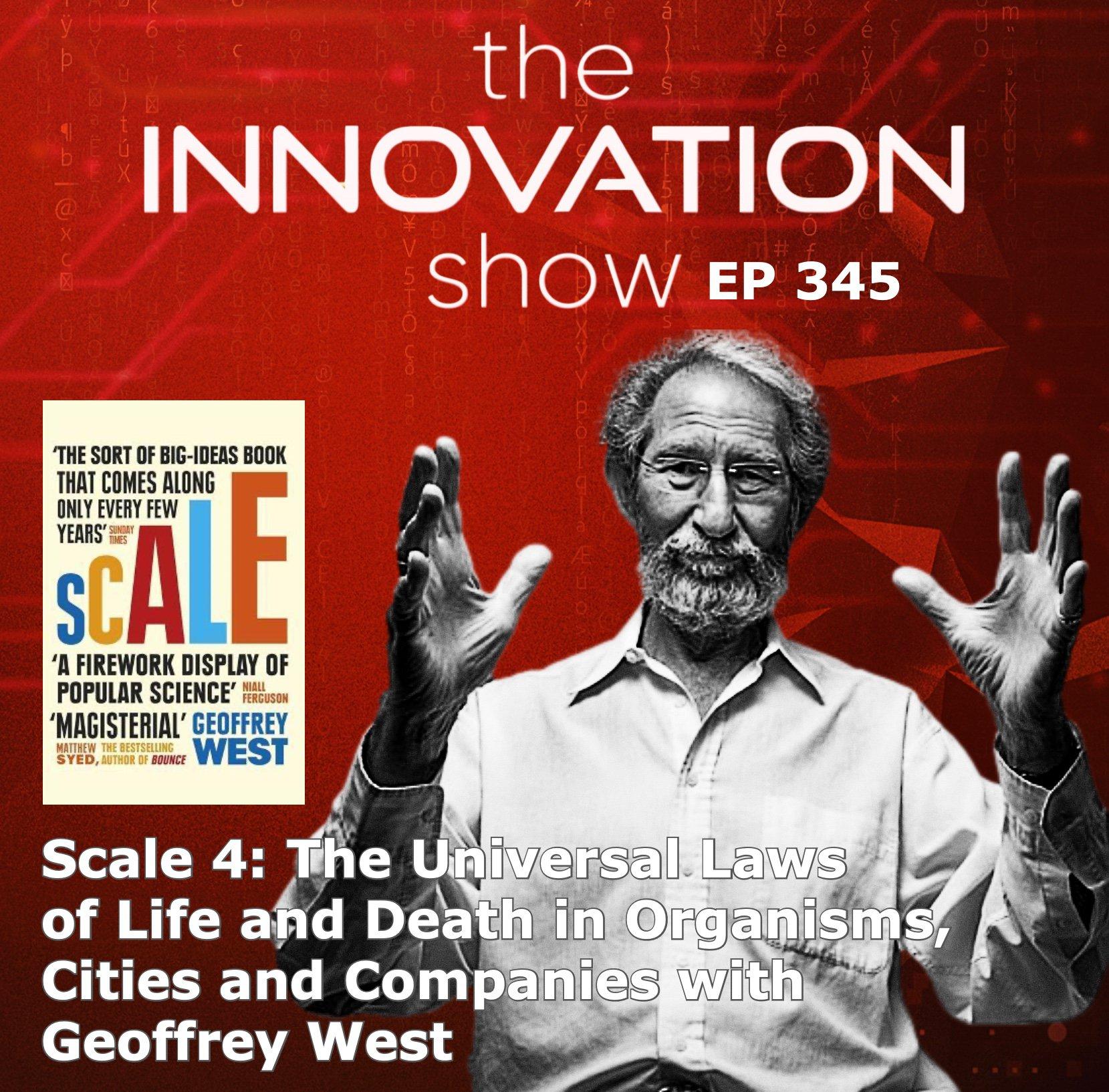
S23 Ep 345Scale with Geoffrey West Part 4
Our guest's research centres on a quest to find unifying principles and patterns connecting everything, from cells and ecosystems to cities, social networks and businesses. Questions he poses include: Why do organisms and ecosystems scale with size in a remarkably universal and systematic fashion? Is there a maximum size of cities? Of animals and plants? What about companies? Can scale show us how to create a more sustainable future? By applying the rigour of physics to questions of biology, He found that despite the riotous diversity in the sizes of mammals, they are all, to a large degree, scaled versions of each other. This speaks to everything from how long we can expect to live to how many hours of sleep we each need. He then made the even bolder move of exploring his work's applicability to cities and to the business world. These investigations have led to powerful insights into the elemental natural laws that bind us together in profound ways, and how all complex systems are dancing to the same simple tune, however diverse and unrelated they may seem. It is a great pleasure to welcome the author of "Scale: The Universal Laws of Life and Death in Organisms, Cities and Companies" Geoffrey West
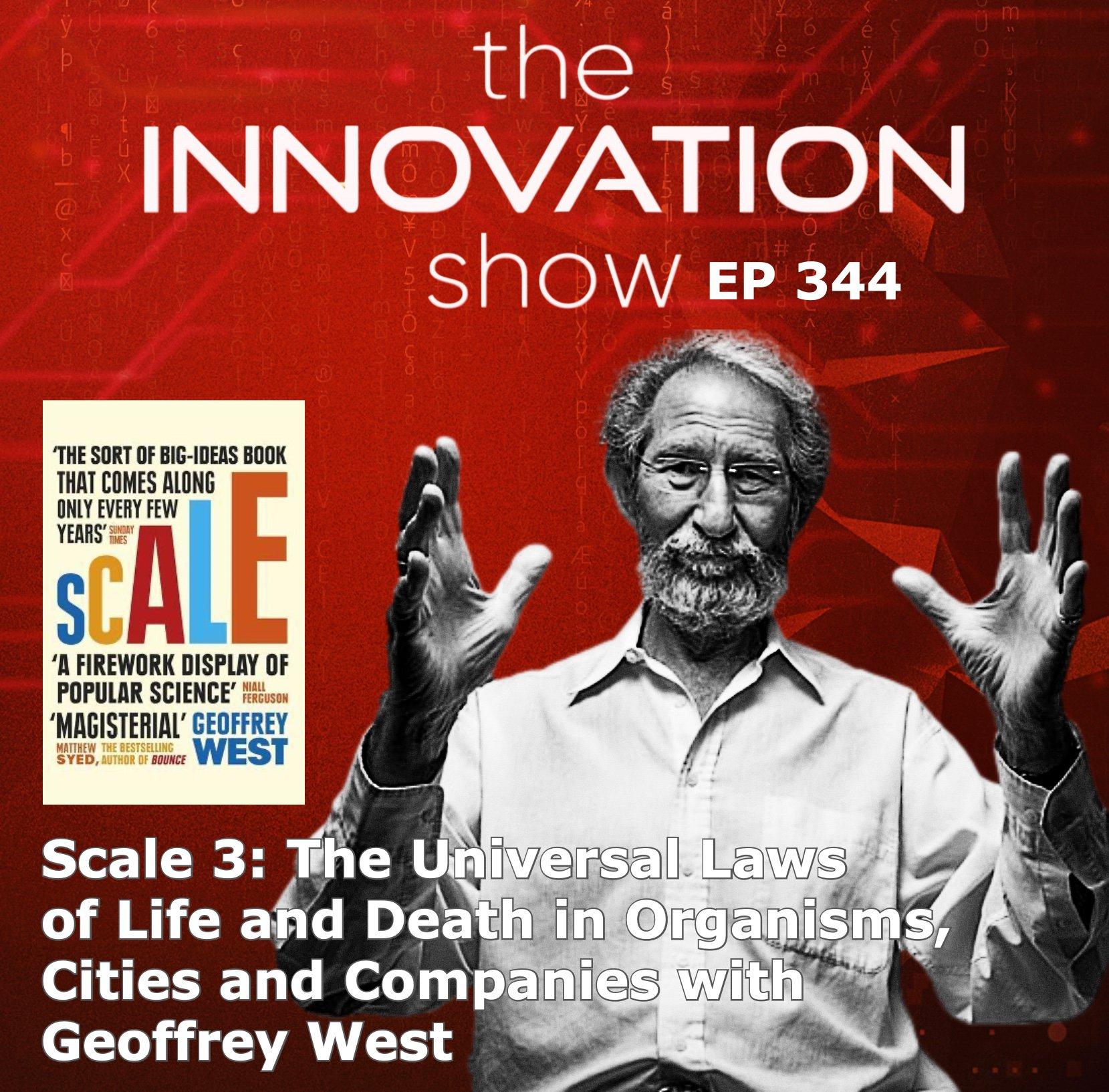
S23 Ep 344Scale with Geoffrey West Part 3
Our guest's research centres on a quest to find unifying principles and patterns connecting everything, from cells and ecosystems to cities, social networks and businesses. Questions he poses include: Why do organisms and ecosystems scale with size in a remarkably universal and systematic fashion? Is there a maximum size of cities? Of animals and plants? What about companies? Can scale show us how to create a more sustainable future? By applying the rigour of physics to questions of biology, He found that despite the riotous diversity in the sizes of mammals, they are all, to a large degree, scaled versions of each other. This speaks to everything from how long we can expect to live to how many hours of sleep we each need. He then made the even bolder move of exploring his work's applicability to cities and to the business world. These investigations have led to powerful insights into the elemental natural laws that bind us together in profound ways, and how all complex systems are dancing to the same simple tune, however diverse and unrelated they may seem. It is a great pleasure to welcome back the author of "Scale: The Universal Laws of Life and Death in Organisms, Cities and Companies" Geoffrey West
S21 Ep 343Scale with Geoffrey West Part 2
Our guest's research centres on a quest to find unifying principles and patterns connecting everything, from cells and ecosystems to cities, social networks and businesses. Questions he poses include: Why do organisms and ecosystems scale with size in a remarkably universal and systematic fashion? Is there a maximum size of cities? Of animals and plants? What about companies? Can scale show us how to create a more sustainable future? By applying the rigour of physics to questions of biology, He found that despite the riotous diversity in the sizes of mammals, they are all, to a large degree, scaled versions of each other. This speaks to everything from how long we can expect to live to how many hours of sleep we each need. He then made the even bolder move of exploring his work's applicability to cities and to the business world. These investigations have led to powerful insights into the elemental natural laws that bind us together in profound ways, and how all complex systems are dancing to the same simple tune, however diverse and unrelated they may seem. It is a great pleasure to welcome the author of "Scale: The Universal Laws of Life and Death in Organisms, Cities and Companies" Geoffrey West
S21 Ep 342Herb Cohen - Negotiate This!
Our guest's books have sold well over one million copies and spent a whole nine months on the New York Times bestseller list! Our guest is a master negotiator and has been successfully negotiating everything from insurance claims to hostage releases to his own son's hair length and hundreds of other matters for over five decades. Ever since coining the term "win-win" in 1963, he has been teaching people the world over how to get what they want in any situation. As a result of his extensive negotiating experience and his unique presentation style, he is internationally renowned as someone who can quickly grasp both sides of an issue and get the most for his client out of a difficult negotiation. His advice? "Simple," he says, "I care...but not that much!" In today's book - and in his signature humorous and self-deprecating style - he explains how the reader can learn powerful yet subtle negotiating ploys to help them in their business, career, and even family relationships. As our guest puts it, "Negotiation is the game of life." It is an honour to host the author of You Can Negotiate Anything, The Game of Negotiating and the focus of today's episode "Negotiate This!: By Caring, But Not T-H-A-T Much", Herb Cohen
S21 Ep 341Scale with Geoffrey West
Our guest's research centres on a quest to find unifying principles and patterns connecting everything, from cells and ecosystems to cities, social networks and businesses. Questions he poses include: Why do organisms and ecosystems scale with size in a remarkably universal and systematic fashion? Is there a maximum size of cities? Of animals and plants? What about companies? Can scale show us how to create a more sustainable future? By applying the rigour of physics to questions of biology, he found that despite the riotous diversity in the sizes of mammals, they are all, to a large degree, scaled versions of each other. This speaks to everything from how long we can expect to live to how many hours of sleep we each need. He then made the even bolder move of exploring his work's applicability to cities and to the business world. These investigations have led to powerful insights into the elemental natural laws that bind us together in profound ways, and how all complex systems are dancing to the same simple tune, however diverse and unrelated they may seem. It is a great pleasure to welcome the author of "Scale: The Universal Laws of Life and Death in Organisms, Cities and Companies" Geoffrey West
S21 Ep 340Rishad Tobaccowala - Restoring the Soul of Business
Today's guest hopes it will leave you seeing, thinking, and feeling differently about how to grow and remain relevant in these transformative times. How to grow yourself, grow those around you, and grow your practice, passion, or company. How to remain relevant by understanding what it takes to make sense and thrive in a world of rapid technological, demographic, and global upheaval. And to do so by questioning much of what business takes for granted: •why data is often not the way forward and we may have too much of it •why change sucks •why having more—rather than fewer—meetings is better •why it is essential to have a culture and courage that calls out "the turd on the table. You not only will learn what makes great leaders but also how to deal with, or not become, a bad boss. Our guest has served Over a forty-year career at the companies of the Publicis Groupe, an eighty-thousand-person global marketing and business transformation firm, He helped found and cofound some of the first digital agencies and future-oriented strategic consultancies in the world as well as contributing to the shaping and growth of one of the two largest buyers of digital, data-driven media in the world. We welcome the author of "Restoring the Soul of Business: Staying Human in the Age of Data" Rishad Tobaccowala
S21 Ep 339Guy Perelmuter - Present Future Part 4
The purpose of today's book is twofold. First, to overthrow this myth that we are "living a period of change." The entire history of civilization is all about change—and, more than that, about technological change. This is what defines us as a species, this is what propels us forward. Change is coming faster and faster, that's for sure—and it will likely accelerate even more. And second, to highlight and explain not only the benefits but also the risks that a tech-driven lifestyle throws at us. The future is already here. We're living in it. It's all around us—a present future—and in this book, we'll take a journey to discover just what that means. It is a pleasure to welcome back the author of "Present Future: Business, Science, and the Deep Tech Revolution" Guy Perelmuter, welcome back to the show. Present future here: presentfuturebook.com
S21 Ep 338Gorillas Can Dance Part 4 with Shameen Prashantham
Today's book is about one way in which large corporations can be entrepreneurial: by partnering with external startups. Specifically, it is about key principles and practices that have been distilled from the entrepreneurial actions of managers who helped their corporations engage with startups. To be clear, as our audience knows well by now, opening an innovation lab here and organizing a hackathon there won't make an Impactful difference. This is about substantive programmatic interventions that could ultimately underpin a more fundamental change of the organization as a whole becoming more entrepreneurial. This book tackles corporate-startup partnering in three parts. The Why, The How and The Where. In part one, our guest gave an overview of his over 15 years of research, which involved over 400 interviews with corporate managers, startup entrepreneurs, and other individuals involved in corporate-startup partnering and in part 1, he introduced some of the key players who placed the way to the Microsoft gorilla learning to dance with startups and … vice versa. We welcome back the author of "Gorillas Can Dance: Lessons from Microsoft and Other Corporations on Partnering with Startups" Shameen Prashantham. In Part 1 we focussed on an overview of startup partnering. Part 2 zoomed into the Why to partner in the first place and the asymmetries that exist between startup and Gorilla. Part 3 was all about the How! The finale is about the Where and the bigger Why. More about this book and Shameen: https://www.gorillascandance.com
S21 Ep 337Gorillas Can Dance Part 3 with Shameen Prashantham
Today's book is about one way in which large corporations can be entrepreneurial: by partnering with external startups. Specifically, it is about key principles and practices that have been distilled from the entrepreneurial actions of managers who helped their corporations engage with startups. To be clear, as our audience knows well by now, opening an innovation lab here and organizing a hackathon there won't make an Impactful difference. This is about substantive programmatic interventions that could ultimately underpin a more fundamental change of the organization as a whole becoming more entrepreneurial. This book tackles corporate-startup partnering in three parts. The Why, The How and The Where. In part one, our guest gave an overview of his over 15 years of research, which involved over 400 interviews with corporate managers, startup entrepreneurs, and other individuals involved in corporate-startup partnering and in part 1, he introduced some of the key players who placed the way to the Microsoft gorilla learning to dance with startups and … vice versa. We welcome back the author of "Gorillas Can Dance: Lessons from Microsoft and Other Corporations on Partnering with Startups" Shameen Prashantham. In part 1 we focussed on an overview of startup partnering. Part 2 zoomed into the Why to partner in the first place and the asymmetries that exist between startup and Gorilla. Today, we focus on the How! More about this book and Shameen: https://www.gorillascandance.com
S21 Ep 336Gorillas Can Dance Part 2 with Shameen Prashantham
Today's book is about one way in which large corporations can be entrepreneurial: by partnering with external startups. Specifically, it is about key principles and practices that have been distilled from the entrepreneurial actions of managers who helped their corporations engage with startups. To be clear, as our audience knows well by now, opening an innovation lab here and organizing a hackathon there won't make an Impactful difference. This is about substantive programmatic interventions that could ultimately underpin a more fundamental change of the organization as a whole becoming more entrepreneurial. This book tackles corporate-startup partnering in three parts. The Why, The How and The Where. In part one, our guest gave an overview of his over 15 years of research, which involved over 400 interviews with corporate managers, startup entrepreneurs, and other individuals involved in corporate-startup partnering and in part 1, he introduced some of the key players who placed the way to the Microsoft gorilla learning to dance with startups and … vice versa. We welcome back the author of "Gorillas Can Dance: Lessons from Microsoft and Other Corporations on Partnering with Startups" Shameen Prashantham. Today we focus on the Why to partner in the first place and the asymmetries that exist between startup and Gorilla. More about Shameen: https://www.gorillascandance.com
S21 Ep 335Gorillas Can Dance Part 1 with Shameen Prashantham
Our guest today delivers a proven roadmap for large corporations collaborating with startups. Drawing on over a decade of international research, he explains the "why," "how," and "where" of corporate-startup partnering. In his book, you'll learn: * How to focus on the three pillars of synergy, interface, and exemplar to achieve outstanding results in your partnership * Why the very thing that attracts large corporations to startups—their significant differences—also makes it difficult to work together * Where in the world to find your ideal startup partnerships and how to use them as a force for good We welcome the author of "Gorillas Can Dance: Lessons from Microsoft and Other Corporations on Partnering with Startups" Shameen Prashantham In Part 1 we cover some context before Parts 2,3 & 4, the Why, How and Where You Can find Shameen here: https://www.gorillascandance.com

S21 Ep 334Finding Inner Safety with Nerina Ramlakhan
When we work hard, sometimes we put our mental health on the backburner. Stress, a lack of sleep and other factors can quickly lead to burnout. How can we balance our goals with a peaceful lifestyle? Replace stress, burnout and surviving with resilience, energy optimisation and thriving. We welcome the author of Finding Inner Safety: The Key to Healing, Thriving, and Overcoming Burnout, Dr Nerina Ramlakhan
S21 Ep 333Dan Millman - Peaceful Heart, Warrior Spirit
Our guest today tells us "This story is mine, but the way belongs to us all." His books and teachings have been a guiding light to millions of people. Now comes the true story of his search for the good life, a quest for meaning in the modern world. In vivid detail, he describes his evolution from childhood dreamer to world-class athlete, including the events that led him to write the spiritual classic Way of the Peaceful Warrior. Over the course of two decades he was guided by four radically different mentors: The Professor, a scientist-mystic; the Guru, a charismatic spiritual master; the Warrior-Priest, a rescuer of lost souls; and the Sage, a servant of reality. Each of them generated mind-expanding experiences that prepared our guest for his calling as a down-to-earth spiritual teacher. We welcome the author of Peaceful Heart, Warrior Spirit, Dan Millman welcome to the show