
The Innovation Show
764 episodes — Page 6 of 16
S23 Ep 431Karen Dillon - Part 2: How Will You Measure Your Life?
Our guest was the Harvard Business Review editor until 2011, when today's book changed her life. She graduated from Cornell University and Northwestern University's Medill School of Journalism. In 2011 she was named by Ashoka as one of the world's most influential and inspiring women. She is also an incredible author and has co-authored with the late Clayton Christensen. She is here today to discuss the concepts of one of my favourite books, which also changed my life's direction. We welcome back for part 2, the co-author of How Will You Measure Your Life? Karen Dillon. Find Karen here: https://www.karendillon.net
S23 Ep 430Karen Dillon - How Will You Measure Your Life?
Our guest was the Harvard Business Review editor until 2011, when today's book changed her life. She graduated from Cornell University and Northwestern University's Medill School of Journalism. In 2011 she was named by Ashoka as one of the world's most influential and inspiring women. She is also an incredible author and has co-authored with the late Clayton Christensen. She is here to discuss the concepts of one of my favourite books, which also changed my life's direction. We welcome the co-author of How Will You Measure Your Life? Karen Dillon. Find Karen here: https://www.karendillon.net
S23 Ep 429Hal Gregersen - The Innovator's DNA
The genesis of today's book centred on a question posed years ago to "disruptive technologies" coauthor Clayton Christensen: where do disruptive business models come from? Christensen's best-selling books, The Innovator's Dilemma and The Innovator's Solution, conveyed important insight into the characteristics of disruptive technologies, business models, and companies. Today's book emerged from an eight-year collaborative study in which our guest sought a richer understanding of disruptive innovators —who they are and the innovative companies they create. The project's primary purpose was to uncover the origins of innovative—and often disruptive— business ideas. Most of us think creativity is an entirely cognitive skill; it all happens in the brain. A critical insight from our research is that one's ability to generate innovative ideas is not merely a function of the mind but also a function of behaviours. This is good news for us all because it means we can improve our creative impact if we change our behaviours We welcome Hal Gregersen, co-author of The Innovator's DNA Find Hal here: https://halgregersen.com
S23 Ep 428Mark W. Johnson - Reinventing Your Business Model
More than a decade ago, Mark Johnson, SAP's Henning Kagermann, and Clayton Christensen hashed out the principles of business model reinvention in the pages of the Harvard Business Review. Essentially, a business model can be broken down into four distinct elements: A value proposition 2. Resources 3. Processes, 4. A profit formula This means in practice that the new and different must be separated and even protected from the tried and true. As Mark says, "To play a new game on a new field requires a new game plan." —Clayton M. Christensen It is a pleasure to welcome the author of multiple titles, a great friend of the show, and the co-author of that 2008 paper Clay mentioned, a Top 50 HBR article of all time, Reinventing Your Business Model; Mark W. Johnson. That HBR article: https://hbr.org/2008/12/reinventing-your-business-model
S23 Ep 427Michael B Horn. - Disrupting Class
Disrupting Class is an unsettling title for a book about the schooling process. The title conveys multiple meanings. The principal message is that disruption can usefully frame why schools have struggled to improve and how to solve these problems. Welcome to another episode in our series to celebrate the life work and theories of Clayton Christensen; today's episode Is on his 2008 book, Disrupting Class. We welcome the co-author of "Disrupting Class, How Disruptive Innovation Will Change the Way the World Learns: Michael B Horn Video of Clay https://www.youtube.com/watch?v=TbAGRSPw8ZI Timestamps: 00:00:00 Intro 00:03:02 Clayton Christensen Relationship 00:05:53 The Why of Disrupting Class 00:08:14 What Does The Theory Have to Say? 00:10:37 Intrinsic v Extrinsic Motivation and Jobs Theory 00:14:47 Interdependence and Modularity 00:22:15 Organisational Design and Authority 00:28:40 Train people how to think not what to think 00:29:37 Model of Disruptive Innovation 00:32:42 Non-Consumption Contexts 00:37:42 Resistance from the Status Quo 00:41:02 Cramming 00:46:06 RCA, Vacuum Tubes, Sony and Transistors 00:49:09 Incubation Outside the Core 00:53:43 Value Network and Ecosystem 00:56:28 The Role of Regulation 01:02:13 Jobs To Be Done Theory 01:06:12 Democratising the theories 01:10:10 Final Thoughts on Disrupting Education 01:10:10 Final Thoughts on Clayton Christensen
S23 Ep 426Scott D. Anthony - Seeing What's Next
Some essential lessons in "Seeing What's Next" relate to disruptive innovations. Four critical lessons are: 1. Disruption is a process, not an event. 2. Disruption is a relative phenomenon. What is disruptive to one company may be sustaining to another company. 3. Different or radical technology does not equal disruptive. 4. Disruptive innovations are not limited to high-tech markets. Disruption can occur in any product or service market and can even help explain competition among national economies. Today's book shows how to use the theories of innovation developed in The Innovator's Dilemma and The Innovator's Solution—and introduces some new ones as well. The book argues that it is possible to predict which companies will win and which will lose in a given situation--and provides a practical framework for doing so. We are joined by a long-time collaborator, friend and student of both Clayton Christensen, and he is a long-time friend of this show, Scott D. Anthony The HBR article Scott mentioned: https://hbr.org/2022/01/persuade-your-company-to-change-before-its-too-late

S23 Ep 425Michael E. Raynor - The Innovator's Solution
The Innovator's Dilemma summarised a theory that explains how, under certain circumstances, the mechanism of profit-maximising resource allocation causes well-run companies to get killed. The Innovator's Solution, in contrast, summarises a set of theories that can guide managers who need to grow new businesses with predictable success—to become the disruptors rather than the disruptees—and ultimately kill the well-run, established competitors. To succeed predictably, disruptors must be good theorists. As they shape their growth business to be disruptive, they must align every critical process and decision to fit the disruptive circumstance. We are joined to share some concepts from The Innovator's Solution by Clayton Christensen's co-author Michael E. Raynor Articles mentioned Skate to Where the Money Will Be by Clayton M. Christensen, Michael E. Raynor, and Matthew Verlinden https://hbr.org/2001/11/skate-to-where-the-money-will-be Of waves and ripples: Disruption theory's newest critic tries to make a splash by Michael E. Raynor https://www2.deloitte.com/us/en/insights/topics/innovation/disruptive-innovation-theory-lepore-response.html
S14 Ep 424Paul Carlile - The Cycles of Theory Building
The paper I wanted to share today aims to provide a common language about the research process that helps management scholars spend less time defending the style of research they have chosen and build more effectively on each other's work. I felt this series on Clayton Christensen's work and theories would be incomplete without this episode. It is a great pleasure to welcome the co-author of that paper and a person who has built on this work considerably, Paul Carlile. Papers mentioned in the episode are listed here: https://www.bu.edu/questrom/profile/paul-carlile/
S23 Ep 423Ron Adner - Asymmetric Motivation and Skills
Our guest's award-winning research introduces a new perspective on value creation and competition when industry boundaries break down in the wake of ecosystem disruption. His two books, The Wide Lens and Winning the Right Game, have been heralded as landmark contributions to strategy literature. Clayton Christensen described his work as "Path-breaking", and Jim Collins has called him "One of our most important strategic thinkers for the 21st century." It is a pleasure to welcome Ron Adner. Find Ron here: https://ronadner.com
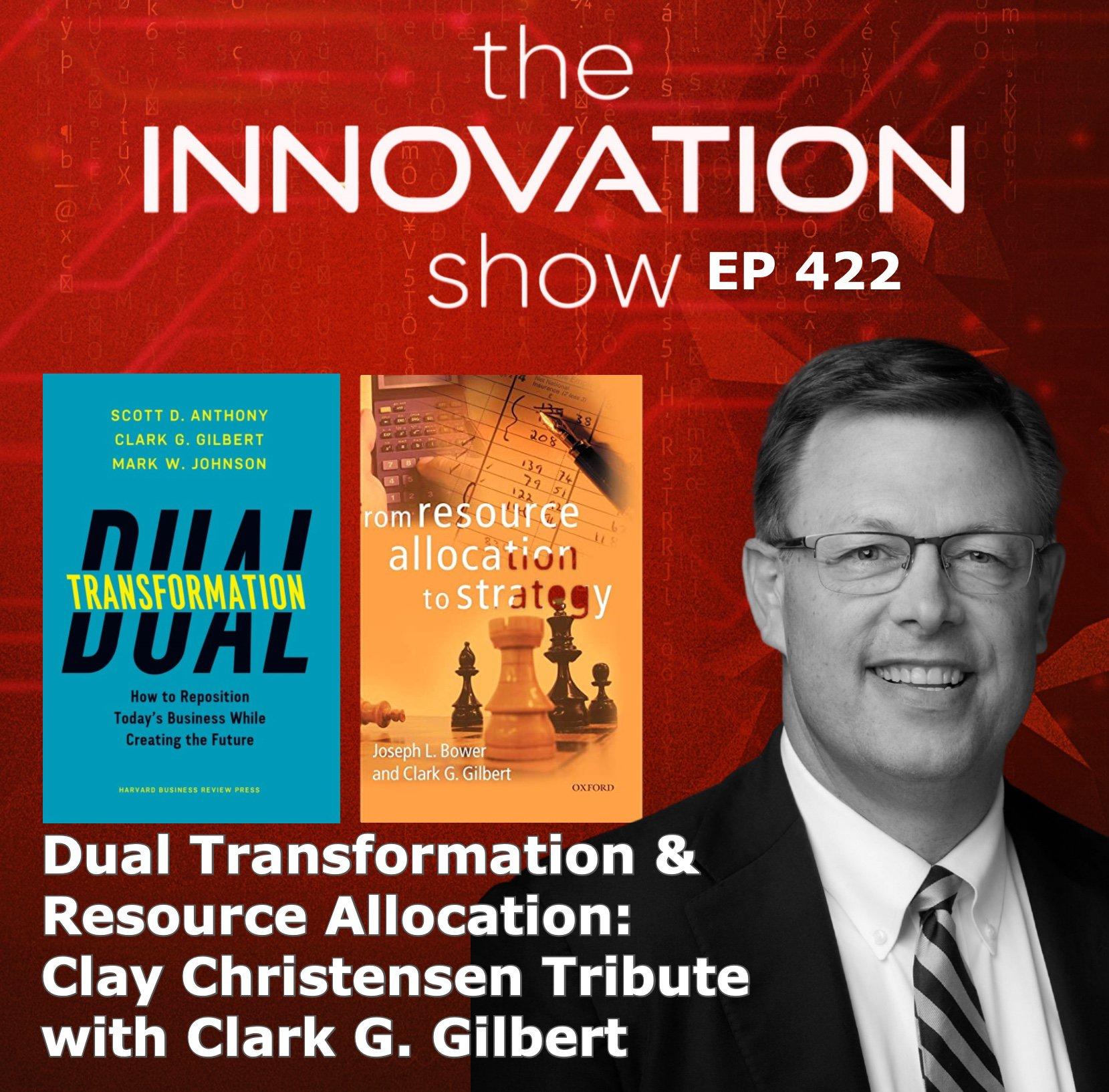
S23 Ep 422Clark G. Gilbert on Dual Transformation
In 2003, media companies and newspapers were in free fall, when American newspapers earned only a tiny percentage of revenue from digital. The Deseret News and Deseret Digital Media were the envy of others, with more than 50 percent of the organization's combined net income coming from digital sources. All this a little more than three years after a former Harvard Business School professor took over the company. How did he do it? He developed his strategy thanks to his work with Clayton Christensen and employed the research to recalibrate how Deseret is organised and does business. Today, he has recalibrated his life and reallocated his resources to causes other than the business world. More about that shortly. First and foremost, he is with us to pay tribute to his friend, share how his theories helped him perform a spectacular turnaround in the media industry and share insights from his book, "Dual Transformation, How to Reposition Today's Business While Creating the Future." It is a rare treat and absolute honour to spend time with the author of "Dual Transformation" with Scott D Anthony and Mark Johnson and "From Resource Allocation to Strategy" with our previous guest Joe Bower. Clark Gilbert, welcome to the show.
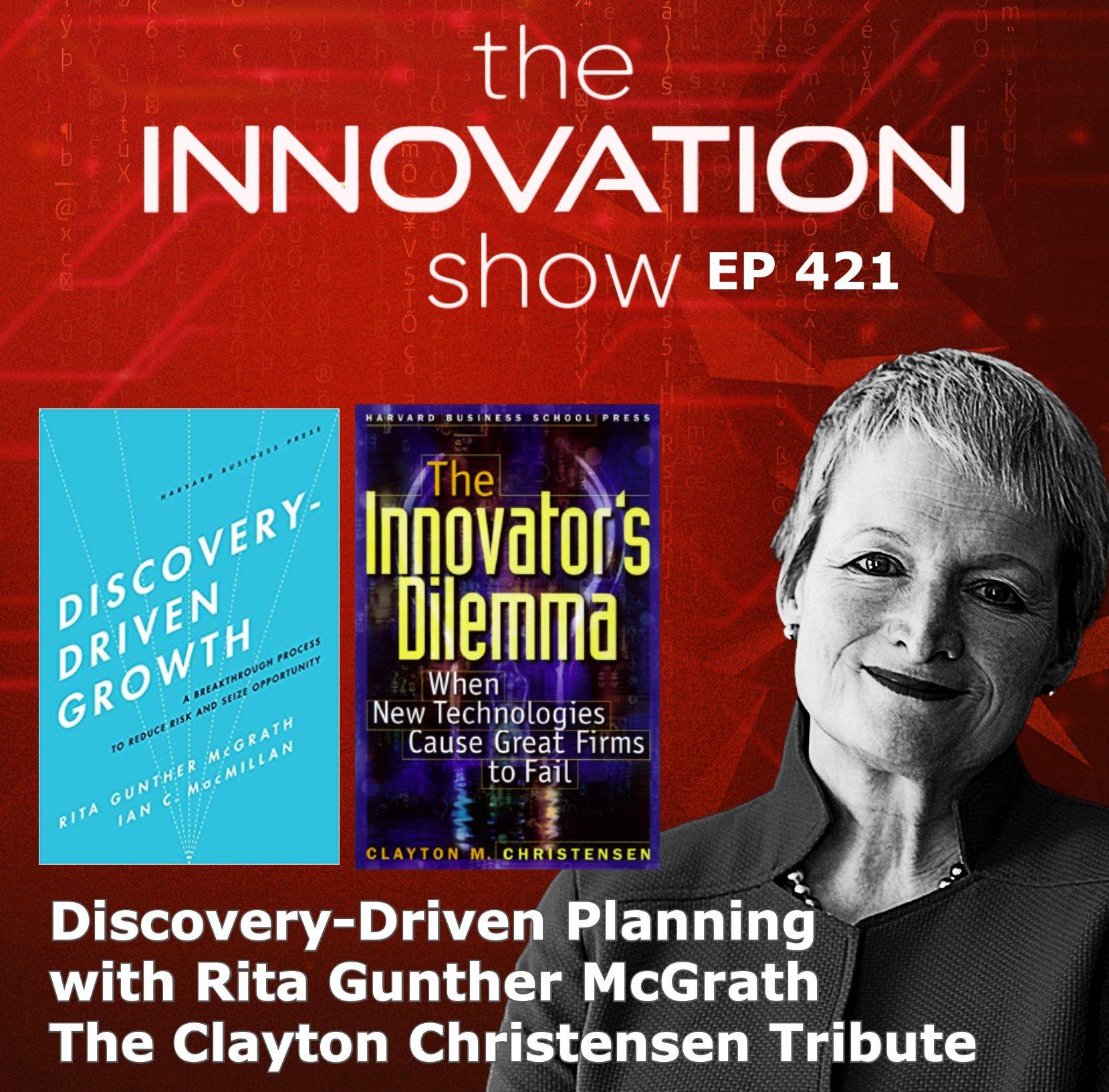
S23 Ep 421Discovery-Driven Planning with Rita Gunther McGrath The Clayton Christensen Tribute
We covered the Innovator's Dilemma with Matthew Christensen in the first part of this series, but we did not cover Chapter 7 of the Innovator's Dilemma,that chapter Is entitled "Discovering New and Emerging Markets" It opens as follows: "Markets that do not exist cannot be analyzed: Suppliers and customers must discover them together. Not only are the market applications for disruptive technologies unknown at the time of their development, they are unknowable. The strategies and plans that managers formulate for confronting disruptive technological change, therefore, should be plans for learning and discovery rather than plans for execution. This is a crucial point to understand because managers who believe they know a market's future will plan and invest very differently from those who recognize the uncertainties of a developing market." You may know those to be the words of Clayton Christensen, but what you may not know is that this concept of discovery-driven growth stems from the work of a very special friend of the Innovation Show, it is an immense pleasure to welcome Rita McGrath. Topics Covered on this episode: 00:00:00 - Intro and Sponsor 00:02:28 Rita McGrath Welcome 00:04:15 Clayton Christensen Relationship 00:07:35 Discovery-Driven Planning 00:12:05 Client Example of Too Attached to Outcome 00:13:23 Redefining Failure: Failing Fast is Not Always Failing 00:14:04 Example of Varo Bank 00:18:51 KittyHawk Example 00:20:54 The Role of Luck 00:24:51 Honda SuperCub and NonConsumers 00:27:50 Jobs To Be Done and The McLean Hamburger 00:29:51 Origins of Discovery-Driven Planning 00:31:41 Most Mutations in Nature Fail, as do most ideas 00:32:47 Origins of Innovation Thinking From Schumpeter to Today 00:34:08 Discovery-Driven Planning Overview in a Nutshell 00:37:55 Disasters: EuroDisney 00:42:09 Disasters: PolaVision 00:43:15 Organisational Capabilities, Arenas and Kao 00:46:23 Selling an Idea to a CFO/Incumbent Gatekeeper 00:51:06 UPM Example: United Paper Mills Example 00:55:00 R.A.C.E. Find Rita here: https://www.ritamcgrath.com/ Find Valize here: https://www.valize.com/
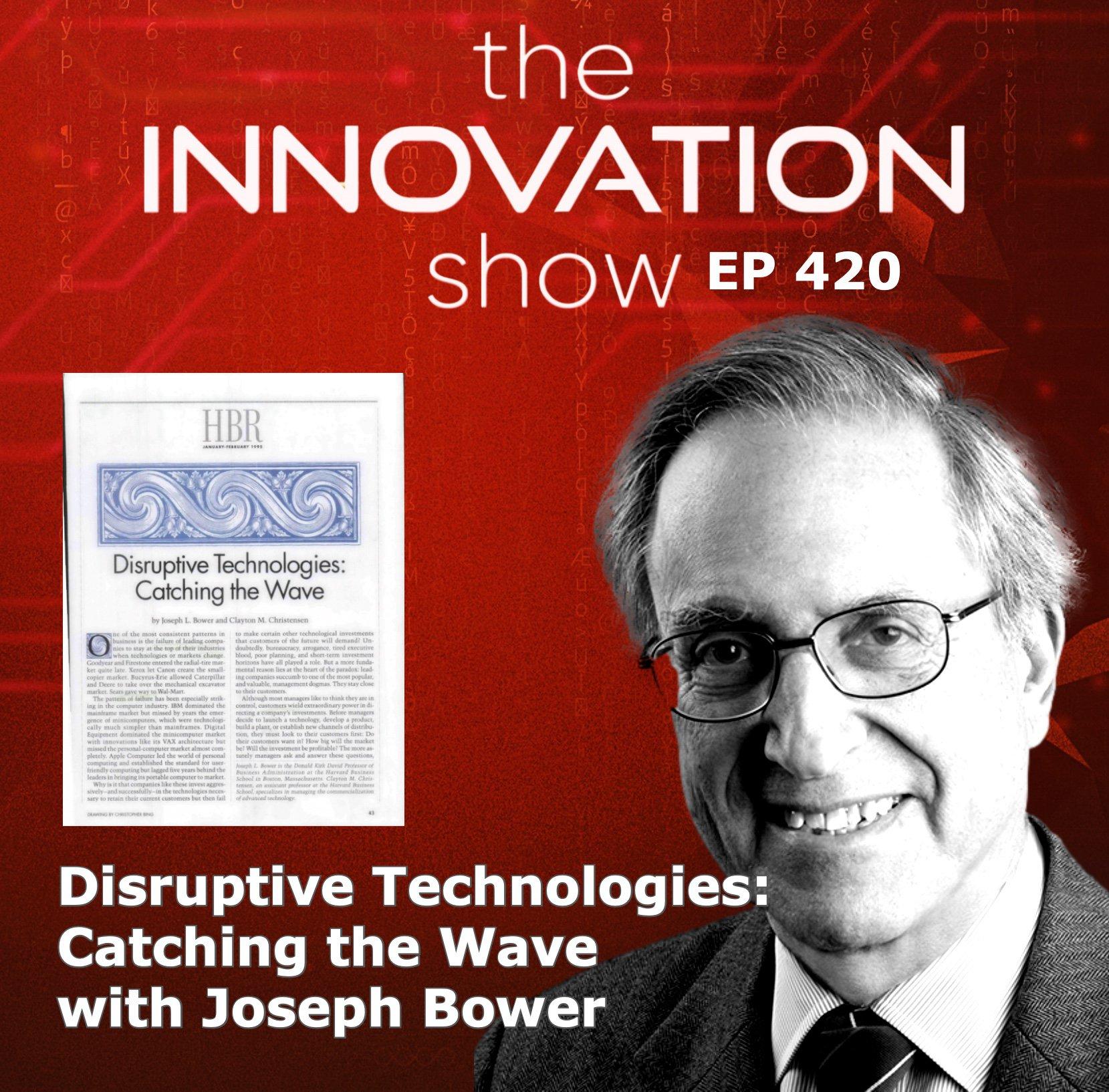
S23 Ep 420Joseph L. Bower - Disruptive Technologies: Catching the Wave
In part 2 of our series to honour the work, life and theories of Clayton Christensen, Joseph Bower unpacks that famous HBR article, "Disruptive Technologies: Catching the Wave" This article spawned the book, "The Innovator's Dilemma" Joe Bower s the father of "Resource Allocation theory" included in his 1970 groundbreaking book, Managing the Resource Allocation Process. He has been a leader in general management at Harvard Business School for over five decades where he is the Donald K. David Professor Emeritus. He was Clayton Christensen's doctoral thesis adviser and worked with Clay to develop and stress-test his theories. Just some of the topics covered in this episode: 00:00:00 Intro 00:01:46 Managing Resource Allocation 00:02:57 Dissertation Supervisor for Clayton Christensen 00:04:11 Traits of Great Leaders 00:06:19 Resource Allocation 00:08:44 Group Decision Making 00:26:56 The Human Element of Change 00:46:46 Advice for Changemakers and Leaders 00:51:25 Getting People to Change Their Mind 00:56:29 Final Thoughts on Clayton Christensen
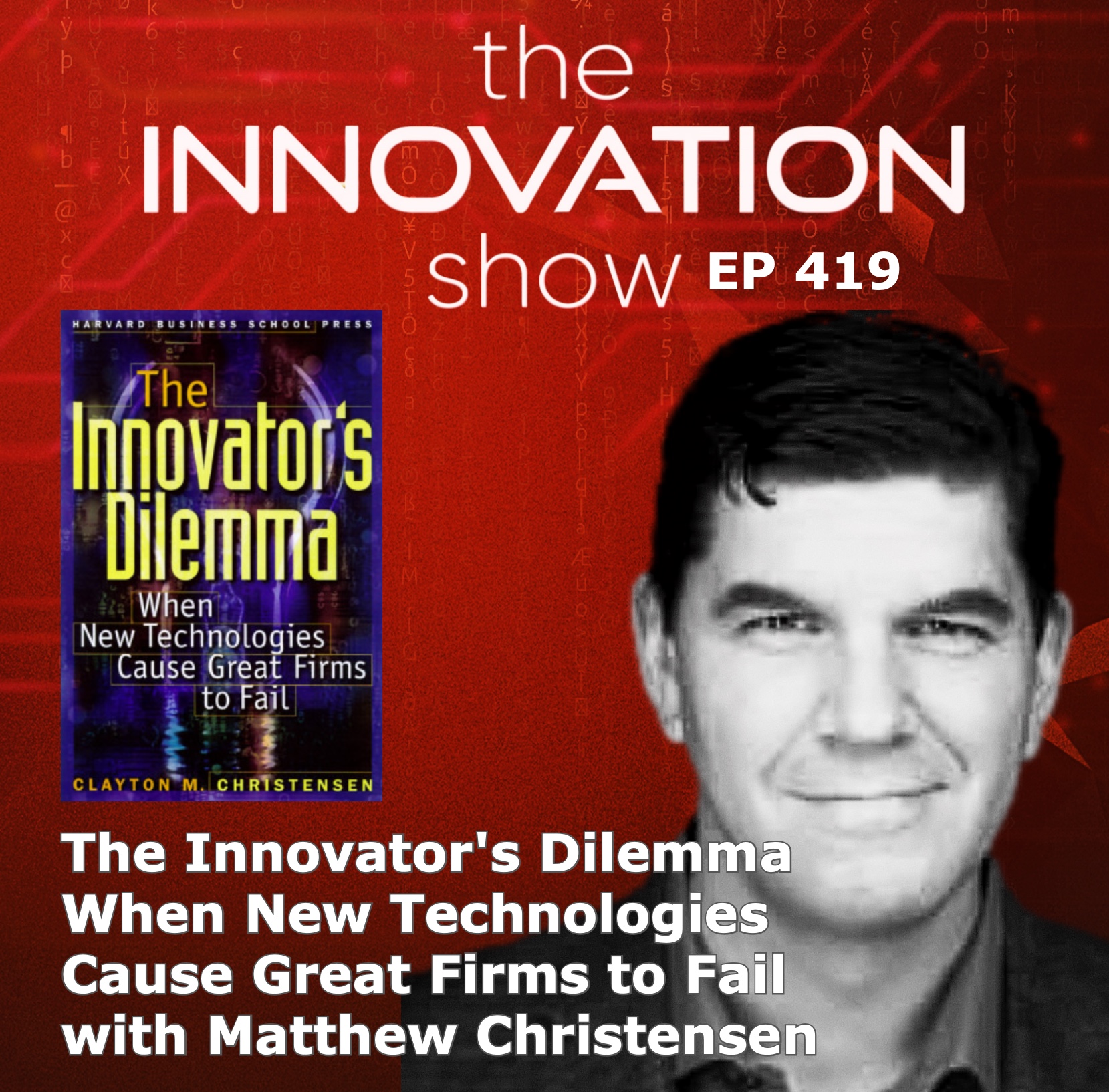
S23 Ep 4The Innovator's Dilemma with Matthew Christensen
The logical, competent decisions of management that are critical to the success of their companies are also the reasons why they lose their positions of leadership." How can executives simultaneously do what is right for the near-term health of their established businesses while focusing adequate resources on the disruptive technologies that ultimately could lead to their downfall? The Innovator's Dilemma!!! Clayton Christensen fathered the "theory of disruptive innovation", but he also fathered wonderful people who have built on his pioneering work. We are honoured to be joined by one such pioneer. The apple does not fall far from the tree; he is offspring in mind and body and spirit we welcome Co-Founder, CEO, and Managing Partner of Rose Park Advisors, Matt Christensen, welcome to the show.

S22 Ep 418The Brain-Friendly Workplace with Friederike Fabritius
Today's book takes a fresh perspective on what it takes for people to flourish in the workplace. Our guest suggests that when we focus on neurodiversity, we respect people's deeper drives and motivations, and then companies will naturally achieve better results as a side effect. One thing we must keep in mind is that neurosignatures shouldn't be thought of as static. Our neurosignatures change throughout the day. When I get out of bed in the morning, my testosterone neurosignature is very high. But by evening, it's almost nonexistent. I don't want to conquer my goals at eight at night; I want to watch Netflix and chill. We welcome back a great friend of the show, Friederike Fabritius, a multiple-time guest with her WSJ best seller: The Brain-Friendly Workplace. Find Friederike here: https://friederikefabritius.com
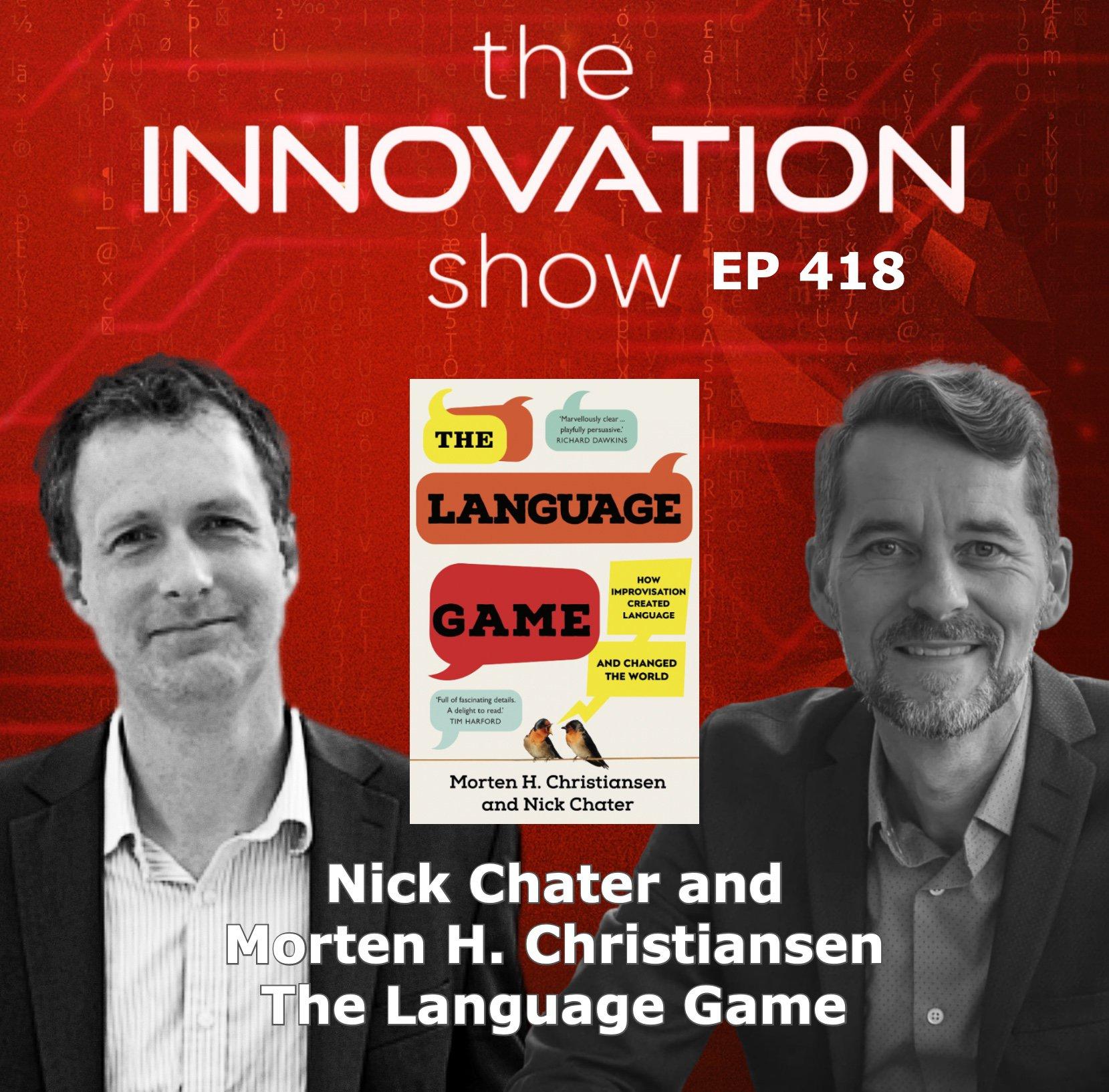
S14 Ep 418The Language Game - Nick Chater and Morten H. Christiansen
The story of language is the story of humanity; the new understanding of language that our guests outline in this book radically revises our conception of ourselves. In today's book, our guests outline a revolutionary perspective that overhauls almost everything we thought we knew about language. We will hear how the game of charades reveals deep insights into how language works. We'll hear how our brain can improvise linguistic 'moves' at an astonishingly rapid rate. We'll hear how languages are in continual flux, how people without a common tongue can rapidly create a language from scratch, and why it's likely that language has been independently reinvented countless times. We will realise how the creation of language is not only essential but also changes the nature of evolution. It's a pleasure to welcome the authors of "The Language Game- How Improvisation Created Language and Changed the World", Nick Chater and Morten H. Christiansen. Find Nick here: https://www.wbs.ac.uk/about/person/nick-chater/ https://twitter.com/nickjchater Find Morten here: https://csl-lab.psych.cornell.edu https://twitter.com/mh_christiansen
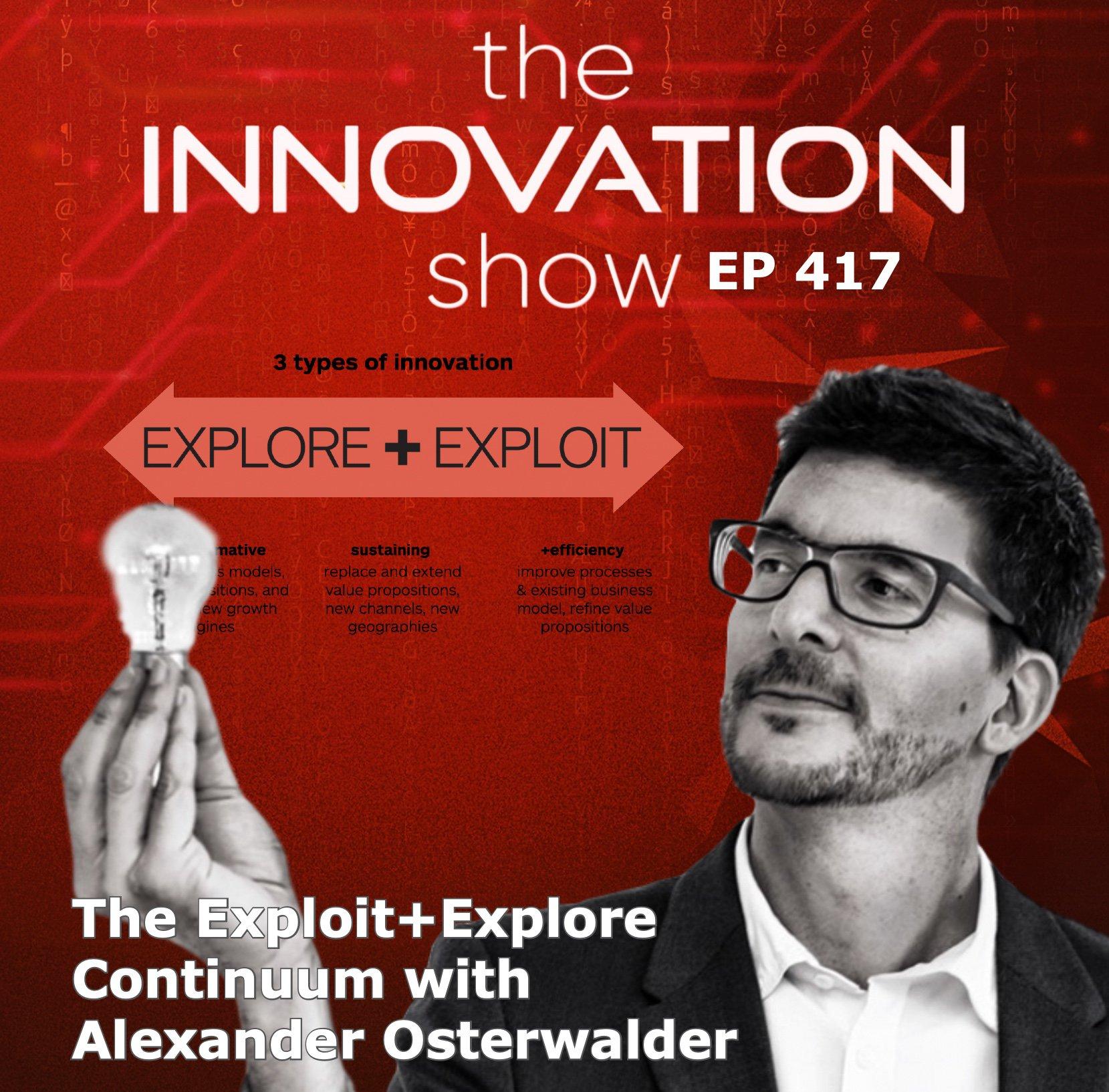
S22 Ep 417The Exploit-Explore Continuum with Alex Osterwalder
Senior leaders often want to know how they can build an environment to allow innovation to thrive. In order to do that, they first need to realise that business activities live on an uncertainty continuum - that we call the Explore-Exploit Continuum - and that creating new growth engines and managing existing business(es) are on opposite ends of this continuum. A better understanding of the Explore-Exploit Continuum will help executives and innovation teams put in place the right investment and management processes, the required skill set and culture to explore new business ideas as successfully as they exploit current businesses.
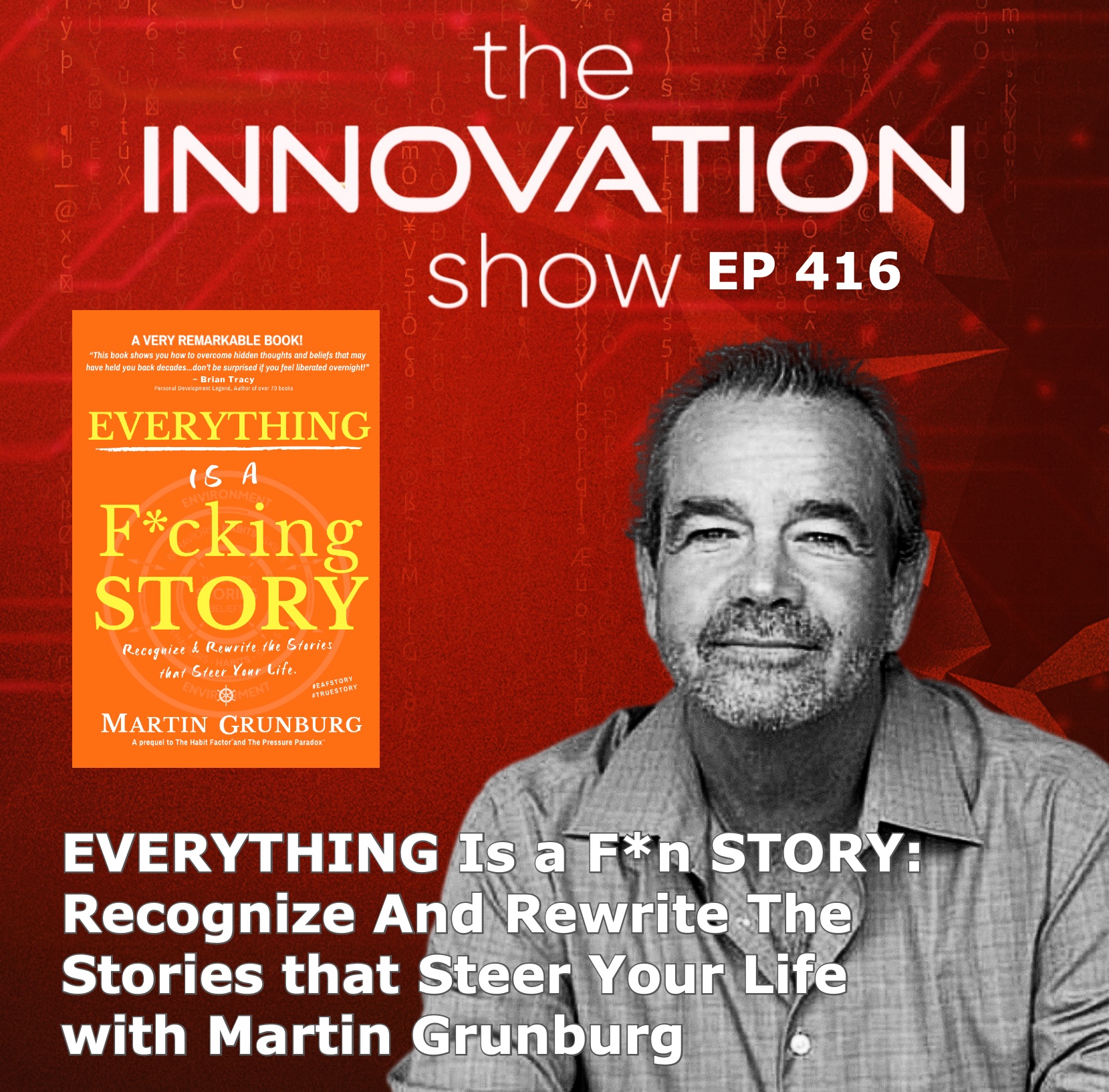
S20 Ep 416Everything Is a Story - Martin Grunburg
As a cognitive device, STORY is so woven into our language and thought process that it is inextricable. Since thought is at the heart of one's life experience, it's your stories—the ones you tell yourself habitually, for days, weeks, months, years, and even decades, that either move you closer to your goals and ideals or tragically, push them further away. Building upon his prior works and leaning upon advanced theories of thought and meta-cognition, Grunburg produces an epic finale and at the same time, introduces an innovative and simplified behaviour change model already impacting the coaching and behaviour change professions. Find Martin here: https://thehabitfactor.com
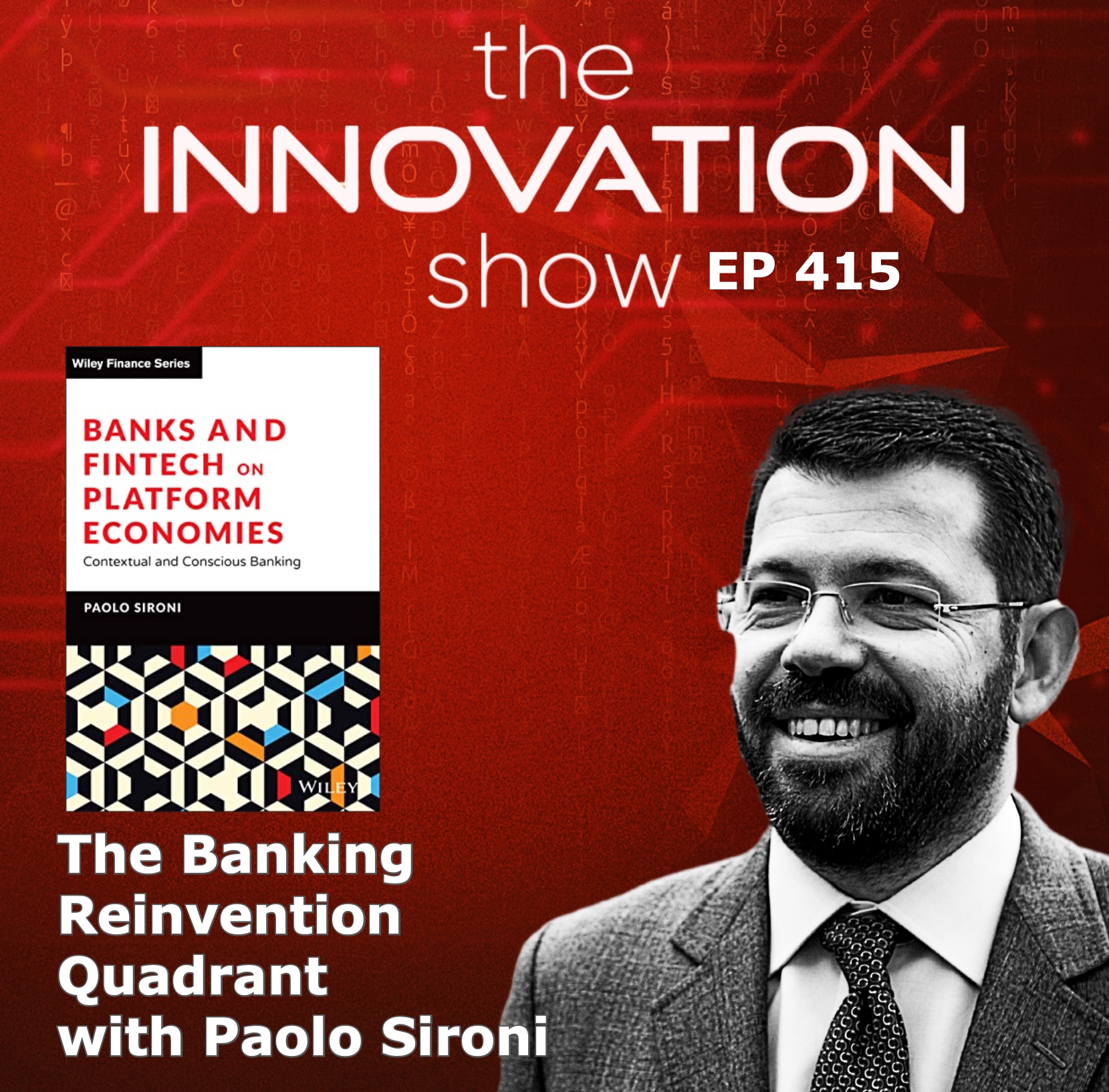
S20 Ep 415The Banking Reinvention Quadrant with Paolo Sironi
It is a pleasure to welcome back the author of "Banks and Fintech on Platform Economies: Contextual and Conscious Banking " Paolo Sironi, welcome to the show Evolving bank business models on outcome economies, resolving the tension between information and communication, which requires overcoming the fears of abandoning the shore of established operational models, and all the products and services rendered. In the dark of the new digital, financial and economic normal, only a crisp and clear vision can guide all stakeholders in the transformation effort. Furthermore, the regulators need to be aligned on the new digital strategies that will ferry the whole industry to more sustainable shores. What is needed is a business map and a compass to guide the navigation. The map is the Banking Reinvention Quadrant (BRQ), and the compass pointing to the North Star of higher business value is the theory of Financial Market Transparency (FMT)
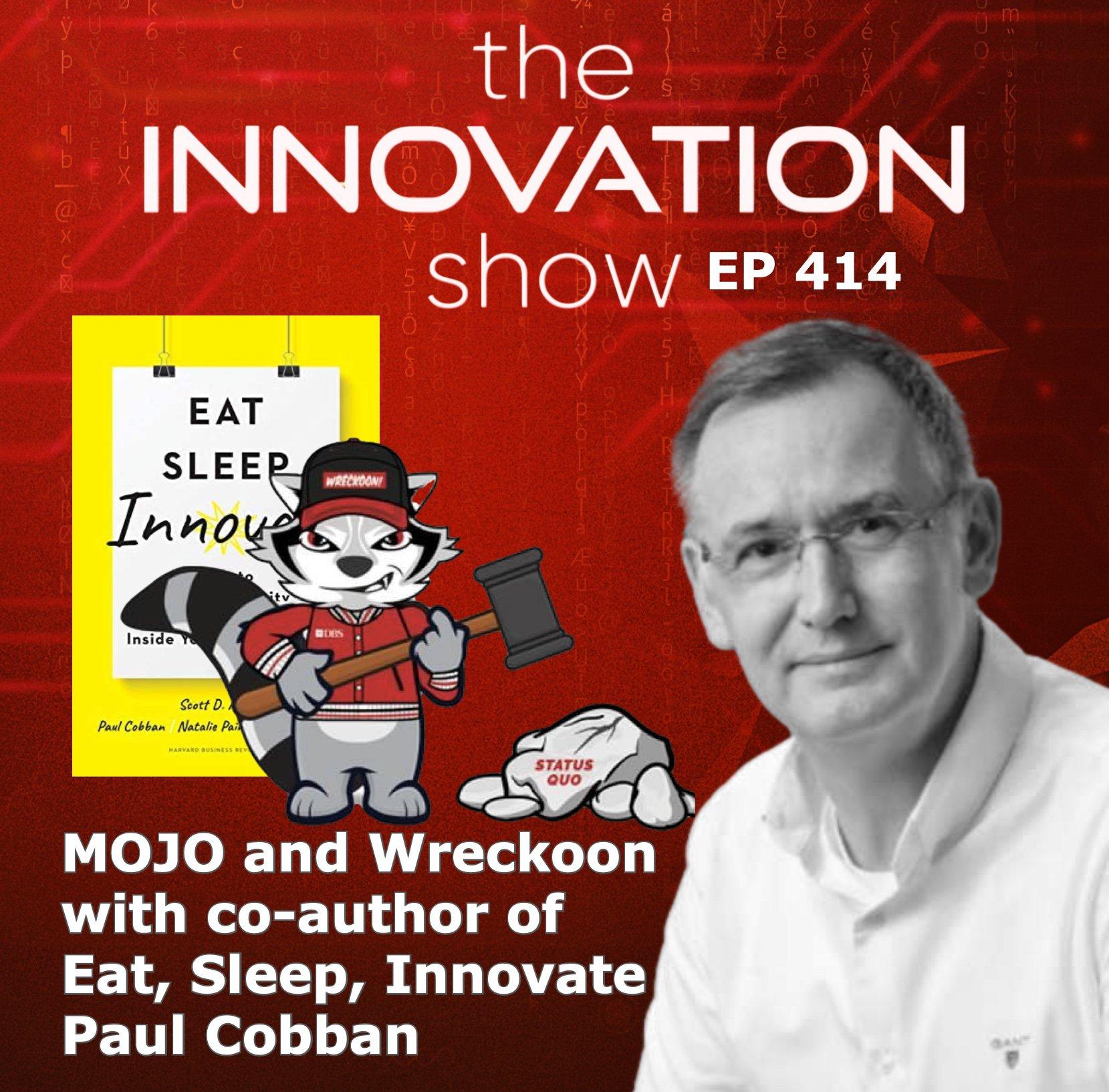
S20 Ep 414MOJO Meetings and Wreckoon - Paul Cobban
Co-author of "Eat Sleep Innovate", Paul Cobban, shares the importance of reframing your competitive set and the concept of MOJO Meetings and Wreckoon. Singapore's DBS Bank has been voted the world's best bank for five years in a row! It wasn't always like that. Today's guest remembered his first day at DBS in 2009: when he asked his taxi driver to take him to DBS, the driver said, "Ah, DBS—Damn Bloody Slow," referring to the notoriously long queues that plagued its ATMs. We are joined today on Innovation Bytes by the man who led the transformation from Damn Bloddy Slow to the best bank five years in a row. He is also the co-author of Eat Sleep Innovate with a friend of the Show, Scott D Anthony. He is going to share some nuggets about the transformation It is a pleasure to welcome Paul Cobban. Find Paul here: https://paulcobban.com/book/

S20 Ep 413Netflix Blockbuster and The Innovators Dilemma with Matt Christensen
trailerThe work of Clayton Christensen changed my worldview and, ultimately, my life. I have been lining up all his co-authors to celebrate his life and share his theories. We have been interviewing each of these great thinkers over the last few months and into 2023. We will bring you each of those episodes in chronological order of his book releases. It includes Matt Christensen, Clay's son and CEO of Rose Park Advisors, Rita McGrath, Joseph L. Bower, Michael Raynor, Scott D. Anthony Hal Gregerson, Taddy Hall Bob Moesta, Michael B. Horn Efosa Ojomo and Karen Dillon. Coming Jan 23, 2023
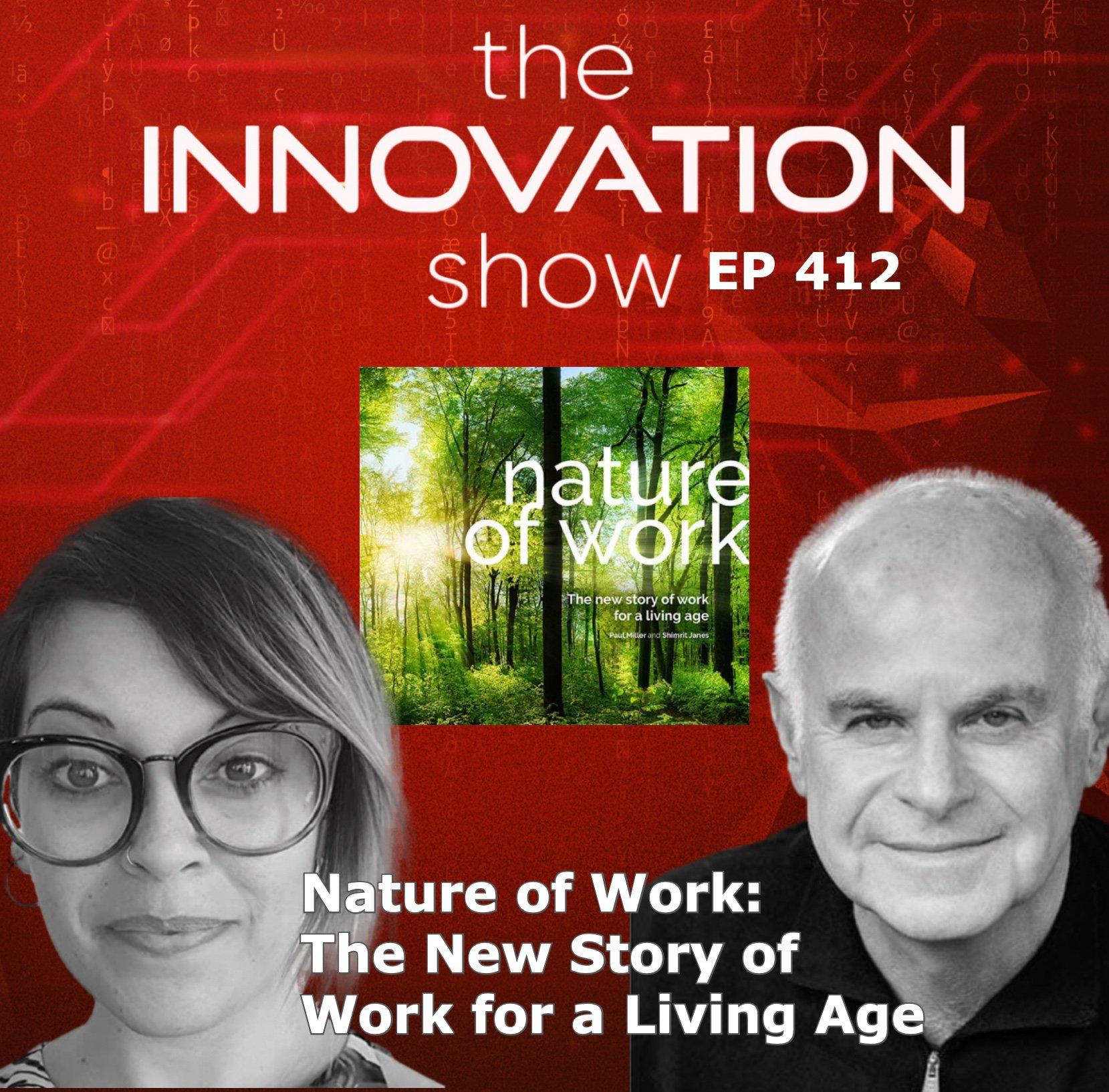
S20 Ep 412Nature of Work: The New Story of Work for a Living Age
While the mechanistic work mindset has spurred huge growth and riches for many, it's an approach that has masked a fundamental truth: Rather than a machine, organizations are living, dynamic systems that can't be programmed. Instead, they thrive through relationships, adaptive structures, diverse networks of people, the spaces they occupy, the tools they use – and so, so much more. For our guests– the answer to a better world lies in The Nature of Work Mindset: a new language inspired by forests and other elements of the natural world. This new vocabulary helps us to perceive work in a more dynamic way, to move away from the 'organization as machine' model and towards an 'organization as organism' view. We welcome Paul Miller and Paul Miller. Find Paul and Shimrit here: https://digitalworkplacegroup.com
S20 Ep 411Surveillance States with Barry O'Sullivan
bonusThe Irish Council for Civil Liberties (ICCL), along with six academics working in the area of artificial intelligence and data privacy, wrote an open letter to Irelands Minster for Justice Helen McEntee last month, noting that the use of Facial Recognition Technology raises serious and challenging issues about individual privacy and data rights. Full letter here: https://www.iccl.ie/2022/iccl-highlights-concerns-over-proposed-garda-use-of-facial-recognition-technology/
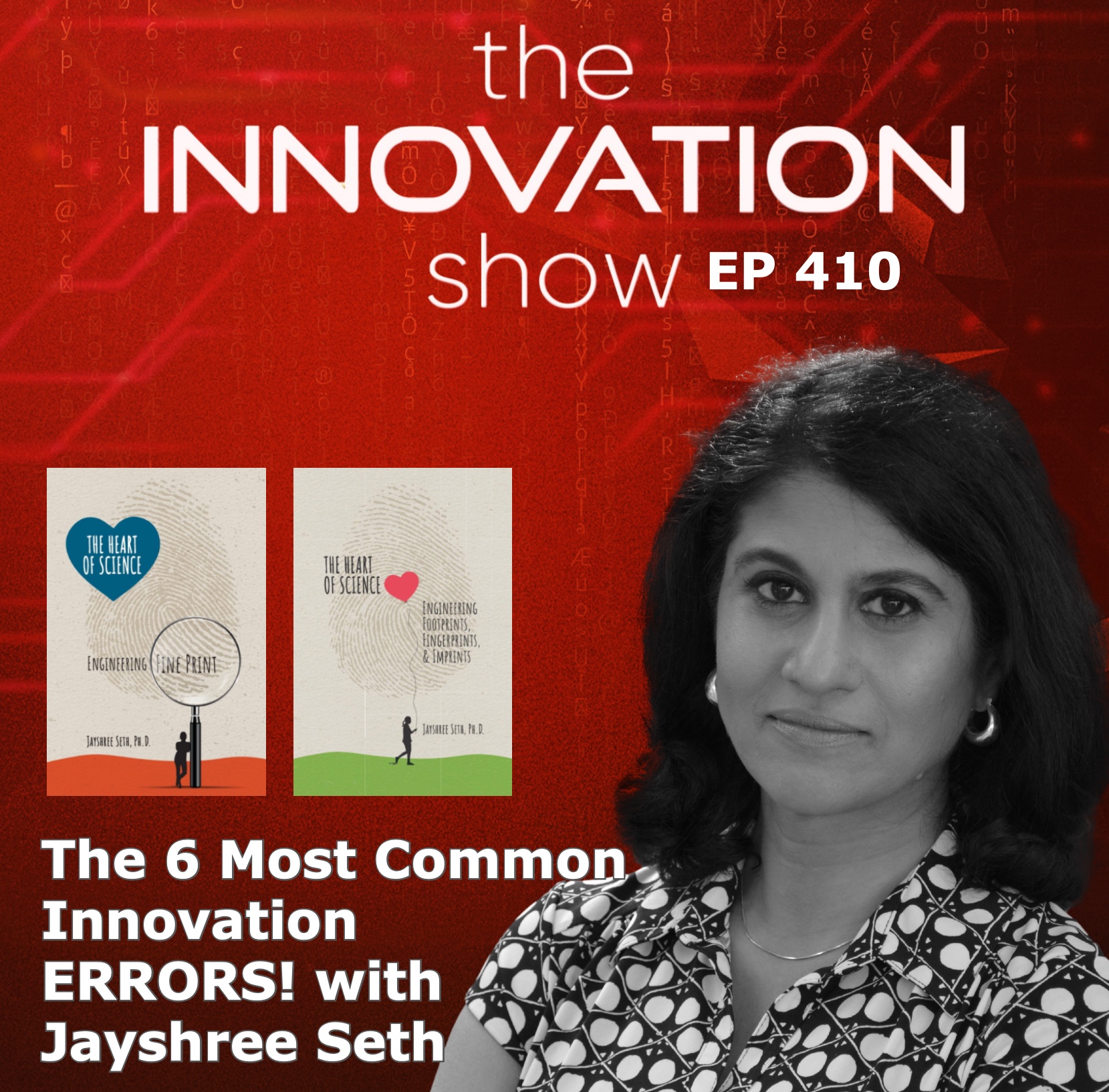
S20 Ep 410Jayshree Seth - The 6 Most Common Innovation ERRORS!
bonusWe are joined by 3M's first-ever Chief Science Advocate with 76 patents to her name. She is the author of The Heart of Science series of books, with all proceeds going to scholarships for underrepresented minority women in STEM. We will discuss those books in the New Year, but for now, she is with us on Innovation Bytes to discuss "The 6 most common Innovation E.R.R.O.R.S.!" Find Jayshree Seth on Linkedin https://www.linkedin.com/pulse/raising-innovation-6-most-common-errors-jayshree-seth/

S20 Ep 409Fun, Fear and Focus with Friederike Fabritius
bonusWe are joined by Friederike Fabritius, Wall Street Journal bestselling author of The Brain-Friendly Workplace: Why Talented People Quit and How to Get Them to Stay and of the award-winning book The Leading Brain: Neuroscience Hacks to Work Smarter, Better, Happier. She joins us on Brain Bytes to discuss Fun, Fear and Focus Find Friederike here: https://friederikefabritius.com/
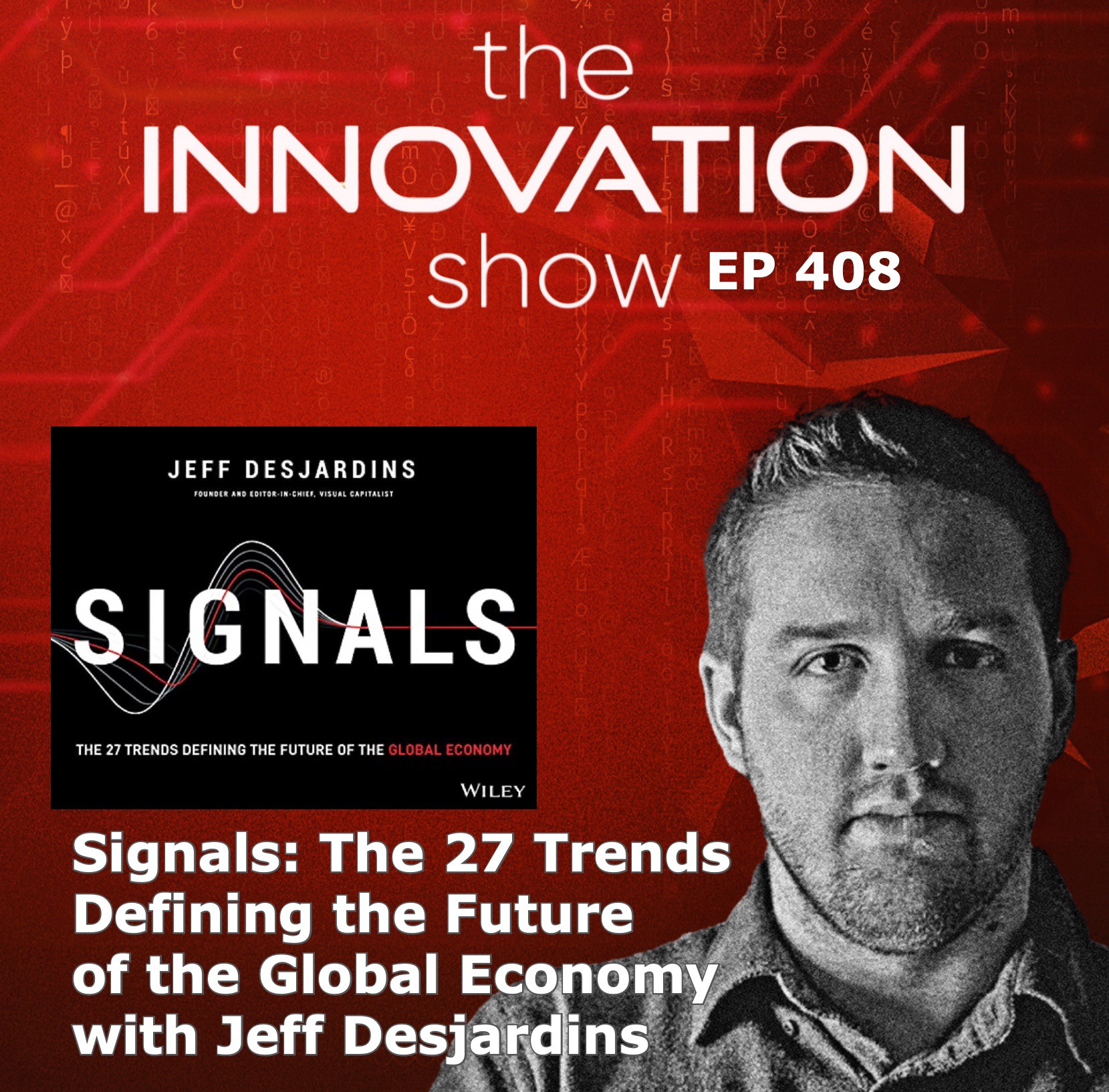
S20 Ep 408Signals with Jeff Desjardins
Today's book explores the 27 most important trends shaping the future of our global economy. This visually striking book draws on the oceans of data we're all surrounded by to extract insights about where we are and where we are headed. It is a must-read for entrepreneurs, executives, policymakers, regulators and anyone seeking to navigate a complex world. The futurist and author Alvin Toffler once wrote, "Information overload occurs when the amount of input to a system exceeds its processing capacity. Decision-makers have fairly limited cognitive processing capacity. Consequently, when information overload occurs, it is likely that a reduction in decision quality will occur." Today's guest eases information overload, makes signal from the noise and helps us make better decisions We welcome sensemaker, founder and editor-in-chief of Visual Capitalist and author of "Signals: The 27 Trends Defining the Future of the Global Economy" Jeff Desjardins The book is available here: https://store.visualcapitalist.com/product/signals-paperback-book/ and Visual Capitalist's latest visualizations are available in a free daily email here: https://www.visualcapitalist.com/subscribe/
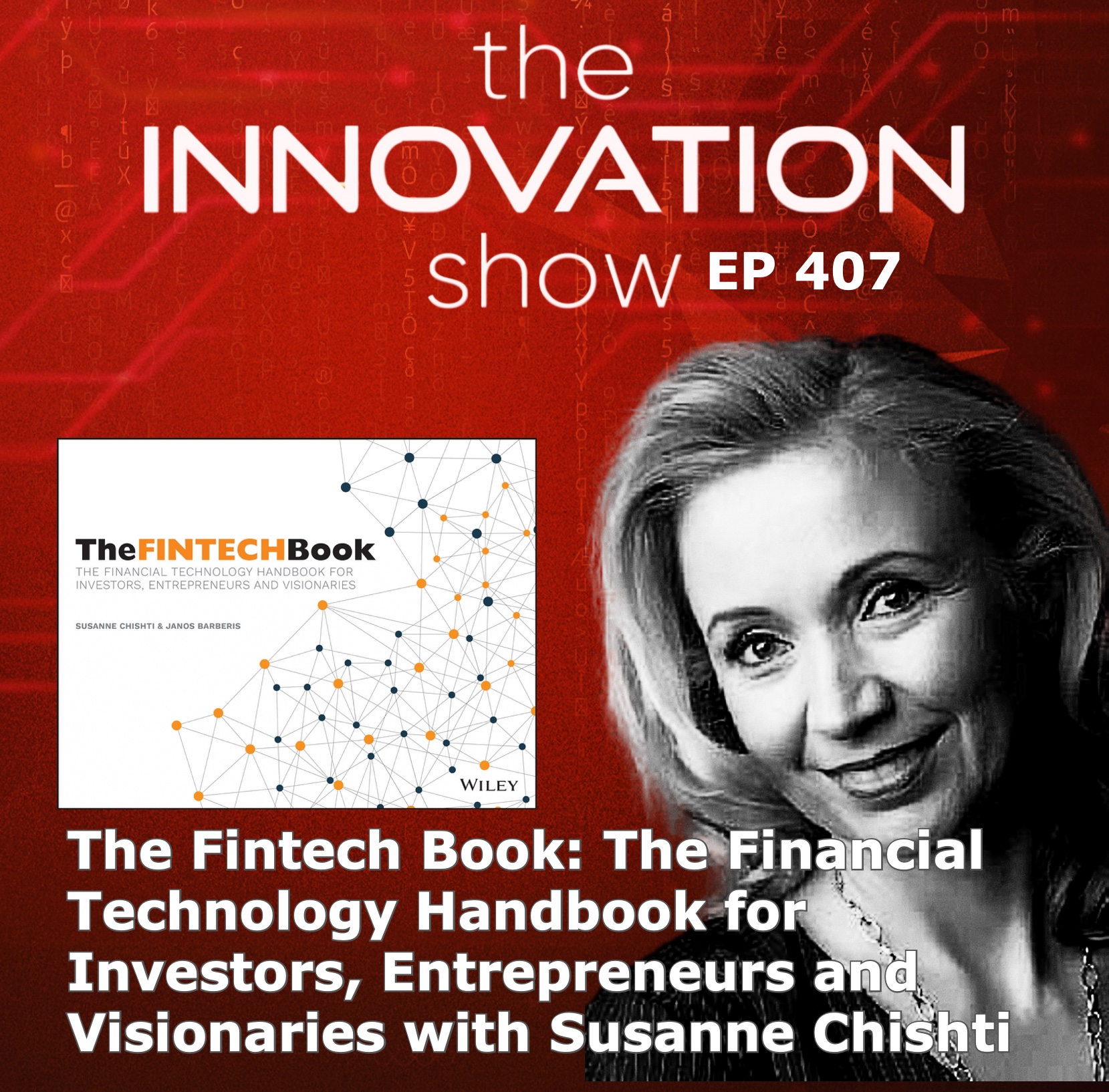
S20 Ep 407The Fintech Book with Susanne Chishti
The Fintech Book is your primary guide to the financial technology revolution, and the disruption, innovation and opportunity therein. Written by prominent thought leaders in the European, UK and Hong Kong fintech investment space, this book aggregates diverse industry expertise into a single informative volume to provide entrepreneurs and investors with the answers they need to capitalize on this lucrative market. Key industry developments are explained in detail, and critical insights from cutting-edge practitioners offer first-hand information and lessons learned. The financial technology sector is booming, and entrepreneurs, consultants, investors and asset managers are scrambling for more information: Who are the key players? What's driving the explosive growth? What are the risks? This book collates insights, knowledge and guidance from industry experts to provide the answers to these questions and more. Get up to speed on the latest industry developments. Grasp the market dynamics of the 'fintech revolution' . Realize the sector's potential and impact on related industries . Gain expert insight on investment and entrepreneurial opportunities
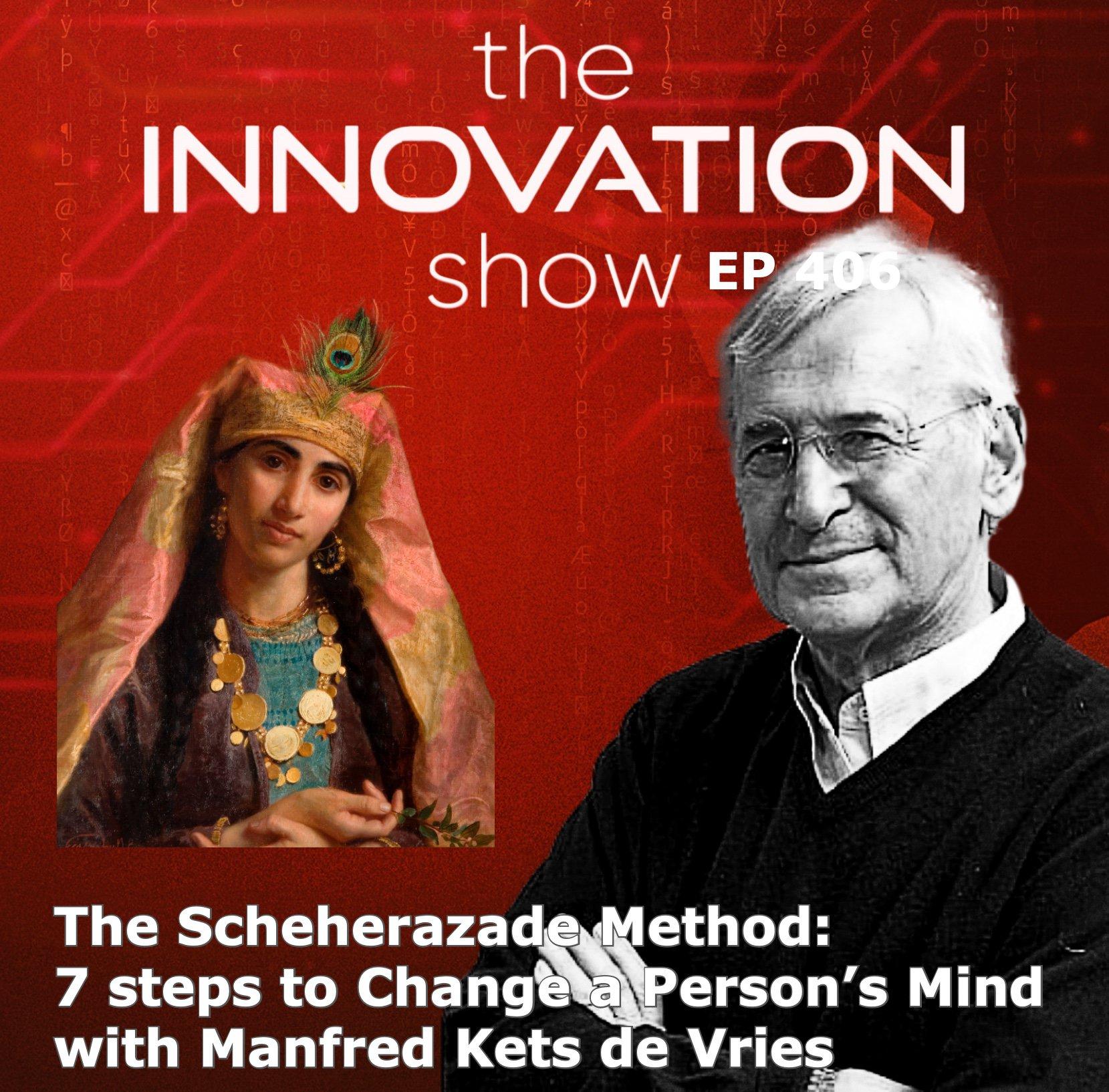
S20 Ep 406The Scheherazade Method: Change a Person's Mind
bonusOnce upon a time, the Persian king of all kings, Shahryār, beheaded his wife after discovering she was unfaithful. Overcome with rage, the monarch resolved to exact revenge on womankind by taking a new wife each night and beheading her the next morning. After most of the eligible women in the kingdom had either fled or been killed, Scheherazade, the daughter of the king's advisor, devised a scheme to save herself and future victims. Scheherazade insisted on marrying the monarch, and on their first night together she told him a story, without revealing the ending. The king permitted her to live another day to finish her tale, and so she continued with her cliffhangers for 1,001 nights. Eventually, Scheherazade's stories caused the king to have a change of heart, realise the injustices he had wrought and cease his vengeful rampage. Scheherazade, the narrator of the tales of One Thousand and One Nights, earned her place as one of the shrewdest heroines in world literature. While this story was set in the Islamic Golden Age, Scheherazade could be considered a highly effective coach or psychotherapist today. Through storytelling techniques, she awakened the king's curiosity, challenged his behaviour and managed to change his outlook on life. Scheherazade's form of psychological intervention can be applied to different situations. Manfred Kets de Vries is the Distinguished Clinical Professor of Leadership Development & Organisational Change at INSEAD and the Raoul de Vitry d'Avaucourt Chaired Professor of Leadership Development, Emeritus. He is the Programme Director of The Challenge of Leadership, one of INSEAD's top Executive Education programmes. The article is available here: https://knowledge.insead.edu/leadership-organisations/how-change-someones-mind
S20 Ep 405The End of Meta/Facebook: Lying as a business model with Rita McGrath
bonusThe End of Meta/Facebook: Lying as a business model with Rita McGrath
S20 Ep 404TEASER: The Importance of Play with Mark Solms
bonusHow does the mind connect to the body? Why does it feel like something to be us? Our guest is one of the boldest thinkers in neuroscience and solving this puzzle has been a lifetime quest. Now, at last, the pioneer who discovered the brain mechanism for dreaming appears to have made a breakthrough. It is a pleasure to welcome the author of The Hidden Spring: A Journey to the Source of Consciousness, Mark Solms
S20 Ep 403Quit: The Power of Knowing When to Walk Away with Annie Duke
Business leaders, with millions of dollars down the drain, struggle to abandon a new app or product that just isn't working. Governments, caught in a hopeless conflict, believe that the next tactic will finally be the one that wins the war. And in our own lives, we persist in relationships or careers that no longer serve us. We are often told that the secret to success is hard work, determination, and hours of practice. But in a fast-changing world, what if the really crucial skill is knowing when to stick at something and when to change track and walk away? Whether you're facing a make-or-break business decision, a life-altering personal choice or simply wanting to take more control of your life, today's book provides a toolkit for change to help you make the best next move. We welcome the author of Quit: The Power of Knowing When to Walk Away Annie Duke Find Annie here: https://www.annieduke.com/
S20 Ep 402Is Agenda Theatre Ruining Your Meetings? with Dr Ashley Whillans
While you might assume that detailed agendas improve your meetings, they may have exactly the opposite effect. This is because many employees unwittingly engage in a practice we call agenda theatre: They sink time and effort into agendas that create the appearance of effective meetings, without actually improving how meetings are run. What drives this counterproductive behaviour — and what should meeting leaders do instead? Dr Ashley Whillans tells us what we do. Find Ashley's work here, including her HBR article: https://ashleywhillans.com/author/

S20 Ep 401Don't Let Hierarchy Stifle Innovation with Timothy R. Clark
bonusInnovation Byte: Don't Let Hierarchy Stifle Innovation with Timothy R. Clark Much of the know-how required for innovation comes from the bottom of the organization. Yet many non-management employees consider innovation outside the scope of their jobs.
S20 Ep 400Coffee and the Brain with Helena Boschi
The first in our new series called Brain Bytes where we pose one question about the brain to Dr Helena Boschi, the author of Why We Do What We Do
S20 Ep 399Supertrends Part 2 with Lars Tvede
Part 2 of Supertrends Part 2 with Lars Tvede. These are turbulent times, and we all need to be ready for what's coming if we hope to thrive. This book addresses what we can expect in the coming decades, and how companies and governments should adapt to accelerating change. You will also see improvement in your own ability to predict the next big thing – a valuable skill in any walk of life. Our guest is a serial entrepreneur and founding partner in the successful venture fund Nordic Eye and the forecasting company Supertrends. Throughout his career, he has found success through his uncanny ability to predict the trends that will take our world forward. We all need to understand the future – from financial executives, industry leaders and entrepreneurs to journalists and politicians – we will all benefit from Supertrends. We welcome back the author of Supertrends: 50 Things you Need to Know About the Future, Lars Tvede

S20 Ep 398Banks and Fintech on Platform Economies with Paolo Sironi
Today's book is a must-read for CEOs, business leaders, regulators, fintech entrepreneurs, wealth managers, behavioural finance researchers and professionals working at financial technology companies, It offers an accessible grasp of the rapidly evolving outcome economy and a view of the future of the industry. Let me share an example of questions our guest both poses and answers throughout the book: "Financial services are experiencing a near collapse of their traditional value chain, which is cornering the industry into unsustainable business models looking for hyper-scale. This often conflicts with the size of the jurisdictions in which they operate, the constraints imposed by regulations, and the low elasticity of demand in persistently low-interest rate environments. Technology has been largely seen as an opportunity to march ahead of the progressive evaporation of revenues. Yet, is this sustainable?" Compelling stuff and only a taster of what is to come. It is a pleasure to welcome the man who poses such questions, the author of "Banks and Fintech on Platform Economies: Contextual and Conscious Banking " Paolo Sironi, welcome to the show
S20 Ep 397Supertrends Part 1 with Lars Tvede
These are turbulent times, and we all need to be ready for what's coming if we hope to thrive. This book addresses what we can expect in the coming decades, and how companies and governments should adapt to accelerating change. You will also see improvement in your own ability to predict the next big thing – a valuable skill in any walk of life. Our guest is a serial entrepreneur and founding partner in the successful venture fund Nordic Eye and the forecasting company Supertrends. Throughout his career, he has found success through his uncanny ability to predict the trends that will take our world forward. We all need to understand the future – from financial executives, industry leaders and entrepreneurs to journalists and politicians – we will all benefit from Supertrends. We welcome the author of Supertrends: 50 Things you Need to Know About the Future, Lars Tvede Find Lars here: https://www.larstvede.com/book/supertrends/

S20 Ep 396Top 10 Innovation Shortcuts Company Leaders Should Avoid with Tendayi Viki
bonusMost leaders know Innovation and Creativity are important for corporate survival, but this desire for Innovation often creates a new problem, When faced with the level of investment needed in terms of time and resources, most leaders baulk and look for shortcuts. Our guest today has seen them all and is with us to share "The Top 10 Innovation Shortcuts Company Leaders Should Avoid". He is a friend of the show, a leading consultant with the Strategyzer crew and the author of "Pirates In The Navy: How Innovators Lead Transformation", Tendayi Viki, welcome back. Find Tendayi here: https://tendayiviki.com/the-top-10-innovation-shortcuts-company-leaders-should-avoid/ 00:01:49 Shortcut #1. There Is No Innovation Strategy 00:02:42 Shortcut #2. The CEO Has No Time 00:03:20 Shortcut #3. We Are Working On Only Two Ideas 00:04:07 Shortcut #4. Innovation Has No Power 00:04:57 Shortcut #5. We Don't Want To Talk To The Core Business 00:05:39 Shortcut #6. We Reward Hitting Revenue Targets 00:06:26 Shortcut #7. Innovation Teams Work Part Time 00:08:39 Shortcut #8. We Want Detailed Business Plans 00:09:07 Shortcut #9. There Is No Innovation Skills Building 00:09:49 Shortcut #10. An Excessive Focus On Ideation
S20 Ep 395Gay, Straight, and the Reason Why with Simon LeVay
Since our guest has written today's book, recent studies strengthen the idea that gay people differ from straight people in more than the direction of their sexual feelings. There is great diversity among lesbians and gay men, to be sure, but in general, homosexuality is part of a collection of gender-atypical traits, just as heterosexuality is part of a collection of gender-typical traits. These different "packages" arise because the sexual differentiation of the brain goes forward differently in individuals destined to become gay adults as compared with their same-sex heterosexual peers. Differences in genes, sex hormones, and their interactions with the developing brain are what cause this divergence. We welcome the author of "Gay, Straight, and the Reason Why: The Science of Sexual Orientation" - Simon LeVay Find Simon Here: www.simonlevay.com
S20 Ep 394Rita McGrath: What Case Studies Get Wrong
bonusOur guest on today's Innovation Byte is the brilliant author, speaker, consultant, founder of Valize and Professor with Columbia Business School Rita McGrath welcome to the show. 00:00:00 Intro 00:00:14 The Survivorship Bias of Innovation 00:01:08 Blockbuster v Netflix 00:02:53 Kodak Story 00:04:29 Nokia Story 00:07:13 Captive to Customers

S20 Ep 393Hate and the Brain with Professor Matt Williams
"The real problem of humanity is the following: We have Paleolithic emotions, medieval institutions and godlike technology. And it is terrifically dangerous, and it is now approaching a point of crisis overall." ― Edward O. Wilson Today, we talk about Hate and The Brain and ask the question, are we wired to hate? The author "The Science of Hate: How prejudice becomes hate and what we can do to stop it", Professor Matt Williams enlightens us.
S20 Ep 392Algorithms of Hate with Matthew Williams
Are our brains wired to hate? Is social media to blame for an increase in hateful abuse? With hate on the rise, what can we do to turn the tide? Drawing on twenty years of pioneering research - as well as his own experience as a hate-crime victim - our guest, a world-renowned criminologist explores one of the pressing issues of our age. Today we discuss the role of big tech, algorithms and echo chambers. We welcome the author of The Science of Hate: How prejudice becomes hate and what we can do to stop it, Matthew Williams 00:01:18 Algorithms, "Tay" and the Internet Censorship 00:10:20 How Regulation Can Help 00:21:33 Bot Traffic, Fake Accounts 00:25:43 Facebook Influence in Myanmar 00:32:03 Trigger Events and Predictive Events 00:33:45 Wisdom of The Crowd 00:37:37 What to do when you see Hate Speech
S20 Ep 391Five Fatal Habits of Innovation with Geoff Marlow
The Five Fatal Habits: Why most organisations fail at innovation and agility with Geoff Marlow Find the pdf here: https://www.geoffmarlow.com/resources/
S20 Ep 390The Science of Hate with Matthew Williams
Are our brains wired to hate? Is social media to blame for an increase in hateful abuse? What can we do with hate on the rise to turn the tide? Drawing on twenty years of pioneering research - as well as his own experience as a hate-crime victim - our guest, a world-renowned criminologist explores one of the pressing issues of our age. We welcome the author of The Science of Hate: How prejudice becomes hate and what we can do to stop it. Find Matt here: https://hatelab.net Timestamps: 00:00:00 Intro 00:01:12 Matt's Hate Crime Origin Story 00:11:15 The Benefit of Criminology as an Intersectional Discipline 00:16:12 Criminology is Based on a study of Prejudices 00:26:35 Intergroup Hate, A Hierarchy of Hatred 00:34:29 Gordon Alport and Push v Pull Prejudice 00:45:43 Statistics of Hate
S20 Ep 389What To Do if Someone Gaslights You at Work with Art Markman
bonusIn the workplace, gaslighting often happens when someone is trying to change beliefs about who should get the credit or blame for a particular project. Art Markman Explains.
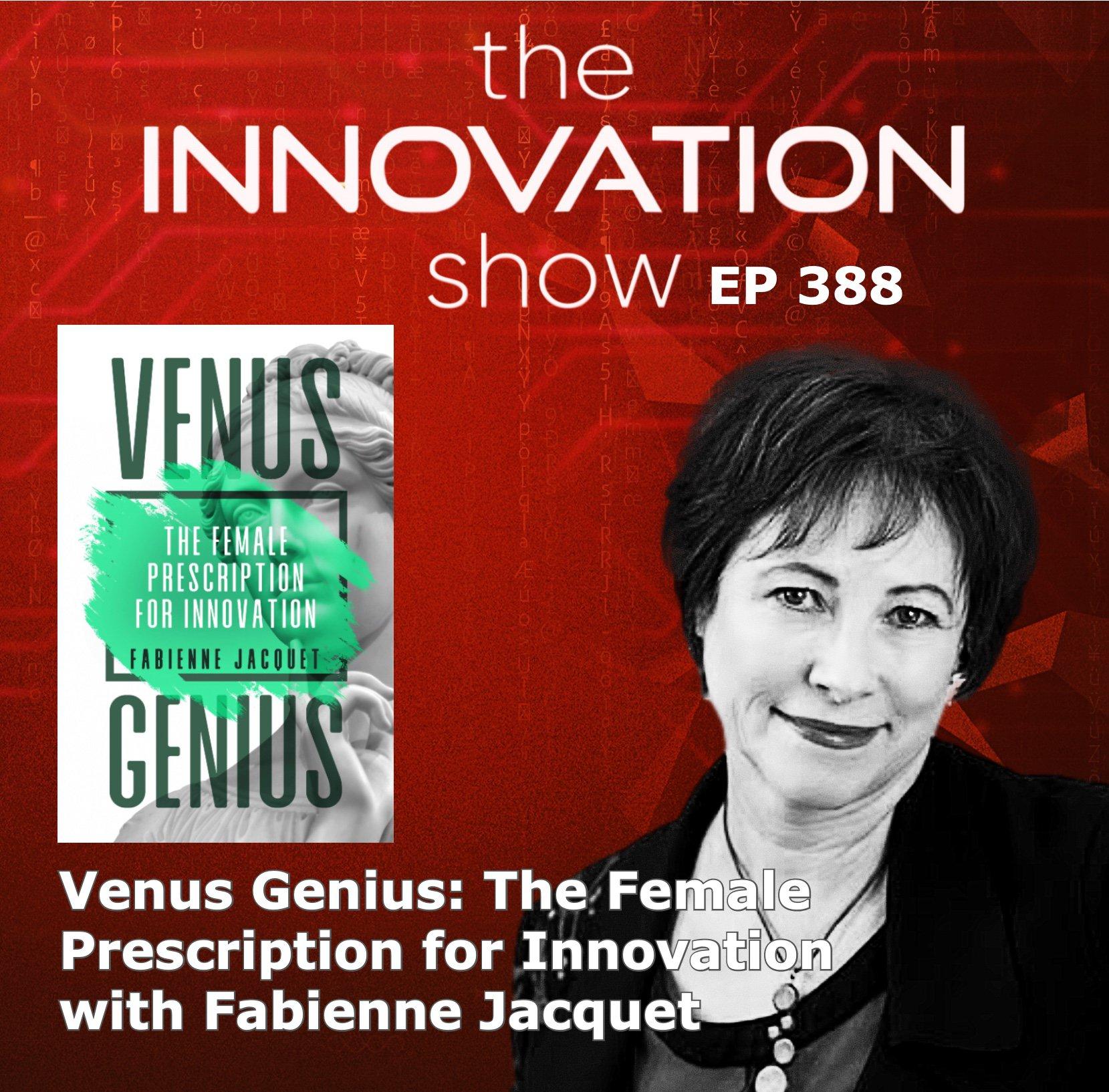
S19 Ep 388The Female Prescription for Innovation with Fabienne Jacquet
EToday's episode explores innovation from different perspectives: historical, scientific, sociological, cultural and practical — all through the feminine lens. It addresses the shortage of women in innovation and how important it is to address this as the first step to inclusion. This book reveals that any innovator can acquire the necessary skills to create meaningful innovation. It is about celebrating the duality of the feminine and the masculine in all human beings and dares us to activate both energies to create innovation that brings true value to our world. To date, the world (and innovation) has been mainly driven by masculine energy, and we can no longer ignore gender. This book will help you discover that you have latent feminine skills and that, wherever you stand on the masculine/feminine spectrum, rebalancing towards the opposite makes you a more centred human being in your personal and professional life. It's a pleasure to welcome the author of Venus Genius: The Female Prescription for Innovation, Fabienne Jacquet . Find Fabienne here: https://innoveve.com Find Fabienne's husband's art here: http://pdeshayes.com
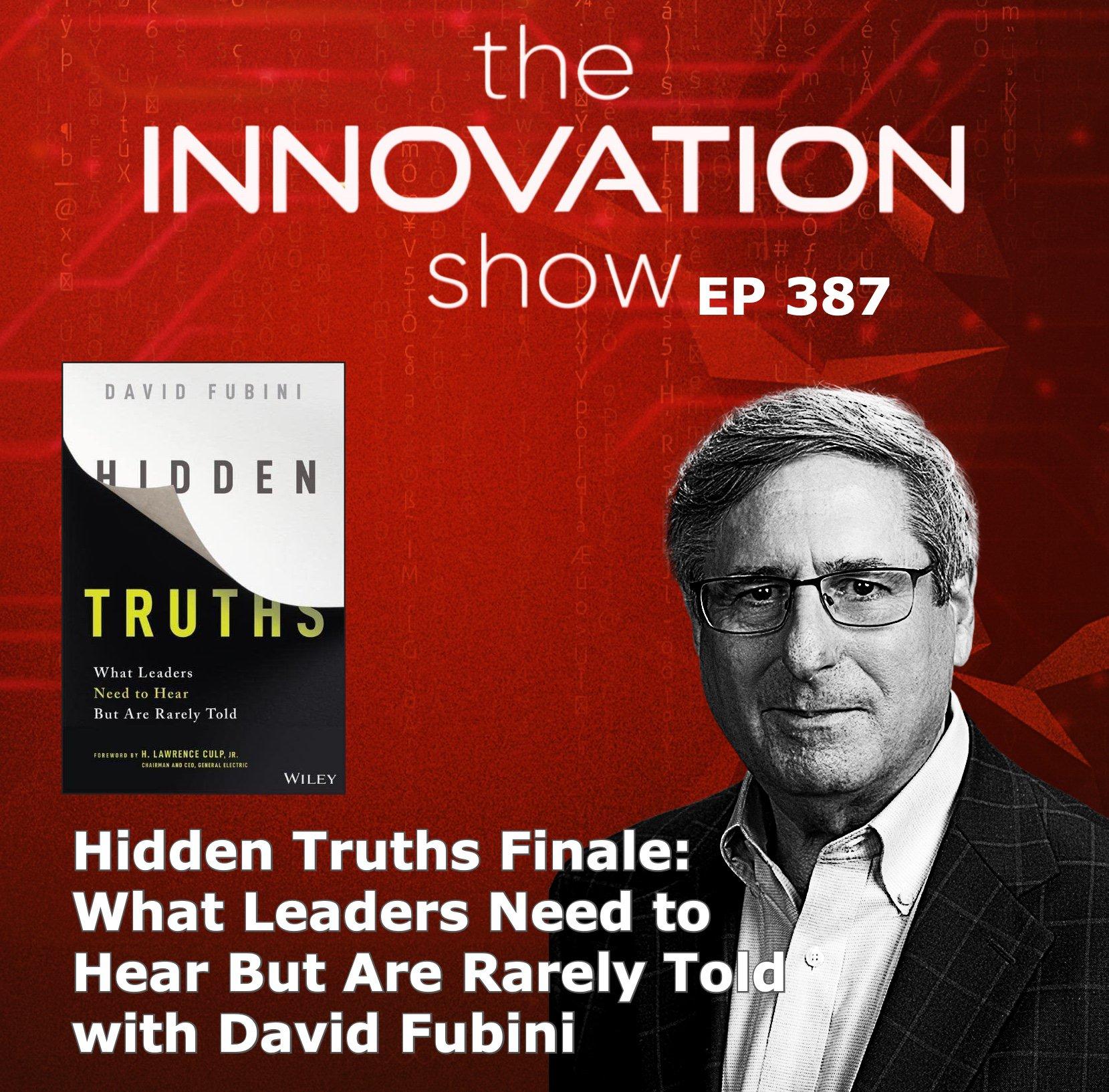
S19 Ep 387Getting On Board with the Board - David Fubini
Hidden Truths Finale: What Leaders Need to Hear But Are Rarely Told with David Fubini 00:00:00 Intro 00:00:36 Getting on Board with the Board 00:04:44 CEO's role to reach out to the Board 00:07:32 Board Theatre 00:11:28 ESG Sustainability and Stakeholders 00:15:15 Diversity, Equity, Inclusion 00:20:09 Positioning Change as a Journey 00:21:57 When it's time to leave 00:26:28 Leaving Well 00:36:36 Outro
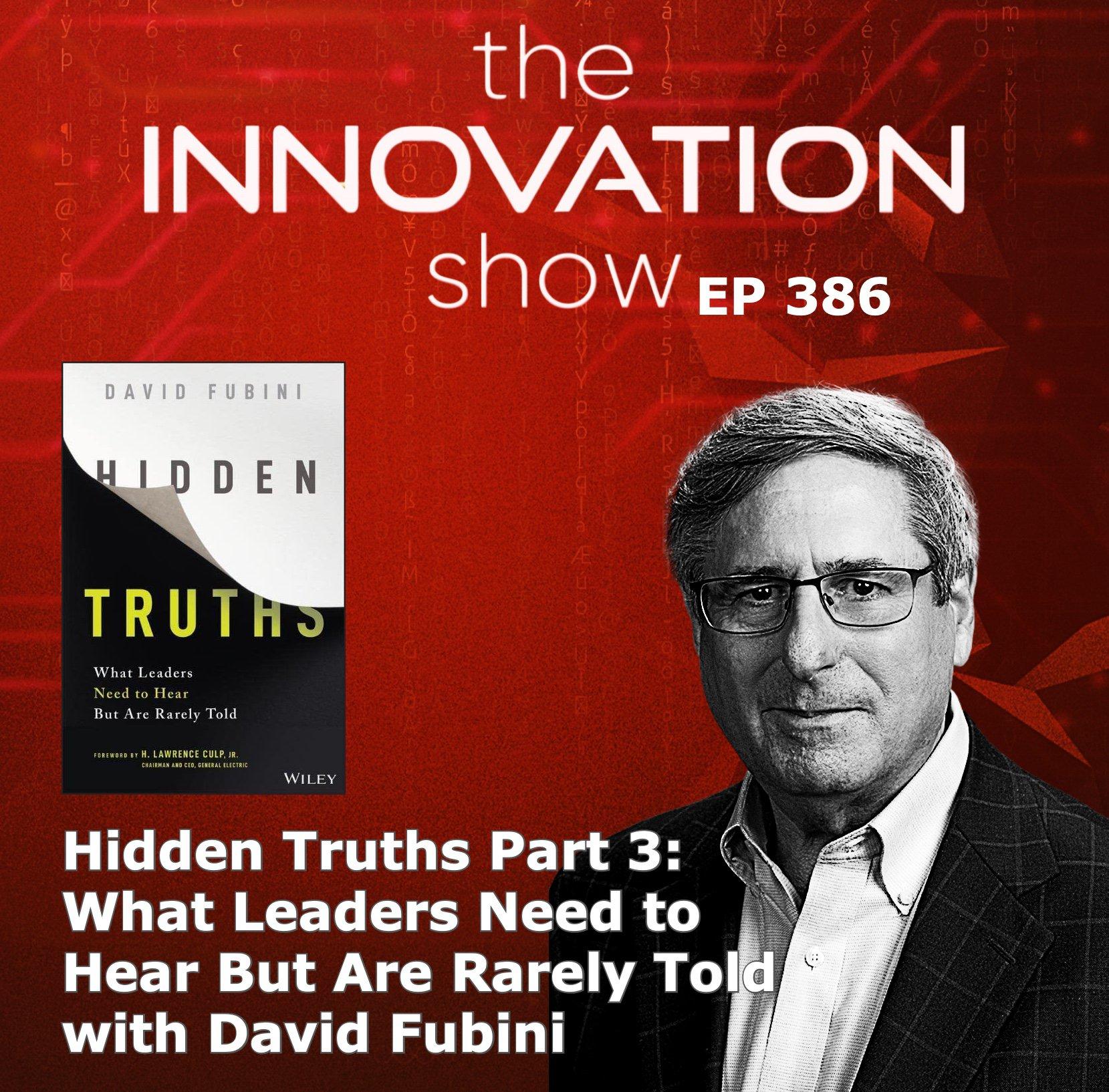
S19 Ep 386Hidden Truths Part 3 with David Fubini
Courses are taught in MBA and executive development programs that provide a lot of information about the job. Direct reports and teams also observe leaders in action. But it's not until you assume a leadership job that the reality of the position hits home. The reality is that leaders operate in a crucible, one in which emotions run high and interpersonal relationships are at risk. Being in the spotlight, not having nearly enough hours in the day to address key issues, confronting right-versus-right decisions - all of this ratchets up the degree of difficulty. We welcome back the author of Hidden Truths: What Leaders Need to Hear but Are Rarely Told, David Fubini Find David here: https://www.hbs.edu/faculty/Pages/profile.aspx?facId=102821
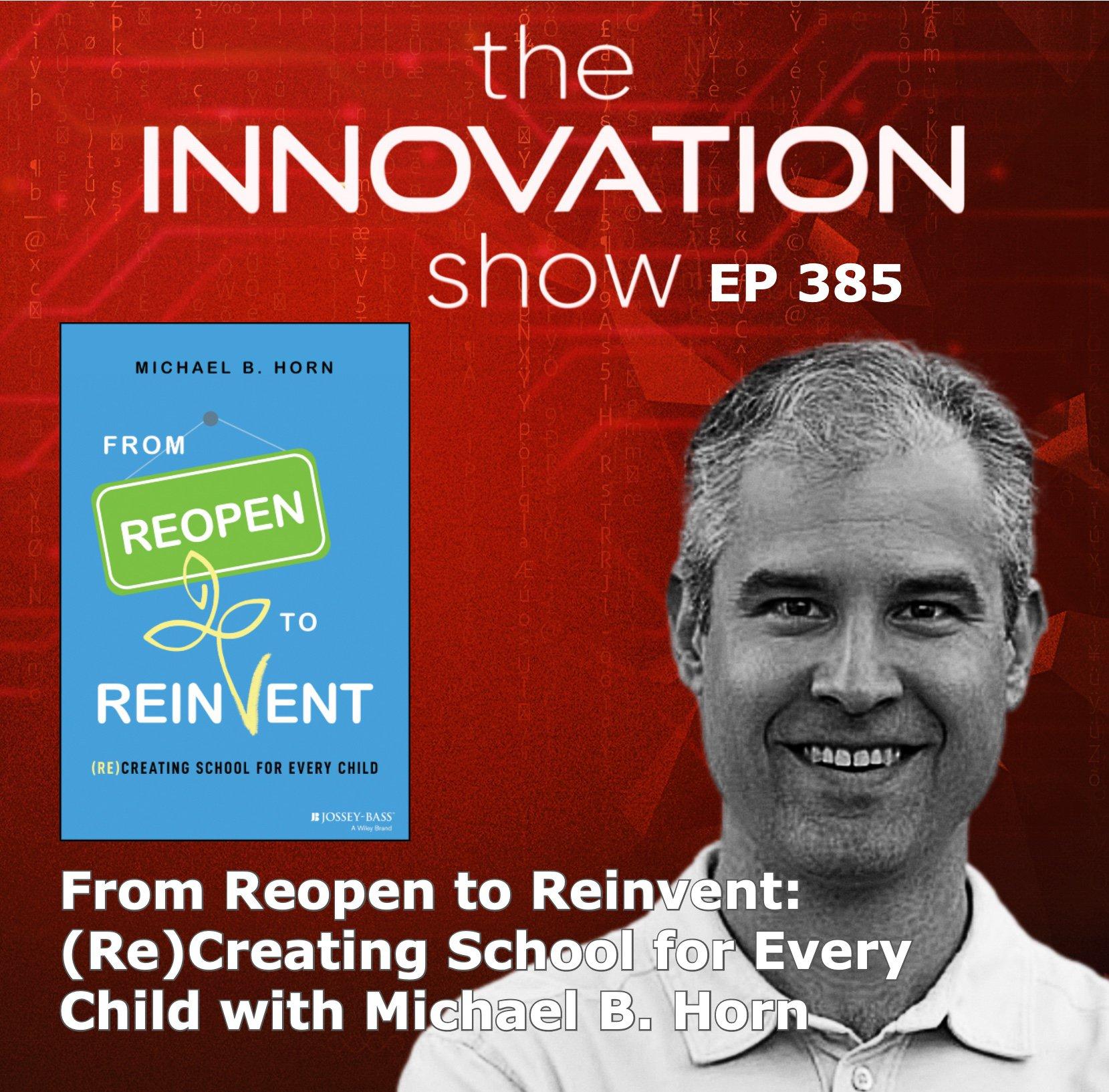
S19 Ep 385From Reopen to Reinvent with Michael Horn
In today's knowledge economy that prizes intellectual capital—where we need all individuals to build passions and develop their full human potential—our education system is no longer sufficient. Amid the disaster since the pandemic's assault on society and schools over multiple school years, there is an opportunity to rebuild better by altering the fundamental assumptions undergirding our present-day schooling model. Today's book isn't about disruptive innovation. Nor is it about the devastation and disruption that the pandemic caused. It's about what we build out of this devastation. What we choose to create. And our guest proposes that It starts with educators. We welcome a friend of the show and someone I have also become to see as a friend, he is here to share his new book, From Reopen to Reinvent, Recreating School for Every Child, Michael Horn Find Michael here: https://michaelbhorn.com
S19 Ep 384Creativity and the Brain with Helena Boschi
Topics we cover: 00:01:18 The Imagination Network in the Brain 00:03:34 Creativity is about Inhibition as well as activation 00:05:48 Brainstorming 00:08:22 Convergent and Divergent Thinking 00:10:58 Educating People out of Creativity 00:12:29 Organisations and Creativity 00:16:39 Creative Exercises like de Bono's 6 Thinking Hats 00:22:22 The Von Restorff Effect Find Helena here: https://www.chequeredleopard.com
S19 Ep 383Helena Boschi - Biases and the Brain
We welcome back Helena Boschi, the author of "Why We Do What We Do Understanding our brain to get the best out of ourselves and others" Here are our topics today If You Are Human You Are Biased Cognitive Dissonance and Motivated Reasoning Cognitive Energy Choice Overload, Complexity Avoidance Anchoring Effects and Wine Lists How Language Shapes Behaviour We Are Poor At Judging Risk The Availability Heuristic In Group/Out Group Find Helena here: https://www.chequeredleopard.com