
The Innovation Show
764 episodes — Page 5 of 16

S26 Ep 478Picking Presidents with Gautam Mukunda
Gautam Mukunda is an internationally recognized expert in leadership and innovation. He often jokes that his life's ambition is to have the world's most confusing resume and that he's most of the way there. Gautam is a Research Fellow at the Harvard Kennedy School's Center for Public Leadership, Senior Advisor to America's Frontier Fund, the author of Indispensable: When Leaders Really Matter (Harvard Business Review Press, 2012) and Picking Presidents: How To Make The Most Consequential Decision in the World (University of California Press, 2022), and the host of Nasdaq's podcast World Reimagined with Gautam Mukunda. Gautam has been a professor at Harvard Business School and Distinguished Visiting Professor at Schwarzman College, Tsinghua University. He was Head of Research at Rose Park Advisors, a specialized investment firm founded by his mentor Clayton Christensen, that invests using the theories of disruptive innovation. He has published articles in Harvard Business Review, Foreign Policy, Security Studies, Slate, Fast Company, Parameters, Politics and the Life Sciences, and Systems and Synthetic Biology on topics including leadership, reforming the financial sector, military innovation, network-centric warfare, the security and economic implications of synthetic biology, and the TV show Mad Men. His work has been profiled in the New York Times, Atlantic, New Yorker, Economist, Washington Post, Wall Street Journal, and on All Things Considered. He is the Exclusive Leadership Consultant to U.S. Soccer. Find https://www.gautammukunda.com/

S26 Ep 477Pivot to the Future with Paul Nunes Part 7
To truly profit from disruption, an enterprise must be prepared to manage increasingly short windows of profitability, scaling up rapidly as customers embrace the new all at once, then scaling down nearly as fast when demand declines. Paul Nunes is the global managing director for thought leadership at Accenture Research. He leads the company in developing ground-breaking insights into technology and strategic business change. He is co-author of three books, Big Bang Disruption: Strategy in the Age of Devastating Innovation, Jumping the S-Curve: How to Beat the Growth Cycle, Get on Top, and Stay There, and Mass Affluence: 7 New Rules of Marketing to Today's Consumers. It has been an absolute pleasure learning from him. 00:00:00.256 Introduction and Overview of the Series Finale 00:11:25.254 Creating a Company that Values Innovators 00:16:20.936 Balancing Wall Street Expectations and Innovation Goals 00:18:31.172 Jeff Bezos' Approach to Investor Relations 00:21:14.030 Managing Wall Street vs Managing to Wall Street 00:22:46.440 Effective Communication and Leadership in Challenging Times 00:32:40.338 Predicting Heart Attacks and Improving Sleep Patterns 00:36:12.004 The Profound Importance of Cell Phones 00:40:47.441 Companies Breaking New Ground through Strategies and Resource Allocation 00:45:35.337 Jio's success in leveraging 4G technology 00:48:06.392 Final thoughts
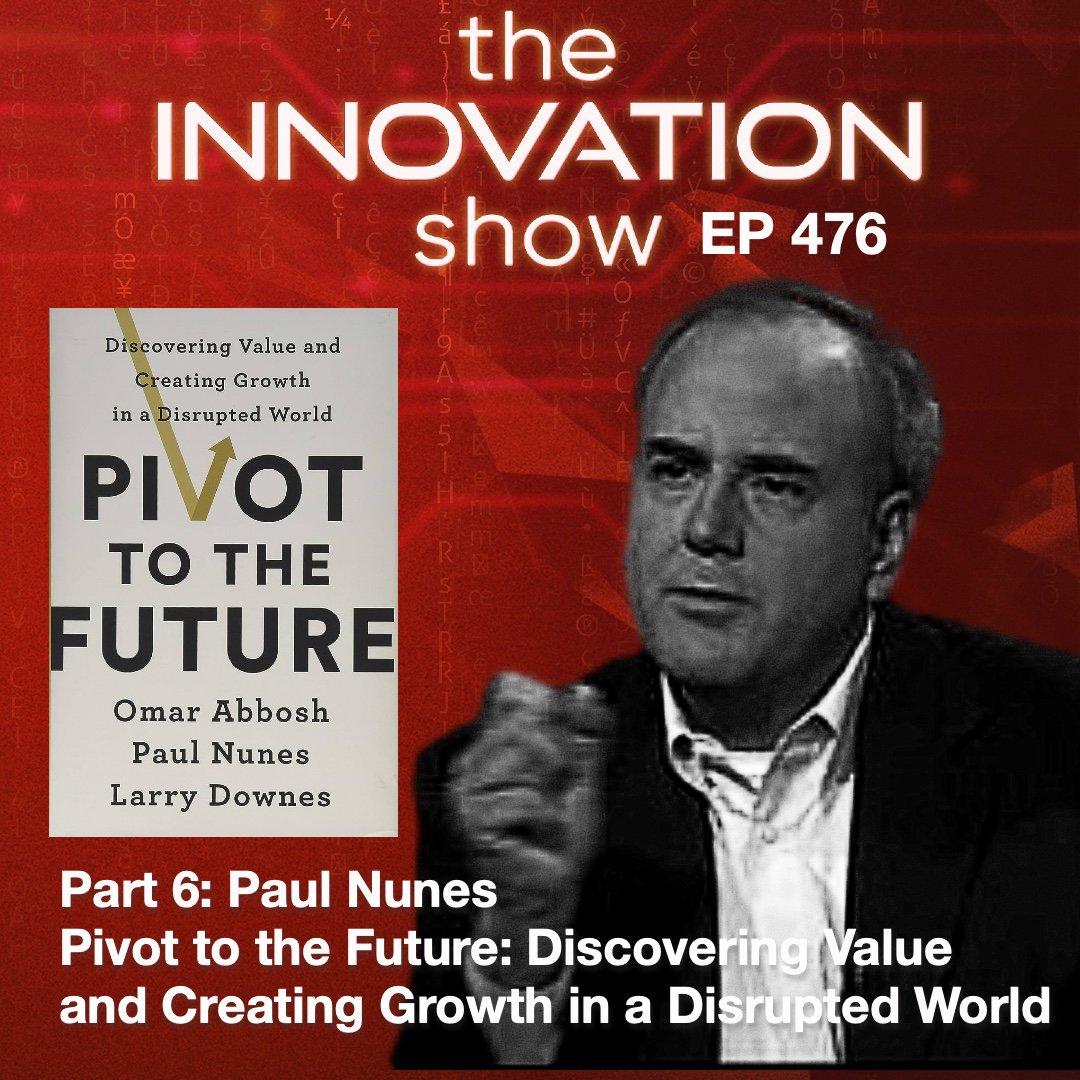
S24 Ep 476Pivot to the Future with Paul Nunes Part 6
Pivot to the Future is for leaders who seek to turn the existential threats of today and tomorrow into sustainable growth, with the courage to understand that a wise pivot strategy is not a one-time event but a commitment to a future of perpetual reinvention, where one pivot is followed by the next and the next. Based on Accenture's own experience of reinventing itself in the face of disruption, the company's real-world client work, and a rigorous two-year study of thousands of businesses across 30 industries, Pivot to the Future reveals methodical and bold moves for finding and releasing new sources of trapped value-unlocked by bridging the gap between what is technologically possible and how technologies are being used. The freed value enables companies to reinvent their legacy and current and new businesses simultaneously. 00:00:00.256 Harnessing Disruption: A Strategy for Future Relevance 00:03:08.439 Extending the Horizons: Balancing Old, Now, and New Businesses 00:11:22.493 The importance of a visionary CEO and leadership team 00:15:16.543 Majority of profits go to reinforcing existing businesses 00:19:15.760 Old trees provide shade and protection for the next generation 00:21:06.756 Conventional Wisdom vs. New Wisdom: Exiting vs. Exploiting Old Businesses 00:28:00.496 The Fallacy of Cash Cows in Rapidly Changing Markets 00:31:49.016 The Challenges of Electric Cars and Hybrid Technology 00:43:01.017 The Trapped Value Gap: Turning Disruption into Opportunity 00:47:41.371 Societal Value: How Society Benefits from Digital Transformation 00:49:00.914 The Evolution of Customer Segments and Channels

S24 Ep 475Big Bang Disruption with Paul Nunes Part 5
In keeping with the metaphor of astronomy's Big Bang theory, Paul named the four stages of the shark fin after critical events in the creation and predicted the end of our known universe. Let's get into the four stages: The Singularity, The Big Bang, The Big Crunch and Entropy. Paul unpacks the rules that prop up these four stages. 00:00:00.769 Introduction and Overview of "Four Phases of Big Bang Disruption" 00:03:14.786 Importance of Truth Tellers and Pinpoint Market Entry 00:11:11.771 From Idea to Product: Rapid Sales Success 00:15:34.394 The Importance of Being First in a Competitive Market 00:17:00.996 The concept of bullet time in movies explained 00:19:11.133 The need to anticipate how incumbents will slow time 00:20:34.611 The Strategic Thinking in Chess and Business 00:30:44.407 Recognizing Industry Shifts: The iPod and Toshiba Hard Drive 00:35:05.831 Phillips' Transition to LED Bulbs and Exiting the Lighting Business 00:38:39.902 Profiting from the Wreckage: Escape Your Own Black Hole 00:41:02.475 The challenges of transitioning and maintaining customer commitments 00:44:31.607 Moving on from the past and finding new opportunities

S25 Ep 474Big Bang Disruption with Paul Nunes Part 4
We continue our series with Paul Nunes. This is part 2 of Big Bang Disruption where we dive into the Shark Fin and look at Nintendo, Regulation, Pinball and more. 00:00:00.000 The birth of a new company in the face of disruption 00:02:42.027 The impact of heavy regulation on industries and innovation 00:10:32.944 The value and promise of smart talent placement 00:14:05.668 The life cycle stages and business strategy adaptation 00:16:26.230 The shift from bell curve to shark fin curve in sales 00:19:26.977 Saturation and the importance of inventory management 00:21:47.284 The Challenge of Optimising Sales and Market Demand 00:24:22.756 Balancing Inventory and Strategic Shortages 00:25:35.386 The Challenge of Competitors in a Powerful Marketplace 00:30:08.325 The Impact of Production and Overproduction on Sales 00:34:41.138 The Challenge of Innovation and Versioning Problem 00:45:20.894 The Importance of Apple's Ecosystem and Interoperability
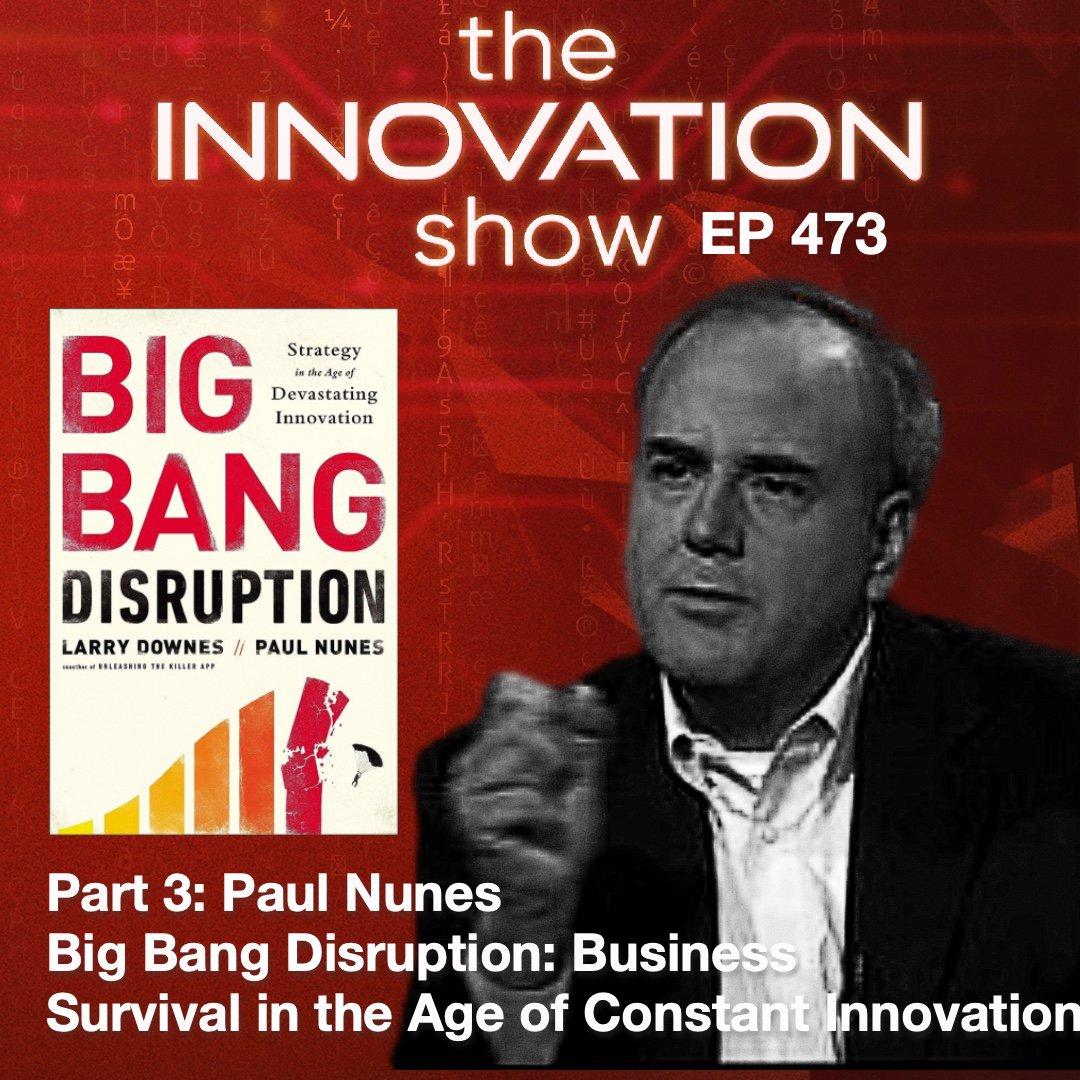
S26 Ep 473Big Bang Disruption with Paul Nunes Part 3
We have entered a fourth stage of innovation— the era of Big Bang Disruption. The new disrupters attack existing markets not just from the top, bottom, and sides but from all three at once. By tying their products to the exponential growth and falling costs of new technologies, their offerings can be simultaneously better, cheaper, and more customized. Not just for one group of users, but for all (or nearly all) customers. This isn't disruptive innovation. It's devastating innovation. 00:00:00.000 The Evolution of Innovation: Addressing Disruption 00:02:36.657 Three Styles of Innovation: Traditional, Cost, and Blue Ocean 00:06:23.894 Simplifying Business Strategies: Differentiation, Cost, and Customer Focus 00:07:20.966 The Challenge of Competing with Better Products 00:17:12.447 Leveraging cameras for innovative bottle tracking technology 00:19:56.153 The cost advantage of digital products and services 00:23:54.145 The phenomenon of better and cheaper innovation in various industries 00:26:44.172 The Impact of Information Spread and Market Realities 00:34:52.300 The Importance of Meeting Customer Breakthrough Points 00:36:20.074 Introduction to the concept of disciplined innovation 00:38:56.498 The power of recombining components in innovation 00:39:26.799 The Rise of Drones: A Phenomenon Explained 00:42:13.962 Rapid Fire Experiments and the Democratization of Customer Insight 00:47:26.683 Information and Access: The Challenges of Finding Information 00:49:04.340 The Power of Low Cost Components 00:49:31.700 Putting Screens on Refrigerators - Why Not? 00:52:04.248 Exponential Technologies Drive Down the Cost of R&D 00:54:40.337 The Challenge of Finding the Threshold for Product Success 00:57:51.377 Broadening Horizons and Taking Time to Think for Workplace Change

S25 Ep 472Jumping the S-Curve - Paul Nunes Part 2
Paul Nunes has found that what matters is not just climbing your current S-curve, which is what you do to reach the top of a single successful business. Instead, he emphasises the equal importance of the moves you must make to your next business: making the jump to your future S-curve. His book reveals crucial insights for making such transitions, including: * Why traditional strategic planning won't allow you to find the "big-enough" market insights that are critical to superior performance * Why your top team must be refreshed before performance starts to wane * Why you need much more talent than you think, especially "serious talent" that will find you worthy of their time We welcome back for Par 2, "Jumping the S-Curve: How to Beat the Growth Cycle, Get on Top, and Stay There", Paul Nunes. 00:00:00.094 Introduction and Importance of Recognizing Stall Points 00:01:51.468 The Real Question: Where Are You in Your Products? 00:09:00.634 Shifting Focus from Cool Phone Features to Reliable Networks 00:12:42.280 Potential Impact of 20% Price Increase on Buyers 00:12:49.050 The Power of Pricing and Competitors 00:15:46.209 The Importance of Scaling and Servicing Demand 00:19:14.833 Strategic Flexibility and Divestment for High Performers 00:23:15.986 The Danger of Fixating on Efficiency and Cost Management 00:25:00.592 Focusing on current success, time to think about next steps 00:29:03.240 The importance of seeing the bigger picture and avoiding tunnel vision 00:32:45.856 Waiting too long for the next big move 00:35:03.439 The Challenge of Technological Obsolescence 00:38:50.137 The Need for Resale Markets and Recycling 00:42:11.000 Letting Go of Stranded Assets in Business 00:46:44.796 Borrowing vs. Profits: Paying off the Mortgage 00:50:47.794 Add-Centric Strategy: Edge of the Organization and Edge of Chaos 00:57:29.565 The Nature of Strategic Transitions and Leadership Selection 01:02:34.211 Changing Management Succession and Ownership of Capabilities 01:05:34.274 Establishing Hotbed Conditions for Talent Development 01:10:28.171 Investing in People and Building Capable Teams

S25 Ep 471Jumping the S-Curve - Paul Nunes Part 1
Paul Nunes has found that what matters is not just climbing your current S-curve, which is what you do to reach the top of a single successful business. Instead, he emphasises the equal importance of the moves you must make to your next business: making the jump to your future S-curve. His book reveals crucial insights for making such transitions, including: * Why traditional strategic planning won't allow you to find the "big-enough" market insights that are critical to superior performance * Why your top team must be refreshed before performance starts to wane * Why you need much more talent than you think, especially "serious talent" that will find you worthy of their time We welcome "Jumping the S-Curve: How to Beat the Growth Cycle, Get on Top, and Stay There", Paul Nunes. In this episode, we discuss 00:00:00.000 Filling the Gap: Repeated Peaks of Business Performance 00:06:38.522 The Origin: Defining High-Performance Business 00:09:34.223 Kroger's Mistake: Not Investing in the Future 00:12:23.282 Creating Sustained Value and Jumping an S-Curve 00:16:49.711 The Nature of S-Curves and Technology's Impact 00:20:07.341 Jumping Three Curves Simultaneously: A Mind-Blowing Challenge 00:23:44.811 The Zenith Example: Jumping S-Curves or Getting Left Behind 00:26:29.471 The Importance of Big Hairy Audacious Goals 00:28:26.303 The Problem with BHAG and Matching Aspirations to Capabilities 00:34:11.000 The Importance of Listening to Insights and Sourcing Strategy 00:38:48.440 Average and low performers rely on their phones too much 00:41:53.306 The missed step of Apple with iTunes and the acquisition of Beats 00:44:59.325 Balancing short-term profits and investing in future waves 00:48:20.841 Balancing streaming profits and investing in new content creation 00:50:59.949 Surprising Price Difference in India 00:51:06.609 Scaling too hastily can lead to problems 00:54:16.844 The importance of understanding what creates value before scaling 01:00:30.502 Designing with shared components in automotive industry 01:03:32.600 Price point and competence before scaling in consumer products 01:06:29.449 Collecting vinyl records and now books

Private Lawns, Planning: Protection or Growth
bonus"Priorities are determined by the relative strengths of your needs in relation to the range of opportunities afforded by your current circumstances." - Mark Solms. In his book, "Homo Deus", Yuval Noah Harari explains that lawns offered no practical value - they weren't used for grazing animals or growing food. The size and neatness of the lawn became an undeniable symbol of status, a peacock display of wealth that couldn't be imitated. Devoting precious land or time to a lawn was unthinkable for peasants. For them, a 'lawn', if they had any, was not for relaxation but for survival, used to grow food. This historical nugget came to mind recently as I spoke to Neuropsychologist and author of 'The Hidden Spring', Mark Solms. Mark explains that needs and actions are interconnected and must be prioritized based on urgency. For example, we become aware of the need to go to the bathroom when it becomes urgent, a concept referred to as "latchkey urgency". This concept of prioritising needs also applies to organisations, which must determine critical needs based on their current circumstances. For example, I briefly worked as head of Innovation in a large bureaucratic organisation. I should have done my homework on the organisation and presumed we could foster a culture of innovation. However, I soon realised the reality of this week's Thursday Thought. You must also prioritise in an organisation. You cannot paint #innovation over the rust of a toxic culture. You must first tend to the "cultural lawn" before adding the innovative decor. This is even more pronounced if an organisation is fighting for survival. In "Organisational Fight or Flight Mode", businesses tend to double down on what we already know and become resistant to anything new. Research from former Innovation Show guest Bruce Lipton provides an interesting parallel. His work shows that cells switch between 'protection and' growth modes' based on the surrounding environment and signals from the environment, body, and brain. When a cell perceives a threatening environment, it focuses on protection, thus preventing growth. Conversely, the cell thrives in a non-threatening environment, promoting growth. The same can be applied to humans and their work environments. In a psychological climate of fear, people are less likely to take creative risks or invest in long-term planning. However, when the environment is supportive and non-threatening, individuals are more likely to thrive, plan, and grow. This is where the privilege of having a 'private lawn' comes into play. The 'private lawn' is the ability to have the time and space to plan, think and grow. For some of us, daily survival consumes all our time and energy, leaving no room for strategic thinking or planning. As business leaders, creating an environment where everyone can access their 'private lawn' - a space for growth, planning, and forward-thinking is crucial. However, we must also plan by priority.

S24 Ep 470Mark Solms - The Hidden Spring Part 9: Making a Mind and The Hard Problem
It is a pleasure to welcome the author of The Hidden Spring: A Journey to the Source of Consciousness, Mark Solms. In this episode, we unpack "The Hard Problem" and culminate on Mark's latest challenge: Making a Mind, where he and his team have built a conscious intelligence. 00:00:00.508 The Final Chapter: Exploring the Source of Consciousness 00:06:03.237 Understanding the Underlying Mechanism and the Free Energy Principle 00:12:35.699 Mechanism: Substrate-Independent and Irrelevant to Appearance 00:24:05.372 The cortex and brainstem: the wrong place to look 00:26:57.108 The mechanism of feeling predicts conscious experience 00:34:18.887 Making a Mind: Exploring Consciousness and Mechanisms of Feeling 00:42:00.900 Richard Feynman's Last Words: "If I can't create it, I don't understand it." 00:46:47.955 The Imperative for Artificial Intelligence: Maintaining Homeostatic States 00:47:39.085 The Functioning of the Robot and its Activities 00:52:53.276 The Final Chapter: Artificial Feelings and Ethical Considerations

S24 Ep 469Mark Solms - The Hidden Spring Part 8: A Predictive Hierarchy
It is a pleasure to welcome the author of The Hidden Spring: A Journey to the Source of Consciousness, Mark Solms. In this episode, we talk about the brain's prediction system. 00:00:00.000 Introduction and Overview of the Chapter 00:03:30.388 Establishment of the Meteorology Department 00:11:59.546 The Fundamental Task: Minimizing Free Energy 00:15:43.370 Feelings: Connecting Us to Our Ancestors 00:19:36.790 Neglecting the inter-receptive and extra-receptive in cognitive science 00:22:30.002 The brain's attempt to contain environmental effects on the organism 00:31:32.675 Innate Predictions: Fear and Instinctual Behaviors 00:34:19.723 The Evolution of Responses and Predictive Model Complexification 00:42:59.118 The Brain: Ones and Zeroes, Predictions and Errors 00:54:18.834 The Brain as an Organization 00:59:57.338 Emotional Needs and Scripts
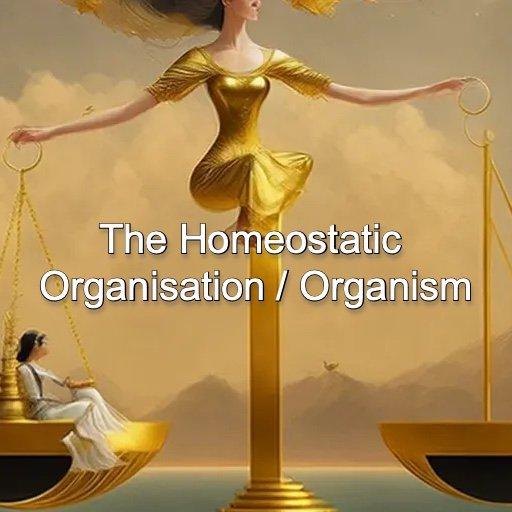
The Homeostatic Organisation / Organism
bonus"No structure, even an artificial one, enjoys the process of entropy. It is the ultimate fate of everything, and everything resists it.' - Philip K. Dick Homeostasis refers to the maintenance of relatively constant internal conditions in an organism. For example, we maintain a body temperature of around 98.6°F (37°C). In a cold environment, we shiver to return to this temperature. In a warm climate, we cool ourselves down to restore balance. In our 9-part series on The Innovation Show, Mark Solms explains the relationship between homeostasis and entropy. Entropy is the natural tendency of things to lose order and fall into chaos. It's why ice melts; batteries lose charge, billiard balls stop, and hot water merges with cold. Homeostasis resists entropy. It keeps us in a limited range of ideal states, like a perfect body temperature. Our bodies need a constant energy supply to maintain homeostasis and resist entropy. Energy can be useful or useless, depending on its ability to work. As useful energy depletes, system entropy increases. This explains why our bodies eventually decline. We need to generate effort to counter entropy, like a balance. This includes exercising to prevent muscle loss, learning new skills for job relevance, and innovating to stay competitive. Like organisms, organisations are living entities that constantly need to reinvent and regenerate energy to maintain balance. Organisations can become stagnant, with experienced managers sometimes lacking the initiative to innovate or drive change. This can lead to inefficiencies and bureaucracy, causing the organisation to become less effective over time. If you think of people as molecules of energy, they dissipate and find areas of the business where they can do the least amount possible. Bureaucracy grows like a bacterial plaque throughout the organisation. The lifeblood of the organisation clogs up and becomes less effective. Information flows become inefficient, like varicose veins. In effect, the organisation atrophies. Injecting new energy into an organisation can revitalise it, realign its workforce, and increase efficiency. As discussed in my book "Undisruptable", this continuous revitalisation is essential for an organisation's health, especially during rapid technological change. Resisting entropy is a fundamental function of living things. Similarly, organisations that resist change become victims of entropy, disrupting the balance of their systems and tipping the scales towards entropy. Maintaining homeostasis is not an event. It is a continual process. Maintaining success requires effort, constant renewal and permanent reinvention.

S24 Ep 468Mark Solms - The Hidden Spring Part 7: Free Energy
It is a pleasure to welcome the author of The Hidden Spring: A Journey to the Source of Consciousness, Mark Solms. In this episode, we share some terms like: Markov Blankets, The Free Energy Principle, Homeostasis, Entropy and more. We also look at the neuroscience of innovation. Time Stamps 00:00:00.076 Introduction: Exploring the Free Energy Principle 00:02:48.180 Feeling as an Equation: The Reduction of Homeostasis 00:05:09.567 Reduction of Homeostasis to an Equation by Carl Friston 00:07:40.434 The Link Between Mathematics, Physics, and Feelings: Homeostasis 00:10:06.472 Living Things Resisting the Second Law of Thermodynamics 00:12:31.153 The Imperative of Maintaining Organization and Viability 00:15:08.612 Homeostasis and the Role of Predictability 00:17:41.544 Learning from Experience and Updating Predictive Models 00:20:17.696 The Free Energy Principle and Reducing Predictive Errors 00:22:33.207 Understanding Free Energy as Wasted Informational Energy 00:24:41.590 The Fundamental Law of Psychology and Psychiatry 00:34:02.646 Self-organization in Nature: Ants and Bees 00:40:03.648 The Importance of Boundaries and the Markov Blanket 00:43:30.274 Feeling as the Driving Force of Learning

S24 Ep 467Mark Solms - The Hidden Spring Part 6: The P.A.G.
It is a pleasure to welcome the author of The Hidden Spring: A Journey to the Source of Consciousness, Mark Solms. In this episode, we will discuss questions such as where does arousal come from anatomically and how does it arise physiologically? And the central question of today is where the seemingly magical shift from automatic reflex to volitional feeling occurs. Today, we will share some terms like synaptic transmission, reuptake, post-synaptic modulation and the role of neurotransmitters and neuromodulators, and we will also explain the role of the PAG, the periaqueductal grey.
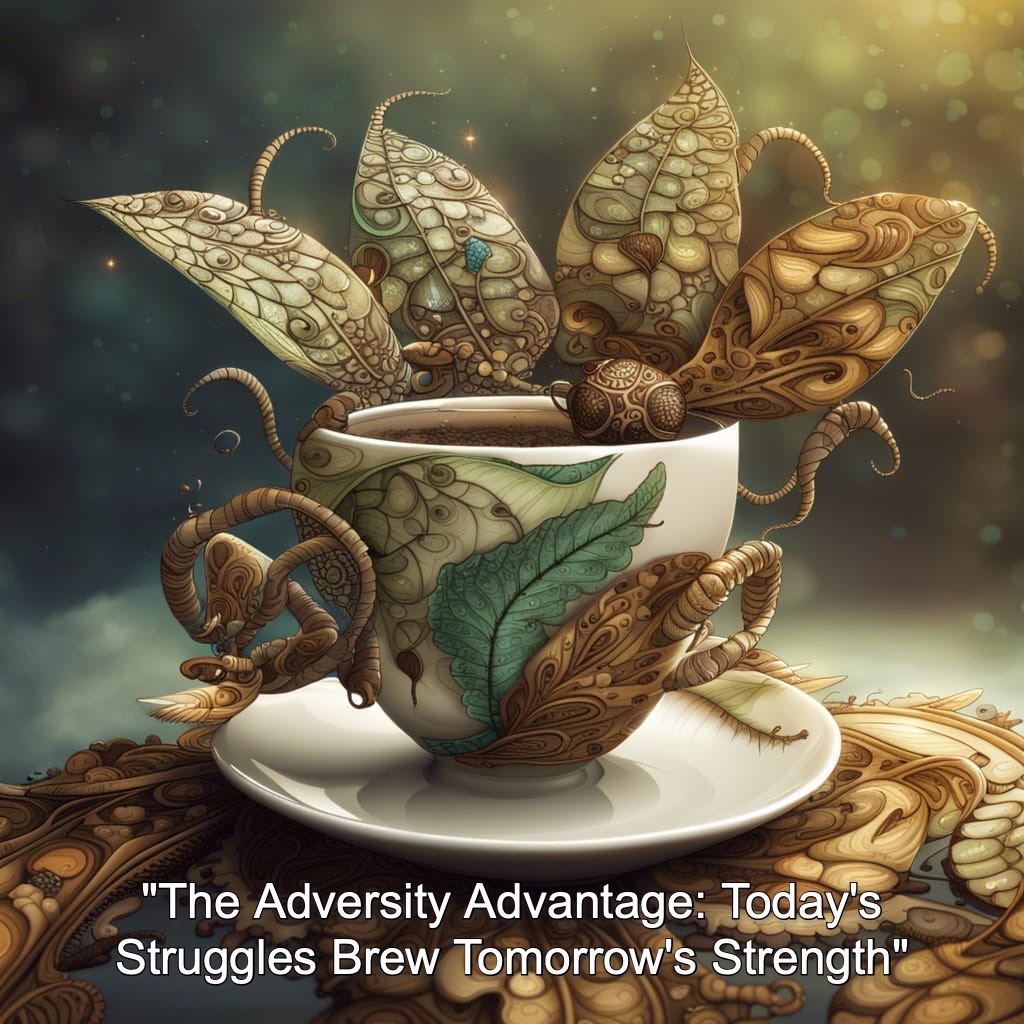
The Adversity Advantage Today's Struggles Brew Tomorrow's Strength
bonusThe struggle you're in today is developing the strength you need for tomorrow. - Robert Tew In a world of abundance, we take many things for granted. Our morning coffee is one such example. A morning brew helps many of us win the battle to wake up by winning a neurochemical war. However, there is another battle that takes place using chemical warfare. The battlefield? The dense, green foliage of the coffee plantation. Align to the left Align in the middle Resize to full width Align to the right Add a link to the embedded image Add alt text Delete image No alt text provided for this image Created using AI Like any crop, coffee plants are subject to attack by pests. Many plants and trees have developed fascinating defence mechanisms to protect themselves against such attacks. (Like the stinging nettle to the human touch) When insects nibble on the foliage of coffee plants, they release defence compounds. One of the defence mechanisms of coffee plants is the production of caffeine. Caffeine acts as a natural insecticide, deterring and even poisoning certain insects that attempt to feed on the plant. The caffeine content in coffee leaves and beans is toxic to many insects, making them less attractive to pests and reducing the likelihood of severe infestations. In addition to caffeine, coffee plants release an acid called chlorogenic acid. This acid acts as a natural fungicide and insecticide for the plant. When we drink our cup of coffee, we also drink these compounds. Chlorogenic acid is a powerful antioxidant and helps with weight loss, blood sugar control, and heart disease prevention. However, while protecting coffee plants with pesticides and insecticides might seem beneficial, this prevents the release of chlorogenic acid. Without insect attacks, the plant does not undergo stress or produce beneficial acids. Hormesis is a process whereby a beneficial effect (improved health, stress tolerance, growth or longevity) results from exposure to low doses of a toxin or stressor. Hormesis has been studied extensively with ageing. Researchers found that introducing stressors like intermittent fasting, exercise, and cold shower therapy produces resilience and anti-ageing effects. For example, when an optional cold shower activates a mild fight or flight response, it increases our tolerance for the cold and can guard us against catching a cold. Just as we can build up our tolerance for poisons, we can improve our tolerance for adversity. This coffee narrative is a helpful metaphor that resonates in our lives and business. It's about the essentiality of struggle and how it moulds us, adding depth and substance to our existence. Just as the coffee plant needs the insect's bite to release its acid and liberate its flavour, we must struggle to bring out the best in ourselves. This is the paradoxical advantage of adversity. The Adversity Advantage: Nurturing Resilience In our forthcoming series, with former Executive Director of Research for the Accenture Institute for High Performance, Paul Nunes explains how high-performance companies develop a hothouse of talent. Paul tells us, "Talent hothouses are like agricultural greenhouses". A company needs to start with the right seeds to ensure early success for the vast majority. As those seedlings grow, leaders must find ways to prepare high-potential talent for inevitable challenges ahead. That preparation includes steps to increase their hardiness, so managers must regularly expose employees to unfamiliar ideas and ways of thinking." High-performance businesses create environments—often highly challenging—for employees to acquire the skills and experience needed to climb up the corporate ladder quickly. The goal is partly to create what our Accenture colleague Bob Thomas, in his book on the topic, calls "crucible" experiences. These life-changing events, whether on the job or not, hold lifetime lessons that can be mined to help transform someone into a leader." "You learn ten times more in a crisis than during normal times." - A.G. Lafley Alan George "A.G." Lafley was the leader of Procter & Gamble on two separate occasions, from 2000 to 2010 and again from 2013 to 2015, during which he served as chairman, president and CEO. Lafley built muscles that served him well in later life when he led P&G in Asia during a time of economic collapse. According to Paul Nunes' research, the high-performers orchestrate crucible moments with stretch assignments or early promotions where people learn on the job. Paul identifies how some top performers assigned unfamiliar tasks to up-and-coming managers by assuming a "popcorn stand" approach. This is when they give high-potential employees a tiny business unit to manage—for example, the local operations of a small geographic market. The goal is to provide those individuals with the whole profit-and-loss experience of running a business—leading a team, serving a customer base, negotiating contracts, etc. And the organisation gets an early loo

S23 Ep 466Mark Solms - The Hidden Spring Part 5: Feelings 2
In "The Hidden Spring," our guest Mark Solms takes us on the journey of Feelings. Feelings are difficult to research because they are inherently subjective, but If we exclude feelings from our account of the brain, we will never understand how it works. You tell us, to a fantastic degree, neuroscientists searching for an explanation of consciousness have ignored feelings. Mark Solms takes us on an exploration of Feelings and the work of his friend and collaborator, Jaak Panksepp. We cover Seeking, Play and Fear.

S23 Ep 456Mark Solms - The Hidden Spring Part 4: Feelings 1
In The Hidden Spring, our guest Mark Solms takes us on the journey of Feelings. Feelings are difficult to research because they are inherently subjective, but If we exclude feelings from our account of the brain, we will never understand how it works. You tell us, to a fantastic degree, neuroscientists searching for an explanation of consciousness have ignored feelings. Mark Solms takes us on an exploration of Feelings and te work of his friend and collaborator, Jaak Panksepp.
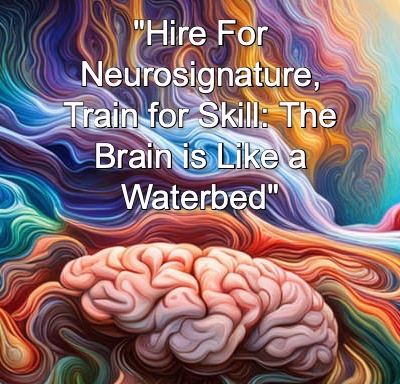
Hire For Neurosignature, Train for Skill: The Brain is Like a Waterbed
bonusThe first in a new project on The Innovation Show. Hire For Neurosignature, Train for Skill: The Brain is Like a Waterbed "Autists are not just square pegs in the round hole of society. The real problem isn't the challenge of fitting them in, it's that in trying to do so we risk destroying their unique shape." — Paul Collins The parents of an autistic young man approached a local convenience store, hoping to secure a job for their son. The retail chain manager, hesitant due to his team's lack of experience with special needs, said he would give the kid a chance. On his inaugural day, the manager tasked the young man with organizing food items by their expiration dates on a single shelf. He figured it would take him at least the whole day. To the manager's astonishment, the young man had meticulously arranged every shelf in the store in just three hours. This young man, perceived as disabled, viewed sorting produce by date as a delightful puzzle. His neurodiversity brought joy to the task and put him in a flow state. But the story doesn't end there. Harnessing the youngster's unique ability, the retailer employed him to travel between stores, solving his 'puzzles' and sorting food items. This valuable skill saved the retailer a significant amount of wastage and helped them to achieve their sustainability goals. Today, this young man earns so much that his father left his previous job to chauffeur his son (who cannot drive) around the country, solving puzzles for the retail chain. "We all have a calling. Each one of us has a role to play on this planet. When we play the instrument that is meant for us in the orchestra of life, we will be in a constant state of bliss" - Joe Vitale The moral of the story? Everyone has a unique place if the world gives them a chance. Unfortunately, a story like this is scarce. The unfortunate reality was recognised best by one of the great geniuses of our times, Albert Einstein, who said, "Everybody is a genius. But if you judge a fish by Its ability to climb a tree, it will live its whole life believing that it is stupid". Because the work system is set up for efficiency, it caters for the majority. It is a drain on resources to cater to everyone. It is even more challenging to interview "everyone", so we hire for homogeneity. And somewhat understandably, as human resources, people officers and hiring executives are already stretched to the maximum. Companies are dealing with a tumultuous business environment. They are preoccupied with quenching multiple fires: AI, digitalisation, remote work, supply chain volatility, business model shifts, data, GDPR, inflation, housing crises, pandemics and even wars. The modern workplace is structured like a fine-cut diamond—rigid, linear, and sparkling with hierarchy. This construct, drawn from centuries of church and military organisation, may bring a semblance of order, but it simultaneously smothers the potential of those who don't fit the mould. Neurodiverse individuals can struggle in these traditional environments. Executives often overlook them (or ignore them outright) due to their distinctive ways of processing information, unique patterns of thought and behaviour, and distinctive communication styles. To ensure that these square pegs aren't shoehorned into round holes, we need to rethink the design of our workplaces. We must build environments that foster neurodiversity rather than suppress it. The modern workplace is more like a network of networks, teams of teams, nuanced and complex. The brain works similarly; the brain is more about connection than calculation. Understanding this can help executives update the workplace. Imagine a world where everyone got to use their talents and didn't have to shore up their weaknesses and, in many cases, disguise those weaknesses. That is the focus of this week's Thursday Thought. The Brain is like a Waterbed  Imagine the brain as a waterbed. When one area is pushed down, or in the case of the brain, damaged, underdeveloped or overdeveloped, the other regions fill the void. This phenomenon mirrors what is known as the 'waterbed effect'. Just as the water in a waterbed redistributes when pressure is applied, the brain can restructure and adapt when certain abilities are not utilised. This isn't necessarily a sign of deficiency. On the contrary, it indicates the brain's wonderful compensatory capacities. When we neglect or underutilise some capacities, the brain develops and restructures in ways that enable us to get even greater capacity out of other aspects. Neurodiversity speaks to different types of intelligence, learning styles, communication styles, appetite for risk, openness to change and much more. When someone has a different "setting", they are not disabled. They are, as singer Danny Deardorff put it, we are all "differently abled." The people who succeed in the workplace (and education system) do so mainly because their intelligence matches the dominant paradigm or they have found

S21 Ep 464Mark Solms - The Hidden Spring Part 3: The Cortical Fallacy
In The Hidden Spring, our guest Mark Solms does not dive too deeply into Karl Friston's mathematics. As you will discover, he summarises its implications, describing Friston's free energy as a quantifiable measure of how a system models the world and how it behaves. This notion leads to a very different idea of consciousness from Descartes's reason-centric version that set up the puzzling dualism of "mind" and "matter", a la Damasio's Descartes Error. Mark explores the "cortical fallacy," which refers to his view that neuroscientists who have argued that the "seat of consciousness" is in the cortex are wrong. Recent neuroscience has shed light on where this is. As Mark points out, damage to just two cubic millimetres of the upper brainstem will "obliterate all consciousness." So where does it "Spring" from? 00:00:00 Intro 00:00:12 Teeing Up "The Cortical Fallacy" with hydranencephaly, a rare condition in which the brain's cerebral hemispheres are absent and replaced by sacs filled with cerebrospinal fluid. 00:02:37 "The Cortical Fallacy" 00:18:14 The Report-ability Problem of Consciousness 00:31:00 Chemical and Pharmacological Probes 00:37:00 1949 discovery of the Reticular Activating System 00:55:25 The Reticular Activating System: Salience, Filtering, Gratitude, Law of Attraction 00:58:00 The Mr. W joke and The Global Workspace Theory

S21 Ep 463Mark Solms - The Hidden Spring Part 2: A Journey to the Source of Consciousness
Why does it feel like something to be alive? For one of the boldest thinkers in neuroscience, solving this puzzle has been a lifetime's quest. Now, at last, Mark Solms, who discovered the brain mechanism for dreaming, has arrived at his answer. More than just a philosophical argument, the Free Energy theory will profoundly change how you understand your existence. The very idea that a breakthrough is possible may seem outrageous. Isn't consciousness intangible, beyond the reach of empirical methods? Yet Solms shows in forensic detail how misguided assumptions have concealed its nature. Only by sticking closely to the medical facts does a way past our obstacles appear. Join him on an extraordinary voyage into the strange realms beyond and learn what we are. In this episode, we cover this and more: 00:00:00 Intro 00:00:58 Consciousness research was frowned upon in Neuroscience 00:01:17 Mark's Sleep-Wake Cycle Research, REM Sleep 00:19:11 Oliver Sachs' Patients and Dopamine Treatments 00:30:31 The Challenge of Dopamine Medication and Loss of Motivation, ADHD, Parkinson's and More. 00:44:11 Neuro-Psychoanalysis and the case of Mr S and Confabulatory Amnesia 00:54:49 Fredu's Wishful System 01:01:12 Common Language and the Baggage of Language 01:07:19 Conclusion The open access article authored by Mark Solms and Karl Friston: https://www.frontiersin.org/articles/10.3389/fpsyg.2018.02714/full

S21 Ep 462Mark Solms - The Hidden Spring Part 1: A Journey to the Source of Consciousness
Part 1 of a 9-part series with the brilliant Mark Solms. Why does it feel like something to be alive? For one of the boldest thinkers in neuroscience, solving this puzzle has been a lifetime's quest. Now, at last, Mark Solms, who discovered the brain mechanism for dreaming, has arrived at his answer. More than just a philosophical argument, the Free Energy theory will profoundly change how you understand your existence. The very idea that a breakthrough is possible may seem outrageous. Isn't consciousness intangible, beyond the reach of empirical methods? Yet Solms shows in forensic detail how misguided assumptions have concealed its nature. Only by sticking closely to the medical facts does a way past our obstacles appear. Join him on an extraordinary voyage into the strange realms beyond and learn what we are.
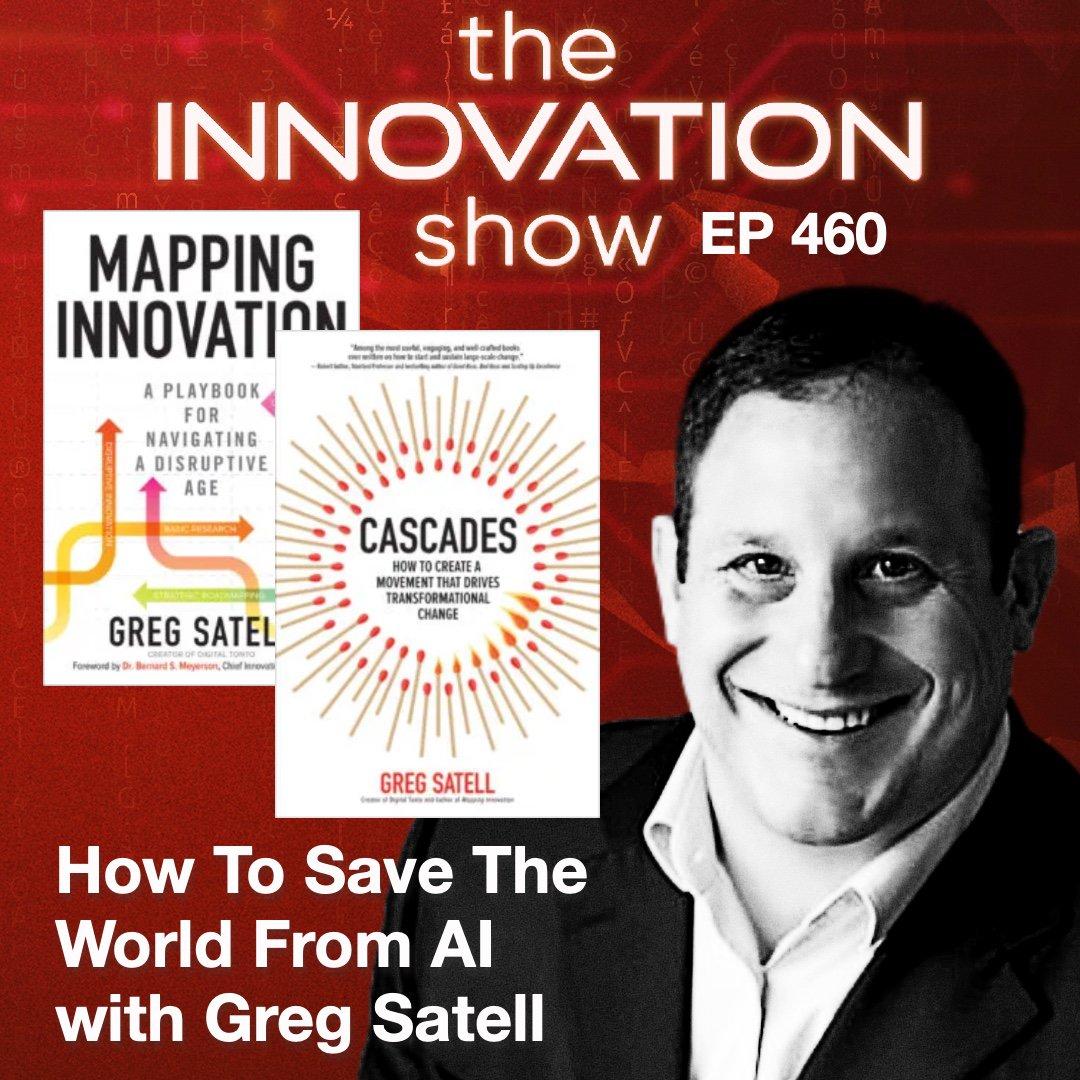
S30 Ep 460LIVE SHOW: Greg Satell - How to Save the World From AI
If you could make a change—any change you wanted—what would it be? Would it be something in your organization or your industry? Maybe something it's in your community or throughout society as a whole? Creating true change is never easy. Most startups don't survive. Most community groups never get beyond small local actions. Even when a spark catches fire and protesters swarm the streets, it often seems to fizzle out almost as fast as it started. The status quo is, almost by definition, well entrenched and never gives up without a fight. I was MC at the fifteen seconds festival in Graz, Austria and I was joined on stage by my friend and bestselling Author, Keynote Speaker and Innovation Advisor Greg Satell. Greg suggested the topic: How to Save the World From AI. This is that conversation. After the panel, Phaedra asked about using humour to lower resistance to change. Greg suggested laughtivism. Here is a video about laughtivism with Srdja Popovic: https://youtu.be/dAiDviKqWZI More about Greg Satell here: https://gregsatell.com/books/

S30 Ep 459LIVE SHOW: Phaedra Boinodiris - AI for the Rest of Us
I was MC for the tech stage at the Fifteen Seconds Festival in Graz, Austria. I had the pleasure of meeting the brilliant Phaedra Boinodiris. A fellow with the London-based Royal Society of Arts, Phaedra has focused on inclusion in technology since 1999. She is the business transformation leader for IBM's Responsible AI consulting group and serves on the leadership team of IBM's Academy of Technology. She is the author of the book "AI for the Rest of Us", and is a co-founder of the Future World Alliance, a non-profit dedicated to curating K-12 education in AI ethics. She is pursuing her PhD in AI and Ethics at University College Dublin's Smart Lab. In 2019, she won the United Nations Woman of Influence in STEM and Inclusivity Award. Women in Games International recognised her as one of the Top 100 Women in the Games Industry as she began one of the first scholarship programs in the United States for women to pursue degrees in game design and development. Find Phaedra here: https://phaedra.ai

S29 Ep 458Helen Edwards - From Marginal to Mainstream Part 2
Helen Edwards joins us for part 2 of a 2-part episode on her book, "From Marginal to Mainstream Why Tomorrow's brand growth will come from the Fringes – and How to get there first." Her book shows why businesses, marketers and entrepreneurs need to break free from their 'mainstream inhibition' and turn their attention to the margins - to confront, evaluate and embrace the 'strangeness' of behaviours, ideas and ways of life at the fringes. Using original research and analysis of the brands that have successfully backed marginal behaviours, Helen provides a framework for understanding and evaluating this non-obvious, untapped potential. Marginal behaviours may be unpromising, untested, weird, even sometimes repulsive - yet they can point the way to the future. T oday's margins are tomorrow's pot of gold - if you know where and how to look.
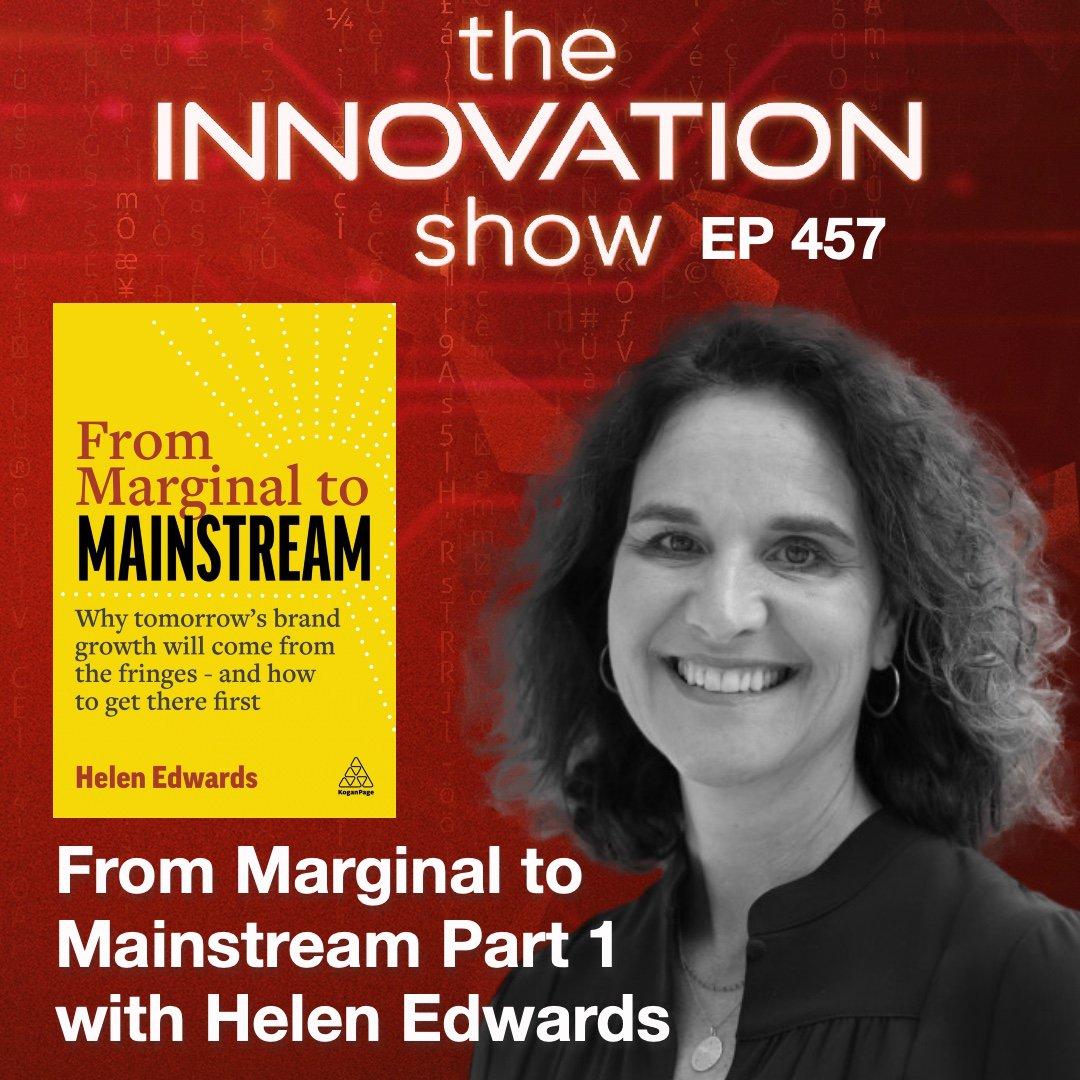
S29 Ep 457Helen Edwards - From Marginal to Mainstream Part 1
Helen Edwards joins us for part 1 of a 2-part episode on her book, "From Marginal to Mainstream Why Tomorrow's brand growth will come from the Fringes – and How to get there first." Her book shows why businesses, marketers and entrepreneurs need to break free from their 'mainstream inhibition' and turn their attention to the margins - to confront, evaluate and embrace the 'strangeness' of behaviours, ideas and ways of life at the fringes. Using original research and analysis of the brands that have successfully backed marginal behaviours, Helen provides a framework for understanding and evaluating this non-obvious, untapped potential. Marginal behaviours may be unpromising, untested, weird, even sometimes repulsive - yet they can point the way to the future. Today's margins are tomorrow's pot of gold - if you know where and how to look.

S29 Ep 456Edward D. Hess - Own Your Work Journey!
Our guest is the author of 15 books, over 160 practitioner articles, and over 60 Darden cases, etc. dealing with innovation and learning. Every time I catch up, he goes and writes another book. He has become a dear friend, thought partner and mentor. He honoured me by asking me to pre-read the manuscript and offer an endorsement, and this is what I wrote: "A life-changing book written by an old soul. Old souls are wise beyond their years, humble, and curious. They see the big picture, feel connected to everything, and recognize their fellow old souls. I feel like an old soul when I read Ed's books. I invite you to enjoy this book and gain wisdom beyond your years." It is a sincere pleasure to welcome the author of "Own Your Work Journey!: The Path to Meaningful Work and Happiness in the Age of Smart Technology and Radical Change." Edward D. Hess. Find Ed here: https://www.ownyourworkjourney.com And here: https://www.edhess.org

S29 Ep 455George and Linda Pransky - Life is a Metaphor
Metaphors show people how to look beyond the surface levels of life, to an enlightened truth. This book attempts to point to something deep, spiritual, and powerful. Metaphors, stories, and musings speak to the heart, not to the brain. Listen with your heart; that is where we all find inner truth. It is a great pleasure to welcome the author of "Life is a Metaphor: Metaphors, Stories and Musings for the Heart", George Pransky, joined by his wife and long-time business partner Linda Pransky, guys, you are very welcome. Find George and Linda here: https://www.pranskyandassociates.com
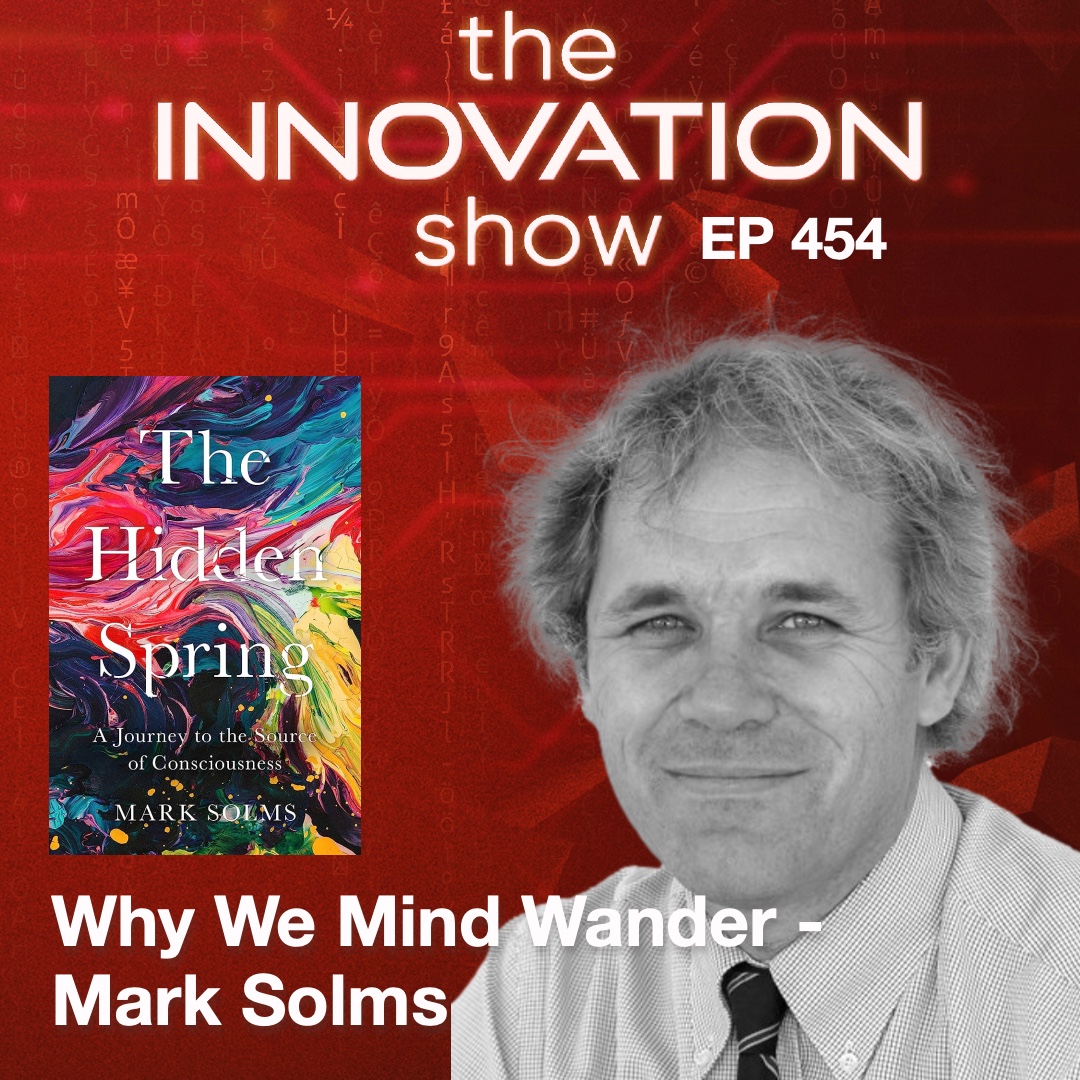
S28 Ep 454Why We Mind Wander - Mark Solms
bonusThe aim of mind-wandering, odd as it might sound, is to improve the efficiency of your generative model. As ordained by the Free Energy Principle, a model is only efficient if it uses the minimum resources necessary to perform the work of self-organisation. That boils down to finding the simplest model that successfully predicts sensory samples of the world. The simplest model does not arise naturally from voluntary action. Voluntary action is a haphazard process. Simplicity is increased by pruning redundant synaptic connections that formed while we learned from experience. We are cutting them back to avoid 'overfitting' our models to noisy data, needlessly preserving eccentric and weak correlations. The shears are the by-now familiar mechanisms of memory consolidation and reconsolidation: by activating memories, we can strengthen, alter and even erase them. Mind-wandering is one means by which this is achieved. It involves spontaneous forebrain activity (the 'resting state' or 'default mode'), which occurs without any specific external stimulus. This kind of activity often goes on in the background through an 'imaginative exploration of our own mental space'.
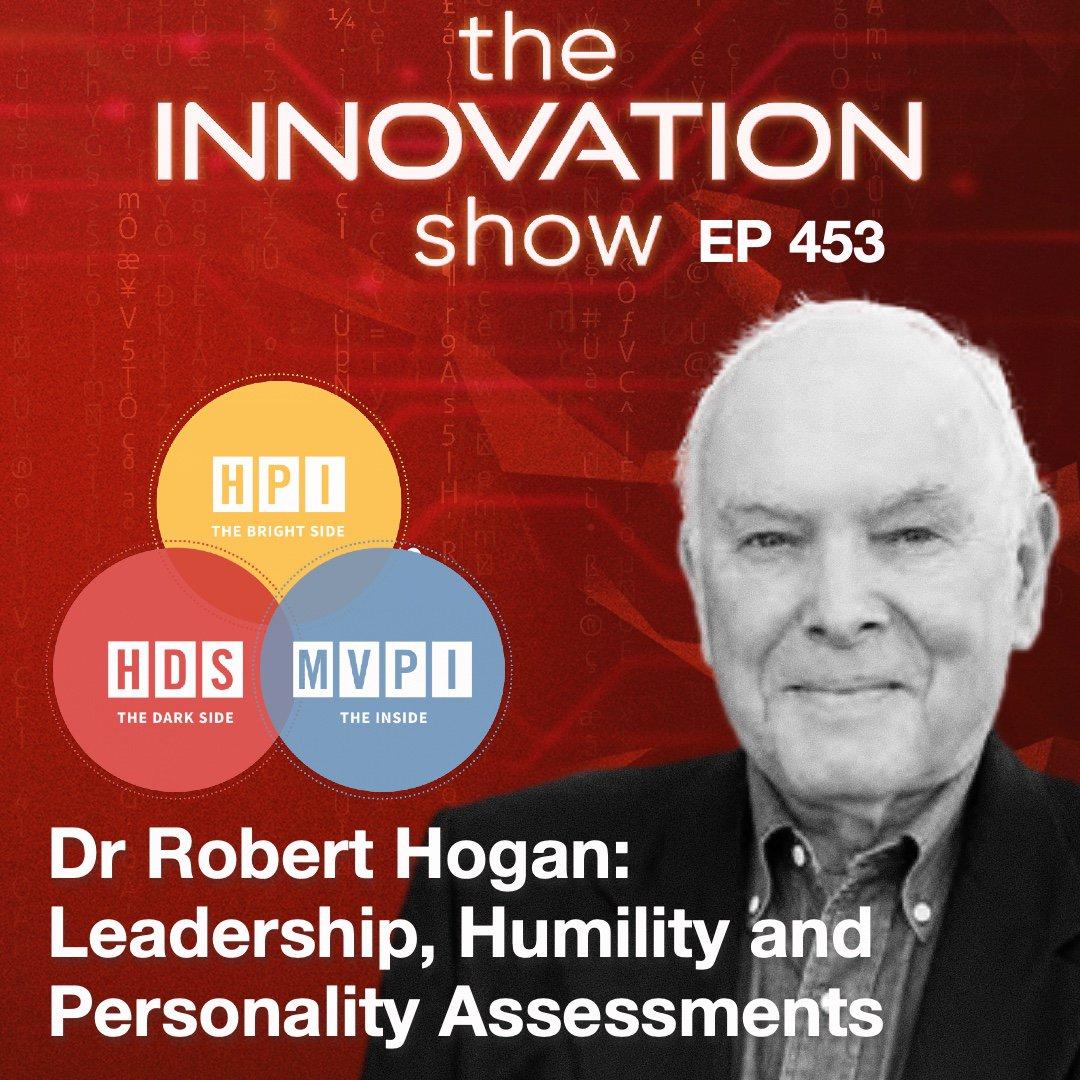
Dr Robert Hogan - Leadership, Humility and Competition
We caught up with Dr Robert Hogan during his 2023 worldwide tour. Robert challenged decades of academic tradition to demonstrate personality's impact on organisational success. He pioneered the use of personality assessment to improve workplace performance. One of his key findings is that organisations should look for humility in a leader rather than charisma. A humble leader channels energy into the improvement of an organisation, whereas charismatic leaders leave a trail of chaos and ruin. Hogan says, "Organisations often overlook humble employees for leadership positions favouring charismatic ones. Charismatic people are charming and inspirational, but many turn out to be narcissistic, arrogant, and potentially exploitative. In contrast, humble leaders empower followers and promote team learning."
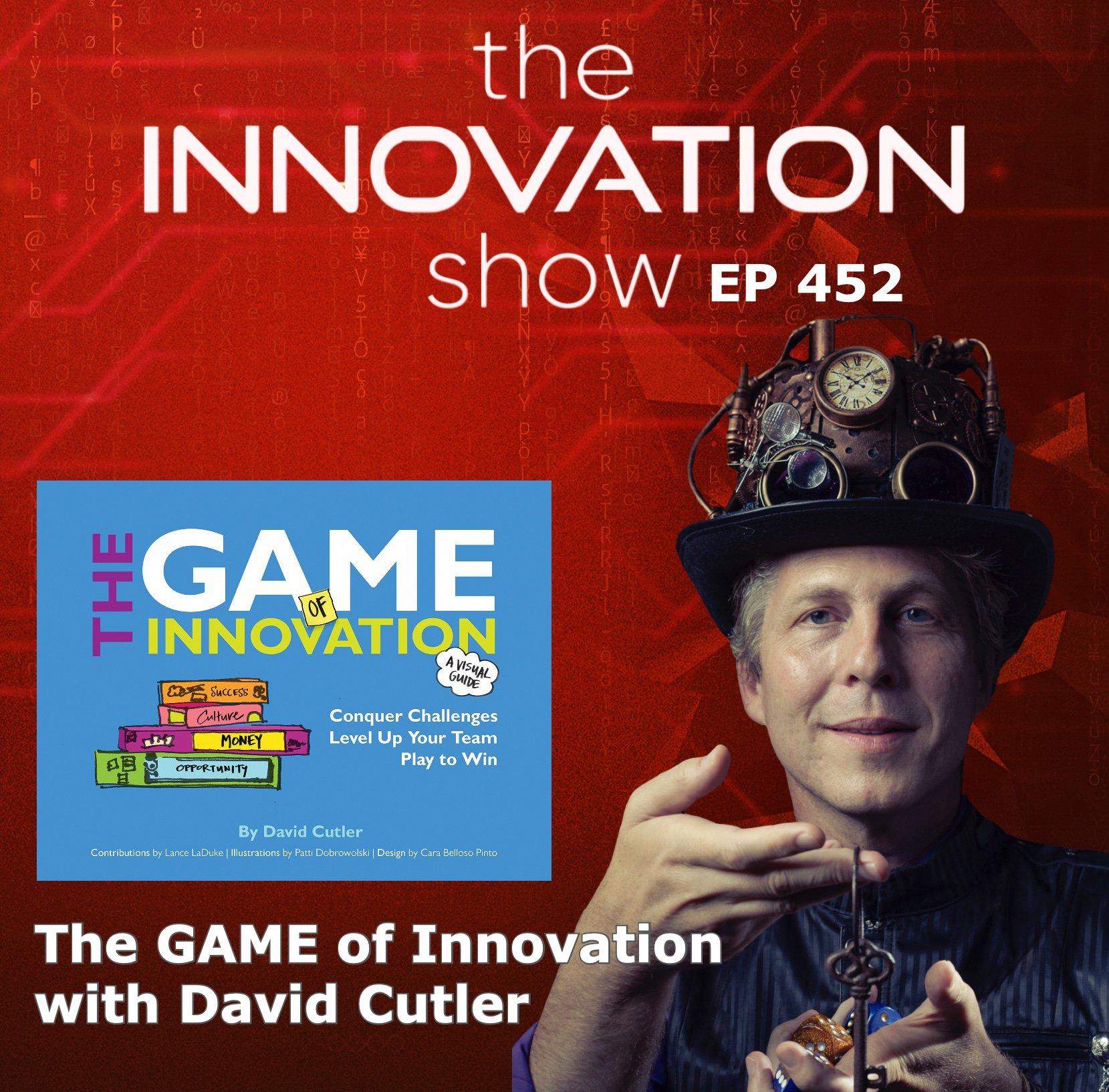
S28 Ep 452David Cutler - The GAME of Innovation
Today's book offers a comprehensive approach to extraordinary problem-solving. Conceived by a super-creative quartet of top-tier business consultants, the book builds upon a novel premise: What if you framed problems as if they were games of profound significance? How might you design something new or reimagine the old, particularly when competition increases, technology disrupts, change accelerates, money tightens, and the rules of success are constantly evolving? The book then shares a flexible methodology for designing powerhouse innovation GAMEs (Guidelines, Arena, Materials, Experience), Aligning teams with 5 problem-solving "lenses," building consensus behind change, and leading and managing the process. This uncommon, easy-to-read, visual book is packed with actionable strategies that will help you and your community thrive when playing The GAME of Innovation. It is a pleasure to welcome the author of The GAME of Innovation: Conquer Challenges. Level Up Your Team. Play to Win: Gamify Challenges, Level Up Your Team, and Play to Win, David Cutler
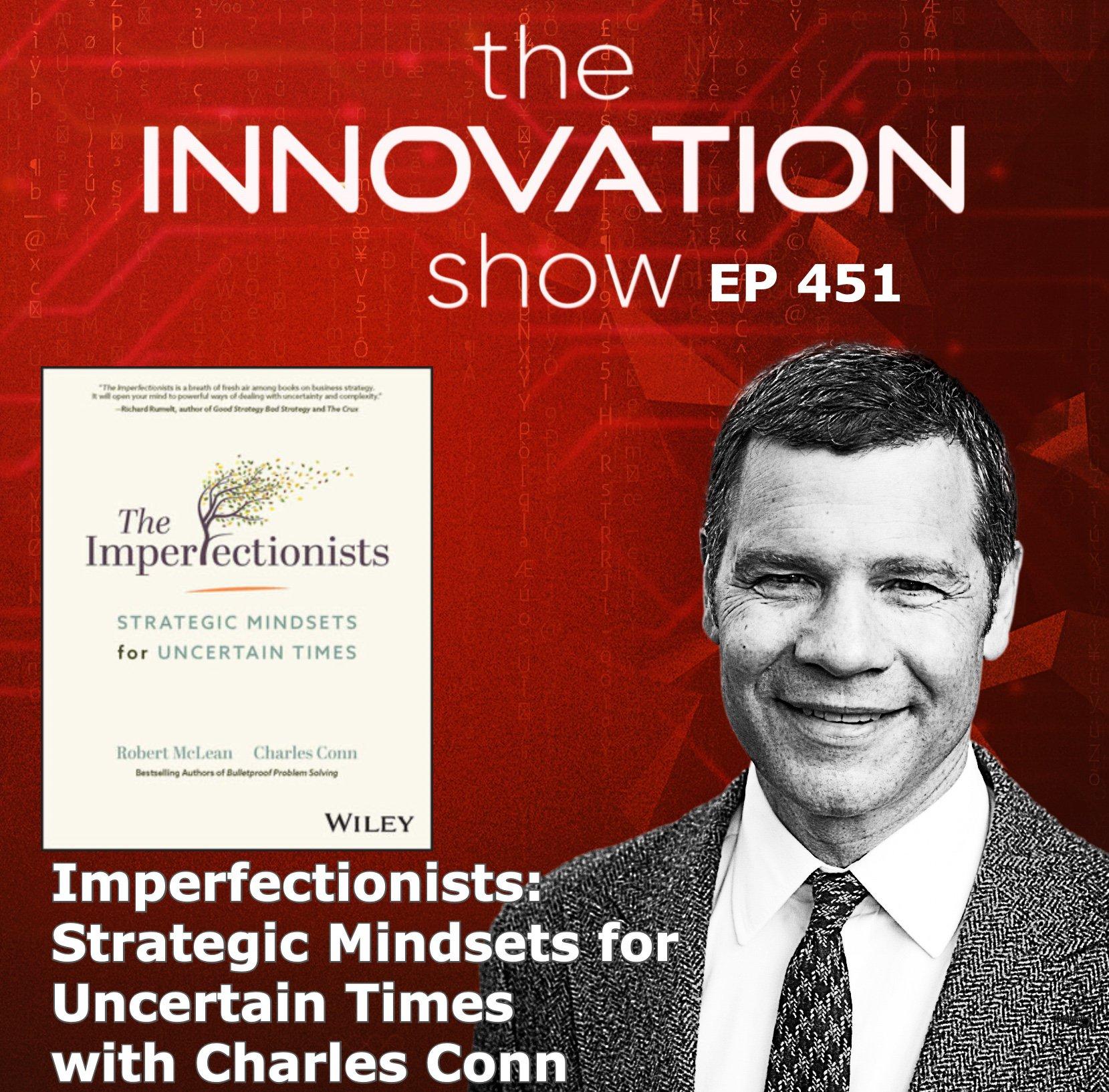
S27 Ep 451Charles Conn - The Imperfectionists
Today's book draws on a decade of research and 50 case studies to present six mindsets that help business leaders and nonprofit equivalents be more confident and creative about strategic problem-solving and be successful where others are afraid to act (or act recklessly). The concept is modelled after innovative companies such as Patagonia which are not afraid to step out into risk using small moves that build capabilities, assets and understanding. The imperfectionist strategy creates opportunities unavailable to those with conventional strategic thinking based on old structural models. The world is changing faster and faster, with increasing uncertainty and the threat of external disruption in every business and nonprofit segment. Conventional approaches to strategy development assuming a world devoid of probability no longer work. It Is a huge pleasure to welcome a friend, previous guest and author of "The Imperfectionists: Strategic Mindsets for Uncertain Times", Charles Conn. More about Charles here: https://bulletproofproblemsolving.com
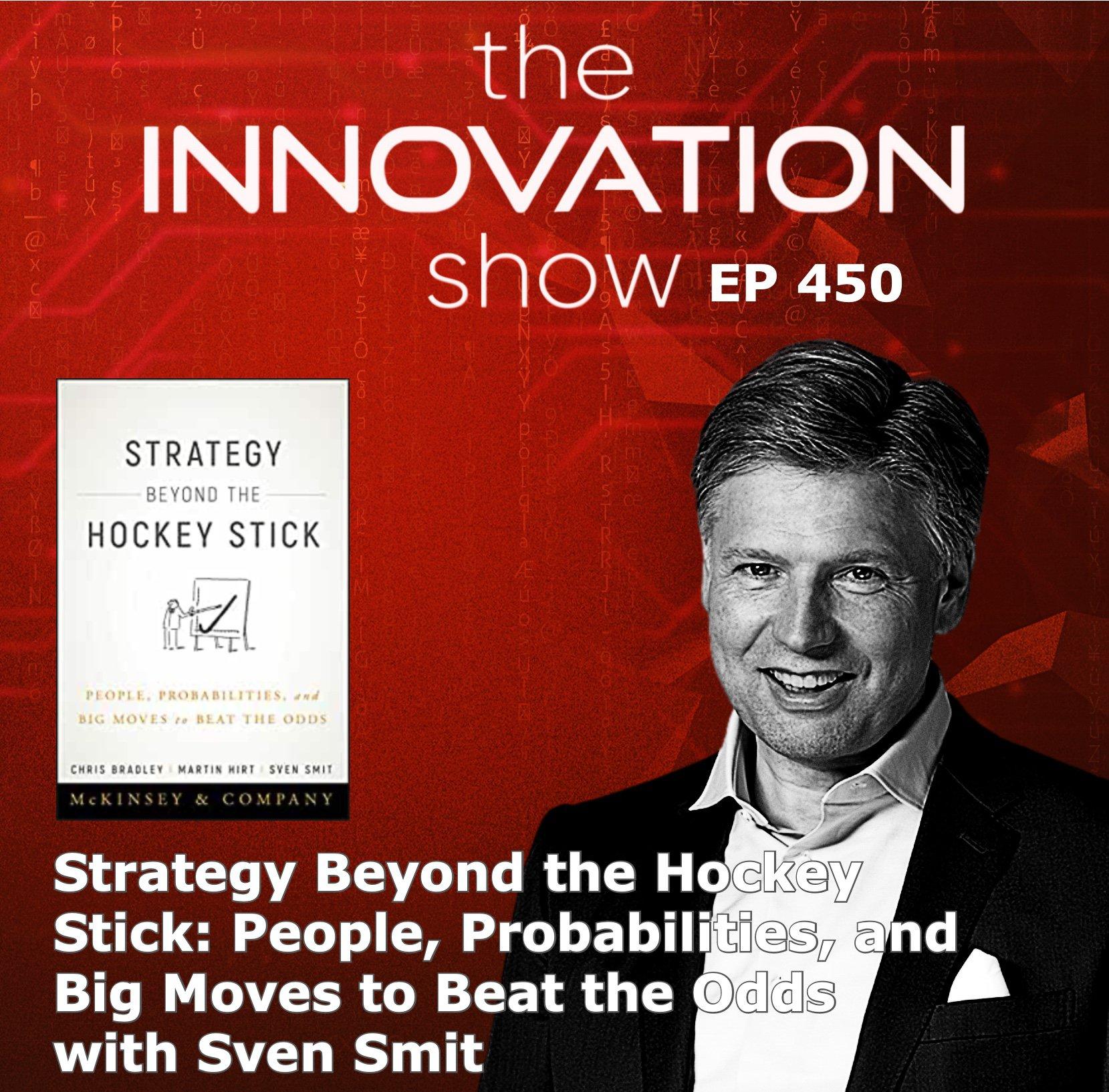
S26 Ep 450Sven Smit - Strategy Beyond the Hockey Stick
Today's guest discovered that over 10 years, just 1 in 12 companies managed to jump from the middle tier of corporate performance—where 60% of companies reside, making very little economic profit—to the top quintile, where 90% of global economic profit is made. This movement does not happen by magic—it depends on your company's current position, the trends it faces, and the big moves you make to give it the strongest chance of vaulting over the competition. This is not another strategy framework. Instead, today's book shows, through empirical analysis and the experiences of dozens of companies that have successfully made multiple big moves, that you have to overcome incrementalism and corporate inertia to improve performance dramatically. We welcome the Chairman of the McKinsey Global Institute and Author of "Strategy Beyond the Hockey Stick", Sven Smit.
S25 Ep 449Marty Cagan - Empowered: Ordinary People, Extraordinary Products
What is it about the top tech product companies such as Amazon, Apple, Google, Netflix and Tesla that enables their record of consistent innovation? Most people think it's because these companies are somehow able to find and attract a level of talent that makes this innovation possible. But the real advantage these companies have is not so much who they hire, but rather how they enable their people to work together to solve hard problems and create extraordinary products. Today's guest has long worked to reveal the best practices of the most consistently innovative companies in the world. A natural companion to his bestselling-book INSPIRED, today's book tackles head-on the reason why most companies fail to truly leverage the potential of their people to innovate: product leadership. It is a great pleasure to welcome the author of EMPOWERED: Ordinary People, Extraordinary Products, Marty Cagan
S25 Ep 448Bill Aulet - Disciplined Entrepreneurship
Disciplined Entrepreneurship will change the way you think about starting a company. Many believe that entrepreneurship cannot be taught, but great entrepreneurs aren't born with something special – they simply make great products. This book will show you how to create a successful startup through developing an innovative product. It breaks down the necessary processes into an integrated, comprehensive, and proven 24-step framework that any industrious person can learn and apply. You will learn: * Why the "F" word – focus – is crucial to a startup's success * Common obstacles that entrepreneurs face – and how to overcome them * How to use innovation to stand out in the crowd – it's not just about technology Whether you're a first-time or repeat entrepreneur, Disciplined Entrepreneurship gives you the tools you need to improve your odds of making a product people want. Author Bill Aulet is the managing director of the Martin Trust Center for MIT Entrepreneurship as well as a senior lecturer at the MIT Sloan School of Management. Lnks mentioned in the show: Entrepreneurship 101: Who is your customer? https://www.edx.org/course/entrepreneurship-101-who-is-your-customer? Book website: https://www.d-eship.com
S26 Ep 447Bob Moesta - Learning to Build
Does this sound familiar? * Are you always one prototype away from a solution but never seem to get there? * Do you spend most of your time fixing problems you did not anticipate? * Does it seem like everything is going well until launch when it all falls apart? * Are you getting very little return on the resources you deploy? * Does the performance of your product in the market rarely meet the predicted targets? Intrigued? So was I. If you answered yes, then you are like a young version of our guest. Today, he will teach you both the science and art to innovation. It is a pleasure to welcome a friend of the show to share insights from his latest book, "Learning to Build: The 5 Bedrock Skills of Innovators and Entrepreneurs", Bob Moesta.

S26 Ep 446Derek van Bever - Stall Points
Very few large companies manage to avoid stalls in revenue growth. These stalls are not attributable to the natural business cycle. Our guest's careful analysis reveals that most such stalls directly result from strategic choices made by corporate leaders. In short, stoppages in growth are almost always avoidable. This extensively researched book analyses the growth experiences of more than 600 Fortune 100 companies over the past fifty years to identify why growth stalls and to discover how to rectify a stall in progress or, even better, avoid one. Board members and executives in companies of all sizes will find this book a practical and essential resource. Our guest investigated the incidence and consequences of growth stalls in major corporations and then probed the root causes. Examining hundreds of stall points, the authors conclude that the greatest threat to a company's growth is obsolete strategic assumptions that undermine market position and innovation and talent management breakdowns. It is a pleasure to welcome back our recent guest in the Clayton Christensen tribute series, the author of "Stall Points: Most Companies Stop Growing - Yours Doesn't Have To - Derek van Bever
S25 Ep 445Karen Dillon - The Microstress Effect
C.S. Lewis once said, "Good and evil increase at compound interest. That's why the little decisions we make every day are of infinite importance. the smallest good act today is the capture of a strategic point from which, a few months later, you may go on to victories you never dreamed of" This quote came to mind as I pondered today's book. Just as the good things we do compound over time, so too do the not-so-good things, it was jinn Dryden who wrote first we make our habits then our habits make us. This is the case for the daily stresses we tolerate, our guest calls these microstresses. "Microstress: tiny moments of stress triggered by people in our personal and professional lives; stresses so routine that we barely register them but whose cumulative toll is debilitating." In its annual State of the Workplace survey, Gallup concluded that only 33 per cent of those surveyed were"thriving" in their well-being, with 44 per cent of employees reporting experiencing "a lot" of stress in a typical workday—a record high.1 But little recognised or adequately studied is the toll of this new form of stress. The toll is so subtle that we barely register it, but the cumulative effect can derail even high performers, both personally and professionally. We welcome the author of "The Microstress Effect" Karen Dillon

S25 Ep 444Aidan McCullen - Here Be Dragons on (The Disruptive Voice)
This is my guest appearance on The Disruptive Voice Podcast. Exploring the theories of disruptive innovation across a broad set of industries and circumstances with academics, researchers, and practitioners who have been inspired and taught by Professor Clayton M. Christensen. In his book, Undisruptable: A Mindset of Permanent Reinvention for Individuals, Organizations, and Life, Aidan McCullen writes about how, centuries ago, sailors would set out to sea with maps labelled with the Latin words hic sun dracones - here be dragons - which meant that they didn't know much - if anything - about the uncharted waters and unexplored lands that awaited them. In today's volatile and uncertain world, there are parallels to be drawn between the odysseys of past and present. There are also strategies that can be employed, both by corporations and by individuals, to thrive amidst challenging circumstances, and they center on the intentional development of a mindset of permanent reinvention. Aidan himself exemplifies this mindset, having built capabilities as a professional rugby player, a digital media specialist, an innovation and change consultant, a professor at Trinity College Dublin, and host of The Innovation Show podcast, where he's in the midst of a three month series dedicated to the life, work, and theories of Clayton Christensen. In this Disruptive Voice episode, he joins Katie Zandbergen to discuss the experience of putting the series together, including not only re-reading all of Clay's books but also having in-depth conversations with his co-authors; the necessity of building capabilities before we need them; lessons we can learn from immortal jellyfish; insights gleaned from making the time to read eclectically; finding assets in ashes; and, above all, the importance of facing the dragons in our lives and of always becoming - the concept of permanent reinvention.

S25 Ep 443Sarah Stein Greenberg - Creative Acts For Curious People
Today's book offers over eighty assignments, countless ideas, and memorable stories collected throughout The Stanford d.school's decade-plus history. Today's guest painstakingly curated this collection from some of the world's most inventive minds, including d.school and IDEO founder David Kelley amongst others. She is with us today to share some of those assignments to spark our creativity because a common characteristic of our audience is - without a doubt - curiosity. It is a pleasure to welcome the Executive Director of the Stanford d.school and the author of Creative Acts for Curious People: How to Think, Create, and Lead in Unconventional Ways, Sarah Stein Greenberg. Find Sarah here: http://www.sarahsteingreenberg.com Find d School here: https://dschool.stanford.edu/books
S24 Ep 442Ambidextrous Leadership - TJ Rodgers and Charles O'Reilly III
In Chapter 5 of Tushman and O'Reilly's "Lead and Disrupt", the authors share how Cypress Semiconductor used a similar venture funding model, complete with a one-page business plan, for initial funding to grow $40 million in businesses. With their approach called a "Federation of Entrepreneurs", Cypress is a great case study in ambidextrous leadership. In June 2019, Infineon Technologies announced it would acquire Cypress for $9.4 billion. The deal closed in April 2020, making Infineon one of the world's top 10 semiconductor manufacturers. We are joined today by that ambidextrous leader, the former CEO of Cypress TJ Rodgers and the author of Lead and Disrupt, Charles O'Reilly III.
S24 Ep 441The Corporate Explorer in The Field - Balaji Bondili and Andrew Binns
In Chapter 5 of the Corporate Explorer, Binns, Tushman, and O'Reilly share how a Corporate Explorer created a new business inside the consulting and accounting firm Deloitte. His new unit, Deloitte Pixel, uses the "wisdom of crowds" to solve complex management problems. His first experience of the power of crowds came when he was part of a self-organised community that came together to provide relief for victims of the 2004 Indian Ocean tsunami. This taught him that communities of people could self-organise and do work that traditional organisation structures might struggle to perform. He then started to apply similar principles of crowds to management consulting. It is a pleasure to welcome that very Corporate Explorer, joined by his friend Andrew Binns.
S24 Ep 440Andrew Binns - The Corporate Explorer
There is no formula for immunity to disruption. Invincibility is an illusion. However, one factor explains why some succeed at corporate venture building. Our experience working with midsize and large legacy firms has shown us that innovation is as much about leadership as it is about the method, strategy, organization, and culture. Leaders who ignite and sustain an exploration spirit are more likely to succeed than those who rely on past strengths or success formulas to carry them through. Corporate Explorers are at the centre of every story of corporate innovations whose intense curiosity makes them dare to go where others do not. These are leaders capable of closing the gap between knowing what needs to be done to grow new businesses and doing so. Today's book is 20 years in the making. It started when our guest attended an IBM Strategic Leadership Forum at Harvard Business School led by our previous guests in this series, Michael Tushman and Charles O'Reilly III. Our guest had just joined IBM from McKinsey and was assigned as an internal consultant supporting these budding businesses. We are about to hear that story and so much more. It is a pleasure to welcome the author of "The Corporate Explorer: How Corporations Beat Startups at the Innovation Game", Andrew Binns.
S24 Ep 439Charles O'Reilly III and Michael L. Tushman - Lead and Disrupt
Why do successful firms find it so difficult to adapt in the face of change – to innovate? In the past ten years, the importance of this question has increased as more industries and firms confront disruptive change. The pandemic has accelerated this crisis, collapsing the structures of industries from airlines and medicine to online retail and commercial real estate. Today, business leaders are obligated to investors, their employees, and communities. At the core of this challenge is helping their organizations to survive in the face of change. The original edition summarized the lessons the authors had learned as researchers and consultants over the previous two decades. Since then, they have continued to work with leaders of organizations worldwide confronting disruptive change. With updates to every chapter, including new examples and analysis, this fully revised edition incorporates the lessons and insights the authors have gained in the past five years. Two new chapters critically examine the role of organizational culture in promoting or hindering ambidexterity and its underlying fundamental disciplines. Using examples from firms such as Microsoft, General Motors, and Amazon, O'Reilly and Tushman illustrate how leaders can align their organization's cultures to fit the needed strategy and how ideation, incubation, and scaling approaches, when used all together, can successfully develop new growth businesses.
S24 Ep 438Charles O'Reilly III - Winning Through Innovation Part 2
In part 2 of our Tushman and O'Reilly series, Charles O'Reilly III explores the importance of cultural alignment in encouraging change. We focus on the cases of DaVita, Microsoft and AGC. 00:01:17 Origin Story 00:05:20 Ideate, Incubate, Scale 00:07:37 Culture 00:10:50 The Tyranny of Success: Gunfire At Sea 00:24:20 The L.E.A.S.H. Model 00:21:45 Organisational Culture Change: How Microsoft Transformed Its Culture 00:26:58 DaVita: A Community First, A Company Second 00:31:51 The Importance of Language For Culture Change 00:36:12 AGC INC. IN 2019: "Your Dreams, Our Challenge." 00:42:48 Waiting Until It Is Too Late to Change
S24 Ep 437Winning Through Part 1 Innovation with Michael Tushman
In part 1 of our Tushman and O'Reilly series, Michael Tushman examines how leadership, culture, and organizational architectures can be both critical facilitators of innovation and, not uncommonly, formidable obstacles. They demonstrate how to clarify today's critical managerial problems, use culture and commitment to promote innovation and implement strategy, and deal with changing innovation requirements as organizations evolve.

S23 Ep 436Kim B. Clark - The Interaction of Design Hierarchies and Market Concepts in Technological Evolution
Our guest is an American scholar, educator, and religious leader who has been a general authority of the Church of Jesus Christ of Latter-day Saints since April 2015 and was the church's seventeenth Commissioner of Church Education from 2015 to 2019. He served previously as the 15th president of Brigham Young University–Idaho from 2005 to 2015 and as the Harvard Business School (HBS) dean from 1995 to 2005. He was also the George F. Baker Professor of Business Administration. He published an important series of studies on technological innovation with various co-authors. The organisational linkages, or integration, required to accomplish innovation is a thread that runs through these studies. These insights culminated in his book with Carliss Baldwin, "Design Rules: The Power of Modularity," which explores the rules for integrating components that shaped innovation in the computer industry and many others. He studied economics with Clay Christensen in the Fall of 1970 and became his dissertation advisor years later alongside Joe Bower. Kim Bryce Clark is with us to celebrate the life and theories of his friend Clayton Christensen and, indeed, share some of his theories.
S23 Ep 435Efosa Ojomo - The Prosperity Paradox
Global poverty is one of the world's most vexing problems. For decades, we've assumed smart, well-intentioned people will eventually be able to change the economic trajectory of poor countries. From education to healthcare, and infrastructure to eradicating corruption, too many solutions rely on trial and error. Today's guest reveals a paradox at the heart of our approach to solving poverty. While noble, our current solutions are not producing consistent results and in some cases, have exacerbated the problem. At least twenty countries that have received billions of dollars worth of aid are poorer now. The right kind of innovation not only builds companies—but also builds countries. The Prosperity Paradox identifies the limits of common economic development models, which tend to be top-down efforts. It offers a new framework for economic growth based on entrepreneurship and market-creating innovation. It's a pleasure to welcome the co-author of The Prosperity Paradox: How Innovation Can Lift Nations Out of Poverty, Efosa Ojomo. Find Efosa here: http://efosaojomo.com/

S23 Ep 434Derek van Bever - The Capitalist's Dilemma
Like an old machine emitting a new and troubling sound that even the best mechanics can't diagnose, the world economy continues its halting recovery from the 2008 recession. Look at what's happening in the United States: Even today, 60 months after the scorekeepers declared the recession over, its economy is still grinding along, producing low growth and disappointing job numbers. One phenomenon we've observed is that, despite historically low-interest rates, corporations are sitting on massive amounts of cash and failing to invest in innovations that might foster growth. That got us thinking: What is causing that behaviour? Are great opportunities in short supply, or are executives failing to recognise them? And how is this behaviour pattern linked to overall economic sluggishness? What is holding growth back? Most growth theories are developed at the macroeconomic level—at 30,000 feet. That perspective is good for spotting correlations between innovation and growth. To understand what causes growth, however, you have to crawl inside companies and the minds of the people who invest in and manage them. This article (which builds on a New York Times piece Clay wrote in late 2012) attempts to form a theory from the ground up by looking at company experience. They are the words of the authors of a beautiful paper; one is Clay Christensen and the other is his collaborator, and someone you know would have co-authored at least one book with Clay. Indeed, I feel this article was headed towards becoming a book. It is a pleasure to welcome a great friend of Clay Christensen, yet another soul deeply touched by the man, the author of "Stall points" behind me on the shelf and author of the 2014 paper, The Capitalist's Dilemma, Derek van Bever.
S23 Ep 433Bob Moesta - Jobs To Be Done
As legendary Harvard Business School professor Theodore Levitt said, "People don't want to buy a quarter-inch drill. They want a quarter-inch hole!" Many organisations focus on creating products for narrow demographic segments rather than satisfying needs when customers want to "hire" a product to do a job. We are joined by Bob Moesta, Master Innovator, Maker and Entrepreneur; Expert Investigator of Consumers' Motivations and Decision-Making Processes; Co-Creator of the "Jobs-To-Be-Done" Theory; President of The ReWired Group. Clayton Christensen mentored Bob Moesta, and they became fast friends. Bob was one of the principal architects of the Jobs To Be Done theory. He expands on the theory and shares his respect for his friend Clay. Find Bob here: https://therewiredgroup.com
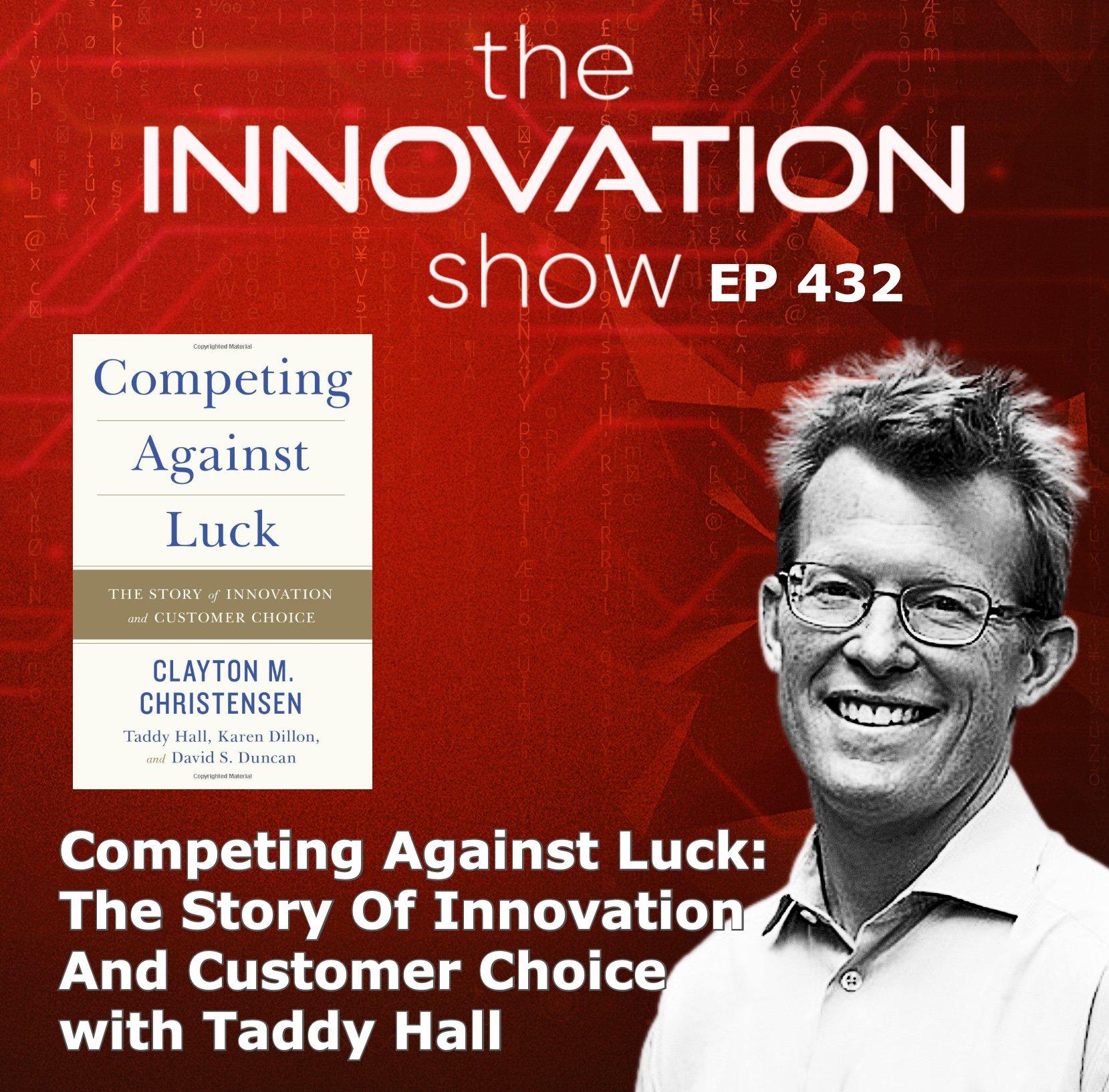
S23 Ep 432Taddy Hall- Competing Against Luck
Today's book is a book about progress. Yes, it's a book about innovation—and how to get better at it. But at its core, this book is about the struggles we all face to make progress in our lives. If you're like many entrepreneurs and managers, the word "progress" might not spring to mind when you're trying to innovate. Instead, you obsess about creating the perfect product with just the right features and benefits to appeal to customers. Or you try to fine-tune your existing products continually so they're more profitable or differentiated from your competitors. You think you know what your customers would like, but it can feel hit or miss. Place enough bets, and—with a bit of luck—something will work out. But that doesn't have to be the case, not when you truly understand what causes consumers to choose. Innovation can be far more predictable and profitable, but only if you think differently. If you want to compete—and win—against luck, this is the book for you. Welcome to another episode in our very special series to celebrate the work of Clayton Christensen. Today we are joined by the co-author of Competing Against Luck, Taddy Hall.