
The Innovation Show
771 episodes — Page 10 of 16
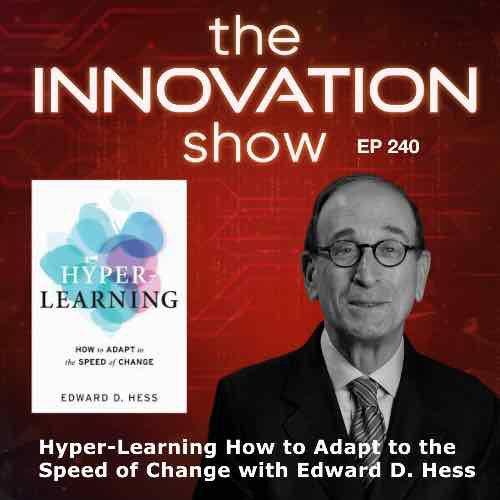
S3 Ep 240EP 240: Hyper-Learning: How to Adapt to the Speed of Change with Edward D. Hess
The Digital Age will raise the question of how humans will stay relevant in the workplace. To stay relevant, we have to be able to excel cognitively, behaviourally, and emotionally in ways that technology can't. Our guest believes, this requires us to become Hyper-Learners: continuously learning, unlearning, and relearning at the speed of change. To do that, we have to overcome our reflexive ways of being: seeking confirmation of what we believe, emotionally defending our beliefs and our ego, and seeking cohesiveness of our mental models. Hyper-Learning requires a new way of being… and a radical new way of working. We welcome a great friend of the innovation show, hyper learner and author of "Hyper-Learning: How to Adapt to the Speed of Change", Ed Hess. More about Ed: https://www.edhess.org/
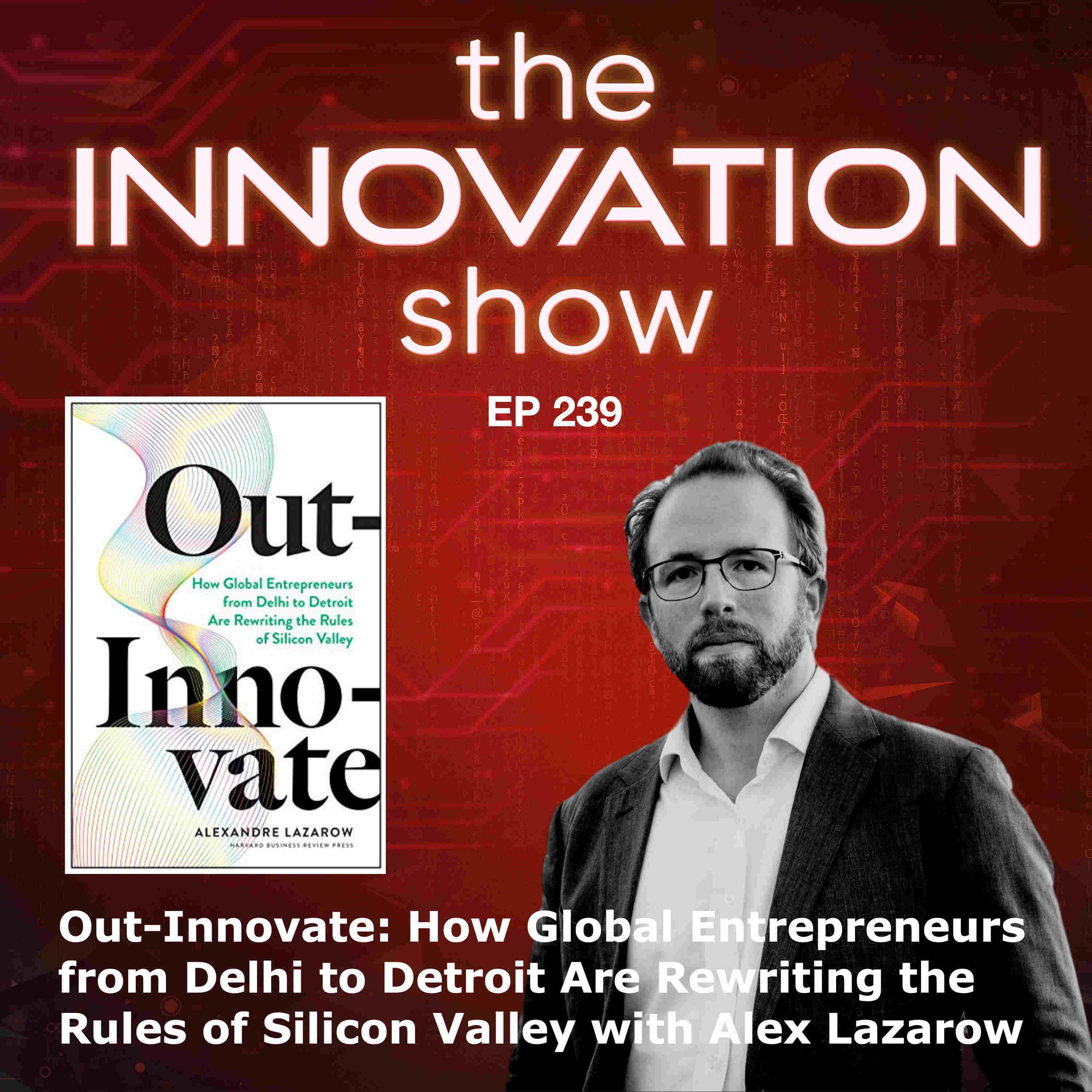
S3 Ep 239EP 239: Out-Innovate: How Global Entrepreneurs from Delhi to Detroit Are Rewriting the Rules of Silicon Valley with Alex Lazarow
Startups have changed the world. In the United States, many startups, such as Tesla, Apple, and Amazon, have become household names. The economic value of startups has doubled since 1992 and is projected to double again in the next fifteen years. For decades, the hot centre of this phenomenon has been Silicon Valley. This is changing fast. Thanks to technology, startups are now taking root everywhere, from Delhi to Detroit to Nairobi to Sao Paulo. Yet despite this globalisation of startup activity, our knowledge of how to build successful startups is still drawn primarily from Silicon Valley. As venture capitalist Alex Lazarow shows in this insightful and instructive book, this Silicon Valley "gospel" is due for a refresh--and it comes from what he calls the "frontier," the growing constellation of startup ecosystems, outside of the Valley and other major economic centres, that now stretches across the globe. The frontier is a truly different world where startups often must cope with political or economic instability and lack of infrastructure, and where there might be little or no access to angel investors, venture capitalists, or experienced employee pools. Under such conditions, entrepreneurs must be creators who build industries rather than disruptors who change them because there are few existing businesses to disrupt. The companies they create must be global from birth because local markets are too small. They focus on resiliency and sustainability rather than unicorn-style growth at any cost. With rich and wide-ranging stories of frontier innovators from around the world, Out-Innovate is the new playbook for innovation-wherever it has the potential to happen. More about Alex: https://www.alexlazarow.com

S3 Ep 238EP 238: The Death of the Artist: How Creators Are Struggling to Survive in the Age of Billionaires and Big Tech with William Deresiewicz
There are two stories you hear about making a living as an artist in the digital age, and they are diametrically opposed. One comes from Silicon Valley and its boosters in the media. There's never been a better time to be an artist, it goes. If you've got a laptop, you've got a recording studio. If you've got an iPhone, you've got a movie camera. GarageBand, Final Cut Pro: all the tools are at your fingertips. And if production is cheap, distribution is free. It's called the Internet: YouTube, Spotify, Instagram, Kindle Direct Publishing. Everyone's an artist; just tap your creativity and put your stuff out there. Soon, you too can make a living doing what you love, just like all those viral stars you read about. The other story comes from artists themselves, especially musicians but also writers, filmmakers, people who do comedy. Sure, it goes, you can put your stuff out there, but who is going to pay you for it? Digital content has been demonetised: music is free, writing is free, video is free, even images you put up on Facebook or Instagram are free, because people can (and do) just take them. Everyone is not an artist. Making art takes years of dedication, and that requires a means of support. If things don't change, a lot of art will cease to be sustainable. We welcome back Bill Deresiewicz, friend of the Innovation Show and author of "The Death of the Artist: How Creators Are Struggling to Survive in the Age of Billionaires and Big Tech" https://billderesiewicz.com/ Previous episode "Excellent Sheep": https://bit.ly/2ZlQ6OI Bill is here: https://billderesiewicz.com/
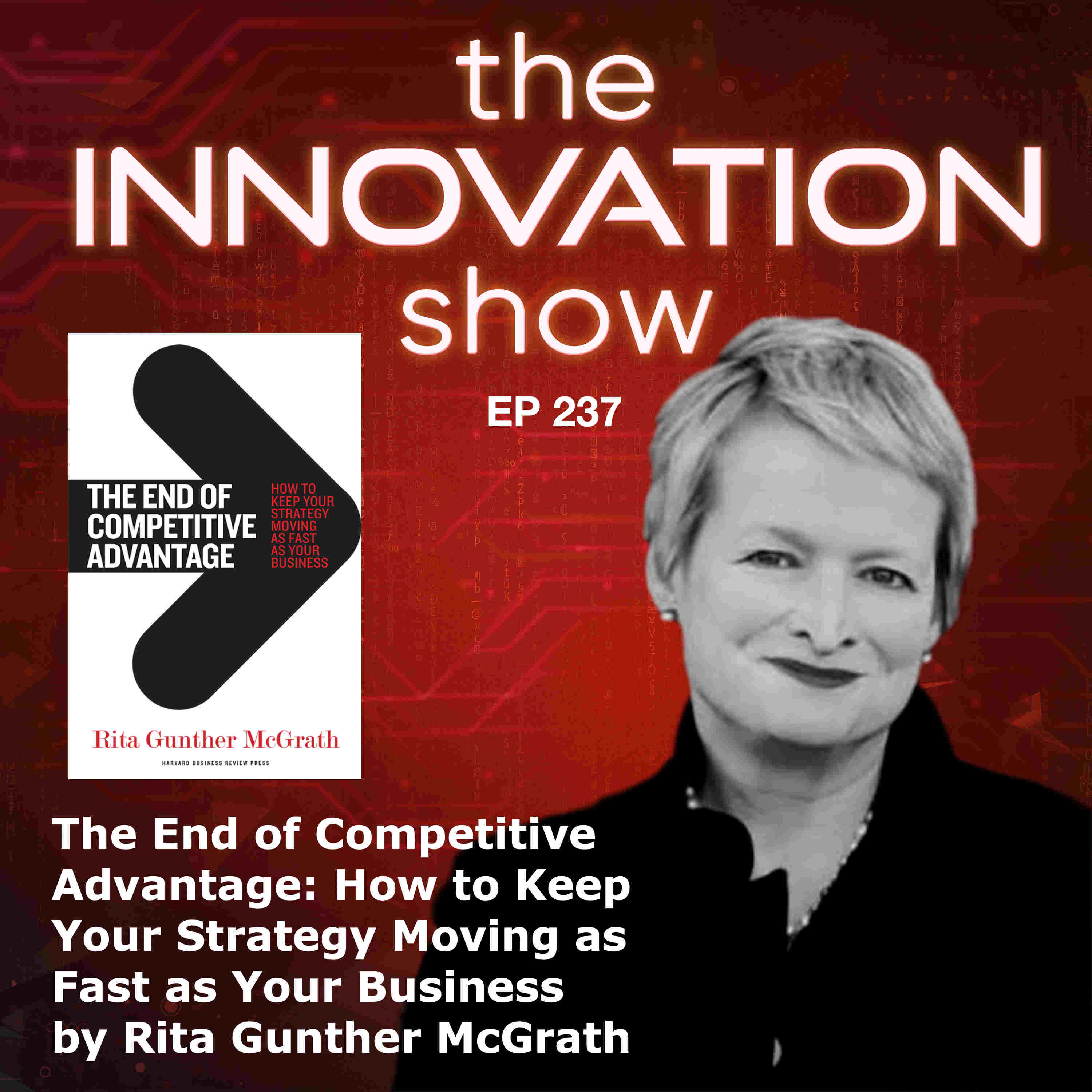
S3 Ep 237EP 237: End of Competitive Advantage: How to Keep Your Strategy Moving as Fast as Your Business with Rita McGrath
The context of business has changed so rapidly over the past few decades that it may be time for a new lexicon. At the very least, it's time to challenge some of the established thinking about strategy and competition that used to drive business advantage - but no longer does. In this episode, strategy expert and Columbia Business School professor Rita McGrath takes on one of most fundamental and recognised notions in strategy: that of sustainable competitive advantage. She argues this can no longer be the Holy Grail for companies because in a constantly changing environment, deeply ingrained structures and systems designed to extract value actually become a liability. The new path to winning includes taking advantage of shorter term opportunities, as well as relying on new organisational talents like speed and decisiveness. Our guest defines the new transient life cycle of competitive advantage and shows how successful firms manage through it by using an updated philosophy. She offers a bold new set of principles for competing in what we now understand is a continuously volatile and uncertain environment. Consider this your fresh strategy playbook for competing in an accelerating world.
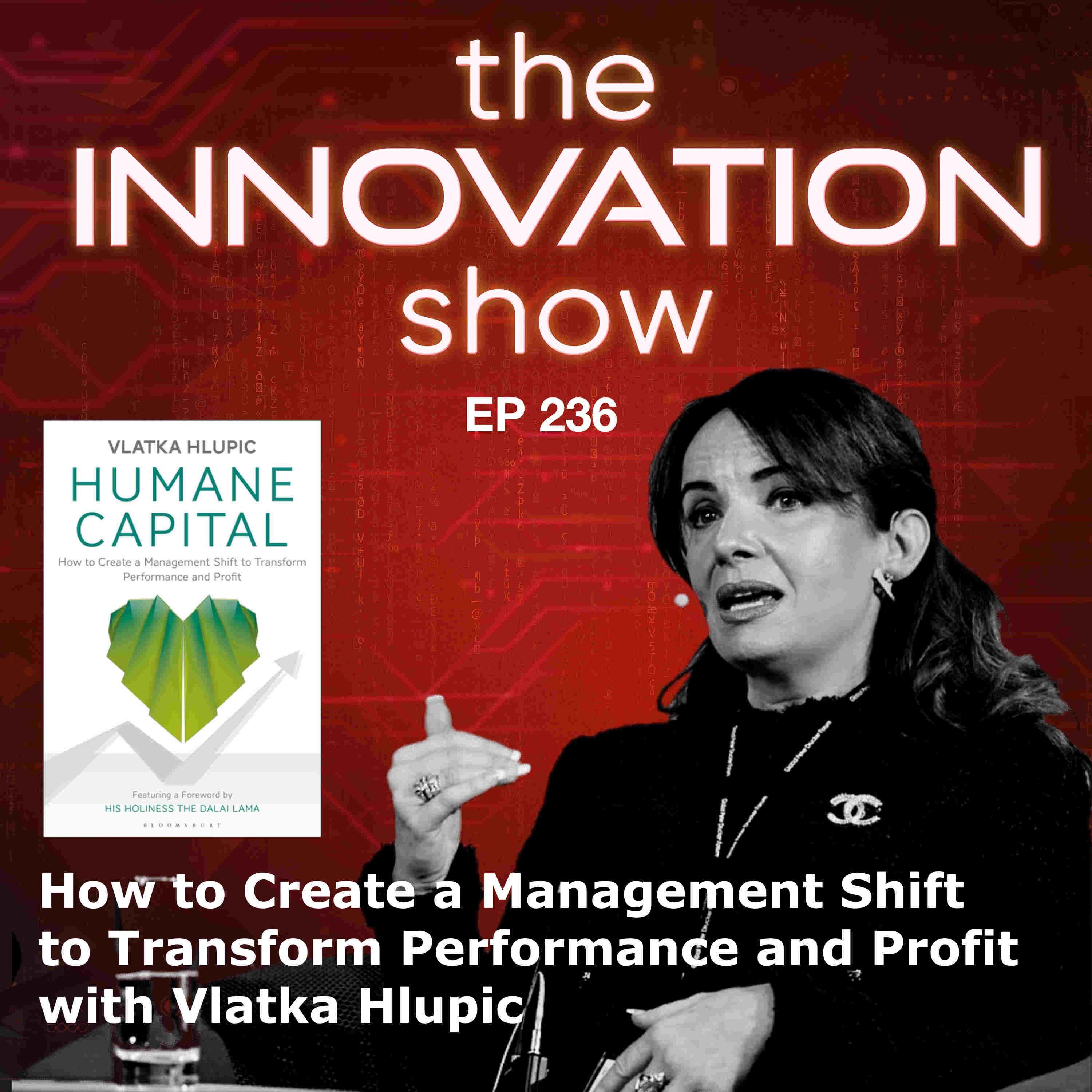
S3 Ep 236EP 236: Humane Capital with Vlatka Hlupic
Despite decades of research illustrating the benefits of enlightened leadership, the high-performance workplace is still not the norm. Our guest has spent 20 years investigating this paradox, and in this book she forms a penetrating critique of why such strong evidence has had limited impact, and provides an alternative practical approach that any employer can implement to overcome these challenges. She shows that there is a clear correlation between those companies that are good companies and those that do well, with 'good meaning an organization that works with stakeholders, employees, society and customers. While a 'bad' company can do well, its success isn t sustainable - her book explores the steps needed to be taken to become a good organization with long-term, sustainable results. She brings together management wisdom and shows how successful leaders have moved their organizations from controlled and orderly, to enthusiastic and collaborative. Supported by insights from 59 of the leading thinkers and practitioners in the field, the book will guide readers through the arguments for a radical reassessment of current business models, and the successful stories of employers from the private and public sectors who have made the transition. We welcome Vlatka Hlupic , the author of Humane Capital: How to Create a Management Shift to Transform Performance and Profit
S3 Ep 235EP 235: Open, Honest, and Direct with Aaron Levy
Building a business requires more than just a good product and talented people; it requires you to take a hard look at how you show up as a leader. Open, Honest, and Direct helps you dive into the heart of your business and your people, identifying changes you can make to transform the way you and your managers lead. Part business book, part personal-development guide, this is a how-to full of practical ways to not only build and lead a high-performance team but also bring out the best in your people. Being a successful manager is less about staying constantly on top of your team and more about providing clarity and context for people. Levy's method for creating open, honest, and direct leaders within an organization provides you with tactical tools you can put to use right away. This is a toolkit for designing a culture that supports employee performance and future-proofs your business. Many managers are promoted because they are great at what they do, but that doesn't necessarily translate into their ability to manage a team and get the most out of their people. In today's business environment where the competition for top talent is intense, it's integral to not only keep your top talent but also be able to coach all of your people and unlock their full potential. Open, Honest, and Direct is a field guide and powerful movement for leading that will give your organization the competitive edge it needs.
S2 Ep 234EP 234: The Art of Ideas: Creative Thinking for Work and Life with William Duggan
Great ideas don't just happen. Innovation springs from creative thinking—a method of the human mind that we can study and learn. In The Art of Ideas, our guest brings together business concepts with stories of creativity in art, politics, and history to provide a visual and accessible guide to the art and science of new and useful ideas. He details how to spark your own ideas and what to do while waiting for inspiration to strike. He shows that regardless of the field, innovations happen in the same way: examples from history, presence of mind, creative combination, and resolution to action. The Art of Ideas features case studies and exercises that explain how to break down problems, search for precedents, and creatively combine past models to form new ideas. It showcases how Picasso developed his painting style, how Gandhi became the man we know today, and how Netflix came to disrupt the movie-rental business.

S3 Ep 233EP 233: Are We Smart Enough to Know How Smart Animals Are? with Frans de Waal
What separates your mind from the mind of an animal? Maybe you think it's your ability to design tools, your sense of self, or your grasp of past and future - all traits that have helped us define ourselves as the pre-eminent species on Earth. But in recent decades, claims of human superiority have been eroded by a revolution in the study of animal cognition. Take the way octopuses use coconut shells as tools, or how elephants can classify humans by age, gender, and language. Take Ayumu, the young male chimpanzee at Kyoto University who demonstrates his species' exceptional photographic memory. Based on research on a range of animals, including crows, dolphins, parrots, sheep, wasps, bats, whales, and, of course, chimpanzees and bonobos, our guest today explores the scope and depth of animal intelligence, revealing how we have grossly underestimated non-human brains. He overturns the view of animals as stimulus-response beings and opens our eyes to their complex and intricate minds. With astonishing stories of animal cognition, his work challenges everything you thought you knew about animal - and human - intelligence. We welcome author of Are We Smart Enough to Know How Smart Animals Are?, Frans de Waal. More about Frans: https://www.facebook.com/franspublic/

S2 Ep 232EP 232: Total Rethink: Why Entrepreneurs Should Act Like Revolutionaries with David McCourt
Our guest today argues that everything is changing fast, apart from how we behave. Our ways of thinking and making decisions have changed little, with the traditional wisdom being that improvements are best done incrementally, just as big, established corporations will increase profits incrementally and governments will change laws incrementally. But the problems we now need to solve require a revolution in thinking and behavior in order to avoid disaster. He lays out the reality of the dangerous situation we find ourselves in and suggests solutions that empower everyone, including business people, politicians, diplomats, and teachers, to repair the damage we have already done, and prepare for the dramatic changes to come. Over a 30-year period our guest founded and bought 20 companies in nine countries. He is an Emmy Award winner and author of the WSJ best-selling book: "Total Rethink: Why Entrepreneurs Should Act Like Revolutionaries" we welcome David McCourt to the show

S3 Ep 231EP 231: The Mom Test with Rob Fitzpatrick
Rob Fitzpatrick is author of "The Mom Test, How to talk to customers & learn if your business is a good idea when everyone is lying to you" His book shows us how customer conversations go wrong and how we can do better. They say you shouldn't ask your mom whether your business is a good idea, because she loves you and will lie to you. This is technically true, but it misses the point. You shouldn't ask anyone if your business is a good idea. It's a bad question and everyone will lie to you at least a little. As a matter of fact, it's not their responsibility to tell you the truth. It's your responsibility to find it and it's worth doing right Talking to customers is one of the foundational skills of both Customer Development and Lean Startup. We all know we're supposed to do it, but nobody seems willing to admit that it's easy to screw up and hard to do right. Win one of 2 copies by signing up to the show here: www.theinnovationshow.io and find Rob on ww.robfitz.com

S3 Ep 230The Corporate Startup with Dan Toma
The world around us is changing rapidly. There is now more pressure on established companies to innovate. The challenge most companies face is how to develop new products for new markets, while managing their core business at the same time. The principles and practices outlined in this book provide companies with a blueprint of how to manage innovation while they execute on their core business. The Corporate Startup provides frameworks, visualisations, templates, tools and methods that can be easily applied to develop new products and business models. We welcome author of The Corporate Startup: How established companies can create successful innovation ecosystems, Dan Toma

S3 Ep 229Be Less Zombie: How Great Companies Create Dynamic Innovation, Fearless Leadership and Passionate People with Elvin Turner
More agility. More energy. More genius. Why do some companies always seem to have the best ideas, the most engaged people and the most profitable growth? Based on 10 years of research, today's book goes behind the scenes of some of the world's most innovative companies and decodes the tools, hacks and approaches that help their managers systematically spark ingenuity, agility, and profitable creativity at scale. It presents a pragmatic 'how-to' guide for any team or organisation that needs to adapt its culture, processes, leadership and decision-making for an age of increasingly unpredictable and rapid change. We welcome author of "Be Less Zombie How great companies create dynamic innovation, fearless leadership and passionate people" Elvin Turner www.elvinturner.com

S3 Ep 228Create the Future and the Innovation Handbook: Tactics for Disruptive Thinking, Jeremy Gutsche
We've reached a point in time when everyone wants innovation, but most people don't know how to actually attain it. It's not easy, which is why there are so many failed brands and companies. In our era of AI, rapid change, disruption, and possibility, there are so many great opportunities within our grasp. However, smart, successful people consistently miss out. Their capabilities are limited by seven traps, and they rely on and repeat past decisions. They miss out on the potential of what could have been. If we could remove these traps, what could we accomplish? How much more successful could we be? Today's book teaches us how to think disruptively, providing specific steps to create real innovation and change. It combines our guests high energy provocative thinking with tactics that have been battle tested through projects with leading innovators like Disney, Starbucks, Amex, IBM, Adidas, Google, and NASA. We welcome CEO of Trendhunter and author Create the Future and the Innovation Handbook: Tactics for Disruptive Thinking, Jeremy Gutsche

S3 Ep 227Reflections on the Dark Side of Leadership with Dr Robert Hogan
Being awarded a leadership role within an organization may feel like an amazing accomplishment, but that is only half the battle. The second, and arguably most important half, lies in building and maintaining a highly effective team. However, according to a recent survey conducted on UK workers, managers are failing miserably at this task, and are instead fostering feelings of hate and resentment among their workers. The survey states that while 22% of the UK public say they hate their boss, a staggering 52% identify their boss as their primary source of job dissatisfaction. So, where is it that managers are going wrong, and what can they do to improve their employees' perception of them? Interesting research during the 1970s–found that managerial failure had little to do with IQ or personal attractiveness. Rather, it was linked directly to interpersonal competence. And, since personality is at the core of interpersonal competence, our guest today developed one of the globe's leading personality assessments to identify the 11 personality scales that cause leaders to fail time and time again. We welcome creator of The Hogan Assessments, Dr Robert Hogan

S3 Ep 226CLEVER: The Six Strategic Drivers for the Fourth Industrial Revolution with Alessandro Lanteri
As a business leader, you need to make decisions that set your company up for success, now and in the future. The challenge is In this fast-changing world, the rules of strategy are being rewritten and the go-to solutions you once relied on are no longer enough. The Fourth Industrial Revolution is here. As emerging technologies like AI and blockchain become ubiquitous, they will unleash unprecedented levels of disruption. Drawing on his broad global experience, our guest delivers the essential guide to strategy for this new era. His CLEVER Framework will help you understand the deep strategic drivers of the Fourth Industrial Revolution, reflect on how they affect you and your business, and respond effectively. If you're ready to fulfil your potential as a leader and create a future-ready business, it's time to get Clever. We welcome Alessandro Lanteri, the author of CLEVER: The Six Strategic Drivers for the Fourth Industrial Revolution

S3 Ep 225Communication: How to Connect with Anyone with Gill Hasson
Innovators need to communicate their concepts. Organisations have 5 generations working together in the workplace. We must be able to respectfully challenge ideas. This is why I asked our guest Gill Hasson to join us. Every day, you have the opportunity to interact with people in different areas of your life; in public, at work and at home, with colleagues and clients, with friends and family. Your ability to exchange ideas and opinions with other people, understand their thoughts and feelings, their point of view and solve problems between you depends on how effectively you're able to communicate. But being understood, and understanding others is not always easy! Communication is a dynamic, complex process, influenced by all the complexities and differences in human motivation and behaviour. Communication: How to Connect with Anyone will help you connect with others, build friendships and develop better relationships with colleagues and clients, friends and family. Todays episode shares what we need to know to develop empathy and rapport with others, and feel confident about communicating with a diverse range of people.

S3 Ep 224The Invincible Company: How to Constantly Reinvent Your Organization with Alex Osterwalder
Our guest's Business Model Canvas changed the way the world creates and plans new business models. It has been used by corporations and startups and consultants around the world and is taught in hundreds of universities. After years of researching how the world's best companies develop, test, and scale new business models, he has produced his definitive work. Todays book explains what every organization can learn from the business models of the world's most exciting companies. The book explains how companies such as Amazon, IKEA, Airbnb, Microsoft, and Logitech, have been able to create immensely successful businesses and disrupt entire industries. At the core of these successes are not just great products and services, but profitable, innovative business models--and the ability to improve existing business models while consistently launching new ones. "The Invincible Company" presents practical new tools for measuring, managing, and accelerating innovation, and strategies for reducing risk when launching new business models. Serving as a blueprint for your growth strategy, The Invincible Company explains how to constantly stay ahead of your competition. We welcome friend of the Innovation Show and author of The Invincible Company: How to Constantly Reinvent Your Organization with Inspiration From the World's Best Business Models, Alex Osterwalder

S3 Ep 223The Relationship Economy: Building Stronger Customer Connections in the Digital Age with John R. DiJulius
Review us on iTunes, it helps grow the show. Today's guest teaches business leaders about the importance of relationship building in the digital age. He argues that in spite of (and because of) the advances in tech, we've become a less connected society. We have dramatically evolved away from face-to-face communication, and the skill of building rapport is evaporating. This means that customer personalisation and relationships are more important now than ever--and they will be the key to success for businesses moving forward. As he aptly states, "Being able to build true sustainable relationships is the biggest competitive advantage in a world where automation, artificial intelligence, and machine learning are eliminating the human experience, which is what creates the emotional connections that build true customer loyalty." This book reminds readers of the importance of personal connections and shows them how to attain meaningful, lasting relationships with their customers. We welcome John R. DiJulius, the author of The Relationship Economy: Building Stronger Customer Connections in the Digital Age More about John here: https://thedijuliusgroup.com/bio-john-dijulius/

S3 Ep 222The Drama-Free Workplace: How You Can Prevent Unconscious Bias, Sexual Harassment, Ethics Lapses, and Inspire a Healthy Culture with Patti Perez
Give Us A Review On iTunes Companies spend millions on legal compliance training and initiatives to eliminate workplace drama and the resulting low morale and lawsuits, but don't always get the results they want. Most organisations understand that simply checking legal compliance boxes around sexual harassment, bias, etc. isn't enough, but are at a loss on how to implement solutions, especially in today's post-#MeToo world. Our guest today is an attorney, HR expert, trainer, and former state regulator, who has conducted over 1,200 workplace investigations. In her book, she explains the secret to avoiding all forms of drama, legal exposure, and low morale: A healthy workplace culture. She combines the lessons learned from 25 years of professional experience with robust data from behavioural science research to debunk common myths, including the belief that a focus on legal compliance leads to a healthy workplace culture. (In fact, it increases the likelihood of getting sued). More about Patti here: https://persuasionpoint.com/the-drama-free-work/

S3 Ep 221Bulletproof Problem Solving: The One Skill That Changes Everything with Charles Conn
Complex problem solving is the core skill for 21st Century Teams Complex problem solving is at the very top of the list of essential skills for career progression in the modern world. But how problem solving is taught in our schools, universities, businesses and organisations comes up short. Our guest today shares the seven-step systematic approach to creative problem solving developed in top consulting firms that will work in any field or industry, turning you into a highly sought-after bulletproof problem solver who can tackle challenges that others balk at. If you want to become a better problem solver, you can do so with only a modest amount of structure and numeric ability. Individuals make decisions that have lifetime consequences—such as career choice, where to live, their savings plan, or elective surgery—often without due consideration. These are among the examples you walk us through in the book to illustrate the value of a structured process to improve your prospects of better outcomes in your own life. More about Charles here: https://bulletproofproblemsolving.com/

S3 Ep 220Money Without Boundaries, How Blockchain Will Facilitate the Denationalisation of Money with Thomas J. Anderson
This episode is about the creation of a new global currency. Unlike traditional currencies, such as the dollar, yen, or euro, this currency strives to be a risk-free store of value. And unlike bitcoin, which tethers to a finite number of units, this store of value tethers to zero risk. As a result, it is constrained not by an arbitrary number of units, but by market forces of supply and demand. The foundational ideas are not new and not unique. A privately controlled, market-based currency striving for zero risk is arguably the holy grail of multiple influential thinkers and Nobel laureates and the basis for many monetary and investment theories. What is new is that advancements in capital markets, when combined with new technologies, make it possible for society to facilitate old ideas in new ways. Money Without Boundaries is about bringing some of the greatest economic theories to reality. More about Tom here: https://moneywithoutboundaries.com/

S3 Ep 219Humility Is the New Smart, Rethinking Human Excellence In the Smart Machine Age with Ed Hess
Your job is at risk-if not now, then soon. We are on the leading edge of a Smart Machine Age led by artificial intelligence that will be as transformative for us as the Industrial Revolution was for our ancestors. Smart machines will take over millions of jobs in manufacturing, office work, the service sector, the professions, you name it. Not only can they know more data and analyse it faster than any mere human, but smart machines are free of the emotional, psychological, and cultural baggage that so often mars human thinking. So we can't beat 'em and we can't join 'em. To stay relevant, we have to play a different game. Our guest offers us that game plan. We need to excel at critical, creative, and innovative thinking and at genuinely engaging with others--things machines can't do well. The key is to change our definition of what it means to be smart. Our guest calls it being NewSmart. The crucial mindset underlying NewSmart is humility -not self-effacement but an accurate self-appraisal: acknowledging you can't have all the answers, remaining open to new ideas, and committing yourself to lifelong learning. The key to success in this new era is not to be more like the machines but to excel at the best of what makes us human. We welcome the author of Humility Is the New Smart, Rethinking Human Excellence In the Smart Machine Age, Ed Hess

S3 Ep 218Everyday Bias: Identifying and Navigating Unconscious Judgments in Our Daily Lives with Howard Ross
Most of us do not see ourselves as biased towards people of different races or genders. And yet in virtually every area of modern life disparities remain. Even in organisations, which have, for the most part, embraced the idea of diversity as a mainstream idea, but patterns of disparity remain rampant. Why is this? Breakthroughs in the cognitive and neurosciences give some idea why our results seem inconsistent with our intentions. Bias is natural to the human mind, a survival mechanism that is fundamental to our identity. And overwhelmingly it is unconscious. Incorporating anecdotes from today's headlines alongside case studies from over 30 years as a nationally prominent diversity consultant, our guest today helps us understand how unconscious bias impacts our day-to-day lives and particularly our daily work lives. And he answers the question: "Is there anything we can do about it?" For those of us seeking to understand and confront their own biases to human resource professionals and business leaders determined to create more bias-conscious organisations in the belief that productivity, personal happiness, and social growth are possible if we first understand the widespread and powerful nature of the biases we don't realise we have. The Clark Doll Experiments: https://youtu.be/PZryE2bqwdk More about Howard here: https://www.linkedin.com/in/howardjross/

S3 Ep 217How to Elevate Your Presence in a Virtual Meeting and Get to the Point with Joel Schwartzberg
In his 14-plus years as a strategic communications trainer, the biggest obstacle our guests comes across - one that connects directly to nervousness, stammering, rambling, and epic fail - is that most speakers and writers don't have a point. They typically have just a title, a theme, a topic, an idea, an assertion, a catchphrase, or even something much less. A point is something more. It's a contention you can propose, argue, defend, illustrate, and prove. When we have a point, our influence snaps into place. We communicate belief, conviction, and urgency. Our guest shows us how to identify a point, leverage it, stick to it, and sell it and how to train others to identify and successfully make their own points. In a world of information over abundance standing out becomes even more difficult, yet so many of us don't know how to make a point. As professional communications shifted from physical to virtual, he noticed firsthand both highly effective and utterly ruinous approaches to using video conference technology to communicate and make strong points. We welcome public speaking trainer and author of Get to the point, sharpen your message and make your words matter and friend of the show Joel Schwartzberg We discuss an overview of Get to the point and the takeaways from Joel's Harvard Business review article entitled "How to Elevate Your Presence in a Virtual Meeting" We discuss: How we often have what we think is a point, but it is often just: A topic A title A theme Uptalking Bias in communication Tips for panelists and MCs How we formulate a point and the "I believe that test" Virtual meetings in a digital world Elevating both your point and your presence Projecting your voice Proximity plays a part The HBR article is here: https://bit.ly/2TLkpvk Joel is here: https://www.joelschwartzberg.net/ Previous episode with Joel is here: https://bit.ly/2ZGRw7y

S3 Ep 216The Matriarch Rules: How to Own Your Power, Know Your Worth, and Lead the Life You've Always Wanted with Randy Patterson
This episode aims to empower young women and give some tips to parents and mentors along the way. Recast yourself - Own your wins - Define your legacy - Leverage your success Written by Randy Patterson, the CEO of a multimillion-dollar startup, The Matriarch Rules provides you with guidelines that empower you to find personal success and growth in being the compassionate, powerful, and forward-thinking woman you are. Achieve success by becoming the change maker you were always meant to be. What is a matriarch? For one thing, you can tell she's in charge the second she walks into a room. She's bold, she's fierce, and she's got her own unique style. The matriarch isn't some crusty old lady dressed head-to-toe in black who sits at the head of the table barking demands at Sunday dinner. The modern matriarch is alive and vivacious. She's purposeful and deliberate about everything, from her career, to her home, to her family, to what she eats for lunch. She is not second guessing herself but moving herself and those she loves boldly into the future. The matriarch's vision for her career is as big as her love for her family, and she's paid her worth for work she's passionate about. The matriarch knows exactly what she wants the end game to be and she has the power to make it come to fruition. Simply put: she has her act together and you feel safer and more secure when you're in her presence. So, the question is, how does one become her? This episode answers that question and more. - Recast yourself - Own your wins - Define your legacy - Leverage your success.

S3 Ep 215Unstuck, How to Activate and Unlock the Wisdom of Others with Craig Lemasters
Today's leaders are getting stuck at an ever-increasing rate as they reach outside their core capabilities in search of growth. After experiencing this himself, and observing countless other CEOs facing a similar battle, our guest decided to do something about it. Craig Lemasters leveraged his extensive leadership experience to develop a unique perspective around why this phenomenon keeps happening and what leaders can do to break free. His book guides readers through examples of some of the most common challenges preventing progress and teaches them how to intentionally tap into the vast knowledge and experience of others. More about Craig here: https://craiglemasters.com https://gxg.co/

S3 Ep 214The Leadership Killer: Reclaiming Humility in an Age of Arrogance with Bill Treasurer
There are plenty of leadership how-to books, filled with advice such as "Just do this to get ahead!" Lots of books tell you how to become a leader, this book tells you how to stay successful once you've reached a leadership role. This episode and today's book helps aspiring, early-stage, and experienced leaders alike answer a critical question: "How will I use my leadership power?" Being a good leader doesn't require being a bad person, and if you know what to look out for, you can keep your ego and hubris in check and become (and stay) a leader who is effective, successful, and good. We welcome Bill Treasurer, the author of: "The Leadership Killer: Reclaiming Humility in an Age of Arrogance." More about Bill here: https://www.giantleapconsulting.com/killer/

S3 Ep 213Transforming Legacy Organizations: Turn your Established Business into an Innovation Champion to Win the Future with Kris Østergaard
Kris Østergaard provides real-world advice and research-based information on how to grow innovation by employing new technologies, improving processes, and establishing a culture of creativity and forward momentum. Conventional business wisdom views innovation as the biggest advantage startups have over large, established organizations, often referred to as legacy organizations. This belief is false, especially when considering that 70% of all startups fail within 20 months of their first venture round. The truth is innovation initiatives of legacy organizations have far better chances of succeeding. Organizations with superior resources—money, customers, suppliers, data, employees, infrastructure—can overcome challenges from new entrepreneurial ventures: knowing how to leverage their underutilized advantage is key for achieving sustained, long-term innovation success. More about Kris here: https://krisoestergaard.com/ https://su.org/about/faculty/kris-ostergaard/

S3 Ep 212The Neuroscience of Fear with Friederike Fabritius
Our bonus guest is a neuroscientist and pioneer in the field of NeuroLeadership. She trained at the Max Planck Institute for Brain Research and is a McKinsey consultant; she delivers brain-based leadership programs to Fortune 500 executives and organisations around the globe to transform how they think, innovate, and navigate change. Her book "The Leading Brain: Neuroscience Hacks to Work Smarter, Better, Happier" has been translated into several languages and received many awards and that book was the focus of episode 86 of the Innovation show. Neuroscientist and author Friederike Fabritius shares how fear makes us think less effectively and changes both our physiology and our neurochemistry. We discuss: The Neuroscience of Fear The Neurochemistry of fear How our thinking is less effective How the Covid-19 pandemic is affecting us Concerns for the post Covid-19 world More about Friederike https://www.fabulous-brain.com/

S2 Ep 211Never Go with Your Gut: How Pioneering Leaders Make the Best Decisions and Avoid Business Disasters with author Gleb Tsipursky
Want to avoid business disasters, whether minor mishaps, such as excessive team conflict, or major calamities like those that threaten bankruptcy or doom a promising career? Fortunately, behavioural economics studies show that such disasters stem from poor decisions because of our faulty mental patterns - what scholars call "cognitive biases" - and are preventable. Unfortunately, the typical advice for business leaders to "go with their guts" plays into these cognitive biases and leads to disastrous decisions that devastate the bottom line. By combining practical case studies with cutting-edge research, Never Go With Your Gut will help you make the best decisions and prevent these business disasters. Our guest is a leading expert on avoiding business disasters and draws on over 20 years of extensive consulting, coaching, and speaking experience to show how pioneering leaders and organisations - many of them his clients - avoid business disasters. You can find out more about Gleb here: https://disasteravoidanceexperts.com/

S3 Ep 210Lead from the Future: How to Turn Visionary Thinking Into Breakthrough Growth with Mark Johnson
"No matter how good the chief innovation officer may be, no matter how creative and entrepreneurial an innovation team, they cannot successfully create new market growth for an organisation unless the leadership team is directly involved in their work, guiding them with their long term vision and strategy, helping them to create the right processes to move their ventures forward and protecting them from competition from the core Absent that high-level attention, those ventures might never get off the ground." - Mark Johnson We all know a visionary leader when we see one. They're bold and prophetic and at the same time pragmatic. They don't just promote change--they drive it, while inspiring and mobilising others to do the same. Visionaries like Steve Jobs and Jeff Bezos possess a host of innate qualities that make them extraordinary, but what truly sets them apart is their ability to turn vision into action. Our guest introduces a new way of thinking and managing, called "future-back," that enables any manager to become a practical visionary. Addressing the many barriers to change that exist in established organisations, he presents a systematic approach to overcoming them that includes: The principles and mind-set that allow leadership teams to look beyond typical short-term planning horizons A method for turning emerging challenges into the growth opportunities that can define an organisation's future A step-by-step approach for translating a vision into a strategic plan that teams can align around and commit to Ways to ensure that visionary thinking becomes a repeatable organisational capability We welcome Mark Johnson, founder of Innosight and author of "Lead from the Future Lead from the Future: How to Turn Visionary Thinking Into Breakthrough Growth" More about the book: https://www.innosight.com/insight/lead-from-the-future/ The HBR article referenced during the episode: https://hbr.org/2020/04/leaders-do-you-have-a-clear-vision-for-the-post-crisis-future

S3 Ep 209EP 209: Managing your Brain in a Crisis with Dr. Daniel Amen
Today's guest in this bonus episode is an innovator in his field, a brain expert and bestselling author who is on the forefront of a new movement within medicine and related disciplines. We discuss strategies to deal with the Covid-19 crisis and our brain health during periods of high stress and anxiety. We discuss: 1. How fear impacts our decision making 2. Crushing ANTs (Automatic Negative Thoughts) 3. Understanding different brain types 4. How to manage stress/comfort eating 5. How to influence children during a crisis More about Daniel here: https://www.amenclinics.com

S3 Ep 208The Humachine: Humankind, Machines, and the Future of Enterprise with John Wood
There is a lot of hype, hand waving and ink being spilled about artificial intelligence (AI) in business. The amount of coverage of this topic in the trade press and on shareholder calls is evidence of a large change currently underway. It is both awesome and terrifying. What started as an inquiry into how executives can adopt AI to harness the best of human and machine capabilities turned into a much more profound rumination on the future of humanity and enterprise. It is a wake-up call for business leaders across all sectors of the economy. Not only should you implement AI regardless of your industry, but once you do, you should fight to stay true to your purpose, your ethical convictions, indeed your humanity, even as our organisations continue to evolve. While not holding any punches about the dangers posed by AI, today's guest uniquely surveys where technology is limited, and where the true opportunities lie amidst all the disruptive change that is currently underway. Weak Human + Machine + Better Process > Strong Human + Machine + Inferior Process More about John here: https://thehumachinebook.com

S3 Ep 207The Innovator's Spirit: Discover the Mindset to Pursue the Impossible with Chuck Swoboda
Everyone wants to create new products and services, find new customers and markets, stay ahead of the competition, and work smarter instead of harder. Yet with all the focus and attention on innovation, the term has become an overused buzzword rather than a real, tangible concept. If you want to seriously pursue innovation—you need to strip away the hype. Real innovators need to transcend the existing ideas, rules, and patterns to discover exciting new outcomes. They must step outside the best practice box and get their hands dirty. The spirit of a true innovator is rooted in wanting to do something that has never been done before, to solve problems that have never been solved, and to run through walls and leap over tall buildings to get there. In his book, our guest—the retired chairman and CEO of Cree, a company that fundamentally changed the way people experience light and drove the obsolescence of the Edison light bulb—explains that innovation is fundamentally about people and tells us how to develop a mindset of creativity, risk-taking, and hard work. We welcome author "The Innovator's Spirit: Discover the Mindset to Pursue the Impossible", Chuck Swoboda More about Chuck: https://www.innovatorsontap.com

Part 7: Visa Founder and CEO Dee Hock: One from Many: VISA and the Rise of Chaordic Organisation
bonusPart 7 explores Dee Hock's latest years from age 75-92 and his thoughts on what comes next. This episode is my personal favourite. Dee shares: Competition and Cooperation Thoughts on the future The impact of future technologies Parting advice for us all Abstract: 52 years ago, our guest foresaw and implemented the foundations for the world's first trillion dollar organisation. Back then, Visa was little more than a set of unorthodox convictions about organisation slowly growing in the mind of a young corporate rebel. Today, according to the Visa 2019 annual report, payments and cash volume for the year was a staggering $11.6 trillion dollars, transactions processed on Visa's networks totalled $138.3 trillion dollars and the year saw some 3.4 billion Visa cards in operation. He is the man who imagined this reality, who had a once-deemed-impossible vision 52 years ago, a vision which has become a concrete reality today. He is a man who has a different view on what the next 50 years can deliver, but that vision will require a radical shift in mindset for every single one of us. It is such an immense honour to welcome the founder and CEO Emeritus of Visa and author of the pioneering work "The Birth of the Chaordic Age" and its updated version "One from Many: VISA and the Rise of Chaordic Organization", Dee Hock. http://www.deewhock.com/

Part 6: Visa Founder and CEO Dee Hock: One from Many: VISA and the Rise of Chaordic Organisation
bonusPart 6 explores how Dee Hock created the conditions for Visa to emerge Dee shares: How such a complex organisation made and implemented decisions. Self policing entities The dispersion of innovations Why Dee left Visa at the pinnacle of success Restoring the 200 acres of wild land Those 3 questions The Sante Fe Institue The New Odyssey at 65 Writing his book Abstract: 52 years ago, our guest foresaw and implemented the foundations for the world's first trillion dollar organisation. Back then, Visa was little more than a set of unorthodox convictions about organisation slowly growing in the mind of a young corporate rebel. Today, according to the Visa 2019 annual report, payments and cash volume for the year was a staggering $11.6 trillion dollars, transactions processed on Visa's networks totalled $138.3 trillion dollars and the year saw some 3.4 billion Visa cards in operation. He is the man who imagined this reality, who had a once-deemed-impossible vision 52 years ago, a vision which has become a concrete reality today. He is a man who has a different view on what the next 50 years can deliver, but that vision will require a radical shift in mindset for every single one of us. It is such an immense honour to welcome the founder and CEO Emeritus of Visa and author of the pioneering work "The Birth of the Chaordic Age" and its updated version "One from Many: VISA and the Rise of Chaordic Organization", Dee Hock. http://www.deewhock.com/

S3 Ep 206You Are What You Read: Why changing your media diet can change the world with Jodie Jackson
Do you ever feel overwhelmed and powerless after watching the news? Does it make you feel sad about the world, without much hope for its future? The world is not as bad as the headlines would have you believe. Today's guest has spent the last ten years researching the damaging impact of the negativity bias in the news on our mental health and the health of our society, as well as investigating the impact of solutions-focused news. Her widely cited research has made her an influential figure within the movement for "Constructive Journalism". As a partner at The Constructive Journalism Project, she writes for established and emerging news platforms; speaks on panels with leading thinkers, academics and journalists; delivers workshops and training to journalists and regularly speaks at universities and media conferences around the world., we welcome author of "You are What You Read" Jodie Jackson We talk: How the information we consume informs our reality The psychological impact of negative news The opportunities of constructive journalism How we can all adjust our media diets More about Jodie here: https://jodiejackson.com

Part 5: Visa Founder and CEO Dee Hock: One from Many: VISA and the Rise of Chaordic Organisation
bonusPart 5 explores how Dee Hock took on the challenge of Visa International, formerly known as Ibanco. Dee shares: How they rebranded Visa Globally Lessons from failure Leadership v Management How they pioneered, electronic point of sale terminals, electronic descriptive billing, magnetic stripe technology, debit cards, Visa travellers cheques, check guarantee system, global automated teller system, redundant data centres, and dozen of other innovations. Constantly pushing decentralisation of authority and functions. Dee's philosophy of study to understand control Abstract: 52 years ago, our guest foresaw and implemented the foundations for the world's first trillion dollar organisation. Back then, Visa was little more than a set of unorthodox convictions about organisation slowly growing in the mind of a young corporate rebel. Today, according to the Visa 2019 annual report, payments and cash volume for the year was a staggering $11.6 trillion dollars, transactions processed on Visa's networks totalled $138.3 trillion dollars and the year saw some 3.4 billion Visa cards in operation. He is the man who imagined this reality, who had a once-deemed-impossible vision 52 years ago, a vision which has become a concrete reality today. He is a man who has a different view on what the next 50 years can deliver, but that vision will require a radical shift in mindset for every single one of us. It is such an immense honour to welcome the founder and CEO Emeritus of Visa and author of the pioneering work "The Birth of the Chaordic Age" and its updated version "One from Many: VISA and the Rise of Chaordic Organization", Dee Hock. www.deewhock.com

Part 4: Visa Founder and CEO Dee Hock: One from Many: VISA and the Rise of Chaordic Organisation
bonusPart 4 explores how Dee Hock took on the challenge of Visa International, formerly known as Ibanco. Dee shares: How different countries lacked trust his tactics to bring them together The beautiful concept of the Visa cufflinks More of his wonderful philosophies Abstract: 52 years ago, our guest foresaw and implemented the foundations for the world's first trillion dollar organisation. Back then, Visa was little more than a set of unorthodox convictions about organisation slowly growing in the mind of a young corporate rebel. Today, according to the Visa 2019 annual report, payments and cash volume for the year was a staggering $11.6 trillion dollars, transactions processed on Visa's networks totalled $138.3 trillion dollars and the year saw some 3.4 billion Visa cards in operation. He is the man who imagined this reality, who had a once-deemed-impossible vision 52 years ago, a vision which has become a concrete reality today. He is a man who has a different view on what the next 50 years can deliver, but that vision will require a radical shift in mindset for every single one of us. It is such an immense honour to welcome the founder and CEO Emeritus of Visa and author of the pioneering work "The Birth of the Chaordic Age" and its updated version "One from Many: VISA and the Rise of Chaordic Organization", Dee Hock. http://www.deewhock.com/

S3 Ep 205Coronavirus Talking Points for Parents and Teachers using The Whole-Brain Child Approach with Dr Tina Payne Bryson
Dr. Tina Payne Bryson is the co-author (with Dan Siegel) of two New York Times Best Sellers—The Whole-Brain Child and No-Drama Discipline—each of which has been translated into dozens of languages, as well as The Yes Brain and The Power of Showing Up and the forthcoming Bottom Line for Baby. She is the Founder and Executive Director of The Center for Connection, a multidisciplinary clinical practice in Southern California. Dr. Bryson keynotes conferences and conducts workshops for parents, educators, and clinicians all over the world, and she frequently consults with schools, businesses, and other organizations. An LCSW, Tina is a graduate of Baylor University with a Ph.D. from USC. The most important part of her bio, she says, is that she's a mom to her three boys. Tina joins us to explain how we can guide children through the Covid-19 pandemic. You can learn more about Dr. Bryson at TinaBryson.com.

Part 3: Visa Founder and CEO Dee Hock: One from Many: VISA and the Rise of Chaordic Organisation
bonusPart 3 explores how Dee Hock "educed" an organisation using "chaordic" principles. He highlights how we brought so many diverse people and their organisations together to form Visa. He also shares some fascinating philosophies. Dee shares: His philosophies of leadership and management How we can arrange our time to be a good leader and even a follower How he found himself leading Visa, when only 3 years previously he was searching through bins as part of his role Internal models of reality His philosophy on what he calls the machine metaphor and how we live in such mechanical and command and control society The innovations that he led, including how his team built authorisation software for his vision of a digital world His team's agile working methods Abstract: 52 years ago, our guest foresaw and implemented the foundations for the world's first trillion dollar organisation. Back then, Visa was little more than a set of unorthodox convictions about organisation slowly growing in the mind of a young corporate rebel. Today, according to the Visa 2019 annual report, payments and cash volume for the year was a staggering $11.6 trillion dollars, transactions processed on Visa's networks totalled $138.3 trillion dollars and the year saw some 3.4 billion Visa cards in operation. He is the man who imagined this reality, who had a once-deemed-impossible vision 52 years ago, a vision which has become a concrete reality today. He is a man who has a different view on what the next 50 years can deliver, but that vision will require a radical shift in mindset for every single one of us. It is such an immense honour to welcome the founder and CEO Emeritus of Visa and author of the pioneering work "The Birth of the Chaordic Age" and its updated version "One from Many: VISA and the Rise of Chaordic Organization", Dee Hock. http://www.deewhock.com/

Miniseries Part 2: Visa Founder and CEO Dee Hock: One from Many: VISA and the Rise of Chaordic Organisation
bonusPart 2 explores how just as Dee Hock decided to "retire on the job" by giving up on his desire to make an impact on the business world, a series of events gave him the opportunity to create a chaordic organisation that would eventually become Visa. This episode includes the principles, that were the foundation of Visa: How Dee Hock used human ingenuity to empower those around him The challenges he and the team overcame The definition of Chaordic The definition of Educe Onion peeling the definitions of what made up the exchange of value Abstract: 52 years ago, our guest foresaw and implemented the foundations for the world's first trillion dollar organisation. Back then, Visa was little more than a set of unorthodox convictions about organisation slowly growing in the mind of a young corporate rebel. Today, according to the Visa 2019 annual report, payments and cash volume for the year was a staggering $11.6 trillion dollars, transactions processed on Visa's networks totalled $138.3 trillion dollars and the year saw some 3.4 billion Visa cards in operation. He is the man who imagined this reality, who had a once-deemed-impossible vision 52 years ago, a vision which has become a concrete reality today. He is a man who has a different view on what the next 50 years can deliver, but that vision will require a radical shift in mindset for every single one of us. It is such an immense honour to welcome the founder and CEO Emeritus of Visa and author of the pioneering work "The Birth of the Chaordic Age" and its updated version "One from Many: VISA and the Rise of Chaordic Organization", Dee Hock. http://www.deewhock.com/

S3 Ep 204In Praise of Slow: How a Worldwide Movement is Challenging the Cult of Speed with Carl Honoré,
Across the western world more and more people are slowing down. Slower is better: better work, better productivity, better exercise, better sex, better food. Almost everyone complains about the hectic pace of their lives. These days, our culture teaches that faster is better. But in the race to keep up, everything suffers - our work, diet and health, our relationships and sex lives. International bestselling author Carl Honoré uncovers a movement that challenges the cult of speed. In this entertaining and hands-on investigation, he takes us on a tour of the emerging Slow movement: from a Tantric sex workshop in London to a meditation room for Tokyo executives, from a SuperSlow exercise studio in New York, to Italy, the home of the Slow Food, Slow Cities and Slow Sex movements. There has never been a better time to embrace the healing power of living slow. More about Carl here: http://www.carlhonore.com

Part 1: Visa Founder and CEO Dee Hock: One from Many: VISA and the Rise of Chaordic Organisation
bonusPart One of a multi-part miniseries on the life and philosophies of Visa founder and CEO Emeritus Dee Hock. This will run in parallel to the show, which will run as usual. 52 years ago, our guest foresaw and implemented the foundations for the world's first trillion dollar organisation. Back then, Visa was little more than a set of unorthodox convictions about organisation slowly growing in the mind of a young corporate rebel. Today, according to the Visa 2019 annual report, payments and cash volume for the year was a staggering $11.6 trillion dollars, transactions processed on Visa's networks totalled $138.3 trillion dollars and the year saw some 3.4 billion Visa cards in operation. He is the man who imagined this reality, who had a once-deemed-impossible vision 52 years ago, a vision which has become a concrete reality today. He is a man who has a different view on what the next 50 years can deliver, but that vision will require a radical shift in mindset for every single one of us. It is such an immense honour to welcome the founder and CEO Emeritus of Visa and author of the pioneering work "The Birth of the Chaordic Age" and its updated version "One from Many: VISA and the Rise of Chaordic Organization", Dee Hock. http://www.deewhock.com/

S3 Ep 203Invisible Solutions: 25 Lenses that Reframe and Help Solve Difficult Business Problems with Stephen Shapiro
Unprecedented access to infinite solutions has led us to realise that having all the answers is not the answer. From innovation teams to creativity experts to crowdsourcing, we've turned from one source to another, spending endless cycles pursuing piecemeal solutions to each challenge we face. What if your organisation had an effective and systematic approach to deal with any problem? To find better solutions, you need to first ask better questions. The questions you ask determine which solutions you'll see and which will remain hidden. More about Stephen here: https://stephenshapiro.com/invisible-solutions/

S3 Ep 202WHY simple WINS: Escape the Complexity Trap and Get to Work That Matters with Lisa Bodell
Imagine what you could do with the time you spend writing emails every day. Complexity is killing companies' ability to innovate and adapt, and simplicity is fast becoming the competitive advantage of our time. Our guest today helps leaders and their teams move beyond the feelings of frustration and futility that come with so much unproductive work in today's corporate world to create a corporate culture where valuable, essential, meaningful work is the norm. By learning how to eliminate redundancies, communicate with clarity, and make simplification a habit, individuals and companies can begin to recognise which activities are time-sucks and which create lasting value. Simplification is a skill that's available to us all, yet very few leaders use it. Simplification is the right thing to do--for our customers, for our company, and for each other. Operating with simplification as our core business model will make it easier to be respectful of each other's time. Simplification drives culture, and culture in turn drives employee engagement, customer relations, and overall productivity. More about Lisa here: https://futurethink.com/

S3 Ep 201Dual Transformation: How to Reposition Today's Business While Creating the Future with Scott D. Anthony
It is always a pleasure to welcome friend of the Innovation Show Scott D. Anthony. In his new book, he proposes a practical and sustainable approach to one of the greatest challenges facing leaders today: transforming your business in the face of imminent disruption. Dual Transformation shows us how a company can come out of a market shift stronger and more profitable, because the threat of disruption is also the greatest opportunity a leadership team will ever face. Disruptive change opens a window of opportunity to create massive new markets. It is the moment when a market also-ran can become a market leader. It is the moment when business legacies are created. That moment starts with the core dual transformation framework: Transformation A: Repositioning today's business to maximise its resilience, such as how Adobe boldly shifted from selling packaged software to providing software as a service. Transformation B: Creating a new growth engine, such as how Amazon became the world's largest provider of cloud computing services. Capabilities link: Fighting unfairly by taking advantage of difficult-to-replicate assets without succumbing to the "sucking sound of the core." Scott with his co-authors Clark Gilbert, and Mark Johnson address the characteristics leaders must embrace: courage, clarity, curiosity, and conviction. Without them, dual transformation efforts can flounder. We discuss: Kodak, Nokia, Xerox, Netflix and Microsoft. Scott pays homage to the late and great Clayton Christensen and we discuss what skills we all need to ride the gale of creative destruction. More about Scott here: https://www.innosight.com/team_bio/anthony-scott-d/

S3 Ep 200Serve with Style: Customer Service in the Age of Experience and AI with Carlo Pignataro
Today's guest invites us to focus our attention on a theme central to the development of all companies and professionals: customer service, or rather, the overall experience we offer customers. We live in the era of experience, and against a growing number of chatbots and automated systems, we paradoxically expect businesses to invest more and more in human traits such as listening, willingness, and values. So, what has customer service become today? What path should you take if you work in direct contact with the audience but do not want to be engulfed by the tsunami of technology? How should companies get ready for this if they do not want to be caught unawares? Serve with Style raises vital questions for every market player. It offers a specific path to help develop methods of organisation and professional skills which are becoming increasingly priceless in today's business world and will be essential tomorrow. More about Carlo here: www.carlopignataro.com

S3 Ep 199Testing Business Ideas: A Field Guide for Rapid Experimentation with Alex Osterwalder
7 out of 10 new products cannot deliver on expectations. Our guest's book aims to reverse that statistic. In the tradition of his global bestseller Business Model Generation, this practical guide contains a library of hands-on techniques for rapidly testing new business ideas. Testing Business Ideas explains how systematically testing business ideas dramatically reduces the risk and increases the likelihood of success for any new venture or business project. It builds on the internationally popular Business Model Canvas and Value Proposition Canvas by integrating Assumptions mapping and other powerful lean startup-style experiments. Testing Business Ideas uses an engaging 4-colour format to: Increase the success of any venture and decrease the risk of wasting time, money, and resources on bad ideas Close the knowledge gap between strategy and experimentation/validation. Identify and test your key business assumptions with the Business Model Canvas and Value Proposition Canvas. The book features practical tips for making major decisions that are not based on intuition and guesses. Testing Business Ideas shows leaders how to encourage an experimentation mindset within their organisation and make experimentation a continuous, repeatable process. More about Alex here: http://alexosterwalder.com/

Series Excerpt 1: Visa Founder and CEO Emeritus - Birth of the Chaordic Age with Dee Hock
trailerThis is an extended excerpt from the upcoming multi-part series on Dee Hock and the founding of the world's first trillion dollar business VISA. Dee is notoriously private and he has given the Innovation Show the privilege of interviewing him in a multi-part series. 52 years ago, our guest foresaw and implemented the foundations for the world's first trillion dollar organisation. Back then, Visa was little more than a set of unorthodox convictions about organisation slowly growing in the mind of a young corporate rebel. Today, according to the Visa 2019 annual report, payments and cash volume for the year was a staggering $11.6 trillion dollars, transactions processed on Visa's networks totalled $138.3 trillion dollars and the year saw some 3.4 billion Visa cards in operation. Our guest is the man who imagined this reality, who had a once-deemed-impossible vision 52 years ago, a vision that has become a concrete reality today. He is a man who has a different view on what the next 50 years can deliver, but that vision will require a radical shift in mindset for every single one of us. This excerpt is of Dee Hock recounting the story of the conversation that enabled VISA. Dee worked for a man named Maxwell Carlson. Dee describes Mr Carlson as the best listener he had every met and Dee states "Let there be no doubt about it! If Maxwell Carlson had been a lesser human being,Visa would never have come to be."