
The Innovation Show
764 episodes — Page 11 of 16
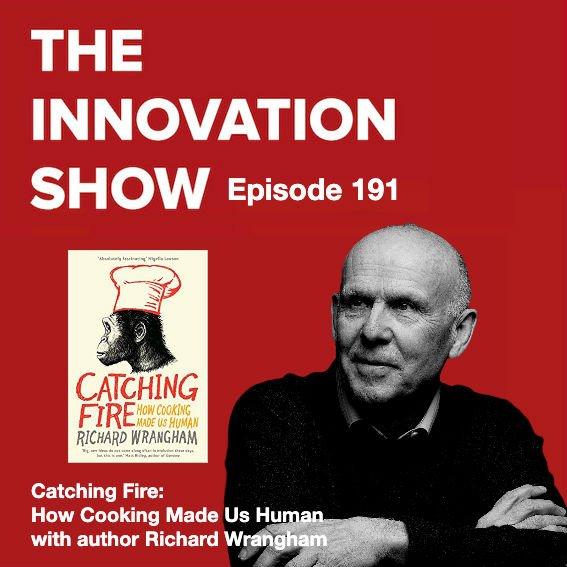
Catching fire: How Cooking Made Us Human with Richard Wrangham
Today's guest argues that it was cooking that caused the extraordinary transformation of our ancestors from apelike beings to Homo erectus. At the heart of this episode lies an explosive new idea: the habit of eating cooked rather than raw food permitted the digestive tract to shrink and the human brain to grow, helped structure human society, and created the male-female division of labour. As our ancestors adapted to using fire, humans emerged as "the cooking apes". Covering everything from food-labelling to sexual division of labour to raw-food faddists, Catching Fire offers a startlingly original argument about how we came to be the social, intelligent, and sexual species we are today. A fundamental question that every culture answers in a different way, but only science can truly decide and one today's guest deeply explore is What made us human? Our guest's work proposes a new answer. He is a true changemaker, driven by curiosity and believes the transformative moment that gave rise to the genus Homo, one of the great transitions in the history of life, stemmed from the control of fire and the advent of cooked meals. Fire was our first technology. Cooking increased the value of our food. It changed our bodies, our brains, our use of time, and our social lives. It made us into consumers of external energy and thereby created an organism with a new relationship to nature, dependent on fuel.
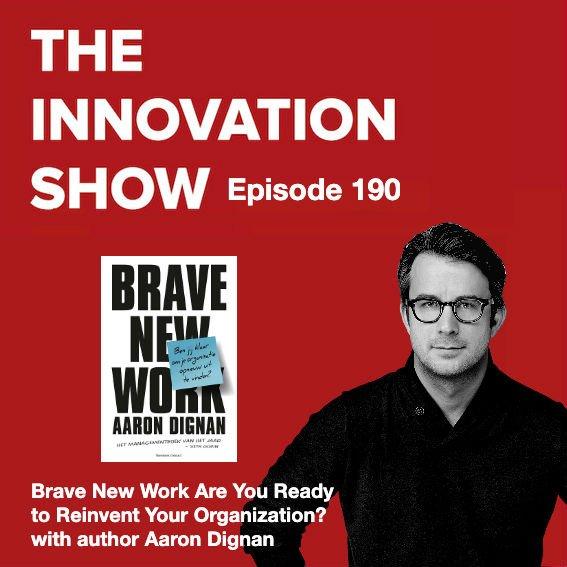
S2 Ep 190Brave New Work Are You Ready to Reinvent Your Organization? with Aaron Dignan
The way we work is broken. It takes forever to get anything done. Meetings and emails are incessant. Bureaucracy stifles talent and creativity. Is this really the best we can do? Aaron Dignan teaches companies how to eliminate red tape, tap into collective intelligence, and rethink long-held traditions that no longer make sense. In "Brave New Work", he shows you how to revolutionise the way you, your team, and your company works forever. Have fewer but better meetings Create a culture of honesty, transparency, and trust Cut down on rules to be more efficient Be more agile and adaptive Reignite passion and energy throughout your organisation We welcome Aaron Dignan the author of "Brave New Work, Are You Ready to Reinvent Your Organization?" More about Aaron here: https://www.bravenewwork.com
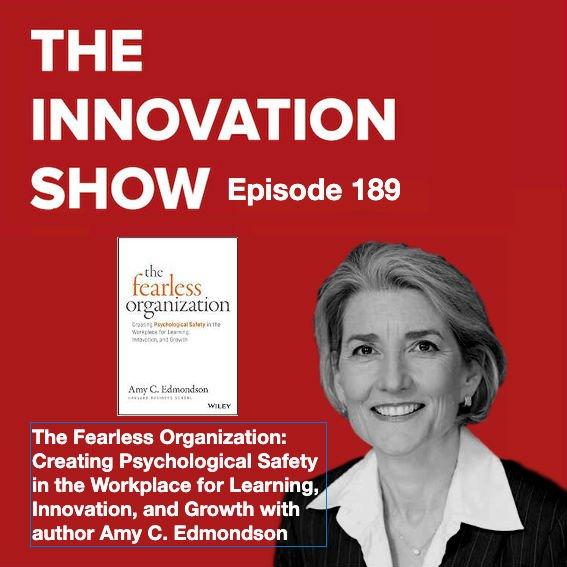
S2 Ep 189The Fearless Organization: Creating Psychological Safety in the Workplace for Learning, Innovation, and Growth - Amy C. Edmondson
This episode offers practical guidance for teams and organisations who are serious about success in the modern economy. With so much riding on innovation, creativity, and spark, it is essential to attract and retain quality talent—but what good does this talent do if no one is able to speak their mind? The traditional culture of "fitting in" and "going along" spells doom in the knowledge economy. Success requires a continuous influx of new ideas, new challenges, and critical thought, and the interpersonal climate must not suppress, silence, ridicule or intimidate. Not every idea is good, and yes there are stupid questions, and yes dissent can slow things down, but talking through these things is an essential part of the creative process. People must be allowed to voice half-finished thoughts, ask questions from left field, and brainstorm out loud; it creates a culture in which a minor flub or momentary lapse is no big deal, and where actual mistakes are owned and corrected, and where the next left-field idea could be the next big thing. Today we explore a culture of psychological safety and provide a blueprint for bringing it to life. We explore the link between psychological safety and high performance Create a culture where it's "safe" to express ideas, ask questions, and admit mistakes nurture the level of engagement and candour required in today's knowledge economy How can we fertilise creativity, clarify goals, achieve accountability, redefine leadership, and much more. Psychological safety helps bring about this most critical transformation. We welcome the author The Fearless Organization: Creating Psychological Safety in the Workplace for Learning, Innovation, and Growth and the mother of the concept of Psychological safety, it gives me great pleasure to welcome Amy C. Edmondson More about Amy here: https://www.hbs.edu/faculty/Pages/profile.aspx?facId=6451

S2 Ep 188Master Your Mind: Counterintuitive Strategies to Refocus and Re-Energise Your Runaway Brain with Roger Seip
Today's episode offers a bit of perspective and a lot of insight for anyone seeking long-term success. Success in business is spelled M-O-R-E: better results, faster growth, more revenue, greater efficiency. Do more. Make more. Achieve more. And do it now. Eventually, ambition turns to stress, then to frenzy, then to emptiness as once-ambitious workers endlessly trudge the hamster wheel chasing the next promotion. While top-level performance is the holy grail of business at all levels, there is another, much better way to achieve it: slow down. Yes, you read that right--S-L-O-W. This is your permission to jump off of the hamster wheel. Slowing down is not a luxury, it is a necessity. A frenetic brain simply doesn't perform at optimal levels. By maintaining a snail's pace, you actually achieve better results--at rocket speed--because you're firing on all cylinders. You'll think of new things, approach old problems from new perspectives, and breathe a breath of fresh air into everything you do. This episode shows you how to achieve this state of steady, sustainable fire, and how to get further by crawling than you ever did while attempting to fly. Learn how slowing down can lead to better, faster results Achieve optimal performance thought patterns Enhance your creativity and effectiveness Build energy, revenue, and good health in a self-sustaining way You know you're capable of more, but the stress is eating away at your body, your brain, and your soul. Relax, take a deep breath, and buckle down. Clear your mind, and then put it to work. Stop juggling and start doing. Master Your Mind shows you how to supercharge your trajectory by taking it S-L-O-W. More about Roger here: https://freedompersonaldevelopment.com
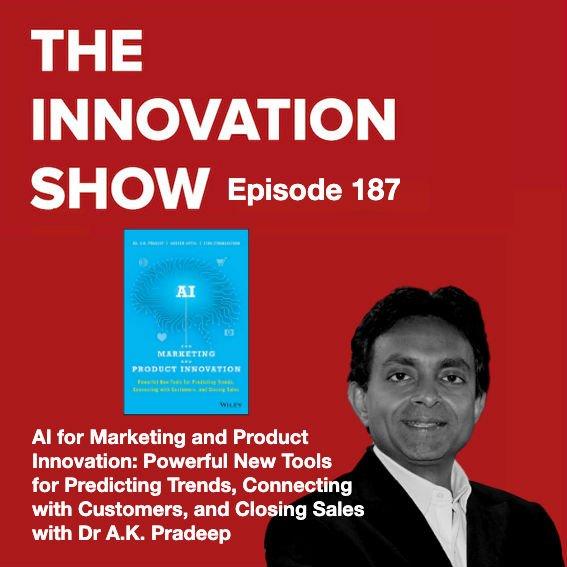
S2 Ep 187AI for Marketing and Product Innovation with Dr A.K. Pradeep
Today's episode offers innovators, entrepreneurs creatives and marketing professionals a non-tech guide to artificial intelligence and machine learning —twin technologies that stand poised to revolutionise the way we exist in business and life. The future is here, and we are in the thick of it; AI and ML are already in our lives every day, whether we know it or not. The technology continues to evolve and grow, but the capabilities that make these tools world-changing for marketers are already here—whether we use them or not. Today we will touch on how we can take advantage of AI's unparalleled and rapidly expanding power. We will look at How we can use AI and ML in ways that speak to the human spirit? How to we translate cold technological innovation into creative tools that forge deep human connections? Written by a team of experts at the intersection of neuroscience, technology, and marketing the book we will discuss today is a must have for anyone looking at where innovation, marketing, branding and creativity is going next. We welcome the author of AI for Marketing and Product Innovation: Powerful New Tools for Predicting Trends, Connecting with Customers, and Closing Sales, Dr A.K. Pradeep
S2 Ep 186The Boomerang Principle: Inspire Lifetime Loyalty from Your Employees with Lee Caraher
It is rare today for employees to stay with one organisation for the long tenures that were the norm before the Great Recession. In fact, "job hopping" is the new norm, especially for Millennials. So how can you create a culture where will stay or return? This episode shares how to leverage this fact rather than fear it. By engendering a lifetime of loyalty from former employees, leaders can see them return in the form of customers, partners, clients, advocates, contractors, and even returning employees. This episode is a pragmatic answer to the outdated corporate mindset around employee turnover. Instead, it shifts the focus to creating lifetime loyalty from your alumni who will bring back business again and again. We welcome the author of "The Boomerang Principle: Inspire Lifetime Loyalty from Your Employees" Lee Caraher "They're dead to me." "I'm not going to spend all this time training them just to have them leave." "They're job-hoppers who don't know a good thing when they see it." "I'm on a constant training revolving door—as soon as someone's trained up, they're out, and I have to start all over again." "Why am I wasting my time? It'll be faster if I do the work myself." These are sentiments you have heard many times from entrepreneurs, CEOs, managers, and supervisors when discussing those who are known as "Job Hoppers". We discuss: Intergenerational Teams, organisations, and workplaces Millennials, Gen X, Y, Z and Boomers Purpose and Vision The Boomerang Principle How to leverage top talent How to leave well How to create an alumni of past employees More about Lee here: http://leecaraher.com/
S2 Ep 185Unlocking Creativity: How to Solve Any Problem and Make the Best Decisions by Shifting Creative Mindsets with Michael Roberto
"A common trend we see is that experts in a field can become dogmatic and close-minded over time and they simply lose some of the intellectual curiosity that they had at the outset of their careers. And because they fail to question certain assumptions that they've made historically they aren't listening to those new voices." - Michael Roberto Today's episode is an exploration of the creative process and how organisations can clear the way for innovation. In many organisations, creative individuals face stubborn resistance to new ideas. Managers and executives often reject innovation and unconventional approaches due to misplaced allegiance to the status quo. Questioning established practices or challenging prevailing sentiments is frequently met with stiff resistance. In this climate of stifled creativity and inflexible adherence to conventional wisdom, potentially game-changing ideas are dismissed outright. Senior leaders claim to value creativity, yet often lack the knowledge to provide a creative framework. More on Mike here: https://www.professormichaelroberto.com

S2 Ep 184The Master and His Emissary: The Divided Brain and the Making of the Western World with Iain McGilchrist
This episode touches on a pioneering account that sets out to understand the structure of the human brain – the place where mind meets matter. Until recently, the left hemisphere of our brain has been seen as the 'rational' side, the superior partner to the right. But is this distinction true? Drawing on a vast body of experimental research, our guest argues that while our left brain makes for a wonderful servant, it is a very poor master. As he shows, it is the right side, which is the more reliable and insightful. Without it, our world would be mechanistic – stripped of depth, colour, and value. We welcome the author of The Master and His Emissary: The Divided Brain and the Making of the Western World, Iain McGilchrist Iain's website: http://iainmcgilchrist.com/ The RSA animation Iain refers to: RSA Youtube Jordan Peterson and Iain having a chat: https://youtu.be/ea4mEnsTv6Q
S2 Ep 183No More Feedback: Cultivate Consciousness at Work with Carol Sanford
"The highest success in any kind of activity - from child rearing and education to business and governance to ecosystems regeneration and spiritual practice - comes from seeing every person as unique and capable of participating in the evolution of systems and programmes" - Carol Sanford" Peer Review is the Foundation for Measuring Employee Performance. But does it help employees realise their full potential? Does feedback improve a company's bottom line? No More Feedback is book one in our guest's new Toxic Practice book series.The book disrupts commonly held beliefs to reveal the following: Why feedback undermines employee development The impact feedback has on our 3 core human capabilities The alternative that leads to self-regulating employees Utilising examples from her decades of work, learn the flaws in the feedback trap and build conditions for employees to flourish for long-term success. We welcome Carol Sanford, the author of No More Feedback: Cultivate Consciousness at Work.
S2 Ep 182Artificial Intelligence in Practice with Bernard Marr
"Artificial Intelligence: How 50 Successful Companies Used AI and Machine Learning to Solve Problems in Practice" is a fascinating look into how companies use AI and machine learning to solve problems The rapidly evolving field of artificial intelligence has expanded beyond research labs and computer science departments and made its way into the mainstream business environment. Artificial intelligence and machine learning are cited as the most important modern business trends to drive success. AI is used in areas ranging from banking and finance to social media and marketing. This technology continues to provide innovative solutions to businesses of all sizes, sectors and industries. Understand some key terminology accessibly Expand your knowledge of recent AI advancements in technology Gain insight into the future of AI and its increasing role in business and industry Realise some threats and opportunities that AI brings to industry, society and humanity More about Bernard here: https://www.bernardmarr.com

S2 Ep 181Lifescale: How to Live a More Creative, Productive, and Happy Life with author Brian Solis
Somewhere along the way, we got distracted. As much as we multitask, love our devices and feel like we're in control, deep down we know that something is off. Shortened attention spans, declines in critical thinking, lack of sleep, self-doubt, and decreased creativity are just some effects coming to light in an age of digital distraction. It's time to reclaim our lives. It's time to take control. Lifescale is a journey of self-discovery and growth. It's about getting back into balance and remastering our destinies. Author Brian Solis knows first-hand. He struggled with distraction and all of its ill-effects. To get his life back, he developed a set of techniques, exercises, and thought experiments designed to tame the chaos, and positively and productively navigate our day-to-day lives. Instead of falling victim to the never-ending cycle of newsfeeds, Likes, addictive apps, and boredom scrolling (aka the endless scroll), we can learn to manage our time and inspire our own lives to bring meaning back—without sacrificing the benefits that our devices bring us. This episode is shorter than usual because our guest has just started a new business, you can find Brian Solis here: www.briansolis.com
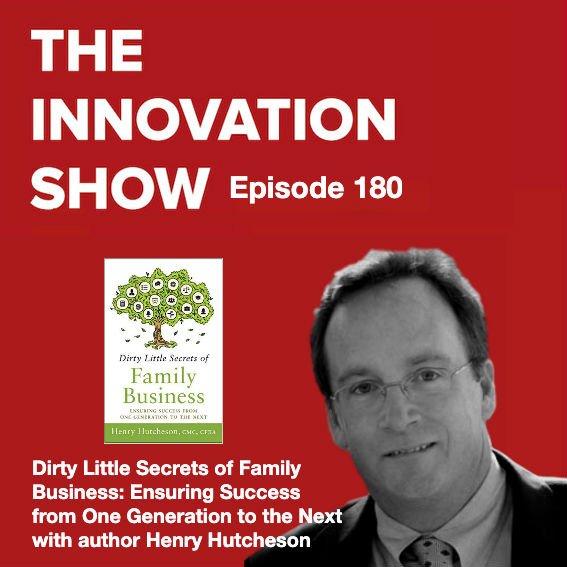
S2 Ep 180Dirty Little Secrets of Family Business: Ensuring Success from One Generation to the Next with Henry Hutcheson
If approximately 70 percent of all businesses are family businesses, and two out of three don't survive to the next generation, what can you do to make sure your business will survive and thrive? Today's episode comes clean with much-needed info on nitty-gritty issues, such as entitlement, letting employees (even family members) go when they just aren't working out, compensation, including: Your kids in the business (when to bring them in, help them move up, and prep them to take over), Shareholder agreements Selecting the next leader Deciding whether to keep the business or sell it Exit strategies for outgoing leaders Money matters Succession planning Communication Conflict resolution Establishing an effective board Transitioning to the next generation. We can apply the numerous ideas and tips in this engaging guide to address any business situation, family or otherwise. We welcome Henry Hutcheson, the author of 'Dirty Little Secrets of Family Business: Ensuring Success from One Generation to the Next'. More about Henry here: https://www.familybusinessusa.com/

S2 Ep 179In Great Company: How to Spark Peak Performance By Creating an Emotionally Connected Workplace with Louis Carter
Our guest today presents a practical approach to ensure that your employees perform at their highest possible levels. It's not about increasing salaries, offering huge bonuses, or investing in the latest employee engagement tools. The real answer is simpler, deeper, and longer-lasting: getting your people to love where they work. He takes us step by step through the process of building a lasting emotional connection between your staff and your company. His proven strategy is founded on five key principles: collaboration, optimism, values, respect, and performance. Fuse them together, and your company will be the envy of your industry. This groundbreaking guide provides everything you need to create an environment where people have a strong sense of belonging, a place where people finally feel like they're part of something big, where employees want to work collaboratively and creatively, where your staff and your company grow together. Bridge the engagement gap by ensuring that every member of your team spends their entire work day in great company. We welcome Louis Carter, the author of In Great Company: How to Spark Peak Performance By Creating an Emotionally Connected Workplace. More about Louis here: https://louiscarter.com/articles-by-louis-carter/
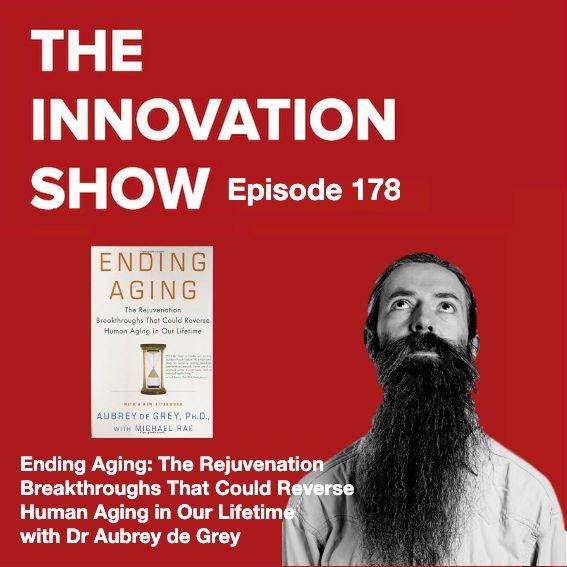
S2 Ep 178Ending Aging: Reversing Human Aging in Our Lifetime with Dr Aubrey de Grey
Nearly all scientists who study the biology of aging agree that we will someday be able to substantially slow down the aging process. Today's guest is perhaps the most bullish of all such researchers and believes that the key biomedical technology required to eliminate aging-derived debilitation and death - is now within reach. In his book, he and his research assistant Michael Rae describe the details of this biotechnology. They explain that the aging of the human body, just like the aging of man-made machines, results from an accumulation of various types of damage. As with man-made machines, this damage can periodically be repaired, leading to the indefinite extension of the machine's fully functional lifetime, just as is routinely done with classic cars. We already know what types of damage accumulate in the human body, and we are moving rapidly toward the comprehensive development of technologies to remove that damage. By demystifying aging and its postponement for the nonspecialist reader, our guest systematically dismantles the fatalist presumption that aging will forever defeat the efforts of medical science. We welcome the author of Ending Aging: The Rejuvenation Breakthroughs That Could Reverse Human Aging in Our Lifetime Dr Aubrey de Grey. We discuss: The Sens Mission to end age The challenges of changing the age paradigm Decoupling aging from age-related diseases The 7 common age-related diseases The 7 solutions to those diseases The impact of immortality of society More about Aubrey and Sens here: https://www.sens.org
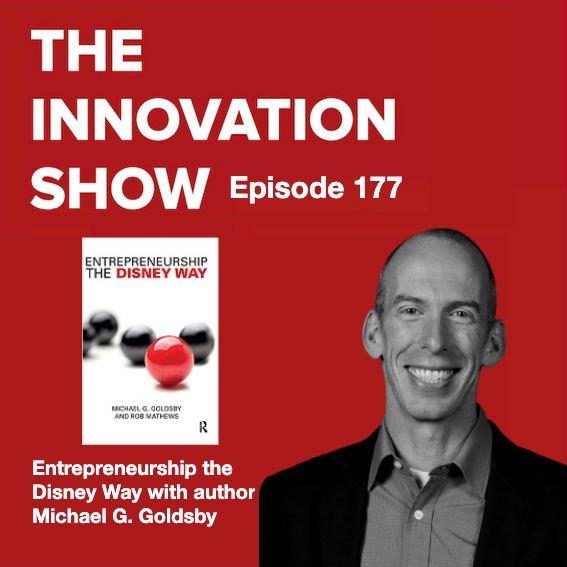
S2 Ep 177Entrepreneurship the Disney Way with Mike Goldsby
This episode focuses on the business story of Walt Disney and the company he built. Combining a unique blend of entrepreneurship, creativity, innovation, and a relentless drive to bring out the best in his teams, Walt Disney created one of the most successful ventures in business history. Outlining the specific processes of the company, our guest provides us with the tools we need to embrace our own entrepreneurial leadership style, to lead effectively, to be more innovative, and to build a successful organisation. Through the lens of Disney, we hear about the fundamentals of entrepreneurship, innovation, and leadership. Beginning with a general introduction to the concepts relevant to the entrepreneurial organisation today, we examine how Disney built his empire and how the company remains an industry leader. We touch on the Entrepreneurial Leadership Instrument, which measures one's style in leading entrepreneurial ventures. ' Entrepreneurship the Disney Way' brings entrepreneurship, innovation, and leadership to life through the compelling story of one of the most recognisable businessmen and companies of our time. We cover the early years of Walt Disney and the amazing challenges he overcame to build a lasting business. We welcome the author of Entrepreneurship the Disney Way Mike Goldsby. More about Mike here: https://elprofile.com/
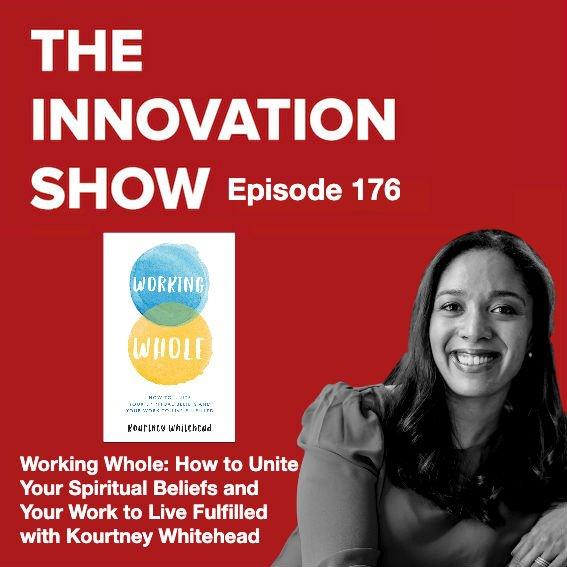
S2 Ep 176EP 176: Working Whole: How to Unite Your spiritual beliefs and your work to Live Fulfilled with Kourtney Whitehead
Do you want more from work than just a paycheque or a title? Are you ready to manifest a work life rooted in joy, purpose, and contentment? Career expert Kourtney Whitehead will guide you on a self-discovery journey to bridge the gap between your spiritual life and your work and help you bring intention and satisfaction to your professional life. In Working Whole, she shares eight principles that will free you to be inspired and joyful in your life and work callings. She advises that when we commit to living our beliefs in these eight core areas (humility, surrender, discipline, gratitude, connection, love, power and patience), we can work authentically and live fulfilled. Drawn from her long career as a recruiter, counsellor and coach and her work with everyone from new hires to seasoned executives in transition to high-achievers preparing for retirement, Kourtney shares tips and tools for handling the expectations, choices, conflicts, challenges and opportunities we face in our work life. She leads you through a transformative experience to become more creative, energised, observant, accepting of change and open-hearted. We welcome Kourtney Whitehead, author of Working Whole: How to Unite Your spiritual beliefs and your work to Live Fulfilled.
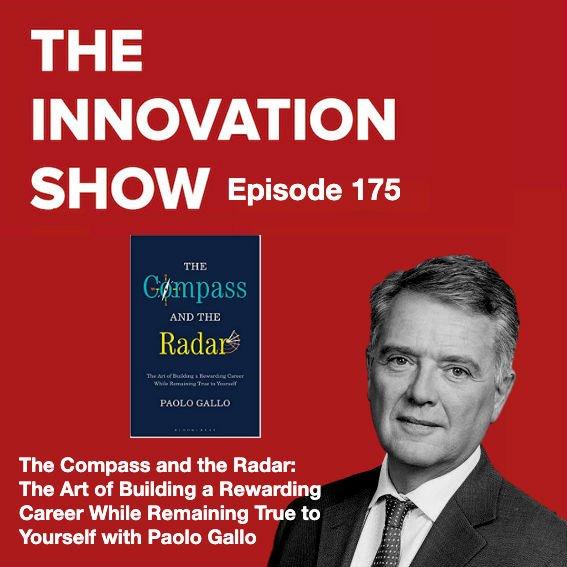
S2 Ep 175The Compass and the Radar: The Art of Building a Rewarding Career While Remaining True to Yourself with Paolo Gallo
Today's guest offers a unique pathway toward identifying the right career, finding the ideal job and developing a moral compass--the solid value system that will then anchor us in our professional lives. With a creative and engaging mix of coaching practice, management theories, case studies and personal story-telling, this book helps us to identify both our own compass—which relates to integrity, passion and internal value systems—and radar—which helps us to understand organisational complexity and 'read' workplace dynamics and situations. The Compass of Success is founded on a series of searching questions that will enable anyone to find their compass and radar to achieve personal success: - How can I find out what my real strengths and talents are? - Do I love what I do? - How can I find a job with a company that truly reflects my values? - What are the prices I am willing to pay for a meaningful and rewarding career? - How should I define a successful career? Amid a volatile and uncertain world, one in which technology, AI and digital resources are transforming the work environment, The Compass and the Radar allows us to pause, reflect, and consider who we are, what we stand for, and how to remain free. We welcome the author of "The Compass and the Radar: The Art of Building a Rewarding Career While Remaining True to Yourself," Paolo Gallo More about Paolo here: https://www.paologallo.net
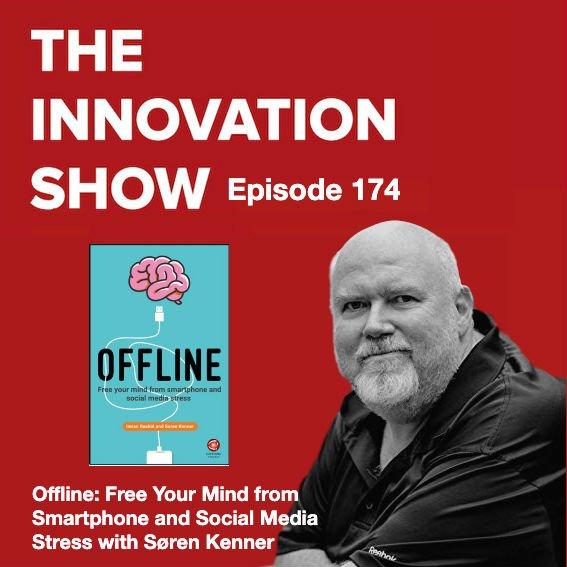
S1 Ep 174Offline: Free Your Mind from Smartphone and Social Media Stress with Søren Kenner
Today's guest has sparked an international debate by revealing the "mind hacks" Facebook, Apple, Google, and Instagram use to get you and your children hooked on their products. In Offline, he delivers an eye-opening research-based journey into the world of tech giants, smartphones, social engineering, and subconscious manipulation. This provocative work shows you how digital devices change individuals and communities for better and worse. A must-read if you or your kids use smartphones or tablets and spend time browsing social networks, playing online games or even just browsing sites with news and entertainment. Learn how to recognise 'mind hacks' and avoid the potentially disastrous side-effects of digital pollution. Unplug from the matrix. Learn digital habits that work for you. We talk: The Impact of Technology on the Brain Digital Fragmentation Syndrome The Tsunami of Technology Transformation Human Cognition Neural Pruning Hormonal Triggers Social Comparison Addictive Design BJ Fogg and Captology Online Selling Cambridge Analytica Data Online Marketing Insidious Plays Confirmation Bias FLOW and Life Stories More about Søren here: http://humansbeforetech.com/

S1 Ep 173How We Make Stuff Now: Turn Ideas into Products with Jules Pieri
Do you have an idea for a business but don't know where to start? Thanks to high-speed Do you have an idea for a business but don't know where to start? Thanks to high-speed Internet, game-changing technology, and innovative new platforms, you can go from idea to marketplace on a shoestring budget―and join the growing movement of successful Makers who've built their businesses from the ground up. Whether you're a self-starting newcomer to the world of e-commerce, a member of the Maker Movement, or an experienced entrepreneur, the first crucial step in your journey to turning little ideas into big businesses is learning How We Make Stuff Now. We welcome Jules Pieri, author of "How We Make Stuff Now: Turn Ideas into Products That Build Successful Businesses" Deciding if you want to be an Entrepreneur Maker Movement Empowering Innovation The Maker Challenge The Amazon Challenge Testing the Market Fraud Products Funding Data Fear and Failure More about Jules: https://jules.thegrommet.com https://twitter.com/julespieri
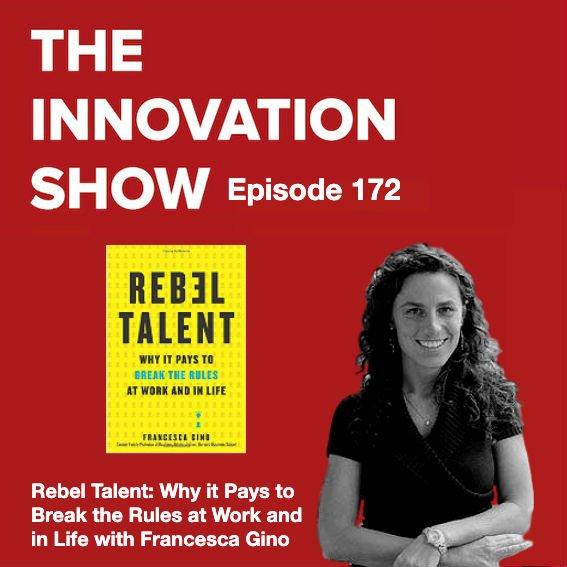
Ep 172Rebel Talent: Why it Pays to Break the Rules at Work and in Life with Francesca Gino
In Rebel Talent, today's guest shows us why the happiest and most successful among us are those who break the rules and how we can all do it more. The world's best chef. The pilot who landed his plane on a river. The magician who made history. The computer scientist who changed animated films forever. What do they all have in common? They are all rebels. Our guest has been studying rebellion and conformity for more than fifteen years. She has discovered that when we mindlessly follow rules and norms rather than constructively rebelling against them, we become less happy and less successful in every area of our lives. While rebels may seem disruptive, they are ultimately good for business: their passion, drive, curiosity and creativity can raise organisations to a new level. When we break the rules, we fix our lives. We welcome award-winning Harvard Business School professor, behavioural scientist and author of Rebel Talent: Why it Pays to Break the Rules at Work and in Life, Francesca Gino We talk: Italian master chef and Rebel Massimo Bottura Rebellion reframed as a constructive force 5 core elements of Rebel Talent Napoleon, the rebel Hidden biases towards Rebellion Morningstar Case Study Breaking conformity Diversity Stereotyping GroupThink The need for Novelty Following Rituals Novelty in Business Inviting Curiosity Adriano Olivetti and Exploration Counterfactual Thinking Authenticity More about Francesca here: https://www.rebeltalents.org/the-rebel-test https://francescagino.com
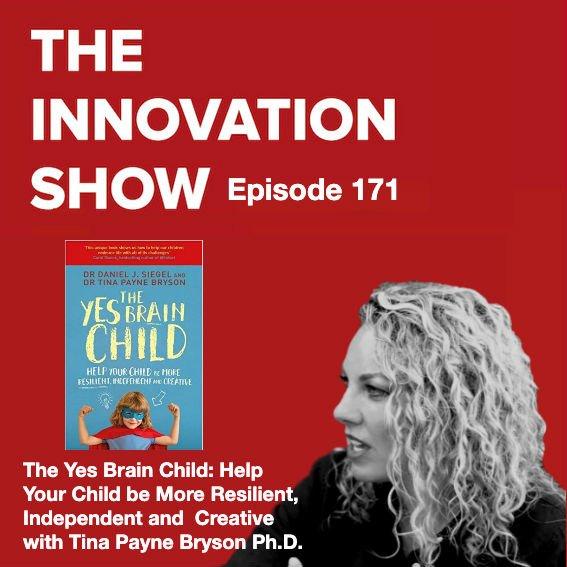
S1 Ep 171The Yes Brain Child: Help Your Child be More Resilient, Independent and Creative with Dr Tina Payne Bryson
"Every single child has an inner spark–a combination of a unique temperament and various experiences–and we want to fan that flame to help kids become happy, healthy, and internally driven to be the 'best them' they can become." - Dr Tina Payne Bryson and Dr Daniel Siegel The Yes Brain Child Children can often act out or shut down when faced with a setback or a tricky issue like homework, food or screen time. Our guest calls the 'No Brain' response. But you can help develop the ability to cope, solve their own problems and thrive by nurturing the 'Yes Brain'. Drawing on her successful work with thousands of parents and children from all backgrounds, our guest provides the advice, tools and activities to help parents and children of all ages. This is what the 'Yes Brain' approach looks like in action: *A 5-year-old boy thinks about his first day at school and says, 'I'm nervous but I'll give it a try.' *An 8-year-old girl says, 'I'd like to join the football team, even though none of my friends like football.' *A 14-year-old boy looks at a test he's earned a D- for and says, 'That's not the mark I wanted but it's not the end of the world. I'll ask the teacher how I can improve.' I would like to add to all that a Yes Brain is what we need in business environments today. A mind open to possibility and with the ability to control emotion and recognise when fear is a blocker. So please do listen to this show as a parent, a corporate innovator, change-maker or out of pure curiosity. We welcome the author of "The Yes Brain Child: Help Your Child be More Resilient, Independent and Creative", Dr Tina Payne Bryson We discuss: Yes and No brains The Prefrontal Cortex Neuroplasticity Social and Emotional Intelligence Response Techniques Empathy Attuned Communication Self Regulation Overcoming Fear Building Resilience Intuition and Morality Integration Tolerating Discomfort Perspective Discipline as Education More about Tina here: https://www.tinabryson.com More Shows like this: http://www.theinnovationshow.io/2018/09/23/ep-122-daniel-siegel-m-d-aware-the-science-and-practice-of-presence/

Ep 170Sport Leadership Lessons for Business and Life with Stuart Lancaster
Today's guest is previously best known for his position as the head coach of the English national rugby union team from 2011 until 2015, In 2016, he joined the backroom team of the Ireland provincial side, Leinster Rugby and has been instrumental in their success. I have asked our guest on to the show to discuss leadership lessons from sport, focus on a business context. In this episode we will talk about: creating a purpose, a why, a vision, values and behaviours and people-led leadership to achieve success. We discuss: The benefits of failure and the necessity of resilience. The desired characteristics of organisational achievement. The individual characteristics needed to achieve in any field. The elements of mind, body and soul. How to build a high-performing culture.
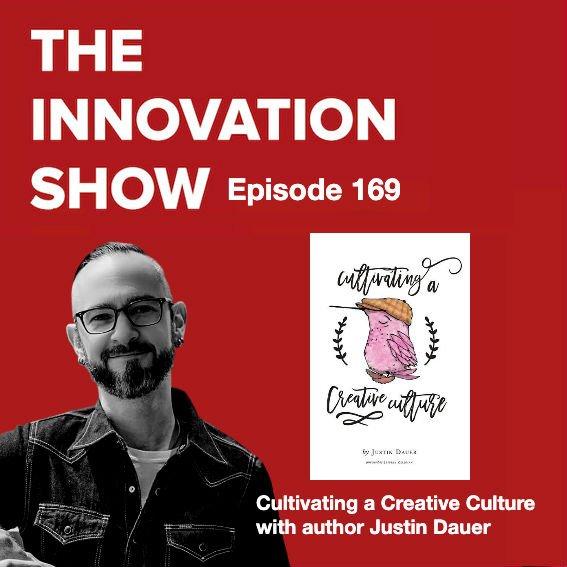
S1 Ep 169Cultivating a Creative Culture with Justin Dauer
We create human-centred interactions and experiences in our field. Empathetic purpose drives our every decision. Mobile First? In reality, it's humans first. This same mentality turned inward, forms the cornerstone of something amazing: a creative culture. Designers and front-enders have a unique advantage in solving the cultural problems in business that are sucking the life out of us. Several, in fact. The principles discussed in this book derive from the perspectives and skillsets we already use daily: empathy, objectivity and, yes, ample creativity. We discuss: The Sunday Night Work "Dreadies" Agency work burnout 100% Billable Time The need for Mental White Space Examples of Great Cultures Toxic Meetings Poor Feedback Ego as the Enemy Humility Redesigning Day One for New Hires When to Leave a Company How to Ensure You Find the Right Cultural Fit
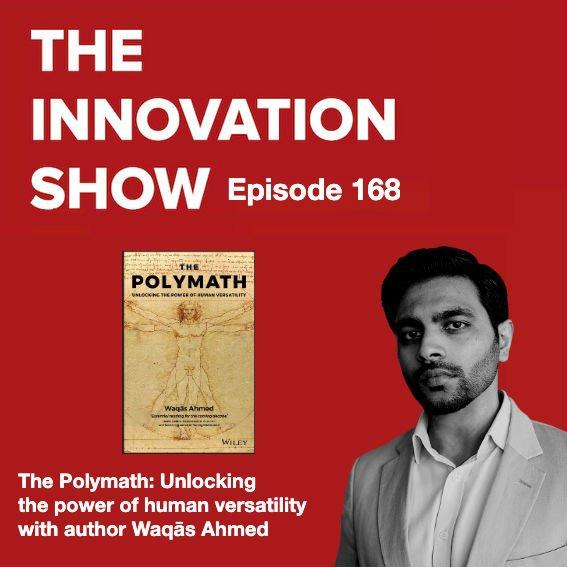
S1 Ep 168The Polymath: Unlocking the Power of Human Versatility with author Waqās Ahmed
Do you feel restricted by your career, by your workplace identity? Do you feel you are not doing what you would really like to do? Are you good at many things, but feel you cannot do them for fear of appearing odd or going against the grain? You may just be a polymath and that is a major gift! Every human is born with multifarious potential. Why, then, do parents, schools and employers insist that we restrict our many talents and interests; that we 'specialise' in just one? We've been sold a myth, that to 'specialise' is the only way to pursue truth, identity, or even a livelihood. Yet specialisation is nothing but an outdated system that fosters ignorance, exploitation and disillusionment and thwarts creativity, opportunity and progress. Following a series of exchanges with the world's greatest historians, futurists, philosophers and scientists, Waqas Ahmed has weaved together a narrative of history and a vision for the future that seeks to disrupt this prevailing system of unwarranted 'hyper-specialisation.' In The Polymath, Waqas shows us that there is another way of thinking and being. Through an approach that is both philosophical and practical, he sets out a cognitive journey towards reclaiming your innate polymathic state. Going further, he proposes nothing less than a cultural revolution in our education and professional structures, whereby everyone is encouraged to express themselves in multiple ways and fulfil their many-sided potential. Not only does this enhance individual fulfilment, but in doing so, facilitates a conscious and creative society that is both highly motivated and well equipped to address the complexity of 21st-century challenges We discuss: What is a Polymath? How did we get to this age of specialisation? Polymaths through time Polymathy as a gift Polymaths in an age of Artificial Intelligence Educational Reform Workplace Reform Social Reform A cognitive Revolution? More about Waqās here: https://www.the-polymath.com/author/
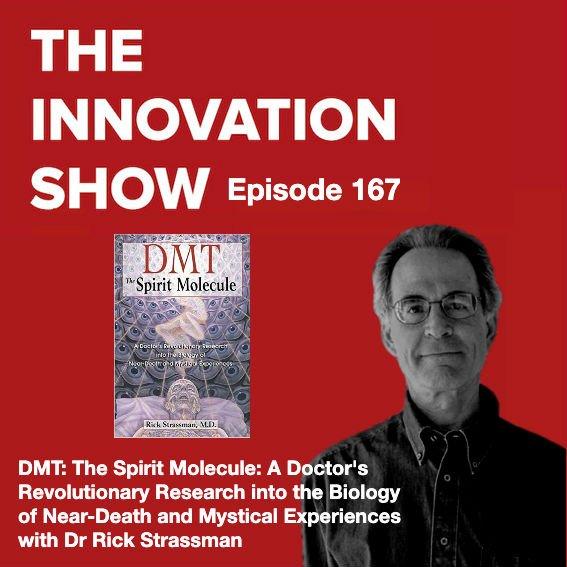
S1 Ep 167DMT: The Spirit Molecule with Dr Rick Strassman
From 1990 to 1995 our guest conducted DEA-approved clinical research at the University of New Mexico in which he injected sixty volunteers with DMT, one of the most powerful psychedelics known. His detailed account of those sessions is an extraordinarily riveting inquiry into the nature of the human mind and the therapeutic potential of psychedelics. DMT, a plant-derived chemical that is also manufactured by the human brain, consistently produced near-death and mystical experiences. Many volunteers reported convincing encounters with intelligent nonhuman presences. Nearly all felt that the sessions were among the most profound experiences of their lives. Our guests' research connects DMT with the pineal gland, considered by Hindus to be the site of the seventh chakra and by René Descartes to be the seat of the soul. His book "DMT: The Spirit Molecule" makes the bold case that DMT, naturally released by the pineal gland, facilitates the soul's movement in and out of the body and is an integral part of the birth and death experiences, as well as the highest states of meditation and even sexual transcendence. Our guest also believes that alien abduction experiences are brought on by accidental releases of DMT. If used wisely, DMT could trigger a period of remarkable progress in the scientific exploration of the most mystical regions of the human mind and soul. We welcome: Clinical Associate Professor of Psychiatry at the University of New Mexico School of Medicine and author of "DMT: The Spirit Molecule" Dr Rick Strassman welcome to the show.
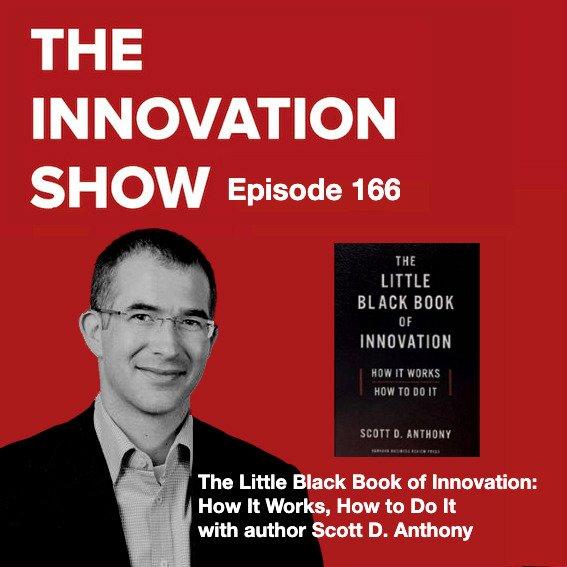
S1 Ep 166The Little Black Book of Innovation with Scott D. Anthony
"The new normal is perpetual change" - Scott D. Anthony Innovation may be the hottest discipline around today - in business circles and beyond. And for good reason. Innovation transforms companies and markets. It's the key to solving vexing social problems. And it makes or breaks professional careers. For all the enthusiasm the topic inspires, however, the practice of innovation remains stubbornly impenetrable. In The Little Black Book of Innovation, long-time innovation expert Scott D. Anthony draws on stories from his research and field work with companies like P&G to demystify innovation. In his trademark conversational and lively style, Anthony presents a simple definition of innovation, breaks down the essential differences between types of innovation, and illuminates innovation's vital role in organisational success and personal growth. We talk: Why Innovation is so hard The definition of Innovation Innovation in the eye of the beholder Living at the Intersections Heroes of Innovation Innovation Mindsets Customer-First Mindset The 7 Deadly Sins of Innovation Sustaining Innovation Psychological Safety Bridging the gap between the established business and the emergent concept The language innovators should use The Innovators Pledge More about Scott here: https://www.innosight.com/
S1 Ep 165Fear Hack: How What Scares Us, Makes Us with Hilary Gallo
"Courage is resistance to fear, mastery of fear—not absence of fear."—Mark Twain For the past few years todays guest has been talking to people about what scares them and helping them to work through their fears. His book brings together what he has found. Maybe it is about time that we looked at fear differently and asked why it is still such a problem for us. Hacking fear involves looking at fear from another angle. Rather than being afraid of our fears, our guest shows us a way of befriending our fears. our fears. Hilary shows us how. Fear Hacking is a way of turning our experience from a monster story into a love story. We welcome author of "Fear Hack", Hilary Gallo to the show We talk: How we develop fear The formative years How fear can be reframed How we can embrace fear How hierarchy controls us How we can play the victim How we justify our position Strategies to break free More about Hilary here: http://www.hilarygallo.com/

S1 Ep 164Last Tango in Cyberspace with Steven Kotler
The world created in Last Tango is based very closely on our world about five years from now, and all technology in the book either exists in labs or is rumoured to exist. With its electrifying sentences, subtle humour, and an intriguing main character, readers are sure to find something that resonates with them in this groundbreaking cyberpunk science fiction thriller. We welcome award-winning journalist, executive director of the flow research collective, world-leading expert on high performance, multiple New York Times bestselling author, and author of "Last Tango in Cyberspace" Steven Kotler We talk: The future of our culture The fracturing of society Innovation Flow Peak Performance Purpose and Vision Habits and Attention Evolutionary Biology The origins of Empathy Autism Reinvention and regeneration Walking logic bombs with hyper logical minds, the Mentat Species die-off rates More about Steven here: www.stevenkotler.com Steven mentioned this Forbes article during the show: https://www.forbes.com/sites/stevenkotler/2015/03/27/the-passion-recipe-four-steps-to-total-fulfillment/#74d9b2f86bb4

S1 Ep 163Tips to Learn Stuff Better with Ian Gibbs
Did you know learning is a skill? Did you know that learning to learn stuff better is much easier once you know how? Did you know there are dozens of ways to improve your ability to learn more stuff in less time that you can apply immediately? It doesn't require brain surgery, hormone injections, getting tattooed in unmentionable places or paying for extra tuition. In fact, beyond the (extremely modest) cost of this book, applying them is virtually free. Avoid wasting any more study time and start getting the most out of your education by picking out your favourite top study tips and start learning stuff better right now. We welcome the author of "23 Tips to Learn Stuff Better: so you can spend less time studying and more time enjoying yourself", Ian Gibbs.
S1 Ep 162Titanic Syndrome with Dr. Nadya Zhexembayeva
The fast-moving up-and-down economy we live in makes keeping our companies afloat increasingly difficult. Just as we handle one crisis, another appears. Digital, millennials, new regulations, new competition, political turmoil, Artificial Intelligence, Industry 4.0, Blockchain, sharing economy, circular economy, substitute products, you name it – the waves of disruption come crashing faster and faster, fundamentally changing the way we work, profit, and compete. For nearly 20 years, our guest has worked in the field of survival and sustainability – researching and developing ways for businesses to stay afloat, no matter what the disruption. To understand the mechanics of survival, it helps to look at the successes and failures of the past. We talk: Embracing Change and Transformation Personal Transformation A definition of Titanic Syndrome The 3 markers of Titanic Syndrome: Arrogance Excessive Attachment to Past Successes An Inability to Recognise the new and Emerging Reality The reasons the Titanic Sank The definition of Reinvention The ingredients of Reinvention Personal Reinvention Reinvention versus Innovation Solutions for Reinvention More about Nadya: https://chiefreinventionofficer.com/ http://Chief Reinvention Officer Nadya Ted Talk here: https://www.youtube.com/watch?v=8VJjD8JnAYQ
S1 Ep 161EP 161: The Biology of Belief: Unleashing the Power of Consciousness, Matter & Miracles, with Bruce H. Lipton, Ph.D.
Stunning new scientific discoveries about your brain's functioning show that all the cells of your body are affected by your thoughts. Our guest is a renowned cell biologist and describes the precise molecular pathways through which this occurs. Using simple language, humour, and everyday examples, he explains how the new science of epigenetics is revolutionising our understanding of the link between mind and matter, and the profound effects it has on our personal lives and the collective life of our species. We talk: How stem cells work Telomeres How we could increase the length of our lives How we should encourage children The subconscious versus the conscious mind How we download negative programming as childen How we self sabotage How we mostly end up like our parents How changing your consciousness changes the character of your life The Placebo Effect The Nocebo Effect Why Love is important 95% of the day we are self critical How we sabotage our relationships Solutions for how to reprogramme our subconscious More about Bruce here: https://www.brucelipton.com/about
S1 Ep 160EP 160: The Myth of Capitalism: Monopolies and the Death of Competition with Jonathan Tepper
America has gone from an open, competitive marketplace to an economy where a few very powerful companies dominate key industries that affect our daily lives. Digital monopolies like Google, Facebook and Amazon act as gatekeepers to the digital world. Amazon is capturing almost all online shopping dollars. We have the illusion of choice, but for most critical decisions, we have only one or two companies, when it comes to high-speed Internet, health insurance, medical care, mortgage title insurance, social networks, Internet searches, or even consumer goods like toothpaste. Every day, the average American transfers a little of their paycheck to monopolists and oligopolists. The solution is vigorous anti-trust enforcement to return America to a period where competition created higher economic growth, more jobs, higher wages and a level playing field for all. Today's show is the story of industrial concentration, but it matters to everyone because the stakes could not be higher. It tackles the big questions of: why is the US becoming a more unequal society, why is economic growth anaemic despite trillions of dollars of federal debt and money printing, why the number of start-ups has declined, and why are workers losing out. We welcome the author of "The Myth of Capitalism: Monopolies and the Death of Competition" Jonathan Tepper We talk: Monopolies Duopolies Oligopolies Competition Monopsonies Capitalism Antitrust Regulation The worker being squeezes The concentration of power The Rural v Urban Divide The Robber Barons The Origin of the Problem How concentration kills innovations IPOS Mergers and Acquisitions Some possible solutions More about Jonathan here: http://jonathan-tepper.com/

Ep 159EP 159: The Fourth Age: Smart Robots, Conscious Computers, and the Future of Humanity with Byron Reese
The questions we will grapple with in today's show are not about transistors and neurons and algorithms and such. They are about the nature of reality, humanity, and mind. The confusion happens when we begin with "What jobs will robots take from humans?" instead of "What are humans?" Until we answer that second question, we can't meaningfully address the first. We welcome serial entrepreneur, founder and CEO, of GigaOM and author of "The Fourth Age: Smart Robots, Conscious Computers, and the Future of Humanity" Byron Reese. We talk: The evolution of our brains Fire as the first technology Language development Storytelling Digital Dementia Distribution of Labour The Beginning of Wealth The Beginning of ownership The shift to agriculture The age of computation Moore's law Exponential change Artificial Intelligence Artificial General Intelligence Robotics The limitation of Robotics Computer Consciousness Our human potential We mention digital dementia during the show, here is a piece I wrote on it: https://medium.com/thethursdaythought/planet-of-the-ai-pes-digital-dementia-and-digital-zombies-f4f3454ca664 More about Byron here: www.byronreese.com More shows on Artificial Intelligence: http://www.theinnovationshow.io/2019/02/18/ep-146-artificial-intelligence-and-the-two-singularities-with-calum-chace/ http://www.theinnovationshow.io/2018/05/03/ep-99-rise-robots-technology-threat-jobless-future-%E2%80%95-martin-ford/ http://www.theinnovationshow.io/2017/09/27/uploading-ep-56-pioneer-machine-learning-breakthroughs-ai-education-future-humanity/ http://www.theinnovationshow.io/2019/02/12/ep-145-the-beginning-of-infinity-explanations-that-transform-the-world-with-author-david-deutsch/

Ep 158Train Your Head & Your Body Will Follow with Sandy Joy Weston
Our guest's goal was to create a book and guide that allows us to redirect our thoughts in a positive, focused manner. This book is the culmination, it presents easy ways to learn a few simple changes you can make in our lives, and why these will help us enjoy life more. After many years of hands-on research and collaboration with top professors, Our guest has put together a 90-day guide book and journal, written for the everyday person to help get their head in the game and see results instantly. Train our heads, and our bodies will follow. This is a combination of a love and passion for fitness, food, science, spirituality, positive psychology, and people, all rolled into one. All our habits, everything we want, is because we believe we'll feel better once we have it. We welcome the author of "Train Your Head & Your Body Will Follow: Reach Any Goal in 3 Minutes a Day", Sandy Joy Weston. We talk: The importance of mind, body and spirit in fitness Motivation to change: How our Why needs to be bigger than our Try Mirror work The influence of people around us Changing habits Self-talk and storytelling Loving yourself Overcoming criticism G.A.M.E. plan Journalling 7 deadly reasons we don't work out The various approaches to fitness Changing our relationship towards food Guilt-free eating The H30 programme More about Sandy here: http://www.sandyjoyweston.com/

Ep 157How to be Heard: Secrets for Powerful Speaking and Listening with Julian Treasure
"We teach our children how to read and write, but not how to speak and listen. Listening is untaught and usually unpractised. Our amazing human voice is marginalised as we communicate more and more through text, not spoken word." - Julian Treasure (5xTED talk speaker and author) Have you ever felt like you're talking, but nobody is listening? Wouldn't it be nice to know how to speak so that people listen – and how to listen so that people feel heard. Our guest today is a leading sound expert and demonstrates via interviews with world-class speakers, professional performers and CEOs atop their field, the secret lies in developing simple habits that can transform our communication skills, the quality of our relationships and our impact in the world. We welcome 5 time TED speaker and author of "How to be Heard: Secrets for Powerful Speaking and Listening" Julian Treasure. We explore: How to listen and why we don't How Sound impacts us all How to make sound work for you and improve your wellbeing, effectiveness and happiness Why listening matters. How listening and speaking affect one another Our listening filters, and how to use them How "open workspaces/offices" impact listening The 7 deadly sins of speaking and listening, and how to avoid them The 4 leeches of conversation The 4 Cs of conscious communication: Commitment, Consciousness, Compassion, Curiosity RASA: (Juice in Sanskrit) - Receive (pay attention to the other person), Appreciate (via little sounds), Summarise, Ask HARAH: Humility, Awareness, Respect, Attention, Humour HAIL: Honesty, Authenticity, Integrity, and Love Some exercises we can do every day A bonus link for video exercises for Innovation show listeners Julian has kindly offered our listeners 5 free videos to become a better speaker available here: https://www.juliantreasure.com/innovation/
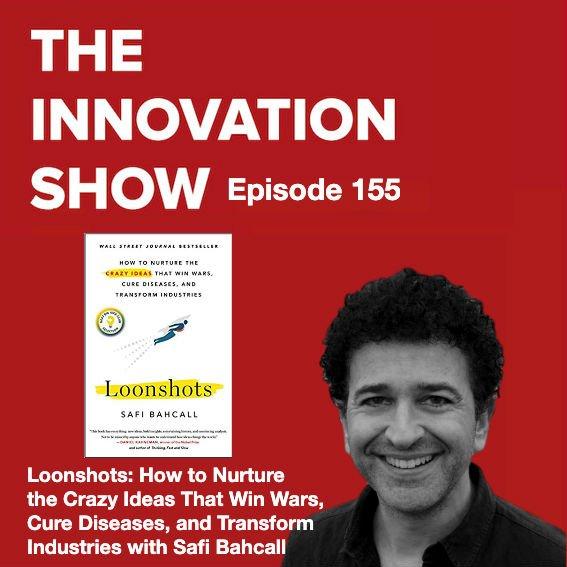
S1 Ep 155Loonshots How to Nurture the Crazy Ideas That Win Wars, Cure Diseases, and Transform Industries with Safi Bahcall
What do James Bond and Lipitor have in common? What can we learn about human nature and world history from a glass of water? In Loonshots, our guest reveals a surprising new way of thinking about the mysteries of group behaviour that challenges everything we thought we knew about nurturing radical breakthroughs. Drawing on the science of phase transitions, our guest tells us why teams, companies, or any group with a mission will suddenly change from embracing wild new ideas to rigidly rejecting them, just as flowing water will suddenly change into brittle ice. Mountains of print have been written about culture. Loonshots identifies the small shifts in structure that control this transition, the same way that temperature controls the change from water to ice. Using examples that range from the spread of fires in forests to the hunt for terrorists online, and stories of thieves and geniuses and kings, our guest shows how this new kind of science helps us understand the behaviour of companies and the fate of empires. Loonshots distils these insights into lessons for creatives, entrepreneurs, and visionaries everywhere. We welcome scientist, entrepreneur and author of Loonshots: How to Nurture the Crazy Ideas That Win Wars, Cure Diseases, and Transform Industries Safi Bahcall We talk: What is a Loonshot? How structure is as important as culture Phase transitions How Innovation saves Empires Why Innovation gets rejected The rejection of radar before the War The rejection of lifesaving drugs The three deaths (fails) Listening to the Suck with Curiosity Understanding Failure Avoiding the Moses Trap Loving Soldiers and Artists Managing the tension of the emergent and the established How Steve Jobs learned to love Artists and Soldiers The genius of Richard Miller, Judah Folkman, Vannevar Bush, Theodore Vail, Sir James Black, Akira Endo, Deak Parsons, Leo Young, Lawrence Hyland and Steve Jobs. More about Safi here: www.loonshots.com www.bahcall.com
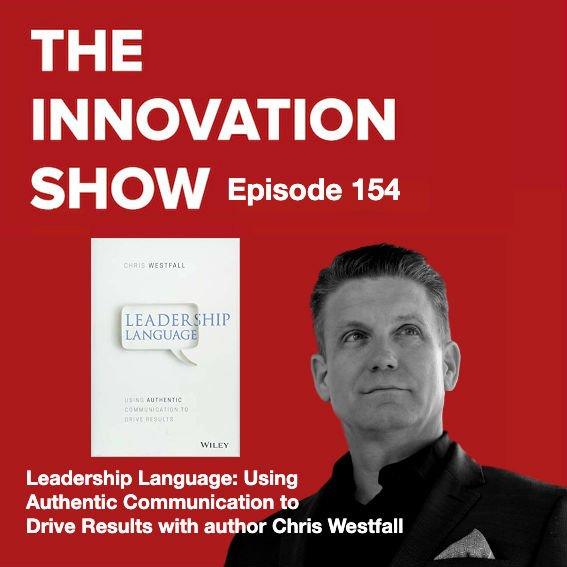
S1 Ep 154Leadership Language: Using Authentic Communication to Drive Results with Chris Westfall
Inside each of us is a vision of how things could be. Yet most people remain frustrated by a lack of impact, unable to connect and inspire the people they care about the most. Why? There's a language we understand but rarely use. A language that's sincere. Powerful. Compelling. A language of words—and actions—that can't be denied. Leadership Language will help you to peel back the ineffective "business speak", so you can change the conversation. And change your results. Imagine what could happen when you replace frustration with an irresistible vision—for yourself, your team and your organization. Today's leaders face so many challenges—employee retention, operational efficiency, culture, collaboration, leading across generations, and more—but communication is at the heart of every one of those issues. A clear message with a powerful delivery gets you halfway home. Honing in on your next conversation can drive more impact, better relationships, and greater overall effectiveness. For yourself. Your career. Your company. They say there's nothing that can stop an idea whose time has come. So, take the lead. It's time for you to create what's missing. And Leadership Language will show you how. Get clear on your vision, get aligned with your story, and get others engaged with your message Connect with the people that matter most, in a way that invites innovation and new outcomes Find the courage to move forward, conquer change, and create a powerful impact—while you help others do the same From student leaders to the C-suite, there is only one way for a leader to make an impact: communication. Leadership Language is your personal guide to mastering critical skills and unveiling your authentic potential. Links mentioned during the show: Stanley Anderson, the man who hits a 266 mph fastball: https://www.youtube.com/watch?v=5o_vCPJpPOs Murray Willcocks interview: https://westfallonline.com/decision-making-wave/ New online group coaching program, just introduced: http://chriswestfall.net
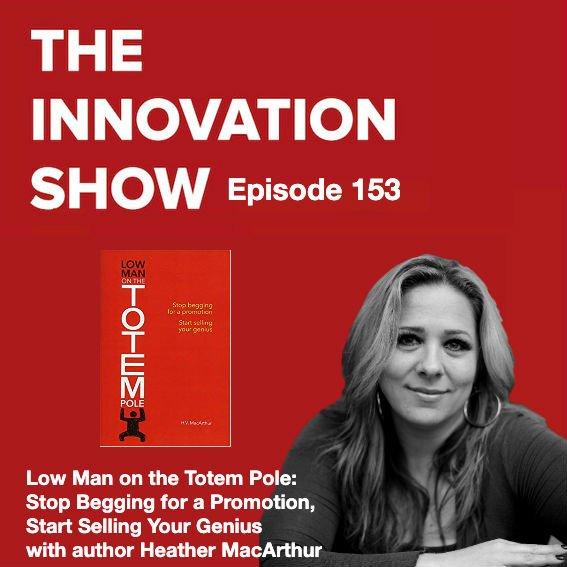
S1 Ep 153Low Man on the Totem Pole: Stop Begging for a Promotion, Start Selling Your Genius with Heather MacArthur
For many of us, the thought of work brings to mind a daily nine-to-five grind, reporting to disinterested supervisors, and ''working for the weekend.'' You probably enter the office feeling disenchanted, counting down the minutes until 5 p.m. Whether this approach to work is due to feeling unrecognised for your work, being a cog in a corporate machine, or the influence of apathetic coworkers, there is something you likely forgot along the way, YOU, you are the one in the driver's seat of your career. Making the switch from a passive passenger to being the driver isn't easy and there are no one-size-fits-all means of achieving this. Today's episode offers various groundbreaking strategies to get more out of your work--including viewing yourself as a business owner and your place of work as the client. Whether you are a front-line employee or a manager, today's episode offers something for everyone trying to find meaning in their work. We are joined by business consultant and author of "Low Man on the Totem Pole: Stop Begging for a Promotion, Start Selling Your Genius" Heather MacArthur Heather shares: The two of the biggest issues facing the workplace today: We have been told not to believe in our greatness Business structure relies on people managers who have no clue how to develop people The 3 mindsets of the workplace The Pyramid of Purpose Challengers and Nemeses Weaving Webs v Climbing Ladders Networking v Building Relationships The first steps to change You can find out more about Heather here: www.lowmanonthetotempole.com/buy-the-book/
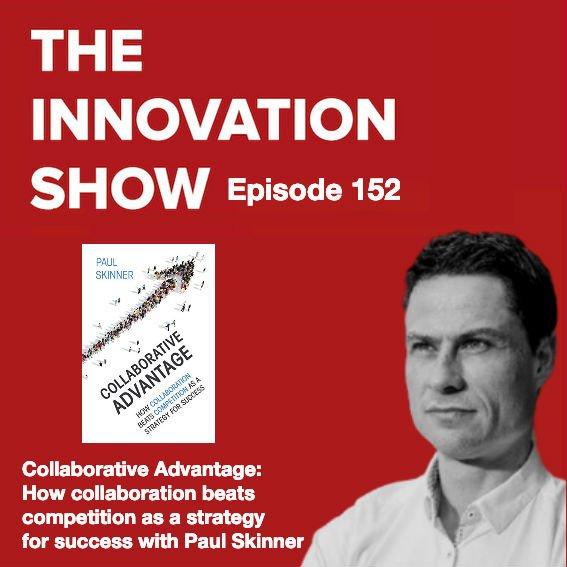
S1 Ep 152Collaborative Advantage: How collaboration beats competition as a strategy for success with Paul Skinner
Our guest today argues that we have now reached a turning point in history from which creating Competitive Advantage may no longer be in the best interests of an organisation. He presents today's business and social challenges through a new strategic lens and offers this book as a practical guide to help you create Collaborative Advantage, transform your business and change the world. You will gain access to world-leading techniques to enable you to: Mobilise staff, partners, collaborators and customers around a common purpose that gets everyone you need firmly on your side. Foster improved innovation, reach more customers or beneficiaries, build greater loyalty, generate greater income and forge more ambitious partnerships. De-couple your potential for growth from the level of resource your organization controls. This is an indispensable guide that will help you transform the growth of your business or the impact of your non-profit by bringing the fuller value-creating potential of the outside world inside your organization. We welcome Strategic consultant, social entrepreneur and the author of "Collaborative Advantage: How collaboration beats competition as a strategy for success" - Paul Skinner We talk: The Death and History of Competitive Advantage The Birth of Collaborative Advantage The "Outside In" framework Common purpose Personal Purpose Engaging the Ecosystem The Circular Economy More about Paul here: https://www.theaof.com/
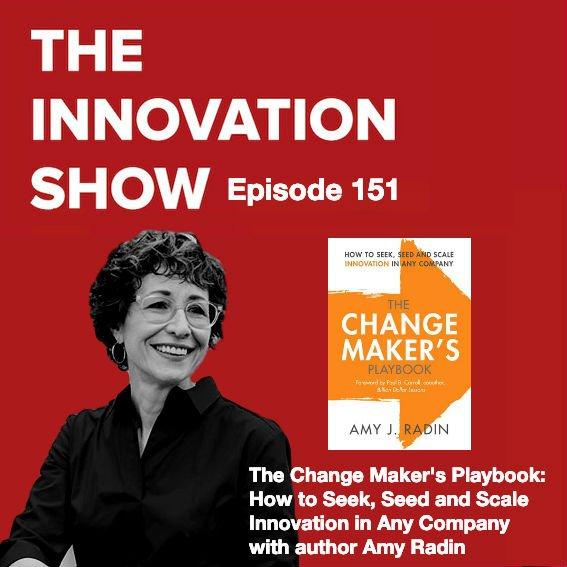
S1 Ep 151EP 151: The Change Maker's Playbook: How to Seek, Seed and Scale Innovation in Any Company with Amy Radin
Any leader in any size company, no matter the size or sector, feels the pressure to innovate, find new ideas and business models, and create enduring customer value. There is no one formula or set process to find and execute the ideas that achieve these goals; customers set moving targets, shareholders are unforgiving and demanding, and society expects companies to care about much more than the bottom line. The answer to the dilemma every business faces today is that innovation is exhilarating, rewarding and even fun when it is approached as a unique challenge, but it can also be polarising, unpredictable, and scary. Success requires that leaders rethink how they lead innovation. Leaders know they must set aside preconceived notions of what works, and look to those who have already walked in their shoes. Changemakers are few in number and are worthy of encouragement and support. They want to create and deliver value, bring together teams to solve big problems, seize opportunities, and make a difference. Treading water is not an option for them. They want to succeed for themselves, their communities, friends and loved ones, and for the broader stakeholder ecosystem. Theirs are hard-won achievements. We welcome the author of the focus of today's episode: The Change Maker's Playbook: How to Seek, Seed and Scale Innovation in Any Company, Amy Radin, welcome to the show. We talk about: Changemaker Frameworks for Change How to seek innovation How to overcome resistance How to seek support Seeding Scaling How to embed change Building Support The Army of the Willing Building an External Network Intrapreneurship Resourcefulness Positioning Purpose If established enterprise incubate and launch new business models More about Amy here: https://www.amyradin.com
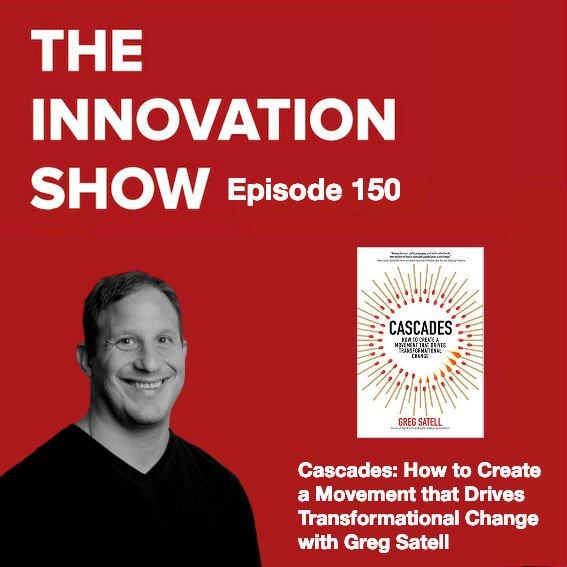
S1 Ep 150EP 150: Cascades: How to Create a Movement that Drives Transformational Change with Greg Satell
If you could make a change—any change you wanted—what would it be? Would it be something in your organization or your industry? Maybe something it's in your community or throughout society as a whole? Creating true change is never easy. Most startups don't survive. Most community groups never get beyond small local actions. Even when a spark catches fire and protesters swarm the streets, it often seems to fizzle out almost as fast as it started. The status quo is, almost by definition, well entrenched and never gives up without a fight. In this groundbreaking book, one of today's top innovation experts delivers a guide for driving transformational change. To truly change the world or even just your little corner of it, you don't need a charismatic leader or a catchy slogan. What you need is a cascade: small groups that are loosely connected but united by a common purpose. As individual entities, these groups may seem inconsequential, but when they synchronise their collective behaviour as networks, they become immensely powerful. Through the power of cascades, a company can be made anew, an industry disrupted, or even an entire society reshaped. As Satell takes us through past and present movements, he explains exactly why and how some succeed while others fail. We welcome Bestselling Author, Keynote Speaker and Innovation Advisor Greg Satell welcome back to the show. We talk: "Cascades: How to Create a Movement that Drives Transformational Change" Success v Failure and why Boston v Silicon Valley Debunk the Blockbuster v Netflix story Occupy v Otpor, what worked and what did not How to build a change network Using a network to defeat a network Changemakers Nobody is an island Genome of values More about Greg here: https://www.gregsatell.com/ His Ted Talk here: https://www.youtube.com/watch?v=IOt1dLVyHjQ
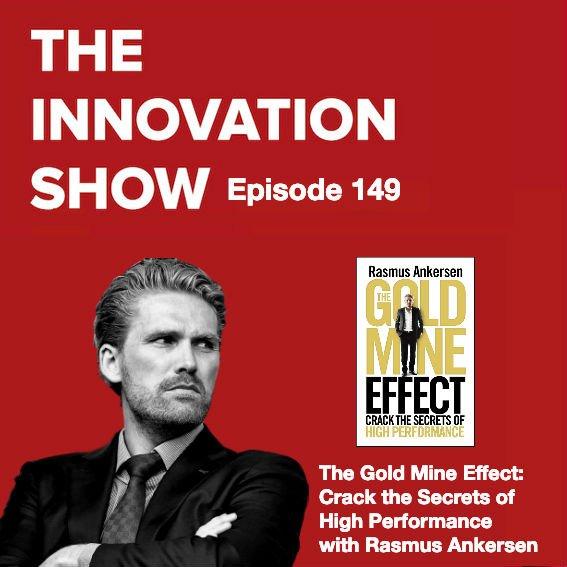
S1 Ep 149EP 149: The Gold Mine Effect with Rasmus Ankersen
We all want to discover our hidden talents and make an impact with them. But how? Our guest, an ex-footballer and performance specialist, quit his job and for six intense months lived with the world's best athletes in an attempt to answer this question. Why have the best middle distance runners grown up in the same Ethiopian village? Why are the leading female golfers from South Korea? How did one athletic club in Kingston, Jamaica, succeed in producing so many world-class sprinters? Our guest presents his surprising conclusions in seven lessons on how anyone - or any business, organisation or team - can defy the many misconceptions of high performance and learn to build their own gold mine of real talent. This book is not about sport, it's about identifying and nurturing talent. In a knowledge economy, talent is a competitive advantage, but bus8ness leaders and coaches alike don't often know how to identify talent, even when it's right in front of them. We welcome the author of The Gold Mine Effect Rasmus Ankersen We discuss: The Challenge of identifying talent Why we overlook talent The child prodigy problem Traits of the best coaches How to nurture talent How parents should nurture talent The balance of parent involvement More about Rasmus here: https://www.rasmusankersen.com/
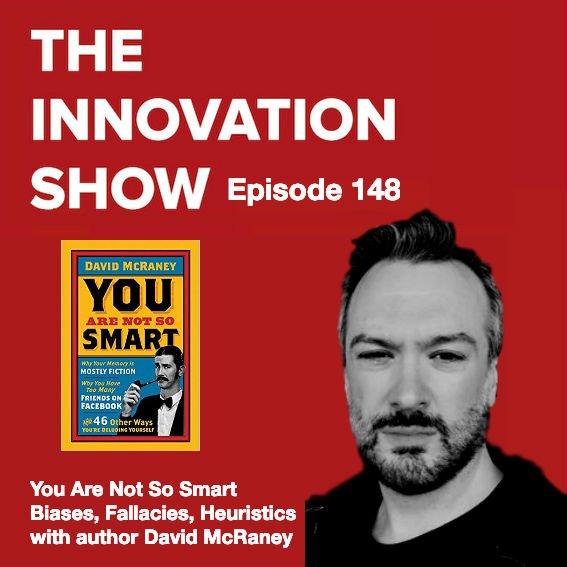
S1 Ep 148EP 148: "You Are Not So Smart" Biases, Heuristics and Fallacies with David McRaney
"You Are Not So Smart" Biases, Heuristics and Fallacies with David McRaney How many of your Facebook friends do you think you know? Would you help a stranger in need? Do you know why you're so in love with your new smartphone? The truth is: you're probably wrong. This episode examines the assorted ways we mislead ourselves every single day, a psychology course with all the boring bits taken out. Prepare for a whirlwind tour of some of the latest research, fused with a healthy dose of humour. You'll discover just how irrational you really are, which delusions keep you sane, how to boost your productivity, and why you've never kept a New Year's resolution. We welcome the author of "You Are Not So Smart: Why Your Memory Is Mostly Fiction, Why You Have Too Many Friends On Facebook And 46 Other Ways You're Deluding Yourself" and host of the You Are Not So Smart Podcast, David McRaney We discuss: What are Biases, Heuristics and Fallacies Why we create mental shortcuts The ancient architecture of the brain Priming How Casinos Prime Us Confabulation Split-Brain patients and confabulation Why our brains seek patterns The Texas Sharpshooter Fallacy The Availability Heuristic The video mentioned during the show: https://www.youtube.com/watch?v=CNmsVl4xkhg More about David here: http://davidmcraney.com/ https://youarenotsosmart.com
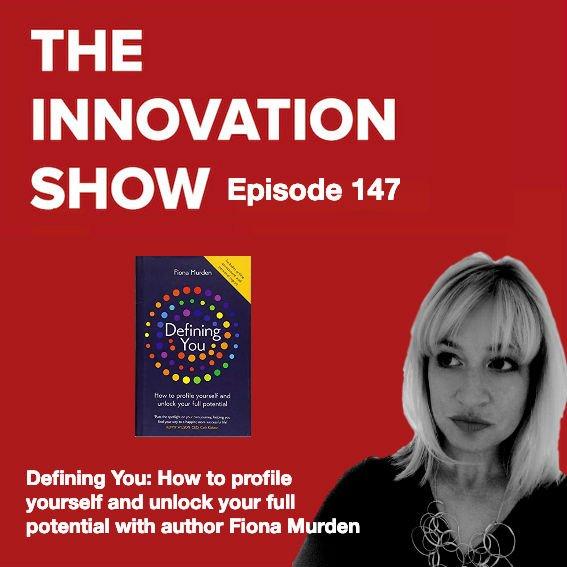
S1 Ep 147EP 147: "Defining You: How to profile yourself and unlock your full potential" with author Fiona Murden
"There is only one corner of the universe you can be certain of improving, and that's your own self." —Aldous Huxley Have you ever wondered what a profiling session would tell you about yourself? Our guest helps some of the most successful people in the world to understand their behaviour and improve their performance. Here she guides you through the professional profiling assessment process in private, to help you discover your strengths, understand what really drives you and learn which environments will help you to excel. Our behaviour is at the core of what we do. This is your ultimate self-awareness toolkit to help you understand both your own and other's behaviour and to positively influence it. Along the way you may even start to sleep better, think more clearly and have good moods more often. More about Fiona here: https://fionamurden.com/
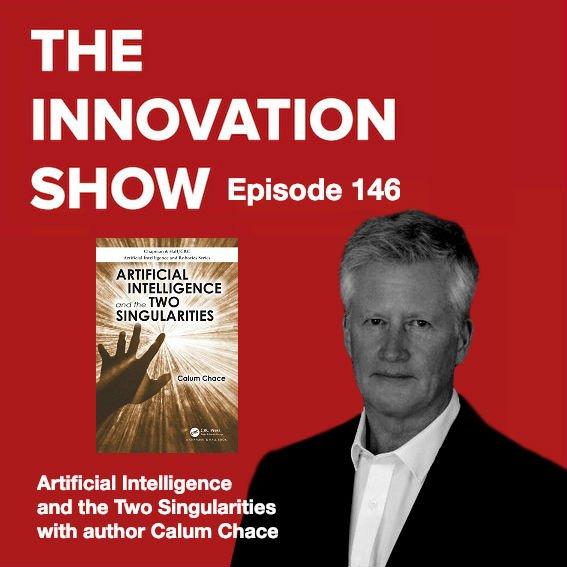
S1 Ep 146EP 146: Artificial Intelligence and the Two Singularities with Calum Chace
"Optimism, like pessimism, is a bias, and to be avoided. But summoning the determination to rise to a challenge and succeed is a virtue." - Calum Chace Today's guest argues that in the course of this century, the exponential growth in the capability of AI is likely to bring about two "singularities" - points at which conditions are so extreme that the normal rules break down. The first is the economic singularity, when machine skill reaches a level that renders many of us unemployable and requires an overhaul of our current economic and social systems. The second is the technological singularity, when machine intelligence reaches and then surpasses the cognitive abilities of an adult human, relegating us to the second smartest species on the planet. These singularities will present huge challenges, but this he argues that we can meet these challenges and overcome them. If we do, the rewards could be almost unimaginable. Artificial intelligence can turn out to be the best thing ever to happen to humanity, making our future wonderful almost beyond imagination. But only if we address head-on the challenges that it will raise. We welcome expert on artificial intelligence, and its likely future impact on society and bestselling author of many books including the focus of today's show "Artificial Intelligence and the Two Singularities", Calum Chace, welcome to the show We discuss: The Terminology Technological Singularity Economic Singularity Exponential Change Artificial General Intelligence The AI race Technological Joblessness Universal Basic Income Impact on Society What is being done The Gods and the Useless Transhumanism Augmented Humanity Centaurs Privacy Concerns More about Calum here; http://www.pandoras-brain.com/ and the book here: https://www.amazon.co.uk/gp/product/0815368534/ref=dbs_a_def_rwt_bibl_vppi_i6
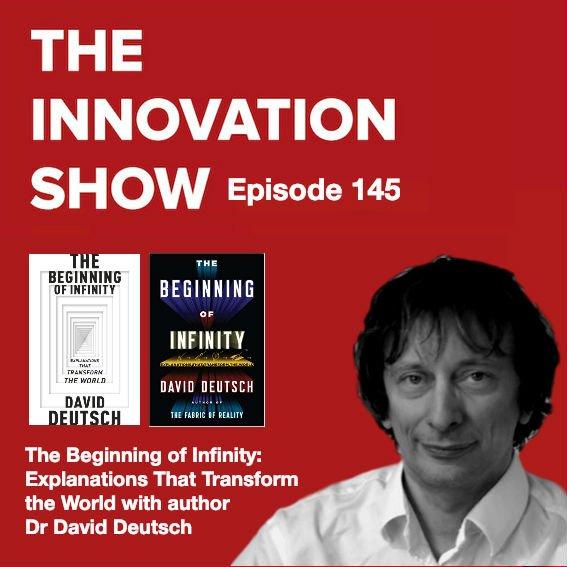
S1 Ep 145EP 145: The Beginning of Infinity, Explanations That Transform the World, David Deutsch,
The Beginning of Infinity, Explanations That Transform the World, David Deutsch, A bold and all-embracing exploration of the nature and progress of knowledge from one of today's great thinkers. Throughout history, mankind has struggled to understand life's mysteries, from the mundane to the seemingly miraculous. Our guest is a multiple award-winning pioneer in the field of quantum computation and argues that explanations have a fundamental place in the universe. They have unlimited scope and power to cause change, and the quest to improve them is the basic regulating principle not only of science but of all successful human endeavour. This stream of ever improving explanations has infinite reach. We are subject only to the laws of physics, and they impose no upper boundary to what we can eventually understand, control, and achieve. He applies that worldview to a wide range of issues and unsolved problems, from creativity and free will to the origin and future of the human species. We welcome David Deutsch, Fellow of the Royal Society, a pioneer in quantum computing, visiting Professor of physics at the Centre for Quantum Computation at Oxford University, multiple TED Talker, optimist and author of The Beginning of Infinity, Explanations That Transform the World. We discuss: What David calls good explanations. Error as unavoidable in the growth of knowledge. Fallibilism Education Creativity Artificial Intelligence The misconception that knowledge needs authority to be genuine or reliable All scientific theories are testable conjectures Every explanation begins with conjecture The growth of knowledge consists of correcting misconceptions in our theories The Principle of Mediocrity The Spaceship Earth metaphor We touch very lightly on the Multiverse https://www.daviddeutsch.org.uk/
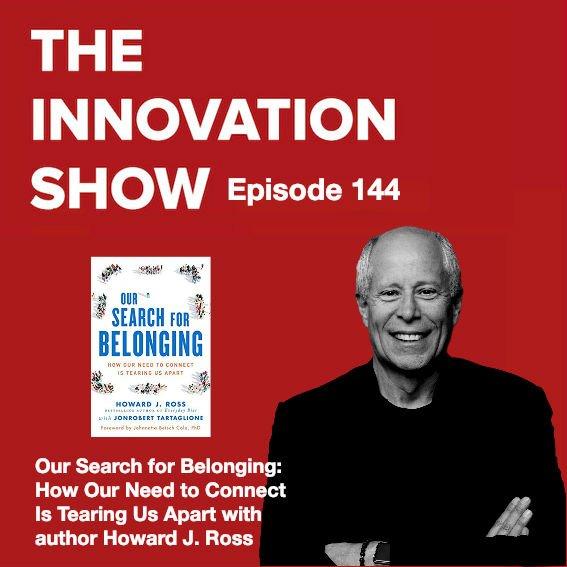
S1 Ep 144EP 144: "Our Search for Belonging: How Our Need to Connect Is Tearing Us Apart" with Howard Ross
"If you're treated a certain way you become a certain kind of person. If certain things are described to you as being real they're real for you whether they're real or not." — James Baldwin We are living in a time of mounting political segregation that threatens to tear us apart as a unified society. The result is that we are becoming increasingly tribal, and the narratives of life that we get exposed to on a daily basis have become echo chambers in which we hear our beliefs reinforced and others' beliefs demonised. At the core of tribalism exists a paradox: as humans, we are hardwired with the need to belong, which ends up making us deeply connected with some yet deeply divided from others. When these tribes are formed out of fear of the "other," on topics such as race, immigration status, religion, or partisan politics, we resort to an "us versus them" attitude. Especially in the digital age, when we are all interconnected in one way or another, these tensions seep into our daily lives and we become secluded with our self-identified tribes. Today's guest explores how our human need to belong is the driving force behind the increasing division of our world. Drawing upon decades of leadership experience, he probes the depth of tribalism, examines the role of social media in exacerbating it, and offers tactics for how to combat it. Filled with tested practices for opening safe and honest dialogue in the workplace and challenges to confront our own tendencies to bond with those who are like us, his book "Our Search for Belonging" is a powerful statement of hope in a disquieting time. We welcome diversity and inclusion expert and author of "Our Search for Belonging: How Our Need to Connect Is Tearing Us Apart" Howard J. Ross We talk: Bias Polarisation Why we tend to form tribes Race and Gender Politics The brain White Privilege Empathy Media The Toilet Assumption More about Howard here: https://www.amazon.com/Our-Search-Belonging-Connect-Tearing/dp/1523095032 http://everydaybias.com/ https://twitter.com/HowardJRoss
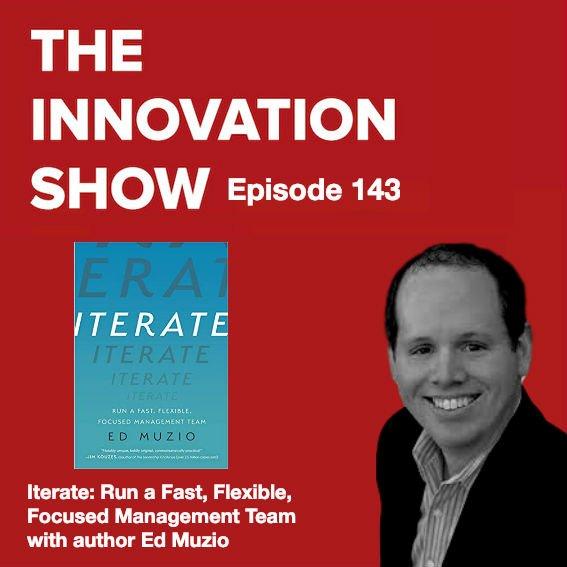
S1 Ep 143EP 143: Iterate: Run a Fast, Flexible, Focused Management Team with Ed Muzio
Today we discuss an iterative organisation, the only kind of organization that can learn and adapt fast enough to keep up in today's world. For anyone running a team of managers, or advising someone who does, today we explore the fundamental behaviours that create iteration. Our guest will explain how to implement them, and how to get the process started. Iterate defines what management really is and helps readers create a fast, flexible, focused management team that does it well. Our guest is recognised as one of the planet's clearest thinkers on management practice and provides a research-based blueprint for a management team that will take the next best step for the organization in any situation. This show is for senior leadership, front line and middle management, and human resource executives and explores how to equip teams with both knowledge and practical skills so that they not only understand their own purpose but also perform that purpose well amidst ever-changing conditions. It touches on how to create measurable business results for any management team, of any size, in any industry where complex work and frequent change are the norms. We explore: How to tear down the silos created by the typical Western approach to management How managers can manage other managers in an Iterative organization so that the whole organization is coordinated How to promote front line self-sufficiency How to successfully structure meetings to enable critical decision-making and ensure commitments are carried out How to help your reports give their reports insight into the ways their work impacts the big picture CEO of Group Harmonics and award-winning author of "Iterate: Run a Fast, Flexible, Focused Management Team", Ed Muzio More on Ed and the book here: https://iteratenow.com/
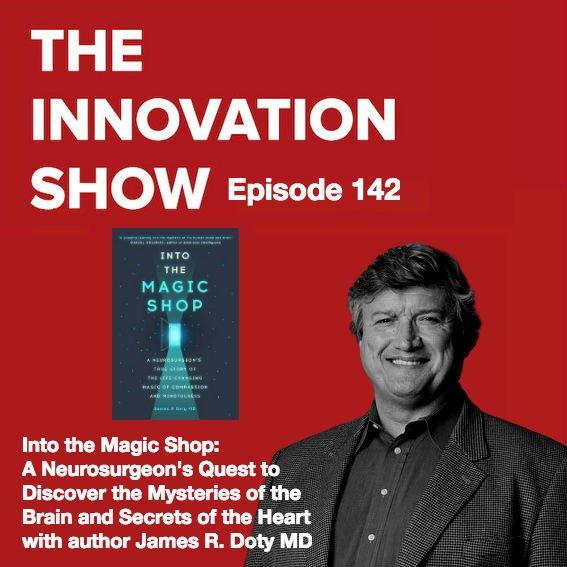
S1 Ep 142EP 142: Into the Magic Shop, A Neurosurgeon's Quest to Discover the Mysteries of the Brain and the Secrets of the Heart with James R. Doty MD
Growing up in the high desert of California, Jim Doty was poor, with an alcoholic father and a mother chronically depressed and paralysed by a stroke. Today, he is the director of the Center for Compassion and Altruism Research and Education (CCARE) at Stanford University, of which the Dalai Lama is a founding benefactor. As a child, his life was at a dead end until at twelve he wandered into a magic shop looking for a plastic thumb. Instead, he met Ruth, a woman who taught him a series of exercises to ease his own suffering and manifest his greatest desires. Ruth's final mandate was that he keep his heart open and teach these techniques to others. She gave him his first glimpse of the unique relationship between the brain and the heart. Doty would go on to put Ruth's practices to work with extraordinary results. He achieved power and wealth that he could only imagine as a twelve-year-old. However, he neglects Ruth's most important lesson, to keep his heart open, with disastrous results. A spectacular charitable contribution that will virtually ruin him, changed his life. Part memoir, part science, part inspiration, and part practical instruction, Into the Magic Shop, shows us how we can fundamentally change our lives by first changing our brains and our hearts. More about Jim here: http://intothemagicshop.com Meditations mentioned throughout the show here: http://intothemagicshop.com/exercises Similar shows here: http://www.theinnovationshow.io/2018/10/19/ep-126-a-life-worth-breathing-with-max-strom/ http://www.theinnovationshow.io/2018/10/31/ep-128-one-second-ahead-enhance-your-performance-at-work-with-mindfulness-with-author-rasmus-hougaard/
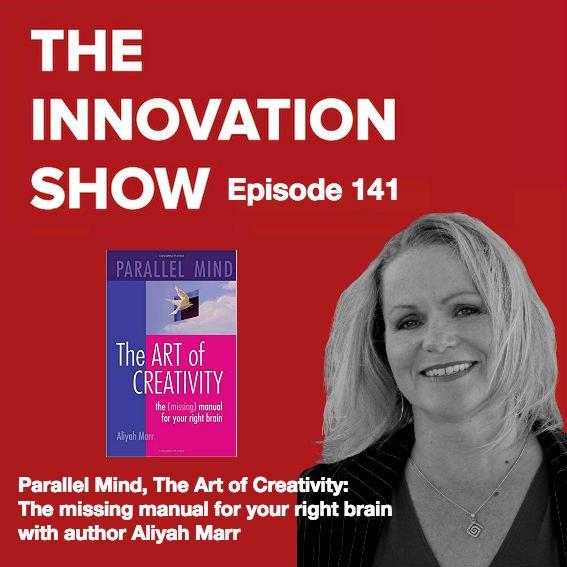
S1 Ep 141EP 141: "Parallel Mind, The Art of Creativity" with Aliyah Marr
"The Toltecs believe that every human is an artist, and the art we create is our lives." —Don Miguel Ruiz Today's guest uses practical examples and guides us through conceptual, transpersonal art experiments to demonstrate how we can use the power of art to access our inner child, express our buried emotions, and use any form of art as a catalyst to transform our lives. Pure creativity is an activity that has no predefined destination or purpose, while applied creativity is an activity that always has a goal or application in mind. Pure creativity can be seen as a kind of play, while applied creativity is usually seen as work. We welcome creative consultant and coach with a stellar list of clients from IBM to American Express and the author of multiple titles including the focus of today's show "Parallel Mind, The Art of Creativity: The missing manual for your right brain", Aliyah Marr. We talk: Creativity Left and Right Brain Open Focus The Inner Child The benefit of Limitation Limiting Beliefs Internal Dialogues Overcoming Fear More about Aliyah here: https://www.parallelmindzz.com/