
The History of Egypt Podcast
436 episodes — Page 6 of 9

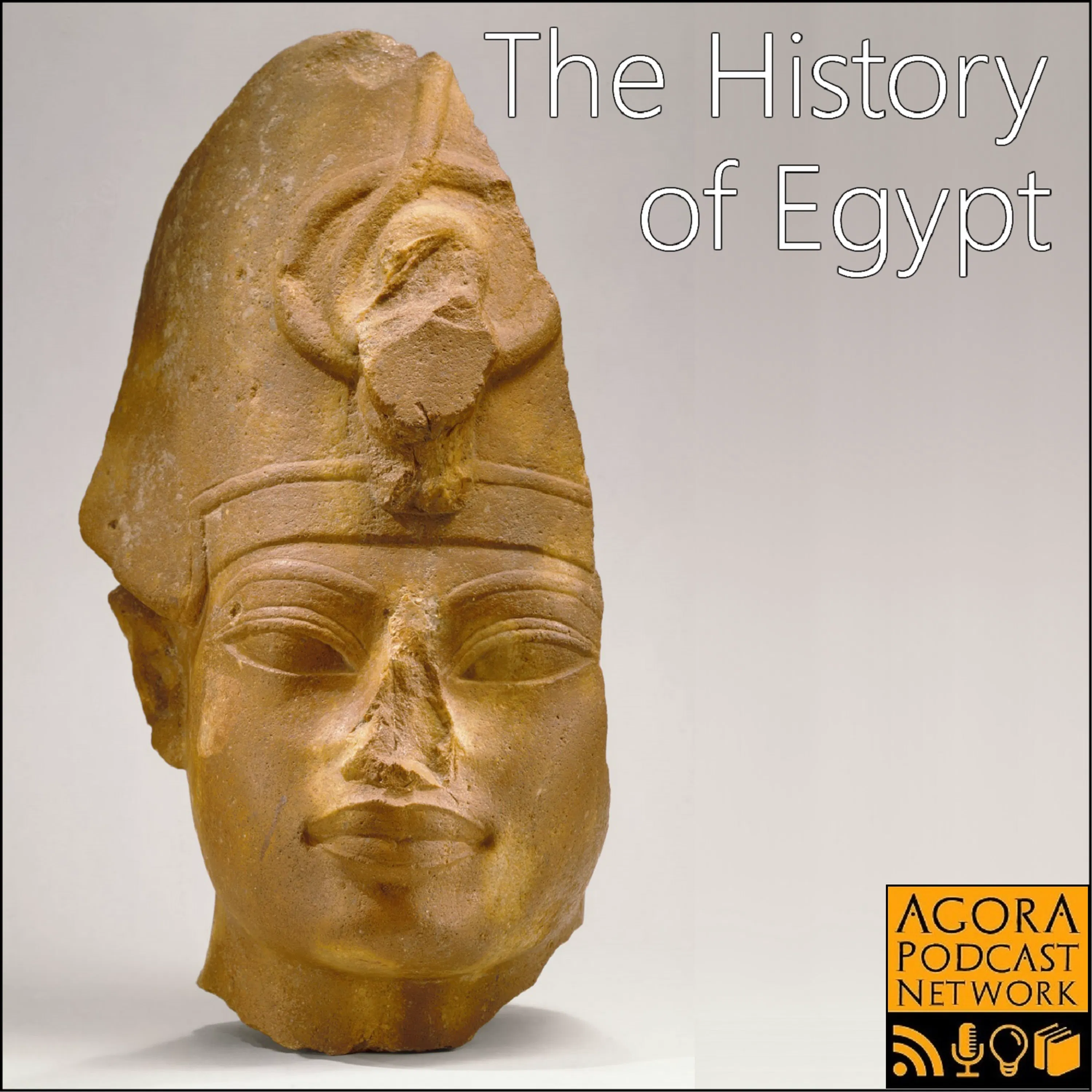
113: Akhenaten, Effective for Aten
Akhenaten (Part 6): New Name, Who Dis? In regnal year 5, Amunhotep IV reached the conclusion of his early ideological development. His views had crystallized and he was ready to express them more explicitly than before. Soon, pharaoh issued a public declaration; he would now be called Akh-en-Aten... Website: www.egyptianhistorypodcast.com. Support the show via Patreon www.patreon.com/egyptpodcast. Make a one-time donation via PayPal payments. Music by Keith Zizza www.keithzizza.net. Select Bibliography: Cyril Aldred, Akhenaten King of Egypt, 1988 edition. Norman de Garis Davies, The Rock Tombs of el-Amarna, Vol. V: the Smaller Tombs and Boundary Stelae, 1908. Available at Archive.org Aidan Dodson, Amarna Sunrise, 2014. Francis Llewellyn Griffith, The Petrie Papyri: Hieratic Papyri from Kahun and Gurob, 1898. Available at Archive.org James K. Hoffmeier, Akhenaten & the Origins of Monotheism, 2015. Barry Kemp, The City of Akhenaten and Nefertiti: Amarna and Its People, 2012. Dominic Montserrat, Akhenaten: History, Fantasy and Ancient Egypt, 2005. William J. Murnane, Texts from the Amarna Period in Egypt, 1995. Donald B. Redford, Akhenaten: The Heretic King, 1987. Learn more about your ad choices. Visit megaphone.fm/adchoices

112: Akhenaten 's Artistic Revolution
Akhenaten (Part 5): Amarna Art. Around the time of his Sed-Festival, Amunhotep IV introduced a whole new form of artistic representation. Royal imagery was reworked from the ground up, including new proportions, displays and themes. In this episode, we explore the changes to relief and sculpture, and meet the artisans who put pharaoh's vision into practice... Time Period: c.1359 BCE (regnal year 4) King: Amunhotep IV (Nefer-kheperu-Re Wa-en-Re, Imen-Hetep) Queen: Nefertiti (Nefer-neferu-Aten Neferet-Iti) Locations: Thebes (Waset), Aswan (Elephantine). Website: www.egyptianhistorypodcast.com. Support the show via Patreon www.patreon.com/egyptpodcast. Make a one-time donation via PayPal payments. Music by Keith Zizza (www.keithzizza.com). Join the Agora Podcast Network at the Intelligent Speech Conference AND get 5% off your order with the discount code EGYPT (https://www.intelligentspeechconference.com/shop/). Select Bibliography: Cyril Aldred, Akhenaten King of Egypt, 1988. Dorothea Arnold, Lyn Green and James Allen, The Royal Women of Amarna: Images of Beauty from Ancient Egypt, 1999 (MetMuseum). N. de Garis Davies, The Tomb of the Vizier Ramose, 1941. Archive.org. Aidan Dodson, Amarna Sunrise, 2014. Earl L. Ertman, “Images of Amenhotep IV and Nefertiti in the Style of the Previous Reign,” in Causing His Name to Live: Studies in Egyptian Epigraphy and History in Memory of William J. Murnane, 2009 (Google Books). James K. Hoffmeier, Akhenaten & the Origins of Monotheism, 2015. Lise Manniche, The Akhenaten Colossi at Karnak, 2010. Dominic Montserrat, Akhenaten: History, Fantasy and Ancient Egypt, 2005. Donald B. Redford, Akhenaten: The Heretic King, 1987. Donald B. Redford, The Akhenaten Temple Project vol. II: Rwd-Mnw and Inscriptions, 1988. Donald B. Redford, “Akhenaten: New Theories, Old Facts,” Bulletin of the American Schools of Oriental Research (2013): 9-34. JSTOR. Nicholas Reeves, Akhenaten: Egypt’s False Prophet, 2005. Gay Robins, Proportion and Style in Ancient Egyptian Art, 1994. Gay Robins, The Art of Ancient Egypt, 1997. Ray Winfield Smith and Donald B. Redford, The Akhenaten Temple Project vol. I: Initial Discoveries, 1976. Joyce Tyldesley, Nefertiti’s Face: Creation of an Icon, 2018. Richard H. Wilkinson, The Complete Gods and Goddesses of Ancient Egypt, 2003. Learn more about your ad choices. Visit megaphone.fm/adchoices

111: Aten the Royal God
Akhenaten (Part 4). In 1360 BCE, regnal year 3, King Nefer-kheperu-Re Amunhotep IV made some of his most startling decisions yet. Promoting the sun disc, Aten, even further, Amunhotep began to give the god royal accessories (cartouches, uraei etc) and present it as a being tied intimately with the pharaoh. This culminated in an unprecedented event: a Sed-Festival, celebrated at Karnak, and shared by the King and God together... Website: www.egyptianhistorypodcast.com. Support the show via Patreon www.patreon.com/egyptpodcast. Make a one-time donation via PayPal payments. Music by Keith Zizza www.keithzizza.net. Select Bibliography: Smith and Redford, Akhenaten Temple Project, 1976. Aidan Dodson, Amarna Sunrise, 2014. Jocelyn Gohary, Akhenaten’s Sed-Festival at Karnak, 1992. James K. Hoffmeier, Akhenaten & the Origins of Monotheism, 2015. Donald B. Redford, Akhenaten: The Heretic King, 1987. Donald B. Redford, The Akhenaten Temple Project vol. II: Rwd-Mnw and Inscriptions, 1988. Donald B. Redford, “Akhenaten: New Theories, Old Facts,” Bulletin of the American Schools of Oriental Research (2013): 9-34. JSTOR. Dominic Montserrat, Akhenaten: History, Fantasy and Ancient Egypt, 2005. William J. Murnane, Texts from the Amarna Period in Egypt, 1995. William J. Murnane, “Observations on Pre-Amarna Theology During the Earliest Reign of Amenhotep IV,” Gold of Praise: Studies on Ancient Egypt in Honor of Edward F. Wente (1999): 303-317. Nicholas Reeves, Akhenaten: Egypt’s False Prophet, 2005. Ray Winfield Smith and Donald B. Redford, The Akhenaten Temple Project vol. I: Initial Discoveries, 1976. Eric Uphill, “The Sed-Festivals of Akhenaton,” Journal of Near Eastern Studies (1963): 123-127. JSTOR. Learn more about your ad choices. Visit megaphone.fm/adchoices

110: The Aten Appears
Akhenaten (Part 3): Revelation of a Religion. Soon after he came to power, Amunhotep IV (later Akhenaten) began to reveal his unique vision of god and the world. A remarkable amount of evidence survives for this crucial period: from a royal speech, magnificent temples at Karnak and a massive artistic shift, the King revealed his strange and fascinating ideas... Time period: c.1361 BCE (regnal year 2) King: Amunhotep IV (Nefer-kheperu-Re Wa-en-Re) Queen: Nefertiti (Nefer-neferu-Aten Neferet-iti) Locations: Waset (Thebes); Gebel el-Silsila Website: www.egyptianhistorypodcast.com. Support the show via Patreon www.patreon.com/egyptpodcast. Make a one-time donation via PayPal payments. Music: Keith Zizza www.keithzizza.com Music: Derek & Brandon Fiechter https://dbfiechter.bandcamp.com/ Select Bibliography: ATP – Smith and Redford, Akhenaten Temple Project, 1976. Dorothea Arnold, Lyn Green and James Allen, The Royal Women of Amarna: Images of Beauty from Ancient Egypt, 1999 (MetMuseum). Aidan Dodson, Amarna Sunrise, 2014. Aidan Dodson and Dyan Hilton, The Complete Royal Families of ancient Egypt, 2010. Earl L. Ertman, “Images of Amenhotep IV and Nefertiti in the Style of the Previous Reign,” in Causing His Name to Live: Studies in Egyptian Epigraphy and History in Memory of William J. Murnane, 2009 (Google Books). James K. Hoffmeier, Akhenaten & the Origins of Monotheism, 2015. Donald B. Redford, “A Royal Speech From the Blocks of the Tenth Pylon,” Bulletin of the Egyptological Seminar 3 (1981). Donald B. Redford, Akhenaten: The Heretic King, 1987. Lise Manniche, The Akhenaten Colossi at Karnak, 2010. William J. Murnane, Texts from the Amarna Period in Egypt, 1995. Ray Winfield Smith and Donald B. Redford, The Akhenaten Temple Project: Initial Discoveries, 1976. Joyce Tyldesley, Nefertiti’s Face: Creation of an Icon, 2018. Richard H. Wilkinson, The Complete Gods and Goddesses of Ancient Egypt, 2003. Learn more about your ad choices. Visit megaphone.fm/adchoices
Queen Tiye & Nefertiti with Dr. Joyce Tyldesley

Nefertiti and the Uluburun Shipwreck
Or, the Life Aquatic with Gold Scarabs... Around 1325 BCE (estimates vary) a vessel sank near the cape of Uluburun, Turkey. The cargo was immense: twenty tonnes of goods, including copper, ivory, ornamental objects, spices, and more. Amid the finds, a curious item came to light: a gold scarab, bearing the name Neferneferuaten Nefertiti... What was a Nefertiti scarab doing on a trade ship, far from Egypt? And what do the finds tell us about the ship, its crew, and ancient trade? The Uluburun Shipwreck: Date: c.1325 BCE (estimated). Cultures: Multiple, including Egyptian, Canaanite, Syrian, and Mycenaean. Ship destination: Possibly the Aegean, western Anatolia, or even the Balkans. Website: www.egyptianhistorypodcast.com. Support the show via Patreon www.patreon.com/egyptpodcast. Make a one-time donation via PayPal payments. Logo image: Divers working on the Uluburun wreck, via The Institute of Nautical Archaeology website. Catalogue of objects in Beyond Babylon, 2008. Free pdf from MMA. Image gallery at The Institute of Nautical Archaeology website. Artefacts in the Bodrum museum, on Flickr.com. Miscellaneous items, at Wikimedia. A replica of the ship, Uluburun II, at Underwater360. A lecture by Cemal Pulak, one of the lead excavators. YouTube. Select Bibliography: G. Bass et al., ‘The Bronze Age Shipwreck at Ulu Burun: 1986 Campaign’, American Journal of Archaeology 93 (1989), 1–29. C. M. Monroe, ‘Sunk Costs at Late Bronze Age Uluburun’, Bulletin of the American Schools of Oriental Research 357 (2010), 19–33. C. Pulak, ‘Analysis of the Weight Assemblages from the Late Bronze Age Shipwrecks at Uluburun and Cape Gelidonya, Turkey, Volume I’, Unpublished PhD. Thesis, Texas A&M University (1996). C. Pulak, ‘The Uluburun Shipwreck: An Overview’, The International Journal of Nautical Archaeology 27 (1998), 188–224. C. Pulak, ‘The Uluburun Shipwreck and Late Bronze Age Trade’, in Beyond Babylon: Art, Trade, and Diplomacy in the Second Millennium B.C. (2008), 289–310. Book available free, from the Metropolitan Museum of Art. C. Pulak, ‘Uluburun Shipwreck’, in The Oxford Handbook of the Bronze Age Aegean (2012), 863—876. C. Pulak, lecture on YouTube. J. Weinstein, ‘The Bronze Age Shipwreck at Ulu Burun: 1986 Campaign, Part 3: The Gold Scarab of Nefertiti from Ulu Burun: Its Implications for Egyptian History and Egyptian-Aegean Relations’, American Journal of Archaeology 93 (1989), 17–29. Learn more about your ad choices. Visit megaphone.fm/adchoices

109: Queen Nefertiti feat. Dr. Joyce Tyldesley
Akhenaten (Part 2): The Great Queen(s)... In 1361 BCE, Amunhotep IV was settled into his power. It was time to find a queen - his choice would be one of Egypt's most famous women... This episode covers Amunhotep's diplomatic engagements with Mitanni and the first appearance (and origins) of Nefertiti. Also, we present part 2 of our interview with Dr. Joyce Tyldesley of Manchester University... Website: www.egyptianhistorypodcast.com. Support the show via Patreon www.patreon.com/egyptpodcast. Make a one-time donation via PayPal payments. Music by Keith Zizza www.keithzizza.com. Select bibliography: Dorothea Arnold, Lyn Green and James Allen, The Royal Women of Amarna: Images of Beauty from Ancient Egypt, 1999 (MetMuseum) Norman de Garis Davis, Rock Tombs of el-Amarna: Part VI: The Tombs of Parennefer, Tutu and Ay, 1908 (Archive.org). Aidan Dodson, Amarna Sunrise, 2014. Aidan Dodson and Dyan Hilton, The Complete Royal Families of Ancient Egypt, 2010. Earl L. Ertman, “Images of Amenhotep IV and Nefertiti in the Style of the Previous Reign,” in Causing His Name to Live: Studies in Egyptian Epigraphy and History in Memory of William J. Murnane, 2009 (Google Books). James K. Hoffmeier, Akhenaten & the Origins of Monotheism, 2015. Donald B. Redford, Akhenaten: The Heretic King, 1987. Dominic Montserrat, Akhenaten: History, Fantasy and Ancient Egypt, 2005. William L. Moran, The Amarna Letters, 1992. Nicholas Reeves, Akhenaten: Egypt’s False Prophet, 2005. Joyce Tyldesley, Nefertiti’s Face: Creation of an Icon, 2018. Richard H. Wilkinson, The Complete Gods and Goddesses of Ancient Egypt, 2003. Learn more about your ad choices. Visit megaphone.fm/adchoices

108: Amunhotep IV (Akhenaten)
Akhenaten (Part 1): Conventional Start. Around 1362 BCE, the reign of Amunhotep IV began. Although destined to shake the Egyptian state, this King began with some surprisingly conventional choices. His monuments and art are a far cry from what he would become... Time period: c.1362 BCE (regnal year 1) King: Amunhotep IV (Nefer-kheperu-Re Wa-en-Re). Notable sites: Karnak (Ipet-Sut); West Bank of Thebes (Waset). Website: www.egyptianhistorypodcast.com. Support the show via Patreon www.patreon.com/egyptpodcast. Make a one-time donation via PayPal payments. Music: Keith Zizza (keithzizza.com). Select Bibliography: Aidan Dodson, Amarna Sunrise, 2014. Aidan Dodson and Dyan Hilton, The Complete Royal Families of ancient Egypt, 2010. The Epigraphic Survey, The Tomb of Kheruef: Theban Tomb 192, 1980 (Digital Edition). James K. Hoffmeier, Akhenaten & the Origins of Monotheism, 2015. Erik Hornung, Akhenaten and the Religion of Light, 1999. Donald B. Redford, “Akhenaten: New Theories, Old Facts,” Bulletin of the American Schools of Oriental Research, 2013. Donald B. Redford, Akhenaten: The Heretic King, 1987. Dominic Montserrat, Akhenaten: History, Fantasy and Ancient Egypt, 2005. William J. Murnane, Texts from the Amarna Period in Egypt, 1995. William J. Murnane, “On the Accession Date of Akhenaten,” Studies in Honor of George R. Hughes, 1976. William J. Murnane, “Observations on Pre-Amarna Theology During the Earliest Reign of Amenhotep IV,” Gold of Praise: Studies on Ancient Egypt in Honor of Edward F. Wente, 1999. Nicholas Reeves, Akhenaten: Egypt’s False Prophet, 2005. Richard H. Wilkinson, The Complete Gods and Goddesses of Ancient Egypt, 2003. Learn more about your ad choices. Visit megaphone.fm/adchoices

107: Looking Back
Amunhotep III (Part 14): The End. In his last regnal years, Neb-ma'at-Re Amunhotep III experienced victories and defeats. While his health declined, the pharaoh got into a serious argument with the King of Babylon, inspected his magnificent tomb, and celebrated one last Sed-Festival. Finally, after 38 years on the throne, the inevitable moment arrived... Website: www.egyptianhistorypodcast.com. Support the show via Patreon www.patreon.com/egyptpodcast. Make a one-time donation via PayPal payments. Music by Keith Zizza. Music by Michael Levy Select bibliography: Dieter Arnold, The Monuments of Egypt, 2009. Lawrence M. Berman (ed.), The Art of Amenhotep III: Art Historical Analysis, 1987. Norman G. Bisset (et al.), “Was Opium Known in 18th Dynasty Ancient Egypt? An Examination of Materials from the Tomb of the Chief Royal Architect Kha” Ägypten und Levante / Egypt and the Levant (1996): 199-201. Aidan Dodson, Amarna Sunrise, 2014. Aidan Dodson and Dyan Hilton, The Complete Royal Families of ancient Egypt, 2010. The Epigraphic Survey, The Tomb of Kheruef: Theban Tomb 192, 1980 (Digital Edition). Arielle P. Kozloff, Amenhotep III: Egypt’s Radiant Pharaoh, 2012. Arielle P. Kozloff and Betsy M. Bryan, Egypt’s Dazzling Sun: Amenhotep III and His World, 1992. Marc van de Mieroop, A History of the Ancient Near East ca. 3000 – 323 BC, 2016. William L. Moran, The Amarna Letters, 1992. David O’Connor and Eric Cline (eds.) Amenhotep III: Perspectives on His Reign, 2001. Nicholas Reeves and Richard H. Wilkinson, The Complete Valley of the Kings, 2008. G.E. Smith, The Royal Mummies, 1912 (Chicago Digital Edition). Richard H. Wilkinson, The Complete Gods and Goddesses of Ancient Egypt, 2003. The Theban Mapping Project: KV22 (Amunhotep III) Osiris.Net: WV22 (Amunhotep III) Website of The Cuneiform Digital Library Initiative Learn more about your ad choices. Visit megaphone.fm/adchoices

106b: Last Monuments (Bonus)
Bonus Episode! Lesser-known Monuments of Amunhotep III. By the last years of his reign, c.1365 BCE, King Amunhotep had dozens of important monuments going up throughout Egypt and Nubia. But some of these have been overlooked. In this bonus episode, we explore some of the King's lesser-known structures. We also take a guided tour of Luxor Temple, now almost finished... Time period: c.1365 BCE (year 35). King: Amunhotep III (Neb-ma'at-Re). Notable sites: Memphis (Hwt-ka-Ptah), Thebes (Waset), Malqata (Nebmaatre-Aten-Tjehen). Website: www.egyptianhistorypodcast.com. Support the show via Patreon www.patreon.com/egyptpodcast. Make a one-time donation via PayPal payments. Music by Keith Zizza keithzizza.com Select Bibliography: Lanny Bell, “Luxor Temple and the Cult of the Royal Ka,” Journal of Near Eastern Studies (1985). Aidan Dodson, Amarna Sunrise, 2014. Anna Garnett, “‘The Like of Which Never Existed’: The Memphite Building Programme of Amenhotep III,” Current Research in Egyptology (2009). Anna Koltsida, “The North Palace at Malkata,” Archiv für Orientforschung (2011). Arielle P. Kozloff, Amenhotep III: Egypt’s Radiant Pharaoh, 2012. Arielle P. Kozloff and Betsy M. Bryan, Egypt’s Dazzling Sun: Amenhotep III and His World, 1992. David O’Connor and Eric Cline (eds.) Amenhotep III: Perspectives on His Reign, 2001. Richard H. Wilkinson, The Complete Temples of Ancient Egypt, 2000. Learn more about your ad choices. Visit megaphone.fm/adchoices

106: Mail-Order Bride
Amunhotep III (Part 13): Foreign Wives and Magnificent Tiye By 1366 BCE, Amunhotep was on top of the world: foreign kings begged his friendship and they were willing to pay (beautifully) to get it. Meanwhile, Queen Tiye enjoyed an unprecedented level of parity with her husband, expressed quite publicly in grand monuments... Time period: c.1366 BCE Kings: Amunhotep III, Tushratta of Mitanni Notable sites: Kingdom of Mitanni, Waset (Thebes), Bubastis Website: www.egyptianhistorypodcast.com. Support the show via Patreon www.patreon.com/egyptpodcast. Make a one-time donation via PayPal payments. Music by Keith Zizza www.keithzizza.com Select Bibliography: Trevor Bryce, Ancient Syria, 2014. Aidan Dodson, Amarna Sunrise, 2014. Aidan Dodson and Dyan Hilton, The Complete Royal Families of ancient Egypt, 2010. Arielle P. Kozloff, Amenhotep III: Egypt’s Radiant Pharaoh, 2012. Arielle P. Kozloff and Betsy M. Bryan, Egypt’s Dazzling Sun: Amenhotep III and His World, 1992. Marc van de Mieroop, A History of the Ancient Near East ca. 3000 – 323 BC, 2016. William L. Moran, The Amarna Letters:, 1992. David O’Connor and Eric Cline (eds.) Amenhotep III: Perspectives on His Reign, 2001. Joyce Tyldesley, Nefertiti: Egypt’s Sun Queen, 1998. Learn more about your ad choices. Visit megaphone.fm/adchoices

105: The Sun King
Amunhotep III (Part 12): Pharaoh as a God. By 1366 BCE, Amunhotep III was ready to celebrate a second sed-festival. However, the King's pretensions had begun to reach celestial heights - in regnal year 34 he appeared to be an equal to the gods themselves... Website: www.egyptianhistorypodcast.com. Support the show via Patreon www.patreon.com/egyptpodcast. Make a one-time donation via PayPal payments. Music by Keith Zizza www.keithzizza.com. Select bibliography: Aidan Dodson, Amarna Sunrise, 2014. Michela Schiff Giorgini (et al.), Soleb, (multiple volumes), 2002-2003. Arielle P. Kozloff, Amenhotep III: Egypt’s Radiant Pharaoh, 2012. Arielle P. Kozloff and Betsy M. Bryan, Egypt’s Dazzling Sun: Amenhotep III and His World, 1992. David O’Connor and Eric Cline (eds.) Amenhotep III: Perspectives on His Reign, 2001. Learn more about your ad choices. Visit megaphone.fm/adchoices

104: A Wealthy House
Daily Life in New Kingdom Egypt. Around 1370 BCE, wealthy Egyptians enjoyed a comfortable and well-furnished lifestyle. From their tombs, houses and scattered texts, we can get a sense of daily life for ancient aristocrats... Website: www.egyptianhistorypodcast.com. Support the show via Patreon www.patreon.com/egyptpodcast. Make a one-time donation via PayPal payments. Music by Keith Zizza www.keithzizza.com Learn more about your ad choices. Visit megaphone.fm/adchoices

Mini Episode: Egyptian Dinosaurs
Egypt in the Cretaceous period. Website: www.egyptianhistorypodcast.com. Support the show via Patreon www.patreon.com/egyptpodcast. Make a one-time donation via PayPal payments. Music by Brandon Feichter (Bandcamp). Learn more about your ad choices. Visit megaphone.fm/adchoices

Mini Episode: An Intact Tomb
Kha and Merit, an Intact Tomb. In 1906, a remarkable discovery came to light: the tomb of a middle-class couple, who lived in the town of Deir el-Medina. Here, amid the craftsmen and specialists who made tombs, a man named Kha and a woman named Merit enjoyed an affluent lifestyle. When they died, they were interred with all their worldly possessions and slept undisturbed for 3300 years. Then, a wonderful discovery occurred and an ancient story came to life... Website: www.egyptianhistorypodcast.com. Support the show via Patreon www.patreon.com/egyptpodcast. Make a one-time donation via PayPal payments. Music by Keith Zizza www.keithzizza.com Learn more about your ad choices. Visit megaphone.fm/adchoices

103: The House of Rejoicing (Malqata Palace)
Amunhotep III (Part 11): The Royal Palace and a King's Life. By 1370 BCE, King Amunhotep III was living in a sumptuous palace at Thebes. Built for the first sed-festival (ep.100), the "House of Rejoicing" was a magnificent structure with many beautiful elements. Today, we start to explore how a pharaoh lived and the lifestyle they enjoyed... Website: www.egyptianhistorypodcast.com. Support the show via Patreon www.patreon.com/egyptpodcast. Make a one-time donation via PayPal payments. Music by Keith Zizza www.keithzizza.com Music by Michael Levy www.ancientlyre.com Select Bibliography: Aidan Dodson, Amarna Sunrise, 2014. Aikaterini Koltsida, “The North Palace at Malkata,” Archiv für Orientforschung 2011. Arielle P. Kozloff, Amenhotep III: Egypt’s Radiant Pharaoh, 2012. Arielle P. Kozloff and Betsy M. Bryan, Egypt’s Dazzling Sun: Amenhotep III and His World, 1992. William C. Hayes, “Inscriptions from the Palace of Amenhotep III,” Journal of Near Eastern Studies 1951. Peter Lacovara, The New Kingdom Royal City, 1999. Peter Lacovara, “Recent Work at Malqata Palace,” conference paper 2013. Franck Monnier, “Scientific Reconstruction of the Palace of Amenhotep III at Malqata,” in Peter Lacovara (ed.) Studies on The Palace of Amenhotep III at Malqata 2019 (forthcoming). David O’Connor and Eric Cline (eds.) Amenhotep III: Perspectives on His Reign, 2001. Website of the Joint Expedtion to Malqata: https://imalqata.wordpress.com/ Learn more about your ad choices. Visit megaphone.fm/adchoices

102b: Colourful Keftiu (Twilight on Crete)
The Minoans Fade Away. In 1370 BCE, an Egyptian embassy visited the Aegean. As part of their journey, they came to Crete, visiting the Keftiu (Minoans) who had ruled the island for 1000 years. Until now.... Website: www.egyptianhistorypodcast.com. Support the show via Patreon www.patreon.com/egyptpodcast. Make a one-time donation via PayPal payments. Music by Michael Levy www.ancientlyre.com Music by Derek & Brandon Fiechter www.dbfiechter.bandcamp.com/ Select Bibliography: Baruch Brandl (et al.), “Beth-Shemesh and Sellopoulo: Two Commemorative Scarabs of Amenhotep III and Their Contribution to Aegean Chronology,” The Annual of the British School at Athens 108 (2013). Eric H. Cline, “Amenhotep III and the Aegean: A Reassessment of Egypto-Aegean Relations in the 14th Century B.C.,” Orientalia 56 (1987). Nanno Marinatos, Minoan Religion: Ritual, Image and Symbol, 1993. David O’Connor and Eric H. Cline (eds.) Amenhotep III: Perspectives on His Reign, 1998. Cynthia W. Shelmerdine, “Mycenaean Palatial Administration,” in Deger-Jalkotzy and Lemos (eds.) Ancient Greece: From the Mycenaean Palaces to the Age of Homer, 2006. Malcolm H. Wiener, “The Absolute Chronology of Late Helladic III A2 Revisited,” The Annual of the British School at Athens 98 (2003). Learn more about your ad choices. Visit megaphone.fm/adchoices

102: An Egyptian Odyssey (Passage to Greece)
Ancient Egypt and the Greeks of Mycenae. It's time to set sail! We journey far from Egypt to visit lands only whispered about until now. We are visiting Greece and the lands of Mycenae, who in 1370 BCE were beginning to make their mark on the international scene. Website: www.egyptianhistorypodcast.com. Support the show via Patreon www.patreon.com/egyptpodcast. Make a one-time donation via PayPal payments. Outro music by Doug Metzger www.literatureandhistory.com/. Harp music by Michael Levy www.ancientlyre.com. Intro music by Gabriel Yared www.gabrielyared.com. Select Bibliography: Eric H. Cline, “Amenhotep III and the Aegean: A Reassessment of Egypto-Aegean Relations in the 14th Century B.C.,” Orientalia 56 (1987). Elizabeth French, Mycenae: Agamemnon’s Capital: the Site and its Setting, 2002. Jorrit M. Kelder, “Royal Gift Exchange between Mycenae and Egypt: Olives as “Greeting Gifts” in the Late Bronze Age Eastern Mediterranean,” American Journal of Archaeology 113 (2009). Christine Lilyquist, “On the Amenhotep III Inscribed Faience Fragments from Mycenae,” Journal of the American Oriental Society 119 (1999). David O’Connor and Eric H. Cline (eds.) Amenhotep III: Perspectives on His Reign, 1998. Cynthia W. Shelmerdine, “Mycenaean Palatial Administration,” in Deger-Jalkotzy and Lemos (eds.) Ancient Greece: From the Mycenaean Palaces to the Age of Homer, 2006. Lord William Taylour, The Mycenaeans, 1964. Lord William Taylour and Elizabeth French, Well-Built Mycenae: the Helleno-British excavations within the Citadel at Mycenae, 1959-1969, 1981-2013. Malcolm H. Wiener, “The Absolute Chronology of Late Helladic III A2 Revisited,” The Annual of the British School at Athens 98 (2003). Learn more about your ad choices. Visit megaphone.fm/adchoices
Ancient Egyptian Religion with Dr. Campbell Price
Private Worship and Images in New Kingdom Egypt. 00:00 - 32:00 18th Dynasty (see episode 101b). 32:00 - 90:00 Private Worship and Images in New Kingdom Egypt. Check out Campbell's new book Pocket Museum: Ancient Egypt, available at all good retailers (Amazon Affiliate Link) Website: www.egyptianhistorypodcast.com. Support the show via Patreon www.patreon.com/egyptpodcast. Make a one-time donation via PayPal payments. Music by Keith Zizza www.keithzizza.com Additional Music by Derek and Brandon Feichter https://dbfiechter.bandcamp.com/ Learn more about your ad choices. Visit megaphone.fm/adchoices
101b: Successful Statues (with Dr. Campbell Price)
The Man Who Became a God. In this episode we look at the divine statues of Amunhotep son of Hapu(c.1370 BCE) and how they helped him become a god. With me for this episode is Dr. Campbell Price, Curator of Egypt and Sudan at the Manchester Museum, University of Manchester. Dr. Price is an expert on non-royal statues and religion and he generously agreed to discuss these topics with me. The result was a wonderful interview, that I think you'll really enjoy! Chapter Times: 00:00 Prologue, 02:47 Episode Intro, 04:00 Amuhotep Son of Hapu as a god, 08:00 Pilgrims to Amunhotep Hapu's statues, 14:45 Campbell Price Interview (Part 1), 27:07 Campbell Price Interview (Part 2), 47:40 Summary and Conclusion, 49:07 Epilogue. Website: www.egyptianhistorypodcast.com. Support the show via Patreon www.patreon.com/egyptpodcast. Make a one-time donation via PayPal payments. Music by Keith Zizza www.keithzizza.com Music by Michael Levy www.ancientlyre.com Sistrum by Hathor Systrum www.hathorsystrum.com/ Learn more about your ad choices. Visit megaphone.fm/adchoices
101: Hapu's Son
Success After Fifty. In 1470 BCE, King Amunhotep III's closest advisor was already eighty years old. The scribe, overseer and wise man Amunhotep Son of Hapu achieved prominence quite late in life, but he did not waste the opportunity. From a small town in the Delta, to the vast construction sites of Thebes, a royal scribe went to work for his pharaoh, and gained immortality... Chapter Times: Intro. Amunhotep's Statues 02:25. Early life 05:40. Rise to Prominence 11:25. The Colossi of Memnon 15:13. King's Counsellor 19:55. The Sed Festival 24:08. Conclusion 30:45. Website: www.egyptianhistorypodcast.com. Support the show via Patreon www.patreon.com/egyptpodcast. Make a one-time donation via PayPal payments. Music by Keith Zizza www.keithzizza.com. Music by Michael Levy www.ancientlyre.com. Sistrum by Hathor Systrum www.hathorsystrum.com/. Select bibliography: Aidan Dodson, Amarna Sunrise, 2014 (Amazon). Arielle P. Kozloff, Amenhotep III: Egypt’s Radiant Pharaoh, 2012. Arielle P. Kozloff and Betsy M. Bryan, Egypt’s Dazzling Sun: Amenhotep III and His World, 1992. David O’Connor and Eric Cline (eds.) Amenhotep III: Perspectives on His Reign, 2001. Eleanor B. Simmance, “Amenhotep Son of Hapu: Self-Presentation Through Statues and Their Texts in Pursuit of Semi-Divine Intermediary Status,” Unpublished MA Thesis, University of Birmingham 2014 (Online). Alexandre Varille, Inscriptions concernant l’architecte Amenhotep, fils de Hapon, 1968. Clement Robichon and Alexandre Varille, Le temple du scribe royal Amenhotep, fils de Hapou. 1936 (Archive.org). Learn more about your ad choices. Visit megaphone.fm/adchoices
Mini Episode: The Lost Son (A Lament)
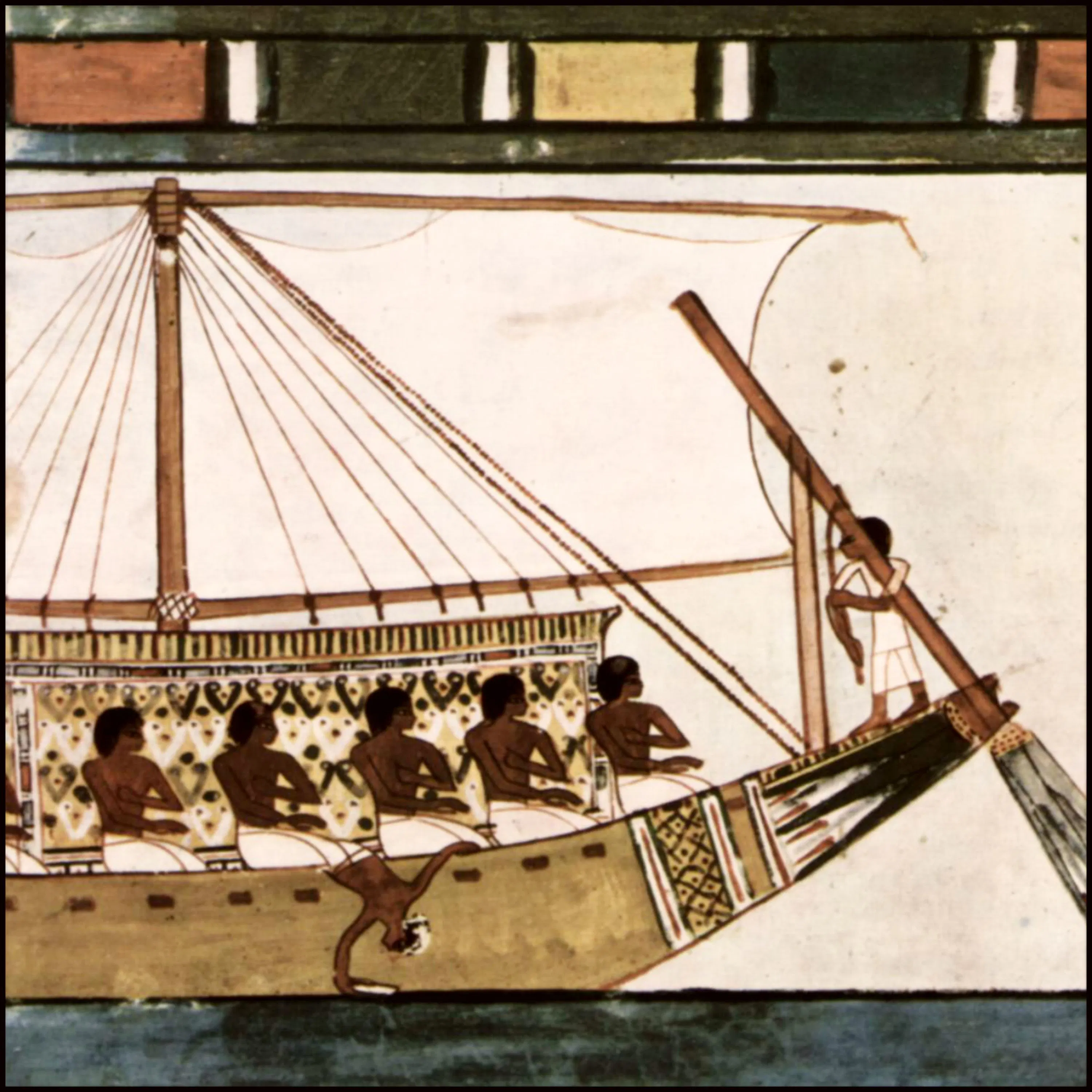
A Father Begs His Son to Return Home. Late in the New Kingdom (c.1250 BCE), an Egyptian father wrote a letter to his son. The son had gone to sea, sailing on a ship; he had not sent any word of his wellbeing. Worried, the father writes a letter, begging his son to return home. The letter is possibly based off real events, for it involves people who were genuine figures in their community. The father, Menna, and the son Pay-Iry were inhabitants of the village of Deir el-Medina (Set-Ma'at, the Place of Truth). They lived around 1250 BCE, approximately, and this may be a record of their real relationship. Translations by John L. Foster, Ancient Egyptian Literature: An Anthology (Amazon) Website: www.egyptianhistorypodcast.com. Support the show via Patreon www.patreon.com/egyptpodcast. Make a one-time donation via PayPal payments. Twitter: @EgyptianPodcast Instagram: @EgyptPodcast Facebook: @EgyptPodcast Learn more about your ad choices. Visit megaphone.fm/adchoices
Mini Episode: A Wayward Scribe (The Drinking)
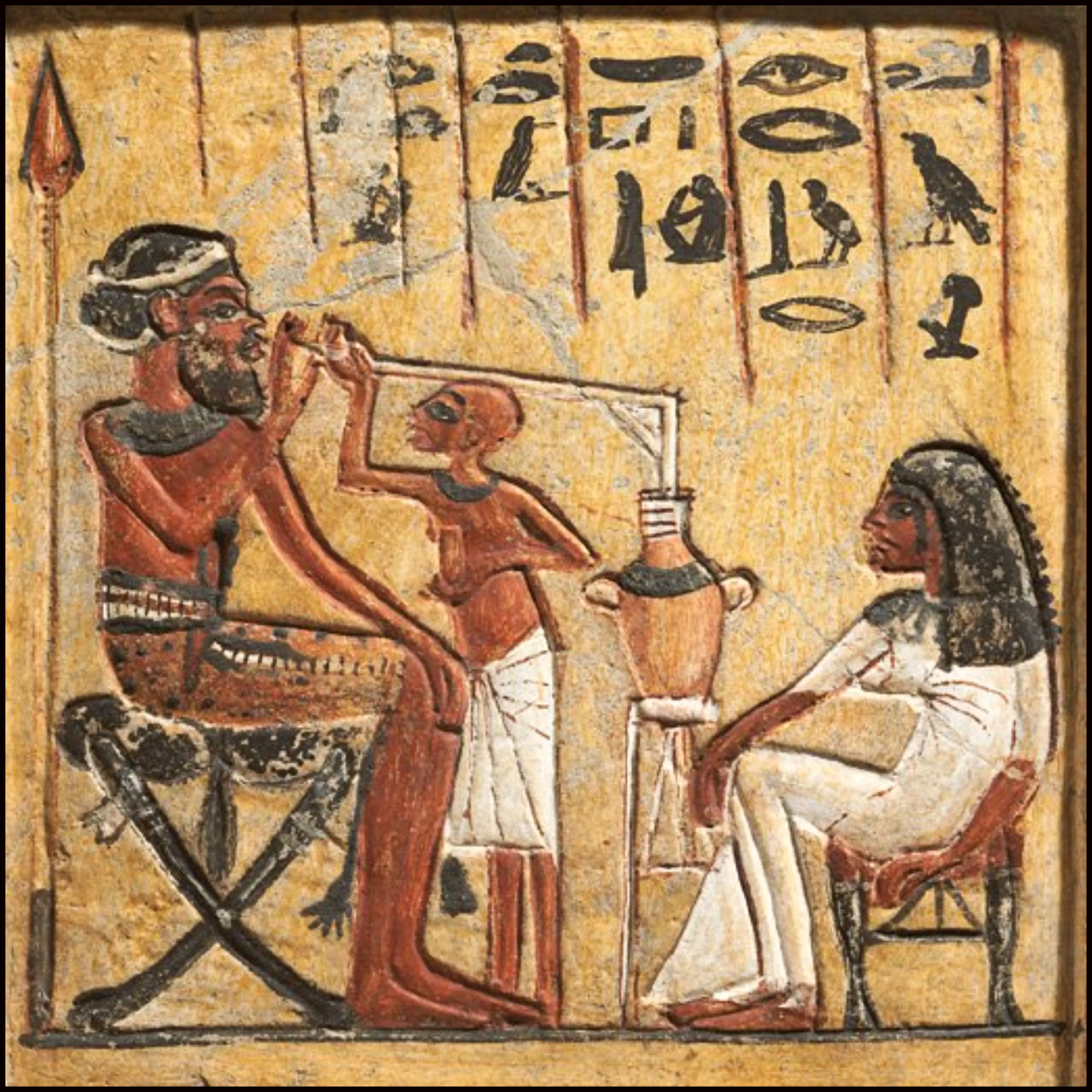
A former pupil goes off the rails and gets lost in drink; his teacher tries to bring him back. After completing his education, a young scribe might take a job in a temple, government office, or work team. But this time, the student went off into some wayward behaviours. Writing a stern letter, a schoolmaster tries to bring his former pupil back to sobriety and good living. Translations by John L. Foster, Ancient Egyptian Literature: An Anthology (Amazon) Website: www.egyptianhistorypodcast.com. Support the show via Patreon www.patreon.com/egyptpodcast. Make a one-time donation via PayPal payments. Twitter: @EgyptianPodcast Instagram: @EgyptPodcast Facebook: @EgyptPodcast Learn more about your ad choices. Visit megaphone.fm/adchoices
Question Time! (Q+A)
To celebrate 100 episodes, I took your questions on all things ancient Egypt. Pictures on topics (particularly Egyptian revival architecture of the 1800s) at the website www.egyptianhistorypodcast.com If you didn't hear your question, I have sent out written responses. Some questions covered material already in the show, or on topics that don't have enough evidence to discuss in detail. Thanks for submitting! Website: www.egyptianhistorypodcast.com. Support the show via Patreon www.patreon.com/egyptpodcast. Make a one-time donation via PayPal payments. Learn more about your ad choices. Visit megaphone.fm/adchoices
100b. Raising the Children High
A Princess Becomes Queen, a Prince Becomes Heir. In 1370 BCE, the same year as the Sed-Festival, pharaoh Amunhotep III made two interesting decisions. He made his eldest daughter his wife, and named his eldest (surviving) son as heir to the throne. In a short side-episode, we explore these events and their significance... Website: www.egyptianhistorypodcast.com. Support the show via Patreon www.patreon.com/egyptpodcast. Make a one-time donation via PayPal payments. Music by Keith Zizza www.keithzizza.com. Select bibliography: Aidan Dodson, Amarna Sunrise, 2014. Aidan Dodson, “On the Alleged “Amenhotep III/IV Coregency” Graffito at Meidum,” Göttinger Miszellen, 2009. Peter F. Dorman, “The Long Coregency Revisited: Architectural and Iconographic Conundra in the Tomb of Kheruef,” Causing His Name To Live Studies in Egyptian Epigraphy and History in Memory of William J. Murnane, 2009. Arielle P. Kozloff, Amenhotep III: Egypt’s Radiant Pharaoh, 2012. Arielle P. Kozloff and Betsy M. Bryan, Egypt’s Dazzling Sun: Amenhotep III and His World, 1992. William J. Murnane, Ancient Egyptian Coregencies, 1977. David O’Connor and Eric Cline (eds.) Amenhotep III: Perspectives on His Reign, 2001. Lana Troy, Patterns of Queenship in Ancient Egyptian Myth and History, 1986. Learn more about your ad choices. Visit megaphone.fm/adchoices
100: Celebration
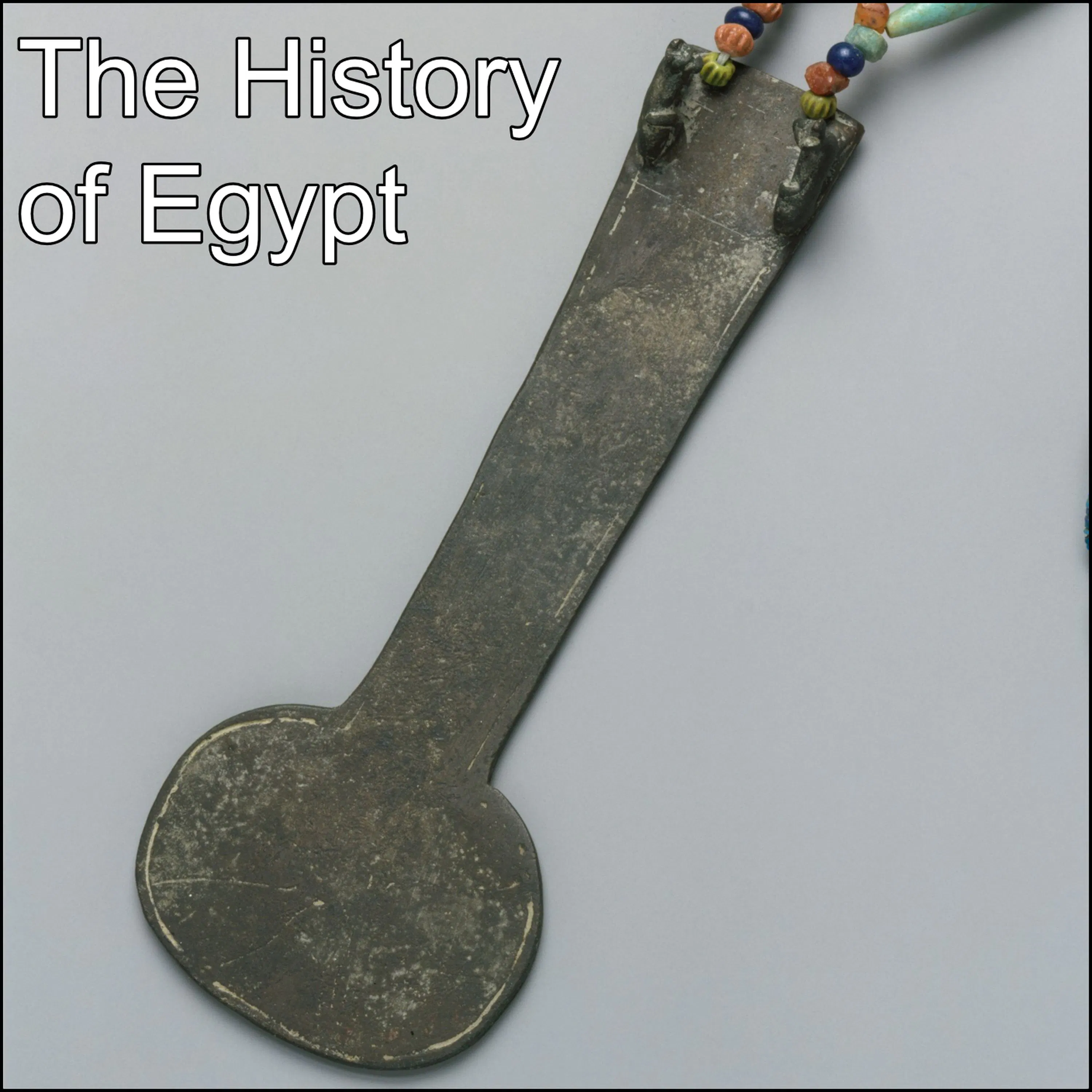
Amunhotep III (Part 10): The Sed Festival, As Told by Kheruef Who Witnessed It. In regnal year 30, Amunhotep III celebrated the first of his sed-festivals. This was a spectacular event, with a number of rituals and performances celebrating the King's reign, and renewing his authority on earth. Some of these rites were truly arcane, hearkening back to the very earliest days of the Egyptian kingdom. In this special episode, we explore the festival from beginning to end as it is recorded in the tomb of Kheruef, a royal official who witnessed the celebration... Episode divided into four chapters: Chapter One at 03:28 Chapter Two at 20:44 Chapter Three at 33:20 Chapter Four at 52:20 Epilogue at 1:06:14 Website: www.egyptianhistorypodcast.com. Support the show via Patreon www.patreon.com/egyptpodcast. Make a one-time donation via PayPal payments. Music by Keith Zizza www.keithzizza.com Music by Jeffrey Goodman www.jeffreygoodmanmusic.com/ Music by Derek and Brandon Feichter https://dbfiechter.bandcamp.com/ Select Bibliography: C.J. Bleeker, Egyptian Festivals, 1968 (Google Books). Epigraphic Survey, The Tomb of Kheruef: Theban Tomb 192, 1980 (Oriental Institute). Eric Cline and David O’Connor, Amenhotep III: Perspectives on His Reign, 1998 (Amazon). Aidan Dodson, Amarna Sunrise, 2014 (Amazon). Henri Frankfort, Kingship and Ritual, 1978 (Oriental Institute). Erik Hornung, Conceptions of God in Ancient Egypt: the One and the Many, 1996 (Amazon). Arielle P. Kozloff, Amenhotep III: Egypt’s Radiant Pharaoh, 2012 (Amazon). Arielle P. Kozloff and Betsy M. Bryan, Egypt’s Dazzling Sun: Amenhotep III and His World, 1992. Donald B. Redford, Akhenaten: The Heretic King, 1984 (Amazon). Music by Keith Zizza www.keithzizza.com Music by Jeffrey Goodman www.jeffreygoodmanmusic.com/ Music by Derek and Brandon Feichter https://dbfiechter.bandcamp.com/ Learn more about your ad choices. Visit megaphone.fm/adchoices

99: Sakhmet's Demons
Amunhotep III (Part 9): The Dark Years. Between 1380 and 1370 BCE, Egypt may have suffered an outbreak of disease. In this decade, at least four royal family members died, and the political situation was irrevocably changed. It wasn't all bad, though: around 1380, Queen Tiy went through the difficulties of childbirth and offered a new son to the lineage... Website: www.egyptianhistorypodcast.com. Support the show via Patreon www.patreon.com/egyptpodcast. Make a one-time donation via PayPal payments. Select Bibliography: James P. Allen, The Art of Medicine in Ancient Egypt, 2005. Anne Austin, “Contending with illness in ancient Egypt: A textual and osteological study of health care at Deir el-Medina,” unpublished PhD Thesis (2014) (online) Eric Cline and David O’Connor, Amenhotep III: Perspectives on His Reign, 1998 (Amazon). Theodore M. Davis The Tomb of Iouiya and Touiyou, 2000 (reprint). Aidan Dodson, Amarna Sunrise, 2014 (Amazon). Aidan Dodson, “Crown Prince Djhutmose and the Royal Sons of the Eighteenth Dynasty,” Journal of Egyptian Archaeology (1990). Hans Goedicke, “The Canaanite Illness,” Studien zur Altägyptischen Kultur (1984). Erik Hornung, Conceptions of God in Ancient Egypt: the One and the Many, 1996 (Amazon). Arielle P. Kozloff, Amenhotep III: Egypt’s Radiant Pharaoh, 2012 (Amazon). Arielle P. Kozloff and Betsy M. Bryan, Egypt’s Dazzling Sun: Amenhotep III and His World, 1992. Kathleen Kuckens, “The Children of Amarna: Disease and Famine in the Time of Akhenaten,” unpublished MA Thesis ( (online) Eva Panagiotakopulu, “Pharaonic Egypt and the Origins of Plague,” Journal of Biogeography (2004). James Quibell, The Tomb of Yuaa and Thuiu, 1908 (archive.org). Donald B. Redford, Akhenaten: The Heretic King, 1984 (Amazon). Josef Wegner, “Tradition and Innovation: the Middle Kingdom,” Egyptian Archaeology, 2010. Learn more about your ad choices. Visit megaphone.fm/adchoices
98: Young Bull Appearing In Memphis
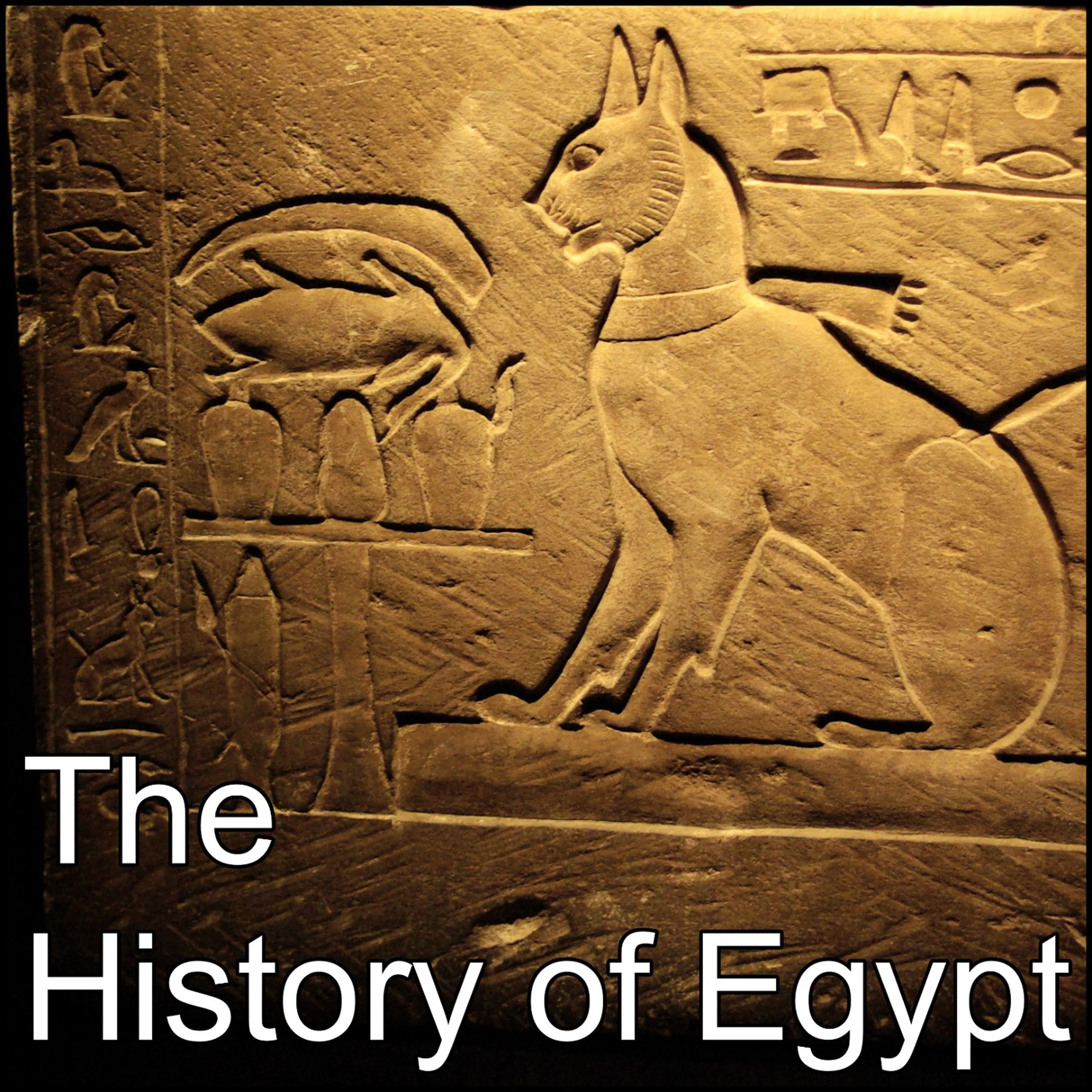
Royal Children On the Rise. From 1385 to 1380, the prince of Egypt Thutmose was climbing up the ranks. From a lowly sem-priest to the chief of a great temple, Thutmose was a quickly rising star. His sister, Sit-Amun, also leaves a tantalizing trace of her life. We explore a non-royal funeral, the cult of the Apis Bull, and see how a prince of Egypt left some wonderful personal records, including those of his pet. Part of this episode was revised & re-recorded in 2026. Music by Keith Zizza www.keithzizza.com, used with artist's permission. Website: www.egyptianhistorypodcast.com. Support the show via Patreon www.patreon.com/egyptpodcast. Make a one-time donation via PayPal payments. Select Bibliography: Kate Bosse-Griffiths, “The Memphite Stela of Merptah and Ptahmose,” Journal of Egyptian Archaeology (1955). Katherine Griffis-Greenberg, The Coffin of the She-Cat of the Crown Prince Thutmose (2006) online. Eric Cline and David O’Connor, Amenhotep III: Perspectives on His Reign, 1998. Theodore M. Davis The Tomb of Iouiya and Touiyou, 2000 (reprint). Aidan Dodson, Amarna Sunrise, 2014. Aidan Dodson, “Crown Prince Djhutmose and the Royal Sons of the Eighteenth Dynasty,” Journal of Egyptian Archaeology (1990). Arielle P. Kozloff, Amenhotep III: Egypt’s Radiant Pharaoh, 2012. Arielle P. Kozloff and Betsy M. Bryan, Egypt’s Dazzling Sun: Amenhotep III and His World, 1992. Donald B. Redford, Akhenaten: The Heretic King, 1984. James Quibell, The Tomb of Yuaa and Thuiu, 1908 (archive.org). Learn more about your ad choices. Visit megaphone.fm/adchoices

Mini Episode: Music in Ancient Egypt (Part 2) with Jeffrey Goodman
An interview with composer Jeffrey Goodman.Jeff Goodman has composed some wonderful pieces evoking the world of ancient Egypt. Taking inspiration from mythology, art and literature, he crafts lovely songs with a focus on authenticity in instrumentation. As part of the larger investigation of music, I invited him onto the show for a discussion about composition, ancient musicality, and how to evoke the past when we have no written notation left. This is the first time I've interviewed someone; it was an interesting experience! Jeffrey Goodman's website https://www.jeffreygoodmanmusic.com/tears-of-isis/ Website: www.egyptianhistorypodcast.com. Support the show via Patreon www.patreon.com/egyptpodcast. Make a one-time donation via PayPal payments. Select Bibliography: Leibovitch, “The Statuette of an Egyptian Harper and String-Instruments in Egyptian Statuary,” The Journal of Egyptian Archaeology (1960). Miriam Lichtheim, Ancient Egyptian Literature, 2006. Miriam Lichtheim, “The Songs of the Harpers,” Journal of Near Eastern Studies (1945). Lise Manniche, Music and Musicians in Ancient Egypt, 1992. William Kelly Simpson, The Literature of Ancient Egypt, 2003. Edward F. Wente, “Egyptian “Make Merry” Songs Reconsidered” Journal of Near Eastern Studies (1962). Learn more about your ad choices. Visit megaphone.fm/adchoices
Mini Episode: Music in Ancient Egypt (Part 1)
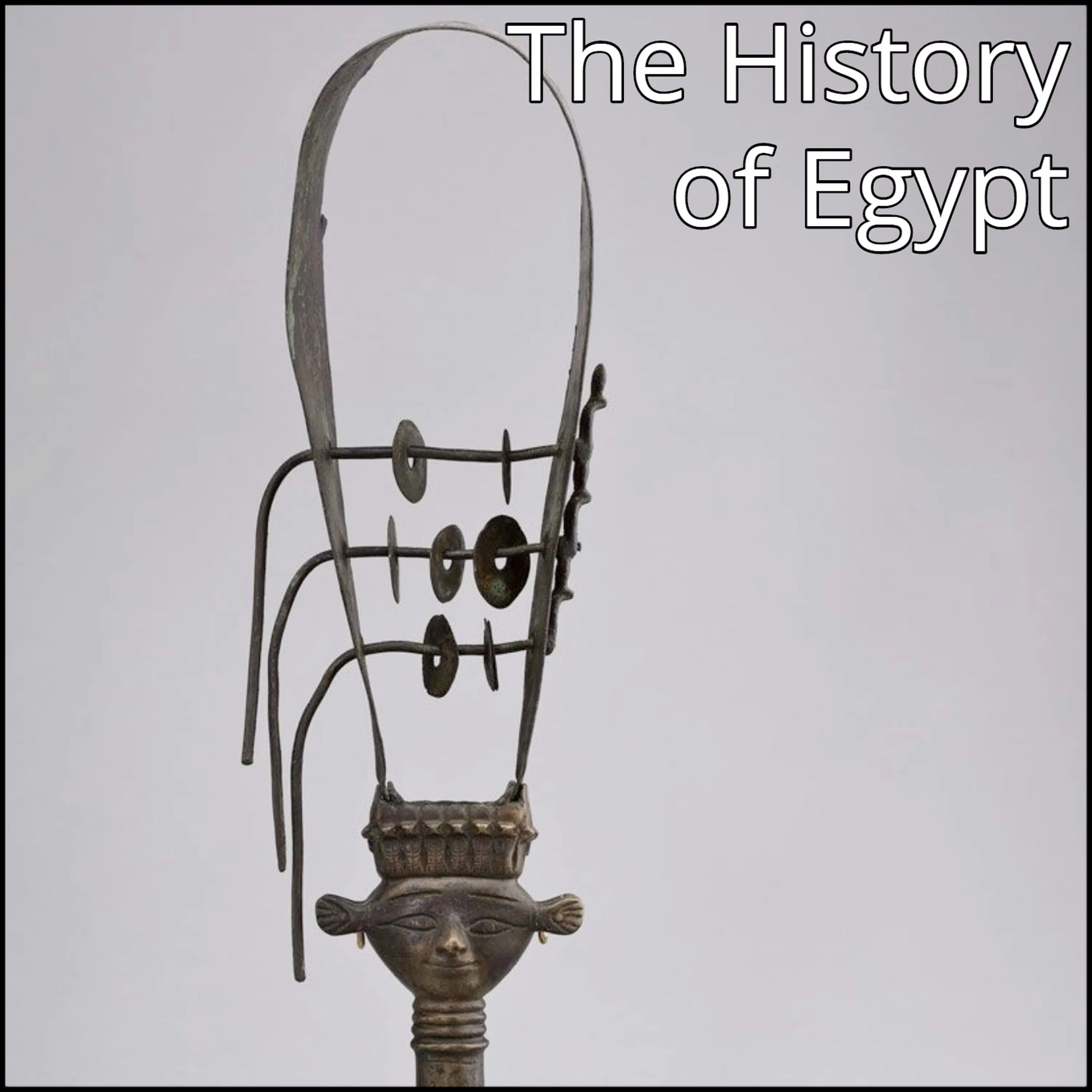
Instruments, Musicians, and Songs. In this mini episode, we explore the traces of ancient Egyptian songs and music. Although the melodies and rhythms are lost, we still have lyrics, instruments and artwork detailing some of these arts. From this, we can understand how certain instruments were played, and what different artists tried to achieve. Plus, modern reconstructions can give us a hint at the soundscape of ancient Egypt. Musical Interludes (by permission): Flute: Erik the Flutemaker (Youtube) (Website) Sistrum: Tahya of HathorSystrum (Youtube) (Website) Harp: Michael Levy (Website) Prayer: Michael Atherton (Website) Drums: Jeffrey Goodman (Youtube) (Website) This is Part One; a second part (including an interview with composer Jeffrey Goodman) will follow soon. Website: www.egyptianhistorypodcast.com. Support the show via Patreon www.patreon.com/egyptpodcast. Make a one-time donation via PayPal payments. Select Bibliography: Leibovitch, “The Statuette of an Egyptian Harper and String-Instruments in Egyptian Statuary,” The Journal of Egyptian Archaeology (1960). Miriam Lichtheim, Ancient Egyptian Literature, 2006. Miriam Lichtheim, “The Songs of the Harpers,” Journal of Near Eastern Studies (1945). Lise Manniche, Music and Musicians in Ancient Egypt, 1992. William Kelly Simpson, The Literature of Ancient Egypt, 2003. Edward F. Wente, “Egyptian “Make Merry” Songs Reconsidered” Journal of Near Eastern Studies (1962). Learn more about your ad choices. Visit megaphone.fm/adchoices
97b: The In-Laws
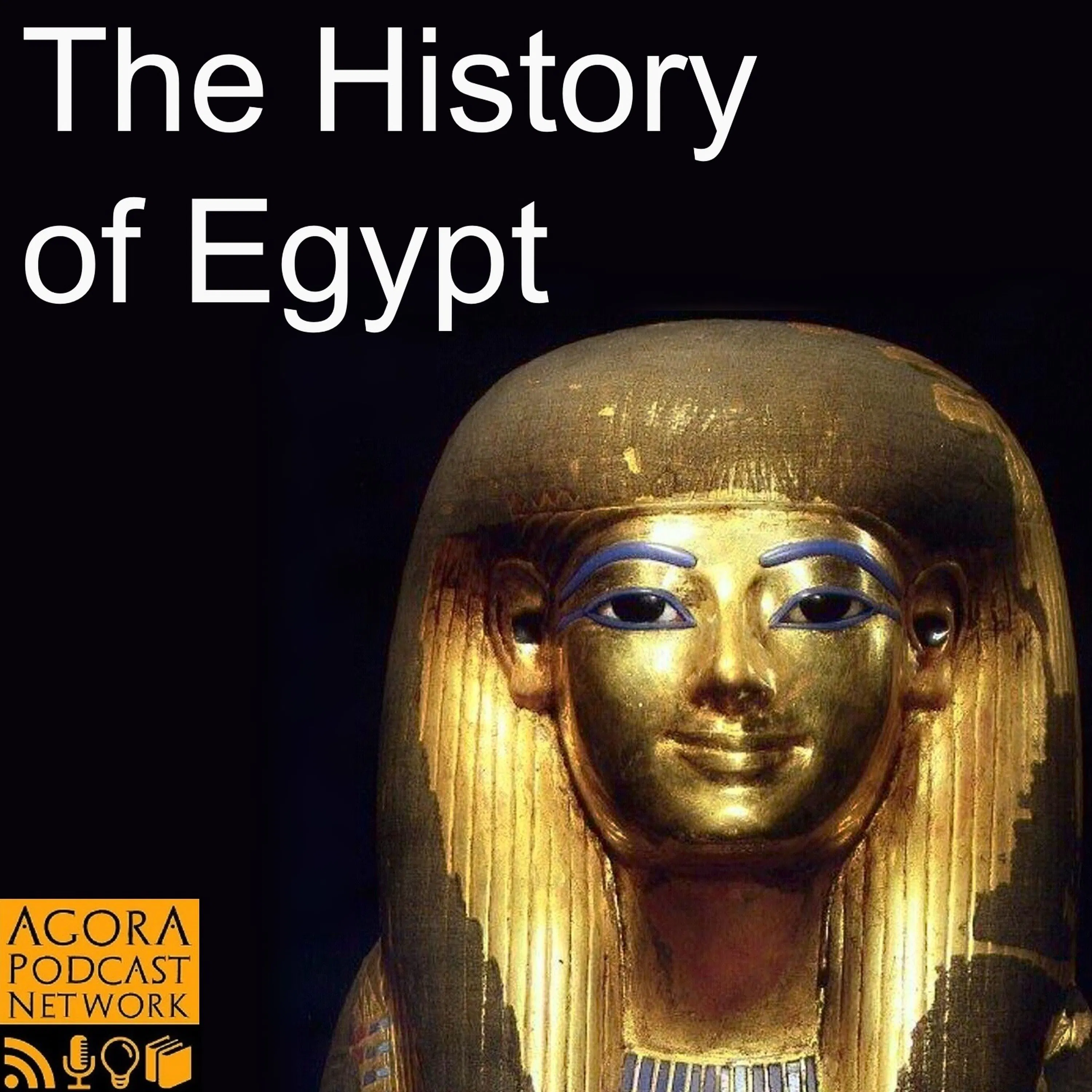
Interlude: Queen Tiy's Lucky Family. The family of Queen Tiy came from an interesting place, and led a fascinating life. Her mother and father - Tjuyu and Yuya - and her brother Anen enjoyed great privileges thanks to their family connections. In life, and in death, they left an enduring legacy... Music by Keith Zizza www.keithzizza.com Website: www.egyptianhistorypodcast.com. Support the show via Patreon www.patreon.com/egyptpodcast. Make a one-time donation via PayPal payments. Select Bibliography: Eric Cline and David O’Connor, Amenhotep III: Perspectives on His Reign, 1998. Theodore M. Davis The Tomb of Iouiya and Touiyou, 2000 (reprint). Aidan Dodson, Amarna Sunrise, 2014. Arielle P. Kozloff, Amenhotep III: Egypt’s Radiant Pharaoh, 2012. Arielle P. Kozloff and Betsy M. Bryan, Egypt’s Dazzling Sun: Amenhotep III and His World, 1992. Donald B. Redford, Akhenaten: The Heretic King, 1984. James Quibell, The Tomb of Yuaa and Thuiu, 1908 (archive.org). G. Elliot Smith, Egyptian Mummies, 1924. Learn more about your ad choices. Visit megaphone.fm/adchoices
97: What Does The Scarab Say?
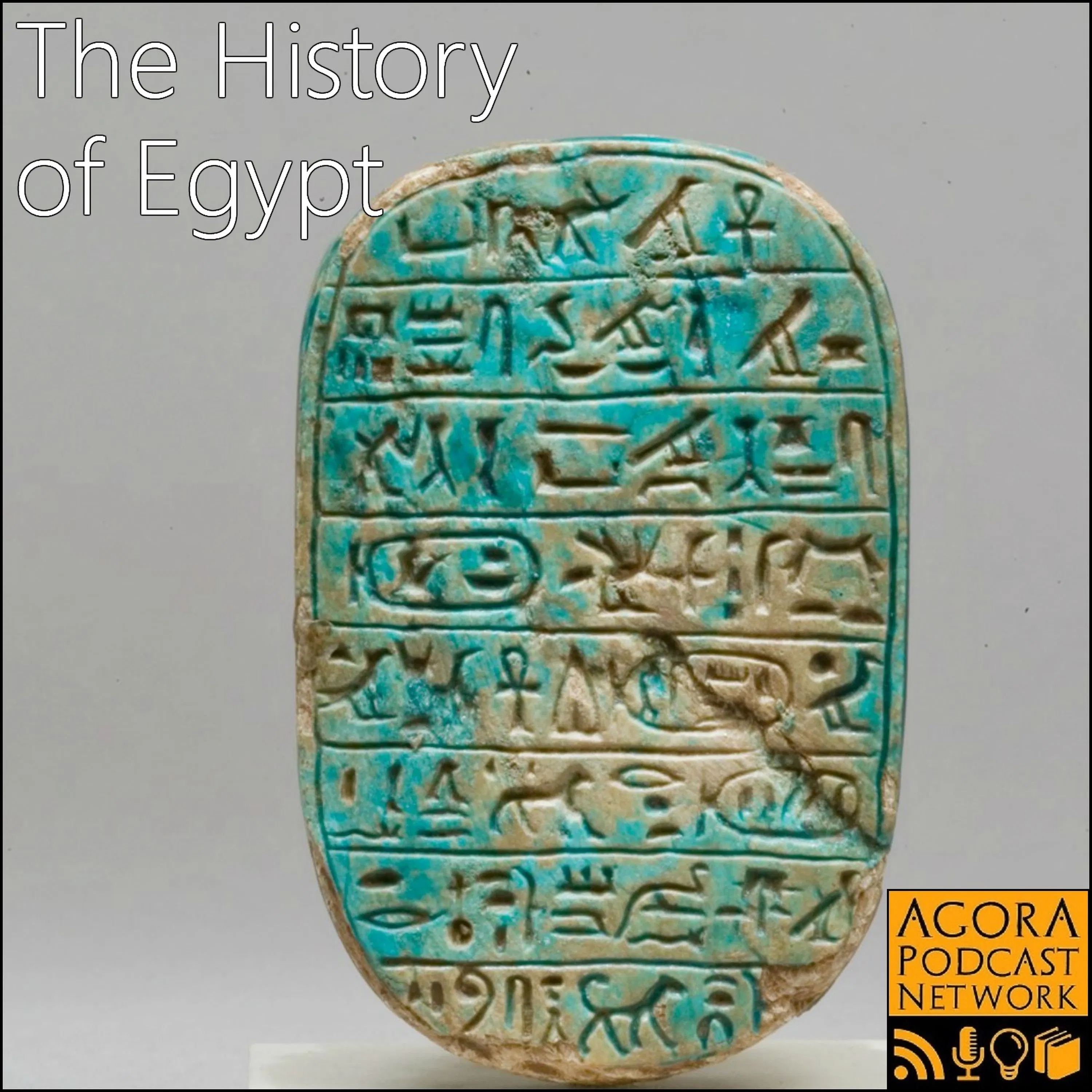
Amunhotep III (Part 8): Hunting, Wedding, Building. From 1392 to 1390 BCE, Amunhotep III experienced an interesting few years. He hunted his 100th lion, and welcomed a new bride to his court. The princess Gilu-khepa came from Mitanni, for a diplomatic marriage to the king. Then, Amunhotep commissioned an artificial lake, built for the glory of his main wife, Tiy. Interesting times, all round... Website: www.egyptianhistorypodcast.com. Support the show via Patreon www.patreon.com/egyptpodcast. Make a one-time donation via PayPal payments. Check out The History of Vikings podcast at www.thehistoryofvikings.com/ Get 25% off your first three months at Online Great Books, by visiting http://onlinegreatbooks.com/egy and entering the discount code EGY (Advertisement at the end of the episode). Select Bibliography: Daphna Ben-Tor, “Egyptian-Canaanite Relations in the Middle and Late Bronze Ages as Reflected by Scarabs,” Egypt, Canaan and Israel:History, Imperialism, Ideology and Literature, 2011. C. Blankenberg-van Delden, The Large Commemorative Scarabs of Amenhotep III, 1969. Peter A. Clayton, “Some More ‘Fierce Lions’, and a ‘Marriage’ Scarab: The Large Commemorative Scarabs of Amenophis III,” Journal of Egyptian Archaeology, 1996. David O’Connor & Eric Cline, Amenhotep III: Perspectives on His Reign, 1997. Aidan Dodson, Amarna Sunrise, 2014. Orly Goldwasser, “A ‘Kirgipa’ Commemorative Scarab of Amenhotep III from Beit-Shean,” Ägypten und Levante / Egypt and the Levant, 2002. Arielle P. Kozloff, Amenhotep III: Egypt’s Radiant Pharaoh, 2012. Miriam Lichtheim, Ancient Egyptian Literature, Volume II: The New Kingdom, 2006. Learn more about your ad choices. Visit megaphone.fm/adchoices
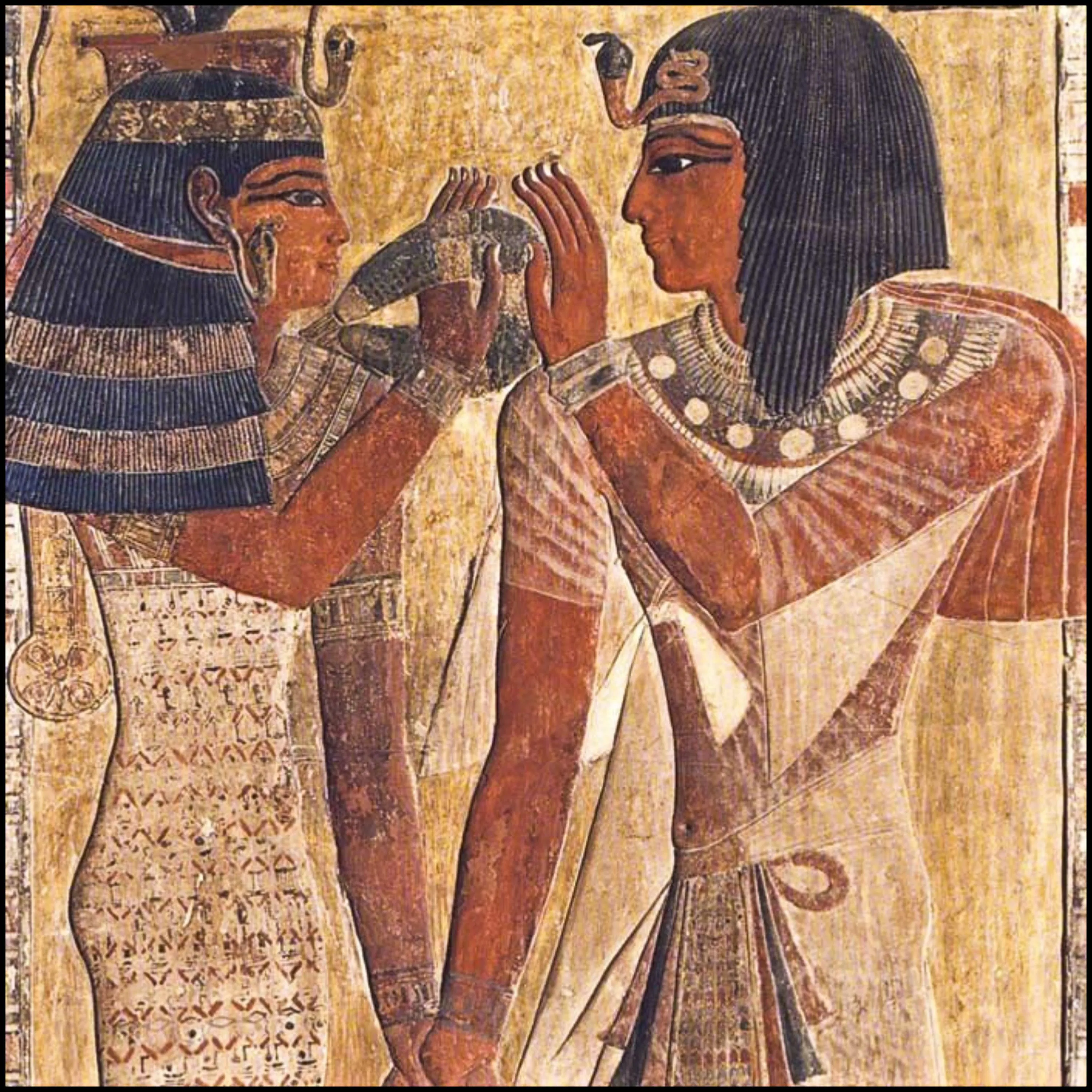
Mini Episode: All Is Full of Love (The Embrace)
Three Poems of Love from 18th Dynasty Egypt. Around 1400 BCE, scribes and composers put together delightful works exploring themes of love, longing, lust and courtship. They told tales from both male and female perspectives, describing the emotions and sensations of their desires and affections. In this mini episode, we explore three short poems. Translations by John L. Foster, Ancient Egyptian Literature: An Anthology (Amazon) Website: www.egyptianhistorypodcast.com. Support the show via Patreon www.patreon.com/egyptpodcast. Make a one-time donation via PayPal payments. Twitter: @EgyptianPodcast Instagram: @EgyptPodcast Facebook: @EgyptPodcast Learn more about your ad choices. Visit megaphone.fm/adchoices
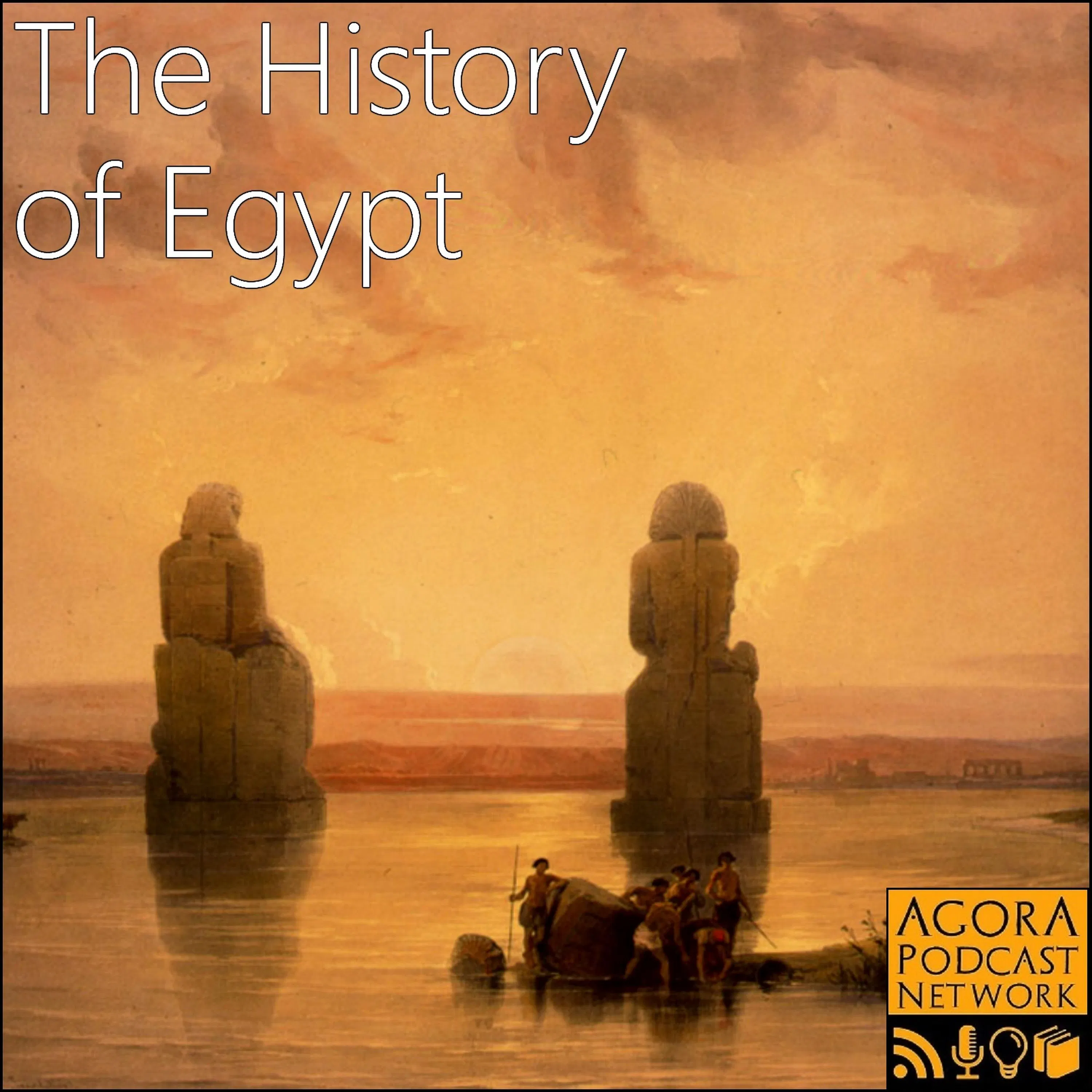
96: The Colossi of Memnon
Amunhotep III (Part 7): Everything Bigger Than Everything Else. For 2000+ years, the Colossi of Memnon have dazzled visitors to Thebes. What are the statues doing there? In this episode, we explore the lost Mortuary Temple of Amunhotep III, in particular the immense statues which are his enduring legacy. From the work of Egyptian builders to the heroes of Greek myth, the Colossi of Memnon have a unique and unusual story... Website: www.egyptianhistorypodcast.com. Support the show via Patreon www.patreon.com/egyptpodcast. Make a one-time donation via PayPal payments. Music by Keith Zizza www.keithzizza.com Harp Music by Michael Levy www.ancientlyre.com Check out The History of Vikings at http://thehistoryofvikings.com/episodes/ Select Bibliography: Dieter Arnold, The Monuments of Egypt, 2009. Aidan Dodson, Amarna Sunrise, 2014. Miriam Lichtheim, Ancient Egyptian Literature, Volume II: The New Kingdom, 2006. Hourig Sourouzian et al., “Conservation work at the temple of Amenhotep III at Thebes, by The Colossi of Memnon and Amenhotep III Temple Conservation Project,” 2016 (Online). Richard H. Wilkinson, The Complete Temples of Ancient Egypt, 2000. Learn more about your ad choices. Visit megaphone.fm/adchoices
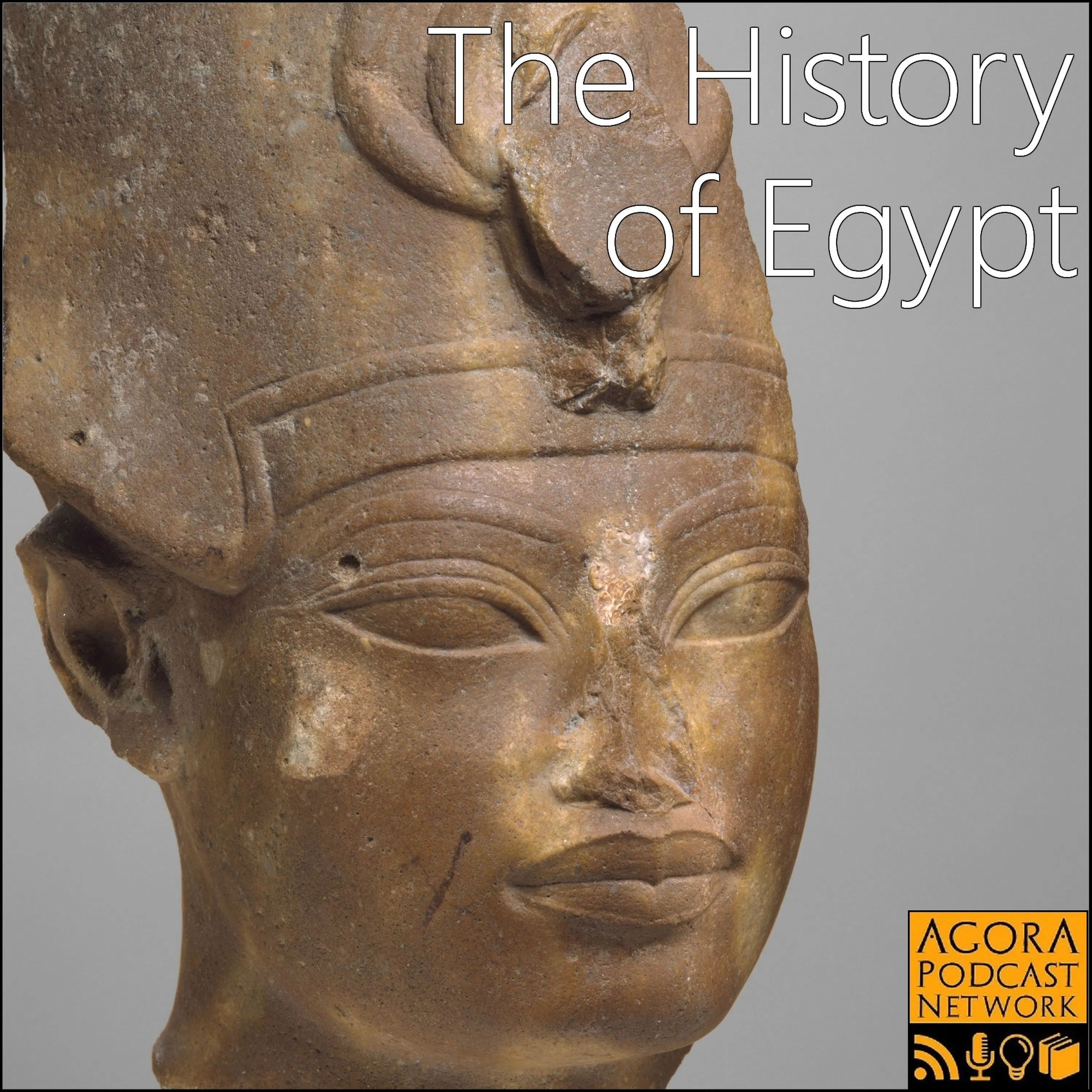
95: Hundred-Gated Thebes
Amunhotep III (Part 6): City of a Hundred Pylons. In 1397 BCE, King Amunhotep III began a massive series of building projects in Thebes. At Karnak, Luxor Temple, and the new "Maru" viewing place, the King inaugurated sanctuaries and gardens for the god Amun. We explore these monuments, and how they created a reputation that still resonated in the sagas of Greek myth... Website: www.egyptianhistorypodcast.com. Support the show via Patreon www.patreon.com/egyptpodcast. Make a one-time donation via PayPal payments. Music by Keith Zizza www.keithzizza.com Harp Music by Michael Levy www.ancientlyre.com Check out Literature & History podcast at www.literatureandhistory.com Select Bibliography: Dieter Arnold, The Monuments of Egypt, 2009. Lanny Bell, “Luxor Temple and the Cult of the Royal Ka,” Journal of Near Eastern Studies (1985) David O’Connor & Eric Cline, Amenhotep III: Perspectives on His Reign, 1997. Arielle P. Kozloff, Amenhotep III: Egypt’s Radiant Pharaoh, 2012. Miriam Lichtheim, Ancient Egyptian Literature, Volume II: The New Kingdom, 2006. Richard H. Wilkinson, The Complete Temples of Ancient Egypt, 2000. Learn more about your ad choices. Visit megaphone.fm/adchoices

Mini Episode: Memphis River Blues (The Healing)
A Scribe yearns for a holiday, and goes in search of peace. Two texts, written between 1400 and 1300 BCE, tell of the exhausted scribe's yearning for a holiday. Sick of work, he struggles to focus on tasks, and finds his heart wandering off to more pleasant places. The city of Memphis, Men-nefer (or Ineb-Hedj) looms large in his fantasies. Website: www.egyptianhistorypodcast.com. Support the show via Patreon www.patreon.com/egyptpodcast. Make a one-time donation via PayPal payments. Twitter: @EgyptianPodcast Instagram: @EgyptPodcast Facebook: @EgyptPodcast Translations by John L. Foster, Ancient Egyptian Literature: An Anthology (Amazon). Learn more about your ad choices. Visit megaphone.fm/adchoices
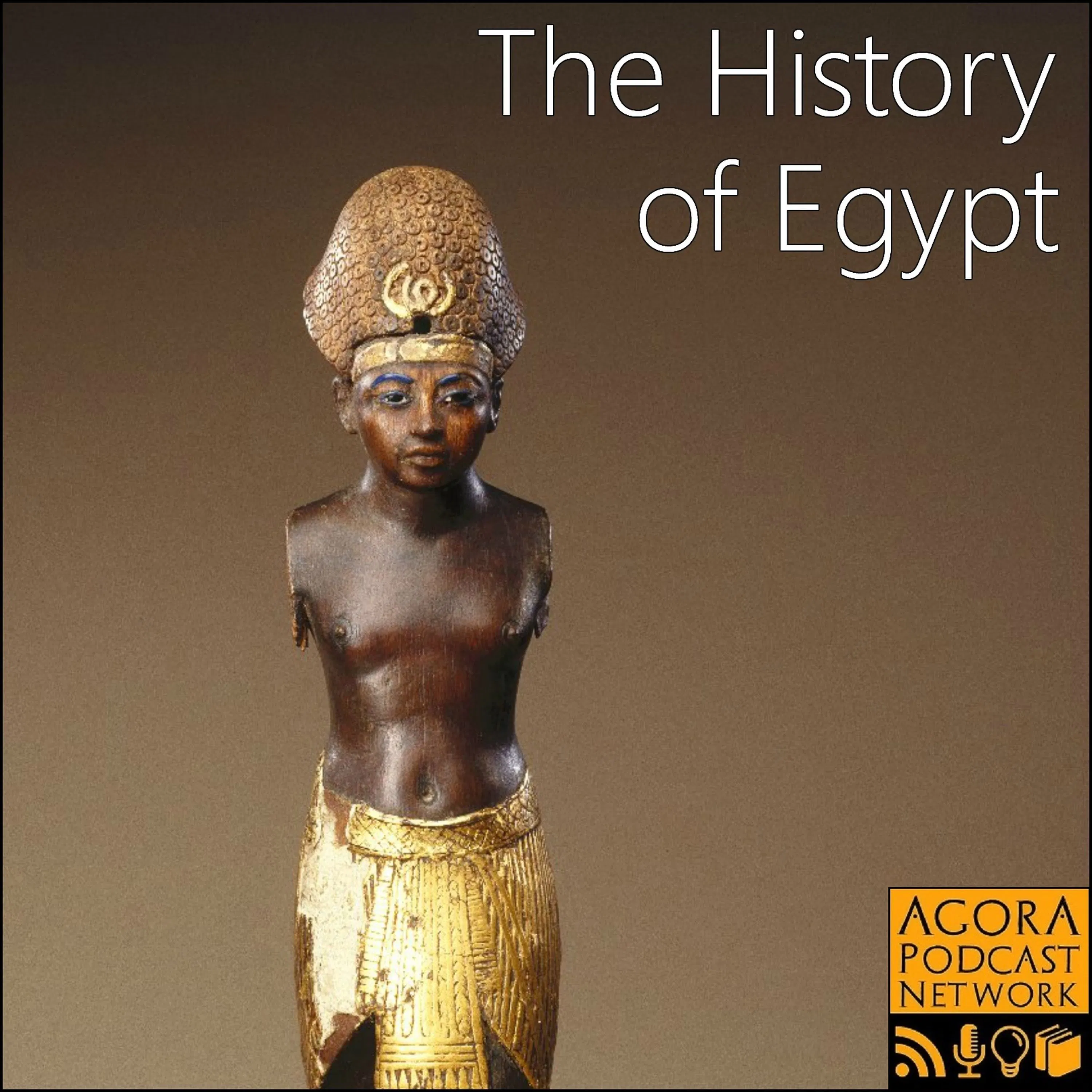
94: The Pools of Horus
Amunhotep III (Part 5): Exploring the Southlands. In late 1397 BCE, King Amunhotep III took a band of warriors deep into Nubia (Sudan). They traversed deserts, explored hidden pools, and came to mysterious lands. It was a trip into strange new places... Website: www.egyptianhistorypodcast.com. Support the show via Patreon www.patreon.com/egyptpodcast. Make a one-time donation via PayPal payments. Music by Keith Zizza www.keithzizza.com. Special music by Doug Metzger, of Literature and History podcast at www.literatureandhistory.com. Select bibliography: The Sudan Antiquities Service French Archaeological Unit website The Sudan Archaeological Research Society website Charles Bonnet, “Upper Nubia from 3000 to 1000 BC,” in W.V. Davies (editor), Egypt and Africa: Nubia from Prehistory to Islam, 1991. P.L. Shinnie, “Trade Routes of the Ancient Sudan 3,000 BC – AD 350,” in W.V. Davies (editor), Egypt and Africa: Nubia from Prehistory to Islam, 1991. Arielle P. Kozloff, Amenhotep III: Egypt’s Radiant Pharaoh, 2012. Stuart Tyson Smith, Wretched Kush: Ethnic Identities and Boundaries in Egypt’s Nubian Empire, 2003. Lazlo Török, Between Two Worlds: The Frontier Region between Ancient Nubia and Egypt 3700 BC – 500 AD, 2008. Learn more about your ad choices. Visit megaphone.fm/adchoices
93: The River War
Amunhotep III (Part 4): Pharaoh's First War. At the start of regnal year 5 (around August 1397 BCE), Amunhotep III led his first and only military campaign. Responding to a revolt in Nubia, the King gathered an army and began an expedition. We follow the king on campaign, and explore a slightly unusual situation... Website: www.egyptianhistorypodcast.com. Support the show via Patreon www.patreon.com/egyptpodcast. Make a one-time donation via PayPal payments. Music by Keith Zizza www.keithzizza.com Additional Music by Jeff Goodman, discover more at https://www.jeffreygoodmanmusic.com/tears-of-isis Select Bibliography: Charles Bonnet, “Upper Nubia from 3000 to 1000 BC,” in W.V. Davies (editor), Egypt and Africa: Nubia from Prehistory to Islam, 1991. John C. Darnell and Colleen Manassa, Tutankhamun’s Armies: Battle and Conquest During Ancient Egypt’s Late Eighteenth Dynasty, 2007. P.L. Shinnie, “Trade Routes of the Ancient Sudan 3,000 BC – AD 350,” in W.V. Davies (editor), Egypt and Africa: Nubia from Prehistory to Islam, 1991. Aidan Dodson, Amarna Sunrise, 2012. Arielle P. Kozloff, Amenhotep III: Egypt’s Radiant Pharaoh, 2012. Stuart Tyson Smith, Wretched Kush: Ethnic Identities and Boundaries in Egypt’s Nubian Empire, 2003. Anthony J. Spalinger, War in Ancient Egypt, 2005. Lazlo Török, Between Two Worlds: The Frontier Region between Ancient Nubia and Egypt 3700 BC – 500 AD, 2008. Learn more about your ad choices. Visit megaphone.fm/adchoices
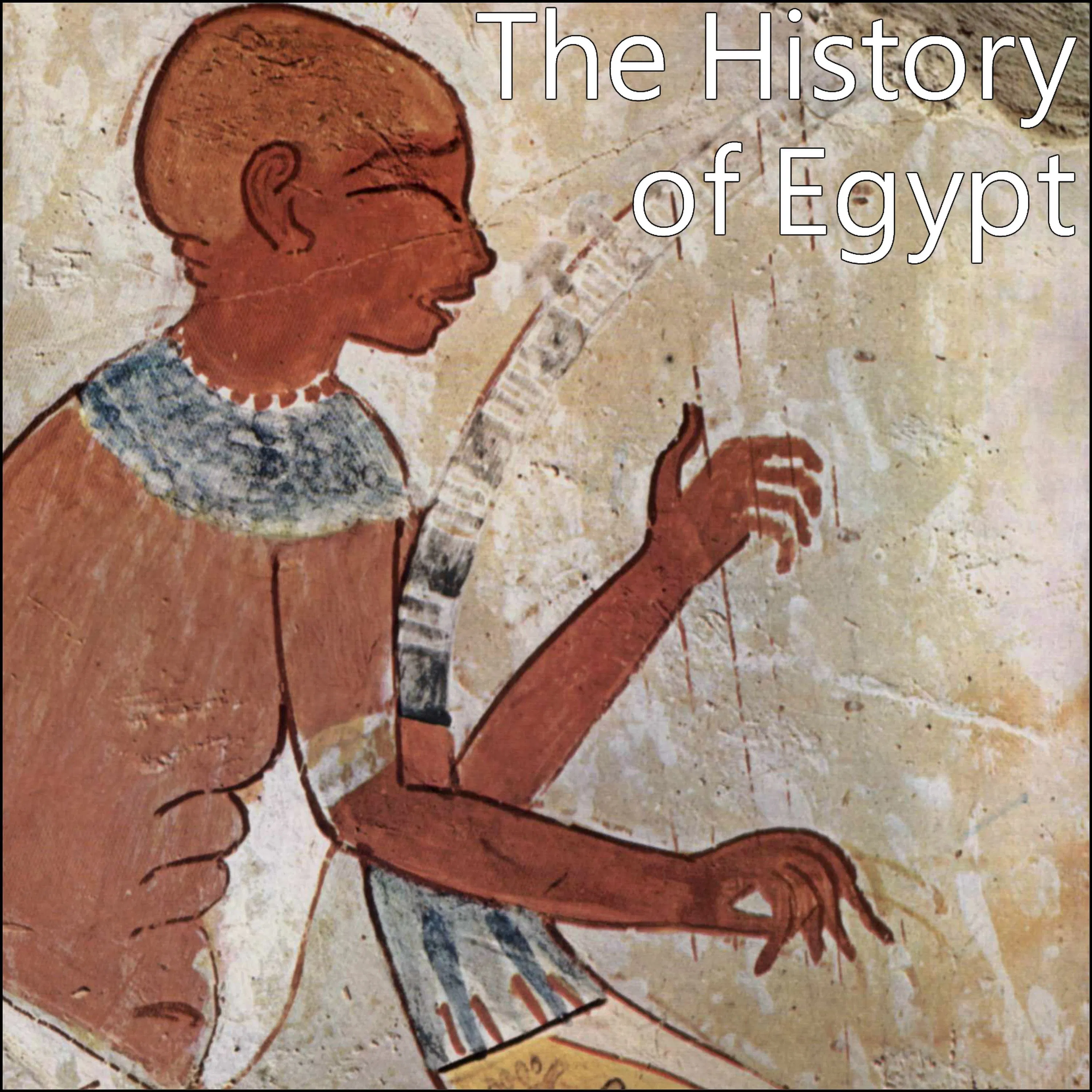
Mini Episode: Love Songs
EInterlude: Romance, Passion and Love...in Song Form! A look at New Kingdom love songs, as they survive. We see how the Egyptians felt and explored love, and encounter songs written from both the male and female perspective. Website: www.egyptianhistorypodcast.com. Support the show via Patreon www.patreon.com/egyptpodcast. Make a one-time donation via PayPal payments. Select Bibliography: Renata Landgrafova, Sex and the Golden Goddess: Ancient Egyptian Love Songs in Context 2009. A.G. McDowell, Village Life in Ancient Egypt: Laundry Lists and Love Songs, 1999. William K. Simpson (editor), The Literature of Ancient Egypt, 2003. Learn more about your ad choices. Visit megaphone.fm/adchoices
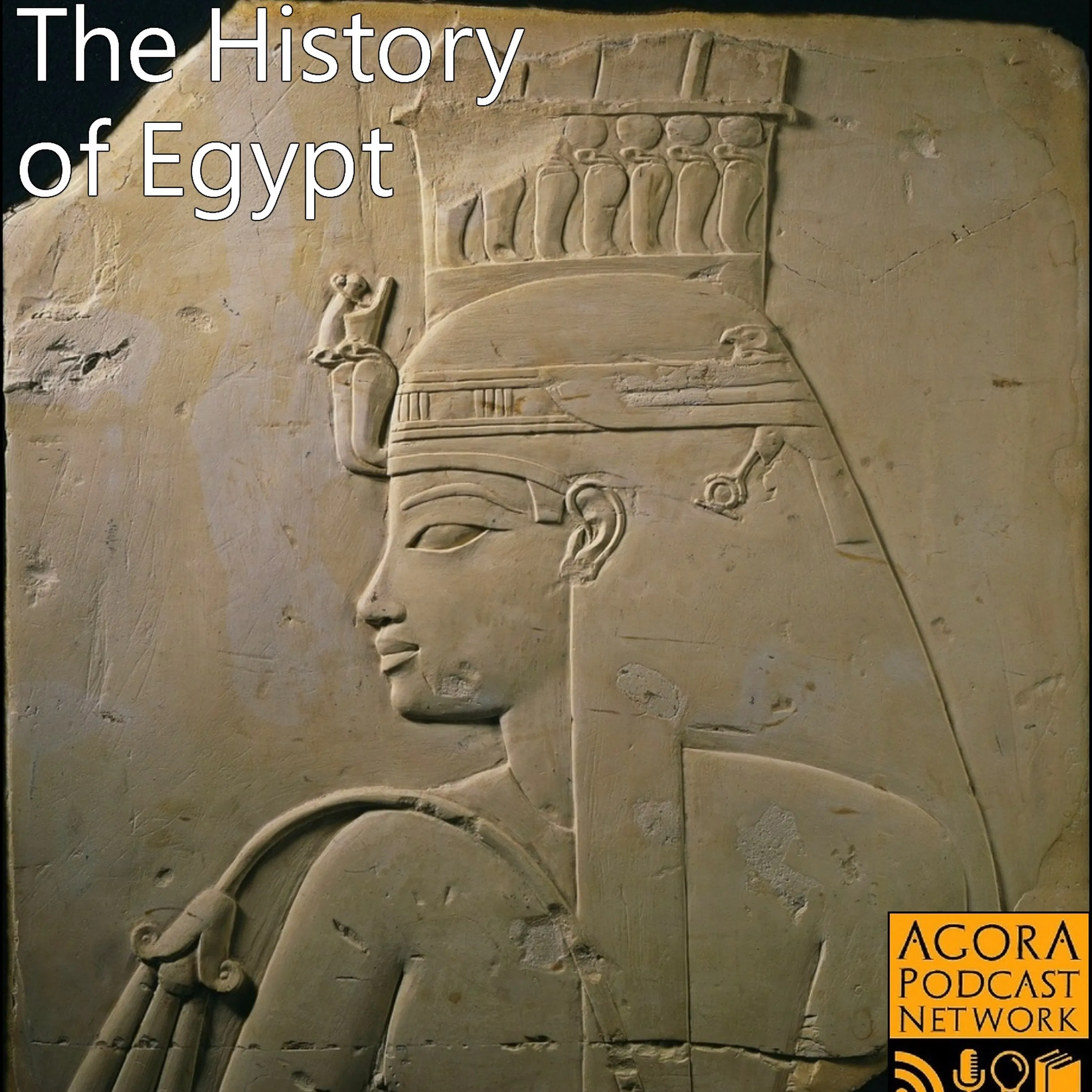
92: The Great Lady (Queen Tiye)
Amunhotep III (Part 3): Introducing Queen Tiye. In 1399 BCE, the pharaoh Amunhotep III married his first and most important wife: Tiye, Royal Wife, Great of Praises, Mistress of Upper and Lower Egypt. Just twelve years old, the young queen would go on to be the most powerful woman in the world... Website: www.egyptianhistorypodcast.com. Support the show via Patreon www.patreon.com/egyptpodcast. Make a one-time donation via PayPal payments. Music by Keith Zizza www.keithzizza.com. Select bibliography: Aidan Dodson and Dyan Hilton, The Complete Royal Families of Ancient Egypt, 2010. Aidan Dodson, Amarna Sunrise, 2014. Arielle P. Kozloff, Amenhotep III: Egypt’s Radiant Pharaoh, 2012. David O’Connor and Eric Cline (editors), Amenhotep III: Perspectives on His Reign, 1998. Learn more about your ad choices. Visit megaphone.fm/adchoices
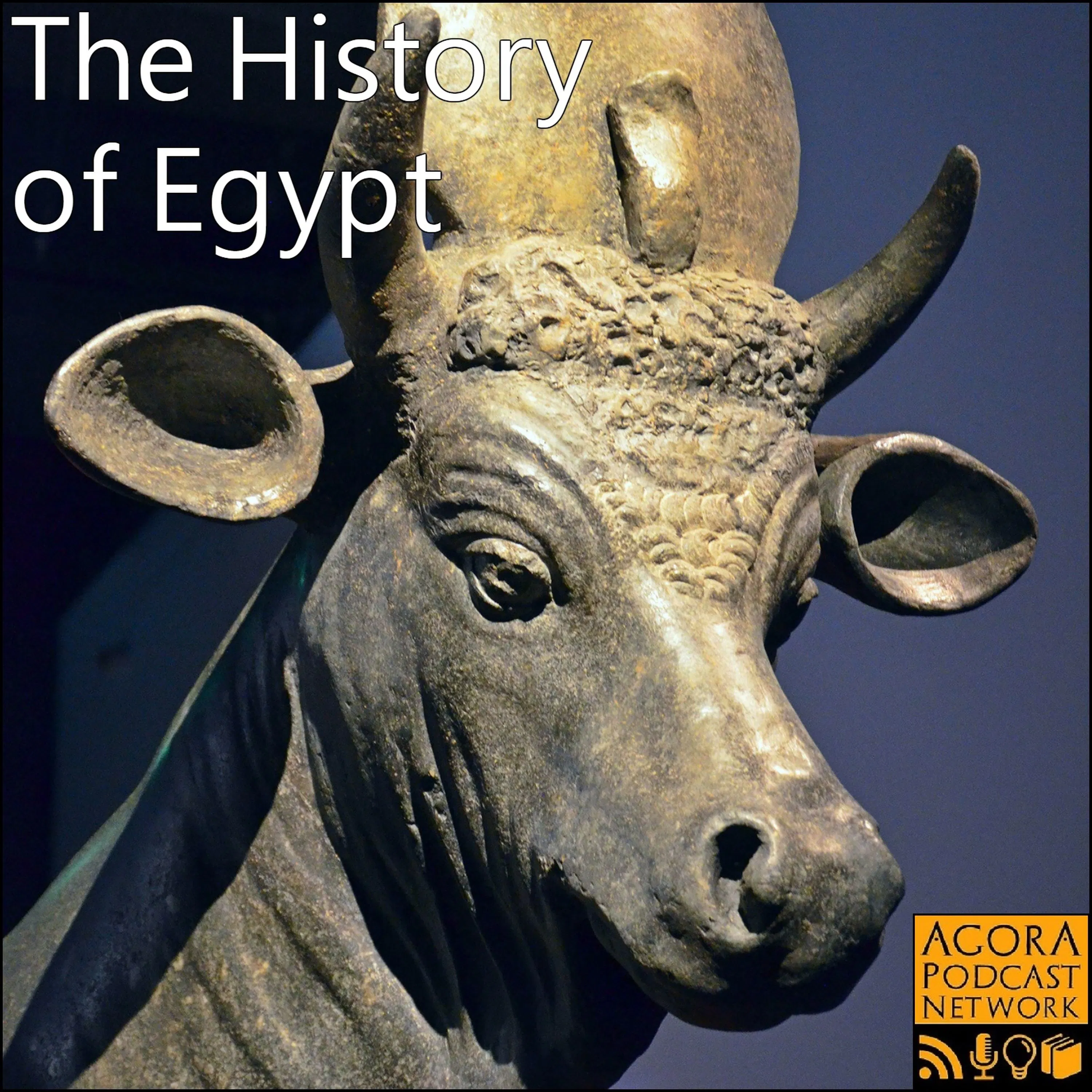
91: The Mighty Bulls
Amunhotep III (Part 2): A Busy Start. From May 1400 to April 1399, King Amunhotep finished his first year (just 4 months long) and began his second. In this 12-month period, he began a flurry of new projects. From donations to Thoth, to a mighty hunt, the King set himself as a vigorous and dynamic youth. His mother, Mutemwia, helped drive much of this... Website: www.egyptianhistorypodcast.com. Support the show via Patreon www.patreon.com/egyptpodcast. Make a one-time donation via PayPal payments. Music by Keith Zizza www.keithzizza.com. Select bibliography: Lawrence Michael Berman, The Art of Amenhotep III, 1990. David O’Connor & Eric Cline, Amenhotep III: Perspectives on His Reign, 1997. Aidan Dodson, Amarna Sunrise, 2014. Arielle P. Kozloff, Egypt’s Dazzling Sun: Amenhotep III and His World, 1992. Arielle P. Kozloff, Amenhotep III: Egypt’s Radiant Pharaoh, 2012. Shin-Ichi Nishimoto, “Hieratic Inscriptions from the Quarry at Qurna: an interim Report,” British Museum Studies in Ancient Egypt and Sudan (2002). British Museum. Learn more about your ad choices. Visit megaphone.fm/adchoices
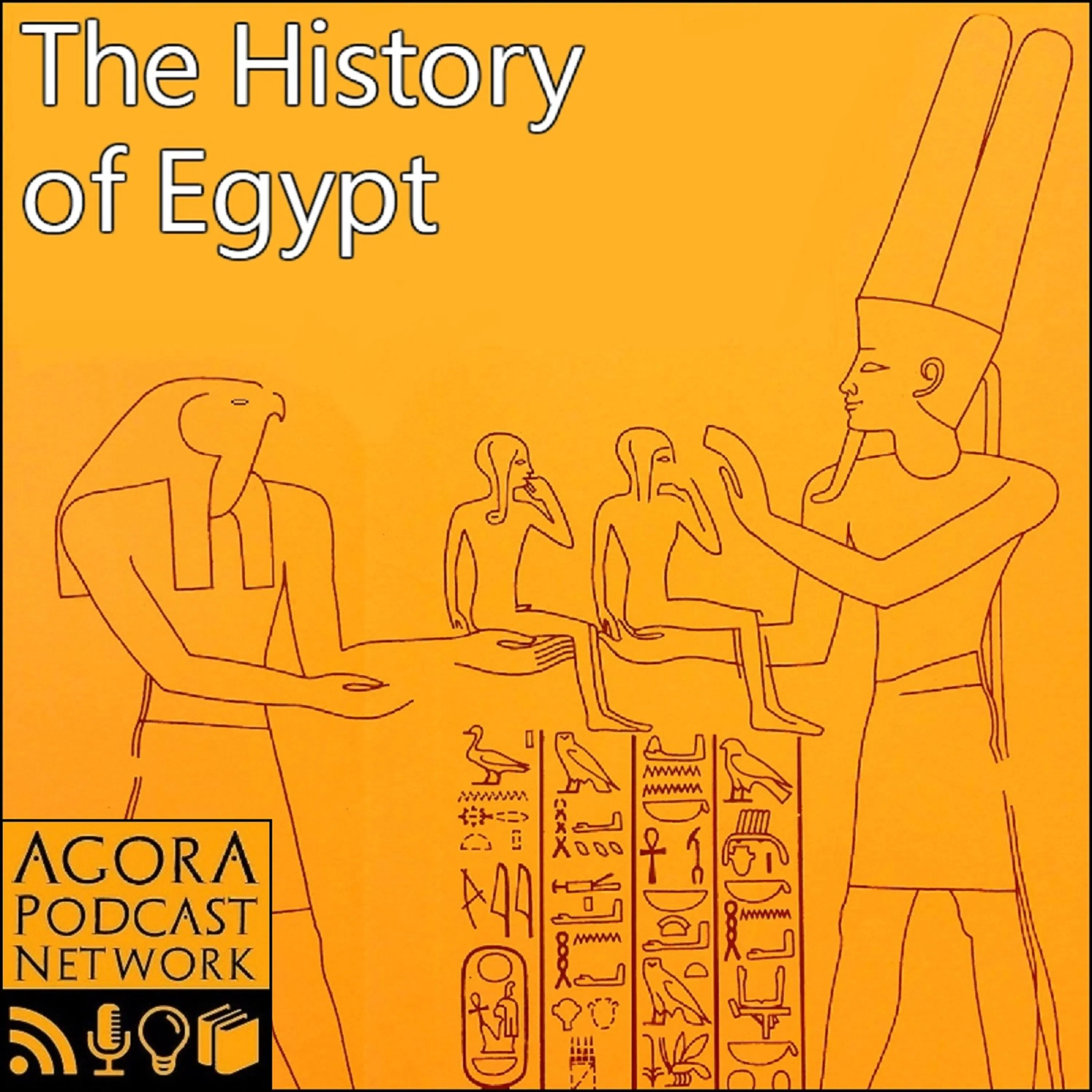
90: Neb-Ma'at-Re
Amunhotep III (Part 1): The Birth of a God. Amunhotep III (Neb-maat-Re) came to power in mid-1400 BCE. He was twelve-years old, but already he had spent years being groomed for power. Today we explore the birthing myth and the childhood of one of the greatest pharaohs in history. Website: www.egyptianhistorypodcast.com. Support the show via Patreon www.patreon.com/egyptpodcast. Make a one-time donation via PayPal payments. Music by Keith Zizza www.keithzizza.com Harp Music by Michael Levy www.ancientlyre.com Select Bibliography: Hellmut Brunner, Die Geburt des Gottkönigs, 1964. Aidan Dodson, Amarna Sunrise, 2014. Charles Cornell van Siclen III, “The Accession Date of Amenhotep III and the Jubilee,” Journal of Near Eastern Studies 1973. Learn more about your ad choices. Visit megaphone.fm/adchoices

89: Lords of the Desert
Interlude: Nebi and the Guardians of the Sinai. Around 1414 BCE, a man and his comrades were marching into the unrelenting heat of the Sinai Peninsula. We follow Nebi of Tjaru and his men, as they undertake the grueling work of protecting Egypt's frontiers... Website: www.egyptianhistorypodcast.com. Support the show via Patreon www.patreon.com/egyptpodcast. Make a one-time donation via PayPal payments. Music by Keith Zizza www.keithzizza.com Additional Music by Michael Levy www.ancientlyre.com Map at https://i.imgur.com/ufZgO4U.jpg Select Bibliography: Gun Björkman, “Neby the Mayor of Tjaru,” Journal of the American Research Center in Egypt, 1974. Betsy M. Bryan, The Reign of Thutmose IV, 1991. Andrea M. Gnirs, “Coping with the Army: the Military and the State in the New Kingdom,” in Ancient Egyptian Administration, 2013. Learn more about your ad choices. Visit megaphone.fm/adchoices
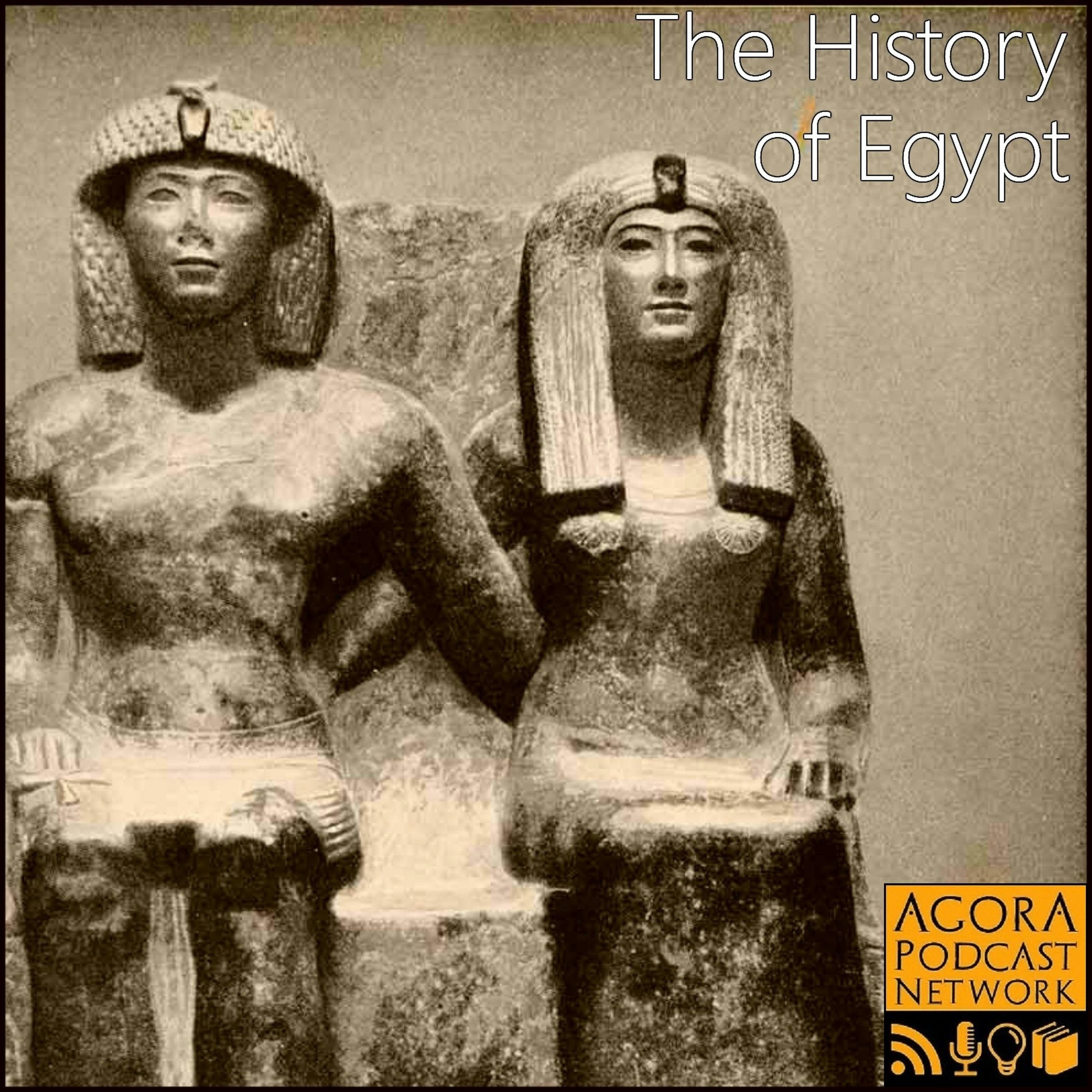
88: Ladies of the Lake
Queen of the Faiyum Oasis. Before she became queen of Egypt, the lady Tia'a spent her days at the royal harem of the Faiyum. This was a mysterious institution, devoted to serving queens, concubines and all the children of a pharaoh. We explore the Queen's background, the harem as an institution and the people who led the Faiyum's communities... Website: www.egyptianhistorypodcast.com. Support the show via Patreon www.patreon.com/egyptpodcast. Make a one-time donation via PayPal payments. Music by Keith Zizza www.keithzizza.com. Additional music by Michael Levy www.ancientlyre.com. Select bibliography: Betsy M. Bryan, The Reign of Thutmose IV, 1991. Aidan Dodson, Amarna Sunrise, 2014. Aidan Dodson & Dyan Hilton, The Complete Royal Families of Ancient Egypt, 2010. Eberhard Dziobek et al., Das Grab des Sobekhotep Theben Nr. 63, 1990. The Gurob Palace Project (Website). Learn more about your ad choices. Visit megaphone.fm/adchoices

The Gods' Birthdays
The Egyptian Religious Year (12/12): Birthdays of the Gods. The end of the year in ancient Egypt was a surprisingly unlucky time. With summer heat at unbearable levels, the Nile at its lowest ebb, and people suffering from physical or spiritual malaise, the final days of the religious year were not so happy. Fortunately, the ancients had some tools to ward off disaster. Website: www.egyptianhistorypodcast.com. Support the show via Patreon www.patreon.com/egyptpodcast. Make a one-time donation via PayPal payments. Music by Keith Zizza http://www.keithzizza.com/ Additional music by Michael Levy www.ancientlyre.com Select Bibliography: Tamas A. Bacs, “Two Calendars of Lucky and Unlucky Days,” Studien zur Altägyptischen Kultur, 1990. J.F. Borghouts, Ancient Egyptian Magical Texts, 1978. Peter Der Manuelian, “An Essay in Document Transmission: Nj-k-anx and the Earliest hriw-rnpt,” Journal of Near Eastern Studies, 1986. Richard A. Parker, The Calendars of Ancient Egypt, 1950. Anthony Spalinger, “Some Remarks on the Epagomenal Days in Ancient Egypt,” Journal of Near Eastern Studies, 1995. Learn more about your ad choices. Visit megaphone.fm/adchoices
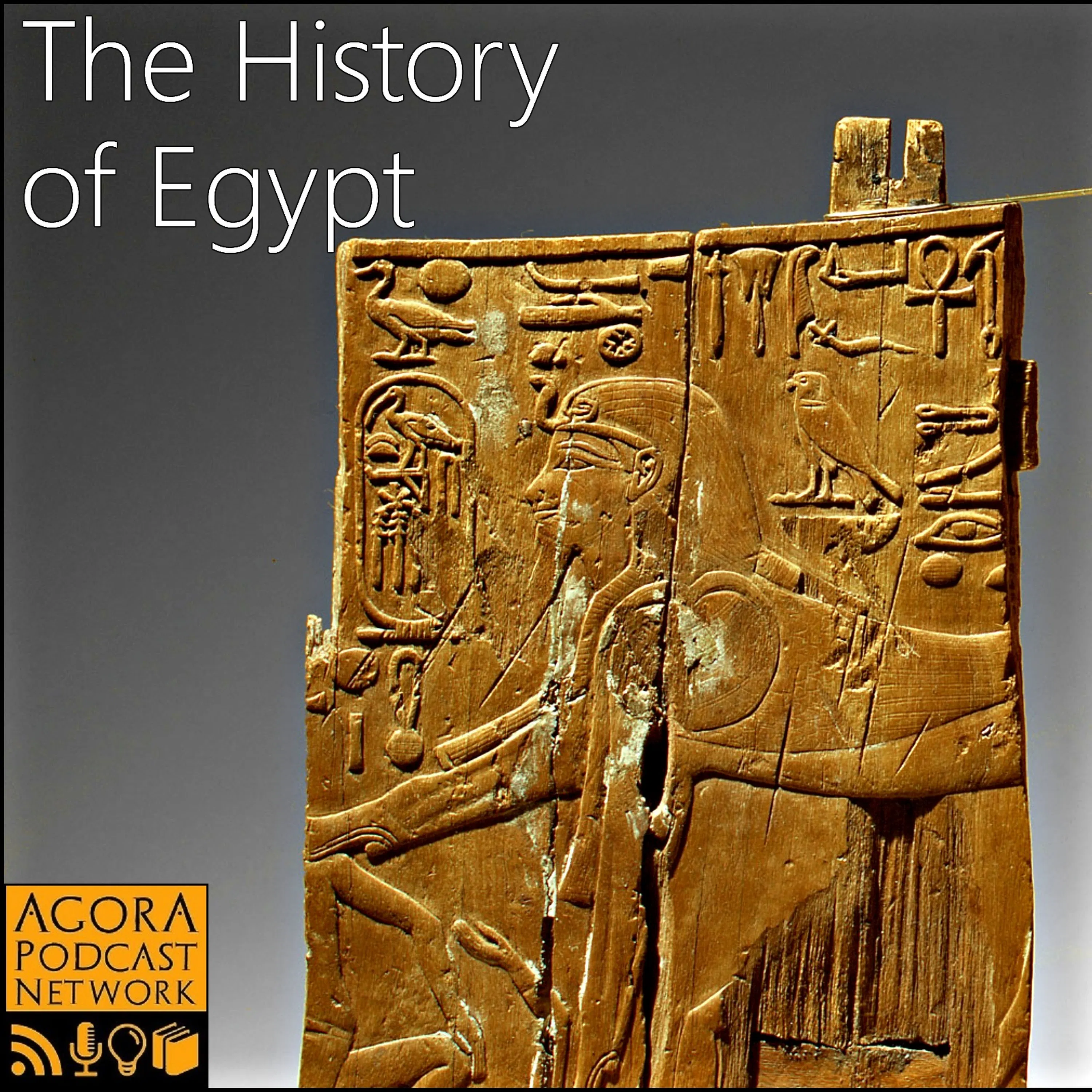
87: Comforts of Power
Thutmose IV (Part 2): The Entire Reign at Once. For ten years, maybe more, Thutmose IV ruled Egypt. It was a successful reign and the treasures that emerge from this period are testament to a prosperous realm. The royal court is more visible than ever, with intriguing tales to tell... Website: www.egyptianhistorypodcast.com. Support the show via Patreon www.patreon.com/egyptpodcast. Make a one-time donation via PayPal payments. Music by Keith Zizza www.keithzizza.com. Additional music by Michael Levy www.ancientlyre.com. Select bibliography: Betsy M. Bryan, The Reign of Thutmose IV, 1991. Gun Björkman, “Neby, the Mayor of Tjaru in the Reign of Thutmosis IV,” Journal of the American Research Center in Egypt, 1974. Howard Carter & Theodore M. Davis, The Tomb of Thoutmosis IV, 1904 & 2002. Aidan Dodson & Dyan Hilton, The Complete Royal Families of Ancient Egypt, 2010. Aidan Dodson, Amarna Sunrise, 2014. Raphael Giveon, “Thutmose IV in Asia,” Journal of Near Eastern Studies 1969. Arielle P. Kozloff, Amenhotep III: Egypt’s Radiant Pharaoh, 2012. Nicholas Reeves & Richard H. Wilkinson, The Complete Valley of the Kings, 2010. Richard H. Wilkinson, The Complete Temples of Ancient Egypt, 2017. Learn more about your ad choices. Visit megaphone.fm/adchoices
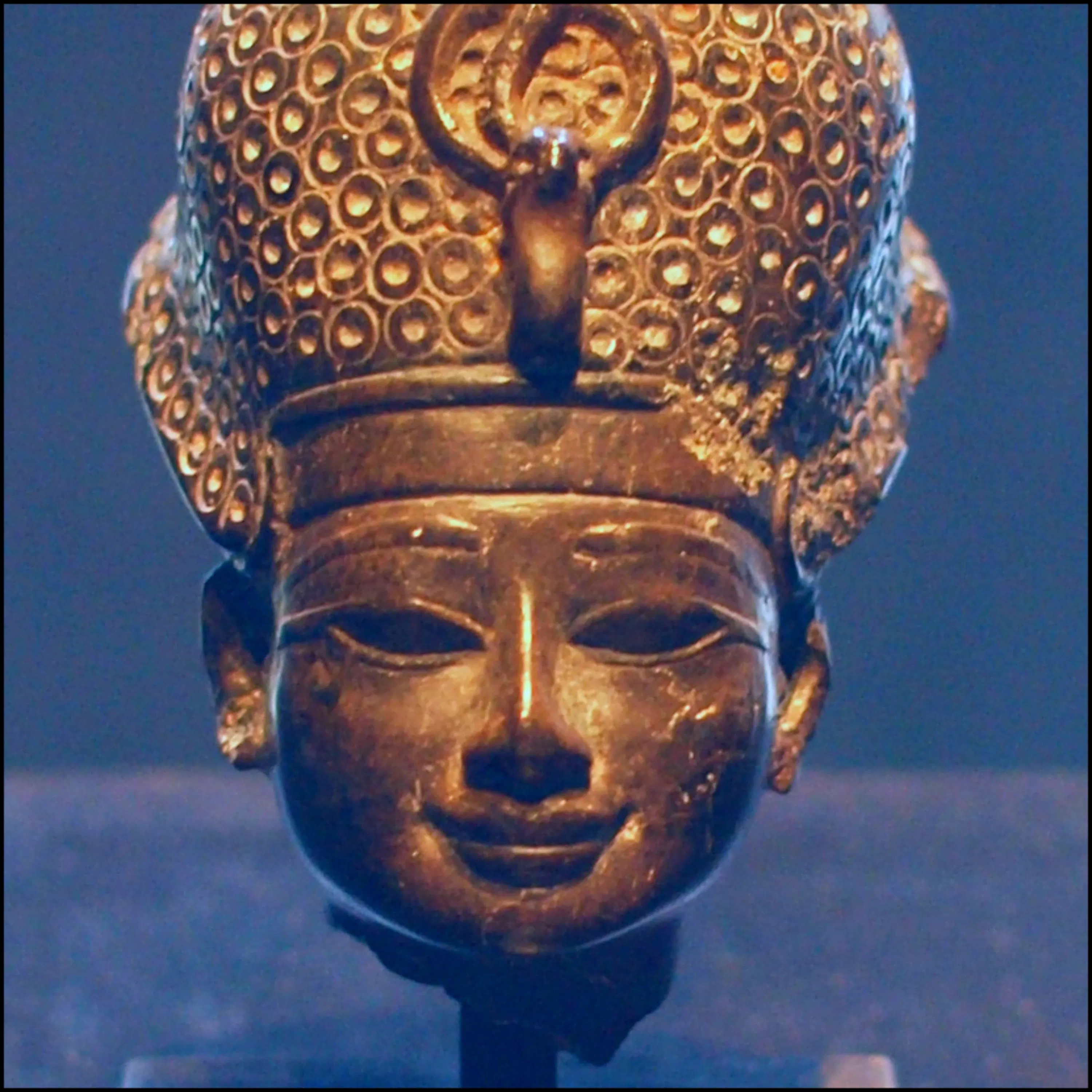
86: Doing God's Work
Thutmose IV (Part 1): Old Enemies Become New Friends. 1418 - 1416 BCE. The new pharaoh spends his first two years involved in political reprisals and military actions. He removes rivals, but also makes friends with some longstanding enemies... Website: www.egyptianhistorypodcast.com. Support the show via Patreon www.patreon.com/egyptpodcast. Make a one-time donation via PayPal payments. Music by Keith Zizza www.keithzizza.com. Music by Derek and Brandon Fiechter https://dbfiechter.bandcamp.com/ Select Bibliography: Betsy M. Bryan, The Reign of Thutmose IV, 1991. Raphael Giveon, “Thutmosis IV and Asia,” Journal of Near Eastern Studies 1969 (JSTOR). Nicolas Grimal, A History of Ancient Egypt, 1994. Learn more about your ad choices. Visit megaphone.fm/adchoices

85: A Clash of Princes
Interlude: Two Princes Clash. In 1418 BCE, Egypt momentarily lacks a pharaoh. Two sons of the crown go head to head, in a duel to be the next ruler. Who wins? Only the Sphinx knows... Website: www.egyptianhistorypodcast.com. Support the show via Patreon www.patreon.com/egyptpodcast. Make a one-time donation via PayPal payments. Music by Keith Zizza www.keithzizza.com. Select Bibliography: Hutan Ashrafian, “Familial epilepsy in the pharaohs of ancient Egypt’s eighteenth dynasty,” 2012. Nicolas Grimal, A History of Ancient Egypt, 1994. James E. Harris, “The Identification of the Eighteenth Dynasty Royal Mummies: A Biological Perspective,” 1991. Peter der Manuelian, Studies in the Reign of Amenophis II, 1987. Ian Shaw (ed.), The Oxford History of Ancient Egypt, 2000. J.J. Shirley, The Culture of Officialdom, 2005. Learn more about your ad choices. Visit megaphone.fm/adchoices

The Ancient Egyptian Day of the Dead
The Religious Year (Parts 10-11): the Egyptian Day of the Dead. In the 10th month of the year, Egyptians celebrated the "Beautiful Festival of the Valley," a grand affair similar to today's Day of the Dead or Qingming celebrations. Website: www.egyptianhistorypodcast.com. Support the show via Patreon www.patreon.com/egyptpodcast. Make a one-time donation via PayPal payments. Music by Keith Zizza www.keithzizza.com. Additional Music by Michael Levy www.ancientlyre.com. Select Bibliography: Anthony J. Spalinger, “Ancient Egyptian Calendars,” in Handbook of Archaeoastronomy and Ethnoastronomy, 2015. Emily Teeter, Religion and Ritual in Ancient Egypt, 2011. Richard H. Wilkinson, The Complete Gods and Goddesses of Ancient Egypt, 2003. Learn more about your ad choices. Visit megaphone.fm/adchoices

Assassin's Creed Origins: Egyptological Impressions
Assassin's Creed Origins sees video-game players visiting ancient Egypt (c.50 BCE). From the desert oases to the city of Alexandria, the Faiyum to the Pyramids, you can now explore a fully-realised version of ancient Egypt. But how does the game play, and is it historical enough? Today I explore some of the history behind it, and what the game does right. Website: www.egyptianhistorypodcast.com. Support the show via Patreon www.patreon.com/egyptpodcast. Make a one-time donation via PayPal payments. Music by Keith Zizza www.keithzizza.com. Music by Brandon and Derek Fiechter https://dbfiechter.bandcamp.com/ Learn more about your ad choices. Visit megaphone.fm/adchoices