
The History of Egypt Podcast
436 episodes — Page 7 of 9
84b: Into the Tomb
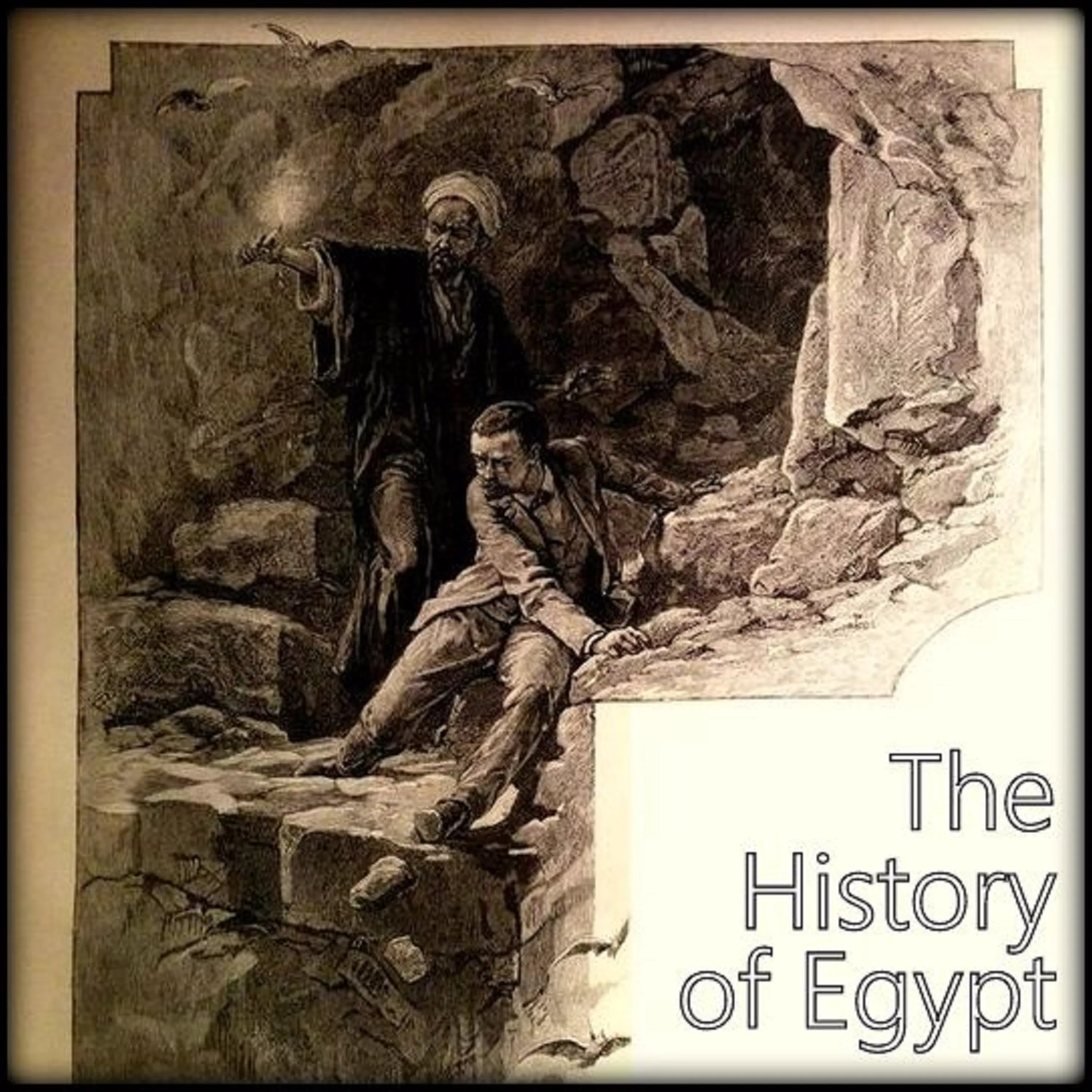
Amunhotep II (Part 7): Remarkable Discoveries in a Royal Tomb. Around 1440 BCE, Egyptians were carving the burial monument of Amunhotep II in the Valley of the Kings. In 1898 CE, a group of excavators were uncovering the edifice once more. In a dual narrative, we explore the design, construction and discovery of a most remarkable tomb... Website: www.egyptianhistorypodcast.com. Support the show via Patreon www.patreon.com/egyptpodcast. Make a one-time donation via PayPal payments. Music by Keith Zizza www.keithzizza.com Additional Music by Michael Levy www.ancientlyre.com Select Bibliography: Erik Hornung, The Valley of the Kings, 1990. Erik Hornung, The Ancient Egyptian Books of the Afterlife, 1999. C.N. Reeves, Richard Wilkinson, The Complete Valley of the Kings, 1996. Peter der Manuelian, Studies in the Reign of Amenophis II, 1989. Elliot Smith, The Royal Mummies, 1912. Online Resources: Theban Mapping Project – Tomb of Amunhotep II Narmer.pl – The Royal Cache Egypt, Land of Eternity – The Royal Cache Theban Royal Mummy Project – The Mummies of Dynasty 18 Egyptian Monuments – Tomb of Amunhotep II Saint Louis University – The KV35 Cache Learn more about your ad choices. Visit megaphone.fm/adchoices

84: The Bald Falcon
Amunhotep II (Part 6): Finding an Heir. Around 1420 BCE, Amunhotep II comes to the end of his days. We explore his family life, what we know about the man himself, and try to get a handle on his legacy... Website: www.egyptianhistorypodcast.com. Support the show via Patreon www.patreon.com/egyptpodcast. Make a one-time donation via PayPal payments. Music by Keith Zizza www.keithzizza.com. Select bibliography: Alexandra von Lieven, “Mortuary Ritual in the Valley of the Kings,” in Richard H. Wilkinson and Kent R. Weeks, The Oxford Handbook of the Valley of the Kings, 2016. Peter der Manuelian, Studies in the Reign of Amenophis II, 1987. Barbara A. Richter, “The Amduat and Its Relationship to the Architecture of Early 18th Dynasty Royal Burial Chambers,” Journal of the American Research Center in Egypt (2008). G. Elliot Smith, The Royal Mummies, 2000. Learn more about your ad choices. Visit megaphone.fm/adchoices
83: The Brat Pack
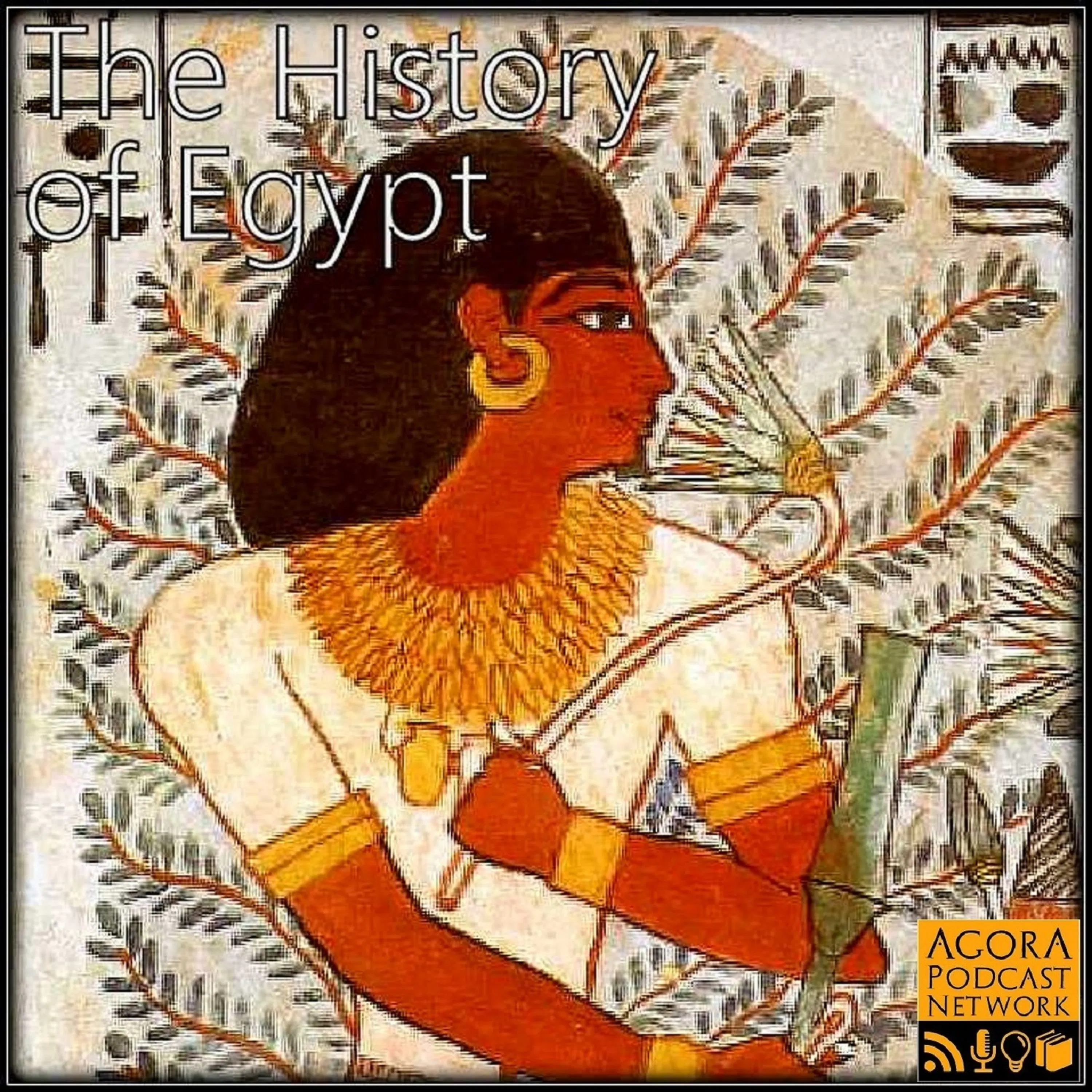
Amunhotep II (Part 5): How to Make Friends and Rule the Nile Valley. The pharaoh Amunhotep II has a reputation for cronyism: he put his childhood friends into positions of power, and removed trusted officials from office at a whim. Does he deserve this reputation? We go in search of an answer, exploring the lives of some noteworthy men who rose to prominence in this time... Website: www.egyptianhistorypodcast.com. Support the show via Patreon www.patreon.com/egyptpodcast. Make a one-time donation via PayPal payments. Music by Keith Zizza www.keithzizza.com. Select Bibliography: Peter der Manuelian, Studies in the Reign of Amenophis II, 1987. M. Eaton-Krauss, “The Fate of Sennefer and Senetnay at Karnak and in the Valley of the Kings,” Journal of Egyptian Archaeology, 1999. JJ Shirley, “Crisis and Restructuring of the State: From the End of the Middle Kingdom to the Advent of the Ramesses,” in Ancient Egyptian Administration, 2013. JJ Shirley, The Culture of Officialdom: An examination of the acquisition of offices during the mid-18th Dynasty, PhD Thesis, 2005. Osiris.net – the Tomb of Sen-nefer (TT96). Learn more about your ad choices. Visit megaphone.fm/adchoices
Festivals for Bastet ... with Onions!
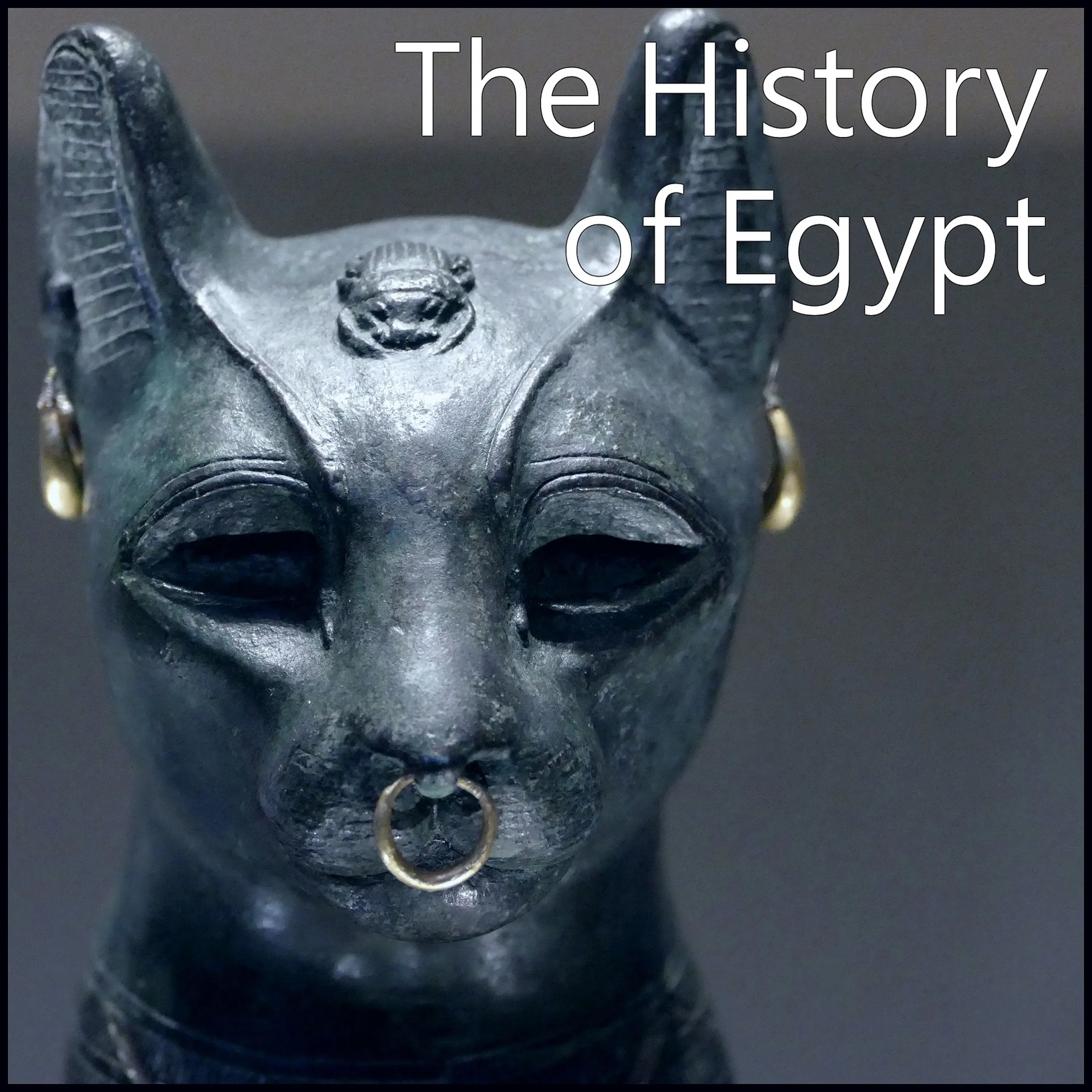
The Religious Year (Parts 8-9): Onions for Bastet. Months 8 and 9 were big on drinking and eating, with some strange rituals to go along with them. We meet Bastet (the cat) and Renen-utet (the snake), two goddesses who were friends to farmers. As the harvest season began, all looked towards the growth of the fields... Website: www.egyptianhistorypodcast.com. Support the show via Patreon www.patreon.com/egyptpodcast. Make a one-time donation via PayPal payments. Select Bibliography: Richard H. Wilkinson, The Complete Gods and Goddesses of Ancient Egypt, 2003. Anthony J. Spalinger, “Ancient Egyptian Calendars,” in C.L.N. Ruggles (ed.) Handbook of Archaeoastronomy and Ethnoastronomy, 2015. Learn more about your ad choices. Visit megaphone.fm/adchoices
82: That Which Is In The Underworld
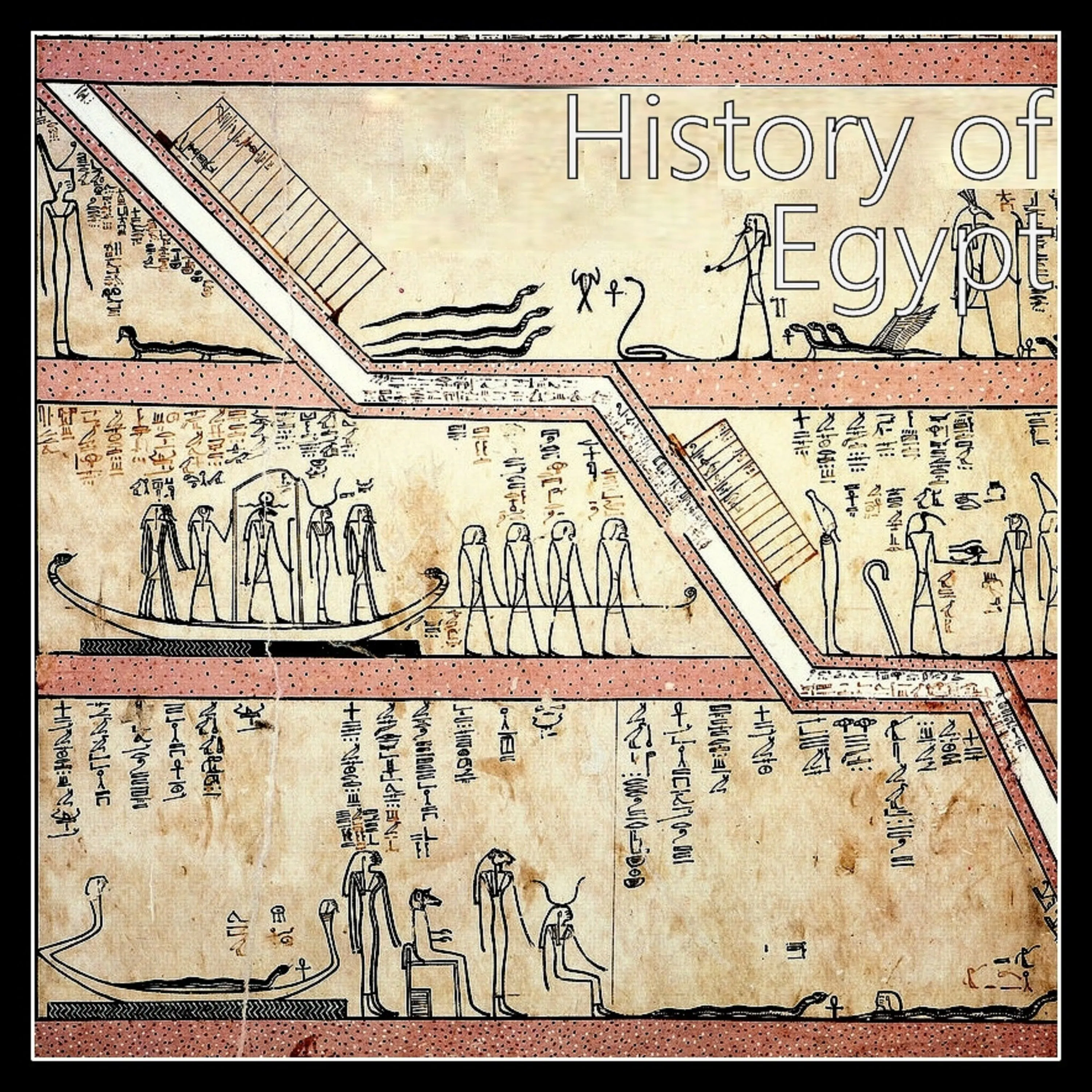
Interlude: A Royal Journey Through the Underworld Rulers of the 18th Dynasty decorated their tombs with lavish images of the underworld, which we know as the Duat. These scenes, and texts, reveal a complex story of Re's journey beneath the western horizon, through the nether, and ultimately into a cosmic re-birth. Along the way he crossed waters and deserts, faced demons and monsters, and even met with his own corpse... Website: www.egyptianhistorypodcast.com. Support the show via Patreon www.patreon.com/egyptpodcast. Make a one-time donation via PayPal payments. Music by Keith Zizza www.keithzizza.com. Select Bibliography: Erik Hornung, The Ancient Egyptian Books of the Afterlife, 1999. Erik Hornung, Texte zum Amduat, 1987. Erik Hornung, Valley of the Kings: Horizon of Eternity, 1990. Emily Teeter, Religion and Ritual in Ancient Egypt, 2011. Learn more about your ad choices. Visit megaphone.fm/adchoices
81: The Book of the Dead
The Ultimate Underworld Story. The Book of the Dead might be the most famous piece of writing from ancient Egypt. It is also one of the most misunderstood... Around 1420 BCE, a royal architect commissioned a book for his tomb. This text is one of the best preserved Books of the Dead from the mid-18th Dynasty. From its unrolled pages, we can explore the journey into the underworld, as experienced by a non-royal Egyptian. Note: This episode functions as an introduction to the Book of the Dead. As we move forward through the centuries, we will revisit the text to see new developments and additions. Website: www.egyptianhistorypodcast.com. Support the show via Patreon www.patreon.com/egyptpodcast. Make a one-time donation via PayPal payments. Music by Jeffrey Goodman www.shelterofclearlight.com/. Select Bibliography: Francoise Dunand and Christiane Zivie-Coche, Gods and Men in Egypt: 3000 BCE to 395 CE. Richard Faulkner, The Ancient Egyptian Book of the Dead, 1985. Dennis C. Forbes, Tombs. Treasures. Mummies. Book Two: The Tombs of Maiherpri (KV36) & Kha & Merit (TT8), 2015. Erik Hornung, The Ancient Egyptian Books of the Afterlife, 1999. Ernesto Schiaperelli, Relazione sui lavori della Missione Archeologica Italiana in Egitto (anni 1903-1920) (Volume 2): La tomba intatta dell’architetto “Cha” nella necropoli di Tebe, 1927. Available online via the University of Heidelberg. https://doi.org/10.11588/diglit.55349#0046 John H. Taylor, Journey Through the Afterlife: Ancient Egyptian Book of the Dead, 2013. Emily Teeter, Religion and Ritual in Ancient Egypt, 2011. E. Vassilika, The Tomb of Kha, 2010. Toby Wilkinson, Writings from Ancient Egypt, 2016. Learn more about your ad choices. Visit megaphone.fm/adchoices

Festivals of False Summer
The Religious Year (Parts 6-7): The False Summer. In the months of "Great Heat" and "Small Heat," Egyptians celebrated some very important festivals. Mid-winter had passed, and it was time to bring life back to the cosmos. Along the way, the Egyptians celebrated the gods Anubis, Amun-Re, and a deified Pharaoh... Website: www.egyptianhistorypodcast.com. Support the show via Patreon www.patreon.com/egyptpodcast. Make a one-time donation via PayPal payments. Music by Keith Zizza www.keithzizza.com. Select Bibliography: Richard Wilkinson, The Complete Gods and Goddesses of Ancient Egypt, 2003. Anthony Spalinger, “Ancient Egyptian Calendars,” Handbook of Archaeoastronomy and Ethnoastronomy, 2015. G.S. Hawkins, “Astronomical Alignments in Britan, Egypt and Peru,” Philosophical Transactions of the Royal Society of London. Series A, Mathematical and Physical Sciences, 1974. J. Norman Lockyer, “The Dawn of Astronomy,” Publications of the Astronomical Society of the Pacific, 1894. Learn more about your ad choices. Visit megaphone.fm/adchoices

80: Servant of Great Gods
Amunhotep II (Part 4): Worshiping the Sphinx. Before he became king, Amunhotep II made a promise to embellish and restore monuments on the Giza Plateau. Once Pharaoh, he fulfilled his promise beautifully. As he did so, he introduced a new chapter in Egypt's religious history... Website: www.egyptianhistorypodcast.com. Support the show via Patreon www.patreon.com/egyptpodcast. Make a one-time donation via PayPal payments. Music by Keith Zizza www.keithzizza.com. Select Bibliography: Aidan Dodson, Amarna Sunrise, 2014. Selim Hassan, The Great Sphinx and Its Secrets, 1953. Stéphane Pasquali, “Baraize Excavations 1933 – 1934 at Giza,” Journal of the American Research Center in Egypt, 2009. William Kelly Simpson, “Reshep in Egypt,” Orientalia, 1960. Richard H. Wilkinson, The Complete Gods and Goddesses of Ancient Egypt, 2003. Learn more about your ad choices. Visit megaphone.fm/adchoices
79: Let My People Go (Exodus and Slavery?)
Amunhotep II (Part 3): Slavery and the Bible. In 1435 BCE, King Amunhotep II led a devastating war in Syria. He took thousands of captives and transported them to Egypt by force. Once there, they became captive workers of the Egyptian elite. Was this the historical inspiration for the Biblical "Captivity"? We go in search of answers... Website: www.egyptianhistorypodcast.com. Support the show via Patreon www.patreon.com/egyptpodcast. Make a one-time donation via PayPal payments. Music by Keith Zizza www.keithzizza.com. Additional Music by Michael Levy www.ancientlyre.com. Select Bibliography: Osiris.net – Tomb of Nakht (website) Yohanan Aharoni, “Some Geographical Remarks Concerning the Geography of the Campaigns of Amenhotep II,” Journal of Near Eastern Studies, 1960. Manfred Bietak, “Peru-Nefer: The Principle New Kingdom Naval Base,” Egyptian Archaeology, 2009. Edwin C.M. van den Brink, Tombs and Burial Customs at Tell el-Dab’a, 1982. Barbara Cummings, Egyptian Historical Records of the Later Eighteenth Dynasty, 1982. Norman de Garis Davies, The Tomb of Ken-Amun at Thebes, 1917. Norman de Garis Davies, The Tomb of Rekh-mi-Re at Thebes, 1944. James K. Hoffmeier, “Out of Egypt,” Ancient Israel and the Exodus, 2012. A. Lucas, Ancient Egyptian Materials and Industries, 4th Edition 1989. Peter der Manuelian, Studies in the Reign of Amenophis II, 1987. Patrick E. McGovern, Ancient Wine: The Search for the Origins of Viniculture, 2013. Google Books. Ellen Fowles Morris, The Architecture of Imperialism, 2005. Ellen Morris, “Mitanni Enslaved: Prisoners of War, Pride, and Productivity in a New Imperial Regime,” Creativity and Innovation in the Reign of Hatshepsut, 2014. Paul T. Nicholson & Ian Shaw, Ancient Egyptian Materials and Technology, 2003. Google Books. William H. Peck, The Material World of Ancient Egypt, 2013. James B. Pritchard, “Syrians as Pictured in the Paintings of the Theban Tombs,” Bulletin of the American Schools of Oriental Research, 1951. Anson F. Rainey, “Whence Came the Israelites and Their Language?” Israel Exploration Journal, 2007. Anson F. Rainey, “Unruly Elements in Late Bronze Canaanite Society,” Pomegranates and Golden Bells: Studies in Biblical, Jewish, and Near Eastern Ritual, Law, and Literature in Honor of Jacob Milgrom 1995. Catharine A. Roehrig, Life Along the Nile: Three Egyptians of Ancient Thebes, 2002. J.J. Shirley, “Kenamun/Qenamun,” The Encyclopedia of Ancient History, 2013. William Kelly Simpson (editor), The Literature of Ancient Egypt, 2003. Barbara J. Sivertsen, The Parting of the Sea, 2009. Rachael Thyrza Sparks, “Canaan in Egypt: Archaeological Evidence for a Social Phenomenon,” Invention and Innovation: Social Context of Technological Change (2), 2004. B.G. Trigger et al., Ancient Egypt: A Social History, 1983. William A. Ward, “The Shasu ‘Bedouin’: Notes on a Recent Publication,” Journal of the Economic and Social History of the Orient, 1972. William A. Ward, “Foreigners Living in the Village,” Pharaoh’s Workers: The Villagers of Deir el-Medina, 1994. Learn more about your ad choices. Visit megaphone.fm/adchoices

78: The Duties of the Vizier
Amunhotep II (Part 2): The Pharaoh's Aide. In 1440 BCE, a servant of Pharaoh inscribed his tomb with a remarkable text detailing every aspect of his job. What was life like, for one of Egypt's most important officials? Website: www.egyptianhistorypodcast.com. Support the show via Patreon www.patreon.com/egyptpodcast. Make a one-time donation via PayPal payments. Select Bibliography: G.P.F. van den Boorn, The Duties of the Vizier, 1988. Peter der Manuelian, Studies in the Reign of Amenophis II, 1987. B.G. Trigger et al., Ancient Egypt: A Social History, 1983. Aidan Dodson, Amarna Sunrise, 2014. Learn more about your ad choices. Visit megaphone.fm/adchoices
Festivals of Snakes & Cats
The Religious Year (Part 5): Worshipping Snakes and Cats. The fifth month was an interesting one, involving worship of snakes, and cats sailing down the Nile. Major gods of this month include Neheb-Kau, Bastet, Shesmet-et, Wadjet and Mut. We meet a few of these strange deities and see why snakes and cats went hand-in-hand... Website: www.egyptianhistorypodcast.com. Support the show via Patreon www.patreon.com/egyptpodcast. Make a one-time donation via PayPal payments. Select Bibliography: Richard H. Wilkinson, The Complete Gods and Goddesses of Ancient Egypt, 2003. Anthony Spalinger, “Ancient Egyptian Calendars,” in C.L.N. Ruggles (ed.), Handbook of Archaeoastronomy and Ethnoastronomy, 2015. Alan W. Shorter, “The God Nehebkau,” The Journal of Egyptian Archaeology (1935). Learn more about your ad choices. Visit megaphone.fm/adchoices
77: Lean and Swift
Amunhotep II (Part 1): The Sportsman King. From 1459 to 1440 BCE, the prince Amunhotep II enjoyed a privileged upbringing. Once he ascended to power, he displayed his prowess to all and sundry. From the battlefield to the sports field, Amunhotep set out to make his name... Website: www.egyptianhistorypodcast.com. Support the show via Patreon www.patreon.com/egyptpodcast. Make a one-time donation via PayPal payments. Select Bibliography: Peter der Manuelian, Studies in the Reign of Amenophis II, 1987. Betsy M. Bryan, The Reign of Thutmose IV, 1991. W. Vivian Davies, “The British Museum epigraphic survey at Tombos: the stela of Usersatet and Hekaemsasen,” British Museum Studies in Ancient Egypt and Sudan (2009). John Coleman Darnell, “The Stela of the Viceroy Usersatet (Boston MFA 25.632), his Shrine at Qasr Ibrim, and the Festival of Nubian Tribute under Amenhotep II,” ENiM (2014). Aidan Dodson, Amarna Sunrise, 2014. Learn more about your ad choices. Visit megaphone.fm/adchoices
76: 54 Years of Splendour
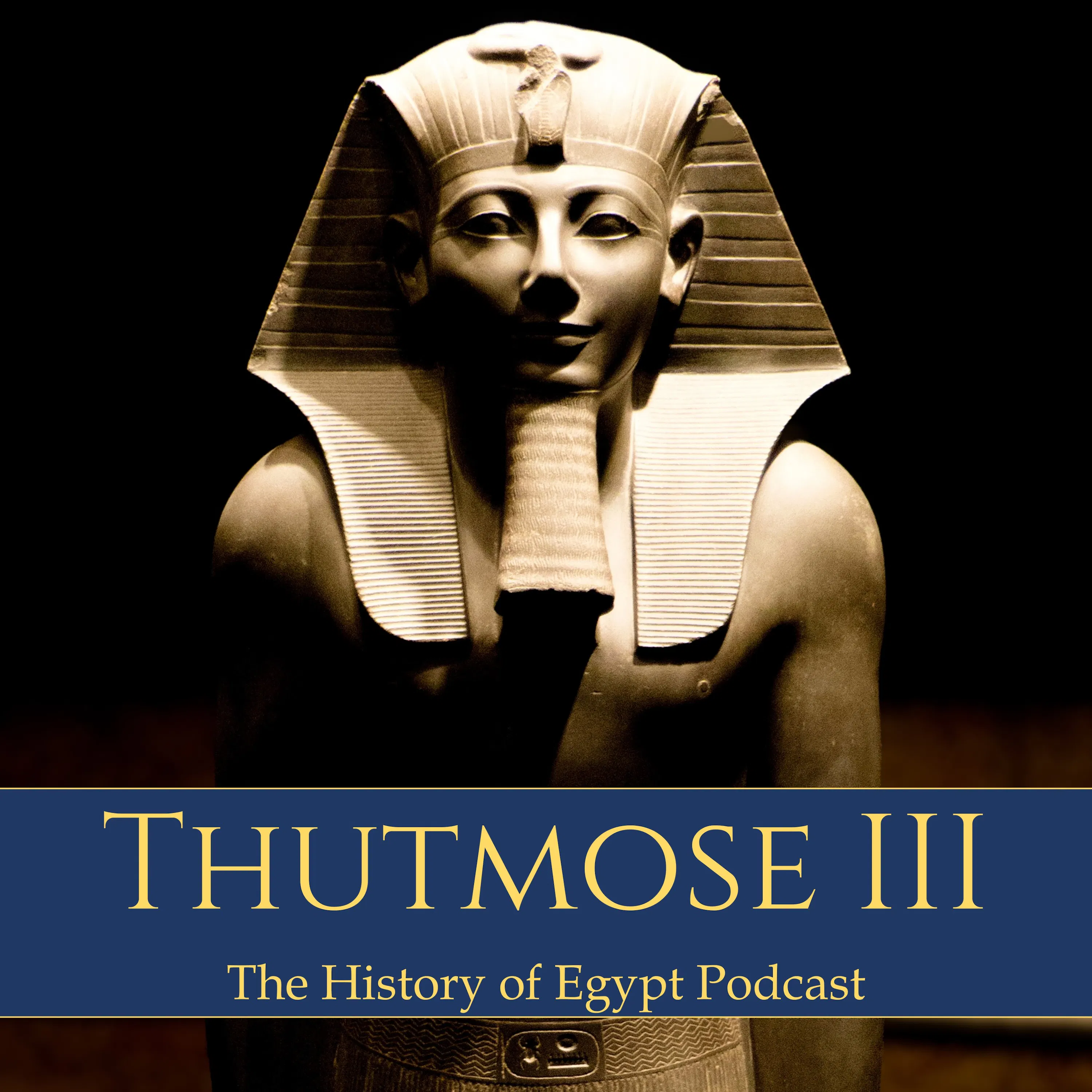
Thutmose III (Part 10): The End of a Mighty Reign. From 1450 to 1441, Thutmose lived out the last nine years of his reign. He commanded one last expedition; oversaw building projects, and brought his tomb to completion. Finally, he had to prepare for the succession, and his own inevitable death... Website: www.egyptianhistorypodcast.com. Support the show via Patreon www.patreon.com/egyptpodcast. Make a one-time donation via PayPal payments. Correction: at 48:10, I refer to the date of Amunhotep II's co-regency as 1441. This should be 1444 BCE. Select Bibliography: Articles Anson F. Rainey, “Amenhotep II’s Campaign to Takshy,” Journal of the American Research Center in Egypt (1973) JSTOR. Donald B. Redford, “The Coregency of Thutmosis III and Amenophis III,” Journal of Egyptian Archaeology (1965) JSTOR. George A. Reisner, “The Viceroys of Nubia,” Journal of Egyptian Archaeology (1920) JSTOR. Barbara A. Richter, “The Amduat and Its Relationship to the Architecture of Early 18th Dynasty Royal Burial Chambers,” Journal of the American Research Center in Egypt (2008) JSTOR. Books Eric Cline & David O’Connor (eds.), Thutmose III: A New Biography, 2006. Erik Hornung, The Ancient Egyptian Books of the Afterlife, 1999. Peter der Manuelian, Studies in the Reign of Amenophis II, 1987. H.S. Smith & W. B. Emery, The Fortress of Buhen, 1971-1979. Richard H. Wilkinson & Kent R. Weeks (eds.) The Oxford Handbook of the Valley of the Kings, 2016. Richard H. Wilkinson & Nicholas Reeves, The Complete Valley of the Kings, 2008. Websites University College London – website SLU – website Bernard M. Adams “My Luxor” – website Learn more about your ad choices. Visit megaphone.fm/adchoices
Osiris Festivals (Khoiak)
The Religious Year (Part 4): Hathor and Osiris. In the fourth month of the year, the Egyptians celebrated the end of the Nile flood (Akhet). With grand ceremonies to Hathor, Osiris and the god Sokar, they brought the first season of the year to a close. Website: www.egyptianhistorypodcast.com. Support the show via Patreon www.patreon.com/egyptpodcast. Make a one-time donation via PayPal payments. Select Bibliography: Stuart Tyson-Smith, “Raising the Djed-Pillar” (PDF) Richard H. Wilkinson, The Complete Gods and Goddesses of Ancient Egypt, 2003. University College London – Khoiak (Website) UCLA Encyclopedia of Egyptology – Sokar (Website) Learn more about your ad choices. Visit megaphone.fm/adchoices

75: Thutmose Triumphant
Thutmose III (Part 9): Home and Propaganda. From 1455-1450 BCE, Thutmose spent much of his time involved in domestic affairs. Unfortunately, this involved some very harsh policies towards his immediate predecessor... Update: Thutmose III probably reburied some of his immediate successors. In 2023, archaeologists may have found a tomb associated with one of these rulers. More information in the episode "News from the Field (2023 Review)" and on the website. Website: www.egyptianhistorypodcast.com. Support the show via Patreon www.patreon.com/egyptpodcast. Make a one-time donation via PayPal payments. Select Bibliography: Eric H. Cline and David O’Connor (eds.), Thutmose III: A New Biography, 2006. Sue D’Auria, “The Princess Baketamun,” Journal of Egyptian Archaeology 69 (1983) (JSTOR). Vanessa Davies, “Hatshepsut’s Use of Thutmosis III in Her Program of Legitimation,” Journal of the American Research Center in Egypt 41 (2004) (JSTOR). Aidan Dodson and Dyan Hilton, The Complete Royal Families of Ancient Egypt, 2004. Aidan Dodson, “Crown Prince Djhutmose and the Royal Sons of the Eighteenth Dynasty,” Journal of Egyptian Archaeology 76 (199) (JSTOR). Aidan Dodson, “Thutmosis III: Family Man,” The Ostracon: The Journal of the Egyptian Study Society 15, 2004. Nicolas Grimal, A History of Ancient Egypt, 1992. Dimitri Laboury, “Portrait versus Ideal Image” – UCLA Encyclopedia of Egyptology (Website). Dimitri Laboury, “Royal Portrait and Ideology: Evolution and Signification of the Statuary of Thutmose III,” Thutmose III: A New Biography, 2006 (Academia.edu). H. E. Winlock, “Notes on the Reburial of Thutmosis I,” Journal of Egyptian Archaeology, 15 (1929) (JSTOR). Scott Woodward, “Geneaology of New Kingdom Pharaohs and Queens,” Archaeology 49 (1996) (JSTOR). Learn more about your ad choices. Visit megaphone.fm/adchoices
74: Thutmose III, War Stories
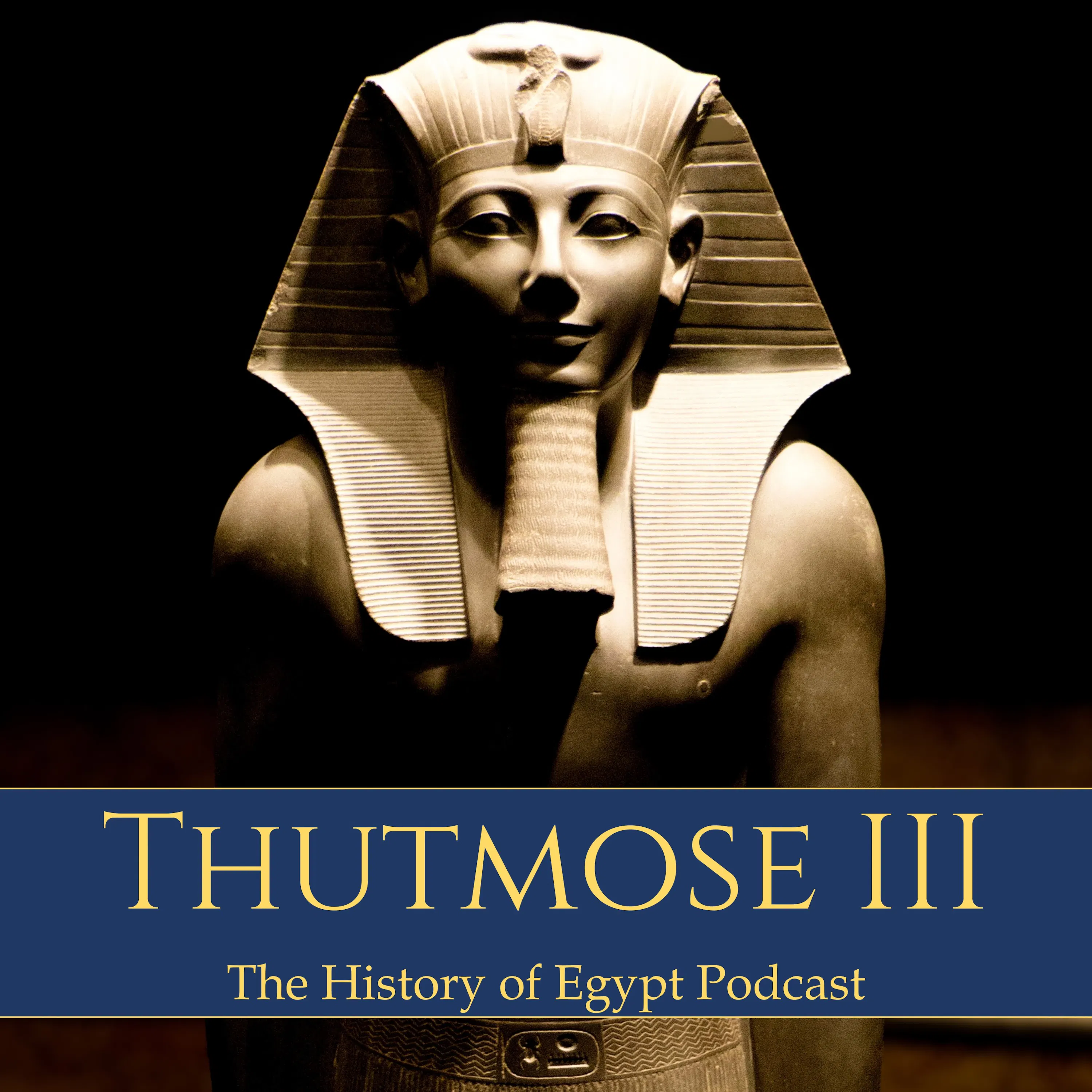
Thutmose III (Part 8): The Final Campaigns. After 20+ years of near-annual campaigning, Thutmose III finally came to the end of his military career. We explore the last ten years of this process in one sweep: successes (and failures) abound... Website: www.egyptianhistorypodcast.com. Support the show via Patreon www.patreon.com/egyptpodcast. Make a one-time donation via PayPal payments. Select Bibliography: Donald B. Redford, The Wars in Syria and Canaan of Thutmose III, 2003. Donald B. Redford, Egypt, Canaan and Israel in Ancient Times, 1992. Ellen Fowles Morris, The Architecture of Imperialism, 2005. Richard A. Gabriel, Thutmose III: A Military Biography, 2009. Colleen Manassa, Imagining the Past: Historical Fiction in New Kingdom Egypt, 2013. James K. Hoffmeier, “Aspects of Egyptian Foreign Policy in the 18th Dynasty in Western Asia and Nubia,” Penn State 2001. Norman de Garis Davies, “Foreigners in the Tomb of Amenemhab (No. 85),” Journal of Egyptian Archaeology 1934. Learn more about your ad choices. Visit megaphone.fm/adchoices
Hathor Festivals
The religious year (Part 3): Worshipping Hathor. The month of Hathor saw a concentrated effort on renewing fertility energies in the natural world. Festivals to the male god of sexual energy, and the widow and sister of Osiris dominated the time. Website: www.egyptianhistorypodcast.com. Support the show via Patreon www.patreon.com/egyptpodcast. Make a one-time donation via PayPal payments. Select Bibliography: Toby Wilkinson, The Complete Gods and Goddesses of Ancient Egypt, 2003. UCL – Festival Dates (website) Ancient Egypt Online – The Calendar (website) The Lamentations of Isis and Nephthys: Ancient.eu (website) Ancient Egyptian Literature (pdf) Learn more about your ad choices. Visit megaphone.fm/adchoices
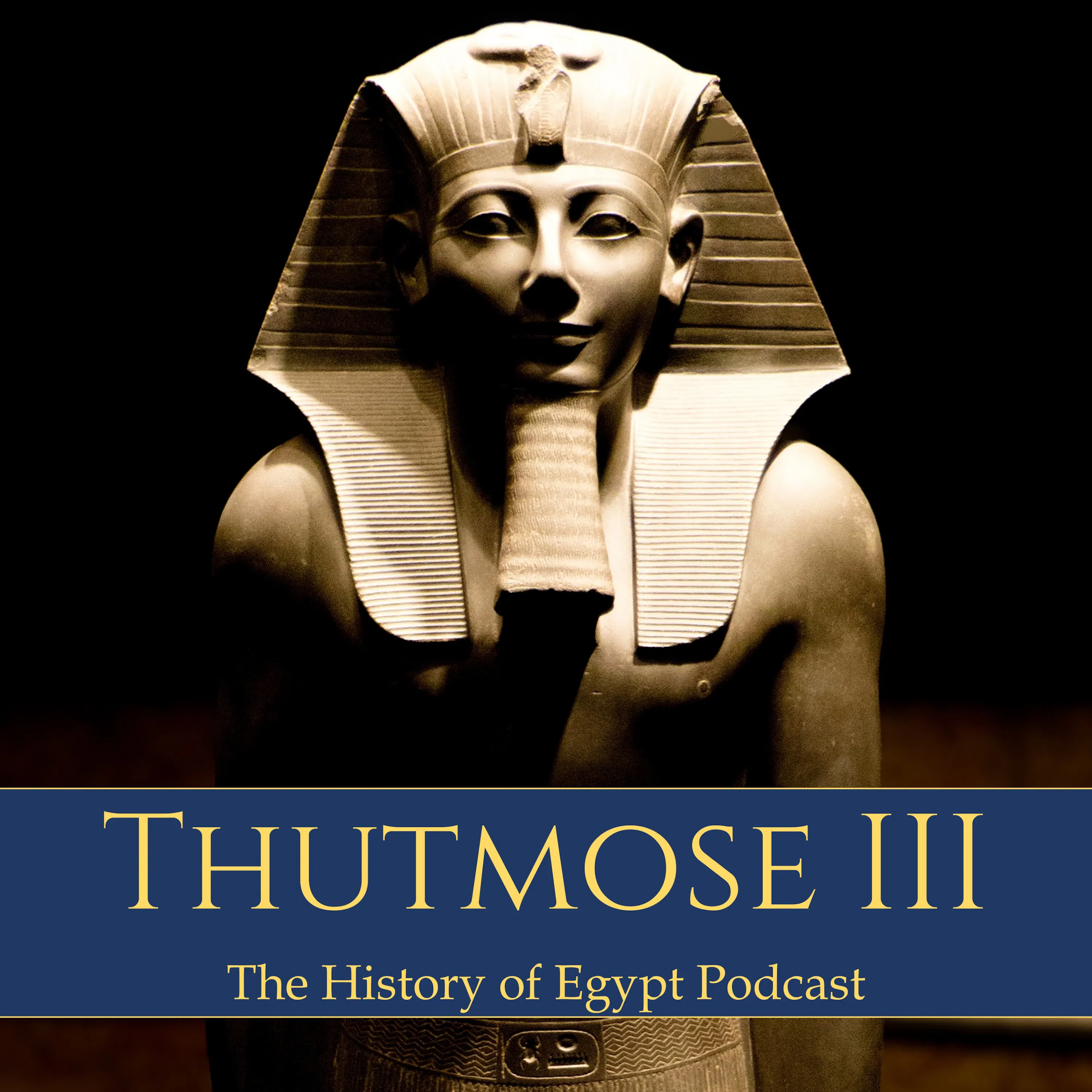
73: Three Brides for One Pharaoh
Thutmose III (Part 7): Diplomatic Marriage. After the brilliant campaign of year 33, Thutmose enjoys a period of peace and plenty. Foreign powers seek accommodation with the Egyptians, and this manifests in a series of remarkable diplomatic engagements... Website: www.egyptianhistorypodcast.com. Support the show via Patreon www.patreon.com/egyptpodcast. Make a one-time donation via PayPal payments. Select Bibliography: Herbert Winlock, The Treasure of Three Egyptian Princesses (1948). Christine Lilyquist (ed), The Tomb of Three Foreign Wives of Thutmosis III (2003). Nora E. Scott, “Egyptian Jewelry,” The Metropolitan Museum of Art Bulletin (March 1964). Donald B. Redford, The Wars in Syria and Palestine of Thutmose III (2003). Learn more about your ad choices. Visit megaphone.fm/adchoices
Opet Festivals
The Religious Year (Part 2): Worshipping Osiris. In the month of Pa-Opet ("Phaophi") the Egyptians continued their long re-enactment of the myth of Osiris. They also celebrated a huge festival in honour of the Pharaoh. And they mummifed a bunch of rams, for some reason... Website: www.egyptianhistorypodcast.com. Support the show via Patreon www.patreon.com/egyptpodcast. Make a one-time donation via PayPal payments. Select Bibliography: John Darnell, “Opet Festival,” UCLA Encyclopedia of Egyptology, 2010 (Online) Richard Wilkinson, The Complete Gods and Goddesses of Ancient Egypt, 2003. Anthony Spalinger, “The Limitations of Formal Ancient Egyptian Religion,” Journal of Near Eastern Studies 1998 (JSTOR) UCL Website – Festival Dates of Ancient Egypt (Online) Learn more about your ad choices. Visit megaphone.fm/adchoices
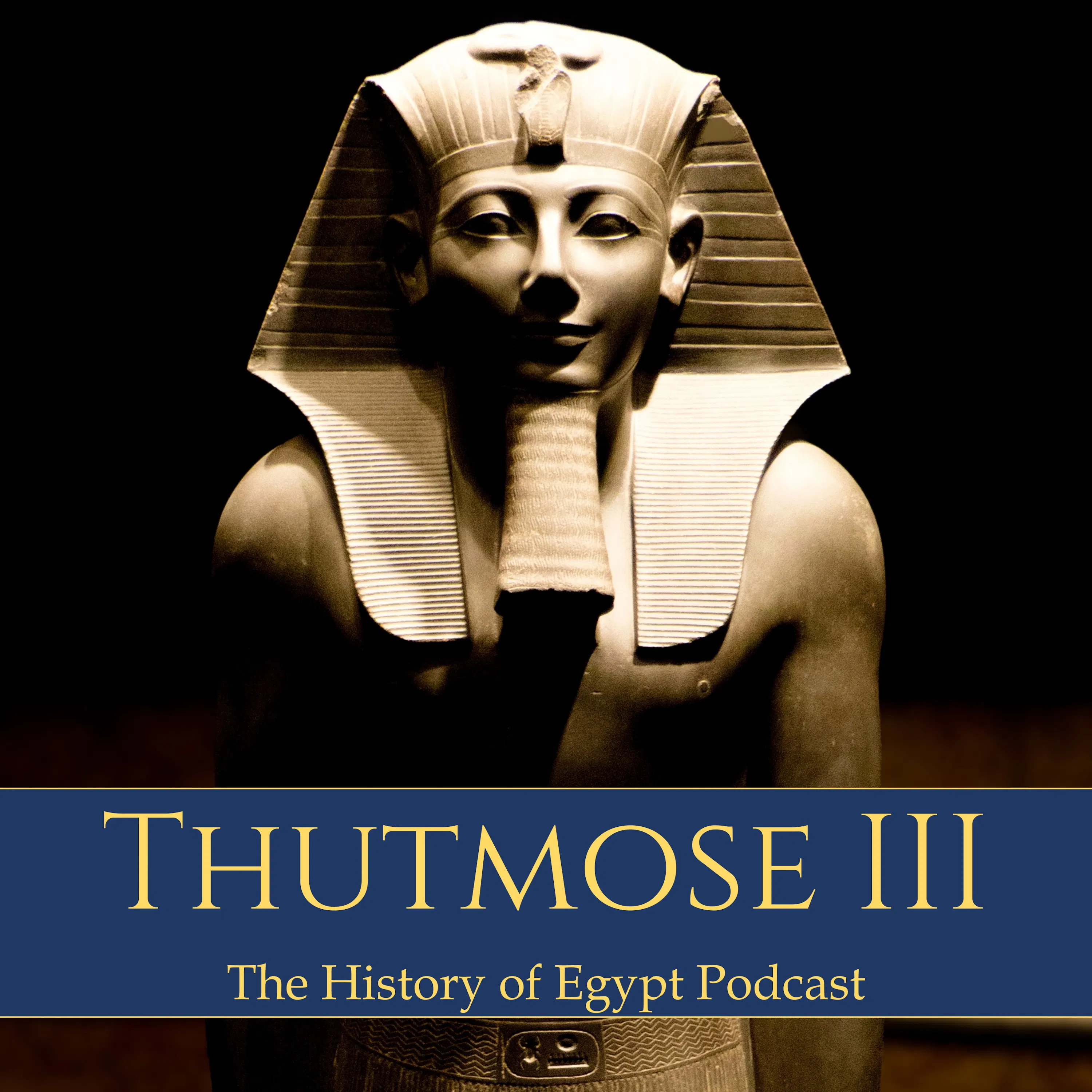
72: Letters to Ahmose
Busy Lives at Thebes. Personal correspondence is an exciting find for Egyptologists. It's even more wonderful when the letters come together to form a cohesive group, all related to one person. Come meet Ahmose, a letter writer from ancient Egypt... Website: www.egyptianhistorypodcast.com. Support the show via Patreon www.patreon.com/egyptpodcast. Make a one-time donation via PayPal payments. Select Bibliography: Edward F. Wente, Letters from Ancient Egypt, 1990. S.R.K. Glanville, “The Letters of Aahmose of Peniati,”Journal of Egyptian Archaeology 14 (1928) JSTOR T. Eric Peet, “Two Eighteenth Dynasty Letters,” Journal of Egyptian Archaeology 12 (1926) JSTOR Elizabeth Frood, “Social Structure and Daily Life,” in Toby Wilkinson (ed.) The Egyptian World 2010. Learn more about your ad choices. Visit megaphone.fm/adchoices
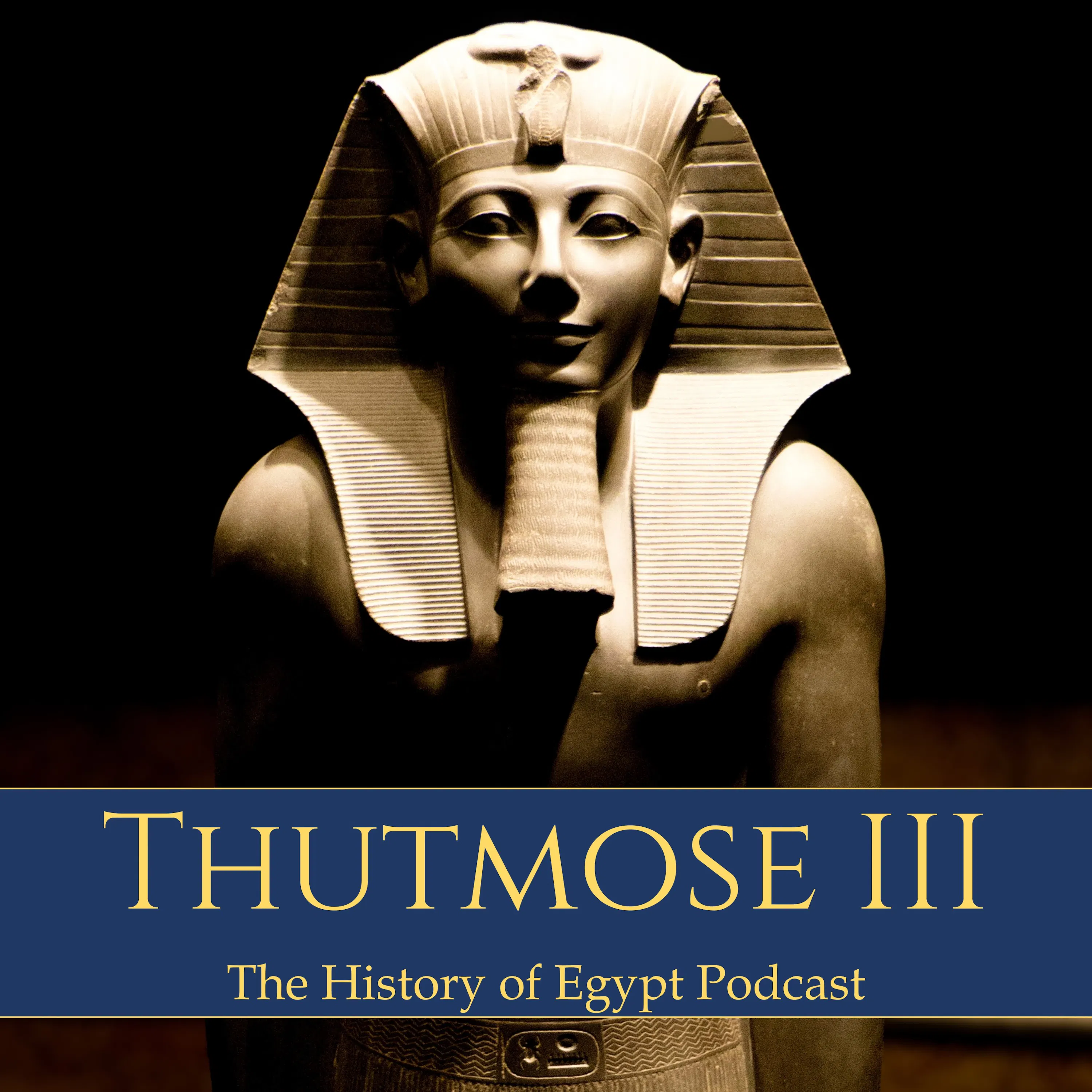
71: Thirty-Two Years Old, Thirty Years of Rule
Thutmose III (Part 6): The Sed-Festival. Three years before the Mitanni Campaign (Episode 70), Thutmose celebrated his first jubilee. To do that, he needed a new monument, a few gods, and the ancient equivalent of a baseball bat... Website: www.egyptianhistorypodcast.com. Support the show via Patreon www.patreon.com/egyptpodcast. Make a one-time donation via PayPal payments. Select Bibliography: J.G. Griffiths, “The Costume and Insignia of the King in the Sed-Festival,” Journal of Egyptian Archaeology 1955 (JSTOR). E.P. Uphill, “A Joint Sed-Festival of Hatshepsut and Thutmose III,” Journal of Near Eastern Studies 1961 (JSTOR). E.P. Uphill, “The Egyptian Sed-Festival Rites,” Journal of Near Eastern Studies, 1965 (JSTOR). A. Spalinger, “A Remark on Renewal,” Studien zur Altägyptischen Kultur 1990 (JSTOR). A. Spalinger, “The Festival Structure of Thutmose III’s Buto Stele,” Journal of the American Research Center in Egypt 1996 (JSTOR). Lana Troy, “Religion and Cult during the Time of Thutmose III,” in Thutmose III: A New Biography 2006. Learn more about your ad choices. Visit megaphone.fm/adchoices
Mini Episode: The First Pharaohs
Question: What does "Pharaoh" mean? A quick look at the word "Pharaoh:" what it means, how it came about, and why I very rarely use it in the Podcast (until now). Website: www.egyptianhistorypodcast.com. Support the show via Patreon www.patreon.com/egyptpodcast. Make a one-time donation via PayPal payments. Learn more about your ad choices. Visit megaphone.fm/adchoices
New Year Festivals
The Religious Year (Part 1): New Year. Welcome to a new series detailing the Egyptians' religious year, the major events and the gods they celebrated. Month number one was called "Tekh," and it heralded several important rituals. There were festivals of the Nile Flood (Hapi), festivals of the blessed dead (Wagy-and-Thoth), and the beginning of a multi-month re-enactment of the legends of the god Osiris. The Egyptians got up to all kinds of shenanigans... Website: www.egyptianhistorypodcast.com. Support the show via Patreon www.patreon.com/egyptpodcast. Make a one-time donation via PayPal payments. Select Bibliography: Katherine Eaton, “Monthly Lunar Festivals in the Mortuary Realm,” 2011 (JSTOR). William C. Hayes, The Sceptre of Egypt, 1959. Antony Leahy, “The Osiris ‘Bed’ Reconsidered,” 1977 (JSTOR). William Kelly Simpson (editor), The Literature of Ancient Egypt, 2003. Anthony Spalinger, “The Limitations of Formal Ancient Egyptian Religion,” 1998 (JSTOR). Richard H. Wilkinson, The Complete Gods and Goddesses of Ancient Egypt, 2003. Learn more about your ad choices. Visit megaphone.fm/adchoices
70: Thutmose III, the Napoleon of Egypt
Thutmose's Greatest Campaign. In 1462 BCE, approximately, King Men-kheperu-Re Thutmose III led his most daring campaign. He travelled far from Egypt to attack the heartland of Egypt's enemy, the Mitanni. What followed was one of the standout moves in ancient military history... Date c.1462 BCE. Website: www.egyptianhistorypodcast.com. Support the show via Patreon www.patreon.com/egyptpodcast. Make a one-time donation via PayPal payments. Select Bibliography: Donald B. Redford, Wars in Syria and Palestine of Thutmose III, 2003. Donald B. Redford, Egypt, Canaan and Israel in Ancient Times, 1992. Richard Gabriel, Thutmose III: A Military Biography, 2009. Betsy M. Bryan (editor), Creativity and Innovation in the Reign of Hatshepsut, 2014. Norman de Garis Davies, “Foreigners in the Tomb of Amenemhab,” Journal of Egyptian Archaeology, 1934 (JSTOR). Bettina Bader, “Egypt and the Mediterranean in the Bronze Age: the Archaeological Evidence,” Oxford Handbooks Online, 2015. Learn more about your ad choices. Visit megaphone.fm/adchoices
69: When Pharaohs Met Minoans
Foreign Lands, Foreign Peoples. We take a break from the reign of Thutmose III to meet some of Egypt's neighbours. The people of Crete (Keftiu), Cyprus (Alashiya), and Byblos (Kupna / Gubla) made significant contributions to their world. We meet some of them. Oh, and there's a goofy poem at the end... Date. 1465 BCE. Website: www.egyptianhistorypodcast.com. Support the show via Patreon www.patreon.com/egyptpodcast. Make a one-time donation via PayPal payments. Music by Keith Zizza www.keithzizza.com. Select Bibliography: Donald B. Redford, The Wars in Syria and Palestine of Thutmose III, 2003. Donald B. Redford, Egypt, Canaan and Israel in Ancient Times, 1992. Yannis Galanakis, The Aegean World: A Guide to the Cycladic, Minoan and Mycenean Antiquities in the Ashmolean Museum, 2013. Richard A. Gabriel, Thutmose III: A Military Biography, 2009. Shelley Wachsmann, Seagoing Ships and Seamanship in the Bronze Age Levant, 2008 (Google Books). Eric H. Cline & David O’Connor, Thutmose III: A New Biography, 2006. H.R. Hall, “Keftiu and the Peoples of the Sea,” 1902 (JSTOR). J.B. Pritchard, “Syrians as Pictured in the Paintings of the Theban Tombs,” 1951 (JSTOR). M.H. Wiener, “Neo-Palatial Knossos: Rule and Role,” 2007 (malcolmweiner.net – ignore Google Warning, false flag). R. van Dijk, “Bull-Leaping in the Ancient Near East,” 2013 (Academia.edu). Learn more about your ad choices. Visit megaphone.fm/adchoices
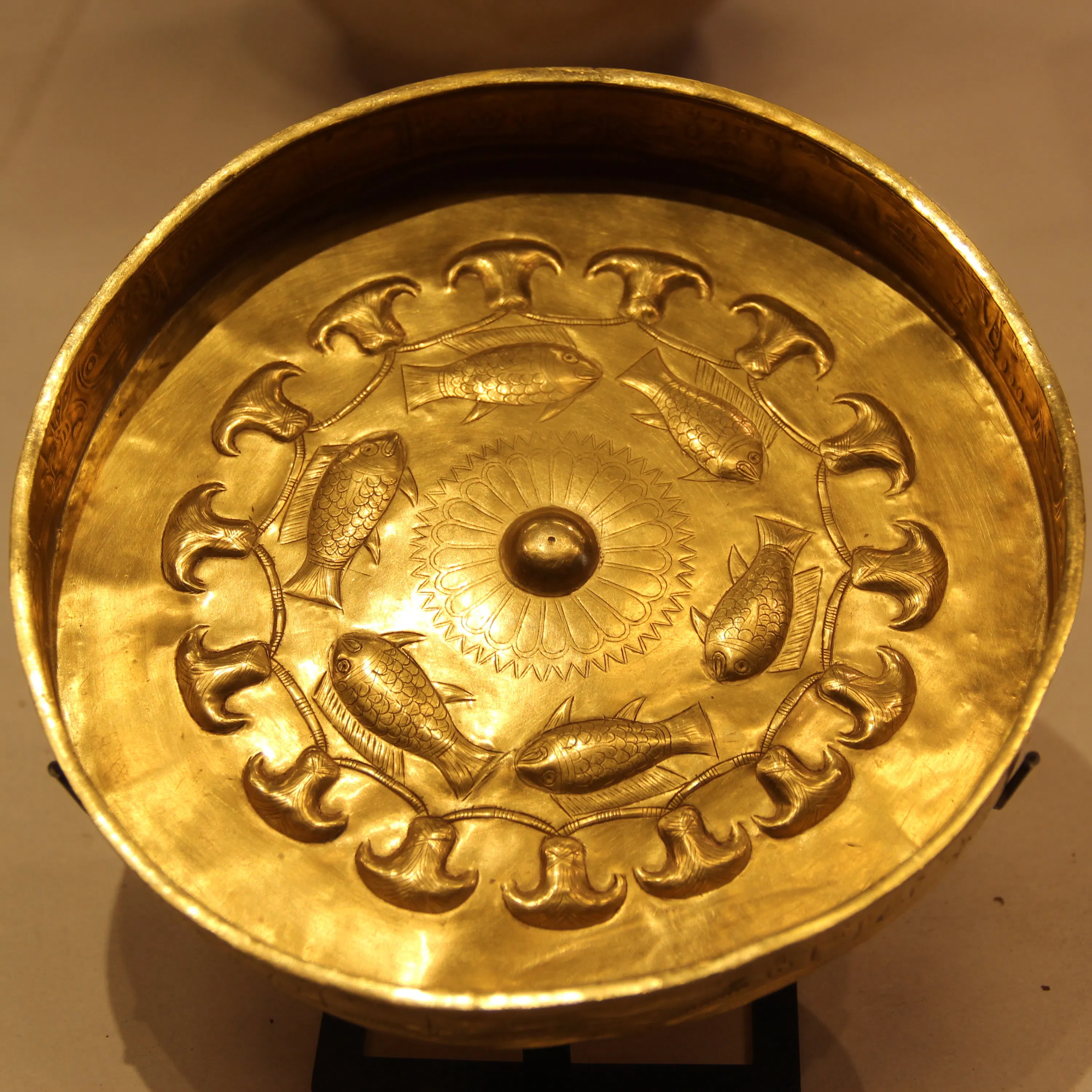
68b: Deception at Joppa
Troy before Troy. In the reign of Thutmose III, the Egyptian general Djehuty led a siege at Joppa (Yappho / Yafa, in modern Tel Aviv). The enemy were resisting all attempts to break in. Until Djehuty had a cunning plan... Logo: A gold cupt belonging to the general Djehuty, from his tomb at Saqqara (Louvre). Date c. 1465 BCE. Website: www.egyptianhistorypodcast.com. Support the show via Patreon www.patreon.com/egyptpodcast. Make a one-time donation via PayPal payments. Music by Michael Levy www.ancientlyre.com. Select Bibliography: Anthony Spalinger, War in Ancient Egypt, 2005 William K. Simpson, The Literature of Ancient Egypt, 2003 Colleen Manassa, Imagining the Past: Historical Fiction in New Kingdom Egypt, 2013 Learn more about your ad choices. Visit megaphone.fm/adchoices
68: The Countless Victories of Thutmose III
Submissions and Settlements. After his victory at Megiddo, King Thutmose III began to organise his new conquests. The lands of Canaan and Syria were transformed, as the Egyptians built a network of garrisons, supply depots, and fortresses. Step-by-step, they built their military capability and their empire... Date c.1470 BCE. Website: www.egyptianhistorypodcast.com. Support the show via Patreon www.patreon.com/egyptpodcast. Make a one-time donation via PayPal payments. Music by Keith Zizza www.keithzizza.com. Select Bibliography: Anthony Spalinger, War in Ancient Egypt, 2004; Nicolas Grimal, A History of Ancient Egypt, 1994; Richard A. Gabriel, Thutmose III: A Military Biography, 2009; Donald Redford, The Wars in Syria and Palestine of Thutmose III, 2003; Eric Cline & David O’Connor (eds), Thutmose III: A New Biography, 2006; Manfred Bietak, “Peru-Nefer: The Principle New Kingdom Naval Base,” 2009; Learn more about your ad choices. Visit megaphone.fm/adchoices
67b: The Battle of Megiddo (A Dramatic Reading)
A royal drama. In this episode, we replay the "official account" of Thutmose III's great victory at Megiddo. Drawing on the King's own proclamations, and using the voices of some other podcasters, we bring the story to life... Date c.1473 BCE. Website: www.egyptianhistorypodcast.com. Support the show via Patreon www.patreon.com/egyptpodcast. Make a one-time donation via PayPal payments. Dramatic readings provided by Elias Belhaddad (The History of Islam), Ben Jacobs (Wittenberg to Westphalia), Travis J Dow (History of Germany), Steve Guerra (History of the Papacy), Thomas Daly (American Biography), David Crowther (The History of England), Erik Fogg (ReConsider). Select Bibliography: Toby Wilkinson, Writings from Ancient Egypt, 2016 (text). Hans Goedicke, The Battle of Megiddo, 2000. Miriam Lichtheim, Ancient Egyptian Literature, Vol. 2. Donald B. Redford, The Wars in Syria and Palestine of Thutmose III, 2003. Anthony Spalinger, War in Ancient Egypt, 2005. Learn more about your ad choices. Visit megaphone.fm/adchoices
67: The Battle of Megiddo
Armageddon. Around 1473 BCE, Thutmose III faced a rebellion, when enemies in Canaan gathered to oppose him. The King of Egypt had a choice: destroy his foes, or risk losing the empire. Battle, chaos, and Monty Python ensued... Date c. 1473 BCE. Website: www.egyptianhistorypodcast.com. Support the show via Patreon www.patreon.com/egyptpodcast. Make a one-time donation via PayPal payments. Music by Keith Zizza www.keithzizza.com. Select Bibliography: Hans Goedicke, The Battle of Megiddo, 2000. Toby Wilkinson, Writings from Ancient Egypt, 2016. Richard A. Gabriel, Thutmose III: A Military Biography, 2009. Donald Redford, The Wars in Syria and Palestine of Thutmose III, 2003. Eric Cline & David O’Connor (eds), Thutmose III: A New Biography, 2006. Learn more about your ad choices. Visit megaphone.fm/adchoices
66: An Awkward Transition
Hatshepsut's Last Years. After a long life and successful reign, Ma'at-Ka-Re Hatshepsut died. We wrap up her story, review her legacy, and review some standout events. Plus, we dig into the mystery of her tomb. Do we have Hatshepsut's mummy? There are many questions... Date c.1473 BCE. Website: www.egyptianhistorypodcast.com. Support the show via Patreon www.patreon.com/egyptpodcast. Make a one-time donation via PayPal payments. Follow us on social media www.facebook.com/egyptpodcast and www.twitter.com/egyptianpodcast. Select Bibliography: Kara Cooney, The Woman Who Would Be King, 2014. Peter F. Dorman, The Monuments of Senenmut, 1988. Richard A. Gabriel, Thutmose III: A Military Biography, 2009. Alan R. Schulman, “Some Remarks on the Alleged “Fall” of Senenmut,” JARCE 8 (1969). Filip Taterka, “Hatshepsut and Senenmut or the Secret Affairs of the Egyptian State,” in D. Lewandowska et al (eds.), Cupido Dominandi (2015). Betsy M. Bryan et al (eds.), Creativity and Innovation in the Reign of Hatshepsut (2014). Learn more about your ad choices. Visit megaphone.fm/adchoices
Thutmose III, Child-King
The prince Thutmose III. It's time to catch-up with the "other" King of Egypt. Thutmose III, still young, spent his early years in the palace, learning the arts of rule. He learned religious rituals, literacy, and skills in fighting. In this episode, we explore the young King's life through two institutions: the army and the royal palace "harem." Date c.1480 BCE. Website: www.egyptianhistorypodcast.com. Support the show via Patreon www.patreon.com/egyptpodcast. Make a one-time donation via PayPal payments. Follow us on social media www.facebook.com/egyptpodcast and www.twitter.com/egyptianpodcast. Select Bibliography: Anthony Spalinger, War in Ancient Egypt, 2005. Richard Gabriel, Thutmose III: A Military Biography, 2009. Eric Cline (editor), Thutmose III: A New Biography, 2006. Juan Carlos Moreno García (editor), Ancient Egyptian Administration, 2013. Kara Cooney, The Woman Who Would Be King, 2014. Betsy M. Bryan (editor), Creativity and Innovation in the Reign of Hatshepsut, 2014. Learn more about your ad choices. Visit megaphone.fm/adchoices
65b: Two Texts of Hatshepsut
The Punt Expedition and the Speos Artemidos. We take a short break from the narrative, to explore two important texts from Hatshepsut's reign. These are the records of the Punt Expedition, and a propaganda text from the Speos Artemidos, a temple in middle Egypt. Guest vocals by Anya Banerjee. Date c.1480 BCE. Website: www.egyptianhistorypodcast.com. Support the show via Patreon www.patreon.com/egyptpodcast. Make a one-time donation via PayPal payments. Follow us on social media www.facebook.com/egyptpodcast and www.twitter.com/egyptianpodcast Select Bibliography: James H. Breasted, Ancient Records of Egypt, volume II, 1906. Edouard Naville, The Temple of Deir el-Bahari, volume III, 1898. James P. Allen, The Speos Artemidos Inscription of Hatshepsut, Bulletin of the Egyptological Seminar 16, 2012. Learn more about your ad choices. Visit megaphone.fm/adchoices
65: Hatshepsut of Millions of Years
A Sed-Festival. By 1485 BCE, Hatshepsut's subjects were bustling to prepare her grand jubilee. The sed-festival, held in year 16, celebrated an anniversary. But, an anniversary of what, exactly? Date c.1485 BCE. Website: www.egyptianhistorypodcast.com. Support the show via Patreon www.patreon.com/egyptpodcast. Make a one-time donation via PayPal payments. Follow us on social media www.facebook.com/egyptpodcast and www.twitter.com/egyptianpodcast Select Bibliography: Kara Cooney, The Woman Who Would be King, 2014. Peter Dorman, The Monuments of Senenmut, 1988. Alan B. Lloyd, A Companion to Ancient Egypt, 2010. William Hayes, The Scepter of Egypt, volume II, 1978 (Book Online). Todd Gillen, The Historical Inscription on Queen Hatshepsut’s Chapelle Rouge, 2005 (Article Online). Websites: UCL – Hatshepsut UCLA – Digital Karnak, time of Hatshepsut Maat-ka-ra.de – the Speos Artemidos Learn more about your ad choices. Visit megaphone.fm/adchoices
64: Beloved Uncle
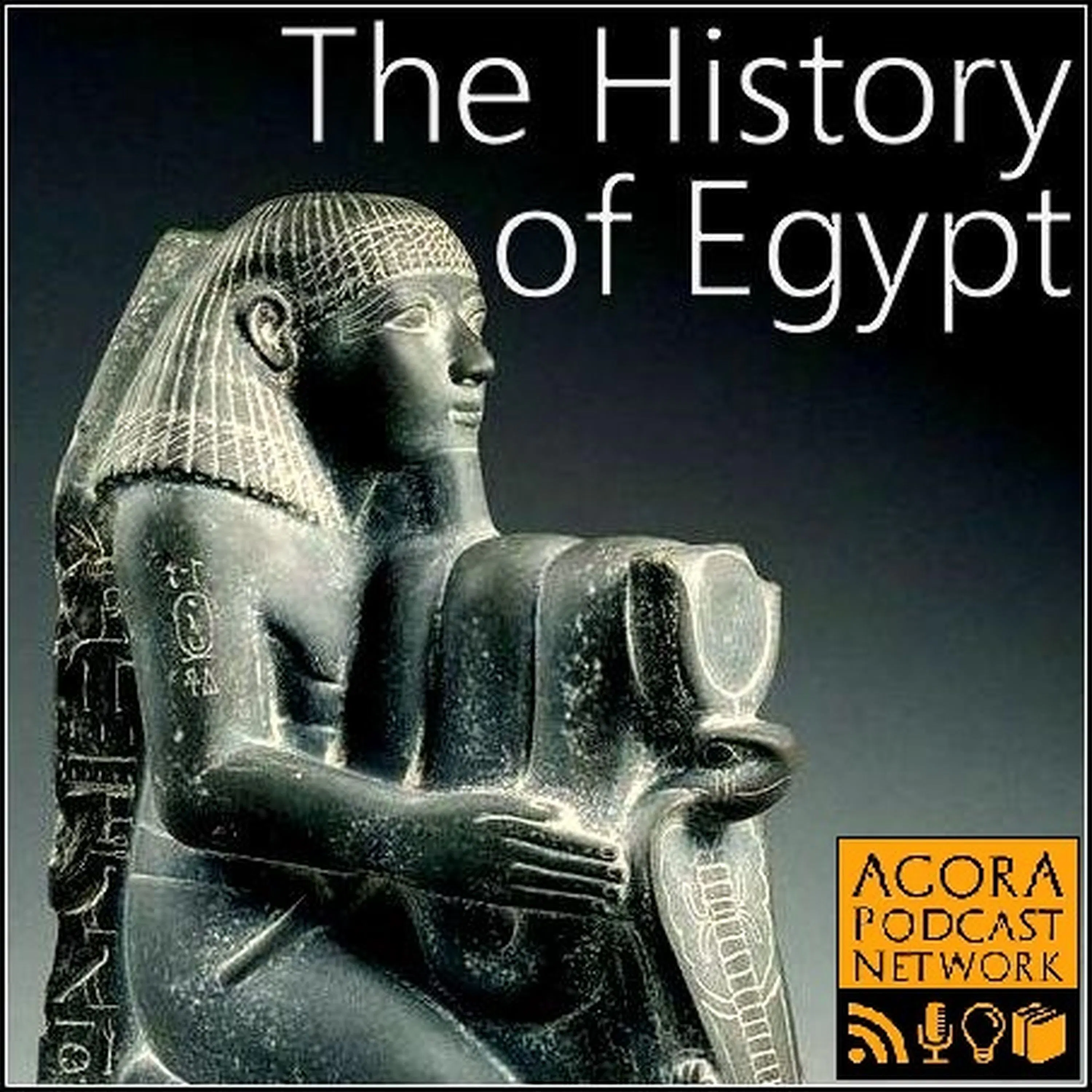
Hatshepsut's Trusted Advisor. As Hatshepsut's power grew, so did that of Senenmut. A royal courtier, Senenmut found his career accelerating in tandem with the new King. In this episode, we follow Senenmut from his early upbringing to the corridors of power, and his victory over his rivals... Date c.1495-1485 BCE. Website: www.egyptianhistorypodcast.com. Support the show via Patreon www.patreon.com/egyptpodcast. Make a one-time donation via PayPal payments. Follow us on social media www.facebook.com/egyptpodcast and www.twitter.com/egyptianpodcast. Select Bibliography: Peter Dorman, The Monuments of Senenmut, 1988. Ben Haring, “The Rising Power of the House of Amun in the New Kingdom,” in Ancient Egyptian Administration, 2013, read online. Bernard V. Bothmer, Egyptian Art: Selected Writings of Bernand V. Bothmer, 2004, read online. Edward F. Wente, “Some Graffiti of the Reign of Hatshepsut,” 1984, read online. Kahtryn Bard, The Encyclopedia of the Archaeology of Ancient Egypt, 2005. Kara Cooney, The Woman Who Would Be King, 2014. Maat-ka-Re.de – Senenmut Digital Karnak – The Obelisks of Hatshepsut/Senenmut SLU.edu – Senmut Ancient Egypt Online – Neferure Learn more about your ad choices. Visit megaphone.fm/adchoices
63: Hatshepsut's Excellent Adventure
The Great Expedition to Punt. In 1488 BCE, King Hatshepsut launched her most famous project. A fleet of ships sailed down the Red Sea coast, in order to visit the land of Punt. There, they gathered trade goods, and met some truly fascinating locals... Date c.1488 BCE. Website: www.egyptianhistorypodcast.com. Support the show via Patreon www.patreon.com/egyptpodcast. Make a one-time donation via PayPal payments. Follow us on social media www.facebook.com/egyptpodcast and www.twitter.com/egyptianpodcast. Select Bibliography: Ian Shaw (ed.), The Oxford History of Ancient Egypt, 2000. Kara Cooney, The Woman Who Would Be King, 2014. Nicolas Grimal, A History of Ancient Egypt, 1994. James H. Breasted, Ancient Records of Egypt, 1906. Gay Robins, The Art of Ancient Egypt, 2006. Catherine A. Roehrig (editor), Hatshepsut: From Queen to Pharaoh, 2005. Edouard Naville, The Temple of Deir el-Bahari, vols. V and VI, 1906. Betsy M. Bryan (editor), Creativity and Innovation in the Reign of Hatshepsut, 2014. Learn more about your ad choices. Visit megaphone.fm/adchoices

Hatshepsut the Queen-King with Prof. Kara Cooney
Interview recorded 2020. The Impact of Hatshepsut's Reign on the Royal House of Dynasty 18. Kara (Kathlyn) Cooney is professor of Egyptian Art and Architecture at the University of California Los Angeles (UCLA). In this interview, we discuss her book The Woman Who Would be King, and her research into the reign and legacy of King Hatshepsut. Episode image: a statue of Hatshepsut, in the Metropolitan Museum of Art, New York. Kara Cooney's website http://karacooney.squarespace.com/ and Facebook https://www.facebook.com/karacooneyegyptologist/ Website: www.egyptianhistorypodcast.com. Support the show via Patreon www.patreon.com/egyptpodcast. Make a one-time donation via PayPal payments. Intro music and interludes by Keith Zizza www.keithzizza.com. Outro music by Ancient Lyric www.bettinajoydeguzman.com. Learn more about your ad choices. Visit megaphone.fm/adchoices
62b: The Divine Birth of Hatshepsut
Amun Creates Hatshepsut. In a short break, we explore the tale Hatshepsut told about her origins. She ascribed her creation and birth to the King of the Gods, Amun-Ra himself. In this dramatic recount, we go through the whole story (as it survives). Date c.1520 BCE. Website: www.egyptianhistorypodcast.com. Support the show via Patreon www.patreon.com/egyptpodcast. Make a one-time donation via PayPal payments. Follow us on social media www.facebook.com/egyptpodcast and www.twitter.com/egyptianpodcast. Learn more about your ad choices. Visit megaphone.fm/adchoices
62: Holy of Holies
Hatshepsut, King of Egypt. In 1488 BCE, Hatshepsut made her most daring move. She pushed her newphew (Thutmose III) to one side and proclaimed herself King of Upper and Lower Egypt. At a stroke, Egypt had two kings, ruling at once... Date c.1488 BCE. Website: www.egyptianhistorypodcast.com. Support the show via Patreon www.patreon.com/egyptpodcast. Make a one-time donation via PayPal payments. Follow us on social media www.facebook.com/egyptpodcast and www.twitter.com/egyptianpodcast Select Bibliography: Gay Robins, The Art of Ancient Egypt, 2008. Nicolas Grimal, A History of Ancient Egypt, 1994. Kara Cooney, The Woman Who Would be King, 2014. James H. Breasted, Ancient Records of Egypt, vol. II, 1906. Catherine A. Roehrig (editor), Hatshepsut: From Queen to Pharaoh, 2005. Edouard Naville, The Temple of Deir el-Bahari, vols. V and VI, 1906. Marta Sankiewicz, “The ‘co-regency’ of Hatshepsut and Thutmose III in light of iconography in the temple of Hatshepsut at Deir el-Bahari,” Current Research in Egyptology 2010, 2011. Read Online. Betsy M. Bryan (editor), Creativity and Innovation in the Reign of Hatshepsut, 2014. Learn more about your ad choices. Visit megaphone.fm/adchoices
61: Hatshepsut, Queen-King of Egypt
Hatshepsut (Part 1): Gathering Power. For the first five years of her rule, Hatshepsut was (officially) a caretaker for the throne. But power inevitably gathered around the powerful woman, and she knew it... Date c.1495 - 1490 BCE References and images at www.egyptianhistorypodcast.com. Support the show via Patreon www.patreon.com/egyptpodcast. Make a one-time donation via PayPal payments. Select Bibliography: Kara Cooney, The Woman Who Would be King, 2014. Google Books. Catherine A. Roehrig, Hatshepsut – From Queen to Pharaoh, 2005. Multiple articles. FREE Pdf from Metropolitan Museum of Art. Betsy M. Bryan et al., Creativity and Innovation in the Reign of Hatshepsut, 2014. Multiple articles. FREE Pdf from the University of Chicago. Ineni Biography, translated by Mark Jan Nederhof: Part I; Part II; Part III. Officials, Appointees etc. University College London website Saint Louis University website Maat-ka-re.de website Learn more about your ad choices. Visit megaphone.fm/adchoices

60: Thutmosid Family Values
Introducing Hatshepsut. For a decade or more, King Thutmose I ruled a stable kingdom. Unfortunately, this king gets overshadowed by his daughter, whom he may have groomed for power... Dates c.1519 - 1505 BCE. Website: www.egyptianhistorypodcast.com. Support the show via Patreon www.patreon.com/egyptpodcast. Make a one-time donation via PayPal payments. Follow us on social media www.facebook.com/egyptpodcast and www.twitter.com/egyptianpodcast. Select Bibliography: Nicolas Grimal, A History of Egypt, 1994. Kara Cooney, The Woman Who Would Be King, 2014. Catherine H. Roehrig, editor, Hatshepsut: Queen to Pharaoh, 2005. Free PDF from Metropolitan Museum of Art. Betsy M. Bryan, “The 18th Dynasty Before the Amarna Period,” in Ian Shaw (editor), The Oxford History of Ancient Egypt, 2000. Ineni Biography, translated by Mark Jan Nederhof: Part I; Part II; Part III. Learn more about your ad choices. Visit megaphone.fm/adchoices
59: The Song of Thutmose
Terrible deeds... and great. In his first few years King Thutmose I led campaigns, managed his household, and commissioned his royal tomb. He launched a campaign into Nubia, pursuing conquest and booty. Unfortunately, his methods were rather horrific... Date c.1515 BCE Website: www.egyptianhistorypodcast.com. Support the show via Patreon www.patreon.com/egyptpodcast. Make a one-time donation via PayPal payments. Follow us on social media www.facebook.com/egyptpodcast and www.twitter.com/egyptianpodcast. Select Bibliography: Anthony Spalinger, War in Ancient Egypt, 2006. Nicolas Grimal, A History of Ancient Egypt, 1994. Ian Shaw (ed.), The Oxford History of Ancient Egypt, 2000. W. Vivian Davies, “The Tomb of Ahmose son-of-Ibana at Elkab: Documenting the Family and Other Observations,” 2009. Read online. osiris.net the tomb of Paheri the tomb of Ahmose Ibana Learn more about your ad choices. Visit megaphone.fm/adchoices
58: The Great Turnaround
Conquering Syria. Around 1519 BCE a new King came to power. Thutmose I (Aa-kheper-ka-Re) immediately began securing his rule. He married a cousin (or sister) of his predecessor, then launched two military campaigns. In the process he travelled further than any ruler had done before... Date c.1519 BCE Website: www.egyptianhistorypodcast.com. Support the show via Patreon www.patreon.com/egyptpodcast. Make a one-time donation via PayPal payments. Follow us on social media www.facebook.com/egyptpodcast and www.twitter.com/egyptianpodcast. Select Bibliography: Anthony Spalinger, War in Ancient Egypt, 2005. Nicolas Grimal, A History of Ancient Egypt, 1994. Aidan Dodson and Dyan Hilton, The Complete Royal Families of Ancient Egypt, 2004 and 2010. James Breasted, A History of Egypt, 1905, 1909 and 1964. James Breasted, Records of Ancient Egypt, Volume II, 1906. Learn more about your ad choices. Visit megaphone.fm/adchoices
57: All Things Good and Pure
Amunhotep I and the Splendour of Thebes. The podcast returns from hiatus, following the death of a close family member. Around 1530 BCE, King Ahmose I died and Amunhotep I came to power. At this time, the city of Waset (Thebes) was beginning to gain wealth and prominence, thanks to the exploits of its military. Prosperity grew and non-royal tombs show a growing sense of vitality... Date c.1530 BCE Website: www.egyptianhistorypodcast.com. Support the show via Patreon www.patreon.com/egyptpodcast. Make a one-time donation via PayPal payments. Follow us on social media www.facebook.com/egyptpodcast and www.twitter.com/egyptianpodcast Select Bibliography: Sjef Willockx, “Three Tombs, attributed to Amenhotep I“ Aidan Dodson and Dyan Hilton. The Complete Royal Families of Ancient Egypt, 2010. Nicolas Grimal. A History of Ancient Egypt, 1994. Anthony J. Spalinger. War in Ancient Egypt, 2005. Ian J. Shaw (ed.) – The Oxford History of Ancient Egypt, 2000 (Google Books) Leonard H. Lesko (ed.) – Pharaoh’s Workers: The Villagers of Deir el-Medina, 1994. Emily Teeter, Religion and Ritual in Ancient Egypt, 2011. William Peck, The Material World of Ancient Egypt, 2013. Reshafim.org – The Autobiography of Ahmose Ibana. Reshafim.org – The Autobiography of Ahmose Pen-Nekhbet. semataui.de – Amunhotep I (website) ucl.ac.uk – Amunhotep I (website) euler.slu.edu – Amunhotep I (website) Learn more about your ad choices. Visit megaphone.fm/adchoices
Dancers for God
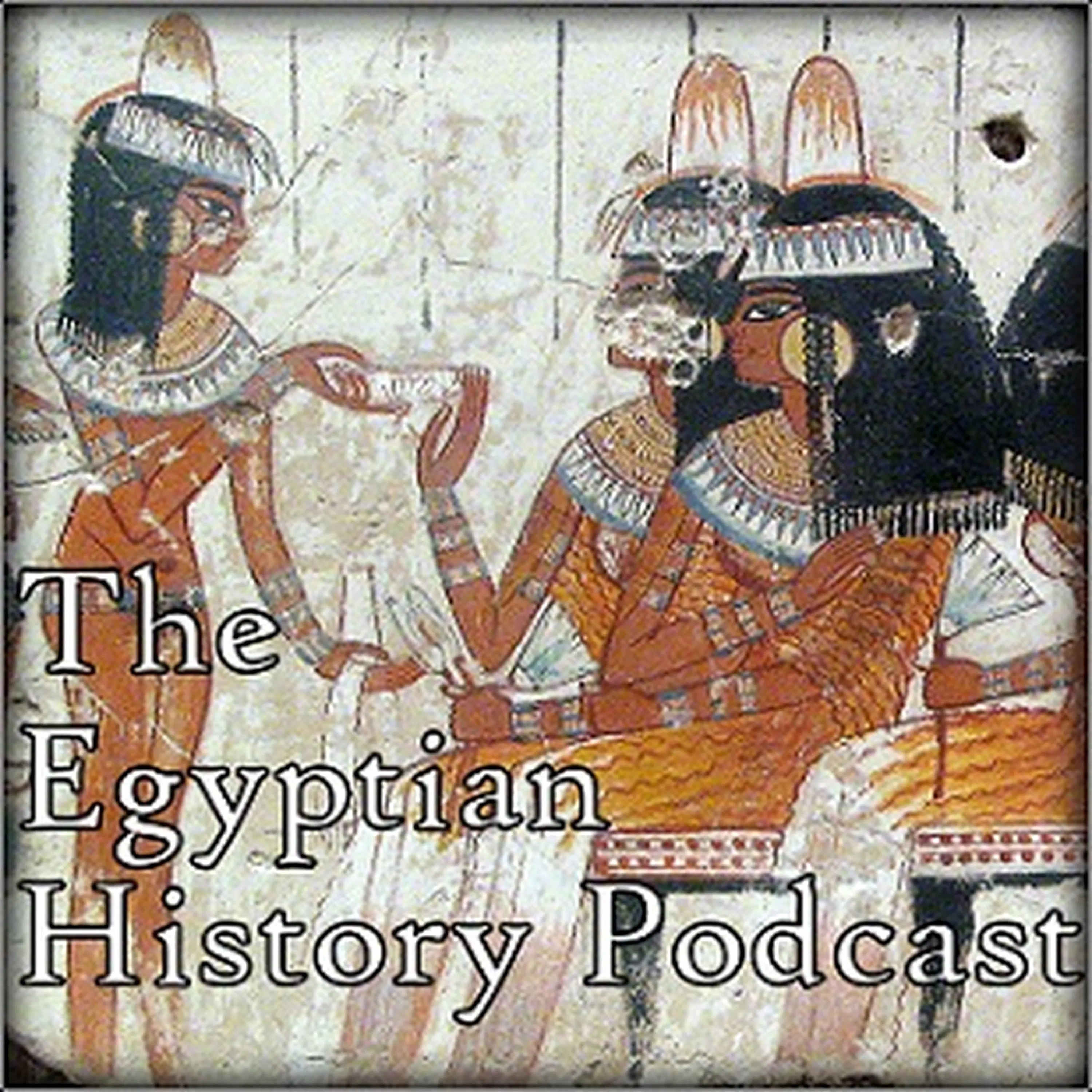
Interlude: Dance the Magic Dance! Egyptians had many festivals, and they celebrated these with great energy. Whether it was dancing for a wealthy hostess, or leaping over charging bulls, or just getting totally drunk at a festival, the Egyptians did it all... Website: www.egyptianhistorypodcast.com. Support the show via Patreon www.patreon.com/egyptpodcast. Make a one-time donation via PayPal payments. Select Bibliography: Adolf Erman, Life in Ancient Egypt, 1894 (1971 edition). Barbara Mertz, Red Land Black Land:Daily Life in Ancient Egypt, 1966 (2009 edition). Emily Teeter, Religion and Ritual in Ancient Egypt, 2011. William Kelly Simpson(editor), The Literature of Ancient Egypt, 2003. Learn more about your ad choices. Visit megaphone.fm/adchoices
56c: A Royal Funeral
How to Bury a King. Around 1530 BCE, King Ahmose I died. With his death and burial, the Second Intermediate Period ended and the New Kingdom began. We explore the funeral of a truly great monarch... Date c. 1530 BCE. Website: www.egyptianhistorypodcast.com. Support the show via Patreon www.patreon.com/egyptpodcast. Make a one-time donation via PayPal payments. Follow us on social media www.facebook.com/egyptpodcast and www.twitter.com/egyptianpodcast. Select Bibliography: Emily Teeter. Religion and Ritual in Ancient Egypt. 2011. Steven Snape. Ancient Egyptian Tombs: the Culture of Life and Death. 2011. Google Books. Aidan Dodson. “The Burials of Ahmose I” in Studies in Honor of Kent R. Weeks. 2010. Edward F. Wente. “Who Was Who Among the Royal Mummies.” 1995. Read for Free Here. Follow-up discussion by the same author here. University College London website – The Opening of the Mouth. Learn more about your ad choices. Visit megaphone.fm/adchoices
56b: Restoring Splendour
A Kingdom Resurgent. Around 1540 BCE, the warriors of Thebes (Waset) were chasing their enemies. King Ahmose I and his soldiers pursued the Hyksos, straining to reach that ultimate victory, and re-unify The Two Lands. Date c. 1540 BCE. Website: www.egyptianhistorypodcast.com. Support the show via Patreon www.patreon.com/egyptpodcast. Make a one-time donation via PayPal payments. Follow us on social media www.facebook.com/egyptpodcast and www.twitter.com/egyptianpodcast. Select Bibliography: Robert K. Ritner and Nadine Moeller. “The Ahmose ‘Tempest’ Stela, Thera and Comparative Chronology,” Journal of Near Eastern Studies 2014. Read for Free at Academia.edu. W. Vivian Davies, “The Tomb of Ahmose Son-of-Ibana at Elkab, Documenting the Family and Other Observations,” Elkab and Beyond: Studies in Honour of Luc Limme, 2009. Read for Free at Academia.edu. Aidan Dodson and Dyan Hilton. The Complete Royal Families of Ancient Egypt, 2010. Nicolas Grimal. A History of Ancient Egypt, 1994. Anthony J. Spalinger. War in Ancient Egypt, 2005. Reshafim.org – The Autobiography of Ahmose Ibana. Reshafim.org – The Autobiography of Ahmose Pen-Nekhbet. Learn more about your ad choices. Visit megaphone.fm/adchoices
56: Return of the King (Dynasty 18 Begins)
Warfare Along the Nile. Around 1550 BCE, the young King Ahmose I was pursuing battle against the enemy Hyksos. The King and his mother, Ahhotep, pummeled their foes mercilessly. But they also took time to raise friends to high places... Date c.1550 BCE. Website: www.egyptianhistorypodcast.com. Support the show via Patreon www.patreon.com/egyptpodcast. Make a one-time donation via PayPal payments. Follow us on social media www.facebook.com/egyptpodcast and www.twitter.com/egyptianpodcast. Select Bibliography: Reshafim.org – The Autobiography of Ahmose son of Ibana. Irene Forstner-Muller, “Avaris, its Harbours and the Peru-nefer Problem,” Egyptian Archaeology 45 (2014). Read for free online at Academia.edu. W. Vivian Davies, “The Tomb of Ahmose Son-of-Ibana at Elkab, Documenting the Family and Other Observations,” Elkab and Beyond: Studies in Honour of Luc Limme, 2009. Read for free at Academia.edu. Aidan Dodson & Dyan Hilton. The Complete Royal Families of Ancient Egypt, 2010. William Kelly Simpson (editor). The Literature of Ancient Egypt, 2006. Anthony J. Spalinger. War in Ancient Egypt, 2005. Learn more about your ad choices. Visit megaphone.fm/adchoices
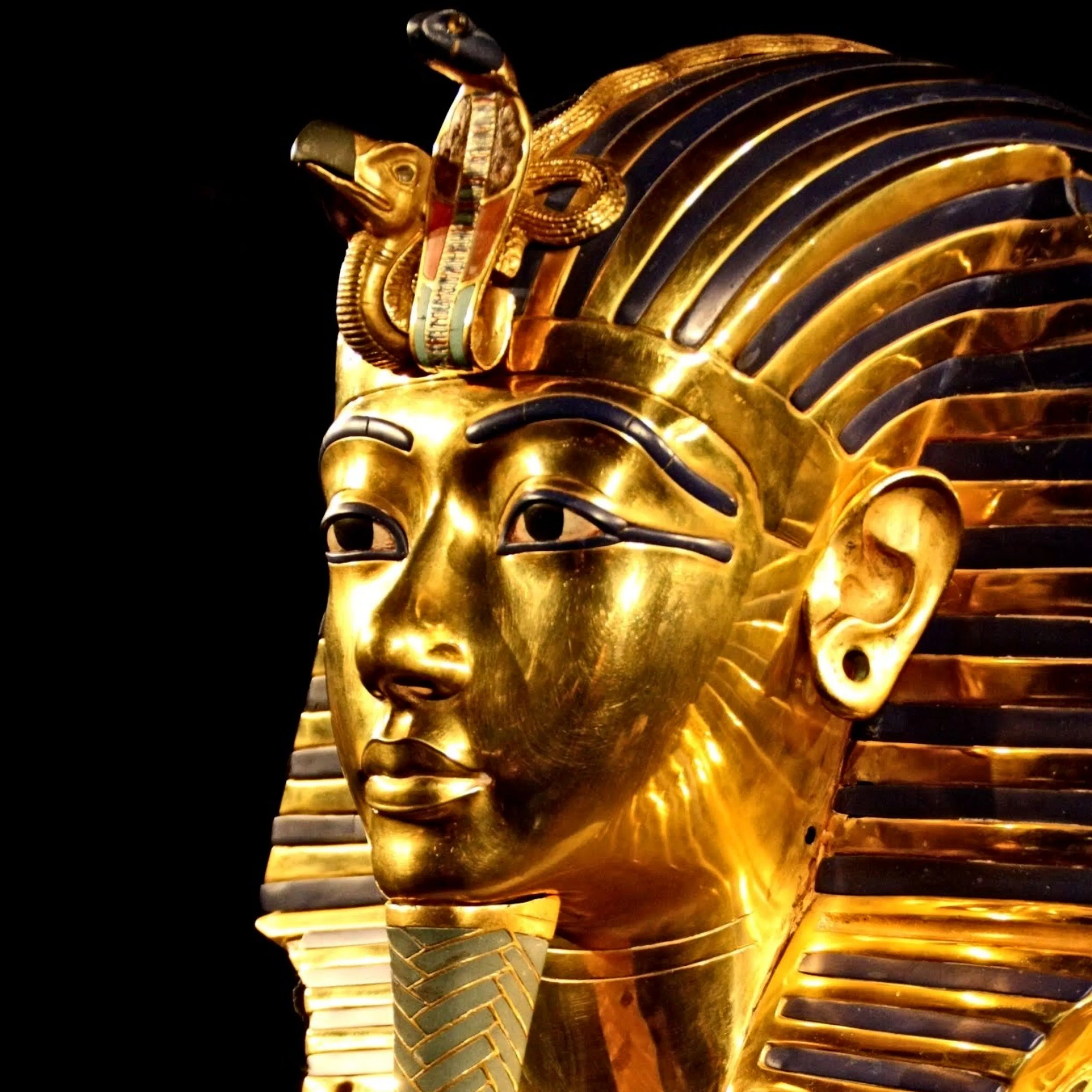
Introducing: The New Kingdom
Historical Phase number 3... We are now entering the New Kingdom. What does this mean? Well, that's kind of a big question. Website: www.egyptianhistorypodcast.com. Support the show via Patreon www.patreon.com/egyptpodcast. Make a one-time donation via PayPal payments. Social media: www.facebook.com/egyptpodcast and www.twitter.com/egyptianpodcast. Music by Keith Zizza www.keithzizza.com. Learn more about your ad choices. Visit megaphone.fm/adchoices

55: Blood and Thunder (Kamose vs Hyksos)
Second Intermediate Period (Part 4). In 1560 BCE, Seqenenre Tao / Ta'a was dead. Killed in battle, the king's body lay on the field, beaten and bloody. Now, the task of ruling the southern kingdom fell to his wife Ahhotep and his son Kamose. The latter would lead a campaign of reprisal, a bloody raid into the heart of enemy territory... Website: www.egyptianhistorypodcast.com. Support the show via Patreon www.patreon.com/egyptpodcast. Make a one-time donation via PayPal payments. Select bibliography: Garry J. Shaw. “The Death of King Seqenenre Tao.” Journal of the American Research Center in Egypt. 2009. Read online at JSTOR. Aidan Dodson & Dyan Hilton. The Complete Royal Families of Ancient Egypt. 2010. William Kelly Simpson (editor). The Literature of Ancient Egypt. Anthony J. Spalinger. War in Ancient Egypt. 2005. Reshafim.org – The Kamose Inscriptions. Learn more about your ad choices. Visit megaphone.fm/adchoices
Battlefield Mummy: The Brutal Death of Seqenenre Ta'a
EAround 1560 BCE the King of Southern Egypt, Seqen-en-re Ta’a died. His end was violent and bloody. The king was a victim of (anonymous) foes, who tied him up and executed him. The full circumstances of this event are coming to light with new research. Today, we dig into recent studies on the event and its larger context… Website: www.egyptianhistorypodcast.com. Support the show via Patreon www.patreon.com/egyptpodcast. Make a one-time donation via PayPal payments. Music by Keith Zizza www.keithzizza.com, Music by Ancient Lyric www.bettinajoydeguzman.com. Select Bibliography: Manfred Bietak, “The Egyptian Community in Avaris During the Hyksos Period,” Egypt and the Levant 26 (2016), 263–74. Manfred Bietak, “The Many Ethnicities of Avaris,” in J. Budka and J. Auenmüller (eds), From Microcosm to Macrocosm: Individual Households and Cities in Ancient Egypt and Nubia (2018): 73–92. Andrew Curry, “The Rulers of Foreign Lands,” Archaeology 71 (2018), 28–33. Aidan Dodson and Salima Ikram, The Mummy in Ancient Egypt (1998). Uroš Matić, Body and Frames of War in New Kingdom Egypt (2019). Sahar N. Saleem and Zahi Hawass, ‘Computed Tomography Study of the Mummy of King Seqenenre Taa II: New Insights Into His Violent Death’, Frontiers in Medicine 8 (2021), 1–10. https://www.frontiersin.org/article/10.3389/fmed.2021.637527 Grafton Elliot Smith, Egyptian Mummies (1991 Edition). Learn more about your ad choices. Visit megaphone.fm/adchoices