
The History of Egypt Podcast
436 episodes — Page 5 of 9

Ancient Egyptian Mummies with Prof. Ann Rosalie David
What does a mummy smell like? Prof. Ann Rosalie David is a pioneering researcher in mummies and ancient pathology. Having led many studies on Egyptian bodies, Prof. David helps reconstruct the lifestyles of the past. In this interview, she helpfully answers questions about ancient diseases, the Amarna royal mummies, and some left-field topics as well. Learn more about Ann Rosalie David and her work at Manchester University. Purchase "A Year in the Life of Ancient Egypt," by Rosalie David at Pen & Sword Publishing (Kindle, Hardcover, and ePub). Website: www.egyptianhistorypodcast.com. Support the show via Patreon www.patreon.com/egyptpodcast. Make a one-time donation via PayPal payments. Music by Ancient Lyric www.bettinajoydeguzman.com Sound effects by Keith Zizza keithzizza.com and Hathor Systrum. Learn more about your ad choices. Visit megaphone.fm/adchoices
138: Lost Women of Amarna
Powerful, but vanished. Following the death of Akhenaten, several prominent women disappear from history. Meritaten, the King’s Eldest Daughter; Kiya, one of his wives; and two mysterious daughters, the “Tasherits” present unresolved questions. What happened to them? We explore this question… Website: www.egyptianhistorypodcast.com. Support the show via Patreon www.patreon.com/egyptpodcast. Make a one-time donation via PayPal payments. Music by Keith Zizza www.keithzizza.net. Select Bibliography: Nile Magazine: “The Maia-Meritaten Mystery,” Online. Allen, James P. “The Amarna Succession,” in P. Brand and L. Cooper (eds) Causing His Name to Live: Studies in Egyptian Epigraphy and History in Memory of William J. Murnane (2009): 9–20. Dodson, Aidan. Amarna Sunrise: Egypt From Golden Age to Age of Heresy (2014). Dodson, Aidan. Amarna Sunset: Nefertiti, Tutankhamun, Ay, Horemheb, and the Egyptian Counter-Reformation. 2nd Edition (2017). Gabolde, Marc. “Under a Deep Blue Starry Sky,” in P. Brand and L. Cooper (eds) Causing His Name to Live: Studies in Egyptian Epigraphy and History in Memory of William J. Murnane (2009): 109–120. Murnane, William J. Texts from the Amarna Period in Egypt (1995). Redford, Donald B. “Studies on Akhenaten at Thebes, Journal of the American Research Center in Egypt12 (1975): 11. JSTOR. Zivie, Alain P. “From Maia to Meritaten,” Saqqara Newsletter 17 (2019). edu Zivie, Alain P. La tombe de Maïa, mère nourricière du roi Toutânkhamon et grande du harem (Bub. I 20). Les tombes du Bubasteion à Saqqara 1 (2009). Learn more about your ad choices. Visit megaphone.fm/adchoices
137b: The Tomb of Nefertiti
A Hidden Monument? In recent years, the public has thrilled to reports that hidden chambers, in the tomb of Tutankhamun, might contain the burial of Nefertiti. But the question of Nefertiti's tomb is complicated. In fact, it's possible she never even received a kingly/royal burial. In this episode, we explore the results of many studies... Website: www.egyptianhistorypodcast.com. Support the show via Patreon www.patreon.com/egyptpodcast. Make a one-time donation via PayPal payments. Music by Keith Zizza www.keithzizza.com Music by Ancient Lyric www.bettinajoydeguzman.com Audio mixing/editing by Vincent Cavanagh Select Bibliography: Nature: “Radar clues reignite debate over hidden chambers” https://www.nature.com/articles/d41586-020-00465-y Dodson, Aidan. Nefertiti: Queen and Pharaoh of Egypt, Her Life and Afterlife. Cairo: American University in Cairo Press, 2020. Dodson, Aidan. Amarna Sunset: Nefertiti, Tutankhamun, Ay, Horemheb, and the Egyptian Counter-Reformation. 2nd Edition. Cairo: American University in Cairo Press, 2017. Reeves, Nicholas. ‘The Tomb of Tutankhamun (KV62): Supplementary Notes (The Burial of Nefertiti? III).’ Amarna Royal Tombs Project, Valley of the Kings, Occasional Paper No. 5 (2020). Academia Reeves, Nicholas. “The Decorated North Wall in the Tomb of Tutankhamun (KV62) (The Burial of Nefertiti? II).’ Amarna Royal Tombs Project, Valley of the Kings, Occasional Paper No. 3 (2019). Academia Reeves, Nicholas. ‘The Burial of Nefertiti?’ Amarna Royal Tombs Project, Valley of the Kings, Occasional Paper No. 1 (2015). Academia Reeves, Nicholas. ‘The Gold Mask of Ankhkheperure Neferneferuaten’. Journal of Ancient Egyptian Interconnections 7 (2015): 77–79. Reeves, Nicholas. ‘Tutankhamun’s Mask Reconsidered’. Bulletin of the Egyptological Seminar: The Art and Culture of Ancient Egypt: Studies in Honor of Dorothea Arnold 19 (2015): 511–26. Smith, Grafton Elliot. The Royal Mummies. London: Duckworth, 1912. Learn more about your ad choices. Visit megaphone.fm/adchoices

137: The Death of Nefertiti
A Short-Lived Reign. By 1344 BCE, Nefer-neferu-Aten (Nefertiti) was in her mid-thirties. She did not have long to live. In her third regnal year, the King of Egypt died. Her death is mysterious: was it natural, an accident, or murder? Studying Nefertiti's last years, and the mummy that might belong to her, we go in search of answers. How did Nefertiti die? Website: www.egyptianhistorypodcast.com. Support the show via Patreon www.patreon.com/egyptpodcast. Make a one-time donation via PayPal payments. Music by Keith Zizza www.keithzizza.com. Music by Ancient Lyric www.bettinajoydeguzman.com. Music by Jeffrey Goodman www.jeffreygoodmanmusic.com Select Bibliography: Dodson, Aidan. Amarna Sunrise: Egypt From Golden Age to Age of Heresy. Cairo: American University in Cairo Press, 2014. Dodson, Aidan. Nefertiti: Queen and Pharaoh of Egypt, Her Life and Afterlife. Cairo: American University in Cairo Press, 2020. Dodson, Aidan. Amarna Sunset: Nefertiti, Tutankhamun, Ay, Horemheb, and the Egyptian Counter-Reformation. 2nd Edition. Cairo: American University in Cairo Press, 2017. Hawass, Zahi, Yehia Z. Gad, Somaia Ismail, Rabab Khairat, Dina Fathalla, Naglaa Hasan, Amal Ahmed, et al. ‘Ancestry and Pathology in King Tutankhamun’s Family’. JAMA 303, no. 7 (17 February 2010): 638–47. https://doi.org/10.1001/jama.2010.121. Hawass, Zahi, and Sahar N. Saleem. Scanning the Pharaohs: CT Imaging in the New Kingdom Royal Mummies. Cairo: American University in Cairo Press, 2016. Murnane, William J. Texts from the Amarna Period in Egypt. Atlanta: Scholars Press, 1995. Paulshock, Bernadine Z. ‘Tutankhamun’s Mother’. JAMA 249, no. 16 (22 April 1983): 2178–2178. https://doi.org/10.1001/jama.1983.03330400030014. Reeves, Nicholas. ‘The Tomb of Tutankhamun (KV62): Supplementary Notes (The Burial of Nefertiti? III).’ Amarna Royal Tombs Project, Valley of the Kings, Occasional Paper No. 5 (2020). Academia Reeves, Nicholas. “The Decorated North Wall in the Tomb of Tutankhamun (KV62) (The Burial of Nefertiti? II).’ Amarna Royal Tombs Project, Valley of the Kings, Occasional Paper No. 3 (2019). Academia Reeves, Nicholas. ‘The Burial of Nefertiti?’ Amarna Royal Tombs Project, Valley of the Kings, Occasional Paper No. 1 (2015). Academia Reeves, Nicholas. ‘The Gold Mask of Ankhkheperure Neferneferuaten’. Journal of Ancient Egyptian Interconnections 7 (2015): 77–79. Reeves, Nicholas. ‘Tutankhamun’s Mask Reconsidered’. Bulletin of the Egyptological Seminar: The Art and Culture of Ancient Egypt: Studies in Honor of Dorothea Arnold 19 (2015): 511–26. Smith, Grafton Elliot. The Royal Mummies. London: Duckworth, 1912. Learn more about your ad choices. Visit megaphone.fm/adchoices

136: Pharaoh Nefertiti (Nefer-neferu-Aten)
Nefertiti, King of Egypt. Following the death of Akhenaten, Queen Nefertiti may have become a King. Modern research suggests that, following her husband's death, Nefertiti became the new pharaoh. Her reign, and policies, are a shadowy but fascinating chapter in the royal history... Website: www.egyptianhistorypodcast.com. Support the show via Patreon www.patreon.com/egyptpodcast. Make a one-time donation via PayPal payments. Music by Keith Zizza www.keithzizza.com Music by Ancient Lyric www.bettinajoydeguzman.com. Select Bibliography: Coregency Stela: UCL online Graffito of Pairy TT139: Semataui Dodson, Aidan. Amarna Sunrise: Egypt From Golden Age to Age of Heresy. Cairo: American University in Cairo Press, 2014. Dodson, Aidan. Amarna Sunset: Nefertiti, Tutankhamun, Ay, Horemheb, and the Egyptian Counter-Reformation. 2nd Edition. Cairo: American University in Cairo Press, 2017. Gabolde, Marc. ‘L’ADN de La Famille Royale Amarnienne et Les Sources Égyptiennes’. Égypte Nilotique et Méditerranéenne 6 (2013): 177–203. Gabolde, Marc. ‘Under a Deep Blue Starry Sky’. In Causing His Name to Live: Studies in Egyptian Epigraphy and History in Memory of William J. Murnane, edited by Peter J. Brand and Louise Cooper. Leiden: Brill, 2009. Hawass, Zahi, Yehia Z. Gad, Somaia Ismail, Rabab Khairat, Dina Fathalla, Naglaa Hasan, Amal Ahmed, et al. ‘Ancestry and Pathology in King Tutankhamun’s Family’. JAMA 303, no. 7 (17 February 2010): 638–47. https://doi.org/10.1001/jama.2010.121. Hawass, Zahi, and Sahar N. Saleem. Scanning the Pharaohs: CT Imaging in the New Kingdom Royal Mummies. Cairo: American University in Cairo Press, 2016. Kemp, Barry J. The City of Akhenaten and Nefertiti: Amarna and Its People. First paperback edition. London: Thames & Hudson, 2014. Miller, William Max. ‘The Theban Royal Mummy Project’. The Theban Royal Mummy Project, n.d. http://anubis4_2000.tripod.com/mummypages1/18B.htm. Murnane, William J. Texts from the Amarna Period in Egypt. Atlanta: Scholars Press, 1995. O’Neill, Megan C. “The Decorative Program of the Eighteenth-Dynasty Tomb of Pairy (TT 139).” MA Thesis, Georgia State University, 2015. https://scholarworks.gsu.edu/art_design_theses/173 Paulshock, Bernadine Z. ‘Tutankhamun’s Mother’. JAMA 249, no. 16 (22 April 1983): 2178–2178. https://doi.org/10.1001/jama.1983.03330400030014. Redford, Donald. ‘Akhenaten: New Theories and Old Facts’. Bulletin of the American School of Oriental Research 369 (2013): 9. Reeves, Nicholas. ‘The Gold Mask of Ankhkheperure Neferneferuaten’. Journal of Ancient Egyptian Interconnections 7 (2015): 77–79. Reeves, Nicholas. ‘Tutankhamun’s Mask Reconsidered’. Bulletin of the Egyptological Seminar: The Art and Culture of Ancient Egypt: Studies in Honor of Dorothea Arnold 19 (2015): 511–26. Tyldesley, Joyce. Nefertiti’s Face: The Creation of an Icon. London: Profile Books, 2018. Van Der Perre, Athena. ‘The Year 16 Graffito of Akhenaten in Dayr Abū Ḥinnis. A Contribution to the Study of the Later Years of Nefertiti’. Journal of Egyptian History 7, no. 1 (2014): 67–108. https://doi.org/10.1163/18741665-12340014. Learn more about your ad choices. Visit megaphone.fm/adchoices
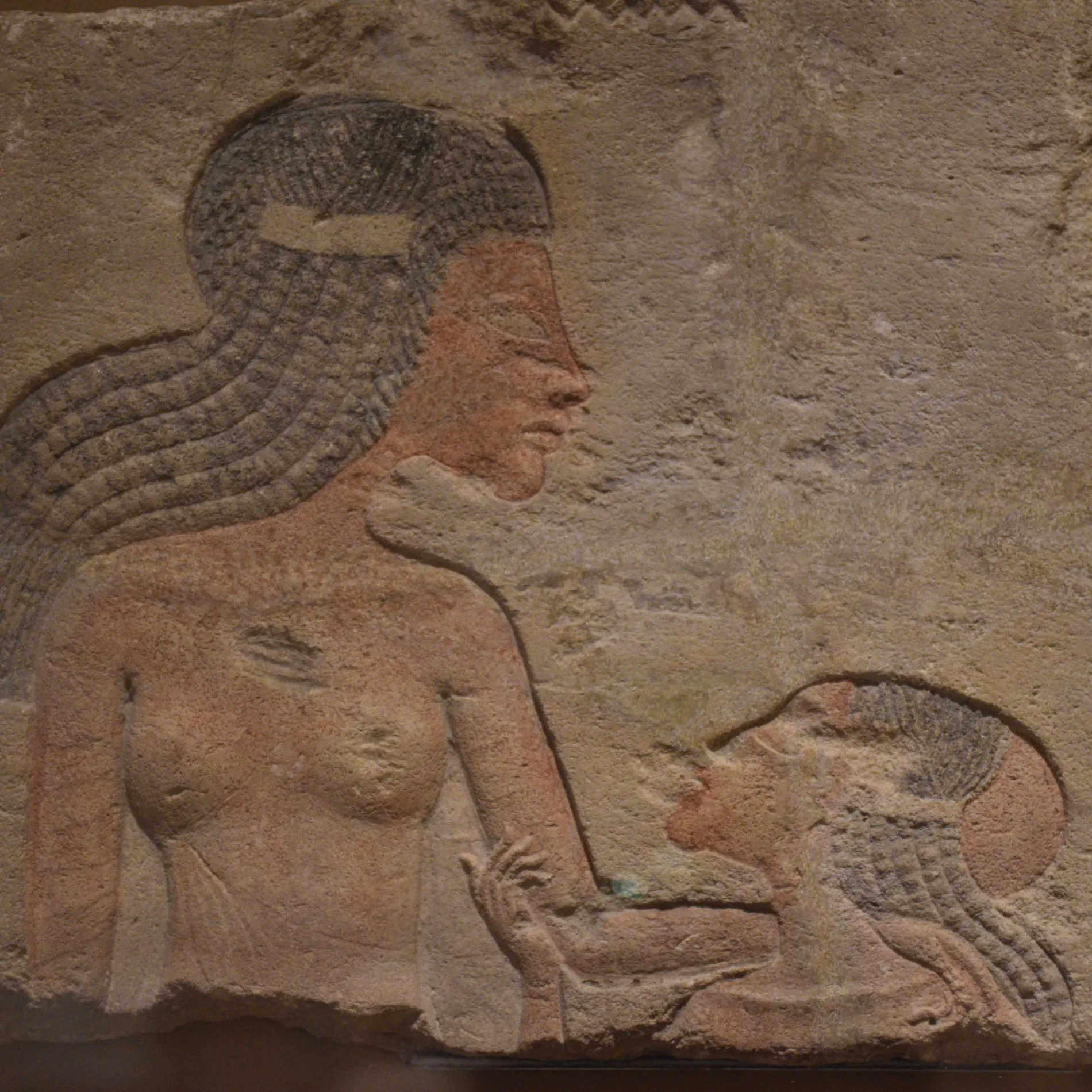
Princesses of Amarna, Wives of Gods with Courtney Marx and ARCE
Recorded 2024. The daughters of Akhenaten and Nefertiti were not just "ornaments" for their parents. Like many princesses, they also participated in the religious rituals and royal pageantry of the Egyptian government. In this interview, Courtney Marx (MA, George Mason University) joins us on behalf of the American Research Center in Egypt, to discuss the Amarna princesses and their role as priestesses. We also explore the history of royal women as priestesses and the unique roles they played in the temple rituals. Finally, we explore the aftermath of Amarna: how the visible roles, titles, and imagery of princesses changed following the death of Akhenaten and Nefertiti. The American Research Center in Egypt is celebrating 75 years of work in the Nile Valley. Dedicated to scholarship of the ancient, medieval, and modern worlds, the ARCE supports researchers and students, funds archaeological and scholarly work, and organises many public outreach programs. Learn more about ARCE at their website and follow the ARCE Podcast online and on all podcasting apps. The History of Egypt Podcast Website: www.egyptianhistorypodcast.com. Support the show via Patreon www.patreon.com/egyptpodcast. Make a one-time donation via PayPal payments. Logo image: Block fragment showing two Amarna princesses (Metropolitan Museum of Art 1985.328.6). Photo by Courtney Marx. Select Bibliography (provided by Courtney Marx): Ayad, Mariam F. “The God's Wife of Amun: origins and rise to power.” In Carney, Elizabeth D. and Sabine Müller (eds), The Routledge companion to women and monarchy in the ancient Mediterranean world, 47-60. New York: Routledge, 2021. Ayad, Mariam F. God's Wife, God's Servant: The God's Wife of Amun (ca.740–525 BC). United Kingdom: Taylor & Francis, 2009. Bryan, Betsy M. “Property and the God’s Wives of Amun.” In D. Lyons and R. Westbrook, eds. Women and Property in Ancient Near Eastern and Mediterranean Societies. Washington, DC: Center For Hellenic Studies, Harvard University, 2005. Pawlicki, Franciszek. Princess Neferure in the Temple of Queen Hatshepsut at Deir el-Bahari: Failed Heiress to the Pharaoh’s Throne? Études et Travaux 21, 109-127. 2007. Xekalaki, Georgia. Symbolism in the Representation of Royal Children During the New Kingdom. Oxford: Archaeopress, 2011. Troy, Lana. “Patterns of Queenship in Ancient Egyptian Myth and History.” PhD diss., Uppsala University, 1986. Williamson, Jacquelyn. “Death and the Sun Temple: New Evidence for Private Mortuary Cults at Amarna.” The Journal of Egyptian Archaeology 103, no. 1 (June 2017): 117–123. Learn more about your ad choices. Visit megaphone.fm/adchoices

Chief of the Medjay at Amarna
In the city of Akhet-Aten (Amarna) a small tomb hides a noteworthy story. Here, we find the life and work of a police officer. Mahu, Chief of the Medjay in Akhet-Aten, managed the guards who patrolled the Horizon of Aten. Mahu, and his troops, were responsible for guarding the outposts and apprehending fugitives. Possibly, they were also involved in criminal punishments. Some of those practices were quite cruel… Date c. 1357-1343 BCE Website: www.egyptianhistorypodcast.com. Support the show via Patreon www.patreon.com/egyptpodcast. Make a one-time donation via PayPal payments. Music by Keith Zizza www.keithzizza.com Music by Bettina Joy de Guzman www.bettinajoydeguzman.com. Select Bibliography: Norman de Garis Davies, The Rock Tombs of El-Amarna, vol. IV, 1903. Aidan Dodson, Amarna Sunrise: Egypt From Golden Age to Age of Heresy, 2014. Barry J. Kemp, The City of Akhenaten and Nefertiti: Amarna and Its People, 2014. William J. Murnane, Texts from the Amarna Period in Egypt, 1995. Learn more about your ad choices. Visit megaphone.fm/adchoices

Egypt: The Place and the People with Fatma Keshk
Fatma Keshk is an Egyptologist, archaeologist and researcher in Egyptian heritage. She leads the outreach project "The Place and the People," working to strengthen ties between archaeologists and local Egyptian communities. It is my pleasure to welcome Fatma to the History of Egypt Podcast; I hope you enjoy the conversation. Website: www.egyptianhistorypodcast.com. Support the show via Patreon www.patreon.com/egyptpodcast. Make a one-time donation via PayPal payments. Fatma Keshk at the Free University of Berlin https://exoriente.academia.edu/FatmaKeshk, The Place and the People online www.facebook.com/The-Place-and-the-People-2315808581791112, The Tale of Shutb (children's story in English) https://www.britishmuseum.org Learn more about your ad choices. Visit megaphone.fm/adchoices
Egypt & Nubia with Dr. Aaron de Souza
Aaron de Souza is an archaeologist specializing in the material culture of Egypt and Nubia. He earned his PhD at Macquarie University, Sydney, in 2016, and is now a Marie Sklodowska Curie Fellow at the Austrian Academy of Sciences, in Vienna. In the field, Aaron works with ceramics and material culture, particularly in cemetery contexts. He has published several articles and a book, titled New Horizons: The Pan-Grave Ceramic Tradition in Context. Aaron is an insightful researcher, part of the new generation of scholars that are examining (and re-examining) historical material in new ways. Learn more about Dr. Aaron de Souza online at Academia https://oeaw.academia.edu/AarondeSouza, the In Between Nubia website https://inbetweennubia.com/author/amdesouza/, and on Twitter https://twitter.com/aaronmdesouza. Shop History of Egypt merchandise at www.teepublic.com Website: www.egyptianhistorypodcast.com. Support the show via Patreon www.patreon.com/egyptpodcast. Make a one-time donation via PayPal payments. Music by Keith Zizza www.keithzizza.com Music by Bettina Joy de Guzman www.bettinajoydeguzman.com. Learn more about your ad choices. Visit megaphone.fm/adchoices
Ancient Egypt Today with Heba abd el Gawad
Heba Abd el Gawad is an exhibition curator, public outreach specialist and researcher in Egyptian heritage within museum contexts. She is the postdoctoral researcher for the project ‘Egypt’s Dispersed Heritage: Views from Egypt’ at the Institute of Archaeology, University College of London, in addition to many other important works. Heba joins the History of Egypt Podcast to discuss public outreach, museum communication and accessibility, and the cultural heritage of Egypt and its people. For more information about the projects discussed in this interview, see the following links: Egypt's Dispersed Heritage project on Twitter www.twitter.com/excavatedegypt and Facebook www.facebook.com/EgyptsDispersedHeritage The Manchester Museum Podcast "Who Owns Egyptian heritage?" Manchester Museum https://www.mmfromhome.com/podcast/episode/39f9e1a5/who-owns-egyptian-heritage-with-heba-abd-el-gawad Arabic Digital Comics during COVID 19 www.al-fanarmedia.org/2020/08/arabic-comics-reach-a-wider-audience-through-digital-projects/ "Fayoum Human Remains Your mummies, Their Ancestors," a webinar on the ethics of displaying and researching human remains in partnership with Egypt Exploration Society and Everyday Orientalist www.youtube.com/watch?v=nC51hWto1J8&t=4603s. The History of Egypt Podcast Website: www.egyptianhistorypodcast.com. Support the show via Patreon www.patreon.com/egyptpodcast. Make a one-time donation via PayPal payments. Music by Keith Zizza www.keithzizza.com Learn more about your ad choices. Visit megaphone.fm/adchoices

The Tomb Kings of Nehekhara (Egyptological History & Analysis)
An unofficial history, just for fun. In distant ages, and forgotten realms, a mighty civilization once flourished on the banks of a great river. The people of Nehekhara and their great kings are now a memory… but they are not dead. Not quite. Today, we dive into the lore of a fantasy civilization, inspired by ancient Egypt… Date c.2,500 Before the Imperial Calendar (I.C.). Includes non-canonical material inspired by ancient Egyptian history. Music by TableTop Audio www.tabletopaudio.com Music by Keith Zizza www.keithzizza.com Music from Pond5 www.pond5.com References (2020): Games Workshop – The Tomb Kings (6th Edition). Games Workshop – The Tomb Kings (8th Edition). Games Workshop – The Liber Necris, 2006. Games Workshop – Winds of Magic: Advanced Magic and Wizardry, 2010. Games Workshop – Lure of the Liche Lord, 2005. Website – The Warhammer Wiki https://warhammerfantasy.fandom.com/wiki/Warhammer_Wiki Chapters: Nehekhara 06:00 Settra Prince of Khemri 18:10 Settra the Imperishable 29:50 The Time of Kings, the Rise of Nagash 48:06 The Tyranny of Nagash 56:44 The Creation of the Tomb Kings 1:08:34 Miniatures and Inspirations of Ancient Egypt 1:25:16 Epilogues 1:40:34 Learn more about your ad choices. Visit megaphone.fm/adchoices
Update: End of 2020
Some good news and some bad news. Before we start the next chapter of Egyptian history, I need to take a break. Fortunately, I also have some help on the next step. In this update, I explain my situation at the end of 2020 and what the future holds for the podcast... Website: www.egyptianhistorypodcast.com. Support the show via Patreon www.patreon.com/egyptpodcast. Make a one-time donation via PayPal payments. Music by Keith Zizza www.keithzizza.com Learn more about your ad choices. Visit megaphone.fm/adchoices

Akhenaten Phase 3 (Summary)
The final chapters. The last years of Akhenaten's reign (12 to 17) are a litany of difficulties and losses. The King's household suffered challenges, and he responded with extreme policies. Before we leave the King for good, we summarise what had happened, and what it all means... Website: www.egyptianhistorypodcast.com. Support the show via Patreon www.patreon.com/egyptpodcast. Make a one-time donation via PayPal payments. Music by Keith Zizza www.keithzizza.net. Learn more about your ad choices. Visit megaphone.fm/adchoices

135: The Face(s) of Akhenaten
Legacy and Summary. Today, we look back at Akhenaten's reign, and I ramble for a while about his importance in history, both ancient and modern... Date c. 1346 BCE and 20th Century CE, Website: www.egyptianhistorypodcast.com. Support the show via Patreon www.patreon.com/egyptpodcast. Make a one-time donation via PayPal payments. Music by Keith Zizza www.keithzizza.com. Music by Ancient Lyric www.bettinajoydeguzman.com Select Bibliography: Aldred, Cyril. Akhenaten: King of Egypt. New York: Thames & Hudson, 1988. Arnold, Dorothea. The Royal Women of Amarna: Images of Beauty from Ancient Egypt. New York: Metropolitan Museum of Art, 1996. Assmann, Jan. Egyptian Solar Religion in the New Kingdom: Re, Amun and the Crisis of Polytheism. London: Taylor & Francis Group, 1995. Blyth, Elizabeth. Karnak: Evolution of a Temple. New York: Routledge, 2006. Boorn, G.P.F. van den. The Duties of the Vizier: Civil Administration in the Early New Kingdom. London: Kegan Paul International, 1988. Cohen, Raymond, and Raymond Westbrook, eds. Amarna Diplomacy: The Beginnings of International Relations. Baltimore: Johns Hopkins University Press, 2000. Davies, Benedict G. Egyptian Historical Records of the Later Eighteenth Dynasty. Vol. IV. Warminster: Aris & Phillips, 1992. Davies, Norman de Garis. The Rock Tombs of El-Amarna. London: Egypt Exploration Fund, 1903. Dodson, Aidan. Amarna Sunrise: Egypt From Golden Age to Age of Heresy. Cairo: American University in Cairo Press, 2014. Dodson, Aidan. Amarna Sunset: Nefertiti, Tutankhamun, Ay, Horemheb, and the Egyptian Counter-Reformation. 2nd Edition. Cairo: American University in Cairo Press, 2017. Eyre, Christopher. The Use of Documents in Pharaonic Egypt. Oxford: Oxford University Press, 2013. Gabolde, Marc. D’Akhenaton à Toutânkhamon. Paris: Institut d’archéologie et d’histoire de l’antiquité, 1998. Haring, B. J. J. Divine Households: Administrative and Economic Aspects of the New Kingdom Royal Memorial Temples in Western Thebes. Leiden: Nederlands Instituut voor het Nabije Oosten, 1997. Hodgkinson, Anna K. Technology and Urbanism in Late Bronze Age Egypt. Ebook edition. Oxford: Oxford University Press, 2018. Hornung, Erik. Akhenaten and the Religion of Light. Ithaca: Cornell University Press, 1999. Kemp, Barry J. Ancient Egypt: Anatomy of a Civilization. 3rd Revised Edition. London: Routledge, 2018. Moran, William L. The Amarna Letters. Baltimore: Johns Hopkins University Press, 1992. Moreno García, Juan Carlos. The State in Ancient Egypt: Power, Challenges and Dynamics. London: Bloomsbury, 2020. Morris, Ellen Fowles. Ancient Egyptian Imperialism. Hoboken: Wiley, 2018. Morris, Ellen Fowles. The Architecture of Imperialism: Military Bases and the Evolution of Foreign Policy in Egypt’s New Kingdom. Leiden: Brill, 2005. Murnane, William J. Texts from the Amarna Period in Egypt. Atlanta: Scholars Press, 1995. Mynářová, Jana. Language of Amarna – Language of Diplomacy: Perspectives on the Amarna Letters. Prague: Czech Institute of Egyptology, 2007. Redford, Donald B. Akhenaten: The Heretic King. Princeton: Princeton University Press, 1984. Reeves, Nicholas. Akhenaten: Egypt’s False Prophet. London: Thames & Hudson, 2001. Robins, Gay. The Art of Ancient Egypt. London: The British Museum Press, 1997. Spalinger, Anthony John. War in Ancient Egypt: The New Kingdom. Malden: Blackwell, 2005. Warburton, David. State and Economy in Ancient Egypt: Fiscal Vocabulary of the New Kingdom. Fribourg: University Press, 1997. Wente, Edward Frank. Letters from Ancient Egypt. Atlanta: Scholars Press, 1990. Learn more about your ad choices. Visit megaphone.fm/adchoices
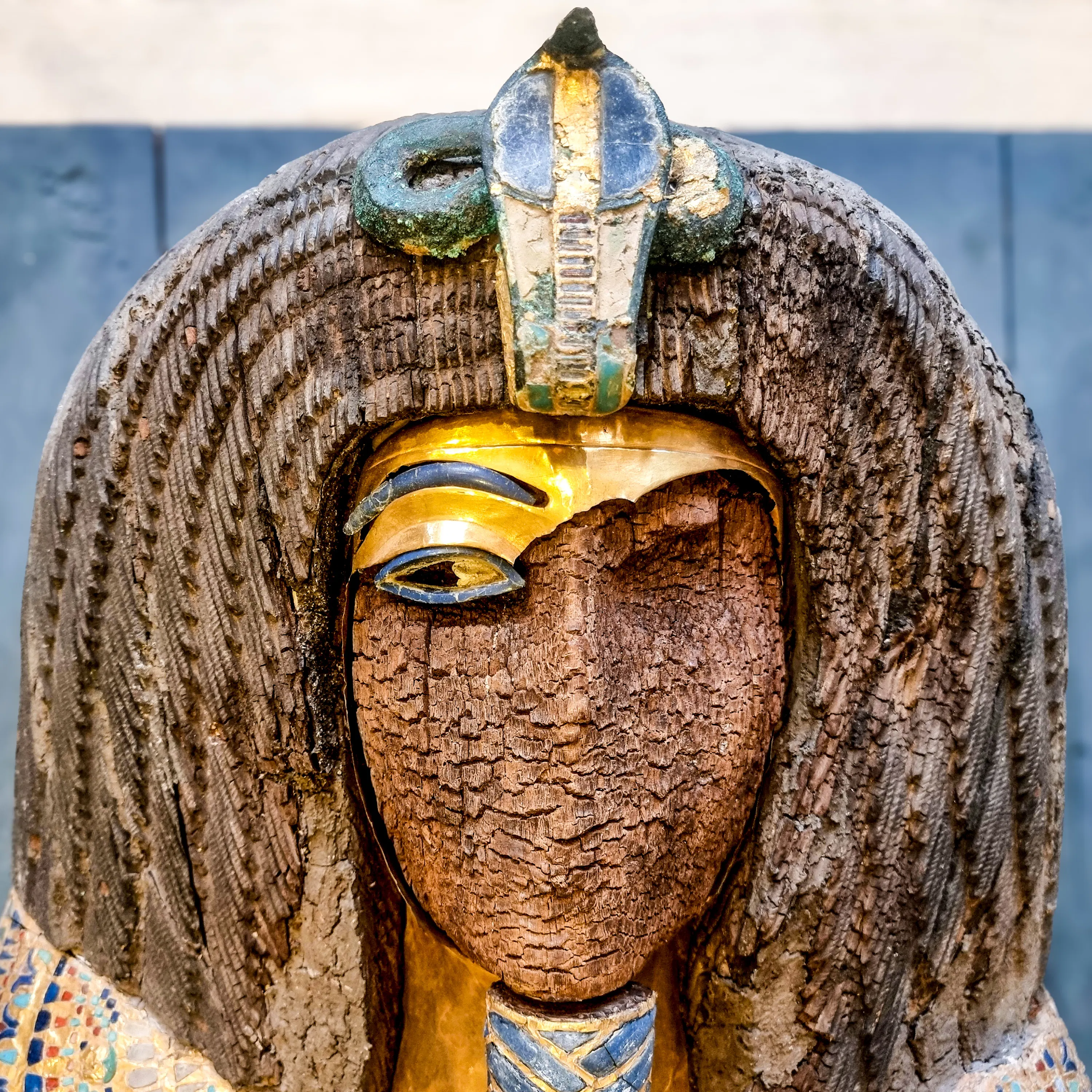
134b: The Burial(s) of Akhenaten
Side-episode. Today we discuss some "extra" items from Akhenaten's tomb. Also, we return to KV55, that elusive monument in the Valley of the Kings, to see some reasons why it *might* be Akhenaten. Date c.1346 BCE Website: www.egyptianhistorypodcast.com. Support the show via Patreon www.patreon.com/egyptpodcast. Make a one-time donation via PayPal payments. Music by Keith Zizza www.keithzizza.com Music by Ancient Lyric www.bettinajoydeguzman.com Select Bibliography: Connolly, R.C. ‘Kinship of Smenkhkare and Tutankhamen Affirmed by Serological Micromethod: Microdetermination of Blood Group Substances in Ancient Human Tissue’. Nature 224, no. 5217 (1 October 1969): 325–325. Davis, Theodore M. The Tomb of Queen Tiyi: The Discovery of the Tomb. London: Constable and Co Ltd, 1910. Dodson, Aidan. Amarna Sunrise: Egypt From Golden Age to Age of Heresy. Cairo: American University in Cairo Press, 2014. ———. Amarna Sunset: Nefertiti, Tutankhamun, Ay, Horemheb, and the Egyptian Counter-Reformation. 2nd Edition. Cairo: American University in Cairo Press, 2017. Dodson, Aidan, and Dyan Hilton. The Complete Royal Families of Ancient Egypt. London: Thames & Hudson, 2004. Duhig, Corrinne. ‘Comments on “Biological Age of the Skeletonised Mummy from Tomb KV55 at Thebes (Egypt)” by Eugen Strouhal’. Anthropologie 48, no. 2 (2010): 113–16. Eaton-Krauss, Marianne. ‘Reprise: Akhenaten, Nefertiti, Amarna’. Chronique d’Egypte 88, no. 175 (1 January 2013): 64–80. Gabolde, Marc. D’Akhenaton à Toutânkhamon. Paris: Institut d’archéologie et d’histoire de l’antiquité, 1998. ———. ‘L’ADN de La Famille Royale Amarnienne et Les Sources Égyptiennes’. Égypte Nilotique et Méditerranéenne 6 (2013): 177–203. ———. ‘Under a Deep Blue Starry Sky’. In Causing His Name to Live: Studies in Egyptian Epigraphy and History in Memory of William J. Murnane, edited by Peter J. Brand and Louise Cooper. Leiden: Brill, 2009. Habicht, M.E., A.S. Bouwman, and F.J. Rühli. ‘Identifications of Ancient Egyptian Royal Mummies from the 18th Dynasty Reconsidered’. American Journal of Physical Anthropology 159, no. S61 (1 January 2016): 216–31. Harrison, R. G. ‘An Anatomical Examination of the Pharaonic Remains Purported to Be Akhenaten’. The Journal of Egyptian Archaeology 52 (1966): 95–119. Hawass, Zahi, Yehia Z. Gad, Somaia Ismail, Rabab Khairat, Dina Fathalla, Naglaa Hasan, Amal Ahmed, et al. ‘Ancestry and Pathology in King Tutankhamun’s Family’. JAMA 303, no. 7 (17 February 2010): 638–47. Kemp, Barry J. ‘The Amarna Royal Tombs at Amarna’, 2016. https://amarnaproject.com/documents/pdf/Amarna-Royal-Tombs.pdf. ———. The City of Akhenaten and Nefertiti: Amarna and Its People. First paperback edition. London: Thames & Hudson, 2014. Martin, Geoffrey Thorndike. The Royal Tomb at El-ʻAmarna. 2 vols. London: Egypt Exploration Society, 1974. Murnane, William J. Texts from the Amarna Period in Egypt. Atlanta: Scholars Press, 1995. Redford, Donald. ‘Akhenaten: New Theories and Old Facts’. Bulletin of the American School of Oriental Research 369 (2013): 9. Reeves, C. N. ‘A Reappraisal of Tomb 55 in the Valley of the Kings’. The Journal of Egyptian Archaeology 67 (1981): 48–55. Reeves, Nicholas. Akhenaten: Egypt’s False Prophet. London: Thames & Hudson, 2001. Smith, Grafton Elliot. The Royal Mummies. London: Duckworth, 1912. Learn more about your ad choices. Visit megaphone.fm/adchoices

134: The Death of Akhenaten
A controversy comes to its end. King Akhenaten died in his 17th year on the throne. Surprisingly, we know a lot about his passing and his burial. From the date of his death, to his sarcophagus, shabti figurines and his innovative tomb, we can get a sense of how this controversial ruler finally met his end... Date c.1346 BC. Website: www.egyptianhistorypodcast.com. Support the show via Patreon www.patreon.com/egyptpodcast. Make a one-time donation via PayPal payments. Music by Keith Zizza www.keithzizza.com. Music by Ancient Lyric www.bettinajoydeguzman.com Select Bibliography: Aldred, Cyril. Akhenaten: King of Egypt. New York: Thames & Hudson, 1988. Allen, James P. ‘The Religion of Amarna’. In The Royal Women of Amarna: Images of Beauty from Ancient Egypt, edited by Dorothea Arnold, 3–6. New York: Metropolitan Museum of Art, 1996. Arnold, Dorothea. The Royal Women of Amarna: Images of Beauty from Ancient Egypt. New York: Metropolitan Museum of Art, 1996. Dodson, Aidan. Amarna Sunrise: Egypt From Golden Age to Age of Heresy. Cairo: American University in Cairo Press, 2014. Dodson, Aidan. Amarna Sunset: Nefertiti, Tutankhamun, Ay, Horemheb, and the Egyptian Counter-Reformation. 2nd Edition. Cairo: American University in Cairo Press, 2017. Dodson, Aidan, and Dyan Hilton. The Complete Royal Families of Ancient Egypt. London: Thames & Hudson, 2004. Eaton-Krauss, Marianne. ‘Reprise: Akhenaten, Nefertiti, Amarna’. Chronique d’Egypte 88, no. 175 (1 January 2013): 64–80. Fairman, H. W. ‘Once Again the So-Called Coffin of Akhenaten’. The Journal of Egyptian Archaeology 47 (1961): 25–40. Gabolde, Marc. D’Akhenaton à Toutânkhamon. Paris: Institut d’archéologie et d’histoire de l’antiquité, 1998. Gabolde, Marc. ‘L’ADN de La Famille Royale Amarnienne et Les Sources Égyptiennes’. Égypte Nilotique et Méditerranéenne 6 (2013): 177–203. Gabolde, Marc. ‘Under a Deep Blue Starry Sky’. In Causing His Name to Live: Studies in Egyptian Epigraphy and History in Memory of William J. Murnane, edited by Peter J. Brand and Louise Cooper. Leiden: Brill, 2009. Hawass, Zahi, Yehia Z. Gad, Somaia Ismail, Rabab Khairat, Dina Fathalla, Naglaa Hasan, Amal Ahmed, et al. ‘Ancestry and Pathology in King Tutankhamun’s Family’. JAMA 303, no. 7 (17 February 2010): 638–47. Hornung, Erik. Akhenaten and the Religion of Light. Ithaca: Cornell University Press, 1999. Kemp, Barry J. Ancient Egypt: Anatomy of a Civilization. 3rd Revised Edition. London: Routledge, 2018. Kemp, Barry J. ‘The Amarna Royal Tombs at Amarna’, 2016. https://amarnaproject.com/documents/pdf/Amarna-Royal-Tombs.pdf. ———. The City of Akhenaten and Nefertiti: Amarna and Its People. First paperback edition. London: Thames & Hudson, 2014. Martin, Geoffrey Thorndike. The Royal Tomb at El-ʻAmarna. 2 vols. London: Egypt Exploration Society, 1974. Murnane, William J. Texts from the Amarna Period in Egypt. Atlanta: Scholars Press, 1995. Murnane, William J. ‘The End of the Amarna Period Once Again’. Orientalistische Literaturzeitung 96 (2001): 9–22. Peet, T. E., and C. Leonard Woolley. The City of Akhenaten, Volume I. London: Egypt Exploration Society, 1923. Pendlebury, J.D.S. The City of Akhenaten, Volume III. London: Egypt Exploration Society, 1951. Redford, Donald. ‘Akhenaten: New Theories and Old Facts’. Bulletin of the American School of Oriental Research 369 (2013): 9. Redford, Donald B. Akhenaten: The Heretic King. Princeton: Princeton University Press, 1984. Reeves, Nicholas. Akhenaten: Egypt’s False Prophet. London: Thames & Hudson, 2001. UCL Web Archive. ‘Stela UC 410’, https://www.ucl.ac.uk/museums-static/ave/detail/details/index_no_login.php?objectid=UC__410__&accesscheck=%2Fmuseums-static%2Fave%2Fdetail%2Fdetails%2Findex.php. Strouhal, Eugen. ‘Biological Age of Skeletonized Mummy from Tomb KV 55 at Thebes’. Anthropologie 48, no. 2 (2010): 97–112. Learn more about your ad choices. Visit megaphone.fm/adchoices

133: The Heretic King
Erasing a God. Sometime in his reign, Akhenaten initiated a project that has made him infamous. The King’s agents, sculptors and masons travelled throughout the country, visiting major temples and shrines. Their job? Hack away the name and figure of Amun, King of the Gods, wherever they found it. This project is the most controversial of Akhenaten’s reign. Today, we dig into what happened, and why the King did it.. Date c.1347 BCE www.egyptianhistorypodcast.com Website: www.egyptianhistorypodcast.com. Support the show via Patreon www.patreon.com/egyptpodcast. Make a one-time donation via PayPal payments. Music by Keith Zizza www.keithzizza.com Music by Ancient Lyric bettinajoydeguzman.com Select Bibliography: Aldred, Cyril. ‘Two Theban Notables during the Later Reign of Amenophis III’. Journal of Near Eastern Studies 18, no. 2 (1959): 113–20. Aldred, Cyril. Akhenaten: King of Egypt. New York: Thames & Hudson, 1988. Allen, James P. ‘The Religion of Amarna’. In The Royal Women of Amarna: Images of Beauty from Ancient Egypt, edited by Dorothea Arnold, 3–6. New York: Metropolitan Museum of Art, 1996. Assmann, Jan. Egyptian Solar Religion in the New Kingdom: Re, Amun and the Crisis of Polytheism. London: Taylor & Francis Group, 1995. Bell, Lanny. ‘Luxor Temple and the Cult of the Royal Ka’. Journal of Near Eastern Studies 44, no. 4 (1985): 251–94. Bennett, John. ‘The Restoration Inscription of Tut’ankhamūn’. The Journal of Egyptian Archaeology 25, no. 1 (1939): 8–15. Blyth, Elizabeth. Karnak: Evolution of a Temple. New York: Routledge, 2006. Brand, Peter. ‘Secondary Restorations in the Post-Amarna Period’. Journal of the American Research Center in Egypt 36 (1999): 113–34. Bryan, Betsy M. ‘Hatshepsut and Cultic Revelries in the New Kingdom’. In Creativity and Innovation in the Reign of Hatshepsut, edited by José M. Galán, Betsy M. Bryan, and Peter F. Dorman, 93–124. Chicago: The Oriental Institute, 2014. Bull, Ludlow. ‘Two Egyptian Stelae of the XVIII Dynasty’. Metropolitan Museum Studies 2, no. 1 (1929): 76–84. Dodson, Aidan. Amarna Sunrise: Egypt From Golden Age to Age of Heresy. Cairo: American University in Cairo Press, 2014. Dodson, Aidan. Amarna Sunset: Nefertiti, Tutankhamun, Ay, Horemheb, and the Egyptian Counter-Reformation. 2nd Edition. Cairo: American University in Cairo Press, 2017. Fischer, Henry G. ‘An Early Example of Atenist Iconoclasm’. Journal of the American Research Center in Egypt 13 (1976): 131–32. Galán, José M. ‘EA 164 and the God Amun’. Journal of Near Eastern Studies 51, no. 4 (1992): 287–91. Galán, José M. ‘Hymns to Amun-Ra and Amun in the Tomb Chapel of Djehuty (TT11)’. In Joyful in Thebes: Egyptological Studies in Honor of Betsy M. Bryan, edited by Richard Jasnow and Kathlyn M. Cooney, 183–96. Atlanta: Lockwood Press, 2015. Gulyás, András. ‘The Unique Amun-Re at Luxor Temple’. In Current Research in Egyptology 2005, edited by Rachel Mairs and Alice Stevenson, 6:22–37. Oxbow Books, 2007. Johnson, W. Raymond. ‘Amenhotep III and Amarna: Some New Considerations’. The Journal of Egyptian Archaeology 82 (1996): 65–82. Krauss, Rolf. ‘Akhenaten: Monotheist? Polytheist?’ Bulleting of the Australian Centre of Egyptology, no. 11 (2000): 93–101. Manuelian, Peter der. ‘Semi-Literacy in Ancient Egypt: Some Erasures from the Amarna Period’. In Gold of Praise: Studies on Ancient Egypt in Honor of Edward F. Wente, edited by Emily Teeter and John Larson, 285–98. Chicago: The Oriental Institute, 1999. McClymont, Alice. ‘Action, Reaction & Interaction’. In Tradition and Transformation in Ancient Egypt, edited by Andrea Kahlbacher and Elisa Priglinger, 105–22. Vienna: Austrian Academy of Sciences Press, 2018. Murnane, William J. ‘The Bark of Amun on the Third Pylon at Karnak’. Journal of the American Research Center in Egypt 16 (1979): 11–27. Learn more about your ad choices. Visit megaphone.fm/adchoices
Uncovering Amarna with Dr. Chris Naunton
Interview. Chris Naunton is the former head of the Egypt Exploration Society and the elected President International Association of Egyptologists (2016-2019). With decades of experience, he is an enthusiastic and engaging scholar, with a particular talent for outreach and communication. Dr. Naunton sat down to discuss the city of Amarna, its exploration, and the evidence that helps us connect with its ancient, famous people. Dr. Naunton's website and books https://chrisnaunton.com. Youtube seminars: "The People of Amarna" https://www.youtube.com/watch?v=1A6f5yk1QdM, "A History of the Egypt Exploration Society" https://www.youtube.com/watch?v=5AgqomUA-BQ, and The Lost Tombs of Egypt" https://www.youtube.com/watch?v=T-ogtWxeV9A. Website: www.egyptianhistorypodcast.com. Support the show via Patreon www.patreon.com/egyptpodcast. Make a one-time donation via PayPal payments. Music by Keith Zizza www.keithzizza.com. Learn more about your ad choices. Visit megaphone.fm/adchoices

132: The Nefertiti Bust
How it was made, how it was discovered, and how it wound up in a museum far from its home. Date c.1347 BCE and 1912 CE. Website: www.egyptianhistorypodcast.com. Support the show via Patreon www.patreon.com/egyptpodcast. Make a one-time donation via PayPal payments. Follow the show on social media www.facebook.com/egyptpodcast and www.twitter.com/egyptianpodcast. Music by Keith Zizza www.keithzizza.com. Additional music by Michael Levy www.ancientlyre.com Select Bibliography: Arnold, Dorothea. ‘Aspects of the Royal Female Image During the Amarna Period’. In The Royal Women of Amarna: Images of Beauty from Ancient Egypt, edited by Dorothea Arnold, 85–120. New York: Metropolitan Museum of Art, 1996. Arnold, Dorothea. ‘The Workshop of the Sculptor Thutmose’. In The Royal Women of Amarna: Images of Beauty from Ancient Egypt, edited by Dorothea Arnold, 41–84. New York: Metropolitan Museum of Art, 1996. ‘Did Germany Cheat to Get Bust of Nefertiti?’, 10 February 2009. https://www.spiegel.de/international/world/archaeological-controversy-did-germany-cheat-to-get-bust-of-nefertiti-a-606525.html. Robins, Gay. The Art of Ancient Egypt. London: The British Museum Press, 1997. Tyldesley, Joyce. Nefertiti’s Face: The Creation of an Icon. London: Profile Books, 2018. Learn more about your ad choices. Visit megaphone.fm/adchoices

131: King Nefertiti
The Queen becomes King. Throughout Akhenaten’s reign, the Great King’s Wife Neferet-Iti (Nefertiti) grew more and more prominent. By regnal year 16 (1437 BCE), she seemed to be an equal to her husband. Eventually, the Queen may have transitioned to a new role, and become a co-regent alongside Akhenaten. In this episode, we explore the evidence for Nefertiti as a King… CHAPTER TWO TIME CODE 22:38 Date c. 1347 BCE. Website: www.egyptianhistorypodcast.com. Support the show via Patreon www.patreon.com/egyptpodcast. Make a one-time donation via PayPal payments. Follow the show on social media www.facebook.com/egyptpodcast and www.twitter.com/egyptianpodcast. Music by Keith Zizza www.keithzizza.com Music by Ancient Lyric www.bettinajoydeguzman.com Select Bibliography: Aldred, Cyril. Akhenaten: King of Egypt. New York: Thames & Hudson, 1988. Allen, James P. ‘Two Altered Inscriptions of the Late Amarna Period’. Journal of the American Research Center in Egypt 25 (1988): 117–26. https://doi.org/10.2307/40000874. Dodson, Aidan. Amarna Sunrise: Egypt From Golden Age to Age of Heresy. Cairo: American University in Cairo Press, 2014. Dodson, Aidan. Amarna Sunset: Nefertiti, Tutankhamun, Ay, Horemheb, and the Egyptian Counter-Reformation. 2nd Edition. Cairo: American University in Cairo Press, 2017. Dodson, Aidan. ‘Crown Prince Djhutmose and the Royal Sons of the Eighteenth Dynasty’. The Journal of Egyptian Archaeology 76 (1990): 87–96. https://doi.org/10.2307/3822009. Gabolde, Marc. D’Akhenaton à Toutânkhamon. Paris: Institut d’archéologie et d’histoire de l’antiquité, 1998. Gabolde, Marc. ‘L’ADN de La Famille Royale Amarnienne et Les Sources Égyptiennes’. Égypte Nilotique et Méditerranéenne 6 (2013): 177–203. Gabolde, Marc. ‘Under a Deep Blue Starry Sky’. In Causing His Name to Live: Studies in Egyptian Epigraphy and History in Memory of William J. Murnane, edited by Peter J. Brand and Louise Cooper. Leiden: Brill, 2009. Gunn, Battiscombe. ‘Notes on the Aten and His Names’. The Journal of Egyptian Archaeology 9, no. 3/4 (1923): 168–76. https://doi.org/10.2307/3854036. Murnane, William J. Texts from the Amarna Period in Egypt. Atlanta: Scholars Press, 1995. Redford, Donald B. Akhenaten: The Heretic King. Princeton: Princeton University Press, 1984. Reeves, C. N. ‘A Further Occurrence of Nefertiti as Hmt Nsw AAt’. Göttinger Miszellen 30 (1978): 61–69. Reeves, Nicholas. Akhenaten: Egypt’s False Prophet. London: Thames & Hudson, 2001. Reeves, Nicholas. ‘The Gold Mask of Ankhkheperure Neferneferuaten’. Journal of Ancient Egyptian Interconnections 7 (2015): 77–79. Reeves, Nicholas. ‘Tutankhamun’s Mask Reconsidered’. Bulletin of the Egyptological Seminar: The Art and Culture of Ancient Egypt: Studies in Honor of Dorothea Arnold 19 (2015): 511–26. Van Der Perre, Athena. ‘The Year 16 Graffito of Akhenaten in Dayr Abū Ḥinnis. A Contribution to the Study of the Later Years of Nefertiti’. Journal of Egyptian History 7, no. 1 (2014): 67–108. https://doi.org/10.1163/18741665-12340014. Wilson, John A. ‘Akh-En-Aton and Nefert-Iti’. Journal of Near Eastern Studies 32, no. 1/2 (1973): 235–41. Learn more about your ad choices. Visit megaphone.fm/adchoices

130: The Life and Death of Smenkhkare
A Short-Lived Ruler. In 1349 BCE, Egypt had two kings. But not for long. The young ruler, Smenkhkare, was destined to die early. In this episode, we explore the strange case of Akhenaten's co-king... Date c.1349 BCE Website: www.egyptianhistorypodcast.com. Support the show via Patreon www.patreon.com/egyptpodcast. Make a one-time donation via PayPal payments. Social media www.facebook.com/egyptpodcast and www.twitter.com/egyptianpodcast. Music by Keith Zizza www.keithzizza.com Select Bibliography: Aldred, Cyril. Akhenaten: King of Egypt. 1988. Allen, James P. ‘Two Altered Inscriptions of the Late Amarna Period’. Journal of the American Research Center in Egypt 25 (1988): 117–26. https://doi.org/10.2307/40000874. Dodson, Aidan. Amarna Sunrise: Egypt From Golden Age to Age of Heresy. 2014. Dodson, Aidan. Amarna Sunset: Nefertiti, Tutankhamun, Ay, Horemheb, and the Egyptian Counter-Reformation. 2nd Edition, 2017. Dodson, Aidan. ‘Crown Prince Djhutmose and the Royal Sons of the Eighteenth Dynasty’. The Journal of Egyptian Archaeology 76 (1990): 87–96. https://doi.org/10.2307/3822009. Gabolde, Marc. D’Akhenaton à Toutânkhamon. 1998. Gabolde, Marc. ‘Under a Deep Blue Starry Sky’. In Causing His Name to Live: Studies in Egyptian Epigraphy and History in Memory of William J. Murnane, edited by Peter J. Brand and Louise Cooper, 2009. Murnane, William J. Texts from the Amarna Period in Egypt. 1995. Redford, Donald B. Akhenaten: The Heretic King. 1984. Reeves, C. N. Akhenaten: Egypt’s False Prophet. 2001. Learn more about your ad choices. Visit megaphone.fm/adchoices

129: Amarna, the Hard-Knock Life
Child labour, plague, and dark deeds at Amarna. By regnal year 14 (c.1349 BCE) Akhenaten's capital city had grown to almost thirty thousand people. This massive growth carried a price, one that archaeologists are finding in the city's vast cemeteries... Date c.1349 BCE. Website: www.egyptianhistorypodcast.com. Support the show via Patreon www.patreon.com/egyptpodcast. Make a one-time donation via PayPal payments. Music by Keith Zizza www.keithzizza.com Music by Ancient Lyric www.bettinajoydeguzman.com Select Bibliography: Dabbs, Gretchen R. ‘Bioarchaeology of the Non-Elite North Tombs Cemetery at Amarna: A Preliminary Assessment of the Non-Elite Individuals of the North Tombs Cemetery at Tell El-Amarna, Egypt’. Bioarchaeology International 3, no. 3 (2019): 174–86. https://doi.org/10.5744/bi.2019.1012. Dabbs, Gretchen R. ‘Human Bones from the South Tombs Cemetery: The 2013 Study Season’, 2013. https://www.amarnaproject.com/documents/pdf/STC-2013-bioarchaeology.pdf. Dodson, Aidan. Amarna Sunrise: Egypt From Golden Age to Age of Heresy. Cairo: American University in Cairo Press, 2014. Egypt Exploration Society Website. ‘The Northern Cemeteries of Amarna’, 2018. https://www.ees.ac.uk/the-northern-cemeteries-of-amarna. Kemp, Barry J. Ancient Egypt: Anatomy of a Civilization. 3rd Revised Edition. London: Routledge, 2018. Kemp, Barry J. ‘Tell El-Amarna, 2016’. The Journal of Egyptian Archaeology 102 (2016): 1–11. https://doi.org/10.2307/26379068. Kemp, Barry J. The City of Akhenaten and Nefertiti: Amarna and Its People. First paperback edition. London: Thames & Hudson, 2014. Kemp, Barry, Anna Stevens, Gretchen R. Dabbs, Melissa Zabecki, and Jerome C. Rose. ‘Life, Death and Beyond in Akhenaten’s Egypt: Excavating the South Tombs Cemetery at Amarna’. Antiquity 87, no. 335 (2013): 64–78. https://doi.org/10.1017/S0003598X00048626. Kuckens, Kathleen. ‘The Children of Amarna: Disease and Famine in the Time of Akhenaten’. University of Arkansas, Fayetteville, 2013. http://scholarworks.uark.edu/etd/888. Panagiotakopulu, Eva. ‘Pharaonic Egypt and the Origins of Plague’. Journal of Biogeography 31, no. 2 (2004): 269–75. https://doi.org/10.1046/j.0305-0270.2003.01009.x. Shidner, Ashley. ‘Growing Up in Tell El-Amarna: An Examination of Growth and Non-Specific Stress Indicators in New Kingdom Children’. University of Arkansas, 2018. Stevens, Anna. ‘Death and the City: The Cemeteries of Amarna in Their Urban Context’ 28, no. 1 (2018): 103–26. https://doi.org/10.1017/S0959774317000592. Amarna Project website, ‘The South Tombs Cemetery’, 2013. https://www.amarnaproject.com/pages/recent_projects/excavation/south_tombs_cemetery/2013.shtml. Zakrzewski, Sonia R. ‘Variation in Ancient Egyptian Stature and Body Proportions’. American Journal of Physical Anthropology 121, no. 3 (1 July 2003): 219–29. https://doi.org/10.1002/ajpa.10223. Learn more about your ad choices. Visit megaphone.fm/adchoices

Amarna Sunset with Prof. Aidan Dodson
Royal Tombs, Amarna, Egyptology. Prof. Aidan Dodson has been in the game many years, and has published widely on a variety of topics. From his best-selling Amarna Sunset, Amarna Sunrise and The Royal Tombs of Ancient Egypt, Prof. Dodson is familiar to many who are interested in ancient Egypt. In this interview, he sat down to discuss the Amarna Period, royal tombs, and the science of history in Egyptology. A fascinating conversation, which I'm excited to share! Date c.1350 BCE. Website: www.egyptianhistorypodcast.com. Support the show via Patreon www.patreon.com/egyptpodcast. Make a one-time donation via PayPal payments. Music by Keith Zizza www.keithzizza.com Find more of Prof. Dodson's work and purchase his book The Royal Tombs of Ancient Egypt at Pen & Sword Publishing https://www.pen-and-sword.co.uk/Aidan-Dodson/a/2681 Learn more about your ad choices. Visit megaphone.fm/adchoices

128: True Crime KV55 (DNA, CSI... etc)
The Mysterious Mummy. In this episode, we visit the historical crime scene known as Valley of the Kings tomb number 55. KV55 is easily the most analysed, debated, and confounding find in all of Egyptology... Date: c.1350 BCE and 1907 CE. Website: www.egyptianhistorypodcast.com. Support the show via Patreon www.patreon.com/egyptpodcast. Make a one-time donation via PayPal payments. Music by Keith Zizza www.keithzizza.com. Follow us on social media www.facebook.com/egyptpodcast and www.twitter.com/egyptianpodcast. Select Bibliography: Martha R. Bell, ‘An Armchair Excavation of KV 55’. Journal of the American Research Center in Egypt 27 (1990): 97–137. R.C. Connolly, ‘Kinship of Smenkhkare and Tutankhamen Affirmed by Serological Micromethod: Microdetermination of Blood Group Substances in Ancient Human Tissue’. Nature 224, no. 5217 (1 October 1969): 325–325. Theodore M. Davis, The Tomb of Queen Tiyi: The Discovery of the Tomb. 2nd edition. London: Constable and Co Ltd, 1990. Aidan Dodson, Amarna Sunrise: Egypt From Golden Age to Age of Heresy. Cairo: American University in Cairo Press, 2014. Corrinne Duhig, ‘Comments on “Biological Age of the Skeletonised Mummy from Tomb KV55 at Thebes (Egypt)” by Eugen Strouhal’. Anthropologie 48, no. 2 (2010): 113–16. Marianne Eaton-Krauss, ‘“The Sarcophagus in the Tomb of Tutankhamun”: A Clarification’. The Journal of Egyptian Archaeology 84 (1998): 210–12. Marianne Eaton-Krauss, ‘Reprise: Akhenaten, Nefertiti, Amarna’. Chronique d’Egypte 88, no. 175 (1 January 2013): 64–80. H.W. Fairman, ‘Once Again the So-Called Coffin of Akhenaten’. The Journal of Egyptian Archaeology 47 (1961): 25–40. Marc. Gabolde, D’Akhenaton à Toutânkhamon. Paris: Institut d’archéologie et d’histoire de l’antiquité, 1998. Marc. Gabolde, ‘L’ADN de La Famille Royale Amarnienne et Les Sources Égyptiennes’. Égypte Nilotique et Méditerranéenne 6 (2013): 177–203. Marc. Gabolde, ‘Under a Deep Blue Starry Sky’. In Causing His Name to Live: Studies in Egyptian Epigraphy and History in Memory of William J. Murnane, edited by Peter J. Brand and Louise Cooper. Leiden: Brill, 2009. R. G. Harrison, ‘An Anatomical Examination of the Pharaonic Remains Purported to Be Akhenaten’. The Journal of Egyptian Archaeology 52 (1966): 95–119. Zahi Hawass, Yehia Z. Gad, Somaia Ismail, Rabab Khairat, Dina Fathalla, Naglaa Hasan, Amal Ahmed, et al. ‘Ancestry and Pathology in King Tutankhamun’s Family’. JAMA 303, no. 7 (17 February 2010): 638–47. Geoffrey Thorndike Martin, The Royal Tomb at El-ʻAmarna. 2 vols. London: Egypt Exploration Society, 1974. William Max Miller, ‘The Theban Royal Mummy Project’. The Theban Royal Mummy Project, http://anubis4_2000.tripod.com/mummypages1/18B.htm. William J. Murnane, ‘The End of the Amarna Period Once Again’. Orientalistische Literaturzeitung 96 (2001): 9–22. Bernadine Z. Paulshock, ‘Tutankhamun’s Mother’. JAMA 249, no. 16 (22 April 1983): 2178–2178. C. N. Reeves, ‘A Reappraisal of Tomb 55 in the Valley of the Kings’. The Journal of Egyptian Archaeology 67 (1981): 48–55. Grafton Elliot Smith, The Royal Mummies. London: Duckworth, 1912-2000. Online edition. Eugen Strouhal, ‘Biological Age of Skeletonized Mummy from Tomb KV 55 at Thebes’. Anthropologie 48, no. 2 (2010): 97–112. Charles F. Timmons, ‘Genetics of the Eighteenth Dynasty’. JAMA 245, no. 15 (17 April 1981): 1525–1525. Learn more about your ad choices. Visit megaphone.fm/adchoices

127: Meket-Aten and Smenkh-Ka-Re
Two Funerals and a Wedding, Part 2. In 1350 BCE the royal house of Egypt was in crisis. The princess Meket-Aten, just eight years old, was the second prominent person to die in a short span of time. Soon after, Akhenaten seems to have appointed a new co-ruler. His name was Smenkh-ka-Re. Date c.1350 BCE. Website: www.egyptianhistorypodcast.com. Support the show via Patreon www.patreon.com/egyptpodcast. Make a one-time donation via PayPal payments. Music by Keith Zizza www.keithzizza.com. Music by Ancient Lyric www.bettinajoydeguzman.com Select Bibliography: Dorothea Arnold, The Royal Women of Amarna: Images of Beauty from Ancient Egypt, 1996. Martha R. Bell, ‘An Armchair Excavation of KV55’. Journal of the American Research Center in Egypt 27 (1990): 97–137. R.C. Connolly, ‘Kinship of Smenkhkare and Tutankhamen Affirmed by Serological Micromethod: Microdetermination of Blood Group Substances in Ancient Human Tissue’. Nature 224, no. 5217 (1 October 1969): 325–325. Norman de Garis Davies, The Rock Tombs of El-Amarna, vol II, 1905. Aidan Dodson, Amarna Sunrise: Egypt From Golden Age to Age of Heresy. Cairo: American University in Cairo Press, 2014. Aidan Dodson, Amarna Sunset: Nefertiti, Tutankhamun, Ay, Horemheb, and the Egyptian Counter-Reformation, 2009. Aidan Dodson, ‘Crown Prince Djhutmose and the Royal Sons of the Eighteenth Dynasty’. The Journal of Egyptian Archaeology 76 (1990): 87–96. Aidan Dodson and Dyan Hilton. The Complete Royal Families of Ancient Egypt, 2004. Corrinne Duhig, ‘Comments on “Biological Age of the Skeletonised Mummy from Tomb KV55 at Thebes (Egypt)” by Eugen Strouhal’. Anthropologie 48, no. 2 (2010): 113–16. Marianne Eaton-Krauss, ‘“The Sarcophagus in the Tomb of Tutankhamun”: A Clarification’. The Journal of Egyptian Archaeology 84 (1998): 210–12. H.W. Fairman, ‘Once Again the So-Called Coffin of Akhenaten’. The Journal of Egyptian Archaeology 47 (1961): 25–40. Marc Gabolde, D’Akhenaton à Toutânkhamon, 1998. John Harris, ‘En Sag Om Forveksling’. Papyrus 2, no. 4 (2004): 4–13. R.G. Harrison, ‘An Anatomical Examination of the Pharaonic Remains Purported to Be Akhenaten’. The Journal of Egyptian Archaeology 52 (1966): 95–119. Zahi Hawass, Yehia Z. Gad, Somaia Ismail, Rabab Khairat, Dina Fathalla, Naglaa Hasan, Amal Ahmed, et al. ‘Ancestry and Pathology in King Tutankhamun’s Family’. JAMA 303, no. 7 (17 February 2010): 638–47. Geoffrey Thorndike Martin, The Royal Tomb at El-ʻAmarna. 2 vols. London: Egypt Exploration Society, 1974. William Max Miller, ‘The Theban Royal Mummy Project’. The Theban Royal Mummy Project, n.d. http://anubis4_2000.tripod.com/mummypages1/18B.htm. William J. Murnane, ‘The End of the Amarna Period Once Again’. Orientalistische Literaturzeitung 96 (2001): 9–22. C.N. Reeves, ‘A Reappraisal of Tomb 55 in the Valley of the Kings’. The Journal of Egyptian Archaeology 67 (1981): 48–55. Eugen Strouhal, ‘Biological Age of Skeletonized Mummy from Tomb KV 55 at Thebes’. Anthropologie 48, no. 2 (2010): 97–112. Learn more about your ad choices. Visit megaphone.fm/adchoices

126: The Death of Queen Tiye
Two Funerals and a Wedding, Part 1. Around year 12 of Akhenaten, the Queen Mother Tiye died. She journeyed to the West at the age of 60, having been a powerful influence for more than fifty years. Tiye is a monumental figure, literally, in the history of ancient Egypt. In this episode, we do her honour, and explore her legacy following her death. Date c.1351 BCE Website: www.egyptianhistorypodcast.com. Support the show via Patreon www.patreon.com/egyptpodcast. Make a one-time donation via PayPal payments. Music by Keith Zizza www.keithzizza.com Music by Ancient Lyric www.bettinajoydeguzman.com Select Bibliography: Dorothea Arnold (ed.), The Royal Women of Amarna: Images of Beauty from Ancient Egypt, 1996. Martha R. Bell, “An Armchair Excavation of KV55,” Journal of the American Research Center in Egypt 27 (1990): 97–137. Benedict G. Davies, Egyptian Historical Records of the Later Eighteenth Dynasty. Vol. IV, 1992. Norman de Garis Davies, The Rock Tombs of El-Amarna, 1903. Theodore M. Davis, The Tomb of Queen Tiyi: The Discovery of the Tomb, 1910. Aidan Dodson, Amarna Sunrise: Egypt From Golden Age to Age of Heresy, 2014. Aidan Dodson, Amarna Sunset: Nefertiti, Tutankhamun, Ay, Horemheb, and the Egyptian Counter-Reformation, 2009. Aidan Dodson and Dyan Hilton. The Complete Royal Families of Ancient Egypt, 2004. Marc Gabolde, D’Akhenaton à Toutânkhamon, 1998. Marc Gabolde, “L’ADN de La Famille Royale Amarnienne et Les Sources Égyptiennes,” Égypte Nilotique et Méditerranéenne 6 (2013): 177–203. Michael E. Habicht, A.S. Bouwman, and F.J. Rühli. “Identifications of Ancient Egyptian Royal Mummies from the 18th Dynasty Reconsidered’,” American Journal of Physical Anthropology 159 (2016): 216–31. James E. Harris, Edward F. Wente, Charles F. Cox, Ibrahim El Nawaway, Charles J. Kowalski, Arthur T. Storey, William R. Russell, Paul V. Ponitz, and Geoffrey F. Walker. “Mummy of the “Elder Lady” in the Tomb of Amenhotep II: Egyptian Museum Catalog Number 61070,” Science 200, no. 4346 (1978): 1149–51. Zahi Hawass, Yehia Z. Gad, Somaia Ismail, Rabab Khairat, Dina Fathalla, Naglaa Hasan, Amal Ahmed, et al. “Ancestry and Pathology in King Tutankhamun’s Family,” JAMA 303, no. 7 (17 February 2010): 638–47. Barry J. Kemp, The City of Akhenaten and Nefertiti: Amarna and Its People, 2014. Geoffrey Thorndike Martin, The Royal Tomb at El-ʻAmarna, 2 vols, 1974. William Max Miller, “The Theban Royal Mummy Project,” The Theban Royal Mummy Project, http://anubis4_2000.tripod.com/mummypages1/18B.htm. William J. Murnane, Texts From the Amarna Period in Egypt, 1995. William J. Murnane, “The End of the Amarna Period Once Again,” Orientalistische Literaturzeitung 96 (2001): 9–22. Paul T. Nicholson, and Caroline Jackson, “Glass of Amenhotep II From Tomb KV55 in the Valley of the Kings,” The Journal of Egyptian Archaeology 99 (2013): 85–99. C.N. Reeves, “A Reappraisal of Tomb 55 in the Valley of the Kings,” The Journal of Egyptian Archaeology 67 (1981): 48–55. Joyce Tyldesley, Chronicle of the Queens of Egypt, 2006. Learn more about your ad choices. Visit megaphone.fm/adchoices

125b: Maru Aten and North Palace
A guided tour. In this episode we explore two monuments belonging to an ancient princess, and see the luxury in which a pharaoh's daughter lived... Date c.1451 BCE (reign of Akhenaten) Website: www.egyptianhistorypodcast.com. Support the show via Patreon www.patreon.com/egyptpodcast. Make a one-time donation via PayPal payments. Music by Keith Zizza www.keithzizza.com Music by Ancient Lyric www.bettinajoydeguzman.com Follow us on social media www.facebook.com/egyptpodcast and www.twitter.com/egyptianpodcast. Select Bibliography: Badawy, Alexander. ‘Maru-Aten: Pleasure Resort or Temple?’ The Journal of Egyptian Archaeology 42 (1956): 58–64. Kemp, Barry J. ‘Tell El-Amarna, Spring 2011’. The Journal of Egyptian Archaeology 97 (2011): 1–9. The City of Akhenaten and Nefertiti: Amarna and Its People. First paperback edition. London: Thames & Hudson, 2014. Read online at archive.org Newton, F.G. “Excavations at El-’Amarnah, 1923-24.” Journal of Egyptian Archaeology 10 (1924): 289–98. Read for free at JSTOR.org Amarna Project. ‘North Palace’, https://www.amarnaproject.com/pages/amarna_the_place/north_palace/index.shtml. Peet, T. E., and C. Leonard Woolley. The City of Akhenaten, Volume I. London: Egypt Exploration Society, 1923. Learn more about your ad choices. Visit megaphone.fm/adchoices

125: House of Meritaten
A Princess of Egypt. By 1351 BCE, princess Meritaten was approximately ten years old. The pharaoh's eldest daughter was front and centre of propaganda. But what was her life like? Today, we explore the life of an Egyptian princess... Date c. 1451 BCE. Website: www.egyptianhistorypodcast.com. Support the show via Patreon www.patreon.com/egyptpodcast. Make a one-time donation via PayPal payments. Music by Keith Zizza www.keithzizza.com Music by Ancient Lyric www.bettinajoydeguzman.com Follow us on social media www.facebook.com/egyptpodcast and www.twitter.com/egyptianpodcast Select Bibliography: Badawy, Alexander. ‘Maru-Aten: Pleasure Resort or Temple?’ The Journal of Egyptian Archaeology 42 (1956): 58–64. Davies, Benedict G. Egyptian Historical Records of the Later Eighteenth Dynasty. Vol. IV. Warminster: Aris & Phillips, 1992. Davies, Norman de Garis. The Rock Tombs of El-Amarna. London: Egypt Exploration Fund, 1903. Dodson, Aidan. Amarna Sunrise: Egypt From Golden Age to Age of Heresy. Cairo: American University in Cairo Press, 2014. Dodson, Aidan. Amarna Sunset: Nefertiti, Tutankhamun, Ay, Horemheb, and the Egyptian Counter-Reformation. Cairo: American University in Cairo Press, 2009. Hornung, Erik. Akhenaten and the Religion of Light. Ithaca: Cornell University Press, 1999. Kemp, Barry J. Ancient Egypt: Anatomy of a Civilization. 3rd Revised Edition. London: Routledge, 2018. Kemp, Barry J. ‘Tell El-Amarna, Spring 2011’. The Journal of Egyptian Archaeology 97 (2011): 1–9. Kemp, Barry J. The City of Akhenaten and Nefertiti: Amarna and Its People. First paperback edition. London: Thames & Hudson, 2014. Murnane, William J. Texts From the Amarna Period in Egypt. Atlanta: Scholars Press, 1995. Murnane, William J. ‘The End of the Amarna Period Once Again’. Orientalistische Literaturzeitung 96 (2001): 9–22. Neveu, François. The Language of Ramesses: Late Egyptian Grammar. Oxford: Oxbow Books, 2015. Pasquali, Stéphane. ‘A Sun-Shade Temple of Princess Ankhesenpaaten in Memphis?’ The Journal of Egyptian Archaeology 97 (2011): 216–22. Peet, T. E., and C. Leonard Woolley. The City of Akhenaten, Volume I. London: Egypt Exploration Society, 1923. Wegner, Josef. The Sunshade Chapel of Meritaten from the House-of-Waenre of Akhenaten. Philadelphia: University of Pennsylvania Press, 2017. Learn more about your ad choices. Visit megaphone.fm/adchoices
124: Amurrites 2, The Crimes of Aziru
Diplomacy, Betrayal, Murder. Around 1350 BCE, the sons of Abdi-Ashirta inherited his power and began to pursue further conquests. Along the way, they committed several heinous crimes... Date c.1355-1350 BCE. Website: www.egyptianhistorypodcast.com. Support the show via Patreon www.patreon.com/egyptpodcast. Make a one-time donation via PayPal payments. Music by Keith Zizza www.keithzizza.com. Music by Derek and Brandon Fiechter https://dbfiechter.bandcamp.com/. Select Bibliography: Altman, Amnon. ‘Some Controversial Toponyms from the Amurru Region in the Amarna Archive’. Zeitschrift Des Deutschen Palästina-Vereins (1953-) 94, no. 2 (1978): 99–107. Badre, Leila. ‘Tell Kazel-Simyra: A Contribution to a Relative Chronological History in the Eastern Mediterranean during the Late Bronze Age’. Bulletin of the American Schools of Oriental Research, no. 343 (2006): 65–95. Badre, Leila et al. ‘The Provenance of Aegean- and Syrian-Type Pottery Found at Tell Kazel (Syria)’. Ägypten Und Levante / Egypt and the Levant 15 (2005): 15–47. Bryce, Trevor. The Routledge Handbook of the Peoples and Places of Ancient Western Asia: The Near East from the Early Bronze Age to the Fall of the Persian Empire. London: Taylor & Francis, 2009. Campbell, Edward F. ‘The Amarna Letters and the Amarna Period’. The Biblical Archaeologist 23, no. 1 (1 February 1960): 2–22. Cohen, Raymond. ‘Intelligence in the Amarna Letters’. In Amarna Diplomacy: The Beginnings of International Relations, edited by Raymond Cohen and Raymond Westbrook, 85–98. Baltimore: Johns Hopkins University Press, 2000. Goren, Yuval, Israel Finkelstein, and Nadav Naʾaman. ‘The Expansion of the Kingdom of Amurru According to the Petrographic Investigation of the Amarna Tablets’. Bulletin of the American Schools of Oriental Research, no. 329 (2003): 1–11. Izre’el, Shlomo, and Itamar Singer. Amurru Akkadian: A Linguistic Study. Atlanta: Scholars Press, 1991. James, Alan. ‘Egypt and Her Vassals: The Geopolitical Dimension’. In Amarna Diplomacy: The Beginnings of International Relations, edited by Raymond Cohen and Raymond Westbrook, 112–24. Baltimore: Johns Hopkins University Press, 2000. Moran, William L. The Amarna Letters. Baltimore: Johns Hopkins University Press, 1992. Morris, Ellen Fowles. The Architecture of Imperialism: Military Bases and the Evolution of Foreign Policy in Egypt’s New Kingdom. Leiden: Brill, 2005. Murnane, William J. ‘Imperial Egypt and the Limits of Her Power’. In Amarna Diplomacy: The Beginnings of International Relations, edited by Raymond Cohen and Raymond Westbrook, 101–11. Baltimore: Johns Hopkins University Press, 2000. Murnane, William J. Texts From the Amarna Period in Egypt. Atlanta: Scholars Press, 1995. Murnane, William J. The Road to Kadesh: A Historical Interpretation of the Battle Reliefs of King Sety I at Karnak. Chicago: Oriental Institute of the University of Chicago, 1985. Mynářová, Jana. ‘Expressions of Dates and Time in the Amarna Letters’. Ägypten Und Levante / Egypt and the Levant 21 (2011): 123–28. Mynářová, Jana. Language of Amarna – Language of Diplomacy: Perspectives on the Amarna Letters. Prague: Czech Institute of Egyptology, 2007. Naʾaman, Nadav. ‘Four Notes on the Size of Late Bronze Age Canaan’. Bulletin of the American Schools of Oriental Research, no. 313 (1999): 31–37. Pryke, Louise M. ‘The Many Complaints to Pharaoh of Rib-Addi of Byblos’. Journal of the American Oriental Society 131, no. 3 (2011): 411–22. Singer, Itamar. ‘The “Land of Amurru” and the “Lands of Amurru” in the Šaušgamuwa Treaty’. Iraq 53 (1991): 69–74. Stieglitz, Robert R. ‘The City of Amurru’. Journal of Near Eastern Studies 50, no. 1 (1991): 45–48. Van de Mieroop, Marc. A History of the Ancient Near East ca. 3000-323 BC. West Sussex: John Wiley & Sons Ltd, 2016. Waterhouse, Samuel Douglas. ‘Syria in the Amarna Age’. Unpublished PhD. Thesis, University of Michigan, 1965. Learn more about your ad choices. Visit megaphone.fm/adchoices

123: Amurrites and Where to Find Them
Abdi-Ashirta and the Rise of Amurru. In the later years of Amunhotep III (father of Akhenaten) and the early years of Akhenaten himself, events in the north began to trouble the royal court. The Egyptian empire, long established in Canaan and Syria, was under threat. Great powers were rising, and regional vassals were starting to fight amongst themselves. Into this milieu, a man named Abdi-Ashirta began to make waves... Episode date c.1365-1360 BCE. Website: www.egyptianhistorypodcast.com. Support the show via Patreon www.patreon.com/egyptpodcast. Make a one-time donation via PayPal payments. Music by Derek and Brandon Fiechter. Intro music by Keith Zizza. Select Bibliography: Assmann, Jan. The Invention of Religion. Princeton University Press, 2018. https://doi.org/10.2307/j.ctvc77519. Campbell, Edward F. ‘The Amarna Letters and the Amarna Period’. The Biblical Archaeologist 23, no. 1 (1 February 1960): 2–22. Cohen, Raymond, and Raymond Westbrook, eds. Amarna Diplomacy: The Beginnings of International Relations. Baltimore: Johns Hopkins University Press, 2000. Dalley, Stephanie. Myths from Mesopotamia: Creation, the Flood, Gilgamesh, and Others. Revised ed. Oxford: Oxford University Press, 2000. Goren, Yuval, Israel Finkelstein, and Nadav Naʾaman. ‘The Expansion of the Kingdom of Amurru According to the Petrographic Investigation of the Amarna Tablets’. Bulletin of the American Schools of Oriental Research, no. 329 (2003): 1–11. Izre’el, Shlomo, and Itamar Singer. Amurru Akkadian: A Linguistic Study. Atlanta: Scholars Press, 1991. James, Alan. ‘Egypt and Her Vassals: The Geopolitical Dimension’. In Amarna Diplomacy: The Beginnings of International Relations, 112–24. Baltimore: Johns Hopkins University Press, 2000. Moran, William L. The Amarna Letters. Baltimore: Johns Hopkins University Press, 1992. Moran, William L., and ו”ל מוראן. ‘מותו של עבד-אשרת / The Death of Abdi-Ashirta’. Eretz-Israel: Archaeological, Historical and Geographical Studies / ארץ–ישראל: מחקרים בידיעת הארץ ועתיקותיה ט (1969): 94–99. Morris, Ellen Fowles. The Architecture of Imperialism: Military Bases and the Evolution of Foreign Policy in Egypt’s New Kingdom. Leiden: Brill, 2005. Murnane, William J. Texts From the Amarna Period in Egypt. Atlanta: Scholars Press, 1995. Murnane, William J. The Road to Kadesh: A Historical Interpretation of the Battle Reliefs of King Sety I at Karnak. Chicago: Oriental Institute of the University of Chicago, 1985. Mynářová, Jana. ‘Expressions of Dates and Time in the Amarna Letters’. Ägypten Und Levante / Egypt and the Levant 21 (2011): 123–28. Mynářová, Jana. Language of Amarna – Language of Diplomacy: Perspectives on the Amarna Letters. Prague: Czech Institute of Egyptology, 2007. Na’aman, Nadav. ‘David’s Sojourn in Keilah in Light of the Amarna Letters’. Vetus Testamentum 60, no. 1 (2010): 87–97. Parzen, Rabbi Herbert. ‘The Problem of the Ibrim (“Hebrews”) in the Bible’. The American Journal of Semitic Languages and Literatures 49, no. 3 (1933): 254–61. Pryke, Louise M. ‘The Many Complaints to Pharaoh of Rib-Addi of Byblos’. Journal of the American Oriental Society 131, no. 3 (2011): 411–22. Singer, Itamar. ‘The “Land of Amurru” and the “Lands of Amurru” in the Šaušgamuwa Treaty’. Iraq 53 (1991): 69–74. Stieglitz, Robert R. ‘The City of Amurru’. Journal of Near Eastern Studies 50, no. 1 (1991): 45–48. Van de Mieroop, Marc. A History of the Ancient Near East ca. 3000-323 BC. West Sussex: John Wiley & Sons Ltd, 2016. Learn more about your ad choices. Visit megaphone.fm/adchoices

122: Letters from Akhet-Aten
A Man Living Alone. In the midst of Akhenaten's whirlwind reforms, and his radical decisions, it's easy to forget the impact this probably had on ordinary people. How did the folks who followed Akhenaten adjust to life in a completely new city? A few letters and texts, excavated in the old capital, give us a glimpse... Website: www.egyptianhistorypodcast.com. Support the show via Patreon www.patreon.com/egyptpodcast. Make a one-time donation via PayPal payments. Music by Keith Zizza www.keithzizza.com Select Bibliography: Susan Thorpe, Social Aspects in Ancient Egyptian Personal Correspondence, Unpublished PhD Thesis, 2016. Edward F. Wente, Letters from Ancient Egypt, 1990. Learn more about your ad choices. Visit megaphone.fm/adchoices

Amarna International (Part 2)
Mediterranean, Aegean, Pirates. In the 14th Century BCE, records from Egypt hint at piracy and raiding across the sea. And artistic images even show Mycenaeans(?) at the pharaoh's court. All of this may reflect the history behind great stories like the Odyssey... Date: c.1400 - 1300 BCE. Website: www.egyptianhistorypodcast.com. Support the show via Patreon www.patreon.com/egyptpodcast. Make a one-time donation via PayPal payments. Music: Michael Levy, "Odysseus and the Sirens," www.ancientlyre.com. Audio editing by www.yourpodcastpal.com. See the "Mycenaean Papyrus" at the British Museum website. Mycenaean pottery from Amarna, at the Petrie Museum University College London. Select Bibliography: T. Bryce and J. Birkett-Rees, Atlas of the Ancient Near East from Prehistoric Times to the Roman Imperial Period (2016). R. D’Amato and A. Salimbeti, Bronze Age Greek Warrior 1600 – 1100 BC (2011). E. H. Cline, Sailing the Wine-Dark Sea: International Trade and the Late Bronze Age Aegean (1994). T. Everson, Warfare in Ancient Greece: Arms and Armour from the Heroes of Homer to Alexander the Great (2004). J. M. Kelder, ‘Royal Gift Exchange Between Mycenae and Egypt: Olives as “Greeting Gifts” in the Late Bronze Age Eastern Mediterranean’, American Journal of Archaeology 113 (2009), 339—352. J. M. Kelder, ‘The Egyptian Interest in Mycenaean Greece’, Jaarbericht ‘Ex Oriente Lux’ 42 (2010), 125—140. W. L. Moran, The Amarna Letters (1992). E. D. Oren (ed.), The Sea Peoples and Their World: A Reassessment (2000). C. Pulak, ‘Analysis of the Weight Assemblages from the Late Bronze Age Shipwrecks at Uluburun and Cape Gelidonya, Turkey, Volume I’, Unpublished PhD. Thesis, Texas A&M University (1996). C. Pulak, ‘The Uluburun Shipwreck and Late Bronze Age Trade’, in J. Aruz et al. (eds), Beyond Babylon: Art, Trade, and Diplomacy in the Second Millennium B.C. (New Haven, 2008), 289–310. Pulak, ‘Uluburun Shipwreck’, in E. H. Cline (ed.), The Oxford Handbook of the Bronze Age Aegean (2012), 863—876. F. Rainey, The El-Amarna Correspondence: A New Edition of the Cuneiform Letters From the Site of El-Amarna Based On Collations of All Extant Tablets (2015). L. Schofield and R. B. Parkinson, ‘Of Helmets and Heretics: A Possible Egyptian Representation of Mycenaean Warriors on a Papyrus from El-Amarna’, The Annual of the British School at Athens 89 (1994), 157–70. F. Zangani, ‘Amarna and Uluburun: Reconsidering Patterns of Exchange in the Late Bronze Age’, Palestine Exploration Quarterly 148 (2016), 230—244. Learn more about your ad choices. Visit megaphone.fm/adchoices

Amarna International (Part 1)
Egypt, Canaan, Babylon, Assyria. In the 14th Century BCE, travellers criss-crossed the world. Many came to Egypt for diplomacy, trade, and to live. In this episode, we explore three short stories relating to Egypt and its neighbours... Episode details Website: www.egyptianhistorypodcast.com. Support the show via Patreon www.patreon.com/egyptpodcast. Make a one-time donation via PayPal payments. Music intro: Michael Levy, "Babylonian Banquet" and "The Magic of Marduk," www.ancientlyre.com Select Bibliography: T. Bryce and J. Birkett-Rees, Atlas of the Ancient Near East from Prehistoric Times to the Roman Imperial Period (London, 2016). M. H. Feldman, ‘Assur Tomb 45 and the Birth of the Assyrian Empire’, Bulletin of the American Schools of Oriental Research (2006), 21–43. Y. L. Holmes, ‘The Messengers of the Amarna Letters’, Journal of the American Oriental Society 95 (1975), 376–81. S. Izre’el, The Amarna Scholarly Texts (Groningen, 1997). I. Spar et al., Cuneiform Texts in the Metropolitan Museum of Art, I (New York, 1988). The Metropolitan Museum of Art, ‘Amarna letter: Royal Letter from Ashur-uballit, the king of Assyria, to the king of Egypt ca. 1353–1336 B.C.’, The Metropolitan Museum of Art, <https://www.metmuseum.org/art/collection/search/544695> accessed 4.18.2022. University College London, ‘Amarna: the cuneiform tablets, background information’, Digital Egypt for Universities, <https://www.ucl.ac.uk/museums-static/digitalegypt/amarna/cuneiform2.html> accessed 4.18.2022. R. Westbrook, ‘Babylonian Diplomacy in the Amarna Letters’, The Journal of the American Oriental Society 120 (2000), 377. A. Zivie, ‘The “Saga” of Aper-El’s Funerary Treasure’, in S. D’Auria (ed.), Offerings to the Discerning Eye: An Egyptological Medley in Honor of Jack A. Josephson (Leiden, 2010), 349–56. A. Zivie, ‘Pharaoh’s Man, ‘Abdiel: The Vizier with a Semitic Name’, Biblical Archaeology Review 44 (2018). Learn more about your ad choices. Visit megaphone.fm/adchoices

Akhenaten Phase 2 (Summary)
More Story So Far... We've covered a lot since Akhenaten abandoned the traditional capitals and moved to his new home of Akhet-Aten. Now, the second phase of pharaoh's rule lasted between regnal years 6 and 12 (c.1357-1351 BCE). In this time, the King completed many of the goals he initiated back in phase 1. Then, he began to build on those, further refining his ideas and moving forward into new territory... Website: www.egyptianhistorypodcast.com. Support the show via Patreon www.patreon.com/egyptpodcast. Make a one-time donation via PayPal payments. Music by Keith Zizza www.keithzizza.net. Learn more about your ad choices. Visit megaphone.fm/adchoices

121: Akhenaten, King of the World (Festival of Tribute)
Akhenaten (Part 11). By 1351 BCE, Akhenaten had achieved many of his early goals. His city, Akhet-Aten, was established, his religious ideas were reaching maturity, and the King could begin to express his vision of Aten in a new way. Finally, pharaoh could celebrate his mastery over foreign populations. Thus, in 1351 BCE, Egypt played host to a grand celebration of tribute… Website: www.egyptianhistorypodcast.com. Support the show via Patreon www.patreon.com/egyptpodcast. Make a one-time donation via PayPal payments. Music by Keith Zizza www.keithzizza.net. Select Bibliography: John Coleman Darnell and Colleen Manassa, Tutankhamun’s Armies: Battle and Conquest during Ancient Egypt’s Late Eighteenth Dynasty, 2007. Benedict G. Davies, Egyptian Historical Records of the Later Eighteenth Dynasty, vol. VI, 1995. Norman De Garis Davies and Seymour De Ricci, The Rock Tombs of El Amarna, Volume II: The Tombs of Panehesy and Meryra II, 1905. Norman De Garis Davies and Seymour De Ricci, The Rock Tombs of El Amarna, Volume III: The Tombs of Huya and Ahmes, 1905. Barry J. Kemp, The City of Akhenaten and Nefertiti: Amarna and Its People, 2012/2014. William J. Murnane, Texts from the Amarna Period in Egypt, 1995. William Moran, The Amarna Letters, 1993. Alan R. Schulman, “Some Observations on the Military Background of the Amarna Period.” Journal of the American Research Center in Egypt 3 (1964): 51-69. Alan R. Schulman, “Hittites, Helmets and Amarna: Akhenaten’s First Hittite War,” in Donald B. Redford, The Akhenaten Temple Projec, Volume II: Rwd-Mnw and Inscriptions, 1988. Anthony J. Spalinger, War in Ancient Egypt, 2005. Learn more about your ad choices. Visit megaphone.fm/adchoices

120: Queen Tiye, Reverend Mother
Akhenaten (Part 10): Queen Tiye's Retirement. For the first decade of Akhenaten's rule, his mother Tiye was a background figure. But we have more evidence for her later years than you'd expect, including magnificent art and objects. Plus, the Queen herself returned to public life when she made a splendid visit to pharaoh's new city... Website: www.egyptianhistorypodcast.com. Support the show via Patreon www.patreon.com/egyptpodcast. Make a one-time donation via PayPal payments. Music by Keith Zizza www.keithzizza.com Select Bibliography: Dorothea Arnold “Artistic Revolution” in Dorothea Arnold (ed.) The Royal Women of Amarna: Images of Beauty from Ancient Egypt (1996): 7-17. Free download. John Baines, “The Dawn of the Amarna Age,” in David O’Connor and Eric Cline (eds.), Amenhotep III: Perspectives on His Reign, 1998. Lawrence M. Berman, “Overview of Amenhotep III and His Reign,” in David O’Connor and Eric Cline (eds.), Amenhotep III: Perspectives on His Reign, 1998. Betsy M. Bryan, “Antecedents to Amenhotep III,” in David O’Connor and Eric Cline (eds.), Amenhotep III: Perspectives on His Reign, 1998. Eric H. Cline, “Amenhotep III, the Aegean, and Anatolia,” in David O’Connor and Eric Cline (eds.), Amenhotep III: Perspectives on His Reign, 1998. Benedict G. Davies, Egyptian Historical Records of the Later Eighteenth Dynasty, vols. IV, V, V, 1992, 1994, 1995. Aidan Dodson, Amarna Sunrise, 2012. Rita Freed, Yvonne Markowiz, Sue D’auria (eds.), Pharaohs of the Sun: Akhenaten, Nefertiti, Tutankhamun, 1999. Green, “The Royal Women of Amarna: Who Was Who,” in Dorothea Arnold (ed.) The Royal Women of Amarna: Images of Beauty from Ancient Egypt (1996): 7-17. Free download. Raymond Johnson, “Monuments and Monumental Art Under Amenhotep III: Evolution and Meaning,” in David O’Connor and Eric Cline (eds.), Amenhotep III: Perspectives on His Reign, 1998. Barry Kemp, City of Akhenaten and Nefertiti: Amarna and Its People, 2012. Arielle P. Kozloff & Betsy M. Bryan (eds.), Egypt’s Dazzling Sun: Amunhotep III and His World, 1992. Arielle P. Kozloff, “The Decorative and Funerary Arts During the Reign of Amenhotep III,” in David O’Connor and Eric Cline (eds.), Amenhotep III: Perspectives on His Reign, 1998. William J. Murnane, Texts from the Amarna Period in Egypt, 1995. William Flinders Petrie, Illahun, Kahun & Ghurob, 1894. Lana Troy, Patterns of Queenship in Ancient Egyptian Myth and History, 1986. Christiane Ziegler, Queens of Egypt: from Hetepheres to Cleopatra, 2008. James M. Weinstein, “The World Abroad: Egypt and the Levant in the Reign of Amenhotep III,” in David O’Connor and Eric Cline (eds.), Amenhotep III: Perspectives on His Reign, 1998. Websites: Egyptian Museum, Berlin, Room 2.09, The Amarna Period. Metropolitan Museum of Art, New Work, Objects Related to Tiye. British Museum, Stela of Amunhotep III and Tiye. Learn more about your ad choices. Visit megaphone.fm/adchoices

The Doomed Prince
Ancient Fairytales (Part 2). Sometime in the 18th Dynasty, perhaps around the time of Akhenaten, a fairy-tale became popular in Egypt. The story spoke of a prince, forced to flee his home after a prophecy foretold that he would die from one of three fates - a dog, a snake, or a crocodile. Leaving Egypt, the prince went on many adventures - some quite familiar from our own fairy tales. Inevitably, though, the young man had to face his destiny, and confront the three fates which came for him... Website: www.egyptianhistorypodcast.com. Support the show via Patreon www.patreon.com/egyptpodcast. Make a one-time donation via PayPal payments. Music by Keith Zizza www.keithzizza.com. Select Bibliography: Miriam Lichtheim, Ancient Egyptian Literature, Volume II: The New Kingdom, 1976. George Posener, “On the Tale of the Doomed Prince,” Journal of Egyptian Archaeology 39 (1953). JSTOR. William Kelly Simpson (ed.), The Literature of Ancient Egypt, 2003. Learn more about your ad choices. Visit megaphone.fm/adchoices

The Tale of Two Brothers
Ancient Fairytales (Part 1). In the late 18th or early 19th Dynasties, a story developed in Egypt. It told of two siblings, Anubis and Bata, who contended with injustice and misfortune. Facing treachery, divine intervention and even the pharaoh himself, the two brothers overcame obstacles and sought to restore justice, against those who did them wrong. In this fairytale, we see how two (divine) beings contended with falsehood. Website: www.egyptianhistorypodcast.com. Support the show via Patreon www.patreon.com/egyptpodcast. Make a one-time donation via PayPal payments. Music by Keith Zizza www.keithzizza.com. Select Bibliography: Susan T. Hollis, The Ancient Egyptian “Tale of Two Brothers:” The Oldest Fairy Tale in the World, 1990. Miriam Lichtheim, Ancient Egyptian Literature, Volume II: The New Kingdom, 1976. Thomas Schneider, “Innovation in Literature on Behalf of Politics: The Tale of the Two Brothers, Ugarit, and 19th Dynasty History,” Egypt and the Levant 18 (2008). Online. William Kelly Simpson (ed.), The Literature of Ancient Egypt, 2003. Pascale M. Teysseire, Portrayal of Women in the Ancient Egyptian Tale, PhD. Dissertation, 1998. Learn more about your ad choices. Visit megaphone.fm/adchoices

119: Tut-ankh-Aten (Tutankhamun the Prince)
Akhenaten (Part 9): A Royal Son. By 1352 BCE, Akhenaten and his family were well ensconced in the palaces of Amarna. The pharaoh could enjoy the company of his Great Wife, Nefertiti, and his three elder daughters. He could also enjoy the pleasures afforded by his second wife and look forward to the eventual birth of his son, a prince who would become one of the most famous names in Egyptian history... Website: www.egyptianhistorypodcast.com. Support the show via Patreon www.patreon.com/egyptpodcast. Make a one-time donation via PayPal payments. Music by Keith Zizza www.keithzizza.net. Select Bibliography: Aidan Dodson, Amarna Sunrise, 2012. Lyn Green, ‘The Royal Women of Amarna: Who Was Who’, in D. Arnold et al. (eds), The Royal Women of Amarna: Images of Beauty from Ancient Egypt (New York, 1999), 7--16. Free download. Nozomu Kawai, Studies in the Reign of Tutankhamun, PhD Diss., 2006. Preview. Barry Kemp, City of Akhenaten and Nefertiti: Amarna and Its People, 2012. Arris Kramer, “Enigmatic Kiya,” in A.K. Eyma and C.J. Bennett (eds.), A Delta-Man in Yebu: Occasional Volume of the Egyptologists’ Electronic Forum, Volume I (2003): 48-64. Google Books preview. Norman de Garis Davies, The Rock Tombs of el-Amarna, Vol. I: The Tomb of Meryre, 1903. Archive.org. William J. Murnane, Texts from the Amarna Period in Egypt, 1995. William J. Murnane and Cornel van Siclen III, The Boundary Stelae of Akhenaten, 1993. Alain Zivie, La tombe de Maïa, mère nourricière du roi Toutânkhamon et grande du harem (Bub. I. 20), 2009. Alain Zivie, “La nourrice royale Maïa et ses voisins: cinq tombeaux du Nouvel Empire récemment découverts à Saqqara” Comptes rendus des séances de l’Académie des Inscriptions et Belles-Lettres (1998): 33-54. Online edition. Learn more about your ad choices. Visit megaphone.fm/adchoices

118b: Funding the Aten Temples
Around 1354 BCE (regnal year 8), Akhenaten took care to organise his new royal city. Among other things he expanded the agricultural domain which would serve Aten (the sun god), and he also appointed new priests and administrators to manage his temples. As the first decade of his rule came towards its end, Akhenaten's vision was finally starting to become reality... Website: www.egyptianhistorypodcast.com. Support the show via Patreon www.patreon.com/egyptpodcast. Make a one-time donation via PayPal payments. Music by Keith Zizza www.keithzizza.net. Select Bibliography: Aidan Dodson, Amarna Sunrise, 2012. Barry Kemp, City of Akhenaten and Nefertiti: Amarna and Its People, 2012. Donald B. Redford, Akhenaten: The Heretic King, 1984. Norman de Garis Davies, The Rock Tombs of el-Amarna, Vol. I: The Tomb of Meryre, 1903. Archive.org. Norman de Garis Davies, The Rock Tombs of el-Amarna, Vol. II: The Tombs of Panehsy and Meryre II, 1905. Archive.org. Norman de Garis Davies, The Rock Tombs of el-Amarna, Vol. V: Smaller Tombs and Boundary Stela, 1908. Archive.org. William J. Murnane, Texts from the Amarna Period in Egypt, 1995. William J. Murnane and Cornel van Siclen III, The Boundary Stelae of Akhenaten, 1993. Learn more about your ad choices. Visit megaphone.fm/adchoices
118: The Temples of Aten
Amarna (Part 5): Great Temples. When he established his new residence-city, Akhenaten made special provision for his god’s house. Two great temples, dedicated to the solar disc, rose on the east bank of the Nile River. Searching the archaeological remains, and scouring the artistic record of these temples, we can get a sense of how Akhenaten worshipped his god; and some of the symbols and meanings he used to express it... Website: www.egyptianhistorypodcast.com. Support the show via Patreon www.patreon.com/egyptpodcast. Make a one-time donation via PayPal payments. Music by Keith Zizza www.keithzizza.net. Select Bibliography: Aidan Dodson, Amarna Sunrise, 2012. Barry Kemp, City of Akhenaten and Nefertiti: Amarna and Its People, 2012. J.D.S. Pendlebury, The City of Akhenaten, Part III, Vol II, 1951. Donald B. Redford, Akhenaten: The Heretic King, 1984. Eric Uphill, “The Per Aten at Amarna,” Journal of Near Eastern Studies, 1970. Norman de Garis Davies, The Rock Tombs of el-Amarna, Vol. I: The Tomb of Meryre, 1903. Archive.org. Norman de Garis Davies, The Rock Tombs of el-Amarna, Vol. II: The Tombs of Panehsy and Meryre II, 1905. Archive.org. Learn more about your ad choices. Visit megaphone.fm/adchoices

Akhnaten (a MetOpera Cast Interview)
In 1983, Philip Glass debuted his opera Akhnaten, a bold musical exploration of the pharaoh, his reign and his legacy. Now, Akhnaten returns in a new run. Akhnaten by The Metropolitan Opera, in New York, is running from November 8th to December 7th, 2019 and will be broadcast worldwide in cinemas; find tickets here Website: www.egyptianhistorypodcast.com. Support the show via Patreon www.patreon.com/egyptpodcast. Make a one-time donation via PayPal payments. Learn more about your ad choices. Visit megaphone.fm/adchoices

117: Adoring Ra (or Where Did Akhenaten Get His Ideas?)
Precursors to Atenism. The god Aten has a long history; and in the 18th Dynasty, many Egyptians were praising the sun god in a variety of forms (Ra, Atum, Horakhty, Aten, Khepri etc). Akhenaten's reforms were radical, but they have some obvious roots. Looking at several religious texts, side by side, we can see how the sun god became a major, universal deity at this time... Date = 1400-1360 BCE King = Akhenaten Queen = Nefertiti Location = Thebes and Amarna Website: www.egyptianhistorypodcast.com. Support the show via Patreon www.patreon.com/egyptpodcast. Make a one-time donation via PayPal payments. Music by Keith Zizza www.keithzizza.com Sistrum by Hathor Systrum https://www.youtube.com/watch?v=G7pYdPOS4yw. Select Bibliography: Jan Assmann, Egyptian Solar Religion in the New Kingdom, 1995. Norman de Garis Davies, The Rock Tombs of el-Amarna, Vol. IV: The Tombs of Penthu, Mahu and Others, 1906. Online edition at Archive.org. Norman de Garis Davies, The Rock Tombs of el-Amarna, Vol. VI: The Tombs of Parennefer, Tutu, and Aye, 1908. Online edition at Archive.org. Aidan Dodson, Amarna Sunrise, 2014. Jean Saint Fare Garnot, “Notes on the Inscriptions of Suty and Ḥor (British Museum Stela No. 826),” Journal of Egyptian Archaeology 35 (1949): 63-68. James K. Hoffmeier, Akhenaten & The Origins of Monotheism, 2015. Erik Hornung, Akhenaten and the Religion of Light, 1999. Miriam Lichtheim, Ancient Egyptian Literature, vol. 2, 1976. William J. Murnane, Texts from the Amarna Period in Egypt, 1995. OIP, The Tomb of Kheruef, 1980. Online edition at University of Chicago. Donald B. Redford, Akhenaten the Heretic King, 1987. Online edition at Archive.org. H.M. Stewart, “A Possibly Contemporary Parallel to the Inscription of Suty and Hor,” Journal of Egyptian Archaeology 43 (1957): 3-5. Stephen Quirke, The Cult of Ra: Sun-Worship in Ancient Egypt, 2001. Learn more about your ad choices. Visit megaphone.fm/adchoices

116: Akhenaten's Great Hymn
Akhenaten (Part 7): The Great Hymn to Aten. In 1356 BCE, Egypt sweltered under the heat of Aten's rays; the god's servant, King Akhenaten, glorified the deity above all. We see this in some remarkable prayers and hymns which survive in the hidden tombs of Akhenaten's city. In these sepulchres, we find glimpses of the King's beliefs and how he expressed them... Date = c.1356 BCE King = Akhenaten Queen = Nefertiti Location = Akhet-Aten / Amarna Website: www.egyptianhistorypodcast.com. Support the show via Patreon www.patreon.com/egyptpodcast. Make a one-time donation via PayPal payments. Music by Keith Zizza www.keithzizza.com. Select Bibliography: Aten Hymn Translation: UCL Website Cyril Aldred, Akhenaten King of Egypt, 1988. Jan Assmann, Egyptian Solar Religion in the New Kingdom, 1995. Norman de Garis Davies, The Rock Tombs of el-Amarna, Vol. VI: The Tombs of Parennefer, Tutu, and Aye, 1908. Aidan Dodson, Amarna Sunrise, 2014. James K. Hoffmeier, Akhenaten & The Origins of Monotheism, 2015. Erik Hornung, Akhenaten and the Religion of Light, 1999. Miriam Lichtheim, Ancient Egyptian Literature, vol. 2, 1976. William J. Murnane, Texts from the Amarna Period in Egypt, 1995. William J. Murnane and Charles van Siclen III, The Boundary Stelae of Akhenaten, 1993. Donald B. Redford, Akhenaten the Heretic King, 1987 Stephen Quirke, The Cult of Ra: Sun-Worship in Ancient Egypt, 2001. Learn more about your ad choices. Visit megaphone.fm/adchoices
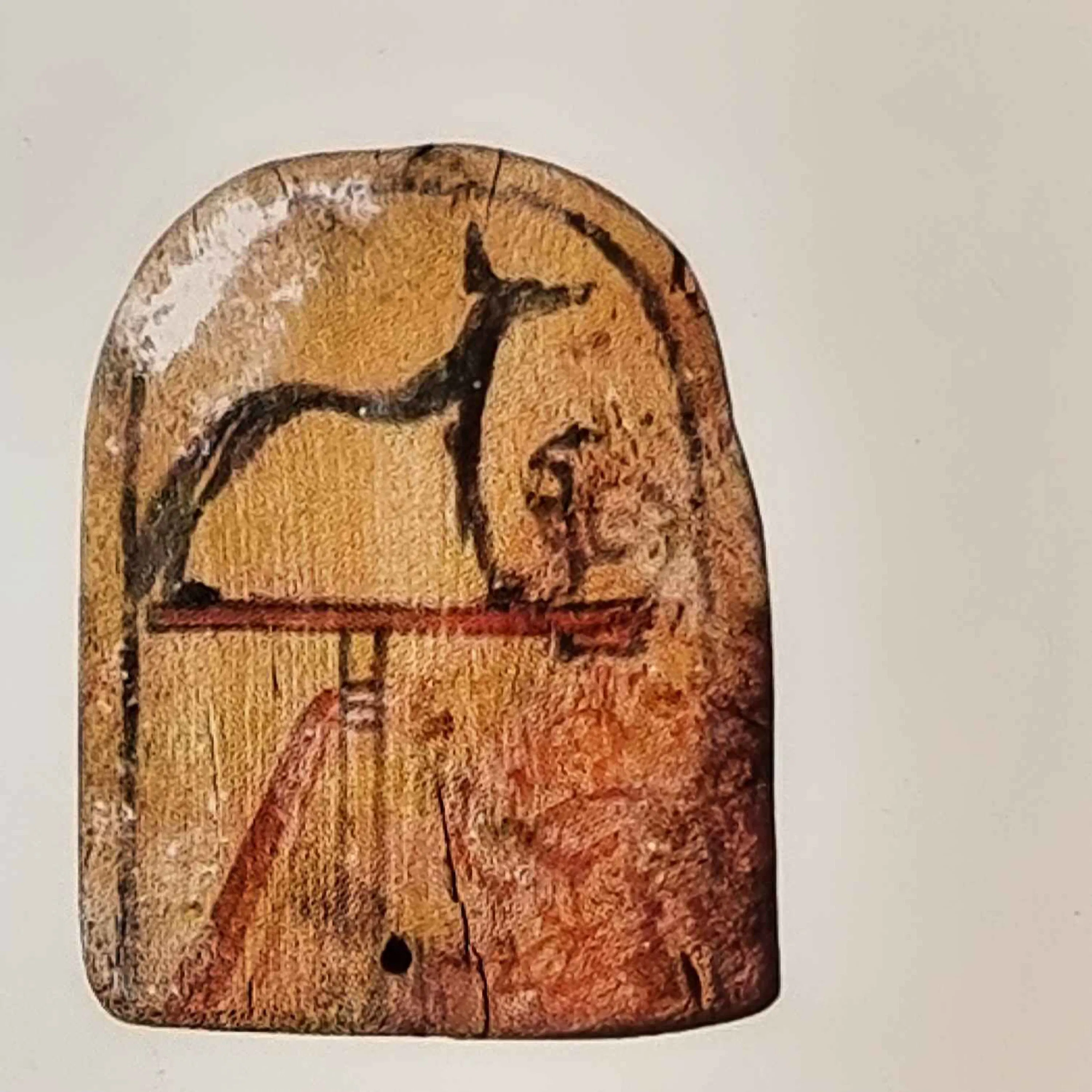
Tomb Builders of Amarna
Amarna Tales (Part 1). East of Akhet-Aten (Amarna), a walled-village hides among the hills. This "East Village" is a well-ordered, secluded community. It seems to be the new home of pharaoh's tomb builders. Originally, they lived at Deir el-Medina in west Luxor. But when Akhenaten founded his new royal city, the tomb-builders left their homes and came here. Today, archaeologists have uncovered a vast amount of material. Homes, animal pens, chapels, and countless artefacts shed light on daily life and family organisation in ancient Egypt. From homes to chapels, guard-houses to water depots, the East Village offers fantastic insights. It even includes traces of Tutankhamun, before he abandoned Amarna... Episode details: Date: c.1355 - 1340 BCE. Location: Akhet-Aten (el-Amarna). Kings: Akhenaten, Neferneferuaten, Tutankhaten/Tutankhamun. Website: www.egyptianhistorypodcast.com. Support the show via Patreon www.patreon.com/egyptpodcast. Make a one-time donation via PayPal payments. Logo image: A battle standard or soldier's emblem, with a sigil of Wepwawet (Kemp 2012). Music by Keith Zizza www.keithzizza.net. Music by Bettina Joy de Guzman www.bettinajoydeguzman.com. Music interludes by Luke Chaos https://twitter.com/Luke_Chaos. Select Bibliography: Read reports on the East Village and other aspects of Amarna's archaeology free, at The Amarna Project. M. Bierbrier, The Tomb-Builders of the Pharaohs (1982). A. H. Bomann, The Private Chapel in Ancient Egypt: A Study of the Chapels in the Workmen’s Village at El Amarna with Special Reference to Deir el Medina and Other Sites (1991). B. G. Davies, Life Within the Five Walls: A Handbook to Deir el-Medina (2018). B. Kemp, The City of Akhenaten and Nefertiti: Amarna and Its People (2012). B. J. Kemp, Amarna Reports I (1984). Free at The Amarna Project. B. J. Kemp, ‘The Amarna Workmen’s Village in Retrospect’, The Journal of Egyptian Archaeology 73 (1987), 21–50. T. E. Peet and C. L. Woolley, The City of Akhenaten, Volume I (1923). Available free at Archive.org. A. Stevens, Private Religion at Amarna. The Material Evidence (2006). A. Stevens, ‘Private Religion in the Amarna Suburbs’, in F. Kampp-Seyfried (ed.), In the Light of Amarna: 100 Years of the Nefertiti Discovery (2012), 95—97. A. Stevens, ‘Visibility, Private Religion and the Urban Landscape of Amarna’, in M. Dalton et al. (eds.), Seen & Unseen Spaces (2015), 77—84. Learn more about your ad choices. Visit megaphone.fm/adchoices

Akhenaten Phase 1 (Summary)
The Story So Far... We've covered a lot since Amunhotep IV / Akhenaten appeared on the throne of Egypt. Today, we take a breather to sort it all out and summarise what we've seen so far. This will put us on a good footing for even more drama in the years to come... Website: www.egyptianhistorypodcast.com. Support the show via Patreon www.patreon.com/egyptpodcast. Make a one-time donation via PayPal payments. Music by Keith Zizza www.keithzizza.net. Learn more about your ad choices. Visit megaphone.fm/adchoices
115b: Amarna, Building Quickly
Amarna (Part 4): Raising a City in Haste. When Akhenaten demanded a new royal residence (Akhet-Aten), it fell to countless labourers, overseers and donkeys to gather the material needed for the city. Archaeologists scouring the landscape of Akhet-Aten and its neighbourhood have found a great deal of evidence for stone quarrying, ancient road networks, and even the rudimentary concrete used to strengthen buildings... Date. c.1357 BCE King: Akhenaten (Nefer-kheperu-Re Wa-en-Re) Queen: Nefertiti (Nefer-neferu-Aten) Location: Amarna (Akhet-Aten) Website: www.egyptianhistorypodcast.com. Support the show via Patreon www.patreon.com/egyptpodcast. Make a one-time donation via PayPal payments. Music by Keith Zizza www.keithzizza.com. Select Bibliography: Barry Kemp, The City of Akhenaten and Nefertiti: Amarna and Its People, 2012. W.M. Flinders Petrie, Tell el Amarna, 1894. James A. Harrell, “Amarna gypsite: A new source of gypsum for ancient Egypt,” Journal of Archaeological Science: Reports (2016). DOI: http://dx.doi.org/10.1016/j.jasrep.2016.12.031 Learn more about your ad choices. Visit megaphone.fm/adchoices

115: Hatiay's House
Amarna (Part 3): House of a Master Builder. The Overseer of Works, Hatiay, was one of Akhenaten's most prominent and useful servants. He helped build pharaoh's new city, bringing the vision to life, by organising work teams and resources for the massive construction projects. Along the way, Hatiay received many perks, including one of the nicest houses discovered at the site... Date: c.1357 BCE (regnal year 6). Pharaoh: Akhenaten (Nefer-kheperu-Re Wa-en-Re). Queen: Nefertiti (Nefer-neferu-Aten). Locations: Akhet-Aten (Amarna). Website: www.egyptianhistorypodcast.com. Support the show via Patreon www.patreon.com/egyptpodcast. Make a one-time donation via PayPal payments. Music by Keith Zizza www.keithzizza.com. Select Bibliography: Aidan Dodson, Amarna Sunrise, 2014. Henri Frankfort; H W Fairman; J D S Pendlebury, The City of Akhenaten II: The North Suburb and the Desert Altars, 1933. Barry Kemp, The City of Akhenaten and Nefertiti: Amarna and Its People, 2012. Donald B. Redford, Akhenaten: The Heretic King, 1984. Learn more about your ad choices. Visit megaphone.fm/adchoices

114b: Akhenaten, Defining the Horizons
Amarna (Part 2): Akhenaten's Priorities and Mindset. A short side episode, concerning Akhenaten's mind-set around the time he moved to Amarna. Did the King always plan this city? Did he want to live here forever and never leave? And how did he think about the community he was developing? We explore these questions... Date: c.1357 BCE (Regnal Year 6). King: Akhenaten (Nefer-kheperu-Re Wa-en-Re). Queen: Nefertiti (Nefer-neferu-Aten Neferet-Iti). Locations: Thebes (Waset); Amarna (Akhet-Aten). Website: www.egyptianhistorypodcast.com. Support the show via Patreon www.patreon.com/egyptpodcast. Make a one-time donation via PayPal payments. Music by Keith Zizza www.keithzizza.com. Select Bibliography: Aidan Dodson, Amarna Sunrise, 2014. Marianne Eaton-Krauss, The Unknown Tutankhamun, 2016. Marc Gabolde, Akhenaten a Toutankhamoun, 1998. Barry Kemp, The City of Akhenaten and Nefertiti: Amarna and Its People, 2012. Dimitri Laboury, Akhenaton les grand pharaons, 2010. Phillipe Martinez, “Un monument préamarnien ignoré: Le Ramesséum,” Memnonia 15 (2004): 123-150. Dominic Montserrat, Akhenaten: History, Fantasy and Ancient Egypt, 2005. William J. Murnane, The Boundary Stelae of Akhenaten, 1993. William J. Murnane, Texts From the Amarna Period in Egypt, 1995. Donald B. Redford, Akhenaten: The Heretic King, 1984. Learn more about your ad choices. Visit megaphone.fm/adchoices

114: Akhenaten's New City (Amarna)
In regnal year 5, Akhenaten decreed the foundations of his new city devoted to the sun god. One year later, the King returned to perform ceremonies and to review what had been completed... Date: c.1357 BCE (regnal year 6) King: Akhenaten (Nefer-kheperu-Re Wa-en-Re) Queen: Nefertiti (Nefer-neferu-Aten) Cities: Amarna (Akhet-Aten) Website: www.egyptianhistorypodcast.com. Support the show via Patreon www.patreon.com/egyptpodcast. Make a one-time donation via PayPal payments. Music by Keith Zizza (www.keithzizza.com). Music by Michael Levy (www.ancientlyre.com). Select Bibliography: Betsy M. Bryan, “New Kingdom Sculpture,” in Allan B. Lloyd, A Companion to Ancient Egypt, 2 volumes, 2010. Aidan Dodson, Amarna Sunrise, 2014. Barry Kemp, The City of Akhenaten and Nefertiti: Amarna and Its People, 2012. Dominic Montserrat, Akhenaten: History, Fantasy and Ancient Egypt, 2005. William J. Murnane, Texts From the Amarna Period in Egypt, 1995. T.E. Peet and C. Leonard Woolley, The City of Akhenaten Part I: Excavations of 1921 and 1922 at El-Amarneh, 1923. J.D.S Pendlebury, The City of Akhenaten Part III: The Central City and The Official Quarters, 2 volumes, 1951. Available at Archive.org: Volume I: Texts & Volume II: Plates Sir W. M. Flinders Petrie, Tell el Amarna, 1894. Available at Archive.org. Donald B. Redford, Akhenaten: The Heretic King, 1984. Donald B. Redford, “Akhenaten: New Theories, Old Facts,” Bulletin of the American Schools of Oriental Research 369 (2013): 9-34. Patrick C. Salland, Palatial Paintings and Programs: The Symbolic World of the Egyptian Palace in the New Kingdom (c. 1550-1069 BCE), Unpublished PhD Dissertation, 2015. Fran Weatherhead, Wall-Paintings from the King’s House at Amarna, Journal of Egyptian Archaeology 81 (1995): 95-113. Learn more about your ad choices. Visit megaphone.fm/adchoices