
The History of Egypt Podcast
436 episodes — Page 2 of 9
216b: Kadesh, the ROCK Musical (Preview)
Heavy Metal Hittites. This is a preview of my "rock musical" version of Kadesh. Full version available at patreon.com/c/egyptpodcast. Song produced by Hermanubis (aka Luke Chaos https://chaosmusick.bandcamp.com/). Learn more about your ad choices. Visit megaphone.fm/adchoices

216: How Ramesses Described Kadesh
The war of the words. Following his strategic defeat at Kadesh, Ramesses set about putting his version of the story into wide circulation. Today, art and texts of this conflict survive at the temples of Abu Simbel, Karnak, Luxor, Abydos, and the Ramesseum. Among those texts, we have the “Literary Record” or “Kadesh Poem.” A lengthy, dramatised version of the events, painting Ramesses as the great hero. In this episode, I introduce the Literary Record and then read it in full, with musical accompaniment by Jeffrey Goodman. LIVESTREAM about "The Art of Kadesh" on Sunday 14 September. To join, simply subscribe to my YouTube channel at https://www.youtube.com/@ancientegypthist. The Livestream will be Sunday September 14 at 16:30 (UK time). This translates to: Berlin, Germany Sun, 14 Sep 2025 at 17:30 CEST London, United Kingdom Sun, 14 Sep 2025 at 16:30 BST New York, USA Sun, 14 Sep 2025 at 11:30 EDT Los Angeles, USA Sun, 14 Sep 2025 at 08:30 PDT Check other timezones here https://www.timeanddate.com/worldclock/converter.html?iso=20250914T153000&p1=37&p2=136&p3=179&p4=137 To learn more about the “Battle of Kadesh” narrative as a piece of literary/historical storytelling, see: Brand, P. J. (2023). Ramesses II: Egypt’s Ultimate Pharaoh. Lockwood Press. https://www.lockwoodpress.com/product-page/ramesses-ii-egypt-s-ultimate-pharaoh-paper Manassa, C. (2013). Imagining the Past: Historical Fiction in New Kingdom Egypt. Oxford University Press. https://doi.org/10.1093/acprof:oso/9780199982226.003.0003 Spalinger, A. J. (2021). The Books Behind the Masks: Sources of Warfare Leadership in Ancient Egypt. https://doi.org/10.1163/9789004466111 More music by Jeffrey Goodman www.jeffreygoodman.com and on Spotify. Learn more about your ad choices. Visit megaphone.fm/adchoices

Kadesh: What Was It Good For? with Prof. Peter Brand
Why is the Battle of Kadesh so famous, compared to other ancient conflicts? What can we take away from Ramesses' account in terms of "truth" vs "rhetoric." And what did it all up to, really? Prof. Peter Brand returns to discuss the battle in great detail, from the blow-by-blow moments to the larger strategic and political context. Along the way, we learn why Ramesses is like Rambo, and take a whimsical visit to medieval Bohemia... I'll be doing a livestream about the "Art of Kadesh" on Sun 07 September (UK time). See it at my YouTube channel https://www.youtube.com/@ancientegypthist Prof. Peter Brand’s book Ramesses II: Egypt’s Ultimate Pharaoh is available now through Lockwood Press and all good retailers. Other articles and publications by Prof. Peter Brand at Academia.edu. Learn more about your ad choices. Visit megaphone.fm/adchoices

215: Ramesses II Taking Hands, Healing Wounds
Who won? In the aftermath of battle, Ramesses and Muwattalli withdrew from Kadesh. We discuss the short- and long-term fallout and consider the "score card" for the respective armies. Then, we spend time with the wounded soldiers, using the Edwin Smith Papyrus to understand diagnoses and treatments used by ancient Egyptian physicians (swnw). Finally, we explore a curious hypothesis, suggesting that Ramesses practiced a form of "decimation" on his troops... Kadesh LIVESTREAM Sunday 07 September (UK time) on “The Art of Kadesh” via our YouTube channel https://www.youtube.com/@ancientegypthist Want more medicine? My interview with Dr. Bob Brier is available at https://open.spotify.com/episode/3mOg7BanFze6F4DYbSWT4K and my YouTube channel: https://youtu.be/h8I6M7-czYA The Edwin Smith Papyrus: Breasted, J. H. (1930). The Edwin Smith Surgical Papyrus (Vols. 1–2) free online: https://hdl.handle.net/2027/mdp.39015027232282; For a modern medical approach, see Sanchez, G. M., & Meltzer, E. S. (2012). The Edwin Smith Papyrus: Updated Translation of the Trauma Treatise and Modern Medical Commentaries. Learn more about your ad choices. Visit megaphone.fm/adchoices

214: The Battle of Kadesh - Ramesses II vs Muwattalli
In June of 1287 BCE (approximately), one of antiquity’s great conflicts unfolded in southern Syria. Meeting near Kadesh (Qidsha), the armies of Egypt and Hatti fought each other in a spectacular engagement. The events of that battle are recorded, somewhat grandiosely, by Ramesses II in temple art and extended hieroglyph narratives. With those as our foundation, we explore the most dramatic day in the young pharaoh’s life. CHAPTERS (Note: Chapter times may differ slightly depending on ads) Prologue 0:00 Red Dawn 5:56 Sekhet Pay 23:57 Twisted Metal 45:10 Doubling Down 1:05:49 White, Red, Black 1:26:12 Wrapping Up 1:53:04 == The History of Egypt Podcast: Website: www.egyptianhistorypodcast.com. Support the show via Patreon www.patreon.com/egyptpodcast. Make a one-time donation via PayPal payments https://www.paypal.com/ncp/payment/BHC6MGDBC6SXU. We have merch! Browse our designs at Dashery by TeePublic https://egyptpodcast.dashery.com/ Learn more about your ad choices. Visit megaphone.fm/adchoices

213: Ramesses II Seven Nation Army
Ramesses, Muwattalli, and the Trojans(?). In June of 1287 BCE, the Great Kings of Hatti and Egypt were on the verge of a major confrontation. Ramesses, marching across Sinai and into Canaan, made careful preparations for his assault on Kadesh. Alas, even the best-planned campaign could not be hidden from a watchful enemy. In Hatti, Muwattalli II sent calls to his vassals, summoning them to fight. The Hittite army, and its allies, is a remarkably well-documented force... For the Kikkuli Text of horse training, see https://en.wikipedia.org/wiki/Kikkuli and https://collections.britishart.yale.edu/catalog/orbis:9782188. Learn more about your ad choices. Visit megaphone.fm/adchoices

212: Ramesses II The Arsenal of Pharaohcracy
Preparing for Kadesh. In 1287 BCE (late in his fifth regnal year) King Ramesses II departed Egypt on campaign. His target? The city of Kadesh / Qidsha in southern Syria. The Kadesh campaign is famous, as one of history’s “great battles.” Today, we “set the scene,” and explore the preparations for this war. We have a surprisingly detailed picture of this, thanks to inscriptions, art, and excavations. From a new royal city, Pi-Ramesses, to the enormous scale of the army, to the diplomatic manouevres (and espionage) that would accompany this campaign… the preparations for Kadesh are almost as elaborate as the battle itself. Learn more at the Qantir-Piramesse archaeological project: https://qantir-piramesse.de/home/ort/ Digital reconstruction of Pi-Ramesses, incl. its stables, at Artefacts Berlin: https://www.artefacts-berlin.de/portfolio-item/the-reconstruction-of-pi-ramesse/ Learn more about your ad choices. Visit megaphone.fm/adchoices

Kadesh: The 200 Year Enemy with Prof. Peter Brand
Leading up to the Battle of Kadesh (c.1287 BCE) betwen Ramesses II of Egypt and Muwatalli II of Hatti, we need to understand the background. Why was this city the epicentre of such a major conflict? How did the rulers of Kadesh (Kadeshians?) persistently frustrate pharaohs dating back two centuries to Thutmose III (c.1480 BCE). Today, Prof. Peter Brand (University of Memphis) gives us the details... Learn more about Ramesses and Kadesh in Peter Brand's book Ramesses II: Egypt's Ultimate Pharaoh (Lockwood Press). Prof. Peter Brand at Academia.edu. Interview recorded: May 2025. Learn more about your ad choices. Visit megaphone.fm/adchoices

Ancient Egyptian Curse / Swear Words
EWe learn how to insult someone in ancient Egyptian, based on the surviving texts... Learn more about your ad choices. Visit megaphone.fm/adchoices
Ramesses' Wild West with Prof. Steven Snape
Heart of Darkness at Zawiyet Umm el-Rakham. Far from the Nile Valley, on Egypt’s northern coastline, Ramessid soldiers and civilians constructed a significant fortress to control the maritime roads. This remote garrison faced off against Libyan tribes coming from the far west (e.g. the Meshwesh of Cyrenaica), traded with Mediterranean merchants, possibly dealt with marauding pirates and Sea Peoples, and built a life for themselves on the western frontier. Alas, it wasn’t all beaches and bonhomie, as soldiers like Nebra, the commander, would learn… Prof. Steven Snape is the author of many books and articles including The Complete Cities of Ancient Egypt (2014); Ancient Egyptian Tombs: The Culture of Life and Death (2011); Zawiyet Umm el-Rakham I: The Temple and the Chapels (with Penny Wilson, 2007); Zawiyet Umm el-Rakham II: The Monuments of Neb-Re (with Glenn Godenho, forthcoming). Learn more about excavations and discoveries at this site in a free lecture, “ Zawiyet Umm el-Rakham and the Ramesside Defence System on the Maryut Coast,” on YouTube https://www.youtube.com/watch?v=xQ1QelBxYiU& Steven Snape papers and publications at Academia.edu https://liverpool.academia.edu/StevenSnape Steven Snape at The University of Liverpool: https://www.liverpool.ac.uk/people/steven-snape; Research Profile https://www.liverpool.ac.uk/people/steven-snape/research Prof. Snape is currently reading The Arabian Nightmare by Robert Irwin (1983). Wikipedia Learn more about your ad choices. Visit megaphone.fm/adchoices
NSFW Not Safe for Water (Did Pharaohs Masturbate into the Nile?)
EExplicit content. There's a factoid floating around on the internet. It claims that, to ensure fertility and good harvest, pharaohs would annually masturbate into the River Nile. This claim is total bubkis, but where did it come from? Which deities and myths were most closely associated with such concepts? In this mini episode, we explore the factoid and its potential origins. Great gods of fertility and Creation: Allen, J. P. (1988). Genesis in Egypt: The Philosophy of Ancient Egyptian Creation Accounts. Epigraphic Survey. (1940). Medinet Habu, Volume IV. Festival Scenes of Ramses III. Available free via The University of Chicago. Maher-Taha, M., Loyrette, A.-M., & Sayed, S. (1979). Le Ramesseum XI: les fêtes du dieu Min. Olette-Pelletier, J.-G. (2023). Min, l’Horus victorieux: Le dieu Min au Moyen Empire (Vol. 33). Siuda, T. L. (2024). The Complete Encyclopedia of Egyptian Deities. Wilkinson, R. H. (2000). The Complete Temples of Ancient Egypt.. Wilkinson, R. H. (2003). The Complete Gods and Goddesses of Ancient Egypt. Examples of the factoid: Anonymous, Did Egyptian Pharaohs Masturbate into the Nile? Retrieved June 16, 2025, from https://getmegiddy.com/egyptian-pharaohs-masturbate-into-nile Margolis, J. (2003). O: The Intimate History of the Orgasm. http://archive.org/details/isbn_9780802117861 Menezes, R. (2022, March 21). Pharaohs Had the Grossest Ritual to Keep the Nile Running. Cracked.com. https://www.cracked.com/article_33015_pharaohs-had-the-grossest-ritual-to-keep-the-nile-running.html Taylor, M. (2021). You Know What We Should Bring Back? Ritually Jacking Off into Rivers. MEL Magazine. https://melmagazine.com/en-us/story/ancient-egypt-masturbation-nile Learn more about your ad choices. Visit megaphone.fm/adchoices
Hapi Days (or, Ramesses in DeNile)
Hapi was Egypt. The life-giving waters of the annual flood (inundation) were his work; and thanks to these waters, Egypt flourished, its people were fed, the gods received their offerings, and the social order was maintained. From the New Kingdom, papyrus and ostraca record songs/poems to the river god, called "Praise (dua) of Hapi." From the days of Ramesses II, we also have elaborate proclamations to the god and his blesings... A Hymn to Hapi (excerpt) Hail to you Hapi, who comes forth from the earth, Who arrives to give life to Egypt (Kemet), Hidden of nature, like darkness in the day, Whose followers sing to him, Who floods the fields, created by Ra, Who causes every herd to live, Who satisfies the desert, which is far from water, He (Hapi) is the moisture, descending from the sky… ... Egypt is awakened; its exhaustion has gone! All the creatures celebrate, when (Hapi) makes the Two Banks green. When he pours forth abundance, among the old and young alike. How lovely the lotus, whose blossoms dot the flood, that they may tell the happiness to come. ... Come, O god (Hapi)… do not be slow! Do not be cruel, reducing what we have, for you might do wrong to the innocent… May you (Hapi) give breath to the nose, when you come. O Hapi, do not sink into the ground… Your perfection is here before us, so that we may turn back to your keeping; and the gods are near… ... For more information about Hapi and Hymns to the Nile: Foster, J. L. (1995). Hymns, Prayers, and Songs: An Anthology of Ancient Egyptian Lyric Poetry. Lichtheim, M. (1973). Ancient Egyptian Literature Volume I: The Old and Middle Kingdoms. Quirke, S. (2004). Egyptian Literature 1800 BC: Questions and Readings. Siuda, T. L. (2024). The Complete Encyclopedia of Egyptian Deities. Wilkinson, R. H. (2003). The Complete Gods and Goddesses of Ancient Egypt. Learn more about your ad choices. Visit megaphone.fm/adchoices

Scent of a Mummy: Smells and Pleasure in ancient Egypt, with Dora Goldsmith
What did ancient Egyptians like to smell? Did they use any narcotics in their day to day lives? And what do mummified bodies smell like? Today, I'm pleased to welcome Dora Goldsmith to the podcast. Dora Goldsmith is a PhD-candidate at the Freie Universitat in Berlin, Germany. Specialising in ancient smellscapes, Dora explores how the ancient Egyptians perceived and described the scent of their world. Along the way, Dora introduces us to the favoured perfumes and flowers used by the ancients, some of their “recreational” substances, and how mummified bodies smell today. Publications by Dora Goldsmith at Academia.edu https://fu-berlin.academia.edu/DoraGoldsmith For perfumes and newsletter, email Dora Goldsmith directly at [email protected]. Learn more about her reconstructions in the Ancient Egyptian Scent Kit. Follow Dora on Instagram @prof_dora Learn more about your ad choices. Visit megaphone.fm/adchoices
Writing Kadesh and the Podcast on YouTube
We're joining YouTube! After many years of on-off effort, I'm finally putting podcast episodes in video form up on my YouTube channel. Also, a quick update on the narrative as a I prepare the Battle of Kadesh... Follow us on YouTube at https://www.youtube.com/@ancientegypthist Massive thanks to Amr Saleh for taking on the editing duties. I hope you'll all join us on an exciting journey to bring more ancient Egypt to you(tube). Learn more about your ad choices. Visit megaphone.fm/adchoices
Egypt Tour 2026 March, Come Sail Away with Me (and Ramesses)
Hello everyone, it’s that time again! In March of 2026, we’re offering a new itinerary in the Nile Valley. This one is called the New Kingdom Cruise. It lasts for ten days, with a special focus on the south, the monuments of Elephantine (Aswan) and Lake Nasser. We ride a cruise boat, organised by Ancient World Tours, and visit monuments of Thutmose III, Sety I, Ramesses II, and even the Roman Emperors. For bookings follow this link and use the password KALABSHA https://www.ancient.co.uk/holiday/history-of-egypt-podcast-2026-the-nubian-cruise/ Learn more about your ad choices. Visit megaphone.fm/adchoices
211: Ramesses II The First Campaign of Victory
Ramesses II defends his borders. In the early years of his reign, Ramesses focussed on home defence. His army established new forts at remote locations along the western Delta and Mediterranean Coast (Marmarica). Traces of this work can be found at famous locations like el-Alamein, Mersa Matruh, and Zawiyet Umm el-Rakham, the latter of which has been the object of detailed excavation in recent decades. Apparently, Ramesses was fortifying his frontiers, guarding the western approaches to Egypt. Soon after, the pharaoh went forth on campaign. His target? The cities of Canaan and Amurru, in modern-day Lebanon. Along the way, he left inscriptions at Nahr el-Kalb, which started a surprisingly long-lived tradition... Music: "War" by Ancient Lyric (commissioned by The History of Egypt Podcast). Website: www.egyptianhistorypodcast.com. Support the show via Patreon www.patreon.com/egyptpodcast. Make a one-time donation via PayPal payments https://www.paypal.com/ncp/payment/BHC6MGDBC6SXU. We have merch! Browse our designs at Dashery by TeePublic https://egyptpodcast.dashery.com/ Learn more about your ad choices. Visit megaphone.fm/adchoices
Feed Swap: The Ancient World - Ages
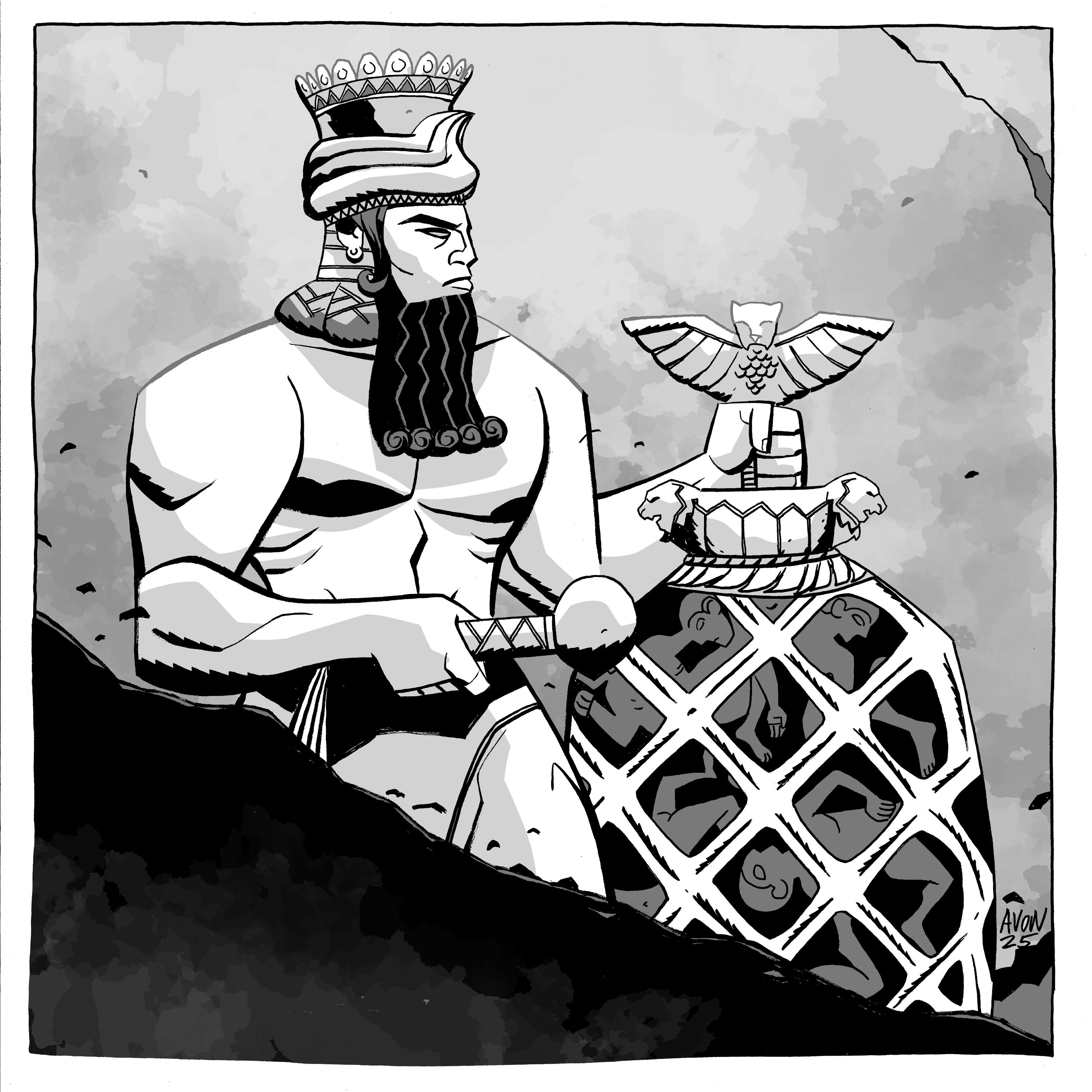
Fellow podcaster Scott Chesworth, from The Ancient World has a new season. I’m excited to introduce “The Ancient World – Ages”, a series covering the Early Bronze Age Collapse (c. 2200 BC) and the remaking of Southwest Eurasia. In this feed swap, you’ll hear episode A3 – The Kings of Kish. It covers the period c.2900 BCE and 2350 BCE, also known as the Early Dynastic Period in Sumer. A time of kings, emerging from legends. Figures like Gilgamesh, burial sites like the Royal Cemetery of Ur, and the legendary conflict between the gods Lagash and Umma, recorded on the Stela of the Vultures. Along the way, Scott will introduce you to history’s earliest-known diplomacy, bilateral treaty, and legal codes. Finally, Scott will set the stage for the most famous conqueror of the day: Sargon of Akkad. The Ancient World – Ages promises to by an exciting, big picture history of this ancient period. While the Egyptians were focused on pyramids, rulers in Mesopotamia were kicking Kish and taking names. Please, consider joining Scott on this epic journey. Website: https://ancientworldpodcast.com/ Scott Chesworth's The Ancient World is available on Spotify, Apple, and all good podcasting apps. Learn more about your ad choices. Visit megaphone.fm/adchoices
210: Ramesses II The Eyes of Ra, The House of Life
Ramesses goes back to school. Luxor Temple is a magnificent monument, in a city full of them. The sanctuary you visit today is, in large part, the work of Ramesses' early reign. New pylons, colossal statues, obelisks, and dedicatory texts provide the testament to the young pharaoh's work. Exploring these, we also get a surprising insight into temple archives and educational facilities, embodied in the Per-Ankh / House of Life... Outro music: Jeffrey Goodman, "Prophetic Harps of Amun-Ra," used with permission. Website: www.egyptianhistorypodcast.com. Support the show via Patreon www.patreon.com/egyptpodcast. Make a one-time donation via PayPal payments https://www.paypal.com/ncp/payment/BHC6MGDBC6SXU. We have merch! Browse our designs at Dashery by TeePublic https://egyptpodcast.dashery.com/ Learn more about your ad choices. Visit megaphone.fm/adchoices
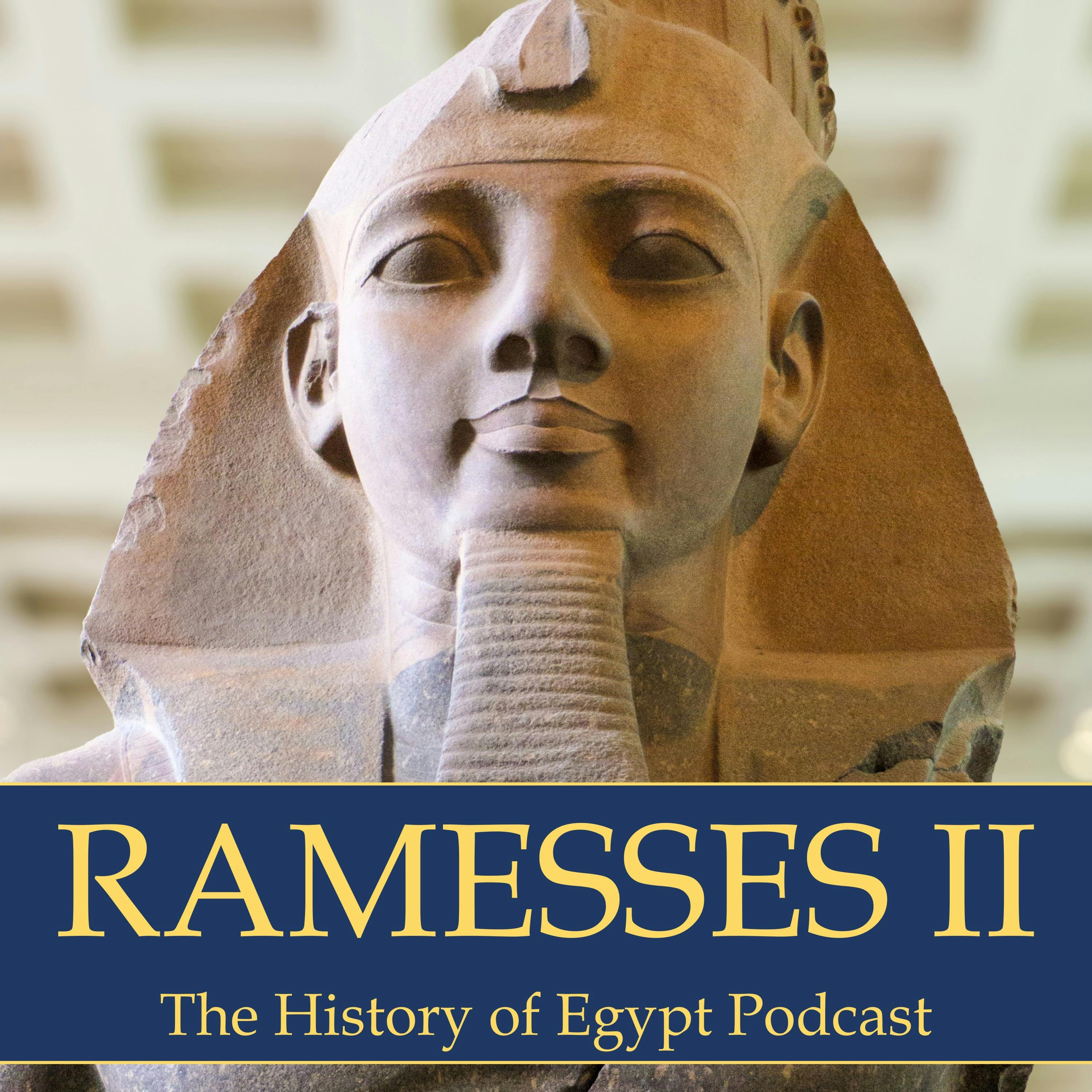
209: Ramesses II vs the Sea Peoples
Delta raiders. Decades before their famous migrations, the "Sea Peoples" were already active and visible in the eastern Mediterranean; and Ramesses II had his own dealings with these groups. In year 2 of his reign, Ramesses II (Usir-Ma'at-Ra) dealt with a coastal raid by the Sherden, who came from the "islands in the midst" of the sea (which the Egyptians called the "Great Green"). The battle, and its aftermath, is referenced in several of Ramesses' inscriptions. We explore this curious first chapter in the Sea Peoples' story... Music: Michael Levy "Odysseus and the Sirens” www.ancientlyre.com Website: www.egyptianhistorypodcast.com Support the show via Patreon www.patreon.com/egyptpodcast Make a one-time donation via PayPal payments https://www.paypal.com/ncp/payment/BHC6MGDBC6SXU We have merch! Browse our designs at Dashery by TeePublic https://egyptpodcast.dashery.com/ Learn more about your ad choices. Visit megaphone.fm/adchoices
Thutmose III & Hatshepsut: The New Kingdom Defined with Prof. Aidan Dodson
The new royal tomb, and how two 18th Dynasty rulers defined the "New Kingdom" as we know it. Prof. Aidan Dodson is a dedicated and prolific scholar, whose research covers many facets of ancient Egyptian history (and even WW1 warships!) His latest book, Thutmose III & Hatshepsut: Pharaohs of Egypt - Their Lives and Afterlives looks at how these two monarchs, and their followers, defined many of the aspects of "pharaonic culture" as we imagine it. Along the way, we also discuss the new royal tomb, its significance, and its connection to these famous figures. Prof. Aidan Dodson at Academia.edu and the University of Bristol. Book: Thutmose III and Hatshepsut, Pharaohs of Egypt at AUC Press. Learn more about your ad choices. Visit megaphone.fm/adchoices
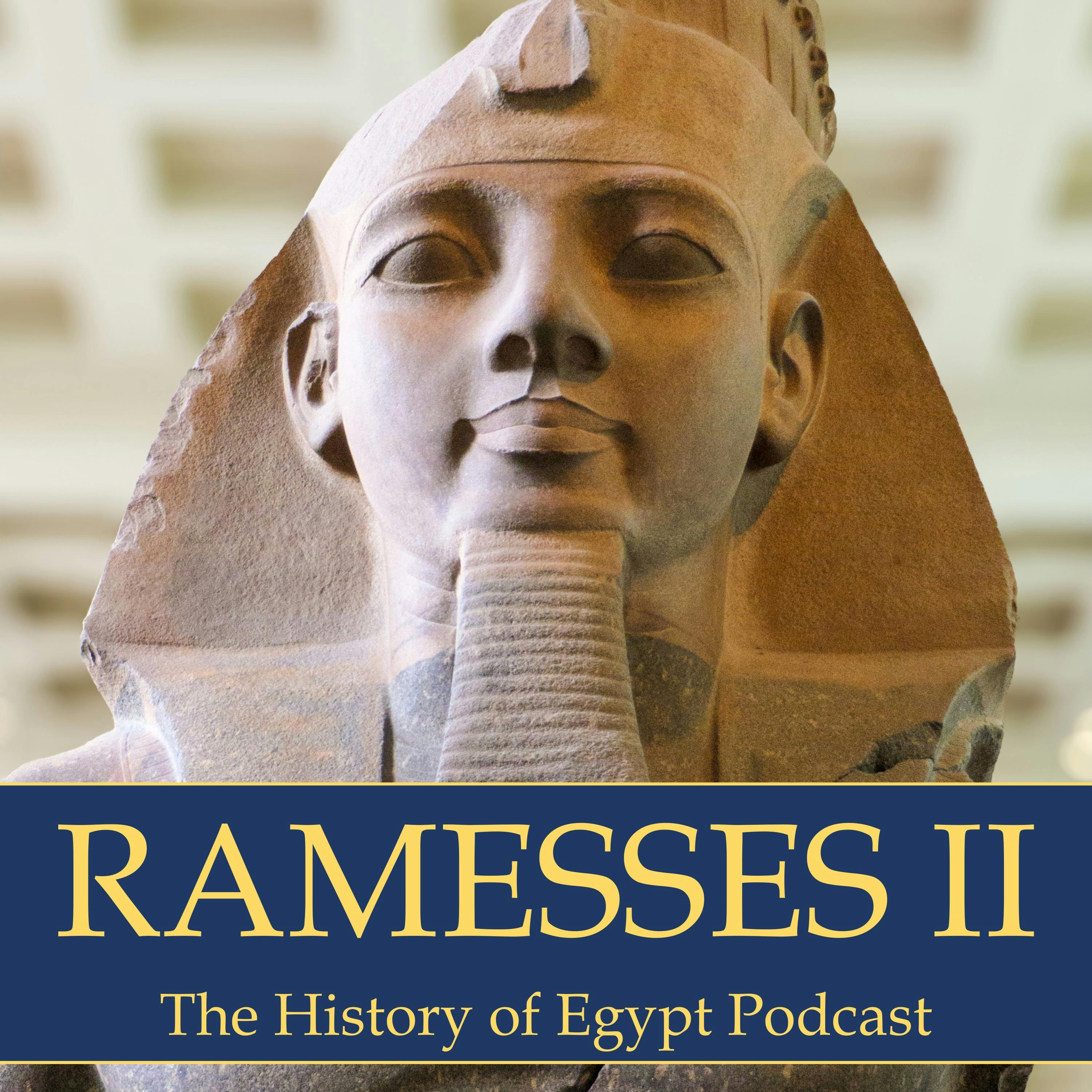
208: Ramesses II The Oracle & The Sphinx
A death at Karnak, and a lion amongst men. In regnal year 1 (c.1292 BCE), Ramesses II was at Abdju / Abydos. While there, he appointed a new First Priest of Amun (Hem Netjer Tepy en Imen). He chose his candidate by consulting the deity directly, engaging in an oracle with Amun to choose the best option. Shortly after, Ramesses departed Abdju and continued his northward journey. Eventually, he came to Giza, home of the Great Sphinx and the deity that inhabited it... The History of Egypt Podcast: Website: www.egyptianhistorypodcast.com. Support the show via Patreon www.patreon.com/egyptpodcast. Make a one-time donation via PayPal payments https://www.paypal.com/ncp/payment/BHC6MGDBC6SXU. Music and interludes by Luke Chaos www.chaosmusick.com. We have merch! Browse our designs at Dashery by TeePublic https://thehistoryofegyptpodcast.dashery.com/. Learn more about your ad choices. Visit megaphone.fm/adchoices
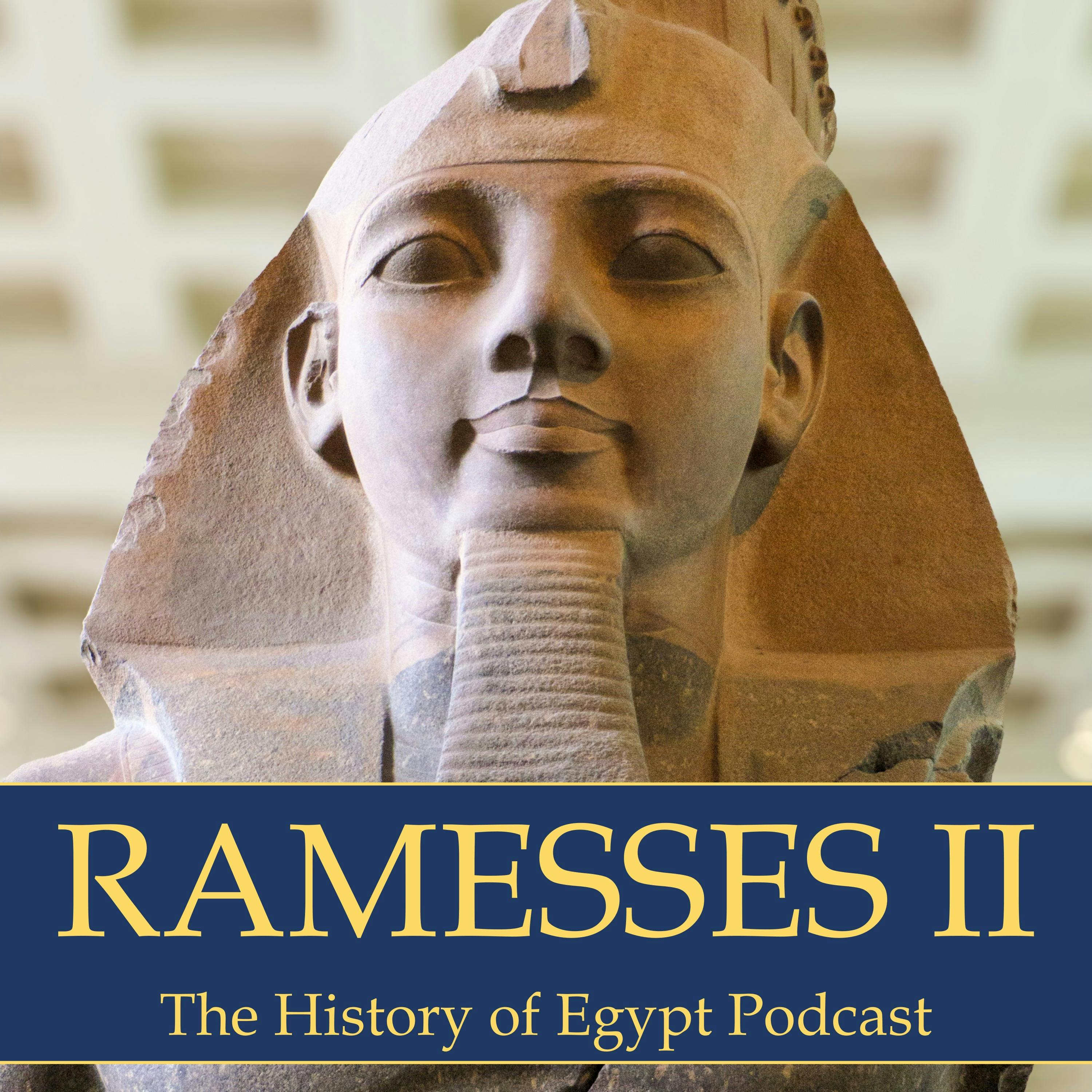
207: Ramesses II Shadow of Two Fathers
Ramesses had a lot to plan for, in his first year of rule (c.1292 BCE). Staying in Waset / Luxor, the new pharaoh began building work on his tomb (KV7) and his memorial temple (The Ramesseum). Archaeological records testify to both of these projects. Then, the King immortalised his late father, the Osiris Sety I, in scenes of worship at Karnak. Finally, Ramesses left Waset, heading north; but he stopped at Abdju / Abydos on his way. There to commune with Osiris (Sety) once more, and to address some glaring issues... Chapters: 00:00 Building KV7 and the Ramesseum 04:55 Ramesses celebrates the Opet Festival 12:15 Ramesses honours Sety at Karnak 17:32 Ramesses at Abydos and the "Great Abydos Dedication" text 39:18 Summary and Conclusion Learn more about your ad choices. Visit megaphone.fm/adchoices
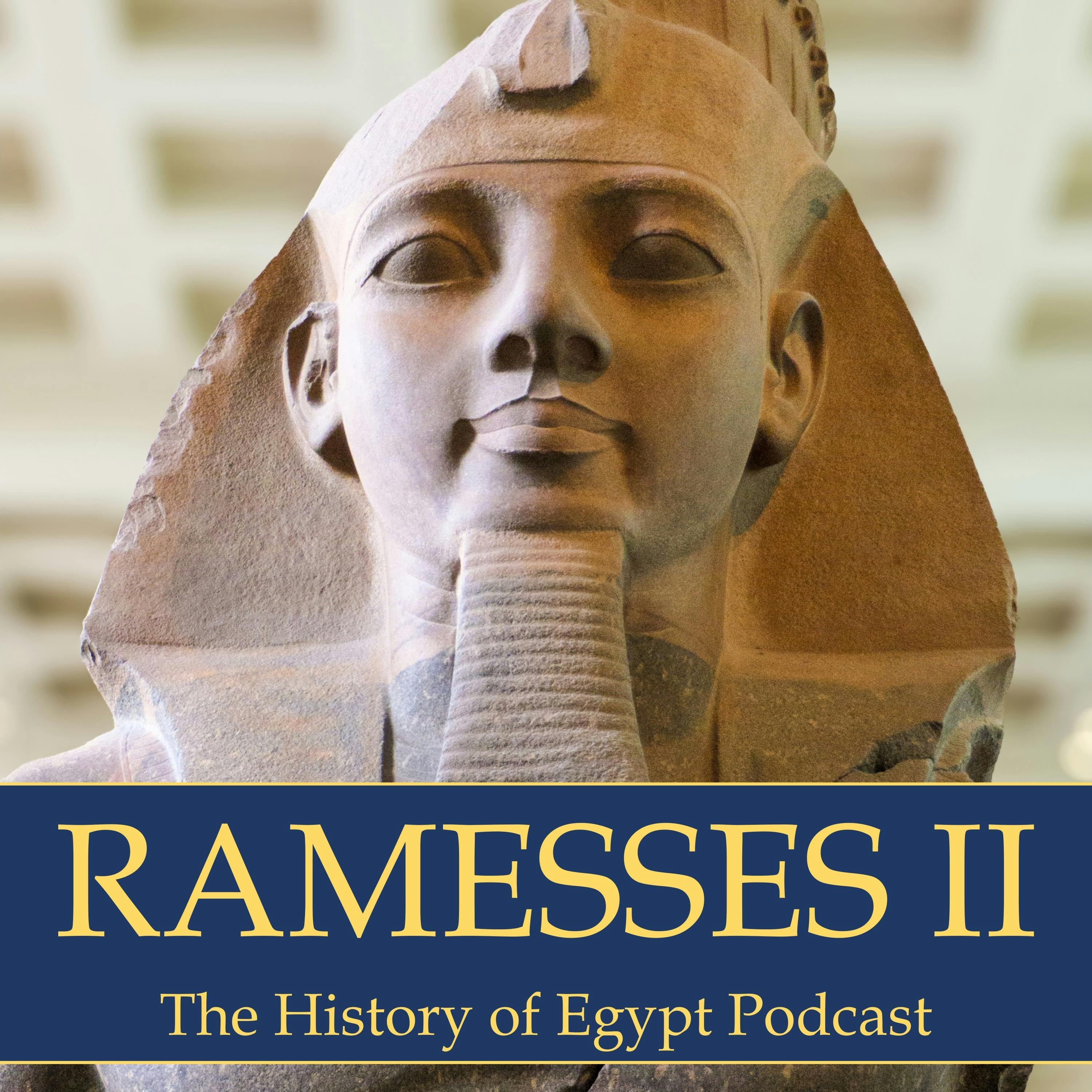
206: Ramesses II Usir-Ma'at-Ra
In the annals of Egyptian history there is no one quite like Ramesses II. He is arguably the most famous, or infamous, of Egypt’s pharaohs. His reign would be long (67 years!) and his influence would be incalculable. In this episode, Ramesses "appears" as King, following the death of his father (III Shemu 27). He chooses his royal names (Usir-Ma'at-Ra, Ramesses Beloved of Amun). He buries Sety, in the Valley of the Kings. And he goes before the gods to receive blessings and power... Episode chapters: 00:00 - Introduction to Ramesses II 04:20 - Ramesses Accession Date & Royal Names 12:56 - The Funeral of Sety I (Horus buries Osiris) 20:50 - Ramesses goes before the gods 43:22 - Conclusion For the Hypostyle Hall at Karnak, and Ramesses’ “coronation” scenes, see the following volumes: Nelson (1981). The Great Hypostyle Hall at Karnak Volume 1, Part 1: The Wall Reliefs https://isac.uchicago.edu/research/publications/oip/great-hypostyle-hall-karnak-volume-1-part-1-wall-reliefs Brand et al. (2018). The Great Hypostyle Hall in the Temple of Amun at Karnak Volume 1, Part 2: Translation and Commentary. https://isac.uchicago.edu/research/publications/oip/oip-142-great-hypostyle-hall-temple-amun-karnak The History of Egypt Podcast: Website: www.egyptianhistorypodcast.com. Support the show via Patreon www.patreon.com/egyptpodcast. Make a one-time donation via PayPal payments https://www.paypal.com/ncp/payment/BHC6MGDBC6SXU. We have merch! Browse our designs at Dashery by TeePublic https://egyptpodcast.dashery.com/ Learn more about your ad choices. Visit megaphone.fm/adchoices
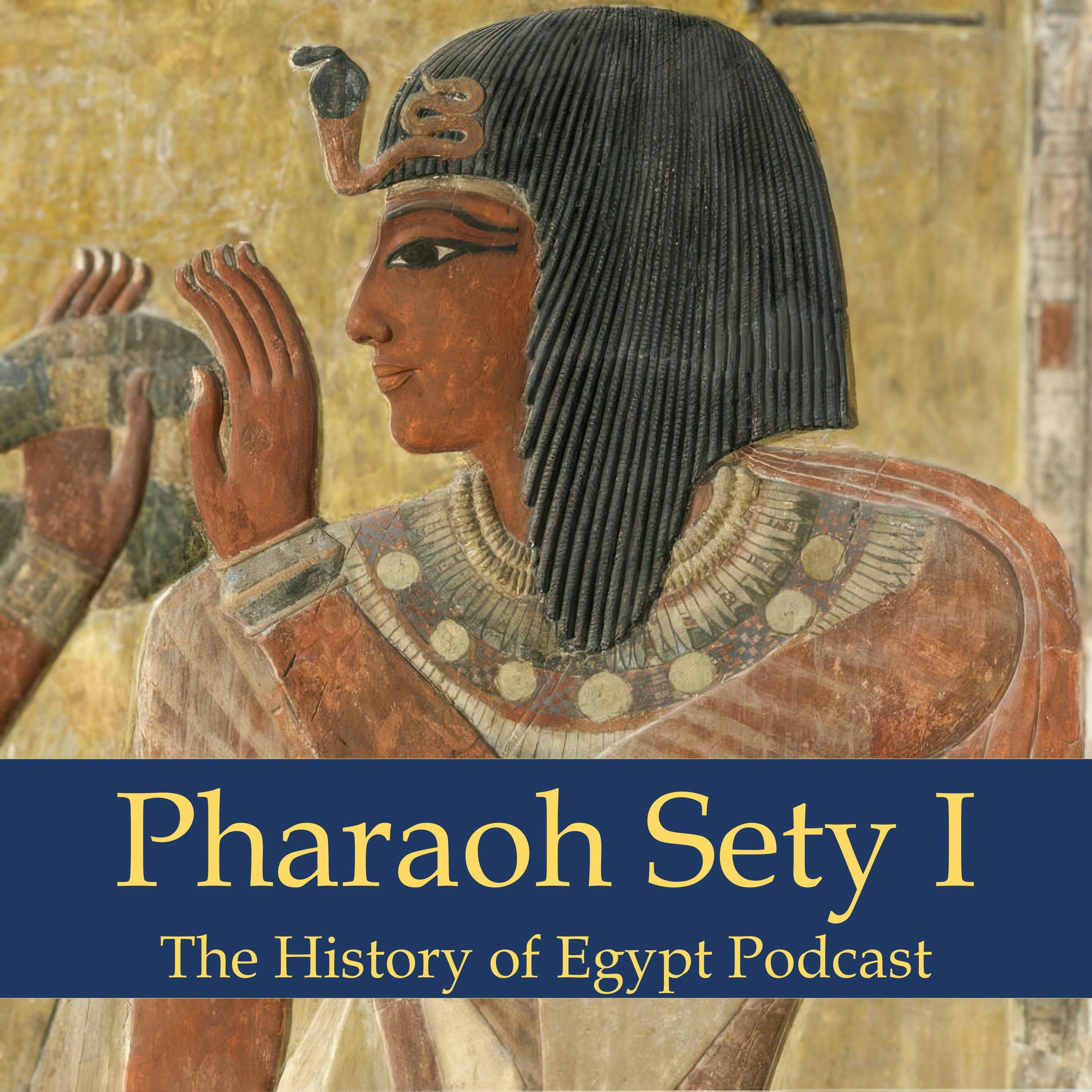
Sety's Borrowed Coffin with Dr. Peter Lacovara
The coffin of Sety I (now in the NMEC) was probably reworked from an earlier piece, during the reburials in DB320 (the royal cache). But how can we tell? Dr. Peter Lacovara explains. Dr. Lacovara's website https://peterlacovara.com/ Video version available at Patreon www.patreon.com/egyptpodcast Video version available on YouTube https://youtu.be/6e1fauj4qPA Learn more about your ad choices. Visit megaphone.fm/adchoices
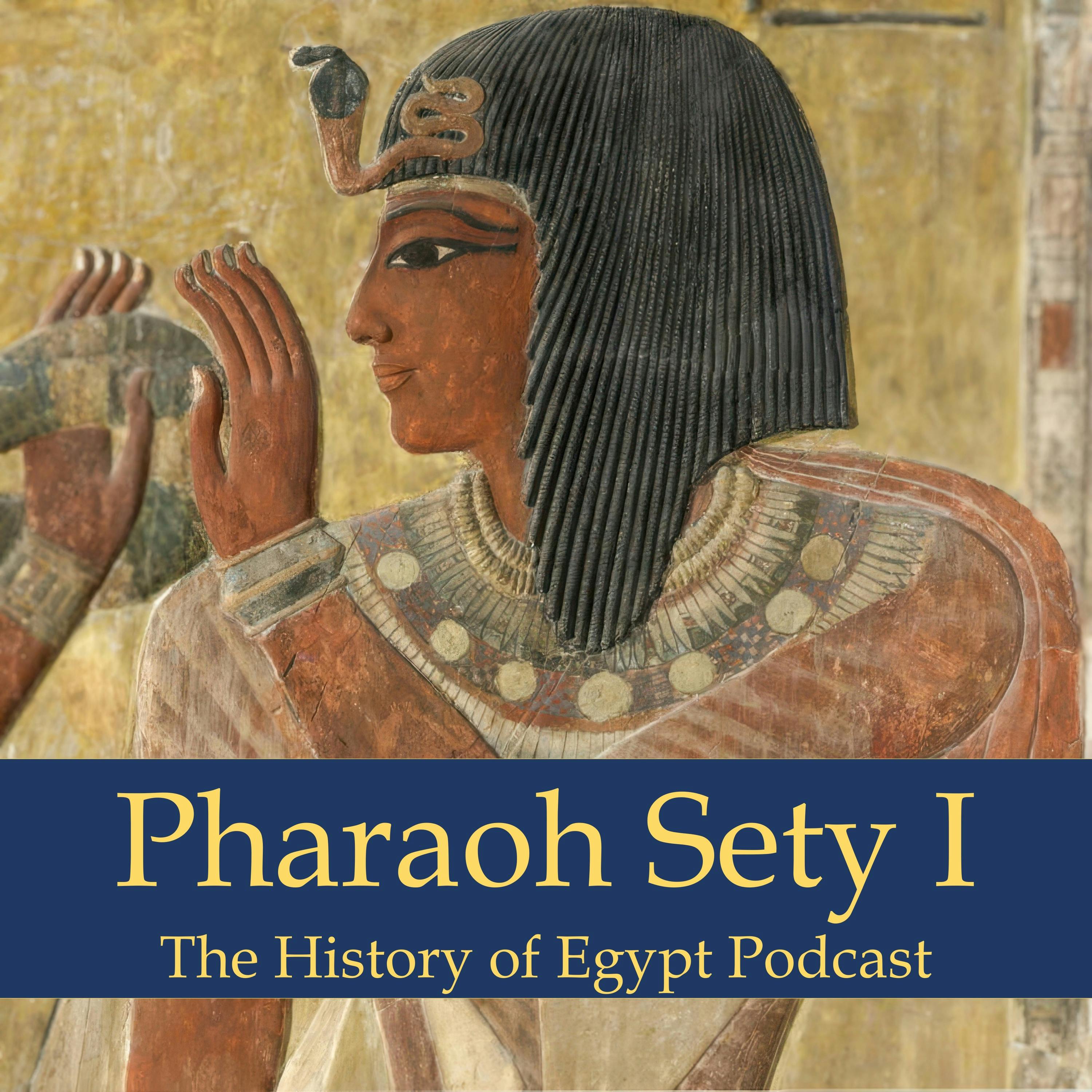
205: Sety I The Finest Tomb
Sety’s royal burial. Valley of the Kings tomb 17 (KV17) came to light in October 1817. Discovered by a team of Egyptian workers, employed by Giovanni Belzoni, the tomb is the most beautiful, and one of the largest, in the entire Valley. == Learn more about KV17: 3D Tour by Mused: https://mused.com/tours/926/tomb-of-seti-i-valley-of-the-kings/ Theban Mapping Project https://thebanmappingproject.com/tombs/kv-17-sety-i Photos: Kairoinfo4u via https://www.flickr.com/photos/manna4u/albums/72157687439529835/ KV17 at Wikimedia https://commons.wikimedia.org/wiki/Category:KV17 == The History of Egypt Podcast: Website: www.egyptianhistorypodcast.com Support the show via Patreon www.patreon.com/egyptpodcast Make a one-time donation via PayPal payments https://www.paypal.com/ncp/payment/BHC6MGDBC6SXU We have merch! Browse our designs at Dashery by TeePublic https://egyptpodcast.dashery.com/ Learn more about your ad choices. Visit megaphone.fm/adchoices
Scan Technology Reveals Hidden Chambers at Giza?
Approach with caution. In March 2025, a group calling itself the “Khafre Research Project” posted visual information online about the pyramid of Khafra at Giza. The group claims that Synthetic Aperture Radar (or SAR) scans at Giza have revealed “structures” beneath the pyramids. Using digital modelling (and some AI), they suggest that Khafra’s pyramid and the Giza plateau hide many more chambers. There are a couple facets to this. The 2022 article publishing raw data about SAR scanning at Giza: https://www.mdpi.com/2072-4292/14/20/5231 Overview of claims and evidence: https://www.snopes.com/fact-check/pyramids-of-giza-new-discovery-structures/ I don't usually do "debunking" content or engage with pseudoscience directly. If you'd like to learn more about the truth vs fiction, consider following these creators: Milo Rossi (Miniminuteman): https://www.youtube.com/shorts/TgAp_Ry6dcM Stefan Milo: https://www.youtube.com/watch?v=341Lv8JLLV4 Flint Dibble: https://www.youtube.com/watch?v=BQMfGuKgTwU Learn more about your ad choices. Visit megaphone.fm/adchoices
Another Royal Tomb! Abydos | Hatshepsut | Bastet Tooth and more discoveries
News from the Field (2025) Part 2. The past excavation season has been extraordinarily productive. Beyond the new royal tomb of Thutmose II we also have a SECOND royal tomb, at Abydos! The Grand Egyptian Museum is finally opening in full. And archaeological teams throughout the land have uncovered wonderful things. We also remember some prominent scholars who passed away recently. Chapter times and links to discovery reports with photos: 00:22 – New tombs at Asasif https://southasasif.wordpress.com/2024/11/01/discovery-announcement/. 02:21 – New tombs at Dra Abu Naga https://www.facebook.com/tourismandantiq/posts/pfbid02eqYh7RAiCqrxxDir9Pvbhu4YV1samnfLLtdJUfgNqvNbF6mVHWYkMGHTWixL7efjl 04:31 – Hatshepsut’s Valley Temple discoveries https://english.ahram.org.eg/News/538198.aspx 09:08 – Karnak Treasure Hoard https://english.ahram.org.eg/News/541255.aspx 10:50 – New tombs at Saqqara https://english.ahram.org.eg/News/537986.aspx 12:29 – Bastet Tooth, ancient predator https://www.sci.news/paleontology/bastetodon-syrtos-13673.html and https://doi.org/10.1080/02724634.2024.2442472 13:52 – Gold Mines in the Eastern Desert https://www.facebook.com/luxortimesmagazine/posts/pfbid024ATNP7GsdFwC35EgngA7Ys51MrwjrzsMPvPMXkty4oMt1SLC46g1tmRBVSEfpyXEl 15:28 – The Grand Egyptian Museum OPENING https://english.ahram.org.eg/NewsContent/1/1238/539361/Egypt/Tourism/A-world-gem-Grand-Egyptian-Museum-set-for-grand-op.aspx 20:18 – Obituaries 2024 & 2025. 31:24 – Breaking News: New Royal Tomb at Abydos https://www.egyptindependent.com/royal-cemetery-from-second-intermediate-period-and-pottery-workshop-discovered-in-sohag/ Learn more about your ad choices. Visit megaphone.fm/adchoices
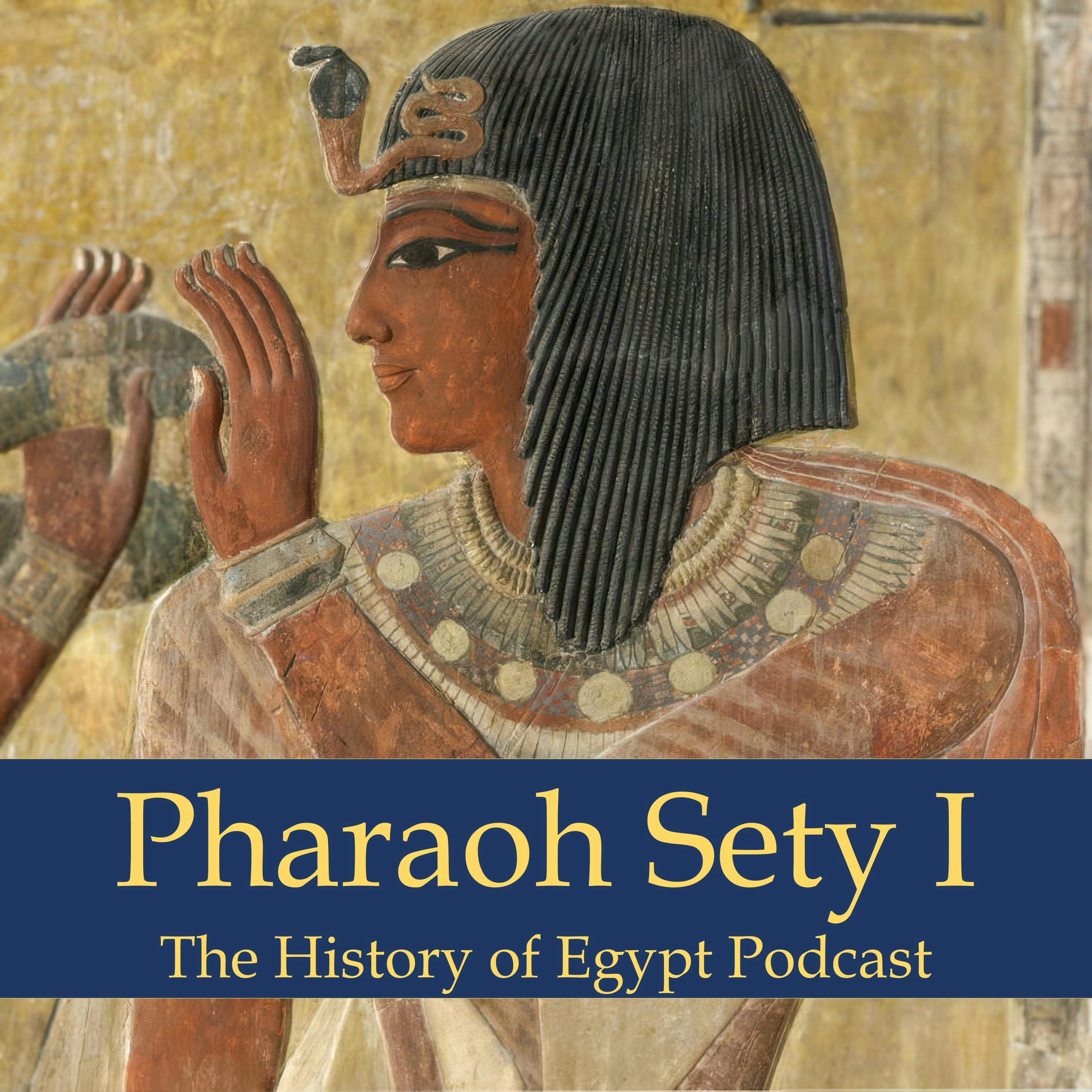
204: Sety's Last Journey
After a reign of approximately eleven years, the Horus Men-Ma’at-Ra (Sety I) passed to the west. He died in reasonably good health, and studies of his mummy reveal a tall, physically robust individual. So, what killed him? We explore these questions, and the history of his Memorial Temple, where the King’s body lay in state ready for burial… Music by Bettina Joy de Guzman www.bettinajoydeguzman.com. Music and interludes by Keith Zizza www.keithzizza.net. Music by Luke Chaos www.chaosmusick.com. Additional music “Sety’s Funeral” by Ihab Mahna https://www.instagram.com/imahna/. Support the show via Patreon www.patreon.com/egyptpodcast. Make a one-time donation via PayPal payments. Learn more about your ad choices. Visit megaphone.fm/adchoices
Egypt's New Royal Tomb Discovery with Dr. Chris Naunton. What's next?
News from the Field 2025, Part 1. In February 2025, the breaking news was the discovery of a royal tomb. An archaeological mission working in Luxor are confident they have located the grave of King Thutmose II. The tomb itself was discovered in late 2022, and the team announced it publicly in 2023. I reported on that initial find in the news roundup for that year. Now, another season has passed, and the team’s work has come to fruition... I am also joined by Dr. Chris Naunton, former Director of the Egypt Exploration Society, who was discussed the new find on his blog, and joins us to share some wider context and speculation. Music interludes by Keith Zizza and Luke Chaos. Learn more about your ad choices. Visit megaphone.fm/adchoices
203: Rise of a Vizier
Paser, servant of Sety I and Ramesses II (c.1300--1270 BCE). In the later years of his reign, King Sety promoted one of his servants to the highest political/government office. Paser, the Vizier, enters our story... Website: www.egyptianhistorypodcast.com. Support the show via Patreon www.patreon.com/egyptpodcast. Make a one-time donation via PayPal payments. Music and interludes by Keith Zizza www.keithzizza.net. Music and interludes by Luke Chaos www.chaosmusick.com. Learn more about your ad choices. Visit megaphone.fm/adchoices
Ramessid Biographies with Prof. Elizabeth Frood
Elizabeth Frood is Associate Professor of Egyptology and Director of the Griffith Institute at the University of Oxford, UK. In a lively discussion, Dr. Frood shares her insights into ancient lives and how people living in the non-royal sphere approached their immortality. Statues, texts and graffiti show us the minds of these people and how they depicted their concerns, beliefs and ideas. It's a great conversation and I think you'll really enjoy it! Prof. Frood's book: Biographical Texts from Ramessid Egypt, 2007. Academic pages: https://www.orinst.ox.ac.uk/people/elizabeth-frood https://oxford.academia.edu/ElizabethFrood Prof. Frood's story: http://www.ox.ac.uk/news/arts-blog/returning-egypt-acquired-disability-and-fieldwork# https://www.facebook.com/watch/?v=2281439122175384 https://www.bbc.com/news/av/uk-england-oxfordshire-42739901/the-infection-which-took-my-nose-and-legs Learn more about your ad choices. Visit megaphone.fm/adchoices
202: A Valley of the Queens & The Womb of Hathor
The Place of Beauties (Ta-Set-Neferu). In the reigns of Ramesses I and Sety I (c.1304—1292 BCE), the Valley of the Queens finally earned its moniker. Having been a burial ground for royal children and courtiers, the wadi south of Deir el-Medina now began to host ruling women. In the days of Sety I, the Queen Mother Sitra and the Queen Tuya both received new tomb constructions in this site. Their monuments include evocative passages from the Book of the Dead (Chapter 17), and hints of the wonders to come in future generations… Tombs discussed in this episode: Princess Iah-Mes / Ahmose: Museo Egizio, Turin and Theban Mapping Project. Queen Sitra: Theban Mapping Project. Queen Tuya: Theban Mapping Project. Queen Nefertari: Theban Mapping Project and digital reconstruction at Nefertari Tomb. Learn more about your ad choices. Visit megaphone.fm/adchoices
A Memory of Gods with Dr. Tamara Siuda
Understanding the deities requires us to move beyond inherited preconceptions and prejudices. Fortunately, there are many gods worthy of the effort. From the deified Sphinx Horemakhet, to the meme-lord Medjed, to the deified lover-boy Antinous, the pantheon is rich in variety and personalities. It is a subject that today’s guest, Dr. Tamara L. Siuda, has devoted a great deal of time. Her new book, The Complete Encyclopedia of Egyptian Deities (2024) is a comprehensive guide to many of these figures… Dr. Tamara Siuda’s website: https://tamarasiuda.com/ For a limited time, 20% off the purchase of The Complete Encyclopedia of Egyptian Deities at Llewellyn.com. Code: CEED20. Valid: 1/23/25 – 2/28/25. Offer cannot be combined with other discounts. Must be logged in to your Llewellyn account for coupon to apply to cart. Dr. Siuda has generously offered a permanent discount code on any item in her bookstore. Visit http://tamarasiuda.com/shop and use the coupon code historical to receive 20% off any order. Valid for one order per customer. Learn more about your ad choices. Visit megaphone.fm/adchoices
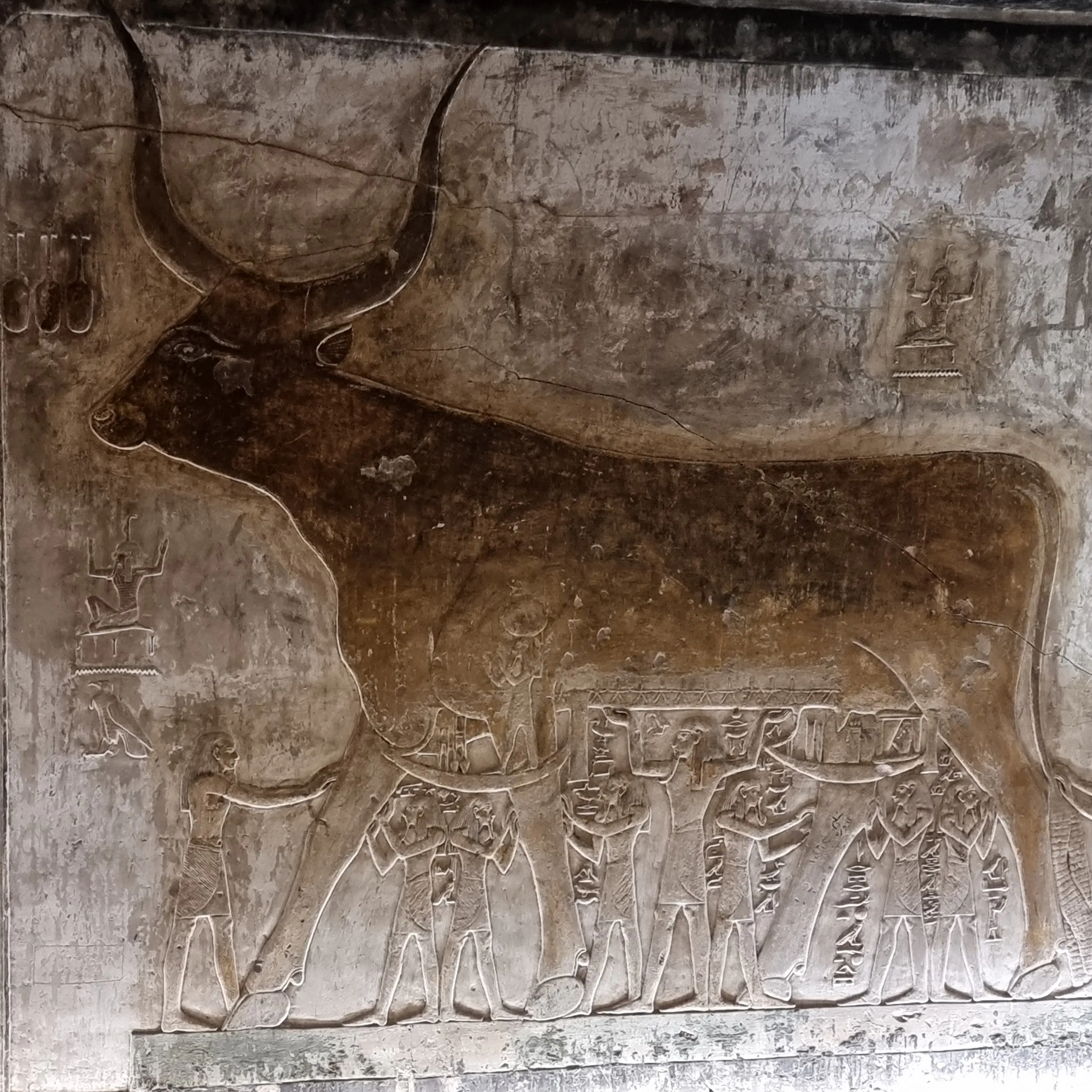
201: When Hathor Destroyed the World (The Book of the Sky Cow)
The Book of the Sky Cow. In the waning years of the 18th Dynasty (the reign of Tut’ankhamun) royal artisans began decorating tombs and funerary equipment with a new text. Sometimes known as “The Destruction of Mankind,” the book tells of a distant age, when Ra ruled on earth. But as the sun-god aged, a group of humans perceived his weakness, and plotted rebellion. Faced with an uprising, Ra marshalled his supporters and sent forth an enforcer. The goddess Hat-Hor (and her alter ego Sakhmet) began to wreak havoc upon the lowly, wayward humans… The Book of the Sky Cow: Part I and Part II, and the Shrines of Tutankhamun, available in Piankoff, The Shrines of Tut-Ankh-Amon. Available at Internet Archive Open Access. Part I and Part II available in Simpson, The Literature of Ancient Egypt, pages 289—298. Available at Internet Archive Open Access. Part I (the Rebellion) available in Lichtheim Ancient Egyptian Literature Volume II: The New Kingdom. Available at Academia.edu. The History of Egypt Podcast: Website: www.egyptianhistorypodcast.com. Support the show via Patreon www.patreon.com/egyptpodcast. Make a one-time donation via PayPal payments. Music and interludes by Keith Zizza www.keithzizza.net. Music and interludes by Luke Chaos www.chaosmusick.com. Music and interludes by Luke Chaos www.chaosmusick.com. Learn more about your ad choices. Visit megaphone.fm/adchoices
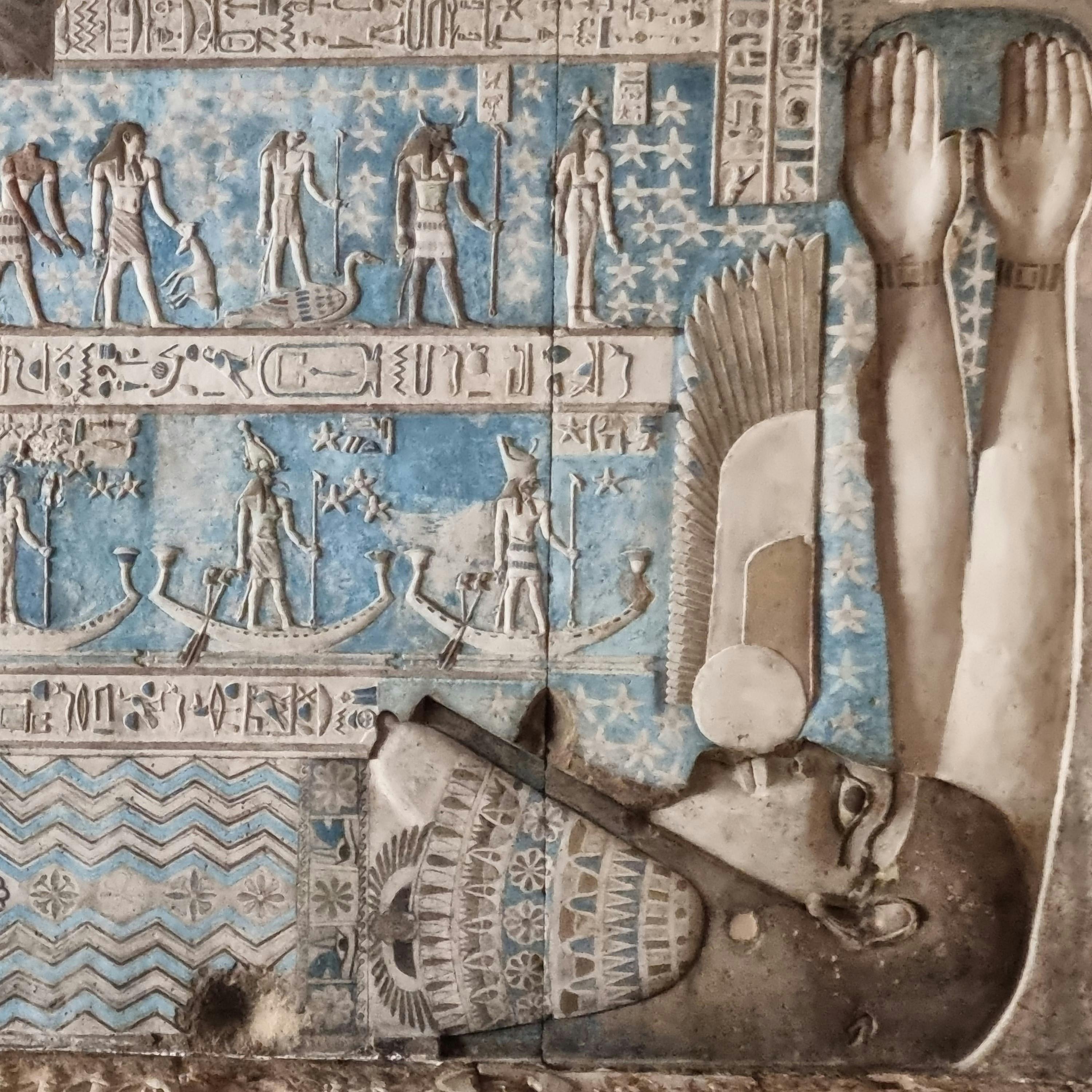
Dendera: Temple of Time with José M. Barrera
Hathor's temple at Dendera is one of the best in Egypt. Constructed in the late 1st Millennium BCE (but with roots stretching back to the Old Kingdom), Hathor’s house preserves amazing art, hieroglyphs, and secrets. It is a temple that today’s guest, José M. Barrera, devoted a great deal of energy to documenting. The result is a wonderful study of Hathor’s celestial realm… See José's amazing photography of Dendera's ceiling and learn more about his book Dendera: The Temple of Time (2024) at his website: https://josemariabarrera.com/dendera/ See the video version of this interview at https://youtu.be/7xjUzTcRMH0 Website: www.egyptianhistorypodcast.com. Support the show via Patreon www.patreon.com/egyptpodcast. Make a one-time donation via PayPal payments. Music and interludes by Keith Zizza www.keithzizza.net. Music and interludes by Luke Chaos www.chaosmusick.com. Learn more about your ad choices. Visit megaphone.fm/adchoices
200: How to Make Your Own Tomb
Livestream recording. The tombs of Deir el-Medina are some of the most vibrant and beautiful in Waset (Thebes). How did they build them, which artists decorated them, and how did folk like Sennedjem pay for the construction and furnishing? Video version available at Patreon, with extended artistic discussion. Website: www.egyptianhistorypodcast.com. Support the show via Patreon www.patreon.com/egyptpodcast. Make a one-time donation via PayPal payments. Intro music by Bettina Joy de Guzman www.bettinajoydeguzman.com. Music and interludes by Keith Zizza www.keithzizza.net. Music and interludes by Luke Chaos www.chaosmusick.com. Learn more about your ad choices. Visit megaphone.fm/adchoices
New Year, New Home (Moving Countries)
New Year, New Home. My wife and I are moving to the UK in February 2025. How will this improve / affect the podcast? Details inside. Next livestream: “How to Make Your Own Tomb,” based on the artists’ tombs at Deir el-Medina. Held on YouTube live: https://youtube.com/live/500MMqMUlH8. Date and time zone conversion: Auckland: Sun, 29 Dec 2024 at 9:00 a.m. NZDT Sydney: Sun, 29 Dec 2024 at 7:00 a.m. AEDT Cairo: Sat, 28 Dec 2024 at 10:00 p.m. EET Berlin: Sat, 28 Dec 2024 at 9:00 p.m. CET London: Sat, 28 Dec 2024 at 8:00 p.m. GMT New York: Sat, 28 Dec 2024 at 3:00 p.m. EST Chicago: Sat, 28 Dec 2024 at 2:00 p.m. CST Los Angeles: Sat, 28 Dec 2024 at 12:00 Noon PST Learn more about your ad choices. Visit megaphone.fm/adchoices
199: The Winter War
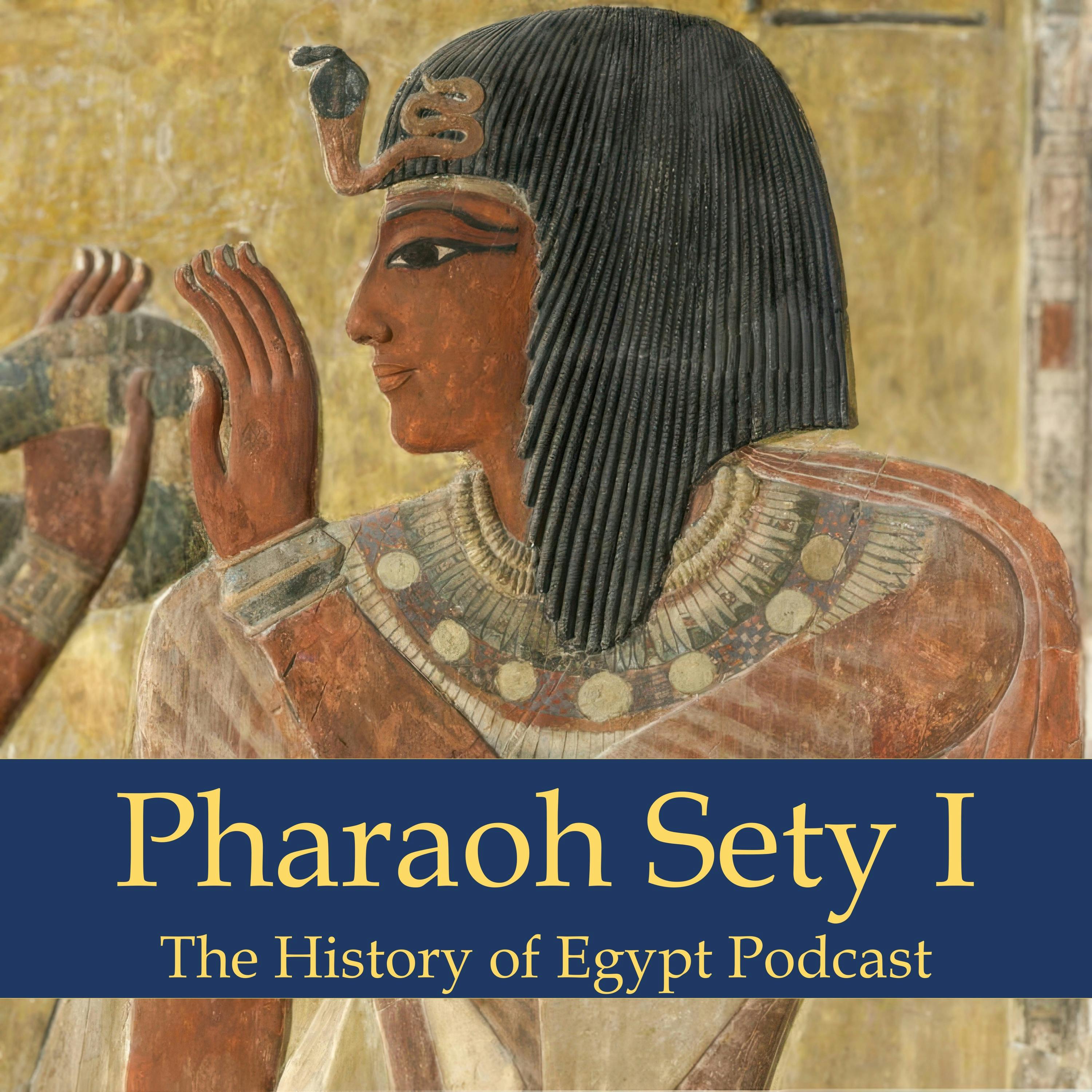
Sety’s final campaign. In winter of year 8 (approx. December 1296 BCE), the King of Egypt Sety I received news: rebellion in the south. In a land called Irem, now in modern Sudan, locals were resisting Egypt’s monarch. Sety gathered an army of infantry and chariots and set off to war. The story is told by Egyptians participating in the event, and by monuments erected to commemorate it… See the temple of Beit el-Wali at https://commons.wikimedia.org/wiki/Category:Temple_of_Beit_el-Wali Music by Bettina Joy de Guzman www.bettinajoydeguzman.com. Website: www.egyptianhistorypodcast.com. Music and interludes by Luke Chaos www.chaosmusick.com. Support the show via Patreon www.patreon.com/egyptpodcast. Make a one-time donation via PayPal payments. Learn more about your ad choices. Visit megaphone.fm/adchoices
198b: The Tomb Builders in the Age of Sety I
Livestream recording. The village of Deir el-Medina first arose in the 18th Dynasty (c.1550—1310 BCE), but the historical records really multiply in the 19th and 20th Dynasties (c.1310—1070 BCE). In this livestream recording, I set the scene for the village and introduce you to some of its inhabitants. We explore houses and families, and a couple of intact tombs that shed light on the inhabitants… Video version available at https://www.patreon.com/posts/livestream-deir-117598390. Deir el-Medina Village Museo Egizio excavation photos: https://archiviofotografico.museoegizio.it/en/archive/theban-region/deir-el-medina/excavations-at-the-village-temple-and-chapels/?photo=C00949 Kairo info4u: https://www.flickr.com/photos/manna4u/albums/72157615031342678/ Wikimedia: https://commons.wikimedia.org/wiki/Category:Deir_el-Medina TT1 Sennedjem and Family Kairoinfo4u: https://www.flickr.com/photos/manna4u/albums/72157645191206615/ Metropolitan Museum of Art: https://www.metmuseum.org/art/collection/search?q=sennedjem&geolocation=Thebes&sortBy=AccessionNumber&showOnly=withImage TT8 Tomb of Kha & Merit Museo Egizio excavation photos: https://archiviofotografico.museoegizio.it/en/archive/theban-region/deir-el-medina/tt8-tomb-and-chapel-of-kha-and-merit/?photo=C02053 Museo Egizio objects collection https://collezioni.museoegizio.it/en-GB/search/?action=s&provenance=Deir%20el-Medina%20%2f%20tomb%20of%20Kha%20(TT8) The History of Egypt Podcast: Website: www.egyptianhistorypodcast.com. Support the show via Patreon www.patreon.com/egyptpodcast. Make a one-time donation via PayPal payments. Intro music by Ihab. Music and interludes by Keith Zizza www.keithzizza.net. Learn more about your ad choices. Visit megaphone.fm/adchoices
198: Servants in the Place of Truth (The Tomb-Builders)
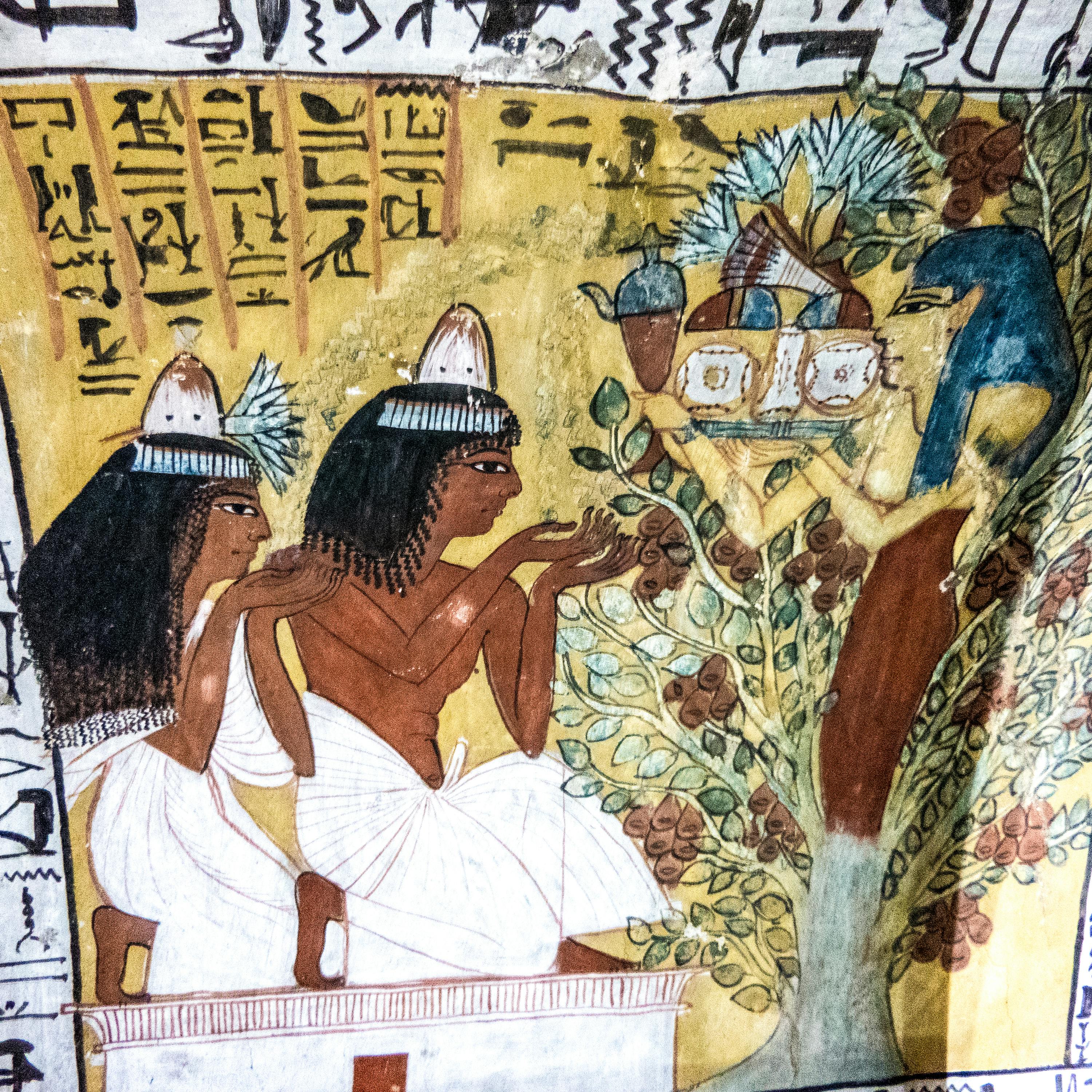
Deir el-Medina’s Golden Age (Part 1). In the age of Sety I, the village of the tomb-builders expanded significantly. Likewise, our evidence for daily life, families, households, and business begins to proliferate. Historians can identify individuals from tombs and connect them with specific houses. We can track their movements, as they form relationships, get married, have children, and pass things to their descendants. Written records tell us about the village’s operations, including their funding from the pharaoh’s government. Around 1300 BCE, we stand on the threshold of some truly detailed stories… DEIR EL-MEDINA LIVESTREAM, open to the public, see details here: https://www.patreon.com/posts/116333133. See photos of Deir el-Medina by: Kairoinfo4u https://flickr.com/photos/manna4u/albums/72157615031342678/ Margaret Lucy Patterson https://flickr.com/photos/24729615@N00/albums/72157625707940536/ Heidi Kontkanen https://flickr.com/photos/plingthepenguin/albums/72157657026077070/ For personal items, including food discovered in tombs, see the collection of the Museo Egizio, Turin (English database). People and families of Deir el-Medina: Davies, B. G. (1999). Who’s Who at Deir el-Medina: A Prosopographic Study of the Royal Workmen’s Community. Available free from the publisher and author at https://www.nino-leiden.nl/publication/whos-who-at-deir-el-medina and https://www.academia.edu/10955578/Whos_Who_at_Deir_el_Medina. Music and interludes by Keith Zizza www.keithzizza.net. Music and interludes by Luke Chaos www.chaosmusick.com. Website: www.egyptianhistorypodcast.com. Support the show via Patreon www.patreon.com/egyptpodcast. Make a one-time donation via PayPal payments. Logo image: The Workman Sennedjem and his wife Iy-Nefret worship the sky goddess Nut, who emerges from a sycamore tree (Photo Chris Ward). Learn more about your ad choices. Visit megaphone.fm/adchoices
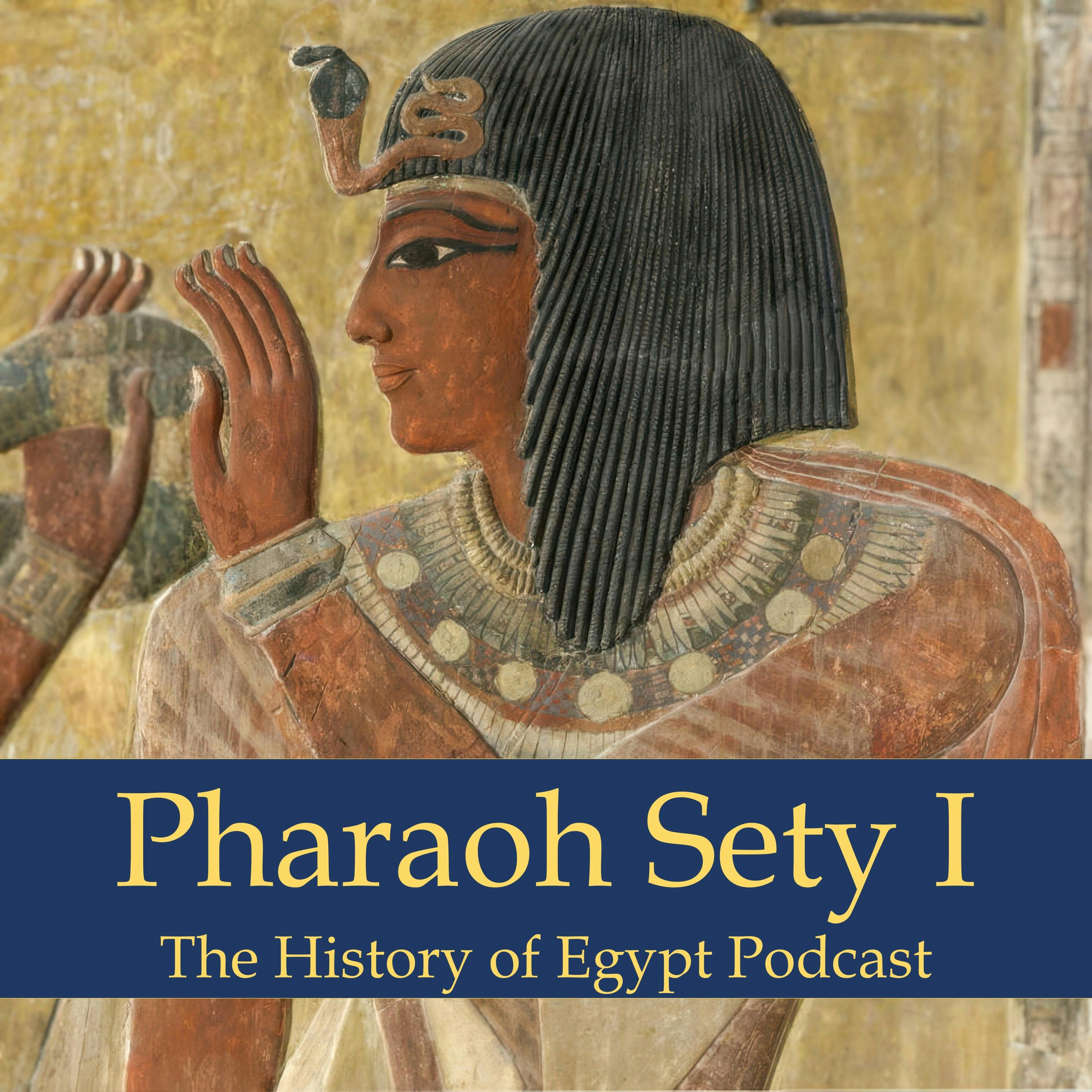
197: How to Make a Pharaoh's Tomb
Sety I in the Valley of the Kings (Part 1). Archaeological remains and ancient texts reveal a great deal about tomb-building in the 19th and 20th Dynasties (c.1303—1070 BCE). Records, artefacts, and art all combine to inform us of the workers and their practices. In this episode, we use the sepulchre of Sety I (KV17) as a case-study, to understand an ancient tomb project. Explore the tomb of Sety I in a 3D Walkthrough by MuseEd https://mused.com/guided/926/tomb-of-seti-i-valley-of-the-kings/ Archaeological information for Sety's tomb at the Theban Mapping Project: https://thebanmappingproject.com/index.php/tombs/kv-17-sety-i Photos of Sety’s tomb by Kairoinfo4u: https://flickr.com/photos/manna4u/albums/72157687439529835/ For up-to-date studies and discussions of the royal tombs and their history, see The Oxford Handbook of the Valley of the Kings: https://global.oup.com/academic/product/the-oxford-handbook-of-the-valley-of-the-kings-9780190052072. Individual articles may be available via their authors if you do a web search of the author + article title. Music and interludes by Keith Zizza www.keithzizza.net. Music and interludes by Luke Chaos www.chaosmusick.com. The History of Egypt Podcast: Website: www.egyptianhistorypodcast.com. Support the show via Patreon www.patreon.com/egyptpodcast. Make a one-time donation via PayPal payments. Learn more about your ad choices. Visit megaphone.fm/adchoices

Sety, Thutmose, and Royal Coffins (with Prof. Kara Cooney)
In 1881, a remarkable discovery took place in Luxor, Egypt. In the hills of Deir el-Bahari, a secret tomb held the reburied mummies of Egypt’s famous pharaohs. Figures like Sety I, Ramesses II, Thutmose III, and Amunhotep I lay in rest, in carefully hidden coffins. However, the caskets themselves hold many secrets, which today’s guest has spent years exploring. VIDEO VERSION available on YouTube. Interview guest: Prof. Kara Cooney (UCLA) presents Recycling for Death:Coffin Reuse in Ancient Egypt and the Theban Royal Caches. Part of the UCLA Coffins Project https://arce.org/project/ucla-coffins-project/. Available via AUC Press https://aucpress.com/9781649031280/recycling-for-death/. Kara Cooney’s website: https://karacooney.squarespace.com/. The Deir el-Bahari cache and the royal coffins & mummies: Coffin of Sety I https://www.flickr.com/photos/tags/coffinofsetii. Possible evidence of its origin as a queenly coffin via Dr. Peter Lacovara https://peterlacovara.com/portfolio/coffin-conundrum/. Daressy, G. (1909). Cercueils des cachettes royales: Nos 61001-61044. https://archive.org/details/DaressyCercueils1909. Maspero, G., & Brugsch, É. (1881—1887). La Trouvaille de Deir-el-Bahari, 2 vols. https://digi.ub.uni-heidelberg.de/diglit/maspero1881bd1 and https://digi.ub.uni-heidelberg.de/diglit/maspero1887bd2. Learn more about your ad choices. Visit megaphone.fm/adchoices
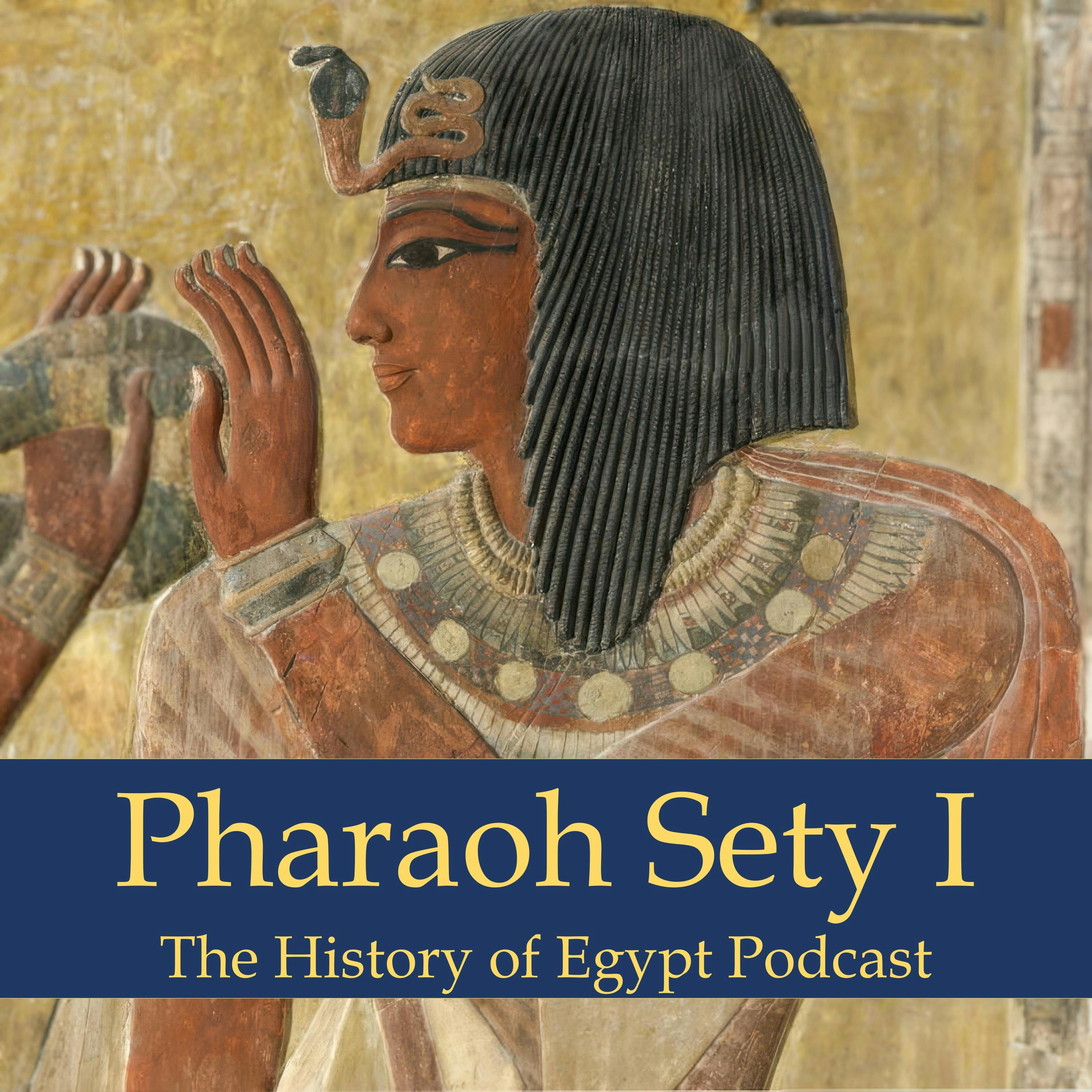
196: The Golden Path
The plan of an honest ruler. Around 1300 BCE, as today, gold was big business. King Sety I personally led an expedition into the eastern desert, to establish a new mining operation. Back in the Nile Valley, high-ranking officials leave monuments testifying to their work delivering, securing, and recording that gold. And thanks to art and artefacts, we can reconstruct the items these gold-workers produced. From the Red Sea Mountains to the Temple of Abydos, we follow the paths of gold… Logo image: Silver and gold statuette of a New Kingdom pharaoh, possibly Sety I (Louvre). For records of Sety and his contemporaries, see Kenneth Kitchen. Ramesside Inscriptions, Volume I. Versions: Hieroglyphs; English translations; References and Commentary. Photos of Sety’s Temple at Kanais in the Wadi Barramiya. Sety’s monuments including the Abydos and Kanais temples, in P. J. Brand, The Monuments of Seti I: Epigraphic, Historical and Art Historical Analysis (2000). Available free online at Academia.edu. Website: www.egyptianhistorypodcast.com. Support the show via Patreon www.patreon.com/egyptpodcast. Make a one-time donation via PayPal payments. Music and interludes by Keith Zizza www.keithzizza.net. Music and interludes by Luke Chaos www.chaosmusick.com. Learn more about your ad choices. Visit megaphone.fm/adchoices
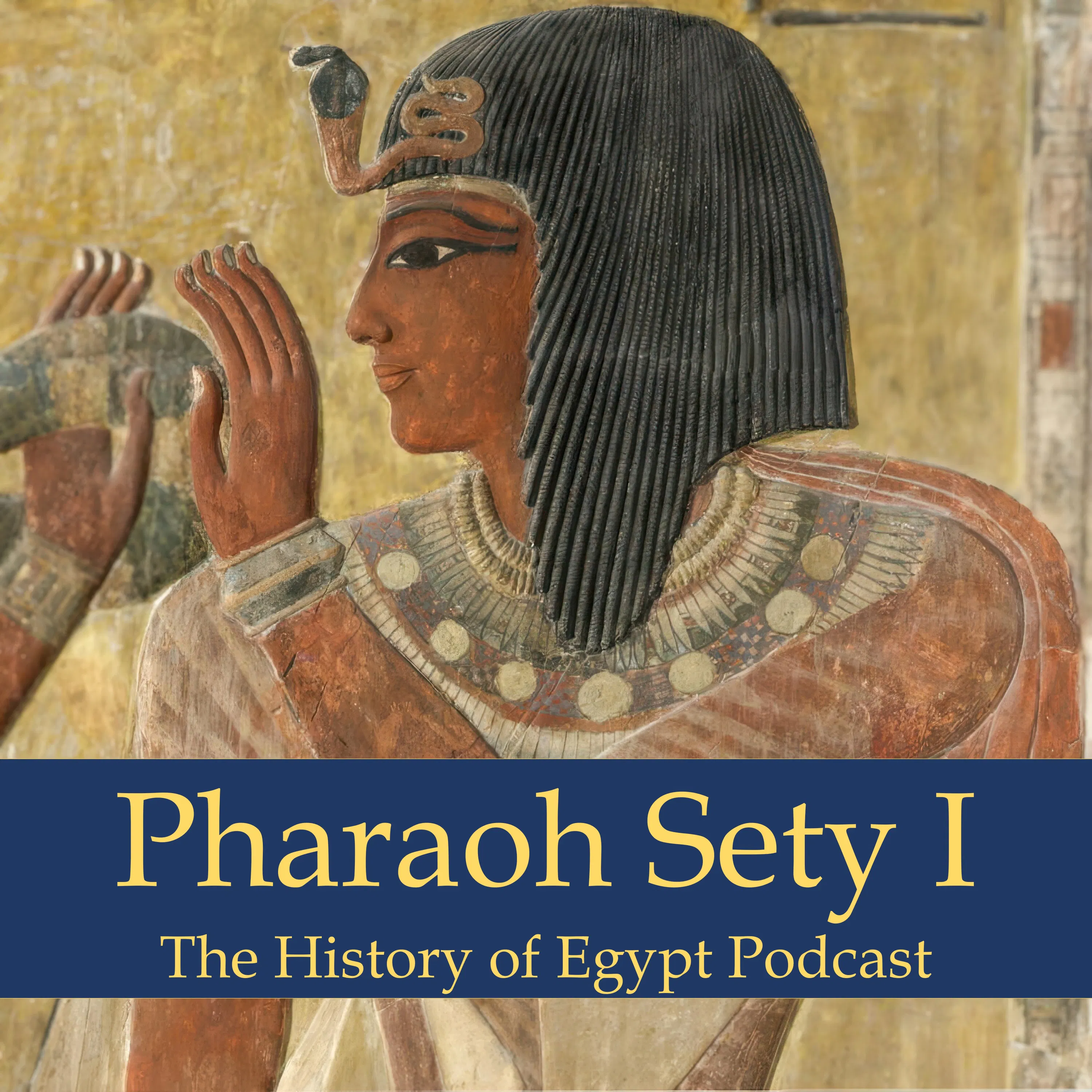
195: A Quest for Gold
Sety in the Desert. Around 1300 BCE, King Sety led an expedition into the Red Sea hills. His purpose? Gold. The King brought soldiers and charioteers out to mine precious metals for his treasuries. The journey was difficult, traversing a dry and rocky landscape far from the comforts of home. Fortunately, Sety left detailed descriptions of the event; and art and artefacts from this era allow us to reconstruct the journey... Episode details: Logo image: Soldiers make camp, setting up tents for commanders. Tomb of Horemheb at Saqqara (Martin 2016). Website: www.egyptianhistorypodcast.com. Support the show via Patreon www.patreon.com/egyptpodcast. Make a one-time donation via PayPal payments. Music and interludes by Keith Zizza www.keithzizza.net. Music and interludes by Luke Chaos www.chaosmusick.com. The Wadi Barramiya, in which Sety’s expedition travelled, by Hakatani Tenfu at Flickr.com. The Kanais Temple of Sety I, in the Wadi Barramiya, by Mutnedjmet at Flickr.com. Select bibliography: A. Dodson, Sethy I King of Egypt: His Life and Afterlife (Cairo, 2019). H. Gauthier, ‘Le temple de l’Ouâdi Mîyah (el Knaïs)’, Bulletin de l’Institut Français d’Archéologie Orientale 17 (1920), 1--38. Available online. K. A. Kitchen, Ramesside Inscriptions Historical and Biographical, I (Oxford, 1975). R. Klemm and D. Klemm, Gold and Gold Mining in Ancient Egypt and Nubia: Geoarchaeology of the Ancient Gold Mining Sites in the Egyptian and Sudanese Eastern Deserts (Berlin, 2013). G. T. Martin, Tutankhamun’s Regent: Scenes and Texts from the Memphite Tomb of Horemheb (EES Excavation Memoir 111; London, 2016). C. D. Reader, A Gift of Geology: Ancient Egyptian Landscapes and Monuments (Cairo, 2022). R. D. Rothe et al., Pharaonic Inscriptions from the Southern Eastern Desert of Egypt (Winona Lake, 2008). B. M. Sampsell, The Geology of Egypt: A Traveler’s Handbook (Cairo, 2014). See website for complete listing. Learn more about your ad choices. Visit megaphone.fm/adchoices
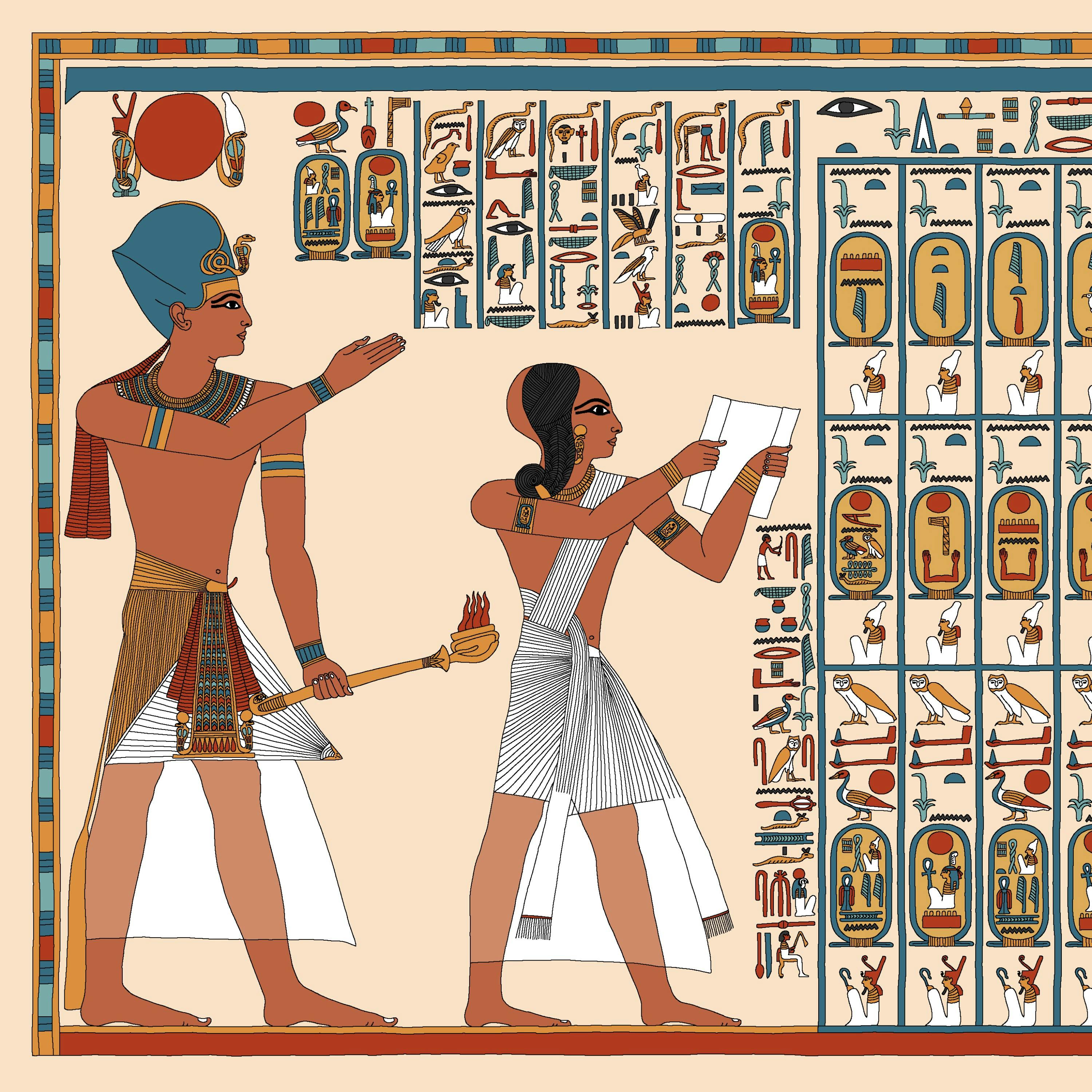
194: A Prince of Egypt (feat. Prof. Peter Brand)
Ramesses Rising. Traditionally, Egyptian princes are almost invisible. The pharaohs downplayed the presence of their sons, to reduce political competition and maintain religious order. Sety I (c.1300 BCE) changed this habit. In art and monuments, he promoted young Ramesses II to a position of prominence and power. The exact nature of this promotion is slightly controversial among Egyptologists. In this episode, we explore Ramesses’ rise and some of the thorny issues. Additionally, Prof. Peter Brand joins us to discuss some of the harder questions on these period. Peter Brand, The Monuments of Sety I (2000), available free at Academia.edu. Peter Brand, Ramesses II: Egypt’s Ultimate Pharaoh (2023) available from Lockwood Press. Music and interludes by Keith Zizza www.keithzizza.net. Music and interludes by Luke Chaos www.chaosmusick.com. Outro music: “River Lullaby” from The Prince of Egypt (1998) – Harp cover by The Knitting Harpist (YouTube). The History of Egypt Podcast: Website: www.egyptianhistorypodcast.com. Support the show via Patreon www.patreon.com/egyptpodcast. Make a one-time donation via PayPal payments. Music and interludes by Keith Zizza www.keithzizza.net. Music and interludes by Luke Chaos www.chaosmusick.com. Learn more about your ad choices. Visit megaphone.fm/adchoices
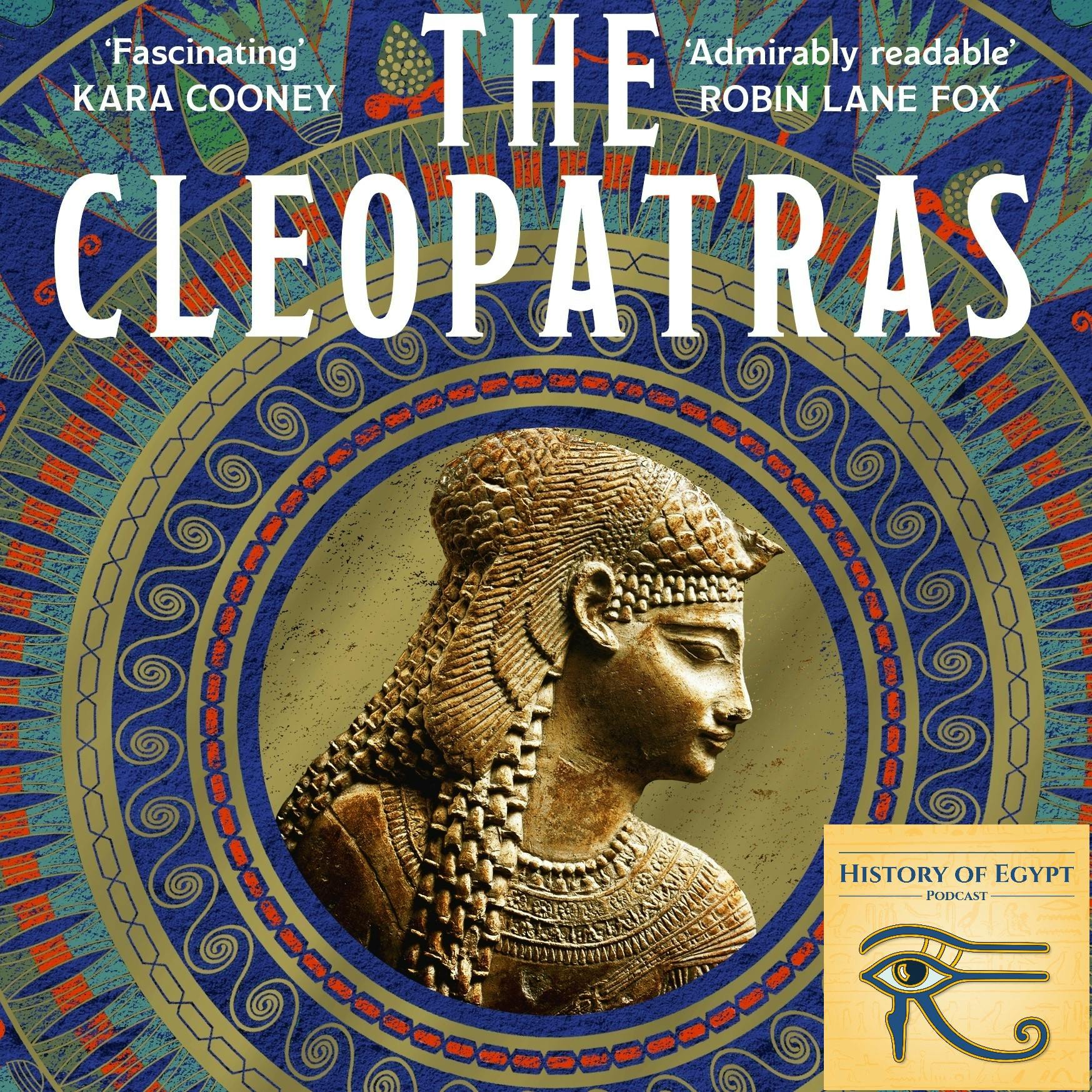
Cleopatra (All Seven of Them) with Prof. Lloyd Llewellyn-Jones
Recorded May 2024. A name more famous than its owners. The Cleopatras of Egypt (all seven of them) were remarkably influential women and rulers. Frequently taking up power and responsibilities far beyond their more famous husbands (the Ptolemies), the seven Cleopatras of Egypt (and even more in the wider Hellenistic world) are worthy of greater attention and respect. In this interview, Prof. Lloyd Llewellyn-Jones of Cardiff University introduces these figures and his new book The Cleopatras: Forgotten Queens of Egypt. Author details: Lloyd Llewellyn-Jones, The Cleopatras, 2024. Available in hardback, paperback, ebook, and audiobook (read by the author). See Headline Publishing and all good retailers. Lloyd Llewellyn-Jones at Cardiff University and Academia.edu. Rulers discussed in this episode: Cleopatra I Syra: Wikipedia. Cleopatra III: Wikipedia. Cleopatra Thea of the Seleukid Empire: Wikipedia. Cleopatra VI Tryphaena: Wikipedia. Cleopatra VII Thea Philopator: Wikipedia. The History of Egypt Podcast: Website: www.egyptianhistorypodcast.com. Support the show via Patreon www.patreon.com/egyptpodcast. Make a one-time donation via PayPal payments. Music by Michael Levy www.ancientlyre.com. Learn more about your ad choices. Visit megaphone.fm/adchoices
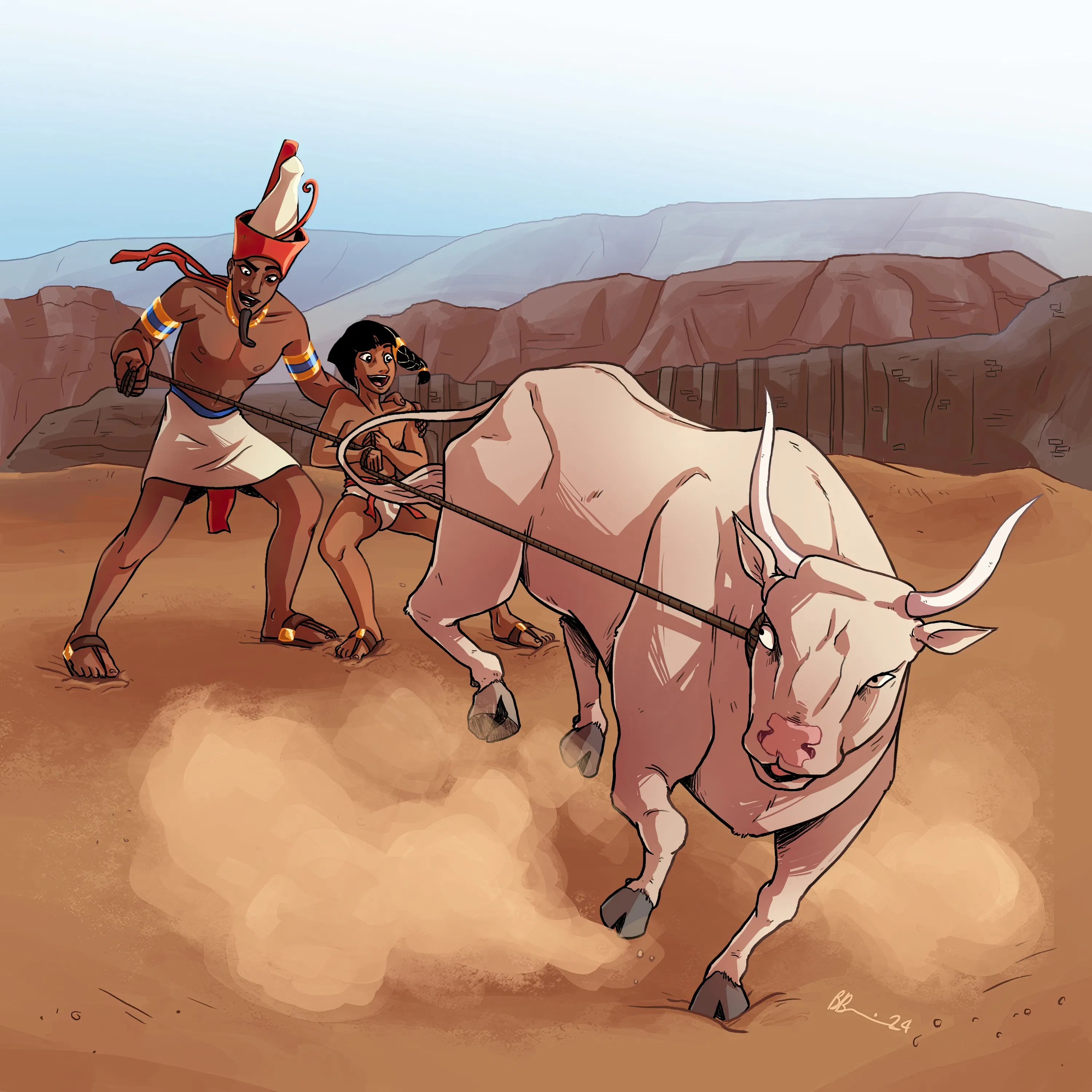
193: Slaying the Bull of Seth (Ramesses’ First Rodeo)
In the Temple of Sety I at Abydos, an out-of-the-way corridor preserves a unique image. The King of Egypt, and his eldest son, wrangle and subdue a bull. This scene appears simple, at first glance. But it has a wealth of deeper symbolism and meanings. In this episode, we explore the idea of Bulls as images of power and violence, and their relationship with gods like Osiris and Seth… Episode logo: Ramesses and the Bull, by artist Brenna Baines (commissioned by The History of Egypt Podcast). Full version available on my Patreon (link below). The Bull Hall photos by Heidi Kontkanen at Flickr.com. The Bull Hall in Peter Brand, Monuments of Sety I (2000) available free online. The History of Egypt Podcast: Website: www.egyptianhistorypodcast.com. Support the show via Patreon www.patreon.com/egyptpodcast. Make a one-time donation via PayPal payments. Music and interludes by Keith Zizza www.keithzizza.net. Sound effects purchased from Pond5. Select Bibliography: M. Abuel-Yazid, ‘Architecture of the Slaughterhouse of the Seti Temple at Abydos’, in I. Regulski (ed.), Abydos: The Sacred Land at the Western Horizon (2019), 7—24. L. Baqué, ‘“On that Day When the Long-Horned Bull was Lassoed...” (PT [254] 286). A Scene in the “Corridor of the Bull” of the Cenotaph of Sethos I in Abydos: An Iconologic Approach’, Studien zur Altägyptischen Kultur 30 (2002), 43—51. P. J. Brand, The Monuments of Seti I: Epigraphic, Historical and Art Historical Analysis (2000). Available free online. R. H. Wilkinson, The Complete Gods and Goddesses of Ancient Egypt (2003). J. M. Galán, ‘Bullfight Scenes in Ancient Egyptian Tombs’, Journal of Egyptian Archaeology 80 (1994), 81—96. See website for complete reference list. Learn more about your ad choices. Visit megaphone.fm/adchoices
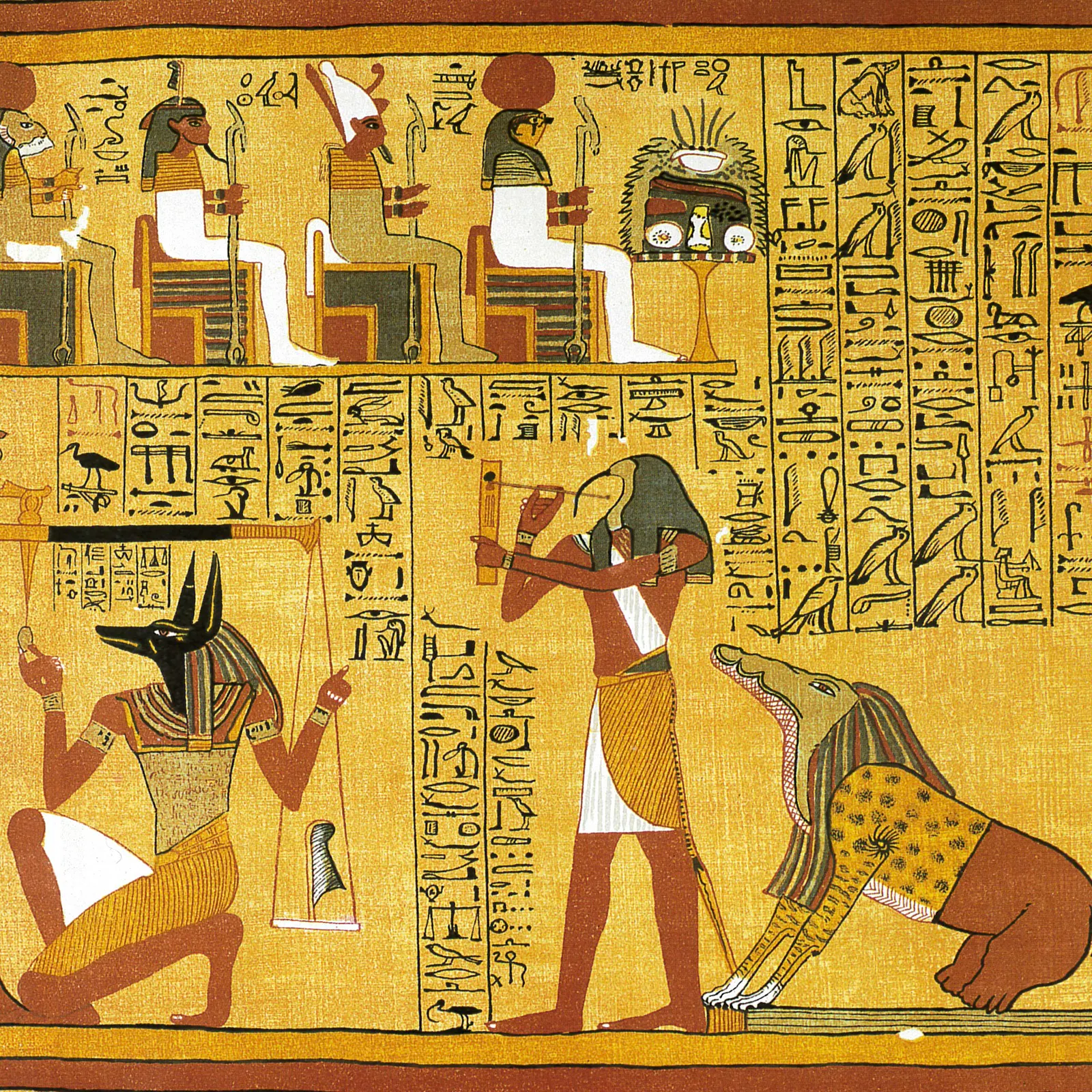
A Musical Book of the Dead (with Nemuer and Dr. Christian de Vartavan)
Remember “Going Forth by Day”? It’s back! In song form. Many creative projects have explored themes around the Egyptian underworld. But in 2023, the Czech band Nemuer has taken a novel approach. Their album, Book of Going Forth by Day is based on original funerary papyri; and for the pronunciation of the Egyptian language, they consulted with Egyptologist Dr. Christian de Vartavan. This gives us an opportunity to explore excerpts from the Book of the Dead from a new perspective and connect more deeply with the ancient language. The podcast has covered the Book of the Dead previously, but it may be time to revisit it. Would you like me to produce more episodes diving into this text? Let me know in the comments. Episode details: Nemuer, Going Forth by Day (2023). Available on Spotify and Bandcamp. Christian de Vartavan, Vocalised Dictionary of Ancient Egyptian (2022). Available in Open Access. The History of Egypt Podcast Website: www.egyptianhistorypodcast.com. Access expanded materials and support the History of Egypt Podcast at www.patreon.com/egyptpodcast. Make a one-time donation via PayPal payments. Learn more about your ad choices. Visit megaphone.fm/adchoices
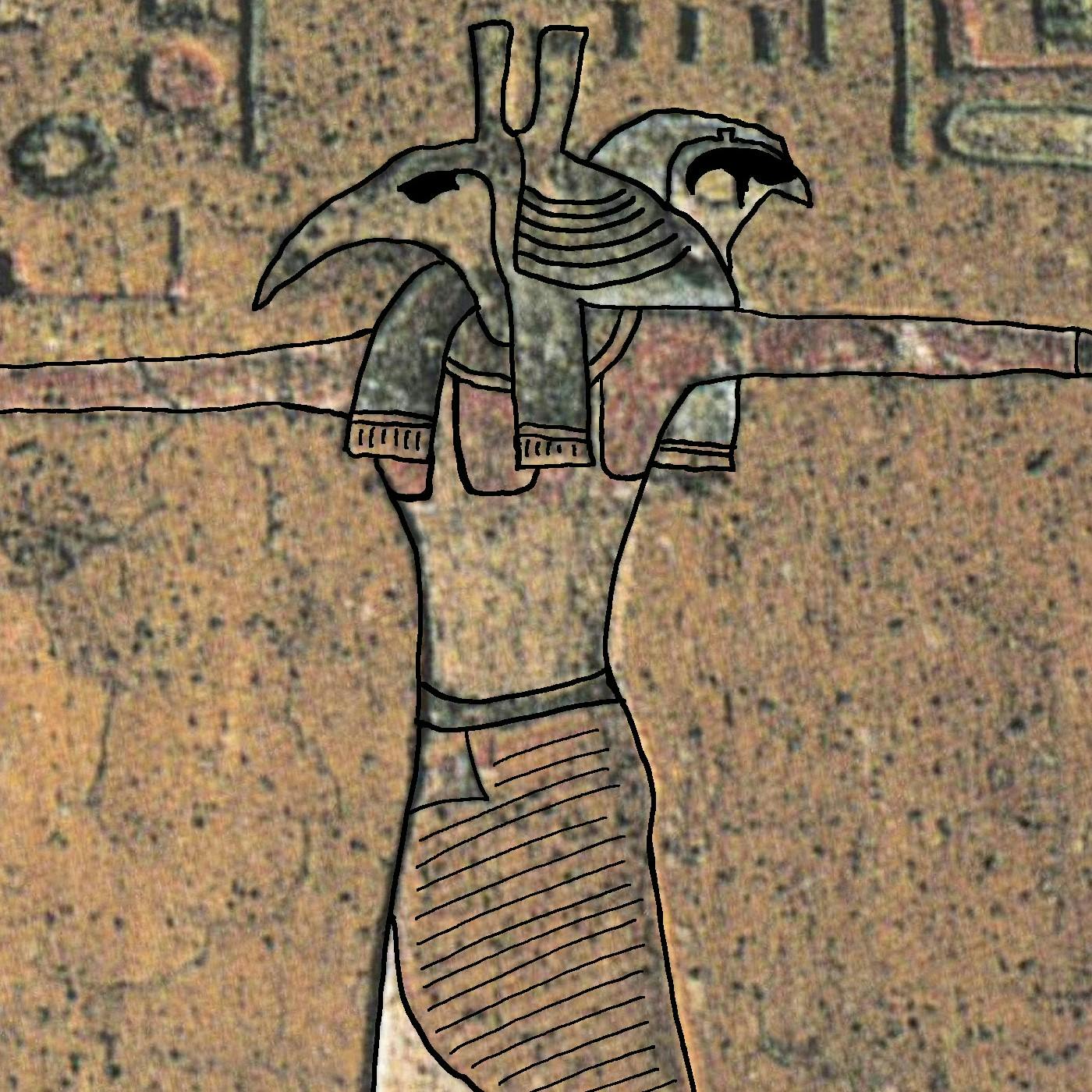
192b: Seth's Lore
Warrior, protector, murderer. By 1300 BCE, the Egyptian god Seth had become a complex and multi-faceted deity. Chaotic and destructive, but not "evil," Seth played an important role in the gods' realm and our own. This legend developed and evolved over centuries, from the earliest religious literature to the imperial age. In this episode, we explore Seth's role, appearances, and descriptions in the Pyramid Texts, Coffin Texts, Book of the Dead, Amduat, and Book of Gates. And we try to get to grips with a god who was (quite literally) two-faced... Episode details: Date: c. 2400 - 1300 BCE (Old, Middle, and New Kingdoms up to the reign of Sety I). Website: www.egyptianhistorypodcast.com. Support the show via Patreon www.patreon.com/egyptpodcast. Make a one-time donation via PayPal payments. Music intro and outro by Michael Levy. Music interludes by Luke Chaos and Keith Zizza. Logo image: The hybrid deity Herfy ("Two-Face"), combining the powers of Horus and Seth. Hour 10 of the Book of Gates, from the tomb of Tausret in the Valley of the Kings (Line drawing by Dominic Perry, based on photo by Erik Hornung). General studies: Erik Hornung, The Ancient Egyptian Books of the Afterlife (1999) at Internet Archive. John Darnell and Colleen Manassa Darnell, The Ancient Egyptian Netherworld Books at JSTOR.org and the Society of Biblical Literature. Pyramid Texts in English translation and Egyptian hieroglyphs (Pyramid Texts Online by Vincent Brown). Coffin Texts in English translation by Raymond Faulkner (1973—1978): Volume I, Volume III. I have been unable to find a copy of Volume II online; if you are aware of one, please let me know. Egyptian Hieroglyphs available in Open Access via the University of Chicago. Book of the Dead in English translation by Raymond Faulkner (1982 edition) at Internet Archive. Edited volume of scholarly articles available at The University of Chicago (2017, edited by Foy Scalf). Additional English translation, transliteration, and commentary by Stephen Quirke (2013). The Amduat (Book of the Hidden Chamber) in English translation, transliteration, and Egyptian hieroglyphs by Erik Hornung (2007). The Book of Gates in English translation, transliteration, and Egyptian hieroglyphs by Erik Hornung (2013). Learn more about your ad choices. Visit megaphone.fm/adchoices
192: The Trouble With Seth
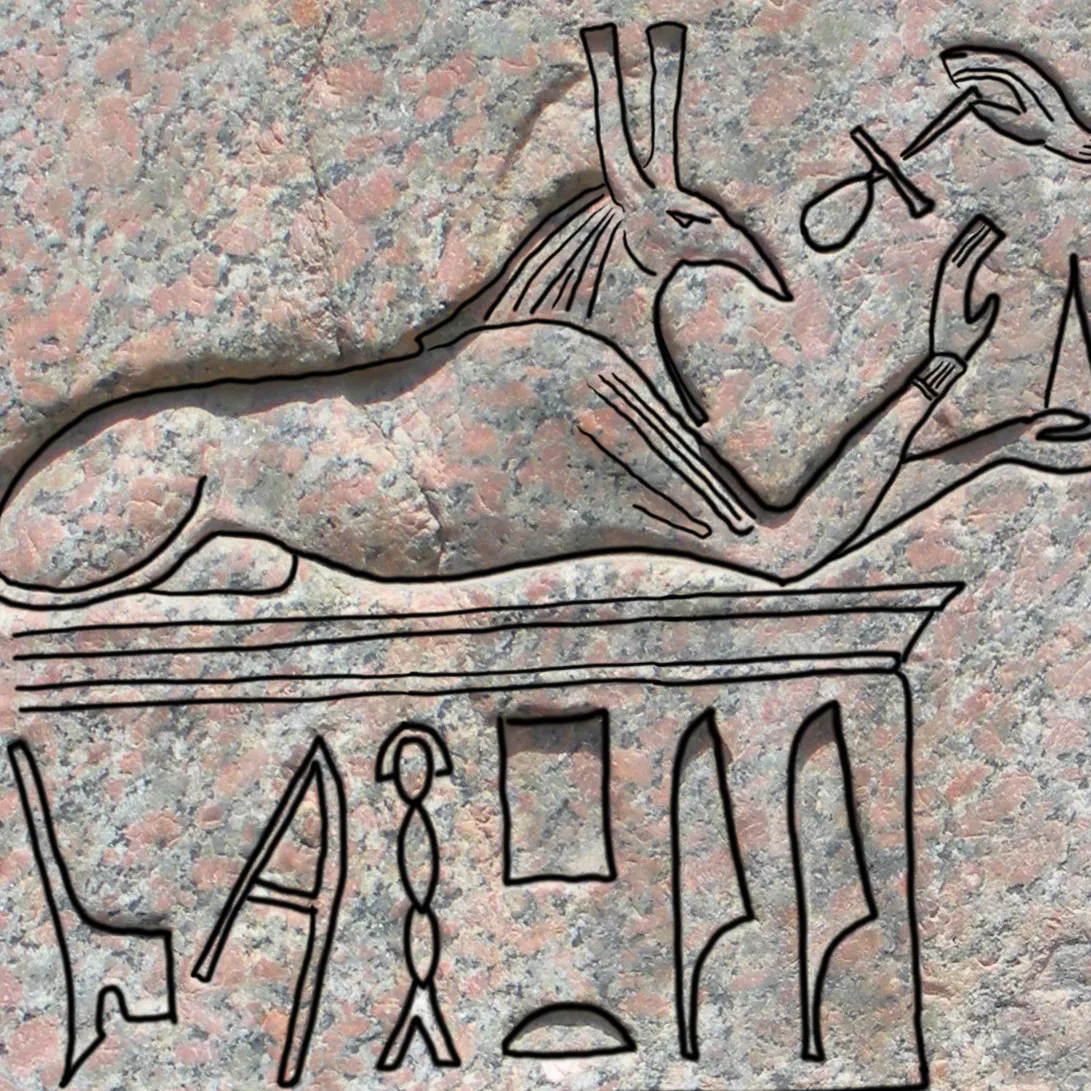
Identity crisis. Seth (aka Sutekh / Setekh / Suty) is a complicated deity. A master of storms, winds, deserts and seas, Seth dominates foreigners and the world outside Egypt. However, he is also treacherous, violent, and aggressive; a god who slew his own brother and tried to seize the throne for himself. As a result, Seth has a complicated relationship with the Egyptian kingship. Part defender and source of legitimacy, but also a threat to the stable order of the world (ma’at). Most kings navigated this relationship fairly easily. But then, most kings weren’t named after the god himself. As a pharaoh of Egypt, a living Horus, and the son of Osiris, King Sety I had to work hard to reconcile his personal identity with his divine. The results are visible on his monuments… Date: Reign of Sety I (c.1300 BCE). Website: www.egyptianhistorypodcast.com. Support the show via Patreon www.patreon.com/egyptpodcast. Make a one-time donation via PayPal payments. Music intro, outro, and interludes: Michael Levy. Music interludes: Keith Zizza and Luke Chaos. Logo image: A Seth-headed-Sphinx, on an obelisk of Sety I, originally from Heliopolis but now in Alexandria (Line drawing by Dominic Perry, based on a photo by Heidi Kontkanen). Select Bibliography: J. P. Allen, The Ancient Egyptian Pyramid Texts (2nd edn, 2015). P. J. Brand, The Monuments of Seti I: Epigraphic, Historical and Art Historical Analysis (2000). E. Cruz-Uribe, ‘The Father of Ramses I: OI 11456’, Journal of Near Eastern Studies 37 (1978), 237—244. E. Cruz-Uribe, ‘Stḫ ꜥꜣ pḥty “Seth, God of Power and Might”’, Journal of the American Research Center in Egypt 45 (2009), 201—26. A. el-Sawi, ‘Some Variations of Writing of the Names of Sety I at Abydos’, Annales du Services des Antiquités de l’Egypte 70 Supplement (1987), 53—63. J. G. Griffith, The Conflict of Horus and Seth from Egyptian and Classical Sources (1960). C. A. Hope, ‘Reconstructing the Image of Seth, Lord of the Oasis, in his Temple at Mut el-Kharab in Dakhleh Oasis’, Rich and Great: Studies in Honour of Anthony J. Spalinger on the Occasion of his 70th Feast of Thoth (2016), 123—145. K. A. Kitchen, Ramesside Inscriptions Translated and Annotated: Translations Volume I: Ramesses I, Sethos I and Contemporaries (Second Publication edn, 2017). W. M. F. Petrie and J. E. Quibell, Naqada and Ballas 1895 (1896). D. Schorsch and M. T. Wypyski, ‘Seth, “Figure of Mystery”’, Journal of the American Research Center in Egypt 45 (2009), 177—200. D. Stewart, ‘The Myth of Osiris in the Ancient Egyptian Pyramid Texts’, Unpublished PhD. Thesis, Monash University (2014). I. R. Taylor, ‘Deconstructing the Iconography of Seth’, Unpublished PhD. Thesis, University of Birmingham (2016). H. te Velde, ‘The Egyptian God Seth as a Trickster’, Journal of the American Research Center in Egypt 7 (1968), 37—40. H. te Velde, Seth, God of Confusion (1967). H. te Velde, ‘Seth’, in D. B. Redford (ed.), The Oxford Encyclopedia of Ancient Egypt, 3 (2001), 269—271. P. J. Turner, ‘Seth – A Misrepresented God in the Ancient Egyptian Pantheon?’, Unpublished PhD. Thesis, The University of Manchester (2012). R. H. Wilkinson, The Complete Gods and Goddesses of Ancient Egypt (2003). H. E. Winlock, The Temple of Ramesses I at Abydos (1937). ‘Stèle Cintrée E26017’, Musée du Louvre, <https://collections.louvre.fr/ark:/53355/cl010004210> accessed 2.2.2024. Learn more about your ad choices. Visit megaphone.fm/adchoices