
The History of Egypt Podcast
436 episodes — Page 3 of 9
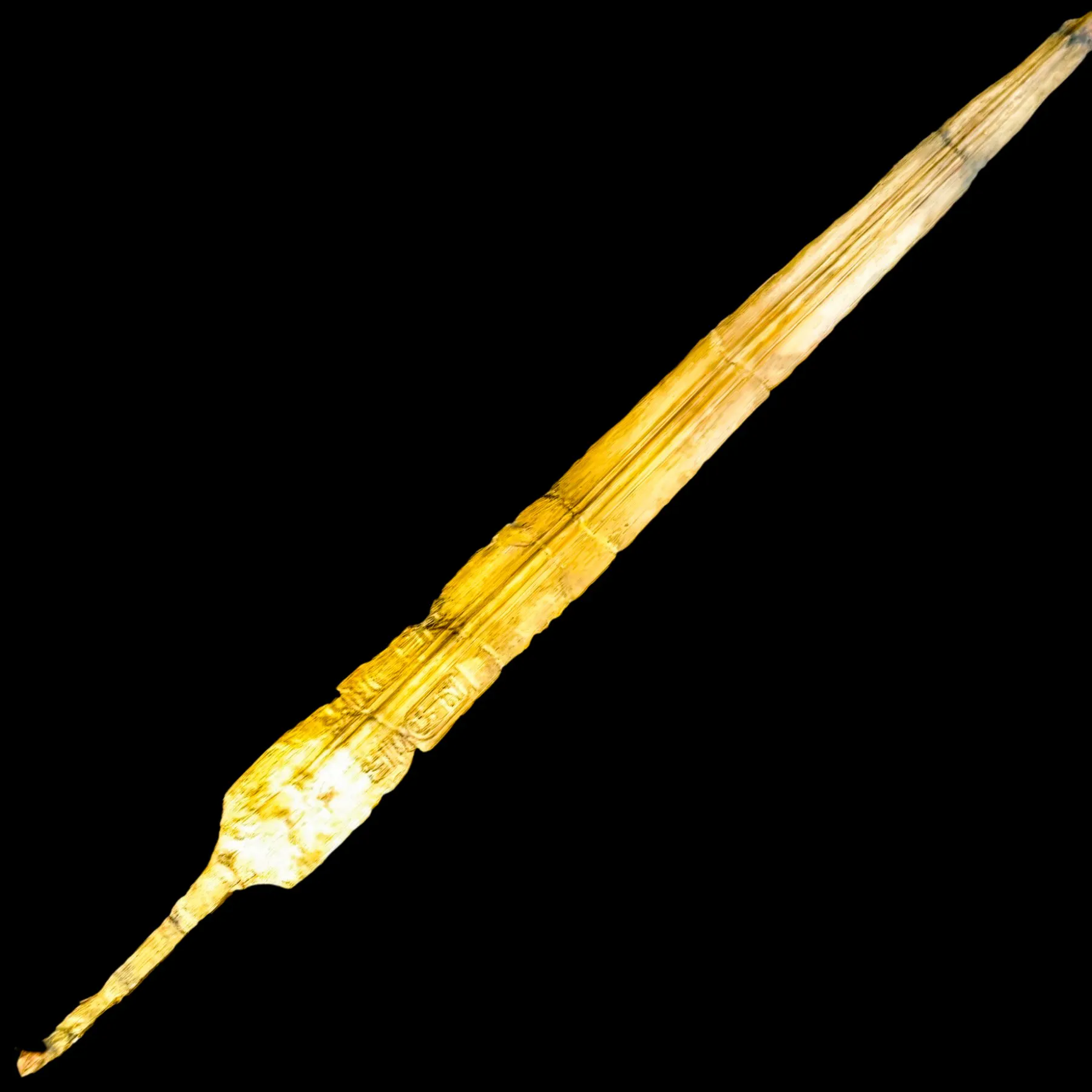
The Sword of Ramesses (News from the Field)
Blade of Frontiers (not Wyll). In September 2024, the Ministry of Tourism & Antiquities announced new discoveries including a sword inscribed with the names of Ramesses II, King of Egypt. In this episode, we discuss the weapon and its origins, as well as the larger significance of the fortress in which this discovery occurred. Who did the sword belong to? What was this fortress guarding against? Egyptian swords in museum collections: https://www.metmuseum.org/art/collection/search/545558 https://www.britishmuseum.org/collection/object/Y_EA5425 https://www.britishmuseum.org/collection/object/Y_EA52850 https://www.britishmuseum.org/collection/object/Y_EA36769 The Egyptian army and fortifications: Video lecture series, "Perspectives on the Ramesside Military System" on YouTube. The Old Kingdom (c.2500—2200 BCE): Spotify and Website. Grave of the Unknown Warriors (c.2000 BCE): Spotify. The Army of Sety I (c.1300 BCE), Part 1: Spotify. The Army of Sety I (c.1300 BCE), Part 2: Spotify. The New Kingdom (c.1500—1150 BCE): Spotify and YouTube. Ian Shaw, Ancient Egyptian Warfare (Oxford, 2019). C. Vogel, The Fortifications of Ancient Egypt 3000-1780 BC (Botley, 2010). E. F. Morris, The Architecture of Imperialism: Military Bases and the Evolution of Foreign Policy in Egypt’s New Kingdom (Leiden, 2005). B. McDermott, Warfare in Ancient Egypt (Stroud, 2004). Learn more about your ad choices. Visit megaphone.fm/adchoices
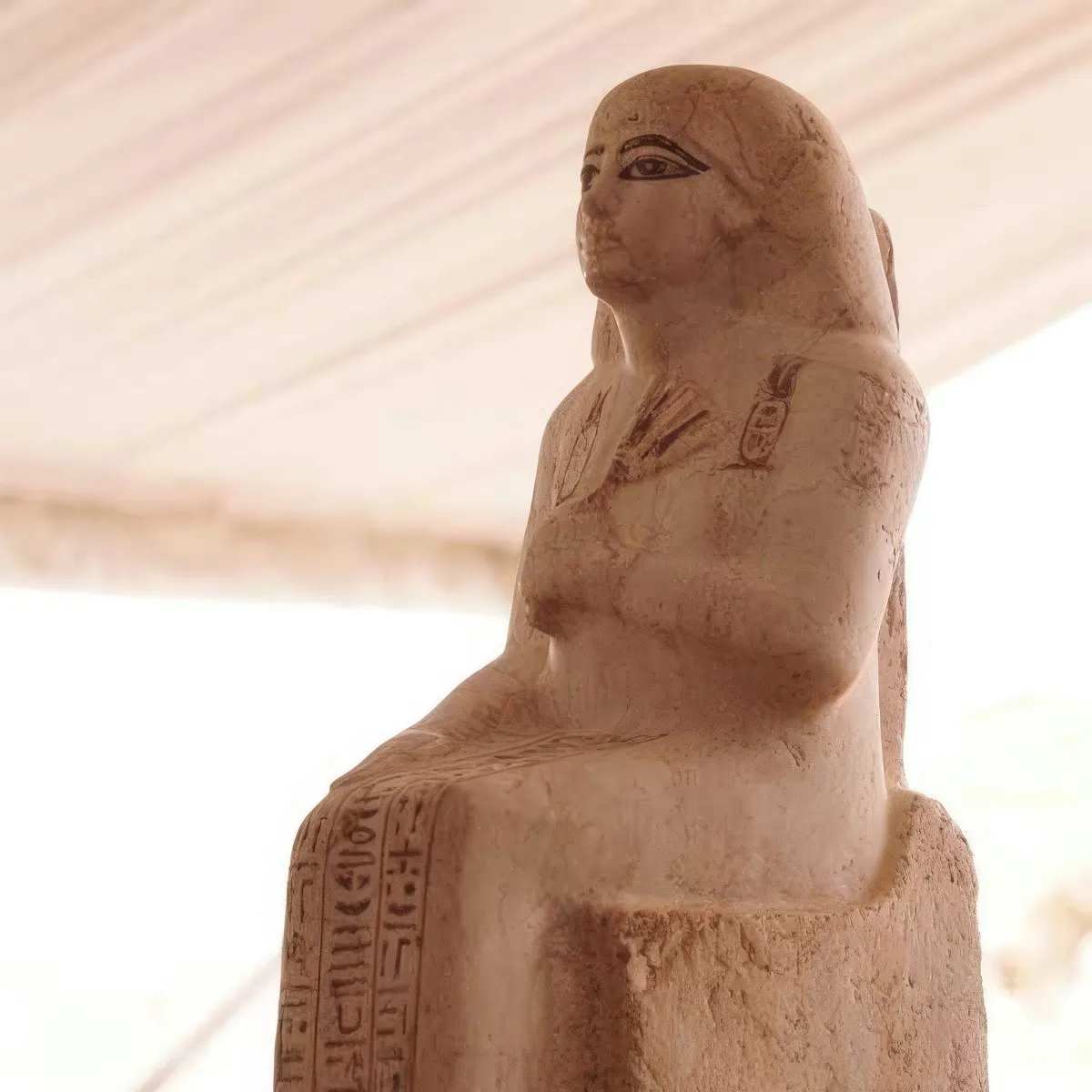
A New Royal Tomb? Egyptology News (2023 End-of-Year Summary)
A new year dawns, and it’s time to look back. Egyptology and archaeology had a great year in 2023, with numerous major discoveries, studies, and conservation projects reaching fruition. Here is a sample selection of some particularly significant finds… Website: www.egyptianhistorypodcast.com. Support the show via Patreon www.patreon.com/egyptpodcast. Make a one-time donation via PayPal payments. Chat with ancient Egypt enthusiasts at our Discord. Logo image: Statue discovered at Saqqara, 2023. Select Bibliography (in order of discussion): Luxor, new royal tomb: Press Release from Ministry of Tourism and Antiquities. Article by Dr. Piers Litherland in Egyptian Archaeology 63 (2023). Hear about the (brief) reign of Thutmose II on the podcast, episode 60 “Thutmosid Family Values.” Luxor, tomb re-openings: The tomb of Meru (Polish Centre for Mediterranean Archaeology). The tombs of Hurri and Djehuty (Proyecto Djehuty and Ministry of Tourism and Antiquities Press Release). Abydos, grave goods of Mer(et)-Neith: Press Release from the University of Vienna. Hear about the life and reign of Mer(et)-Neith on the podcast, episode 02 “Horus Takes Flight.” Abydos, temple of Ramesses II animal burials: Article by Dr. Sameh Iskander in Egyptian Archaeology 63 (2023). Saqqara, embalming workshops and Old Kingdom tomb: Press Release from the Ministry of Tourism and Antiquities. Saqqara, Gisr el-Mudir new finds: Press Release from the Ministry of Tourism and Antiquities. Saqqara, new temple for Hathor: Article by Ahmed Osman in Egyptian Archaeology 63 (2023). Abusir, tomb of the 27th Dynasty scribe Djehuty-em-hat: Press Release from the Czech Institute of Egyptology (Charles University). Cairo Museum, CT scans and 3d printing of Ptolemaic mummy: Press Release from the Ministry of Tourism and Antiquities and open-access article at Frontiers in Medicine. Egyptology Newsletters and Websites: Mailing list by The Egyptologists’ Electronic Forum (Application Form). Updates from The Ministry of Tourism and Antiquities on Facebook. Updates and news from Luxor Times on Facebook. Learn more about your ad choices. Visit megaphone.fm/adchoices
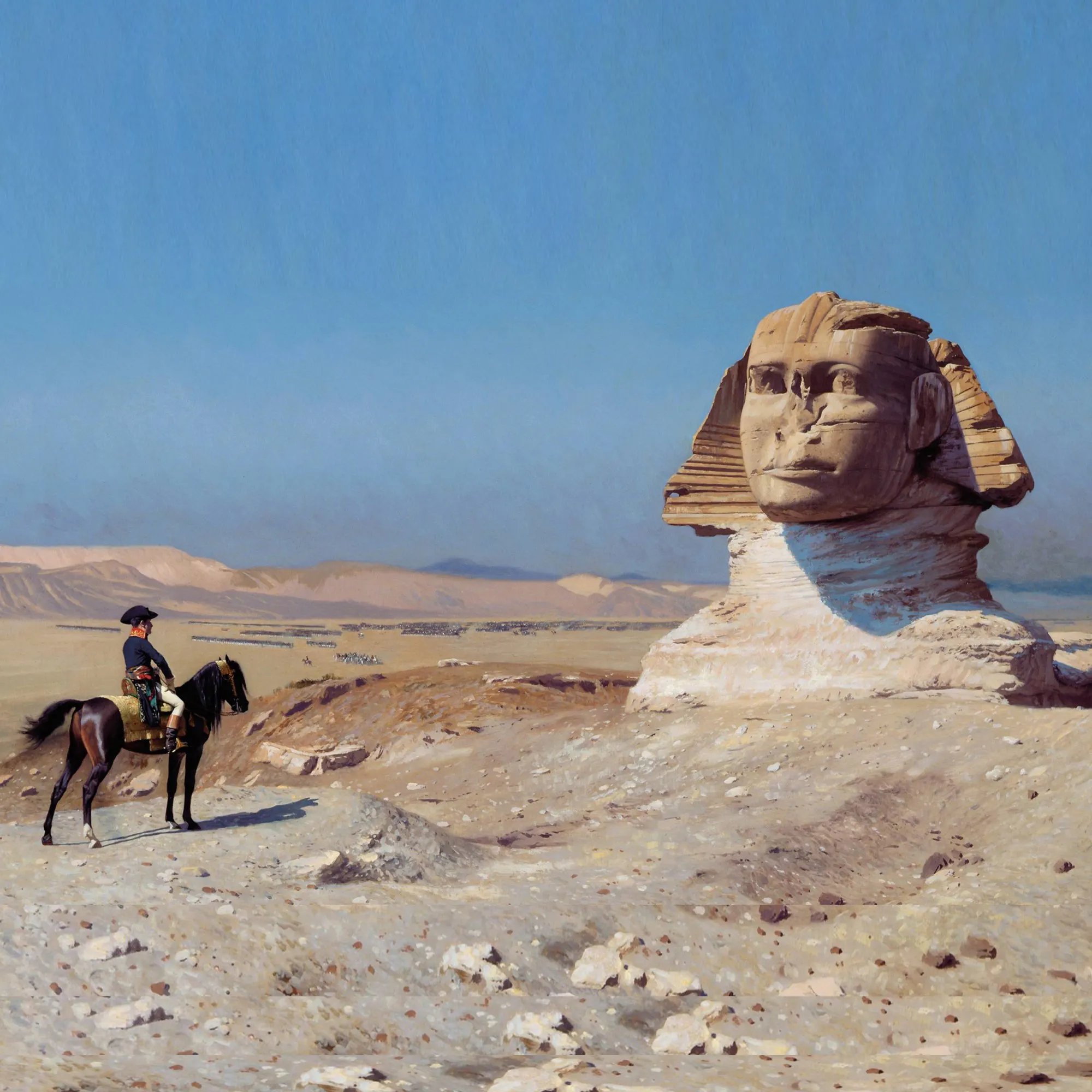
Napoleon in Egypt (with Grey History Podcast)
In 1798, an army of soldiers and scientists invaded Egypt. At their head, the young general Napoleon Bonaparte. The French Expedition had an enormous impact on Egypt's political history, and Egyptology as a field of scholarly inquiry. Remarkable discoveries, and dedicated study, led to an explosion in knowledge about the ancient past. Today, William Clark of Grey History: The French Revolution & Napoleon joins me to discuss these momentous undertakings. And, of course, we talk about the new film "Napoleon," directed by Ridley Scott and starring Joaquin Phoenix and Vanessa Kirby. Links and details: William Clark's Grey History: The French Revolution & Napoleon podcast. Logo image - Maurice Orange, Napoleon at the Pyramids 1895. The Description of Egypt complete digital copy at Bibliotecha Alexandrina. The Description of Egypt complete digital copy at Library of Congress. The History of Egypt Podcast Website: www.egyptianhistorypodcast.com. Support the show via Patreon www.patreon.com/egyptpodcast. Make a one-time donation via PayPal payments. Select Bibliography: ‘Abd al-Rahman al- Jabarti’, Oxford Reference, https://www.oxfordreference.com/display/10.1093/oi/authority.20110803100014918. E. Prusskaya, ‘Arab Chronicles as a Source for Studying Bonaparte’s Expedition to Egypt’, Napoleonica. LaRevue 24 (2015), 48–60. P. Mainterot, ‘France’, in A. Bednarski et al. (eds), A History of World Egyptology (Cambridge, 2020), 68–90. S. Ikram and A. Omar, ‘Egypt’, in A. Bednarski et al. (eds), A History of World Egyptology (Cambridge, 2020), 25–67. A. Bednarski et al. (eds), ‘The Prehistory of Egyptology’, A History of World Egyptology (Cambridge, 2020), 8–24. A. Bednarski et al. (eds), A History of World Egyptology (Cambridge, 2020). O. El Daly, Egyptology: The Missing Millennium – Ancient Egypt in Medieval Arabic Writings (2005). L. Greener, The Discovery of Egypt (1966). R. Asprey, The Rise of Napoleon Bonaparte (2000). Learn more about your ad choices. Visit megaphone.fm/adchoices
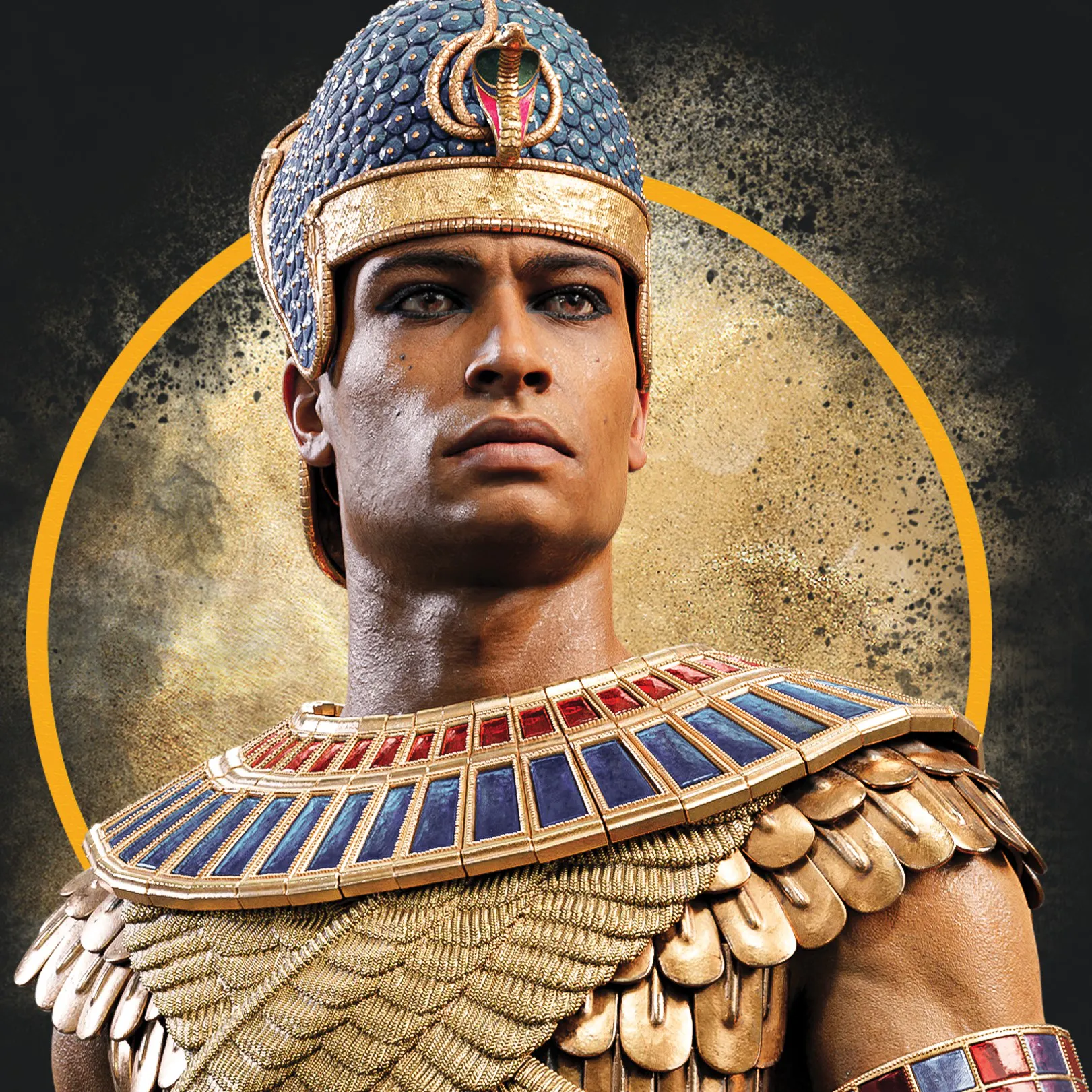
Total War Pharaoh - History & Leader Guide
I've wanted a game like Total War: Pharaoh since childhood. Now it's here! Thanks to Creative Assembly, I've had the opportunity to explore the game and prepare some introductions to the history and major leaders. This is meant to be a "listen along while playing" experience, just like I used to do with Mike Duncan's History of Rome and the original Rome: Total War. I hope you enjoy! Chapters: Intro: 00:00. Merneptah: 05:30. Ramesses: 29:10. Amenmesse: 1:02:40. Sety: 1:19:30. Tausret: 1:40:45. Bay & Irsu: 2:07:35. Kurunta & Suppiluliuma: 2:32:07. Preview and purchase Total War: Pharaoh at https://pharaoh.totalwar.com/. Music in all episodes by Richard Beddow © Creative Assembly 2023. Support the History of Egypt Podcast via Patreon www.patreon.com/egyptpodcast. Make a one-time donation via PayPal payments. Learn more about your ad choices. Visit megaphone.fm/adchoices
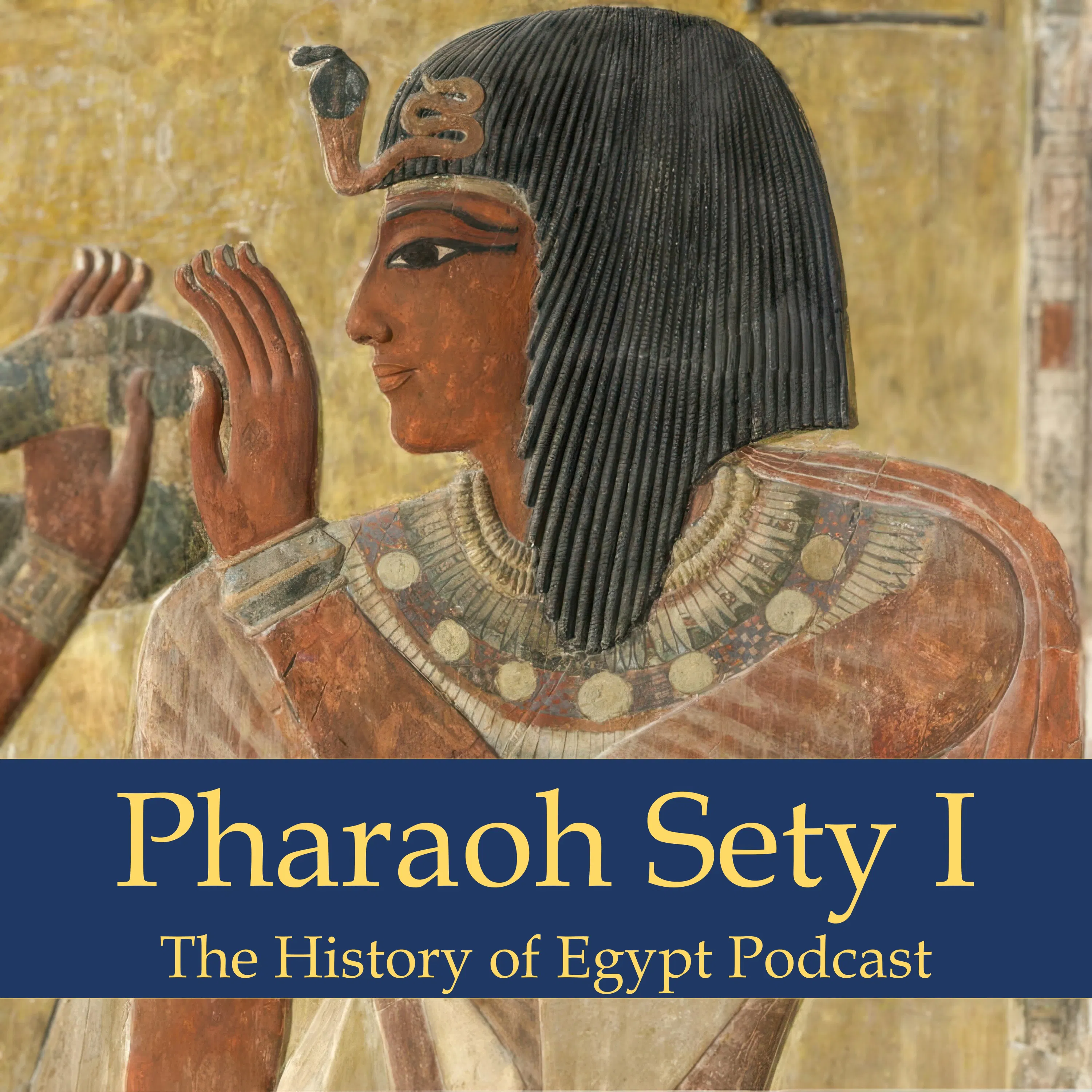
Sety I Phase 1 (Summary)
Sety I reigned (approx.) 1303--1292 BCE. In the first half of his reign, the King's followers achieved significant and splendid deeds. We explore these achievements in aggregate, and what they all mean for the Egyptian people. Plus, what 19th Dynasty "expansion" means for our story of pharaohs, ordinary people, and the gods... Logo image: Sety I, a painted panel from his tomb (Louvre Museum). Website: www.egyptianhistorypodcast.com. Support the show via Patreon www.patreon.com/egyptpodcast. Make a one-time donation via PayPal payments. Music by Jeffrey Goodman www.jeffreygoodman.com. Interludes by Keith Zizza www.keithzizza.net. Interludes by Luke Chaos www.chaosmusick.com. Learn more about your ad choices. Visit megaphone.fm/adchoices
191: Libya Minus One
How the west was won. Around 1298 BCE, King Sety I (Men-ma’at-Ra) attacked the peoples of modern-day Libya and, in a supposedly swift victory, took many captives back to Egypt. The relationship between Libyans and ancient Egyptians is complicated, but we go in search of some answers… Date: c.1298 BCE (Sety I, year 6). Website: www.egyptianhistorypodcast.com. Support the show via Patreon www.patreon.com/egyptpodcast. Make a one-time donation via PayPal payments. Music intro/outro: “Godzilla theme” by Akira Ifukube, cover version by Luke Chaos. Music interludes by: Keith Zizza, Luke Chaos. Sety’s War Reliefs at Karnak: Available in Open Access at The University of Chicago. Select Bibliography: P. J. Brand, The Monuments of Seti I: Epigraphic, Historical and Art Historical Analysis (2000). P. J. Brand, Ramesses II: Egypt’s Ultimate Pharaoh (2023). W. A. Cooney, ‘Egypt’s Encounter with the West: Race, Culture and Identity’, Unpublished PhD. Thesis, University of Durham (2011). A. Dodson, Sethy I King of Egypt: His Life and Afterlife (2019). A. A. el Magd, ‘Dehumanization of the “Other:” Animal Metaphors of Defeated Enemies in the New Kingdom Military Texts’, Journal of the American Research Center in Egypt 52 (2016), 329–341. H. El Saady, ‘The Wars of Sety I at Karnak: A New Chronological Structure’, Studien zur Altägyptischen Kultur 19 (1992), 285–94. R. O. Faulkner, ‘The Wars of Sethos I’, The Journal of Egyptian Archaeology 33 (1947), 34–9. J. C. M. García, ‘Ḥwt jḥ(w)t, The Administration of the Western Delta and the “Libyan Question” in the Third Millennium BC’, Journal of Egyptian Archaeology 101 (2015), 69–105. K. A. Kitchen, Ramesside Inscriptions Historical and Biographical, I (Oxford, 1975). K. A. Kitchen, ‘The Arrival of the Libyans in Late New Kingdom Egypt’, in A. Leahy (ed.), Libya and Egypt c.1300–750 BC (1990), 15–27. K. A. Kitchen, Ramesside Inscriptions Translated and Annotated: Translations Volume I: Ramesses I, Sethos I and Contemporaries (Second Publication edn, 2017). E. F. Morris, The Architecture of Imperialism: Military Bases and the Evolution of Foreign Policy in Egypt’s New Kingdom (2005). W. J. Murnane, The Road to Kadesh: A Historical Interpretation of the Battle Reliefs of King Sety I at Karnak (1985). D. O’Connor, ‘The Nature of Tjemhu (Libyan) Society in the Later New Kingdom’, in A. Leahy (ed.), Libya and Egypt c.1300–750 BC (1990), 29–113. A. J. Spalinger, ‘The Northern Wars of Seti I: An Integrative Study’, Journal of the American Research Center in Egypt 16 (1979), 29–47. A. J. Spalinger, War in Ancient Egypt: The New Kingdom (2005). The Epigraphic Survey, Medinet Habu, Volume I. Earlier Historical Records of Ramses III (1930). The Epigraphic Survey, Medinet Habu, Volume II. The Later Historical Records of Ramses III (1932). The Epigraphic Survey, Reliefs and Inscriptions at Karnak Volume 4: The Battle Reliefs of King Sety I (1986). Learn more about your ad choices. Visit megaphone.fm/adchoices
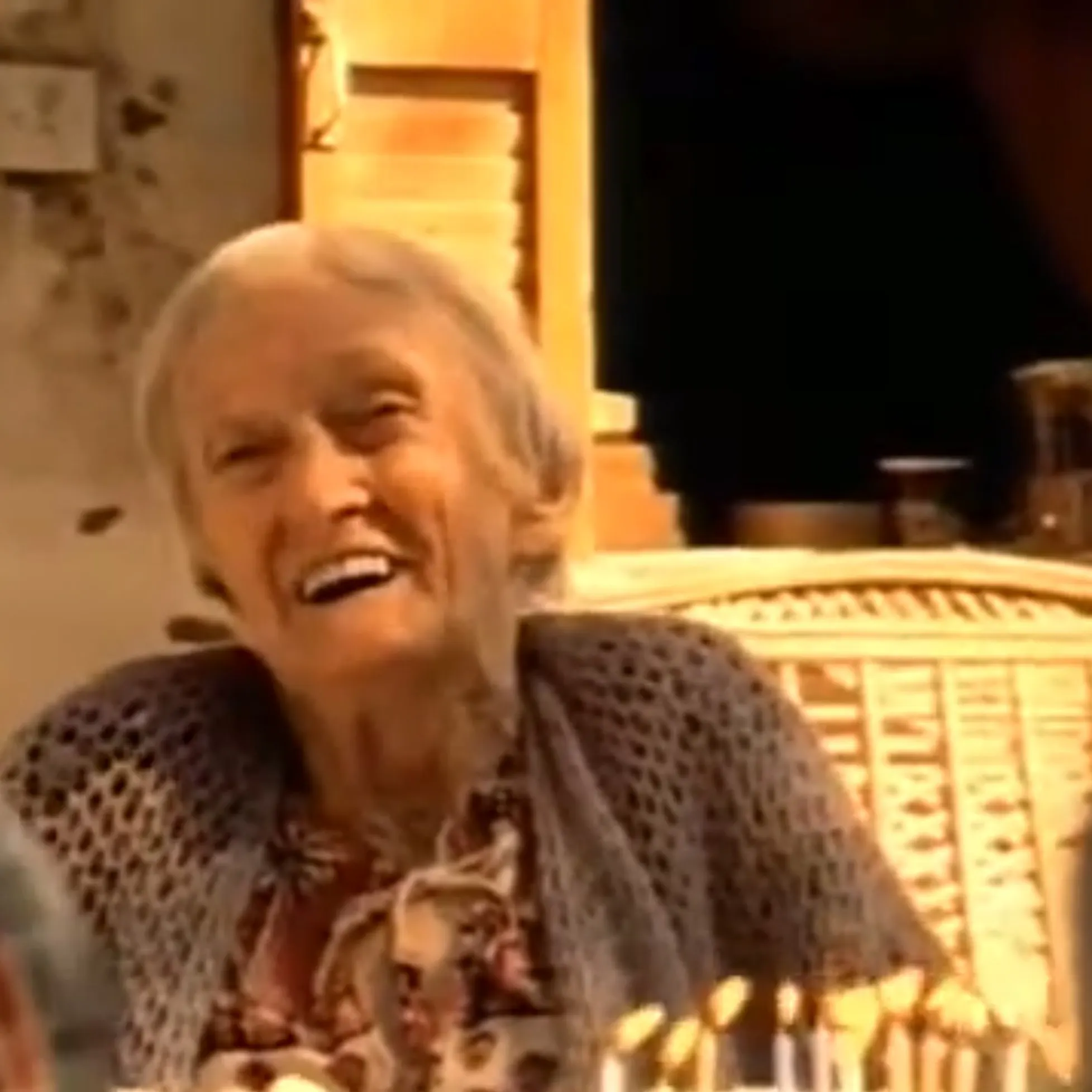
190: Omm Sety, Guardian of Abydos
Dorothy Eady, Bulbul Abd el-Meguid, Omm Sety… A woman of three names, multiple lives, and a lifelong devotion to Egyptology. From the 1950s to 1981, Omm Sety was a resident of Abydos, and a regular worshipper at the great Temple of Sety I. Her life is a tale of dedication, spiritual connection, and fascination with the ancient past. In this episode, we explore Omm Sety’s life and try to “shine a spotlight” on her work, personality, and beliefs… Documentaries about Omm Sety (YouTube): BBC Interview with Omm Sety at Abydos: https://youtu.be/2fdNJ2L9_zw?t=1. Omm Sety explains the Abydos Temple: https://youtu.be/QXmnus48jdI?t=83. Recollections of Omm Sety by those who knew her (Arabic, with subtitles): https://youtu.be/ZrFA-kDHtzg?t=281. Egypt – Quest for Eternity, with section on Omm Sety (filmed just prior to her death): https://youtu.be/VHXsv9ZLlYo?t=737. Episode details: Jonathan Cott, The Search for Omm Sety at Archive.org. Omm Sety and Hanny el Zeini, Abydos: Holy City of Ancient Egypt at Archive.org. Date: 1904—1981 CE. Places: Blackheath; Cairo; Abydos. Website: www.egyptianhistorypodcast.com. Support the show via Patreon www.patreon.com/egyptpodcast. Make a one-time donation via PayPal payments. Music: Ancient Lyric. Interludes: Luke Chaos and Hathor Systrum. Select Bibliography: J. Cott, The Search for Omm Sety: A Story of Eternal Love (1987). E. B. Ghazzouli, ‘The Palace and Magazines Attached to the Temple of Sety I at Abydos and the Facade of this Temple’, Annales du Services des Antiquités de l’Egypte 58 (1964), 99—186. B. S. Lesko, ‘Omm Sety, 1904—1981,’ in M. S. Joukowsky and B. S. Lesko (eds), Breaking Ground: Women in Old World Archaeology. O. Sety and H. El-Zeini, Abydos: Holy City of Ancient Egypt (1981). J. Thompson, Wonderful Things, A History of Egyptology, III: From 1914 to the Twenty-First Century (2018). J. Uglow et al. (eds), ‘Eady, Dorothy (1904-1981)’, The Palgrave MacMillan Dictionary of Women’s Biography (1982). Learn more about your ad choices. Visit megaphone.fm/adchoices
189: For the Ancestors
Sety at Abydos (Part 4). Finishing our tour of Sety’s Great Temple at Abydos, we explore a few more sanctuaries and facilities. Then, we discuss the monument overall. Sety invested huge resources into his building projects at Abydos, and these monuments connect to some truly ancient traditions. What were the King’s priorities, what was he trying to achieve? Photos of monuments described in this episode: Sety’s Temple: Kairoinfo4u. Sety’s Temple: Wikimedia. Chapel of Ramesses I: Metropolitan Museum of Art. Umm el-Qa’ab, pottery sherds from ancient offerings: Soloegipto. Interpreting the temple complex and adjacent facilities: David, Temple Ritual at Abydos (2018). O’Connor, Abydos: Egypt’s First Pharaohs and the Cult of Osiris (2009). Verner, Temple of the World: Sanctuaries, Cults, and Mysteries of Ancient Egypt (2013). Additional details and sources: Date: c.1300 BCE—1292 BCE. Website: www.egyptianhistorypodcast.com. Support the show via Patreon www.patreon.com/egyptpodcast. Make a one-time donation via PayPal payments. Music intro and interludes: Luke Chaos. Music outro: Ancient Lyric. Sistrum interludes: Tahya / Hathor Systrum. Select Bibliography: P. J. Brand, ‘The Monuments of Seti I and Their Historical Significance: Epigraphic, Historical and Art Historical Analysis’, Unpublished PhD. Thesis, University of Toronto (1998). P. J. Brand, The Monuments of Seti I: Epigraphic, Historical and Art Historical Analysis (2000). A. M. Calverley, The Temple of King Sethos I at Abydos Volume I: The Chapels of Osiris, Isis, and Horus (1933). A. M. Calverley, The Temple of King Sethos I at Abydos Volume II: The Chapels of Amen-Re, Re-Harakhti, Ptah, and King Sethos (1935). A. M. Calverley, The Temple of King Sethos I at Abydos Volume III: The Osiris Complex (1938). A. M. Calverley, The Temple of King Sethos I at Abydos Volume IV: The Second Hypostyle Hall (1958). J. Capart, Abydos: Le Temple de Seti Ier (1912). A. S. G. T. Caulfeild, The Temple of the Kings at Abydos (Sety I) (1989). R. David, Temple Ritual at Abydos (2018). K. J. Eaton, ‘The Festivals of Osiris and Sokar in the Month of Khoiak: The Evidence from Nineteenth Dynasty Royal Monuments at Abydos’, Studien zur Altägyptischen Kultur 35 (2006), 75–101. A. el-Sawi, ‘Ramesses II Completing a Shrine in the Temple of Sety I at Abydos’, Studien zur Altägyptischen Kultur 10 (1983), 307–10. H. Frankfort, The Cenotaph of Seti I at Abydos (1933). F. Ll. Griffith, ‘The Abydos Decree of Seti I at Nauri’, The Journal of Egyptian Archaeology 13 (1927), 193–208. K. Hamilton, ‘The Osireion: A Layman’s Guide’ (2018). C. H. Herzer Jr, ‘Study of the Osireion at Abydos: Code Book and Source Document for the Birth House of Isis’ (2022). K. A. Kitchen, Ramesside Inscriptions Translated and Annotated: Notes and Comments, I (1993). K. A. Kitchen, Ramesside Inscriptions Translated and Annotated: Translations Volume I: Ramesses I, Sethos I and Contemporaries (Second Publication edn, 2017). A. Leahy, ‘The Osiris “Bed” Reconsidered’, Orientalia 46 (1977), 424–34. A. Mariette, Abydos: Description des fouilles (1869). M. A. Murray, Egyptian Temples (2005). D. O’Connor, Abydos: Egypt’s First Pharaohs and the Cult of Osiris (2009). D. B. Redford, Pharaonic King-Lists, Annals, and Day-Books: A Contribution to the Study of the Egyptian Sense of History (1986). O. Sety and H. el Zeini, Abydos: Holy City of Ancient Egypt (1981). M. Smith, Following Osiris: Perspectives on the Osirian Afterlife from Four Millenia (2017). M. Verner, Temple of the World: Sanctuaries, Cults, and Mysteries of Ancient Egypt (2013). R. H. Wilkinson, The Complete Temples of Ancient Egypt (2000). R. H. Wilkinson, The Complete Gods and Goddesses of Ancient Egypt (2003). H. E. Winlock, Bas-Reliefs from the Temple of Ramesses I at Abydos (1921). Learn more about your ad choices. Visit megaphone.fm/adchoices
188: The Osireion
Sety at Abydos (Part 3). The Osireion is an intriguing monument, one that attracts a huge amount of debate, discussion, and speculation. Its discovery was unexpected, its excavation was an enormous undertaking, and there are many uncertainties about its purpose, history, and overall significance. Still, with an extensive photographic record, some meticulous archaeological work, and a great deal of discussion, we can attempt to understand the Osireion. Who built the Osireion (and how old is it)? Why is it here, behind Sety’s great temple? What purpose does it serve? In this episode, we explore these questions, and try to understand the monument overall. NOTE: Due to the complex nature of the Osireion’s history (ancient and modern), archaeology, and the difficulty of describing it, I will do a video lecture on YouTube in future. Check this post, or the website, for links when published. Further Information: The Osireion is surprisingly well documented, both in archival photography and modern analysis and discussion. Modern photos exploring the Osireion: Flickr: Soloegipto. Flickr: Archaeology Archive Project. Archaeology / Excavation Reports for The Osireion (free open access): Caulfeild, Temple of the Kings at Abydos, 1902: Internet Archive and Heidelberg University. Primarily focusses on main temple but brief discussion of work in western precinct that led to Murray’s excavations. Murray, The Osireion, 1904: Internet Archive, ETANA.org, and Academia.edu. Edouard Naville’s excavation reports (various journals) describing work at Abydos including the Osireion: JSTOR.org (requires free account). Frankfort, The Cenotaph of Sety I at Abydos, volume 1 and volume 2, 1933: Internet Archive. Includes complete summary of earlier excavations and fuller description of the monument (compared to Naville). James Westerman website (with database of articles and photos): JamesWesterman.org. Keith Hamilton, “Osiris: A Layman’s Guide,” on Academia.edu. Charles Herzer, “Study of the Osireion at Abydos,” at Isida Project. Photo Collections of early excavations at Abydos/Osireion: Dumbarton Oaks: Photo Exhibition Abydos 1910s—1920s. Egypt Exploration Society Photo Archives (Flickr): Excavations 1911. Entrance passages and central hall. Excavations 1913. Central hall. Excavations 1925 (Part 1). Central hall and side chambers. Excavations 1925 (Part 2). Central hall clearance and work. In this episode, I don’t discuss the mechanics of ancient stone working. That will come in future. But for now, you may be interested in archaeologists’ experiments to test ancient tools and the feasibility of carving hard stones (e.g., granite). Some good starter information can be found here: Denys Stocks, Experiments in Egyptian Archaeology: Stoneworking Technology in Ancient Egypt (2022 updated edition). Taylor and Francis Publications. YouTube: Ancient Egyptian Stoneworking with Denys Stocks (Sacred Geometry Decoded) https://www.youtube.com/watch?v=zoOCcrgWkIA. YouTube: Reconstruction of Ancient Technologies (Scientists Against Myths) https://www.youtube.com/playlist?list=PLJXCRTftQoU_AXz0_uxwMQZCt2O9ULxLE. Additional details and sources: Date: c.1300 BCE—1292 BCE. Website: www.egyptianhistorypodcast.com. Support the show via Patreon www.patreon.com/egyptpodcast. Make a one-time donation via PayPal payments. Music intro: Ihab Mahna. Music interludes and outro: Luke Chaos. Sistrum interludes: Tahya / Hathor Systrum. Peter Brand, Ramesses II: Egypt's Ultimate Pharaoh, out now from Lockwood Press. Select Bibliography: A. M. Abudeif et al., ‘Geoarchaeological Investigation of Abydos Area Using Land Magnetic and GPR Techniques, El-Balyana, Sohag, Egypt’, Applied Sciences 12 (2022), 9640. P. Brand, ‘Secondary Restorations in the Post-Amarna Period’, Journal of the American Research Center in Egypt 36 (1999), 113–34. Learn more about your ad choices. Visit megaphone.fm/adchoices
187: The Abydos King List
Sety in Abydos (Part 2). Having toured the first part of Sety’s Temple at Abydos, we continue our exploration. Today, we discuss one of the monument’s most famous features: a King List, presenting a (supposedly) uninterrupted record of rulers up to Sety’s day. In truth, the Abydos King List is complex, with omissions and inclusions that don’t quite match scholars’ archaeological and historical information. What was Sety trying to achieve, with this curious feature? We explore… This is part 2 in our tour of the temple. We have already visited the Hypostyle Halls, Seven Chapels, and Osiris Complex. In future episodes, we will discuss the Osireion, the secondary features of the monument, and the known priests/staff who managed it. Images: Full-colour reproduction of the Abydos King List at Wonderful Things Art. Use checkout code EGYPTPODCAST for 30% off your order when purchasing 3-or-more items! Logo image by Wonderful Things Art. A.M. Calverley, The Temple of Sethos I at Abydos, 4 volumes, open access via Chicago University Publications. Wikimedia: Category: Temple of Seti I in Abydos. Flickr.com: Kairoinfo4u. Flickr.com: Heidi Kontkanen. Details and sources: Read the Abydos King List at Wikipedia and Pharaoh.se. Date: c. 1300 BCE—1292 BCE (temple unfinished at Sety I death). Website: www.egyptianhistorypodcast.com. Support the show via Patreon www.patreon.com/egyptpodcast. Make a one-time donation via PayPal payments. Music intro and interludes: Luke Chaos. Music interludes and outro: Keith Zizza. Sistrum interludes: Tahya / Hathor Systrum. Texts: Kenneth Kitchen's Ramesside Inscriptions volume 1. Hieroglyph versions at Internet Archive, English translations at Abercromby Press. Texts: Full texts of the temple, including transliteration and translation: Rosalie David, Temple Ritual at Abydos (2018) at Egypt Exploration Society. Peter Brand, Ramesses II: Egypt's Ultimate Pharaoh, out now from Lockwood Press. Select Bibliography: P. J. Brand, The Monuments of Seti I: Epigraphic, Historical and Art Historical Analysis (2000). J. Capart, Abydos: Le Temple de Seti Ier (1912). A. S. G. Caulfield, The Temple of the Kings at Abydos (Sety I) (1989). R. David, Temple Ritual at Abydos (2018). C. Eyre, The Use of Documents in Pharaonic Egypt (2013). H. W. Fairman, ‘The Kingship Rituals of Egypt’, in S. Hooke (ed.), Myth, ritual, and kingship: essays on the theory and practice of kingship in the ancient Near East and in Israel (1958), 74–104. K. A. Kitchen, Ramesside Inscriptions Translated and Annotated: Notes and Comments, I (1993). K. A. Kitchen, Ramesside Inscriptions Translated and Annotated: Translations Volume I: Ramesses I, Sethos I and Contemporaries (Second Publication edn, 2017). H. H. Nelson, ‘Certain Reliefs at Karnak and Medinet Habu and the Ritual of Amenophis I’, Journal of Near Eastern Studies 8 (1949), 201–32, 310–45. D. B. Redford, Pharaonic King-Lists, Annals, and Day-Books: A Contribution to the Study of the Egyptian Sense of History (1986). K. Ryholt, ‘The Turin King-List’, Ägypten und Levante / Egypt and the Levant 14 (2004), 135–55. O. Sety and H. el Zeini, Abydos: Holy City of Ancient Egypt (1981). Learn more about your ad choices. Visit megaphone.fm/adchoices
186: Sety in Abydos
Part 1. In the ancient city and necropolis of Abydos (Egyptian Abdju), pharaoh Sety I commissioned a magnificent temple. Today, this monument is one of the finest in the country, a highlight of any trip. Sety’s work is complicated, with several components and structures worthy of discussion. So, this is part one of a multi-part tour through the complex. Today, we cover: The history of Abydos pre-Sety I. The modern experience of Sety’s temple. The Hypostyle Halls, the unique “Seven Chapels,” and the “Osiris Complex.” The meaning and symbolism of the Osiris religion as Sety shows it. In future episodes, we will discuss the Osireion, the Abydos King List, and the known Priests/Staff who managed it. Details and sources: Date: c. 1300 BCE—1292 BCE (temple unfinished at Sety I death). Website: www.egyptianhistorypodcast.com. Support the show via Patreon www.patreon.com/egyptpodcast. Make a one-time donation via PayPal payments. Texts: Kenneth Kitchen's Ramesside Inscriptions volume 1. Hieroglyph versions at Internet Archive, English translations at Abercromby Press. Texts: Full texts of the temple, including transliteration and translation: Rosalie David, Temple Ritual at Abydos (2018) at Egypt Exploration Society. Peter Brand, Ramesses II: Egypt's Ultimate Pharaoh, out now from Lockwood Press. Images: For high-quality illustrations and photos of Sety’s temple, see: A.M. Calverley, The Temple of Sethos I at Abydos, 4 volumes, open access via Chicago University Publications. Wikimedia: Category: Temple of Seti I in Abydos. Flickr.com: Kairoinfo4u. Flickr.com: Heidi Kontkanen. Music intro and interludes: Keith Zizza. Music interludes: Luke Chaos. Sistrum interludes: Tahya / Hathor Systrum. Select Bibliography: M. Calverley, The Temple of King Sethos I at Abydos Volume I: The Chapels of Osiris, Isis, and Horus (1933) https://isac.uchicago.edu/research/publications/misc/sethos-1-temple-king-sethos-i-abydos-volume-i-chapels-osiris-isis-and. M. Calverley, The Temple of King Sethos I at Abydos Volume II: The Chapels of Amen-Re, Re-Harakhti, Ptah, and King Sethos (1935) https://isac.uchicago.edu/research/publications/misc/sethos-2-temple-king-sethos-i-abydos-volume-ii-chapels-amen-re-re. M. Calverley, The Temple of King Sethos I at Abydos Volume III: The Osiris Complex (1938) https://isac.uchicago.edu/research/publications/misc/sethos-3-temple-king-sethos-i-abydos-volume-iii-osiris-complex. M. Calverley, The Temple of King Sethos I at Abydos Volume IV: The Second Hypostyle Hall (1958) https://isac.uchicago.edu/research/publications/misc/sethos-4-temple-king-sethos-i-abydos-volume-iv-second-hypostyle-hall. Capart, Abydos: Le Temple de Seti Ier (1912). S. G. Caulfield, The Temple of the Kings at Abydos (Sety I) (1989). David, Temple Ritual at Abydos (2018). J. Eaton, ‘The Festivals of Osiris and Sokar in the Month of Khoiak: The Evidence from Nineteenth Dynasty Royal Monuments at Abydos’, Studien zur Altägyptischen Kultur 35 (2006), 75–101. Mariette, Abydos: Description des fouilles (1869). O’Connor, Abydos: Egypt’s First Pharaohs and the Cult of Osiris (2009). Sety and H. el Zeini, Abydos: Holy City of Ancient Egypt (1981). Smith, Following Osiris: Perspectives on the Osirian Afterlife from Four Millenia (2017). Verner, Temple of the World: Sanctuaries, Cults, and Mysteries of Ancient Egypt (2013). H. Wilkinson, The Complete Temples of Ancient Egypt (2000). Learn more about your ad choices. Visit megaphone.fm/adchoices
185: House of the Rising Son
Ramesses II: Prince of Egypt. When Sety I took power, his eldest son was probably 10—15 years old. The King's Son Ra-messes (“Born of Ra”) enjoyed a privileged upbringing. And by the time he was physically mature, the young prince was ready to expand the royal household. His father Sety had some plans in that regard… Details and sources: Date: c. 1299 BCE. Website: www.egyptianhistorypodcast.com. Support the show via Patreon www.patreon.com/egyptpodcast. Make a one-time donation via PayPal payments. Music intro: Keith Zizza. Music interludes and outro: Luke Chaos. Texts: Kenneth Kitchen's Ramesside Inscriptionsvolume 1. Hieroglyph versions at Internet Archive, English translations at Abercromby Press. Peter Brand, Ramesses II: Egypt's Ultimate Pharaoh, out now from Lockwood Press. Looking to upgrade your eating habits? Try HELLO FRESH and get 50% off your order. Visit hellofresh.com/egypt50 and use the promo code EGYPT50 for 50% off (U.S. customers only). Select Bibliography: P. J. Brand, The Monuments of Seti I: Epigraphic, Historical and Art Historical Analysis (2000). P. J. Brand, Ramesses II: Egypt’s Ultimate Pharaoh (2023). A. Dodson and D. Hilton, The Complete Royal Families of Ancient Egypt (2004). M. M. Fisher, The Sons of Ramesses II (2001). D. C. Forbes, The Royal Mummies Caches (TT320 & KV35) (2015). W. Grajetzki, Ancient Egyptian Queens: A Hieroglyphic Dictionary (2005). J. E. Harris and K. R. Weeks, X-Raying the Pharaohs (1973). Z. Hawass and S. N. Saleem, Scanning the Pharaohs: CT Imaging in the New Kingdom Royal Mummies (2016). K. A. Kitchen, Ramesside Inscriptions Historical and Biographical, III (1980). K. A. Kitchen, Ramesside Inscriptions Translated and Annotated: Translations, II (2017). W. J. Murnane, ‘The Earlier Reign of Ramesses II and His Coregency with Sety I’, Journal of Near Eastern Studies 34 (1975), 153–90. K. C. Seele, The Coregency of Ramses II with Seti I and the Date of the Great Hypostyle Hall at Karnak (1940). A. J. Spalinger, The Great Dedicatory Inscription of Ramesses II: A Solar-Osirian Tractate at Abydos (2009). J. Tyldesley, Ramesses: Egypt’s Greatest Pharaoh (2001). J. Tyldesley, Chronicle of the Queens of Egypt (2006). T. Wilkinson, Ramesses the Great: Egypt’s King of Kings (2023). Learn more about your ad choices. Visit megaphone.fm/adchoices

Sety I, Great Pharaoh, with Prof. Peter Brand
Karnak, Abydos, foreign wars, and prince Ramesses. In this interview, Prof. Peter Brand joins us once again to explore the life, reign, and legacy of Sety I. We also explore the rise of prince Ramesses (later King Ramesses II), who becomes increasingly prominent in the later years of his father's rule. Links and more info: Peter Brand at Memphis University. National Geographic documentary "Egypt: Quest for Eternity," on YouTube. Peter Brand articles and books on Academia.edu. Peter Brand, The Monuments of Sety I (2000), free pdf version at Academia. Peter Brand, Ramesses II: Egypt's Ultimate Pharaoh (2023) available now via Lockwood Press. Free preview at Academia. Peter Brand (with Rosa Ferleg and William Murnane), The Great Hypostyle Hall in the Temple of Amun at Karnak, volumes II and III (2018) free pdf versions via Chicago University. Volume I (by Harold Hays and William Murnane) also available via Chicago University. The History of Egypt Podcast Website: www.egyptianhistorypodcast.com. Support the show via Patreon www.patreon.com/egyptpodcast. Make a one-time donation via PayPal payments. Learn more about your ad choices. Visit megaphone.fm/adchoices
184b: Feeding the Fighters
Sety I (Part 6b): Standards and Practices. The early 19th Dynasty army was a well-organised machine, with distinct units (the zA ‘company’) and officers (e.g., chai sereet, ‘Standard Bearers’). Papyrus archives record the daily business of military life, like the Standard Bearer Mai-Sety / Mai-Sutekhy, the company scribe User-Hat, and the royal administrators that monitored food deliveries, rations, and supplies of essential goods… Details and sources: Date: c. 1300 BCE. Website: www.egyptianhistorypodcast.com. Support the show via Patreon www.patreon.com/egyptpodcast. Make a one-time donation via PayPal payments. Music intro and interludes: Luke Chaos. Music outro: Bettina Joy de Guzman (Ancient Lyric). Texts: Kenneth Kitchen's Ramesside Inscriptions volume 1. Hieroglyph versions at Internet Archive, English translations at Abercromby Press. Peter Brand, Ramesses II: Egypt's Ultimate Pharaoh, out now from Lockwood Press. Select Bibliography: S. Allam, ‘Trois missives d’un commandant (Pap. CGC 58053-5), (avec 5 planches)’, Annales du Services des Antiquités de l’Egypte 71 (1987), 5–27. A. H. Gardiner, ‘The Ancient Military Road between Egypt and Palestine’, The Journal of Egyptian Archaeology 6 (1920), 99–116. B. Heagren, ‘The Art of War in Pharaonic Egypt’, Unpublished PhD. Thesis, The University of Auckland (2010). M. Healy, Qadesh 1300 BC: Clash of the Warrior Kings (1993). K. A. Kitchen, Ramesside Inscriptions Translated and Annotated: Notes and Comments, I (1993). K. A. Kitchen, Ramesside Inscriptions Translated and Annotated: Translations, I (2017). S. McDermott, ‘Ancient Egyptian Footsoldiers and Their Weapons: A Study of Military Iconography and Weapon Remains’, Unpublished PhD. Thesis, The University of Manchester (2002). A. R. Schulman, ‘Military Rank, Title, and Organization in the Egyptian New Kingdom’, Unpublished PhD. Thesis, University of Pennsylvania (1962). A. J. Spalinger, Aspects of the Military Documents of the Ancient Egyptians (1982). A. J. Spalinger, ‘The Army’, in T. Wilkinson (ed.), The Egyptian World (2007), 118–131. The Epigraphic Survey, Reliefs and Inscriptions at Karnak Volume 4: The Battle Reliefs of King Sety I (1986). E. F. Wente, Letters from Ancient Egypt (1990). Learn more about your ad choices. Visit megaphone.fm/adchoices
184: Fighting for Pharaoh
Sety I (Part 6): Mesha, Menfat, Pedjet, Pecherer. By 1300 BCE, Egyptians had developed a sophisticated, well-organised military system. Distinct branches and types of troops (infantry, archers, auxiliaries, and more) marched and fought in identifiable units. Their weapons survive in the archaeological record, and ancient texts and art reveal their equipment, behaviour, and battlefield roles. Today, we introduce the soldiers who won Sety I’s wars… Details and sources: Date: c. 1300 BCE. Website: www.egyptianhistorypodcast.com. Support the show via Patreon www.patreon.com/egyptpodcast. Make a one-time donation via PayPal payments. Music intro and interludes: Bettina Joy de Guzman. Interludes: Luke Chaos. Music outro: Keith Zizza. Texts: Kenneth Kitchen's Ramesside Inscriptions volume 1. Hieroglyph versions at Internet Archive, English translations at Abercromby Press. Peter Brand, Ramesses II: Egypt's Ultimate Pharaoh, out now from Lockwood Press. Select Bibliography: P. J. Brand, The Monuments of Seti I: Epigraphic, Historical and Art Historical Analysis (2000). P. J. Brand, Ramesses II: Egypt’s Ultimate Pharaoh (2023). A. H. Gardiner, ‘The Ancient Military Road between Egypt and Palestine’, The Journal of Egyptian Archaeology 6 (1920), 99–116. B. Heagren, ‘The Art of War in Pharaonic Egypt’, Unpublished PhD. Thesis, The University of Auckland (2010). M. Healy, Qadesh 1300 BC: Clash of the Warrior Kings (1993). K. A. Kitchen, Ramesside Inscriptions Translated and Annotated: Notes and Comments, I (Oxford, 1993). K. A. Kitchen, Ramesside Inscriptions Translated and Annotated: Translations, I (Wallasey, 2017). S. McDermott, ‘Ancient Egyptian Footsoldiers and Their Weapons: A Study of Military Iconography and Weapon Remains’, Unpublished PhD. Thesis, The University of Manchester (2002). E. F. Morris, The Architecture of Imperialism: Military Bases and the Evolution of Foreign Policy in Egypt’s New Kingdom (2005). W. J. Murnane, The Road to Kadesh: A Historical Interpretation of the Battle Reliefs of King Sety I at Karnak (1985). A. R. Schulman, ‘Military Rank, Title, and Organization in the Egyptian New Kingdom’, Unpublished PhD. Thesis, University of Pennsylvania (1962). A. J. Spalinger, Aspects of the Military Documents of the Ancient Egyptians (1982). A. J. Spalinger, War in Ancient Egypt: The New Kingdom (2005). A. J. Spalinger, ‘The Army’, in T. Wilkinson (ed.), The Egyptian World (New York, 2007), 118–131. The Epigraphic Survey, Medinet Habu, Volume I. Earlier Historical Records of Ramses III (1930). The Epigraphic Survey, Medinet Habu, Volume II. The Later Historical Records of Ramses III (1932). The Epigraphic Survey, Reliefs and Inscriptions at Karnak Volume 4: The Battle Reliefs of King Sety I (1986). Learn more about your ad choices. Visit megaphone.fm/adchoices
For the Kiwis: Egypt - In the Time of Pharaohs
Hey New Zealand! It's time to explore ancient Egypt. A new exhibition, Egypt: In the Time of Pharaohs, has just opened at Auckland Museum Tamaki Paenga Hira. And to celebrate, we've got a special deep-dive into the artefacts and cultural background of the Nile Valley! Have a listen and check out the exhibition for yourself. And while you're there, consider an Auckland Museum Membership, which comes with all kinds of perks including free entry to paid exhibitions, exclusive events and lectures from leading experts, special discounts at the museum shops and cafes, and more! The History of Egypt Podcast Website: www.egyptianhistorypodcast.com. Support the show via Patreon www.patreon.com/egyptpodcast. Make a one-time donation via PayPal payments. Learn more about your ad choices. Visit megaphone.fm/adchoices
183: Fire Over Hatti
Sety I (Part 5): Empires clash. Around 1300 BCE (approximately), Sety I records a battle against the Hittites. In the course of his northern wars, perhaps following the reconquest of Kadesh and Amurru, Sety faced off with his distant rival. The Kingdom of Hatti, land of the Hittites, sent forces to challenge the Egyptian resurgence… Details and sources: Date: c. 1300 BCE. Website: www.egyptianhistorypodcast.com. Support the show via Patreon www.patreon.com/egyptpodcast. Make a one-time donation via PayPal payments. Music: Luke Chaos. Interludes: Keith Zizza, Luke Chaos, Hathor Systrum. The Battle Reliefs of Sety I by The Epigraphic Survey Reliefs and Inscriptions at Karnak, Volume IV: The Battle Reliefs of King Sety I | Institute for the Study of Ancient Cultures (uchicago.edu). Texts: Kenneth Kitchen's Ramesside Inscriptions volume 1. Hieroglyph versions at Internet Archive, English translations at Abercromby Press. Peter Brand, Ramesses II: Egypt's Ultimate Pharaoh, out now from Lockwood Press. Support the History of Egypt Podcast and get amazing skincare products from RA EGYPTIAN, the natural skincare range inspired by ancient ingredients! Shop at www.ra-egyptian.comand use the checkout code EGYPT to get 30% off your order! Select Bibliography: G. Beckman, Hittite Diplomatic Texts (1996). P. J. Brand, The Monuments of Seti I: Epigraphic, Historical and Art Historical Analysis (2000). P. J. Brand, Ramesses II: Egypt’s Ultimate Pharaoh (2023). T. Bryce, The Kingdom of the Hittites (2005). T. R. Bryce, Ancient Syria: A Three Thousand Year History (2014). T. R. Bryce, Warriors of Anatolia: A Concise History of the Hittites (2019). V. Davies, ‘The Treatment of Foreigners in Seti’s Battle Reliefs’, The Journal of Egyptian Archaeology 98 (2012), 73–85. A. Dodson, Sethy I King of Egypt: His Life and Afterlife (2019). H. El-Saady, ‘The Wars of Sety I at Karnak: A New Chronological Structure’, Studien zur Altägyptischen Kultur 19 (1992), 285–94. R. O. Faulkner, ‘The Wars of Sethos I’, The Journal of Egyptian Archaeology 33 (1947), 34–9. B. Heagren, ‘The Art of War in Pharaonic Egypt’, Unpublished PhD. Thesis, The University of Auckland (2010). M. Healy, Qadesh 1300 BC: Clash of the Warrior Kings (1993). K. A. Kitchen, Ramesside Inscriptions Translated and Annotated: Notes and Comments, I (1993). K. A. Kitchen, Ramesside Inscriptions Translated and Annotated: Translations, I (2017). S. Langdon and A. H. Gardiner, ‘The Treaty of Alliance between Ḫattušili, King of the Hittites, and the Pharaoh Ramesses II of Egypt’, The Journal of Egyptian Archaeology 6 (1920), 179–205. D. D. Luckenbill, ‘Hittite Treaties and Letters’, The American Journal of Semitic Languages and Literatures 37 (1921), 161–211. S. McDermott, ‘Ancient Egyptian Footsoldiers and Their Weapons: A Study of Military Iconography and Weapon Remains’, Unpublished PhD. Thesis, The University of Manchester (2002). E. F. Morris, The Architecture of Imperialism: Military Bases and the Evolution of Foreign Policy in Egypt’s New Kingdom (2005). W. J. Murnane, The Road to Kadesh: A Historical Interpretation of the Battle Reliefs of King Sety I at Karnak (1985). D. B. Redford, Egypt, Canaan, and Israel in Ancient Times (1992). A. Spalinger, Aspects of the Military Documents of the Ancient Egyptians (1982). A. J. Spalinger, ‘The Northern Wars of Seti I: An Integrative Study’, Journal of the American Research Center in Egypt 16 (1979), 29–47. A. J. Spalinger, War in Ancient Egypt: The New Kingdom (2005). The Epigraphic Survey, Reliefs and Inscriptions at Karnak Volume 4: The Battle Reliefs of King Sety I (1986). G. Wilhelm, ‘Muršilis II. Konflikt mit Ägypten und Haremhabs Thronbesteigung’, Die Welt des Orients 39 (2009), 108–16. W. Wreszinski, Atlas zur altaegyptischen Kulturgeschichte (1988). Learn more about your ad choices. Visit megaphone.fm/adchoices
182b: Destruction in Amurru
Amurru (Part 4): Reconquista. The land of Amurru, and its leaders, have been a noteworthy part of the story in recent decades. Since the reigns of Amunhotep III and Akhenaten, the lords of Amurru have caused great trouble in Egypt’s northern empire. They have raided, plundered, and even murdered their way to regional prominence. Now, a couple decades after their betrayals, King Sety I is bringing vengeance… Note: This episode includes new content and old material from episodes 123, 124, 142c. See timecodes for relevant chapters. Timecodes: 00:00 Introduction. 02:25 The Land of Amurru. 12:25 How Science Uncovered Amurrite Expansion. 24:04 The Amurru – Hittite Alliances. 35:44 The Battle of Amurru. 46:28 Can We Trust Sety's Story? 51:15 Conclusion. 53:50 Episode 123, Amurrites and Where to Find Them. 2:07:17 Episode 124, The Crimes of Aziru. 3:07:45 Episode 142c, Aziru’s Betrayal. Episode Details: Date: c. 1300 BCE. Website: www.egyptianhistorypodcast.com. Support the show via Patreon www.patreon.com/egyptpodcast. Make a one-time donation via PayPal payments. Music: Michael Levy - Composer for Lyre (ancientlyre.com). Interludes: Keith Zizza and Luke Chaos. Logo image: Warriors of Kadesh, near Amurru, falling before Sety I's assault. Battle reliefs at Karnak, via the University of Chicago (below). Goren, Finkelstein, and Na’aman: The Expansion of the Kingdom of Amurru According to the Petrographic Investigation of the Amarna Tablets | Yuval Goren and Nadav Na'aman - Academia.edu. Sety’s Battle Reliefs, including the possible scenes of Amurru, at the University of Chicago: Reliefs and Inscriptions at Karnak, Volume IV: The Battle Reliefs of King Sety I | Institute for the Study of Ancient Cultures (uchicago.edu). Peter Brand, Ramesses II: Egypt's Ultimate Pharaoh, out now from Lockwood Press. Support The History of Egypt Podcast by shopping at RA EGYPTIAN, the clean skincare line inspired by ancient Egyptian ingredients! Visit www.ra-egyptian.com and use code EGYPT at checkout for 30% off your order! Select Bibliography: S. Aḥituv, Canaanite Toponyms in Ancient Egyptian Documents (1984). G. Beckman, Hittite Diplomatic Texts (1996). P. J. Brand, The Monuments of Seti I: Epigraphic, Historical and Art Historical Analysis (2000). T. Bryce, The Kingdom of the Hittites (2005). T. Bryce and J. Birkett-Rees, Atlas of the Ancient Near East from Prehistoric Times to the Roman Imperial Period (2016). T. R. Bryce, Ancient Syria: A Three Thousand Year History (2014). T. R. Bryce, Warriors of Anatolia: A Concise History of the Hittites (2019). V. Davies, ‘The Treatment of Foreigners in Seti’s Battle Reliefs’, The Journal of Egyptian Archaeology 98 (2012), 73–85. A. Dodson, Sethy I King of Egypt: His Life and Afterlife (2019). H. El-Saady, ‘The Wars of Sety I at Karnak: A New Chronological Structure’, Studien zur Altägyptischen Kultur 19 (1992), 285–94. R. O. Faulkner, ‘The Wars of Sethos I’, The Journal of Egyptian Archaeology 33 (1947), 34–9. Y. Goren et al., ‘The Expansion of the Kingdom of Amurru According to the Petrographic Investigation of the Amarna Tablets’, Bulletin of the American Schools of Oriental Research (2003), 1–11. M. Healy, Qadesh 1300 BC: Clash of the Warrior Kings (1993). K. A. Kitchen, Ramesside Inscriptions Translated and Annotated: Notes and Comments, I (1993). K. A. Kitchen, Ramesside Inscriptions Translated and Annotated: Translations, I (2017). S. Langdon and A. H. Gardiner, ‘The Treaty of Alliance between Ḫattušili, King of the Hittites, and the Pharaoh Ramesses II of Egypt’, The Journal of Egyptian Archaeology 6 (1920), 179–205. D. D. Luckenbill, ‘Hittite Treaties and Letters’, The American Journal of Semitic Languages and Literatures 37 (1921), 161–211. E. F. Morris, The Architecture of Imperialism: Military Bases and the Evolution of Foreign Policy in Egypt’s New Kingdom (2005). Learn more about your ad choices. Visit megaphone.fm/adchoices
182: Sety's Battle for Kadesh
Sety I (Part 4): Catching Up with the Kadeshians. Around 1300 BCE (chronology uncertain), Sety led another campaign into the north. This time, the pharaoh of Egypt marched into Canaan, Lebanon, and Syria. In the process, he visited local chieftains, went “shopping” for luxury items, and then launched a daring attack on Kadesh… Details and sources: Date: c. 1300 BCE. Website: www.egyptianhistorypodcast.com. Support the show via Patreon www.patreon.com/egyptpodcast. Make a one-time donation via PayPal payments. Intro Music: Bettina Joy de Guzman. Interludes: Keith Zizza. Outro music and interludes: Luke Chaos. Logo image: A warrior/cattleman flees with his animals, while Sety I attacks Kadesh. Image colours based on traces found at Karnak, edited by Dominic Perry 2023. Sety’s Battle Reliefs at Karnak, published by The Epigraphic Survey of The University of Chicago: Reliefs and Inscriptions at Karnak, Volume IV: The Battle Reliefs of King Sety I | Institute for the Study of Ancient Cultures (uchicago.edu). Texts: Kenneth Kitchen's Ramesside Inscriptions volume 1. Hieroglyph versions at Internet Archive, English translations at Abercromby Press. Peter Brand, Ramesses II: Egypt's Ultimate Pharaoh, out now from Lockwood Press. Support The History of Egypt Podcast by shopping at RA EGYPTIAN, the clean skincare line inspired by ancient Egyptian ingredients! Visit www.ra-egyptian.com and use code EGYPT at checkout for 30% off your order! Select Bibliography: M. R. Abbas, ‘The Town of Yenoam in the Ramesside War Scenes and Texts of Karnak’, Cahiers de Karnak 16 (2017), 329–341. S. Aḥituv, Canaanite Toponyms in Ancient Egyptian Documents (1984). P. J. Brand, The Monuments of Seti I: Epigraphic, Historical and Art Historical Analysis (2000). P. J. Brand, Ramesses II: Egypt’s Ultimate Pharaoh (2023). T. Bryce, The Kingdom of the Hittites (2005). T. Bryce, The Routledge Handbook of the Peoples and Places of Ancient Western Asia: The Near East from the Early Bronze Age to the Fall of the Persian Empire (2009). T. R. Bryce, Ancient Syria: A Three Thousand Year History (2014). T. R. Bryce, Warriors of Anatolia: A Concise History of the Hittites (2019). A. Dodson, Sethy I King of Egypt: His Life and Afterlife (2019). H. El-Saady, ‘The Wars of Sety I at Karnak: A New Chronological Structure’, Studien zur Altägyptischen Kultur 19 (1992), 285–94. R. O. Faulkner, ‘The Wars of Sethos I’, The Journal of Egyptian Archaeology 33 (1947), 34–9. K. A. Kitchen, Ramesside Inscriptions Translated and Annotated: Notes and Comments, I (1993). K. A. Kitchen, Ramesside Inscriptions Translated and Annotated: Translations, I (2017). W. J. Murnane, The Road to Kadesh: A Historical Interpretation of the Battle Reliefs of King Sety I at Karnak (1985). N. Na’aman, ‘Yeno’am’, Tel Aviv 4 (1977), 168–77. D. B. Redford, Egypt, Canaan, and Israel in Ancient Times (1992). A. Spalinger, Aspects of the Military Documents of the Ancient Egyptians (1982). A. J. Spalinger, ‘The Northern Wars of Seti I: An Integrative Study’, Journal of the American Research Center in Egypt 16 (1979), 29–47. A. J. Spalinger, War in Ancient Egypt: The New Kingdom (2005). The Epigraphic Survey, Reliefs and Inscriptions at Karnak Volume 4: The Battle Reliefs of King Sety I (1986). W. Wreszinski, Atlas zur altaegyptischen Kulturgeschichte (1988). Learn more about your ad choices. Visit megaphone.fm/adchoices
Introducing: History Daily
History Daily is your regular introduction to major events and stories. Every weekday, new stories arrive on topics ranging from war and fashion, culture and politics, religion and technology. Episodes run 18-20 minutes on average, providing a bite-sized exploration to major topics. Enjoy a special introduction to the show, covering one of the major events of the French Revolution. In 1893, the execution of King Louis XVI helped expand the crisis known as the Revolutionary Wars, a crisis that had a profound impact on the nascent field of Egyptology... Find History Daily on all podcasting apps, or at www.historydaily.com. Learn more about Airwave Media and its range of podcasts at www.airwavemedia.com. The History of Egypt Podcast Website: www.egyptianhistorypodcast.com. Support the show via Patreon www.patreon.com/egyptpodcast. Make a one-time donation via PayPal payments. Learn more about your ad choices. Visit megaphone.fm/adchoices
181: Akh-en-Amun (Effective for Amun)
Sety I (Part 3): The Great Hypostyle Hall of Karnak. In 1302 BCE (approximately) the pharaoh of Egypt Men-Ma’at-Ra Sety I commissioned a remarkable monument. A hall of columns, near the entrance of Karnak sanctuary, would be a gathering place for the gods and the faithful. This hall, called “Sety is Effective in the House of Amun,” is now one of Egypt’s most famous (and most photographed) monuments… Details and sources: Date: c. 1302 BCE (Year 2 of Sety I). Website: www.egyptianhistorypodcast.com. Support the show via Patreon www.patreon.com/egyptpodcast. Make a one-time donation via PayPal payments. Music: Keith Zizza and Bettina Joy de Guzman. The Hypostyle Hall: Publications by The University of Chicago Epigraphic Survey: https://isac.uchicago.edu/research/publications/oip/great-hypostyle-hall-karnak-volume-1-part-1-wall-reliefs and https://isac.uchicago.edu/research/publications/oip/oip-142-great-hypostyle-hall-temple-amun-karnak Texts: Kenneth Kitchen's Ramesside Inscriptionsvolume 1. Hieroglyph versions at Internet Archive, English translations at Abercromby Press. Peter Brand, Ramesses II: Egypt's Ultimate Pharaoh, out now from Lockwood Press. Support The History of Egypt Podcast by shopping at RA EGYPTIAN, the clean skincare line inspired by ancient Egyptian ingredients! Visit www.ra-egyptian.com and use code EGYPT at checkout for 30% off your order! Select Bibliography: E. Blyth, Karnak: Evolution of a Temple (2006). P. J. Brand, ‘The Monuments of Seti I and Their Historical Significance: Epigraphic, Historical and Art Historical Analysis’, Unpublished PhD. Thesis, University of Toronto (1998). P. J. Brand, The Monuments of Seti I: Epigraphic, Historical and Art Historical Analysis (2000). P. J. Brand et al., The Great Hypostyle Hall in the Temple of Amun at Karnak Volume 1, Part 2: Translation and Commentary (2018). S. Costa, ‘On the Scenes of the King Receiving the Sed-Fests in the Theban Temples of the Ramesside Period’, Studien zur Altägyptischen Kultur 35 (2006), 61–74. A. Dodson, Sethy I King of Egypt: His Life and Afterlife (2019). K. A. Kitchen, Ramesside Inscriptions: Translated and Annotated: Translations, I (2017). H. H. Nelson, The Great Hypostyle Hall at Karnak Volume 1, Part 1: The Wall Reliefs, ed. W.J. Murnane (1981). J. Revez et al., ‘Gaining New Perspectives on the Hypostyle Hall at Karnak Through the Use of an Unmanned Aerial Vehicle (UAV) and Other Emerging Techniques’, in R. Lucarelli et al. (eds), Ancient Egypt, New Technology (2023), 476–511. A. Spalinger, ‘Some Revisions of Temple Endowments in the New Kingdom’, Journal of the American Research Center in Egypt 28 (1991), 21–39. Memphis.edu: ‘Field Reports’, https://www.memphis.edu/hypostyle/project/field_reports.php ‘Hypostyle Hall – Digital Karnak’. https://digitalkarnak.ucsc.edu/hypostyle-hall/ Learn more about your ad choices. Visit megaphone.fm/adchoices

180: Eager to Fight
Sety I (Part 2): The First Campaign of Victory. In1302 BCE, the pharaoh Men-Ma'at-Ra Sety I led a military expedition to the east. He attacked the Bedouin ("Shasu") in Sinai. Then, he turned his sights on Canaan. The new King was an active warlord, aggressive and eager to fight. Thanks to records at Karnak and elsewhere, we can trace his assault... Date: c. 1302 BCE (March - June). Website: www.egyptianhistorypodcast.com. Support the show via Patreon www.patreon.com/egyptpodcast. Make a one-time donation via PayPal payments. Music: Ancient Lyric and Luke Chaos. Sources: The war reliefs of Sety I, at Karnak, via the University of Chicago Reliefs and Inscriptions at Karnak, Volume IV: The Battle Reliefs of King Sety I | Institute for the Study of Ancient Cultures (uchicago.edu). Kenneth Kitchen's Ramesside Inscriptions volume 1. Hieroglyph versions at Internet Archive, English translations at Abercromby Press. Peter Brand, Ramesses II: Egypt's Ultimate Pharaoh, out now from Lockwood Press. Support The History of Egypt Podcast by shopping at RA EGYPTIAN, the clean skincare line inspired by ancient Egyptian ingredients! Visit www.ra-egyptian.com and use code EGYPT at checkout for 30% off your order! Select Bibliography: W. F. Albright, ‘The Smaller Beth-Shan Stele of Sethos I (1309-1290 B. C.)’, Bulletin of the American Schools of Oriental Research (1952), 24–32. M. Artzy, ‘From Akko/Acco to Beit She’an/Beth Shan in the Late Bronze Age’, Ägypten und Levante / Egypt and the Levant 28 (2018), 85–98. P. J. Brand, ‘The Monuments of Seti I and Their Historical Significance: Epigraphic, Historical and Art Historical Analysis’, Unpublished PhD. Thesis, University of Toronto (1998). P. J. Brand, The Monuments of Seti I: Epigraphic, Historical and Art Historical Analysis (2000). A. Dodson, Sethy I King of Egypt: His Life and Afterlife (Cairo, 2019). H. El-Saady, ‘The Wars of Sety I at Karnak: A New Chronological Structure’, Studien zur Altägyptischen Kultur 19 (1992), 285–94. R. O. Faulkner, ‘The Wars of Sethos I’, The Journal of Egyptian Archaeology 33 (1947), 34–9. A. H. Gardiner, ‘The Ancient Military Road between Egypt and Palestine’, The Journal of Egyptian Archaeology 6 (1920), 99–116. M. Healy, Qadesh 1300 BC: Clash of the Warrior Kings (1993). K. A. Kitchen, Ramesside Inscriptions: Translated and Annotated: Translations, I (2017). A. Mazar, ‘Four Thousand Years of History at Tel Beth-Shean: An Account of the Renewed Excavations’, The Biblical Archaeologist 60 (1997), 62–76. E. F. Morris, The Architecture of Imperialism: Military Bases and the Evolution of Foreign Policy in Egypt’s New Kingdom (2005). W. J. Murnane, The Road to Kadesh: A Historical Interpretation of the Battle Reliefs of King Sety I at Karnak (1985). D. B. Redford, Egypt, Canaan, and Israel in Ancient Times (1992). A. J. Spalinger, ‘The Northern Wars of Seti I: An Integrative Study’, Journal of the American Research Center in Egypt 16 (1979), 29–47. A. J. Spalinger, ‘The Army’, in T. Wilkinson (ed.), The Egyptian World (2007), 118–131. A. J. Spalinger, War in Ancient Egypt: The New Kingdom (2005). The Epigraphic Survey, Reliefs and Inscriptions at Karnak Volume 4: The Battle Reliefs of King Sety I (Chicago, 1986). N. E. Wernick, ‘The Images of Fortifications in the Sety I Battle Reliefs: Comparing Art and Archaeology’, in J. Corbelli et al. (eds), Current Research in Egyptology 2009, Proceedings of the Tenth Annual Symposium, 10 (2011), 157–70. Learn more about your ad choices. Visit megaphone.fm/adchoices
179: Sety's Renaissance
Sety I (Part 1): A Repeat Appearance. In 1303 BCE, the old king Ramesses is dead after a brief reign. But now, for the first time in decades, a royal son is taking power. King Sety (Men-ma'at-Ra) ascends, aged approximately thirty years old. The new ruler's reign will be noteworthy for its splendid monuments and its abundant records. In fact, as his reign begins, we can even trace his movements on a week-to-week basis... Video version of Sety's coronation imagery available on YouTube. Note: Patrons enjoy an extended epilogue on this episode. Date: c. 1303 BCE (roughly July to September). Website: www.egyptianhistorypodcast.com. Support the show via Patreon www.patreon.com/egyptpodcast. Make a one-time donation via PayPal payments. Music: Luke Chaos and Keith Zizza. Logo image: Sety I from his royal tomb. Louvre Museum. Sources: Kenneth Kitchen's Ramesside Inscriptions volume 1. Hieroglyph versions at Internet Archive, English translations at Abercromby Press. Peter Brand, Ramesses II: Egypt's Ultimate Pharaoh, out now from Lockwood Press. Support The History of Egypt Podcast by shopping at RA EGYPTIAN, the clean skincare line inspired by ancient Egyptian ingredients! Visit www.ra-egyptian.com and use code EGYPT at checkout for 30% off your order! Select Bibliography: D. D. Baker, Encyclopedia of the Pharaohs Volume I: Predynastic to the Twentieth Dynasty 3300 – 1069 BC (2008). P. J. Brand, ‘The Monuments of Seti I and Their Historical Significance: Epigraphic, Historical and Art Historical Analysis’, Unpublished PhD. Thesis, University of Toronto (1998). P. J. Brand, The Monuments of Seti I: Epigraphic, Historical and Art Historical Analysis (2000). P. J. Brand, Ramesses II: Egypt’s Ultimate Pharaoh (2023). P. J. Brand et al., The Great Hypostyle Hall in the Temple of Amun at Karnak Volume 1, Part 2: Translation and Commentary (2018). A. Dodson, Sethy I King of Egypt: His Life and Afterlife (2019). A. Dodson and D. Hilton, The Complete Royal Families of Ancient Egypt (2004). D. C. Forbes, Complete Catalogue of the Royal Mummies Plus 7 Addenda (2016). J. E. Harris and K. R. Weeks, X-Raying the Pharaohs (1973). Z. Hawass and S. N. Saleem, Scanning the Pharaohs: CT Imaging in the New Kingdom Royal Mummies (2016). K. A. Kitchen, Ramesside Inscriptions: Translated and Annotated: Translations, I (2017). R. J. Leprohon, The Great Name: Ancient Egyptian Royal Titulary (Wilson, 2013). M. Murray, Egyptian Temples (2005). H. H. Nelson, The Great Hypostyle Hall at Karnak Volume 1, Part 1: The Wall Reliefs, ed. W.J. Murnane (1981). The Great Hypostyle Hall at Karnak, Volume 1, Part 1: The Wall Reliefs | Institute for the Study of Ancient Cultures (uchicago.edu) Learn more about your ad choices. Visit megaphone.fm/adchoices

The Ramessids Rule, with Prof. Peter Brand
Peter Brand (Part 2): Ramesses I and Sety I. The start of Egypt's 19th Dynasty saw two significant reigns. Ramesses I, though short-lived, established a new regime and legacy. His son, Sety I, confirmed that legacy and expanded it magnificently. In this interview, Prof. Peter Brand continues his conversation about the early Ramessids. How they legitimized their rule, how they differed from their predecessors, and how they responded to recent political events (e.g. the Amarna Period). Dr. Peter Brand is Associate Professor at The University of Memphis (Tennessee, USA). He completed his PhD. in 1998 studying The Monuments of Sety I. In 2023, he has published an enormous study of the Ramesside era: Ramesses II: Egypt's Ultimate Pharaoh. A long-needed and beautifully written study of this reign in the big picture, Prof. Brand's book is a lively and beautifully presented work that will become a "standard reference" for Ramessid enthusiasts. Dr. Peter Brand at The University of Memphis. Peter Brand at Academia.edu. Peter Brand's new book, Ramesses II: Egypt's Ultimate Pharaoh at Lockwood Press. Peter Brand's book The Monuments of Sety I (2000) free pdf copy on Academia. Peter Brand (et al), The Great Hypostyle Hall at Karnak, Vols. 2-3, free pdf copies at Chicago Oriental Institute. Website: www.egyptianhistorypodcast.com. Support the show via Patreon www.patreon.com/egyptpodcast. Make a one-time donation via PayPal payments. Music by Luke Chaos. Music interludes by Keith Zizza and Hathor Systrum. Select Bibliography: P. Brand, ‘Secondary Restorations in the Post-Amarna Period’, Journal of the American Research Center in Egypt 36 (1999), 113–34. P. Brand, ‘Reuse and Restoration’, UCLA Encyclopedia of Egyptology (2010). P. J. Brand, ‘The Monuments of Seti I and Their Historical Significance: Epigraphic, Historical and Art Historical Analysis’, Unpublished PhD. Thesis, University of Toronto (1998). P. J. Brand, The Monuments of Seti I: Epigraphic, Historical and Art Historical Analysis (Leiden, 2000). P. J. Brand, ‘Usurpation of Monuments’, in W. Wendrich (ed.), UCLA Encyclopedia of Egyptology (Los Angeles, 2010). P. J. Brand, Ramesses II: Egypt’s Ultimate Pharaoh (Columbus, 2023). P. J. Brand et al., The Great Hypostyle Hall in the Temple of Amun at Karnak Volume 1, Part 2: Translation and Commentary (Oriental Institute Publications 142; Chicago, 2018). Learn more about your ad choices. Visit megaphone.fm/adchoices

The Ramessids Rising, with Prof. Peter Brand
Peter Brand (Part 1): Ramesses I and his Household. When Paramessu became Ramesses I, his ascent marked a "break" in many ways. For historians studying this period, the evidence presents these pharaohs as a curious blend of traditional motifs and conscious reinvention. How did Ramesses, and his son Sety I, establish a new royal household; and guarantee their legitimacy, as newcomers to the throne? Dr. Peter Brand is Associate Professor at The University of Memphis (Tennessee, USA). He completed his PhD. in 1998 studying The Monuments of Sety I. In 2023, he has published an enormous study of the Ramesside era: Ramesses II: Egypt's Ultimate Pharaoh. A long-overdue, and beautifully written study of this reign in the big picture, Prof. Brand's new book is a lively and beautifully presented work that will become a "standard reference" for Ramessid enthusiasts. Dr. Peter Brand at The University of Memphis. Peter Brand at Academia.edu. Peter Brand's new book, Ramesses II: Egypt's Ultimate Pharaoh at Lockwood Press. Peter Brand's book The Monuments of Sety I (2000) free pdf copy on Academia. Peter Brand (et al), The Great Hypostyle Hall at Karnak, Vols. 2-3, free pdf copies at Chicago Oriental Institute. The History of Egypt Podcast Website: www.egyptianhistorypodcast.com. Support the show via Patreon www.patreon.com/egyptpodcast. Make a one-time donation via PayPal payments. Music by Luke Chaos. Music interludes by Keith Zizza and Hathor Systrum. Select Bibliography: P. Brand, ‘Secondary Restorations in the Post-Amarna Period’, Journal of the American Research Center in Egypt 36 (1999), 113–34. P. Brand, ‘Reuse and Restoration’, UCLA Encyclopedia of Egyptology (2010). P. J. Brand, ‘The Monuments of Seti I and Their Historical Significance: Epigraphic, Historical and Art Historical Analysis’, Unpublished PhD. Thesis, University of Toronto (1998). P. J. Brand, The Monuments of Seti I: Epigraphic, Historical and Art Historical Analysis (Leiden, 2000). P. J. Brand, ‘Usurpation of Monuments’, in W. Wendrich (ed.), UCLA Encyclopedia of Egyptology (Los Angeles, 2010). P. J. Brand, Ramesses II: Egypt’s Ultimate Pharaoh (Columbus, 2023). P. J. Brand et al., The Great Hypostyle Hall in the Temple of Amun at Karnak Volume 1, Part 2: Translation and Commentary (Oriental Institute Publications 142; Chicago, 2018). Learn more about your ad choices. Visit megaphone.fm/adchoices

Ramesses I, International Mummy of Mystery with Dr. Peter Lacovara
Ramesses I and Pharaoh's Palace(s). Dr. Peter Lacovara is an experienced archaeologist, museum curator, and specialist in the palaces of Egyptian pharaohs. Since the 1980s Dr. Lacovara has been involved in many noteworthy projects. Most famously, he led the project to identify and repatriate the mummy of King Ramesses I. In this interview, we discuss the mummy and its return to Egypt, as well as the elaborate royal palace complex at Deir el-Ballas. Learn more: Peter Lacovara Home | The Ancient Egypt Heritage and Archeology Fund (ancientegyptarchaeologyfund.com) Deir el-Ballas - Wikipedia Website: www.egyptianhistorypodcast.com. Support the show via Patreon www.patreon.com/egyptpodcast. Make a one-time donation via PayPal payments. Learn more about your ad choices. Visit megaphone.fm/adchoices

Introducing: The Mummy Movie Podcast!
The Mummy Movie Podcast is dedicated to the many (many) films in which ancient Egyptian mummies play a role. From the 1932 classic, to the 1999 remake, and dozens more in between, mummies are a classic feature of horror, suspense, and adventure filmmaking. Egyptologist Peter Rose dives into these movies from the historical, production, and entertainment point of view, exploring every nook and cranny in these classic works. Find the Mummy Movie Podcast on all podcasting apps, or visit Mummy Movie Podcast - Hosted by Peter Rose (acast.com) The History of Egypt Podcast Website: www.egyptianhistorypodcast.com. Support the show via Patreon www.patreon.com/egyptpodcast. Make a one-time donation via PayPal payments. Learn more about your ad choices. Visit megaphone.fm/adchoices
178: From Nile to Niagara, The Mummy of Ramesses I
Ramesses I (Part 2): Family, Regime, Remains. In 1304 BCE, Ramesses I rules Egypt. The new royal family is an interesting group, and we have a surprisingly detailed idea of Ramesses' son Suty (Sety). Then, we consider the legacy of Ramesses, which has some remarkably international elements... Details and sources: Date: c. 1304 - 1303 BCE. Website: www.egyptianhistorypodcast.com. Support the show via Patreon www.patreon.com/egyptpodcast. Make a one-time donation via PayPal payments. Music: Luke Chaos and Keith Zizza. Sources: Kenneth Kitchen's Ramesside Inscriptions volume 1. Hieroglyph versions at Internet Archive, English translations at Abercromby Press. Peter Brand, Ramesses II: Egypt's Ultimate Pharaoh, out now from Lockwood Press. Select Bibliography: P. J. Brand, The Monuments of Seti I: Epigraphic, Historical and Art Historical Analysis (Leiden, 2000). A. Dodson, Amarna Sunset: Nefertiti, Tutankhamun, Ay, Horemheb, and the Egyptian Counter-Reformation (2nd edn, Cairo, 2017). A. Dodson, Sethy I King of Egypt: His Life and Afterlife (Cairo, 2019). A. Dodson and S. Ikram, The Mummy in Ancient Egypt (London, 1998). D. C. Forbes, The Royal Mummies Caches (TT320 & KV35) (Tombs. Treasures. Mummies. Seven Great Discoveries of Egyptian Archaeology I; 2015th edn, Weaverville, 2015). D. C. Forbes, Complete Catalogue of the Royal Mummies Plus 7 Addenda (Tombs. Treasures. Mummies. Seven Great Discoveries of Egyptian Archaeology V; Sebastopol, 2016). F. Janot, The Royal Mummies: Immortality in Ancient Egypt (Vercelli, 2008). A. Piankoff, ‘La tombe de Ramsès Ier’, Bulletin de l’Institut Français d’Archéologie Orientale 56 (1957), 189–200. Learn more about your ad choices. Visit megaphone.fm/adchoices
177: Sun Born, Ramesses I
Ramesses I (Part 1): Appearing in Splendour. In this episode, we repeat the career and rise of Paramessu (content recycled from episode #170). Then, we begin the reign of Ramesses I, who takes the throne around 1305 BCE. The new king is fully aware of his unusual succession and immediately works to establish his legitimacy... Details: Date: c.1305 BCE. Website: www.egyptianhistorypodcast.com. Support the show via Patreon www.patreon.com/egyptpodcast. Make a one-time donation via PayPal payments. Music: Luke Chaos and Keith Zizza. Research assistance: Elissa Day. Episode chapters: Career (recycled): 02:35 - 26:20. Reign (new): 26:20 - 53:50. Listener survey: www.surveymonkey.com/r/airwave Select Bibliography: P. Brand, ‘Secondary Restorations in the Post-Amarna Period’, Journal of the American Research Center in Egypt 36 (1999), 113–34. P. J. Brand, The Monuments of Seti I: Epigraphic, Historical and Art Historical Analysis (Leiden, 2000). P. J. Brand, ‘Usurpation of Monuments’, in W. Wendrich (ed.), UCLA Encyclopedia of Egyptology (Los Angeles, 2010). P. J. Brand, Ramesses II: Egypt’s Ultimate Pharaoh (2023). A. Dodson, Amarna Sunset: Nefertiti, Tutankhamun, Ay, Horemheb, and the Egyptian Counter-Reformation (2nd edn, Cairo, 2017). A. Dodson, Sethy I King of Egypt: His Life and Afterlife (Cairo, 2019). A. Dodson and D. Hilton, The Complete Royal Families of Ancient Egypt (London, 2004). E. F. Morris, The Architecture of Imperialism: Military Bases and the Evolution of Foreign Policy in Egypt’s New Kingdom (Leiden, 2005). A. Piankoff, ‘La tombe de Ramsès Ier’, Bulletin de l’Institut Français d’Archéologie Orientale 56 (1957), 189–200. R. A. Schwaller de Lubicz, The Temples of Karnak (London, 1999). Learn more about your ad choices. Visit megaphone.fm/adchoices

Introducing: Dynasty 19
Reflective and Prospective. In this episode, we take a moment to reflect on the outgoing 18th Dynasty (and its last scion, Horemheb). Then, we consider some of the major themes that will appear in Dynasty 19, and the continuities between the two eras. Finally, we reflect on the 10th Anniversary of The History of Egypt Podcast! Date: c.1305 BCE. Website: www.egyptianhistorypodcast.com. Support the show via Patreon www.patreon.com/egyptpodcast. Make a one-time donation via PayPal payments. Music by Luke Chaos. Help The History of Egypt Podcast by completing a brief listener survey: https://www.surveymonkey.com/r/airwave. 100% anonymous. Select Bibliography: D. D. Baker, Encyclopedia of the Pharaohs Volume I: Predynastic to the Twentieth Dynasty 3300 – 1069 BC (Cairo, 2008). K. M. Bryson, ‘Some Year Dates of Horemheb in Context’, Journal of the American Research Center in Egypt 51 (2015), 285–302. K. M. Bryson, ‘The Reign of Horemheb: History, Historiography, and the Dawn of the Ramesside Era’, Unpublished PhD. Thesis, Johns Hopkins University (2018). E. Cruz-Uribe, ‘The Father of Ramses I: OI 11456’, Journal of Near Eastern Studies 37 (1978), 237–44. A. Dodson, Amarna Sunset: Nefertiti, Tutankhamun, Ay, Horemheb, and the Egyptian Counter-Reformation (2nd edn, Cairo, 2017). A. Dodson and D. Hilton, The Complete Royal Families of Ancient Egypt (London, 2004). E. Hornung, Das Grab des Haremhab im Tal der Könige (Bern, 1971). C. Manassa Darnell, ‘Transition 18th—19th Dynasty’, UCLA Encyclopedia of Egyptology (2015). J. Van Dijk, ‘New Evidence on the Length of the Reign of Horemheb’, Journal of the American Research Center in Egypt 44 (2008), 193–200. Learn more about your ad choices. Visit megaphone.fm/adchoices

176: The Ancient Egyptian Book of Gates (Part 2)
From hours 6-12, Ra continues his journey. The great serpent Apep returns, bringing an army of his followers. The sun god deals with those who have died in horrible ways. The journey reaches its climax, and the dawn approaches... Date: c. 1305 BCE (first appearance). Website: www.egyptianhistorypodcast.com. Support the show via Patreon www.patreon.com/egyptpodcast. Make a one-time donation via PayPal payments. Music intro and interludes: Luke Chaos. Sistrum: Tahya Hathor Systrum. TRANSLATIONS of the Book of Gates by Erik Hornung (2014) and John Darnell & Colleen Manassa Darnell (2018) Select Bibliography: C. Carrier, Grands Livres Funéraires de l’Égypte Pharaonique (Paris, 2009). J. C. Darnell and C. Manassa Darnell, The Ancient Egyptian Netherworld Books (Writings from the Ancient World 39; Atlanta, 2018). N. J. Dominy, ‘Mysteries of Ancient Egypt’s Sacred Baboons Revealed’, Scientific American, <https://www.scientificamerican.com/article/mysteries-of-ancient-egypts-sacred-baboons-revealed/> accessed 3.21.2023 (2021). N. J. Dominy, ‘Secrets of the Sacred Baboons’, Scientific American 325 (2021), 46–53. E. Hornung, Das Grab des Haremhab im Tal der Könige (Bern, 1971). E. Hornung, Das Buch von den Pforten des Jenseits, I (Geneva, 1979). E. Hornung, Das Buch von den Pforten des Jenseits, II (Geneva, 1984). E. Hornung, The Ancient Egyptian Books of the Afterlife (Ithaca, 1999). E. Hornung, The Egyptian Book of Gates, trans. T. Abt (Zurich, 2014). J. Roberson, ‘The Royal Funerary Books: The Subject Matter of Scenes and Texts’, in R. H. Wilkinson and K. R. Weeks (eds), The Oxford Handbook of the Valley of the Kings (New York, 2016), 316–332. M. Smith, Following Osiris: Perspectives on the Osirian Afterlife from Four Millenia (Oxford, 2017). Theban Mapping Project, ‘KV 57 The Tomb of Horemheb’. J. Zandee, ‘The Book of Gates’, Liber Amicorum: Studies in Honor of Professor Dr. C.J. Bleeker (Leiden, 1969), 282–324. Learn more about your ad choices. Visit megaphone.fm/adchoices
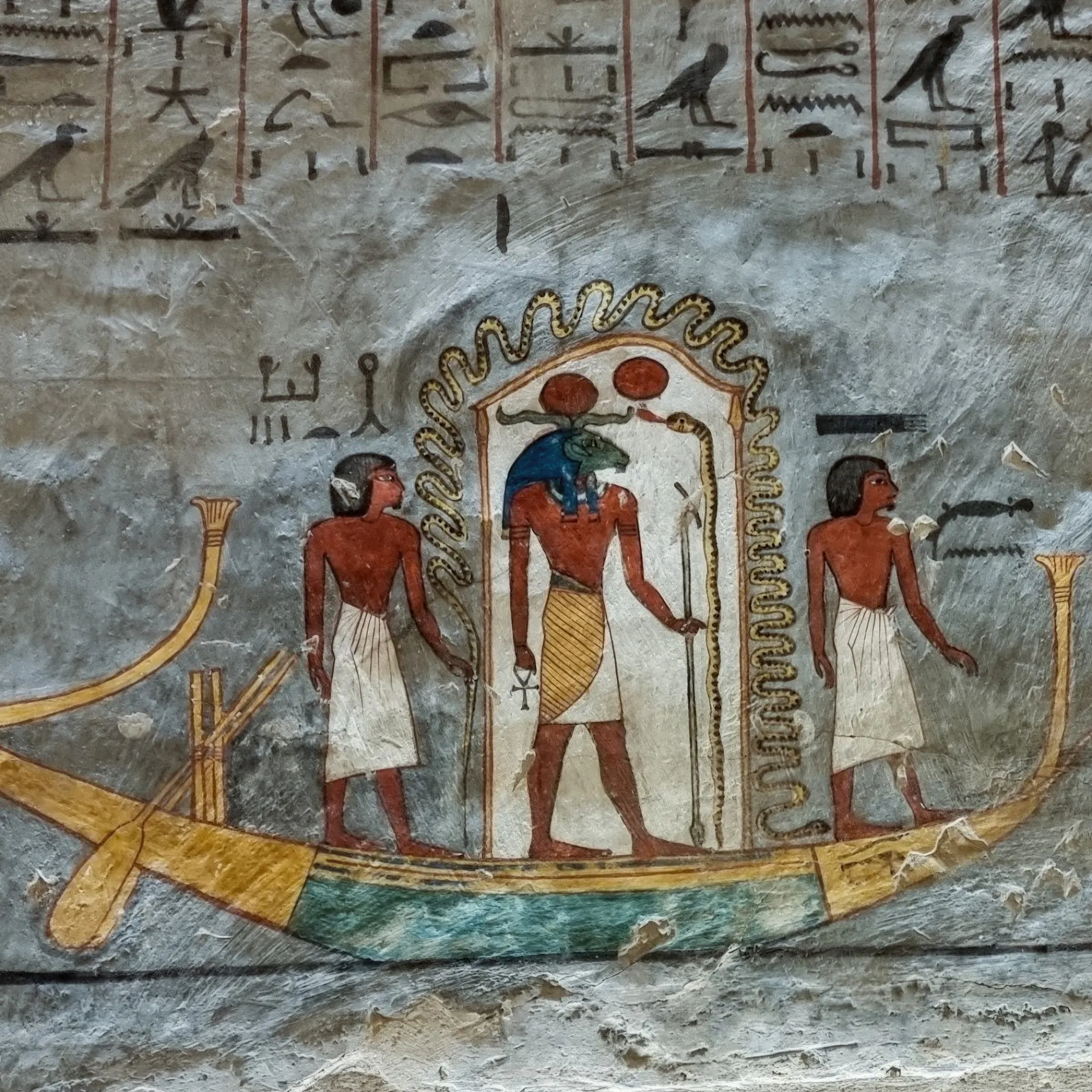
Ep 175175: The Ancient Egyptian Book of Gates (Part 1)
In the dark of the night, Ra took a journey through the Duat (underworld). His voyage was fraught with danger, but he also made many friends along the way. In the Book of Gates, the sun god takes a mysterious but meaningful journey... Details: Date: c.1305 BCE (first recorded appearance). Source: KV57, the tomb of Horemheb, and others. Website: www.egyptianhistorypodcast.com. Support the show via Patreon www.patreon.com/egyptpodcast. Make a one-time donation via PayPal payments. Music intro: Jeffrey Goodman. Music interludes: Cover versions by Luke Chaos. Music outro: Ancient Lyric. Logo image: Ra on his solar barque, from the tomb of Ramesses I (Photo by Dominic Perry, 2022). TRANSLATIONS of the Book of Gates by Erik Hornung (2014) and John Darnell & Colleen Manassa Darnell (2018). Select Bibliography: J. Assmann, Egyptian Solar Religion in the New Kingdom: Re, Amun and the Crisis of Polytheism (1995). C. Carrier, Grands Livres Funéraires de l’Égypte Pharaonique (2009). J. C. Darnell and C. Manassa Darnell, The Ancient Egyptian Netherworld Books (2018). E. Hornung, Das Grab des Haremhab im Tal der Könige (1971). E. Hornung, Das Buch von den Pforten des Jenseits, I (1979). E. Hornung, Das Buch von den Pforten des Jenseits, II (1984). E. Hornung, The Ancient Egyptian Books of the Afterlife (1999). E. Hornung, The Egyptian Book of Gates, trans. T. Abt (2014). C. Manassa, ‘The Judgement Hall of Osiris in the Book of Gates’, Revue d’Égyptologie 57 (2006), 109—150. J. Roberson, ‘The Royal Funerary Books: The Subject Matter of Scenes and Texts’, in R. H. Wilkinson and K. R. Weeks (eds), The Oxford Handbook of the Valley of the Kings (2016), 316–332. M. Smith, Following Osiris: Perspectives on the Osirian Afterlife from Four Millenia (2017). Theban Mapping Project, ‘KV 57 The Tomb of Horemheb’. Y. Volokhine, Le porc en Égypte ancienne (2014). J. Zandee, ‘The Book of Gates’, Liber Amicorum: Studies in Honor of Professor Dr. C.J. Bleeker (1969), 282–324. Learn more about your ad choices. Visit megaphone.fm/adchoices

174b: Horemheb, Unfinished Business
Horemheb's Lesser-known works and monuments. A selection of "off-cuts" from the Horemheb narrative including the Luxor Cachette, Horemheb's burial(s) of the Apis Bulls, and the rock-cut temple at Gebel Silsila. Website: www.egyptianhistorypodcast.com. Support the show via Patreon www.patreon.com/egyptpodcast. Make a one-time donation via PayPal payments. Music and Interludes: Luke Chaos. Additional music interludes: Keith Zizza. See statues from the Luxor Cachette in Luxor Museum, Wikimedia. Learn more about your ad choices. Visit megaphone.fm/adchoices

174: Horemheb, Death and Legacy
The Death and Legacy of Horemheb (c.1305 BCE). Horemheb's reign ended after some 27-years of rule, though this is debated fiercely among historians. His latter-day achievements include an unorthodox approach to building his Memorial Temple, as well as an innovative and spectacular royal tomb. Ultimately, the King reached the end of his reign, leaving a legacy that deserves greater attention... Date: c.1305 BCE. Website: www.egyptianhistorypodcast.com. Support the show via Patreon www.patreon.com/egyptpodcast. Make a one-time donation via PayPal payments. Intro music and interludes: Luke Chaos. Additional interludes: Keith Zizza. Outro music: Ancient Lyric. Read the excavation report for Horemheb/Ay's Memorial Temple at The University of Chicago. Select Bibliography: N. Brown, ‘Coffin of Ramesses II’, American Research Center in Egypt. K. M. Bryson, ‘Some Year Dates of Horemheb in Context’, Journal of the American Research Center in Egypt 51 (2015), 285–302. K. M. Bryson, ‘The Reign of Horemheb: History, Historiography, and the Dawn of the Ramesside Era’, Unpublished PhD. Thesis, Johns Hopkins University (2018). A. Dodson, Amarna Sunset: Nefertiti, Tutankhamun, Ay, Horemheb, and the Egyptian Counter-Reformation (2nd edn, 2017). U. Hölscher, The Excavation of Medinet Habu II: The Temples of the Eighteenth Dynasty (1939). Available free online. E. Hornung, Das Grab des Haremhab im Tal der Könige (1971). M. Nilsson and P. Martinez, ‘In the Footsteps of Ricardo Caminos: Rediscovering the “Speos of Gebel el Silsila”’, in G. Rosati and M. C. Guidotti (eds), Proceedings of the XI International Congress of Egyptologists (2017), 445—449. N. Reeves, ‘The Coffin of Ramesses II’, Proceedings of the First Vatican Coffin Conference 19–22 June 2013, I (2013), 425—438. Theban Mapping Project, ‘KV 57 The Tomb of Horemheb’. A.-C. Thiem, Speos von Gebel es-Silsileh: Analyse der architektonischen und ikonographischen Konzeption im Rahmen des politischen und legitimatorischen Programmes der Nachamarnazeit (2000). J. Van Dijk, ‘New Evidence on the Length of the Reign of Horemheb’, Journal of the American Research Center in Egypt 44 (2008), 193—200. Learn more about your ad choices. Visit megaphone.fm/adchoices

The Tomb of Tutankhamun (The Full Story)
100 Year Anniversary, 2022. The story of King Tutankhamun's tomb, in one epic episode. Chapters and their original episodes (with references and pictures): Part 1 (Chapters 1 to 5). Part 2 (Chapters 6 and 7). Part 3 (Chapters 8 and 9). Part 4 (Chapters 10 to 12). Part 5 (Chapters 13 and 14). Part 6 (Chapters 15 and 16). The 2010 DNA study (Episode 128). The Possible Tomb of Nefertiti (Episode 137b). Reference materials: For the full archive of Harry Burton’s photographs, showing the tomb of Tutankhamun in its original state, at the Griffith Institute. See other images, including the treasures, at Wikimedia. The Tomb of Tutankhamun at The Theban Mapping Project. The life and reign of Tutankhamun at The History of Egypt Podcast. Episode Details Date: 1340 BCE and 1922 - 1932 CE. Website: www.egyptianhistorypodcast.com. Support the show via Patreon www.patreon.com/egyptpodcast. Make a one-time donation via PayPal payments. Logo image: The gold mummy mask of Tutankhamun via Wikimedia. Music by Keith Zizza https://www.keithzizza.net/ Music by Michael Levy http://www.ancientlyre.com/ Music by Ancient Lyric http://www.bettinajoydeguzman.com/ Sound interludes by Luke Chaos https://twitter.com/Luke_Chaos Learn more about your ad choices. Visit megaphone.fm/adchoices

173: A Forgotten Campaign
To Vile Carchemish. In Year 16, King Horemheb may have led a "campaign of victory" to the far north. An artefact identified in the 1970s, but lost for decades, testifies to these events... but what do they mean? Episode details: Date: c.1316 BCE. Website: www.egyptianhistorypodcast.com. Support the show via Patreon www.patreon.com/egyptpodcast. Make a one-time donation via PayPal payments. Music intro: Keith Zizza. Music interludes and outro: Luke Chaos. Select Bibliography: A. Ahrens, ‘New Light on the Amarna Period from the Northern Levant: A Clay Sealing with the Throne Name of Akhenaten/Amenhotep IV from the Royal Palace at Tall Mišrife/Qatna, in: Zeitschrift für Orient-Archäologie 5 (2012): 232-248’, Zeitschrift für Orient-Archäologie 5 (2012), 232—248. A. Ahrens, ‘Pharao Haremhab und die nördliche Levante. Bemerkungen zu einem Skarabäenabdruck aus Tell Mišrife/Qatna, in: Ugarit-Forschungen 45, In memoriam Oswald Loretz (2014): 1-9’, Ugarit-Forschungen 45 (2014), 1—9. E. Devecchi and J. L. Miller, ‘Hittite-Egyptian Synchronisms and their Consequences for Ancient Near Eastern Chronology’, in J. Mynářová (ed.), Egypt and the Near East – The Crossroads (Prague, 2011), 139—176. H. Gauthier, Dictionnaire des noms géographiques contenus dans les textes hiéroglyphiques (Paris, 1925). R. Gautschy, ‘A Reassessment of the Absolute Chronology of the Egyptian New Kingdom and its “Brotherly” Countries’, Egypt and the Levant 24 (2014), 141—158. N. Grimal, ‘L’offrande d’un vétéran de l’an 16 d’Ḥoremḥeb’, Comptes rendus de l’Académie des Inscriptions et Belles-lettres (Paris) (2018), 319—338. B. Lagarce-Othman, ‘Un nouveau vase inédit d’Horemheb’, in V. Matoïan and M. al-Maqdissi (eds), Études Ougaritiques III, Ras Shamra–Ougarit XXI (Leuven, 2013), 347—364. V. Matoïan, ‘Ugarit et l’Égypte: essai d’interprétation de la documentation archéologique et perspectives de la recherche’, in B. Eder and R. Pruzsinszky (eds), Policies of Exchange Political Systems and Modes of Interaction in the Aegean and the Near East in the 2nd Millenium B.C.E, Proceedings of the International Symposium at the University of Freiburg Institute for Archaeological Studies, 30th May – 2nd June 2012, 2 (Vienna, 2015), 35—84. J. L. Miller, ‘Amarna Age Chronology and the Identity of Nibḫururiya In the Light of a Newly Reconstructed Hittite Text’, Altorientalische Forschungen 34 (2007), 252—293. D. B. Redford, ‘New Light on the Asiatic Campaigning of Ḥoremheb’, Bulletin of the American Schools of Oriental Research 211 (1973), 36—49. D. B. Redford, ‘A Head-Smiting Scene from the 10th Pylon’, in M. Görg (ed.), Fontes Atque Pontes. Eine Festgrabe für Hellmut Brunner (Wiesbaden, 1983), 362—373. Z. Simon, ‘Kann Armā mit Haremhab gleichgesetzt werden?’, Altorientalische Forschungen 36 (2009), 340—348. G. Wilhelm, ‘Muršilis II. Konflikt mit Ägypten und Haremhabs Thronbesteigung’, Die Welt des Orients 39 (2009), 108—116. J. A. Wilson, ‘Egyptian Historical Texts’, in J. B. Pritchard (ed.), Ancient Near Eastern Texts Relating to the Old Testament with Supplement (1978), 227–64. W. Wreszinski, Atlas zur altaegyptischen Kulturgeschichte (Geneva, 1988). Learn more about your ad choices. Visit megaphone.fm/adchoices
172: Horemheb, Wise Like Thoth
Horemheb's favourite god. Throughout his life, Horemheb commissioned monuments and artefacts that honoured Djehuty (Thoth). As a courtier, then a King, Horemheb showed a certain favour towards this god. Why did he like this god, in particular, and what do these artefacts tell us about Horemheb as a person? Website: www.egyptianhistorypodcast.com. Support the show via Patreon www.patreon.com/egyptpodcast. Make a one-time donation via PayPal payments. Logo image: Horemheb as a Scribe, statue in the Metropolitan Museum of Art, New York. Read the Hymn to Thoth at the Metropolitan Museum of Art website. Music interludes by Luke Chaos, Hathor Systrum, and Keith Zizza. Select Bibliography: N. Allon, Writing, Violence, and the Military: Images of Literacy in Eighteenth dynasty Egypt (1550-1295 BCE). (2019). B. G. Davies, Egyptian Historical Records of the Later Eighteenth Dynasty, VI (1995). M. Lichtheim, Ancient Egyptian Literature Volume II: The New Kingdom (1976). W. J. Murnane, Texts from the Amarna Period in Egypt (1995). K. Sowada, ‘A Late Eighteenth Dynasty Statue in the Nicholson Museum, Sydney’, The Journal of Egyptian Archaeology 80 (1994), 137–43. H. E. Winlock, ‘A Statue of Horemhab before His Accession’, The Journal of Egyptian Archaeology 10 (1924), 1–5. Learn more about your ad choices. Visit megaphone.fm/adchoices
171: Law & Order (Special Ma'at Unit)
Horemheb's Great Decree. Sometime during his reign, King Horemheb proclaimed a new set of laws. Taking aim at corruption and abuses-of-power (allegedly happening throughout Egypt), the pharaoh went hard on corrective measures. Punishments could range from beatings to disfigurement, exile, and death. Horemheb was not messing around. But what was he really trying to achieve? Episode details, pictures and references at www.egyptianhistorypodcast.com Support the show via Patreon www.patreon.com/egyptpodcast. Make a one-time donation via PayPal payments. Intro music by Keith Zizza www.keithzizza.net Interludes and Outro music by Luke Chaos www.twitter.com/luke_chaos Select Bibliography: G. de la Bédoyere, Pharaohs of the Sun: The Rise and Fall of Tutankhamen’s Dynasty (2022). C. Eyre, The Use of Documents in Pharaonic Egypt (2013). A. Gnirs, ‘Haremhab - ein Staatsreformator? Neue Betrachtungen zum Haremhab-Dekret’, Studien zur Altägyptischen Kultur 16 (1989), 83–110. A. M. Gnirs, Militär und Gesellschaft: Ein Beitrag zur Sozialgeschichte des Neuen Reiches (1996). A. M. Gnirs, ‘Coping With the Army: The Military and the State in the New Kingdom’, in J. C. Moreno García (ed.), Ancient Egyptian Administration (2013), 639—717. R. Hari, Horemheb et la reine Moutnedjemet ou la fin d’une Dynastie (1965). W. Helck, Urkunden der 18. Dynastie: Ubersetzung zu den Heften 17–22 (1961). J.-M. Kruchten, Le décret d’Horemheb: traduction, commentaire épigraphique, philologique et institutionnel (1981). K. Pflüger, ‘The Edict of King Haremhab’, Journal of Near Eastern Studies 5 (1946), 260–76. YouTube: Guy de la Bédoyere, "Horemheb, the 'Enlightened Despot,'" https://youtu.be/-jCEo21_hK4 Learn more about your ad choices. Visit megaphone.fm/adchoices

The Ancient Egyptian Empire with Dr. Uroš Matić
New Kingdom vs the World. This week we have an interview with Dr. Uroš Matić. Dr. Matić is a member of the Austrian Archaeological Institute, and takes a fascinating view of ancient society, including violence, gender, and the state. This episode was recorded in 2021. Dr. Uroš Matić online: Twitter, Academia.edu, and the Austrian Archaeological Institute. The Egyptian Empire in the 18th Dynasty: episodes at www.egyptianhistorypodcast.com. Support the show via Patreon www.patreon.com/egyptpodcast. Make a one-time donation via PayPal payments. Music by Keith Zizza www.keithzizza.com. Music by Bettina Joy de Guzman www.bettinajoydeguzman.com. Learn more about your ad choices. Visit megaphone.fm/adchoices
170: Horemheb and Ramesses
The Mother is Sweet, Born of the Sun. In the second half of Horemheb’s reign, Egypt’s Queen died in childbirth. Subsequently, pharaoh chose one of his servants, Paramessu (Ramesses) as a successor. This choice arguably established the 19th royal Dynasty. Why did Horemheb do this? Episode details: Website: www.egyptianhistorypodcast.com. Support the show via Patreon www.patreon.com/egyptpodcast. Make a one-time donation via PayPal payments. Intro music: Keith Zizza. Interlude sounds and Outro music: Luke Chaos. Additional research by Elissa Day. See Geoffrey Martin discussing the discovery of Horemheb's Saqqara tomb at the Associated Press (1975). Select Bibliography: G. Brunton, ‘The Inner Sarcophagus of Prince Ramessu from Medinet Habu’, Annales du Services des Antiquités de l’Egypte 43 (1943), 133—156. G. Brunton and R. Engelbach, Gurob (1927). E. Cruz-Uribe, ‘The Father of Ramses I: OI 11456’, Journal of Near Eastern Studies 37 (1978), 237–44. A. Dodson, Amarna Sunset: Nefertiti, Tutankhamun, Ay, Horemheb, and the Egyptian Counter-Reformation (2017). W. Grajetzki, Ancient Egyptian Queens: A Hieroglyphic Dictionary (London, 2005). G. T. Martin, ‘Excavations at the Memphite Tomb of Ḥoremḥeb, 1977: Preliminary Report’, The Journal of Egyptian Archaeology 64 (1978), 5–9. G. T. Martin, The Memphite Tomb of Ḥoremḥeb, Commander-in-Chief of Tutʻankhamūn, 1 (1989). G. T. Martin, Tutankhamun’s Regent: Scenes and Texts from the Memphite Tomb of Horemheb (2016). G. T. Martin, ‘Bestower and the Recipient: On a Controversial Scene in the Memphite Tomb of Horemheb’, in C. Demarée et al. (eds), Imaging and Imagining the Memphite Necropolis: Liber Amicorum René van Walsem (2017), 47—56. D. Polz, ‘Die Särge des (Pa-)Ramessu’, Mitteilungen des Deutschen Archäologischen Instituts, Abteilung Kairo 42 (1986), 145—166. E. Strouhal, ‘Queen Mutnodjmet at Memphis: Anthropological and Paleopathological Evidence’, L’Egyptologie en 1979 II (1982), 317—322. E. Strouhal, The Memphite Tomb of Ḥoremḥeb, Commander-in-Chief of Tutʻankhamūn IV: Human Skeletal Remains (2008). E. Strouhal and V. G. Callender, ‘A Profile of Queen Mutnodjmet’, Bulletin of the Australian Centre for Egyptology 3 (1992), 67—75. J. van Dijk, ‘Horemheb and the Struggle for the Throne of Tutankhamun’, Bulletin of the Australian Centre for Egyptology 7 (1996), 29—42. Learn more about your ad choices. Visit megaphone.fm/adchoices

169: Horemheb, Reinventing the Tomb
In the Valley of the Kings, Horemheb commissioned a magnificent tomb. Artistically innovative, it has one foot in the past and one in the future. This tomb introduced a new style of decoration, developed on recent trends, and reshaped the model of royal burials… Episode Details: Date: c. 1323 BCE. Website: www.egyptianhistorypodcast.com. Support the show via Patreon www.patreon.com/egyptpodcast. Make a one-time donation via PayPal payments. Intro and break music: Keith Zizza. Outro music and interludes: Luke Chaos. Learn more about the tomb of Horemheb at the Theban Mapping Project. See Prof. Geoffrey Martin's description of the tomb at YouTube. Logo: Unfinished scene from the tomb of Horemheb. Hornung 1971. Select Bibliography: T. M. Davis, The Tombs of Harmhabi and Toutânkhamanou (1912). E. Hornung, Das Grab des Haremhab im Tal der Könige (1971). Geoffrey Martin, Haremhab, Pharaoh and Conqueror: New Investigations in His Royal Tomb in the Valley of the Kings (2012). YouTube. ‘Horemheb | Theban Mapping Project’, https://thebanmappingproject.com/tombs/kv-57-horemheb. Learn more about your ad choices. Visit megaphone.fm/adchoices

168: Security in the Valley of the Kings
Securing the halls. In the 8th year of Horemheb's reign, a royal official named Maya visited a tomb in the Valley of the Kings. He was there to inspect the burial of Thutmose IV, to ensure its security, and repair it if necessary… Episode details: Date: c.1324 BCE. Website: www.egyptianhistorypodcast.com. Support the show via Patreon www.patreon.com/egyptpodcast. Make a one-time donation via PayPal payments. Intro music: Luke Chaos. Interlude music: Luke Chaos and Keith Ziza. Outro music: Bettina Joy de Guzman. See the tomb of Thutmose IV at the Theban Mapping Project. Logo image: Detail from the chariot of Thutmose IV (Photo by Dominic Perry). Select Bibliography: B. M. Bryan, The Reign of Thutmose IV (Baltimore, 1991). K. M. Bryson, ‘The Reign of Horemheb: History, Historiography, and the Dawn of the Ramesside Era’, Unpublished PhD. Thesis, Johns Hopkins University (2018). H. Carter, ‘Introduction’, in T. M. Davis (ed.), The Tomb of Thoutmôsis IV (London, 1904), VII—XII. T. M. Davis (ed.), The Tomb of Thoutmôsis IV (2002 Reprint edn, London, 1904). P. E. Newberry, ‘Description of the Tomb and Sarcophagus of Thoutmôsis IV’, in T. M. Davis (ed.), The Tomb of Thoutmôsis IV (London, 1904), XXIX—XL. N. Reeves and R. H. Wilkinson, The Complete Valley of the Kings (London, 1996). ‘Thutmes IV | Theban Mapping Project’, <https://thebanmappingproject.com/tombs/kv-43-thutmes-iv> accessed 8.27.2022. ‘Thutmosis IV — KV43’, <https://www.osirisnet.net/tombes/pharaons/thoutmosis4/e_thoutmosis4_01.htm> accessed 8.27.2022. Learn more about your ad choices. Visit megaphone.fm/adchoices

167: Horemheb, Reviving Deir el-Medina
Back in the village. In regnal year 7, Horemheb's officials turn up in western Thebes (Waset). They began reorganising the village of the tomb-builders, Set-Ma'at "The Place of Truth." Doing so, the King's government created a lasting legacy in the town we call Deir el-Medina. Episode details: Date: c.1325 BCE. Website: www.egyptianhistorypodcast.com. Support the show via Patreon www.patreon.com/egyptpodcast. Make a one-time donation via PayPal payments. Intro music: Keith Zizza. Outro music: Ancient Lyric. Music interludes: Luke Chaos. Logo image: Horemheb in his tomb, decorated by the workers of Deir el-Medina (Image: Hornung 1971). Select Bibliography: M. B. Bruyère, ‘Fouilles de Deir el Medineh (1923—1924)’, Fouilles de L’Institut Francais d’Archéologie Orientale du Caire (1925). J. Černý, A Community of Workmen at Thebes in the Ramesside period (Cairo, 1973). B. G. Davies, Who’s Who at Deir el-Medina: A Prosopographic Study of the Royal Workmen’s Community (Leiden, 1999). B. G. Davies, Life Within the Five Walls: A Handbook to Deir el-Medina (Wallasey, 2018). Y. M. El Shazly, ‘Royal Ancestor Worship in Deir el-Medina During the New Kingdom’, Unpublished PhD. Thesis, Johns Hopkins University (2008). B. J. J. Haring, ‘Workmen’s Marks and the Early History of the Theban Royal Necropolis’, in J. Toivari-Viitala et al. (eds), Deir el-Medina Studies: Helsinki, June 24 – 26, 2009, Proceedings (Helsinki, 2014), 87—100. J. R. Harris, ‘How Long was the Reign of Horemheb?’, Journal of Egyptian Archaeology 54 (1968), 95—99. M. Müller, ‘Deir el-Medina in the Dark – The Amarna Period in the History of the Village’, in J. Toivari-Viitala et al. (eds), Deir el-Medina Studies: Helsinki, June 24 – 26, 2009, Proceedings (Helsinki, 2014), 154—167. M. S. i Sanjaume, ‘La Tomba de Sennedjem a Deir el-Medina TT1’, Unpublished PhD. Thesis, University de Barcelona (2013). E. Uphill, ‘Some Matters Relating to the Growth and Walls of Deir el-Medina’, in Jac. J. Janssen et al. (eds), Deir el-Medina in the Third Millenium AD: A Tribute to Jac. J. Janssen, Egyptologische uitgaven XIV (Leiden, 2000), 325–9. Learn more about your ad choices. Visit megaphone.fm/adchoices

News: Carter's Thefts and Tutankhamun's Amulet
On August 13th, 2022, The Guardian (UK) ran a headline "Howard Carter stole Tutankhamun’s treasure, new evidence suggests." What's going on, exactly? We dive into the new information and its context. Read the Guardian article here. Website: www.egyptianhistorypodcast.com. Support the show via Patreon www.patreon.com/egyptpodcast. Make a one-time donation via PayPal payments. Learn more about your ad choices. Visit megaphone.fm/adchoices
166: Restoration III, Re-Restoring
Horemheb vs Ay, Tutankhamun, and others. Everyone talks about Horemheb "erasing" Akhenaten. But the King demolished monuments of several rulers, and erased the names of others. What does it all mean? Episode details: Date: c. 1327 BCE. Website: www.egyptianhistorypodcast.com. Support the show via Patreon www.patreon.com/egyptpodcast. Make a one-time donation via PayPal payments. Music intro: Luke Chaos. Music interludes: Luke Chaos. Music outro: Keith Zizza. Select Bibliography: M. Azim, ‘La structure des pylônes d’Horemheb à Karnak’, Cahiers de Karnak VII (1982), 127—166. E. Blyth, Karnak: Evolution of a Temple (2006). P. Brand, ‘Secondary Restorations in the Post-Amarna Period’, Journal of the American Research Center in Egypt 36 (1999), 113–34. L. Cotelle-Michel, ‘Présentation préliminaire des blocs de la Chapelle de Sésostris Ier découverte dans le IXe Pylône de Karnak’, Cahiers de Karnak XI. A. Dodson, Amarna Sunrise: Egypt From Golden Age to Age of Heresy (2014). A. Dodson, Amarna Sunset: Nefertiti, Tutankhamun, Ay, Horemheb, and the Egyptian Counter-Reformation (2nd edn, 2017). C. Manassa Darnell, ‘Transition 18th—19th Dynasty’, UCLA Encyclopedia of Egyptology (2015). W. J. Murnane, ‘Tutankhamun on the Eighth Pylon at Karnak’, Varia Aegyptiaca I (1985), 59—68. R. Saad, ‘Fragments d’un monument de Toutânkhamon retrouvés dans le IXe pylône de Karnak’, Cahiers de Karnak V (1975), 93—109. R. A. Schwaller de Lubicz, The Temples of Karnak (1999). E. Sullivan, ‘Karnak: Development of the Temple of Amun-Ra’, in W. Wendrich (ed.), UCLA Encyclopedia of Egyptology (2010). C. Traunecker, ‘Rapport préliminaire sur la chapelle de Sésostris Ier découverte dans le IXe pylône’, Cahiers de Karnak VII (1982), 121—126. Learn more about your ad choices. Visit megaphone.fm/adchoices

165: Horemheb vs Akhenaten (Praise Ra and Pass the Talatat)
To build his magnificent pylons at Karnak, Horemheb dismantled other monuments. Within the masonry of these pylons, archaeologists found nearly fifty thousand blocks from temples of Akhenaten... Episode details: Date: c.1300 BCE. Website: www.egyptianhistorypodcast.com. Support the show via Patreon www.patreon.com/egyptpodcast. Make a one-time donation via PayPal payments. Intro music: Keith Zizza. Interlude music: Luke Chaos. Outro music: Bettina Joy de Guzman. Logo image: author unknown. Select Bibliography: M. Azim, ‘La structure des pylônes d’Horemheb à Karnak’, Cahiers de Karnak VII (1982), 127—166. E. Blyth, Karnak: Evolution of a Temple (2006). P. Brand, ‘Secondary Restorations in the Post-Amarna Period’, Journal of the American Research Center in Egypt 36 (1999), 113–34. L. Cotelle-Michel, ‘Présentation préliminaire des blocs de la Chapelle de Sésostris Ier découverte dans le IXe Pylône de Karnak’, Cahiers de Karnak XI. Digital Karnak, ‘2nd Pylon’, https://digitalkarnak.ucsc.edu/2nd-pylon/. Digital Karnak, ‘9th Pylon’, https://digitalkarnak.ucsc.edu/9th-pylon/. Digital Karnak, ‘10th Pylon’, https://digitalkarnak.ucsc.edu/10th-pylon/. A. Dodson, Amarna Sunrise: Egypt From Golden Age to Age of Heresy (2014). A. Dodson, Amarna Sunset: Nefertiti, Tutankhamun, Ay, Horemheb, and the Egyptian Counter-Reformation (2nd edn, 2017). J. Gohary, ‘Final Report “Talatat Project”’, The Egyptian Antiquities Conservation Project (2012). M. Jordan et al., La porte d’Horemheb au Xe pylône de Karnak (2015). C. Manassa Darnell, ‘Transition 18th—19th Dynasty’, UCLA Encyclopedia of Egyptology (2015). W. J. Murnane, ‘Tutankhamun on the Eighth Pylon at Karnak’, Varia Aegyptiaca I (1985), 59—68. D. Redford, ‘Akhenaten: New Theories and Old Facts’, Bulletin of the American School of Oriental Research 369 (2013), 9. D. B. Redford, Akhenaten: The Heretic King (1984). D. B. Redford, ‘Studies on Akhenaten at Thebes. I. A Report on the Work of the Akhenaten Temple Project of the University Museum, University of Pennsylvania’, Journal of the American Research Center in Egypt 10 (1973), 77–94. R. A. Schwaller de Lubicz, The Temples of Karnak (1999). E. Sullivan, ‘Karnak: Development of the Temple of Amun-Ra’, in W. Wendrich (ed.), UCLA Encyclopedia of Egyptology (2010). Learn more about your ad choices. Visit megaphone.fm/adchoices

164b: Karnak, Renovation Station
Horemheb at Karnak (Part 2). There are secrets beneath the sand of Karnak. Horemheb's architects significantly changed the temple's landscape. In some cases, they even relocated older buildings, dismantling and moving them piece-by-piece... Episode details: Date: c. 1329 BCE. Website: www.egyptianhistorypodcast.com. Support the show via Patreon www.patreon.com/egyptpodcast. Make a one-time donation via PayPal payments. Music by Keith Zizza. Music interludes by Luke Chaos. Select Bibliography: M. Azim, ‘La structure des pylônes d’Horemheb à Karnak’, Cahiers de Karnak VII (1982), 127—166. E. Blyth, Karnak: Evolution of a Temple (New York, 2006). Digital Karnak, ‘9th Pylon’, https://digitalkarnak.ucsc.edu/9th-pylon/. Digital Karnak, ‘10th Pylon’, https://digitalkarnak.ucsc.edu/10th-pylon/. Digital Karnak, ‘Edifice of Amenhotep II’, https://digitalkarnak.ucsc.edu/edifice-of-amenhotep-ii/. J-C. Goyon and C. Traunecker, ‘La Chapelle de Thot et d’Amon au sud-ouest du lac sacré’, Cahiers de Karnak VII (1982), 355—366. M. Jordan et al., La porte d’Horemheb au Xe pylône de Karnak (2015). R. A. Schwaller de Lubicz, The Temples of Karnak (1999). C. Van Siclen III, ‘The Edifice of Amenhotep II at Karnak: An Architectural Pious Fraud’, in C. Leblanc and G. Zaki (eds), The Temples of Millions of Years and Royal Power at Thebes in the New Kingdom (2010), 81—89. W. Wreszinski, Atlas zur altaegyptischen Kulturgeschichte (1988). Learn more about your ad choices. Visit megaphone.fm/adchoices

164: You Must Construct Additional Pylons
Horemheb at Karnak (Part 1). Before his ascent, Horemheb had managed building projects for Tutankhamun. Now, as pharaoh, Horemheb went all out. He invested in one of the largest building sprees Karnak would ever see. His monuments continue to define this temple... Episode details: Date: c.1329 BCE. Website: www.egyptianhistorypodcast.com. Support the show via Patreon www.patreon.com/egyptpodcast. Make a one-time donation via PayPal payments. Music: Horemheb theme by Luke Chaos. Music interludes by Luke Chaos and Keith Zizza. Logo image: The Tenth Pylon, completed in Horemheb's reign. Photo by Neithsabes, CC BY-SA 3.0, via Wikimedia Commons. See photos of Horemheb’s Pylons (2, 9, and 10) at Wikimedia. Select Bibliography: M. Azim, ‘La structure des pylônes d’Horemheb a Karnak’, Cahiers de Karnak VII (1982), 127—166. Online. M. Azim, ‘Un mât du IXe Pylône au nome d’Horemheb’, Cahiers de Karnak VII (1982), 75—92. Online. E. Blyth, Karnak: Evolution of a Temple (New York, 2006). Digital Karnak, ‘2nd Pylon’, https://digitalkarnak.ucsc.edu/2nd-pylon/ Digital Karnak, ‘9th Pylon’, https://digitalkarnak.ucsc.edu/9th-pylon/ Digital Karnak, ‘10th Pylon’, https://digitalkarnak.ucsc.edu/10th-pylon/ Digital Karnak, ‘Edifice of Amenhotep II’, https://digitalkarnak.ucsc.edu/edifice-of-amenhotep-ii/ J.-C. Goyon and C. Traunecker, ‘La Chapelle de Thot et d’Amon au sud-ouest du lac sacré’, Cahiers de Karnak VII (1982), 355—366. Online. W. R. Johnson, ‘Amenhotep III and Amarna: Some New Considerations’, The Journal of Egyptian Archaeology 82 (1996), 65–82. M. Jordan et al., La porte d’Horemheb au Xe pylône de Karnak (2015). R. A. Schwaller de Lubicz, The Temples of Karnak (1999). E. Sullivan, ‘Karnak: Development of the Temple of Amun-Ra’, in W. Wendrich (ed.), UCLA Encyclopedia of Egyptology (2010). The Epigraphic Survey, The Temple of Khonsu Volume 1: Scenes of King Herihor in the Court (1979). Online. C. Van Siclen III, ‘The Edifice of Amenhotep II at Karnak: An Architectural Pious Fraud’, in C. Leblanc and G. Zaki (eds), The Temples of Millions of Years and Royal Power at Thebes in the New Kingdom (Cairo, 2010), 81—89. W. Wreszinski, Atlas zur altaegyptischen Kulturgeschichte (1988). Learn more about your ad choices. Visit megaphone.fm/adchoices
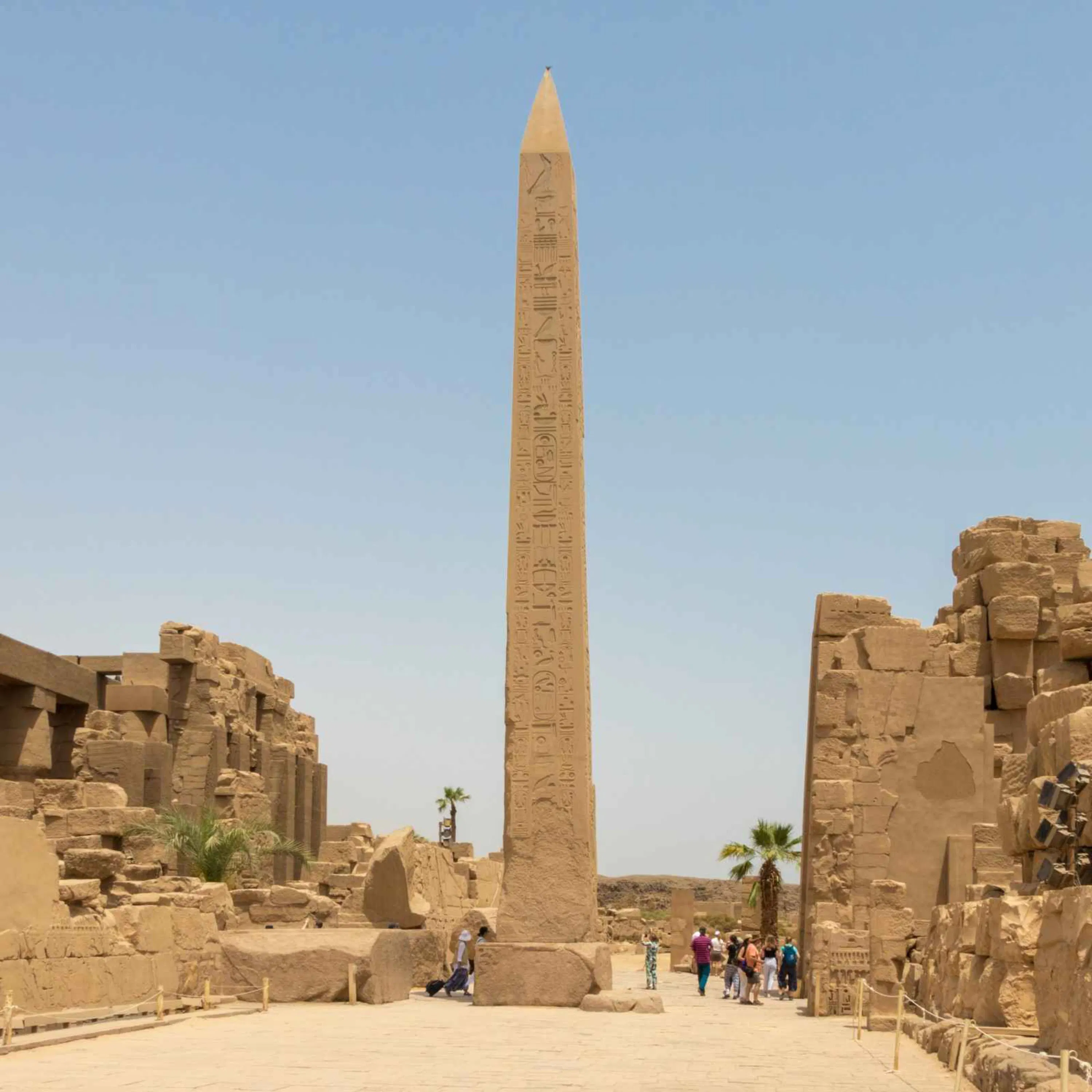
The Darkest Days of Karnak Temple
Karnak had experienced a tumultuous time, in the three decades preceding Horemheb's reign... Dates: c.1362 - 1300 BCE. Website: www.egyptianhistorypodcast.com. Support the show via Patreon www.patreon.com/egyptpodcast. Make a one-time donation via PayPal payments. Music interludes: Keith Zizza, Ancient Lyric, and Hathor Systrum. Select Bibliography: E. Blyth, Karnak: Evolution of a Temple (New York, 2006). A. Dodson, Amarna Sunrise: Egypt From Golden Age to Age of Heresy (Cairo, 2014). M. Eaton-Krauss, ‘Tutankhamun at Karnak’, Mitteilungen des Deutschen Archäologischen Instituts, Abteilung Kairo (1988), 1–11. M. Eaton-Krauss, The Unknown Tutankhamun (London, 2016). D. Redford, ‘Akhenaten: New Theories and Old Facts’, Bulletin of the American School of Oriental Research 369 (2013), 9. Learn more about your ad choices. Visit megaphone.fm/adchoices

163: Nefertiti's Sister?
Queen Mutnodjmet is a curious case. For some scholars, she may be the lost sister of Nefertiti. This hypothesis has kicked around for over 100 years. Why can’t we resolve it? Episode details: Date: c.1330 BCE. Website: www.egyptianhistorypodcast.com. Support the show via Patreon www.patreon.com/egyptpodcast. Make a one-time donation via PayPal payments. Music: "Hymn to Hathor," by Bettina Joy de Guzman www.bettinajoydeguzman.com Interludes by Luke Chaos https://twitter.com/luke_chaos Select Bibliography: A. Dodson, Amarna Sunset: Nefertiti, Tutankhamun, Ay, Horemheb, and the Egyptian Counter-Reformation (2nd edn, 2017). M. Gabolde, Toutankhamon (2015). W. Grajetzki, Ancient Egyptian Queens: A Hieroglyphic Dictionary (2005). R. Hari, Horemheb et la reine Moutnedjemet ou la fin d’une Dynastie (1964). R. Hari, ‘La reine d’Horemheb était-elle la sœur de Nefertiti?’, Chronique d’Egypte 51 (1976), 39—46. G. T. Martin, Tutankhamun’s Regent: Scenes and Texts from the Memphite Tomb of Horemheb (2016). G. T. Martin, The Memphite Tomb of Ḥoremḥeb, Commander-in-Chief of Tutʻankhamūn, 1 (1989). G. T. Martin, The Hidden Tombs of Memphis (1991). E. Strouhal, ‘Queen Mutnodjmet at Memphis: Anthropological and Paleopathological Evidence’, in L’Egyptologie en 1979 (1982), 317—322. E. Strouhal and V. G. Callender, ‘A Profile of Queen Mutnodjmet’, Bulletin of the Australian Centre for Egyptology (1992), 67—75. Learn more about your ad choices. Visit megaphone.fm/adchoices