
The History of Egypt Podcast
436 episodes — Page 4 of 9
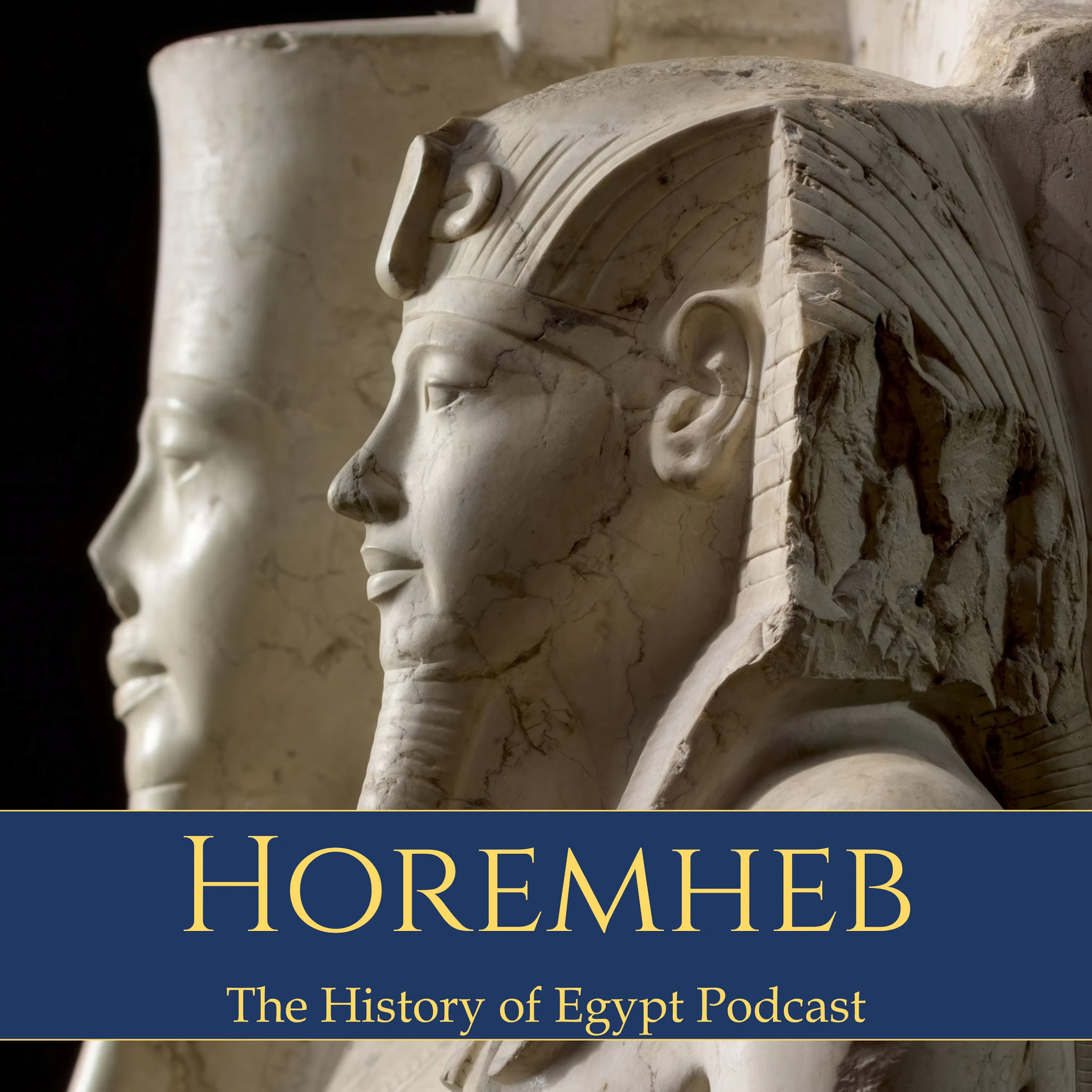
162: Horemheb, The Chosen One
Revisionist history in the age of pharaohs. King Horemheb (“Horus in Celebration”) came to power in unusual circumstances. To justify his rule, the new pharaoh set about “retelling” his origins. In a lengthy story, Horemheb cast himself as one chosen by the gods, and destined to rule… Episode details: Date: c. 1330 BCE. Website: www.egyptianhistorypodcast.com. Support the show via Patreon www.patreon.com/egyptpodcast. Make a one-time donation via PayPal payments. Intro Music & Interludes: Luke Chaos. Intro Music & Interludes: Keith Zizza. Outro Music: Bettina Joy de Guzman. Read "The Reign of Horemheb," PhD Thesis by K.M. Bryson at Johns Hopkins University. Logo image: Horemheb and Horus, in the King's tomb (KV57). Booklet: No booklet for this episode, as it describes text only. Select Bibliography: N. Allon, Writing, Violence, and the Military: Images of Literacy in Eighteenth Dynasty Egypt (1550-1295 BCE) (2019). K. M. Bryson, ‘The Reign of Horemheb: History, Historiography, and the Dawn of the Ramesside Era’, Unpublished PhD. Thesis, Johns Hopkins University (2018). A. Dodson, Amarna Sunset: Nefertiti, Tutankhamun, Ay, Horemheb, and the Egyptian Counter-Reformation (2nd edn, 2017). A. Gardiner, ‘The Coronation of King Ḥaremḥab’, The Journal of Egyptian Archaeology 39 (1953), 13–31. G. T. Martin, Tutankhamun’s Regent: Scenes and Texts from the Memphite Tomb of Horemheb (2016). G. T. Martin, The Memphite Tomb of Ḥoremḥeb, Commander-in-Chief of Tutʻankhamūn, 1 (1989). G. T. Martin, The Hidden Tombs of Memphis: New Discoveries from the Time of Tutankhamun and Ramesses the Great (1991). W. J. Murnane, Texts from the Amarna Period in Egypt (1995). Learn more about your ad choices. Visit megaphone.fm/adchoices
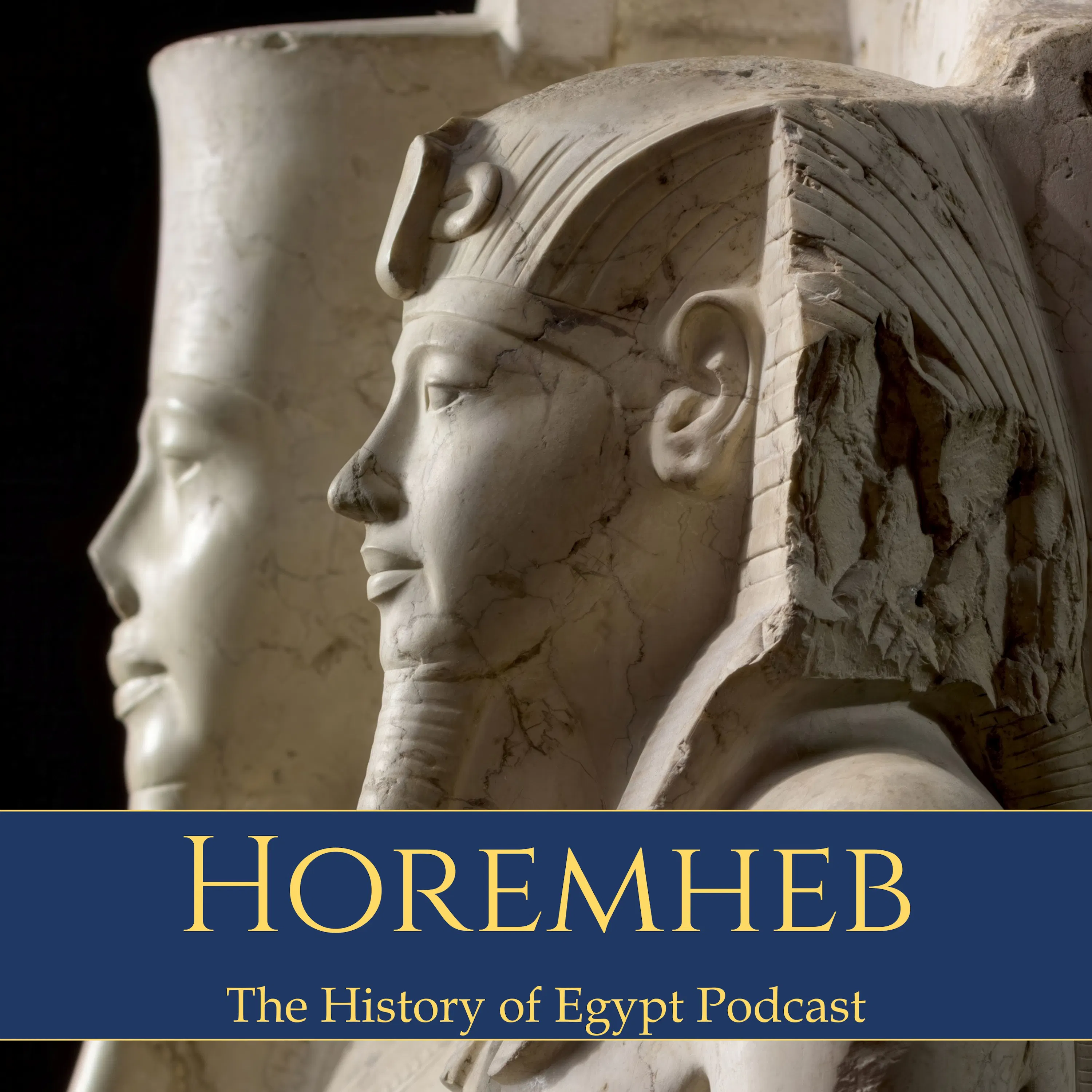
161: Pharaoh Horemheb
The Coronation of King Hor-em-heb. A few months after he took power, Egypt's new pharaoh Horemheb ("Horus in Celebration") celebrated his rule. It was a magnificent party... Episode details: Date: c.1330 BCE. Website: www.egyptianhistorypodcast.com. Support the show via Patreon www.patreon.com/egyptpodcast. Make a one-time donation via PayPal payments. Logo: Horemheb's royal names, from his tomb in the Valley of the Kings. MMA. Music interludes by Luke Chaos twitter.com/luke_chaos. Select Bibliography: K. M. Bryson, ‘The Reign of Horemheb: History, Historiography, and the Dawn of the Ramesside Era’, Unpublished PhD. Thesis, Johns Hopkins University (2018). Gardiner, ‘The Coronation of King Ḥaremḥab’, The Journal of Egyptian Archaeology 39 (1953), 13–31. W. J. Murnane, Texts from the Amarna Period in Egypt (Atlanta, 1995). Learn more about your ad choices. Visit megaphone.fm/adchoices

160b: The Purge
Other victims, and some clarifications. In this brief episode, I describe another individual who suffered desecration. Following Ay's death, members of his family/network fell from grace. Did they oppose, or fight, the new King Horemheb? Episode details: Date c.1330 BCE. Website: www.egyptianhistorypodcast.com. Support the show via Patreon www.patreon.com/egyptpodcast. Make a one-time donation via PayPal payments. Music by Luke Chaos. Select Bibliography: A. Dodson, ‘Crown Prince Djhutmose and the Royal Sons of the Eighteenth Dynasty’, The Journal of Egyptian Archaeology 76 (1990), 87–96. A. Dodson, Amarna Sunset: Nefertiti, Tutankhamun, Ay, Horemheb, and the Egyptian Counter-Reformation (2017). M. El-Ghandour, ‘The Anthropoid Coffin of Senqed From Saqqara’, in B. G. Ockinga, A Tomb from the Reign of Tutankhamun at Akhmim, The Australian Centre for Egyptology Reports 10 (1997). M. Gabolde, Toutankhamon (2015). N. Kawai, ‘Studies in the Reign of Tutankhamun’, Unpublished PhD. Thesis, Johns Hopkins University (2005). B. G. Ockinga, A Tomb from the Reign of Tutankhamun at Akhmim (1997). A. R. Schulman, ‘The Berlin “Trauerrelief” (No. 12411) and Some Officials of Tutʿankhamūn and Ay’, Journal of the American Research Center in Egypt 4 (1965), 55–68. Learn more about your ad choices. Visit megaphone.fm/adchoices
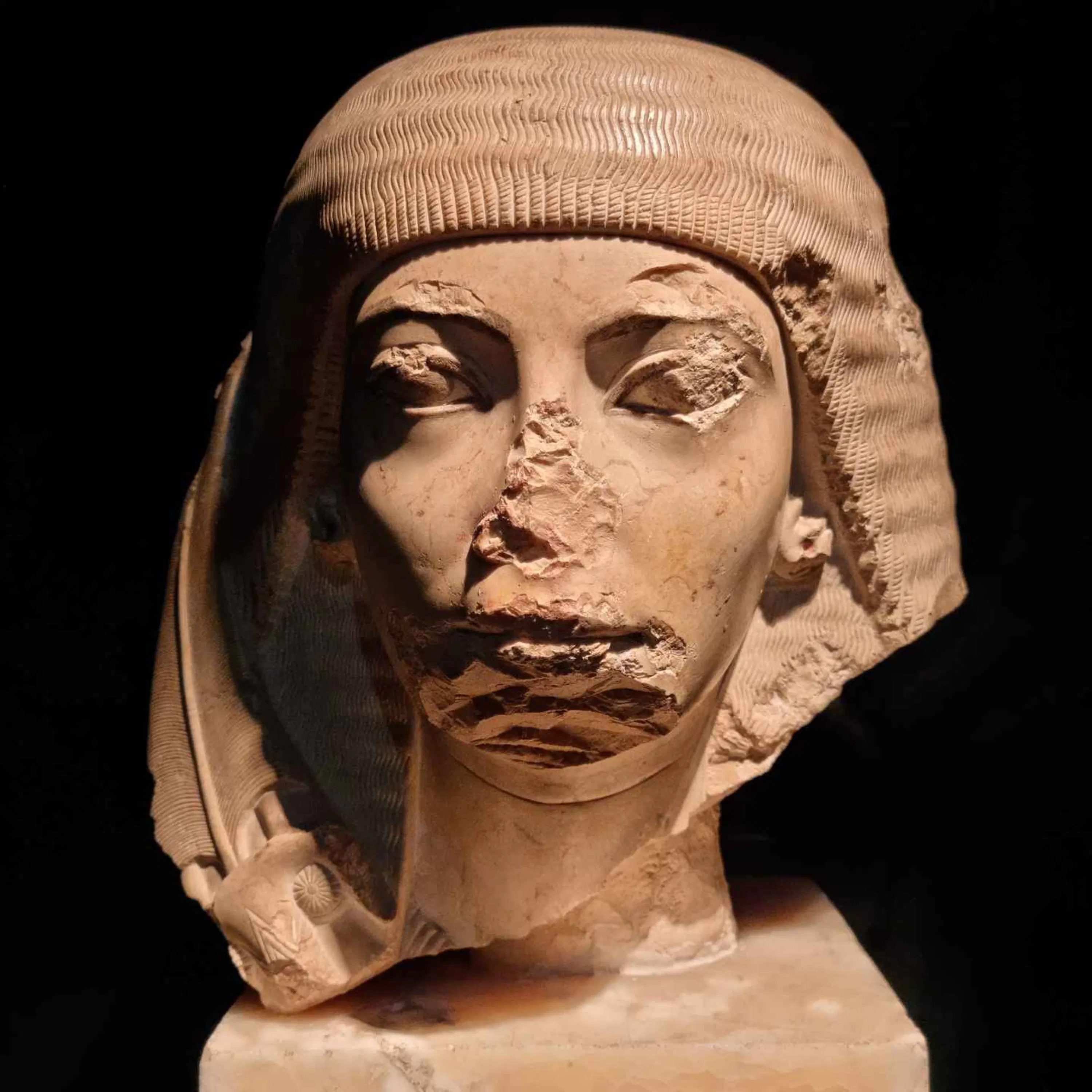
160: Succession Crisis(?)
Inheritance and vengeance. King Ay had his own plans for the succession. He promoted his relative, Nakht-Min, to great power and prominence. But when Ay died, Nakhtmin found himself at odds with Egypt's mighty general, Horemheb. What would happen, to the feuding leaders? Episode details: Date: c.1330 BCE (approximate). Website: www.egyptianhistorypodcast.com. Support the show via Patreon www.patreon.com/egyptpodcast. Make a one-time donation via PayPal payments. Music: Keith Zizza www.keithzizza.net. Music interludes: Luke Chaos https://twitter.com/Luke_Chaos. Select Bibliography: A. Dodson, ‘Crown Prince Djhutmose and the Royal Sons of the Eighteenth Dynasty’, The Journal of Egyptian Archaeology 76 (1990), 87–96. A. Dodson, Amarna Sunset: Nefertiti, Tutankhamun, Ay, Horemheb, and the Egyptian Counter-Reformation (2nd edn, Cairo, 2017). M. Gabolde, Toutankhamon (Paris, 2015). N. Kawai, ‘Studies in the Reign of Tutankhamun’, Unpublished PhD. Thesis, Johns Hopkins University (2005). N. Kawai, ‘Ay versus Horemheb: The Political Situation in the Late Eighteenth Dynasty Revisited’, Leiden, The Netherlands Journal of Egyptian History 3 (2010), 261–92. N. Kawai, ‘The Time of Tutankhamun: What New Evidence Reveals’, Scribe: The Magazine of the American Research Center in Egypt Spring 2022 (2022), 44–53. A. R. Schulman, ‘Excursus on the “Military Officer” Nakhtmin’, Journal of the American Research Center in Egypt 3 (1964), 124–6. A. R. Schulman, ‘Some Observations on the Military Background of the Amarna Period’, Journal of the American Research Center in Egypt 3 (1964), 51–69. A. R. Schulman, ‘The Berlin “Trauerrelief” (No. 12411) and Some Officials of Tutʿankhamūn and Ay’, Journal of the American Research Center in Egypt 4 (1965), 55–68. J. Van Dijk, ‘Horemheb and the Struggle for the Throne of Tutankhamen’, Bulletin of the Australian Centre for Egyptology 7 (1996), 29—42. Learn more about your ad choices. Visit megaphone.fm/adchoices
Introducing: Casting Through Ancient Greece Podcast!
Check out Casting Through Ancient Greece, a chronological deep dive on the world of the Aegean. From the earliest ages, through epic tales and archaeological discovery, Casting Greece takes you on a wonderful journey. Enjoy this teaser trailer, from a recent episode. And learn more at https://castingthroughancientgreece.com/ and https://twitter.com/CastingGreece Learn more about your ad choices. Visit megaphone.fm/adchoices

159b: Double Death
King Ay suffered badly in the afterlife. His funeral, in 1331 BCE, was poor; and a few decades/centuries later, vandals broke into his tomb. They ransacked the monument, attacked the King's images, and erased his names. The attack was brutal but methodical. Why did this happen? Episode Details Date c.1331 BCE and a few decades / centuries later. Website: www.egyptianhistorypodcast.com. Support the show via Patreon www.patreon.com/egyptpodcast. Make a one-time donation via PayPal payments. Logo image: Erasures on the wrists of Nut, Lady of the Sky, as she offers nyny (welcome) to King Ay. Photo by Dominic Perry, 2022. Photos: See photos of the tomb of Ay (KV23) by Dominic Perry, available on Google Drive. Music: “The Mummy’s Tomb,” by Tabletop Audio. Used with permission. Music: Sistrum sound effect by Hathor Systrum www.hathorsystrum.com. Used with permission. Music: Interludes by Luke Chaos https://twitter.com/Luke_Chaos. Select Bibliography: B. G. Davies, Egyptian Historical Records of the Later Eighteenth Dynasty, VI (Warminster, 1995). A. Dodson, Amarna Sunset: Nefertiti, Tutankhamun, Ay, Horemheb, and the Egyptian Counter-Reformation (2nd edn, Cairo, 2017). AUC Press. M. Gabolde, Toutankhamon (Paris, 2015). PYGMALION Press. N. Kawai, ‘Studies in the Reign of Tutankhamun’, Unpublished PhD. Thesis, Johns Hopkins University (2005). W. J. Murnane, Texts from the Amarna Period in Egypt (Atlanta, 1995). O. Schaden, ‘The God’s Father Ay’, Unpublished PhD. Thesis, University of Minnesota (1977). O. J. Schaden, ‘Clearance of the Tomb of King Ay (WV-23)’, Journal of the American Research Center in Egypt 21 (1984), 39–64. JSTOR online. R. H. Wilkinson, ‘Controlled Damage: The Mechanics and Micro-History of the Damnatio Memoriae Carried Out in KV-23, the Tomb of Ay’, Journal of Egyptian History 4 (2011), 129–47. BRILL online. Learn more about your ad choices. Visit megaphone.fm/adchoices
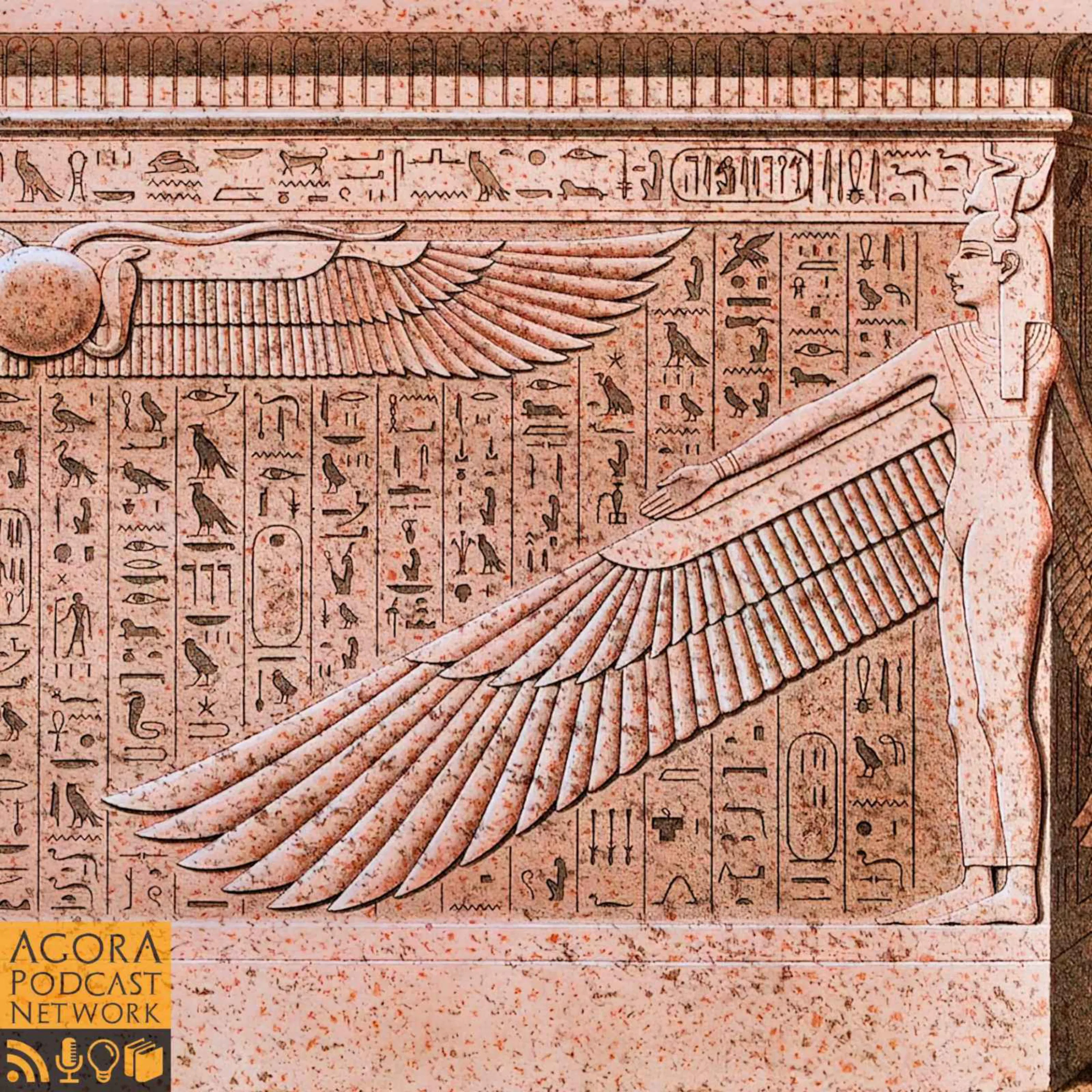
159: End of an Era
When Ay Died. The elderly pharaoh, Kheper-kheperu-Ra Ay, probably died in his fourth or fifth year of power (c. 1331 / 1330 BCE). Officially, his reign was short. But in the big picture, Ay's influence lasted decades. As a courtier, under Akhenaten and Tutankhamun, Ay participated in government and royal affairs for many years. This means we have abundant records for the man and his career, and Ay contributed to Egyptian history in some noteworthy ways. In this episode, we explore the final years of Ay's reign, and consider his legacy as a pharaoh of ancient Egypt... Episode details: Date: c.1331 / 1330 BCE. Kings: Kheper-kheperu-Ra Ay, “Doer of Ma’at” and “True Ruler.” Website: www.egyptianhistorypodcast.com. Support the show via Patreon www.patreon.com/egyptpodcast. Make a one-time donation via PayPal payments. Logo image: The sarcophagus of Ay, artist’s reconstruction. Prisse D'Avennes, 1878. See photos of Ay’s tomb (WV23) by Kairoinfo4u on Flickr.com. See Ay’s tomb (WV23) by Curtis Ryan Woodside on YouTube. Music: “Memories of Thebes,” by Keith Zizza www.keithzizza.net. Used with permission. Music: “Funeral,” by Bettina Joy de Guzman http://www.bettinajoydeguzman.com. Used with permission. Additional music interludes by Luke Chaos https://twitter.com/Luke_Chaos. Select Bibliography: The royal tomb of Ay (KV23 / WV23): The tomb of Ay (KV23) at Theban Mapping Project. Schematic and plans (TMP). The tomb of Ay (KV23) at Orisis.net. Translation of texts by E. Ramm, 2016. See a 3D reconstruction at Orisis.net. A tour of Ay’s tomb (KV23) by Curtis Ryan Woodside, on YouTube. Photos of Ay’s tomb on Flickr.com. Photos of Ay’s tomb on joomeo.com. G. Davies, Egyptian Historical Records of the Later Eighteenth Dynasty, VI (Warminster, 1995). A. Dodson, Amarna Sunset: Nefertiti, Tutankhamun, Ay, Horemheb, and the Egyptian Counter-Reformation (2nd edn, Cairo, 2017). M. Gabolde, Toutankhamon (Paris, 2015). N. Kawai, ‘Studies in the Reign of Tutankhamun’, Unpublished PhD. Thesis, Johns Hopkins University (2005). R. J. Leprohon, The Great Name: Ancient Egyptian Royal Titulary (Wilson, 2013). W. J. Murnane, Texts from the Amarna Period in Egypt (Atlanta, 1995). P. E. Newberry, ‘King Ay, the Successor of Tut’ankhamūn’, The Journal of Egyptian Archaeology 18 (1932), 50–2. O. Schaden, ‘The God’s Father Ay’, PhD. Thesis, University of Minnesota (1977). O. J. Schaden, ‘Clearance of the Tomb of King Ay (WV-23)’, Journal of the American Research Center in Egypt 21 (1984), 39–64. R. H. Wilkinson, ‘Controlled Damage: The Mechanics and Micro-History of the Damnatio Memoriae Carried Out in KV-23, the Tomb of Ay’, Journal of Egyptian History 4 (2011), 129–47. Learn more about your ad choices. Visit megaphone.fm/adchoices

158b: Ay, jr.
Pharaoh's Nephew. A small statue, in the Brooklyn museum, tells a tale. Of a King's nephew (by marriage), and the paths to lucrative work and influence in Egyptian society. A young man, also named Ay, worked as a priest for Mut (the Mother Goddess) and Amun (the Hidden One). Along the way, this young man probably gained wealth and position. His tale gives us an opportunity to explore the "system" by which prominent families jostled for position, and promoted their sons... Episode details: Date: c.1331 BCE. King: Kheper-kheperu-Ra, the God's Father Ay. Website: www.egyptianhistorypodcast.com. Support the show via Patreon www.patreon.com/egyptpodcast. Make a one-time donation via PayPal payments. Logo image: The statue of Ay, priest, in the Brooklyn Museum. Music: "Splendors of Egypt," by Ancient Lyric www.bettinajoydeguzman.com Additional music interludes by Luke Chaos https://twitter.com/Luke_Chaos and Keith Zizza www.keithzizza.net. Select Bibliography: B. V. Bothmer, ‘Private Sculpture of Dynasty XVIII in Brooklyn’, The Brooklyn Museum Annual 8 (1966), 55–89. N. Kawai, ‘Studies in the Reign of Tutankhamun’, Unpublished PhD. Thesis, Johns Hopkins University (2005). Block Statue of Ay, ca. 1332-1322 B.C.E. Limestone, 18 9/16 x 10 x 12 1/4in. (47.1 x 25.4 x 31.1cm). Brooklyn Museum, Charles Edwin Wilbour Fund, 66.174.1. Creative Commons-BY (Photo: Brooklyn Museum, 66.174.1_view1_SL1.jpg) Learn more about your ad choices. Visit megaphone.fm/adchoices
158: What Ay Did
Building Legacies. It is easy to overlook Ay, as a minor figure in the history of ancient Egypt. However, when we step back, and view his entire career (including pre-royal achievements), we can see things more clearly. As pharaoh, Ay continued many projects started under Tutankhamun. But since Ay had been a major advisor / courtier for that king, we can recognise these projects as part of a larger, longer trend. After the death of Akhenaten, the royal household radically reshaped many of its priorities. Since he first appeared on the scene, Ay was at the heart of those decisions… Episode details: Date: c.1331 BCE. Kings: Kheper-kheperu-Ra Ay, “Who Repels the ‘Asiatics.’” Website: www.egyptianhistorypodcast.com. Support the show via Patreon www.patreon.com/egyptpodcast. Make a one-time donation via PayPal payments. Episode logo: A colossal statue in Cairo Museum. Often attributed to Tutankhamun but excavated from the Memorial Temple of Ay. Music: “Lament of Isis and Nephythys on the Death of Osiris,” by Jeffrey Goodman www.jeffreygoodmanmusic.com. Additional music interludes by Luke Chaos https://twitter.com/Luke_Chaos. Select Bibliography: King Ay at the St Louis University website. Colossal statue of Ay (Tutankhamun?) in Berlin. Colossal statue of Ay (Tutankhamun?) in Chicago. B. G. Davies, Egyptian Historical Records of the Later Eighteenth Dynasty, VI (Warminster, 1995). A. Dodson, Amarna Sunset: Nefertiti, Tutankhamun, Ay, Horemheb, and the Egyptian Counter-Reformation (2nd edn, Cairo, 2017). M. Gabolde, Toutankhamon (Paris, 2015). U. Hölscher, The Excavation of Medinet Habu II: The Temples of the Eighteenth Dynasty (Chicago, 1939). Free download available from The University of Chicago website. R. J. Leprohon, The Great Name: Ancient Egyptian Royal Titulary (Wilson, 2013). W. J. Murnane, Texts from the Amarna Period in Egypt (Atlanta, 1995). O. Schaden, ‘The God’s Father Ay’, PhD Thesis, University of Minnesota (1977). O. J. Schaden, ‘Clearance of the Tomb of King Ay (WV-23)’, Journal of the American Research Center in Egypt 21 (1984), 39–64. Learn more about your ad choices. Visit megaphone.fm/adchoices
157b: Warlords
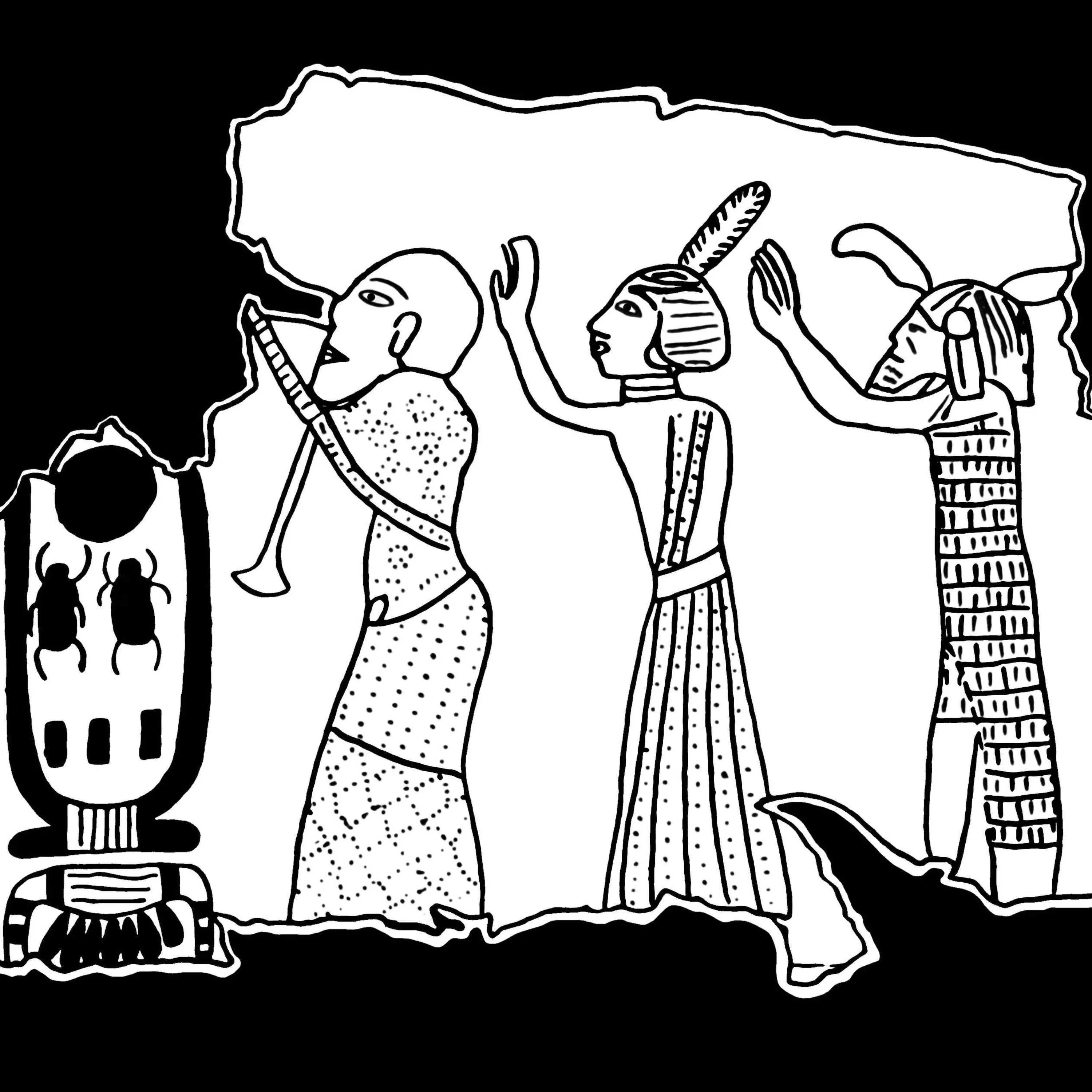
Horemheb and Hatti. In the days of King Ay (and Tutankhamun before him) conflicts in Canaan and Syria remained a constant issue. In recent years, scholars have uncovered more information about these events and people. Horemheb, the Overseer of the Overseers of the Troops (aka the General of Generals) seems to have dealt, and fought, with Hittite forces. The records are fragmentary, but the clues are intriguing... Episode details: Date: c.1334 BCE (debated). Kings: Tutankhamun and Ay (debated). Website: www.egyptianhistorypodcast.com. Support the show via Patreon www.patreon.com/egyptpodcast. Make a one-time donation via PayPal payments. Episode logo: Foreigners praising the cartouche of Ay, from a piece of gold foil discovered in the Valley of the Kings. Image edited for clarity. Music: Ancient rendition of "The Eve of the War," adapted by Luke Chaos https://twitter.com/Luke_Chaos. Music: "War Song of Horus and Sekhmet," by Jeffrey Goodman www.jeffreygoodmanmusic.com. Additional music interludes by Luke Chaos https://twitter.com/Luke_Chaos. Select Bibliography: T. Bryce, The Kingdom of the Hittites (New Edition edn, New York, 2005). T. Bryce, The Routledge Handbook of the Peoples and Places of Ancient Western Asia: The Near East from the Early Bronze Age to the Fall of the Persian Empire (London, 2009). T. R. Bryce, ‘The Death of Niphururiya and Its Aftermath’, The Journal of Egyptian Archaeology 76 (1990), 97–105. K. M. Bryson, ‘The Reign of Horemheb: History, Historiography, and the Dawn of the Ramesside Era’, Unpublished PhD. Thesis, Johns Hopkins University (2018). H. Güterbock, ‘The Deeds of Suppiluliuma as Told by His Son, Mursili II’, Journal of Cuneiform Studies 10 (1956), 41–68, 75–98, 107–30. G. T. Martin, Tutankhamun’s Regent: Scenes and Texts from the Memphite Tomb of Horemheb (EES Excavation Memoir 111; London, 2016). G. T. Martin, The Memphite Tomb of Ḥoremḥeb, Commander-in-Chief of Tutʻankhamūn, 1 (London, 1989). G. T. Martin, The Hidden Tombs of Memphis: New Discoveries From the Time of Tutankhamun and Ramesses the Great (London, 1991). J. L. Miller, ‘Amarna Age Chronology and the Identity of Nibxururiya in the Light of a Newly Reconstructed Hittite Text’, Altorientalische Forschungen 34 (2007), 252–93. J. L. Miller, ‘The Rebellion of Ḫatti’s Syrian Vassals and Egypt’s Meddling In Amurru’, Studi micenei ed egeo-anatolici (2008), 533—554. W. L. Moran, The Amarna Letters (Baltimore, 1992). W. J. Murnane, The Road to Kadesh: A Historical Interpretation of the Battle Reliefs of King Sety I at Karnak (Chicago, 1985). W. J. Murnane, Texts from the Amarna Period in Egypt (Atlanta, 1995). Z. Simon, ‘Kann Armā mit Haremhab gleichgesetzt werden?’, Altorientalische Forschungen 36 (2009), 340—348. Learn more about your ad choices. Visit megaphone.fm/adchoices

157: Ay's Road to Kadesh
Keeping up with the Kadeshians. In the past, historians thought the Egyptian government was passive (or even "pacifist") in the days of Akhenaten, Tutankhamun, and Ay. However, newer research has proved this wrong. We now have a fragmentary, but fascinating picture of warfare and diplomacy, taking place through Canaan and Syria. The town of Kadesh, on the Orontes River, is prominent. Once a vassal to pharaoh, the city suffered an attack by Hittite forces. It then changed sides, paying tribute to Suppiluliuma, King of the Land of Hatti. In the later years of Tutankhamun, or the early reign of Ay, the Egyptians responded to Kadesh's treachery... Episode details: Date: c.1334 BCE (debated). Kings: Tutankhamun and Ay (debated). Battle scene of Tutankhamun: learn more in a free lecture by W. Raymond Johnson (YouTube). Battle reliefs discussion begins at 51:29. Website: www.egyptianhistorypodcast.com. Support the show via Patreon www.patreon.com/egyptpodcast. Make a one-time donation via PayPal payments. Episode logo: A statue, presumed to be Ay, in the Staatliche Museum, Berlin. Image upscaled, cropped, and edited. Music: "War Song," by Bettina Joy de Guzman www.bettinajoydeguzman.com. Used with permission. Music: "King Tut's Song," by Jeffrey Goodman www.jeffreygoodmanmusic.com. Used with permission. Sistrum sound effect by Hathor Systrum www.hathorsystrum.com. Used with permission. Additional music interludes by Luke Chaos https://twitter.com/Luke_Chaos. Select Bibliography: T. Bryce, The Kingdom of the Hittites (New Edition, New York, 2005). T. Bryce, The Routledge Handbook of the Peoples and Places of Ancient Western Asia: The Near East from the Early Bronze Age to the Fall of the Persian Empire (London, 2009). T. R. Bryce, ‘The Death of Niphururiya and Its Aftermath’, The Journal of Egyptian Archaeology 76 (1990), 97–105. J. Fraser, ‘Kadesh-on-the-Orontes’, in C. M. Furey et al. (eds.), Encyclopedia of the Bible and its Reception, 14 (2017), 1203—1205. H. Güterbock, ‘The Deeds of Suppiluliuma as Told by His Son, Mursili II’, Journal of Cuneiform Studies 10 (1956), 41–68, 75–98, 107–30. G. T. Martin, Tutankhamun’s Regent: Scenes and Texts from the Memphite Tomb of Horemheb (EES Excavation Memoir 111; London, 2016). J. L. Miller, ‘Amarna Age Chronology and the Identity of Nibxururiya in the Light of a Newly Reconstructed Hittite Text’, Altorientalische Forschungen 34 (2007), 252–93. S. N. Morschauser, ‘The End of the Sḏf(ȝ)-Tr(yt) “Oath”’, Journal of the American Research Center in Egypt 25 (1988), 93–103. W. J. Murnane, The Road to Kadesh: A Historical Interpretation of the Battle Reliefs of King Sety I at Karnak (Chicago, 1985). W. J. Murnane, Texts from the Amarna Period in Egypt (Atlanta, 1995). W. J. Murnane, ‘Imperial Egypt and the Limits of Her Power’, in R. Cohen and R. Westbrook (eds.), Amarna Diplomacy: The Beginnings of International Relations (Baltimore, 2000), 101–11. W. J. Murnane, ‘Kadesh’, in D. B. Redford (ed.), The Oxford Encyclopedia of Ancient Egypt (Oxford, 2001). D. B. Redford, Akhenaten: The Heretic King (Princeton, 1984). D. B. Redford, Egypt, Canaan, and Israel in Ancient Times (Princeton, 1992). I. Singer, Hittite Prayers (Atlanta, Ga., 2002). J. A. Wilson, ‘Egyptian Historical Texts’, in J. B. Pritchard (ed.), Ancient Near Eastern Texts Relating to the Old Testament with Supplement (1978), 227–64. Learn more about your ad choices. Visit megaphone.fm/adchoices
156: Oh, Ay Just Can't Wait to be King
The servant ascends. Considering his background, it's not surprising that King Ay turned out to be quite "conservative." His early deeds continued the policies of Tutankhamun (a regime in which Ay had actively participated). The new pharaoh completed one of Tutankhamun's temples (the Ḥwt-Neb-kheperu-Ra in Waset/Thebes), and evoked Tutankhamun in his art. Ay also started his own monuments, at Akhmim / Akhmin (Khent-Menu). There, colossal statues and sanctuaries for Min would convey pharaoh's agenda... Date: c. 1334 BCE. King: Kheper-Kheperu-Ra, It-Netjer Ay ("Ra is Supreme of Manifestations, the God's Father Ay"). Website: www.egyptianhistorypodcast.com. Support the show via Patreon www.patreon.com/egyptpodcast. Make a one-time donation via PayPal payments. Music: Keith Zizza https://www.keithzizza.net/. Music interludes: Luke Chaos https://twitter.com/Luke_Chaos. Select Bibliography: A. Ashmawy, ‘The Administration of Horse Stables in Ancient Egypt’, Egypt and the Levant 24 (2014), 121—139. T. R. Bryce, ‘The Death of Niphururiya and Its Aftermath’, The Journal of Egyptian Archaeology 76 (1990), 97–105. N. Kawai, ‘Studies in the Reign of Tutankhamun’, Unpublished PhD. Thesis, Johns Hopkins University (2005). K. P. von Kuhlmann, ‘Des Felstempel des Eje bei Achmim’, Mitteilungen des Deutschen Archäologischen Instituts, Abteilung Kairo 35 (1979), 165—188. B. Lurson, ‘Ay, Neferti, Nakhtmin and Ameny: Politics and Rhetoric at the End of the Eighteenth Dynasty’, Zeitschrift für Ägyptische Sprache und Altertumskunde 146 (2019), 164–208. P. E. Newberry, ‘King Ay, the Successor of Tut’ankhamūn’, The Journal of Egyptian Archaeology 18 (1932), 50–2. O. Schaden, ‘The God’s Father Ay’, PhD Thesis, University of Minnesota (1977). O. J. Schaden, ‘Clearance of the Tomb of King Ay (WV-23)’, Journal of the American Research Center in Egypt 21 (1984), 39–64. A. R. Schulman, ‘The Berlin “Trauerrelief” (No. 12411) and Some Officials of Tutʿankhamūn and Ay’, Journal of the American Research Center in Egypt 4 (1965), 55–68. K. C. Seele, ‘King Ay and the Close of the Amarna Age’, Journal of Near Eastern Studies 14 (1955), 168–80. Learn more about your ad choices. Visit megaphone.fm/adchoices

155: The Queen's Gambit
A difficult decision. Events in this period are murky. But if Ankhesenamun was the "Daḫamunzu" of Hittite record, then her attempt to find a new husband (of royal blood) had failed. So, she would have to accept a "servant." Whom would she choose? Episode Details: Chapter 2 begins 00:24:10 Date: c. 1334 BCE (debated). King: none (hopefully just temporary). Website: www.egyptianhistorypodcast.com. Support the show via Patreon www.patreon.com/egyptpodcast. Make a one-time donation via PayPal payments. Music: Keith Zizza https://www.keithzizza.net/. Music: Ancient Lyric http://www.bettinajoydeguzman.com/. Music interludes: Luke Chaos https://twitter.com/Luke_Chaos. Music at 25:10, "Shine for the Show," via Pond5 (licensed). Misc audio clips via YouTube users Sound Effects King and Saraschan Stienwongnusa. Select Bibliography: T. R. Bryce, ‘The Death of Niphururiya and Its Aftermath’, The Journal of Egyptian Archaeology 76 (1990), 97–105. A. Dodson, Amarna Sunset: Nefertiti, Tutankhamun, Ay, Horemheb, and the Egyptian Counter-Reformation (2nd edn, Cairo, 2017). M. Gabolde, D’Akhenaton à Toutânkhamon (Paris, 1998). M. Gabolde, ‘L’ADN de la famille royale amarnienne et les sources égyptiennes’, Égypte nilotique et méditerranéenne 6 (2013), 177–203. M. Gabolde, Toutankhamon (Paris, 2015). Z. Hawass et al., ‘Ancestry and Pathology in King Tutankhamun’s Family’, JAMA 303 (2010), 638–47. N. Kawai, ‘Studies in the Reign of Tutankhamun’, Unpublished PhD. Thesis, Johns Hopkins University (2005). J. L. Miller, ‘Amarna Age Chronology and the Identity of Nibxururiya in the Light of a Newly Reconstructed Hittite Text’, Altorientalische Forschungen 34 (2007), 252–93. P. E. Newberry, ‘King Ay, the Successor of Tut’ankhamūn’, The Journal of Egyptian Archaeology 18 (1932), 50–2. N. Reeves and R. H. Wilkinson, The Complete Valley of the Kings (London, 1996). J. Romer, Valley of the Kings (London, 1981). O. Schaden, ‘The God’s Father Ay’, PhD Thesis, University of Minnesota (1977). A. R. Schulman, ‘The Berlin “Trauerrelief” (No. 12411) and Some Officials of Tutʿankhamūn and Ay’, Journal of the American Research Center in Egypt 4 (1965), 55–68. Learn more about your ad choices. Visit megaphone.fm/adchoices
154: Daḫamunzu - Ankhesenamun & the Hittites
He said, she said. Around 1334 BCE (give or take), the King of Hatti received a curious message. While on campaign, King Suppiluliuma got word that Egypt's pharaoh (someone called "Nib-ḫuru-riya") had died. He had no son, and Egypt's ruling lady (daḫamunzu, or tA-ḥmt-nsw, the "King's Great Wife") needed assistance. The Queen sent a message: would Suppiluliuma help her, and Egypt? Strange events were about to unfold... Date: c. 1334 BCE (debated). King: Neb-kheperu-Ra Tut-ankh-Amun (debated) deceased King: Suppiluliuma, Great King of the Land of Hatti Website: www.egyptianhistorypodcast.com. Support the show via Patreon www.patreon.com/egyptpodcast. Make a one-time donation via PayPal payments. Music: Keith Zizza https://www.keithzizza.net/ Music: Michael Levy http://www.ancientlyre.com/ Sound interludes: Luke Chaos https://twitter.com/Luke_Chaos Select Bibliography: T. Bryce, The Kingdom of the Hittites (New Edition edn, New York, 2005). T. Bryce, The Routledge Handbook of the Peoples and Places of Ancient Western Asia: The Near East from the Early Bronze Age to the Fall of the Persian Empire (London, 2009). T. R. Bryce, ‘The Death of Niphururiya and Its Aftermath’, The Journal of Egyptian Archaeology 76 (1990), 97–105. T. R. Bryce, Ancient Syria: A Three Thousand Year History (Oxford, 2014). A. Dodson, Amarna Sunset: Nefertiti, Tutankhamun, Ay, Horemheb, and the Egyptian Counter-Reformation (2nd edn, Cairo, 2017). M. Gabolde, D’Akhenaton à Toutânkhamon (Paris, 1998). M. Gabolde, Toutankhamon (Paris, 2015). H. Güterbock, ‘The Deeds of Suppiluliuma as Told by His Son, Mursili II’, Journal of Cuneiform Studies 10 (1956), 41–68, 75–98, 107–30. H. A. Hoffner Jr., ‘Deeds of Šuppiluliuma (1.74)’, in W. W. Hallo and K. L. Younger (eds.), The Context of Scripture (Leiden, 2003), 185—192. N. Kawai, ‘Studies in the Reign of Tutankhamun’, Unpublished PhD. Thesis, Johns Hopkins University (2005). J. L. Miller, ‘Amarna Age Chronology and the Identity of Nibxururiya in the Light of a Newly Reconstructed Hittite Text’, Altorientalische Forschungen 34 (2007), 252–93. M. Sadowska, ‘Semenkhkare and Zananza’, Göttinger Miszellen 175 (2000), 73—77. O. Schaden, ‘The God’s Father Ay’, PhD Thesis, University of Minnesota (1977). M. Van de Mieroop, A History of the Ancient Near East ca. 3000-323 BC (West Sussex, 2016). Learn more about your ad choices. Visit megaphone.fm/adchoices

Tutankhamun Inc. with Prof. Christina Riggs
Face-to-face with the legends. Christina Riggs is a Professor (History of Visual Culture) at Durham University. In 2021, her book Treasured: How Tutankhamun Shaped a Century took a broader view of the tomb and its discovery than most books on the subject. Her discussion helps us review and revisit older myths or assumptions, and encourage new perspectives on Egyptology's most famous discovery. Prof. Christina Riggs at Durham University. Christina Riggs at Academia.edu. Christina Riggs' website including her blog and the article "Waterboys and Wishful Thinking." Website: www.egyptianhistorypodcast.com. Support the show via Patreon www.patreon.com/egyptpodcast. Make a one-time donation via PayPal payments. Learn more about your ad choices. Visit megaphone.fm/adchoices
Tutankhamun and Philomena Cunk with Dr. Joyce Tyldesley
An enigmatic icon. Dr. Joyce Tyldesley returns for her second interview with The History of Egypt Podcast! We spoke about her recent book Tutankhamun: Pharaoh. Icon. Enigma. and the legacy of the discovery, including aspects of its excavation and significance. We also got into some random topics including Philomena Cunk, Scandinavian Noir shows, and Strictly Come Dancing. Enjoy! Dr. Joyce Tyldesley at The University of Manchester. Dr. Tyldesley's 2022 book Tutankhamun: Pharaoh. Icon. Enigma. at Headline Publishing.\ Website: www.egyptianhistorypodcast.com. Support the show via Patreon www.patreon.com/egyptpodcast. Make a one-time donation via PayPal payments. Learn more about your ad choices. Visit megaphone.fm/adchoices
Bob Brier & the Mysteries of Tutankhamun (and the Great Pyramid)
Recorded 2022. Tutankhamun, Mummies, and Murder, oh my! I sat down with Dr. Bob Brier to discuss the Tomb of Tutankhamun, and the legacy of this important discovery. We also chatted about Dr. Brier's work in Egyptology, including his experiment in mummifying a human for scientific research. Finally, we touched on some older works including his "Murder of Tutankhamun" hypothesis and the Great Pyramid's construction (including the "internal ramp" hypothesis of Jean-Pierre Houdin). My thanks to Dr. Brier for coming on the show, and for allowing me to release the video version! Extra special thanks to Pat Remler for organising the conversation! Preorder Dr. Brier's book Tutankhamun and the Tomb that Changed the World from Oxford University Press. Read a report on Carter's thefts at The Guardian. Find Dr. Brier's hierogylphs lessons (and others) at The Great Courses. The History of Egypt Podcast: Website: www.egyptianhistorypodcast.com. Support the show via Patreon www.patreon.com/egyptpodcast. Make a one-time donation via PayPal payments. Learn more about your ad choices. Visit megaphone.fm/adchoices

153f: The Tomb of Tutankhamun (Part 6, Final)
The Annexe and End of Excavation. Howard Carter uncovered the tomb of King Tutankhamun in November 1922. He would continue labouring in the monument until 1927, and the final conservation of objects would finish in 1932. Over these ten years of work, Carter tackled many challenges, some of which proved insurmountable. In the end, his labour, and the story of Tutankhamun's burial, stand as a testament to human effort and long legacies. Episode Chapters: Chapter 15: The Scouring of the Tomb 00:00:15 Chapter 16: The End of Excavations 00:31:50 Series Conclusion: 00:52:30 Episode Links: For the full archive of Harry Burton’s photographs, showing the tomb of Tutankhamun in its original state, see the Griffith Institute website. Date: 1922 CE - 1932 CE. Website: www.egyptianhistorypodcast.com. Support the show via Patreon www.patreon.com/egyptpodcast. Make a one-time donation via PayPal payments. Logo image: A ceremonial shield belonging to the King. Wikimedia. Music by Keith Zizza https://www.keithzizza.net/ Sound interludes by Luke Chaos https://twitter.com/Luke_Chaos See other shows from the Agora Podcast Network. Select Bibliography: H. Beinlich and M. Saleh, Corpus der Hieroglyphischen Inschriften aus dem Grab des Tutanchamun (Oxford, 1989). H. Carter, The Tomb of Tut-Ankh-Amen, III (2000 Reprint edn, London, 1933). H. Carter, The Tomb of Tutankhamen (Century edn, London, 1983). J. Černý, Hieratic Inscriptions from the Tomb of Tut’ankhamūn (Oxford, 1965). M. Eaton-Krauss, The Unknown Tutankhamun (London, 2016). Z. Hawass, Discovering Tutankhamun: From Howard Carter to DNA (Cairo, 2013). Z. Hawass and S. Vannini, Tutankhamun: The Treasures of the Tomb (London, 2018). T. Hoving, Tutankhamun: The Untold Story (New York, 1978). T. G. H. James, Howard Carter: The Path to Tutankhamun (Tauris 2001 edn, New York, 1992). N. Reeves, The Complete Tutankhamun (Cairo, 1990). N. Reeves and J. H. Taylor, Howard Carter Before Tutankhamun (London, 1992). The Griffith Institute, ‘Tutankhamun: Anatomy of an Excavation’, The Griffith Institute, University of Oxford, http://www.griffith.ox.ac.uk/discoveringTut/. Learn more about your ad choices. Visit megaphone.fm/adchoices

153e: The Tomb of Tutankhamun (Part 5)
Treasured Heirlooms. East of the Burial Chamber, in Tutankhamun's tomb, the per hedj ("Treasury") contained a smorgasbord of beautiful objects. Some of these were sacred, like the canopic vessels for Tutankhamun's organs. Others were symbolic, connecting the pharaoh with great gods like Osiris. And still others were curious, including some "heirlooms" from earlier rulers and generations... Episode Chapters: Chapter 13: Anubis and the King 00:00:13 Chapter 14: The Heirlooms of Akhenaten 00:24:30 Episode Links: Website: www.egyptianhistorypodcast.com. Support the show via Patreon www.patreon.com/egyptpodcast. Make a one-time donation via PayPal payments. Music by Keith Zizza www.keithzizza.net Sound interludes by Luke Chaos https://twitter.com/Luke_Chaos. See other shows from the Agora Podcast Network. Select Bibliography: J. P. Allen, ‘The Original Owner of Tutankhamun’s Canopic Coffins’, in Z. Hawass and J. H. Wegner (eds.), Millions of Jubilees: Studies in Honor of David P. Silverman (Cairo, 2010), 27—41. H. Assaad and D. Kolos, The Name of the Dead: Hieroglyphic Inscriptions of the Treasures of Tutankhamun Translated (Missisauga, 1979). H. Beinlich and M. Saleh, Corpus der Hieroglyphischen Inschriften aus dem Grab des Tutanchamun (Oxford, 1989). H. Carter, The Tomb of Tut-Ankh-Amen, 3vols, 1927 – 1933. J. Černý, Hieratic Inscriptions from the Tomb of Tut’ankhamūn (Oxford, 1965). A. Dodson, ‘Crown Prince Djhutmose and the Royal Sons of the Eighteenth Dynasty’, The Journal of Egyptian Archaeology 76 (1990), 87–96. A. Dodson, ‘Canopics’, in R. H. Wilkinson and K. R. Weeks (eds.), The Oxford Handbook of the Valley of the Kings (New York, 2014), 260—274. M. Eaton-Krauss, The Unknown Tutankhamun (London, 2016). J. R. Harris, ‘Akhenaten and Neferneferuaten in the Tomb of Tut’ankhamūn’, in N. Reeves (ed.), After Tutankhamūn: Research and Excavation in the Royal Necropolis at Thebes (London, 1992), 55—72. Z. Hawass, Discovering Tutankhamun: From Howard Carter to DNA (Cairo, 2013). Z. Hawass and S. Vannini, Tutankhamun: The Treasures of the Tomb (London, 2018). N. Reeves, The Complete Tutankhamun (Cairo, 1990). K. R. Weeks, ‘The Component Parts of KV Royal Tombs’, in R. H. Wilkinson and K. R. Weeks (eds.), The Oxford Handbook of the Valley of the Kings (New York, 2014), 98—117. Learn more about your ad choices. Visit megaphone.fm/adchoices
153d: The Tomb of Tutankhamun (Part 4)
Curses and Controversies. From the moment they announced their discovery, Howard Carter and Lord Carnarvon were faced with overwhelming attention. How they responded, and how they chose to approach the excavation, would have a major impact on public perception of the tomb. And, when events took a tragic turn, the media were happy to capitalise on the issue... Episode Chapters: Chapter 10: The Choices of Lord Carnarvon 00:05:10. Chapter 11: Journey to the Crossroads 00:25:30 Chapter 12: Of Bricks and Lost Portraits 00:48:48 Episode Links: Website: www.egyptianhistorypodcast.com. Support the show via Patreon www.patreon.com/egyptpodcast. Make a one-time donation via PayPal payments. The "curse" brick, with text from Book of the Dead, Chapter 151: http://www.griffith.ox.ac.uk/gri/carter/263.html Music Opening: "She Gypped Egypt on the Nile," midi rendition by SheetMusicSinger.com. Used with permission (audio editing: added vinyl crackling sound effects). Music Interlude at 00:24:34: "Vintage Ragtime," purchased from Pond5.com. Music Interlude at 00:48:05: "Tomb Song," by Nora Keyes, public domain via Freemusicarchive.com. Outro music by Ancient Lyric http://www.bettinajoydeguzman.com/. Sound interludes by Luke Chaos https://twitter.com/Luke_Chaos. See other shows from the Agora Podcast Network. Select Bibliography: H. Beinlich and M. Saleh, Corpus der Hieroglyphischen Inschriften aus dem Grab des Tutanchamun (Oxford, 1989). J. Černý, Hieratic Inscriptions from the Tomb of Tut’ankhamūn (Oxford, 1965). Cox, ‘The Death of Lord Carnarvon’, The Lancet 361 (2003), 1994. Z. Hawass, Discovering Tutankhamun: From Howard Carter to DNA (Cairo, 2013). T. Hoving, Tutankhamun: The Untold Story (New York, 1978). T. G. H. James, Howard Carter: The Path to Tutankhamun (Tauris 2001 edn, New York, 1992). M. R. Nelson, ‘The Mummy’s Curse: Historical Cohort Study’, BMJ 325 (2002), 1482. N. Reeves, The Complete Tutankhamun (Cairo, 1990). N. Strudwick, Texts From the Pyramid Age (Atlanta, 2005). E. Teeter, Religion and Ritual in Ancient Egypt (New York, 2011). The Griffith Institute, ‘Tutankhamun: Anatomy of an Excavation’, The Griffith Institute, University of Oxford, <http://www.griffith.ox.ac.uk/discoveringTut/> accessed . H. V. F. Winstone, Howard Carter and the Discovery of the Tomb of Tutankhamun (London, 1991). Websites: Rarenewspapers.com, valuable source for old clippings; Newspapers.com, source of various reportsl; Historyembalmed.org, a valuable summary of Tutankhamun’s tomb, media reports, and the Curse narratives. Learn more about your ad choices. Visit megaphone.fm/adchoices

153c: The Tomb of Tutankhamun (Part 3)
Coffins, Masks, and a Mummy. Within his Burial Chamber, Tutankhamun slept amid gold, glass, wood, and precious stone. His mummy is an extraordinary find, covered with ornaments, amulets, ceremonial clothing, and even weapons. From the famous image of his mummy mask, to a dagger made of "sky rock," the King's body reveals many tantalising stories... Episode Chapters: Eight: In the House of Tutankhamun 00:00:10 Nine: The Face of the Pharaoh 00:31:15 Epilogue: A Curious Dagger 01:02:35 Episode details: Date: c. 1922 CE King: Neb-kheperu-Ra Tut-ankh-Amun Website: www.egyptianhistorypodcast.com. Support the show via Patreon www.patreon.com/egyptpodcast. Make a one-time donation via PayPal payments. Logo image: Tutankhamun and the Royal Ka before Osiris. FactumArte. Music by Keith Zizza https://www.keithzizza.net/ Music: Michael Levy http://www.ancientlyre.com/ Music by Ancient Lyric http://www.bettinajoydeguzman.com/ Sound interludes by Luke Chaos https://twitter.com/Luke_Chaos Audio mixing/editing by Vincent Cavanagh See other shows from the Agora Podcast Network Nicholas Reeves' discussions of the Mummy mask, and its possible ownership. Article 1, 2015, and Article 2, 2015. For the full archive of Harry Burton’s photographs, showing the tomb of Tutankhamun in its original state, see the Griffith Institute website. Select Bibliography: H. Assaad and D. Kolos, The Name of the Dead: Hieroglyphic Inscriptions of the Treasures of Tutankhamun Translated (Missisauga, 1979). H. Beinlich and M. Saleh, Corpus der Hieroglyphischen Inschriften aus dem Grab des Tutanchamun (Oxford, 1989). H. Carter, The Tomb of Tut-Ankh-Amen, II (London, 1927). D. Comelli et al., ‘The Meteoritic Origin of Tutankhamun’s Iron Dagger Blade’, Meteoritics & Planetary Science 51 (2016), 1301–9. M. Eaton-Krauss, The Sarcophagus in the Tomb of Tutankhamun (Oxford, 1993). M. Eaton-Krauss, The Unknown Tutankhamun (London, 2016). K. El Mallakh and A. C. Brackman, The Gold of Tutankhamen (First English Language edn, New York, 1978). O. Goelet Jr. et al., The Egyptian Book of the Dead: The Book of Going Forth By Day (Revised edn, San Francisco, 2015). Z. Hawass, Discovering Tutankhamun: From Howard Carter to DNA (Cairo, 2013). Z. Hawass and S. Vannini, Tutankhamun: The Treasures of the Tomb (London, 2018). T. Hoving, Tutankhamun: The Untold Story (New York, 1978). N. Reeves, The Complete Tutankhamun (Cairo, 1990). N. Reeves, ‘The Gold Mask of Ankhkheperure Neferneferuaten’, Journal of Ancient Egyptian Interconnections 7 (2015), 77–9. N. Reeves, ‘Tutankhamun’s Mask Reconsidered’, Bulletin of the Egyptological Seminar: The Art and Culture of Ancient Egypt: Studies in Honor of Dorothea Arnold 19 (2015), 511–26. A. Silotti, Guide to the Valley of the Kings and to the Theban Necropolises and Temples (Vercelli, 2000). K. R. Weeks, ‘The Component Parts of KV Royal Tombs’, in R. H. Wilkinson and K. R. Weeks (eds.), The Oxford Handbook of the Valley of the Kings (New York, 2014), 98—117. H. V. F. Winstone, Howard Carter and the Discovery of the Tomb of Tutankhamun (London, 1991). Learn more about your ad choices. Visit megaphone.fm/adchoices
153b: The Tomb of Tutankhamun (Part 2)
Shrines and Painting. Tutankhamun's Burial Chamber is a beautiful space. The decorations, though "simple," convey a meaningful series of events. The King's ascent to the sky, his entry to Osiris' kingdom, and his meeting with various gods, forms a beautiful journey in the afterlife. Also, the King's shrines (wood and gold) are decorated with complex and fascinating texts. In these chapters, we explore the first set of Tutankhamun's burial equipment... Episode Chapters Chapter 6: The King of the Golden Hall Chapter 7: The Portraits in the West Episode Links Alexandre Piankoff, The Shrines of Tut-Ankh-Amon (1995) on Archive.org. For the full archive of Harry Burton’s photographs, showing the tomb of Tutankhamun in its original state, see the Griffith Institute website. Date: 1922 CE. Website: www.egyptianhistorypodcast.com. Support the show via Patreon www.patreon.com/egyptpodcast. Make a one-time donation via PayPal payments. Logo image: Tutankhamun and the Royal Ka before Osiris. FactumArte. Music by Keith Zizza https://www.keithzizza.net/ Music by Michael Levy http://www.ancientlyre.com/ Music by Ancient Lyric http://www.bettinajoydeguzman.com/ Sound interludes by Luke Chaos https://twitter.com/Luke_Chaos Audio mixing/editing by Vincent Cavanagh. See other shows from the Agora Podcast Network. Select Bibliography: H. Assaad and D. Kolos, The Name of the Dead: Hieroglyphic Inscriptions of the Treasures of Tutankhamun Translated (Missisauga, 1979). H. Beinlich, ‘Zwischen Tod und Grab: Tutanchamun und das Begräbnisritual’, Studien zur Altägyptischen Kultur 34 (2006), 17–31. H. Beinlich and M. Saleh, Corpus der Hieroglyphischen Inschriften aus dem Grab des Tutanchamun (Oxford, 1989). H. Carter, The Tomb of Tut-Ankh-Amen, 3vols, (London, 1927—1933). J. C. Darnell, The Enigmatic Netherworld Books of the Solar-Osirian Unity: Cryptographic Compositions in the Tombs of Tutankhamun, Ramesses VI and Ramesses IX (Academic Press, 2004). J. C. Darnell and C. Manassa, The Ancient Egyptian Netherworld Books (Atlanta, 2018). M. Eaton-Krauss, The Unknown Tutankhamun (London, 2016). K. El Mallakh and A. C. Brackman, The Gold of Tutankhamen (First English Language edn, New York, 1978). O. Goelet Jr. et al., The Egyptian Book of the Dead: The Book of Going Forth By Day (Revised edn, San Francisco, 2015). Z. Hawass, Discovering Tutankhamun: From Howard Carter to DNA (Cairo, 2013). Z. Hawass and S. Vannini, Tutankhamun: The Treasures of the Tomb (London, 2018). T. Hoving, Tutankhamun: The Untold Story (New York, 1978). A. Piankoff, The Shrines of Tut-Ankh-Amon (New York, 1955). Available free online at Archive.org. N. Reeves, The Complete Tutankhamun (Cairo, 1990). D. P. Silverman, ‘Cryptographic Writing in the Tomb of Tutankhamun’, Studien zur Altägyptischen Kultur 8 (1980), 233–6. K. R. Weeks, ‘The Component Parts of KV Royal Tombs’, in R. H. Wilkinson and K. R. Weeks (eds.), The Oxford Handbook of the Valley of the Kings (New York, 2014), 98—117. Learn more about your ad choices. Visit megaphone.fm/adchoices
153a: The Tomb of Tutankhamun (Part 1)
Seek and Discover. In this episode, we begin the tale of the most famous tomb in history. KV62, a small monument, in the lower reaches of the Valley of the Kings. Overlooked for three thousand years, the tomb finally emerged thanks to a persistent excavator and a stroke of good fortune. However, the Tomb of Tutankhamun has built up its own mythology. In this episode, we begin to explore the tomb, and its discovery, including some lesser-known questions... Episode Chapters Chapter 1: A Long-Expected Pharaoh 04:15 Chapter 2: The Stairway to the Past 27:36 Chapter 3: The Door Goes West 46:51 Chapter 4: Candles in the Dark 1:08:40 Chapter 5: The Antechamber Unmasked 1:22:52 Conclusion: 1:38:55 Episode Links Howard Carter and George Herbert (Lord Carnarvon), Five Years' Exploration at Thebes: A Record of Work Done 1907-1911 by The Earl of Carnarvon and Howard Carter, 1912. Available at Project Gutenberg and Archive.org. Christina Riggs, "Waterboys and Wishful Thinking," https://photographing-tutankhamun.com/2020/06/20/the-water-boy-who-wasnt/ For the full archive of Harry Burton’s photographs, showing the tomb of Tutankhamun in its original state, see the Griffith Institute website. Date: 1922 CE. Website: www.egyptianhistorypodcast.com. Support the show via Patreon www.patreon.com/egyptpodcast. Make a one-time donation via PayPal payments. Logo image: A statue of Tutankhamun, from the antechamber of his tomb. Photo by Skip Howard. Music by Keith Zizza https://www.keithzizza.net/ Music by Michael Levy http://www.ancientlyre.com/ Music by Ancient Lyric http://www.bettinajoydeguzman.com/ Sound interludes by Luke Chaos https://twitter.com/Luke_Chaos Audio mixing/editing by Vincent Cavanagh. Select Bibliography: H. Assaad and D. Kolos, The Name of the Dead: Hieroglyphic Inscriptions of the Treasures of Tutankhamun Translated (Missisauga, 1979). H. Beinlich and M. Saleh, Corpus der Hieroglyphischen Inschriften aus dem Grab des Tutanchamun (Oxford, 1989). E. C. Brock, ‘A Possible Chariot Canopy for Tutankhamun’, in A. Veldmeijer and S. Ikram (eds.), Chasing Chariots: Proceedings of the First International Chariot Conference (Cairo 2012) (Leiden, 2013), 29–44. H. Carter, The Tomb of Tut-Ankh-Amen, II (London, 1927). H. Carter, The Tomb of Tut-Ankh-Amen, III (2000 Reprint edn, London, 1933). H. Carter and A. C. Mace, The Tomb of Tut-Ankh-Amen, I (London, 1923). T. M. Davis, The Tombs of Harmhabi and Toutânkhamanou (2001 Reprint edn, London, 1912). E. S. Edwards, ‘Some Reflections on the Tutankhamun Exhibition’, The Burlington Magazine 114 (1972), 202–8. Z. Hawass, Discovering Tutankhamun: From Howard Carter to DNA (Cairo, 2013). Z. Hawass and S. Vannini, Tutankhamun: The Treasures of the Tomb (London, 2018). T. Hoving, Tutankhamun: The Untold Story (New York, 1978). T. G. H. James, Howard Carter: The Path to Tutankhamun (Tauris 2001 edn, New York, 1992). N. Kawai et al., ‘The Ceremonial Canopied Chariot of Tutankhamun (JE61990 and JE60705) A Tentative Virtual Reconstruction’, CIPEG 4 (2020), 1–11. N. Reeves, The Complete Tutankhamun (Cairo, 1990). N. Reeves, ‘Tutankhamun’s Mask Reconsidered’, Bulletin of the Egyptological Seminar: The Art and Culture of Ancient Egypt: Studies in Honor of Dorothea Arnold 19 (2015), 511–26. N. Reeves and J. H. Taylor, Howard Carter Before Tutankhamun (London, 1992). N. Reeves and R. H. Wilkinson, The Complete Valley of the Kings (London, 1996). The Griffith Institute, ‘Tutankhamun: Anatomy of an Excavation’, The Griffith Institute, University of Oxford, <http://www.griffith.ox.ac.uk/discoveringTut/> accessed . Theban Mapping Project, ‘KV 62 The Tomb of Tutankhamun’. Unknown Author, ‘Work at the Tomb of Tutankhamun’, The Metropolitan Museum of Art Bulletin 33 (1975), 96–108. K. R. Weeks, ‘The Component Parts of KV Royal Tombs’, in R. H. Wilkinson and K. R. Weeks (eds.), The Oxford Handbook of the Valley of the Kings (New York, 2014), 98—117. Learn more about your ad choices. Visit megaphone.fm/adchoices
152: An Unexpected Burial
Tutankhamun's Funeral. Following his death, the body of Tutankhamun underwent mummification. From studying his body, archaeologists can identify strange aspects of his preservation. We also know many details of his burial, thanks to paintings in the tomb, and curious items discovered nearby. From these sources, we can imagine King Tutankhamun’s funeral… Episode details: Date: c. 1334 BCE. King: Neb-kheperu-Ra Tut-ankh-Amun. Website: www.egyptianhistorypodcast.com. Support the show via Patreon www.patreon.com/egyptpodcast. Make a one-time donation via PayPal payments. Logo image: The north wall of Tutankhamun's burial chamber. FactumArte. Music by Keith Zizza https://www.keithzizza.net/ Music: Michael Levy http://www.ancientlyre.com/ Music by Ancient Lyric http://www.bettinajoydeguzman.com/ Sound interludes by Luke Chaos https://twitter.com/Luke_Chaos Audio mixing/editing by Vincent Cavanagh. See other shows from the Agora Podcast Network. Select Bibliography: H. Beinlich, ‘Zwischen Tod und Grab: Tutanchamun und das Begräbnisritual’, Studien zur Altägyptischen Kultur 34 (2006), 17–31. R. Connolly and G. Godenho, ‘Further Thoughts on Tutankhamun’s Death and Embalming’, in C. Price et al. (eds.), Mummies, Magic, and Medicine in Ancient Egypt: Multidisciplinary Essays for Rosalie David (2016), 240–8. T. M. Davis, The Tombs of Harmhabi and Toutânkhamanou (2001 Reprint edn, London, 1912). A. Dodson, Amarna Sunset: Nefertiti, Tutankhamun, Ay, Horemheb, and the Egyptian Counter-Reformation (2nd edn, Cairo, 2017). M. Eaton-Krauss, The Unknown Tutankhamun (London, 2016). C. El Mahdy, Tutankhamen: The Life and Death of a Boy King (London, 1999). L. Gabolde and M. Gabolde, ‘Les temples “mémoriaux” de Thoutmosis II et Toutânkhamon (un rituel destiné à des statues sur barques)’, Le Bulletin de l’Institut français d’archéologie orientale 89 (1989), 127—178. M. Gabolde, Toutankhamon (Paris, 2015). W. B. Harer, ‘New Evidence for King Tutankhamen’s Death: His Bizarre Embalming’, The Journal of Egyptian Archaeology 97 (2011), 228–33. R. G. Harrison and A. B. Abdalla, ‘The Remains of Tutankhamun’, Antiquity 46 (1972), 8–14. Z. Hawass, Discovering Tutankhamun: From Howard Carter to DNA (Cairo, 2013). Z. Hawass and S. N. Saleem, Scanning the Pharaohs: CT Imaging in the New Kingdom Royal Mummies (Cairo, 2016). K. Hussein et al., ‘Paleopathology of the Juvenile Pharaoh Tutankhamun: 90th Anniversary of Discovery’, Virchows Archiv 463 (2013), 475–9. N. Kawai, ‘Studies in the Reign of Tutankhamun’, Unpublished PhD. Thesis, Johns Hopkins University (2005). N. Reeves, The Complete Tutankhamun (Cairo, 1990). J. Tyldesley, Tutankhamen’s Curse: The Developing History of an Egyptian King (London, 2012). H. E. Winlock and D. Arnold, Tutankhamun’s Funeral (Revised edn, New York, 2010). Learn more about your ad choices. Visit megaphone.fm/adchoices

Review: Tut (2015)
A three-part miniseries, produced by Spike TV. "Tut" tells a story of the young ruler, as he wields power, confronts enemies, and deals with love and loss. Having watched the show during lockdown, I give my thoughts, with a special focus on the characters vs their historical counterparts... "Tut" at IMDB https://www.imdb.com/title/tt3214310/ The History of Egypt Podcast Website: www.egyptianhistorypodcast.com. Support the show via Patreon www.patreon.com/egyptpodcast. Make a one-time donation via PayPal payments. Learn more about your ad choices. Visit megaphone.fm/adchoices

Tutankhamun's Life and Reign (with Prof. Nozomu Kawai)
An interview with Nozomu Kawai, Professor of Egyptology at Kanazawa University, Japan. In this episode, we discuss the background of Tutankhamun's reign and family; and get to grips with some of the people who have appeared in the podcast (e.g. Maia, Sennedjem, and Userhat Hatiay). Prof. Kawai is an expert on this period, and his insights have been wonderful. Interviewee details: Prof. Nozomu Kawai on Academia.edu Profile at Kanazawa University An interview with the ARCE Podcast. The History of Egypt Podcast Website: www.egyptianhistorypodcast.com. Support the show via Patreon www.patreon.com/egyptpodcast. Make a one-time donation via PayPal payments. Learn more about your ad choices. Visit megaphone.fm/adchoices

151: The Death of Tutankhamun
A life cut short. By 1334 BCE, Tut'ankhamun had ruled Egypt for approx. 10 years. Sadly, this would be his last. At the age of nineteen or so, the young ruler died. How did it happen? There are a few major hypotheses (illness, accident, or murder). However, as technology and medical science develops, some ideas seem less likely than others. In this episode, I review the major studies and proposals, and present a hypothetical reconstruction of the King's final moments... Date: c. 1334 BCE. King: Neb-kheperu-Ra Tut-ankh-Amun. Website: www.egyptianhistorypodcast.com. Support the show via Patreon www.patreon.com/egyptpodcast. Make a one-time donation via PayPal payments. Logo image: Statue of Anubis, from the tomb of Tut'ankhamun, KV62 (Artstor). Music by Keith Zizza https://www.keithzizza.net/ Music: Michael Levy http://www.ancientlyre.com/. Music by Ancient Lyric http://www.bettinajoydeguzman.com/. Sound interludes by Luke Chaos https://twitter.com/Luke_Chaos. Audio mixing/editing by Vincent Cavanagh. Hear additional music on my Spotify Playlist. Facebook www.facebook.com/egyptpodcast. Twitter www.twitter.com/egyptianpodcast. See other shows from the Agora Podcast Network. Select Bibliography: B. Brier, The Murder of Tutankhamen: A True Story (New York, 1998). R. Connolly and G. Godenho, ‘Further Thoughts on Tutankhamun’s Death and Embalming’, in C. Price et al. (eds.), Mummies, magic and medicine in ancient Egypt, Multidisciplinary essays for Rosalie David (2016), 240–8. A. Dodson, Amarna Sunset: Nefertiti, Tutankhamun, Ay, Horemheb, and the Egyptian Counter-Reformation (2nd edn, Cairo, 2017). M. Eaton-Krauss, The Unknown Tutankhamun (London, 2016). C. El Mahdy, Tutankhamen: The Life and Death of a Boy King (London, 1999). M. Gabolde, Toutankhamon (Paris, 2015). J. G. Gamble, ‘King Tutankhamun’s Family and Demise’, JAMA 303 (2010), 2471–5. W. B. Harer, ‘New Evidence for King Tutankhamen’s Death: His Bizarre Embalming’, The Journal of Egyptian Archaeology 97 (2011), 228–33. R. G. Harrison and A. B. Abdalla, ‘The Remains of Tutankhamun’, Antiquity 46 (1972), 8–14. Z. Hawass, Discovering Tutankhamun: From Howard Carter to DNA (Cairo, 2013). Z. Hawass and S. N. Saleem, Scanning the Pharaohs: CT Imaging in the New Kingdom Royal Mummies (Cairo, 2016). K. Hussein et al., ‘Paleopathology of the Juvenile Pharaoh Tutankhamun: 90th Anniversary of Discovery’, Heidelberg Virchows Archiv 463 (2013), 475–9. N. Kawai, ‘Studies in the Reign of Tutankhamun’, Unpublished PhD. Thesis, Johns Hopkins University (2005). N. Reeves, The Complete Tutankhamun (Cairo, 1990). F. Rühli and S. Ikram, ‘Purported Medical Diagnoses of Pharaoh Tutankhamun, c. 1325 BC-’, HOMO – Journal of Comparative Human Biology 65 (2014), 51–63. J. Tyldesley, Tutankhamen’s Curse: The Developing History of an Egyptian King (London, 2012). Learn more about your ad choices. Visit megaphone.fm/adchoices

150: Teenage Hunting Fighting Pharaoh
King Tut'ankhamun was young, rich, and well-equipped for sport. His tomb contained an arsenal of goods, including chariots, bows, arrows, throwing sticks, and more. Also, artistic images convey the idea of the pharaoh as a triumphant hunter and warrior. In this episode, we explore evidence for Tut'ankhamun as a sportsman, pursuing game across the desert and through the marshes. From archaeology and art, the King's pastimes come through clearly... Episode details: Date: c.1334 BCE. King: Neb-khepeur-Ra Tut-'ankh-Amun. Website: www.egyptianhistorypodcast.com. Support the show via Patreon www.patreon.com/egyptpodcast. Make a one-time donation via PayPal payments. Logo image: G. M. Vogelsang-Eastwood, Tutankhamun’s Wardrobe (Rotterdam, 1999). Music: Keith Zizza https://www.keithzizza.net/. Music: Michael Levy http://www.ancientlyre.com/. Interludes: Luke Chaos https://twitter.com/Luke_Chaos. Audio mixing and editing: Vincent Cavanagh. Hear additional music on my Spotify Playlist. See other shows from the Agora Podcast Network. Select Bibliography: N. M. Davies, Ancient Egyptian Paintings, III (Chicago, 1936). J. van Dijk and M. Eaton-Krauss, ‘Tutankhamun at Memphis’, Mitteilungen des Deutschen Archäologischen Instituts, Abteilung Kairo 42 (1986), 35–42. M. Eaton-Krauss, The Unknown Tutankhamun (London, 2016). M. Eaton-Krauss and E. Graefe, The Small Golden Shrine from the Tomb of Tutankhamun (Oxford, 1985). M. Gabolde, Toutankhamon (Paris, 2015). S. Hassan, The Sphinx. Its History in the Light of Recent Excavations (Cairo, 1949). Z. Hawass, Discovering Tutankhamun: From Howard Carter to DNA (Cairo, 2013). N. Kawai, ‘Studies in the Reign of Tutankhamun’, Unpublished PhD. Thesis, Johns Hopkins University (2005). W. McLeod, Composite Bows from the Tomb of Tut’ankhamūn, (Tut’ankhamūn’s Tomb Series III; Oxford, 1970). W. McLeod, Self Bows and Other Archery Tackle from the Tomb of Tut’ankhamūn (Tut’ankhamūn’s Tomb Series IV; Oxford, 1982). C. A. Reed and D. J. Osborn, ‘Taxonomic Transgressions in Tutankhamun’s Treasures’, American Journal of Archaeology 82 (1978), 273–83. N. Reeves, The Complete Tutankhamun (Cairo, 1990). ‘Resthouse of Tutankhamen’, Digital Giza, http://giza.fas.harvard.edu/sites/2043/full/ accessed 4.22.2021 (2021). Learn more about your ad choices. Visit megaphone.fm/adchoices

149: The King's Men
Maya, Ay, Horemheb, and others. The men who served King Tut'ankhamun were unusually prominent and powerful. The Overseer of the Treasury (Maya), the Supreme General (Horemheb) and the highest courtier (Ay) may have divided power among themselves. Why were they so powerful? The youth of Tut'ankhamun, and developments in royal power since the reign of Akhenaten, may have weakened the authority or influence of the individual ruler. This was the next phase in an ongoing trend, as the power of the pharaohs evolved over time... Epilogue: We meet the King's servants, including his personal scribe (Iny); his personal driver (Per-aa-neheh); and the chief manager of the palaces (Ipy). Episode details: Date: c. 1334 BCE. King: Neb-kheperu-Ra Tut-ankh-Amun. Website: www.egyptianhistorypodcast.com. Support the show via Patreon www.patreon.com/egyptpodcast. Make a one-time donation via PayPal payments. Logo: Statue of Horemheb, in the Metropolitan Museum of Art. Music by Keith Zizza https://www.keithzizza.net/. Music by Ancient Lyric http://www.bettinajoydeguzman.com/. Sound interludes by Luke Chaos https://twitter.com/Luke_Chaos. Audio mixing/editing by Vincent Cavanagh. Hear additional music on my Spotify Playlist. Website www.egyptianhistorypodcast.com. Facebook www.facebook.com/egyptpodcast. Twitter www.twitter.com/egyptianpodcast. See other shows from the Agora Podcast Network. The History of Egypt Podcast endorses RA EGYPTIAN, the clean, natural skincare line with products derived from ancient Egyptian sources. Use the checkout code EGYPT to enjoy 30% off your order. Select Bibliography: A. Dodson, Amarna Sunset: Nefertiti, Tutankhamun, Ay, Horemheb, and the Egyptian Counter-Reformation (2nd edn, Cairo, 2017). A. M. Gnirs, Militär und Gesellschaft: Ein Beitrag zur Sozialgeschichte des Neuen Reiches (Heidelberg, 1996). N. Kawai, ‘Studies in the Reign of Tutankhamun’, Unpublished PhD. Thesis, Johns Hopkins University (2005). G. T. Martin, The Tomb of Maya and Meryt I: The Reliefs, Inscriptions, and Commentary (EES Excavation Memoir 99; London, 2012). G. T. Martin, The Memphite Tomb of Ḥoremḥeb, Commander-in-Chief of Tutʻankhamūn, 1 (London, 1989). G. T. Martin, The Hidden Tombs of Memphis: New Discoveries From the Time of Tutankhamun and Ramesses the Great (London, 1991). O. Schaden, ‘The God’s Father Ay’, PhD Thesis, University of Minnesota (1977). A. R. Schulman, ‘Military Rank, Title, and Organization in the Egyptian New Kingdom’, Unpublished PhD. Thesis, University of Pennsylvania (1962). J. J. Shirley, ‘Crisis And Restructuring Of The State: From The Second Intermediate Period To The Advent Of The Ramesses’, in J. C. Moreno García (ed.), Ancient Egyptian Administration (Leiden, 2013), 521—606. A. J. Spalinger, War in Ancient Egypt: The New Kingdom (Malden, 2005). Learn more about your ad choices. Visit megaphone.fm/adchoices

148: The Life of Tutankhamun
The King's mummy, daily routine, and children. Thanks to the preservation of his burial, we know a lot about Tut'ankhamun's daily life and habits. Aspects of his routine, like his shaving kit, walking sticks, and even his children survive to this day. Some of these stories are curious, others carry echoes of tragedy and loss. This episode contains detailed descriptions of human remains and themes like stillbirth. Date: c.1334 BCE King: Neb-kheperu-Ra Tut-ankh-Amun Website: www.egyptianhistorypodcast.com. Support the show via Patreon www.patreon.com/egyptpodcast. Make a one-time donation via PayPal payments. Music by Keith Zizza https://www.keithzizza.net/ Music by Ancient Lyric http://www.bettinajoydeguzman.com/ Sound Interludes by Luke Chaos https://twitter.com/Luke_Chaos Audio mixing/editing by Vincent Cavanagh. Hear additional music on my Spotify Playlist. Facebook www.facebook.com/egyptpodcast Twitter www.twitter.com/egyptianpodcast Select Bibliography: G. M. Crowfoot and N. de G. Davies, ‘The Tunic of Tut’ankhamūn’, The Journal of Egyptian Archaeology 27 (1941), 113–30. D. E. Derry, ‘Report Upon the Two Human Foetuses Discovered in the Tomb of Tut.Ankh-Amen’, in H. Carter (ed.), The Tomb of Tut-Ankh-Amen, Discovered by the Late Earl of Carnarvon and Howard Carter, Volume III (London, 1933), 167–9. M. Eaton-Krauss, The Unknown Tutankhamun (London, 2016). M. Eaton-Krauss and E. Graefe, The Small Golden Shrine from the Tomb of Tutankhamun (Oxford, 1985). M. Gabolde, Toutankhamon (Paris, 2015). Z. Hawass, Discovering Tutankhamun: From Howard Carter to DNA (Cairo, 2013). Z. Hawass et al., ‘Ancestry and Pathology in King Tutankhamun’s Family’, JAMA 303 (2010), 638–47. Z. Hawass and S. N. Saleem, ‘Mummified Daughters of King Tutankhamun: Archeologic and CT Studies’, American Journal of Roentgenology 197 (2011), W829–36. Z. Hawass and S. N. Saleem, Scanning the Pharaohs: CT Imaging in the New Kingdom Royal Mummies (Cairo, 2016). Z. Hawass and S. Vannini, Tutankhamun: The Treasures of the Tomb (London, 2018). N. Kawai, ‘Studies in the Reign of Tutankhamun’, Unpublished PhD. Thesis, Johns Hopkins University (2005). N. Reeves, The Complete Tutankhamun (Cairo, 1990). G. M. Vogelsang-Eastwood, Tutankhamun’s Wardrobe (Rotterdam, 1999). Learn more about your ad choices. Visit megaphone.fm/adchoices

147: Ankhesenamun
The King's Great Wife. Queen Ankh-es-en-Amun (“She Lives for Amun”) was slightly older than her husband. Having grown up in the court, Ankhesenamun was established in power and experienced in royal life. However, she is far less prominent than her famous predecessors (Nefertiti and Tiye). Why? In this episode, we explore some of the traces of Ankhesenamun’s life, and her role as the King’s Great Wife. Titles of Ankhesenamun: “The King’s Great Wife, his Beloved” “Hereditary Noble” “Great of Praise” "Sweet of Love” “Lady of Charm” “Ruling Lady of the Two Lands” “The Ruling Lady of Southern and Northern Egypt” Episode info: Website: www.egyptianhistorypodcast.com. Support the show via Patreon www.patreon.com/egyptpodcast. Make a one-time donation via PayPal payments. Music by Keith Zizza. Music by Ancient Lyric. Sound interludes by Luke Chaos. Audio mixing / editing by Vincent Cavanaugh. Facebook www.facebook.com/egyptpodcast. Twitter www.twitter.com/egyptianpodcast. See other shows from the Agora Podcast Network. Select Bibliography: A. Dodson, Amarna Sunrise: Egypt From Golden Age to Age of Heresy (Cairo, 2014). A. Dodson, Amarna Sunset: Nefertiti, Tutankhamun, Ay, Horemheb, and the Egyptian Counter-Reformation (2nd edn, Cairo, 2017). M. Eaton-Krauss, The Unknown Tutankhamun (London, 2016). M. Eaton-Krauss and E. Graefe, The Small Golden Shrine from the Tomb of Tutankhamun (Oxford, 1985). Epigraphic Survey, Reliefs and Inscriptions at Luxor Temple – Volume I: The Festival Procession of Opet in the Colonnade Hall (Chicago, 1994). M. Gabolde, Toutankhamon (Paris, 2015). W. Grajetzki, Ancient Egyptian Queens: A Hieroglyphic Dictionary (London, 2005). Z. Hawass, Discovering Tutankhamun: From Howard Carter to DNA (Cairo, 2013). Z. Hawass and S. Vannini, Tutankhamun: The Treasures of the Tomb (London, 2018). N. Kawai, ‘Studies in the Reign of Tutankhamun’, Unpublished PhD. Thesis, Johns Hopkins University (2005). N. Reeves, The Complete Tutankhamun (Cairo, 1990). G. Robins, Women in Ancient Egypt (London, 1993). Learn more about your ad choices. Visit megaphone.fm/adchoices
146: Tutankhamun and the Opet Festival of Amun
Restoration (Part III): Amun, Mut, Khonsu, and the King. Once a year, the city of Waset (Thebes / Luxor) hosted an enormous celebration. The Beautiful Festival of Opet honoured the great gods Amun-Ra, Mut, and Khonsu. The deities would emerge from their secret shrines, and ride in procession through the city and on the river. King Tut'ankhamun would lead these events, renewing the power of the gods and his right to rule... This is a big episode, probably best consumed over several sittings. Enjoy! Episode Details Date: c. 1336 BCE. Website: www.egyptianhistorypodcast.com. Support the show via Patreon www.patreon.com/egyptpodcast. Make a one-time donation via PayPal payments. Music by Keith Zizza. Music by Ancient Lyric. Music by Jeffrey Goodman. Sound interludes by Luke Chaos. Special voiceover work by vorob1003. Read the full publication of Tut’ankhamun’s Opet reliefs in The Epigraphic Survey, Reliefs and Inscriptions at Luxor Temple - Volume I: The Festival Procession of Opet in the Colonnade Hall (Chicago, 1994). PDF available free from the University of Chicago. See other shows from the Agora Podcast Network. Select Bibliography: L. Bell, ‘Aspects of the Cult of the Deified Tutankhamun’, in P. Posener-Kriéger (ed.), Mélanges Gamal Eddin Mokhtar, Bibliothèque d’étude 97 (Cairo, 1985), 31–59. L. Bell, ‘Luxor Temple and the Cult of the Royal Ka’, Journal of Near Eastern Studies 44 (1985), 251–94. J. C. Darnell, ‘Opet Festival’, UCLA Encyclopedia of Egyptology (2010). N. Kawai, ‘Studies in the Reign of Tutankhamun’, Unpublished PhD. Thesis, Johns Hopkins University (2005). L. Manniche, Music and Musicians in Ancient Egypt (London, 1991). The Epigraphic Survey, Reliefs and Inscriptions at Luxor Temple – Volume I: The Festival Procession of Opet in the Colonnade Hall (Chicago, 1994). M. Verner, Temple of the World: Sanctuaries, Cults, and Mysteries of Ancient Egypt (Prague, 2013). W. Waitkus, Untersuchungen zu Kult und Funktion des Luxortempels (Gladbeck, 2008). R. H. Wilkinson, The Complete Temples of Ancient Egypt (London, 2000). R. H. Wilkinson, The Complete Gods and Goddesses of Ancient Egypt (New York, 2003). Learn more about your ad choices. Visit megaphone.fm/adchoices

Update: Patreon!
Annual memberships now available. Patreon recently introduced a new feature: a full year's subscription, in one go. Sign up today and get 10% off your subscription. Learn more at www.patreon.com/egyptpodcast Thanks for your support! Website: www.egyptianhistorypodcast.com. Make a one-time donation via PayPal payments. Learn more about your ad choices. Visit megaphone.fm/adchoices

Akhenaten & Aten Worship with Dr. Briana Jackson
Shrines, Temples, Sanctuaries. Dr. Briana Jackson is a specialist in the worship of Aten. The sanctuaries, shrines, temples, and monuments of Akhenaten appear throughout Egypt, Wawat, and Kush. In this interview, Dr. Jackson discusses the Aten temples, as well as her work on YouTube. Learn more about Dr. Briana Jackson on her website, Academia.edu, Twitter, YouTube, and many more (Linktree). Website: www.egyptianhistorypodcast.com. Support the show via Patreon www.patreon.com/egyptpodcast. Make a one-time donation via PayPal payments. Learn more about your ad choices. Visit megaphone.fm/adchoices
Music in the Ancient World with Michael Levy
Reconstructing Music. Michael Levy is a renowned composer for ancient instruments and music. Using replicas of artefacts, and taking inspiration from texts and art, Michael creates wonderful songs based in the ancient styles. Michael sat down with the podcast to discuss his recent works, including his wonderful albums of ancient Egyptian compositions... Find Michael Levy at his website, on Spotify, on Bandcamp, on Apple Music and Amazon. Learn more about The History of Egypt Podcast at www.egyptianhistorypodcast.com. Support the show via Patreon www.patreon.com/egyptpodcast. Make a one-time donation via PayPal payments. Learn more about your ad choices. Visit megaphone.fm/adchoices

145b: Funding the Regime
Gold in them hills. Tut'ankhamun is famous for his gold. But where did it come from? And how did the pharaoh pay for his costly Restoration project? In this episode, we briefly explore some records for Tut’ankhamun’s gold miners and how they obtained that precious yellow metal… Date: c. 1336 BCE. Website: www.egyptianhistorypodcast.com. Support the show via Patreon www.patreon.com/egyptpodcast. Make a one-time donation via PayPal payments. Music by Keith Zizza. Music by Jeffrey Goodman. Audio mixing/editing by Vincent Cavanagh. See other shows from the Agora Podcast Network. Select Bibliography: A. A. M. A. Amer, ‘Tutankhamun’s Decree for the Chief Treasurer Maya’, Revue d’Égyptologie 36 (1985), 17–20. M. W. Brown, ‘“Keeping Enemies Closer:” Ascribed Material Agency in Ancient Egyptian Rock Inscriptions and the Projection of Presence and Power in Liminal Regions’, Unpublished PhD. Thesis, Yale University (2015). J. C. Darnell, ‘A Bureaucratic Challenge? Archaeology and Administration in a Desert Environment (Second Millennium BCE)’, in J. C. Moreno García (ed.), Ancient Egyptian Administration, Handbook of Oriental Studies 104 (Leiden, 2013), 785–830. J. C. Darnell, ‘Tutankhamun in the Wadi Abbad’, in J. Kamrin et al. (eds.), Guardian of Ancient Egypt: Studies in Honor of Zahi Hawass (Prague, 2020), 343–55. J. C. Darnell, Egypt and the Deserts (Elements in Ancient Egypt in Context; Cambridge, 2021). N. de G. Davies, The Tomb of Huy: Viceroy of Nubia in the Reign of Tutankhamun (No. 40) (London, 1926). S. L. D. Katary, ‘Land Tenure and Taxation’, in T. Wilkinson (ed.), The Egyptian World (New York, 2007), 185–204. N. Kawai, ‘Studies in the Reign of Tutankhamun’, Unpublished PhD. Thesis, Johns Hopkins University (2005). D. Klemm et al., ‘Gold of the Pharaohs – 6000 Years of Gold Mining in Egypt and Nubia’, Journal of African Earth Sciences 33 (2001), 643–59. R. Klemm and D. Klemm, Gold and Gold Mining in Ancient Egypt and Nubia: Geoarchaeology of the Ancient Gold Mining Sites in the Egyptian and Sudanese Eastern Deserts (Berlin, 2013). E.-S. Mahfouz, ‘Les directeurs des déserts aurifères d’Amon’, Revue d’Égyptologie 56 (2005), 55–78. W. J. Murnane, Texts from the Amarna Period in Egypt (Atlanta, 1995). Learn more about your ad choices. Visit megaphone.fm/adchoices

145: Restoration II, Faces of the Gods
Living Images. King Tut’ankhamun is famous for the Restoration of traditional temples. But what did that involve? Records from the King’s reign give us insight to the practical business. We see the repairs of Karnak and Luxor Temples, royal decrees for new statues, and we meet the man who made the gods’ holy images… Date: c. 1336 BCE. Website: www.egyptianhistorypodcast.com. Support the show via Patreon www.patreon.com/egyptpodcast. Make a one-time donation via PayPal payments. Music by Keith Zizza Music by Ancient Lyric Music by Jeffrey Goodman. Audio mixing/editing by Vincent Cavanagh. See other shows from the Agora Podcast Network. The History of Egypt Podcast endorses RA EGYPTIAN, the clean, natural skincare line with products derived from ancient Egyptian sources. Use the checkout code EGYPT to enjoy 30% off your order! Select Bibliography: B. G. Davies, Egyptian Historical Records of the Later Eighteenth Dynasty, VI (Warminster, 1982). J. van Dijk, ‘Maya’s Chief Sculptor Userhat-Hatiay. With a Note on the Length of the Reign of Horemheb’, Gottinger Miszellen 148 (1995), 29–34. J. van Dijk and M. Eaton-Krauss, ‘Tutankhamun at Memphis’, Mitteilungen des Deutschen Archäologischen Instituts, Abteilung Kairo 42 (1986), 35–42. A. Dodson, Amarna Sunset: Nefertiti, Tutankhamun, Ay, Horemheb, and the Egyptian Counter-Reformation (2nd edn, Cairo, 2017). M. Eaton-Krauss, ‘Four Notes on the Early Eighteenth Dynasty’, The Journal of Egyptian Archaeology 84 (1998), 205–10. M. Eaton-Krauss, ‘Tutankhamun at Karnak’, Mitteilungen des Deutschen Archäologischen Instituts, Abteilung Kairo (1988), 1–11. M. Eaton-Krauss, The Unknown Tutankhamun (London, 2016). M. Gabolde, Toutankhamon (Paris, 2015). N. Kawai, ‘Studies in the Reign of Tutankhamun’, Unpublished PhD. Thesis, Johns Hopkins University (2005). W. J. Murnane, Texts from the Amarna Period in Egypt (Atlanta, 1995). W. J. Murnane, ‘The Bark of Amun on the Third Pylon at Karnak’, Journal of the American Research Center in Egypt 16 (1979), 11–27. The Epigraphic Survey, Reliefs and Inscriptions at Luxor Temple – Volume I: The Festival Procession of Opet in the Colonnade Hall (Chicago, 1994). Learn more about your ad choices. Visit megaphone.fm/adchoices
144b: Sennedjem, Menay
Caregiver and Tutor. Young Tut’ankhamun had multiple caregivers. We have already met Maia, the menat of the King. Now, we meet Sen-nedjem, the menay. From his large (but overlooked) tomb, Sen-nedjem left a record of his work, family, and beliefs. We explore this monument and get a sense of his world… Date: c. 1353 – 1340 BCE Website: www.egyptianhistorypodcast.com. Support the show via Patreon www.patreon.com/egyptpodcast. Make a one-time donation via PayPal payments. Music by Keith Zizza. Music by Jeffrey Goodman. Audio mixing/editing by Vincent Cavanagh. See other shows from the Agora Podcast Network. Select Bibliography: A. Dodson, Amarna Sunset: Nefertiti, Tutankhamun, Ay, Horemheb, and the Egyptian Counter-Reformation (2nd edn, Cairo, 2017). M. Eaton-Krauss, The Unknown Tutankhamun (London, 2016). M. El-Ghandour, ‘Coffin of Senqed from Saqqara’, in B. G. Ockinga (ed.), A Tomb from the Reign of Tutankhamun at Akhmim, The Australian Centre for Egyptology Reports 10 (Warminster, 1997), 49–53. M. Gabolde, Toutankhamon (Paris, 2015). Z. Hawass, Discovering Tutankhamun: From Howard Carter to DNA (Cairo, 2013). N. Kawai, ‘Studies in the Reign of Tutankhamun’, Unpublished PhD. Thesis, Johns Hopkins University (2005). B. G. Ockinga, A Tomb from the Reign of Tutankhamun at Akhmim (The Australian Centre for Egyptology Reports 10; Warminster, 1997). Learn more about your ad choices. Visit megaphone.fm/adchoices
144: Maia, Menat
One who nourished the god. Tut’ankhamun never refers to his birth mother. And until 1996, historians had little idea of the person who raised this young pharaoh. That changed with the discovery of Maia, the royal menat (wet-nurse and teacher). The opening of her tomb, at Saqqara, dramatically expanded our understanding of Tut’ankhamun’s early life. Today, we dive deep into Maia’s career and place in society... Date: c. 1353 – 1340 BCE. Website: www.egyptianhistorypodcast.com. Support the show via Patreon www.patreon.com/egyptpodcast. Make a one-time donation via PayPal payments. Music and "Maia" vocal performance by Ancient Lyric. Special music by Luke Chaos. Music by Keith Zizza. Music by Music by Jeffrey Goodman. See other shows from the Agora Podcast Network. Read Prof. Alain Zivie’s discussion of Maia and the princess Meritaten at Academia.edu. Logo and Banner images from Zivie, La Tombe de Maïa, 2009 (edited for clarity). Select Bibliography: A. Dodson, Amarna Sunset: Nefertiti, Tutankhamun, Ay, Horemheb, and the Egyptian Counter-Reformation (2nd edn, Cairo, 2017). M. Eaton-Krauss, The Unknown Tutankhamun (London, 2016). E. El-Kilany and H. Mahran, ‘What Lies Under the Chair! A Study in Ancient Egyptian Private Tomb Scenes, Part I: Animals’, Journal of the American Research Center in Egypt 51 (2015), 243–64. M. Gabolde, Toutankhamon (Paris, 2015). Z. Hawass, Discovering Tutankhamun: From Howard Carter to DNA (Cairo, 2013). N. Kawai, ‘Studies in the Reign of Tutankhamun’, Unpublished PhD. Thesis, Johns Hopkins University (2005). A. Schnell, ‘Breastfeeding Without Giving Birth’, La Leche League International (2020). B. Wilson-Clay, ‘Induced Lactation’, Surrogacy.com (2010). S. Wittig and D. Spatz, ‘Induced Lactation’, MCN, The American Journal of Maternal/Child Nursing 33 (2008), 76–81. A. Zivie, ‘From Maia to Meritaten’, Saqqara Newsletter 17 (2019), 47–60. A. Zivie et al., La tombe de Maïa, mère nourricière du roi Toutânkhamon et grande du harem (Bub. I. 20) (Toulouse, 2009). Learn more about your ad choices. Visit megaphone.fm/adchoices
143b: Fun and Fashion
When archaeologists opened the tomb King Tut'ankhamun, they found many of his childhood possessions inside. Today, we can get a sense of his life by looking at his games, toys, and clothes. Date: c. 1353 – 1340 BCE. Website: www.egyptianhistorypodcast.com. Support the show via Patreon www.patreon.com/egyptpodcast. Make a one-time donation via PayPal payments. Music by Keith Zizza. Music by Ancient Lyric. Music by Jeffrey Goodman. YouTube: Dr. Irving Finkel plays the Royal Game of Ur with Tom Scott. Dig It with Raven plays the Royal Game of Ur in Two Parts (Part 1 and Part 2). Audio mixing/editing by Vincent Cavanagh. See other shows from the Agora Podcast Network. The History of Egypt Podcast endorses RA EGYPTIAN, the clean, natural skincare line with products derived from ancient Egyptian sources. Use the checkout code EGYPT to enjoy 30% off your order! Select Bibliography: Online Resources: Dr. Irving Finkel plays the Royal Game of Ur with Tom Scott (YouTube) Dig It with Raven plays the Royal Game of Ur, in Two Parts (YouTube Part 1; YouTube Part 2). Introduction to “Twenty Squares: An Ancient Board Game,” The Metropolitan Museum of Art. Introduction to “Senet and Twenty Squares: Two Board Games Played by Ancient Egyptians,” The Metropolitan Museum of Art. Nicholas Brown, “Mannequin of Tutankhamun,” ARCE.org (Website). Blog: Senet in the Book of the Dead (UCL). H. Carter, The Tomb of Tut-Ankh-Amen, Discovered by the Late Earl of Carnarvon and Howard Carter, Volume II (New York, 1927). H. Carter, The Tomb of Tut-Ankh-Amen, Discovered by the Late Earl of Carnarvon and Howard Carter, Volume III (London, 1933). H. Carter and A. C. Mace, The Tomb of Tut-Ankh-Amen, Discovered by the Late Earl of Carnarvon and Howard Carter, Volume I (London, 1923). G. M. Crowfoot and N. de G. Davies, ‘The Tunic of Tut’ankhamūn’, The Journal of Egyptian Archaeology 27 (1941), 113–30. Dodson, Amarna Sunset: Nefertiti, Tutankhamun, Ay, Horemheb, and the Egyptian Counter-Reformation (2nd edn, Cairo, 2017). M. Eaton-Krauss, The Unknown Tutankhamun (London, 2016). E. S. Edwards, Tutankhamun, His Tomb and its Treasures (New York, 1976). L. Finkel, ‘On the Rules for the Royal Game of Ur’, in I. L. Finkel (ed.), Ancient Board Games in Perspective: Papers from the 1990 British Museum Colloquium, with Additional Contributions (London, 2007), 16–32. M. Gabolde, Toutankhamon (Paris, 2015). Z. Hawass, Discovering Tutankhamun: From Howard Carter to DNA (Cairo, 2013). Z. Hawass and S. Vannini, Tutankhamun: The Treasures of the Tomb (London, 2018). N. A. Hoskins, ‘Woven Patterns on Tutankhamun Textiles’, Journal of the American Research Center in Egypt 47 (2011), 199–215. N. Kawai, ‘Studies in the Reign of Tutankhamun’, Unpublished PhD. Thesis, Johns Hopkins University (2005). P. A. Piccione, ‘The Egyptian Game of Senet and the Migration of the Soul’, in I. L. Finkel (ed.), Ancient Board Games in Perspective: Papers from the 1990 British Museum Colloquium, with Additional Contributions (London, 2007), 69–86. E. B. Pusch, ‘The Egyptian “Game of Twenty Squares:” Is it Related to “Marbles” and the Game of the Snake?’, in I. L. Finkel (ed.), Ancient Board Games in Perspective: Papers from the 1990 British Museum Colloquium, with Additional Contributions (London, 2007), 69–86. N. Reeves, The Complete Tutankhamun (Cairo, 1990). G. M. Vogelsang-Eastwood, Tutankhamun’s Wardrobe (Rotterdam, 1999). S. Wright, ‘12 Stunning Garments Re-created From Piles Of King Tut’s 3,400-Year-Old Laundry’, Ranker.com. Learn more about your ad choices. Visit megaphone.fm/adchoices
143: The Boy King Tutankhamun
From baby to boy. For all his fame and glamour, the life of Tut'ankhamun was more difficult than it seems. The young king dealt with physical challenges and a social environment that treated him as an "idea," more than a person. Today, studies of his mummy give us clues at his early life... Date c.1353 – 1343 BCE. Website: www.egyptianhistorypodcast.com. Support the show via Patreon www.patreon.com/egyptpodcast. Make a one-time donation via PayPal payments. Music by Jeffrey Goodman. Music by Ancient Lyric. Music by Keith Zizza. Audio mixing/editing by Vincent Cavanagh. The History of Egypt Podcast endorses RA EGYPTIAN, the clean, natural skincare line with products derived from ancient Egyptian sources. Use the checkout code EGYPT to enjoy 30% off your order! Select Bibliography: T. Bryce, The Routledge Handbook of the Peoples and Places of Ancient Western Asia: The Near East from the Early Bronze Age to the Fall of the Persian Empire (London, 2009). V. Cordani, ‘Aziru’s Journey to Egypt and its Chronological Value’, in J. Mynářová (ed.), Egypt and the Near East – The Crossroads (Prague, 2011), 103–16. W. L. Moran, The Amarna Letters (Baltimore, 1992). W. J. Murnane, The Road to Kadesh: A Historical Interpretation of the Battle Reliefs of King Sety I at Karnak (Chicago, 1985). W. J. Murnane, Texts from the Amarna Period in Egypt (Atlanta, 1995). J. Mynářová, Language of Amarna – Language of Diplomacy: Perspectives on the Amarna Letters (Prague, 2007). J. Mynářová, ‘Egypt Among the Great Powers and Its Relations to the Neighboring Vassal Kingdoms in the Southern Levant According to the Written Evidence’:, in B. Eder and R. Pruzsinszky (eds.), Policies of Exchange Political Systems and Modes of Interaction in the Aegean and the Near East in the 2nd Millenium B.C.E: Proceedings of the International Symposium at the University of Freiburg Institute for Archaeological Studies, 30th May – 2nd June 2012, 2 (2015), 157–66. N. Naʼaman, Canaan in the Second Millennium B.C.E: Collected Essays, Volume 2 (Winona Lake, 2005). A. F. Rainey, The El-Amarna Correspondence: A New Edition of the Cuneiform Letters From the Site of El-Amarna Based On Collations of All Extant Tablets (Leiden, 2015). Learn more about your ad choices. Visit megaphone.fm/adchoices
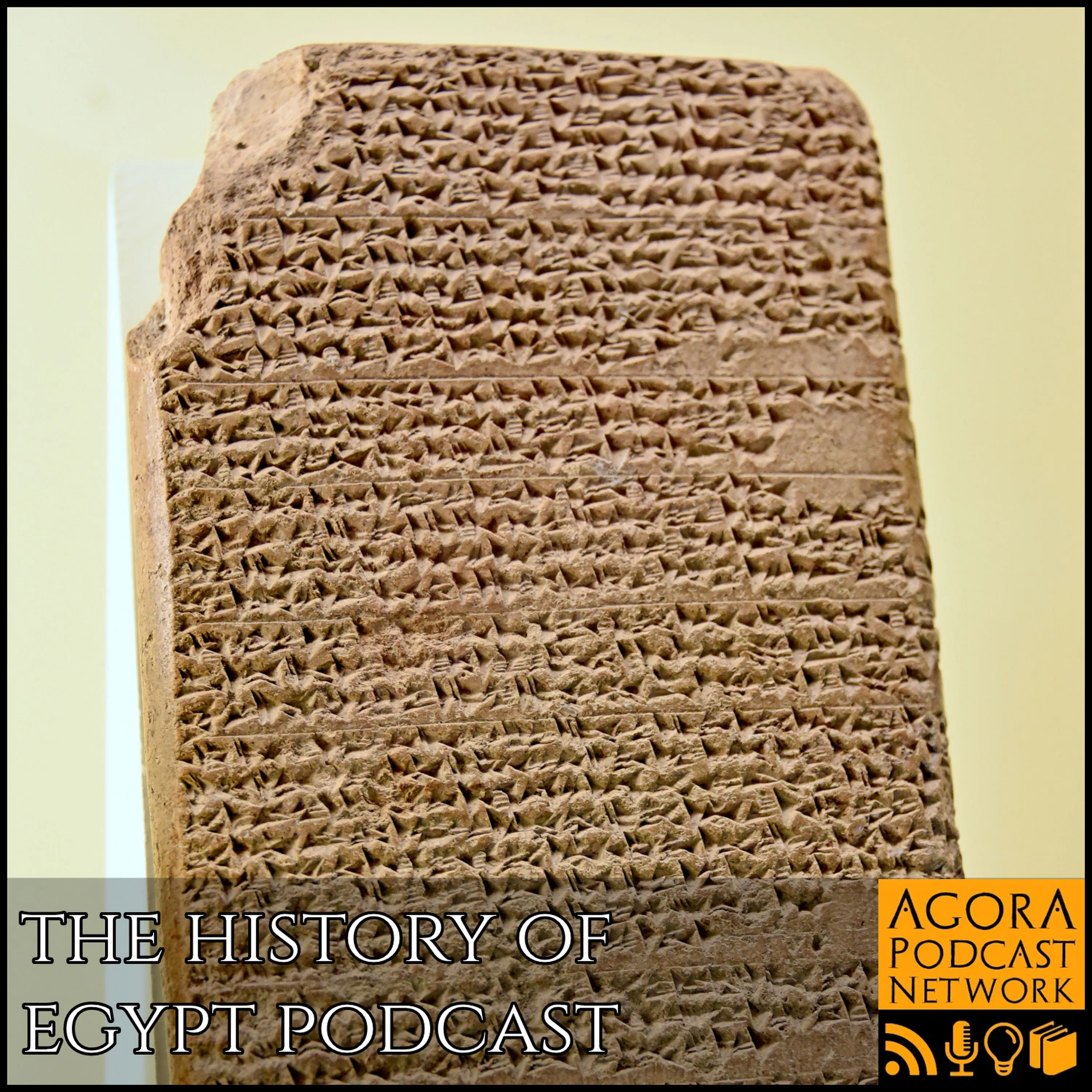
142c: Amurrites 3, Betrayal
Interlude: The greatest treachery. By the end of Akhenaten's reign, events in Syria had developed their own momentum. Rulers like Aziru, prince of Amurru, were causing trouble. Akhenaten had to deal with Aziru as best he could. But the death of Akhenaten interrupted any reconciliation. Soon after, Aziru was looking to other opportunities... Date c.1345 – 1340 BCE. Website: www.egyptianhistorypodcast.com. Support the show via Patreon www.patreon.com/egyptpodcast. Make a one-time donation via PayPal payments. Music by Michael Levy. Music by Keith Zizza. Audio mixing/editing by Vincent Cavanagh. See other shows from the Agora Podcast Network. The History of Egypt Podcast endorses RA EGYPTIAN, the clean, natural skincare line with products derived from ancient Egyptian sources. Use the checkout code EGYPT to enjoy 30% off your order! Cover image adapted from Osama Shukir Muhammed Amin FRCP(Glasg), CC BY-SA 4.0 https://creativecommons.org/licenses/by-sa/4.0, via Wikimedia Commons. Select Bibliography: Additional references in the bibliographies of Episode 123 and Episode 124. V. Cordani, ‘Aziru’s Journey to Egypt and its Chronological Value’, in J. Mynářová (ed.), Egypt and the Near East – The Crossroads (Prague, 2011), 103–16. W. L. Moran, The Amarna Letters (Baltimore, 1992). W. J. Murnane, The Road to Kadesh: A Historical Interpretation of the Battle Reliefs of King Sety I at Karnak (Chicago, 1985). W. J. Murnane, Texts from the Amarna Period in Egypt (Atlanta, 1995). J. Mynářová, Language of Amarna – Language of Diplomacy: Perspectives on the Amarna Letters (Prague, 2007). J. Mynářová, ‘Egypt Among the Great Powers and Its Relations to the Neighboring Vassal Kingdoms in the Southern Levant According to the Written Evidence’, in B. Eder and R. Pruzsinszky (eds.), Policies of Exchange Political Systems and Modes of Interaction in the Aegean and the Near East in the 2nd Millenium B.C.E: Proceedings of the International Symposium at the University of Freiburg Institute for Archaeological Studies, 30th May – 2nd June 2012, 2 (2015), 157–66. N. Naʼaman, Canaan in the Second Millennium B.C.E: Collected Essays, Volume 2 (Winona Lake, 2005). A. F. Rainey, The El-Amarna Correspondence: A New Edition of the Cuneiform Letters From the Site of El-Amarna Based On Collations of All Extant Tablets (Leiden, 2015). Learn more about your ad choices. Visit megaphone.fm/adchoices
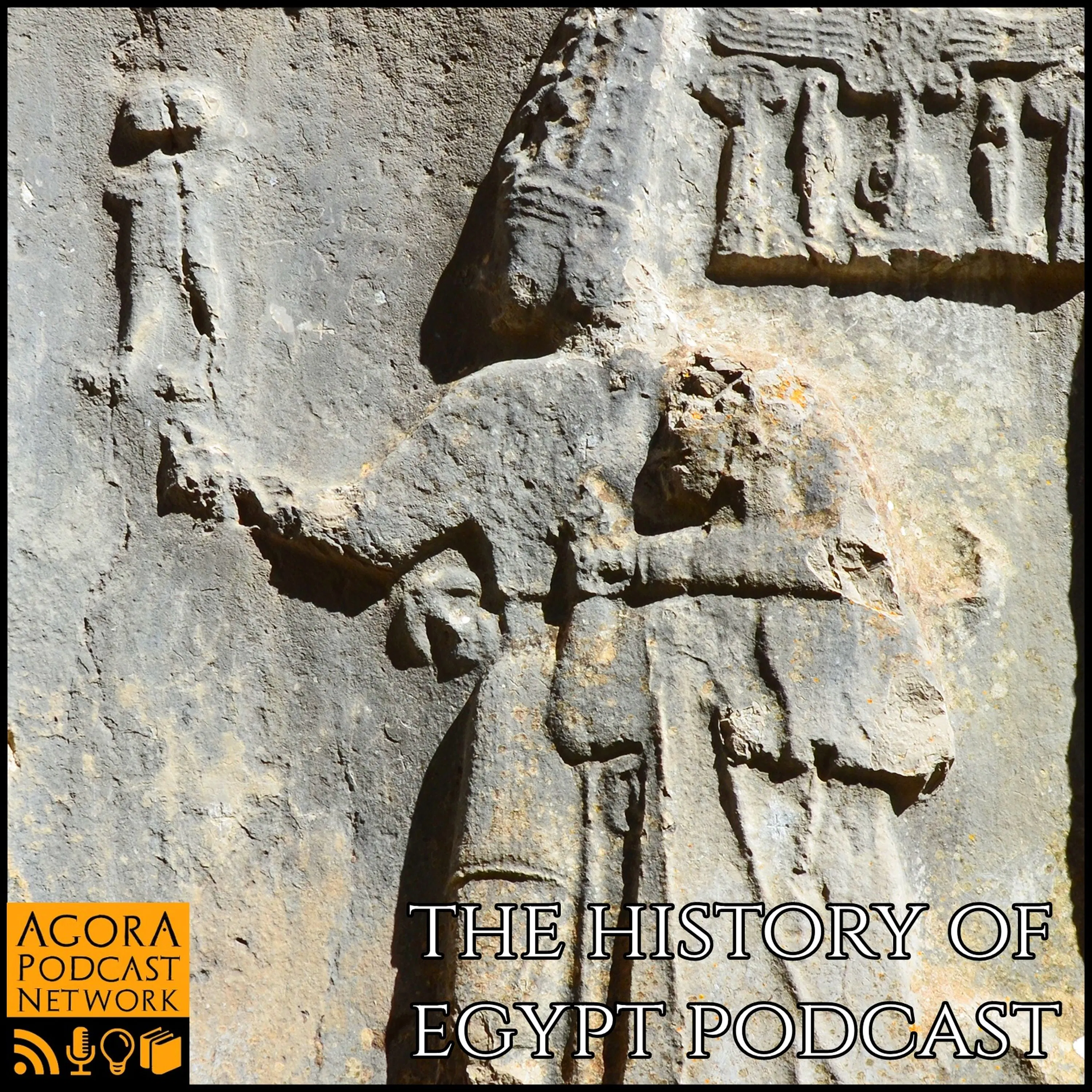
142b: Deeds of the Hittites
Interlude: Warlords and Adventurers. In the second millennium BCE, a new power rose to the north of Egypt. The Kingdom of Hatti (aka the land of the Hittites) emerged as a significant political, economic, and military force. In this episode, we introduce the Hittite state and its early deeds before the reign of Tut'ankhamun. Date c.1790 – 1350 BCE. Website: www.egyptianhistorypodcast.com. Support the show via Patreon www.patreon.com/egyptpodcast. Make a one-time donation via PayPal payments. Music by Michael Levy. Music by Keith Zizza. Episode logo adapted from a photo by Carole Raddato via Wikimedia Commons CC BY-SA 2.0. Image cropped/enhanced. Check out the new Hittite series on The Ancient World Pocast. Select Bibliography: M. Alparslan and M. Dogan-Alparslan, ‘The Hittites and their Geography: Problems of Hittite Historical Geography’, European Journal of Archaeology 18 (2015), 90–110. T. Bryce, The Routledge Handbook of the Peoples and Places of Ancient Western Asia: The Near East from the Early Bronze Age to the Fall of the Persian Empire (London, 2009). E. Devecchi, ‘Suppiluliuma’s Syrian Campaigns in Light of Documents from Ugarit’, in S. de Martino and J. L. Miller (eds.), New Results and New Questions on the Reign of Suppiluliuma I (Florence, 2013). H. Güterbock, ‘The Deeds of Suppiluliuma as Told by His Son, Mursili II’, Journal of Cuneiform Studies 1041–68, 75–98, 107–30. W. L. Moran, The Amarna Letters (Baltimore, 1992). W. J. Murnane, The Road to Kadesh: A Historical Interpretation of the Battle Reliefs of King Sety I at Karnak (Chicago, 1985). W. J. Murnane, Texts from the Amarna Period in Egypt (Atlanta, 1995). W. J. Murnane, ‘Imperial Egypt and the Limits of Her Power’, in R. Cohen and R. Westbrook (eds.), Amarna Diplomacy: The Beginnings of International Relations (Baltimore, 2000), 101–11. J. Mynářová, Language of Amarna – Language of Diplomacy: Perspectives on the Amarna Letters (Prague, 2007). A. F. Rainey, The El-Amarna Correspondence: A New Edition of the Cuneiform Letters From the Site of El-Amarna Based On Collations of All Extant Tablets (Leiden, 2015). A. Spalinger, ‘Egyptian-Hittite Relations at the Close of the Amarna Period and Some Notes on Hittite Military Strategy in North Syria’, Bulletin of the Egyptological Seminar 1 (1979), 55–89. A. Spalinger, War in Ancient Egypt: The New Kingdom (Malden, 2005). M. Van de Mieroop, A History of the Ancient Near East ca. 3000-323 BC (West Sussex, 2016). Learn more about your ad choices. Visit megaphone.fm/adchoices
News: Aten Town, Luxor
A remarkable discovery. In April 2021, Egyptologists working in Luxor announced a major discovery. A new “lost” city, associated with Amunhotep III (and probably Akhenaten as well). In this brief roundup, we discuss the details, the context, and the significance of the find. Date c.1350 BCE and 2021 CE. Website: www.egyptianhistorypodcast.com. Support the show via Patreon www.patreon.com/egyptpodcast. Make a one-time donation via PayPal payments. Music by Keith Zizza. Music by Ancient Lyric. Learn more about your ad choices. Visit megaphone.fm/adchoices
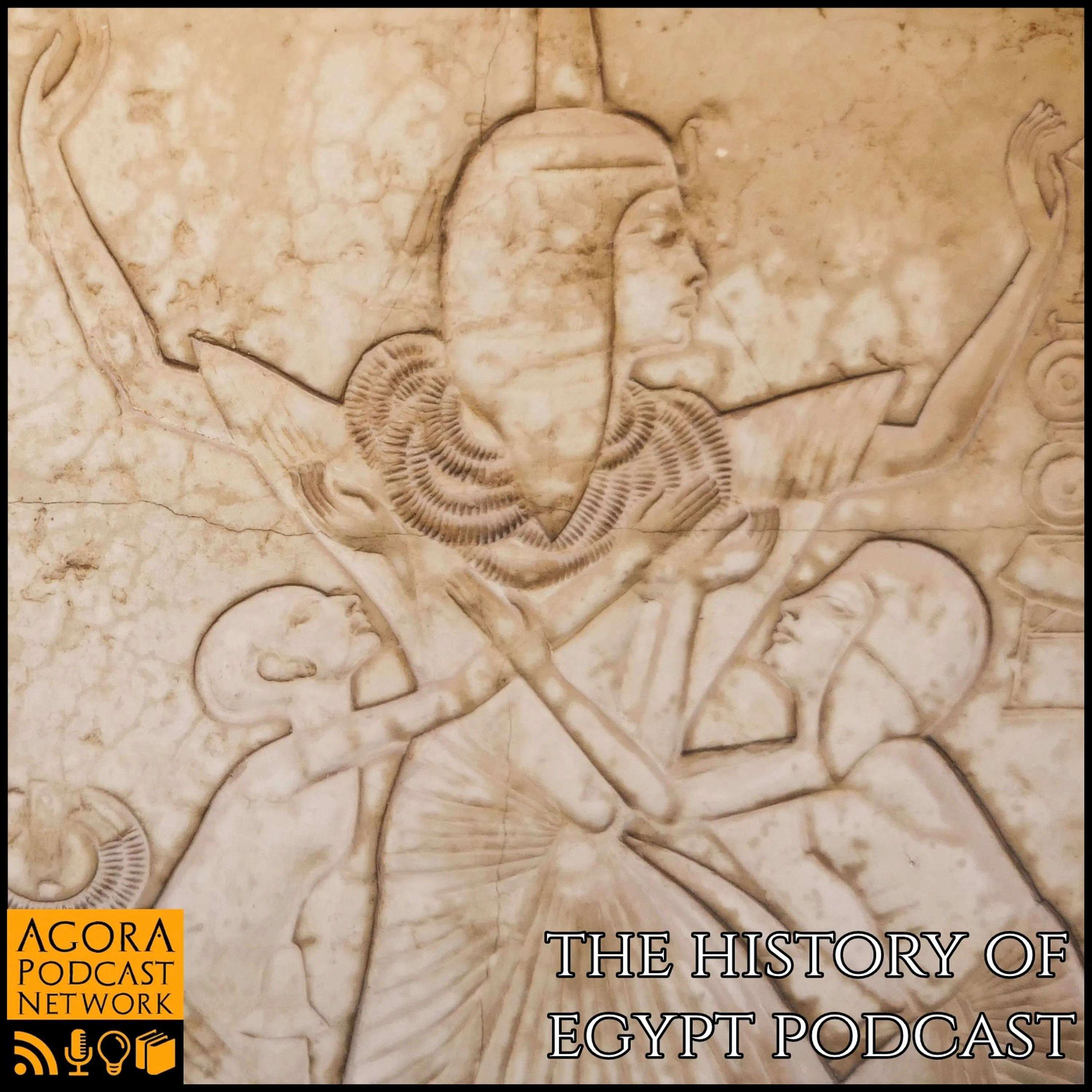
142: Wars in the North
Egypt on the offensive. King Tutankhamun's government had to deal with major threats in the north. Instability and regional warfare had spread through Syria and Canaan. To tackle these, pharaoh despatched his most prominent general. Horemheb, representative of the King, led the soldiers of Egypt into battle... Date c.1340 BCE Website: www.egyptianhistorypodcast.com. Support the show via Patreon www.patreon.com/egyptpodcast. Make a one-time donation via PayPal payments. Music by Keith Zizza. Music by Ancient Lyric. Music by Jeffrey Goodman. Hear the trumpets of Tutankhamun on BBC Radio. The History of Egypt Podcast is supported by RA EGYPTIAN, the natural skincare line with products derived from ancient Egypt. Visit www.ra-egyptian.com and use the checkout code EGYPT to receive a massive 30% discount on your order. Select Bibliography: Dodson, Amarna Sunset: Nefertiti, Tutankhamun, Ay, Horemheb, and the Egyptian Counter-Reformation (2nd edn, Cairo, 2017). Eaton-Krauss, The Unknown Tutankhamun (London, 2016). Gabolde, D’Akhenaton à Toutânkhamon (Paris, 1998). Gabolde, Toutankhamon (Les Grands Pharaons; Paris, 2015). R. Johnson, ‘Tutankhamun’s Life, Death, and Afterlife: New Evidence from Thebes’, November 6th, 2020. https://youtu.be/JuHCL88qpFw Kawai, ‘Studies in the Reign of Tutankhamun’, Unpublished PhD. Thesis, Johns Hopkins University (2005). T. Martin, The Memphite Tomb of Ḥoremḥeb, Commander-in-Chief of Tutʻankhamūn, 1 (London, 1989). T. Martin, The Hidden Tombs of Memphis: New Discoveries From the Time of Tutankhamun and Ramesses the Great (London, 1991). J. Murnane, Texts from the Amarna Period in Egypt (Atlanta, 1995). Learn more about your ad choices. Visit megaphone.fm/adchoices

News: The Pharaohs' Parade
Splendour and Ceremony. On April 3rd, 2021, Egypt hosted a magnificent celebration. Royal mummies, including Kings and Queens, departed their old home and made for a new one. In future, these rulers will reside in the National Museum of Egyptian Civilization. Moving the royal mummies was a complex, grandiose event. I report on the parade, and the historical background of these famous mummies… Recordings of the parade on YouTube Musical performance by Amira Salim and Ahmed Mounib Cairo residents cheer the parade, by Rania Atef on Twitter Details of the performance by Heba Abd el Gawad on Twitter Photos at Ahram. Further details, links, images, and references at The History of Egypt Podcast website. Support the show via Patreon www.patreon.com/egyptpodcast. Make a one-time donation via PayPal payments. Select Bibliography: The Pharaohs’ Golden Parade: Ministry of Tourism and Antiquities YouTube stream (Arabic). Experience Egypt YouTube stream (Arabic and English). Reuters YouTube stream (Arabic and English). Performance by Amira Selim with “violin” music by Ahmed Mounib. Twitter thread by Heba abd el Gawad. The Ministry of Tourism and Antiquities on Facebook. Maspero, “Les Momies Royales de Déir el-Bahari,” Mémoires publiés par les membres de la mission archéologique française du Caire, vol. 1 (1889): 511–790. Available online. Reeves and R. H. Wilkinson, The Complete Valley of the Kings (London, 1996). Romer, Valley of the Kings (London, 1981). Thompson, Wonderful Things, A History of Egyptology, II: The Golden Age: 1881–1914 (Cairo, 2015). Wilson, “Finding Pharaoh,” The Century: Illustrated Monthly Magazine 34 (May 1887): 3–10. Winlock, “The Tomb of Queen Meryetamun: I The Discovery.” The Metropolitan Museum of Art Bulletin33, no. 2 (1975): 77–89. Web Archive: Theban Tomb 320 (TT320) also known as Deir el-Bahari 320 (DB320) “The Cachette of the Royal Mummies” Available online. KV35 (Amunhotep II tomb) at pl. Video: Cairo residents cheer the parade on Twitter. Video: A trip to the Royal Cache (TT320 / DB320) on YouTube. Mummies: The mummies found in TT320 / DB320 at Wikimedia and The Theban Royal Mummy Project. The mummies found in KV35 (Amunhotep II) at Wikimedia and SLU. Learn more about your ad choices. Visit megaphone.fm/adchoices

Mery-Neith, First Servant of Aten
A complicated career. In the reigns of Akhenaten and Tut'ankhamun, one of Egypt's top religious officials was Mery-Neith ("Beloved of Neith"). This man served in the temples, first as a Steward, then as the High Priest of Aten in Amarna. Along the way, Meryneith had to navigate the difficult political waters. To survive in Akhenaten's court, he even had to change his name... Date c.1360 – 1340 BCE. Website: www.egyptianhistorypodcast.com. Support the show via Patreon www.patreon.com/egyptpodcast. Make a one-time donation via PayPal payments. Music by Keith Zizza. Music by Ancient Lyric. See other shows from the Agora Podcast Network. The History of Egypt Podcast endorses RA EGYPTIAN, the clean, natural skincare line with products derived from ancient Egyptian sources. Use the checkout code EGYPT to enjoy 30% off your order! Select Bibliography: The Tomb of Meryneith: Summary of excavations at Saqqara.nl High-quality photos by merja attia at Flickr N. Kawai, ‘Studies in the Reign of Tutankhamun’, Unpublished PhD. Thesis, Johns Hopkins University (2005). M. J. Raven and R. van Walsem, The Tomb of Meryneith at Saqqara (Turnhout, 2014). Learn more about your ad choices. Visit megaphone.fm/adchoices
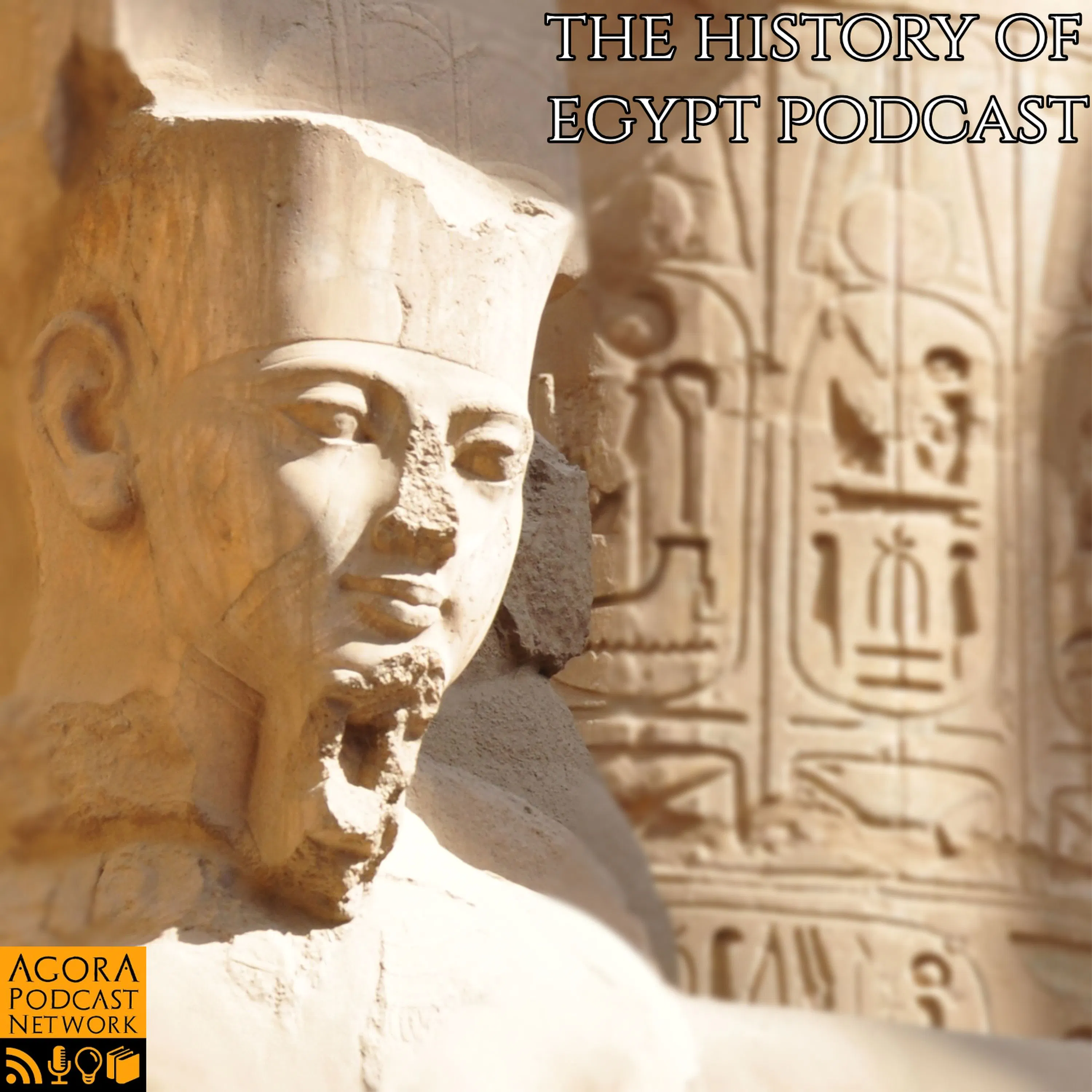
141: The Restoration of Amun
I'm bringing ma'at back. One of Tutankhamun's famous projects is the Restoration, a country-wide program of repairs and gifts for major temples. After the excesses of Akhenaten, the boy king and his government invested massive amounts of resources. Their goal? Renew the temples, replenish the priesthood, and curry favour with both the gods and the elites of Egyptian society... Date c.1341 BCE. Website: www.egyptianhistorypodcast.com. Support the show via Patreon www.patreon.com/egyptpodcast. Make a one-time donation via PayPal payments. Music by Keith Zizza www.keithzizza.com. The History of Egypt Podcast is supported by RA EGYPTIAN, the natural skincare line with products derived from ancient Egypt. Visit www.ra-egyptian.com and use the checkout code EGYPT to receive a massive 30% discount on your order. Select Bibliography: J. Bennett, ‘The Restoration Inscription of Tut’ankhamūn’, The Journal of Egyptian Archaeology 25 (1939), 8–15. JSTOR. A. Dodson, Amarna Sunset: Nefertiti, Tutankhamun, Ay, Horemheb, and the Egyptian Counter-Reformation (2nd Edition edn, Cairo, 2017). M. Eaton-Krauss, The Unknown Tutankhamun (London, 2016). N. Kawai, ‘Studies in the Reign of Tutankhamun’, Unpublished PhD. Thesis, Johns Hopkins University (2005). W.J. Murnane, Texts from the Amarna Period in Egypt (Atlanta, 1995). N. Reeves, The Complete Tutankhamun (Cairo, 1990). M. van Nederhof, “Restoration Stela of Tutankhamun,” Transliteration and translation online. M. Eaton-Krauss, The Unknown Tutankhamun (London, 2016). The Epigraphic Survey, Reliefs and Inscriptions at Luxor Temple – Volume I: The Festival Procession of Opet in the Colonnade Hall (Chicago, 1994). The Epigraphic Survey, Reliefs and Inscriptions at Luxor Temple – Volume II: The Facade, Portals, Upper Register Scenes, Columns, Marginalia, and Statuary in the Colonnade Hall (Chicago, 1998). Learn more about your ad choices. Visit megaphone.fm/adchoices

140: Tutankhamun (New Name, New Me)
Tut-Ankh-Amun. Early in his reign, the young pharaoh Tut-ankh-Aten changed his name to Tut-ankh-Amun. Why did he do this? What did it mean? And how much control did this young ruler have over his own identity? Website: www.egyptianhistorypodcast.com. Support the show via Patreon www.patreon.com/egyptpodcast. Make a one-time donation via PayPal payments. Music by Keith Zizza https://www.keithzizza.net/. Music by Ancient Lyric http://www.bettinajoydeguzman.com/. Music by Jeffrey Goodman http://www.jeffreygoodmanmusic.com/. Sound Interludes by Luke Chaos https://twitter.com/Luke_Chaos. Audio mixing/editing by Vincent Cavanagh. The History of Egypt Podcast endorses RA EGYPTIAN, the clean, natural skincare line with products derived from ancient Egyptian sources. Use the checkout code EGYPT to enjoy 30% off your order! Select Bibliography: The House of Ranefer The Amarna Project Website: with separate pages for background and excavations in 1921, 2002, 2003, 2004. Bronze plaques from the House of Ranefer at Wikimedia. Kemp, “Tell el-Amarna, 2004,” The Journal of Egyptian Archaeology 90 (2004), 14–26. Kemp, The City of Akhenaten and Nefertiti: Amarna and Its People (London, 2014). J. Murnane, Texts from the Amarna Period in Egypt (Atlanta, 1995). E. Peet and C. L. Woolley, The City of Akhenaten, Volume I (London, 1923). Schulman, “Military Rank, Title, and Organization in the Egyptian New Kingdom,” Unpublished PhD. Thesis, University of Pennsylvania (1962). Spalinger, “Review of Robert Hari, Répertoire onomastique amarnien, 1976,” Journal of Near Eastern studies 39 (1980), 230–1. Tutankhamun Dodson, Amarna Sunset: Nefertiti, Tutankhamun, Ay, Horemheb, and the Egyptian Counter-Reformation (2nd Edition edn, Cairo, 2017). Eaton-Krauss, The Unknown Tutankhamun (London, 2016). Gabolde, D’Akhenaton à Toutânkhamon (Paris, 1998). Kawai, ‘Studies in the Reign of Tutankhamun’, Unpublished PhD. Thesis, Johns Hopkins University (2005). J. Leprohon, The Great Name: Ancient Egyptian Royal Titulary (Wilson, 2013). J. Murnane, Texts from the Amarna Period in Egypt (Atlanta, 1995). Reeves, The Complete Tutankhamun (Cairo, 1990). Learn more about your ad choices. Visit megaphone.fm/adchoices

139: King Tut (ankh-Aten)
A famous reign. Following the death of Nefer-neferu-aten, a new ruler came to the throne. Tut-ankh-Aten was young, perhaps nine years old. He inherited power at a tumultuous point in history... Date c. 1343 BCE. Website: www.egyptianhistorypodcast.com. Support the show via Patreon www.patreon.com/egyptpodcast. Make a one-time donation via PayPal payments. Music by Keith Zizza. Additional music by Jeffrey Goodman. Audio mixing/editing by Vincent Cavanagh. Written by Dominic Perry. The History of Egypt Podcast endorses RA EGYPTIAN, the clean, natural skincare line with products derived from ancient Egyptian sources. Use the checkout code EGYPT to enjoy 30% off your order! Select Bibliography: A. Dodson, Amarna Sunset: Nefertiti, Tutankhamun, Ay, Horemheb, and the Egyptian Counter-Reformation (2nd Edition, Cairo, 2017). A. Dodson and D. Hilton, The Complete Royal Families of Ancient Egypt (London, 2004). M. Eaton-Krauss, ‘King Tutankhaten’, Orientalia 80 (2011), 300–4. M. Eaton-Krauss, The Unknown Tutankhamun (London, 2016). M. Gabolde, D’Akhenaton à Toutânkhamon (Paris, 1998). N. Kawai, ‘Studies in the Reign of Tutankhamun’, Unpublished PhD. Thesis, Johns Hopkins University (2005). W. J. Murnane, Texts from the Amarna Period in Egypt (Atlanta, 1995). N. Reeves, The Complete Tutankhamun (Cairo, 1990). Learn more about your ad choices. Visit megaphone.fm/adchoices