
The Future Of
150 episodes — Page 3 of 3

Ep 50Women's Fitness Culture
EIt’s not uncommon for women to post carefully crafted exercise photos on social media to foster a culture of empowerment. But could this be causing more harm than good?In this episode, Amelia is joined by Dr Madison Magladry and Professor Cecilie Thøgersen-Ntoumani to discuss how we can build a more positive fitness culture that better supports women’s physical and mental health.Women’s fitness culture on Instagram [0:54]Why women exercise less than men [04.09]Fostering a more inclusive social media environment [09:43]Main factors affecting motivation [14:55]Fitness influencers becoming a source of authority [18:18]Broadening the discussion – experiences of non-binary people, older people and gay men in the gym [24:14]How COVID-19 has impacted fitness [31:40]Promoting a healthier fitness culture [36:37]Our expertsDr Madison Magladry: Twitter – @MagladryMadisonProfessor Cecilie Thøgersen-Ntoumani: Twitter – @ecthogersen, Web –pawresearchgroup.comLearn moreABC: Tayla Harris AFLW photo could become landmark moment in Australian sportABC News: When the pursuit of fitness and exercise is a slog, how do we stay motivated?Broad Agenda: How feminist is fitness cultureDecolonizing FitnessGuardian: Man runs marathon on 7-metre balcony during French lockdownSusanna BarkatakiGot any questions, or suggestions for future topics?Email [email protected] University supports academic freedom of speech. The views expressed in The Future Of podcast may not reflect those of the university.Music: OKAY by 13ounce Creative Commons — Attribution-ShareAlike 3.0 Unported — CC BY-SA 3.0 Music promoted by Audio LibraryYou can read the full transcript for the episode here.

Ep 49Cryptocurrency and Blockchain
In 2009, the world’s first online cryptocurrency, Bitcoin, was launched using blockchain technologies. Now, thousands of cryptocurrencies are in circulation, including some backed by the Dubai and Chinese governments. In this episode, our new host Amelia is joined by Associate Professor Vidy Potdar and Professor Saurav Dutta, to discuss how widespread cryptocurrencies will be in the future.Relationship between cryptocurrencies and blockchain [01:10]Taking power from banks [04:00]High energy consumption – as much as Belgium [08:49]Prone to hacking? [11:59]Explaining Bitcoin, Ethereum, Ripple, Litecoin and Tether [13:27]Can anyone get involved? [18:19]Vidy’s and Saurav’s projects [23:09]Government responses [26:20]Will cryptocurrencies replace fiat money? [29:57]Our expertsAssociate Professor Vidy Potdar: Laboratory – businesslaw.curtin.edu.au/our-research/centres-and-institutes/blockchain-research-and-development-laboratory/, Crypto fund – payments.curtin.edu.au/crypto-donations/Professor Saurav Dutta: Books – amazon.com/Saurav-K.-Dutta/e/B00E6JFXVW%3Fref=dbs_a_mng_rwt_scns_share, Curtin School of Accounting – businesslaw.curtin.edu.au/curtin-business-school/accounting/Learn moreBBC Newsnight: How does Bitcoin mining work?Curtin University: Curtin announces new blockchain lab to research disruptive technologiesCurtin University: Curtin’s new cryptocurrency scholarship fund a boost for PhD studentsGot any questions, or suggestions for future topics?Email [email protected] University supports academic freedom of speech. The views expressed in The Future Of podcast may not reflect those of the university.Music: OKAY by 13ounce Creative Commons — Attribution-ShareAlike 3.0 Unported — CC BY-SA 3.0 Music promoted by Audio LibraryYou can read the full transcript for the episode here.
Ep 48Sharks
Sharks have earned a reputation in popular culture for being ‘blood thirsty people eaters’ but research and statistics show that this label is grossly misleading. In fact, up to 31 per cent of sharks face extinction, despite the important role they play in our ecosystems. Tom and our new host, Amelia Searson, are joined by Melissa Cristina Márquez, a Latina marine biologist and conservationist. Melissa sorts fact from fiction and explains how we can better coexist with these cartilaginous fish.Categories of shark bites [01:39]The role of sharks in ecosystems [07:09]Media impact on shark conversation [09:00]SMART drumlines [11:31]Croc attack? [15:00]Diversity in science [20:56]Learn moremelissiacristinamarquez.comThe Fins United InitiativeAttacked by a croc, marine researcher now prefers diving with sharksSharks and female scientists: more alike than you thinkConciencia azulGot any questions, or suggestions for future topics?Email [email protected] University supports academic freedom of speech. The views expressed in The Future Of podcast may not reflect those of the university.Music: OKAY by 13ounce Creative Commons — Attribution-ShareAlike 3.0 Unported — CC BY-SA 3.0 Music promoted by Audio LibraryYou can read the full transcript for the episode here.

Ep 47Universities
Universities have evolved significantly over the centuries, and in the 21st century,they continue to evolve. The trend towards online study, which has been accelerated by the COVID-19 pandemic, raises the question of whether universities will always have physical campuses. And in Australia, the government is steering students towards STEM careers and away from the humanities.In this episode, Tom discusses these issues with Professor Jill Downie, Deputy Vice-Chancellor Academic at Curtin University.Impact of the COVID-19 pandemic on students [01:14]Reliance on international students [03:36]Immersive online experiences in university teaching and learning [11:54]The humanities [15:27]Mass higher education [18:56]Learn moreAssociate Professor Jill DownieHorizon ReportThe government's funding changes are meddling with the purpose of universitiesVital signsGot any questions, or suggestions for future topics?Email [email protected] University supports academic freedom of speech. The views expressed in The Future Of podcast may not reflect those of the university.Music: OKAY by 13ounce Creative Commons – Attribution-ShareAlike 3.0 Unported — CC BY-SA 3.0. Music promoted by Audio Library.You can read the full transcript for the episode here.
Ep 46Land Conservation
Our environment is a fascinating web of ecosystems. Understanding the relationship between the environment’s plants, animals, rocks, soils, minerals, waters and us, will enable us to better conserve important ecosystems and ensure an inhabitable Earth for future generations.In this episode, Tom is joined by Dr Stephen van Leeuwen, Indigenous Chair of Biodiversity and Environmental Science at Curtin, and Dr Simon Wilde, a John Curtin Distinguished Professor in Curtin’s School of Earth and Planetary Science. Together, they discuss the unique features and creatures of the Australian landscape, and what’s required to ensure a better balance between land use and land conservation. Characteristics of WA’s biodiversity hotspot [01:30]The role of rocks in biodiversity [04:46]China’s innovative geo parks [06:20]Protecting the oldest mineral on Earth [07:15]A new plant described every week [09:58]New tech preserving geology [10:51]Australia’s first engineers [14:10]How to appreciate planet A [17:59]Learn moreA remarkable careerAustralia’s first Indigenous chair for biodiversity and environmental scienceErawondoo Hill added to National Heritage ListGot any questions, or suggestions for future topics?Email [email protected] University supports academic freedom of speech. The views expressed in The Future Of podcast may not reflect those of the University.Music: OKAY by 13ounce Creative Commons — Attribution-ShareAlike 3.0 Unported — CC BY-SA 3.0 Music promoted by Audio LibraryYou can read the full transcript for the episode here https://thefutureof.simplecast.com/episodes/land-conservation/transcript.

Ep 45Extraterrestrial Intelligence
In the last 60 years, humankind has made great strides in our search for extraterrestrial intelligence (SETI). But will we ever be successful? In this episode, Tom is joined by Professor Steven Tingay and Dr Chenoa Tremblay – who recently scanned 10.35 million known stars in the deepest and broadest search ever for extraterrestrial technologies – to discuss what progress has been made.Recent SETI survey is just a drop in the ocean [02:44]Signals might not necessarily be thousands of years old [06:54]How do you know where to look? [10:02]Square Kilometre Array will improve search capabilities [11:48]What would happen if you found a signal? [15:53]Thoughts on announcement of possible life on Venus [21:25]Proving signals are of alien origin could take decades [27:23]Learn moreCambridge University Press: A SETI survey of the Vela region using the Murchison Widefield Array: Orders of magnitude expansion in search spaceCSIRO: Australian telescope finds no signs of alien technology in 10 million star systemsMurchison Widefield Array websiteNew Scientist: Famous Wow! signal might have been from comets, not aliensThe SKA Project websiteGot any questions, or suggestions for future topics?Email [email protected] University supports academic freedom of speech. The views expressed in The Future Of podcast may not reflect those of the university.Music: OKAY by 13ounce Creative Commons — Attribution-ShareAlike 3.0 Unported — CC BY-SA 3.0 Music promoted by Audio Library Read the full transcript
Ep 44Sustainable Engineering
To prevent extreme weather events like the bushfires we’ve seen in Australia and now California, as well as rising sea levels, warmer temperatures and the depletion of food and water, we must rethink how we use our natural resources.Sustainable engineering is a field dedicated to delivering low-energy design projects in the built environment. It focuses on finding ways that promote sustainable models of production and consumption, and has diverse applications in all areas of life. In this episode, Tom is joined by Professor Michele John and Associate Professor Wahidul Biswas. Michele is Director of the Sustainable Engineering Group at Curtin and Wahidul is an Associate Professor in Curtin’s School of Civil and Mechanical Engineering.What is sustainable engineering? [01:10]Current sustainable engineering projects [03:00]What will happen if we don’t embrace sustainable engineering? [05:46]Can developing nations afford to embrace sustainable engineering? [07:40]Is sustainable engineering expensive? [09:40]What are some of the roadblocks? [12.20]Could Australia become a world leader in this space? [13:50]What can individuals do? [16:40]Learn moreProfessor Michele JohnAssociate Professor Wahidul BiswasSustainable Engineering GroupSEG research focusA call to action for engineers on climate change10 advancements in environmental engineeringTop 5 sustainable buildings in AustraliaClimate change and coronavirus: Five charts about the biggest carbon crashGot any questions, or suggestions for future topics?Email [email protected] University supports academic freedom of speech. The views expressed in The Future Of podcast may not reflect those of the university.Music: OKAY by 13ounce Creative Commons — Attribution-ShareAlike 3.0 Unported — CC BY-SA 3.0 Music promoted by Audio LibraryYou can read the full transcript for the episode here.
Ep 43Getting Old
According to the World Health Organization, the population aged 65 and over is growing faster than all other age groups. It’s therefore important to make sure this cohort has the means to be socially, politically and economically engaged in communities.Tom Robinson is joined by professors Anne-Marie Hill and Siobhan Austen to discuss how advances in technology are helping us to live better for longer, how we can remain financially independent after we retire, whether COVID-19 has revealed ageist attitudes, and key things we can do now to stay mentally and physically active at any age. COVID-19 and aged care [02:43]Key aspects to living well [05:32]Push back on being told you’re old [05:49]Tech advances helping us to live well [09:16]Pension vs superannuation [12:31]Falls indicate if we’re ageing well [14:58]Women and their super rights [19:34]Learn moreCurtin Ageing Research NetworkSafe exercise at home websiteFinancial ownership and control within older householdsGender issues in an ageing societyGot any questions, or suggestions for future topics?Email [email protected] University supports academic freedom of speech. The views expressed in The Future Of podcast may not reflect those of the university.Music: OKAY by 13ounce Creative Commons — Attribution-ShareAlike 3.0 Unported — CC BY-SA 3.0 Music promoted by Audio LibraryYou can read the full transcript for the episode here: https://thefutureof.simplecast.com/episodes/getting-old/transcript.

Ep 42Journalism
It’s been one year since we first launched The Future Of podcast at Curtin University in Perth, Western Australia. We’re so thrilled to be able to journey into the future with you and explore how research is helping to change the world. This podcast is only possible through the efforts of the Curtin community, so we’d like to give a special thanks to our hosts, creative and marketing teams, production coordinators and the Curtin researchers who make it all happen. Journalism has survived the advent of radio and television, the demise of print, but now has new threats to address, namely social media and an outdated business model.COVID-19 has particularly exposed how vulnerable the industry is to a loss of advertising – falls in revenue have resulted in the closure of newsrooms across the world, and staff cuts to both community and mass media organisations. In this episode, host Tom Robinson is joined by Glynn Greensmith and Dr Kathryn Shine – journalists and academics in Curtin University’s journalism program. Shine and Greensmith explore the current state of the industry, and the changes that must be made to ensure journalists can continue to deliver news that keeps the public informed and engaged in their communities. A failing business model [02:12]Need-to-know vs want-to-know [04:04]Training future journalists [06:35]Should tech giants pay up? [09:34]How journalism become a commodity [12:34]Community-centric news [16:09]Greater diversity in news [19:46]Learn moreFixing truth: how do we do it, and what’s stopping us?Is journalism still shining a light in dark corners?Got any questions, or suggestions for future topics?Email [email protected] University supports academic freedom of speech. The views expressed in The Future Of podcast may not reflect those of the university.Music: OKAY by 13ounce Creative Commons — Attribution-ShareAlike 3.0 Unported — CC BY-SA 3.0 Music promoted by Audio LibraryYou can read the full transcript for the episode here: https://thefutureof.simplecast.com/episodes/journalism/transcript.
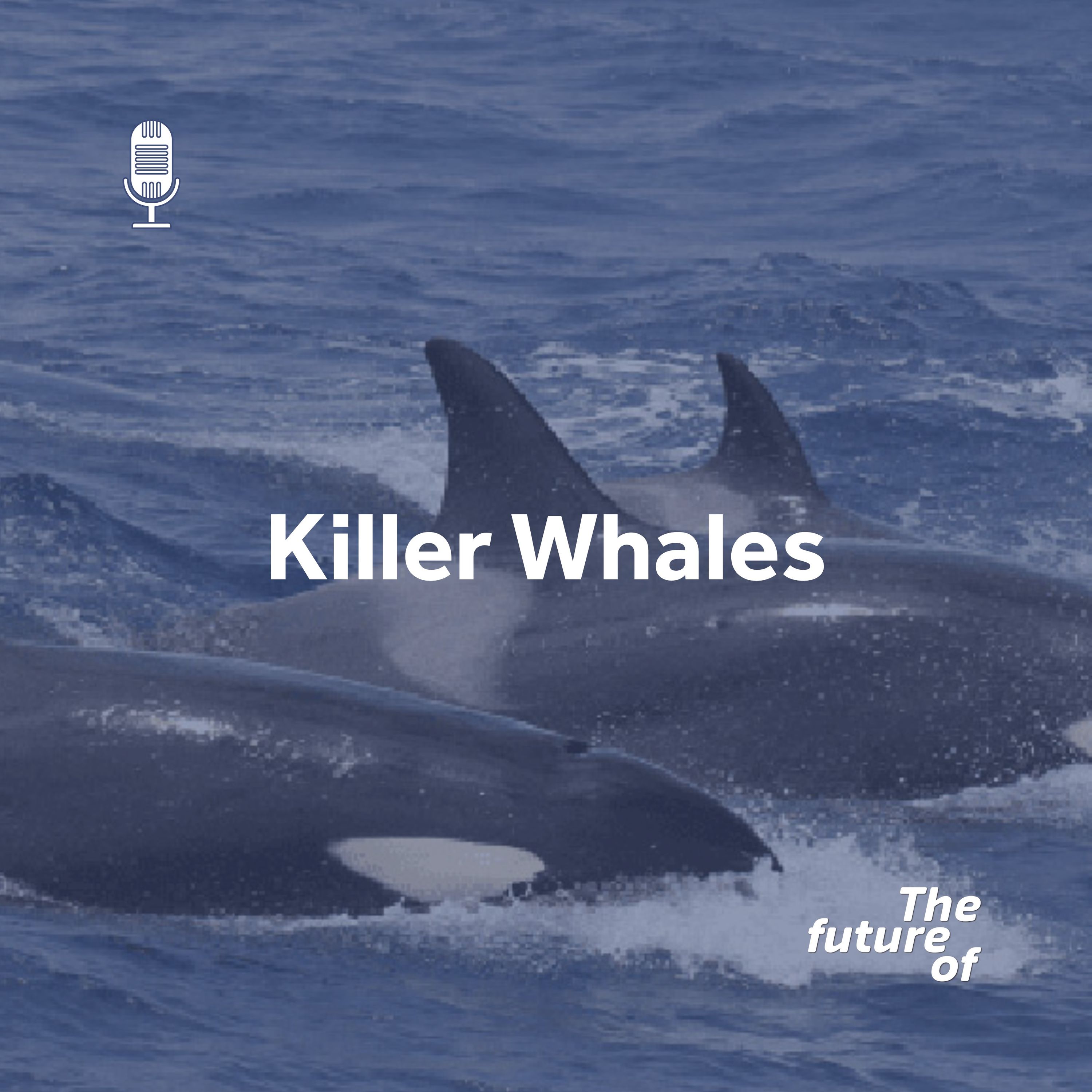
Ep 41Killer Whales
Killer whales are at once both fascinating and fearsome, and Dr Wellard has dedicated the past 10 years of her research career to learning more about these mammals. In this episode, Dr Wellard reveals some of key characteristics and behaviours of orcas, such as their ability to take on sharks and whether they really connect with humans.She explains how killer whales use bioacoustics, including echolocation clicks and burst-pulse sounds, to navigate, hunt, communicate and socialise with other pod members.Dr Wellard also reveals the habitats of killer whales, including the deep waters off the Western Australian coast, and how her research is expanding the scientific knowledge of killer whales, enabling stronger population monitoring and conversation efforts.How killer whales communicate [01:44]Killer whale habitats [04:49]Hunting strategies [08:50]Social structure [11:28]Conservation status and action [13:25]Human impact on killer whales [20:53]Find out more:Centre for Marine Science and TechnologyProject ORCAGot any questions, or suggestions for future topics?Email [email protected] University supports academic freedom of speech. The views expressed in The Future Of podcast may not reflect those of the university.Music: OKAY by 13ounce Creative Commons — Attribution-ShareAlike 3.0 Unported — CC BY-SA 3.0 Music promoted by Audio LibraryYou can read the full transcript for the episode here: https://thefutureof.simplecast.com/episodes/killer-whales/transcript.
Ep 40China’s Soft Power Strategy
China’s economic and military rise are well documented, but their ‘soft power’ strategy, which involves boosting their image as one of the good guys in the global mind, is more complicated. As China emerges from the pandemic relatively well, can they maintain their ‘peaceful rise’ narrative, particularly while the western world, including Australia, casts a skeptical eye on Chinese platforms such as TikTok and WeChat?In this episode, Tom is joined by Professor Michael Keane to discuss the future of China’s international influence and global standing.What is ‘soft power’? [00:55]The narrative China wants to tell [02:17]The role of apps like WeChat and TikTok in China’s storytelling [04:17]Should people be suspicious of Chinese apps like TikTok? [08:55]Understanding Chinese culture [21:25]Will Australia see a rise of Chinese pop culture? [26:22]Learn moreProfessor Michael KeaneIs China’s soft power strategy working?From cultural presence to innovative nationGot any questions, or suggestions for future topics?Email [email protected] University supports academic freedom of speech. The views expressed in The Future Of podcast may not reflect those of the university.Music: OKAY by 13ounce Creative Commons — Attribution-ShareAlike 3.0 Unported — CC BY-SA 3.0 Music promoted by Audio LibraryYou can read the full transcript for the episode here https://thefutureof.simplecast.com/episodes/chinas-soft-power-strategy/transcript.
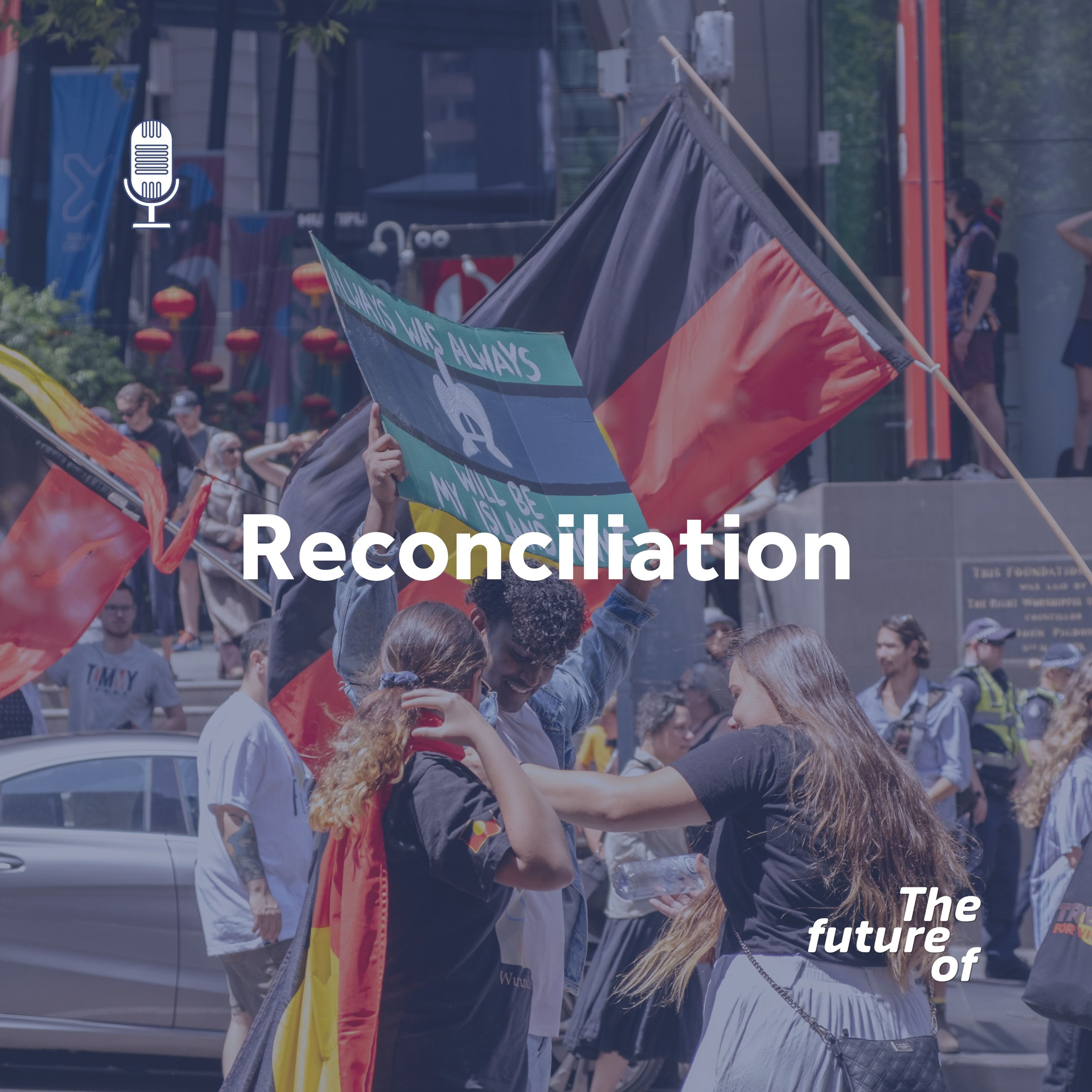
Ep 39Reconciliation
Recent protests have shone a light onto the racism and discrimination that still exists all over the world in 2020. This has led Australians to reflect on discrimination close to home against indigenous peoples and contemplate how we can do better and become more inclusive as a nation. In this episode, Tom is joined by Curtin Nyungar cultural advisor Mrs Ingrid Cumming and Curtin research Fellow Professor Cheryl Kickett-Tucker to discuss the topic of reconciliation and what we can do to bring all Australians together as one.What is reconciliation? [00:47]What can universities and schools do for reconciliation? [04:42]The first Aboriginal bilingual Wikipedia page in history [11:45]The importance of language in reconciliation [15:40]Decolonising spaces [20:07]The next steps in the reconciliation journey [30:20]Learn moreCurtin University: Professor Cheryl Kickett-TuckerCurtin University: Mrs Ingrid CummingCurtin Aboriginal Reconcilation Action PlanKaat Koort n HoopsGot any questions, or suggestions for future topics?Email [email protected] University supports academic freedom of speech. The views expressed in The Future Of podcast may not reflect those of the university.Music: OKAY by 13ounce Creative Commons — Attribution-ShareAlike 3.0 Unported — CC BY-SA 3.0 Music promoted by Audio Library Read the transcript for this episode

Ep 38Travel Bubbles
COVID-19 has delivered a crushing blow to the tourism and travel sector, but some countries are successfully managing the virus, and are considering opening up their borders to neighbouring nations. These ‘travel bubbles’ have been pitted to bolster the global economy and enable us to travel safely and with more freedom. In this episode, David is joined by new podcast host Tom Robinson, and Curtin researchers Dr Mingming Cheng and Professor Kirsten Holmes, to discuss the likelihood of travel bubbles, changes to tourism operations, and how our own travel experiences may evolve in the wake of COVID-19.What travel bubbles are [01:26]Impact of COVID-19 on local tourism [03:04]Changes to the way we travel [05:42]Cost of future travel [08:20]Loss of tourism volunteers [14:40]Sustainability and tourism [17:48]Learn moreDr Mingming ChengProfessor Kirsten HolmesGot any questions, or suggestions for future topics?Email [email protected] University supports academic freedom of speech. The views expressed in The Future Of podcast may not reflect those of the University.Music: OKAY by 13ounce Creative Commons — Attribution-ShareAlike 3.0 Unported — CC BY-SA 3.0 Music promoted by Audio LibraryYou can read the full transcript for the episode here.
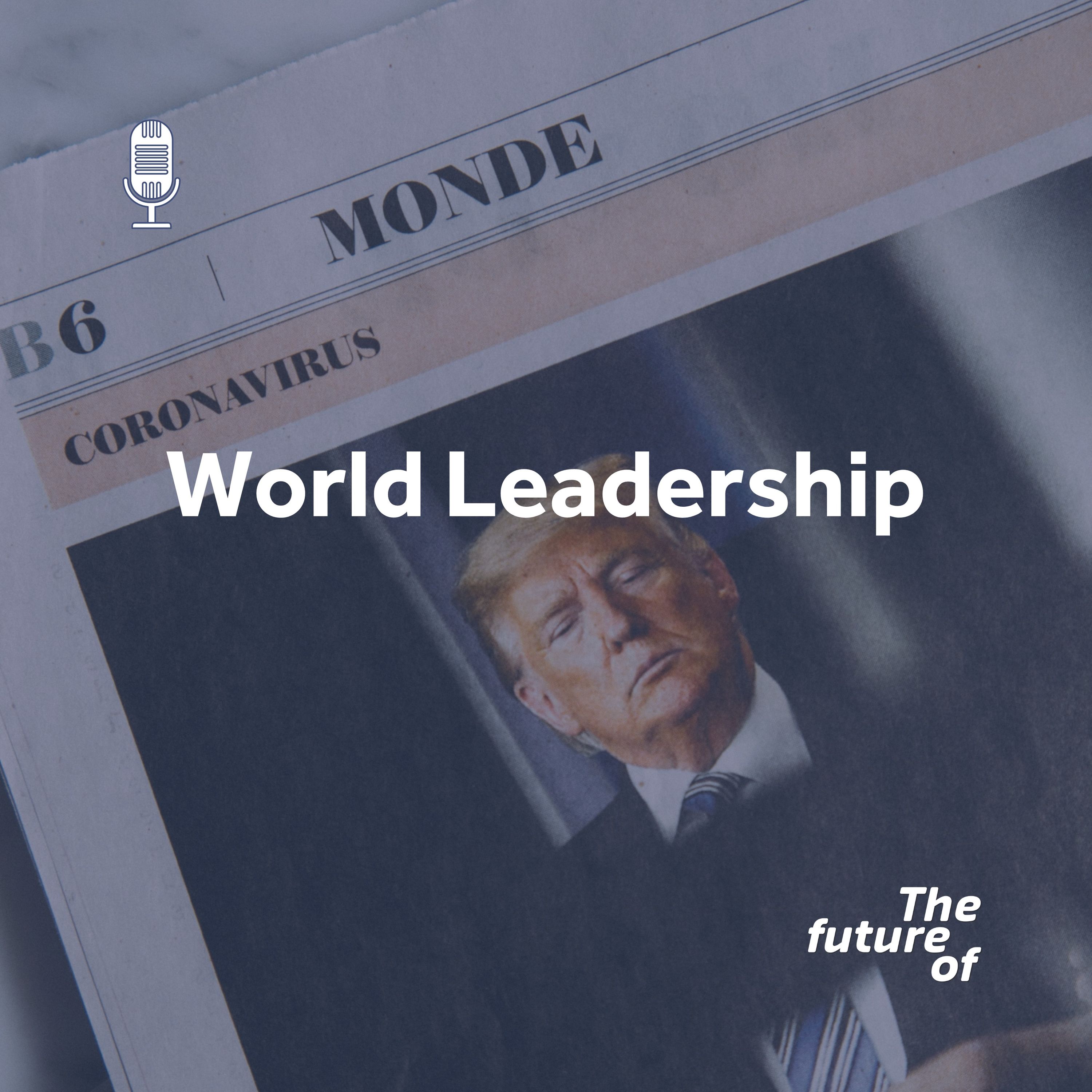
Ep 37World Leadership
We live in a world defined by constant change. To keep up, leaders at all levels should be highly adaptable and collaborative, however it’s debatable whether all our world leaders possess those qualities. On the international stage, we see wildly different personalities and leadership styles, from the brashness of Trump to the brutality of Duterte, to the poise of Ardern. We’re yet to reach accord on international crises such as climate change, health and migration; which leads us to ask whether there’s a better way. David is joined by former WA Premier Professor Geoff Gallop AC and strategic affairs analyst Associate Professor Alexey Muraviev to discuss leadership on the world stage and how countries can lead on issues of national and international importance. The Covid-19 pandemic has put our world leaders to the test. What lessons have we learned? [01:02]Democracies – do they have a sell-by date? [06:22] and [25:06]With world technology moving forward at such a fast pace, is making policy decisions on Twitter still a shocking thing? [10:08]What aspects of Jacinda Ardern’s leadership style have contributed to her success? [16:50]What is the ideal global leadership model? [26:31]Learn moreCurtin University: Geoff Gallop: a brief biographyCurtin University: Professor Alexey MuravievIndeed career guide: 10 Common leadership stylesT-three: How leadership has changed 2000 versus 2020Got any questions, or suggestions for future topics?Email [email protected] University supports academic freedom of speech. The views expressed in The Future Of podcast may not reflect those of the university.Music: OKAY by 13ounce Creative Commons — Attribution-ShareAlike 3.0 Unported — CC BY-SA 3.0 Music promoted by Audio LibraryYou can read the full transcript for the episode here

Ep 36Geographical Borders
EFor decades, the world has been on a trajectory of rising globalisation with cross-border flows of trade, investment, data, ideas, technology and people. But recent global events point to a trend that’s at odds with that narrative. The election of nationalist leaders in many powerful countries; Brexit and the subsequent weakening of the EU; and COVID-induced territorialism have all contributed to a sense of ‘us vs them’. David is joined by Curtin University academics Dr Donna Butorac and Dr Ben Rich to discuss whether we’re witnessing a ‘de-globalisation’ that could impact our ability to solve global problems like climate change and food security.Are we retreating behind borders, and if so, how did we get here? [00:54]Has the pandemic affected the trust we place on international organisations? [06:48]How does our geographical location influence our sense of indentity? [13:26]How can we solve global problems if we’re looking inward? [17:10]Has the pandemic revealed the fragility of our international supply chains? [24:50]It’s become easier to move capital and goods across borders, what about moving ourselves across borders? [27:35]Learn moreThe pandemic adds momentum to the deglobalisation trendThe deglobalisation virusPandemic has killed globalisationDeglobalisation and its discontentsCoronavirus will reverse globalization and create regional supply chains, economists predictGot any questions, or suggestions for future topics?Email [email protected] University supports academic freedom of speech. The views expressed in The Future Of podcast may not reflect those of the university.Music: OKAY by 13ounce Creative Commons — Attribution-ShareAlike 3.0 Unported — CC BY-SA 3.0 Music promoted by Audio Library. View the transcript of this episode
Ep 35Pandemics
Prior to COVID-19, you might not have anticipated that a virus could have such a profound global impact in the 21st century.To discuss the impact of COVID-19, what researchers can learn from it, and what the future might hold, David talks to Professors Archie Clements and Christopher Reid, both from Curtin’s Faculty of Health Sciences.Why has it taken so long for a virus to impact the world like this? [0.44]Chris, you're involved in a study that's investigating the potential long-term impacts of COVID-19. What are you hoping to reveal? [3.30]How is Australia performing in terms of its response? [5.52]Why is it so difficult to create a vaccine for COVID-19? [10.51]Why are the origins of COVID-19 unclear? [14.12]What will be the lasting impacts? [18.51]Learn moreCOVID-19 Health Alert (Australian Government Department of Health)What you need to know about coronavirus (COVID-19) (Australian Government Department of Health)Novel coronavirus-2019 (World Health Organisation)Health sciences research at Curtin UniversityProfessor Archie Clements staff profileProfessor Christopher Reid staff profileThe man behind the mic: David BlayneyGot any questions, or suggestions for future topics?Email [email protected] University supports academic freedom of speech. The views expressed in The Future Of podcast may not reflect those of the university.Music: OKAY by 13ounce Creative Commons — Attribution-ShareAlike 3.0 Unported — CC BY-SA 3.0 Music promoted by Audio LibraryYou can read the full transcript for the episode here
Ep 34Work
Automation and AI were tipped to revolutionise the workplace, but it’s been a virus that’s brought real change. COVID-19 has stalled the global economy, with the UN predicting cutbacks equivalent to nearly 200 million full-time workers by July. In The Future Of Work, Associate Professor Rebecca Cassells from the Bankwest Curtin Economics Centre, outlines the impact of the pandemic on Australian jobs, including the people and industries most affected, and the wider societal effects of mass unemployment. Rebecca is joined by Professor Sharon Parker, Director of the Centre for Transformative Work Design at Curtin University, who explores how the ‘working from home’ phenomenon has helped bolster Australia’s economy and how people can work most effectively from home to support their mental health. Rebecca and Sharon also consider how COVID-19 could be the catalyst for greater workplace flexibility, stronger mental health initiatives and evolutions in economic trade. Unemployment figures and industries worst hit COVD-19 2.13The pros and cons of working from home 7.10The social and economic impact of mass unemployment 12.08Australia’s mental health status and strategies 16.41How COVID-19 may change the way we work in future 21.50New opportunities for trade/business development 27.10How to support good work design while working at home 32.47Find out morePotential job losses in the COVID-19 pandemicJob Seekers and Job Keepers: How many will lose and how many will gain?Thrive at work at homeWorking from home in the COVID-19 lockdownFuture of work in Australia How satisfied are Australians at work?The man behind the mic: David BlayneyGot any questions, or suggestions for future topics?Email [email protected]:Apple PodcastsSpotifyGoogle PodcastsRSSCurtin University supports academic freedom of speech. The views expressed in The Future Of podcast may not reflect those of the university.Music: OKAY by 13ounce Creative Commons — Attribution-ShareAlike 3.0 Unported — CC BY-SA 3.0 Music promoted by Audio LibraryYou can read the full transcript of the episode here.

Ep 33Batteries
EFor decades, inefficient batteries prevented a large-scale shift to renewable energy sources like solar and wind, because they couldn’t store enough energy to tide us over when the sun wasn’t shining or the wind wasn’t blowing.But that’s all changed. Lithium battery technology has evolved to the point where we could feasibly – with progressive leadership – abandon fossil fuels within the next few decades.Hydrogen storage is another technology that could emerge as a viable alternative to lithium batteries before long, futher fueling the renewable revolution.David is joined by Professor Jacques Eksteen from the Future Battery Industries Cooperative Research Centre and Dr Terry Humphries, a Curtin research fellow and chemist with a particular interest in hydrogen storage.The battery boom is good news for the planet and good news for Western Australia (1.11)What are the environmental impacts of mining materials for batteries? (7.00)What are hydrogen fuel cells and what benefits do they offer? (11.50)Hydrogen is commonly produced using fossil fuels. Does this present a problem? (13.50)Given their foothold in the economy, it may be hard to move away from fossil fuels (22.30)There's an Aussie startup with a zinc bromine battery. Could that be another player? (27.30)Tesla Cybertruck, yes or no? (33.30)Learn more Future Battery Industries CRCRealising the hydrogen economyLithium Valley WAGot any questions or suggestions for future topics?Email [email protected] University supports academic freedom of speech. The views expressed in The Future Of podcast may not reflect those of the university.Music: OKAY by 13ounce Creative Commons — Attribution-ShareAlike 3.0 Unported — CC BY-SA 3.0 Music promoted by Audio LibraryYou can read the full transcript of the episode here.
Ep 32Space Exploration
Space exploration has led to greater understanding of the planet Earth, our Solar System and our place in the universe, but there’s still much to be discovered. To help uncover some of the greatest cosmic mysteries, space agencies around the world are planning missions to explore neighbouring planets to map their history and search for possible signs of past extraterrestrial life. In this episode, David Blaney is joined by Professor Phil Bland to discuss mission preparations to the Moon and Mars, the systemic and environmental challenges faced by automated rockets and rovers, and what we are doing at Curtin University in this space.What we can learn from looking at meteorites [03:53]CubeSats: what they are and what they can do [06:36]Major challenges faced by exploring space [10:36]Why Mars is such a big focus for space agencies [14:58]Who actually ‘owns’ space? [18:13]How space exploration benefits the economy [24:17]Learn moreFrom WA to the MoonOur very own rocket manAre We Alone in the Universe? | Ask an ExpertProfessor Phil Bland | Taking Curtin into orbit!Got any questions, or suggestions for future topics?Email [email protected] University supports academic freedom of speech. The views expressed in The Future Of podcast may not reflect those of the university.Music: OKAY by 13ounce Creative Commons — Attribution-ShareAlike 3.0 Unported — CC BY-SA 3.0 Music promoted by Audio LibraryYou can read the full transcript for the episode here
Ep 31Big Data and Our Health
The allocation of public health services is no guessing game. The government relies on vast datasets – and the analysts who can identify patterns within them – to understand the health of our population and where services are most needed. In this episode, David is joined by Professor Suzanne Robinson, from Curtin University’s School of Public Health, and Professor Andrew Rohl, from the Curtin Institute for Computation, to discuss health economics in the digital age. How do the worlds of economics, health and supercomputing combine to make us healthier? [00:30]How do health authorities get their data and how do they keep it private? [01:33]What sort of information are we learning from big data that we didn’t know before? [04:03]How do computers find patterns? [08:06]How is machine learning applied in a health context? [10:07]What are we learning about our health from the data that’s been gathered? [13:43]Are we any closer to learning why Indigenous Australians and those in regional areas have poorer health outcomes? [14:41]What’s next with health data analytics? [16:15]What impact will the changes to My Health Record have? [20:08]Learn more Curtin News: Data mining to combat chronic kidney diseaseThe Conversation: Youngest in class twice as likely to take ADHD medicationCurtin University Health Research and Data Analytics HubGot any questions, or suggestions for future topics?Email [email protected]. Curtin University supports academic freedom of speech. The views expressed in The Future Of podcast may not reflect those of the university. Music: OKAY by 13ounce Creative Commons — Attribution-ShareAlike 3.0 Unported — CC BY-SA 3.0 Music promoted by Audio Library You can read the full transcript for the episode here.
Ep 30Mental Toughness
EWhen it comes to winning gold medals, we know the mental game is as important as the physical. Many research hours have been poured into understanding the psychology behind athletic performance, but the research findings may reach further than elite sport.In this episode, David and Associate Professor Gucciardi discuss the concepts of mental toughness and resilience, and how they may apply not only to sports stars, but also the workplace and even the battlefield.Associate Professor Gucciardi is currently involved in several projects spanning topics such as doping in sport, mental toughness, life skills development, resilience, workplace well-being and stress.What is mental toughness? (2:17)The difference between mental toughness and resilience (3:23)Mental toughness in sport (5:45)Mental toughness and stress at work (7:49)Improving performance in the workplace (9:55)Creating the right environment for resilience (13:19)Changing culture to foster mental toughness (16:59)Future research on resilience in the army (18:25)Learn more Team resilience: A scoping review of conceptual and empirical workStrengthening resilience in military officer cadets: a group-randomised controlled trial of coping and emotional regulatory self-reflection trainingA qualitative exploration of mentally tough behaviour in Australian footballCommentary: Mental toughness and individual differences in learning, education and work performance, psychological wellbeing and personality: a systematic reviewWhat is high performance? Got any questions or suggestions for future topics?Email [email protected] University supports academic freedom of speech. The views expressed in The Future Of podcast may not reflect those of the university.Music: OKAY by 13ounce Creative Commons — Attribution-ShareAlike 3.0 Unported — CC BY-SA 3.0 Music promoted by Audio LibraryYou can read the full transcript of the episode here.

Ep 29Medical Education
Universities across the country are adopting high-tech simulations to teach the next generation of healthcare professionals.Faithfully recreated hospital wards, complete with virtual patients that can talk, breathe and even vomit, have become the norm, and it’s no gimmick – research is showing that it can be extremely valuable.David is joined by Associate Professor Michelle Kelly and Dr Zoe Bradfield from Curtin University’s School of Nursing, Midwifery and Paramedicine to discuss the high-tech and surprisingly low-tech approaches to medical simulation.What kind of simulation are we talking about? [0.40]How can we use simulations to prepare students for the unexpected? [2.45]Simulations are human-like but they’re not human. Is there a fear of students not learning to pick up on symptoms that are hard to simulate? [6.17]How do actors and roleplaying work in a classroom? [11.13]How does simulation work in regards to mental health education? [14.56]What advancements are on the horizon? [20.30]Learn moreSimulation in clinical teaching and learningJim the avatar brings student learning to lifeHealth simulations at CurtinGot any questions, or suggestions for future topics?Email [email protected]. Curtin University supports academic freedom of speech. The views expressed in The Future Of podcast may not reflect those of the university. Music: OKAY by 13ounce Creative Commons — Attribution-ShareAlike 3.0 Unported — CC BY-SA 3.0 Music promoted by Audio Library You can read the full transcript for the episode here.
Ep 28Bushfires
With the catastrophic summer bushfires in Australia’ eastern states still front of mind,prescribed burning has become a contentious topic – some scientists argue for an increase in the regime, while others are concerned about the impact on the bush ecosystem. In The Future Of Bushfires, we hear the opinions of Dr Phillp Zylstra, an adjunct associate professor at Curtin University, whose research focuses on the drivers of fire behaviour, flammability and modelling bushfire risk. Dr Zylstra has developed modelling on dynamic fire behaviour that calculates the capacity for flames to ignite new leaves, branches or plants, and jump across the spaces between them. In this episode, Dr Zystra gives context to prescribed burning of Australian landscapes, raises questions on the effectiveness of current fire prevention strategies and discusses how our methods vastly differ from traditional Aboriginal fire practice. What is a prescribed burn? 2.13What happens to the forest after a fire? 10.33What we should be doing to prevent bushfires 15.50The single most important thing in fire prevention 20.12Fire burning strategies employed by First Nation peoples 20.56Find out moreFire modelling in an uncertain worldIndigenous fire managementControlled burns destroy ecosystems and may not reduce fire riskPhilip Zylstra research profilePhilip Zylstra citationsGot any questions, or suggestions for future topics?Email [email protected]:Apple PodcastsSpotifyGoogle PodcastsRSS Curtin University supports academic freedom of speech. The views expressed in The Future Of podcast may not reflect those of the university. Music: OKAY by 13ounce Creative Commons — Attribution-ShareAlike 3.0 Unported — CC BY-SA 3.0 Music promoted by Audio Library You can read the full transcript for the episode here.

Ep 27Medicinal Cannabis
In 2016, the Australian Government joined a global movement by approving the use of medicinal cannabis. Now in 2020, cannabis prescriptions are rising, but many patients are still turning to the unregulated and therefore unreliable black market.In this episode, David speaks with chemical engineer and Curtin University academic, Professor Neil Foster, and Little Green Pharma Chief Operating Officer Paul Long, who have been working together on research into cannabis to help make the regulated products safer, more accessible, and more affordable.Professor Foster from the WA School of Mines: Minerals, Energy and Chemical Engineering and his team developed a new drug delivery system called ARISE (Atomised Rapid Injection for Solvent Extraction) and under a new partnership, Curtin has provided an exclusive worldwide licence to Little Green Pharma for the system.What is ARISE technology? (1:05)How prohibition impacted medicinal cannabis adoption and research, and other challenges (4:08)Can you get high off medicinal cannabis? The difference between THC and CBD (6:10)Legitimate medicinal cannabis vs black market cannabis (10:51)Who’s using medicinal cannabis and what illnesses does it treat? (12:39)Where we’re heading in the future for medical cannabis research and uptake (16:30)How much does it cost to access medicinal cannabis? (23:00)Learn moreNew micro drug delivery system reduces side effects, costsCurtin and Little Green Pharma partner on medicinal cannabisMedicinal CannabisLittle Green Pharma (ASX:LGP) launches new “Classic” medicinal cannabis productGot any questions or suggestions for future topics?Email [email protected] University supports academic freedom of speech. The views expressed in The Future Of podcast may not reflect those of the university.Music: OKAY by 13ounce Creative Commons — Attribution-ShareAlike 3.0 Unported — CC BY-SA 3.0 Music promoted by Audio LibraryYou can read the full transcript for the episode here

Ep 26Meat Alternatives
Australians love their meat, consuming 110kg per capita every year. But that love comes at a cost. Meat has been linked to cancers, chronic diseases and antibiotic resistance, as well as biodiversity loss, carbon emissions and water and land degradation.In this episode, David is joined by Professor Dora Marinova and Talia Raphaely from the Curtin University Sustainability Policy Institute, to discuss some sobering research findings and how we can transition to a diet that’s healthier for us and the planet.Could tofu really replace the sausage as the staple barbecue food? [1.05]How much meat do we need as part of a healthy diet? [2.40]If we consider the environment, should we be eating even less? [4.00]As significant as climate change is, does meat impact other areas of the environment? [8.11]Why aren’t there public awareness campaigns to reduce meat consumption? [13.40]Are alternatives like soy better for the environment? [20.53]Tell us more about your book and what you hope to achieve. [28.05]Learn moreBook on meat alternatives market wins prized World Book Gourmand AwardMeat is a complex health issue but a simple climate one: the world needs to eat less of itHigh environmental costs for eating meat with consumption increasingGot any questions, or suggestions for future topics?Email [email protected] University supports academic freedom of speech. The views expressed in The Future Of podcast may not reflect those of the university.Music: OKAY by 13ounce Creative Commons — Attribution-ShareAlike 3.0 Unported — CC BY-SA 3.0 Music promoted by Audio LibraryYou can read the full transcript for the episode here.

Ep 25Mass Shooting Media Coverage
Mass shootings are rare, but these heineous crimes have become a magnet for global media attention. There are growing concerns the detailed coverage is leading to copycat and contagion killings. Recent research also shows a disturbing trend where shooters seek to publicise their beliefs and intentions through media platforms in an effort to gain notoriety and infamy.In this episode, David speaks with journalist and Curtin University academic, Glynn Greensmith, who is currently researching the ways in which the media handles the reporting of mass shootings.Mr Greensmith is a lecturer in the School of Media, Creative Arts and Social Inquiry. He has a background as a journalist, newsreader, producer and radio presenter and is the current host of ABC weekly show “It’s Just Not Cricket”.What role does the media play in mass shootings? (1:00)Did the Christchurch attack change the way social media operates? (9:36)What changed in the wake of the Port Arthur attacks? (14:31)Media approach to a local shooting vs one that happens elsewhere. (18:32)How does covering a mass shooting affect the journalists themselves? (23:02)Learn moreAn ethics report card: 3 dilemmas for news coverage of mass shootingsSAVE: recommendations for reporting on mass shootingsDon’t name them, don’t show them, but report everything else: a pragmatic proposal for denying mass killers the attention they seek and deterring future offendersNew Zealand made it illegal for anyone to download or share the Christchurch shooter’s manifestoThe U.S. and Australia had mass shootings one week apart. There was a crucial difference in how they responded.Australia: more guns now than before Port ArthurGot any questions or suggestions for future topics?Email [email protected] University supports academic freedom of speech. The views expressed in The Future Of podcast may not reflect those of the university.Music: OKAY by 13ounce Creative Commons — Attribution-ShareAlike 3.0 Unported — CC BY-SA 3.0 Music promoted by Audio LibraryYou can read the full transcript of the episode here.
Ep 24Palaeontology
Palaeontology is the study of the history of life on Earth through fossils, a fascinating branch of science that enhances our understanding of extinction, biodiversity, evolution and preservation, and how to respond to climate change.Professor Kate Trinajstic is a vertebrate palaeontologist and Curtin Research Fellow, who specialises in armoured prehistoric fish. Her work focuses on how early vertebrates evolved an internal skeleton and complex musculature, how lungs developed, and how teeth and jaws evolved.She is accomplished in a variety of micro-analytical techniques, including synchrotron and neutron scanning of fossil materials, which have opened up exciting new avenues for non-destructive investigations of the structure of fossils.Her primary field work is in the Kimberley region of Western Australia at the world-famous Gogo fossil site, which was once an ancient barrier reef teeming with fish.In this episode, Professor Trinajstic discusses how palaeontology can inform our response to climate change, how she uncovers and analyses fossils, her fieldwork at the Gogo fossil site and the discovery she made that reset the evolutionary calendar.How life on Earth previously responded to climate change 2.22What is mass extinction? 6.14Uncovering fossils with a sledgehammer 7.56What you can see using synchrotron and neutron scanning 9.50Professor Trinajstic’s significant discovery 19.13Working in the Gogo fossil site – a hotspot for palaeontology. 25.00LinksAustralians find mother of a fossilThe First Vertebrate Sexual Organs Evolved as an Extra Pair of LegsThe challenges and opportunities for research in paleontology for the next decadeGot any questions, or suggestions for future topics?Email [email protected]:Apple PodcastsSpotifyGoogle PodcastsRSSCurtin University supports academic freedom of speech. The views expressed in The Future Of podcast may not reflect those of the University.Music: OKAY by 13ounce Creative Commons — Attribution-ShareAlike 3.0 Unported — CC BY-SA 3.0 Music promoted by Audio LibraryYou can read the full transcript for the episode here.

Ep 23Internet Fame
On the internet, anyone has the potential to become a celebrity. Some actively seek internet fame by carefully cultivating their online identity; while others may become unwitting internet celebrities when a stray, unflattering image of themselves is used as the subject of a meme.In this episode, David is joined by digital anthropologist Dr Crystal Abidin, to discuss the rise and fall of both ‘deliberate’ and ‘accidental’ online celebrities.Why influencers are more than just product-pushing advertisers (2.17)How the law affects social media influencers differently to traditional advertisers (9.23)How a social media platform changing, or closing down entirely, affects both influencers and their fans (14.05)The rise of people being memed and accidentally becoming celebrities (17.24)Why we’re shifting away from picture-perfect, professional social media influencers and valuing those who are more authentic (23.44)On the rise of virtual influencers and other trends (28.28)Learn moreABC News: Students are fighting climate change, one TikTok video at a timeBBC: How turning ‘likes’ invisible is changing InstagramBBC: Life beyond the meme: what happens after you go viralDrinktank: Seven wonders of the social media influencerGot any questions, or suggestions for future topics?Email [email protected] University supports academic freedom of speech. The views expressed in The Future Of podcast may not reflect those of the university.Music: OKAY by 13ounce Creative Commons — Attribution-ShareAlike 3.0 Unported — CC BY-SA 3.0 Music promoted by Audio LibraryYou can read the full transcript for the episode here.

Ep 22Understanding Consumers
Twenty-first century marketing is an increasingly exact science, with technology giving brands unprecedented insight into consumer behaviour.In this episode, David is joined by experts Dr Min Teah and Dr Luke Butcher from Curtin University’s School of Marketing, to discuss what goes on behind the brands.How technology can track a consumer’s emotional state (0.47)If consumers are becoming more discerning about marketing (7.56)Discussing companies that are in touch with their customer base (14.55)Speculation about why David was offered a free smart speaker from Amazon (23.59)What the store of the future might look like (26.55)Learn moreCurtin University: Advertising in the eye of the beholderLuxury Branding Research Centre: The Consumer Research LaboratoryBusiness Insider: Report: Understanding the future consumerGot any questions, or suggestions for future topics?Email [email protected] University supports academic freedom of speech. The views expressed in The Future Of podcast may not reflect those of the university.Music: OKAY by 13ounce Creative Commons — Attribution-ShareAlike 3.0 Unported — CC BY-SA 3.0 Music promoted by Audio LibraryYou can read the full transcript for the episode here.
Ep 21Sustainable Buildings
Concrete is the most consumed resource on earth next to water. Curtin researchers are developing a self-healing and sustainable biocement using natural microbes that could be utilised in a range of building construction and restoration applications.In this episode, David is joined by civil engineer Professor Abhijit Mukherjee and construction biotechnologist Dr Navdeep Dhami to explain what biocement is, how it works and how it can help us to build better in the future.What are biominerals and where are they found? (3.04)How biocement can address environmental challenges (6.09)The advantages and drawbacks of biocement compared to traditional construction materials (9.13)Current and proposed applications of biocement (13.25)Industry and economic challenges of biocement technology (18.26)How to ‘coexist with nature’ by harnessing natural processes to ensure a sustainable future (21.53)Learn moreA review of different treatment methods for enhancing the properties of recycled aggregates for sustainable construction materialsProtection of concrete structures under sulfate environments by using calcifying bacteriaCan we benefit from the microbes present in rammed earth?Biomineralization of calcium carbonates and their engineered applications: a reviewGot any questions, or suggestions for future topics?Email [email protected] University supports academic freedom of speech. The views expressed in The Future Of podcast may not reflect those of the university.Music: OKAY by 13ounce Creative Commons — Attribution-ShareAlike 3.0 Unported — CC BY-SA 3.0 Music promoted by Audio LibraryYou can read the full transcript for the episode here.
Ep 20The Innovation Ecosystem
Innovative ideas require significant investment in order to move beyond the ideas phase and become financially viable products that can change lives.For investors, there’s money to be made. For the broader community, there’s the potential for a product that could be a game changer. Think medical advances, renewable energy and blockchain technology.For university research departments, the research lifecycle doesn’t end at a research paper or proof of concept. Commercialisation is of utmost importance, ensuring that innovative ideas for new products and services become those new products and services, flowing through to the marketplace where they can have an impact.Today, David is joined by The Director of Commercialisation at Curtin University, Rohan McDougall; and all the way from Silicon Valley, venture capitalist Bill Tai, who is also Adjunct Professor of Innovation at Curtin University, to discuss the future of the innovation ecosystem.01:00: How could Perth could become the new Silicon Valley?12:00: How does commercialisation work in the university sector and why is it so important?14:50: Western Australia mainly exports rocks. What problems does an unsophisticated export market pose?23:00: Do you see cryptocurrency replacing or augmenting traditional currency anytime in the future?25:10: What's big at West Tech Fest this year?This episode was recorded in December 2019 during West Tech Fest.Learn more:West Tech FestAmerican multimillionaire Bill Tai tips Perth to be the next Silicon ValleyCommercialisation at Curtin UniversityAbout Bill TaiGot any questions, or suggestions for future topics?Email [email protected] University supports academic freedom of speech. The views expressed in The Future Of podcast may not reflect those of the University.Music: OKAY by 13ounce Creative Commons — Attribution-ShareAlike 3.0 Unported — CC BY-SA 3.0 Music promoted by Audio LibraryYou can read the full transcript for the episode here.

Ep 19Music
Thanks to technology, we can now access many kinds of music at any time, and carefully curate not just our playlist but our very identities. How is this instant availability changing the way we consume music, and how is music technology shaping our lives?Dr Adrian North heads the School of Psychology at Curtin University and researches the social and applied psychology of music. His research concerns music and well-being in both specific and the general populations, in areas such as using digital music in everyday life to improve mood; the impact of music on consumer behaviour and theories behind musical preference and taste.In this episode, Dr Adrian North answers these questions and more, delving into streaming services, taste-setters, why music recommendation algorithms are so inaccurate, and how musical trends can predict stock market turbulence, gross national product and even a recession.Does instant gratification in music have psychological benefits? [02:49]Which variables influence musical tastes? [05:55]Why recommendation algorithms are getting it wrong and how your phone could help [15:20]How music can predict a nation’s mood and economy [24:48]The death of the genre [31:10]LinksNorth’s research:How do location and control over the music influence listeners’ responses?The Role of Location in Everyday Experiences of MusicMusic listening in everyday life: Devices, selection methods and digital technologyRelated articles:How streaming affects the length of songsHas 10 years of Spotify ruined music?How technology has transformed and complicated music fandomGot any questions, or suggestions for future topics?Email [email protected] University supports academic freedom of speech. The views expressed in The Future Of podcast may not reflect those of the University.Music: OKAY by 13ounce Creative Commons — Attribution-ShareAlike 3.0 Unported — CC BY-SA 3.0 Music promoted by Audio LibraryYou can read the full transcript for the episode here.
Ep 18The Human-Robot Relationship
From high-tech washing machines, to digital voice assistants, robots have become integral parts of many of our daily lives. But while these technologies have proven useful, their increasing intelligence has led to concerns of robots taking our jobs and even robot uprisings.In this episode, David is joined by human-robot communication expert Dr Eleanor Sandry, to discuss whether this fiction has any merit to it.Today’s most egregious misuses of robots (4.50)If we should be concerned about robots getting smarter (11.03)Robot design and the rise of the ‘uncanny valley’ (14.52)Why humans should collaborate with machines to create a positive future (20.18)If robots have the potential to become fully ‘self-aware’ (23.50)Learn moreCurtin X: Communicating with Robots and BotsSandry, E.: Robots and CommunicationZigzaggery: Emotional Robot DesignNewsweek: Saudi Arabia gives citizenship to a non-muslim, English-speaking robotGot any questions, or suggestions for future topics?Email [email protected] University supports academic freedom of speech. The views expressed in The Future Of podcast may not reflect those of the university.Music: OKAY by 13ounce Creative Commons — Attribution-ShareAlike 3.0 Unported — CC BY-SA 3.0 Music promoted by Audio LibraryYou can read the full transcript for the episode here.
Ep 17Your Work-Life Balance (LIVE!)
How do you want your work-life balance to look like in the future?Professor Julia Richardson explains the importance of work-life balance, how it can impact your productivity, career development and wellbeing, and the strategies you can explore to achieve this sometime elusive concept.Whether work-life balance is only a dream or could be a reality (3.17)What hard questions you need to ask yourself to achieve work-life balance (10.17)Two different strategies: segmentation and integration (19.20)Why managers need to be more concerned about their employees’ work-life balance (25.20)Why there’s nothing wrong with ‘wasting’ time (31.43)Learn moreAn Intelligent Career: Taking Ownership of Your Work and Your LifeCurtin University: Three things to know when planning your next career movehealthdirect: Work-life balanceAttend our LIVE eventsThis talk was part of a lunchtime lecture series hosted by Curtin University in 2019.To keep up with the latest Curtin events run by one of our expert commentators, please visit our events website or sign up to our community newsletter.Got any questions or suggestions for future topics?Email [email protected] University supports academic freedom of speech. The views expressed in The Future Of podcast may not reflect those of the university.Music: OKAY by 13ounce Creative Commons — Attribution-ShareAlike 3.0 Unported — CC BY-SA 3.0 Music promoted by Audio LibraryYou can read the full transcript for the episode here.
Ep 16Birthing
Ninety-seven per cent of pregnant Australian women give birth in a hospital environment. It is considered the safest option for both mother and child, with medical staff and equipment on hand to promptly manage any complications.However, studies have shown that stark, clinical hospital surroundings can hinder the natural birthing process, and have a detrimental effect on psychological, social and physical health of both mother and child.Dr Lesley Kuliukas, a midwifery lecturer at Curtin University has more than 35 years’ experience in maternity settings (hospitals, birth centres and in the community) and in education. She won the Excellence in Midwifery Education award in 2018.In this episode, Dr Kuliukas discusses the range of women’s birth options, different ways in which women can achieve a more positive birth experience and how giving birth with the support of a midwife and new technology, can be a safe and peaceful experience.Where are women giving birth? What does the research say? (0.43)What will happen in the event of complications? Won’t women just be transported back into a hospital setting? (3.39)Is home birthing a viable option in Western Australia? (9.28)What's the difference in the journey if you have private health insurance? (16.10)Where do you see birthing going in 10, 20, 50 years' time? (23.02)How will the role of the midwife change? (27.38)LinksAustralian government mothers and babies (statistics)Pregnancy, birth and your baby – King Edward Memorial Hospital, PerthHow has childbirth changed this century?An artificial womb successfully grew lambs – and humans could be nextWill we be born in 2050?Got any questions, or suggestions for future topics?Email [email protected]:Apple PodcastsSpotifyGoogle PodcastsRSSCurtin University supports academic freedom of speech. The views expressed in The Future Of podcast may not reflect those of the university.Music: OKAY by 13ounce Creative Commons — Attribution-ShareAlike 3.0 Unported — CC BY-SA 3.0 Music promoted by Audio LibraryYou can read the full transcript for the episode here.
Ep 15Indigenous Youth Wellbeing
New research suggests that to meet the needs of Indigenous youth, Australia’s health and education systems must adopt practices that provide cultural safety and positive meanings about Aboriginality.In this episode, David is joined by Professor Rhonda Oliver, Head of Curtin’s School of Education, and Dr Michael Wright, a mental health researcher and Yuat Nyungar man, to discuss what needs to be done to ensure the wellbeing of Australia’s young Indigenous people is improving.How the NAPLAN (National Assessment Program – Literacy and Numeracy) is disadvantaging Australia’s Indigenous youth (02:02)What needs to be done to ensure mental health services for Indigenous youth become more effective (08:37)Defining why translanguaging is important to Indigenous communities (10:59)How cultural safety of Indigenous people is being affected by Western worldviews (15:47)Why Australia’s Indigenous youth experience more unfair treatment in education settings than elsewhere (22:42).LinksCurtin University: New mental health research draws wisdom from Aboriginal EldersNational Indigenous Australians Agency: EducationNAPLANGot any questions, or suggestions for future topics?Email [email protected]:Apple PodcastsSpotifyGoogle PodcastsRSSCurtin University supports academic freedom of speech. The views expressed in The Future Of podcast may not reflect those of the university.Music: OKAY by 13ounce Creative Commons — Attribution-ShareAlike 3.0 Unported — CC BY-SA 3.0 Music promoted by Audio LibraryYou can read the full transcript for the episode here.

Ep 14Home Ownership
In the past few years, there has been a steady decrease in the percentage of Australians owning their home and an increase in the percentage of those renting. These numbers, coupled with fluctuating property prices, have left the future of home ownership in uncertainty.In this episode, David is joined by Associate Professor Steven Rowley, the Director of the Australian Housing and Urban Research Institute’s Curtin Research Centre, and Curtin property lecturer Dr Amity James, to discuss whether the great Australian dream of home ownership will still be achievable in the future.The motivations behind home ownership (2.03)Price variations, and rates of home ownership among different age groups (6.19)Australia’s upcoming First Home Loan Deposit Scheme and Western Australia’s existing Keystart low-deposit home loan scheme (13.43)How Australia is faring when it comes to public housing (19.43)Positive and negative outcomes for the future (24.19)LinksBankwest Curtin Economics Centre Housing Affordability Report 2019The Conversation: Housing affordability has improved slightly, but people on lower incomes will continue to struggleThe Conversation: What sort of housing do older Australians want and where do they want to live?ABC News: Home ownership continues to fall as the great Australian dream gets more distant for manyGot any questions, or suggestions for future topics?Email [email protected]:Apple PodcastsSpotifyGoogle PodcastsRSSCurtin University supports academic freedom of speech. The views expressed in The Future Of podcast may not reflect those of the university.Music: OKAY by 13ounce Creative Commons — Attribution-ShareAlike 3.0 Unported — CC BY-SA 3.0 Music promoted by Audio LibraryYou can read the full transcript for the episode here.
Ep 13Fashion
From design to merchandising, the fashion industry is undergoing rapid change in response to market demand for sustainability, wearable technology and digital design.Dr Anne Farren has been engaged in the craft of making since she was eleven, in both ceramics and textiles. For the past thirty years she has been involved in the curation of textile and fashion exhibitions presented in Japan, Thailand, Singapore and Australia. Since 2001, she has been the academic head of the fashion program at Curtin University.In this episode, Dr Farren discusses what future fashion might look like and the technological, ethical and economic forces will drive it.What will streetwear look like in 20 years’ time? (0.33)What exactly is smart fashion? (1.35)How do we know whether our clothes are made ethically? (10.57)How long is the ‘fast fashion lifecycle’? (15.45)What’s being done at Curtin to build the future of fashion and design? (27.17)LinksAnne Farren profileThe changing face of wearable technologyWhat will fashion be like 20 years from now?Curtin’s Bachelor of Design (Fashion Design)RAW WAR street wear designed by Curtin alumnaNew youth sub brand – Curtin alumnusGot any questions, or suggestions for future topics?Email [email protected]:Apple PodcastsSpotifyGoogle PodcastsRSSCurtin University supports academic freedom of speech. The views expressed in The Future Of podcast may not reflect those of the university.Music: OKAY by 13ounce Creative Commons — Attribution-ShareAlike 3.0 Unported — CC BY-SA 3.0 Music promoted by Audio LibraryYou can read the full transcript for the episode here.
Ep 12Fighting Liver Disease
Chronic liver disease is one of the most rapidly growing causes of death worldwide. Current treatments for liver cancer are limited and only prolong life by only months.In this episode, Associate Professor Nina Tirnitz-Parker from Curtin University’s Liver Disease and Regeneration Group and Professor John Olynyk, Director of Research Development at Fiona Stanley Hospital, explain what liver disease is, and what the future holds for its prevention and treatment.What’s the difference between liver cancer and liver disease? (00:52)What do we need to learn about liver disease? (07:02)Why are treatment options for liver cancer and chronic liver disease limited? (08:56)What are we doing in terms of population health in this area? (12:03)Can you tell us about the Lions Lotus PhD Scholarship? (13:49)What kind of impact will these PhDs and scholarships have? (18:05)LinksCurtin’s plan to combat chronic liver disease and cancerHomeward Bound Antarctic initiativeWays to work with CurtinGot any questions, or suggestions for future topics?Email [email protected]:Apple PodcastsSpotifyGoogle PodcastsRSSCurtin University supports academic freedom of speech. The views expressed in The Future Of podcast may not reflect those of the university.Music: OKAY by 13ounce Creative Commons — Attribution-ShareAlike 3.0 Unported — CC BY-SA 3.0 Music promoted by Audio LibraryYou can read the full transcript for the episode here.
Ep 11Coral Reefs
Coral reefs protect our coasts from storms, provide habitats for diverse marine species and generate billions of dollars for the fishing and tourism industries. Unfortunately, recent mass coral bleaching events have put these spectacular ecosystems at risk.In this episode, coral taxonomist Dr Zoe Richards discusses the state of coral reefs and how we can best protect them in the future.Dr Richards discusses the importance of coral reefs (2.15)How can we save coral reefs? (8.16)What areas around the world have been the most affected? (11.59)Do artificial reefs have a role to play in sustainability? (17.57)LinksCurtin University: Central Kimberly reef communities survive global coral bleachingGreat Barrier Reef Marine Park Authority: Outlook Report 2019Journal of the International Coral Reef Society: The state of Western Australia’s coral reefsFarewell Jess!We want to sincerely thank Jessica for helping make The Future Of what it is, and wish her all the best as she takes some time off to welcome her first child into the world. David will be back next week.Got any questions, or suggestions for future topics?Email [email protected]:Apple PodcastsSpotifyGoogle PodcastsRSSCurtin University supports academic freedom of speech. The views expressed in The Future Of podcast may not reflect those of the university.Music: OKAY by 13ounce Creative Commons — Attribution-ShareAlike 3.0 Unported — CC BY-SA 3.0 Music promoted by Audio LibraryYou can read the full transcript for the episode here.

Ep 10Australian Indigenous Languages
2019 is the International Year of Indigenous Languages. A few years ago, the United Nations reported that of the six-and-a-half-thousand languages spoken around the world, about 40 per cent are in danger of dying out.Professor Alan Dench is Professor of Linguistics at Curtin University, and author of several books on the topic of Aboriginal languages.What does it mean to ‘preserve’ a language? 0.43Does the preservation of Indigenous languages play a broader role in reconciliation? 4.32Should Australian school children learn an Indigenous language as a second language, rather than a European or Asian language? 5.17How can we encourage broader use of Indigenous languages? 12.45Links:Professor Alan DenchAustralia's Action PlanNAIDOC: Our Languages MatterSubscribe:Apple PodcastsSpotifyGoogle PodcastsRSSCurtin University supports academic freedom of speech. The views expressed in The Future Of podcast may not reflect those of the university.Music: OKAY by 13ounce Creative Commons — Attribution-ShareAlike 3.0 Unported — CC BY-SA 3.0 Music promoted by Audio LibraryYou can read the full transcript for the episode here.

Ep 9Food Security
Plant pathogens are just as much of a risk to crop production as the effects of drought or climate change.In this episode, Professor Mark Gibberd, from the Centre for Crop and Disease Management, explains how scientists are combatting these pathogens to ensure food security now and into the future.What’s being done to combat plant pathogens? (02:35)What role do fungicides play? (06:57)How does the grains industry need to prepare for the future? (10:35)Will we be able to sustainably feed everyone? (14:27)LinksCentre for Crop and Disease ManagementFood and Agriculture Organisation of the United NationsGrains Research and Development CorporationSubscribe:Apple PodcastsSpotifyGoogle PodcastsRSSCurtin University supports academic freedom of speech. The views expressed in The Future Of podcast may not reflect those of the university.Music: OKAY by 13ounce Creative Commons — Attribution-ShareAlike 3.0 Unported — CC BY-SA 3.0 Music promoted by Audio LibraryYou can read the full transcript for the episode here.

Ep 8Social Anxiety
Many of us are fearful of being judged by others. But, for those with social anxiety disorder, the associated negative thoughts and physical sensations – a racing heartbeat, irregular breathing and tense muscles – can be crippling.In this episode, clinical psychologist Professor Peter McEvoy discusses what's being done to help sufferers address their social anxiety now and in the future.What’s the link between digital connectedness and social anxiety? (03:27)What new treatments are available? (06:41)Do online treatments work as well as face-to-face treatments? (11:17)Professor McEvoy discusses the link between parents and children with social anxiety (13:32)What’s the first step someone should take to address their social anxiety? (15:25)Have you been feeling anxious? You may want to contact Beyond Blue.Links:Centre for Clinical InterventionsBeyond Blue: Social phobiaTHIS WAY UP: I Feel ShySubscribe:Apple PodcastsSpotifyGoogle PodcastsRSSCurtin University supports academic freedom of speech. The views expressed in The Future Of podcast may not reflect those of the university.Music: OKAY by 13ounce Creative Commons — Attribution-ShareAlike 3.0 Unported — CC BY-SA 3.0 Music promoted by Audio LibraryYou can read the full transcript for the episode here.
Ep 7Climate Action
The Paris Agreement, which aims to limit the global temperature rise to 2oC above pre-industrial levels by the end of the century, came into force three years ago. Since then, there have been some doubts as to whether this target can be achieved and, in response, a global youth movement has emerged to demand more action.In this episode, Professor Greg Morrison, from the Curtin University Sustainability Policy Institute, gives Jess and David an overview of the current state of climate action and the role scientists are playing to ‘save the world’.How has Swedish teenager Greta Thunberg helped put climate action in the spotlight? (1.44)What is the Curtin University Sustainability Policy Institute doing to help cities around the world achieve climate neutrality? (5.50)When did the term ‘climate emergency’ enter the lexicon? (9.18)What is a climate-neutral city? (14.21)What challenges does Western Australia face? (18.32)LinksCurtin University Sustainability Policy InstituteCurtin University: The carbon positive living lab: White Gum ValleyClimate-KIC: 100 climate-neutral cities by 2030: A deep demonstration of rapid urban transformationClimate-KIC AustraliaUnited Nations: Climate changeSubscribe:Apple PodcastsSpotifyGoogle PodcastsRSSCurtin University supports academic freedom of speech. The views expressed in The Future Of podcast may not reflect those of the university.Music: OKAY by 13ounce Creative Commons — Attribution-ShareAlike 3.0 Unported — CC BY-SA 3.0 Music promoted by Audio LibraryYou can read the full transcript for the episode here.
Ep 6Jobs for Humans
Digital disruption, AI, automation and changing views about work-life balance are going to transform our workplaces. A Deloitte Access Economics report forecasts that four out of five jobs created between now and 2030 will be for ‘knowledge workers’.In this episode, Jess and David are joined by Professor Mark Griffin, Director of the Future of Work Institute at Curtin University, to discuss how our workplaces are going to change.Should we be worried about ‘technological unemployment’? (00.28)What will be the biggest differences between the workplace today and in 2030? (02.41)How do we upskill to prepare for the future? (04.39)What’s the impact of the gig economy? (09.16)What do people need from their workplace? (16.04)Links:The Future of Work Institute at Curtin UniversityDeloitte: While the future of work is human, Australia faces a major skills crisisSubscribe:Apple PodcastsSpotifyGoogle PodcastsRSSCurtin University supports academic freedom of speech. The views expressed in The Future Of podcast may not reflect those of the university.Music: OKAY by 13ounce Creative Commons — Attribution-ShareAlike 3.0 Unported — CC BY-SA 3.0 Music promoted by Audio LibraryYou can read the full transcript for the episode here.

Ep 5Travel
Many of us are shunning tourism hotspots and instead preferring to undertake immersive experiences that make us feel like a local. Dr Michael Volgger, Co-Director of Curtin University’s Tourism Research Cluster, explains the Airbnb phenomenon, and also delves into the topic of ‘robots in tourism’.Why has Airbnb had such a profound impact on travel? (0.34)How does the impact of home-sharing platforms differ around the world? (2.47)Why are seeking those ‘local’ experiences? (7.26)Will AI technology impact our holiday experiences? (11.05)What factors could make people give up travelling? (13.45)Dr Volgger discusses research into travel ‘atmospheres’ and authentic travel experiences (16.48)Links:Dr Michael Volgger Curtin University staff profileSubstantial growth in AirBnb supply and demand in WA: new reportBook Depository: Atmospheric Turn in Culture and TourismSubscribe:Apple PodcastsSpotifyGoogle PodcastsRSSCurtin University supports academic freedom of speech. The views expressed in The Future Of podcast may not reflect those of the university.Music: OKAY by 13ounce Creative Commons — Attribution-ShareAlike 3.0 Unported — CC BY-SA 3.0 Music promoted by Audio LibraryYou can read the full transcript for the episode here.
Ep 4Autism in the Workplace
Organisations are beginning to recognise the benefits of employing people with autism and other examples of neurodiversity.In this episode, Jess and David are joined by Professor Sonya Girdler, from the Curtin Autism Research Group, to discuss how workplaces can best support people with autism and which industries will see the biggest rise in the number of employees with autism.Will we see parity in the employment rates of people with autism and without it? (0.34)Do organisations see people with autism as talent that need to be nurtured? (3.44)Why do we need an individualised approach to support people with autism? (10.06)LinksBankwest Curtin Economics Centre report: Autism in the WorkplaceCurtin Autism Research GroupINSAR releases first policy brief, focuses on employment and autismSubscribeApple PodcastsSpotifyGoogle PodcastsRSSCurtin University supports academic freedom of speech. The views expressed in The Future Of podcast may not reflect those of the university.Music: OKAY by 13ounce Creative Commons — Attribution-ShareAlike 3.0 Unported — CC BY-SA 3.0 Music promoted by Audio LibraryYou can read the full transcript for the episode here.
Ep 3Life and Death on Social Media
Maintaining social media profiles of dead people and creating social media profiles of human fetuses raises many ethical questions.In this episode, Jess and David are joined by Associate Professor Tama Leaver, from Curtin University’s media school, to discuss the practices and viewpoints regarding social media pre-birth and post-death.Should we be more mindful that our posts can exist long after we’ve died? (1.56)It’s predicted that within 80 years there’ll be 4.9 billion Facebook users who’ll be deceased. How is Facebook managing this? (5.15)What about ‘the unborn’? Should parents be creating social media profiles of their children – those that can’t give their consent? (11.50)In the future, will we be able to chat online with deceased people or unborn children? (14.34)Links:Tama Leaver: The ends of identityThe Ethics Centre: Online grief and the digital deadSubscribe:Apple PodcastsSpotifyGoogle PodcastsRSSCurtin University supports academic freedom of speech. The views expressed in The Future Of podcast may not reflect those of the university.Music: OKAY by 13ounce Creative Commons — Attribution-ShareAlike 3.0 Unported — CC BY-SA 3.0 Music promoted by Audio LibraryYou can read the full transcript for the episode here.

Ep 2Seeking Asylum
Refugee policies are a wedge issue in Australia – which is the only country with a policy of mandatory detention and offshore processing of asylum seekers who arrive without a visa.In this episode, David explores the future of seeking asylum in Australia. He is joined by Associate Professor Caroline Fleay, from the Centre for Human Rights Education at Curtin University.Does locking up asylum seekers successfully ‘stop the boats’? (03:36)What is the situation with detainees on Nauru and Manus Island? (08:24)Can we legitimately criticise ‘queue jumping’ asylum seekers? (13:56)What direction are we heading in for dealing with asylum seekers? (20:41)Links:Refugee Council global trends 2017Refugee Council detention in Australia statisticsCurtin Centre for Human Rights EducationSubscribe:Apple PodcastsSpotifyGoogle PodcastsRSSCurtin University supports academic freedom of speech. The views expressed in The Future Of podcast may not reflect those of the university.Music: OKAY by 13ounce Creative Commons — Attribution-ShareAlike 3.0 Unported — CC BY-SA 3.0 Music promoted by Audio LibraryYou can read the full transcript for the episode here.
Ep 1Memory Loss
Despite the first cases of dementia being documented more than 100 years ago, we’ve yet to determine how to prevent it.In this episode, Jess and David are joined by bioscientist Professor John Mamo, who explains what we know about dementia and what inroads researchers are hoping to make in the future.Will we ever discover a cure for dementia? (00:44)Professor Mamo previously discovered that saturated fats can increase the risk of developing Alzheimer’s disease (the most common type of dementia). What’s the link? (06:31)Are ‘cheat days’ okay for our brain health? (12:40)How do we support patients with dementia and Alzheimer’s? (18:00)What behaviours and strategies will reduce our risk of developing dementia? (21:54)Links:WHO fact sheet: DementiaCurtin News: Could garlic hold the key to curing Alzheimer's disease?Curtin Health Innovation Research InstituteSubscribe:Apple PodcastsSpotifyGoogle PodcastsRSSCurtin University supports academic freedom of speech. The views expressed in The Future Of podcast may not reflect those of the university.Music: OKAY by 13ounce Creative Commons — Attribution-ShareAlike 3.0 Unported — CC BY-SA 3.0 Music promoted by Audio LibraryYou can read the full transcript for the episode here