
Show overview
The Future Of has been publishing since 2019, and across the 7 years since has built a catalogue of 150 episodes. That works out to roughly 75 hours of audio in total. Releases follow a fortnightly cadence.
Episodes typically run twenty to thirty-five minutes — most land between 24 min and 35 min — though episode length varies meaningfully from one episode to the next. It is catalogued as a EN-language Education show.
There hasn’t been a new episode in the last ninety days; the most recent episode landed 5 months ago. The busiest year was 2020, with 32 episodes published. Published by Curtin University.
From the publisher
The podcast where experts share their vision of the future and how their work is helping shape it for the better. Powered by Curtin University.
Latest Episodes
View all 150 episodesUrban Bushland Part 2
Urban Bushland: Jirdarup, restoration and best practice
Plastic: circular economy, zero waste and the global plastic crisis
Ep 148Energy: green tech, critical minerals and net zero
With oil costing more than US$100 a barrel, there’s never been a better time to go green. Meet some of the movers and shakers who are funding and fast-tracking clean energy solutions. In this episode, hosts David and Celeste are joined by Jason McFarlane and Desire Runganga from the GreenTech Hub – a Western Australian Innovation Hub that’s helping to solve global sustainability challenges through novel thinking, commercialisation and tech development. Australia’s progress on the Paris Agreement [01:07] The critical minerals paradox [03:55] Economic disconnect in energy transition [09:22] Bargaining problems in mineral supply [12:19] GreenTech Hub innovations [16:08] Business imperatives for going green [20:42] Economic viability of clean energy [24:13] Generational change [36:16] Learn more GreenTech Hub Connect with our guests Jason McFarlane Jason is the inaugural Director of the Western Australian GreenTech Hub. He’s an economic strategist with a strong understanding of green technology trends and the practical realities of commercialisation. Desire Runganga Desire is an engineer with postgraduate degrees in mining, economics, and law. He’s currently completing his PhD at the Curtin Institute for Energy Transition, focusing on global collaboration in securing critical minerals. Join Curtin University This podcast is brought to you by Curtin University. Curtin is a global university known for its commitment to making positive change happen through high-impact research, strong industry partnerships and practical teaching. Work with us Study a research degree Start postgraduate education Interested in energy? Explore these courses: Master of Science (Minerals and Energy Economics) Master of Environment and Climate Emergency Got any questions or suggestions? Email [email protected] Transcript Read the transcript: https://thefutureof.simplecast.com/episodes/energy/transcript Behind the scenes Hosts: David Karsten and Celeste Fourie Writer: Zoe Taylor Producer: Emilia Jolakoska Executive Producer: Natasha Weeks First Nations Acknowledgement Curtin University acknowledges Aboriginal and Torres Strait Islander people, the First Peoples of this place we call Australia, and the First Nations peoples connected with our global campuses. We are committed to working in partnership with Custodians and Owners to strengthen and embed First Nations’ voices and perspectives in our decision-making, now and into the future. Curtin University supports academic freedom of speech. The views expressed in The Future Of podcast may not reflect those of Curtin University.
Ep 147Climate Anxiety: agency, community and action
How can we turn climate anxiety into meaningful action and hope for the future? In this episode, David Karsten is joined by Associate Professor Jayne Bryant, Director of the Curtin University Sustainability Policy Institute, to discuss climate anxiety, sustainability leadership and how people can move from fear to meaningful action. A journey from music to sustainability [00:58] Discovering climate anxiety [03:24] Why climate anxiety is growing [07:24] Sustainability and generational equity [10:57] Empowering people to drive change [15:31] Finding purpose through “active hope” [18:33] Lessons from Scandinavian sustainability [23:27] Learn more Curtin University Sustainability Policy Institute Professor Peter Newman Connect with our guests Associate Professor Jayne Bryant Director, Curtin University Sustainability Policy Institute Associate Professor Jayne Bryant’s career in teaching, research and practice has focused on building the sustainability leadership capability of those around her. Jayne has spent close to a decade living, working, teaching and researching in Sweden and is keen to share this unique experience in strategic sustainability, transformational leadership and a systems approach to creating change for more just and sustainable futures. Curtin staff page Join Curtin University This podcast is brought to you by Curtin University. Curtin is a global university known for its commitment to making positive change happen through high-impact research, strong industry partnerships and practical teaching. Work with us Study a research degree Start postgraduate education If you liked this episode, explore the possibilities of a Master or Graduate Certificate in Environment and Climate Emergency. Got any questions, or suggestions for future topics? Email [email protected] Social media X Facebook Instagram YouTube LinkedIn Transcript Read the transcript Behind the scenes Host: David Karsten Content creator: Caitlin Crowley Producer: Emilia Jolakoska Executive Producers: Anita Shore and Natasha Weeks First Nations Acknowledgement Curtin University acknowledges Aboriginal and Torres Strait Islander people, the First Peoples of this place we call Australia, and the First Nations peoples connected with our global campuses. We are committed to working in partnership with Custodians and Owners to strengthen and embed First Nations’ voices and perspectives in our decision-making, now and into the future. Curtin University supports academic freedom of speech. The views expressed in The Future Of podcast may not reflect those of Curtin University.
Ep 146Four-day Work Week: flexibility, productivity and adoption
The four-day work week sounds ideal, but is it realistic for all of us? Seven decades ago, Australia moved from working six days a week to five. Many of us now think it’s time for an update, with the idea of a four-day work week gaining traction around the word. A shorter work week has been shown to boost productivity and mental health, but critics argue it’s a 'white-collar fantasy' that’s unrealistic for many industries.Our host David Karsten is joined by Professor Julia Richardson to explore the pros and cons of a shorter work week, and how likely it is to be implemented in your workplace. Clarifying the four-day concept [01:09]Increased efficiency [03.31]An identity beyond work [06:21]Long term sustainability concerns [08:41]Expectations and performance [12:12]Interpersonal over AI [20:18]Learn moreFrom the great resignation to the four-day work week (2024)Connect with our guestsProfessor Julia RichardsonProfessor Julia Richardson is the Head of the School of Management and Marketing at Curtin University and a recognised expert in careers and human resources management. She has enjoyed a global career in the UK, Singapore, Japan, Indonesia, New Zealand and Canada, and has won multiple awards for her research and teaching. Julia’s current research focuses on the future of careers, career sustainability, and work-life balance.Join Curtin UniversityThis podcast is brought to you by Curtin University. Curtin is a global university known for its commitment to making positive change happen through high-impact research, strong industry partnerships and practical teaching.Work with usStudy a research degreeStart postgraduate educationGot any questions, or suggestions for future topics?Email [email protected] mediaXFacebookInstagramYouTubeLinkedInTranscriptRead the transcript.Behind the scenesHosts: David Karsten and Celeste FourieWriter:Zoe TaylorProducer:Emilia JolakoskaExecutive producer: Natasha WeeksFirst Nations AcknowledgementCurtin University acknowledges Aboriginal and Torres Strait Islander people, the First Peoples of this place we call Australia, and the First Nations peoples connected with our global campuses. We are committed to working in partnership with Custodians and Owners to strengthen and embed First Nations’ voices and perspectives in our decision-making, now and into the future.Curtin University supports academic freedom of speech. The views expressed in The Future Of podcast may not reflect those of Curtin University.
Ep 145Human–AI Decision-Making: trust, agency and context engineering
You make your own decisions – right? AI is already shaping everyday choices and purchases – most often in ways we barely notice.In this episode, David and Celeste are joined by Professor Billy Sung to explore how AI influences everyday consumer decisions, what drives trust, and how humans can stay in the loop as AI becomes more embedded.What “AI” actually means (beyond ChatGPT) [01:07]How AI is already shaping consumer decisions through ads, search and recommendation systems [03:27]What happens when AI search starts serving ads [04:13]The three drivers of trust in AI [08:51]Disclosure is a double-edged sword [11:54]Why people bond with AI influencers: anthropomorphism and parasocial relationships [16:15]The likely future: co-created decisions and “shared agency” [31:17]Learn moreThe Professor Insight PodcastYou make decisions freely? Neuromarketing says think againHow much can we trust AI? Podcast insightsConnect with our guestsBilly Sung, Professor, School of Management and MarketingProfessor Billy Sung is a researcher and professor at Curtin University, specialising in neuromarketing, consumer psychology and human–AI interaction. He leads Curtin’s Consumer Research Lab, bringing together behavioural science and emerging technologies to inform industry and policy decision-making.Curtin staff pageJoin Curtin UniversityThis podcast is brought to you by Curtin University. Curtin is a global university known for its commitment to making positive change happen through high-impact research, strong industry partnerships and practical teaching.Work with usStudy a research degreeStart postgraduate educationIf you liked this episode, why not explore our Master of Artificial Intelligence.Got any questions or suggestions for future topics?Email [email protected] mediaXFacebookInstagramYouTubeLinkedInTranscriptRead the transcriptBehind the scenesHost: Celeste Fourie and David KarstenContent creator and recordist: Caitlin CrowleyProducer: Emilia JolakoskaExecutive Producers: Anita Shore and Natasha WeeksFirst Nations AcknowledgementCurtin University acknowledges Aboriginal and Torres Strait Islander people, the First Peoples of this place we call Australia, and the First Nations peoples connected with our global campuses. We are committed to working in partnership with Custodians and Owners to strengthen and embed First Nations’ voices and perspectives in our decision-making, now and into the future.Curtin University supports academic freedom of speech. The views expressed in The Future Of podcast may not reflect those of Curtin University.
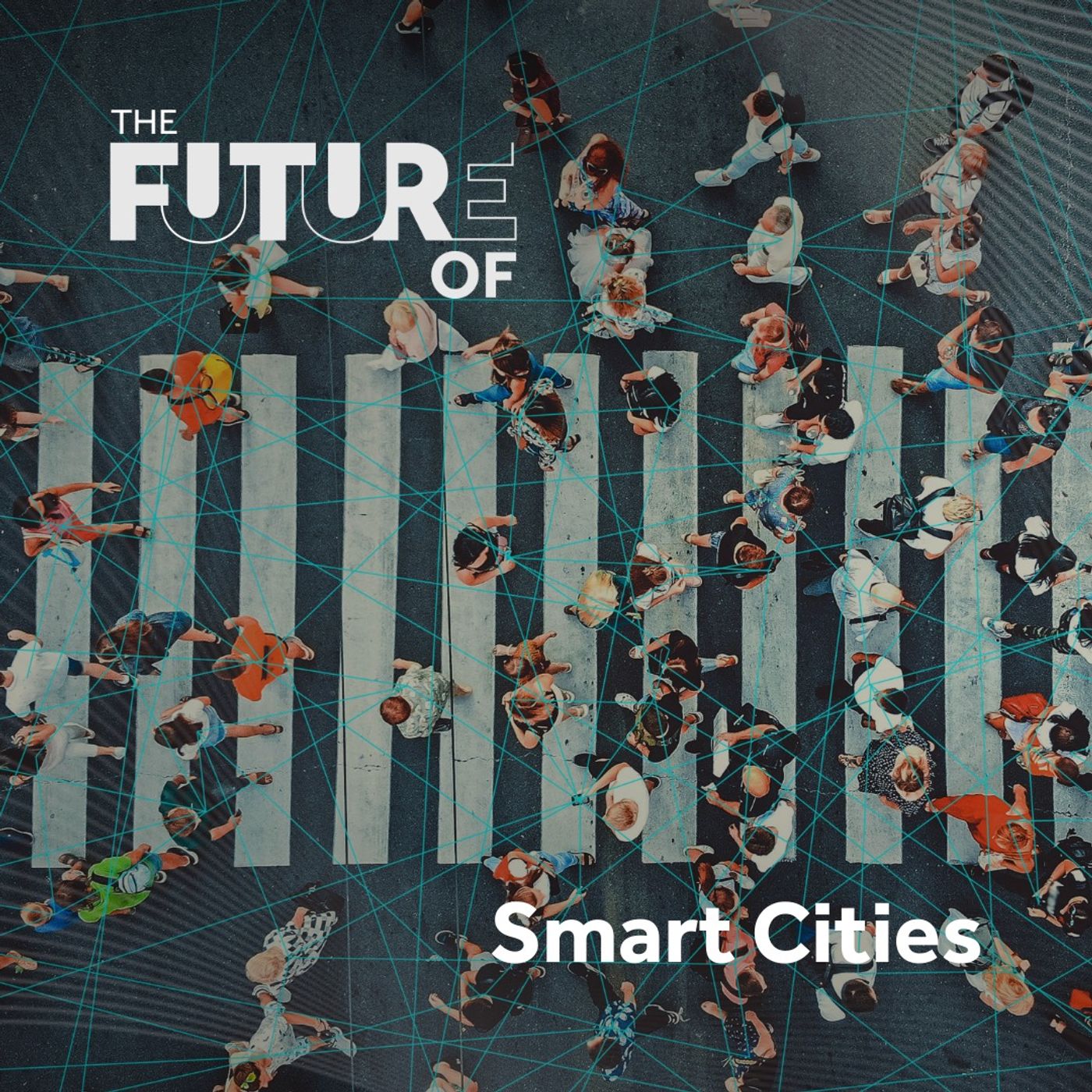
Ep 144Smart cities: urban efficiency, surveillance and data
From helping elderly people to cross the road to finding a free parking space, technology is helping to make our cities become safer and more enjoyable. But at what cost to our privacy?In this episode, David and Celeste are joined by Dr Courtney Babb, a senior lecturer in urban and regional planning at Curtin University. They explore the benefits of integrating technology in urban areas, such as efficiency, security and quality, but also look at the implications, including surveillance and privatisation. Songdo: the rise of the smart city [02:00]Data in urban efficiency [03:15]Who’s using your data, really? [09.30]Technology doesn’t always mean better [12:00]Future directions in urban planning [22:00]Being smarter with your data [29:00]Learn moreWharf Street BasinNew frontiers in sustainable innovationPerth is more smart city than meets the eyeThe Future of Sustainable ArchitectureConnect with our guestsCourtney BabbCourtney Babb is a senior lecturer in urban and regional planning at the School of Design and the Built Environment (DBE), at Curtin University. His research interests include institutional change and design in spatial planning; transport institutions and the politics of resisting auto-mobility; transitions to low energy transport systems; and integrated planning and management of riverine environments.Join Curtin UniversityThis podcast is brought to you by Curtin University. Curtin is a global university known for its commitment to making positive change happen through high-impact research, strong industry partnerships and practical teaching.Start postgraduate educationStudy a research degreeWork with usGot any questions, or suggestions for future topics?Email [email protected] mediaXFacebookInstagramYouTubeLinkedInTranscriptRead the transcript. Behind the scenesHosts: David Karsten and Celeste FourieProducer: Emilia JolakoskaWriter: Zoe TaylorExecutive producer: Natasha WeeksFirst Nations AcknowledgementCurtin University acknowledges Aboriginal and Torres Strait Islander people, the First Peoples of this place we call Australia, and the First Nations peoples connected with our global campuses. We are committed to working in partnership with Custodians and Owners to strengthen and embed First Nations’ voices and perspectives in our decision-making, now and into the future.Curtin University supports academic freedom of speech. The views expressed in The Future Of podcast may not reflect those of Curtin University.

Ep 143AI in Education: tutors, learning models and integrity
Nearly 80% of Australian students are already using generative AI – but should they be?In this episode, Celeste Fourie and David Karsten are joined by Alex Jenkins, Director of the WA Data Science Innovation Hub to discuss the future of artificial intelligence in education. From AI-powered tutoring to the risks of cognitive offloading, this episode examines how students and educators can collaborate with AI while preserving critical thinking.From neural networks to ChatGPT: how generative AI became mainstream [01:14]AI in classrooms: mastery learning and AI tutoring [04:53]Assessments, skill building and academic integrity in tertiary education [12:00]The danger of cognitive offloading [14:41]AI risks, ethics and equity gaps [21:31]How students and educators can use AI responsibly [27:48]Learn moreAI’s impact on education in Australia: podcast insightsAn (AI) tutor for every student TEDxAssessment 2030Connect with our guestsAlex Jenkins, Director of the WA Data Science Innovation HubAlex is an artificial intelligence specialist and experienced technology leader. He has more than 15 years of experience working in the technology space where he implements and advocates for analytics, data science and artificial intelligence solutions. Connect with Alex.Join Curtin UniversityThis podcast is brought to you by Curtin University. Curtin is a global university known for its commitment to making positive change happen through high-impact research, strong industry partnerships and practical teaching.Work with usStudy a research degreeStart postgraduate educationIf you liked this episode, why not explore our Master of Artificial Intelligence or one-year Graduate Diploma in Education.Got any questions, or suggestions for future topics?Email [email protected] mediaXFacebookInstagramYouTubeLinkedInTranscriptRead the transcript.Behind the scenesHosts: Celeste Fourie and David KarstenContent Creator and recordist: Caitlin CrowleyProducer: Emilia JolakoskaExecutive Producers: Anita Shore and Natasha WeeksFirst Nations AcknowledgementCurtin University acknowledges Aboriginal and Torres Strait Islander people, the First Peoples of this place we call Australia, and the First Nations peoples connected with our global campuses. We are committed to working in partnership with Custodians and Owners to strengthen and embed First Nations’ voices and perspectives in our decision-making, now and into the future.Curtin University supports academic freedom of speech. The views expressed in The Future Of podcast may not reflect those of Curtin University.
Ep 142Speech: stuttering, genetics and intervention
What causes some people to stutter? It's often believed that trauma or anxiety is the cause, but world-first research has found a genetic link to stuttering, allowing for life-changing early intervention.Our host David Karsten is joined by Professor Janet Beilby, an internationally renowned stuttering expert and Director of the Curtin Stuttering Treatment Clinic (CSTC). They discuss how Beilby and her colleagues have pinpointed the genes associated with stuttering, meaning intervention can happen much sooner, which is crucial for managing the condition. David and Janet also talk about the the impact stuttering can have on a person's life, and how the CSTC helps to manage stuttering and other fluency disorders in children, adults and the elderly. What is stuttering? [01:16]Challenges faced by people who stutter [05:52]The genetic link to stuttering [11:05]‘Genes aren’t destiny’ [19:27]Fostering resilience in kids [29:44]Acceptance and Commitment Therapy [31:00]Future directions in speech science [40:03]Learn moreCurtin Stuttering ClinicLife-changing genetic link offers hope for millions who stutterInternational Stuttering ProjectLarge-scale genome-wide analyses of stuttering (Nature Genetics)Connect with our guestsProfessor Janet BeilbyJanet is a leading speech pathology clinician, researcher, educator and director of the Curtin Stuttering Treatment Clinic (CSTC). In July this year, Janet co-published world-first research in Nature Genetics that pinpointed the genetic markers for stuttering. As director of CSTC, Janet has translated research into life-changing outcomes for over 10,000 clients, trained hundreds of students and been awarded over half a million dollars in research funds to investigate aspects of stuttering disorders, as well as dementia and virtual education.Join Curtin UniversityThis podcast is brought to you by Curtin University. Curtin is a global university known for its commitment to making positive change happen through high-impact research, strong industry partnerships and practical teaching.Work with usStudy a research degreeStart postgraduate educationGot any questions, or suggestions for future topics?Email [email protected] mediaXFacebookInstagramYouTubeLinkedInTranscriptRead the transcript: https://thefutureof.simplecast.com/episodes/speech/transcriptBehind the scenesHost: David KarstenProducer: Emilia JolakoskaContent writer: Zoe TaylorExecutive producer: Natasha WeeksFirst Nations AcknowledgementCurtin University acknowledges Aboriginal and Torres Strait Islander people, the First Peoples of this place we call Australia, and the First Nations peoples connected with our global campuses. We are committed to working in partnership with Custodians and Owners to strengthen and embed First Nations’ voices and perspectives in our decision-making, now and into the future.Curtin University supports academic freedom of speech. The views expressed in The Future Of podcast may not reflect those of Curtin University.

Ep 141Social Media: Australia’s ban, AI and young people online
Australia is banning social media for children 16 and under – but will it actually keep them safe or only spark new problems?In this episode, hosts David Karsten and Celeste Fourie are joined by Professor Tama Leaver, Professor of Internet Studies at Curtin University, to discuss Australia’s proposed ban on social media for children under 16.We explore what the Ban aims to achieve, who it will affect, and whether it could reshape the relationship between government and big tech.The discussion also ventures into what social media will look like when the ban comes into play, and how AI is creating a new internet for the next generation.The ban: Purpose, platforms and rollout [01:15]Consultation and youth input [04:40]How social platforms shape teens’ social lives [06:20]Will the ban protect young people? [11:12]Generative AI and youth [16:30]Industry and global response [22:00]Digital literacy and misinformation [16:50]The path forward: advice on supporting teens as the ban takes effect [33:10]Learn moreeSafety CommissionerDigital ChildThe social media ban: four essential insights for young people and parentsConnect with our guestsProfessor Tama Leaver, Professor of Internet Studies at Curtin UniversityTama is a regular media commentator, Chief Investigator in the ARC Centre of Excellence for the Digital Child and former president of the Association of Internet Researchers (AoIR).Follow Tama on LinkedInJoin Curtin UniversityThis podcast is brought to you by Curtin University. Curtin is a global university known for its commitment to making positive change happen through high-impact research, strong industry partnerships and practical teaching.Work with usStudy a research degreeStart postgraduate educationGot any questions, or suggestions for future topics?Email [email protected] mediaXFacebookInstagramYouTubeLinkedInTranscriptRead the transcriptBehind the scenesHosts: Celeste Fourie and David KarstenContent Creators: Zoe Taylor and Caitlin Crowley Recordist: Caitlin CrowleyProducer: Emilia JolakoskaExecutive Producers: Anita Shore and Natasha WeeksFirst Nations AcknowledgementCurtin University acknowledges Aboriginal and Torres Strait Islander people, the First Peoples of this place we call Australia, and the First Nations peoples connected with our global campuses. We are committed to working in partnership with Custodians and Owners to strengthen and embed First Nations’ voices and perspectives in our decision-making, now and into the future.Curtin University supports academic freedom of speech. The views expressed in The Future Of podcast may not reflect those of Curtin University.
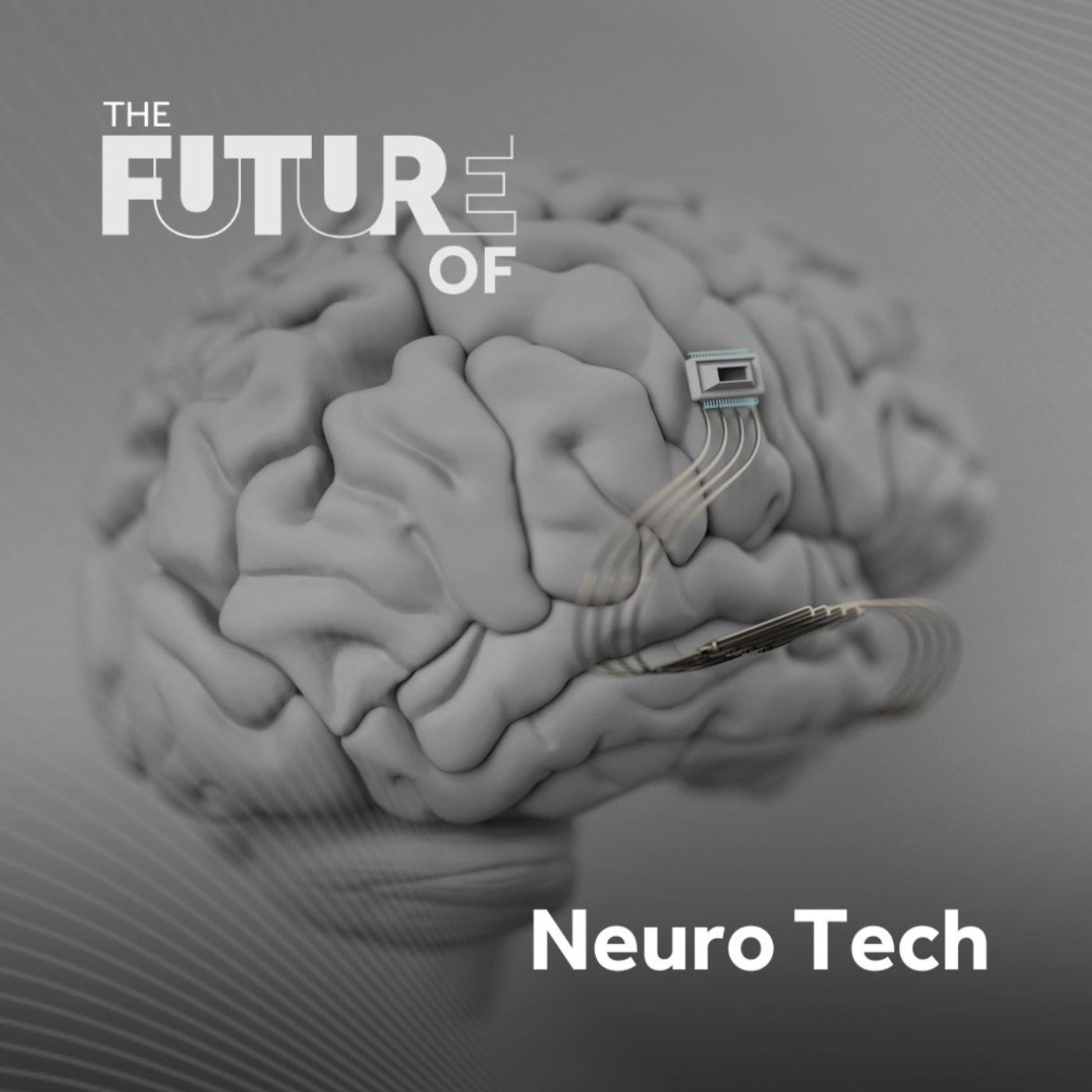
Ep 140Neuro Tech: Neuralink, brain chips, human augmentation
Inserting microchips into human brains was once the stuff of science fiction but is now reality thanks to companies like Elon Musk’s Neuralink. But what are the pros and cons of having Musk tech inside our heads? In this episode, our host David gets cerebral with Dr Sarah Hellewell, a Neurotrauma Research Fellow at Curtin University and the Perron Institute. Together, they unpack how human augmentation tech like Neuralink works, and how it can help to improve the quality of life for people with brain injuries or neurological conditions. They also explore the ethics of merging ‘mind with machine’. Understanding brain computer interfaces (BCI) [01:02]Decoding thoughts into actions [04:45]BCI can change lives [09:12]Ethical implications of BCI tech [14:15]The future of BCI in everyday life [12:36]Learn moreThe man with a mind-reading chip in his brain – thanks to Elon MuskWhy Elon Musk’s Neuralink brain implant reframes our ideas of self-identityResearchers reveal new pathway to improve traumatic brain injury outcomesThe Future Of Brain trauma and sportsConnect with our guestsDr Sarah HellewellSarah is a Senior Research Fellow in Neurotrauma at Curtin University and the Perron Institute. Her research incorporates both clinical and preclinical research programs spanning the spectrum of neurodegeneration and brain injury severity, enabling her to rapidly identify clinical problems and translate “bedside to bench” and back again.Join Curtin UniversityThis podcast is brought to you by Curtin University. Curtin is a global university known for its commitment to making positive change happen through high-impact research, strong industry partnerships and practical teaching.Work with usStudy a research degreeStart postgraduate educationGot any questions, or suggestions for future topics?Email [email protected] mediaXFacebookInstagramYouTubeLinkedInTranscriptRead the transcript: https://thefutureof.simplecast.com/episodes/neuro-tech/transcript Behind the scenesHost: David KarstenContent creators: Caitlin Crowley and Zoe TaylorProducer: Emilia JolakoskaExecutive producer: Natasha Weeks and Anita ShoreFirst Nations AcknowledgementCurtin University acknowledges Aboriginal and Torres Strait Islander people, the First Peoples of this place we call Australia, and the First Nations peoples connected with our global campuses. We are committed to working in partnership with Custodians and Owners to strengthen and embed First Nations’ voices and perspectives in our decision-making, now and into the future.MusicOKAY by 13ounce Creative Commons — Attribution-ShareAlike 3.0 Unported — CC BY-SA 3.0 Music promoted by Audio Library.Curtin University supports academic freedom of speech. The views expressed in The Future Of podcast may not reflect those of Curtin University.
Ep 139Masculinity: identity, social media and extremism
Gender is always in motion, but is masculinity in crisis? In this episode, host David Karsten speaks with Dr Ben Rich and Todd Morley about modern masculinity, the challenges men face today, the rise of extremism and the solutions that could benefit us all.What does it mean to be a man in 2025 – and is masculinity in crisis? [00:09]Why men are falling behind: education, mental health and identity in a time of “polycrisis” [02:04]Generational divides and changing views on struggle [07:43]How social media is shaping masculinity [11:19]Extremism explained – what it really means and how it connects to masculinity [14:49]Is the internet an accelerant for radicalisation? [23:01]What men – and society – can do to create better futures [26:59]Redefining the “modern man” – why ambiguity matters [30:50]Inside the Curtin Extremism Research Network (CERN) [34:59]Learn moreHasan Piker: a "himbo gateway drug" to the left?Most young Aussie men are turning to masculinity influencers, and it's impacting their mental healthWhat is gender? With Judith Butler The draw of the ‘manosphere’: understanding Andrew Tate’s appeal to lost menThe Future Of the Manosphere podcastWestern Australia Intervention Support Program (WAISP)Connect with our guestsDoctor Ben RichDr Ben Rich is a senior lecturer in the School of Media, Creative Arts and Social Inquiry, and co-director of the Curtin Extremism Research Network (CERN), where his research focuses on the factors behind politically extreme views in areas such as gender, race, and public health.Todd MorleyTodd Morley is a PhD researcher in the School of Media, Creative Arts and Social Inquiry. His current research focuses on the radicalisation patterns of lone actor terrorists, and he also works as a preventing/countering violent extremism practitioner and consultant outside of Curtin.Join Curtin UniversityThis podcast is brought to you by Curtin University. Curtin is a global university known for its commitment to making positive change happen through high-impact research, strong industry partnerships and practical teaching.Work with usStudy a research degreeStart postgraduate educationGot any questions, or suggestions for future topics?Email [email protected] mediaXFacebookInstagramYouTubeLinkedInTranscriptRead the transcript.Behind the scenesHost: David KarstenContent creator and recordist: Zoe TaylorEditor: Caitlin CrowleyProducer: Emilia JolakoskaExecutive Producers: Anita Shore and Natasha WeeksFirst Nations AcknowledgementCurtin University acknowledges Aboriginal and Torres Strait Islander people, the First Peoples of this place we call Australia, and the First Nations peoples connected with our global campuses. We are committed to working in partnership with Custodians and Owners to strengthen and embed First Nations’ voices and perspectives in our decision-making, now and into the future.Curtin University supports academic freedom of speech. The views expressed in The Future Of podcast may not reflect those of Curtin University.
Ep 138Sustainable Futures: climate, curriculum and collaboration
What do an urban designer, an electrician and Curtin University have in common? They all want to help humanity prosper. To achieve that, sustainability is key. In this episode, our host David is joined by Professor Josh Byrne and Saf Flatters. Josh is Dean of Sustainable Futures at Curtin (he’s also well-known as a presenter on ABC TV’s Gardening Australia), and Saf is an electrical and energy specialist and third-year Curtin data science student. Together, they explore what a ‘sustainable future’ really means, and how a novel Curtin University subject called Sustainability Challenge is bringing together academia, industry, government and community to create real solutions to some of the most pressing environmental and social problems. What does a ‘sustainable future’ mean? [03:24]Sustainability problems more complex than ever [04:40]Big problems mean big solutions [07:30]Data science brings structure to complexity [08:28]Cultivating hope and optimism [10:11]Sustainability Challenge insights [12:29]There’s no ‘doctor evil’ industry [30:59]Learnings to last a lifetime [35:17]Learn more2025 Sustainability ChallengeSustainable FuturesFutures Platform at CurtinConnect with our guestsProfessor Josh Byrne, Dean of Sustainable Futures, Faculty of HumanitiesProfessor Josh Byrne is an environmental scientist, urban design professional and Dean of Sustainable Futures at Curtin. His career bridges academia, professional practice, media and policy, with a focus on advancing urban sustainability through demonstration and collaboration. In 2025, Josh was appointed a Member of the Order of Australia (AM) for significant service to conservation, the environment and public communication.Curtin staff profileLinkedInORCiDSaf Flatters, Bachelor of Science (Data Science) student, Faculty of Science and EngineeringSaf describes her career path as “very twisty.” With more than 15 years of experience as an electrician in the electrical and energy sectors, she’s now studying a Bachelor of Science (Data Science) at Curtin. Saf is passionate about using data to solve real-world problems, and outside her studies, she runs an electrical business, serves on industry boards and spends time bike packing through hidden corners of the world.LinkedInPortfolioJoin Curtin UniversityThis podcast is brought to you by Curtin University. Curtin is a global university known for its commitment to making positive change happen through high-impact research, strong industry partnerships and practical teaching.Work with usStudy a research degreeStart postgraduate educationGot any questions, or suggestions for future topics?Email [email protected] mediaXFacebookInstagramYouTubeLinkedInTranscriptRead the transcript.Behind the scenesHost: David KarstenResearcher: Caitlin CrowleyProducer: Emilia JolakoskaFirst Nations AcknowledgementCurtin University acknowledges all First Nations of this place we call Australia and the First Nations peoples connected with our global campuses. We are committed to working in partnership with all Custodians and Owners to strengthen and embed First Nations’ voices and perspectives in our decision-making, now and into the future.MusicOKAY by 13ounce Creative Commons — Attribution-ShareAlike 3.0 Unported — CC BY-SA 3.0 Music promoted by Audio Library.Curtin University supports academic freedom of speech. The views expressed in The Future Of podcast may not reflect those of Curtin University.
Ep 137Reproductive Health Leave | Dr Silvia Salazar and Dr Abebe Hailemariam
Have you ever had to take a day off work due to severe period pain? Or to manage menopause symptoms? Or to attend an IVF appointment? New research reveals it would save the Australian economy billions of dollars a year if employers offered leave specifically for reproductive health.In this episode our host David Karsten talks with the authors of the research, Dr Silvia Salazar and Dr Abebe Hailemariam, from the Bankwest Curtin Economics Centre. They discuss what reproductive health leave is and explore the benefits it could have for both employees and employers, including economic savings, increased productivity, improved mental health and wellbeing, and better workplace equity. They also discuss some of the risks of implementing reproductive health leave and the cultural stigma associated with women’s reproductive health.What is reproductive health leave (RHL)? [01:02]Absenteeism and presenteeism costs economy A$21billion [03:49]RHL is a shared concern and promotes equality [08:45]How other countries offer RHL [10:28]Will RHL discriminate against women? [15:19]Steps to legislate RHL in Australia [23:00]Connect with our guestsDr Silvia SalazarResearch Fellow, Bankwest Curtin Economics Centre Dr Salazar is a researcher in development economics, ethnic and gender issues and public policy. She obtained her PhD at the Paris School of Economics and the University Paris 1, Panthéon Sorbonne, and has presented her research at numerous international conferences and workshops.Dr Abebe HailemariamSenior Research Fellow, Bankwest Curtin Economics Centre Dr Hailmarian obtained his PhD in Economics from Monash University, where he and received the Mollie Holman Medal Award for Best doctoral thesis in the Faculty of Business and Economics at Monash University.Dr Hailemariam’s research areas of interest include energy economics, health economics, housing, gender and inequality.Join Curtin UniversityThis podcast is brought to you by Curtin University. Curtin is a global university known for its commitment to making positive change happen through high-impact research, strong industry partnerships and practical teaching.Work with usStudy a research degreeStart postgraduate educationGot any questions, or suggestions for future topics?Email [email protected] mediaXFacebookInstagramYouTubeLinkedInTranscriptRead the transcript.Behind the scenesHost: David KarstenContent creators: Caitlin Crowley and Zoe TaylorProducer:Emilia JolakoskaFirst Nations AcknowledgementCurtin University acknowledges all First Nations of this place we call Australia and the First Nations peoples connected with our global campuses. We are committed to working in partnership with all Custodians and Owners to strengthen and embed First Nations’ voices and perspectives in our decision-making, now and into the future.MusicOKAY by 13ounce Creative Commons — Attribution-ShareAlike 3.0 Unported — CC BY-SA 3.0 Music promoted by Audio Library.Curtin University supports academic freedom of speech. The views expressed in The Future Of podcast may not reflect those of Curtin University.
Ep 136Planetary Defence | Assoc Prof Nick Timms & Prof William Rickard
Picture this: there’s an asteroid on a collision course with Earth. What exactly would we do – and who’s working behind the scenes to keep us safe? In this episode, David Karsten is joined by Associate Professor Nicholas Timms and Professor William Rickard to explore the fascinating science of planetary defence.o How a Moon rock changed a career [00:58]o Planetary defence 101 [02:32]o Space rocks and the tools unlocking their secrets [04:50]o What Asteroid Bennu is teaching us about life’s building blocks [07:40]o The story of WA’s Mother’s Day meteorite [10:24]o Popcorn asteroids, Apophis and the DART mission [15:45]o Potentially hazardous objects: Whose problem is it anyway? [19:47]o The future of planetary defence and space research [22:17] Learn moreJohn de Laeter Research CentrePlanetary defence: Asteroids, meteorites and the future of life on EarthPolice officer finds meteorite that lit up WA's skiesPristine asteroid samples reveal secrets of the ancient solar systemConnect with our guestsAssociate Professor Nicholas Timms, School of Earth and Planetary SciencesNick is a leading expert in rock and mineral deformation and geochronology and has focussed his recent research on impact cratering and extra-terrestrial geology. Deeply immersed in the field, Nick is director of the Space Science and Technology Centre at Curtin University, a team member for NASA's OSIRIS-REx mission and member of the CASA Moon NASA Solar System Exploration Research Virtual Institute (SSERVI).LinkedInCurtin staffProfessor William Rickard, Director, John de Laeter CentreProfessor Will Rickard is an experienced materials scientist with a successful record in applied research and analytical facility management. He collaborates widely with researchers and industry as the subject matter expert for advanced materials characterisation. Will is the Director of the John de Laeter Centre where he manages a suite of core research facilities and co-ordinates a number of projects in defence, materials science and geoscience disciplines.LinkedInCurtin staffJoin Curtin UniversityThis podcast is brought to you by Curtin University. Curtin is a global university known for its commitment to making positive change happen through high-impact research, strong industry partnerships and practical teaching.Work with usStudy a research degreeStart postgraduate educationGot any questions, or suggestions for future topics?Email [email protected] mediaXFacebookInstagramYouTubeLinkedInTranscriptRead the transcriptBehind the scenesHost: David KarstenContent creator and recordist: Caitlin CrowleyProducer: Emilia JolakoskaSocial Media: Celeste FourieExecutive Producer: Anita ShoreFirst Nations AcknowledgementCurtin University acknowledges all First Nations of this place we call Australia and the First Nations peoples connected with our global campuses. We are committed to working in partnership with all Custodians and Owners to strengthen and embed First Nations’ voices and perspectives in our decision-making, now and into the future.MusicOKAY by 13ounce Creative Commons — Attribution-ShareAlike 3.0 Unported — CC BY-SA 3.0 Music promoted by Audio Library.Curtin University supports academic freedom of speech. The views expressed in The Future Of podcast may not reflect those of Curtin University.

Ep 135Personal Data Privacy Online | Dr Adam Andreotta
Data is the currency of the digital age, and most of us give our personal data away without realising. In this episode, host David Karsten is joined by Dr. Adam Andreotta to discuss his book, Rethinking Informed Consent in the Big Data Age. Listen to discover how big data is reshaping our privacy and how we can protect our information in the new age of integrated technology.Dr Adam Andreotta’s journey [01:17]What is personal data? [04:54]The upside of sharing your data [08:14]What are we agreeing to when we ‘accept terms’? [11:23]The pitfalls of privacy policies [15:21]Can we take back control? [18:24]Copyright and consent [33:00]The future of online privacy [36:28]Learn moreThe Philosopher's ZoneAutomated informed consentData Privacy and Personal Protection Online: Insights from The Future OfRethinking Informed Consent in the Big Data AgeConnect with our guestsDr Adam Andreotta, Lecturer, School of Management and Marketing, Curtin UniversityDr Adam Andreotta's research explores the philosophy of artificial intelligence, the ethics of big data, and how we can better secure informed consent surrounding the collection and use of our personal data online.In 2024, Adam authored Rethinking Informed Consent in the Big Data Age where he delves into the challenges of self-managing our private data online and suggests ways we can improve data consent practices in everyday contexts.Curtin Staff ProfileLinkedInPhilPeopleJoin Curtin UniversityThis podcast is brought to you by Curtin University. Curtin is a global university known for its commitment to making positive change happen through high-impact research, strong industry partnerships and practical teaching.Work with usStudy a research degreeStart postgraduate educationTranscriptRead the transcriptBehind the scenesHost: David KarstenRecordist and Content Creator: Caitlin CrowleySocial Media: Celeste FourieProducer: Emilia JolakoskaExecutive Producer: Anita ShoreFirst Nations AcknowledgementCurtin University acknowledges all First Nations of this place we call Australia and the First Nations peoples connected with our global campuses. We are committed to working in partnership with all Custodians and Owners to strengthen and embed First Nations’ voices and perspectives in our decision-making, now and into the future.

Ep 134Screen Time and Child Development | Dr Amber Beynon
Screens and digital technology are ubiquitous in the lives of children and parents – but what does this mean for child development? In this episode, David Karsten is joined by Dr Amber Beynon to discuss her research into the relationship between infant development, screen time and other family factors. What we know (and don’t) about screen time and children’s development [00:58]Understanding the impact of the broader family environment [04:26]Advice for parents navigating the digital landscape [07:56]Closing the research gap [10:55]Navigating new technology: From TV to AI [11:55]Amber's journey in this evolving field [16:23]Learn moreARC Centre of Excellence for the Digital ChildBeyond screen time: complex factors shaping child developmentHalf of all Australian kids have hands on mobile phones, according to Communication and Media Authority surveyInfluence of maternal and infant technology use and other family factors on infant developmentIs screen time bad for kids? New research says it’s not so black and whiteMeasurement Method Options to Investigate Digital Screen Technology Use by Children and Adolescents: A Narrative ReviewThe ORIGINS Project: A platform for research discoveryConnect with our guestsDr Amber BeynonDr Amber Beynon is a Research Fellow at Curtin University’s School of Allied Health. She investigates the health impacts of information technology and the epidemiology of musculoskeletal pain in young populations. Find out more about Amber’s work:XORCiDCurtin Staff ProfileJoin Curtin UniversityThis podcast is brought to you by Curtin University. Curtin is a global university known for its commitment to making positive change happen through high-impact research, strong industry partnerships and practical teaching.Work with usStudy a research degreeStart postgraduate educationGot any questions, or suggestions for future topics?Email [email protected] mediaXFacebookInstagramYouTubeLinkedInTranscriptRead the transcript.Behind the scenesHost: David KarstenContent creator: Caitlin CrowleyProducer: Emilia JolakoskaRecordist: Annabelle FouchardSocial media: Celeste FourieExecutive producers: Anita Shore and Matthew SykesFirst Nations AcknowledgementCurtin University acknowledges all First Nations of this place we call Australia and the First Nations peoples connected with our global campuses. We are committed to working in partnership with all Custodians and Owners to strengthen and embed First Nations’ voices and perspectives in our decision-making, now and into the future.MusicOKAY by 13ounce Creative Commons — Attribution-ShareAlike 3.0 Unported — CC BY-SA 3.0 Music promoted by Audio Library.Curtin University supports academic freedom of speech. The views expressed in The Future Of podcast may not reflect those of Curtin University.
Ep 133eDNA | A. Prof Paul Nevill and Joshua Kestel
Insects pollinate 75% of all agricultural crops, yet many face extinction. Discover how a ‘Star Trek’ level tech called eDNA can monitor vital insect pollinators and support global food security. The pollinator crisis [01:15]eDNA a gamechanger for biodiversity monitoring [03:09]Hoverfly vs honeybee in avocado pollination [05:46]Native bushland sustains agriculture [08:21]Diverse applications for eDNA [14:05]Merging tech with farm mechanisation [19:36]Cambridge calling [20:10]Learn moreeDNA could help protect insect pollinators of avocado flowersStudy reveals how eDNA could bear fruit for farmers and the environmentSmall but might: eDNA amplies key role of insects in pollinationConnect with our guestsAssociate Professor Paul NevillPaul leads the Minesite Biomonitoring with eDNA (MBioMe) research group at Curtin University. He is a molecular ecologist working on everything from soil microbes to mammals. His main interest is eDNA-based monitoring of biodiversity.Curtin staff profileDr Joshua KestelJoshua is a molecular ecologist interested in pollination and the resulting genetic consequences. He has undertaken research with the Minesite Biomonitoring with eDNA (MBioMe) research group at Curtin University, and the Department of Conservation, Biodiversity and Attractions (DBCA). He is now working at Cambridge University to further his research detecting pollinators using eDNA.LinkedIn profileJoin Curtin UniversityThis podcast is brought to you by Curtin University. Curtin is a global university known for its commitment to making positive change happen through high-impact research, strong industry partnerships and practical teaching.Work with usStudy a research degreeStart postgraduate educationGot any questions, or suggestions for future topics?Email [email protected] mediaXFacebookInstagramYouTubeLinkedInTranscriptRead the transcript.Behind the scenesHost: David KarstenProducer: Emilia JolakoskaEpisode researcher:Zoe TaylorExecutive producers: Anita Shore and Matthew SykesFirst Nations AcknowledgementCurtin University acknowledges all First Nations of this place we call Australia and the First Nations peoples connected with our global campuses. We are committed to working in partnership with all Custodians and Owners to strengthen and embed First Nations’ voices and perspectives in our decision-making, now and into the future.

Ep 131Global Futures | Professor Joe Siracusa
We’re at a pivotal moment in time for humanity. Are we doomed to repeat past mistakes or can Global Futures help to better shape our collective tomorrow?In this insightful episode, special host Matthew Sykes is joined by Professor Joe Siracusa, veteran historian and Inaugural Professor of Global Futures in the Faculty of Humanities at Curtin University. They explore how Global Futures can help us to understand history as a dynamic, non-linear journey that shapes our present and future possibilities, and empower us to make informed decisions for a brighter future.• Defining Global Futures [01:18]• Unpacking critical realist ontology [02:20]• The role of philosophy and science fiction [16:35]• Turning foresight into actionable insight [11:20]• Lessons on the past: meeting Martin Luther King [24:26]Learn moreFuture tense? Global Futures uncovers what the past can tell us about tomorrowLeading political expert named Dean of Global Futures at CurtinConnect with our guestsJoe SiracusaProfessor of Global Futures, Curtin UniversityPresident Emeritus of Australia’s Council for the Humanities, Arts and Social Sciences, Professor Siracusa has also authored and co-authored over 30 books including America and the Cold War, 1941-1991: A Realist Interpretation, which was nominated for the Pulitzer Prize in History. Professor Siracusa is also a regular media commentator on international diplomacy, nuclear weapons and American foreign policy.Join Curtin UniversityThis podcast is brought to you by Curtin University. Curtin is a global university known for its commitment to making positive change happen through high-impact research, strong industry partnerships and practical teaching.Work with usStudy a research degreeStart postgraduate educationGot any questions, or suggestions for future topics?Email [email protected] mediaXFacebookInstagramYouTubeLinkedInTranscriptRead the transcript.Behind the scenesHost and researcher: Matthew SykesProducer: Emilia JolakoskaEditor: Zoe TaylorExecutive Producers: Anita Shore and Matthew SykesFirst Nations AcknowledgementCurtin University acknowledges all First Nations of this place we call Australia and the First Nations peoples connected with our global campuses. We are committed to working in partnership with all Custodians and Owners to strengthen and embed First Nations’ voices and perspectives in our decision-making, now and into the future.MusicOKAY by 13ounce Creative Commons — Attribution-ShareAlike 3.0 Unported — CC BY-SA 3.0 Music promoted by Audio Library.Curtin University supports academic freedom of speech. The views expressed in The Future Of podcast may not reflect those of Curtin University.