
The Future Of
150 episodes — Page 2 of 3

Ep 100Research | Prof Chris Moran & Prof Fran Ackermann
In this episode, Sarah is joined by Professor Chris Moran, Deputy Vice-Chancellor, Research at Curtin University and John Curtin Distinguished Professor Fran Ackermann, to discuss the future of university research.Current challenges for Australian universities [02:07]The future of universities is around integration between disciplines [06:32]What does the fight for research dollars mean for universities? [08:36]Is the physical (university) campus a finished thing with online education? [14:45]How important is the link between teaching and research? [17:40]What can we do to retain and build (Australia’s) research capacity? (20:34)Learn moreCurtin University ResearchConnect with our guestsProfessor Chris Moran is the Deputy Vice-Chancellor, Research at Curtin. Chris has been involved in research for more than 30 years in natural resource and industry areas, and has also served as a research leader at the CSIRO and at the University of Queensland.John Curtin Distinguished Professor Fran Ackermann joined Curtin Business School in 2012 as an internationally recognised researcher in the areas of strategy and complex project management. She has also served as Dean of Research in Curtin’s Faculty of Business and Law.Join Curtin UniversityThis podcast is brought to you by Curtin University. Curtin is a global university known for its commitment to making positive change happen through high-impact research, strong industry partnerships and practical teaching.Work with usStudy a research degreeStart postgraduate educationGot any questions, or suggestions for future topics?Email [email protected] mediaTwitterFacebookInstagramYouTubeLinkedInTranscriptRead the transcriptTeamHost: Sarah TaillierTopic Researcher: Karen GreenProducer & Recordist: Emilia JolakoskaAudio Editor: Karen GreenSocial Media: Amy HoskingFirst Nations AcknowledgementCurtin University acknowledges the traditional owners of the land on which Curtin Perth is located, the Whadjuk people of the Nyungar Nation, and on Curtin Kalgoorlie, the Wongutha people of the North-Eastern Goldfields; and the First Nations peoples on all Curtin locations.MusicOKAY by 13ounce Creative Commons — Attribution-ShareAlike 3.0 Unported — CC BY-SA 3.0 Music promoted by Audio Library.Curtin University supports academic freedom of speech. The views expressed in The Future Of podcast may not reflect those of Curtin University.

Ep 99Green Hydrogen (Re Release) | Prof Craig Buckley
Is green hydrogen the key to a carbon-free energy future?In this episode, Jessica is joined by Professor Craig Buckley from Curtin University’s Hydrogen Storage Research Group to discuss the future of green hydrogen and how he and his team are making it a viable energy solution. The colours of hydrogen [00:45]Using Raman scattering to detect hydrogen [04:11]Is green hydrogen a feasible energy solution? [08:42]Safety of hydrogen compared to fossil fuels [11:01]Using hydrogen to fuel transport vehicles [16:27]Learn more2022 International Symposium on Metal-Hydrogen SystemsCurtin green hydrogen research supported with ARC fundingHow hydrogen became the talk of the town at COP26Hydrogen high street: could these homes change the way we keep warmConnect with our guestsProfessor Craig Buckley,John Curtin Distinguished Professor, School of Electrical Engineering, Computing and Mathematicals Sciences. Professor Buckley is Head of the Hydrogen Storage Research Group at Curtin University and is recognised internationally for his work on hydrogen storage materials. He is the Australian Executive Committee member on the International Energy Agency (IEA) Hydrogen Technology Collaboration Program (TCP) and is an Australian expert on the IEA Hydrogen TCP Task 40 Hydrogen Energy Storage and Conversion.Curtin staff profileQuestions or suggestions for future topicsEmail [email protected]://twitter.com/curtinunihttps://www.facebook.com/curtinuniversityhttps://www.instagram.com/curtinuniversity/https://www.youtube.com/user/CurtinUniversityhttps://www.linkedin.com/school/curtinuniversity/Transcripthttps://thefutureof.simplecast.com/episodes/green-hydrogen/transcript Curtin University supports academic freedom of speech. The views expressed in The Future Of podcast may not reflect those of Curtin University.Music: OKAY by 13ounce Creative Commons — Attribution-ShareAlike 3.0 Unported — CC BY-SA 3.0 Music promoted by Audio Library.

Ep 98Screen time and our attention span | Dr Patrick Clarke, Tamsin Mahalingham
Our growing reliance on mobile phones, the internet and social media may be changing how our brains work and altering our ability to focus. Early research expresses concern about the impacts of screen use on our concentration and mental health, and particularly on young children. However, newer research finds that many of the early conclusions regarding the negative effects of screen time and social media may have been overstated.In this episode, Sarah is joined by Dr Patrick Clarke and Ms Tamsin Mahalingham.Dr Clarke is a lecturer, clinical psychologist and researcher in psychology. His research considers whether our interactions with our devices influence our patterns of emotion, for better and for worse. Ms Mahalingham is a PhD student at Curtin, where she has been examining the impact of social media use on mental health outcomes. They discuss, how cognitive processes are changing in response to technology, the connections between inner tension and health, and how future technologies could impact brain function.What attention control is and how it is measured [1:11]In what ways is the digital world changing our attention span and shaping our cognitive abilities [4:58]The connection between distractability, social media and mental health. [6:17]How we can rebuild our attention spans – or retrain our brains to help us focus without distraction [15:07]How our brains will adapt to the intense, digital demands of the future, such as VR and the Internet of Everything [19:13]Patrick and Tamsin’s upcoming research plans [24:33]Learn moreAttention control moderates the relationship between social media use and psychological distressSymptoms of ADHDScreentime associated with inattention in pre-schoolersConnect with our guestsDr Patrick ClarkeSenior Lecturer, Curtin School of Population HealthDr Clarke is a lecturer, clinical psychologist and researcher in psychology. His research interests include understanding the cognitive and neural processes that underlie emotional vulnerability and resilience. His recent research also considers how interactions between patterns of cognition, such as attention, and our devices may influence patterns of emotion for better and for worse. [email protected] Scholarhttps://scholar.google.com.au/citations?user=qJmehJwAAAAJTwitter@DrPatClarkeMs Tamsin MahalinghamProvisional Psychologist, Professional Masters and PhD Psychology student, Curtin School of Population HealthMs Mahalingham is a PhD student at Curtin, where she has been examining the impact of social media use on mental health outcomes. She has found that people who get distracted easily are more prone to experience negative psychological effects (anxiety and depression) from high levels of social media use. She is also a volunteer with YouthFocus [email protected]@TMahalinghamJoin Curtin UniversityThis podcast is brought to you by Curtin University. Curtin is a global university known for its commitment to making positive change happen through high-impact research, strong industry partnerships and practical teaching.Work with usStudy a research degreeStart postgraduate educationGot any questions, or suggestions for future topics?Email [email protected] mediaTwitterFacebookInstagramYouTubeLinkedInTranscriptRead the transcriptBehind the scenesHost: Sarah TaillierResearcher and Editor: Anita Shore and Jarrad LongProducer and Recordist: Emilia JolakoskaExecutive Producers: Anita Shore and Jarrad LongSocial Media Coordinator: Amy HoskingFirst Nations AcknowledgementCurtin University acknowledges the traditional owners of the land on which Curtin Perth is located, the Whadjuk people of the Nyungar Nation, and on Curtin Kalgoorlie, the Wongutha people of the North-Eastern Goldfields; and the First Nations peoples on all Curtin locations.MusicOKAY by 13ounce Creative Commons — Attribution-ShareAlike 3.0 Unported — CC BY-SA 3.0 Music promoted by Audio Library.Curtin University supports academic freedom of speech. The views expressed in The Future Of podcast may not reflect those of Curtin University.

Ep 97Prisons | Dr Stuart Kinner
“People are sent to prison as punishment, not for punishment.” The appalling treatment of children at Banksia Hill Youth Detention Centre urges us to rethink how we treat some of society’s most vulnerable people. People who have spent time in prison are generally more disadvantaged, with higher health care needs than the wider Australian population, but their quality of life is often not considered to be public health or human rights issues. In this episode, Sarah is joined by Dr Stuart Kinner, a Professor in Curtin’s School of Population Health. They discuss Australia’s current treatment of justice-involved people, and changes that need to be made to multiple systems to improve structural inequalities that exist for people who are involved throughout the prison cycle. Government’s response to Banksia Hill found wanting [02:02]“People are sent to prison as punishment, not for punishment” [04:42]People in prison have human rights [04:42]People in prisons can't access Medicare [06:36]The stigma of being in prison [13:25]People who seek help more likely to return to jail [19:15]Effective support for people released from prison [22:55]Prisons as places of rehabilitation [26:51]Hope for changes to the system [28:55]Learn moreAssociation between contact with mental health and substance use services and reincarceration after release from prisonSeeking mental health and substance use support isn’t keeping people from going back to jailAustralia’s shame, stillPoliticians have misread the room on Banksia Hill: professorWhy is a UN torture committee visiting Australia?Connect with our gestsDr Stuart Kinner is a Professor in Curtin’s School of Population Health. He leads a program of multi-disciplinary research on the health of marginalised and justice-involved people. His work is distinguished by methodological rigour, ethical research practice and meaningful research translation. He is experienced in longitudinal studies, multi-sectoral data linkage, randomised controlled trials, program evaluation, policy analysis, systematic review, and meta-analysis. He has produced more than 250 publications (192 peer reviewed) and attracted more than $28 million in research and consulting funds, mostly from nationally competitive schemes. Dr Kinner is Chair of Australia’s_National Youth Justice Health Advisory Group and_ the WHO’s Health in Prisons Programme Technical Expert Group. He also serves on the Steering Committee for the_Worldwide Prison Health Research and Engagement Network.Dr Kinner's social profiles:LinkedinTwitterJoin Curtin UniversityThis podcast is brought to you by Curtin University. Curtin is a global university known for its commitment to making positive change happen through high-impact research, strong industry partnerships and practical teaching.Work with usStudy a research degreeStart postgraduate educationGot any questions, or suggestions for future topics?Email [email protected] mediaTwitterFacebookInstagramYouTubeLinkedInTranscriptRead the transcript.Behind the scenesHost: Sarah TaillierContent creator: Zoe TaylorFirst Nations AcknowledgementCurtin University acknowledges the traditional owners of the land on which Curtin Perth is located, the Whadjuk people of the Nyungar Nation, and on Curtin Kalgoorlie, the Wongutha people of the North-Eastern Goldfields; and the First Nations peoples on all Curtin locations.MusicOKAY by 13ounce Creative Commons — Attribution-ShareAlike 3.0 Unported — CC BY-SA 3.0 Music promoted by Audio Library. Curtin University supports academic freedom of speech. The views expressed in The Future Of podcast may not reflect those of Curtin University.

Ep 96Synthetic Milk | Professor Dora Marinova
Would you drink milk that came from a laboratory instead of a cow? Synthetic milk is set to shake up the dairy industry, boasting a similar look, taste and nutrition profile to cow’s milk, but with a smaller carbon footprint. In this episode, Sarah is joined by Professor Dora Marinova from the Curtin University Sustainability Policy Institute. They discuss how synthetic milk is made, why we need another dairy alternative and the possible benefits and impact of fake milk on the dairy industry and consumers. I can’t believe it’s not milk! [01:02]What is synthetic milk made from? [02:30]How ‘green’ is synthetic milk? [07:26]Impact of synthetic milk on dairy jobs [11:53]We already drink processed milk [14:05]Trying different brands avoids path dependency [16:28]Has the food industry become hyperreal? [19:23]“We need miracles on demand” to battle climate change [23:56]Learn moreWhich milk is best for the environment?Leading the whey: the synthetic milk start-ups shaking up in the dairy industryFood in a planetary emergencyConnect with our guestsProfessor Dora MarinovaDora Marinova is Professor of Sustainability at the Curtin University Sustainability Policy (CUSP) Institute and was CUSP Director from 2015 to 2018 and Deputy Director from 2007 to 2014. She has more that 320 refereed publications and has supervised 57 PhD students. Marinova’s research areas of interest include innovative global green systems, sustainometrics (the modelling and measuring of sustainability), flexitarianism, the role of China in decarbonising the global economy, and the role of the individual in living sustainably.Join Curtin UniversityThis podcast is brought to you by Curtin University. Curtin is a global university known for its commitment to making positive change happen through high-impact research, strong industry partnerships and practical teaching.Work with usStudy a research degreeStart postgraduate educationGot any questions, or suggestions for future topics?Email [email protected] mediaTwitterFacebookInstagramYouTubeLinkedInTranscriptRead the transcript.Behind the scenesHost: Sarah TaillierContent creator: Zoe TaylorFirst Nations AcknowledgementCurtin University acknowledges the traditional owners of the land on which Curtin Perth is located, the Whadjuk people of the Nyungar Nation, and on Curtin Kalgoorlie, the Wongutha people of the North-Eastern Goldfields; and the First Nations peoples on all Curtin locations.MusicOKAY by 13ounce Creative Commons — Attribution-ShareAlike 3.0 Unported — CC BY-SA 3.0 Music promoted by Audio Library. Curtin University supports academic freedom of speech. The views expressed in The Future Of podcast may not reflect those of Curtin University.

Ep 95Indigenous Cultural Tourism | Robert Taylor, A. Prof Michael Volgger
Learn how the peak body for Aboriginal tourism in WA is leading the way in sharing the cultures and knowledges of First Nations Peoples.In this episode, Sarah is joined by Robert Taylor, CEO of the Western Australian Indigenous Tourism Operators Council (WAITOC) and Michael Volgger, Co-Director of the Curtin Tourism Research Cluster. Together, they discuss ways to expand Indigenous cultural tourism in Australia, including looking at the Fitzroy Valley in the Kimberley region as a case study.WAITOC leads the way in WA’s Indigenous tourism industry [02:46]Martuwarra Fitzroy River can create A$30million in tourism income [05:10]Indigenous tourism supports reconciliation [07:30]Maintaining culture means maintaining country [13:33]Capacity building for tourism operators [18:36]Indigenous cultural tourism in New Zealand [20:19]Cultural tourism beyond the dollar value [27:55]Plans for a national Aboriginal tourism organisation [39:29]Learn moreAssessing tourism potentials in the Fitzroy ValleyStrong support to protect the the Martuwarra Fitzroy RiverWAITOC websiteConnect with our guestsRobert Taylor is the CEO of the Western Australian Indigenous Tourism Operators Council (WAITOC). WAITOC’s goal is to present WA as the leading destination in Australia for authentic Aboriginal tourism experiences.Prior to WAITOC, Taylor spent 30 years working in the tourism, hospitality, recreation and manufacturing industries in Perth, Margaret River, Busselton, Karratha and Mandurah. Taylor is of Nhanda Yamiji descent, the Nhanda people being the traditional custodians of the land between Geraldton and the Murchison River in Western Australia’s Midwest region.Robert Taylor’s LinkedIn profileAssociate Professor Michael Volgger is the Co-Director of the Curtin Tourism Research Cluster, and an Associate Professor and research supervisor within Curtin Business School. He is also an editor for the Advances in Culture, Tourism and Hospitality Research series and an associate editor for the Frontiers in Sustainable Tourism journal.Volgger’s areas of expertise include product development and innovation in tourism, tourism destination governance, sustainable consumer behaviour, and corporate social responsibility in hospitality.Michael Volgger’s Curtin staff profileMichael Volgger’s LinkedIn profileJoin Curtin UniversityThis podcast is brought to you by Curtin University. Curtin is a global university known for its commitment to making positive change happen through high-impact research, strong industry partnerships and practical teaching.Work with usStudy a research degreeStart postgraduate educationGot any questions, or suggestions for future topics?Email [email protected] mediaTwitterFacebookInstagramYouTubeLinkedInTranscriptRead the transcript.TeamHost: Sarah TaillierContent creators: Daniel Jauk and Zoe Taylor Prodcuer & Recordist: Annabelle FouchardFirst Nations AcknowledgementCurtin University acknowledges the traditional owners of the land on which Curtin Perth is located, the Whadjuk people of the Nyungar Nation, and on Curtin Kalgoorlie, the Wongutha people of the North-Eastern Goldfields; and the First Nations peoples on all Curtin locations.MusicOKAY by 13ounce Creative Commons — Attribution-ShareAlike 3.0 Unported — CC BY-SA 3.0 Music promoted by Audio Library.Curtin University supports academic freedom of speech. The views expressed in The Future Of podcast may not reflect those of Curtin University.

Ep 94Neuromarketing | Dr Billy Sung
What exactly is ‘neuromarketing’ and how does it help companies hone their product marketing?How do consumer neuroscience technologies like eye-tracking devices reveal what people really think of advertisements?Innovations in neuromarketing, such as eye tracking devices and biometric wristbands, are helping reveal what viewers really think of advertisements. In this episode, Sarah discusses the cutting-edge area of neuromarketing with Associate Professor Billy Sung. Dr Sung leads a research team at The Consumer Research Lab at Curtin University, and specialises in digital marketing and consumer psychology.What is neuromarketing? [01:00]Who’s using neuromarketing at the moment? [02:15]How does neuromarketing compare with other marketing research techniques? [02:42]Using eye tracking to measure visual attention, pupillometry to measure cognitive processing, and facial expression to measure emotional experience [06:18]What about the privacy concerns related to facial recognition technology? [07:21]How did a graduate of psychological science become a leading researcher in biometrics and neuroscience marketing? [14:52]What are some examples of the groups or consumers that are using the Consumer Research Lab? [21:46]Learn moreThe Consumer Research LabConnect with our guestAssociate Professor Billy Sung is a researcher in the School of Management and Marketing, Curtin Business School. He holds a PhD in Consumer Psychology and his current research relates to the study of emotion and the application of psychophysiological methods in marketing, consumer psychology, health and robotics. Billy also works on industry projects at the Consumer Research Lab.Connect with Billy:LinkedInCurtin staff profileJoin Curtin UniversityThis podcast is brought to you by Curtin University. Curtin is a global university known for its commitment to making positive change happen through high-impact research, strong industry partnerships and practical teaching.Work with usStudy a research degreeStart postgraduate educationGot any questions, or suggestions for future topics?Email [email protected] mediaTwitterFacebookInstagramYouTubeLinkedInTranscriptRead the transcript here.TeamHost: Sarah Taillier Content creator: Karen Green Producer & Recordist: Annabelle FouchardCurtin University supports academic freedom of speech. The views expressed in The Future Of podcast may not reflect those of Curtin University.First Nations AcknowledgementCurtin University acknowledges the traditional owners of the land on which Curtin Perth is located, the Whadjuk people of the Nyungar Nation, and on Curtin Kalgoorlie, the Wongutha people of the North-Eastern Goldfields; and the First Nations peoples on all Curtin locations.MusicOKAY by 13ounce Creative Commons — Attribution-ShareAlike 3.0 Unported — CC BY-SA 3.0 Music promoted by Audio Library.
Ep 93E-waste | Dr Elsayed Oraby
Worried about the ever-increasing amount of e-waste going to landfill? Find out how e-waste is being recycled to remove the rare metals that are worth a fortune.In this episode, Sarah is joined by Associate Professor Elsayed Oraby, a researcher at the WA School of Mines: Minerals, Energy and Chemical Engineering, to discuss how and why e-waste is recycled.What exactly is e-waste? (00:50)It's obviously a far more environmentally friendly process leaching process that you have helped to develop. How does it compare to the cost of the traditional leaching method? (04:27)What are some of the basic things that we can do to help address the problem of e-waste? (07:50)You're a metallurgical engineer. What brought you to working in the area of e-waste? How did that happen? (11:58)Learn moreImproving the gold-extraction processWasteSorted e-waste grantsEwaste research grant presentationEnvironmentally friendly metal extraction technique wins WA Innovation AwardCleanup e-wasteConnect with our guestsDr Elsayed Oraby is a metallurgical engineer and researcher at the WA School of Mines: Minerals, Energy and Chemical Engineering, and is passionate about improving the recycling of e-waste.Connect with Elsayed on LinkedIn.Join Curtin UniversityThis podcast is brought to you by Curtin University. Curtin is a global university known for its commitment to making positive change happen through high-impact research, strong industry partnerships and practical teaching.Partner with CurtinStudy a research degreeStart postgraduate educationAny questions or suggestions for future topics?Email [email protected]/curtinunifacebook.com/curtinuniversityinstagram.com/curtinuniversityyoutube.com/user/CurtinUniversitylinkedin.com/school/curtinuniversityTranscriptthefutureof.simplecast.com/episodes/e-waste/transcriptProductionHost: Sarah TaillierExecutive producer: Jarrad LongEpisode researcher: Karen GreenSound recordist: Annabelle FouchardSound editor: Karen GreenSocial media: Amy HoskingMusic: OKAY by 13ounce Creative Commons Attribution-ShareAlike 3.0 Unported — CC BY-SA 3.0 Music promoted by Audio Library.First Nations acknowledgementCurtin University acknowledges the traditional owners of the land on which Curtin Perth is located, the Whadjuk people of the Nyungar Nation, and on Curtin Kalgoorlie, the Wongutha people of the North-Eastern Goldfields; and the First Nations peoples on all Curtin locations.Curtin University supports academic freedom of speech. The views expressed in T_he Future Of_ podcast may not reflect those of Curtin University.

Ep 92Visual Effects | Dr Stuart Bender, Brendan Seals
As visual effects technologies advance and audience engagement changes, what could movies look like in the future?In this episode, Sarah is joined by Dr Stuart Bender and VFX Supervisor Brendan Seals, who has worked on 30 movies, including the Oscar-nominated Spider-Man: No Way Home, for VFX vendor Luma Pictures. They discuss how visual effects are used on screen more than we realise, examine why audience reactions to visual effects have changed in the past 20 years, and predict how new technologies could transform the visual effects industry and even impact the real world.Brendan’s visual effects work [01:19]How audience attitudes to visual effects have changed [05:14]LED StageCraft technologies as seen in The Mandalorian [13:02]Shooting on camera vs. adding visual effects: the case of Top Gun: Maverick [15:13]Deepfakes in the industry and the real world [19:05]Advice for future visual effects artists [26:42]What’s next for Stuart and Brendan? [31:27]Learn moreCurtin University: Screen Arts Undergraduate majorYouTube: Spider-Man: No Way Home | VFX Breakdown | Luma PicturesIndustrial Light & Magic: StagecraftThe Guardian: What are deepfakes – and how can you spot them?Connect with our guestsDr Stuart Bender is the Major Coordinator for the Screen Arts program at Curtin University in the new Bachelor of Creative Arts.He has heavily researched psychological responses to high-emotion media, including cinema visual effects. In the past few years, he has frequently offered expert commentary on representations of violence, trauma and aggression in the media.Dr Bender’s LinkedIn profileDr Bender’s staff profileJournal of Popular Film and Television: Blood in the CorridorBrendan Seals is a Visual Effects Supervisor at Luma Pictures, a world-class VFX studio based in Melbourne, Australia. With a design background in FX, lighting and composition, Seals’s credentials include working on the Oscar-nominated and critically acclaimed Spider-Man: No Way Home and Jojo Rabbit.He is a graduate of Curtin University’s Bachelor of Arts program. Seals’s LinkedIn profileLuma Pictures’s websiteYouTube: Brendan Seals, visual effects artist | Curtin AlumniJoin Curtin UniversityThis podcast is brought to you by Curtin University. Curtin is a global university known for its commitment to making positive change happen through high-impact research, strong industry partnerships and practical teaching.Work with usStudy a research degreeStart postgraduate educationGot any questions, or suggestions for future topics?Email [email protected] mediaTwitterFacebookInstagramYouTubeLinkedInTranscriptRead the transcriptBehind the scenesHost: Sarah TaillierResearcher and Editor: Daniel Jauk Recordist: Annabelle FouchardExecutive Producers: Anita Shore and Jarrad LongAssistant Producer: Alexandra EftosSocial Media Coordinator: Amy HoskingFirst Nations AcknowledgementCurtin University acknowledges the traditional owners of the land on which Curtin Perth is located, the Whadjuk people of the Nyungar Nation, and on Curtin Kalgoorlie, the Wongutha people of the North-Eastern Goldfields; and the First Nations peoples on all Curtin locations.MusicOKAY by 13ounce Creative Commons — Attribution-ShareAlike 3.0 Unported — CC BY-SA 3.0 Music promoted by Audio Library. Curtin University supports academic freedom of speech. The views expressed in The Future Of podcast may not reflect those of Curtin University.

Ep 91Skinks | Dr Holly Bradley
Love lizards? Learn all about the Western Spiny-tailed Skink, a punkish reptile with a penchant for living in log castles. Sarah is joined by Dr Holly Bradley from Curtin’s School of Molecular and Life Sciences, who shares her research of an elusive skink that’s found nowhere else on Earth except Western Australia. She talks about how a novel use of light technology is helping conservationists to understand the skink’s habitat needs and ensure its ongoing survival. A world-first for LIDAR tech [02:23]A skink’s home is his castle [03:27]Translocation for homeless lizards [05:38]Managing predators and mine sites [08:29]‘Every small action helps’ [13:10]Working as a sloth technician [15:14]Learn moreSaving these family-focused lizards may mean moving them to a new home. But that’s not as simple as it sounds.Light technology recreates ‘log castles’ to help save homeless lizardsConnect with our guestDr Holly Bradley, Researcher, School of Molecular and Life Sciences, Curtin University.Holly has recently completed her PhD within Curtin’s School of Molecular and Life Sciences. Her research focuses on understanding the ecology of the endangered Western Spiny-tailed Skink (Egernia stokesii badia), to help improve translocation management and conservation of the subspecies.Her research interests include conservation biology, threatened species management and restoration ecology.Connect with Holly: LinkedInTwitterInstagramResearcher profileJoin Curtin UniversityThis podcast is brought to you by Curtin University. Curtin is a global university known for its commitment to making positive change happen through high-impact research, strong industry partnerships and practical teaching.Work with usStudy a research degreeStart postgraduate educationGot any questions, or suggestions for future topics?Email [email protected] mediaTwitterFacebookInstagramYouTubeLinkedInTranscriptRead the transcript here. Behind the scenesHost: Sarah TaillierResearcher, Recorder and Editor: Zoe TaylorExecutive Producers: Anita Shore and Jarrad LongAssistant Producer: Alexandra EftosSocial Media Coordinator: Amy HoskingFirst Nations AcknowledgementCurtin University acknowledges the traditional owners of the land on which Curtin Perth is located, the Whadjuk people of the Nyungar Nation, and on Curtin Kalgoorlie, the Wongutha people of the North-Eastern Goldfields; and the First Nations peoples on all Curtin locations.MusicOKAY by 13ounce Creative Commons — Attribution-ShareAlike 3.0 Unported — CC BY-SA 3.0 Music promoted by Audio Library.Curtin University supports academic freedom of speech. The views expressed in The Future Of podcast may not reflect those of Curtin University.

Ep 90Vitamin D | Dr Eleanor Dunlop
Nine out of 10 Aussies have low vitamin D intakes, but why do we need vitamin D and why aren’t we getting enough of it? In this episode, Sarah is joined by Dr Eleanor Dunlop to talk about the role vitamin D plays in our bodies and why some of us are vitamin D deficient. Dr Dunlop also discusses how her research could help inform nutrition policy in Australia and increase our intake of the ‘sunshine vitamin’. Why Aussies are vitamin D deficient [04:17]Factors that impact vitamin D uptake [07:14]Australia’s first vitamin D database [08:40]Vitamin D-fortified foods [11:36]Vitamin D in Aboriginal populations [15:33]Learn moreNine out 10 Aussies have low vitamin D intakes, Curtin study shows2021 Premier Science AwardsBush tucker and vitamin DConnect with our guestDr Eleanor Dunlop, Research Associate, Curtin School of Population Health.Dr Eleanor Dunlop is an accredited practising dietitian and postdoctoral researcher focusing on vitamin D, food composition and the role of diet in the onset and progression of multiple sclerosis. Her PhD project, Investigating dietary vitamin D in Australia, was completed in 2022 and received the Curtin Chancellor’s commendation. Eleanor is an active research communicator and was a finalist in the 2021 Premier’s Science Awards.Connect with Eleanor: LinkedInTwitterFacebookStaff profileJoin Curtin UniversityThis podcast is brought to you by Curtin University. Curtin is a global university known for its commitment to making positive change happen through high-impact research, strong industry partnerships and practical teaching.Work with usStudy a research degreeStart postgraduate educationGot any questions, or suggestions for future topics?Email [email protected] mediaTwitterFacebookInstagramYouTubeLinkedInTranscriptRead the transcript here.Behind the scenesHost: Sarah TaillierResearcher, Recorder and Editor: Zoe TaylorExecutive Producers: Anita Shore and Jarrad LongAssistant Producer: Alexandra EftosSocial Media Coordinator: Amy HoskingFirst Nations AcknowledgementCurtin University acknowledges the traditional owners of the land on which Curtin Perth is located, the Whadjuk people of the Nyungar Nation, and on Curtin Kalgoorlie, the Wongutha people of the North-Eastern Goldfields; and the First Nations peoples on all Curtin locations.MusicOKAY by 13ounce Creative Commons — Attribution-ShareAlike 3.0 Unported — CC BY-SA 3.0 Music promoted by Audio Library.Curtin University supports academic freedom of speech. The views expressed in The Future Of podcast may not reflect those of Curtin University.

Ep 89Transgender Inclusion | A. Prof Sam Winter
What does it mean to be a trans person? How included do they feel in society, and why are some of us afraid of people who are different? In this episode Sarah is joined by Associate Professor Sam Winter, who shares their insight into what it means to be a trans person, how society can be more inclusive of people who are gender diverse and where traditional notions of gender may still be relevant. What defines a trans person? [02:55]Accessing gender affirming healthcare [05:19]Birth certificates for trans people [06:40]Empathy leads to equity [09:16]Legislation as education [11:07]Why is there a fear of trans people? [12:18]What is a woman? [17:48]Trans women in sport [21:28]Sam’s journey to trans research [28:31]Learn moreThe World Health Organization will stop classifying transgender people as having a ‘mental disorder’Denied Work: An audit of employment discrimination on the basis of gender identity in Southeast AsiaTrans Pathways: the mental health experiences and care pathways of trans young peopleTransgender People: Health at the margins of societyConnect with our guestsAssociate Professor Sam Winter, Curtin School of Population Health.Associate Professor Winter is a researcher and teacher working in the field of trans health, wellbeing and rights. Much of his research experience has been in Asia and the Pacific.Since 2000 her work has focused on trans-related issues, in which time she has led or been an investigator on around 20 funded research projects and has published around 60 works on the health, rights and wellbeing of trans people. They were a member of the WHO Working Group that initiated the 2019 removal of the ‘gender identity disorder’ diagnoses from the mental disorders chapter of the WHO’s International Classification of Diseases manual. Sam Winter staff profileJoin Curtin UniversityThis podcast is brought to you by Curtin University. Curtin is a global university known for its commitment to making positive change happen through high-impact research, strong industry partnerships and practical teaching.Work with usStudy a research degreeStart postgraduate educationGot any questions, or suggestions for future topics?Email [email protected] mediaTwitterFacebookInstagramYouTubeLinkedInTranscriptRead the transcriptBehind the scenesThis episode came to fruition thanks to the combined efforts of:Sarah Taillier, HostZoe Taylor, Episode Researcher, Recorder and EditorAnita Shore and Jarrad Long, Executive ProducersAlexandra Eftos, Assistant ProducerAmy Hosking, Social Media CoordinatorCurtin University supports academic freedom of speech. The views expressed in The Future Of podcast may not reflect those of Curtin University.First Nations AcknowledgementCurtin University acknowledges the traditional owners of the land on which Curtin Perth is located, the Whadjuk people of the Nyungar Nation, and on Curtin Kalgoorlie, the Wongutha people of the North-Eastern Goldfields; and the First Nations peoples on all Curtin locations.MusicOKAY by 13ounce Creative Commons — Attribution-ShareAlike 3.0 Unported — CC BY-SA 3.0 Music promoted by Audio Library.

Ep 88Anti-vaxxers, Incels and QAnon | Drs Ben Rich and Eva Bujalka
The last few years have seen dramatic growth in the popularity of these extremist groups. How will they affect society in the future?In this episode, Jessica is joined by Doctors Ben Rich and Eva Bujalka, Co-directors of the Curtin Extremism Research Network (CERN). Together, they explain how these three different groups share some commonalities, as they are emblematic of growth in social media use, salad bar ideologies and red pill philosophy. They also address why it is problematic to brand people from these groups as “violent” when most are nonviolent and predict whether these groups are here to stay or if new extremist groups will take their place.CERN is a new research network based in Western Australia that is investigating extremism-related challenges in the developed world. Origins of the COVID anti-vax movement, incels (“involuntary celibates”) and QAnon [01:10]Unpacking the intersecting philosophical and ideological beliefs [05:14]Why current approaches to treating people from these groups may have backfired, and what we should be doing instead [09:01]Where these beliefs are heading and why they have salience [20:51]Discussing CERN’s vision and what’s next [27:56]Learn moreCurtin Extremism Research Network websiteCurtin Extremism Research Network Twitter profileRTRFM: Curtin Extremism Research Network seriesCurtin: New Curtin research network tackles growing issue of extremismCurtin: Combatting extremist violence in Australia: Curtin launches into actionConnect with our guestsDr Ben Rich is a senior lecturer in Curtin University’s School of Media, Creative Arts and Social Inquiry (MCASI) and a Co-director of CERN, alongside Drs Eva Bujalka and Francis Russell.His research focuses on the rise of the Western Far Right, non-terrorist extremist ideologies in Australia and the West, and the role of ontological (state of being) insecurity in forming politically extreme views. Dr Rich’s staff profileThe Future Of: Political Extremism, featuring Dr Ben Rich and Michael WieteskaThe Future Of: Geographical Borders, featuring Drs Ben Rich and Donna ButoracDr Eva Bujalka is an academic and creative writer who works within Curtin University’s School of MCASI and is a Co-director of CERN.Her research focuses on incels, the growth of anti-feminist discourse and the ‘Manosphere’ – a collective of online groups that wish to rebuild the patriarchy, improve men’s capacity for self-improvement and solve today’s masculinity ‘crisis’.Dr Bujalka’s staff profileJoin Curtin UniversityThis podcast is brought to you by Curtin University. Curtin is a global university known for its commitment to making positive change happen through high-impact research, strong industry partnerships and practical teaching.Partner with CurtinStudy a research degreeStart postgraduate educationGot any questions, or suggestions for future topics?Email [email protected] mediahttps://twitter.com/curtinunihttps://www.facebook.com/curtinuniversityhttps://www.instagram.com/curtinuniversity/https://www.youtube.com/user/CurtinUniversityhttps://www.linkedin.com/school/curtinuniversity/Transcripthttps://thefutureof.simplecast.com/episodes/anti-vaxxers-incels-and-qanon/transcript Curtin University supports academic freedom of speech. The views expressed in The Future Of podcast may not reflect those of Curtin University.First Nations AcknowledgementCurtin University acknowledges the traditional owners of the land on which Curtin Perth is located, the Whadjuk people of the Nyungar Nation, and on Curtin Kalgoorlie, the Wongutha people of the North-Eastern Goldfields; and the First Nations peoples on all Curtin locations.MusicOKAY by 13ounce Creative Commons — Attribution-ShareAlike 3.0 Unported — CC BY-SA 3.0. Music promoted by Audio Library.

Ep 87Legalising Cannabis | Prof Simon Lenton
Could Australia legalise recreational cannabis use while avoiding the same profit-driven pitfalls that have occurred with tobacco and alcohol? In this episode, Sarah is joined by Professor Simon Lenton from the National Drug Research Institute to explore how Australia may go about legalising the recreational use of cannabis, learning from the commercial models seen in North America. Highs and lows of commercialising cannabis [04:31]Cannabis social clubs [07:44]The cannabis profit playbook [11:09]Reducing the risk of drug driving [13:58]Cannabis law in Australia right now [16:31]Finding the middle ground for legalisation [19:00]‘Things are wrong with the system’ [21:51]Learn moreIt could take 10 years to measure the impact of legalising weedAssessing options for cannabis law reformLegalizing cannabis: Experience, lessons and scenariosConnect with our guestProfessor Simon Lenton has worked with the National Drug Research Institute since 1993 in both research and professional roles. He also works part-time as a clinical psychologist in private practice. His research interests include bridging the gap between drug policy research and drug policy practice, illicit drug use and harm reduction, and the impact of legislative options for drugs.He has published widely on drugs, health and the law and has given advice to a range of government and private organisations, both in Australia and internationally, on evidence-based drug policy and other drug issues. Web: ndri.curtin.edu.auTwitter: @NDRIauFacebook: @NDRIauLinkedIn: National Drug Research Institute (NDRI)YouTube: NDRIauJoin Curtin UniversityThis podcast is brought to you by Curtin University. Curtin is a global university known for its commitment to making positive change happen through high-impact research, strong industry partnerships and practical teaching.Work with usStudy a research degreeStart postgraduate educationGot any questions, or suggestions for future topics?Email [email protected] mediaTwitterFacebookInstagramYouTubeLinkedinTranscripthttps://thefutureof.simplecast.com/episodes/legalising-cannabis/transcriptBehind the scenesThis episode came to fruition thanks to the combined efforts of:Sarah Taillier: HostKaren Green: Researcher Recorder and Editor: Zoe TaylorAnita Shore and Jarrad Long: Executive ProducersAnnabelle Fouchard: ProducerAlexandra Eftos: Assistant ProducerAmy Hosking: Social Media.Curtin University supports academic freedom of speech. The views expressed in The Future Of podcast may not reflect those of Curtin University.First Nations AcknowledgementCurtin University acknowledges the traditional owners of the land on which Curtin Perth is located, the Whadjuk people of the Nyungar Nation, and on Curtin Kalgoorlie, the Wongutha people of the North-Eastern Goldfields; and the First Nations peoples on all Curtin locations.MusicOKAY by 13ounce Creative Commons — Attribution-ShareAlike 3.0 Unported — CC BY-SA 3.0 Music promoted by Audio Library.

Ep 86Breast Cancer Treatment | A. Prof Pieter Eichhorn
From chemotherapy to immunotherapy and targeted drug delivery, what’s next for breast cancer treatment? In this episode, Jessica is joined by cancer research expert Associate Professor Pieter Eichhorn, who is co-leading an Australian Government subsidised drug delivery project that aims to change the behaviours of proteins found in breast cancer. Together, they discuss what conventional treatments exist and where they’re going, Associate Professor Eichhorn’s exciting new drug treatment, and what he believes needs to change to drastically reduce the rates of breast cancer going into the future.Associate Professor Eichhorn’s research project is supported by the Curtin Health Innovation Research Institute and the National Drug Discovery Centre at the Walter and Eliza Hall Institute.How breast cancer develops [01:15]Predicting future rates of breast cancer [04:26]Progress in conventional treatments [07:56]What’s unique about the drug delivery project? [13:27]Associate Professor Eichhorn’s research journey [17:34]Reducing rates of cancer through tumour sequencing [19:45] Content note: This episode predominantly covers the experiences of women who are cisgender. Cisgender women are those women whose sense of their gender matches the sex they were assigned at birth and who are the population group at greatest risk of contracting breast cancer.Learn moreWEHI: National Drug Discovery Centre announces new projectsNational Breast Cancer Foundation websiteBreast Cancer Now websiteConnect with our guestPieter Eichhorn is the Dean of Research Infrastructure at Curtin University, and an Associate Professor at the world-renowned Curtin Health Innovation Research Institute.He has devoted his career to developing targeted treatments for breast cancer and melanoma patients. Prior to Curtin, he has worked at a variety of prestigious institutes including Harvard Medical School, Massachusetts General Hospital, the Cancer Science Institute of Singapore and the Netherlands Cancer Institute. Associate Professor Eichhorn’s staff profileAssociate Professor Eichhorn’s LinkedIn profileCurtin Health Innovation Research Institute websiteJoin Curtin UniversityThis podcast is brought to you by Curtin University. Curtin is a global university known for its commitment to making positive change happen through high-impact research, strong industry partnerships and practical teaching.Partner with CurtinStudy a research degreeStart postgraduate educationGot any questions, or suggestions for future topics?Email [email protected]://twitter.com/curtinunihttps://www.facebook.com/curtinuniversityhttps://www.instagram.com/curtinuniversity/https://www.youtube.com/user/CurtinUniversityhttps://www.linkedin.com/school/curtinuniversity/ Transcripthttps://thefutureof.simplecast.com/episodes/breast-cancer-treatment/transcriptBehind the scenes teamJessica Morrison, HostAnita Shore, Executive ProducerAnnabelle Fouchard, ProducerDaniel Jauk, Episode Researcher, Recordist and EditorAlexandra Eftos, Assistant ProducerAmy Hosking, Social Media. Curtin University supports academic freedom of speech. The views expressed in The Future Of podcast may not reflect those of Curtin University. First Nations AcknowledgementCurtin University acknowledges the traditional owners of the land on which Curtin Perth is located, the Whadjuk people of the Nyungar Nation, and on Curtin Kalgoorlie, the Wongutha people of the North-Eastern Goldfields; and the First Nations peoples on all Curtin locations. MusicOKAY by 13ounce Creative Commons — Attribution-ShareAlike 3.0 Unported — CC BY-SA 3.0 Music promoted by Audio Library.

Ep 85The Agribusiness Supply Chain | Dr Elizabeth Jackson
Bare supermarket shelves have become a familiar sight in recent years, following a series of disruptions to the agribusiness sector.In this episode, Jessica is joined by Dr Elizabeth Jackson, the non-executive director of Agribusiness Global Allies Limited and of Sheep Producers Australia, to discuss what we can learn from these disruptions and how they could inform opportunities for improvement in the supply chain.She also addresses the latest figures from the United Nations stating that 1.3 billion tons of food – a third of all food produced globally – goes to waste and how consumer attitudes need to shift to address this challenge. Impact of COVID-19, panic buying and floods [00:58]Mitigating risks to the supply chain [04:43]Implementing new technologies, such as fresh fruit and vegetable industry innovations and DEXA (Dual Energy X-Ray Absorptiometry) for the meat industry [07:33]Addressing food waste: what is our responsibility as consumers? [14:59]Dr Jackson’s research journey and challenges [22:06]Learn moreCurtin University: Next steps for digital agriculture in AustraliaAgWatchers podcast: Capturing beyond the farm gate valueCurtin University: Bachelor of AgribusinessICFO: Food waste by country: who’s the biggest waster?Connect with our guestDr Elizabeth Jackson is a Senior Lecturer in Curtin University’s School of Management and Marketing, a non-executive director of Agribusiness Global Allies Limited and of Sheep Producers Australia, and a visiting scholar at the University of London’s Royal Veterinary College.She has particular expertise in supply chain management, procurement, distribution, food and agribusiness systems.Dr Jackson’s Curtin staff profileDr Jackson’s LinkedIn profileDr Jackson’s Twitter profileCurtin University: Agriculture and Environment research areaJoin Curtin UniversityThis podcast is brought to you by Curtin University. Curtin is a global university known for its commitment to making positive change happen through high-impact research, strong industry partnerships and practical teaching.Partner with CurtinStudy a research degreeStart postgraduate educationGot any questions, or suggestions for future topics?Email [email protected]://twitter.com/curtinunihttps://www.facebook.com/curtinuniversityhttps://www.instagram.com/curtinuniversity/https://www.youtube.com/user/CurtinUniversityhttps://www.linkedin.com/school/curtinuniversity/ Transcripthttps://thefutureof.simplecast.com/episodes/the-agribusiness-supply-chain/transcript Behind the scenes teamJessica Morrison, HostAnita Shore, Executive ProducerAnnabelle Fouchard, ProducerDaniel Jauk, Episode Researcher and EditorZoe Taylor, Episode RecordistAlexandra Eftos, Assistant ProducerAmy Hosking, Social Media. Curtin University supports academic freedom of speech. The views expressed in The Future Of podcast may not reflect those of Curtin University.First Nations AcknowledgementCurtin University acknowledges the traditional owners of the land on which Curtin Perth is located, the Whadjuk people of the Nyungar Nation, and on Curtin Kalgoorlie, the Wongutha people of the North-Eastern Goldfields; and the First Nations peoples on all Curtin locations.MusicOKAY by 13ounce Creative Commons — Attribution-ShareAlike 3.0 Unported — CC BY-SA 3.0 Music promoted by Audio Library.

Ep 84Hearing Loss | A. Prof Hani Al-Salami
We have medications to treat most human diseases and impairments, why not hearing loss? It’s complicated, explains Associate Professor Hani Al-Salami. But fortunately, a gel medication to treat hearing loss is in the pipeline. In this episode, Jessica is joined by Associate Professor Hani Al-Salami from the Curtin Medical School. He is also part of a team that is creating a medication that can be delivered directly into the inner ear to address hearing loss. This year, his research team at the Ear Science Institute of Australia received funding from Telethon, “to enhance the lives of those with ear and hearing disorders, delivering innovative treatments and developing ground breaking cures for tomorrow’s generation. This means the development of a novel inner ear cell culture system will benefit children with Usher syndrome, an internationally acclaimed novel scaffold to repair perforated eardrums in children and a nano-gel for children with cancer to prevent chemotherapy-induced hearing loss”.Why are more people experiencing hearing loss? [01:45]What are the current treatments for hearing loss, and what are their limitations? [02:19]Tell us about the medication your team is creating [03:50]What inspired you to become a researcher in pharmaceutical science and specifically hearing loss? [08:35]What are the challenges in this research area? [09:45]How long before a medication is available? [11:38]Learn moreBiotechnology and Drug Development Research Laboratory/Hearing loss treatment wins Curtinnovation awardConnect with our guestAssociate Professor Hani Al-Salamileads the Biotechnology and Pharmaceutical Sciences research program at Curtin Medical School, and Heads the Hearing Therapeutics Department at the Ear Science Institute Australia.Join Curtin UniversityThis podcast is brought to you by Curtin University. Curtin is a global university known for its commitment to making positive change happen through high-impact research, strong industry partnerships and practical teaching.Work with usStudy a research degreeStart postgraduate educationAny questions, or suggestions for future topics?Email [email protected]://twitter.com/curtinunihttps://www.facebook.com/curtinuniversityhttps://www.instagram.com/curtinuniversity/https://www.youtube.com/user/CurtinUniversityhttps://www.linkedin.com/school/curtinuniversity/ Transcripthttps://thefutureof.simplecast.com/episodes/hearing-loss/transcript Behind the scenesThis episode was brought to you by: Host:Jessica MorrisonExecutive Producers: Anita Shore and Jarrad LongProducer: Annabelle FouchardEpisode Researcher: Zoe TaylorRecordist and Assistant Producer: Alexandra Eftos Sound Editor: Karen GreenSocial Media: Amy Hosking.Curtin University supports academic freedom of speech. The views expressed in The Future Of podcast may not reflect those of Curtin University.Music: OKAY by 13ounce Creative Commons — Attribution-ShareAlike 3.0 Unported — CC BY-SA 3.0 Music promoted by Audio Library.

Ep 83The English Language | OED Consultant A.Prof Lisa Lim
English has cemented its place as the world's lingua franca, with 2 billion speakers. Will it remain a global language in the future?In this episode, Jess is joined by Associate Professor Lisa Lim, a consultant to the Oxford English Dictionary (OED) and a recent moderator at the Oxford World English Symposium.Associate Professor Lim reveals the complexities behind the rise of the English language from the 1600s to the modern day and the language’s predicted future evolution, discusses the growth of ‘World Englishes’ outside of Western nations and explains how you can add new words to the OED.How the English language became so widespread (01:14)The “million dollar question” about its future (06:47)Adding words to official English dictionaries (10:06)Impacts of technology, from texting’s ‘lol’ to Hong Kong’s ‘add oil’ (18:28)Changes in slang and the emergence of ‘cheugy’ (27:19)Dr Lim’s research journey and research interests (30:13)Learn moreOxford English Dictionary: Submission FormPost Magazine: Do you speak Kongish? Hong Kong protesters harness unique language code to empower and communicateCurtin University: Let them speak: Translanguaging in the classroomConnect with our guestsDr Lisa Lim is a consultant to the OED, an Associate Professor at Curtin University’s School of Education and writes a fornightly column titled “Language Matters” for the South China Morning Post's Sunday Post Magazine. Her research interests lie in New Englishes, multilingualism, issues of language shift, endangerment and revitalisation, and the sociolinguistics of globalisation.Associate Professor Lim’s Language Matters column in the South China Morning PostAssociate Professor Lim’s LinkedIn profileAssociate Professor Lim’s Curtin staff profileJoin Curtin UniversityThis podcast is brought to you by Curtin University. Curtin is a global university known for its commitment to making positive change happen through high-impact research, strong industry partnerships and practical teaching.Partner with CurtinStudy a research degreeStart postgraduate educationGot any questions, or suggestions for future topics?Email [email protected]://twitter.com/curtinunihttps://www.facebook.com/curtinuniversityhttps://www.instagram.com/curtinuniversity/https://www.youtube.com/user/CurtinUniversityhttps://www.linkedin.com/school/curtinuniversity/ Transcripthttps://thefutureof.simplecast.com/episodes/the-english-language/transcriptBehind the scenesThis episode came to fruition thanks to the combined efforts of:Jessica Morrison, HostAnita Shore, Executive ProducerAnnabelle Fouchard, ProducerAlex Eftos, Assistant ProducerDaniel Jauk, Episode Researcher, Recordist and EditorAmy Hosking, Social Media.Curtin University supports academic freedom of speech. The views expressed in The Future Of podcast may not reflect those of Curtin University.Music: OKAY by 13ounce Creative Commons — Attribution-ShareAlike 3.0 Unported — CC BY-SA 3.0 Music promoted by Audio Library.
Ep 82Neurodevelopmental Disorders in Children | Profs Jane Valentine and Catherine Elliot
Early intervention is critical to treating neurodevelopmental disorders, like cerebral palsy. But just how early can we diagnose them?In this episode, Jessica is joined by Professors Jane Valentine and Catherine Elliott, whose international Early Moves project is able to diagnose children with cerebral palsy as early as three months of age. Together, they discuss examples of neurodevelopmental disorders, the progress made in early diagnosis and treatment, and the role that Early Moves is playing, as the largest trial in the world identifying early biomarkers for neurodevelopmental disorders.Early Moves is a research study led by Curtin University and Perth Children’s Hospital in partnership with the ORIGINS project, in Western Australia. It receives funding from the National Health and Medical Research Council, Telethon 7 Trust, The Cerebral Palsy Alliance, Western Australia Child Research Fund, Mineral Resources Limited and Perth Children’s Hospital Foundation.Examining neurodevelopmental disorders [01:12]Tapping into a child’s peak period of neuroplasticity [04:32]What is the Early Moves project? [06:40]Role of parents and how they’re supported [09:55] Next steps for the research [13:09]How did Professors Valentine and Elliott come to work on the project? [14:45]Learn morePerth Children’s Hospital Fondation: The Early Moves ProjectTelethon Kids Institute: The Origins Project: Early MovesHeckman: Invest in Early Childhood DevelopmentHammersmith Neurological ExaminationsCerebral Palsy Alliance: What is the General Moves Assessment?Connect with our guestsProfessor Jane Valentine is a Senior Consultant Paediatrician at Perth Children’s Hospital, Head of Research at Kids Rehab WA and an Honorary Research Fellow at the Telethon Kids Institute.She is part of the international team that published the international guidelines for the early detection of cerebral palsy and the International Clinical Practice Guideline Based on Systematic Reviews, for early intervention for children with or at risk of cerebal palsy. Professor Valentine’s Telethon Kids Institute staff profileProfessor Valentine’s Curtin staff profile Professor Catherine Elliott is the Director of Research at the Telethon Kids Institute and a researcher in Curtin University’s School of Allied Health. Her research focuses on improving the outcomes for babies and children who have neurological impairment. The National Health and Medical Research Council is supporting her research to explore early indicators of cognitive impairment in babies younger than three months old.Professor Elliott’s LinkedIn profileProfessor Elliott’s Curtin staff profileJoin Curtin UniversityThis podcast is brought to you by Curtin University. Curtin is a global university known for its commitment to making positive change happen through high-impact research, strong industry partnerships and practical teaching.Work with usStudy a research degreeStart postgraduate educationGot any questions, or suggestions for future topics?Email [email protected]://twitter.com/curtinunihttps://www.facebook.com/curtinuniversityhttps://www.instagram.com/curtinuniversity/https://www.youtube.com/user/CurtinUniversityhttps://www.linkedin.com/school/curtinuniversity/ Transcripthttps://thefutureof.simplecast.com/episodes/neurodevelopmental-disorders-in-children/transcript Behind the scenesThis episode came to fruition thanks to the combined efforts of:Jessica Morrison, HostJarrad Long, Executive ProducerAnnabelle Fouchard, ProducerKaren Green, Episode Researcher Daniel Jauk, Episode EditorAlexandra Eftos, Recordist and Assistant ProducerAmy Hosking, Social Media. Curtin University supports academic freedom of speech. The views expressed in The Future Of podcast may not reflect those of Curtin University.Music: OKAY by 13ounce Creative Commons — Attribution-ShareAlike 3.0 Unported — CC BY-SA 3.0 Music promoted by Audio Library.
Ep 81Sustainable Resources | Prof Michael Hitch
How will our resource use and mining operations change as we move towards a sustainable, decarbonised future? In this episode, Jessica is joined by Professor Michael Hitch, the Head of Curtin University’s renowned Western Australian School of Mines: Minerals, Energy and Chemical Engineering (WASM: MECE). The school has for the past six years ranked as the world’s second-best mining school in the QS World University Rankings by Subject (2022). Together, they unpack how the mining industry is shifting towards a greater focus on economic sufficiency, social wellbeing and biophysical integrity. Benefits of adopting a circular economy [01:11] Importance of a ‘Social License to Operate’ [08:55] Challenges in the developing world [11:55] Professor Hitch’s transition from industry to academia [14:13] Western Australia’s role in the future of mining [16:22] Rethinking our use of sustainable resources [19:08] Learn more Curtin University: Resources, mining and minerals research website The Extractive Industries and Society: European mining and the social license to operate The Extractive Industries and Society: Miners and mendicants: A cautionary tale WA School of Mines: Minerals, Energy and Chemical Engineering website Connect with our guests Professor Michael Hitch is the Head of WASM: MECE. Prior to beginning his academic career, he had 20 years of industry experience, which saw him travel frequently around the globe. Professor Hitch has extensively studied the benefits of the circular economy model, Social Licenses to Operate, sequestering human-caused carbon dioxide emissions and extracting valuable byproducts in mining processes. Professor Hitch’s Twitter profile Professor Hitch’s staff profile Professor Hitch’s LinkedIn profile WA School of Mines: Minerals, Energy and Chemical Engineering LinkedIn profile Join Curtin University This podcast is brought to you by Curtin University. Curtin is a global university known for its commitment to making positive change happen through high-impact research, strong industry partnerships and practical teaching. Work with us Study a research degree Start postgraduate education Got any questions, or suggestions for future topics? Email [email protected] Socials https://twitter.com/curtinuni https://www.facebook.com/curtinuniversity https://www.instagram.com/curtinuniversity/ https://www.youtube.com/user/CurtinUniversity https://www.linkedin.com/school/curtinuniversity/ Transcript https://thefutureof.simplecast.com/episodes/sustainable-resources/transcript Behind the scenes This episode came to fruition thanks to the combined efforts of: Jessica Morrison, Host Anita Shore, Executive Producer Annabelle Fouchard, Producer and Recordist Daniel Jauk, Episode Researcher and Editor Alexandra Eftos, Assistant Producer Amy Hosking, Social Media. Curtin University supports academic freedom of speech. The views expressed in The Future Of podcast may not reflect those of Curtin University. Music: OKAY by 13ounce Creative Commons — Attribution-ShareAlike 3.0 Unported — CC BY-SA 3.0 Music promoted by Audio Library.
Ep 80Waste-free Construction
The construction industry is a leading contributor to landfill. Is a circular economy the solution to reducing this waste?In this episode, Jessica chats with Dr Roberto Minunno from the Curtin University Sustainable Policy Institute about how moving towards a circular economy could improve the construction industry’s environmental footprint. The problem with recycling [01:59]Barriers to adopting a circular economy [07:43]How modular buildings can help reduce construction wastage [10:04]The Legacy Living Lab – an example of an circular economy building [13:45]Turning buildings into material banks [29:49]How can we apply circular economy principles to our lives [32:55]Learn moreLegacy Living Lab websiteLegacy Living Lab YouTube videoThe Conversation: A third of our waste comes from buildings. This one’s designed for reuse and cuts emissions by 88%Connect with our guestsDr Roberto MinunnoSessional Academic at Curtin’s School of Molecular and Life Sciences Dr Roberto Minunno is an expert in circular economy and sustainable, modular building design. He completed his PhD at Curtin University, where he joined the team at Curtin University Sustainable Policy (CUSP) Institute as the ideator of the Legacy Living Lab: a moveable, disassemblable, modular building, enabling a deeper understanding and application of the circular economy concerning building materials, components and operations. Curtin staff pageLinkedIn profileQuestions or suggestions for future topicsEmail [email protected]://twitter.com/curtinunihttps://www.facebook.com/curtinuniversityhttps://www.instagram.com/curtinuniversity/https://www.youtube.com/user/CurtinUniversityhttps://www.linkedin.com/school/curtinuniversity/Transcripthttps://thefutureof.simplecast.com/episodes/waste-free-construction/transcript Curtin University supports academic freedom of speech. The views expressed in The Future Of podcast may not reflect those of Curtin University.Music: OKAY by 13ounce Creative Commons — Attribution-ShareAlike 3.0 Unported — CC BY-SA 3.0 Music promoted by Audio Library.
Ep 79Vaccine Equity
Many people around the world can't access the COVID-19 vaccine. What impact could this have on the global spread of the virus? In this episode, Jessica is joined by Professor Jaya Dantas, Dean International of Curtin’s Faculty of Health Sciences to discuss this inequitable distribution of vaccines and the impact it is having around the world.Vaccine inequity can lead to new COVID-19 variants [01:40]What issues are caused by vaccine inequity? [05:09]The reasons behind the rapid development of the COVID-19 vaccine [09:04]Vaccine inequity in migrant, refugee and Aboriginal and Torres Strait Islander populations [15:31]What needs to change to achieve global vaccine equity? [24:53]Learn moreUN Data Futures: Global dashboard for Vaccine EquityUNICEF: In the COVID-19 vaccine race, we either win together or lose togetherAljazeera: African leaders highlight vaccine inequityThe Conversation: Australia’s fickleness on COVID vaccines is perpetuating global vaccine inequityConnect with our guestsProfessor Jaya Dantas, Dean International in the Faculty of Health Sciences Professor Dantas is Deputy Chair of the Curtin Academic Board, Dean International in the Faculty of Health Sciences and a Professor in the Curtin School of Population Health where she leads a programme of research in refugee and migrant health.As a global public health researcher, Professor Dantas has been mapping the COVID-19 pandemic, particularly as it impacts developing countries like India and in Africa.Curtin staff profileTwitter accountWebsiteQuestions or suggestions for future topicsEmail [email protected]://twitter.com/curtinunihttps://www.facebook.com/curtinuniversityhttps://www.instagram.com/curtinuniversity/https://www.youtube.com/user/CurtinUniversityhttps://www.linkedin.com/school/curtinuniversity/Transcripthttps://thefutureof.simplecast.com/episodes/vaccine-equity/transcript Curtin University supports academic freedom of speech. The views expressed in The Future Of podcast may not reflect those of Curtin University.Music: OKAY by 13ounce Creative Commons — Attribution-ShareAlike 3.0 Unported — CC BY-SA 3.0 Music promoted by Audio Library.
Ep 78Green Hydrogen
Is green hydrogen the key to a carbon-free energy future?In this episode, Jessica is joined by Professor Craig Buckley from Curtin University’s Hydrogen Storage Research Group to discuss the future of green hydrogen and how he and his team are making it a viable energy solution. The colours of hydrogen [01:08]Using Raman scattering to detect hydrogen [03:38]Is green hydrogen a feasible energy solution? [10:33]Safety of hydrogen compared to fossil fuels [13:24]Using hydrogen to fuel transport vehicles [20:01]Learn more2022 International Symposium on Metal-Hydrogen SystemsCurtin green hydrogen research supported with ARC fundingHow hydrogen became the talk of the town at COP26Hydrogen high street: could these homes change the way we keep warmConnect with our guestsProfessor Craig Buckley,John Curtin Distinguished Professor, School of Electrical Engineering, Computing and Mathematicals Sciences. Professor Buckley is Head of the Hydrogen Storage Research Group at Curtin University and is recognised internationally for his work on hydrogen storage materials. He is the Australian Executive Committee member on the International Energy Agency (IEA) Hydrogen Technology Collaboration Program (TCP) and is an Australian expert on the IEA Hydrogen TCP Task 40 Hydrogen Energy Storage and Conversion.Curtin staff profileQuestions or suggestions for future topicsEmail [email protected]://twitter.com/curtinunihttps://www.facebook.com/curtinuniversityhttps://www.instagram.com/curtinuniversity/https://www.youtube.com/user/CurtinUniversityhttps://www.linkedin.com/school/curtinuniversity/Transcripthttps://thefutureof.simplecast.com/episodes/green-hydrogen/transcript Curtin University supports academic freedom of speech. The views expressed in The Future Of podcast may not reflect those of Curtin University.Music: OKAY by 13ounce Creative Commons — Attribution-ShareAlike 3.0 Unported — CC BY-SA 3.0 Music promoted by Audio Library.
Ep 77Snakes - Summer Favourites
Snakes might seem pretty scary, but did you know they play an essential role in our ecosystems?It’s summer in Australia and the sun is out, which means snakes are too. This is a scary thought for some, but are these cold-blooded creatures really as menacing as they seem?To find out, we’re revisiting one of our favourite episodes, The Future of Snakes. In this episode, host Amelia Searson is joined by Australian snake wrangler, researcher and wildlife ecologist Damian Lettoof. Together, they unpack the important role snakes play in ecosystems and whether they deserve their fearsome reputation. Why we need snakes in some environments [00:57]Catching them alive – how Damian collects snake data [07:56]Reducing our impact on wetlands and snake habitats [11:03]Damian’s experience handling 500 tiger snakes [13:24]How to not get bitten [19:38]Damian’s top two snake stories [22:14]How research is impacting the future of snakes [30:38]Learn moreTiger snakes tell more about local wetlands’ pollution levelsABC Australia: Perth urban wetlands home to hundreds of tiger snakes, researcher findsFacebook: My #CurtinResearch Experience – Damian LettoofConnect with our guestDamian's Twitter profileDamian's Curtin University staff profileDamian's LinkedIn profileGot any questions, or suggestions for future topics?Email [email protected]://twitter.com/curtinunihttps://www.facebook.com/curtinuniversityhttps://www.instagram.com/curtinuniversity/https://www.youtube.com/user/CurtinUniversityhttps://www.linkedin.com/school/curtinuniversity/ Curtin University supports academic freedom of speech. The views expressed in The Future Of podcast may not reflect those of the university.Music: OKAY by 13ounce Creative Commons — Attribution-ShareAlike 3.0 Unported — CC BY-SA 3.0 Music promoted by Audio LibraryYou can read the full transcript for the episode at https://thefutureof.simplecast.com/episodes/snakes-summer-favourites/transcript.
Ep 76Bushfires - Summer Favourites
We explore the phenomenon of Australian bushfires and what strategies we can employ to reduce forest flammability.It’s summer down-under and all around the country people are on high alert for signs of smoke. So, we thought it was time to revisit one of our favourite episodes, The Future of Bushfires. In this episode, David Blayney speaks with Dr Philip Zylstra an adjunct associate professor at Curtin University, whose research focuses on the drivers of fire behaviour, flammability and modelling bushfire risk. Dr Zylstra gives context to prescribed burning of Australian landscapes, raises questions on the effectiveness of current fire prevention strategies and discusses how our current methods differ vastly from traditional Aboriginal fire practice. What is a prescribed burn? [02:19]What happens to the forest after a fire? [10:36]What we should be doing to prevent bushfires [16:00]The single most important thing in fire prevention [20:30]Fire burning strategies employed by First Nation peoples [21:10]Find out moreFire modelling in an uncertain worldIndigenous fire managementControlled burns destroy ecosystems and may not reduce fire riskPhilip Zylstra research profilePhilip Zylstra citationsGot any questions, or suggestions for future topics?Email [email protected]://twitter.com/curtinunihttps://www.facebook.com/curtinuniversityhttps://www.instagram.com/curtinuniversity/https://www.youtube.com/user/CurtinUniversityhttps://www.linkedin.com/school/curtinuniversity/ Transcripthttps://thefutureof.simplecast.com/episodes/bushfires-summer-favourites/transcriptCurtin University supports academic freedom of speech. The views expressed in The Future Of podcast may not reflect those of the university.Music: OKAY by 13ounce Creative Commons — Attribution-ShareAlike 3.0 Unported — CC BY-SA 3.0 Music promoted by Audio Library
Ep 75Sharks - Summer Favourites
EAre shark attacks sensationalised by the media, or do sharks truly have taste for human flesh? Learn the truth with Melissa Márquez, the Mother of Sharks. Sharks have earned a reputation in popular culture for being ‘blood thirsty people eaters’ but research and statistics show that this label is misleading. In fact, up to 31 per cent of sharks face extinction, despite the important role they play in our marine ecosystems. With summer upon us and many Australians flocking to the beach, we thought now is the time to revisit one of our favourite episodes to sort out the fact from the fiction. In this episode Tom Robinson and Amelia Searson are joined by former Curtin researcher, marine biologist and conservationist, Melissa Cristina Márquez. Together, they discuss the importance of the sharks in our oceans and the impact that sensationalised media coverage is having on the conservation of these species. Melissa also provides some eye-opening insight into the life of a marine biologist and the importance of diversity in STEM.Categories of shark bites [01:39]The role of sharks in ecosystems [07:09]Media impact on shark conversation [09:00]SMART drumlines [11:31]Croc attack? [15:00]Diversity in science [20:56]Learn moremelissiacristinamarquez.comThe Fins United InitiativeAttacked by a croc, marine researcher now prefers diving with sharksSharks and female scientists: more alike than you thinkConciencia azulQuestions, or suggestions for future topicsEmail [email protected]. Socialshttps://twitter.com/curtinunihttps://www.facebook.com/curtinuniversityhttps://www.instagram.com/curtinuniversity/https://www.youtube.com/user/CurtinUniversityhttps://www.linkedin.com/school/curtinuniversity/ Transcripthttps://thefutureof.simplecast.com/episodes/sharks-summer-favourites/transcriptCurtin University supports academic freedom of speech. The views expressed in The Future Of podcast may not reflect those of the university.Music: OKAY by 13ounce Creative Commons — Attribution-ShareAlike 3.0 Unported — CC BY-SA 3.0 Music promoted by Audio Library

Ep 74Understanding Consumers - Summer Favourites
What is it that makes consumers tick and influences our purchasing habits? With the festive season upon us and Australians estimated to have spent a record $5.4 billion on Black Friday sales, we’ve decided to revisit one of our favourite episodes: Understanding Consumers. In this episode, our former host David Blayney was joined by Associate Professor Min Teah and Dr Luke Butcher from Curtin University. The researchers took a close look at research on brands and marketing and chatted about whether Millenials and Gen Z are more savvy about marketing than previous generations. Tracking a consumer’s emotional state (01:03)Building trust with today’s consumers (08:11)Which companies are best in touch with their consumers? (15:09)The ethics of capturing data (19:11)Why did Amazon offer a free smart speaker to David? (23:52)Imagining the layout of future stores (27:10)This will be the first of three episodes we’ll be re-releasing, as we take a break over the summer holidays.Learn moreThe Guardian: Black Friday sales: analysts expect billions to be spent in Australia as public hunts for dealsBBC: Instagram lets users hide likes to reduce social media pressureCurtin University: Consumer Research LabLuxury Branding Research CentreConnect with our guestsAssociate Professor Min TeahAssociate Professor Teah is the Dean of Research at Curtin University’s School of Management and Marketing. She has research expertise in luxury branding, consumer behaviour, brand mimicry and ethical consumption, having worked with clients including Gabriel Chocolate, Simmos Ice Creamery, Nash Pearls, Lust Pearls and Shiseido. In 2016, she helped to develop a mobile headset that measures consumer’s physical reactions to marketing material, which is now used by Curtin’s Luxury Branding Research Centre.Associate Professor Teah’s staff profileCurtin University: The sweet spot: Gabriel Chocolate’s focus on product positionDr Luke ButcherDr Butcher is a Senior Lecturer within Curtin University’s School of Management and Marketing. His research has focused on innovation acceptance, luxury branding and the evolution of the video games industry and their enigmatic gamers, including the rapid rise and lasting legacy of Pokémon GO.Dr Butcher’s staff profileDr Butcher’s LinkedIn profileQuestions or suggestions for future topicsEmail [email protected]://twitter.com/curtinunihttps://www.facebook.com/curtinuniversityhttps://www.instagram.com/curtinuniversity/https://www.youtube.com/user/CurtinUniversityhttps://www.linkedin.com/school/curtinuniversity/ Transcripthttps://thefutureof.simplecast.com/episodes/understanding-consumers-summer-favourites/transcript Curtin University supports academic freedom of speech. The views expressed in The Future Of podcast may not reflect those of Curtin University.Music: OKAY by 13ounce Creative Commons — Attribution-ShareAlike 3.0 Unported — CC BY-SA 3.0 Music promoted by Audio Library.
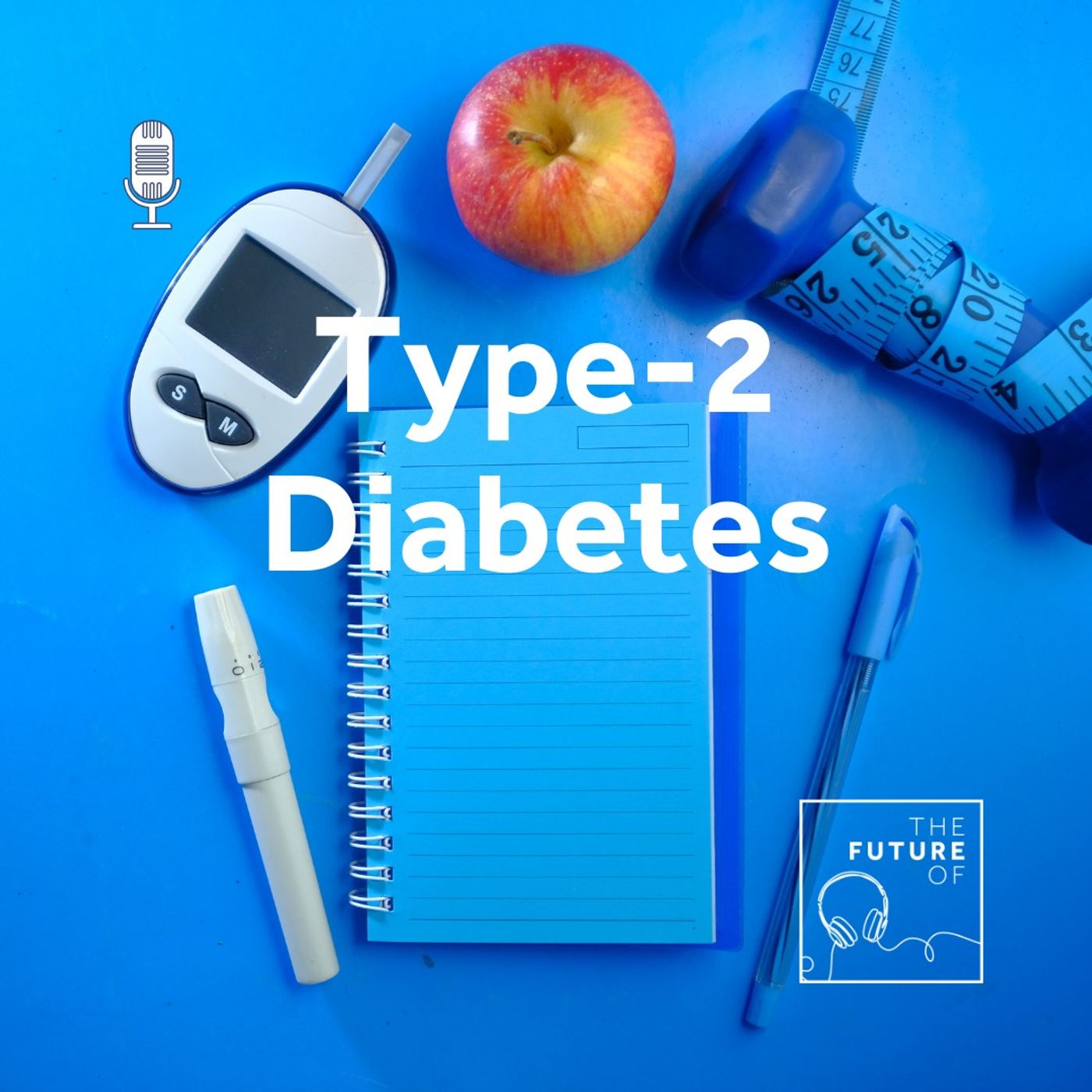
Ep 73Type-2 Diabetes
New nano capsules could spell an alternate effective treatment for type-2 diabetes – the world’s fastest growing health condition.Jess is joined by two of the researchers behind the capsules, Dr Hani Al-Salami and Dr Ryu Takechi, to learn how the technology, which is filled with a combination of bile acids and the lipid-lowering drug Probucol, targets the inflammatory effects of diabetes.The researchers also discuss how type-2 diabetes is connected with other health conditions such as dementia and hearing loss, and what we can all do to safeguard our health into the future.Why is the number of people with type-2 diabetes growing? [00:49]Dr Al-Salami explains the nanotechnology [02:41]Why does diabetes affect our hearing and memory? [08:46]What drives Dr Al-Salami’s and Dr Takechi’s research? [10:40]Assessing the uncertain future of type-2 diabetes [14:22]Learn moreDiabetes Australia: Type 2 diabetesCurtin University: Study finds tiny ‘nano’ capsules effective in treating type two diabetesThe Future Of: Memory LossConnect with our guestsDr Hani Al-SalamiDr Al-Salami is an AHPRA-registered Australian and New Zealand pharmacist, and a Program Lead in Biotechnology and Pharmaceutical Sciences at Curtin Medical School and Curtin Health Innovation Research Institute (CHIRI). He is also the Head of Heating Therapeutics Department at Ear Science Institute Australia. Dr Al-Salami has led research into developing nanotech treatments for diabetes, as well as the connection between diabetes and hearing loss. He was recently announced as one of the top 2% most highly cited scientists in the world, according to Stanford University’s renowned Science-wide Author Databases of Standardised Citation Indicators. Dr Al-Salami’s staff profileDr Al-Salami’s LinkedIn profileCHIRIEar Science Institute Australia Dr Ryu TakechiDr Takechi has recently been appointed as Domain Lead for Neurodegeneration and Chronic Pain Research for CHIRI. He has investigated links between the consumption of energy drinks and diabetes, previously investigated the connection between diabetes and dementia, and also assisted with Dr Al-Salami's nanotechnologies research.Dr Takechi’s staff profileDr Takechi’s LinkedIn profileDr Takechi’s Twitter profileQuestions or suggestions for future topicsEmail [email protected]://twitter.com/curtinunihttps://www.facebook.com/curtinuniversityhttps://www.instagram.com/curtinuniversity/https://www.youtube.com/user/CurtinUniversityhttps://www.linkedin.com/school/curtinuniversity/ Transcripthttps://thefutureof.simplecast.com/episodes/type-2-diabetes/transcript Curtin University supports academic freedom of speech. The views expressed in The Future Of podcast may not reflect those of Curtin University.Music: OKAY by 13ounce Creative Commons — Attribution-ShareAlike 3.0 Unported — CC BY-SA 3.0 Music promoted by Audio Library.
Ep 72Cyber Security
Cyber security attacks have become a global concern — so how can we protect ourselves online? In this episode, Jessica is joined by Stefan Prandl, Associate Lecturer from Curtin’s School of Electronic Engineering, Computing and Mathematical Sciences and his colleague Tim Jones, CEO of Hyprfire, a cyber security startup. Together they discuss the evolving threat of cyber attacks and how we can protect our data and devices. Why you need to protect yourself from cyber attacks [01:16]Phishing emails, text messages and other types of cyber attacks [02:55]The growing threat of ransomware [05:04]Rule of three for cyber security [14:52]Cyber threats while working from home [20:19]Simple ways to protect yourself from cyber attacks [23:33]Learn moreAustralian Cyber Security Centre: practical ways to protect yourself onlineABC Australia: What is a cyber attack, what are the targets and who is behind them? Inside the hacking attacks bombarding Australia?Curtin-developed Hyprfire cyber shield wins commercialisation grantABC Australia:Are Australians at a 'turning point' on cybersecurity or still unpreparedConnect with our guestsStefan Prandl, Associate Lecturer, Curtin School of Electronic Engineering, Computing and Mathematical Sciences Along with his work at Curtin, Mr Prandl is also the Chief Technology Officer of Hyprfire — a Curtin-launched cyber security start-up. He has completed research in the areas of network and information security, anomaly detection, power laws and distributed denial of service attacks (DDoS).Curtin staff pageStefan Prandl LinkedIn profileHyprfireTim Jones, CEO, HyprfireMr Jones is the CEO of Hyprfire — a Curtin-launched cyber security start-up and has significant experience as a senior executive in technology businesses and in bringing new technologies and business models to market. Tim Jones LinkedIn profileHyprfireQuestions or suggestions for future topicsEmail [email protected]://twitter.com/curtinunihttps://www.facebook.com/curtinuniversityhttps://www.instagram.com/curtinuniversity/https://www.youtube.com/user/CurtinUniversityhttps://www.linkedin.com/school/curtinuniversity/ Curtin University supports academic freedom of speech. The views expressed in The Future Of podcast may not reflect those of Curtin University.Music: OKAY by 13ounce Creative Commons — Attribution-ShareAlike 3.0 Unported — CC BY-SA 3.0 Music promoted by Audio Library.

Ep 71Binar-1 and Space Science: Part 2
Now transmitting data from space to Earth, we explore the next steps for Western Australia’s diminutive Binar-1 satellite.Jess is joined by the Director and Deputy Director of Curtin University’s Space Science and Technology Centre, the largest space science centre in the Southern Hemisphere and the governing centre of the Binar Space Program.In this special, part two episode, we discuss the historic release of Binar-1 from the International Space Station on 6 October 2021 and how the crew had almost lost hope until a colleague received transmission while driving on a Perth freeway two weeks later. We then chat about what data the crew will acquire, the purpose of Binars 2–7 and the Binar Prospector, and the broader economic, environmental and social impacts of the program on WA and the world. Making contact with Binar-1 [00:47]Preparing for Binars-2 to 7 [05:32]Heading to the Moon with NASA [08:10]Why CubeSats are more sustainable in space orbit [09:32]Involving the amateur radio community and other enthusiasts [12:55]How Binar-1 can help to diversify WA’s economy [18:48]Why nothing inspires quite like space [22:38]Learn moreThe Future Of: Binar-1 and Space Science, featuring Binar Project Manager Ben HartigBinar SpaceCurtin University: Space hunt begins as WA’s Binar-1 mission takes next giant leapCurtin University: Binar-1 to ground control! WA’s first homegrown spacecraft makes contactConnect with our guestsProfessor Phil BlandProfessor Bland is the Director of the Space Science and Technology Centre, and Director of the Desert Fireball Network (DFN). He has research interests in several distinct areas in planetary science: using primitive meteorites to explore the origin and early evolution of the Solar System, and understanding asteroid and cometary impacts.Professor Bland’s staff profileProfessor Bland’s LinkedIn profileReaction to finding his first DFN meteoriteRenae SayersRenae Sayers is the Deputy Director and Research Ambassador for the centre, leading engagement strategies and policy advocacy. Through her advocacy for Women in STEM and collaboration with NASA, Sayers was selected by the US Department of State’s International Visitor Leadership Program for 2018, advancing empowerment for women leaders, planetary science and outreach. Renae Sayers’s staff profileRenae Sayers’s LinkedIn profileRenae Sayers’s Twitter profileQuestions or suggestions for future topicsEmail [email protected] mediaTwitterFacebookInstagramYouTubeLinkedInTranscriptBinar-1 and Space Science transcriptCurtin University supports academic freedom of speech. The views expressed in The Future Of podcast may not reflect those of Curtin University.Music: OKAY by 13ounce Creative Commons — Attribution-ShareAlike 3.0 Unported — CC BY-SA 3.0 Music promoted by Audio Library.Image of Deployment of the Binar-1 and the BIRDS-2S (MAYA-3 and MAYA-4) from the Kibo. Copyright JAXA/NASA

Ep 70Junk Food Advertising
What makes junk food advertising so successful and how can these messages be counteracted?Jess is joined by consumer experts Doctors Isaac Cheah and Anwar Sadat Shimul, to discuss how advertising is exacerbating health issues in Australia and worldwide, and how their research can be used to inform the public health response.The researchers also clarify the difference between junk food and fast food, promotion and prevention-focused advertisements, and offer their thoughts on the future of the junk food industry.Effect of junk food on our bodies [00:50]Why is junk food advertising so successful? [03:39]How consumers respond to healthy eating messages [04:59]Common junk food advertising issues [09:44]Future of the junk food industry [15:06]What inspired the researchers to work in this area? [18:05]Get involvedDoctors Cheah and Shimul are researchers within Curtin University’s Luxury Branding Research Centre, which aims to improve the performance of both luxury and emerging brands.Read more onlineLearn moreAppetite: Regulatory focus and junk food avoidance: The influence of health consciousness, perceived risk and message framingBBC: Anti-obesity drive: Junk food TV adverts to be banned before 9pmWikipedia: Regulatory focus theoryConnect with our guestsDr Isaac Cheah works within Curtin University’s School of Management and Marketing and the University’s Luxury Branding Research Centre.He is the editor for theJournal of Global Scholars of Marketing Science and theassociate editor for theInternational Journal of Advertising. He has conducted consumer behaviour and marketing communications studies with Australian and international clients including AirAsia, Shiseido and HBF.Associate Professor Cheah’s staff profileAssociate Professor Cheah’s LinkedIn profileDr Anwar Sadat Shimul works within Curtin University’s School of Management and Marketing and the University’s Luxury Branding Research Centre.He is serving as associate editor for Asia Pacific Journal of Marketing and Logistics and the Journal of the Global Scholar of Marketing Scholars. Prior to Curtin, he served as a lecturer at North South University in Bangladesh and worked as a marketing executive in Bangkok Hospital, Thailand. Dr Shimul’s staff profileDr Shimul’s LinkedIn profileQuestions or suggestions for future topicsEmail [email protected]://twitter.com/curtinunihttps://www.facebook.com/curtinuniversityhttps://www.instagram.com/curtinuniversity/https://www.youtube.com/user/CurtinUniversityhttps://www.linkedin.com/school/curtinuniversity/ Curtin University supports academic freedom of speech. The views expressed in The Future Of podcast may not reflect those of Curtin University.Music: OKAY by 13ounce Creative Commons — Attribution-ShareAlike 3.0 Unported — CC BY-SA 3.0 Music promoted by Audio Library.TranscriptYou can read the full transcript for the episode at https://thefutureof.simplecast.com/episodes/junk-food-advertising/transcript.

Ep 69Clean Energy (Live!)
What’s the holdup with energy utilities transitioning from coal-fired power to clean energy?This episode brings together diverse energy experts, to provide first-hand insights into the issues faced by energy utilities and the initiatives that aim to address those issues, in order to reduce household energy costs and carbon emissions.Much of the discussion centres around the new RACE (Reliable, Affordable, Clean Energy) for 2030 research centre, which aims to reduce carbon emissions in Australia by 20 mega tonnes by 2030.This episode is an edited version of a panel recorded as part of Curtin University’s annual Research Rumble event, which showcases university research and innovation. Professor Greg Morrison, who appeared in The Future Of’sClimate Action episode, acts as guest moderator. What work is RACE doing? [00:58]Why are the panel working towards a decentralised renewable energy system?Tracy Deveugle-Frink’s response [05:04]David Edwards’s response [05:32]Brian Innes’s response [06:01]Rod Hayes’s response [06:37]Research opportunities and challenges Western Power and managing the energy transition [07:08]Horizon Power and isolated energy networks [09:11]Distribution Energy Resources [10:01]Costs and risks of energy resources [10:46]Ramifications of flex services [14:37]Learn moreCurtin University: Research Rumble 2021RACE for 2030The Future Of: Climate ActionThe Future Of: Oil and GasConnect with our guestsProfessor Greg Morrison is the RACE for Everyone Program Leader anda Professor of Sustainability within the Curtin University Sustainability Policy Institute (CUSP).He has been involved with the European Union’s Climate-KIC to mobilise cities to implement climate resilient solutions. He has also initiated and run several large-scale societal infrastructure projects in Western Australia that have focused on clean energy, including a two-year trial in Fremantle that saw households share their excess solar energy.Professor Morrison’s staff profileProfessor Morrison’s Twitter profileProfessor Morrison’s LinkedIn profileCurtin University Sustainability Policy Institute (CUSP)Jonathan Jutsen is the CEO of RACE for 2030. Previously, he was the CEO for the Australian Alliance for Energy Productivity and a member of the New South Wales Climate Council. Jutsen’s LinkedIn profileRACE for 2030Tracy Deveugle-Frink is the Head of Change and Innovation at Western Power, WA’s government-owned energy operator that provides electricity to the Perth metropolitan area and the South West. She has experience in innovation and entrepreneurship consulting. Deveugle-Frink’s LinkedIn profileWestern PowerDavid Edwards is the Digital Strategy and Innovation Manager at Horizon Power, WA’s government-owned energy operator that provides electricity to residents and businesses in regional and remote areas. He has a background in engineering and energy transformation.Edwards’s LinkedIn profileHorizon PowerBrian Innes is the Founder and Technical Director of Starling Energy Group, an energy asset management company based in WA. Innes helped set up Starling’s Plico Energy Project, a Virtual Power Plant network of solar panels and power systems located in WA’s South West region. He has experience advising about renewable energy and greenhouse gas emissions. Innes’s LinkedIn profileStarling Energy GroupPlico EnergyRod Hayes is the Group Chairman of the Balance Services Group, a Perth-based company that aims to deliver robust energy solutions in regional areas. He is also an Associate Adjunct Professor at CUSP. Hayes has experience managing in the energy and water industries. Hayes’s LinkedIn profileBalance Services GroupQuestions or suggestions for future topicsEmail [email protected] media:Twitter Curtin UniversityFacebook Curtin UniversityInstagram Curtin UniversityYoutube Curtin UniversityLinkedIn Curtin UniversityTranscripthttps://thefutureof.simplecast.com/episodes/clean-energy-live/transcript Curtin University supports academic freedom of speech. The views expressed in The Future Of podcast may not reflect those of Curtin University.Music: OKAY by 13ounce Creative Commons — Attribution-ShareAlike 3.0 Unported — CC BY-SA 3.0 Music promoted by Audio Library.
Ep 68Mass Extinction Events
What’s the likelihood of a mass extinction event happening in our lifetime?In this episode, Jess is joined by world-renowned organic geochemist, Professor Kliti Grice, to discuss how researchers are using fossil analysis to learn from past mass extinction events, like the event that wiped out the dinosaurs 66 million years ago.She clarifies when the next naturally occurring mass extinction event will likely occur and answers the question: with the undeniable impact that humans are having on the planet, are we in the middle of a human-induced mass extinction event?Describing mass extinction events [00:49]What’s Professor Grice’s new project? [03:11]Possibility of a natural or manmade extinction event in our lifetime [06:55]How to minimise the chances of another event [09:53]Why does Professor Grice love her work? [10:39]Get involvedAre you a high school student or teacher based in the Perth metropolitan area? Professor Grice is hoping to partner with high schools and give students the opportunity to take part in experiments to grow artificial fossils in a laboratory, as part of a new AUD$3 million research project.If you think your high school would be interested, please email Professor Grice at [email protected]. Learn moreWestern Australian Organic & Isotope Geochemistry FacilityCurtin University: ‘Dust’ and ‘soot’ contributed to extinction of species millions of years agoThe Conversation: How chemical clues from prehistoric microbes rewrote the story of one of Earth’s biggest mass extinctionsBIOmarkers podcast: Season 1 - Episode 5 - Dr. Kliti GriceConnect with our guestsJohn Curtin Distinguished Professor Kliti Grice, Founding Director of the Curtin-based Western Australian Organic and Isotope Geochemistry Facility.Professor Grice is a world-renowned organic geochemist, a Fellow of the Australian Academy of Science and a recipient of a prestigious 2021 Australian Laureate Fellowship from the Australian Federal Government. She is known for finding a geological and environmental basis for the largest mass extinction in Earth’s history, which occurred about 252 million years ago.Professor Grice’s staff profileProfessor Grice’s LinkedIn profileQuestions or suggestions for future topicsEmail [email protected]://twitter.com/curtinunihttps://www.facebook.com/curtinuniversityhttps://www.instagram.com/curtinuniversity/https://www.youtube.com/user/CurtinUniversityhttps://www.linkedin.com/school/curtinuniversity/Transcripthttps://thefutureof.simplecast.com/episodes/mass-extinction-events/transcript Curtin University supports academic freedom of speech. The views expressed in The Future Of podcast may not reflect those of Curtin University.Music: OKAY by 13ounce Creative Commons — Attribution-ShareAlike 3.0 Unported — CC BY-SA 3.0 Music promoted by Audio Library.

Ep 67Binar-1 and Space Science
Launched on 29 August, Curtin University’s Binar-1 CubeSat satellite will provide easy access to space for students, researchers and industry. In this episode, Jess is joined by Binar-1 Project Manager Ben Hartig to learn about the totally-Curtin-built satellite that’s smaller than a shoebox but playing a mighty role in the future of Australian space innovation.Binar-1 is a CubeSat — a type of small satellite made from 10-centimetre cube-shaped modules. Binar-1 consists of just one such module, meaning it’s technically a 1U CubeSat.Binar-1 is equipped with two cameras, with two objectives: first, to photograph Western Australia from space, thus testing the performance of our instruments and hopefully also capturing the imagination of young WA students; and second, to image stars. The star camera will precisely determine which way the satellite is facing — a crucial capability for any future Moon mission.Describing the Binar space program [01:23]What is a CubeSat? [01:57]What’s the goal for the Binar Prospector mission? [11:18]How Binar will revolutionise access to space [12:57]What inspired Ben to get into space research? [24:57]Learn moreBinar SpaceCurtin University: What are CubeSats? Why are they important? | Ask an ExpertConnect with our guestsBen HartigHartig is the Project Manager for the Binar Space Program. He has been involved in the development of remote observatories for the Desert Fireball Network (DFN), which tracks meteorites as they enter the atmosphere, as well as the FireOPAL SSA network, which uses the same technology to track satellites and space debris.Hartig’s Curtin staff profileHartig’s LinkedIn profileQuestions or suggestions for future topicsEmail [email protected]://twitter.com/curtinunihttps://www.facebook.com/curtinuniversityhttps://www.instagram.com/curtinuniversity/https://www.youtube.com/user/CurtinUniversityhttps://www.linkedin.com/school/curtinuniversity/ Transcripthttps://thefutureof.simplecast.com/episodes/binar-1-and-space-science/transcript Curtin University supports academic freedom of speech. The views expressed in The Future Of podcast may not reflect those of Curtin University.Music: OKAY by 13ounce Creative Commons — Attribution-ShareAlike 3.0 Unported — CC BY-SA 3.0 Music promoted by Audio Library.
Ep 66Robots at Work (LIVE!)
Will a robot ever steal your job? In this special, live episode of The Future Of, host Danelle Cross is joined by research fellow Giverny De Boeck, Associate Professor Jonathan Paxman and returning guest Dr Eleanor Sandry. The guests speak about their work and industry partnerships, before discussing the type of robots that already exist and setting the record straight on how robots could impact future workplaces.The talk formed part of Curtin University’s annual Research Rumble event, which showcases future-focused university research and innovation. Background of the experts [00:52]What is a robot and what is artificial intelligence? [04:47]Which tasks and competencies will be replaced? [16:37]Which new jobs will be created? [27:42]Q&AThe question of liability [33:32]Ethical issues and work expectations surrounding automation [37:35] How robots are enabling meaningful work [46:14]Learn moreCurtin University: Research Rumble 2021The Future Of: The Human-Robot Relationship The Future Of: Jobs for HumansConnect with our guestsGiverny De BoeckDe Boeck is a Post-doctoral Research Fellow at the Centre for Transformative Work Design at Curtin University. De Boeck researches changes to workplaces in light of automation and other technological innovation, and how these impact employees’ work experiences.De Boeck’s twitterDe Boeck’s LinkedInCentre for Transformative Work DesignAssociate Professor Jonathan PaxmanAssociate Professor Paxman is the Head of School of Civil and Mechanical Engineering at Curtin University. He has a varied work background in AI, robotics and technology. He is currently designing algorithms to count the number of craters on the surface of Mars and is assisting with autonomous operations for the Desert Fireball Network. Associate Professor Paxman’s staff profileCurtin University: School of Civil and Mechanical Engineering Curtin University: Counting craters to estimate the age of planetary surfacesDesert Fireball NetworkDr Eleanor Sandry Dr Sandry is a Senior Lecturer in the School of Media, Creative Arts and Social Inquiry at Curtin University. She studies human-machine communication and how automation can help to enrich our experiences at work. Her book, Robots and Communication, draws on her early research and theories into human interactions with robots. Dr Sandry’s staff profileDr Sandry’s twitterRobots and CommunicationQuestions or suggestions for future topicsEmail [email protected]://twitter.com/curtinunihttps://www.facebook.com/curtinuniversityhttps://www.instagram.com/curtinuniversity/https://www.youtube.com/user/CurtinUniversityhttps://www.linkedin.com/school/curtinuniversity/ Curtin University supports academic freedom of speech. The views expressed in The Future Of podcast may not reflect those of Curtin University.Music: OKAY by 13ounce Creative Commons — Attribution-ShareAlike 3.0 Unported — CC BY-SA 3.0 Music promoted by Audio Library.TranscriptYou can read the full transcript for the episode athttps://thefutureof.simplecast.com/episodes/robots-at-work-live/transcript.

Ep 65Get-rich-quick Schemes
Get-rich-quick schemes are known as too good to be true, so why do people continue to participate in these businesses?In this episode, Jessica is joined by Associate Professor Isaac Cheah and Associate Professor Billy Sung from the Curtin School of Marketing. They describe how get-rich-quick schemes work and why people continue to fall for them. They also explore whether social media will help or hinder these schemes in the future. What are get-rich-quick schemes? [01:00]Reasons why people get involved in get-rich-quick schemes [03:14]Why health and wellness products lend themselves to pyramid and multi-level marketing schemes [07:43]Schemes using social media to target the vulnerable [12:37]Psychological tactics and effects of get-rich-quick schemes [15:47]Social media platforms banning pyramid and multilevel marketing scheme content [18:50]Learn moreThe Conversation: Multi-level marketing has been likened to a legal pyramid scheme – the backlash against it isgrowingThe Western Independent: Get rich or get scammedThe Guardian: ‘They have you in a cultish grip’ — the women losing thousands to online beauty schemesConnect with our guestsAssociate Professor Isaac CheahAssociate Professor Cheah is from the School of Management and Marketing at Curtin University. He is the Editor for the Journal of Global Scholars of Marketing Science, and the Associate Editor for the International Journal of Advertising. His research focuses on the study of consumer behaviour, marketing communications, advertising appeals and market research.Associate Professor Cheah's staff profileAssociate Professor Billy SungAssociate Professor Sung is from the School of Management and Marketing at Curtin University. He is the Research Lead of Curtin’s Consumer Research Lab, where his research focuses on the study of emotion and the application of psychophysiological methodology in multiple disciplines including marketing, consumer psychology, health, and robotics.Associate Professor Sung's staff profileQuestions or suggestions for future topicsEmail [email protected]://twitter.com/curtinunihttps://www.facebook.com/curtinuniversityhttps://www.instagram.com/curtinuniversity/https://www.youtube.com/user/CurtinUniversityhttps://www.linkedin.com/school/curtinuniversity/TranscriptYou can read the full transcript for the episode at https://thefutureof.simplecast.com/episodes/get-rich-quick-schemes/transcript. Curtin University supports academic freedom of speech. The views expressed in The Future Of podcast may not reflect those of Curtin University.Music: OKAY by 13ounce Creative Commons — Attribution-ShareAlike 3.0 Unported — CC BY-SA 3.0 Music promoted by Audio Library.
Ep 64NFTs and Digital Ownership
What are non-fungible tokens (NFTs) and why have they been selling for millions of dollars online?In this episode, Jess is joined by returning researcher Associate Professor Vidy Potdar, as well as the Managing Director at Natsoft Consulting, Australia, Srinivas Boyapati, to unpack this mysterious new application of blockchain technology. The two leading experts clarify how NFTs work, why NFTs are being bought for such exorbitant prices and what the future of NFTs holds. How NFTs use blockchain [00:58]“Charlie bit my finger”: content becoming NFTs [03:51]Impact of the mid-2021 cryptocurrency crash [05:55]Other well-known NFTs: NBA NFT trading cards, CryptoKitties and Disaster Girl [07:46]Natsoft’s new platform will expand how we can create, buy and sell NFTs [11:52]Are NFTs a fad or are they here to stay? [14:47]Learn moreThe Future Of: Cryptocurrency and Blockchain episodeBBC: Charlie Bit Me NFT sale: Brothers to pay for university with auction moneyCNBC: People have spent more than $230 million buying and trading digital collectibles of NBA highlightsConnect with our guestsAssociate Professor Vidyasagar “Vidy” Potdar, Director of the Blockchain Research and Development Lab, Curtin University.Associate Professor Potdar is helping to build blockchain technology solutions and accelerate development of proof of concepts and minimum viable products based on industry requests. He has secured more than $1.1 million in external research funding.Associate Professor Potdar’s staff profileAssociate Professor Potdar’s twitterSrinivas Boyapati, Managing Director, Natsoft Consulting, Australia. Boyapati has more than 30 years’ experience in industrial control systems, operations technology and process automation. Prior to Natsoft, he worked with companies like IBM and Deloitte to successfully execute large ICT projects. He is currently helping to build an NFT solution for a client in India. Natsoft Corporation’s websiteBoyapati’s LinkedIn profile Questions or suggestions for future topicsEmail [email protected]://twitter.com/curtinunihttps://www.facebook.com/curtinuniversityhttps://www.instagram.com/curtinuniversity/https://www.youtube.com/user/CurtinUniversityhttps://www.linkedin.com/school/curtinuniversity/Transcripthttps://thefutureof.simplecast.com/episodes/nfts-and-digital-ownership/transcript Curtin University supports academic freedom of speech. The views expressed in The Future Of podcast may not reflect those of Curtin University.Music: OKAY by 13ounce Creative Commons — Attribution-ShareAlike 3.0 Unported — CC BY-SA 3.0 Music promoted by Audio Library.
Ep 63Freedom of Movement (LIVE!)
Will COVID-19 lockdowns increase the public’s support for refugees and other individuals with restrictions to freedom of movement?In this episode, Jess and Amelia are joined by the Co-Directors of Curtin University’s Centre for Human Rights Education: Associate Professor Caroline Fleay and Dr Lisa Hartley. The researchers discusss why the right to move is so important, how COVID-19 lockdowns have restricted our ability to move and how this right is often unequally experienced. This episode was recorded live on Curtin University Open Day on Sunday 30 May 2021. What is the right to freedom of movement? [01:18]COVID-19 lockdowns may increase the public’s understanding towards refugees in Australia’s detention centres [02:51]Australia’s “problematic” India travel ban [05:30]The future of Australia’s asylum seekers [08:12]What inspired the researchers to work in this area? [14:02]Learn moreCentre for Human Rights EducationMaster of Human RightsThe Guardian: TemporaryUnited Nations: Universal Declaration of Human RightsConnect with our guestsAssociate Professor Caroline Fleay, Co-Director of Curtin’s Centre for Human Rights Education, School of Media Creative Arts and Social Inquiry, Curtin University. Associate Professor Fleay is a Board Member of the Refugee Council of Australia. In April 2020, she joined human rights researchers calling for refugees to be released from Australia’s detention centres to prevent a COVID-19 outbreak.Associate Professor Fleay’s staff profileArticle calling for refugees to be releasedDr Lisa Hartley, Senior Lecturer, Co-Director of Curtin’s Centre for Human Rights Education, School of Media Creative Arts and Social Inquiry, Curtin University.Dr Hartley is a self-described “academic activist” who has worked extensively with a range of community groups providing advocacy for human rights issues. She is on the Editorial Board of the Human Rights Education Review journal.Dr Hartley’s staff profileDr Hartley’s twitterQuestions or suggestions for future [email protected]://twitter.com/curtinunihttps://www.facebook.com/curtinuniversityhttps://www.instagram.com/curtinuniversity/https://www.youtube.com/user/CurtinUniversityhttps://thefutureof.simplecast.com/episodes/%5bepisode-name%5d/transcripthttps://www.linkedin.com/school/curtinuniversity/Transcripthttps://thefutureof.simplecast.com/episodes/freedom-of-movement-live/transcript Curtin University supports academic freedom of speech. The views expressed in The Future Of podcast may not reflect those of Curtin University.Music: OKAY by 13ounce Creative Commons — Attribution-ShareAlike 3.0 Unported — CC BY-SA 3.0 Music promoted by Audio Library.
Ep 62Stolen Artefacts
Hundreds of thousands of stolen, Colonial Era artefacts are on display in Western museums. Will they ever be returned home?In this episode, Jessica is joined by Dr Yirga Gelaw Woldeyes, an expert in colonialist epistemic violence research. He describes the types of artefacts that have been stolen, why museums are starting to repatriate these artefacts and how their return will influence future interpretations of history. How seeing the museumised Ark of the Covenant impacted Dr Woldeyes [00:55]Why museums are repatriating stolen artefacts [07:55]Benefits of repatriation [11:42]Not every single artefact has to be repatriated [16:33]Dr Woldeyes’s research into knowledge grabbing [22:26]There’s still a market for stolen artefacts [26.23]What is the ideal future? [28:01]Learn moreThe Conversation: Repatriation: why Western museums should return African artefactsThe Guardian: Museums grapple with rise in pleas for return of foreign treasuresConnect with our guestsDr Yirga Gelaw Woldeyes –Senior Lecturer in Human Rights, School of Media, Creative Arts and Social Inquiry, Curtin UniversityDr Woldeyes’s staff profileQuestions or suggestions for future topicsEmail [email protected] Socialshttps://twitter.com/curtinunihttps://www.facebook.com/curtinuniversityhttps://www.instagram.com/curtinuniversity/https://www.youtube.com/user/CurtinUniversityhttps://www.linkedin.com/school/curtinuniversity/ Curtin University supports academic freedom of speech. The views expressed in The Future Of podcast may not reflect those of Curtin University.Music: OKAY by 13ounce Creative Commons — Attribution-ShareAlike 3.0 Unported — CC BY-SA 3.0 Music promoted by Audio Library.You can read the full transcript for the episode athttps://thefutureof.simplecast.com/episodes/stolen-artefacts/transcript.
Ep 61OCD
“OCD” is often used as an adjective to describe someone who enjoys cleanliness and organisation, but is that appropriate?In this episode, Amelia and Jessica are joined by Dr Rebecca Anderson, an expert in Obsessive-Compulsive Disorder (OCD) research. She describes the symptoms and types of OCD, how information about OCD has been muddled during the pandemic and how new treatments might help better alleviate the symptoms of OCD in the future. What is OCD? [01:02]Comparing OCD behaviours with COVID-safe behaviours [01:57]Recognising that intrusive thoughts are normal [05:06]Treatment options for people with OCD [11:12]Why perfectionism and rumination should be the target of behavioural treatments [13:50]tDCS: a new treatment for the future [15:48]Making life easier for people with OCD [20:11]If you have OCD or know someone who has it and need advice, please visit Beyond Blue if you live in Australia, or look for your nearest OCD clinic. Dr Anderson also has a free treatment program available for adolescents.Learn moreInternational OCD Foundation: What is OCD?Psychology Today: We are not all “a little bit OCD”Curtin University: How can we help adolescents climb ‘OCD Mountain’?Connect with our guestsDr Rebecca Anderson –Senior Lecturer, School of Population Health, and Psychology Clinic Director, Health and Wellness Centre, Curtin University. Dr Anderson’s staff profileDr Anderson’s TwitterQuestions or suggestions for future topicsEmail [email protected]://twitter.com/curtinunihttps://www.facebook.com/curtinuniversityhttps://www.instagram.com/curtinuniversity/https://www.youtube.com/user/CurtinUniversityhttps://www.linkedin.com/school/curtinuniversity/ Curtin University supports academic freedom of speech. The views expressed in The Future Of podcast may not reflect those of Curtin University.Music: OKAY by 13ounce Creative Commons — Attribution-ShareAlike 3.0 Unported — CC BY-SA 3.0 Music promoted by Audio Library.You can read the full transcript for the episode at https://thefutureof.simplecast.com/episodes/ocd/transcript
Ep 60Children's Online Privacy
What’s the impact of parents sharing content of their children online? And what rights do children have in this space?In this episode, Jessica is joined by Dr Anna Bunn, Deputy Head of Curtin Law School and Tama Leaver, Professor of Internet Studies at Curtin University to discuss “sharenting” – the growing practice of parents sharing images and data of their children online. The three examine the social, legal and developmental impacts a life-long digital footprint can have on a child.What is the impact of sharing child-related content on our kids? [04:08]What type of tools and legal protections would you like to see in the future to protect children? [16:30]At what age can a child give consent to share content [18:25]What about the right to be forgotten [21:11]What’s best practice for sharing child-related content online? [26:01]Learn moreThe West Australian: Even benign ‘sharenting’ can damage kids’ self-esteemConnect with our guestsDr Anna Bunn - Deputy Head and Senior Lecturer, Curtin Law SchoolAnna's staff profile Children and the ‘right to be forgotten’: what the right to erasure means for European children, and why Australian children should be afforded a similar rightUnwanted distribution of children’s images and the right to developmentProfessor Tama Leaver, Internet Studies, Curtin UniversityTama's staff profileTama's websiteTama's twitterBalancing Privacy: Sharenting, Intimate Surveillance and the Right to Be ForgottenQuestions or suggestions for future topicsEmail [email protected]://twitter.com/curtinunihttps://www.facebook.com/curtinuniversityhttps://www.instagram.com/curtinuniversity/https://www.youtube.com/user/CurtinUniversityhttps://www.linkedin.com/school/curtinuniversity/Curtin University supports academic freedom of speech. The views expressed in The Future Of podcast may not reflect those of Curtin University.Music: OKAY by 13ounce Creative Commons — Attribution-ShareAlike 3.0 Unported — CC BY-SA 3.0 Music promoted by Audio Library.You can read the full transcript for the episode at https://thefutureof.simplecast.com/episodes/childrens-online-privacy/transcript
Ep 59Land Restoration Through an Aboriginal Lens (LIVE!)
Aboriginal and Torres Strait Islander people have had a deep connection with the land, or “boodja” as it’s known in the Nyungar language, for more than 60,000 years. This episode brings together Aboriginal and non-Aboriginal perspectives on how ancient Aboriginal knowledge of the environment, together with world-leading science, can be used to restore and conserve our land for future generations.Hosted at the stunning Western Australian Musem Boola Bardip, the talk was part of Curtin University’s annual Research Rumble event – a week-long series of talks that showcase the future-focused research coming out of the university.Renowned botanist Professor Kingsley Dixon, Director of the Australian Research Centre for Mine Site Restoration, is your MC.Indigenous restoration solutions are critical. What are those Indigenous solutions going to look like?Stephen van Leeuwen’s response [03:00]Heidi Mippy’s response [05:30]Oral McGuire’s response [06:20]Vivienne Hansen’s response [08:50]The ideal Aboriginal leadership model for the journey ahead (Oral McGuire) [13:00]The importance of restoring the spirit of the land (Heidi Mippy) [17:30]Describe what healthy country is (Vivienne Hanson) [21:25]It’s more than planting trees – it’s about restoring the richness within (Stephen van Leeuwen) [26:40]A non-Aboriginal perspectiveAdam Cross’s response [31:50]Renee Young’s response [34:40]Advanced reseeding technology (Simone Pedrini) [37:30]A farming family’s thoughts on the path ahead (Renee Young) [41:05]Lessons learned in the spiritual aspect of ecology (Adam Cross) [44:00]Learn moreAbout the speakersConnect with our guestsProfessor Stephen van LeeuwenMs Vivienne HansenMr Oral McGuireMs Heidi MippyProfessor Kingsley DixonDr Renee YoungDr Simone PedriniDr Adam CrossQuestions or suggestions for future topicsEmail thefutureof@curtin.edu.auSocialsTwitterFacebookInstagramYouTubeLinkedinCurtin University supports academic freedom of speech. The views expressed in The Future Of podcast may not reflect those of Curtin University.Music: OKAY by 13ounce Creative Commons — Attribution-ShareAlike 3.0 Unported — CC BY-SA 3.0 Music promoted by Audio Library.Read the full transcript for the episode.
Ep 58Sex Education
How can schools improve our understanding of consent, sexuality and sex positivity? In this episode, Amelia and Jessica are joined by sexology expert Dr Jacqueline Hendriks. The three discuss which topics feature in Australia’s sex education curriculum and what changes could be made to promote more respectful and meaningful sexual relationships. Starting sex education early [00:52]Differences between schools [04:03]Perceptions of sexual encounters as conquests [08:37]Sexual assault allegations in Canberra [09:27]Being inclusive of people identifying as LGBTIQ+ [11:58]Countries with exemplary sex education curricula [13:51]How is Jacqui’s research creating positive change? [16:44]Content Warning: This episode contains information about sexual assault.If you have experienced sexual assault or sexual harassment and feel you would like to speak to someone for support or information, 1800RESPECT (Phone: 1800 737 732) can provide counselling 24-hours a day, 7 days a week.If you are feeling unsafe right now, call 000.Learn moreTalk soon. Talk often. [.pdf]Hundreds of Sydney students claim they were sexually assaultedCurtin’s Introduction to Sexology Attitudes and Values unitConnect with our guestsDr Jacqueline Hendriks, School of Population Health, Curtin University Jacqui’s article in The ConversationJacqui’s Curtin profile and emailJacqui’s websiteQuestions or suggestions for future topicsEmail [email protected]://twitter.com/curtinunihttps://www.facebook.com/curtinuniversityhttps://www.instagram.com/curtinuniversity/https://www.youtube.com/user/CurtinUniversityhttps://www.linkedin.com/school/curtinuniversity/ Curtin University supports academic freedom of speech. The views expressed in The Future Of podcast may not reflect those of Curtin University.Music: OKAY by 13ounce Creative Commons — Attribution-ShareAlike 3.0 Unported — CC BY-SA 3.0 Music promoted by Audio Library.You can read the full transcript for the episode at https://thefutureof.simplecast.com/episodes/sex-education/transcript.

Ep 57Air Quality
Everyday, we breathe in more hazardous chemicals and gases at home, work and in the environment than you think.In this episode, Amelia and Jessica chat with Associate Professor Debbie Silvester-Dean about the hazardous gases in our homes and workplaces, and how cutting-edge research in electrochemistry will drive innovation in the detection of hazardous substances. In early 2021, Debbie won the Australian Academy of Science’s Le Fèvre medal for chemistry research.Top reasons for poor air quality at home and at work [02:08]Current methods of detecting hazardous gases [05:01]What innovations are on the horizon? [06:37]Why STEM research areas need more women [13:30]Learn more, or connect with our expert guestAssociate Professor Debbie Silvester-Dean, School of Molecular and Life Sciences, Curtin UniversityDebbie's TwitterDebbie’s LinkedInDebbie's websiteDebbie's Curtin researcher profile and emailHead of School (Molecular and Life Sciences) email for school toursQuestions and suggestions for future topicsEmail [email protected]://twitter.com/curtinunihttps://www.facebook.com/curtinuniversityhttps://www.instagram.com/curtinuniversity/https://www.youtube.com/user/CurtinUniversityhttps://www.linkedin.com/school/curtinuniversity/ Curtin University supports academic freedom of speech. The views expressed in The Future Of podcast may not reflect those of Curtin University.Music: OKAY by 13ounce Creative Commons — Attribution-ShareAlike 3.0 Unported — CC BY-SA 3.0 Music promoted by Audio Library.You can read the full transcript of the episode at https://thefutureof.simplecast.com/episodes/air-quality/transcript.
Ep 56Gender
What does it mean to be ‘gender diverse’? And should gender even matter?In this episode, Amelia and Jessica are joined by gender and sexuality expert Misty Farquhar from the Curtin University Centre for Human Rights Education. The three delve deep into gender diversity, inclusivity and the right age to transition.What’s the difference between sex and gender? [01:38]Using pronouns properly [05:24]What issues do trans and gender diverse people face? [11:37]The future of ‘gender reveals’ [13:44]Is there a right age to transition and what does it involve? [15:02]Is it time to ‘do away’ with gender? [20:53]Learn moreAlmost half of trans young people try to end their lives. How can we reduce this alarming statistic? https://theconversation.com/almost-half-of-trans-young-people-try-to-end-their-lives-how-can-we-reduce-this-alarming-statistic-83221The future of gender is increasingly nonbinary https://www.ipsos.com/en-us/news-polls/The-Future-of-Gender-is-Increasingly-NonbinaryI started the ‘gender reveal party’ trend. And I regret it. https://www.theguardian.com/lifeandstyle/2020/jun/29/jenna-karvunidis-i-started-gender-reveal-party-trend-regretConnect with our guestsMx Misty FarquharSessional Academic, School of Media, Creative Arts and Social Inquiryhttps://www.linkedin.com/in/mistyglo/https://twitter.com/mistyglohttps://www.instagram.com/misty_glo/ https://samavesa.com.au/https://staffportal.curtin.edu.au/staff/profile/view/misty-farquhar-868425dd/Got any questions or suggestions for future topics?Email [email protected]://twitter.com/curtinunihttps://www.facebook.com/curtinuniversityhttps://www.instagram.com/curtinuniversity/https://www.youtube.com/user/CurtinUniversityhttps://www.linkedin.com/school/curtinuniversity/ Curtin University supports academic freedom of speech. The views expressed in The Future Of podcast may not reflect those of Curtin University.Music: OKAY by 13ounce Creative Commons — Attribution-ShareAlike 3.0 Unported — CC BY-SA 3.0 Music promoted by Audio Library.You can read the full transcript for the episode at https://thefutureof.simplecast.com/episodes/gender/transcript.
Ep 55Self-Injury Recovery
Why do people self-injure and what support do they need in their journey to recovery? In this episode, released on international Self-Injury Awareness Day, Amelia and returning host, Jessica Morrison, are joined by Professor Penelope Hasking, the President of the International Society for the Study of Self-Injury. The three debunk misconceptions about self-injury and explore why it’s important to recognise that recovery isn’t a linear process. Top misconceptions [02:52]Unsure how to help? Just listen [06:47]What does recovery look like? [08:50] How is research helping people at risk? [13:48]13 Reasons Why and other examples in the media [18:14] Future changes Professor Hasking hopes to see [21:45]If this episode has raised issues for you, please call Lifeline on 13 11 14, if you live in Australia. If you aren’t based in Australia, please visit https://checkpointorg.com/global/to find crisis hotlines and mental health resources based in your region.Learn moreInternational Society for the Study of Self-Injury: https://itriples.org/Self-Injury Outreach & Support: http://sioutreach.org/International Consortium on Self-Injury in Educational Settings: http://icsesgroup.org/Self-Injury & Recovery Resources: http://www.selfinjury.bctr.cornell.edu/Connect with our guestsProfessor Penelope HaskingPresident of the International Society for the Study of Self-Injury and Professor within Curtin University’s School of Population HealthEmail: [email protected] staff profile: https://staffportal.curtin.edu.au/staff/profile/view/penelope-hasking-6588bc90/News story: https://theconversation.com/its-not-only-teenage-girls-and-its-rarely-attention-seeking-debunking-the-myths-around-self-injury-120214Questions or suggestions for future topicsEmail [email protected]://twitter.com/curtinunihttps://www.facebook.com/curtinuniversityhttps://www.instagram.com/curtinuniversity/https://www.youtube.com/user/CurtinUniversityhttps://www.linkedin.com/school/curtinuniversity/ Curtin University supports academic freedom of speech. The views expressed in The Future Of podcast may not reflect those of Curtin University.Music: OKAY by 13ounce Creative Commons — Attribution-ShareAlike 3.0 Unported — CC BY-SA 3.0 Music promoted by Audio Library.You can read the full transcript for the episode at https://thefutureof.simplecast.com/episodes/self-injury-recovery/transcript.
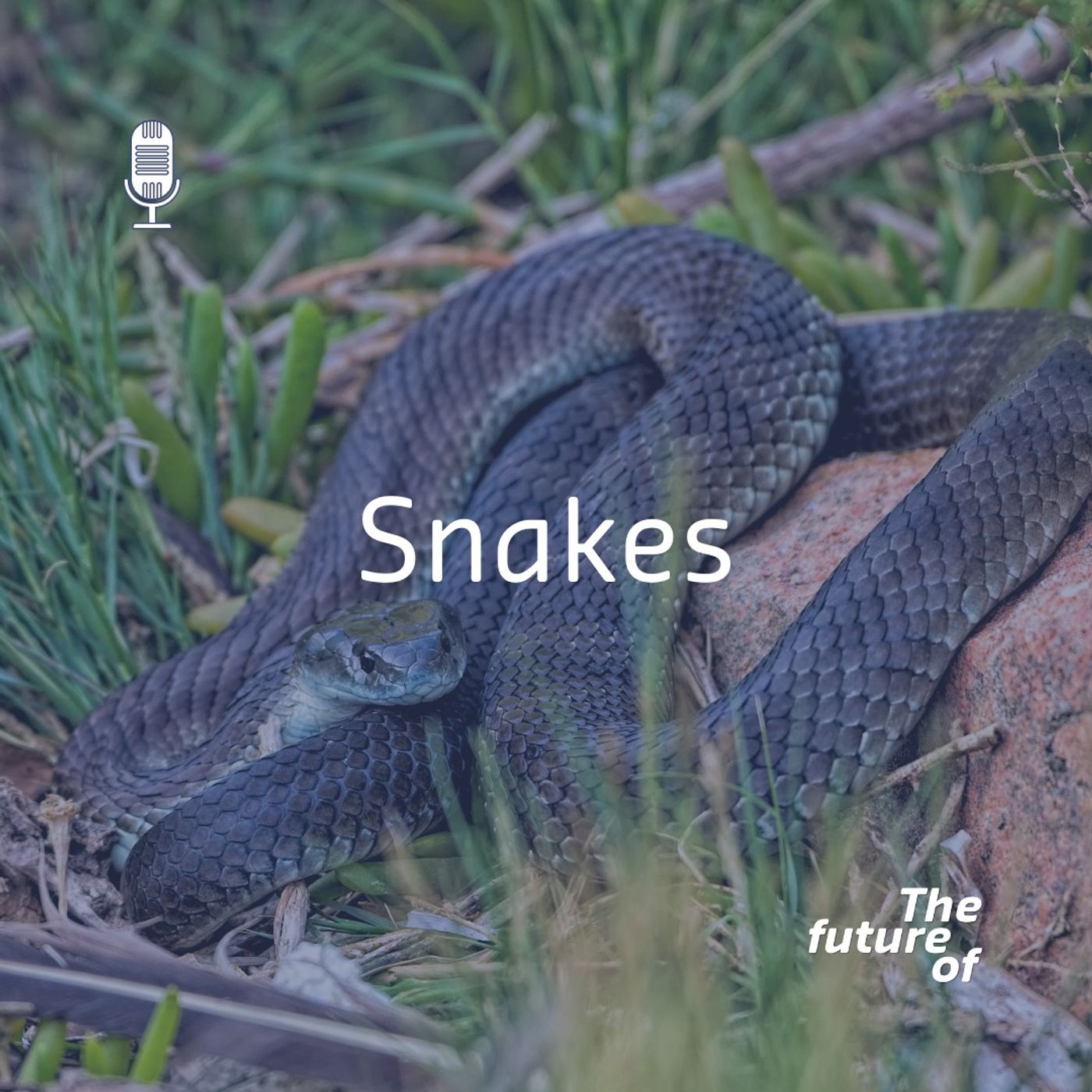
Ep 54Snakes
ESnakes might seem pretty scary, but did you know they’re essential in maintaining the balance of their ecosystems?In this episode, Amelia is joined by Australian snake wrangler and wildlife ecologist Damian Lettoof. The two unpack the crucial role snakes play in regulating local food populations and discuss why the health of many top tier predator snakes are in decline.Why we need snakes in some environments [00:42]Catching them alive – how Damian collects snake data [07:46]Reducing our impact on wetlands and snake habitats [10:46]Damian’s experience handling 500 tiger snakes [13:08]How to not get bitten [19:23]Damian’s top two snake stories [22:06]How research is impacting the future of snakes [30:38]Learn morenews.curtin.edu.au/media-releases/tiger-snakes-tell-more-about-local-wetlands-pollution-levels/abc.net.au/news/2020-12-23/perth-urban-wetlands-home-to-hundreds-of-tiger-snakes/13002264facebook.com/curtinuniversity/videos/my-curtinresearch-experience-damian-lettoof/769353000337226/Connect with our gueststwitter.com/lettsgetsnakesstaffportal.curtin.edu.au/staff/profile/view/damian-lettoof-2f2a8a90/linkedin.com/in/damian-lettoof-78905a71/Got any questions, or suggestions for future topics?Email [email protected]://twitter.com/curtinunihttps://www.facebook.com/curtinuniversityhttps://www.instagram.com/curtinuniversity/https://www.youtube.com/user/CurtinUniversityhttps://www.linkedin.com/school/curtinuniversity/ Curtin University supports academic freedom of speech. The views expressed in The Future Of podcast may not reflect those of the university.Music: OKAY by 13ounce Creative Commons — Attribution-ShareAlike 3.0 Unported — CC BY-SA 3.0 Music promoted by Audio LibraryYou can read the full transcript for the episode at https://thefutureof.simplecast.com/episodes/snakes/transcript.

Ep 53Oil and Gas
While oil and gas continues to power most of our everyday lives – the industry’s environmental impacts are causing more countries to switch to renewable energy. But is this switch really feasible?In this episode, Amelia is joined by Professor Claus Otto and Dr Roberto Aguilera from Curtin University’s Oil and Gas Innovation Centre. They break down why countries are switching away from oil and gas, how companies are improving production and reducing their carbon footprint, and why the industry will still be relevant in the coming decades. Transitioning to renewables [00:38]Are we running out of oil and gas? [05:19]Decreasing the environmental impact [08:49]Decommissioning aged facilities [13:11]What is Curtin University doing? [16:04]Alternatives for transportation [18:09]Oil and gas in the future [21:28]Learn morecuogic.curtin.edu.aulinkedin.com/in/claus-otto-356810blinkedin.com/in/roberto-f-aguilera-7970b165amazon.com.au/Price-Roberto-Curtin-University-Aguilera/dp/1107525624.Got any questions, or suggestions for future topics?Email [email protected] University supports academic freedom of speech. The views expressed in The Future Of podcast may not reflect those of the university.Music: OKAY by 13ounce Creative Commons — Attribution-ShareAlike 3.0 Unported — CC BY-SA 3.0 Music promoted by Audio LibraryYou can read the full transcript for the episode athttps://thefutureof.simplecast.com/episodes/oil-and-gas/transcript

Ep 52Political Extremism
Despite living in a global age, the rise of political extremism reflects a world that has never been more divided – we only need to look at the storming of the US Capitol to see the great rift that exists between the ‘left’ and ‘right’. How did we get here, and where to next? In this episode, Amelia is joined by Dr Ben Rich and Michael Wieteska from the Curtin School of Media, Creative Arts and Social Inquiry. They unpack what makes someone a political extremist and explore the rising appeal of political extremist groups. They also discuss some of the defining characteristics of the left and right, and the problems that occur when we solely label ourselves as one or the other. Political extremism and violence [01:24]Determinists vs free agents [03:40]The role of education in extremism [11:05]Terrorism in the US [14:15]Treating social problems as terrorism [17:24]The extreme right and the ‘nostalgic past’ [25:44]Political extremism after Trump? [30:44]Learn moreDr Ben Rich research profileMr Michael Wieteska contactGot any questions, or suggestions for future topics?Email [email protected] University supports academic freedom of speech. The views expressed in The Future Of podcast may not reflect those of the university.Music: OKAY by 13ounce Creative Commons — Attribution-ShareAlike 3.0 Unported — CC BY-SA 3.0 Music promoted by Audio LibraryYou can read the full transcript for the episode here.
Ep 51Disability and the Media
One billion people live with a disability, each with their own unique experience of the world, yet the media still largely portrays people with disability using traditional and inaccurate stereotypes. In this episode, Amelia is joined by Curtin University Professors Katie Ellis and Mike Kent, who discuss how disability is a social construct, rather than a medical one. They explore some of the ways people with disability are portrayed in the media, highlighting both progressive and entrenched examples. They also take a look at some of the ways COVID-19 has made technology and daily life more accessible for all people. COVID-19 improves accessibility [02:35]The social approach to disability [04:41]‘Charity case’ or ‘an inspiration’ [07:53]Ableism in film and TV [12:00]Progressive representations of disability [14:07]What is audio description? [16:19]Learn moreDigital Inclusion and Media AccessStella Young: I’m not your inspiration, thank you very muchPandemic highlights need for digital equality actionGot any questions, or suggestions for future topics?Email [email protected] University supports academic freedom of speech. The views expressed in The Future Of podcast may not reflect those of the university.Music: OKAY by 13ounce Creative Commons — Attribution-ShareAlike 3.0 Unported — CC BY-SA 3.0 Music promoted by Audio LibraryYou can read the full transcript for the episode here.