The Daily Poem
939 episodes — Page 9 of 19

Adam's "Bone of My Bone"
Though rarely anthologized or even contemplated as such, today’s poem is arguably the very first–and its a solid beginning. Happy reading. This is a public episode. If you'd like to discuss this with other subscribers or get access to bonus episodes, visit dailypoempod.substack.com/subscribe
William Butler Yeats' "Brown Penny"
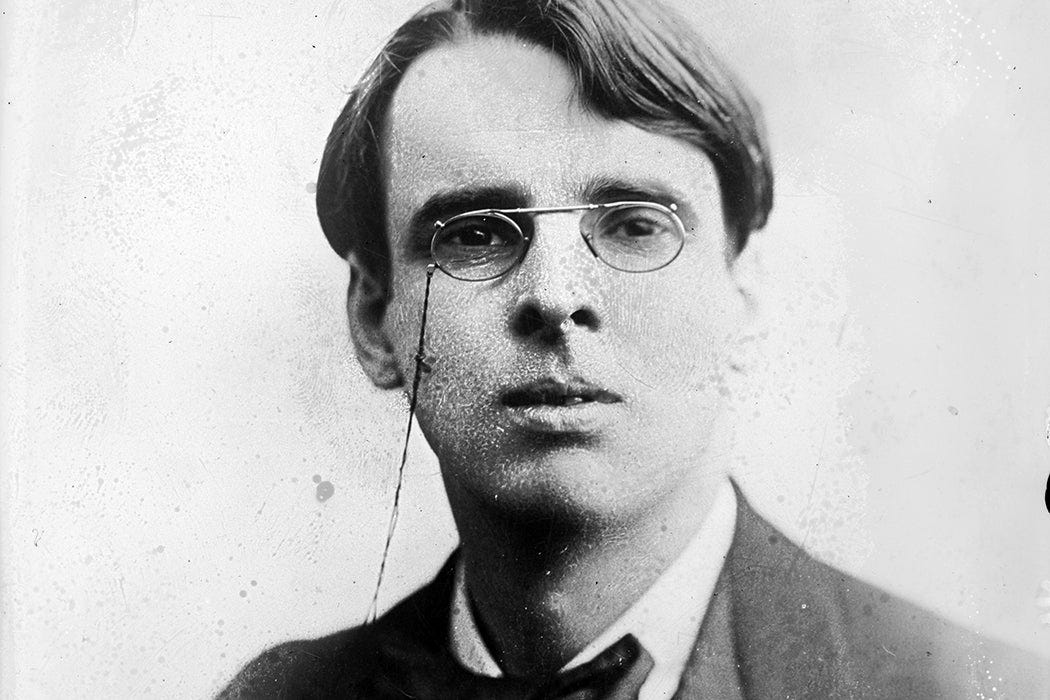
Today’s poem is one of the purest and most earnest offerings from one of the most indefatigable lover-poets of the twentieth century. Happy reading! This is a public episode. If you'd like to discuss this with other subscribers or get access to bonus episodes, visit dailypoempod.substack.com/subscribe

Marianne Moore's "Silence"
Marianne Craig Moore (November 15, 1887 – February 5, 1972) was an American modernist poet, critic, translator, and editor. Her poetry is noted for its formal innovation, precise diction, irony, and wit. She was nominated for the 1968 Nobel Prize in Literature.-bio via Wikipedia This is a public episode. If you'd like to discuss this with other subscribers or get access to bonus episodes, visit dailypoempod.substack.com/subscribe

Matthew Hollis' "The Diomedes"
Today’s poem comes from Matthew Hollis’ remarkable collection, Earth House, which blends explorations of the four cardinal directions and original translations of Anglo-Saxon verse from the Exeter Book. Matthew Hollis was born in Norwich in 1971, and now lives in London. His debut Ground Water (Bloodaxe Books, 2004) was shortlisted for the Guardian First Book Award, the Whitbread Poetry Award and the Forward Prize for Best First Collection; it was a Poetry Book Society Recommendation. He is co-editor of Strong Words: Modern Poets on Modern Poetry (Bloodaxe Books, 2000) and 101 Poems Against War (Faber & Faber, 2003), and editor of Selected Poems of Edward Thomas (Faber & Faber, 2011). Now All Roads Lead to France: the Last Years of Edward Thomas (Faber & Faber, UK, 2011; Norton, US, 2012) won the Costa Biography Award and the H. W. Fisher Biography Prize, was Radio 4 Book of the Week and Sunday Times Biography of the Year. He has published the handmade and letterpress pamphlets Stones (Incline Press, 2016), East (Clutag Press, 2016), Leaves (Hazel Press, 2020) and Havener (Bonnefant Press, 2022). Leaves was shortlisted for the Michael Marks Poetry Award 2021. He is the author of The Waste Land: A Biography of a Poem (Faber & Faber, UK, Norton, US, 2022). He was Poetry Editor at Faber & Faber from 2012 to 2023. His second book-length collection, Earth House, was published by Bloodaxe Books in 2023 and was longlisted for The Laurel Prize 2023.-bio via Bloodaxe Books This is a public episode. If you'd like to discuss this with other subscribers or get access to bonus episodes, visit dailypoempod.substack.com/subscribe

Jim Daniels' "Short-Order Cook"
Today’s poem goes out to all the unsung heroes of the grease trap and the fry basket. Happy reading.Jim Daniels is the author of numerous collections of poetry, most recently The Middle Ages (Red Mountain Press, 2018) and Street Calligraphy (Steel Toe Books, 2017). His third collection, Places/Everyone (University of Wisconsin Press, 1985), won the inaugural Brittingham Prize in Poetry in 1985. He lives in Pittsburgh and is the Thomas Stockham University Professor of English at Carnegie Mellon University.-bio via Academy of American Poets This is a public episode. If you'd like to discuss this with other subscribers or get access to bonus episodes, visit dailypoempod.substack.com/subscribe
Lucille Clifton's "cutting greens"
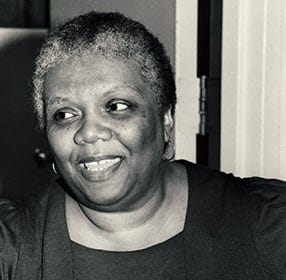
Lucille Clifton was born in Depew, New York, on June 27, 1936. Her first book of poems, Good Times (Random House, 1969), was rated one of the best books of the year by the New York Times.Clifton remained employed in state and federal government positions until 1971, when she became a writer in residence at Coppin State College in Baltimore, Maryland, where she completed two collections: Good News About the Earth (Random House, 1972) and An Ordinary Woman (Random House, 1974). She was the author of several other collections of poetry, including Blessing the Boats: New and Selected Poems 1988–2000 (BOA Editions, 2000), which won the National Book Award; Good Woman: Poems and a Memoir 1969–1980 (BOA Editions, 1987), which was nominated for the Pulitzer Prize; and Two-Headed Woman (University of Massachusetts Press, 1980), also a Pulitzer Prize nominee as well as the recipient of the University of Massachusetts Press Juniper Prize.In 1999, Clifton was elected a Chancellor of the Academy of American Poets. She served as the poet laureate for the State of Maryland from 1979 to 1985, and distinguished professor of humanities at St. Mary’s College of Maryland.After a long battle with cancer, Lucille Clifton died on February 13, 2010, at the age of seventy-three.-bio via Academy of American Poets This is a public episode. If you'd like to discuss this with other subscribers or get access to bonus episodes, visit dailypoempod.substack.com/subscribe
Robert Graves' "I'd Love to Be a Fairy's Child"
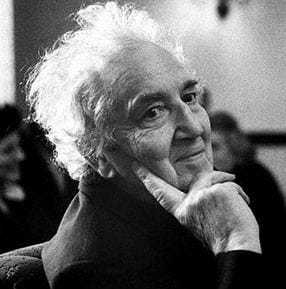
Captain Robert von Ranke Graves (24 July 1895 – 7 December 1985) was an English poet, soldier, historical novelist and critic. His father was Alfred Perceval Graves, a celebrated Irish poet and figure in the Gaelic revival; they were both Celticists and students of Irish mythology.Robert Graves produced more than 140 works in his lifetime. His poems, his translations and innovative analysis of the Greek myths, his memoir of his early life—including his role in World War I—Good-Bye to All That (1929), and his speculative study of poetic inspiration The White Goddess have never been out of print. He is also a renowned short story writer, with stories such as "The Tenement" still being popular today.He earned his living from writing, particularly popular historical novels such as I, Claudius; King Jesus; The Golden Fleece; and Count Belisarius. He also was a prominent translator of Classical Latin and Ancient Greek texts; his versions of The Twelve Caesars and The Golden Ass remain popular for their clarity and entertaining style. Graves was awarded the 1934 James Tait Black Memorial Prize for both I, Claudius and Claudius the God. This is a public episode. If you'd like to discuss this with other subscribers or get access to bonus episodes, visit dailypoempod.substack.com/subscribe
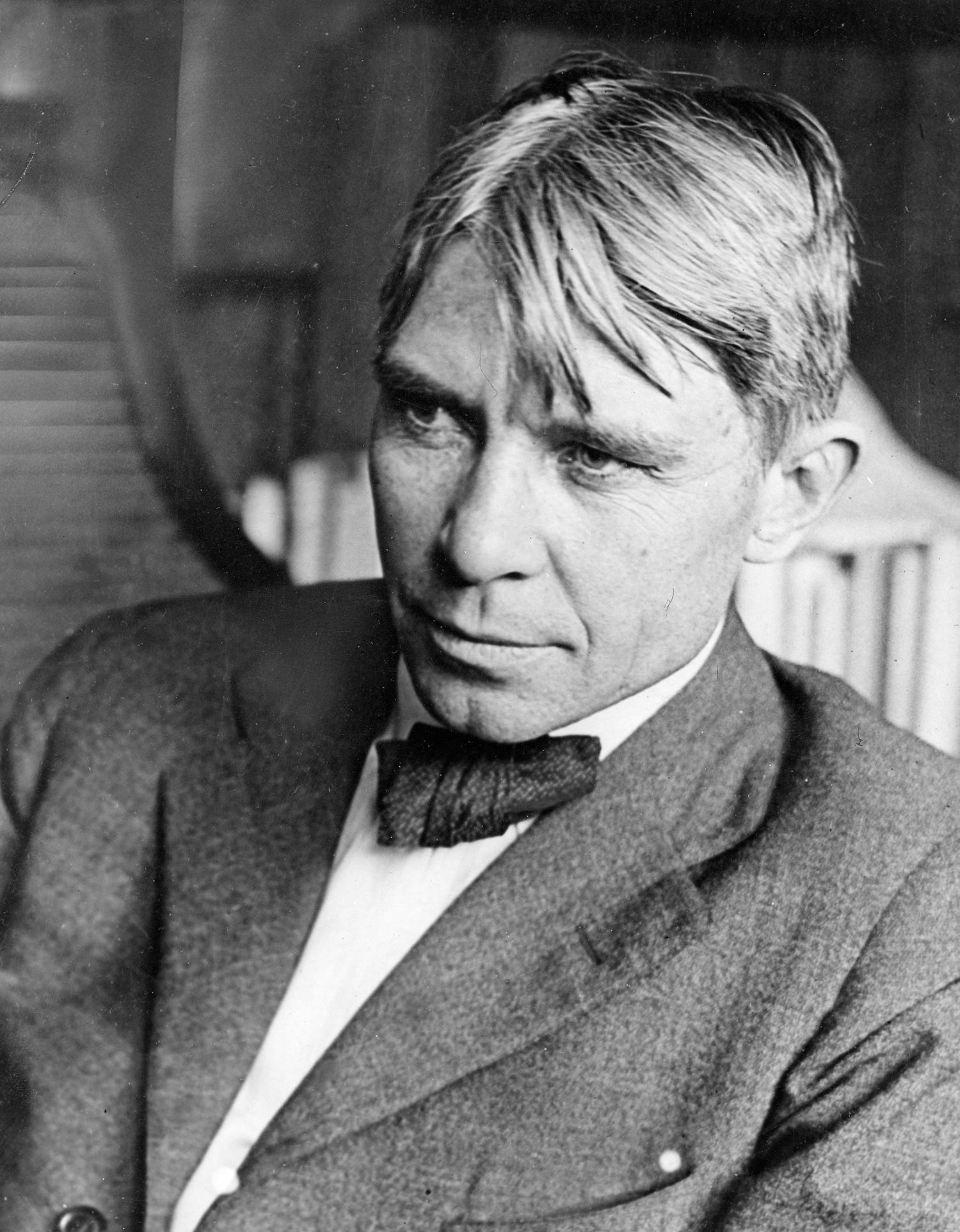
Carl Sandburg's "Fog"
Today’s economical little poem from Carl Sandburg is jam-packed with allusion and metaphor. Happy reading. This is a public episode. If you'd like to discuss this with other subscribers or get access to bonus episodes, visit dailypoempod.substack.com/subscribe

Donald Davidson's "Lee in the Mountains" Pt. 2
The conclusion to yesterday’s poem. Happy reading. This is a public episode. If you'd like to discuss this with other subscribers or get access to bonus episodes, visit dailypoempod.substack.com/subscribe

Donald Davidson's "Lee in the Mountains" Pt. 1
Today, while the host works in the mountains, we are featuring the first half of a longer poem by Fugitive poet Donald Davidson, imagining the inner agonies of a Robert E. Lee in retirement. Part 2 tomorrow.Associated with the Fugitives and Southern Agrarians, poet Donald (Grady) Davidson was born in Tennessee and earned both a BA and an MA from Vanderbilt University in Nashville. Davidson published five collections of poetry The Outland Piper (1924), The Tall Man (1927), Lee in the Mountains and Other Poems (1938), The Long Street: Poems (1961), and Collected Poems: 1922–1961 (1966). In the 1920s, Davidson co-founded and co-edited the influential journal The Fugitive. His prose writings include an essay in I’ll Take My Stand: The South and the Agrarian Tradition (1930); a collection, Still Rebels, Still Yankees and Other Essays (1957); and Southern Writers in the Modern World (1958), which he first delivered as a lecture at Mercer University in Georgia. Davidson wrote a two-volume history of Tennessee, The Tennessee Volume One: The Old River: Frontier to Secession (1946) and The Tennessee Volume Two: The New River: Civil War to TVA (1948).Davidson taught English at Vanderbilt University from 1920 to 1968. He spent summers teaching at the Bread Loaf School of English in Vermont.-bio via Poetry Foundation This is a public episode. If you'd like to discuss this with other subscribers or get access to bonus episodes, visit dailypoempod.substack.com/subscribe
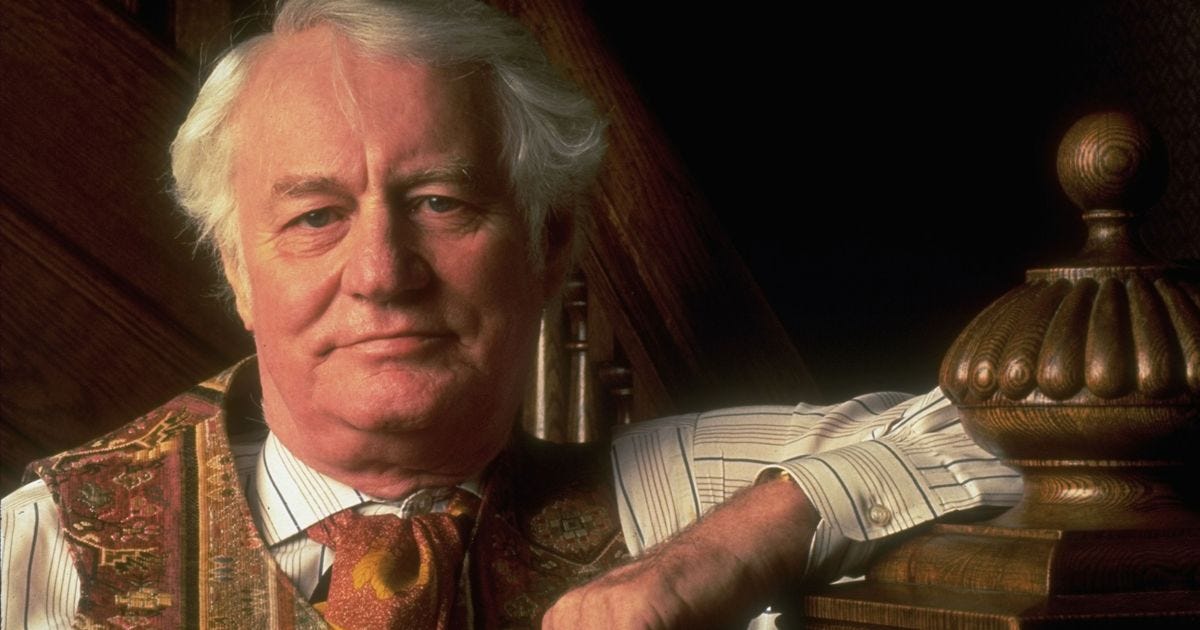
Robert Bly's "The Moon"
Robert Bly (born December 23, 1926, in Madison, Minnesota) is the author of more than thirty books of poetry, including Stealing Sugar from the Castle: Selected Poems (W. W. Norton, 2013); Talking into the Ear of a Donkey: Poems(W. W. Norton, 2011); Reaching Out to the World: New and Selected Prose Poems (White Pine Press, 2009); My Sentence Was a Thousand Years of Joy (HarperCollins, 2005); The Night Abraham Called to the Stars (HarperCollins, 2001); Loving a Woman in Two Worlds (Dial Press, 1985); This Body is Made of Camphor and Gopherwood (Harper & Row, 1977); and The Light Around the Body (Harper & Row, 1967), which won the National Book Award.As the editor of the magazine The Sixties (begun as The Fifties), Bly introduced many unknown European and South American poets to an American audience. He is also the editor of numerous collections including (Beacon Press, 2007); Mirabai: Ecstatic Poems(Beacon Press, 2004), co-authored with Jane Hirshfield; The Soul Is Here for Its Own Joy: Sacred Poems from Many Cultures (HarperCollins, 1995); Leaping Poetry: An Idea with Poems and Translations (Beacon Press, 1975); The Rag and Bone Shop of the Heart: Poems for Men (HarperCollins, 1992); News of the Universe: Poems of Twofold Consciousness (Sierra Club Books, 1980); and A Poetry Reading Against the Vietnam War (American Writers Against the Vietnam War, 1966). Among his many books of translations are Lorca and Jiminez: Selected Poems (Beacon Press, 1997); Times Alone: Selected Poems of Antonio Machado (Wesleyan University Press, 1983); The Kabir Book: Ecstatic Poems (Beacon Press, 1977); Friends, You Drank Some Darkness: Three Swedish Poets—Martinson, Ekeloef, and Transtromer (Beacon Press, 1975); and Neruda and Vallejo: Selected Poems (Beacon Press, 1971), co-translated with John Knoepfle and James Wright.Bly’s honors include Guggenheim, Rockefeller, and National Endowment for the Arts fellowships, as well as The Robert Frost Medal from the Poetry Society of America.Bly lived on a farm in the western part of Minnesota with his wife and three children until his death on November 21, 2021.-bio via Academy of American Poets This is a public episode. If you'd like to discuss this with other subscribers or get access to bonus episodes, visit dailypoempod.substack.com/subscribe
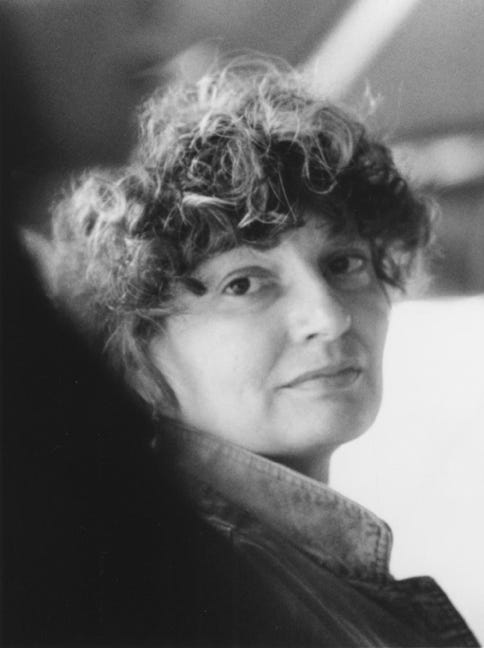
Jane Kenyon's "Otherwise"
Jane Kenyon (1947–1995), former Poet Laureate of New Hampshire, was the author of four volumes of poetry. Her collected poems were published by Graywolf Press in 2007. This is a public episode. If you'd like to discuss this with other subscribers or get access to bonus episodes, visit dailypoempod.substack.com/subscribe
R. S. Gwynn's "Shakespearean Sonnet"
Today’s poem isn’t what you think, until you do some thinking–then its exactly what you thought.R. S. Gwynn (born 1948) is the author of six collections of poetry, including Dogwatch (2014) and the University of Missouri Breakthrough Award winner The Drive-In (1986).-bio via Library of Congress This is a public episode. If you'd like to discuss this with other subscribers or get access to bonus episodes, visit dailypoempod.substack.com/subscribe

William Shakespeare's Sonnet 94 ("They that have power")
Today’s poem, a lover’s plea disguised as a meditation on virtuous restraint, marks the end of our week of sonnets. Happy reading. This is a public episode. If you'd like to discuss this with other subscribers or get access to bonus episodes, visit dailypoempod.substack.com/subscribe

William Shakespeare's Sonnet 147 ("My love is as a fever...")
Today, the Bard gets bitter. This is a public episode. If you'd like to discuss this with other subscribers or get access to bonus episodes, visit dailypoempod.substack.com/subscribe

William Shakespeare's Sonnet 73 ("That time of year...")
Today’s sonnet details a painful reality: even great poets lose their hair sometimes. This is a public episode. If you'd like to discuss this with other subscribers or get access to bonus episodes, visit dailypoempod.substack.com/subscribe
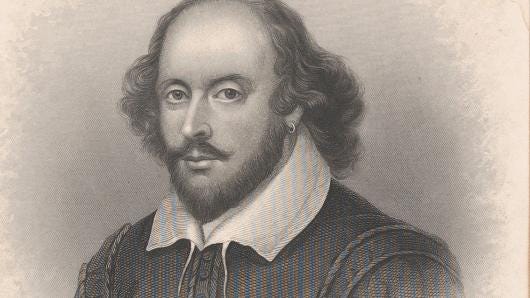
William Shakespeare's Sonnet 55 ("Not marble...")
Today, a (biased) case for poems as the monuments that can outlast monuments. This is a public episode. If you'd like to discuss this with other subscribers or get access to bonus episodes, visit dailypoempod.substack.com/subscribe

William Shakespeare's Sonnet 18 ("Shall I compare thee...")
Today’s poem–arguably the Bard’s most famous sonnet–will set the stage for four days of dramatically underrated Shakespearean sonnets. Happy reading! This is a public episode. If you'd like to discuss this with other subscribers or get access to bonus episodes, visit dailypoempod.substack.com/subscribe

Oliver Herford's "The Early Owl"
From a New York Times obituary of Oliver Herford (1860-1935): "His wit…was too original at first to go down with the very delectable highly respectable magazine editors of the Nineties. It was odd, unexpected, his own brand. It takes genius to write the best nonsense, which is often far more sensible than sense. Herford's, the result of care and polish, looked unforced.…Intelligent, thoughtful, well-bred, what with his animals and his children and his artistic simplicities, he was remote from the style of the best moderns. No violence, no obscenity, not even obscurity or that long-windedness which is the signet of the illustrious writer of today. An old-fashioned gentleman, a painstaking artist, whose work had edge, grace and distinction.” This is a public episode. If you'd like to discuss this with other subscribers or get access to bonus episodes, visit dailypoempod.substack.com/subscribe

A. A. Milne's "Bad Sir Brian Botany"
Today’s poem is a good reminder about noblesse obliges. Happy reading! This is a public episode. If you'd like to discuss this with other subscribers or get access to bonus episodes, visit dailypoempod.substack.com/subscribe
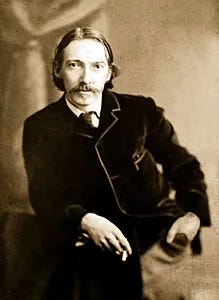
Robert Louis Stevenson's "My Bed is a Boat"
Today’s poem might be a perfect companion to a bedtime-reading of Where the Wild Things Are on a balmy summer evening. This is a public episode. If you'd like to discuss this with other subscribers or get access to bonus episodes, visit dailypoempod.substack.com/subscribe
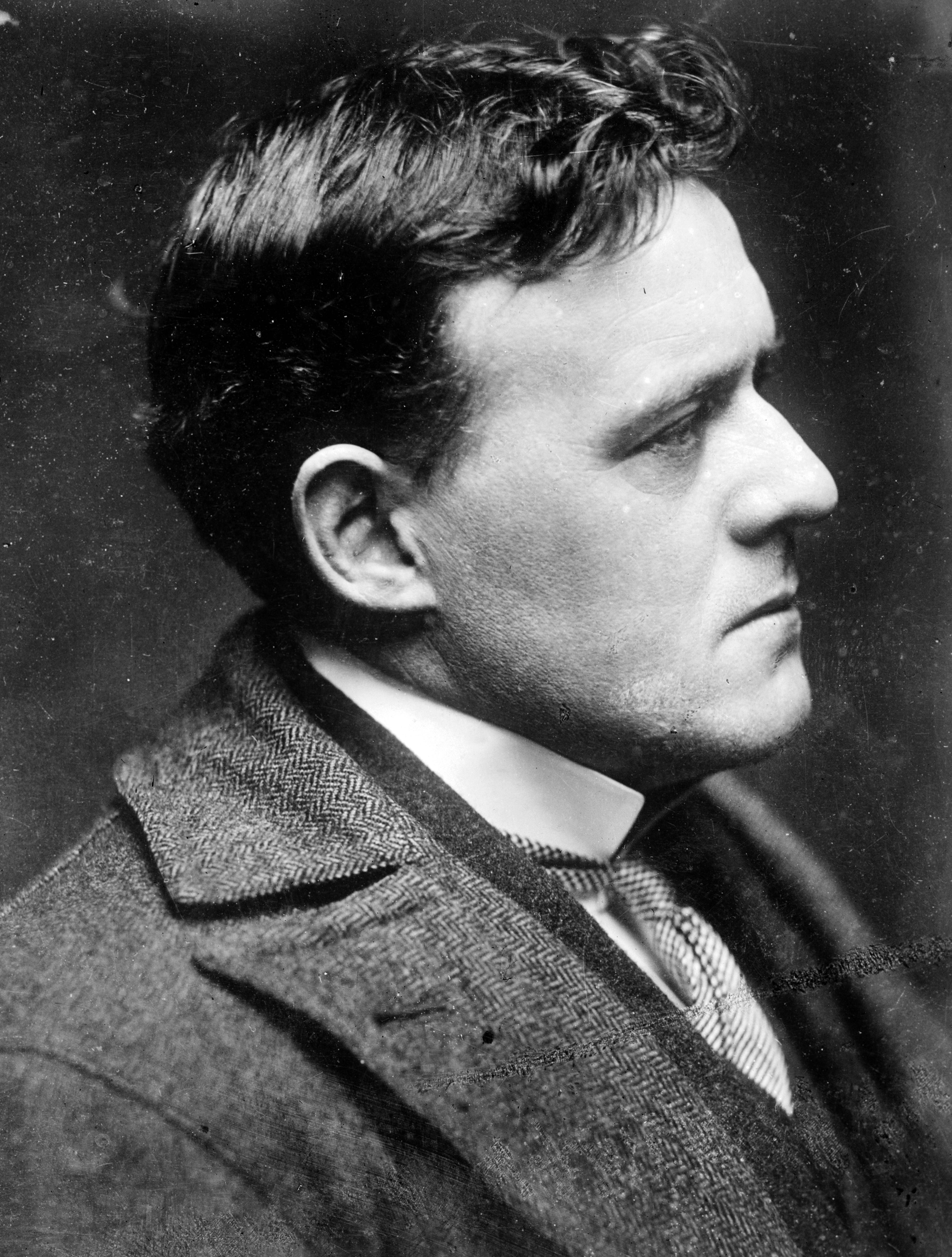
Hilaire Belloc's "Rebecca, Who Slammed Doors for Fun and Perished Miserably"
Today’s poem is another from Belloc–one of his Cautionary Tales for Children just in time for the beginning of a quiet summer (maybe?). This is a public episode. If you'd like to discuss this with other subscribers or get access to bonus episodes, visit dailypoempod.substack.com/subscribe

Hilaire Belloc's "On the Gift of a Book to a Child"
Today’s poem is a series of increasingly vital pleas. Happy reading.For more of Belloc’s advice to the young, find yourself a copy of Cautionary Tales for Children! This is a public episode. If you'd like to discuss this with other subscribers or get access to bonus episodes, visit dailypoempod.substack.com/subscribe
Bonus: "Morituri Salutamus" in full
Today we’re feeling out a Saturday bonus episode featuring a reading of “Morituri Salutamus” in its entirety. Happy reading! This is a public episode. If you'd like to discuss this with other subscribers or get access to bonus episodes, visit dailypoempod.substack.com/subscribe

Selections From Longfellow's "Morituri Salutamus"
Today’s episode features selections from Henry Wadsworth Longfellow’s fifty-year retrospective on his own graduation, the lengthy speech-in-verse, “Morituri Salutamus: Poem for the Fiftieth Anniversary of the Class of 1825 in Bowdoin College.” Come back tomorrow to hear the poem in full. Happy reading! This is a public episode. If you'd like to discuss this with other subscribers or get access to bonus episodes, visit dailypoempod.substack.com/subscribe
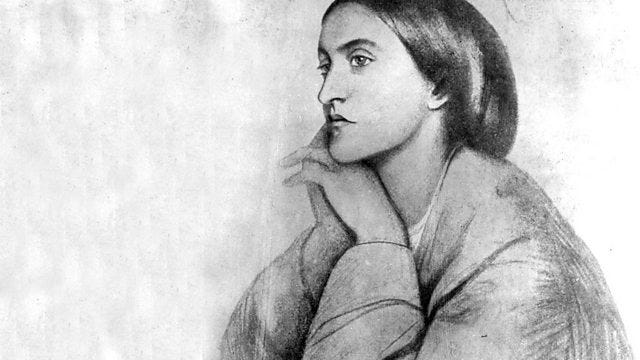
Christina Rossetti's "Up-Hill"
Today’s poem from Christina Rossetti is not about high school or college, but it might still be about graduation. Happy reading! This is a public episode. If you'd like to discuss this with other subscribers or get access to bonus episodes, visit dailypoempod.substack.com/subscribe

C. P. Cavafy's "Che Fece...Il Gran Rifiuto"
Konstantinos Petrou Kavafis, known, especially in English, as Constantine P. Cavafy and often published as C. P. Cavafy, was a Greek poet, journalist, and civil servant from Alexandria. A major figure of modern Greek literature, he is sometimes considered the most distinguished Greek poet of the 20th century.-bio via Wikipedia This is a public episode. If you'd like to discuss this with other subscribers or get access to bonus episodes, visit dailypoempod.substack.com/subscribe
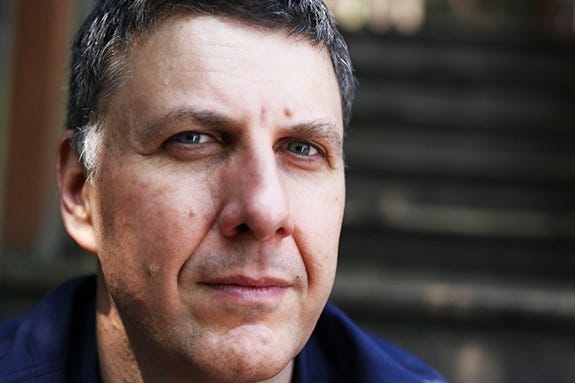
Matthew Zapruder's "Graduation Day"
Matthew Zapruder is the author of six collections of poetry, most recently I Love Hearing Your Dreams, forthcoming from Scribner in September 2024, as well as two books of prose: Why Poetry (Ecco, 2017) and Story of a Poem (Unnamed, 2023). He is editor at large at Wave Books, where he edits contemporary poetry, prose, and translations. From 2016-7 he held the annually rotating position of Editor of the Poetry Column for the New York Times Magazine, and was the Editor of Best American Poetry 2022. He teaches in the MFA in Creative Writing at Saint Mary’s College of California.-bio via the poet’s website This is a public episode. If you'd like to discuss this with other subscribers or get access to bonus episodes, visit dailypoempod.substack.com/subscribe

John Ciardi's "An Emeritus Addresses the School"
About the creative process itself, John Ciardi argued in the Writer that “it isn’t easy to make a poem,” adding, “It is better than easy: it is joyously, consumingly difficult. As it is difficult, too, though without joy, to face one’s failures.” Noting that the creation of successful verse requires definite skill, he wrote: “I insist that a poet needs at least as much training as does a concert pianist. More, I think, but that is already too much for the ignorantly excited.” Believing that “the minimum requirement for a good poem is a miracle,” he explained: “The poem must somehow turn out better than anyone—the poet included—had any right to expect. No matter how small the miracle, the hope of it is my one reason for writing.” He also felt the poem’s strength will lead the writer unerringly: “The poet cannot know where he is going: he must take his direction from the poem itself.”-via Poetry Foundation This is a public episode. If you'd like to discuss this with other subscribers or get access to bonus episodes, visit dailypoempod.substack.com/subscribe

Matsuo Bashō's Spring Haiku
Today’s poems are all about the ineffable experience of spring. Happy reading! The 17th-century Japanese haiku master Bashō was born Matsuo Kinsaku near Kyoto, Japan, to a minor samurai and his wife. Soon after the poet’s birth, Japan closed its borders, beginning a seclusion that allowed its native culture to flourish. It is believed that Bashō’s siblings became farmers, while Bashō, at Ueno Castle in the service of the local lord’s son, grew interested in literature. After the young lord’s early death, Bashō left the castle and moved to Kyoto, where he studied with Kigin, a distinguished local poet. During these early years Bashō studied Chinese poetry and Taoism, and soon began writing haikai no renga, a form of linked verses composed in collaboration. The opening verse of a renga, known as hokku, is structured as three unrhymed lines of five, seven, and five syllables. In Bashō’s time, poets were beginning to take the hokku’s form as a template for composing small standalone poems engaging natural imagery, a form that eventually became known as haiku. Bashō was a master of the form. He published his haiku under several names, including Tosei, or “Green Peach,” out of respect for the Chinese poet Li Po, whose name translates to “White Plum.” Bashō’s haiku were published in numerous anthologies, and he edited Kai Oi, or Seashell Game (1672), and Minashiguri, or Shriveled Chestnuts (1683), anthologies that also included a selection of his own work. In his late 20s Bashō moved to Edo (now a sector of Tokyo), where he joined a rapidly growing literary community. After a gift of bashō trees from one student in 1680, the poet began to write under the name Bashō. His work, rooted in observation of the natural world as well as in historical and literary concerns, engages themes of stillness and movement in a voice that is by turns self-questioning, wry, and oracular. Soon after Bashō began to study Zen Buddhism, a fire that destroyed much of his city also took his house. Around 1682, Bashō began the months-long journeys on foot that would become the material for a new poetic form he created, called haibun. Haibun is a hybrid form alternating fragments of prose and haiku to trace a journey. Haibun imagery follows two paths: the external images observed en route, and the internal images that move through the traveler’s mind during the journey. Bashō composed several extended haibun sequences starting in 1684, including Nozarashi Kiko, or Travelogue of Weather-Beaten Bones (1685); Oi no Kobumi, or The Knapsack Notebook (1688); and Sarashina Kiko, or Sarashina Travelogue (1688). His most well-known haibun, Oku no Hosomichi, or Narrow Road to the Interior, recounts the last long walk Bashō completed with his disciple Sora—1,200 miles covered over five months beginning in May 1689. While their days were spent walking, in the evenings they often socialized and wrote with students and friends who lived along their route. The route was also planned to include views that had previously been described by other poets; Bashō alludes to these earlier poems in his own descriptions, weaving fragments of literary and historical conversation into his solitary journey. Bashō revised his final haibun until shortly before his death in 1694. It was first published in 1702, and hundreds of editions have since been published in several languages.-bio via Poetry Foundation This is a public episode. If you'd like to discuss this with other subscribers or get access to bonus episodes, visit dailypoempod.substack.com/subscribe

Thomas Nashe's "Spring, the sweet spring"
Today’s poem–an unambiguous paean to spring–suggests Thomas Nashe and T. S. Eliot had very different feelings about the month of April. Happy reading!Thomas Nashe (1567 - c. 1601) –English pamphleteer, poet, dramatist, and novelist– was the first of the English prose eccentrics. Nashe wrote in a vigorous combination of colloquial diction and idiosyncratic coined compounds that was ideal for controversy. Among his works are the satire Pierce Penilesse His Supplication to the Divell (1592); the masque Summers Last Will and Testament (1592, published 1600); The Unfortunate Traveller (1594), the first picaresque novel in English; and Nashes Lenten Stuffe (1599). The play Dido, Queen of Carthage (1594) was a collaboration with Christopher Marlowe.-bio via Britannica This is a public episode. If you'd like to discuss this with other subscribers or get access to bonus episodes, visit dailypoempod.substack.com/subscribe

Edna St. Vincent Millay's "Spring"
Today’s poem is a more complicated take on spring. Happy reading. This is a public episode. If you'd like to discuss this with other subscribers or get access to bonus episodes, visit dailypoempod.substack.com/subscribe

E. E. Cummings' "[O sweet spontaneous]"
E.E. Cummings, in full Edward Estlin Cummings, (born October 14, 1894, Cambridge, Massachusetts, U.S.—died September 3, 1962, North Conway, New Hampshire), American poet and painter who first attracted attention, in an age of literary experimentation, for his unconventional punctuation and phrasing. Cummings’s name is often styled “e.e. cummings” in the mistaken belief that the poet legally changed his name to lowercase letters only. Cummings used capital letters only irregularly in his verse and did not object when publishers began lowercasing his name, but he himself capitalized his name in his signature and in the title pages of original editions of his books. - bio via Britannica.com This is a public episode. If you'd like to discuss this with other subscribers or get access to bonus episodes, visit dailypoempod.substack.com/subscribe

Phillis Levin's "End of April
What started as an early spring is now not long for this world. In an attempt to stave off an early summer, we have a week of poems dedicated to the fairest of the seasons. Happy reading.Phillis Levin (born 1954) is the author of four poetry collections, including May Day (Penguin, 2008). She also served as editor for The Penguin Book of the Sonnet (2001) and teaches at Hofstra University.-bio via Library of Congress This is a public episode. If you'd like to discuss this with other subscribers or get access to bonus episodes, visit dailypoempod.substack.com/subscribe

Robert Frost's "Mending Wall"
Today’s poem is a Robert Frost classic of which everyone always remembers the wrong part. Happy reading! This is a public episode. If you'd like to discuss this with other subscribers or get access to bonus episodes, visit dailypoempod.substack.com/subscribe
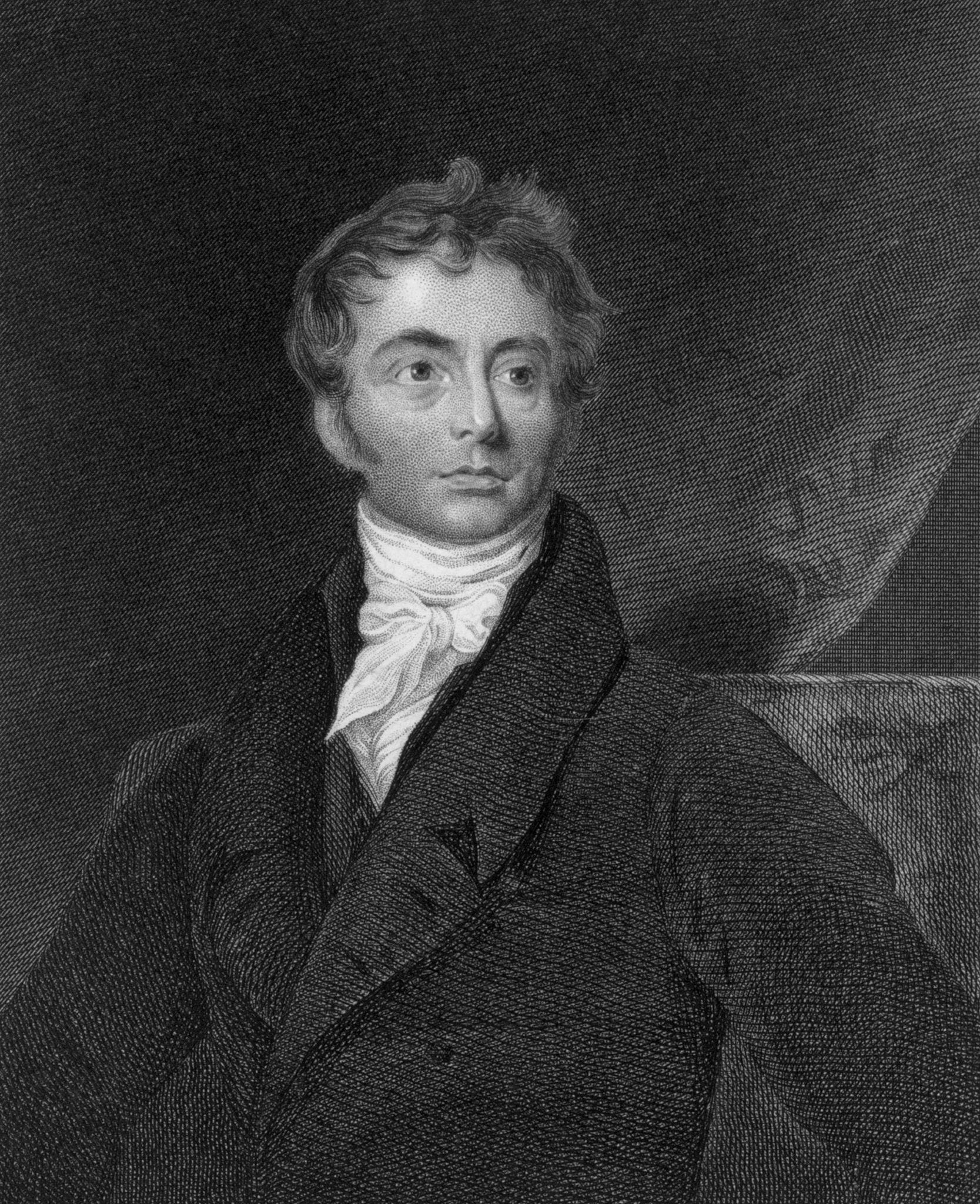
Robert Southey's "His Books"
Robert Southey was an English poet of the Romantic school, and Poet Laureate from 1813 until his death. Like the other Lake Poets, William Wordsworth and Samuel Taylor Coleridge, Southey began as a radical but became steadily more conservative as he gained respect for Britain and its institutions. Other romantics such as Byron accused him of siding with the establishment for money and status. He is remembered especially for the poem "After Blenheim" and the original version of "Goldilocks and the Three Bears".-bio via Wikipedia This is a public episode. If you'd like to discuss this with other subscribers or get access to bonus episodes, visit dailypoempod.substack.com/subscribe

William Butler Yeats' "When You Are Old"
Today’s poem goes out to all the ‘pilgrim souls.’ Happy reading! This is a public episode. If you'd like to discuss this with other subscribers or get access to bonus episodes, visit dailypoempod.substack.com/subscribe
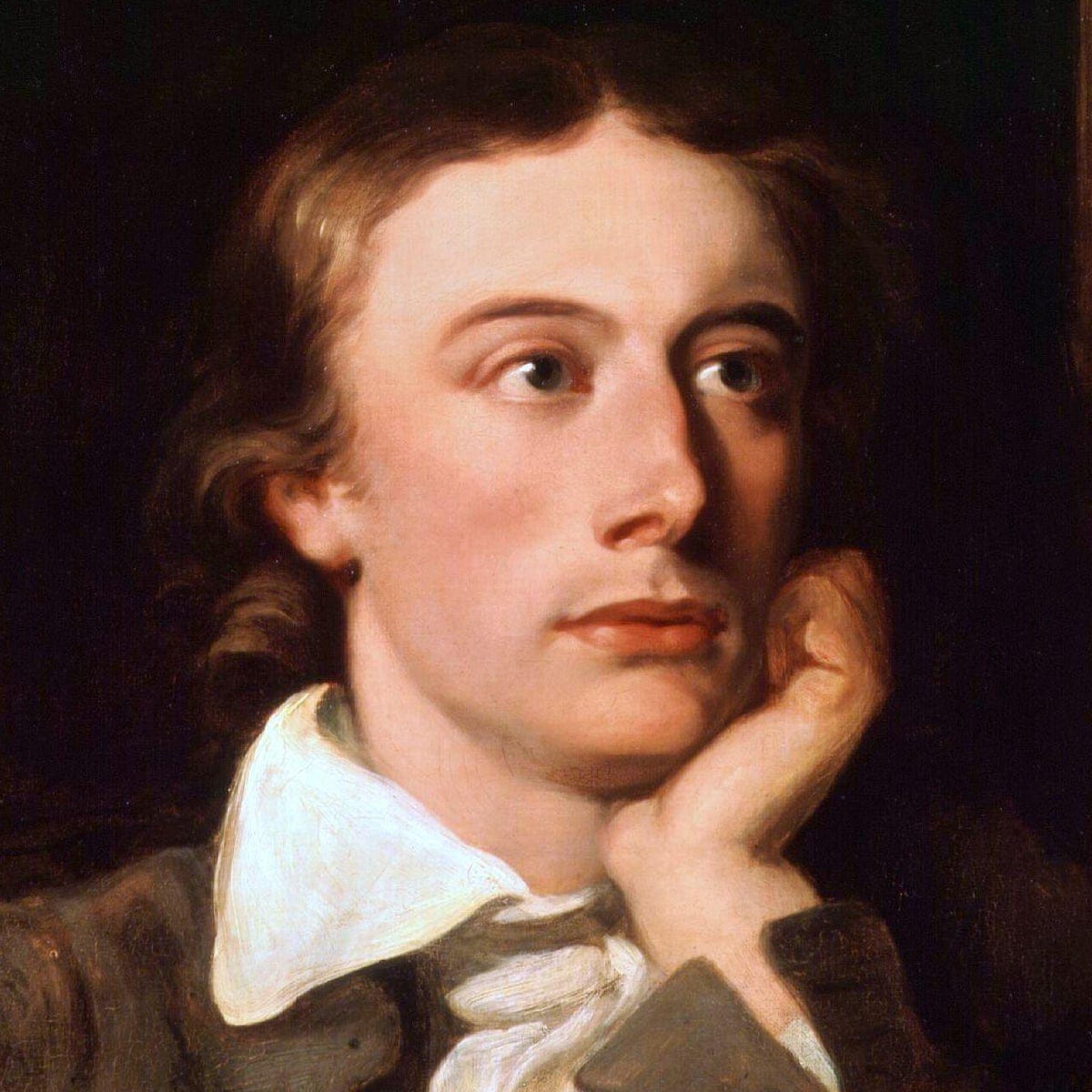
John Keats' "How many bards gild the lapses of time"
In today’s poem, John Keats isn’t worried about authenticity–and that’s just fine. This is a public episode. If you'd like to discuss this with other subscribers or get access to bonus episodes, visit dailypoempod.substack.com/subscribe
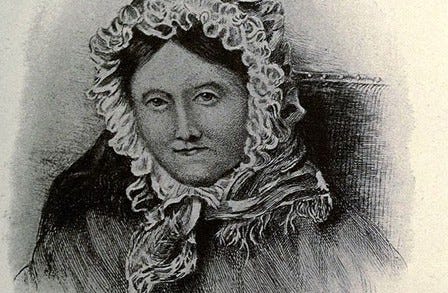
Dorothy Wordsworth's "Loving and Liking"
Today’s poem reminds us how much is sometimes riding on the proper grammatical distinctions.Born in Cumberland, British Romantic poet and prose writer Dorothy Wordsworth was the third of five children. Her mother died when Wordsworth was six, and she moved to Halifax to live with her aunt. In 1781 she enrolled in Hipperholme Boarding School. When her father died in 1783, the family’s financial situation worsened and the children were sent to live with their uncles. Wordsworth changed schools, entering Miss Medlin’s school, where she first read Milton, Shakespeare, and Homer. She later moved to live with an uncle in Penrith, where she was tutored by yet another uncle, the Reverend William Cookson, who also tutored the sons of King George III. Starting in 1788, Wordsworth lived with Cookson and his new wife, and helped to care for their children.She remained particularly close to her brother, the poet William Wordsworth, and the siblings lived together in Dorset and Alfoxden before William married her best friend, Mary Hutchinson, in 1802. Thereafter Dorothy Wordsworth made her home with the couple.An avid naturalist, Wordsworth enjoyed daily nature walks with her brother, and images from the notes she took of these walks often recur in her brother’s poems. Most of her writing explores the natural world.Although Wordsworth did not publish her work, many of her journals, travelogues, and poems have been posthumously collected and published, including her four-volume Alfoxden journal, which she kept from May 1799 to December 1802, and her journals from 1824 to 1835, which include a travelogue and notes on life at Rydal Mount, where she lived with William and his family beginning in 1813. Wordsworth also wrote several children’s stories.In her later years, she struggled with addictions to opium and laudanum, and her mental health deteriorated. Until his death in 1850, her brother was her main caretaker.-bio via Poetry Foundation This is a public episode. If you'd like to discuss this with other subscribers or get access to bonus episodes, visit dailypoempod.substack.com/subscribe
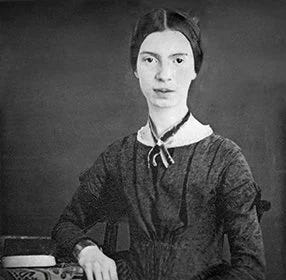
Emily Dickinson's "Tell all the truth but tell it slant–"
Today’s poem is almost too bright for our infirm delight. Happy reading! This is a public episode. If you'd like to discuss this with other subscribers or get access to bonus episodes, visit dailypoempod.substack.com/subscribe
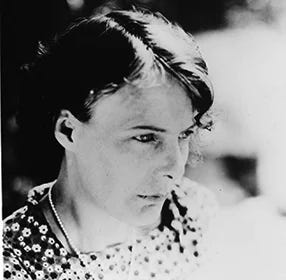
H. D.'s "Eurydice"
Today’s poem features a failed resurrection and a response that spirals through all the customary stages of grief.Hilda Doolittle was born on September 10, 1886, in Bethlehem, Pennsylvania. She attended Bryn Mawr College, where she was a classmate of Marianne Moore. Doolittle later enrolled at the University of Pennsylvania, where she befriended Ezra Pound and William Carlos Williams.H.D. published numerous books of poetry, including Flowering of the Rod (Oxford University Press, 1946); Red Roses From Bronze (Random House, 1932); Collected Poems of H.D. (Boni and Liveright, 1925); Hymen (H. Holt and Company, 1921); and the posthumously published Helen in Egypt (Grove Press, 1961). She was also the author of several works of prose, including Tribute to Freud (Pantheon, 1956).H.D.’s work is characterized by the intense strength of her images, economy of language, and use of classical mythology. Her poems did not receive widespread appreciation and acclaim during her lifetime, in part because her name was associated with the Imagist movement, even as her voice had outgrown the movement’s boundaries, as evidenced by her book-length works, Trilogy and Helen in Egypt. Neglect of H.D. can also be attributed to her time, as many of her poems spoke to an audience which was unready to respond to the strong feminist principles articulated in her work. As Alicia Ostriker said in American Poetry Review, “H.D., by the end of her career, became not only the most gifted woman poet of our century, but one of the most original poets—the more I read her the more I think this—in our language.”H.D. died in Zurich, Switzerland, on September 27, 1961.-bio via Academy of American Poets This is a public episode. If you'd like to discuss this with other subscribers or get access to bonus episodes, visit dailypoempod.substack.com/subscribe

C. S. Lewis' "Stephen to Lazarus"
Clive Staples Lewis (1898–1963) was one of the intellectual giants of the twentieth century and arguably one of the most influential writers of his day. He was a Fellow and Tutor in English Literature at Oxford University until 1954, when he was unanimously elected to the Chair of Medieval and Renaissance Literature at Cambridge University, a position he held until his retirement.Lewis wrote more than thirty books, allowing him to reach a vast audience, and his works continue to attract thousands of new readers every year. C. S. Lewis’s most distinguished and popular accomplishments include Mere Christianity, Out of the Silent Planet, The Great Divorce, The Screwtape Letters, and the universally acknowledged classics in The Chronicles of Narnia. To date, the Narnia books have sold over 100 million copies and been transformed into three major motion pictures.-bio via Harper Collins This is a public episode. If you'd like to discuss this with other subscribers or get access to bonus episodes, visit dailypoempod.substack.com/subscribe
Paul Ruffin's "We Write Nasty Notes at the Academic Conference"
Find somebody to watch the kids while you giggle through today’s poem. Happy reading.Respected editor, publisher, writer and poet, Paul Ruffin often relied upon his experiences growing up in the South as a foundation for his stories. He was born in Millport, Alabama, and grew up outside Columbus, Mississippi. After serving in the U.S. Army, Ruffin earned both his bachelor’s and master’s degrees in English at Mississippi State University. He took post-graduate courses at the University of Southampton in England and graduated with his doctoral degree from the Center for Writers and the University of Southern Mississippi in 1974. He accepted a position at Sam Houston State University where he founded The Texas Review—an international literary journal—and Texas Review Press, a member of the Texas A&M University Press Consortium.Karla K. Morton, 2010 Texas Poet Laureate, said, “His work at The Texas Review Press elevated the whole of Texas Letters.” Throughout the years, Ruffin worked tirelessly to promote the press and its authors, once giving his views on university presses moving toward digital books as opposed to traditional ink-on-paper.“We’re fulfilling the ancient role of the university press and that is to produce books. I don’t want to give up the book because it is an art,” he said.During his extensive writing career, he published more than 1,500 poems, 100-plus stories, and more than 90 essays in magazines and journals. His work also has appeared in numerous anthologies and textbooks. In addition, he wrote a weekly column that appeared in several newspapers in Texas and Mississippi. In 2009, he was named Texas State Poet Laureate.In a 2009 article in SHSU’s Heritage Magazine, Ruffin was described as someone who “loves football, shooting, riding his tractor, maintaining his truck, and doing his own carpentry, electric, and plumbing work…not exactly the stereotypical image of a person who loves words and is a master of arranging them into beautifully crafted poems and other literary works.” -bio via Sam Houston State University This is a public episode. If you'd like to discuss this with other subscribers or get access to bonus episodes, visit dailypoempod.substack.com/subscribe

A. E. Stallings' "Dead Language Lesson"
Today’s poem ponders what love makes of language. Happy reading.A.E. (Alicia) Stallings is the Oxford Professor of Poetry. She grew up in Decatur, Georgia, and studied classics at the University of Georgia and Oxford University. Her poetry collections include Like (2018), a finalist for the Pulitzer Prize; Olives (2012), which was nominated for a National Book Critics Circle Award; Hapax (2006); and Archaic Smile (1999), winner of the Richard Wilbur Award and finalist for both the Yale Younger Poets Series and the Walt Whitman Award. Her poems have appeared in The Best American Poetry anthologies of 1994, 2000, 2015, 2016, and 2017, and she is a frequent contributor to Poetry and the Times Literary Supplement.Stallings’s poetry is known for its ingenuity, wit, and dexterous use of classical allusion and forms to illuminate contemporary life. In interviews, Stallings has spoken about the influence of classical authors on her own work: “The ancients taught me how to sound modern,” she told Forbes magazine. “They showed me that technique was not the enemy of urgency, but the instrument.”Stallings's latest verse translation is the pseudo-Homeric The Battle Between the Frogs and the Mice (2019), in an illustrated edition with Paul Dry Books, and her latest volume of poetry is a selected poems, This Afterlife (2022, FSG). She is the recipient of fellowships from the Guggenheim Foundation and the MacArthur Foundation. She lives in Athens, Greece, with her husband, the journalist John Psaropoulos. -bio via Poetry Foundation This is a public episode. If you'd like to discuss this with other subscribers or get access to bonus episodes, visit dailypoempod.substack.com/subscribe

Scott Cairns' "Musée"
Today’s poem is inspired by one of our favorites here at the Daily Poem.Librettist, essayist, translator, and author of ten poetry collections, Scott Cairns is Curators’ Distinguished Professor Emeritus at University of Missouri. His poems and essays have appeared in Poetry, Image, Paris Review, The Atlantic Monthly, The New Republic, and both have been anthologized in multiple editions of Best American Spiritual Writing. He received a Guggenheim Fellowship in 2006, and the Denise Levertov Award in 2014.His most recent book of poems, Lacunae, is available wherever books are sold.-bio via Paraclete Press This is a public episode. If you'd like to discuss this with other subscribers or get access to bonus episodes, visit dailypoempod.substack.com/subscribe

Ted Kooser's "After Years"
Ted Kooser, who worked in insurance for thirty-five years before becoming U.S. Poet Laureate, turns 85 today. Many happy returns of the day to him, and happy reading to the rest of you! This is a public episode. If you'd like to discuss this with other subscribers or get access to bonus episodes, visit dailypoempod.substack.com/subscribe
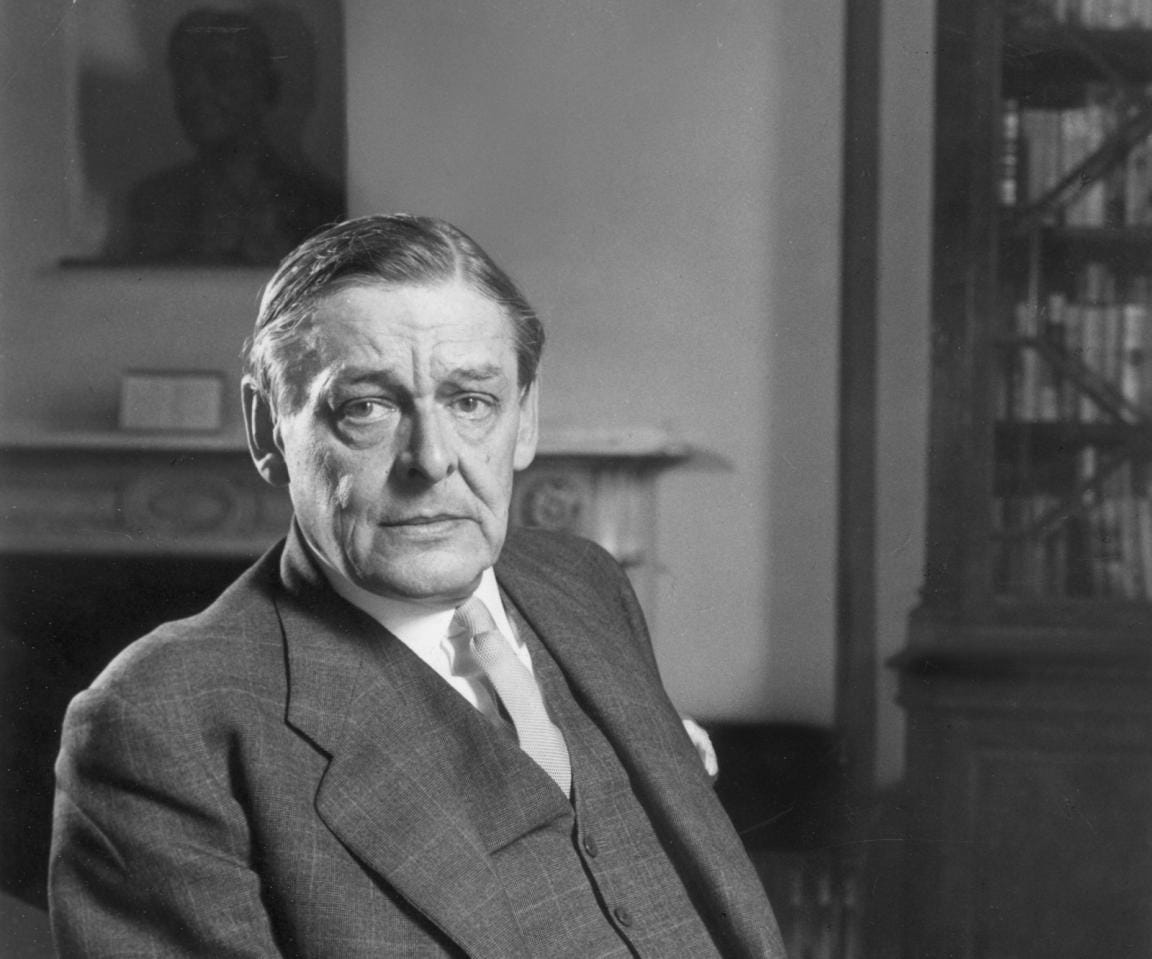
T. S. Eliot's "The Love Song of J. Alfred Prufrock"
Have you measured out your life in coffee spoons? Feeling like a pair of ragged claws today? Afraid to eat messy food while other people are watching? Or are you just channeling a little too much Polonius? If so, today’s poem–the classic modernist anthem of insecurity and isolation (and mermaids)–will feel very familiar. Happy reading!(And for an even better reading of this poem, you should discover Jeremy Irons reading Eliot’s complete poems.) This is a public episode. If you'd like to discuss this with other subscribers or get access to bonus episodes, visit dailypoempod.substack.com/subscribe

William Shakespeare's "It Was a Lover and His Lass"
Happy birthday to the Bard!NB: Anyone itching to dig deeper into Shakespeare’s plays should look no further than one of our sister podcasts, The Play’s the Thing! This is a public episode. If you'd like to discuss this with other subscribers or get access to bonus episodes, visit dailypoempod.substack.com/subscribe
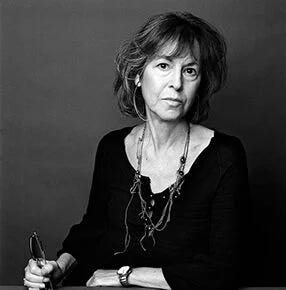
Louise Glück's "The Wild Iris"
Louise Glück was born in New York City in 1943. She is the author of numerous poetry collections, including Winter Recipes from the Collective (2021); Faithful and Virtuous Night (2014), which won the National Book Award; Poems: 1962-2012 (2012), winner of the Los Angeles Times Book Prize; and The Wild Iris (1992), which won the Pulitzer Prize; and Ararat (1990), which won the Rebekah Johnson Bobbitt National Prize for Poetry from the Library of Congress. In 2020, Glück was awarded the Nobel Prize in Literature. Her other honors include The New Yorker’s Book Award in Poetry, the Wallace Stevens Award from the Academy of American Poets, the William Carlos Williams Award from the Poetry Society of America, and the National Book Critics Circle Award. She has also received fellowships from the Guggenheim Foundation, the Rockefeller Foundation, and the National Endowment for the Arts. A member of the American Academy and Institute of Arts and Letters, Glück was elected a Chancellor of the Academy of American Poets in 1999 and named the 12th Poet Laureate Consultant in Poetry to the Library of Congress in 2003. Glück has taught English and creative writing at Williams College, Yale University, Boston University, the University of Iowa, and Goddard College. She died in 2023.-bio via Library of Congress This is a public episode. If you'd like to discuss this with other subscribers or get access to bonus episodes, visit dailypoempod.substack.com/subscribe
Francis Thompson's "The Hound of Heaven"
Francis Thompson was born in Northwest England in 1859. The son of Catholic converts, as a boy he was initially educated for the priesthood. When he was 18, at his parents' insistence, he entered Owens College in Manchester to follow in his father's footsteps and study medicine. But before long, he left for London hoping to pursue what he believed was his true vocation of being a writer. As a result of ill health and subsequent medical treatment, like many before him, Thompson became addicted to opium. He soon fell into a life of despair and destitution, sleeping on the banks of the Thames with London's homeless and selling matches just to stay alive.Yet it was during this time, in the midst of all his hunger, deprivation and hopelessness, that he was most able to see the kingdom of Heaven. These devastating experiences honed his poetic focus and insights. In 1888, Thompson sent a tattered and torn manuscript to the Catholic periodical Merry England. Its editors, Wilfrid and Alice Meynell, devout Christians themselves, not only recognized Thompson's poetic ability, they took him under their care and gave him a home. They also arranged for the publication of his first book in 1893, simply titled Poems, which included The Hound of Heaven. The poem was immediately recognized as a masterpiece.Thompson spent the years from 1893-1897 nursing his frail health in a monastery in Wales. He died of tuberculosis on November 13, 1907. He was 47. After his death, Alice Meynell wrote that no change in poetic tastes in the years to come could ever "lessen the height or diminish the greatness" of Thompson's profound accomplishment. In his eulogy for Thompson, G. K. Chesterton simply concluded: "He was a great poet." Among those who would be influenced by Thompson was the young J. R. R. Tolkien, who purchased a volume of Thompson's works in 1913, and later claimed that it had played an important role in his own writing.-bio via HoundofHeaven.com This is a public episode. If you'd like to discuss this with other subscribers or get access to bonus episodes, visit dailypoempod.substack.com/subscribe