The Daily Poem
939 episodes — Page 11 of 19
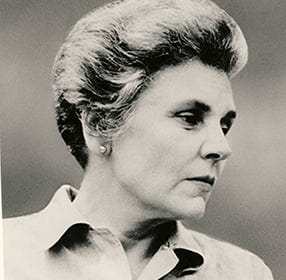
Elizabeth Bishop's "In the Waiting Room"
Today’s poem is a rare departure for Elizabeth Bishop who usually avoided a confessional style of poetry–but everybody gets a little introspective on their birthday. This is a public episode. If you'd like to discuss this with other subscribers or get access to bonus episodes, visit dailypoempod.substack.com/subscribe

Tracy K. Smith's "Solstice"
Tracy K. Smith was born in Massachusetts and raised in northern California. She earned a BA from Harvard University and an MFA in creative writing from Columbia University. From 1997 to 1999 she held a Stegner fellowship at Stanford University. Smith is the author of four books of poetry: The Body's Question (2003), which won the Cave Canem prize for the best first book by an African-American poet; Duende (2007), winner of the James Laughlin Award and the Essense Literary Award; Life on Mars (2011), winner of the Pulitzer Prize for Poetry; and Wade in the Water (2018). In 2014 she was awarded the Academy of American Poets fellowship. She has also written a memoir, Ordinary Light (2015), which was a finalist for the National Book Award in nonfiction.In June 2017, Smith was named U.S. poet laureate. She teaches at Harvard University, where she is a professor of English and of African and African American Studies and the Susan S. and Kenneth L. Wallach Professor at the Harvard Radcliffe Institute. She also hosted American Public Media's daily radio program and podcast The Slowdown, which is sponsored by the Poetry Foundation.-bio via Poetry Foundation This is a public episode. If you'd like to discuss this with other subscribers or get access to bonus episodes, visit dailypoempod.substack.com/subscribe

Matthew Arnold's "Dover Beach"
Today’s poem is the one you had to read in high school without really understanding it. (Or was that just me?)Among the major Victorian writers, Matthew Arnold (1822-1888) is unique in that his reputation rests equally upon his poetry and his poetry criticism. Only a quarter of his productive life was given to writing poetry, but many of the same values, attitudes, and feelings that are expressed in his poems achieve a fuller or more balanced formulation in his prose. This unity was obscured for most earlier readers by the usual evaluations of his poetry as gnomic or thought-laden, or as melancholy or elegiac, and of his prose as urbane, didactic, and often satirically witty in its self-imposed task of enlightening the social consciousness of England.Assessing his achievement as a whole, G.K. Chesterton said that under his surface raillery Arnold was, “even in the age of Carlyle and Ruskin, perhaps the most serious man alive” [though, from Chesterton, this is not entirely a compliment.] H.J. Muller declared that “if in an age of violence the attitudes he engenders cannot alone save civilization, it is worth saving chiefly because of such attitudes.” It is even more striking, and would have pleased Arnold greatly, to find an intelligent and critical journalist telling newspaper readers in 1980 that if selecting three books for castaways, he would make his first choice The Poetical Works of Matthew Arnold (1950), because “Arnold’s longer poems may be an acquired taste, but once the nut has been cracked their power is extraordinary.” Arnold put his own poems in perspective in a letter to his mother on June 5, 1869: “It might be fairly urged that I have less poetical sentiment than Tennyson, and less intellectual vigour and abundance than Browning; yet, because I have perhaps more of a fusion of the two than either of them, and have more regularly applied that fusion to the main line of modern development, I am likely enough to have my turn, as they have had theirs.”-bio via Poetry Foundation This is a public episode. If you'd like to discuss this with other subscribers or get access to bonus episodes, visit dailypoempod.substack.com/subscribe

Langston Hughes' "Harlem"
Today’s poem is one of the most recognizable and influential American poems of the twentieth century.Langston Hughes was a central figure in the Harlem Renaissance, the flowering of black intellectual, literary, and artistic life that took place in the 1920s in a number of American cities, particularly Harlem. A major poet, Hughes also wrote novels, short stories, essays, and plays. He sought to honestly portray the joys and hardships of working-class black lives, avoiding both sentimental idealization and negative stereotypes.Hughes’s position in the American literary scene seems to be secure. David Littlejohn wrote that Hughes is "the one sure Negro classic, more certain of permanence than even Baldwin or Ellison or Wright. … His voice is as sure, his manner as original, his position as secure as, say Edwin Arlington Robinson’s or Robinson Jeffers’. … By molding his verse always on the sounds of Negro talk, the rhythms of Negro music, by retaining his own keen honesty and directness, his poetic sense and ironic intelligence, he maintained through four decades a readable newness distinctly his own."Hughes’s poems have been translated into German, French, Spanish, Russian, Yiddish, and Czech; many of them have been set to music.-bio via Poetry Foundation This is a public episode. If you'd like to discuss this with other subscribers or get access to bonus episodes, visit dailypoempod.substack.com/subscribe

Robert Herrick's "Ceremony Upon Candlemas Eve"
Today’s poem from Robert Herrick is not only an ode to the holiday of Candlemas, but a meditation on the everlasting revolution of the seasons.For more on the history of Groundhog Day and Candlemas, check out this conversation between Richard Rohlin and Jonathan Pageau. This is a public episode. If you'd like to discuss this with other subscribers or get access to bonus episodes, visit dailypoempod.substack.com/subscribe
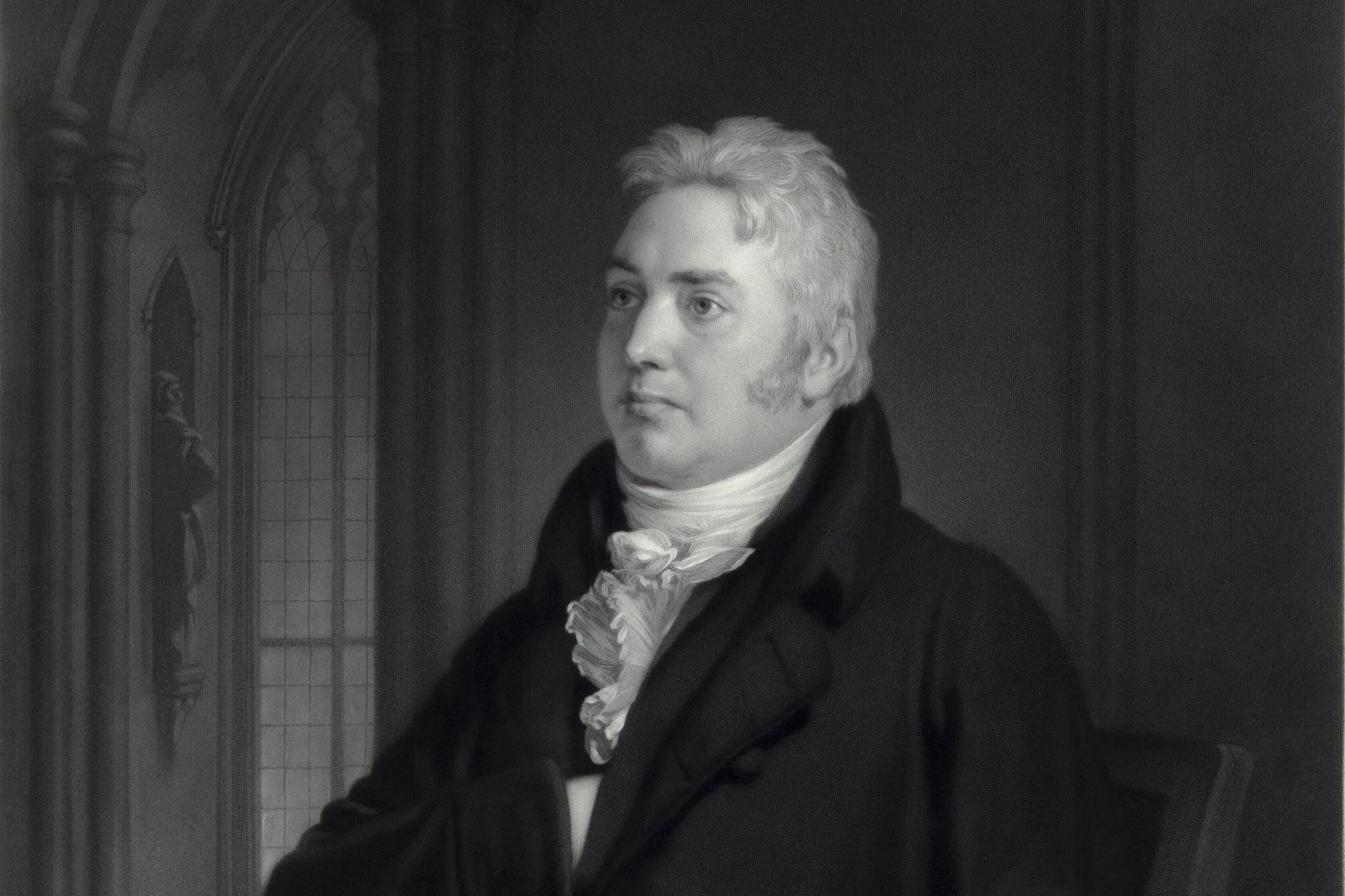
Samuel Taylor Coleridge's "Work Without Hope"
If you had to live the same day over and over again, you may as well use the time to memorize some poetry. That’s exactly what Phil Connors does in Groundhog Day. Today’s poem is featured in the film and marks a significant turning point for the once-misanthropic weatherman.Samuel Taylor Coleridge is the premier poet-critic of modern English tradition, distinguished for the scope and influence of his thinking about literature as much as for his innovative verse. Active in the wake of the French Revolution as a dissenting pamphleteer and lay preacher, he inspired a brilliant generation of writers and attracted the patronage of progressive men of the rising middle class. As William Wordsworth’s collaborator and constant companion in the formative period of their careers as poets, Coleridge participated in the sea change in English verse associated with Lyrical Ballads (1798). His poems of this period, speculative, meditative, and strangely oracular, put off early readers but survived the doubts of Wordsworth and Robert Southey to become recognized classics of the romantic idiom.-bio via Poetry Foundation This is a public episode. If you'd like to discuss this with other subscribers or get access to bonus episodes, visit dailypoempod.substack.com/subscribe

Robert Browning's "Development"
Although the early part of Robert Browning’s creative life was spent in comparative obscurity, he has come to be regarded as one of the most important English poets of the Victorian period. His dramatic monologues and the psycho-historical epic The Ring and the Book (1868-1869), a novel in verse, have established him as a major figure in the history of English poetry. His claim to attention as a children’s writer is more modest, resting as it does almost entirely on one poem, “The Pied Piper of Hamelin,” included almost as an afterthought in Bells and Pomegranites. No. III.—Dramatic Lyrics (1842) and evidently never highly regarded by its creator. Nevertheless, “The Pied Piper” moved quickly into the canon of children’s literature, where it has remained ever since, receiving the dubious honor (shared by the fairy tales of Hans Christian Andersen and J.M. Barrie’s Peter Pan) of appearing almost as frequently in “adapted” versions as in the author’s original. His approach to dramatic monologue influenced countless poets for almost a century. Browning was born on May 7, 1812 in Camberwell, a middle-class suburb of London. He was the only son of Robert Browning, a clerk in the Bank of England, and a devoutly religious German-Scotch mother, Sarah Anna Wiedemann Browning. He had a sister, Sarianna, who like her parents was devoted to Browning. While Mrs. Browning’s piety and love of music are frequently cited as important influences on the poet’s development, his father’s scholarly interests and unusual educational practices may have been equally significant. The son of a wealthy banker, Robert Browning the elder had been sent in his youth to make his fortune in the West Indies, but he found the slave economy there so distasteful that he returned, hoping for a career in art and scholarship. A quarrel with his father and the financial necessity it entailed led the elder Browning to relinquish his dreams so as to support himself and his family through his bank clerkship.Browning’s father amassed a personal library of some 6,000 volumes, many of them collections of arcane lore and historical anecdotes that the poet plundered for poetic material, including the source of “The Pied Piper.” The younger Browning recalled his father’s unorthodox methods of education in his late poem “Development,” published in Asolando: Fancies and Facts (1889). Browning remembers at the age of five asking what his father was reading. To explain the siege of Troy, the elder Browning created a game for the child in which the family pets were assigned roles and furniture was recruited to serve for the besieged city. Later, when the child had incorporated the game into his play with his friends, his father introduced him to Alexander Pope’s translation of the Iliad. Browning’s appetite for the story having been whetted, he was induced to learn Greek so as to read the original. Much of Browning’s education was conducted at home by his father, which accounts for the wide range of unusual information the mature poet brought to his work. His family background was also important for financial reasons; the father whose own artistic and scholarly dreams had been destroyed by financial necessity was more than willing to support his beloved son’s efforts. Browning decided as a child that he wanted to be a poet, and he never seriously attempted any other profession. Both his day-to-day needs and the financial cost of publishing his early poetic efforts were willingly supplied by his parents.At the time of his death in 1889, he was one of the most popular poets in England.-bio via Poetry Foundation This is a public episode. If you'd like to discuss this with other subscribers or get access to bonus episodes, visit dailypoempod.substack.com/subscribe

Emily Dickinson's "Fame is a bee."
Today’s poem from Emily Dickinson is a masterclass in poetic economy. This is a public episode. If you'd like to discuss this with other subscribers or get access to bonus episodes, visit dailypoempod.substack.com/subscribe

Anne Bradstreet's "To My Dear and Loving Husband"
Anne Bradstreet was the first woman to be recognized as an accomplished New World Poet. Her volume of poetry The Tenth Muse Lately Sprung Up in America ... received considerable favorable attention when it was first published in London in 1650. Eight years after it appeared it was listed by William London in his Catalogue of the Most Vendible Books in England, and George III is reported to have had the volume in his library. Bradstreet's work has endured, and she is still considered to be one of the most important early American poets.Although Anne Dudley Bradstreet did not attend school, she received an excellent education from her father, who was widely read— Cotton Mather described Thomas Dudley as a "devourer of books"—and from her extensive reading in the well-stocked library of the estate of the Earl of Lincoln, where she lived while her father was steward from 1619 to 1630. There the young Anne Dudley read Virgil, Plutarch, Livy, Pliny, Suetonius, Homer, Hesiod, Ovid, Seneca, and Thucydides as well as Spenser, Sidney, Milton, Raleigh, Hobbes, Joshua Sylvester's 1605 translation of Guillaume du Bartas's Divine Weeks and Workes, and the Geneva version of the Bible. In general, she benefited from the Elizabethan tradition that valued female education. In about 1628—the date is not certain—Anne Dudley married Simon Bradstreet, who assisted her father with the management of the Earl's estate in Sempringham. She remained married to him until her death on September 16, 1672. Bradstreet immigrated to the new world with her husband and parents in 1630; in 1633 the first of her children, Samuel, was born, and her seven other children were born between 1635 and 1652: Dorothy (1635), Sarah (1638), Simon (1640), Hannah (1642), Mercy (1645), Dudley (1648), and John (1652).Although Bradstreet was not happy to exchange the comforts of the aristocratic life of the Earl's manor house for the privations of the New England wilderness, she dutifully joined her father and husband and their families on the Puritan errand into the wilderness. After a difficult three-month crossing, their ship, the Arbella, docked at Salem, Massachusetts, on July 22, 1630. Distressed by the sickness, scarcity of food, and primitive living conditions of the New England outpost, Bradstreet admitted that her "heart rose" in protest against the "new world and new manners." Although she ostensibly reconciled herself to the Puritan mission—she wrote that she "submitted to it and joined the Church at Boston"—Bradstreet remained ambivalent about the issues of salvation and redemption for most of her life.-bio via Poetry FoundationFor further reading: a picture book about Bradstreet by one of her descendants This is a public episode. If you'd like to discuss this with other subscribers or get access to bonus episodes, visit dailypoempod.substack.com/subscribe

John Greenleaf Whittier's "Ichabod"
Today’s poem by John Greenleaf Whittier, though potentially universal in its application, is ostensibly about Daniel Webster, who alienated abolitionists with his support of the Fugitive Slave Bill in 1850.Whittier (December 17, 1807 – September 7, 1892) was an American Quaker poet and advocate of the abolition of slavery in the United States. Frequently listed as one of the fireside poets, he was influenced by the Scottish poet Robert Burns. Whittier is remembered particularly for his anti-slavery writings, as well as his 1866 book Snow-Bound.-bio via Wikipedia This is a public episode. If you'd like to discuss this with other subscribers or get access to bonus episodes, visit dailypoempod.substack.com/subscribe

Dana Gioia's "Entrance"
Today’s poem is Dana Gioia’s interpretive spin on a Rilke poem about (among other things) poetics.Dana Gioia is an internationally acclaimed poet and writer. Former California Poet Laureate and Chairman of the National Endowment for the Arts, Gioia was born in Los Angeles of Italian and Mexican descent. The first person in his family to attend college, he received a B.A. and M.B.A. from Stanford and an M.A. from Harvard in Comparative Literature. For fifteen years he worked as a businessman before quitting at forty-one to become a full-time writer.His surname is pronounced Joy-a.-bio via DanaGioia.com This is a public episode. If you'd like to discuss this with other subscribers or get access to bonus episodes, visit dailypoempod.substack.com/subscribe

Sylvia Plath's "Metaphors"
Sylvia Plath (October 27, 1932 – February 11, 1963) was an American poet, novelist, and short story writer. She is credited with advancing the genre of confessional poetry and is best known for two of her published collections, The Colossus and Other Poems (1960) and Ariel (1965), and also The Bell Jar, a semi-autobiographical novel published shortly before her suicide in 1963. The Collected Poems was published in 1981, which included previously unpublished works. For this collection Plath was awarded a Pulitzer Prize in Poetry in 1982, making her the fourth to receive this honour posthumously.-bio via Wikipedia This is a public episode. If you'd like to discuss this with other subscribers or get access to bonus episodes, visit dailypoempod.substack.com/subscribe

John Keats' "When I have fears that I may cease to be"
John Keats was born in London on 31 October 1795, the eldest of Thomas and Frances Jennings Keats’s four children. Although he died at the age of twenty-five, Keats had perhaps the most remarkable career of any English poet. He published only fifty-four poems, in three slim volumes and a few magazines. But over his short development he took on the challenges of a wide range of poetic forms from the sonnet, to the Spenserian romance, to the Miltonic epic, defining anew their possibilities with his own distinctive fusion of earnest energy, control of conflicting perspectives and forces, poetic self-consciousness, and, occasionally, dry ironic wit.Although he is now seen as part of the British Romantic literary tradition, in his own lifetime Keats would not have been associated with other major Romantic poets, and he himself was often uneasy among them. Outside his friend Leigh Hunt‘s circle of liberal intellectuals, the generally conservative reviewers of the day attacked his work as mawkish and bad-mannered, as the work of an upstart “vulgar Cockney poetaster” (John Gibson Lockhart), and as consisting of “the most incongruous ideas in the most uncouth language” (John Wilson Croker). Although Keats had a liberal education in the boy’s academy at Enfield and trained at Guy’s Hospital to become a surgeon, he had no formal literary education. Yet Keats today is seen as one of the canniest readers, interpreters, questioners, of the “modern” poetic project-which he saw as beginning with William Wordsworth—to create poetry in a world devoid of mythic grandeur, poetry that sought its wonder in the desires and sufferings of the human heart. Beyond his precise sense of the difficulties presented him in his own literary-historical moment, he developed with unparalleled rapidity, in a relative handful of extraordinary poems, a rich, powerful, and exactly controlled poetic style that ranks Keats, with the William Shakespeare of the sonnets, as one of the greatest lyric poets in English.-bio via Poetry Foundation This is a public episode. If you'd like to discuss this with other subscribers or get access to bonus episodes, visit dailypoempod.substack.com/subscribe
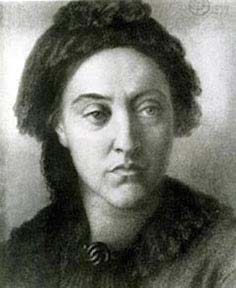
Christina Rossetti's "Who Has Seen the Wind?"
Poet Christina Rossetti was born in 1830, the youngest child in an extraordinarily gifted family. Her father, the Italian poet and political exile Gabriele Rossetti, immigrated to England in 1824 and established a career as a Dante scholar and teacher of Italian in London. He married the half-English, half-Italian Frances Polidori in 1826, and they had four children in quick succession: Maria Francesca in 1827, Gabriel Charles Dante (famous under the name Dante Gabriel but always called Gabriel by family members) in 1828, William Michael in 1829, and Christina Georgina on 5 December 1830. In 1831 Gabriele Rossetti was appointed to the chair of Italian at the newly opened King’s College. The children received their earliest education, and Maria and Christina all of theirs, from their mother, who had been trained as a governess and was committed to cultivating intellectual excellence in her family. Certainly this ambition was satisfied: Maria was the author of a respected study of Dante, as well as books on religious instruction and Italian grammar and translation; Dante Gabriel distinguished himself as one of the foremost poets and painters of his era; and William was a prolific art and literary critic, editor, and memoirist of the Pre-Raphaelite movement. Christina became one of the Victorian age’s finest poets. She was the author of numerous books of poetry, including Goblin Market and other Poems (1862), The Prince’s Progress (1866), A Pageant (1881), and The Face of the Deep (1882).Rossetti’s poetry has never disappeared from view. Critical interest in Rossetti’s poetry swelled in the final decades of the twentieth century, a resurgence largely impelled by the emergence of feminist criticism; much of this commentary focuses on gender issues in her poetry and on Rossetti as a woman poet. In Rossetti’s lifetime opinion was divided over whether she or Elizabeth Barrett Browning was the greatest female poet of the era; in any case, after Browning’s death in 1861 readers and critics saw Rossetti as the older poet’s rightful successor. The two poets achieved different kinds of excellence, as is evident in Dante Gabriel Rossetti‘s comment on his sister, quoted by William Sharp in The Atlantic Monthly (June 1895): “She is the finest woman-poet since Mrs. Browning, by a long way; and in artless art, if not in intellectual impulse, is greatly Mrs. Browning’s superior.” Readers have generally considered Rossetti’s poetry less intellectual, less political, and less varied than Browning’s; conversely, they have acknowledged Rossetti as having the greater lyric gift, with her poetry displaying a perfection of diction, tone, and form under the guise of utter simplicity.-bio via Poetry Foundation This is a public episode. If you'd like to discuss this with other subscribers or get access to bonus episodes, visit dailypoempod.substack.com/subscribe

Shakespeare's "Let's talk of graves" from Richard II
Today’s poem from Richard II tells “sad stories of the death of kings” and lowers the curtain on a week of Shakespearean speeches in verse. This is a public episode. If you'd like to discuss this with other subscribers or get access to bonus episodes, visit dailypoempod.substack.com/subscribe

Shakespeare's "Should we be silent" from Coriolanus
What do the world’s greatest playwright and Rome’s greatest mama’s boy have in common? Today’s poem–Volumnia pleading with her son in the final Act of Shakespeare’s Coriolanus. This is a public episode. If you'd like to discuss this with other subscribers or get access to bonus episodes, visit dailypoempod.substack.com/subscribe

Shakespeare's "If I be not ashamed of my soldiers"
In today’s poem, the lovable cad, Sir John Falstaff, explains the dismal state of his troops (and the extra silver in his pocket). The speech is from Henry IV, Part 1, Act 4, Scene 2. This is a public episode. If you'd like to discuss this with other subscribers or get access to bonus episodes, visit dailypoempod.substack.com/subscribe

Shakespeare's "Be Absolute For Death"
Today’s poem is the “anti-To Be or Not To Be” speech from Act 3, Scene 1 of the underrated Measure For Measure. This is a public episode. If you'd like to discuss this with other subscribers or get access to bonus episodes, visit dailypoempod.substack.com/subscribe

Shakespeare's "Prologue" to Henry V
Today’s poem is an example of poetry we forget is poetry. Written in blank verse (unrhymed iambic pentameter), the opening prologue to Henry V calls the audience’s attention to the tension between the play’s grand and sweeping subject and the theater’s physical limitations. This is a public episode. If you'd like to discuss this with other subscribers or get access to bonus episodes, visit dailypoempod.substack.com/subscribe
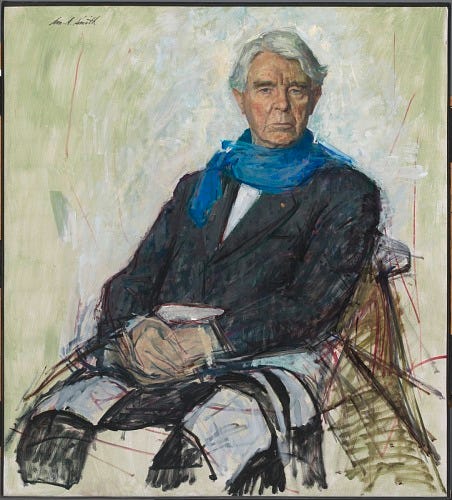
Carl Sandburg's "Little Word, Little White Bird"
Today’s poem comes from Honey and Salt, the last collection Sandburg published before his death.“Trying to write briefly about Carl Sandburg,” said a friend of the poet, “is like trying to picture the Grand Canyon in one black and white snapshot.” His range of interests was enumerated by his close friend, Harry Golden, who, in his study of the poet, called Sandburg “the one American writer who distinguished himself in five fields—poetry, history, biography, fiction, and music.” -Poetry Foundation This is a public episode. If you'd like to discuss this with other subscribers or get access to bonus episodes, visit dailypoempod.substack.com/subscribe

Edgar Allan Poe's "The Conqueror Worm"
Edgar Allan Poe (January 19, 1809 - October 7, 1849) was an American poet, short fiction writer, critic, and accomplished editor known for his gloomy and sometimes grisly subjects. He pioneered the detective story and is remembered as a master of Gothic and Romantic literature. His works have inspired films, themed restaurants, football teams, and at least one bizarre ritual around his grave. This is a public episode. If you'd like to discuss this with other subscribers or get access to bonus episodes, visit dailypoempod.substack.com/subscribe

Gelett Burgess' "The Purple Cow"
Today’s poem is one of the most-anthologized works of light verse in the English language–and just plain fun.Frank Gelett Burgess was an American artist, art critic, poet, author and humorist. An important figure in the San Francisco Bay Area literary renaissance of the 1890s, particularly through his iconoclastic little magazine, The Lark, and association with The Crowd literary group. He is best known as a writer of nonsense verse and for introducing French modern art to the United States in an essay titled "The Wild Men of Paris." Burgess coined the term "blurb."-bio via Wikipedia This is a public episode. If you'd like to discuss this with other subscribers or get access to bonus episodes, visit dailypoempod.substack.com/subscribe

Shel Silverstein's "Where the Sidewalk Ends"
A singer-songwriter, cartoonist, screenwriter, award-winning children’s writer, and actor, Shel Silverstein grew up in Chicago. He started out as a cartoonist before turning to children’s books. Silverstein is the author and illustrator of numerous books, including The Giving Tree (1964), Where the Sidewalk Ends (1974), A Light in the Attic (1981), and Falling Up (1996). His books have been commended for their appeal to both adults and children.Silverstein’s poems are often darkly humorous, irreverent, and populated with invented characters, such as the “Bloath” in Where the Sidewalk Ends, who dwells “[i]n the undergrowth” and “feeds upon poets and tea.” Silverstein’s poems and stories are accompanied by his simple yet energetic pen-and-ink illustrations. The Giving Tree, a fable about a lifelong relationship between a boy and a tree, has become a classic in the canon of children’s literature and has sold over five million copies.-bio via Poetry Foundation This is a public episode. If you'd like to discuss this with other subscribers or get access to bonus episodes, visit dailypoempod.substack.com/subscribe

Jane Kenyon's "Taking Down the Tree"
Kenyon published four volumes of poetry during her life: From Room to Room (1978), The Boat of Quiet Hours (1986), Let Evening Come (1990), and Constance (1993), and, as translator, Twenty Poems of Anna Akmatova (1985). Despite her relatively small output, her poetry was highly lauded by critics throughout her lifetime. As fellow poet Carol Muske remarked in the New York Times when describing Kenyon’s The Boat of Quiet Hours, “These poems surprise beauty at every turn and capture truth at its familiar New England slant. Here, in Keats’s terms, is a capable poet.” Indeed, Kenyon’s work has often been compared with that of English Romantic poet John Keats; in an essay on Kenyon for Contemporary Women Poets, Gary Roberts dubbed her a “Keatsian poet” and noted that, “like Keats, she attempts to redeem morbidity with a peculiar kind of gusto, one which seeks a quiet annihilation of self-identity through identification with benign things.”The cycles of nature held special significance for Kenyon, who returned to them again and again, both in her variations on Keats’s ode “To Autumn,” and in other pastoral verse. In Let Evening Come [from which today’s poem comes], her third published collection—and one that found the poet taking what Poetry essayist Paul Breslin called “a darker turn”—Kenyon explored nature’s cycles in other ways: the fall of light from day to dusk to night, and the cycles of relationships with family and friends throughout a long span of years brought to a close by death. Let Evening Come “shows [Kenyon] at the height of her powers,” according to Muske in a review of the 1990 volume for the New York Times Book Review, with the poet’s “descriptive skills… as notable as her dramatic ones. Her rendering of natural settings, in lines of well-judged rhythm and simple syntax, contribute to the [volume’s] memorableness.”-bio via Poetry Foundation This is a public episode. If you'd like to discuss this with other subscribers or get access to bonus episodes, visit dailypoempod.substack.com/subscribe
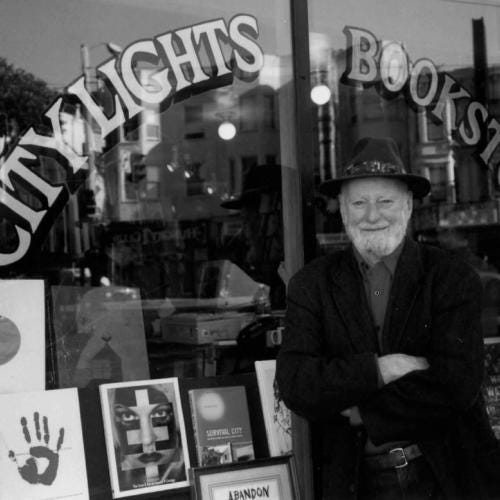
Lawrence Ferlinghetti's "The world is a beautiful place"
Today’s poem by Lawrence Ferlinghetti is another fitting meditation at the beginning of a new year. Happy reading (and listening)! This is a public episode. If you'd like to discuss this with other subscribers or get access to bonus episodes, visit dailypoempod.substack.com/subscribe

William Carlos Williams' "January"
"There is no optimistic blindness in Williams," wrote Randall Jarrell, "though there is a fresh gaiety, a stubborn or invincible joyousness."-via Poetry Foundation This is a public episode. If you'd like to discuss this with other subscribers or get access to bonus episodes, visit dailypoempod.substack.com/subscribe
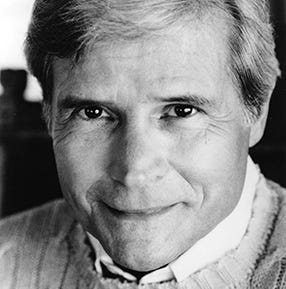
Philip Appleman's "To the Garbage Collectors in Bloomington, Indiana, the First Pickup of the New Year"
Poet, novelist, editor, and Darwin expert Philip Appleman was born in Indiana and holds degrees from Northwestern University, the University of Michigan, and the University of Lyon. He served in US Army Air Corps during World War II, and was a merchant marine after. Appleman is known for his biting social commentary and masterful command of form, and is the author of numerous volumes of poetry, three novels, and half a dozen collections of prose.Art Seidenbaum in the Los Angeles Times described Appleman’s second novel, Shame the Devil (1981), as entertaining and provocative: “Most of our modern manners are [satirized]. ... Appleman wants to amuse and drop morals without moralizing; he’s smart enough to do it swiftly, knowing the warp of satire soon wears thin.” Appleman’s poetry similarly skewers both literary conventions and contemporary mores. With illustrations by Arnold Roth, Appleman’s collection Karma, Dharma, Pudding & Pie (2009) takes on large social issues with irreverence, wit, and formal prowess. Poet X.J. Kennedy alleges in the book’s forward, “Appleman is a master of the sonnet, the terse rhymed epigram, and even that fiendishly ingenious form, the double dactyl. To watch him sling words is to be richly regaled.” The recipient of numerous awards, including a fellowship from the National Endowment for the Arts, the Morley Award from the Poetry Society of America, and a Pushcart Prize, Appleman has served on the boards of the Poetry Society of America and the Poet’s House. He has taught at SUNY Purchase, Columbia University, and is a Distinguished Professor Emeritus at Indiana University.Appleman’s poems and prose pieces have appeared in dozens of publications, including the Nation, the New York Times, the New Republic, the Paris Review, Poetry, and the Yale Review. He is married to the playwright Marjorie Appleman. This is a public episode. If you'd like to discuss this with other subscribers or get access to bonus episodes, visit dailypoempod.substack.com/subscribe

W. S. Merwin's "To the New Year"
William Stanley (W.S.) Merwin was born in New York City in 1927 and raised in New Jersey and Scranton, Pennsylvania, the son of a Presbyterian minister. His numerous collections of poetry, his translations, and his books of prose have won praise over seven decades. Though his early poetry received great attention and admiration, Merwin would continue to alter and innovate his craft with each new book, and at each stage he served as a powerful influence for poets of his generation and younger poets. For the entirety of his writing career, he explored a sense of wonder and celebrated the power of language, while serving as a staunch anti-war activist and advocate for the environment. He won nearly every award available to an American poet, and he was named U.S. poet laureate twice. A practicing Buddhist as well as a proponent of deep ecology, Merwin lived since the late 1970s on an old pineapple plantation in Hawaii which he has painstakingly restored to its original rainforest state. Poet Edward Hirsch wrote that Merwin “is one of the greatest poets of our age. He is a rare spiritual presence in American life and letters (the Thoreau of our era).”Merwin was once asked what social role a poet plays—if any—in America. He commented: “I think there’s a kind of desperate hope built into poetry now that one really wants, hopelessly, to save the world. One is trying to say everything that can be said for the things that one loves while there’s still time. I think that’s a social role, don’t you? ... We keep expressing our anger and our love, and we hope, hopelessly perhaps, that it will have some effect. But I certainly have moved beyond the despair, or the searing, dumb vision that I felt after writing The Lice; one can’t live only in despair and anger without eventually destroying the thing one is angry in defense of. The world is still here, and there are aspects of human life that are not purely destructive, and there is a need to pay attention to the things around us while they are still around us. And you know, in a way, if you don’t pay that attention, the anger is just bitterness.”Merwin died in March 2019 at the age of 91.-bio via Poetry Foundation This is a public episode. If you'd like to discuss this with other subscribers or get access to bonus episodes, visit dailypoempod.substack.com/subscribe

Robert Burns' "Auld Lang Syne"
Happy New Year! This is a public episode. If you'd like to discuss this with other subscribers or get access to bonus episodes, visit dailypoempod.substack.com/subscribe

Richard Wilbur's "Year's End"
Ring out the old year with one of The Daily Poem’s favorite poets–Richard Wilbur. This is a public episode. If you'd like to discuss this with other subscribers or get access to bonus episodes, visit dailypoempod.substack.com/subscribe

Wendell Berry's "Satisfactions of the Mad Farmer"
Poet, novelist, and environmentalist Wendell Berry lives in Port Royal, Kentucky near his birthplace, where he has maintained a farm for over 40 years. Mistrustful of technology, he holds deep reverence for the land and is a staunch defender of agrarian values. He is the author of over 50 books of poetry, fiction, and essays. His poetry celebrates the holiness of life and everyday miracles often taken for granted. In 2016, Berry was awarded the Ivan Sandrof Lifetime Achievement Award by the National Books Critics Circle. In 2010, Barack Obama awarded him with the National Humanities Medal. Berry’s other honors include the T.S. Eliot Prize, the Aiken Taylor Award for poetry, the John Hay Award of the Orion Society, and the Richard C. Holbrooke Distinguished Achievement Award of the Dayton Literary Peace Prize. Berry’s poetry collections include This Day: Collected & New Sabbath Poems (2014), Given (2005), A Timbered Choir: The Sabbath Poems 1979-1997, Entries: Poems (1994), Traveling at Home (1989), The Selected Poems of Wendell Berry (1988), Collected Poems 1957-1982 (1985), Clearing (1977), There Is Singing Around Me (1976), and The Broken Ground (1964).Critics and scholars have acknowledged Wendell Berry as a master of many literary genres, but whether he is writing poetry, fiction, or essays, his message is essentially the same: humans must learn to live in harmony with the natural rhythms of the earth or perish. His book The Unsettling of America: Culture and Agriculture (1977), which analyzes the many failures of modern, mechanized life, is one of the key texts of the environmental movement. Berry has criticized environmentalists as well as those involved with big businesses and land development. In his opinion, many environmentalists place too much emphasis on wild lands without acknowledging the importance of agriculture to our society. Berry strongly believes that small-scale farming is essential to healthy local economies, and that strong local economies are essential to the survival of the species and the wellbeing of the planet. In an interview with New Perspectives Quarterly editor Marilyn Berlin Snell, Berry explained: “Today, local economies are being destroyed by the ‘pluralistic,’ displaced, global economy, which has no respect for what works in a locality. The global economy is built on the principle that one place can be exploited, even destroyed, for the sake of another place.”Berry further believes that traditional values, such as marital fidelity and strong community ties, are essential for the survival of humankind. In his view, the disintegration of communities can be traced to the rise of agribusiness: large-scale farming under the control of giant corporations. Besides relying on chemical pesticides and fertilizers, promoting soil erosion, and causing depletion of ancient aquifers, agribusiness has driven countless small farms out of existence and destroyed local communities in the process. In a New Perspectives Quarterly interview Berry commented that such large-scale agriculture is morally as well as environmentally unacceptable: “We must support what supports local life, which means community, family, household life—the moral capital our larger institutions have to come to rest upon. If the larger institutions undermine the local life, they destroy that moral capital just exactly as the industrial economy has destroyed the natural capital of localities—soil fertility and so on. Essential wisdom accumulates in the community much as fertility builds in the soil.” This is a public episode. If you'd like to discuss this with other subscribers or get access to bonus episodes, visit dailypoempod.substack.com/subscribe
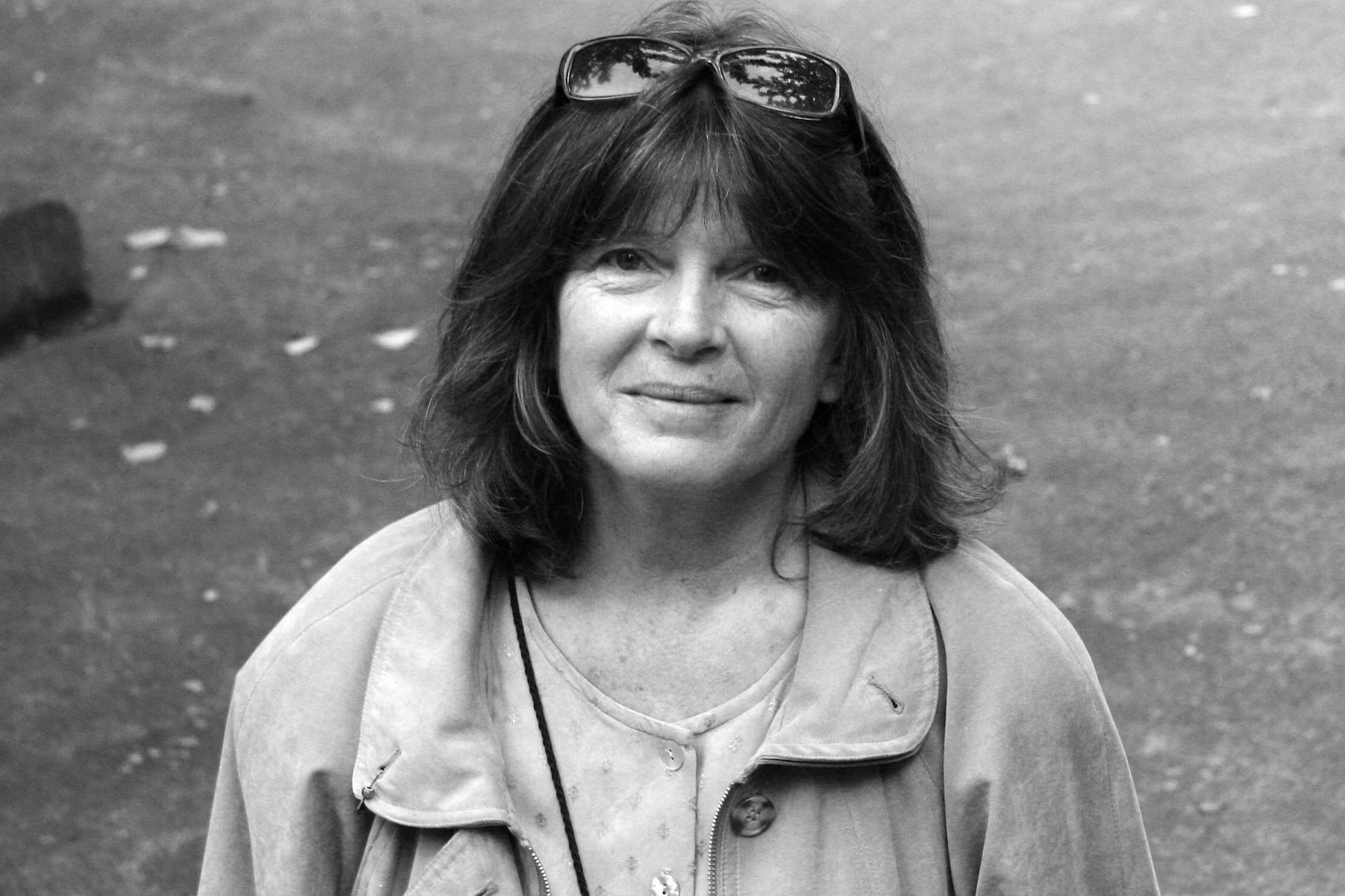
Dorianne Laux's "Family Stories"
Dorianne Laux is the author of several collections of poetry, including What We Carry (1994), a finalist for the National Book Critics Circle Award; Smoke (2000); Facts about the Moon (2005), chosen by the poet Ai as winner of the Oregon Book Award and also a finalist for the Lenore Marshall Poetry Prize; The Book of Men (2011), which was awarded the Paterson Prize; and Only As the Day is Long: New and Selected (2019). She has received fellowships from the Guggenheim Foundation and the National Endowment for the Arts, and has been a Pushcart Prize winner. Laux’s free-verse poems are sensual and grounded, and they reveal the poet as a compassionate witness to the everyday. She observed in an interview for the website Readwritepoem, “Poems keep us conscious of the importance of our individual lives ... personal witness of a singular life, seen cleanly and with the concomitant well-chosen particulars, is one of the most powerful ways to do this.” Speaking of the qualities she admires most in poetry, Laux added, “Craft is important, a skill to be learned, but it’s not the beginning and end of the story. I want the muddled middle to be filled with the gristle of the living.” She was first inspired to write after hearing a poem by Pablo Neruda. Other influences include Sharon Olds, Lucille Clifton, Anne Sexton, and Adrienne Rich.Laux has taught creative writing at the University of Oregon, Pacific University, and North Carolina State University; she has also led summer workshops at Esalen in Big Sur. She is the co-author, with Kim Addonizio, of The Poet’s Companion: A Guide to the Pleasures of Writing Poetry (1997). She lives in Raleigh, North Carolina, with her husband, poet Joseph Millar.-bio via Poetry Foundation This is a public episode. If you'd like to discuss this with other subscribers or get access to bonus episodes, visit dailypoempod.substack.com/subscribe
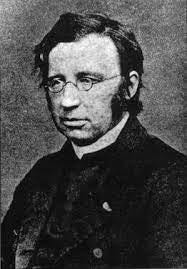
John Mason Neale's "Good King Wenceslas"
John Mason Neale was born in London to evangelical parents. His father’s early death meant that Neale attended many different schools; he eventually earned a degree from Trinity College, Cambridge. While at Cambridge, Neale moved from an evangelical to a strongly Anglican religious orientation. He helped found the Cambridge Camden Society, which later became the Ecclesiological Society, at Cambridge in 1839; the group’s main goal was to align church architecture, decoration, and ritual with its teaching. Neale was ordained a deacon in 1841 and a priest in 1842. His role in mid-19th-century British religious history is complex: many of his innovations, including establishing the Society of Saint Margaret for the nursing of pensioners and the poor, seemed too close to Roman Catholicism for Anglican leaders of the day. Nonetheless, Neale’s literary and religious output was immense. He wrote books and pamphlets on a wide range of spiritual and material issues. Neale’s other volumes included novels, books for children, and works on church history. He penned a multivolume History of the Holy Eastern Church (1847, 1850, and a posthumous volume in 1873). Neale’s interest in Eastern Christianity led him to translate Hymns of the Eastern Church (1862), though he translated many other kinds of hymns, including from Latin, for Anglican use. Neale is best remembered as a hymnist whose collections include Hymns for Children (1843), Hymns for the Sick (1843), Carols for Christmas-tide (1853), and Carols for Easter-tide (1854). Perhaps his most famous carol is “Good King Wenceslas.” Neale’s early death, at age 48, was not widely recognized at the time; however, the archbishop of Canterbury celebrated its centenary.-bio via Poetry Foundation This is a public episode. If you'd like to discuss this with other subscribers or get access to bonus episodes, visit dailypoempod.substack.com/subscribe

Two Poems for Christmas
Merry Christmas from The Daily Poem! This is a public episode. If you'd like to discuss this with other subscribers or get access to bonus episodes, visit dailypoempod.substack.com/subscribe

T. S. Eliot's "Journey of the Magi"
Today’s poem is T. S. Eliot’s unconventional look at the very familiar story of the Three Wise Men. This is a public episode. If you'd like to discuss this with other subscribers or get access to bonus episodes, visit dailypoempod.substack.com/subscribe

Robert Frost's "Stopping By Woods on a Snowy Evening"
Today’s poem is a familiar favorite, just right for the “darkest evening of the year.” This is a public episode. If you'd like to discuss this with other subscribers or get access to bonus episodes, visit dailypoempod.substack.com/subscribe

Ruth Moose's "My Father's Fruitcake"
Ruth Moose is the author of Making the Bed (Main Street Rag Press, 2004) and The Sleepwaker (Main Street Rag Press, 2007). Her poetry has been published in former U.S. Poet Laureate Ted Kooser's column, "American Life in Poetry."-bio via Poetry Foundation This is a public episode. If you'd like to discuss this with other subscribers or get access to bonus episodes, visit dailypoempod.substack.com/subscribe
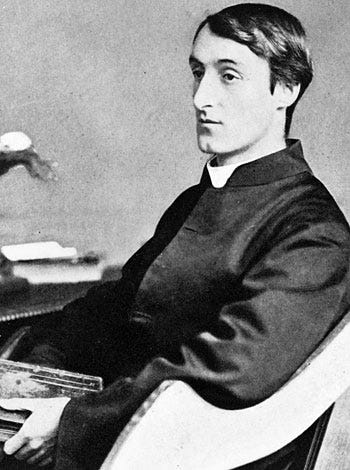
Gerard Manley Hopkins' "The Leaden Echo and the Golden Echo"
Gerard Manley Hopkins is considered to be one of the greatest poets of the Victorian era. However, because his style was so radically different from that of his contemporaries, his best poems were not accepted for publication during his lifetime, and his achievement was not fully recognized until after World War I. Hopkins’s family encouraged his artistic talents when he was a youth in Essex, England. However, Hopkins became estranged from his Protestant family when he converted to Roman Catholicism. Upon deciding to become a priest, he burned all of his poems and did not write again for many years. His work was not published until 30 years after his death when his friend Robert Bridges edited the volume Poems.-bio via Poetry Foundation This is a public episode. If you'd like to discuss this with other subscribers or get access to bonus episodes, visit dailypoempod.substack.com/subscribe
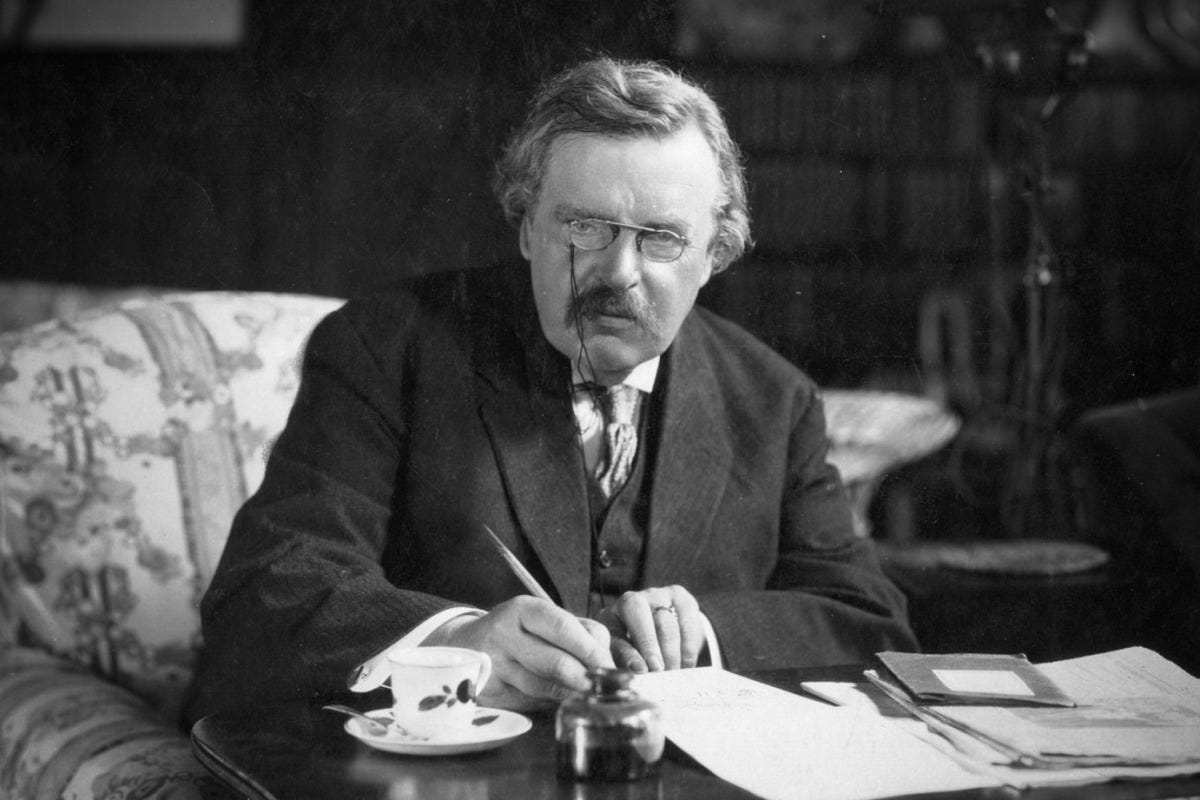
G. K. Chesterton's "A Child of the Snows"
G. K. Chesterton was one of the dominating figures of the London literary scene in the early 20th century. Not only did he get into lively discussions with anyone who would debate him, including his friend, frequent verbal sparring partner, and noted Irish playwright George Bernard Shaw, but he wrote about seemingly every topic, in every genre, from journalism to plays, poetry to crime novels. "He said something about everything and he said it better than anyone else," writes Dale Ahlquist, president of the American Chester Society. Most of Chesterton's literary output was nonfiction, including thousands of columns for various periodicals, but today he is best remembered for his fictional work—a mystery series about Father Brown, a Catholic priest and amateur detective.Chesterton's first published books were of poetry. Ian Boyd points to a "close connection between his poetry and his everyday journalism," concluding: "In this sense, T.S. Eliot's description of Chesterton's poetry as 'first-rate journalistic balladry' turns out to have been particularly perceptive, since it is a reminder about the essential character of all Chesterton's work. In his verse, as in all his writings, his first aim was to comment on the political and social questions of the day."-bio via Poetry Foundation This is a public episode. If you'd like to discuss this with other subscribers or get access to bonus episodes, visit dailypoempod.substack.com/subscribe

Mark Doty's "Messiah (Christmas Portions)"
Mark Doty is a poet, essayist, memoirist and author of nine books of poetry. His book Fire to Fire: New and Selected Poems won the 2008 National Book Award. He has also received other literary awards, including the Whiting Writers Award, the T. S. Eliot Prize, the National Book Critics Circle Award, two Lambda Literary Awards and the PEN/Martha Albrand Award for First Nonfiction. His poetry collection “My Alexandria” was chosen for the National Poetry Series. Doty has also received two National Endowment for the Arts fellowships, Guggenheim and Rockefeller Foundation fellowships, a Lila Wallace/Readers Digest Award, and the Witter Bynner Prize. Doty’s most recent book is What Is the Grass: Walt Whitman in My Life (Norton), a memoir about his poetic relationship with Walt Whitman. Doty is a distinguished professor of English and the director of Writers House at Rutgers University.-bio via Library of Congress This is a public episode. If you'd like to discuss this with other subscribers or get access to bonus episodes, visit dailypoempod.substack.com/subscribe

W. H. Auden's "O Tell Me the Truth About Love"
"Among those whom I like or admire, I can find no common denominator, but among those whom I love, I can: all of them make me laugh." -Wystan Hugh Auden This is a public episode. If you'd like to discuss this with other subscribers or get access to bonus episodes, visit dailypoempod.substack.com/subscribe
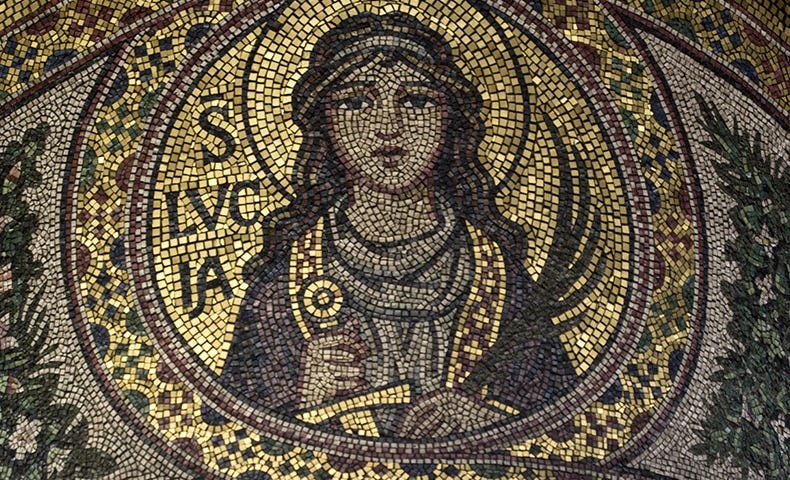
Three Poems for St. Lucy's Day
December 13 is St. Lucy’s day, traditionally a day celebrating light in the midst of the darkest, coldest time of the year. Today’s poems–from Elaine Feinstein, John Donne, and Thomas Merton–all meditate on that contrast in some way. Enjoy, stay warm, and happy reading! This is a public episode. If you'd like to discuss this with other subscribers or get access to bonus episodes, visit dailypoempod.substack.com/subscribe
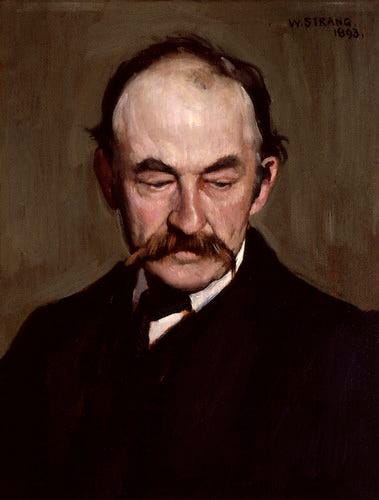
Thomas Hardy's "The Darkling Thrush"
Thomas Hardy (born June 2, 1840 - died January 11, 1928) was born in Dorset, England. The son of a stone mason, he trained as an architect and worked in London and Dorset for ten years.Hardy began his writing career as a novelist, publishing Desperate Remedies (Tinsley Brothers) in 1871, and was soon successful enough to leave the field of architecture for writing. His novels Tess of the D’Urbervilles (Osgood McIlvaine & Co., 1891) and Jude the Obscure (Osgood McIlvaine & Co., 1895), which are considered literary classics today, received negative reviews upon publication. He left fiction writing for poetry and published eight collections, including Poems of the Past and the Present (Harper & Bros., 1902) and Satires of Circumstance (Macmillan, 1914).Hardy’s poetry explores a fatalist outlook against the dark, rugged landscape of his native Dorset. He rejected the Victorian belief in a benevolent God, and much of his poetry reads as a sardonic lament on the bleakness of the human condition. A traditionalist in technique, he nevertheless forged a highly original style, combining rough-hewn rhythms and colloquial diction with a variety of meters and stanzaic forms. A significant influence on later poets (including Robert Frost, Wystan Hugh Auden, Dylan Thomas, and Philip Larkin), his influence has increased over the course of the twentieth century, offering a more down-to-earth, less rhetorical alternative to the more mystical and aristocratic precedent of William Butler Yeats. This is a public episode. If you'd like to discuss this with other subscribers or get access to bonus episodes, visit dailypoempod.substack.com/subscribe
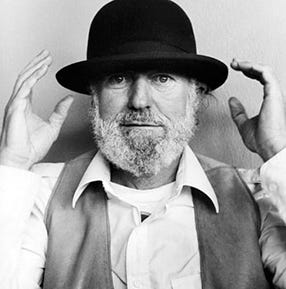
Lawrence Ferlinghetti's "Constantly Risking Absurdity"
Lawrence Monsanto Ferlinghetti (March 24, 1919 – February 22, 2021) was an American poet, painter, social activist, and co-founder of City Lights Booksellers & Publishers. An author of poetry, translations, fiction, theatre, art criticism, and film narration, Ferlinghetti was best known for his second collection of poems, A Coney Island of the Mind (1958), which has been translated into nine languages and sold over a million copies.-bio via Wikipedia This is a public episode. If you'd like to discuss this with other subscribers or get access to bonus episodes, visit dailypoempod.substack.com/subscribe

Mary Jo Salter's "Advent"
Mary Jo Salter is the author of eight books of poetry including The Surveyors (2017) and, most recently Zoom Rooms: Poems (2022). She is also a lyricist whose song cycle “Rooms of Light: The Life of Photographs" was composed by Fred Hersch. Her children’s book The Moon Comes Home appeared in 1989; her play Falling Bodies premiered in 2004. She is also a co-editor of The Norton Anthology of Poetry (4th edition, 1996; 5th edition, 2005; 6th edition, 2018). This is a public episode. If you'd like to discuss this with other subscribers or get access to bonus episodes, visit dailypoempod.substack.com/subscribe

Czeslaw Milosz' "Blacksmith Shop"
Czesław Miłosz (30 June 1911 – 14 August 2004) was a Polish-American poet, prose writer, translator, and diplomat. He primarily wrote his poetry in Polish. Regarded as one of the great poets of the 20th century, he won the 1980 Nobel Prize in Literature. In its citation, the Swedish Academy called Miłosz a writer who "voices man's exposed condition in a world of severe conflicts".Miłosz survived the German occupation of Warsaw during World War II and became a cultural attaché for the Polish government during the postwar period. When communist authorities threatened his safety, he defected to France and ultimately chose exile in the United States, where he became a professor at the University of California, Berkeley. His poetry—particularly about his wartime experience—and his appraisal of Stalinism in a prose book, The Captive Mind, brought him renown as a leading émigré artist and intellectual.Throughout his life and work, Miłosz tackled questions of morality, politics, history, and faith. As a translator, he introduced Western works to a Polish audience, and as a scholar and editor, he championed a greater awareness of Slavic literature in the West. Faith played a role in his work as he explored his Catholicism and personal experience. He wrote in Polish and English.Miłosz died in Kraków, Poland, in 2004. He is interred in Skałka, a church known in Poland as a place of honor for distinguished Poles.-bio via Wikipedia This is a public episode. If you'd like to discuss this with other subscribers or get access to bonus episodes, visit dailypoempod.substack.com/subscribe

Henry Wadsworth Longfellow's "The Village Blacksmith"
"The spirit of the smithy is so close to the spirit of song that it has mixed in a million poems, and every blacksmith is a harmonious blacksmith. Even the village children feel that in some dim way the smith is poetic, as the grocer and the cobbler are not poetic, when they feast on the dancing sparks and deafening blows in the cavern of that creative violence.” -G. K. Chesterton This is a public episode. If you'd like to discuss this with other subscribers or get access to bonus episodes, visit dailypoempod.substack.com/subscribe

Robert Burns' "To a Mouse"
Robert or "Rabbie" Burns (born 25 January 1759, died 21 July 1796) hailed from Alloway, Scotland. Like his father, Burns was a tenant farmer. However, toward the end of his life he became an excise collector in Dumfries, where he died in 1796; throughout his life he was also a practicing poet. His poetry recorded and celebrated aspects of farm life, regional experience, traditional culture, class culture and distinctions, and religious practice. He is considered the national poet of Scotland. Although he did not set out to achieve that designation, he clearly and repeatedly expressed his wish to be called a Scots bard, to extol his native land in poetry and song.-bio via Poetry Foundation This is a public episode. If you'd like to discuss this with other subscribers or get access to bonus episodes, visit dailypoempod.substack.com/subscribe

Rainer Maria Rilke's "Archaic Torso of Apollo"
“Rilke’s most immediate and obvious influence has been upon diction and imagery. [He expressed ideas with] physical rather than intellectual symbols. While Shakespeare, for example, thought of the non-human world in terms of the human, Rilke thinks of the human in terms of the non-human, of what he calls Things.” -W.H. Auden This is a public episode. If you'd like to discuss this with other subscribers or get access to bonus episodes, visit dailypoempod.substack.com/subscribe

James Whitcomb Riley's "When the Frost is on the Punkin"
James Whitcomb Riley (born October 7, 1849; died July 22, 1916) was author of numerous beloved poetry volumes, and widely known for books such as The Old Swimmin’-Hole and ’Leven More Poems, Riley Child-Rhymes, Out to Old Aunt Mary’s, and An Old Sweetheart. Born in Indiana in 1849, he was drawn to poetry even before he was able to read. Neglectful of his studies, Riley preferred to take walks in the countryside, read books of his own choosing, and create rhymes, the first of which he sent to his young friends on home-made valentines.A prolific writer and important contributor to children’s literature, Riley published more than 50 volumes during his lifetime, many of which were popular successes. His poetry is especially prized for its sometimes whimsical reflection of small-town America and he is remembered for his insight and humor by children and adults alike. As was noted in Indiana Authors and Their Books, 1816-1916, “No American poet—those patriarchs of New England included—has thus far caught the popular fancy, has thus far enjoyed the voluntary following, that was and is his.”-bio via Poetry Foundation This is a public episode. If you'd like to discuss this with other subscribers or get access to bonus episodes, visit dailypoempod.substack.com/subscribe