The Daily Poem
939 episodes — Page 12 of 19

Mary Oliver's "The Mangroves"
In today’s poem, Mary Oliver helps us develop affinity for the unfamiliar. This is a public episode. If you'd like to discuss this with other subscribers or get access to bonus episodes, visit dailypoempod.substack.com/subscribe
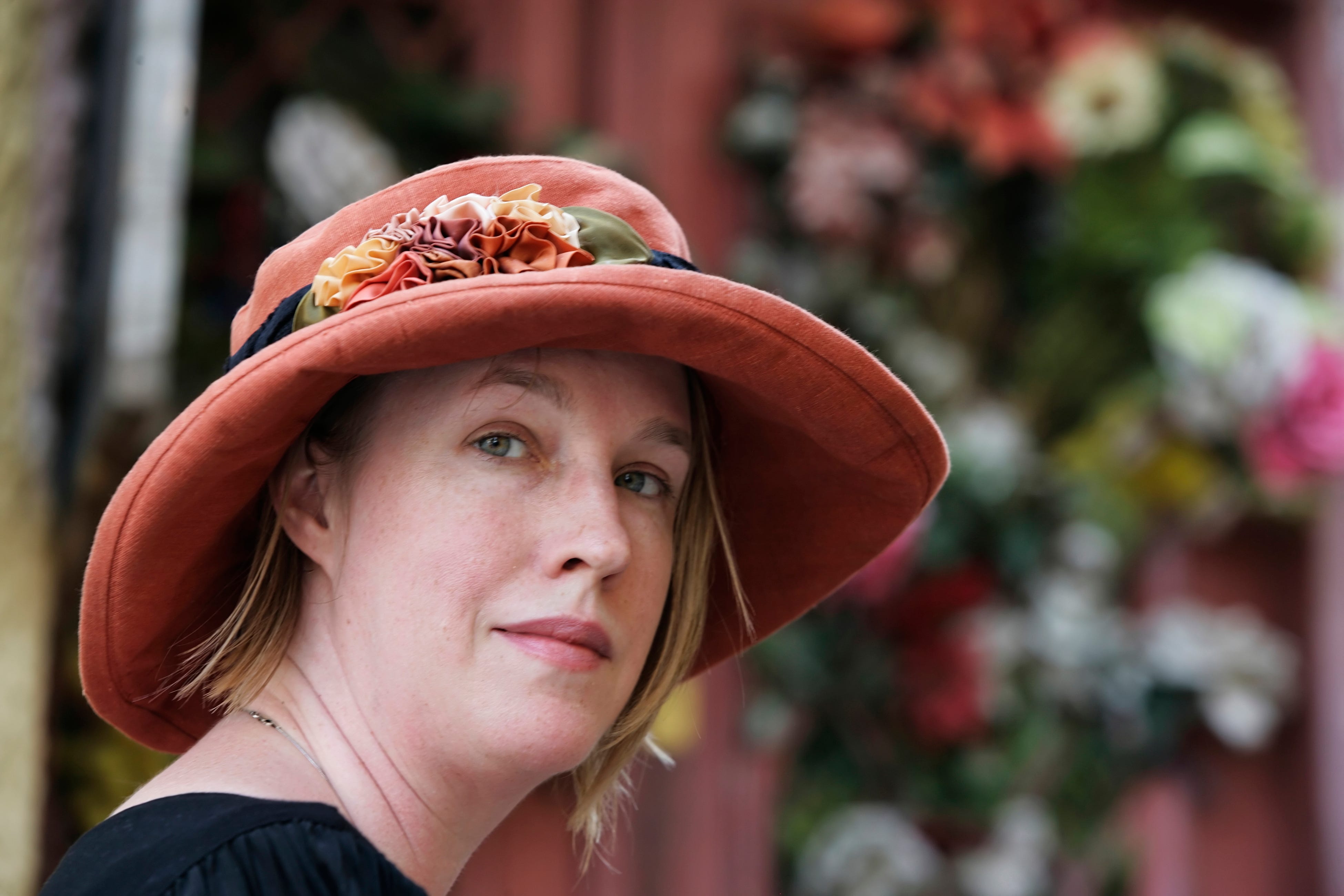
A. E. Stallings' "Denouement"
A. E. Stallings is a poet and translator mining the classical world and traditional poetic techniques to craft works that evoke startling insights about contemporary life. In both her original poetry and translations, Stallings exhibits a mastery of highly structured forms (such as sonnets, couplets, quatrains, and sapphics) and consummate skill in creating new combinations of meter, rhyme, and syntax into distinctive, emotionally compelling verse. Trained in classical Latin and Greek and currently living in Athens, she brings a wide knowledge of Greco-Roman literature, art, and mythology to bear on her imaginative explorations of contemporary circumstances and concerns. In Hapax (2006), Stallings imbues figures and events from classical drama and mythology with a modern sensibility. "First Love," written as a multiple-choice quiz, intertwines the Persephone myth with a chilling account of infatuation, and "XII Klassikal Lymnaeryx" emphasizes the satiric edge to Greek myth through a series of limericks in witty, unexpected diction. For her ambitious translation of De Rerum Natura (The Nature of Things, 2007), Stallings rendered Lucretius's epic-length treatise on the nature of reality into rhyming fourteeners. The unusual meter and colloquial language she employs capture every cadence of Lucretius's enthusiasm for his subject while also making the complexities of his argument easily understandable. Through her technical dexterity and graceful fusion of content and form, Stallings is revealing the timelessness of poetic expression and antiquity's relevance for today.-bio via MacArthur Foundation This is a public episode. If you'd like to discuss this with other subscribers or get access to bonus episodes, visit dailypoempod.substack.com/subscribe

William Blake's "Jerusalem"
Poet, Painter, Prophet–Blake “neither wrote nor drew for the many, hardly for work’y-day men at all, rather for children and angels; himself ‘a divine child,’ whose playthings were sun, moon, and stars, the heavens and the earth.” -from Alexander Gilchrist’s Life of William Blake (1863) This is a public episode. If you'd like to discuss this with other subscribers or get access to bonus episodes, visit dailypoempod.substack.com/subscribe
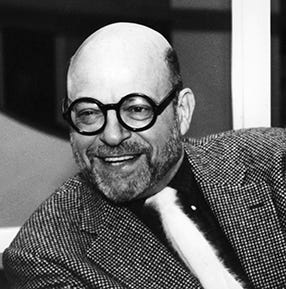
Richard Howard's "Oystering"
Richard Howard (born Oct 13, 1929, died march 31, 2022) was credited with introducing modern French fiction—particularly examples of the Nouveau Roman—to the American public; his translation of Charles Baudelaire’s Les Fleurs du Mal (1984) won a National Book Award in 1984. A selection of Howard’s critical prose was collected in the volume Paper Trail: Selected Prose 1965-2003, and his collection of essays Alone with America: Essays on the Art of Poetry in the United States since 1950 (1969) was praised as one of the first comprehensive overviews of American poetry from the latter half of the 20th century. First and foremost a poet, Howard’s many volumes of verse also received widespread acclaim; he won the 1970 Pulitzer Prize in Poetry for his collection Untitled Subjects. His other honors included the American Book Award, the Harriet Monroe Memorial Prize, the PEN Translation Medal, the Levinson Prize, and the Ordre National du Mérite from the French government. For many years, Howard was the poetry editor of the Paris Review.Evaluations of Howard usually judge his work as a poet to be his most important contribution to contemporary American literature. However, his work has and continues to attract a wide and enthusiastic audience among readers, academics, and critics alike.-bio via Poetry Foundation This is a public episode. If you'd like to discuss this with other subscribers or get access to bonus episodes, visit dailypoempod.substack.com/subscribe
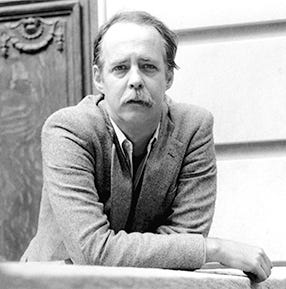
William Matthews' "On a Diet"
William Procter Matthews III (November 11, 1942 – November 12, 1997) was born in Cincinnati, Ohio. He earned a BA from Yale and MFA from the University of North Carolina. The author of eleven books of poetry, Matthews earned a reputation as a master of well-turned phrases, wise sayings, and rich metaphors. Much of Matthews’s poetry explores the themes of life cycles, the passage of time, and the nature of human consciousness. His collection Time & Money (1996) won the National Book Critics Circle Award and was a finalist for the Lenore Marshall Poetry Prize. Matthews’s other honors and awards included fellowships from the Guggenheim Foundation, the Ingram Merrill Foundation, the National Endowment for the Arts, and the Lila Wallace-Reader’s Digest Fund. He was awarded the Ruth Lilly Prize in 1997.-bio via Poetry Foundation This is a public episode. If you'd like to discuss this with other subscribers or get access to bonus episodes, visit dailypoempod.substack.com/subscribe

Ben Jonson's "Inviting a Friend to Supper"
Happy Thanksgiving from The Daily Poem! This is a public episode. If you'd like to discuss this with other subscribers or get access to bonus episodes, visit dailypoempod.substack.com/subscribe

Two Poems About Butter
Today we pay tribute, with poems by Andrea Cohen and Elizabeth Alexander, to the indispensable golden wonder. This is a public episode. If you'd like to discuss this with other subscribers or get access to bonus episodes, visit dailypoempod.substack.com/subscribe

W. S. Gilbert's "National Anthem"
Sir William Schwenck Gilbert (18 November 1836 – 29 May 1911) was an English dramatist, librettist, poet and illustrator best known for his collaboration with composer Arthur Sullivan, which produced fourteen comic operas. The most famous of these include H.M.S. Pinafore, The Pirates of Penzance and one of the most frequently performed works in the history of musical theatre, The Mikado. The popularity of these works was supported for over a century by year-round performances of them, in Britain and abroad, by the repertory company that Gilbert, Sullivan and their producer Richard D'Oyly Carte founded, the D'Oyly Carte Opera Company. These Savoy operas are still frequently performed in the English-speaking world and beyond.Gilbert's creative output included over 75 plays and libretti, and numerous short stories, poems and lyrics, both comic and serious. After brief careers as a government clerk and a lawyer, Gilbert began to focus, in the 1860s, on writing light verse, including his Bab Ballads, short stories, theatre reviews and illustrations, often for Fun magazine. He also began to write burlesques and his first comic plays, developing a unique absurdist, inverted style that would later be known as his "topsy-turvy" style. He also developed a realistic method of stage direction and a reputation as a strict theatre director. In the 1870s, Gilbert wrote 40 plays and libretti, including his German Reed Entertainments, several blank-verse "fairy comedies", some serious plays, and his first five collaborations with Sullivan: Thespis, Trial by Jury, The Sorcerer, H.M.S. Pinafore and The Pirates of Penzance. In the 1880s, Gilbert focused on the Savoy operas, including Patience, Iolanthe, The Mikado, The Yeomen of the Guard and The Gondoliers.In 1890, after this long and profitable creative partnership, Gilbert quarrelled with Sullivan and Carte concerning expenses at the Savoy Theatre; the dispute is referred to as the "carpet quarrel". Gilbert won the ensuing lawsuit, but the argument caused hurt feelings among the partnership. Although Gilbert and Sullivan were persuaded to collaborate on two last operas, they were not as successful as the previous ones. In later years, Gilbert wrote several plays, and a few operas with other collaborators. He retired, with his wife Lucy, and their ward, Nancy McIntosh, to a country estate, Grim's Dyke. He was knighted in 1907. Gilbert died of a heart attack while attempting to rescue a young woman to whom he was giving a swimming lesson in the lake at his home.Gilbert's plays inspired other dramatists, including Oscar Wilde and George Bernard Shaw, and his comic operas with Sullivan inspired the later development of American musical theatre, especially influencing Broadway librettists and lyricists. According to The Cambridge History of English and American Literature, Gilbert's "lyrical facility and his mastery of metre raised the poetical quality of comic opera to a position that it had never reached before and has not reached since".-bio via Wikipedia This is a public episode. If you'd like to discuss this with other subscribers or get access to bonus episodes, visit dailypoempod.substack.com/subscribe

Allen Tate's "Edges"
John Orley Allen Tate (November 19, 1899 – February 9, 1979) was a poet, critic, biographer, and novelist. Born and raised in Kentucky, he earned his BA from Vanderbilt University, where he was the only undergraduate to be admitted to the Fugitives, an informal group of Southern intellectuals that included John Crowe Ransom, Donald Davidson, Merrill Moore, and Robert Penn Warren. Tate is now remembered for his association with the Fugitives and Southern Agrarians, writers who critiqued modern industrial life by invoking romanticized versions of Southern history and culture. Tate’s best-known poems, including “Ode to the Confederate Dead,” confronted the relationship between an idealized past and a present he believed was deficient in both faith and tradition. Despite his commitment to developing a distinctly Southern literature, Tate’s many works frequently made use of classical referents and allusions; his early writing was profoundly influenced by French symbolism and the poetry and criticism of T.S. Eliot. During the 1940s and 1950s, Tate was an important figure in American letters as editor of the Sewanee Review and for his contributions to other midcentury journals such as the Kenyon Review. As a teacher, he influenced poets including Robert Lowell, John Berryman, and Theodore Roethke, and he was friends with Hart Crane, writing the introduction to Crane’s White Buildings (1926). From 1951 until his retirement in 1968, Tate was a professor of English at the University of Minnesota.In the decades that he was most active, Tate’s “influence was prodigious, his circle of acquaintances immense,” noted Jones in the Dictionary of Literary Biography. James Dickey could write that Tate was more than a “Southern writer.” Dickey went on, “[Tate’s] situation has certain perhaps profound implications for every man in every place and every time. And they are more than implications; they are the basic questions, the possible solutions to the question of existence. How does each of us wish to live his only life?”Allen Tate won numerous honors and awards during his lifetime, including the Bollingen Prize and a National Medal for Literature. He was the consultant in poetry at the Library of Congress and president of the National Institute of Arts and Letters.-bio via Poetry Foundation This is a public episode. If you'd like to discuss this with other subscribers or get access to bonus episodes, visit dailypoempod.substack.com/subscribe

Ted Kooser's "Selecting a Reader"
In today’s poem Ted Kooser describes his ideal reader. This is a public episode. If you'd like to discuss this with other subscribers or get access to bonus episodes, visit dailypoempod.substack.com/subscribe

Walt Whitman to His Reader
In today’s poems, Walt Whitman welcomes the reader. This is a public episode. If you'd like to discuss this with other subscribers or get access to bonus episodes, visit dailypoempod.substack.com/subscribe

Marianne Moore's "Poetry"
In today’s poem, Marianne Moore (November 15, 1887 – February 5, 1972) gets candid about poetry itself.One of American literature’s foremost poets, Marianne Moore’s poetry is characterized by linguistic precision, keen and probing descriptions, and acute observations of people, places, animals, and art. Her poems often reflect her preoccupation with the relationships between the common and the uncommon, advocate discipline in both art and life, and espouse restraint, modesty, and humor. She frequently used animals as a central image to emphasize themes of independence, honesty, and the integration of art and nature. Moore’s work is frequently grouped with poets such as H.D., T.S. Eliot, William Carlos Williams, Wallace Stevens, Ezra Pound, and, later, Elizabeth Bishop, to whom she was a friend and mentor. In his introduction to her Selected Poems (1935), Eliot wrote: “Living, the poet is carrying on that struggle for the maintenance of a living language, for the maintenance of its strength, its subtlety, for the preservation of quality of feeling, which must be kept up in every generation … Miss Moore is, I believe, one of those few who have done the language some service in my lifetime.”-bio via Poetry Foundation This is a public episode. If you'd like to discuss this with other subscribers or get access to bonus episodes, visit dailypoempod.substack.com/subscribe

Billy Collins' "Dear Reader"
Today’s poem is Billy Collins’ take on the time-honored poetic trope: the address to the reader. This is a public episode. If you'd like to discuss this with other subscribers or get access to bonus episodes, visit dailypoempod.substack.com/subscribe

Robert Louis Stevenson's "To Any Reader"
Robert Louis Stevenson (born Robert Lewis Balfour Stevenson; 13 November 1850 – 3 December 1894) was a Scottish novelist, essayist, poet and travel writer. He is best known for works such as Treasure Island, Strange Case of Dr Jekyll and Mr Hyde, Kidnapped and A Child's Garden of Verses.Born and educated in Edinburgh, Stevenson suffered from serious bronchial trouble for much of his life, but continued to write prolifically and travel widely in defiance of his poor health. As a young man, he mixed in London literary circles, receiving encouragement from Andrew Lang, Edmund Gosse, Leslie Stephen and W. E. Henley, the last of whom may have provided the model for Long John Silver in Treasure Island. In 1890, he settled in Samoa where, alarmed at increasing European and American influence in the South Sea islands, his writing turned away from romance and adventure fiction toward a darker realism. He died of a stroke in his island home in 1894 at age 44.A celebrity in his lifetime, Stevenson's critical reputation has fluctuated since his death, though today his works are held in general acclaim. In 2018, he was ranked, just behind Charles Dickens, as the 26th-most-translated author in the world.-bio via Wikipedia This is a public episode. If you'd like to discuss this with other subscribers or get access to bonus episodes, visit dailypoempod.substack.com/subscribe

John Donne's "A Valediction: Forbidding Mourning"
The English writer and Anglican cleric John Donne is considered now to be the preeminent metaphysical poet of his time. He was born in 1572 to Roman Catholic parents, when practicing that religion was illegal in England. His work is distinguished by its emotional and sonic intensity and its capacity to plumb the paradoxes of faith, human and divine love, and the possibility of salvation. Donne often employs conceits, or extended metaphors, to yoke together “heterogenous ideas,” in the words of Samuel Johnson, thus generating the powerful ambiguity for which his work is famous. After a resurgence in his popularity in the early 20th century, Donne’s standing as a great English poet, and one of the greatest writers of English prose, is now assured.-bio via Poetry Foundation This is a public episode. If you'd like to discuss this with other subscribers or get access to bonus episodes, visit dailypoempod.substack.com/subscribe
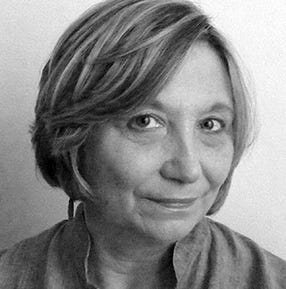
Barbara Ras' "Margin of Error"
Barbara Ras was born in New Bedford, Massachusetts, and has lived in Costa Rica, Colombia, California, and Texas. She is the author of The Last Skin (2010), winner of the best poetry award from the Texas Institute of Letters; One Hidden Stuff (2006); and Bite Every Sorrow (1998), which was selected by C.K. Williams for the Walt Whitman Award. Of Bite Every Sorrow, C.K. Williams wrote, “the book is a demonstration of what might be called a morality of inclusiveness, a Whitmanesque commitment to the wisdom of the individual case rather than the general type. And along with so much rich soul-work, there is a remarkable poetic skill. Ras structures poems with a zaniness and an unpredictable cunning, and her verbal expertise and lucidity are as bright and surprising as her knowledge of the world is profound.”Ras is the recipient of numerous awards including the Kate Tufts Discovery Award and a Guggenheim fellowship. She has taught at the Warren Wilson MFA Program for Writers. Currently she directs the Trinity University Press in San Antonio, Texas. This is a public episode. If you'd like to discuss this with other subscribers or get access to bonus episodes, visit dailypoempod.substack.com/subscribe
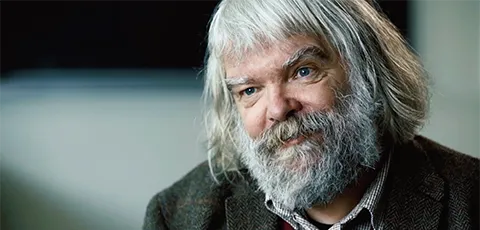
Malcolm Guite's "Michaelmas"
Ayodeji Malcolm Guite (/ɡaɪt/; born 12 November 1957) is an English poet, singer-songwriter, Anglican priest, and academic. Born in Nigeria to British expatriate parents, Guite earned degrees from Cambridge and Durham universities. His research interests include the intersection of religion and the arts, and the examination of the works of J. R. R. Tolkien, C. S. Lewis and Owen Barfield, and British poets such as Samuel Taylor Coleridge. He was a Bye-Fellow and chaplain of Girton College, Cambridge, and associate chaplain of St Edward King and Martyr, Cambridge. On several occasions, he has taught as visiting faculty at several colleges and universities in England and North America.Guite is the author of Sounding the Seasons and four other books of poetry, including two chapbooks and three full-length collections, as well as several books on Christian faith and theology, and Mariner, a critical biography of Coleridge. Guite has a decisively simple, formalist style in poems, many of which are sonnets, and he stated that his aim is to "be profound without ceasing to be beautiful". Guite performs as a singer and guitarist fronting the Cambridgeshire-based blues, rhythm and blues, and rock band Mystery Train. This is a public episode. If you'd like to discuss this with other subscribers or get access to bonus episodes, visit dailypoempod.substack.com/subscribe

Ogden Nash's Verses for The Carnival of the Animals
During his lifetime, Ogden Nash (born August 19, 1902; died May 19, 1971) was the most widely known, appreciated, and imitated American creator of light verse, a reputation that has continued after his death. Few writers of light or serious verse can claim the same extensive dissemination of their poems that Nash’s works enjoy, both with and without citation of the author. Certain Nash lines, such as “If called by a panther, / Don’t anther” and “Candy / Is dandy, / But liquor / Is quicker” have become bits of popular American folklore. As Nash remarked in a late verse, the turbulent modern world has much need for the relief his whimsy offers: “In chaos sublunary / What remains constant but buffoonery?” Nash’s peculiar variety of poetic buffoonery combines wit and imagination with eminently memorable rhymes.Any attempt to place Nash’s work in the context of other American humorous writing, or the humor of any other country, for that matter, tends initially to highlight his singularity. George Stevens notes this particularity. “Nash was not the only writer who could make frivolity immortal. But he was unique—not at all like Gilbert or Lear or Lewis Carroll, still less like his immediate predecessors in America: Dorothy Parker, Margaret Fishback, Franklin P. Adams. By the same token, he was and remains inimitable—easy to imitate badly, impossible to imitate well.”-bio via Poetry FoundationCharles-Camille Saint-Saëns (/sæ̃ˈsɒ̃(s)/ 9 October 1835 – 16 December 1921) was a French composer, organist, conductor and piano prodigy of the Romantic era. His best-known works include Introduction and Rondo Capriccioso (1863), the Second Piano Concerto (1868), the First Cello Concerto (1872), Danse macabre (1874), the opera Samson and Delilah (1877), the Third Violin Concerto (1880), the Third ("Organ") Symphony (1886) and The Carnival of the Animals (1886).-bio via Wikipedia This is a public episode. If you'd like to discuss this with other subscribers or get access to bonus episodes, visit dailypoempod.substack.com/subscribe
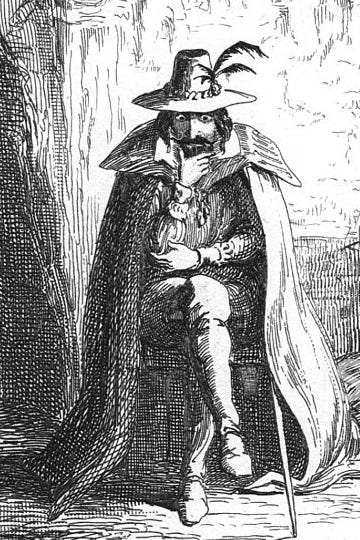
Two for Guy Fawkes Day
Remember, Remember – November 5 was Guy Fawkes Day, an occasion full of complicated remembrances. We mark the day with a traditional English lyric and a November meditation from Malcolm Guite. This is a public episode. If you'd like to discuss this with other subscribers or get access to bonus episodes, visit dailypoempod.substack.com/subscribe

Robert B. Shaw's "Chronometrics"
We will turn the clocks back this weekend–in fact, many clocks will turn themselves back–and there is no better occasion to meditate with Robert B. Shaw on the ways we keep time and are kept by it. This is a public episode. If you'd like to discuss this with other subscribers or get access to bonus episodes, visit dailypoempod.substack.com/subscribe

Wallace Stevens' "Of the surface of things"
Stevens moved to Connecticut in 1916, having found employment at the Hartford Accident and Indemnity Co., where he became vice president in 1934. He had also begun to establish an identity for himself outside the worlds of law and business. His first book of poems, Harmonium (Alfred A. Knopf), published in 1923, exhibited the influences of both the English Romantics and the French Symbolists, and demonstrated a wholly original style and sensibility: exotic, whimsical, and infused with the light and color of an Impressionist painting. Today’s poem comes from that early collection.For the next several years, Stevens focused on his business career. He began to publish new poems in 1930, however. In the following year, Knopf released a second edition of Harmonium, which included fourteen new poems, but excluded three of the decidedly weaker ones.More than any other modern poet, Stevens was concerned with the transformative power of the imagination. Composing poems on his way to and from the office and in the evenings, Stevens spent his days behind a desk at his office, and led a quiet, relatively uneventful life.Though now considered one of the major American poets of the twentieth century, Stevens did not receive widespread recognition until the publication of The Collected Poems of Wallace Stevens (Knopf, 1954), just a year before his death. His other major works include The Necessary Angel (Alfred A. Knopf, 1951), a collection of essays on poetry; Notes Towards a Supreme Fiction (The Cummington Press, 1942); The Man With the Blue Guitar (Alfred A. Knopf, 1937); and Ideas of Order (The Alcestis Press, 1935).-bio via Poets.org This is a public episode. If you'd like to discuss this with other subscribers or get access to bonus episodes, visit dailypoempod.substack.com/subscribe

Billy Collins' "On Turning Ten"
Billy Collins spent his tenure as U.S. Poet Laureate launching the Poetry 180 initiative to increase American high school students’ exposure to poetry. In today’s poem he remembers what it was like to be young (and not so young). This is a public episode. If you'd like to discuss this with other subscribers or get access to bonus episodes, visit dailypoempod.substack.com/subscribe
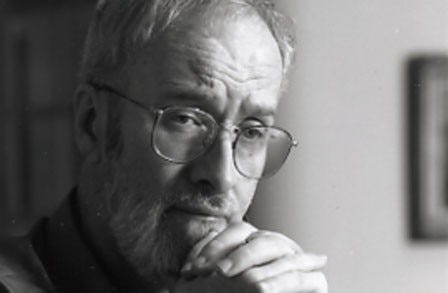
Robert B. Shaw's "Jack O'Lantern"
Poet and critic Robert B. Shaw earned a BA from Harvard University, where he studied with Robert Lowell, and a PhD from Yale University. Influenced by Elizabeth Bishop and Philip Larkin, Shaw’s wry and plainspoken formal verse is often grounded in, or sprung from, the debris of daily life. He is the author of several collections of poetry, including Solving For X (2002), which won the Hollis Summers Poetry Prize; Below the Surface (1999); and The Wonder of Seeing Double (1988). His criticism appears widely in such places as the New York Times Book Review, and he has also published a critical study of poets John Donne and George Herbert, The Call of God: The Theme of Vocation in the Poetry of Donne and Herbert (1981). Shaw has received Shenandoah’s James Boatwright III Prize for Poetry as well as fellowships from the National Endowment for the Arts and the Ingram Merrill Foundation. Since 1983, Shaw has taught at Mount Holyoke College as the Emily Dickinson Professor of English.-bio via Poetry Foundation This is a public episode. If you'd like to discuss this with other subscribers or get access to bonus episodes, visit dailypoempod.substack.com/subscribe

E.E. Cummings' "i thank You God for most this amazing day"
Edward Estlin (E.E.) Cummings was born in Cambridge, Massachusetts. He attended the Cambridge Latin High School, where he studied Latin and Greek. Cummings earned both his BA and MA from Harvard, and his earliest poems were published in Eight Harvard Poets (1917). As one of the most innovative poets of his time, Cummings experimented with poetic form and language to create a distinct personal style. A typical Cummings poem is spare and precise, employing a few key words eccentrically placed on the page. Some of these words were invented by Cummings, often by combining two common words into a new synthesis. He also revised grammatical and linguistic rules to suit his own purposes, using such words as “if,” “am,” and “because” as nouns, for example, or assigning his own private meanings to words. Despite their nontraditional form, Cummings’ poems came to be popular with many readers. “No one else,” Randall Jarrell claimed, “has ever made avant-garde, experimental poems so attractive to the general and the special reader.” By the time of his death in 1962 Cummings held a prominent position in 20th-century poetry. John Logan in Modern American Poetry: Essays in Criticism called him “one of the greatest lyric poets in our language.” Stanley Edgar Hyman wrote in Standards: A Chronicle of Books for Our Time: “Cummings has written at least a dozen poems that seem to me matchless. Three are among the great love poems of our time or any time.” Malcolm Cowley admitted in the Yale Review that Cummings “suffers from comparison with those [poets] who built on a larger scale—Eliot, Aiken, Crane, Auden among others—but still he is unsurpassed in his special field, one of the masters.”-bio via Poetry Foundation This is a public episode. If you'd like to discuss this with other subscribers or get access to bonus episodes, visit dailypoempod.substack.com/subscribe

Dylan Thomas' "And Death Shall Have No Dominion"
Today’s poem is by Dylan Marlais Thomas, born October 27, 1914 in the Welsh seaport of Swansea, Wales. Thomas attended the Swansea Grammar School, where he received all of his formal education. As a student he made contributions to the school magazine and was keenly interested in local folklore. Having declared at the age of eight that he was a poet, he began writing early and published his first book of poetry, 18 Poems (1934), when he was not yet twenty years old. After leaving school, Thomas supported himself as an actor, reporter, reviewer, scriptwriter, and with various odd jobs.By 1938 Thomas’s reputation was growing the United Kingdom, yet he was still basically unknown in the United States until a poem of his appeared in the 1938 anthology New Directions in Poetry and Prose, and two of his earlier poetry volumes were published by James Laughlin under the title The World I Breathe (1939).During World War II, Thomas wrote radio scripts for the Ministry of Information and documentaries for the British government. After the war he became a commentator on poetry for the British Broadcasting Corporation (BBC). Thomas continued writing poems, stories, essays, and plays, and in 1950 made the first of four reading tours through the United States, during which he gave more than one hundred poetry readings. In these appearances he half recited, half chanted the lines in what became known as his famous “Welsh singing” voice and inspired generations of modern poets to begin reading their poems in public.Following the extraordinary success of his just-published Collected Poems, Thomas began his final tour of the United States on October 16, 1953. He collapsed at the Chelsea Hotel and fell into a coma on November 5. He died four days later in St. Vincent’s Hospital at the age of thirty-nine. Thomas was buried in the graveyard of St. Martin’s Church, Laugharne, Wales. He is best known for poems like “Do not go gentle into that good night” and the poetic prose work, A Child’s Christmas in Wales.-bio via New Directions Press This is a public episode. If you'd like to discuss this with other subscribers or get access to bonus episodes, visit dailypoempod.substack.com/subscribe

Christine Perrin's "Reading Telemachus"
Christine Perrin is the director of writing at Messiah College and has taught literature and creative writing at Johns Hopkins University, with Gordon College’s Orvieto Program, through the Pennsylvania Arts Council to students of all ages, and at the local classical school where her children attended. She consults with classical schools in curriculum development and faculty development in poetry and writing, and speaks regularly at the CiRCE Institute as well as the Society for Classical Learning conferences. She is a two-time recipient of the PA Arts Council Artists Fellowship and a Bread Loaf Writer’s Conference Fellowship. Perrin is the author of Bright Mirror, a collection of her own poetry, and of The Art of Poetry, a textbook for middle and high school students. Her work also appears in various journals, including The New England Review, Image, TriQuarterly, Blackbird, Christianity and Literature, and The Cresset.-Bio via Classical Academic Press This is a public episode. If you'd like to discuss this with other subscribers or get access to bonus episodes, visit dailypoempod.substack.com/subscribe

The Saint Crispin's Day Speech
Today being St. Crispin’s Day, it seems only right to share, once again, one of the most famous speeches in English literature—Henry V’s “Crispin’s Day” speech which was given prior to the battle of Agincourt, as penned by Shakespeare in his history, Henry V. This is a public episode. If you'd like to discuss this with other subscribers or get access to bonus episodes, visit dailypoempod.substack.com/subscribe

Carl Sandburg's "Mummy"
Today’s poem is by Carl August Sandburg (January 6, 1878 – July 22, 1967), an American poet, biographer, journalist, and editor. He won three Pulitzer Prizes: two for his poetry and one for his biography of Abraham Lincoln. During his lifetime, Sandburg was widely regarded as "a major figure in contemporary literature", especially for volumes of his collected verse, including Chicago Poems (1916), Cornhuskers (1918), and Smoke and Steel(1920).[2] He enjoyed "unrivaled appeal as a poet in his day, perhaps because the breadth of his experiences connected him with so many strands of American life".[3] When he died in 1967, President Lyndon B. Johnson observed that "Carl Sandburg was more than the voice of America, more than the poet of its strength and genius. He was America."[4]—Bio via Wikipedia This is a public episode. If you'd like to discuss this with other subscribers or get access to bonus episodes, visit dailypoempod.substack.com/subscribe

"The Death of Nelson"
Today’s poem is by an anonymous poet but it artfully commemorates the life and death of a great historical figure. This is a public episode. If you'd like to discuss this with other subscribers or get access to bonus episodes, visit dailypoempod.substack.com/subscribe
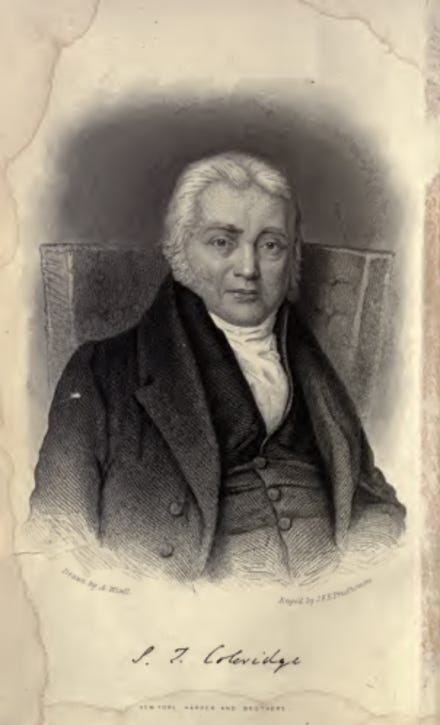
Samuel Taylor Coleridge's "The Rime of the Ancient Mariner"
Today’s poem is by Samuel Taylor Coleridge (/ˈkoʊlərɪdʒ/ KOH-lə-rij;[1] 21 October 1772 – 25 July 1834), an English poet, literary critic, philosopher, and theologian who, with his friend William Wordsworth, was a founder of the Romantic Movement in England and a member of the Lake Poets. He also shared volumes and collaborated with Charles Lamb, Robert Southey, and Charles Lloyd.He wrote the poems The Rime of the Ancient Mariner and Kubla Khan, as well as the major prose work Biographia Literaria. His critical work, especially on William Shakespeare, was highly influential, and he helped introduce German idealist philosophy to English-speaking cultures. Coleridge coined many familiar words and phrases, including "suspension of disbelief".[2] He had a major influence on Ralph Waldo Emersonand American transcendentalism.—Bio via Wikipedia This is a public episode. If you'd like to discuss this with other subscribers or get access to bonus episodes, visit dailypoempod.substack.com/subscribe
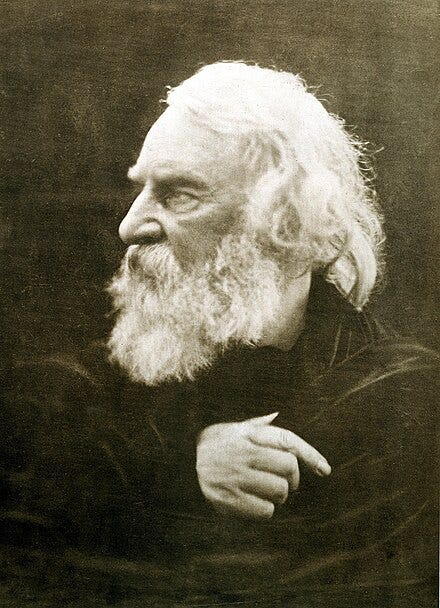
Henry Wadsworth Longfellow's "Tide Rises, Tide Falls"
Henry Wadsworth Longfellow (February 27, 1807 – March 24, 1882) was an American poet and educator. His original works include the poems "Paul Revere's Ride", "The Song of Hiawatha", and "Evangeline". He was the first American to completely translate Dante Alighieri's Divine Comedy and was one of the fireside poets from New England.Longfellow wrote many lyric poems known for their musicality and often presenting stories of mythology and legend. He became the most popular American poet of his day and had success overseas. He has been criticized for imitating European styles and writing poetry that was too sentimental.—Bio via Wikipedia This is a public episode. If you'd like to discuss this with other subscribers or get access to bonus episodes, visit dailypoempod.substack.com/subscribe

Dana Gioia's "Metamorphosis"
Today’s poem is by Michael Dana Gioia (/ˈdʒɔɪ.ə/; born December 24, 1950), an American poet, literary critic, literary translator, and essayist.Since the early 1980s, Gioia has been considered part of the literary movements within American poetry known as New Formalism, which advocates the continued writing of poetry in rhyme and meter, and New Narrative, which advocates the telling of non-autobiographical stories. Gioia has also argued in favor of a return to the past tradition of poetry translators replicating the rhythm and verse structure of the original poem.Gioia has published five books of poetry and three volumes of literary criticism as well as opera libretti, song cycles, translations, and over two dozen literary anthologies. Gioia's poetry has been anthologized in The Norton Anthology of Poetry, The Oxford Book of American Poetry, and several other anthologies. His poetry has been translated into French, German, Italian, Spanish, Russian, Romanian, Bulgarian, Chinese, and Arabic. Gioia published translations of poets such as Eugenio Montale and Seneca the Younger.—Bio via Wikipedia This is a public episode. If you'd like to discuss this with other subscribers or get access to bonus episodes, visit dailypoempod.substack.com/subscribe

Two by Oscar Wilde
Today’s poems are by Oscar Fingal O'Fflahertie Wills Wilde[a] (16 October 1854 – 30 November 1900), an Irish poet and playwright. After writing in different forms throughout the 1880s, he became one of the most popular playwrights in London in the early 1890s. He is best remembered for his epigrams and plays, his novel The Picture of Dorian Gray. —Bio via Wikipedia This is a public episode. If you'd like to discuss this with other subscribers or get access to bonus episodes, visit dailypoempod.substack.com/subscribe
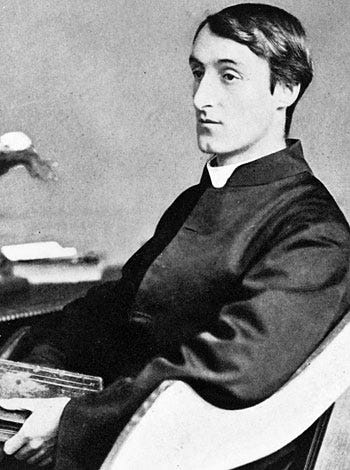
Gerard Manley Hopkins' "Binsey Poplars"
Today’s poem is by Gerard Manley Hopkins SJ (28 July 1844 – 8 June 1889), an English poet and Jesuit priest, whose posthumous fame places him among leading English poets. His prosody – notably his concept of sprung rhythm – established him as an innovator, as did his praise of God through vivid use of imagery and nature. Only after his death did Robert Bridges publish a few of Hopkins's mature poems in anthologies, hoping to prepare for wider acceptance of his style. By 1930 Hopkins's work was seen as one of the most original literary advances of his century. It intrigued such leading 20th-century poets as T. S. Eliot, Dylan Thomas, W. H. Auden, Stephen Spender and Cecil Day-Lewis.—bia via Wikipedia This is a public episode. If you'd like to discuss this with other subscribers or get access to bonus episodes, visit dailypoempod.substack.com/subscribe
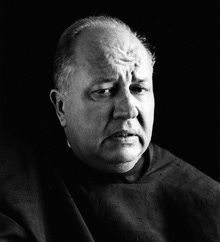
Theodore Roethke's "Root Cellar"
Today’s poem is by Theodore Huebner Roethke (/ˈrɛtki/ RET-kee;[1] May 25, 1908 – August 1, 1963), an American poet. He is regarded as one of the most accomplished and influential poets of his generation, having won the Pulitzer Prize for poetry in 1954 for his book The Waking, and the annual National Book Award for Poetry on two occasions: in 1959 for Words for the Wind,[2] and posthumously in 1965 for The Far Field.[3][4] His work was characterized by its introspection, rhythm and natural imagery.Roethke was praised by former U.S. Poet Laureate and author James Dickey as "in my opinion the greatest poet this country has yet produced."[5] He was also a respected poetry teacher, and taught at the University of Washington for fifteen years. His students from that period won two Pulitzer Prizes for Poetry and two others were nominated for the award. "He was probably the best poetry-writing teacher ever," said poet Richard Hugo, who studied under Roethke.— bio via Wikipedia This is a public episode. If you'd like to discuss this with other subscribers or get access to bonus episodes, visit dailypoempod.substack.com/subscribe

J.R.R. Tolkien's "The Tale of Tinuviel"
Today’s poem is by John Ronald Reuel Tolkien CBE FRSL (/ˈruːl ˈtɒlkiːn/, ROOL TOL-keen;[a] 3 January 1892 – 2 September 1973), an English writer and philologist. He was the author of the high fantasy works The Hobbit and The Lord of the Rings.From 1925 to 1945, Tolkien was the Rawlinson and Bosworth Professor of Anglo-Saxon and a Fellow of Pembroke College, both at the University of Oxford. He then moved within the same university to become the Merton Professor of English Language and Literature and Fellow of Merton College, and held these positions from 1945 until his retirement in 1959. Tolkien was a close friend of C. S. Lewis, a co-member of the informal literary discussion group The Inklings. He was appointed a Commander of the Order of the British Empire by Queen Elizabeth II on 28 March 1972.—Bio via Wikipedia This is a public episode. If you'd like to discuss this with other subscribers or get access to bonus episodes, visit dailypoempod.substack.com/subscribe

Robert Frost's "The Road Not Taken"
Today’s poem is by Robert Lee Frost (March 26, 1874 – January 29, 1963), an American poet. His work was initially published in England before it was published in the United States. Known for his realistic depictions of rural life and his command of American colloquial speech,[2] Frost frequently wrote about settings from rural life in New England in the early 20th century, using them to examine complex social and philosophical themes.Frequently honored during his lifetime, Frost is the only poet to receive four Pulitzer Prizes for Poetry. He became one of America's rare "public literary figures, almost an artistic institution".[3] He was awarded the Congressional Gold Medal in 1960 for his poetic works. On July 22, 1961, Frost was named poet laureate of Vermont.—Bio via Wikipedia This is a public episode. If you'd like to discuss this with other subscribers or get access to bonus episodes, visit dailypoempod.substack.com/subscribe

Rudyard Kipling's "If"
Today’s poem is dedicated to my son, Coulter, who turns twelve today. Joseph Rudyard Kipling (/ˈrʌdjərd/ RUD-yərd; 30 December 1865 – 18 January 1936)[1] was an English novelist, short-story writer, poet, and journalist. He was born in British India, which inspired much of his work.Kipling's works of fiction include the Jungle Book duology (The Jungle Book, 1894; The Second Jungle Book, 1895), Kim (1901), the Just So Stories (1902) and many short stories, including "The Man Who Would Be King" (1888).[2] His poems include "Mandalay" (1890), "Gunga Din" (1890), "The Gods of the Copybook Headings" (1919), "The White Man's Burden" (1899), and "If—" (1910). He is seen as an innovator in the art of the short story.[3] His children's books are classics; one critic noted "a versatile and luminous narrative gift".[4][5]—Bio via Wikipedia This is a public episode. If you'd like to discuss this with other subscribers or get access to bonus episodes, visit dailypoempod.substack.com/subscribe
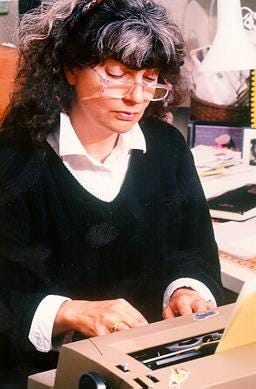
Jane Kenyon's "The Blue Bowl"
Jane Kenyon (May 23, 1947 – April 22, 1995) was an American poet and translator. Her work is often characterized as simple, spare, and emotionally resonant. Kenyon was the second wife of poet, editor, and critic Donald Hall who made her the subject of many of his poems.—Bio via Wikipedia This is a public episode. If you'd like to discuss this with other subscribers or get access to bonus episodes, visit dailypoempod.substack.com/subscribe

T.S. Eliot's "Rhapsody on a Windy Night"
Today’s poem is by Thomas Stearns Eliot OM (26 September 1888 – 4 January 1965), a poet, essayist, publisher, playwright, literary critic and editor.[1] Considered one of the 20th century's major poets, he is a central figure in English-language Modernist poetry. Through his trials in language, writing style, and verse structure, he reinvigorated English poetry. He also dismantled outdated beliefs and established new ones through a collection of critical essays.[2]Eliot first attracted widespread attention for his poem "The Love Song of J. Alfred Prufrock" from 1914 to 1915, which, at the time of its publication, was considered outlandish.[5] It was followed by The Waste Land(1922), "The Hollow Men" (1925), "Ash Wednesday" (1930), and Four Quartets (1943).[6] He was also known for seven plays, particularly Murder in the Cathedral (1935) and The Cocktail Party (1949). He was awarded the 1948 Nobel Prize in Literature, "for his outstanding, pioneer contribution to present-day poetry".[7][8]-Bio via Wikipedia This is a public episode. If you'd like to discuss this with other subscribers or get access to bonus episodes, visit dailypoempod.substack.com/subscribe

Thomas Gray's "Ode to the Death of a Favorite Cat Drowned in a Tub of Goldfishes"
Today’s poem is by Thomas Gray (26 December 1716 – 30 July 1771), an English poet, letter-writer, classical scholar, and fellow at Pembroke College, Cambridge. He is widely known for his Elegy Written in a Country Churchyard,published in 1751.[1]Gray was a self-critical writer who published only 13 poems in his lifetime, despite being very popular. He was even offered the position of Poet Laureate in 1757 after the death of Colley Cibber, though he declined.[2] His writing is conventionally considered to be pre-Romantic but recent critical developments deny such teleological classification.—Bio via Wikipedia This is a public episode. If you'd like to discuss this with other subscribers or get access to bonus episodes, visit dailypoempod.substack.com/subscribe

Pablo Neruda's "A Dog Has Died"
Today’s poem is by Pablo Neruda (/nəˈruːdə/;[1] Spanish pronunciation: [ˈpaβlo neˈɾuða] ⓘ; born Ricardo Eliécer Neftalí Reyes Basoalto; 12 July 1904 – 23 September 1973) a Chilean poet-diplomat and politician who won the 1971 Nobel Prize in Literature.[2] Neruda became known as a poet when he was 13 years old, and wrote in a variety of styles, including surrealist poems, historical epics, political manifestos, a prose autobiography, and passionate love poems such as the ones in his collection Twenty Love Poems and a Song of Despair (1924).—Bio via Wikipedia This is a public episode. If you'd like to discuss this with other subscribers or get access to bonus episodes, visit dailypoempod.substack.com/subscribe

Blaise Cendrars "Menus"
Today’s poem is by Frédéric-Louis Sauser (1 September 1887 – 21 January 1961),[1] better known as Blaise Cendrars, a Swiss-born novelist and poet who became a naturalized French citizen in 1916. He was a writer of considerable influence in the European modernist movement.—Bio via Wikipedia This is a public episode. If you'd like to discuss this with other subscribers or get access to bonus episodes, visit dailypoempod.substack.com/subscribe

Roald Dahl's "The Centipede's Song"
Today’s poem is by Roald Dahl[a] (13 September 1916 – 23 November 1990), a British popular author of children's literatureand short stories, a poet, and wartime fighter ace.[1][2] His books have sold more than 300 million copies worldwide.[3][4] Dahl has been called "one of the greatest storytellers for children of the 20th century".[5]Dahl's short stories are known for their unexpected endings, and his children's books for their unsentimental, macabre, often darkly comic mood, featuring villainous adult enemies of the child characters.[10][11] His children's books champion the kindhearted and feature an underlying warm sentiment.[12][13] His works for children include James and the Giant Peach, Charlie and the Chocolate Factory, Matilda, The Witches, Fantastic Mr Fox, The BFG, The Twits, George's Marvellous Medicine and Danny, the Champion of the World. His works for older audiences include the short story collections Tales of the Unexpected and The Wonderful Story of Henry Sugar and Six More.—bio via Wikipedia This is a public episode. If you'd like to discuss this with other subscribers or get access to bonus episodes, visit dailypoempod.substack.com/subscribe

T.S. Eliot's "The Naming of Cats"
Today’s poem is by Thomas Stearns Eliot OM (26 September 1888 – 4 January 1965), a poet, essayist, publisher, playwright, literary critic and editor.[1] Considered one of the 20th century's major poets, he is a central figure in English-language Modernist poetry. Through his trials in language, writing style, and verse structure, he reinvigorated English poetry. He also dismantled outdated beliefs and established new ones through a collection of critical essays.[2]Eliot first attracted widespread attention for his poem "The Love Song of J. Alfred Prufrock" from 1914 to 1915, which, at the time of its publication, was considered outlandish.[5] It was followed by The Waste Land (1922), "The Hollow Men" (1925), "Ash Wednesday" (1930), and Four Quartets (1943).[6] He was also known for seven plays, particularly Murder in the Cathedral (1935) and The Cocktail Party (1949). He was awarded the 1948 Nobel Prize in Literature, "for his outstanding, pioneer contribution to present-day poetry".[7][8]—Bio via Wikipedia This is a public episode. If you'd like to discuss this with other subscribers or get access to bonus episodes, visit dailypoempod.substack.com/subscribe
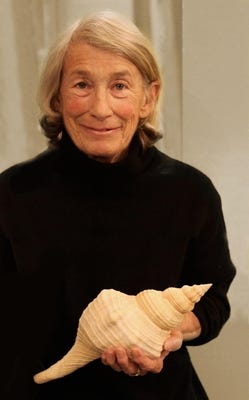
Mary Oliver's "Beside the Waterfall"
Today’s poem is by Mary Jane Oliver (September 10, 1935 – January 17, 2019) , an American poet who won the National Book Award and the Pulitzer Prize. Her work is inspired by nature, rather than the human world, stemming from her lifelong passion for solitary walks in the wild. It is characterized by a sincere wonderment at the impact of natural imagery, conveyed in unadorned language. In 2007, she was declared to be the country's best-selling poet.—Bio via Wikipedia This is a public episode. If you'd like to discuss this with other subscribers or get access to bonus episodes, visit dailypoempod.substack.com/subscribe

Elizabeth Barrett Browning's "Sonnet 44"
Today’s poem is by Elizabeth Barrett Browning (née Moulton-Barrett; 6 March 1806 – 29 June 1861), an English poet of the Victorian era, popular in Britain and the United States during her lifetime.In the 1840s, Elizabeth was introduced to literary society through her distant cousin and patron John Kenyon. Her first adult collection of poems was published in 1838, and she wrote prolifically between 1841 and 1844, producing poetry, translation, and prose. She campaigned for the abolition of slavery, and her work helped influence reform in the child labour legislation. Her prolific output made her a rival to Tennyson as a candidate for poet laureate on the death of Wordsworth.Elizabeth's volume Poems (1844) brought her great success, attracting the admiration of the writer Robert Browning. Their correspondence, courtship, and marriage were carried out in secret, for fear of her father's disapproval. Following the wedding, she was indeed disinherited by her father. In 1846, the couple moved to Italy, where she would live for the rest of her life. They had a son, known as "Pen" (Robert Wiedeman Barrett Browning) (1849–1912). Pen devoted himself to painting until his eyesight began to fail later in life; he also built up a large collection of manuscripts and memorabilia of his parents; however, since he died intestate, it was sold by public auction to various bidders, and scattered upon his death. The Armstrong Browning Libraryhas tried to recover some of his collection, and now houses the world's largest collection of Browning memorabilia.[3] Elizabeth died in Florence in 1861.[1][4] A collection of her last poems was published by her husband shortly after her death.Elizabeth's work had a major influence on prominent writers of the day, including the American poets Edgar Allan Poe and Emily Dickinson. She is remembered for such poems as "How Do I Love Thee?" (Sonnet 43, 1845) and Aurora Leigh (1856).—Bio via Wikipedia This is a public episode. If you'd like to discuss this with other subscribers or get access to bonus episodes, visit dailypoempod.substack.com/subscribe

Wendell Berry's "September 2"
Today’s poem is by Wendell Erdman Berry (born August 5, 1934), an American novelist, poet, essayist, environmental activist, cultural critic, and farmer.[1] Closely identified with rural Kentucky, Berry developed many of his agrarian themes in the early essays of The Gift of Good Land (1981) and The Unsettling of America (1977). His attention to the culture and economy of rural communities is also found in the novels and stories of Port William, such as A Place on Earth (1967), Jayber Crow (2000), and That Distant Land (2004).He is an elected member of the Fellowship of Southern Writers, a recipient of The National Humanities Medal, and the Jefferson Lecturer for 2012. He is also a 2013 Fellow of The American Academy of Arts and Sciences and, since 2014, a member of the American Academy of Arts and Letters.[2] Berry was named the recipient of the 2013 Richard C. Holbrooke Distinguished Achievement Award.[3] On January 28, 2015, he became the first living writer to be inducted into the Kentucky Writers Hall of Fame.[4]— Bio via Wikipedia This is a public episode. If you'd like to discuss this with other subscribers or get access to bonus episodes, visit dailypoempod.substack.com/subscribe

Seamus Heaney's "Scaffolding"
Today’s poem is by Seamus Justin Heaney MRIA (13 April 1939 – 30 August 2013), an Irish poet, playwright and translator. He received the 1995 Nobel Prize in Literature.[1][2] Among his best-known works is Death of a Naturalist (1966), his first major published volume. Heaney was and is still recognised as one of the principal contributors to poetry in Ireland during his lifetime. American poet Robert Lowelldescribed him as "the most important Irish poet since Yeats", and many others, including the academic John Sutherland, have said that he was "the greatest poet of our age".[3][4] Robert Pinskyhas stated that "with his wonderful gift of eye and ear Heaney has the gift of the story-teller."[5] Upon his death in 2013, The Independent described him as "probably the best-known poet in the world".[6]—Bio via Wikipedia This is a public episode. If you'd like to discuss this with other subscribers or get access to bonus episodes, visit dailypoempod.substack.com/subscribe

Rita Dove's "Ars Poetica"
Today’s poem is by Rita Frances Dove (born August 28, 1952), an American poet and essayist. From 1993 to 1995, she served as Poet Laureate Consultant in Poetry to the Library of Congress. She is the first African American to have been appointed since the position was created by an act of Congress in 1986 from the previous "consultant in poetry" position (1937–86). Dove also received an appointment as "special consultant in poetry" for the Library of Congress's bicentennial year from 1999 to 2000.[1] Dove is the second African American to receive the Pulitzer Prize for Poetry, in 1987, and she served as the Poet Laureate of Virginia[2] from 2004 to 2006. Since 1989, she has been teaching at the University of Virginia in Charlottesville, where she held the chair of Commonwealth Professor of English from 1993 to 2020; as of 2020, she holds the chair of Henry Hoyns Professor of Creative Writing.[3]—Bio via Wikipedia This is a public episode. If you'd like to discuss this with other subscribers or get access to bonus episodes, visit dailypoempod.substack.com/subscribe