The Daily Poem
939 episodes — Page 10 of 19
William Ernest Henley's "Invictus"
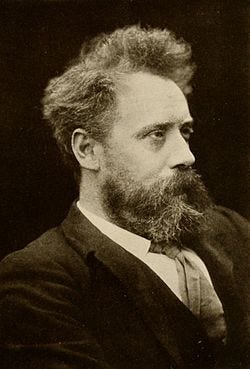
Today’s poem–benign anthem of the resilient human spirit or a hymn to radical autonomy?–has divided audiences for more than a century.Born in Gloucester, England, poet, editor, and critic William Ernest Henley was educated at Crypt Grammar School, where he studied with the poet T.E. Brown, and the University of St. Andrews. His father was a struggling bookseller who died when Henley was a teenager. At age 12 Henley was diagnosed with tubercular arthritis that necessitated the amputation of one of his legs just below the knee; the other foot was saved only through a radical surgery performed by Joseph Lister. As he healed in the infirmary, Henley began to write poems, including “Invictus,” which concludes with the oft-referenced lines “I am the master of my fate; / I am the captain of my soul.” Henley’s poems often engage themes of inner strength and perseverance. His numerous collections of poetry include A Book of Verses (1888), London Voluntaries (1893), and Hawthorn and Lavender (1899).Henley edited the Scots Observer (which later became the National Observer), through which he befriended writer Rudyard Kipling, and the Magazine of Art, in which he lauded the work of emerging artists James McNeill Whistler and Auguste Rodin. Henley was a close friend of Robert Louis Stevenson, who reportedly based his Long John Silver character in Treasure Island in part on Henley.-bio via Poetry Foundation This is a public episode. If you'd like to discuss this with other subscribers or get access to bonus episodes, visit dailypoempod.substack.com/subscribe

John Donne's "No Man Is an Island"
What do John Donne, Paul Simon, and AC/DC have in common? Today’s poem. Happy reading! This is a public episode. If you'd like to discuss this with other subscribers or get access to bonus episodes, visit dailypoempod.substack.com/subscribe

Walt Whitman's "Pioneers! O Pioneers!"
Today it’s Whitman (and Dylan) on the march of progress. This is a public episode. If you'd like to discuss this with other subscribers or get access to bonus episodes, visit dailypoempod.substack.com/subscribe

Wendell Berry's "The Plan"
Today’s poem imagines what you might do when you’re through paying taxes. This is a public episode. If you'd like to discuss this with other subscribers or get access to bonus episodes, visit dailypoempod.substack.com/subscribe
Seamus Heaney's "A Basket of Chestnuts"
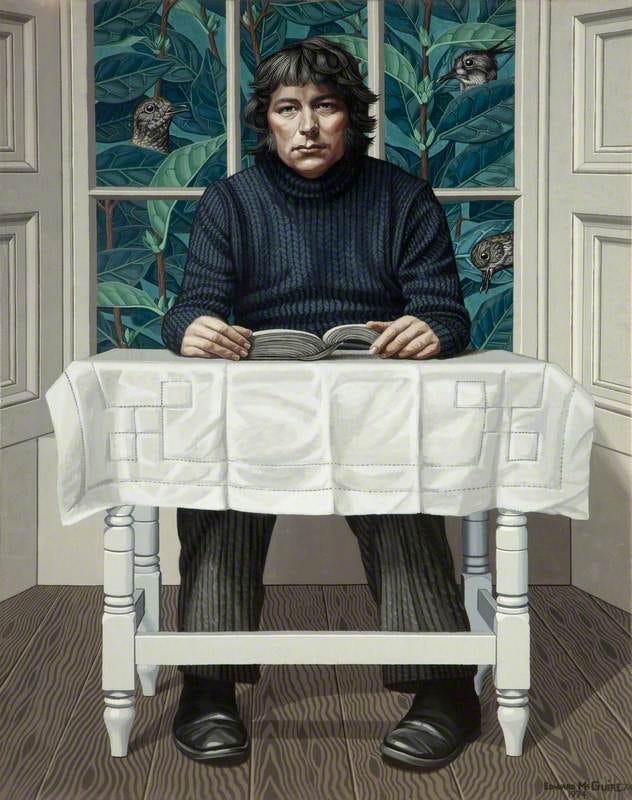
Today’s poem is an ekphrasis on a portrait of the poet himself–all that the portrait does and doesn’t capture or convey. This is a public episode. If you'd like to discuss this with other subscribers or get access to bonus episodes, visit dailypoempod.substack.com/subscribe

Billy Collins' "Candle Hat"
Today’s poem is a lighter take on the self-portrait ekphrasis. What is it about the self-portrait that is so intriguing to poets, anyway? This is a public episode. If you'd like to discuss this with other subscribers or get access to bonus episodes, visit dailypoempod.substack.com/subscribe
Elizabeth Jennings' "Rembrandt's Late Self-Portraits"
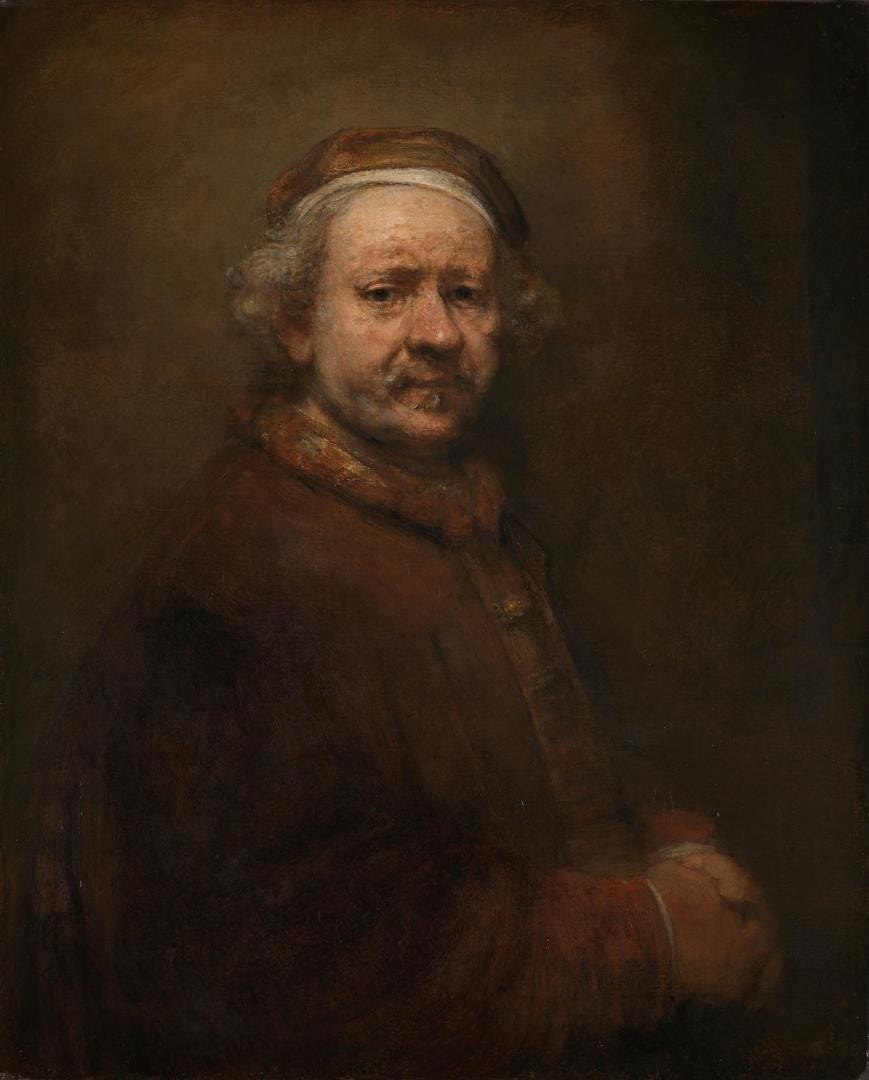
Elizabeth Jennings (1926-2001) was born in Boston, Lincolnshire but moved to Oxford at the age of six where she lived for the rest of her life. She studied at St. Anne’s College, Oxford and worked in advertising, at the City Library and briefly in publishing before becoming a full-time writer. Her consistent devotion to poetry yielded over twenty books during her life, a New Collected Poems appearing in 2002. Although initially linked to the group of poets including Kingsley Amis, Philip Larkin and Thom Gunn known as ‘The Movement’, Jennings’ work doesn’t share their irony or academic wit. However, the unassuming technical craft of her poetry and its emotional restraint are qualities that were praised by the poets and critics of the period and continued to be abiding characteristics of her work. An important theme is her Catholicism and many of her poems have a devotional aspect. Her intense musing on spirituality encouraged a sensitivity towards others, evident in the pained tenderness of some of her poems. Jennings’ sincere and scrupulous work gradually built both critical acclaim that weathered changes in poetic fashion, and a genuine popularity. Amongst the many honours awarded her work are the W.H. Smith Literary Award, the Somerset Maugham Award and a CBE. Although consistent in its tone and concerns, her poetry continued to develop and mature – later work demonstrating a more flexible approach to form whilst retaining her clarity.-bio via Poetry Archive (where you can also hear Jennings reading her own poem) This is a public episode. If you'd like to discuss this with other subscribers or get access to bonus episodes, visit dailypoempod.substack.com/subscribe
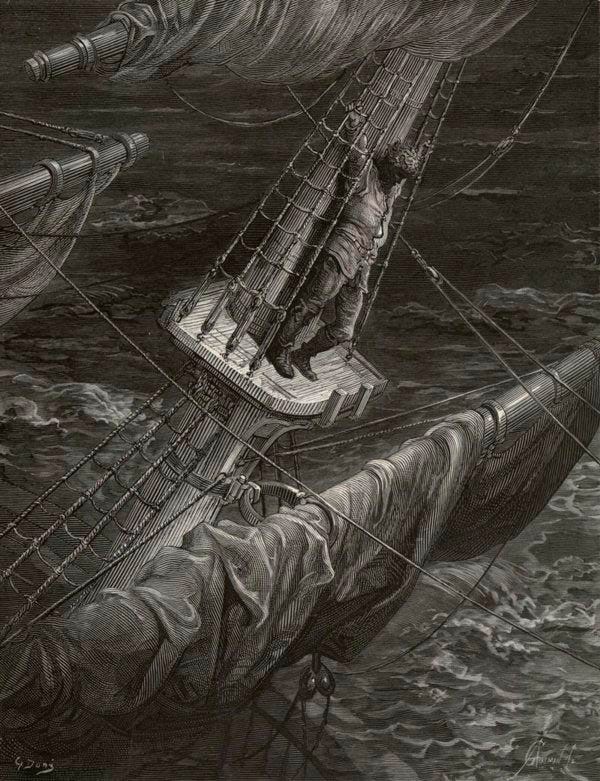
Richard Howard's "Gustave Dore"
Richard Howard (born Oct 13, 1929, died march 31, 2022) was credited with introducing modern French fiction—particularly examples of the Nouveau Roman—to the American public; his translation of Charles Baudelaire’s Les Fleurs du Mal (1984) won a National Book Award in 1984. A selection of Howard’s critical prose was collected in the volume Paper Trail: Selected Prose 1965-2003, and his collection of essays Alone with America: Essays on the Art of Poetry in the United States since 1950 (1969) was praised as one of the first comprehensive overviews of American poetry from the latter half of the 20th century. First and foremost a poet, Howard’s many volumes of verse also received widespread acclaim; he won the 1970 Pulitzer Prize in Poetry for his collection Untitled Subjects. His other honors included the American Book Award, the Harriet Monroe Memorial Prize, the PEN Translation Medal, the Levinson Prize, and the Ordre National du Mérite from the French government. For many years, Howard was the poetry editor of the Paris Review.Evaluations of Howard usually judge his work as a poet to be his most important contribution to contemporary American literature. However, his work has and continues to attract a wide and enthusiastic audience among readers, academics, and critics alike.-bio via Poetry Foundation This is a public episode. If you'd like to discuss this with other subscribers or get access to bonus episodes, visit dailypoempod.substack.com/subscribe
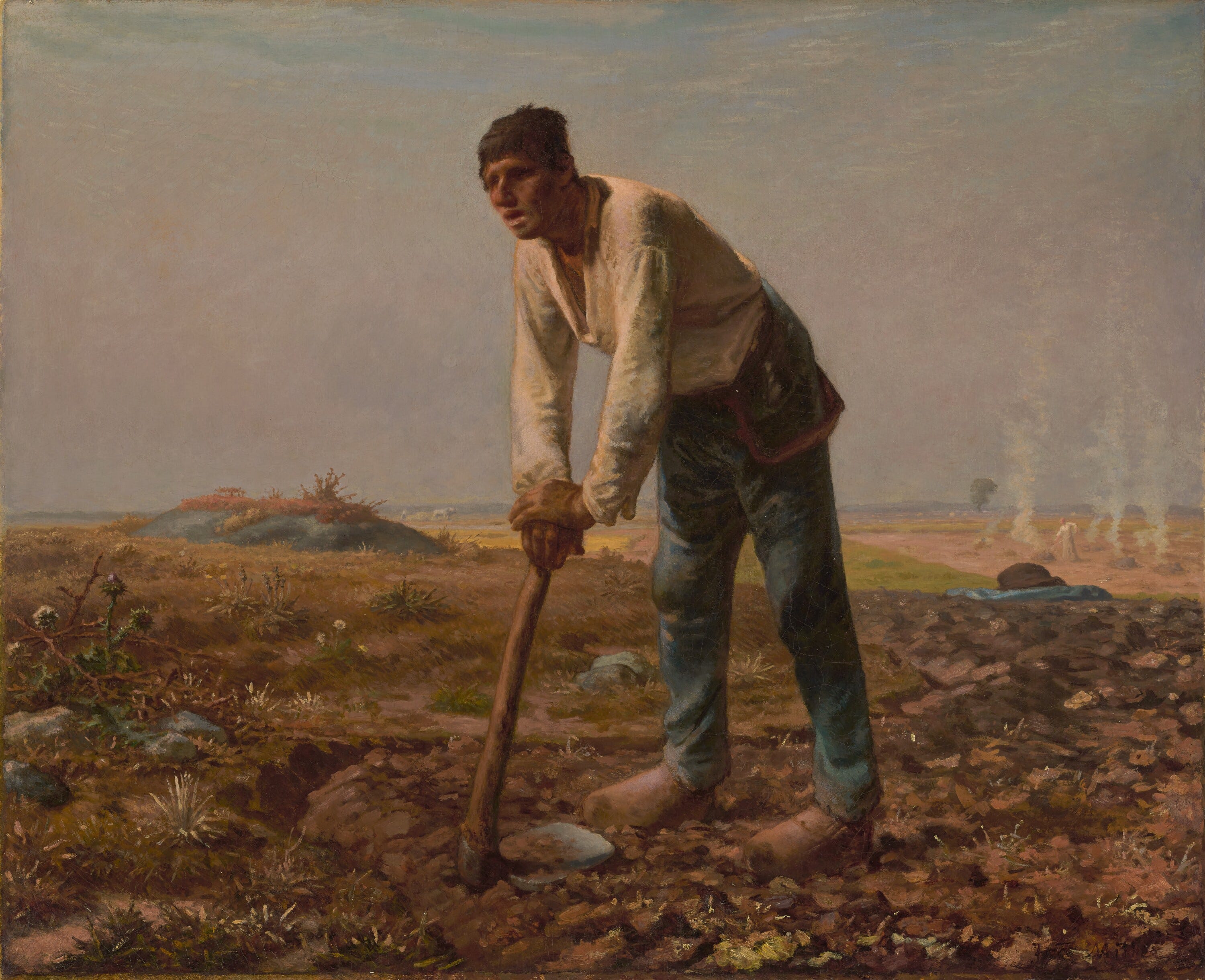
Edwin Markham's "The Man With the Hoe"
ekphrasis: “Description” in Greek. An ekphrastic poem is a vivid description of a scene or, more commonly, a work of art. Through the imaginative act of narrating and reflecting on the “action” of a painting or sculpture, the poet may amplify and expand its meaning.Once internationally famous as the author of the poem "The Man with the Hoe," Edwin Markham (1852-1940) was a popular American literary figure during the first half of the 20th century whose works espoused progressive social and spiritual beliefs. In contrast to the experimentalism and pessimism that generally characterized poetry of this era, Markham's quatrains, sonnets, and heroic verse celebrate peace, love, and socialist utopian reform. In a 1902 essay in the Comrade, Leonard D. Abbot proclaimed that "Markham, more than any other poet in the English language, can claim the honor of being the Bard of Labor—the true product of the last great movement that is destined to shake the world."In 1876 Markham abandoned the Methodist faith of his childhood and became a follower of the spiritualist and utopian socialist Thomas Lake Harris. Harris's doctrine, which espoused social harmony and universal charity, became a major force in Markham's life. Markham had begun writing poetry as early as 1872, but he did not sell his first poem until 1880. For the next 19 years, he contributed poems to Harper's, Century, and Scribner's, and cultivated friendships with such eminent American literary figures as Edmund Clarence Stedman, Hamlin Garland, and Ambrose Bierce.During the last week of December 1898, Markham completed a poem that changed his career overnight. Titled "The Man with the Hoe," the poem was based on the painting of the same name by the French artist Jean-Francois Millet in 1862. Millet's painting depicts a stooping peasant with a brutish expression on his face, who in Markham's poem becomes the embodiment of the suffering of oppressed labor throughout world history. Markham read the poem to an editor of William Randolph Hearst's San Francisco Examiner at a New Years' Eve party, and that newspaper published the work two weeks later."The Man with the Hoe" attracted wide public notice and was reprinted in newspapers across the United States. Its appeal for better treatment of the working class became the subject of national debate and launched Markham's career as a poet, transforming him into a national celebrity. Markham enjoyed this immense public prestige until his death in 1940.Markham's poetry is characterized by its highly rhetorical nature and expresses his advocacy of social reform, as well as his desire for the unity of humankind through spiritual faith. "The Man with the Hoe," as well as his subsequent poetry, was hotly debated by critics. William Jennings Bryan wrote: "There is a majestic sweep to the argument; some of the lines pierce like arrows," while Ambrose Bierce railed: "As a literary conception it has not the vitality of a dead fish. It will not carry a poem of whatever excellence otherwise through two generations." Although Markham's first collection of poetry, The Man with the Hoe, and Other Poems, was subject to the same controversy, critics generally viewed Markham as a poet of much promise. With each successive collection, however, he encountered disfavor with critics. When Gates of Paradise, and Other Poems was published in 1920, Herbert S. Gorman wrote, "Markham became a poet when he wrote 'The Man with the Hoe' and when he penned the last line he ceased to be a poet." Nevertheless, Markham always remained popular with readers, and his distinguished appearance—tall, ruggedly featured, and bearded—impressed many people as the ideal of a great American poet.In 1922, Markham, on invitation from former president William Howard Taft, read his poem "Lincoln, the Man of the People" at the dedication of the Lincoln Memorial; in 1932, on the occasion of Markham's 80th birthday, he was regaled at New York's Carnegie Hall, a celebration to which 35 nations sent representatives. Despite the decline in his reputation after his death, among scholars Markham remains an important figure in American poetry of the early 20th century. "At a time when protest counted, Markham's first triumph, 'The Man with the Hoe,' helped awaken the conscience of the American people," observed Joseph W. Slade in the Dictionary of Literary Biography. "Markham elevated socialism, naive as it was, into sublimity. If 'The Man with the Hoe' represents Markham on a soapbox, critic Benjamin De Casseres has written, the 'that soapbox is a star.'"-bio via Poetry Foundation This is a public episode. If you'd like to discuss this with other subscribers or get access to bonus episodes, visit dailypoempod.substack.com/subscribe
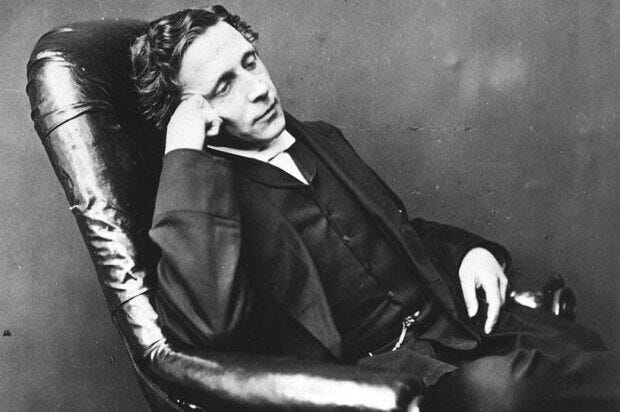
Lewis Carroll's "The Walrus and the Carpenter"
Today’s poem is in honor of April being (according to now-outdated tradition) the last prudent month till Autumn in which to eat oysters. Happy reading!Self-effacing, yet having an expressive critical ability; reveling in the possibilities of fancy, though thoroughly at home with the sophisticated nuances of logic and mathematics, Lewis Carroll (Charles Lutwidge Dodgson) was an individual who, through his rare and diversified literary gifts and power of communication, left an indelible mark upon the imaginations of children and adults both during his generation and in generations to come. His best-known works, Alice’s Adventures in Wonderland (1865) and Through the Looking-Glass, And What Alice Found There (1872) are still enjoyed by readers throughout the world and have been adapted for radio, television, and motion pictures.-bio via Poetry Foundation This is a public episode. If you'd like to discuss this with other subscribers or get access to bonus episodes, visit dailypoempod.substack.com/subscribe

Derek Walcott's "Sea Grapes"
West Indian poet and playwright Derek Walcott made his debut as an 18-year-old with In a Green Night. For many years he divided his time among Saint Lucia; Boston University, where he taught; and Trinidad, where he managed a theater. Walcott also worked as an artist and combined his poetry with painting in the volume Tiepolo’s Hound (2005).Walcott’s works often deal with Caribbean history, while he simultaneous searches for vestiges of the colonial era. Western literary canon is revised and given a completely new form, as in the poetry collection Omeros (1990). In his writing Walcott explores the complexity of living and working in two cultures.-bio via Nobel Foundation This is a public episode. If you'd like to discuss this with other subscribers or get access to bonus episodes, visit dailypoempod.substack.com/subscribe

George Herbert's "The Church-floore"
In today’s poem: George Herbert meditating on the simple profundity of a single, sustained metaphor. Happy reading. This is a public episode. If you'd like to discuss this with other subscribers or get access to bonus episodes, visit dailypoempod.substack.com/subscribe
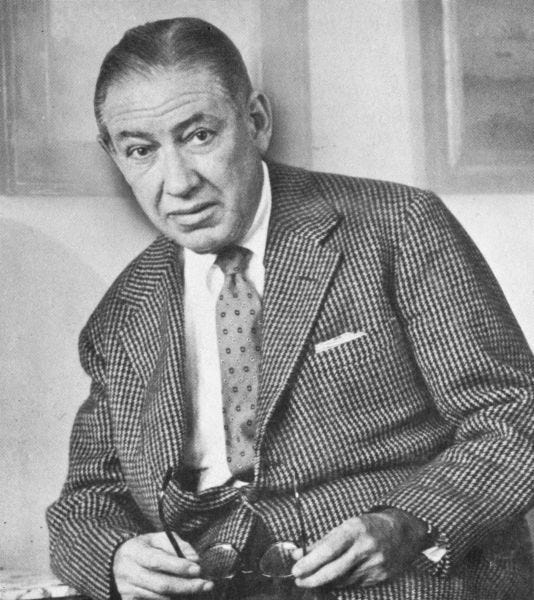
Ogden Nash's "Very Like a Whale"
Today’s poem–a layered, jokingly-serious response to one of last week’s–comes from Ogden Nash, dubbed the ‘Laurate of Light Verse.’ Which banner would you rally under–Nash or Byron?One of the most widely appreciated and imitated writers of light verse, Frediric Ogden Nash was born in Rye, New York, on August 19, 1902, to Edmund Strudwick and Mattie Nash. He came from a distinguished family; the city of Nashville, Tennessee, was named in honor of one of his forbearers. Nash attended Harvard College, but dropped out after only one year. He worked briefly on Wall Street, and as a schoolteacher, before becoming a copywriter. In 1925, he took a job in the marketing department with the publishing house Doubleday.Nash's first published poems began to appear in the New Yorker around 1930. His first collection of poems, Hard Lines (Simon & Schuster), was published in 1931. The book was a tremendous success; it went into seven printings in its first year alone, and Nash quit his job with Doubleday. That same year, he married Frances Rider Leonard; they had two children. Nash worked briefly for the New Yorker in 1932, before deciding to devote himself full-time to his verse.Nash considered himself a "worsifier." Among his best known lines are "Candy / Is dandy, / But liquor / Is quicker" and "If called by a panther / Don't anther." His poems also had an intensely anti-establishment quality that resounded with many Americans, particularly during the Depression. Nash was a keen observer of American social life, and frequently mocked religious moralizing and conservative politicians. His work is often compared with other satirists of the time, including Dorothy Parker, Robert Benchley, and H. L. Mencken. He appeared regularly on radio and on television, and he drew huge audiences for his readings and lectures.Nash was also the author of three screenplays for MGM, and with S. J. Perelmen, he wrote the 1943 Broadway hit One Touch of Venus. In the 1950s, Nash focused on writing poems for children, including the collection Girls Are Silly (Franklin Watts, 1962). He died on May 19, 1971.-bio via Academy of American Poets This is a public episode. If you'd like to discuss this with other subscribers or get access to bonus episodes, visit dailypoempod.substack.com/subscribe

Gerard Manley Hopkins' "That Nature is a Heraclitean Fire and of the Comfort of the Resurrection"
A joyous Eastertide and happy reading to you all! This is a public episode. If you'd like to discuss this with other subscribers or get access to bonus episodes, visit dailypoempod.substack.com/subscribe
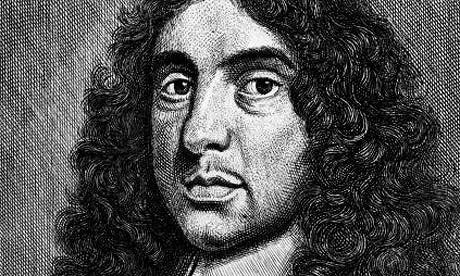
Andrew Marvell's "A Dialogue, between the Resolved Soul and Created Pleasure"
Due to the inconsistencies and ambiguities within his work and the scarcity of information about his personal life, Andrew Marvell has been a source of fascination for scholars and readers since his work found recognition in the early decades of the twentieth century. Born on March 31, 1621, Marvell grew up in the Yorkshire town of Hull, England, where his father, Rev. Andrew Marvell, was a lecturer at Holy Trinity Church and master of the Charterhouse. At age twelve Marvell began his studies at Trinity College, Cambridge. Four years later, two of Marvell’s poems, one in Latin and one in Greek, were published in an anthology of Cambridge poets. After receiving his bachelor’s degree in 1639, Marvell stayed on at Trinity, apparently to complete a master’s degree. In 1641, however, his father drowned in the Hull estuary and Marvell abandoned his studies. During the 1640s Marvell traveled extensively on the continent, adding Dutch, French, Spanish, and Italian to his Latin and Greek—missing the English Civil Wars entirely.Marvell spent most of the 1650s working as a tutor, first for Mary Fairfax, daughter of a retired Cromwellian general, then for one of Oliver Cromwell’s wards. Scholars believe that Marvell’s greatest lyrics were written during this time. In 1657, due to John Milton’s efforts on his behalf, Marvell was appointed Milton’s Latin secretary, a post Marvell held until his election to Parliament in 1660.A well-known politician, Marvell held office in Cromwell’s government and represented Hull to Parliament during the Restoration. His very public position—in a time of tremendous political turmoil and upheaval—almost certainly led Marvell away from publication. No faction escaped Marvell’s satirical eye; he criticized and lampooned both the court and Parliament. Indeed, had they been published during his lifetime, many of Marvell's more famous poems—in particular, “Tom May's Death,” an attack on the famous Cromwellian—would have made him rather unpopular with royalists and republicans alike.Marvell used his political status to free Milton, who was jailed during the Restoration, and quite possibly saved the elder poet’s life. In the early years of his tenure, Marvell made two extraordinary diplomatic journeys: to Holland (1662–63) and to Russia, Sweden, and Denmark (1663–65). In 1678, after eighteen years in Parliament, Marvell died rather suddenly of a fever. Gossip from the time suggested that the Jesuits (a target of Marvell’s satire) had poisoned him. After his death, he was remembered as a fierce and loyal patriot.Now considered one of the greatest poets of the seventeenth century, Marvell published very little of his scathing political satire and complex lyric verse in his lifetime. Although he published a handful of poems in anthologies, a collection of his work did not appear until 1681, three years after his death, when his nephew compiled and found a publisher for Miscellaneous Poems. The circumstances surrounding the publication of the volume aroused some suspicion: a person named “Mary Marvell,” who claimed to be Marvell’s wife, wrote the preface to the book. “Mary Marvell” was, in fact, Mary Palmer—Marvell’s housekeeper—who posed as Marvell’s wife, apparently, in order to keep Marvell’s small estate from the creditors of his business partners. Her ruse, of course, merely contributes to the mystery that surrounds the life of this great poet.Andrew Marvell died on August 16, 1678.-bio via Academy of American Poets This is a public episode. If you'd like to discuss this with other subscribers or get access to bonus episodes, visit dailypoempod.substack.com/subscribe

Lord Byron's "The Destruction of Sennacherib"
English peer and poet George Gordon Byron was one of the bad boys of the Romantic movement and, by some accounts, the first ‘celebrity.’ Like countless celebrities who would come after, he was embroiled in a number of romantic scandals and never accused of being overly pious (to put it Britishly). Nevertheless, he was moved by a number of stories from the Hebrew scriptures–a response that inspired him to pen an entire collection of poetry and one of the best-known similes in English poetry. This is a public episode. If you'd like to discuss this with other subscribers or get access to bonus episodes, visit dailypoempod.substack.com/subscribe

Louis Simpson's "American Poetry"
Poet, editor, translator, and critic Louis Simpson was born in Jamaica to Scottish and Russian parents. He moved to the United States when he was 17 to study at Columbia University. After his time in the army, and a brief period in France, Simpson worked as an editor in New York City before completing his PhD at Columbia. He taught at colleges such as Columbia University, the University of California, Berkeley, and the State University of New York at Stony Brook.A contemporary of confessional poets like Robert Lowell, John Berryman, and Sylvia Plath, Simpson’s early work followed a familiar arc. In the New York Times Book Review, critic David Orr noted its highlights: “Simpson has followed a path lined with signposts sunk so deep in our nation's poetic terra firma that they've practically become part of the landscape. Those signposts declare that a poet born in or around the 1920s should (1) begin his career writing witty, ironic formal poems bearing the stamp of Eliot and Auden; then (2) abandon that formalism for a more 'natural' free verse approach, while (3) dabbling in surrealism; until (4) finally settling on social, conversational poems in the manner of a man speaking to men.” While Simpson’s early books like The Arrivistes (1949) and A Dream of Governors (1959) show the influence of Auden, they also speak to his horrific experiences in World War II, where he served in the 101st Airborne Division and saw active duty in France, Belgium, and Germany. Simpson’s intense formal control, at odds with the visceral details of soldiering, also earned him comparisons to Wilfred Owen. At the End of the Open Road (1963) won the Pulitzer Prize and marked a shift in Simpson’s poetry as well. In this and later volumes, like Searching for the Ox (1976) and The Best Hour of the Night (1983), Simpson’s simple diction and formally controlled verses reveal hidden layers of meaning.Simpson’s lifelong expatriate status influenced his poetry, and he often uses the lives of ordinary Americans in order to critically investigate the myths the country tells itself. Though he occasionally revisits the West Indies of his childhood, he always keeps one foot in his adopted country. The outsider’s perspective allows him to confront “the terror and beauty of life with a wry sense of humor and a mysterious sense of fate,” wrote Edward Hirsch of the Washington Post. Elsewhere Hirsch described Simpson’s Pulitzer Prize-winning collection, At the End of the Open Road (1963), as “a sustained meditation on the American character,” noting, “The moral genius of this book is that it traverses the open road of American mythology and brings us back to ourselves; it sees us not as we wish to be but as we are.” Collected Poems (1988) and There You Are (1995) focus on the lives of everyday citizens, using simple diction and narratives to expose the bewildering reality of the American dream. Poet Mark Jarman hailed Simpson as “a poet of the American character and vernacular.”A noted scholar and critic, Simpson published a number of literary studies, including Ships Going Into the Blue: Essays and Notes on Poetry (1994), The Character of the Poet (1986), and Three on the Tower: The Lives and Works of Ezra Pound, T.S. Eliot, and William Carlos Williams (1975). Simpson also penned a novel, Riverside Drive (1962), and the autobiographies The King My Father's Wreck (1994) and North of Jamaica (1972).Simpson’s later work included The Owner of the House: New Collected Poems (2003), a collection that spans his 60-year career, and Struggling Times (2009). In addition to the Pulitzer Prize, Simpson received numerous awards and accolades, including the Prix de Rome, the Columbia Medal for Excellence, and fellowships from the Guggenheim Foundation. He was a finalist for the prestigious Griffin International Poetry Award, and his translation of Modern Poets of France: A Bilingual Anthology (1997) won the Harold Morton Landon Translation Award.Simposon died in Setauket, New York in 2012.-bio via Poetry Foundation This is a public episode. If you'd like to discuss this with other subscribers or get access to bonus episodes, visit dailypoempod.substack.com/subscribe

A. E. Housman's "Loveliest of Trees (Shropshire Lad II)"
Alfred Edward Housman was born in Fockbury, Worcestershire, England on March 26, 1859 and was the eldest of seven children. A year after his birth, Housman’s family moved to nearby Bromsgrove, where the poet grew up and had his early education. In 1877, he attended St. John’s College, Oxford and received first class honours in classical moderations.Housman became distracted, however, when he fell in love with his roommate, Moses Jackson. He unexpectedly failed his final exams, but managed to pass the final year and later took a position as clerk in the Patent Office in London for ten years.During this time, Housman studied Greek and Roman classics intensively, and, in 1892, he was appointed professor of Latin at University College, London. In 1911, he became professor of Latin at Trinity College, Cambridge, a post he held until his death. As a classicist, Housman gained renown for his editions of the Roman poets Juvenal, Lucan, and Manilius, as well as his meticulous and intelligent commentaries, and his disdain for the unscholarly.Housman only published two volumes of poetry during his life: A Shropshire Lad (1896) and Last Poems (1922). The majority of the poems in A Shropshire Lad, his cycle of sixty-three poems, were written after the death of Adalbert Jackson, Housman’s friend and companion, in 1892. These poems center around themes of pastoral beauty, unrequited love, fleeting youth, grief, death, and the patriotism of the common soldier. After the manuscript had been turned down by several publishers, Housman decided to publish it at his own expense, much to the surprise of his colleagues and students.While A Shropshire Lad was slow to gain in popularity, the advent of war, first in the Boer War and then in World War I, gave the book widespread appeal due to its nostalgic depiction of brave English soldiers. Several composers created musical settings for Housman’s work, deepening his popularity.Housman continued to focus on his teaching, but in the early 1920s, when his old friend Moses Jackson was dying, Housman chose to assemble his best unpublished poems so that Jackson might read them. These later poems, most of them written before 1910, exhibit a range of subject and form much greater than the talents displayed in A Shropshire Lad. When Last Poems was published in 1922, it was an immediate success. A third volume, More Poems, was released posthumously in 1936 by his brother, Laurence, as was an edition of Housman’s Complete Poems (1939).Despite receiving acclaim as a scholar and a poet during his lifetime, Housman lived as a recluse, rejecting honors and avoiding the public eye. He died on April 30, 1936 in Cambridge.-bio via Academy of American Poets This is a public episode. If you'd like to discuss this with other subscribers or get access to bonus episodes, visit dailypoempod.substack.com/subscribe

Two by John Robert Lee
John Robert Lee was born, and lives in St Lucia. He is the author of three collections of poetry, Elemental, (2008), Collected Poems 1975-2015, (2017), and Pierrot, (2020). His poems are included in a number of international anthologies and periodicals including The Penguin Book of Caribbean Verse, The Oxford Book of Caribbean Verse, Poetry Wales, Small Axe, and The Missing Slate. He has also published short stories in anthologies such as The Faber Book of Contemporary Caribbean Short Stories, and Facing the Sea. He edited a St. Lucian anthology of poetry and art spanning fifty years, Roseau Valley and other poems, and with his younger colleague Kendel Hippolyte, he compiled and edited an anthology of reviews covering the history of St. Lucian literature and theatre, (Saint Lucian Literature and Theatre: an anthology of reviews. His reviews and columns appear widely, and he produced and presented radio and television programmes in Saint Lucia for many years. -bio via Peepal Tree Press This is a public episode. If you'd like to discuss this with other subscribers or get access to bonus episodes, visit dailypoempod.substack.com/subscribe

Billy Collins' "Marginalia"
Today’s poem takes the peripheral and makes it the primary. Happy reading! This is a public episode. If you'd like to discuss this with other subscribers or get access to bonus episodes, visit dailypoempod.substack.com/subscribe
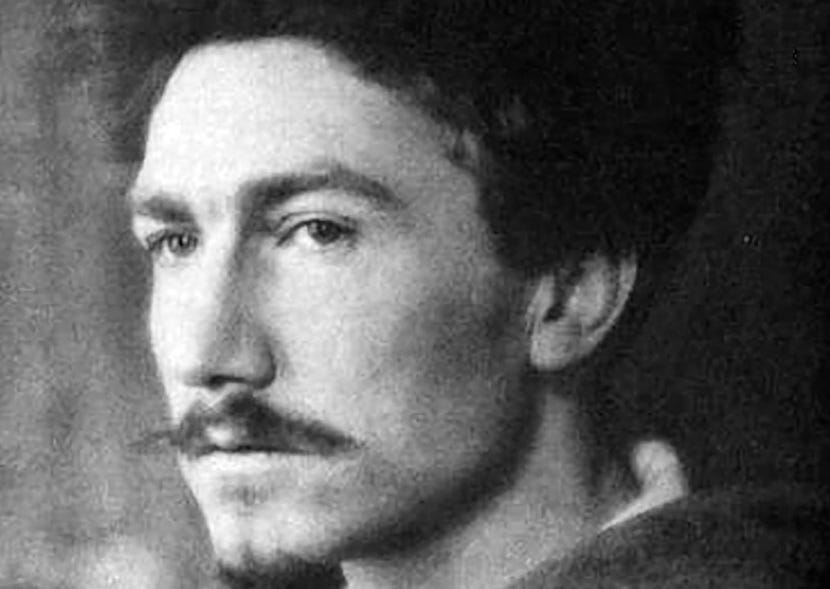
Ezra Pound's "The River-Merchant's Wife: A Letter"
Today’s poem from Ezra Pound (a poet with his own colorful history of exile) is after the style of Li Po, featured last week.Ezra Pound was born in Hailey, Idaho, on October 30, 1885. He completed two years of college at the University of Pennsylvania and earned a degree from Hamilton College in 1905. After teaching at Wabash College for two years, he travelled abroad to Spain, Italy, and London, where, as the literary executor of the scholar Ernest Fenellosa, he became interested in Japanese and Chinese poetry. He married Dorothy Shakespear in 1914 and became London editor of the Little Review in 1917.In 1924, Pound moved to Italy. During this period of voluntary exile, Pound became involved in Fascist politics and did not return to the United States until 1945, when he was arrested on charges of treason for broadcasting Fascist propaganda by radio to the United States during World War II. In 1946, he was acquitted, but was declared mentally ill and committed to St. Elizabeths Hospital in Washington, D.C. During his confinement, the jury of the Bollingen Prize for Poetry (which included a number of the most eminent writers of the time), decided to overlook Pound’s political career in the interest of recognizing his poetic achievements, and awarded him the prize for the Pisan Cantos (New Directions, 1948). After continuous appeals from writers won his release from the hospital in 1958, Pound returned to Italy and settled in Venice, where he died, a semi-recluse, on November 1, 1972.Ezra Pound is generally considered the poet most responsible for defining and promoting a Modernist aesthetic in poetry. In the early teens of the twentieth century, he opened a seminal exchange of work and ideas between British and American writers, and was famous for the generosity with which he advanced the work of such major contemporaries as W. B. Yeats, Robert Frost, William Carlos Williams, Marianne Moore, H. D., James Joyce, Ernest Hemingway, and especially T. S. Eliot.Pound’s own significant contributions to poetry begin with his promulgation of Imagism, a movement in poetry that derived its technique from classical Chinese and Japanese poetry—stressing clarity, precision, and economy of language, and foregoing traditional rhyme and meter in order to, in Pound’s words, “compose in the sequence of the musical phrase, not in the sequence of the metronome.” His later work, for nearly fifty years, focused on the encyclopedic epic poem he entitled The Cantos.-bio via American Academy of Poets This is a public episode. If you'd like to discuss this with other subscribers or get access to bonus episodes, visit dailypoempod.substack.com/subscribe

Robert Frost's "Out, Out–"
Today’s poem answers the question you never thought to ask: ‘What do Macbeth and a buzz saw have in common?’ This is a public episode. If you'd like to discuss this with other subscribers or get access to bonus episodes, visit dailypoempod.substack.com/subscribe
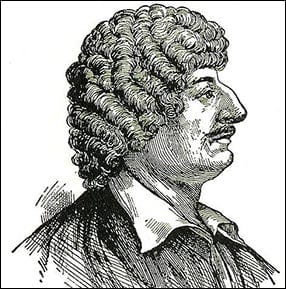
Poem-Prayers by Robert Herrick
Some poets wind up writing prayers by accident; others do it on purpose. Today’s poems from Robert Herrick–“Grace For a Child” and “His Prayer for Absolution”–are of the latter variety. This is a public episode. If you'd like to discuss this with other subscribers or get access to bonus episodes, visit dailypoempod.substack.com/subscribe

Two by Robert P. Tristram Coffin
Today’s poems–”The Hill Place” and “Day’s Diamond”–come from Robert P. Tristram Coffin. Coffin (1892-1955) grew up in Brunswick, Maine on a “saltwater farm.” He attended Bowdoin, Princeton, and Oxford University, where he was a Rhodes Scholar before, as well as after, serving two years in World War I. He taught at Wells College in Aurora, New York from 1921-1934 and eventually returned to Bowdoin College, where he was Pierce Professor in English from 1934 until his death in 1955.Throughout his life, Robert Coffin successfully combined the roles of artist and teacher, poet and prose writer. He authored more than forty books, and was awarded many honors, including the 1936 Pulitzer Prize in Poetry for his book, Strange Holiness. In 1945, Coffin was elected to the National Institute of Arts and Letters for “work of permanent value in American literature,” and the American Academy of Arts and Sciences granted him membership in 1949.-bio via University of New HampshireAs promised, Coffin’s essay, Night of Lobster This is a public episode. If you'd like to discuss this with other subscribers or get access to bonus episodes, visit dailypoempod.substack.com/subscribe
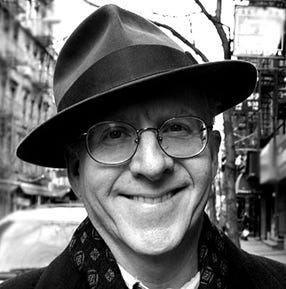
David Lehman's "The Ides of March"
Today’s poem marks the ides (or idus) or March, a day classically associated with the settling of debts (and maybe old scores, too).One of the foremost editors, literary critics, and anthologists of contemporary American literature, David Lehman is also one of its most accomplished poets. Born in New York City in 1948, Lehman earned a PhD from Columbia University and attended the University of Cambridge as a Kellett Fellow. He is the author of numerous collections of poetry, including New and Selected Poems (2013), Yeshiva Boys (2009), and When a Woman Loves a Man (2005). Two of his collections, The Evening Sun (2002) and The Daily Mirror: A Journal in Poetry (1998), were culled from Lehman’s five-year-long project of writing a poem a day. Yusef Komunyakaa called The Daily Mirror “a sped-up meditation on the elemental stuff that we're made of: in this honed matrix of seeing, what's commonplace becomes the focus of extraordinary glimpses....” Lehman has also written collaborative books of poetry, including Poetry Forum (2007), with Judith Hall; and Jim and Dave Defeat the Masked Man (2005), a collection of sestinas he wrote with the poet James Cummins.Lehman inaugurated The Best American Poetry series in 1988. As series editor, he has earned high acclaim for his pivotal role in garnering contemporary American poetry a larger audience. In an early interview about the series with Judith Moore, Lehman noted “I want the books to have a lot to commend them beyond the poems themselves. The 75 poems are of course the center of the book, but we want also to have a foreword by me that can provide a context, that gives an idea of what happened in poetry this year, and an essay in which the guest editor propounds his or her criteria.” Lehman’s work as an editor also includes such volumes as The Best American Erotic Poems (2008), The Oxford Book of American Poetry (2006), A.R. Ammons: Selected Poems (2006), Great American Prose Poems: From Poe to the Present (2003), and Ecstatic Occasions, Expedient Forms (1996). He was the director of the University of Michigan Press’s Poets on Poetry and the Under Discussion series from 1994 to 2006.A prominent literary and cultural critic, Lehman has published works ranging from an indictment of deconstruction, Signs of the Times: Deconstruction and the Fall of Paul de Man (1991); to a history of the New York School of Poets, The Last Avant-Garde: The Making of the New York School of Poets (1998); to a meditation on the influence of Jewish songwriters in American music, A Fine Romance: Jewish Songwriters, American Songs (2009). Lehman’s numerous honors and awards include fellowships from the National Endowment for the Arts, the Guggenheim Foundation, and the Ingram Merrill Foundation, and awards from the American Academy of Arts and Letters and the Lila Wallace-Reader’s Digest Writer’s Award. On faculty at both the New School and New York University, he lives in New York City.-bio via Poetry Foundation This is a public episode. If you'd like to discuss this with other subscribers or get access to bonus episodes, visit dailypoempod.substack.com/subscribe

Li Po's "The Solitude of Night"
Today’s poem is the work of an eighth-century poet whose reputation didn’t peak until the twentieth century. Li Po’s “The Solitude of Night” (translated here by Shigeyoshi Obata) resembles Japanese haiku in its atmospheric brevity and is heavy with the kind of common-to-man melancholy the modernists would feel so deeply more than a millennium later.A Chinese poet of the Tang Dynasty, Li Po (also known as Li Bai, Li Pai, Li T’ai-po, and Li T’ai-pai) was probably born in central Asia and grew up in Sichuan Province. He left home in 725 to wander through the Yangtze River Valley and write poetry. In 742 he was appointed to the Hanlin Academy by Emperor Xuanzong, though he was eventually expelled from court. He then served the Prince of Yun, who led a revolt after the An Lushan Rebellion of 755. Li Bai was arrested for treason; after he was pardoned, he again wandered the Yangtze Valley. He was married four times and was friends with the poet Du Fu.-bio via Poetry Foundation This is a public episode. If you'd like to discuss this with other subscribers or get access to bonus episodes, visit dailypoempod.substack.com/subscribe

James Merrill's "The Octopus"
"A master of forms, Merrill’s later poetry rarely feels formal. In the Atlantic Monthly, poet X.J. Kennedy observed that “Merrill never sprawls, never flails about, never strikes postures. Intuitively he knows that, as Yeats once pointed out, in poetry, ‘all that is personal soon rots; it must be packed in ice or salt.’”-via Poetry Foundation This is a public episode. If you'd like to discuss this with other subscribers or get access to bonus episodes, visit dailypoempod.substack.com/subscribe

Hilaire Belloc's "Lines to a Don"
Today’s poem is a master-class in snappy putdowns and the value of a fiercely-loyal and equally witty friend.Joseph Hilaire Pierre René Belloc (1870 – 1953) was a Franco-English writer and historian of the early 20th century. Belloc was also an orator, poet, sailor, satirist, writer of letters, soldier, and political activist. His Catholic faith had a strong effect on his works.Belloc became a naturalised British subject in 1902 while retaining his French citizenship. While attending Oxford University, he served as President of the Oxford Union. From 1906 to 1910, he served as one of the few openly Catholic members of the British Parliament.Belloc was a noted disputant, with a number of long-running feuds. He was also a close friend and collaborator of G. K. Chesterton. George Bernard Shaw, a friend and frequent debate opponent of both Belloc and Chesterton, dubbed the pair the "Chesterbelloc".Belloc's writings encompassed religious poetry and comic verse for children. His widely sold Cautionary Tales for Children included "Jim, who ran away from his nurse, and was eaten by a lion" and "Matilda, who told lies and was burned to death". He wrote historical biographies and numerous travel works, including The Path to Rome (1902). This is a public episode. If you'd like to discuss this with other subscribers or get access to bonus episodes, visit dailypoempod.substack.com/subscribe
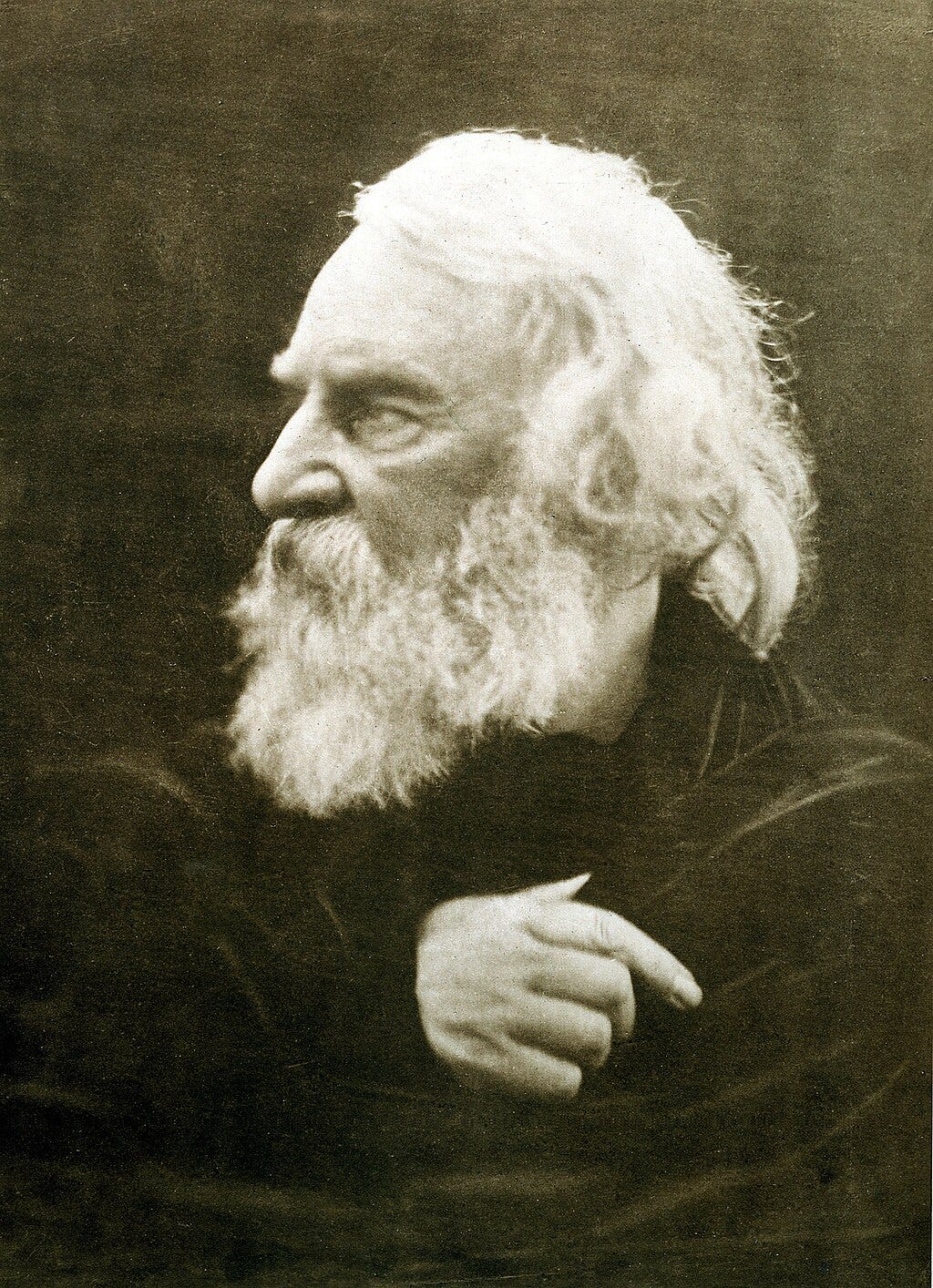
Henry Wadsworth Longfellow's "The Poet's Calendar"
Today’s poem is a grand smorgasbord of poetical allusions from the unofficial patron of The Daily Poem. Happy reading! This is a public episode. If you'd like to discuss this with other subscribers or get access to bonus episodes, visit dailypoempod.substack.com/subscribe

Naomi Shihab Nye's "The Traveling Onion"
Naomi Shihab Nye was born on March 12, 1952, in St. Louis to a Palestinian father and an American mother. During her high school years, she lived in Ramallah in Palestine, the Old City in Jerusalem, and San Antonio, Texas, where she later received her BA in English and world religions from Trinity University.Nye is the author of numerous books of poems, most recently Everything Comes Next: Collected and New Poems. Her other books of poetry include Cast Away: Poems for Our Time (Greenwillow Books, 2020); The Tiny Journalist (BOA Editions, 2019); Voices in the Air: Poems for Listeners (Greenwillow Books, 2018); Transfer (BOA Editions, 2011); You and Yours (BOA Editions, 2005), which received the Isabella Gardner Poetry Award; 19 Varieties of Gazelle: Poems of the Middle East (Greenwillow Books, 2002), and the forthcoming Grace Notes: Poems About Families. She is also the author of several books of poetry and fiction for children, including Habibi (Simon Pulse, 1997), for which she received the Jane Addams Children's Book Award in 1998.Nye gives voice to her experience as an Arab American through poems about heritage and peace that overflow with a humanitarian spirit. About her work, the poet William Stafford has said, “her poems combine transcendent liveliness and sparkle along with warmth and human insight. She is a champion of the literature of encouragement and heart. Reading her work enhances life.”-bio via Academy of American Poets This is a public episode. If you'd like to discuss this with other subscribers or get access to bonus episodes, visit dailypoempod.substack.com/subscribe

Colley Cibber's "The Blind Boy"
Today’s poem (from an oft-maligned poet) makes frequent appearances in poetry anthologies for children, but hides a satisfying subtlety.Colley Cibber (6 November 1671 – 11 December 1757) was an English actor-manager, playwright and Poet Laureate. His colourful memoir An Apology for the Life of Colley Cibber (1740) describes his life in a personal, anecdotal and even rambling style. He wrote 25 plays for his own company at Drury Lane, half of which were adapted from various sources, which led Robert Lowe and Alexander Pope, among others, to criticise his "miserable mutilation" of "crucified Molière [and] hapless Shakespeare".He regarded himself as first and foremost an actor and had great popular success in comical fop parts, while as a tragic actor he was persistent but much ridiculed. Cibber's brash, extroverted personality did not sit well with his contemporaries, and he was frequently accused of tasteless theatrical productions, shady business methods, and a social and political opportunism that was thought to have gained him the laureateship over far better poets. He rose to ignominious fame when he became the chief target, the head Dunce, of Alexander Pope's satirical poem The Dunciad.Cibber's poetical work was derided in his time and has been remembered only for being poor. His importance in British theatre history rests on his being one of the first in a long line of actor-managers, on the interest of two of his comedies as documents of evolving early 18th-century taste and ideology, and on the value of his autobiography as a historical source. This is a public episode. If you'd like to discuss this with other subscribers or get access to bonus episodes, visit dailypoempod.substack.com/subscribe
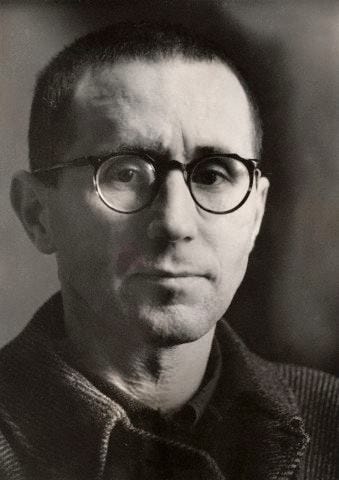
Bertolt Brecht's "A Worker Reads History"
Bertolt Brecht (February 10, 1898 – August 14, 1956) was an influential playwright and poet. His poetry is collected in Poems 1913-1956 (1997) and Poetry and Prose: Bertolt Brecht (2003). He wrote a wide variety of poetry, including occasional poems, poems he set to music and performed, songs and poems for his plays, personal poems recording anecdotes and thoughts, and political poems. Poet Michael Hofmann commented, “In the course of a mobile, active and engaged life, the poems were the intelligent, compressed, adaptable and self-contained form for both his private and his public address.”-bio via Poetry Foundation This is a public episode. If you'd like to discuss this with other subscribers or get access to bonus episodes, visit dailypoempod.substack.com/subscribe
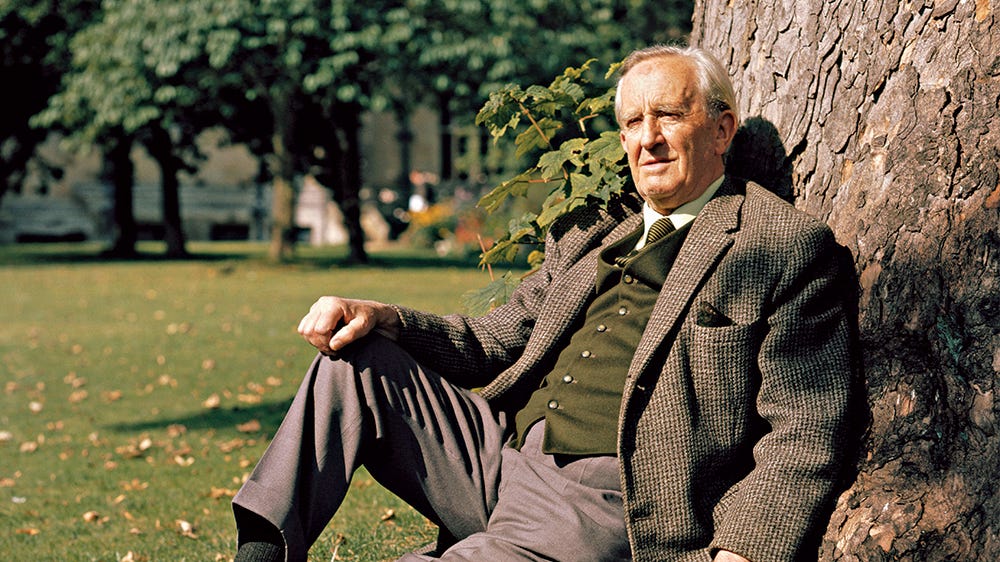
J. R. R. Tolkien's "The Road Goes Ever On"
Today’s poem is a walking song composed by Bilbo Baggins, reworked and repurposed at several key moments in The Hobbit and The Lord of the Rings. Happy reading! This is a public episode. If you'd like to discuss this with other subscribers or get access to bonus episodes, visit dailypoempod.substack.com/subscribe

Dr. Seuss' "Did I Ever Tell You..?"
Today’s poem is a piece of uncollected verse from one of the world’s most beloved children’s writers: Dr. Seuss.Theodor Seuss Geisel (March 2, 1904 – September 24, 1991) was an American children's author and cartoonist. He is known for his work writing and illustrating more than 60 books under the pen name Dr. Seuss. His work includes many of the most popular children's books of all time, selling over 600 million copies and being translated into more than 20 languages by the time of his death.-bio via Wikipedia This is a public episode. If you'd like to discuss this with other subscribers or get access to bonus episodes, visit dailypoempod.substack.com/subscribe

Richard Wilbur's "The Death of a Toad"
Today’s poem comes from one of America’s most beloved and decorated poets, Richard Wilbur. Don’t be put off by the title; no matter the subject, Wilbur’s poetry is always so marvelously companionable–desert island reading if ever there was. This is a public episode. If you'd like to discuss this with other subscribers or get access to bonus episodes, visit dailypoempod.substack.com/subscribe

Howard Nemerov's "De Anima"
For the day that only comes ‘round once every four years, we have a haunting poem about missed connections–and from a poet with a “Leap Day” birthday, no less.Howard Nemerov was born on February 29, 1920, in New York, New York. Throughout World War II, he served as a pilot in the Royal Canadian unit of the U. S. Army Air Force. He married in 1944, and after the war, having earned the rank of first lieutenant, returned to New York with his wife to complete his first book.Nemerov was first hired to teach literature to World War II veterans at Hamilton College in New York. His teaching career flourished, and he went on to teach at Bennington College, Brandeis University, and Washington University in St. Louis, where he was Distinguished Poet in Residence from 1969 until his death.In addition to a dozen collections of poetry, he was also an accomplished prose writer with several collections of non-fiction essays to his name.-bio via Academy of American Poets This is a public episode. If you'd like to discuss this with other subscribers or get access to bonus episodes, visit dailypoempod.substack.com/subscribe

Elizabeth Drew Barstow Stoddard's "Nameless Pain"
Elizabeth Drew Barstow Stoddard (1823-1902) was a poet, fiction writer, and essayist born and raised in Mattapoisset, Massachusetts. The daughter of a shipbuilder, Stoddard was educated at Wheaton Female Seminary.She married poet Richard Stoddard in 1851 and together they had three children, two of whom died as infants. The Stoddards’ New York City home was a gathering place for local poets, and Elizabeth began to submit her own poetry, fiction, and social commentary to journals. From 1854 to 1858, Stoddard contributed a bimonthly column to the San Francisco newspaper Daily Alta California.Stoddard wrote three novels, including The Morgesons (1862), and many short stories, essays, children’s tales, and poems. Uncommon for her time, her work questions the conventions of gender roles and is rooted in an unsentimental, irreverent realism. Her poetry, gathered in Poems (1895), often examines a fragile domestic realm.-bio via Poetry Foundation This is a public episode. If you'd like to discuss this with other subscribers or get access to bonus episodes, visit dailypoempod.substack.com/subscribe

Henry Wadsworth Longfellow's "The Poet and His Songs"
Happy Birthday to America’s great man of letters, Henry Wadsworth Longfellow!Get to know Longfellow better through his own verse, or in the pages of Nicholas Basbanes’ excellent biography, Cross of Snow. This is a public episode. If you'd like to discuss this with other subscribers or get access to bonus episodes, visit dailypoempod.substack.com/subscribe
Edwin Arlington Robinson's "Richard Cory"
Edwin Arlington Robinson was born in Head Tide, Maine on December 22, 1869 (the same year as W. B. Yeats). His family moved to Gardiner, Maine, in 1870, which renamed “Tilbury Town,” became the backdrop for many of Robinson’s poems. Robinson described his childhood as stark and unhappy; he once wrote in a letter to Amy Lowell that he remembered wondering why he had been born at the age of six. After high school, Robinson spent two years studying at Harvard University as a special student and his first poems were published in the Harvard Advocate.Robinson privately printed and released his first volume of poetry, The Torrent and the Night Before, in 1896 at his own expense; this collection was extensively revised and published in 1897 as The Children of the Night. Unable to make a living by writing, he got a job as an inspector for the New York City subway system. In 1902, he published Captain Craig and Other Poems. This work received little attention until President Theodore Roosevelt wrote a magazine article praising it and Robinson. Roosevelt also offered Robinson a sinecure in a U.S. Customs House, a job he held from 1905 to 1910. Robinson dedicated his next work, The Town Down the River (1910), to Roosevelt.Robinson’s first major success was The Man Against the Sky (1916). He also composed a trilogy based on Arthurian legends: Merlin (1917), Lancelot (1920), and Tristram (1927), which won a Pulitzer Prize in 1928. Robinson was also awarded a Pulitzer Prize for his Collected Poems (1921) in 1922 and The Man Who Died Twice (1924) in 1925. For the last twenty-five years of his life, Robinson spent his summers at the MacDowell Colony of artists and musicians in Peterborough, New Hampshire. Robinson never married and led a notoriously solitary lifestyle. He died in New York City on April 6, 1935.-bio via Academy of American Poets This is a public episode. If you'd like to discuss this with other subscribers or get access to bonus episodes, visit dailypoempod.substack.com/subscribe

William Butler Yeats' "The Lake Isle of Innisfree"
Today’s classic poem from W. B. Yeats doubles as one of the greatest literary justifications for committing poems to memory. Happy reading! This is a public episode. If you'd like to discuss this with other subscribers or get access to bonus episodes, visit dailypoempod.substack.com/subscribe
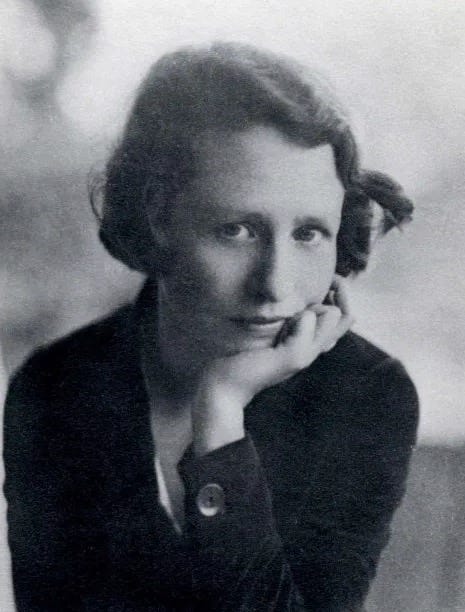
Three by Edna St. Vincent Millay
Today’s poems pay tribute to the soulful and spirited Edna St. Vincent Millay, first woman to win the Pulitzer Prize for Poetry. They are “First Fig,” “Second Fig,” and “Thursday,” all from her collection, A Few Figs From Thistles.Poet and playwright Edna St. Vincent Millay was born in Rockland, Maine, on February 22, 1892. In 1912, Millay entered her poem “Renascence” to The Lyric Year’s poetry contest, where she won fourth place and publication in the anthology. This brought her immediate acclaim and a scholarship to Vassar College, where she continued to write poetry and became involved in the theater. In 1917, the year of her graduation, Millay published her first book, Renascence and Other Poems (Harper, 1917). At the request of Vassar’s drama department, she also wrote her first verse play, The Lamp and the Bell (1921), a work about love between women.After graduating from Vassar, Millay moved to New York City’s Greenwich Village, where she lived with her sister, Norma, in a nine-foot-wide attic. Millay published poems in Vanity Fair, the Forum, and others while writing short stories and satire under the pen name Nancy Boyd. She and Norma acted with the Provincetown Players in the group’s early days, befriending writers such as poet Witter Bynner, critic Edmund Wilson, playwright and actress Susan Glaspell, and journalist Floyd Dell. Millay published A Few Figs from Thistles (Harper & Brothers, 1920), a volume of poetry which drew much attention for its controversial descriptions of female sexuality and feminism. In 1923, Millay was awarded the Pulitzer Prize for The Ballad of the Harp-Weaver (Flying Cloud Press, 1922). In addition to publishing three plays in verse, Millay also wrote the libretto of one of the few American grand operas, The King’s Henchman (Harper & Brothers, 1927).Millay married Eugen Boissevain in 1923, and the two were together for twenty-six years. Boissevain gave up his own pursuits to manage Millay’s literary career, setting up the readings and public appearances for which Millay grew famous. Edna St. Vincent Millay died at the age of fifty-eight on October 18, 1950, in Austerlitz, New York.-bio via Academy of American Poets This is a public episode. If you'd like to discuss this with other subscribers or get access to bonus episodes, visit dailypoempod.substack.com/subscribe

W. H. Auden's "In Memory of W. B. Yeats"
In today’s poem one great poet pays passionate tribute to another. This is a public episode. If you'd like to discuss this with other subscribers or get access to bonus episodes, visit dailypoempod.substack.com/subscribe

Maurice Manning's "A Brief Refutation..."
The full title of today’s poem from Maurice Manning says it all: “A Brief Refutation of the Rumor That I Allowed Willie and Tad to Relieve Themselves in my Up-Turned Hat on a Sunday Morning at the Office While Their Mother was Attending Religious Services” Maurice Manning (born 1966) is an American poet. His first collection of poems, Lawrence Booth's Book of Visions, was awarded the Yale Younger Poets Award, chosen by W.S. Merwin. Since then he has published four collections of poetry (with Houghton Mifflin Harcourt and Copper Canyon Press). He teaches English and Creative Writing at Transylvania University in Lexington, Kentucky, where he oversees the Judy Gaines Young Book Award, and is a member of the poetry faculty of the Warren Wilson College MFA Program for Writers. Today’s poem comes from his 2020 collection, Railsplitter.-bio via Wikipedia This is a public episode. If you'd like to discuss this with other subscribers or get access to bonus episodes, visit dailypoempod.substack.com/subscribe

James Matthew Wilson's "The Scar of Odysseus"
James Matthew Wilson has published ten books, among them four collections of poems, including The Strangeness of the Good. His poems, essays, and reviews appear regularly in a wide range of magazines and journals. The winner of the 2017 Hiett Prize from the Dallas Institute of Humanities and Culture, Wilson also serves as Poet-in-Residence of the Benedict XVI Institute for Sacred Music and Divine Worship, poetry editor of Modern Age magazine, and series editor of Colosseum Books, a new imprint that publishes the best contemporary poetry and literary criticism of serious craft and spiritual depth.-bio via University of St. Thomas, Houston This is a public episode. If you'd like to discuss this with other subscribers or get access to bonus episodes, visit dailypoempod.substack.com/subscribe

Rainer Maria Rilke's "Love Song"
Today’s poem comes from Rilke and has a fairly straight-forward title–or does it? This is a public episode. If you'd like to discuss this with other subscribers or get access to bonus episodes, visit dailypoempod.substack.com/subscribe

Ben Jonson's "Song to Celia"
Today’s poem from Ben Jonson (also know by its first line, “Drink to me only with thine eyes”) has been arranged and set to music numerous times, and become so familiar that it is often recognizable even to those who no longer associate it with Jonson himself. Jonson’s circle of admirers and friends, who called themselves the “Tribe of Ben,” met regularly at the Mermaid Tavern and later at the Devil’s Head. Among his followers were nobles such as the Duke and Duchess of Newcastle, as well as writers, including Robert Herrick, Richard Lovelace, Sir John Suckling, James Howell, and Thomas Carew. Most of his well-known poems include tributes to friends, notably Shakespeare, John Donne, and Francis Bacon.When Jonson died in 1637, a tremendous crowd of mourners attended his burial at Westminster Abbey. He is regarded as one of the major dramatists and poets of the seventeenth century.-bio via Academy of American Poets This is a public episode. If you'd like to discuss this with other subscribers or get access to bonus episodes, visit dailypoempod.substack.com/subscribe

Pablo Neruda's "Sonnet XVII"
Today’s poem from Pablo Neruda is characteristic of the passionate Chilean’s emphatic love poetry, but more chaste and decorous than some of his verses–perfect for a day that somehow manages to celebrate romance and the beheading of an Italian saint simultaneously. This is a public episode. If you'd like to discuss this with other subscribers or get access to bonus episodes, visit dailypoempod.substack.com/subscribe
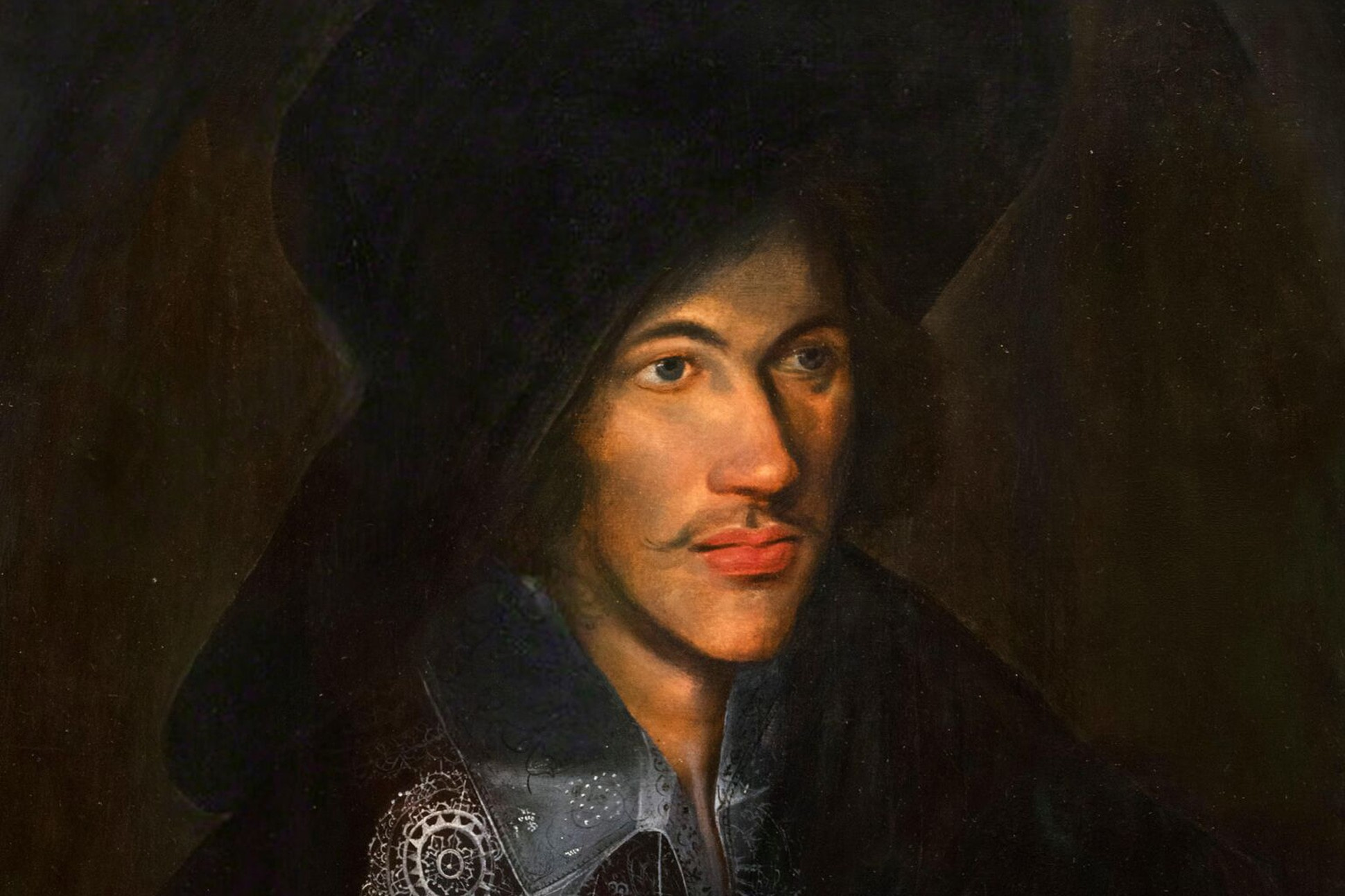
John Donne's "The Flea"
Today’s poem comes from a young John Donne. Long before he became a serious clergyman writing Holy Sonnets for God, he was a young rake writing saucy sophistries like this one for the ladies. This is a public episode. If you'd like to discuss this with other subscribers or get access to bonus episodes, visit dailypoempod.substack.com/subscribe

William Shakespeare's Sonnets 98 & 99
Today’s poems kick off a week of love poetry with two by the Master. This is a public episode. If you'd like to discuss this with other subscribers or get access to bonus episodes, visit dailypoempod.substack.com/subscribe

William Cullen Bryant's "To a Waterfowl"
William Cullen Bryant (1794-1878) was a Fireside Poet, journalist, and nature writer with ties to the Hudson River School of art. He wrote poems, essays, and articles that championed the rights of slaves, workers, and immigrants, and he was frequently published by the North American Review. He is the author of several books, including The White-Footed Deer and Other Poems (I. S. Platt, 1844), and The Fountain and Other Poems (Wiley and Putnam, 1842). -bio via Academy of American Poets This is a public episode. If you'd like to discuss this with other subscribers or get access to bonus episodes, visit dailypoempod.substack.com/subscribe