The Daily Poem
939 episodes — Page 7 of 19

Sylvia Plath's "Gold Mouths Cry"
In today’s poem, Plath (who died at 30) contrasts the transience of youth and nature with the seeming permanence of art and artifice. (I even make time for a brief shout-out to a not-so-transitory Golden Mouth.) Happy reading. This is a public episode. If you'd like to discuss this with other subscribers or get access to bonus episodes, visit dailypoempod.substack.com/subscribe
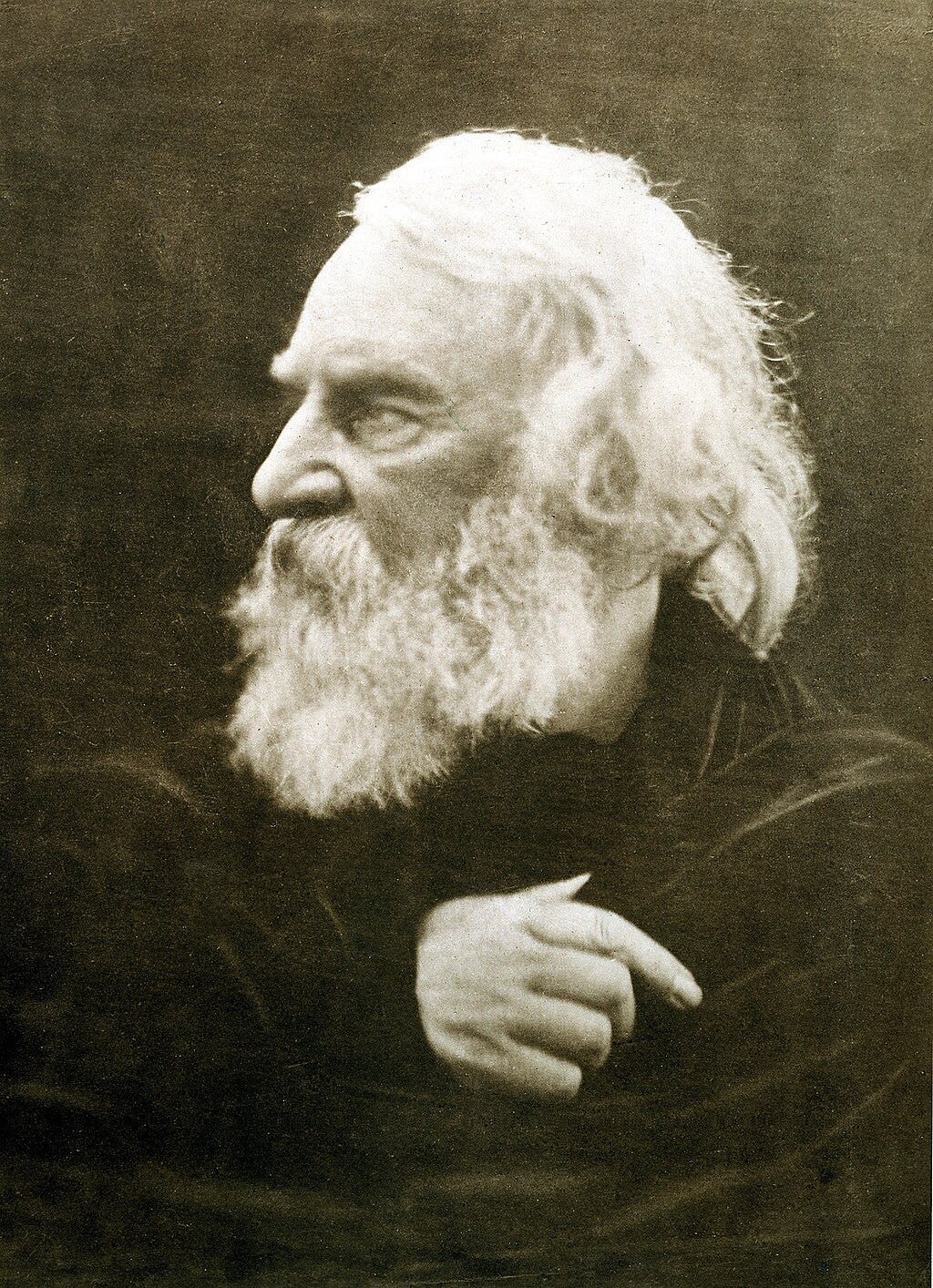
from Henry Wadsworth Longfellow's "Hiawatha's Wooing"
Today’s poem is a selection from Henry Wadsworth Longfellow’s American epic, The Song of Hiawatha. The passage is structured beautifully so that two divergent streams of imaginative thought suddenly flow together into a single, tangible reality. Happy reading. This is a public episode. If you'd like to discuss this with other subscribers or get access to bonus episodes, visit dailypoempod.substack.com/subscribe

Charles Wolfe's "The Burial of Sir John Moore after Corunna"
Today's poem is an enduring memorial for a hastily interred hero. This is a public episode. If you'd like to discuss this with other subscribers or get access to bonus episodes, visit dailypoempod.substack.com/subscribe
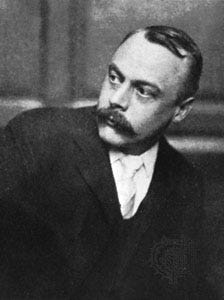
Kenneth Grahame's "A Song of Mr. Toad"
Kenneth Grahame (8 March 1859 – 6 July 1932) is best remembered for the classic of children's literature The Wind in the Willows (1908). Scottish by birth, he spent most of his childhood with his grandmother in England, following the death of his mother and his father's inability to look after the children. After attending St Edward's School in Oxford, his ambition to attend university was thwarted and he joined the Bank of England, where he had a successful career. Before writing The Wind in the Willows, he published three other books: Pagan Papers (1893), The Golden Age(1895), and Dream Days (1898).-bio via Wikipedia This is a public episode. If you'd like to discuss this with other subscribers or get access to bonus episodes, visit dailypoempod.substack.com/subscribe

Charlotte Perkins Gilman's "A Common Inference"
Charlotte Perkins Gilman (1860-1935) wrote fiction and nonfiction works including several collections of poetry and her most famous short story, “The Yellow Wallpaper” (1892). Her poems address the issues of women’s suffrage and the injustices of women’s lives. She was also the author of Women and Economics (1898), Concerning Children (1900), The Home: Its Work and Influence (1903), Human Work (1904), and The Man-Made World; or, Our Androcentric Culture (1911). A prolific writer, she founded, wrote for, and edited The Forerunner, a journal published from 1909 to 1917. A utopian novel, Herland, was published in 1915. -bio via Poetry Foundation This is a public episode. If you'd like to discuss this with other subscribers or get access to bonus episodes, visit dailypoempod.substack.com/subscribe

Robert Morgan's "Bellrope"
“The line through the hole in the dark…trembling/with its high connections.”Robert Morgan (born 1944) is an American poet, short story writer, non-fiction author, biographer, and novelist. He studied at North Carolina State University as an engineering and mathematics major, transferred to the University of North Carolina at Chapel Hill as an English major, graduating in 1965, and completed an MFA degree at the University of North Carolina Greensboro in 1968. He has taught at Cornell University since 1971, and was appointed Professor of English in 1984.—Bia via Wikipedia This is a public episode. If you'd like to discuss this with other subscribers or get access to bonus episodes, visit dailypoempod.substack.com/subscribe
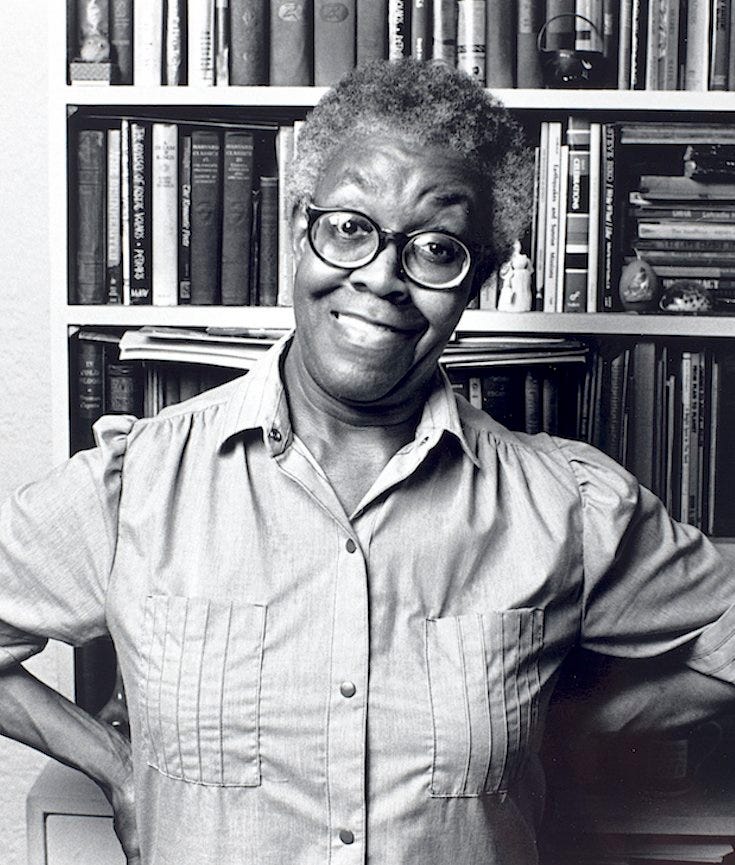
Gwendolyn Brooks' "First fight. Then fiddle."
Today’s poem is about politics (but this, too, shall pass). Happy reading. This is a public episode. If you'd like to discuss this with other subscribers or get access to bonus episodes, visit dailypoempod.substack.com/subscribe
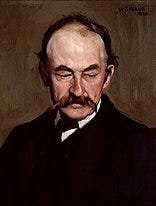
Thomas Hardy's "The Shadow on the Stone"
Today’s poem is a reluctant reckoning with the present absence created by grief. This is a public episode. If you'd like to discuss this with other subscribers or get access to bonus episodes, visit dailypoempod.substack.com/subscribe

Luci Shaw's "Judas, Peter"
Luci Shaw was born in 1928 in London, England, and has lived in Canada, Australia and the U.S.A. A graduate of Wheaton College, she became co-founder and later president of Harold Shaw Publishers, and since 1988 has been a Writer in Residence at Regent College, Vancouver, Canada.Shaw has lectured in North America and abroad on topics such as art and spirituality, the Christian imagination, poetry-writing, and journal-writing as an aid to artistic and spiritual growth.A charter member of the Chrysostom Society of Writers, Shaw is author of fourteen volumes of poetry including Angels Everywhere, The Generosity, Eye of the Beholder, Sea Glass: New & Selected Poems (WordFarm, 2016), Thumbprint in the Clay: Divine Marks of Beauty, Order and Grace (InterVarsity Press, 2016), Polishing the Petoskey Stone (Shaw, 1990), Writing the River (Pinon Press, 1994/Regent Publishing, 1997), The Angles of Light (Waterbrook, 2000), The Green Earth: Poems of Creation (Wm. B. Eerdmans, 2002), has edited three poetry anthologies and a festschrift, The Swiftly Tilting Worlds of Madeleine L’Engle, (Shaw, 1998). Her most recent books are What the Light Was Like (Word Farm), Accompanied by Angels (Eerdmans), The Genesis of It All (Paraclete), and Breath for the Bones: Art, Imagination & Spirit (Nelson). Her poetic work and essays have been widely anthologized. Shaw has authored several non-fiction prose books, including Water My Soul: Cultivating the Interior Life (Zondervan) and The Crime of Living Cautiously(InterVarsity). She has also co-authored three books with Madeleine L’Engle, WinterSong (Regent), Friends for the Journey (Regent), and A Prayer Book for Spiritual Friends (Augsburg/Fortress).Shaw is poetry editor and a contributing editor of Radix, as quarterly journal published in Berkeley, CA, that celebrates art, literature, music, psychology, science and the media, featuring original poetry, reviews and interviews. She is also poetry and fiction editor of Crux, an academic journal published quarterly by Regent College, Vancouver, Canada.-bio via LuciShaw.com This is a public episode. If you'd like to discuss this with other subscribers or get access to bonus episodes, visit dailypoempod.substack.com/subscribe
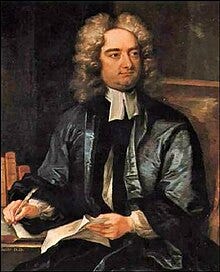
Jonathan Swift's "A Beautiful Young Nymph Going to Bed"
In today’s poem, while everyone else is dressing up to become something terrible, the acerbic Jonathan Swift gives us a domestic horror story in reverse. Happy reading.Anglo-Irish poet, satirist, essayist, and political pamphleteer Jonathan Swift was born in Dublin, Ireland. He spent much of his early adult life in England before returning to Dublin to serve as Dean of St. Patrick’s Cathedral, Dublin for the last 30 years of his life. It was this later stage when he would write most of his greatest works. Best known as the author of A Modest Proposal (1729), Gulliver’s Travels (1726), and A Tale Of A Tub (1704), Swift is widely acknowledged as the greatest prose satirist in the history of English literature.-bio via Poetry Foundation This is a public episode. If you'd like to discuss this with other subscribers or get access to bonus episodes, visit dailypoempod.substack.com/subscribe

Kenn Nesbitt's "Halloween Party"
Today’s poem is the stuff real nightmares are made of. Happy reading.Nesbitt’s poetry for children is “irrepressible, unpredictable, and raucously popular,” in the words of former Children’s Poet Laureate J. Patrick Lewis. Nesbitt’s poems frequently deal with humorous, relatable situations that verge on the madcap. He is the author of numerous books of poetry for children, including Believe It or Not, My Brother Has a Monster (2015), The Biggest Burp Ever (2014), Kiss, Kiss Good Night (2013), The Armpit of Doom: Funny Poems for Kids (2012), The Ultimate Top Secret Guide to Taking Over the World (2011), The Tighty-Whitey Spider (2010), Revenge of the Lunch Ladies (2007), Santa Got Stuck in the Chimney (2006), When the Teacher Isn’t Looking: And Other Funny School Poems (2005), and The Aliens Have Landed at Our School! (2001), among many others. In addition to writing books, Nesbitt has also written lyrics for the group Eric Herman and the Invisible Band. His lyrics are included on the CDs What a Ride (2007), Snail’s Pace (2007), Snow Day (2006), Monkey Business (2005), and The Kid in the Mirror (2003).Nesbitt’s poems have appeared in hundreds of anthologies, magazines, and textbooks worldwide, and were included on the television show “Jack Hanna’s Wildlife Adventures” and in the film “Life As We Know It.” Nesbitt is a member of the Society of Children’s Book Writers and Illustrators. His website, Poetry4kids, is an online “Funny Poetry Playground” that features poems, lessons, games, and poetry-related activities. In 2013, Nesbitt was named the Children’s Poet Laureate by the Poetry Foundation. He currently lives in Spokane, Washington with his wife, children, and pets.-bio via Poetry Foundation This is a public episode. If you'd like to discuss this with other subscribers or get access to bonus episodes, visit dailypoempod.substack.com/subscribe

William Shakespeare's "Advice to Laertes" (from Hamlet I.3)
Today’s poem is some of the greatest ironic advice ever offered on the stage–do as Polonius says, not as he does, and you’ll be just fine. Happy reading. This is a public episode. If you'd like to discuss this with other subscribers or get access to bonus episodes, visit dailypoempod.substack.com/subscribe
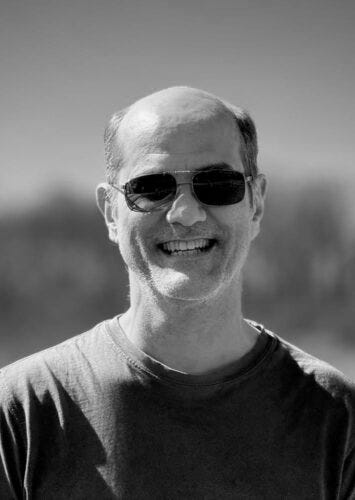
Bob Hicok's "O My Pa-Pa"
Bob Hicok was born in 1960 in Michigan and worked for many years in the automotive die industry. A published poet long before he earned his MFA, Hicok is the author of several collections of poems, including The Legend of Light, winner of the Felix Pollak Prize in Poetry in 1995 and named a 1997 ALA Booklist Notable Book of the Year; Plus Shipping (1998); Animal Soul (2001), a finalist for the National Book Critics Circle Award; Insomnia Diary (2004); This Clumsy Living (2007), which received the Rebekah Johnson Bobbitt National Prize for Poetry from the Library of Congress; Words for Empty, Words for Full (2010); Elegy Owed (2013), a finalist for the National Book Critics Circle Award; and Sex & Love (2016). His work has been selected numerous times for the Best American Poetry series. Hicok has won Pushcart Prizes and fellowships from the Guggenheim Foundation and the National Endowment for the Arts, and has taught creative writing at Western Michigan University and Virginia Tech.When asked by interviewer Laura McCullough about the relationship between restraint and revelation in his work, Hicok replied, “Because I don’t know where a poem is headed when I start, it seems that revelation has to play a central part in the poems, that what I’m most consistently doing is trying to understand why something is on my mind… Maybe writing is nothing more than an inquiry into presences.” Hicok is currently associate professor of creative writing at Purdue University.-bio via Poetry Foundation This is a public episode. If you'd like to discuss this with other subscribers or get access to bonus episodes, visit dailypoempod.substack.com/subscribe

J. R. R. Tolkien's "When winter first begins to bite"
Today’s poem commemorates the Council of Elrond, testifies to the love (and fussiness) of hobbits, and even boasts a possible Shakespearean connection. Happy reading! This is a public episode. If you'd like to discuss this with other subscribers or get access to bonus episodes, visit dailypoempod.substack.com/subscribe
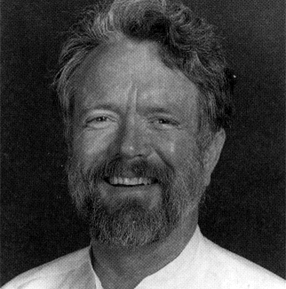
Henry Taylor's "Somewhere Along the Way"
Poet and translator Henry Taylor was born in Lincoln, Virginia on June 21, 1942. He earned a BA from the University of Virginia and an MA from Hollins University. Taylor’s many poetry collections include Crooked Run (2006); Understanding Fiction: Poems 1986-1996; The Flying Change (1985), for which he received the Pulitzer Prize; An Afternoon of Pocket Billiards (1975); and The Horse Show at Midnight(1966). He has translated works from Bulgarian, French, Hebrew, Italian, and Russian. His translations include Black Book of the Endangered Species (1999) by the Bulgarian poet Vladimir Levchev and Electra (1988) by Sophocles. Taylor is a professor of literature and codirector of the MFA program in creative writing at American University in Washington, DC. In 2001 he was inducted into the Fellowship of Southern Writers.After winning the Pulitzer Prize in 1986 for his book, The Flying Change: Poems, poet Henry Taylor remarked to Joseph McLellan of the Washington Post: “The Pulitzer has a funny way of changing people’s opinions about it. If you haven’t won one, you go around saying things like ‘Well, it’s all political’ or ‘It’s a lottery’ and stuff like that. I would like to go on record as saying that although I’m deeply grateful and feel very honored, I still believe that it’s a lottery and that nobody deserves it.” Despite his disbelief that he could earn such a prestigious award, the Pulitzer is not the only major prize Taylor has won. His other honors include the Witter Bynner Foundation Poetry Prize from the American Academy and Institute of Arts and Letters, a grant from the National Endowment for the Humanities, two fellowships from the National Endowment for the Arts, and the Golden Crane Award of the Washington Chapter of the American Literary Translators Association.Taylor also has a sense for the comic. Indeed, the poet has remarked that he was first recognized as the author of several verse parodies, which he submitted to the magazine Sixties. “I was mildly nettled to find that they were better known, at least among poets, than anything else I had done,” Taylor reflects in the Contemporary Authors Autobiography Series. These parodies, along with other poems, appear in the author’s first poetry collection, The Horse Show at Midnight (1966). This book also contains poems concerned with the unavoidable changes people must go through in life, a theme that dominates many of Taylor’s verses. Dillard explains, “Henry Taylor has for all his poetic career been drawn inexorably to questions of time and mutability, of inevitable and painful change in even the most fixed and stable of circumstances.” The conflict between a desire for life to remain constant and predictable and the realization of the necessity for change in the form of aging, personal growth, and death creates a tension in Taylor’s poems that is also present in his other collections, including An Afternoon of Pocket Billiards. Dillard calls this third collection, which contains all the poems previously published in Breakings, Taylor’s “best work” up to that time, “clearly marking growth and progress to match his own changes in the years since The Horse Show at Midnight.”A lover of horses since his childhood in rural Virginia, Taylor uses an equestrian term for the title of his fifth book of poems, The Flying Change (1985). The name refers to the mid-air change of leg, or lead, a horse may sometimes make while cantering. Several of the poems contained in the collection describe similarly unexpected changes that occur in the course of otherwise predictable lives spent in relaxed, countryside settings. “Thus in the best poems here,” comments New York Times Book Review contributor Peter Stitt, “we find something altogether different from the joys of preppy picnicking. Mr. Taylor seeks for his poetry [a] kind of unsettling change, [a] sort of rent in the veil of ordinary life.” Some examples of this in The Flying Change are the poems “Landscape with Tractor,” in which the narrator discovers a corpse in a field, and “At the Swings,” in which the poet reflects on his cancer-stricken mother-in-law, while pushing his sons on a swing set. Other poems in the book explore the effects of such incidents as a small herd of deer suddenly interrupting the peace of a lazy day in which the narrator has been reflecting on his old age, or the surprise of seeing a horse rip its neck on a barbed wire fence.A number of critics, like Washington Times reviewer Reed Whittemore, laud Taylor’s calm thoughtfulness in these and other poems, comparing it to the tone of other current poets. “Much contemporary verse is now so flighty,” says Whittemore, “so persistently thoughtless, that in contrast the steadiness of [The Flying Change], its persistence in exploring the mental dimensions of a worthwhile moment, is particularly striking, a calmness in the unsettled poetic weather.” Other critics, like Poetry contributor David Shapiro, also compliment the writer on his sensitivity t

Amy Lowell's "Trades"
Today’s poem is a particularly novel example of an ancient writerly tradition: writing about how hard it is to write. Happy reading.On February 9, 1874, Amy Lowell was born at Sevenels, a ten-acre family estate in Brookline, Massachusetts. Her family was Episcopalian, of old New England stock, and at the top of Boston society. Lowell was the youngest of five children. Her elder brother Abbott Lawrence, a freshman at Harvard at the time of her birth, went on to become president of Harvard College. As a young girl she was first tutored at home, then attended private schools in Boston, during which time she made several trips to Europe with her family. At seventeen, she secluded herself in the 7,000-book library at Sevenels to study literature. Lowell was encouraged to write from an early age.In 1887 Lowell, with her mother and sister, wrote Dream Drops or Stories From Fairy Land by a Dreamer, printed privately by the Boston firm Cupples and Hurd. Her poem “Fixed Idea” was published in 1910 by the Atlantic Monthly, after which Lowell published individual poems in various journals. In October of 1912, Houghton Mifflin published her first collection, A Dome of Many-Coloured Glass.Lowell, a vivacious and outspoken businesswoman, tended to excite controversy. She was deeply interested in and influenced by the Imagist movement, led by Ezra Pound. The primary Imagists were Pound, Richard Aldington, H.D. (Hilda Doolittle), and Ford Madox Ford. This Anglo-American movement believed, in Lowell’s words, that “concentration is of the very essence of poetry” and strove to “produce poetry that is hard and clear, never blurred nor indefinite.” Lowell campaigned for the success of Imagist poetry in America and embraced its principles in her own work. She acted as a publicity agent for the movement, editing and contributing to an anthology of Imagist poets in 1915.Lowell’s enthusiastic involvement and influence contributed to Pound’s separation from the movement. As Lowell continued to explore the Imagist style she pioneered the use of “polyphonic prose” in English, mixing formal verse and free forms. Later she was drawn to and influenced by Chinese and Japanese poetry. This interest led her to collaborate with translator Florence Ayscough on Fir-Flower Tablets in 1921. Lowell had a lifelong love for the poet John Keats, whose letters she collected and whose influence can be seen in her poems. She believed him to be the forbearer of Imagism. Her biography of Keats was published in 1925, the same year she won the Pulitzer Prize for her collection What’s O’Clock (Houghton Mifflin Company, 1925).A dedicated poet, publicity agent, collector, critic, and lecturer, Amy Lowell died on May 12, 1925, at Sevenels.-bio via Academy of American Poets This is a public episode. If you'd like to discuss this with other subscribers or get access to bonus episodes, visit dailypoempod.substack.com/subscribe

Gerard Manley Hopkins' "Heaven-Haven"
Today’s poem, subtitled “a nun takes the veil,” is one of Hopkins’ earliest surviving works. Happy reading. This is a public episode. If you'd like to discuss this with other subscribers or get access to bonus episodes, visit dailypoempod.substack.com/subscribe
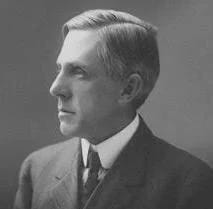
Ernest Lawrence Thayer's "Casey at the Bat"
Though its author remained otherwise undistinguished, today's poem–with all its ecstasy, agony, and irony–has become almost as essential to the American experience as baseball itself. Happy reading!Ernest Lawrence Thayer was born on August 14, 1863, in Lawrence, Massachusetts. He graduated with a BA in philosophy from Harvard University in 1885, where he was a member of the Hasty Pudding Club and edited the Harvard Lampoon. At Harvard, Thayer met William Randolph Hearst, who would later run the San Francisco Examiner and hire Thayer to write a humorous column for the newspaper. On June 3, 1883, Thayer published what would become his most famous work, the poem "Casey at the Bat," under the pen name Phin. The poem gained popularity after the performer William DeWolf Hopper incorporated a recitation of it into his theatrical and radio performances.Thayer moved to Santa Barbara, California, in 1912. He died in Santa Barbara on August 21, 1940.-bio via Academy of American Poets This is a public episode. If you'd like to discuss this with other subscribers or get access to bonus episodes, visit dailypoempod.substack.com/subscribe
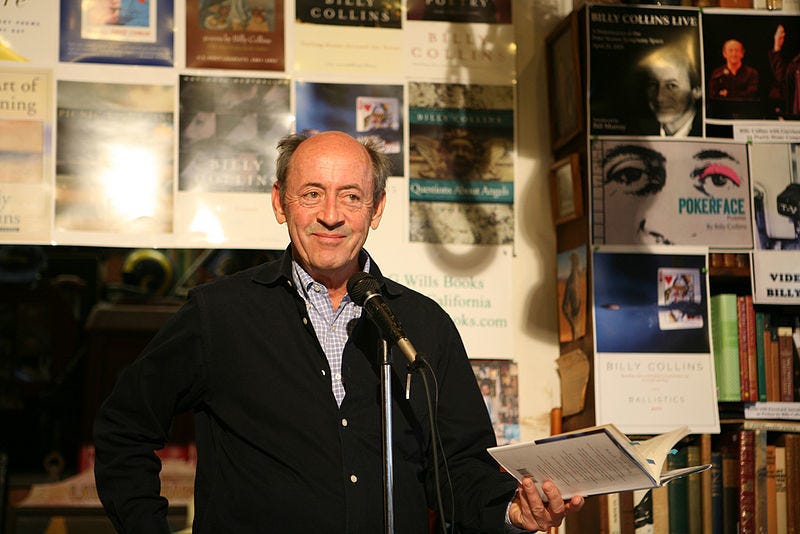
Billy Collins' "Shoveling Snow With Buddha"
Today’s poem is an appreciation of little things. Happy reading. This is a public episode. If you'd like to discuss this with other subscribers or get access to bonus episodes, visit dailypoempod.substack.com/subscribe

James Whitcomb Riley's "When the Frost is on the Punkin"
Today’s poem celebrates the crisp, cool days of early Autumn as the most hospitable season of the year. Happy reading. This is a public episode. If you'd like to discuss this with other subscribers or get access to bonus episodes, visit dailypoempod.substack.com/subscribe

John Masefield's "Laugh and Be Merry"
The world-wandering John Masefield waxes Solomonic in today’s poem. Happy reading. This is a public episode. If you'd like to discuss this with other subscribers or get access to bonus episodes, visit dailypoempod.substack.com/subscribe
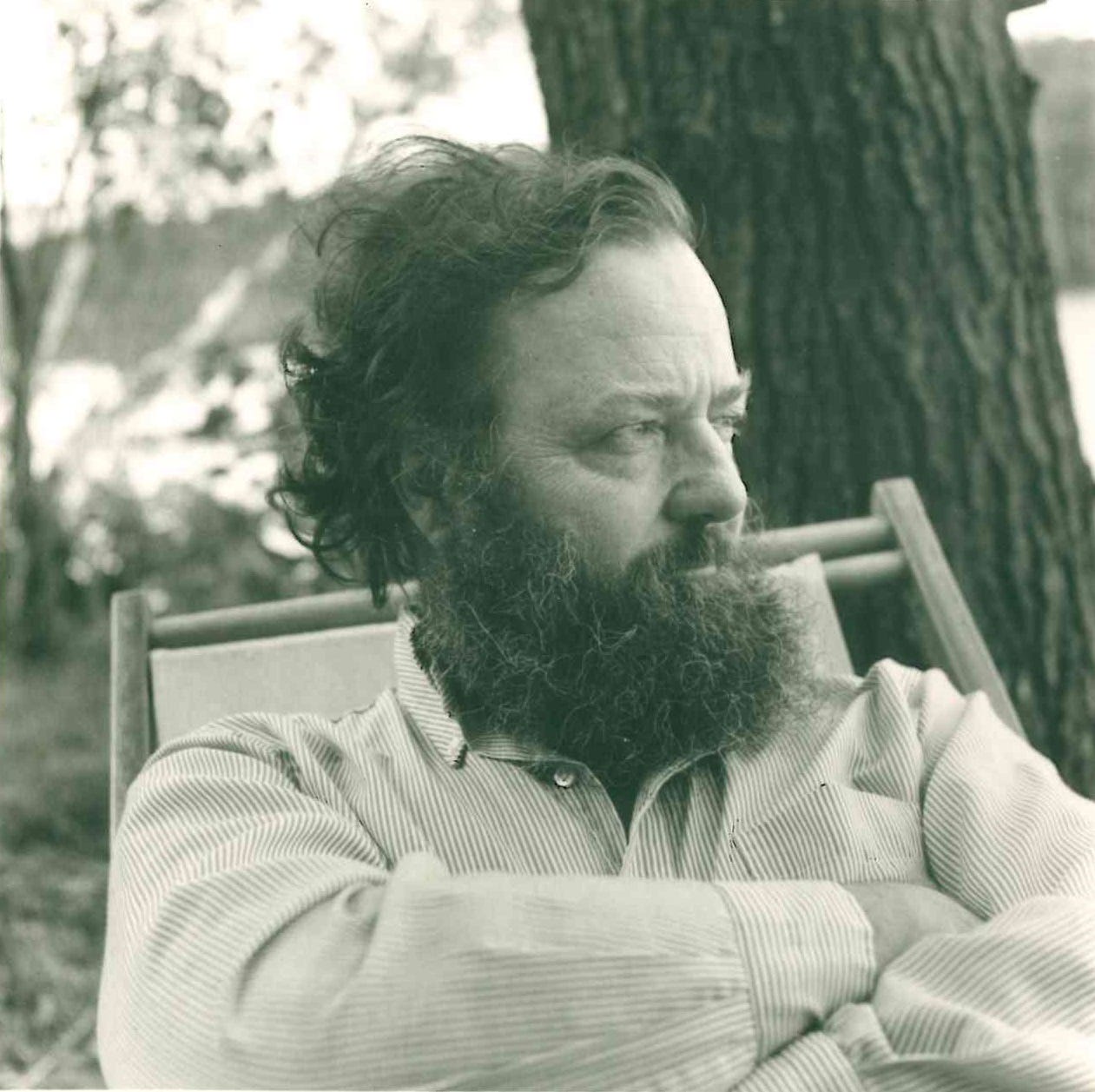
Donald Hall's "My Son, My Executioner"
Today’s poem is for everyone who knows that children keep you young, but also know how old you feel while it’s happening.Hall, taken aback by the success of this poem, expressed some regret that he became “the fellow whose son strapped him into the electric chair,” explaining that its inspiration came from 2 a.m. bottle-feedings that he conducted “with pleasure.” Happy reading. This is a public episode. If you'd like to discuss this with other subscribers or get access to bonus episodes, visit dailypoempod.substack.com/subscribe

Samuel Taylor Coleridge's "Sonnet: On Receiving a Letter Informing Me of the Birth of a Son"
The title of today’s poem is a mouthful, but it is fittingly emblematic of the poet’s full heart. Happy reading! This is a public episode. If you'd like to discuss this with other subscribers or get access to bonus episodes, visit dailypoempod.substack.com/subscribe

Ben Jonson's "On My First Sonne"
Never have rhyming couplets been so full of pathos as in today’s poem, where they symbolize the bond between father and son, tragically cut short. This is a public episode. If you'd like to discuss this with other subscribers or get access to bonus episodes, visit dailypoempod.substack.com/subscribe

John Keats' "To Autumn"
If pumpkin-spice-everything or the sea of puffy vests and Ugg boots at the cider stand are getting you down, let today’s poem remind you of all that is great about Autumn. Happy reading. This is a public episode. If you'd like to discuss this with other subscribers or get access to bonus episodes, visit dailypoempod.substack.com/subscribe

David McCord's "Mr. Macklin's Jack O'Lantern"
Today’s poem offers a folksy look at the subtleties of terror. Happy reading.David Thompson Watson McCord was born on December 15, 1897, in New York. A poet and fundraiser, McCord grew up in Portland, Oregon. He received both a BA and MA from Harvard University and briefly served in the military at the end of World War I. In 1922, McCord became associate editor for the Harvard Alumni Bulletin, where he served as editor from 1940 to 1946. He was also executive director of the Harvard College Fund for thirty-eight years. McCord, who has been widely recognized for his children's poetry, wrote and edited over fifty works of poetry and prose. He was the recipient of Harvard University's first honorary doctorate of humane letters, the first NCTE Award for Excellence in Poetry for Children, a Guggenheim Fellowship, and a National Institute of Arts and Letters grant. He died on April 13, 1997, in Boston, Massachusetts. -bio via Academy of American Poets This is a public episode. If you'd like to discuss this with other subscribers or get access to bonus episodes, visit dailypoempod.substack.com/subscribe
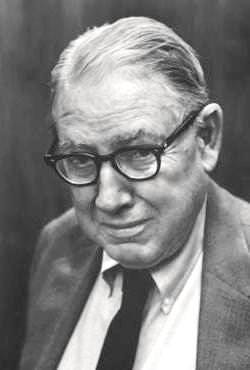
Ogden Nash's "A Word to Husbands"
Today’s poem offers a recipe for domestic bliss. Happy reading. This is a public episode. If you'd like to discuss this with other subscribers or get access to bonus episodes, visit dailypoempod.substack.com/subscribe
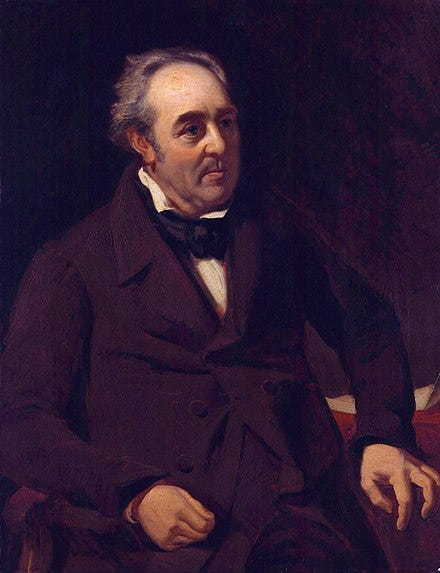
Walter Savage Landor's "To Robert Browning"
Though we remember Browning far more readily than we do Landor, this poem dates from a period when their fortunes were reversed and the latter was eager to acquaint the world with the budding talent he had discovered.Walter Savage Landor (30 January 1775 – 17 September 1864) was an English writer, poet, and activist. His best known works were the prose Imaginary Conversations, and the poem "Rose Aylmer," but the critical acclaim he received from contemporary poets and reviewers was not matched by public popularity. As remarkable as his work was, it was equalled by his rumbustious character and lively temperament. Both his writing and political activism, such as his support for Lajos Kossuth and Giuseppe Garibaldi, were imbued with his passion for liberal and republican causes. He befriended and influenced the next generation of literary reformers such as Charles Dickens and Robert Browning.-bio via Wikipedia This is a public episode. If you'd like to discuss this with other subscribers or get access to bonus episodes, visit dailypoempod.substack.com/subscribe

J. R. R. Tolkien's "Mythopoeia"
Today’s poem is a defense of myths and myth-making, inspired by an argument with C. S. Lewis. Happy reading! This is a public episode. If you'd like to discuss this with other subscribers or get access to bonus episodes, visit dailypoempod.substack.com/subscribe
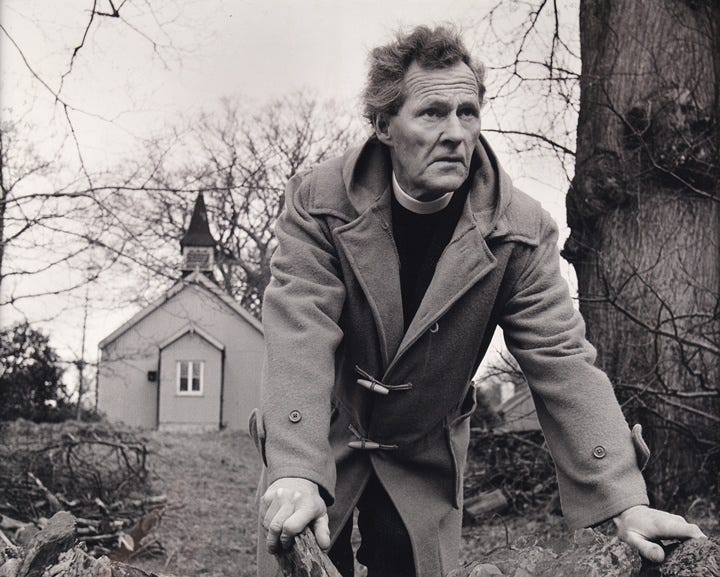
R. S. Thomas' "Poetry for Supper"
Ronald Stuart Thomas (29 March 1913 – 25 September 2000), published as R. S. Thomas, was a Welsh poet and Anglican priest noted for nationalism, spirituality and dislike of the anglicisation of Wales. John Betjeman, introducing Song at the Year's Turning (1955), the first collection of Thomas's poetry from a major publisher, predicted that Thomas would be remembered long after he himself was forgotten. M. Wynn Thomas said: "He was the Aleksandr Solzhenitsyn of Wales because he was such a troubler of the Welsh conscience. He was one of the major English language and European poets of the 20th century."-bio via Wikipedia This is a public episode. If you'd like to discuss this with other subscribers or get access to bonus episodes, visit dailypoempod.substack.com/subscribe

Dorothy Parker's "The Trifler"
Dorothy Parker (née Rothschild; August 22, 1893 – June 7, 1967) was an American poet and writer of fiction, plays and screenplays based in New York; she was known for her caustic wisecracks, and eye for 20th-century urban foibles.Parker rose to acclaim, both for her literary works published in magazines, such as The New Yorker, and as a founding member of the Algonquin Round Table. Following the breakup of the circle, Parker traveled to Hollywood to pursue screenwriting. Her successes there, including two Academy Award nominations, were curtailed when her involvement in left-wing politics resulted in her being placed on the Hollywood blacklist.Dismissive of her own talents, she deplored her reputation as a "wisecracker". Nevertheless, both her literary output and reputation for sharp wit have endured. Some of her works have been set to music.-bio via Wikipedia This is a public episode. If you'd like to discuss this with other subscribers or get access to bonus episodes, visit dailypoempod.substack.com/subscribe
Louis Untermeyer's "A Man"
Today’s poem offers a needful portrait of ‘manly talk.’ Happy reading.Louis Untermeyer was the author, editor or compiler, and translator of more than 100 books for readers of all ages. He will be best remembered as the prolific anthologist whose collections have introduced students to contemporary American poetry since 1919. The son of an established New York jeweler, Untermeyer’s interest in poetry led to friendships with poets from three generations, including many of the century’s major writers. His tastes were eclectic. In the Washington Post, Martin Weil related that Untermeyer once “described himself as ‘a bone collector’ with ‘the mind of a magpie.’” He was a liberal who did much to allay the Victorian myth that poetry is a highbrow art. “What most of us don’t realize is that everyone loves poetry,” he was quoted by Weil as saying, pointing out the rhymes on the once-ubiquitous Burma Shave road signs as an example.Untermeyer developed his taste for literature while a child. His mother had read aloud to him from a variety of sources, including the epic poems “Paul Revere’s Ride” and “Hiawatha.” Bedtime stories he told to his brother Martin combined elements from every story he could remember, he revealed in Bygones: The Recollections of Louis Untermeyer. When he learned to read for himself, he was particularly impressed by books such as Alfred Lord Tennyson’s Idylls of the King and Dante’s Inferno. Gustave Dore’s illustrations in these books captivated him and encouraged his imagination toward fantasy. Almost 50 years later, Untermeyer published several volumes of retold French fairy tales, all illustrated by the famous French artist.In addition to children’s books and anthologies, Untermeyer published collections of his own poetry. He began to compose light verse and parodies during his teen years after dropping out of school to join his father’s business. With financial help from his father, he published First Love in 1911. Sentiments of social protest expressed in the 1914 volume Challenge received disapproval from anti-communist groups 40 years later; as a result of suspicion, Untermeyer lost his seat on the “What’s My Line” game show panel to publisher Bennett Cerf. During the 1970s, he found himself “instinctively, if incongruously, allied with the protesting young,” he wrote in the New York Times. In the same article he encouraged the spirit of experiment that characterized the decade, saying, “it is the non-conformers, the innovators in art, science, technology, and human relations who, misunderstood and ridiculed in their own times, have shaped our world.” Untermeyer, who did not promote any particular ideology, remained a popular speaker and lecturer, sharing criticism of poetry and anecdotes about famous poets with audiences in the United States and as far away as India and Japan.Untermeyer resigned from the jewelry business in 1923 in order to give all his attention to literary pursuits. Friendships with Robert Frost, Ezra Pound, Arthur Miller, and other literary figures provided him with material for books. For example, The Letters of Robert Frost to Louis Untermeyer contains letters selected from almost 50 years of correspondence with the New England poet. The anthologist’s autobiographies From Another World and Bygones relate as much about other writers as they do about his personal life. Bygones provides his reflections on the four women who were his wives. Jean Starr moved to Vienna with Untermeyer after he became a full-time writer; Virginia Moore was his wife for about a year; Esther Antin, a lawyer he met in Toledo, Ohio, married him in 1933; 15 years later, he married Bryna Ivens, with whom he edited a dozen books for children.In his later years, Untermeyer, like Frost, had a deep appreciation for country life. He once told Contemporary Authors: “I live on an abandoned farm in Connecticut … ever since I found my native New York unlivable as well as unlovable. … On these green and sometimes arctic acres I cultivate whatever flowers insist on growing in spite of my neglect; delight in the accumulation of chickadees, juncos, cardinals, and the widest possible variety of songless sparrows; grow old along with three pampered cats and one spoiled cairn terrier; season my love of home with the spice of annual travel, chiefly to such musical centers as Vienna, Salzburg, Milan, and London; and am always happy to be home again.” Untermeyer died in 1977.-bio via Poetry Foundation This is a public episode. If you'd like to discuss this with other subscribers or get access to bonus episodes, visit dailypoempod.substack.com/subscribe

William Butler Yeats' "Sailing to Byzantium"
Today’s poem is one of the most-discussed pieces of twentieth-century verse and, love it or hate it, features one of literature’s best extended metaphors for eternal yearnings–the quest for the great and holy city. Happy reading. This is a public episode. If you'd like to discuss this with other subscribers or get access to bonus episodes, visit dailypoempod.substack.com/subscribe

Walt Whitman's "When I Heard the Learn'd Astronomer"
If the strained relationship between science and Romanticism had an anthem, it might be today’s poem. Happy reading. This is a public episode. If you'd like to discuss this with other subscribers or get access to bonus episodes, visit dailypoempod.substack.com/subscribe
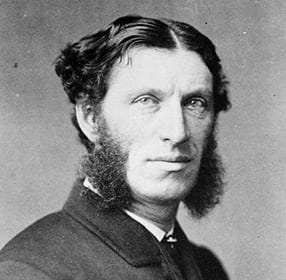
Matthew Arnold's "Shakespeare"
Today’s poem demonstrates that, unlike Arnold’s sideburns, loving the Bard never goes out of style. Although remembered now for his elegantly argued critical essays, Matthew Arnold, born in Laleham, Middlesex, on December 24, 1822, began his career as a poet, winning early recognition as a student at the Rugby School where his father, Thomas Arnold, had earned national acclaim as a strict and innovative headmaster. Arnold also studied at Balliol College, Oxford University. In 1844, after completing his undergraduate degree at Oxford, he returned to Rugby as a teacher of classics.After marrying in 1851, Arnold began work as a government school inspector, a grueling position which nonetheless afforded him the opportunity to travel throughout England and the Continent. Throughout his thirty-five years in this position Arnold developed an interest in education, an interest which fed into both his critical works and his poetry. Empedocles on Etna (1852) and Poems (1853) established Arnold’s reputation as a poet and, in 1857, he was offered a position, which he accepted and held until 1867, as Professor of Poetry at Oxford. Arnold became the first professor to lecture in English rather than Latin. During this time Arnold wrote the bulk of his most famous critical works, Essays in Criticism (1865) and Culture and Anarchy (1869), in which he sets forth ideas that greatly reflect the predominant values of the Victorian era.Meditative and rhetorical, Arnold’s poetry often wrestles with problems of psychological isolation. In “To Marguerite—Continued,” for example, Arnold revises John Donne’s assertion that “No man is an island,” suggesting that we “mortals” are indeed “in the sea of life enisled.” Other well-known poems, such as “Dover Beach,” link the problem of isolation with what Arnold saw as the dwindling faith of his time. Despite his own religious doubts, a source of great anxiety for him, in several essays Arnold sought to establish the essential truth of Christianity. His most influential essays, however, were those on literary topics. In “The Function of Criticism” (1865) and “The Study of Poetry” (1880) Arnold called for a new epic poetry: a poetry that would address the moral needs of his readers, “to animate and ennoble them.” Arnold’s arguments, for a renewed religious faith and an adoption of classical aesthetics and morals, are particularly representative of mainstream Victorian intellectual concerns. His approach—his gentlemanly and subtle style—to these issues, however, established criticism as an art form, and has influenced almost every major English critic since, including T. S. Eliot, Lionel Trilling, and Harold Bloom. Though perhaps less obvious, the tremendous influence of his poetry, which addresses the poet’s most innermost feelings with complete transparency, can easily be seen in writers as different from each other as W. B. Yeats, James Wright, Sylvia Plath, and Sharon Olds. Late in life, in 1883 and 1886, Arnold made two lecturing tours of the United States.Matthew Arnold died in Liverpool on April 15, 1888.-bio via Academy of American Poets This is a public episode. If you'd like to discuss this with other subscribers or get access to bonus episodes, visit dailypoempod.substack.com/subscribe

James Wright's "A Blessing"
James Arlington Wright was born on December 13, 1927, in Martins Ferry, Ohio. His father worked for fifty years at a glass factory, and his mother left school at fourteen to work in a laundry; neither attended school beyond the eighth grade. While in high school in 1943, Wright suffered a nervous breakdown and missed a year of school. When he graduated in 1946, a year late, he joined the U.S. Army and was stationed in Japan during the American occupation. He then attended Kenyon College on the G.I. Bill, and studied under John Crowe Ransom. While there, he also befriended future fellow poet Robert Mezey. Wright graduated cum laude and Phi Beta Kappa in 1952. Wright traveled to Austria, where, on a Fulbright Fellowship, he studied the works of Theodor Storm and Georg Trakl at the University of Vienna. He returned to the U.S. and earned master’s and doctoral degrees at the University of Washington, studying with Theodore Roethke and Stanley Kunitz. He went on to teach at The University of Minnesota, Macalester College, and New York City’s Hunter College.The poverty and human suffering Wright witnessed as a child profoundly influenced his writing and he used his poetry as a mode to discuss his political and social concerns. He modeled his work after that of Thomas Hardy and Robert Frost, whose engagement with profound human issues and emotions he admired. The subjects of Wright’s earlier books, The Green Wall (Yale University Press, 1957), winner of the Yale Series of Younger Poets Award, and Saint Judas (Wesleyan University Press, 1959), include men and women who have lost love or have been marginalized from society and they invite the reader to step in and experience the pain of their isolation. Wright possessed the ability to reinvent his writing style at will, moving easily from stage to stage. His earlier work adheres to conventional systems of meter and stanza, while his later work exhibits more open, looser forms, as with The Branch Will Not Break (Wesleyan University Press, 1963).Wright was elected a fellow of the Academy of American Poets in 1971, and, the following year, his Collected Poems (Wesleyan University Press) received the Pulitzer Prize in Poetry.Wright died in New York City on March 25, 1980. This is a public episode. If you'd like to discuss this with other subscribers or get access to bonus episodes, visit dailypoempod.substack.com/subscribe

Wendy Cope's "Emily Dickinson"
Today’s poem, from the delightfully clever Wendy Cope, epitomizes the rare and complicated light verse form: the double-dactyl.Wendy Cope was raised in Kent, England, where her parents often recited poetry to her. She earned a BA in history and trained as a teacher at Oxford University. Cope taught in primary schools for many years before publishing her first book of poetry, Making Cocoa for Kingsley Amis (1986). The collection was an incredible success, selling tens of thousands of copies in the UK. It also announced Cope’s remarkable talents for parody, word play, dexterity with received forms, and the use of humor to address grave topics. In the Los Angeles Review of Books, critic and poet A.M. Juster declared, “one has to go back to Byron to find a poet as consistently witty, wide-ranging, and technically outstanding as Cope.”Cope’s poetry collections include Serious Concerns (1992); If I Don’t Know (2001), shortlisted for the Whitbread Poetry Award; Two Cures for Love: Selected Poems 1979–2006 (2008); Family Values (2011); Christmas Poems (2017), a collection of new and previously published Christmas-themed work; and Anecdotal Evidence (2018). She is the author of the prose collection Life, Love and the Archers (2015) and two books for children, Twiddling Your Thumbs (1988) and The River Girl (1991), and the editor of numerous anthologies, including, The Faber Book of Bedtime Stories (1999).Cope has received a Cholmondeley Award and a Michael Braude Award for Light Verse from the American Academy of Arts and Letters. In 2010, she was awarded an Order of the British Empire. She is a Fellow of the Royal Society of Literature and lives in Winchester, England.-bio via Poetry Foundation This is a public episode. If you'd like to discuss this with other subscribers or get access to bonus episodes, visit dailypoempod.substack.com/subscribe

Donald Hall's "The Baseball Players"
Today’s poem is for all those already wondering what they will do when the baseball season ends next month. Happy reading. This is a public episode. If you'd like to discuss this with other subscribers or get access to bonus episodes, visit dailypoempod.substack.com/subscribe

Richard Wilbur's "Advice to a Prophet"
Richard Wilbur was born in New York City on March 1, 1921 and studied at Amherst College before serving in the U.S. Army during World War II. He later attended Harvard University.Wilbur’s first book of poems, The Beautiful Changes and Other Poems (Reynal & Hitchcock) was published in 1947. Since then, he has published several books of poems, including Anterooms: New Poems and Translations (Houghton Mifflin Harcourt, 2010); Collected Poems, 1943–2004 (Harvest Books, 2004); Mayflies: New Poems and Translations (Houghton Mifflin Harcourt, 2000); New and Collected Poems (Harcourt Brace Jovanovich, 1988), which won the Pulitzer Prize; The Mind-Reader: New Poems (Harcourt Brace Jovanovich, 1976); Walking to Sleep: New Poems and Translations (Harcourt, Brace & World, 1969); Advice to a Prophet and Other Poems (Harcourt, Brace & World, 1961); Things of This World (Harcourt, Brace & World, 1956), for which he received the Pulitzer Prize and the National Book Award; and Ceremony and Other Poems (Harcourt, Brace & World, 1950).Wilbur also published numerous translations of French plays—specifically those of the seventeenth century French dramatists Molière and Jean Racine—as well as poetry by Paul Valéry, François Villon, Charles Baudelaire, Anna Akhmatova, Joseph Brodsky, and others. Wilbur is also the author of several books for children and a few collections of prose pieces, and has edited such books as Poems of Shakespeare (Penguin Books, 1966) and The Complete Poems of Poe (Dell Publishing Company, 1959).About Wilbur’s poems, one reviewer for the Washington Post said, “Throughout his career Wilbur has shown, within the compass of his classicism, enviable variety. His poems describe fountains and fire trucks, grasshoppers and toads, European cities and country pleasures. All of them are easy to read, while being suffused with an astonishing verbal music and a compacted thoughtfulness that invite sustained reflection.”Among Wilbur’s honors are the Wallace Stevens Award, the Aiken Taylor Award for Modern American Poetry, the Frost Medal, the Gold Medal for Poetry from the American Academy of Arts and Letters, two Bollingen Prizes, the T. S. Eliot Award, the Ruth Lilly Poetry Prize, a Ford Foundation Award, two Guggenheim Fellowships, the Edna St. Vincent Millay Memorial Award, the Harriet Monroe Poetry Award, the National Arts Club medal of honor for literature, two PEN translation awards, the Prix de Rome Fellowship, and the Shelley Memorial Award. He was elected a chevalier of the Ordre des Palmes Académiques and is a former poet laureate of the United States.Wilbur served as a Chancellor of the Academy of American Poets from 1961 to 1995. He died on October 15, 2017 in Belmont, Massachusetts.-bio via Academy of American Poets This is a public episode. If you'd like to discuss this with other subscribers or get access to bonus episodes, visit dailypoempod.substack.com/subscribe

Countee Cullen's "Yet Do I Marvel"
Cullen’s exact birthplace is unknown, but in 1918, at the age of 15, Countee LeRoy was adopted by Reverend Frederick A. Cullen, the minster to the largest church congregation in Harlem.Cullen kept his finger on the pulse of Harlem during the 1920s while he attended New York University and then a graduate program at Harvard. His poetry became popular during his student years, especially his prize-winning poem “The Ballad of a Brown Girl.” In 1925, he published his first volume of poetry entitled Color. Within the next few years, Cullen became well-known, publishing several books and winning a Guggenheim Fellowship in 1928 (to write poetry in France).At first, Cullen was critical of Langston Hughes’ poetry, writing that, in using jazz rhythms in his poetry, Hughes was erecting barriers between race instead of removing them. In his own poetry, Cullen sought to erase these boundaries and took traditionalist poets, such as Keats and A.E. Housman, as models for his own poetry. However, despite his criticisms of other black poets, the majority of Cullen’s own verses confront racial issues.By the 1930s, Cullen’s influence had waned, though he continued to publish prolifically, including novels, a collection of poems for children, the autobiography of his cat, and an adaption of his novel God Sends Sunday into a Broadway musical.-bio via Song of America This is a public episode. If you'd like to discuss this with other subscribers or get access to bonus episodes, visit dailypoempod.substack.com/subscribe

Samuel Johnson's "On the Death of Dr. Robert Levet"
In today’s poem, the inimitably magnanimous Dr. Johnson eulogizes the man of “The single talent well employed.” Happy birthday to the good doctor, and happy reading to the rest. This is a public episode. If you'd like to discuss this with other subscribers or get access to bonus episodes, visit dailypoempod.substack.com/subscribe
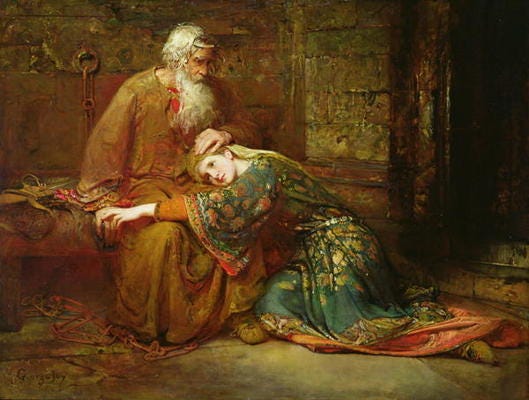
Lear and Cordelia ("Come, let's away to prison")
Today’s poem is a passage of blank verse from Act 5, Scene 3 of Shakespeare’s King Lear. In the action of the play the scene is a prelude to tragedy, but as a picture of love between father and daughter it is almost perfect. Happy reading. This is a public episode. If you'd like to discuss this with other subscribers or get access to bonus episodes, visit dailypoempod.substack.com/subscribe
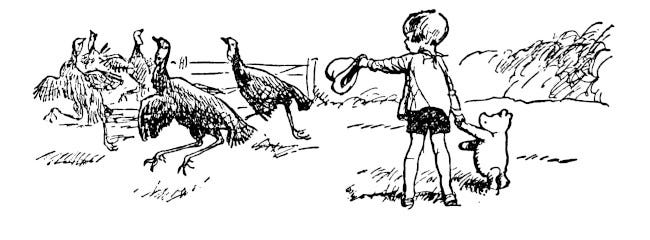
A. A. Milne's "Us Two"
Some Mondays call for a poem that is uncomplicated and perfectly delightful–and Milne never disappoints. Happy reading! This is a public episode. If you'd like to discuss this with other subscribers or get access to bonus episodes, visit dailypoempod.substack.com/subscribe

Rudyard Kipling's "The Roman Centurion's Song"
Joseph Rudyard Kipling (30 December 1865 – 18 January 1936) was an English journalist, novelist, poet, and short-story writer. He was born in British India, which inspired much of his work.Kipling's works of fiction include the Jungle Book duology (The Jungle Book, 1894; The Second Jungle Book, 1895), Kim (1901), the Just So Stories (1902) and many short stories, including "The Man Who Would Be King" (1888). His poems include "Mandalay" (1890), "Gunga Din" (1890), "The Gods of the Copybook Headings" (1919), and "If—" (1910). He is seen as an innovator in the art of the short story. His children's books are classics; one critic noted "a versatile and luminous narrative gift".Kipling in the late 19th and early 20th centuries was among the United Kingdom's most popular writers. Henry James said "Kipling strikes me personally as the most complete man of genius, as distinct from fine intelligence, that I have ever known." In 1907, he was awarded the Nobel Prize in Literature, as the first English-language writer to receive the prize, and at 41, its youngest recipient to date. He was also sounded out for the British Poet Laureateship and several times for a knighthood, but declined both. Following his death in 1936, his ashes were interred at Poets' Corner, part of the South Transept of Westminster Abbey.-bio via Wikipedia This is a public episode. If you'd like to discuss this with other subscribers or get access to bonus episodes, visit dailypoempod.substack.com/subscribe

Ted Kooser's "A Happy Birthday"
There comes a point in every life when “birthday” goes from meaning "pizza party” to meaning “memento mori.” Today’s poem goes out to everyone in the latter group. Happy reading! This is a public episode. If you'd like to discuss this with other subscribers or get access to bonus episodes, visit dailypoempod.substack.com/subscribe

Alfred, Lord Tennyson's "In Memoriam: 27"
Today the age-old question of loss and grief is answered…by the man who raised it in the first place. This is a public episode. If you'd like to discuss this with other subscribers or get access to bonus episodes, visit dailypoempod.substack.com/subscribe

Alice Dunbar-Nelson's "I Sit and Sew"
Nelson is likely best known for her literary output as a poet. She regularly published in Opportunity and Crisis magazines between 1917 and 1928. Her poems also appeared in James Weldon Johnson’s seminal anthology, The Book of American Negro Poetry (Harcourt, Brace and Company, 1931). Nelson began to keep a personal diary in 1921. Her entries from 1926 to 1931 were later edited by scholar Gloria T. Hull for a volume entitled Give Us Each Day: The Diary of Alice Dunbar-Nelson (W. W. Norton, 1984).Toward the end of her public career, Nelson focused on journalism and public speaking. She gave numerous speeches as the executive secretary of the American Friends Inter-Racial Peace Committee from 1928 to 1931. From 1926 to 1930, Nelson wrote newspaper columns and became an activist for women’s suffrage and civil rights. In 1922, she advocated for the passage of the Dyer Anti-Lynching Bill, and helped establish the Industrial School for Colored Girls in Delaware. One of her speeches was published and included in Masterpieces of Negro Eloquence (The Bookery Publishing Company, 1914), and examples of her dialect poetry, dramatic prose, and oratory were collected The Dunbar Speaker and Entertainer (J. L. Nichols & Co., 1920). Both are anthologies that Nelson edited. -bio via Academy of American Poets This is a public episode. If you'd like to discuss this with other subscribers or get access to bonus episodes, visit dailypoempod.substack.com/subscribe

Dorianne Laux's "I Dare You"
The author of several collections of poetry–most recently Life on Earth–Dorianne Laux was the recipient of the Oregon Book Award and a finalist for the National Books Critics Circle Award for her book Facts About the Moon. She has also authored several works of non-fiction including The Poet’s Companion and Finger Exercises For Poets. She was elected a Chancellor of the Academy of American Poets in 2020. This is a public episode. If you'd like to discuss this with other subscribers or get access to bonus episodes, visit dailypoempod.substack.com/subscribe

John Donne's "Resurrection"
Today’s poem–#6 in Donne’s La Corona sonnet cycle–is an ideal consummation for many of the themes introduced in this week’s selections. Now go read the rest of his holy sonnets! Happy reading! This is a public episode. If you'd like to discuss this with other subscribers or get access to bonus episodes, visit dailypoempod.substack.com/subscribe

John Donne's "Divine Meditation 10: 'Death be not proud...'"
Today, Donne’s best-known poem, but maybe not his last word on death. Happy reading! This is a public episode. If you'd like to discuss this with other subscribers or get access to bonus episodes, visit dailypoempod.substack.com/subscribe