The Daily Poem
939 episodes — Page 6 of 19

Ted Kooser's "So This Is Nebraska"
Today’s poem glides, settles, dances, waves, and soars its way through the unassuming comforts of the familiar. Happy reading. This is a public episode. If you'd like to discuss this with other subscribers or get access to bonus episodes, visit dailypoempod.substack.com/subscribe

Phyllis McGinley's "Lament for a Wavering Viewpoint"
Phyllis McGinley (March 21, 1905 – February 22, 1978) was an American author of children's books and poetry. Her poetry was in the style of light verse, specializing in humor, satiric tone and the positive aspects of suburban life. She won a Pulitzer Prize in 1961.McGinley enjoyed a wide readership in her lifetime, publishing her work in newspapers and women's magazines such as the Ladies Home Journal, as well as in literary periodicals, including The New Yorker, The Saturday Review and The Atlantic. She also held nearly a dozen honorary degrees – "including one from the stronghold of strictly masculine pride, Dartmouth College" (from the dust jacket of Sixpence in Her Shoe (copy 1964)). Time Magazine featured McGinley on its cover on June 18, 1965.-bio via Wikipedia This is a public episode. If you'd like to discuss this with other subscribers or get access to bonus episodes, visit dailypoempod.substack.com/subscribe

John Keats' "On First Looking Into Chapman's Homer"
As William Shakespeare was putting the final touchers on Hamlet, George Chapman was beginning (arguably) an even more momentous undertaking: introducing the English-speaking world to Homer’s epics. In a turn of historical irony, the fame of Chapman’s translation continues almost solely in and through today’s poem–but there are worse ways to be remembered. Happy reading. This is a public episode. If you'd like to discuss this with other subscribers or get access to bonus episodes, visit dailypoempod.substack.com/subscribe

Mary Oliver's "First Snow"
Today’s poem was too topical to pass up. Like so many of Oliver’s poems, it is an invitation to attend closely to life’s unexpected gifts. Happy reading. This is a public episode. If you'd like to discuss this with other subscribers or get access to bonus episodes, visit dailypoempod.substack.com/subscribe
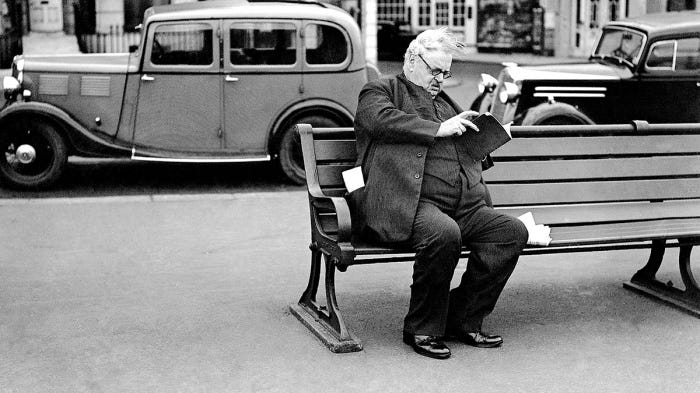
G. K. Chesterton's "Stilton and Milton"
Today’s poem, whose full title is “Stilton and Milton; Or Literature in the 17th and 20th Centuries,” has something for book lovers and cheese lovers alike to dig in to. Chesterton once wrote that “poets have been mysteriously silent on the subject of cheese,” and he then set about rectifying that state of affairs through poems like these. Happy reading. This is a public episode. If you'd like to discuss this with other subscribers or get access to bonus episodes, visit dailypoempod.substack.com/subscribe
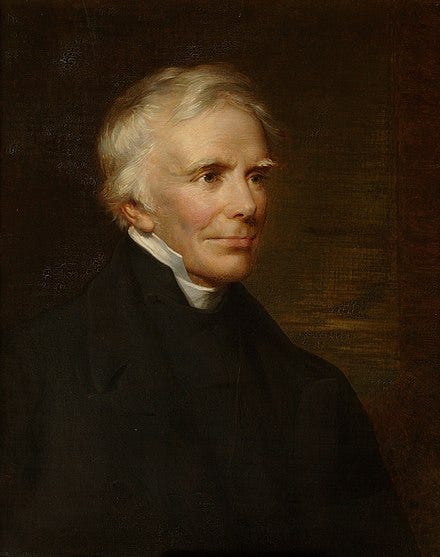
John Keble's "The Accession"
Today’s poem, though written for the far more infrequent crowning of monarchs, contains plenty of sentiments fitting for a quadrennial presidential inauguration. Happy reading.On a pillar on the west wall of Poets' Corner in Westminster Abbey is a white marble bust to poet and clergyman John Keble. The bust is signed and dated by Thomas Woolner, 1872 and is just inscribed 'JOHN KEBLE'. The memorial was originally much more elaborate and was in the south west tower chapel of the nave (now St George's chapel), placed between Dr Thomas Arnold and William Wordsworth. The bust, on a foliated corbel, was set within a decorated oval frame set with jewels with two small pillars either side of the bust. Above was a decorated cross and below a square tablet with the inscription:In memory of John Keble, author of the Christian Year. Born 1792. Died 1866. In quietness and in confidence shall be your strength. Isaiah xxx.15. He rests in peace at Hursley of which he was Vicar 30 years.When the chapel was redesigned in 1932 the memorials there were all moved - Arnold to the north west nave chapel and Wordsworth to Poets' Corner. Only the bust of Keble was retained and mounted on a new Purbeck marble bracket in the Corner.He was born at Fairford in Gloucestershire on 25th April 1792, son of the Reverend John Keble and his wife Sarah (Maule). After education at home he attended Oxford University. In 1827 he published his popular work The Christian Year. He was professor of poetry at Oxford and became rector of Hursley in Hampshire in 1836. With Newman and Pusey he instigated the Oxford Movement. He married Charlotte Clarke but there were no children. He died on 29th March 1866 and is buried at Hursley. Keble College in Oxford was founded in his memory.-bio via Westminster Abbey This is a public episode. If you'd like to discuss this with other subscribers or get access to bonus episodes, visit dailypoempod.substack.com/subscribe

Yvor Winters' "At the San Francisco Airport"
Though not yet the Dantesque hells that they are today, airports in 1954 were already places of union, separation, and general existential anxiety. This meditation comes from a serious and sphinx-like Winters at the height of his poetic development–though not yet at his own “terminal,” here he is a man who already has plenty to look back on. Happy reading.(Arthur) Yvor Winters was born in Chicago on October 17, 1900. While studying at the University of Chicago he was diagnosed with tuberculosis and decided to relocate to Santa Fe, New Mexico, for the sake of his health. His early poems, published in 1921 and 1922, were all written at a tuberculosis sanitarium. He enrolled at the University of Colorado in 1925, where he earned his bachelor’s and master’s degrees. In 1926, he married the poet and novelist Janet Lewis. He spent two years teaching at the University of Idaho in Moscow before entering Stanford University as a graduate student, receiving his PhD in 1934. From 1928 until his death, he was a member of Stanford’s English department.Winters’s books of poetry include The Early Poems of Yvor Winters, 1920–1928(Swallow Press, 1966); Collected Poems (1952; revised edition, 1960), winner of the Bollingen Prize; Poems (Gyroscope Press, 1940); Before Disaster (Tryon Pamphlets, 1934); The Proof (Coward-McCann, Inc., 1930); and The Immobile Wind (M. Wheeler, 1921). In Defense of Reason (Swallow Press, 1947), Winters’s major critical work, is a collection of three earlier studies: The Anatomy of Nonsense (New Directions, 1943); Maule’s Curse (New Directions, 1938); and Primitivism and Decadence (Arrow Editions, 1937).Winters was also a prolific and controversial critic who believed that a work of art should be “an act of moral judgement” and attacked such literary icons as T. S. Eliot and Henry James. The chair of the Stanford English department notoriously denounced Winters as a “disgrace to the department.”Winters’s honors include a National Institute of Arts and Letters award as well as grants from the Guggenheim Foundation and the National Endowment for the Arts. He died on January 25, 1968, in Palo Alto, California.-bio via Academy of American Poets This is a public episode. If you'd like to discuss this with other subscribers or get access to bonus episodes, visit dailypoempod.substack.com/subscribe
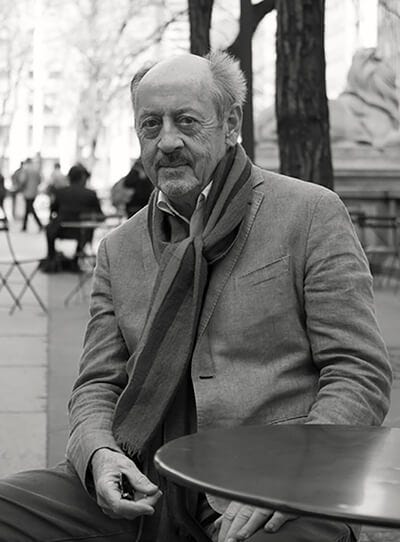
Billy Collins' "Thesaurus"
If hot takes about synonyms are your cup of tea, favorite, darling, jam, or weapon of choice, then today’s poem is for you. Happy reading. This is a public episode. If you'd like to discuss this with other subscribers or get access to bonus episodes, visit dailypoempod.substack.com/subscribe

John Davies' "Nosce Teipsum: of Human Knowledge"
We that acquaint ourselves with every zone,And pass both tropics and behold the poles,When we come home, are to ourselves unknown,And unacquainted still with our own souls.Today’s poem is Davies’ lengthy meditation on what man can know and what he could stand to learn. Happy reading.Poet and lawyer Sir John Davies was born in Wiltshire and educated at Winchester College and Queen’s College, Oxford, though historians disagree about whether he graduated. In 1588, he enrolled in the Middle Temple, where he studied with John Donne, and was called to the bar in 1595. In addition to his legal study, Davies wrote poetry, notably Orchestra, or, A Poeme of Dancing (1596). Davies’s other works include a series of epigrams drawn from his youthful misadventures; Nosce teipsum (1594), a poetic treatise on the immortality of the soul; and Hymnes of Astraea in Acrosticke Verse (1599),an acrostic poem spelling the words Elisabetha Regina. Davies also contributed poetic dialogues to Francis Davison’s Poetical Rhapsody(1602). His Collected Poems appeared in 1622. It is thought that Davies accompanied King James to Scotland after Queen Elizabeth’s death in 1603. Eventually knighted by the king, Davies was made solicitor general for Ireland and emerged as a champion of legal reform in Ireland. He attempted to lay the grounds for a strong civil society, albeit one that benefited England and English rule in all cases. Davies helped cement pro-English property laws and advocated the expulsion of Catholic priests to shore up Protestantism. He was appointed speaker in the Irish Parliament in 1613 and presided over the first Protestant majority. He returned to England and served in the Parliament of 1621. Charles I appointed Davies lord chief justice in 1626, but he died just before officially taking office. John Donne gave his funeral oration. Davies was buried in St. Martin-in-the-Fields.-bio via Poetry Foundation This is a public episode. If you'd like to discuss this with other subscribers or get access to bonus episodes, visit dailypoempod.substack.com/subscribe
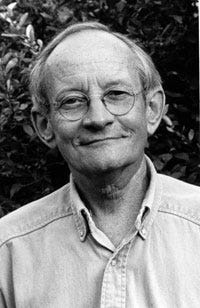
Ted Kooser's Blizzard Voices
Today’s poems are selected from Ted Kooser’s The Blizzard Voices, a collection of informal verse commemorating the apocalyptic Great Plains blizzard of 1888. He mined histories and first-hand accounts to give “voice” to the men and women who lived through the unprecedented storm. Happy reading. This is a public episode. If you'd like to discuss this with other subscribers or get access to bonus episodes, visit dailypoempod.substack.com/subscribe

Kingsley Amis' "A Bookshop Idyll"
Today’s poem is a roller-coaster of machismo and vulnerability in that most singular of places–the poetry section of a small bookstore. Happy reading.Kingsley Amis (1922–1995) was a popular and prolific British novelist, poet, satirist, and critic. Born in suburban South London, the only child of a clerk in the office of the mustard-maker Colman’s, he won an English scholarship to St John’s College, Oxford, where he began a lifelong friendship with fellow student Philip Larkin. Following service in the British Army’s Royal Corps of Signals during World War II, he completed his degree and joined the faculty at the University College of Swansea in Wales. Lucky Jim, his first novel, appeared in 1954 to great acclaim and won a Somerset Maugham Award. Ultimately he published twenty-four novels, including science fiction and a James Bond sequel; more than a dozen collections of poetry, short stories, and literary criticism; restaurant reviews and three books about drinking; political pamphlets and a memoir; and more. Amis received the Booker Prize for his novel The Old Devils in 1986 and was knighted by Queen Elizabeth II in 1990.-bio via NYRB This is a public episode. If you'd like to discuss this with other subscribers or get access to bonus episodes, visit dailypoempod.substack.com/subscribe
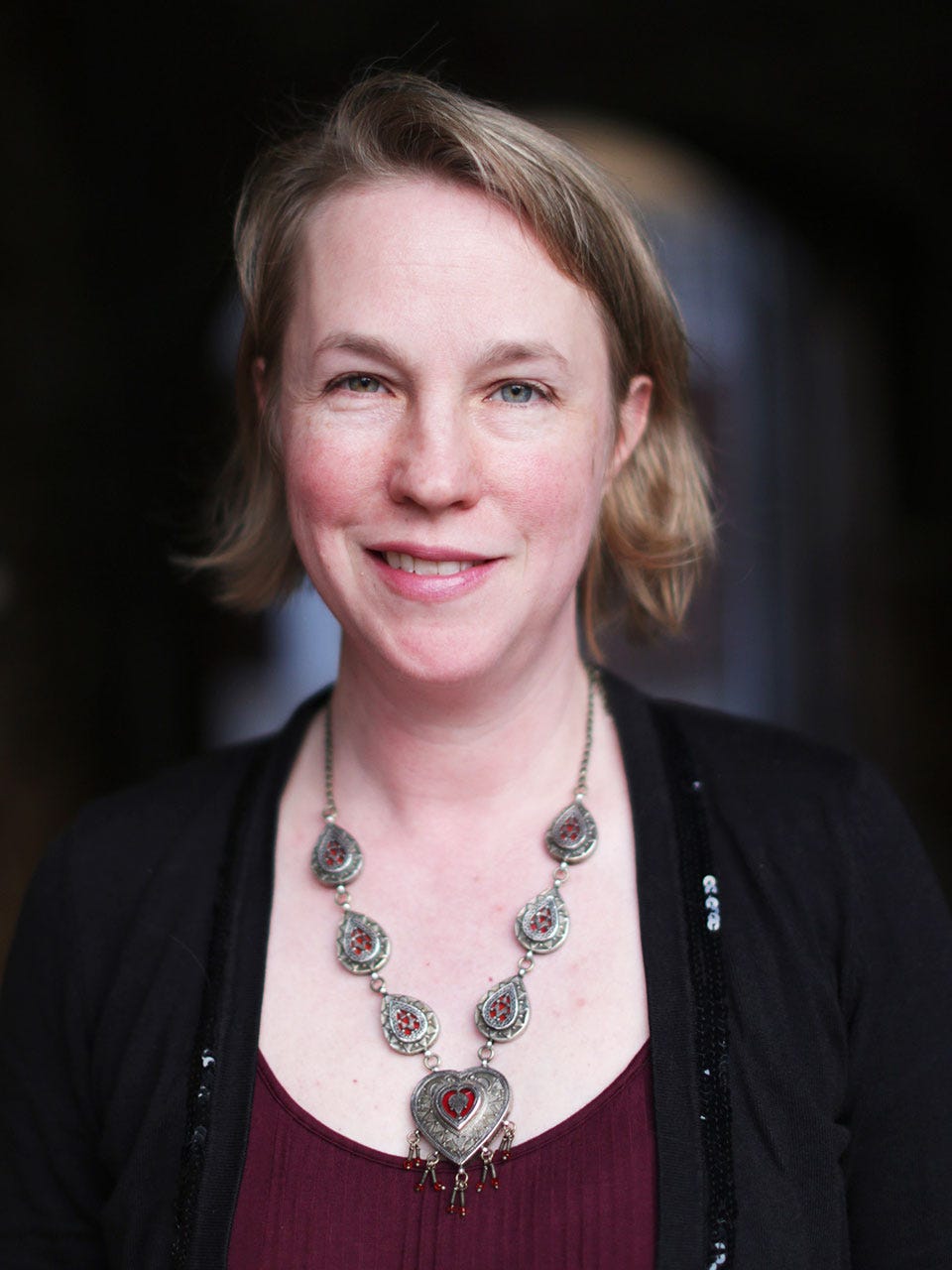
A. E. Stallings' "Scissors"
Today’s poem offers an incisive analogy for analogies. Happy reading.A.E. (Alicia) Stallings is the Oxford Professor of Poetry. She grew up in Decatur, Georgia, and studied classics at the University of Georgia and Oxford University. Her poetry collections include Like (2018), a finalist for the Pulitzer Prize; Olives (2012), which was nominated for a National Book Critics Circle Award; Hapax (2006); and Archaic Smile(1999), winner of the Richard Wilbur Award and finalist for both the Yale Younger Poets Series and the Walt Whitman Award. Her poems have appeared in The Best American Poetry anthologies of 1994, 2000, 2015, 2016, and 2017, and she is a frequent contributor to Poetry and the Times Literary Supplement.Stallings’s poetry is known for its ingenuity, wit, and dexterous use of classical allusion and forms to illuminate contemporary life. In interviews, Stallings has spoken about the influence of classical authors on her own work: “The ancients taught me how to sound modern,” she told Forbes magazine. “They showed me that technique was not the enemy of urgency, but the instrument.”Stallings's latest verse translation is the pseudo-Homeric The Battle Between the Frogs and the Mice (2019), in an illustrated edition with Paul Dry Books, and her latest volume of poetry is a selected poems, This Afterlife (2023, FSG). She is the recipient of fellowships from the Guggenheim Foundation and the MacArthur Foundation. She lives in Athens, Greece, with her husband, the journalist John Psaropoulos.-bio via Poetry Foundation This is a public episode. If you'd like to discuss this with other subscribers or get access to bonus episodes, visit dailypoempod.substack.com/subscribe

Richard Wilbur's "A Wedding Toast"
Today’s poem draws together marriage and the blessing of water. Happy reading. This is a public episode. If you'd like to discuss this with other subscribers or get access to bonus episodes, visit dailypoempod.substack.com/subscribe
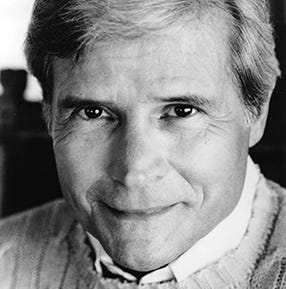
Philip Appleman's "To the Garbage Collectors in Bloomington, Indiana, the First Pickup of the New Year"
If you can see “a World in a Grain of Sand/And a Heaven in a Wild Flower,” what can you see in the trashcan at the curb? Apparently quite a bit, if you look closely. Today’s poem, a paean to the unsung heroes of the holidays, can help with that.Also in today’s episode: a look at what’s new for The Daily Poem in 2025. Happy reading!Philip Appleman (1926-2020) served in the U.S. Army Air Corps during World War II and in the Merchant Marine after the war. He has degrees from Northwestern University, the University of Michigan, and the University of Lyon, France.His acclaimed books of poetry include Karma, Dharma, Pudding & Pie (W. W. Norton, 2009), New and Selected Poems, 1956-1996 (1996); Let There Be Light (1991); Darwin's Bestiary (1986); Open Doorways (1976); and Summer Love and Surf (1968). He is also the author of three novels, including Apes and Angels (Putnam, 1989); and six volumes of nonfiction, including the Norton Critical Edition, Darwin (1970).Appleman has taught at Columbia University, SUNY Purchase, and is currently Distinguished Professor Emeritus at Indiana University, Bloomington. He has also served on the Governing Board of the Poetry Society of America and the Poets Advisory Board of Poets House. His many awards include a Fellowship in Poetry from the National Endowment for the Arts, a Pushcart Prize, and both the Castagnola Award and the Morley Award from the Poetry Society of America.-bio via Academy of American Poets This is a public episode. If you'd like to discuss this with other subscribers or get access to bonus episodes, visit dailypoempod.substack.com/subscribe

Robert Service's "The Passing of the Year"
Does today’s poem contain the secret to minimizing regret in 2025? Kinda, sorta. Happy reading.In his youth, Robert Service worked in a shipping office and a bank, and briefly studied literature at the University of Glasgow. Inspired by Rudyard Kipling and Robert Louis Stevenson, Service sailed to western Canada in 1894 to become a cowboy in the Yukon Wilderness. He worked on a ranch and as a bank teller in Vancouver Island six years after the Gold Rush, gleaning material that would inform his poetry for years to come and earn him his reputation as “Bard of the Yukon.” Service traveled widely throughout his life—to Hollywood, Cuba, Alberta, Paris, Louisiana, and elsewhere—and his travels continued to fuel his writing.A prolific writer and poet, Service published numerous collections of poetry during his lifetime, including Songs of a Sourdough or Spell of the Yukon and Other Verses (1907), which went into ten printings its first year, Ballad of a Cheechako (1909) and Ballads of a Bohemian (1921), as well as two autobiographies and six novels. Several of his novels were made into films, and he also appeared as an actor in The Spoilers, a 1942 film with Marlene Dietrich.-bio via Poetry Foundation This is a public episode. If you'd like to discuss this with other subscribers or get access to bonus episodes, visit dailypoempod.substack.com/subscribe

Helen Hunt Jackson's "New Year's Morning"
Happy New Year (and Happy Reading) from The Daily Poem!Born in Amherst, Massachusetts, to academic Calvinist parents, poet, author, and Native American rights activist Helen Hunt Jackson (born Helen Maria Fiske) was orphaned as a child and raised by her aunt. Jackson was sent to private schools and formed a lasting childhood friendship with Emily Dickinson. At the age of 21, Jackson married Lieutenant Edward Bissell Hunt and together they had two sons. Jackson began writing poetry only after the early deaths of her husband and both sons.Jackson published five collections of poetry, including Verses (1870) and Easter Bells (1884), as well as children’s literature and travel books, often using the pseudonyms “H.H.,” “Rip van Winkle,” or “Saxe Holm.” Frequently in poor health, she moved to Colorado on her physician’s recommendation and married William Sharpless Jackson there in 1875.Moved by an 1879 speech given by Chief Standing Bear, Jackson wrote A Century of Dishonor (1881), an exposé of the rampant crimes against Native Americans, which led to the founding of the Indian Rights Association. In 1884 she published Ramona, a fictionalized account of the plight of Southern California’s dispossessed Mission Indians, inspired by Harriet Beecher Stowe’s Uncle Tom’s Cabin.Jackson was inducted into the Colorado Women’s Hall of Fame in 1985.-bio via Poetry Foundation This is a public episode. If you'd like to discuss this with other subscribers or get access to bonus episodes, visit dailypoempod.substack.com/subscribe
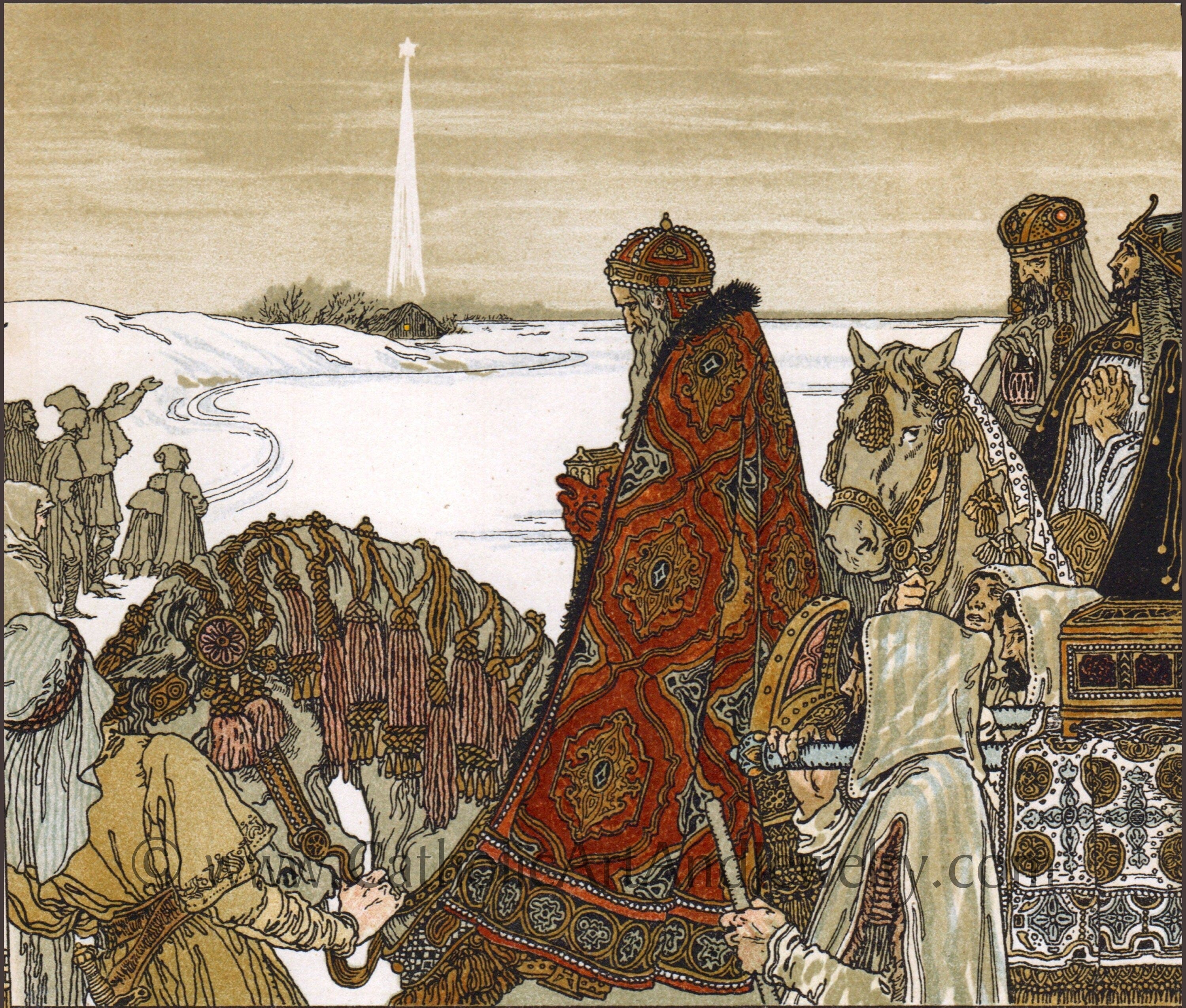
T. S. Eliot's "Journey of the Magi"
…I had seen birth and death, But had thought they were different; this Birth was Hard and bitter agony for us, like Death, our death.Today’s poem seemed an appropriate choice as we endure the death of one year and the pregnant anticipation of another. Happy reading! This is a public episode. If you'd like to discuss this with other subscribers or get access to bonus episodes, visit dailypoempod.substack.com/subscribe

William Butler Yeats' "The Magi"
The repetition of the word “unsatisfied” forms a set of bookends in today’s poem. Inside those bookends: earth, sky, and the riches of this world. Beyond them: “The uncontrollable mystery.” Happy reading. This is a public episode. If you'd like to discuss this with other subscribers or get access to bonus episodes, visit dailypoempod.substack.com/subscribe

Cecil Day Lewis' "The Christmas Tree"
“the Christmas Tree is a tree of fable,/A phoenix in evergreen”Cecil Day Lewis tackles the leave-taking of Christmas and the emotional upheaval in can work in the hearts of kids from 1 to 92. Happy reading (and don’t take down that tree yet!)Lewis, (born April 27, 1904, Ballintubbert, County Leix, Ire.—died May 22, 1972, Hadley Wood, Hertfordshire, Eng.) was one of the leading British poets of the 1930s; he then turned from poetry of left-wing political statement to an individual lyricism expressed in more traditional forms.The son of a clergyman, Day-Lewis was educated at the University of Oxford and taught school until 1935. His Transitional Poem (1929) had already attracted attention, and in the 1930s he was closely associated with W.H. Auden (whose style influenced his own) and other poets who sought a left-wing political solution to the ills of the day. Typical of his views at that time is the verse sequence The Magnetic Mountain (1933) and the critical study A Hope for Poetry(1934).Day-Lewis was Clark lecturer at the University of Cambridge in 1946; his lectures there were published as The Poetic Image (1947). In 1952 he published his verse translation of Virgil’s Aeneid, which was commissioned by the BBC. He also translated Virgil’s Georgics (1940) and Eclogues (1963). He was professor of poetry at Oxford from 1951 to 1956. The Buried Day (1960), his autobiography, discusses his acceptance and later rejection of communism. Collected Poemsappeared in 1954. Later volumes of verse include The Room and Other Poems (1965) and The Whispering Roots (1970). The Complete Poems of C. Day-Lewis was published in 1992.At his death he was poet laureate, having succeeded John Masefield in 1968. Under the pseudonym of Nicholas Blake he also wrote detective novels, including Minute for Murder (1948) and Whisper in the Gloom (1954).-bio via Britannica This is a public episode. If you'd like to discuss this with other subscribers or get access to bonus episodes, visit dailypoempod.substack.com/subscribe

W. H. Auden's Conclusion to For the Time Being
“To those who have seen/The Child, however dimly, however incredulously,/The Time Being is, in a sense, the most trying time of all.” This is a public episode. If you'd like to discuss this with other subscribers or get access to bonus episodes, visit dailypoempod.substack.com/subscribe

W. H. Auden's "Chorus of Angels"
Christ is born! Merry Christmas and happy reading! Today’s poem is a selection from Auden’s superb long poem, For the Time Being: A Christmas Oratorio. This is a public episode. If you'd like to discuss this with other subscribers or get access to bonus episodes, visit dailypoempod.substack.com/subscribe

J. R. R. Tolkien's "Noel"
J. R. R. Tolkien loved Christmas–we can find ample proof of this in his Letters From Father Christmas, but also in his choosing December 25 as the day the fellowship of the Ring should set out from Rivendell and begin the destruction of evil in Middle Earth. Today’s poem, once lost to history but rediscovered and included in his Collected Poems, is his most explicit tribute to the Nativity. Happy reading. This is a public episode. If you'd like to discuss this with other subscribers or get access to bonus episodes, visit dailypoempod.substack.com/subscribe
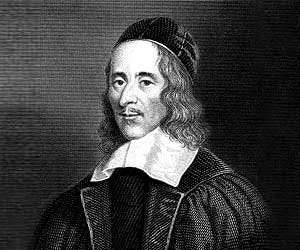
George Herbert's "Love (III)"
Today’s selection may not be traditionally recognized as a holiday poem, but it interprets the Christmas mystery as well or better than many poems written for the season. Happy reading! This is a public episode. If you'd like to discuss this with other subscribers or get access to bonus episodes, visit dailypoempod.substack.com/subscribe

Two Christmas Poems from G. K. Chesterton
In today’s poems-“The Inn at the End of the World” and “The House of Christmas”–Chesterton imagines Christmas as a cosmic waystation for weary pilgrims. Happy reading. This is a public episode. If you'd like to discuss this with other subscribers or get access to bonus episodes, visit dailypoempod.substack.com/subscribe

Donald Hall's "Christmas Eve in Whitneyville"
Don’t be fooled by the lack of Dickensian drama: melancholy, materialism, regret, a graveyard–today’s poem is A Christmas Carol for the modern man. This is a public episode. If you'd like to discuss this with other subscribers or get access to bonus episodes, visit dailypoempod.substack.com/subscribe

James Merrill's "Christmas Tree"
Today’s selection is an ideal poem for Advent–a bittersweet shape poem that expresses the “hopes and fears of all the years.”Poet and critic John Hollander wrote of Merrill that he “was continually reengaging those Proustian themes of the retrieval of lost childhood, the operations of involuntary memory and of an imaginative memory even more mysterious.” This is a public episode. If you'd like to discuss this with other subscribers or get access to bonus episodes, visit dailypoempod.substack.com/subscribe

Mary Jo Salter's "Home Movies: A Sort of Ode"
Are home movies the grecian urns of the twentieth century? Today’s poem says, “sort of.”Poet, editor, essayist, playwright, and lyricist Mary Jo Salter was born in Grand Rapids, Michigan. She grew up in Michigan and Maryland, and earned degrees from Harvard and Cambridge University. A former editor at the Atlantic Monthly, poetry editor at the New Republic, and co-editor of the fourth and fifth editions of the Norton Anthology of Poetry, Salter’s thorough understanding of poetic tradition is clearly evident in her work. Salter is the author of many books of poetry, including A Kiss in Space (1999), Open Shutters (2003), A Phone Call to the Future (2008), Nothing by Design (2013), and The Surveyors (2017). Her second book, Unfinished Painting (1989) was a Lamont Selection for the most distinguished second volume of poetry published that year, Sunday Skaters (1994) was nominated for a National Book Critics Circle Award, and Open Shutters was a New York Times Notable Book of the Year. Salter has received fellowships from the National Endowment for the Arts and the Guggenheim Foundation and taught for many years at Mount Holyoke College. She is currently the Krieger-Eisenhower Professor in the Writing Seminars at Johns Hopkins University. This is a public episode. If you'd like to discuss this with other subscribers or get access to bonus episodes, visit dailypoempod.substack.com/subscribe

John Keats' "Ode on a Grecian Urn"
Today’s poem is, in may ways, the ode of odes. It has inspired volumes upon volumes of poetry and scholarship alike. And yet, it remains nothing more and nothing less than a humble and impassioned conversation with a work of beauty. Happy reading. This is a public episode. If you'd like to discuss this with other subscribers or get access to bonus episodes, visit dailypoempod.substack.com/subscribe

Malcolm Guite's "Launde Abbey on Saint Lucy's Day"
Today’s poem for St. Lucy’s day is a remembrance of a light “too bright for our infirm delight” dawning in the deepest darkness of the year. The poem is collected in Waiting on the Word: a poem a day for Advent, Christmas, and Epiphany. You can also hear a vastly superior reading of the poem by the author himself. This is a public episode. If you'd like to discuss this with other subscribers or get access to bonus episodes, visit dailypoempod.substack.com/subscribe
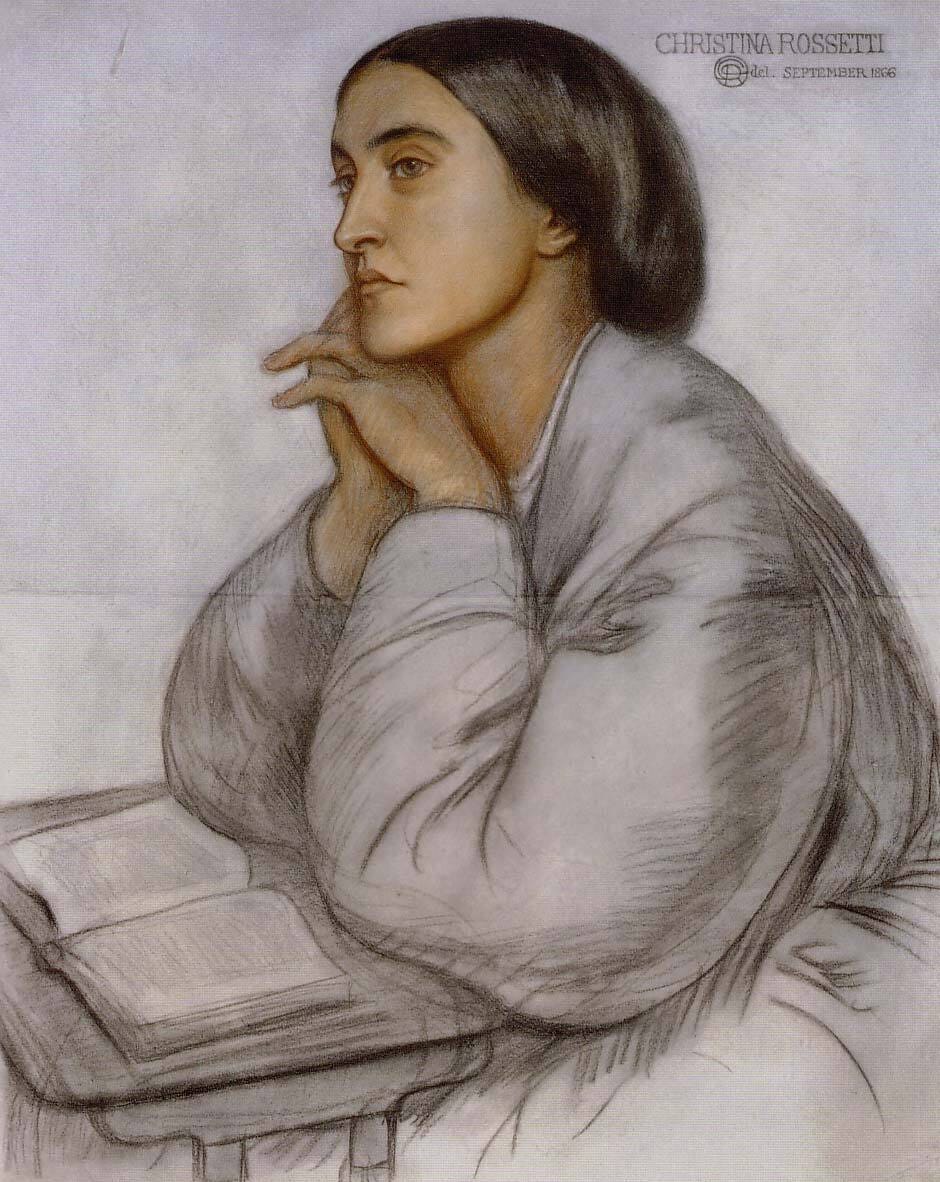
Christina Rossetti's "A Christmas Carol"
Today’s poem–known to many as the musical setting, “In the Bleak Midwinter”–contemplates unprecedented act of loves in the darkest days of the year. Happy reading. This is a public episode. If you'd like to discuss this with other subscribers or get access to bonus episodes, visit dailypoempod.substack.com/subscribe

Ezra Pound's "The White Stag"
Ezra Pound had his own complicated relationship with fame, exercising a profound influence upon 20th-century literature but being tried for treason in the U.S. after broadcasting propaganda for the fascists during WWII. Today’s poem is a guarded reflection on the never-ending quest. Happy reading. This is a public episode. If you'd like to discuss this with other subscribers or get access to bonus episodes, visit dailypoempod.substack.com/subscribe

Emily Dickinson's "In this short Life that only lasts an hour"
Today is the birthday of Emily Dickinson, and to mark the occasion we have selected a poem that manages to sum up the entire paradox of the human condition in just two lines. Happy reading. This is a public episode. If you'd like to discuss this with other subscribers or get access to bonus episodes, visit dailypoempod.substack.com/subscribe
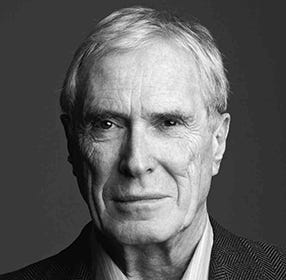
Mark Strand's "The New Poetry Handbook"
Mark Strand was born on Canada’s Prince Edward Island on April 11, 1934. He received a BA from Antioch College in Ohio in 1957 and attended Yale University, where he was awarded the Cook Prize and the Bergin Prize. After receiving his BFA degree in 1959, Strand spent a year studying at the University of Florence on a Fulbright fellowship. In 1962 he received his MA from the University of Iowa.Strand was the author of numerous collections of poetry, including Collected Poems (Alfred A. Knopf, 2014); Almost Invisible (Alfred A. Knopf, 2012); New Selected Poems (Alfred A. Knopf, 2007); Man and Camel (Alfred A. Knopf, 2006); Blizzard of One (Alfred A. Knopf, 1998), which won the Pulitzer Prize for Poetry; Dark Harbor (Alfred A. Knopf, 1993); The Continuous Life (Alfred A. Knopf, 1990); Selected Poems (Atheneum, 1980); The Story of Our Lives(Atheneum, 1973); and Reasons for Moving (Atheneum, 1968).Strand also published two books of prose, several volumes of translation (of works by Rafael Alberti and Carlos Drummond de Andrade, among others), several monographs on contemporary artists, and three books for children. He has edited a number of volumes, including 100 Great Poems of the Twentieth Century (W. W. Norton, 2005); The Golden Ecco Anthology (Ecco, 1994); The Best American Poetry 1991; and Another Republic: 17 European and South American Writers, co-edited with Charles Simic (HarperCollins, 1976).Strand’s honors included the Bollingen Prize, a Rockefeller Foundation award, three grants from the National Endowment for the Arts, a National Institute of Arts and Letters Award, the 2004 Wallace Stevens Award, the Academy of American Poets Fellowship in 1979, the 1974 Edgar Allen Poe Prize from the Academy of American Poets, as well as fellowships from the MacArthur Foundation and the Ingram Merrill Foundation.Strand served as poet laureate of the United States from 1990 to 1991 and as a Chancellor of the Academy of American Poets from 1995 to 2000. He taught English and comparative literature at Columbia University in New York City.Mark Strand died at eighty years old on November 29, 2014, in Brooklyn, New York.-bio via Academy of American Poets This is a public episode. If you'd like to discuss this with other subscribers or get access to bonus episodes, visit dailypoempod.substack.com/subscribe

Malcolm Guite's "St. Nicholas"
Today’s poem pays tribute to the great lover of children and the poor, whose day serves as a festive waystation on the journey to Christmas. Happy reading! This is a public episode. If you'd like to discuss this with other subscribers or get access to bonus episodes, visit dailypoempod.substack.com/subscribe

William Carlos Williams' "The Hunters in the Snow"
Today’s poem from Williams’ late collection, Pictures from Brueghel, is an ekphrasis on the painting by the same name, and a lesson in disciplined observation. Happy reading. This is a public episode. If you'd like to discuss this with other subscribers or get access to bonus episodes, visit dailypoempod.substack.com/subscribe
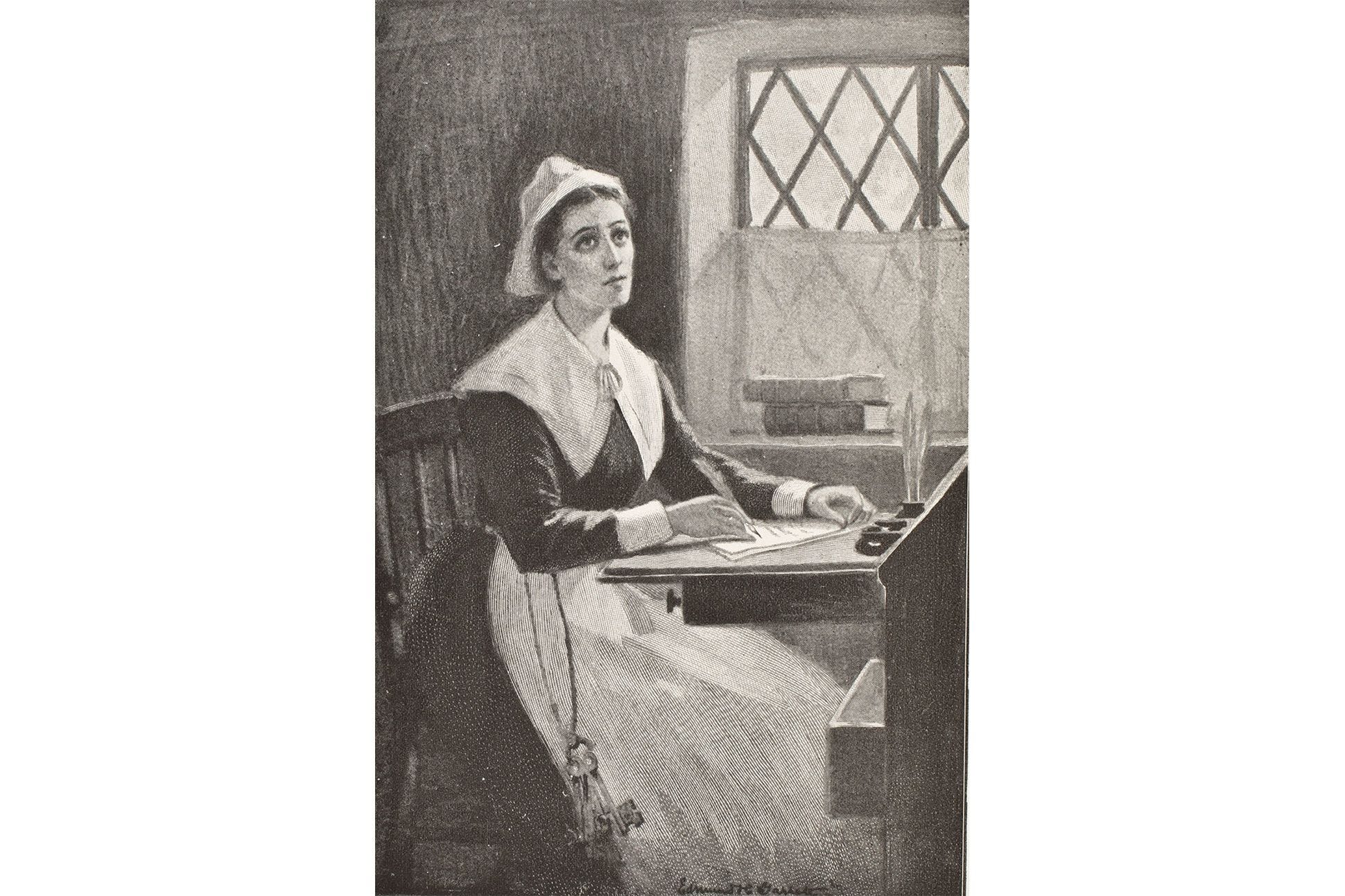
Anne Bradstreet's "Verses upon the Burning of our House"
“We only live, only suspire/ Consumed by either fire or fire.”…are not lines from today’s poem, but one gets the feeling Bradstreet understood their meaning as well as anyone could. Happy reading.Anne Bradstreet was born Anne Dudley in 1612 in Northamptonshire, England. She married Simon Bradstreet, a graduate of Cambridge University, at the age of sixteen. Two years later, Bradstreet, along with her husband and parents, immigrated to the American colonies with the Winthrop Puritan group, and the family settled in Ipswich, Massachusetts. There, Bradstreet and her husband raised eight children, and she became one of the first poets to write English verse in the American colonies. It was during this time that Bradstreet penned many of the poems that would be taken to England by her brother-in-law, purportedly without her knowledge, and published in 1650 under the title The Tenth Muse, Lately Sprung Up in America.The Tenth Muse was the only collection of Bradstreet’s poetry to appear during her lifetime. In 1644, the family moved to Andover, Massachusetts, where Bradstreet lived until her death in 1672. In 1678, the first American edition of The Tenth Muse was published posthumously and expanded as Several Poems Compiled with Great Wit and Learning. Bradstreet’s most highly regarded work, a sequence of religious poems titled Contemplations, was not published until the middle of the nineteenth century.-bio via Academy of American Poets This is a public episode. If you'd like to discuss this with other subscribers or get access to bonus episodes, visit dailypoempod.substack.com/subscribe

Henry Wadsworth Longfellow's "Snow-Flakes"
New-fallen snow can be a kind of blank canvas for the poet. In yesterday’s poem, Stevenson wrote over it in whimsical metaphor and simile; in today’s, Longfellow finds the reflection of his own troubled heart. Happy reading. This is a public episode. If you'd like to discuss this with other subscribers or get access to bonus episodes, visit dailypoempod.substack.com/subscribe

Robert Louis Stevenson's "Winter-Time"
Today’s poem is a master-class in elementary poetic instruction. Happy reading. This is a public episode. If you'd like to discuss this with other subscribers or get access to bonus episodes, visit dailypoempod.substack.com/subscribe
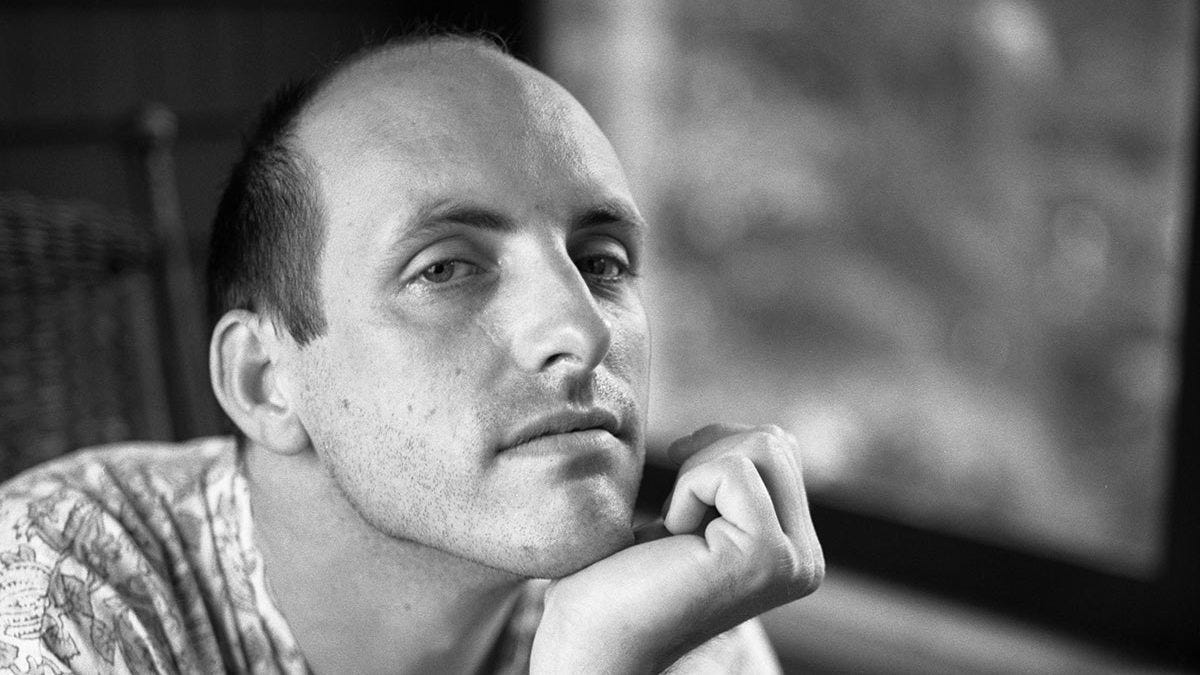
Craig Arnold's "Meditation on a Grapefruit"
Craig Arnold, born November 16, 1967 was an American poet and professor. His first book of poems, Shells (1999), was selected by W.S. Merwin for the Yale Series of Younger Poets. His many honors include the 2005 Joseph Brodsky Rome Prize Fellowship in literature, the Amy Lowell Poetry Travelling Scholarship, a Hodder Fellowship, and fellowships from the Fulbright Program, the National Endowment for the Arts, and MacDowell. He taught poetry at the University of Wyoming. His poems have appeared in anthologies including The Best American Poetry 1998 and The New American Poets: A Bread Loaf Anthology, and in literary journals including Poetry, The Paris Review, The Denver Quarterly, Barrow Street, The New Republic and The Yale Review. Arnold grew up in the United States, Europe, and Asia. Arnold’s Made Flesh won the 2009 High Plains Book Award and the 2008 Utah Book Award.In 2009, Arnold traveled to Japan to research volcanoes for a planned book of poetry. In April of that year, he disappeared while hiking on the island of Kuchinoerabujima. In the New York Times, the poet David Orr mourned the loss of Arnold, but noted it would “be a mistake to think of him as a writer silenced before his prime... His shelf space may be smaller than one would wish, but he earned every bit of it.”-bio via Copper Canyon Press and Poetry Foundation This is a public episode. If you'd like to discuss this with other subscribers or get access to bonus episodes, visit dailypoempod.substack.com/subscribe
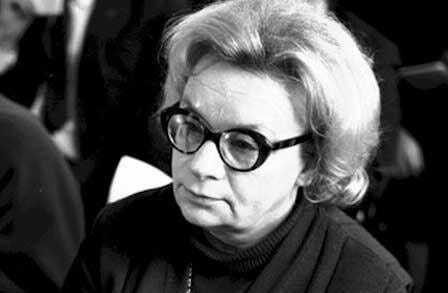
Anna Kamieńska's "Small Things"
Anna Kamienska was a poet, translator, critic, essayist, and editor. She published numerous collections of her own work and translated poetry from several Slavic languages, as well as sacred texts from Hebrew and Greek.Astonishments, a selection of her poetry in translation is available from Paraclete Press. This is a public episode. If you'd like to discuss this with other subscribers or get access to bonus episodes, visit dailypoempod.substack.com/subscribe

Jacqueline Woodson's "lessons"
Today’s poem punctuates the precious value of time spent with family around food. Happy reading.Jacqueline Woodson received a 2023 Guggenheim Foundation Fellowship, a 2020 MacArthur Fellowship, the 2020 Hans Christian Andersen Award, the 2018 Astrid Lindgren Memorial Award, and the 2018 Children’s Literature Legacy Award. She was the 2018–2019 National Ambassador for Young People’s Literature, and in 2015, she was named the Young People’s Poet Laureate by the Poetry Foundation. She received the 2014 National Book Award for her New York Times bestselling memoir Brown Girl Dreaming, which was also a recipient of the Coretta Scott King Award, a Newbery Honor, the NAACP Image Award, and a Sibert Honor. She wrote the adult books Red at the Bone, a New York Times bestseller, and Another Brooklyn, a 2016 National Book Award finalist. Born in Columbus, Ohio, Jacqueline grew up in Greenville, South Carolina, and Brooklyn, New York, and graduated from college with a B.A. in English. She is the author of dozens of award-winning books for young adults, middle graders, and children. She lives with her family in Brooklyn, New York.-bio via Penguin Random House This is a public episode. If you'd like to discuss this with other subscribers or get access to bonus episodes, visit dailypoempod.substack.com/subscribe
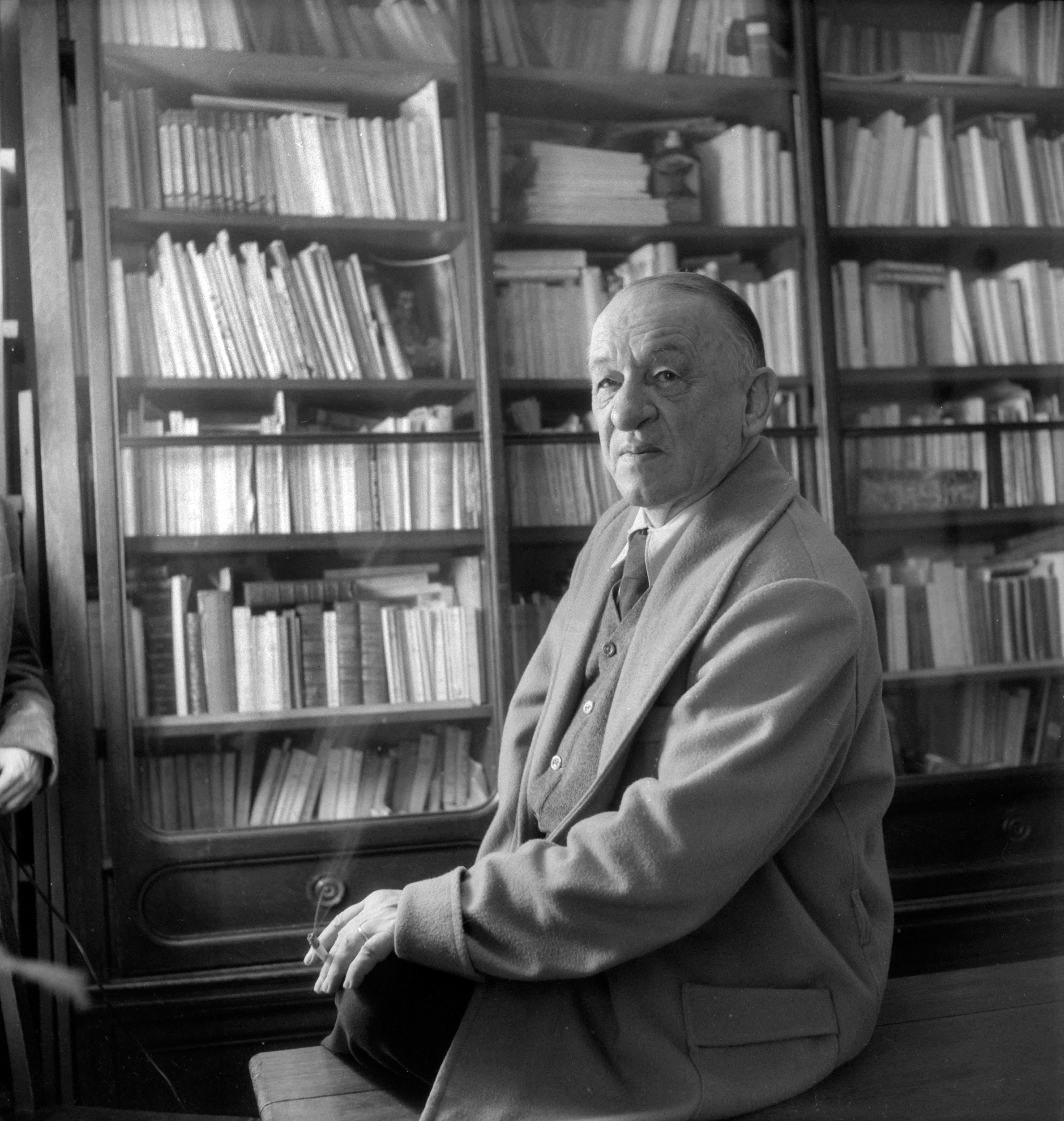
Blaise Cendrars' "Menus"
Sometimes a list is much more than a list. Happy reading.Blaise Cendrars (1887–1961) was the pseudonym of Frédéric Sauser, the Swiss son of a French Anabaptist father and a Scottish mother. As a young man he traveled widely, from St. Petersburg to New York and beyond, and these wanderings proved the inspiration of much of his later poetry and prose. Settled in Paris in 1912, Cendrars published two long poems, “Easter in New York” and “The Transsiberian,” which made him a major figure in the poetic avant-garde. At the outset of World War I, he enlisted in the French Foreign Legion, losing an arm in the battle of the Marnes. A prolific poet, Cendrars was also an exceptional novelist, the author of Moravagine, Gold, Rhum, and The Confessions of Dan Yack, among many other books.-bio via New York Review of Books This is a public episode. If you'd like to discuss this with other subscribers or get access to bonus episodes, visit dailypoempod.substack.com/subscribe

Bill Holm's "Bread Soup: An Old Icelandic Recipe"
Today’s poem opens a week of poetry about food. Happy eating reading.Bill Holm was born in 1943 on a farm outside Minneota, Minnesota. He received a BA from Gustavus Adolphus College in 1965 and an MA from the University of Kansas in 1967. Holm was the author of several poetry collections, including Playing the Black Piano and The Dead Get By with Everything. His collection The Chain Letter of the Soul: New and Selected Poems was published posthumously in 2009. He also wrote several essay collections, including The Windows of Brimnes: An American in Iceland. A professor emeritus at Southwest Minnesota State until his retirement in 2008, Holm was known for his connection to Minnesota. In an article for the Minn Post, Nick Hayes describes him as “the quintessential voice of our small towns and prairies.” He goes on to note that Holm “was also our lost Icelander in Minnesota.” The grandchild of Icelandic immigrants, Holm spent most of his summers at his cottage in Hofsos, Iceland, and his writing was influenced both by the heritage and landscape of both of his homes. In 2008, Holm received the McKnight Distinguished Artist Award. He died on February 26, 2009, in South Dakota.-bio via Milkweed Editions This is a public episode. If you'd like to discuss this with other subscribers or get access to bonus episodes, visit dailypoempod.substack.com/subscribe

James Matthew Wilson's "Agricola: A Song for Planting
Today’s poem, from Wilson’s 2018 The Hanging God, takes a candid look at all the ways we overestimate, misunderstand, misrepresent, and undervalue our own human agency–all while leaning heavily on plenty of unspoken implications about the agency of God. Happy reading.James Matthew Wilson is the Cullen Foundation Chair in English Literature and the founding director of the MFA program in Creative Writing at the University of Saint Thomas.The author of fourteen books, his most recent collection of poems is Saint Thomas and the Forbidden Birds(Word on Fire, 2024). The Strangeness of the Good (2020), won the poetry book of the year award from the Catholic Media Awards. The Dallas Institute of Humanities awarded him the Hiett Prize in 2017; Memoria College gave him the Parnassus Prize, in 2022; and the Conference on Christianity and Literature twice gave him the Lionel Basney Award.In addition to his role at the University of Saint Thomas, he serves as poet-in-residence of the Benedict XVI Institute, scholar-in-residence of Aquinas College, editor of Colosseum Books, and poetry editor of Modern Age magazine.Wilson was educated at the University of Michigan (B.A.), the University of Massachusetts (M.A.), and the University of Notre Dame (M.F.A., Ph.D.), where he subsequently held a Sorin Research Fellowship. Wilson joined the University of Saint Thomas, Houston, in 2021, when he co-founded the Master of Fine Arts program.-bio via Wilson’s website This is a public episode. If you'd like to discuss this with other subscribers or get access to bonus episodes, visit dailypoempod.substack.com/subscribe

Wendell Berry's "The Thought of Something Else"
Today’s poem, from Berry’s 1969 collection, Openings, doubles as a tribute to one of the loveliest and homiest bookstores in the world. Happy reading. This is a public episode. If you'd like to discuss this with other subscribers or get access to bonus episodes, visit dailypoempod.substack.com/subscribe

John Masefield's "Cargoes"
Today’s poem evokes entire worlds of vivid images and complex emotions with little more than a carefully-crafted list. Happy reading. This is a public episode. If you'd like to discuss this with other subscribers or get access to bonus episodes, visit dailypoempod.substack.com/subscribe
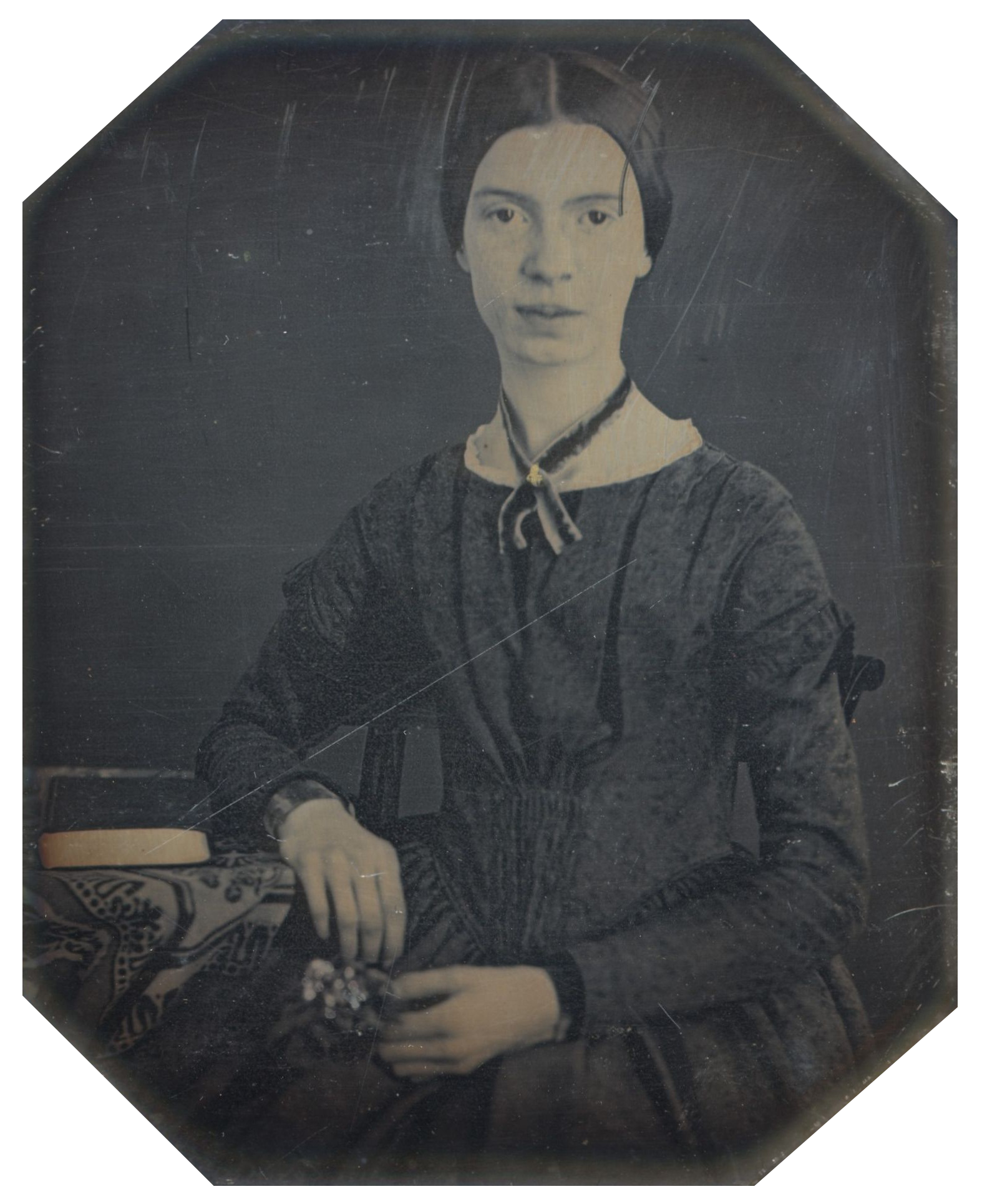
Emily Dickinson's "I fear a Man of frugal Speech"
Today’s poem was written by Dickinson when she was thirty-three and old enough to know. Happy reading. This is a public episode. If you'd like to discuss this with other subscribers or get access to bonus episodes, visit dailypoempod.substack.com/subscribe

William Blake's "The Tyger"
Today’s poem, one of English literature’s most extracted and anthologized, is still best appreciated when read in light of the momentous collection it belongs to. This is a public episode. If you'd like to discuss this with other subscribers or get access to bonus episodes, visit dailypoempod.substack.com/subscribe
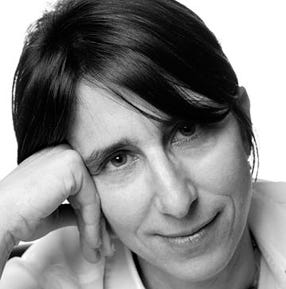
Jessica Greenbaum's "A Poem for S."
Today’s poem is also a poem for “ABC”–which is to say, it’s a brilliantly executed example of the alphabetic form known as the abecedarian. Happy reading.Jessica Greenbaum is the author of Inventing Difficulty (Silverfish Review Press, 1998), winner of Gerald Cable Prize; The Two Yvonnes (Princeton University Press, 2012), named by Library Journal as a Best Book in Poetry; and Spilled and Gone (University of Pittsburgh Press, 2019). She has received awards from the National Endowment for the Arts and the Poetry Society of America. She teaches in New York City. -bio via Poetry Foundation This is a public episode. If you'd like to discuss this with other subscribers or get access to bonus episodes, visit dailypoempod.substack.com/subscribe

Rhina P. Espaillat's "Changeling"
Rhina P. Espaillat was born in the Dominican Republic under the dictatorship of Rafael Trujillo. After Espaillat’s great-uncle opposed the regime, her family was exiled to the United States and settled in New York City. She began writing poetry as a young girl—in Spanish and then English—and has published in both languages.Espaillat’s numerous poetry collections include And After All (2019); Her Place in These Designs (2008); Playing at Stillness (2005); Rehearsing Absence (2001), recipient of the 2001 Richard Wilbur Award; a bilingual chapbook titled Mundo y Palabra/The World and the Word (2001); Where Horizons Go (1998), winner of the T.S. Eliot Prize; and Lapsing to Grace (1992).On Rehearsing Absence, Robert B. Shaw wrote in Poetry, “To Rhina Espaillat the quotidian is no malady … it is the source of inspiration. Hers is a voice of experience, but it is neither jaded nor pedantic. She speaks not from some cramped corner but from somewhere close to the center of life.” Awarding Espaillat the 1998 T.S. Eliot Prize for Where Horizons Go, X.J. Kennedy noted that “such developed skill and such mastery of rhyme and meter are certainly rare anymore; so is plainspeaking.”Espaillat’s work has garnered many awards, including the Sparrow Sonnet Prize, three Poetry Society of America prizes, the Der-Hovanessian Translation Prize, and—for her Spanish translations of Robert Frost—the Robert Frost Foundation’s Tree at My Window Award. She is a two-time winner of The Formalist’s Howard Nemerov Sonnet Award and the recipient of a 2008 Lifetime Achievement Award from Salem State College. She is a founding member of the Fresh Meadows Poets and a founding member and former director of the Powow River Poets. For over a decade, she coordinated the Newburyport Art Association’s Annual Poetry Contest.-bio via Poetry Foundation This is a public episode. If you'd like to discuss this with other subscribers or get access to bonus episodes, visit dailypoempod.substack.com/subscribe