The Daily Poem
939 episodes — Page 8 of 19

John Donne's "Divine Meditation 7: 'At the round earth's imagined corners...'"
Today’s poem dramatizes Donne’s inner turmoil and conflicting desires, but is not without hope. Happy reading. This is a public episode. If you'd like to discuss this with other subscribers or get access to bonus episodes, visit dailypoempod.substack.com/subscribe

John Donne's "Temple"
Today’s Holy Sonnet is the fourth in Donne’s underrated (if a poet as great as Donne can have underrated work) sonnet cycle, La Corona. The title translates to “crown” and the cycle’s opening line introduces the poems as a woven “crown of prayer and praise” offered to God, narrating and commenting upon significant events in the life of Jesus. Sonnet 4, “Temple,” centers on the sole recorded episode from Jesus’ youth. This is a public episode. If you'd like to discuss this with other subscribers or get access to bonus episodes, visit dailypoempod.substack.com/subscribe

John Donne's "Divine Meditation 1"
Today marks the beginning of a week of Donne’s “Holy Sonnets” (interpreted generously to also include selections from his sonnet cycle, “La Corona”). In this first sonnet, he establishes the themes––human weakness, self-doubt, terrestrial anguish, and divine transcendence and consolation––that will return throughout the series. Happy reading! This is a public episode. If you'd like to discuss this with other subscribers or get access to bonus episodes, visit dailypoempod.substack.com/subscribe

Scott Cairns' "Change Your Life"
Today, one of our favorite living poets asks questions about one of our favorite poems. Happy reading. This is a public episode. If you'd like to discuss this with other subscribers or get access to bonus episodes, visit dailypoempod.substack.com/subscribe
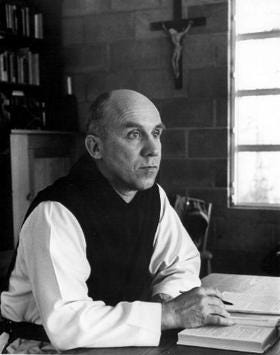
Thomas Merton's "The Quickening Of St. John The Baptist"
In today’s poem Thomas Merton, 20th-century author and mystic, comes to an understanding of his monastic vocation through a contemplation of John the Baptist’s prenatal gymnastics. Happy reading. This is a public episode. If you'd like to discuss this with other subscribers or get access to bonus episodes, visit dailypoempod.substack.com/subscribe
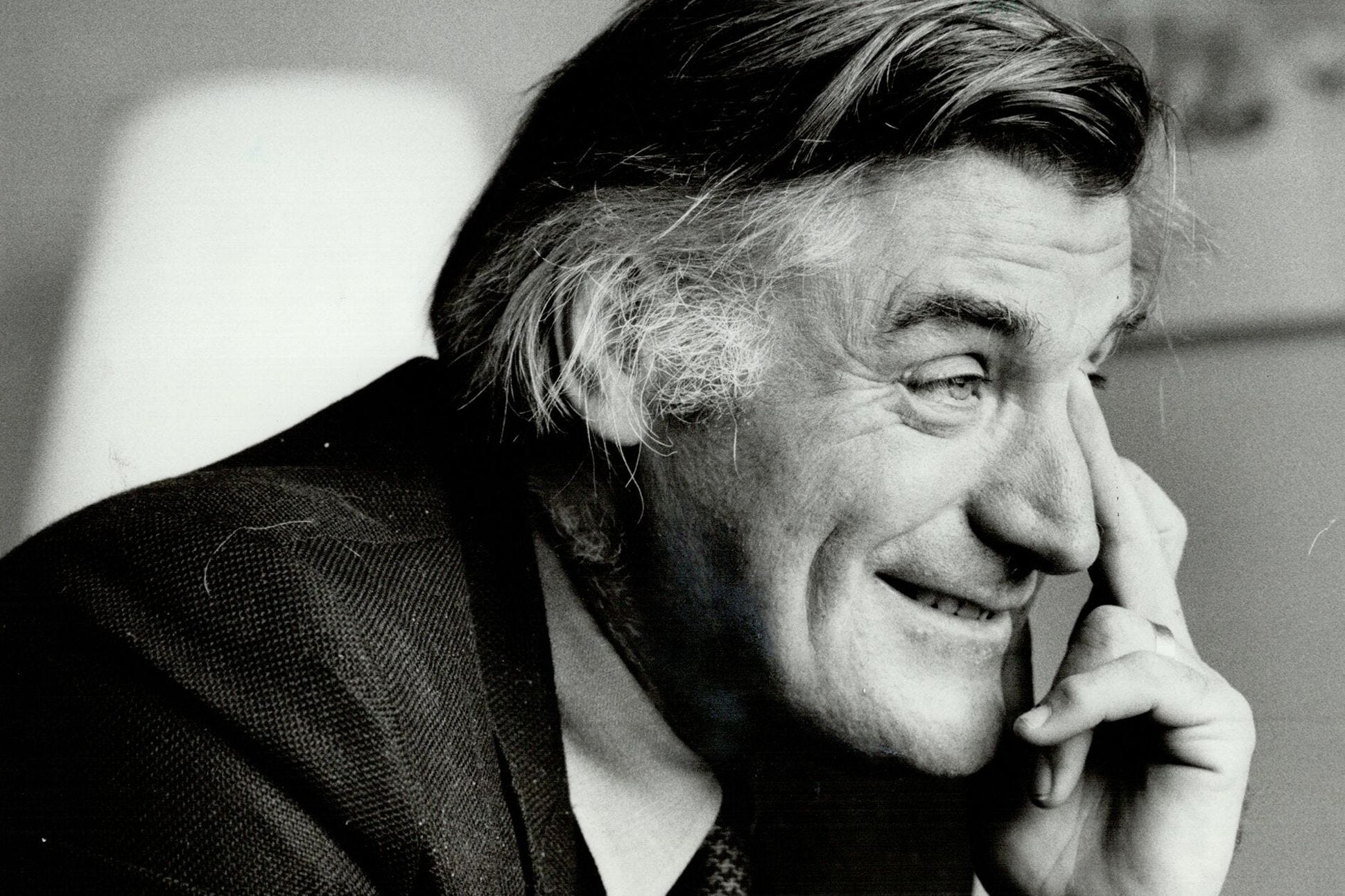
Ted Hughes' "The Thought-Fox"
Ted Hughes, one of the giants of twentieth-century British poetry, was born in Mytholmroyd, Yorkshire. After serving in the Royal Air Force, Hughes attended Cambridge, where he studied archeology and anthropology and took a special interest in myths and legends. In 1956, he met and married the American poet Sylvia Plath, who encouraged him to submit his manuscript to a first-book contest run by the Poetry Center. Awarded first prize by judges Marianne Moore, W. H. Auden, and Stephen Spender, The Hawk in the Rain (Faber & Faber, 1957) secured Hughes’s reputation as a poet of international stature. According to poet and critic Robert B. Shaw, Hughes’s poetry signaled a dramatic departure from the prevailing modes of the period. The stereotypical poem of the time was determined not to risk too much: politely domestic in its subject matter, understated and mildly ironic in style. By contrast, Hughes marshaled a language of nearly Shakespearean resonance to explore themes which were mythic and elemental.Hughes remained a controversial figure after Plath’s suicide left him as her literary executor and he refused (citing family privacy) to publish many of her papers. Nevertheless, his long career included unprecedented best-selling volumes such as Lupercal (Faber & Faber, 1960), Crow (Faber & Faber, 1970), Selected Poems 1957–1981 (Faber & Faber, 1982), and Birthday Letters (Faber & Faber, 1998), as well as many beloved children’s books, including The Iron Man (Faber & Faber, 1968), which was adapted as The Iron Giant (1999). With Seamus Heaney, he edited the popular anthologies The Rattle Bag (Faber & Faber, 1982) and The School Bag (Faber & Faber, 1997). Hughes was named executor of Plath’s literary estate and he edited several volumes of her work. Hughes also translated works from classical authors, including Ovid and Aeschylus. Hughes was appointed Britain’s Poet Laureate in 1984, a post he held until his death in 1998. Among his many awards, he was appointed to the Order of Merit, one of Britain’s highest honors.Hughes married Carol Orchard in 1970, and the couple lived on a small farm in Devon until his death. His forays into translations, essays, and criticism were noted for their intelligence and range. Hughes continued writing and publishing poems until his death from cancer on October 28, 1998. A memorial to Hughes in the famed Poets’ Corner of Westminster Abbey was unveiled in 2011.-bio via Poetry Foundation This is a public episode. If you'd like to discuss this with other subscribers or get access to bonus episodes, visit dailypoempod.substack.com/subscribe

Mark Strand's "The Prediction"
Mark Strand was born on Canada’s Prince Edward Island on April 11, 1934. He received a BA from Antioch College in Ohio in 1957 and attended Yale University, where he was awarded the Cook Prize and the Bergin Prize. After receiving his BFA degree in 1959, Strand spent a year studying at the University of Florence on a Fulbright fellowship. In 1962 he received his MA from the University of Iowa.Strand was the author of numerous collections of poetry, including Collected Poems (Alfred A. Knopf, 2014); Almost Invisible (Alfred A. Knopf, 2012); New Selected Poems (Alfred A. Knopf, 2007); Man and Camel (Alfred A. Knopf, 2006); Blizzard of One (Alfred A. Knopf, 1998), which won the Pulitzer Prize for Poetry; Dark Harbor (Alfred A. Knopf, 1993); The Continuous Life (Alfred A. Knopf, 1990); Selected Poems (Atheneum, 1980); The Story of Our Lives (Atheneum, 1973); and Reasons for Moving (Atheneum, 1968).Strand also published two books of prose, several volumes of translation (of works by Rafael Alberti and Carlos Drummond de Andrade, among others), several monographs on contemporary artists, and three books for children. He has edited a number of volumes, including 100 Great Poems of the Twentieth Century (W. W. Norton, 2005); The Golden Ecco Anthology (Ecco, 1994); The Best American Poetry 1991; and Another Republic: 17 European and South American Writers, co-edited with Charles Simic (HarperCollins, 1976).Strand’s honors included the Bollingen Prize, a Rockefeller Foundation award, three grants from the National Endowment for the Arts, a National Institute of Arts and Letters Award, the 2004 Wallace Stevens Award, the Academy of American Poets Fellowship in 1979, the 1974 Edgar Allen Poe Prize from the Academy of American Poets, as well as fellowships from the MacArthur Foundation and the Ingram Merrill Foundation.Strand served as poet laureate of the United States from 1990 to 1991 and as a Chancellor of the Academy of American Poets from 1995 to 2000. He taught English and comparative literature at Columbia University in New York City.Mark Strand died at eighty years old on November 29, 2014, in Brooklyn, New York.-bio via Academy of American Poets This is a public episode. If you'd like to discuss this with other subscribers or get access to bonus episodes, visit dailypoempod.substack.com/subscribe
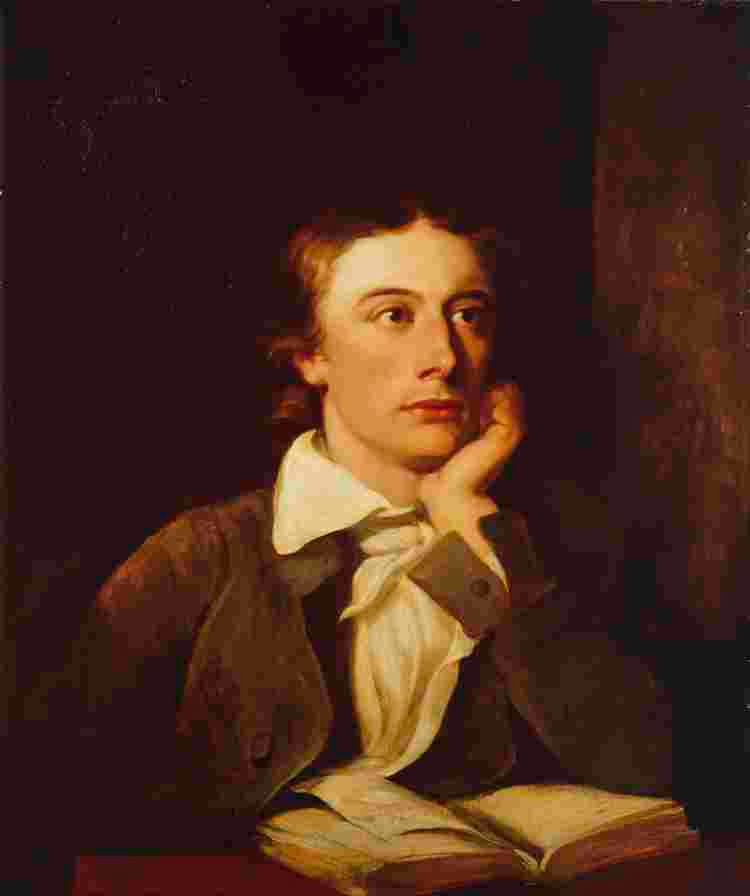
John Keats' "On the Sonnet"
Today’s poem is a meta-reflection on the constraints of poetic form that has something to say about all of life’s formal constraints. Happy reading. This is a public episode. If you'd like to discuss this with other subscribers or get access to bonus episodes, visit dailypoempod.substack.com/subscribe

Emily Dickinson's "Wild nights - Wild nights!"
Today’s poem–perfect for a Friday–gives us a less familiar (PG-13) Emily Dickinson, dreaming of letting her hair down. Happy reading. This is a public episode. If you'd like to discuss this with other subscribers or get access to bonus episodes, visit dailypoempod.substack.com/subscribe

John Donne's "A Valediction: Forbidding Mourning"
Today’s poem is a classic staple with Literature teachers for its expressive metaphors; it is a classic staple with me because it’s such a cracking-good poem. Happy reading. This is a public episode. If you'd like to discuss this with other subscribers or get access to bonus episodes, visit dailypoempod.substack.com/subscribe

Langston Hughes' "Theme For English B"
Today’s poem captures one of the universal challenges of education: recognizing the distinctions and distances between all human souls, and then bridging them without erasing them. Happy reading. This is a public episode. If you'd like to discuss this with other subscribers or get access to bonus episodes, visit dailypoempod.substack.com/subscribe
Robert Hayden's "Those Winter Sundays"
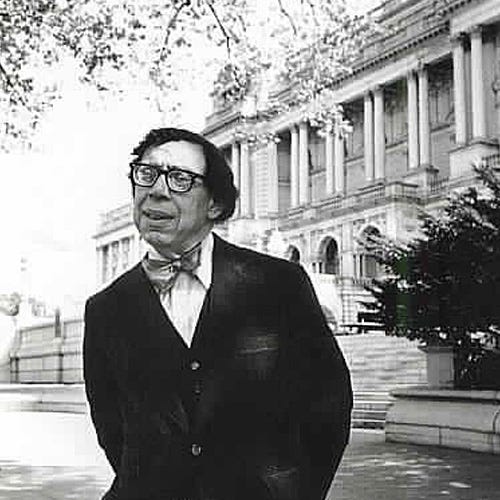
As the school year begins, today’s poem goes out to all of those everyday saints performing the unseen and unsung acts of love that make life possible for rest of us!Born Asa Bundy Sheffey on August 4, 1913, Robert Hayden was raised in the Detroit neighborhood Paradise Valley. He had an emotionally tumultuous childhood and lived, at times, with his parents and with a foster family. In 1932, he graduated from high school and, with the help of a scholarship, attended Detroit City College (later, Wayne State University). In 1944, Hayden received his graduate degree from the University of Michigan.Hayden published his first book of poems, Heart-Shape in the Dust (Falcon Press), in 1940, at the age of twenty-seven. He enrolled in a graduate English literature program at the University of Michigan, where he studied with W. H. Auden. Auden became an influential and critical guide in the development of Hayden’s writing. Hayden admired the work of Edna St. Vincent Millay, Elinor Wiley, Carl Sandburg, and Hart Crane, as well as the poets of the Harlem Renaissance—Langston Hughes, Countee Cullen, and Jean Toomer. He had an interest in African American history and explored his concerns about race in his writing. Hayden ultimately authored nine collections of poetry during his lifetime, as well as a collection of essays, and some children’s literature. Hayden’s poetry gained international recognition in the 1960s, and he was awarded the grand prize for poetry at the First World Festival of Negro Arts in Dakar, Senegal, in 1966 for his book Ballad of Remembrance (Paul Breman, 1962).Explaining the trajectory of Hayden’s career, the poet William Meredith wrote:Hayden declared himself, at considerable cost in popularity, an American poet rather than a Black poet, when for a time there was posited an unreconcilable difference between the two roles. There is scarcely a line of his which is not identifiable as an experience of Black America, but he would not relinquish the title of American writer for any narrower identity.After receiving his graduate degree from the University of Michigan, Hayden remained there for two years as a teaching fellow. He was the first Black member of the English department. He then joined the faculty at Fisk University in Nashville, where he would remain for more than twenty years. In 1975, Hayden received the Academy of American Poets Fellowship and, in 1976, he became the first Black American to be appointed as Consultant in Poetry to the Library of Congress (later, U.S. poet laureate).Hayden died in Ann Arbor, Michigan, on February 25, 1980.-bio via Academy of American Poets This is a public episode. If you'd like to discuss this with other subscribers or get access to bonus episodes, visit dailypoempod.substack.com/subscribe

Robert Browning's "My Last Duchess"
If a picture is worth 1,000 words, sometimes a portrait of your last wife who died under suspicious circumstances is as good as a confession. Happy(?) reading! This is a public episode. If you'd like to discuss this with other subscribers or get access to bonus episodes, visit dailypoempod.substack.com/subscribe
Even More Limericks
Hopefully five days of limericks has made this week a little lighter and a little brighter. See you next week for more of our regularly programming. Till then, happy reading! This is a public episode. If you'd like to discuss this with other subscribers or get access to bonus episodes, visit dailypoempod.substack.com/subscribe
More Limericks
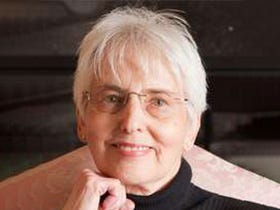
Today’s limericks are all about unexpected consequences. Happy reading.Children’s poet and educator Constance Levy earned degrees at Washington University and currently lives in St. Louis, Missouri. Known for its careful attention to external and internal rhyme, rhythm, alliteration, and assonance, Levy’s work frequently takes encounters with the natural world as its subject. By drawing on her own childhood encounters, Levy re-experiences the world through verse in the fresh and exuberant ways that children perceive natural objects and phenomena, often for the first time. Reviewers have consistently praised Levy’s poems for their accessible yet creative language. Her books include The Story of Red Rubber Ball (2004), Splash!: Poems of Our Watery World (2002), A Crack in the Clouds and Other Poems (1998), A Tree Place and Other Poems (1994), and I’m Going to Pet a Worm Today and Other Poems (1991). School Library Journal’s Kathleen Whalin summed up the appeal of Levy’s verse best in her review of When Whales Exhale and Other Poems: “To read Levy is to see the wonder of the everyday world.”-bio via Poetry Foundation This is a public episode. If you'd like to discuss this with other subscribers or get access to bonus episodes, visit dailypoempod.substack.com/subscribe

Beard Limericks
Things are getting hairy. Happy reading. This is a public episode. If you'd like to discuss this with other subscribers or get access to bonus episodes, visit dailypoempod.substack.com/subscribe

Two "Practical" Limericks
While limericks can be plenty nonsensical, today’s are downright sensible–especially that of Leigh Mercer, famous for his mathematical wordplay and best known for creating the enterprising palindrome, “A man, a plan, a canal: Panama!". This is a public episode. If you'd like to discuss this with other subscribers or get access to bonus episodes, visit dailypoempod.substack.com/subscribe
Edward Lear's "There was an Old Man of Thermopylæ"
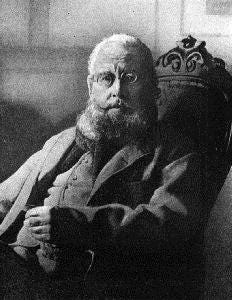
It’s another weekly gimmerick here on the Daily Poem. Edward Lear (12 May 1812 – 29 January 1888) was an English artist, illustrator, musician, author and poet, who is known mostly for his literary nonsense in poetry and prose and especially his limericks, a form he popularised.His principal areas of work as an artist were threefold: as a draughtsman employed to make illustrations of birds and animals, making coloured drawings during his journeys (which he reworked later, sometimes as plates for his travel books) and as a minor illustrator of Alfred, Lord Tennyson's poems.As an author, he is known principally for his popular nonsense collections of poems, songs, short stories, botanical drawings, recipes and alphabets. He also composed and published twelve musical settings of Tennyson's poetry.-bio via Wikipedia This is a public episode. If you'd like to discuss this with other subscribers or get access to bonus episodes, visit dailypoempod.substack.com/subscribe
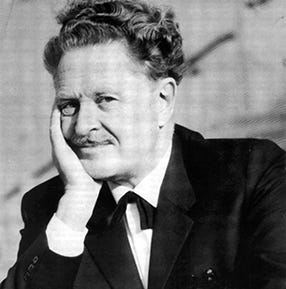
Nazim Hikmet's "On Living"
Nâzim Hikmet was born on January 15, 1902, in Salonika, Ottoman Empire (now Thessaloníki, Greece), where his father served in the Foreign Service. He was exposed to poetry at an early age through his artist mother and poet grandfather, and had his first poems published when he was seventeen.Raised in Istanbul, Hikmet left Allied-occupied Turkey after the First World War and ended up in Moscow, where he attended university and met writers and artists from all over the world. After the Turkish Independence in 1924, he returned to Turkey but was soon arrested for working on a leftist magazine. He managed to escape to Russia, where he continued to write plays and poems.In 1928, a general amnesty allowed Hikmet to return to Turkey, and during the next ten years he published nine books of poetry—five collections and four long poems—while working as a proofreader, journalist, scriptwriter, and translator. He left Turkey for the last time in 1951, after serving a lengthy jail sentence for his radical acts, and lived in the Soviet Union and Eastern Europe, where he continued to work for the ideals of world Communism. After receiving early recognition for his patriotic poems in syllabic meter, Hikmet came under the influence of the Russian Futurists in Moscow, and abandoned traditional forms while attempting to “depoetize” poetry.Many of Hikmet’s works have been translated into English, including Human Landscapes from My Country: An Epic Novel in Verse (Persea Books, 2009); Things I Didn’t Know I Loved (Persea Books, 1975); The Day Before Tomorrow (Carcanet Press, 1972); The Moscow Symphony (Rapp & Whiting, 1970); and Selected Poems (Cape Editions, 1967). In 1936, he published Seyh Bedreddin destani [The Epic of Shaykh Bedreddin] and Memleketimden insan manzaralari [Portraits of People from My Land].Hikmet died of a heart attack in Moscow in 1963. The first modern Turkish poet, he is recognized around the world as one of the great international poets of the twentieth century.-bio via Academy of American Poets This is a public episode. If you'd like to discuss this with other subscribers or get access to bonus episodes, visit dailypoempod.substack.com/subscribe

Billy Collins' "Forgetfulness"
Maybe you remember the experiences recounted in today’s poem—maybe you don’t. Happy reading! This is a public episode. If you'd like to discuss this with other subscribers or get access to bonus episodes, visit dailypoempod.substack.com/subscribe

T. S. Eliot's "Old Deuteronomy"
T. S. Eliot is remembered as a great poet, but he is surpassingly underrated as a namer of cats. Happy reading. This is a public episode. If you'd like to discuss this with other subscribers or get access to bonus episodes, visit dailypoempod.substack.com/subscribe

Robert Penn Warren's "Bearded Oaks"
Warren (1905-1989) was born in Kentucky and educated at Vanderbilt University and the University of California, Berkeley. Though perhaps best known for his 1946 novel All the King’s Men, he was the author of over a dozen books of poetry in addition to his prose work. He is the only writer to have won Pulitzer Prizes for both fiction (in 1947) and poetry (in 1958 and 1979). Warren’s other honors include a Rhodes Scholarship, a Guggenheim Fellowship, the Presidential Medal of Freedom, a MacArthur Fellowship, and the National Medal of Arts. He taught at Southwestern College (now Rhodes College) in Memphis and co-authored several literature textbooks.-bio via Library of Congress This is a public episode. If you'd like to discuss this with other subscribers or get access to bonus episodes, visit dailypoempod.substack.com/subscribe
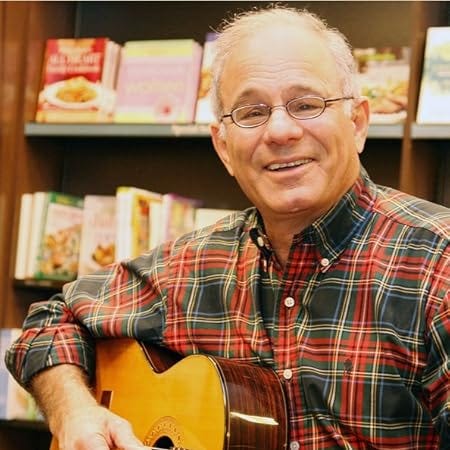
Bruce Lansky's "Confession"
Bruce Lansky is an internationally known poet and anthologist. He has a passion for getting children excited about reading and writing poetry. Lansky’s poetry books—including A Bad Case of the Giggles (2013), Peter, Peter, Pizza-Eater (2006), Mary Had a Little Jam (2004), If Kids Ruled the School (2004), and Rolling in the Aisles (2004)—are among America’s best-selling children’s poetry books. He is also the editor of the middle-grade fiction series Girls to the Rescue and Newfangled Fairy Tales. Lansky has performed in more than 300 schools from coast to coast. He enjoys returning to his peaceful home near one of Minnesota’s most beautiful lakes, just outside Minneapolis.-bio via Poetry Foundation This is a public episode. If you'd like to discuss this with other subscribers or get access to bonus episodes, visit dailypoempod.substack.com/subscribe
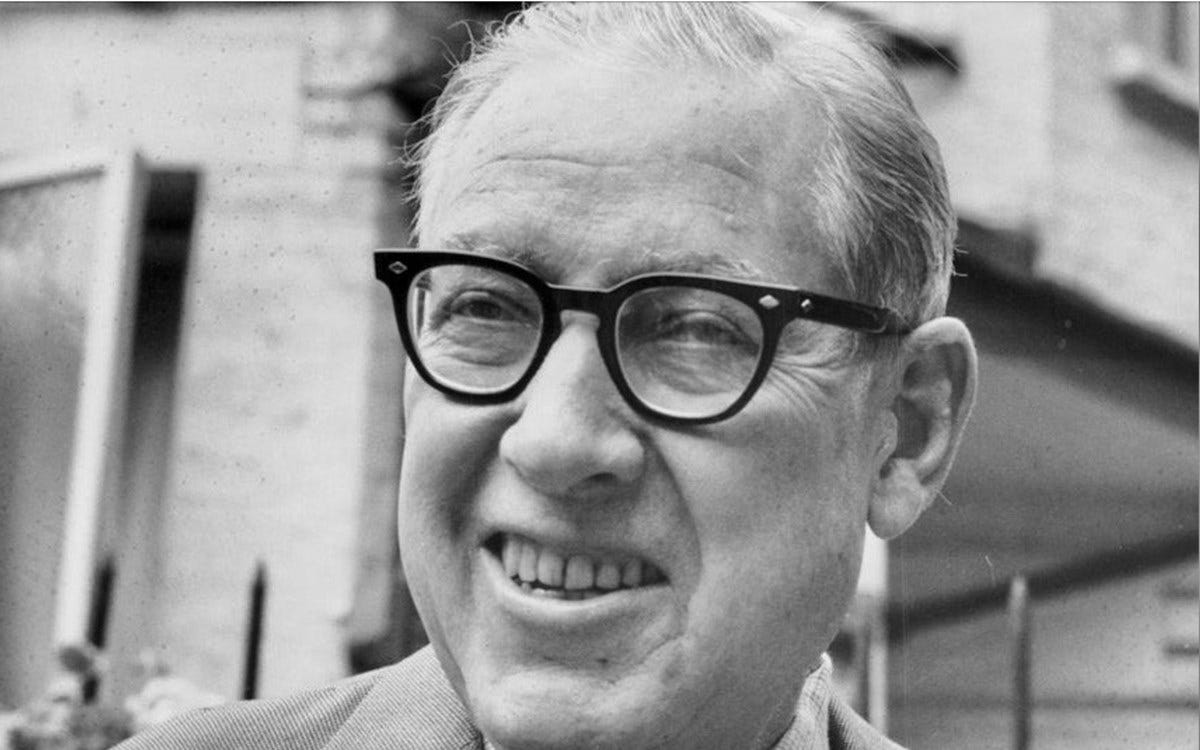
Two by Ogden Nash
Today’s poems from Ogden Nash, “The Ant” and “The Ostrich,” are the perfect marriage of wit and attention. Happy reading. This is a public episode. If you'd like to discuss this with other subscribers or get access to bonus episodes, visit dailypoempod.substack.com/subscribe

Oliver Herford's "The Platypus"
Oliver Herford (2 December 1860 – 5 July 1935), regarded as “the American Oscar Wilde,” was an Anglo-American writer, artist, and illustrator known for his pithy bon mots and skewed sense of humor. His obituary in The New York Times nicely sums up his unique brilliance:"His wit…was too original at first to go down with the very delectable highly respectable magazine editors of the Nineties. It was odd, unexpected, his own brand. It takes genius to write the best nonsense, which is often far more sensible than sense. Herford's, the result of care and polish, looked unforced.…Intelligent, thoughtful, well-bred, what with his animals and his children and his artistic simplicities, he was remote from the style of the best moderns. No violence, no obscenity, not even obscurity or that long-windedness which is the signet of the illustrious writer of today. An old-fashioned gentleman, a painstaking artist, whose work had edge, grace and distinction." This is a public episode. If you'd like to discuss this with other subscribers or get access to bonus episodes, visit dailypoempod.substack.com/subscribe

Gerard Manley Hopkins' "As Kingfishers Catch Fire"
Today’s poem begins with humble beasts but wings its way to the loftiest mysteries of existence. Happy reading. This is a public episode. If you'd like to discuss this with other subscribers or get access to bonus episodes, visit dailypoempod.substack.com/subscribe

Margaret Wise Brown's "Wild Black Crows"
Margaret Wise Brown (May 23, 1910 – November 13, 1952) was an American writer of children's books, including Goodnight Moon (1947) and The Runaway Bunny (1942), both illustrated by Clement Hurd. She has been called "the laureate of the nursery" for her achievements.Brown was born in the Brooklyn borough of New York City, the middle child of three children of Maude Margaret and Robert Bruce Brown. She was the granddaughter of politician Benjamin Gratz Brown. Her parents had an unhappy marriage. She was initially raised in Brooklyn's Greenpoint neighborhood, and later attended Chateau Brilliantmont boarding school in Lausanne, Switzerland, in 1923, while her parents were living in India and Canterbury, Connecticut.In 1925, Brown attended The Kew-Forest School. She began attending Dana Hall School in Wellesley, Massachusetts, in 1926, where she did well in athletics. After graduation in 1928, Brown went on to Hollins College in Roanoke, Virginia.Brown was an avid, lifelong beagler and was noted for her ability to keep pace, on foot, with the hounds.Following her graduation with a B.A. in English from Hollins in 1932, Brown worked as a teacher and also studied art. While working at the Bank Street Experimental School in New York City she started writing books for children. Bank Street promoted a new approach to children's education and literature, emphasizing the real world and the "here and now". This philosophy influenced Brown's work; she was also inspired by the poet Gertrude Stein, whose literary style influenced Brown's own writing.Brown's first published children's book was When the Wind Blew, published in 1937 by Harper & Brothers. Impressed by Brown's "here and now" style, W. R. Scott hired her as his first editor in 1938. Through Scott, she published the Noisy Book series among others. As editor at Scott, one of Brown's first projects was to recruit contemporary authors to write children's books for the company. Ernest Hemingway and John Steinbeck neglected to respond, but Brown's hero, Gertrude Stein, accepted the offer. Stein's book The World is Round was illustrated by Clement Hurd, who had previously teamed with Brown on W. R. Scott's Bumble Bugs and Elephants, considered "perhaps the first modern board book for babies". Brown and Hurd later teamed on the children's book classics The Runaway Bunny and Goodnight Moon, published by Harper. In addition to publishing a number of Brown's books, under her editorship, W. R. Scott published Edith Thacher Hurd's first book, Hurry Hurry, and Esphyr Slobodkina's classic Caps for Sale.-bio via Wikipedia This is a public episode. If you'd like to discuss this with other subscribers or get access to bonus episodes, visit dailypoempod.substack.com/subscribe

Katherine Craster's "The Centipede's Dilemma"
Today’s poem, written in 1871, actually gave the name to the since-codified psychological phenomenon known as the “centipede effect” or “centipede syndrome.” Psychologist George Humphrey (for whom the condition is alternatively named “Humphrey’s Law”) said of the poem, "This is a most psychological rhyme. It contains a profound truth which is illustrated daily in the lives of all of us." This is a public episode. If you'd like to discuss this with other subscribers or get access to bonus episodes, visit dailypoempod.substack.com/subscribe
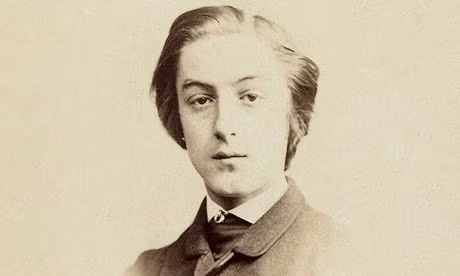
Gerard Manley Hopkins' "Morning, Midday, and Evening Sacrifice"
G. K. Chesterton wrote: “Oscar Wilde said that sunsets were not valued because we could not pay for sunsets. But Oscar Wilde was wrong; we can pay for sunsets. We can pay for them by not being Oscar Wilde.” Perhaps Hopkins was anticipating that sentiment in today’s poem. Happy reading. This is a public episode. If you'd like to discuss this with other subscribers or get access to bonus episodes, visit dailypoempod.substack.com/subscribe

"The Lady of Shalott" Pt. 4
Today’s poem is the fourth and final section of Tennyson’s Arthurian ballad. I have been reading his 1842 version and (I think) the final stanza is where it differs most from the 1832 original. You can compare both below to see for yourself how Tennyson’s alteration ramps up the pathos. Happy reading!1832 conclusion:They cross'd themselves, their stars they blest, Knight, minstrel, abbot, squire, and guest. There lay a parchment on her breast, That puzzled more than all the rest, The wellfed wits at Camelot. 'The web was woven curiously, The charm is broken utterly, Draw near and fear not,—this is I, The Lady of Shalott.'1842 conclusion:Who is this? and what is here? And in the lighted palace near Died the sound of royal cheer; And they cross'd themselves for fear, All the knights at Camelot: But Lancelot mused a little space; He said, "She has a lovely face; God in his mercy lend her grace, The Lady of Shalott." This is a public episode. If you'd like to discuss this with other subscribers or get access to bonus episodes, visit dailypoempod.substack.com/subscribe

"The Lady of Shalott" Pt. 3
Today we come to the turning point for the Lady of Shalott. Happy reading. This is a public episode. If you'd like to discuss this with other subscribers or get access to bonus episodes, visit dailypoempod.substack.com/subscribe
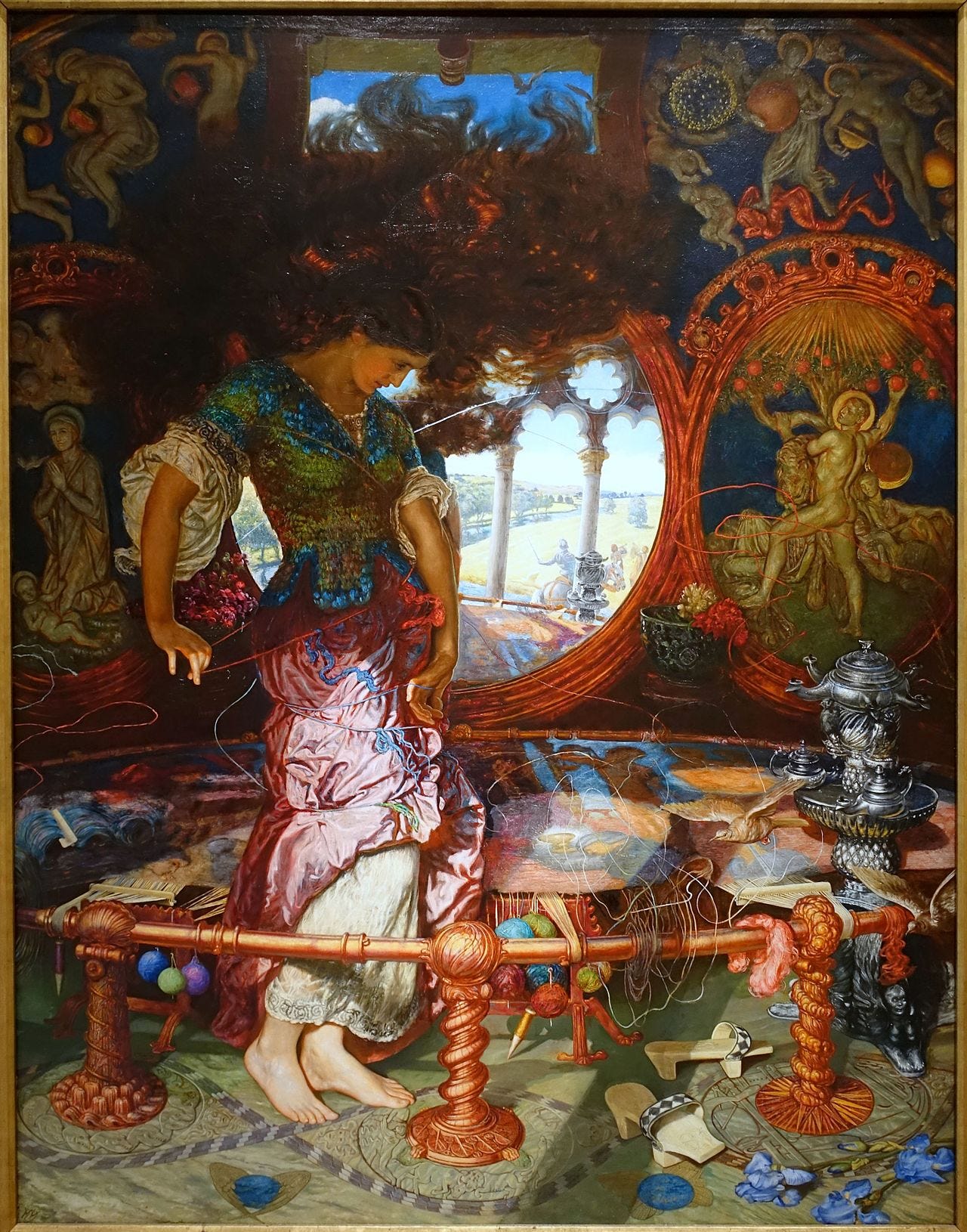
"The Lady of Shalott" Pt. 2
In part two, the “Lady” sits, weaving, in a world of images but pines for the world of solid realities. This is a public episode. If you'd like to discuss this with other subscribers or get access to bonus episodes, visit dailypoempod.substack.com/subscribe

Alfred, Lord Tennyson's "The Lady of Shalott" Pt. 1
Today is the first of four in which we’ll wend our way through Tennyson’s tragic Arthurian ballad. This is a public episode. If you'd like to discuss this with other subscribers or get access to bonus episodes, visit dailypoempod.substack.com/subscribe

John Hollander's "A Watched Pot"
Today’s poem is a shape poem dedicated to chefs, but (surprise?) it might be about more than cooking.John Hollander, one of contemporary poetry’s foremost poets, editors, and anthologists, grew up in New York City. He studied at Columbia University and Indiana University, and he was a Junior Fellow of the Society of Fellows of Harvard University. Hollander received numerous awards and fellowships, including the Levinson Prize, a MacArthur Foundation grant, and the poet laureateship of Connecticut. He served as a Chancellor of the Academy of American Poets, and he taught at Hunter College, Connecticut College, and Yale University, where he was the Sterling Professor emeritus of English.Over the course of an astonishing career, Hollander influenced generations of poets and thinkers with his critical work, his anthologies and his poetry. In the words of J.D. McClatchy, Hollander was “a formidable presence in American literary life.” Hollander’s eminence as a scholar and critic was in some ways greater than his reputation as a poet. His groundbreaking introduction to form and prosody Rhyme’s Reason (1981), as well as his work as an anthologist, has ensured him a place as one of the 20th-century’s great, original literary critics. Hollander’s critical writing is known for its extreme erudition and graceful touch. Hollander’s poetry possesses many of the same qualities, though the wide range of allusion and technical virtuosity can make it seem “difficult” to a general readership.Hollander’s first poetry collection, A Crackling of Thorns (1958) won the prestigious Yale Series of Younger Poets Awards, judged by W.H. Auden. And in fact James K. Robinson in the Southern Review found that Hollander’s “early poetry resembles Auden’s in its wit, its learned allusiveness, its prosodic mastery.” Hollander’s technique continued to develop through later books like Visions from the Ramble (1965) and The Night Mirror (1971). Broader in range and scope than his previous work, Hollander’s Tales Told of the Fathers (1975) and Spectral Emanations (1978) heralded his arrival as a major force in contemporary poetry. Reviewing Spectral Emanations for the New Republic, Harold Bloom reflected on his changing impressions of the poet’s work over the first 20 years of his career: “I read [A Crackling of Thorns] … soon after I first met the poet, and was rather more impressed by the man than by the book. It has taken 20 years for the emotional complexity, spiritual anguish, and intellectual and moral power of the man to become the book. The enormous mastery of verse was there from the start, and is there still … But there seemed almost always to be more knowledge and insight within Hollander than the verse could accommodate.” Bloom found in Spectral Emanations “another poet as vital and accomplished as [A.R.] Ammons, [James] Merrill, [W.S.] Merwin, [John] Ashbery, James Wright, an immense augmentation to what is clearly a group of major poets.”Shortly after Spectral Emanations, Hollander published Blue Wine and Other Poems (1979), a volume which a number of critics have identified as an important milestone in Hollander’s life and career. Reviewing the work for the New Leader, Phoebe Pettingell remarked, “I would guess from the evidence of Blue Wine that John Hollander is now at the crossroads of his own midlife journey, picking out a new direction to follow.” Hollander’s new direction proved to be incredibly fruitful: his next books were unqualified successes. Powers of Thirteen (1983) won the Bollingen Prize from Yale University and In Time and Place (1986) was highly praised for its blend of verse and prose. In the Times Literary Supplement, Jay Parini believed “an elegiac tone dominates this book, which begins with a sequence of 34 poems in the In Memoriam stanza. These interconnecting lyrics are exquisite and moving, superior to almost anything else Hollander has ever written.” Parini described the book as “a landmark in contemporary poetry.” McClatchy held up In Time and Place as evidence that Hollander is “part conjurer and part philosopher, one of our language’s true mythographers and one of its very best poets.”Hollander continued to publish challenging, technically stunning verse throughout the 1980s and ’90s. His Selected Poetry (1993) was released simultaneously with Tesserae (1993); Figurehead and Other Poems (1999) came a few years later. “The work collected in [Tesserae and Other Poems and Selected Poetry] makes clear that John Hollander is a considerable poet,” New Republic reviewer Vernon Shetley remarked, “but it may leave readers wondering still, thirty-five years after his first book … exactly what kind of poet Hollander is.” Shetley recognized the sheer variety of Hollander’s work, but also noted the peculiar absence of anything like a personality, “as if the poet had taken to heart, much more fully than its author, Eliot’s dictum that poetry should embody ‘emotion which has its life in the poem and not in the history

William Blake's "The Divine Image"
In today’s poem, from Songs of Innocence, we meet William Blake struggling to sort out his theological analogies. This is a public episode. If you'd like to discuss this with other subscribers or get access to bonus episodes, visit dailypoempod.substack.com/subscribe

John Milton's "When I consider how my light is spent"
In today’s poem, also known as “Sonnet 19,” Milton offers a pious alternative to “raging” against the dying of the light. Happy reading. This is a public episode. If you'd like to discuss this with other subscribers or get access to bonus episodes, visit dailypoempod.substack.com/subscribe

Elizabeth Barrett Browning's "A Musical Instrument"
Today’s poem muses on the sweet and awful creation of the poet. Happy reading! This is a public episode. If you'd like to discuss this with other subscribers or get access to bonus episodes, visit dailypoempod.substack.com/subscribe
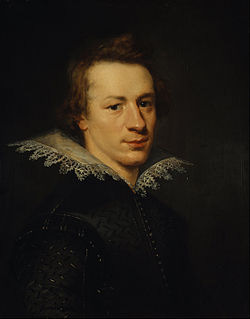
Ben Jonson's "Though I be young"
Today’s poem is a song from Ben Jonson’s final play, The Sad Shepherd (1641). Happy reading. This is a public episode. If you'd like to discuss this with other subscribers or get access to bonus episodes, visit dailypoempod.substack.com/subscribe
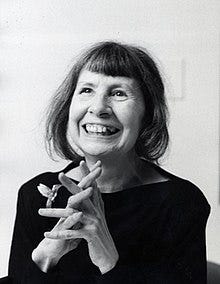
Amy Clampitt's "The Godfather Returns to Color TV"
Just when you thought you were out, The Daily Poem pulls you back in–to poems about movies. Today’s charming and earnest poem imitates the medium it describes (film) by swapping memorable images and sensations for linear propositions. Happy reading.Amy Clampitt was born and raised in New Providence, Iowa. She studied first at Grinnell College in Grinnell, Iowa, and later at Columbia University and the New School for Social Research in New York City. Throughout the 1940s and 1950s, Clampitt held various jobs at publishers and organizations such as Oxford University Press and the Audubon Society. In the 1960s, she turned her attention to poetry. In 1974 she published a small volume of poetry titled Multitudes, Multitudes; thereafter her work appeared frequently in the New Yorker. Upon the publication of her book of poems The Kingfisher in 1983, she became one of the most highly regarded poets in America. Her other collections include A Silence Opens (1994), Westward (1990), What the Light Was Like (1985), and Archaic Figure (1987). Clampitt received fellowships from the Guggenheim Foundation, the MacArthur Foundation, and the Academy of American Poets. A member of the American Academy of Arts and Letters, Clampitt taught at the College of William and Mary, Amherst College, and Smith College.Joseph Parisi, a Chicago Tribune Book World reviewer, called the poet’s sudden success after the publication of The Kingfisher “one of the most stunning debuts in recent memory.” Parisi continued, “throughout this bountiful book, her wit, sensibility and stylish wordplay seldom disappoint.” In one of the first articles to appear after The Kingfisher’s debut, New York Review of Books critic Helen Vendler wrote that “Amy Clampitt writes a beautiful, taxing poetry. In it, thinking uncoils and coils again, embodying its perpetua argument with itself.” Georgia Review contributor Peter Stitt also felt that “The Kingfisher is … in many ways an almost dazzling performance.” In the Observer, Peter Porter described Clampitt as “a virtuoso of the here and the palpable.” Porter ranked her with the likes of Emily Dickinson and Elizabeth Bishop.Critics praised the allusive richness and syntactical sophistication of Clampitt’s verse. Her poetry is characterized by a “baroque profusion, the romance of the adjective, labyrinthine syntax, a festival lexicon,” said New York Times Book Review contributor Alfred Corn in an article about Clampitt’s second important collection, What the Light Was Like (1985). Indeed, the poet’s use of vocabulary and syntax is elaborate. “When you read Amy Clampitt,” suggests Richard Tillinghast in the New York Times Book Review, “have a dictionary or two at your elbow.” The poet has, Tillinghast continues, a “virtuoso command of vocabulary, [a] gift for playing the English language like a musical instrument and [a] startling and delightful ability to create metaphor.” Her ability as a poet quickly gained Clampitt recognition as “the most refreshing new American poet to appear in many years,” according to one Times Literary Supplement reviewer.Clampitt’s work is also characterized by erudite allusions, for which she provides detailed footnotes. Times Literary Supplement critic Lachlan Mackinnon compared her “finical accuracy of description and the provision of copious notes at the end of a volume,” to a similar tendency in the work of Marianne Moore. “She is as ‘literary’ and allusive as Eliot and Pound, as filled with grubby realia as William Carlos Williams, as ornamented as Wallace Stevens and as descriptive as Marianne Moore,” observed Corn. Washington Post reviewer Joel Conarroe added Walt Whitman and Hart Crane to this list of comparable poets: “Like Whitman, she is attracted to proliferating lists as well as to ‘the old thought of likenesses,’” wrote Conarroe. “And as in Crane her compressed images create multiple resonances of sound and sense.”What the Light Was Like centers around images of light and darkness. This book is “more chastely restrained than The Kingfisher,” according to Times Literary Supplement contributor Neil Corcoran. Conarroe believed that the poet’s “own imagery throughout [the book] is sensuous (even lush) and specific—in short, Keatsian.” Corn similarly commented that “there are stirring moments in each poem, and an authentic sense of Keats’ psychology.” He opined, however, that “her sequence [‘Voyages: A Homage to John Keats‘] isn’t effective throughout, the reason no doubt being that her high-lyric mode” does not suit narrative as well as a plainer style would.Clampitt’s Archaic Figure (1987) maintains her “idiosyncratic style,” as William Logan called it in the Chicago Tribune. New York Times Book Review contributor Mark Rudman noted the poet’s “spontaneity and humor; she is quick to react, hasty, impulsive, responsive to place—and to space.” In the London Sunday Times, David Profumo further praised Archaic Figure. Taking the example of the poem “Hippocrene,” the critic asserted t

Siegfried Sassoon's "Picture-Show"
Today’s poem–published in 1920–is one of the early intersections between poetry and cinema. Happy reading.Siegfried Sassoon (1886-1967) is best remembered for his angry and compassionate poems about World War I, which brought him public and critical acclaim. Avoiding the sentimentality and jingoism of many war poets, Sassoon wrote of the horror and brutality of trench warfare and contemptuously satirized generals, politicians, and churchmen for their incompetence and blind support of the war. He was also well known as a novelist and political commentator. In 1957 he was awarded the Queen’s Medal for Poetry.-bio via Poetry Foundation This is a public episode. If you'd like to discuss this with other subscribers or get access to bonus episodes, visit dailypoempod.substack.com/subscribe

Hart Crane's "Chaplinesque"
In today’s poem, written a century ago, cinema (and Charlie Chaplin) is already supplying metaphors for the work and experience of modern poets. Happy reading.Harold Hart Crane was born on July 21, 1899, in Garrettsville, Ohio, and began writing verse in his early teenage years. Though he never attended college, Crane read regularly on his own, digesting the works of the Elizabethan dramatists and poets William Shakespeare, Christopher Marlowe, John Donne and the nineteenth-century French poets Charles Vildrac, Jules Laforgue, and Arthur Rimbaud. His father, a candy manufacturer, attempted to dissuade him from a career in poetry, but Crane was determined to follow his passion to write.Living in New York City, he associated with many important figures in literature of the time, including Allen Tate, the novelist and short story writer Katherine Anne Porter, E. E. Cummings, and Jean Toomer, but his heavy drinking and chronic instability frustrated any attempts at lasting friendship. An admirer of T. S. Eliot, Crane combined the influences of European literature and traditional versification with a particularly American sensibility derived from Walt Whitman.His major work, the book-length poem, The Bridge, expresses in ecstatic terms a vision of the historical and spiritual significance of America. Like Eliot, Crane used the landscape of the modern, industrialized city to create a powerful new symbolic literature.Hart Crane died by suicide on April 27, 1932, at the age of thirty-two, while sailing back to New York from Mexico.-bio via Academy of American Poets This is a public episode. If you'd like to discuss this with other subscribers or get access to bonus episodes, visit dailypoempod.substack.com/subscribe

Joseph Stanton's "Edward Hopper's 'New York Movie'"
Today’s poem (from an art scholar and master of ekphrastic poetry) features another classic Hopper painting and a contemplative trip to the movies. Happy reading!Joseph Stanton’s books of poems include A Field Guide to the Wildlife of Suburban O‘ahu, Cardinal Points, Imaginary Museum: Poems on Art, and What the Kite Thinks, Moving Pictures, and Lifelines: Poems for Homer and Hopper. He has published more than 300 poems in such journals as Poetry, Harvard Review, Poetry East, The Cortland Review, Ekphrasis, Bamboo Ridge, Elysian Fields Quarterly, Endicott Studio’s Journal of the Mythic Arts, and New York Quarterly. In 2007, Ted Kooser selected one of Stanton’s poems for his “American Life in Poetry” column.Stanton has edited A Hawai‘i Anthology, which won a Ka Palapala Po‘okela Award for excellence in literature. Two of his other books have won honorable mention Ka Palapala Po‘okela Awards. In 1997 he received the Cades Award for his contributions to the literature of Hawai‘i.As an art historian, Stanton has published essays on Edward Hopper, Winslow Homer, Maurice Sendak, Chris Van Allsburg, and many other artists. His most recent nonfiction books are The Important Books: Children’s Picture Books as Art and Literature and Stan Musial: A Biography. He teaches art history and American studies at the University of Hawai‘i at Mānoa.-bio via Poetry Foundation This is a public episode. If you'd like to discuss this with other subscribers or get access to bonus episodes, visit dailypoempod.substack.com/subscribe

Cornelius Eady's "Charlie Chaplin Impersonates a Poet"
This week The Daily Poem heads to the movies.Cornelius Eady is the founder of the poetry group Cave Canem and his published collections include Victims of the Latest Dance Craze (Omnation Press, 1986), winner of the Lamont Poetry Prize from the Academy of American Poets; The Gathering of My Name (Carnegie Mellon University Press,1991), nominated for a Pulitzer Prize; Brutal Imagination (G.P. Putnam’s Sons, 2001), a National Book Award finalist; and Hardheaded Weather: New and Selected Poems (G.P. Putnam’s Sons, 2008). This is a public episode. If you'd like to discuss this with other subscribers or get access to bonus episodes, visit dailypoempod.substack.com/subscribe
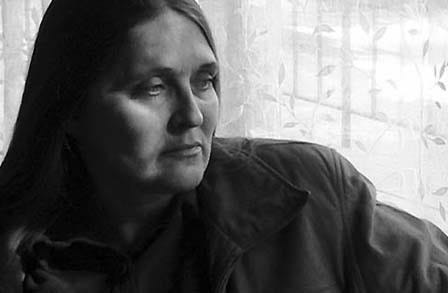
Allison Adelle Hedge Coke's "America, I Sing You Back"
Today’s poem both responds to and carries on the work of Walt Whitman and Langston Hughes. Happy reading!Allison Adelle Hedge Coke has written seven books of poetry, one book of nonfiction, and a play. Following former fieldworker retraining in the mid-1980s, the much-decorated poet began her writing and teaching career. She now serves as distinguished professor of creative writing at the University of California, Riverside.-bio via UC Riverside This is a public episode. If you'd like to discuss this with other subscribers or get access to bonus episodes, visit dailypoempod.substack.com/subscribe

Two for the Fourth
Today’s (frequently-paired) poems form an antiphonal song between Walt Whitman and Langston Hughes on the complicated ideal of “being American.” Happy Independence Day and Happy Reading! This is a public episode. If you'd like to discuss this with other subscribers or get access to bonus episodes, visit dailypoempod.substack.com/subscribe
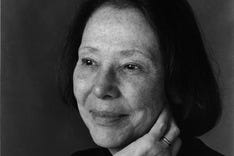
Grace Schulman's "American Solitude"
Today’s poem is lovely, dark, and deep. Loneliness, Americana, Edward Hopper, literary illusions, clams: it has it all. Happy reading!Poet and editor Grace Schulman (b. 1935) was born Grace Waldman in New York City, the only child of a Polish Jewish immigrant father and a seventh-generation American mother. She studied at Bard College and earned her BA from American University and her PhD from New York University. She is Distinguished Professor of English at Baruch College, CUNY, and served as the poetry editor of the Nation from 1972 to 2006. She also directed the 92nd Street Y Poetry Center from 1973 to 1985. She has published nine collections of poetry, including Again, the Dawn: New and Selected Poems, 1976-2022 (Turtle Point Press, 2022) and Days of Wonder: New and Selected Poems (Harper Collins, 2022). Her collection of essays, First Loves and Other Adventures (2010), reflects on her life as a writer and reader.Typically written in a lucid free verse that occasionally reaches vatic heights, Schulman’s poems often take on subjects of art, history, and faith. Schulman’s history is usually that of her beloved New York City, where she has lived and worked as a dedicated poetry advocate all her life. Earthly moments and details of city life constantly suggest larger spiritual questions. Poet Ron Slate has described Schulman as “not only a poet of praise, but one who addresses the grounding questions of this mode. How and why do we find beauty in adversity?”Schulman names Hopkins, Donne, Shakespeare, Dante, Whitman, and Marianne Moore as her influences. When Schulman was a teenager she was introduced to Moore, who had a profound effect on her poetics. Schulman wrote on the poet in a critical study, Marianne Moore: The Poetry of Engagement (1986), and edited The Poems of Marianne Moore (2004). Schulman has received numerous awards for her work, including the Delmore Schwartz Memorial Award, the Aiken Taylor Award for poetry, and Pushcart prizes. She has received fellowships from the New York Foundation of the Arts and the Guggenheim Foundation. Her work has been published in the Nation, the New Yorker, and numerous other magazines and journals, and appeared in The Best of the Best American Poetry 1988–1998.She lives in New York City and East Hampton.-bio via Poetry Foundation This is a public episode. If you'd like to discuss this with other subscribers or get access to bonus episodes, visit dailypoempod.substack.com/subscribe

John Ciardi's "Mummy Slept Late and Daddy Fixed Breakfast"
Today’s poem from John Ciardi goes out to all of the dads who can cook, all of the dads who can’t, all of the children who have endured the latter, and all of the moms who deserve to sleep late more often. Happy reading! This is a public episode. If you'd like to discuss this with other subscribers or get access to bonus episodes, visit dailypoempod.substack.com/subscribe

Edgar Allan Poe's "To Helen"
In today’s poem, Poe offers us an ode to the Homeric beauty that is also definitely giving some Stacy’s-mom vibes. This is a public episode. If you'd like to discuss this with other subscribers or get access to bonus episodes, visit dailypoempod.substack.com/subscribe

Emily Dickinson's "I felt a Funeral, in my Brain,"
On one of her darker days, Emily Dickinson dreams of a fate worse than death. Happy(?) reading. This is a public episode. If you'd like to discuss this with other subscribers or get access to bonus episodes, visit dailypoempod.substack.com/subscribe

Paul Laurence Dunbar's "The Lawyers' Ways"
Happy birthday to the trailblazing Paul Laurence Dunbar.For more meditations on “lawyers’ ways,” come join our discussion of To Kill a Mockingbird over on the Close Reads Podcast! This is a public episode. If you'd like to discuss this with other subscribers or get access to bonus episodes, visit dailypoempod.substack.com/subscribe