The Daily Poem
939 episodes — Page 5 of 19

Timothy Murphy's "Mentor"
Poet Timothy Murphy was born in Hibbing, Minnesota, and graduated from Yale University, where he participated in the Scholar of the House program. He was a partner in a large-scale hog farm and a businessperson. His books include the poetry collections The Deed of Gift (1998), Very Far North (2002), Mortal Stakes • Faint Thunder (2011), Hunter's Log (2011), and Devotions (2017) as well as a memoir, Set the Ploughshare Deep: A Prairie Memoir (2000). He has also translated Beowulf. Though hunting and farming are essential subjects for his writing, myths and legends influence his work as well. He passed away in June 2018.-bio via Poetry Foundation This is a public episode. If you'd like to discuss this with other subscribers or get access to bonus episodes, visit dailypoempod.substack.com/subscribe

John McCrae's "In Flanders Fields"
Today’s poem has become one of the most famous 20th-century war poems–in part because of its ability to grant fallen soldiers a voice that is earnestly patriotic without becoming jingoistic. Perhaps the balance is a reflection of the steadiness of the Canadian veteran who penned it. Happy reading. This is a public episode. If you'd like to discuss this with other subscribers or get access to bonus episodes, visit dailypoempod.substack.com/subscribe

Seamus Heaney's "Scaffolding"
Today’s poem is a Heaney favorite, and goes out to all of the couples tying the knot this summer. Happy reading! This is a public episode. If you'd like to discuss this with other subscribers or get access to bonus episodes, visit dailypoempod.substack.com/subscribe

Emily Dickinson's "The saddest noise, the sweetest noise"
The uniting, in today’s poem, of Spring and sadness is not immediately intuitive. However, it makes more natural sense amidst the many partings and reminiscences of graduation season. Happy reading. This is a public episode. If you'd like to discuss this with other subscribers or get access to bonus episodes, visit dailypoempod.substack.com/subscribe

Bill Knott's "An Instructor's Dream"
Today’s poem shows us a teacher wrestling with the notion of “graduation.” Happy reading.Bill Knott was born on February 17, 1940, in Carson City, Michigan. When he was seven years old, his mother died in childbirth, and his father passed away three years later. He grew up in an orphanage in Mooseheart, Illinois, and on an uncle’s farm. In the late 1950s, he joined the U.S. Army and, after serving his full enlistment, was honorably discharged in 1960.In the early 1960s, Knott moved to Chicago, where he worked as a hospital orderly. There, he became involved in the poetry scene and worked with John Logan, Paul Carroll, Charles Simic, and other poets. He published his first book, The Naomi Poems, Book One: Corpse and Beans (Big Table, 1968), under the pseudonym Saint Geraurd in 1968. He also published Nights of Naomi (Barn Dream Press, 1971) and Auto-necrophilia (Big Table, 1971) under the same name.Knott went on to publish several poetry collections under his own name, including I Am Flying into Myself: Selected Poems, 1960–2014 (Farrar, Straus and Giroux, 2017), edited by Thomas Lux; Laugh at the End of the World: Collected Comic Poems 1969–1999 (BOA Editions, 2000); Becos (Random House, 1983); and Love Poems to Myself (Barn Dream Press, 1974). He also self-published many books and posted all of his poems online, where they could be read for free.Of his work, Lux writes, “As dense as some of his poems can be, they rarely defeat comprehensibility. Some are so lucid and straightforward, they are like a punch in the gut, or one’s first great kiss…. His intense focus on every syllable, and the sound of every syllable in relation to nearby sounds, is so skilled that the poems often seem casual: Art hides art.”Knott taught at Emerson College for over twenty-five years. He received the Iowa Poetry Prize, a Guggenheim Fellowship, and two fellowships from the National Endowment for the Arts, among other honors and awards. He died on March 12, 2014, in Bay City, Michigan.-bio via Academy of American Poets This is a public episode. If you'd like to discuss this with other subscribers or get access to bonus episodes, visit dailypoempod.substack.com/subscribe

Andrew Barton Paterson's "The Man From Ironbark"
Today’s poem explains why some Australians wear beards.Andrew Barton "Banjo" Paterson, CBE (17 February 1864 – 5 February 1941) was an Australian bush poet, journalist and author, widely considered one of the greatest writers of Australia's colonial period.Born in rural New South Wales, Paterson worked as a lawyer before transitioning into literature, where he quickly gained recognition for capturing the life of the Australian bush. A representative of the Bulletin School of Australian literature, Paterson wrote many of his best known poems for the nationalist journal The Bulletin, including "Clancy of the Overflow" (1889) and "The Man from Snowy River" (1890). His 1895 ballad "Waltzing Matilda" is regarded widely as Australia's unofficial national anthem and, according to the National Film and Sound Archive, has been recorded more than any other Australian song.-bio via Wikipedia This is a public episode. If you'd like to discuss this with other subscribers or get access to bonus episodes, visit dailypoempod.substack.com/subscribe

Fernando Valverde's "Edgar Allan Poe Is Reached at the Baltimore Harbor by the Shadows That Pursue Him"
Fernando Valverde (Granada, 1980) has been voted the most relevant Spanish-language poet born since 1970 by nearly two hundred critics and researchers from more than one hundred international universities (Harvard, Oxford, Columbia, Princeton, Bologna, Salamanca, UNAM and the Sorbonne).His books have been published in different countries in Europe and America and translated into several languages. He has received some of the most prestigious awards for poetry in Spanish, including the Federico García Lorca, the Emilio Alarcos del Principado de Asturias and the Antonio Machado. His last book, The Insistence of Harm, received the Book of the Year award from the Latino American Writers Institute of the City University of New York.For ten years he has worked as a journalist for the Spanish newspaper El País. He directs the International Festival of Poetry in Granada and is a professor at the University of Virginia (Charlottesville, EEUU).His last bilingual book, America, has been published by Copper Canyon Press with translation by Carolyn Forché.In 2022, Fernando Valverde published the first biography of the poet Percy B. Shelley in Spanish and in 2024 he published a monumental biography of Lord Byron. Valverde is considered one of the greatest specialists in Romanticism today.-bio via FernandoValverde.com This is a public episode. If you'd like to discuss this with other subscribers or get access to bonus episodes, visit dailypoempod.substack.com/subscribe

Marya Zaturensky's "The Girl Takes Her Place Among the Mothers"
Today’s poem goes out to all the mothers–we wouldn’t be here without you! Happy reading.Marya Zaturensky, Russian-born American poet and Pulitzer Prize winner, was born on September 12, 1902, in Kiev, Russia (now Ukraine). She emigrated to the United States with her family in 1909 and was educated in New York public schools; attended Valparaiso University, 1922–23; graduated from University of Wisconsin, 1925. The same year she married Horace Gregory (a poet and critic), and had two children: Joanna and Patrick.Zaturensky won the John Reed Memorial Award from Poetry magazine (1922), the Shelley Memorial Award (1935), the Guarantors Award from Poetry magazine (1937), and finally the Pulitzer Prize for Poetry in 1938. This is a public episode. If you'd like to discuss this with other subscribers or get access to bonus episodes, visit dailypoempod.substack.com/subscribe

Henry Sambrooke Leigh's "The Twins"
Today’s poem is one of the few enduring works of a poet and playwright who burned brightly during his heyday and then blinked out almost entirely. Happy reading.Leigh, son of James Mathews Leigh, was born in London on 29 March 1837. At an early age he engaged in literary pursuits. From time to time appeared collections of his lyrics, under the titles of Carols of Cockayne, 1869 (several editions); Gillott and Goosequill, 1871; A Town Garland: a Collection of Lyrics, 1878; and Strains from the Strand: Trifles in Verse, 1882. His verse was always fluent, but otherwise of very slender merit.For the stage he translated many French comic operas. His first theatrical essay was in collaboration with Charles Millward in a musical spectacle for the Theatre Royal in Birmingham. His ‘Falsacappa,’ music by Offenbach, was produced at the Globe Theatre on 22 April 1871; ‘Le Roi Carotte’ at the Alhambra on 3 June 1872; ‘Bridge of Sighs,’ opera-bouffe, at the St. James's, 18 Nov. 1872; ‘White Cat,’ a fairy spectacle, at the Queen's, Long Acre, on 2 Dec. 1875; ‘Voyage dans la Lune,’ opera-bouffe, at the Alhambra, on 15 April 1876; ‘Fatinitza,’ opera-bouffe (the words were printed), adapted from the German, at the Alhambra on 20 June 1878; ‘The Great Casimir,’ a vaudeville, at the Gaiety, on 27 Sept. 1879; ‘Cinderella,’ an opera, with music by J. Farmer, at St. James's Hall, on 2 May 1884 (the words were published in 1882); ‘The Brigands,’ by H. Meilhac and L. Halévy, adapted to English words by Leigh, was printed in 1884. For ‘Lurette,’ a comic opera, Avenue, 24 March 1883, he wrote the lyrics; and with Robert Reece he produced ‘La Petite Mademoiselle,’ comic opera, Alhambra, on 6 October 1879. He edited ‘Jeux d'Esprit written and spoken by French and English Wits and Humorists,’ in 1877, and wrote Mark Twain's ‘Nightmares’ in 1878.His last theatrical venture—a complete failure—was ‘The Prince Methusalem,’ a comic opera, brought out at the Folies Dramatiques (now the Kingsway), Great Queen Street, London, on 19 May 1883. He was a Spanish, Portuguese, and French scholar, a brilliant and witty conversationalist, and a humorous singer.He died in his rooms in Lowther's private hotel, 35 Strand, London, on 16 June 1883, and was buried in Brompton cemetery on 22 June.-bio via Wikipedia This is a public episode. If you'd like to discuss this with other subscribers or get access to bonus episodes, visit dailypoempod.substack.com/subscribe

Gerard Manley Hopkins' "Binsey Poplars"
Today’s poem owes a strong debt to Cowper’s “The Poplar Field” but also features a few stylistic echoes of Poe’s “Annabel Lee,” all while achieving a (superior?) effect of its own. Happy reading. This is a public episode. If you'd like to discuss this with other subscribers or get access to bonus episodes, visit dailypoempod.substack.com/subscribe

William Cowper's "The Poplar Field"
“As for man, his days are like grass.” It isn’t much of a stretch, then, when Cowper sees his own mortality in a grove of felled poplars. Happy reading.William Cowper (1731-1800) was a renowned 18th century poet, hymnographer, and translator of Homer. His most famous works include his 5000-line poem ‘The Task’ and some charming and light-hearted verses, not least ‘The Diverting History of John Gilpin’. Phrases he coined such as ‘Variety is the spice of life’ are still in popular use today. While living in Olney he collaborated on ‘The Olney Hymns’ with his friend John Newton. -bio via the Cowper and Newton Museum This is a public episode. If you'd like to discuss this with other subscribers or get access to bonus episodes, visit dailypoempod.substack.com/subscribe

Larry K. Richman's "The Joys of House Wrecking"
“The work of destruction is quick, easy and exhilarating; the work of creation slow, laborious and dull.” -Roger ScrutonLarry Richman (1934-2023) was born in Philadelphia and grew up on a small Bucks County chicken farm north of the city. He attended local schools and then Colorado College, where he was inducted into Phi Beta Kappa and graduated with a BA in English in 1957. From Duke University, he received an MA in 1959 and a PhD in 1970.Larry went on to teach English at the Beaufort and Florence Centers of the University of South Carolina, Washington & Lee University, Agnes Scott College, Virginia Intermont College, and Virginia Highlands Community College, from which he retired as professor emeritus of English in 1998. He also served briefly as adjunct faculty for Vermont College.Larry was one of the founding editors of a nationally distributed poetry quarterly, The Sow’s Ear Poetry Review. He and his wife, Ann, were editor-publishers of the Sow’s Ear Press, which published 30 collections by poets from the upper South between 1994 and 2003. He was also one of the founders and the associate editor and advertising director of The Plow, an Appalachian alternative newsmagazine published by the nonprofit Appalachian Information. The magazine ran for four years in the late 1970s, producing a total of 72 issues. This is a public episode. If you'd like to discuss this with other subscribers or get access to bonus episodes, visit dailypoempod.substack.com/subscribe
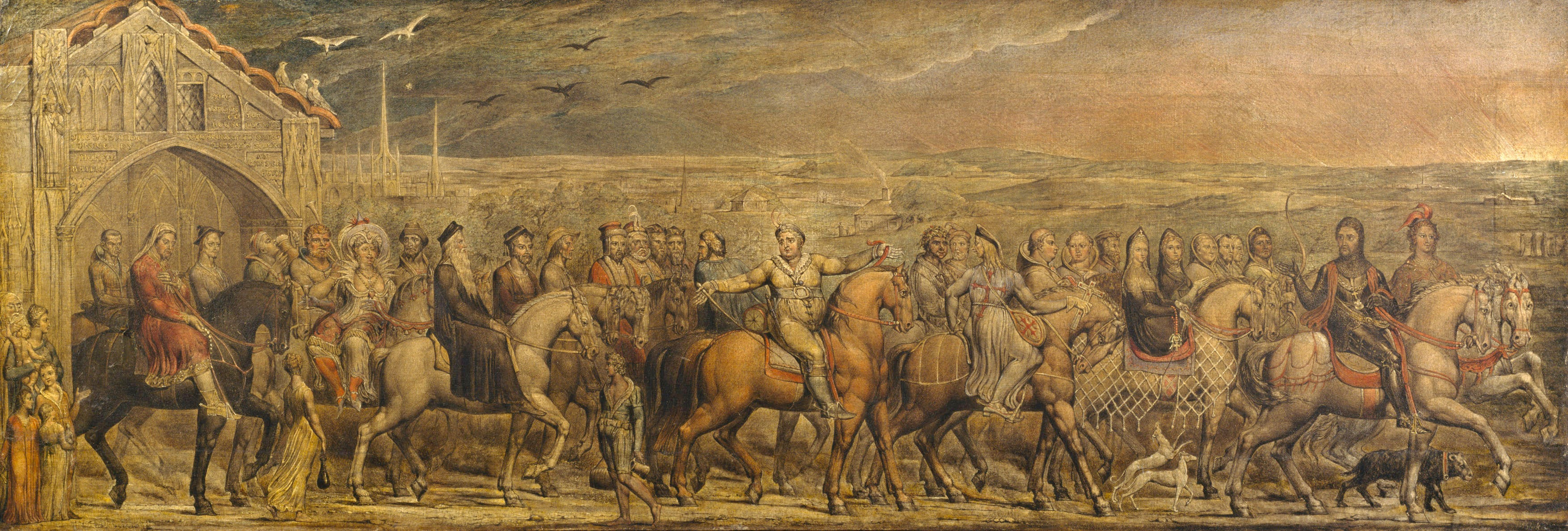
Geoffrey Chaucer's "Prologue" to The Canterbury Tales"
Though J. R. R. Tolkien translated portions of Chaucer’s Canterbury Tales, he did not live to complete the project. Fortunately another Inkling, Nevill Coghill, succeeded where Tolkien could not, and produced the modernized verse-rendering that today’s selection comes from. Happy reading! This is a public episode. If you'd like to discuss this with other subscribers or get access to bonus episodes, visit dailypoempod.substack.com/subscribe

John Keats' "This Living Hand"
Today’s poem has a way of reaching out and grabbing you. Happy reading. This is a public episode. If you'd like to discuss this with other subscribers or get access to bonus episodes, visit dailypoempod.substack.com/subscribe

E. E. Cummings' "anyone lived in a pretty how town"
Today’s poem–in which men and women are the two halves of a bell’s tone–voices the rhythms and joys of life in an unconventional way that has to be heard and understood with the body before the mind. Happy reading. This is a public episode. If you'd like to discuss this with other subscribers or get access to bonus episodes, visit dailypoempod.substack.com/subscribe

Walter de la Mare's "Good-bye"
Today’s poem is about (not) getting the last word. Happy reading.Walter de la Mare, born on April 25, 1873 in London, is considered one of modern literature’s chief exemplars of the romantic imagination. His complete works form a sustained treatment of romantic themes: dreams, death, rare states of mind and emotion, fantasy worlds of childhood, and the pursuit of the transcendent.As a youth he attended St. Paul’s Cathedral School, and his formal education did not extend beyond this point. Upon graduation he went to work for the Anglo-American (Standard) Oil Company, remaining with the firm for 18 years. De la Mare began writing short stories and poetry while working as a bookkeeper in the company’s London office during the 1890s. His first published short story, “Kismet,” appeared in the journal Sketch in 1895. In 1902 he published his first major work, the poetry collection Songs of Childhood, which was recognized as a significant example of children’s literature for its creative imagery and variety of meters. Critics often assert that a childlike richness of imagination influenced everything de la Mare wrote, emphasizing his frequent depiction of childhood as a time of intuition, deep emotion, and closeness to spiritual truth. In 1908, following the publication of his novel Henry Brocken and the poetry collection titled Poems, de la Mare was granted a Civil List pension, enabling him to terminate his corporate employment and focus exclusively on writing.….As a poet de la Mare is often compared with Thomas Hardy and William Blake for their respective themes of mortality and visionary illumination. His greatest concern was the creation of a dreamlike tone implying a tangible but nonspecific transcendent reality. This characteristic of the poems has drawn many admirers, though also eliciting criticism that the poet indulged in an undefined sense of mystery without systematic acceptance of any specific doctrine. Some commentators also criticize the poetry for having an archness of tone more suitable for children’s verse, while others value this playful quality. It is generally agreed, however, that de la Mare was a skillful manipulator of poetic structure, a skill that is particularly evident in the earlier collections.….For his extravagance of invention de la Mare is sometimes labeled an escapist who retreats from accepted definitions of reality and the relationships of conventional existence. His approach to reality, however, is not escapist; rather, it profoundly explores the world he considered most significant—that of the imagination. In the London Mercury J.B. Priestley favorably concluded in 1924 that de la Mare is “one of that most lovable order of artists who never lose sight of their childhood, but re-live it continually in their work and contrive to find expression for their maturity in it, memories and impressions, its romantic vision of the world.”-bio via Poetry Foundation This is a public episode. If you'd like to discuss this with other subscribers or get access to bonus episodes, visit dailypoempod.substack.com/subscribe

Scott Cairns' "Coracle"
Today’s poem places us on the frontier of new life. Happy reading. This is a public episode. If you'd like to discuss this with other subscribers or get access to bonus episodes, visit dailypoempod.substack.com/subscribe

T. S. Eliot’s “East Coker IV”
Today, the obligatory Good Friday poem (because it is excellent). This is a public episode. If you'd like to discuss this with other subscribers or get access to bonus episodes, visit dailypoempod.substack.com/subscribe

Carl Sandburg's "Buffalo Dusk"
In today’s poem, Sandburg’s ability to make the same two lines land so differently with so little happening in between is a remarkable feat. Happy reading! This is a public episode. If you'd like to discuss this with other subscribers or get access to bonus episodes, visit dailypoempod.substack.com/subscribe

J. R. R. Tolkien's "When Spring Unfolds the Beechen Leaf"
Today’s poem is sometimes known as “Song of the Ent and the Entwife” because, though Tolkien tinkered with it for more than a decade, it did not take its final form until he decided to adapt it for inclusion in The Lord of the Rings. Happy reading! This is a public episode. If you'd like to discuss this with other subscribers or get access to bonus episodes, visit dailypoempod.substack.com/subscribe

Franz Wright's "The Raising of Lazarus"
Franz Wright was born in Vienna, Austria and grew up in the Northwest, the Midwest, and California. He earned a BA from Oberlin College in 1977. His collections of poetry include The Beforelife (2001); God’s Silence (2006); Walking to Martha’s Vineyard, which won the Pulitzer Prize in 2004; Wheeling Motel (2009); Kindertotenwald (2011); and F (2013). In his precisely crafted, lyrical poems, Wright addresses the subjects of isolation, illness, spirituality, and gratitude. Of his work, he has commented, “I think ideally, I would like, in a poem, to operate by way of suggestion.”Critic Helen Vendler wrote in the New York Review of Books, “Wright's scale of experience, like Berryman's, runs from the homicidal to the ecstatic ... His best forms of or originality: deftness in patterning, startling metaphors, starkness of speech, compression of both pain and joy, and a stoic self-possession with the agonies and penalties of existence.” Langdon Hammer, in the New York Times Book Review, wrote of God’s Silence: “In his best poems, Wright grasps at the ‘radiantly obvious thing’ in short-lined short lyrics that turn and twist down the page. The urgency and calculated unsteadiness of the utterances, with their abrupt shifts of direction, jump-cuts and quips, mime the wounded openness of a speaker struggling to find faith.”Wright received a Whiting Fellowship, a Guggenheim Fellowship, and a grant from the National Endowment for the Arts. He translated poetry by Rainer Maria Rilke and Rene Char; in 2008 he and his wife, Elizabeth Oehlkers Wright, co-translated a collection by the Belarusian poet Valzhyna Mort, Factory of Tears. He taught at Emerson College and other universities, worked in mental health clinics, and volunteered at a center for grieving children. His father was the Pulitzer Prize–winning poet James Wright. He died in 2015. This is a public episode. If you'd like to discuss this with other subscribers or get access to bonus episodes, visit dailypoempod.substack.com/subscribe

Robert Browning's "Home Thoughts from Abroad"
Browning’s 1845 poem captures the affections of every transplant and ex-pat, conjuring the momentary return to a faraway home. Happy reading. This is a public episode. If you'd like to discuss this with other subscribers or get access to bonus episodes, visit dailypoempod.substack.com/subscribe

Mary Oliver's "Breakage"
Mondays go down easier with Mary Oliver. Happy reading. This is a public episode. If you'd like to discuss this with other subscribers or get access to bonus episodes, visit dailypoempod.substack.com/subscribe

Samuel Taylor Coleridge's "The Rime of the Ancient Mariner" (selections)
Today’s selections are characteristic passages from (maybe) the greatest and (certainly) strangest poem in Lyrical Ballads–Coleridge’s Ancient Mariner. Happy reading.(Nota bene: If you are ready for your own copy of Lyrical Ballads, the Oxford World Classics edition is a great way to see the developments across early editions.) This is a public episode. If you'd like to discuss this with other subscribers or get access to bonus episodes, visit dailypoempod.substack.com/subscribe

Samuel Taylor Coleridge's "The Dungeon"
While you can count on one hand the poems Coleridge contributed to Lyrical Ballads, they are some of the most memorable in the collection. Today’s poem uses an abstract description to conjure a very concrete social evil–the state of British prisons at the end of the long 18th century. Happy reading. This is a public episode. If you'd like to discuss this with other subscribers or get access to bonus episodes, visit dailypoempod.substack.com/subscribe

William Wordsworth's "Tintern Abbey"
We begin a week of selections from Lyrical Ballads with today’s nostalgic and pastoral poem, “Lines Written a Few Miles above Tintern Abbey, on Revisiting the Banks of the Wye during a Tour, July 13, 1798.” Happy reading!Jonathan Kerr of the Wordsworth Trust writes about the revolutionary context of the Lyrical Ballads and the revolutionary nature of the project itself:“Wordsworth and Coleridge’s first major literary undertaking and a pioneering work of English Romanticism – came into being at a tumultuous moment in England’s history…Not since the English Revolution had the country faced such alarming upheaval and discord within its borders.On first glance it might not seem like the little collection authored by Wordsworth and Coleridge has much to do with this heady and factional atmosphere. Lyrical Ballads came about in the spring and summer of 1798, when the Coleridge and Wordsworth families lived as neighbours in the secluded village of Holford, Somerset. Wordsworth and Coleridge had only known one another a short time, but they became quick friends and mutually-admiring colleagues. The small village provided both poets with a break from the spirited goings-on of cities like London and Bristol, which could often be dangerous places for young men with unorthodox opinions. Coleridge and Wordsworth, both committed reformers through the early years of the French Revolution, knew this is as well as anybody, and their retreat into the country was motivated as much by concerns for their personal security as anything else.…Whether or not Wordsworth and Coleridge continued to sympathize with the revolution abroad, there can be little doubt that with Lyrical Ballads the two were committed to one kind of revolution at least, a revolution in the sphere of poetry and art. Lyrical Ballads is among other things an attempt to purify poetry of the cold conventions which had come to dominate the literary scene, at least according to both poets; in place of this, Wordsworth and Coleridge wanted to bring poetry back to what is most common and recognizable, and also most important, within our emotional, social, and imaginative lives. If this doesn’t seem like such an extraordinary undertaking today, this might owe to the remarkable success of Wordsworth and Coleridge’s quiet revolution on the literary front.” This is a public episode. If you'd like to discuss this with other subscribers or get access to bonus episodes, visit dailypoempod.substack.com/subscribe

Hilaire Belloc's "The Scorpion"
What do Hilaire Belloc and a scorpion have in common? Happy reading. This is a public episode. If you'd like to discuss this with other subscribers or get access to bonus episodes, visit dailypoempod.substack.com/subscribe

Oliver Goldsmith's "An Elegy on the Death of a Mad Dog"
Oliver Goldsmith (born Nov. 10, 1730, Kilkenny West, County Westmeath, Ire.—died April 4, 1774, London) was an Anglo-Irish essayist, poet, novelist, dramatist, and eccentric, made famous by such works as the series of essays The Citizen of the World, or, Letters from a Chinese Philosopher (1762), the poem The Deserted Village (1770), the novel The Vicar of Wakefield (1766), and the play She Stoops to Conquer (1773).Goldsmith was the son of an Anglo-Irish clergyman, the Rev. Charles Goldsmith, curate in charge of Kilkenny West, County Westmeath. At about the time of his birth, the family moved into a substantial house at nearby Lissoy, where Oliver spent his childhood. Much has been recorded concerning his youth, his unhappy years as an undergraduate at Trinity College, Dublin, where he received the B.A. degree in February 1749, and his many misadventures before he left Ireland in the autumn of 1752 to study in the medical school at Edinburgh. His father was now dead, but several of his relations had undertaken to support him in his pursuit of a medical degree. Later on, in London, he came to be known as Dr. Goldsmith—Doctor being the courtesy title for one who held the Bachelor of Medicine—but he took no degree while at Edinburgh nor, so far as anyone knows, during the two-year period when, despite his meagre funds, which were eventually exhausted, he somehow managed to make his way through Europe. The first period of his life ended with his arrival in London, bedraggled and penniless, early in 1756.Goldsmith’s rise from total obscurity was a matter of only a few years. He worked as an apothecary’s assistant, school usher, physician, and as a hack writer—reviewing, translating, and compiling. Much of his work was for Ralph Griffiths’s Monthly Review. It remains amazing that this young Irish vagabond, unknown, uncouth, unlearned, and unreliable, was yet able within a few years to climb from obscurity to mix with aristocrats and the intellectual elite of London. Such a rise was possible because Goldsmith had one quality, soon noticed by booksellers and the public, that his fellow literary hacks did not possess—the gift of a graceful, lively, and readable style. His rise began with the Enquiry into the Present State of Polite Learning in Europe (1759), a minor work. Soon he emerged as an essayist, in The Bee and other periodicals, and above all in his Chinese Letters. These essays were first published in the journal The Public Ledger and were collected as The Citizen of the World in 1762. The same year brought his Life of Richard Nash, of Bath, Esq. Already Goldsmith was acquiring those distinguished and often helpful friends whom he alternately annoyed and amused, shocked and charmed—Samuel Johnson, Sir Joshua Reynolds, Thomas Percy, David Garrick, Edmund Burke, and James Boswell. The obscure drudge of 1759 became in 1764 one of the nine founder-members of the famous Club, a select body, including Reynolds, Johnson, and Burke, which met weekly for supper and talk. Goldsmith could now afford to live more comfortably, but his extravagance continually ran him into debt, and he was forced to undertake more hack work. He thus produced histories of England and of ancient Rome and Greece, biographies, verse anthologies, translations, and works of popular science. These were mainly compilations of works by other authors, which Goldsmith then distilled and enlivened by his own gift for fine writing. Some of these makeshift compilations went on being reprinted well into the 19th century, however.By 1762 Goldsmith had established himself as an essayist with his Citizen of the World, in which he used the device of satirizing Western society through the eyes of an Oriental visitor to London. By 1764 he had won a reputation as a poet with The Traveller, the first work to which he put his name. It embodied both his memories of tramping through Europe and his political ideas. In 1770 he confirmed that reputation with the more famous Deserted Village, which contains charming vignettes of rural life while denouncing the evictions of the country poor at the hands of wealthy landowners. In 1766 Goldsmith revealed himself as a novelist with The Vicar of Wakefield (written in 1762), a portrait of village life whose idealization of the countryside, sentimental moralizing, and melodramatic incidents are underlain by a sharp but good-natured irony. In 1768 Goldsmith turned to the theatre with The Good Natur’d Man, which was followed in 1773 by the much more effective She Stoops to Conquer, which was immediately successful. This play has outlived almost all other English-language comedies from the early 18th to the late 19th century by virtue of its broadly farcical horseplay and vivid, humorous characterizations.During his last decade Goldsmith’s conversational encounters with Johnson and others, his foolishness, and his wit were preserved in Boswell’s Life of Samuel Johnson. Goldsmith eventually became deeply embroiled in mounting d
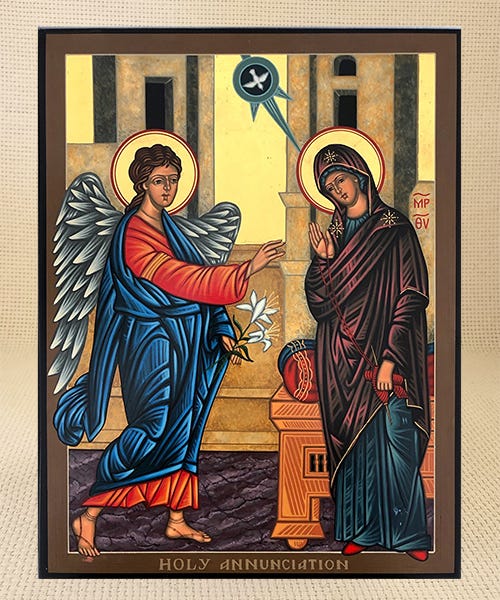
Two Poems for the Annunciation
Today’s poems (too lovely to keep behind the paywall) come from Edwin Muir and Denise Levertov and both marvel at different aspects of the same great mystery. Happy reading. This is a public episode. If you'd like to discuss this with other subscribers or get access to bonus episodes, visit dailypoempod.substack.com/subscribe

David Wagoner's "For a Student Sleeping in a Poetry Workshop"
As the long, exhausting march toward summer begins for many students, the wise and compassionate David Wagoner takes us to the intersection of love and weakness. Happy reading.David Wagoner was recognized as the leading poet of the Pacific Northwest, often compared to his early mentor Theodore Roethke, and highly praised for his skillful, insightful and serious body of work. He won numerous prestigious literary awards including the Ruth Lilly Poetry Prize, two Pushcart Prizes, and the Academy of Arts and Letters Award, and was nominated twice for the National Book Award. The author of ten acclaimed novels, Wagoner’s fiction has been awarded the Sherwood Anderson Foundation Award. Professor emeritus at the University of Washington, Wagoner enjoyed an excellent reputation as both a writer and a teacher of writing. He was selected to serve as chancellor of the Academy of American Poets in 1978, replacing Robert Lowell, and was the editor of Poetry Northwest until 2002.Born in Ohio and raised in Indiana, Midwesterner Wagoner was initially influenced by family ties, ethnic neighborhoods, industrial production and pollution, and the urban environment. His move to the Pacific Northwest in 1954, at Roethke’s urging, changed both his outlook and his poetry. Writing in the Contemporary Authors Autobiography Series, Wagoner recalls: “when I drove down out of the Cascades and saw the region that was to become my home territory for the next thirty years, my extreme uneasiness turned into awe. I had never seen or imagined such greenness, such a promise of healing growth. Everything I saw appeared to be living ancestral forms of the dead earth where I’d tried to grow up.” Wagoner’s poetry often mourns the loss of a natural, fertile wilderness, though David K. Robinson, writing in Contemporary Poetry, described the themes of “survival, anger at those who violate the natural world” and “a Chaucerian delight in human oddity” at work in the poems as well. Critics have also praised Wagoner’s poetry for its crisp descriptive detail and metaphorical bent. However, Paul Breslin in the New York Times Book Review pronounced David Wagoner to be “predominantly a nature poet…as Frost and Roethke were nature poets.”Wagoner’s first books, including Dry Sun, Dry Wind (1953), A Place to Stand (1958), and Poems (1959), demonstrate an early mastery of his chosen subject matter and form. Often comprised of observations of nature, Wagoner links his speakers’ predicaments and estrangement to the larger imperfection of the world. In Wagoner’s second book, A Place to Stand,Roethke’s influence is clear, and the book uses journey poems to represent the poet’s own quest back to his beginnings. Wagoner’s fourth book, The Nesting Ground (1963), reflects his relocation physically, aesthetically and emotionally; the Midwest is abandoned for the lush abundance of the Pacific Northwest, and Wagoner’s style is less concerned with lamentation or complaint and more with cataloguing the bounty around him. James K. Robinson called the title poem from Staying Alive (1966) “one of the best American poems since World War II.” In poems like “The Words,” Wagoner discovers harmony with nature by learning to be open to all it has to offer: “I take what is: / The light beats on the stones, / the wind over water shines / Like long grass through the trees, / As I set loose, like birds / in a landscape, the old words.” Robert Cording, who called Staying Alive “the volume where Wagoner comes into his own as a poet,” believed that for Wagoner, taking what is involves “an acceptance of our fragmented selves, which through love we are always trying to patch together; an acceptance of our own darkness; and an acceptance of the world around us with which we must reacquaint ourselves.”Collected Poems 1956-1976 (1976) was nominated for the National Book Award and praised by X. J. Kennedy in Parnassus for offering poems which are “beautifully clear; not merely comprehensible, but clear in the sense that their contents are quickly visible.” Yet it was Who Shall Be the Sun? (1978),based upon Native American myth and legend, which gained critical attention. Hayden Carruth, writing in Harper’s Magazine, called the book “a remarkable achievement,” not only for its presentation of “the literalness of shamanistic mysticism” but also for “its true feeling.” Hudson Review’s James Finn Cotter also noted how Wagoner “has not written translations but condensed versions that avoid stereotyped language….The voice is Wagoner’s own, personal, familiar, concerned. He has achieved a remarkable fusion of nature, legend and psyche in these poems.”In Broken Country (1979), also nominated for the National Book Award, shows Wagoner honing the instructional backpacking poems he had first used in Staying Alive. Leonard Neufeldt, writing in New England Review,called “the love lyrics” of the first section “among the finest since Williams’ ‘Asphodel.’” Wagoner has been accused of using staid pastoral conve

Sarah Lindsay's "Zucchini Shofar"
Sarah Lindsay was born in Cedar Rapids, Iowa and earned her BA from St. Olaf College and MFA from the University of North Carolina-Greensboro. She is the author of the full-length poetry collections Primate Behavior (Grove Press, 1997), which was a finalist for the National Book Award, Mount Clutter (Grove Press, 2002), Twigs and Knucklebones (Copper Canyon Press, 2008), and Debt to the Bone-Eating Snotflower (Copper Canyon Press, 2013).Her honors and awards include a Pushcart Prize, the Carolyn Kizer Prize, and J. Howard and Barbara M.J. Wood Prize as well as a Lannan Literary Fellowship. She lives in Greensboro, North Carolina, where she works as a copy editor.-bio via Poetry Foundation This is a public episode. If you'd like to discuss this with other subscribers or get access to bonus episodes, visit dailypoempod.substack.com/subscribe

Siegfried Sassoon's "Attack"
Siegfried Sassoon was born on 8 September 1886 in Kent. His father was part of a Jewish merchant family, originally from Iran and India, and his mother part of the artistic Thorneycroft family. Sassoon studied at Cambridge University but left without a degree. He then lived the life of a country gentleman, hunting and playing cricket while also publishing small volumes of poetry.In May 1915, Sassoon was commissioned into the Royal Welsh Fusiliers and went to France. He impressed many with his bravery in the front line and was given the nickname 'Mad Jack' for his near-suicidal exploits. He was decorated twice. His brother Hamo was killed in November 1915 at Gallipoli.In the summer of 1916, Sassoon was sent to England to recover from fever. He went back to the front, but was wounded in April 1917 and returned home. Meetings with several prominent pacifists, including Bertrand Russell, had reinforced his growing disillusionment with the war and in June 1917 he wrote a letter that was published in the Times in which he said that the war was being deliberately and unnecessarily prolonged by the government. As a decorated war hero and published poet, this caused public outrage. It was only his friend and fellow poet, Robert Graves, who prevented him from being court-martialled by convincing the authorities that Sassoon had shell-shock. He was sent to Craiglockhart War Hospital in Edinburgh for treatment. Here he met, and greatly influenced, Wilfred Owen. Both men returned to the front where Owen was killed in 1918. Sassoon was posted to Palestine and then returned to France, where he was again wounded, spending the remainder of the war in England. Many of his war poems were published in 'The Old Huntsman' (1917) and 'Counter-Attack' (1918).After the war Sassoon spent a brief period as literary editor of the Daily Herald before going to the United States, travelling the length and breadth of the country on a speaking tour. He then started writing the near-autobiographical novel 'Memoirs of a Fox-hunting Man' (1928). It was an immediate success, and was followed by others including 'Memoirs of an Infantry Officer' (1930) and 'Sherston's Progress' (1936). Sassoon had a number of homosexual affairs but in 1933 surprised many of his friends by marrying Hester Gatty. They had a son, George, but the marriage broke down after World War Two.He continued to write both prose and poetry. In 1957, he was received into the Catholic church. He died on 1 September 1967.-bio via BBC This is a public episode. If you'd like to discuss this with other subscribers or get access to bonus episodes, visit dailypoempod.substack.com/subscribe

Seamus Heaney's "Digging"
“The form of the poem, in other words, is crucial to poetry’s power to do the thing which always is and always will be to poetry’s credit: the power to persuade that vulnerable part of our consciousness of its rightness in spite of the evidence of wrongness all around it, the power to remind us that we are hunters and gatherers of values, that our very solitudes and distresses are creditable, in so far as they, too, are an earnest of our veritable human being.”-Seamus Heaney, in his 1995 Nobel acceptance speech This is a public episode. If you'd like to discuss this with other subscribers or get access to bonus episodes, visit dailypoempod.substack.com/subscribe

Thomas Parnell's "The Book-Worm"
The life of this week’s final Scriblerian, Thomas Parnell, rounds out the picture of the entire Scriblerus club as a fraternity of wildly brilliant men all carrying some great pain or wound. Some of them clearly write out of that wound, while others seem to write in spite of it. Parnell straddles the line, and today’s poem is a fine example of his blending of bright energy with a sharp edge. Happy reading.Thomas Parnell (11 September 1679 – 24 October 1718) was an Anglo-Irish poet and clergyman who was a friend of both Alexander Pope and Jonathan Swift.He was born in Dublin, the eldest son of Thomas Parnell (died 1685) of Maryborough, Queen's County (now Portlaoise, County Laois), a prosperous landowner who had been a loyal supporter of Oliver Cromwell during the English Civil War and moved from Congleton, Cheshire to Ireland after the Restoration of Charles II. His mother was Anne Grice of Kilosty, County Tipperary: she also owned property in County Armagh, which she left to Thomas at her death in 1709. His parents married in Dublin in 1674. Thomas was educated at Trinity College, Dublin and collated as Archdeacon of Clogher in 1705. In the last years of the reign of Queen Anne of England he was a popular preacher, but her death put an end to his hope of career advancement. He married Anne (Nancy) Minchin, daughter of Thomas Minchin, who died in 1712, and had three children, two of whom died young. The third child, a girl, is said to have reached a great age. The marriage was a very happy one, and it has been said that Thomas never recovered from Nancy's early death.He spent much of his time in London, where he participated with Pope, Swift and others in the Scriblerus Club, contributing to The Spectator and aiding Pope in his translation of The Iliad. He was also one of the so-called "Graveyard poets": his 'A Night-Piece on Death,' widely considered the first "Graveyard School" poem, was published posthumously in Poems on Several Occasions, collected and edited by Alexander Pope and is thought by some scholars to have been published in December 1721. It is said of his poetry, "it was in keeping with his character, easy and pleasing, enunciating the common places with felicity and grace."-bio via Wikipedia This is a public episode. If you'd like to discuss this with other subscribers or get access to bonus episodes, visit dailypoempod.substack.com/subscribe

Jonathan Swift's "The Character of Sir Robert Walpole"
Today’s poem throws unambiguous shade on one of 18th-century England’s most divisive politicians, and marks out Swift as one of the gutsiest Scriblerians. Happy reading. This is a public episode. If you'd like to discuss this with other subscribers or get access to bonus episodes, visit dailypoempod.substack.com/subscribe

Alexander Pope's "Epistle to Dr. Arbuthnot"
Alexander Pope (1688-1744) was notorious for embroiling himself in literary-political controversy–his sharp pen writing scathing checks his 4’6” frame couldn’t necessarily cash. Today’s poem is selected from his response to a friend who suggested he tone it down. Happy reading. This is a public episode. If you'd like to discuss this with other subscribers or get access to bonus episodes, visit dailypoempod.substack.com/subscribe

Richard Wilbur's "A Dubious Night"
Great poets write as much by ear as by sight, and often turn to sonic phenomena for inspiration. The ringing of bells is one of the most time-honored of those sounds, and in today’s poem Wilbur deepens the sound-image through the added dimension of distance. Happy reading. This is a public episode. If you'd like to discuss this with other subscribers or get access to bonus episodes, visit dailypoempod.substack.com/subscribe

T. S. Eliot's "Ash Wednesday"
Today’s poem runs the gamut of Italian renaissance poetry, the Book of Common Prayer, and the depths and heights of the human soul. It opens with an allusion to the Italian poet Guido Cavalcanti, turns to the Purgatorio of Cavalcanti’s great disciple, Dante, and draws in the Anglican penitential office and lectionary readings for Ash Wednesday, all while following Eliot’s speaker through despair into hope. Happy reading. This is a public episode. If you'd like to discuss this with other subscribers or get access to bonus episodes, visit dailypoempod.substack.com/subscribe

Scott Cairns' "Possible Answers to Prayer"
Librettist, essayist, translator, and author of ten poetry collections, Scott Cairns is Curators’ Distinguished Professor Emeritus at University of Missouri. His poems and essays have appeared in Poetry, Image, Paris Review, The Atlantic Monthly, The New Republic, and both have been anthologized in multiple editions of Best American Spiritual Writing. He received a Guggenheim Fellowship in 2006, and the Denise Levertov Award in 2014.-bio via Paraclete Press This is a public episode. If you'd like to discuss this with other subscribers or get access to bonus episodes, visit dailypoempod.substack.com/subscribe
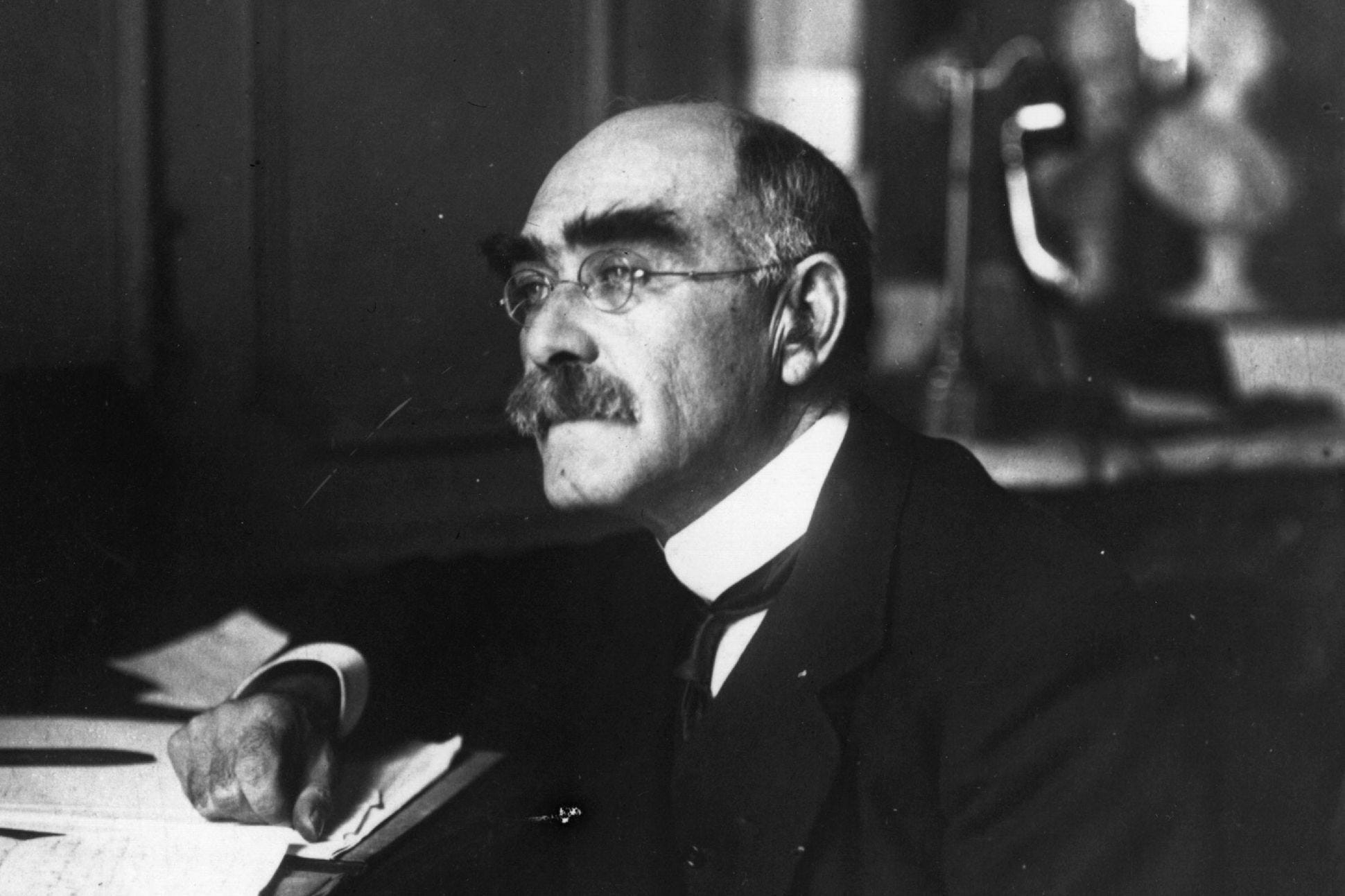
Rudyard Kipling's "The Camel's Hump"
Today’s poem finds the meeting place between the bump on the log and the one on the camel. Happy reading. This is a public episode. If you'd like to discuss this with other subscribers or get access to bonus episodes, visit dailypoempod.substack.com/subscribe

Langston Hughes' "Dreams"
Today’s poem plays nicely against Hughes’ more famous meditation on “dreams” (the deferred kind, in “Harlem”). Rather than emphasizing the danger of a dream under pressure, here he stresses the importance of a dream to men and women under pressure. Happy reading. This is a public episode. If you'd like to discuss this with other subscribers or get access to bonus episodes, visit dailypoempod.substack.com/subscribe

Richard Henry Horne's "The Plough"
Today’s poem features a simple but satisfying sleight of hand. Happy reading.Richard Henry Horne (1802-1884), poet, was born on 31 December 1802 at Edmonton, near London, the eldest of three sons of James Horne (d.1810), quarter-master in the 61st Regiment; his grandfather was Richard Horne, secretary to Earl St Vincent. Richard was brought up at the home of his rich paternal grandmother and attended John Clarke's School where John Keats was also a pupil. In April 1819 Horne entered Sandhurst Military College but left in December 1820. In 1823 after reading Shelley's Queen Mab, he decided to become a poet.In 1825 Horne sailed as midshipman in the Libertad to fight for Mexican independence. After two years in America he returned to London, where in 1833 he published his first book Exposition of the False Medium and Barriers Excluding Men of Genius from the Public. In the next decade he published three poetic dramas, contributed prolifically to literary magazines, edited the Monthly Repository in 1836-37 and served on the royal commission on child employment in factories in 1841. His most famous year was 1843 when he published his epic Orion at a farthing a copy to show his contempt for public taste. It ran to six editions in a year and made him a celebrity. During the Irish famine he was correspondent for the Daily News. In 1847 he married Catherine, daughter of David Foggo.In 1852 Horne faced a crisis: his marriage was failing; he was impoverished; he was discontented in his work on Charles Dickens's Household Words; and he was torn between the practical and poetic sides of his nature. Tempted by dreams of fortune on the Australian goldfields and a chance to escape, Horne arrived at Melbourne in September. He soon became commander of the private gold escort and in 1853 assistant gold commissioner at Heathcote and Waranga. He was erratic in both posts and was dismissed in November 1854. By 1855 his English ties were severed, his wife having requested a formal separation. In Melbourne he became clerk to (Sir) Archibald Michie, and lived with a Scottish girl; their son, born in 1857, died after seven months. In September 1856 as a radical Horne contested Rodney in the Legislative Assembly but lost. As a commissioner of sewerage and water supply in 1857 when Melbourne's new reservoir was under public attack, he did little to appease the critics. By 1860 he was again unemployed and living at St Kilda with a female companion. He was well known at Captain Kenney's swimming baths, lectured at Mechanics' Institutes on 'The Causes of Success in Life' and failed to win the Belfast (Port Fairy) seat. He helped to found the Tahbilk vineyard on the Goulburn River. In 1862-63 the Royal Literary Fund assisted him.In June 1863 Horne was made warden of the Victorian Blue Mountain goldfield near Trentham: 'my Siberia'. Again he began to write seriously and found tranquillity. On visits to Melbourne he held court at Henry Dwight's bookshop, and became friendly with George Gordon McCrae and Marcus Clarke. In 1864 he published a lyrical drama, Prometheus the Fire-Bringer, and in 1866 for the Melbourne Intercolonial Exhibition a masque, The South Sea Sisters; it contained a rhythmic representation of an Aboriginal corroboree which brought acclaim. In 1867 he celebrated the arrival of the Duke of Edinburgh with a cantata, Galatea Secunda, signing himself Richard Hengist Horne, the name by which he was henceforth known. In Australia he produced no significant poetry but some good prose: Australian Facts and Prospects(London, 1859), and an essay, 'An Election Contest in Australia' in Cornhill, 5 (1862). Disillusioned, he sailed in June 1869 for England where he became a literary doyen, producing many new works all artistically worthless. His poverty was relieved in 1874 by a government pension, and he died at Margate on 13 March 1884.-bio via Australian Dictionary of Biography This is a public episode. If you'd like to discuss this with other subscribers or get access to bonus episodes, visit dailypoempod.substack.com/subscribe

Edward Lear's "The Owl and the Pussy-Cat"
Today’s poem is the best-remembered work of the beloved “nonsense poet” Edward Lear–a silly lyric about a serious love. The episode also features a few guest readers. Happy reading.Edward Lear, the British poet and painter known for his absurd wit, was born on May 12, 1812, in Highgate, England, a suburb of London, and began his career as an artist at age fifteen. His father, a stockbroker of Danish origin, was sent to debtor’s prison when Lear was thirteen, forcing the young Lear to earn a living. Lear quickly gained recognition for his work and, in 1832, was hired by the London Zoological Society to execute illustrations of birds. In the same year, the Earl of Derby invited him to reside at his estate; Lear ended up staying until 1836.Lear’s first book of poems, A Book of Nonsense (Routledge, Warne, and Routledge, 1846) was composed for the grandchildren of the Derby household. Around 1836, Lear decided to devote himself exclusively to landscape painting, although he continued to compose light verse. Between 1837 and 1847, Lear traveled extensively throughout Europe and Asia.After his return to England, Lear’s travel journals were published in several volumes as The Illustrated Travels of a Landscape Painter. Popular and respected in his day, Lear’s travel books have largely been ignored in the twentieth century. Rather, Lear is remembered for his humorous poems, such as “The Owl and the Pussycat,” and as the creator of the form and meter of the modern limerick. Like his younger peer Lewis Carroll, Lear wrote many deeply fantastical poems about imaginary creatures, such as “The Dong with the Luminous Nose.” His books of humorous verse also include Nonsense Songs, Stories, Botany, and Alphabets (James R. Osgood and Company, 1871) and Laughable Lyrics: a Fourth Book of Nonsense Poems, Songs, Botany, Music, &c.(Robert John Bush, 1877).Edward Lear died on January 29, 1888, in San Remo, Italy, at the age of seventy-six.-bio via Academy of American Poets This is a public episode. If you'd like to discuss this with other subscribers or get access to bonus episodes, visit dailypoempod.substack.com/subscribe

Gary Soto's "Oranges"
Today’s poem will leave you “knowing very well what it was all about.” Happy reading.Gary Soto was born in Fresno, California on April 12, 1952, to working-class Mexican American parents. As a teenager and college student, he worked in the fields of the San Joaquin Valley, chopping beets and cotton and picking grapes. He was not academically motivated as a child, but he became interested in poetry during his high school years. He attended Fresno City College and California State University–Fresno, and he earned an MFA from the University of California–Irvine in 1976.His first collection of poems, The Elements of San Joaquin (University of Pittsburgh Press), won the United States Award of the International Poetry Forum in 1976 and was published in 1977. Since then, Soto has published numerous books of poetry, including You Kiss by th’ Book: New Poems from Shakespeare’s Line (Chronicle Books, 2016), A Simple Plan (Chronicle Books, 2007), and New and Selected Poems (Chronicle Books, 1995), which was a finalist for the National Book Award.Soto cites his major literary influences as Edward Field, Pablo Neruda, W. S. Merwin, Gabriel García Márquez, Christopher Durang, and E. V. Lucas. Of his work, the writer Joyce Carol Oates has said, “Gary Soto’s poems are fast, funny, heartening, and achingly believable, like Polaroid love letters, or snatches of music heard out of a passing car; patches of beauty like patches of sunlight; the very pulse of a life.”Soto has also written three novels, including Amnesia in a Republican County (University of New Mexico Press, 2003); a memoir, Living Up the Street (Strawberry Hill Press, 1985); and numerous young adult and children’s books. For the Los Angeles Opera, he wrote the libretto to Nerdlandia, an opera.Soto has received the Andrew Carnegie Medal and fellowships from the California Arts Council, the Guggenheim Foundation, and the National Endowment for the Arts. He lives in Northern California.-bio via Academy of American Poets This is a public episode. If you'd like to discuss this with other subscribers or get access to bonus episodes, visit dailypoempod.substack.com/subscribe

Maurice Manning's "A Plank from the Platform"
Today’s poem is a meditation on speech in the voice of a president. Perfect for an obligatory federal holiday. Happy reading. This is a public episode. If you'd like to discuss this with other subscribers or get access to bonus episodes, visit dailypoempod.substack.com/subscribe

Wendell Berry's "Loving You Has Taught Me..."
Today’s poem looks back on a lifetime of maturing love. This is a public episode. If you'd like to discuss this with other subscribers or get access to bonus episodes, visit dailypoempod.substack.com/subscribe
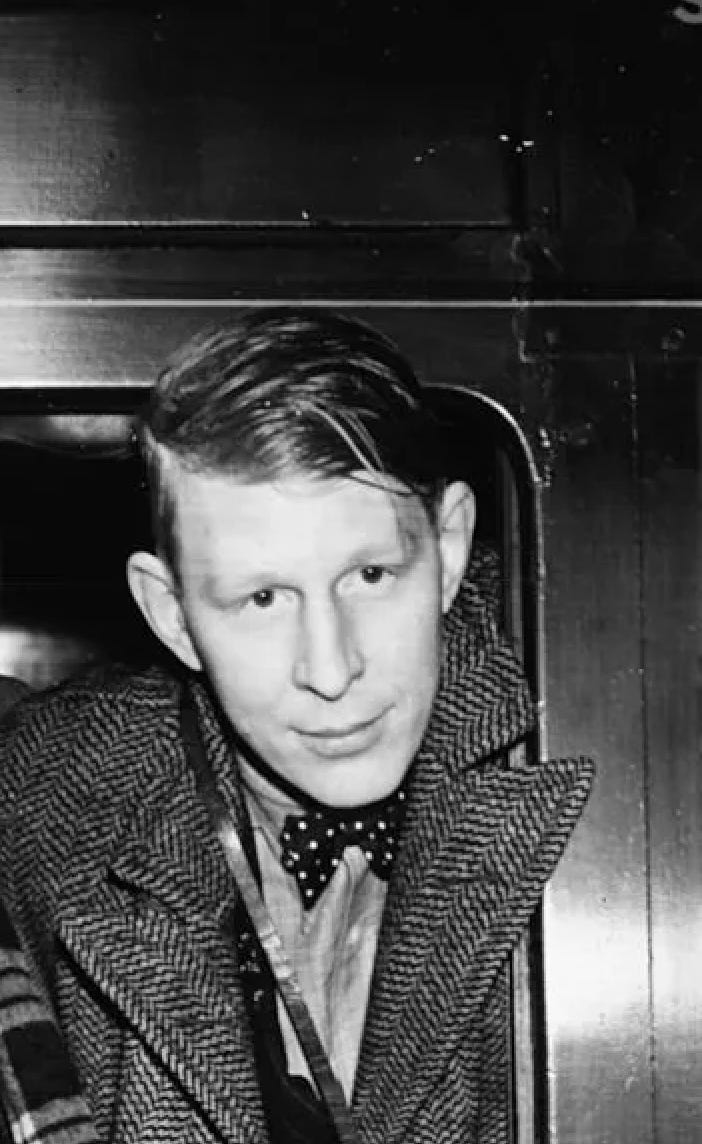
W. H. Auden's "Night Mail"
Today’s poem, reminiscent of yesterday’s “From a Railway Carriage,” was written by Auden for use in the 1936 documentary short film, Night Mail, and combines the powerful deep magics of locomotive travel and receiving letters. Bon voyage! This is a public episode. If you'd like to discuss this with other subscribers or get access to bonus episodes, visit dailypoempod.substack.com/subscribe

Anne Brontë's "The North Wind"
Today’s poem grew out of an elaborate game of make-believe between the Brontë siblings, and gives some idea of the mature verse that might have been if Anne had not died young. Happy(?) reading.Anne Brontë (17 January 1820 – 28 May 1849) was an English novelist and poet, the youngest member of the Brontë literary family.Anne Brontë was the daughter of Maria (néeBranwell) and Patrick Brontë, a poor Irish clergyman in the Church of England. Anne lived most of her life with her family at the parish of Haworth on the Yorkshire Dales. Otherwise, she attended a boarding school in Mirfield between 1836 and 1837, and between 1839 and 1845 lived elsewhere working as a governess. In 1846, she published a book of poems with her sisters and later two novels, initially under the pen name Acton Bell. Her first novel, Agnes Grey, was published in 1847 at the same time as Wuthering Heights by her sister Emily Brontë. Anne's second novel, The Tenant of Wildfell Hall, was published in 1848. The Tenant of Wildfell Hall is often considered one of the first feminist novels.Anne died at 29, most likely of pulmonary tuberculosis. After her death, her sister Charlotte edited Agnes Grey to fix issues with its first edition, but prevented republication of The Tenant of Wildfell Hall. As a result, Anne is not as well known as her sisters. Nonetheless, both of her novels are considered classics of English literature.-bio via Wikipedia This is a public episode. If you'd like to discuss this with other subscribers or get access to bonus episodes, visit dailypoempod.substack.com/subscribe

Alfred, Lord Tennyson's "Ulysses" pt. 2
Today’s poem is the final stanza of Tennyson’s “Ulysses,” in which the hero of the Trojan war persuades his aging compatriots to wring out the last of their energies in a quest for the ends of the earth–“to strive, to seek, to find, and not to yield.” Happy reading. This is a public episode. If you'd like to discuss this with other subscribers or get access to bonus episodes, visit dailypoempod.substack.com/subscribe

Zbigniew Herbert's "The Salt of the Earth"
Poet’s don’t typically compete for “coolest book cover,” and it’s probably because Zbigniew Herbert won years ago. Today’s poem is his tender look at poverty, pleasure, and irretrievable loss. Zbigniew Herbert was born on October 29, 1924, in Poland in the city of Lvov, which is now a part of the Ukraine. His grandfather was an Englishman who settled in Lvov to teach English. His father, a former member of the Legions that had fought for restoration of Poland’s independence, was a bank manager. Herbert’s formal education began in Lvov and continued under German occupation in the form of clandestine study at the underground King John Casimir University, where he majored in Polish literature. He was a member of the underground resistance movement. In 1944, he moved to Krakow, and three years later he graduated from the University of Krakow with a master’s degree in economics. He also received a law degree from Nicholas Copernicus University in Torun and studied philosophy at the University of Warsaw under Henryk Elzenberg.During the 1950s, Herbert worked at many low-paying jobs because he refused to write within the framework of official Communist guidelines. After widespread riots against Soviet control in 1956 brought about a political “thaw,” Herbert became an administrator at the Union of Polish Composers and published his first collection, Struna swiatla [The Chord of Light] (Czytelnik, 1956). The book immediately placed him among the most prominent representatives of the “Contemporaries” (young poets and writers associated with the weekly Contemporary Times).In 1957, Herbert published his second collection of verse, Hermes, pies i gwiazda [Hermes, the Dog and the Star] (Czytelnik). Four years later, he published his third book of poems, Studium przedmiotu [Study of the Object] (Czytelnik, 1961). In 1968, his Selected Poems, translated into English by Czeslaw Milosz and Peter Dale Scott, was released in both the United States and England, making Herbert one of the most popular contemporary poets in the English-speaking world. In 1971, he released the first Polish edition of Selected Poems.Herbert’s 1983 collection, Raport z oblezonego miasta i inne wiersze [Report from the Besieged City] (Instytut Literacki), dealt with the ethical problems Poland faced while under martial law. The book was issued simultaneously through an emigré publishing house and as an underground edition in Poland. He also published a number of essay collections and works of drama. In 1962, he released his famous work, Barbarzyńca wogrodzie [Barbarian in the Garden] (Czytelnik), which was eventually translated into numerous languages.Herbert’s numerous awards include the Kościelski Foundation Prize, the Austrian Lenau Prize, the Alfred Jurzykowski Prize, the Herder Prize, the Petrarch Prize, the Bruno Schulz Prize, and the Jerusalem Prize for the Freedom of the Individual in Society.Herbert was a coeditor of the poetry journal Poezja from 1965 to 1968 but resigned in protest of antisemitic policies. He traveled widely throughout the West and lived in Paris, Berlin, and the United States, where he taught briefly at the University of California, Los Angeles. He died in Warsaw on July 28, 1998.-bio via Academy of American Poets This is a public episode. If you'd like to discuss this with other subscribers or get access to bonus episodes, visit dailypoempod.substack.com/subscribe