The Creative Process in 10 minutes or less · Arts, Culture & Society: Books, Film, Music, TV, Art, Writing, Creativity, Education, Environment, Theatre, Dance, LGBTQ, Climate Change, Sustainability, Social Justice, Spirituality, Feminism, Technology
308 episodes — Page 5 of 7

ALICE FULTON - Poet - Recipient of MacArthur “Genius”, NEA & Guggenheim Fellowships
Alice Fulton’s books include Barely Composed, a poetry collection; The Nightingales Of Troy, linked stories; and Cascade Experiment: Selected Poems. Her book Felt received the Bobbitt Prize from the Library of Congress, awarded to the best book of poems published within a two-year period. She has received an American Academy of Arts and Letters Award in Literature and fellowships from the MacArthur Foundation, National Endowment for the Arts, Guggenheim Foundation, and Ingram Merrill Foundation. Her other books include Sensual Math, Powers Of Congress, Palladium, Dance Script With Electric Ballerina, and an essay collection, Feeling As A Foreign Language. She lives in Ithaca, NY. www.alicefulton.comwww.miafunk.com www.creativeprocess.info www.oneplanetpodcast.org IG www.instagram.com/creativeprocesspodcast

ROBERT PLANT - DICKIE LANDRY - LIL' BAND O' GOLD
Robert Plant is a singer and songwriter, best known as the lead singer and lyricist of the rock band Led Zeppelin. Regarded by many as one of the greatest singers in rock music, he’s known for his flamboyant persona and raw stage performances. He’s also collaborated outside of the rock genre. Here he performs with Lil' Band O' Gold. For nearly half a century, Richard “Dickie” Landry was at the center of the New York avant-garde. Born in the small Louisiana town of Cecilia in 1938, he began making pilgrimages to the city while still in his teens in search of the city’s most cutting edge gestures in jazz, and relaxed there not long after, falling in with a close knit community of artists and composers like Philip Glass, Keith Sonnier, Joan Jonas, Gordon Matt Clarke, Richard Serra, Robert Rauschenberg, Nancy Graves, Lawrence Weiner, Steve Reich, Jon Gibson, and Robert Wilson. Landry remains one of the few artists of his generation who made important waves within numerous creative idioms. Having been trained from a young age on saxophone, not only is he a remarkably respected solo performer and bandleader, but he was an early and long-standing member of Philip Glass’ ensemble, playing on seminal records like Music With Changing Parts, Music in Similar Motion / Music in Fifths, Music in Twelve Parts, North Star, and Einstein on the Beach, and played with Talking Heads, Laurie Anderson, and jazz giants like Johnny Hammond, Gene Ammons, and Les McCann. He was also one of the most important photographic documenters of the New York Scene, until he left the city for his native Louisiana, following 9/11.http://www.dickielandry.comhttps://unseenworlds.com/collections/dickie-landrywww.creativeprocess.info www.oneplanetpodcast.org Instagram @creativeprocesspodcast

JERICHO BROWN - Pulitzer Prize-Winning Poet, Author of "The Tradition", "The New Testament"
Jericho Brown is author of the The Tradition (Copper Canyon 2019), for which he won the Pulitzer Prize. He is the recipient of fellowships from the Guggenheim Foundation, the Radcliffe Institute for Advanced Study at Harvard, and the National Endowment for the Arts, and he is the winner of the Whiting Award. Brown’s first book, Please (New Issues 2008), won the American Book Award. His second book, The New Testament (Copper Canyon 2014), won the Anisfield-Wolf Book Award. His third collection, The Tradition won the Paterson Poetry Prize and was a finalist for the National Book Award and the National Book Critics Circle Award. His poems have appeared in The Bennington Review, Buzzfeed, Fence, jubilat, The New Republic, The New York Times, The New Yorker, The Paris Review, TIME magazine, and several volumes of The Best American Poetry. He is the director of the Creative Writing Program and a professor at Emory University.www.jerichobrown.com www.creativeprocess.infowww.oneplanetpodcast.orgIG www.instagram.com/creativeprocesspodcastPortrait of Jericho Brown by Mia Funk www.miafunk.com

WORLD OCEANS DAY
Happy World Oceans Day! Today we’re streaming voices of environmentalists and artists with music courtesy of composer, producer and multi-instrumentalist Erland Cooper.Voices on this episode areGIULIO BOCCALETTIAuthor of Water, A BiographyNatural Resource Security & Environmental Sustainability ExpertChief Strategy Officer 2016–2020, The Nature ConservancyPAULA PINHODirector of Just Transition at the European Commission Directorate-General for EnergyRON GONENFounder & CEO of Closed Loop PartnersFmr. Deputy Commissioner of Sanitation, Recycling & Sustainability, NYCMARCIA DESANCTISJournalist, Essayist, Author of A Hard Place to Leave: Stories from a Restless LifeJEAN WEINERGoldman Environmental Prize WinnerFounder of Fondation pour la Protection de la Biodiversité Marine, HaitiDERRICK EMSLEYCo-founder & CEO of veritree - Data-driven Restorative Platform & tentree Apparel Co.DR. FARHANA SULTANACo-author: Water Politics: Governance, Justice & the Right to WaterFmr. UNDP Programme Officer, United Nations Development ProgrammeNEIL GRIMMERBrand President of SOURCE Global · Innovator of the SOURCE Hydropanel: Drinking Water Made from Sunlight and AirALAN JACOBSENDirector of PhotographyEmmy & Sundance Special Jury Award-Winning & Oscar Nominated DocumentariesRICHARD VEVERSFounder & CEO of The Ocean AgencyBRIAN WILCOXChief Engineer & Co-founder of Marine BioEnergyGrows Kelp in the Ocean to Provide Carbon-neutral FuelsSETH M. SIEGELEntrepreneur, Public Speaker & NYTimes Bestselling AuthorLet There Be Water: Israel’s Solution for a Water-Starved WorldTroubled Water: What's Wrong with What We DrinkJOELLE GERGISLead Author of the IPCC Sixth Assessment Report, Author of Humanity’s MomentJAY FAMIGLIETTI, Fmr. Senior Water Scientist at NASA Jet Propulsion Laboratory, Exec. Director, Global Institute for Water Security, Host of "What About Water?" PodcastROB BILOTTEnvironmental Lawyer, Partner Taft Stettinius & Hollister LLPAuthor of Exposure: Poisoned Water, Corporate Greed, and One Lawyer’s Twenty-Year Battle Against DuPontJILL HEINERTHExplorer, Presenter, Author of Into The Planet: My Life as a Cave DiverOSPREY ORIELLE LAKEFounder & Executive Director of the Women's Earth & Climate Action Network InternationalAuthor of Uprisings for the Earth: Reconnecting Culture with Nature & ArtistJESS WILBERInternational Outreach Citizens’ Climate LobbyCoordinator, Senior Stewards Acting for the EnvironmentBERTRAND PICCARDAviator of 1st Round-the-World Solar-Powered Flight, Explorer, Founder, Solar Impulse FoundationIBRAHIM ALHUSSEINIFounder & CEO of FullCycle Fund GARY GRIGGSGlobal Oceans Hero Award-Winner · Distinguished Professor of Earth SciencesDirector Institute of Marine Sciences at UC Santa Cruz 1991 to 2017Sample Credits:BBC News Excerpt, Public broadcast, 19th July. Fair usage, courtesy Simon Gurney, BBC Studios Limited.BBC News Excerpt, Public broadcast, 19th July. Fair usage, courtesy Simon Gurney, BBC Studios Limited.UN Broadcast Excerpt, Greta Thunberg, Young Climate Activist at the Opening of the Climate Action Summit 2019, United Nations license 24 October 2022.CBS News Excerpt 1970. Fair usage, archive courtesy Leah Hodge, CBSwww.erlandcooper.comwww.creativeprocess.info www.oneplanetpodcast.orgIG www.instagram.com/creativeprocesspodcastArtworks by Mia Funk www.miafunk.comMusic from Folded Landscapes courtesy of Erland Cooper and Universal Music Enterprises.

E.J. KOH - Award-Winning Memoirist & Poet - “The Magical Language of Others”, “A Lesser Love”
E. J. Koh is the author of the memoir The Magical Language of Others, winner of the Washington State Book Award and the 2021 Pacific Northwest Book Award. For her poetry collection A Lesser Love she received the Pleiades Press Editors Prize. She is the co-translator of Yi Won’s The World’s Lightest Motorcycle, forthcoming from Zephyr Press. Her poems, translations, and stories have appeared in Boston Review, Los Angeles Review of Books, and World Literature Today, among others. She earned her MFA in Literary Translation and Creative Writing from Columbia University, and is completing the PhD program at the University of Washington in Seattle. She is a recipient of MacDowell and Kundiman fellowships.IG @thisisejkoh www.instagram.com/p/CRB8O69BWQJ/www.miafunk.com www.creativeprocess.info www.oneplanetpodcast.org IG www.instagram.com/creativeprocesspodcast
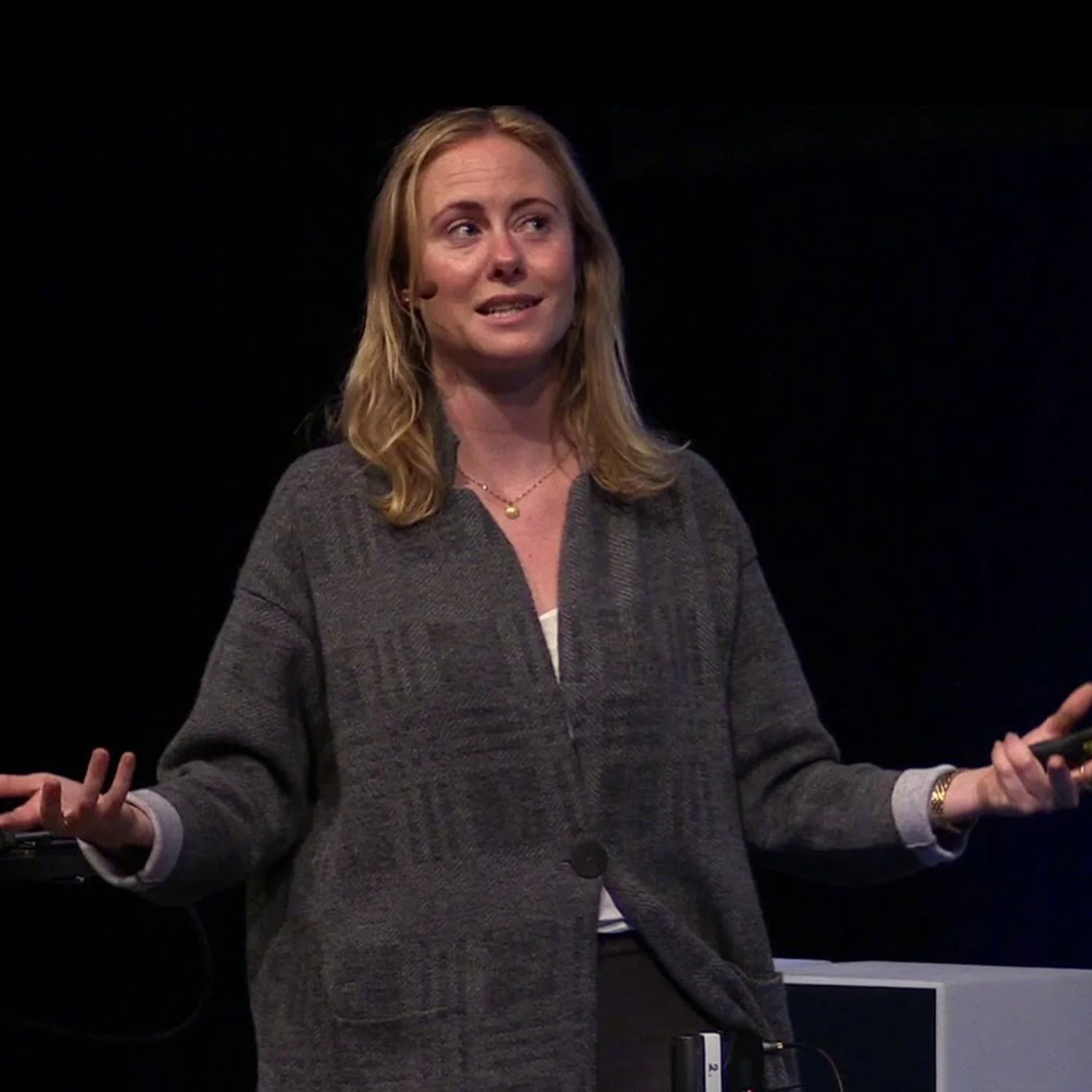
DITTE LYSGAARD VIND - Circular Economy & Design Expert - Author of Danish Design Heritage & Global Sustainability
"Putting design first, it really enables us to shape a future that we don't yet know. But we need to be super tactile and practical about it as well. And then seeing that is something that design very much has the ability to do. And at the same time, having this growing frustration that wherever you go, wherever you talk about sustainability, it was a compromise. It was something that meant uglier, less convenient, more expensive, all these different things, but then diving into the Danish Design heritage, seeing that what set them apart was that after the World Wars, they had a social purpose of democratizing and rebuilding the welfare state, and that was not something that lessened the final result. On the contrary, it heightened the ambition, the final design, and the solutions."Ditte Lysgaard Vind is a renowned circular economy and design expert and author of Danish Design Heritage & Global Sustainability (Routledge 2023) and A Changemakers Guide to the Future. She is the Chairwoman of the Danish Design Council and founder of The Circular Way. She is known for pioneering new materials as well as business models, while sharing the knowledge gained from practice through teaching and thought leadership, and is a member of the Executive board of The Royal Danish Academy of Fine Arts Schools of Architecture, Design and Conservation as well as the global SDG innovation lab UNLEASH.www.thecircularway.comhttp://danishdesigncouncil.dk/enwww.routledge.com/Danish-Design-Heritage-and-Global-Sustainability/Vind/p/book/9781032198200www.creativeprocess.info www.oneplanetpodcast.orgIG www.instagram.com/creativeprocesspodcast

Special World Environment Day Stories - Environmentalists, Students & Teachers share their Love for the Planet
Today we’re streaming voices of environmentalists, students, and teachers with music courtesy of composer Max Richter. All voices in this episode are from our interviews for The Creative Process & One Planet Podcast or reflectors of our participating students.Voices on this episode areBRITT WRAY Author of Generation Dread: Finding Purpose in an Age of Climate Crisis Researcher Working on Climate Change & Mental Health, StanfordJEFFREY SACHS President of UN Sustainable Development Solutions Network Director of Center for Sustainable Development, Columbia UniversityEVELINE MOL, Student Barnard CollegeBERTRAND PICCARD, Aviator of 1st Round-the-World Solar-Powered Flight, Explorer, Founder, Solar Impulse FoundationAVA CLANCY, StudentMIRA PATLA, StudentDARA DIAMOND, StudentARIELLE DAVIS, StudentCLAIRE POTTER, Designer, Lecturer, Author of Welcome to the Circular EconomyMEGAN HEGENBARTH, Participating Student, University of MinnesotaGRACE PHILLIPS, Participating Student, Pitzer CollegeBIANCA WEBER, Participating Student, Syracuse UniversityELLEN EFSTATHIOU, Participating Student, Oberlin CollegeSURYA VIR, Participating Student, University of Wisconsin-MadisonMACIE PARKER, Participating Student, Boston UniversityBEILA UNGAR, Participating Student, Columbia UniversityCARL SAFINA, Ecologist, Founding President of Safina Center, Author of “Becoming Wild: How Animal Cultures Raise Families, Create Beauty, and Achieve Peace”Max Richter’s music featured in this episode are “On the Nature of Daylight” from The Blue Notebooks, “Path 19: Yet Frailest” from Sleep.Music is courtesy of Max Richter, Universal Music Enterprises, and Mute Song.www.creativeprocess.info www.oneplanetpodcast.orgIG www.instagram.com/creativeprocesspodcast

Happy World Environment Day! Voices from the Parkinson's Community & Artpark Bridges Celebrate the Natural World
The Creative Process and One Planet Podcast wishes listeners Happy World Environment Day. For this special episode we celebrate the natural world with Artpark Bridges, the Parkinson's Community, independent living adults with Parkinson's disease, and People Inc, the Arts Experience, a day habilitation program for adults with developmental disabilities. Artpark Bridges is a year-round community engagement program led by interdisciplinary artist Cynthia Pegado, dedicated to empowering adults of diverse abilities and backgrounds through expressive arts workshops and performance opportunities. Serving the Buffalo-Niagara Falls region of New York State, Artpark Bridges connects citizens with a sense of inclusion and purpose, healing and creative expression. Cynthia Pegado Teaching artist and movement expert, Cynthia Cadwell Pegado, weaves her passion for immersive performance into the creative process of site-specific work for people of all abilities. Ms. Pegado is an eight-time New York State Council on the Arts (NYSCA) Community Arts awardee, for “Art Moves Me”, her interpretive dance program based on visual art, designed for the Burchfield Penney Art Center and "Sound Dance" designed for Artpark. She has choreographed performance works for students in Parkinson’s specific classes as well as public programs which include Global Water Dances (a worldwide network of choreographers advocating for water quality)Muriel Louveau French vocalist composer Muriel Louveau has been invited by Sonia Kozlova Clark ,director of Artpark festival, as an international artist in residence at Artpark in 2022 to create and customize virtual expressive voice classes facilitated by Cynthia for Artpark Bridges groups including the Parkinson's and People Inc communities. This ongoing program of classes focuses on vocalizing skills and communal art-making with a theme of universal humanity."For me it is an artistic exchange but foremost a human experience. I cannot describe in words how this collaboration with the Artpark Bridges community inspires me, touches me, and opens my heart." Muriel Louveau, Artpark Bridges Sound Moves Me Artist-in-Residence.These recorded pieces have been developed with their students during "Our Garden " vocal workshop Poem "'Lily" written and read by Nancy (People Inc), "Nature" by Ed (PD group), "Fragile Beauty" by Nancy and Cynthia, "Garden of Love" by Cammie (People Inc).www.creativeprocess.info www.oneplanetpodcast.orgIG www.instagram.com/creativeprocesspodcastFlower Duet - Leo DelibesCreative Commons Attribution 3.0 Unported CC BY 3.0https://creativecommons.org/licenses/by/3.0/Conducted by Philip Milman https://pmmusic.pro/

CARL SAFINA - Ecologist - Founding President of Safina Center - NYTimes Bestselling Author
Carl Safina’s lyrical non-fiction writing explores how humans are changing the living world, and what the changes mean for non-human beings and for us all. His work has been recognized with MacArthur, Pew, and Guggenheim Fellowships, and his writing has won Orion, Lannan, and National Academies literary awards and the John Burroughs, James Beard, and George Rabb medals. Safina is the inaugural holder of the endowed chair for nature and humanity at Stony Brook University, where he co-chairs the steering committee of the Alan Alda Center for Communicating Science and is founding president of the not-for-profit Safina Center. He hosted the 10-part PBS series Saving the Ocean with Carl Safina. His writing appears in The New York Times, National Geographic, Audubon, CNN.com, National Geographic News, and other publications. He is the author of ten books including the classic Song for the Blue Ocean, as well as New York Times Bestseller Beyond Words: What Animals Think and Feel. His most recent book is Becoming Wild: How Animal Cultures Raise Families, Create Beauty, and Achieve Peace."So we tend to take living for granted. I think that might be the biggest limitation of human intelligence is to not understand with awe and reverence and love that we live in a miracle that we are part of and that we have the ability to either nurture or destroy.The living world is enormously enriching to human life. I just loved animals. They're always just totally fascinating. They're not here for us. They're just here like we're just here. They are of this world as much as we are of this world. They really have the same claim to life and death and the circle of being."www.safinacenter.orgwww.carlsafina.orgwww.oneplanetpodcast.orgwww.creativeprocess.infoIG www.instagram.com/creativeprocesspodcastPhoto: Carl Safina in Uganda
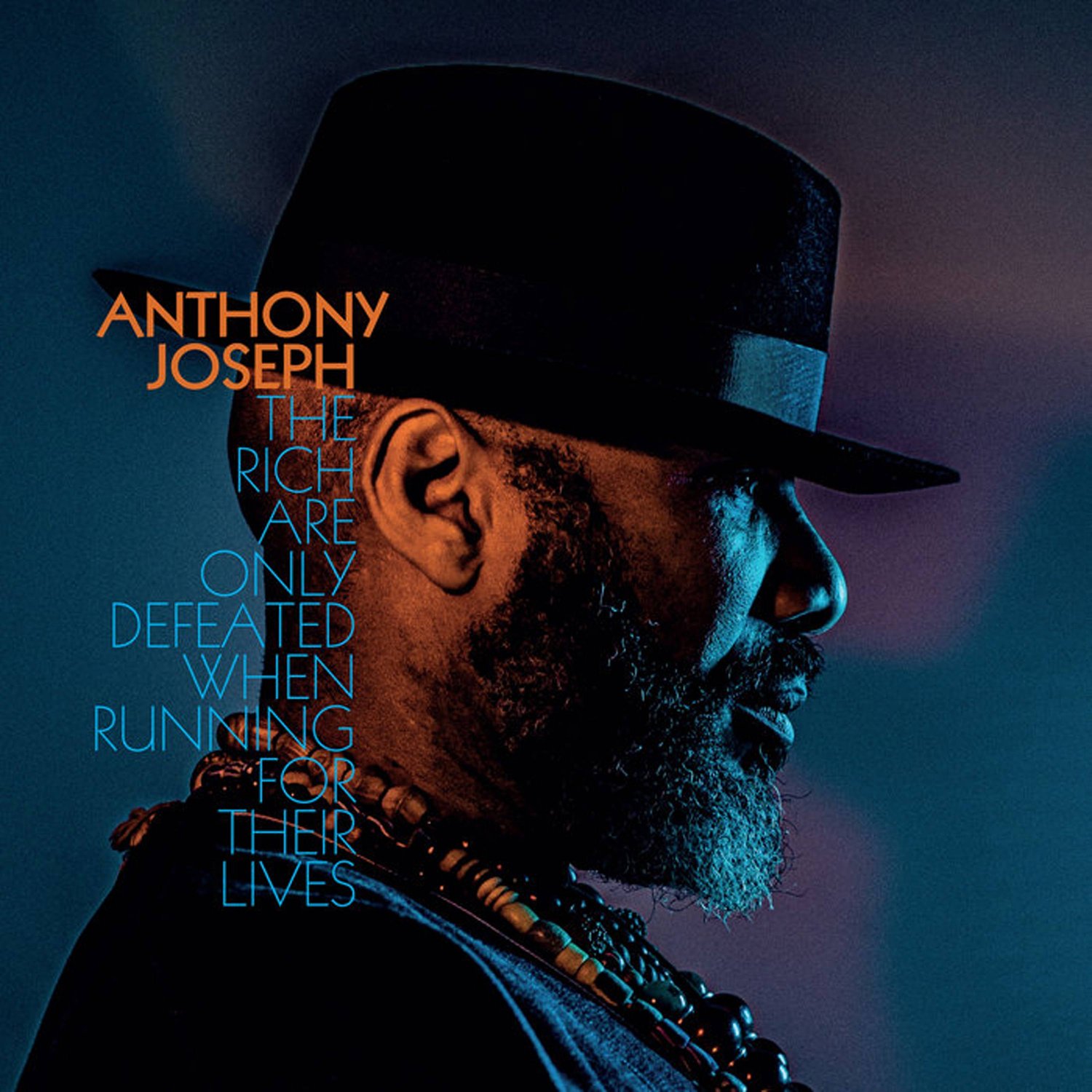
ANTHONY JOSEPH - T.S. Eliot Award-winning Poet, Novelist & Musician, Lead vocalist of The Spasm Band
Anthony Joseph is a poet, novelist, academic and musician who moved from Trinidad to the UK in 1989. A lecturer in creative writing at Birkbeck College, he is particularly interested in the point at which poetry becomes music.As well as four poetry collections, a slew of albums, and three novels – most recently Kitch – Joseph has published critical work exploring the aesthetics of Caribbean Poetry among other subjects. He performs internationally as the lead vocalist for his band The Spasm Band. Sonnets for Albert is his first poetry collection since Rubber Orchestras. “Calling England Home” and “Language (Poem for Anthony McNeill)” were released in 2021 by Anthony Joseph and appear on his album "The Rich Are Only Defeated When Running For Their Lives”. www.anthonyjoseph.co.ukhttps://open.spotify.com/artist/622cbugSJevUkEanSBCab9www.creativeprocess.infowww.oneplanetpodcast.org
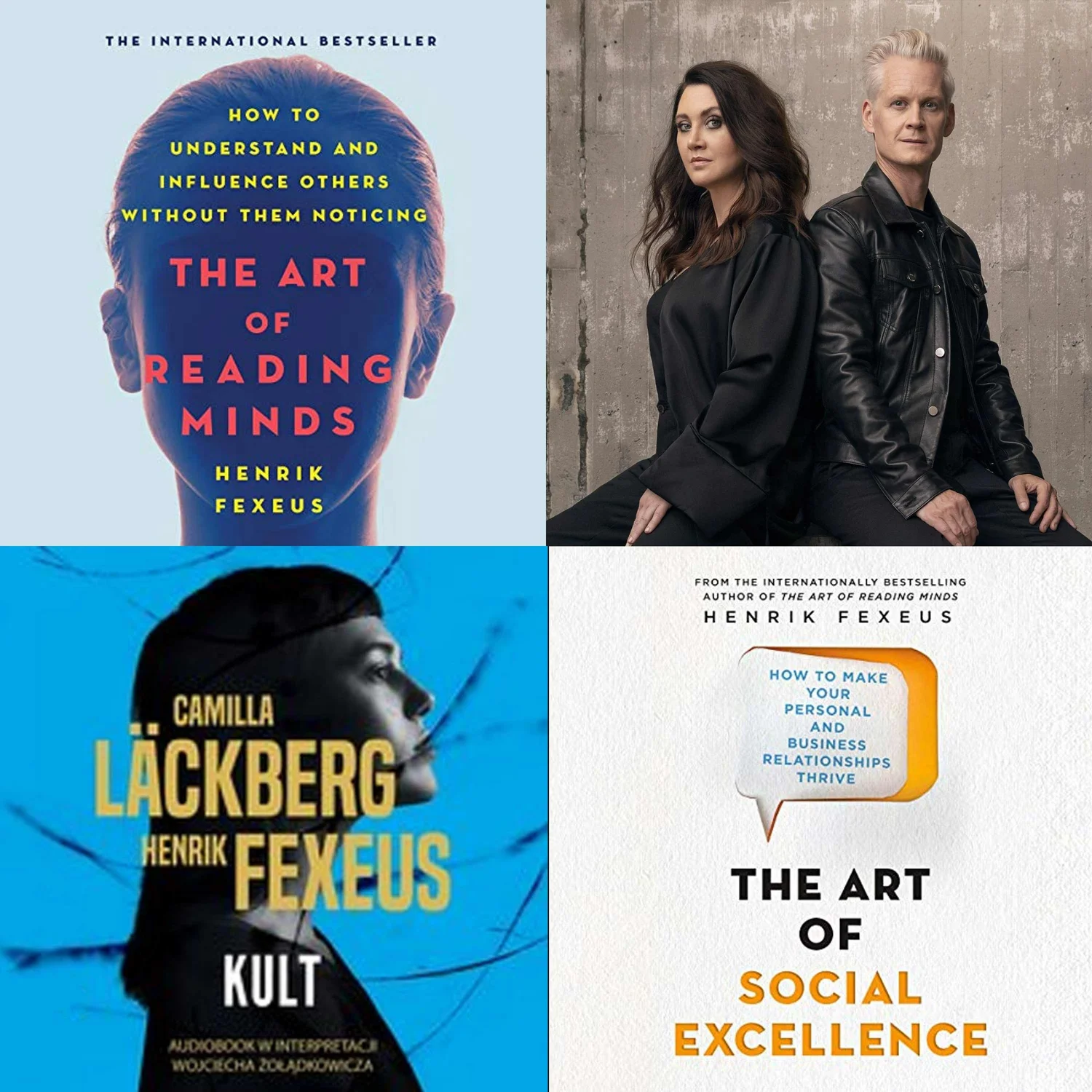
HENRIK FEXEUS - Mentalist, Author & TV Host “The Art of Reading Minds”,“Mind Melt”,“Cult”
“A mentalist is a kind of magician, an illusionist. And a mentalist uses whatever techniques are at that person's disposal to create the illusion of being able to read minds or being able to contact a supernatural presence…The only rule is that that part is fake, but then you can use techniques for magic or from stagecraft or from psychology. A mentalist is really someone who creates this illusion of having an almost supernatural ability. Having said that, today a mentalist sort of has come to mean something else, mainly due to popular culture TV series like The Mentalist and so on. And now there's this understanding of a mentalist as someone being able to read body language and influence behavior. It sort of ties into it all. And I've had a lifelong passion for magic, and it started when I was seven. Because I was always interested in the question: what if there's a color in the sky that we can't see? What if a handkerchief actually can vanish? What does that mean in terms of how the world works?So that was one part of it. I always longed for there to be something else. And I think one of the reasons for that was because I was quite the socially awkward child. I didn't have the skill set to interact in a frictionless way with my classmates, which meant that I was a weird guy. I was the one who got beaten up every single day at school, but I was also quite extroverted. So I didn't confine myself to my place in the corner. I was still there every Friday because on Fridays there was an open hour in class where you can perform or just show something. And I was always there to do magic because I had a skill. I could do something that the other guys couldn't. And then they beat me up again for it. But I do think that that realization that there's something going on here, that sort of set off something in my mind that this is something I needed to solve. I wanted to understand my bullies. This wasn't a conscious reflection on my part, but it was there. It basically felt like everyone else had been handed a handbook on social intelligence.”Henrik Fexeus is an internationally bestselling author, lecturer, performer, and star of the TV show Mind Melt. An expert in psychology and communications, he travels the world "reading minds" and teaching others how to understand and manipulate human behavior through body language and persuasion. Henrik has studied mental skills like NLP, hypnosis, acting, and magic.https://henrikfexeus.se/en/www.creativeprocess.info www.oneplanetpodcast.orgIG www.instagram.com/creativeprocesspodcast
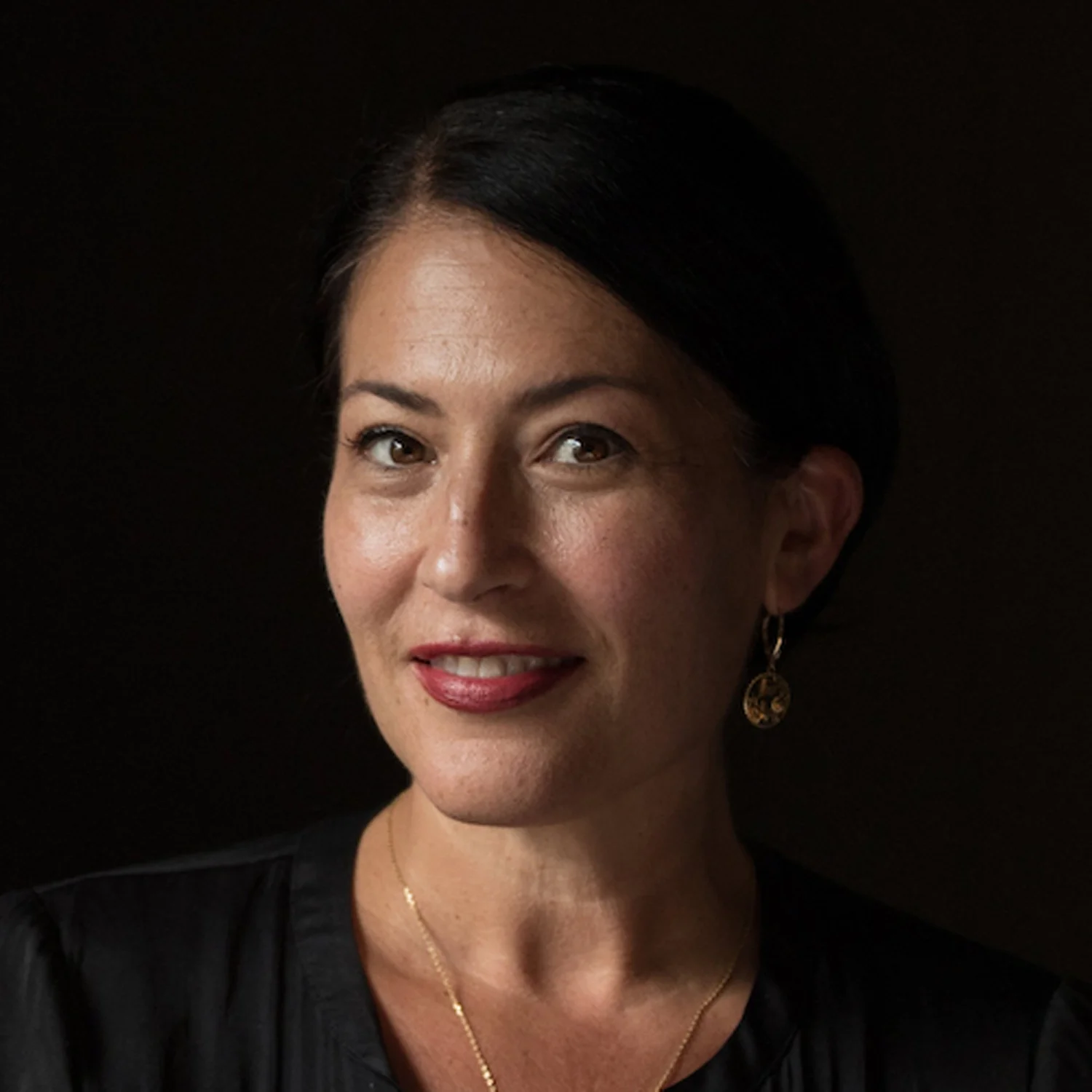
ADA LIMÓN - U.S. Poet Laureate - Host of The Slowdown podcast
Ada Limón is the author of six books of poetry, including The Carrying, which won the National Book Critics Circle Award for Poetry. Her book Bright Dead Things was nominated for the National Book Award, the National Book Critics Circle Award, and the Kingsley Tufts Poetry Award. Her work has been supported most recently by a Guggenheim Fellowship. She grew up in Sonoma, California and now lives in Lexington, Kentucky where she writes, teaches remotely, and hosts the critically-acclaimed poetry podcast, The Slowdown. Her new book of poetry, The Hurting Kind, is forthcoming from Milkweed Editions in May 2022.Photo credit: Lucas Marquardt www.adalimon.netwww.creativeprocess.infowww.oneplanetpodcast.org

NEIL GAIMAN - Writer, Producer, Showrunner “The Sandman”, “American Gods”, “Good Omens”, “Coraline”
Neil Gaiman is the #1 New York Times bestselling author of more than twenty books, including The Sandman, American Gods, Good Omens, Stardust, Coraline, Norse Mythology, Neverwhere, and The Graveyard Book. He’s adapted many of his books for television and film. Among his numerous literary awards are the Newbery and Carnegie medals, and the Hugo, Nebula, World Fantasy, and Will Eisner awards. He is a Global Goodwill Ambassador for United Nations High Commissioner for Refugees (UNHCR). In this episode, Gaiman reads his poems “A Writer’s Prayer” and “These Are Not Our Faces”. To hear our full interview with Neil Gaiman, visit The Creative Process Podcast: Arts, Culture & Society.www.neilgaiman.comwww.imdb.com/name/nm0301274/www.creativeprocess.infowww.oneplanetpodcast.orgIG www.instagram.com/creativeprocesspodcast
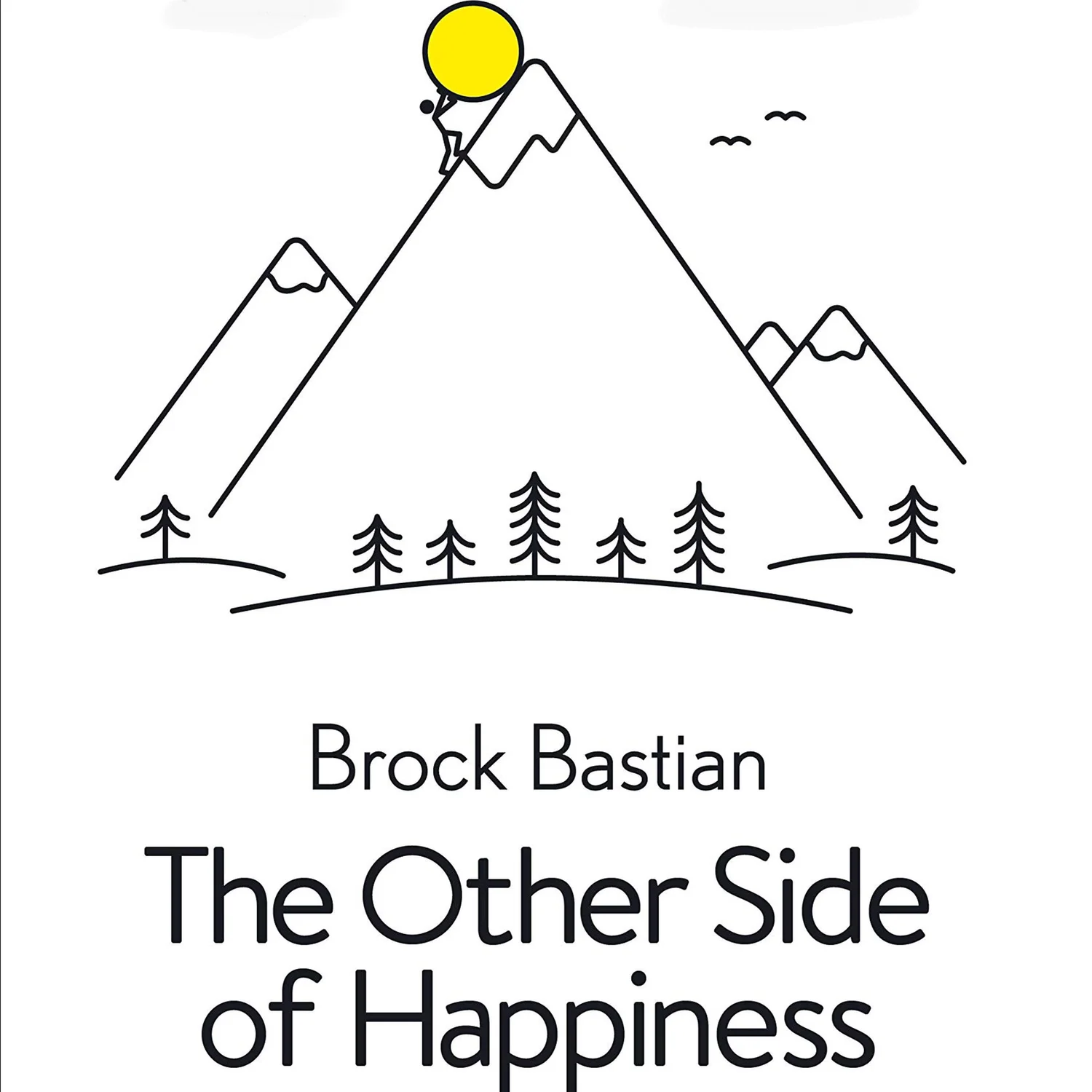
Ep 10BROCK BASTIAN - Author of The Other Side of Happiness: Embracing a More Fearless Approach to Living
"In today's world, feeling happy is no longer simply a state of mind. It's become a marker of mental health and success. On the flip side, pain and sadness are viewed as signals of failure and sickness. If we're not happy, then there is something wrong with us, and we need to fix it. It is no wonder that the painkiller and antidepressant markets, already worth billions of dollars, continue their rapid expansion. We've come to treat even commonplace experiences of pain and sadness as pathological, as things that need to be medicated and eradicated."Brock Bastian is author of The Other Side of Happiness: Embracing a More Fearless Approach to Living and a professor at University of Melbourne’s School of Psychological Sciences. His research and writing focus on pain, happiness, morality, and wellbeing. In his search for a new perspective on what makes for the good life, Bastian has studied why promoting happiness may have paradoxical effects; why we need negative and painful experiences in life to build meaning, purpose, resilience, and ultimately greater fulfilment in life; and why behavioural ethics is necessary for understanding how we reason about personal and social issues and resolve conflicts of interest.www.brockbastian.comwww.abebooks.com/9780141982106/Side-Happiness-Embracing-Fearless-Approach-0141982101/plpwww.creativeprocess.info www.oneplanetpodcast.orgIG www.instagram.com/creativeprocesspodcast

ANDRI SNÆR MAGNASON - Icelandic Writer & Documentary Filmmaker - On Time and Water, The Casket of Time, LoveStar, Not Ok
"If you look at the Himalayas, the frozen glaciers are feeding 1 billion people with milky white water. The real tragedy is if the Himalayan glaciers go the same way as Iceland. In many places in the world, glaciers are very important for agriculture and the basic water supply of people. So that's where I go into mythology in On Time and Water because in Nordic mythology, the world started with a cow, a frozen cow made of frost and snow. And it never made sense to me. But if you look at the Himalayas, how these frozen glaciers are feeding 1 billion people with milky white water that is better than normal water, then it makes total sense. Of course, the frozen cow - it's a glacier."Andri Snær Magnason is an award winning author of On Time and Water, The Casket of Time, LoveStar, Dreamland and The Story of the Blue Planet. His work has been published in more than 35 languages. He has a written in most genres, novels, poetry, plays, short stories, non fiction as well as being a documentary film maker. His novel, LoveStar got a Philip K. Dick Special Citation, and the Grand Prix de l’Imaginaire in France and “Novel of the year” in Iceland. The Story of the Blue Planet, was the first children’s book to receive the Icelandic Literary Award and has been published or performed in 35 countries. The Blue Planet received the Janusz Korczak Honorary Award in Poland 2000, the UKLA Award in the UK and Children's book of the Year in China. His book – Dreamland – a Self Help Manual for a Frightened Nation takes on these issues and has sold more than 20.000 copies in Iceland. He co directed Dreamland - a feature length documentary film based on the book. Footage from Dreamland and an interview with Andri can be seen in the Oscar Award-winning documentary Inside Job by Charles Ferguson. His most recent book, Tímakistan, the Time Casket has now been published in more than 10 languages, was nominated as the best fantasy book in Finland 2016 with authors like Ursula K. le Guin and David Mitchell. In English six books are currently available: Bónus Poetry, The Story of The Blue Planet, LoveStar, Dreamland and The Casket of Time, (Tímakistan) and On Time and Water.www.andrimagnason.comwww.creativeprocess.info www.oneplanetpodcast.orgIG www.instagram.com/creativeprocesspodcast
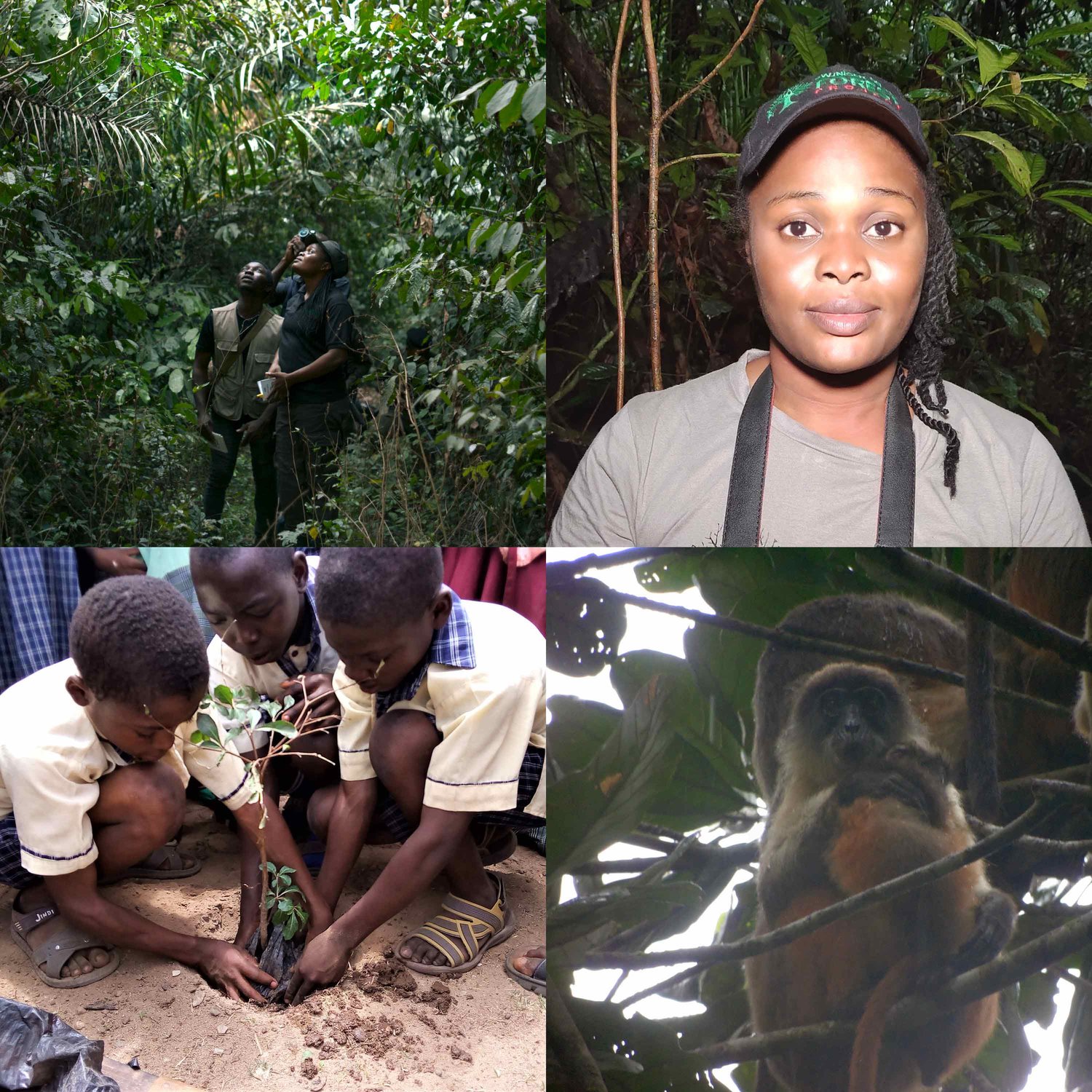
RACHEL ASHEGBOFEH IKEMEH - Whitley Award-winning Conservationist - Founder/Director, Southwest Niger Delta Forest Project
"There's no question, we are in a state of conservation emergency. And we have a real situation on our hands and it's so fragile that if we take a step back, we could say goodbye to two types of chimpanzee species and the forest is also on the brink of disappearing forever. And when I started as a conservation researcher, there was kidnapping and insecurity throughout the Nile Delta region, and it was immersed in a lot of oil politics and civil conflicts. Kidnapping and insecurity ran throughout that region. Let's not forget that Nigeria is Africa's most populous nation now. We are over 200 million people in the country, and it's a growing population of young people who are looking for means of livelihood and on the lookout to find space to live. So parts of the forest within one year would suddenly become a new village."Rachel Ashegbofeh Ikemeh is a Whitley Award-winning conservationist and Founder/Director at the Southwest Niger Delta Forest Project, a grassroots-focused conservation initiative that has been dedicated to the protection of fragile wildlife populations and habitat across her project sites in Africa’s most populous nation. Rachel won the award in 2020 for her work on chimpanzee populations in Nigeria and is aiming to secure 20% of chimpanzee habitat in Southwest Nigeria. She is also the winner of the National Geographic Society Buffet Awards for Conservaton Leadership in Africa, a Tusk Conservation Awards Finalist.She works to protect some of the most highly threatened forest habitats and primate populations in southern Nigeria. For example, Rachel’s determined efforts has helped to bring back a species from the brink of extinction – the rare and critically endangered Niger Delta red colobus monkey, also, considered one of 25 most endangered primates in the world. She has helped to establish two protected areas and have also taken on the management of these PAs to restore habitats in these very highly threatened ecosystems which are also areas of high-security risks in the country.Rachel is the Co-Vice Chair for the IUCN/SSC Primate Specialist Group African Section and Member of the International Primatological Society (IPS) education committee. Through her strategic positions in these networks, Rachel has been committed to championing the need to increase conservation leadership amongst Africans as she co-founded the African Primatological society in 2017. She’s trained the 55 persons that make up her team from local institutions and local communities. https://swnigerdeltaforestproject.org.ngwww.creativeprocess.info www.oneplanetpodcast.org IG www.instagram.com/creativeprocesspodcast

MADELEINE WATTS - Author of The Inland Sea - Creative Writing Professor, Columbia University
"So the book is divided. In the first section, summer, the equivalent of summer is Heat. And then there is Flood, which in Australia does tend to happen sort of towards the beginning of autumn, particularly if there have been tropical cyclones in the north of the country. And then winter I've given Tremor. Australia is not somewhere that particularly experiences earthquakes. And so I was interested in introducing something, sort of climactic form of extremity that doesn't happen very often. And then the end of the book, the springtime is Fire. So that was how it came into form because I was interested in talking about the ways in which humans have created an idea of what nature should be in the way that we make our human culture and human meaning from the weather in our environments. And that was not the case where I was from, and it's not the case anymore. So to sort of undo some of that idea of the four seasons being harmonious."Madeleine Watts is an Australian writer based in New York. Her first novel The Inland Sea was published in 2020 and was shortlisted for the Miles Franklin Literary Award and the UTS Glenda Adams Award for New Writing. Her essays and stories have been published in Harper’s Magazine, The Believer, The Guardian, The White Review, and The Paris Review Daily, among others. She teaches creative writing at Columbia University in New York. Her second novel, Elegy, Southwest, is forthcoming.www.madeleinewatts.comwww.penguinrandomhouse.com/books/667704/the-inland-sea-by-madeleine-wattswww.creativeprocess.info www.oneplanetpodcast.orgIG www.instagram.com/creativeprocesspodcast
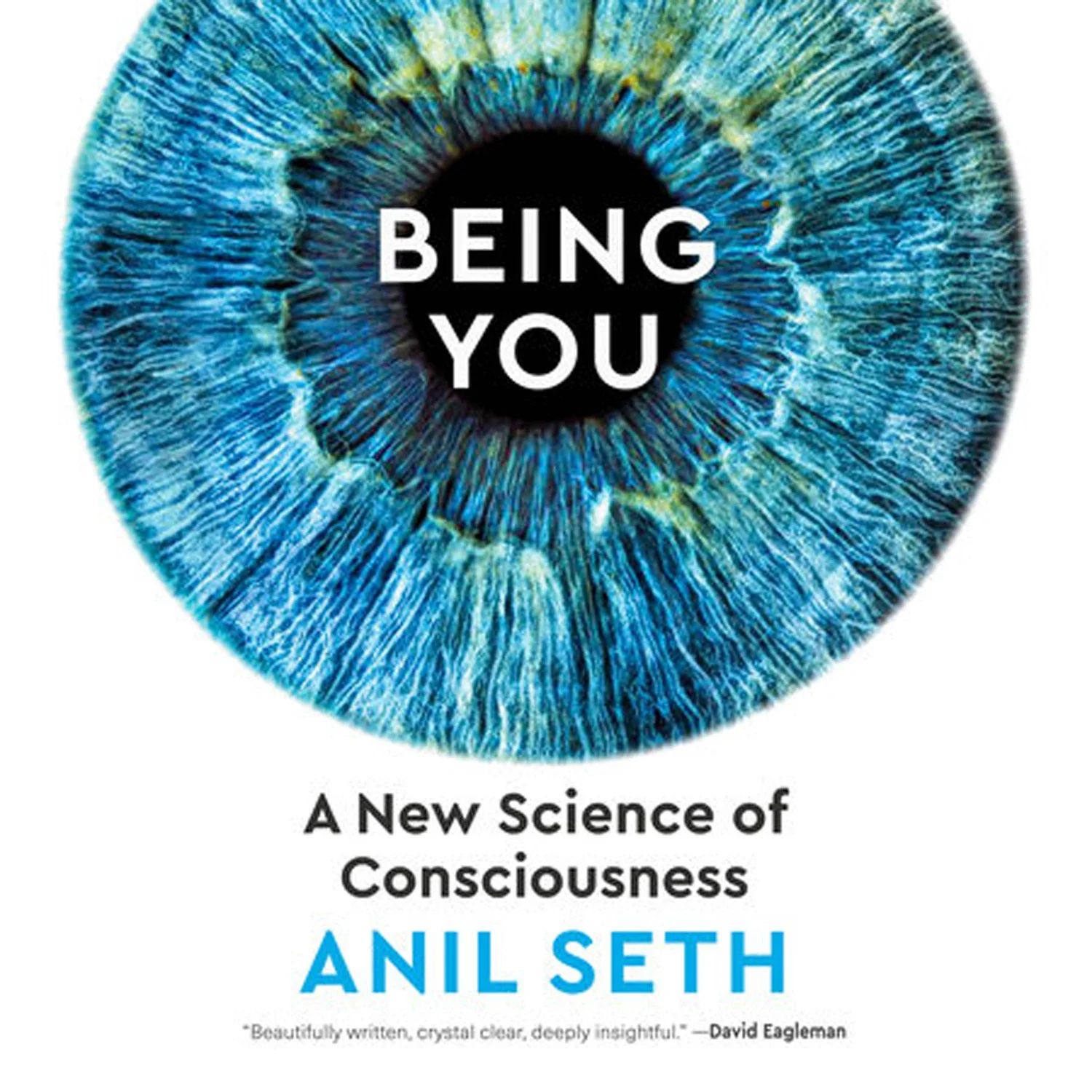
ANIL SETH - Author of Being You: A New Science of Consciousness - Co-director of Sussex Centre for Consciousness Science
"This is a point in philosophy that the world as it is can never be directly apprehended by our minds. We are shielded from it by what's called a sensory veil. There are, for instance, no such thing as colors that are out there. As the artist Cezanne said, 'The colors are where the brain and the universe meet.' And color is, I think, a really good example because it is, in a sense, less than what's there because our eyes are only sensitive to three wavelengths of this huge electromagnetic spectrum, which goes all the way from x-rays and gamma rays to radio waves. And we live in a tiny, thin slice of that reality. But then out of those three wavelengths we experience our brains generate many more than three colors and almost an infinite palette of colors. So there's no sense in which our perception could ever reveal the world as it really is, that it reveals the world in a way that's very useful for us as organisms hell-bent on continuing to live and to survive."Anil Seth is a neuroscientist, author, and public speaker who has pioneered research into the brain basis of consciousness for more than twenty years. He is the author of Being You: A New Science of Consciousness, as well as the best-selling 30 Second Brain, and other books. He is a Professor of Cognitive and Computational Neuroscience at the University of Sussex, where he is Co-Director of the Sussex Centre for Consciousness Science, and is Co-Director of the Canadian Institute for Advanced Research (CIFAR) Program on Brain, Mind, and Consciousness, and of the Leverhulme Doctoral Scholarship Programme: From Sensation and Perception to Awareness. He has a TED talk on consciousness and appeared in several films, including The Most Unknown and The Search. He has written for Aeon, The Guardian, Granta, New Scientist, and Scientific American. He was the 2017 President of the British Science Association (Psychology Section) and winner of the 2019 KidSpirit Perspectives award. He has published more than 180 academic papers and is listed in 2019 and 2020 Web of Science ‘highly cited researcher’ index, which recognizes the world’s most influential researchers over the past decade.www.anilseth.com www.penguinrandomhouse.com/books/566315/being-you-by-anil-seth https://perceptioncensus.dreamachine.world/ https://dreamachine.world/ @anilksethwww.creativeprocess.info www.oneplanetpodcast.orgIG www.instagram.com/creativeprocesspodcast
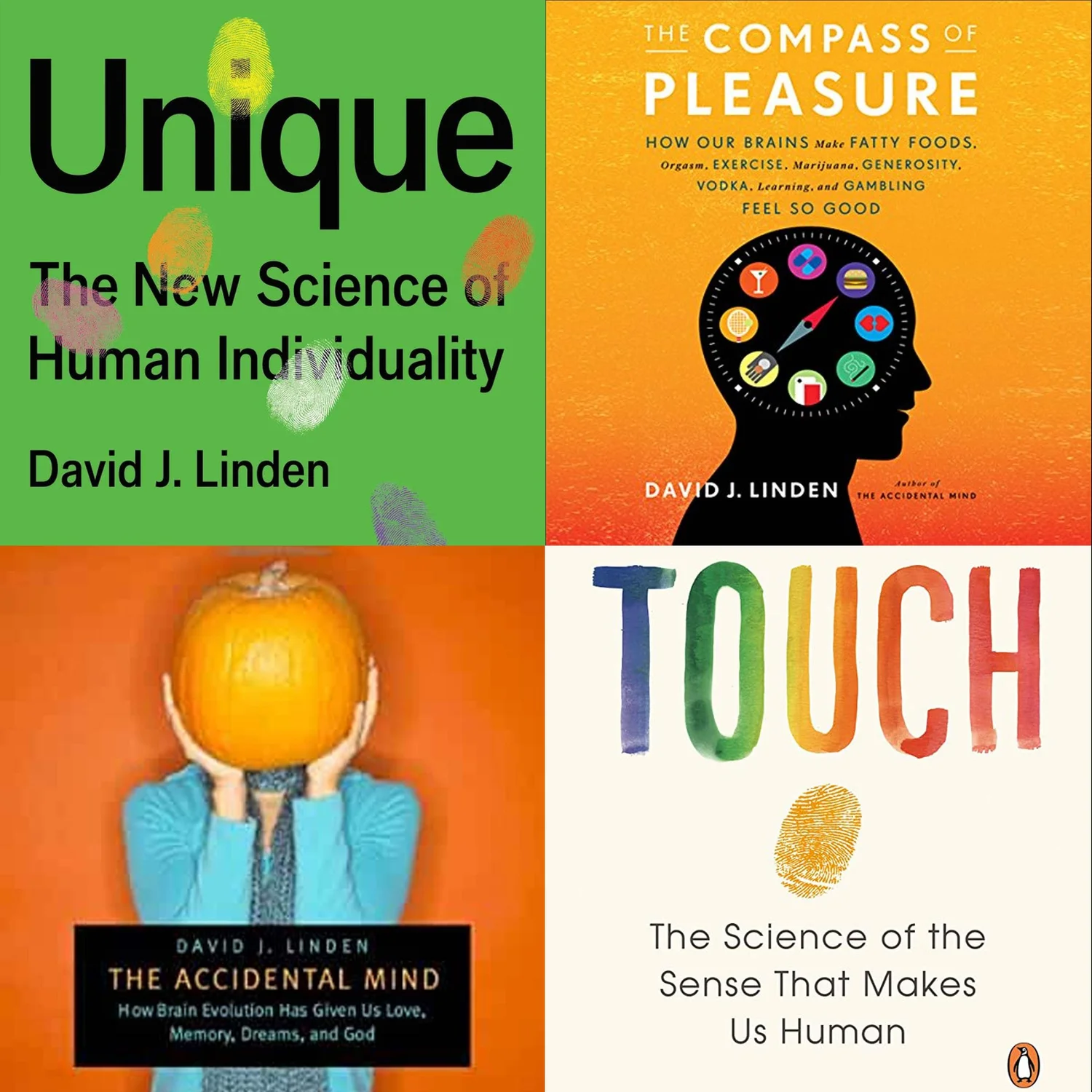
DAVID J. LINDEN - Author of “Unique:The New Science of Human Individuality” “The Accidental Mind” “The Compass of Pleasure” “Touch”
"I think you could certainly make the case that creativity has been useful for a long time in human evolution and probably in our pre-human ancestors as well. So it's not surprising that that creativity is manifest in all kinds of ways from building a trap to catch a critter, to musical improvisation, to making a sculpture. If I were to look at a brain scan and someone said, 'Point to me the region that has the sense of self.' I don't know that I could actually do that. So in other words, I accept this notion as a higher-level explanation that can be really useful. I would say our ability to reduce that to brain regions and brain activities now is still really not there. I'm not saying it will never be there. It may emerge, but it hasn't emerged yet. Sense of self is a really, really interesting idea and it's something that fascinates me because it is used both kind of at a very high level, in a cognitive way, but neuroscientists think of sense of self more in terms of our senses that literally point inward. So when we think about the senses, we usually think about things like touch or vision or taste or smell or hearing that are designed to tell us, not about our own bodies, but about the external world. But we also have all these senses that are interoceptive rather than exteroceptive. And they're telling me things like, how is my head oriented relative to gravity? That's my balanced vestibular system. Where are my limbs in space at this moment that I can do, even with my eyes closed? I know where my arm is even with my eyes closed because I'm getting information from my muscles that is being sent to my brain. I know how distended my bladder is and whether I'm going to need to go to the bathroom soon. I know my immune state, my breathing, my blood chemistry, my digestion. All of these things are senses of self and the degree to which they influence higher cognitive processes is to me one of the really fascinating questions of neuroscience right now and one that we're just really starting to understand."David J. Linden is a Professor in the Department of Neuroscience at the Johns Hopkins University School of Medicine. He is the author of Unique: The New Science of Human Individuality, The Accidental Mind: How Brain Evolution Has Given Us Love, Memory, Dreams, and God, The Compass of Pleasure: How Our Brains Make Fatty Foods, Orgasm, Exercise, Marijuana, Generosity, Vodka, Learning, and Gambling Feel So Good, and Touch: The Science of the Hand, Heart, and Mind. His laboratory has worked for many years on the cellular substrates of memory storage, recovery of function following brain injury and a few other topics.www.davidlinden.orgwww.creativeprocess.info www.oneplanetpodcast.orgIG www.instagram.com/creativeprocesspodcast
We All Live on One Planet We Call Home - Part 4 - Environmentalists, Economists, Policymakers & Architects Share their Stories
Listen to Part 4 of this Special Series with music courtesy of composer Max Richter. All voices on this episode are from our interviews for The Creative Process & One Planet Podcast:INGRID NEWKIRK, Founder & President of PETA - People for the Ethical Treatment of AnimalsJEFFREY D. SACHS, President of the UN Sustainable Development Solutions Network, Director of Center for Sustainable Development, Columbia University, Economist, AuthorJENNIFER MORGAN, Fmr. Executive Director of Greenpeace International, Special Envoy for International Climate Action, German Foreign MinistryMERLIN SHELDRAKE, Biologist & Bestselling Author of “Entangled Life: How Fungi Make Our Worlds, Change Our Minds, and Shape Our Futures”, Winner of the Wainwright Prize 2021WALTER STAHEL, Architect, Economist, Founding Father of Circular Economy, Founder-Director, Product-Life InstituteARMOND COHEN, Executive Director of Clean Air Task ForcePIA MANCINI, Co-founder/CEO of Open Collective - Chair of DemocracyEarth Foundation, YGL World Economic ForumRON GONEN, Founder & CEO of Closed Loop Partners, Former Deputy Commissioner of Sanitation, Recycling & Sustainability, NYCAIMEE NEZHUKUMATATHIL, Poet & Author of “World of Wonders: In Praise of Fireflies, Whale Sharks and Other Astonishments”ANA CASTILLO, Award-Winning Xicana Activist, Editor, Poet, Novelist & Artistwww.creativeprocess.info www.oneplanetpodcast.orgIG www.instagram.com/creativeprocesspodcastwww.maxrichtermusic.comhttps://studiorichtermahr.comMax Richter’s music featured in this episode are “On the Nature of Daylight” from The Blue Notebooks, “Path 19: Yet Frailest” from Sleep.Music is courtesy of Max Richter, Universal Music Enterprises, and Mute Song.Artwork: Saudade, Mia Funk

What Kind of World Are We Leaving for Future Generations? - Part 3 - Activists, Environmentalists & Teachers Share their Stories
Listen to Part 3 of this Special Series with music courtesy of composer Max Richter.All voices on this episode are from our interviews for The Creative Process & One Planet Podcast:PAULA PINHO, Director of Just Transition at the European Commission Directorate-General for EnergyPIA MANCINI, Co-founder/CEO of Open Collective - Chair of DemocracyEarth Foundation, YGL World Economic ForumJENNIFER MORGAN, Fmr. Executive Director of Greenpeace International, Special Envoy for International Climate Action, German Foreign MinistryWALTER STAHEL, Architect, Economist, Founding Father of Circular Economy, Founder-Director, Product-Life InstituteMERLIN SHELDRAKE, Biologist & Bestselling Author of Entangled Life: How Fungi Make Our Worlds, Change Our Minds, and Shape Our Futures, Winner of the Wainwright Prize 2021RON GONEN, Founder & CEO of Closed Loop Partners, Former Deputy Commissioner of Sanitation, Recycling & Sustainability, NYCMANUELA LUCÁ-DAZIO, Executive Director, Pritzker Architecture Prize, Fmr. Exec. Director of Venice Biennale, Visual Arts & Architecture Dept.NICHOLAS ROYLE, Co-author of "An Introduction to Literature, Criticism and Theory”, Author of “Mother: A Memoir”MARK BURGMAN, Director, Centre for Environmental Policy, Imperial College London, Editor-in-Chief, Conservation BiologyMIKE DAVIS, CEO of Global WitnessJAY FAMIGLIETTI, Fmr. Senior Water Scientist at NASA Jet Propulsion Laboratory, Exec. Director, Global Institute for Water Security, Host of "What About Water?" PodcastBRITT WRAY, Author of “Generation Dread: Finding Purpose in an Age of Climate Crisis”, Researcher Working on Climate Change & Mental Health, Stanford UniversityRICHARD VEVERS, Founder & CEO of The Ocean AgencyARMOND COHEN, Executive Director of Clean Air Task ForceBILL HARE, Founder & CEO of Climate Analytics, Physicist, Climate ScientistDAVID PALUMBO-LIU, Activist, Professor & Author of “Speaking Out of Place: Getting Our Political Voices Back”, Host of Speaking out of Place PodcastIBRAHIM ALHUSSEINI, Founder & CEO of FullCycle Fund GAIA VINCE, Science Writer, Broadcaster & Author of “Transcendence” & “Adventures in the Anthropocene”INGRID NEWKIRK, Founder & President of PETA - People for the Ethical Treatment of Animalswww.creativeprocess.info www.oneplanetpodcast.orgIG www.instagram.com/creativeprocesspodcastwww.maxrichtermusic.comhttps://studiorichtermahr.comMax Richter’s music featured in this episode are “On the Nature of Daylight” from The Blue Notebooks, “Path 19: Yet Frailest” from Sleep.Music is courtesy of Max Richter, Universal Music Enterprises, and Mute Song.

JOHN PATRICK SHANLEY - Academy Award-winning Writer/Director - Doubt starring Meryl Streep, Philip Seymour Hoffman, Amy Adams - Moonstruck
"You grow up wherever you grow up. And there are things there, and there are other things that are not there, and the things that are not there, you can imagine. And I did a lot of imagining in the Bronx because there were a lot of things that I gravitated toward that just weren't there: the fantastic, The Thief of Baghdad, magic, beautiful clothes, beautiful places, the exoticism of that. And then at another later point, I thought, I am missing my whole life from my work. I am writing about all these things that are not my life. Because I think everything that I actually saw and heard and felt is so ordinary that it's not worth repeating. And I think most of us feel that way, and we're dead wrong. That in fact, those things are gold. Those are the things that we actually have to write about. And you can write about anything when you start with those things and embrace them. Embrace your own life."John Patrick Shanley is from The Bronx. His plays include Prodigal Son, Outside Mullingar (Tony nomination), Danny and the Deep Blue Sea, Savage in Limbo, Italian-American Reconciliation, Welcome to the Moon, Four Dogs and a Bone, Dirty Story, Defiance, and Beggars in the House of Plenty. His theatrical work is performed extensively across the United States and around the world. For his play, Doubt, he received both the Tony Award and the Pulitzer Prize. In the arena of screenwriting, he has ten films to his credit, most recently Wild Mountain Thyme, with Emily Blunt, Jamie Dornan, and Christopher Walken. His film of Doubt, with Meryl Streep, Philip Seymour Hoffman, Amy Adams, and Viola Davis, which he also directed, was nominated for five Academy Awards, including Best Adapted Screenplay. Other films include Five Corners (Special Jury Prize, Barcelona Film Festival), Alive, Joe Versus the Volcano (which he also directed), and Live From Baghdad for HBO (Emmy nomination). For his script of Moonstruck he received both the Writers Guild of America Award and an Academy Award for best original screenplay. In 2009, The Writers Guild of America awarded Mr. Shanley the Lifetime Achievement In Writing.www.imdb.com/name/nm0788234www.creativeprocess.info www.oneplanetpodcast.orgIG www.instagram.com/creativeprocesspodcast

Earth Month Stories - Part 2 - Environmentalists, Artists, Students & Teachers Speak Out & Share How We Can Save the Planet
Listen to Part 2 of this Special Series with music courtesy of composer Max Richter.All voices on this episode are from our interviews for The Creative Process & One Planet Podcast:MANUELA LUCÁ-DAZIO - Executive Director, Pritzker Architecture Prize - Fmr. Exec. Director of Venice Biennale, Visual Arts & Architecture Dept.BRITT WRAY - Author of “Generation Dread: Finding Purpose in an Age of Climate Crisis”, Researcher Working on Climate Change & Mental Health, Stanford UniversityWALTER STAHEL - Architect, Economist, Founding Father of Circular Economy - Founder-Director, Product-Life InstituteMATHIS WACKERNAGEL - Founder & President of the Global Footprint Network - World Sustainability Award WinnerJAY FAMIGLIETTI, Fmr. Senior Water Scientist at NASA Jet Propulsion Laboratory, Exec. Director, Global Institute for Water Security, Host of "What About Water?" PodcastRICHARD VEVERS - Founder & CEO of The Ocean AgencyARMOND COHEN - Executive Director of Clean Air Task ForcePAULA PINHO - Director of Just Transition at the European Commission Directorate-General for EnergyMARTIN VON HILDEBRAND - Indigenous Rights Activist - Winner of Right Livelihood & Skoll Awards - Founder of Fundacion Gaia Amazonas, named #40 NGOs of the World by The Global JournalHAROLD P. SJURSEN - Professor of Philosophy - Science, Technology, the Arts - NYU, Beihang University, East China UniversityBILL HARE - Founder & CEO of Climate Analytics, Physicist, Climate ScientistSIR ANDY HAINES - Tyler Prize Award-winner for Environmental Achievement - Professor of Environmental Change & Public HealthLISA JACKSON PULVER - Deputy Vice-Chancellor of University of Sydney's Indigenous Strategy & Services Max Richter’s music featured in this episode:“Spring 1” from The New Four Seasons – Vivaldi RecomposedVladimir’s Blues” from The Blue Notebooks"Lullaby From The Westcoast Sleepers” from 24 Postcards in Full Colour,Music is courtesy of Max Richter, Universal Music Enterprises, and Mute Song.www.maxrichtermusic.comhttps://studiorichtermahr.comwww.creativeprocess.infowww.oneplanetpodcast.orgIG www.instagram.com/creativeprocesspodcast
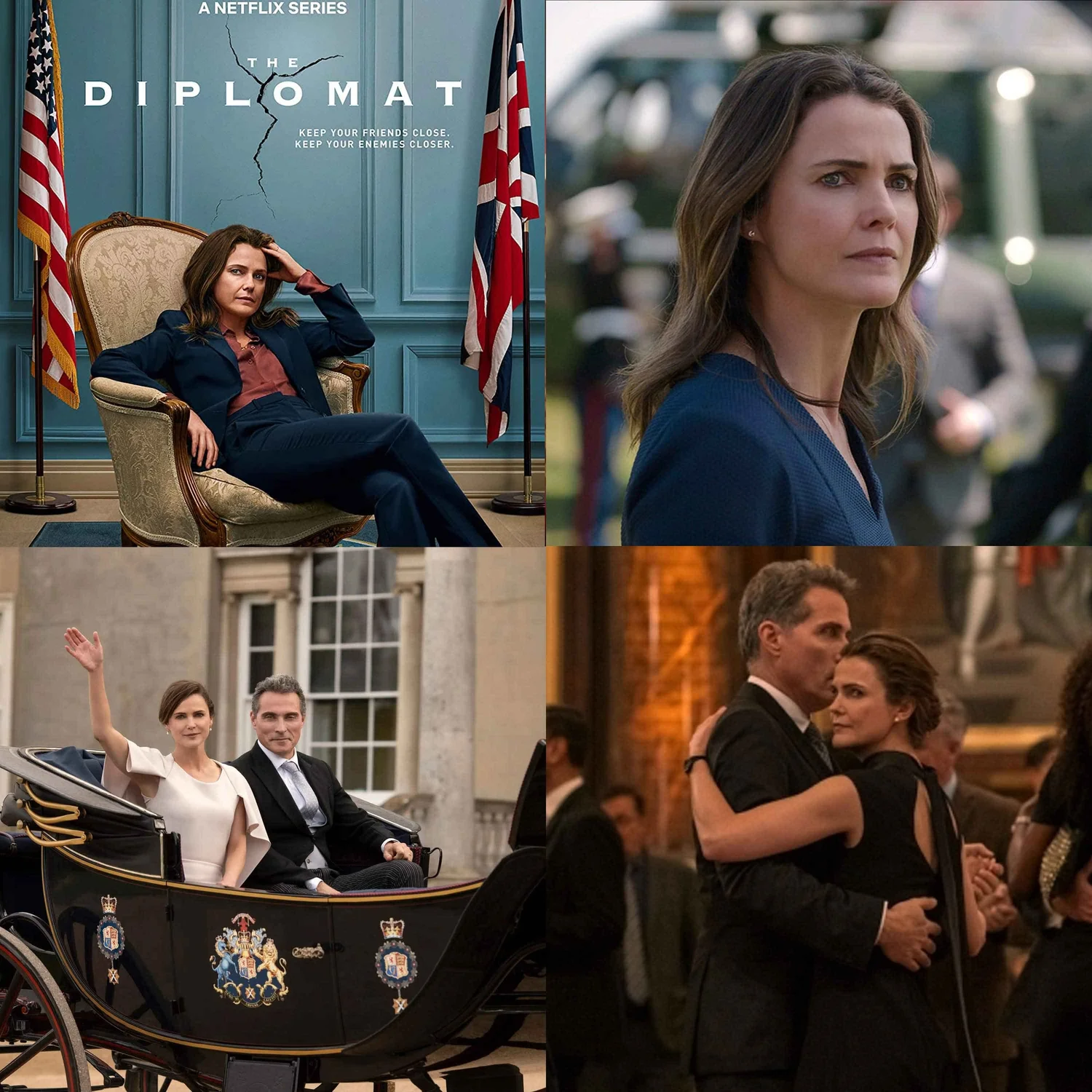
DEBORA CAHN - Showrunner & Executive Producer of Netflix’s The Diplomat starring Keri Russell & Rufus Sewell
"I think that we like to look at somebody who's in a leadership position and say, look at what they did. And we don't recognize the fact that there's a huge team of people creating this thing that we attribute to an individual. And certainly, that's the case in political environments. I didn't work in Washington for a long time, but I worked there a little bit, and I very much got a sense of the incredible talent of a group of people who are standing behind somebody who's an elected leader, helping them make decisions and in research and the forming of strategies.We're attributing to one mind what is the work of 20. I think that's what so many of the characters in that place are bringing to Kate Wyler (played by Keri Russell). And it takes her a while to kind of figure out does she trust them? Does she think that they're really value-added? Is she going to have to do this by herself? Sometimes it takes time to embrace that and be able to utilize the skills that are around you, but nobody does it by themselves. I think that's a myth."Debora Cahn is the Emmy-nominated showrunner and executive producer of Netflix’s The Diplomat, a political thriller series starring Keri Russell and Rufus Sewell. She’s worked with television’s leading showrunners, including Shonda Rhymes, Terence Winter, Steven Levinson, and Howard Gordon. Her career began working on Aaron Sorkin’s The West Wing which has led to projects such as the hit Showtime series Homeland, ABC’s long-running medical drama Grey’s Anatomy, and HBO’s Vinyl, which was co-created by Martin Scorsese. She’s the winner of two Writers Guild of America Award for The West Wing and FX’s limited series Fosse/Verdon.www.imdb.com/name/nm1263223www.netflix.com/tudum/the-diplomatwww.creativeprocess.info www.oneplanetpodcast.org IG www.instagram.com/creativeprocesspodcastImages courtesy of Netflix/Alex Bailey

Special Earth Day Stories - Environmentalists, Artists, Students & Teachers share their Love for the Planet - Part 1
Today we’re streaming voices of environmentalists, artists, students, and teachers. Enjoy Part 1 of this Special Series with music courtesy of composer Max Richter.All voices on this episode are from our interviews for The Creative Process & One Planet Podcast:MAX RICHTERINGRID NEWKIRK, Founder of PETABERTRAND PICCARD, Aviator of 1st Round-the-World Solar-Powered Flight, Explorer, Founder, Solar Impulse FoundationCARL SAFINA, Ecologist, Founding President of Safina CenterCLAIRE POTTER, Designer, Lecturer, Author of “Welcome to the Circular Economy”ADA LIMÓN, U.S. Poet Laureate, Host of The Slowdown podcastCYNTHIA DANIELS, Grammy and Emmy award-winning producer, engineer, composerJOELLE GERGIS, Lead Author of the IPCC Sixth Assessment Report, Author of “Humanity’s Moment”KATHLEEN ROGERS, President of EARTHDAY.ORGODED GALOR, Author of “The Journey of Humanity”, Founder of Unified Growth TheorySIR GEOFF MULGAN, Fmr. Chief Executive of Nesta, Fmr, Prime Minister’s Strategy Unit Director & Downing Street’s Head of Policy, Author of “Another World is Possible”ALAIN ROBERT, Rock & Urban Climber known for Free Solo Climbing 150+ of the World’s Tallest Skyscrapers using no Climbing EquipmentNOAH WILSON-RICH, Co-founder & CEO of The Best Bees CompanyCHRIS FUNK, Director of the Climate Hazards Center at UC Santa Barbara, Author of Drought, Flood, Fire: How Climate Change Contributes to Recent CatastrophesDAVID FARRIER, Author of “Footprints: In Search of Future Fossils”DR. SUZANNE SIMARD, Professor of Forest Ecology, Author of “Finding the Mother Tree”PETER SINGER, “Most Influential Living Philosopher”, Author, Founder of The Life You Can SaveJENNIFER MORGAN, Fmr. Executive Director of Greenpeace International, Special Envoy for International Climate Action, German Foreign Ministrywww.creativeprocess.info www.oneplanetpodcast.orgIG www.instagram.com/creativeprocesspodcastwww.maxrichtermusic.comhttps://studiorichtermahr.comMax Richter’s music featured in this episode are “On the Nature of Daylight” from The Blue Notebooks, “Path 19: Yet Frailest” from Sleep.Music is courtesy of Max Richter, Universal Music Enterprises, and Mute Song.
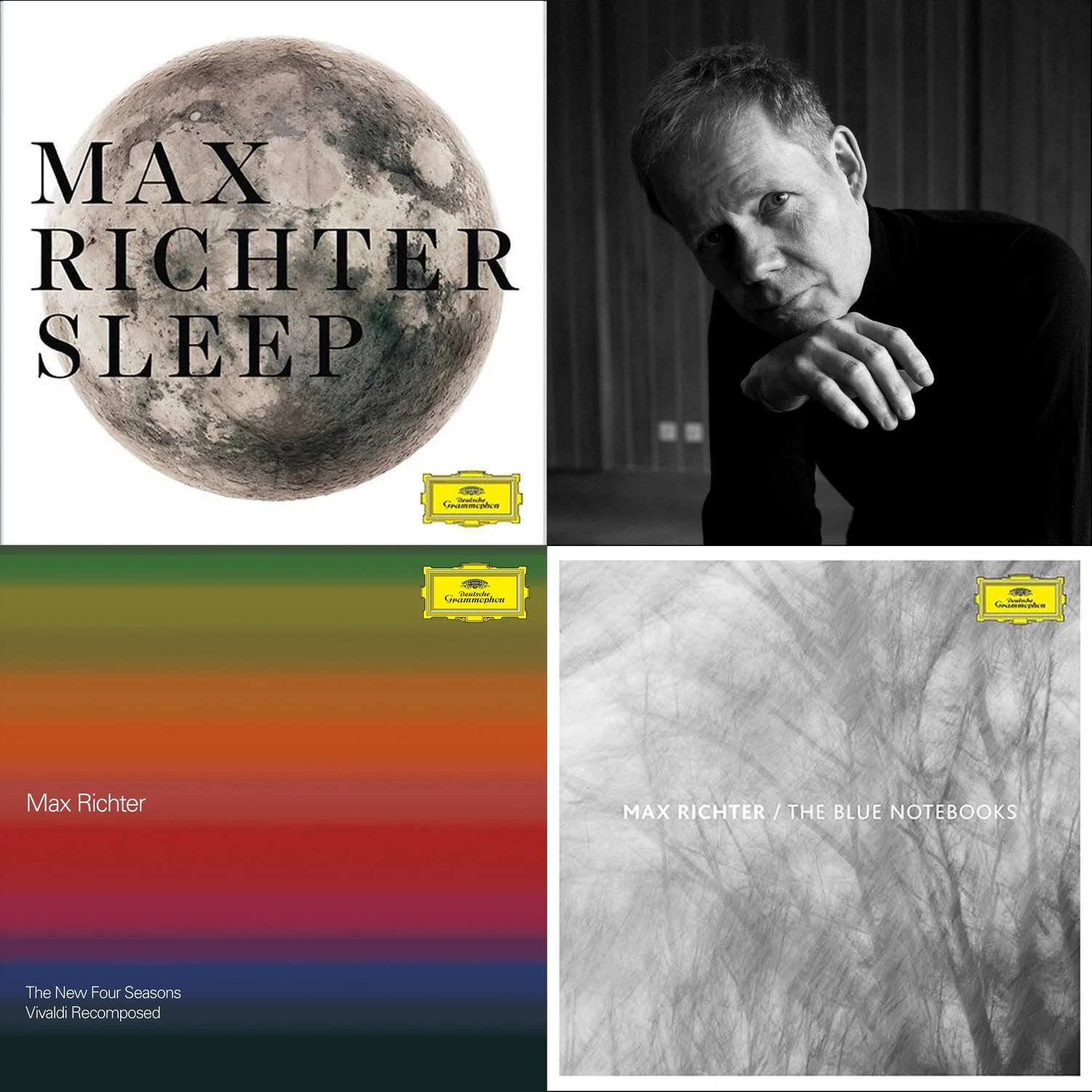
MAX RICHTER - Award-winning Composer & Pianist
"For me, the creative process is a sort of a continuous thing in the sense that I'm writing kind of all the time, at some level. And that doesn't mean I'm sitting at my desk all the time, but it does mean that I've got a continuous thought process, a continuous engagement with the material I'm trying to shape. And it's many different kinds of processes. First of all, obviously an intention. You need to have an intention. What is it I'm trying to do? But then you get a process of making things, and then you get into a process of dialogue with the things you've made where they start to take on properties and it feels like the material has intentions of its own.So then you are trying to - it's like herding cats, you know? - sort of corralling this material into some kind of structure, some kind of formed object. Then it becomes like a sculptural process on the large scale. But time is a super important part of that process. You know, there are things which are just not ready. And you have to just wait until they make sense to you in a new way, or you can discover them almost as though someone else had written them. That sort of trying to achieve a kind of objectivity about the material."Composer Max Richter is known for his ability to translate profound human emotions into music. Max’s record Sleep is the most streamed classical album of all time and his catalogue has surpassed 3 billion streams.A prolific collaborator, he scored and performed for Kim Jones for the Dior shows, and the new Wayne McGregor and Margaret Atwood ballet MADDADDAM, and arts collective Random International on the Rain Room installation.Max has collaborated with film directors Denis Villeneuve, Martin Scorsese, and Ari Folman, and scored film & TV including Ad Astra, Black Mirror, Shutter Island, The Leftovers, Arrival and his Emmy-nominated score for Taboo.He’s the co-founder of Studio Richter Mahr, with his partner and artist Yulia Mahr in Oxfordshire, UK. Max and Yulia built the studio around an old tractor barn, and have powered it with cutting-edge solar and heat-pump technology. It’s a haven for their family and community of musicians and artists which regularly come through. Set within 31 acres of woodland, Max and Yulia have a huge passion for using the land to farm and provide a sustainable working environment as well as using creativity as an elevating force within society. Operating as a free space for artists to develop their work, the studio also works with local partners to support the local community.www.maxrichtermusic.comhttps://studiorichtermahr.comPhoto by William Waterworthwww.creativeprocess.info www.oneplanetpodcast.orgIG www.instagram.com/creativeprocesspodcastMax Richter’s music featured in this episode is "On the Nature of Daylight” from The Blue Notebooks.Music is courtesy of Max Richter, Universal Music Enterprises, and Mute Song.

LOVE - What is love? Filmmakers, poets, aviators, musicians, cave divers, environmentalists, writers, and artists explore what love means to them
00:25 JERICHO BROWN - Pulitzer Prize-Winning Poet, Author of “The Tradition” & “The New Testament”00:39 JILL HEINERTH - Explorer, Presenter, Author of “Into The Planet: My Life as a Cave Diver”01:02 ALICE FULTON - Poet - Recipient of MacArthur “Genius”, NEA & Guggenheim Fellowships01:31 BERTRAND PICCARD - Aviator of 1st Round-the-World Solar-Powered Flight, Explorer, Founder, Solar Impulse Foundation: 1000+ Profitable Climate Solutions02:31 CHRIS BLACKWELL - Founder of Island Records - Bob Marley, U2, Cat Stevens, Grace Jones, Roxy Music, Amy Winehouse…Author of “The Islander: My Life in Music and Beyond"03:31 ALICE NOTLEY - Poet & Artist - Academy of American Poets Award Winner04:08 MIA FUNK - Artist, Writer & Host of The Creative Process reads “In My Dreams"04:45 MAX STOSSEL - Award-winning Poet, Filmmaker, Speaker - Creator of "Words That Move”05:04 GERALD FLEMING - Poet, Author of the collections “The Choreographer”, “One”, “Night of Pure Breathing”, among others05:29 MARGO BERDESHEVSKY - Award-winning Poet - "Kneel Said the Night”,"Before The Drought”, “Between Soul & Stone”05:56 SAM LEVY - Award-winning Cinematographer of “Lady Bird” “Frances Ha” “While We’re Young” “Confess, Fletch”06:31 CHAYSE IRVIN - Award-winning Cinematographer - “Blonde" starring Ana de Armas, “Beyonce: Lemonade”, Spike Lee’s “BlacKkKlansman”06:57 KARINA MANASHIL - President of Mad Solar - Creative Confidante for Kid Cudi - Executive Producer of Netflix’s “Entergalactic”, A24’s “Pearl”, “X”07:37 CARL SAFINA - Ecologist - Founding President of Safina Center - NYTimes Bestselling Author of “Becoming Wild: How Animal Cultures Raise Families, Create Beauty, and Achieve Peace”, among otherswww.creativeprocess.info www.oneplanetpodcast.orgIG www.instagram.com/creativeprocesspodcastFlower Duet - Leo DelibesCreative Commons Attribution 3.0 Unported CC BY 3.0https://creativecommons.org/licenses/by/3.0/Conducted by Philip Milman https://pmmusic.pro/

HENRY SHUE - Author of “The Pivotal Generation” - Snr. Research Fellow, Centre for International Studies, Oxford
“Well, it's because of the situation we face. We can tell from the science that we have to reach zero carbon emissions by 2050. And common sense tells you that bringing them down for the second 50% is going to be harder than the first 50%. So we have to take care of the first 50% by about 2030, and it's 2023 already. We literally must - if we're going to keep climate change from becoming even more dangerous than it is - is to do a very great deal in the next seven or eight years. And a huge amount between now and 2050. So it's not that this problem is the most important of all possible problems. There are other problems like preventing nuclear war, but this is a problem that either we get a grip on it now, or there's a real possibility that it will escape from our control. So, we need to be hardheaded about this and look very hard at what people are actually doing. Carbon credits could be a good thing, but they would need to be carefully regulated, and we would need institutions to police them and be sure people are actually doing what they say they're doing. And meanwhile, we should concentrate on reducing emissions because in theory, the carbon credits would get you to the same place but only if what they promised is actually delivered. And it very often isn't. There's a very recent study saying that something like 90% of promised carbon offsets are not actually being implemented. I don't know if it's that bad, but there's a lot of hanky-panky going on.”Henry Shue is Professor Emeritus of Politics and International Relations at University of Oxford’s Merton College. He's the author of Basic Rights, as well as The Pivotal Generation: Why We Have a Moral Responsibility to Slow Climate Change Right Now, among many other publications. In 1976, he co-founded the Institute for Philosophy and Public Policy at the University of Maryland. He was a supporter of the successful campaign by Virginia's Augusta County Alliance to stop the Atlantic Coast Pipeline, and now works primarily on explanations for the urgency of far more ambitious policies to eliminate fossil fuels in order to avoid irreversible damage for future generations.www.merton.ox.ac.uk/people/professor-henry-shue https://press.princeton.edu/books/paperback/9780691202280/basic-rights https://press.princeton.edu/books/hardcover/9780691226248/the-pivotal-generationwww.creativeprocess.info www.oneplanetpodcast.orgIG www.instagram.com/creativeprocesspodcast
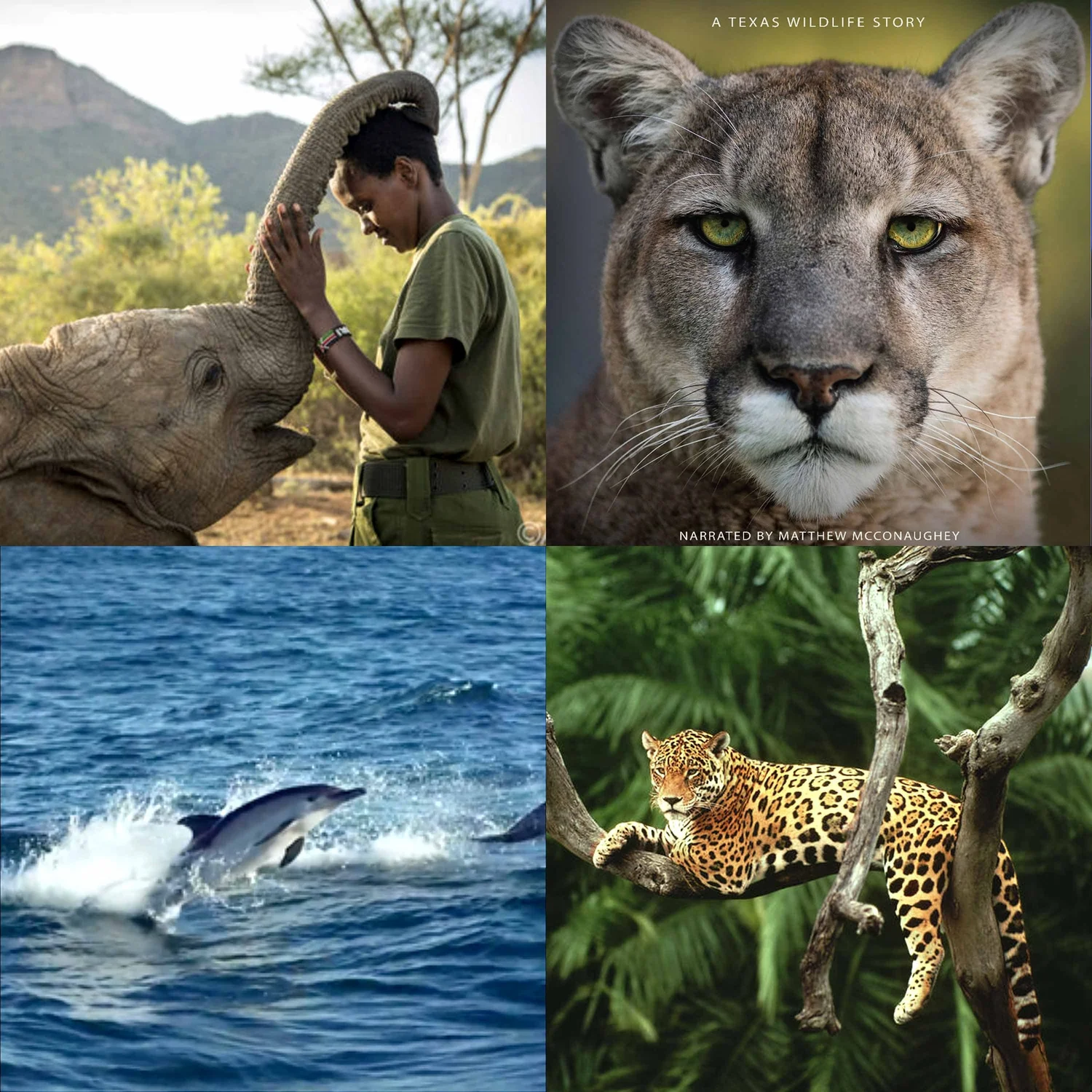
CHRISTOPHER J. GERVAIS - Founder/CEO of Wildlife Conservation Film Festival - Cannes Lions Award-winning Producer
“I've been fortunate over the last 13 years to meet some of the world's leading conservationists. Dr. Sylvia Earl, David Attenborough, Jane Goodall, his Royal Highness Prince Khaled bin Sultan of Saudi Arabia, who came to the film festival in 2014, where we showed some films from his foundation. And there have been a number of others, award-winning filmmakers, and a number of celebrities that have come to the film festival, Academy Award Winner James Cromwell. We've had other celebrities, from Paul Giamatti to Alec Baldwin to Sigourney Weaver, all of whom may have a passion for, if not saving wildlife, then for the environment. And I have found them very humble, very easy to speak to, and I'm immensely grateful that they took the time to come to WCFF from their busy schedule. And we hope to build more relationships.So, we continue to grow, we continue to evolve. These global partnerships are helpful. And there have been a number of challenges. The biggest challenge right now that I have is I have the biggest fight of my life. In September of 2021, I was diagnosed with stage three liver cancer. And unfortunately, it's progressed now to where it's stage four and, you know, it's something that I have to fight with every day. Today I have a lot of energy. I feel good. Some days I do not get out of bed, and unfortunately, the cancer that I have is contracted by maybe 1% of the population. It's a cancer delivered by bile ducts. So there's not a lot of research on it. There's not a lot of studies on it. My physicians have been very candid with me. They cannot cure this. So I don't know how much time I have, whether it's five months, five years, or 50 more years. What they're doing right now is holding it at bay and keeping me alive.”Christopher J. Gervais is an award winning producer. His animated film Dream won a 2017 Golden Lion for film and a Silver Lion for music at the 64th Annual International Festival of Creativity. He is environmental and marine scientist and has decades of experience in field work and research with multiple academic institutions and natural history museums. A former science and social studies teacher, later an administrator, he became the youngest principal of a public school in the state of Florida. While a graduate student, Christopher conducted fieldwork and research to study the Pleistocene Mega fauna and their fossils that were deposited over 10,000 years ago. His study of these extinct species informs his concerns for preserving biodiversity and was a significant factor in the founding of the WCFF. Christopher was one of the first scientists to conduct underwater vertebrate paleontology research. He is a professional, advanced scuba diver with NAUI, PADI, SSI and NASDS with over 2,500 logged dives. Christopher founded the WCFF in 2010 using his life savings to get the organization off the ground and has maintained the operations since then. He is a philanthropic supporter of conservation organizations across the globe. Christopher is President of the International Exploration Society, Fellow of the Royal Geographic Society, member of the Ocean Geographic Society, friend of American Philosophical Society.www.wcff.orgwww.creativeprocess.infowww.oneplanetpodcast.orgIG www.instagram.com/creativeprocesspodcast
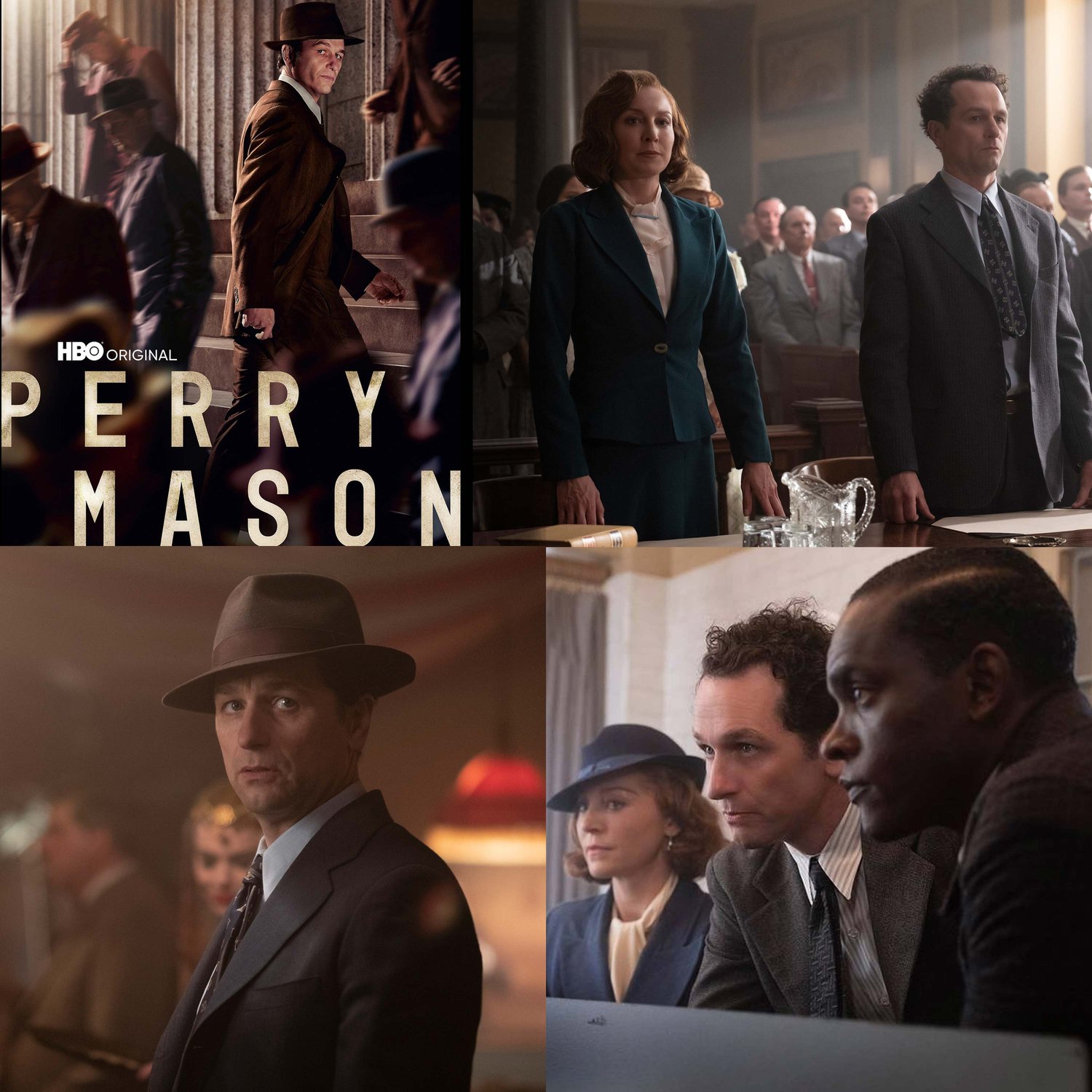
MICHAEL BEGLER - Showrunner of PERRY MASON starring Matthew Rhys, Juliet Rylance, Shea Whigham, Hope Davis
“I call it the percolating trauma inside him, and I think that it's a combination of things with Matthew Rhys who plays Perry Mason. Again, it's holding onto this trauma that happened a dozen years ago in the war, that this is not something that he has really dealt with. And I think that you can't take that lightly. It doesn't go away with time. It doesn't heal. It's still inside you, and it's still informing who you are. And I think that was important in coming into season two because here is a man who's now thrust into this whole other battle. He's now an attorney. And how does he put lives in his hands?So he is gone through this in season one, and now we're coming into season two knowing that he's haunted by the fact that he thought he saved somebody. He put Emily Dodson's life in his hands only to have her commit suicide. So now he's wrestling deeply with the flaws in himself and his character that these soldiers put their lives in his hands in the war.Emily Dodson put her life in his hands in the trial. And now he's going to take on these two boys who could swing on a noose. Does he want that? Does he have enough inside him? And that's why we play with the imposter syndrome because he doesn't know if this is who he really is. And does he still have that fight inside him?And so I think that's the sort of push-pull I think that you're alluding to inside and that he's trying to hold it in and trying to hold it all together. And we do see those moments when he can't hold it back. When he punches the guy in the face in episode four when he steals the horse. These are things that he needs to release that valve because it's so much he's trying to hold onto to get to the result that he wants to win the fight because he hasn't fully won a fight yet. And that's hard.”Michael Begler is showrunner, writer, and executive producer of Perry Mason, which debuted as HBO’s most-watched series in nearly two years upon its premiere in June 2020. The critically-acclaimed show stars Emmy-winner Matthew Rhys, Juliet Rylance, Katherine Waterston, Hope Davis. In the second season of the Emmy-nominated series, the scion of a powerful oil family is brutally murdered. Power, social justice, immigration, LGBTQ rights, and what it truly means to be guilty, are among the issues raised by the series. Begler’s previous series include the Peabody Award-winning The Knick, starring Clive Owen, directed by Steven Soderbergh, writing/producing credits also include comedy series The Tony Danza Show, The Jeff Foxworthy Show and the film Big Miracle starring Drew Barrymore and John Krasinski.www.imdb.com/title/tt2077823www.instagram.com/perrymasonhbowww.imdb.com/name/nm0066764www.creativeprocess.infowww.oneplanetpodcast.orgIG www.instagram.com/creativeprocesspodcast

PIA MANCINI - Co-founder/CEO of Open Collective - Chair of DemocracyEarth Foundation - YGL World Economic Forum
“Even if the current system sucks, we still need to vote. That for me is something that I keep repeating. We cannot leave vacuums in the political system because someone else is going to fill them. So that for me is the number one thing. We change everything we want and work on change, but we need to make sure that the right people are voting or otherwise, it's going to be a lot harder. So we need to play both games, I guess. And then I think that we've had time to experience and experiment with these institutions for hundreds of years. And whenever we propose something new, there is this expectation that completely replaces what exists. And it always gets compared like, ‘Oh, but this happened, but…' We need to experiment. We need to be honest about this, and we need to say like, we don't know if we have unintended consequences. Like what I was saying before about our use of social media, we missed it. And so I think that we can, at the grassroots level, do a lot of experimentation and organizing kind of collectives that self-govern in different ways and use different tools and really experiment with what happens at a human level when certain technologies are used, when certain governance structures are used. So I think that's the game we will all need to play. It's twofold. On the one hand, we need to build a new system. And that makes the existing system obsolete. And we need to do this by finding sandboxes of political innovation and experimenting with political structures ourselves, but at the same time, we need to keep the pressure on the existing system to make sure that it doesn't go to hell. So it's these two things, that's our generational challenge."Pia Mancini is a democracy activist, political scientist, open source sustainer, co-founder & CEO at Open Collective and Chair of DemocracyEarth Foundation. She has worked in politics in Argentina as the Chief of Advisers and Deputy Secretary of Political Affairs, Government of the City of Buenos Aires and CIPPEC think tank. She has developed technology for democracy around the world and is a YC Alum, Young Global Leaders (World Economic Forum). She co-founded DemocracyOS & The Net Party (Partido de la Red).www.piamancini.comhttps://opencollective.comhttps://democracy.earthwww.creativeprocess.info www.oneplanetpodcast.orgIG www.instagram.com/creativeprocesspodcast
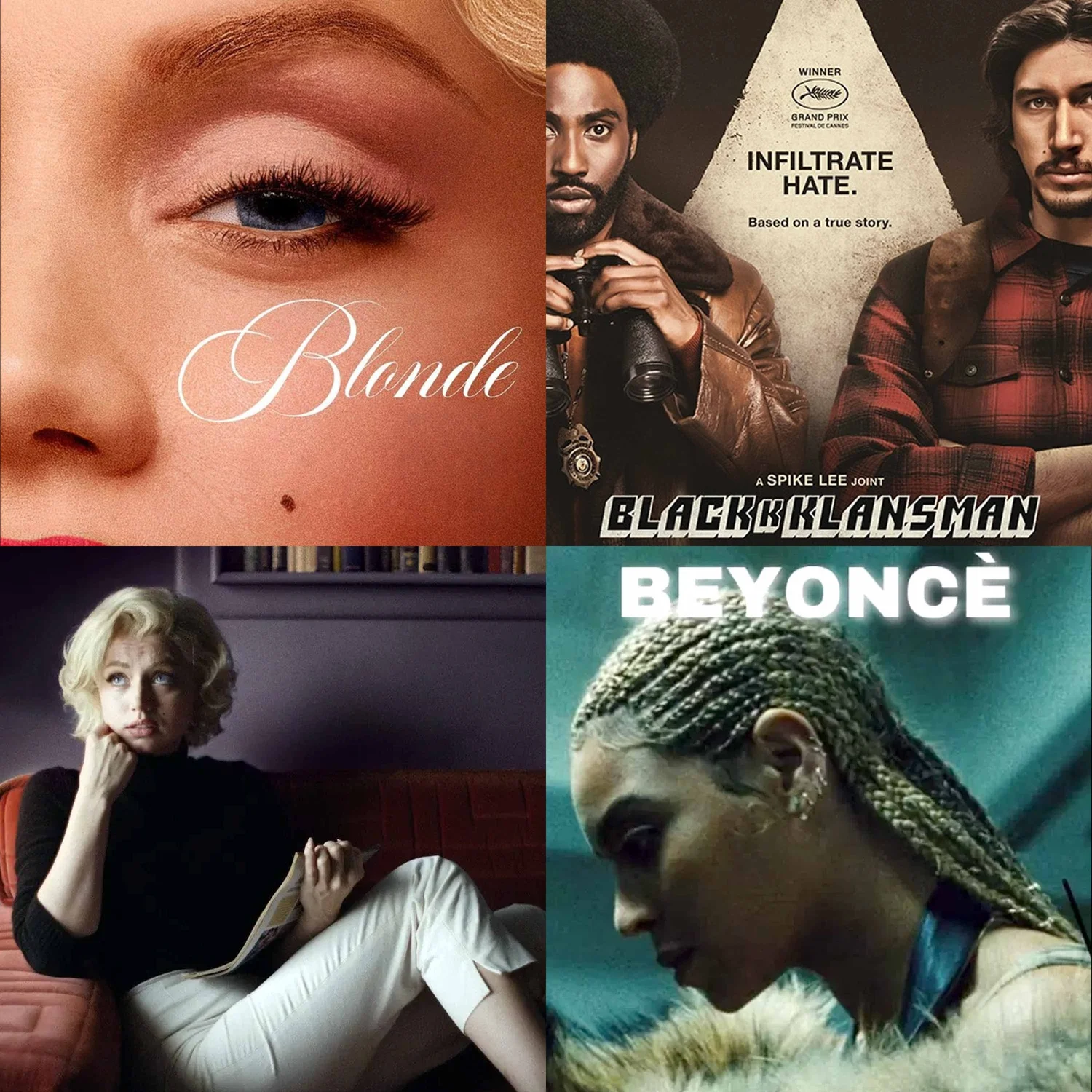
CHAYSE IRVIN - Cinematographer of “Blonde” starring Ana de Armas, “Beyonce: Lemonade”, Spike Lee’s BlacKkKlansman, Kahlil Joseph, The Weekend, Netflix, Charlotte Rampling
“I was using this jazz technique called woodshedding where you basically isolate yourself, and you come up with harmonic devices that then you can put in your pocket and play during the set. And it's sort of like you create events where you can stimulate happy accidents.So I was doing that I think over a six-month period, and I came up with a lot of different ideas, for example, the sequence where Marilyn Monroe is in the ménage à trois, and she's having a three-way sex scene, and the image is . I found that idea when I went to Canal Plastics in New York, and I ordered a piece of polycarbonate that was mirrored on one side, and I was able to bend it and I would shoot stuff in my studio collaborating with Jack Martinez, a photographer, who would cast different people and we would shoot things together. And I basically, through pre-production, I created I couldn't even count how many cinematic devices, and they were happy accidents in a lot of ways, but in other situations, they were gifts that were given to me by collaborators. And I just had those in my pocket. And a lot of times they would come out spontaneously, like if I saw a scene, and I felt like there was a moment in which we could articulate in a more abstracted point of view...there's a sequence like when Marilyn is coming to the premier, and it's a frenzy and the fans are looking like they're going to consume her. And that sequence, the way it's written, I can interpret that as almost, to go back to the same musical analogy, in jazz would be a moment where the images get to give a solo on the song, on the theme and express it strictly through metaphor and distort notions of reality as long as it's in harmony with what's happening psychologically.”Chase Irvin is a Canadian American cinematographer making waves in the film industry. Chayse has received immense critical acclaim for his vision and style. He has worked on features, shorts, and visual albums, most notably in his collaboration with Director Kahlil Joseph on the film Beyoncé: Lemonade. He lensed Spike Lee’s BlacKkKlansman, which received 6 Academy Award nominations, winning for best adapted screenplay. Chayse’s first feature film Medeas won the prestigious Best Cinematography Debut at the Camerimage Film Festival in 2013. Hannah, starring Charlotte Rampling, won a Silver Hugo from the Chicago International Film Festival. Chase is a member of the Canadian Society of Cinematographers. His latest films are Netflix’s Blonde starring Ana de Armas and A24’s God's Creatures starring Emily Watson.www.chayseirvin.comwww.creativeprocess.info www.oneplanetpodcast.org IG www.instagram.com/creativeprocesspodcast
MANUELA LUCÁ-DAZIO - Executive Director, Pritzker Architecture Prize - Fmr. Exec. Director of Venice Biennale, Visual Arts & Architecture Dept.
“So for me being born in a place like Naples helped me absorb and to be constantly open and curious about other cultures, simply because they were part of my own culture. So it's a challenging city, I must say. And it's incredible how you more easily communicate with other people when you are in a place that you feel is a public place, but it belongs to you. It belongs to everyone. It's a space for the community. So this was the first lesson that I learned studying architecture because then you start to read the places in a more organized, scientific way. And I think maybe this dimension passed into my DNA.So from my point of view, a prize is not just to establish the most beautiful building, the most expensive building, or the tallest building in the world. It's rather to foster the discussion to bring forward critical points to be discussed. To bring forward contradictions, to really enhance the discussion about what is relevant for our society or for society in a specific moment.So this, for me, is the role of a prize, to highlight critical issues and to foster the discussion, to face them, and to find solutions, to find new paths. So in the case of the Pritzker Prize, the mission has been very clear since the very beginning. So it's to acknowledge a living architect or architects for a body of built work that has produced a consistent and significant contribution to humanity and to the built environment through the art of architecture.”Manuela Lucá-Dazio is the newly appointed Executive Director of the Pritzker Architecture Prize. In this capacity, she works closely with the jury, however, she does not vote in the proceedings. She is the former Executive Director, Department of Visual Arts and Architecture of La Biennale di Venezia, where she managed exhibitions with distinguished curators, architects, artists, and critics to realize the International Art Exhibition and the International Architecture Exhibition, each edition since 2009. Preceding that, she was responsible for the technical organization and production of both Exhibitions, beginning in 1999. She holds a PhD in History of Architecture from the University of Roma-Chieti, Italy and lives in Paris, France.www.pritzkerprize.com www.pritzkerprize.com/jury#jury-node-2236 www.labiennale.org/enwww.creativeprocess.info www.oneplanetpodcast.org IG www.instagram.com/creativeprocesspodcast
ARMOND COHEN - Executive Director of Clean Air Task Force
“There's no such thing as completely clean energy. We use that term a lot, but it's not really true. We have low carbon energy, and lower carbon energy, but any kind of industrial system has requirements for materials and processing, and nothing is completely natural in the industrial world. If we can electrify transportation, I think we can clean up the grid, and then I think we can deal with these life cycle issues in a way that's responsible, but it'll never be zero. That's impossible.Today, there are hundreds of thousands, if not millions, just in the advocacy and policy space now. And then you look at all the people, the scientists and the engineers and the investors and the business people who are trying to create these new machines and bring down the cost. You're talking tens of millions maybe. And the annual spend on clean energy globally is somewhere in the range I believe of about 400 billion a year. We're getting up there in terms of social effort, and it's hard to believe that with all these options coming onto the scene that we won't solve or get very close to solving this problem during this century. And our philosophy, which makes us a little different from other environmental organizations that work on this, is we think you ought to be pursuing all of those options because you don't know which are going to work out.”Armond Cohen is Executive Director of Clean Air Task Force, which he has led since its formation in 1996. In addition to leading CATF, Armond is directly involved in CATF research and advocacy on the topic of requirements to deeply decarbonize global energy systems. Prior to his work with CATF, Armond founded and led the Conservation Law Foundation’s Energy Project starting in 1983, focusing on energy efficiency, utility resource planning, and electric industry structure. Armond has published numerous articles on climate change, energy system transformation, and air pollution; he speaks, writes, and testifies frequently on these topics. He is a board member of the Nuclear Innovation Alliance and an honors graduate of Harvard Law School and Brown University.www.catf.uswww.creativeprocess.info www.oneplanetpodcast.orgIG www.instagram.com/creativeprocesspodcast
AMANDA E. MACHADO - Writer, Public Speaker, Facilitator - Founder of Reclaiming Nature Writing
“I think that was definitely a pattern that I unknowingly replicated when I first started traveling. I think that's how the travel industry has kind of marketed to us, right? This idea that, you know, bucket lists and wanting to like check boxes of things you're going to do in each place and becomes this thing of, rather than consuming a product that's an actual physical thing, you're consuming a country or consuming an experience. It's the same framework. We're still grasping at things. We're still compulsively trying to do XYZ without really thinking about its impact, without really thinking about the relationships that we're making in those places, without really thinking about reciprocity. And a lot of it comes from a deeply colonial mindset also, right? So much of the travel industry was built on the idea of colonialism which really makes us all inherit this idea that whatever we need in life is going to come from seeking it elsewhere and grabbing it from somewhere else, right? Which I think is the more modern 2023 way that we kind of replicate that colonial travel mindset of–My life right now is not great. I'm going to take a vacation. I'm going to take a break and go somewhere else where I can get what I need? Which I think is in a lot of ways can describe what I did at 24 as well.I think looking at that. Really deeply and really thinking about what is lost from that mindset and the harm that is caused by it has been something I've been trying to do over the last few years. And a lot of that has to do with land trauma, right? Like really acknowledging where our settlement of land comes from and how we can heal that in the ways that we travel.”Amanda E. Machado is a writer, public speaker and facilitator whose work explores how race, gender, sexuality, and power affect the way we travel and experience the outdoors. She has written and facilitated on topics of social justice and adventure and lived in Cape Town, Havana, Mexico City, Berlin, Rio de Janeiro, and other cities. She has been published in The Atlantic, The Washington Post, The Guardian, New York Times, NPR, and other publications. She is also the founder of Reclaiming Nature Writing, a multi-week online workshop that expands how we tell stories about nature in a way that considers ancestry, colonization, migration trauma, and other issues.www.amandaemachado.comIG www.instagram.com/amandaemachado0www.creativeprocess.info www.oneplanetpodcast.org IG www.instagram.com/creativeprocesspodcast
HAROLD P. SJURSEN - Professor of Philosophy - Science, Technology, the Arts
“I have a granddaughter who's just going into high school, and she is filled with idealistic thoughts and is optimistic. She's a person who is both in love with art and in love with science. She's vivacious and just everything about her seems like life is beautiful, and 'I'm going to be able to do this and that.' And, of course, when I talk to her, I do everything I can to encourage this kind of openness and optimism, and belief in herself and her ability to do worthwhile things. And not be too concerned about is she going to be able to have a job with enough income to be where she wants to be. She's not thinking on those levels. And so it’s how to perpetuate and strengthen that kind of spirit and hope, that it can be validated by giving this generation the opportunity to do things. Because I believe that if she and people who think and feel like her were really given the opportunity to be influential and to do things that would have a tremendous shift in the way the world is going. She doesn't think in terms of quarterly profits. She thinks in terms of human happiness and human good, human fairness, and the beauty of nature. And all of these things that naturally come together in our head. And so that's what I think we need to do. I think the universities can play a part. Schools play a part, but there has to be a broader general sense that this is how we should conceive the future. And, you know, galleries, podcasts, books, newspapers, universities, schools, every kind of institution needs to offer something to help this.”Harold P. Sjursen is an educator and administrator having served on the faculty of both a liberal arts college and school of engineering. His background is in the history of philosophy, but since childhood has sustained an interest in science and technology. His current research interests focus on the philosophy of technology, global philosophy, and technological ethics. His engineering education projects address issues related to the internationalization of higher education, the integration of the liberal arts and engineering and ethics beyond the codes for engineers.http://harold-sjursen.orgwww.creativeprocess.info www.oneplanetpodcast.orgIG www.instagram.com/creativeprocesspodcast

JOY GORMAN WETTELS - Exec. Producer “UnPrisoned” starring Kerry Washington, “13 Reasons Why”, Founder of Joy Coalition
“I'm big on if you ban a book that kids love, I'm probably going to come and adapt it. I'm probably going to come after it because adults fail children all the time. Because we are afraid of their feelings. We are afraid of what they can get themselves into until it's too late. And we're avoidant as a culture with them. And we've also left them a pretty screwed-up world where they're living in a terrible state of anxiety. They've got lockdown drills in kindergarten. They don't know if a gunman is going to walk into their school. And they've got so many images coming at them. good and bad.There's a lot of good that comes from TikTok and YouTube as well. It's just we're still in the beta phase of knowing. iPhones only came out in 2007. We're still figuring out truly how it's going to affect our brain development. So I think that 13 Reasons Why came at a time when we had all been really concerned about mental health. Brian Yorkey is my dear friend. We went to college together. Brian and Tom Kitt wrote Next to Normal, which was the very first Broadway show that dealt with mental health and mental illness. I had a grandmother who was bipolar and institutionalized, and when Brian told me when we were like 21 years old that he was writing a musical about electro-shock therapy, I was like, great idea! 10, 12 years later, and many iterations and workshops later with Tom and Brian, the show went to Broadway and got the Pulitzer and 11 Tony nominations, and it was groundbreaking. And it was before you could put Broadway on YouTube. And we were the first Broadway show on Twitter, nobody even had Twitter. I remember signing up for Twitter because I had to follow the Next to Normal tweets. So we were always ahead of the mental health conversation among teenagers and parents and trying to break the silence in a way.”Joy Gorman Wettels is the founder of Joy Coalition, an impact producing venture with a focus on creating purpose-driven film and television content for a global audience. She executive-produced the newly-released UnPrisoned, and is currently working on a multi-part storytelling ecosystem inspired by landmark civil rights documentary Eyes on the Prize. Her body of work includes, notably, the critically acclaimed series Home Before Dark, the influential 13 Reasons Why, created by Pulitzer and Tony Award-winning playwright Brian Yorkey and directed by Oscar-winner Tom McCarthy (Spotlight).Other works include The Meddler, named Vanity Fair's #1 film of 2016, and the forthcoming adaptation of Little House on the Prairie. She serves on the Advisory Council for UCLA’s Center for Scholars and Storytellers and the Advisory Board for Hollywood, Health and Society at USC. As part of their commitment to social change, Joy Coalition works in collaboration with the Office of the Surgeon General in response to the youth mental health crisis. She’s accepted a Sentinel Award, Television Academy Honors for advancing social change, and the 2018 Mental Health America Media Award. www.joycoalition.com www.imdb.com/name/nm2229726www.imdb.com/title/tt20228406/mediaviewer/rm1596470273/?ref_=tt_ov_iwww.creativeprocess.infowww.oneplanetpodcast.orgIG www.instagram.com/creativeprocesspodcast
MAGGIE GROUT - Founder & CEO of Thinking Huts tackling Global Education Crisis with 3D Printing
“I think maybe what we've learned is how important family and community are. What I noticed in Madagascar is how genuinely happy they are despite not having a lot in life. We have so many material possessions here in the US, and not to say that's all bad if people want to pursue that, but I just definitely noticed how it wasn't so much about what you have, but like who you are as a person. I would want them to know that anything is possible. You just need to persevere and that can have such a huge ripple effect. Not only one person's life, but anybody, whether that's a community or the whole world on a global scale. I wouldn't want people to feel discouraged because I think there are definitely moments along the way of that and people will just not want to try to do that because people around them may say ‘It's not possible.’ But if you keep going, then it will eventually come to life.”Maggie Grout is the founder and CEO of Thinking Huts, an international NGO that increases global access to education with innovative, humanitarian-driven technology solutions. Founded by Maggie 8 years ago, when she was15, Thinking Huts seeks to empower young people, especially girls, to achieve more opportunities by obtaining an education. Grout gave a TEDx talk in 2021 on “how we can tackle the global education crisis with 3D printing.”Grout was born in a rural village in China and adopted at a young age, but where she came from largely shaped her outlook on life and subliminally led her to start Thinking Huts in 2015. Growing up in London and Colorado, Grout was exposed to the melting pot of cultures in British and American society, but she often wondered why so many people were unaware of how others lived an ocean away. She understood what poverty looks like firsthand and how education empowers people to attain greater opportunities.www.thinkinghuts.orgwww.creativeprocess.info www.oneplanetpodcast.org IG www.instagram.com/creativeprocesspodcast
TANSY E. HOSKINS - Author of "The Anti-Capitalist Book Of Fashion” - Freelance Fashion & Beauty Writer Award Winner
“I definitely believe at the moment that fashion brands, big fashion in particular, they just exist to exploit people. It's an excuse to exploit the poor, basically. I see fashion as part of this very extractive global economic society where 100, 150 years ago, that extraction was very obvious. You had the enslavement of people. You had taxation. You had literally armies turning up and occupying the land that they wanted and just taking resources or land. These days it's more subtle, but the brands are still following those colonial pathways.I'm like sat here in London and, you know, there's a reason why British brands go to India, Bangladesh, Pakistan, following the same colonial trade routes. It's also a system very much based on really unfair debt and a total lack of debt justice whereby Global South economies are having to earn foreign capital by opening themselves up to these export industries, whether that's cotton or coffee or garments. 80% of everything that Bangladesh exports are garments. It is a ludicrous position for an economy to be in. And it's very deliberate exploitation as well. Brands make these sourcing decisions very, very deliberately.They go where they think that workers' rights will be suppressed and environmental legislation will be suppressed. And if anything does happen that the government will step in and do the suppressing and just give them a sort of carte blanche to do whatever they want.So at the moment, it's very difficult to point at any part of the fashion industry and go, that's not exploitative. You know, that's exploiting the land, that's exploiting these people, that's based on fossil fuels. Those toxic dyes are going into the river. It's a deeply exploitative, industry.”Tansy E. Hoskins is an award winning author and journalist who investigates the global fashion industry. She’s the author of The Anti-Capitalist Book Of Fashion, Foot Work, and Stitched Up. This work has taken her to Bangladesh, India, North Macedonia, and to the Topshop warehouses in Solihull.www.plutobooks.com/9780745346618/the-anti-capitalist-book-of-fashion/www.amazon.co.uk/Foot-Work-What-Your-Shoes-Are-Doing-to-the-World-Tansy-Hoskins/dp/1474609856/www.creativeprocess.info www.oneplanetpodcast.org IG www.instagram.com/creativeprocesspodcast

SIR ANDY HAINES - Tyler Prize Award-winner for Environmental Achievement - Prof. Env. Change & Public Health
“In terms of the impacts of climate change on health when we started 30 years ago, because there was very little data then, so we made suggestions as to what we thought the health outcomes we thought would be affected like vector-borne diseases, crop failures, water availability, sea level rise, increasing disasters related to climatic extreme events, and obviously the effects of extreme heat on vulnerable populations. In particular, elderly people, but not just elderly people. So we suggested a whole range of different health impacts that could occur. And I think, in general, those ideas have stood the test of time, but of course, as the situation has moved on, we've also become much more preoccupied with what kind of action we need to take.So when we started, we were mainly talking about the effects of extreme heat without being able to attribute them to climate change because obviously heat waves have occurred throughout history, and populations are more or less adapted to different climates. But now I think the science has moved on, and we can be much more competent about attributing either some extreme events or trends in extreme heat exposure, for example, to human-induced climate change. So it isn't just natural fluctuation. So that's a change. And as the evidence becomes stronger, of course, it also strengthens the case for climate action, which sadly, as we know at the moment, is not sufficient to really have the desired effect.So our knowledge has advanced, but the actions that we need to put into practice have not gone at the same speed. And so we're really facing an increasing climate emergency. And we don't know quite where it's going to end up, but it could end up 2.5%, 3% hotter than pre-industrial times on global average as we reach the end of the century.”Andy Haines was formerly a family doctor and Professor of Primary Health Care at UCL. He developed an interest in climate change and health in the 1990’s and was a member of the Intergovernmental Panel on Climate Change for the 2nd and 3rd assessment exercises and review editor for the health chapter in the 5th assessment. He was Director (formerly Dean) of the London School of Hygiene & Tropical Medicine from 2001- October 2010. He chaired the Scientific Advisory Panel for the 2013 WHO World Health Report, the Rockefeller /Lancet Commission on Planetary Health (2014-15) and the European Academies Science Advisory Council working group on climate change and health (2018-19). He currently co-chairs the InterAcademy Partnership (140 science academies worldwide) working group on climate change and health and is also co-chairing the Lancet Pathfinder Commission on health in the zero-carbon economy. He has published many papers on topics such as the effects of environmental change on health and the health co-benefits of low carbon policies. His current research focuses on climate change mitigation, sustainable healthy food systems and complex urban systems for sustainability. He was awarded the Tyler Prize for Environmental Achievement in 2022.www.lshtm.ac.ukhttps://tylerprize.org www.interacademies.orgwww.creativeprocess.info www.oneplanetpodcast.org IG www.instagram.com/creativeprocesspodcast
MARK BURGMAN - Author of “Trusting Judgments: How to Get the Best Out of Experts”
“I am the editor-in-chief of the Journal of Conservation Biology. It is the original journal for the Society for Conservation Biology, which was established in the United States in the 1980s. And the journal was created to provide a home with substantive scientific advances that form the basis for the underpinnings of action and conservation science. So we try and provide the techniques, the procedures, and the scientific experiments that underpin the actions we take to conserve biodiversity globally. It's been running since June 1985, and I've been the editor for 12 years. We receive between 900 and 1,000 papers a year. We publish about 150 or 200 of those. The topics are tremendously variable. They range from straight ecology through mathematical modeling to the psychology of human behavior and the ethics of trophy hunting, and everything in between. And so, it's a wonderfully diverse and interesting journal to read.”Mark Burgman is Director of the Centre for Environmental Policy at Imperial College London and Editor-in-Chief of the journal Conservation Biology. He is author of Trusting Judgments: How to Get the Best Out of Experts. Previously, he was Adrienne Clarke Chair of Botany at the University of Melbourne, Australia. He works on expert judgement, ecological modelling, conservation biology and risk assessment. He has written models for biosecurity, medicine regulation, marine fisheries, forestry, irrigation, electrical power utilities, mining, and national park planning. He received a BSc from the University of New South Wales, an MSc from Macquarie University, Sydney, and a PhD from the State University of New York at Stony Brook. He worked as a consultant ecologist and research scientist in Australia, the United States and Switzerland during the 1980’s before joining the University of Melbourne in 1990. He joined CEP in February, 2017. He has published over two hundred and fifty refereed papers and book chapters and seven authored books. He was elected to the Australian Academy of Science in 2006.www.imperial.ac.uk/environmental-policy www.conbio.orgwww.creativeprocess.info www.oneplanetpodcast.orgIG www.instagram.com/creativeprocesspodcast
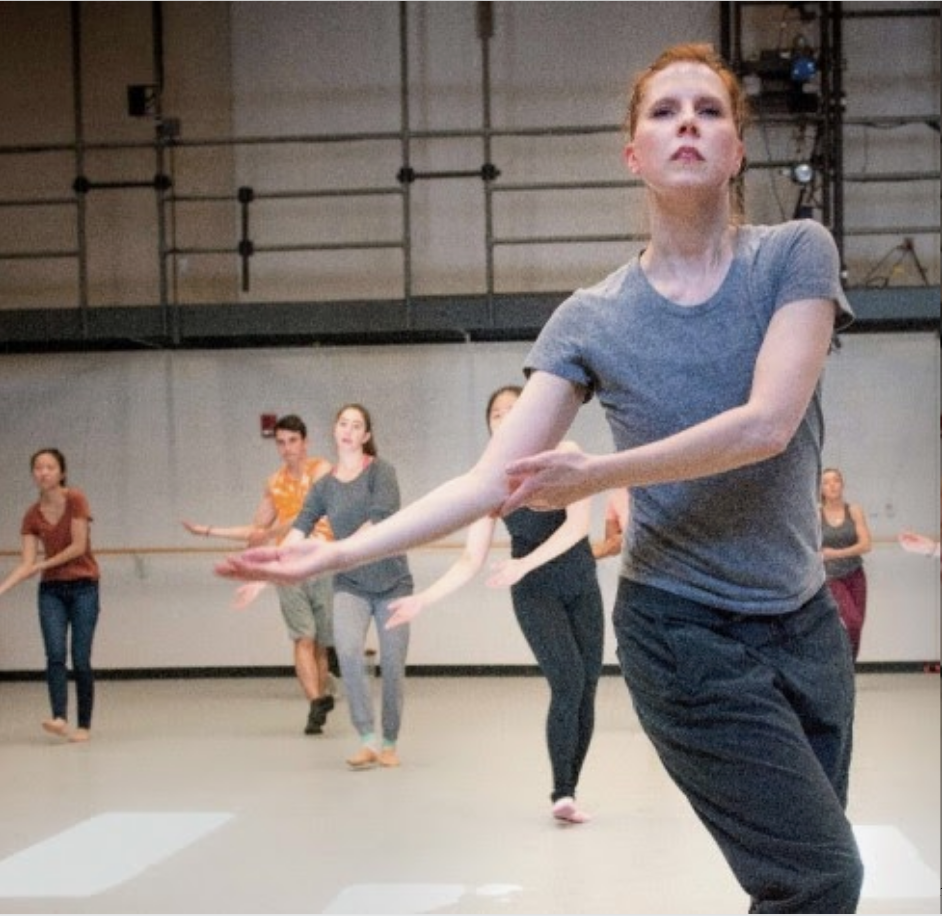
JILL JOHNSON - Dancer - Choreographer & Ballet Stager - Fmr. Dance Director, Harvard
"I had never seen anything like Forsythe’s Choreography for Step Text, and I thought, “This is possible?”...The articulation, the structures, the musicality, and the curtain coming in and out was just radical and amazing. I just wanted to be a part of it. If you remain curious just about anything as an artist, you can make it compelling...it reminds me of what a beautiful visual artist, Jack Whitten, talks about. He said that when people ask me (him) what art is about, I (he) say its giving structure to feelings. Also this notion that we can give meaning to something without it being a singular narrative. Something can have an individualized meaning. If it is meaningful in the conveyance of the dancer, everyone seeing that dancer or the group of dancers performing will receive something different that resonates with them in their life."Jill Johnson is an internationally renowned dancer, choreographer, artistic director, educator, producer, stager, movement consultant, and advisor. Her leadership in the dance field brings into service over three and a half decades of experience and a vast knowledge of diverse repertoires and methodologies to realize visionary, world-class programming, develop the next generation of artist leaders, and reimagine how the arts engage, intersect, and interact with all people. Ms. Johnson choreographs for film, television, dance, theater, opera; has danced in over 60 tours on 5 continents including A Quiet Evening of Dance; was a soloist with the National Ballet of Canada; principal dancer and researcher with William Forsythe for over three decades; stages Forsythe’s work worldwide. Director of Harvard Dance Center, Founder/AD Harvard Dance Project, and faculty, at Harvard University, 2011-2021, where she designed an innovative interdisciplinary program of study in dance and was a campus leader in DEIJ. Amongst her recent projects: LA Dance Project, Paris Opera Ballet, La Scala, Boston Ballet, San Francisco Ballet, Harvard Choruses, Dries Van Noten/Louvre Museum, V (Eve Ensler), American Repertory Theater, PBS’s Poetry in America, Sadler’s Wells Theater, and Equity Based Dialogue for Inclusion (EBDI). www.nytimes.com/2019/10/13/arts/dance/william-forsythe-a-quiet-evening-of-dance-review.html https://ofa.fas.harvard.edu/dance-deij-letter-strategic-prioritieswww.creativeprocess.info www.oneplanetpodcast.org IG www.instagram.com/creativeprocesspodcast

NICHOLAS ROYLE - Co-author of "An Introduction to Literature, Criticism and Theory" - Author of “Mother: A Memoir”
Mother: A Memoir“Pre-word In my mind's eye she is sitting at the circular white Formica-top table in the corner. Morning sunlight fills the kitchen. She has a cup of Milky Nescafé Gold Blend and is smoking a purple Silk Cut. She is dressed for comfort in a floral bronze-and-brown blouse and blue jumper with light gray slacks and blue slippers. She is absorbed in a crossword (The Times) but not oblivious. She does what always takes me aback. She reads out one of the clues. As if I would know the answer. Her gift for crosswords is alien to me. I get stuck at the first ambiguity or double-meaning. Whereas she sweeps through all illusions allusions red herrings and anagrams and is done most days by lunchtime. But her fondness for crossword puzzles is inseparable from my interest in words. Where they come from. What they might be doing. Earliest recorded use of 'In my mind's eye': Shakespeare's Hamlet (around 1599). Referring to the Ghost.My mother died years ago. What has induced me to write about her after all this time remains mysterious to me. It is connected to the climate crisis. As the natural historian David Attenborough says: 'the collapse of our civilizations and the extinction of much of the natural world is on the horizon.' In ways I cannot pretend to fathom I have found that writing about my mother is bound up with writing about Mother Nature and Mother Earth. And no doubt it has to do also with my own aging and the buried life of mourning. The strange timetables of realization and loss. A memoir is 'a written record of a person's knowledge of events or of a person's own experiences'. 'A record of events written by a person having intimate knowledge of them and based on personal observation.' So the dictionaries tell us. But this memoir of my mother makes no attempt at a comprehensive record.”Nicholas Royle is Professor Emeritus of English at the University of Sussex, England, where he has been based since 1999. He has also taught at the University of Oxford, the University of Tampere, and the University of Stirling; and has been a visiting professor at the universities of Århus, Santiago del Compostela, Turku, Manitoba, and Lille. He is a managing editor of the Oxford Literary Review and director of Quick Fictions. He has published many books, including Telepathy and Literature, E.M. Forster, Jacques Derrida, The Uncanny, Veering: A Theory of Literature, How to Read Shakespeare, and Hélène Cixous: Dreamer, Realist, Analyst, Writing, as well as the novels Quilt and An English Guide to Birdwatching, and Mother: A Memoir. In addition, he is co-author with Andrew Bennett of three books: Elizabeth Bowen and the Dissolution of the Novel, This Thing Called Literature: Reading, Thinking, Writing, and An Introduction to Literature, Criticism and Theory Sixth edition, 2023. Royle’s current projects include a detective novel, a collection of essays about new approaches to narrative theory, and a collaborative work with Timothy Morton on Covid-19. His latest book, David Bowie, Enid Blyton and the Sun Machine, is due to be published in November 2023.www.routledge.com/An-Introduction-to-Literature-Criticism-and-Theory/Bennett-Royle/p/book/9781032158846 https://myriadeditions.com/creator/nicholas-royle/ https://quickfiction.co.uk/www.creativeprocess.info www.oneplanetpodcast.org IG www.instagram.com/creativeprocesspodcast
BRUCE EVAN BARNHART - Author of “Jazz in the Time of the Novel: The Temporal Politics of American Race and Culture”
"I really admire how James Baldwin always talks about jazz as a kind of model for his writing style. But music has certainly had a profound influence on the way I see the world, especially in terms of the social world. One of the big problems we have in all sorts of different places around the world is the question of how to coordinate difference. All sorts of people have different modes of living, different cultural rhythms, and different ideas about the future. Jazz is brilliant at a lot of things, but it notably brings together different people and allows them to retain their own sense of time and rhythm while playing together. It's a really profound model of social coordination. Now, of course, it says something particularly pressing about the United States, but I think as a model for how differences go together, jazz is perhaps unparalleled."Bruce Evan Barnhart is an associate professor of American literature and culture at the University of Oslo and co-director of the project Literature, Rights, and Imagined Communities. He is the author of Jazz in the Time of the Novel: The Temporal Politics of American Race and Culture. His work has appeared in African American Review, Callaloo, and Novel. His latest publications are Temporal Experiments: Seven Ways of Configuring Time in Art and Literature, co-edited with Marit Grøtta, and LeRoi Jones, Jazz, and the Resonance of Class. His research interests include African American literature, post-Marxist theory, jazz, and Caribbean aesthetics.www.hf.uio.no/ilos/english/people/aca/brucebwww.routledge.com/Temporal-Experiments-Seven-Ways-of-Configuring-Time-in-Art-and-Literature/Barnhart-Grotta/p/book/9781032350240https://www.hf.uio.no/ilos/english/research/groups/temporal-experiments/www.creativeprocess.info www.oneplanetpodcast.orgIG www.instagram.com/creativeprocesspodcast
ANNA ABRAHAM - Author of “The Neuroscience of Creativity” - Director of Torrance Center for Creativity & Talent Development
“I love podcasts and things like that, if only to listen to people who've done incredible things. We live in a kind of unusual time where we can hear firsthand people talking about their own experiences, and what they went through when they were creating something. And while artists differ greatly from one another in terms of the specifics of their process, what certainly seems to be the case is that they're extraordinarily interested in their own mind, and they have what we would call a metacognitive awareness. They know almost quite precisely, at least what doesn't work for them. They're very cued into what to avoid and how to sort of generate the mental conditions that are necessary in order to be as generative or as creative as they're likely to be in a specific situation. So that is a deep medical awareness that they have about their own process that is really quite something. They know themselves very well.”Anna Abraham, Ph.D. is the E. Paul Torrance Professor and Director of the Torrance Center for Creativity and Talent Development at the University of Georgia (USA). She investigates the psychological and neurophysiological mechanisms underlying creativity and other aspects of the human imagination, including the reality-fiction distinction, mental time travel, social and self-referential cognition, and mental state reasoning. She is the author of the 2018 book, The Neuroscience of Creativity (Cambridge University Press) and the editor of the multidisciplinary volume, The Cambridge Handbook of the Imagination (2020).www.anna-abraham.com https://coe.uga.edu/directory/torrance-center www.cambridge.org/core/what-we-publish/elements/elements-in-creativity-and-imaginationwww.creativeprocess.info www.oneplanetpodcast.org IG www.instagram.com/creativeprocesspodcast

JILL HEINERTH - Explorer, Presenter, Author of “Into The Planet: My Life as a Cave Diver”
“If I die, it will be in the most glorious place that nobody has ever seen. I can no longer feel the fingers in my left hand. The glacial Antarctic water to see through a tiny puncture in my formerly waterproof glove. If this water were one-tenth of a degree colder, the ocean will become solid. Finding the knife-edged freeze is depleting my strength, my blood vessels throbbing in a futile attempt to deliver warmth to my extremities. The archway of ice above our heads is furrowed like the surface of a golf ball, carved by the hand of the sea. Iridescent blue, Wedgewood, azure, cerulean, cobalt, and pastel robin’s egg meld with chalk and silvery alabaster. The ice is vibrant, right, and at the same time ghostly. The beauty contradicts the danger. We are the first people to cave dive inside an iceberg. And we may not live to tell the story.”Jill Heinerth is a Canadian cave diver, underwater explorer, writer, photographer, and filmmaker. She is a veteran of over thirty years of filming, photography, and exploration on projects in submerged caves around the world. She has made TV series, consulted on movies, written several books and is a frequent corporate keynote speaker. Jill is the first Explorer in Residence for the Royal Canadian Geographical Society, recipient of Canada’s prestigious Polar Medal and is a Fellow of the International Scuba Divers Hall of Fame. In recognition of her lifetime achievement, Jill was awarded the Sir Christopher Ondaatje Medal for Exploration from the RCGS and the William Beebe Award from the Explorers Club.www.intotheplanet.comwww.creativeprocess.info www.oneplanetpodcast.org IG www.instagram.com/creativeprocesspodcast
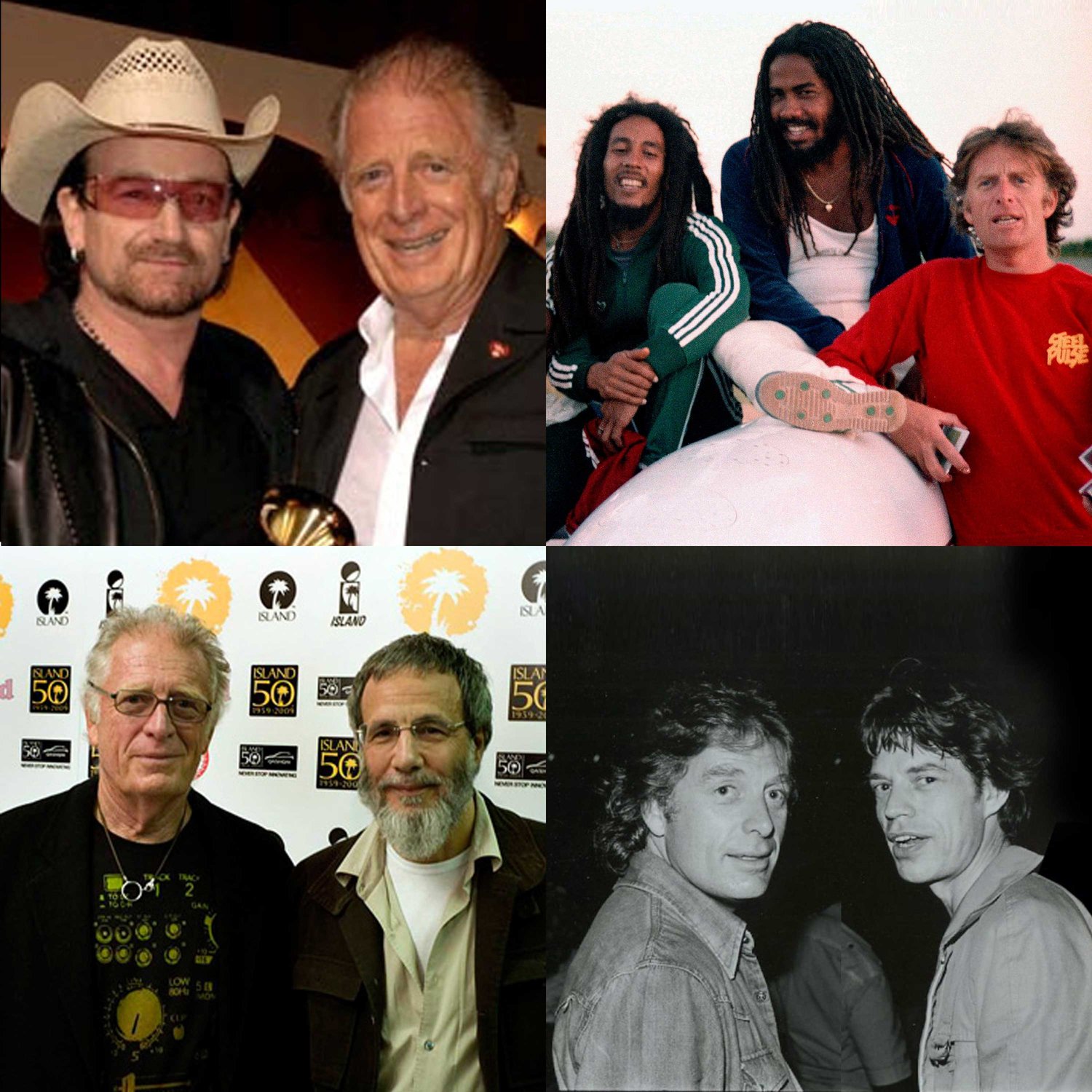
CHRIS BLACKWELL - Founder of Island Records featuring Bob Marley, U2, Cat Stevens, Grace Jones, Roxy Music, Amy Winehouse…
“I think you need to be aware and see people be open to what can happen and get a feel, get an instinct. I think I've been blessed with instinct. I mean, I did not do well at school. I passed zero exams. I'm unemployable, but I've been blessed with having instincts. The instinct of U2 was seeing their determination, the fact that the music itself initially wasn't close to what most of my music was because most of my music was bass and drum. And most of their music was vocal, so it wasn't a certain kind of music that I like all the time. I like music from all different kinds of levels…I absolutely felt for Bob Marley to really make it worldwide as it were, he needed to change something a little bit. I didn't want him to change what he was doing, not his lyrics and everything else like that. It was more the instrumentation of it. I felt for Bob to be able to reach a wider audience that he needed to move away a little bit from that and focus more and more on his lyrics.When I finally met Cat Stevens, and we just sort of sat down and then when he played the song ‘Father and Son,’ then suddenly the lyrics of the song and what it meant and everything, I suddenly felt this guy is fantastic. You know, the I person I'd seen on television had nothing to do with this person sitting in front of me. And so that's really when I said to him, I opened up to him and I said, ‘Honestly, I wasn't really interested to meet, but this song that you've just sung for me is such an incredible song.’ I felt that I could definitely connect with him. ‘Where Do the Children Play', that was the one that, just the fact that he was somebody who was thinking like that.There was one time when Mick Jagger asked me to come and meet with him because I think he'd heard the records that were coming up from me, mainly Jamaican records and things, and that's why he wanted me to come and meet with him. He was leaving Decca, and wanted to go to another level. And I said, ‘It makes absolutely no sense for you to come to my label because you already are huge.’Grace Jones, she's a stunning-looking lady. They put on the record and there was a drum machine, and all it played was a drum machine. There was no vocal, there were no instruments, nothing for about two and a half to three minutes before I heard a voice. I thought, Oh my gosh, this is a disaster. This is going to end in tears. And then suddenly I heard the voice, and the voice sounded great.”Chris Blackwell, an inductee of the Rock & Roll Hall of Fame, is widely considered responsible for turning the world on to reggae music. As the founder of Island Records, he helped forge the careers of Bob Marley, Cat Stevens, Grace Jones, U2, Roxy Music, among many other high-profile acts, and produced records including Marley’s Catch a Fire and Uprising. Blackwell currently runs Island Outpost, a group of elite resorts in Jamaica, which includes GoldenEye—the former home of author Ian Fleming. He received the A&R Icon Award in recognition of his lasting influence on the music business. He is author, with Paul Morley, of The Islander: My Life in Music and Beyond.www.islandoutpost.com www.simonandschuster.com/books/The-Islander/Chris-Blackwell/9781982172701 www.islandrecords.comwww.creativeprocess.info www.oneplanetpodcast.org IG www.instagram.com/creativeprocesspodcast

Robert Sternberg - Award-winning Educator - Author of “Adaptive Intelligence” - Fmr. President, American Psychological Assoc.
"Are we looking at intelligence wrong? There are an awful lot of people who have graduated from top schools who become leaders who are worse than incompetent. They make their countries worse rather than better. And the conclusion I came to is that we made a mistake, in that intelligence was originally defined by the founders of the field Alfred Binet, David Wechsler, and others, as the ability to adapt to the environment a requirement. And answering a vocabulary problem for an obscure word is not about adapting to the environment. So I began to wonder where we lost the train of thought. And the conclusion I came to is that colleges just forgot the original message of the founders of the field, and so we got immersed in these numbers that turn out not to mean that much. So I wrote about intelligence as the ability to get along in the world and hopefully make the world a little bit better. And what I argue in the book is that we not only need to develop this kind of intelligence, we need to recognize that it's important, that getting A's in school and top scores on standardized tests, that's not what intelligence is about. So there are people who make serious efforts to make the world better, who fight pollution, who try to be good at what they do, you know, as judges or lawyers or as cleaning people or car mechanics, or doctors, but those aren't the ones you hear about. The ones you hear about are often those who have prestigious degrees and can't seem to do much with them.”Robert J. Sternberg is Professor of Human Development at Cornell University and Honorary Professor of Psychology at the University of Heidelberg, Germany. He is a past winner of the Grawemeyer Award in Psychology, and the William James and James McKeen Cattell Awards of the Association for Psychological Science. Sternberg has served as President of the American Psychological Association, and the Federation of Associations in Behavioral and Brain Sciences. His latest book is Adaptive Intelligence: Surviving and Thriving in Times of Uncertainty.www.robertjsternberg.comwww.cambridge.org/fr/academic/subjects/psychology/cognition/adaptive-intelligence-surviving-and-thriving-times-uncertainty?format=HB&isbn=9781107154384#bookPeoplewww.creativeprocess.info www.oneplanetpodcast.org IG www.instagram.com/creativeprocesspodcast
Julio Ottino - Founding Co-Director of Northwestern Institute on Complex Systems
Today's complex problems demand a radically new way of thinking — one in which art, technology, and science converge to expand our creativity and augment our insight. Creativity must be combined with the ability to execute; the leaders and innovators of the future will have to understand this balance and manage such complexities as climate change and pandemics. The place of this convergence is THE NEXUS. In this provocative and visually striking book, Julio Mario Ottino and Bruce Mau offer a guide for navigating the intersections of art, technology, and science.Julio Ottino is an artist, researcher, author, and educator at Northwestern University. He is the author, with Bruce Mau, of The Nexus: Augmented Thinking for a Complex World - The New Convergence of Art, Technology, and Science. He was the founding co-director of the Northwestern Institute on Complex Systems. In 2008, he was listed in the “One Hundred Engineers of the Modern Era”. In 2017, he was awarded the Bernard M. Gordon Prize for Innovation in Engineering and Technology Education from the National Academy of Engineering.www.juliomarioottino.comwww.thenexusbook.comwww.mccormick.northwestern.edu/about/leadership/profiles/ottino-julio.html
Florian Hoffmeister - Award-winning DP “TAR” starring Cate Blanchett
Florian Hoffmeister is a prolific director of photography. Recent works by Hoffmeister include his lensing on the Apple TV+ series Pachinko, the critically-acclaimed political thriller Official Secrets starring Keira Knightley, Ralph Fiennes, and Matt Smith, and TÁR starring Cate Blanchett. Hoffmeister is well-known for his collaboration with Terence Davies on feature films The Deep Blue Sea, starring Rachel Weisz, Tom Hiddleston and Simon Russel-Beale, and A Quiet Passion, starring Cynthia Nixon and Jennifer Ehle. His work on Brian Kirk’s television phenomenon Great Expectations earned him further distinction as well as numerous accolades, including a Primetime Emmy, a BAFTA, and an ASC Award.