The Creative Process in 10 minutes or less · Arts, Culture & Society: Books, Film, Music, TV, Art, Writing, Creativity, Education, Environment, Theatre, Dance, LGBTQ, Climate Change, Sustainability, Social Justice, Spirituality, Feminism, Technology
The Creative Process • Books, Film, Music, TV, Art, Writing, Creativity, Education, Environment, Theatre, Dance, LGBTQ, Social Justice, Spirituality, Feminism, Technology… · Mia Funk
Show overview
The Creative Process in 10 minutes or less · Arts, Culture & Society: Books, Film, Music, TV, Art, Writing, Creativity, Education, Environment, Theatre, Dance, LGBTQ, Climate Change, Sustainability, Social Justice, Spirituality, Feminism, Technology has been publishing since 2022, and across the 4 years since has built a catalogue of 308 episodes. That works out to roughly 65 hours of audio in total. Releases follow a weekly cadence, with the show now in its 16th season.
Episodes typically run ten to twenty minutes — most land between 11 min and 15 min — and the run-time is fairly consistent across the catalogue. It is catalogued as a EN-language Arts show.
The show is actively publishing — the most recent episode landed 2 months ago, with 17 episodes already out so far this year. The busiest year was 2023, with 103 episodes published. Published by Mia Funk.
From the publisher
Ten minute highlights of the popular The Creative Process & One Planet podcasts. Exploring the fascinating minds of creative people. Conversations with writers, artists & creative thinkers across the Arts & STEM. We discuss their life, work & artistic practice. Winners of Oscar, Emmy, Tony, Pulitzer, leaders & public figures share real experiences & offer valuable insights. Notable guests and participating museums and organizations include: Academy of Motion Picture Arts & Sciences, Neil Patrick Harris, Smithsonian, Roxane Gay, Musée Picasso, EARTHDAY-ORG, Neil Gaiman, UNESCO, Joyce Carol Oates, Mark Seliger, Acropolis Museum, Hilary Mantel, Songwriters Hall of Fame, George Saunders, The New Museum, Lemony Snicket, Pritzker Architecture Prize, Hans-Ulrich Obrist, Serpentine Galleries, Joe Mantegna, PETA, Greenpeace, EPA, Morgan Library & Museum, and many others. The interviews are hosted by founder and creative educator Mia Funk with the participation of students, universities, and collaborators from around the world. These conversations are also part of our traveling exhibition. www.creativeprocess.info For full episodes, follow The Creative Process - Arts Culture & Society.
Latest Episodes
View all 308 episodesLife and Art at LINCOLN CENTER: Chief Artistic Officer SHANTA THAKE on the Power of the Arts
Time, Memory & the Art of Translation w/ GEORGI GOSPODINOV & ANGELA RODEL
Surviving the AI Hype Cycle Without Losing Your Mind (or Your Job) w/ NACHO DE GREGORIO - Highlights
Our Wild Familiars - DR. DAN WERB on Animals that Live Among Us & Urban Wildlife Conservation
How does architecture shape the way we think, learn & remember? SALWA & SELMA MIKOU
From Extraction to Regeneration: Redesigning Our Relationship with Nature
Why Do We Listen to the Talkers More Than the Builders Saving the Planet? - TOM CHI
Listening to the Living World: Ami Vitale, Yann Martel, Carl Safina, David George Haskell & Others on Climate Change & The Rights of Nature
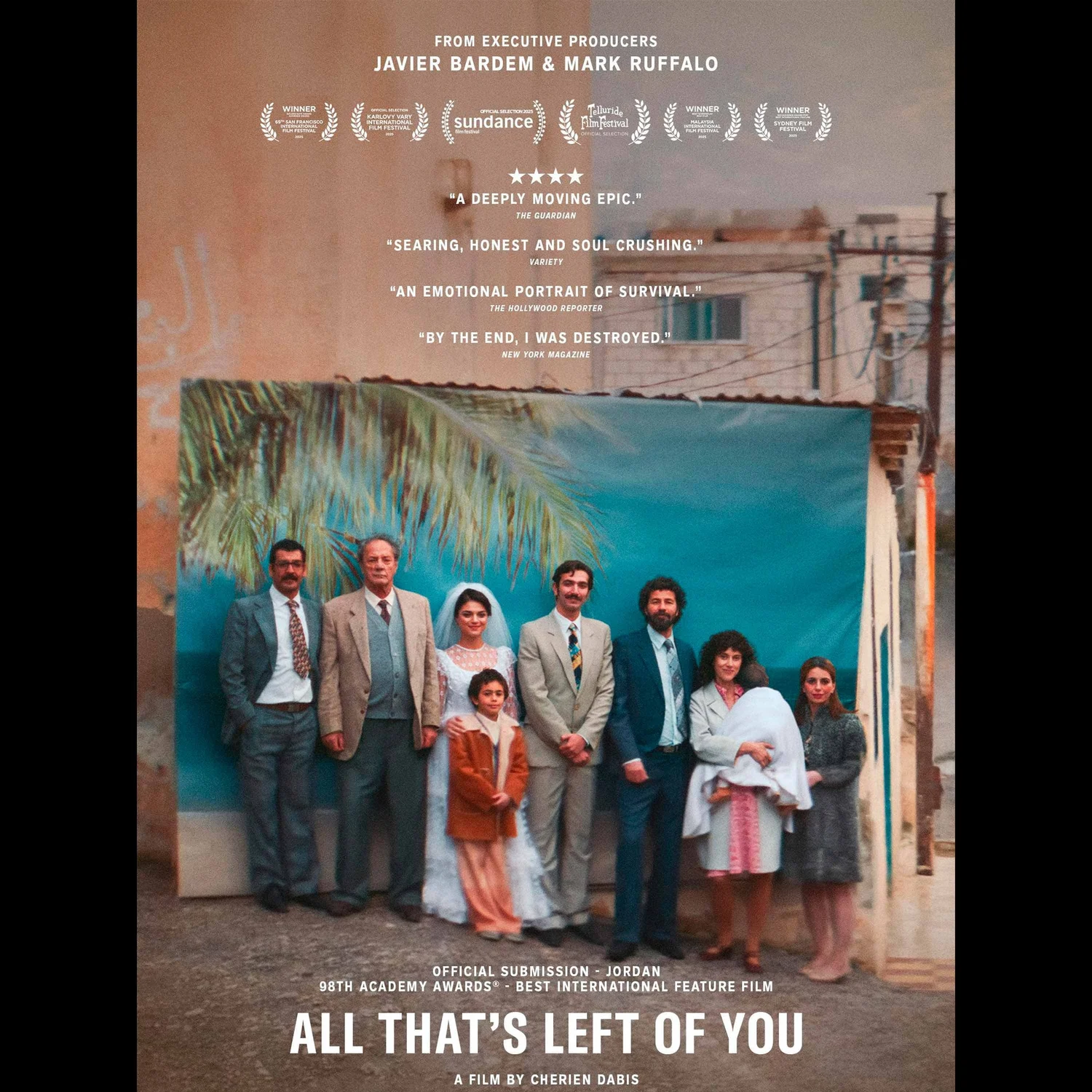
S16 Ep 1227Palestine & Generational Trauma: CHERIEN DABIS on Directing All That's Left of You
Two weeks away from filming her most ambitious film to date, Cherien Dabis and her crew were forced to evacuate Palestine as the devastating events of October 2023 began. Instead of abandoning the project, they adapted, filming across Cyprus, Jordan, and Greece, creating a cinematic love letter to the resilience, joy, and humanity of the Palestinian people.My guest today is Cherien Dabis. She’s a filmmaker and actress who has spent much of her career trying to fill the silences in the American narrative. In 2022, she became the first Palestinian to receive an Emmy nomination. She has worked on everything from The L Word to Ozark, Only Murders in the Building to the hit Netflix series Mo, always with an eye toward breaking the one-dimensional mold that has historically defined Arab representation in the West. But her latest project is perhaps her most ambitious yet. It’s a film called All That’s Left of You. It follows one Palestinian family across three generations, beginning in 1948 and ending in 2022. It is a story of exile and memory, and it’s Jordan’s official submission for this year’s Academy Awards.(0:00) The Inheritance of TraumaCherien Dabis discusses how collective trauma is passed down and the importance of showing Palestinian resilience and humanity(1:50) Inherited Trauma: Identity And History The passage of trauma requires a multi-generational lens to truly understand how history and political events shape people(2:37) The Bakri Acting Dynasty: Collaborative Lineage Collaborating with four generations of the Bakri Family brought immense authenticity to the screen(4:02) Filming The Nakba: Art Imitating Crisis Evacuating Palestine weeks before shooting forced the crew to adapt amidst devastating, ongoing events(7:09) The Moment Of Activation: Racism In Ohio Experiencing severe racism during the first Gulf War ignited a lifelong drive to challenge dangerous media stereotypes(9:34) Psychological Violence: Impact Of Humiliation The film explores how non-physical harassment and humiliation leave devastating, long-term relational scars(10:48) Broken Distribution: Industry Gatekeepers Navigating systemic fear and gatekeeping in Hollywood distribution remains a profound challenge for Palestinian cinema(11:37) Previous Films, Television And Craft Directing television hones the craft and expands the creative capacity needed for ambitious feature films(12:28) Truth Seekers: The Next Generation Hope lies with young people who refuse to accept the broken systems and hidden truths of previous generationsEpisode Websitewww.creativeprocess.info/podInstagram:@creativeprocesspodcast
S16 Ep 1223Game Over: Metrics, Big Data & Why We Need to Stop Keeping Score w/ C. THI NGUYEN - Highlights
"To be in the process of making things, to be in the process of talking to people about what things mean. The creative process is actually, I think, the most meaningful part of life, but it's very hard to measure. When we get shoved towards a world that demands easy measurables, it's very hard to optimize away from the creative process and optimize towards things that are more static."On this episode of The Creative Process, philosopher C. Thi Nguyen joins us to discuss his new book, The Score: How to Stop Playing Somebody Else's Game. He unpacks the profound concept of "value capture"—the moment we stop caring about the rich, subtle experiences of life and start obsessing over simplified, external metrics like grades, likes, and screen time.Beyond the trap of quantification, C. Thi Nguyen explores the liberating power of games and art. We discuss how true play requires us to step lightly between different rule sets, the difference between art and craft, and how reclaiming our creative process might just be the ultimate meaning of life.(0:00) THE TRAP OF VALUE CAPTURE How external metrics and scoring systems hijack our personal values and creativity(7:09) THE LOGIC OF QUANTIFICATION Why simple numbers travel well but strip away vital human context, from screen time to grades(11:58) THE MAGIC CIRCLE OF PLAY Understanding the difference between a gamified life and the true, disattached beauty of struggle(14:57) ART, CRAFT, AND METRICS Why taking the hard way leads to genuine creative expression, and how to spot value-laden systems(19:34) THE POLITICS OF MEASUREMENT Questioning the assumption that complex human traits, like IQ or consciousness, can be quantified on a single scale(21:31) THE SPIRIT OF PLAY Using constraints to boost collaborative storytelling and learning to step lightly between different rule worldsEpisode Websitewww.creativeprocess.info/podInstagram:@creativeprocesspodcast
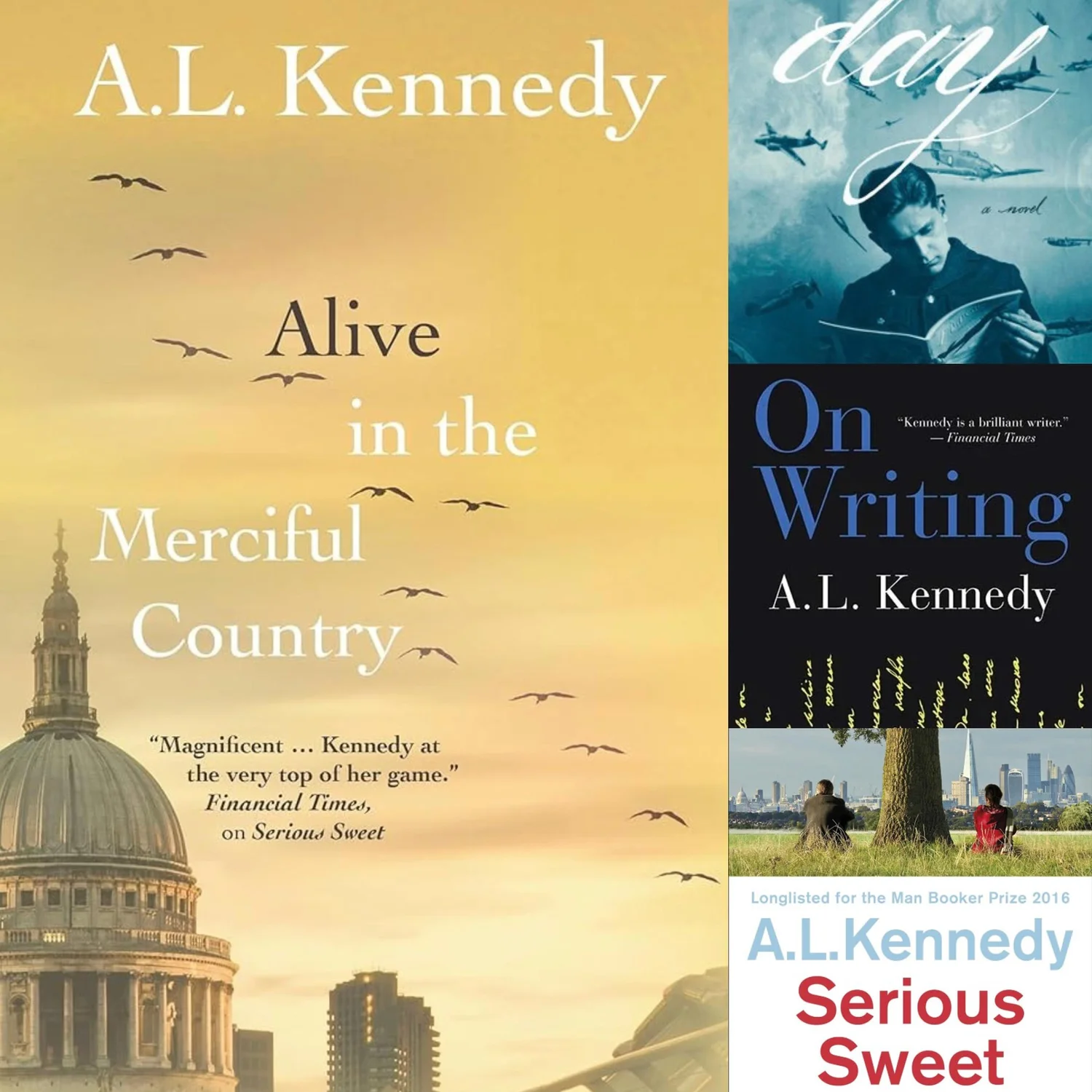
S16 Ep 1221The Art of Fiction, Democracy & Truth with AL KENNEDY
"The thing that puzzled him was why people don't agree to be fully expressed while they're alive. Why does it only happen in their last moment? Why wouldn't you live being fully expressed?"My guest today is AL Kennedy. She is one of Britain’s most acclaimed and versatile literary voices, a writer who can inhabit the internal life of a soldier in a POW camp, as she did in her Costa Book Award-winning novel Day, as easily as she can navigate the "professional lying" of a modern civil servant.Her latest novel, Alive in the Merciful Country, takes place during the 2020 lockdown. It tells the story of a primary school teacher who receives a confession from an undercover police officer who infiltrated her life decades earlier. It’s a provocative investigation into state power, the "Spy Cops" scandal and the search for mercy in an age of surveillance. It’s a book about the breakdown of trust. We talk about her life, her activism, and why she believes fiction is the only way to tell the truth when the facts are forbidden and how she balances the truth of her novels with the relief of stand-up comedy.(0:00) Finding Your VoiceOn the Alfred Wolfsohn voice method and the power of being fully expressed(2:30) Reading from Alive in the Merciful CountryKennedy shares a passage from her latest novel, exploring hope and resilience in dark times.(4:43) The Myth of Shrinking Attention SpansChallenging the narrative that modern audiences cannot focus, and the importance of engaging storytelling.(6:22) Education and the Foundation of DemocracyThe dangers of dismantling education and how critical thinking protects us from fascism.(10:26) The Spy Cop Scandal and State SurveillanceUnpacking the reality of undercover police infiltrating peaceful protests and intimate lives.(13:59) Lockdown: A Global Pause and the Inrush of EmpathyThe fleeting moment of unified humanity during the pandemic and how it was ultimately betrayed.(17:34) Writing Without Theft: The Ethics of Character CreationKennedy explains her imaginative process and why she refuses to steal details from real people's lives.(28:16) AI, Digital Slop, and the Loss of TrustReflections on artificial intelligence as an unstable plagiarism machine and its impact on truth.(30:03) Nature, Spirituality, and the Merciful CountryFinding healing in the natural world and navigating the future with love and awareness.Episode Websitewww.creativeprocess.info/podInstagram:@creativeprocesspodcast
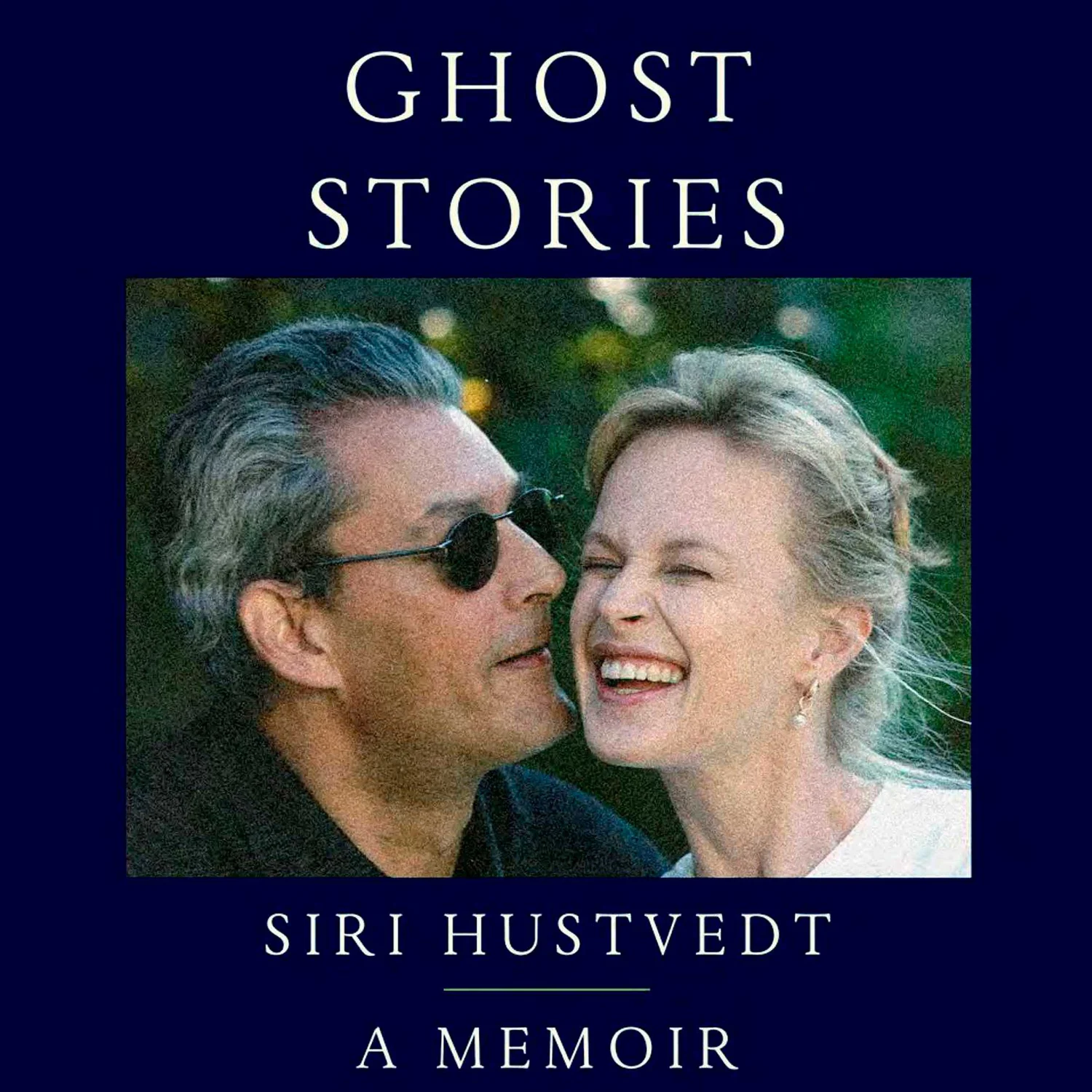
S16 Ep 1219Ghost Stories: A Memoir of Love & Grief with SIRI HUSTVEDT
E“Grief is a particular kind of unrequited love. It wasn't unrequited in the past. Usually, we think of unrequited love as you never got to do it, you never had it for yourself. But, in fact, there can be requited love, which is then unrequited love in the paroxysms of grief.”Today, we are honored to welcome a writer whose work has long explored the intimate landscapes of the mind, memory and the heart. Siri Hustvedt’s writing moves between the personal and the philosophical, the literary and the deeply human. Her work bridges collections of essays, non-fiction, poetry, and seven novels, including the international bestsellers What I Loved and The Summer Without Men. Recipient of the Princess of Asturias Award for Literature and the Gabarron Prize for Thought, her work has been translated into over thirty languages. Her new memoir, Ghost Stories, is a reflection on forty-three years shared with her late husband, the writer and filmmaker Paul Auster. In its pages, we encounter not only love and loss, but the quiet persistence of presence, memory, and language itself.(0:00) “We were hugely important to the drama of becoming in our own lives”(2:04) Grief as Unrequited LoveSiri explores the emotional reality of living without Paul Auster, noting that grief occurs because love does not stop when a person dies.(3:19) The Shared Space of a 43-year Marriage(4:36) Reading from Ghost StoriesSiri reads the opening passage of her memoir, detailing how the loss of her husband deranged her sense of time and bodily rhythms.(7:02) How Loss Changes Our Sense of Time(11:24) How Powerful Emotions and a Person's Life Can Play a Role in Illness(13:04) Believing in a Reality that Transcends the Individual(20:06) Physical Love in MarriageOn the importance of physical intimacy in long-term marriages, a reality often left out of grief memoirs.Episode Websitewww.creativeprocess.info/podInstagram:@creativeprocesspodcast

S16 Ep 1217ART CURE: How the Arts Can Transform Our Health with DAISY FANCOURT
"Within society, we seem to have separated the arts out, so they're not so much a part of our daily lives. Often there's something that we feel we should do as a kind of leisure activity or hobby if we have enough time or if we have enough money to engage in them. And this is so fundamentally different to how humans engaged with the arts. When we look back thousands of years, it just was part of the everyday, and I feel like that's a major loss within contemporary societies."Daisy Fancourt is a Professor of Psychobiology & Epidemiology at UCL and the author ofArt Cure: The Science of How the Arts Transform Our Health. A pioneer in the field of psychoneuroimmunology, she directs the WHO Collaborating Center on Arts and Health, where her research influences global health policy and the integration of the arts into medical care.(0:00) The Healing Power of the Arts: Longevity, Immunity & Wellbeing(1:17) Singing to Daphne: How Daisy used singing to comfort her premature daughter in the ICU(2:47) The Story of Russell: How a stroke survivor used art classes to reclaim his life, health, and identity(5:23) A Planet of 8 Billion Artists: Tracing the evolutionary origins of creativity back 40,000 years(8:58) Psychoneuroimmunology. Defining the biological mechanisms: how art reduces inflammation and cortisol(12:42) Art & Longevity. How arts engagement can slow biological aging and alter gene expression(18:24) Safeguarding Creativity. Why we should use AI for routine tasks but protect the human joy of the creative processEpisode Websitewww.creativeprocess.info/podInstagram:@creativeprocesspodcast

S16 Ep 1211Who Are We? What Makes Us Care? Jim Shepard, Neil Patrick Harris, John Patrick Shanley & Artists Share Their Stories
Can curiosity and empathy be taught? How can we expand our sense of solidarity through stories? In this episode, we explore the internal dialogues of artists, actors and writers to ask what it means to step into someone else's shoes.(0:00) Novelist Jim Shepard discusses Literature as a Tool for Emotional Education and Exploring History(2:05) Tony Award-winning Actor Neil Patrick Harris on Being Moved by Theater and its Ability to Bridge Worlds(3:55) Novelist Katie Kitamura on How a Book is Made in Collaboration with the Reader(5:00) Screenwriter, Playwright Laura Eason on Inhabiting the Hearts of Characters Different from Ourselves(6:03) Academy Award-winning Director Sharmeen Obaid-Chinoy on the Art of Visual Storytelling(6:37) Cinematographer, Director Benoit Delhomme on the Freedom of Handheld Cinematography(7:19) Author Etgar Keret on Looking for Humanity through Shared Intention(8:18) Viet Thanh Nguyen – Opposing Power through Expansive Solidarity(9:27) Adam Moss – Author, Fmr. Editor New York magazine on “The Work of Art”(10:29) John Patrick Shanley – Tony & Academy Award-winning Writer, Director on Finding Value in Ordinary Experiences and the Creative Power of Daydreaming(11:56) Pulitzer Prize-winning Journalist Nicholas Kristof on Why Individual Stories are Necessary to Generate ConnectionTo hear more from each guest, listen to their full interviews.Episode Websitewww.creativeprocess.info/podInstagram:@creativeprocesspodcast
S16 Ep 1211Who Are We? What Makes Us Care? Jim Shepard, Neil Patrick Harris, John Patrick Shanley & Artists Share Their Stories
Can curiosity and empathy be taught? How can we expand our sense of solidarity through stories? In this episode, we explore the internal dialogues of artists, actors and writers to ask what it means to step into someone else's shoes.(0:00) Novelist Jim Shepard discusses Literature as a Tool for Emotional Education and Exploring History(2:05) Tony Award-winning Actor Neil Patrick Harris on Being Moved by Theater and its Ability to Bridge Worlds(3:55) Novelist Katie Kitamura on How a Book is Made in Collaboration with the Reader(5:00) Screenwriter, Playwright Laura Eason on Inhabiting the Hearts of Characters Different from Ourselves(6:03) Academy Award-winning Director Sharmeen Obaid-Chinoy on the Art of Visual Storytelling(6:37) Cinematographer, Director Benoit Delhomme on the Freedom of Handheld Cinematography(7:19) Author Etgar Keret on Looking for Humanity through Shared Intention(8:18) Viet Thanh Nguyen – Opposing Power through Expansive Solidarity(9:27) Adam Moss – Author, Fmr. Editor New York magazine on “The Work of Art”(10:29) John Patrick Shanley – Tony & Academy Award-winning Writer, Director on Finding Value in Ordinary Experiences and the Creative Power of Daydreaming(11:56) Pulitzer Prize-winning Journalist Nicholas Kristof on Why Individual Stories are Necessary to Generate ConnectionTo hear more from each guest, listen to their full interviews.Episode Websitewww.creativeprocess.info/podInstagram:@creativeprocesspodcast

S16 Ep 1212Muse Cells & The Future of Health: Why Stars like Chris Hemsworth & Tony Robbins Turn to Regenerative Medicine
“They're kind of like a hidden superhero in your body and we just didn't know they existed. Muse cells eat the damaged cells, and they can actually turn into new cells using the cellular machinery.”Dr. Adeel Khan is a global thought leader in regenerative medicine. He is the CEO and Founder of and founder of Eterna Health, whose work with MUSE cell therapy—developed in collaboration with its discoverer, Professor Mari Dezawa—has made him the go-to expert for world leaders, athletes, and celebrities Chris Hemsworth, Kim Kardashian, and Tony Robbins. In this episode, we move beyond the hype of "anti-aging" to explore the hard science of Muse cells (Multilineage-differentiating Stress-Enduring cells). Dr. Khan breaks down how these unique cells differ from the "medicinal signaling cells" (MSCs) found in most clinics and how they act as a bridge to a future where tissue regeneration is standard care.(0:00) The "Repair Guys" & The Muse Difference Dr. Khan explains why traditional stem cells (MSCs) often disappoint and how Muse cells offer the "best of both worlds": safety and pluripotency.(2:19) Smart Cells: How They Find the Damage Understanding the "homing mechanism" that allows Muse cells to sense inflammation and instinctively travel to injured areas like the brain or heart.(3:11) Curing the Incurable: Diabetes & Alzheimer's The potential of the "cure triad"—stem cells, gene therapy, and FMT—to treat complex autoimmune diseases within the next decade.(4:40) Biological Noise & The Symphony of Health How "static" in our gene expression indicates aging, and how cellular therapy can reduce this noise to restore the body's harmony.(6:40) The Viral Monkey Study Dr. Khan discusses a recent study showing significant de-aging in monkeys through high-frequency cell dosing.(7:32) Unshakeable Foundations: Lifestyle as MedicineWhy advanced therapies must be paired with purpose, community, and mindfulness to create a "bulletproof" body.(8:44) From Sketchy to StandardizedNavigating the regulatory landscape: why Muse cells are being classified as a drug in regions like the UAE and the path toward FDA approval.(12:24) A Personal MissionDr. Khan shares the origin of his journey: trying to find solutions for his mother's chronic illness when traditional medicine failed.(14:16) The Cancer HunterUnlike other pluripotent cells that risk tumor growth, Muse cells have a unique mechanism that can detect cancer cells and trigger their death.(18:30)Future Outlook: AI, Nature & Blue Zones Reflections on the risks of AI, the importance of "Blue Zone" city design, and reconnecting with nature in a post-human world.Episode Websitewww.creativeprocess.info/podInstagram:@creativeprocesspodcast

S16 Ep 1209The Wisdom of Nature: Artists & Scientists on The Beauty & Fragility of Our Planet
In this special edition, we hear from our guests from across the arts and sciences. From composers and poets to forest ecologists and climate envoys, they tell the story of our planet. Moving beyond the data of destruction, we explore the intelligence of nature, the ethics of what we eat, and the empathy required to save our future.MAX RICHTER, Composer, Sleep, The Blue NotebooksCARL SAFINA, Author, Becoming WildADA LIMÓN, 24th US Poet LaureateCYNTHIA DANIELS, Grammy Award-winning Sound Eng.SUZANNE SIMARD, Finding the Mother TreeJOELLE GERGIS, Lead Author, IPCC 6th Assessment RptNOAH WILSON-RICH, CEO, Best Bees CompanyINGRID NEWKIRK, PETA FounderBERTRAND PICCARD, Solar Impulse FoundationDAVID FARRIER, Author, FootprintsKATHLEEN ROGERS, Pres, Earth Day NetworkODED GALOR, Unified Growth TheoryPETER SINGER, PhilosopherGEOFF MULGAN, Another World Is PossibleCLAIRE POTTER, Welcome to the Circular EconomyCHRIS FUNK, Dir. Climate Hazards Car.JENNIFER MORGAN, Special Envoy, International Climate ActionTo hear more from each guest, listen to their full interviews.Episode Website

S15 Ep 1208Animals & The Healing Power of Music with Musician PLUMES
On Music, Trust and Connection with the Animal World“Mostly I’ll play in a minor key, something sad, which I think can work for an animal because they can sense the sadness, and they try to reassure me and comfort me. I chose love songs because I'm convinced they are very intuitive and they can sense what I am trying to say to them, and profess my love in a way. I think there's always a way to connect, and if you're being cautious and don't threaten the animals, something beautiful can happen.”Musician Plumes takes his guitar to the world's most unlikely concert halls—farms, sanctuaries, and wild habitats. A passionate advocate for veganism and animal welfare, we discuss what animals hear, how trust forms, and what music can reveal when it enters a world not made for humans alone.Episode Websitewww.creativeprocess.info/podInstagram:@creativeprocesspodcast

S15 Ep 1206Speaking Out of Place - DAVID PALUMBO-LIU on Reclaiming Our Political Voices
On the urgent need to reclaim our political voices, the forces that silence dissent, and how art and poetry are crucial tools for survivalOur guest today is an activist scholar who believes the classroom is inseparable from the public square. David Palumbo-Liu is the Louise Hewlett Nixon Professor of Comparative Literature at Stanford University and a founding faculty member of Stanford’s Program in Comparative Studies in Race and Ethnicity. But his work has long reached beyond the academy. Through his book, Speaking Out of Place: Getting Our Political Voices Back, and his podcast of the same name, he insists that the great global crises of our time—from escalating wars and democratic failures to environmental collapse—are fundamentally crises of value and voice. His recent work has put him on the front lines of campus activism, challenging institutions, resigning his membership from the MLA, a move that highlights the ethical cost of speaking truth to power. We’ll talk about what he calls the "carceral logic" of the modern university, why art and poetry are crucial tools for survival in times of war, and what he tells his students about preparing for a future defined by uncertainty. His perspective is rooted in literature, but his urgency is all about the world we live in now. We will discuss the forces that silence dissent, the "imperial logic" of AI, and what it means to be a moral, active citizen when the systems we rely on are failing.“There is a dispute about what the American Dream is or how it would play out in different circumstances. The American dream has essentially been narrowed into a white Christian nationalist notion of things so that everything that falls outside what they imagine that to be is not only undesirable, but should be the subject of extermination, deportation, and detention. I am heartened by the fact that more of our 'better angels' are emerging with a more capacious and expansive notion of what the American dream could be.”Episode Websitewww.creativeprocess.info/podInstagram:@creativeprocesspodcast

S15 Ep 1204The Writer's Voice: Novelists, Poets, Memoirists & Editors Share Their Stories
How do writers develop their voice, showing us what is important in life?ADA LIMÓN (24th U.S. Poet Laureate, Startlement, The Carrying) explains that her poetry begins with a bodily sensation or curiosity, not an idea. She values the space and breath poetry offers for unknowing and mystery, finding solace in the making and the mess, not in answers. She discusses being free on the page to be her whole, authentic, complicated self.JAY PARINI (Author, Filmmaker, Borges and Me) calls poetry the prince of literary arts—language refined to its apex of memorability. He recounts how his road trip with Borges around Scotland restored him from depression and anxiety following the Vietnam War death of his friend.JERICHO BROWN (Pulitzer Prize-winning Poet, The Tradition, How We Do It: Black Writers on Craft, Practice, and Skill) discusses the rhythm of black vernacular and capturing "symphonic complexity of black life". He shares how he’s found a way not to think about personal risk as he’s writing.ADAM MOSS (Fmr. Editor, New York Magazine; Author, The Work of Art) relates David Simon’s concept of the bounce, in which creativity gains momentum as it is passed between people.VIET THANH NGUYEN (Pulitzer Prize-winning Author, The Sympathizer; To Save and to Destroy) discusses his path to expansive solidarity and capacious grief and how it works against the state's power to divide and conquer. He emphasizes that literature is crucial because authoritarian regimes abuse language; a commitment to the beauty of language is a commitment to truth, and fear is often an indicator of a truth that needs to be spoken.To hear more from each guest, listen to their full interviews.Episode Websitewww.creativeprocess.info/podInstagram:@creativeprocesspodcast