The Creative Process in 10 minutes or less · Arts, Culture & Society: Books, Film, Music, TV, Art, Writing, Creativity, Education, Environment, Theatre, Dance, LGBTQ, Climate Change, Sustainability, Social Justice, Spirituality, Feminism, Technology
308 episodes — Page 6 of 7

Max Stossel - Award-winning Poet, Filmmaker, Creator of "Words That Move"
"Technology has very much changed the way we read and take in information and shortened it into quick bursts and attention spans. We're living in a new world, for sure. And how do we communicate in this new world? Not just in a way that gets the reach, because there are whole industries aimed at what do I do to get the most likes or the most attention, and all of that, which I don't think is very fulfilling as artists.It's sort of a diminishing of our art form to try and play the game because then we're getting the attention and getting the hits, as opposed to what do I really want to create? How do I really want to create it? How do I want to display this? And can I do it in a way that breaks through so that if I do it my way, it's still going to get the attention, great. But if it doesn't, can I be cool with that? And can I be okay creating what I want to create, knowing that that's what it's about. It's about sharing in an honest, authentic way what I want to express without letting the tentacles of social media drip into my brain and take over why I'm literally doing the things that I'm doing."Max Stossel is an Award-winning poet, filmmaker, and speaker, named by Forbes as one of the best storytellers of the year. His Stand-Up Poetry Special Words That Move takes the audience through a variety of different perspectives, inviting us to see the world through different eyes together. Taking on topics like heartbreak, consciousness, social media, politics, the emotional state of our world, and even how dogs probably (most certainly) talk, Max uses rhyme and rhythm to make these topics digestible and playful. Words That Move articulates the deep-seated kernels of truth that we so often struggle to find words for ourselves. Max has performed on five continents, from Lincoln Center in NY to the Hordern Pavilion in Sydney. He is also the Youth & Education Advisor for the Center for Humane Technology, an organization of former tech insiders dedicated to realigning technology with humanity’s best interests.www.wordsthatmove.com/www.instagram.com/maxstossel/www.humanetech.com https://vimeo.com/690354718/54614a2318www.creativeprocess.info www.oneplanetpodcast.org IG www.instagram.com/creativeprocesspodcast
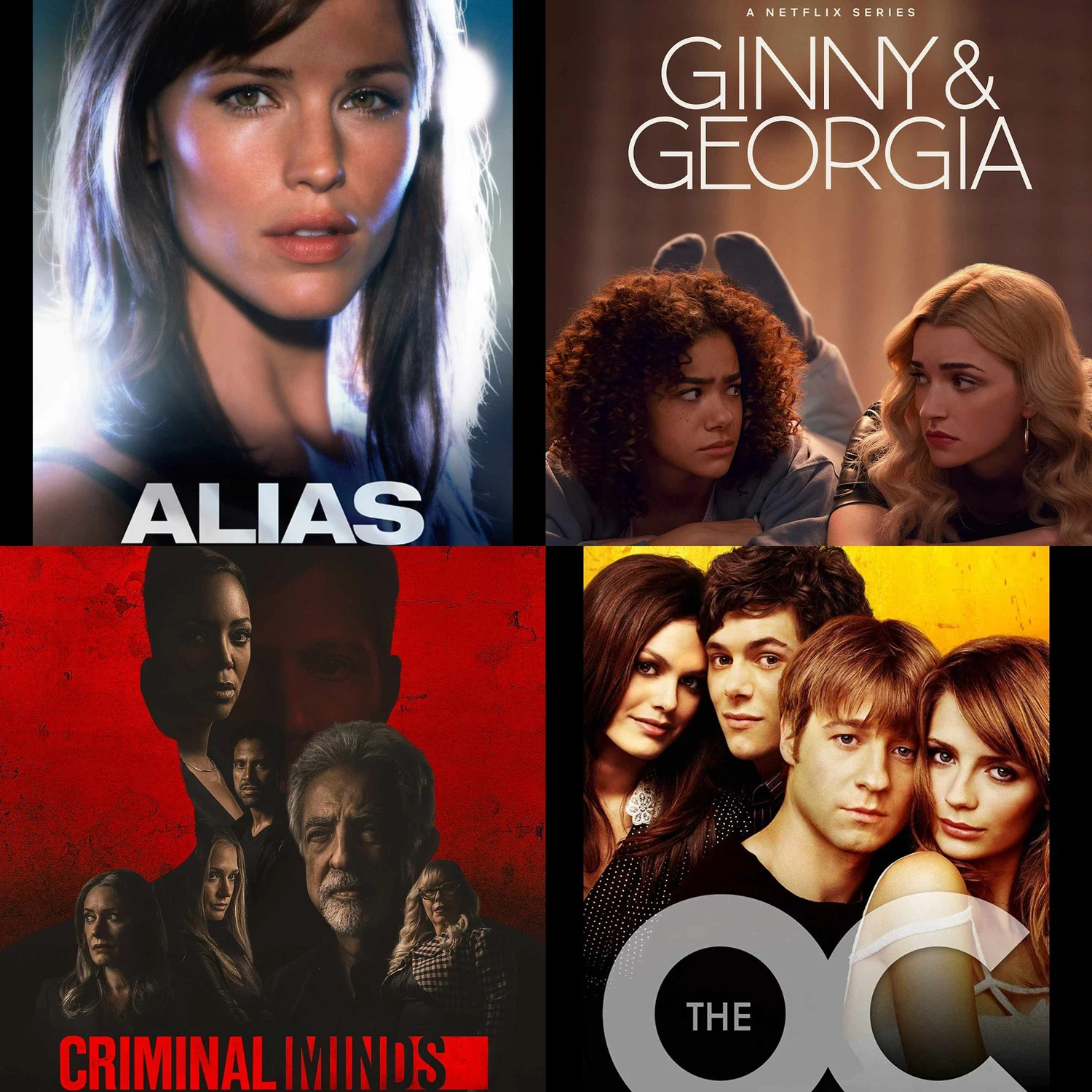
Debra J. Fisher - Showrunner of Netflix’s “Ginny & Georgia” - Writer, Exec. Producer “Criminal Minds” , “Alias”
"I need a balance of light and dark. It can't be just one thing. I want you to be laughing one minute and by the end I want you to be crying. For me, character study is what is the most important. It all comes down to the characters. It's less about action or things like that, which you can have some of that, but it tonally, has to be female-centric and you have to be crying and laughing. There's so many interesting shows that walk that line of light and dark. I want to always live in the gray area with characters. Always. Nothing is ever black or white. It's always a weird gray area.”"I like to say that Ginny & Georgia is a show about women by women for everyone. And I will say women in charge, they do things differently. I think that women, we tend to do relationships differently than men do. It's very, very important to me - and I'm not saying that men don't do this - but as a woman, as a female showrunner, it's very important for me to uplift young up-and-coming writers."Debra J. Fisher is a writer, producer, and director. She currently serves as the showrunner, writer, and executive producer of the Netflix series Ginny & Georgia. Season one of the hit series was watched by over 52 million subscribers in its first month on the platform, gathering a devoted fan base. The highly anticipated second season premiered on January 5th. Ginny & Georgia is Debra’s first time in the showrunner’s seat. Through her long and varied career, she has worked her way up the ladder on numerous beloved TV shows including Alias, The O.C., Charmed, and Criminal Minds, among others. With a wealth of experience from her own professional journey, she works to pay it forward by mentoring the next generation of creatives.www.instagram.com/debrajfisher www.tiktok.com/@debrajfisherwww.netflix.com/tudum/articles/ginny-and-georgia-season-2-release-datewww.creativeprocess.info www.oneplanetpodcast.org IG www.instagram.com/creativeprocesspodcast
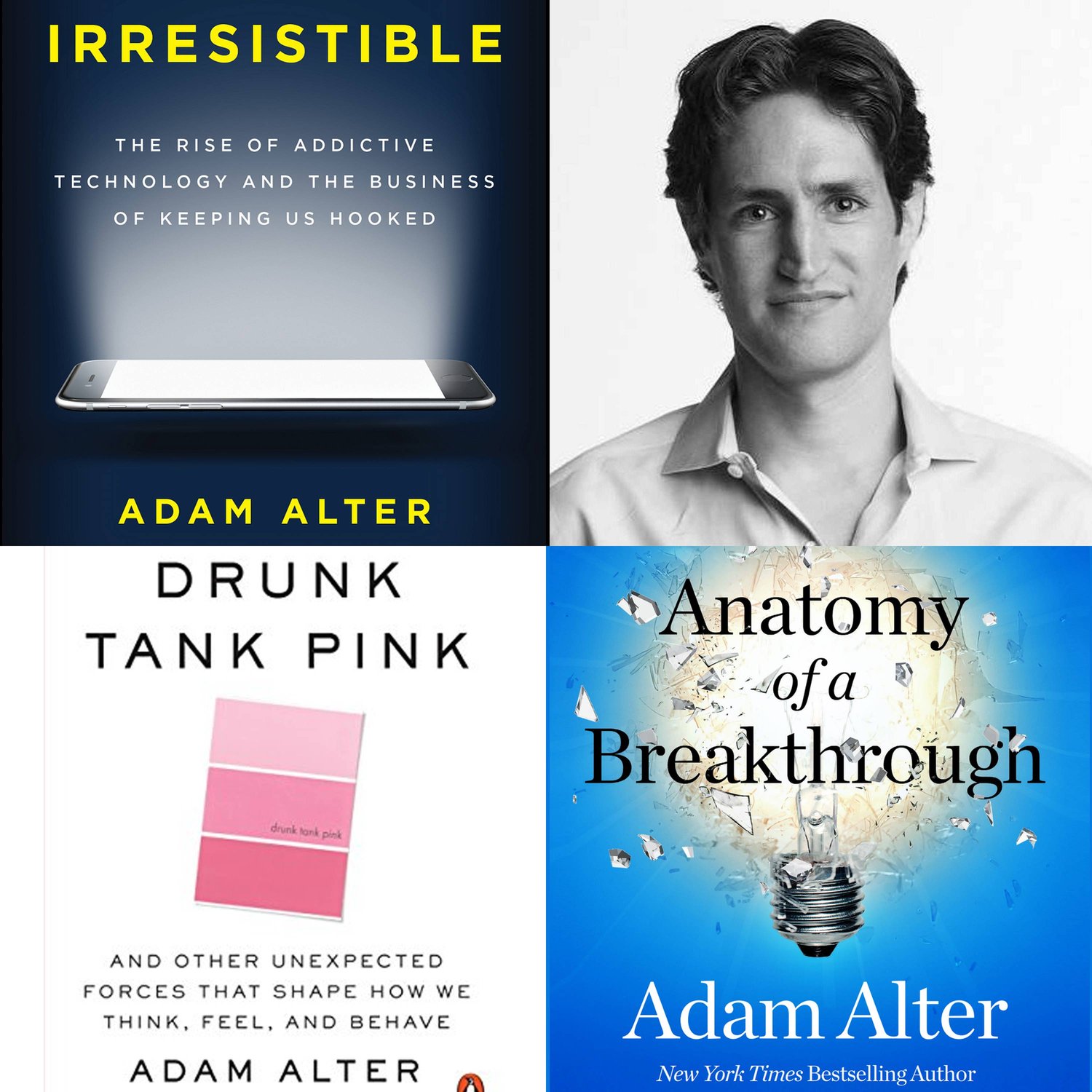
Adam Alter - Author of “Irresistible: The Rise of Addictive Technology”, “Anatomy of a Breakthrough"
"So there are analog solutions to the digital problem. I think the single biggest solution, for most people, at least in terms of low-hanging fruit, the most obvious place to begin is to just say, I'm going to carve out time every day, create habits where I will not be near my devices at certain times of the day. It might be dinner time, maybe no matter where I am, whom I'm with, or what I'm doing, I will not during dinnertime use a device. Or it might be the first hour of the day. A lot of people do that, spend the first hour of the day tech-free. Have a cup of coffee, if that's what you like to do, read a physical newspaper, or just read a book - whatever you want to do. Or be with your kids or loved ones, depends what your situation is. And then the same before bed. So between 60 and 90 minutes before bed, don't use a phone. And even those small changes, no phone at dinner time, no phone first hour of the day, no phone an hour before bed. That will change your life.It gives you back about two and a half hours of your day, which people when they start doing it, say, I can't believe I've lost that much time. So I think that there are many things we can do. We just have to make the decision to do them."Adam Alter is a Professor of Marketing at NYU’s Stern School of Business and the Robert Stansky Teaching Excellence Faculty Fellow. Adam is the New York Times bestselling author of Irresistible: The Rise of Addictive Technology and the Business of Keeping Us Hooked, and Drunk Tank Pink, which investigates how hidden forces in the world around us shape our thoughts, feelings, and behaviors. He has written for the New York Times, New Yorker, The Atlantic, Washington Post, and a host of TV, radio, and publications. His next book Anatomy of a Breakthrough will be published in 2023.https://adamalterauthor.com www.penguin.co.uk/books/431386/irresistible-by-adam-alter/9781784701659 www.simonandschuster.com/books/Anatomy-of-a-Breakthrough/Adam-Alter/9781982182960www.stern.nyu.edu/faculty/bio/adam-alterwww.creativeprocess.info www.oneplanetpodcast.org IG www.instagram.com/creativeprocesspodcast
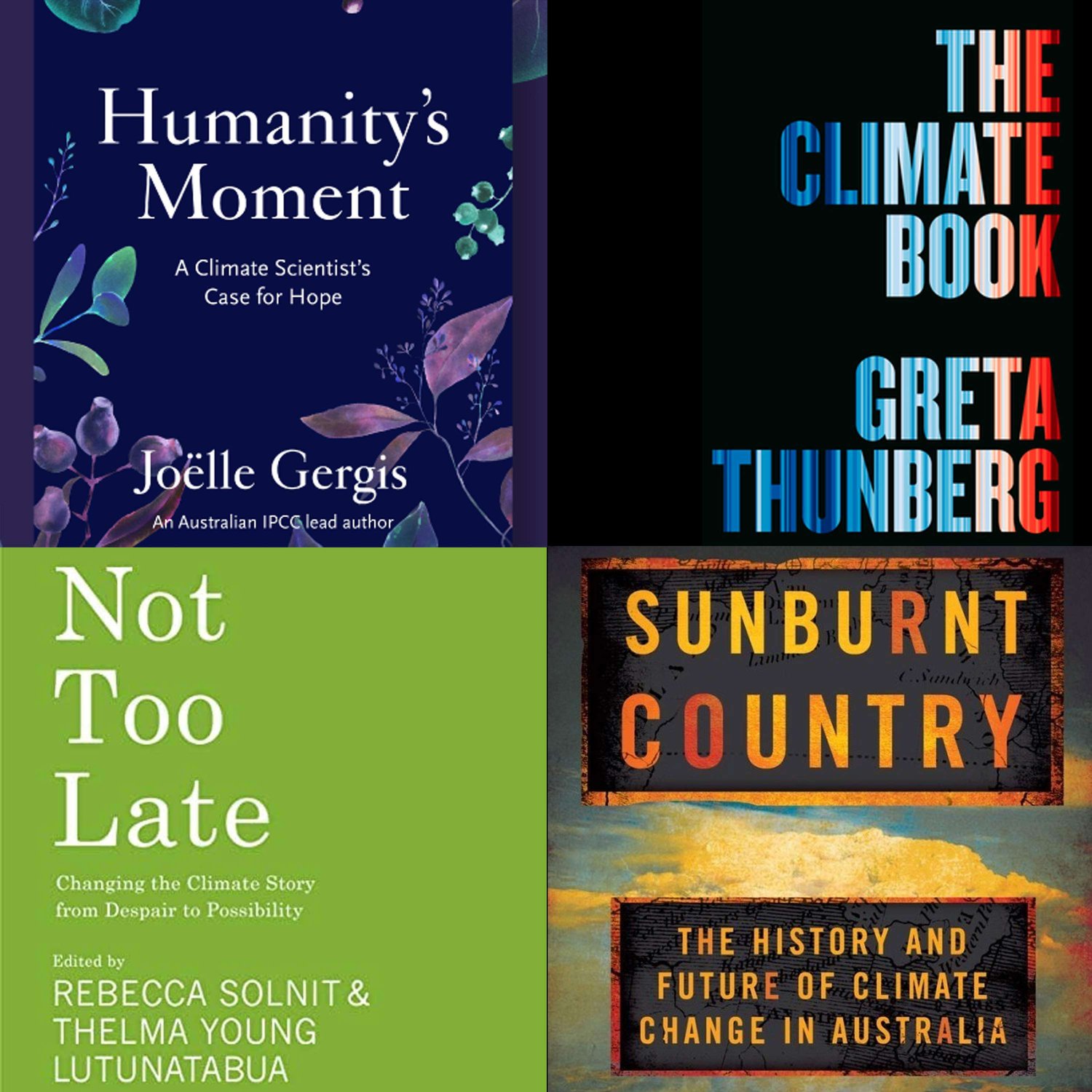
Joëlle Gergis - Lead Author - IPCC Sixth Assessment Report - Author of “Humanity’s Moment”
"We're really starting to witness serious climate extremes that can no longer be ignored. And the IPCC, one of our key conclusions to that report was that effectively the human fingerprint on the climate system is now undeniable. It is now an established fact that we have warmed every single continent, every ocean basin on the planet. And again, that's a pretty serious thing to contemplate that human activity from the burning of fossil fuels and the clearing of land has led to this energy imbalance in the earth system, which is leading to a rapidly shifting climate."Dr. Joëlle Gergis is an award-winning climate scientist and writer at the Australian National University. She served as a lead author for the IPCC Sixth Assessment Report and is the author of Humanity’s Moment: A Climate Scientist’s Case for Hope and Sunburnt Country: The History and Future of Climate Change in Australia. Joëlle has also contributed chapters to The Climate Book by Greta Thunberg, and Not Too Late: Changing the Climate Story from Despair to Possibility, edited by Rebecca Solnit and Thelma Young Lutunatabua.http://joellegergis.comhttps://climatehistory.com.auwww.blackincbooks.com.au/authors/jo-lle-gergiswww.creativeprocess.info www.oneplanetpodcast.org IG www.instagram.com/creativeprocesspodcast

Etgar Keret - Cannes Film Festival Award-winning Director - Author of “Fly Already”, “Suddenly a Knock on the Door”
"And I think that from a young age I've kind of learned that there are good stories, great stories, but none of them is your story. And that you have to kind of make up your own story, not feel just good enough kind of picking up one. And it doesn't matter if it's about Flat Earths or some conspiracy or wanting to clear the world of plastic or going vegan. So just this idea of joining some kind of boy scouts or wearing some kind of uniform or supporting some sports club and saying, Okay, now I don't have to think, I'm the New York Knicks fan! So if they win, I'm happy. If they lose, then I'm sad. I think that there is something, both with my mother and my father, being Holocaust survivors, being orphaned, basically, they had to seek the narrative. They didn't inherit one. It's not like my parents always said, You do like this, you know, and then you can either do what your parents said or rebel against them. It's this idea of What the hell do I do? And I'm looking Outside and Inside to find my narrative, to find my ethics, to find my values.”Author, Screenwriter, and Director Etgar Keret is a recipient of the French Chevalier des Arts et des Lettres, the Charles Bronfman Prize, and the Caméra d’Or at the Cannes Film Festival for Jellyfish, which he directed with his wife Shira Geffen. Most recently, they created the TV mini series The Middleman (L’Agent Immobilier) starring Mathieu Amalric. His books include the short story collections Fly Already, Suddenly a Knock on the Door, and his memoir The Seven Good Years. Etgar’s work has been translated into forty-five languages and has appeared in The New Yorker, The Paris Review,The New York Times, and This American Life. A frequent collaborator with visual and performing artists, an exhibition inspired by his mother called Inside Out is currently showing at the Jewish Museum in Berlin until February 5th, 2023.www.etgarkeret.comThe Middleman www.imdb.com/title/tt11523800www.jmberlin.de/en/exhibition-inside-out-etgar-kerethttps://etgarkeret.substack.comJellyfish http://www.imdb.com/title/tt0807721www.creativeprocess.info www.oneplanetpodcast.org IG www.instagram.com/creativeprocesspodcastPhoto credit: Lielle Sand
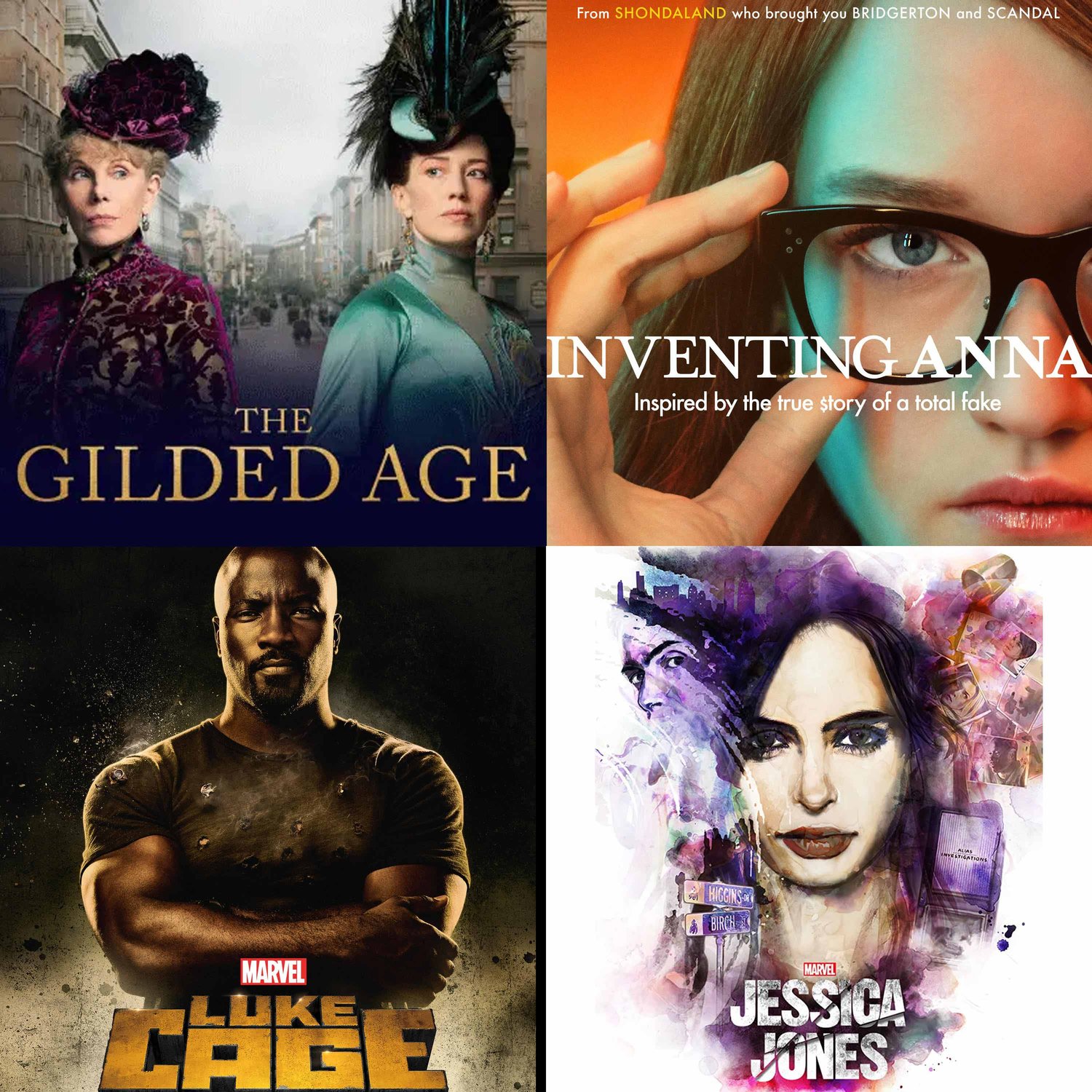
Manuel Billeter - Cinematographer - “The Gilded Age” “Inventing Anna” “Jessica Jones” “Luke Cage”
"What I think made me want to pursue film or what started my fascination with film and cinema were definitely Fellini, Antonioni, and Bertolucci; the masters, if you will, that kind of make you dream - make you just go to a movie theater, enter this space, and just have a communal experience. I know looking at the screen and just being completely immersed and experiencing stories or experiencing things that make you understand life more - or make you understand life less - and create a dialogue between you and the rest of the world.After that, Alfonso Cuarón, obviously the collaboration was incredibly important and I learned a lot and I carry a lot of that in me, undeniably. Then, I also had the very good fortune of working as a camera assistant, and a camera operator with other cinematographers, so I learned a lot from them. And they became mentors in a way. And it was kind of like a fortunate path to becoming a cinematographer myself.The camera is my tool of choice. It's what I've been given to express what needs to be expressed, what needs to be told. So I'm definitely very particular about composition or lens choices or camera placement." Cinematographer Manuel Billeter has worked across a variety of iconic and groundbreaking shows and films including Jessica Jones, Luke Cage, Iron Fist, Law & Order, Person of Interest, Orange Is The New Black, Lawless, and Alfonso Cuarón’s Y tu mamá también. Most recently he has been Director of Photography on the HBO Max series The Gilded Age, starring Carrie Coon and Christine Baranski, and Netflix’s Inventing Anna, starring Julia Garner.https://manuelbilleter.comwww.imdb.com/name/nm1193850/ www.imdb.com/title/tt4406178/?ref_=fn_al_tt_1 https://www.imdb.com/title/tt8740976/?ref_=fn_al_tt_1www.creativeprocess.info www.oneplanetpodcast.org Instagram www.instagram.com/creativeprocesspodcast/

Abby Ajayi - Creator of “Riches” - Writer/Producer “Inventing Anna” “The First Lady”
"So, in terms of going into the UK as a first-time showrunner. Of course, the UK and the US systems are quite different. Really the showrunner model is very much the American system. While the UK historically has a much more lead writer who then hands over the scripts to the producer who then hands them over to the director.But I was clear that I do feel that if one has the desire and the ability to be a much more big-picture showrunner, I think that's to the best. That benefits the show because there's a creative voice running all the way through. This isn't a movie, where it's a director's medium. It is the writer's medium, so I think the writer should be across producing and also empowering the director, but there is a clear vision.In terms of leadership, it wasn't very much about ultimately starting to say, Okay, this is what it is, and being confident in that. And also acknowledging when one makes mistakes, you know, because you're making a lot of decisions in a very short period of time.And I think it's important to give credit where it's due as well and that was also true of being a director. It's important to give credit. So have a vision, and work with those people to have the vision. Listen to what they're saying, listen to their ideas. And making television just makes it crucial to sort of have a vision, but be able to pivot."Abby Ajayi is a British Nigerian writer and director who serves as a show creator, executive producer, and writer on the Amazon Series Riches, which is currently on Amazon Prime and premiers on ITVX in the UK on December 22. She has previously worked on the shows Four Weddings and a Funeral, How to Get Away with Murder, Inventing Anna, The First Lady, and Eastenders. As a result, she had the opportunity to learn under the likes of Shonda Rhimes, Pete Nowalk, and Tracey Wigfield. Abby’s next project is the Onyx Collective on Hulu’s limited series The Plot with Mahershala Ali. She is adapting the eight-episode series from Jean Hanff Korelitz’s novel of the same name.www.imdb.com/name/nm2184926www.amazon.com/Riches-Season-1/dp/B0B8MTCYVMwww.creativeprocess.info www.oneplanetpodcast.orgInstagram @creativeprocesspodcast
Nina Hall - Author of “Transnational Advocacy in the Digital Era: Think Global, Act Local”
“Digital advocacy organizations are recognized as influential actors by the media, politicians, and some academics. In 2016, GetUp, an Australian digital advocacy organization, was named by the Australian Financial Review as one of the top ten actors with ‘covert power’ in Australia.1 Campact in Germany has powerfully mobilized public opinion against the Transatlantic Trade and Investment Partnership. MoveOn was one of the ‘leading advocacy organizations’ mobilizing people against the Iraq War in the United States. Meanwhile, Leadnow, a digital advocacy organization in Canada, helped to unseat Prime Minister Stephen Harper in the 2015 Canadian federal election. This new model of advocacy organization has spread around the world. Nineteen digital advocacy organizations claim to have a total of over 20 million members. What drove the global spread of digital advocacy organizations?”- Nina HallTransnational Advocacy in the Digital Era: Think Global, Act LocalNina Hall is an Assistant Professor in International Relations at Johns Hopkins School of Advanced International Studies (Europe). She previously worked as a Lecturer at the Hertie School of Governance, where she published her first book Displacement, Development, and Climate Change: International Organizations Moving Beyond their Mandates? Her latest book is Transnational Advocacy in the Digital Era: Think Global, Act Local. She holds a DPhil in International Relations from the University of Oxford and is the co-founder of an independent and progressive think tank, New Zealand Alternative. She has been a Senior Fellow at the Weizenbaum Institute (the German Internet Institute) and a Faculty Affiliate at the SNF Agora Institute, Johns Hopkins University.https://ninahall.net https://global.oup.com/academic/product/transnational-advocacy-in-the-digital-era-9780198858744?cc=fr&lang=en& https://sais.jhu.edu/users/nhall20 www.oneplanetpodcast.org www.creativeprocess.info Instagram @creativeprocesspodcast
Alberto Savoia - Google’s 1st Engineering Director - Author of “The Right It”
"At this very moment, millions of people around the world are working hard to bring to life. A handful of these ideas will turn out to be stunning successes and will have a major impact on the world and culture. The next polio vaccine, the next Google, the next Harry Potter. Others will become smaller, more personal, but no less meaningful successes...Most people believe that they either are or will be in the first group—the group whose ideas will be successful. All they have to do is work hard and execute well. Unfortunately, we know that this cannot be the case. Most new products, services, businesses, and initiatives will fail soon after they are launched—regardless of how promising they sound, how much their developers commit to them, or how well they execute them. This is a hard fact to accept. We believe that other people fail, because they don’t know what they are doing…just as I had reached new heights of confidence and hubris, the Beast of Failure wrapped its tentacles around me and bit me in the ass…I could lick my wounds or bite back. I decided to bite back. Failure became my nemesis. Defeating it, my obsession. Teaching others how to defeat it, my mission.”– The Right It: Why So Many Ideas Fail and How to Make Sure Yours SucceedAlberto Savoia was Google’s first engineering director and is currently Innovation Agitator Emeritus, where, among other things, he led the development and launch of the original Google AdWords. He is the author of The Right It: Why So Many Ideas Fail and How to Make Sure Yours Succeed, a book that provides critical advice for rethinking how we launch a new idea, product, or business, and gives insights to help successfully beat the law of market failure: that most new products will fail, even if competently executed.He is a successful serial entrepreneur, angel-investor and an expert practitioner in pretotyping and lean innovation. He is based in Silicon Valley where he teaches his uniquely effective approach to innovation at Google, Stanford. He has also taught and coached many Fortune 500 companies, including Nike, McDonald’s, and Walmart, as well as the US Army.www.albertosavoia.com https://harperone.com/9780062884671/the-right-itwww.creativeprocess.info www.oneplanetpodcast.orgInstagram @creativeprocesspodcast
Mathis Wackernagel - Founder, President, Global Footprint Network - World Sustainability Award Winner
"Actually, awareness doesn't help. We are on the campaign to produce a desire for that transformation. Information is useless unless it's empowering. And of course, it has to be factual. If it's not factual, then it's going to be found out, and it also has to be relevant because otherwise, it's irrelevant. But if it's just relevant, it actually may just be counterproductive because if people see it as relevant but not empowering, they will use their brain to fight it. So that's why I think awareness campaigns don't work. We can only work on motivation, helping people to find a greater desire to get there, to say, yeah, that's what I want. A sense of agency that they say I can do something about it. Also, a sense of curiosity because we really don't know how to get there eventually.So, it takes a bit more than just awareness and that's what we learned a bit painfully, obviously, over the last 30 years or painfully because in the beginning we just thought, Oh, why don't people just measure how many planets we have compared to how many we use? And once they see the number, it would be very obvious to them. So we were the first to start to - and still are I think - the main accounting approach to compare directly how big human activities are compared to what the planet can renew.”Mathis Wackernagel is Co-founder and President of Global Footprint Network. He created the Ecological Footprint with Professor William Rees at the University of British Columbia as part of his Ph.D. in community and regional planning. Mathis also earned a mechanical engineering degree from the Swiss Federal Institute of Technology. Mathis has worked on sustainability with governments, corporations and international NGOs on six continents and has lectured at more than 100 universities. Mathis has authored and contributed to more than 100 peer-reviewed papers, numerous articles, reports and various books on sustainability that focus on embracing resource limits and developing metrics for sustainability. Mathis’ awards include the 2018 World Sustainability Award, the 2015 IAIA Global Environment Award, being a 2014 ISSP Sustainability Hall of Fame Inductee, the 2013 Prix Nature Swisscanto, 2012 Blue Planet Prize, 2012 Binding Prize for Nature Conservation, the 2012 Kenneth E. Boulding Memorial Award of the International Society for Ecological Economics, the 2011 Zayed International Prize for the Environment (jointly awarded with UNEP). He was also selected as number 19 on the en(rich) list identifying the 100 top inspirational individuals whose contributions enrich paths to sustainable futures.www.footprintnetwork.orgwww.footprintnetwork.org/toolswww.overshootday.org/power-of-possibility/www.creativeprocess.infowww.oneplanetpodcast.orgInstagram @creativeprocesspodcast

Sam Levy - Award-winning Cinematographer of “Lady Bird” “Frances Ha” “While We’re Young”
“Don’t you think maybe they are the same thing? Love and attention?"–Lady Bird, written and directed by Greta Gerwig "I really love that line in the script. It's an incredible script that Greta Gerwig wrote. It's not obvious, that sentiment that she says. I think that's why she has to point it out to the Lady Bird character, but I think if we're lucky in our lives, we can choose the path that we want to go down, whether it's something creative or in the arts or something else. And I think if you're lucky, you can spend your life or your career following something you really love or spending time following the path, whether it's a hobby or your career. And spending that time paying the attention that the craft or the hobby or the creative pursuit wants."Sam Levy studied film in Paris with French New Wave director Eric Rohmer and began his career as an apprentice to legendary cinematographer Harris Savides. Sam first gained recognition as a cinematographer when he photographed Wendy and Lucy for director Kelly Reichardt - voted “One of the Best 25 Films of the 21st Century” by The New York Times. He went on to shoot Frances Ha, Mistress America and While We’re Young for director Noah Baumbach, Changers and Frank Ocean's Blonded for Spike Jonze, Sermon on The Mount for Jerrod Carmichael, Maggie’s Plan for Rebecca Miller and Green Porno for Isabella Rossellini. Sam also photographed Lady Bird for writer/director Greta Gerwig - nominated for 5 Academy Awards including Best Picture and winner of The Golden Globe for Best Picture. Other new films include Mayday, which he also produced, Confess, Fletch, and She Came to Me.https://samlevydp.comwww.imdb.com/name/nm1240085/ www.instagram.com/samlevydp/ www.creativeprocess.info www.oneplanetpodcast.org Instagram @creativeprocesspodcast
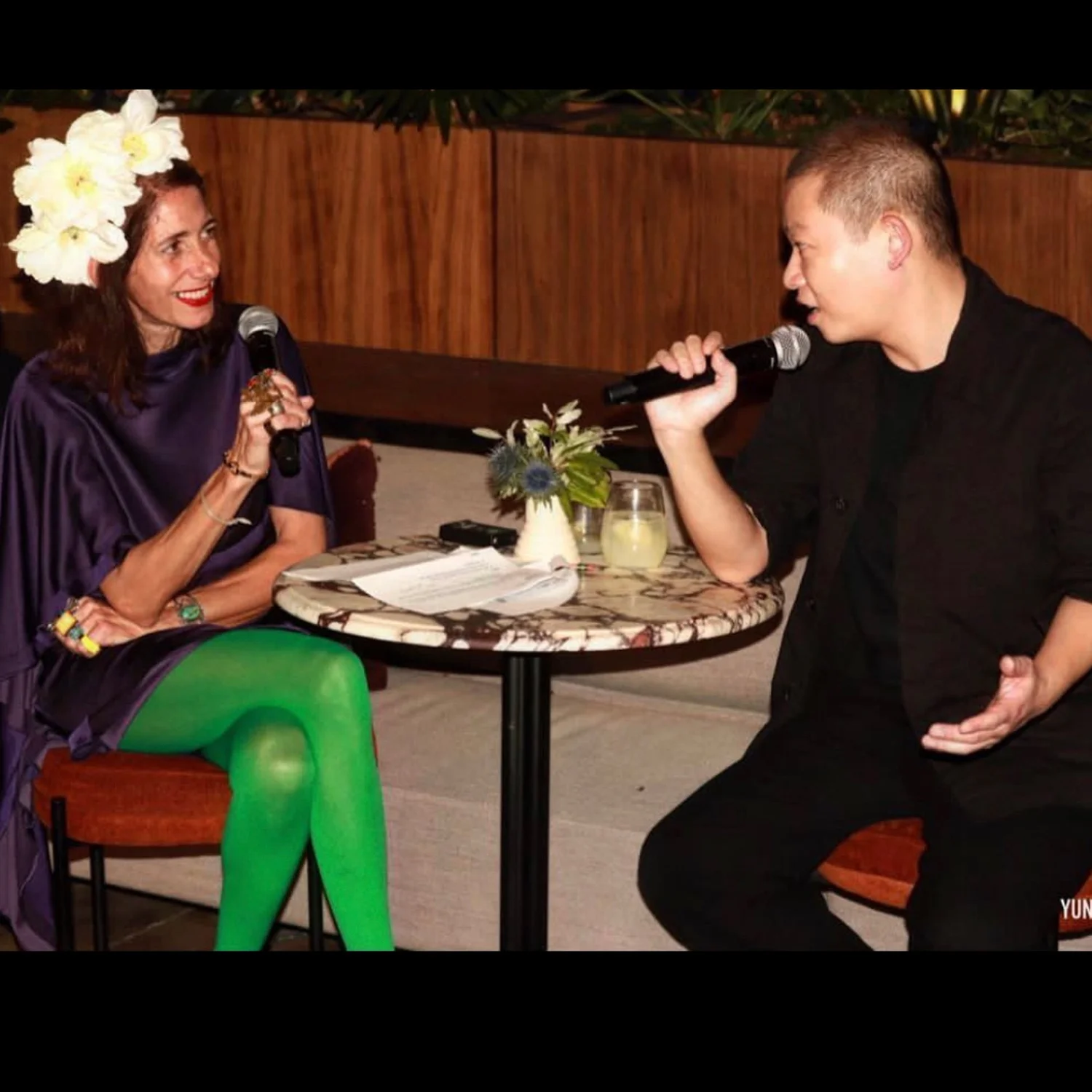
Oberon Sinclair - Founder CEO of Creative/Branding Agency My Young Auntie - Queen of Kale
"If someone comes to me, and they say, 'Oh, I have a new brand. It's a startup.' First of all, I have to like the person, they have to like me. It's a two way street. And that's the most important thing with anyone in life, not just work. In life, why do we make friends with who we make friends with? They are relationships. And if you connect with someone, magic will happen. If you don't connect with someone, and someone doesn't understand or have the same aesthetic or a similar way of thinking – you have to have something in common with someone. And if you have those qualities, which I look for, honesty and loyalty, and they're genuine, and you just know if you're going to get on with someone or not.”Oberon Sinclair is the CEO and founder of the creative and branding agency, My Young Auntie. Since she founded the company in 1997, Oberon has collaborated with and managed an array of notable clients from the high luxury, art, fashion, food and lifestyle sectors, including Hermès, Vivienne Westwood, Fabergé, the Richemont Group, Jack Spade, ArtForum, Selfridges, Rizzoli Books, Island Records, David Lee Roth, among others. Oberon is known as the Queen of Kale for reviving an interest in the superfood across the world. She’s a Founding Member of NeueHouse where she moderates talks.https://myyoungauntie.comwww.instagram.com/myyoungauntieprwww.neuehouse.comwww.creativeprocess.infowww.oneplanetpodcast.orgInstagram @creativeprocesspodcastPhoto: Oberon in conversation with artist and fashion designer Jason Wu at NeueHouse
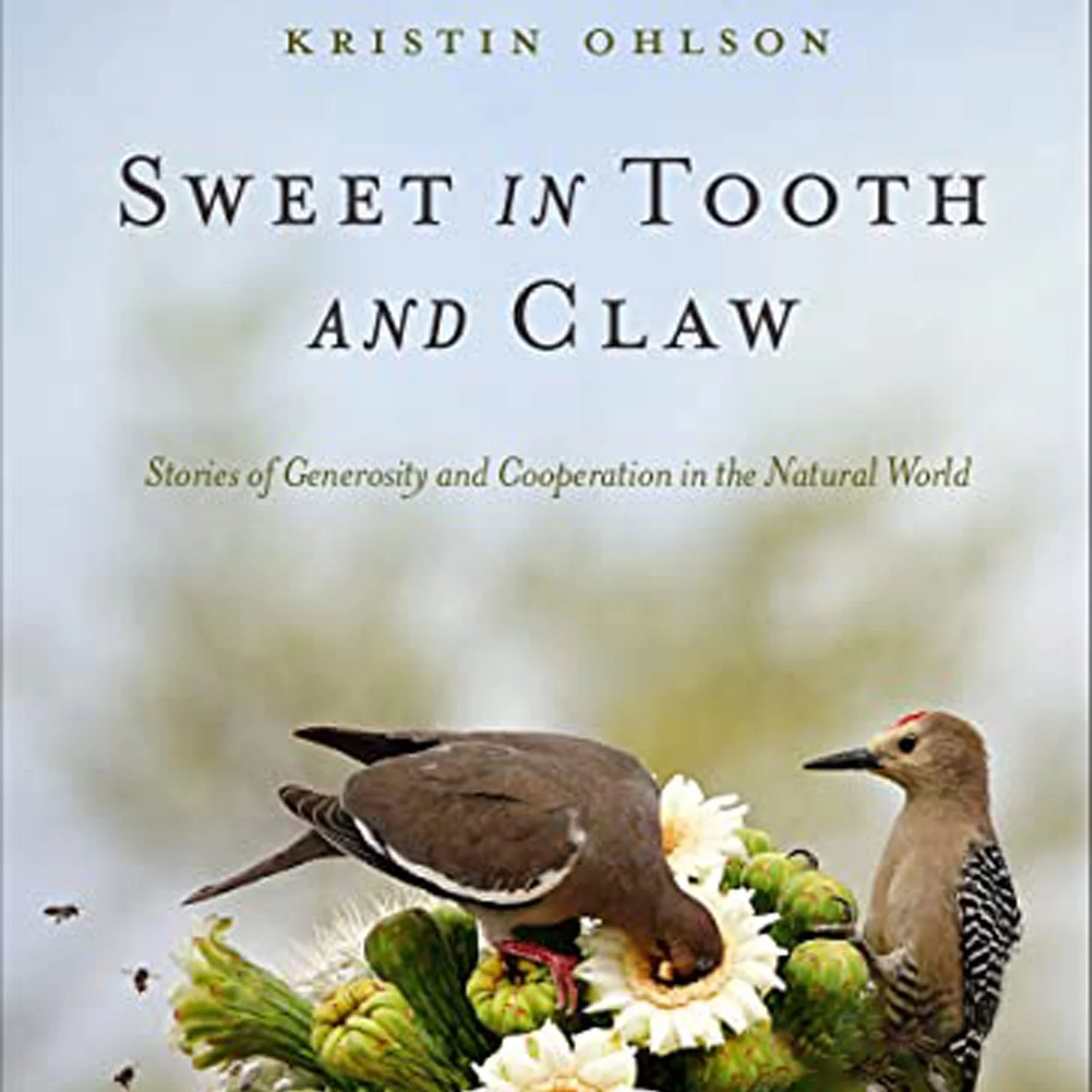
Kristin Ohlson - Author of Sweet in Tooth and Claw: Stories of Generosity and Cooperation in the Natural World
"In some ways, our insistence on dominating is actually destroying us.""It definitely is destroying us. It definitely destroys ecosystems. And I think part of the reason that this story of cooperation among living things appeals to me so much. I mean, in my book Sweet in Tooth and Claw, I look at the work of lots of scientists who studying how nature works and discovering all these incredible connections among living things that certainly help them thrive and help ecosystems thrive.But I think it's this story of cooperation is important in terms of the story that we tell ourselves about nature, and seeing as how we are part of nature, it's important that we see ourselves as possibly a partner instead of a destroyer. I think that we have held onto the perspective that nature is all about competition and conflict. And when we shift that, when we look at nature as this vast web of interconnection and cooperation, and of course competition and conflict in there obviously in some places. But when we look at this vast web of cooperation and collaboration, I think that it changes our view. It changes our view of what's possible.You know, instead of us trying to make order out of chaos, largely out of the chaos that we've created, we can instead look at the world as being held together and look for the places where the connections have been snapped, where the connections have been broken, and where we can roll back some of the damage that we've done and help those connections heal.”Kristin Ohlson is the author of Sweet in Tooth and Claw: Stories of Generosity and Cooperation in the Natural World. Her other books include The Soil Will Save Us: How Scientists, Farmers and Foodies are Healing the Soil to Save the Planet, and Kabul Beauty School: An American Woman Goes Behind the Veil. Olson appears in the award-winning documentary film Kiss The Ground, speaking about the connection between soil and climate. Her work has appeared in the New York Times, Smithsonian, Discover, New Scientist, Orion, American Archeology, and has also been anthologized in Best American Science Writing, and Best American Food Writing.www.kristinohlson.comwww.patagonia.com/stories/sweet-in-tooth-and-claw/story-123959.html www.oneplanetpodcast.orgwww.creativeprocess.infoInstagram @creativeprocesspodcast
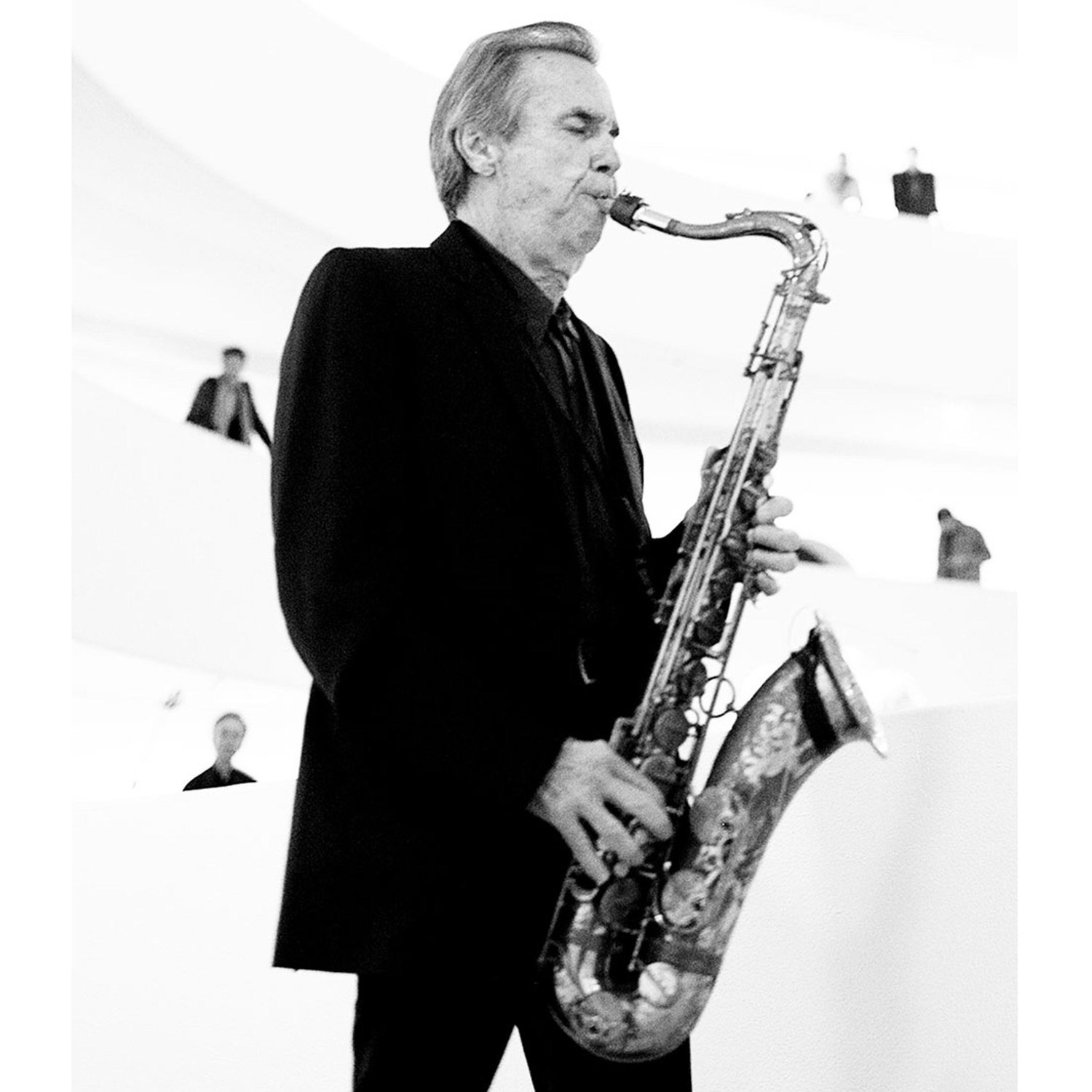
Dickie Landry - Composer, Musician, Photographer, Artist
"Einstein on the Beach, it's a masterpiece. America, in 1976, was to be celebrating its 200th year of existence, and Michel Guy, the French Minister of Culture, came to New York to offer a commission to Philip Glass and Robert Wilson to write an opera. This was the gift that France would give for America's two-hundredth anniversary. That was the first time I met Robert Wilson.""My son had died, and I had taken to two years to recover. So I went to New York. I had dinner with Laurie Anderson, and as I was getting up to leave, she said, 'What are you doing in New York?' I said, "I'm looking for work' She said, 'What are you doing next week?' I said, 'Well, I'm supposed to be in Atlanta, Georgia doing a music film with David Byrne and Talking Heads. Well, what do you have?' She said, 'I'm doing a piece next week at Brooklyn Academy of Music with Trisha Brown and Robert Rauschenberg, Set and Reset. Why don't you come? Bring your sax, we'll work it out then.' Two weeks after that concert, Laurie's manager called and said, 'Do you want to go on a 20-city tour of America with Laurie? Home of the Brave?' Of course, we did that. That was the beginning of the reconstruction of my career in New York through Laurie Anderson."For nearly half a century, Richard “Dickie” Landry was at the center of the New York avant-garde. Born in the small Louisiana town of Cecilia in 1938, he began making pilgrimages to the city while still in his teens in search of the city’s most cutting edge gestures in jazz, and relaxed there not long after, falling in with a close knit community of artists and composers like Keith Sonnier, Philip Glass, Joan Jonas, Gordon Matt Clarke, Richard Serra, Robert Rauschenberg, Nancy Graves, Lawrence Weiner, Steve Reich, Jon Gibson, and Robert Wilson.Landry remains one of the few artists of his generation who made important waves within numerous creative idioms. Having been trained from a young age on saxophone, not only is he a remarkably respected solo performer and bandleader, but he was an early and long-standing member of Philip Glass’ ensemble, playing on seminal records like Music With Changing Parts, Music in Similar Motion / Music in Fifths, Music in Twelve Parts, North Star, and Einstein on the Beach, and played with Talking Heads, Laurie Anderson, and jazz giants like Johnny Hammond, Gene Ammons, and Les McCann. He was also one of the most important photographic documenters of the New York Scene, until he left the city for his native Louisiana, following 9/11.http://www.dickielandry.comhttps://unseenworlds.com/collections/dickie-landryMusic on this episode courtesy of Dickie Landry:E-mu & Alto Saxophone composed by D.L. for Robert Wilson's production of "1433 The Grand Voyage" based on the story of Zheng He. Premier National Theater Taipei, Taiwan 2009Philip Glass’"Einstein on the Beach”. Original recording on Tomato Records 1977. D.L. on flute “Home of the Brave” on the Late Show with Laurie Andersonwww.creativeprocess.info www.oneplanetpodcast.org Instagram @creativeprocesspodcast
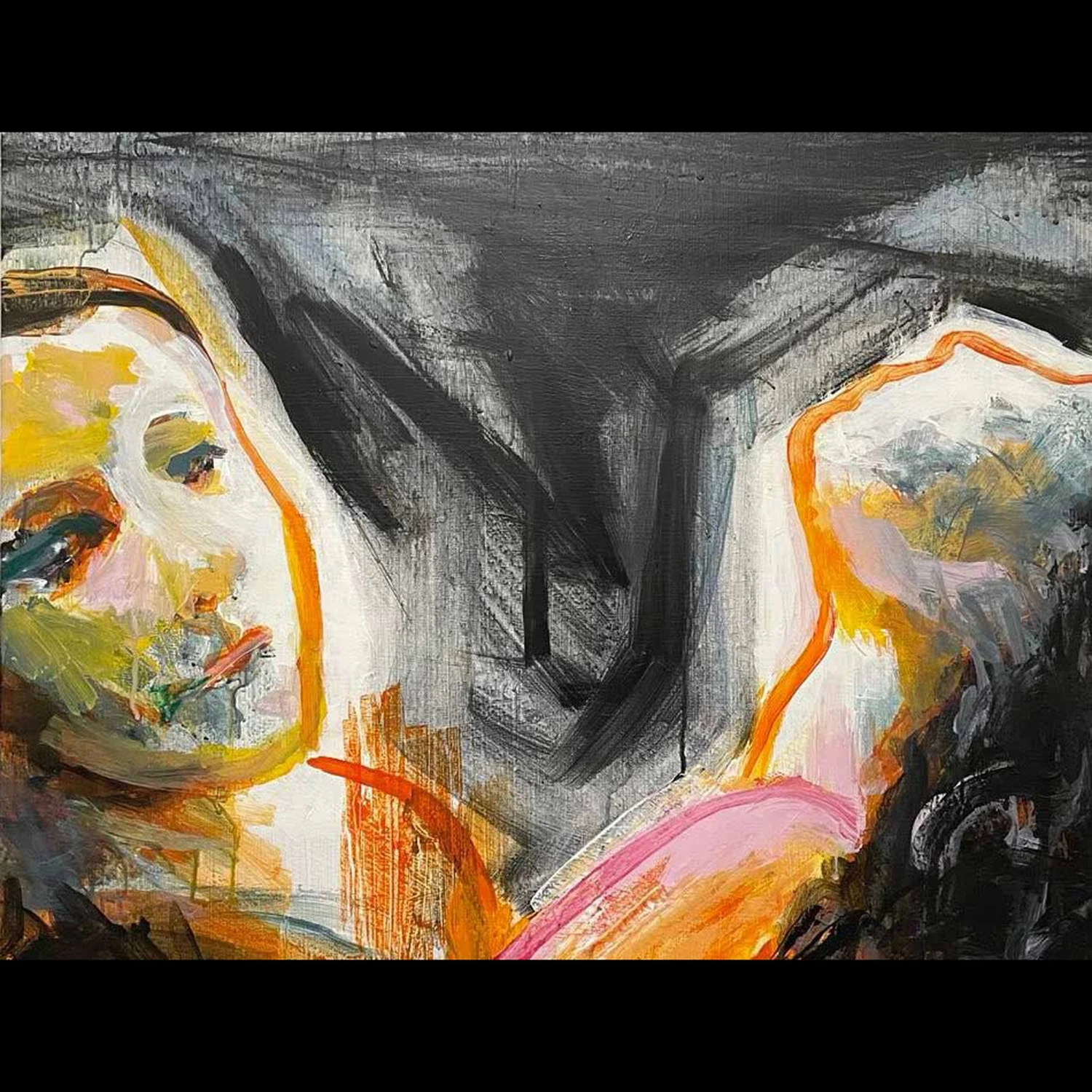
Gloria Pacis - Artist
"I just feel there is already a connection, something I have to come to, but that I'm trying to search it out or see what's already there. I feel that we are truly connected as a world. And I'm just trying to make people aware of an existing connection we already have, to send that message out there. And I like to do it in the form of...I guess you'd call it a mundane image, where it's not really about bells and whistles, but it's about something in it makes you want to look, and you want to know why. And it's because you've been there before, regardless of whether you are a dancer or that particular guy in the subway, you know you've been in his head in that mood that he's experiencing."Gloria Pacis is a painter dividing her time between New York City and Hoboken, where she has her studio. She received her BFA from the University of Washington in 1976. She credits her years working as a set designer and scene artist for the dramatic, character-based elements of her paintings. She has participated in exhibitions at public institutions and universities, including Wing Luke Museum, Mana Contemporary, University of Washington, Henry Art Gallery, Monroe Arts Centre, Seattle University, Act Theatreand Seattle Center Art Museum, where her work was chosen to showcase International Women’s Day. She has designed sets for many leading theatres, including notable productions of A Christmas Carol, Hamlet, The Doctors Dilemma, Hedda Gabler, and Salome.IG @gloriapaciswww.artofgloriapacis.comwww.creativeprocess.infowww.oneplanetpodcast.orgInstagram @creativeprocesspodcastImage: The Dancers, Acrylic on canvas, Gloria Pacis

Colin Steen - CEO of Legacy Agripartners - Pushing Farming Forward
"It's interesting, as I've gotten older, I've really started to reflect back on that early time growing up on a farm. And I'm fiercely, fiercely proud of where my roots are. And Weldon, Saskatchewan, it's a town of 160 people there today. And just being in a spot where every day you have cattle to feed, you've got a grain crop you're trying to grow, right? The things are subject to weather. The sort of ups and downs of farm life are so dependent on the 6 pm news and the weather forecast each night. It's at times very stressful, but most times incredibly rewarding, right? There's nothing like sitting in a combine at harvest time with all the fruits of your labors all coming in at the same time. It's a great experience. We had cattle, which is just a never-ending thing, right? You know, our vacations were tied around going to cattle shows, cattle sales, bull sales, cow sales, anything that revolved around the farm. And we had a ton of fun on our vacations going to these events and seeing sites in those areas where we went to. But at the end of the day, you know, your life revolves around the cattle on the farm. It revolves around the farm. There's no sort of, we'll take four months off and not worry about it, right? Those cows have to be fed twice a day and looked after. So it's a lot of responsibility, and it's a great way to get yourself ready for life as an adult."Colin Steen is CEO of Legacy Agripartners. He has had a lifelong career in agriculture, spending over 25 years with Syngenta in a variety of commercial leadership and Venture Capital roles before joining Legacy Seed Companies (now Legacy Agripartners) in July 2020. His prior experience in running Golden Harvest Seeds has given him a deep understanding of the needs of the U.S. farmer. Colin grew up on a grain and cattle farm in Weldon, Saskatchewan, and holds a B.S. in Agriculture from the University of Saskatchewan and an MBA from the University of Guelph.https://legacyagripartners.comwww.oneplanetpodcast.orgwww.creativeprocess.info
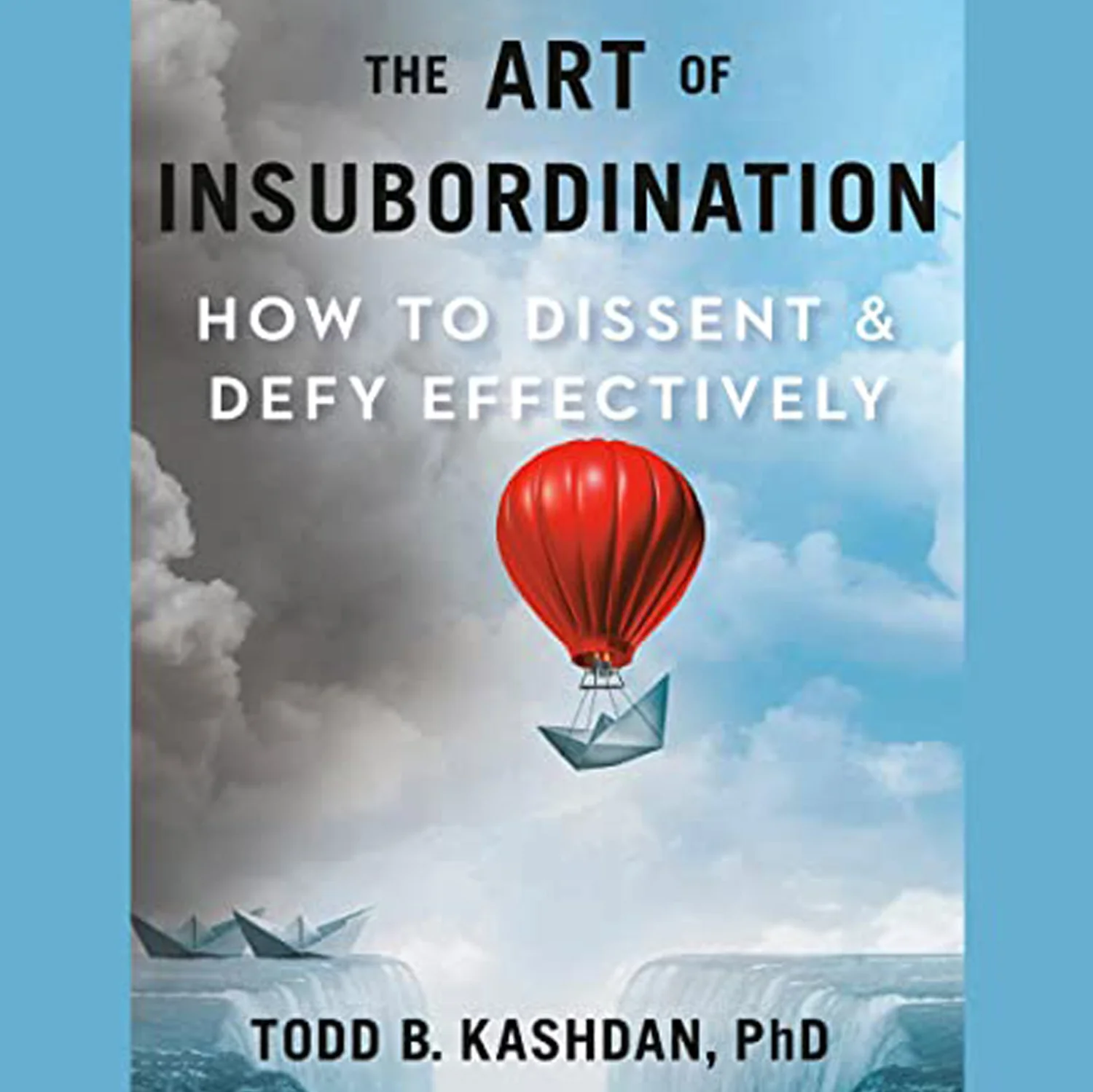
Todd Kashdan - Award-winning Author of The Art of Insubordination: How to Dissent and Defy Effectively
"We're really talking about principled rebels. And when we talk about insubordination, we're talking about most of us live in these social hierarchies, and there's the idea, this started in the military and still goes on, where if someone at a lower rank questions or challenges a command or a norm that someone of a higher rank, that's considered an act of insubordination. And one of the main problems of that, I think anyone who's listening can acknowledge, is it depends on the quality of the idea of the person who's raising the question.I just realized there was this whole body of literature on minority influence that no one had put together into a book for the general public, and considering the racial reckoning that occurred during COVID-19, the extra attention to diversity, to disadvantaged groups, every moment of society, it just feels like it's more and more relevant of what I've been working on. If you don't have the numbers, if you lack status or you lack power, the way to be persuasive towards a group is much different than if you do have the title or are socially attractive in that group."Todd B. Kashdan, Ph.D., is professor of psychology at George Mason University, and a leading authority on well-being, curiosity, courage, and resilience. He has published more than 220 scientific articles, his work has been cited more than 35,000 times, and he received the American Psychological Association’s Award for Distinguished Scientific Early Career Contributions to Psychology. He is the author of several books, including The Art of Insubordination: How to Dissent and Defy Effectively, Curious? and The Upside of Your Dark Side, and has been translated into more than fifteen languages. His research is featured regularly in The New York Times, The Atlantic, and Time, and his writing has appeared in the Harvard Business Review, National Geographic, and other publications. He is a keynote speaker and consultant for organizations as diverse as Microsoft, Mercedes-Benz, Prudential, General Mills, The United States Department of Defense, and World Bank Group. https://toddkashdan.comwww.penguinrandomhouse.com/books/690674/the-art-of-insubordination-by-todd-b-kashdan-phd/www.creativeprocess.infowww.oneplanetpodcast.orgInstagram @creativeprocesspodcast

Alain Robert - Famous Rock and Urban Climber - "The French Spider-Man”
"First of all, yes, I need to know what I will be climbing, whether it's on rocks or whether it's on buildings. And then there is physical preparation. And regarding the mindset, it's more something that became a bit automatic over the years because I have been free soloing for almost 50 years. So it is pretty much my whole life. So that means that for me, being mentally ready, it's kind of simple. It's almost always the same mental process, meaning, I can be afraid before an ascent, but I know myself actually very well. And I know that once I am starting to climb, I feel fine. I put my fear aside, and I'm just climbing.Most people don't know that actually, my background is on rock. It's not on buildings. What I did on rocks free soloing is much more impressive than what I did on buildings.”Alain Robert is a renowned rock climber and urban climber. Known as "the French Spider-Man” or "the Human Spider," Robert is famous for his free solo climbing, scaling skyscrapers using no climbing equipment except for a small bag of chalk and a pair of climbing shoes. Some of his most notable ascents include the Burj Khalifa, the Eiffel Tower, and the Sydney Opera House, as well as other of the world's tallest skyscrapers. He is also a motivational speaker and the author of With Bare Hands: The True Story of Alain Robert, the Real-life Spiderman.www.alainrobert.comwww.instagram.com/alainrobertofficial/?hl=frwww.blacksmithbooks.com/books/with-bare-hands-the-true-story-of-alain-robert-the-real-life-spiderman/www.creativeprocess.info www.oneplanetpodcast.orgInstagram @creativeprocesspodcastImage courtesy of alainrobert.com
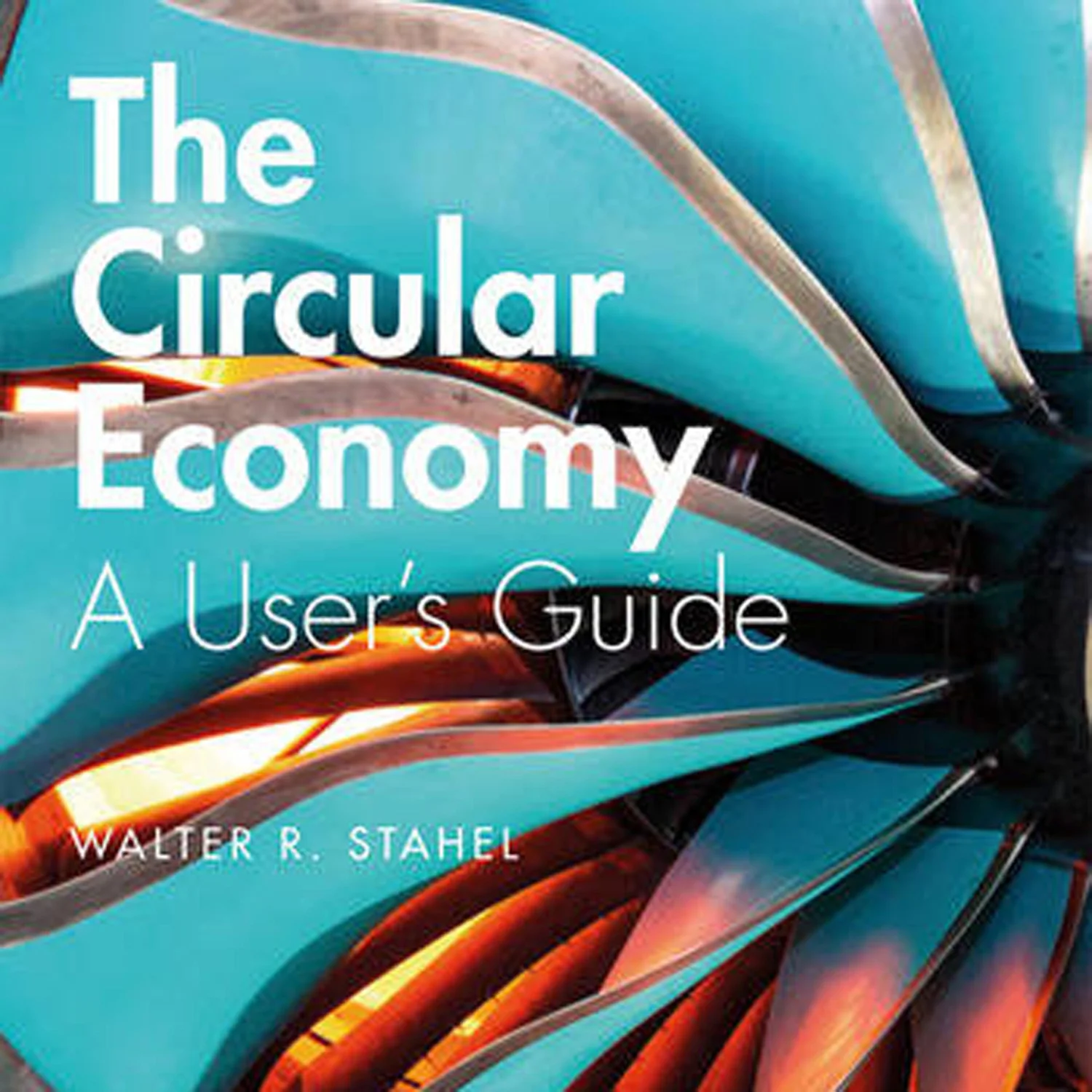
Walter Stahel - Architect, Economist, Founding Father of Circular Economy - Founder-Director, Product-Life Institute
"The circularity, of course, has existed in nature for a long time. Actually, nature's circularity is by evolution. There is no plan, there is no liability, and there are no preferences. It's simply the cycles such as marine tides, CO2, and water cycles, plants and animals, and basically by evolution, the best solution wins. Also, there is no waste. Dead material becomes food for other animals or plants. Now, early mankind survived by depending on these local natural resources sharing a non-monetary chaotic symbiosis dominated by nature, then poverty or necessity-based society changed when humankind used science to overcome shortages of everything. In other words, the Anthropocene. With nuclear energy, petrochemicals, metal alloys, we became independent from nature, but we overlooked the fact that these new manmade anthropogenic resources or synthetic resources were unknown to nature, so nature could not deal with them. And that means that we, humankind, has to take responsibility for it."Walter R. Stahel is the Founder-Director of the Product-Life Institute (Switzerland), the oldest established consultancy in Europe devoted to developing sustainable strategies and policies. He is Senior Research Fellow at the Circular Economy Research Centre, Ecole des Ponts Business School and Visiting Professor in the Department of Engineering and Physical Sciences, University of Surrey. He is also a full member of the Club of Rome. He was awarded degrees of Doctor honoris causa by the University of Surrey, l’Université de Montréal, and the 2020 Thornton Medal of the Institute of Materials, Minerals and Mining. He is the author of The Circular Economy: A User’s Guide.www.product-life.orgwww.routledge.com/The-Circular-Economy-A-Users-Guide/Stahel/p/book/9780367200176www.oneplanetpodcast.orgwww.creativeprocess.info Instagram @creativeprocesspodcast
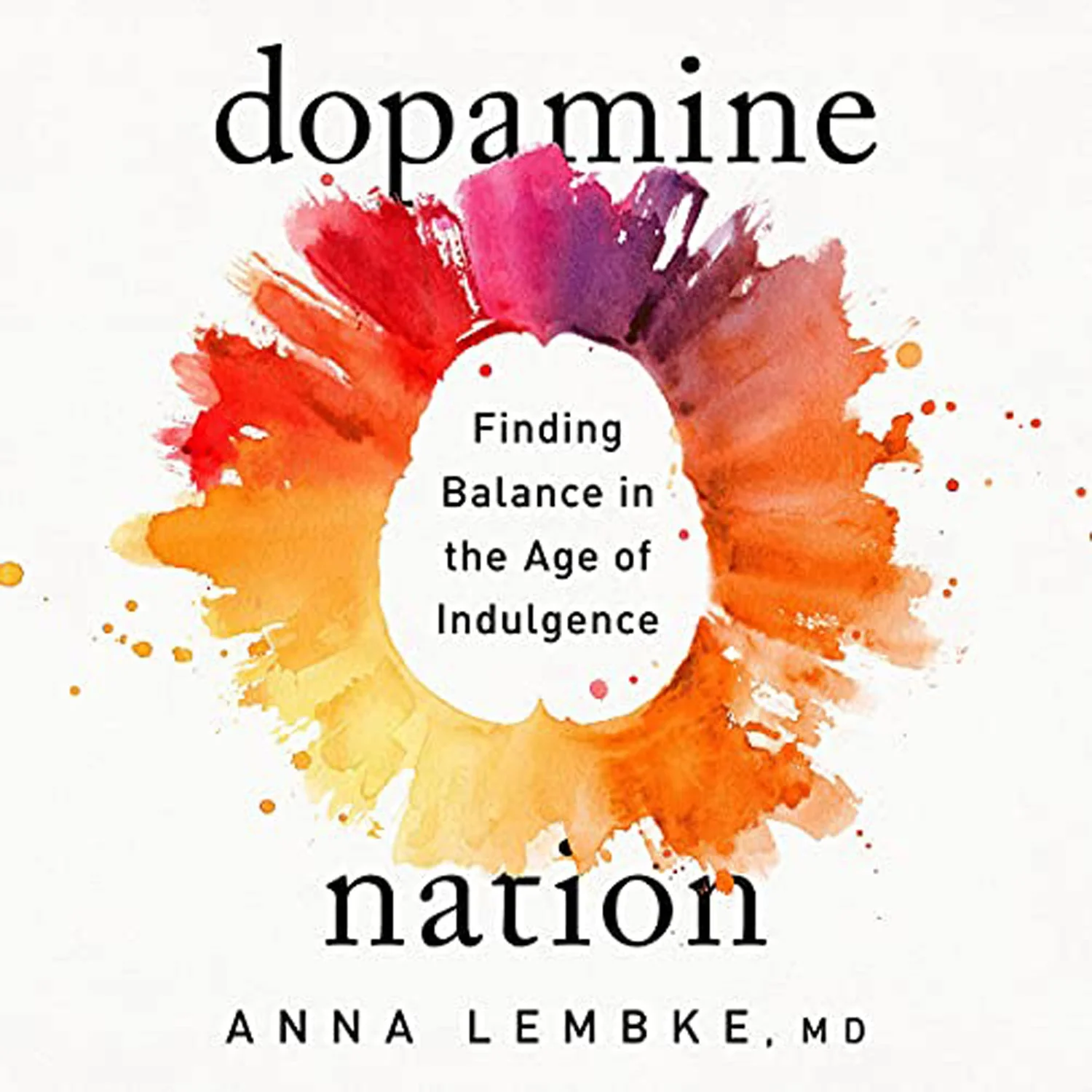
Dr. Anna Lembke - Author of Dopamine Nation: Finding Balance in the Age of Indulgence
"I'm an addiction psychiatrist. When I use the word addiction, I'm really talking about having crossed the line from basically healthy use with an occasional slip to somebody who's really caught in the vortex of compulsive overconsumption with consequences and typically needing help from others, whether or not they are professionals, but feeling like, Oh boy, this is unmanageable, as they say in Twelve Steps, "My life has become unmanageable." It's one of the main points of my book, Dopamine Nation that we are living in this addictogenic world where almost all human behaviors and substances have become drugified in one way, right? Social media has drugified human connection. Our food has been drugified by the addition of salt, fat, sugar. Reading is drugified, the way that these genre novels fill this sort of gaping hole of compulsive consumption among their readership, people always wanting more. The Netflix binges, where you get the next episode automatically fills unless you do something to stop it. You know, these are all little ways in which our lives have been engineered to keep us clicking and swiping and eating and smoking and drinking to the detriment of the globe. I mean, 70% of global deaths are due to diseases caused by modifiable risk factors, and the top three are smoking, inactivity, and overeating or diet. So we're literally titillating ourselves to death."Dr. Anna Lembke is professor of psychiatry at Stanford University School of Medicine and chief of the Stanford Addiction Medicine Dual Diagnosis Clinic. A clinician scholar, she has published more than a hundred peer-reviewed papers, book chapters, and commentaries. She sits on the board of several state and national addiction-focused organizations, has testified before various committees in the United States House of Representatives and Senate, keeps an active speaking calendar, and maintains a thriving clinical practice. Dr. Lembke explores how to moderate compulsive overconsumption in a dopamine overloaded world in her NYTimes bestselling book Dopamine Nation: Finding Balance in the Age of Indulgence. Her previous book Drug Dealer, MD – How Doctors Were Duped, Patients Got Hooked, and Why It’s So Hard to Stop was highlighted in the New York Times as one of the top five books to read to understand the opioid epidemic.www.annalembke.comhttps://med.stanford.edu/psychiatry/patient_care/addiction.htmlwww.penguinrandomhouse.com/books/624957/dopamine-nation-by-anna-lembke-md/www.press.jhu.edu/books/title/11360/drug-dealer-mdwww.creativeprocess.infowww.oneplanetpodcast.org
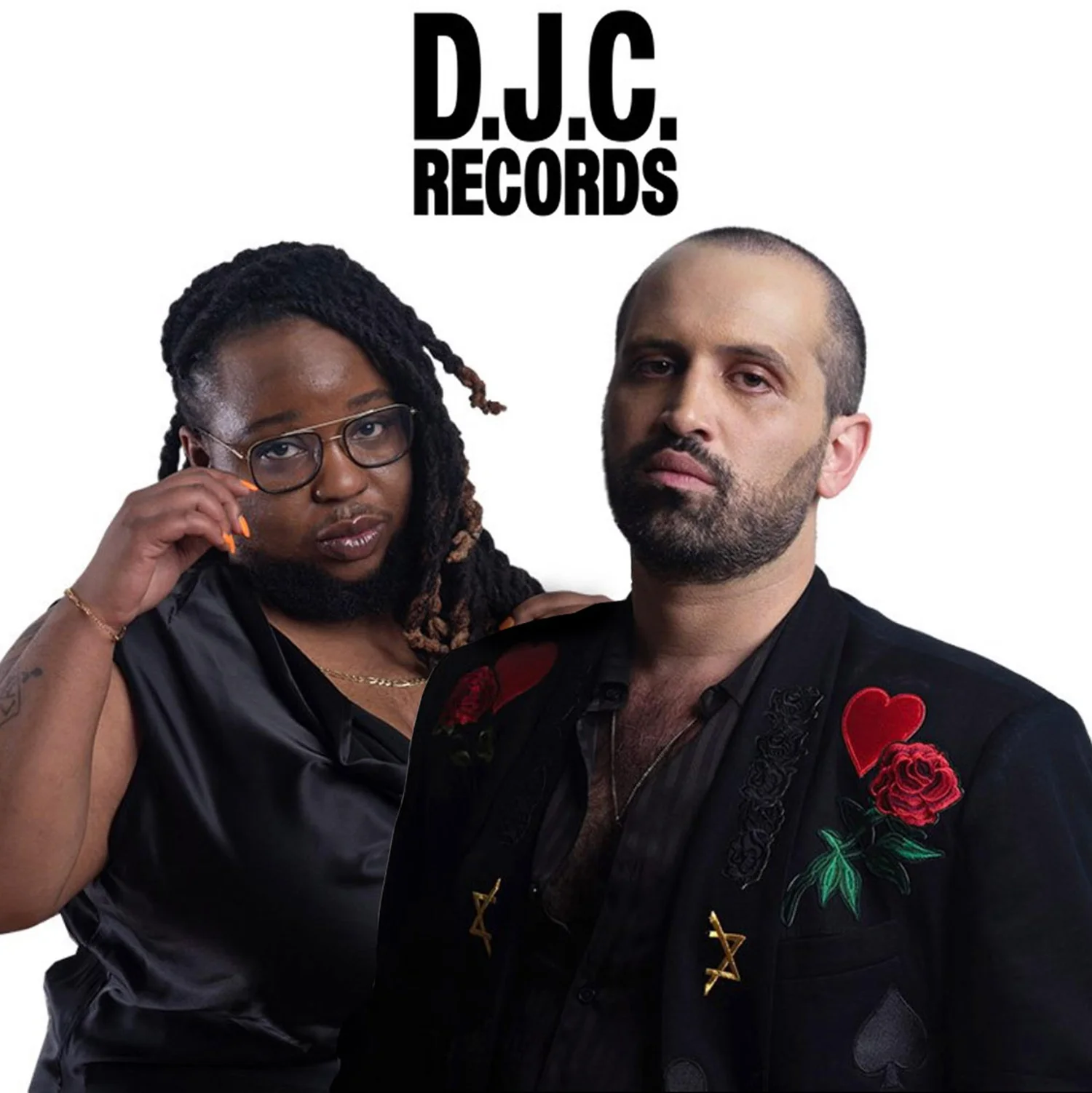
Fury Young - BL Shirelle - Co-Executive Directors of DJC Records
"Well, I got the idea in 2013 when I was a wee young 23-year-old activist, and I had been studying history at Los Angeles City College, and I took this class on genocide that had a huge impact on me, and it also coincided, just the timing, with the Occupy Wall Street movement. So then two years later in 2013, I was reading The New Jim Crow by Michelle Alexander, and the book is about how mass incarceration is like a modern-day racial caste system. And I just heavily related to the book. I grew up around some impacted people. I had a mentor who was formerly incarcerated named Alexander, who was actually Muhammad Ali's bodyguard.And I just got the idea to do an album, because I was listening to a lot of concept albums like Pink Floyd, The Wall. And it started from there, just a little seed and a spark of just this idea for this one album. And then over time, it just evolved into an EP, and then a record label and a nonprofit. And here we are."Fury Young and BL Shirelle are the powerhouse team behind Die Jim Crow Records, the first non-profit record label in United States history for currently and formerly incarcerated musicians. DJC Records’ mission is to dismantle stereotypes around race and prison in America by amplifying the voices of our artists. As a pair, Fury Young and BL Shirelle form a perhaps unlikely, but unstoppable duo. Young is a Jewish New Yorker who has not experienced incarceration. Shirelle is a queer, Black woman from Philadelphia who has been heavily impacted by police violence and incarceration. The two formed an inseparable bond. As friends, musical collaborators and now Co-Executive Directors of Die Jim Crow Records, their leadership and commitment to values of representation, fairness, passion for the cause, and a love for art, are at the core of DJC.www.diejimcrow.comhttp://www.blshirelle.comhttp://www.furyyoung.comwww.creativeprocess.info www.oneplanetpodcast.org

Maya van Rossum - Author of “The Green Amendment: The People's Fight for a Clean, Safe, and Healthy Environment”
“What is a Green Amendment? It is language that recognizes the rights of all people to clean water and clean air, a stable climate, and healthy environments, and obligates the government to protect those rights and the natural resources of the state for the benefit of all the people in the state, or if it was a federal green amendment in the United States, and they become obliged to protect those environmental rights and those natural resources for the benefit of both present and future generations, that's functionally what it does. But to help people understand what it accomplishes, a green amendment actually obligates the government to recognize and protect our environmental rights in the same, most powerful way we recognize and protect the other fundamental freedoms we hold dear. Things like the right to free speech, freedom of religion, civil rights, and private property rights. We all know how powerfully they are protected from government overreach and infringement. Well, when we have Green Amendments, now the environment and our environmental rights are added to that list of highest constitutional freedoms and protections."Maya K. van Rossum is the founder of Green Amendments For The Generations, a national nonprofit organization dedicated to inspiring passage of Green Amendments in every state constitution across our nation, and also at the federal level when the time is right. She is an environmental attorney, community organizer, and the Delaware Riverkeeper, leading the regional advocacy organization, the Delaware Riverkeeper Network, for over 30 years. The Delaware Riverkeeper Network works throughout the four states of the Delaware River watershed (NY, NJ, PA & DE) and at the national level using advocacy, science and litigation to protect the Delaware River and its tributaries. She is the Author of The Green Amendment: The People's Fight for a Clean, Safe, and Healthy Environment.www.ForTheGenerations.orgwww.delawareriverkeeper.orghttps://forthegenerations.org/the-green-amendment/https://twitter.com/MayaKvanRossumwww.creativeprocess.infowww.oneplanetpodcast.org

Britt Wray - Author of “Generation Dread: Finding Purpose in an Age of Climate Crisis”
"So I have a background in conservation biology and have been a science communicator for well over a decade and a half now, and of course, doing that work you're confronted with climate, environmental reports and studies, which were a consistent part of my emotional baseline, just being aware of the fact that this is not all going well, which every now and then would make me feel low, for sure, in a way that was quite noticeable. But it became much more poignant in my life in 2017 when my partner and I started considering whether or not to have a kid, and I hadn't connected the reproductive part of life to the climate crisis. And all of a sudden this topic was the only thing I could really think about because it became such a dilemma for me personally, as to whether or not I felt comfortable having a child, given what the science says about where we're headed and what the lack of historical action means for the future of any child born to date, even one with privilege and protection from its parental outset. So that then, you know, eco-anxiety and climate anxiety and eco-grief in these terms that we now have as kind of household items that people are familiar with, that we have lots of journalism around, which has especially emerged in the last three years or so.At that time, I didn't have words to describe what I was feeling and I felt very deviant for even questioning whether or not it was okay to have kids in the climate crisis. I didn't really see it reflected. I figured, Okay, this is probably me getting a little bit loopy here, and I ought to do something to bring more perspective into my line of view. And that started me on a research project looking at the psychological impacts of the climate crisis writ large beyond just the reproductive angle, but that was my on-ramp."Britt Wray is the author of Generation Dread: Finding Purpose in an Age of Climate Crisis. She's a writer and broadcaster researching the emotional and psychological impacts of the climate crisis. Born and raised in Toronto, Canada, she is a post-doctoral fellow at Stanford University and the London School of Hygiene and Tropical Medicine, where she investigates the mental health consequences of ecological disruption. She holds a PhD in Science Communication from the University of Copenhagen. Her work has been featured in the New York Times, Washington Post Guardian, and Globe and Mail, among other publications. She has hosted several podcasts, radio, and TV programs with the BBC and CBC, is a TED Resident, and writes Gan Dread, a newsletter about staying sane in the climate crisis. She is also the author of Rise of the Necrofauna: The Science, Ethics, and Risks of De-Extinction.www.brittwray.comwww.penguinrandomhouse.com/books/647141/generation-dread-by-britt-wrayhttps://greystonebooks.com/products/rise-of-the-necrofauna www.oneplanetpodcast.orgwww.creativeprocess.info
Jay Famiglietti - Hydrologist, Exec. Director - Global Institute for Water Security, Host of "What About Water?" Podcast
"I think water is taking a backseat and personally, I feel like water is the messenger that delivers the bad news of climate change to your front door. So in the work that I do, it's heavily intertwined, but it's taking a backseat. There are parts about water that are maybe separate from climate change, and that could be the quality discussions, the infrastructure discussions, although they are somewhat loosely related to climate change and they are impacted by climate change. That's sometimes part of the reason why it gets split off because it's thought of as maybe an infrastructure problem, but you know, the changing extremes, the aridification of the West, the increasing frequency, the increasing droughts, these broad global patterns that I've been talking about, that I've been looking at with my research – that's all climate change. Just 100% climate change, a hundred percent human-driven. And so it does need to be elevated in these climate change discussions.”Jay Famiglietti is a hydrologist, a professor and the Executive Director of the Global Institute for Water Security at the University of Saskatchewan, where he holds the Canada 150 Research Chair in Hydrology and Remote Sensing. He is also the Chief Scientist of the Silicon Valley tech startup, Waterplan. Before moving to Saskatchewan, he served as the Senior Water Scientist at the NASA Jet Propulsion Laboratory at the California Institute of Technology. From 2013 through 2018, he was appointed by Governor Jerry Brown to the California State Water Boards. He has appeared on CBS News 60 Minutes, on HBO’s Real Time with Bill Maher, as a featured expert in water documentaries including Day Zero and Last Call at the Oasis, and across a host of international news media. He is the host of the podcast What About Water?https://jayfamiglietti.comWhat About Water? podcast with Jay FamigliettiTwitter @WhatAboutWaterGIWS https://water.usask.cawww.waterplan.comwww.oneplanetpodcast.orgwww.creativeprocess.info
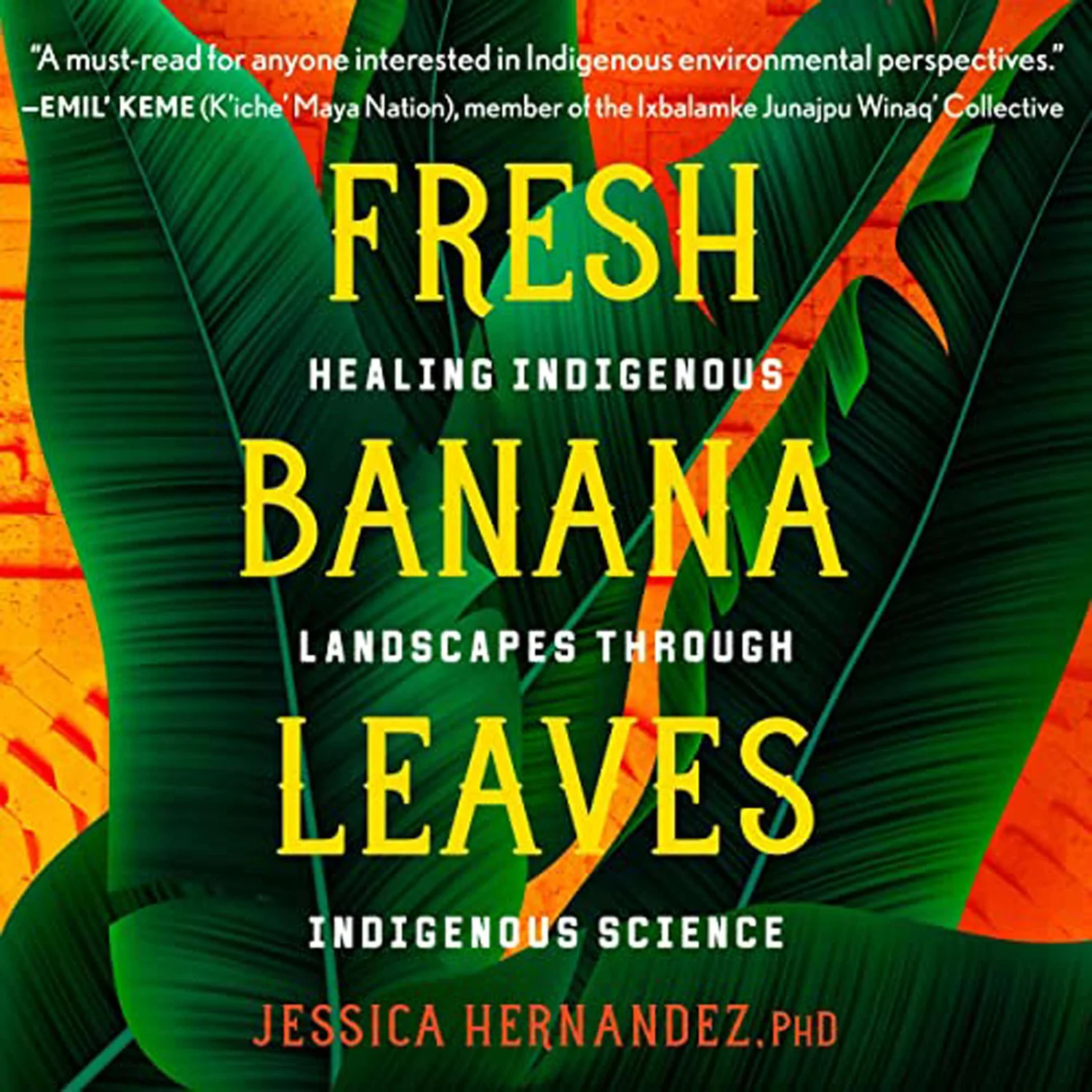
Dr. Jessica Hernandez - Transnational Indigenous Scholar, Scientist, Author of “Fresh Banana Leaves”
“I live my life embodying the teaching my grandmother instilled in me – that no matter which lens I walked on, I had to learn how to build relationships with the land and the Indigenous peoples whose land I reside on to become a welcome guest. As a displaced Indigenous woman, my longing to return to my ancestral homelands will always be there, and this is why I continue to support my communities in the diaspora. However, my relationships are not only with my community, but also the Indigenous communities whose land I am displaced on, and this is the foundation of my work while residing in the Pacific Northwest. I strongly believe that in order to start healing Indigenous landscapes, everyone must understand their positionality as either settlers, unwanted guests, or welcomed guests, and that is ultimately determined by the Indigenous communities whose land you currently reside on or occupy. This teaching has also helped me envision my goals in life. Every day I get closer to becoming an ancestor because life is not guaranteed but rather a gift we are granted from our ancestors who are now in the spiritual world.”Dr. Jessica Hernandez (Binnizá & Maya Ch’orti’) is a transnational Indigenous scholar, scientist, and community advocate based in the Pacific Northwest. She has an interdisciplinary academic background ranging from marine sciences to environmental physics. She advocates for climate, energy, and environmental justice through her scientific and community work. Her book Fresh Banana Leaves: Healing Indigenous Landscapes through Indigenous Science breaks down why western conservationism isn’t working–and offers Indigenous models informed by case studies, personal stories, and family histories that center the voices of Latin American women and land protectors. In 2022, she was named by Forbes as one of the 100 most powerful women of Central America. She holds appointments at Sustainable Seattle, City of Seattle's Urban Forestry Commission, and the International Mayan League. Fresh Banana Leaves received the Bruce Piasecki and Andrea Masters Award on Business and Society Writing (2022).www.jessicabhernandez.comwww.penguinrandomhouse.com/books/675699/fresh-banana-leaves-by-jessica-hernandez/ www.oneplanetpodcast.org www.creativeprocess.info
Johnjoe McFadden - Author of “Life is Simple: How Occam’s Razor Set Science Free and Shapes the Universe”
"Essentially, what the thesis of the book is that science is really about finding simple solutions. And I guess one of the other themes of the book is that life appears like a scientist. It finds the simplest solutions to problems, and that's because there's a mechanism in natural selection, whereby stuff that is unnecessary gets removed by mutations. We lose stuff that is no longer useful for us. Like tails, for example, our ancestors had tails, and we don't because natural selection tends to go for simple solutions, and that's really what's made natural selection so successful, and it's also what makes science so successful too." Johnjoe McFadden is the author of Life is Simple, How Occam’s Razor Set Science Free and Shapes the Universe. He obtained his PhD at Imperial College London and went on to work on human genetic diseases and then infectious diseases, at the University of Surrey. Professor McFadden has specialised in examining the genetics of microbes such as the agents of tuberculosis and meningitis. His other books are Quantum Evolution: Life in the Multiverse, and Life on the Edge: The Coming of Age of Quantum Biology (co-authored with Jim Al-Khalili). He has published more than 100 articles in scientific journals on a wide range of subjects and lectures around the world. His present post is Associate Dean (International) and Professor of Molecular Genetics at the University of Surrey.www.surrey.ac.uk/people/johnjoe-mcfaddenhttps://johnjoemcfadden.co.ukwww.basicbooks.com/titles/johnjoe-mcfadden/life-is-simple/9781549112119www.creativeprocess.infowww.oneplanetpodcast.org
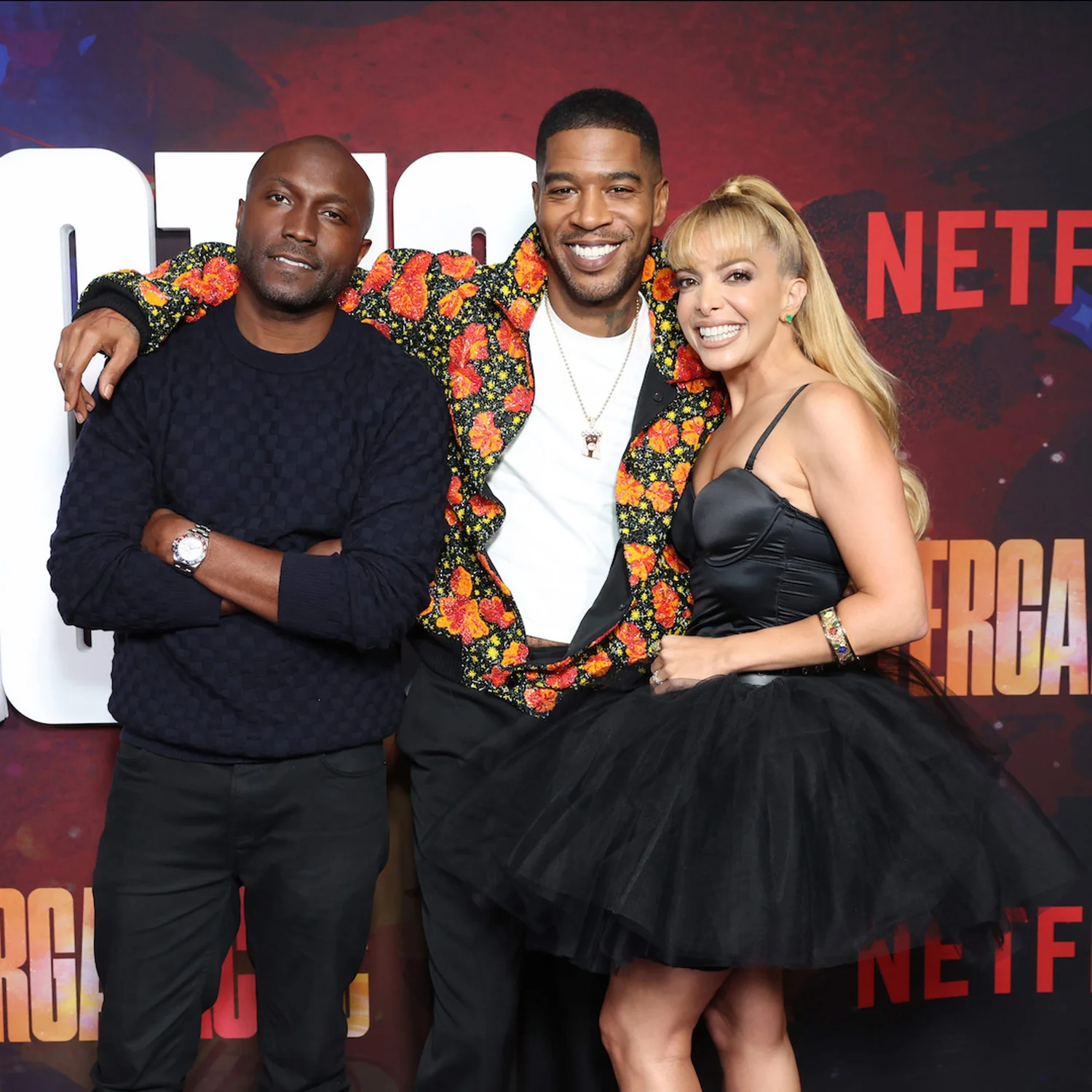
Karina Manashil - President of Mad Solar - Creative Confidante for Kid Cudi - Exec. Producer of “Entergalactic”
"Scott [Kid Cudi] is the most beautiful, kind, goodhearted man, but also he's brilliant. He's a generator of ideas. I feel like by being next to him, your role is to take all of these concepts that he's crafting and ideating and bring them to fruition, so it's a really beautiful gift where you feel like you're paired with an artist who is the source of so much. Scott was also really important to me in a lot of ways from our very beginning.""So the animated series Entergalactic tells the story of a black modern love story in New York City. It's simple in its core. Jabari, the character Scott plays, is a graffiti artist, and Cosmic Comics has decided to option his character and turn it into a comic book. So he's at this point in his life where he is moving into the loft apartment of his dreams, everything seems to be working for him when he meets Meadow, who's his neighbor. And she is this amazing woman, photographer, coolest cat on the planet. And essentially this show follows their meet-cute and their love story and the will they-won’t they of if they'll end up together. So there's something very warm in its aesthetic. But what's so interesting is that the love story is very nostalgic. It's, it just hearkens back to what a romance feels like.”Karina Manashil is the President of Mad Solar Productions. She began her career in the mailroom at WME (William Morris Endeavor) where she became a talent agent. She represented notable clients including Scott Mescudi, known by his stage name, Kid Cudi, and built her career taking talent into new arenas.In 2020, she partnered with Mescudi and Dennis Cummings to launch Mad Solar, which is backed by BRON Studios. Manashil then went on to Executive Produce SXSW fan-favorite X and its sequel, Pearl, directed by Ti West. Manashil is an Executive Producer on the Netflix animated series Entergalactic directed by Fletcher Moules. Entergalactic was created by Kid Cudi and features voiceover from Jessica Williams and Timothée Chalamet. It was released alongside its album of the same name from Kid Cudi on September 30th. Manashil is a native of Los Angeles and graduated from Chapman University with a BFA in Film Production.Manashil www.imdb.com/name/nm3556462/?ref_=nv_sr_srsg_0 www.kidcudi.comMad Solar https://www.imdb.com/search/title/?companies=co0831164 Entergalactic www.netflix.com/title/81053303Pearl www.imdb.com/title/tt18925334/X www.imdb.com/title/tt13560574/?ref_=tt_trv_trvwww.creativeprocess.infowww.oneplanetpodcast.org
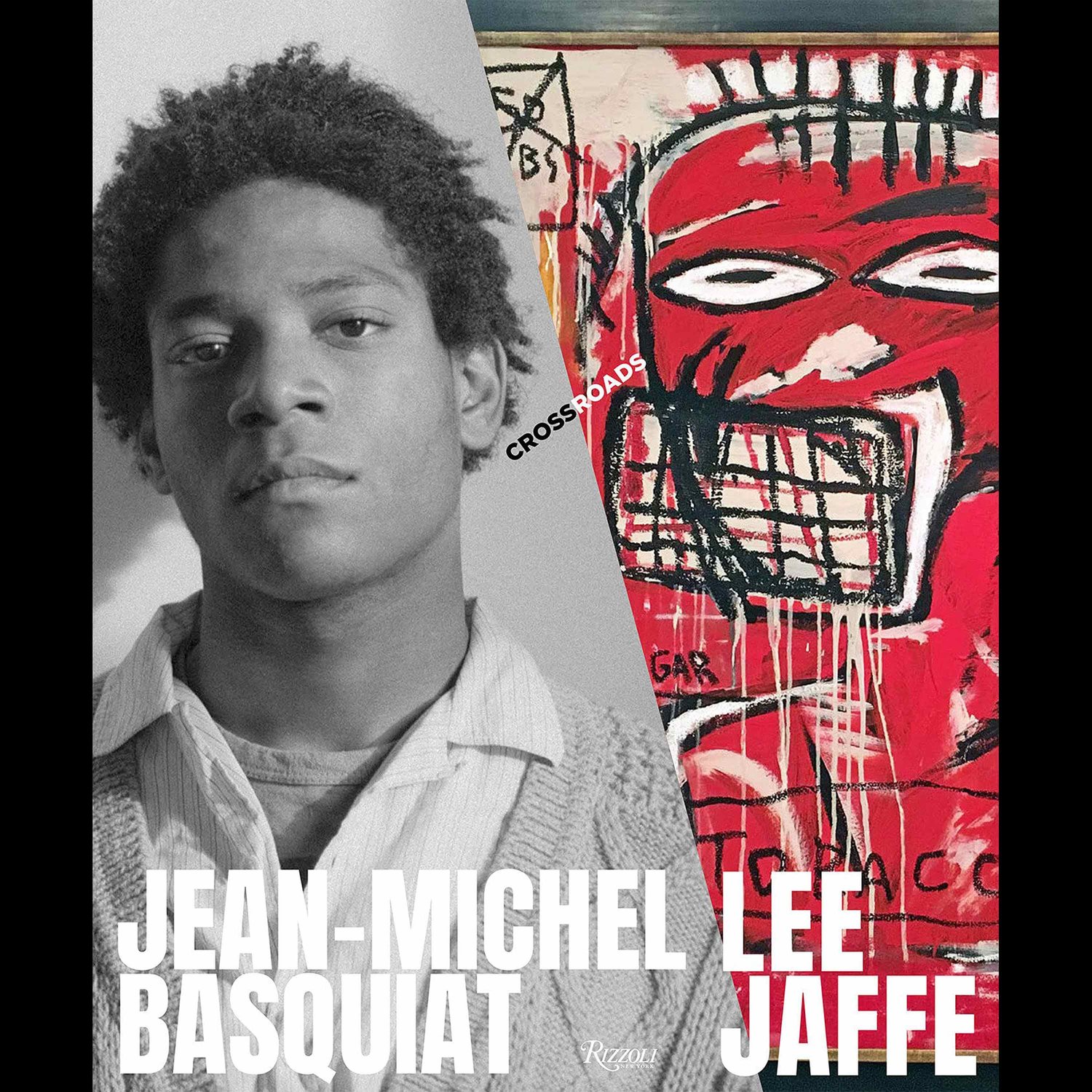
Lee Jaffe - Author of “Jean-Michel Basquiat: Crossroads” - Intimate Portraits of Bob Marley - Basquiat
"Jean-Michel Basquiat's combination of words and images, this visual poetry, just from a cultural standpoint has been so important. When I met him in 1983, black people were not allowed in the art market, pretty much. And you see that he broke down this barrier, which opened the door for all this multiculturalism within the art market. And you can't diminish the importance of that at all. It's helped to give a voice and an audience to all these incredible artists that might not have had that."Lee Jaffe, a cross-disciplinary visual artist, musician, and poet, took photos of his friend, Jean-Michel Basquiat, when they traveled abroad in 1983. As a photographer, Jaffe had a connection to Basquiat, and their time spent together resulted in an archive of imagery that captured one of the art world’s true legends through an unfiltered and authentic lens. “For me, watching him [Jean-Michel] paint reminded me of the times I would sit and play harmonica while Bob Marley, with his acoustic guitar, would be writing songs that were eventually to become classics,” Jaffe says. “With Jean and Bob, it seemed like they were channeling inspiration coming from an otherworldly place.”Basquiat and Jaffe connected over reggae music. It was the early 1980s in New York. Jaffe had been a member of Bob Marley’s band, producer on Peter Tosh’s first solo album. and collaborated with art world figures Helio Oiticica, Gordon Matta Clark, and Vito Acconci. Jaffe is the author of Jean-Michel Basquiat: Crossroads.www.leejaffe.comwww.rizzoliusa.com/book/9780847871841/www.creativeprocess.infowww.oneplanetpodcast.org
Richard Thompson Ford - Author of “Dress Codes” - Stanford Prof. of Law - Expert on Civil Rights - Antidiscrimination Law
"We present ourselves and our bodies every day in public, and the way we do that is profoundly important. It's the way we establish a sense of self in a social domain. And clothing is the most direct way that's accomplished, and so of course it has political significance, and that's why it's always been regulated. Something that's trivial and superficial doesn't inspire a lot of rules and laws, but in fact, in our society up to the present day, there are lots of rules and laws around what people can wear. So those statements that are made can have profound significance at an almost subconscious level.That's why people were worried when African Americans [started dressing] in refined clothing because it suggested - against the dominant ideology of the time of white supremacy - that African Americans were refined and sophisticated. That's what that clothing suggests. When women [began wearing] masculine clothing, it suggested that those women could assert masculine privileges and masculine liberties because that's what that clothing suggested. It suggested that the women were not only refined, but also sober, practical, industrious - all of the things that women were denied in that context, and that made it a threat to the existing social order. And this is still true today."Richard Thompson Ford is the George E. Osborne Professor of Law at Stanford Law School. His scholarship combines social criticism and legal analysis, and he writes for both popular readers and for academic and legal specialists. He's written for the Washington Post, San Francisco Chronicle, Christian Science Monitor, and other publications. He’s a regular contributor for Slate and has appeared on the Rachel Maddow Show, The Colbert Report, and other programs.His most recent book is Dress Codes: How the Laws of Fashion Made History. His books The Race Card: How Bluffing About Bias Makes Race Relations Worse and Rights Gone Wrong: How Law Corrupts the Struggle for Equality have been selected by the New York Times as Notable Books of the Year. In 2012, On Being a Black Lawyer called him one of the most influential black lawyers in the nation.http://richardtford.law.stanford.eduwww.creativeprocess.infowww.oneplanetpodcast.org
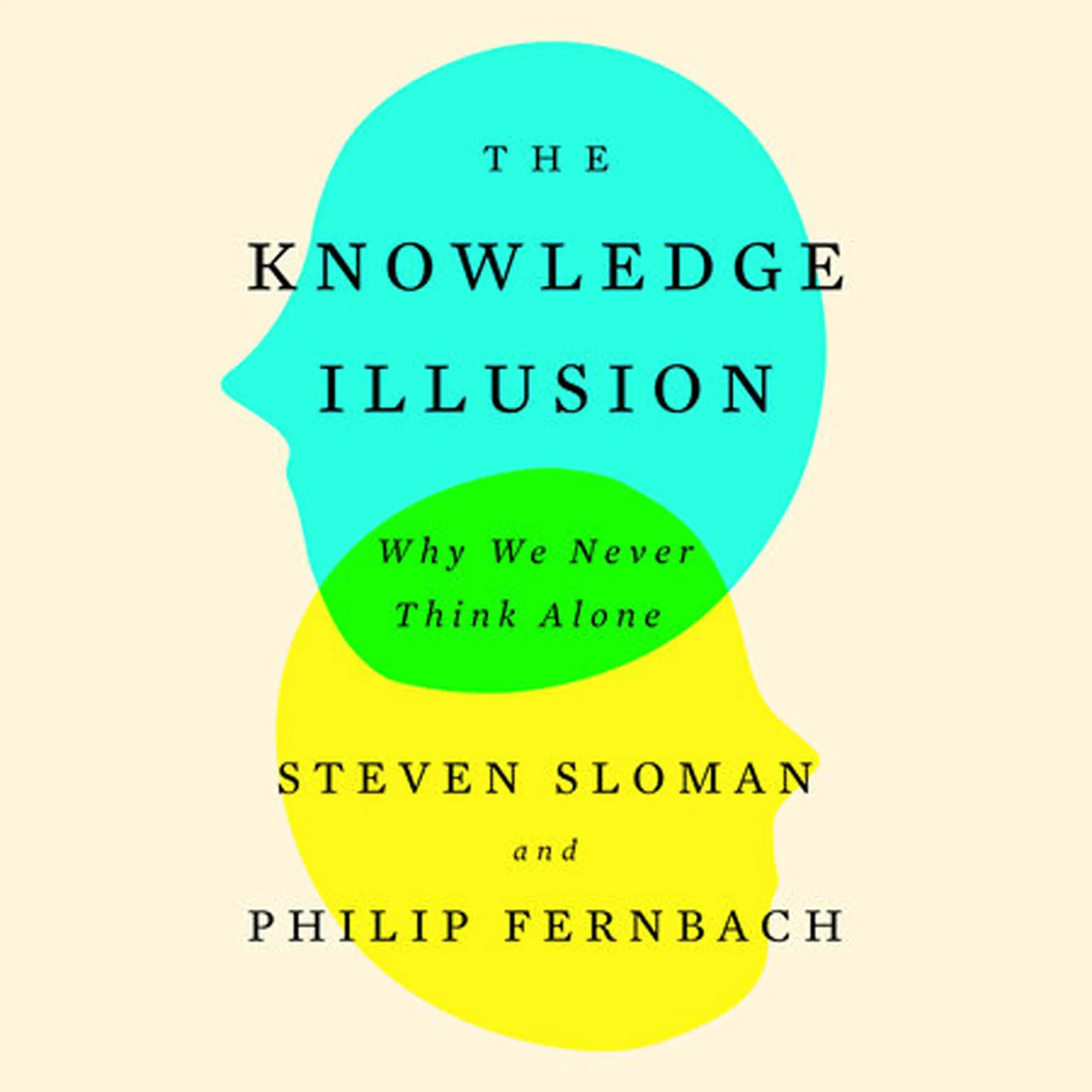
Philip Fernbach - Co-author of “The Knowledge Illusion” - Cognitive Scientist - Co-Director of Ctr. for Research on Consumer Financial Decision Making
"The human mind is both genius and pathetic, brilliant and idiotic. People are capable of the most remarkable feats, achievements that defy the gods. We went from discovering the atomic nucleus in 1911 to mega- ton nuclear weapons in just over forty years. We have mastered fire, created democratic institutions, stood on the moon, and developed genetically modified tomatoes. And yet we are equally capable of the most remarkable demonstrations of hubris and foolhardiness. Each of us is error-prone, sometimes irrational, and often ignorant. It is in- credible that humans are capable of building thermonuclear bombs. It is equally incredible that humans do in fact build thermonuclear bombs (and blow them up even when they don’t fully understand how they work). It is incredible that we have developed governance systems and economies that provide the comforts of modern life even though most of us have only a vague sense of how those systems work. And yet human society works amazingly well, at least when we’re not irradiating native populations.How is it that people can simultaneously bowl us over with their ingenuity and disappoint us with their ignorance? How have we mastered so much despite how limited our understanding often is?"– The Knowledge Illusion: Why We Never Think AlonePhilip Fernbach is an Associate Professor of Marketing and Co-Director of the Center for Research on Consumer Financial Decision Making at the University of Colorado, Boulder, Leeds School of Business. He’s published widely in the top journals in cognitive science, consumer research and marketing, and received the ACR Early Career Award for Contributions to Consumer Research. He’s co-author with Steve Sloman of The Knowledge Illusion: Why We Never Think Alone, which was chosen as a New York Times Editor’s Pick. He’s also written for NYTimes, Harvard Business Review, and his research has been featured in the Wall Street Journal, The Washinton Post, National Public Radio, and the BBC. He received his Ph.D. in cognitive science from the Department of Cognitive, Linguistic and Psychological Sciences at Brown and his undergraduate degree in Philosophy from Williams College. He teaches data analytics and behavioral science to undergraduate and Masters students.www.colorado.edu/business/www.philipfernbach.comThe Knowledge Illusionwww.creativeprocess.infowww.oneplanetpodcast.org

Aniela Unguresan - Co-founder, Economic Dividends for Gender Equality - EDGE Cert. Foundation
"I co-founded what has become EDGE for gender and intersectional equity back in 2009, and at that time workplace gender and intersectional equity were still very much seen as a societal issue rather than a business issue. Organizations were asking themselves if it's within their role to tackle these issues of equity, diversity, and inclusion in the workplace, or if they are the mere recipients of what is going on in societies, following the beliefs around what men and women should be doing at work and at home.So at that time we wanted to contribute to this transition from making gender and intersectional equity a business issue and help organizations see that how they manage their talent and how they are able to attract, develop, motivate, and retain diverse talent is a key component of their sustainable business success."Aniela Unguresan is Co-founder of EDGE Certification, the leading global assessment methodology and business certification standard for gender equality. Launched at the Annual Meeting of the World Economic Forum in 2011, EDGE Certification measures where organizations stand in terms of gender balance across their pipeline, pay equity, and effectiveness of policies and practices to ensure equitable career flows, as well as the inclusiveness of their culture. EDGE Certification has been designed to help companies not only to create an optimal workplace for women and men, but also to benefit from it. EDGE stands for Economic Dividends for Gender Equality and is distinguished by its rigor and focus on business impact. Their customer base consists of 200 large organizations in 50 countries across five continents, representing 30 different industries.Prior to co-founding EDGE Certified Foundation, Aniela acquired extensive professional experience as a consultant with Arthur Andersen and Andersen Consulting, as a trader and project manager with TXU Europe and SIG Geneva, and as the CEO of CT Technologies.https://edge-cert.orgwww.creativeprocess.infowww.oneplanetpodcast.org

Carl Safina - Ecologist - Founding President of Safina Center - NYTimes Bestselling Author
"So we tend to take living for granted. I think that might be the biggest limitation of human intelligence is to not understand with awe and reverence and love that we live in a miracle that we are part of and that we have the ability to either nurture or destroy.The living world is enormously enriching to human life. I just loved animals. They're always just totally fascinating. They're not here for us. They're just here like we're just here. They are of this world as much as we are of this world. They really have the same claim to life and death and the circle of being."Carl Safina’s lyrical non-fiction writing explores how humans are changing the living world, and what the changes mean for non-human beings and for us all. His work has been recognized with MacArthur, Pew, and Guggenheim Fellowships, and his writing has won Orion, Lannan, and National Academies literary awards and the John Burroughs, James Beard, and George Rabb medals. Safina is the inaugural holder of the endowed chair for nature and humanity at Stony Brook University, where he co-chairs the steering committee of the Alan Alda Center for Communicating Science and is founding president of the not-for-profit Safina Center. He hosted the 10-part PBS series Saving the Ocean with Carl Safina. His writing appears in The New York Times, National Geographic, Audubon, CNN.com, National Geographic News, and other publications. He is the author of ten books including the classic Song for the Blue Ocean, as well as New York Times Bestseller Beyond Words: What Animals Think and Feel. His most recent book is Becoming Wild: How Animal Cultures Raise Families, Create Beauty, and Achieve Peace.www.safinacenter.orgwww.carlsafina.orgwww.oneplanetpodcast.orgwww.creativeprocess.info

Karen McManus - NYTimes Bestselling Author of “Nothing More to Tell”, “One of Us is Lying”
"Well, I had a wonderful teacher in second grade who kind of inspired me to start writing and really stuck with me through elementary school and beyond as I made attempts to find my voice, but think part of the reason it never really went anywhere for me as a young person was because I was too afraid to share that with anyone except for that one teacher. I never showed friends. I didn't even really show family. I just always felt that it wasn't quite good enough. And so the thing I always tell writers now if they ask for, you know, "What's one tip?" It's let someone else tell you no, because I just told myself no for pretty much my entire young adulthood. And once I let other people tell me no, they did a lot, you know, but that is how I got better."Karen M. McManus is a #1 New York Times and international bestselling author of young adult thrillers. Her books include the One of Us Is Lying series, which has been turned into a television show on Peacock and Netflix, as well as the standalone novels Two Can Keep a Secret, The Cousins, You’ll Be the Death of Me, and Nothing More to Tell. Karen's critically acclaimed, award-winning work has been translated into more than 40 languages.https://www.karenmcmanus.com@writerkmcon Twitter - Instagramwww.creativeprocess.infowww.oneplanetpodcast.org

Kent Redford - Co-author of "Strange Natures: Conservation in the Era of Synthetic Biology”
"The field of synthetic biology, which is known by some as extreme genetic engineering – that's a name mostly used by people who don't like it - amounts to a set of tools that humans have developed to be able to very precisely and accurately change the genetic code, the DNA of living organisms in order to get those organisms to do things that humans want. So the applications in medicine are predominantly devoted to trying to make us healthier people, and they range from some really exciting work on tumor biology to work on the microbiome, which is all of the thousands and tens of thousands of species that live on our lips, our mouths, our guts, our skin. And in agriculture, it's primarily directed at crop genetics, trying to improve the productivity of crops, the nutritional value of crops, the ability of crops to respond to climate change, and a whole variety of other things. Some people may have heard of one of these tools called CRISPR used to very precisely alter the sequences of DNA.This book that Bill and I wrote is about the impending intersection between synthetic biology and the field of nature conservation, not an examination of the technologies per se, but an examination of the way that we are going to end up needing to think about the intersection between our ability to change DNA, and what it means to be natural, and what it means to conserve things and whether or not we want to conserve things that we have altered."Kent H. Redford is a conservation practitioner and Principal at Archipelago Consulting established in 2012 and based in Portland, Maine, USA. Archipelago Consulting was designed to help individuals and organizations improve their practice of conservation. Prior to Archipelago Consulting Kent spent 10 years on the faculty of University of Florida and 19 years in conservation NGOs with five years as Director of The Nature Conservancy’s Parks in Peril program and 14 years as Vice President for Conservation Science and Strategy at the Wildlife Conservation Society. For six years he was Chair of IUCN’s Task Force on Synthetic Biology and Biodiversity Conservation. In June 2021 Yale University Press published Kent’s book with W.M. Adams: Strange Natures. Conservation in the Era of Synthetic Biology.https://yalebooks.yale.edu/book/9780300230970/strange-natures/ https://archipelagoconsulting.comwww.oneplanetpodcast.orgwww.creativeprocess.info

Lars Chittka - Author of "The Mind of a Bee” - Founder, Research Centre for Psychology, QMUL
"Most bees are quite short-lived, not all bees. So queen bees can live for many years, up to seven years, and some stingless bees, the queens can even live much longer than that, but their lives are less exciting in a sense that they are, most of their lives, cave animals, where most of what they do is egg laying.So when we're talking about intelligence tests and bees, these are mostly done with the worker bees, and they only live for a few weeks. And it might be surprising to many people that an animal this short-lived can learn anything at all because, of course, in humans, the process of acquiring crucial life skills takes much longer, many years typically. So when a bee first emerges from the pupa - bees spend their first few days as little grubs inside a wax pot. And this larval stage, of course, there isn't much learning going on. They have a very pampered and easy life in that they are basically immersed in the food that they're required to grow. And then they pupate and turn from what are formerly little helpless grubs into adult bees.Once the bee emerges from the pupa, they have a number of different tasks waiting for them, which in honey bees a fairly defined sequence where the bee might in her first few days simply be involved in the many duties inside the hive – to clean cells, to build wax comb, to feed the larva – and then to transition to their life as a forager.”Lars Chittka is professor of sensory and behavioral ecology at Queen Mary University of London, where he founded a new Research Centre for Psychology in 2008 and was its scientific director until 2012. He is the author of The Mind of a Bee and is the coeditor of Cognitive Ecology of Pollination. He studied Biology in Berlin and completed his PhD studies under the supervision of Randolf Menzel in 1993. He has carried out extensive work on the behaviour, cognition and ecology of bumble bees and honey bees, and their interactions with flowers. His discoveries have made a substantial impact on the understanding of animal intelligence and its neural-computational underpinnings. He has published over 250 peer-reviewed articles, and has been an editor of biology’s foremost open access journal PLoS Biology since 2004. He is an elected Member of the German National Academy of Sciences (Leopoldina), a Fellow of the Linnean Society and Royal Entomological Society, as well as the Royal Society of Biology.http://chittkalab.sbcs.qmul.ac.uk/Lars.htmlhttps://press.princeton.edu/books/hardcover/9780691180472/the-mind-of-a-beehttps://journals.plos.org/plosbiologywww.oneplanetpodcast.orgwww.creativeprocess.info

Nick Bostrom - Philosopher, Founding Director, Future of Humanity Institute, Oxford
"I do think though that there is a real possibility that within the lifetime of many people who are here today, we will see the arrival of transformative AI, machine intelligence systems that not only can automate specific tasks but can replicate the full generality of human thinking. So that everything that we humans can do with our brains, machines will be able to do, and in fact do faster and more efficiently. What the consequences of that are, is very much an open question and, I think, depends in part on the extent to which we manage to get our act together before these developments. In terms of, on the one hand, working out our technical issues in AI alignment, figuring out exactly the methods by which you could ensure that such very powerful cognitive engines will be aligned to our values, will actually do what we intend for them to do, as opposed to something else. And then, of course, also the political challenges of ensuring that such a powerful technology will be used for positive ends. So depending on how well we perform among those two challenges, the outcome, I think, could be extremely good or extremely bad. And I think all of those possibilities are still in the cards."Nick Bostrom is a Swedish-born philosopher with a background in theoretical physics, computational neuroscience, logic, and artificial intelligence, as well as philosophy. He is the most-cited professional philosopher in the world under the age of 50.He is a Professor at Oxford University, where he heads the Future of Humanity Institute as its founding director. He is the author of some 200 publications, including Anthropic Bias, Global Catastrophic Risks, Human Enhancement, and Superintelligence: Paths, Dangers, Strategies, a New York Times bestseller which helped spark a global conversation about the future of AI. He has also published a series of influential papers, including ones that introduced the simulation argument and the concept of existential risk.Bostrom’s academic work has been translated into more than 30 languages. He is a repeat main TED speaker and has been on Foreign Policy’s Top 100 Global Thinkers list twice and was included in Prospect’s World Thinkers list, the youngest person in the top 15. As a graduate student he dabbled in stand-up comedy on the London circuit, but he has since reconnected with the heavy gloom of his Swedish roots.https://nickbostrom.comhttps://www.fhi.ox.ac.ukwww.creativeprocess.infowww.oneplanetpodcast.org
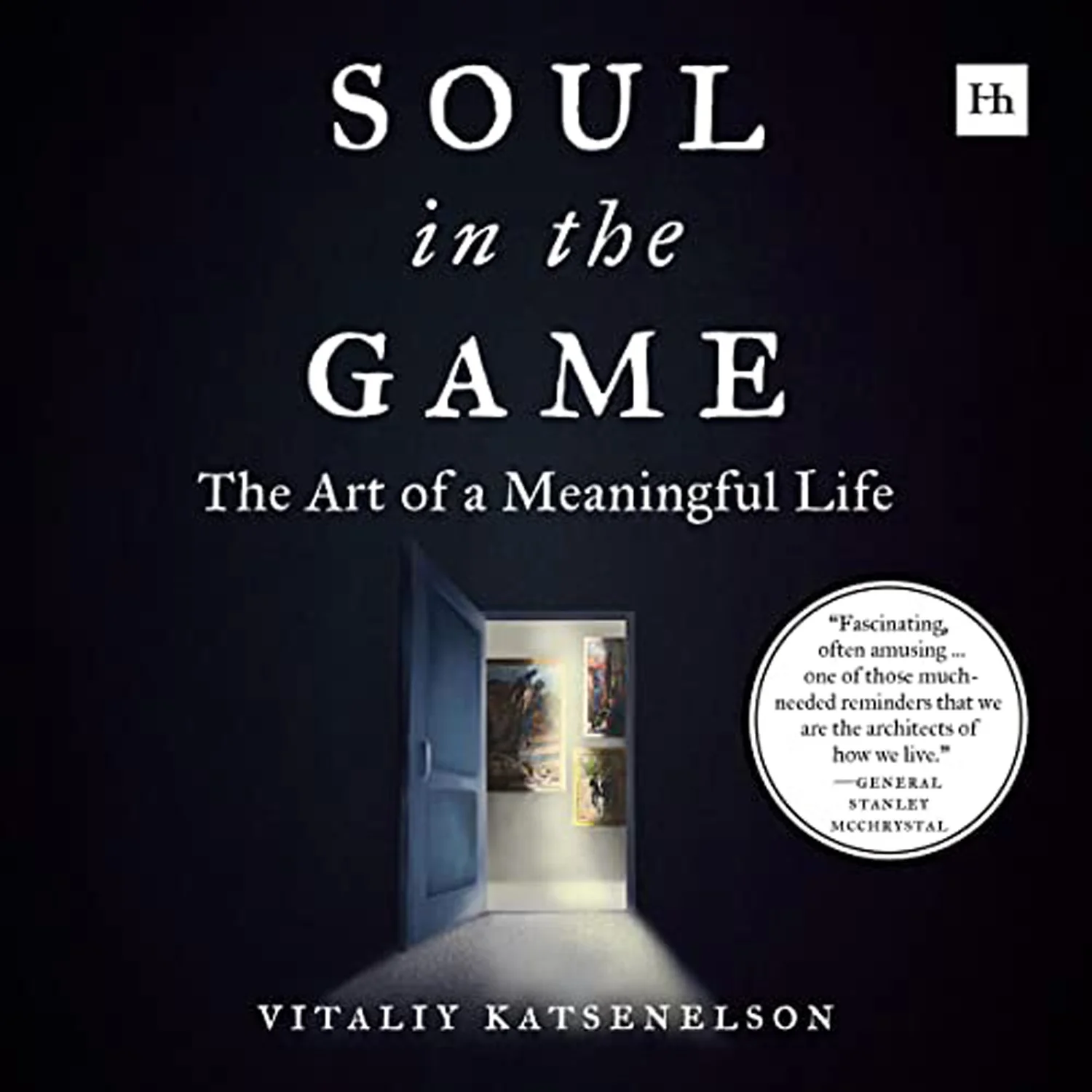
Vitaliy Katsenelson - Author of “Soul in the Game: The Art of a Meaningful Life” - CEO of IMA
"There are four modes of communicating: preacher, prosecutor, politician, and scientist. So those three Ps are very important modes, but if you spend all your time in these modes, you will learn very little because all of them are kind of outward-looking modes. You're trying to convince others, and you don't learn very much when you're in those modes. Now, I would argue that most of us need to spend a good chunk of our time in a scientist mode. If you are in a scientist mode, then you are doing what Seneca said, "time discovers truth."So in the scientist mode, everything you look at is a hypothesis, and then all you're trying to do is just trying to figure out if your hypothesis is right or wrong. And therefore in the debate, you're trying to understand the other person's side, not necessarily be in prosecutor mode to convince the person to change his or her mind.We want to be very careful that ideas don't become our identity because once they do, we can't change it. In fact, I would argue, we have to be very mindful and evaluate our identity because a lot of times our identity is formed through completely random experiences."Vitaliy Katsenelson was born in Murmansk, Russia and immigrated to the United States with his family in 1991. He is the author of Soul in the Game, The Art of a Meaningful Life. He is the CEO of Denver-based value investment firm IMA. Vitaliy has also written two books on investing. Forbes Magazine called him “The New Benjamin Graham.” He’s written for the Financial Times, Barron’s, Institutional Investor and Foreign Policy. Vitaliy lives in Denver with his wife and three children, where he loves to read, listen to classical music, play chess, and write about life, investing, and music.https://soulinthegame.nethttps://contrarianedge.comhttps://imausa.comwww.creativeprocess.infowww.oneplanetpodcast.org
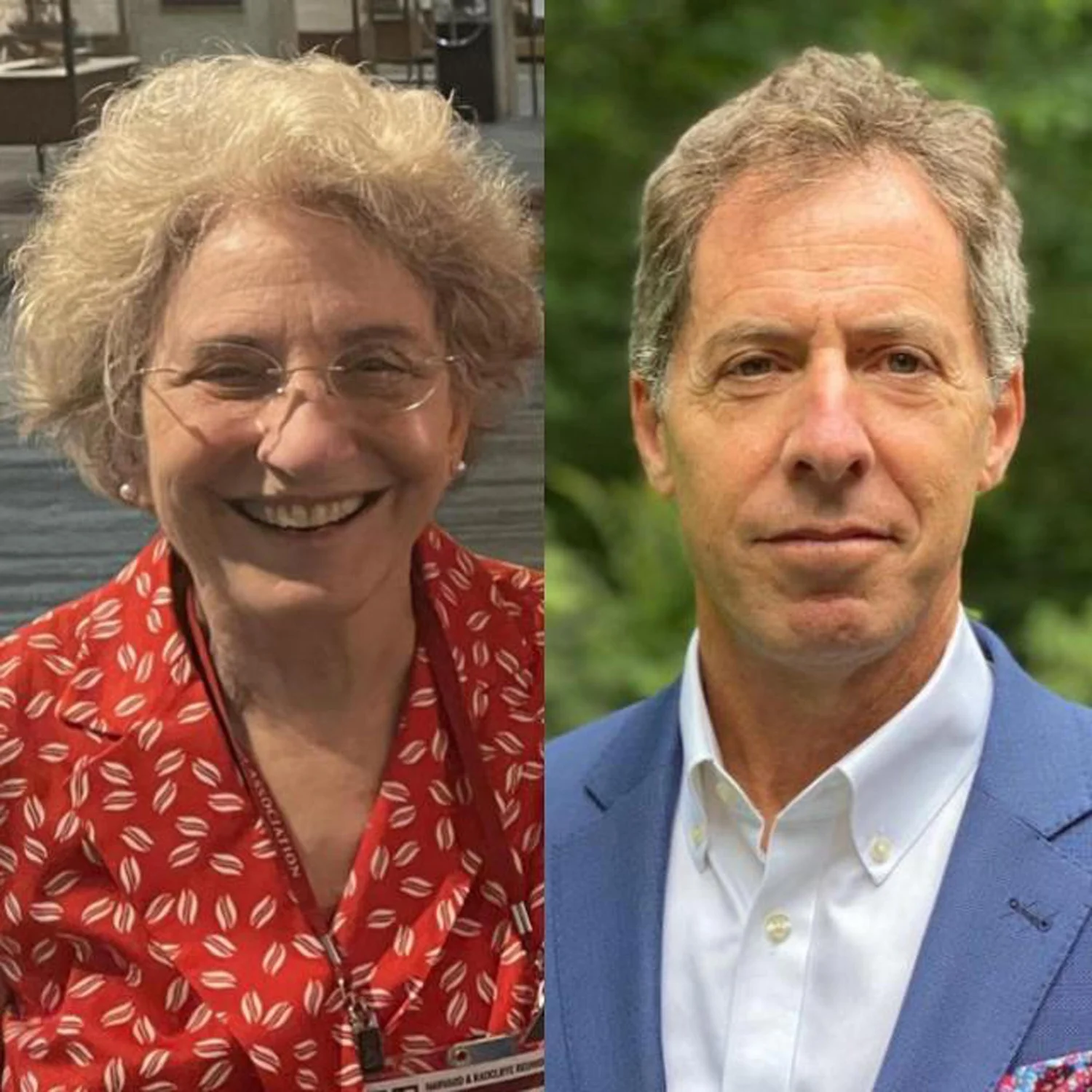
Dr. Mona Sarfaty - Medical Society Consortium on Climate and Health | Dr. Ed Maibach - Communication Scientist
“The Inflation Reduction Act of 2022 is really a bill which is using the financial structure of the country to stimulate business. This is a very different kind of solution than one might have conjured up some years ago. Back in 2010, Congress tried to do something on climate change and the main solution under consideration was a carbon tax. So that was also an effort to use the financial system, but this is a very different approach.This is putting out stimulus so that the business community can do what's necessary to build a clean energy economy. And so consumers can help support the growth of that clean energy economy by purchasing all those products that will allow individual people, families, and communities to be part of the solution by owning electric cars, by putting solar panels on their homes, by buying heat pumps to put in their homes, by improving the insulation in their private homes or buildings and thereby cutting their heating and cooling costs.”Dr. Mona Sarfaty is the Executive Director and Founder of the Medical Society Consortium on Climate and Health, comprised of societies representing 70% of all U.S. physicians. She founded the Consortium in 2016 in conjunction with the George Mason University Center for Climate Change. Under her leadership, the Consortium has grown into a nationwide coalition of societies, organizations, and advocates mobilizing support for equitable policies that address the health impacts of climate change.Edward Maibach is Director of the George Mason University Center for Climate Change Communication, a distinguished University Professor and communication scientist who is expert in the uses of strategic communication and social marketing to address climate change and related public health challenges. His research – funded by NSF, NASA, and private foundations – focuses on public understanding of climate change and clean energy; and the psychology underlying public engagement. In 2021, Ed was identified by Thompson Reuters as one of the world’s 10 most influential scientists working on climate change.https://medsocietiesforclimatehealth.orghttps://twitter.com/docsforclimatewww.climatechangecommunication.org/all/climate-change-american-mind-april-2022/www.climatechangecommunication.org/all/politics-global-warming-april-2022/www.oneplanetpodcast.org
Sonnet L’Abbé - Award-winning Poet, Songwriter, Author of “Sonnet’s Shakespeare”
"Sonnet’s Shakespeare itself came out of thinking about the form of erasure, what working in that form could do and mean. And at the time there were conversations about appropriative poets where there were specific instances of pretty shady power dynamics around certain poets taking certain texts and presenting them as their own and saying, 'This is just an appropriative poetics move.’ And I was looking at critical writing about it, and I couldn't find anything that talked about the role of the poet who is doing that as censorial or as somehow violencing the original text. I was thinking about my resonance with the word erasure and thinking about censoring and deleting what somebody else has already said resonates with me as an analogy for being black, being mixed race, being racialized, and non-European in spaces that are predominantly Anglo-Canadian and in rooms where, classrooms where, playgrounds where, churches where, certain signifiers of difference would make fitting in harder.One tries very hard. At least I did as a child to just try to fit in and make my visible difference as minimal, as invisible as possible. So it's a way of thinking about erasing the self. And so I took that theme and thought, How do I show through a poetic erasure this dynamic of self-erasure and feeling erased?”Sonnet L'Abbé is a Canadian poet, songwriter, editor and professor. They are the author of A Strange Relief, Killarnoe, and Sonnet's Shakespeare. Sonnet's Shakespeare was a Quill and Quire Book of the Year. In 2014 they edited the Best Canadian Poetry in English anthology. Their chapbook, Anima Canadensis, won the 2017 bpNichol Chapbook Award. They teach Creative Writing and English at Vancouver Island University, and are a poetry editor at Brick Books.https://www.instagram.com/sonnetlabbe/https://www.poetryfoundation.org/harriet-books/2017/12/tree-i-invented-a-new-form-of-poemwww.creativeprocess.info www.oneplanetpodcast.org

Lex van Geen - Research Professor - Lamont-Doherty Earth Observatory, Columbia University
"So this was maybe nine months after the fire in Notre Dame, and I had been struck visually by the fire, the yellow smoke, which is a telltale indicator of lead. The fact that 400 tons of lead constituted the covering of the roof of the cathedral. And a lot of that had volatilized, presumably, but no one really knew how much. So that got me thinking, and I happened to be in Paris at the time, so I thought if it's so much lead, could it be that it affected the population living within say a kilometer of the cathedral? I thought there wasn't really a lot of clear information about what had happened, and what had been measured. I thought some more openness and transparency was needed."Geochemist Lex van Geen is a research professor at Lamont-Doherty Earth Observatory and is member of the Earth Institute at Columbia University. His research focuses on ways to reduce the impact of the environment on human health. For two decades, he coordinated earth-science on the origin and health effects of elevated levels of arsenic in groundwater. His other projects focus on fluoride in groundwater in India, bauxite dust in Guinea, or soil contaminated with lead from mine-tailings in Peru, and fallout of lead over Paris following the fire in Notre Dame. Dr. Van Geen is a firm believer in the more widespread use of field kits by non-specialists to reduce exposure to environmental toxicants.www.ldeo.columbia.edu/~avangeenwww.oneplanetpodcast.orgwww.creativeprocess.info

David Montgomery - Co-author of “What Your Food Ate: How to Heal Our Land and Reclaim Our Health”
“When you dig into the medical literature, 7 out of 10 of the leading causes of death in the United States are diet-related chronic diseases. And so one of the hopeful messages that I think comes out of The Hidden Half of Nature, Growing a Revolution, and What Your Food Ate is that what we do to the land, essentially we do to us. And what's good for the land is good for us.So if we think about farming differently, we can actually enjoy ripple effects that are not only beneficial to the farmers in terms of reduced costs for fertilizer, pesticides, and diesel - the three of the big costs in farming today. If we can farm and grow as much food using less of those kind of synthetic inputs, we'll all be better off. And farmers will be better off and more profitable, but it could also translate into better human health outcomes at a population level.”David R. Montgomery teaches at the University of Washington where he studies the evolution of topography and how geological processes shape landscapes and influence ecological systems. He loved maps as a kid and now writes about the relationship of people to their environment, and regenerative agriculture. In 2008 he was named a MacArthur Fellow. He is the author of award-winning popular-science books (King of Fish, Dirt, and Growing a Revolution) and co-authored The Hidden Half of Nature, The Microbial Roots of Life and Health and What Your Food Ate: How to Heal Our Land and Reclaim Our Health with his wife, biologist Anne Biklé.https://www.dig2grow.com/https://twitter.com/Dig2Growwww.oneplanetpodcast.orgwww.creativeprocess.info
Anthony Joseph - Award-winning Writer & Musician - Author of “Sonnets for Albert”
"The life of Caribbean people is not really documented. So this idea of Caribbean life being fragmented is something that I've had in my mind for a long time. So when I came to write this collection for my father, I realized that it was the same process and what I had were fragments, especially with him, because he wasn't around in a physical sense all the time. So all I had were little photographs, scattered memories, and remembrances. They're little parts of his life and parts of my experience with him... I never disliked my father. I always loved him and always was fascinated and captivated by him."Anthony Joseph is a poet, novelist, academic and musician who moved from Trinidad to the UK in 1989. A lecturer in creative writing at Birkbeck College, he is particularly interested in the point at which poetry becomes music.As well as four poetry collections, a slew of albums, and three novels – most recently Kitch – Joseph has published critical work exploring the aesthetics of Caribbean Poetry among other subjects. He performs internationally as the lead vocalist for his band The Spasm Band. Sonnets for Albert is his first poetry collection since Rubber Orchestras. His most recent album is The Rich Are Only Defeated When Running for Their Lives.www.anthonyjoseph.co.ukhttps://open.spotify.com/artist/622cbugSJevUkEanSBCab9www.creativeprocess.infowww.oneplanetpodcast.org
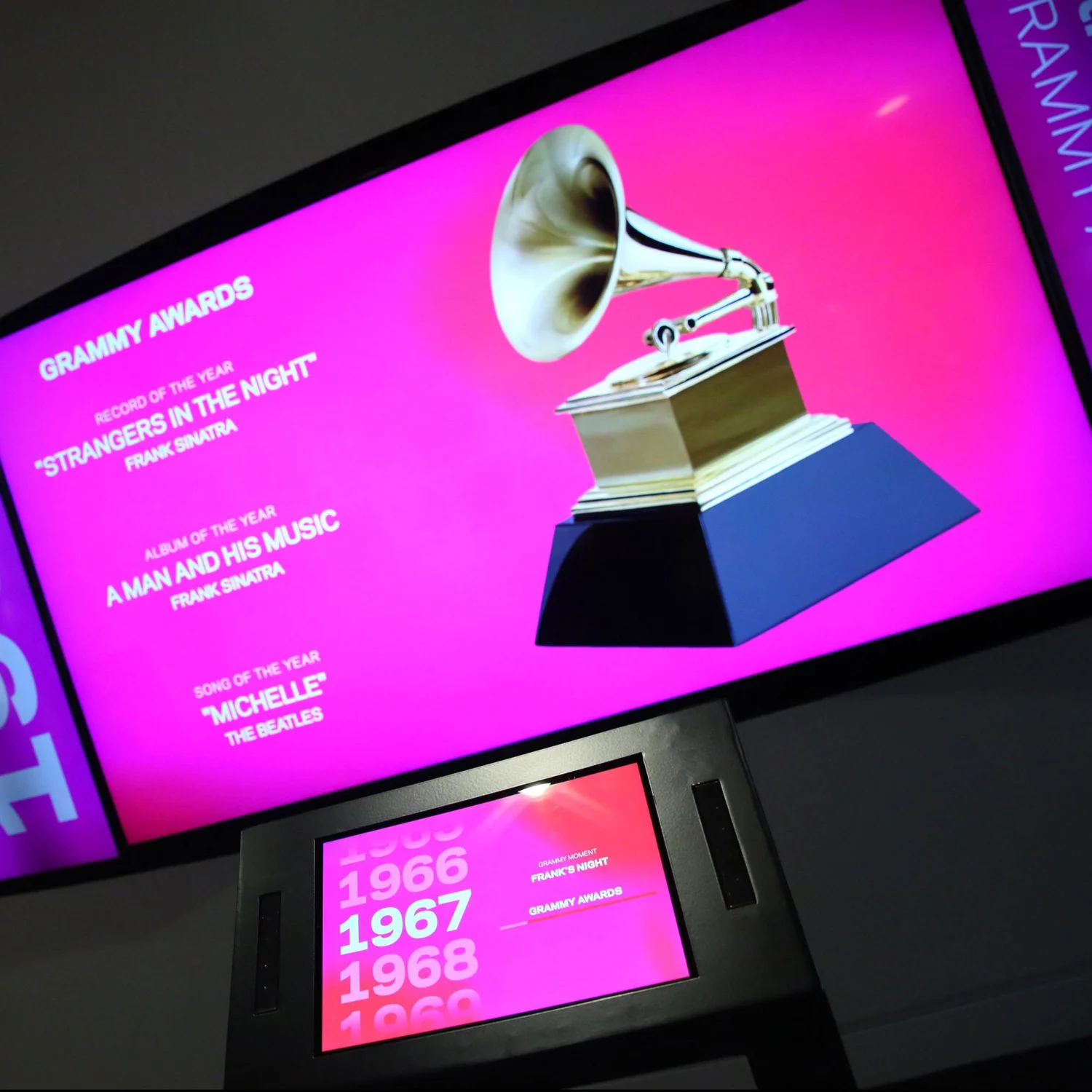
Michael Sticka - President/CEO of the GRAMMY Museum
"I think music has changed the world. I think if you look at most social movements that have challenged the status quo and challenged even just the establishment at the time, there's been a soundtrack to those movements. And I think that is what maintains and fosters the movement and fosters the people to get behind it. So there's no question that music can change the world. It already has.It's actually right in our mission statement that 'we celebrate the music of yesterday and today to inspire the music of tomorrow.' And we do it through our exhibits. We have 35,000 square feet of galleries. We travel exhibits, really, all over the world over the world for the past 15 years. And through our education programs, we really focus on the next generation of music's creators and leaders. We do that through really specific curricula that is designed to educate particularly young people, K-12, about the business of music, especially for those who want to go into the industry."The GRAMMY Museum believes that music is a gateway to learning. Their mission is to explore and celebrate the enduring legacies of the creative process behind all forms of music through immersive and interactive exhibits and essential music education programs. Michael Sticka serves as President/CEO. He’s responsible for the creation of the Museum's growth and sustainability as an independent nonprofit arts organization, overseeing the Museum Foundation™’s national programming, including GRAMMY In The Schools®, grants for music research and preservation and national affiliates. Their many projects include the multimillion-dollar renovation of the Museum in downtown Los Angeles, building the only gallery dedicated to Latin music in California; GRAMMY Museum at Home, a collection of virtual exhibits, artist programs and educational content available free to educators and music lovers worldwide; and their official streaming service COLLECTION:live™. An advocate for accessibility, the GRAMMY Museum became the only museum named as a Certified Autism Center™ in California. Prior to joining the Academy, Sticka consulted for nonprofit organizations and co-founded the Zoot Theatre Company in Dayton, Ohio.Grammymuseum.orgIG, FB, TW: @grammymuseumwww.creativeprocess.infowww.oneplanetpodcast.org
Jack Horner - Renowned Dinosaur Paleontologist - Technical Advisor, Jurassic Park/World Films
"I found my first fossil when I was six years old. And I found my first dinosaur bone when I was eight, my first dinosaur skeleton when I was 13. When I was a kid, I knew I wanted to be a paleontologist, and I didn't think there was much hope for it, though. I was doing very poorly in school. I think I was always a pretty positive kid. And so even though I wasn't doing well in school, I was really happy about the fact that I was finding all these cool fossils, and I was making collections. I don't know when it came to me that I would do this, but I think I just was born this way."Jack Horner is a severely dyslexic, dinosaur paleontologist. He attended the University of Montana for 14 semesters without receiving a degree. He has since received two honorary doctorates of science and a plethora of awards including a MacArthur Fellowship. Jack was Curator and Regent’s Professor of Paleontology at Montana State University in Bozeman, Montana for 34 years. He has more than 300 publications. He was the technical advisor for all of the Jurassic Park/ Jurassic World movies. At Chapman University where he now teaches, Jack encourages his honors students and dyslexic mentorees to challenge their preconceived ideas.https://jackhornersdinosaurs.comHorner Science Groupwww.creativeprocess.infowww.oneplanetpodcast.org

Ken Cheng - Writer/Producer of “Easter Sunday” starring Jo Koy - Co-Founder - Crab Club, Inc.
“Remembering the stories of our parents and our grandparents, our aunts and uncles, and the struggles that they have gone through. Struggles and the joy - I don't always want to frame the stories of our forbearers in the context of struggle, although a lot of Asian-Americans have had to deal with that. There's a lot of joy to be found in those stories as well. And I hope that those are stories that are passed on and remembered because, as is the case in our movie, it's about the moments that we are able to share with our family, in which we experience happiness and laughter and joy, that are most important, at least to me.And so I hope that's something that we can reflect in our storytelling moving forward as well. You know, I think we've seen a lot of stories framed around the noble struggle, which is what I call it. And I hope we can start diversifying our storytelling a little bit so that we can share a little bit more of the happy pleasures and joys that we experience as families and immigrants as well.”Ken Cheng is a writer/producer who has previously written for Wilfred, Betas, and Sin City Saints. Ken’s feature comedy Easter Sunday, which he co-wrote, and executive produced for Amblin Partners, Rideback, and Universal, is inspired by the life and comedy of standup comedian Jo Koy. Forthcoming projects include writing and executive producing the half-hour comedy series, House of Chow, for HBO, co-writing – along with his creative partners at Crab Club, Inc. - a feature film adaptation of the GQ Magazine article, “The Great Chinese Art Heist”, for Warner Bros., Conde Nast, and director Jon M. Chu, and writing/producing a feature adaptation of the New York Magazine article “Chateau Sucker” for Bound Entertainment.www.crabclubinc.comKen Cheng IMDBwww.creativeprocess.infowww.oneplanetpodcast.org

Bruce Mau - Award-winning Designer, Author of “Mau MC24…24 Principles for Designing Massive Change”
"I'm very, very concerned that we are already in a time of being lost, that a lot of people feel lost, and they feel like the world has kind of moved out from under them, and that they have lost their bearings. They've lost their anchor, and they don't have what it takes to actually navigate.And in that kind of environment, it's a very rich environment for fascism and for the worst kind of political movement, for the worst kind of political actors to take advantage of that feeling of powerlessness and fear and disconnection. Design is a methodology that is an empowering methodology within a condition of being unmoored.So when you don't know what to do, design is a methodology of figuring out what to do, and it's why we're doing a project that we call Massive Action, which is to really give people the tools of empowerment to give them the power to design their life because over the coming couple of decades people are going to see a level of turmoil and change that has not happened in human history. The foundation of any culture is energy, and we have to change fundamentally our source of energy, which is going to change everything else. And I really worry that it's going to be a time – and we're already seeing it - it's going to be a time where the forces of autocracy and totalitarianism and fascism will find fertile ground if we don't actually help people navigate those conditions."Designer, author, educator and artist Bruce Mau is a brilliantly creative optimist whose love of thorny problems led him to create a methodology for life-centered design. Across thirty years of design innovation, he’s collaborated with global brands and companies, leading organizations, heads of state, renowned artists and fellow optimists. Mau became an international figure with the publication of his landmark S,M,L,XL, designed and co-authored with Rem Koolhaas, and his most recent books are Mau MC24: Bruce Mau’s 24 Principles for Designing Massive Change in Your Life and Work and, with co-author, Julio Ottino, dean of Northwestern University’s McCormick School of Engineering, The Nexus: Augmented Thinking for a Complex World – The New Convergence of Art, Technology, and Science. Mau is co-founder and CEO of Massive Change Network, a holistic design collective based in the Chicago area.www.massivechangenetwork.comwww.Brucemaustudio.comMau MC24The NexusImage Courtesy of Massive Change Networkwww.creativeprocess.infowww.oneplanetpodcast.org

David Farrier - Author of “Footprints: In Search of Future Fossils” - Prof. U of Edinburgh
"Just thinking about how our actions play out over multiple generations who will have to live with the consequences of these decisions. I think we need to stretch our sense of time, and within that stretch our sense of empathy. The philosopher Roman Krznaric talks about that in his book The Good Ancestor, that we need a more elastic sense of empathy that can encompass not just those close to us or living alongside us, but those who have yet to be born will have to inherit the world that we passed down to them. But I think in stretching that sense of empathy and stretching that sense of the times that we touch, if you like, because all of us are engaged in activities that will lead long legacies, long tails, in terms of the fossil fuels we're consuming. And so, alongside that, I think we need to accept that the time we live in is a strange one, and time itself is doing strange things in the anthropocene.”David Farrier's books include Footprints: In Search of Future Fossils (2020) and Anthropocene Poetics (2019). Footprints won the Royal Society of Literature’s Giles St. Aubyn award and has been translated into nine languages. He is Professor of Literature and the Environment at the University of Edinburgh. Footprints: In Search of Future Fossilswww.ed.ac.uk/profile/david-farrierAnthropocene Poeticswww.oneplanetpodcast.orgwww.creativeprocess.info
Marcia DeSanctis - Author of “A Hard Place to Leave: Stories from a Restless Life"
"I started looking over the stories that I had done. I would say the majority of the essays were not really about travel. They were more about aging and marriage and memory and all of those things, but I did find in the travel essays those kernels of things that I wanted to explore - bigger kernels of things that were sort of scratching at me from the inside like a piece of sand in my pocket that was irritating me and that I wanted to explore. What I found was that the theme of coming and going, the theme of arrivals and departures, the theme of entrances and exits, and the theme of home and away seemed to repeat itself. I felt that whenever I was somewhere, there was always a tide home. And when I was home, there was always the urge for going. And so I just weeded out and weeded out and really wanted to keep this theme of home and away."Marcia DeSanctis is a journalist, essayist, and author of A Hard Place to Leave: Stories from a Restless Life, 100 Places in France Every Woman Should Go, a New York Times travel bestseller. A contributor writer at Travel + Leisure, she also writes for Air Mail, Vogue, BBC Travel and many other publications. She has won five Lowell Thomas Awards from the Society of American Travel Writers and is the recipient of the 2021 Gold Award for Travel Story of the Year. Before becoming a writer, she was a television news producer for ABC, NBC and CBS News, for most of those years producing for Barbara Walters. She lives in Connecticut.https://marciadesanctis.comA Hard Place to Leavewww.creativeprocess.infowww.oneplanetpodcast.org
John Beaton - Founder, Director & Co-Visionary of Fairhaven Farm
"What's trending now with beginning farmers is that it is creating this kind of community connection. It's bringing people to the farm. It's connecting them to their food source. That creates community. It helps cultivate culture and connectivity, and so I think overall, it's like the landscape and agriculture as a whole is shifting towards a different direction."John and Emily Beaton have created a multi-enterprise farming business in Northeastern Minnesota near Duluth and the shores of Lake Superior. They founded Fairhaven Farm with a spirit of community building, a focus on soil health, and a desire to see a thriving local food system. They sell starter plants each spring for home gardeners, grow food for over 50 families through their CSA program, and are launching a new Pizza Farm enterprise where the couple will serve wood-fired pizzas on the farm featuring all locally sourced ingredients—including fresh tomatoes and vegetables right from their field!www.fairhaven.farmwww.oneplanetpodcast.orgwww.creativeprocess.info

William Irvine - Author of “The Stoic Challenge”, “A Guide to the Good Life”
"Happiness is another interesting thing. I've been thinking about this lately. You know, people take aim at happiness. I don't know if you can actually do that, if you can have a recipe for attaining happiness. Happiness is something that just happens as a byproduct of something else going on in your life, and that is having a day where you're experiencing equanimity. You don't have this abundance of negative emotions, where you value the things you've already got, where you value the relationships you've got, where you feel good inside your own body. You like being who you are. And I think, if all that happens, then suddenly, you know, it'll dawn on me. 'Gosh, I guess I'm happy...' "William B. Irvine is emeritus professor of philosophy at Wright State University in Dayton, Ohio, USA. He is the author of eight books that have been translated into more than twenty languages. His A Guide to the Good Life: The Ancient Art of Stoic Joy played a key role in the Stoic renaissance that has taken place in recent years. His subsequent The Stoic Challenge: A Philosopher’s Guide to Becoming Tougher, Calmer, and More Resilient provides a strategy for dealing, in proper Stoic manner, with the setbacks we experience in daily living. He is currently at work on a book about thinking critically, but with an open mind, in the age of the internet.www.williambirvine.comThe Stoic Challengewww.creativeprocess.infowww.oneplanetpodcast.org