The Creative Process in 10 minutes or less · Arts, Culture & Society: Books, Film, Music, TV, Art, Writing, Creativity, Education, Environment, Theatre, Dance, LGBTQ, Climate Change, Sustainability, Social Justice, Spirituality, Feminism, Technology
311 episodes — Page 7 of 7
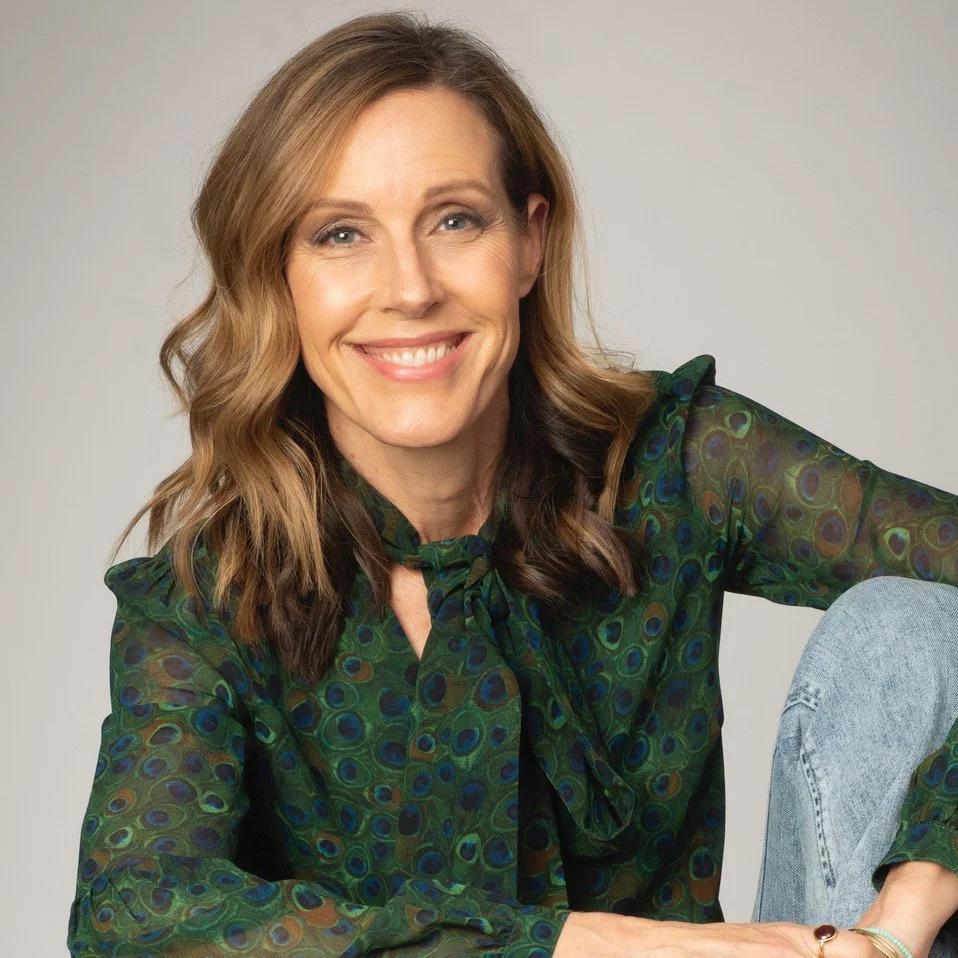
Marcia DeSanctis - Author of “A Hard Place to Leave: Stories from a Restless Life"
"I started looking over the stories that I had done. I would say the majority of the essays were not really about travel. They were more about aging and marriage and memory and all of those things, but I did find in the travel essays those kernels of things that I wanted to explore - bigger kernels of things that were sort of scratching at me from the inside like a piece of sand in my pocket that was irritating me and that I wanted to explore. What I found was that the theme of coming and going, the theme of arrivals and departures, the theme of entrances and exits, and the theme of home and away seemed to repeat itself. I felt that whenever I was somewhere, there was always a tide home. And when I was home, there was always the urge for going. And so I just weeded out and weeded out and really wanted to keep this theme of home and away."Marcia DeSanctis is a journalist, essayist, and author of A Hard Place to Leave: Stories from a Restless Life, 100 Places in France Every Woman Should Go, a New York Times travel bestseller. A contributor writer at Travel + Leisure, she also writes for Air Mail, Vogue, BBC Travel and many other publications. She has won five Lowell Thomas Awards from the Society of American Travel Writers and is the recipient of the 2021 Gold Award for Travel Story of the Year. Before becoming a writer, she was a television news producer for ABC, NBC and CBS News, for most of those years producing for Barbara Walters. She lives in Connecticut.https://marciadesanctis.comA Hard Place to Leavewww.creativeprocess.infowww.oneplanetpodcast.org
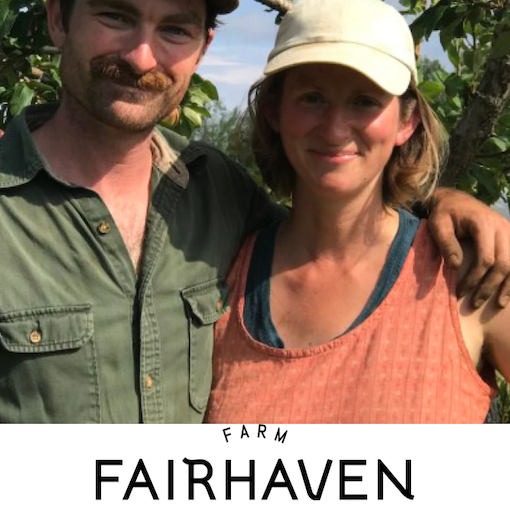
John Beaton - Founder, Director & Co-Visionary of Fairhaven Farm
"What's trending now with beginning farmers is that it is creating this kind of community connection. It's bringing people to the farm. It's connecting them to their food source. That creates community. It helps cultivate culture and connectivity, and so I think overall, it's like the landscape and agriculture as a whole is shifting towards a different direction."John and Emily Beaton have created a multi-enterprise farming business in Northeastern Minnesota near Duluth and the shores of Lake Superior. They founded Fairhaven Farm with a spirit of community building, a focus on soil health, and a desire to see a thriving local food system. They sell starter plants each spring for home gardeners, grow food for over 50 families through their CSA program, and are launching a new Pizza Farm enterprise where the couple will serve wood-fired pizzas on the farm featuring all locally sourced ingredients—including fresh tomatoes and vegetables right from their field!www.fairhaven.farmwww.oneplanetpodcast.orgwww.creativeprocess.info

William Irvine - Author of “The Stoic Challenge”, “A Guide to the Good Life”
"Happiness is another interesting thing. I've been thinking about this lately. You know, people take aim at happiness. I don't know if you can actually do that, if you can have a recipe for attaining happiness. Happiness is something that just happens as a byproduct of something else going on in your life, and that is having a day where you're experiencing equanimity. You don't have this abundance of negative emotions, where you value the things you've already got, where you value the relationships you've got, where you feel good inside your own body. You like being who you are. And I think, if all that happens, then suddenly, you know, it'll dawn on me. 'Gosh, I guess I'm happy...' "William B. Irvine is emeritus professor of philosophy at Wright State University in Dayton, Ohio, USA. He is the author of eight books that have been translated into more than twenty languages. His A Guide to the Good Life: The Ancient Art of Stoic Joy played a key role in the Stoic renaissance that has taken place in recent years. His subsequent The Stoic Challenge: A Philosopher’s Guide to Becoming Tougher, Calmer, and More Resilient provides a strategy for dealing, in proper Stoic manner, with the setbacks we experience in daily living. He is currently at work on a book about thinking critically, but with an open mind, in the age of the internet.www.williambirvine.comThe Stoic Challengewww.creativeprocess.infowww.oneplanetpodcast.org

Victor Lopez-Carmen - Dakota - Yaqui Writer, Health Advocate - Co-Chair, UN Global Indigenous Youth Caucus
“My mom and my dad would often go to protests. They would organize movements. They'd be part of multilateral indigenous people's movements, not only nationally, but internationally, that were operating at the grassroots level. Activism, it’s a tradition in my family for indigenous rights. I have aunts and uncles that were very involved as well. So as a kid, I was often at those protests. I was running around as a little Native kid with all the other little Native kids, when our parents would be in meetings discussing how to move forward discussing indigenous rights.”Victor A. Lopez-Carmen is a Dakota and Yaqui writer, health advocate, and student at Harvard Medical School. He is cofounder of the Ohiyesa Premedical Program at the Brigham and Women's Hospital (BWH), which supports Indigenous community and tribal college students to pursue healthcare education. He also founded Translations for our Nations, a grant funded initiation that translated accurate COVID-19 information into over 40 Indigenous languages from over 20 different countries. For his work, he has been featured on the Forbes 30 under 30 and Native American 40 under 40 lists. He is Co-Chair of the UN Global Indigenous Youth Caucus.Forbes 30 under 30 - Healthcare 2022Translations for our NationsOhiyesa Premedical Programwww.globalindigenousyouthcaucus.orgwww.oneplanetpodcast.orgwww.creativeprocess.info

Donald Hoffman - Prof. of Cognitive Sciences, UC Irvine - Author of “The case against reality”
"This is really what life, I think, is about - learning to not believe your thoughts. Watch your thoughts, see their patterns and learn that you are not at the whim and beck and call of your thoughts. You can watch your thoughts, and you can choose to let go of thoughts and just be present and let go of the complaints. And that then opens up a level of creativity that's surprising. It could be in dance, science, it could be in music, or art. Wherever you have creative expression, letting go of thought and having this balance between thinking and no thinking, going into complete silence and then pulling ideas back for your art, your science, your dance, whatever it might be, is really the dance of life."Donald D. Hoffman is a Professor of Cognitive Sciences at the University of California, Irvine. He is the author of The case against reality: Why evolution hid the truth from our eyes. His research on perception, evolution, and consciousness received the Troland Award of the US National Academy of Sciences, the Distinguished Scientific Award for Early Career Contribution of the American Psychological Association, the Rustum Roy Award of the Chopra Foundation, and is the subject of his TED Talk, titled “Do we see reality as it is?”http://www.cogsci.uci.edu/~ddhoff/The Case Against Realitywww.creativeprocess.infowww.oneplanetpodcast.org
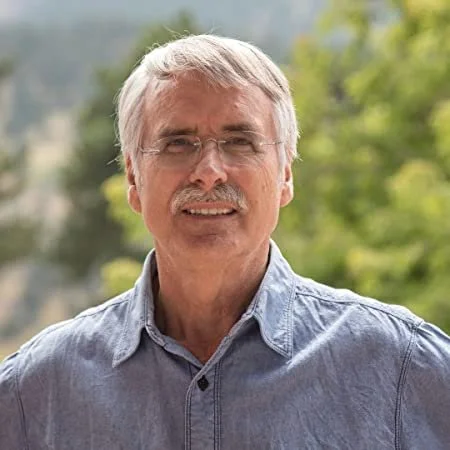
Kevin Trenberth - Nobel Prize-winning Climate Scientist - Author of “The Changing Flow of Energy Through the Climate System”
Kevin Trenberth is a Distinguished Scholar at the National Center of Atmospheric Research (NCAR) in Boulder and an Honorary Academic in the Department of Physics, Auckland University in Auckland, New Zealand. From New Zealand, he obtained his Sc. D. in meteorology in 1972 from Massachusetts Institute of Technology. He was a lead author of the 1995, 2001 and 2007 Scientific Assessment of Climate Change reports from the Intergovernmental Panel on Climate Change (IPCC), and shared the 2007 Nobel Peace Prize which went to the IPCC. He served from 1999 to 2006 on the Joint Scientific Committee of the World Climate Research Programme (WCRP), and chaired a number of committees for more than 20 years. He is the author of "The Changing Flow of Energy Through the Climate System"."The whole social fabric that we have is based upon the past climate, and so once we cross that threshold, it's what I call the Straw that Breaks the Camel's Back Syndrome. And so you have a relatively modest change, which I estimate to be in the neighborhood of 5 to 20 percent, typically. And that is enough to nudge us. Instead of 1 billion dollars in damage from a hurricane, we end up with 100 billion dollars. Now, that's just one example. There are many other cases, but the sort of things that happen are indeed that something floods, the amount of water can no longer be tolerated, something completely dries out, there's a drought, and subsequent wildfires when buildings burn down, and so on. Suddenly you've gone from something to nothing. That's an extreme non-linearity. And another extreme non-linearity is, of course, when people die, you don't recover from that."The Changing Flow of Energy Through the Climate Systemwww.ipcc.chhttps://www.cgd.ucar.edu/staff/trenbertwww.oneplanetpodcast.orgwww.creativeprocess.info

Bertrand Piccard - Explorer, Founder, Solar Impulse Foundation: 1000+ Profitable Climate Solutions
"So this is why I prefer to speak with a really down to earth language. So maybe the people who love nature are going to say, 'Oh, Bertrand Piccard, now he is too down to earth. He's speaking about profitable solutions. He's speaking to the industries that are polluting,' but we have to speak to the industries that are polluting and bring them profitable solutions, otherwise the world will never change, or humankind will never change. And don't forget one thing, what we are damaging is not the beauty of nature. What is being damaged is the quality of life of human beings on Earth because we can still have beautiful things to see, but if we have climate change, if we have tropical disease in Europe, if we have heat waves, floods, droughts, millions of climate refugees, life will be miserable, even if nature is still beautiful.”Psychiatrist, aviator and explorer, Bertrand Piccard made history in 1999 by accomplishing the first ever non-stop round-the-world balloon flight, and a number of years later the first round-the-world solar-powered flight. Piccard has dedicated his life to demonstrating sustainable development opportunities. He is Founder and Chairman of the Solar Impulse Foundation, which has assembled a verified portfolio of over 1400 actionable and profitable climate solutions. As a pioneer of new ways of thinking that reconcile ecology and economy, he uses his exploration feats to motivate governments and industries to take action. He is a United Nations Goodwill Ambassador for the Environment and Special Advisor to the European Commission. He’s author of Réaliste, Changer d’Altitude, and other books.Solar Impulse Foundationbertrandpiccard.comSolar Impulse Solutions Explorer (1400+)RéalisteChanger d’altitudePhoto credit: Solar Impulse/ StefatouAbu Dhabi, UAE, March 1st, 2015, Solar Impulse 2 second test flight over Abu Dhabiwww.oneplanetpodcast.orgwww.creativeprocess.info

Dr. Charles D. Koven - Lead Author on the IPCC Report - Earth System Scientist
Dr. Charles D. Koven is an Earth System Scientist, working in the Climate Sciences Department at the Lawrence Berkeley National Laboratory. He investigates feedbacks between climate and the carbon cycle. Dr. Koven’s primary research focus is on high-latitude feedbacks to climate change, and in particular the role of soil carbon in permafrost soils, and its response to changing climate. Dr. Koven is a lead author on the IPCC report as part of Working Group I, The Physical Science Basis of Climate Change.“Looking into the future, as a scientist, what I've learned how to do is hold multiple futures in my head at the same time because we just don't know. We don't know what the future holds. We need to fight for the futures that we want, and against the futures that we don't want. All I can really say is that it's up to us. It's up to us to fight and advocate for the future we want, and what does that look like, and how do we get there?”Charles D. Kovenwww.ipcc.chwww.oneplanetpodcast.orgwww.creativeprocess.info
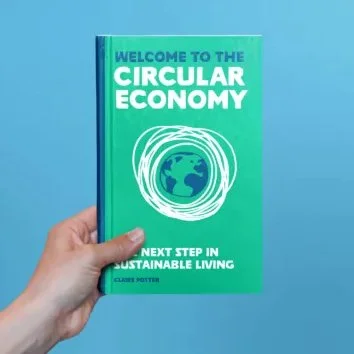
Claire Potter - Designer, Author of “Welcome to the Circular Economy”
"That's something that I would want all of the next generations to have in some way or another, to have the ability to access and be amazed by how staggeringly beautiful, complicated - awful in some ways and just brutal - the natural world is, but then really sit and think about how the natural world just gets on and does it.And every species is benefited from everybody else. And you could remove humans from that equation, and nature would just carry on doing its thing. So that's what I would love for people to see and to realize is that nature is so incredibly beautiful and diverse. And so are we. So how can we take the beauty and diversity of the natural world and actually learn a lot more and stop thinking we're separate from nature because we are pretty much, we are all part of that same biosphere on the planet."Claire Potter is a circular economy designer, researcher, lecturer and author based in Brighton, UK. Claire is the Course Convenor of the BSc/BA Product Design course at the University of Sussex, runs her own award-winning circular economy design studio, is a volunteer Regional Rep for Surfers Against Sewage and a working group co-ordinator at the Global Ghost Gear Initiative. In 2021, she published her first book “Welcome to the Circular Economy - the next step in sustainable living”.www.clairepotterdesign.comwww.onecircular.worldwww.sussex.ac.ukwww.sas.org.uk www.ghostgear.org Welcome to the Circular Economy book www.oneplanetpodcast.orgwww.creativeprocess.info
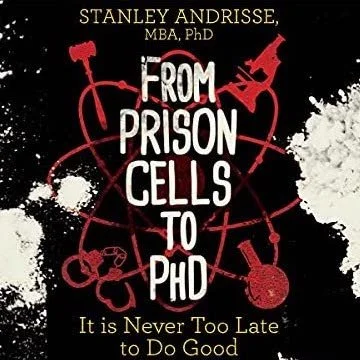
Dr. Stanley Andrisse - Founder and Author of From Prison Cells to PhD
“I kind of thought there was justice in the criminal justice system and that there was care for people, like you matter to me within the system, and in that moment it hit me. There wasn't. And in fact, it's the opposite. In order for the system to work the way it does, it needs to de-humanize the people that it puts in these cages.”Growing up in Ferguson, Missouri, Stanley Andrisse began making poor decisions at a very young age. He started selling dope and was arrested for the first time at fourteen years old. By his early twenties, dope dealing had exponentially multiplied, and he found himself sitting in front of a judge facing twenty years to life on drug trafficking charges. The judge sentenced him to ten years in a maximum-security prison.Upon release, and after several rejections, Stanley was accepted into a PhD program. He completed his PhD/MBA simultaneously and became an endocrinologist and impactful leader at Johns Hopkins Medicine, specializing in diabetes research.Dr. Andrisse is Executive Director and Founder of From Prison Cells to PhD, board member on the Formerly Incarcerated College Graduates Network, founder of the Diversity Postdoctoral Alliance, member on several local and national committees aimed at community outreach, youth mentor, motivational speaker, and community activist. His book From Prison Cells to PhD: It is Never Too Late to Do Good recounts his inspiring story.www.fromprisoncellstophd.orgFrom Prison Cells to PhD bookAsst. Professor, Howard University

Ty Jones, Producing Artistic Dir. of Classical Theatre of Harlem - Allen Gilmore, Actor
The Classical Theatre of Harlem provides theatrical productions, educational and literary programs for free or at little cost to Harlem residents, organizations, and all who seek Harlem as a cultural destination. Its productions have received a Drama Desk, OBIE, and New York Times Critics Pick Awards. From July 5th to 29th they bring an Afrofuturistic take on Twelfth Night to Marcus Garvey Park.NAACP and OBIE Award Winner, Ty Jones is Producing Artistic Director responsible for creating the Uptown Shakespeare in the Park series and other community initiatives.Allen Gilmore has played Othello, Iago, and created the role of James Hewlett in The African Company presents Richard The Third at the Public Theater. He makes his CTH debut in Twelfth Night.“I believe that these plays are living arguments and that when you actually read the full text, not cut down versions of them, but the full text, you'll see that Shakespeare was commenting on the ruling class, and for some reason, he found a way to comment on the workings of folks who make decisions in society. Now, I think what's tended to happen over the years is that the ruling class has essentially taken over how we see these plays… We hope that we can move people, and we hope that these are the kind of plays that ignite discourse. I hope that at the end of seeing that piece of art, their hearts begin to beat in sync. I believe all progress begins with a conversation.”www.cthnyc.orgwww.cthnyc.org/dt_team/ty-jones-producing-artistic-director-cth-actorwww.cthnyc.org/twelfth-nightwww.allengilmore.comTwelfth Night photo credit: Richard Terminewww.creativeprocess.infowww.oneplanetpodcast.org