The Creative Process in 10 minutes or less · Arts, Culture & Society: Books, Film, Music, TV, Art, Writing, Creativity, Education, Environment, Theatre, Dance, LGBTQ, Climate Change, Sustainability, Social Justice, Spirituality, Feminism, Technology
308 episodes — Page 4 of 7

FLORIAN HOFFMEISTER - Cinematographer - True Detective: Night Country starring Jodie Foster & Kali Reis
“I drove for like a half an hour into absolute nothingness, and I left the car. It was three o'clock in the morning. It was minus 17 degrees and it was absolutely still. I've never experienced stillness such as that. I mean, it's like you feel like you can feel your atoms move or not move because it's so cold. And the sky is full of the Northern Lights. So you are already in a remote place, but you want to go further. And I think maybe those themes of going out into the wilderness are motivated by the urge to connect. And I think Issa López has really incorporated it beautifully into the script. And the show tells of this great disconnect between people. So not only are we disconnected from our environment, but we are disconnected from each other. When we were shooting I sometimes thought, there is this beauty about collaboration between a director, cinematographer, and production designer, and all these key people. And I'm more and more convinced there's some kind of conscious thing happening. And there's also something subconscious happening.”How does the place we’re born influence our beliefs? What would it be like to live in a world run by women, where it’s perpetually night, and the dead can speak to the living? In this episode, we discuss the new season of HBO’s True Detective: Night Country with award-winning cinematographer Florian Hoffmeister.Known for his work on Tár, Pachinko, Great Expectations, and most recently, the new season of True Detective, he's also known for his collaboration with director Terence Davies on the films The Deep Blue Sea and A Quiet Passion. His work on Great Expectations earned him an Primetime Emmy and a BAFTA in cinematography, and in 2022, he was nominated for the Academy Award for Best Cinematography for his work on Tár.http://florianhoffmeister.de/ www.hbo.com/true-detective www.imdb.com/title/tt2356777/?ref_=fn_al_tt_1www.creativeprocess.info www.oneplanetpodcast.org IG www.instagram.com/creativeprocesspodcastPhoto: Jodie Foster, Kali Reis · Photograph by Michele K. Short/HBO
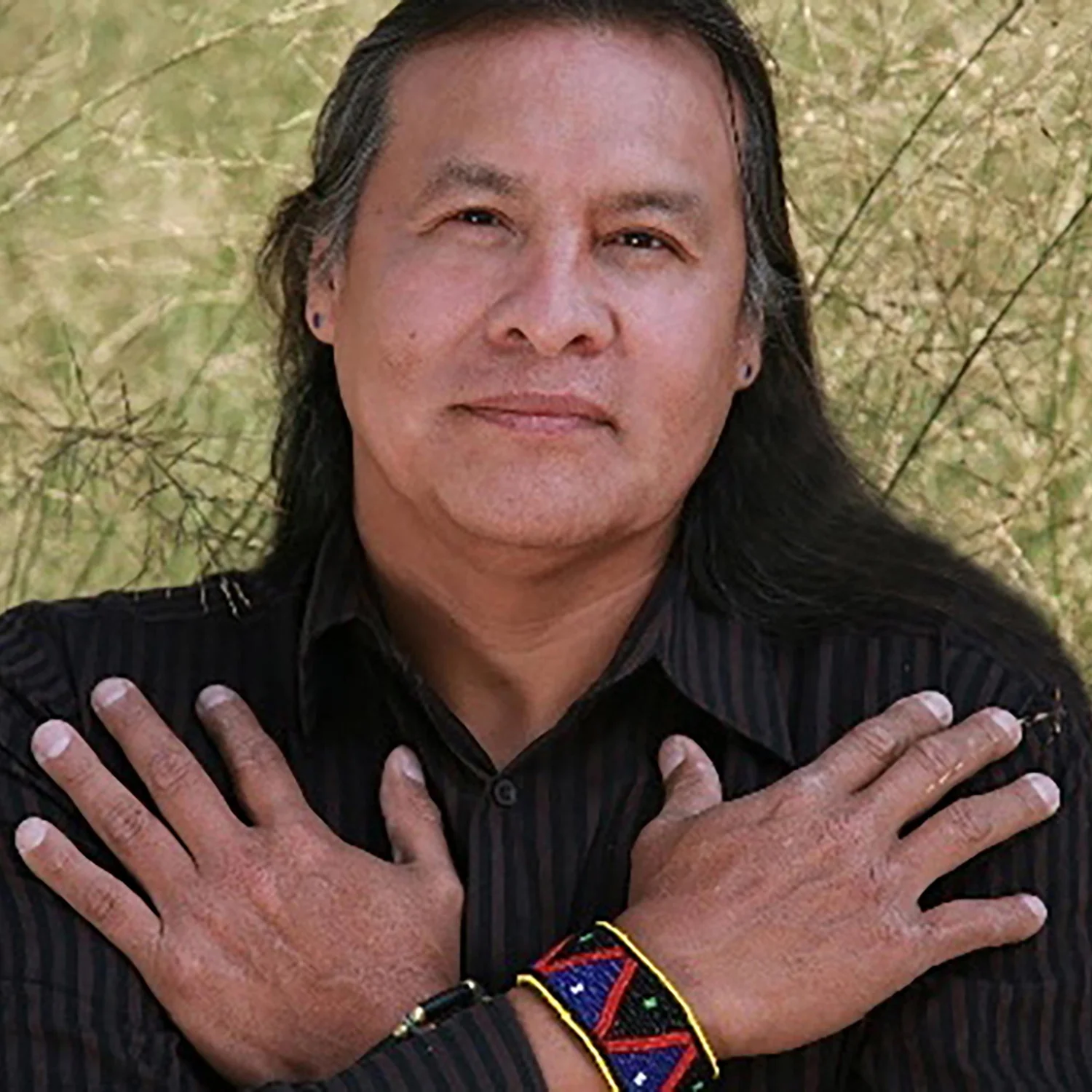
TIOKASIN GHOSTHORSE - Founder/Host of First Voices Radio - Founder of Akantu Intelligence
“If we say Mitakuye Oyasin, we don't really mean all my relations. It's like, no, we're talking about what you can formulate into E = mc2 and beyond. It's beyond what you see. And that energy you don't see with these eyes, which only see a certain range of color and light refraction is what we are also understanding. Our body is, people would say the brain is...there is no disconnection. And so are we fully understanding or do we have a full spectrum perspective of what tools of the Earth really mean? Like a bird we think has no intelligence. It just flies here and flies there, right? But we also understand that that bird is also using the tools as the tools of the Earth correctly or properly when...what does that mean?Now, if you go deeper into Indigenous peoples, you can see the modernity and then so-called primitive people. You don't need to be in contact, in relationship, and in communication, have a language with all other life-technology taking us away from Earth because we feel like we're elite to anything having to do with Earth. That's why we want to go to a dead planet called Mars. So they're about controlling, getting you and all of us away from being magic...is how to use tools of the Earth properly. Not, you know, we should not abuse water, the air, the land, the food, anything. So when it comes to animacy, I think it's a Western term also, and so we get away from the Western terms. We start seeing that, oh, we are becoming Earth as we're born into this physical dimension. We are becoming Earth. And then as we are living during this time, we're alive. We are becoming Earth. And when we are finished with this body, we are becoming Earth.”Tiokasin Ghosthorse is a member of the Cheyenne River Lakota Nation of South Dakota and has a long history with Indigenous activism and advocacy. Tiokasin is the Founder, Host and Executive Producer of “First Voices Radio” (formerly “First Voices Indigenous Radio”) for the last 31 years in New York City and Seattle/Olympia, Washington. In 2016, he received a Nomination for the Nobel Peace Prize from the International Institute of Peace Studies and Global Philosophy. Other recent recognitions include: Native Arts and Cultures Foundation National Fellowship in Music (2016), National Endowment for the Arts National Heritage Fellowship Nominee (2017), Indigenous Music Award Nominee for Best Instrumental Album (2019) and National Native American Hall of Fame Nominee (2018, 2019). He also was recently nominated for “Nominee for the 2020 Americans for the Arts Johnson Fellowship for Artists Transforming Communities”. He is the Founder of Akantu Intelligence.https://firstvoicesindigenousradio.org/ https://akantuintelligence.orgwww.creativeprocess.info www.oneplanetpodcast.org IG www.instagram.com/creativeprocesspodcastSongs featured on this episode are “Butterfly Against the Wind” And from the album Somewhere In There “Spatial Moon” and “Sunrise Moon” Composed by Tiokasin Ghosthorse and Alex Alexander Music on this episode is courtesy of Tiokasin Ghosthorse.
Are we living in a Simulated Universe? - MELVIN VOPSON
"These ideas go as far back as Ancient Greece, which basically gave birth to two lines of thinking, two ideologies, materialism and idealism. And the idealist thinkers like Plato regarded reality as a projection of our minds, as something that is not real. And the only thing that is real is our consciousness and our minds and everything else around us is just constructs of our proception and projections. And that was a philosophy that was opposed to materialism, which regards the world as in a materialistic way, made up of atoms and matter and our minds are a product of these chemical reactions and the matter is coming together and forming our minds and consciousness. And everything in the world exists regardless of our consciousness or our minds and the universe is there and it's a materialistic view of the world. So these are two competing ideologies, and this is actually how we see the world today in a materialistic way.What the simulated universe philosophical idea belongs to is this idealistic view of the world. And the idealism philosophy morphs into something else in this simulation hypothesis where not only everything is a simulated construct, but our minds and our consciousness are part of it.So for example, Plato saw our minds and, if you want, our spirit as a fundamental central piece and the only real thing, and everything emerged from this. The simulated hypothesis assumes that everything, including our minds and consciousness, is part of a simulation. So it's a bit of a modern iteration of idealism which has been triggered by these recent developments in advancing technologies and computing science that began in the 1940s with the development of silicon technologies, early microchips, and digital computers creating digital memories.This highly accelerated rate of development, in terms of our technological progress, in less than a hundred years going from analog technologies means we are entering a new era of quantum computers, like generative AI, and artificial intelligence, and all these VRs are a reality today. So this development has helped in some ways to lead to the emergence of this simulated universe concept because we are now reaching a new technological level where we see that we are beginning to simulate virtual realities and they are becoming more and more immersive and sophisticated."Dr. Melvin M. Vopson is Associate Professor of Physics at the University of Portsmouth, Fellow of the Higher Education Academy, Chartered Physicist and Fellow of the Institute of Physics. He is the co-founder and CEO of the Information Physics Institute, editor-in-chief of the IPI Letters and Emerging Minds Journal for Student Research. He is the author of Reality Reloaded: The Scientific Case for a Simulated Universe. Dr. Vopson has a wide-ranging scientific expertise in experimental, applied and theoretical physics that is internationally recognized. He has published over 100 research articles, achieving over 2500 citations.https://www.port.ac.uk/about-us/structure-and-governance/our-people/our-staff/melvin-vopsonhttps://ipipublishing.org/index.php/ipil/RRwww.creativeprocess.info www.oneplanetpodcast.orgIG www.instagram.com/creativeprocesspodcast

ROBERT WALDINGER - Co-Author of The Good Life: Lessons from the World's Longest Scientific Study of Happiness
"It's a study of adult lifespan development and when it was started in 1938, it was actually radical to study normal development for two reasons. One is that most of what had been studied was about what goes wrong in development, which we still do because we want to try to help people who are having developmental problems. So that makes a lot of sense, but to study what goes right in development, that was unheard of. The other thing is that for a long time, we certainly thought about children as developing because you can watch children change every day. That change happens so fast, but many people thought that once you got to be in your 20s, you were kind of done with development. You found a partner, you found a line of work, you were set with regard to your personality, and that was it, then you just lived your life.And of course, now we understand that there's so much that changes and develops through the course of adult life, but my predecessors (I'm the fourth director) were really, insightful in their understanding of how much there was to learn about all the changes that happen across the adult lifespan."What makes a good life? How important are relationships in helping us lead happy and meaningful lives?Dr. Robert Waldinger is a professor of psychiatry at Harvard Medical School, director of the Harvard Study of Adult Development at Massachusetts General Hospital, and cofounder of the Lifespan Research Foundation. Dr. Waldinger received his AB from Harvard College and his MD from Harvard Medical School. He is a practicing psychiatrist and psychoanalyst, and he directs a psychotherapy teaching program for Harvard psychiatry residents. He is also a Zen master (Roshi) and teaches meditation in New England and around the world. His TED Talk about the Harvard study “What makes a good life?” has been viewed more than 42 million times and is one of the 10 most watched TED Talks ever. He is co-author of The Good Life: Lessons from the World's Longest Scientific Study of Happiness.https://www.robertwaldinger.com/https://www.simonandschuster.com/books/The-Good-Life/Robert-Waldinger/9781982166694https://www.adultdevelopmentstudy.org/ https://www.lifespanresearch.orgwww.creativeprocess.info www.oneplanetpodcast.org IG www.instagram.com/creativeprocesspodcast

How has jazz been interpreted around the world? Highlights - BERNARDO MOREIRA
“I play the double bass as a professional musician. I don't consider myself a piano player, but I play a little bit of piano, of course. Every musician should play a little bit of piano to understand harmony. And if you want to compose or to arrange music, you need to know basic piano. So I play a little bit of piano. Actually, I started to play guitar before the double bass, because it was not so easy to get a double bass 40 years ago. My father was a bass player, but he never had a bass at home. So I started to play guitar first, and I was really into Bossa Nova and those chords from João Gilberto, and it was a big influence in my early years. But then I found a double bass when I was sixteen or seventeen– it was a terrible double bass, but it was enough to start with. Today, that sounds kind of late to start learning an instrument, but back then it wasn’t so terrible. Now you have small double basses that kids of nine, ten years old can start playing. In the eighties, if you were small, you could not play double bass, basically.”Bernardo Moreira is one of the most active Portuguese double bassists. He has performed as a guest soloist with Gulbenkian, Metropolitan de Lisboa, and Nacional do Porto orchestras, and gained prominence for his collaborations with international artists, including the legendary Benny Colson, Freddie Hubbard, Wayne Shorter, Art Farmer, and Kenny Wheeler. He is a regular collaborator with many jazz musicians in Portugal, participating in formations such as the Maria João/Mário Laginha quartet, the Mário Laginha trio, and singer Cristina Branco. In 2021, he released Enter Paredes, and in 2022, he led Cantina’s de Main and SUL.www.clavenamao.orghttps://open.spotify.com/artist/0Yse2njeXg2XDiQmmxhAc5www.creativeprocess.info www.oneplanetpodcast.org IG www.instagram.com/creativeprocesspodcastMusic on this episode:António Marinheiro, Bernardo Moreira Sextet, from the album Entre Paredes PROMESSAS MIX V3 ULT from SULCourtesy of Bernardo Moreira

WENDY WONG - Author of We, the Data: Human Rights in the Digital Age
"One of the things that we need to remember is that we are data stakeholders and not data subjects. We're often called data subjects if you look at the way legislation is written and tech companies talk about the users of their technology as data subjects.Being a subject casts this sort of 'you can't help but have this happen to you' effect. But we're actually data stakeholders for the reason that data cannot be created without us. If companies were incentivized to follow data minimization for example, where they only collect the data they need, that would change the way we interact with digital technologies."Does privacy exist anymore? Or are humans just sets of data to be traded and sold?Wendy H. Wong is Professor of Political Science and Principal's Research Chair at the University of British Columbia, Okanagan. She is the author of two award-winning books: Internal Affairs: How the Structure of NGOs Transforms Human Rights and (with Sarah S. Stroup) The Authority Trap: Strategic Choices of International NGOs. Her latest book is We, the Data: Human Rights in the Digital Age.www.wendyhwong.comhttps://mitpress.mit.edu/author/wendy-h-wong-38397www.creativeprocess.info www.oneplanetpodcast.org IG www.instagram.com/creativeprocesspodcast
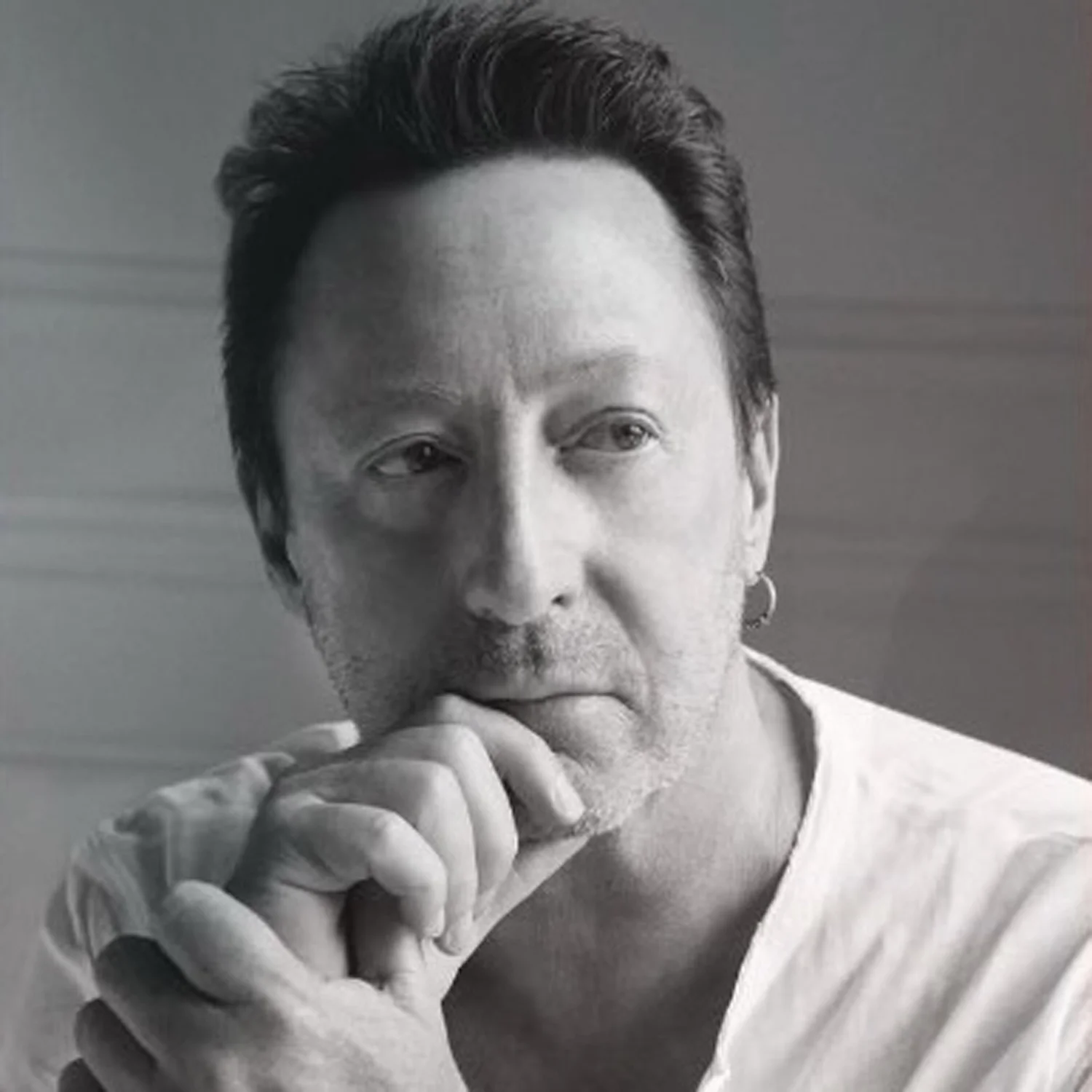
JULIAN LENNON - Singer-songwriter, Photographer, Doc Filmmaker, Exec. Producer of Common Ground
"I thought, wow, how are they going to bring this across in a way that isn't shoving things down people's throats? It's presenting information in a way that is creative, but also in a way that drives your curiosity into understanding, number one, why are we in the position that we're in? And number two, how can we fix this? What can we do to change all of this?And so, I initially got involved as an executive producer on Kiss the Ground, and I was blown away by how that film came out at the end. How well rounded it was, the flow of the film, the storytelling, and really feeding me information that I didn't even know previously. And so also watching that become a platform around the world was jaw-dropping. I mean, the fact that the belief and the understanding and the wisdom that came out of that project has touched so many hearts, minds, and souls around the world, that people are really single-handedly almost making change for the better around the world.Now, when Common Ground was presented, I did love that concept because Kiss the Ground had been very much a broad approach and about America, for the majority, really, and Common Ground was a much more...I mean, we're still dealing with the same subject matter obviously, but I think it felt great to come from a more personal aspect." How can the arts inspire us to lead lives of greater meaning and connection? What kind of world are we leaving for future generations?Julian Lennon is a Grammy-nominated singer-songwriter, photographer, documentary filmmaker, and NYTimes bestselling author of children's books. Executive Producer of Common Ground and its predecessor Kiss the Ground, which reached over 1 billion people and inspired the US Department of Agriculture (USDA) to put $20 billion toward soil health. The natural world and indigenous people are also the focus of Lennon’s other documentaries Whaledreamers, and Women of the White Buffalo. In 2007, Julian founded the global environmental and humanitarian organization The White Feather Foundation, whose key initiatives are education, health, conservation, and the protection of indigenous culture, causes he also advances through his photography, exhibited across the US and Europe. His latest album Jude spans a body of work created over the last 30 years. Julian was named a Peace Laureate by UNESCO in 2020.https://julianlennon.com https://commongroundfilm.org https://kissthegroundmovie.com https://whitefeatherfoundation.com https://julianlennon.lnk.to/JudeWE https://julianlennon-photography.comwww.creativeprocess.infowww.oneplanetpodcast.orgIG www.instagram.com/creativeprocesspodcast
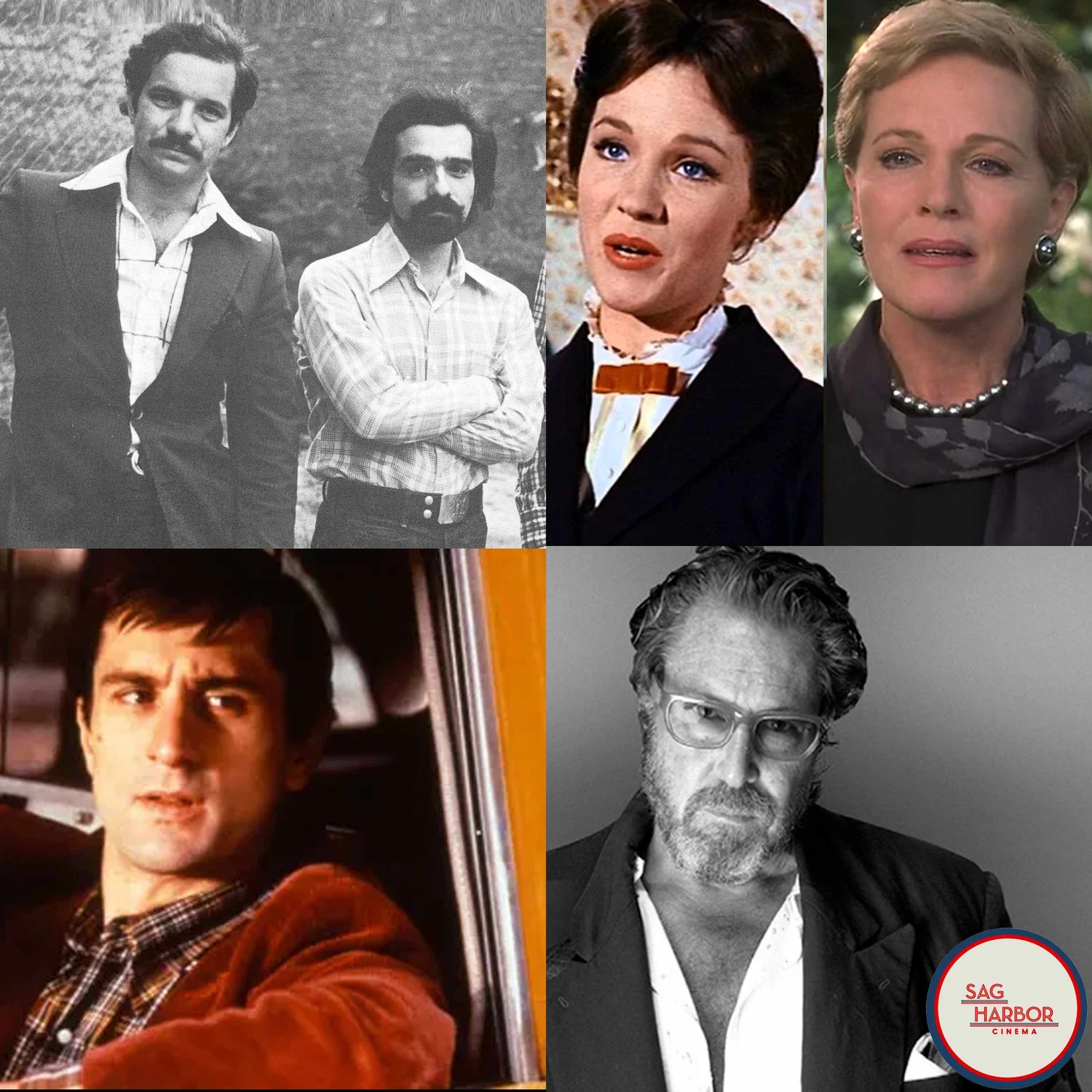
JULIE ANDREWS - PAUL SCHRADER - JULIAN SCHNABEL on Filmmaking & Creative Process
What gave Taxi Driver its edge? What was Mary Poppins secret life? If filmmaking is all about “creating lies”, when does the lie become more real than the truth?Featured film discussions from screenings at Sag Harbor Cinema, following on our interview with April Gornik, community activist/organizer and artist. She is a director of Sag Harbor Cinema and was Campaign Chair for the restoration of the Cinema after a fire nearly destroyed it in 2016. Today the SHG screens a variety of contemporary and classic films, hosting events and public screenings in the presence of filmmakers and actors. You can hear our full interview with Gornik and other artists brought to the stages of Sag Harbor Cinema and The Church Arts & Creativity Center on The Creative Process podcast.Sag Harbor Cinema Arts Center is dedicated to presenting the past, present and future of the movies and to preserving and educating about films, filmmaking, and the film-going experience in its three state-of-the-art theaters and in the surrounding community. The Cinema engages its audiences and the community year-round through dialogue, discovery, and appreciation of the moving image – from blockbusters to student shorts and everything in between. Revitalized and reimagined through unprecedented community efforts to rebuild the iconic Main Street structure after a fire nearly destroyed it in 2016, SHC continues a tradition of entertainment, education, and enrichment in the heart of Sag Harbor Village.https://sagharborcinema.org/www.aprilgornik.comwww.thechurchsagharbor.orgwww.creativeprocess.infowww.oneplanetpodcast.orgIG www.instagram.com/creativeprocesspodcastAudio courtesy of Sag Harbor Cinema Arts Center.

What distinguishes our consciousness from AI & machine learning? LIAD MUDRIK - Neuroscientist, Tel Aviv University
How we think, feel, and experience the world is a mystery. What distinguishes our consciousness from AI and machine learning?Liad Mudrik studies high level cognition and its neural substrates, focusing on conscious experience. She teaches at the School of Psychological Sciences at Tel Aviv University. At her research lab, her team is currently investigating the functionality of consciousness, trying to unravel the depth and limits of unconscious processing, and also researching the ways semantic relations between concepts and objects are formed and detected.https://people.socsci.tau.ac.il/mu/mudriklabhttps://people.socsci.tau.ac.il/mu/mudriklab/people/#gkit-popupwww.creativeprocess.infowww.oneplanetpodcast.orgIG www.instagram.com/creativeprocesspodcast
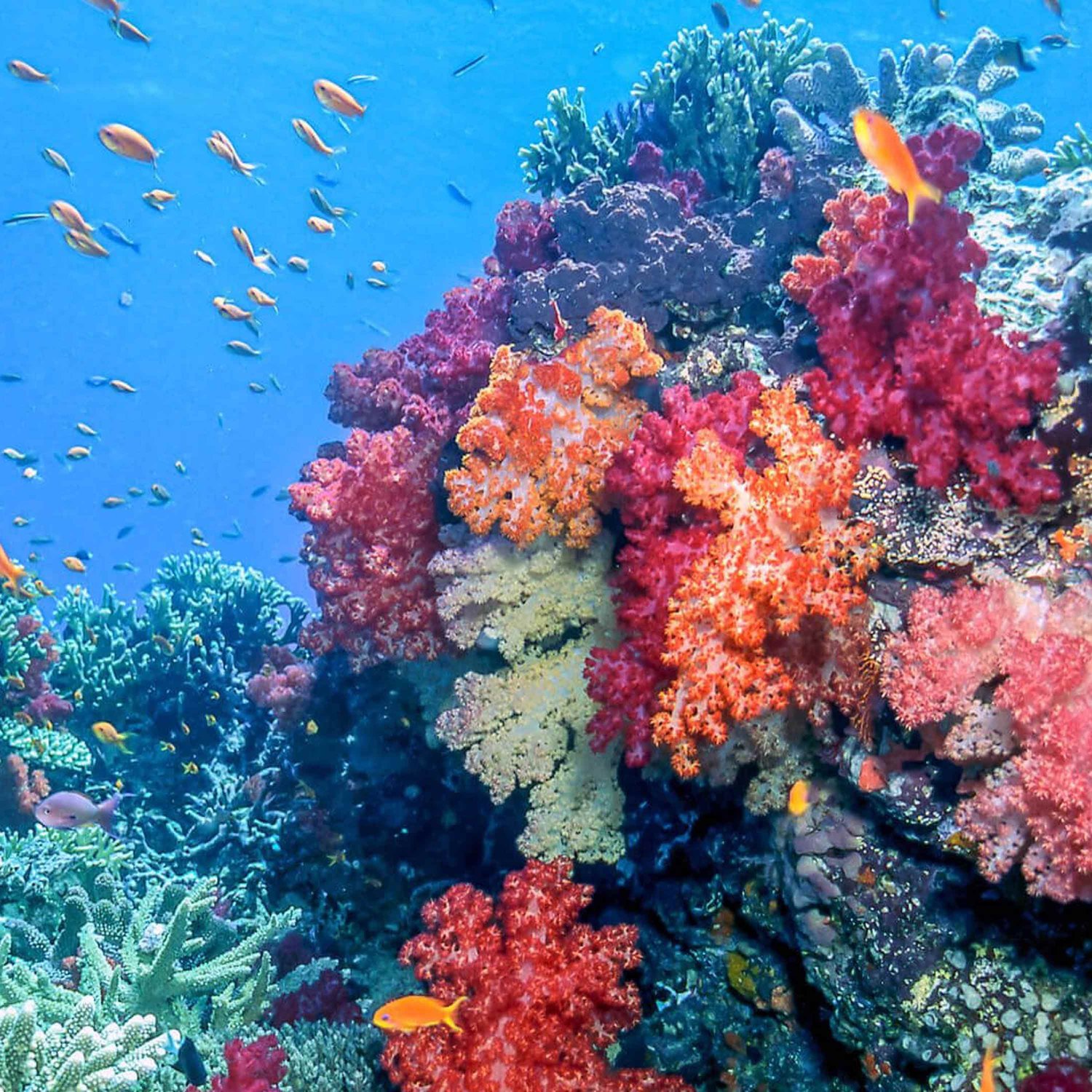
GATOR HALPERN - Co-Founder & President of Coral Vita - UN Young Champion of the Earth - Forbes 30 Under 30 Social Entrepreneur
“Coral reefs are the most biodiverse habitat on the planet, despite covering less than 1 percent of the ocean area, over a quarter of all marine life exists in these rainforests of the sea. And if you think of a coral reef as a rainforest, the trees are the coral themselves. Which are incredible organisms, so, magic is really the right word to describe them. They're these animals that are one of the original forms of animal life, the second branch of the animal kingdom is actually Cnidaria, which includes coral and jellyfish. So, an ancient animal, but they have a symbiotic relationship with algae, and so inside the animal tissue are these zooxanthellae, these algae that do photosynthesis, like algae do, like plants do. It's able to capture sunlight and convert it into sugars and energy. And so, it's an animal, but it's got plants that live inside it, this algae, and then even more wild - it grows a skeleton that is rock!So coral skeleton is actually calcium carbonate, which is limestone. And most of the limestone that exists on the earth was grown by these organisms. And so they're animals with plants inside of them that grow rock as skeleton. And the rock skeletons form these incredibly intricate structures that are coral reefs that can grow for thousands of miles and the corals can live for thousands of years to be seen from space and to create these essential ecosystems that are really the cornerstone of all of life in the ocean and, and therefore much of life on Earth.”Coral reefs are the most biodiverse habitat on the planet, despite covering less than 1 percent of the ocean. Over a quarter of all marine life exists in these rain forests of the sea. Gator Halpern is the Co-founder and President of Coral Vita, a mission-driven company working to restore our world’s dying coral reefs. He is a lifelong entrepreneur who is passionate about starting projects that can help create a better harmony between society and nature. His work has earned him a number of awards including being named a United Nation’s Young Champion of the Earth, a Forbes 30 Under 30 social entrepreneur, and an Echoing Green fellow. Before founding Coral Vita, he worked on development projects in Brazil, Peru, and South Africa. During his career, he has helped distribute millions of baby fish for aquaculture to remote villages in the Amazon, he’s analyzed the environmental effects of land-use change projects on three different continents, and worked for the World Wildlife Fund Global Marine Program. Gator founded Coral Vita during his graduate studies at the Yale School of Forestry and Environmental Studies, and he lives and works in the Bahamas where Coral Vita operates the world’s first commercial land-based coral farm for reef restoration.https://coralvita.cowww.creativeprocess.infowww.oneplanetpodcast.orgIG www.instagram.com/creativeprocesspodcast

LEAH THOMAS - Author of The Intersectional Environmentalist - Founder of IE Platform & @GreenGirlLeah
"So I think the first step is definitely awareness. I know when I was the only Black student in my environmental science program, I didn't quite understand why I really wanted to focus on the environmental injustices that were going on in my neighborhood. Or the concept of racial justice was always kind of intertwined with my environmental advocacy. So it's something that I want other communities of color to understand that that's okay, that you can show up to this field and also have empathy for your own community and that you don't need to separate your identity from your environmental practice. And including your cultural background can actually enhance the work that you do because I think it's such a beautiful thing that we all have different identity aspects, whether that's religion, race, gender, etc.So I think that's the first step, making sure that representation is there so all people can see themselves reflected in environmental education and feel empowered to know that they belong and they can take their identity with them and that enhances their environmental practice. And secondly, through The Intersectional Environmentalist Platform, we love to platform students who are working on climate justice research and share it through kind of untraditional means. So they might not be published in a scientific paper, but it's something they can share amongst their peers in our community of about half a million people, etc. So it's another way for them to share their research at the intersection of identity and environmentalism with more people. And that's something I really enjoy with our work, just letting people know that, yeah, your work is important, even if it's not published in a scientific paper. There is a really big community of people out there who are interested in learning and might even relate to that research."Leah Thomas is an intersectional environmental activist and eco-communicator based in Southern California. She’s passionate about advocating for and exploring the relationship between social justice and environmentalism and was the first to define the term “Intersectional Environmentalism.” She is the founder of @greengirlleah and The Intersectional Environmentalist platform. Her articles on this topic have appeared in Vogue, Elle, The Good Trade, and Youth to the People and she has been featured in Harper’s Bazaar, W Magazine, Domino, GOOP, Fashionista, BuzzFeed, and numerous podcasts. She has a B.S. in Environmental Science and Policy from Chapman University and worked for the National Park Service and Patagonia headquarters before pursuing activism full time. She lives in Carpinteria, California. She is the author of The Intersectional Environmentalist: How to Dismantle Systems of Oppression to Protect People + Planet, and Winner of the Creative Force Foundation Award 2023.www.intersectionalenvironmentalist.com www.instagram.com/greengirlleah www.hachettebookgroup.com/titles/leah-thomas/the-intersectional-environmentalist/9780316281935/?lens=voraciousSeason 2 of Business & Society focuses on CEOs , Sustainability & Environmental Solutions Business & Society is a limited series co-hosted by Bruce Piasecki & Mia Funkwww.oneplanetpodcast.org

ANDREW KLAVAN - Edgar Award-winning Author of The House of Love and Death - True Crime - Don’t Say a Word
"It's a really good point because I think that the modern sensibility and certainly the post-modern sensibility tells us that everything is self-referential. That if we have a certain feeling, it's because of our chemistry, it's because of our sexuality or urges that come within ourselves. But the older way of thinking is that we're in a relationship with a world that actually is reflected in our mind. And I think that that older sensibility is probably closer to the truth. It explains a lot more. It makes a lot more sense of things.So every writer knows this, that he's not actually drawing so much from himself as some kind of literal inspiration, some kind of breathing into him that connects him, his own experiences, his childhood experiences, life experiences, his mental experiences with something that is very real outside him. And what he's trying to do in art, I think, is communicate that experience to other people in the only way possible. You can't describe it, you can't put adjectives into it. You have to dramatize it or paint a picture of it or write a song about it. That's the way human beings communicate the experience of being human."What makes a good drama? What advantages do human storytellers have over their AI counterparts? Where do ideas come from? And what do spiritual beliefs share with artists' faith in the creative process?Andrew Klavan is the author of such internationally bestselling crime novels as True Crime, filmed by Clint Eastwood, Don’t Say A Word, filmed starring Michael Douglas, Empire of Lies and When Christmas Comes. He has been nominated for the Mystery Writers of America’s Edgar Award five times and has won twice. He wrote the screenplays to A Shock to The System starring Michael Caine, One Missed Call starring Edward Burns, and Gosnell: The Trial of America’s Biggest Serial Killer starring Dean Cain. His essays have appeared in the Wall Street Journal, The New York Times, and the Los Angeles Times, his political satire videos have been viewed by tens of millions of people, and he hosts a popular podcast The Andrew Klavan Show at the Daily Wire. He is also the author of a memoir about his religious journey The Great Good Thing: A Secular Jew Comes to Faith in Christ and the USA Today bestseller The Truth and Beauty: How the Lives and Works of England's Greatest Poets Point the Way to a Deeper Understanding of the Words of Jesus. His latest crime novel is The House of Love and Death, the third book in the Cameron Winter series.www.andrewklavan.comwww.amazon.com/House-Death-Cameron-Winter-Mysteries/dp/1613164467www.creativeprocess.infowww.oneplanetpodcast.orgIG www.instagram.com/creativeprocesspodcast
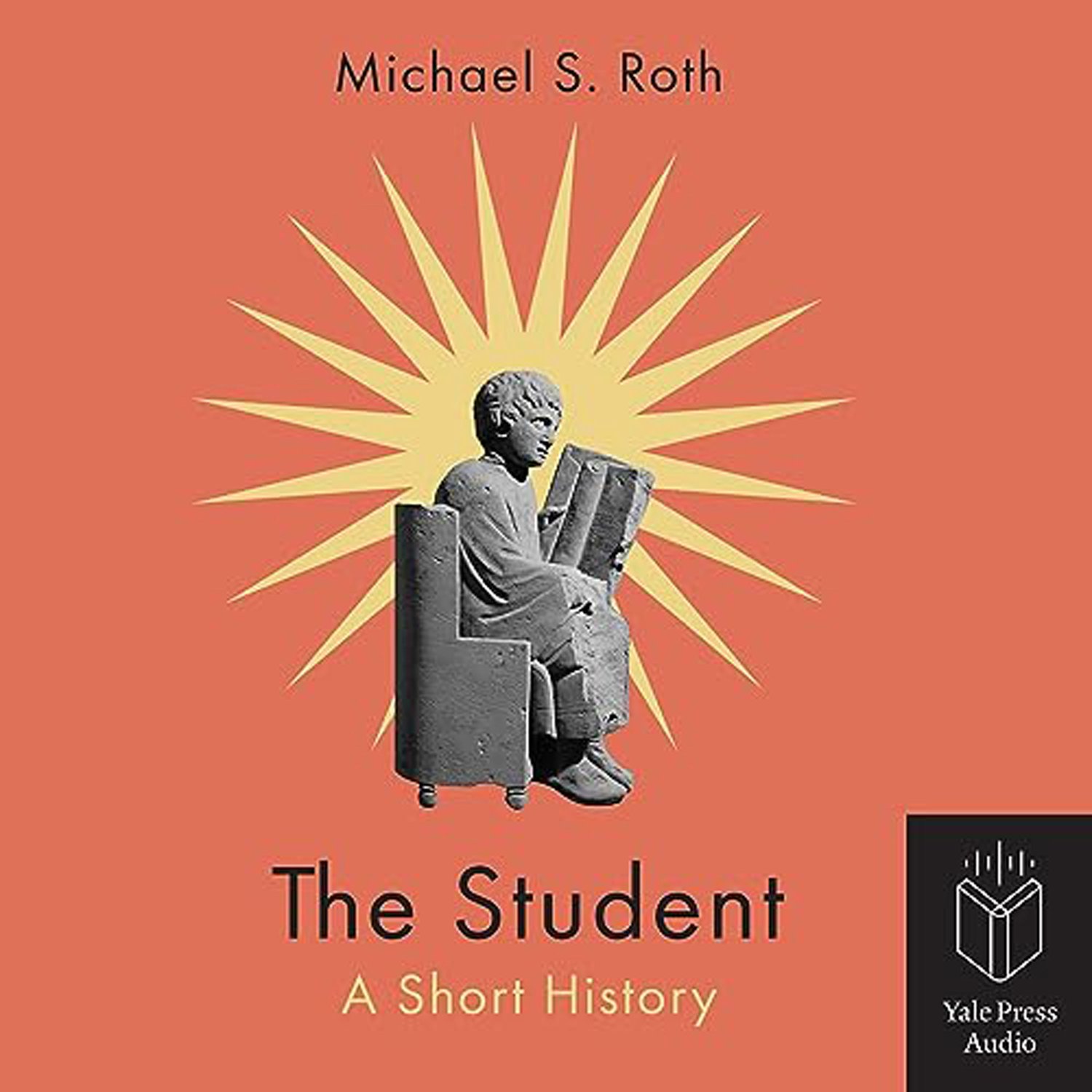
MICHAEL S. ROTH - President of Wesleyan University - Author of The Student: A Short History
“So I wrote this book and it was a lot of fun because I had to learn so much. The book examines three iconic teachers: Confucius, Socrates, and Jesus. And I look at how each of those teachers encourage a certain kind of student. The student as follower, someone who will take on the path that you've developed. In the case of Socrates, the student as critical interlocutor or critical conversation partner, someone who will, in dialogue with you, learn what they don't know, how to take things apart. And in the case of Jesus and the apostles, I look at trying to imitate a way of life to transform themselves to strive towards being the kind of person that Jesus incarnated. And so that's the beginning of the book, these models of studenthood, if I could use that word, and being a teacher. And then I look at the way in which these ideas reverberate in the West across a long period of time. So I'm interested in the idea of the student before there were schools. What did we expect young people to learn even when they weren't going to school?”What is the purpose of education? How are we educating students for the future? What is the importance of the humanities in this age of AI and the rapidly changing workplace?Michael S. Roth is President of Wesleyan University. His books include Beyond the University: Why Liberal Education Matters and Safe Enough Spaces: A Pragmatist’s Approach to Inclusion, Free Speech, and Political Correctness on College Campuses. He's been a Professor of History and the Humanities since 1983, was the Founding Director of the Scripps College Humanities Institute, and was the Associate Director of the Getty Research Institute. His scholarly interests center on how people make sense of the past, and he has authored eight books around this topic, including his latest, The Student: A Short History.https://www.wesleyan.edu/academics/faculty/mroth/profile.htmlhttps://yalebooks.yale.edu/book/9780300250039/the-student/www.wesleyan.eduhttps://twitter.com/mroth78www.creativeprocess.infowww.oneplanetpodcast.orgIG www.instagram.com/creativeprocesspodcast

BRIAN DAVID JOHNSON - Author of The Future You: How to Create the Life You Always Wanted - Futurist in Residence, ASU’s Center for Science & the Imagination
"Let's talk about technology and the role of humanity and the role of being human and what it means to be present in that. We need to keep humans at the center of everything that we do, that everything that we do in our life is about humans. It begins with humans and ends with humans. There might be technologies and businesses and all these things in between, but we should measure the effect on humans.When I talk to people about artificial intelligence or technology, I'm generally asking them two questions. What are you optimizing for? What's the effect that you're trying to get? Developing technology for technology's sake, although it can be kind of interesting...then is why you're doing it because you think it's interesting? But then ultimately, if you're doing it beyond your own gratification, why are you doing it?So much of what I do in that is talking to governments and militaries and large organizations to say we always have to keep humans in the loop. You have to keep humans in the center because it's about us. That really is incredibly important. And that's one of the central ideas in the future. The future should be about humans, and where are humans going. And what do we want as humans? And how are we using technology to make us more human, or healthier, or happier, or more productive?"Brian David Johnson is Futurist in Residence at Arizona State University’s Center for Science and the Imagination, a professor in the School for the Future of Innovation in Society, and the Director of the ASU Threatcasting Lab. He is Author of The Future You: How to Create the Life You Always Wanted, Science Fiction Prototyping: Designing the Future with Science Fiction, 21st Century Robot: The Dr. Simon Egerton Stories, Humanity in the Machine: What Comes After Greed?, Screen Future: The Future of Entertainment, Computing, and the Devices We Love.https://csi.asu.edu/people/brian-david-johnson/www.creativeprocess.infowww.oneplanetpodcast.orgIG www.instagram.com/creativeprocesspodcast
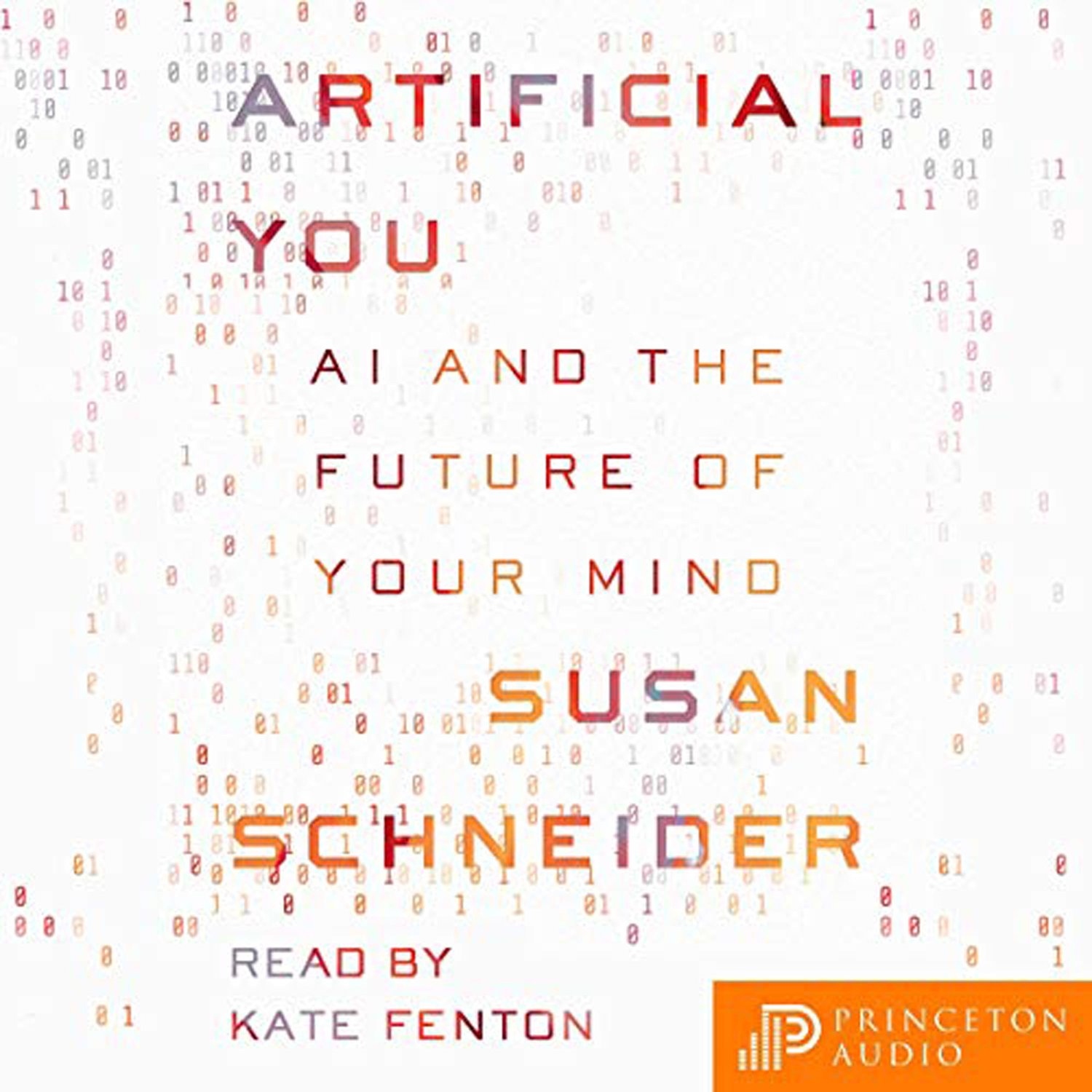
SUSAN SCHNEIDER - Director, Center for the Future Mind, FAU, Fmr. NASA Chair at NASA
"It's been surprising to me how quiet things have been in the humanities. Maybe we're all just taking it in, but I also think that - and this really makes me sad - the tech leaders have been looked at by the media and probably by the politicians themselves as being the important voices at the table for the implications of technology. And there's been a lot of confusion about scientific development versus speculation. So you're seeing everybody wanting to interview the CEOs at the big tech companies or the big AI researchers. And then all of a sudden the idea that they somehow have a monopoly on ideas about conscious machines, for example, or merging with AI. Elon Musk never stops with philosophical claims, and a lot of times you have to wonder what they're supposed to be doing for his stock values as opposed to whether they're true or not. But people just take this, sadly, as what the scientists or AI companies say. You know, well, 'they know the science, so it's got to be true.' But that is not the case. That's where the humanities should be more involved. And it's been a slow plotting situation to see people really step up. I've just been sort of taking it all in, and I've been doing a lot of advising in Washington. So maybe we're all waiting to see where this all goes, right? But I think at this point, I finally achieved a sort of confidence about how I think it's going to play out."Will AI become conscious? President Biden has just unveiled a new executive order on AI — the U.S. government’s first action of its kind — requiring new safety assessments, equity and civil rights guidance, and research on AI’s impact on the labor market. With this governance in place, can tech companies be counted on to do the right thing for humanity? Susan Schneider is a philosopher, artificial intelligence expert, and founding director of the Center for the Future Mind at Florida Atlantic University. She is author of Artificial You: AI and the Future of Your Mind, Science Fiction and Philosophy: From Time Travel to Superintelligence, and The Blackwell Companion to Consciousness. She held the NASA Chair with NASA and the Distinguished Scholar Chair at the Library of Congress. She is now working on projects related to advancements in AI policy and technology, drawing from neuroscience research and philosophical developments and writing a new book on the shape of intelligent systems.www.fau.edu/artsandletters/philosophy/susan-schneider/index www.fau.edu/future-mind/www.creativeprocess.infowww.oneplanetpodcast.orgIG www.instagram.com/creativeprocesspodcast
AI & THE FUTURE OF HUMANITY
What will the future look like? What are the risks and opportunities of AI? What role can we play in designing the future we want to live in?Voices of philosophers, futurists, AI experts, science fiction authors, activists, and lawyers reflecting on AI, technology, and the Future of Humanity. All voices in this episode are from our interviews for The Creative Process & One Planet Podcast.Voices on this episode are:DR. SUSAN SCHNEIDER American philosopher and artificial intelligence expert. She is the founding director of the Center for the Future Mind at Florida Atlantic University. Author of Artificial You: AI and the Future of Your Mind, Science Fiction and Philosophy: From Time Travel to Superintelligence, and The Blackwell Companion to Consciousness. www.fau.edu/artsandletters/philosophy/susan-schneider/indexNICK BOSTROM Founder and Director of the Future of Humanity Institute, University of Oxford, Philosopher, Author of NYTimes Bestseller Superintelligence: Paths, Dangers, Strategies. Bostrom’s academic work has been translated into more than 30 languages. He is a repeat main TED speaker and has been on Foreign Policy’s Top 100 Global Thinkers list twice and was included in Prospect’s World Thinkers list, the youngest person in the top 15. https://nickbostrom.com https://www.fhi.ox.ac.ukBRIAN DAVID JOHNSONFuturist in residence at Arizona State University’s Center for Science and the Imagination, a professor in the School for the Future of Innovation in Society and the Director of the ASU Threatcasting Lab. He is Author of The Future You: How to Create the Life You Always Wanted, Science Fiction Prototyping: Designing the Future with Science Fiction, 21st Century Robot: The Dr. Simon Egerton Stories, Humanity in the Machine: What Comes After Greed?, Screen Future: The Future of Entertainment, Computing, and the Devices We Love.https://csi.asu.edu/people/brian-david-johnsonDEAN SPADE Professor at SeattleU’s School of Law, Author of Mutual Aid, Building Solidarity During This Crisis (and the Next), and Normal Life: Administrative Violence, Critical Trans Politics, and the Limits of Law.www.deanspade.netALLEN STEELEScience Fiction Author. He has been awarded a number of Hugos, Asimov's Readers, and Locus Awards. of the Coyote Trilogy, Arkwright, and other books. His books include Coyote Trilogy and Arkwright. He is a former member of the Board of Directors and Board of Advisors for the Science Fiction and Fantasy Writers of America. He has also served as an advisor for the Space Frontier Foundation. In 2001, he testified before the Subcommittee on Space and Aeronautics of the U.S. House of Representatives in hearings regarding space exploration in the 21st century.www.allensteele.comwww.creativeprocess.infowww.oneplanetpodcast.orgIG www.instagram.com/creativeprocesspodcast
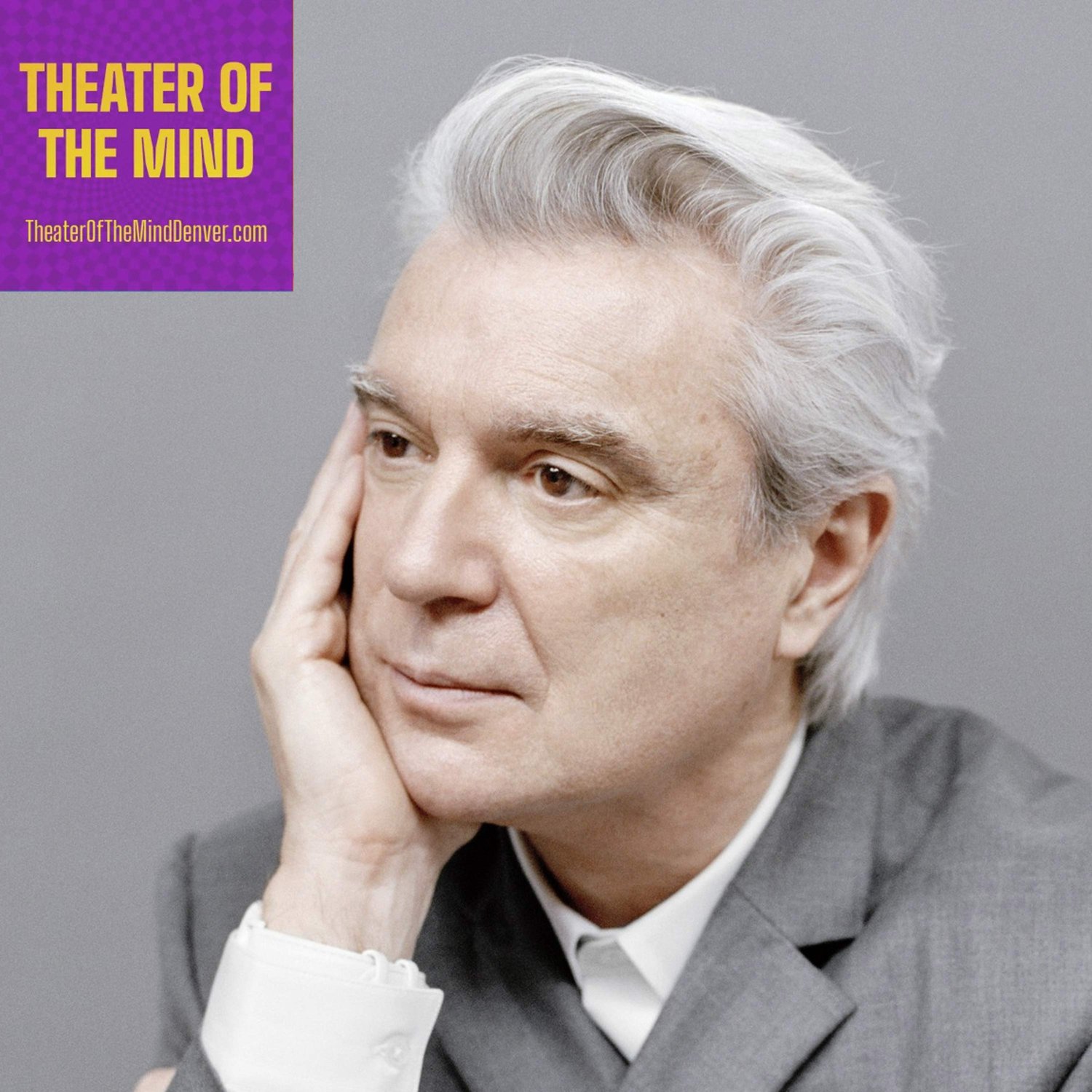
DAVID BYRNE'S THEATER OF THE MIND - SCIENCE SANDBOX FILMS produced by Simons Foundation & People’s TV
Q: Who is David Byrne?David Byrne: ...I have no idea.Most people know me through music, but when I was in high school I saw science and the arts as being equally creative fields. More recently, I just started taking an interest in how the brain works, and there's been this explosion of literature. As much as I love reading about neuroscience, I realize that experiencing some of the phenomena is just on a different level. I wanted to create an experience that shows us we're not who we think we are. Theater of the Mind is an immersive Science Theater project. With this show, I've tried to marry a narrative to the experience of different scientific phenomena that reveal how malleable our perception memory, and identity really are.To make a production like this work, it's a big invisible team. There's actors, lighting designers sound designers, technical people so it's a really complicated system. This is the Theater of the Mind. How do we operate in a world where we're not sure what's real and what's not. If things are unreliable, then what do we trust? People think of science as being intimidating, but it also doesn't mean that you can't understand it or can't enjoy it. Our emotions, our sense of self, our relationship to other people is all connected to our perception, that you can't separate one of these things from another. They all work together to make us what we are.What is consciousness? The mind produces thoughts, sensations, perception, emotions. How can these inner felt experiences be produced within the darkness of the human skull?Nicholas Bruckman is founder and CEO of People's Television, a production studio and creative agency that produces independent films, and video storytelling for brands. Collaborating with the The Simons Foundation through their 'Science Sandbox' Initiative, he directed Theater of the Mind, which takes audiences into the creative inner workings of Musician and Artist David Byrne’s brain, showcasing Byrne’s immersive theater performance, which attempts to conceptualize the idea of our sense of self and how malleable the mind truly is.He directed the award-winning healthcare justice documentary Not Going Quietly, executive produced by Mark and Jay Duplass.John Tracey is Program Director of Science, Society and Culture projects at the Simons Foundation whose mission is to advance the frontiers of research in mathematics and the basic sciences to unravel the mysteries of the universe. The foundation champions basic science through grant funding, support for research and public engagement.Ian Moubayed started his career as a cinematographer, collaborating with Emmy, Peabody, and Oscar-winning filmmakers. His work includes Netflix’s The Great Hack, NBC Peacock’s The Sit-In: Harry Belafonte Hosts the Tonight Show, and HBO’s The Vow.www.youtube.com/@sciencesandboxwww.davidbyrne.comhttps://nickny.com/biohttps://www.simonsfoundation.org/people/john-tracey/https://peoples.tv/director/ian-moubayed/www.creativeprocess.infowww.oneplanetpodcast.orgIG www.instagram.com/creativeprocesspodcast
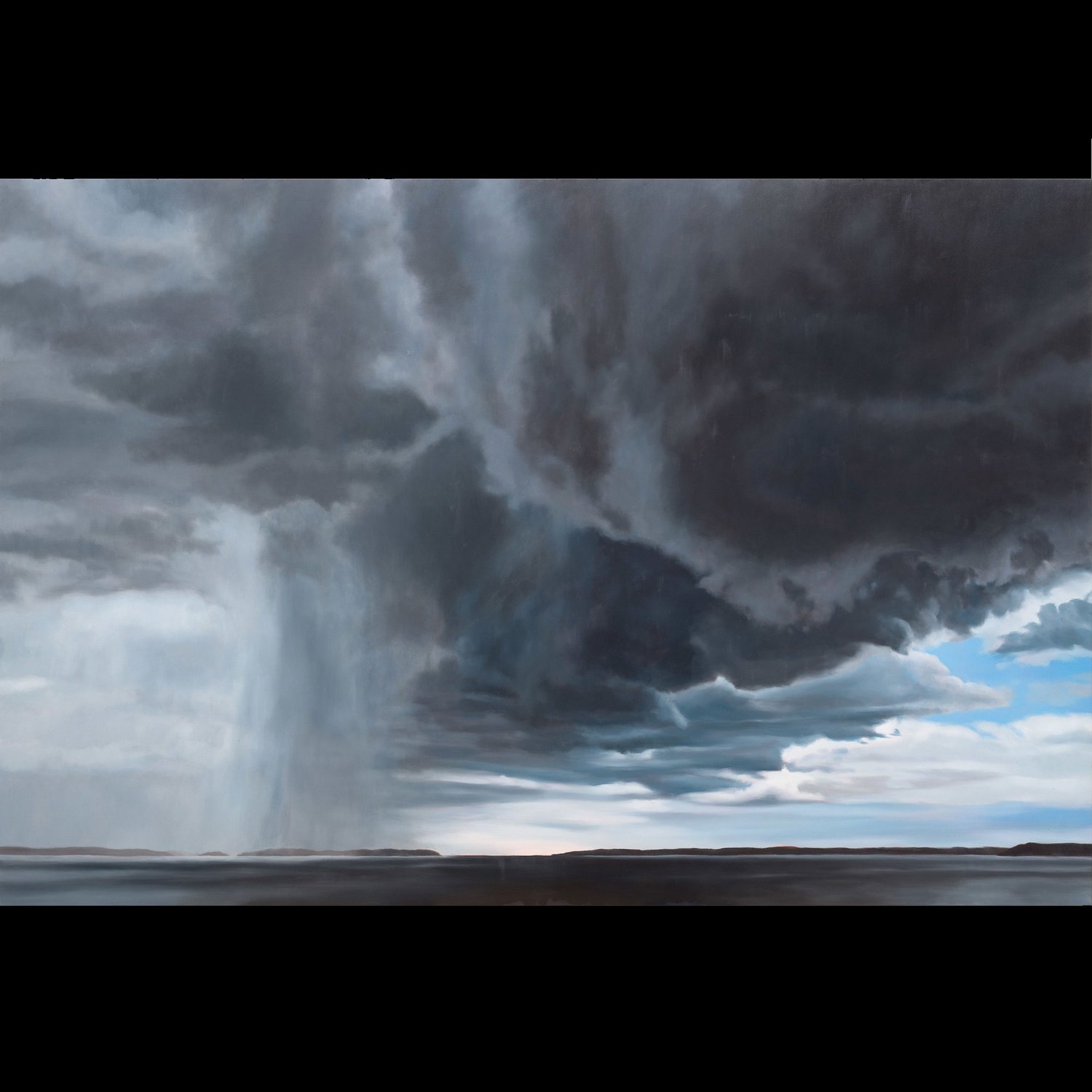
APRIL GORNIK - Artist, Environmentalist, Co-founder of The Church: Arts & Creativity Center
"I was just saying to Eric yesterday, we were walking down the quay and talking and suddenly I said, "People just don't think about place enough. We don't recognize the importance of place." I think it's a little bit the social media environment that we're living in now where we're all bent over a screen, but to try to locate yourself in a place is reifying. It's identifying. It gives you a sense of positive self-consciousness. I think if you find that you're comfortable or not, just being able to feel out the positive or negative effects of a space or place is really important. And I don't think people spend enough time affording themselves that contemplation of place. And, to go back to my work, that's a little bit what I'm doing...I've been trying to sort of locate myself outside of myself as a way of reflecting back on who I am as a person."In this fractured world, how do the arts build community, understanding, and inspire change? How does art help us define who we are and our place in the world?April Gornik is known for her large scale landscape paintings which embrace the vastness of sea and sky. Her imagined landscapes, built up through a series of underpaintings are meditations on light and time. Her work is included in the collections of the Metropolitan Museum of Art, The Museum of Modern Art (MoMA), the Museum of Fine Arts Houston, and the Smithsonian American Art Museum in Washington, DC. She is a director of the board of the Sag Harbor Cinema Arts Center and co-founded The Church arts, exhibition space, and creativity center, which is a sanctuary for visual, performing, literary artists, and other creatives. Together with her husband the artist Eric Fischl, they are at the center of Sag Harbour’s arts district, and in this episode, we’ll also hear from some of the talented artists they’ve brought to their stages.www.aprilgornik.comwww.thechurchsagharbor.orgwww.milesmcenery.com/exhibitions/april-gornik2https://sagharborcinema.org/www.creativeprocess.infowww.oneplanetpodcast.orgIG www.instagram.com/creativeprocesspodcastKimiko Ishizaka - Bach - Well-Tempered Clavier, Book 1 - 01 Prelude No. 1 in C major, BWV 846Creative Commons CC0 1.0 Universal Public Domain

LINDSEY ANDERSON BEER - Writer, Director, Producer - Pet Sematary: Bloodlines - Sleepy Hollow - Bambi
"For me, I don't start a project unless I have a really clear understanding of who the main characters are and why this is a journey that's necessary for them to take. And why are these both the best and the worst people to be in this series? That's the question I ask myself all the time because you need to know: What are their strengths? What are their weaknesses? What are the dramatic tension points going to be where these specific people can really succeed or really fail in this scenario?I love people who are passionate, and Quentin Tarantino is just so passionate. And I've never been in a writer's room or even really in any kind of development experience where a director was just so passionate and so full of kind of energetic ideas. And that was really inspiring. Somebody who just completely knows their own point of view and gets excited by their own ideas is just fun to watch.I was about to shoot Pet Sematary: Bloodlines. I was finishing up my work on Star Trek 4, which I had to leave to do Pet Sematary, so I had been working with J. J. Abrams closely for a while on the script, and so I just asked if he had any advice, in terms of just practical stuff on set. And I mean, I've been on so many sets, but still, he's a director who's done so many projects. So he did give me some great advice just about, you know, making it through such long days and taking time for yourself and just kind of keeping your sanity that was kind of the focus of the advice. And he was just very generous and sweet about that.”Lindsey Anderson Beer wrote and executive produced the hit Netflix original dramedy Sierra Burgess is a Loser before making the jump to direct the horror genre with Pet Sematary: Bloodlines, starring Jackson White and Natalie Alyn Lind. The story is based on an untold chapter of Stephen King's self-proclaimed, scariest property of all time. Up next, she will helm Paramount’s Sleepy Hollow reboot as the writer, director, and producer. She also has several projects in various phases of development and production, including Disney's live action remake of Bambi, New Line's Hello Kitty, and Universal's Fast and Furious spinoff, which she wrote with Geneva Robertson-Dworet. Under her production banner Lab Brew, Lord of the Flies will be directed by Luca Guadagnino and written by Patrick Ness for Warner Bros.www.imdb.com/name/nm5170222/www.creativeprocess.infowww.oneplanetpodcast.orgIG www.instagram.com/creativeprocesspodcast

DEAN SPADE - Author of Normal Life: Administrative Violence, Critical Trans Politics, and the Limits of Law
“The legal system is a colonial legal system that is designed to preserve capitalist extraction and all the racial dynamics required to produce racial capitalism. The system is already completely captured by our opponents. And anything that looks like it's good for us is probably actually not. People don't get what they're supposed to get. It's undermined in several ways, or it can get flipped all the time. Like the law in the books is not happening on the streets. The police are not supposed to kill people all the time, and they just do. There is no rule of law. We live in lawless, brutal domination under a set of systems that are incredibly resilient and can reframe and sometimes be extra-legal, and that works out fine for them.” Dean Spade is an organizer, speaker, author, and professor at Seattle University's School of Law, where he teaches courses on policing, imprisonment, gender, race, and social movements. Spade has been organizing racial and economic movements for queer and trans liberation for the past 20 years. Spade's books include Normal Life: Administrative Violence, Critical Trans Politics, and the Limits of Law and Mutual Aid, Building Solidarity During This Crisis (and the Next). In 2002, Dean founded the Sylvia Rivera Law Project, a non-profit law collective that provides free legal services to transgender, intersex and gender non-conforming people who are low-income and/or people of color, and which operates on a collective governance model. His writing has appeared in The Chronicle of Higher Education, Out, In These Times, Social Text, and Signs.www.deanspade.net www.southendpress.org/2010/items/87965www.deanspade.net/mutual-aid-building-solidarity-during-this-crisis-and-the-next/https://srlp.orgwww.creativeprocess.infowww.oneplanetpodcast.orgIG www.instagram.com/creativeprocesspodcast
ANTHONY LEISEROWITZ - Founding Director of Yale Program on Climate Change Communication - Host of Climate Connections
"So the why really depends on where you are. People are not all the same. There is no such thing as the public. There are many, many, many different publics within a state, within a country, within the world, right? So one of the first cardinal rules of effective communication is know your audience. Who are they? What do they know? What do they think they know? Who do they trust? Where do they get their information? What are their underlying values? And it's only once you know who they are that you as a communicator can go more than halfway to try to meet them where they are not where you are. Where they are. That's so easy to say, but it's actually so hard for so many of us within the climate community to do because we're steeped in this issue. We want to talk about things."Anthony Leiserowitz, Ph.D. is the founder and Director of the Yale Program on Climate Change Communication and a Senior Research Scientist at the Yale School of the Environment. He is an internationally recognized expert on public climate change beliefs, attitudes, policy support, and behavior, and the psychological, cultural, and political factors that shape them and conducts research globally, including in the United States, China, India, and Brazil. He has published more than 250 scientific articles, chapters, and reports and has worked with the Intergovernmental Panel on Climate Change, the National Academy of Sciences, the Smithsonian Museum of Natural History, the Harvard Kennedy School, the United Nations Development Program, the Gallup World Poll, and the World Economic Forum, among others. He is a recipient of the Friend of the Planet Award from the National Center for Science Education, the Mitofsky Innovator Award from the American Association of Public Opinion Research, the Stephen H. Schneider Award for Outstanding Climate Science Communication from Climate One, and an Environmental Innovator award from the Environmental Protection Agency. In 2020, he was named the second-most influential climate scientist in the world (of 1,000) by Reuters. He is also the host of Climate Connections, a radio program broadcast each day on more than 700 stations nationwide.https://environment.yale.edu/profile/leiserowitzhttps://climatecommunication.yale.eduwww.yaleclimateconnections.orgwww.creativeprocess.infowww.oneplanetpodcast.orgIG www.instagram.com/creativeprocesspodcast
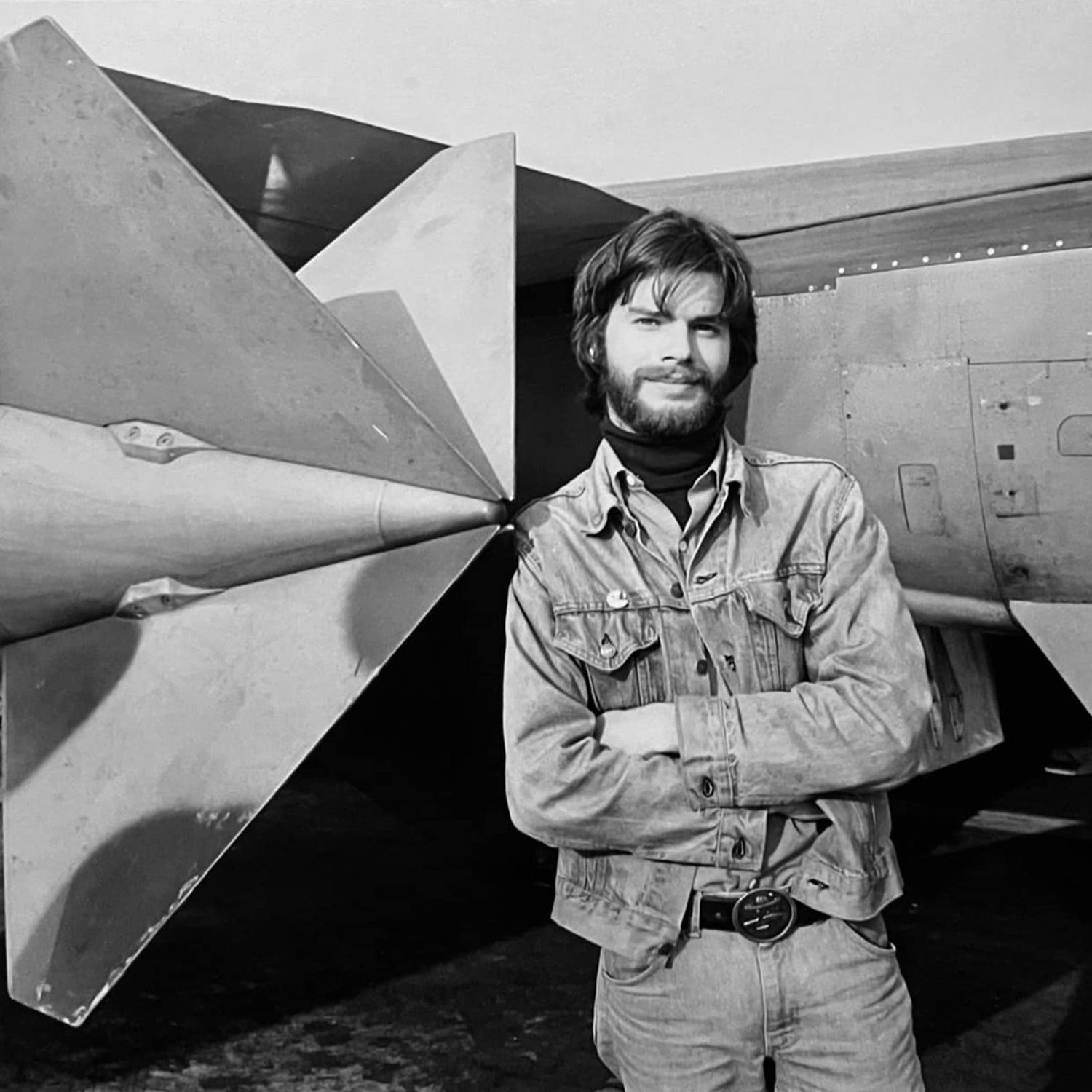
ALLEN STEELE - Hugo Award-winning Science Fiction Author of the Coyote Trilogy, Arkwright
"I'm really very glad. I was happy to see that within my lifetime that the prospects of not just Mars, but in fact interstellar space is being taken seriously. I've been at two conferences where we were talking about building the first starship within this century. One of my later books, Arkwright, is about such a project. I saw that Elon Musk is building Starship One, I wish him all the best. And I envy anybody who goes.I wish I were a younger person and in better health. Somebody asked me some time ago, would you go to Mars? And I said, 'I can't do it now. I've got a bum pancreas, and I'm 65 years old, and I'm not exactly the prime prospect for doing this. If you asked me 40 years ago would I go, I would have said: in a heartbeat!' I would gladly leave behind almost everything. I don't think I'd be glad about leaving my wife and family behind, but I'd be glad to go live on another planet, perhaps for the rest of my life, just for the chance to explore a new world, to be one of the settlers in a new world.And I think this is something that's being taken seriously. It is very possible. We've got to be careful about how we do this. And we've got to be careful, particularly about the rationale of the people who are doing this. It bothers me that Elon Musk has lately taken a shift to the Far Right. I don't know why that is. But I'd love to be able to sit down and talk with him about these things and try to understand why he has done such a right thing, but for what seems to be wrong reasons."What does the future of space exploration look like? How can we unlock the opportunities of outer space without repeating the mistakes of colonization and exploitation committed on Earth? How can we ensure AI and new technologies reflect our values and the world we want to live in? Allen Steele is a science fiction author and journalist. He has written novels, short stories, and essays and been awarded a number of Hugos, Asimov's Readers, and Locus Awards. He’s known for his Coyote Trilogy and Arkwright. He is a former member of the Board of Directors and Board of Advisors for the Science Fiction and Fantasy Writers of America. He has also served as an advisor for the Space Frontier Foundation. In 2001, he testified before the Subcommittee on Space and Aeronautics of the U.S. House of Representatives in hearings regarding space exploration in the 21st century.www.allensteele.comwww.creativeprocess.infowww.oneplanetpodcast.orgIG www.instagram.com/creativeprocesspodcastPhoto from a field trip to Pease Air Force Base in Portsmouth NH, now closed. Photo credit: Chuck Peterson
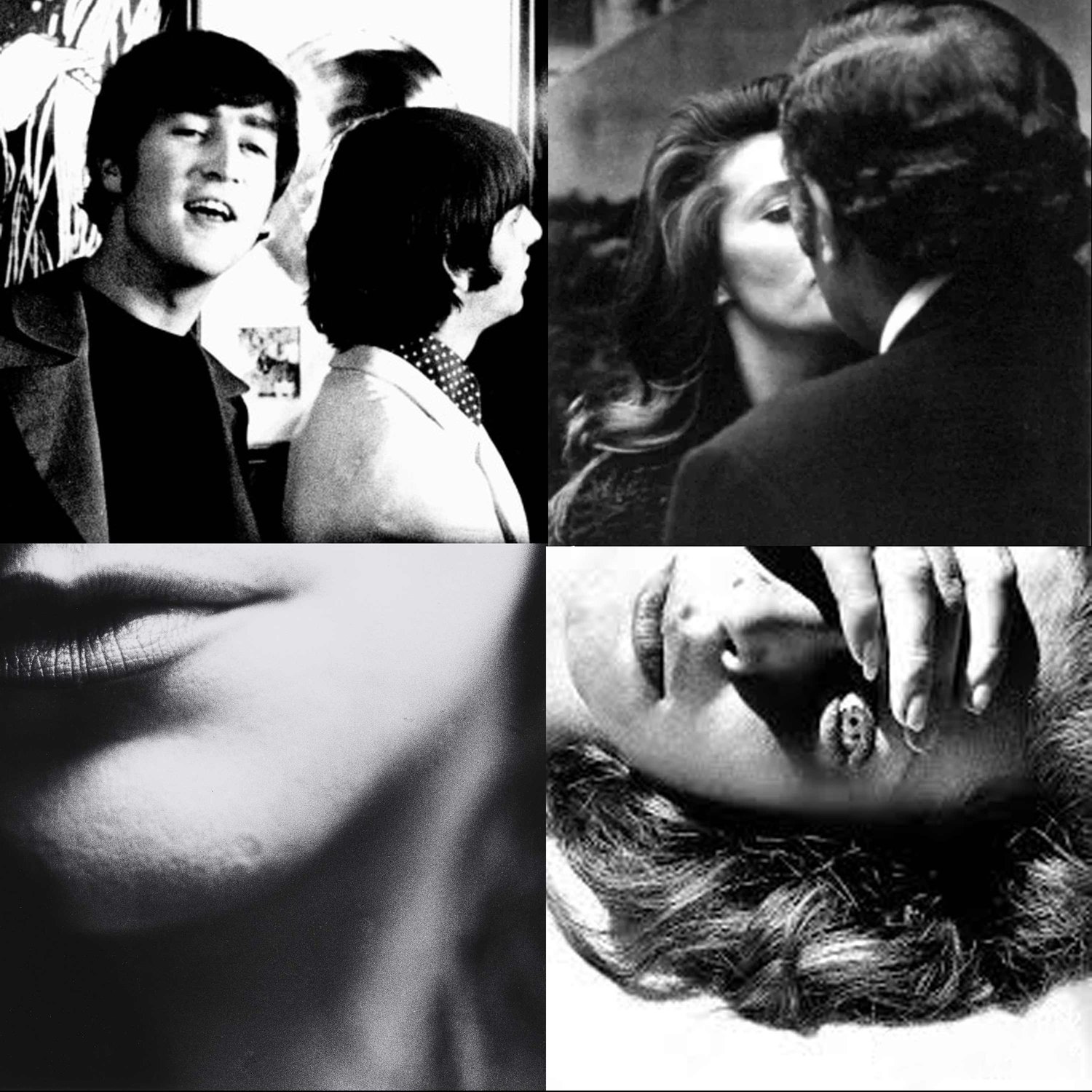
RALPH GIBSON - Award-winning Photographer - Leica Hall of Fame Inductee
"The way I measured time for a very large part of my life was I was always in preparation. I remember as a child I was preparing to make my first communion, then I was preparing to go to junior high. There are always these lapses that existed ahead of us, where we were progressing through time predicated on noteworthy events. So I was always functioning as though there was going to be a significant event, which occurred in some kind of concept of the future. And that coincided in parallel with the fact that when you're young, you feel essentially immortal because the idea of being old or dying is so abstract. It's so far away. So now that I'm in this phase of my life where all I'm interested in doing is maintaining my health, doing my push-ups, and profiting from as much time as I have left. Because now I'm at the very peak of my powers as a photographer. I'm getting pictures much faster and in greater ratio, and I'm moving through the experience at a rate that I always had yearned towards. And in terms of exhibitions and publications and all that I had everything I wanted when I was 40."How does the mind influence the mind? The mind cannot function without memory. And memory is just the mind aware of itself. So how do images tell us how we see and who we are?Ralph Gibson is one of the most interesting American photographers of our time. His international renown is based on his work, which is shown and collected by some of the world’s leading museums, including the Museum of Modern Art in New York, the J.P. Getty Museum in Los Angeles, the John Simon Guggenheim Memorial Foundation, the Creative Center for Photography in Tucson, the Museum of Fine Arts in Houston, the Maison Européenne de la Photographie in Paris, the Bibliothèque Nationale de France in Paris, and the Fotomuseum Winterthur in Switzerland.Gibson’s works reveal a meticulous aesthetic and visual territory edging on the surreal. His recent books include his memoir Self Exposure, Sacred Land: Israel before and after Time, and Secret of Light, which accompanied his exhibition at the Deichtorhallen House of Photography in Hamburg. He is a Leica Hall of Fame Inductee and has been awarded the French Legion of Honor. In 2022, The Gibson | Goeun Museum of Photography devoted to his work opened in Busan, South Korea.www.ralphgibson.comwww.deichtorhallen.de/en/ausstellung/ralph-gibsonwww.gibsongoeunmuseum.comwww.creativeprocess.infowww.oneplanetpodcast.orgIG www.instagram.com/creativeprocesspodcast
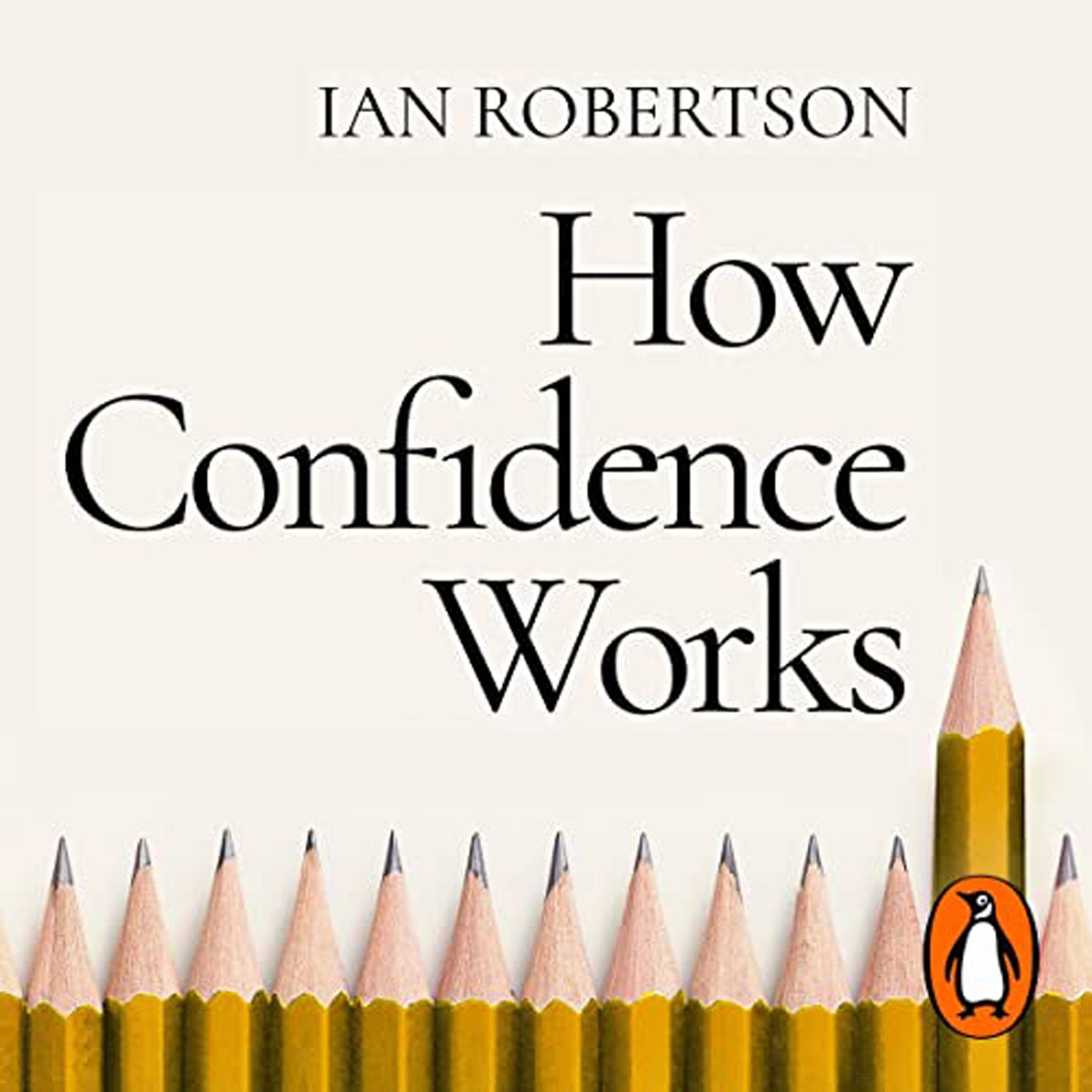
IAN ROBERTSON - Author of How Confidence Works: The New Science of Self-belief - Co-Director of the Global Brain Health Institute
“The book probes the science and neuroscience behind the idea that confidence can be learned, or whether it is something you inherit. Optimism, hope, and self-esteem are all concepts that are easily confused with confidence. But, as I show, they differ in one fundamental way - confidence empowers action. You can be an optimist who is hopeful that things will work out okay in the end without ever believing that you can play a part in that outcome, or indeed have any realistic grounds for that optimism. And you can have high self-esteem and feel good about yourself without feeling confident that you can achieve a particular goal.”How important is confidence? Psychologists say confidence is a series of mental, physical, and emotional habits that can be learned. What makes some people overconfident while others are realistic about their abilities and why are both outlooks important to succeed in life?Ian Robertson is Co-Director of the Global Brain Health Institute (Trinity College Dublin and University of California at San Francisco) and Co-Leader of The BrainHealth Project at University of Texas at Dallas. A trained clinical psychologist as well as a neuroscientist, he is internationally renowned for his research on neuropsychology. He has written five books and numerous newspaper and magazine articles and comment pieces in the Guardian, Times, Telegraph, Irish Times, Time magazine and New York magazine, amongst others. He has appeared on BBC Radio and featured in several major television documentaries. He is a regular speaker at major futurology and business conferences in Europe, the USA and Asia.https://ianrobertson.orgwww.gbhi.orgwww.penguin.co.uk/books/441931/how-confidence-works-by-robertson-ian/9781787633728https://centerforbrainhealth.org/projectwww.creativeprocess.infowww.oneplanetpodcast.orgIG www.instagram.com/creativeprocesspodcast
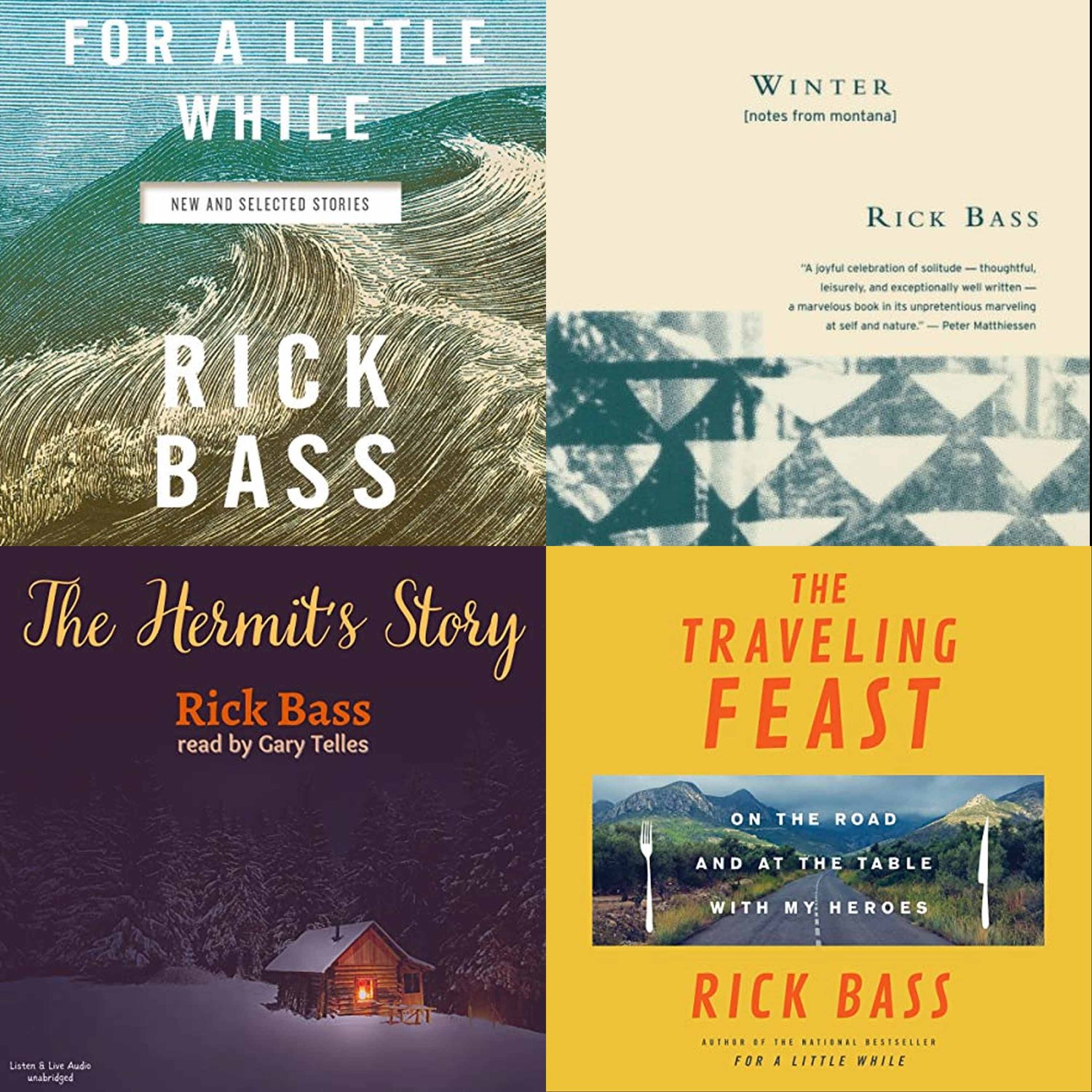
RICK BASS - Environmentalist & Story Prize Award-winning Author of “Why I Came West”, “For a Little While”
"So it's just a great joy to be passing this guitar made from the wood of an 800-year-old tree around to musicians and asking them to play a song of resistance or celebration. And that's what we're going to do at Climate Aid: The Voice of the Forest. We're going to have it be an annual event like Farm Aid. And we want it to be big. We want it to be Woodstock in its pivot point. The way the Children's Trust court case was pivotal, the way this Black Ram court case we had and won was pivotal.We want Climate Aid to be a celebration. And this one guitar exploring the question: Can one tree save a forest? Can one song save a forest? And we think the answer is yes. We believe it will be. What we want to do with the forest that the guitar came from is establish it as a climate refuge, a place dedicated to storing as much carbon and long-term safekeeping as possible.We want the climate refuge to be really big. We want it to store a ton of carbon. We want it to be a focal point for increased scientific and artistic inquiry. We've brought in the world's leading climate scientists, and they've analyzed it, and they're proposing studies that should happen there. We've brought in our country's leading artists and they have experienced it and responded to it in their own way. We've had performance artists come and play music in the forest. So we want to establish the nation's first climate refuge. There is no such designation. We want it to be in Black Ram. This forest that almost got erased, a forest that was a thousand years old and almost went away. But we're getting a second chance. We saved it. Now we want to preserve it for another thousand years to study it, but we don't want to stop there. We want the government to establish a series of climate refuges all along the northern tier of the United States. What we think of as a necklace of green, a curtain of green. And from there to go around the globe, across northern Europe and northern Asia, and back around to Alaska. The amount of carbon that can be kept safely sequestered there is extraordinary. The numbers are almost unbelievable."Rick Bass, a National Book Critics Circle Award finalist for his memoir Why I Came West, was born and raised in Texas, worked as a petroleum geologist in Mississippi, and has lived in Montana's Yaak Valley for almost three decades. His short fiction, which has appeared in The New Yorker, The Atlantic, Esquire, and The Paris Review, as well as numerous times in Best American Short Stories, has earned him The Story Prize, multiple O. Henry Awards and Pushcart Prizes in addition to NEA and Guggenheim fellowships.He’s an organizer and speaker at Climate Aid: The Voice of the Forest, a fundraiser event to benefit the grassroots environmental movement of Protect Ancient Forests & The Montana Project. Featuring Maggie Rogers and more great performers and speakers. The evening will advance the efforts to protect the Black Ram forest by designating the region as the nation’s first Climate Refuge. Portland, Maine, on Sunday, Oct. 15 at 7 p.m. ET, at the Merrill Auditorium. Tickets available at the Merrill’s box office and online at PortTIX.com. www.rickbass.netwww.protectancientforests.orgwww.montanaproject.orgwww.PortTIX.comwww.creativeprocess.infowww.oneplanetpodcast.orgIG www.instagram.com/creativeprocesspodcast

NAN HAUSER - Whale Researcher - President, Center for Cetacean Research & Conservation - Director, Cook Islands Whale Research
"I don't think a lot of people realize how absolutely important whales are, and not just because they're beautiful and they make people happy, but whales carry nutrients from the depths they feed back to the surface. And there's this liquidy plume of fecal matter, and it's called the whale pump. And they bring all these nutrients upward with their tails by swimming up and down the water column, it's like an upward biological pump. And there's an incredible amount of nitrogen that's released in these plumes. And we get this great soup of nutrients. We get more from this nitrogen than all the rivers combined. And in the past, we recognized microbes and plankton and fish and that they recycled nutrients in the ocean, yet whales and other marine mammals have largely been overlooked and that's too bad because they are bioengineers. They help the climate so much because of all this creates more plankton by circulating the nutrients and fertilizing the phytoplankton with their poo. For instance, sperm whales alone in the Southern Ocean help sequester over 19 million trees worth of carbon. They are bioengineers of their ecosystems and our ecosystems too. They promote the growth of phytoplankton, which absorbs carbon. So, if we just leave them alone, that could be an incredible solution for us to help with the mess we've made. And there's also the whole thing about the whale fall. When a whale dies and the crabs and the worms and the clams and everything start to eat it, the whale carcass itself transports about 190,000 tons of carbon. That's what is produced by about 80,000 cars every year. So when you think about saving the whales, you're thinking about saving the planet and people, whether it's your family or your grandchildren or your great-grandchildren or whatever. This is a really big issue for me because I have nine grandchildren, and I worry about what we are leaving them because we are leaving them a big mess. We need to think beyond immediate results and consider the next steps and the consequences. And I think we tend to forget to do that because otherwise, they're going to get stuck with it."Nan Hauser is the President and Director of the Center for Cetacean Research & Conservation and the Director and Principal Investigator of Cook Islands Whale Research. Currently she's in the field studying the migration of the Southern Humpback Whale population that is currently passing through the Cook Islands, where she resides on the main island of Rarotonga. Her research includes population identity and abundance, acoustics, genetics stable isotopes behavior, and the navigation of cetaceans.https://whaleresearch.orghttps://whaleresearch.org/saved-by-a-whalewww.creativeprocess.infowww.oneplanetpodcast.orgIG www.instagram.com/creativeprocesspodcast
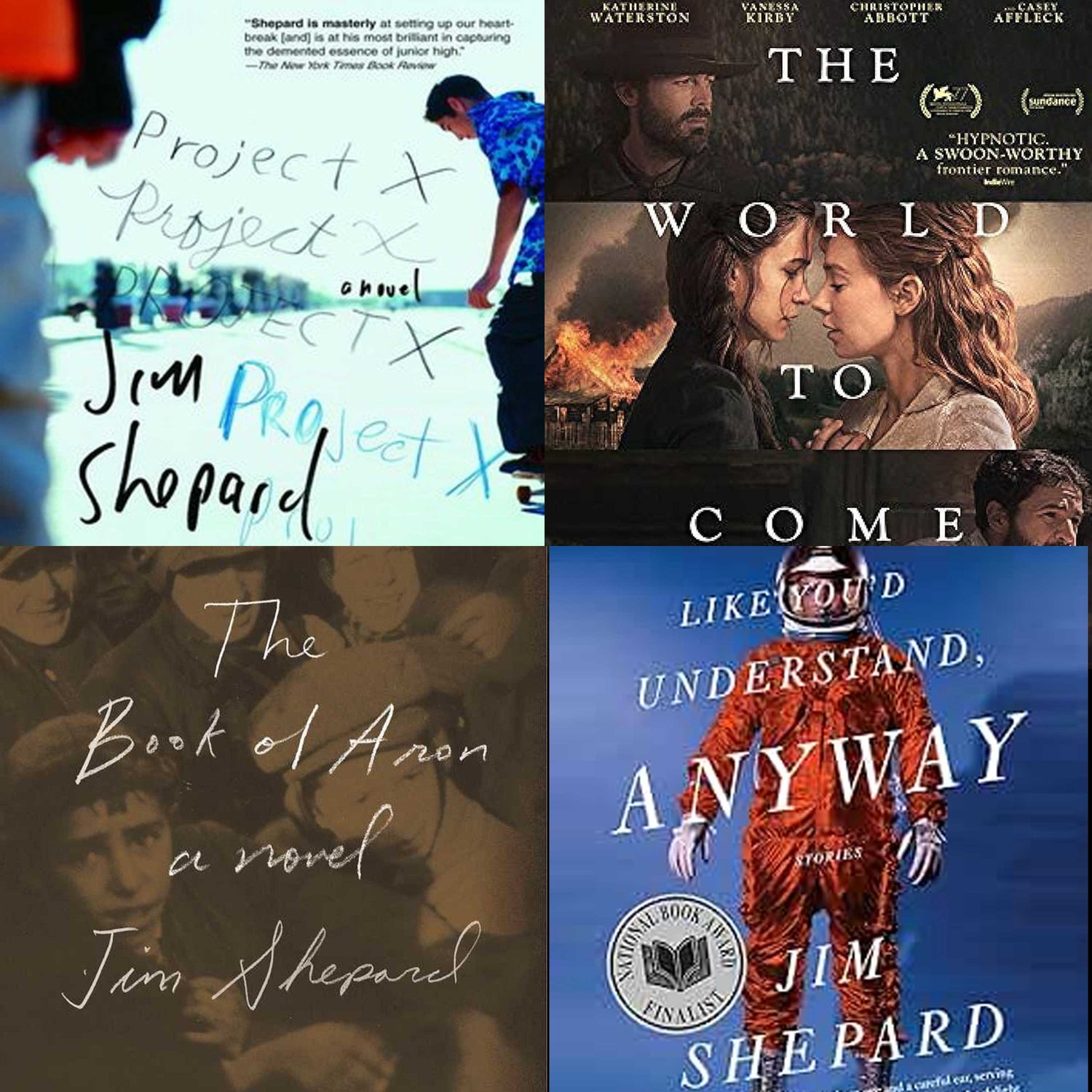
JIM SHEPARD - Author of The Book of Aron, Project X, The World to Come starring Casey Affleck, Vanessa Kirby, Katherine Waterston
"In terms of what I'm writing, I'm always trying to make myself a more interesting human being. And so that means I'm coming across these human dilemmas where I'm like what would it have been like to be in that position? And that snags my emotional imagination. I do think that literature is all about extending the empathetic imagination. And so I'm always looking to educate myself in emotional terms, too. Because I'm very interested in the way we respond in those situations where it feels like we both have responsibility, and we don't have responsibility."How can literature help us extend our empathic imaginations? How can writing and reading expand our curiosity and compassion for people in situations distant from our own?Jim Shepard is the author of seven previous novels, most recently The Book of Aron (winner of the 2016 PEN New England Award, the Sophie Brody medal for achievement in Jewish literature, the Ribalow Prize for Jewish literature, the Clark Fiction Prize, and a finalist for the National Jewish Book Award) and five story collections, including Like You’d Understand, Anyway, which was a finalist for the National Book Award and won The Story Prize. His short fiction has appeared in, among other magazines, The New Yorker, Harper’s Magazine, McSweeney’s, The Paris Review, The Atlantic, Esquire, Tin House, Granta, Zoetrope, Electric Literature, and Vice, and has often been selected for The Best American Short Stories and The PEN/O. Henry Prize Stories. He lives in Williamstown, Massachusetts, with his wife, three children, and three beagles, and he teaches film and creative writing at Williams College. His story “The World to Come” was adapted into a feature film starring Casey Affleck, Vanessa Kirby, and Katherine Waterston.https://jimshepard.wordpress.comwww.creativeprocess.infowww.oneplanetpodcast.orgIG www.instagram.com/creativeprocesspodcast

LESLEY HUGHES - Lead Author of IPCC 4th & 5th Assessment Reports - Director of Climate Council of Australia
"Australia is generally considered one of the most vulnerable developed countries to the impacts of climate change, and I've been in the climate science space for more than 30 years, but I have to say this last month has been particularly confronting. We're seeing all sorts of tipping points that scientists have been warning about for decades and they are really real right now. I've never had such climate anxiety, and it's sort of new for me to be struggling with that because I think I've been pretty resilient to sort of eco-anxiety. Talking about averages all the time is a real problem in climate science because the temperature on any one day goes up and down a lot more than 1.5 or 2 degrees. So we have to keep working on relating those average global temperatures to the extremes that people experience in their lives on the ground where they live. We have to keep reminding people that that is the sort of thing that we are going to see more and more often. It isn't a one-off event. It's a message about the future."Now in the 21st century, with an abundance of renewable technologies, why is the world still using 18th-century energy technology? How can each of us harness our unique skills to help solve the climate crisis?Lesley Hughes is a Distinguished Professor of Biology and Interim Executive Dean of the Faculty of Science & Engineering at Macquarie University. She is an ecologist whose main research interest has been the impacts of climate change on species and ecosystems, and the implications of climate change for conservation. She was a Lead Author of the IPCC’s 4th and 5th Assessment Report, Director for the WWF Australia and federal Climate Commissioner and is now a Councillor and Director with the Climate Council of Australia. She is also a member of the Wentworth Group of Concerned Scientists.https://researchers.mq.edu.au/en/persons/lesley-hugheswww.climatecouncil.org.auwww.creativeprocess.infowww.oneplanetpodcast.orgIG www.instagram.com/creativeprocesspodcast
JAMES BROWNING - Founder of F Minus: Calling for Divestment from Fossil Fuel Lobbyists
"The lobbyists that represent the fossil fuel companies like ExxonMobil, Koch companies, and the American Petroleum Institute, they knew for years that the climate crisis would happen, and they've been telling us that it wouldn't. And right now in every state capital, the lobbyists are doing everything they can to slow the transition from fossil fuel to renewables. The sad fact is, these oil and gas lobbyists will never wake up one morning and say: I am worried about the climate crisis. I'm worried about my children. I am going to cut off ties with these oil and gas companies and stop taking their money. That will never happen. And I'm sad to say this, but it's been a long, long road to try to change their behavior with facts or reason."Why are fossil fuel lobbyists also allowed to work for communities, schools, businesses, and nonprofit organizations being harmed by the climate crisis without declaring their conflict of interest? Why divestment from fossil fuels should include divesting from lobbyists which play for both sides.James Browning is the founder of F Minus, a research and advocacy group that tracks the extent to which fossil fuel lobbyists also represent victims of the climate crisis. He is also a writer and game designer, and his novel The Fracking King was named one of the best 100 books of 2014 by Amazon.https://fminus.orgwww.creativeprocess.infowww.oneplanetpodcast.orgIG www.instagram.com/creativeprocesspodcast
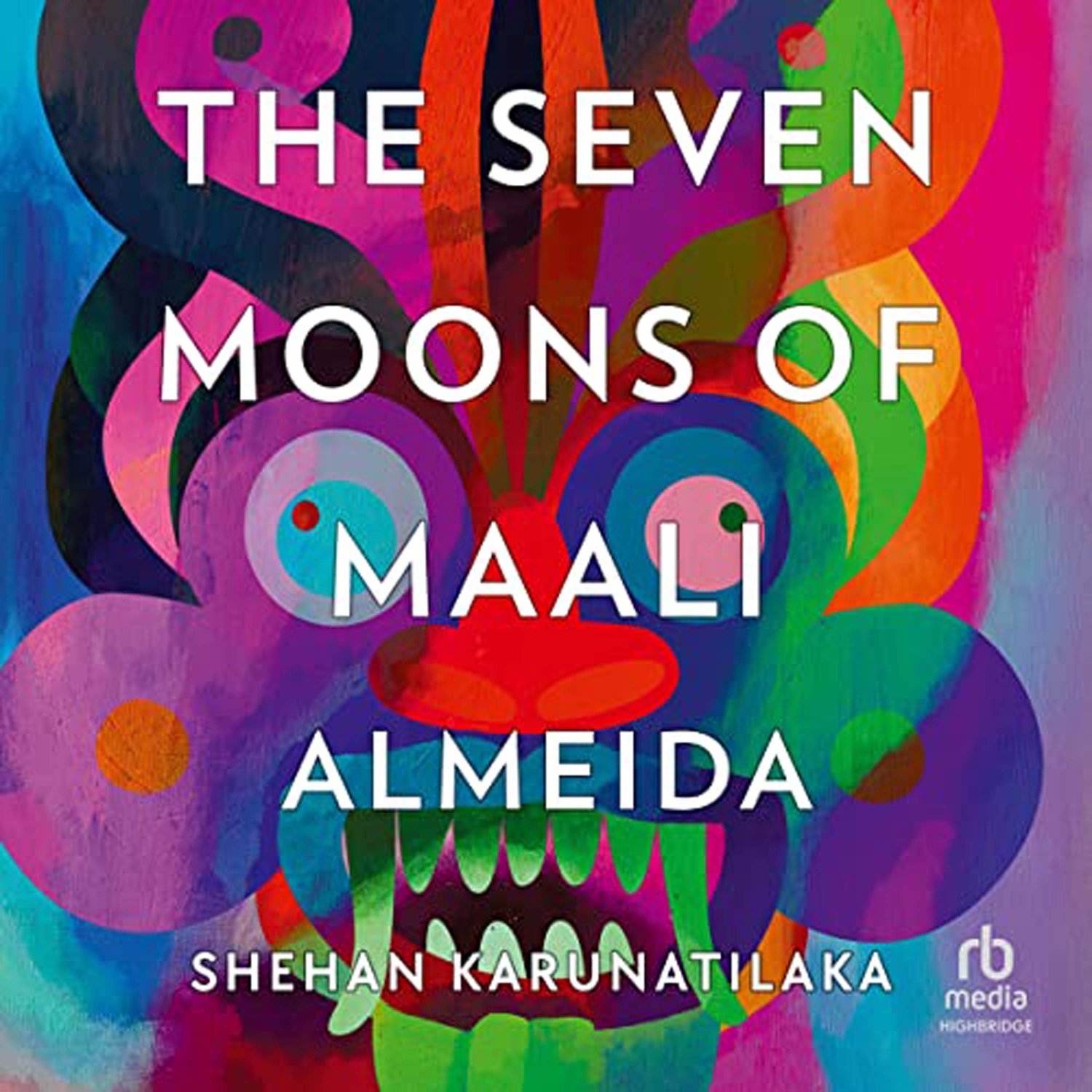
SHEHAN KARUNATILAKA - Booker Prize-winning Author of The Seven Moons of Maali Almeida
"So this was the decision to write in the second person. A lot of people ask me: why? There are not many examples of this technique. The reason I opted for that is I was trying to figure out interviewing a ghost. And one of the challenges was: what does a disembodied voice sound like? The narrator's body has been chopped up and chucked in a lake.So, I figured that if anything survives the death of your body, it's perhaps the voice in your head. The voice in my head is in the second person. I don't know about your head or anyone else's head, but in mine, it's the second person. It's almost like someone else telling me: Yeah, you should have worn a better shirt for this interview. You should have read a better chapter. And it's almost like someone is talking to me. And I tried this technique, and I think Maali Almeida also questions. Who is the you that's telling the story? And this is addressed. We've all had experiences where we've done something or said something and we've thought: what was I thinking? Why did I do that? And what made me do that? And so Maali also ponders: Is the voice telling the story, is that me, or is it someone else? Is there a spirit? Because he observes that spirits, because they're so bored - because I have to also figure out what ghosts do all day? Because we know in horror movies, ghosts turn up and be scary. And I don't know if there are resolutions in the book, but there is the idea that maybe are your thoughts your own? Or is someone else whispering them to you?"What happens when we die? What happens to our memories and consciousness when our bodies cease to be? In the end, is it the things we did and the people we loved that give our lives meaning?Shehan Karunatilaka is the multi-award winning author. He is known for his novels dealing with the history, politics, and folklore of his home country of Sri Lanka. He won the Commonwealth Book Prize and the DSC Prize for South Asian Literature for his debut novel, Chinaman: The Legend of Pradeep Mathew, and the Booker Prize 2022 for his second novel, The Seven Moons of Maali Almeida. In addition to novels, he has written rock songs, screenplays and travel stories. Born in Colombo, he studied in New Zealand and has lived and worked in London, Amsterdam, and Singapore.www.shehanwriter.comhttps://wwnorton.com/books/9781324064824www.creativeprocess.info www.oneplanetpodcast.orgIG www.instagram.com/creativeprocesspodcast
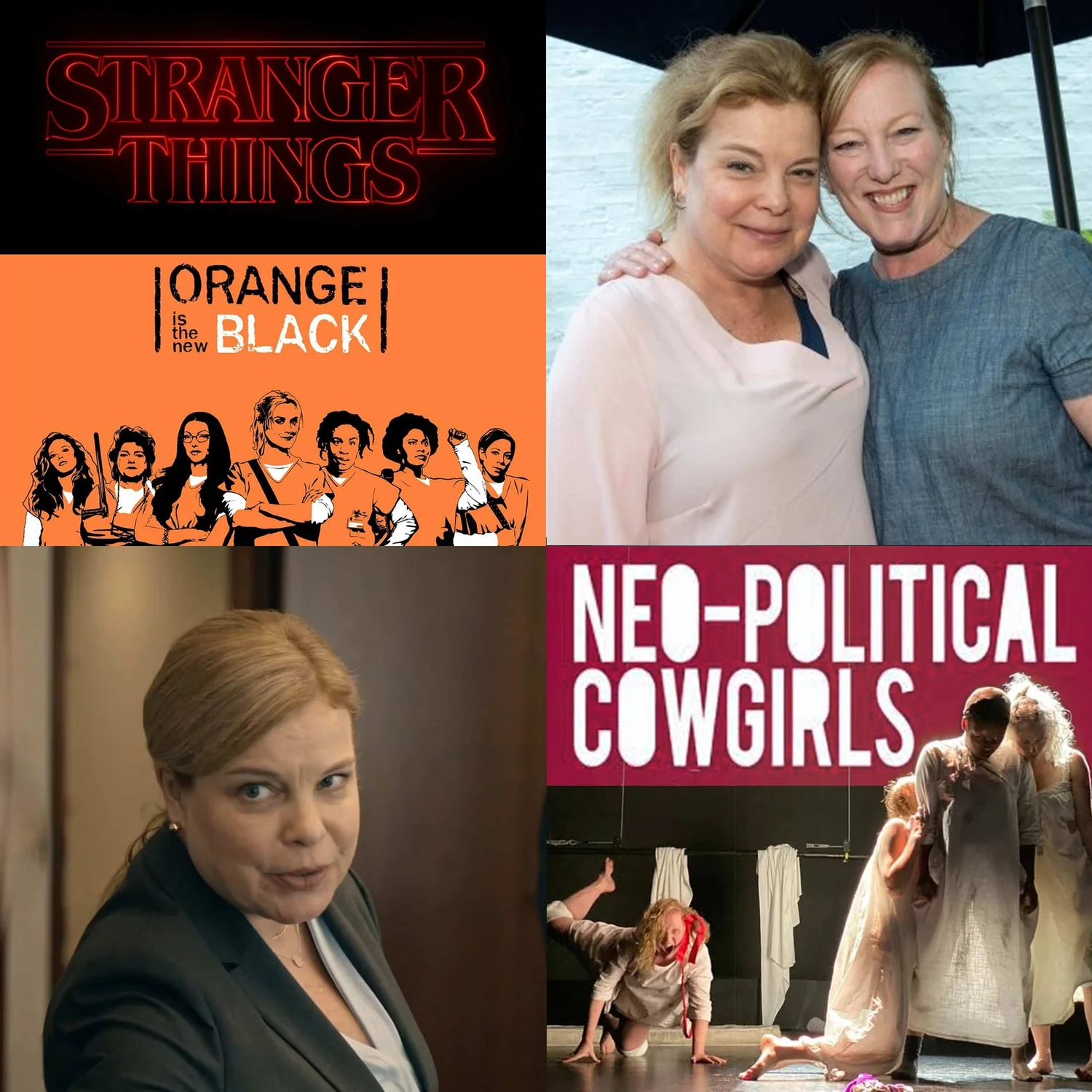
Actress CATHERINE CURTIN (Stranger Things) & Artistic Director KATE MUETH (Neo-Political Cowgirls)
"I don't know why we would really want to tell stories without being connected to the meaning.And I think that's especially for women, but I do think for human beings, that is how we can work as hard and be able to get up the next morning and keep going. Because we are working through the meaning, and it feeds us as we're like making sense of it all, trying to make sense of it, and for being in community and communion, if I dare say that, as an ex-Catholic too.Like sharing as a witness what it is to be human and what it means, and through this work, tell our story. So yeah, I feel like it's a bit of a crushing experience, as an industry goes. And I often feel like I'm way flung out to the side in the process of how I do the work versus how the industry wants it done, expects it done, and how the money is made and having it done. And there's an unhappy marriage between art and commerce right now. We've changed as a society, and the internet and AI have changed the world. But I kind of don't care because I get one life that I'm aware of, and I just want to do it in a way that feels good and the art feels true for me." -Kate MuethWhy do we make art? What can the performing arts teach us about how to engage in dialogues to overcome conflict and division?Our guests today are actress Catherine Curtin and artistic director Kate Mueth. Curtin is known for her roles on Stranger Things, Homeland, and Insecure. She played correctional officer Wanda Bell in Orange Is the New Black, and for this role she was a joint winner of two Screen Actors Guild Awards for Outstanding Performance by an Ensemble in a Comedy Series.Mueth is the Founder and Artistic Director of the award-winning dance theater company The Neo-Political Cowgirls that seeks to deepen and challenge the ways in which audiences experience stories and awaken their human connection. Based in East Hampton, New York they have performed to audiences in America and Europe.www.imdb.com/name/nm0193160/www.npcowgirls.orgwww.creativeprocess.infowww.oneplanetpodcast.orgIG www.instagram.com/creativeprocesspodcast

STEPHANIE FELDSTEIN - Author of The Animal Lover’s Guide to Changing the World & Take Action: Save Life on Earth
"Pretty much everything we do in our lives from the moment we wake up and take a shower, we're using water – that's shared resources. We're using energy that, for most of us, unfortunately, still comes from fossil fuels. We are making decisions about what we eat. We're making purchases that have an impact on the planet and on other animals based on where they came from and what they're made of. There are so many entry points for people to take action and start making changes in their own lives. And that's really important for people to start with what feels right to them. That's a great way to start getting involved in this."How can we take inspiration from our love for animals to protect wildlife and change the world? How can we take action and start making changes in our lives? What if we measured success based on happiness and on the health of communities? Stephanie Feldstein leads the Center for Biological Diversity's work to highlight and address threats to endangered species and wild places from runaway human population growth and overconsumption. Previously Stephanie worked for Change.org, where she helped hundreds of people start and win online campaigns to protect wildlife. She has years of experience in organizing, outreach and communications. She is the author of The Animal Lover’s Guide to Changing the World, and the series aimed at young adults Take Action: Save Life on Earth.https://biologicaldiversity.org/about/staff/#sfeldstein https://biologicaldiversity.org www.abebooks.com/9781250153258/Animal-Lovers-Guide-Changing-World-1250153255/plp https://cherrylakepublishing.com/series/445-take-action-save-life-on-earth https://takeextinctionoffyourplate.com/ https://endangeredspeciescondoms.com/www.creativeprocess.infowww.oneplanetpodcast.orgIG www.instagram.com/creativeprocesspodcast
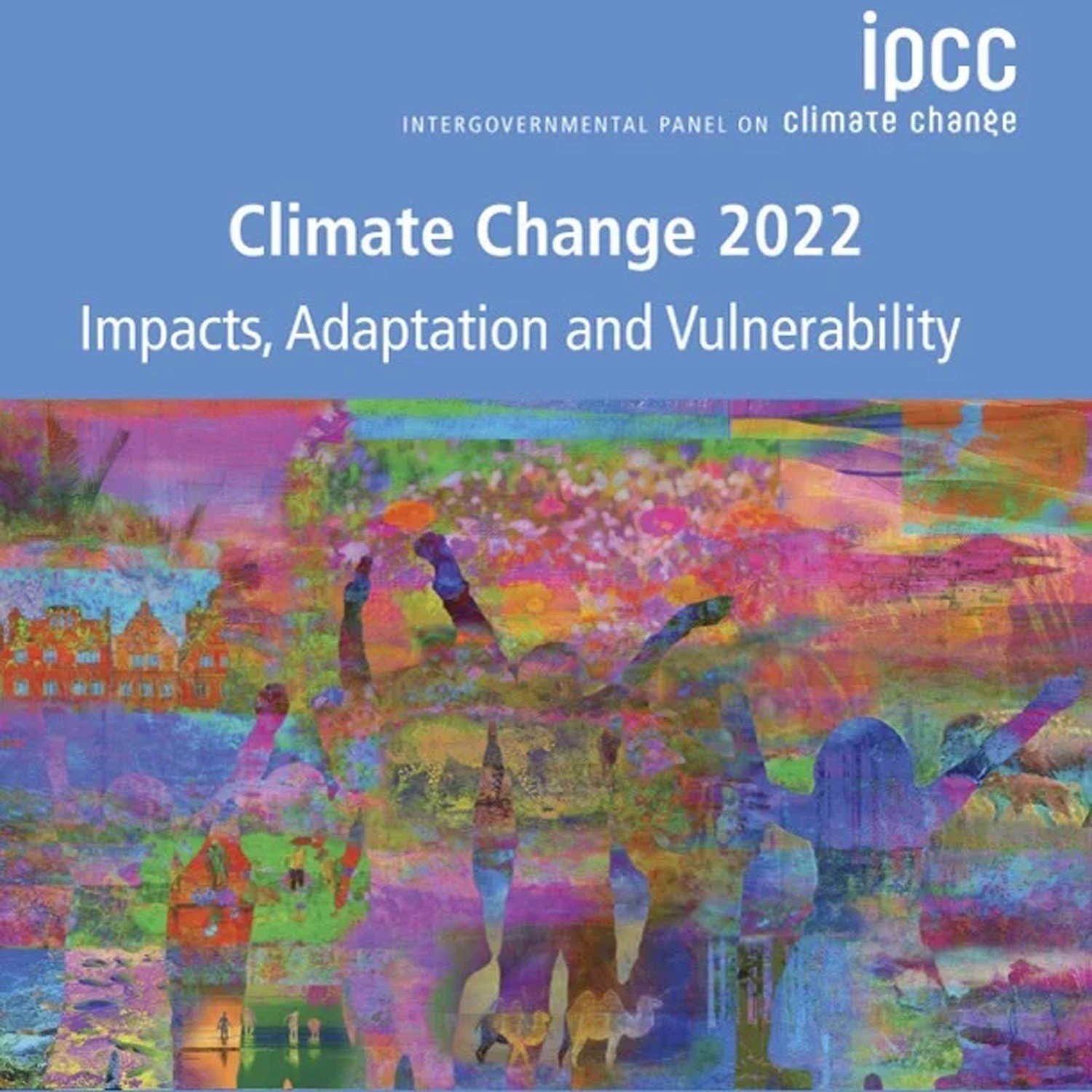
MARK HOWDEN - Vice Chair, Intergovernmental Panel on Climate Change - Director, Climate Change Institute at The Australian National University
"One of the things we have to do is we have to increase the rate of learning. We are entering into increasingly uncharted territory and not just in terms of climate change, but in many other areas of activity, AI being one of those, of course. And I think what we need to do is we need to find ways to learn more quickly, as a society, as communities, as villagers, as professional groups. And there are advantages of using some of those technologies in terms of accelerating that learning.We need to be discerning about the technologies we use, and we need to think about the relationships between those technology and social outcomes, environmental outcomes, how to redesign our systems, and how to redesign our governance. So I think there's going to be a need for a lot more thought and creativity in the future."Our window to adapt to a warming world is narrowing quickly. What it will take to avert the climate crises? Mark Howden is Director of the Climate Change Institute at The Australian National University and a Vice Chair of the Intergovernmental Panel on Climate Change (IPCC) and a member of the Australian National Climate Science Advisory Committee. He has been a major contributor to the IPCC since 1991, with roles in the Second, Third, Fourth, Fifth and now Sixth Assessment Reports, sharing the 2007 Nobel Peace Prize with other IPCC participants and Al Gore. He was on the US Federal Advisory Committee for the 3rd National Climate Assessment and contributes to several major national and international science and policy advisory bodies. Mark has worked on climate variability, climate change, innovation and adoption issues for over 30 years in partnership with many industry, community and policy groups via both research and science-policy roles.https://iceds.anu.edu.au/people/academics/professor-mark-howdenhttps://iceds.anu.edu.au/www.ipcc.chwww.creativeprocess.infowww.oneplanetpodcast.orgIG www.instagram.com/creativeprocesspodcast
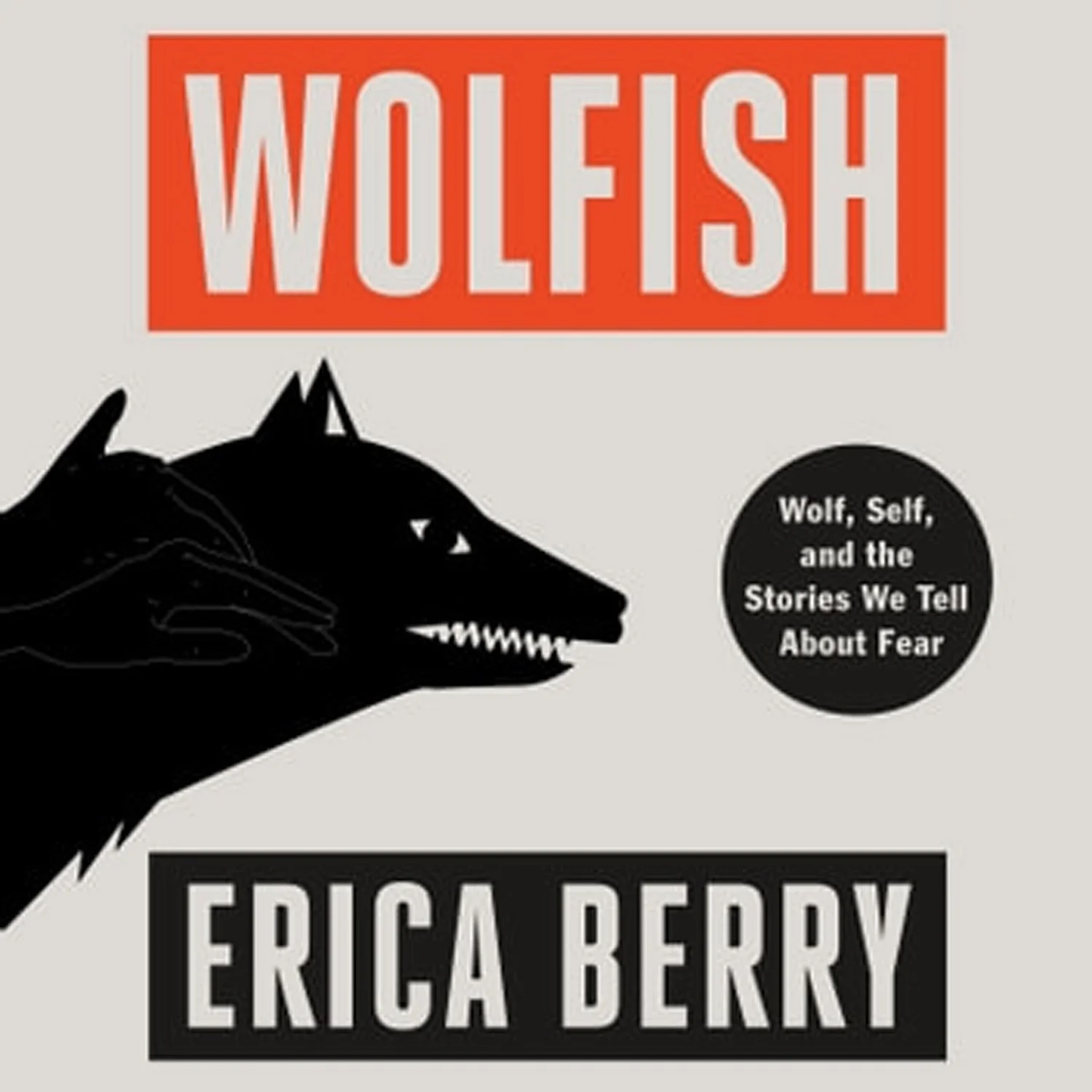
ERICA BERRY - Author of Wolfish: Wolf, Self, and the Stories We Tell About Fear
"It's felt very anxious to imagine going towards the next few decades. And I do get a real sense of solidarity and hope by how wolves are navigating these change landscapes and moving through them and raising new generations. In the face of it, a wolf pack will pass on territory potentially through multiple generations.We have to rekindle the herd instinct. Cows right now are bred just for meat. They are bred to exist within capitalism. The cows have forgotten how to interact with each other and protect each other. They are stewards of the land and what can we learn from that?"The lone wolf is actually alone because it's looking for connection. They leave in order to find a mate and form their own pack. If loneliness is an epidemic, what can wolves teach us about loneliness, courage, and connection?Erica Berry is the author of Wolfish: Wolf, Self, and the Stories We Tell About Fear. Her essays in journalism appear in Outside, Wired, The Yale Review, The Guardian, Literary Hub, The New York Times Magazine, The Atlantic, and Guernica, among other publications. Berry has taught workshops for teenagers and adults at Literary Arts, the Sitka Center for Art and Ecology, the New York Times Student Journeys in Oxford Academia.www.ericaberry.comhttps://us.macmillan.com/books/9781250882264/wolfishwww.creativeprocess.info www.oneplanetpodcast.orgIG www.instagram.com/creativeprocesspodcast
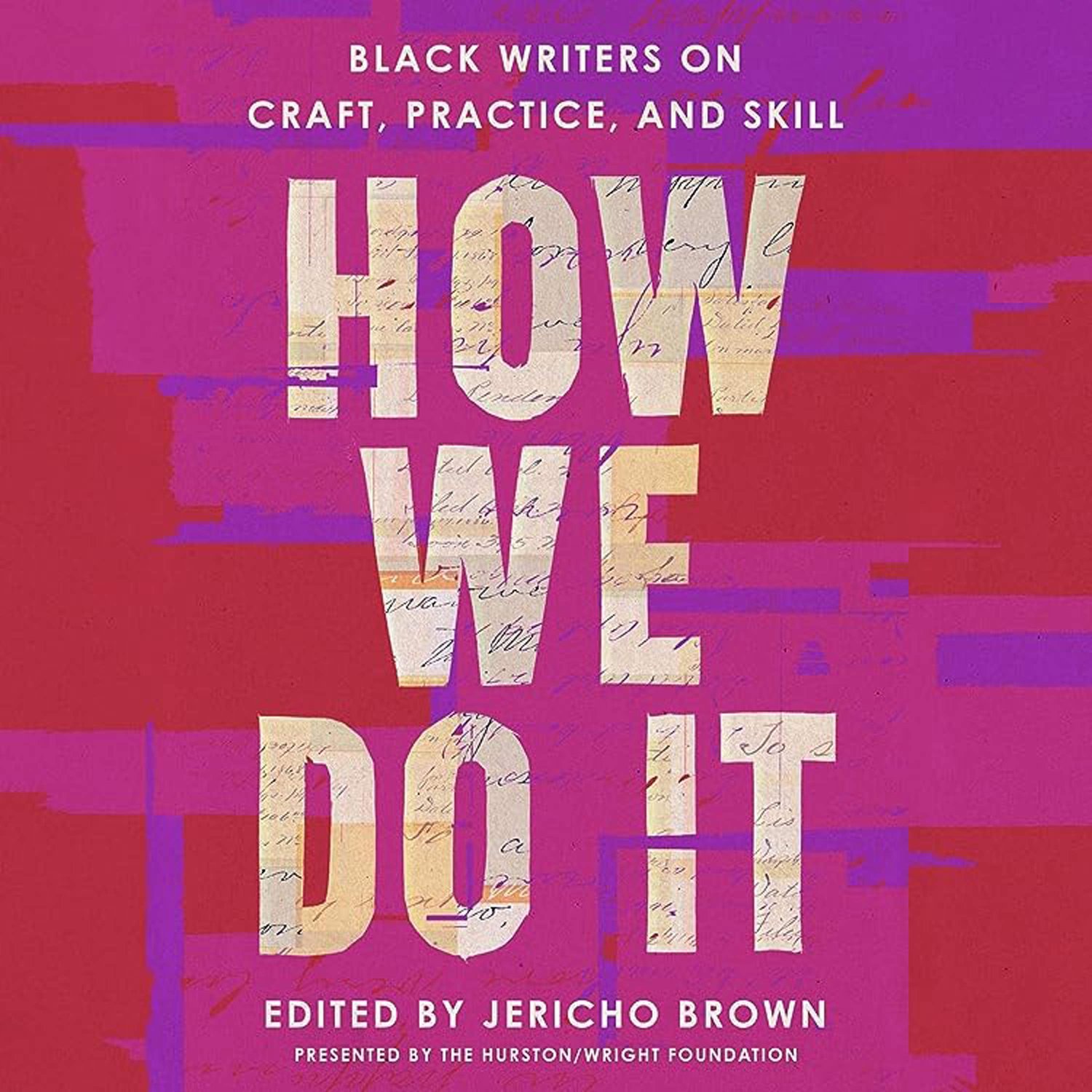
JERICHO BROWN - Pulitzer Prize-winning Poet - Editor of How We Do It: Black Writers on Craft, Practice, and Skill
How do you find your voice? As a writer, how do you take what you know and what you believe to share your stories with the world? How do we let young writers know just how powerful they are and that what they do matters?In How We Do It: Black Writers on Craft, Practice, and Skill Pulitzer Prize winning, and National Book Award finalist author Jericho Brown brings together more than 30 acclaimed writers, including the likes of Tayari Jones, Jacqueline Woodson, Natasha Trethewey, among many others, to discuss, dissect, and offer advice and encouragement on the written word. Brown is author of The Tradition, for which he won the Pulitzer Prize. He is the recipient of fellowships from the Guggenheim Foundation, the Radcliffe Institute for Advanced Study at Harvard, and the National Endowment for the Arts, and he is the winner of the Whiting Award. Brown’s first book, Please, won the American Book Award. His second book, The New Testament, won the Anisfield-Wolf Book Award. His third collection, The Tradition won the Paterson Poetry Prize and was a finalist for the National Book Award and the National Book Critics Circle Award. His poems have appeared in The Bennington Review, Buzzfeed, Fence, jubilat, The New Republic, The New York Times, The New Yorker, The Paris Review TIME magazine, and several volumes of The Best American Poetry. He is the director of the Creative Writing Program and a professor at Emory University."As writers, it's our job to write what will become clichés. Not to write clichés, but to be original enough that we make something that people are still saying for hundreds of years to come. And if that's what you're doing, that's pretty powerful. When I'm writing a poem I'm making a world. And if I can stick to that, then I have to believe that once a poem is out in the world, another world has been made, another way of living, another way of thinking, another way of seeing things."www.jerichobrown.comwww.harpercollins.com/products/how-we-do-it-jericho-browndarlene-taylor?variant=40901184684066www.creativeprocess.infowww.oneplanetpodcast.orgIG www.instagram.com/creativeprocesspodcast

SUE INCHES - Author of Advocating for the Environment: How to Gather Your Power and Take Action
"Our culture and the way that we carry out capitalism is that we have allowed businesses to create a mess. And then the taxpayers are the ones that pay to clean it up. Corporations need to be held accountable for the environmental harm that they cause. And that way it's not going to be left to us. Corporations are caught in a system and the way that we carry out capitalism now is that profit is above everything, including people's health. And these corporations feel that if they don't maximize profit, they could be sued by their shareholders because their shareholders are basically holding them accountable for profit only. One of them that's worked quite well in Europe, and it's just starting to emerge in America, is to require that corporations report on their environmental impact. So right alongside their financial report would be environmental risk and environmental impact reporting.”Sue Inches is an advocate, author, and teacher. She has worked in public policy for over 25 years, serving as the Deputy Director of the State Planning Office, and as a Director at the Maine Department of Marine Resources. She is author of Advocating for the Environment: How to Gather Your Power and Take Action, and teaches college and high school workshops on same. Her consulting work focuses on strategic planning, program development, and environmental campaigns.https://sueinches.comwww.penguinrandomhouse.com/books/670609/advocating-for-the-environment-by-susan-b-incheswww.creativeprocess.infowww.oneplanetpodcast.orgIG www.instagram.com/creativeprocesspodcast
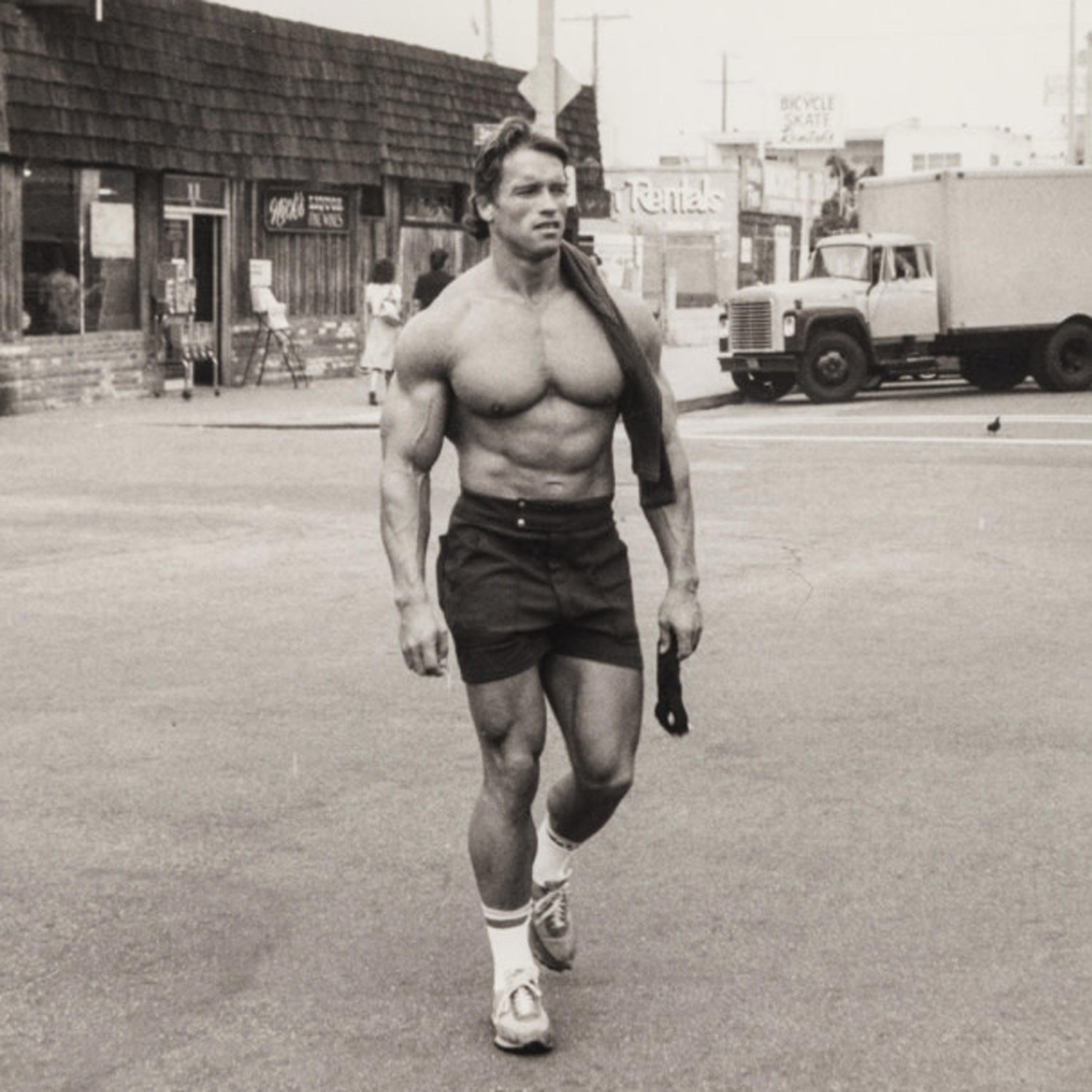
ARNOLD SCHWARZENEGGER: Athlete, Actor, American, Activist - Conversation with Editor DIAN HANSON
“Why I was different from all the other boys in my town I cannot tell you. I was simply born with the gift of vision.” – ARNOLD SCHWARZENEGGERIs there any better example of the American Dream than Arnold Schwarzenegger? What does it take to make your vision a reality? How do you cultivate iron focus to overcome any obstacle and realize your dreams?On the publication of Arnold Schwarzenegger’s limited edition two-volume book published by TASCHEN, we sat down with Senior Editor and Writer Dian Hansen to discuss Schwarzenegger’s life, accomplishments, and history of unforgettable performances. The book has been a decade-long collaborative process and along with portraits by leading photographers Richard Avedon, Annie Leibovitz, Robert Mapplethorpe, Herb Ritts, Francesco Scavullo, and Andy Warhol, it is also filled with photos from Arnold’s private archive and exclusive interviews. Dian’s other works include The Art of Pin-up, Masterpieces of Fantasy Art, and The Fantastic Worlds of Frank Frazetta."It's not just that he grew up in a rural environment too. He was born on July 30th, 1947. And most of us today don't have any understanding or relationship to what Europe was like right after World War II. The winter of 1946/1947 in Austria was the most brutal in decades. The people already had too little food. They were in an occupied country.The summer potato crops failed. As Arnold has said, his mother had to go from farm to farm to farm, begging for food to be able to feed her children. His father, like all the men in the village, was defeated by the war. I mean, they were not just defeated by their side losing, but realizing what their side had stood for, that they were the bad guys.And he saw them all physically, emotionally, intellectually defeated and taking it out on their wives and children, that he was beaten and his mother was beaten. All the neighbor kids were beaten, and they were beaten into a kind of placid defeat. And he alone would not accept that. He could not see that life for himself.And he was, as a child, searching for ways to get out of that. And bodybuilding became that when he learned about bodybuilding as a very poor boy. They lived on the top floor of a house. They had no plumbing. They all bathed once a week in the same tub in the kitchen. And his brother and he had to bring the water in. His mother heated it, and they took baths one by one. Mother first, father second, older brother third, Arnold last in the tub of dirty water. And so he wanted out of that. And as a poor boy, he had nothing but his body to work with. That was it. There was not going to be any college. There was not going to be any of that. There was going to be some kind of menial job, or he could use what he had - his body - to get him out of there."www.taschen.com/en/limited-editions/film/03105/arnold-collector-s-editionwww.schwarzenegger.comwww.creativeprocess.infowww.oneplanetpodcast.orgIG www.instagram.com/creativeprocesspodcastImage courtesy of Taschen. Photo credit: ARNOLD SCHWARZENEGGER IN VENICE, CALIFORNIA. PHOTO BY ALBERT BUSEK, 1980
DAVID FENTON - Founder of Fenton Communications, Author of The Activist’s Media Handbook: Lessons From 50 Years as a Progressive Agitator
"The activists need to pay attention to mass awareness. Political change is a function of gaining political power through mass awareness, mass mobilization, and mass unification. And we're in a period on the left right now, which has happened in history before, where there's a lot of internal focus about the fairness of the processes within NGOs and activist organizations. And the legacy of racism in these organizations and gender and identity issues, all of which are essential and important and valid, but those are not the pathways to mass awareness and mass unity. If you overemphasize those kinds of issues, it's a kind of sectarianism, which is the opposite of how you unify people to get political power. If you don't assemble majority support - majority sentiment doesn't mean everybody - it means majority, then you can't take power. And if you can't get power, guess what? You can't help the vulnerable. You can't help the oppressed. This is, like most things in life, a question of balance. If you overfocus on the legitimate feelings and plight of subgroups of the population, by necessity, you won't establish what Reverend Jesse Jackson used to call the Rainbow Coalition. And without the Rainbow Coalition, you don't win. So, what I hope is that the scientists and the activist community can pay as much attention to cognitive science as they do to climate science. And then we'll get somewhere definitely."How can we effectively communicate that we're moving beyond climate change to a state of climate crisis? The trapped heat energy on Earth is equal to a million Atomic bombs going off every single day. Today we talk to someone who's been mobilizing the public mind for over 50 years. David Fenton, named “one of the 100 most influential PR people” by PR Week and “the Robin Hood of public relations” by The National Journal, founded Fenton in 1982 to create communications campaigns for the environment, public health, and human rights. For more than five decades he has pioneered the use of PR, social media, and advertising techniques for social change. Fenton started his career as a photojournalist in the late 1960s – his book Shots: An American Photographer’s Journal was published in 2005. He was formerly director of public relations at Rolling Stone magazine and co-producer of the No-Nukes concerts in 1979 at Madison Square Garden with Bruce Springsteen, Bonnie Raitt, James Taylor, Jackson Browne, and other artists. He has also helped create JStreet, Climate Nexus, the Death Penalty Information Center, and Families for a Future. He sold Fenton a few years ago to work on climate change full time. He is the author of The Activist’s Media Handbook: Lessons From 50 Years as a Progressive Agitator.https://davidfentonactivist.comwww.simonandschuster.com/books/The-Activists-Media-Handbook/David-Fenton/9781647228668https://fenton.comX / twitter @dfentonIG @dfenton1 facebook.com/davidfentonactivistwww.creativeprocess.info www.oneplanetpodcast.orgIG www.instagram.com/creativeprocesspodcastAll photographs © 1968-2022 David Fenton

TOM LIN - Author of The Thousand Crimes of Ming Tsu - Andrew Carnegie Medal for Excellence in Fiction 2022
"When I was growing up, it was all about representation. I think that was the thing that was being championed: we need more people of color in books, movies, across all media. And then I think what we saw was an extremely cynical and capitalistic-minded ruthless optimization of that, where someone said: Oh, you want representation? Then we'll just throw in token people of color into projects. And then we'll check that box. And I think that became so prevalent in so many pieces of media that that became what we thought of as representation. I think it's a salvageable concept because, I mean, when I encountered books growing up, they were all with white people in them. Front to back, start to finish. It was just white characters. And so when I started writing stories of my own in school as a middle schooler they - surprise - they had white people in them, right? There were just white people talking about other white people. I went to public school in Queens. I knew very few white people. And so I think what representation does at its best is that it informs the boundaries of possibility. By seeing yourself represented in media, you become able to imagine your own stories transpiring in media and being made available for everybody else to witness.And so I think the point of representation is not just if we do a checklist of this piece of media, can we find a person of color. But I think the idea of representation is more that we want to be expanding the realm of storytelling, expanding what's possible by telling these stories that are not normally told.”How can we retell the story of America? In the United States of Amnesia, why does the Western celebrate cowboys but not all people who built this country? What does a Chinese-American hero look like in the 21st Century?Tom Lin is an American writer whose 2021 debut novel The Thousand Crimes of Ming Tsu chronicles the story of a Chinese American outlaw seeking revenge during America's railroad boom. The book won the 2022 Andrew Carnegie Medal for Excellence in Fiction, making Lin the youngest Carnegie winner in the prize’s history. Tom Lin is currently pursuing an English doctorate at the University of California Davis.https://twotreeforest.comwww.hachettebookgroup.com/titles/tom-lin/the-thousand-crimes-of-ming-tsu/9780316542173/?lens=little-brownwww.creativeprocess.info www.oneplanetpodcast.org IG www.instagram.com/creativeprocesspodcastImage courtesy of Little, Brown and Company & Tom Lin
MARK MASLIN - Author of How To Save Our Planet: The Facts - Professor, Earth System Science, University College London
"The Chicago School in the 1970s said: Capitalism has been doing really well. What we need to do is take their training wheels off and get rid of regulation, because they believed this would lift everybody out of poverty. That didn't happen. What happened was, if you don't regulate markets, suddenly all of that money goes to the top. So I'm going to give you an example of how skewed our global system is. There are currently eight billionaires in the world, and they're all white males who own the same wealth as the bottom 4 billion people. That suggests that neoliberalism has not worked."Can we imagine a world where we leave half the earth to the natural environment and use the other half for ourselves? Can we change history and protect the Indigenous, the vulnerable, and the very poorest in society?Mark Maslin is a Professor of Earth System Science at University College London. Maslin is a leading expert in understanding the anthropocene and how it relates to the major challenges facing humanity in the 21st century. He has written a number of books on the issue of climate change, his most book is How to Save Our Planet: The Facts.www.geog.ucl.ac.uk/people/academic-staff/mark-maslinwww.penguin.co.uk/books/320155/how-to-save-our-planet-by-maslin-mark/9780241472521www.creativeprocess.info www.oneplanetpodcast.org IG www.instagram.com/creativeprocesspodcastImage courtesy of Mark Maslin
Erland Cooper - Nature’s Songwriter - Composer of “Folded Landscapes”
"Music has the ability to transport you to a place and create a sort of internal landscape. And we all have life-changing things that happened to us. And I remember I made it as a way to kind of ease a busy mind. And perhaps I was missing home. I still call Orkney home, even though I'm not there every day. I'm a thousand miles away today, and I still call Orkney home. For example, when I hear the voice of the curlew, it transports me back to Orkney with such a jolt. In a heartbeat. And music can do that too. It's very transformative. Visual arts have the ability to do that too. And you could stare at a Rothko painting and cry and not quite know why. It can take days to figure out perhaps certain meanings from it. But music I think is quite instant. It can really do that."How has music transported you? Where do you find inspiration from the natural world? Where do you find moments of every day magic? Erland Cooper is a Scottish composer, producer, and multi-instrumentalist from Stromness, Orkney. He has released three acclaimed studio albums, four additional companion albums, and multiple EPs, including a trilogy of work inspired by his childhood home. His work combines field recordings with traditional orchestration and contemporary electronic elements. Through music words and cinematography, he explores landscape, memory, and identity. Cooper also works across mixed media projects, including installation, art, theater, and film. He is widely known for burying the only existing copy of the master tape of his first classical album in Scotland, deleting all digital files, and leaving only a treasure hunt of clues for fans and his record label alike to search for it. The tape has recently been found.www.erlandcooper.comwww.creativeprocess.info www.oneplanetpodcast.orgIG www.instagram.com/creativeprocesspodcastPhoto by Alex Kozobolis
SERGEI GURIEV - Economist - Provost of SciencesPo - Co-author of Spin Dictators: The Changing Face of Tyranny in the 21st Century
What is a spin dictator? What does tyranny look like in the 21st century? Why is populism on the rise? And how do we reinvent democracy?Sergei Guriev is the co-author of Spin Dictators: The Changing Face of Tyranny in the 21st Century. Guriev is Provost and a professor of economics and at Sciences Po in Paris. He is a former Chief Economist of the European Bank for Reconstruction and Development, London, and a former Rector of the New Economic School in Moscow in 2004-13."In Russia, I ran a university, a new economic school. And as an economist and a public intellectual, I was engaged in interactions with the government, including with Vladimir Putin. And there, of course, the situation was that Russia was already a nondemocratic country, meaning that it was a country where elections were not free and fair and partial censorship was already in place. Yet in those years, we could express ourselves openly, not on national TV, but at least in newspapers and on radio. And that eventually brought me into trouble with Vladimir Putin, who at some point suggested that I talked too much and I should not be in the same country. He's never expressed that clearly to me. He passed this message through various common friends. I was also interrogated. My office was searched. And at some point, common friends told me, 'Look, you shouldn't be here.' And I bought a one-way ticket for the next day and just left Russia."https://sites.google.com/site/sguriev/https://spindictators.com/www.sciencespo.fr/department-economics/en/researcher/sergei-guriev.htmlwww.creativeprocess.infowww.oneplanetpodcast.orgIG www.instagram.com/creativeprocesspodcast

JASON deCAIRES TAYLOR - Sculptor, Environmentalist, Creator of Underwater Museums
What if museums weren’t confined to buildings but could be part of the natural world? What if sculptures could not only celebrate our oceans, but also provide habitats for marine life?Jason deCaires Taylor is a sculptor, environmentalist, and underwater photographer. His works are constructed using materials to instigate natural growth and the subsequent changes intended to explore the aesthetics of decay, rebirth, and metamorphosis. DeCaires Taylor's pioneering public art projects are not only examples of successful marine conservation but also works of art that seek to encourage environmental awareness and lead us to appreciate the breathtaking natural beauty of the underwater world.www.underwatersculpture.comwww.creativeprocess.infowww.oneplanetpodcast.orgIG www.instagram.com/creativeprocesspodcast
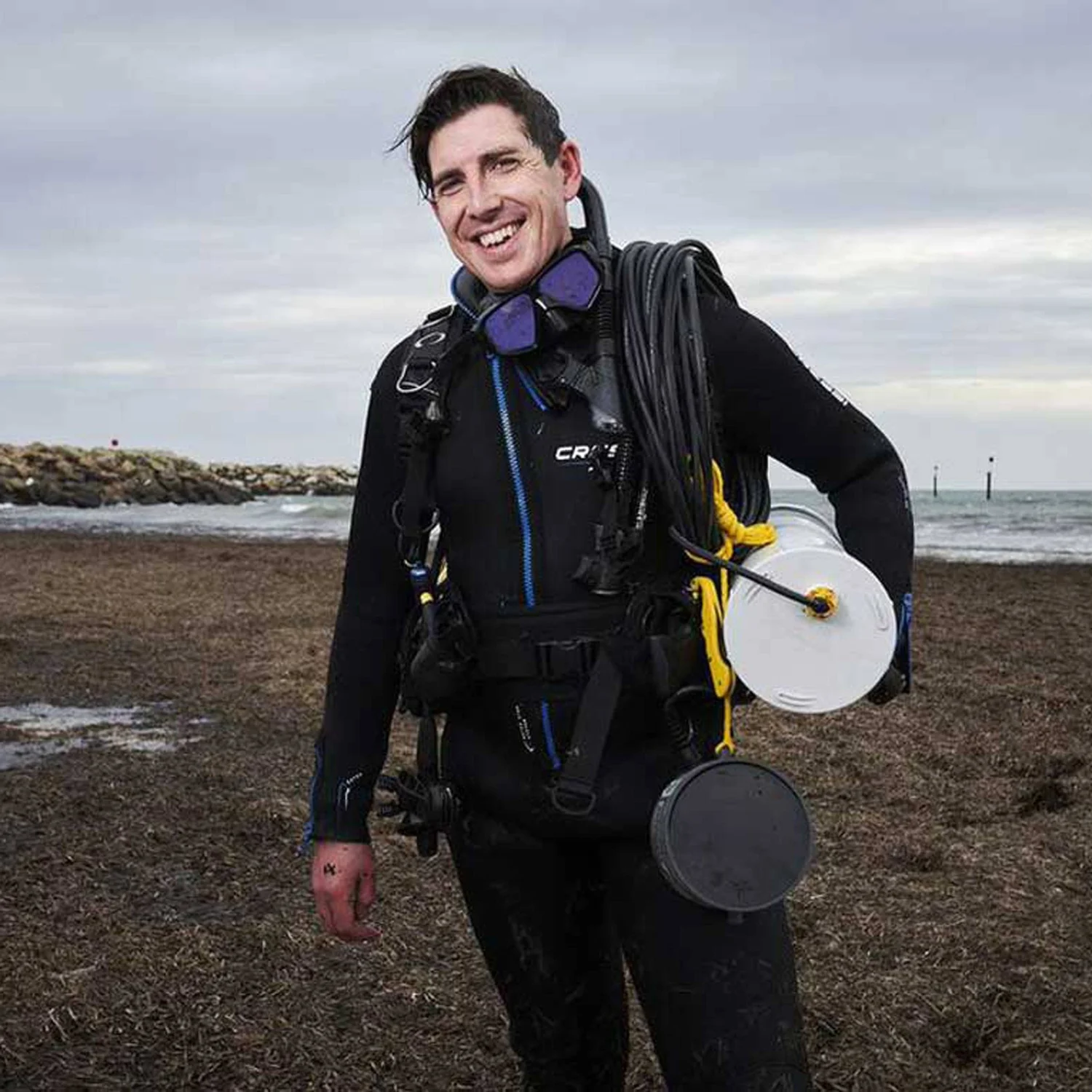
DOMINIC McAFEE - Marine Ecologist, University of Adelaide - Restoring Lost Oyster Reefs
"There's this real emergence of young people doing incredible things enabled by bio-modern technology and a more globalized and connected world and access to amazing educational resources about what the environment does and means for humanity.People typically have quite a dire view of the state of the world but have a positive view of the local environment, which is very interesting. So it's the potential of every individual to make an impact and to spend a little bit of time thinking about their actions and, and how they can influence the way that other people also care about the environment.Because when you have young, impassioned people involved in environmental work, there's a magnetism there that draws other people in, and that's what I've seen from the young pioneers and the emerging scientists that they can generate a lot more excitement and momentum within their peer groups and their age groups."We have lost around 85% of oyster reefs. That’s not only the loss of oysters but also the habitat they provide other marine animals and plants. Oysters are amazing, not only do some create pearls but as sequential hermaphrodites, they can switch between male and female almost on a daily basis.Dr. Dominic McAfee is a researcher at the University of Adelaide in Australia. His work centers around restoring lost marine ecosystems, specifically shellfish reefs. Along with employing novel technology and reef restoration projects, he seeks to understand how oysters enhance the resilience and function of coastal ecosystems. He seeks to develop conservation messaging strategies that enhance public engagement via conservation optimism.https://researchers.adelaide.edu.au/profile/dominic.mcafeewww.creativeprocess.info www.oneplanetpodcast.orgIG www.instagram.com/creativeprocesspodcast

MARCIA DeSANCTIS - Author of “A Hard Place to Leave: Stories from a Restless Life"
Does becoming a mother mean forgetting who you were before? How can we reclaim our lives as women, while still being mothers to our children? What does traveling alone teach us ourselves and those we love?Marcia DeSanctis is a journalist, essayist, and author of A Hard Place to Leave: Stories from a Restless Life, 100 Places in France Every Woman Should Go, a New York Times travel bestseller. A contributor writer at Travel + Leisure, she also writes for Air Mail, Vogue, BBC Travel and many other publications. She has won five Lowell Thomas Awards from the Society of American Travel Writers and is the recipient of the 2021 Gold Award for Travel Story of the Year. Before becoming a writer, she was a television news producer for ABC, NBC and CBS News, for most of those years producing for Barbara Walters. She lives in Connecticut."I started looking over the stories that I had done. I would say the majority of the essays were not really about travel. They were more about aging and marriage and memory and all of those things, but I did find in the travel essays those kernels of things that I wanted to explore - bigger kernels of things that were sort of scratching at me from the inside like a piece of sand in my pocket that was irritating me and that I wanted to explore. What I found was that the theme of coming and going, the theme of arrivals and departures, the theme of entrances and exits, and the theme of home and away seemed to repeat itself. I felt that whenever I was somewhere, there was always a tide home. And when I was home, there was always the urge for going. And so I just weeded out and weeded out and really wanted to keep this theme of home and away."www.miafunk.com www.creativeprocess.info www.oneplanetpodcast.org IG www.instagram.com/creativeprocesspodcastPhoto credit: Elena Seibert

NICHOLAS ROYLE - Author, Editor, Educator reads “Mother: A Memoir”
Nicholas Royle is Professor Emeritus of English at the University of Sussex, England, where he has been based since 1999. He has also taught at the University of Oxford, the University of Tampere, and the University of Stirling; and has been a visiting professor at the universities of Århus, Santiago del Compostela, Turku, Manitoba, and Lille. He is a managing editor of the Oxford Literary Review and director of Quick Fictions. He has published many books, including Telepathy and Literature, E.M. Forster, Jacques Derrida, The Uncanny, Veering: A Theory of Literature, How to Read Shakespeare, and Hélène Cixous: Dreamer, Realist, Analyst, Writing, as well as the novels Quilt and An English Guide to Birdwatching, and Mother: A Memoir. In addition, he is co-author with Andrew Bennett of three books: Elizabeth Bowen and the Dissolution of the Novel, This Thing Called Literature: Reading, Thinking, Writing, and An Introduction to Literature, Criticism and Theory Sixth edition, 2023. Royle’s current projects include a detective novel, a collection of essays about new approaches to narrative theory, and a collaborative work with Timothy Morton on Covid-19. His latest book, David Bowie, Enid Blyton and the Sun Machine, is due to be published in November 2023.Mother: A Memoir“Pre-word In my mind's eye she is sitting at the circular white Formica-top table in the corner. Morning sunlight fills the kitchen. She has a cup of Milky Nescafé Gold Blend and is smoking a purple Silk Cut. She is dressed for comfort in a floral bronze-and-brown blouse and blue jumper with light gray slacks and blue slippers. She is absorbed in a crossword (The Times) but not oblivious. She does what always takes me aback. She reads out one of the clues. As if I would know the answer. Her gift for crosswords is alien to me. I get stuck at the first ambiguity or double-meaning. Whereas she sweeps through all illusions allusions red herrings and anagrams and is done most days by lunchtime. But her fondness for crossword puzzles is inseparable from my interest in words. Where they come from. What they might be doing. Earliest recorded use of 'In my mind's eye': Shakespeare's Hamlet (around 1599). Referring to the Ghost.My mother died years ago. What has induced me to write about her after all this time remains mysterious to me. It is connected to the climate crisis. As the natural historian David Attenborough says: 'the collapse of our civilizations and the extinction of much of the natural world is on the horizon.' In ways I cannot pretend to fathom I have found that writing about my mother is bound up with writing about Mother Nature and Mother Earth. And no doubt it has to do also with my own aging and the buried life of mourning. The strange timetables of realization and loss. A memoir is 'a written record of a person's knowledge of events or of a person's own experiences'. 'A record of events written by a person having intimate knowledge of them and based on personal observation.' So the dictionaries tell us. But this memoir of my mother makes no attempt at a comprehensive record.”www.routledge.com/An-Introduction-to-Literature-Criticism-and-Theory/Bennett-Royle/p/book/9781032158846 https://myriadeditions.com/creator/nicholas-royle/ https://quickfiction.co.uk/www.creativeprocess.info www.oneplanetpodcast.org IG www.instagram.com/creativeprocesspodcast

MARGE PIERCY - NYTimes Bestselling Novelist, Poet & Activist
Marge Piercy’s 17 novels include NYTimes Bestseller Gone To Soldiers; National Bestsellers Braided Lives and The Longings of Women; the classics Woman on the Edge of Time and He, She and It, and her critically acclaimed memoir Sleeping with Cats. She’s written 20 volumes of poetry. The most recent is On the Way Out, Turn Off the Light. Born in Detroit, educated at the University of Michigan and Northwestern, she is active in antiwar, feminist and environmental causes.www.margepiercy.comwww.miafunk.comwww.creativeprocess.infowww.oneplanetpodcast.orgIG www.instagram.com/creativeprocesspodcast

LAURIE ANDERSON - DICKIE LANDRY - "HOME OF THE BRAVE"
“Home of the Brave” performed by Laurie Anderson & Dickie Landry on The Late Show. Laurie Anderson is an American avant-garde artist, composer, musician, and film director whose work spans performance art, pop music, and multimedia projects.For nearly half a century, Richard “Dickie” Landry was at the center of the New York avant-garde. Born in the small Louisiana town of Cecilia in 1938, he began making pilgrimages to the city while still in his teens in search of the city’s most cutting edge gestures in jazz, and relaxed there not long after, falling in with a close knit community of artists and composers like Keith Sonnier, Philip Glass, Joan Jonas, Gordon Matt Clarke, Richard Serra, Robert Rauschenberg, Nancy Graves, Lawrence Weiner, Steve Reich, Jon Gibson, and Robert Wilson. Landry remains one of the few artists of his generation who made important waves within numerous creative idioms. Having been trained from a young age on saxophone, not only is he a remarkably respected solo performer and bandleader, but he was an early and long-standing member of Philip Glass’ ensemble, playing on seminal records like Music With Changing Parts, Music in Similar Motion / Music in Fifths, Music in Twelve Parts, North Star, and Einstein on the Beach, and played with Talking Heads, Laurie Anderson, and jazz giants like Johnny Hammond, Gene Ammons, and Les McCann. He was also one of the most important photographic documenters of the New York Scene, until he left the city for his native Louisiana, following 9/11. Listen to his music on Unseen Worlds.http://www.dickielandry.comhttps://unseenworlds.com/collections/dickie-landrywww.creativeprocess.info www.oneplanetpodcast.org Instagram @creativeprocesspodcast
MARK GOTTLIEB - Vice President & Literary Agent at Trident Media Group
"There's a lot of apprenticeship in our industry because historically it had to be that way, otherwise what you would have in publishing - there's still a lot of this - is a bunch of English majors trying to make sense of how to run a business, right?Because book publishing or working at a literary agency - a talent agency for authors like I do - is at the crossroads of creative and business. And if you didn't have that kind of apprenticeship, someone to learn from at the company where you work, then we would all just be English majors just trying to feel our way in the dark.I think that the important thing for people to really know about storytelling is that books are sort of like the oil paintings of the new media. It's a very fine art form, an old art form, and a story exists in everything, whether it's a photograph, a painting, a song, or a movie, it all began with a story. And stories have been here from the dawn of time. They're going to forever be in our existence, but I think people should just always have curious minds and seek out stories and storytelling and try to see the story in everything, not just look at things for face value."Mark Gottlieb is a Vice President and top-selling literary agent at Trident Media Group. He represents a wide range of authors across genres, many of whom have been awarded prestigious prizes and have secured places on the New York Times bestseller list. Among other achievements, Mark has successfully optioned and sold books to film production companies where they were adapted into blockbuster hits, beloved by audiences and critics.In addition to his work as an agent, Mark lectures on his experiences and craft at such noted venues as the Yale Writers’ Workshop, Cambridge University’s MSt in Creative Writing program, Columbia Publishing Course, and Sarah Lawrence College Writing Institute. He founded Emerson College's Wilde Press, and the Stamford Literature, Arts & Culture Salon (SLACS), where he currently serves as president.www.tridentmediagroup.com/agents/mark-gottliebwww.tridentmediagroup.comwww.creativeprocess.info www.oneplanetpodcast.orgIG www.instagram.com/creativeprocesspodcast

ALICE NOTLEY - Poet & Artist - Academy of American Poets Award Winner
Alice Notley has published over forty books of poetry, most recently For the Ride (Penguin Books) and Eurynome’s Sandals (PURH). Notley has received many awards including the Academy of American Poets’ Lenore Marshall Prize, the Poetry Society of America’s Shelley Award, the Griffin International Prize, two NEA Grants, the Los Angeles Times Book Award for Poetry, and the Ruth Lilly Poetry Prize, a lifetime achievement award. She is also a visual artist and collagist, and a book of her poem-drawings is forthcoming from Archway Editions. Since 1992, Notley has lived and worked in Paris, France.www.miafunk.com www.creativeprocess.info www.oneplanetpodcast.org IG www.instagram.com/creativeprocesspodcast