The Creative Process in 10 minutes or less · Arts, Culture & Society: Books, Film, Music, TV, Art, Writing, Creativity, Education, Environment, Theatre, Dance, LGBTQ, Climate Change, Sustainability, Social Justice, Spirituality, Feminism, Technology
308 episodes — Page 3 of 7
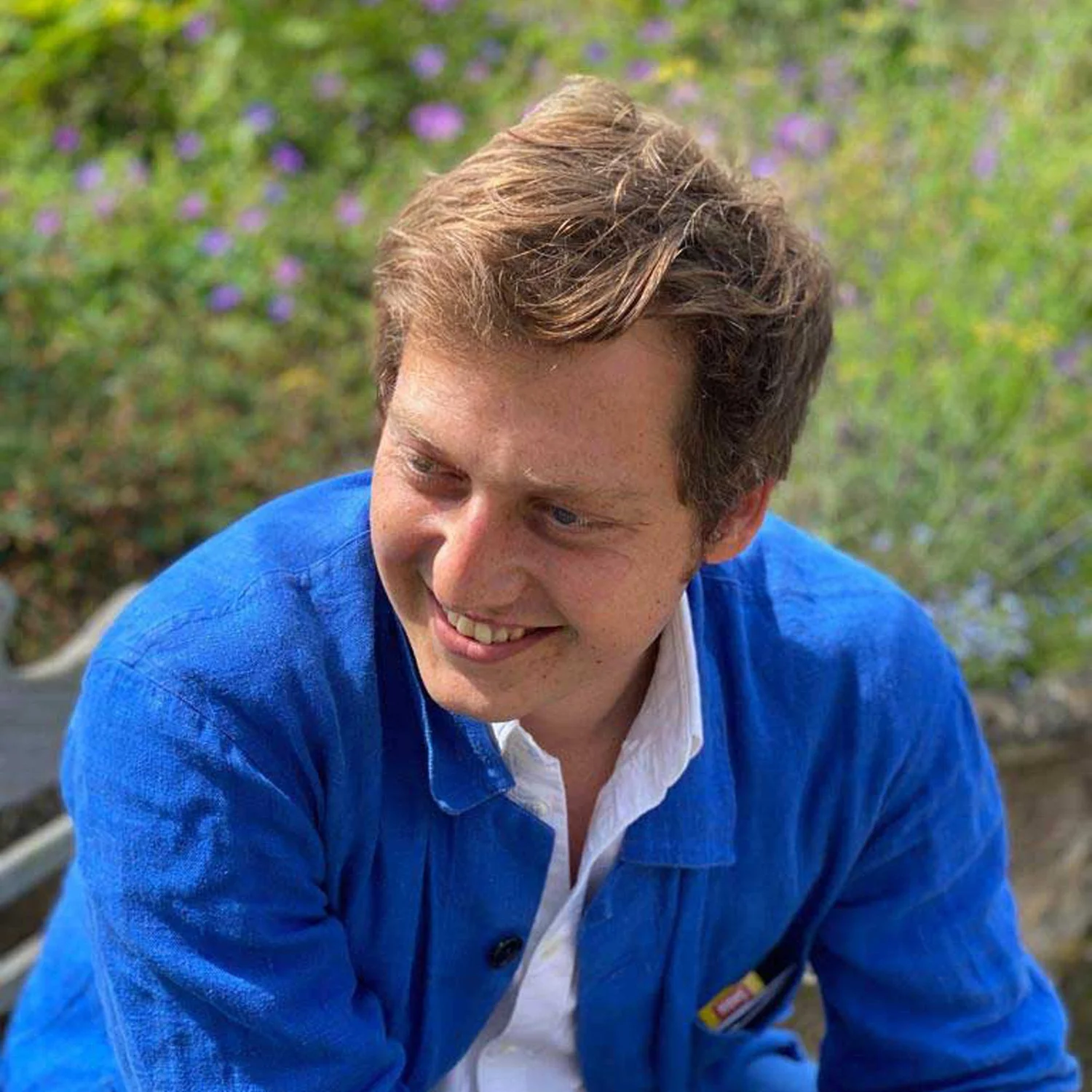
The Mind, Climate Change & Community Resilience with CHARLIE HERTZOG YOUNG
“I've been a climate activist since I was about 12 years old. It began with a deep passion for wildlife. I started taking up litter and telling off my schoolmates, eventually I set up a green council when I was about 13 or 14. As I learned more and more about the climate crisis and how sprawling and interconnected it was, not just with nature, but with the oppression that exists within human society, I started getting more involved and impassioned, getting involved in protests, marches. When I was about 15 years old, I helped shut down an airport for a night. I eventually started going to the UN climate talks. I went to Davos and it started to become my everything. I felt like I was doing something meaningful about the crisis, but also felt a sense of deep despair and loss, both from the perspective of the impending collapse of the biosphere and also a deep dislocation from the dominant culture and the consensus reality. I felt like no one else was feeling the sense of urgency and emergency that I felt. I started to get incredibly anxious. In 2019, when I was 27, I jumped off a six storey building. My memory has blacked it out, but I spent a month in a coma and woke up having lost both of my legs. The five years since have been one of not just physical and mental recovery, but also trying to untangle the messy web of causality as to how and why it was that I lost my mind in the way I did. I try to find some of the gifts in that madness, what it was pointing towards in terms of the unbalance of the ecosphere and how human civilization has begun to operate completely out of step with the ecosphere.”Charlie Hertzog Young is a researcher, writer and award-winning activist. He identifies as a “proudly mad bipolar double amputee” and has worked for the New Economics Foundation, the Royal Society of Arts, the Good Law Project, the Four Day Week Campaign and the Centre for Progressive Change, as well as the UK Labour Party under three consecutive leaders. Charlie has spoken at the LSE, the UN and the World Economic Forum. He studied at Harvard, SOAS and Schumacher College and has written for The Ecologist, The Independent, Novara Media, Open Democracy and The Guardian. He is the author of Spinning Out: Climate Change, Mental Health and Fighting for a Better Future.https://charliehertzogyoung.mehttps://footnotepress.com/books/spinning-out/www.creativeprocess.infowww.oneplanetpodcast.orgIG www.instagram.com/creativeprocesspodcast
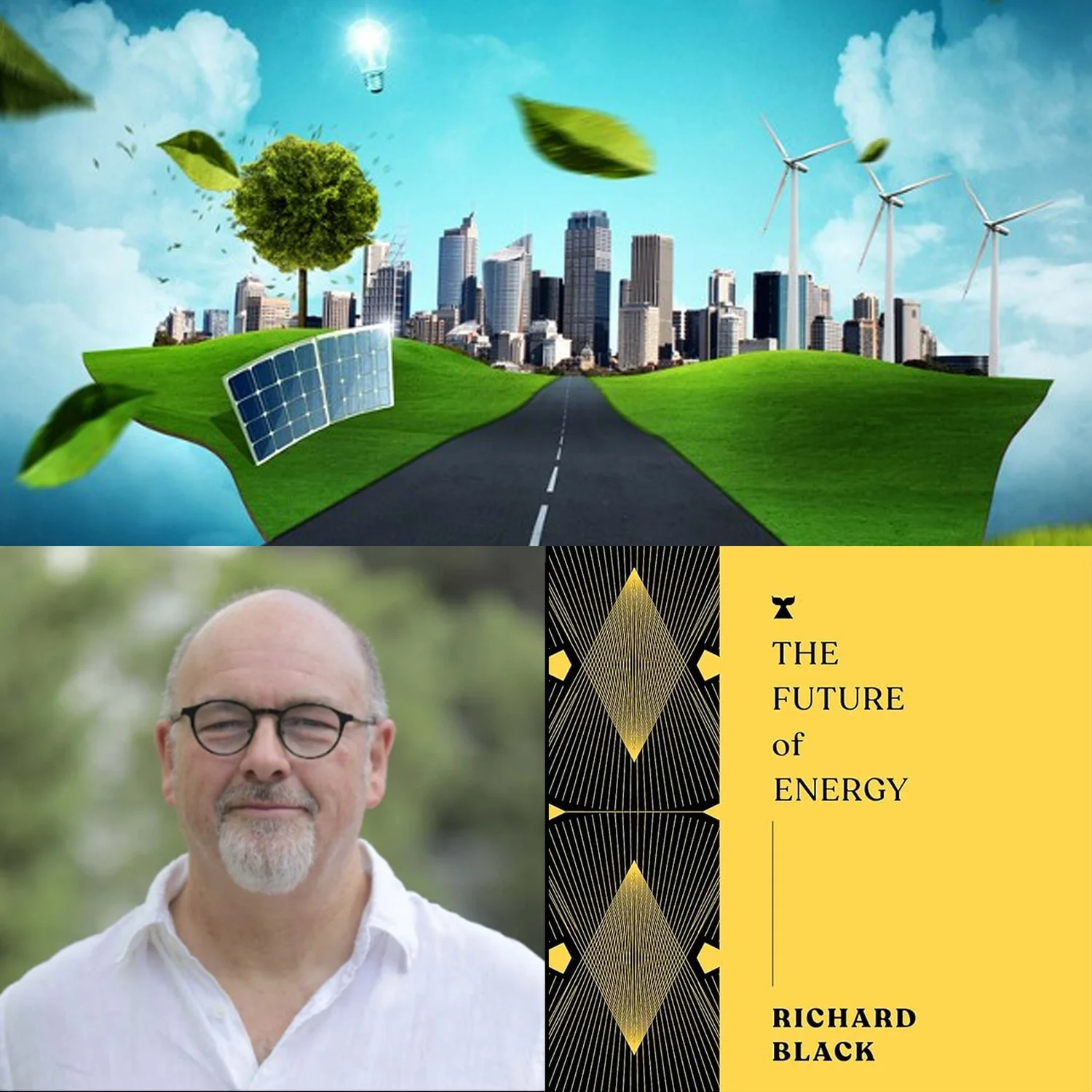
The Future of Energy - RICHARD BLACK - Director, Policy & Strategy, Ember - Fmr. BBC Environment Correspondent
“The fact is you've got a lot of industrial and political muscle now coming behind clean energy, especially from China, which is the leading country deploying wind energy, the leading country deploying solar, and the leading manufacturer and user of electric vehicles by miles. As one recent report put it, ‘We have petrostates in the world. China is the first electrostate.’ And China is on its way to becoming the world's most powerful country. So, where China leads, the rest of the world is almost certain to follow. Yes, there are massive air pollution problems in China, of course, but I think it's more than that. It's also about seeing that this is the future that the world is going to have. And if these goods are going to be made anywhere, well, the Chinese government clearly would like them to be made in China. And they've set out, you know, industrial policies and all kinds of other policies for, well, at least a decade now, in pursuit of that aim. It's interesting now to see other countries, India, for example, and the United States now sort of deploying muscle to try and carve out a slice of the pie themselves as well.”The Five-pronged Clean Energy Future“I thought about it, and I was wondering, what do we actually need in the world? Because we don't need petrol and we don't need coal. We need energy to power various things. So, we need these energy services. So, what's the simplest way of providing all of the energy services? And it really seems to me that we can basically do it all with about five different types of goods. So the system of the future I put out in the book is first of all, you have the generation of electricity, which is mainly going to be with renewables, mainly with wind and solar because they are the cheapest and they're getting cheaper thanks to Wright's Law. Then you need energy storage and other means of sharing matching demand to supply. So, storage is the one that people will be most familiar with, which can be batteries, for example. And again, the price of batteries has also plummeted about 85 percent price reduction in a decade. And it continues because, again, we have mounting volumes. In a competitive market, there's lots of innovation going on in terms of battery design, in terms of construction, and all of this stuff, new materials coming into batteries. So, that's your first two, that's your renewable generation and your battery storage. Electric vehicles will be the main method of transportation. Already, they dominate sales in the two-wheeler market in China and India. They're already eating into global oil demand. They're taking about 1.5 percent of global oil demand already, and the sales are increasing exponentially in China and other countries as well. They are cost-competitive. It's just on the purchase price in some markets with some models now. And it's going to get cheaper again because battery costs will fall. Heating and cooling, which is a big demand for energy. We can use heat pumps, which are super efficient running on electricity…Hydrogen, that will probably be the fifth prong, but a smaller prong, rather like the little finger on your hand."Richard Black spent 15 years as a science and environment correspondent for the BBC World Service and BBC News, before setting up the Energy & Climate Intelligence Unit. He now lives in Berlin and is the Director of Policy and Strategy at the global clean energy think tank Ember, which aims to accelerate the clean energy transition with data and policy. He is the author of The Future of Energy; Denied:The Rise and Fall of Climate Contrarianism, and is an Honorary Research Fellow at Imperial College London.https://mhpbooks.com/books/the-future-of-energyhttps://ember-climate.org/about/people/richard-blackhttps://ember-climate.orgwww.therealpress.co.uk/?s=Richard+blackwww.creativeprocess.infowww.oneplanetpodcast.orgIG www.instagram.com/creativeprocesspodcast
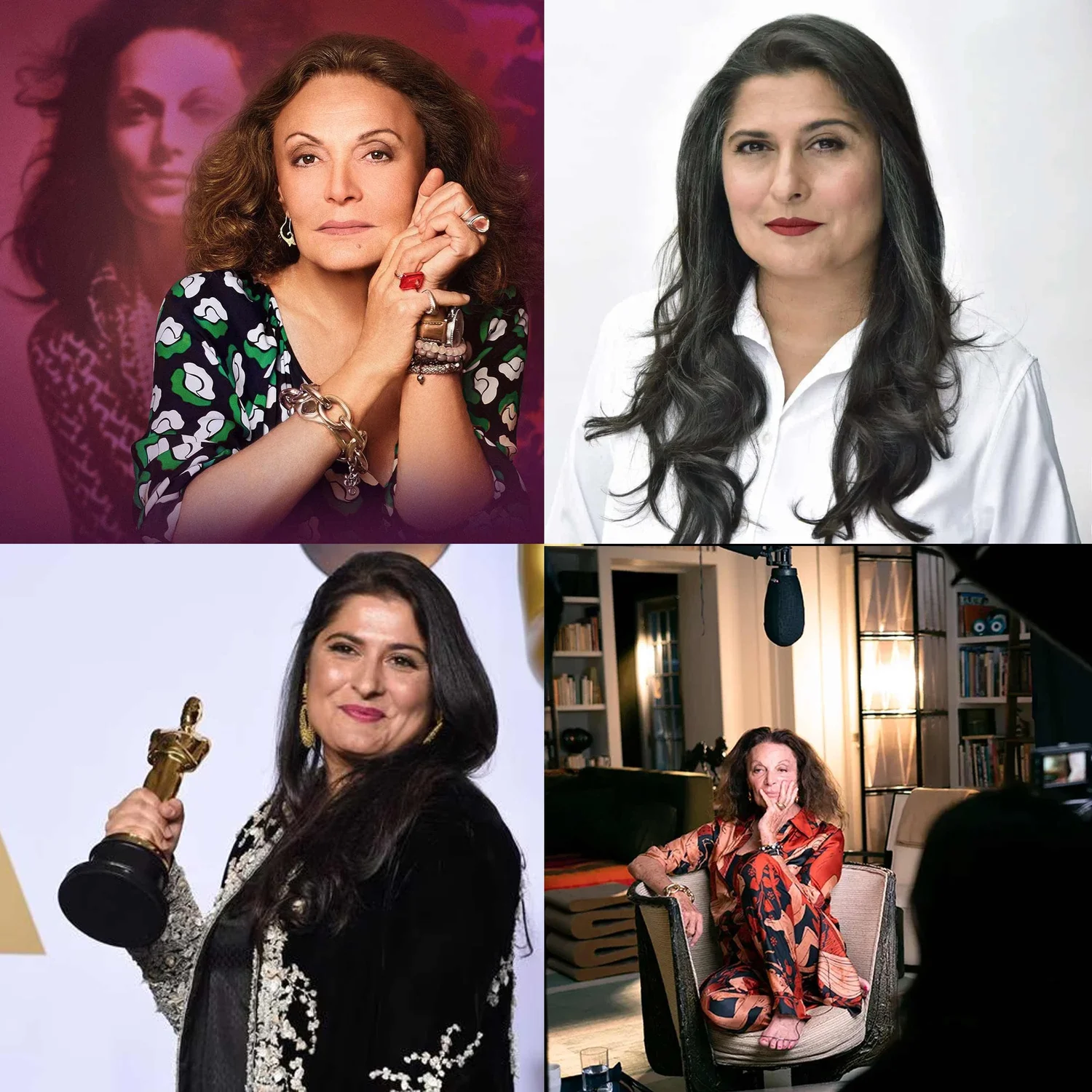
DIANE VON FÜRSTENBERG: Woman in Charge w/ Oscar-winning Director SHARMEEN OBAID-CHINOY
“As a filmmaker, I've always made films about extraordinary women whose lives are faced with extenuating circumstances who've had adversity thrown at them and who've risen to the occasion. And when I began to look at Diane's story, for me, Diane is a fashion designer, but she's so much more. Her central ethos is woman before fashion, and we felt it was very important to take that ethos and weave it into the spine of our film, and make it about the woman.In making this film, every single person who we called whose voice we wanted to include wanted to contribute. They wanted to say something about Diane, because she had left such a mark on their lives. Our producers’ jobs, Tracy and Fabiola, was to juggle those schedules. How do you juggle the schedule of secretary Hillary Clinton with Oprah Winfrey? How do you make sure that Anderson Cooper and Mark Jacobs, you know, in the filming time that we had, that we could put all of these people together? But Diane's friendships run deep with people, and people made sure to make time.You know, she was a single mother, and I think that young single mothers watching this film will feel for Diane, especially single mothers who are trying to be entrepreneurs, and creating businesses, and trying to find their way into the world to be able to raise a family. To do that as an immigrant in a new country is challenging, and Diane shows you just how challenging it is. In making choices about living her life, in being with her children or expanding her business, there were sacrifices that were made, and those sacrifices are boldly put on the screen for viewers to watch.”Sharmeen Obaid-Chinoy is an Oscar and Emmy award-winning Canadian-Pakistani filmmaker whose work highlights extraordinary women and their stories. She earned her first Academy Award in 2012 for her documentary Saving Face, about the Pakistani women targeted by brutal acid attacks. Today, Obaid-Chinoy is the first female film director to have won two Oscars by the age of 37. In 2023, it was announced that Obaid-Chinoy will direct the next Star Wars film starring Daisy Ridley. Her most recent project, co-directed alongside Trish Dalton, is the new documentary Diane von Fürstenberg: Woman in Charge, about the trailblazing Belgian fashion designer who invented the wrap dress 50 years ago. The film had its world premiere as the opening night selection at the 2024 Tribeca Festival on June 5th and premiered on June 25th on Hulu in the U.S. and Disney+ internationally. A product of Obaid-Chinoy's incredibly talented female filmmaking team, Woman in Charge provides an intimate look into Diane von Fürstenberg’s life and accomplishments and chronicles the trajectory of her signature dress from an innovative fashion statement to a powerful symbol of feminism.www.hulu.com/movie/diane-von-furstenberg-woman-in-charge-95fb421e-b7b1-4bfc-9bbf-ea666dba0b02https://www.disneyplus.com/movies/diane-von-furstenberg-woman-in-charge/1jrpX9AhsaJ6https://socfilms.comwww.creativeprocess.infowww.oneplanetpodcast.orgIG www.instagram.com/creativeprocesspodcast

Does AI-generated Perfection Detach Us from Reality, Life & Human Connection? with HENRY AJDER
“I would like to preserve a real sense of empathy and humility, which comes with understanding that the world is messy, that people are messy, that defects and imperfections exist, that things don't always necessarily kind of go the way you want, even as much as you wish they could. Imperfection is part of life and I guess my concern is that AI-generated content, which smooths and perfects a version of reality to precisely what you want and forces you or makes you feel pressured to represent yourself in this absolutely perfect way, fundamentally gives you no room for error and kind of detaches you from the reality of growth and life and and how people work. Empathize with other people. Everyone has their challenges. Things don't always have to be exactly perfect to how you want them to be or how other people want them to be. And that involves having some humility about yourself as a messy creature, as we all are. I hope that's retained, but I do see this kind of move towards this sort of smoothed and shaped reality that AI is enabling, potentially creating more of a disconnect between that imperfect, messy, but also quite beautiful world. This sort of polished but ultimately plastic version of reality increasingly is becoming the default for some people over the kind of fleshy, messy human side of things.”How is artificial intelligence redefining our perception of reality and truth? Can AI be creative? And how is it changing art and innovation? Does AI-generated perfection detach us from reality and genuine human connection?Henry Ajder is an advisor, speaker, and broadcaster working at the frontier of the generative AI and the synthetic media revolution. He advises organizations on the opportunities and challenges these technologies present, including Adobe, Meta, The European Commission, BBC, The Partnership on AI, and The House of Lords. Previously, Henry led Synthetic Futures, the first initiative dedicated to ethical generative AI and metaverse technologies, bringing together over 50 industry-leading organizations. Henry presented the BBC documentary series, The Future Will be Synthesised.www.henryajder.comwww.bbc.co.uk/programmes/m0017cgrwww.creativeprocess.infowww.oneplanetpodcast.orgIG www.instagram.com/creativeprocesspodcast

How to Fight for Truth & Protect Democracy in A Post-Truth World? - Highlights - LEE McINTYRE
“One thing people don't realize is that the goal of disinformation is not simply to get you to believe a falsehood. It's to demoralize you into giving up on the idea of truth, to polarize us around factual issues, to get us to distrust people who don't believe the same lie. And even if somebody doesn't believe the lie, it can still make them cynical. I mean, we've all had friends who don't even watch the news anymore. There's a chilling quotation from Holocaust historian Hannah Arendt about how when you always lie to someone, the consequence is not necessarily that they believe the lie, but that they begin to lose their critical faculties, that they begin to give up on the idea of truth, and so they can't judge for themselves what's true and what's false anymore. That's the scary part, the nexus between post-truth and autocracy. That's what the authoritarian wants. Not necessarily to get you to believe the lie. But to give up on truth, because when you give up on truth, then there's no blame, no accountability, and they can just assert their power. There's a connection between disinformation and denial.”Lee McIntyre is a Research Fellow at the Center for Philosophy and History of Science at Boston University and a Senior Advisor for Public Trust in Science at the Aspen Institute. He holds a B.A. from Wesleyan University and a Ph.D. in Philosophy from the University of Michigan. He has taught philosophy at Colgate University, Boston University, Tufts Experimental College, Simmons College, and Harvard Extension School (where he received the Dean’s Letter of Commendation for Distinguished Teaching). Formerly Executive Director of the Institute for Quantitative Social Science at Harvard University, he has also served as a policy advisor to the Executive Dean of the Faculty of Arts and Sciences at Harvard and as Associate Editor in the Research Department of the Federal Reserve Bank of Boston. His books include On Disinformation and How to Talk to a Science Denier and the novels The Art of Good and Evil and The Sin Eater.https://leemcintyrebooks.comwww.penguinrandomhouse.com/books/730833/on-disinformation-by-lee-mcintyrehttps://mitpress.mit.edu/9780262545051/https://leemcintyrebooks.com/books/the-art-of-good-and-evil/https://leemcintyrebooks.com/books/the-sin-eater/www.creativeprocess.infowww.oneplanetpodcast.orgIG www.instagram.com/creativeprocesspodcast

How will AI Affect Education, the Arts & Society? - Highlights - STEPHEN WOLFRAM
“I think as there is more automation, there is more kind of emphasis on this question of our choice. The story of the development of things tends to be what do humans decide that they care about? In what direction do they want to go? What kind of art do they want to make? What kinds of things do they want to think about? There is in the computational universe of all possibilities, there is sort of infinite creativity. There's an infinite collection of possibilities, but it's something that's a matter of human choice, which of these infinite things do we actually choose to pursue? There's all these different possibilities out there. But our kind of challenge is to decide in which direction we want to go and then to let our automated systems pursue those particular directions.”Stephen Wolfram is a computer scientist, mathematician, and theoretical physicist. He is the founder and CEO of Wolfram Research, the creator of Mathematica, Wolfram|Alpha, and the Wolfram Language. He received his PhD in theoretical physics at Caltech by the age of 20 and in 1981, became the youngest recipient of a MacArthur Fellowship. Wolfram authored A New Kind of Science and launched the Wolfram Physics Project. He has pioneered computational thinking and has been responsible for many discoveries, inventions and innovations in science, technology and business.www.stephenwolfram.comwww.wolfram.comwww.wolframalpha.comwww.wolframscience.com/nks/www.amazon.com/dp/1579550088/ref=nosim?tag=turingmachi08-20www.wolframphysics.orgwww.wolfram-media.com/products/what-is-chatgpt-doing-and-why-does-it-work/www.creativeprocess.infowww.oneplanetpodcast.orgIG www.instagram.com/creativeprocesspodcast

Can we have real conversations with AI? How do illusions help us make sense of the world? - KEITH FRANKISH
“There is magic everywhere. There's wonder everywhere. There's wondrous complexity that is so complex, so difficult to conceptualize, to grasp, to articulate that it might as well be magic for all intents and purposes, but we can gradually start to unpick how the tricks are done, how nature learned to do these wonderful tricks. And that's the wonder of science, gradually learning what's happening behind the scenes and how these marvelous effects are produced.I'm probably best known for my work on consciousness. My view about this is often caricatured, I think, as a kind of heartless, materialist one, because I'm resistant to all forms of dualism about the mind. I think that's a very unhelpful way of thinking.Some people think that I do that because I have a sort of crass materialist attitude to the world, that there's only things you can measure and weigh and bump into and everything else is just nonsense and fancy and different. What I like about the sort of view I have is that it represents us as fully part of the world, fully part of the same world. We're not sealed off into little private mental bubbles, Cartesian theaters, where all the real action is happening in here, not out there. No, I think we're much more engaged with the world… Another one of my heroes is Daniel Dennett's great friend, Nicholas Humphrey, who has a wonderfully rich range of experience. He's been described as a scientific humanist. What he does is he knows his science, including cognitive neuroscience and psychology, but he's also steeped in literature, art, music, and painting, and he brings all this together in his wonderful book on consciousness Soul Dust, published in 2011, suggests the idea that the soul is actually made of dust, which is a fantastic concept.”Keith Frankish is an Honorary Professor of Philosophy at the University of Sheffield, a Visiting Research Fellow with The Open University, and an Adjunct Professor with the Brain and Mind Programme in Neurosciences at the University of Crete. Frankish mainly works in the philosophy of mind and has published widely about topics such as human consciousness and cognition. Profoundly inspired by Daniel Dennett, Frankish is best known for defending an “illusionist” view of consciousness. He is also editor of Illusionism as a Theory of Consciousness and co-edits, in addition to others, The Cambridge Handbook of Cognitive Science.www.keithfrankish.comwww.cambridge.org/core/books/cambridge-handbook-of-cognitive-science/F9996E61AF5E8C0B096EBFED57596B42www.imprint.co.uk/product/illusionismwww.creativeprocess.infowww.oneplanetpodcast.orgIG www.instagram.com/creativeprocesspodcast

How Can We End the Climate Crisis in One Generation? - PAUL HAWKEN
“We and all living beings thrive by being actors in the planet’s regeneration, a civilizational goal that should commence and never cease. We practiced degeneration as a species and it brought us to the threshold of an unimaginable crisis. To reverse global warming, we need to reverse global degeneration.”Can we really end the climate crisis in one generation? What kind of bold collective action, technologies, and nature-based solutions would it take to do it?Paul Hawken is a renowned environmentalist, entrepreneur, author, and activist committed to sustainability and transforming the business-environment relationship. A leading voice in the environmental movement, he has founded successful eco-friendly businesses, authored influential works on commerce and ecology, and advised global leaders on economic and environmental policies. As the founder of Project Regeneration and Project Drawdown, Paul leads efforts to identify and model solutions to reverse global warming, showcasing actionable strategies. His pioneering work in corporate ecological reform continues to shape a sustainable future. He is the author of eight books, including Regeneration: Ending the Climate Crisis in One Generation.https://regeneration.orghttps://paulhawken.comhttps://drawdown.orghttps://regeneration.org/nexuswww.creativeprocess.infowww.oneplanetpodcast.orgIG www.instagram.com/creativeprocesspodcast
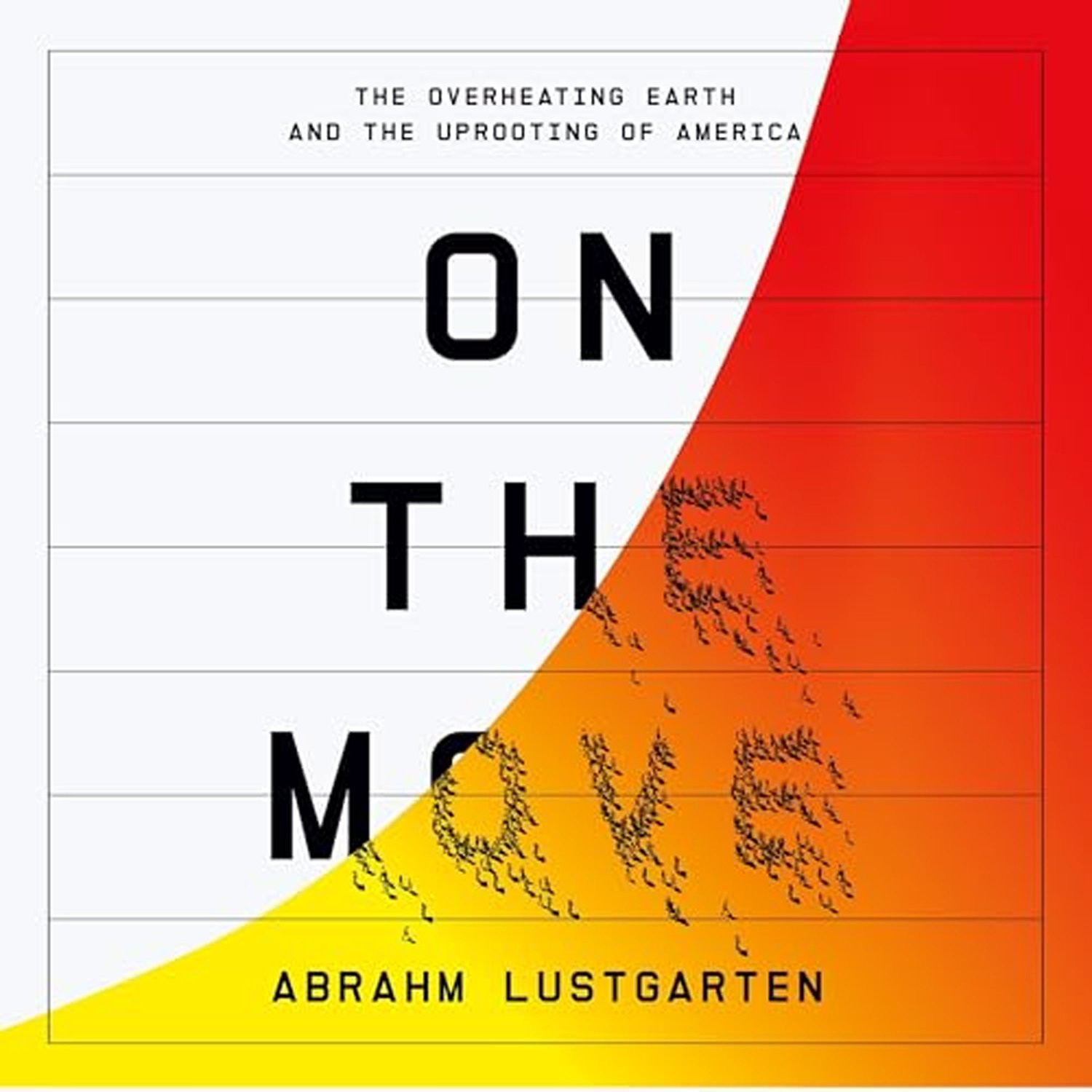
On The Move: The Overheating Earth & the Uprooting of America with ABRAHM LUSTGARTEN
“Living in California, I've just come to accept the unsettledness of this era we're moving into. And I think that's really how I see the future. You know, we're living in an era of disruption, and there are others I talk to and write about in the book who also muse about the possibility of a more nomadic future. That maybe home isn't a permanent place with deep roots but is a transient place with shallow roots or two places that you alternate between. In addition to a lot of other dramatic changes that the book is about, a change in our sense of home and our sense of place is a part of this story.”Abrahm Lustgarten is an investigative reporter, author, and filmmaker whose work focuses on human adaptation to climate change. His 2010 Frontline documentary The Spill, which investigated BP’s company culture, was nominated for an Emmy. His 2015 longform series Killing the Colorado, about the draining of the Colorado river, was nominated for a Pulitzer Prize. Lustgarten is a senior reporter at ProPublica, and contributes to publications like The New York Times Magazine and The Atlantic. His research on climate migration influenced President Biden’s creation of a climate migration study group. This is also the topic of his newly published book, On The Move: The Overheating Earth and the Uprooting of America in which he explores how climate change is uprooting American lives.https://abrahm.comhttps://us.macmillan.com/books/9780374171735/onthemovewww.creativeprocess.infowww.oneplanetpodcast.orgIG www.instagram.com/creativeprocesspodcast

Exploring the Sensory World of Autism, ADHD & Non-Binary Artists with MATTIA MAURÉE
“One of the things I think about a lot is this. I vividly remember the desire throughout pretty much most of my twenties and certainly my teen years to be a famous artist and win big awards. And when you dig down into what you actually want from that, it's connection. The teen brain, in particular, is extremely geared toward connection and gets different brain chemical payouts for different things than adults. So certainly, when I think of like teenagers, I think of that drive for connection and fitting in and being accepted is so strong. And that was a part of my artistic output or desire as well was like, okay, if I write, you know, something world-changing, like then it could be like a really well-regarded composer and get that respect. Or if I go more of the songwriting and film route, I can be beloved or have people love my music and have this emotional experience with my music. There were all these dreams that I had that I think largely boiled down to just wanting to be accepted. And you can get that outside of your career and outside of the arts.”How can we learn to flourish because of who we are, not in spite of it? What is the sensory experience of the world for people with autism and ADHD? How can music help heal trauma and foster identity?Mattia Maurée is an interdisciplinary composer whose work centers around themes of perception, body, sensation, trauma, and resilience. Their scores for critically acclaimed films have been played in 13 countries. Their poems have been featured in Boston City Hall as part of the Mayor's Poetry Program, Guerrilla Opera, and Arc Poetry Magazine. Mattia composes and performs on violin, voice, and piano, and has taught music for over 20 years. They have received a Master's of Music in Composition at New England Conservatory and a Bachelor's of Music from St. Olaf College. They also are an AUDHD coach, host the AuDHD Flourishing podcast and help other neurodivergent folks heal and find their creative flow in their course Love Your Brain.http://mattiamauree.comhttps://studio.com/mattiahttps://mattiamauree.com/love-your-brainhttps://www.audhdflourishing.com/hellowww.creativeprocess.infowww.oneplanetpodcast.orgIG www.instagram.com/creativeprocesspodcast
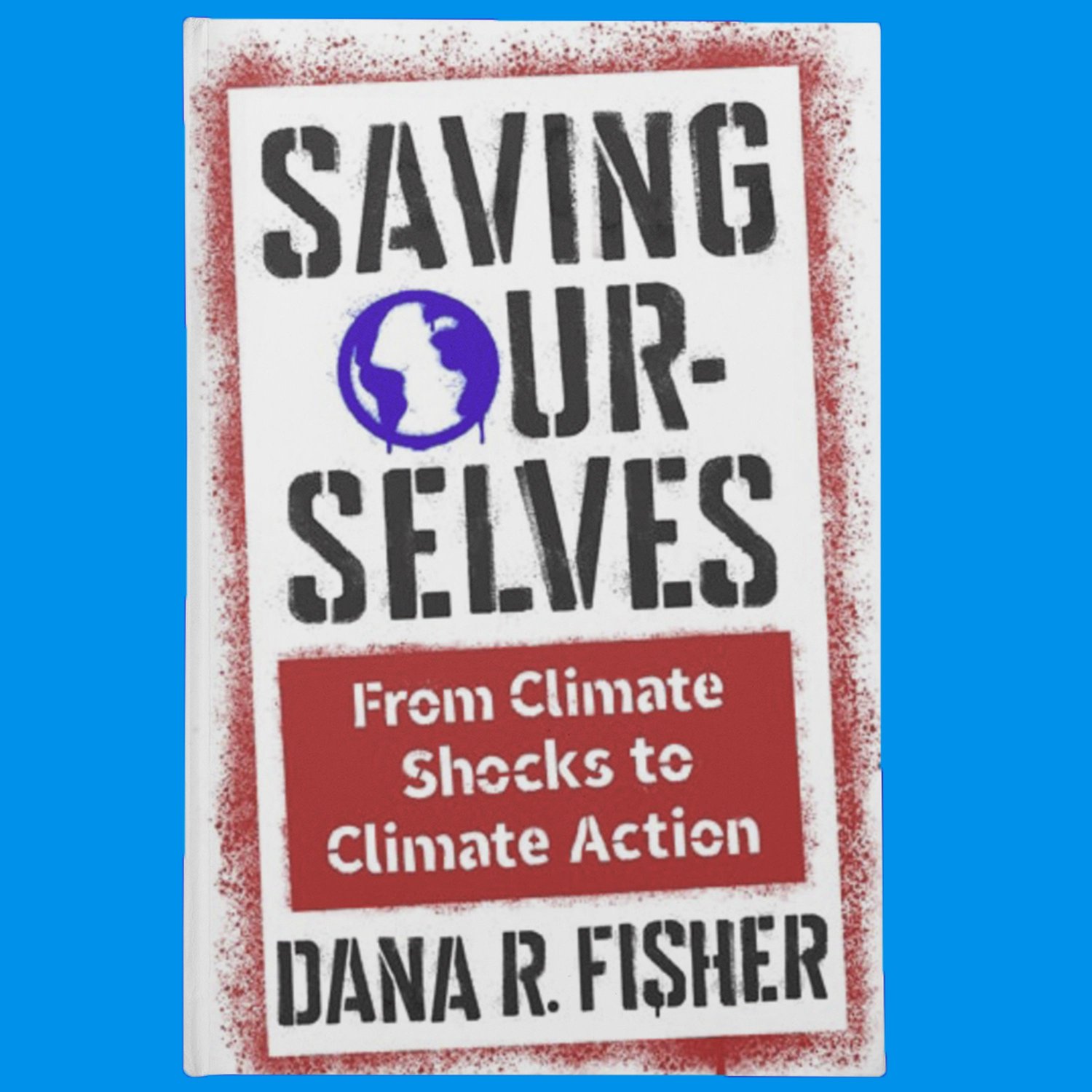
Saving Ourselves: From Climate Shocks to Climate Action - DANA FISHER
“I call myself an apocalyptic optimist. In other words, I do believe there is hope to save ourselves from the climate crisis that we have caused. However, I also believe that saving ourselves will only be possible with a mass mobilization that is driven by the pain and suffering of climate shocks around the world. A generalized sense of extreme risk can lead to peaceful and less-peaceful mass mobilizations at the levels needed to stimulate an AnthroShift. Only a global risk event (or numerous smaller events that are seen as threatening social and economic centers of power) will motivate the kind of massive social change that is needed. In other words, without a risk pivot—be it driven by social or environmental change—an AnthroShift that is large enough to respond adequately to the climate crisis and open a large enough window of opportunity postshock is improbable. At this point, it is impossible to predict if such a shock will come from ecological disaster, war, pandemic, or another unforeseen risk. What is certain, though, is that without such a shock that motivates an AnthroShift large enough to reorient all the sectors of society to respond meaningfully to the climate crisis, it is hard to envision the world achieving the levels of climate action needed. Instead, the best we can hope for is incremental change that does not disrupt the dominant nodes of political and economic power; such incremental change has the potential to reduce the gravity of the crisis, but it will not stop the coming climate crisis.”– Saving Ourselves: From Climate Shocks to Climate ActionDana R. Fisher is the Director of the Center for Environment, Community, & Equity and Professor in the School of International Service at American University. Fisher’s research focuses on questions related to democracy, civic engagement, activism, and climate politics. Current projects include studying political elites’ responses to climate change, and the ways federal service corps programs in the US are integrating climate into their work. She is a self-described climate-apocalyptic optimist and co-developed the framework of AnthroShift to explain how social actors are reconfigured in the aftermath of widespread perceptions and experiences of risk. Her seventh book is Saving Ourselves: From Climate Shocks to Climate Action.https://danarfisher.comhttps://cece.american.eduwww.acc.govwww.creativeprocess.infowww.oneplanetpodcast.orgIG www.instagram.com/creativeprocesspodcast

How can Regenerative Business Help Heal the Earth? - ESHA CHHABRA
“There’s a lot of greenwashing that's going on these days. It is great marketing. And that was really the reason why I wrote this book. I had started to see the patterns. You can start to tell them the companies that are genuinely doing it versus the companies that are just talking about it. So that was one indicator, you know, a company that would send out a press release about their goals and what they anticipated to do in the next 5 to 10 years was very different from companies who had said, you know what, this is what we've achieved. Regenerative started coming into the lexicon, the term in 2017, 2018. And regenerative means to regenerate, means to bring life into something. To sustain means to keep the status quo. And regenerative looks at things from a very holistic lens. You know, it's like if you're going to run a regenerative farm, it's all the different components of the farm and the ecosystem ideally come within the ecosystem.”Esha Chhabra has written for national and international publications over the last 15 years, focusing on global development, the environment, and the intersection of business and impact. Her work has been featured in The New York Times, The Economist, The Guardian, and other publications. She is the author of Working to Restore: Harnessing the Power of Business to Heal the Earth.www.eshachhabra.comwww.beacon.org/Working-to-Restore-P2081.aspxwww.creativeprocess.infowww.oneplanetpodcast.orgIG www.instagram.com/creativeprocesspodcast
How can we ensure that AI is aligned with human values? - RAPHAËL MILLIÈRE
How can we ensure that AI is aligned with human values? What can AI teach us about human cognition and creativity?Dr. Raphaël Millière is Assistant Professor in Philosophy of AI at Macquarie University in Sydney, Australia. His research primarily explores the theoretical foundations and inner workings of AI systems based on deep learning, such as large language models. He investigates whether these systems can exhibit human-like cognitive capacities, drawing on theories and methods from cognitive science. He is also interested in how insights from studying AI might shed new light on human cognition. Ultimately, his work aims to advance our understanding of both artificial and natural intelligence.“I'd like to focus more on the immediate harms that the kinds of AI technologies we have today might pose. With language models, the kind of technology that powers ChatGPT and other chatbots, there are harms that might result from regular use of these systems, and then there are harms that might result from malicious use. Regular use would be how you and I might use ChatGPT and other chatbots to do ordinary things. There is a concern that these systems might reproduce and amplify, for example, racist or sexist biases, or spread misinformation. These systems are known to, as researchers put it, “hallucinate” in some cases, making up facts or false citations. And then there are the harms from malicious use, which might result from some bad actors using the systems for nefarious purposes. That would include disinformation on a mass scale. You could imagine a bad actor using language models to automate the creation of fake news and propaganda to try to manipulate voters, for example. And this takes us into the medium term future, because we're not quite there, but another concern would be language models providing dangerous, potentially illegal information that is not readily available on the internet for anyone to access. As they get better over time, there is a concern that in the wrong hands, these systems might become quite powerful weapons, at least indirectly, and so people have been trying to mitigate these potential harms.”https://raphaelmilliere.comhttps://researchers.mq.edu.au/en/persons/raphael-millierewww.creativeprocess.infowww.oneplanetpodcast.orgIG www.instagram.com/creativeprocesspodcast
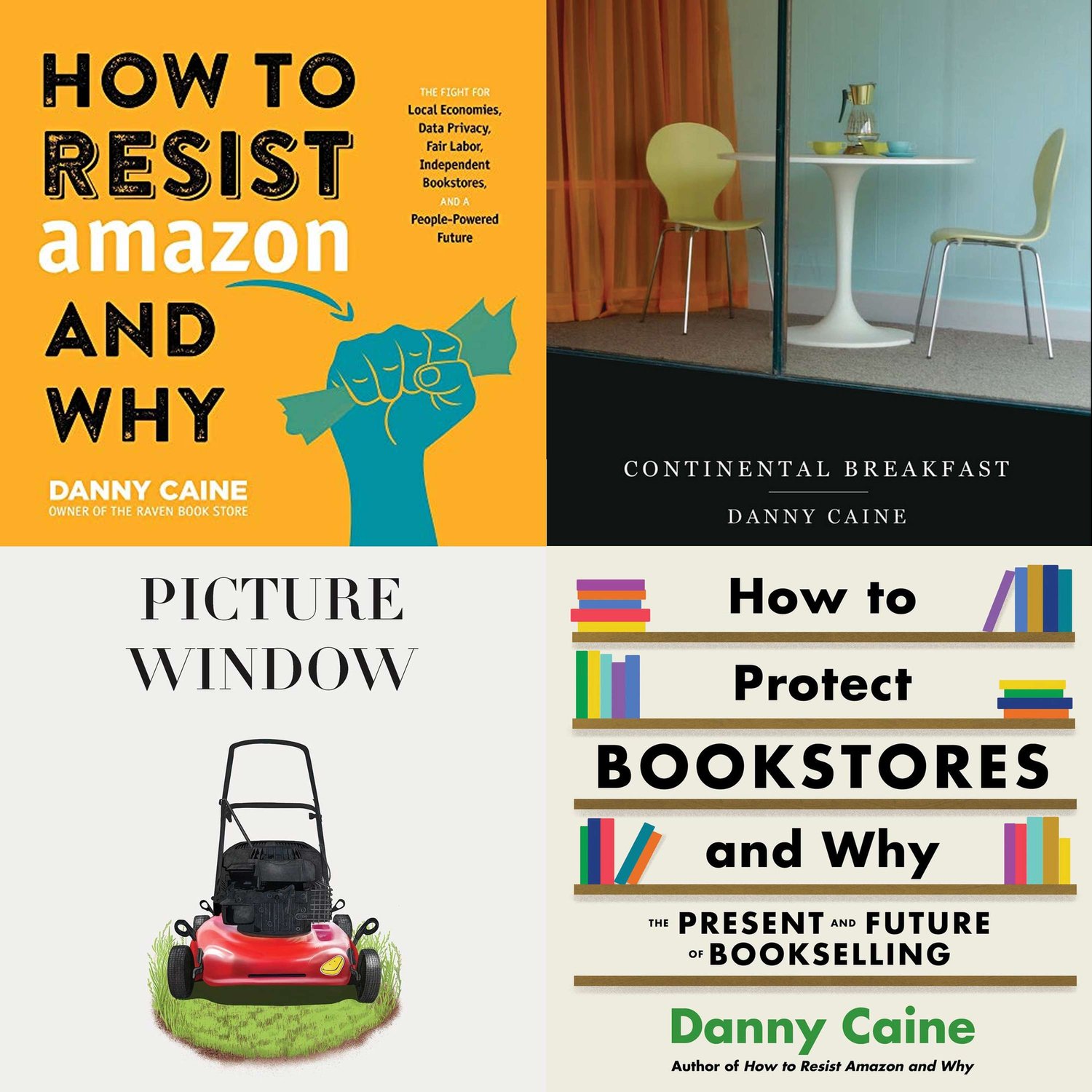
How to Protect Bookstores and Why - Highlights - DANNY CAINE, Bookseller, Poet
“Bookselling captured my imagination and my heart as soon as I started working at the bookstore because I could see the potential for this great, amazing community-oriented work. Of course, it's a thrill to be around books, to meet authors, to read all this stuff, and to spend all day with people who love books, but what I think I really fell in love with was the sense of community, the people behind it, and the way a bookstore can really be an engine for positive social change within its community and in a broader sense as well. My whole nonfiction book project started with a tweet thread. It was about how every bookseller has to be prepared to have this discussion: a customer comes in, and they're like, this book is 50 percent off on Amazon. Why should I buy it here? So, I don't think about it quite as withholding from Amazon as much as contributing to these local community-oriented businesses. The thing that unites my poetry and the nonfiction writing is my main obsession as a writer. It's the question of, how do you live meaningfully in late capitalism? As corporations and global capitalist forces take over the world, what does it mean to try to have a meaningful human life? I think the proliferation of objects might reflect that. A lot of what we do in this world is collect objects, and regardless of whether it's good or bad, you build a nest. I think that in Picture Window in particular, I wanted to write about the domestic in a way that I hadn't written in so far. And then the pandemic happened, so I was forced into this weird, uneasy, claustrophobic domesticity. When your attention is so focused within your own home and within your own family, every object in your house takes on a new resonance. So, when a tennis ball that you've never seen somehow shows up in your house, that's weird. It's poetic. It feels dreamlike.”Danny Caine is the author of the poetry collections Continental Breakfast, El Dorado Freddy's, Flavortown, and Picture Window, as well as the books How to Protect Bookstores and Why and How to Resist Amazon and Why. His poetry has appeared in The Slowdown, Lit Hub, Diagram, HAD, and Barrelhouse. He's a co-owner of The Raven Bookstore, Publisher's Weekly's 2022 Bookstore of the Year. www.dannycaine.com www.ravenbookstore.comwww.creativeprocess.infowww.oneplanetpodcast.orgIG www.instagram.com/creativeprocesspodcast
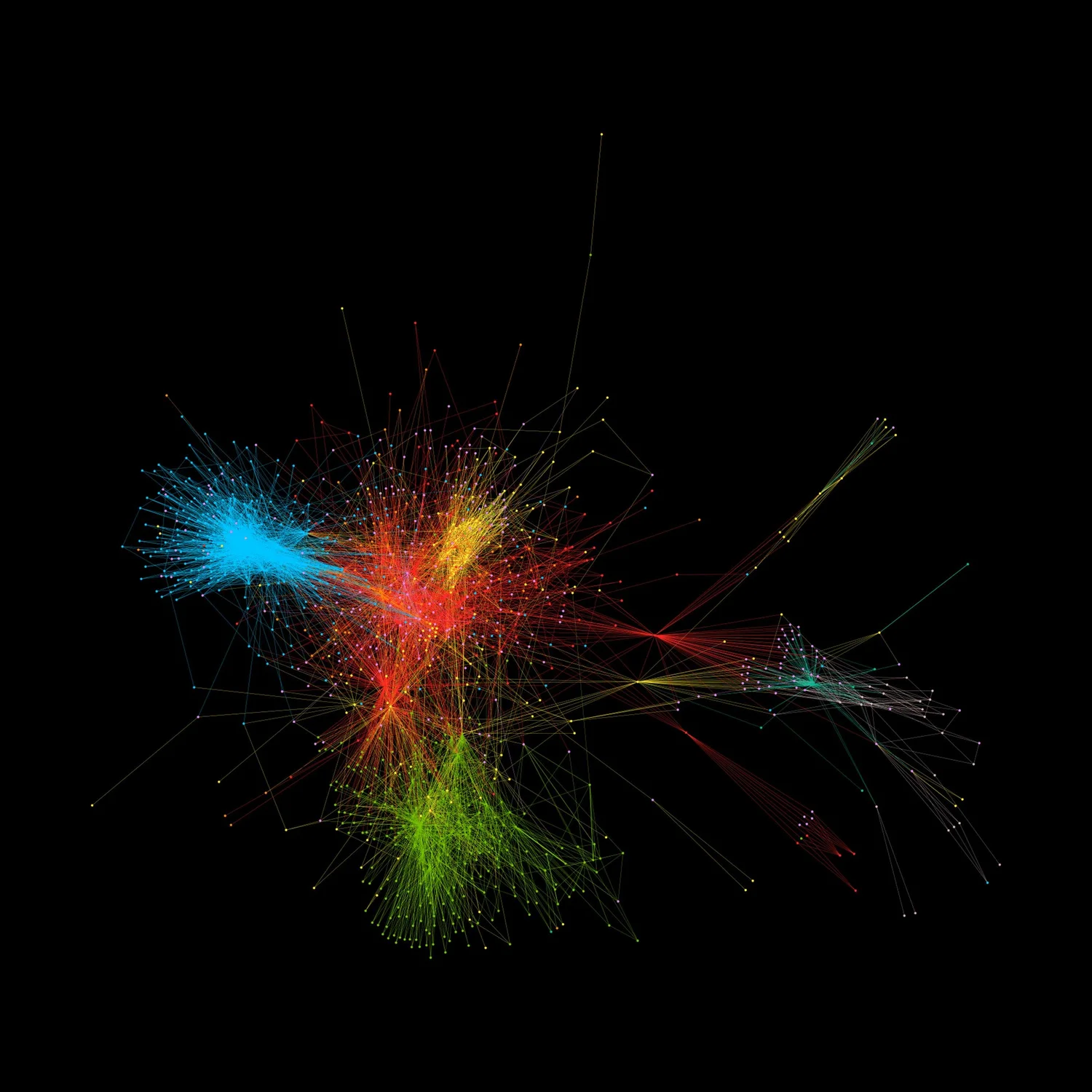
Is understanding AI a bigger question than understanding the origin of the universe? - NEIL JOHNSON
“It gets back to this core question. I just wish I was a young scientist going into this because that's the question to answer: Why AI comes out with what it does. That's the burning question. It's like it's bigger than the origin of the universe to me as a scientist, and here's the reason why. The origin of the universe, it happened. That's why we're here. It's almost like a historical question asking why it happened. The AI future is not a historical question. It's a now and future question.I'm a huge optimist for AI, actually. I see it as part of that process of climbing its own mountain. It could do wonders for so many areas of science, medicine. When the car came out, the car initially is a disaster. But you fast forward, and it was the key to so many advances in society. I think it's exactly the same as AI. The big challenge is to understand why it works. AI existed for years, but it was useless. Nothing useful, nothing useful, nothing useful. And then maybe last year or something, now it's really useful. There seemed to be some kind of jump in its ability, almost like a shock wave. We're trying to develop an understanding of how AI operates in terms of these shockwave jumps. Revealing how AI works will help society understand what it can and can't do and therefore remove some of this dark fear of being taken over. If you don't understand how AI works, how can you govern it? To get effective governance, you need to understand how AI works because otherwise you don't know what you're going to regulate.”How can physics help solve messy, real world problems? How can we embrace the possibilities of AI while limiting existential risk and abuse by bad actors?Neil Johnson is a physics professor at George Washington University. His new initiative in Complexity and Data Science at the Dynamic Online Networks Lab combines cross-disciplinary fundamental research with data science to attack complex real-world problems. His research interests lie in the broad area of Complex Systems and ‘many-body’ out-of-equilibrium systems of collections of objects, ranging from crowds of particles to crowds of people and from environments as distinct as quantum information processing in nanostructures to the online world of collective behavior on social media. https://physics.columbian.gwu.edu/neil-johnson https://donlab.columbian.gwu.eduwww.creativeprocess.infowww.oneplanetpodcast.org IG www.instagram.com/creativeprocesspodcast
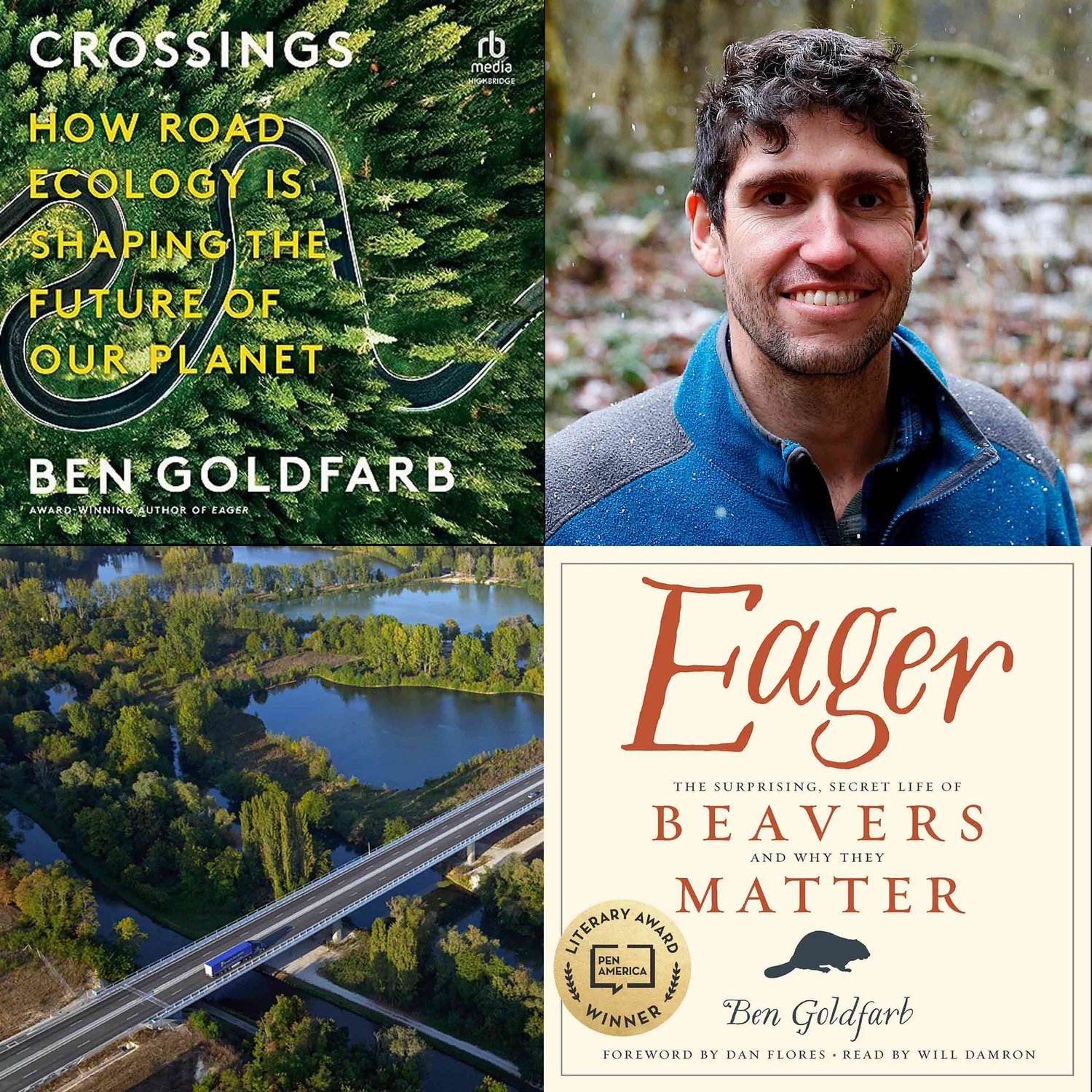
Humanity's Deadly Shadow: The Toll on Birds and Wildlife - BEN GOLDFARB
“The creation of roads is this process that's sort of innate to all beings. You know, we're all sort of inclined to create and follow trails. We just do it at a much vaster and more permanent and destructive scale. I think we need to reconceive how we think about roads in some ways, right? I mean, we think about roads, certainly here in the U. S., as these symbols of movement and mobility and freedom, right? There's so much about the romance of the open road and so much of our popular culture going back to the mid-20th century when the interstate highway systems were built and writers like Jack Kerouac were singing the praises of the open highway. And certainly, roads play that role. I like driving. The iconic Western American road trip is kind of this wonderful experience, but you know, I think the purpose of this book is to say: Yes, roads are a source of human mobility and freedom, but they're doing precisely the opposite for basically all other forms of life, right? They're curtailing animal movement and mobility and freedom, both by killing them directly in the form of roadkill, but also by creating these kinds of impenetrable walls of traffic that prevent animals from moving around the landscape and accessing big swaths of their habitat. Right? So, that's kind of the mental reconfiguration we have to go through, which is to recognize that, hey, roads aren't just forms of mobility and freedom for us. They're also preventing that mobility in basically all other life forms.”Ben Goldfarb is a conservation journalist. He is the author of Crossings: How Road Ecology Is Shaping The Future of Our Planet, named one of the best books of 2023 by the New York Times, and Eager: The Surprising, Secret Life of Beavers and Why They Matter, winner of the 2019 PEN/E.O. Wilson Literary Science Writing Award.www.bengoldfarb.comhttps://wwnorton.com/books/9781324005896www.chelseagreen.com/product/eager-paperbackwww.creativeprocess.infowww.oneplanetpodcast.orgIG www.instagram.com/creativeprocesspodcast

Environmental Crisis, Philosophy & the Search for Meaning - ROBERT PIPPIN
“Philosophy is both an academic discipline and also something that everybody does. Everybody has to have reflective views about what's significant. They also have to justify to themselves why it's significant or important. The nature of justice itself, and the various opinions that have been written about in philosophy about justice, can get to a very high level. So there's this unusual connection between philosophy and human life. We've inherited from the Middle Ages, this incredible tradition that's now developed into a chance for young people to spend four or five years, in a way, released from the pressures of life. The idea to pursue your ideas a little further in these four years you have, exempt from the pressures of social life, allows philosophy to have a kind of position unique in the academy. In confronting what the best minds in the history of the world have had to say about these issues, the hope is that they provide for the people who are privileged enough to confront philosophy a better and more thoughtful approach to these fundamental questions that everybody has to confront.”What is the importance of philosophy in the 21st century as we enter a post-truth world? How can we reintroduce meaning and uphold moral principles in our world shaken by crises? And what does philosophy teach us about living in harmony with the natural world?Robert Pippin is the Evelyn Stefansson Nef Distinguished Service Professor at the University of Chicago where he teaches in the College, Committee on Social Thought, and Department of Philosophy. Pippin is widely acclaimed for his scholarship in German idealism as well as later German philosophy, including publications such as Modernism as a Philosophical Problem, and Hegel’s Idealism. In keeping with his interdisciplinary interests, Pippin’s book Henry James and Modern Moral Life explores the intersections between philosophy and literature. Pippin’s most recent published book is The Culmination: Heidegger, German Idealism, and the Fate of Philosophy.https://socialsciences.uchicago.edu/directory/Robert-Pippinhttps://press.uchicago.edu/ucp/books/book/chicago/C/bo208042246.htmlwww.creativeprocess.infowww.oneplanetpodcast.orgIG www.instagram.com/creativeprocesspodcast
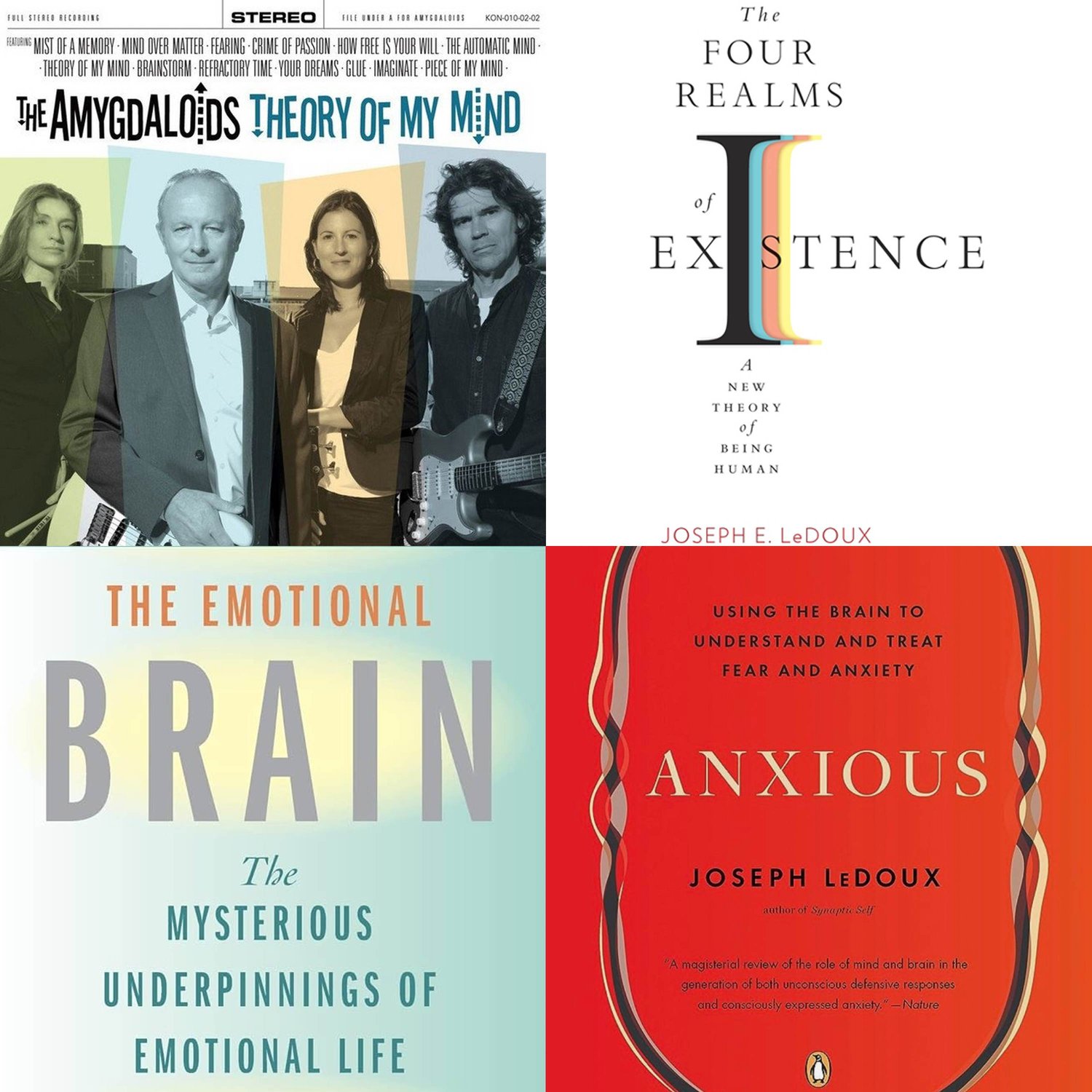
How does the brain process emotions and music? JOSEPH LEDOUX - Neuroscientist, Author, Musician
“We've got four billion years of biological accidents that created all of the intricate aspects of everything about life, including consciousness. And it's about what's going on in each of those cells at the time that allows it to be connected to everything else and for the information to be understood as it's being exchanged between those things with their multifaceted, deep, complex processing.”Joseph LeDoux is a Professor of Neural Science at New York University at NYU and was Director of the Emotional Brain Institute. His research primarily focuses on survival circuits, including their impacts on emotions, such as fear and anxiety. He has written a number of books in this field, including The Four Realms of Existence: A New Theory of Being Human, The Emotional Brain, Synaptic Self, Anxious, and The Deep History of Ourselves. LeDoux is also the lead singer and songwriter of the band The Amygdaloids. www.joseph-ledoux.comwww.cns.nyu.edu/ebihttps://amygdaloids.netwww.hup.harvard.edu/books/9780674261259www.creativeprocess.infowww.oneplanetpodcast.orgIG www.instagram.com/creativeprocesspodcast
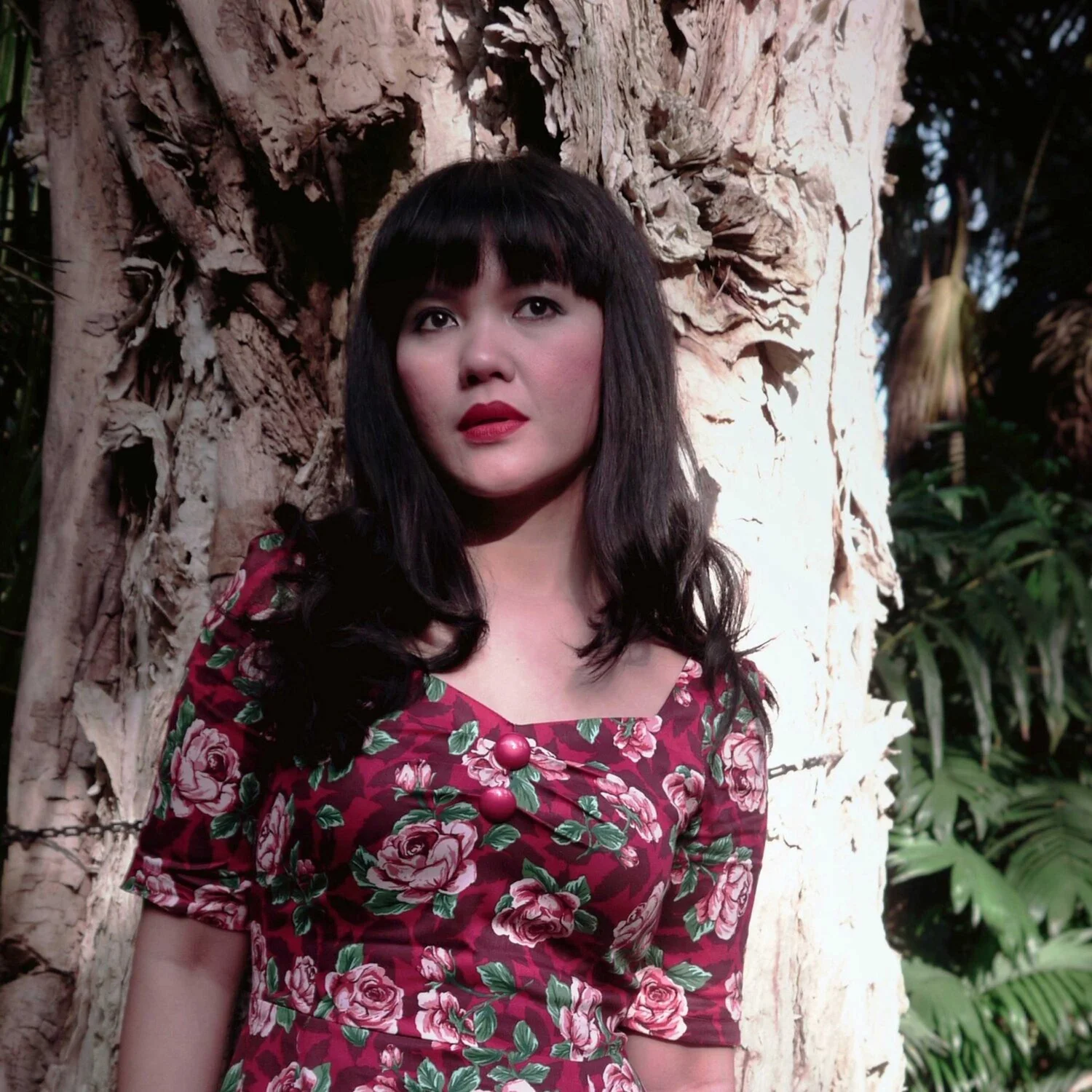
Travel, Literature & Identity with INTAN PARAMADITHA - Author of The Wandering
“The Wandering is a choose your own adventure novel, and the reader is situated in the shoes of this brown woman from the Global South. She's 27 and in a way, she is stuck with her life. She aspires to be middle class, but her job doesn't allow her to achieve this social mobility. In her condition, she makes a deal with a devil, a reference to the story of Faust and Mephistopheles, finally getting a pair of red shoes that will take her anywhere. But that means she will never be able to find home—that's the curse of the shoes. The title in Indonesian is Gentayanga, which is a word used to describe ghosts who exist in a liminal state. This is a metaphor for people who travel. I came up with the idea for this novel in 2009 when I was an Indonesian international student studying for my PHD in New York. When I went back to Jakarta, I felt like I was not at home, but New York wasn't my home either, so there's a feeling of being neither here nor there. I wanted to capture the sense of being everywhere, which is liberating, but also the sense of displacement.”Intan Paramaditha is a writer and an academic. Her novel The Wandering (Harvill Secker/ Penguin Random House UK), translated from the Indonesian language by Stephen J. Epstein, was nominated for the Stella Prize in Australia and awarded the Tempo Best Literary Fiction in Indonesia, English PEN Translates Award, and PEN/ Heim Translation Fund Grant from PEN America. She is the author of the short story collection Apple and Knife, the editor of Deviant Disciples: Indonesian Women Poets, part of the Translating Feminisms series of Tilted Axis Press and the co-editor of The Routledge Companion to Asian Cinemas (forthcoming 2024). Her essay, “On the Complicated Questions Around Writing About Travel,” was selected for The Best American Travel Writing 2021. She holds a Ph.D. from New York University and teaches media and film studies at Macquarie University, Sydney.https://intanparamaditha.com www.penguinrandomhouse.ca/books/626055/the-wandering-by-intan-paramaditha/9781787301184www.creativeprocess.info www.oneplanetpodcast.orgIG www.instagram.com/creativeprocesspodcast
Voices of the Earth: Reflections on Nature, Humanity & Climate Change
Environmentalists, writers, artists, activists, and public policy makers explore the interconnectedness of living beings and ecosystems. They highlight the importance of conservation, promote climate education, advocate for sustainable development, and underscore the vital role of creative and educational communities in driving positive change.00:00 "The Conditional" by U.S. Poet Laureate Ada Limón01:27 The Secret Language of Animals: Ingrid Newkirk, President of PETA03:03 A Love Letter to the Living World: Carl Safina, Ecologist & Author04:11 Exploring the Mysteries of Soil and Coral Reefs: Merlin Sheldrake, Biologist, Author of Entangled Life04:47 Exploring Coral Reefs: Richard Vevers, Founder of The Ocean Agency05:56 The Importance of Climate Education: Kathleen Rogers, President of EarthDay.org07:02 The Timeless Wisdom of Turtles: Sy Montomery, Naturalist & Author07:38 Optimism in the Face of Environmental Challenges: Richard Vevers08:32 Urban Solutions for a Sustainable Future: Paula Pinho, Director, Just Transition, Consumers, Energy Efficiency & Innovation, European Commission08:57 The Circular Economy: Walter Stahel, Founder & Director of the Product-Life Institute09:39 The Power of Speaking Out for Sustainability: Paula Pinho10:16 Empowering the Next Generation Through Education: Jeffrey Sachs, President of the UN Sustainable Development Solutions Networkwww.creativeprocess.info www.oneplanetpodcast.orgIG www.instagram.com/creativeprocesspodcastwww.maxrichtermusic.comhttps://studiorichtermahr.comMax Richter’s music featured in this episode are “On the Nature of Daylight” from The Blue Notebooks, “Path 19: Yet Frailest” from Sleep.Music is courtesy of Max Richter, Universal Music Enterprises, and Mute Song.
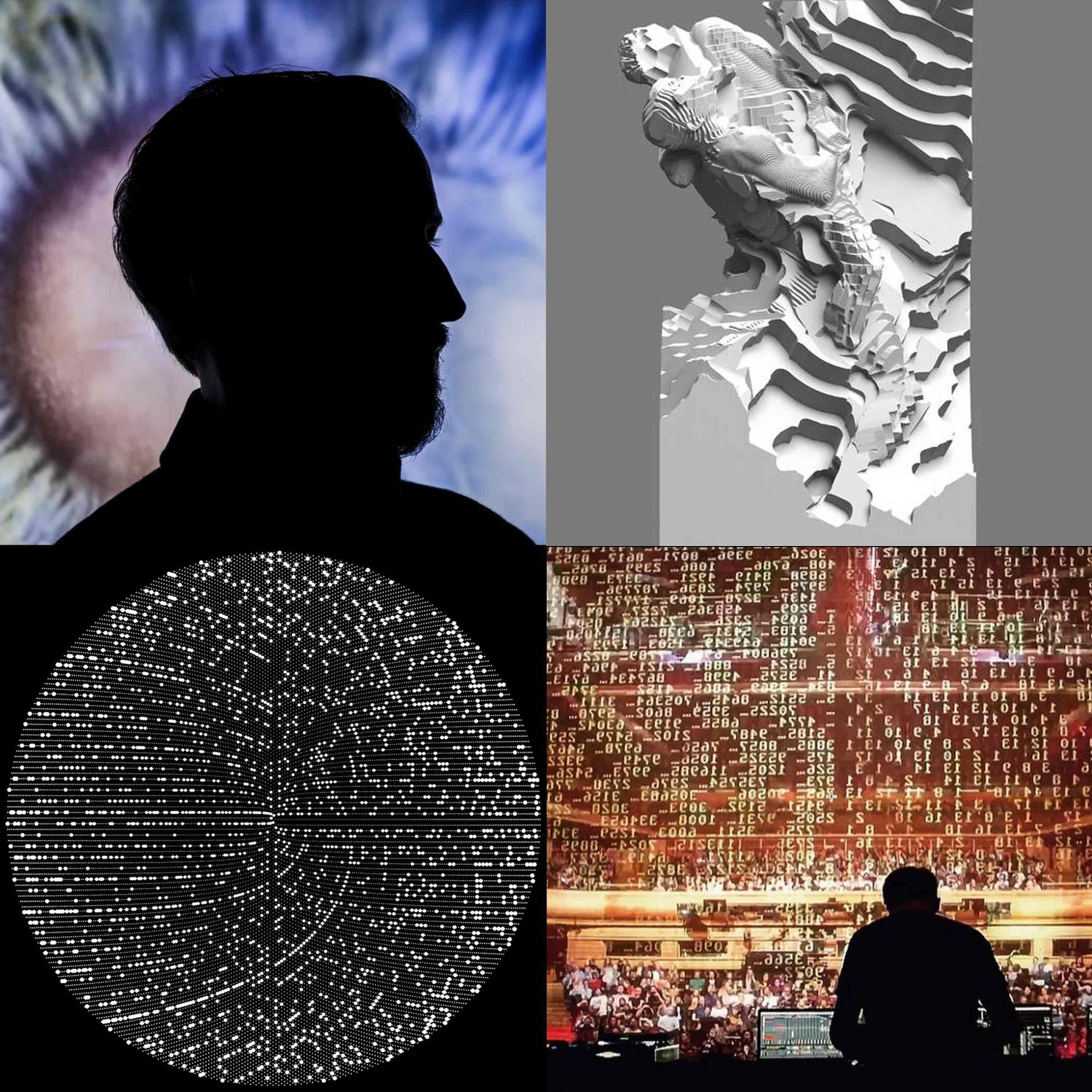
Exploring Science, Music, AI & Consciousness with MAX COOPER
“As technology becomes more dominant, the arts become ever more important for us to stay in touch the things that the sciences can't tackle. What it's actually like to be a person? What's actually important? We can have this endless progress inside this capitalist machine for greater wealth and longer life and more happiness, according to some metric. Or we can try and quantify society and push it forward. Ultimately, we all have to decide what's important to us as humans, and we need the arts to help with that. So, I think what's important really is just exposing ourselves to as many different ideas as we can, being open-minded, and trying to learn about all facets of life so that we can understand each other as well. And the arts is an essential part of that.”How is being an artist different than a machine that is programmed to perform a set of actions? How can we stop thinking about artworks as objects, and start thinking about them as triggers for experiences? In this conversation with Max Cooper, we discuss the beauty and chaos of nature and the exploration of technology music and consciousness.Max Cooper is a musician with a PhD in computational biology. He integrates electronic music with immersive video projections inspired by scientific exploration. His latest project, Seme, commissioned by the Salzburg Easter Festival, merges Italian musical heritage with contemporary techniques, was also performed at the Barbican in London. He supplied music for a video narrated by Greta Thunberg and Pope Francis for COP26.In 2016, Cooper founded Mesh, a platform to explore the intersection of music, science and art. His Observatory art-house installation is on display at Kings Cross until May 1st.https://maxcooper.nethttps://osterfestspiele.at/en/programme/2024/electro-2024https://meshmeshmesh.netwww.kingscross.co.uk/event/the-observatoryThe music featured on this episode was Palestrina Sicut, Cardano Circles, Fibonacci Sequence, Scarlatti K141. Music is from Seme and is courtesy of Max Cooper.www.creativeprocess.infowww.oneplanetpodcast.orgIG www.instagram.com/creativeprocesspodcast
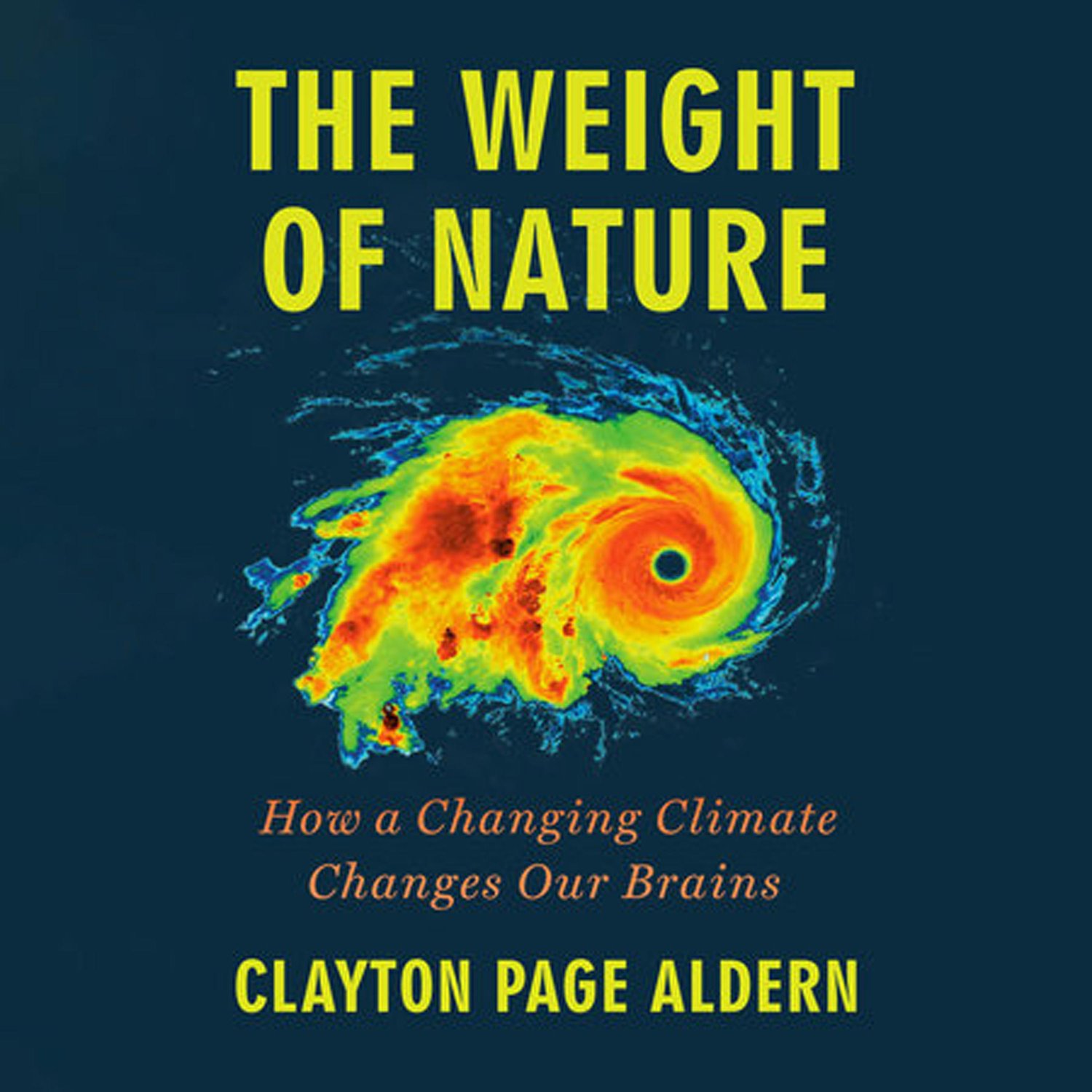
How climate change is making us sick, angry & anxious - CLAYTON ALDERN - Neuroscientist turned Eco-Journalist
"I want to be wowed by the world. I want to gaze at it in awe and wonder. And I think when we take a step back and begin to appreciate the complexity of the interactions around us. We're taking note of a very porous between the self and the rest of the world. We are literally observing our enmeshment in our environment. And it's that kind of a reference frameshift that I think is going to help us move out of some of the darkness. My mother is an artist, and I think growing up surrounded by her practice exposed me to the creative process and is probably that which afforded me a certain sympathy for those tools and those modes of exploring the world later in life."Clayton Page Aldern is an award winning neuroscientist turned environmental journalist whose work has appeared in The Atlantic, The Guardian, The Economist, and Grist, where he is a senior data reporter. A Rhodes Scholar, he holds a Master's in Neuroscience and a Master's in Public Policy from the University of Oxford. He is also a research affiliate at the Center for Studies in Demography and Ecology at the University of Washington. He is the author of The Weight of Nature: How a Changing Climate Changes Our Minds, Brains, and Bodies, which explores the neurobiological impacts of rapid environmental change.https://claytonaldern.comwww.penguinrandomhouse.com/books/717097/the-weight-of-nature-by-clayton-page-aldern https://csde.washington.edu www.creativeprocess.infowww.oneplanetpodcast.orgIG www.instagram.com/creativeprocesspodcast

There’s another side to every war. Satire, War & Hollywood - Co-creator DON McKELLAR on The Sympathizer
"Right from the beginning, in talking with Park Chan-wook, we wanted this sort of multiplicity of narrative voices and devices. In a way, it's about how the story, in this case of the Vietnam War, has been told, what the expected story is, at least, for American viewers, which they may mainly know through the movies and through visual representations. And it's how our lead character, The Captain, who is writing the story, who has divided loyalties. How can we capture the contradictions within that story? And we tried to make that complexity part of the actual fabric of the show."Don McKellar is a highly accomplished writer, director, and actor. He has written films including Roadkill, Highway 61, Dance Me Outside, The Red Violin, and Blindness. He won the Prix de la Jeunesse at the 1988 Cannes Film Festival for his directorial debut, Last Night, which he also wrote and starred in. He is an eight-time Genie Award nominee and a two-time winner.He wrote the book for the acclaimed musical The Drowsy Chaperone, for which he received a Tony Award. Most recently, Don served as writer, executive producer, and co-showrunner on The Sympathizer, a television adaptation of Viet Thanh Nguyen's Pulitzer Prize-winning novel of the same name. The series was co-created with Park Chan-wook.www.imdb.com/name/nm0001528/mediaviewer/rm2411273728/?ref_=nm_ov_phwww.imdb.com/title/tt14404618/?ref_=nv_sr_srsg_0_tt_8_nm_0_q_the%20sympawww.creativeprocess.infowww.oneplanetpodcast.orgIG www.instagram.com/creativeprocesspodcastPhoto courtesy of HBO
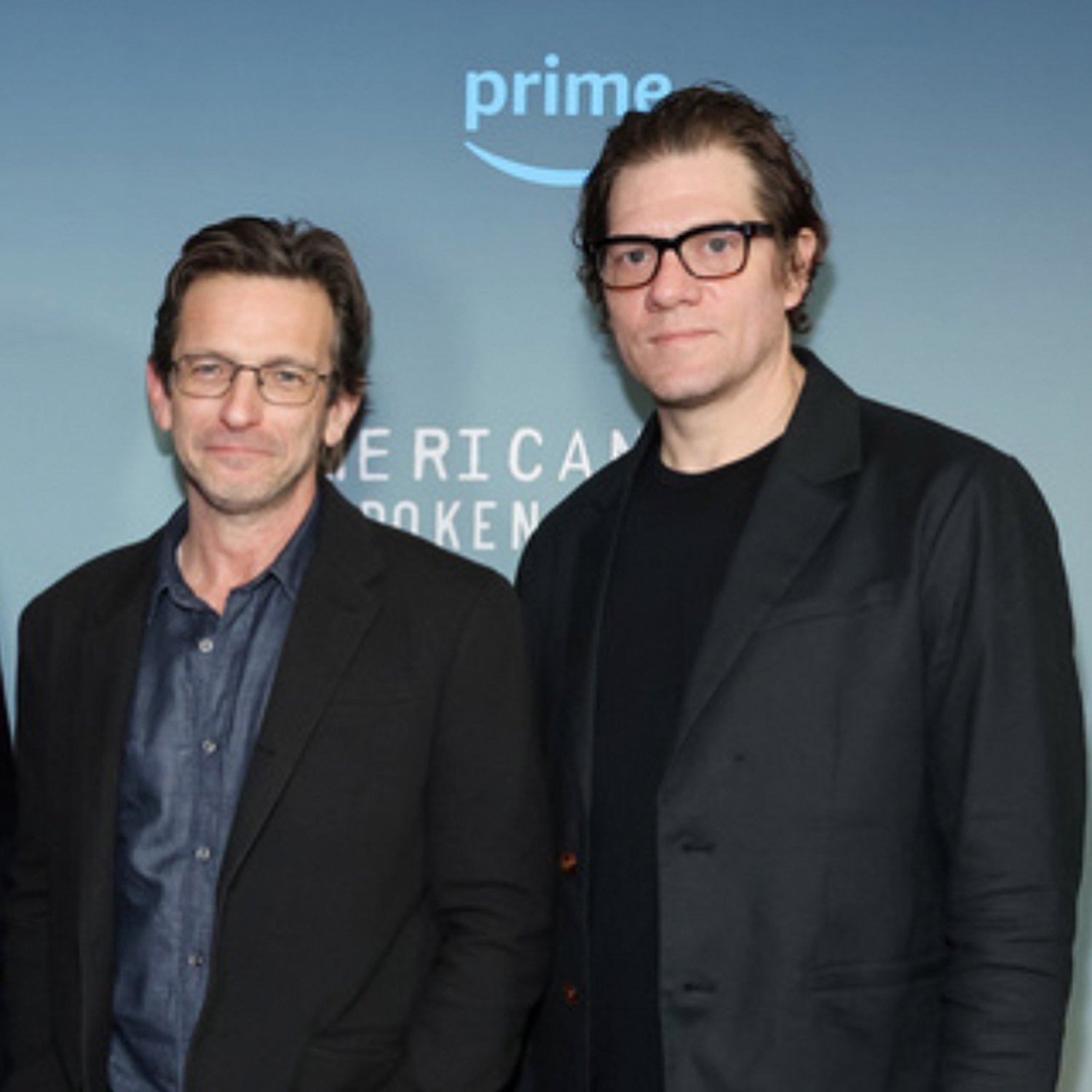
Do good deeds offset bad deeds? How do our families shape who we become? - DAN FUTTERMAN & ADAM RAPP
"We ended on such a cliffhanger with Isaac presenting the wrench at the police station to Jeff Daniels' character. It allowed us to sort of start from a place of what's going to happen next? And I think because what is drawn in the novel and because of what Danny brought into the original script of the first season and all the ideas he brought in. The biggest thing we talked about was the relationship between Del Harris and Grace Poe and what is the ambiguity there? And I think when, when you start answering questions on either side of that too firmly, I think it allows the audience to disconnect from it and then they go, Oh, he's a monster, or she's a monster. And then you just have this sort of a good and bad guy, good and bad woman narrative that is oversimplified all too often in our culture.""It felt to me like a lot of the drive of season two is about payback. There are people who feel they're owed things. They want payback. There are people who feel like they have to get back at people because they've been wronged in some way. In a way, every character has something, some way that they're trying to right the wrong that was done to them or that they did in the first season. Jeff Daniel's character, Del Harris, is really driven by trying to right what he sees as wrongs that he did in the first season. And he's staying a little bit away from Grace because he doesn't know how much to blame her or how much were his own decisions or how much she kind of drove him to do things. So that was fun to explore."Dan Futterman is creator, executive producer, and writer of Amazon Prime's American Rust, the acclaimed crime drama starring Jeff Daniels, Maura Tierney, and David Alvarez. Previously, Dan has written screenplays for Capote, Foxcatcher, In Treatment, and Gracepoint. He served as executive producer on The Looming Tower. Dan is also an actor, director, and two-time Oscar nominee.Adam Rapp is the executive producer and writer of American Rust. He has written plays, films, and series, including Red Light Winter, The Sound Inside, In Treatment, Blackbird, The Looming Tower, and Dexter: New Blood. His latest novel is Wolf at the Table. He recently wrote the book for the new Broadway musical, The Outsiders. www.imdb.com/name/nm0001246www.imdb.com/name/nm1452688/?ref_=fn_al_nm_1www.imdb.com/title/tt1532495/ https://outsidersmusical.com/ www.hachettebookgroup.com/titles/adam-rapp/wolf-at-the-table/9780316434164/?lens=little-brownwww.creativeprocess.infowww.oneplanetpodcast.orgIG www.instagram.com/creativeprocesspodcast
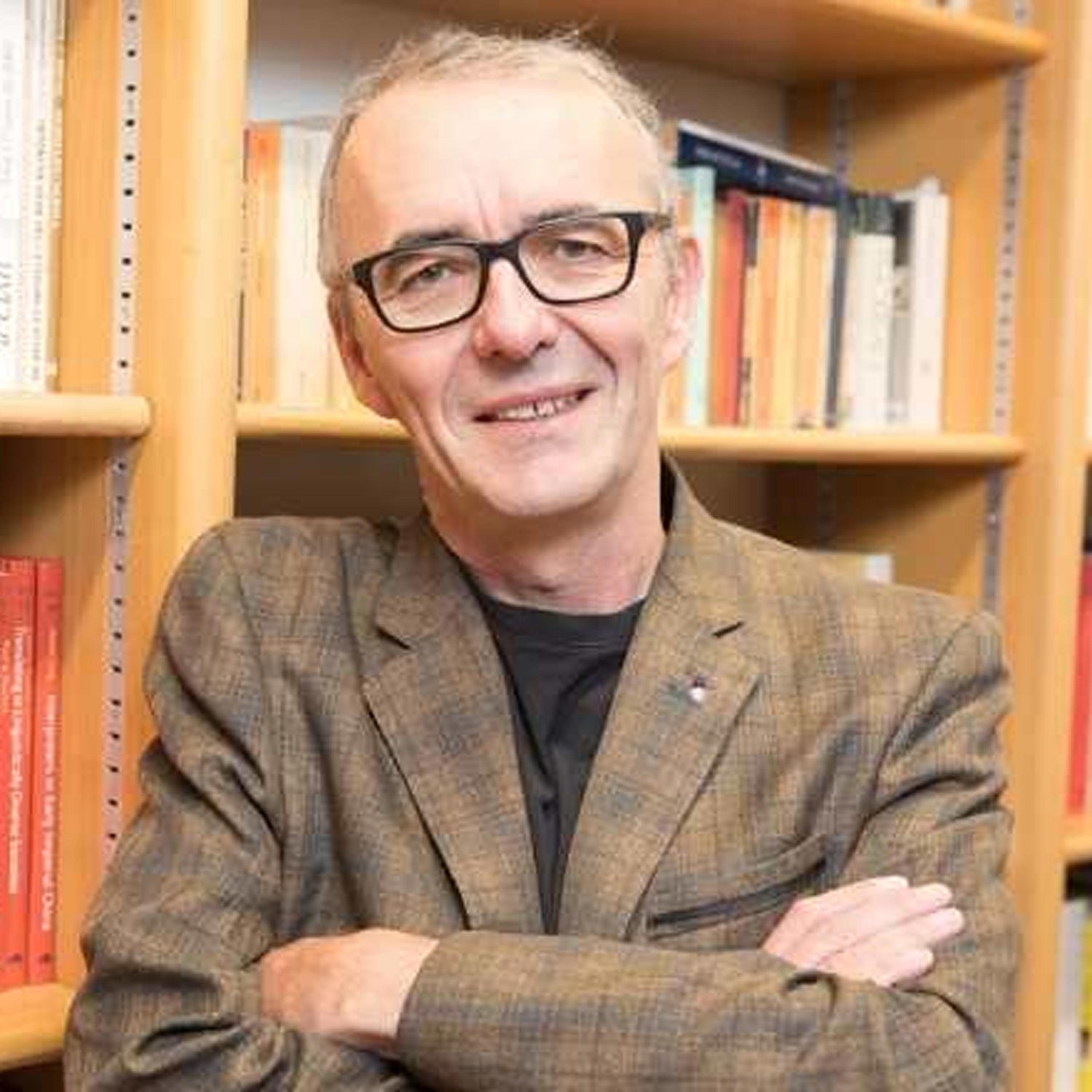
How has travel contributed to the ecological degradation of the planet? - Highlights - MICHAEL CRONIN
“What I think will stay with you for an entire lifetime is to be equipped with the capacity and the tools to find wonder in the world. And that is to find a language for that world, which is supplied through a folk tale, mythology, literature, poetry, and song. And then to also to have the kind of knowledge basis. I still think we suffer from this terrible division between the humanities and the sciences. These two worlds are sundered. I think we need to bring them together. Anybody who has for a moment studied the operations of photosynthesis in a plan or capillary action in trees is just astonished by the miracle of these operations. So I think we need to infuse a kind of a syncretic knowledge, but that would have as its central or its core point of value a rediscovery of wonder in the world. And of course, a world that you wonder at is a world that you cherish and a world that you cherish is a world that you want to preserve. And that, I think, is our only hope.”Michael Cronin is an Irish academic specialist in culture, travel literature, translation studies, and the Irish language. He has taught in universities in France and Ireland and has held visiting research fellowships to universities in Canada, Belgium, Peru, France, and Egypt. He's a fellow of Trinity College Dublin, an elected member of the Royal Irish Academy, and a senior researcher in the Trinity Centre for Literary and Cultural Translation. He is the current holder of the Chair of French (est. 1776) at TCD. He is the author of Eco-Travel: Journeying in the Age of the Anthropocene, Eco-Translation: Translation and Ecology in the Age of the Anthropocene, and other books.www.tcd.ie/French/people/michaelcronin.phpwww.cambridge.org/core/books/ecotravel/24263DF8E2E021915FEF4F937F146D25www.routledge.com/Eco-Translation-Translation-and-Ecology-in-the-Age-of-the-Anthropocene/Cronin/p/book/9781138916845www.creativeprocess.infowww.oneplanetpodcast.orgIG www.instagram.com/creativeprocesspodcast
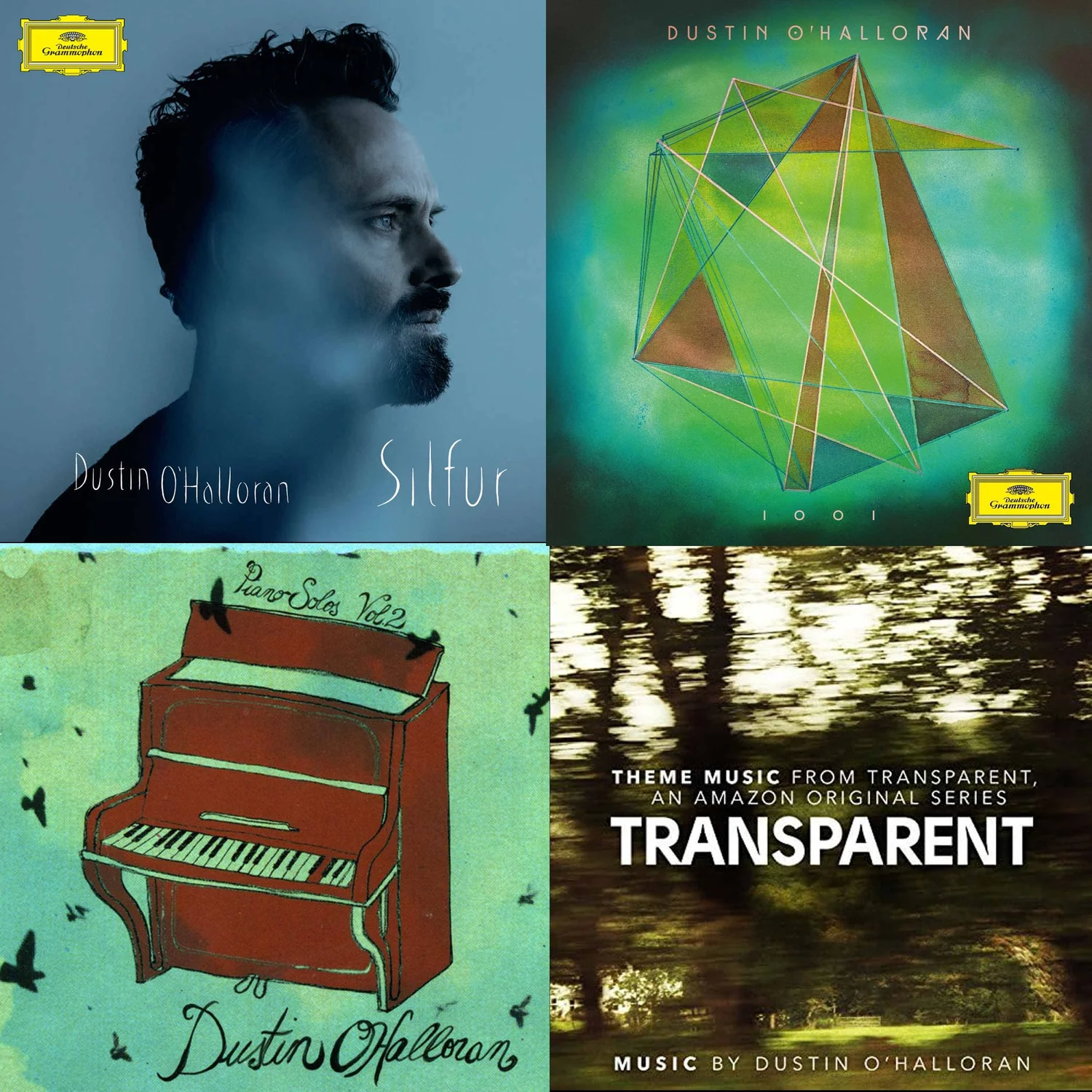
Consciousness, AI & Creativity with DUSTIN O’HALLORAN - Emmy Award-winning Composer
Dustin O’Halloran is a pianist and composer and member of the band A Winged Victory for the Sullen. Winner of a 2015 Emmy Award for his main title theme to Amazon's comedy drama Transparent, he was also nominated for an Oscar, a Golden Globe, and a BAFTA for his score for Lion, written in collaboration with Volker Bertelmann (aka Hauschka). He has composed for Wayne McGregor (The Royal Ballet, London), Sofia Coppola’s Marie Antoinette, Ammonite starring Kate Winslet, and The Essex Serpent starring Claire Danes. He produced Katy Perry’s “Into Me You See” from her album Witness and appears on Leonard Cohen’s 2019 posthumous album Thanks For The Dance. With six solo albums under his name, his latest album 1 0 0 1, which explores ideas of technology, humanity and mind-body dualism, is available on Deutsche Grammophon."The album 1 0 0 1 is really like a journey from our connection with nature to where we are now, in this moment where we're playing with technology. We're almost in this hybrid space, not fully understanding where it's going. And it's very deep in our subconscious and probably much greater than we realize. And it sort of ends in this space where the consciousness of what we're creating, it's going to be very separate from us. And I believe that's kind of where it's heading – the idea of losing humanity, losing touch with nature and becoming outside of something that we have created."https://dustinohalloran.com/www.deutschegrammophon.com/en/artists/dustin-o-halloranwww.imdb.com/name/nm0641169/bio/?ref_=nm_ov_bio_smMusic courtesy of Dustin O’Halloran and Deutsche Grammophonwww.creativeprocess.infowww.oneplanetpodcast.orgIG www.instagram.com/creativeprocesspodcast
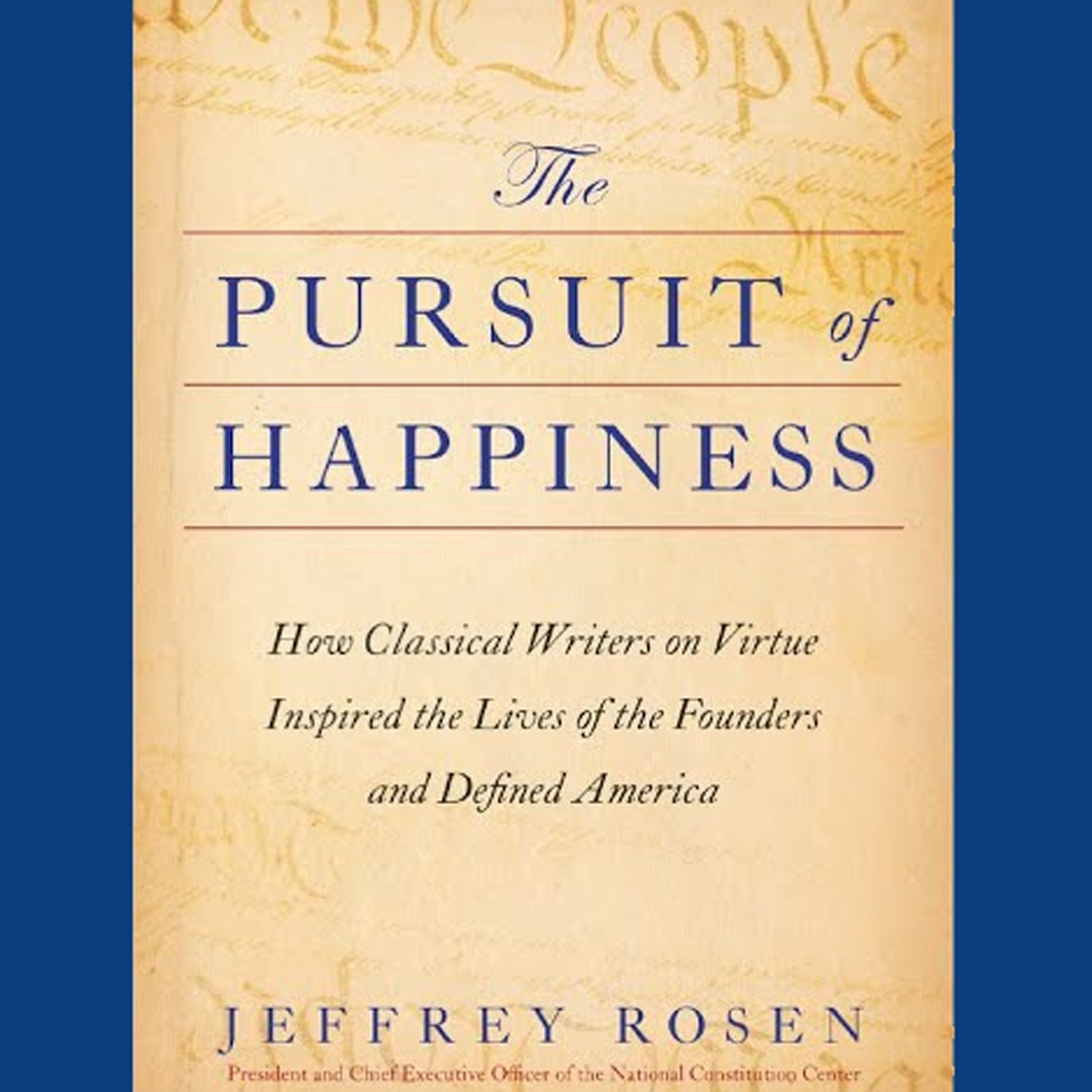
The Pursuit of Happiness - JEFFREY ROSEN - President & CEO of the National Constitution Center
Jeffrey Rosen is President and CEO of the National Constitution Center, where he hosts We the People, a weekly podcast of constitutional debate. He is also a professor of law at the George Washington University Law School and a contributing editor at The Atlantic. Rosen is a graduate of Harvard College, Oxford University, and Yale Law School. He is the author of seven previous books, including the New York Times bestseller Conversations with RBG: Justice Ruth Bader Ginsburg on Life, Love, Liberty, and Law. His essays and commentaries have appeared in The New York Times Magazine; on NPR; in The New Republic, where he was the legal affairs editor; and in The New Yorker, where he has been a staff writer. His latest book is The Pursuit of Happiness: How Classical Writers on Virtue Inspired the Lives of the Founders and Defined America.https://constitutioncenter.org/about/board-of-trustees/jeffrey-rosenwww.simonandschuster.com/books/The-Pursuit-of-Happiness/Jeffrey-Rosen/9781668002476https://constitutioncenter.org/news-debate/podcastswww.creativeprocess.infowww.oneplanetpodcast.orgIG www.instagram.com/creativeprocesspodcast

Intimacy Coordinator ITA O’BRIEN on Normal People, Sex Education & Creating Safe Spaces
"For years, people spoke about how awkward or embarrassing it was to perform the intimate content. And what they're speaking about is feeling horrible. If something's awkward, that squirm, that ring in the body, it feels embarrassing. That's actually an emotion that is not professional. That is not allowing the actor to stay feeling listened to, heard, empowered, autonomous. And so that they can just get on without any of those concerns and do their job to their best ability. And that's the awareness that we brought. So, we're saying, it is not suitable in our workplace for anybody to feel harassed or abused. The awareness in the industry, with acknowledging the injury from all those who came forward around the Weinstein allegations is the injury of when someone's coerced into doing something or that their career being threatened is emotional, psychological injury. It's really clear if you've got a stunt and someone's going to be jumping from roof to roof, they might fall down the cracks and break an ankle. Of course, the producers need to mitigate that risk and put in place everything so that the risk that you can perceive might happen is mitigated."Ita O’Brien is the UK’s leading Intimacy Coordinator, founder of Intimacy on Set (and author of the Intimacy On Set Guidelines). Her company, set up in 2018 provides services to TV, film, and theatre when dealing with intimacy, and is a SAG-Aftra accredited training provider of Intimacy Practitioners. Intimacy on Set has supported numerous high-profile film and TV productions including Normal People & Conversations With Friends (BBC3/Hulu), Sex Education 1&2 (Netflix), I May Destroy You (BBC/HBO), It’s A Sin (Channel 4), (Neal Street Prods / Searchlight Pictures).https://www.itaobrien.com/https://www.itaobrien.com/intimacy-on-set-guidelines.htmlhttps://www.imdb.com/name/nm1357677/www.creativeprocess.infowww.oneplanetpodcast.orgIG www.instagram.com/creativeprocesspodcast

What can turtles teach us about time, patience & wisdom? - Author SY MONTGOMERY & Illustrator MATT PATTERSON
"A friend had asthma as a child, and she couldn't have a pet, but she loved animals. So she watched the ants crawl on the asphalt roof of her apartment when she was a kid. And she is a biologist now who studies tree kangaroos in Papua New Guinea, but it all started with watching ants. So there is wildness and wonder all around us and we can all help preserve that wildness and wonder. It makes a human feel less lonely. So many humans I know, they're just suffering terribly from loneliness even though they're in a sea of other humans. Well, I never feel lonely. And I can be alone, so-called, in a landscape with no other human anywhere, and I feel nested and safe and at home. And I know you do, too, because there are all these other lives around us. And when you think of, as Mary Oliver said, 'our wild and precious life,' I mean, I certainly cherish my one precious single life. But the life with a capital L all around me is so much more precious and so much more glorious, and being part of that just opens up my soul and frees me from everything."Author Sy Montgomery and illustrator Matt Patterson are naturalists, adventurers, and creative collaborators. Montgomery has published over thirty acclaimed nonfiction books for adults and children and received numerous honors, including lifetime achievement awards from the Humane Society and the New England Booksellers Association.Patterson’s illustrations have been featured in several books and magazines, such as Yankee Magazine and Fine Art Connoisseur. He is the recipient of Roger Tory Peterson Wild American Art Award, National Outdoor Book Award for Nature and the Environment, and other honors. Most recently, Patterson provided illustrations for Freshwater Fish of the Northeast.Their joint books are Of Time and Turtles: Mending the World, Shell by Shattered Shell and The Book of the Turtle. Montgomery’s other books include The Soul of an Octopus, The Hawk’s Way and The Secrets of the Octopus (published in conjunction with a National Geographic TV series).www.mpattersonart.comhttps://symontgomery.comwww.harpercollins.com/products/of-time-and-turtles-sy-montgomery?variant=41003864817698www.harpercollins.com/products/the-book-of-turtles-sy-montgomery?variant=40695888609314https://press.uchicago.edu/ucp/books/book/distributed/F/bo215806915.htmlwww.creativeprocess.infowww.oneplanetpodcast.orgIG www.instagram.com/creativeprocesspodcast

The Transformative Power of Writing with ANDRE DUBUS III
"If you want to check in and get some clarity on what you believe, I tell people, well, just write something really honest and emotionally naked and read it back to yourself, and you'll see a lot of what you believe, think, fear, regret, desire, etc.We always reveal ourselves in our work. The truth is, I identify far more with those on the outside than on the inside. And even though from the outside it looks like I'm on the inside – you know, I'm a successful author, professor, white, privileged, educated, straight male from the United States – you can't get more privileged than that in a patriarchal, misogynistic, racist society. But I don't identify with those people. And I don't know if it's because of my youth or just how I am in the world. When you read that passage from Ghost Dogs back to me about my hatred of all those things. That hatred for those kinds of injustices has never left me. In fact, they've just grown sharper."Andre Dubus III’s nine books include the New York Times’ bestsellers House of Sand and Fog, The Garden of Last Days, and his memoir, Townie. His work has been included in The Best American Essays and The Best Spiritual Writing anthologies. His novel, House of Sand and Fog was a finalist for the National Book Award and was made into an Academy Award-nominated film starring Ben Kingsley and Jennifer Connelly. His most recent books are the novel, Such Kindness and a collection of personal essays, Ghost Dogs: On Killers and Kin. Dubus has been a finalist for the National Book Award, and has been awarded a Guggenheim Fellowship, The National Magazine Award for Fiction, two Pushcart Prizes, and is a recipient of an American Academy of Arts and Letters Award in Literature. His books are published in over twenty-five languages, and he teaches at the University of Massachusetts Lowell. www.andredubus.comwww.andredubus.com/ghost-dogswww.andredubus.com/house-of-sand-and-fogwww.andredubus.com/such-kindnesswww.creativeprocess.infowww.oneplanetpodcast.orgIG www.instagram.com/creativeprocesspodcast

Revolutionizing Sustainability: BERTRAND PICCARD's Path to a Cleaner Planet
"In a lot of regions of the world, ecology has started to be a hostage of political parties. You have the left wing, which takes ecology as its flagship. You have the right wing, which is fighting against ecology because they want to fight against the left wing, and they use all the arguments of ecology to destroy ecology. It's very strange that the people who want to protect the environment are not able to make their cause much more appealing. This is what I try to do with the new narrative of the Solar Impulse Foundation: to show the opportunities more than the risks. To show the solutions more than the problems."Bertrand Piccard is a notable Swiss environmentalist, explorer, author, and psychiatrist. His ventures include being the first to travel around the world in a non-stop balloon flight and years later in a solar-powered airplane. He is regarded as a pioneer in clean technology. Piccard is also the founder of the Solar Impulse Foundation, which has identified over 1500 actionable and profitable climate solutions and connects them with investors. As a UN Ambassador for the Environment, his goal is to convince leaders of the viability of a zero-carbon economy, which he will demonstrate via his next emission-free project Climate Impulse, a green hydrogen-powered airplane that can fly nonstop around the earth."In a lot of regions of the world, ecology has started to be a hostage of political parties. You have the left wing, which takes ecology as its flagship. You have the right wing, which is fighting against ecology because they want to fight against the left wing, and they use all the arguments of ecology to destroy ecology. It's very strange that the people who want to protect the environment are not able to make their cause much more appealing. This is what I try to do with the new narrative of the Solar Impulse Foundation: to show the opportunities more than the risks. To show the solutions more than the problems."http://www.solarimpulse.comhttps://climateimpulse.org/https://bertrandpiccard.com/Photos:Bertrand Piccard with Ilham Kadri, CEO Syensqo (main technological partner of Climate Impulse)Bertrand Piccard @ Solar Impulse, Jean Revillard

Will human efficiency destroy the planet and us? - DR. LUDOVIC SLIMAK - Author of The Naked Neanderthal
“This book is not just about Neanderthals. It's a book about us. I wanted to warn humans, to say there is something in us that is so efficient and dangerous. We've effectively collapsed many things and are now inducing the collapse of natural environments on the planet. And after that, we might even cause the collapse of ourselves as Homo sapiens.”Ludovic Slimak is a paleoanthropologist at the University of Toulouse in France and Director of the Grotte Mandrin research project. His work focuses on the last Neanderthal societies, and he is the author of several hundred scientific studies on these populations. His research has been featured in Nature, Science, the New York Times, and other publications. He is the author of The Naked Neanderthal: A New Understanding of the Human Creature.http://ww5.pegasusbooks.com/books/the-naked-neanderthal-9781639366163-hardcoverhttps://lampea.cnrs.fr/spip.php?article3767www.odilejacob.fr/catalogue/sciences-humaines/archeologie-paleontologie-prehistoire/dernier-neandertalien_9782415004927.phpwww.creativeprocess.infowww.oneplanetpodcast.orgIG www.instagram.com/creativeprocesspodcast
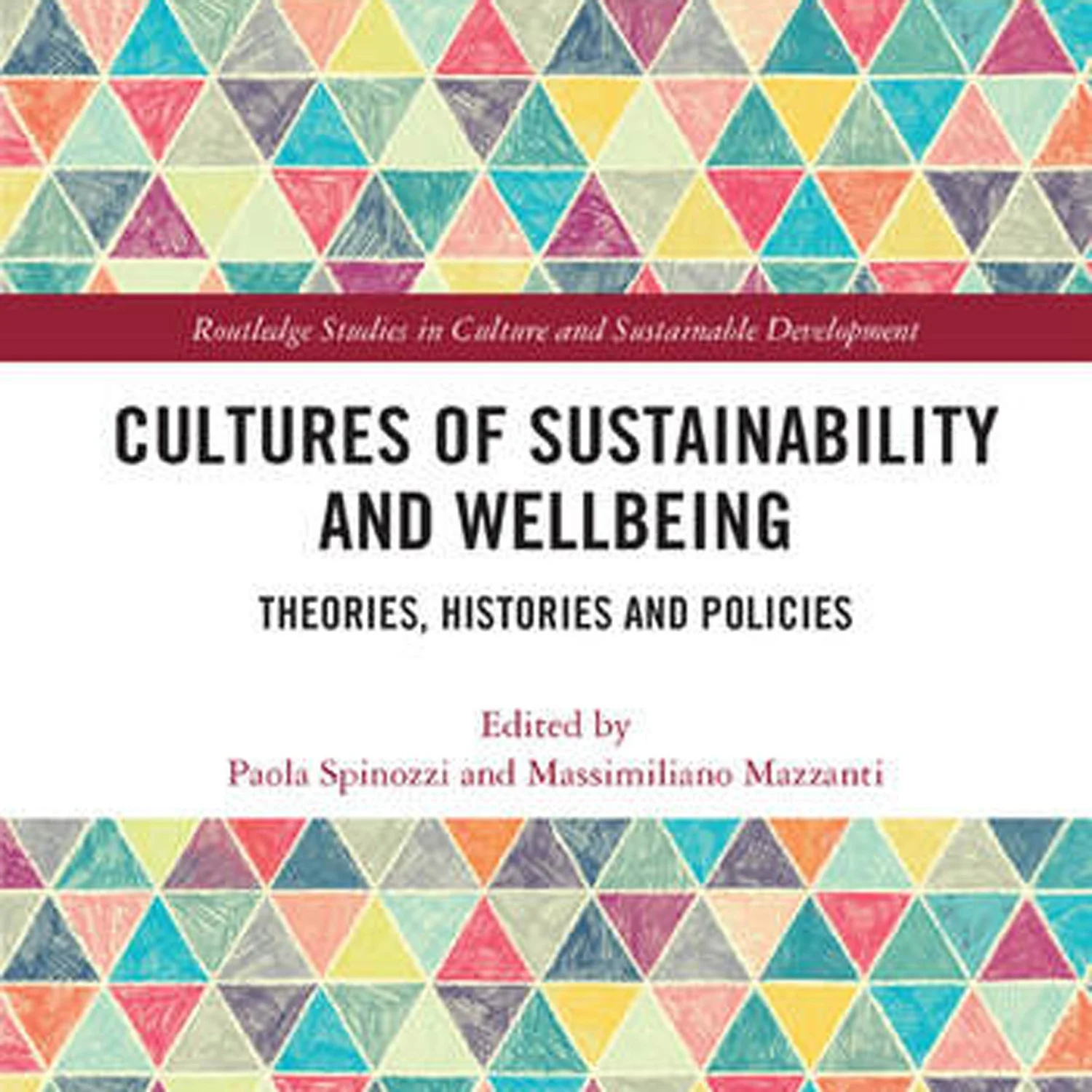
What does it mean to have an ecological mind? - PAOLA SPINOZZI
"So, to be able to develop an ecological mind, one must be ecological minded and really understand what it means to be interdependent and interconnected. So that brings together every kind of species we can think of, and we need to filter this way of thinking because when we are in a natural environment, we feel energized and uplifted. But how long does it last? And what do we do with it? To me, ecological mindedness, the topic of ECHIC (European Consortium for Humanities Institutes and Centres) is exactly this: being committed, developing a commitment towards the environment and towards well-being. It's only when we are really interdependent that we can thrive. And this was the core of this conference from various perspectives in an attempt to foster an interdisciplinary dialogue."Paola Spinozzi is Professor of English Literature at the University of Ferrara and currently serves as Pro-Vice-Chancellor for Internationalisation. She is the coordinator of the PhD Programme in Environmental Sustainability and Wellbeing and the co-coordinator of Routes towards Sustainability. Her research encompasses the ecological humanities and ecocriticism, utopia and sustainability; literature and the visual arts; literature and science; cultural memory. She has co-edited Cultures of Sustainability and Wellbeing: Theories, Histories and Policies and published on post/apocalyptic and climate fiction, nature poetry, eco-theatre; art and aesthetics, imperialism and evolutionism in utopia as a genre; the writing of science; interart creativity.https://docente.unife.it/paola.spinozzi https://www.unife.it/studenti/dottorato/it/corsi/riforma/environmental-sustainability-and-wellbeinghttps://www.routesnetwork.net https://www.routledge.com/Cultures-of-Sustainability-and-Wellbeing-Theories-Histories-and-Policies/Spinozzi-Mazzanti/p/book/9780367271190.www.creativeprocess.infowww.oneplanetpodcast.orgIG www.instagram.com/creativeprocesspodcast

LISA EDELSTEIN - From Acting to Directing, Writing & Visual Art
"I have always thrown myself into everything, and that includes terrible things because I want to have the whole experience. Even if I know it's going to hurt for better or for worse, that has been how I've lived my life. And so it's given me a lot of information and allowed me to play a lot of different roles and understand a lot of different points of view.I'm the kind of person who – I don't do well in lectures - I don't like sitting for a very long time, but if I can listen while I'm drawing or painting, then I will actually retain more of what I'm hearing because it's connected now to what I've actually made while I'm listening to it. When I look at my paintings, I remember what I was reading at each section of the painting, so that's the way my brain works. And I think a lot of people who are creative, that's the way their brain works, where we need to develop one skill in order to develop another. And using your imagination is key to all of it."From her role as Dr. Lisa Cuddy on the hit Fox series House M.D, to her starring role as Abby McCarthy in Bravo's first scripted series Girlfriend's Guide to Divorce, Lisa Edelstein's range of roles are as diverse talent. Some of Edelstein's feature credits include Keeping the Faith, What Women Want, Daddy Daycare, As Good as It Gets, and Fathers and Sons. She played a Holocaust survivor and adopted mother in the drama television series Little Bird. The story centres on a First Nations woman who was adopted into a Jewish family during the Sixties Scoop, as she attempts to reconnect with her birth family and heritage.Lisa’s career began by writing, composing, and performing an original AIDS awareness musical Positive Me at the renowned La Mama Experimental Theater Club in New York City. In the wake of COVID, Lisa began to paint using old family photographs as starting points. Her incredibly detailed paintings capture intimate relationships and spontaneous moments with honesty and compassion.https://lisaedelstein.komi.io/www.lisaedelsteinpaintings.com/www.imdb.com/name/nm0249046www.creativeprocess.infowww.oneplanetpodcast.orgIG www.instagram.com/creativeprocesspodcastArtworks:“Beach Day”, “Marsha”, “Karen” Courtesy of the ArtistLisa Edelstein in the StudioPhoto credit: Holland Clement, Courtesy of the artist

What does the future hold for our late-stage capitalist society with mega-corps controlling everything? KYLE HIGGINS, KARINA MANASHIL & KID CUDI
The Making of Moon Man“So, as we started talking and going through what this could look like. I run a creator-owned superhero universe at Image Comics called the Massive-Verse, which is spearheaded by the main book I write called Radiant Black. I like to describe it as it's like Power Rangers with adult problems. It's very contemporary kind of reimaginings of superhero storytelling for the 2020s. So in that context, talking about what any type of new superhero and, in this case, what a new black superhero in 2024 could look like, what the threats would be, what the world might look like if it's maybe not even five minutes in the future. I would argue it's like two and a half minutes in the future. And then what kind of really complex, emotionally layered journey we could put this character through?”Kyle Higgins is an Eisner award-nominated #1 New York Times best-selling comic book author and award-winning filmmaker known for his work on DC Comics’ Batman titles as well as his critically-acclaimed reinventions of Mighty Morphin Power Rangers for Boom! Studios/Hasbro, Ultraman for Marvel Comics, and his creator-owned series Radiant Black, NO/ONE and Deep Cuts for Image Comics. Kyle is the founder and creative director of Black Market Narrative and The Massive-Verse.Karina Manashil is the President of MAD SOLAR. After graduating from Chapman University with a BFA in Film Production, she began her career in the mailroom at WME where she became a Talent Agent. In 2020, she partnered with Scott Mescudi and Dennis Cummings to found MAD SOLAR. Its first release was the documentary “A Man Named Scott” (Amazon), and she then went on to Executive Produce Ti West trilogy “X,” “Pearl” and “MaXXXine” (A24). Manashil received an Emmy nomination as an Executive Producer on the Netflix animated event “Entergalactic." She also produced the Mescudi/Kyle Higgins comic book “Moon Man” which launched through Image Comics. She is next producing the upcoming Mescudi/Sam Levinson/The Lucas Bros film “HELL NAW” (Sony) and the animated feature “Slime” from auteur animator Jeron Braxton.moonmancomics.com https://imagecomics.comhttps://www.imdb.com/name/nm3556462/?ref_=fn_al_nm_1www.creativeprocess.infowww.oneplanetpodcast.orgIG www.instagram.com/creativeprocesspodcastAudio of Scott Mescudi courtesy of Mad Solar and Moon Man Comic Book Release and Revenge Of (Eagle Rock, CA, Jan 31, 2024)

Reshaping Our World: Climate Change, Education, Mental Health & Advocacy for Nature
"Climate change gives us a chance to re-imagine the world in a way that every single human being can participate in. And so whether you're in a remote part of the United States or some other country, when you learn about climate change, it shouldn't just be the science. It should be the opportunity." –Kathleen RogersExcerpts of interviews from One Planet Podcast & The Creative Process.Voices on this episode are:KATHLEEN ROGERSPresident of EarthDay.ORGPOORVA JOSHIPURASenior VP, PETA UK - Author of Survival at Stake: How Our Treatment of Animals is Key to Human ExistenceDAVID FENTONFounder of Fenton Communications - Author of The Activist’s Media Handbook: Lessons From 50 Years as a Progressive Agitator BRITT WRAYAuthor of Generation Dread: Finding Purpose in an Age of Climate CrisisResearcher Working on Climate Change & Mental Health, Stanford UniversityDR. FARHANA SULTANACo-author: Water Politics: Governance, Justice & the Right to WaterFmr. UNDP Programme Officer, United Nations Development ProgrammeANDRI SNÆR MAGNASON Icelandic Writer & Documentary Filmmaker Author of On Time and Water, The Casket of Time, LoveStar, Not OkTHOMAS CROWTHER Ecologist - Co-chair of the Board for UN Decade on Ecosystem Restoration - Founder of RestorDR. SHIV SOMESHWAR Fmr. European Chair for Sustainable Development & Climate Transition - Sciences PoPAULA PINHO Director of Just Transition at the European Commission Directorate-General for EnergyARMOND COHEN Executive Director of Clean Air Task ForceMAYA K. VAN ROSSUM Founder of Green Amendments For The Generations - Delaware Riverkeeper Author of The Green Amendment: The People's Fight for a Clean, Safe, and Healthy EnvironmentMax Richter’s music featured in this episode:“Spring 1” from The New Four Seasons – Vivaldi Recomposed “Vladimir’s Blues” from The Blue NotebooksMusic is courtesy of Max Richter, Universal Music Enterprises,and Mute Song.www.creativeprocess.infowww.oneplanetpodcast.orgIG www.instagram.com/creativeprocesspodcastPhoto courtesy of UnsplashPhoto credit: Valdemaras D.

Songs of Nature - Musicians, Writers, Ecologists, Philosophers on the Mysteries of the Natural World
“The natural world has its own sonic language. Its own fingerprints. And that's one of the beautiful things about being out here. There is another acoustic environment, another sort of sonic fingerprint, and it is always changing. Every day is a sort of a different sound picture. I walk out the door and you do hear it changing over time. The leaves are coming in now, different kinds of bird song. The wind sounds different. It's a wonderful thing to be around and experience.” —Max RichterExcerpts of interviews from One Planet Podcast & The Creative ProcessSY MONTGOMERYNYTimes Bestselling Author of Of Time and Turtles: Mending the World, Shell by Shattered Shell, Secrets of the Octopus, The Hawk’s Way: Encounters with Fierce Beauty, and other booksMAX RICHTERAward-winning Composer, Pianist & Environmentalist (The Blue Notebooks, Waltz with Bashir, Arrival, Ad Astra) His album SLEEP is the most streamed classical record of all time. Cofounder of Studio Richter MahrMERLIN SHELDRAKEBiologist & Bestselling Author of Entangled Life: How Fungi Make Our Worlds, Change Our Minds, and Shape Our Futures, Winner of the Wainwright Prize 2021THOMAS CROWTHEREcologist - Co-chair of the Board for UN Decade on Ecosystem Restoration - Founder of RestorTIOKASIN GHOSTHORSEFounder/Host of First Voices Radio - Master Musician of the Ancient Lakota FluteERLAND COOPERNature’s Songwriter - Composer of “Folded Landscapes”RICK BASSEnvironmentalist & Story Prize Award-winning Author of “Why I Came West”, “For a Little While” - Fmr. Geologist - Organizer of Climate Aid: The Voice of the ForestPETER SINGER“Most Influential Living Philosopher” - Author, Founder of The Life You Can SaveKATHLEEN ROGERSPresident of EarthDay.ORGwww.creativeprocess.infowww.oneplanetpodcast.orgIG www.instagram.com/creativeprocesspodcastwww.maxrichtermusic.comhttps://studiorichtermahr.comMax Richter’s music featured in this episode are “On the Nature of Daylight” from The Blue Notebooks, “Path 19: Yet Frailest” from Sleep.Music is courtesy of Max Richter, Universal Music Enterprises, and Mute Song.Photos courtesy of UnsplashPhoto credit: Kyle Johnson, Sebastian Unrau, Abner abiu Castillo diaz, Deepak Nautiyal

What are we willing to give up to find meaning & a sense of belonging? - TARA ISABELLA BURTON
"I wanted to both look at the kind of vast, rich tapestry of spiritually adjacent practices among millennials and younger people, particularly in the unaffiliated world, but more broadly, what is the underlying ideology underpinning it all? This idea that religion is something for us because the goal of religion is to make us live our best lives, and it doesn't matter, which is the sort of shadow side of this, if it's true or not. If it's real or not. What matters is if it 'works for you.'"Tara Isabella Burton is the author of the novels Social Creature, The World Cannot Give, and Here in Avalon, as well as the nonfiction books Strange Rites: New Religions for a Godless World and Self-Made: Curating Our Image from Da Vinci to the Kardashians. She is currently working on a history of magic and modernity, to be published by Convergent in late 2025. Her fiction and nonfiction have appeared in The New York Times, National Geographic, Granta, The Washington Post, The Wall Street Journal, and other publications.www.taraisabellaburton.comwww.simonandschuster.com/books/Here-in-Avalon/Tara-Isabella-Burton/9781982170097?fbclid=IwAR30lnvlXMrDJtCq_568jUM3hvzr6yUz_GUUZSkbR2RarreOF6PMcvhabBgwww.amazon.com/dp/B07W56MQLJ/ref=sr_1_fkmr0_1?keywords=strange+rites+tara+isabella+burton&qid=1565365017&s=gateway&sr=8-1-fkmr0www.creativeprocess.infowww.oneplanetpodcast.orgIG www.instagram.com/creativeprocesspodcast

The Unseen Invasion of Microplastics in Our Lives - KATHLEEN ROGERS - President of EarthDay.ORG
Microplastics and nanoplastic pollution are currently blanketing the planet. They are in the air we breathe, the food we eat, and the water we drink, infiltrating our bodies and even brains and human embryos. Coca-Cola alone sells 100 billion+ single-use plastic bottles each year, ending up in landfills and the ocean. Earth’s population will reach 9.8 billion people by 2050. Two-thirds of humans will become city dwellers. Our waste will drive a mounting worldwide crisis.Highlights from our interview with Kathleen Rogers, the President of EarthDay.org. The full episode will be published next week.Planet vs. Plastics Sign The Global Plastic Treaty Petition www.creativeprocess.infowww.oneplanetpodcast.orgIG www.instagram.com/creativeprocesspodcast
ALAN POUL - Emmy & Golden Globe-winning Producer/Director - Tokyo Vice - Six Feet Under - Tales of the City - My So-Called Life
"I think all great work comes from the need to say something. And so this is the challenge for young artists and also maybe one of the essential elements that can never be completely taken over by AI because there has to be something you feel has not been said, and you feel an urgent need to say it. In fact, you can't not say it. That need to express is what gives birth to unique expression, which is where all of our visual, performance, and creative arts come from."Alan Poul is an Emmy, Golden Globe, DGA, and Peabody Award-winning producer and director of film and television. He is Executive Producer and Director on the Max Original drama series Tokyo Vice, written by Tony Award-winning playwright J.T. Rogers and starring Ansel Elgort and Ken Watanabe, as an American journalist in Japan and his police detective mentor. Poul is perhaps best known for producing all five seasons of HBO's Six Feet Under, all four of Armistead Maupin's Tales of the City miniseries, My So-Called Life, The Newsroom, Swingtown, and The Eddy, which he developed with director Damien Chazelle. His feature film producing credits include Paul Schrader's Mishima and Light of Day, and Ridley Scott's Black Rain.https://www.imdb.com/name/nm0693561 https://www.imdb.com/title/tt2887954/www.creativeprocess.info www.oneplanetpodcast.orgIG www.instagram.com/creativeprocesspodcast

ED ZWICK - Academy Award-winning Writer, Director & Producer - Glory, The Last Samurai, Shakespeare in Love, Thirtysomething
"My intention was to write about my experiences, obviously, but also I felt that there was a little bit of a counterintuitive approach, which is to talk about some of the inner experiences of the creative process and being a director, being a writer, and I felt that that would open the window a little bit wider. I liked that it wasn't just a behind-the-scenes look. It is that, and I think it's full of fun anecdotes and little reveals, but it is to be a real book. It presumes to be a memoir, like many of the memoirs that I have loved of creative people in the past."Ed Zwick is a writer, director, and producer who's been active in the film industry for over 40 years. He has been nominated for two Golden Globes for directing the films Glory and Legends of the Fall and received an Academy Award as one of the producers of Shakespeare in Love. Zwick continues to work with his longtime friend and partner, Marshall Herskovitz, at their company Bedford Falls, where they created the widely loved TV show Thirtysomething. His memoir Hits, Flops, and Other Illusions details many of his greatest experiences in the film industry. www.simonandschuster.com/authors/Ed-Zwick/212290077https://www.imdb.com/name/nm0001880/www.creativeprocess.info www.oneplanetpodcast.orgIG www.instagram.com/creativeprocesspodcast
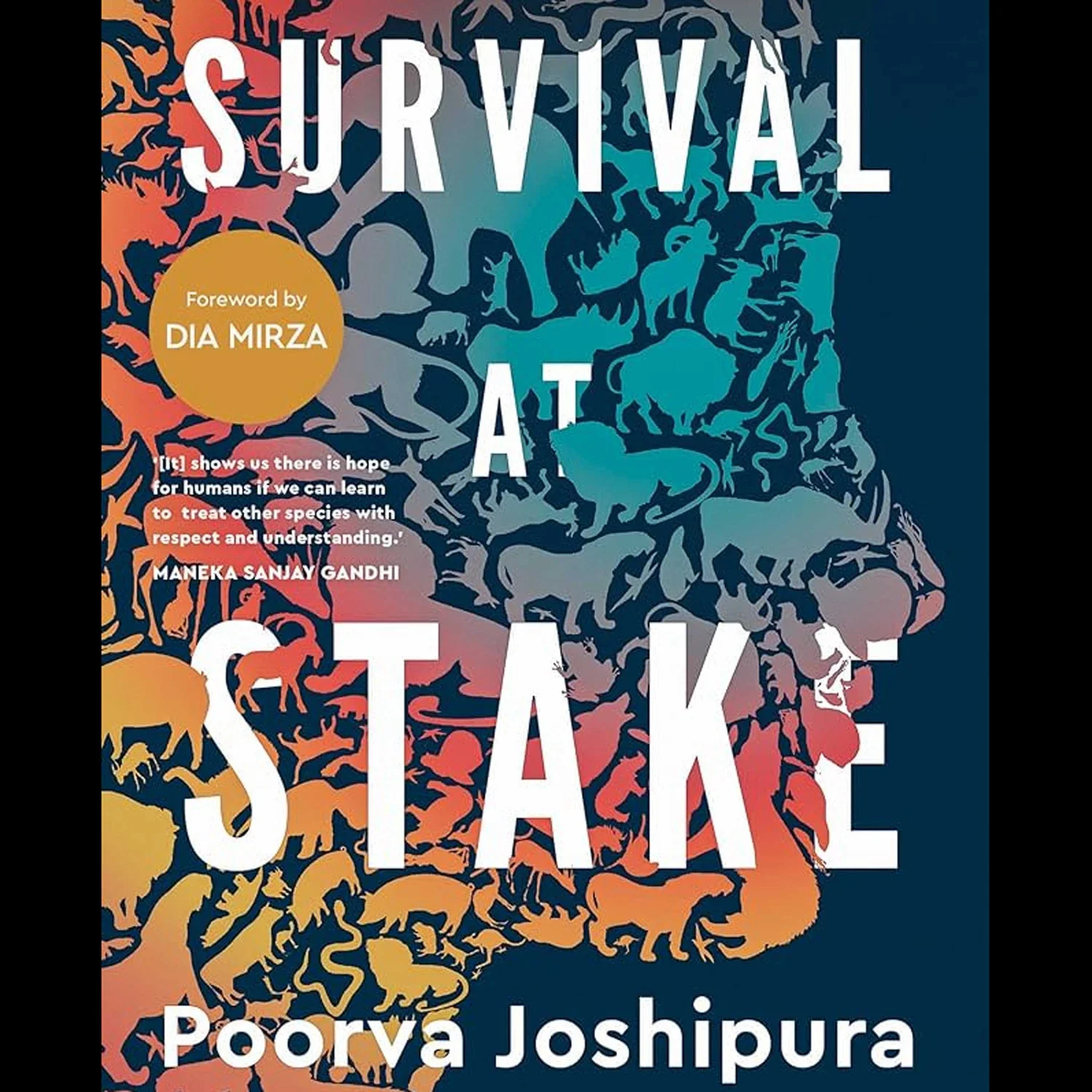
How can we improve animal-human relationships? - POORVA JOSHIPURA - Senior VP, PETA UK
"I wrote Survival at Stake because I've been working in animal rights for nearly the past 25 years. Throughout that time, one common question has been asked: Well, shouldn't we deal with human issues first. But animal rights are human rights. Animal rights is environmentalism. These things are not distinct. And that's the point I was really trying to make in my book. I was inspired to write it because of the COVID-19 crisis. It just brings us back to the point of why it is so important to teach people, young people, and young men the importance of being kind to everyone, animals included. If you teach them that, I think the other lessons start to much more automatically transfer over."Poorva Joshipura is PETA U.K. Senior Vice President. She is the Author of Survival at Stake: How Our Treatment of Animals is Key to Human Existence and For a Moment of Taste: How What You Eat Impacts Animals, the Planet and Your Health.https://usw2.nyl.as/t1/24/2jdwp5ogezjqb5wxg76eqfqeq/0/14474d94f4e832cd573ffc39be471e57616314b12314a26ca7dd9c2bbf559ac0www.harpercollins.com/products/for-a-moment-of-taste-poorva-joshipura?variant=39399505592354www.creativeprocess.infowww.oneplanetpodcast.orgIG www.instagram.com/creativeprocesspodcast
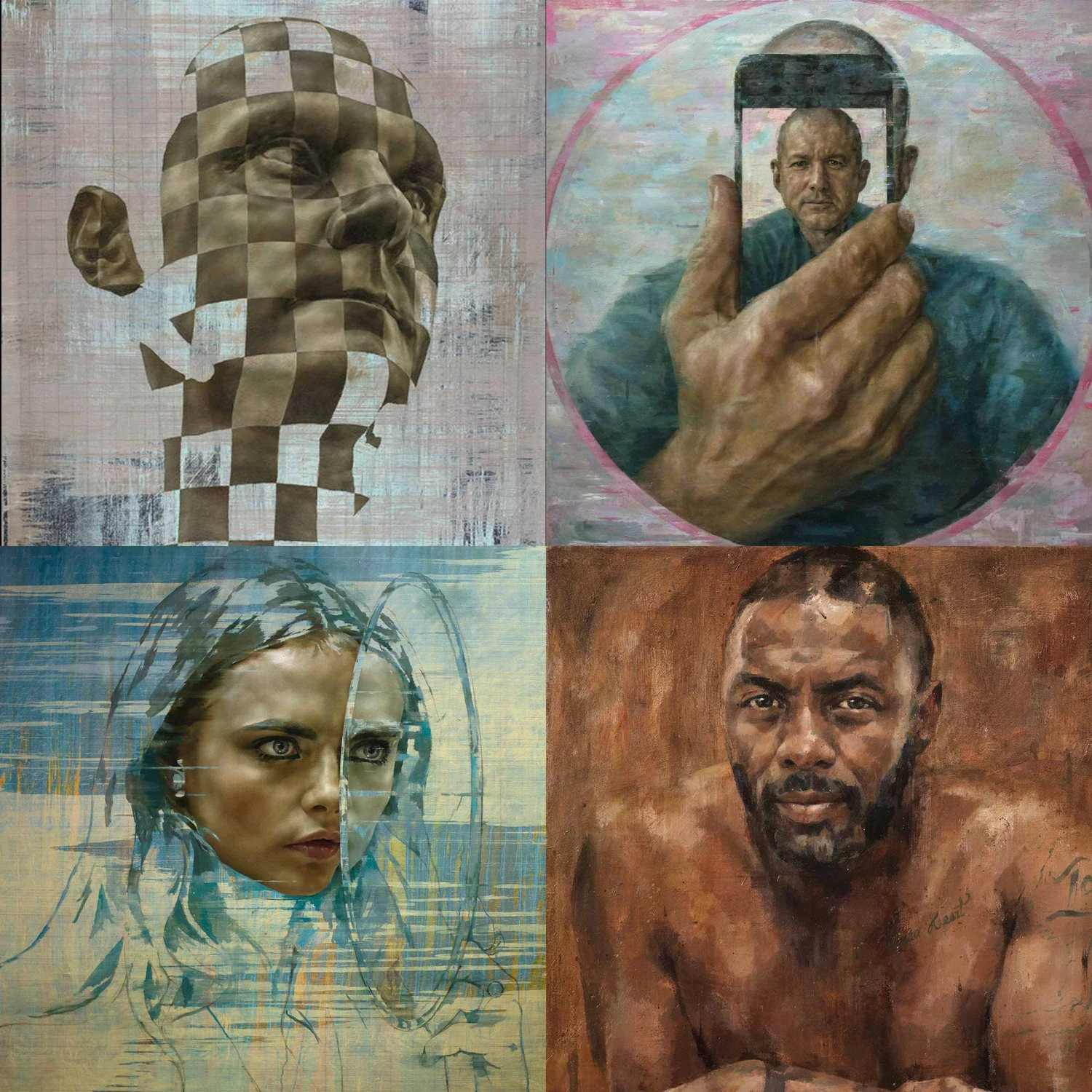
JONATHAN YEO - Celebrated Portrait Artist on the Importance of Connection & Intuitive Intelligence
"What are you trying to do with the portrait? On a basic level, you're trying to communicate something about the essence of who someone is. You're trying to figure out who they are, not necessarily who they present themselves as. The two things can quite often be different. And then, you're trying to find ways of showing that through their face, their posture, or any other context. My instinct is always to try to reduce down to the essential elements. We read faces. It's obviously very, very deep in our DNA, really our survival instinct. We are programmed to read faces in a very fine-tuned way.Painting is a two-dimensional thing. You're basically taking real, three-dimensional things and making them into fake, two-dimensional ones. When you get into the 3D space, some of those distinctions aren't there anymore. I remember when I showed David Hockney the VR project I'd been working on a few years ago, and he put his finger on this quite well. Most art is about perspective. Certainly, for what he is interested in. As soon as you see something in 3D, whether it's a physical sculpture or a virtual object, that's not there anymore because you're in the space with whatever's being shown, so you're in a very different place."Jonathan Yeo is one of the world’s leading figurative artists and portrait painters. From celebrated figures such as Sir David Attenborough, peace activist Malala Yousafzai, the Duke of Edinburgh, Nicole Kidman, and Tony Blair, sitting for a portrait with Yeo is a provisional necessity for any 21st century icon. His work, which has been exhibited in museums and galleries around the world, is the subject of several major mid-career retrospectives in the UK and internationally. Yeo’s course on portrait painting is available now on BBC Maestro.www.jonathanyeo.comwww.bbcmaestro.comwww.creativeprocess.infowww.oneplanetpodcast.orgIG www.instagram.com/creativeprocesspodcastImages courtesy of Jonathan Yeo

LEWIS DARTNELL - Author of Origins: How the Earth Made Us & Being Human: How Our Biology Shaped World History
"The challenges facing our society at the moment effectively are the unintended consequence of a solution we found in the late 1700s when society was running out of energy, we had no more timber, and we realized we could dig underground for ancient fossilized woodland, which is basically what coal is from about 300 million years ago. The consequence of burning all that coal and then oil was a release of carbon dioxide, changing our atmosphere and warming the planet. So, it's a problem born out of our ingenuity and resourcefulness, but I'm confident that we will find the solution out of our ingenuity and resourcefulness."How have our psychology and cognitive biases altered the course of human history? What would you do if you had to rebuild our world from scratch?Lewis Dartnell is an author, researcher, and holds the Professorship in Science Communication at the University of Westminster. He researches astrobiology and the search for microbial life on Mars. He also works as a scientific consultant for the media and has appeared in numerous TV documentaries and radio shows. Dr. Dartnell has won several awards for his science writing and outreach work. He has published five books, including The Knowledge: How to Rebuild our World from Scratch; Origins: How the Earth Made Us; and Being Human: How Our Biology Shaped World History. http://www.lewisdartnell.comhttp://lewisdartnell.com/en-gb/2013/11/the-knowledge-how-to-rebuild-our-world-from-scratchwww.penguin.co.uk/books/433955/origins-by-lewis-dartnell/9781784705435www.penguin.co.uk/books/442759/being-human-by-dartnell-lewis/9781847926708www.creativeprocess.info www.oneplanetpodcast.org IG www.instagram.com/creativeprocesspodcastPhoto credit: Shortlist/Paul Stuart

How can we develop AI systems that are more respectful, ethical, and sustainable? - DR. SASHA LUCCIONI
"The way I got into this field was working on the environmentally beneficial applications of AI, and I do believe that that's an impactful way of using AI techniques because there's so much data about the climate, satellite data, and sensor data, and the way to go about this is to work with domain experts. AI is never going to solve the problem on its own, but it can be a tool. So I think that there's a lot of promise there."What are the pros and cons of AI’s integration into our institutions, political systems, culture, and society? How can we develop AI systems that are more respectful, ethical, and sustainable?Dr. Sasha Luccioni is a leading scientist at the nexus of artificial intelligence, ethics, and sustainability, with a Ph.D. in AI and a decade of research and industry expertise. She spearheads research, consults, and utilizes capacity-building to elevate the sustainability of AI systems. As a founding member of Climate Change AI (CCAI) and a board member of Women in Machine Learning (WiML), Sasha is passionate about catalyzing impactful change, organizing events, and serving as a mentor to under-represented minorities within the AI community. She is an AI Researcher & Climate Lead at Hugging Face, an open-source hub for machine learning and natural language processing.https://www.sashaluccioni.comhttps://huggingface.co/http://www.climatechange.aihttps://wimlworkshop.org

How can enlightened self-interest advance social equity & climate action? - DR. SHIV SOMESHWAR
"I'm kind of concerned when people put the promise on silver bullets of regenerative agriculture or growing a trillion trees or sucking carbon through CCS technologies. Because what happens then is people take comfort that there is a practice or a technology around the corner. Hydrogen is another one. Fusion energy is yet another. And I think we need to be going kind of full throttle on all of those, but at the same time, that doesn't mean that we give up on mitigation or we give up on climate risk management, which I think is technically the correct term to say, rather than adaptation. How do you manage the risk of a changing climate? How do you then emit less and basically get fossil fuel out of your system? And that again is long-term. It's not for the next five to ten years. So, when you have these kinds of promises, invariably the market signal is aha. So now, we don't really need to do much on mitigation because something is there around the corner, whether it's regenerative agriculture, which holds enormous promise, or through reforestation, green hydrogen. We're not anywhere close to scaling up, and some of them really have deep technological challenges."Dr. Shiv Someshwar is a Development Clinician, diagnosing development of cities and nation states. A Visiting Professor at Columbia University, New York and at Sciences Po, Paris, he was the founder chair-holder of the European Chair for Sustainable Development and Climate Transition at Sciences Po. He helped set up the initial national and regional networks of the global Sustainable Development Solutions Network.His publications cover a range of issues: planning, institutions and governance of sustainable development; climate change mitigation, adaptation, risks and offsets; and ecosystem management. He edited Re-living the Memories of an Indian Forester: Memoirs of S. Shyam Sunder and is presently writing The Fallacy of Evidence-Based Policy Making.He convened and chaired the Independent Task Force on Creative Climate Action. Dr. Someshwar received a Ph.D. in urban planning from the University of California, Los Angeles, and he was a Bell-MacArthur fellow at Harvard University. He has two masters’ degrees, on housing and on environmental planning, and is also trained as a professional architect. He has previously worked at the Earth Institute, Columbia University, the Rockefeller Foundation in New York, and the World Bank in Washington D.C.https://www.sciencespo.fr/psia/sites/sciencespo.fr.psia/files/ITFClimateReport_Web.pdf www.amazon.com/Reliving-Memories-Indian-Forester-Memoir/dp/9388337131www.creativeprocess.infowww.oneplanetpodcast.orgIG www.instagram.com/creativeprocesspodcast
THOMAS CROWTHER - Ecologist - Co-chair of the Board for UN Decade on Ecosystem Restoration - Founder of Restor
"Global restoration really means finding and empowering the millions of local communities, indigenous populations, and farmers who are promoting biodiversity. Restor is a digital platform, sort of like Google Maps, but for restoration. So rather than seeing coffee shops and supermarkets, you will see conservation projects and Indigenous-led restoration initiatives. And that means you can find a currently on Restor - I think we have around 140, 000 - so you can go on there for free right now and find thousands and thousands of these amazing heroes of nature. And you can zoom in and you can see every single tree on the ground. You can see every bush and you can fund them or you can buy their coffee or you can go visit their projects and do ecotourism. There's a myriad of ways that we can all support their efforts by also improving our own lives. We need to be cutting our emissions so that we can allow nature to thrive and help us along the way. For far too long people have been squabbling about emissions. We should do this or we should do that. Climate change is way too big for us to be squabbling about things. We need to do everything now. When we grow the same crops every year, the soil gets more depleted and all the nutrients are lost. I've heard quotes that if we cannot find agricultural systems that rejuvenate the soil instead of depleting it, we are signing our death warrant. It's like we need to be promoting healthy soils if we're going to have any agriculture in the future."Although they comprise less than 5% of the world population, Indigenous peoples protect 80% of the Earth’s biodiversity. How can we support farmers, reverse biodiversity loss, and restore our ecosystems?Thomas Crowther is an ecologist studying the connections between biodiversity and climate change. He is a professor in the Department of Environmental Systems Science at ETH Zurich, chair of the advisory council for the United Nations Decade on Ecosystem Restoration, and founder of Restor, an online platform for the global restoration movement, which was a finalist for the Royal Foundation’s Earthshot Prize. In 2021, the World Economic Forum named him a Young Global Leader for his work on the protection and restoration of biodiversity. Crowther’s post-doctoral research transformed the understanding of the world’s tree cover, and the study also inspired the World Economic Forum to announce its Trillion Trees initiative, which aims to conserve and restore one trillion trees globally within the decade.https://crowtherlab.com/about-tom-crowther https://restor.eco/?lat=26&lng=14.23&zoom=3www.creativeprocess.info www.oneplanetpodcast.orgIG www.instagram.com/creativeprocesspodcast

What can thousand-year-old trees teach us about living sustainably on this planet? - DOUG LARSON
“I think like a scientist and my interest in stunted trees probably goes back to my upbringing. I had a difficult childhood with a father who insisted that he was right about everything all the time.And in my early years as a scientist, I was trying to find some system that would not argue back to me. I loved working with organisms that were themselves repressed by nature. It's a wonderful thing to stand like Gulliver on top of an entire ecosystem that's only three inches tall. And ask yourself, am I any happier than it? And I wasn't. And I found that tremendously thrilling to have a different perspective.”What can thousand-year-old trees teach us about living sustainably? If we want to be sustained by this planet indefinitely, we need to stop trying to suck it dry.Doug Larson is an award winning scientist, author, and Professor Emeritus of Biology at the University of Guelph. He is an expert on deforestation and regularly contributes to The Guardian and other publications. His books include Cliff Ecology: Pattern and Process in Cliff Ecosystems, The Urban Cliff Revolution: New Findings on the Origins and Evolution of Human Habitats, Storyteller Guitar, and The Dogma At My Homework.https://experts.uoguelph.ca/doug-larson https://volumesdirect.com/products/the-dogma-ate-my-homework https://www.cambridge.org/core/books/cliff-ecology/7502E52B487789BEA2CACC4553AA663Bhttps://www.amazon.com/Urban-Cliff-Revolution-Evolution-Habitats/dp/1550419927 https://www.amazon.com/Storyteller-Guitar-Doug-Larson-ebook/dp/B00B9VZQXUwww.creativeprocess.info www.oneplanetpodcast.org IG www.instagram.com/creativeprocesspodcastImage courtesy of Doug Larson

DR. BARRY SCHWARTZ - Author of The Paradox of Choice & Why We Work
"The original edition of The Paradox of Choice came out in 2004, and the internet was just getting started in a major league way, and already the choice overload was a problem. I would say that from the modern perspective, 2004 seems like the 18th century, and as near as I can tell, all of these changes, every single one of them has made the problem substantially worse. The idea that you can get information to help guide you through - well, yeah, but what information do you believe? What's trustworthy? What's being motivated by an opportunity to sell you something? So there is a haze, there is this fog that we're operating in. And I think we just sort of give up in resignation and look at recommendations and hope that they're legitimate because how else do you get through the day?"Does having too many choices make us unhappy? How can we learn practical wisdom?Dr. Barry Schwartz is the Dorwin P. Cartwright Professor Emeritus of Social Theory and Social Action in the psychology department at Swarthmore College. He is the author of many books, including Why We Work, The Paradox of Choice: Why More Is Less, and co-author of Practical Wisdom: The Right Way to Do the Right Thing.www.swarthmore.edu/profile/barry-schwartzwww.simonandschuster.com/books/Why-We-Work/Barry-Schwartz/TED-Books/9781476784861 https://www.harpercollins.com/products/the-paradox-of-choice-barry-schwartz?variant=32207920234530https://www.penguinrandomhouse.com/books/307231/practical-wisdom-by-barry-schwartz-and-kenneth-sharpewww.creativeprocess.infowww.oneplanetpodcast.org IG www.instagram.com/creativeprocesspodcastPhoto credit: Bill Holsinger-Robinson - CC BY 2.0
RUPERT SHELDRAKE - Biologist & Author of The Science Delusion, The Presence of the Past
"The idea that the laws of nature are fixed is taken for granted by almost all scientists and within physics, within cosmology, it leads to an enormous realm of speculation, which I think is totally unnecessary. We're assuming the laws of nature are fixed. Most of science assumes this, but is it really so in an evolving universe? Why shouldn't the laws evolve? And if we think about that, then we realize that actually, the whole idea of a law of nature is a metaphor. It's based on human laws. I mean, after all, dogs and cats don't obey laws. And in tribes, they don't even have laws. They have customs. So it's only in civilized societies that you have laws. And then if we think through that metaphor, then actually the laws do change.All artists are influenced by other artists and by things in the collective culture, and I think that morphic resonance as collective memory would say that all of us draw unconsciously as well as consciously on a collective memory and all animals draw on a collective memory of their kind as well. We don't know where it comes from, but there's true creativity involved in evolution, both human and natural."How do we navigate ambiguity and uncertainty? Moving beyond linear thinking into instinct and intuition, we might discover other sources within ourselves that lie beyond the boundaries of science and reason.Rupert Sheldrake is a biologist and author best known for his hypothesis of morphic resonance. His many books include The Science Delusion, The Presence of the Past, and Ways to Go Beyond and Why They Work. At Cambridge University, Dr. Sheldrake worked in developmental biology as a fellow of Clare College. From 2005 to 2010, he was director of the Perrott Warrick Project for research on unexplained human and animal abilities, funded by Trinity College Cambridge. He was among the top 100 global thought leaders for 2013, as ranked by the Duttweiler Institute.www.sheldrake.orgwww.amazon.com/Science-Delusion/dp/1529393221/?tag=sheldrake-20www.amazon.com/Science-Set-Free-Paths-Discovery/dp/0770436722/?tag=sheldrake-20