
The Coffee Klatch with Robert Reich
470 episodes — Page 7 of 10

Is it time for Democrats to kick Joe Manchin out of the party?
On Friday, after putting a final spear through the heart of what remained of Biden’s and the Democrat’s domestic agenda, West Virginia’s Democratic Senator Joe Manchin also rejected any tax increases on big corporations or the wealthy — until inflation is no longer a problem.This is rich, in every sense of the word. Raising taxes on big American corporations and the wealthy would not fuel inflation. It would slow inflation by reducing demand — and do it in a way that wouldn’t hurt lower-income Americans (such as those living in, say, West Virginia).Manchin’s state is one of the poorest in America. West Virginia ranks 45th in education, 47th in health care, 48th in overall prosperity, and 50th in infrastructure. Tax revenue from corporations and billionaires could be used to rebuild West Virginia, among other places that need investment around America.But Manchin doesn’t seem to give a cluck. After all, the Democrat’s agenda — which Manchin just obliterated — included pre-K education, free community college, child subsidies, Medicare dental and vision benefits, paid family leave, elder care, and much else — all of enormous value to West Virginia. (On a per-person basis, West Virginians would have benefitted more than the residents of all but two other states.)It’s not as if Manchin has championed anything else Democrats have sought. Remember Manchin’s “bipartisan compromise” on the John Lewis Voting Rights Advancement Act? Nothing came of it, of course. Nothing has come of any of the fig leafs Manchin has conjured to cover his unrelenting opposition to every other Democratic goal. What’s going on here? It’s spelled m-o-n-e-y. Few if any American-based global corporations or billionaires reside in West Virginia, but lots of money flows to Manchin from corporations and billionaires residing elsewhere. Manchin has not only taken more campaign contributions from oil, gas and coal companies than any other senator (as well as dividends from his own coal company), he has one of the largest war chests from all big American corporations. If the Democratic Party had any capacity to discipline its lawmakers or hold them accountable (if pigs could fly), it would at least revoke Manchin’s chairmanship of the Senate Committee on Energy and Natural Resources. To continue to allow this key position to be occupied by the man who has single-handedly blocked one of the last opportunities to save the Earth is an insult to the universe.I’m told the Democrats don’t dare take this step for fear Manchin would leave the Democratic Party and switch his allegiance to the Republicans. Why exactly would this be so terrible? Manchin already acts like a Republican. Oh, no! they tell me. If Manchin switches parties, Democrats would lose control over the Senate. Well, I have news for Democrats. They already lost control over the Senate. In fact, the way things are right now, Biden and the Democrats have the worst of both worlds. They look like they control the Senate, as well as the House and the presidency. But they can’t get a damn thing done because Manchin (and his intermittent sidekick Arizona’s Kyrsten Sinema) won’t let them. So after almost two years of appearing to run the entire government, Democrats have accomplished almost nothing of what they came to Washington to do. America is burning and flooding but Democrats won’t enact climate measures. Voting rights and reproductive rights are being pulverized but Democrats won’t protect them. Gun violence is out of control but Democrats come up with a miniature response. Billionaires and big corporations are siphoning off more national wealth and income than in living memory and paying a lower tax rate (often zero), but Democrats won’t raise taxes on big corporations and the wealthy. Which means that in November’s midterm elections, Democrats will have to go back to voters and say “we promised a lot but we delivered squat, so please vote for us again.” This does not strike me as a compelling message. By kicking Manchin out of the party, Democrats could at least go into the midterms with a more realistic pitch: “It looked like we had control of the Senate, but we didn’t. Now that you know who the real Democrats are, give us the power and we will get it done.” Maybe this way they’ll pick up more real Democratic senators, and do it. This is a public episode. If you'd like to discuss this with other subscribers or get access to bonus episodes, visit robertreich.substack.com/subscribe
Should we call him President Manchin?
My informal weekly coffee with Heather Lofthouse (Executive Director of Inequality Media Civic Action and my former student), discussing the past week. Today we talk about Joe Manchin’s final destruction of Biden’s domestic agenda, Schumer’s and Biden’s inability to hold him accountable, this week’s terrifying inflation number and its potential effect on the midterms, appreciation for the House January 6 committee, Heather’s inability to tell a joke, and my aging irritability. This is a public episode. If you'd like to discuss this with other subscribers or get access to bonus episodes, visit robertreich.substack.com/subscribe

What Casablanca teaches us
Friends,A while back, I shared with you my love of Frank Capra’s “It’s a Wonderful Life” — the essential American fable about the generosity and goodness of Americans toward one another, as opposed to the greedy oligarchs at the top (such as Mr. Potter) who care only about building their own wealth and power. In light of Putin’s war and the rise of authoritarianism around the world, including the United States, I’ve been thinking about another favorite of mine — Michael Kurtiz’s fabulous 1942 classic, “Casablanca.” Even now, 70 years after its release, it feels relevant and poignant.In the first six decades after World War II, the number of countries considered democratic grew. But researchers have found that, starting five or six years ago, the number of democracies in the world began to shrink, and existing democracies have become less democratic. Consider the rise of strongman rule in Hungary, the Philippines, and Russia, attacks on the courts in Poland, Hindu extremism in India, fears of a power grab in Brazil, and, of course, Trump’s continuing attempted coup. Which brings me back to Casablanca. Few movies have ever produced as many quotes — “Here’s looking at you, kid,” and “We’ll always have Paris,” and the song “As Time Goes By.” And can you think of any more enduring characters than those played by Ingrid Bergman and Humphrey Bogart? But the core of Casablanca is a defense of democracy in the face of the rising specter of fascism. One of the most moving scenes to me is the dueling anthems — when the German occupants sing “Die Wacht am Rhein,” only to be drowned out by the French refugees singing “La Marseillaise.” I’m told that the tears in the eyes of several of the French actors and singers in this scene were unplanned and unrehearsed. Remember, this was filmed in 1942.I’m curious about your take: What is it that makes this scene so powerful? This is a public episode. If you'd like to discuss this with other subscribers or get access to bonus episodes, visit robertreich.substack.com/subscribe
Is Biden too old?
At 79, Joe Biden is the oldest president in American history. Concerns about his age top the list for why Democratic voters want the party to find an alternative for 2024.I don’t think this reflects an “ageist” prejudice against those who have reached such withering heights so much as an understanding that people in their late 70s and 80s wither.I speak with some authority. I’m now a spritely 76 — lightyears younger than our president. I feel fit, I swing dance and salsa, and can do 20 pushups in a row. Yet I confess to a certain loss of, shall we say, fizz. Joe Biden could easily make it until 86, when he’d conclude his second term. After all, it’s now thought a bit disappointing if a person dies before 85. My mother passed at 86, my father two weeks before his 102nd birthday (so I’m hoping for the best, genetically speaking). Three score and ten is the number of years of life set out in the Bible. Modern technology and Big Pharma should add at least a decade and a half. Beyond this is an extra helping. “After 80, it’s gravy,” my father used to say. Joe will be on the cusp of the gravy train. Where will it end? There’s only one possibility, and that reality occurs to me with increasing frequency. I find myself reading the obituary pages with ever greater interest, curious about how long they lasted and what brought them down. I remember a New Yorker cartoon in which an older reader of the obituaries sees headlines that read only “Older Than Me” or “Younger Than Me.”Yet most of the time I forget my age. The other day, after lunch with some of my graduate students, I caught our reflection in a store window and for an instant wondered about the identity of the short old man in our midst.It’s not death that’s the worrying thing about a second Biden term. It’s the dwindling capacities that go with aging. "Bodily decrepitude," said Yeats, "is wisdom." I have accumulated somewhat more of the former than the latter, but our president seems fairly spry (why do I feel I have to add “for someone his age?”). I still have my teeth, in contrast to my grandfather whom I vividly recall storing his choppers in a glass next to his bed, and have so far steered clear of heart attack or stroke (I pray I’m not tempting fate by my stating this fact). But I’ve lived through several kidney stones and a few unexplained fits of epilepsy in my late thirties. I’ve had both hips replaced. And my hearing is crap. Even with hearing aids, I have a hard time understanding someone talking to me in a noisy restaurant. You’d think that the sheer market power of 60 million boomers losing their hearing would be enough to generate at least one chain of quiet restaurants.When I get together with old friends, our first ritual is an “organ recital” — how’s your back? knee? heart? hip? shoulder? eyesight? hearing? prostate? hemorrhoids? digestion? The recital can run (and ruin) an entire lunch. The question my friends and I jokingly (and brutishly) asked one other in college—"getting much?"—now refers not to sex but to sleep. I don’t know anyone over 75 who sleeps through the night. When he was president, Bill Clinton prided himself on getting only about four hours. But he was in his forties then. (I also recall cabinet meetings where he dozed off.) How does Biden manage?My memory for names is horrible. (I once asked Ted Kennedy how he recalled names and he advised that if a man is over 50, just ask “how’s the back?” and he'll think you know him.) I often can’t remember where I put my wallet and keys or why I’ve entered a room. And certain proper nouns have disappeared altogether. Even when rediscovered, they have a diabolical way of disappearing again. Biden’s secret service detail can worry about his wallet and he’s got a teleprompter for wayward nouns, but I’m sure he’s experiencing some diminution in the memory department. I have lost much of my enthusiasm for travel and feel, as did Philip Larkin, that I would like to visit China, but only on the condition that I could return home that night. Air Force One makes this possible under most circumstances. If not, it has a first-class bedroom and personal bathroom, so I don’t expect Biden’s trips are overly taxing. I’m told that after the age of 60, one loses half an inch of height every five years. This doesn’t appear to be a problem for Biden but it presents a challenge for me, considering that at my zenith I didn’t quite make it to five feet. If I live as long as my father did, I may vanish.Another diminution I’ve noticed is tact. A few days ago, I gave the finger to a driver who passed me recklessly. These days, giving the finger to a stranger is itself a reckless act. I’m also noticing I have less patience, perhaps because of an unconscious “use by” timer that’s now clicking away. Increasingly I wonder why I’m wasting time with this or that buffoon. I’m less tolerant of long waiting lines, automated phone menus, and Republicans. Cicero claimed "older people who are reasonable, good-tempered, an
Capitalist Thugs
Uber’s then-chief executive Travis Kalanick texted fellow executives that “violence guarantees success” when clashes with taxi drivers broke out in 2016 in Paris, a key market for the company. Uber leveraged the violence against its drivers to win sympathy from regulators and the public, as it also did in South Africa where Uber drivers were burned when their cars were set on fire. (This look inside Uber’s internal deliberations came from records Uber lobbyist Mark MacGann turned over to the Guardian.)I’ve been thinking about Uber’s capitalist thuggery in light of the corporations underwriting Trump’s thuggery, which includes violent groups like the Proud Boys and Oath Keepers that led the attack on the U.S. Capitol. “All hell is going to break loose tomorrow,” Trump former aide Steve Bannon predicted on his radio show on January 5, 2021.Trump’s thuggery continues to this day. A phone message received by White House aide Cassidy Hutchinson just before she testified before the January 6 committee warned that someone “let me know you have your deposition tomorrow. He wants me to let you know he’s thinking about you. He knows you’re loyal. And you’re going to do the right thing when you go in for your deposition.”If this sounds like a gangster threat, that’s the point. During Hutchinson’s earlier depositions before the committee, her legal counsel was paid for by Trump’s “Save America PAC” (the PAC paid the legal expenses of other panel witnesses, too. When she realized “she couldn’t call her attorney to say ‘Hey, I’ve got more information’” because the attorney “was there to insulate the big guy,” according to a friend, she secured free counsel who would not inhibit her. Now, after testifying in public, Hutchinson is in hiding. Meanwhile, the “big guy” continues to stir up his mob with lies about stolen elections and secret plots — fueling a new wave of threats against committee members. Several have increased their personal security. Committee Chair Bennie Thompson, co-chair Rep. Liz Cheney, and Rep. Adam Kinzinger have security details; other members have requested them. Kinzinger, one of the panel’s two Republican members alongside Cheney, says he’s received “constant” death threats. “There is violence in the future, I’m going to tell you,” Kinzinger told ABC. “And until we get a grip on telling people the truth, we can’t expect any differently.” Kinzinger has announced he will not be seeking re-election. Cheney has paused participating in public events in part because of safety concerns.Does any of this remind you of Hitler’s Brown Shirts or Mussolini’s Blackshirts?At the least, it should raise questions about the wealthy individuals and corporations that continue to bankroll this thuggery – among them, billionaires Peter Thiel, Rebecca Mercer, Charles Koch, Home Depot cofounder Bernie Marcus, ex-casino mogul Steve Wynn, and shipping magnate Richard Uihlein.Funding is also coming from Boeing, Koch Industries, Home Depot, FedEx, General Dynamics, Toyota, AT&T, Valero Energy, Lockheed Martin, UPS, Raytheon, Marathon Petroleum, General Motors and FedEx. In April alone (the most recent month for which data is available) Fortune 500 companies and trade organizations gave more than $1.4 million to members of Congress who voted not to certify the election results. AT&T led the pack, giving $95,000 to election objectors.Toyota is even funding Trump ally Congressman Andrew Biggs, a fervent devotee of the Big Lie who refuses to comply with a congressional subpoena to testify before the committee. Six congressmen who have refused to testify have raked in more than $826,000 from corporate donors since the assault on the Capitol.Why are these wealthy individuals and corporations doing this? Presumably because they want to pay as little in taxes as possible and believe Trump and his Republicans will deliver even more tax cuts than they did before. But how is this capitalist thuggery in pursuit of profits different from Uber’s thuggery? And is it more excusable than the political thuggery it’s enabling? To state the question in historical terms, how different is their behavior from the wealthy European industrialists who quietly backed the fascists in the 1920s and 1930s? These billionaire and corporate funders are as complicit as are the Proud Boys and Oath Keepers in threatening American democracy. This is a public episode. If you'd like to discuss this with other subscribers or get access to bonus episodes, visit robertreich.substack.com/subscribe
How to handle radical Republicans
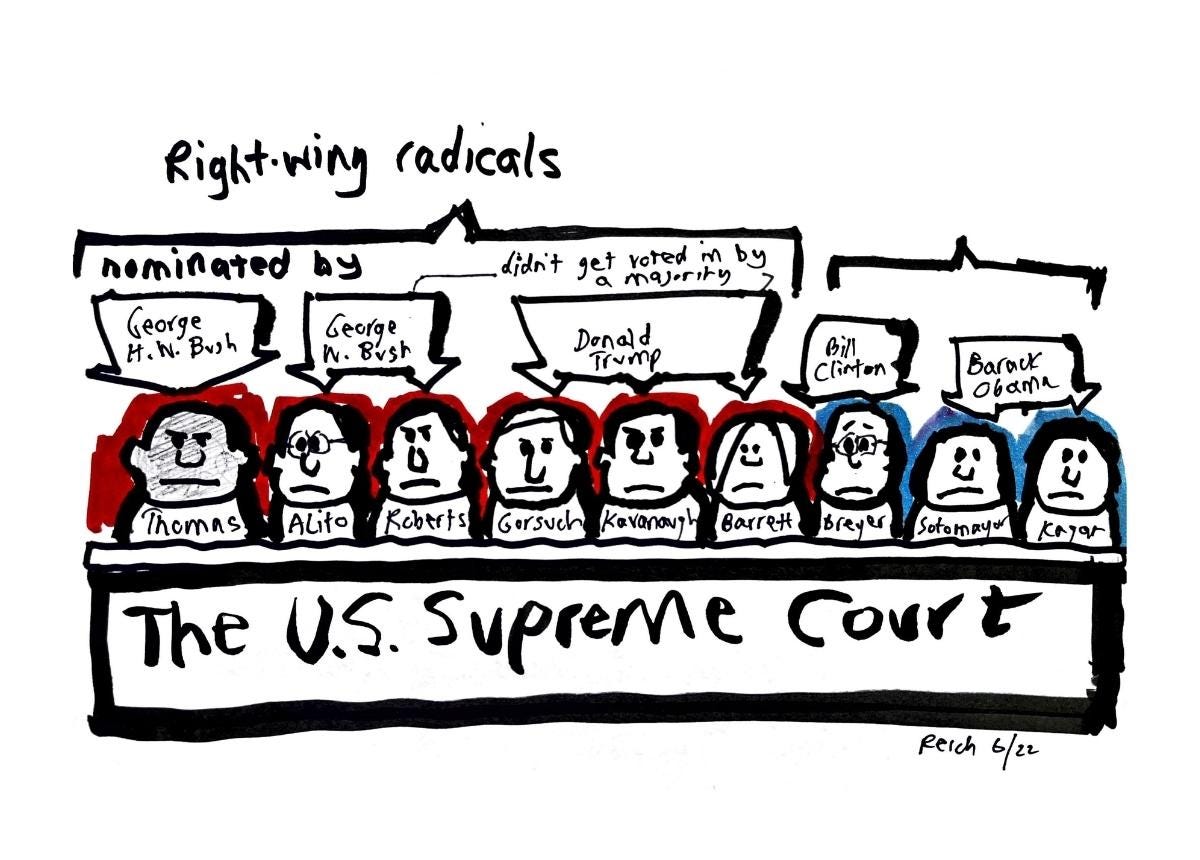
This morning, I heard a commentator allude to “Mitch McConnell and other conservative senators.” Yesterday, a news report described the upcoming Alaska Republican primary as pitting Trump’s “conservative wing against Murkowski’s more moderate base.” I keep seeing references to the “conservative majority” on the Supreme Court.Can we get real? There is nothing conservative about these so-called “conservatives.” They don’t want to preserve or protect our governing institutions — the core idea of conservatism extending from Edmund Burke to William F. Buckley and Barry Goldwater. They are radicals, intent on wrecking these institutions to impose their ideology on everyone else.The Supreme Court’s Republican appointees have all but obliterated stare decisis — the conservative principle that the Court must follow its precedents and not change or reverse them unless clearly necessary, and with near unanimity. Recent decisions reversing Roe v. Wade, elevating religious expression over the Constitution’s bar on established religion, questioning Congress’s ability to delegate rule making to the executive branch, and barring states from regulating handguns, all call into question the legitimacy of the Supreme Court as an institution.Meanwhile, Senate Republicans, led by Mitch McConnell, are abusing the filibuster and undermining the legitimacy of the Senate.Throughout much of the 20th century, filibusters remained rare. But after Barack Obama moved into the Oval Office in 2009, McConnell and his Republican senate minority blocked virtually every significant piece of legislation. Between 2010 and 2020, there were as many cloture motions as during the entire 60-year period from 1947 to 2006. Now McConnell and his Republicans are stopping almost everything in its tracks. Just 41 Senate Republicans, representing only 21 percent of the country, are blocking laws supported by the vast majority of Americans.At the same time, Trump and his Republican enablers in Congress and in the states have upended the centerpiece of American democracy, the peaceful transition of power, and undermined the legitimacy of our elections. They continue to assert without any basis in fact that the 2020 election was stolen. Trump encouraged an insurrection at the U.S. Capitol and threatened the life of the Vice President. Republican state legislatures are enacting legislation to suppress votes and take over election machinery.Make no mistake: Republican appointees to the Supreme Court, most Republicans in Congress, and Trump Republican lawmakers across America are not conservative. They are radicals. They have embarked on a radical agenda of repudiating our governing institutions and taking over American democracy. It is time to stop using the term “conservative” to describe them and their agenda. And it is time it to fight back: Enlarge the size of the Supreme Court and limit the terms of justices. Abolish the filibuster and then pass laws most Americans want — protecting voting rights and reproductive rights, and controlling guns. Criminally prosecute Trump and his insurgents. These are conservative measures. They are necessary to conserve and protect our governing institutions from the radicals now bent on destroying them. Please consider a paid or gift subscription. This is a public episode. If you'd like to discuss this with other subscribers or get access to bonus episodes, visit robertreich.substack.com/subscribe
Should Biden run again?
My informal weekly coffee with Heather Lofthouse (Executive Director of Inequality Media Civic Action and my former student), discussing the past week. Today we talk about the impending midterms, whether Biden should run again in 2024, Boris Johnson’s resignation, the failure of Democratic messaging, and the limits of hype in Silicon Valley. This is a public episode. If you'd like to discuss this with other subscribers or get access to bonus episodes, visit robertreich.substack.com/subscribe
The Democrats' disease
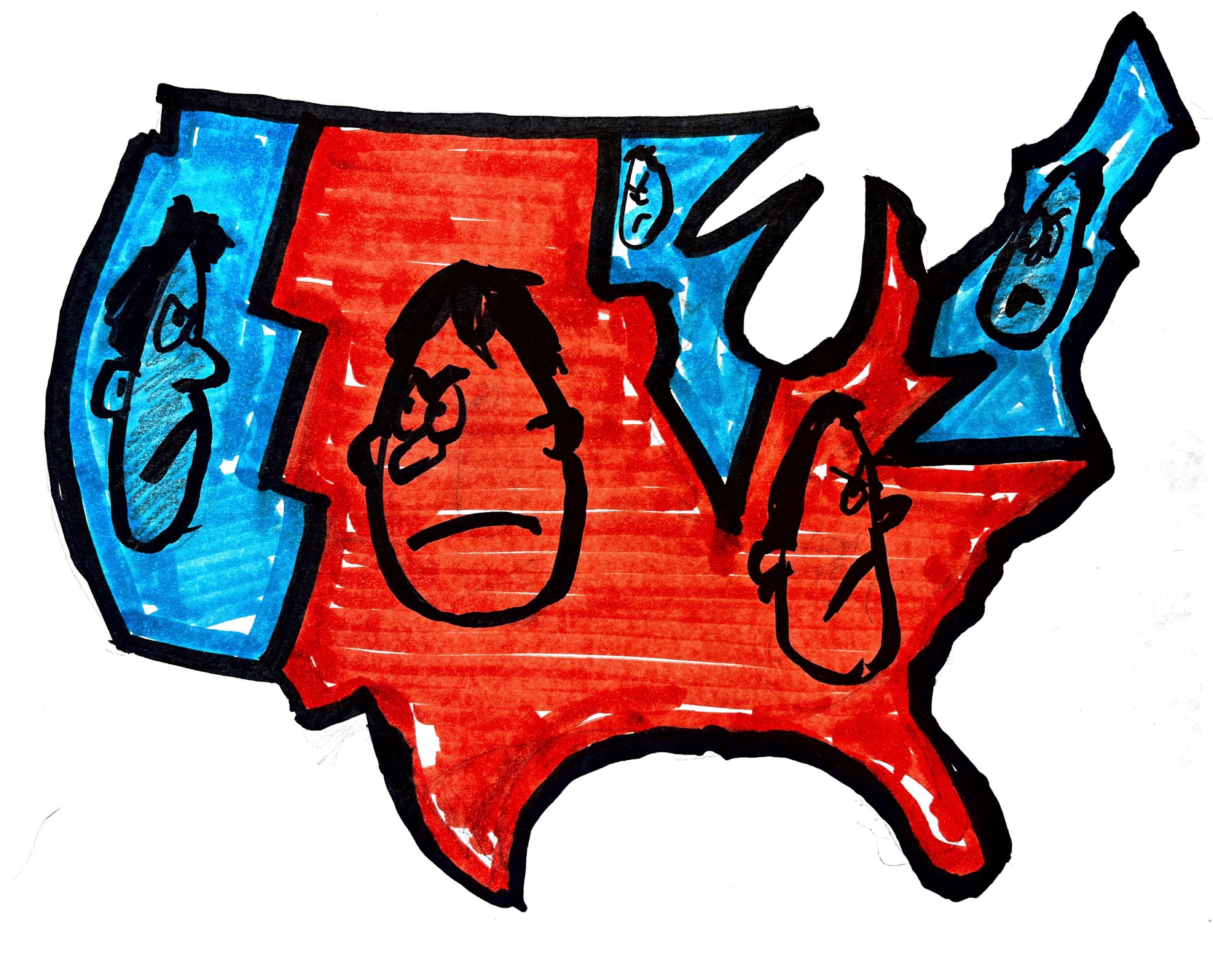
Friends,Much of today’s Republican Party is treacherous and treasonous. So why are Democrats facing midterm elections that, according to most political observers, they’re likely to lose? Having been a loyal Democrat for some seventy years (my father liked Ike but my mother and I were for Adlai), including a stint as a cabinet secretary, it pains me to say this, but the Democratic Party has lost its way. How? Some commentators think Democrats have moved too far to the left — too far from the so-called “center.” This is utter rubbish. Where’s the center between democracy and authoritarianism and why would Democrats want to be there? Others think Biden hasn’t been sufficiently angry or outraged. Please. What good would that do? And after four years of Trump, why would anyone want more anger and outrage?The biggest failure of the Democratic Party — a disease that threatens the very life of the party — has been its loss of the American working class. As Democratic pollster Stanley Greenberg concluded after the 2016 election, “Democrats don’t have a ‘white working-class’ problem. They have a ‘working class problem’ which progressives have been reluctant to address honestly or boldly. The fact is that Democrats have lost support with all working-class voters across the electorate.”The working class used to be the bedrock of the Democratic Party. What happened? Before Trump’s election, Democrats had occupied the White House for 16 of 24 years. Democrats controlled both houses of Congress during the first two years of the Clinton, Obama, and Biden administrations. During those years, Democrats scored some important victories for working families: the Affordable Care Act, an expanded Earned Income Tax Credit, and the Family and Medical Leave Act, for example. I take pride in being part of a Democratic administration during that time. But I’d be lying to you if I didn’t also share my anger and frustration from those years — battles inside the White House with Wall Street Democrats and battles with corporate Democrats in Congress, all refusing to do more for the working class, all failing to see (or quietly encouraging) the rise of authoritarianism if the middle class continued to shrink. (I offer the following video clip not in the spirit of “I told you so” but as a way of sharing my frustrations and fears at the time.)The tragic reality is that even when they’ve been in charge, Democrats have not altered the vicious cycle that has shifted wealth and power to the top, rigging the economy for the affluent and undermining the working class. Clinton used his political capital to pass free trade agreements, without providing millions of blue-collar workers who consequently lost their jobs the means of getting new ones that paid at least as well. His North American Free Trade Agreement and plan for China to join the World Trade Organization undermined the wages and economic security of manufacturing workers across America, hollowing out vast swaths of the Rust Belt. Clinton also deregulated Wall Street. This indirectly led to the financial crisis of 2008 — in which Obama bailed out the biggest banks and bankers but did nothing for homeowners, many of whom owed more on their homes than their homes were worth. Obama didn’t demand as a condition for being bailed out that the banks refrain from foreclosing on underwater homeowners. Nor did Obama demand an overhaul of the banking system. Instead, he allowed Wall Street to water down attempts at re-regulation. Both Clinton and Obama stood by as corporations hammered trade unions, the backbone of the working class. They failed to reform labor laws to allow workers to form unions with a simple up-or-down majority vote, or even to impose meaningful penalties on companies that violated labor protections. Biden has supported labor law reform but hasn’t fought for it, leaving the Protecting the Right to Organize (PRO) Act to die inside the ill-fated Build Back Better Act. At the same time, Clinton and Obama allowed antitrust enforcement to ossify, enabling large corporations to grow far larger and major industries to become more concentrated. Biden is trying to revive antitrust enforcement but hasn’t made it a centerpiece of his administration. Both Clinton and Obama depended on big money from corporations and the wealthy. Both turned their backs on campaign finance reform. In 2008, Obama was the first presidential nominee since Richard Nixon to reject public financing in his primary and general election campaigns, and he never followed up on his re-election promise to pursue a constitutional amendment to overturn Citizens United vs FEC, the 2010 Supreme Court opinion opening the floodgates to big money in politics. Throughout these years, Democrats drank from the same campaign funding trough as the Republicans – big corporations, Wall Street, and the very wealthy. “Business has to deal with us whether they like it or not, because we’re the majority,” crowed Democratic representative
The Republican Party: God, guns, forced birth, and strongmen
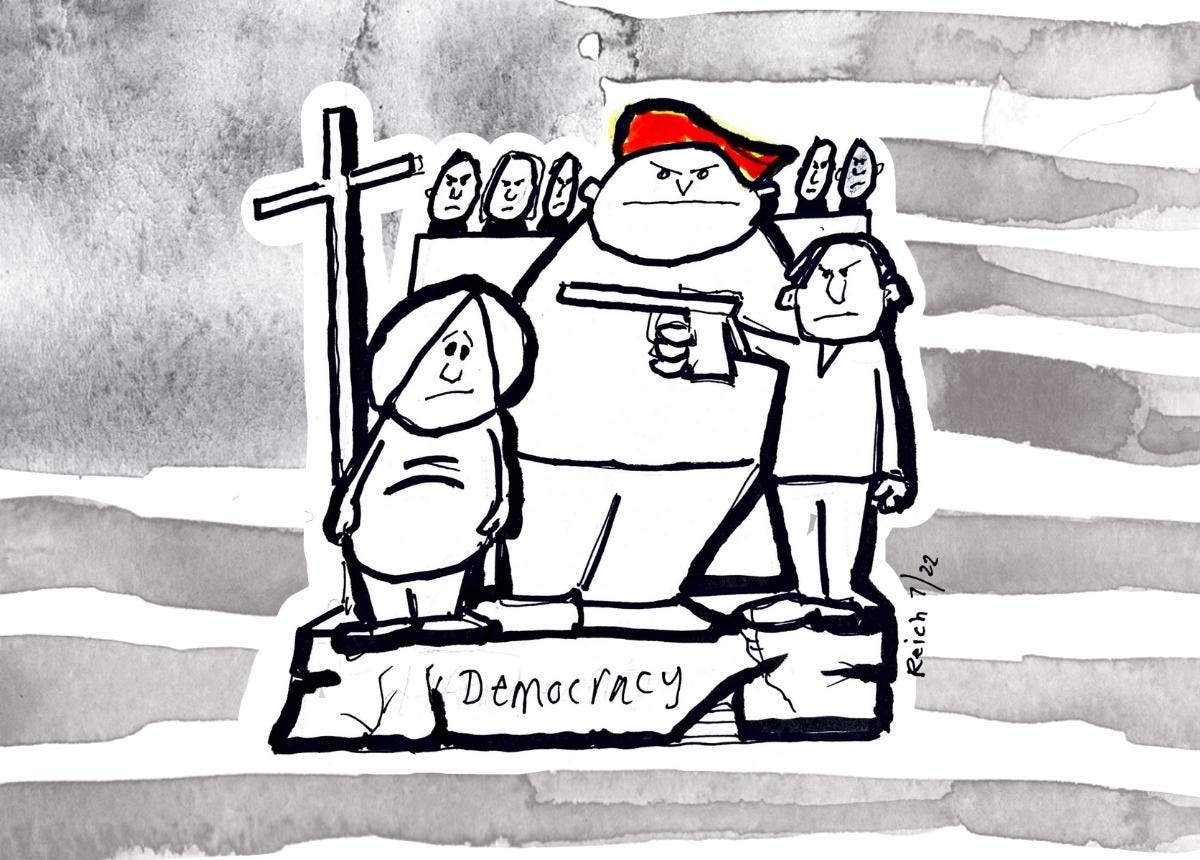
The link is tightening between America’s move toward theocracy and its slide toward autocracy.It is important to understand these connections. The Supreme Court’s overturning of Roe, its expanded reading of the Second Amendment, and its eagerness to elevate religious freedom over the Constitution’s guarantee against established religion come from the same cloth as Republican state legislative attacks on democracy, the GOP’s fealty to Trump’s Big Lie, and white supremacy.At the Faith & Freedom Coalition’s “Road to Majority” conference in Nashville last month, speakers explicitly embraced the theology of “Dominionism” -- the idea that “right-thinking” Christians have a biblically derived mandate to take control of all aspects of government and society. Trump’s keynote at the conference made the connections explicit. He warned that the “radical Left” is “trying to destroy organized religion” and “trying to shred our Constitution,” and continued: “The greatest danger to America is not our enemies from the outside, as powerful as they may be. The greatest danger to America is the destruction of our nation from the people from within. And you know the people I’m talking about.” Other speakers labeled Democrats “evil,” “tyrannical” and “the enemy within,” and charged that Democrats were engaged in “a war against the truth.” Senator Rick Scott of Florida predicted “the backlash is coming. Just mount up and ride to the sounds of the guns, and they are all over this country. It is time to take this country back.” Lt. Gov. Mark Robinson of North Carolina (the state’s first Black lieutenant governor and a virulent critic of so-called “critical race theory”) said he expected “a pitched battle to literally save this nation.” Referencing a passage from Ephesians that Christian nationalists often use to signal their militancy, Robinson added, “I don’t know about you, but I got my pack on, I got my boots on, I got my helmet on, I’ve got on the whole armor.”The connections between these strands of rightwing ideology are growing clearer and louder — theocratic Christianity, gun violence, the subjugation of women through forced birth, and strongman authoritarianism. Christian nationalism now taking over the Republican Party envisions vigilante justice -- “good guys with guns,” neighbors eavesdropping on neighbors, and action to stop what they call “abortion trafficking” — women crossing state lines to access legal abortions. Widespread access to guns is essential to keep everyone under control, suppress protests, and fuel fear. To call this a “culture” war is to understate its true meaning and potential danger. Those of us who still believe in separating church and state, guarding reproductive rights, ensuring racial equality, ending gun violence, and protecting democracy must understand that much of the Republican Party now stands for the exact opposite of these values.The funders and kingmakers of the Republican Party see all this for what it is: an effort to hold on to power in the face of massive demographic shifts: toward women (who now constitute 60 percent of all university enrollees, and therefore the future power structure) and people of color, and away from formal religion. Over the longer term, the Republican Party is doomed. In the meantime, with a rightwing majority on the Supreme Court, legislative majorities in states determined to suppress votes and dominate election machinery, an authoritarian strongman president waiting in the wings, and an ideology of Christian nationalism, the GOP will do what it can to hold on. This is a public episode. If you'd like to discuss this with other subscribers or get access to bonus episodes, visit robertreich.substack.com/subscribe
Bezos's inflation idiocy
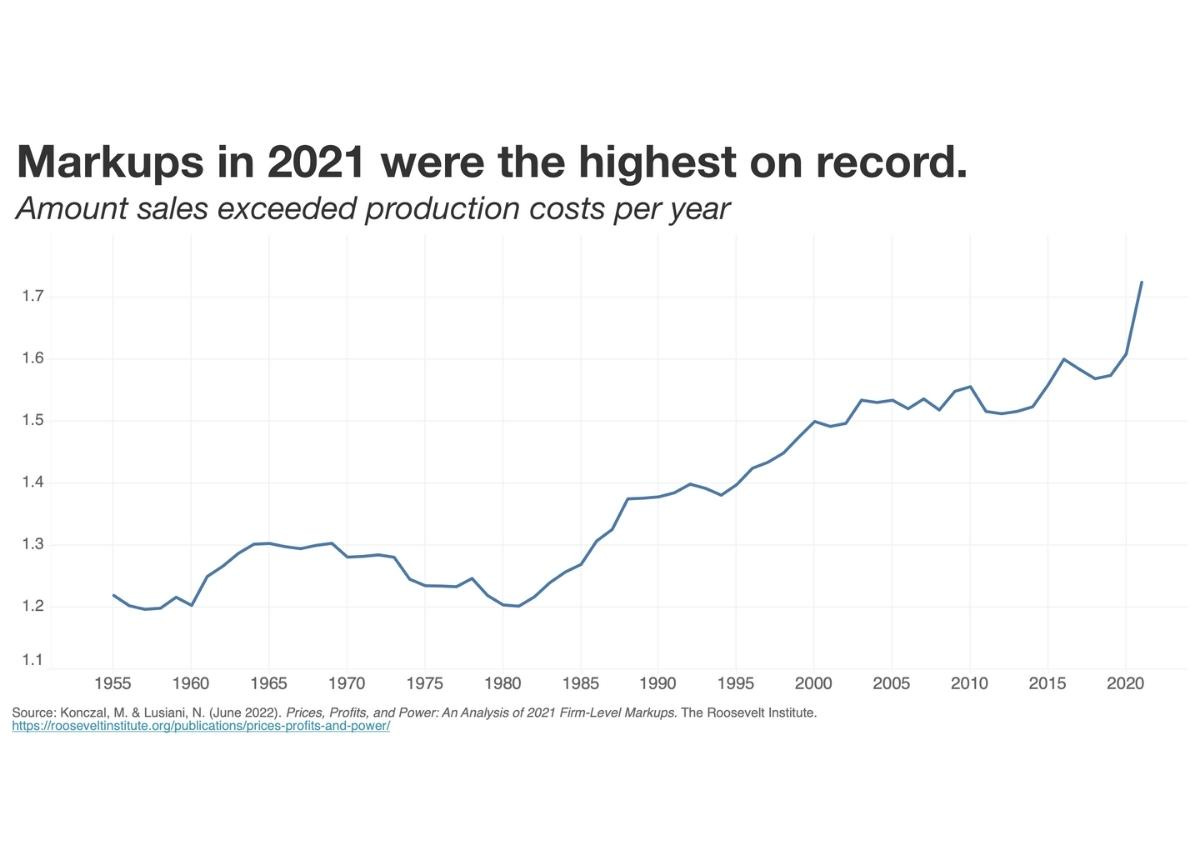
On Saturday, President Biden demanded on Twitter that Big Oil “bring down the price you are charging at the pump to reflect the cost you’re paying for the product.” This prompted Amazon’s Jeff Bezos, the second richest man in the world, to call Biden’s statement either “straight ahead misdirection or a deep misunderstanding of basic market dynamics.”That’s rich. Bezos of all people should know that a major reason prices are rising is hugely profitable corporations like his Amazon have been using inflation as cover to raise price even further. Last year, corporate profits overall reached a 70-year high. In the fourth quarter, Amazon's profit nearly doubled — and it announced it would raise the price of its popular Prime membership.Yes, corporations are facing rising costs for everything from materials to labor. But they’re raising their prices even higher than those costs. In a new paper, researchers Mike Konczal and Niko Lusiani of the Roosevelt Institute find that markups — the difference between what corporations pay for labor and materials and the prices they charge their customers — have been rising dramatically. They find the same when they compare corporate costs with their sales. Corporations have been raising their prices because they have market power to do so (two-thirds of all American industries have become more concentrated over the last four decades). And their customers believe the price hikes are justified because the corporations have higher costs. Let’s be clear. The corporate price hikes have come on top of a worldwide surge in pent-up demand following the worst of the pandemic, global shortages of goods and services seeking to meet that demand, China’s lockdowns, and Putin’s war in Ukraine (which has put upward pressure on energy and food prices). But the corporate price hikes often exceed these higher costs. As gas prices at the pump reach their highest point in 14 years, Big Oil is enjoying a gusher. In the first quarter of 2022, Chevron’s profits more than quadrupled from the year before. ExxonMobil’s profits more than doubled. In the past month alone, even though the price of crude oil has fallen approximately $15 a barrel, prices at gas pumps have barely dropped.Big corporations aren’t pouring these windfall profits back into production. Instead, they’ve embarked on the largest program of stock buybacks in history. ExxonMobil alone plans to buy back $30 billion of stock this year (up from the $10 billion it announced earlier). If it hadn’t been for the buybacks, the stock market would look even worse.The Fed’s efforts to slow the economy will not remedy these causes of inflation. Hiking interest rates to reduce inflation is like trying to reduce someone’s fever by putting them in a freezer — it doesn’t deal with the cause and may be quite harmful. Rate hikes increase the costs of borrowing to individuals and consumers, which causes them to cut back on purchases of everything. This, in turn, causes the economy to slow — resulting in higher unemployment. How much higher? Lawrence Summers, Bill Clinton’s Treasury Secretary, says containing inflation will require five years of 6 percent unemployment, or two years of unemployment at 7.5 percent or one year at 10 percent. The harm inflicted by this alleged cure would be worse than the disease. The first fired (and last hired back) are typically the lowest-skilled and lowest paid. Other than Fed rate hikes, four moves could help — and the Biden administration should embark on them immediately and loudly:1. Vigorous antitrust enforcement that reduces the pricing power of big corporations. (Even the threat of such enforcement will make them more reluctant to raise prices.)2. A windfall profits tax that takes away a portion of their recent profits and redistributes them to consumers (as the Conservative government in Britain is doing on Big Oil).3. A ban on stock buybacks. Before 1982, the Securities and Exchange Commission viewed buybacks as illegal stock manipulation, and didn’t allow them. The SEC should return to its former position. 4. Publicity. The government should reveal the names of highly profitable corporations that are flagrantly raising prices (not just Big Oil, but a host of other companies ranging from Tyson Foods to Starbucks). This would have an immediate effect. Corporations pay fortunes to burnish their brands.Mr. President, don’t just tweet that Big Oil should reduce its prices. Initiate an antitrust lawsuit against the major oil companies, threaten a windfall profits tax on them, get your SEC to ban stock buybacks, and name the names of big corporations that are unnecessarily raising prices — not just Exxon-Mobil and Chevron but also Tyson Foods, Starbucks, and Amazon. Thanks for subscribing. To sustain this effort, please consider a paid or gift subscription. This is a public episode. If you'd like to discuss this with other subscribers or get access to bonus episodes, visit robertreich.substack.com/subscribe
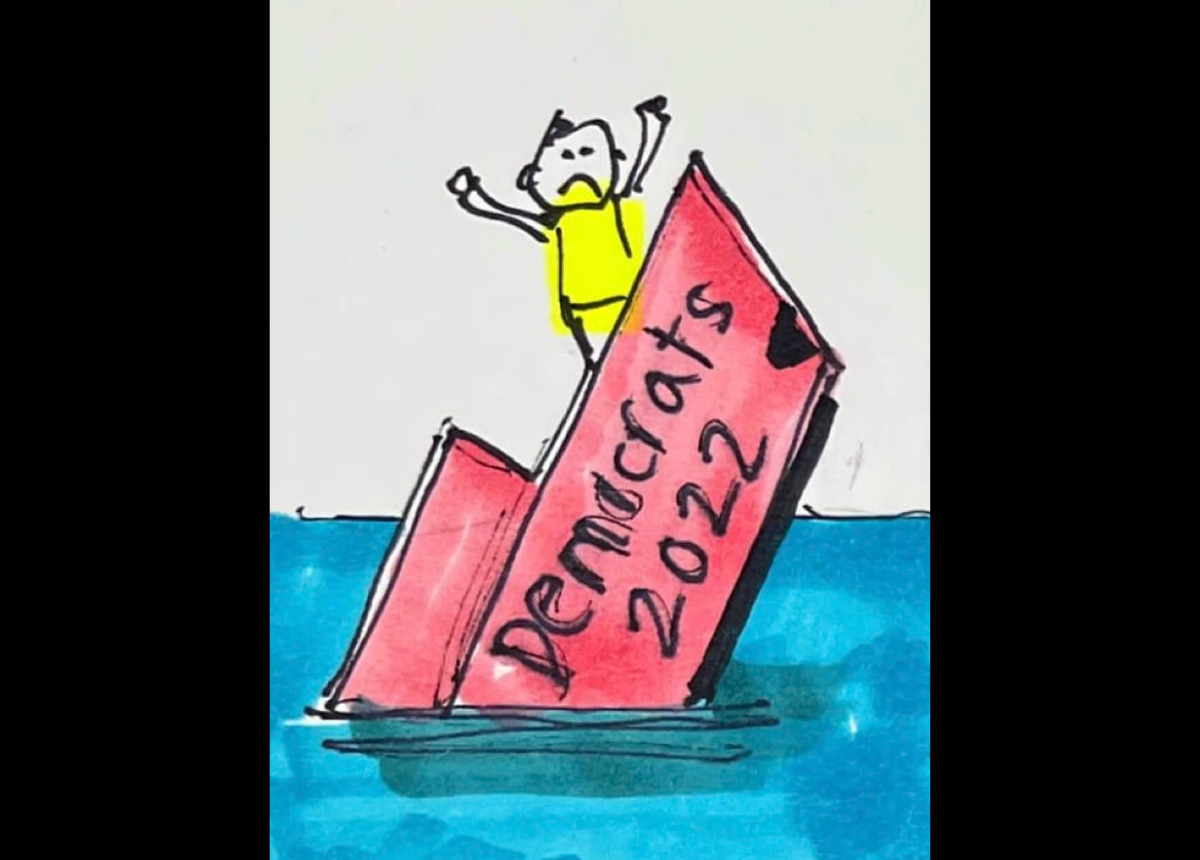
How Democrats can still protect reproductive rights and the planet
I have no patience for all the handwringing by Democratic lawmakers in Washington over the Supreme Court’s regressive decisions on abortion and the climate. “This MAGA, regressive, extremist Supreme Court is intent on setting America back decades, if not centuries,” Senate Majority Leader Chuck Schumer said last Thursday after the Court dumped its final opinions for the term. Well, yes. So what are you going to do about it, Chuck? Last I looked Democrats were still in control of the Senate and House and the presidency. Which means Democrats still have the power to effectively overrule the Supreme Court on reproductive rights and the environment. They must now pass a national abortion rights act which will preempt state laws banning abortions, and a Clean Power Plan that will eliminate the Supreme Court’s argument that Congress never authorized the Environmental Protection Agency to do this.These moves are not only crucial to the nation. They’re also critical for Democrats facing midterm elections four months from now. Reproductive rights and the environment are hugely galvanizing issues for Democrats and Independents.Some Democrats I talk to expect to lose control over both houses of Congress in the midterms, regardless. Rubbish. Defeatism is a self-fulfilling prophesy. Midterm elections are all about turnout. Young people and college-educated voters made all the difference in the last midterms in 2018 — giving Democrats control of the House by a wide margin. While young people usually don’t pay much attention to midterm elections, a record 36 percent of them voted in 2018, in contrast to 20 percent in 2014.Turnout of college-educated voters — another critical voting constituency to the Democratic Party, and also a majority of Independents who vote in midterms — also spiked in the 2018 midterms. True, Trump was a driving force for both groups in 2018. But it’s not as if Trump has disappeared. His attempted coup continues to this day. Nor would the Supreme Court’s extraordinary rightward lurch on reproductive rights and the environment have occurred but for Trump’s three Supreme Court appointees. It’s also true that Democrats have to cope with a filibuster in the Senate. But they need only fifty votes (plus the Vice President) to carve out exceptions to the filibuster for reproductive rights and for environment. Carve-outs from the filibuster are not uncommon. There have been some 160 of them, including one for confirming Supreme Court nominees (courtesy of Mitch McConnell and Senate Republicans). If Republicans regain control of the Senate, you can bet they’ll carve out exceptions to the filibuster for whatever they want to do. They may abolish the filibuster altogether. But can Senate Democrats even muster 50 votes for such carve-outs? Joe Manchin and Kyrstin Sinema have signaled before they they won’t go along. Even if Manchin and Sinema were reluctant to agree to such carve-outs before, the situation has changed dramatically now that the Supreme Court has reversed Roe and stopped the Clean Power Plan. If reproductive rights are going to be preserved and the planet protected, Democrats must unite, and Manchin and Sinema must join them. If they won’t, let the nation see. Don’t let Republicans off the hook here, either. Alaska’s Lisa Murkowski is up for reelection this fall. She talks a good game about reproductive rights and about the environment. Last February, she and Maine Republican Senator Susan Collins introduced the Reproductive Choice Act, to prevent women’s reproductive choices from being weakened or eliminated. And she co-authored with Joe Manchin an oped in the Washington Post about the importance of ending climate change. Hell, Utah’s Mitt Romney just published a piece in the Atlantic entitled “America is in denial,” warning about climate catastrophe. Okay, Mitt: Unless you’re in total denial that the Supreme Court just gutted the Clean Power Plan, you have to join with Democrats to carve out an exception to the filibuster for the environment and then vote for the Plan. It’s time for Democratic lawmakers and anyone else who cares about reproductive rights and the environment to act. Now. At least hold votes and put lawmakers from both chambers on record. Paint a clear contrast ahead of the November midterms. Give voters a reason to turn out. Please consider a paid or gift subscription to help sustain this work. This is a public episode. If you'd like to discuss this with other subscribers or get access to bonus episodes, visit robertreich.substack.com/subscribe

On this July 4: The true meaning of patriotism
On this Fourth of July, it's worth pondering the true meaning of American patriotism. It is not the meaning propounded by the “America First” crowd, who define it as securing our borders. For most of its existence America has been open to people from the rest of the world fleeing tyranny and violence. Nor is the meaning of patriotism found in the ravings of those who want America to be a white Christian nation. America's moral mission has been to widen inclusion -- providing equal rights to women, Black people, Native American, Latinx, LGBTQ, Muslim, Jewish, atheist, agnostic. True patriots don't fuel racist, religious, or ethnic divisions. Patriots aren't homophobic or sexist. Patriots seek to confirm and strengthen and celebrate the "we" in "we the people of the United States."Nor are patriots blind to social injustices. They don’t ban books or prevent teaching about the sins of our past. They combine a loving devotion to America with a demand for justice.This land is your land, this land is my land, sang Woody Guthrie.Langston Hughes pleaded:Let America be America again,The land that never has been yet—And yet must be—the land where every man is free.The land that's mine—the poor man's, Indian's, Negro's, ME—.Nor is the meaning of patriotism is found in symbolic displays of loyalty like standing for the national anthem and waving the American flag. Patriotism’s true meaning lies in taking a fair share of the burdens of keeping the nation going — sacrificing for the common good. Paying taxes in full rather than lobbying for lower taxes or seeking tax loopholes or squirreling away money abroad. Refraining from political contributions that corrupt our politics. Blowing the whistle on abuses of power even at the risk of losing one's job. Volunteering time and energy to improving the community and country.Real patriotism involves strengthening our democracy—defending the right to vote and ensuring more Americans are heard. Not claiming without evidence that millions of people voted fraudulently. Not pushing for laws that make it harder for people to vote based on this Big Lie. Not running for office on the Big Lie.True patriots don’t put loyalty to their political party above their love of America. True patriots don’t support an attempted coup. They expose it — even when it was enabled by people they once worked for or engineered by a president who headed their own party.When serving in public office, true patriots don’t try to hold on to power after voters have chosen not to reelect them. They don’t make money off their offices. When serving as judges, they recuse themselves from cases where they may appear to have a conflict of interest. When serving in the Senate, they don’t use the filibuster to stop all legislation they disagree with. When serving in state legislatures, they don’t try to suppress the votes of people unlikely to support them. When serving on the Supreme Court, they don’t disregard precedent to impose their own ideology.Patriots understand that when they serve the public, one of their major responsibilities is to maintain and build public trust in the offices and institutions they occupy. America is in trouble. But that’s not because too many foreigners are crossing our borders, or we’re losing our whiteness or our dominant religion, or we’re not standing for the national anthem or celebrating our history. We’re not in trouble because of voter fraud. We’re in trouble because we are losing the true understanding of what patriotism requires from all of us. This is a public episode. If you'd like to discuss this with other subscribers or get access to bonus episodes, visit robertreich.substack.com/subscribe
How do we tame a rogue Supreme Court?
My informal weekly coffee with Heather Lofthouse (Executive Director of Inequality Media Civic Action and my former student), discussing the past week. Today we talk about the rogue Supreme Court and what Democrats can — and must — do. In particular, Senate Dems still have the power to carve out filibuster exceptions for reproductive rights, voting rights, and the climate — and then enact national legislation protecting reproductive rights and voting rights, and authorizing the EPA to move forward with the Clean Power Plan rule. Why don’t they do so? We also discuss Cassidy Hutchinson’s powerful testimony before the House January 6 committee, and what it might mean for prosecuting Trump. This is a public episode. If you'd like to discuss this with other subscribers or get access to bonus episodes, visit robertreich.substack.com/subscribe

The fate of the world
Friends,I recently gave a lecture to students who were considering careers in public service, either in the public sector or in nonprofits. My lecture was about why so many public problems have worsened over the last decades — climate change, economic inequality, gun violence, access to healthcare, public education, child poverty, homelessness, even democracy itself.When I finished, one of them asked, “given everything you’ve told us, why should any of us want to enter public service now?” The question elicited nervous laughter from the class. It had hit a nerve. I responded, “but this is the very best time to enter public service!” They looked puzzled. I continued: “You wouldn’t want to enter public service when there were no major public problems. You’re desperately needed now. Think of all the good you can do! You’re young and energetic and idealistic. You have most of your lives in front of you. The challenges are huge. It’s your time!”They laughed. Some applauded. But I wondered how many of them understood what I was trying to say.I’m getting to be an old man. I’ve spent most of my life working on public problems, much of the time in public service of one kind or another. Yet over my lifetime, so many public problems have worsened. Occasionally I’m haunted by an overwhelming sense of failure — not just my own failure but my entire generation’s failure. I’ll continue to do what I can, but it’s now up to the next generation. Yes, there’s still Biden and Pelosi and Bernie (and Trump), and a few other aging boomers. But we’re all in our last acts. The real fate of the world is in the hands of these young people. It’s their time. This is a public episode. If you'd like to discuss this with other subscribers or get access to bonus episodes, visit robertreich.substack.com/subscribe
The beginning of the end of regulation
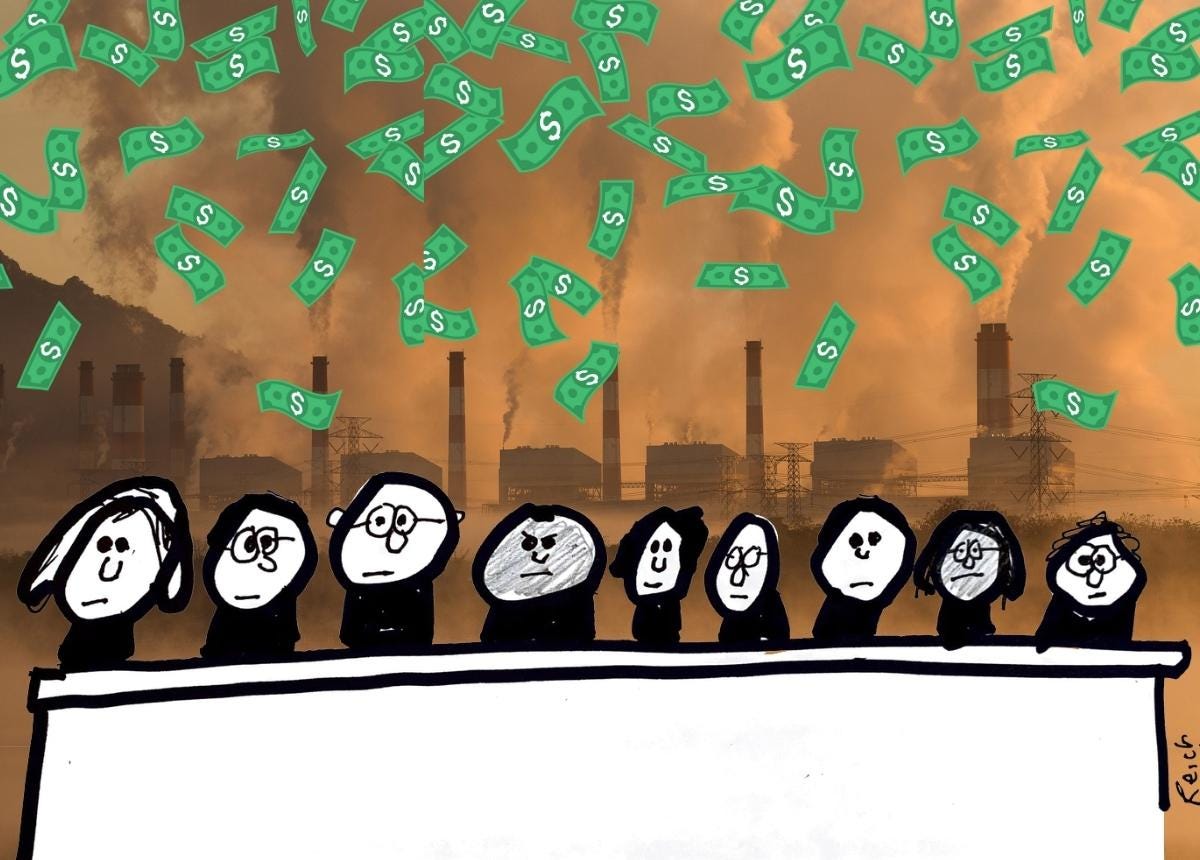
Today the Supreme Court — again, with the 6 Republican appointees on one side and the 3 Democratic appointees on the other — limited the Environmental Protection Agency’s ability to regulate carbon emissions from power plants. This ruling deals a major blow to America’s (and the world’s) efforts to address climate change. Also — as with its decision reversing Roe v. Wade — today’s ruling has far larger implications than the EPA and the environment. West Virginia v. EPA is the latest battle pitting America’s big businesses (in this case Big Oil) against the needs of average Americans. In this Supreme Court — containing three Trump appointees, two George W. Bush appointees, and one George H.W. Bush appointee – big business is winning big time. The financial backers of the Republican Party are getting exactly what they paid for.Writing for the majority, Chief Justice John Roberts admitted that “capping carbon dioxide emissions at a level that will force a nationwide transition away from the use of coal to generate electricity may be a sensible ‘solution to the crisis of the day.’” But then came the kicker: “But it is not plausible,” he wrote, “that Congress gave EPA the authority to adopt on its own such a regulatory scheme.”Not plausible? Congress enacted the Clean Air Act in 1970. As with all laws, Congress left it to an administrative agency — in this case, the EPA — to decide how that Act was to be implemented and applied. That’s what regulations do: They implement laws.For the Supreme Court to give itself the authority to say whether Congress intended to delegate this much regulatory authority to the EPA is a truly radical act — more radical than any Supreme Court in modern history. If Congress has been unhappy with decades of EPA regulation, Congress surely has had the power to pull that authority back. But it has not.As Justice Elena Kagan, writing for the dissenters, countered: “The Court appoints itself — instead of Congress or the expert agency — the decision maker on climate policy. I cannot think of many things more frightening.”The implications of the ruling extend to all administrative agencies in the federal government – to the Securities and Exchange Commission implementing the Securities Acts of 1933 and 1934, to the Federal Trade Commission applying the Federal Trade Commission Act of 1914, to the Department of Labor implementing the Fair Labor Standards Act of 1938, and so on, across the entire range of government – and the entire range of regulations designed to protect consumers, investors, workers, and the environment. (This same Supreme Court has ruled that the Centers for Disease Control and Prevention was not authorized to impose a moratorium on evictions and that the Occupational Safety and Health Administration was powerless to tell large employers to have their workers be vaccinated or undergo frequent testing.)In passing laws to protect the public, Congress cannot possibly foresee all ways in which those laws might be implemented and all circumstances in which the public might need the protections such laws accord. Starting today, though, all federal regulations will be under a cloud of uncertainty – and potential litigation.A final implication of today’s ruling is that the filibuster has to go. If the Supreme Court is going to require that Congress be more active and specific in protecting the environment or anything else, such a goal is implausible when 60 senators are necessary to enact it. Senate Democrats now have it in their power to abolish the filibuster. Today’s case should convince them they must.Thanks for subscribing. Please consider a paid or gift subscription to help sustain this effort. This is a public episode. If you'd like to discuss this with other subscribers or get access to bonus episodes, visit robertreich.substack.com/subscribe

Cassidy Hutchinson's chilling testimony
After today’s explosive testimony by Cassidy Hutchinson — who served as chief assistant to Mark Meadows and was literally and figuratively in the middle of Trump’s White House — I don’t see how Attorney General Merrick Garland can avoid prosecuting Trump, as well as Mark Meadows and Rudy Giuliani.If you didn’t hear or see her testimony, Hutchinson portrayed a plot, in which Trump was directly involved, to stop the counting of electoral ballots on January 6. Meadows, Giuliani, Mike Flynn, and Roger Stone were also directly involved. Trump knew rioters were coming to Washington with weapons, and knew they had weapons on January 6. He knew they were threatening the life of Mike Pence. He knew they were dangerous. He wanted to be on Capitol Hill when they stormed the Capitol. He could have stopped them at any point, but he chose not to.It was the most chilling depiction yet of a president in charge of an attempted coup. Trump knew exactly what was happening and what he was doing. He knew he was acting in violation of his oath of office and inciting violence in order to stay in office. He repeatedly refused to listen to reason, or to change course.More than any other hearing to date, the audience for today’s hearing was not just the American public but also the Attorney General. Time and again, Hutchinson gave testimony about serious federal crimes. Hutchinson testified that (in rough chronological order):1. As early as December, a plan was emerging that was considered “potentially dangerous for our democracy” and with “dangerous repercussions,” John Ratcliffe, Trump’s director of national intelligence, told Hutchinson at the time.2. When Attorney General Barr said publicly that the Justice Department hadn’t found evidence of election fraud sufficient to change the outcome of the election, Trump exploded – throwing lunch against the wall of the dining room off the Oval Office, breaking plates. When she attempted to help the valet clean up, the valet warned Hutchinson to stay clear of him.3. On the evening of January 2, Giuliani asked Hutchinson, “Cass, are you excited for the 6th? It’s going to be a great day. We’re going to the Capitol. Talk to the Chief about it.” When she spoke with Meadows, he said “there’s a lot going on Cass … things may get real, real bad on January 6.”4. On January 4, Trump’s national security advisor Robert O’Brien asked if he could speak with Meadows about potential violence on January 6. Tony Ornato, Deputy Chief of Staff in charge of all security, also had reports of potential violence on January 6.5. On January 5, Trump asked Meadows to speak with Roger Stone and Mike Flynn; Hutchinson believes they talked. Flynn had set up a “war room” at the Willard Hotel. Meadows wanted to join their meeting but Hutchinson advised against it. He dialed into the meeting instead.6. On the morning of January 6, Pat Cipollone, the White House counsel, asked Hutchinson to “please make sure we don’t go up to the Capitol, we’re going to get charged with every crime imaginable.” He was “concerned we were obstructing justice or obstructing the electoral count” and “look like we were inciting a riot.”7. Moments before his January 6 rally on the ellipse, Trump was angry because he wanted the area to be filled with his supporters and worried that camera shots would show it sparsely filled. When told that Secret Service wasn’t letting people with dangerous weapons through the metal detectors (magnetometers), Trump said: “I don’t f*****g care they have weapons. Let my people in. They aren’t here to hurt me. Take the magnetometers away” and “they can march to the Capitol after the rally is over.”8. Later, when Trump was finishing his speech and rioters were on the way to the Capitol, Ornato asked Hutchinson to let Meadows know of the danger. But Meadows didn’t want to hear it. Sitting in a secure vehicle near the ellipse, Meadows repeatedly shut the door on her. Almost a half hour later, when she was finally able to tell him of the danger, he said “Alright, how much longer does the president have left in his speech?”9. When Trump was back in his limousine (“the beast”) after the rally, he wanted to go to the Capitol but the Secret Service wouldn’t let him. When chief Secret Service agent Bobby Engle refused, Trump tried to grab the steering wheel and then lunged at Engle. 10. When the riot began, and they were back in the White House. Hutchinson heard Meadows tell Cipillone, “The President doesn’t want to do anything about it.” Moments later, when Cipillone and Meadows met with Trump, Hutchinson heard them talking about the “hang Mike Pence chants.” A few minutes later, when Cipillone told Meadows, “Mark we need to do something more, they’re literally calling for VP to be hung,” Meadows said, “you heard him, he doesn’t think they’re doing anything wrong, and Mike deserves it.”11. As rioters stormed the Capitol, many people phoned Meadows, urging that Trump tell rioters to stop. He could easily have walked down

The roots of Trumpism (Part 1)
Donald Trump’s legacy — a proto-fascist movement we might call Trumpism — includes a Supreme Court rapidly taking America backwards, state legislatures suppressing votes and taking over election machinery, and an emboldened oligarchy taking over the economy. While the January 6 committee is doing a fine job exposing Trump’s attempted coup that culminated in the attack on the Capitol, it is not part of the committee’s charge to reveal why so many Americans were willing — and continue to be willing — to go along with Trump. Yet if America fails to address the causes of Trumpism, the attempted coup he began will continue, and at some point it will succeed. My purpose in today’s post (and others to come) is to begin to expose the roots of Trumpism , and suggest what must be done. Let me start with some personal history. In the fall of 2015, I visited Michigan, Wisconsin, Ohio, Pennsylvania, Kentucky, Missouri, and North Carolina. I was doing research on the changing nature of work in America. During my visits I spoke with many of the same people I had met twenty years before when I was secretary of labor, as well as with some of their grown children. I asked them about their jobs, their views about America, and their thoughts on a variety of issues. What I was really seeking was their sense of the system as a whole and how they were faring in it.What I heard surprised me. Twenty years before, many had expressed frustration that they weren’t doing better. Now they were angry – at their employers, the government, and Wall Street; angry that they hadn’t been able to save for their retirement; angry that their children weren’t doing any better than they did at their children’s age. They were angry at those at the top who they felt had rigged the system against them, and for their own benefit. Several had lost jobs, savings, or homes in the Great Recession following the financial crisis. By the time I spoke with them, most were back in jobs, but the jobs paid no more than they had two decades before in terms of purchasing power. I heard the term “rigged system” so often that I began asking people what they meant by it. They spoke about the bailout of Wall Street, political payoffs, insider deals, CEO pay, and “crony capitalism.” These complaints came from people who identified themselves as Republicans, Democrats, and Independents. A few had joined the Tea Party. Some others had briefly been involved in the Occupy movement. Yet most of them didn’t consider themselves political. They were white, Black, and Latino, from union households and non-union. The only characteristic they had in common apart from the states and regions where I found them was their positions on the income ladder. All were middle class and below. All were struggling. They no longer felt they had a fair chance to make it. With the 2016 political primaries looming, I asked them which candidates they found most attractive. At that time, the leaders of both parties favored Hillary Clinton and Jeb Bush to be the Democratic and Republican candidates, respectively. Yet no one I spoke with mentioned either Clinton or Bush. They talked about Bernie Sanders and Donald Trump. When I asked why, they said Sanders or Trump would “shake things up,” or “make the system work again,” or “stop the corruption,” or “end the rigging.”The following year, Sanders — a 74-year-old Jew from Vermont who described himself as a democratic socialist and who wasn’t even a Democrat until the 2016 presidential primary — came within a whisker of beating Hillary Clinton in the Iowa caucus, routed her in the New Hampshire primary, garnered over 47 percent of the caucus-goers in Nevada, and ended up with 46 percent of the pledged delegates from Democratic primaries and caucuses. Had the Democratic National Committee not tipped the scales against him, I’m convinced Sanders would have been the Democratic Party’s nominee. Trump — a sixty-nine-year-old egomaniacal billionaire reality TV star who had never held elective office or had anything to do with the Republican Party, and who lied compulsively about almost everything — won the Republican primaries and then went on to beat Clinton, one of the most experienced and well-connected politicians in modern America (granted, he didn’t win the popular vote, and had some help from the Kremlin).Something very big had happened, and it wasn’t due to Sanders’s magnetism or Trump’s likability. It was a rebellion against the establishment. That rebellion — or, if you will, revolution — continues to this day. Hillary Clinton and Jeb Bush had all the advantages — deep bases of funders, well-established networks of political insiders, experienced political advisors, all the name recognition you could want — but neither of them could credibly convince voters they weren’t part of the system, and therefore part of the problem. When I interviewed these people, the overall economy was doing well in terms of the standard economic indicators of employment a
When I was Baby Jesus
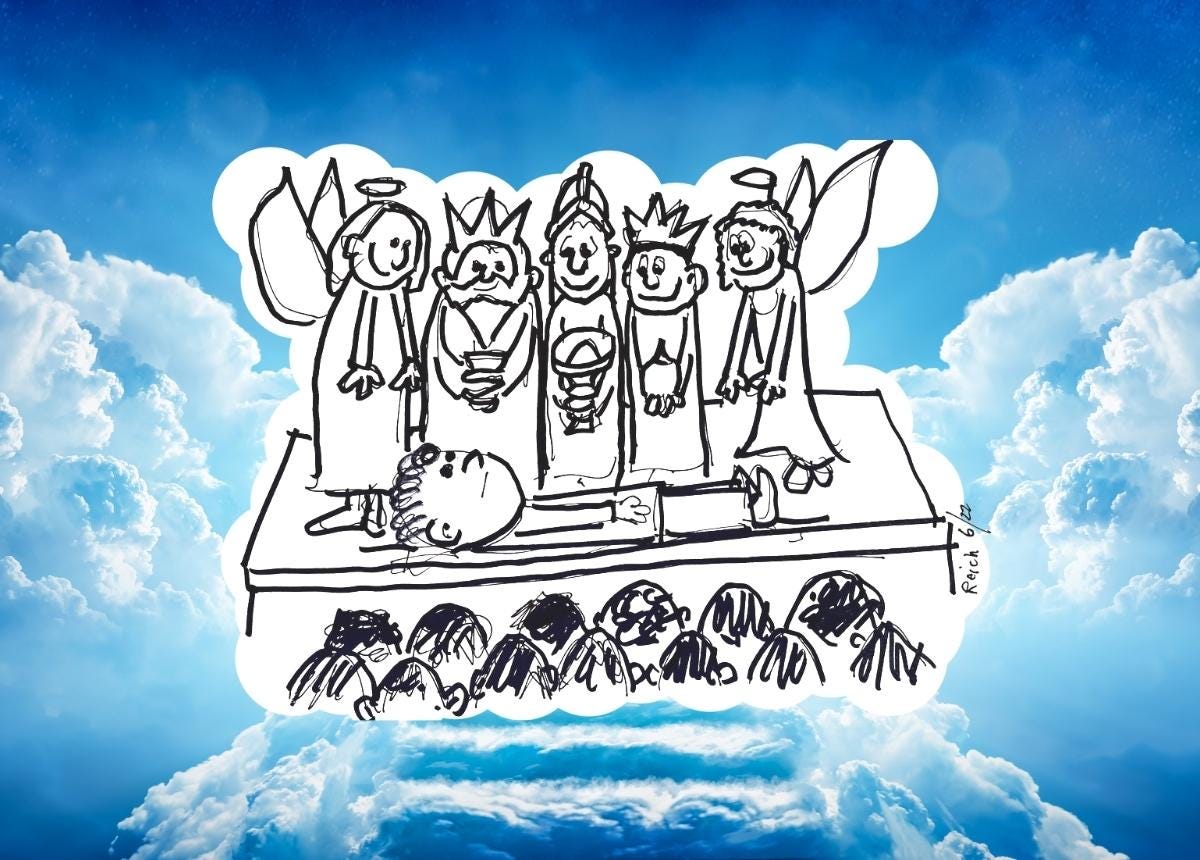
When I was in kindergarten in 1951, I was the shortest kid in all of Lewisboro Elementary School, Public School #1. Not surprisingly, perhaps, I was cast as Baby Jesus in the annual school Christmas pageant. My role didn’t require much preparation or talent. I just had to lie on some straw strewn on the stage and look at children playing Mary and Joseph, the three Wise Men, and assorted angels, and then sit up and join the rest of the school in prayer and carols. The problem for me was that even at the tender age of five, I felt that what I was doing was profoundly wrong. I knew Jesus was Jewish, but my family did not celebrate Christmas and did not believe Jesus was the Messiah. Yet here I was, playing Jesus on stage before the entire school, and praying and singing songs praising him. I felt vulnerable and guilty. What was I to do? I did the only thing my five-year-old brain could come up with: I apologized to God. I did it quietly as I lay on the straw on the stage, under my breath so no one else would hear, and then apologized again during the prayers and Christmas carols. I whispered, “God, I didn’t have a choice. I was cast as Baby Jesus. I don’t celebrate Christmas. It’s against my religion. Please forgive me. Thank you.”In the intervening years since that Christmas pageant, the Supreme Court fortified the wall separating church and state. For years, no public school would have had me play Baby Jesus or pray and sing carols — at least not until today. Today the Supreme Court ruled in favor of a former high school football coach who repeatedly led his players in postgame prayers at midfield. There were also prayers in the locker room. (At the homecoming game, the coach was joined in the postgame prayer by members of the public, a state legislator and the media.)Justice Neil M. Gorsuch, writing for his fellow Republican appointees in the 6-to-3 decision, ruled that the coach’s prayers were protected by the Constitution’s guarantees of free speech and free religious exercise.Writing for the dissent, Justice Sonia Sotomayor said: “Official-led prayer strikes at the core of our constitutional protections for the religious liberty of students and their parents … The Court now charts a different path.”Today, I thought of myself at the age of five, and felt as vulnerable as I did then. This is a public episode. If you'd like to discuss this with other subscribers or get access to bonus episodes, visit robertreich.substack.com/subscribe
The rogue court and the fight ahead
Friends,Like many of you, I found it a difficult weekend. As Friday’s decision by the six Republican nominees on the Supreme Court to overturn Roe v. Wade sank in — along with Clarence Thomas’s threat to use the same logic to put a whole range of other rights on the chopping block, including marriage equality and full access to contraception — I became aware once again just how fragile are the rights we assumed we had. In just two days last week, the court deferred to the states on reproductive rights but struck down reasonable efforts by states to prevent gun violence. There is no logic here — just ideology. This has been the pattern for a decade or more. Even before Trump’s nominees were confirmed, the court’s conservatives had expanded the rights of corporations to flood our democracy with money while gutting the Voting Rights Act. What to do? Like many of you, I vacillate from outrage to despair. We have lost control of the Supreme Court. Many believe we’re about to lose control of Congress. Children are being gunned down by assault weapons. States are banning books about racism. Having gutted the Voting Rights Act, conservatives are leveraging every form of voter suppression they can, while the Senate — nominally under Democratic control — cannot pass a bill to protect the vote. Climate disaster looms yet we are doing little to stop it. Meanwhile, the man who engineered an attempted coup is still free to run for reelection and the Republican Party is slouching toward fascism. We can protest all we want, but everything we believe in depends on politics and power. Which is why the most important thing we can do now is to mobilize like mad for the midterm elections. We need enough Democrats in the House and Senate to carve out exemptions from the filibuster and pass national laws that guard reproductive rights, sexual rights, marriage rights, voting rights, and the planet. I know, I know. Democrats already have majorities in the House and Senate, yet that hasn’t been enough. The only answer is larger majorities — with Democrats who are not afraid to be Democrats, who have spines and care about the country, protect the Constitution, and preserve the world. All of this is on the ballot in November. My small contribution is found on these pages and in the videos I make with my young colleagues at Inequality Media — such as the one we just did, below, on the Supreme Court’s decision to reverse Roe and the threat it poses to other rights. I keep telling the young people I work with and in the classes I teach that I grew up in an America that expanded constitutional rights, battled racism and protected voting rights, and enlarged the middle class. I tell them that if we did it then, we can do so again. They hear me but I’m not sure they believe me. Their young lives have been marked mostly by public failure. Many were motivated to vote for Barack Obama in 2008 and 2016, and against Trump in 2020, but their patience is wearing thin. My scribbles on this page along with the videos are means of fighting back — spreading the word, educating people about what’s at stake and why we must take action, and arming people with arguments they need to make the case to those not yet convinced. So when I ask you to please share, I ask in the spirit of a political act. Sharing as a means of edifying, organizing, and mobilizing. Sharing to make our voices heard. Sharing for ideals that still burn bright. This is a public episode. If you'd like to discuss this with other subscribers or get access to bonus episodes, visit robertreich.substack.com/subscribe

The extreme right on the Supreme Court and the Big Liars in the GOP
My informal weekly coffee with Heather Lofthouse (Executive Director of Inequality Media Civic Action, and my former student), discussing the past week. Today we talk about three things giving Heather a headache and making Bob’s blood boil — the Supreme Court become so radically rightwing that even John Roberts has lost control over it, a Republican Party become so nuts that it’s impervious to the January 6 committee hearings, and economists and policymakers at the Fed become such apologists for corporations that they’re blaming inflation on wage increases rather than on corporate profits. Heather also gives old Bob the nicest compliment he’s ever received. Please pull up a chair. This is a public episode. If you'd like to discuss this with other subscribers or get access to bonus episodes, visit robertreich.substack.com/subscribe
The shame of the Supreme Court
If there’s any doubt about the extremism of the Supreme Court’s six Republican appointees, it was on full display today with their opinion in Dobbs vs. Jackson Women’s Health Organization, which overrules Roe v. Wade, establishing the right to an abortion. Roe had been the law of the land for almost fifty years.Even more ominous is Clarence Thomas’s concurring opinion, in which he argues that the same rationale the court used to overrule Roe should be used to overturn cases establishing rights to contraception, same-sex consensual relations and same-sex marriage. Thomas is pointing the way for the radicals on the court to take in the future.If the due process clause of the 14th Amendment to the Constitution doesn’t protect abortion, says Thomas, the court “should reconsider” other cases that rely on the same clause: Griswold v. Connecticut, a 1965 decision that declared married couples have a right to contraception; Lawrence v. Texas, a 2003 case invalidating sodomy laws and making same-sex sexual activity legal across the country; and Obergefell v. Hodges, the 2015 case establishing the right of gay couples to marry. Thomas says the court has a duty to “correct the error” established in those precedents. That’s not all. After “overruling these demonstrably erroneous decisions, the question would remain whether other constitutional provisions” protected the rights they established, says Thomas. I was in law school in 1973 when the Supreme Court decided Roe v Wade. Also in my class at the time was Clarence Thomas, along with Hillary Rodham (later Hillary Clinton) and Bill Clinton.As I’ve noted before, our law professors used the “Socratic method” – asking hard questions about the cases they were discussing and waiting for students to raise their hands in response, and then criticizing the responses. It was a hair-raising but effective way to learn the law.One of the principles guiding those discussions is called stare decisis — Latin for “to stand by things decided.” It’s the doctrine of judicial precedent. If a court has already ruled on an issue (say, on reproductive rights or gay marriage), future courts should decide similar cases the same way. The Supreme Court can change its mind and rule differently than before, but it needs good reasons to do so, and it helps if the justice’s opinion is unanimous or nearly so. Otherwise, the rulings appear (and are) arbitrary — even, shall we say? — political.In those classroom discussions almost fifty years ago, Hillary’s hand was always first in the air. When she was called upon, she gave perfect answers – whole paragraphs, precisely phrased. She distinguished one case from another, using precedents and stare decisis to guide her thinking. I was awed.My hand was in the air about half the time, and when called on, my answers were meh.Clarence’s hand was never in the air. I don’t recall him saying anything, ever.Bill was never in class.Only one of us now sits on the Supreme Court. He and five of his colleagues — all appointed by Republican presidents, five by presidents who lost the popular vote, three by a president who instigated a coup against the United States — are now violating stare decisis. They have not given a clear and convincing argument for why. Thomas wants the court to reverse more than a half century of rights.The Supreme Court is now firmly in the hands of radicals, eager to throw stare decisis out the window. They are part of the anti-democracy movement now threatening America. This is a public episode. If you'd like to discuss this with other subscribers or get access to bonus episodes, visit robertreich.substack.com/subscribe

Who should benefit from fighting inflation? Average working people or bond traders?
Yesterday, Fed Chair Jerome Powell, testifying before the Senate Banking Committee, said outright that the Fed’s higher interest rates won’t lower the prices of gas or groceries. Hello? Gas and food prices are the two items hitting families the hardest, and the Fed is openly admitting that raising interest rates will do nothing to ease the burden? What rate hikes will do is force millions of Americans into joblessness and make families poorer. As Senator Elizabeth Warren said during her questioning of Powell, “You know what’s worse than high inflation and low unemployment? It’s high inflation with a recession and millions of people out of work.”Earlier this week, Larry Summers argued that containing inflation will require five years of 6 percent unemployment, or two years of unemployment at 7.5 percent or one year at 10 percent. If that’s the case, the cure is worse than the disease. Let’s be clear: Workers aren’t to blame for inflation. Wages aren’t pushing up prices. Real wages have dropped 3.5 percent over the last 12 months. Corporate profits are pushing up prices. The goal of policymakers should not be to restrain wages, but to restrain monopoly profits. Powell’s and Summers’s remarks remind me of a debate I had with Summers’s predecessor at the Treasury, Lloyd Bentsen, more than two decades ago. (From my memoir “Locked in the Cabinet”): May 11, 1994, Washington[Fed Chair Alan] Greenspan has been raising interest rates. He started three months ago and is about to do so again. My colleagues seem intent on egging him on. Lloyd Bentsen argues that the administration should publicly state that the economy is approaching its “natural” rate of unemployment—the lowest rate achievable without igniting inflation. This, he reasons, will reassure Wall Street that we won’t object if the Fed tightens the reins. And that reassurance should maintain Wall Street’s confidence that we’re committed to the inflation fight, which, in turn, will keep long-term rates well under control. I’m flabbergasted. “How can we be near the natural rate of unemployment when eight and a half million people can’t find jobs?” I ask. Bentsen stares at me like I’m a Texas toad. Others around the table explain to me that the last time unemployment was about to dip below six percent—at the end of the 1980s—wages started to rise, pushing up prices. “We can’t let Wall Street lose confidence.” The familiar chorus. But the economy is different than it was then. Workers aren’t about to demand wage increases this time around. The 1991–92 recession was a watershed. Most people who lost their jobs weren’t rehired by their former employers. In fact, job insecurity is now endemic. Big companies are downsizing. Medium-sized ones are outsourcing and subcontracting. Out of concern that Lloyd’s proposal will carry, I inject a political note. “Has anybody forgotten?” I ask, far too condescendingly. “We’re Democrats. Even if we are approaching the danger zone where low unemployment might trigger inflation, we should err on the side of more jobs, not higher bond prices. That’s why we’re sitting here, and not the economic advisers to a Republican president.” One or two heads nod in agreement, encouraging me on. “So here’s my proposal: The President should warn the Fed against any further increases in interest rates.” My idea is rejected out of hand. But, happily, so is Lloyd’s. A standoff is better than the likely alternative.Lloyd does have a point, and it’s a conversation I wish we had. There’s some level of unemployment that will trigger inflation, and whatever that magic level might be, it will still leave millions of people out of work. A seeming paradox: Millions of people unemployed or underemployed, and yet wages begin to creep upward because employers can’t fill jobs. Paradox explained: They can’t fill the jobs with these people. These people are walled off from the economy because they lack the education, or have the wrong skills, or don’t know what’s required, or are assumed to be too old to make the change. So whatever the “natural” rate of unemployment, we don’t have to assume it’s fixed there. It can be reduced by helping these people scale the wall. We keep having these goddamn arid debates about deficits and interest rates, as if they were the only variables, as if we were dealing with immutable laws of physics. But economics isn’t a physical science. Its “laws” are subject to change. And the softer variables—ignorance, isolation, prejudice—make all the difference. I wish I could show them Father Cunningham’s project in Detroit, or the East Los Angeles Skills Center, or the community colleges brimming with adults trying to make something more of themselves, or exceptional companies—like L-S Electro-Galvanizing in Cleveland—that are building loyalty and teamwork while they upgrade employee skills. We should be puzzling over how we can help more Americans become productive citizens rather than how we can help more bond traders stay confident. This
Office Hours: Breaching the wall between church and state?
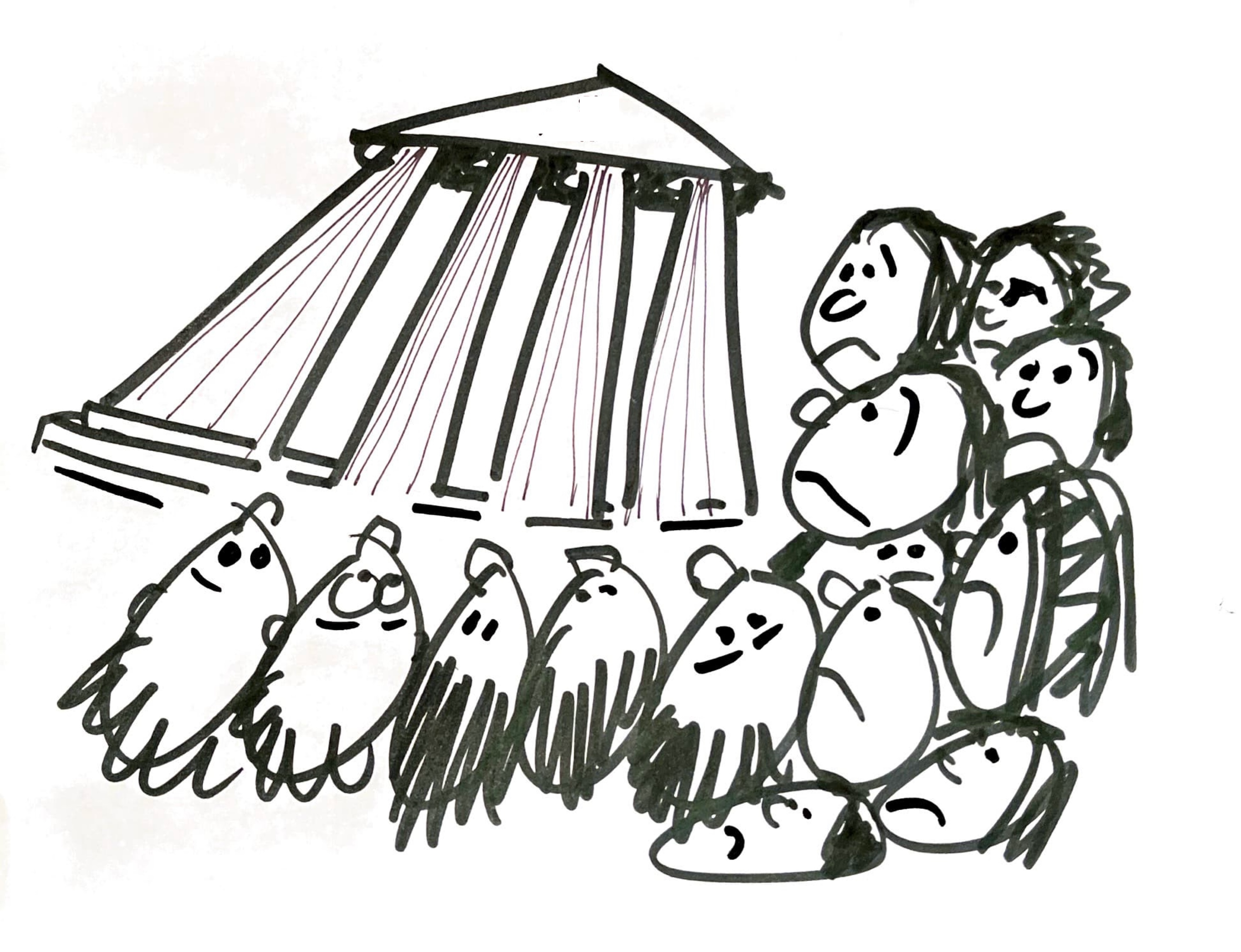
Yesterday, the Supreme Court knocked down part of the wall between church and state with a ruling that’s likely to force taxpayers to fund religious indoctrination at Christian schools. So, today’s questions: (1) How much do you think the same conservatives championing this decision would freak out if they thought their tax dollars were being used to fund Islamic madrasas? And (2) if religious institutions can receive tax dollars and make partisan political endorsements, while receiving billions in income, shouldn’t they be stripped of their tax exempt status?What do you think? Please comment below. (I’ll chime in as well.)Excellent discussion. I’ve responded to many of your comments but let me add one of my own here: The First Amendment to the Constitution says "Congress shall make no law respecting an establishment of religion." That should be enough for a Supreme Court justice claiming to read only the plain words of the text. A Justice claiming to be an "originalist," seeking to know what was in the minds of the Framers, can view their writings, which repeatedly warned against an official religion or any dependence of a religion on government or dependence of government on any religion. The Framers knew English history and the damage wrought by wars and social upheavals over religion there; they were also aware of the religious intolerance of the Puritan era. They wanted to encourage a multiplicity of denominations, which meant erecting a wall between Church and State.Yet the conservative majority on the current Supreme Court seems intent on taking a wrecking ball to the Establishment Clause by using the phrase that comes right after it --"… or prohibiting the free exercise thereof" against it. The Maine law in question in no way prohibits the free exercise of religion. It simply denies public money to religious schools, a far cry from a prohibition on the exercise of religion. Besides, if there's any tension between the two phrases — “make no law respecting the establishment” or “prohibiting the free exercise thereof” — shouldn't the justices defer to lawmakers on how to resolve the tension rather than substituting their own judgment? And if the law and the constitutional provision in question originate in a state, shouldn’t there be even more reason to defer?I need a new word to describe the conservative majority rather than simply calling them "conservative." They're not conservative. They're the most activist court since the Warren court -- but instead of being activist to protect rights, they're activist to destroy rights. This is a public episode. If you'd like to discuss this with other subscribers or get access to bonus episodes, visit robertreich.substack.com/subscribe

The real drama behind today's fourth hearing
Today’s fourth hearing focused on how Trump corruptly pressured state legislators and election officials to change election results — leaning on state officials to alter the vote and to create slates of fake electors pledged to Trump — and their unwillingness to go along with Trump. But under the surface of today’s hearing and its revelations lurks the civil war that Trump has created within the Republican Party — between the dwindling number of Republican officials who maintain their oaths to the Constitution, and Republican officials who were (and still are ) willing to bend — and the committee’s attempt to fortify the former.1. The committee highlighted Republicans who maintained their oaths of office and did not just refuse Trump’s demands but also stood up to mobs unleashed by Trump. Rusty Bowers, speaker of the Arizona House of Representatives, testified that in phone calls with both Trump and Giuliani after the election, Giuliani asserted that hundreds of thousands of undocumented people had voted, and that many ballots were from people who had died. Bowers asked for evidence to back this claim but never received it. Trump asked Bowers to hold a hearing at the Arizona State Capitol to investigate allegations of election fraud, but Bowers did not believe that the evidence “merited a hearing” and “did not want to be used as a pawn.” Bowers later told Trump, “You are asking me to do something against my oath, and I will not break my oath.” Bowers’s emotional testimony described the threats he endured as a result.Brad Raffensperger, Georgia’s secretary of state, testified that President Biden carried the state of Georgia by approximately 12,000 votes. All ballots were twice recounted by hand, with no difference in the result. The committee played the recording of Trump trying to push Raffensperger to “find” just as many votes as he needed to beat Biden. “I just want to find 11,780 votes,” Trump said. “Give me a break.” But Raffensperger testified that “there were no votes to find. It was an accurate count that had been certified.” When Raffensperger refused Trump, Trump threatened him with a “criminal offense.” Raffensperger subsequently received threats to himself and his family, as did his wife and widowed daughter-in-law.Gabriel Sterling, a top election official in Georgia, also testified today. He had publicly disputed Trump’s false claims of election fraud in the 2020 election. Weeks after the election, Sterling warned the public that unless Trump stopped making false claims, “someone is going to get killed.” Trump dismissed Sterling’s warning in a tweet, reiterating — again, without evidence — that “thousands of votes” in Georgia were fraudulent. Shaye Moss, an election worker in Georgia was the last to testify. After Giuliani likened Moss, a Black woman, to a low-level drug dealer, she and her mother were subject to a wave of online threats and harassment — including death threats, some racist in nature. Shaye’s mother's house was invaded by election deniers. She and her mother continue to live in fear. Moss’s testimony was a powerful illustration of what Trump has wrought: Regular Americans doing public service jobs being subject to threats and intimidation from Trump followers. Today’s hearings also added to the list of traitors in the Republican Party, willing to break their oaths of office. They include Senator Ron Johnson of Wisconsin. It was revealed today that an aide to Johnson wrote to a Pence aide that Johnson wanted to hand-deliver to Pence a slate of fake electors from Wisconsin. Pence’s aide responded: “Do not give that to him. Today’s testimony also added evidence of the traitorous behavior of Representative Andy Biggs, Republican of Arizona. Bowers testified that Biggs called him on the morning of Jan. 6 and asked him to support the effort to overturn the election. Bowers says he told Biggs he would not.2. The committee made much of the fact that its witnesses are Republicans who wanted Trump to win. Raffensperger, for example, described himself today as a conservative Republican who wanted Trump to win in 2020. He said he had to “follow the law and follow the Constitution.”Clearly, one of the purposes of the committee hearings is to fortify those remaining Republican officials and lawmakers around the country who continue to honor their oaths of office. The committee’s strategy underscores the stark reality that, no matter how much Democrats revile Trump, it is Republicans who will ultimately decide his fate — and whether Trump remains a force in American politics.3. A third revelation today is that the attempted coup continues — to this day. I was struck by the fact that even this morning, before the committee hearing began, Trump issued a statement claiming that Bowers had told him after the the 2020 election that the election in Arizona was rigged. Bowers denied under oath that he had said this to Trump. Clearly, Trump wants the entire committee hearings to be seen as his word v
How to end corporate welfare
Friends,As Congress prepares for summer recess, average working Americans are facing increasingly hard economic times — including a likely recession (see here). Yet Congress has so far failed to provide most Americans with what they need to weather the storm — subsidies for childcare and eldercare, paid sick leave, an increase in the federal minimum wage, lower pharmaceutical costs, additional help with the next strain of COVID, and so on. At the very same time, American corporations are lining up with their hands outstretched, seeking all sorts of special benefits. And there’s bipartisan support for giving them what they want.Today I want to explain why corporations so often get what they want while average Americans don’t. It’s not simply that corporations bribe legislators with campaign donations, although that’s a big part of it. There’s another phenomenon at work that you need to know about. Consider semiconductor chips. They’re the brains of modern electronics — embedded in everything from smartphones, radios, TVs, computers, video games, and advanced medical diagnostic equipment, to automobiles. As the world supply of almost everything tries to catch up with roaring post-lockdown demand, chips inevitably are in short supply. This week, Congress is putting final touches on the CHIPS Act, which will provide more than $52 billion to companies that design and make semiconductor chips. The subsidy is demanded by the biggest chip makers as a condition for making more chips here. It’s pure extortion. You see, the world’s biggest chip maker (in terms of sales) is already an American corporation — Intel, based in Santa Clara, California. Intel hardly needs the money. Its revenue rose to $79 billion last year. Its CEO, Pat Gelsinger, got a total compensation package of $179 million (which was 1,711-times larger than the average Intel employee). From the perspective of the United States, the problem is that Intel is not dealing with the current American shortage of chips by giving preference to producers in the United States, and it’s not keeping America on the cutting edge of new chip technologies. In addition to its facilities in the United States, Intel designs, assembles, and tests its chips in China, Israel, Ireland, Malaysia, Costa Rica, and Vietnam. And it sells them just about everywhere. (To add another layer of complication, many of Intel’s “American” customers don’t actually make their products in the United States. They’re headquartered in the United States but, like Intel, they design and make stuff all over the world.)Obviously, Intel would like some of the $52 billion Congress is about to throw at the semiconductor chip industry — but why exactly should Intel get the money? Among the other likely beneficiaries of the CHIPS Act will be GlobalFoundries. GlobalFoundries currently makes chips in New York and Vermont, but in many other places around the world as well. GlobalFoundries isn’t even an American corporation. It’s a wholly owned subsidiary of Mubadala Investment Co. — the sovereign wealth fund of the United Arab Emirates. The point is, the nation where a chipmaker (or any other global corporation) is headquartered has less and less to do with where it designs and makes things or where its customers are located. Every industry that can possibly be considered “critical” is now lobbying the U.S. government for subsidies, tax cuts, and regulatory exemptions, in return for designing and making stuff in America. But they’re lobbying in other nations, too. It’s a giant global shakedown. India, Japan and South Korea have all recently passed tax credits, subsidies and other incentives amounting to tens of billions of dollars for the semiconductor industry, and the European Union is finalizing its own chips act with $30 billion to $50 billion in subsidies. Even China has extended tax and tariff exemptions and other measures aimed at upgrading chip design and production there. “Other countries around the globe … are making major investment in innovation and chip production,” says Senate Majority Leader Chuck Schumer. “If we don’t act quickly, we could lose tens of thousands of good-paying jobs to Europe [emphasis added].”Who is “we,” Senator? John Neuffer, the chief executive of the Semiconductor Industry Association (the Washington D.C. lobbying arm of the semiconductor industry) says the industry has been under “withering pressure” to build new manufacturing facilities to respond to the explosion of demand for chips, but he warns that chipmaking facilities are often 25 to 50 percent cheaper to build in foreign countries than in the United States. Why are they so much cheaper to build abroad? As he admits, it’s largely because of the incentives foreign countries have offered.As capital becomes ever more global and footloose, it can play nation against nation to get the best deals in return for where it agrees to do what. Most people, by contrast, are rooted within particular nations, which gives them
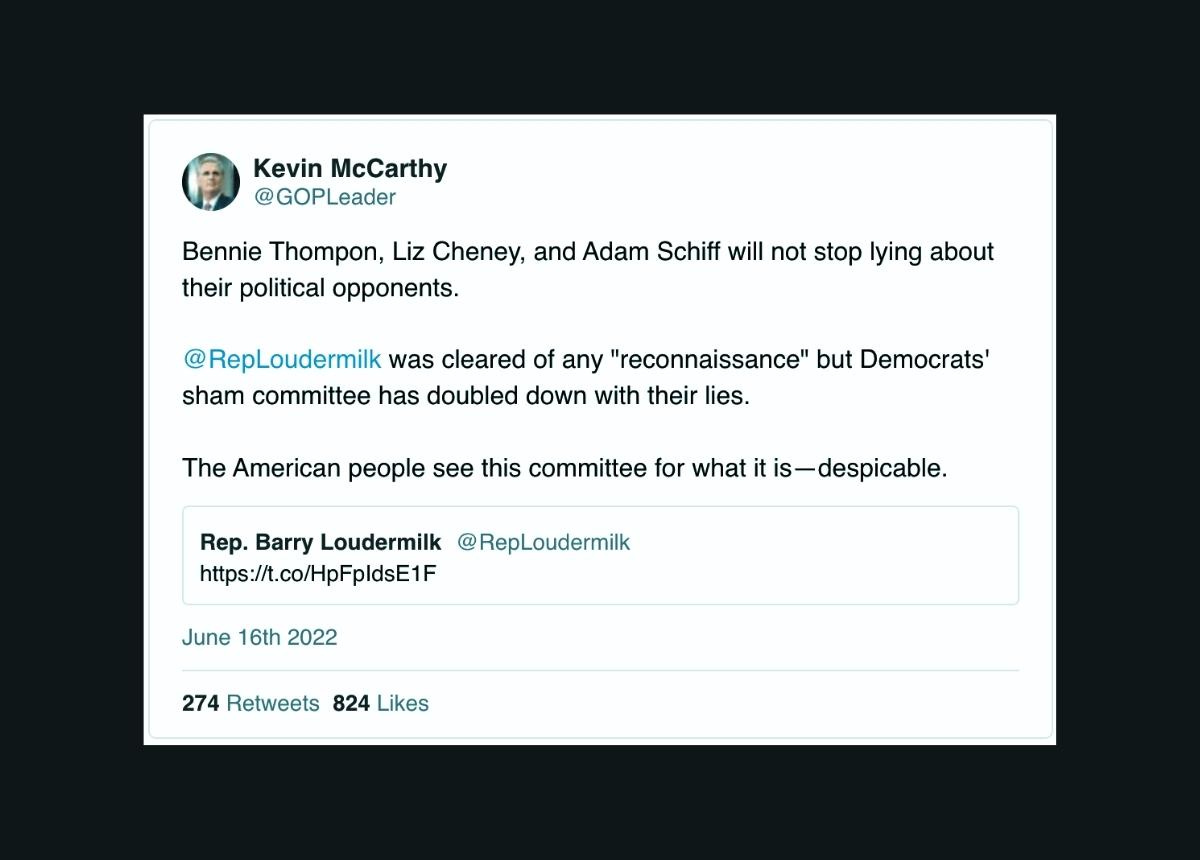
Why the January 6 committee is failing to slow Trump's attempted coup
We fool ourselves if we believe that the televised hearings of the January 6 committee are changing the direction of the Republican Party, or that the hearings will end the attempted coup that Trump launched immediately after the 2020 election. The G.O.P. is becoming ever more divorced from reality. Trump’s attempted coup continues unabated. The first three hearings of the House January 6 committee demolished the myths of voter fraud repeated incessantly by Trump and his supporters and amplified by Republicans in Congress. A parade of Republican witnesses — including his attorney general William Barr, Ivanka Trump, and his own campaign lawyers — testified that they knew Trump lost the election, and told him so. Trump was also informed that the demands he was making of his Vice President Mike Pence to block his defeat were illegal.Yet the Republican response to those hearings has ranged from indifference to hostility. Representative Kevin McCarthy, the Republican leader of the House, wrote on Twitter that the members of the committee “will not stop lying about their political opponents,” and he calls the committee “despicable.”On Friday, speaking at the Faith and Freedom Coalition conference in Nashville, Trump repeated his Big Lie — as if the hearings never happened — and once again berated Pence, charging that his former Vice President “did not have the courage to act” in trying to unilaterally reject the Electoral College votes that were being cast for Joseph R. Biden Jr.Why aren’t the hearings slowing the Big Lie or Trump’s continuing attempted coup?First, the Lie is now fully entrenched in the Republican Party, a central tenet of G.O.P. dogma. It has become the vehicle by which Republican candidates signal their fealty both to Trump and to a broad range of grievances — some imaginary, some derived from the so-called “culture wars” — that now constitute the Republican brand. So far, at least 108 Republican candidates who embrace the Big Lie have won their nominations or advanced to runoffs, and there is no sign that the hearings have reduced the intensity of their demagoguery. Voters have chosen eight Big Lie candidates for the U.S. Senate, 86 Big Lie candidates for the House, five Big Lie candidates for governor, four for state attorney general and one for secretary of state. In Michigan, the Republican race to challenge Governor Gretchen Whitmer is led by Ryan Kelley, a real estate broker who was arrested this month and charged with participating in the January 6 assault on the Capitol. Republican nominee for Michigan attorney general Matthew DePerno led a November 2020 lawsuit over an election night tabulation error in Antrim County that Trump supporters have seized on in their efforts to perpetuate unfounded claims of fraud. (DePerno has promised to lead criminal investigations of alleged fraud in 2020 despite the conclusion by Republican state senators that his allegations are “demonstrably false.”) Secretary of state nominee Kristina Karamo served as an observer in Detroit during the 2020 absentee ballot count and claimed, without evidence, that she had witnessed fraud.In Arizona, the leading Republican candidate for governor, Kari Lake, has made the stolen election claims central to her campaign. Mark Finchem, a candidate for secretary of state, was at the front steps of the Capitol on January 6. And Blake Masters, who aims to challenge incumbent Democrat Senator Mark Kelly, says without evidence that “one-third of the people outside the Capitol complex on January 6 were actual F.B.I. agents.”In Pennsylvania, Republican senate candidate Mehmet Oz has embraced the Big Lie. Gubernatorial nominee Doug Mastriano also asserts it, and has said that the Republican-controlled legislature should have the right to take control of the all-important choice over which presidential electors to send to Washington. Big Lie nominees for statewide office in swing states also include Herschel Walker for Senate in Georgia and Burt Jones for Georgia lieutenant governor.Secondly, the hearings have not affected the Republican Party (and are unlikely to) because Big Lie candidates are under no pressure to respond to the findings of the committee. Their districts or states already lean Republican, and most of voters in them have dismissed or aren’t paying attention to the committee hearings. Recall that the 2020 election was mainly about Trump. You were either for him or against him. Voters in districts and states that voted largely for him in 2020 will not easily change their minds. The cognitive dissonance required to shift from believing Trump’s alleged conspiracy to accepting the reality of what occurred is simply too formidable. In addition, few of their sources of news — Fox News, rightwing radio, and rightwing social media — have questioned the Big Lie. Because these districts or states lean Republican, these Big Lie candidates are likely to win the offices they are seeking, notwithstanding. In an open primary in a
Will Merrick Garland prosecute Trump? Is Ginni toast?
My informal weekly coffee with Heather Lofthouse (Executive Director of Inequality Media Civic Action, and my former student), discussing the past week. Today we cover the third hearing of the January 6 select committee, why the committee isn’t turning over its transcripts to the Justice Department, what’s the connection between Ginni Thomas (wife of Justice Clarence Thomas) and John Eastman, the Fed’s dangerous decision to raise interests rates by another 0.75 percent, and celebrating the summer solstice. This is a public episode. If you'd like to discuss this with other subscribers or get access to bonus episodes, visit robertreich.substack.com/subscribe

How much I owe Alice Camp
Today marks the end of the school year for many public schools. Every year about this time I think of Alice Camp. I arrived in her third-grade classroom in Lewisboro Elementary School, in South Salem, New York, as an extremely short, shy, insecure 8-year-old who was often bullied and mocked on the bus and made to feel like a loser on the playground, and had no particular interest in school. But she saw in me something I didn’t see. She fed me books, projects, ideas. She challenged me and praised me. She made me feel special. Her slightly whacky sense of humor connected with mine. Her curiosity fueled mine (she didn’t mind if I stayed in at recess and barraged her with questions). Her enjoyment of literature made it okay for me to love books. She made me understand that I wasn’t a freak, that I might even be talented, that the drawings and writings I did (up until then alone at my small desk in my bedroom) were okay — perhaps even good. And there was no reason for me to be so sad and ashamed, so fearful, so alone in the world. I think of Mrs. Camp when I see America’s teachers blamed these days for almost everything imaginable — yelled at by parents over masks, reprimanded by school boards about books they assign or let their students read, vilified by politicians for teaching about America’s history of racism, even told to arm themselves against the possibility that their classrooms will be invaded by murderous young men with semi-automatics. Instead of berating them, we should honor them. Rather than impose ludicrous demands on them we should free them to teach and inspire. Instead of demeaning them, we should express our gratitude to them — every day. And we should pay them twice a much as they’re earning, or three times. Why in hell should investment bankers get paid fortunes for moving money from one set of pockets to another, when our teachers can barely afford to live on what they make? Bankers watch over our financial capital. Teachers watch over our human capital — and therefore our future. I never saw Alice Camp again after third grade ended for me that June of 1954. I never had a chance to thank her (although I do remember sitting cross-legged on the floor at the end-of-year school assembly, quietly crying about leaving her and trying desperately not to show it). She passed away long ago. I had the great fortune to have other wonderful teachers over the rest of my years of public elementary and high school, and then in college and graduate school. I don’t recall thanking any of them, either. Most are gone by now. But I think of them often. And I am forever in their debt. I suppose one way I’ve managed to pay back a small portion of that debt is to teach — which I’ve done for most of the last forty years. I love teaching. I love my students. I can’t imagine a more rewarding or noble profession. This is a public episode. If you'd like to discuss this with other subscribers or get access to bonus episodes, visit robertreich.substack.com/subscribe

The mysterious John Eastman connection
The House select committee investigating the Jan. 6 attack on the U.S. Capitol held its third public hearing today — focused on Trump's efforts to pressure Vice President Pence to refuse to count lawful electoral votes on January 6: the gonzo plan that lawyer John Eastman came up with. But where did John Eastman come from? And how did he ever reach Trump in the first place? The committee didn’t touch on this today. (When Eastman appeared before the committee he invoked his Fifth Amendment right against self-incrimination 146 times.)Spoiler alert: The connection seems to be through Supreme Court Justice Clarence Thomas and his wife, Ginni Thomas. Eastman was a law clerk for Clarence Thomas in the early 1990s. (As a former law clerk to a federal judge myself, I can attest that it’s an intimate working relationship. At the time Eastman clerked for Thomas, he was one of only four such law clerks.)In the days and weeks after the 2020 election, Ginni Thomas actively sought to overturn the election. She pressed 29 Republican state lawmakers in Arizona to set aside Joe Biden’s popular vote victory and “choose” presidential electors (according to emails obtained by The Washington Post) — urging lawmakers to “stand strong in the face of political and media pressure.” On Dec. 13, the day before members of the electoral college were slated to cast their votes and seal Biden’s victory, she emailed 22 House members and one senator, saying “Before you choose your state’s Electors … consider what will happen to the nation we all love if you don’t stand up and lead.” She also sent messages to Trump’s chief of staff, Mark Meadows, repeatedly pressing him to overturn the outcome of the election, according to text messages obtained by The Post and CBS News. (After Jan. 6, she told Meadows in a text that she was “disgusted” with Pence, who had refused to help block the certification of Biden’s electoral college victory.)Ginni Thomas also corresponded by email with John Eastman (per The Post). Eastman must have presented his bonkers plan to her, which she related to Meadows (and therefore Trump).Soon thereafter, Eastman was working closely with Trump. He met the Oval Office with Trump and Pence. In a late-night court filing on May 19, 2022, Eastman disclosed he routinely communicated with Trump directly or via "six conduits" regarding legal strategy leading up to January 6, detailing "two hand-written notes from former President Trump about information that he thought might be useful for the anticipated litigation." (Eastman made the disclosure to claim attorney-client privilege to prevent the January 6 committee from obtaining 600 of his emails. On June 7, Judge David O. Carter ruled that Eastman had to disclose 159 sensitive documents to the committee, ten of which related to December 2020 meetings by a secretive group strategizing about how to overturn the election, which included what Judge Carter characterized as a "high-profile" leader. Carter noted one email in particular contained what he found was likely evidence of a crime and ordered it disclosed under the crime-fraud exception of attorney-client privilege. The email in question contained a comment by an unidentified attorney that litigating a case regarding the January 6 session in Congress might "tank the January 6 strategy" and so the Trump legal team should avoid the courts.) Did Eastman communicate with Justice Thomas, too? Eastman knew things about the Supreme Court at the time that no one else outside the Court knew. According to the New York Times, Eastman told an ally on Dec. 24, 2020, that there was a “heated fight” among Supreme Court justices about whether to take up election-related lawsuits. Recall that the Supreme Court rejected an 11th-hour effort by Trump allies to have it step in during the legal fight over the election results, during which dozens of lower court cases were almost all decided against Trump. Justice Thomas and Justice Samuel Alito disagreed with that decision. Then in January 2021, the Supreme Court rejected a request by Trump to block the release of his White House records to the House committee investigating Jan. 6. Clarence Thomas was the only justice to dissent, siding with Trump.According to committee testimony from Pence’s then-chief counsel Greg Jacob, Eastman told Jacob he was confident Justice Thomas would have backed his strategy to have Pence reject some Biden electors on Jan. 6. The leaders of the House Jan. 6 committee say they plan to invite Ginni Thomas to speak to the committee (it’s unclear if the committee will first ask for a voluntary appearance or a closed door deposition, or send a subpoena). Ginni Thomas told the right-wing news site The Daily Caller in an interview today that she would "look forward" to speaking with the committee. Thomas has worked with the Daily Caller in the past, including producing an interview with her husband. This is a public episode. If you'd like to discuss this with other subscribers
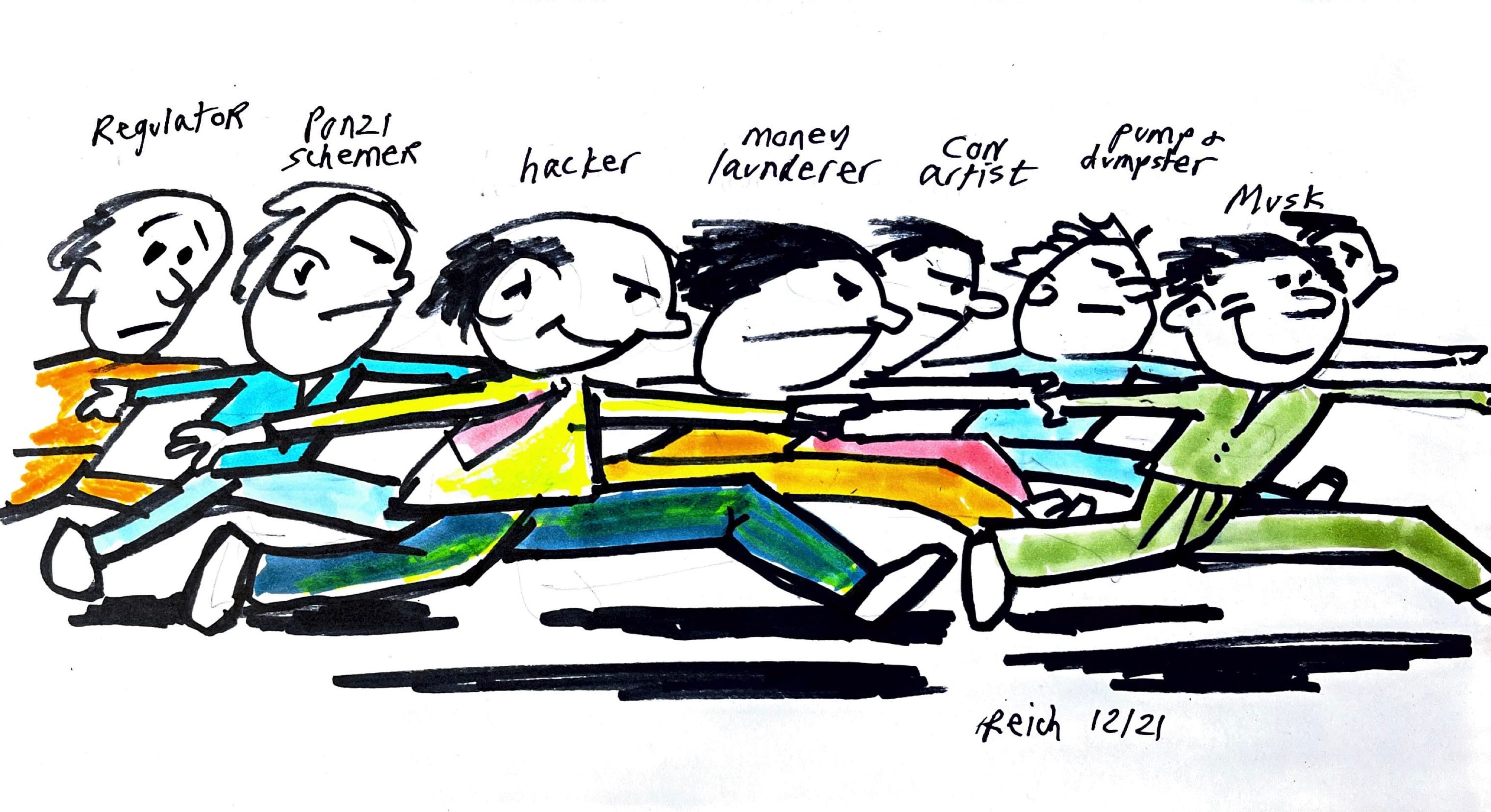
What the crypto crash tells us
Last Sunday night, as cryptocurrency prices plummeted, Celsius Network — an experimental cryptocurrency bank with more than one million customers that has emerged as a leader in the murky world of decentralized finance, or DeFi — announced it was freezing withdrawals “due to extreme market conditions.”Earlier this week, Bitcoin dropped 15 percent over 24 hours to its lowest value since December 2020, and Ether, the second-most valuable cryptocurrency, fell about 16 percent. Last month, TerraUSD, a stablecoin — a system that was supposed to perform a lot like a conventional bank account but was backed only by a cryptocurrency called Luna — collapsed, losing 97 percent of its value in just 24 hours, apparently destroying some investors’ life savings. The implosion helped trigger a crypto meltdown that erased $300 billion in value across the market. These crypto crashes have fueled worries that the complex and murky crypto banking and lending projects known as DeFi are on the brink of ruin.Eighty nine years ago today the Banking Act of 1933 — also known as the Glass-Steagall Act — was signed into law by Franklin D. Roosevelt. It separated commercial banking from investment banking — Main Street from Wall Street — in order to protect people who entrusted their savings to commercial banks from having their money gambled away. Glass-Steagall’s larger purpose was to put an end to the giant Ponzi scheme that had overtaken the American economy in the 1920s and led to the Great Crash of 1929. Americans had been getting rich by speculating on shares of stock and various sorts of exotica (roughly analogous to crypto) as other investors followed them into these risky assets — pushing their values ever upwards. But at some point Ponzi schemes topple of their own weight. When the toppling occurred in 1929, it plunged the nation and the world into a Great Depression. The Glass-Steagall Act was a means of restoring stability.It takes a full generation to forget a financial trauma and allow forces that caused it to repeat their havoc. By the mid-1980s, as the stock market soared, speculators noticed they could make lots more money if they could gamble with other people’s money, as speculators did in the 1920s. They pushed Congress to deregulate Wall Street, arguing that the United States financial sector would otherwise lose its competitive standing relative to other financial centers around the world. In 1999, after Sandy Weill’s Travelers Insurance Company merged with with Citicorp, and Weill personally lobbied Clinton (and Clinton’s Treasury secretary Robert Rubin), Clinton and Congress agreed to ditch what remained of Glass-Steagall. Supporters hailed the move as a long-overdue demise of a Depression-era relic. Critics (including yours truly) predicted it would release a monster. The critics were proven correct. With Glass-Steagall’s repeal, the American economy once again became a betting parlor. (Not incidentally, shortly after Glass-Steagall was repealed, Sandy Weill recruited Robert Rubin to be chair of Citigroup’s executive committee and, briefly, chair of its board of directors.) Inevitably, Wall Street suffered another near-death experience from excessive gambling. Its Ponzi schemes began toppling in 2008, just as they had in 1929. The difference was that the U.S. government bailed out the biggest banks and financial institutions, with the result that the Great Recession of 2008-09 wasn’t nearly as bad as the Great Depression of the 1930s. Still, millions of Americans lost their jobs, their savings, and their homes (and not a single banking executive went to jail). In the wake of the 2008 financial crisis, a new but watered-down version of Glass-Steagall was enacted — the Dodd-Frank Act — which has been further diluted and defanged by Wall Street lobbyists.Which brings us — 89 years to the day after Glass-Steagall was enacted — to the crypto crash. The current chair of the Securities and Exchange Commission, Gary Gensler, has described cryptocurrency investments as “rife with fraud, scams, and abuse.” Yet in the murky world of crypto DeFi, it’s hard to understand who provides money for loans, where the money flows, or how easy it is to trigger currency meltdowns. There are no standards for issues of custody, risk management, or capital reserves. There are no transparency requirements. Investors often don’t know how their money is being handled or who the counter-parties are. Deposits are not insured. We’re back to the Wild West finances of the 1920s. In the past, cryptocurrencies kept rising by attracting an ever-growing range of investors and some big Wall Street money, along with celebrity endorsements. But, as I said, all Ponzi schemes topple eventually. And it looks like crypto is now toppling. So why isn’t this market regulated? Mainly because of intensive lobbying by the crypto industry, whose kingpins want the Ponzi scheme to continue. The industry is pouring huge money into political campaigns. And it has

Office Hours: Is there any way to push Garland to prosecute Trump?
Friends,Bennie Thompson, chair of the January 6th Committee, has told reporters that the committee has no plans to make a criminal referral to the Justice Department. This strikes me as absurd. The major purpose of the committee’s carefully constructed prosecutorial brief is to clear the runway for indictments. The pushback on Thompson’s statement was instant, beginning with vice chair Liz Cheney, who put out a statement flatly contradicting Thompson: “The January 6th Select Committee has not issued a conclusion regarding potential criminal referrals. We will announce a decision on that at an appropriate time.”Thompson’s statement won’t influence the Justice Department. As every constitutional lawyer knows, it doesn’t take a criminal referral from Congress for the attorney general to proceed with an indictment. But what will it take? After watching the second day of hearings, Susan (from our substack community) wrote on this page: Let's hope AG Garland is paying very close attention. Whereas Ford's pardon put Nixons criminality to rest for the nation, he opened the door for the likes of Trump. It's time to prosecute, we can never allow this to happen again.Susan raises the key issue, which is this week’s Office Hours question: What levers do we have to get Attorney General Merrick Garland to prosecute Trump? Please comment below. (I’ll chime in as well.)Friends, here are my two cents:There's no way to push an attorney general to prosecute a case, and in our legal system there should not be. But I believe -- contrary to the view of the chair of the January 6 select committee -- that when the committee completes its work it should make a formal criminal referral to the Justice Department that spells out its findings in the clearest possible terms. If the facts lead the committee to conclude that Trump likely committed crimes against the United States, the committee should say so explicitly. It is traditional for congressional committees to make criminal referrals when they think a crime may have been committed. Although the Justice Department is under no obligation to pursue these referrals, a criminal referral signals that the legislative branch of government finds or suspects a crime – an important symbolic act. There are three arguments against the committee making such a criminal referral:(1) It could backfire. Decisions about whether to prosecute must be made independently of politics: Garland and the Justice Department won’t want to be seen as doing the committee’s bidding. And the district and appellate courts that would handle Trump’s prosecution might take a dim view of any intermingling of the work of the political branch with the work of federal prosecutors. (2) It’s unnecessary. Attorney General Merrick Garland has repeatedly pledged to follow the evidence wherever it leads, and he has said that he and his Jan. 6 prosecutors are closely watching the committee hearings.(3) The committee has already, in effect, made a criminal referral to the Justice Department – arguing in a legal filing last fall (over whether it should be able to access emails from John Eastman, Trump’s attorney) that Trump broke multiple laws. In response, U.S. District Judge David O. Carter issued an opinion that said Trump “more likely than not” committed crimes to stay in power.Notwithstanding these considerations, public opinion is crucial. Trump attempted a coup while president of the United States. As many Americans as possible should understand how dangerous and vile this act was. Yet at this point, a third of Americans (including some two-thirds of Republicans) still believe Trump’s big lie. For a bipartisan committee of Congress to conclude that Trump has likely committed such a crime would be significant. A criminal referral would garner big headlines. Even if it did not change the minds of die-hard Trumpers, it would be an important part of the historic record. And it would almost certainly increase public pressure on Garland to prosecute Trump -- or at least make public his reasons for not doing so. This is a public episode. If you'd like to discuss this with other subscribers or get access to bonus episodes, visit robertreich.substack.com/subscribe

What you really need to know about the likelihood of a recession
Last Friday, the Bureau of Labor Statistics released its May Consumer Price Index (CPI) report, which showed inflation worsening. Yet the bigger story — and bigger worry — is not inflation. It’s the distinct possibility of recession. Or perhaps both (what’s termed “stagflation.”) Here are the questions I’m getting asked most often, and my answers.1. Are we heading for a recession? Many signs point in that direction. New home construction slowed in April. Mortgage demand continues to decline. Some of the country’s largest and most influential retailers are reporting disappointing sales and profits. The stock market is in bear territory. Futures markets are signaling trouble ahead. 2. What exactly is a recession? “Recession” is a technical term, defined as two consecutive quarters of shrinking gross domestic product. The National Bureau of Economic Research is the authority that declares recessions in the U.S., and its own definition is “significant decline in economic activity that is spread across the economy and that lasts more than a few months.” As a practical matter, recessions mean fewer jobs and lower wages. 3. When is a recession likely to happen — and should I panic? Don’t panic! If it occurs, it won’t happen immediately. I’d guess some time over the next six months. It’s a possibility that you ought to be aware of. 4. Who gets hurt most by a recession? Lower-income Americans are especially vulnerable because they tend to be the first fired when the economy slows (and the last hired when it rebounds). Recessions also hurt younger people trying to get their footing in the job market. And they can be hard on retirees whose IRAs or 401(k) accounts get clobbered. 5. Why are we heading toward a recession? Partly because of continued uncertainty from the coronavirus pandemic and Russia’s invasion of Ukraine. But the main cause is interest-rate hikes by the Federal Reserve. The Fed has raised interest rates by 0.75 percentage points so far this year, and Fed officials are signaling more aggressive increases ahead. When it meets Wednesday it will discuss raising its benchmark rate by as much as another 0.75 percentage points. That would be the largest single interest rate increase since 1994. 6. What’s the connection between Fed rate hikes and a recession? Rate hikes increase the costs of borrowing to individuals and consumers — which causes them to cut back on purchases of everything, including homes. This, in turn, causes the economy to slow.7. Do Fed rate hikes always lead to recession? No. It’s possible we could have a “soft landing” that lowers inflation without causing a recession. But Fed rate hikes often over-shoot, resulting in recession — especially when they’re on the scale the Fed is contemplating. In 1981, for example, the Fed under Paul Volcker raised interest rates so high (to reverse double-digit inflation) it plunged the economy into deep recession. 8. Why is the Fed doing this now? Because it believes it must slow the economy in order to slow inflation, which is at a 40-year high. 9. Is the Fed correct? Slowing the economy will reduce inflationary pressures somewhat, but the Fed is operating under an old model of the economy — at a time when inflation was driven largely by wage increases. The way to slow inflation then was to take the steam out of wage increases by reducing employment. Essentially, the Fed drafted a certain number of workers into the fight against inflation by pulling them out of the labor force. That was when American workers had strong unions and it was difficult for companies to increase capacity by outsourcing abroad. These conditions no longer apply. Workers now have very little bargaining power relative to what they had thirty or forty years ago. Just look at the data: although wages are rising, they aren’t rising nearly as fast as prices. 10. But if raising interest rates will reduce inflationary pressures somewhat, why shouldn’t the Fed at least try? Because raising rates as much as the Fed seems likely to do will cause more harm than good. Current inflationary forces are worldwide — coming from huge global pent-up demand following the worst of the pandemic, coupled with supply shortages around the world, which have been aggravated by Putin’s war. In fact, inflation in the U.S. isn’t nearly as bad as in most other advanced economies. Slowing the U.S. economy may put a dent in these forces, but not much of one. Yet the cost here — in terms of a recession or near recession, and loss of jobs and wages — is likely to be huge. 11. Are there unique factors driving inflation in the United States? Yes. One of the biggest is coming from hugely-profitable corporations with significant market power, that are using inflation as a cover for raising their prices. (See my analyses here, here, and here.) Oil and gas giants, for example, are raking in record profits. In the first quarter of 2022, Chevron’s profits more than quadrupled from the first quarter of 2021, and ExxonMobil’
Liz Cheney for President?
Friends, I trust Joe Biden’s steadiness and judgment, and if he runs again, I’ll probably back him in 2024. But today I want to suggest someone who isn’t even a Democrat, and whose positions on many issues I (and I suspect you) strongly disagree with — but who could possibly be the best president of the United States for the perilous time we’re entering.I’m referring to Liz Cheney.Before you reject this idea out of hand, please bear with me. Even if you still end up thinking it’s a ludicrous notion, let me take you through the argument. I’ve been in and around American politics for well over a half century. I’ve never seen this nation as bitterly divided as it is now — not during the Civil Rights movement, not during the Vietnam War, not during Watergate. And it looks as if the current division is growing deeper and even more dangerous. Donald Trump didn’t just attempt a coup. He attempted to push America into a civil war. And he’s still at it — endorsing candidates who will repeat his Big Lie that the 2020 election was stolen from him, encouraging states to change their election laws so Republican lawmakers can disregard the popular vote, and pushing them to install secretaries of state and other election officials who will count votes in ways favorable to Republicans — especially him, should he run for president again in 2024. In short, Trump wants a civil war centered on himself — on his Big Lie, and on the racist nationalism he fueled to build his political base. Trump’s narcissism is so poisonous that he is committed to splitting the nation over its commitment to him. As president, Trump never understood that he was president of America as a whole. He considered himself to be president only of his supporters, whom he called “my people.” Those who didn’t support him were his enemies. Since the 2020 election, he has done everything possible to stoke war between his supporters and his perceived enemies. Clearly, that’s his aim in 2024. It will be impossible to reunite this nation without a leader who is the exact opposite of Trump — driven not by narcissism but by a passion for the rule of law and the Constitution — someone who has staked everything on opposing Trump’s demagogic authoritarianism, someone with huge stores of courage and integrity. Since the attack on the Capitol, Liz Cheney has demonstrated more courage and integrity than any other politician in America. Democratic lawmakers have opposed Trump’s Big Lie, to be sure, but most knew they wouldn’t pay a price for their opposition. Cheney knew she would pay a price — and she has. Six days after the attack on the Capitol — when no other Republican in the House or Senate was willing to rebuke Trump — she said this on the House floor:Much more will become clear in the coming days and weeks, but what we know now is enough. The President of the United States summoned this mob, assembled the mob, and lit the flame of this attack. Everything that followed was his doing. None of this would have happened without the President. The President could have immediately and forcefully intervened to stop the violence. He did not. There has never been a greater betrayal by a President of the United States of his office and his oath to the Constitution.The following day, on January 13, Cheney joined nine House Republicans and 222 Democrats in voting to impeach Trump. She subsequently agreed to be vice-chairman of the committee investigating the January 6 insurrection. As a result of these actions, Trump and House G.O.P. leaders have sought to drive Cheney out of the party. House Republicans revoked her status as the third-highest-ranking leader of the Republican caucus. Wyoming Republicans have censured her. Trump and the Republican Party are backing her primary challenger in Wyoming, Harriet Hageman, whose campaign has received huge amounts of funding from rightwing groups. Polling shows Cheney faces an uphill battle to keep her seat.But she has not wavered.Last Thursday evening, at the start of the televised hearings of the committee, Cheney laid out the case against Trump, whom, she argued, had thrown the republic into “a moment of maximum danger” not seen before. “The sacred obligation to defend this peaceful transfer of power has been honored by every American president — except one,” she said. She told members of her own party who continued to support Trump’s Big Lie that they were “defending the indefensible” and “there will come a day when President Trump is gone, but your dishonor will remain.”As I said, Cheney is a firm conservative and I have opposed many of her positions. But we are at an inflection point in this nation over a set of principles that transcend any particular positions or policies. If we cannot agree on the sanctity of the Constitution and the rule of law, we are no longer capable of self government. The real battle in 2024 will not be between Democrats and Republicans. It will be between forces supporting democracy in America and those
How do we measure the success of the Jan 6 hearings?
My informal weekly coffee with Heather Lofthouse (Executive Director of Inequality Media Civic Action, and my former student), discussing the past week. Today we cover how to measure the success of the hearings of the House January 6 committee, which began Thursday night; inflation (the Consumer Price Index came out yesterday, showing that inflation continues to increase) and its impact on the midterm elections and on the rest of the economy; and — in the midst of all this — Salsa dancing and spinning class during Pride Month. Know someone who might want to join us for coffee? Please share. This is a public episode. If you'd like to discuss this with other subscribers or get access to bonus episodes, visit robertreich.substack.com/subscribe

A final thought on the hearings: How Trump will be held accountable
What’s the use of the hearings by the House committee to investigate the January 6 insurrection —hearings that began last night and will run for the next several weeks — unless they lead to criminal prosecution of Donald Trump for his patently criminal actions? In a word: History. We tend to underestimate the importance of an historic record. But it is vastly important. It charts the course of the future by illuminating the course of the past. It is literally the final word. I don’t know whether Trump will be prosecuted. He deserves to be. He has violated his oath to the Constitution; he has violated America. But even if he is not prosecuted, the hearings will provide a full, detailed account of what Trump did in the weeks and months after the 2020 election — and therefore of what he did to our nation. In other words, even if he avoids prosecution, even if he is never formally deemed a criminal under the law, Trump will be accountable to history. That is not as satisfying a form of accountability as a criminal judgment, to be sure. But it is a form of accountability that is inescapable. If the committee does its work properly — and I have every confidence it will — it will create a clear record. Which means that for our children and our children’s children — for as far as future generations will know of our recorded history — Donald Trump will live in infamy. This is a public episode. If you'd like to discuss this with other subscribers or get access to bonus episodes, visit robertreich.substack.com/subscribe

For me, the 2 biggest questions about tonight's hearings on Trump's attempted coup
Tonight, we learned several things from the first hearing of the House Select Committee investigating the January 6 attack on the U.S. Capitol:1. After the riot began on January 6, many White House officials, including members of Trump’s own family, urged him to call off the rioters. He did not. Presumably the committee will provide detailed evidence of this. 2. When told that the rioters wanted to lynch Vice President Pence for being unwilling to stop the certification by electors, Trump said "maybe our supporters have the right idea" and he "deserves it." Here, too, I’m looking forward to detailed evidence. 3. When the riot was underway, Pence called for extra help from the Defense Department. 4. Also when the riot was underway, minority Leader McCarthy called Trump, family members, and chief of staff Mark Meadows, to get Trump to issue a statement to tell the rioters to stop. Yet Meadows wanted only to “control the narrative” so that it didn’t look as if Pence was in charge.5. The riot was the culmination of months of a carefully-constructed plot by Trump and his cronies to advance the big lie that the election was stolen. According to Cheney, Trump personally coordinated a sophisticated 7-part plan to overturn the result of the election.6. Yet Trump knew — because he was repeatedly told by his own staff, including his attorney general — that there was no evidence that the outcome of the election was the result of fraud. “I told the president it was b******t,” then Attorney General Barr told the committee, referring to Mr. Trump’s claims of election fraud. “I didn’t want to be a part of it.”There is much more, which presumably will be detailed over the next several weeks. The star of tonight’s hearing was Republican vice-chair of the committee, Liz Cheney, who said at the end of her opening remarks, referring to her Republican colleagues who continue to lie on behalf of Trump: “There will come a day when Donald Trump is gone. But your dishonor will remain.”But I’ve got two key questions about these proceedings: — At the start of this post I used the terms “we learned” several things. But will anyone who has fallen for Trump’s Big Lie learn anything from these hearings? Fox News decided not to air them. Rightwing social media has discounted them, or charged them with being part of a conspiracy against Trump. The mainstream media continues to frame the hearings in partisan terms — asking, for example, whether they will help or hinder Democrats in the midterms.— Will the hearings have any bearing on whether Attorney General Merrick Garland prosecutes Trump for criminal acts — such as violating 18 U.S.C. § 371, conspiracy to defraud the United States, and 18 U.S.C. § 1512, obstruction of Congress? So far, at least 862 people have been arrested and charged with crimes. But the window of opportunity for prosecuting Trump is closing. Once he declares his intention to run for president, prosecuting him will become far more directly entangled in partisan politics. We must not allow these hearings to become — like the Mueller report and the two impeachment proceedings against Trump — another dead letter, which I fear would only embolden Trump further. Trump must be held accountable. The future of our democracy hangs in the balance. This is a public episode. If you'd like to discuss this with other subscribers or get access to bonus episodes, visit robertreich.substack.com/subscribe
Can't believe it? How Biden gets re-elected in 2024
My friends, I’m going to press the pause button on today’s news — including the House January 6 hearings that start this evening — and try to answer a big question that hangs over American politics right now like a sword of Damocles: Does Joe Biden have a snowball’s chance of being re-elected in 2024? With his current approval rate in the cellar, most pundits assume no (at age 81, he’d also be the oldest person ever elected president, slightly exceeding the typical American’s lifespan). The conventional thinking goes that if he gets the Democratic nomination for 2024 (a big if), Biden will be demolished by Trump (or a Trump surrogate like Florida governor Ron DeSantis) — putting America at the mercy of an even crazier authoritarian than Trump version 1.0.That’s way too simplistic. Biden’s approval rating is now at around 40 per cent. Ronald Reagan was polling at about the same at this point in his presidency when he was grappling with inflation and the inevitable buyer’s remorse that voters feel a year and a half into a presidency. Two and a half years later, Reagan won 49 states in his re-election bid against Walter Mondale. (Reagan was then 73, just short of the typical American’s lifespan at the time.)As for Trump, his popularity has plummeted since the 2020 election – a casualty not just of most Americans’ outrage at his big lie that the 2020 election was stolen from him and his role in the January 6th insurrection, but also of the poor showing (and terrifying characteristics) of many of his endorsees in recent Republican primaries The televised hearings by Congress’s select committee investigating the January 6 insurrection are unlikely to improve Trump’s standing with most voters.Besides, much can happen between now and the next presidential election to alter the odds – not the least, the composition of Congress after the midterm elections, the outcome of the war in Ukraine, and the economy.It’s true that many Democratic voters are unhappy with Biden — especially many of the young voters who surged into the 2020 election. They had expected Biden to pass more ambitious legislation on a range of issues -- slowing climate change, subsidizing childcare and eldercare, lowering the prices of prescription drugs, expanding healthcare, and raising taxes on the rich to pay for all this. In some ways, Biden has had the worst of both worlds: The 2020 elections that gave Democrats control over both houses of Congress raised expectations that Biden’s proposals would be enacted, but senate Republicans torpedoed almost all of them (apart from benefits to tide people over during the second COVID wave and a deal on infrastructure). Biden also has had to cope with two Democratic senators – West Virginia’s Joe Manchin and Arizona’s Krysten Sinema -- who vote like Republicans. Even if Manchin and Sinema were willing to support Biden’s proposals, they won't join other senate Democrats in eliminating the filibuster. That means, under current Senate rules, at least 10 Republicans would have to agree with all fifty Democrats to limit debate and move to a vote – a nearly insurmountable obstacle.An even more basic problem for Biden is that the Democratic Party he knew when he was elected to the Senate fifty years ago from blue-collar Delaware is not the Democratic Party that elected him in 2020. It’s now largely composed of young adults, college-educated voters, and people of color. In the intervening years, many working-class white voters who were once loyal Democrats joined the Republican Party. As their wages stagnated and their jobs grew insecure, the Republican Party channeled their economic frustrations into animus toward immigrants, global trade, Black people and Latinos, LGBTQ people, and “coastal elites” who want to control guns and permit abortions.These so-called “culture wars” have served to distract such voters from the brute fact that the Republican Party has zero ideas to reverse the economic trends that left the working class behind. The culture wars have also distracted attention from the near-record shares of national income and wealth that have shifted to the top. As well as from the Republican’s role in pushing even more to the top through tax cuts and subsidies, attacks on labor unions, and refusals to support social benefits that have become standard in most other advanced nations (such as paid sick and family leave, universal healthcare, and generous unemployment insurance).During his 36 years in the Senate, followed by eight as Obama’s vice president, I’m sure Biden became aware of the loss of these working-class voters. And he must have known of the Democrat’s failure to regain their loyalty.The Obama administration expanded public health insurance, to be sure. But Democratic administrations also embraced global trade and financial deregulation, took a hands-off approach to corporate mergers and growing industrial concentration, bailed out Wall Street, and gave corporations free rein to bash labor union
Another reason to detest Musk
Last Friday — after Elon Musk said he planned to cut thousands of jobs at Tesla and also expressed worry over the economy — Joe Biden dismissed him with a zinger: “Lots of luck on his trip to the moon.”There’s no love lost between them. The fiercely anti-union Musk has been livid ever since pro-union Biden pushed a provision in a bill that would benefit electric-car makers that are unionized at the expense of those that are not (namely Tesla). In recent weeks Musk has said he has become a Republican because the Democratic Party has grown too radical. (On which planet has he been living?)Musk may be an innovator, but he’s a lousy boss — with a long record of punishing his workers for exercising their rights under the labor laws and exposing them to unsafe working conditions. He reopened his Tesla factory in California over the explicit objections of county officials who deemed it unsafe from COVID, resulting in hundreds of infections. And he’s brazenly disregarded securities and related laws in order to generate even more wealth for himself. Yet in yesterday’s New York Times’s DealBook, Andrew Ross Sorkin warns Biden against further mockery or criticism of Musk because of the “power of [Musk’s] voice and potential political potency,” noting that Musk “has a loyal almost religious following. Some of his fans have even tattooed his name, his face and the Tesla logo on their bodies. And he can often control the news cycle with a single tweet.”Rubbish. If the president of the United States isn’t willing to stand up to the richest person in America — a modern-day robber baron who treats his workers like horse manure and gives his middle finger to public servants — who is? Sorkin even urges that Biden cozy up to Musk — lavishing praise on him and arranging a soiree at the White House. Why? Because, Sorkin argues, Biden needs Musk’s support more than Biden needs the support of unionized workers. Sorkin notes that while only about 14 million Americans belong to unions, Musk has nearly 100 million followers on Twitter.Hello? Have we really come to a point where a president should check how many Twitter followers a mogul has before deciding how to treat him? In the United States today, notoriety and money can command so much public adulation that an establishment organ like the Times unabashedly advises a president to make nice to a childlike business thug. Forget the older badges of honor — bravery in war, great artistry or insight, superb public service, years of government experience, extensive philanthropy. Now all you need are tens of millions of Twitter followers, the biggest bank account in human history, and an attitude. This past weekend, MAGA-extremist Senate candidate “Dr. Oz” clinched the Republican nomination for the senate seat in Pennsylvania. Oz has no history of public service or qualifications relevant to holding one of the highest offices in the land. His embrace of junk science has been repeatedly condemned by respected members of the medical community. It’s not even clear that he lives in the state he’s running to represent. He is a proponent of the Big Lie who wants to ban abortion and implied in at least one ad that conservatives should use guns to intimidate lawmakers (or worse). Like Donald Trump in 2015, Oz is politically viable only because skilled TV producers and editors spent years crafting an illusion that he is wise, competent, and caring. The production teams on The Apprentice and Dr. Oz could not have anticipated that the illusions they created might one day pose real-life political dangers to the nation (any more than Spielberg would have worried the mechanical shark in Jaws might run for office).But we are living in an age of distrust toward all major institutions of society. The old badges of honor — which emanated from and depended on such institutions — no longer apply. Public acclaim today, and the power that accompanies it, come by way of image and hype ricocheting through Twitter and other social media, thereby creating the illusion of wisdom and strength. That illusion can get someone who has no qualifications whatsoever nominated to the United States Senate. It can elicit a recommendation from the New York Times that a president refrain from criticizing someone who deserves public censure. It could even result in another presidential term of office for someone who staged an attempted coup. This is a public episode. If you'd like to discuss this with other subscribers or get access to bonus episodes, visit robertreich.substack.com/subscribe

The Week Ahead: Why everything depends on Liz Cheney
The televised hearings of the House Select Committee on the January 6 insurrection, which begin Thursday, mark an historic milestone in the battle between democracy and autocracy. The events that culminated in the attack on the Capitol constitute the first attempted presidential coup in our nation’s 233-year history. The Select Committee’s inquiry is the most important congressional investigation of presidential wrongdoing since the Senate investigation of the Watergate scandals in the 1970s.To a large degree, the success of those hearings will depend on the Wyoming Republican congresswoman and vice-chair of the committee, Liz Cheney. Although I have disagreed with almost every substantive position she has ever taken, I salute her courage and her patriotism. And I wish her success. I vividly recall the televised hearings of the Senate Watergate committee, which began nearly a half-century ago, on May 17, 1973. More than a year later, on August 8, 1974 —knowing that he would be impeached in the House and convicted in the Senate — Nixon resigned.I was just finishing law school when the Watergate hearings began. I was supposed to study for final exams but remained glued to my television. I remember the entire cast of characters as if the hearings occurred yesterday, and I’m sure many of you do, too — people such as North Carolina Senator Sam Ervin, a Democrat, who served as the committee’s co-chair; John Dean, the White House counsel who told the committee about Nixon’s attempted coverup; and Alexander Butterfield, Nixon’s deputy assistant, who revealed that Nixon had taped all conversations in the White House. But to my young eyes, the hero of the Watergate hearings was the committee’s Republican co-chair, Tennessee Senator Howard Baker, Jr. Baker had deep ties to the Republican Party. His father was a Republican Congressman and his father-in-law was Senate minority leader for a decade. Notwithstanding those ties, Baker put his loyalty to the Constitution and rule of law ahead of his loyalty to his party or the president. His steadiness and care, and the tenacity with which he questioned witnesses, helped America view the Watergate hearings as a search for truth rather than a partisan “witch hunt,” as Nixon described them. It was Baker who famously asked Dean, “what did the president know and when did he know it?” And it was Baker who led all the other Republicans on the committee to join with Democrats in voting to subpoena the White House tapes — the first time a congressional committee had ever issued a subpoena to a President, and only the second time since 1807 that anyone had subpoenaed the chief executive. Fast forward 49 years. This week, Baker’s role will be played by Cheney. Her Republican pedigree is no less impressive than Baker’s was: She is the elder daughter of former Vice President Dick Cheney and Second Lady Lynne Cheney. She held several positions in the George W. Bush administration. She is a staunch conservative. And, before House Republicans ousted her, she chaired the House Republican Conference, the third-highest position in the House Republican leadership. Cheney’s responsibility this week will be similar to Baker’s 49 years ago — to be the steady voice of non-partisan common sense, helping the nation view the hearings as a search for truth rather than a “witch hunt,” as Trump has characterized them. In many ways, though, Cheney’s role will be far more challenging than Baker’s. Forty-nine years ago, American politics was a tame affair compared to the viciousness of today’s political culture. Republican senators didn’t threaten to take away Howard Baker’s seniority or his leadership position. The Tennessee Republican Party didn’t oust him. Nixon didn’t make threatening speeches about him. Baker received no death threats, as far as anyone knows. It will be necessary for Cheney to show — as did Baker — more loyalty to the Constitution and the rule of law than to her party or the former president. But she also will have to cope with a nation more bitterly divided over Trump’s big lie than it ever was over Nixon and his coverup of the Watergate burglary. She will have to face a Republican Party that has largely caved in to Trump’s lie — enabling and encouraging it. Baker’s Republican Party never aligned itself with Nixon’s lies. Meanwhile, Cheney’s career has suffered and her life and the lives of her family have been threatened. The criminal acts for which Richard Nixon was responsible — while serious enough to undermine the integrity of the White House and compromise our system of government — pale relative to Trump’s. Nixon tried to cover up a third-rate burglary. Trump tried to overthrow our system of government. The January 6 insurrection was not an isolated event. It was part of a concerted effort by Trump to use his lie that the 2020 election was stolen as a means to engineer a coup, while whipping up anger and distrust among his supporters toward our system of government. Ye
Coffee klatch: Will Congress do anything about guns? U.S. weapons to Ukraine. Trump and upcoming Jan 6 hearings. Spelling bee. Coffee.
My informal weekly coffee with Heather Lofthouse (the executive director of Inequality Media Civic Action, and my former student), discussing the past week.In this morning’s klatch we discuss whether Congress will do anything to restrict gun purchases (Biden’s passionate plea notwithstanding), how long America will be willing to supply weapons to Ukraine, the likely outcome from next week’s hearings by the House’s special committee investigating the January 6 insurrection, the winner of the national spelling bee, and the importance of drinking coffee. Know someone who might want to listen to this conversation over coffee? Please share. This is a public episode. If you'd like to discuss this with other subscribers or get access to bonus episodes, visit robertreich.substack.com/subscribe
Personal history: When I worked for Bobby Kennedy
I was an intern in Bobby Kennedy’s Senate office during the summer of 1967. The civil rights movement was still gaining ground, and Kennedy was crusading for economic and political justice.My job that summer had nothing to do civil rights or justice, though. And it required only half a brain. I was in charge of Kennedy’s signature machine. The machine’s pen mechanically scrawled “Robert F. Kennedy” on thousands of photographs and constituent letters each day. I had to make sure the photos and letters were lined up properly so the “Robert F. Kennedy” signature would appear at the right place.Halfway through the summer I was deathly bored — so bored that I started composing mock letters to friends (“Congratulations, Mr. Dworkin, on possessing the largest nose in the entire Hudson Valley. Yours sincerely, Robert F. Kennedy”). One day, though, I was standing in front of an elevator in the Senate office building when it opened to reveal the man himself. Bobby Kennedy stepped out — surrounded by supercharged aides, all of whom were talking to him simultaneously. As Kennedy moved into the corridor, he saw me and took half a step in my direction. “How are ya, Bob? How’s the summer going?” he asked, and gave me a toothy grin. Before I had a chance to respond, he was whisked away. No matter. That he actually knew my name was more than enough to keep me going through the rest of the summer — and for years to come. It doesn’t take much to inspire; sometimes a smile and a hello, and remembering someone’s name will do. It didn’t take much to inspire a twenty-one-year-old in 1967, even if that twenty-one-year-old was spending his time running a signature machine. It was an era when America was moving forward. It didn’t require much to instill values that stayed with that twenty-one-year-old for the rest of his life; interning for Bobby Kennedy was enough. Here’s one of my favorite quotes from Bobby Kennedy:“Too much and too long, we seem to have surrendered community excellence and community values in the mere accumulation of material things. Our gross national product ... if we should judge the United States of America by that - counts air pollution and cigarette advertising, and ambulances to clear our highways of carnage. It counts special locks for our doors and the jails for those who break them. It counts the destruction of our redwoods and the loss of our natural wonder in chaotic sprawl. It counts napalm and the cost of a nuclear warhead, and armored cars for police who fight riots in our streets. It counts Whitman's rifle and Speck's knife, and the television programs which glorify violence in order to sell toys to our children.Yet the gross national product does not allow for the health of our children, the quality of their education, or the joy of their play. It does not include the beauty of our poetry or the strength of our marriages; the intelligence of our public debate or the integrity of our public officials. It measures neither our wit nor our courage; neither our wisdom nor our learning; neither our compassion nor our devotion to our country; it measures everything, in short, except that which makes life worthwhile. And it tells us everything about America except why we are proud that we are Americans.”Sometimes I wonder where America would be today had Bobby Kennedy not been murdered the following June — the evening after winning California’s Democratic primary. I believe he would have been nominated for president that summer and elected president the following November, instead of Richard Nixon. Had that happened, I tell myself, America would be in a far better place now. But am I fooling myself? And what purpose is to be served with an “if only” memory, anyway? This is a public episode. If you'd like to discuss this with other subscribers or get access to bonus episodes, visit robertreich.substack.com/subscribe

Financing gunmakers
After a mass shooting in Parkland, Florida in February 2018, that left 17 people dead, JPMorgan Chase — America’s largest bank — publicly distanced itself from the firearm industry. Its chief financial officer reassured the media that the bank’s relationships with gunmakers “have come down significantly and are pretty limited.” That was then. This past September, a new Texas law went into effect that bans state agencies from working with any firm that “discriminates” against companies or individuals in the gun industry. The law requires banks and other professional service firms submit written affirmations to the Texas attorney general that they comply with the law. What was JPMorgan to do? Sticking with its high-minded policy of “significantly” reducing business with gun manufacturers would result in exclusion from Texas’s lucrative bond market. Texas sold more than $58 billion of bonds in 2020, and is currently the second largest bond market after California. (I’ll come back to California in a moment.)JPMorgan Chase had been among the top bond underwriters for Texas. Between 2015 and 2020, the bank underwrote 138 Texas bond deals, raising $19 billion for the state, and generating nearly $80 million in fees for JPMorgan, according to Bloomberg. Yet since the new Texas law went into effect in September, the bank has been shut out of working for the state. JPMorgan’s dilemma since Texas enacted its law has been particularly delicate because its chairman and CEO, Jamie Dimon, has been preaching the doctrine of corporate social responsibility — repeatedly telling the media that big banks like JPMorgan Chase have social duties to the communities they serve. So what did JPMorgan decide to do about financing gun manufacturers, in light of the new Texas law? It caved to Texas. (Never mind that last year, the bank’s board granted Dimon a special $52.6-million award — which is almost three-quarters of the fees the bank received from underwriting Texas bonds between 2015 and 2020.) On May 13 — one day before the Buffalo mass shooting and less than two weeks before the Texas shooting — JPMorgan sent a letter to the attorney general of Texas, declaring that the bank’s policy “does not discriminate against or prevent” it from doing business “with any firearm entity or firearm trade association based solely on its status as a firearm entity or firearm trade association,” adding that “these commercial relationships are important and valuable.”The Texas law barring the state from doing business with any firm that discriminates against the gun industry is the first of its kind in the country. But similar laws — described by gun industry lobbyists as “FIND” laws, or firearm industry nondiscriminatory legislation — are now working their way through at least 10 statehouses, according to the Giffords Law Center to Prevent Gun Violence. This year, Wyoming passed a law that allows gun companies to sue banks and other firms that refuse to do business with them.The lesson here is twofold. First, pay no attention to assertions by big banks or any other large corporations about their “social responsibilities” to their communities. When social responsibility requires sacrificing profits, it magically disappears — even when it entails financing gunmakers.But secondly, no firm should be penalized by pro-gun states like Texas for trying to be socially responsible. How to counter Texas’s law? Lawmakers in progressive states like California (whose bond market is even larger than Texas’s) should immediately enact legislation that bars the state from dealing with any firm that finances the gun industry. In other words: Big banks like JPMorgan should have to choose: either finance gunmakers and get access to the Texas bond market, or don’t finance them and gain access to the even larger California bond market.What do you think? This is a public episode. If you'd like to discuss this with other subscribers or get access to bonus episodes, visit robertreich.substack.com/subscribe
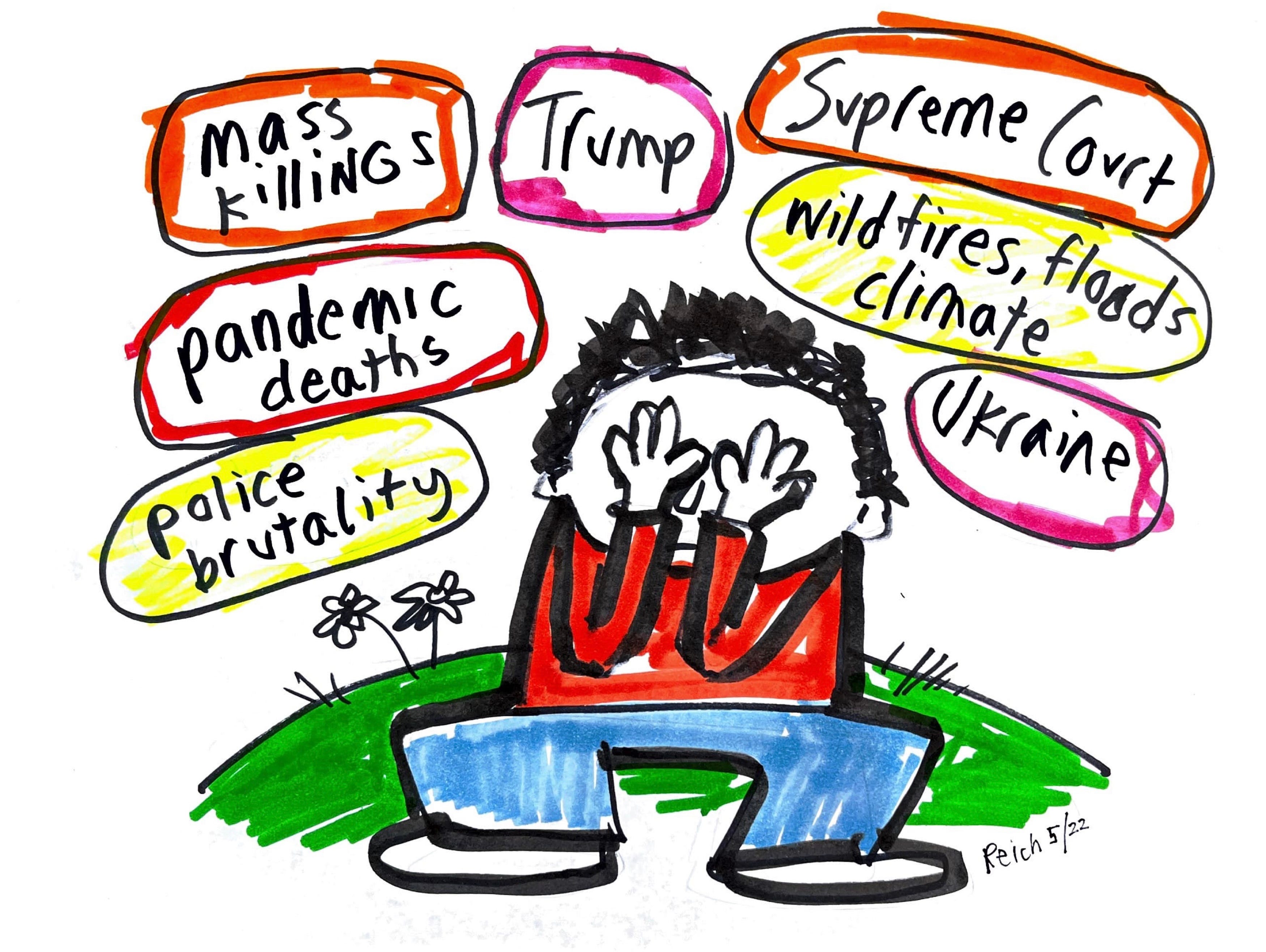
Empathy and activism
We have been through at least two years of social trauma (if you include all the Trump years, almost six). They include a pandemic that has taken the lives of over a million Americans. Wildfires, floods, and other climate disasters. Police brutality. Trump’s attempted coup and continued attacks on our democracy. Putin’s invasion of Ukraine. The Supreme Court’s pending reversal of reproductive rights. A mass killing of Black people in Buffalo followed by a mass killing of children in Texas.Other than those directly affected, the pain has been felt most acutely by those of us who are most empathic with the suffering of others.Empathy varies from person to person. I know someone who feels others’ pain so deeply and personally that she has difficulty getting through a day without sobbing. The past several years have been a continuous nightmare for her.At the other extreme, I know someone so narcissistic that he’s unmoved by the pain of others. He often blames the victims, saying in effect they deserve what they got. Or he’ll talk about risks and odds, and attribute their plight to bad luck. Sometimes he even seems to express a kind of schadenfreude – as if their pain somehow reduces the chances he will be stricken, or their sorrow makes him feel better by comparison.Most of us fall between these extremes. We read about or see photos or videos of the suffering of others -- such as parents of the children murdered last week in Uvalde, Texas – and feel deep sadness for them. We might imagine what it would be like to be in their place, but we don’t feel their pain as if we were them. Nor do we distance ourselves so far from their pain that we are unmoved by it.Taking action to reduce the suffering of others depends both on one’s degree of empathy and one’s sense of efficacy. Should we contribute to a fund to help them? Call members of Congress to demand action on their behalf? Organize and mobilize others to join us in doing these? Perhaps even go to the scene of the suffering and help directly? Too much social trauma can overwhelm all these responses. My friend who feels other’s pain as if it were her own has become so flooded over the past two years that she is almost immobilized. She can’t sleep. She has stopped listening to the news.Others I know say they’re experiencing a kind of numbness. They remain interested in what’s happening but have distanced themselves emotionally. They’re taking care of themselves and their loved ones as best they can, but tell themselves they have no power to affect what has befallen others, so why try?Or they are now engaging in a kind of selective “that could be me or my loved ones” empathy. They get riled up about harms to others that they imagine might harm themselves and their families in the future (such as gun violence or climate disaster) but not about harms that seem unlikely to affect them directly, such as Putin’s invasion of Ukraine, or (if they’re white) police brutality.My wish for you in these trying times is that you not become immobilized or numb or selectively empathic -- that you continue to respond to the suffering of others with concern and activism. In my experience, taking action – even a small effort to alleviate the suffering of others -- is one of the most important means of remaining fully human at a time when the world’s pain can otherwise be overwhelming. This is a public episode. If you'd like to discuss this with other subscribers or get access to bonus episodes, visit robertreich.substack.com/subscribe
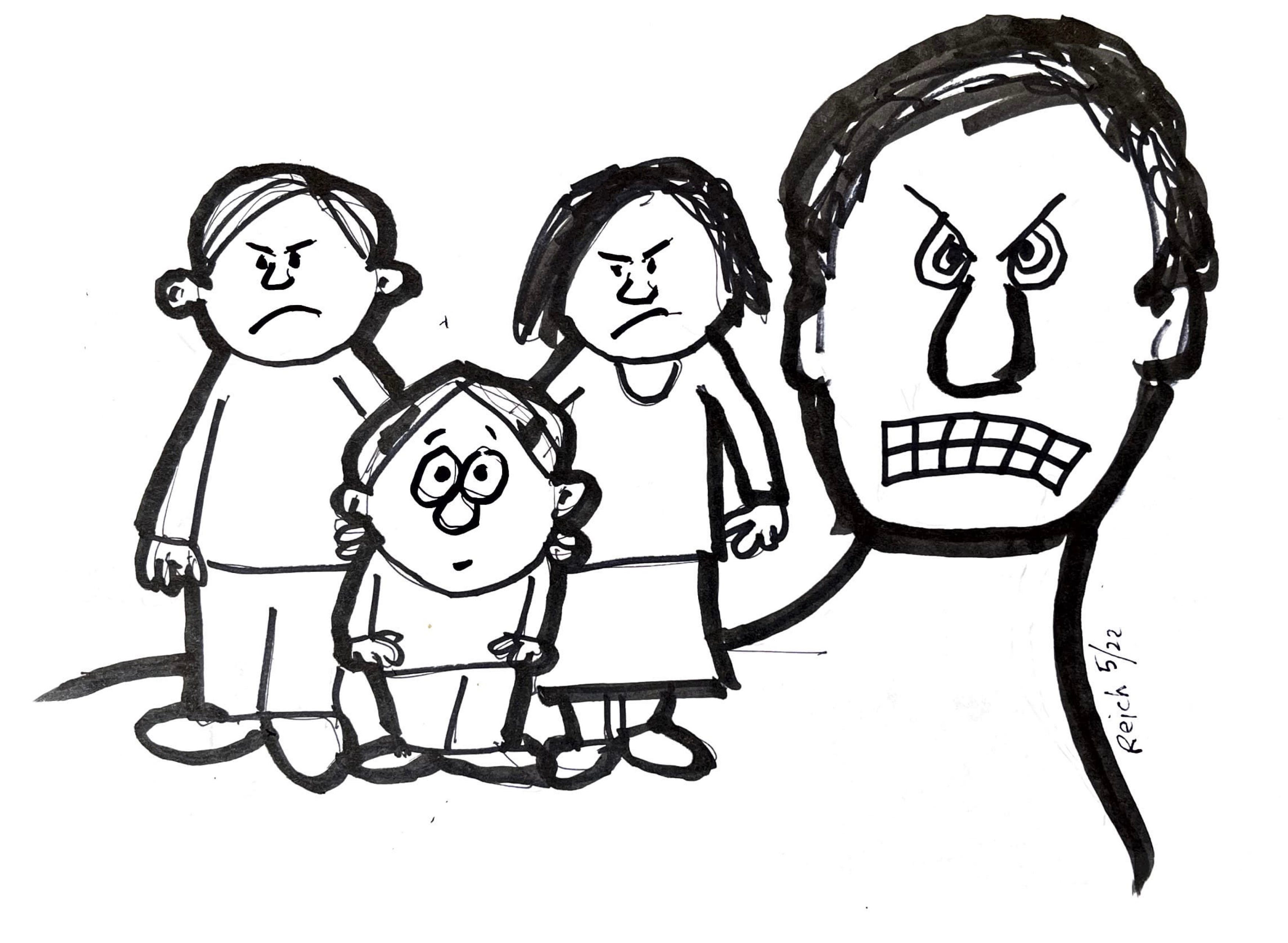
Guns, abortion, and the stirrings of the slumbering giant
Hello, friends. I hope you’re having a restful and safe Memorial Day. Today, I want to ask: Can anything positive come from last week’s tragedy? Or the mass shooting ten days before, in Buffalo? Can anything positive come from the Supreme Court’s imminent decision to reverse Roe v. Wade?Making your own decision about whether to have a child, and keeping any child you do have out of harm’s way, are surely two of the most basic of all human needs. Yet both are fiercely resisted — the first by evangelical Christians, the second by the gun lobby. And Republican lawmakers are in the pockets of both. The American people are not at all evenly divided on these issues. According to nearly every poll, wide majorities (including many G.O.P. voters) support requiring universal background checks for would-be gun purchasers, and most support “red flag” laws, bans on high-capacity magazines, and bans on sales of assault weapons. Meanwhile, the vast majority of Americans wants to maintain access to abortions before the first trimester of pregnancy, which has been the rule since the Supreme Court decided Roe v. Wade in 1973. What does it matter? Nothing will happen to restrict the sale of guns, or maintain access to abortions — or will it? In the wake of last week’s massacre of 19 children and two teachers in Uvalde, Texas, Congress is once again about to vote on gun control. Because of the filibuster, gun control proposals need 60 votes to pass the Senate -- requiring that 10 Republicans join the 50-person Democratic caucus to approve any legislation. Almost no one believes 10 Republican senators will come around, even after last week’s horror. Weeks ago, after the leak of a draft opinion in the case of Dobbs v. Jackson Women’s Health Organization, written by Samuel Alito and evidently joined by four other G.O.P.-appointed Justices -- which argues that no right to abortion can be found in the Constitution or read into the Fourteenth Amendment, and that, therefore, no such right exists –- Senate Democrats tried to codify a national right to abortion. But on May 11, the Women’s Health Protection Act failed in the Senate, 49-51. That was short not only of a simple majority but, more importantly, of the super-majority of 60 votes required to overcome the inevitable filibuster. (Only the West Virginia Democrat Joe Manchin crossed party lines.)Meanwhile, while steadfastly refusing all attempts to control guns and maintain access to abortion, Republican lawmakers at the federal and state levels remain opposed to government funding for child care, parental leave, sex education, and contraception, and for reproductive, maternal, neonatal and pediatric health services.It takes a great deal to awaken the slumbering giant of America. Most voters do not belong to either major political party. In the typical midterm election, fewer than half who are eligible to cast a ballot do so. In most presidential elections, slightly more than a third do so. (The 2018 midterms, 53 percent of eligible voters went to the polls.) Yet every so often the slumbering giant awakens — and with a swoop of its huge arm at the ballot box puts an end to a growing disconnect between what voters want and what politicians do (or fail to do). It happened in 1932. It also happened in 2020, when about 158 million Americans voted -- 81 million for Joe Biden and 74 million for Donald Trump. (Even then, one-third of eligible voters, approximately 77 million Americans, failed to vote.) Midterm elections tend to be quieter affairs. In the 2014 midterms, only 20 percent of young people between the ages of 18 and 29 went to the polls, for example. But in the 2018 midterms, the giant stirred: 36 percent of young people voted — giving control of the House to the Democrats. The disconnection between the majority of Americans and Republican lawmakers on guns and abortion may well awaken the slumbering giant for this fall’s midterm elections.Most pundits are convinced that the Democrats are doomed to lose the House and Senate in the upcoming midterms, as well as the presidency in 2024. They point to the fact that after fifteen months in office, Biden is polling badly, at around 40 per cent But the punditocracy is ignoring guns and abortion, and failing to see the stirrings of the great slumbering giant of the American people that these two issues are provoking. (The pundits also forget that at the same point in his presidency, Ronald Reagan was polling at around 40 percent. But as inflation declined, Reagan ran for re-election against Walter Mondale and won 49 states.)If the slumbering giant does awaken — and I believe that to be more likely than not — a mobilization such as America has rarely seen will propel Democrats to even larger majorities in the House and Senate this coming November, and consign Republicans to a near permanent minority (as they already are on guns and abortion). What do you think? This is a public episode. If you'd like to discuss this with other subscrib
Coffee klatch: talking to a 9-year-old about what happened this week, the 1994 assault weapons ban, NRA convention, Trump's loss of credibility, and Bob's positive prediction for the midterms
My informal weekly coffee with Heather Lofthouse (the executive director of Inequality Media Civic Action, and my former student), discussing this past —especially tough — week. As usual, pull up a chair and bring your morning cup. Today’s conversation touches on talking to young children about mass shootings, what we can learn from the 1994 Assault Weapons Ban, Trump losing credibility in the primaries, how we confront fatalism, if we should worry about Biden’s ratings, and the fact that many people will mobilize for the midterm elections like never before given that women’s right to choose and children’s right to safety hang in the balance.Have a safe Memorial Day weekend. If you know someone who might like to listen to this conversation over coffee, please share it. This is a public episode. If you'd like to discuss this with other subscribers or get access to bonus episodes, visit robertreich.substack.com/subscribe
Educating for the common good
I think about those 19 children who were murdered in their classroom on Tuesday, and feel the need to go back to basics — to the common good. Given the the difficulty of enacting sensible laws to reduce gun violence — which reflects in part the deepening split between Americans who believe in democracy and those who are throwing in their lot with Trump authoritarians — the question I keep coming back to is: what can we can do to rekindle a sense of common good? One of the most important initiatives would be to restart civic education in our schools. I know, I know: Public schools are under attack from the right. Political battles have left school boards, educators, and students in the crosshairs of culture warriors. Which is why, paradoxically, this might be exactly the right time to push for civic education. If you’re as old as I am, you may remember courses in civic education. They were required in most high schools during the 1950s and early 1960s. Mine weren’t terribly inspiring (my teacher in 9th grade civics was so obsessed by the “menace of communism,” as she called it, that she repeatedly showed us maps on which the U.S.S.R. and China — covering most of the land mass of Eastern Europe and Asia — were colored bright red, and she warned that the rest of the world was next). But merely having a time and place to consider the duties of citizenship was itself useful and important. Three decades later, after the Vietnam War had torn the nation apart, most high school courses in civic education were abandoned in favor of curricula emphasizing the skills necessary to “get ahead.” When I was secretary of labor, Bill Clinton and I often appeared at schools and community colleges, telling students that “what you earn depends on what you learn.” It was a catchy phrase designed to convince young people they should stay in school so they could get higher wages afterward. Today, most people view education as a personal (or family) investment in future earnings. That’s one reason so much of the cost of college is now put on students and their families, and why so many young people graduate with crippling college loans. (When education is seen as a personal investment yielding private returns, there’s no reason why anyone other than the “investor” should pay for it.) But education is not just a personal investment. It’s a public good. It builds the capacity of the nation to govern itself. At the close of the Constitutional Convention of 1787, a woman was said to have asked Benjamin Franklin what sort of government the delegates had created for the people. He replied, “A republic, madam, if you can keep it.” Franklin and America’s other founders knew how easily emperors and kings could mislead the public. The survival of the new republic required citizens imbued, in the language of the time, with civic virtue. “Ignorance and despotism seem made for each other,” Jefferson warned. But if the new nation could “enlighten the people generally . . . tyranny and the oppressions of mind and body will vanish, like evil spirits at the dawn of day.” Some towns during the colonial era ran public grammar schools, but only for a few weeks in the winter when family farms didn’t require their children’s labor. After the Revolution, many reformers advocated free public education as a means to protect democracy. Jedediah Peck of upstate New York typified the reform movement. “In all countries where education is confined to a few people,” he warned, “we always find arbitrary governments and abject slavery.” Peck convinced the New York legislature to create a comprehensive system of public education.The person most credited with founding American public schooling, Massachusetts educator Horace Mann, directly linked public education to democracy. “A republican form of government, without intelligence in the people,” he wrote, “must be, on a vast scale, what a mad-house, without superintendent or keepers, would be on a small one.” Mann believed it important that public schools educate all children together, “in common.” The mix of ethnicities, races, and social classes in the same schools would help children learn the habits and attitudes of citizenship. The goal extended through higher education as well. Charles W. Eliot, who became president of Harvard in 1869, believed “the best solution to the problem of national order lay in the education of individuals to the ideals of service, stewardship, and cooperation.”If the common good is ever to be restored in America, education must ground people in responsible citizenship. This requires that schools focus not just on building personal skills but also on inculcating civic obligations. I see such a curriculum as having six elements: 1. For starters, every child should gain an understanding of our political system, the Constitution, the Bill of Rights, separation of powers, checks and balances, and federalism. They must understand the meaning and importance of the rule of law and why no one s
Why unions are coming to the new economy
Yesterday, the Game Workers Alliance (a union of quality assurance workers at Activism subsidiary studio Raven Software) won their vote to form a union. This may not seem like such a big deal, but it is. The games industry is large and growing. Quality assurance testers do the grunt work of rooting out bugs and potential problems in the weeks and months before games are released publicly. These jobs are typically among the lowest in the game industry, with demanding workloads finding and cataloging issues within a project’s timeframe. That these workers are unionizing marks a major turning point in worker organizing of the new economy. Meanwhile, Starbucks Workers United has now unionized more than 80 Starbucks stores across the United States, and filed over 100 cases of unfair labor practices against the Seattle-based coffee giant. Howard Schultz, who returned to head the company in April, has a union busting record that goes back to the origins of the company, and is vowing to stop the drive toward unionization. But he can’t stop it. Workers at a Trader Joe’s branch in Hadley, Massachusetts have begun organizing at the upscale supermarket chain. It would be the first unionized Trader Joe’s store out of more than 530 locations in the US. “We organized ourselves. With the same instinctive teamwork we use every day to break pallets, work the load, bag groceries, and care for our customers, we joined together to look out for each other and improve our workplace together,” workers wrote in an announcement letter to Trader Joe’s CEO, Dan Bane.Workers at Amazon warehouses continue to organize, against fierce anti-union headwinds coming from Jeff Bezos and other Amazon executives. Unions are coming to the new economy of grunt jobs in high-end corporations. Between October 1, 2021 and March 30, 2022, the National Labor Relations Board recorded a 57 percent increase in workers filing for the petitions to allow union elections. What’s going on?1. Part of the reason for the upsurge is the so-called “labor shortage” which — as I’ve stressed — is actually a shortage of jobs paying living wages. At least for now, workers have bargaining leverage to demand better pay. 2. Another part is related to the pandemic and its psychological effect on many workers who have begun asking themselves why they’ve settled for lousy jobs and often unsafe working conditions, especially when corporations are scoring record profits and CEOs of big firms are taking home record multiples of the typical workers’ wages. More than at any other time in the last three decades, workers are telling employers “you can take this job and shove it.” 3. A third part of the revival of unions relates to America’s retreat from globalization. Four decades ago, when corporations began to move (or threaten to move) their operations offshore to hire lower-wage workers, American blue-collar workers lost their bargaining clout. Unions went into retreat. But starting with Trump and continuing with Biden — along with global supply bottlenecks that are now convincing corporations to bring suppliers home — outsourcing is in sharp decline. (Yesterday, Biden announced an agreement that he hopes represents the future of trade policy, known as the Indo-Pacific Economic Framework, which focuses on increased cooperation in areas like clean energy and internet policy rather than opening markets.)4. A fourth reason: More college graduates are now in blue-collar jobs, many leading unionizing efforts. 5. A fifth reason is a new appreciation of the importance of power in driving wages, and the fraudulence of the economic idea that “you’re paid what you’re worth.”The old economic mainstay that people are paid what they are “worth” is finally revealing itself to be an ideology grounded in nothing but power. Let me pause here to spend a bit of time on this one, because it’s important. According to this old mythology, minimum wage workers aren’t “worth” more than the $7.25 an hour federal minimum many now receive. If they were worth more, they’d earn more. Any attempt to force employers to pay them more will only kill jobs. According to this same ideology, CEOs of big companies are “worth” their giant compensation packages, now averaging 350 times pay of the typical American worker. They must be worth it or they wouldn’t be paid so much. Any attempt to limit their pay is fruitless because their pay will only take some other form. Fifty years ago, General Motors was the largest employer in America. The typical GM worker then received over $35 an hour (in today’s dollars) — which came to over $70,000 a year (in today’s dollars). By contrast, America’s largest employers are now Walmart (whose typical worker earns about $15 an hour, or $30,000 a year for a full-time employee) and Amazon ($17 an hour, or $35,000 a year).Does this mean GM employees a half-century ago were “worth” more than twice what today’s Walmart and Amazon employees are worth? Hardly. Those GM workers weren’t better
Bombardment by the billionaires
The richest person in America tweeted last week that Democrats have “become the party of division & hate, so I can no longer support them and will vote Republican.”Hello? Democrats are the party of division and hate? What planet has Elon been living on? Meanwhile, the second-richest person in America (Jeff Bezos) tweeted that the Democrats’ proposed tax hikes on the rich will not tame inflation and their proposed spending would worsen it (he’s wrong, and I’ll explain why in another post).In addition to last week’s billionaire tweetstorm, it was reported that Oracle’s Larry Ellison (#7 on Forbes’ list of richest Americans) in November 2020 joined Sean Hannity, Lindsay Graham, and Trump’s attorney to discuss strategies for contesting the presidential election results.Oh, and Ellison has dumped some $25 million into a Super PAC supporting South Carolina Republican senator Tim Scott, a Trump endorsee. As I noted last week, another billionaire, Peter Thiel, has donated at least as much to Trump-endorsed Republicans in senate primaries.Not to mention Trump-diehards Charles Koch (#16 on the Forbes list), Rupert Murdoch (#31), and Carl Icahn (#43).This is the same crew, not incidentally, that’s been fighting unions and flooding Congress and statehouses with cash to support Trump election deniers, prevent tax hikes on themselves, and kill off Biden’s and the Democrats’ agenda (more on this in a moment). This billionaire bombardment gives Biden and the Democrats an opportunity to tell America whose side they’re on and whose side they’re not on — in effect, to declare class war on the class warriors. Will they take it?Not in over a century has so much of the nation’s wealth been concentrated at the very top — in the richest one-tenth of one percent of the richest one-tenth of one percent. Not in seventy years have corporations been as flush with cash, notwithstanding the stock market’s recent selloff. Not since the 1890s have CEOs raked in as much pay relative to average workers. Not since the creation of the income tax have the super-rich paid as low a rate as they do now relative to tax rate paid by most other Americans.Isn’t it time for Biden and the Democrats to tell this to America? Wealth isn’t a zero-sum game in which more at the top necessarily means less below, but wealth is tied to power — and power is a zero-sum game.Many of America’s wealthiest and most powerful are now gathering for their annual gabfest in Davos, Switzerland, just as the annual get-together of America’s right (CPAC) is coming to a close in Budapest, Hungary. The two conferences are beginning to converge. Although the CEOs and hedge fund managers at Davos profess to worry about America’s record inequality and tout “corporate social responsibility,” their own corporate political action committees are doing everything possible to squelch tax increases on them, and to prevent additional spending on health care, child care, and other needs of average working people. Meanwhile, not even the Republicans’ billionaire backers can disguise the total absence of a Republican agenda to help average working people.The reason Democrats haven’t been able to get their agenda through the Senate and raise taxes on billionaires or on big corporations to pay for it — or even repeal the Trump tax cuts that went mostly to the top — is because Democrats have only 48 senate votes (all fifty Senate Republicans are against these measures, and the other two senate Democrats are major beneficiaries of campaign donations from corporations and the rich).Isn’t it time for Biden and the Democrats tell this to the American people, and offer them a clear choice in the upcoming midterms and beyond?Billionaires are mounting a class war. Republican lawmakers are mounting a culture war to deflect attention from it.On October 31, 1936, in New York’s Madison Square Garden, Franklin D. Roosevelt, facing a bruising re-election bid, defined the stakes much as they are today. He explained that America was in a struggle against “business and financial monopoly, speculation, reckless banking, class antagonism, sectionalism, war profiteering” and that a wealthy elite “had begun to consider the Government of the United States as a mere appendage to their own affairs.”He continued: “We know now that Government by organized money is just as dangerous as Government by organized mob.”Then FDR said, in words similar to what Joe Biden and Democrats should be using against the billionaires and bigots who are now arrayed against them:Never before in all our history have these forces been so united against one candidate as they stand today. They are unanimous in their hate for me — and I welcome their hatred.Isn’t it time Biden and the Democrats came out clearly against the billionaires abusing their wealth and power by suppressing the wages of average working people and flooding our democracy with their money? And against the culture warriors who are covering up for them? Isn’t it time for Bide
Coffee Klatch: CPAC in Budapest, Bezos and Musk, Doug Mastriano, a new progressive era, and my debut on the Simpsons
My informal weekly coffee with Heather Lofthouse (my former student and executive director of Inequality Media Civic Action), exploring the lows and few highs of the week. As usual, pull up a chair and bring your morning cup.Today our conversation touches on the Conservative Political Action Conference (CPAC) being held in Budapest, why Elon Musk and Jeff Bezos have it out for President Biden and the Dems, what Doug Mastriano’s Pennsylvania primary win could mean for the 2024 election, what’s happening with the stock market (which, as we know, is not the economy), and why I’m hopeful about the state of worker power, the increasing diversity of America, and a new progressive era. We close with a plug for something I still can’t quite believe is happening. I was pleasantly surprised to hear that The Simpsons wanted to tackle the topic of economic inequality this season. And I was really surprised when they asked me to sing about it with Hugh Jackman for the season finale. You’re welcome to tune in to the episode tomorrow, Sunday, May 22 at 8 p.m. ET / 8 p.m. PT / 7 p.m. CT on Fox. I also plan to post the main musical number — a duet about the demise of the middle class — here on Substack in the coming days. If you somebody who might enjoy a conversation over coffee, please share. This is a public episode. If you'd like to discuss this with other subscribers or get access to bonus episodes, visit robertreich.substack.com/subscribe
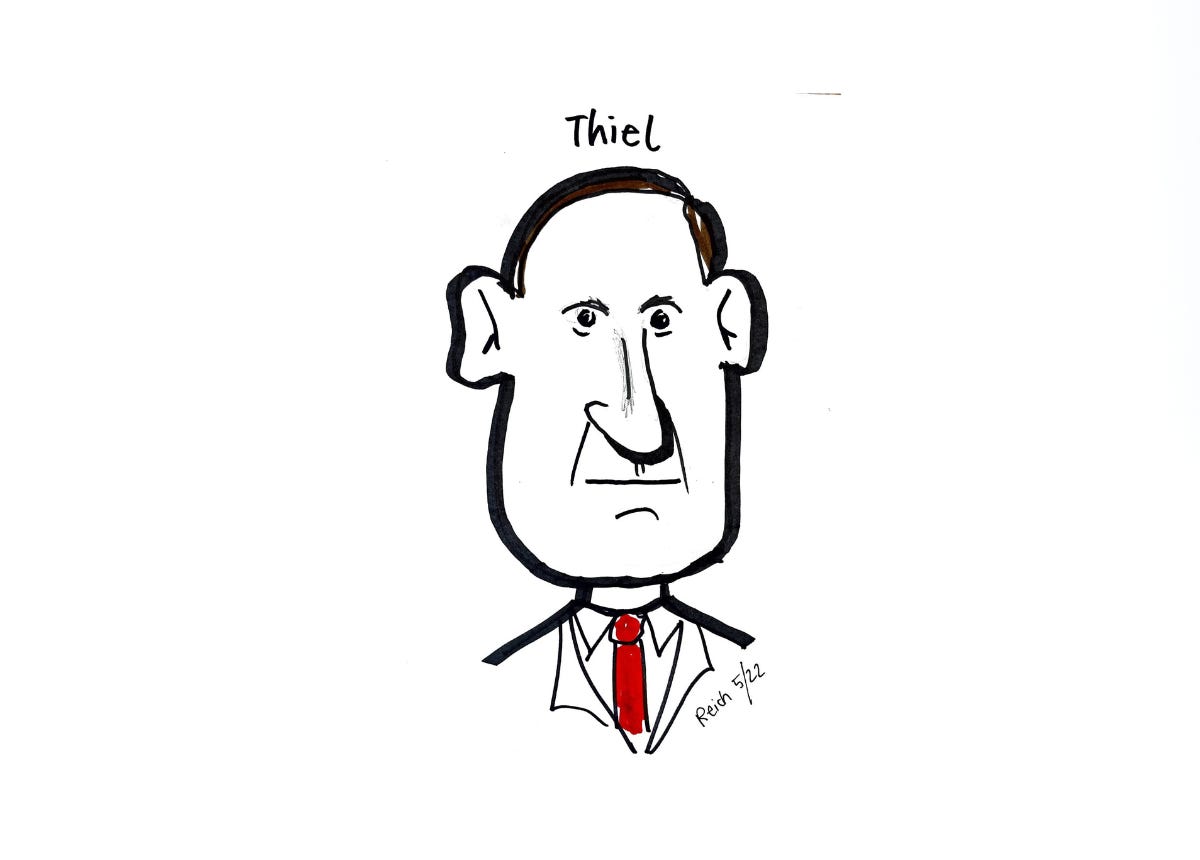
What you need to know about the anti-democracy movement
Decades ago, America’s wealthy backed a Republican establishment that believed in fiscal conservatism, anti-communism, and constitutional democracy. But today’s billionaire class is pushing a radically anti-democratic agenda for America — backing Trump’s lie that the 2020 election was stolen, calling for restrictions on voting, and even questioning the value of democracy.Peter Thiel, the billionaire tech financier who is among those leading the charge, writes “I no longer believe that freedom and democracy are compatible.”Thiel is using his fortune to squelch democracy. He donated $15 million to the successful Republican Ohio senatorial primary campaign of J.D. Vance, who alleges that the 2020 election was stolen and that Biden’s immigration policy has meant “more Democrat voters pouring into this country.” And Thiel has donated at least $10 million to the Arizona Republican primary race of Blake Masters, who also claims Trump won the 2020 election and admires Lee Kuan Yew, the authoritarian founder of modern Singapore.The former generation of wealthy conservatives backed candidates like Barry Goldwater, who wanted to conserve American institutions. Thiel and his fellow billionaires in the anti-democracy movement don’t want to conserve much of anything — at least not anything that occurred after the 1920s, including Social Security, civil rights, and even women’s right to vote. As Thiel wrote:The 1920s were the last decade in American history during which one could be genuinely optimistic about politics. Since 1920, the vast increase in welfare beneficiaries and the extension of the franchise to women — two constituencies that are notoriously tough for libertarians — have rendered the notion of “capitalist democracy” into an oxymoron.Rubbish. If “capitalist democracy” is becoming an oxymoron, it’s not because of public assistance or because women got the right to vote. It’s because billionaire capitalists like Thiel are drowning democracy in giant campaign donations to authoritarian candidates who repeat Trump’s big lie. Not incidentally, the 1920s marked the last gasp of the Gilded Age, when America’s rich ripped off so much of the nation’s wealth that the rest had to go deep into debt both to maintain their standard of living and to maintain overall demand for the goods and services the nation produced. When that debt bubble burst in 1929, we got the Great Depression.It was also the decade when Benito Mussolini and Adolph Hitler emerged to create the worst threats to freedom and democracy the modern world had ever witnessed.If freedom is not compatible with democracy, what is it compatible with? On Tuesday night, Doug Mastriano, a January 6 insurrectionist and Trump-backed Big Lie conspiracy theorist, won the Republican nomination for governor of Pennsylvania (the fourth largest state in the country, and the biggest state that flipped from 2016 to 2020). Mastriano was directly involved in a scheme to overturn the 2020 election by sending an “alternate” slate of pro-Trump electors to the Electoral College — despite the fact that Trump lost Pennsylvania by more than 80,000 votes. If Mastriano wins in November, he will appoint Pennsylvania’s secretary of state, who will oversee the 2024 election results in one of the most important battleground states in the country.Meanwhile, the major annual event of the Conservative Political Action Conference (CPAC) — the premier convening organization of the American political right — starts today in Budapest. That’s no accident. The Hungarian prime minister Viktor Orban and his ruling Fidesz party have become a prominent source of inspiration for America’s anti-democracy movement. Stephen Bannon, Trump’s former adviser, describes Orban’s agenda as that of a “Trump before Trump.”Orban has used his opposition to immigration, LGBTQ rights, abortion, and religions other than Christianity as cover for his move toward autocracy — rigging Hungary’s election laws so his party stays in power, capturing independent agencies, controlling the judiciary, and muzzling the press. He remains on such good terms with Vladimir Putin that he’s refused to agree to Europe’s proposed embargo of Russian oil. Tucker Carlson — Fox News’s progenitor of white replacement theory — will be speaking at CPAC and broadcasting his show from Budapest. Trump’s former chief of staff Mark Meadows will also be speaking (although he refuses to speak to the House committee investigating the January 6 assault on American democracy).If America and the world should have learned anything from the first Gilded Age and the fascism that began growing like a cancer in the 1920s, it’s that gross inequalities of income and wealth fuel gross inequalities of political power — which in turn lead to strongmen who destroy both democracy and freedom.Peter Thiel may define freedom as the capacity to amass extraordinary wealth without paying taxes on it, but most of us define it as living under the rule of law with rights agai