
The Coffee Klatch with Robert Reich
470 episodes — Page 4 of 10

Will Trump walk away with the Republican nomination? Saturday Coffee Klatch
Hello friends,Today Heather and I look ahead to Monday’s Iowa caucuses — and ask whether Nikki Haley has a chance to become the Republican nominee in 2024. Or are Haley and DeSantis simply laying foundations for their 2028 runs, assuming Trump relinquishes his dictatorship then? Lots to talk about today. Please grab a cup, pull up a chair, and join us. And if you wish, take our poll.Please consider a gift subscription for someone you care about. They’d receive the whole package. And your generosity would help us pay the bills. This is a public episode. If you'd like to discuss this with other subscribers or get access to bonus episodes, visit robertreich.substack.com/subscribe

Will Trump ever be held accountable for his attempted coup? Saturday coffee klatch
Today marks the third year since the attack on the Capitol. The person responsible is now leading the race to become the Republican candidate for president, and, if polls are to be believed, is even leading incumbent President Joe Biden. Heather and I discuss whether Trump will ever be held accountable. We also address the so-called “crisis” at the border and the ouster of Harvard President Claudine Gay, as parts of the Trump-Republican strategy. Please grab a cup, pull up a chair, and join us. And if you wish, take our poll. This is a public episode. If you'd like to discuss this with other subscribers or get access to bonus episodes, visit robertreich.substack.com/subscribe

Are you terrified of 2024? If not, why not? Saturday coffee klatch
[Most of you wanted us back in video, so here we are.]This week, the secretary of state of Maine decided — as did the Colorado Supreme Court last week — that under Article 3 of the 14th Amendment to the Constitution, Donald Trump should not appear on the Republican primary ballot. So what will and what should the Supreme Court do? More generally, how are you feeling about 2024?These are among the questions Heather and I discuss on this morning’s klatch.Please grab a cup, pull up a chair, and join us. And if you wish, take our poll.And Happy (if possible) New Year! This is a public episode. If you'd like to discuss this with other subscribers or get access to bonus episodes, visit robertreich.substack.com/subscribe
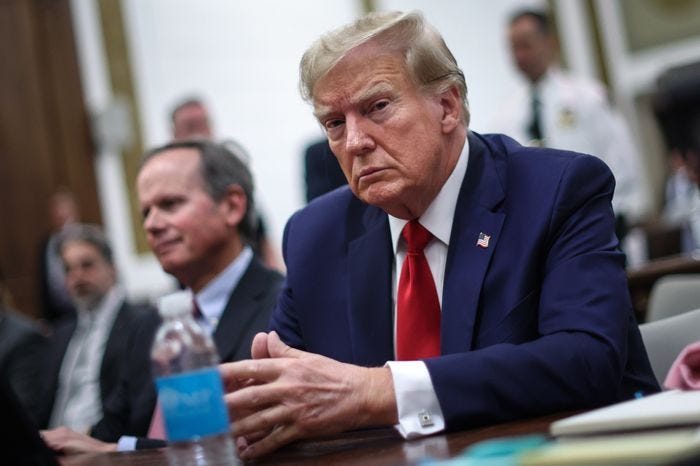
Will Trump be off the ballot everywhere? Should he be? Saturday Coffee Klatch
(We’re in audio only today, as several of you requested — but let us know in the comments if you’d rather we return to video.)This week, the Colorado Supreme Court decided that under Article 3 of the 14th Amendment to the Constitution (which bars anyone from holding office if they’ve previously sworn an oath to uphold the Constitution and participated in an insurrection against the United States), Donald Trump should not appear on the ballot in Colorado.Maine’s secretary of state is now pondering whether to allow Trump on Maine’s ballot, for the same reason.Trump is appealing the Colorado decision to the Supreme Court. In the event that the Supreme Court affirms the decision (unlikely, in my view), the court could strike him from the ballots of all 50 states. So … what will and what should the Supreme Court do? It’s among the questions Heather and I discuss on this morning’s klatch. Please grab a cup, pull up a chair, and join us. And if you wish, take our poll. This is a public episode. If you'd like to discuss this with other subscribers or get access to bonus episodes, visit robertreich.substack.com/subscribe

Why are House Republicans so ready to impeach Biden with zero evidence, and unwilling to aid Ukraine? Saturday coffee klatch
Friends, Good morning and welcome back to our Saturday coffee klatch. Please grab a cup, pull up a chair, and join us. Today, Heather and I examine:— The House Republicans’ impeachment of Joe Biden despite zero evidence of any wrongdoing. Why did every single Republican House member vote in favor, even those elected from districts that overwhelmingly voted for Biden in 2020? — Special Counsel Jack Smith went to the Supreme Court, asking it to rule on whether a president is immune from criminal prosecution. Why is Smith doing this? Why isn’t there more pressure on Clarence Thomas to recuse himself? — Rudy Giuliani found guilty of defaming two election workers and fined $148 million. What’s Giuliani’s next move?— The Fed kept interest rates where they were, but signaled it would reduce interest rates next year. Is it any wonder Wall Street went bananas? Will the stock market continue to rise? — Despite the good economy, polls continue to show that Americans favor Trump over Biden. Is this because Trump is riding the wave of anti-establishment forces? Why is Trump able to ride this wave? — The Texas Supreme Court decided that Texas’s strict abortion law doesn’t allow a woman to have an abortion even if her life is threatened. Meanwhile, the Supreme Court agreed to consider a challenge to the FDA’s approval of an abortion pill. Will all of this galvanize more political action against Republicans?— Trump and his Republicans’ unwillingness to continue to support Ukraine. Is Putin salivating over the possibility of a Trump presidency, and Trump’s lack of support for Ukraine? Will the Republicans succeed in forcing America to choose between Israel and Ukraine? — The use of AI in campaigns. Already, a candidate for office has been utilizing AI bots to make calls on her behalf. Will we be seeing more of this? Please also take this week’s poll: This is a public episode. If you'd like to discuss this with other subscribers or get access to bonus episodes, visit robertreich.substack.com/subscribe

Ukraine, Israel, Biden’s and Trump’s gaffes, and Norman Lear. The Saturday coffee klatch!
Friends,Welcome back to our Saturday coffee klatch with Heather Lofthouse. Today we examine:— The Republicans are playing into Putin’s plan to take over Ukraine. Whatever happened to the GOP that was hawkish on Russia?— Israel shifts to bombing southern Gaza. More children have been killed in Gaza since October 7 than all the children killed in every world conflict in 2022. Why isn’t Biden doing more to restrain Netanyahu?— Biden’s confusion about the upcoming election, saying on Tuesday that he wouldn’t be running if Trump weren’t running, and saying on Wednesday that “fifty” Democrats could beat Trump. Why is Biden off message? — Trump’s age and his gaffes. Why is he getting a free pass from the media?— The jobs report has a lot of good news for Biden. So why aren’t more people enthusiastic about the Biden economy?— Voters want to hear that Biden is on the side of the people rather than the powerful. Why isn’t Biden making this case? Why isn’t he advocating higher corporate taxes on companies with the highest ratio of CEO pay to median worker pay? — Norman Lear died this week. He was one of the most creative and important forces in American entertainment — and, indirectly, American politics. Here’s something I’ve been hiding for years — when I guest hosted for Bill O’Reilly on Fox News in 2001. It was a different era.Have a look: This is a public episode. If you'd like to discuss this with other subscribers or get access to bonus episodes, visit robertreich.substack.com/subscribe
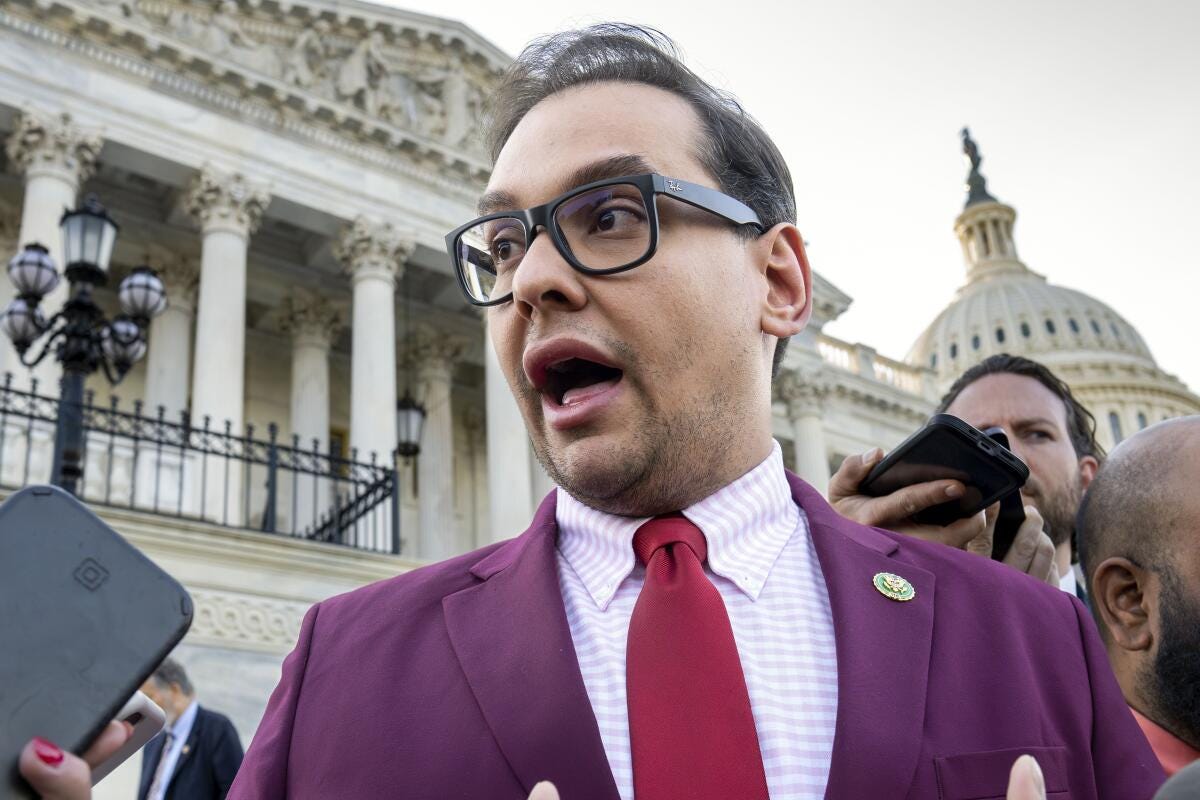
George Santos, Henry Kissinger, Sandra Day O’Connor, Gavin Newsom, and Ron DeSantis. It’s the Saturday Coffee Klatch!
Friends,Welcome back to our Saturday coffee klatch with Heather Lofthouse. Today we examine:— George Santos’s demise. What is there about sociopathic liars and the Republican Party? Why were most House Republicans unwilling to oust him? — Henry Kissinger and Sandra Day O’Connor. Was Kissinger a war criminal? Was O’Connor the most powerful woman in America? — Gavin Newsom and Ron DeSantis. Was their debate on Fox News a preview of what we’ll see in 2028? Whatever happened to reasonable, decent, intelligent debate? — Heather reveals something about Bob that very few people know or remember. Why didn’t Bob become a Fox News regular? Please pull up a chair, grab a cup of coffee, and join us for these and other stories. (And, should you wish, take our poll.) This is a public episode. If you'd like to discuss this with other subscribers or get access to bonus episodes, visit robertreich.substack.com/subscribe

Saturday coffee klatch!
Friends,Welcome back to our Saturday coffee klatch with Heather Lofthouse. Today we examine:— The temporary ceasefire between Hamas and Israel. What does it really mean?— Black Friday holiday sales. My personal relationship to the day. Consumer spending is up, so why are so many people down on the Biden economy?— Bob’s new Substack series on the reality of American capitalism and whether American capitalism is compatible with the common good. Is it? — The mess at OpenAI and what it means. Has OpenAI sacrificed safety for big money? What does this mean for AI in general? Who should be balancing safety and profits?— Nikki Haley’s political rise. Will she get the Republican nomination? — My 1994 Thanksgiving speech predicting that a growing class of angry and frustrated people would become susceptible to a demagogue. Bob reveals a secret about that speech. — Heather’s mother-in-law, Julia, who is visiting over Thanksgiving. And what Bob is grateful for (hint: her first name is Heather). Thanks for joining us! This is a public episode. If you'd like to discuss this with other subscribers or get access to bonus episodes, visit robertreich.substack.com/subscribe

Republican political violence and other worries from the week: The Saturday Coffee Klatch
Friends,Welcome back to our Saturday coffee klatch with Heather Lofthouse. Today we examine:— House Republicans will not kick out George Santos despite his fake resume and mounting evidence of illegal activity. Will the GOP and Santos be held accountable?— Incidents of violence and potential violence in the House and Senate, among lawmakers. Why is this happening? — Trump’s full-throated fascism — describing his opponents as vermin, planning to round up undocumented immigrants and place them in detention camps, encouraging violence. Where is this going?— Meanwhile, Biden avoids or plays down conflict with big corporations, Wall Street, and billionaires — which means that the media ignores his accomplishments (the media reports on conflict). Why won’t he call them out? Why isn’t he taking credit for going after Google and Amazon?— Elon Musk promotes antisemitism on “X” by advocating a post on “replacement theory.” Advertisers must pull out all advertising from X, and the rest of us should boycott the platform. Like Trump, Musk is building his base off of hate. — Thanksgiving plans. Travel safely. Enjoy your family. Please pull up a chair and, if you’re so moved, take our poll:Our thanks to Kyle Parker, Naomi Bradford, and Michael Lahanas-Calderon for their technical assistance. This is a public episode. If you'd like to discuss this with other subscribers or get access to bonus episodes, visit robertreich.substack.com/subscribe

Electoral wins? Trump trials? CRs? Joe Manchin? The Saturday coffee klatch!
Friends,Welcome back to our Saturday coffee klatch with Heather Lofthouse. Today we examine:— The results of races in Ohio, Kentucky, and elsewhere in “red America” are showing how out of step the GOP’s white Christian nationalism is with the majority of Americans. How much encouragement should Democrats take from this?— Mike Johnson’s utter inability to get anything done, including a continuing resolution to keep the government open after Friday, and aid to Israel and aid to Ukraine. How large a problem is this likely to be?— Trump’s civil fraud trial in New York. Why is he taking such a brash and outrageous approach to his defense? — Joe Manchin decides not to run for Senate again. What does this mean for the Democrats? Will Manchin now run for president under the “No Labels” party? How big a problem might this be for Biden?— Trump’s plans for taking over America. He’ll lose the 2024 election, but what happens if he doesn’t? Is Nikki Haley Trump’s likely vice presidential pick? — My new series beginning next Friday on Substack about the common good and capitalism. Is American capitalism compatible with the common good?Please pull up a chair and, if you’re so moved, take our poll:Our thanks to Jordan Alport for his technical assistance. This is a public episode. If you'd like to discuss this with other subscribers or get access to bonus episodes, visit robertreich.substack.com/subscribe

The war in Gaza, Sam Bankman-Fried’s comeuppance, Trump and the culture of hype, and the October jobs report
Friends,Good morning, and welcome back to my Saturday coffee klatch with Heather Lofthouse (executive director of Inequality Media Civic Action), where we examine the highs, lows, and even lower points of the previous week. Please pull up a chair, grab a cup, and join us. This week, Heather and I zoom in on: — The war in Gaza. Why not a humanitarian pause? Why is Mike Johnson, the new speaker of the House, conditioning aid to Israel on cutting IRS funding? And why is he not moving forward with aid for Ukraine? — Sam Bankman-Fried’s comeuppance. What happened to him? How could so many big investors have been taken in? Does his downfall mark the end of crypto?— Our culture of hype, of which Donald Trump is the major exemplar. The civil fraud trial in New York accusing the Trump organization of inflating the value of its assets for the purpose of getting bank loans and minimizing the value for the purpose of minimizing taxes. Why is Trump taking this trial more seriously than any other he’s now involved in?— The October jobs report. The Fed is “succeeding” in slowing the economy and creating fewer jobs. Why is this considered a good thing? What’s the economic outlook?— Heather’s “bestie” is in town. Our thanks to Michael Lahanas-Calderón and Tom Lofthouse for technical assistance.P.S. If you didn’t know already, you can also listen to our klatch on Apple Podcasts, Spotify, or whatever your favorite podcast app is. This is a public episode. If you'd like to discuss this with other subscribers or get access to bonus episodes, visit robertreich.substack.com/subscribe

Help! How do we deal with all this?
Friends,Good morning, and welcome back to my Saturday coffee klatch with Heather Lofthouse (executive director of Inequality Media Civic Action), where we examine the highs, lows, and even lower points of the previous week. Please pull up a chair, grab a cup, and join us.Today we examine:— The new speaker of the House, Mike Johnson. Who is he? What does his speakership mean? What does it bode for the future?— The tragedy of Lewiston, Maine. If this can happen in a small Maine city, are any of us safe? Is there any prospect for stricter gun controls? — The pending ground invasion of Gaza. What’s been delaying it? Beyond the likely loss of lives, is this a suicidal move for Israel? Will it lead to a wider war?— Trump’s lawyers pleading guilty in the Georgia case. Do they make a Trump conviction more likely? Should they be disbarred?— Halloween. Why Bob dislikes it, and a terrible trick he once played as a young teenager. Our thanks to Michael Lahanas-Calderón for his technical help. P.S. If you didn’t know already, you can also listen to our klatch on Apple Podcasts, Spotify, or whatever your favorite podcast app is.Please consider a paid or gift subscription to receive the whole package, and to help us bring this letter to you each day. (It’s about the cost of a coffee per week.) This is a public episode. If you'd like to discuss this with other subscribers or get access to bonus episodes, visit robertreich.substack.com/subscribe

What should be done?
Friends,Good morning, and welcome back to my Saturday coffee klatch with Heather Lofthouse (executive director of Inequality Media Civic Action), where we examine the highs, lows, and even lower points of the previous week. Please pull up a chair, grab a cup, and join us.Today we’re adding a new feature so you can watch as well as hear us (should you wish). And we apologize for the technical difficulties this week. Please let us know in the comments if you’d like us to continue this feature (assuming we do better with the video and audio).Today, Heather and I examine:— The continuing tragedy in Israel and Gaza. What’s the outlook? What role is Biden playing? What should be done?— The continuing clown show in Congress. Jim Jordan is in for speaker, then he’s out, then in, then out. House Republicans continue to preside over what’s in effect a shutdown of the House of Representatives. What’s going to happen?— The good economic news that median household wealth in America increased by a record 37 percent between 2019 and 2022 — but then dropped when the pandemic stimulus relief was withdrawn. — The continuing predation of large pharmaceutical corporations. Pfizer doubled the price of Paxlovid — which is critically important for people who get COVID (as I did two weeks ago). Again, what should be done? — I’m heading to Washington for the 30th reunion of my team at the Department of Labor, which will happen later today. We haven’t seen each other since we implemented the Family and Medical Leave Act, raised the minimum wage, attacked sweatshops, and protected the health and safety of millions of workers. — Our emergency alert earthquake warning — without an earthquake (for some of us). And our weekly poll: This is a public episode. If you'd like to discuss this with other subscribers or get access to bonus episodes, visit robertreich.substack.com/subscribe

Trying to make sense out of tragedy and dysfunction
Friends,Good morning, and welcome back to my Saturday coffee klatch with Heather Lofthouse (executive director of Inequality Media Civic Action), where we examine the highs, lows, and even lower points of the previous week. Please pull up a chair, grab a cup, and join us.Today, we look at:— The tragedy in Israel and Gaza. Who and what are responsible? Is Israel solving anything by bombing and mounting a ground invasion of Gaza? What’s the likely endgame here? — The dysfunction of House Republicans, who have effectively stopped the U.S. government. Why Jim Jordan would be a disaster as speaker. Is there any way out of this Trumpish quagmire? — The strikes by the UAW, SAG, and health workers at Kaiser Permanente. Why are we seeing this upsurge in labor action? How is it related to what the Biden administration has done? And why is this a good thing?— Heather’s “I’m not surprised, but I’m fuming” segment — about Republican efforts around the country to repeal no-fault divorce. Why are Republicans doing this? How is this related to Republican efforts to stop abortions? This is a public episode. If you'd like to discuss this with other subscribers or get access to bonus episodes, visit robertreich.substack.com/subscribe
Is Kevin McCarthy toast? Kudos to the courts! Joe Biden should not bow out!
Friends,Good morning, and welcome back to my Saturday coffee klatch with Heather Lofthouse (executive director of Inequality Media Civic Action), where we examine the highs, lows, and even lower points of the previous week. Please pull up a chair, grab a cup, and join us. This morning we look at:— The life and death of Senator Dianne Feinstein (who was a friend to both of us). What’s her legacy likely to be?— The pending shutdown. Is Kevin McCarthy toast?— This week’s Republican debate. Does anyone care? — Kudos to the courts. Judges are making Trump accountable. If Trump gets reelected (perish the thought), can he merely stop all this litigation?— We’re approaching Biden’s last exit ramp before the election year. He should not bow out, despite mounting pressure. We’re for him, 100 percent. Are you? — Heather’s segment: real life examples of the common good. What’s your real-life example of the common good? This is a public episode. If you'd like to discuss this with other subscribers or get access to bonus episodes, visit robertreich.substack.com/subscribe

Why Trump wants a chaotic government shutdown, a crippling auto strike, and no more money for Ukraine
Friends,Good morning, and welcome back to my Saturday coffee klatch with Heather Lofthouse (executive director of Inequality Media Civic Action), where we examine the highs, lows, and even lower points of the previous week. This morning we examine:— Kevin McCarthy’s Republican House mess. Will there be a shutdown? Almost certainly. Who’ll be blamed? Why is Trump pushing for this? — The UAW strike. When will it be resolved? Who’ll be blamed? Why is Trump hoping for a long strike? — Bonus question: Why is Trump against giving more U.S. aide to Ukraine? (Hint to all of these questions: Because Trump wants to blame Biden.)— Democratic wins this week in special elections. They’re more predictive than national polls. Does this bode well for next year?— The mainstream media talks about Biden’s age and supposed feebleness. Why not Trump’s age and genuine craziness? Isn’t it worse to elect a nutcase than someone who’s old?— Heather’s policy of the week. Please grab a cup, pull up a chair, and (if you’re so inclined), take our poll and share your views. This is a public episode. If you'd like to discuss this with other subscribers or get access to bonus episodes, visit robertreich.substack.com/subscribe
What do polls mean anyway?
Friends,Good morning, and welcome back to my Saturday coffee klatch with Heather Lofthouse (executive director of Inequality Media Civic Action), where we examine the highs, lows, and even lower points of the previous week. This morning we examine:— The awful polls showing Donald Trump running neck-and-neck with Joe Biden. How is that possible? Should we be concerned? — Biden as much more progressive than Bill Clinton or Barack Obama. Why don’t people see this? Why do young people think Biden is more conservative than Clinton and Obama? — Elon Musk’s extraordinary unaccountable power to determine who has access to his satellites, in the war between Ukraine and Russia. How in hell did the State Department and the Defense Department ever allow Musk to accumulate this sort of power? — Weekend plans: Bob is heading to a wedding this afternoon, and Heather is heading to a fundraiser at a state park with a woman friend. Is it harder to find new friends later in life? Are women better at maintaining friends than men? A final action item! Thank you once again to the composers of our Saturday Coffee Klatch theme songs, Corey Kaup / Deirdre Broderick and Joseph Lawson, respectively.Please pull up a chair, grab a mug, and join in the conversation. And also, if you wish, take our poll: This is a public episode. If you'd like to discuss this with other subscribers or get access to bonus episodes, visit robertreich.substack.com/subscribe
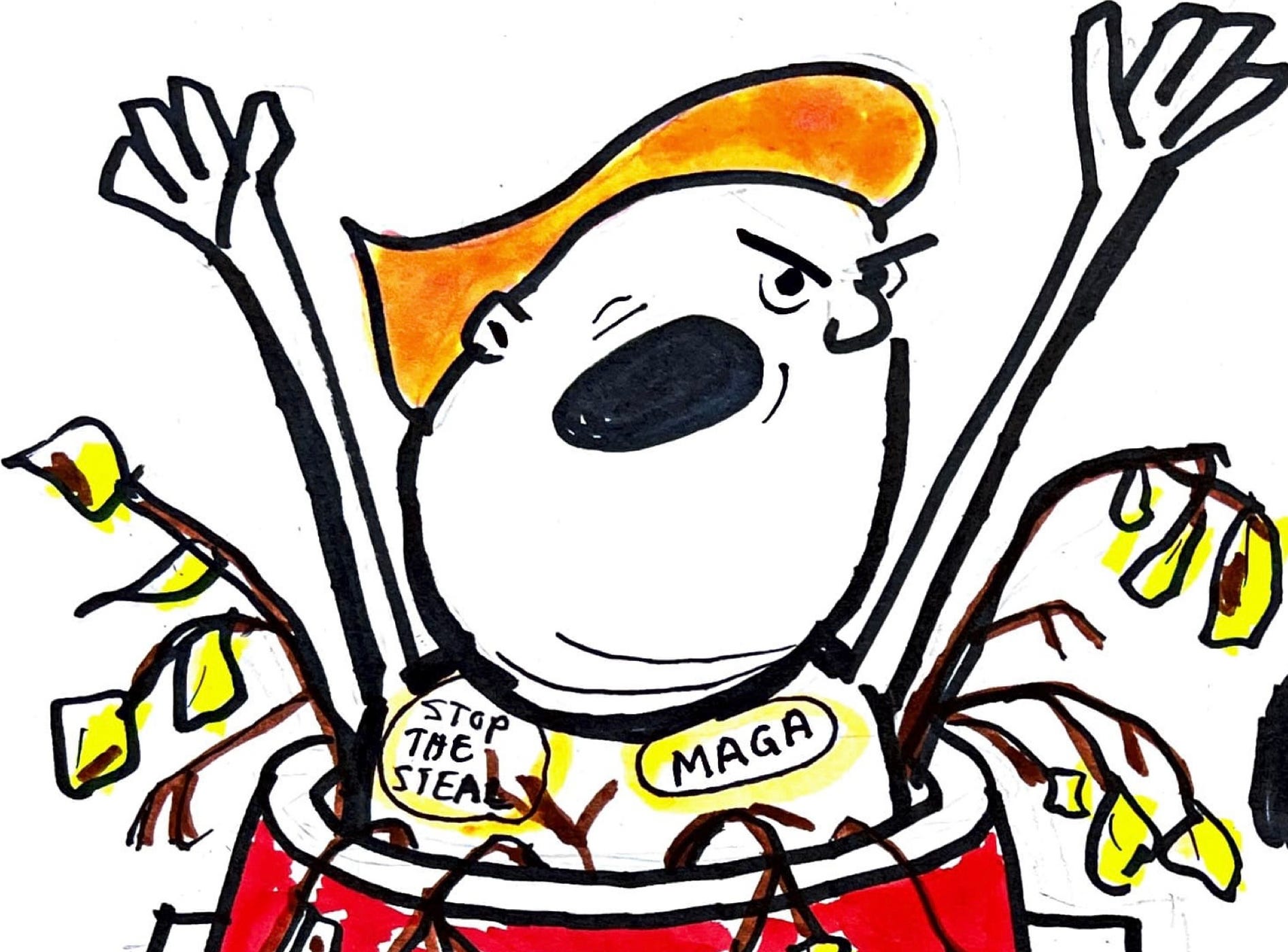
Labor Day weekend, Bob’s bad cold, Trump’s bad defense strategy, the House’s bad GOP, and Heather’s son’s bad worries.
Friends,Good morning, and welcome back to my Saturday coffee klatch with Heather Lofthouse (executive director of Inequality Media Civic Action), where we examine the highs, lows, and even lower points of the previous week. Today we look at:— The “Goldilocks” economy — inflation is coming down, but we’re not heading into a recession. Yesterday’s jobs report showed continuous buoyant growth of jobs. Why?— The Labor Department’s new overtime rule will help millions of workers. (Why Bob wants to write a love letter to the Labor Department.) Will this rule be implemented?— Why Trump wants House Republicans to impeach Biden. Will he succeed? Is he panicking? — Heather’s 10-year-old son wonders about school shootings. What should we be telling our children as they head back to school? Please pull up a chair, grab a mug, take our poll (if you wish), and join in the conversation. This is a public episode. If you'd like to discuss this with other subscribers or get access to bonus episodes, visit robertreich.substack.com/subscribe

Trump sucks the oxygen out of the week: His arrest, mug shot, and absence from the GOP debate
Friends,Good morning, and welcome back to my Saturday coffee klatch with Heather Lofthouse (executive director of Inequality Media Civic Action), where we examine the highs, lows, and even lower points of the previous week. Pull up a chair and grab a mug shot.This morning we’re looking at:— Trump’s arraignment in Georgia on Thursday, and his brazen use of imagery and marketing to circumvent rational thought. Is this the tactic of a fascist?— The Republican primary debate Wednesday evening, which exposed the GOP candidates’ extreme positions on abortion, climate, immigration, and education. Did any of them emerge as an alternative to Trump?— Biden’s “Goldilocks” economy continues, although Fed Chair Jerome Powell continues to insist that inflation is too high. If the Fed raises interest rates further, will it push the economy into recession?— Why Heather is a dog person and Bob is a cat person. Please respond in the comments and, if you wish, take our poll: This is a public episode. If you'd like to discuss this with other subscribers or get access to bonus episodes, visit robertreich.substack.com/subscribe

Trump, the upcoming Republican primary debate on Fox News, and Bill O’Reilly
Friends,Good morning, and welcome back to my Saturday coffee klatch with Heather Lofthouse (executive director of Inequality Media Civic Action), where we examine the highs, lows, and even lower points of the previous week. This morning we’re looking at:— Trump’s FOURTH indictment, this one in Georgia, and why it could be the one that sends him to jail. — The upcoming Republican primary debate, and why Trump’s simultaneous “counter-programming” with Tucker Carlson on Elon Musk’s Twitter/X may backfire. — The continuing tragedy on Maui, and why young people are leading the way in the fight against climate change. — The discovery of a videotape of my guest hosting Bill O’Reilly’s Fox News TV show in the late 1990s, and why I did that. Please grab a cup, pull up a chair, and join us. And also, if you have a moment, please take our poll: This is a public episode. If you'd like to discuss this with other subscribers or get access to bonus episodes, visit robertreich.substack.com/subscribe

The walls closing in on Trump
Friends,Good morning, and welcome back to my Saturday coffee klatch with Heather Lofthouse (executive director of Inequality Media Civic Action), where we examine the highs, lows, and even lower points of the previous week. This morning we’re looking at:— Merrick Garland’s appointment of a special counsel to investigate Hunter Biden. Will this hurt or help Joe Biden? — Judge Tanya Chutkan’s threat to take “whatever measures are necessary” to stop Trump from intimidating potential witnesses in his upcoming trial for seeking to overturn the 2020 election. What will Trump do next?— The tragedy in Hawaii and the mounting costs of climate change. Yet Trump is readying a “Project 2025” to roll back environmental regulations and spur more carbon pollution if elected. Hello? — The UAW’s demand in negotiations with the Big Three automakers that worker pay rise by the same percentage as CEO pay. What’s the back story here?— The truly remarkably great economy. Why isn’t Biden getting credit, and should we worry? — DeSantis bars Romeo and Juliet from Florida classrooms, and Ohio Republicans vote against a constitutional amendment that would have made it harder to protect abortion rights. What’s really going on with the GOP? Please grab a cup, pull up a chair, and, if you wish, take our klatch poll: This is a public episode. If you'd like to discuss this with other subscribers or get access to bonus episodes, visit robertreich.substack.com/subscribe

Trump, Jobs, and Musk
Friends,Good morning and welcome back to my Saturday coffee klatch with Heather Lofthouse (executive director of Inequality Media Civic Action), where we examine the highs, lows, and even lower points of the previous week. This morning we’re looking at:— The Trump arraignment in Washington on Thursday. What was notable? What does it suggest about Trump’s future?— Friday’s jobs report. Are we about to have a “soft landing” — getting inflation down to 2 percent while avoiding a recession? And if so, how responsible is the Biden administration for this Goldilocks economy? (And by the way, why isn’t Biden getting credit from the public, at least as yet?)— Elon Musk’s X threatens to sue a nonprofit that’s been monitoring hate speech on Twitter X. Is Musk out to make X into a major source of hate in America? Will he succeed?Please grab a cup, pull up a chair, and, if you wish, take our poll: This is a public episode. If you'd like to discuss this with other subscribers or get access to bonus episodes, visit robertreich.substack.com/subscribe

Heather and I debut before a live audience!
Friends,Welcome back to our Saturday coffee klatch, where Heather Lofthouse (executive director of Inequality Media Civic Action, and my former student) and I discuss the highlights and lowlights of the week.Today we share with you our discussion before a live audience at the San Francisco Arts and Lectures series. We focus on:— Parallels between what occurred in the midterm elections of 2022 and the midterms of 1954 (the first election I focused on, when I was eight years old). — How political communication has changed over the last half-century. — Why and how I got involved in social media, film, and video, including TikTok. — How young people are processing information online, especially information about public issues. — Questions from the audience. Please join us, and feel free to take today’s poll. This is a public episode. If you'd like to discuss this with other subscribers or get access to bonus episodes, visit robertreich.substack.com/subscribe

The pending Trump indictment: Where will it end?
Friends,Welcome back to our Saturday coffee klatch, where Heather Lofthouse (executive director of Inequality Media Civic Action, and my former student) and I discuss the highlights and lowlights of the week.Today, on our roster:— The pending Trump indictment for his attempted coup. When will it drop? What does it mean? Will it strengthen democracy or drive us farther apart? Where will this end?— The “unitary executive” theory that Trump will likely utilize should he be reelected, along with several Republican-appointed justices on the Supreme Court. What is this theory, and why is it troubling? Where will this end?— The Republican Party’s emerging strategy for 2024. Will it be all about Democrats’ alleged persecution and prosecution of Trump? Where will this end?— The “No Labels” attempt at a third party. Is this going anywhere, and, if so, should we be pleased or worried, and why? Where will it end?— More sources of big money behind Clarence Thomas. Where will this end?— The hottest June on record. Where will this end?— The summer of labor activism. Where will this end?— Heather’s upcoming family reunion. This is a public episode. If you'd like to discuss this with other subscribers or get access to bonus episodes, visit robertreich.substack.com/subscribe

This isn’t just about Trump
Welcome back to another Saturday coffee klatch with Heather Lofthouse, where we examine the lows and even lowers of the previous week. Today on our roster:— The Hollywood strike, and what it really means for the new economy.— The FTC’s setback on its attempt to stop Microsoft from acquiring Activision, and what it means for the new economy. — The good news on inflation, and what it means for Biden (and why the Fed should relax now and stop raising interest rates).— Special Counsel Jack Smith has called Jared Kushner before the grand jury, and what this means for Trump. — The Family Leader Summit in Iowa, and what it means for every Republican candidate except Trump. — We’ll also talk about why I’m so short.So please grab a cup, pull up a chair, and join us. (And take our poll, if you wish.) This is a public episode. If you'd like to discuss this with other subscribers or get access to bonus episodes, visit robertreich.substack.com/subscribe

Trump is getting Trumpier and Biden, more Bidenish
Welcome back to another Saturday coffee klatch with Heather Lofthouse, where we examine the lows and lowers of the previous week. Today on our roster:— Jobs, the economy, and Bidenomics. With everything going well, why are Americans so unhappy?— The presidential sweepstakes. Should we worry that Trump is even more outrageous but seemingly physically strong, while Biden is competent but seemingly frail? — The Supreme Court’s continued rightward drift. If it continues to move in a direction counter to what most people want, how does it maintain public trust?— Twitter versus Threads. Zuckerberg and Meta are now taking on Musk and Twitter. What’s the likely outcome?— Weather weirdness, all over America. Will it end in fire or ice? This is a public episode. If you'd like to discuss this with other subscribers or get access to bonus episodes, visit robertreich.substack.com/subscribe

Trump, Big Tech, and the depths of inequality
Welcome back to our coffee klatch, where Heather and I discuss the lows and lowers of the previous week. Today we examine:— Inequality on the high seas. Billionaires’ yachts, unsafe submersibles, and dangerous crossings for migrants. Where will this end?— Inequality on the high court. Billionaires and the justices. Where will this end?— Inequality in Big Tech. Google, Facebook, and Twitter open for demagogues again. Where will this end? — How Republicans are undermining public trust in the Justice Department. And why the department’s decision to accept Hunter Biden’s plea deal is nothing whatever like the special counsel’s decision to indict Trump. — And how Republicans are weaponizing Congress. Look at the bizarre censure of Adam Schiff. And more. This is a public episode. If you'd like to discuss this with other subscribers or get access to bonus episodes, visit robertreich.substack.com/subscribe

Could we really elect a president who’s in prison? Yes.
Friends,Welcome back to another Saturday coffee klatch, where Heather and I review the highs and lows (and even lowers) of the week. Today we focus on:— Trump’s arrest. Why was there no violence, as many had feared? Can we possibly elect a president who’s in prison? — Trump’s promise to appoint a special prosecutor to “go after Biden and the entire Biden crime family” if Trump is reelected president. Do we need to take Sam Ervin’s advice after Watergate? — The GOP House loonies. Is Kevin McCarthy regretting the Faustian bargain he made to become speaker?— Candidates running for president on the Republican side who no one has ever heard of. Why are they running? — This week’s upbeat news — including Democratic “trifecta” states and the best series on television.Thank you to Deirdre Broderick / Corey Kaup and Joseph Lawson for today’s theme songs, and to all of you for listening. And now our weekly poll:So glad you joined us for today’s coffee klatch. If you’re receiving this free of charge, please consider a paid subscription (or a paid gift subscription) so we can do even more. This is a public episode. If you'd like to discuss this with other subscribers or get access to bonus episodes, visit robertreich.substack.com/subscribe

Is this finally the end of Trump?
Friends,Welcome back to my Saturday coffee klatch with Heather Lofthouse (executive director of Inequality Media Civic Action, and my former student) where we discuss the highs and lows (and often, these days, even lowers) of the week. On tap for today:— The Justice Department’s momentous decision to indict Trump. What’s the likely political and legal fallout? — The Supreme Court’s decision to save Section 2 of the Voting Rights Act. Why did the court suddenly change direction?— CNN’s decision to fire its CEO, Chris Licht. What should CNN have learned from this disaster?— Last word: Heather’s “litotes” obsession. What’s your favorite example of litotes? This is a public episode. If you'd like to discuss this with other subscribers or get access to bonus episodes, visit robertreich.substack.com/subscribe

The political and the personal: Bob and Heather reveal where they got their political values
Lots of news this week, but we thought it a good time to push the pause button for a moment. We get so much mail from so many of you who are curious about, well, us — especially how we got to political views and values we have, and how our stories compare to yours. So we thought we’d spend today’s klatch on the personal and political. Among the issues we talk about are: — Our political “awakenings.” What were the triggers and circumstances?— How our political views have evolved. — How and why we got into the work we’re now doing.— What we’d tell a young person today who wants to make a difference, and how it’s different from what we were told. This is a public episode. If you'd like to discuss this with other subscribers or get access to bonus episodes, visit robertreich.substack.com/subscribe

Where have all the heroes gone?
Friends,Welcome back to my Saturday coffee klatch with Heather Lofthouse (executive director of Inequality Media Civic Action, and my former student), when we review the highs and lows (and sometimes very lows) of the week.Today we focus on:— Ron DeSantis will be announcing his run for the Republican nomination next week. Does he have a prayer?— Trump’s Georgia indictment will likely be announced in August. Will it make any difference?— Joe Manchin is causing trouble again. Will he make a third-party run? — Kevin McCarthy’s showdown with Biden on the debt ceiling is imminent. Will the United States default and, if so, when?Grab a cup, pull up a chair, and (if you’re so inclined) take our poll. This is a public episode. If you'd like to discuss this with other subscribers or get access to bonus episodes, visit robertreich.substack.com/subscribe
What’s the opposite of Republican “law and order?”
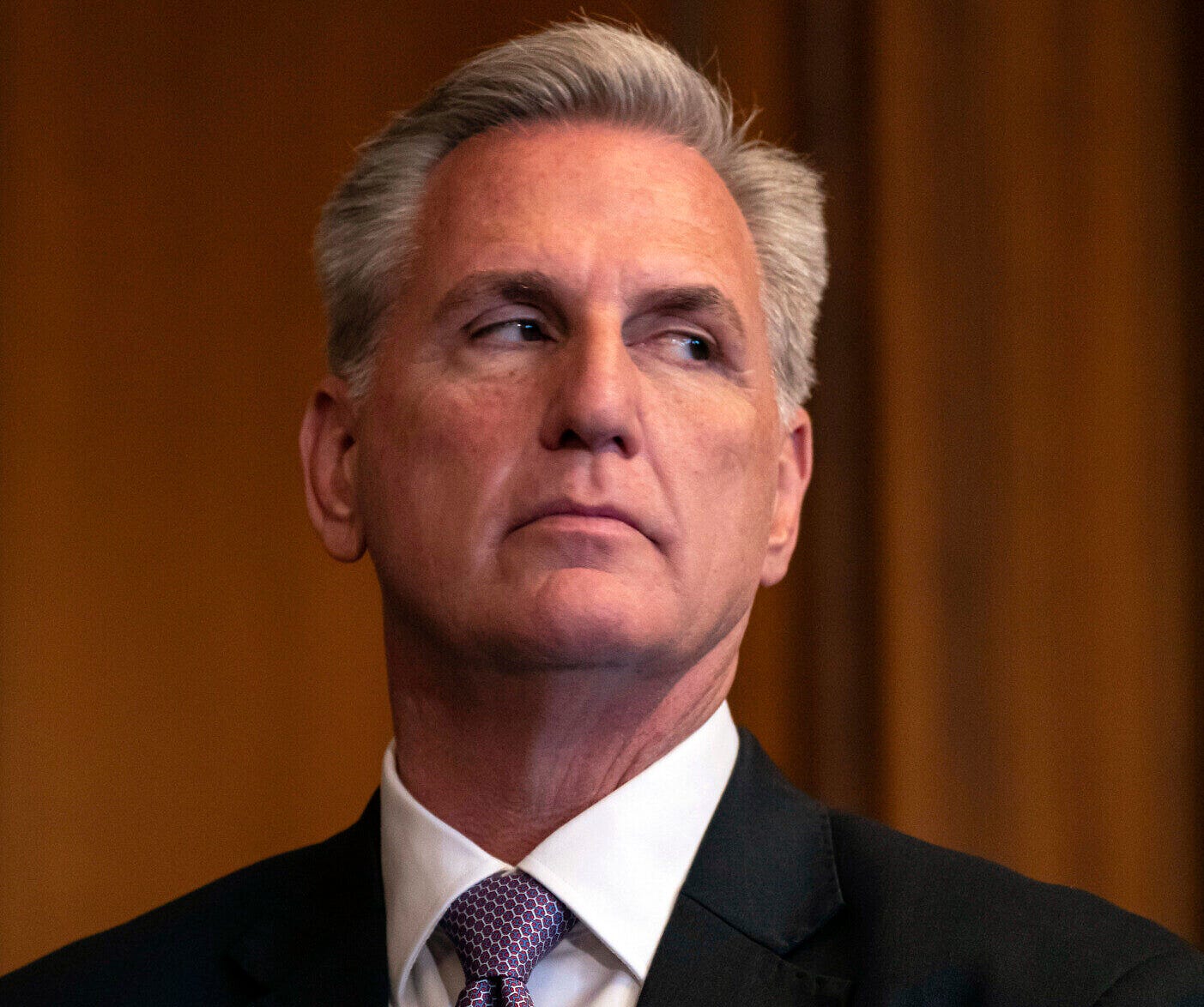
Friends,While MAGA Republicans in the House attack and investigate what they dub Biden’s “weaponized” federal government and blast Democratic mayors for being “soft on crime,” they are blatantly ignoring the crimes of their allies in plain sight.After Rep. George Santos was arrested and charged with 13 federal crimes — seven counts of wire fraud, three counts of money laundering, one count of theft of public funds, and two counts of making false statements to Congress — what did Speaker Kevin McCarthy do?Nothing. In fact, he said he would not act to remove Santos.After ProPublica investigations revealed that Justice Clarence Thomas had failed to disclose, as required by law, luxury gifts from a Republican megadonor — including expensive vacations, a rent-free house for Thomas’s mother, and tuition payments for a child Thomas was “raising like a son” — what did McCarthy do?Nothing. He said he had no concerns, “not at all” about Thomas. House Republicans have made no move to push the Supreme Court toward a code of ethics.What of the former guy’s innumerable transgressions?After Manhattan DA Alvin Bragg brought charges against Trump, McCarthy attacked Bragg. Since Trump was found by a jury to have sexually harassed and defamed E. Jean Carroll, McCarthy has said nothing. Nor has Florida governor Ron DeSantis commented, nor former U.S. ambassador to the U.N. Nikki Haley or Senator Tim Scott, both of whom have launched a 2024 exploratory committees. Meanwhile, most Republican lawmakers continue to deny that Trump sought to overturn the results of the 2020 election and instigate an insurrection.***An earlier generation of conservatives worried about what it saw as a breakdown in social norms in America. They feared the loss of “guardrails” that kept people in line. They fretted about “law and order.”In a famous essay, political scientist James Q. Wilson and criminologist George L. Kelling noted that a broken window in a poor community, left unattended, signals that no one cares if windows are broken there.Because nobody is concerned enough to enforce the norm against breaking windows, the broken window becomes an invitation to throw more stones and break more windows. As more windows shatter, other aspects of community life also start unraveling. The unspoken norm becomes: Do whatever you want here, because everyone else is doing it.This earlier generation of conservatives found the moral breakdown to be mainly in poor and predominantly Black and Latino communities.In 1969, Philip Zimbardo, a Stanford psychologist, arranged to have an automobile without license plates parked with its hood up on a street in the Bronx and a comparable automobile on a street in Palo Alto, California. The car in the Bronx was attacked by “vandals” within ten minutes of its “abandonment.”The car in Palo Alto sat untouched for more than a week. Then Zimbardo smashed part of it with a sledgehammer. Soon, passersby joined in. Within a few hours, the car had been destroyed.Wilson and Kelling concluded that because of the nature of community life in the Bronx — its anonymity, the frequency with which cars are abandoned and things are stolen or broken, the past experience of “no one caring”— vandalism began much more quickly than it did in rich Palo Alto, where people had come to believe that private possessions are cared for and mischievous behavior is costly.But once communal barriers — the sense of mutual regard and the obligations of civility — are lowered by actions that seem to signal that “no one cares,” lawbreaking can take root anywhere. Even at the highest reaches of America.What we are witnessing today is a breakdown of norms at the top. In a former president who still has not been held accountable for his attempted coup. In a Republican speaker of the House who refuses to hold his allies accountable for violations of law. In a recently elected member of the House who has been arrested and charged with numerous federal crimes. In a Supreme Court justice who has accepted jaw-dropping gifts without reporting them as required by law.They are breaking windows right and left. And in doing so, they are inviting more broken windows — implicitly telling America that it’s okay to do whatever you want to do, even if unethical, even if illegal — because people at the highest levels of responsibility in America are doing it.As McCarthy and House Republicans focus their ire on their putative political enemies — seeking examples of lawbreaking and ethical breaches where there are none, while turning a blind eye to lawbreaking by their allies — they are normalizing lawbreaking across the land. Unless this breakage is stopped and its perpetrators held accountable, every window in America — the rule of law itself — is vulnerable. This is a public episode. If you'd like to discuss this with other subscribers or get access to bonus episodes, visit robertreich.substack.com/subscribe

Meeting Justin Jones
Friends,On Sunday I experienced the perfect antidote to the resurgent Trump and Trumpism. I met with Tennessee Representative Justin Jones right after he gave an inspiring talk to our graduating UC Berkeley public policy students. As you may recall, Jones and another young Black Tennessee legislator, Justin Pearson, were expelled last month from the state’s General Assembly for protesting Tennessee’s failure to enact stronger gun controls after a shooting at a Christian school in Nashville took the lives of three nine-year-olds and three adults. Now, he and Pearson are back. And their expulsion has caused a groundswell of support for them and the causes they’re fighting for, in Tennessee and elsewhere around America. A half century separates us. He’s 27, at the start of his career. I’m about to be 77, nearing the end of mine. He’s a young Black man. I’m an old white guy.He’s tall. I’m very short. We grew up in radically different times. But I came away from our discussion profoundly optimistic about the future of this country. In talking with him I felt as if I were passing a generational baton to someone who will be fighting the good fight for the next half century — a new generation that will be more successful than mine in achieving social and economic justice, that will lead the nation toward a strong multiracial, multiethnic democracy. He and Pearson, who took office in November and January, respectively, are community organizers and social justice advocates. Jones has described himself as an activist.“I think our presence as young Black voices for our constituencies, people who will not bow down, those who will not be conformed, that’s what put a target on us the day we walked in the Tennessee General Assembly. … I mean, this is the first time in Tennessee history we had a completely partisan expulsion by predominantly white caucus — all but one member of their caucus is white out of 75 members — and we are the two youngest Black lawmakers in Tennessee. … And so what we saw was a system of political hubris. This was not just an attack on us, it was an attempt to silence our districts.”He believes the biggest challenge his generation faces is the growing assault on democracy. “The Tennessee House Republicans’ attempt to crucify democracy has instead resurrected a movement led by young people to restore democracy, to build a multi-racial coalition … . The message is that we will continue to resist, that this is not the end. Their decision to expel us is not the ultimate authority, but the people will hold them accountable.”Jones is optimistic. “We have an old saying in Tennessee that a mule kicks hardest when it’s dying. They’re fighting us so hard because they realize their power and their systems are dying.”I was also impressed by his candor about the psychological toll the fight was taking on him and others. “Your generation went through the civil rights movement and the anti-war movement,” he told me backstage, “but you didn’t talk about what those fights demanded of you, how the hate they aroused hurt you. Some of you burned out. My generation is different. We recognize the pain, and we find solace in communities that are engaged with us. The opposite of oppression is community. We know the fight will be long. We can’t burn out.”Amen. [With thanks to Tom Lofthouse and Michael Lahanas-Calderón] This is a public episode. If you'd like to discuss this with other subscribers or get access to bonus episodes, visit robertreich.substack.com/subscribe

Trump, Santos, Kevin McCarthy, and other loathsome people
Friends,Welcome back to my Saturday coffee klatch with Heather Lofthouse (executive director of Inequality Media Civic Action, and my former student), when we review the highs and lows (and sometimes very lows) of the week. This week we focus on:— Donald Trump’s horrible lie-fest on CNN. Why did CNN give him a full hour in front of a fawning audience of Trump fans? — E. Jean Carroll’s courtroom victory over Trump, as a Manhattan jury awards her $5 million in damages and finds him liable for sexually abusing her in the mid-1990s. Will she sue Trump again for calling her claim “fake” and a “made-up story” on CNN?— The George Santos indictment. Will Republicans expel him from the House?— The negotiable non-negotiable debt ceiling. Why did Biden sit down with Kevin McCarthy this week? What should Biden do? Grab a cup, pull up a chair, and (if you’re so inclined) take our poll. This is a public episode. If you'd like to discuss this with other subscribers or get access to bonus episodes, visit robertreich.substack.com/subscribe

What the hell should I do with my Cabinet chair?
Friends, Retiring from the university means I have to vacate my office. The university has already scheduled a cleaning and new paint job (as if my years of habitation have somehow infested it). What to do with my books? I’ve accumulated several hundred over the years, now scrunched together on shelves running floor to ceiling. I’ve considered carting them to the student common room with a sign reading “free books” but can’t yet bring myself to part with them. Many are like old friends. They’re filled with my underlinings and marginal notes. A few have traveled with me for 50 years. How can I just put them out? The biggest immediate problem is my Cabinet chair — the chair I sat in at Cabinet meetings when I was secretary of labor. By tradition, Cabinet members purchase their Cabinet chairs when they leave the government. When I left the Labor Department 26 years ago, my staff bought the chair for me as a going-away gift. I was touched at the time. Now, I’m befuddled. It’s heavy and ugly — a clunky late 18th century design that’s been standard in the Cabinet room since William Howard Taft was president. It’s also huge. When I sit in it, my legs shoot straight out like Lily Tomlin playing Edith Ann. And it’s personalized. When you join the Cabinet, a small engraved brass plate is attached to the back of your Cabinet chair showing the date you started (in my case, January 21, 1993). Another is attached when you leave, with the date of your departure (January 12, 1997). Together, they feel like a tombstone.There’s no place for my Cabinet chair in my home. Even if there were, I wouldn't ever sit in it.What should I do with it? Craigslist? Too undignified. eBay? Inappropriate. Auction it off and give the proceeds to charity? Too complicated. It would be best, I think, if the White House would just take it back and reuse it for another Cabinet official (minus my tombstone). I called the White House switchboard yesterday, but the kindly person on the other end of the line didn’t know how to respond. “Hello, I’d like to return my Cabinet chair,” I said. “Which Cabinet office would you like to be connected with, sir?”“Sorry, you misunderstood me. I want to give back my Cabinet chair.” “We don’t dispose of chairs, sir.” “It’s a Cabinet chair.”“We don’t dispose of cabinets, either.”“No, I want to recycle the chair I sat in when I was in the Cabinet.” “You want the White House to recycle?”“Just my Cabinet chair.”“Sorry, sir, we cannot handle your request. Thank you for calling the White House.”***Anybody want a big, ugly, heavy, former Cabinet chair? This is a public episode. If you'd like to discuss this with other subscribers or get access to bonus episodes, visit robertreich.substack.com/subscribe

The Republican threat to our children
Friends, The same Republican state lawmakers who are prohibiting transgender care for young people and barring them from using school bathrooms or playing on sports teams according to their gender identity — all in the name of “protecting children” — are actively subjecting children to more gun violence and pushing younger children into more dangerous jobs.Consider Arkansas, which in April 2021 became the first state to outlaw transition-related medical treatment for minors. A few month ago, after children were found working at a factory owned by Tyson Foods, Arkansas’s second-largest private employer, state lawmakers repealed restrictions on work for 14- and 15-year-olds and eliminated a requirement that children under 16 get a state work permit before being employed.Arkansas also has some of the weakest gun laws in the country and one of the highest rates of children killed by guns. Republican lawmakers in the state now allow concealed guns to be carried at universities.Or consider Iowa. Weeks ago, Republicans there prohibited doctors from giving gender-affirming care to transgender minors and barred transgender people from using school restrooms or locker rooms that don’t align with their sex at birth. Yet these same Iowa lawmakers are lifting restrictions on children employed in hazardous jobs — allowing children as young as 14 to work in meat coolers and industrial laundries and drive themselves up to 50 miles to and from work between 5:00 am and 10:00 pm, and teens as young as 15 to work on assembly lines. Iowa Republicans have also repealed a longstanding state law requiring handgun background checks.Florida Governor Ron DeSantis has portrayed transgender medical care as a major threat to the wellbeing of Florida’s children. At the same time, DeSantis has relaxed child labor rules. And he just signed into law a bill allowing Floridians to carry guns without a state permit.And so it goes across America. In just the last year, the number of children employed in violation of child labor laws has soared 37 percent. Meanwhile, 10 states have recently introduced or passed legislation expanding work hours for children, lifting restrictions on hazardous occupations for children, allowing children to work in locations that serve alcohol, and lowering the state minimum wage for minors.Many of these same states are also making it easier to buy guns, even though firearms have become the number one cause of death for children and teens in the United States, surpassing motor vehicle deaths and those caused by other injuries.Republican hypocrisy? Yes, of course. But it’s worse than that. Follow the money. These Republican lawmakers are taking boatloads of campaign donations from corporations that need workers but would rather hire children than pay higher wages to adults, and from gun manufacturers seeking more business and bigger profits. The quid pro quo? Dismantle child labor protections and allow just about anyone to get and carry a gun. The Republican war on transgender youth is bad enough. It also deflects attention from these other Republican initiatives that are threatening the lives of all children.These same Republican lawmakers are harming children by refusing to extend Medicaid, cutting school budgets, unraveling safety nets, and subjecting children to harsh poverty. And, of course, by forcing women to have children they don’t want or can’t afford in the first place. The rest of us must act — against the easing of gun laws, against the easing of child labor laws, against cutting school budgets, against increasingly restrictive anti-abortion laws, and against the cruel targeting of transgender children. And we must organize and mobilize against gerrymandering and other Republican efforts to entrench their minority rule. Please spread the word. This is a public episode. If you'd like to discuss this with other subscribers or get access to bonus episodes, visit robertreich.substack.com/subscribe

The rise of Republican fascism
Friends,Welcome back to another Saturday coffee klatch with Heather Lofthouse (executive director of Inequality Media and my former student) where we look at the highs and lows and even lowers of the week. Today, we examine:— Joe Biden’s unsurprising announcement that he’s running for reelection. But what does it really mean, and what are his chances?— Kevin McCarthy and the radical House Republicans’ gonzo demands for raising the debt ceiling. What are Biden’s options?— Radical Republicans in Montana, preventing a transgender lawmaker from speaking. Why are Republicans across the nation targeting transgender people?— Goodbye to Tucker. What happened, and where is he going?— Bob’s last class! Please pull up a chair, grab a cup, and if you’re inclined, take our poll.Loading... This is a public episode. If you'd like to discuss this with other subscribers or get access to bonus episodes, visit robertreich.substack.com/subscribe
My upcoming “retirement.”
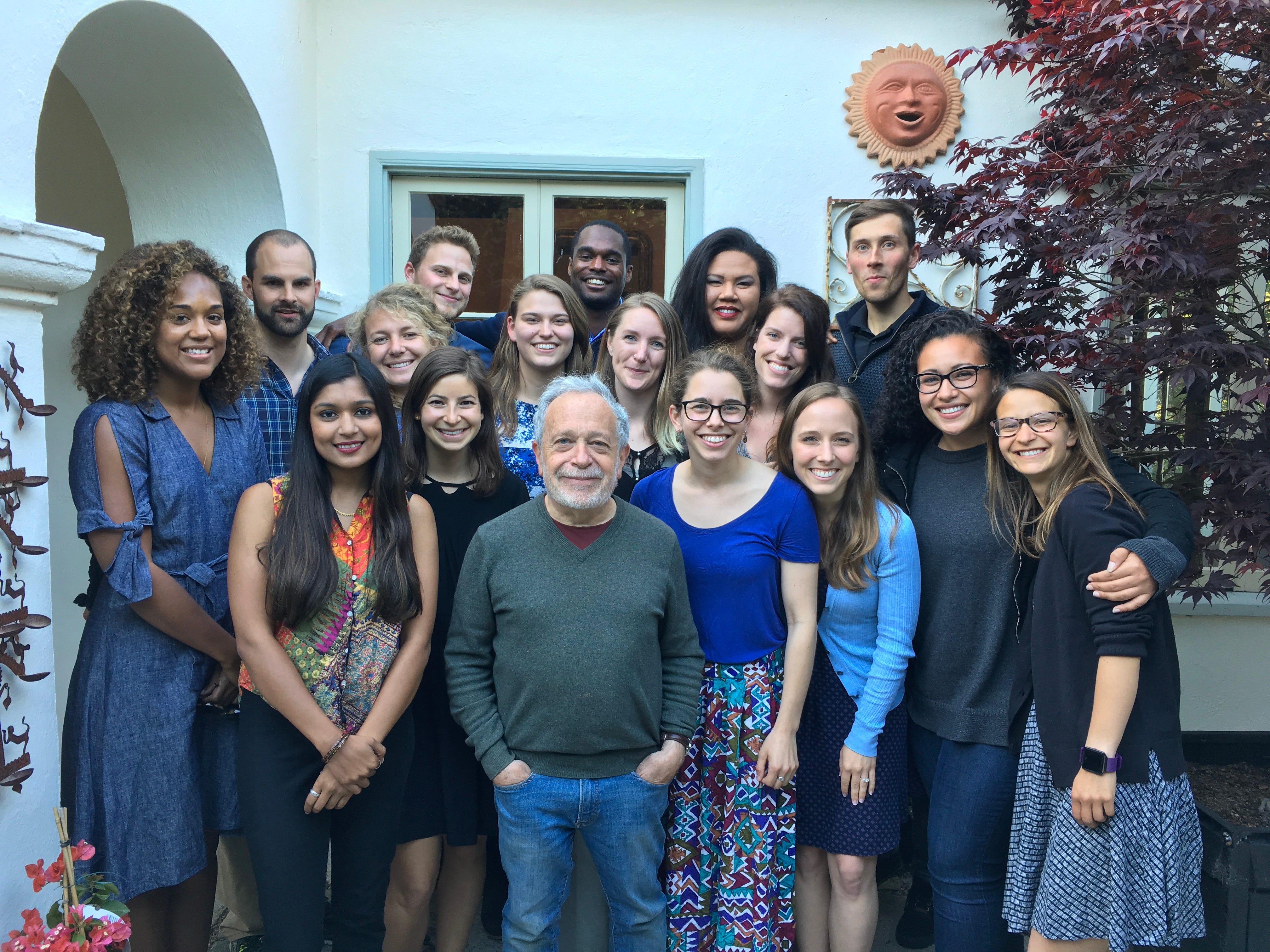
Friends, Ever since word got out that I’ll be retiring from teaching at the end of this semester, people have been asking me what I’ll be doing next?I try to respond politely, but the question annoys the hell out of me. I’m reminded of singer-songwriter Willie Nelson’s response to a fan who asked him when he’ll be retiring: “Retiring from what?” Most people who “retire” usually stop what they call “working” and begin what they call “playing.” But what if your work is also your play? What if it’s your calling? What if it’s deeply meaningful to you? What if you don’t want to do less of it?I’m one of the lucky ones. Most Americans don’t especially enjoy what they do on the job. My father spent most of his working life anxious about earning enough for his family to live on. The moment he turned 65 he stopped working and began collecting Social Security, and he spent the next 31 years playing golf. The original meaning of the word “retire” was to find a secluded or private place. Judges still order juries to “retire” to consider a verdict. This doesn’t describe what I’m doing, either. The last thing I’m looking for is seclusion. So why am I retiring from teaching? I love teaching. I’ve been at it for 42 years. But it seemed better to quit when I’m still able to give students what they deserve. I owe it to them to do it well. [A few of my graduate student teaching assistants]Yet I’ll miss it. Teaching is the most generative thing I’ve done in my life, apart from being a father. I had my yearly doctor’s appointment yesterday. My doctor is a young woman, not much older than many of my graduate students. Everything checked out fine. When she asked me what was new in my life, I told her I was about to retire from teaching. She congratulated me. I burst into tears. I’d been hiding from myself just how much I’ll miss it. Retirement is often confused with aging, but I think the relationship is the reverse. Meaningful work — work that’s more play than work — can lead to a longer life. As Oliver Wendell Holmes Sr. — poet, writer, educator, and physician — once said, people “do not quit playing because they grow old; they grow old because they quit playing.”I won’t any longer be teaching entire courses, but I won’t quit playing. ***By the way, please join me for my Wealth and Poverty course, right here on this page. We’ll be taking a deep dive into the jobs of today and the likely jobs of the future. If you missed the first several classes, no problem. You can pick up anywhere, or retrieve class previous classes from here. This is a public episode. If you'd like to discuss this with other subscribers or get access to bonus episodes, visit robertreich.substack.com/subscribe

Is the GOP turning into an anti-democracy movement?
Welcome back to my Saturday coffee klatch with Heather Lofthouse, when we consider the lows and lower points of the week. Today we look at:— The latest revelations about Clarence Thomas’s corruption — financial gifts from Harlan Crow that by law must be reported. Will Thomas finally be held accountable?— The district court ruling in Texas that overruled the FDA’s decision that a major abortion medication is safe and effective, which has gone to the Supreme Court. Why did the Supreme Court ever think it could rid itself of the abortion issue? — Why the Republican position on abortion will be the end of the Republican Party. — The Dominion Voting Systems $1.6 billion defamation suit against Fox News starts Monday. What’s the best way to ensure that Fox viewers learn that Fox News lied to them about the 2020 election? — My last few weeks of my last class — now on Substack. Please grab a cup, pull up a chair (and, if you wish, take our poll): This is a public episode. If you'd like to discuss this with other subscribers or get access to bonus episodes, visit robertreich.substack.com/subscribe

Office Hours: Will Fox be detoxed?
Friends,The $1.6 billion defamation lawsuit against Fox News — which starts Monday, with jury selection tomorrow — has uncovered a trove of damning text messages and emails showing that Fox News hosts like Tucker Carlson and Laura Ingraham knowingly lied to their viewers about false claims of voter fraud during the 2020 presidential election. A few weeks ago, Delaware Superior Court Judge Eric Davis ruled that the evidence made it “CRYSTAL clear that none of the statements relating to Dominion about the 2020 election are true,” and that the statements from Fox News that are challenged by Dominion constitute defamation “per se.” Today, Judge Davis said he was imposing a sanction on Fox News and would very likely start an investigation into whether Fox’s legal team had deliberately withheld evidence, scolding the lawyers for not being “straightforward” with him. The rebuke came after lawyers for Dominion revealed a number of instances in which Fox’s lawyers had not turned over evidence in a timely manner. The judge also said he would likely appoint a special master to investigate Fox’s handling of discovery of documents and the question of whether Fox had inappropriately withheld details about Rupert Murdoch’s role as a corporate officer of Fox News.Doesn’t look good for Fox.But one key group of people haven’t heard the revelations about Fox News: Fox News viewers. There’s been a near-total blackout of the story on Fox News, and Fox host Howard Kurtz has confirmed that Fox higher-ups have issued orders to ignore the story. Fox has even rejected paid ads that would have alerted viewers about the lawsuit. Other Rupert Murdoch-owned properties, like the New York Post, are also keeping their readers in the dark. Fox News has even filed a motion arguing that the court should maintain the confidentiality of discovery material already redacted by the network, shielding it from the public. So today’s Office Hours question: If the court finds that Fox News defamed Dominion, will Fox viewers ever know the network knowingly lied to them about the 2020 presidential election? And will the judgment force Fox News (and other news media) to change the way they cover the news in the future?What do you think? (I’ll chime in with my own view later today.)**My two cents: IMHO, most of you nailed it. As long as there’s big money to be made by selling lies, weaponizing Trump viciousness, and peddling conspiracy theories, Fox News will continue to do it. The network will appeal any verdict that goes against it, and even if it ultimately loses on the law it will negotiate damages lower than $1.6 billion — and quickly make it up in future revenue. Rupert Murdoch doesn’t give a fig about the public interest or even the opinion of most of the public as long as he can continue to inject profitable toxins into the brains of his viewers (and readers). And he has rounded up sufficiently venal and unprincipled hosts — Tucker Carlson et al — who will also sell dangerous lies as long as they make big bucks doing so. Advertisers don’t care, either, as long as Fox News viewers continue to watch the network’s appalling content.I very much like Marilyn Anderson’s idea that, if Dominion wins the lawsuit, part of any settlement should specify that Fox News make a statement of transparency about the litigation they lost and why.But the basic question here is whether lawmakers are willing — and courts are willing to let them — impose any special responsibilities on cable networks, as they did with the old “fairness doctrine” as once applied to broadcasters who utilized the public spectrum. I doubt it. Wish I could be more optimistic about this, but profiting off of dangerous lies has become a big business in America. This is one of the core challenges to the future of democracy.RRReminder to please join me Friday for the second session of my course on Wealth and Poverty. (If you missed the first session, you can find it here.) This is a public episode. If you'd like to discuss this with other subscribers or get access to bonus episodes, visit robertreich.substack.com/subscribe

What happened to accountability?
Friends,Welcome back to my Saturday coffee klatch with Heather Lofthouse, executive director of Inequality Media Civic Action (and my former student), where we examine the lows and even lowers of the week. Today we look at:— Consequences of the Trump indictment: The Grifter-in-Chief rakes in more money and surges to the top of the race for the 2024 Republican presidential nomination.— Tennessee’s return to Jim Crow: The legislature throws out two Black Democrats for protesting the state’s weak gun laws. — Progressive victories in the Midwest: Surprise wins for mayor of Chicago and a seat on the Wisconsin Supreme Court.— The disgrace of the U.S. Supreme Court: What to do about Clarence Thomas’s flagrant violations of law?Please grab a cup, pull up a chair, and take our poll. This is a public episode. If you'd like to discuss this with other subscribers or get access to bonus episodes, visit robertreich.substack.com/subscribe

Trump’s April fools?
Friends,Welcome back to my Saturday coffee klatch with Heather Lofthouse (executive director of Inequality Media Civic Action, and my former student), where we examine the lows and even lowers of the preceding week. Today we talk about:— Trump’s indictment, and what it really means.— Starbucks’ anti-labor strategy, and what we should do about it.— The Gwyneth Paltrow case, and why it’s gotten so much attention.— My course, starting next Friday right here on this Substack.So grab a cup, pull up a chair, and join us. Also take our poll: This is a public episode. If you'd like to discuss this with other subscribers or get access to bonus episodes, visit robertreich.substack.com/subscribe

Is the banking system safe?
Friends,Welcome back to my Saturday coffee klatch with Heather Lofthouse (executive director of Inequality Media Civic Action, and my former student), where we talk about the lows and the absurdities of the week. So grab a cup and pull up a chair.Today, we look at:— What really happened to Silicon Valley and the other small and medium-sized banks that got bailed out.— Whether this signals the beginning of a period of financial tumult and chaos on Wall Street, in the stock and bond markets, and for global banks. — Whether the Fed is likely to raise interest rates next Wednesday.— What all this means for the bankers and for average people.What do you think? This is a public episode. If you'd like to discuss this with other subscribers or get access to bonus episodes, visit robertreich.substack.com/subscribe

Want the good news or the bad news re: the economy?
Welcome back to today’s coffee klatch, where Heather Lofthouse (executive director of Inequality Media Civic Action and my former student) and I delve into the week’s highs and lows. So grab a cup, pull up a chair, and take our poll (if you wish). Today’s topics:— Friday’s jobs report, and why the big news is wages.— Thursday’s Biden budget, and why the big news is that it’s all a theatrical production designed to counter House Republicans.— Why Wall Street now regards good economic news as bad news. And what all this might mean for the 2024 presidential election. — Plus, our special guest ChatGPT! This is a public episode. If you'd like to discuss this with other subscribers or get access to bonus episodes, visit robertreich.substack.com/subscribe

Murdaugh, Murdoch, and Trump’s loutishness
Friends,Welcome back to our Saturday coffee klatch with Heather Lofthouse (Executive Director of Inequality Media Civic Action, and my former student), as we plumb the depths of the past week. Grab a cup, pull up a chair, take our poll (if you wish), and join us. Today we explore:— Alex Murdaugh’s sentence for murder, and why the country is so fixated on this case.— The revolt of the citizens of East Palestine, Ohio, against the Norfolk Southern Railway, and how they exemplify what’s gone wrong in America.— The Conservative Political Action Coalition’s annual blowout, and why the GOP is coming apart.— Trump’s outrage with Rupert Murdoch for conceding that Trump has been pushing a Big Lie, and what Murdoch’s admission reveals about his non-news organization.— And more. This is a public episode. If you'd like to discuss this with other subscribers or get access to bonus episodes, visit robertreich.substack.com/subscribe

Republicans are right about E.S.G., but for the wrong reason
Friends,For nearly two decades, major corporations have touted principles known as E.S.G. (short for environmental, social, and governance factors), ostensibly by focusing their businesses on these concerns as well as on profits.But now Republicans are taking aim at this approach, calling it “woke capitalism” and using it to demonstrate that Democrats and progressives are trying to impose their views on the rest of society.In other words, the fight over E.S.G. is extending America’s culture war into the C-suites of big American corporations. On Wednesday, Senate Republicans, helped by two Democratic defectors, voted to block a Labor Department rule allowing retirement plan managers to include E.S.G. considerations in their investment plans. The vote is likely to draw President Biden’s first veto.Republicans are right about E.S.G. — but for the wrong reason. The problem with E.S.G. isn’t woke capitalism. It’s corporate capitalism. Corporate money has corrupted American politics so much that our democracy cannot effectively deal with environmental and social concerns.CEOs and pension fund managers who tout their records on E.S.G. are engaged in a kind of social greenwashing — designed to burnish their brands and attract investors (including retirees) who want to believe they’re doing good while they’re also doing well. But most of this is baloney. Investors don’t want to do good at the expense of doing well. They’re unwilling to sacrifice shareholder returns to advance their environmental and social values. They want high returns and they want environmental and social goals. But they can’t have both. They’d do more good by donating to nonprofits seeking to protect the environment and advance the social causes in which they believe. Corporations and institutional investors won’t deviate from maximizing short-term profits and shareholder returns unless they are required to do so by law. And even then, only when the penalty for violating the law multiplied by the probability of getting caught is higher than the profits from continuing with the illegality.When I was secretary of labor, big corporations would violate laws on worker safety, wages and hours, and pensions whenever doing so was cheaper than obeying the law. And they’d fight like hell against such laws to begin with, all the while telling the public what wonderful citizens they were.The soothing corporate and Wall Street talk about E.S.G. is designed to forestall such laws by creating the false impression that corporations are already doing what needs to be done for the environment or social issues, so there’s no need for more laws or regulations.In 2019, the Business Roundtable — one of Washington’s most prestigious corporate groups — issued a widely publicized statement expressing “a fundamental commitment” to the wellbeing of “all of our stakeholders” (emphasis in the original), including employees, communities, and the environment. The statement was widely hailed as marking a new era of E.S.G.Since then, the Roundtable and its members have issued jejune statements about all they’ve done to reverse climate change and alleviate poverty.Not incidentally, these were priorities in President Biden’s “American Families Plan” and “Inflation Reduction Act.” But the Business Roundtable didn’t lobby for these bills. It lobbied against them. Hypocrisy? Only if you believed the Roundtable rubbish about corporate social responsibility and E.S.G. in the first place. The pressures on companies to maximize their profits and share values — social responsibility and E.S.G. be damned — are coming from shareholders, top executives (whose pay is linked to stock performance), and retirement plan managers, even those who tout their commitment to E.S.G.It’s tempting to chalk this up to “greed,” but neither corporations nor retirement plans are capable of such emotions. They aren’t people, no matter what the Supreme Court says. They’re bundles of contracts. The specific people who enter those contracts on behalf of corporations, shareholders, and retirees have no interest or expertise in the environment or in any particular social issues. They’re simply doing what they understand to be their jobs — maximizing shareholder value.If we want these transactions to be better aligned with public needs rather than private profits, laws must demand this, and penalties for violating laws must be increased. Corporate taxes must rise to fund public investments in non-fossil fuels and social safety nets. Regulations must be strengthened to protect the public.But laws and regulations won’t do any of this if corporations continue to spend vast sums on politics.The most telling trends over the last three decades have been the growing share of the economy going into corporate profits — generating ever-greater compensation packages for top executives and ever-higher payouts for investors — and the declining share going to most Americans as wages and salaries.Much of the reason is the vast in

Office Hours: Musk’s racism
Friends,After Scott Adams, the creator of “Dilbert,” called Black people a “hate group” and said, “I don’t want to have anything to do with them” and that white people should “get the hell away from Black people,” media outlets have dropped his comic strip.In response, last Sunday Twitter chief Elon Musk blasted the media as being “racist against whites and Asians.” He offered no criticism of Adams’s comments.Later, Musk agreed with a tweet that said “Adams’ comments weren’t good” but “there’s an element of truth” to them. Musk then suggested that media organizations promote a “false narrative” by giving more coverage to unarmed Black victims of police violence than they do to unarmed white victims of police violence.Since Musk took over Twitter in October, the platform has seen a spike in virulently racist slurs. In November, Musk met with leaders of civil rights groups to assure them that he would not reinstate banned Twitter accounts until he established a clear process for doing so, and that representatives from civil rights groups would be included on a content moderation council to advise Twitter on these policies.But Musk never formed the content moderation council. Instead, he reinstated numerous banned accounts, including those of neo-Nazis and others previously banned for hate speech.Meanwhile, the public is being swamped with Musk tweets. When a tweet that he posted during the Super Bowl failed to achieve as much engagement as a tweet from President Joe Biden, Musk demanded that Twitter staff change its algorithm to artificially inflate Musk’s tweets by a factor of 1,000. Many people who have not chosen to follow Musk are being served his tweets in their feed through the “For you” tab of the app’s homepage.In sum, the richest person in the world used part of his fortune to buy one of the world’s largest media platforms, then reinstated previously banned neo-Nazis and peddlers of hate speech, then allegedly changed its algorithms to make his posts into the platform’s most popular, and is now defending a racist cartoonist and criticizing the media as being racist against white people. So today’s Office Hours question (and poll): What, if anything, should be done about this? (As usual, I’ll chime in later today.) This is a public episode. If you'd like to discuss this with other subscribers or get access to bonus episodes, visit robertreich.substack.com/subscribe
AI’s biggest impact?
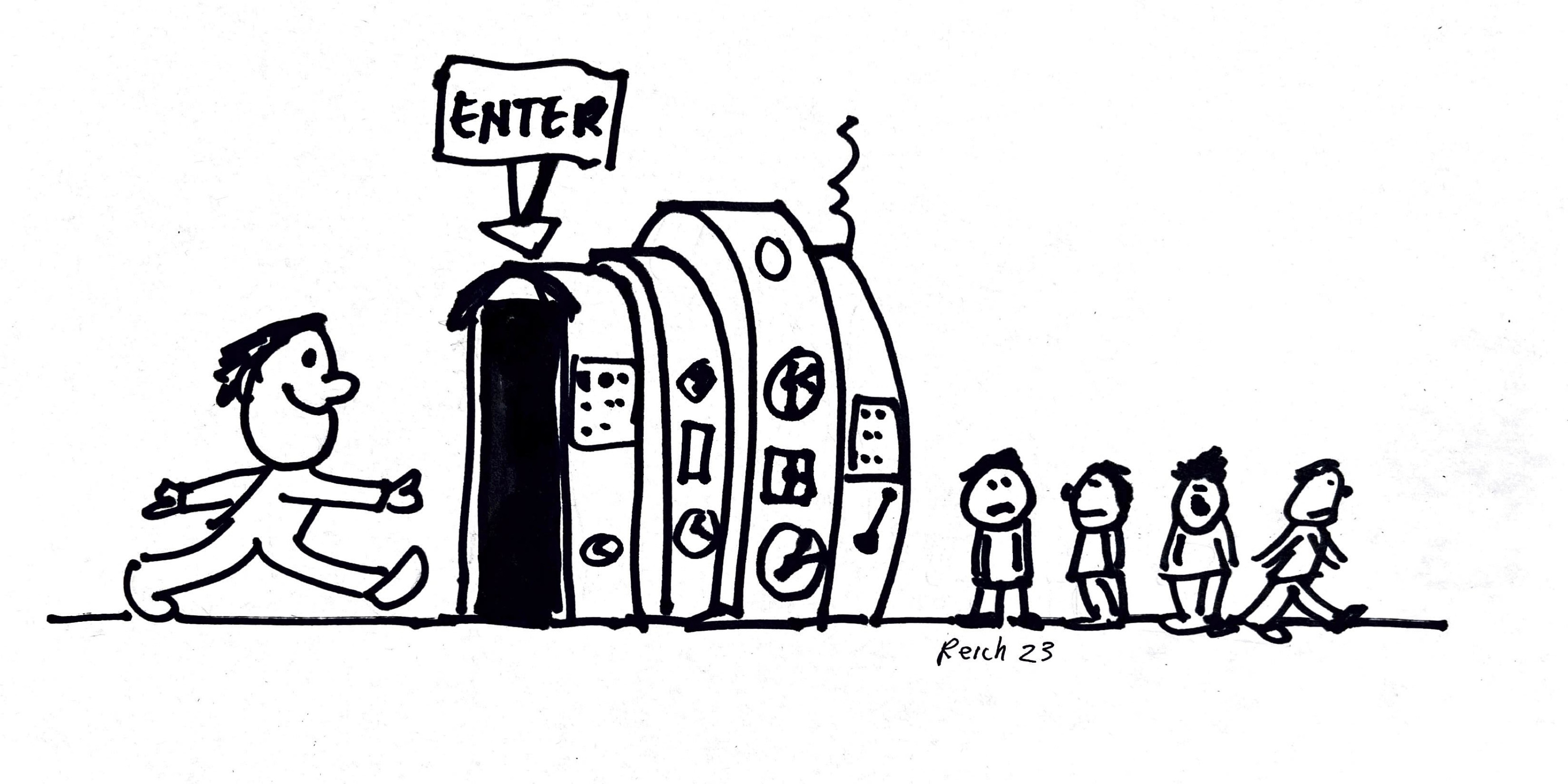
Friends,Artificial intelligence (AI) is finally hitting the economy and society big time. Bing’s chatbot (Microsoft plans a wide release soon) is capable of long, open-ended text conversations on virtually any topic. It’s caused a Times columnist to become “deeply unsettled, even frightened.” Google engineer Blake Lemoine was fired after claiming that the firm’s AI model, LaMDA, is “sentient.”It’s causing professors like me to wonder how to distinguish between student writing on exams and AI writing. It’s causing people who track online misinformation to worry it will undermine democracy. “This is going to be the most powerful tool for spreading misinformation that has ever been on the internet,” warned Gordon Crovitz, co-chief executive of NewsGuard, which tracks online misinformation. It’s causing philosophers and biologists to fret that it will eventually destroy human beings and take over the world (Hal? You still there?). But one aspect we’re not talking about enough is AI’s effect on work. We all know what happened when complex machines first began taking over jobs. Then mechanization replaced skilled artisans. Then automation replaced repetitive jobs that could be put into software code. Numerically controlled machine tools and robotics replaced assembly lines. More recently, big data processing has replaced much analytic work. Now comes AI — which will replace almost all professional work. At every stage, productivity (output per worker) has increased dramatically, so fewer workers have been needed to accomplish what came before. This has reduced the bargaining power of less-skilled workers to obtain high wages, while fueling the compensation of people who produce the labor-replacing technologies. We’re now approaching an inflection point when the financial returns to AI’s producers are heading into the stratosphere, even as professional jobs disappear. Wall Street is going nuts over AI. Venture capitalists are pouring hundreds of billions into it, driving up startup valuations. Microsoft’s rally on Bing pushed its market capitalization to above $2 trillion. Alphabet’s stock is expected to soar more than 20 percent on its AI investments. But after AI takes over almost all remaining jobs (including those of the venture capitalists who finance AI and the engineers who design it), what exactly will human beings be doing to make money? Or to put the matter more baldly, who will be able to afford any of the wondrous goods and services powered by AI if we no longer have incomes? My prediction: It will be the high-level professional class, including top business executives and the wizards of finance, who push for the most obvious solution: A guaranteed universal basic minimum income for everyone, financed by a tax on AI. A universal basic income could be a potential solution to ensure that individuals have a basic income to support themselves and their families. UBI is a system in which every citizen or resident of a country receives a regular, unconditional sum of money from the government, regardless of their employment status. The goal of UBI is to provide individuals with enough income to meet their basic needs, such as food, shelter, and health care.(The last paragraph, above, was generated entirely by ChatGPT. The rest of this letter came from me. Promise.) This is a public episode. If you'd like to discuss this with other subscribers or get access to bonus episodes, visit robertreich.substack.com/subscribe

What’s Kevin McCarthy’s deal with Tucker Carlson?
Welcome back to our Saturday coffee klatch, where Heather Lofthouse (executive director of Inequality Media Civic Action, and my former student) and I examine the highlights and lowlights of the week. Today we look into:— Kevin McCarthy’s decision to give Fox News’s Tucker Carlson exclusive access to 40 hours of surveillance video from January 6, 2021. Is this a way for House Republicans to plant a “false flag” narrative about what happened on that fateful day?— Two dangerous illustrations of corporations off the rails — the Norfolk Southern Railway derailment, courtesy of the Trump administration’s decision to trash proposed safety rules, and a Nebraska meatpacker that’s been hiring 13-year-olds to do hazardous work. So why do Republicans continue to demand “deregulation”?— Yesterday’s one-year anniversary of Putin’s invasion of Ukraine, and Biden’s historic (and dangerous) visit to Kyiv last Monday. Why did Biden do it? What’s his game plan from here onward?— Special Prosecutor Jack Smith subpoenas Ivanka and Jared to testify. Does this mean the Justice Department’s grand jury is on a fast track to prosecuting Trump?— Britain’s experiment with a four-day workweek. A good idea?And some final thoughts about President Jimmy Carter. Please grab a cup, pull up a chair, and take our poll. This is a public episode. If you'd like to discuss this with other subscribers or get access to bonus episodes, visit robertreich.substack.com/subscribe

Two notable presidential conversations with Zelensky
Friends,The two men most likely to square off for the presidency of the United States next Election Day have held notably different conversations with Ukrainian President Volodymyr Zelensky.On July 25, 2019, then President Donald Trump spoke with Zelensky from the White House residence, ostensibly to congratulate Zelensky on his election. During that conversation, Trump reminded Zelensky that “the United States has been very good to Ukraine.” Trump knew full well that Zelensky was desperate for some demonstration of support from the American president. Some 13,000 of Zelensky’s people already had been killed in the five-year conflict between Russian-backed separatists and government forces in Ukraine. Nonetheless, just days before phoning Zelensky, Trump froze nearly $400 million of U.S. aid to Ukraine. Trump continued:“I would like you to do us a favor, though, because our country has been through a lot and Ukraine knows a lot about it…. There’s a lot of talk about Biden’s son, that Biden stopped the prosecution, and a lot of people want to find out about that so whatever you can do with the attorney general would be great. Biden went around bragging that he stopped the prosecution, so if you can look into it …. It sounds horrible to me.… I will have Mr. Giuliani give you a call and I am also going to have Attorney General Barr call and we will get to the bottom of it.”Zelensky did not want to offend Trump but did not commit to helping Trump dig up dirt on the son of the person most likely to oppose Trump in the 2020 election.Fast forward. On February 20, 2023, the first anniversary of the Russian invasion of Ukraine, Joe Biden spoke directly with Zelensky in Kyiv, noting that “Kyiv stands. And Ukraine stands. Democracy stands.” For Trump, Ukraine was a pawn to get dirt on Biden before the 2020 election. For Biden, Ukraine is a critical ally in America’s fight against global tyranny. Trump’s goal in speaking with Zelensky in 2019 was the aggrandizement of Donald Trump. That was to be expected. As president, Trump had no agenda except to feed his monstrous ego. Trump described his 2019 call with Zelensky as “perfect” because Trump saw nothing wrong in suggesting that continuing U.S. support for Ukraine should hinge on Zelensky’s helping him win reelection.Yet that phone call posed a direct challenge to American democracy. The use of presidential power to solicit a foreign nation’s help in getting reelected is not only barred by law and the Constitution; it undermines public trust in our system of self-government. Biden’s goal in speaking with Zelensky in Kyiv was the opposite — to strengthen democracy against authoritarianism. As Biden explained, he made the dangerous trip because “I thought it was critical that there not be any doubt, none whatsoever, about U.S. support for Ukraine in the war. It’s not just about freedom in Ukraine. It’s about freedom of democracy at large.”As Biden said the next day in Warsaw, Putin’s invasion of Ukraine had tested “all democracies.” Over the last year “the democracies of the world have grown stronger, not weaker. But the autocrats of the world have grown weaker, not stronger.”For Biden, American policy — both foreign and domestic — should be premised on protecting democracy from authoritarian forces seeking to undermine it, whether that force is Vladimir Putin or Donald Trump. Biden’s speech in Warsaw came just hours after Putin gave his own address in Moscow. Putin characterized the war in Ukraine as an existential struggle against the West, which he claimed started the war. In response, Biden charged that “Putin chose this war,” and that “every day the war continues is his choice. " By traveling to Kyiv, the oldest president in American history also demonstrated the stamina and grit of someone decades younger. Biden departed Andrews Air Force Base outside Washington D.C. early Sunday morning, landed in Poland, took a 10-hour train ride from the Polish border, and arrived in Kyiv-Pasazhyrsky station roughly 24 hours after leaving Washington. He then met with Zelensky at Mariinsky Palace, joined him in laying a wreath at the Wall of Remembrance at St. Michael’s Golden-Domed Monastery, and stopped by the U.S. Embassy to meet with staff before heading back to the Polish border by train and then on to Warsaw. The undertaking required courage and determination. Biden is the first president since Abraham Lincoln to venture into a war zone not under the control of American forces.Donald Trump’s notorious conversation with Zelensky in 2019 required neither stamina, nor grit, nor courage. It did show determination — but not to protect democracy. It showed Trump’s fanatical resolve to remain in power, democracy be damned. This is a public episode. If you'd like to discuss this with other subscribers or get access to bonus episodes, visit robertreich.substack.com/subscribe