
The Coffee Klatch with Robert Reich
470 episodes — Page 5 of 10

Saturday coffee klatch: Bad actors
Friends,Welcome back to our Saturday coffee klatch where Heather Lofthouse (executive director of Inequality Media Civic Action, and my former student) and I discuss the highlights and lowlights of the week. Today we focus on:— The likely indictment of Donald Trump— Hypocrisy at Fox News— Why Nikki Haley doesn’t stand a chance— Senator John Fetterman’s clinical depression— Norfolk Southern Railway’s lobbying— Why the Fed thinks great economic news is awful— The U.S. Department of LaborPlease grab a cup, pull up a chair, and take our poll:Thank you to Janet Harsbberger for sending us her personal “visual” when she listens to the klatch, a painting done by her late sister Carol Baumann. This is a public episode. If you'd like to discuss this with other subscribers or get access to bonus episodes, visit robertreich.substack.com/subscribe

Don’t let Republicans claim the mantle of patriotism
Friends,Last Tuesday, House Republicans stood for a 43-minute recitation of the United States Constitution. This came just after Republicans on the House Judiciary Committee instituted a requirement to recite the Pledge of Allegiance before each meeting. Further pledges, flag salutes, and Constitution recitations are planned. Why are Democrats allowing Republicans to blanket themselves with conspicuous displays of patriotism, especially when the GOP has become the party of traitorousness and treachery?Recall that eight Republican senators and 139 Republican representatives objected to the certification of electors in the 2020 election, based on no evidence. Many continue to deny the outcome of that election. Several are still repeating Trump’s Big Lie that the election was stolen from him.Last June, Rep. Liz Cheney charged members of her own party who continued to support Trump’s Big Lie with “defending the indefensible,” warning that “there will come a day when President Trump is gone, but your dishonor will remain.”Well, Trump is now almost gone. His nascent presidential campaign is sputtering. But instead of ostracizing them, Republican House Speaker Kevin McCarthy has given those who defended Trump plum seats on congressional committees. Democrats should repeatedly speak out against these Republican traitors. Democrats should also criticize Republican lawmakers who are equating patriotism with white Christian nationalism. In a recent speech, Florida Governor Ron DeSantis — whose popularity in today’s GOP rivals that of Trump — called on Americans to “put on the full armor of God. Stand firm against the left’s schemes.” DeSantis has prohibited the teaching of Black history, prevented teachers from discussing gender identity, and made it easy for parents to remove books from schools. He is now asking state universities for the numbers and ages of students who have sought or received sex-reassignment surgery and hormone prescriptions.Rep. Lauren Boebert of Colorado says she is “tired of this separation of church and state junk” and “the church is supposed to direct the government.” Rep. Marjorie Taylor Greene says, “we need to be the party of nationalism and I’m a Christian, and I say it proudly, we should be Christian nationalists.”Democrats should make clear that Christian nationalism is the opposite of patriotism. America’s constitutional and moral mission has been to separate politics from religion — providing equal rights to Christian, Muslim, Jewish, Mormon, atheist, and agnostic. Real patriots don’t fuel racist, religious, gender, or ethnic divisions. To the contrary, patriots seek to confirm and strengthen and celebrate the “we” in “we the people of the United States.”Nor do patriots ban books or prevent teaching about the sins of our past. Democrats must also remind the nation that patriotism requires taking a fair share of the burdens of keeping America going — sacrificing for the common good. Paying taxes in full rather than lobbying for lower taxes or seeking tax loopholes or squirreling away money abroad. Paying America’s debts rather than using the threat of national default to extract political concessions from the other party. Above all, Democrats should be saying that patriotism involves strengthening our democracy — defending the right to vote and ensuring more Americans are heard rather than claiming without evidence that millions of people voted fraudulently. True patriots don’t put loyalty to their political party above their love of America. True patriots don’t support an attempted coup. Patriotism means refraining from financial contributions that corrupt our politics. Blowing the whistle on abuses of power even at the risk of losing one’s job. Volunteering time and energy to improving the community and country.And Democrats need to reaffirm that when serving in public office, patriots do not use their office to increase their wealth. When serving as judges, they recuse themselves from cases where they may appear to have a conflict of interest. When serving on the Supreme Court, they don’t disregard precedent to impose their own ideology.In sharp contrast to the superficial demonstrations of patriotism now being utilized by the Republican Party, Democrats must remind Americans that one of the major responsibilities of lawmakers and other public servants is to maintain and build public trust in the offices and institutions they occupy. Now is the time for Democrats to reclaim patriotism and affirm its true meaning. This is a public episode. If you'd like to discuss this with other subscribers or get access to bonus episodes, visit robertreich.substack.com/subscribe
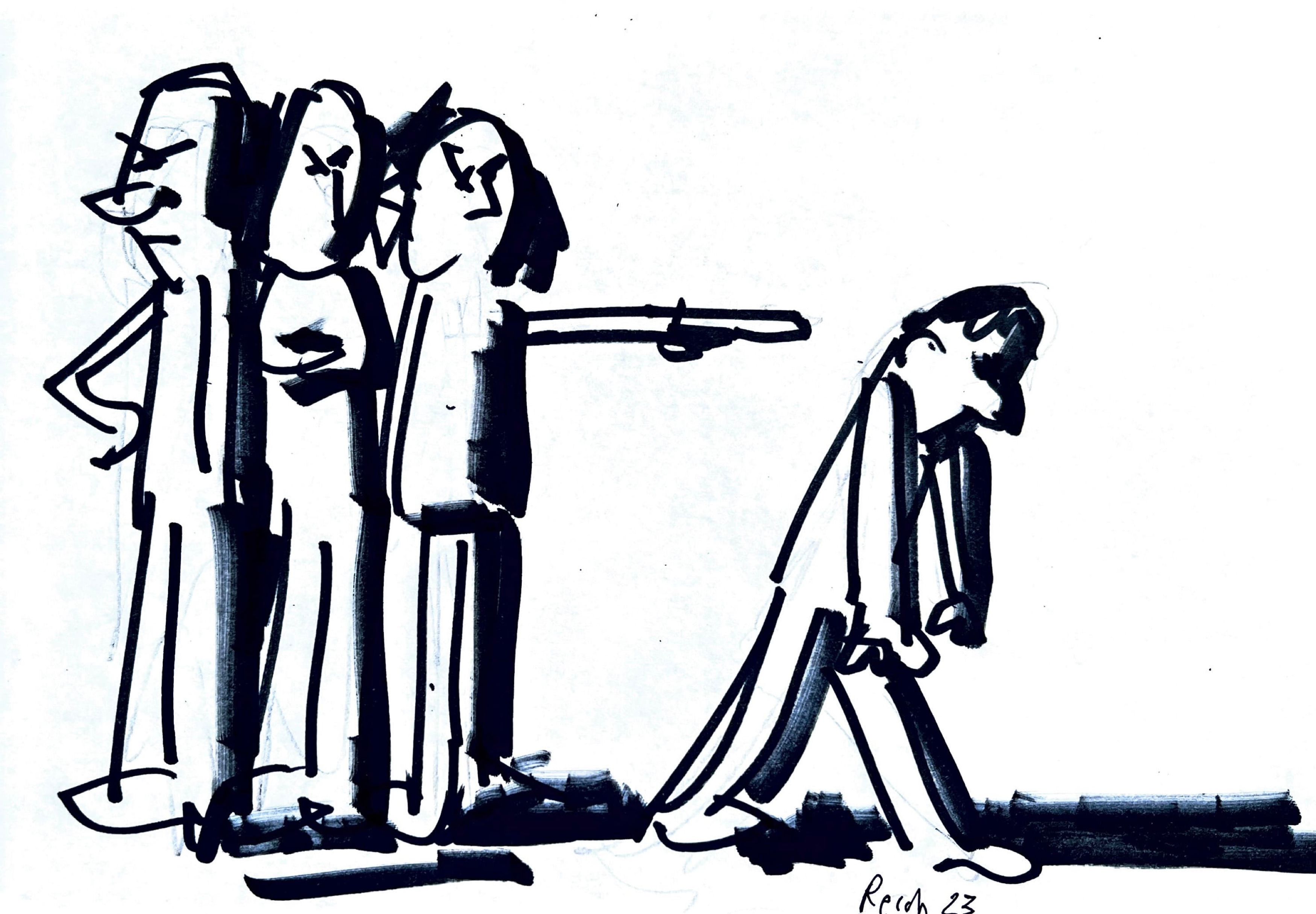
The death of shame
Friends,At President Biden’s State of the Union address last week, Georgia Republican Rep. Marjorie Taylor Greene repeatedly yelled “Liar!,” Tennessee Republican Rep. Andy Ogles shouted, “It’s your fault!,” and another Republican yelled “B******t!”Fourteen years ago, Republican Rep. Joe Wilson was formally rebuked by the whole House after shouting “you lie” at Obama.Yet now, anything goes.Meanwhile, Rep. George Santos remains in Congress despite mounting revelations of outright lies, fabrications, and shady deals that years ago would have sent a member of Congress packing.We’ve also just learned about Jared Kushner’s quid pro quo with Saudi Crown Prince Mohammed bin Salman (MBS). As Middle East adviser to his father-in-law, Kushner gave MBS everything he wanted — Trump’s first trip abroad, permission to blockade Qatar, a pass on imprisoning leading Saudi citizens until they paid him billions and another on killing and dismembering journalist Jamal Khashoggi (as Trump later put it, “I saved his [MBS’s] ass.”).Then, after Kushner left the White House, MBS reciprocated by putting $2 billion from the sovereign wealth fund he chaired into Kushner’s private equity company.Where’s the shame?Elon Musk’s concern about the dwindling number of people seeing his tweets prompted the zillionaire to convene a group of engineers last Tuesday to discover why his engagement numbers were tanking. When one of the company’s two remaining principal engineers explained it was likely due to waning public interest in Musk’s antics, Musk fired the engineer.We used to call such behavior shameless. Now, it’s just what the rich and powerful do.Shame once reenforced social norms. Through most of human history, survival depended on extended families, clans, and tribes. To be shamed and ostracized for violating the common good often meant death.Charles Darwin, in his book The Expression of the Emotions in Man and Animals, thought shame may have evolved as a way to maintain social trust necessary for the survival of a group and, therefore, of its members.In a 2012 paper, psychologists Matthew Feinberg and Dacher Keltner and sociologist Robb Willer found evidence that shame and embarrassment function as a kind of “nonverbal apology” for having done something that violates social norms. A display of embarrassment shows others that the embarrassed person is still aware of the group’s expectations and is still committed to the group’s well-being.Four centuries ago, public shaming included scarlet A’s. “Ignominy is universally acknowledged to be a worse punishment than death,” wrote Benjamin Rush, a signer of the Declaration of Independence who also sought to put an end to public stocks and whipping posts.A more recent version of public shaming occurred in 1954 when Joseph Welch, then chief council for the U.S. Army, stood up to Sen. Joseph McCarthy before a nationwide television audience. During a hearing in which McCarthy accused the army of harboring communists, McCarthy attacked one of Welch’s young assistants for having once belonged to the National Lawyers Guild, which McCarthy considered a communist front.Welch responded: “Until this moment, Senator, I think I have never really gauged your cruelty or your recklessness …. Have you no sense of decency, sir?” Millions of Americans watching the proceedings from their living rooms saw McCarthy as the dangerous bully he was. By shaming him, Welch shamed America for having tolerated McCarthy and the communist witch hunt he was leading. It was the beginning of the end of McCarthy’s reign of terror.But today, shamelessness has gained a certain elan. Audacity, insolence, and impudence are welcomed. Irreverence is celebrated. We hoot when someone gives society the bird. Many Americans love Donald Trump’s loutishness. Meanwhile, instead of being directed at behavior that undermines the common good, shame is now often deployed against people who don’t fit in. Social media unleashes torrents of invective on people for little more than saying something silly or looking different or being socially inept. Shaming like this can cause a sensitive teenager to take his or her life.Why are those who violate social norms now treated like Wild West outlaw heroes, while those who are different are ridiculed? Why are bullies now applauded while those at the margin are ostracized? This is a public episode. If you'd like to discuss this with other subscribers or get access to bonus episodes, visit robertreich.substack.com/subscribe
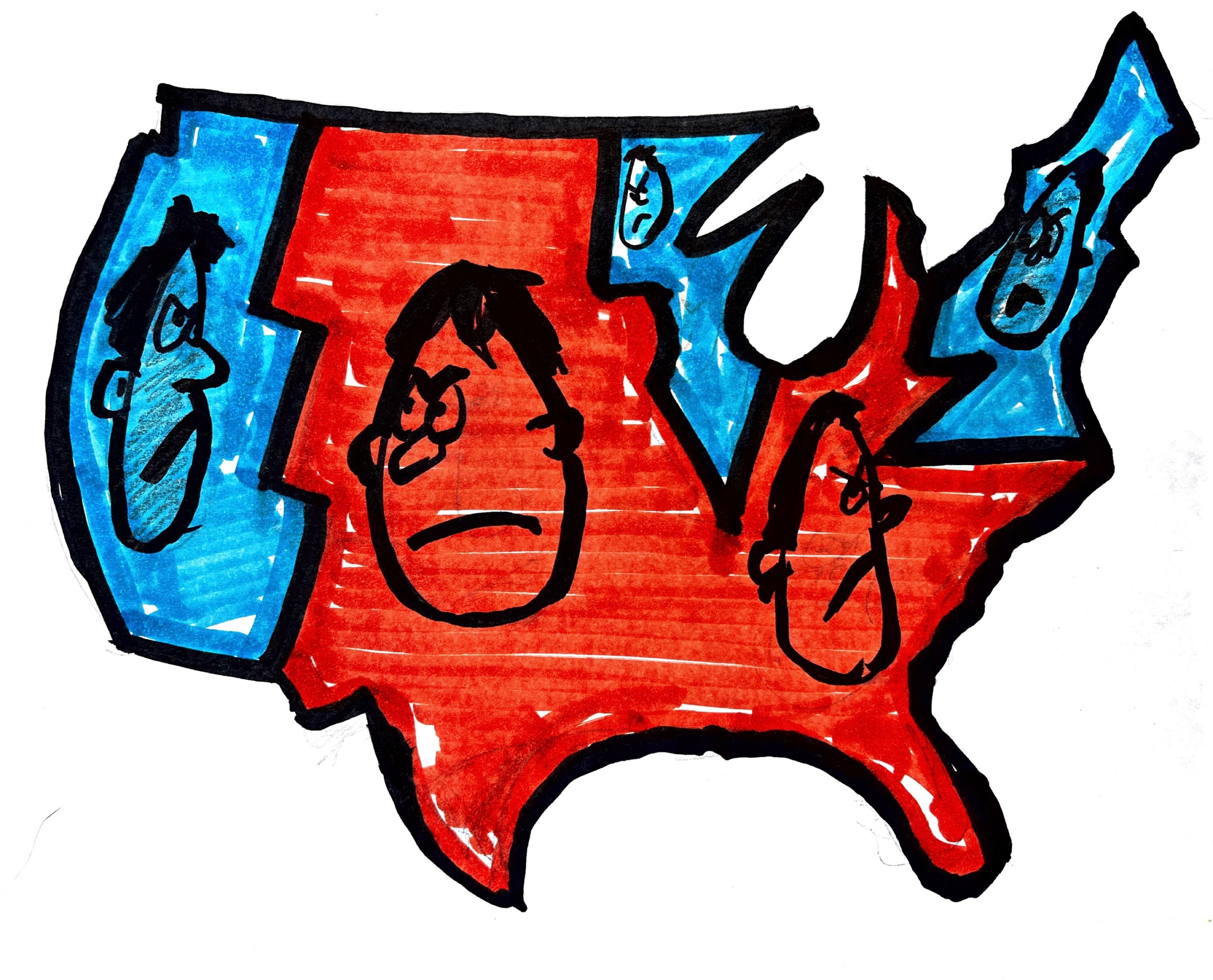
How do we get democracy back into presidential elections?
Friends,I don’t know about you, but I look at the next 20 months leading up to the 2024 presidential election with some dread. That’s not because I’m especially worried Donald Trump or Ron DeSantis or someone equally horrific will be elected. I’m dreading the next 20 months because the entire process of selecting our president has become so fraught, divisive, and arbitrary that it threatens the foundation of our democracy. So today I want to share with you a little political hope — not my mother’s “all things will work out fine in the end” fantasy, but something doable and practical that could even have a positive effect on next year’s presidential election. A bit of background: About 80 percent of us have effectively become bystanders in presidential elections. That’s because most of us live in states so predictably Democratic or Republican that we’re taken for granted by candidates. Presidential elections now turn on the dwindling number of “swing” states that could go either way, which gives voters in these states huge leverage.In 2020, Biden owed his Electoral College victory to just 42,918 votes spread over Georgia, Arizona, and Wisconsin. In 2016, Trump owed his Electoral College victory to 77,744 votes spread across Wisconsin, Pennsylvania, and Michigan.Contrast these slim margins with the results of the national popular vote. In the last five elections, candidates who received the most popular votes nationwide led their opponents by an average of 4.9 million votes — more than 100 times that of the razor-thin battleground wins.The current state-by-state, winner-take-all Electoral College system of electing presidents is creating ever-closer contests in an ever-smaller number of closely divided states for elections that aren’t really that close. These razor-thin battleground margins also invite post-election recounts, audits, and lawsuits — even attempted coups. A losing candidate might be able to overturn 42,918 votes with these techniques. On the other hand, overturning 4.9 million votes would be a nearly impossible task.As such, the Electoral College system combined with the dwindling number of battlegrounds presents a growing threat to the peaceful transition of power.And it’s become more and more likely that candidates are elected president without winning the most votes nationwide. It’s already happened twice this century.The Electoral College is an anachronism that should be abolished. But that would require a constitutional amendment, which is almost impossible to pull off — requiring a two-thirds vote by the House and Senate plus approval by three-fourths of state legislatures.There’s an alternative. We can make the Electoral College irrelevant by getting our states to join the National Popular Vote Interstate Compact. Don’t let that mouthful put you off. It could save our democracy. The Compact will guarantee the presidency to the candidate who receives the most popular votes nationwide without a constitutional amendment.How does it work?As you know, the Constitution assigns each state a number of electors based on its population (that is, the number of its representatives in the House plus two senators). The total number of electors is 538. So anyone who gets 270 electoral votes becomes president.Article 2 of the Constitution allows states to award their electors any way they want.So all that’s needed is for states with a total of at least 270 electoral votes to agree to award all their electoral votes to the presidential candidate who wins the national popular vote.If they do that, the winner of the popular vote would automatically get the 270 Electoral College votes needed to be president.The movement to make this a reality is already underway. So far, 15 states and the District of Columbia have joined the Compact — agreeing that once enough states join, all their electoral votes will go to the popular vote winner. The current members of the Compact have 195 electoral votes among them. So if a few additional states comprising 75 electors join — agreeing to award all their electoral votes to the winner of the national popular vote — it’s done.Popular vote laws have recently been introduced in Michigan (with 15 electors) and Minnesota (with 10), which would bring the total to 220. Naturally, this plan will face legal challenges. Many powerful interests stand to benefit by keeping the outdated Electoral College in place.But if we keep up the fight and get enough states on board to reach 270 electors and withstand the predictable legal challenges, America will never again elect a president who loses the national popular vote. No longer will 80 percent of us be effectively disenfranchised from presidential campaigns. No longer will a handful of votes in “battleground” states determine the winner — inviting recounts, audits, litigation, and attempted coups that threaten our democracy.If you want to know more or get involved, click here to read about the National Popular Vote Interstate Compact.

Saturday coffee klatch: Axe throwing
Welcome back to our Saturday coffee klatch with Heather Lofthouse, executive director of Inequality Media Civic Action (and my former student), where we explore the highs and lows of the past week. Pull up a chair and grab a cup. On today’s docket: — Biden’s State of the Union address. Why we think it ranks as one of the best ever. — George Santos, Marjorie Taylor Greene, Lauren Boebert, and other raving Republicans. Why have congressional Republicans gone stark raving mad? — The terrible tragedy in Turkey and Syria. Why isn’t help getting to people who need it?— Elon Musk plays Donald Trump again. Why is the richest man in the world firing employees who don’t reward his ego?— Tomorrow’s Super Bowl. Why is professional football good for America? — Plus: Heather’s report on her glow-in-the-dark axe throwing. Thank you to Corey Kaup and Deirdre Broderick for today’s theme song.And today’s poll: This is a public episode. If you'd like to discuss this with other subscribers or get access to bonus episodes, visit robertreich.substack.com/subscribe

Office Hours: Why the discrepancy between what Biden has achieved and what Americans think about him?
My friends,As I mentioned last night, I thought Biden’s second State of the Union address was superb. It was one of the best State of the Union speeches I’ve witnessed — and I’ve witnessed many. Biden’s record so far has also been impressive — even though for the first two years of his presidency, the Democrats held a razor-thin congressional majority, and the Republican Party has become more traitorous and treacherous than at any time in modern American history. Yet despite Biden’s impressive record, only 42 percent of Americans approve of his presidency. That’s barely above the 41 percent at his last State of the Union address, and a lower approval rating at this point in his presidency than any president in 75 years of polling except for Trump and Reagan (who at this point was hobbled by a deep recession).Despite Biden’s significant achievements, fully 62 percent think he has accomplished “not very much” or “little or nothing” during his presidency. Majorities believe he has made no progress on his signature initiatives — from improving the country’s infrastructure to making electric vehicles more affordable to creating jobs.And even though jobs are being created at an almost unprecedented rate, unemployment is at its lowest since 1969, and inflation is dropping, Americans are deeply pessimistic about the economy.So what gives? Why the discrepancy between what Biden is achieving and what Americans think? Please share your thoughts. I’ll give you my take later today. Also, please take our poll:Let me add a few thoughts of my own. First, let me stress my belief that Joe Biden has been an exceptionally good president. The only reason I bring up his low ratings is to try to understand why, despite his achievements, most of the public doesn’t seem to share my view. Opinion polls are notoriously inaccurate, as we’ve all witnessed in the last major elections. Yet Biden’s consistently low ratings across almost all polls — and the bizarre fact that he’s polling no better than Trump did at this point in Trump’s presidency — can’t be blamed simply on inadequate polling methods.Many of you blame the media — both Fox News and its radical right imitators, as well as the mainstream — for minimizing Biden’s achievements and exaggerating his inadequacies. I largely agree. Fox News and other rightwing outlets continue to poison America. As to the mainstream media, as to anyone who reads this letter knows, I’ve been deeply concerned about its “two-sides” ism and absurd attempts to draw moral equivalence between Republicans and Democrats. That said, only a small fraction of the public is exposed to Fox News or to the New York Times or the Washington Post. The media alone can’t account for Biden’s low ratings. I want to suggest to you three other culprits that to my mind are playing a larger role. First is the legacy of Trump, along with the deeply cynical and angry divide he has spawned in America. Even if George Washington were president right now, some 40 percent of the public would likely despise him. Second is social media, which has become a cauldron of ever more extremist rage. Under Elon Musk, for example, Twitter has become less of a “public square” than a hell-hole of hate. No national leader is immune to such relentless battering.Third and perhaps most importantly is the continuing crises that most Americans find themselves in. Some two-thirds of us are living paycheck to paycheck. Almost no one has job security. Adjusted for inflation, the median wage continues to drop. COVID is receding but “long” COVID is taking a devastating toll. Fentanyl and related drug poisonings continue to rise. Joe Biden and his administration have made important progress. Their legislative victories are important. The American Rescue Act helped millions survive the pandemic. But most Americans are still hurting. Hopefully, by the fall of 2024, the hurt won’t be nearly as bad. RR This is a public episode. If you'd like to discuss this with other subscribers or get access to bonus episodes, visit robertreich.substack.com/subscribe

Saturday coffee klatch: Waiting for the other shoe to drop
Welcome back to my Saturday coffee klatch with Heather Lofthouse, executive director of Inequality Media Civic Action (and my former student), when we review the highs and lows of the week. Today we look at:— Friday’s extraordinary labor report, showing that 517,000 new jobs were created in January, almost double the number in December. How is the Fed likely to react?— Kevin McCarthy’s moves on the debt ceiling and on committee assignments in the Republican House. Why is he putting Marjorie Taylor Greene on key committees but excluding Ilhan Omar? — Waiting for other shoes to drop — Ukraine, Trump, and the economy. What can we foresee? Please grab a cup and pull up a chair. This is a public episode. If you'd like to discuss this with other subscribers or get access to bonus episodes, visit robertreich.substack.com/subscribe

10 reasons you shouldn't believe Kevin McCarthy when he promises Republicans won't seek cuts in Social Security and Medicare
Friends,Speaker Kevin McCarthy said this week that Republicans will not call for cuts in Social Security or Medicare as they wheel and deal over the debt ceiling. He has promised to take Social Security and Medicare cuts “off the table.”Here are 10 reasons why you shouldn’t believe him:1. It’s incredibly difficult to cut federal spending without touching Social Security and Medicare. Social Security and Medicare together comprise over a third of the federal budget. Everything else (except defense, which is a sixth of the budget) is tiny by comparison.2. Republicans don’t want to cut defense, but they haven’t said what they’d cut other than Social Security, Medicare, and defense. 3. A number of senior Republicans in the House — including Reps. Jason Smith (R-Mo.), Jodey Arrington (R-Texas), Buddy Carter (R-Ga.), and Lloyd Smucker (R-Pa.) —have said they view the debt ceiling as a “leverage point” to extract concessions from Democrats, including potentially raising the retirement age and reducing Social Security benefits.4. Several Republicans who will serve on the House Budget Committee have explicitly said they plan to take aim at Social Security and Medicare. (Georgia’s Buddy Carter said, “Our main focus has got to be on nondiscretionary — it’s got to be on entitlements.”)5. In an appearance on Fox News, House Majority Leader Steve Scalise (R-La.) defended his party’s plans for “shoring up” Medicare and Social Security — using the false talking point that they are in a “crisis.” (I used to be a trustee of the Social Security and Medicare Trust Funds and still keep up with the reports, and I can assure you they’re not in danger of running out of money.)6. The Republican Study Committee released a proposal last year calling for the retirement age to be raised to 70, for means-testing Social Security benefits, and for partially privatizing Social Security.7. Last April, Senator Rick Scott (R-Fla.), chair of the Senate Republicans’ campaign arm, issued a multipoint manifesto calling for ending funding for Social Security, Medicare, and other so-called “nondiscretionary” programs every five years, unless a congressional majority explicitly voted to renew them. Scott’s plan would also “force Congress to issue a report every year telling the public what they plan to do when Social Security and Medicare go bankrupt,” a reference to the assumed (and inaccurate) depletion of its trust funds in a few years.8. Prominent Republicans continue to devise plans to burden Social Security. Marco Rubio (R-Fla.) recently proposed financing parental leave by having working parents borrow payments from their future Social Security benefits. If a parent died before “paying back” their benefits, their heirs would be forced to pay it from what remained of the parent’s estate.9. Republicans have hated Social Security since its inception in 1935 and Medicare since it began in 1965. They called FDR a “socialist” for passing Social Security. They called Lyndon Johnson a “socialist” for passing Medicare. Before Medicare was created, Ronald Reagan warned of the existential dangers of “socialized medicine.” 10. Their opposition to these programs has not been merely ideological. They have been horrified at how popular these programs are with the public and how much the public relies on them — thereby justifying government activism for the benefit of average working people. Which is why former Speaker Newt Gingrich wanted Medicare “to wither on the vine,” why former President George W. Bush privatized parts of Medicare and sought to privatize Social Security, and why former Speaker Paul Ryan proposed annual budgets to turn Medicare into a voucher program and privatize Social Security.Be warned. This is a public episode. If you'd like to discuss this with other subscribers or get access to bonus episodes, visit robertreich.substack.com/subscribe

Saturday coffee klatch: Oy
Friends,Good morning, and welcome back to another Saturday morning coffee klatch with my guest Heather Lofthouse, who runs Inequality Media Civic Action and was also my student long ago. (I recently did a back-of-the-envelope estimate on how many of my former students are out there after 42 years of teaching, and it came to 28,000!) Each Saturday we talk about the highs and lows of the previous week. This week it was mostly lows:Mass killings. Why can’t we seem to be able to do anything about this?Why is Kevin McCarthy putting bottom feeders like Marjorie Taylor Greene and George Santos on key House committees while kicking off dedicated public servants like Adam Schiff? Trump redux. Why are Twitter and Facebook allowing him back on, and should we be concerned? Please grab a cup and pull up a chair. And before you go, take our poll. This is a public episode. If you'd like to discuss this with other subscribers or get access to bonus episodes, visit robertreich.substack.com/subscribe

Should Trump get back his giant megaphones?
Friends, Weeks after Elon Musk’s decision to reinstate Donald Trump on Twitter, Meta (the parent company of Facebook and Instagram) yesterday announced it will allow Trump back on its platforms, too. “The public should be able to hear what their politicians are saying — the good, the bad and the ugly — so that they can make informed choices at the ballot box,” wrote Nick Clegg, Meta’s president of global affairs and the U.K.’s former deputy prime minister, in a blog post announcing the decision.With due respect to Nick Clegg, this is rubbish. Trump is far worse than an ugly politician. He’s a dangerous traitor to American democracy. You know this, of course. You and I have lived it. We were there when Trump refused to concede the 2020 presidential election, based on no evidence. We saw how he used Facebook and Twitter to mount an attempted coup, which included an attack on the U.S. Capitol that left five dead.We’ve watched him continue to push his big lie. We’ve witnessed the ongoing violence his big lie provokes, even without the giant megaphones of Twitter and Facebook.Facebook says it has a “policy” of not fact-checking political candidates. This means it will make no effort to correct Trump’s future lies on its platform, because Trump has declared himself a candidate for president in 2024.So, the most dangerous traitor in recent American history gets back his giant megaphones because a corporate behemoth decides it’s time to have him back?This doesn’t seem right to me. America is still struggling with the damage Trump did to our democracy. We must not normalize it by calling it “free speech” or characterizing additional access to him as “hearing what our politicians are saying.”The deeper question is how the issue of whether Trump should get back his giant megaphones — a question with such important consequences for our democracy — should be decided.Meta’s and Twitter’s size and reach make them major players in our system of self-government. Trump’s “Truth Social” reaches only 4.8 million followers. That’s peanuts compared to his 34 million followers on Facebook when the attack on the Capitol occurred, his 23 million on Instagram, and his 88.9 million on Twitter. These platforms had significant political power by the time Trump attempted his coup — power they are now exercising in allowing him back. But how can such private power be reconciled with their lack of public accountability? It cannot. Even though Meta has made a former deputy prime minister its president of global affairs and calls its decisions “policies” (such as Facebook’s “policy” of not fact-checking political candidates), it is not publicly accountable. Its policies are not public policies. They don’t emerge from our democratic process. They are private, arbitrary, corporate. America has been shut out of the decisions to give back to Trump the loudest megaphones in the land and to let him to spout his lies unchecked — although we witnessed the public havoc he created just over two years ago when he used these same megaphones, unchecked. Call me old-fashioned, but I don’t believe our democracy should depend on the decisions of capricious billionaires or a former U.K. official to allow a traitorous demagogue back on their giant platforms. And I don’t see why Twitter and Facebook should be allowed to exercise such extraordinary power over our democracy. What’s the alternative? Antitrust laws were enacted more than a century ago to protect our democracy from being undermined by giant corporations. Yet this what Twitter and Meta are now doing. In my view, we should reduce the size and reach of these huge corporate megaphones by using antitrust laws to break them up.What do you think? This is a public episode. If you'd like to discuss this with other subscribers or get access to bonus episodes, visit robertreich.substack.com/subscribe

Saturday coffee klatch: Hitting our heads on the debt ceiling and other lowlights of the past week
Friends,Welcome back to my Saturday coffee klatch with Heather Lofthouse, executive director of Inequality Media Civic Action (and my former student). This morning we take a look at the past week, in particular:— The debt ceiling scare, and the House Republicans’ attempt to hold the full faith and credit of the U.S. hostage to their demands.— George Santos, Marjorie Taylor Greene, Lauren Boebert, and other luminaries of the new Republican House.— Supreme Court leaks, who Sherlock Holmes would name as the probable leaker, and why the Court doesn’t have a code of ethics.Grab a cup and pull up a chair, and also take our poll. And per our discussion, a photo of me teaching eons ago: This is a public episode. If you'd like to discuss this with other subscribers or get access to bonus episodes, visit robertreich.substack.com/subscribe
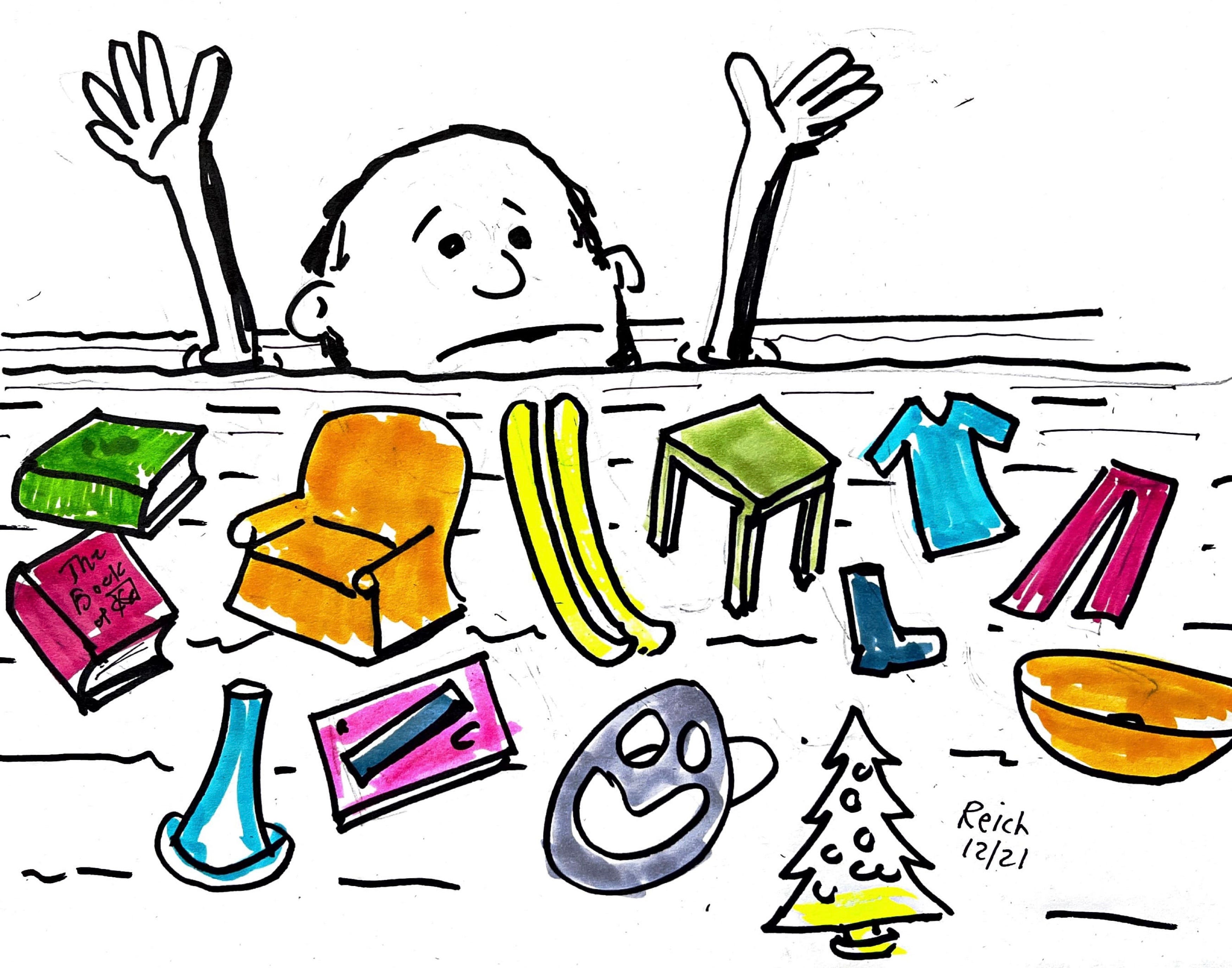
The media's remarkable silence on the cause of California's tragic storms
Friends,My good wishes to you on this Martin Luther King, Jr. Day. I live in California, near the coast. Since the week after Christmas, we have been pummeled by eight “atmospheric rivers,” a weather phenomenon that summons moisture into a powerful band and then unleashes intense blasts of precipitation.The stream next to my house has become a river and some of the roads I rely on are impassible. I’m one of the lucky ones. At least 19 people have died as storms continue to cause widespread flooding, mudslides and power outages. Another storm is hitting today. Millions of Californians are under a flood watch. Among the most vulnerable are low-income people who live in fragile structures or are homeless, disproportionately people of color. We don’t talk nearly enough about the consequences of climate change for the most vulnerable among us. If Martin Luther King, Jr. were alive today, I’m sure he would be. Why is the media so tentative about attributing the devastation here in California to climate change at all? Or the climate havoc all over America, and the world?Saturday’s New York Times front-page story about what’s happening now in California didn’t even mention the words “climate change” until the 26th paragraph, the third from the last. Even then it didn’t blame man-made climate change but referred obliquely to climate scientists who “say” climate change “amplifies normal extremes” of drought and flooding. A review of coverage by national TV news in the weeks after the storms began found that (with one exception) cable news and national broadcast networks failed to link California’s devastating storms to the global climate crisis. It’s as if we’re living in two worlds carrying separate stories — in one, stories about the devastation occurring all around us; in another, stories about the findings and solemn warnings of climate scientists. Why aren’t they the same story, including the perils suffered by the most vulnerable? To be sure, it's difficult to directly attribute specific storms to climate change. Meteorology isn’t precise when it comes to causes and effects. But is there any doubt that the Earth is warming due to human causes, resulting in more extreme weather exactly of the sort we’ve been experiencing on the West Coast? Climate change did not directly produce the raging water that pulled a five-year-old boy from his mother’s arms as he was on his way to school in San Luis Obispo County last Monday, of course, but climate change was obviously behind this tragedy — as it’s been behind so many other tragedies that have been faithfully reported but whose underlying cause is being ignored or reported in the 26th or so paragraph. I understood years ago why editors, publishers, and TV producers were reluctant to wade into the political fight over climate change. It was too charged, too partisan, too many facts were in dispute, and Republicans were adamant in their refusal to concede that human-created climate change posed a clear and present danger. The media were content to report on climate catastrophes and leave the debate up to the politicians.But now? There’s no longer any legitimate dispute. News outlets have no excuse for temerity in connecting tragic weather events to the undeniable, violent changes in the Earth’s weather. It’s like journalists who report on the high rate of homicides in America without mentioning how easy it is to get guns in this country, or the reporters during the early stages of Trump’s presidency who didn’t want to come right out and say he lied. A failure to make such clear connections is itself misleading. Each climate calamity we endure is another learning opportunity for the nation to understand the existential threat of climate change and why we must take the lead in reversing it. For the media to avoid talking about it is a loss for democracy. This is a public episode. If you'd like to discuss this with other subscribers or get access to bonus episodes, visit robertreich.substack.com/subscribe

The basics: How we actually spend our days
Welcome back to my Saturday coffee klatch with Heather Lofthouse, executive director of Inequality Media Civic Action (and my former student). In response to our discussion last week about work and family — and our New Year’s resolutions for how to better balance them — many of you asked how we actually spend our days. So that’s the topic of today’s klatch. (We’ll return to politics, economics, and all the other big topics next week.)Please grab a cup and pull up a chair. And also take our poll. This is a public episode. If you'd like to discuss this with other subscribers or get access to bonus episodes, visit robertreich.substack.com/subscribe

Saturday coffee klatch: Work and life, or work OR life?
Welcome back to my Saturday coffee klatch with Heather Lofthouse, executive director of Inequality Media Civic Action (and my former student), where we usually talk about the highs and low of the prior week. But with the new year just beginning and House Republicans tied up in knots, we thought we’d make today’s klatch a bit more personal: How we and others we know are trying to both do our work and still have a life. Grab a cup and pull up a chair. And please be sure to take our poll and add your comments. This is a public episode. If you'd like to discuss this with other subscribers or get access to bonus episodes, visit robertreich.substack.com/subscribe
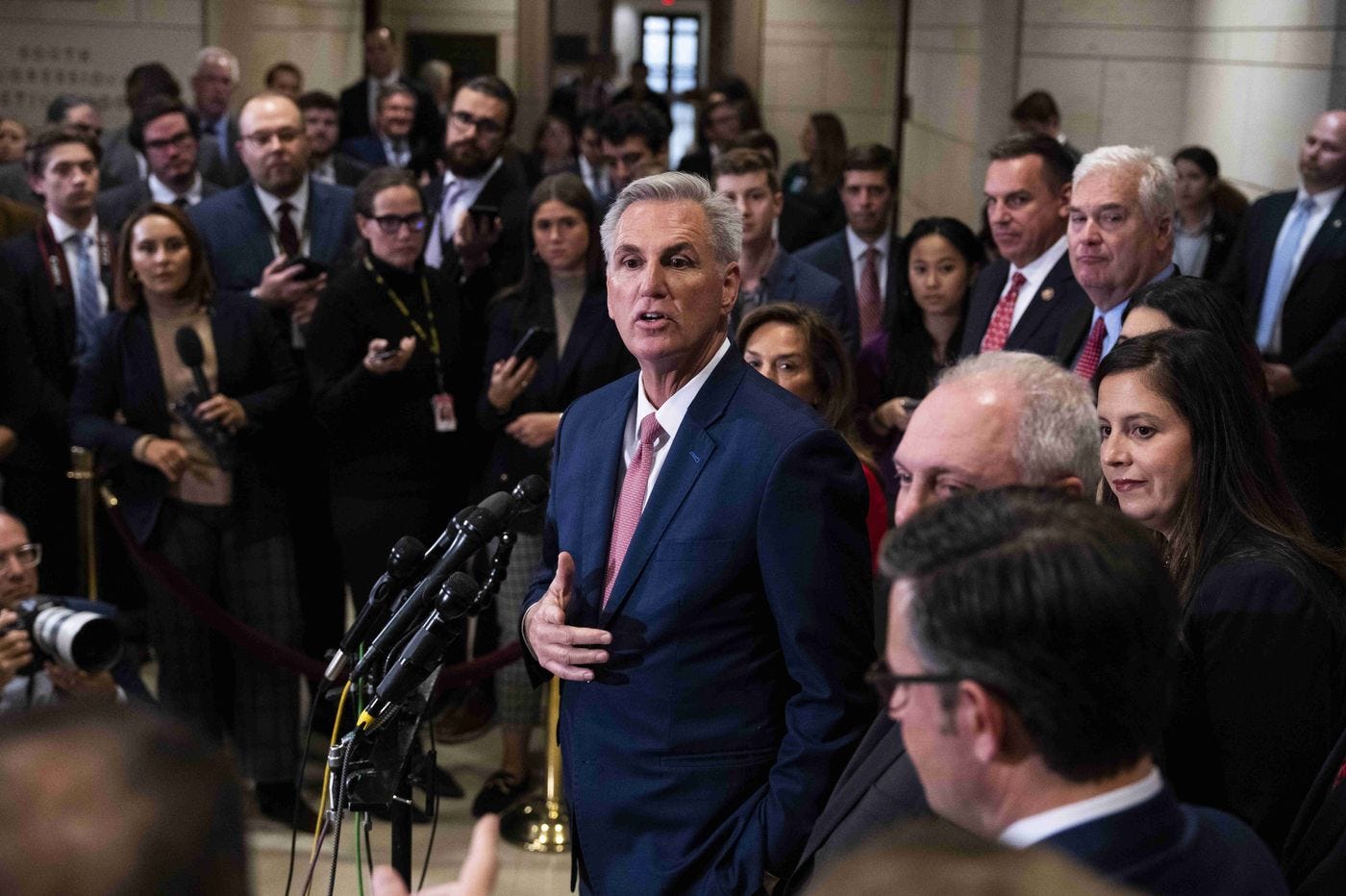
For Speaker of the House: David Joyce. Who?
Friends,Welcome to the challenges of 2023. Today I want to talk about one of the first. When the 118th Congress is sworn in tomorrow, Republicans will hold very narrow control of the House — 222 seats to the Democrat’s 213. The first thing they’ll do is vote for the next Speaker (who’ll determine the agenda for the House, what bills make it to the floor, the fate of critical legislation such as spending bills, and the House’s negotiating positions with Senate leaders and the White House).The most likely is the current Republican House Leader, Kevin McCarthy. He could squeak by with 218 votes, a bare majority of House members. But if just 5 Republicans vote against him, he won’t make it. (Technically, he could be elected with fewer than 218 votes if he persuades Republican lawmakers who don’t want to vote for him to instead vote “present” or to miss the vote entirely.)To get the votes he needs, McCarthy will have to cozy up to the MAGA “Freedom Caucus,” which includes bizarro extremists like South Carolina's Ralph Norman (who as late as January 17, 2021 urged Trump to invoke martial law), Andy Biggs of Arizona, Ohio's Jim Jordan, Scott Perry of Pennsylvania, Paul Gosar of Arizona, Georgia's Marjorie Taylor Greene, Colorado’s Lauren Boebert, and some 30 others, none of whom you’d want to invite to dinner. For their support, the Freedom Caucus is demanding that any member be able to call a vote at any time to oust McCarthy (a “motion to vacate the chair”) if he strays from their hard MAGA line. (Under current rules, only party leaders can bring such a motion.)Which would put McCarthy on a very short leash controlled by the Freedom Caucus (with Trump indirectly controlling them). In effect, Trump and the Freedom Caucus would call many of the shots — on committee assignments, investigations (Joe Biden, Hunter Biden, the FBI), and key issues like raising the debt ceiling (they’ll demand that McCarthy refuse — imperiling the credit of the United States and catapulting the nation into an economic crisis). Does this mean the rest of us have to sit back and allow a tiny minority of extreme rightwing MAGA House Republicans controlled by Donald Trump to hijack congressional Republicans, who in turn will hijack the entire House, and thereby much of Congress?No. There’s an alternative, and I urge House Democrats and the few remaining “moderate” Republicans to take it: Make Ohio’s Republican Rep. David Joyce the Speaker of the House. House Dems and moderate Republicans could come up with the 218 votes to put Joyce over the top. Why Joyce? He’s the new chairman of the Republican Conference Group, a group you probably never heard of (years ago it was called the “Tuesday Group”) because it flies under the radar. It’s a collection of the remaining 40 or so Republican moderates. I say “moderate” only in comparison to the rest of the Republican House. The Conference Group at least wants the government to function. Joyce would be acceptable to most current Republican representatives, even though the Freedom Caucus won’t want anything to do with him. During Trump’s presidency, he voted in line with Trump's stated position 91.8% of the time. And he voted against impeaching Trump for his role in the Jan. 6 insurrection. In other words, But Joyce is not a MAGA Republican. He refused to sign the Texas amicus brief that tried to overturn the results of the presidential election. He was also one of the few Republican House members who did not object to the counting of electoral college votes on January 6, 2021. Since Biden became president, Joyce has voted in line with Biden’s positions over 30 percent of the time. He was one of 35 Republicans who joined all Democrats in approving legislation to establish the January 6 commission to investigate the storming of the US Capitol. He and 46 other Republicans voted for the Respect for Marriage Act, codifying the right to same-sex marriage in federal law. Overall, Joyce’s politics are similar to Democratic Senator Joe Manchin’s. “Everybody’s a Joe Manchin,” Joyce said a few weeks ago. Joyce wants to keep swing-district Republicans out of the harm’s way coming from the Freedom Caucus and other MAGA conservatives. He saw what happened to Ohio Republican candidates viewed as too close to Trump’s MAGA wing: The state’s House delegation shrank from an eight-member edge for Republicans to just five because voters rejected several MAGA GOP candidates. “There’s some exotics that like chaos, they thrive in chaos because that’s how they get the media,” Joyce told the Washington Post. Given that the likeliest alternative will be a Speaker McCarthy beholden to the Freedom Caucus, Joyce should be Speaker — and he could be if House Democrats support him. I urge them to do so. This is a public episode. If you'd like to discuss this with other subscribers or get access to bonus episodes, visit robertreich.substack.com/subscribe
Staying hopeful in a cynical time: Thoughts for the new year
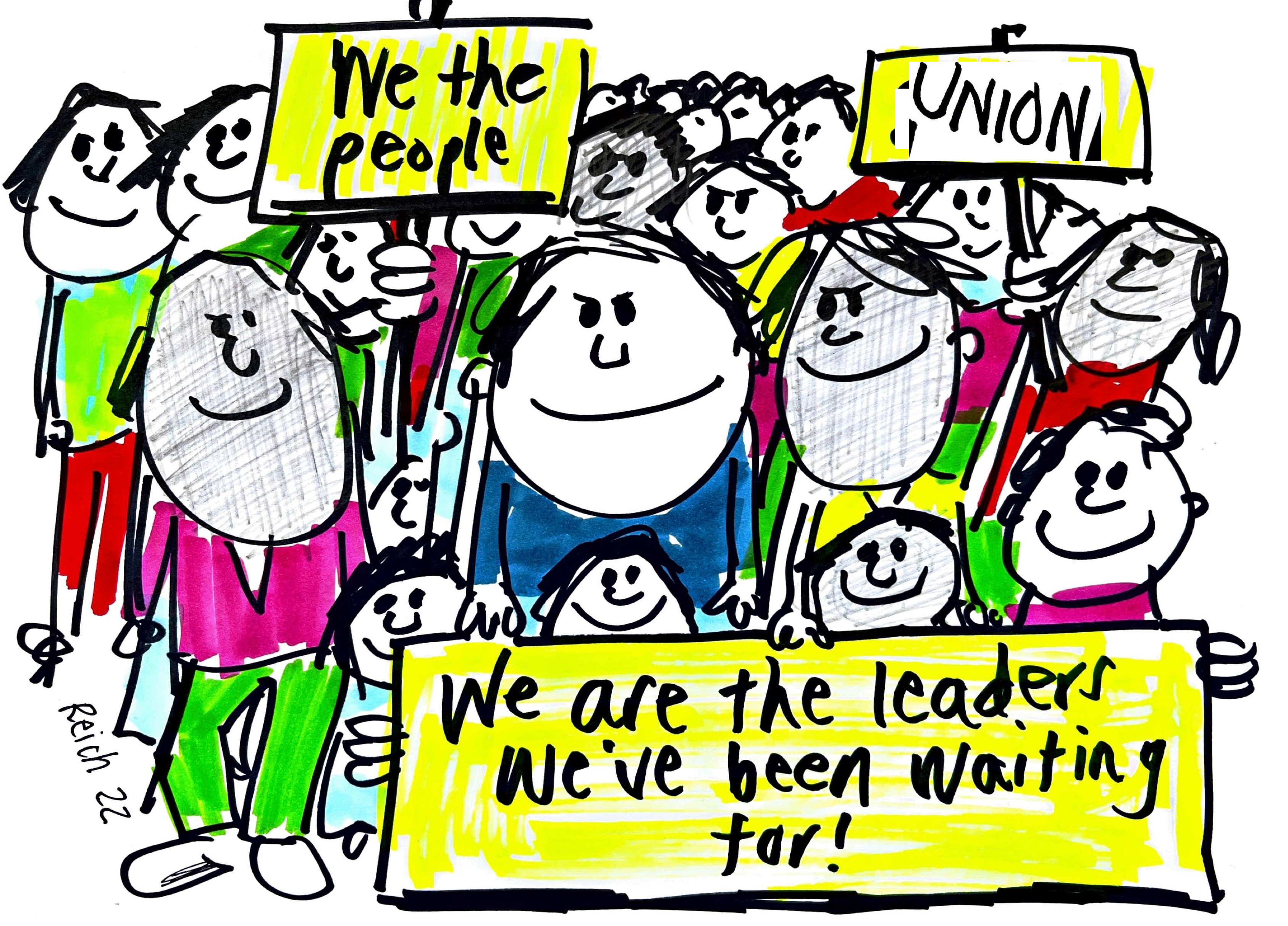
My friends,It has been quite a year. Some of the regressive forces undermining our democracy, polluting our planet, widening inequality, and stoking hatred have been pushed back. This is a worthy accomplishment and cause for celebration. It offers hope that the Trump years are behind us and the hard work of building a decent society can resume. But this is no time for complacency. No one should assume that the battle has been won. The anti-democracy movement is still fulminating. Trump is still dangerous. Corporate malfeasance continues. The climate catastrophe is worsening. Inequality is widening. Reproductive rights have been dealt a major setback. The haters and bigots have not retreated. These regressive forces have many weapons at their disposal — lobbyists, money to bribe lawmakers, giant media megaphones, the most rightwing Supreme Court since the 1930s, a GOP that has lost all moral bearings and, starting soon, a Republican-controlled House of Representatives. But their most powerful weapon is cynicism. They’re betting that if they can get most of us to feel like we can’t make a difference, we’ll stop fighting. Then they can declare total victory.We must keep up the fight.Here’s the thing to keep in mind. Notwithstanding setbacks, we are better today than we were fifty years ago, twenty years ago, even a year ago. We’ve strengthened labor rights and LGBTQ rights. Most Americans are intent on strengthening women’s rights and civil rights. Most also want to extend Medicare for all, affordable childcare, paid sick leave, and end corporate monopolies and corporate dominance of our politics. We have clean water laws and clean air laws. We’ve torn down Confederate statues and expanded clean energy. And we’ve got a new generation of progressive politicians, labor leaders, and community organizers determined to make the nation and the world more democratic, more sustainable, more just. They know that the strongest bulwark against authoritarianism is a society in which people have a fair chance to get ahead. The fights for democracy, social justice, and a sustainable planet are intertwined. The battle is likely to become even more intense this coming year and the following. But the outcome will not be determined by force, fear, or violence. It will be based on commitment, tenacity, and unvarnished truth.It is even a battle for the way we tell the story of America. Some want to go back to a simplistic and inaccurate narrative where we were basically perfect from our founding, where we don’t need to tell the unpleasant truths about slavery, racism, sexism, homophobia, xenophobia, and all the other injustices. But there is another story of America, one of imperfection but progress. In this story, which is far more accurate, reformers have changed this nation many, many times for the better. From Martin Luther King, Jr. to Ruth Bader Ginsberg to, more recently, Stacey Abrams, Alexandria Ocasio-Cortez, Chris Smalls (who led the victory of Amazon’s Staten Island warehouse workers), Jaz Brisack (who led Starbucks workers), and Maxwell Alejandro Frost (the first Gen-Z elected to Congress), and many others — individuals have repeatedly changed the course of history by refusing to believe that they could not stand up to repression, bigotry, and injustice. You don’t have to be famous to be an agent of positive change. You don’t have to hold formal office to be a leader. Change happens when selfless individuals, some of whose names we will never know, give their energies and risk their livelihoods (and sometimes their lives) to make the world more humane. Small actions and victories lead to bigger ones, and the improbable becomes possible.Look, I know: The struggle can be exhausting. No one can go all in, all the time. That’s why we need to build communities and movements for action, where people give what effort they can, and are buoyed in solidarity with others. That’s what we’re doing in a small way in this forum. Building community. Sharing information and analyses. Fortifying our commitment.The reason I write this newsletter is not just to inform (and occasionally amuse) you, but also to arm you with the truth — about how the system works and doesn’t, where power is located and where it’s lacking, and the myths and lies used by those who are blocking positive social change — so you can fight more effectively for the common good.Here’s my deal. I’ll continue to give you the facts and arguments, even sprinkle in drawings and videos. I’ll do whatever I can to help strengthen your understanding and resolve, and give you the information you need. In return, please use the facts, arguments, drawings and videos to continue the fight. To fight harder. And enlist others. (And, if you can, support this effort with a paid or gift subscription.)If at any time you feel helpless or despairing, remind yourself that the fight for democracy, social justice, and a sustainable planet is noble. The stakes could not be higher. And we w

The meaning of Christmas
Welcome back to my Saturday coffee klatch with Heather Lofthouse, executive director of Inequality Media Civic Action (and my former student), where we look at the highs and lows of the week. But since today is Christmas Eve we thought we’d talk about what Christmas means to us. Please grab a cup and pull up a chair. And also take our poll. This is a public episode. If you'd like to discuss this with other subscribers or get access to bonus episodes, visit robertreich.substack.com/subscribe

Military bloat versus unnecessary misery
Friends,Congress is on track in the coming week to give final approval to a national military budget for the fiscal year that is expected to reach about $858 billion — or $45 billion more than President Biden had requested and 8 percent more than last year. This is its highest level of military spending (adjusted for inflation) since the peaks in the costs of the Iraq and Afghanistan wars between 2008 and 2011. It’s the second-highest military spending since World War II. It’s more than the budgets for the next 10 largest cabinet agencies combined. It’s larger than the military spending of the next 10 largest military powers in the world combined. Expect it to be even more. Congress is considering an extra $21.7 billion for the Pentagon to resupply materials used in Ukraine.Don’t fall for the myth that this humongous sum is going to our troops. What’s spiking is spending on weapons (including a 55 percent jump in Army funding for new missiles and a 47 percent jump for the Navy’s weapons purchases). All told, more than half of this giant spending budget is going to for-profit companies (such as Lockheed, Raytheon, Boeing, General Dynamics, BAE, and Northrop Grumman) whose stock prices are surging. The profits are going into executive pay, shareholder dividends, and stock buybacks. This is the military-industrial complex that Dwight Eisenhower warned of *— on steroids. And yet, there’s almost no debate. Why? Most Americans aren’t aware of what’s happening. And many of those who do know aren’t tracking the humongous size of this relative to previous military spending. And no one is hearing any arguments on the other side.Yes, of course, America has to worry about Putin, China, Iran, and North Korea. But before deciding to spend so much, we might at least expect some, er, discussion. How on Earth are we supposed to believe we “can’t afford” paid family leave, an expanded child tax credit, Medicare for all, or universal pre-K when our politicians are willing to spend $858 billion on the military without batting an eye?Worse yet: No one knows where all this the money is going. The Pentagon just failed its annual audit for the fifth year in a row. “I would not say that we flunked,” said DoD Comptroller Mike McCord, although his office did admit that the Pentagon only managed to account for 39 percent of its $3.5 trillion in assets. The U.S. military is the only U.S. government agency to have never passed a comprehensive audit.Cost-overruns are legion. The Pentagon’s failed F-35 program has exceeded its original budget by $165 billion to date. It’s projected to cost more than $1.7 trillion. “Guns versus butter” is the old story. Now it’s extraordinary bloat versus unnecessary misery for American families struggling with a cost-of-living crisis exacerbated by inflation. A recent study by the Federal Reserve Bank of Dallas found that most American workers have become poorer over the past year because their real wages haven’t kept up with inflation.Nearly two-thirds of Americans are living paycheck to paycheck. So back to my question: Why no real debate? Because support for military spending is bipartisan. No lawmaker wants to be portrayed as weak on national defense. Democrats have been jumping onto the military spending bandwagon as fast as Republicans. Bipartisanship is not always good. In fact, it’s a problem when, as now, the lack of political conflict means no news. Absent political conflict, there’s no story. Without a story, there’s no debate or discussion in the media. Absent any debate in the media, most Americans have no idea what’s happening. We’re sleepwalking through history. ___* Eisenhower’s words from April 16,1953: "Every gun that is made, every warship launched, every rocket fired signifies, in the final sense, a theft from those who hunger and are not fed, those who are cold and are not clothed. This world in arms is not spending money alone. It is spending the sweat of its laborers, the genius of its scientists, the hopes of its children. The cost of one modern heavy bomber is this: a modern brick school in more than 30 cities. It is two electric power plants, each serving a town of 60,000 population. It is two fine, fully equipped hospitals. It is some 50 miles of concrete highway. We pay for a single fighter plane with a half million bushels of wheat. We pay for a single destroyer with new homes that could have housed more than 8,000 people. This, I repeat, is the best way of life to be found on the road the world has been taking. This is not a way of life at all, in any true sense. Under the cloud of threatening war, it is humanity hanging from a cross of iron.". This is a public episode. If you'd like to discuss this with other subscribers or get access to bonus episodes, visit robertreich.substack.com/subscribe
America's growing zero-sum economy
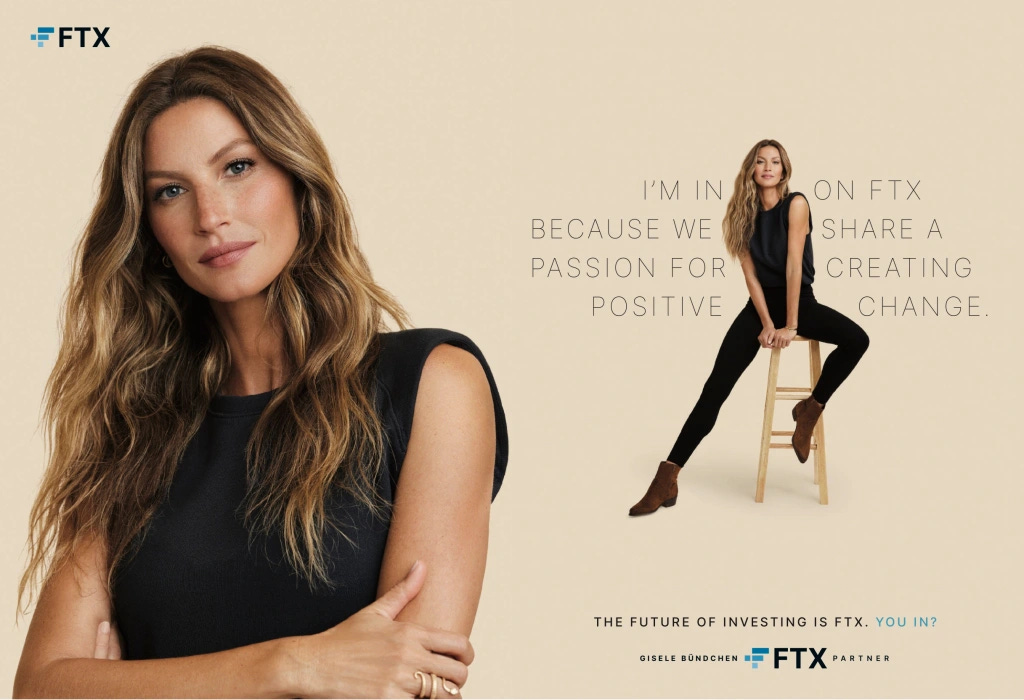
Friends,That Donald Trump is now hawking digital trading cards featuring images of himself as a superhero for $99 each tells you all you need to know about Trump and about NFTs.The recent implosion of Samuel Bankman-Fried’s FTX crypto market offers another case in point. Months ago, FTX was huge. Now it’s a hole in the pockets of countless people who had put their money into it. (Until a few week ago, Bankman-Fried was one of the world’s richest people.) Crypto as a whole is proving to be little more than a giant zero-sum game. Like NFTs, crypto’s current value depends on whether buyers believe future buyers will be even bigger suckers. A large and growing sector of the U.S. economy produces nothing of value. Nada. Zilch. Every winner comes at the expense of a current or future loser. The only things this “zero-sum” sector produces are many of the nation’s ultra-wealthy. Money moves from one set of pockets into another — mostly upward, into the pockets of the ultra-wealthy. Much of Wall Street is expanding this zero-sum economy. Derivatives, private equity, hedge funds, and funds of funds, are creating a few fabulously wealthy people who could vanish tomorrow and be barely missed for all the net value they produce. Corporate law is another part. High-paid lawyers representing one corporation battle high-paid lawyers representing another. Huge sums of money are spent on these escapades. But there are no societal gains unless you equate one corporation’s victory over another with justice.Management consulting? Advising corporations how to make more money by cutting payrolls, abandoning communities, busting unions, outsourcing abroad, and pushing more jobs into contract work doesn’t add value. Some economists dub these “efficiencies” but if the social costs inflicted on everyone else are included, it’s zero-sum. Public relations? How much value is created by convincing the public that a particular corporation or wealthy individual is nicer or worthier than we otherwise believe? Then there’s the so-called “wealth management” industry — advising rich people where to park their money and how to avoid paying taxes. More zero-sum games. In reality, the vast and growing zero-sum economy costs us dearly. It uses the time and energies of some of the nation’s best-educated people. They do it because zero-sum work pays so much compared to, say, teaching or social work or healthcare or journalism or art or science or many other things that improve peoples’ lives. You might think a rational society would heavily tax zero-sum work while subsidizing work that generate lots of social good. But you’d be wrong because the political power of the zero-sum economy generates an even bigger zero-sum game.At this moment, for example, lobbyists for big corporations and private equity are pushing Congress for a retroactive tax break that would repeal limits on how much corporations can deduct in interest payments on their debts. (The limits went into effect this year as part of the compromise that gave us Trump’s big 2017 giveaway to the rich.) If the lobbyists get their way, the revenue loss could be about $20 billion per year, or around $200 billion over 10 years. A big portion of that windfall will wind up in the pockets of private equity mavens who take over companies using piles of debt they then deduct from the companies’ income in order to minimize tax payments. These individuals already get special treatment in the tax code because they’re allowed to treat their incomes as capital gains subject to a lower tax. I just got off the phone with a staffer for the House Ways and Means Committee who told me she thought it likely that this tax break will be attached to the omnibus funding bill now working its way through the last days of this Congress. She admitted there was “no justification” for it but sighed “that’s how the game is played.”And who do you suppose pays more in taxes to make up for what these corpulent felines don’t pay? The rest of us. Zero-sum. This is a public episode. If you'd like to discuss this with other subscribers or get access to bonus episodes, visit robertreich.substack.com/subscribe

When will the GOP reach the anti-Trump tipping point?
My friends,As Congress ends its first post-Trump term, the biggest political question hanging over America is this: When will the GOP finally reach its anti-Trump tipping point — when a majority of Republican lawmakers disavow him?Again and again, it looks like the tipping point is near but the GOP remains under Trump’s thumb.What about last month’s dinner at Mar-a-Lago, with Ye, formerly Kanye West, the man whose fame as a rapper has been dwarfed by his antisemitic and racist declarations, along with infamous Holocaust denier Nick Fuentes?It didn’t come near tipping the scales. What about Trump’s December 3 declaration that the “Massive Fraud” of the 2020 election would allow for the Constitution to be “terminated?” Nope. Both events caused grumbling among a few Republican lawmakers but most avoided criticizing Trump (as they’ve avoided it in the past — as they avoided doing so the moment the furor over January 6 had died down) for fear of his wrath.But what’s to fear, now? Didn’t the midterms reveal how weak he is? After all, most of his endorsees flamed out, including celebrity doctor Mehmet Oz in Pennsylvania, Tim Michels in Wisconsin, Blake Masters in Arizona, Adam Laxalt and Kari Lake also in Arizona, and Herschel Walker in Georgia. (Walker’s campaign even asked Trump to stay away in the final weeks.)Many election-deniers hit the skids. Michigan’s legislature swung to the Democrats for the first time since the 1980s.Democrats defied almost all doomsday prophesies as well as the historic pattern of presidents losing midterms — and why? In large part because so many voters fear and loathe the former president. Nearly as many viewed the midterms as a referendum on Trump as who saw it as a referendum on Joe Biden. As Mitch McConnell explained, voters “were frightened” by the Trump-induced GOP rhetoric, “and so they pulled back."And it’s only going to get worse for Trump, right? His business has been found guilty of criminal fraud. Investigators have found more classified documents in a storage unit near Mar-a-Lago. A criminal case is pending in Georgia. The January 6 committee is likely to make a criminal referral to the Justice Department, whose special counsel is already building a criminal case against him. Several leaders of the January 6 attack have already been convicted of seditious conspiracy.Even the kingpins of the GOP, including the rightwing media tycoon Rupert Murdoch, have switched their allegiance away from him — to Florida governor Ron DeSantis or Ted Cruz or another GOP hopeful.So why hasn’t the Republican Party as a whole tipped? Why aren’t almost all Republican lawmakers publicly disavowing the former sociopath-in-chief? In two words: The base.Utah’s Republican senator Mitt Romney, no friend of Trump, put it bluntly last week:“I think we’ve got, I don’t know, 12 people or more that would like to be president, that are thinking of running in 2024. If President Trump continues in his campaign, I’m not sure any one of them can make it through and beat him. He’s got such a strong base of, I don’t know, 30% or 40 % of the Republican voters, or maybe more, it’s going to be hard to knock him off as our nominee.”That’s the problem in a nutshell, folks. It’s not so much the size of Trump’s base. Even 40 percent of Republican voters is a relatively small group nationwide, especially considering that fewer than 30 percent of all voters are registered Republicans. It’s also the intensity and tenacity of their support, which gives them effective control over the Republican Party. They worship him. They won’t budge.But until they budge, most Republican lawmakers won’t budge either (Romney and Liz Cheney being notable exceptions, and we know what happened to her). The problem isn’t some highfalutin moral issue, such as Republican lawmakers putting their party over their country. It’s something far more prosaic. They want to keep their jobs.Which means the GOP continues to rot as a political party, as a governing institution, and as a moral entity. That may be good for Democrats in 2024, but in the larger sense it’s bad for us all. This is a public episode. If you'd like to discuss this with other subscribers or get access to bonus episodes, visit robertreich.substack.com/subscribe
Sinema's flameout (and other events of the week)
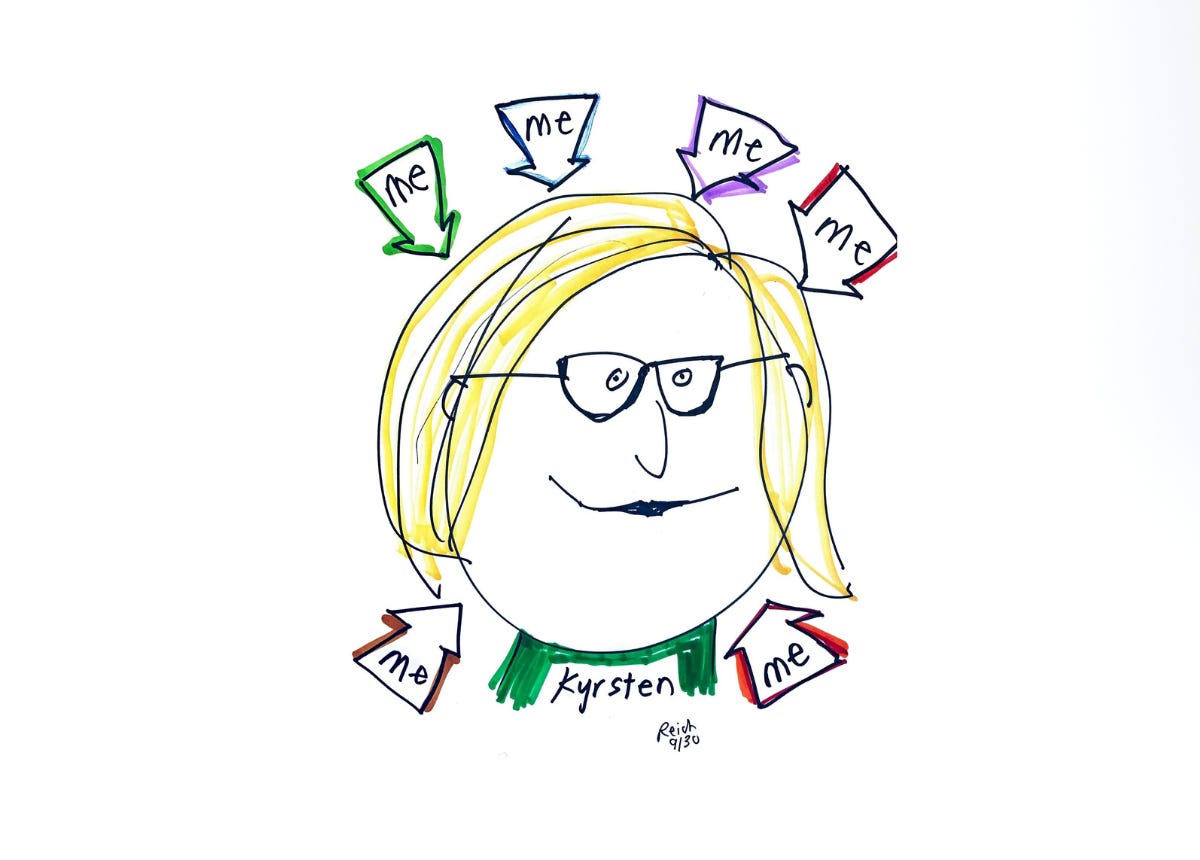
Welcome back to my Saturday coffee klatch with Heather Lofthouse (Executive Director of Inequality Media Civic Action, and my former student) — when we review the week’s highs and lows. Please grab a coffee and pull up a chair. Today, we consider:Kyrsten Sinema’s exit from the Democrats.Raphael Warnock’s embrace by the Democrats.Donald Trump’s latest disgrace.Heather’s and Bob’s views about the holidays. Plus much more. And please take our latest poll: This is a public episode. If you'd like to discuss this with other subscribers or get access to bonus episodes, visit robertreich.substack.com/subscribe
Texas's wacko lawsuit and my loopy labor department
Friends,Texas has sued the Biden administration over its order to immigration agents to prioritize undocumented immigrants convicted of felonies rather than deport all undocumented immigrants. Texas argues that federal immigration law requires the government to deport every undocumented immigrant. The Biden administration says it doesn’t have the resources to deport the country’s estimated 11 million undocumented immigrants, so it must develop priorities. The controversy reminds me of something that happened thirty years ago, soon after I became secretary of labor. Child labor laws bar fourteen-year-olds from working past 7 pm on school nights. Weeks before I became secretary of labor, a vigilant Labor Department investigator discovered that the Savannah Cardinals, a Class A farm team of the Atlanta Braves, had hired 14-year-old Tommy McCoy to be their batboy. On balmy evenings extending beyond sunset, Tommy selected each player’s favorite bat and proudly delivered it to him in the batter’s box. Next morning, Tommy went to school. The investigator threatened the team with a stiff fine. The team did what it had to do: It fired little Tommy. Tommy liked being a batboy. His parents were proud of him. The team was fond of him. The fans loved him. As long as anyone could remember, every kid in Savannah had coveted the job. Tommy did well in school. But now little Tommy was out of the best kid’s job in town. Well, you can imagine the furor. It seemed as if the whole city of Savannah was up in arms. The Cardinals were about to stage a “Save Tommy’s Job Night” rally, featuring balloons, buttons, placards, and a petition signed by the fans demanding that Tommy be rehired. ABC News was doing a story on the controversy — which was how I first heard about it. ABC wanted an on-camera interview with me that same evening, explaining why Tommy had been fired. They couldn’t wait to show America the stupidity of the government (and of its new secretary of labor). What was I to do? I tried to hold ABC off. They said they were running with the story with or without my interview. I called an urgent meeting with the Labor Department’s top inspectors. I explained the situation to them, suggesting we let Tommy have his job back. They wouldn’t hear of it. “It would look like you’re caving in to public opinion,” one of the chief inspectors said. “But,” I asked, “isn’t it the public whom we’re here to serve?” They said the law was clear: Children under 14 could not work past 7 pm on school nights. “The Savannah team broke the law and it was our responsibility to enforce the it.” “But shouldn’t we have priorities?” I asked. “We have a limited number of inspectors. I can understand hitting a building contractor who’s hiring kids to lay roofing, but why go after batboys and girls?”They said child labor was a serious problem. Children were getting injured working long hours. “Exactly,” I said. “So let’s focus on the serious offenses and ignore the less serious.” They warned that if I didn’t support the Department’s investigators, the staff would become demoralized. “Good! If they become demoralized and stop enforcing the law nonsensically, so much the better,” I said. They said that if I backed down, the Labor Department would lose credibility. “We’ll lose even more credibility if we stick with this outrageous decision,” I said. They said there was nothing we could do. The law was the law. “Nonsense,” I said. “We can change the regulation to make an exception for kids at sporting events.”But we’d invite all sorts of abuses, they argued. Vendors would exploit young kids on school nights to sell peanuts and popcorn. Stadiums would hire young children to clean the locker rooms. Parking lots would use children to collect money. “So we draw the exception tighter and limit it to batboys and batgirls!” I said. I was getting nowhere. World News Tonight would broadcast the story in minutes. And then it hit me, like a fastball slamming into my think head: I was Secretary of Labor. I could decide this by myself. “Thank you,” I said, standing. “I’ve heard enough.” I turned to my assistant, “Tell the Savannah team they can keep Tommy. We’re changing the regulation to allow batboys and girls. Put out a press release right now. Call the producers for World News Tonight and tell them I’ve decided to let Tommy have his batboy job. Tell them our investigator was way off base!”“But World News Tonight is already on the air!” my assistant said. “Call them now!”I turned on the TV in the corner of my office. ABC’s anchor, Peter Jennings, was already reading the news from his monitor. Within moments, he got to the story I was dreading:The United States Department of Labor has decided that a fourteen-year-old named Tommy McCoy cannot serve as batboy for the Atlanta Braves farm team in Savannah, Georgia. The decision has provoked outrage from the fans. Here’s more from …As Jennings turned it over to ABC’s Atlanta correspondent, he appeared to be smirking. S**t. I

How can we protect our democracy when the media doesn't let us know how it's being threatened?
Hello friends,Sometimes I feel like screaming at the mainstream media for failing to alert people to crucial (although complicated) issues affecting our democracy coming from different parts of government simultaneously.Case in point: Moore vs. Harper, argued yesterday before the Supreme Court, and the Electoral Reform Act, which must be enacted before the end of this Congress because Republicans won’t touch it once they control the House.The two are intimately connected but you wouldn’t know that from the mainstream media, which is treating them as two separate stories. Let me make the connection. In Moore, North Carolina Republicans aim to restore a redistricting map drawn by the GOP-led legislature but rejected as violating the state constitution by North Carolina’s supreme court.North Carolina bases its argument on the bonkers “independent state legislature” theory, which interprets Article I Section 4 of the U.S. Constitution (authorizing state legislatures to prescribe “the times, places and manner of holding elections") to give state legislatures sole authority over elections, without interference from state courts.The theory sprang from the head of Justice William Rehnquist in 2000, who wrote (in a concurring opinion in Bush v. Gore) that “the text of the election law itself, and not just its interpretation by the courts of the States, takes on independent significance.” Since then, Brett Kavanaugh, Samuel Alito, Clarence Thomas, and Neil Gorsuch have all endorsed aspects of the theory. Notably, they didn’t disavow it in yesterday’s oral argument.Not only would the theory open the door to extreme gerrymandering, allowing one party to virtually entrench itself in a state. It could also allow state legislatures to reject the results of a presidential election.Which is where the Electoral Reform Act, now before Congress, comes in.Article II of the Constitution requires states to appoint presidential electors “in such manner as the Legislature thereof may direct.” And the Electoral Count Act of 1845 allows state legislatures to choose a new manner of appointing the state's electors if the vote for the presidency has “failed” in the state.But what does “failed” mean and who has the authority to declare a failure?This wasn’t an issue until the 2020 election, when Donald Trump exploited the Act's vagueness to claim he could overturn the will of the voters.He pushed state legislatures to appoint electors for him regardless of the popular vote. (Fortunately, they refused.) He pressured congressional Republicans to object to Joe Biden’s electors. (Trump partly succeeded, but not by enough to throw the election his way.) And he pushed Vice President Pence to illegally delay the electoral count so Trump could continue pressuring states. (Thankfully, Pence refused.)American democracy survived by a whisker. But add in a Supreme Court ruling affirming the independent state legislature theory, and what do you get if Trump (or any other anti-democracy candidate) tries the same thing again? A democratic disaster.This isn’t wild conjecture. Just weeks ago, after Arizona gubernatorial candidate Kari Lake contested her loss based on absolutely nothing, the election board in GOP-controlled Cochise County refused to certify the results.Eventually Cochise came around. But in a future presidential election, a GOP-controlled state legislature -- armed with a broad "independent state legislature" theory from Moore v. Harper -- could seize on this kind of resistance to declare a “failed” election and appoint a slate of fake electors. And neither Congress nor a Vice President could stop them. This time, democracy wouldn't survive. Which is why the Electoral Reform Act – now before Congress – is so important. It would require state legislatures to appoint presidential electors exactly as they’ve been appointed before. So if a state’s laws require that electors certify the person who has won the popular vote, a legislature can’t use the “failed” election loophole to appoint electors for anyone else. Other provisions require that governors certify the correct electors by a hard deadline before Congress counts them, and allow an aggrieved candidate to trigger expedited judicial review.Where is the Electoral Reform Act at this point?Ten Republican senators tentatively support it but Trumpsters are pressuring them to withdraw their support. With so little time remaining in the lame-duck session, the measure may be attached to the end-of-year spending bill.But how many close calls like this can a system of self-government endure? And if the media doesn’t adequately report on issues like this, how can a free people govern themselves to begin with? This is a public episode. If you'd like to discuss this with other subscribers or get access to bonus episodes, visit robertreich.substack.com/subscribe

The great train wreck (and other wrecks this past week)
Freinds,Welcome back to my Saturday coffee klatch with Heather Lofthouse, Executive Director of Inequality Media Civic Action (and my former student, years ago). Grab a cup and pull cup a chair. Today, we talk about:— Biden and the Democrat’s decision to stop railway workers from striking. — Elon Musk’s decision to allow almost every hateful, deceptive person in the world to spew poison on Twitter (except Kanye West). — House Republican’s upcoming decision over whether they’ll try to do serious things or use their two years in control of the House sowing more divisiveness. — Plus Heather reveals a special talent that you won’t believe. And please take our poll: This is a public episode. If you'd like to discuss this with other subscribers or get access to bonus episodes, visit robertreich.substack.com/subscribe

ABC asks my help with Bill Clinton's obituary
A producer at ABC recently asked if I’d be willing to be interviewed for a documentary they’re making about Bill Clinton. I agreed. Then I asked when they’re planning to show it. “After he dies,” they said.“What!? Is he dying?” I asked, shocked. “Oh, no,” they said. “It’s for the archive.”“You mean, it’s for whenever he dies, even if that’s twenty years from now?”“Exactly.”“Even if you and I are long gone by then?”“Yup.”I was relieved, but flummoxed. Was I supposed to talk about Clinton in the past tense? Should I give only the sort of glowing tribute accorded former presidents when they pass? Would it be inappropriate to say anything even slightly critical of him or his presidency? I just did the interview from my office at Berkeley. At first it all seemed weirdly morbid but after five minutes or so I forgot the weirdness and just talked. I met Bill Clinton in September 1968 on the USS United States, sailing from New York City to Southampton, England. We were 22 years old. He and I, along with thirty other young American men, had won Rhodes Scholarships to study at Oxford. (Had women been allowed to compete then, I doubt either he or I would have won.)We were heading to England by ship because that had been the tradition for newly-selected Rhodes Scholars. Six days at sea was supposed to give Scholars time to get to know one another. But on this voyage, the crossing was so stormy that most of us spent a good part of the time alone in our cabins, seasick. I stayed in my bunk and tried not to think about food. Then a loud knock on my cabin door.I staggered over to open it. There was a tall, curly-haired fellow with a big grin, holding a bowl chicken soup.“Hi, my name is Bill,” he said in a syrupy southern accent as the ship rolled and the soup sloshed. “I hear you weren’t feeling well. Thought this might help.” He handed me the bowl. (He didn’t say “I feel your pain” – that came later on his presidential campaign.)“Well, that’s awfully kind of you,” I said, taking the bowl in both my hands while trying to steady myself and not barf on him. “I’m Bob,” I stammered. “I’d invite you in, Bill, but …”“Oh, that’s okay. We’ll have time later… I’m from Arkansas.” “Well, that’s really great. I’m from a little town in New York State.” “It’s amazing, isn’t it?” he grinned. The soup was sloshing over the sides of the bowl, and I desperately needed to use the john. “Er, what’s amazing?”“Small town boys. Did you ever think you and I would be here?”“No. But sorry, I’ve got to….”“Don’t worry, I’ll be gettin’ on.” He turned and walked off, his hand on the wall of the corridor as the ship rolled.“Thanks, again,” I called after him. “Very nice of you.” I was genuinely touched. He waved as he walked away. Despite the rough seas, the journey felt restorative — an escape from a nation that seemed to be losing its mind and moral compass. Bobby Kennedy had been assassinated a few months before. Gene McCarthy’s presidential bid had gone nowhere. Democrats were about to nominate Lyndon Johnson’s vice president, Hubert Humphrey. Republicans were nominating the abominable Richard Nixon. Several American cities were in flames. The Vietnam War continued unabated. My other recollection from that voyage, by the way, occurred in the ship’s stateroom, on one of my few outings from my cabin. The stateroom was almost empty except for a pale, gray, thin man sitting at a far table, smoking a cigarette. I sat down and introduced myself. He told me his name was Bobby Baker. Of all the people to be on this ship, he was the last I expected — or wanted to talk with. (If you don’t remember, Baker had been a crony of Lyndon Johnson’s. He was secretary to the Democratic Party when LBJ was Senate Majority Leader — until Robert Kennedy, as Attorney General, exposed Baker’s alleged deals with organized crime and Baker was forced to resign. Kennedy’s investigation led to allegations that Johnson himself received kickbacks from military contractors. It was rotten stuff, even worse when several newspapers found evidence that Baker had also been involved in procuring women for JFK.)We exchanged a few words and then I excused myself, pointing to my stomach. He said he understood. I headed back to my cabin. That Bobby Baker had chosen to travel to England on this particular ship seemed a cruel joke — as if to say there was no real escape. Days later, after landing in Southampton and taking a bus to Oxford, Bill and I were assigned “digs” at the same Oxford college — called University College. (Legend has it that the college was founded around 866 by King Alfred. I recall a disagreement among the faculty over whether it should celebrate its 1,100th anniversary in 1966 — detractors grousing that once they began celebrating every hundred years there’d be no end to festivities.)Bill and I spent much of the the next two years talking about Vietnam, American politics (he already had his eye on becoming governor of Arkansas), food (he liked British hamburgers, which I f
A grotesque distortion of philanthropy
Friends, Today is Giving Tuesday — a day to focus on personal charitable giving to worthy causes. But what I really want to talk about today is something quite different from charitable giving, although often confused with it: It’s called “effective altruism.” Known as EA to its practitioners, effective altruism urges people to give away a large share of their incomes. Fine as far as it goes. But EA has been going much further. One of EA’s most influential proponents is the Oxford philosopher William MacAskill, who has urged young people to seek high-paying jobs in finance (or wherever else they can make gobs of money) on ethical grounds, because they can then donate a large portion of their earnings to worthy causes. For example, by becoming a hedge-fund mogul, MacAskill says, you can donate large sums — and create far more good — than you can as a social worker.Or to take a different example, MacAskill argues that a young person concerned about the world’s poor could become a doctor in a poor country and possibly save the equivalent of 140 lives in their medical career. But if they took a job that paid them hundreds of millions of dollars, and then donated a big portion of it intelligently, they could save ten times as many lives. Sounds logical. But wait. MacAskill’s utilitarian logic leaves out the social costs associated with how a talented young person might make gobs of money in the first place. (One red flag: Elon Musk claims that MacAskill’s giving philosophy is similar to his own.)MacAskill’s logic also fails to capture the corrupting influence of hedge funds, private-equity, crypto, or other ultra-profit-driven institutions on the people within them. Even if you had charitable impulses at the start, once surrounded by money-driven zombies you might easily lose those impulses. Consider Sam Bankman-Fried — an avowed practitioner of EA — whose off-shore crypto Ponzi scheme FTX just collapsed, taking billions of dollars of customers’ savings with it. Before the collapse, Bankman-Fried was worth $24 billion and pledged to donate a large portion of it to EA causes. Last February, Bankman-Fried created the philanthropic FTX Future Fund to put his EA ideas into practice, naming William MacAskill as an adviser. Some of FTX’s funds went into sleek ads touting his dedication to “positive social change” (such as the one I’ve posted here, featuring the runway supermodel Gisele Bündchen. which appeared in The New Yorker.) “Whenever someone is willing to commit to change, I’m willing to help,” Bündchen said at the SALT Crypto conference in Nassau, Bahamas last April. “Sam is making such an important statement with this, and I’ve found that inspirational.”Inspirational? FTX spent an estimated $20 million on the ad campaign (featuring other celebrities such as Tom Brady) and bought the naming rights to the Miami Heat’s arena for $135 million.Bankman-Fried and other FTX executives also showered nearly $72 million on lawmakers in both parties during the 2022 midterms — all but guaranteeing a “favorable business climate” (aka zero regulation) for his crypto exchange. Charity is important, and I hope you will be generous today, and all other days. But what if charity by the ultra-wealthy is just a cover for their greed? Shouldn’t we be concerned about how they accumulate their fortunes? And shouldn’t we worry a bit about what happens to people — even those with the best of intentions — who join institutions dedicated to making gobs of money? So-called “philanthropists” like Bankman-Fried — who shaft millions of creditors, undermine social trust, and crash our democracy with their political donations — have probably made the world worse off, their beneficence notwithstanding. On Nov. 11, the day FTX filed for bankruptcy, William MacAskill wrote in a Twitter thread: “For years, the EA community has emphasized the importance of integrity, honesty, and the respect of common-sense moral constraints. If customer funds were misused, then Sam did not listen; he must have thought he was above such considerations. A clear-thinking EA should strongly oppose ‘ends justify the means’ reasoning. But isn’t “ends justify the means reasoning” at the heart of MacAskill’s ethics, urging young people to make gobs of money as bankers or crypto moguls so they can make large charitable donations? This is a public episode. If you'd like to discuss this with other subscribers or get access to bonus episodes, visit robertreich.substack.com/subscribe

Thanks for Thanksgiving
Welcome back to my Saturday coffee klatch with Heather Lofthouse, executive director of Inequality Media (and my former student), where we talk about the highs and lows of the week. Please grab a cup and pull up a chair. Today we’re still recovering from Thanksgiving, so we thought we’d change pace a bit and talk a bit about what we’re doing in our “spare” time — what we’re reading, what we’re watching, how we’re trying to get a break. And, of course, our weekly poll. — Heather is reading: Anything by Jo Nesbø, and The Transit of Venus by Shirley Hazzard— Bob’s recommends: Cloud Coukoo Land by Anthony Doerr, and Dirt Road Revival by Chloe Maxmin and Canyon Woodward— We also get into our favorite streaming TV shows (Bob strongly recommends “The Bear” and “The English” and Heather somewhat recommends). How our Thanksgivings really went. And Heather’s advice for living a good life. This is a public episode. If you'd like to discuss this with other subscribers or get access to bonus episodes, visit robertreich.substack.com/subscribe

Thanksgiving thoughts: My family leave act
Friends,Thanksgiving often brings up one of the central dilemmas in my life — trying to find a better balance between work and family, and failing miserably. It’s the word “balance” that’s always thrown me. I used to assume that a better balance meant more of what you really wanted and less of what you didn’t. For me, and perhaps many of you, that metaphor doesn’t help. Sure, I’ve met lots of people who find a better balance by doing less work and having more time for family. But that’s hard to achieve economically. Working families don’t have it easy in America, and the work-family challenges are particularly daunting for women — especially women of color. Not to mention the pandemic we’ve been living through, where working people have been trying to balance childcare, virtual schooling, and precarious employment. But for some people it’s at least possible. Live cheaper, scale back, give up the rat race.I’ve even met a few people who’ve done the reverse. For them, a better balance means more work and less family. They love their job and find the world of spouse and kids harder to manage. So they’ve hired a babysitter, gratefully sent the kids off to college, or got a divorce. Now their energies are happily focused on work.I know someone who found balance by cutting back on both. She simply needed more time for herself. She had had it with a boss who kept piling it on and a family that relied on her to do everything for them. Finding her balance required setting some firm limits.All these people found a better balance between work and family by devoting additional time and energy to the one they valued more, and less to the one they valued less. But what if you’re like me and, I suspect, many others — you love your job and you love your family, and you desperately want more of both? You’re doubly blessed, in a way.But here’s the rub: There’s no way of getting work and family into better balance. You’re inevitably shortchanging one or the other. You’re never able to do enough of what you truly value because you want more of both. I used to think it was just a matter of improving my “time-management” skills. Rubbish. A family doesn’t need you just when you block out time for them. Work doesn’t present new opportunities or crises on a predictable schedule. In the end, you simply can’t do more of both. There’s no room for better “balance.” The metaphor is all wrong. You have to make a choice.I vividly remember one night toward the end of my four years as secretary of labor in the Clinton administration. Clinton had won reelection. My workload seemed under control for the first time in months. I planned to be home to say good night to my two boys, then young teenagers. I hadn’t been home in almost a week. But my plan wasn’t working out. Another work crisis intervened. When I phoned Sam, the younger of the two, to tell him that I might not make it in time for bed, he said that was O.K. “But will you wake me up when you come in, Dad?” he asked.I explained that it might be early in the morning and he needed his sleep. “I’d like it if you’d wake me,” he responded. “I just want to know you’re here with us.”That did it. Being secretary of labor was the best job I’d ever had. I couldn’t get enough of it. But I also couldn’t get enough of my two teenage boys, whom I knew would be gone from the nest and on their own in a precious few years. Finding a better balance? I’d been kidding myself into thinking there was one. The next day I told Clinton I’d be leaving, and explained why. He said he understood. He had the same dilemma, but couldn’t leave for another four years. Happy Thanksgiving. This is a public episode. If you'd like to discuss this with other subscribers or get access to bonus episodes, visit robertreich.substack.com/subscribe

Musk's Humongous Mistake
When Elon Musk bought Twitter for $44 billion, he clearly didn’t know that the key assets he was buying lay in Twitter’s 7,500 workers’ heads.On corporate balance sheets, the assets of a corporation are its factories, equipment, patents, and brand name.Workers aren’t considered assets. They appear as costs. In fact, payrolls are typically two-thirds of a corporation’s total costs. Which is why companies often cut payrolls to increase profits. The reason for this is simple. Corporations have traditionally been viewed as production systems. Assets are things that corporations own, which turn inputs — labor, raw materials, and components — into marketable products.Reduce the costs of these inputs, and — presto — each product generates more profit. Or that’s been the traditional view.Yet today, increasingly, corporations aren’t just production systems. They’re systems for directing the know-how, know-what, know-where, and know-why of the people who work within them. A large and growing part of the value of a corporation now lies in the heads of its workers — heads that know how to innovate, know what needs improvement, know where the company’s strengths and vulnerabilities are found, and know why the corporation succeeds (or doesn’t).These human assets are becoming the key assets of today’s corporations. But they can’t be owned, as are factories, equipment, patents, and brands. They must be motivated. When Musk fired half of Twitter’s workforce, then threatened to fire any remaining dissenters and demanded that the rest pledge to accept “long hours at high intensity” — leading to the resignations last week of an estimated 1,200 more Twitter employees — he began to destroy what he bought.Now he’s panicking. Last week he tried to hire back some of the people he fired. On Friday he sent emails to Twitter employees asking that “anyone who actually writes software” report in, and stating that he wanted to learn about Twitter’s “tech stack” (its software and related systems).But even if Musk gets this information, he probably won’t be able to save Twitter.Most of Twitter’s employees are now gone, which means most of its know-how to prevent outages and failures during high-traffic events is also gone, most of its know-what is necessary to maintain and enhance computing architecture is gone, most of its know-where to guard against cyberattacks is gone, and most of its know-why hate speech (and other awful stuff advertisers want to avoid) is getting through its filters and what to do about it, is also now gone. Without this knowledge and talent, Twitter is a shell — an office building, some patents, and a brand — without the capacity to improve or even sustain its service.Twitter is unlikely to fail all at once. But bugs and glitches will mount, the quality of what’s offered will deteriorate, hateful tweets will burgeon, and customers and advertisers will flee.As Richard Forno, assistant director of the Center for Cybersecurity at the University of Maryland, Baltimore County told the New York Times, “it’s like putting a car on the road, hitting the accelerator, and then the driver jumps out. How far is it going to go before it crashes?”Not even Donald Trump seems particularly eager to take up Musk’s offer to have him back on the platform.Safe to say, Twitter is no longer worth the nearly $44 billion Musk paid for it. It’s now probably worth only a fraction of that sum — a fact that should be of no small concern to the bankers who lent Musk $30 billion to purchase Twitter on condition he pay $1 billion a year in interest.Two lessons here.First, corporations that regard employees only as costs to be cut rather than as assets to be nourished can make humongous mistakes. Elon Musk is Exhibit #1.Second, where corporations view employees as costs, the traditional way for employees to flex their muscle is to strike, thereby temporarily closing factories and stopping the machines.But where employees are a corporation’s key assets, workers’ greater power comes in threatening to — or actually — walking out the door. Elon Musk is Exhibit #2. This is a public episode. If you'd like to discuss this with other subscribers or get access to bonus episodes, visit robertreich.substack.com/subscribe

Ugh, double ugh, and ugh-and-a-half
Welcome to another of my Saturday coffee klatches with Heather Lofthouse, my colleague at Inequality Media Civic Action (and my former student), where we talk about the highs and lows of the week. Grab a cup and pull up a chair. Today we talked about:— Nancy Pelosi bows out of the Speakership and Kevin McCarthy bows in. Ugh.— Donald Trump declares his candidacy for president. Double ugh. — Elon Musk is on the way to destroying Twitter. Ugh and a half. Plus a few positive developments. And please take our poll: This is a public episode. If you'd like to discuss this with other subscribers or get access to bonus episodes, visit robertreich.substack.com/subscribe

Election Mop-up
Welcome to another of my Saturday coffee klatches with Heather Lofthouse, my colleague at Inequality Media Civic Action (and my former student). Grab a cup and pull up a chair. This week we discuss: — Why Democrats exceeded expectations in the midterm elections.— What will happen during the lame duck session?— What can we expect for the 2024 presidential race?— Why is Elon Musk warning that Twitter may go bankrupt? (Thanks to this week’s jingle composers, Corey Kaup, Deirdre Broderick, and Peter Lambert.) This is a public episode. If you'd like to discuss this with other subscribers or get access to bonus episodes, visit robertreich.substack.com/subscribe

To me, the most encouraging thing of all
Friends, Veterans Day is a time to honor those who have fought to protect American democracy, especially those who gave their lives so that our democracy can endure. We have just emerged from midterm elections that have tested that democracy as it has not been tested since the Civil War. In large part, our democracy passed that test. We are indebted to all candidates who peacefully and responsibly conceded defeat, and to all election workers who worked so diligently (and in several states are still working) to ensure the legitimacy of the elections. The aspect of the midterm elections that gives me most hope for the future is the growing ranks of the young — as well as people of color and women — among American voters and in American politics. By 2028, Millennials & Gen Z’rs will dominate U.S. elections. This is why the GOP is pulling out all the stops to entrench Republican power. They know they don't stand a chance against a multi-racial, progressive generation of young people that will make the GOP’s backwards ideas irrelevant.They are the Republican Party’s worst nightmare.The latest data prove the point. In this weeks’ midterm elections, 27 percent of young people (ages 18 to 29) turned out — the second-highest youth voter turnout in almost three decades.These young people helped decide critical races. In a group of nine electorally competitive states for which exit poll data is available (Florida, Georgia, Michigan, North Carolina, New Hampshire, Nevada, Ohio, Pennsylvania, and Wisconsin), the aggregate youth voter turnout was 31%.In Michigan, the early youth vote was up 207 percent from 2018. In Pennsylvania, up 318 percent. In Wisconsin, up 360 percent.Young people were a critical force in holding back a “red wave.” They supported Democratic House candidates by 62 percent to 35 percent.According to AP VoteCast, an in-depth survey of more than 94,000 voters nationwide, 61 percent of voters younger than 45 backed Democrat John Fetterman in his Pennsylvania Senate race. What accounts for these astounding numbers?Start with Trump, who continues to be deeply and justifiably despised by most young people. He wasn’t on any ballot, but he made his presence as conspicuous as he always does. Trump insisted on campaigning loudly and belligerently. Most Republican candidates joined in his big lie that he won the 2020 election.Next is the stark political reality that young people -- the first generation in America to be subject in school to active shooter drills – want action on gun violence. They also want progress on the climate crisis, presumably because they’ll be living longer with its consequences than anyone else. And they’re passionate about preserving reproductive rights.Don’t get me wrong. The growing numbers and political power of young people, as well as people of color and women, is not an argument for complacency.To the contrary, it means Republicans will now be even more determined to suppress their votes. Fighting voter suppression in all its forms -- making it easier rather than harder to vote – should continue to be among our highest priorities.We can also expect more cruel divisiveness from the Trumpian Republicans, especially if, as seems most likely, they take back control of the House. How to fight this? Not with more belligerence, which only kindles more of the same. No, we fight it with openness and civility. Third, we must continue to do everything possible to relieve the economic burdens borne by young people, women, and people of color – especially the escalating costs of housing, childcare, and higher education, and the scarcity of good jobs paying a living wage.The encouraging reality is the inevitability of these long-term demographic trends: a nation that’s younger, more female, and with more people of color -- and, largely as a result, more progressive.“History was made tonight,” tweeted Maxwell Alejandro Frost, the first Gen Z’r to be elected to Congress Tuesday night, at the ripe age of 25. “We made history for Floridians, for Gen Z, and for everyone who believes we deserve a better future.”Indeed. Anyone worried about the direction this nation is heading still has much to be worried about. But we should find some solace in the young people who are committed to redirecting it toward social justice and democracy. Wishing you a good Veterans Day*** Please consider giving your favorite young people a gift subscription to this letter This is a public episode. If you'd like to discuss this with other subscribers or get access to bonus episodes, visit robertreich.substack.com/subscribe
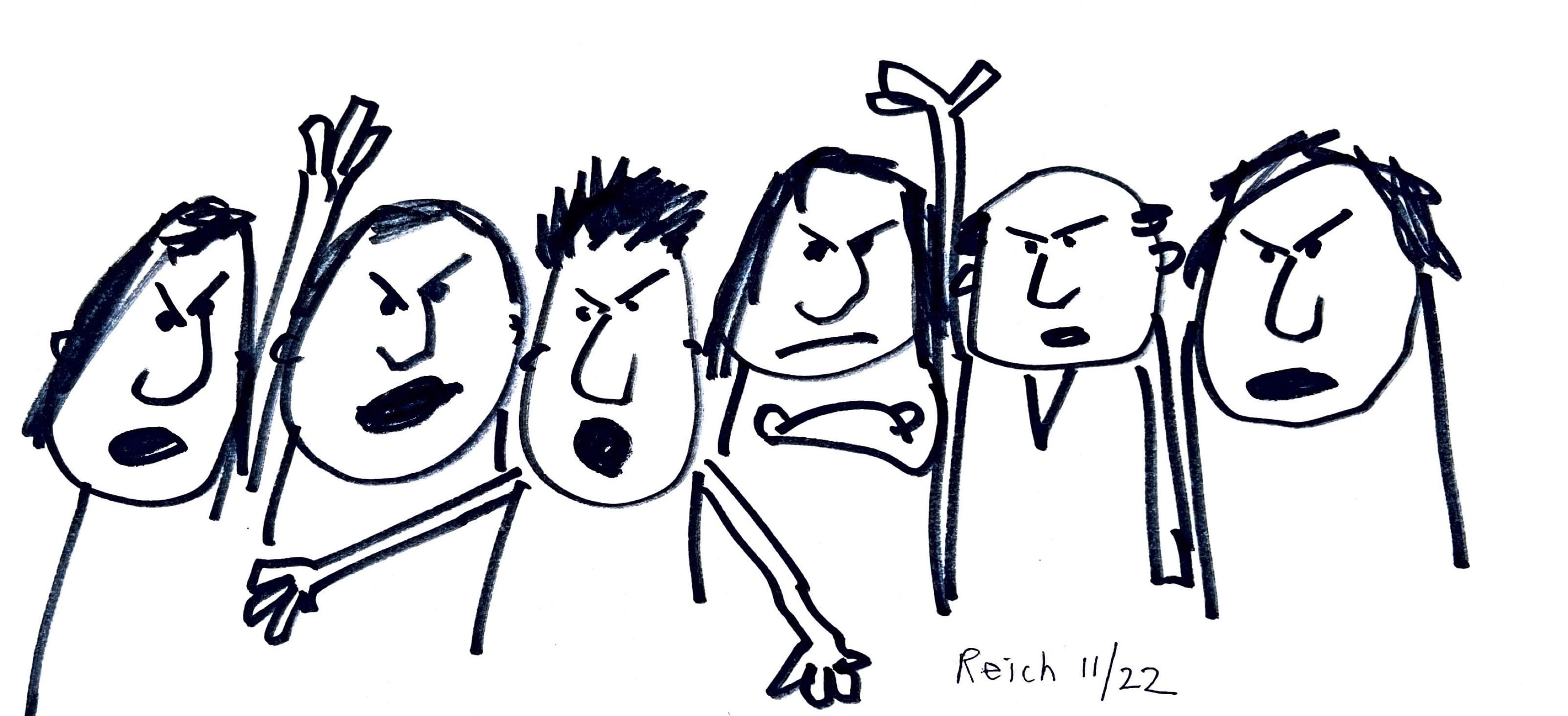
Saved from Neofascism?
Friends,Apart from specific issues and candidates that motivated voters on Tuesday, two contrasting parties continue to emerge in America – one, pro-democracy; the other, anti-democracy or neofascist.The hallmarks of the neofascist party are its cruel nastiness and unwillingness to abide by election results. In other words: Trumpism. Both were on full display election night as Arizona gubernatorial candidate Kari Lake assailed the “cheaters and crooks” whom she claimed were running elections, “BS and garbage,” “incompetent people,” “propagandists,” and “fake media.”And as Rep. Andy Biggs joked that Nancy Pelosi was “losing the gavel but finding the hammer,” a crude reference to the attack on Pelosi’s husband that left him with a fractured skull.Other GOP candidates and flaks hurled similar insults -- “Merrick Garland needs some new pantyhose,” “Beto [O’Rourke] is a furry,” Sen. Mark Kelly is a “little man” whose “ears don’t match,” President Biden is a “lost child” with a “very dirty diaper,” Democrats are “lunatics.”Contrast this feculence with Tim Ryan’s graceful concession speech in the Ohio senate race (I’ve pasted the live version below).We have too much hate, we have too much anger, there’s way too much fear, there’s way too much division, and we need more love, we need more compassion, we need more concern for each other. These are the important things. We need forgiveness, we need grace, we need reconciliation. … I have the privilege to concede this race to J.D. Vance because the way this country operates is that when you lose an election you concede and you respect the will of the people. We can’t have a system where if you win it’s a legitimate election and if you lose, someone stole it. … We need good people who are going to honor the institutions of this country…. The highest title in this land is citizen, and we have an obligation to be good citizens. Or with John Fetterman’s humble remarks after the senate race in Pennsylvania was called for him — when, wiping away tears, he told cheering supporters “I'm not really sure what to say right now, my goodness. I am so humbled, thank you so much …. This campaign has always been about fighting for anyone that ever got knocked down that got back up.” Fetterman had been knocked down last May with a near-fatal stroke — which invited ridicule from Trumpists such as Trump Jr., who told a Sunday-night crowd at a rally in Miami that “if you're going to be in the United States senator, you should have basic cognitive function. It doesn't seem that unreasonable to have a working brain … We're up against a Democrat party today that doesn't believe that a United States senator should not have mush for brain."Gratuitous cruelty, derision, nastiness — they are one of a piece with authoritarianism because they feed off the same anger and fear. They also fuel the hate and paranoia that are causing Americans to distrust our electoral system and one another. And they can fuel violence. When I was a kid I was bullied by other kids because I was so short. I remember the ridicule and the cruelty. The worst of the bullying, I later learned, came from kids who were bullied at home, often by abusive parents. So many Americans feel bullied by the system today — bullied by employers, landlords, hospitals, insurance companies, debt collectors, government bureaucracies, and the like — that they’re easy prey for Trumpism. This isn’t to excuse these people, but only to explain the likely source of their rage, and how the Trumpists are channeling it. And why it’s so important to stop all forms of bullying in modern America — not only because such bullying is morally wrong but because its poison spreads throughout our society. The results of the midterm elections could have been far worse. The extreme grotesqueries of the Trumpist right were soundly defeated — Pennsylvania gubernatorial candidate Doug Mastriano, Maine gubernatorial candidate Paul LePage, New Hampshire Senate candidate Don Bolduc, and Wisconsin gubernatorial candidate Tim Michels (who promised if elected that no Democrat could ever win Wisconsin again). Most election-denying candidates for secretary of state were defeated. As of Wednesday evening, Kari Lake was trailing her Democratic rival for Arizona governor, Katie Hobbs, by a hair. Congresswoman Lauren Boebert (the freshman MAGA Republican from Colorado) was fighting to keep her seat, But Marjorie Taylor Greene was reelected, as was Andy Biggs, and many other election-deniers. And Trump himself seems intent on launching another run on the White House (and on American democracy) within the week. Not as bad as it could have been, but deeply concerning nonetheless. We are still on the brink. This is a public episode. If you'd like to discuss this with other subscribers or get access to bonus episodes, visit robertreich.substack.com/subscribe

Why this election is different!
Hello friends,Welcome back to my Saturday coffee klatch with my colleague Heather Lofthouse (Executive Director of Inequality Media Civic Action — and my former student), where we talk about the highs and lows of the past week over morning coffee. I’m delighted to be back. And many thanks to Michael Lahanas-Calderón for filling in for me. Today we cover:— What gives us the most hope and what worries us most about the upcoming midterm elections. — Elon Musk’s wild takeover of Twitter. — Jerome Powell’s wild takeover of the U.S. economy. And more. Please join us. And thank you to Joseph Lawson and Guy Brenner for this week’s theme songs.And take this week’s poll: This is a public episode. If you'd like to discuss this with other subscribers or get access to bonus episodes, visit robertreich.substack.com/subscribe

Trump Redux
I really don’t want to write about him any more. I’d rather not even think about him. Honestly, I’d rather forget he existed. But he looms over the 2022 elections like a sword of Damocles. Trump continues to dominate all political coverage. In many respects, he is still the center of American politics — if anything, bigger and more dangerous than he was when he left the White House. First, consider all the action in federal and state courts. Just within the last two weeks, Trump has been subpoenaed to appear before the January 6 committee, his appeal to the Supreme Court challenging the FBI’s seizure at Mar-a-Lago of secret documents he stole from the White House was rejected, his former aide Steve Bannon was sentenced to four months in prison for contempt of Congress, a federal appeals court denied a request by Sen. Lindsey Graham to be shielded from testifying in an investigation into Trump’s interference in the 2020 election in Georgia, other aides were observed after testifying before a grand jury in the criminal investigation of Jan. 6, his name was featured in text messages read aloud at the Oath Keepers trial, and his decision to form a new company (Trump Organization II) was criticized by the New York attorney general, who is suing him. Never before in history has a former president, his aides, and supporters in Congress been as entangled in legal proceedings stretching years beyond his administration. Never have the legal maneuvers attracted more media attention. Second is the continuing speculation about whether Merrick Garland will indict him. The Jan 6 committee has done an outstanding job, but it has also helped Trump become a more historically significant. As Politico’s John Harris noted, “The usual journalistic crutch when assessing political legacies is ‘for better or worse,’ but in this case it is only for worse. Trump’s historic significance flows from how effectively he has made people doubt what was previously beyond doubt — that American democracy is on the level — and how brilliantly he has illuminated just how much this generation of Americans looks at one another with mutual contempt and mutual incomprehension.”While the Jan. 6 committee has dismantled Trump’s deceptions and denialism surrounding the 2020 election, it has also helped build Trump into something larger than he appeared two years ago — a political force too serious to forget. That’s not a bad thing; we must not allow ourselves to forget what he has done to America. But it does cast his shadow over our future in ways few former presidents have ever managed. Third is the groundwork for an undemocratic coup that Trump and his henchmen continue to lay.That groundwork is being prepared step by step. A majority of Republican candidates for office in the 2020 midterms are election deniers, including several candidates for the crucial election jobs of secretaries of state and governors. The tactics they and their supporters used in primary elections force us to brace for a range of new challenges in the upcoming midterms and in 2024, including disruptive poll watchers and workers, aggressive litigation strategies, voter and ballot challenges and vigilante searches for fraud.He will almost certainly declare his candidacy for president in 2024 within the next few months. Just as menacingly for 2024 and beyond, the Supreme Court has taken up the “independent state legislature” doctrine. If upheld, this doctrine would allow state legislatures to do exactly what Trump tried to do in December 2020 — appoint their own slates of electors, regardless of the popular vote. Finally, Twitter and Facebook are poised to allow Trump back on — to continue to spread his lies on the largest megaphones in the world. Trump is not only a sociopath. He is also a masterful conman. Social media will soon allow him to continue to spread his lies and hate. (Elon Musk has virtually guaranteed it for Twitter if, as expected, Musk takes over that platform. Facebook has signaled it will do the same.) A sociopathic conman on social media is terrifying. It is our terrible misfortune that Trump came to power and continues to infect America and the world just as the tangled weave of other crises — near-record inequality, bigotry (racism, misogyny, homophobia, transphobia, xenophobia), the climate, the pandemic — have made many Americans vulnerable to his demagoguery. I didn’t want to write about him today or even think about him. But none of us dares turn our eyes away in revulsion. Rather than ignore him, we must demand that Trump be prosecuted. Instead of pretending the poison he released into the American system is behind us, we must acknowledge that it is spreading. As opposed to dismissing him, we must deal with him and the lawmakers who are enabling him head-on — and stop him, and them, through every non-violent means possible. This is a public episode. If you'd like to discuss this with other subscribers or get access to bonus episodes, visit robertreich.

How do we reach young people?
Hello friends,Welcome back to my Saturday coffee klatch with my colleague Heather Lofthouse (Executive Director of Inequality Media Civic Action — and my former student), where we talk about the highs and lows of the week over morning coffee. I’m off this week but have invited Heather and Michael Lahanas-Calderón (Director of Digital Strategy at Inequality Media Civic Action) to chat in my absence. Michael, a member of Gen Z, leads our work on TikTok. He and the team at IMCA have been using video across social media to break down complex issues and change the frames through which people understand the system, so viewers can see what’s at stake and mobilize towards an inclusive democracy and an economy where the gains are widely shared, including in advance of the midterms.Today they cover:* How young people process information (hint: it involves the internet).* How to fill the knowledge gaps around economics and inequality left by the mass media.* The dirty secret of social media video (most people watch with the sound off!).* What makes a video break through on crowded platforms like Instagram and TikTok.Here are a couple recent videos:* A 10-second TikTok video which uses several “trends” to depict how trickle-down economics is a hoax (the speed of which I find dizzying and Heather says makes her motion sick. Do you agree?!).* A video of CEOs crowing about raising prices on consumers to boost their profit margin; they speak for themselves on the relationship between corporate profiteering and inflation. (The Groundwork Collaborative has built a very useful website for these publicly-available quarterly corporate earnings calls.)Thank you to Deirdre Broderick / Corey Kaup and Joseph Lawson for today’s theme songs, and to all of you for listening.P.S. For those of you who have been asking about written transcripts of these coffee klatches, we will have them for you in the coming weeks. Thank you for your patience. This is a public episode. If you'd like to discuss this with other subscribers or get access to bonus episodes, visit robertreich.substack.com/subscribe
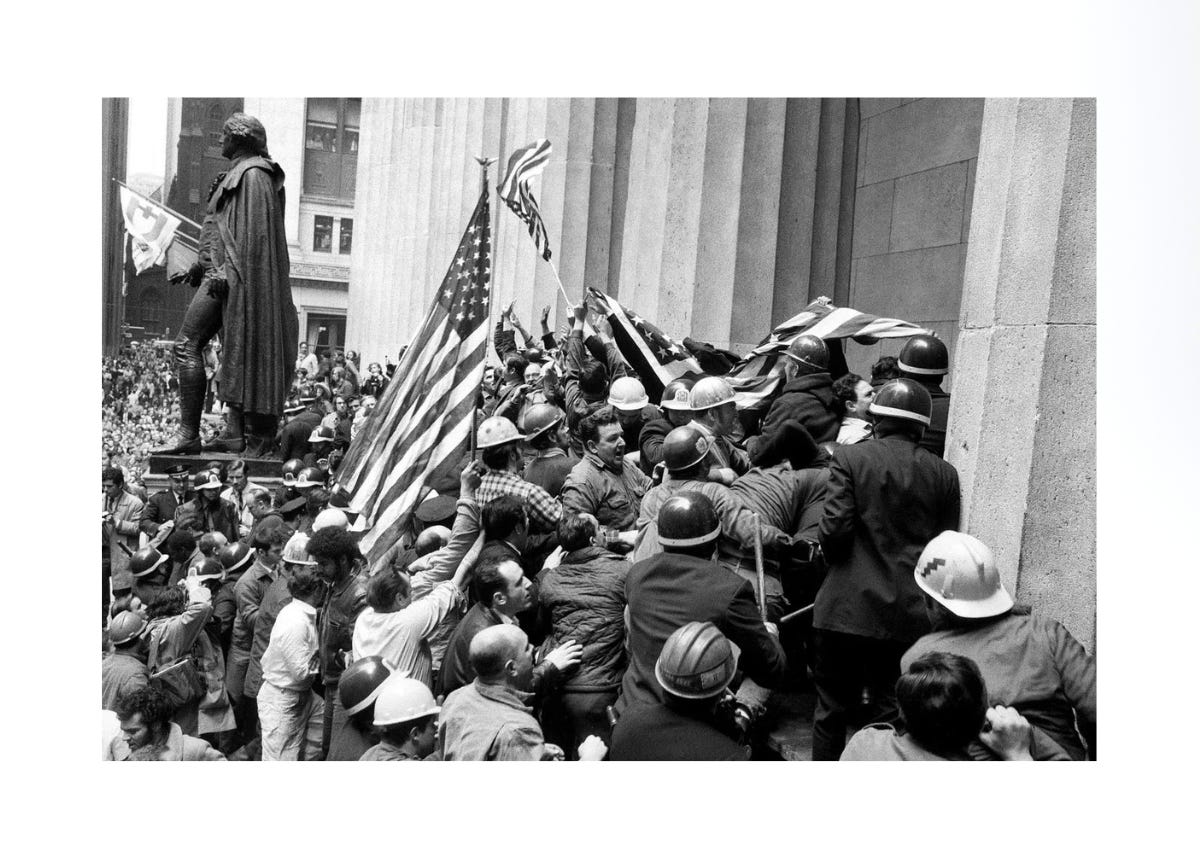
The riot that started the culture wars
The culture wars now ripping through American politics — especially noticeable in these last few weeks before the midterm elections, when Trump is trying to lay the groundwork for an authoritarian takeover — arguably began on May 8, 1970 in New York City. That day happened to be the 25th anniversary of the Allied victory over Germany in World War II. It was also weeks after Richard Nixon expanded the Vietnam War into Cambodia. And it was just four days after Ohio National Guardsmen shot dead four students during antiwar protests at Kent State University.I recall it vividly. On May 8, 1970, a riot broke out in New York City.Around noon, near the intersection of Wall Street and Broad Street in Lower Manhattan, more than 400 construction workers — steamfitters, ironworkers, plumbers, and other laborers from nearby construction sites like the emerging World Trade Center — attacked around 1,000 student demonstrators (including two of my friends) protesting the Vietnam War and the May 4 Kent State shootings. The workers carried U.S. flags and chanted “USA, All the way” and “America, love it or leave it.” They chased the students through the streets — attacking those who looked like hippies with hard hats and weapons, including tools and steel-toe boots.I heard about it when several friends from New York who were active in the anti-Vietnam War movement phoned me later that day. To characterize them as upset understates their emotions.As David Paul Kuhn reports in The Hardhat Riot, the police did little to stop the mayhem. Some even egged on the thuggery. When a group of hardhats moved menacingly toward a Wall Street plaza, a patrolman shouted: “Give ’em hell, boys. Give ’em one for me!”The workers then stormed a barely-protected City Hall where the mayor’s staff, to the hardhats’ rage, had lowered the flag in honor of the Kent State dead. They pushed their way to the top of the steps and attempted to gain entrance, chanting “Hey, hey, whatcha say? We support the USA!” Fearing the mob would break in, a person from the mayor’s staff raised the flag. It was a small precursor to the attack on the U.S. Capitol more than a half-century later. The workers ripped down the Red Cross flag that was hanging at nearby Trinity Church because they associated the flag with the anti-war protests. They stormed the newly built main Pace University building, smashing lobby windows and beating students and professors with their tools.More than 100 people were wounded. The typical victim was a 22-year-old white male college student, though one in four was female. Seven police officers were also hurt. Most of the injured required hospital treatment. Six people were arrested, but only one construction worker.My friends escaped injury but they were traumatized. I remember them describing the rioting construction workers as a “pack of animals.”The hardhat riot had immediate political consequences. Richard Nixon exploited it for political advantage. It was the first salvo in America’s culture wars. Nixon’s chief of staff H.R. Haldeman wrote in his diary: “The college demonstrators have overplayed their hands, evidence is the blue-collar group rising up against them, and [the] president can mobilize them.” Patrick Buchanan, then a Nixon aide, wrote in a memo to his boss, saying “blue-collar Americans” are “our people now.” Peter Brennan, then president of the Building and Construction Trades Council of Greater New York, claimed “the unions had nothing to do with” it — although just before the riot, Brennan had held a rally of construction workers to show support for Nixon’s Vietnam policies. Brennan explained that workers were “fed up” with violence and flag desecration by anti-war demonstrators.At Nixon’s invitation, Brennan then led a delegation of 22 union leaders, representing more than 300,000 tradesmen, to the White House. They presented Nixon with several hard hats and a flag pin, after which Nixon praised the “labor leaders and people from Middle America who still have character and guts and a bit of patriotism”.After the 1972 election, Nixon appointed Brennan labor secretary. Brennan did not distinguish himself in that position. He strongly opposed affirmative action. He also prevented Labor Department officials from investigating allegations of corruption in the Teamsters Union and of its president, Frank Fitzsimmons, who had helped secure labor support for Nixon’s election. The hardhat riot revealed a deep split in America’s left — in the coalition of workers and progressives that Franklin D. Roosevelt had knitted together in the 1930s, and the wished-for alliance of Blacks, liberals and blue-collar whites in the aftermath of Lyndon Johnson’s landslide 1964 re-election. The riot’s class-based and race-based tensions would worsen over the next half century, as America’s upper-middle class and wealthy began pulling away from white Americans without college degrees. The construction workers who attacked the demonstrators on May 8, 19

How are you?
Sincere question: How are you doing these days? I ask because almost everyone I talk with is feeling overwhelmed. Putin’s war in Ukraine and his threats to use nuclear weapons, Trump and his henchmen’s (and henchwomen’s) ongoing threats to democracy, the upcoming midterm elections, the bizarre economy, the climate crisis and the natural disasters it’s spawning. And much more. It’s impossible to block all this out because we’re inevitably affected by it every day –from the prices we’re paying for gas and food, to neighbors and family members who repeat bonkers things they hear on Fox News, to weather that’s out of whack and sometimes menacing, to getting that new booster shot and making sure your loved ones do, too. We also feel all this indirectly, through the anxieties and stresses experienced by those we love. They’re not immune to the chaos, either. I like to think that you find my near daily messages helpful. Yes, they’re sometimes alarming or grim, but they’re written from a set of values that I think we share. I hope you receive them as if from a friend who gives you a tad more courage, assurance, and arguments about why those values are so important. In times like these we also need to take care of each other, and of ourselves. It’s about sustenance — feeding our need to laugh and play, savoring the joy of connecting with those we love, dancing to music that literally moves us. A year before my father died, shortly before his 102nd birthday, we took him to the local mall and parked him in his wheelchair just outside a drugstore for just a moment while we bought a few things. When we returned, he was out of his wheelchair, moving his body with perfect rhythm to the sound of Jimmy Dorsey’s 1930s big band, over the mall’s speakers. My father couldn’t speak and could barely see, but he had a broad grin across his face. I hadn’t even noticed the music. Today, amid all the anxiety and despair, I want to inspire you to hear the music. I guarantee it’s there. Please take some time out to be moved. This is a public episode. If you'd like to discuss this with other subscribers or get access to bonus episodes, visit robertreich.substack.com/subscribe
The 3 biggest GOP lies of the midterms (in addition to the Big Lie)
It’s not just the Big Lie. Republicans are telling three other lies they hope will swing the midterms. They involve crime, inflation, and taxes. Here are the GOP’s claims, followed by the facts.1. They claim crime is rising because Democrats have been “soft” on crime.Rubbish. Rising crime rates are due to the proliferation of guns, which Republicans refuse to control.While violent crime rose 28 percent from 2019 to 2020, gun homicides rose 35 percent. States that have weakened gun laws have seen gun crime surge. Clearly, a major driver of the national increase in violence is the easy availability of guns.The violence can’t be explained by any of the Republican talking points about “soft on crime” Democrats.Lack of police funding? No. On average, all cities — whether run by Democrats or Republicans — saw an increase in police funding in 2022.Criminal justice reforms? No. Wherever bail reforms have been implemented, re-arrest rates remain stable. Data shows no connection between the policies of progressive prosecutors and changes in crime rates.In fact, crime is rising faster in Republican, Trump-supporting states. In 2020, per capita murder rates were 40 percent higher in states won by Trump than in those won by Joe Biden.Republican policies have made it easier for people to get and carry guns. Republicans are lying about the real cause of rising crime to protect some of their biggest supporters, big gun manufacturers and the NRA. 2. Republicans claim that inflation is due to Biden’s spending, and wage increases.Baloney. Biden’s spending can’t be causing our current inflation because inflation has broken out everywhere around the world, often at much higher rates than in the US. Besides, heavy spending by the US government began in 2020, before the Biden administration, in order to protect Americans and the economy from the ravages of COVID-19 — and it was necessary.Wages can’t be pushing inflation because wages have been increasing at a slower pace than prices — leaving most workers worse off. The major cause of the current inflation is the global post-pandemic shortage of all sorts of things, coupled with Putin’s war in Ukraine and China’s lockdowns.The biggest domestic culprit for America’s current inflation is big corporations that are using inflation as an excuse for raising prices above their own cost increases, resulting in the highest profit margins since 1950 — while consumers are paying through the nose.The biggest domestic cause of inflation is corporate power. Republicans are lying about this to protect their big corporate patrons.3. Republicans say Democrats voted to hire an army of IRS agents who will audit and harass the middle class.Wrong. The IRS won’t be going after the middle class. It will be going after ultra-wealthy tax cheats.The Inflation Reduction Act, passed in July, provides funding to begin to get IRS staffing back to what it was before 2010, after which Republicans cut staff by roughly 30 percent, despite increases since then in the number of Americans filing tax returns.The extra staff are needed to prevent high-end tax evasion, which is more difficult to root out (the ultra-wealthy hire squads of accountants and tax attorneys to hide their taxable incomes). It’s estimated that the richest 1 percent are hiding more than 20 percent of their earnings from the IRS.The Treasury Department and the IRS have made it clear that audit rates for households earning $400,000 or under will remain same.Republicans are lying about what the IRS will do with the new funding to protect their ultra-wealthy patrons.None of these three lies is as brazen and damaging as Trump’s Big Lie. But they’re all being used by Republican candidates in these last weeks before the midterms. Know the truth and share it. This is a public episode. If you'd like to discuss this with other subscribers or get access to bonus episodes, visit robertreich.substack.com/subscribe
What grade would you give this week?
Hello friends,Welcome back to my Saturday coffee klatch with my colleague Heather Lofthouse (Executive Director of Inequality Media Civic Action — and my former student), where we talk about the highs and lows of the week over morning coffee. Pull up a chair.Today we cover:— The (potentially last) January 6 committee hearing, and where do things go from here?— The new bad inflation number, and why the Fed’s rate hikes don’t seem to be working (and what Democrats should be saying about inflation).— Alex Jones has to pay almost $1 billion to the families of the victims of Sandy Hook, and what’s the likely effect?— Should we be talking about this time as “post-pandemic?” (Thank god for boosters.)Plus this week’s poll. This is a public episode. If you'd like to discuss this with other subscribers or get access to bonus episodes, visit robertreich.substack.com/subscribe
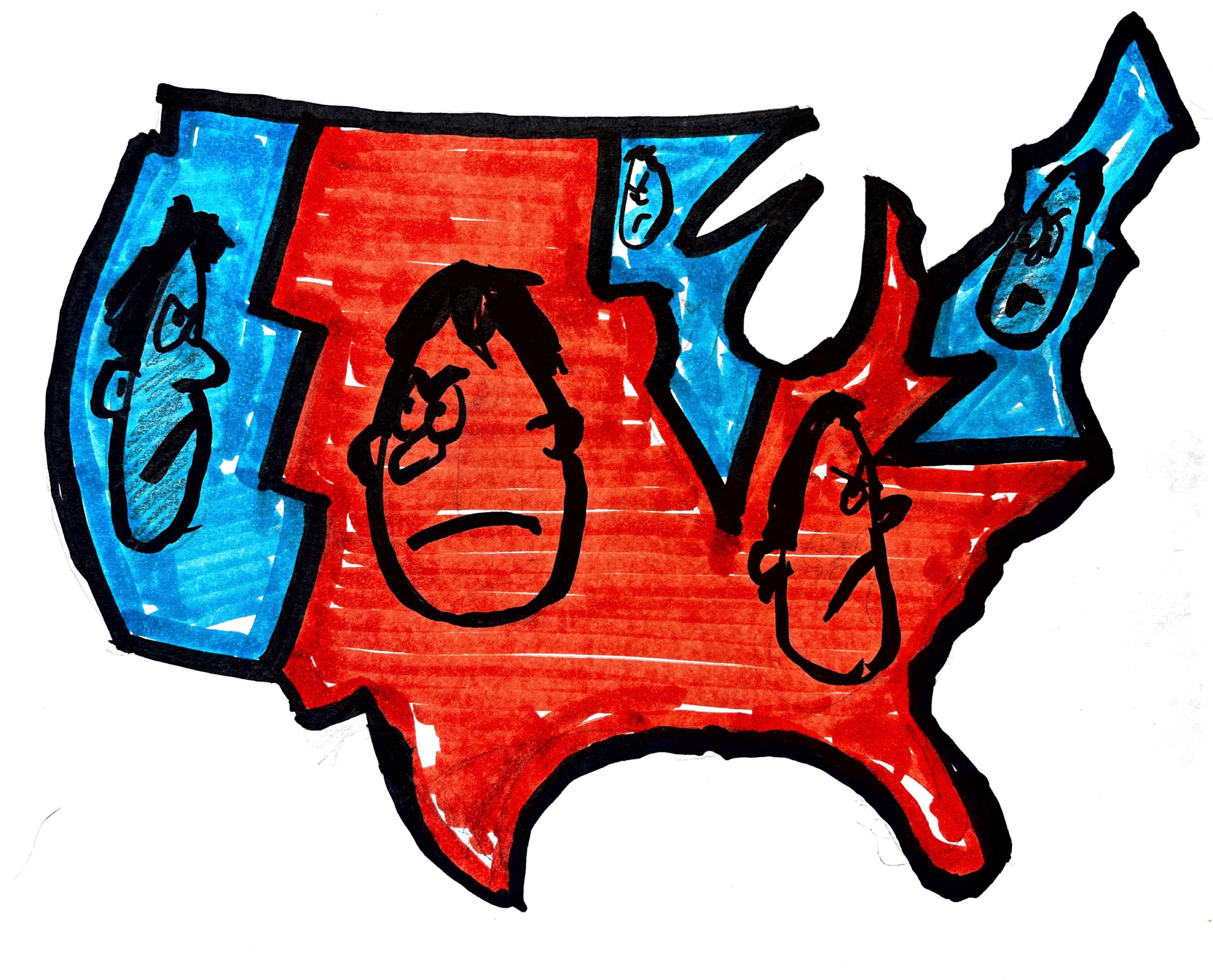
Warning: The dirty little secret of polls
Want some good news? With 27 days until Election Day, polling averages suggest Democrats could retain control of the Senate and even gain a few seats there, and are within sight of keeping the House. Last week, the Cook Political Report, a nonpartisan election forecaster, shifted its forecast in 10 House races, seven of them in favor of Democrats. A day later, analysts at Sabato’s Crystal Ball, an election handicapper based at the University of Virginia, shifted six House seats, four favoring Democrats. "Democratic optimism grows in battle for House," read The Hill’s Mike Lillis' headline Tuesday morning. Lillis goes on to say: “With a month remaining before the midterm elections, House Democrats are in a position where few expected them to be even just a few months ago: competitive.” Meanwhile, the forecasters at FiveThirtyEight, tallying up the available evidence, put the chances that Democrats hold the Senate at seventy-one per cent.But wait. There’s reason to doubt these optimistic numbers. The debacle of 2016 election polls showing Hillary Clinton with a healthy lead, and the 2020 election polls overstating Biden’s lead over Trump, reveal a dirty little secret: Election polls overstate Democratic strength and understate Republican. There are three reasons for this bias:1. Republicans are less likely to respond to election polls. The pandemic understated Republican strength in 2020 because safety-conscious liberals were more likely to be home during lockdowns (and answer telephone calls) while conservatives went out and lived their lives. With lockdowns over, this bias may be over too. But Trump Republicans are less likely to participate in election polls in the first place. Nate Cohn, The Times’s chief political analyst, found that in 2020, white Democrats were 20 percent likelier to respond to Times/Siena polls than white Republicans. Trump voters tend to be less educated, more anti-establishment, and therefore less likely to respond to polls. (In the poll Cohn is undertaking right now, only 0.4 percent of dials have yielded a completed interview.)2. Election polls over-estimate the number of people who will be voting, and non-voters are much more likely to be or lean Democrat than are regular voters. People who rarely or never vote don’t like to admit this to pollsters (they don’t want to be thought of, and don’t want to think of themselves, as non-voters). But because non-voters are far more likely to lean Democrat and tell pollsters they favor a Democratic candidate, poll results exaggerate Democratic strength at the ballot box. 3. People who respond to election pollsters don’t want to admit their preferences for Trump. The vast majority of Trump voters lack a college degree. They believe that pollsters (as educated professionals) will disapprove of their support for Trump, so they don’t admit it. This happened in 2016 and again in 2020. Trump isn’t on the midterm ballot, of course, but many Republican candidates who support him and his Big Lie are on the ballot (in fact, a majority of Republican candidates are election-deniers), so the effect is likely to be the same: understating Republican strength at the ballot box. (According to the Cato Institute’s own polling, 62 percent of Americans say they have political views they’re afraid to share. Many of them, presumably, support Trump and Trump election-deniers.) I don’t mean to discourage you. Quite the opposite. With 27 days to go, many races could go either way. My point is you shouldn’t pay attention to the polls, and not become so confident that you stop phone banking, canvassing, contributing, and doing whatever else you can. Turnout is the critical variable. We must do everything humanly possible to get out the vote. This is a public episode. If you'd like to discuss this with other subscribers or get access to bonus episodes, visit robertreich.substack.com/subscribe
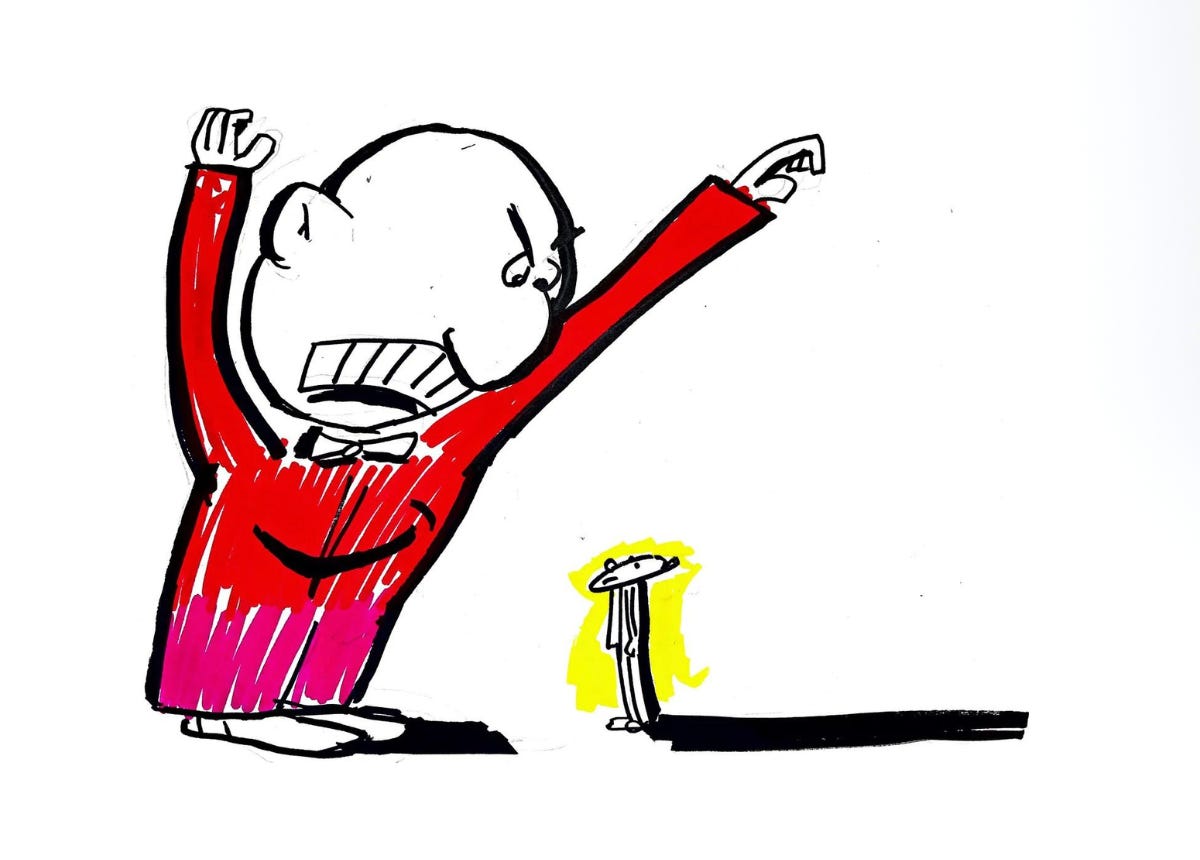
The Kanye West paradox: How to treat noxious content on social media?
Twitter and Instagram just removed antisemitic posts from Kanye West and temporarily banned him from their platforms. It’s the latest illustration of … um, what? How good these tech companies are at content moderation? Or how irresponsible they are for “muzzling” controversial views from the extreme right? (Defenders of West, such as Indiana Attorney General Todd Rokita, are incensed that he’s been banned.) Or how arbitrary these giant megaphones are in making these decisions? (What would Elon Musk do about Kanye West?)Call it the Kayne West paradox: Do the social media giants have a duty to take down noxious content or to post it? And who decides?These corporations are the largest megaphones in world history. They’re contributing to the rise of neofascism in America and around the world, inspiring mentally-disturbed young men to shoot up public schools, and spreading dangerous conspiracy theories that are dividing people into warring camps. They’re also among the richest and most powerful corporations in the world — headed by billionaires like Mark Zuckerberg, and soon, very likely, Musk (who has promised to allow Trump back on Twitter). And they’re accountable to no one other than their CEOs (and, theoretically, investors).It’s this combination — huge size, extraordinary power over what’s communicated, and utter lack of accountability — that’s become unsustainable.So what’s going to happen?Last week, the Supreme Court agreed to hear cases involving Section 230 of Communications Decency Act of 1996, which gives social media platforms protection from liability for what’s posted on them. Plaintiffs in these cases claim that content carried by the companies (YouTube in one case, Twitter in the other) led to the deaths of family members at the hands of terrorists. Even if the Supreme Court decides Section 230 doesn’t protect the companies — thereby pushing them to be more vigilant in moderating their content — the plaintiffs in another upcoming case (NetChoice v. Paxton) argue that the First Amendment bars these companies from being more vigilant. That case hinges on a Texas law that allows Texans and the state’s attorney general to sue the social media giants for unfairly banning or censoring them, based on political ideology. Texas argues that the First Amendment rights of its residents require this. So, do the social media giants have a duty to take down controversial content or to post it? And who decides?It’s an almost impossible quandary, until you realize that these questions arise because of the huge political and social power of these companies, and their lack of accountability. In reality, they aren’t just for-profit companies. Given their size and power, their decisions have enormous consequences for that the public knows and understands — and therefore for democracy. My betting is that the Supreme Court will treat them as common carriers, like railroads or telephone lines. Common carriers can’t engage in unreasonable discrimination in who uses them, must charge just and reasonable prices, and they must provide reasonable care to the public.In a Supreme Court decision last year, plaintiffs claimed that the @realdonaldtrump Twitter account was a public forum run by the president of the United States, and Trump’s blocking of users stifled free speech. The Court dismissed the case as moot, since Trump is no longer president. But in a 12-page concurring opinion, Clarence Thomas gave a hint of what’s to come. He argued that Twitter's ban showed that the real power lay with the large social media platforms themselves, not the government officials on them, and that “the concentrated control of so much speech in the hands of a few private parties” was unprecedented. Thomas noted that Section 230 gives digital platforms some legal protection related to the content they distribute, but Congress “has not imposed corresponding responsibilities.” He then cited a 1914 Supreme Court ruling that making a private company a common carrier may be justified when “a business, by circumstances and its nature…rise[s] from private to be of public concern,” — leading Thomas to argue that “some digital platforms are sufficiently akin to common carriers … to be regulated in this manner.” He concluded that "[w]e will soon have no choice but to address how our legal doctrines apply to highly concentrated, privately owned information infrastructure such as digital platforms."Other justices have made similar remarks. If the Court decides the social media giants are "common carriers," then responsibility for content moderation would shift from these companies to a government entity like the Federal Communications Commission, which would regulate them similarly to how the Obama-era FCC sought to regulate internet service providers.But is there any reason to trust the government to do a better job of content moderation than the giants do on their own? (I hate to imagine what would happen under a Republican FCC.) So are we locked int
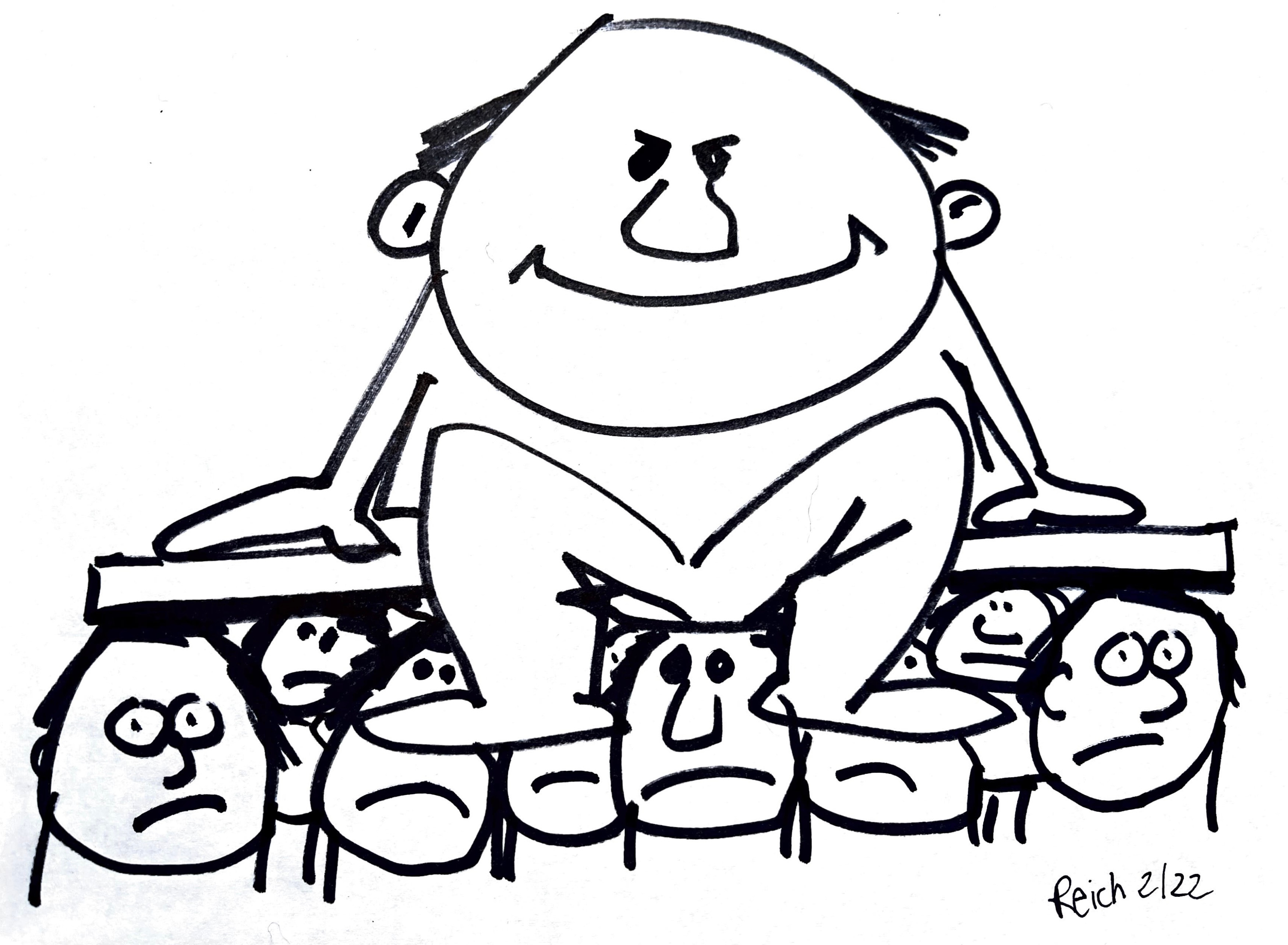
Why is trickle-down economics still with us?
Within weeks of taking office, Britain’s new Prime Minister, Liz Truss, and her chancellor of the Exchequer, Kwasi Kwarteng, proposed a radical new set of economic measures that echoed the trickle-down policies of Margaret Thatcher and Ronald Reagan — heavy on tax cuts for the rich and deregulation.Last Monday, after a backlash from investors, economists and members of his own party, Mr. Kwarteng reversed one of the proposals, deciding against abolishing the tax rate of 45 percent on the highest earners. But proposals for other tax cuts worth tens of billions of pounds remain intact, as the government insists it is on the right path.What’s bizarre about this latest episode of trickle-down economics — the abiding faith on the political right that tax cuts and deregulation are good for an economy — is that this gonzo economic theory continues to live on, notwithstanding its repeated failures.Ever since Reagan and Thatcher first tried them, trickle-down policies have exploded budget deficits and widened inequality. At best, they’ve temporarily increased consumer demand (the opposite of what’s needed during the high inflation that Britain, the US, and much of the world are experiencing).Reagan’s tax cuts and deregulation at the start of the 1980s were not responsible for America’s rapid growth through the late 1980s. His exorbitant spending (mostly on national defense) fueled a temporary boom that ended in a fierce recession. Trump’s 2018 tax cut never trickled down.Yet the US never restored the highest marginal tax rates before Reagan. And deregulation — especially of financial markets — continues to endanger the stability of the economy and expose workers, consumers, and the environment to unnecessary risk. The result? From 1989 to 2019, typical working families in the United States saw negligible increases in their real (inflation-adjusted) incomes and wealth.Over the same period, the wealthiest 1 percent of Americans became $29 trillion richer. The national debt exploded. And Wall Street’s takeover of the economy continued.Meanwhile, and largely as a result, America has become more bitterly divided along the fissures of class and education. Donald Trump didn’t cause this. He exploited it.The situation in the UK after Thatcher has not been dramatically different. So why is trickle-down economics still with us? What explains the fatal attraction of this repeatedly failed economic theory?The easiest answer is that it satisfies politically powerful moneyed interests who want to rake in even more. Armies of lobbyists in Washington, London, and Brussels continuously demand tax cuts and “regulatory relief” for their wealthy patrons.But why has the public been repeatedly willing to go along with trickle-down economics when nothing ever trickles down? What accounts for the collective amnesia?Part of the answer is that the moneyed interests have also invested a portion of their gains in an intellectual infrastructure of economists and pundits who continue to promote this failed doctrine — along with institutions that house them, such as, in the US, the Heritage Foundation, Cato Institute, and Club for Growth.Consider Stephen Moore, the founder and past president of the Club for Growth and a leading economist at the Heritage Foundation, whose columns appear regularly in the Wall Street Journal and is a frequent guest on Fox News.Moore helped draft and promote Trump’s trickle-down tax. In recent weeks he praised Ms. Truss for her willingness “to challenge the reigning orthodoxy by sharply cutting taxes to boost growth,” calling her package “a gutsy and sound policy decision,” that “will bring jobs, capital and businesses back to the U.K.”Moore and others like him are happy to disregard the history of trickle-down’s abject failures. They simply repeat the same set of promises made decades ago when Reagan and Thatcher set out to convince the public that trickle-down would work splendidly.The public has so much else on its mind, and is so confused by the cacophony, that it doesn’t remember — until immediately after the next trickle-down failure. But perhaps the main reason for the public’s amnesia is that Democrats in the US and Labor in the UK have failed to offer what should be the obvious alternative: A bottom-up economics that invests in the education and health of the public, and the infrastructure connecting them. This is the only true path to higher productivity and widely-shared prosperity. This is a public episode. If you'd like to discuss this with other subscribers or get access to bonus episodes, visit robertreich.substack.com/subscribe
How do we measure what really matters?
Hello friends,Welcome back to my Saturday coffee klatch with my colleague Heather Lofthouse (Executive Director of Inequality Media Civic Action — and my former student), where we talk about the highs and lows of the week over morning coffee. Pull up a chair.Today we cover:— Friday’s jobs report, and why the media is getting it wrong.— Billionaire influence over the midterm elections.— Saudi’s stabbing America in the back on oil.— Why we need a monthly report on corporate profits.— Why Heather likes to walk her dog while listening to Chopin and Beyoncé.— My laptop’s keyboard, which is getting worn out (see below). This is a public episode. If you'd like to discuss this with other subscribers or get access to bonus episodes, visit robertreich.substack.com/subscribe
The most important protector of workers' rights you've never heard of
Gallup reports that a whopping (and record) 72 percent of Americans between the ages of 18 and 34 approve of labor unions. That’s especially remarkable given that a bare 3 percent of Americans between the ages of 18 and 34 belong to one. Despite the recent victories of Starbucks workers and noteworthy efforts by Amazon warehouse workers, the rate of union membership in America has fallen to its lowest in seventy years: now a bare 6 percent of private-sector employees.Republicans hate unions. Democrats won’t abolish the filibuster, so lack the votes to strengthen unions. (With any luck, that will change in the next Congress.)Yet there’s a direct and unambiguous relationship between the rate of union membership and the share of total income going to the top 10 percent, as this graph makes clear: The fortunes of American unions and workers are starting to look up nonetheless— and that’s mainly because of a person you probably never heard of, in the most important job you probably didn’t know existed.Her name is Jennifer Abruzzo. A year ago she was confirmed on a party-line vote to be general counsel of the National Labor Relations Board (NLRB).The NLRB hears cases, makes rulings, and sets binding precedents about what does and doesn’t constitute a violation of America’s labor laws.Its general counsel is the agency’s chief prosecutor, directing roughly 500 attorneys across the nation in 26 regional offices.Which gives Abruzzo a huge say over how the private sector in America may or may not treat workers.Installing Jennifer Abruzzo as the NLRB’s general counsel may be the single most important initiative the Biden administration has taken for working people so far — and least known. Abruzzo is no newcomer to the agency. She spent 23 of her 58 years as an attorney there, starting as a field attorney in Miami and rising to deputy general counsel during the Obama administration. But she has taken her new job by storm, instructing her 500 attorneys to make it far more costly for employers to illegally fire workers for trying to form unions. It’s about time. American companies have been charged with violating federal law in over 40 percent of all union election campaigns. But until Abruzzo came on the job, the worst that could happen to them was the equivalent of a weak slap on the wrist. Starbucks, for example, has illegally fired dozens of employees for trying to organize a union. Abruzzo has responded with complaints accusing Starbucks of 81 illegal labor practices — including those firings, plus spying on workers and closing stores in retaliation for unionizing. (The Starbucks workers’ union also wants her to file a complaint against the company for giving raises and improved benefits to baristas at non-union stores but not to workers at stores that have already unionized. Hopefully, she will; it’s also blatantly illegal.)Apple has been telling workers at its retail stores that joining a union could result in fewer promotions and inflexible hours. The National Labor Relations Board just issued a complaint against Apple over accusations that it interrogated its retail workers about their union support and prevented pro-labor flyers in a store break room.Rather than give employers such as Starbucks and Apple mere slaps on wrists, Abruzzo is seeking to increase worker power overall, in seven important ways: * Getting workers who have been illegally fired back into their jobs right away, while their organizing campaigns are still ongoing. She is getting courts to compel this (by injunction) by arguing that waiting for the legal process to unfold will be too late. * Getting back pay for these workers that covers financial losses as well as lost wages — including their withdrawals from savings and retirement funds, loans, and credit card fees. And she wants employers to compensate unions for expenses incurred in fighting their illegal behavior.* Making it illegal for employers to require that workers attend “captive audience” meetings to hear management’s case against unionizing. (The union seeking to organize Amazon’s warehouse workers in Bessemer, Alabama, has alleged that Amazon is doing just this.)* Making employers recognize a union once a majority of workers sign cards saying they want one (thereby returning to a 1949 NLRB rule). “We should not be allowing those employers to delay recognition so that they can coerce these workers to think differently or choose differently,” she says. * Making it illegal for employers to misclassify workers as independent contractors — which the Board can remedy by finding that the workers are employees and thus eligible to unionize. (On March 17th, NLRB attorneys filed a complaint against a port trucking company at the Los Angeles harbor for illegally misclassifying drivers. If upheld, the firm will have to compensate the drivers for lost wages and expenses and provide a union access to the drivers for an organizing campaign.)* Allowing graduate students and college athletes to u

Buying a mayor
Conservative economists shrug their shoulders at the record accumulation of wealth at the very top of America. They claim it’s not a problem because wealth is not a zero-sum game: A huge amount at the top doesn’t necessarily reduce the wealth (or potential wealth) of anyone else.They fail to see that wealth begets power. And power is a zero-sum game. Its possession by certain people means others don’t have it. Substantial power in the hands of a few people can dramatically reduce everyone else’s freedom, autonomy, and voice. Consider the current race for mayor of Los Angeles.Over the last few election cycles, a candidate for LA mayor has had to spend at least $2 million in order to have any chance of getting elected. But since launching his bid in February, Rick Caruso has spent $62 million, and almost all of it has been his own money. Over the same period, his opponent, Karen Bass, has spent $2.2 million, from donations. In other words, Caruso is outpacing Bass by about 20-to-1. Caruso’s net worth is $5.3 billion. He has never held political office. He’s been a developer of several faux-town-square luxury shopping centers. He is also a longtime Republican who has donated generously to the GOP, but switched his registration to independent in 2019, and this year registered as a Democrat — days before declaring his candidacy and just in time for the mayoral race.Karen Bass spent years organizing in South Los Angeles after the 1992 riots. She was then elected to the California legislature where she rose to become Speaker, and then elected to Congress. Former chair of the Congressional Black Caucus, she was on President Biden’s shortlist as a possible vice president.So why is there even a contest here? An ultra-rich white developer of luxury malls who was a Republican until moments before the campaign is running against a woman of color who has spent her lifetime in progressive politics in one of the nation’s most progressive cities of color, achieving important victories for working people and the poor — all against the backdrop of ever more reactionary MAGA Republican Party. Yet polls show the contest dramatically narrowing. Caruso is now trailing Bass by just 3 percentage points among registered voters -- 34 percent to 31 percent — well within the margin of error. That’s down from a 12-point gap in August.What gives?The mainstream media says the contest is narrowing because of “voters’ worries about public safety and homelessness.” The story is by now a familiar rightwing trope —- even leftwing Los Angeles is moving right because crime and squalor. Just look at what happened to that liberal DA in progressive San Francisco! Rubbish. Crime and homelessness are real problems, but Bass is focusing on them just as much as is Caruso. In her ads, Bass says repeatedly, “I’m running for mayor to meet today’s challenges: crime, homelessness, and the soaring cost of housing.” Bass has put forward a plan to bring 15,000 people indoors to expand interim and permanent housing. Caruso promises tiny houses for 15,000 people and temporary “sleeping pods” for thousands more. Bass has a solid record on these issues. Caruso is a real estate developer who has never built a single unit of affordable housing. The only rational way to explain the tightness of the race is Caruso’s money. Apart from billionaire Michael Bloomberg’s three successful New York mayoral campaigns, Caruso’s spending is unrivaled in the annals of American local politics.A first-time candidate with little name recognition, Caruso has blanketed Los Angeles’s airwaves with television, digital and radio ads -- portraying himself as a successful businessman who can clean up the city. In recent weeks he has begun to attack Bass relentlessly in television and radio ads. He’s also spending heavily on door-to-door canvassing, especially in Latino and Asian-American neighborhoods whose voters were likely to have sat out the primary election and don’t typically cast general election ballots.This is all about money, folks. Caruso’s $62 million is multiples more than has ever been spent on a mayoral race in Los Angeles. Karen Bass’s $2.2 million is within the typical range, but obviously paltry by comparison. Imagine if Caruso had sunk $62 million into affordable housing. Coincidentally, $62 million happens to be the goal of the United Way of Greater Los Angeles’s new Affordable Housing Initiative, to create homes for nearly 600 unhoused people. Caruso’s humongous spending illustrates a broader challenge for progressives across the country. This year, dark-money super PACs funded by Republican billionaires and multi-millionaires (along with the occasional billionaire candidate) have spent record amounts to defeat progressive contenders inside the Democratic Party.The current challenge to American democracy is not just Trump’s Big Lie. It’s also billionaire’s big money. Campaign finance reform can occur even without a reversal of the Supreme Court’s shameful Citizens Unit
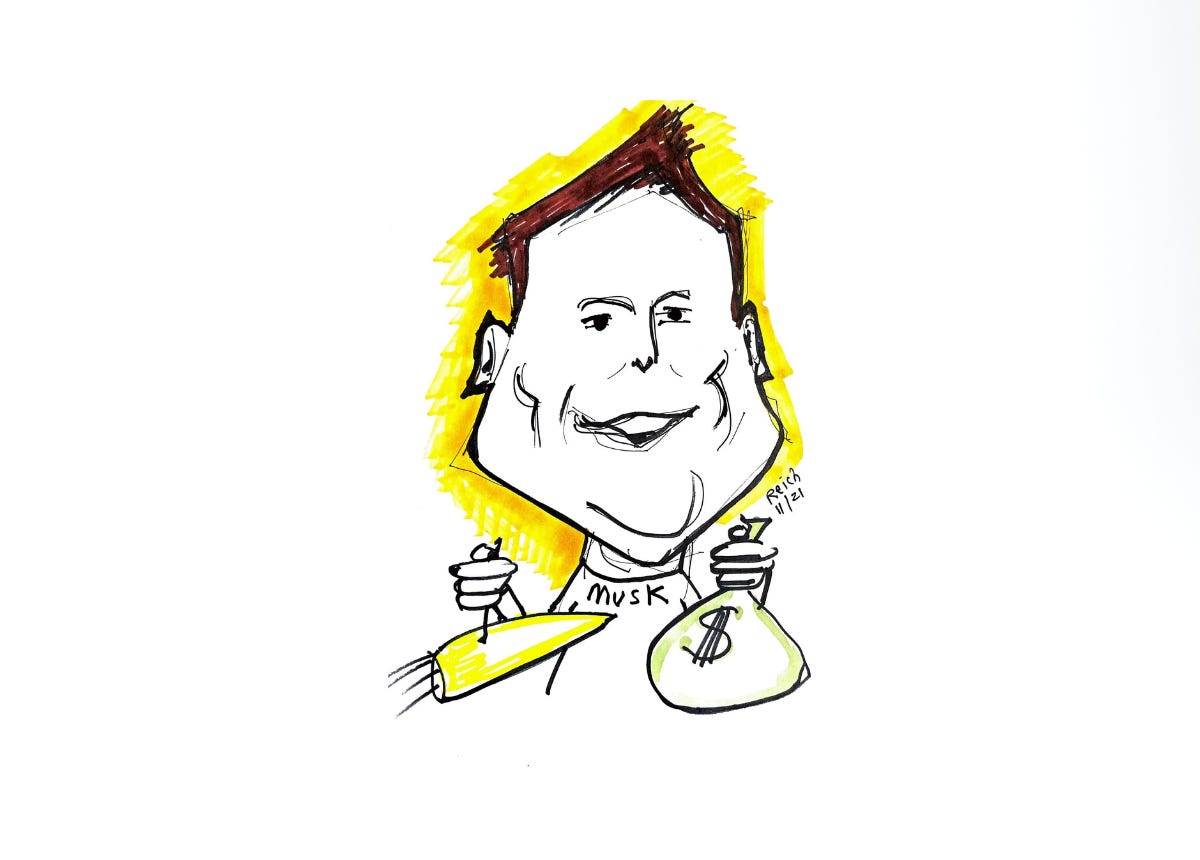
Office Hours: Should Elon get Twitter just because he's now willing to pay for it?
Elon Musk just revived his bid for Twitter Inc. at his original offering price of $44 billion — or $54.20 a share — thereby avoiding a courtroom fight. (Musk made the proposal in a letter to Twitter on Monday, according to a filing with the Securities and Exchange Commission.)So, after six months of brainless brawling bedlam, it looks like Twitter now goes to Elon.But should this critical social platform go to someone with the attention span of a fruit fly and the impetuousness of Donald Trump, just because he’s finally now willing to pay what he bid for it?That depends on whether buying Twitter just a simple market transaction, like buying soap. Or has Twitter come to have a set of social roles and purposes that make it more like a public space such as Times Square, or a public utility — where the question of who owns it looms large? I no longer have any idea what Elon wants to do with Twitter. He has talked loosely about “free speech” but, of course, the First Amendment applies to government — not to a billionaire’s folly. He’s said Donald Trump should be allowed back on, but exactly why? So Trump can have a more efficient means for continuing his attempted coup?Today he tweeted that buying Twitter is an “accelerant to creating X.” What’s X? It’s “the everything app.” Earth to Elon: Can you be a tad more specific? Through the entire on-again-off-again melodrama, Elon has behaved like a one-man version of the Three Stooges. After expressing interest in a seat on the board, he rejected it. “I’m not joining the board. This is a waste of time.” Then he said he’d “make an offer to take Twitter private” because “fake users will make the numbers look so terrible” that it should be a private company. Then he made a bid, but didn’t even begin due diligence until a month after announcing it. Then he got cold feet because he feared fake users made the numbers look too good. Then he said he didn’t care about the economics of the deal. And then had “no plan” for how to finance or manage it. And then he tried to back out. And was sued. And now …He made it up as he went along. As did his inner circle of billionaires. Larry Ellison, the CEO of Oracle, messaged Elon that he was in for “a billion … or whatever you recommend.” What about … um … business strategy? Analysis? Thought?Marc Andreessen, a top Silicon Valley venture investor, assured Elon that $250 million is available “with no additional work required.” Blank check? Jason Calacanis, an angel investor and entrepreneur, told Elon, “You have my sword,” an apparent reference to the movie The Lord of the Rings.Antonio Gracias, another investor and a former member of the Tesla board of directors, told Elon that free speech is “a principle we need to defend with our lives or we are lost to the darkness.” What? Mathias Döpfner, CEO of Axel Springer — headquartered in Berlin — urged Elon to buy Twitter and then have Axel Springer run it (“Would be a real contribution to democracy” and “fun.”) We’re now in Never-Never Land, folks. One texter, identified only as TJ, exhorted Elon to “buy Twitter and delete it” and “please do something to fight woke-ism.”So my Office Hours question this week: Does the public have a legitimate interest in who buys Twitter? Is this social media platform more like a bar of soap or a public square? And, based on your answer, is there anything that the government — representing the rest of us — can or should do about Elon’s bid?Please note: Subscribers to this newsletter are keeping it going. Thank you! We also appreciate you sharing this content with others and leaving your thoughts in the comments. This is a public episode. If you'd like to discuss this with other subscribers or get access to bonus episodes, visit robertreich.substack.com/subscribe

We get what we measure: Why policymakers overlook profits as the source of inflation
One of my goals in this newsletter is to help you uncover the ways wealth and power shape public policy. Today, I’m going to focus on a topic that may seem wonky to you — but that’s exactly the point. Its very wonkiness disguises the power dynamic lying behind it. The issue is how we measure the economy. Start with the rate of inflation — how fast prices are rising. That number is now driving the Federal Reserve, our central bank, to raise interest rates — which in turn is causing mortgage and bank loans to soar, the dollar to reach new heights against foreign currencies, and the stock market to plunge. It is also likely to drive us into a recession. That number is issued every month, from two places. Midway through the month, the Labor Department’s Bureau of Labor Statistics announces the consumer price index. Near the end of each month, the Commerce Department’s Bureau of Economic Analysis releases the Personal Consumption Expenditures Price Index. The two measurements are done slightly differently, but the important point is they’re released every month, like clockwork. Meanwhile, on the first Friday of each month, the Bureau of Labor Statistics tells us how many new jobs have been produced in the previous month and what’s happened to wages. (Economists and business columnists are already bracing for this Friday’s report, covering September’s jobs and wages.)There you have it: Prices, jobs, and wages. These are the three variables we learn about repeatedly because they are announced each month. The media repeat them, analyze them, frame stories around them. The three variables are used by policymakers at the Fed and in Congress and the White House. They’re viewed as the core criteria for how the economy is doing. In short, these three variables drive the national economic conversation. But what about corporate profits? There’s no monthly report on them. Without a regular monthly report on profits, it’s been easy for the media and much of the economic establishment to ignore them — and ignore the record upsurge in corporate profits that occurred over the last two years (in a moment, I’ll tell you how we know about that). Every month we hear about inflation resulting from wages pushing up prices, but we don’t hear about record-high profits pushing up prices. Why is there no report on profits? That answer is found in history — and in power. As historian Eli Cook recounts, the first bureau of labor statistics in the United States was established on June 23, 1869 by the Massachusetts state legislature. It was supposed to collect data on jobs, wages, prices, and profits in that state. But when the new bureau sent out a prepared questionnaire to business owners seeking information on their profits, not a single one was returned. The bureau then tried to estimate profits by publishing a report on the amount of money deposited by wealthy Bostonians in local savings banks. Boston elites went nuts. “Astonished at the audacity” of this “unspeakably mischievous” report, they made sure the bureau chiefs were fired in 1873. The bureau chiefs were replaced by Carroll Wright, who soon went to Washington to head up a new federal agency then called the Bureau of Labor (eventually the Bureau of Labor Statistics) — and did so for the next twenty years. Wright devoted his life to comparing wage rates to cost-of-living indices as a way to measure what were then novel concepts such as “price levels” and “standards of living.” Presumably, to avoid the minefield his predecessors in Massachusetts ran into, Wright never investigated profit rates. And to this day, we know far less about profits than we do about prices, jobs, and wages. As Cook points out, profits continue to be a neglected topic in economics. No Nobel Prize in Economics has ever been given to the study of profits, presumably because we know so little about them. Economists classify publications into many categories (the Journal of Economic Literature’s J3 code stands for “wages, compensation and labor costs”) but no category exists for profits. The last time The American Economic Review published an article with the word “profits” in the title was in 2014 (it was about the Japanese textile industry at the turn of the 20th century). Carroll Wright’s Bureau of Labor Statistics is still going strong — one of the crown jewels of the federal government. But there is no comparable Bureau of Capital Statistics with the power to gather profit data from corporations. (The Commerce Department’s Bureau of Economic Analysis does publish quarterly estimates of corporate profits but those estimates are based on samples of shareholder reports, IRS filings, and corporate income statements. They’re guesswork at best because corporations notoriously shift some profits to nations with lower tax rates, depreciate assets like crazy, low-ball profits when reporting to the IRS and exaggerate them when communicating with Wall Street, and use every accounting gimmick imaginable.)So the only

Trump's "death wish" for McConnell
Friends, Sorry to intrude on your day once again, but I can’t remain silent in the face of Trump’s tirade against Mitch McConnell. On Friday, Trump criticized McConnell for approving Democratic bills, and asked rhetorically if McConnell has done so “because he hates Donald J. Trump, and he knows I am strongly opposed to them.” Trump concluded by asserting that McConnell “has a DEATH WISH.” These are ugly and dangerous words even by Trump’s own rock-bottom standard of indecency. They could be interpreted by some Trump followers as a direct provocation to violence against McConnell. (Recall that some took his angry rhetoric about former Vice President Mike Pence seriously on Jan. 6.)Trump added racial bigotry to his words, suggesting that McConnell “seek help and advice from his China loving wife, Coco Chow!” (For Trump, Elaine Chao’s real offense was resigning as transportation secretary after Trump’s disgraceful behavior on Jan. 6.) These are hardly Trump’s first provocations to violence but their cumulative effect is mounting. As the New York Times noted this weekend, members of Congress in both parties are experiencing a surge in threats and confrontations as violent speech has morphed into in-person intimidation and physical altercation. In the months since the Jan. 6, 2021, attack on the Capitol — which brought lawmakers and the vice president within feet of rioters threatening their lives — Republicans and Democrats have faced stalking, armed visits to their homes, vandalism and assaults.In the five years after Trump was elected in 2016, following a campaign featuring a remarkable level of violent language, the number of recorded threats against members of Congress soared more than tenfold, to 9,625 last year, according to figures from the Capitol Police. In just the first quarter of 2022 (the latest for which figures are available), the Capitol Police opened 1,820 cases. The pace is likely to surge in the coming weeks as midterm elections approach.In 2018, I had a conversation with a retired Republican member of Congress who told me it was dangerous for him or any other prominent person in his state to say anything critical of Trump. I asked him what he meant by “dangerous.” He explained that lawmakers who criticized Trump were receiving death threats. That was before the Big Lie, and before the attack on the Capitol. The pattern is clear. Decency erodes if indecency is not condemned. Silence in the face of dangerous provocation invites ever more dangerous provocation. Intimidation by credible threats of violence invites further threats and, eventually, real violence. Students of history will note the similarities between what we have been witnessing in recent years and events in Germany in the 1930s, leading to the atrocities of Adolf Hitler. Everyone in public life — including leading Democrats, Joe Biden, and Republican leaders, including Mitch McConnell — must condemn Trump’s invitations to violence and bigotry. And they must also demand that Trump be held criminally accountable for his attempted coup, his instigation of the assault on the Capitol, and his theft of top-secret government documents. This is a public episode. If you'd like to discuss this with other subscribers or get access to bonus episodes, visit robertreich.substack.com/subscribe

Trump will be on the ballot in 5 weeks
My friends,Make no mistake: Donald Trump is effectively on the ballot in the midterm elections, five weeks from tomorrow (voting has already begun in several states). Even if he decides not to run, he’s laying the groundwork for authoritarianism. In the upcoming midterms, 60 percent of us will have an election denier on our ballot, most of them endorsed by Trump. In the key battleground states of Arizona, Georgia, Michigan, Minnesota, and Pennsylvania, Republican candidates who embrace Trump’s Big Lie have won almost two-thirds of Republican nominations for offices with authority over elections.Many are running for secretaries of state — the chief elections officers in 37 states, who will be overseeing voter registration and how elections are conducted. In the 2020 presidential election, people who held these positions were the last line of defense for our fragile democracy, upholding Joe Biden’s win despite heavy pressure from proponents of Trump's Big Lie. Which is why Trump and Trump’s lieutenants, including Steve Bannon and Michael Flynn, are trying to fill these positions with Big Liars.Michigan’s GOP candidate for Secretary of State is Kristina Karamo — who rose to prominence in conservative circles after falsely claiming to have witnessed election fraud as a pollster. Karamo has claimed that Trump won the 2020 election and that Antifa was behind the January 6 insurrection. Arizona’s Republican candidate for Secretary of State is Mark Finchem, a QAnon-supporting member of the Oath Keepers militia, who participated in the January 6 insurrection. He cruised to victory in the GOP primary by claiming that Trump won the 2020 election. Nevada’s GOP’s candidate for Secretary of State is Jim Marchant, who won his Republican primary by making Trump's baseless claims of election fraud a cornerstone of his campaign. He also falsely claims that mail-in voting is rife with fraud, and wants to eliminate it altogether (despite the fact that he has voted by mail many times over the years). In Wyoming, state representative Chuck Gray, who won last month’s GOP primary for secretary of state, faces no opponent. Gray has repeated Trump’s lies about 2020 being “rigged,” traveled to Arizona to watch a partisan review of ballots that was derided as deeply flawed and proposed additional regular election audits in Wyoming. In Alabama, state Rep. Wes Allen, the nominee for secretary of state, says he would have signed onto a 2020 Texas lawsuit to overturn Biden’s win (that case was swiftly thrown out by the U.S. Supreme Court).Trump-backed candidates for governor are also on the ballot in key states where governors play a critical role in certifying votes and upholding the will of the people.Pennsylvania’s Republican gubernatorial nominee is Doug Mastriano. If he wins, Mastriano would appoint Pennsylvania’s top election official. Mastriano was also at the Capitol on January 6, and has even been subpoenaed by the January 6 committee to testify about his involvement. Mastriano also helped lead the push to overturn the state’s 2020 election results. Arizona’s GOP gubernatorial nominee is Kari Lake — who has said she does not recognize Joe Biden as the nation’s legitimate president, and would not have certified Arizona’s 2020 election results had she been governor. Wisconsin’s Republican gubernatorial nominee is Tim Michels. Michels still questions the results of the 2020 election and refuses to say whether he will certify the state’s 2024 president election results. Right now, elections in Wisconsin are overseen by the bipartisan Wisconsin Election Commission, but if Michels wins he supports scrapping the Commission in favor of a plan that could shift oversight of the state’s elections to the state’s Republican-dominated legislature. I don’t know about you, but all these Big Liars terrify me. If any one of them wins in a state that’s likely to be a battleground in 2024, they could tip the balance in a tight presidential election to Trump. What terrifies me even more is they could tip America away from democracy to authoritarianism. Meanwhile, a third of all state attorney general races currently have an election denying Republican candidate on the ballot — including Alabama’s Steve Marshall, Idaho’s Paul Labrador, Texas’s Ken Paxton, South Carolina’s Alan Wilson, and Maryland’s Michael Peroutka. Attorneys general also have key roles in election administration — defending state voting laws and election results in court, taking legal action to prevent or address voter intimidation or election misconduct, and investigating and prosecuting illegal attempts to suppress the vote.I haven’t even talked about all the local and county election officials who are also Big Liars, and also on ballots in many states — and who could play roles in the 2024 election. How can we fight back? First: Spread the word about the Trump-GOP’s plans to capture the election process and undermine American democracy. Inform your friends and family — including