The Coffee Klatch with Robert Reich
470 episodes — Page 8 of 10
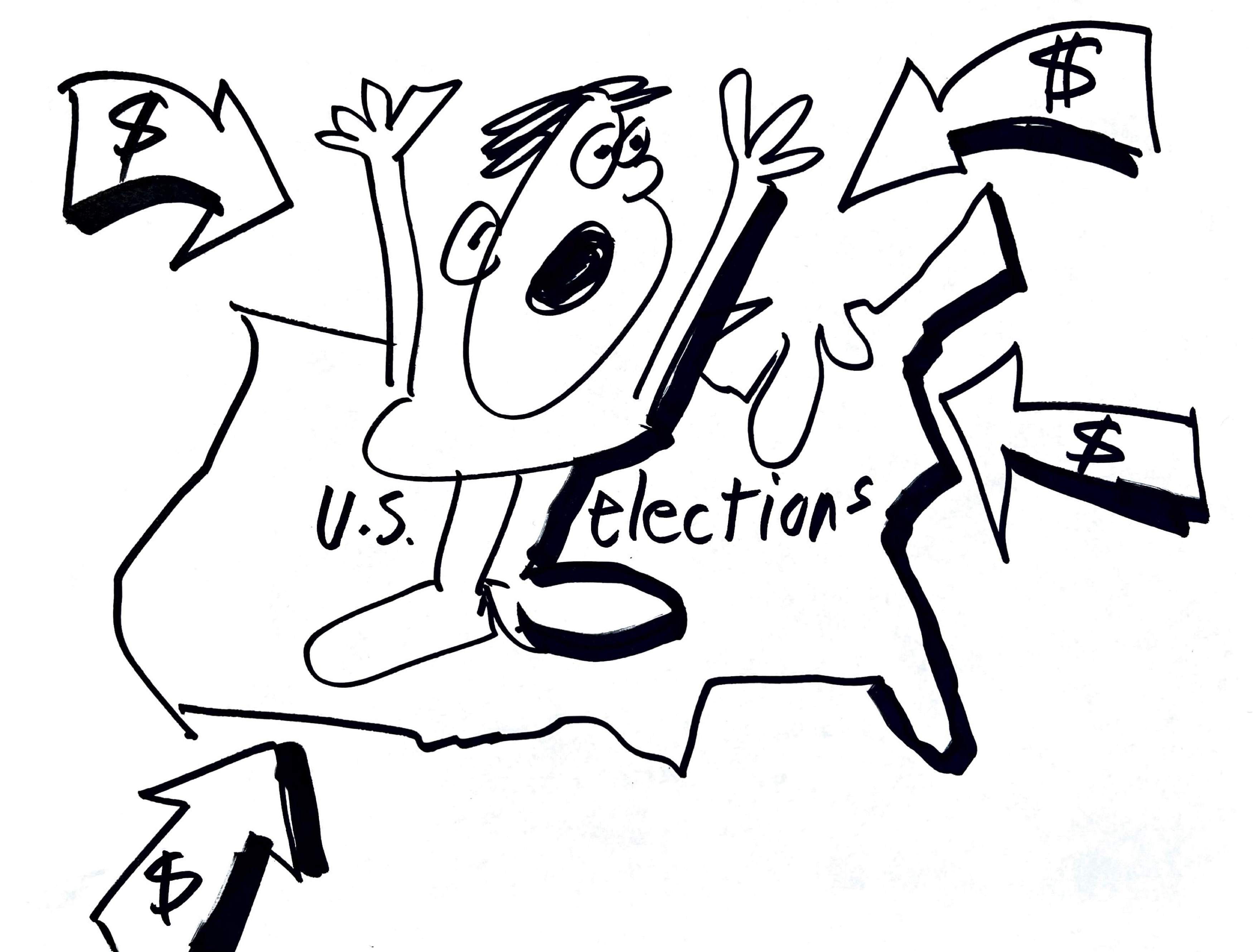
How Russian oligarchs, the Saudis, and China are swaying American elections
Hello friends,In 2017, Donald Trump repeatedly lied that between 3 and 5 million unauthorized immigrants had voted for Hillary Clinton. In the last few weeks, Trump has resurrected his lie during campaign rallies for the Republican primary candidates he has endorsed — whipping up fears of “open borders and horrible elections,” and calling for stricter voter ID laws and proof of citizenship at the ballot box.Trump endorsees have been amplifying the lie. J.D. Vance, the Trump-backed winner of last week’s Ohio Republican Senate primary, claimed that President Biden’s immigration policy has resulted in “more Democrat voters pouring into this country.”In fact, voter fraud is exceptionally rare, and claims that widespread numbers of undocumented immigrants are voting have been repeatedly discredited.There is a problem of foreigners influencing American elections, however — a problem that has nothing to do with immigrants or fraudulent voting. The problem is foreign money flowing into U.S. campaigns.Some of the flow is illegal. Last October, Lev Parnas, a Florida businessman who helped Rudy Giuliani’s effort to dig up dirt on Joe Biden in Ukraine, was convicted of funneling a Russian entrepreneur’s money to U.S. politicians.The real scandal is how much foreign money flows into U.S. elections legally.The Supreme Court’s 2010 decision in Citizens United v. Federal Election Commission opened the gates. It allows foreigners to influence U.S. elections through their investments in politically active American corporations. The (then) five-justice conservative majority said that when it comes to political speech, the identity of the speaker is irrelevant, and that more speech is always better. In dissent, Justice John Paul Stevens argued that the logic of the Court’s ruling would allow foreign spending on American elections, threatening American interests. Stevens was right. If the identity of the speaker doesn’t matter and more speech is always better, what’s to stop foreign spending on U.S. elections?Non-Americans whose money is now flowing into American campaigns — mostly into those of Republican candidates — include Russian oligarchs, the Saudi royal family, European financiers, Chinese corporate conglomerates, and many other people and organizations that owe their allegiance to powers other than the United States. This growing problem emerges from three realities:First, foreign investors now own a whopping 40 percent of the shares of American corporations. That’s up from just 5 percent in 1982.Second, American corporations are spending hundreds of millions of dollars to influence elections — not counting their separate corporate political action committees or personal donations by executives and employees. Much of this spending is through dark money channels that opened after the Citizens United decision.Third, by law, corporate directors and managers are accountable to their shareholders, including foreign shareholders — not to America. As the then-CEO of U.S.-based Exxon Mobil Corp. unabashedly stated, “I’m not a U.S. company and I don’t make decisions based on what’s good for the U.S.”The second and third of these points pose substantial threats to American democracy on their own. Add in the first, and you’ve got a sieve through which non-Americans — whose interests don’t necessarily correspond to the interests of the United States — assert growing influence over American politics.Follow the money. In recent years, Russian billionaire oligarchs have owned significant amounts of Facebook, Twitter, and Airbnb. Saudi Arabia owns about 10 percent of U.S.-based Uber and has a seat on its board. Many of America’s largest corporations with substantial foreign ownership (including AT&T, Comcast, and Citigroup) have contributed millions of dollars to the Republican Attorney Generals Association, which in turn bankrolled the pro-Trump rally on the morning of the January 6 insurrection. What to do about this? The Center for American Progress has a sensible proposal: It recommends that no U.S. corporation with 5 percent or more of its stock under foreign ownership or 1 percent or more controlled by a single foreign owner be allowed to spend money to sway the outcomes of U.S. elections or ballot measures. Corporate governance experts and regulators agree that these thresholds capture the level of ownership necessary to influence corporate decision-making.Okay, but how to get this proposal enacted, when big American-based corporations with significant foreign investment have so much influence over Congress?Democrats should make this an issue in the run-up to the 2022 midterms. While Republicans rail against the utterly fake danger to the United States of undocumented immigrants voting in American elections, Democrats should rail against the real danger to American democracy of foreign money affecting American elections through foreign investments in American corporations.What do you think? This is a public episode. If you'd li
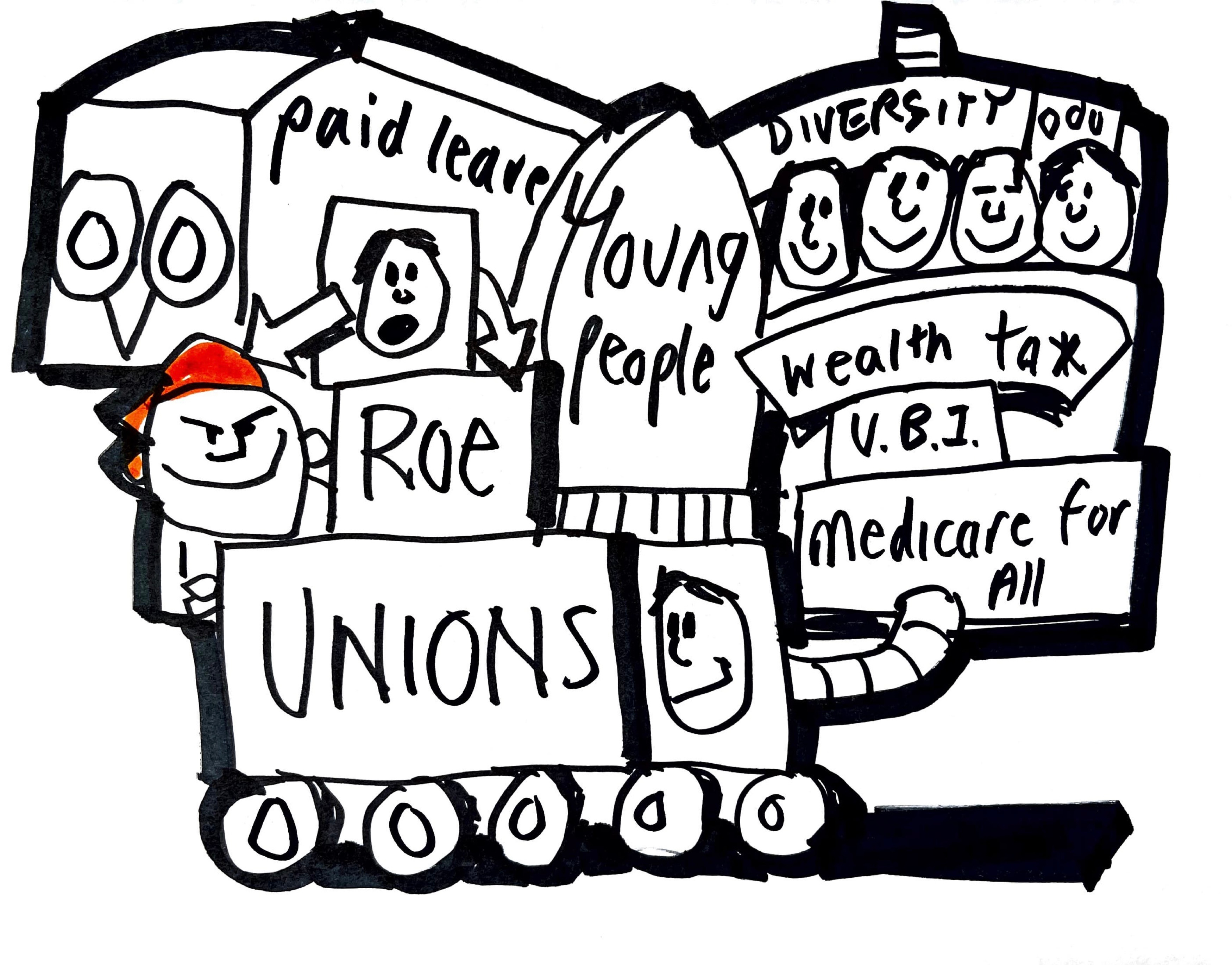
We need a hope machine. Anyone know how to build one?
In a comment on this past Saturday’s post, Paula OH said: “It’s a very tough time. We need a hope machine! Anyone know how to build one?”My answer to Paula is a resounding: “yes!” And in a moment I’ll give Paula and you some hammers, nails, and solar panels to build one.First, though, I want to validate your discouragement. We expected COVID to be gone by now. We thought the minimum wage would be raised by now, that bold measures to slow climate change would be enacted by now, that pharmaceuticals would be cheaper and childcare widely available by now. We never thought we’d be back in a Cold War with Russia, that racist “replacement” theory would lead to a massacre by a crazed gunman, that Trump would be back stirring up nationalist racism, that a single Democratic senator named Joe Manchin would destroy a progressive agenda most Americans favor, that inflation would rip through the economy, or that Roe v. Wade would be repealed. And now we face the serious possibility that the next Congress will be under the control of crazy right-wingers. Don’t kick yourself for feeling lousy. You have every right to feel that way. But let me say something else as clearly as I can. I’ve been at this fight a very long time, and right now I find lots of reasons for hope. Ten, to be exact. (Here’s where the hammers, nails, and solar panels for Paula’s hope machine come in.)1. First, unions are stronger today — and more workers want to join a union — than at any time in the last four decades. Between October 1, 2021 and March 30, 2022, the National Labor Relations Board recorded a 57 percent increase in workers filing for the petitions to allow union elections. That’s a good thing. Unions give workers a voice. They lead to higher wages and better working conditions. 2. A second reason for hope: Many issues now on table — with serious odds of being enacted within the next five or six years — would have seemed leftwing fantasies a decade ago. We haven’t achieved them yet, but most Americans have come around to supporting them. A majority is in favor of Medicare for All. There’s also a surge of support for Universal Basic Income. Also for free public higher education. And for a wealth tax on billionaires. 3. The more America sees of Trump, the more most people are reminded of how disastrous he was for the nation and why we need stable and thoughtful individuals in positions of power. If Trump gets back on Twitter, his divisive and racist drivel will be harmful, of course. But it will also pull many Democrats, Independents and young people back into the fight against Trumpist racist nationalism. Ditto for all the Trump wannabes who have been advancing in Republican primaries. 4. The Supreme Court’s conservative majority is a horror show — but it’s also another reminder to most people of why we need a Democrat in the Oval Office and a Democratic senate. The imminent reversal of Roe is galvanizing a new and even stronger wave of activism.5. The young people I teach and work with are some of the most committed, talented, and progressive people I’ve ever had the privilege of teaching and working with. I’m not talking only about Berkeley, or even the coasts. I’m finding such young people across America. Many are entering politics. AOC is the leading edge of a generational wave that is transforming American politics for the common good. 6. Speaking of waves: Tucker Carlson may bemoan it, and his older and whiter Fox News viewers may hate it, but the demographic forces now reshaping America cannot and will not be reversed. We’re a more diverse society than ever before. This diversity will be a huge strength in the future. And it will be an additional bulwark against racist nationalism. 7. The myth of the decline of the West and the rise of the East — propounded by China and Russia — is proving itself bankrupt. Putin’s war on Ukraine is showing the world that totalitarian systems can’t even execute a war efficiently. Because dissent is stifled, accurate information doesn’t get back to headquarters. Because oligarchs have ravaged government funds, weapons systems don’t work. Because hierarchies are rigid and education in short supply, armies lack the training they need. Putin’s war is also revealing how fragile the Russian economy is, as is any economy whose strength turns on raw materials. 8. But the pandemic has revealed the unnecessary harshness of American capitalism. The horror of COVID has built public support for paid family leave, universal childcare, and universal access to healthcare. The pandemic has also shown us how essential our “essential” workers really are — fueling measures to raise state minimum wages (even if the federal minimum lags behind). 9. At the local and community level, the pandemic has shown most Americans just how kind we can be to one another, how much we depend on each other, and — as Tocqueville noted almost 180 years ago — how rich this nation continues to be in grass-roots voluntary efforts for the comm
Coffee klatch: Dems' message for midterms, Manchin, stock market, contraception, brain fog
My informal weekly coffee with Heather Lofthouse (my former student and executive director of Inequality Media Civic Action), exploring the lows and few highs of the week. As usual, pull up a chair and bring your morning cup. If you somebody who might enjoy a conversation over coffee, please share. This is a public episode. If you'd like to discuss this with other subscribers or get access to bonus episodes, visit robertreich.substack.com/subscribe

Personal history: The Supreme Court I argued before fifty years ago
Hello again, friends. After pro-choice protesters showed up outside the homes of Justice Samuel Alito and two other justices — peacefully chanting while walking in the street that lacked sidewalks — the editorial board of the Washington Post described such protests as “problematic” because they “bring direct public pressure to bear on a decision-making process that must be controlled, evidence-based and rational if there is to be any hope of an independent judiciary.” I’m sympathetic to this view. It’s one thing to picket the Supreme Court as an institution; it’s quite another to demonstrate in front of the homes of individual justices. But surely the pro-choice protesters have a First Amendment right to be heard. I’m reminded of a 1994 case (Madsen v. Women’s Health Center, Inc.) in which the Supreme Court upheld the First Amendment rights of anti-abortion protesters to picket the residences of employees of an abortion clinic, saying the ordinance barring such protests within 300 feet of such residences was too broad. The underlying question is how to weigh the First Amendment rights of protesters against the privacy rights of individual justices. The irony, of course, is that Justice Alito’s leaked opinion finds no right to privacy in the Constitution. Please consider a paid or paid gift subscription to sustain this newsletter***Alito’s leaked decision has led me to reflect back on my years briefing and arguing cases before the Supreme Court almost fifty years ago. The Court I argued before understood that its role was to balance the scales of justice in favor of the powerless. The two political branches of government (Congress and the executive branch) could not be relied on to do this. Republican appointees to the Supreme Court understood this role as did Democratic appointees. Even Richard Nixon’s appointees — Harry Blackmun, Lewis Powell, and Warren Burger — exemplified this. It was Blackmun who wrote the Court’s 1973 decision in Roe v. Wade, and Powell and Burger joined him, as did four Democratic appointees to the Court — William O. Douglas, Thurgood Marshall, William Brennan, and Potter Stewart.The cases I argued were insignificant. I was a rookie in the Justice Department who was given either sure winners or sure losers to argue because the Department didn’t want to take a risk on a rookie — a wise move. (At my first argument, I mistakenly referred to Justice Stewart as Justice Brennan, which caused the two of them to guffaw and me to be mortified.)But I was in awe of that Court. I especially recall Douglas, who had recently suffered a stroke and was in obvious discomfort, looking sharply at me as I made my arguments. Here was the justice who wrote the 1965 decision in Griswold v. Connecticut, finding that a constitutional right to privacy forbids states from banning contraception — a right that would be jeopardized by Samuel Alito’s current analysis because, again, Alito doesn’t recognize a privacy right in the Constitution.Douglas was also the man who decided that the Vietnam war was illegal and issued an order that temporarily blocked sending Army reservists to Vietnam. He was the justice who wrote in the 1972 case Sierra Club v. Morton that any part of nature feeling the destructive pressure of modern technology should have standing to sue in court — including rivers, lakes, trees, and even the air — because if corporations (which are legal fictions) have standing, shouldn’t the natural world?Sitting not far away from him on the bench was Thurgood Marshall — who two decades before had succeeded in having the Supreme Court declare segregated public schools unconstitutional, in the 1954 landmark Brown v. Board of Education. Marshall did more than any person then alive to break down the shameful legal edifice of Jim Crow.Douglas, Marshall, and Blackmun were the intellectual leaders of that Supreme Court. Their opinions gave the Court its moral heft. They drew not only from the Constitution as written but also from the nation as it had evolved. They understood the moral leadership America needed to protect the rights of the voiceless and the powerless. Today’s Supreme Court majority doesn’t have a clue about the Court’s moral authority, and couldn’t care less. They are political hacks, rigid ideologues, and small minds intent on entrenching the power of the already powerful, comforting the already comfortable, and inflicting pain on the already inflicted. (Five were nominated by presidents who lost the popular vote. Three were nominated by a president who instigated a coup against the United States; they were confirmed because a rogue Republican Party mounted scorched-earth campaigns to put them on the Court.) The intellectual leader of today’s majority (if “intellectual” is the appropriate adjective) is Samuel Alito, perhaps the most conceptually rigid and cognitively dishonest justice since Chief Justice Roger Taney (who authored Dred Scott v. Sanford in 1857, finding that Congress had no power
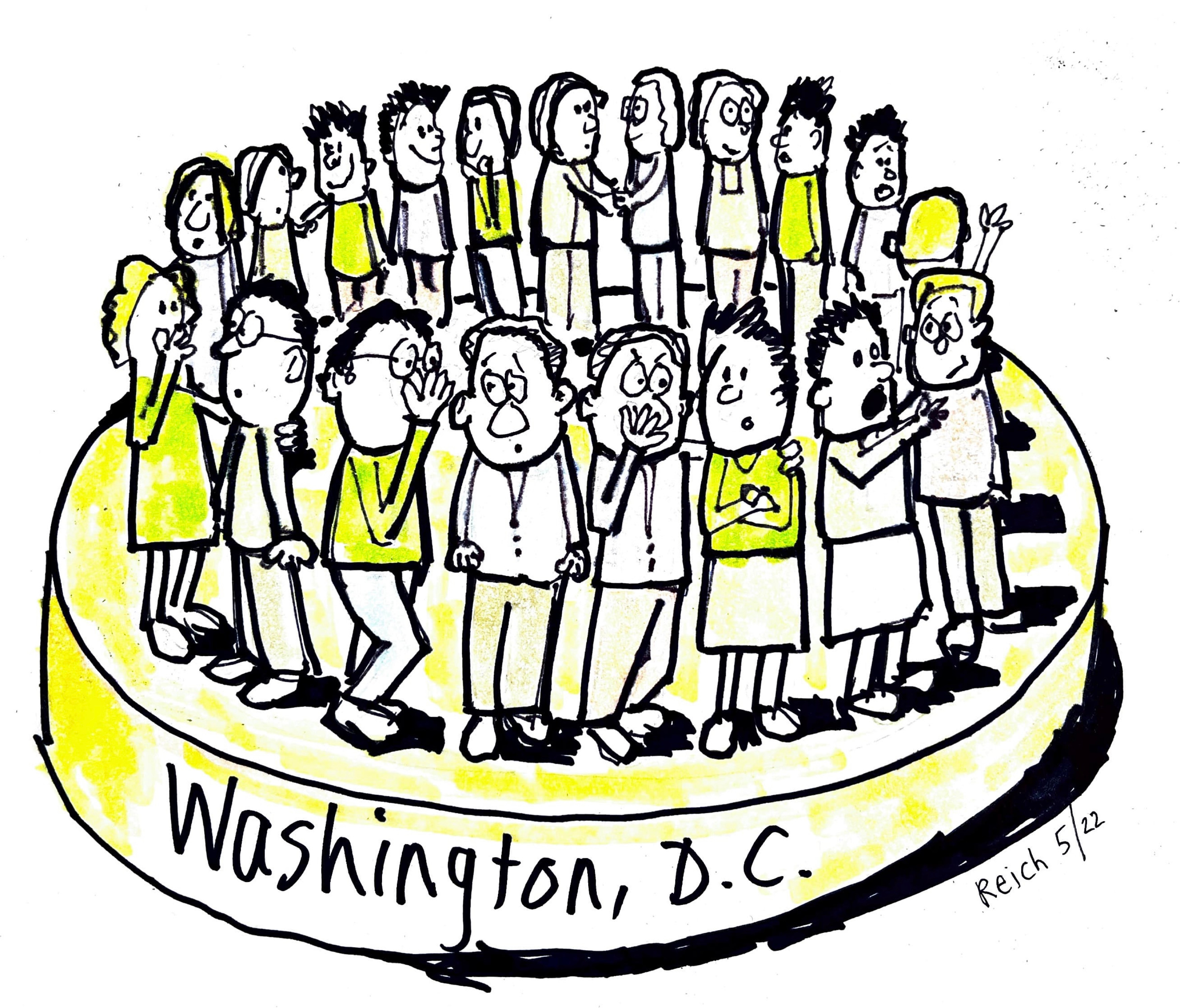
Psst: Wanna know the real reason Washington leaks?
Hello friends. I hope you’re reasonably well, under the circumstances. Today I want to talk to you about leaks. I’ve had a lot of experience with them. I spent almost half my adult life in Washington. Justice Samuel Alito’s first draft opinion overturning Roe v. Wade — which was leaked to Politico — was dated February 10. It is probably obsolete by now, as other justices have had time to offer critiques, dissents, and revisions. But according to another leak from the Supreme Court — this one occurring last week — the five-member majority to overturn Roe remains intact. (This second leak came to the Washington Post from “three conservatives close to the court who, like others, spoke on the condition of anonymity to discuss a sensitive matter.”)Thanks for subscribing. Please consider sustaining this effort with a paid or paid gift subscription.These Supreme Court leaks aren’t the only ones shaking official Washington right now. Last Wednesday the New York Times — citing “senior American officials” — disclosed that the United States is providing Ukrainian officials with locational details of Russian movements that Ukrainians have used to target and kill Russian generals. Then on Thursday, NBC reported — again citing American “officials” — that U.S. intelligence helped Ukraine locate the Moskva, Russia’s flagship in the Black Sea, which Ukraine subsequently sank.President Biden was so livid about these leaks (according to Times columnist Tom Friedman, who received a leak about Biden’s reaction to the leaks) that Biden called the director of national intelligence, the director of the C.I.A. and the secretary of defense to make clear in the “strongest and most colorful language” that this kind of loose talk is reckless and has got to stop immediately, before the U.S. ends up in an unintended war with Russia.Supreme Court drafts don’t normally leak (insiders tell me the Alito draft isn’t the first, though) because the stakes aren’t normally as high as they are with the Court’s decision to abandon Roe. The machinations of American foreign policy do tend to leak quite a lot. Richard Nixon’s Watergate “plumbers” were, after all, trying to discover who leaked the Pentagon Papers to the New York Times. (Nixon couldn’t plug the leaks. Every time he tried, they grew leakier. They ultimately drove him out of office.)Years ago, when I was Secretary of Labor, I sent a memo marked “confidential” to Bill Clinton, about why and how the minimum wage should be raised. I took pains to make sure only his eyes saw the memo. The next day it was in the Wall Street Journal.People in power always want to plug up leaks. I felt that way when I saw my memo in the Journal. But the goal is often misguided. In my experience, people in power pay too little attention to why they want to withhold information in the first place. Much of it stems from not wanting to be embarrassed. (I didn’t want my minimum-wage memo publicized because I didn’t want to embarrass Clinton, or embarrass myself by looking like I was trying to pressure Clinton.)Besides, most leaks can’t be plugged up. Some people in Washington leak information to the media to make themselves feel important. Others, to kill initiatives they don’t like. Others, to fuel initiatives they want. A few (journalists, spies, inside traders) make money by buying and selling leaks.But the biggest reason Washington is so leaky has to do with the way the city is organized. Washington is a one-company town. Just about everyone who works in the upper reaches of government has a spouse, best friend, or lover who works in another part of the upper reaches of government, or in a firm that’s lobbying the government, or in the media that’s reporting on the government. In a one-company town like this, personal intimacies are indistinguishable from public gossip. Everyone knows someone extremely well who knows someone else extremely well who knows someone who has a delicious secret.Every city has its public gossip — the juiciest tidbits of which no one else yet knows but everyone will be talking about as soon as the tidbits are circulated. In Boston, it’s about sports and coaches. In San Francisco, it’s restaurants and chefs. In New York, it’s money and insider financial deals. In Washington, it’s politics and power. Possessing and leaking confidential political information confirms that the leaker has power. And in leaking the information, the leaker confers some of that power on the leakee. Leaks thereby move swiftly from one dear ear to the next — shared over breakfast, brunch, lunch, coffee, cocktails, receptions, dinners, late drinks, wee-hour assignations, early-hour get-togethers, early coffees — all in a slightly lowered voice or a behind-the-hand whisper, typically with a knowing smirk. These conversations and handoffs cement personal relationships in the nation’s capital.When it comes to secrets, the size of a city depends not on the number of people inhabiting it but on the velocity with which s
Coffee klatch: Roe, law school with Clarence Thomas, arguing before the Supreme Court
My informal weekly morning coffee with Heather Lofthouse (my former student and Executive Director of Inequality Media), exploring the lows of the week. As usual, pull up a chair and bring your morning cup. If you know others who might enjoy a conversation over coffee, please share. This is a public episode. If you'd like to discuss this with other subscribers or get access to bonus episodes, visit robertreich.substack.com/subscribe
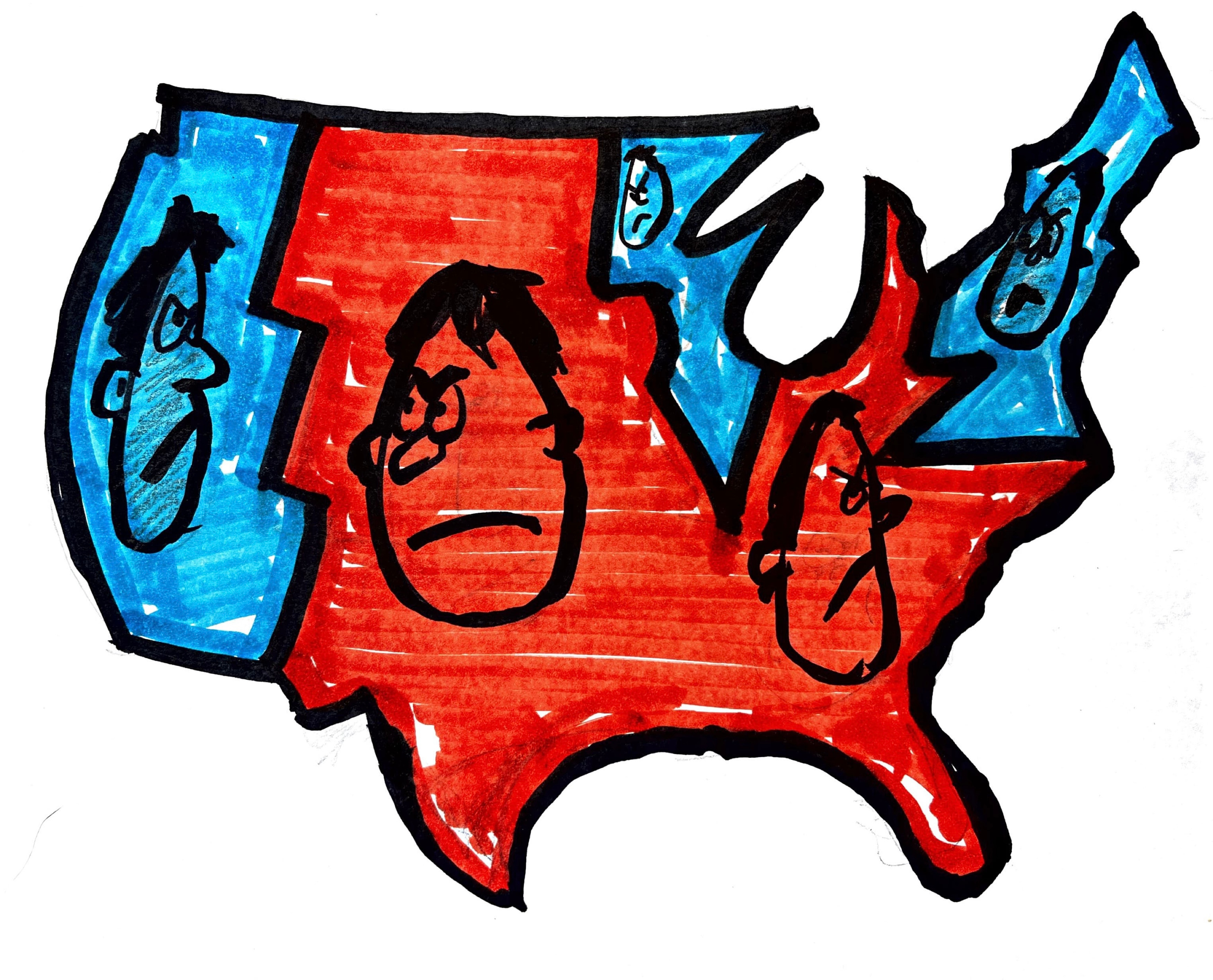
The truth about America's second civil war
The Supreme Court’s upcoming decision to reverse Roe v. Wade (an early draft of which was leaked Monday) doesn’t ban abortions; it leaves the issue to the states. As a result, it will put another large brick in the growing wall separating Blue and Red America. Some say we’re on the verge of a civil war, but that’s not right. It won’t be a formal secession (we tried that once), but a kind of benign separation analogous to unhappily married people who don’t want to go through the trauma of a formal divorce. We are already quietly splitting into two Americas — one largely urban, racially and ethnically diverse, and young; the other largely rural or exurban, white, and older — each running according to different laws and with different sources of revenue. The split is accelerating. Red ZIP codes are getting redder and blue ZIP codes, bluer. Of the nation's total 3,143 counties, the number of super landslide counties — where a presidential candidate won at least 80 percent of the vote — jumped from 6 percent in 2004 to 22 percent in 2020.Surveys show Americans find it increasingly important to live around people who share their political values. Animosity toward those in the opposing party is higher than at any time in living memory. 42 percent of registered voters believe Americans in the other party are “downright evil.” Almost 40 percent would be upset at the prospect of their child marrying someone from the opposite party. Even before the 2020 election, when asked if violence would be justified if the other party won the election, 18.3 percent of Democrats and 13.8 percent of Republicans responded in the affirmative. Thanks for subscribing to my newsletter. If you’re not yet a paid subscriber, please consider a paid or paid gift subscription. While Red states make it nearly impossible to get abortions, they’re making it easier than ever to buy guns — even easier to carry concealed guns without a permit. They’re suppressing votes. (In Florida and Texas, teams of “election police” have been created to crack down on the rare crime of voter fraud, another fallout from Trump’s Big Lie.) They’re banning the teaching of America’s history of racism. They’re requiring transgender students to use bathrooms and join sports teams that reflect their gender at birth. They’re making it harder to protest; more difficult to qualify for unemployment benefits or other forms of public assistance; and almost impossible to form labor unions. And they’re passing “bounty” laws — enforced not by governments, which can be sued in federal court, but by rewards to private citizens for filing lawsuits — on issues ranging from classroom speech to abortions to vaccinations.Blue states are moving in the opposite direction. Several, including Colorado and Vermont, are codifying a right to abortion. Some are helping cover abortion expenses for out-of-staters. When Idaho proposed a ban on abortions that empowers relatives to sue anyone who helps terminate a pregnancy after six weeks, nearby Oregon approved $15 million to help cover the abortion expenses of patients from other states. Maryland and Washington have expanded access and legal protections to out-of-state abortion patients. One package of pending California bills would expand access to California abortions and protect abortion providers from out-of-state legal action. After the governor of Texas ordered state agencies to investigate parents for child abuse if they provide certain medical treatments to their transgender children, California lawmakers proposed making the state a refuge for transgender youths and their families. Another California proposal would thwart enforcement of out-of-state court judgments removing children from the custody of parents who get them gender-affirming health services. California is also about to enforce a ban on ghost guns and assault weapons with a California version of Texas’ recent six-week ban on abortion, featuring $10,000 bounties to encourage lawsuits from private citizens against anyone who sells, distributes or manufactures those types of firearms.Please remember to join me for tomorrow’s Wealth and Poverty class The new separation extends even to government revenue. A little-noticed trend is toward a growing share of total government taxing and spending occurring in the states — thereby making Blue states (which are overall wealthier than Red states) more financially autonomous. For years, the inhabitants of Blue states have been sending more tax dollars to the federal government than they get back (in the form of federal assistance to the poor, education, social services, and infrastructure), while Red states have been sending Washington fewer dollars than they receive back. But the significance of this Blue state subsidy to Red states is declining as an ever-larger percentage of total federal and state taxes paid by the inhabitants of Blue states are being spent in such Blue States. (A record half of all government revenue is now raised a
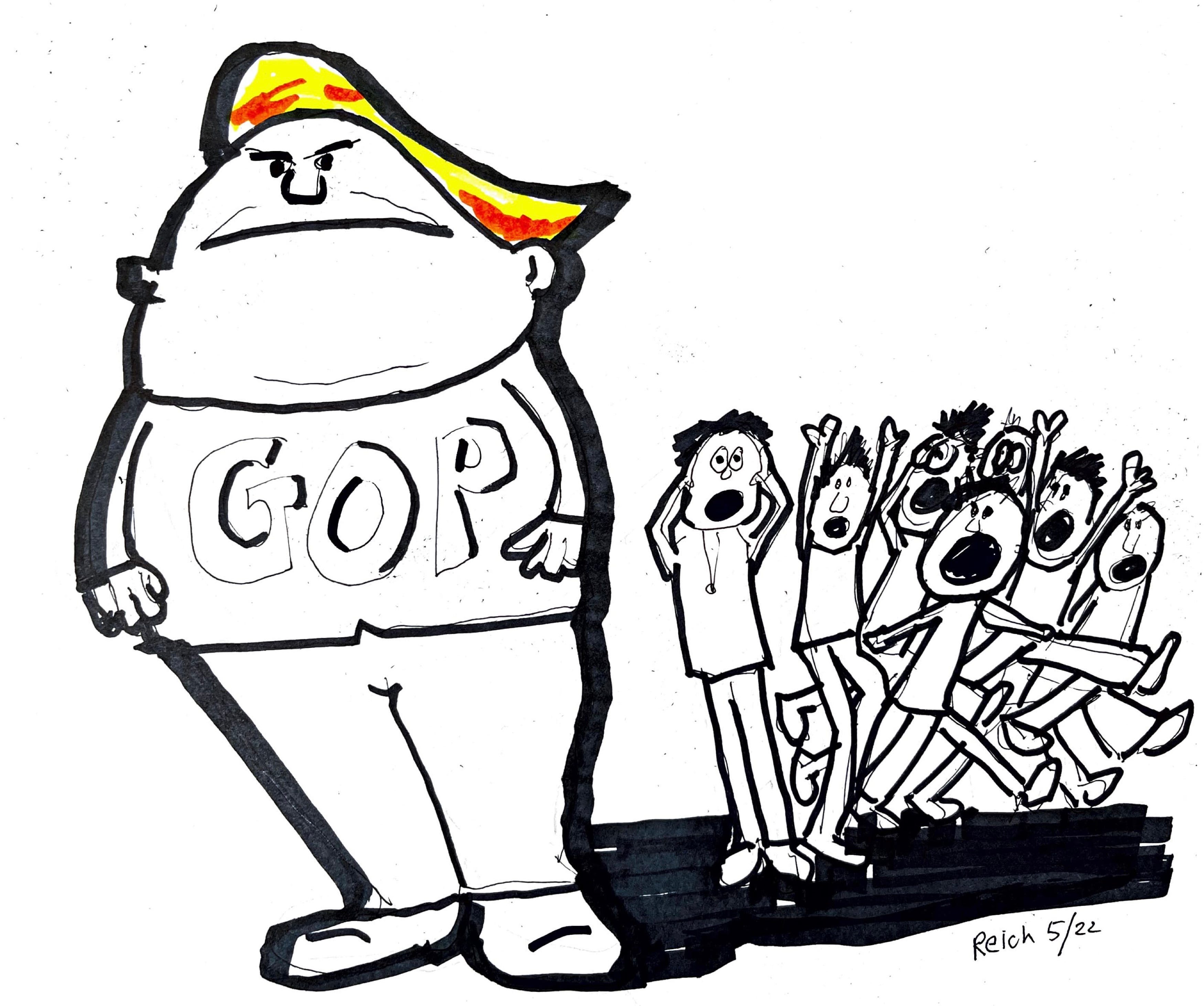
Shhhh: The Democrats' secret sauce for winning the midterms
The beginning of May before midterm elections marks the start of primary season and six months of fall campaigning. The conventional view this year is Democrats will be clobbered in November. Why? Because midterms are usually referendums on a president’s performance, and Biden’s approval ratings are in the cellar.But the conventional view could be wrong because it doesn’t account for the Democrats’ secret sauce, which gives them a fighting chance of keeping one or both chambers: Trump Sauce. According to recent polls, Trump’s popularity continues to sink. He is liked by only 38 percent of Americans and disliked by 46 percent. (12 percent are neutral.) And this isn’t your normal “sort of like, sort of dislike” polling. Feelings are intense, as they’ve always been about Trump. Among voters 45 to 64 years old — a group Trump won in 2020, 50 percent to 49 percent, according to exit polls — just 39 percent now view him favorably and 57 percent, unfavorably. Among voters 65 and older (52 percent of whom voted for him in 2020 to Biden's 47 percent) only 44 percent now see him favorably and more than half (54 percent) unfavorably. Perhaps most importantly, independents hold him in even lower regard. Just 26 percent view him favorably; 68 percent unfavorably.Republican lawmakers had hoped — and assumed — Trump would have faded from the scene by now, allowing them to engage in full-throttled attacks on Democrats in the lead-up to the midterms. No such luck. In fact, Trump’s visibility is growing daily.Not a paid subscriber yet? Consider joining to help sustain this work.The media is framing this month’s big Republican primaries as all about Trump — which is exactly as Trump wants them framed. But this framing is disastrous for the GOP. Today’s Republican Ohio primary, for example, has become a giant proxy battle over who’s the Trumpiest candidate. The candidates have been outdoing each other trying to imitate him -- railing against undocumented immigrants, coastal elites, “socialism,” and “wokeness,” all the while regurgitating the Big Lie.Trump’s April 15 endorsement of JD Vance could make the difference today — as could Trump’s backing of Mehmet Oz in Pennsylvania’s May 17th primary and of Hershel Walker in Georgia’s May 24 primary. But whether Trump’s endorsements pay off in wins for these candidates is beside the point. By making these races all about him, the media is casting the midterms as a whole as a referendum on Trump’s continuing power and influence. This is exactly what the Democrats need. June’s televised hearings of the House January 6 committee will likely show in detail how Trump and his White House orchestrated the attack on the U.S. Capitol, and rekindle memories of Trump’s threat to withhold military aid to Ukraine unless Ukrainian president Zelensky came up with dirt on Biden. But the real significance of the hearings won’t show up in Trump’s approval ratings. It will be in the heightened reminders of Trump’s reign in Washington, as well as Trump’s closeness to Putin. The result is an almost certain shift in marginal voters’ preferences toward the Democrats in November.The leaked decision by the Supreme Court to uphold Mississippi’s ban on abortions after fifteen weeks and reverse Roe v. Wade — courtesy of Trump’s three Court nominees — will green-light other Republican states to enact similar or even tighter bans, and spur Republicans in Congress to push for national legislation to bar abortions across the country. Republicans believe this will ignite their base, but it’s more likely to ignite a firestorm among the vast majority of Americans who believe abortion should be legal. Score more Democratic votes.There is also the possibility of criminal trials over Trump’s business and electoral frauds (such as his brazen attempt to change the Georgia vote tally) — whose significance will be less about whether Trump is found guilty than additional reminders, in the months before the midterms, of Trump’s brazen lawlessness. Meanwhile, Trump will treat America to more rallies, interviews, and barnstorming to convince voters the 2020 election was stolen from him, along with incessant demands that Republican candidates reiterate his Big Lie. More help to Democrats. Somewhere along the line, and also before the midterms, Elon Musk is likely to allow Trump back on Twitter. The move will be bad for America — fueling more racism, xenophobia, and division. But it will serve as another memento of how dangerously incendiary Trump and Trumpism continue to be.Accompanying all of this will be the ongoing antics of Trump’s whacky surrogates — Tucker Carlson, Marjorie Taylor Greene, Matt Gaetz, Steven Bannon, Madison Cawthorn, Trump Junior, et al — who mimic Trump’s bravado, bigotry, divisiveness, and disdain for the law. All are walking billboards for Trumpism’s heinous impact on American life. All will push wavering voters toward Democrats in November.I’m not suggesting Democrats seeking election or reelection cent
Stopping the bullies
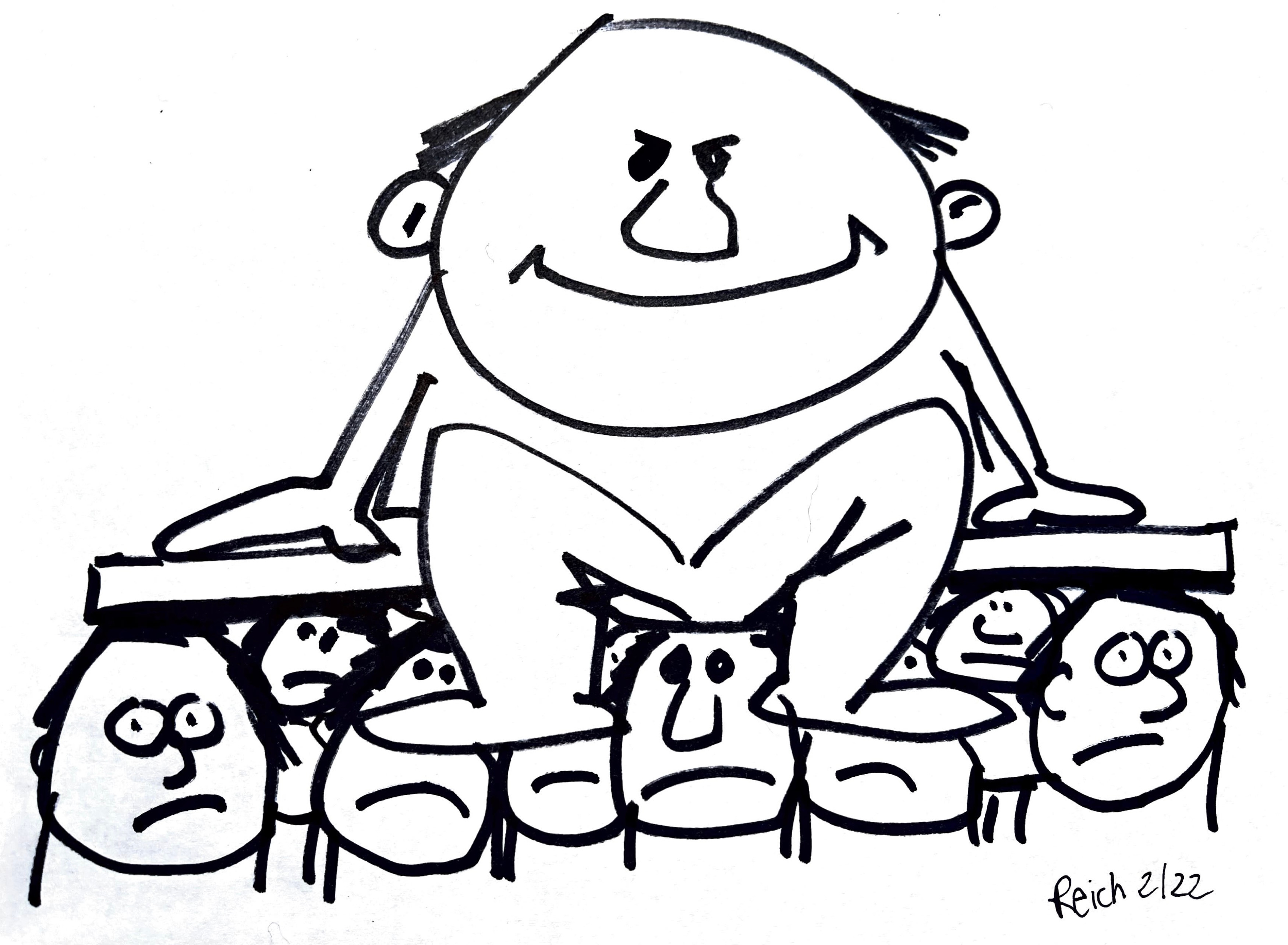
Consider the larger pattern. Putin invades Ukraine. Trump refuses to concede and promotes his Big Lie. Rightwing politicians in America and Europe fuel white Christian nationalism. Rightwing television pundits encourage racism and spur bigotry toward immigrants. Police kill innocent Black people with impunity. Powerful men sexually harass and abuse women. Politicians target LGBTQ youth. CEOs who are raking in record profits and pay give workers meager wages and fire them for unionizing. The richest men in the world own the most influential media platforms. Billionaires make large campaign donations (bribes) so lawmakers won’t raise their taxes.All are abuses of power. All are occurring at a time when power is concentrated in fewer hands. Throughout history, the central struggle of civilization has been against brutality. The state of nature is a continuous war in which only the fittest survive — where lives are “nasty, brutish, and short,” in the words of English philosopher Thomas Hobbes. Without norms, rules, and laws preventing the stronger from attacking or exploiting the weaker, none of us is safe. We all live in fear. Even the most powerful live in fear of being attacked or deposed.Civilization is the opposite of this state of nature. A civil society doesn’t allow the strong to brutalize the weak. Our job — the responsibility of all who seek a decent society — is to move as far from a state of nature as possible. Certain inequalities of power are expected, even in a civil society. Some people are bigger and stronger than others. Some are quicker of mind and body. Some have more forceful personalities. Some have fewer scruples. Some inequalities of income and wealth may be necessary to encourage hard work and inventiveness, from which everyone benefits.But when inequalities become too wide, they invite abuses. Without laws and norms that protect the weaker, the stronger will abuse their positions of power. Such abuses invite further abuses, until society degenerates into a Hobbesian survival of the most powerful. People with great wealth or celebrity; people who occupy high positions in government, business, the media, or the church; people whose race, ethnicity, religion, or gender is dominant; people who command vast armies — such people may be tempted to use their power to demean, harm, or even annihilate weaker people. Unless they are stopped, an entire society — even the world — can descend into chaos. Every time the stronger bully the weaker, the social fabric is tested. If bullying is not contained, the fabric unwinds.Some posit a moral equivalence between those who seek social justice and those who want to protect individual liberty, between “left” and “right.” But there is no moral equivalence between bullies and the bullied, between tyranny and democracy, between brutality and decency — no “balance” between social justice and individual liberty. It is a false equivalence and a false choice. No individual can be free in a society devoid of justice. There can be no liberty where brutality reigns. The struggle for social justice is the most basic struggle of all because it defines how far a civilization has come from a Hobbesian survival of the most powerful. Defending voting rights or LGBTQ rights or women’s rights is not the moral equivalent of attacking them. Coming to the assistance of refugee children is not morally equivalent to putting them in cages. Prosecuting police who kill innocent Black people is not one side of an equally respectable stance defending the freedom of police to kill innocent Black people. Fighting racism is not of equal moral value to fueling racism. Seeking stronger safety nets for those in need is not on an equal moral footing with seeking to unravel safety nets. Championing stronger unions is not just the other side of pushing for weaker unions. Demanding higher taxes on billionaires is not morally equivalent to demanding lower taxes on them.We inhabit a society and a world growing more unequal, in which political and economic power is becoming ever more concentrated. To claim that “both sides” — both the more powerful and the weaker — have the same moral standing is to avert one’s eyes to this reality. Lobbyists for large corporations, publicists for the wealthy, lawmakers for the privileged, pundits for the powerful, celebrity peddlers of racism and xenophobia — none deserves equal space in the public square to those fighting against abuses of the powerful. The powerful already have the largest megaphones and the deepest pockets. To allow the richest to own the means by which we receive the truth is to enable oligarchy. To allow the worst demagogues free rein is to open wide the gates to tyranny. Our duty is to stop brutality. Our responsibility is to hold the powerful accountable. Our moral obligation is to protect the vulnerable. Putin must be stopped. Trump must be held accountable. Rightwing politicians who encourage white Christian nationalism must be condem
The past week, over Saturday coffee
My informal weekly coffee klatch with Heather Lofthouse (my former student and Executive Director of Inequality Media) exploring the highs and lows of the week. As usual, pull up a chair and bring your morning cup. If you know others who might enjoy a good conversation over coffee, please share. This is a public episode. If you'd like to discuss this with other subscribers or get access to bonus episodes, visit robertreich.substack.com/subscribe

How to put guardrails on Twitter, how to stop inflation without a recession, and how to win a war.
Guardrails against dangerous lies on Twitter? Now that Elon has total control over one of the major ways Americans find out what’s happening (I know, I know -- Twitter is vapid and filled with smears and jeers, but it has a hugely important role in shaping the news), what can be done to establish guardrails against dangerous lies? It seems likely that Musk will take down the few guardrails that remain on Twitter — but some guardrails are surely needed to prevent malicious harassment or dangerous instigation of violence. Twitter (like Zuckerberg’s Facebook and Instagram) is more like a public utility than a private company. It has public functions and no direct competitors. What to do?Much of the answer boils down to making Twitter (and Facebook and Instagram) more responsible for what users say on its platform – just as any other publisher is responsible. In every other dimension of public life, tort laws allow people who are defamed, harassed, or otherwise injured by malicious or hateful speech to sue. There’s a high bar: plaintiffs must establish that the publisher knew or had reason to know that the published material was false and injurious. But the mere possibility of being sued causes publishers to take at least a modicum of responsibility.In 1996, Congress enacted Section 230 of the Communications Decency Act — shielding website owners from liability by decreeing that they shouldn’t be treated as a “publisher.” But back then Congress could not possibly have foreseen what would happen over the next quarter century: giant firms like Twitter and Facebook making huge amounts of money by posting incendiary content that attracts lots of eyeballs and gives them mountains of user data that they then monetize — even if the content encourages political violence, riots, or gang shootings.I’ve been talking for some time about the various ways the rich and powerful in our society shield themselves from accountability. I’m well aware of arguments on the other side of this issue (and will share them with you), but I’ve come to the conclusion that Congress should repeal Section 230. Doing so would be one step toward restoring accountability.**How to stop inflation without a recession? The mainstream media, meanwhile, continues to mislead the American public about inflation. (Ideological blinders are not — and should never be — subject to liable laws. But they need to be called out.) A lead article in this week’s New York Times, by Jeanna Smialek and Ben Casselman, is a case in point. It attributes inflation largely to a “red-hot labor market.” The authors write that “America’s heady pay gains could mean that the Fed has to react more aggressively to slow down the economy,” and quote Mary C. Daly, president of the Federal Reserve Bank of San Francisco, as saying that higher wages can be a “feeder for inflation,” and Fed Chair Jerome Powell, that the job market is “unsustainably hot” and that it’s the Fed’s job “to get to a better place where supply and demand are closer together.” Rubbish. Labor costs aren’t pushing inflation. Corporate profits are. If the Fed keeps raising interest rates to prevent labor costs from rising, we’ll be in a recession before you know it. According to a new report by Josh Bivens at the Economic Policy Institute, over half of price inflation since March 2020 (he estimates 53.9 percent) is attributable to fatter profit margins, while labor costs account for less than 8 percent. As the chart below shows, from 1979 to 2019, profits contributed only a bit over 11 percent to price growth, and labor costs over 60 percent. Corporate power has built up over the last forty years, and the pandemic-driven demand surge has given firms even more pricing power vis-à-vis their customers. Powerful firms have also been free to pass on cost increases to their customers because they don’t face strong competition, and have been using the cover of “inflation” to add even more to their profit margins. Bivens suggests that a temporary excess profits tax could provide some countervailing weight to the pricing power firms currently have vis-à-vis their customers. I agree. (Pity that the Times doesn’t report any of this.)***How to win a war? Notwithstanding Putin’s efforts to persuade the Russian people that his war is going well (and Putin’s generals’ efforts to convince Putin that it’s going well), all available evidence suggests it’s going terribly badly for Putin. I’m in awe of Ukraine’s ability to take on the Russian Goliath and push it back. When the history of this horror is written, NATO and Joe Biden will get enormous credit as well. Their steady hands and steadfast strategy appear to be working. Patience, tenacity, and careful use of every tool available to them — short of putting NATO or American troops into Ukraine — is turning the tide. We have no way of knowing how this will turn out (and I continue to fear what a cornered Putin may resort to), but the courage and intelligence of Ukraine, NATO, and Bi
A conspiracy of quaking, craven cowards
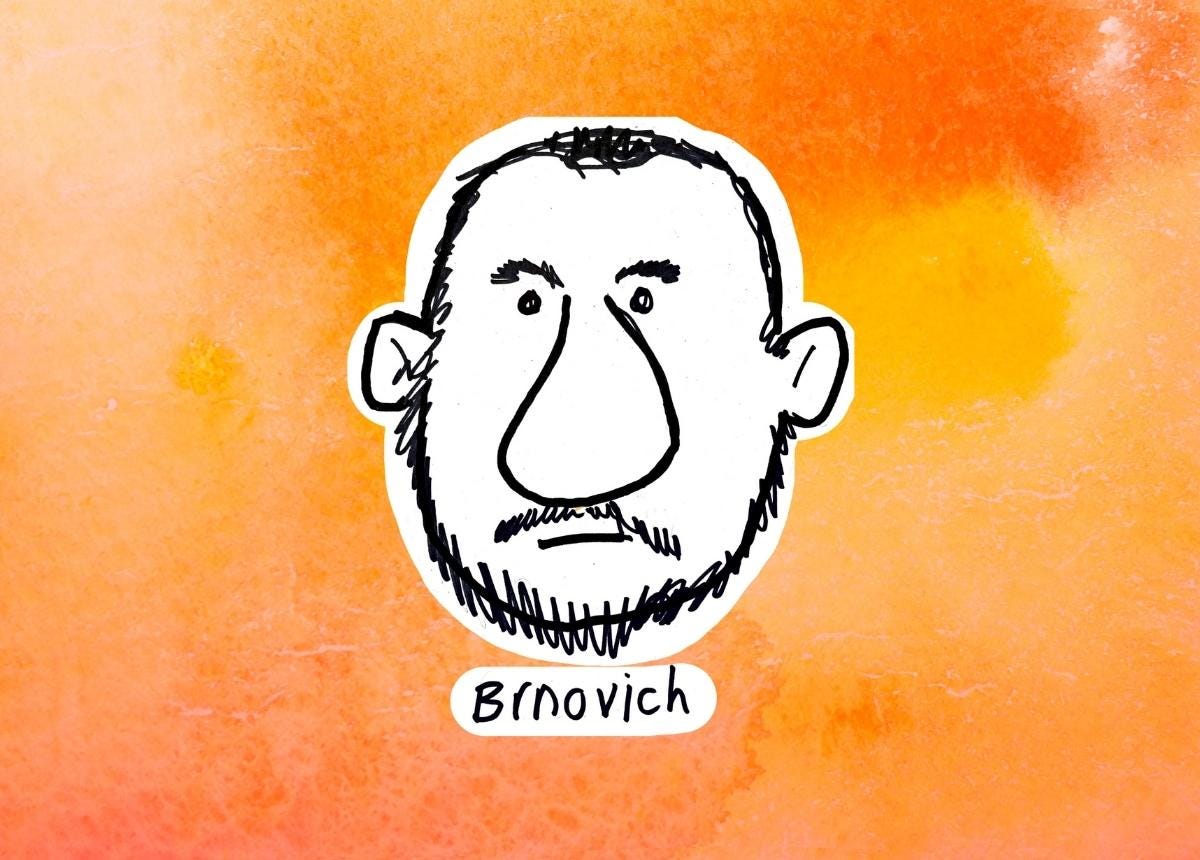
As Trump’s big lie of a stolen election began ricocheting across America in November 2020, Arizona’s Republican attorney general Mark Brnovich (pronounced “Burn-O-Vich”) spoke out forcefully on national television. He told the public that Donald Trump was projected to lose the swing state, and “no facts” suggested otherwise. (At the time I thought to myself “good for him. Maybe more Republican attorneys general will show some spine.”) That was then. Recently, Brnovich — now running for Senate in Arizona — came onto Stephen Bannon’s far-right podcast with the opposite message: Brnovich said he was “investigating” the 2020 vote and had “serious concerns.” He went on: “It’s frustrating for all of us, because I think we all know what happened in 2020,” without explaining what he meant by “what happened.” (Bannon titled the podcast segment “AZ AG On Interim Report On Stealing The 2020 Election.”)It would be bad enough were Brnovich the exception. But he exemplifies what’s happened to the GOP over the last 19 months. Republican politicians who initially told the truth have since then embraced Trump’s big lie in order to gain Trump’s favor (or avoid his wrath) in their 2022 races. (Brnovich launched his “review” of the 2020 vote in Arizona in response to a widely-ridiculed “audit” commissioned by Arizona GOP lawmakers.)It’s the same story with J.D. Vance, Republican candidate for the Senate from Ohio, who initially told the truth about the 2020 election but then pushed Trump’s lie to curry favor with Trump — and was rewarded last week with Trump’s endorsement and $10 million in campaign funds from right-wing billionaire Peter Thiel. It’s the same with House Minority Leader Kevin McCarthy, who held on to his scruples for a few minutes after the January 6 insurrection — when he publicly criticized Trump and told House colleagues he’d urge Trump to resign — but then promptly did a one-hundred-eighty and traveled to Mar-a-Lago to display his total loyalty to Trump, even bestowing on his madness a jar of his favorite pink- and red-flavored Starbursts. (McCarthy has denied ever telling his colleagues he’d urge Trump to resign but was caught doing just this). And the same for Senate Republican leader Mitch McConnell, who initially condemned Trump and now won’t utter a negative word. Up and down the ranks of the Republican Party, the new litmus test for gaining dollars, votes, and the coveted Trump Endorsement is to embrace the big lie that the 2020 election was stolen from Trump. For the rest of us — and for posterity — it should be a negative litmus test for politicians who place ambition over principle, narcissism over duty, and cowardice over conscience. How are Republican voters ever to know the truth when these toadies, sycophants, and unprincipled pawns repeat and amplify Trump’s big lie? Fully 85 percent of Republicans now believe it (35 percent of Americans overall believe it). The Republican Party now stands for little more than the big lie — not for fiscal prudence or smaller government or stronger defense, not for state’s rights or religious freedom or even anti-abortion, but for a pernicious deception. How can what was once a noble party — the party of Abraham Lincoln and Teddy Roosevelt — descend to such putrid depths, sowing distrust in our electoral system and in the peaceful transition of power that’s at the heart of democracy? The real question — more in the realm of social psychology than political science — is how one profoundly sick, pathologically narcissistic man, who is obsessed with never losing, has been able to impose his narcissistic obsession on one of America’s two political parties? Which raises an even more troubling question: How can our democracy ever function when almost all Republican politicians are willing to sell out their oaths to the United States Constitution in order to kiss the derrière of this demented man? Why are no more than a handful of Republican politicians, such as Rep. Liz Cheney, willing stand up to this monstrosity? This is how fascism begins. This is a public episode. If you'd like to discuss this with other subscribers or get access to bonus episodes, visit robertreich.substack.com/subscribe
When billionaires talk about freedom, watch your wallets
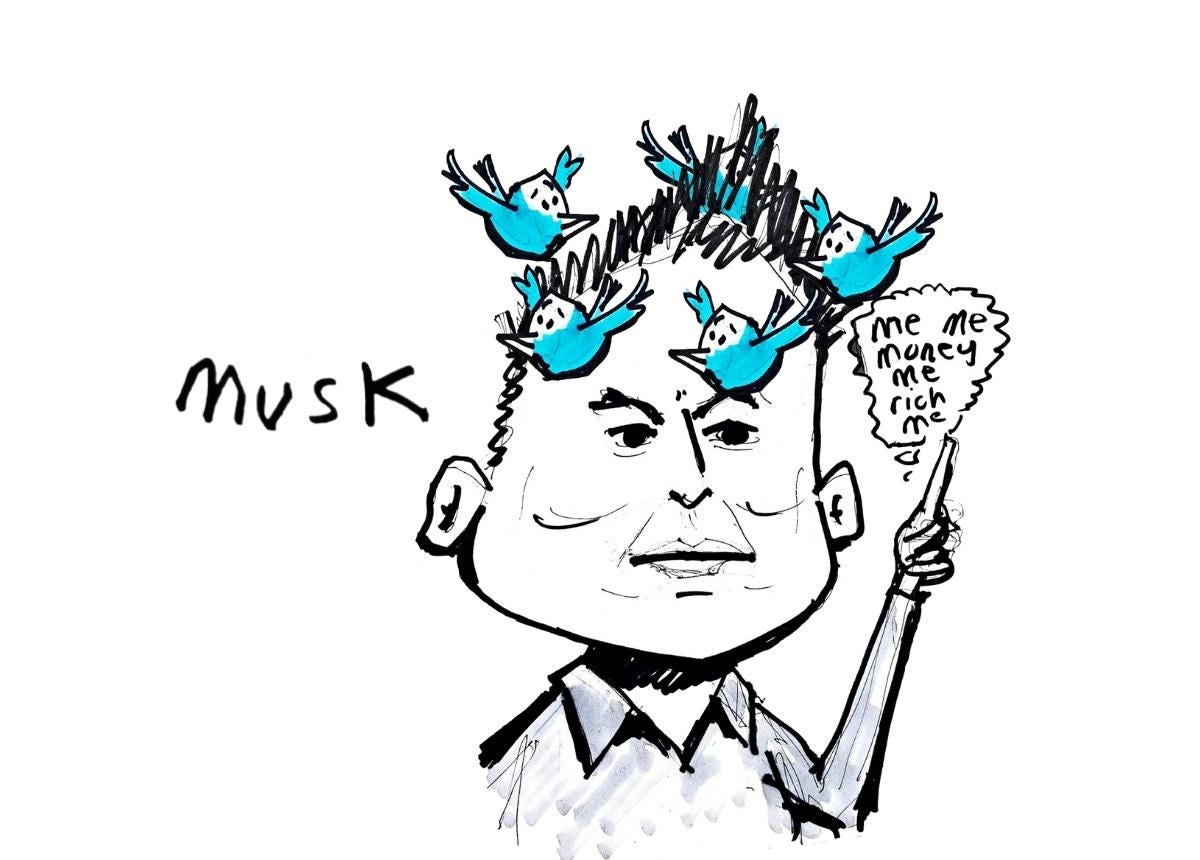
Elon Musk struck a deal today to buy Twitter for roughly $44 billion, in a victory by the world’s richest man. Twitter agreed to sell itself to Musk for $54.20 a share, a 38 percent premium over the company’s share price this month before he revealed he was the firm’s single largest shareholder. Twitter’s founder and top managers had offered Musk a seat on the board but he didn't take it because he'd have to be responsible to all other shareholders. Now, he doesn’t have to be accountable to anyone. Hey, it’s a free market, right?Musk says no one should object to what he wants to do with Twitter because he’s a “free speech absolutist,” and who can be against free speech? Besides (he and his apologists say) if consumers don’t like what he does with Twitter, they can go elsewhere. Freedom to choose.Free market? Free speech? Free choice? When billionaires like Elon Musk justify their motives by using “freedom,” beware. They actually seek freedom from accountability. They want to use their vast fortunes to do whatever they please — unconstrained by laws or regulations, shareholders, even consumers. The “free market” increasingly reflects the demands of big money. Unfriendly takeovers, such as Musk threatens to mount at Twitter, weren’t part of the “free market” until the late 1970s and early 1980s. Before then, laws and regulations constrained them. Then came corporate raiders like Carl Icahn and Michael Milken. Their MO was to find corporations whose assets were worth more than their stock value, borrow against them, acquire enough shares to force them to cut costs (such as laying off workers, abandoning their communities, busting unions, and taking on crushing debt), and cash in. But the raiders’ antics often imposed huge social costs. They pushed America from stakeholder capitalism (where workers and communities had a say in what corporations did) to shareholder capitalism (where the sole corporate goal is to maximize shareholder value). Inequality skyrocketed, insecurity soared, vast swaths of America were abandoned, and millions of good jobs vanished.The raiders altered the “free market” to allow them to do this. That’s what the super-rich do. There’s no “free market” in nature. The “free market” depends on laws and rules. If you have enough money, you can lobby (bribe) legislators to make changes in those laws and rules that make you even more money. (You can also get the government to subsidize you — Musk has received a reported $4.9 billion so far.)"Free speech" is another freedom that turns on wealth. As a practical matter, your ability to be heard turns on the size of the megaphone you can buy. If you’re extremely rich you can purchase the Washington Post or own Fox News. If you’re the wealthiest person in the world you can buy one of the biggest megaphones in the world called Twitter — and then decide who can use it, what its algorithms are going to be, and how it either invites or filters out big lies.Musk said last week that he doesn’t care about the economics of the deal and is pursuing it because it is "extremely important to the future of civilization." Fine, but who anointed Musk to decide the future of civilization?Consumers of social don’t have much freedom of choice. If consumers don’t like what Musk does with Twitter, they cannot simply switch to another Twitter-like platform. There aren’t any. The largest social media platforms have grown gigantic because anyone who wants to participate in them and influence debate has to join them. After they reach a certain size, they’re the only megaphone in town. Where else would consumers go to post short messages that can reach tens of millions of people other than Twitter?With social media, the ordinary rules of competition don’t apply. Once a platform is dominant it becomes even more dominant. As Donald Trump discovered with his "Truth Social" fiasco, upstarts don’t stand much chance.Musk's real goal has nothing to do with the freedom of others. His goal is his own unconstrained freedom -- the freedom to wield enormous power without having to be accountable to laws and regulations, to shareholders, or to market competition — which is why he's dead set on owning Twitter.Unlike his ambitions to upend transportation and interstellar flight, this one is dangerous. It might well upend democracy.What do you think? This is a public episode. If you'd like to discuss this with other subscribers or get access to bonus episodes, visit robertreich.substack.com/subscribe

My Saturday coffee klatch with Heather
Another weekly informal conversation with Heather Lofthouse (my former student and now executive director of Inequality Media) on the news of the week. Please pull up a chair and a hot mug. This is a public episode. If you'd like to discuss this with other subscribers or get access to bonus episodes, visit robertreich.substack.com/subscribe
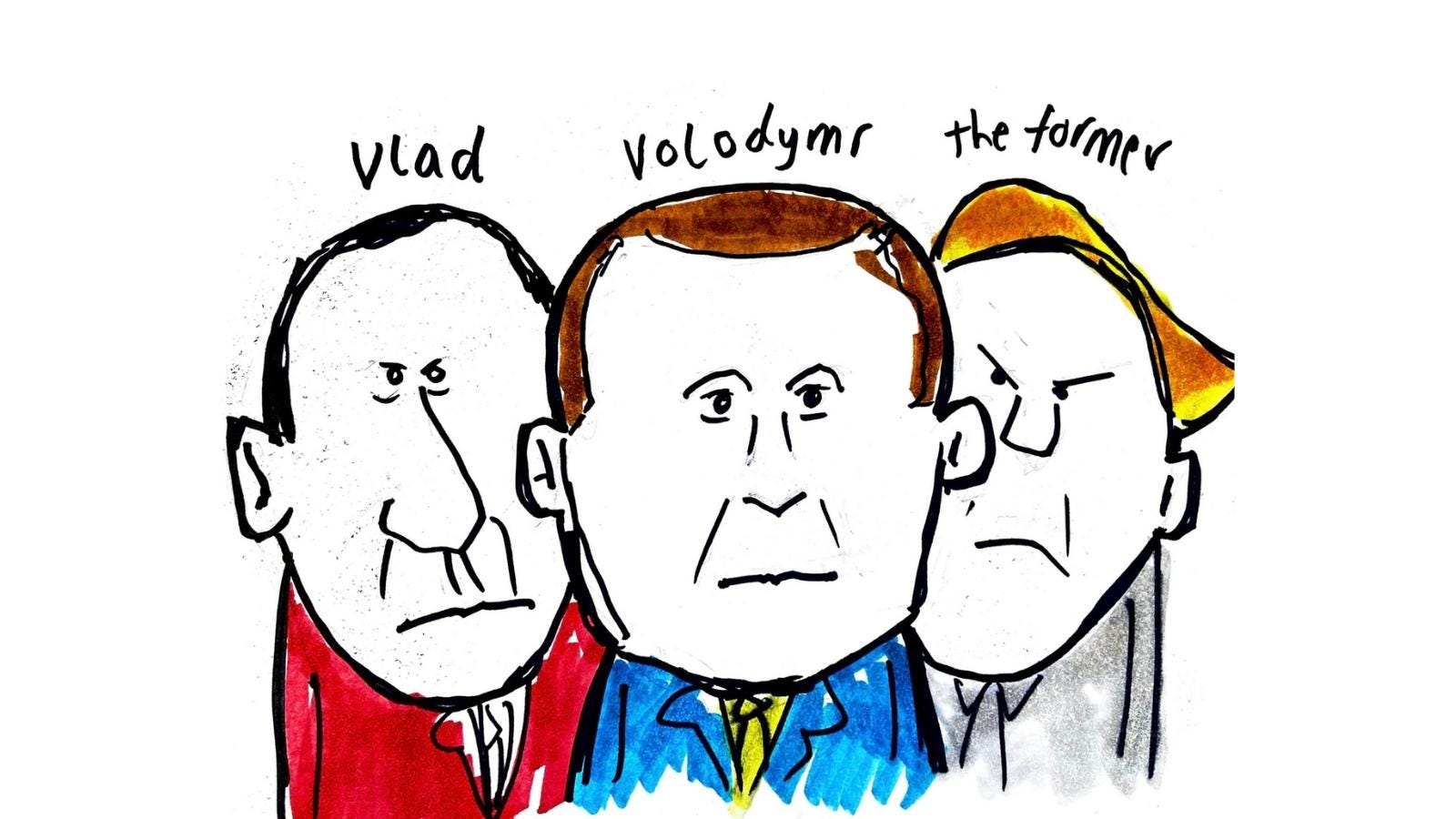
Zelensky patriotism, Putin patriotism, Trump patriotism
We recoil in horror as Putin and his forces wreak havoc and death on Ukraine — before our eyes and in real time. Both Putin and Ukraine President Zelensky repeatedly invoke “nationalism” and “patriotism,” but Putin’s nationalism and patriotism are manufactured to justify this brutal and unprovoked aggression while Zelensky’s words explain astonishing sacrifices now being made by ordinary Ukrainians to protect their freedom, democracy, and homeland. Donald Trump uses the same words, too — as do his acolytes in the Republican Party. His version of national patriotism is closer to Putin’s than to Zeleneky’s. Trump-Republican patriotism is about triumphing and dominating. Although America is a nation of immigrants, Trump’s goal is to keep immigrants out. “A nation 'without borders' is not a nation at all,” he has said. It is also about keeping America first. “The American People will come first once again,” he says. Trump-Republican patriotism is zero-sum, just as is Putin’s when it comes to Ukraine (or any other nation that was once part of the Soviet “empire”) — either we win or they win. And who or what is America for Trump Republicans? Essentially, white and Christian. Trump Republicans demand symbolic gestures of patriotism, such as standing for the national anthem and saluting the flag. But they don’t ask for personal sacrifice because they reject any notion of the common good. They view the nation as a site for self-centered transactions with no deeper and more enduring meaning than immediate self-gratification — a zone of self-promotion and narcissistic extravagance, where individuals can extend their ambition through iPhones and selfies and other technologies of instant gratification. Zelensky patriotism is the opposite. It isn’t founded on zero-sum superiority or exclusion, or on symbolic gestures, or on exaggerated notions of personal ambition. It’s based on common sacrifice for the common good. At times in our history America has come close to Zelensky patriotism. We have understood the need for mutual sacrifice — of everyone taking on a fair share of the burden of keeping America going. That includes volunteering for local school boards and city councils, blowing the whistle on abuses of power, and paying taxes in full rather than seeking loopholes or squirreling money abroad. Sometimes it has required the supreme sacrifice. (We are, after all, the descendants of Nathan Hale — soldier and spy for the Continental Army during the Revolutionary War, who famously declared just before being executed by the British in 1776 that his only regret was having “but one life to lose for my country.”)America’s form of Zelensky patriotism does not pander to divisiveness. It confirms and strengthens the “we” in “we the people of the United States.” It celebrates our diversity, and fights to uplift the voices of America — Black people, women, gay and trans people, younger Americans. It believes that America should welcome refugees and others fleeing from violence or seeking a better life, as memorialized in Emma Lazarus’ famous lines on the Statue of Liberty: “Give me your tired, your poor, your huddled masses yearning to breathe free.” America’s form of Zelensky patriotism doesn’t hate our government. It recognizes that government is the means by which we come together to solve our common problems. We don’t like everything our government does but we work to improve it rather than attack or undermine it. We have never fully lived up to these patriotic ideals, of course, but they have fueled our commitment to social justice. The films of Frank Capra, the poems of Walt Whitman and Langston Hughes, and the songs of Woodie Guthrie, express loving devotion to America while turning that love into a demand for justice. “This land is your land, this land is my land,” sang Guthrie. Hughes pleaded:Let America be America again,The land that never has been yet —And yet must be — the land where every man is free. The land that’s mine — the poor man’s, Indian’s, Negro’s, ME —.Human beings flourish through their attachments to communities and societies, and their dedication to fairness and social justice — not through selfish acquisition or domination of others. In the years ahead, America will choose which national patriotism we practice — the exclusionary and boastful version peddled by Trump with its shallow displays of national pride and narcissism, or the type we’re now witnessing by Ukrainians, forged in a profound sense of common good. I may be wildly optimistic but I believe we will choose Zelensky patriotism over its odious alternatives. What do you think? This is a public episode. If you'd like to discuss this with other subscribers or get access to bonus episodes, visit robertreich.substack.com/subscribe
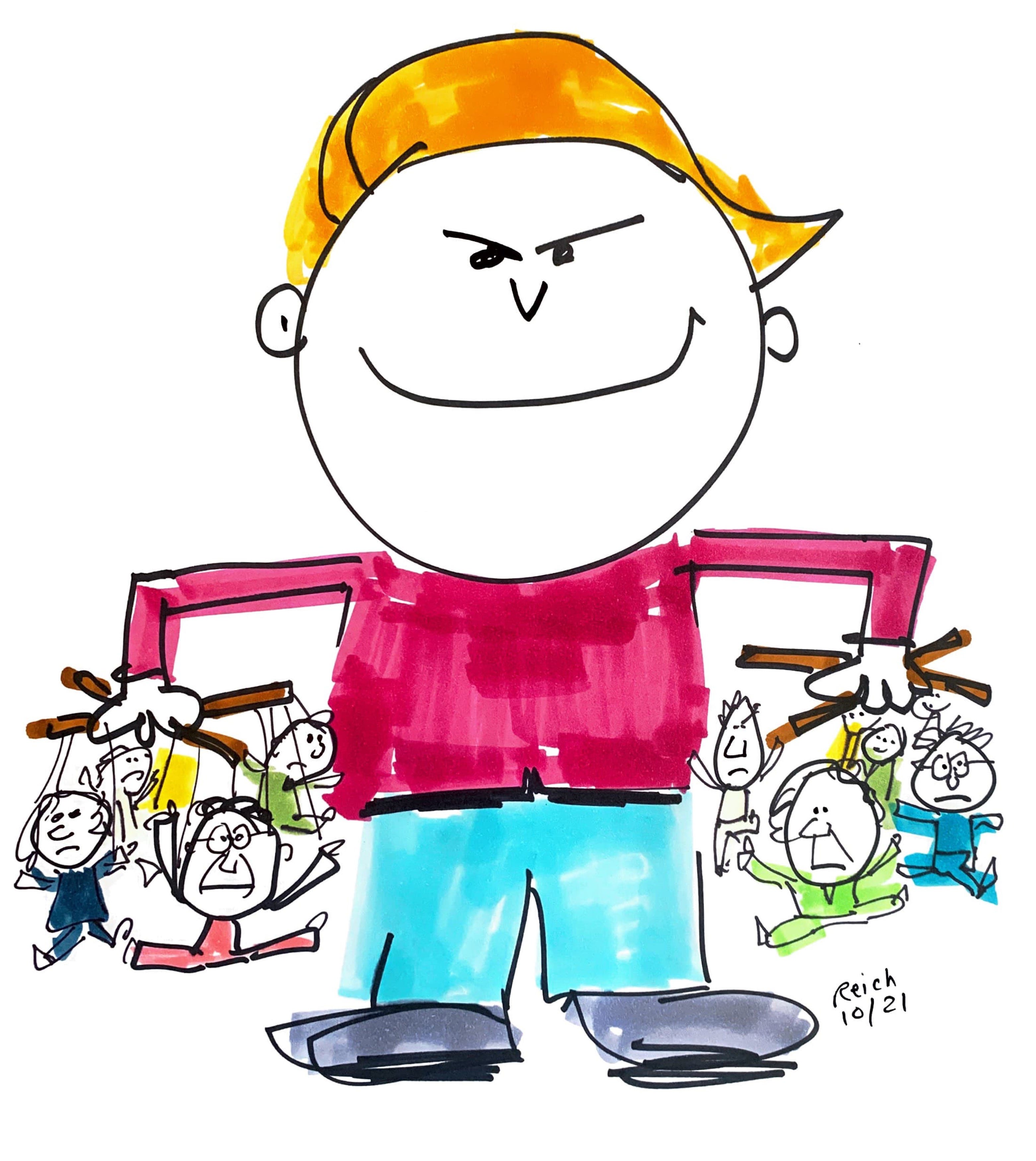
Why it must happen soon: The United States vs. Donald J. Trump
On Friday, Trump endorsed J.D. Vance in the Ohio Senate Republican primary. This follows his endorsement of Mehmet Oz in Pennsylvania’s Senate Republican primary and Herschel Walker in the Georgia Senate race. The press has framed these endorsements as long-shot bets that “could put [Trump’s] desired image as a kingmaker at risk.” But this misses the point. What’s really at stake for Trump is the selling of Trump and his big lie that the 2020 election was stolen from him. To be endorsed by Trump, candidates apparently must fulfill three prerequisites: 1) They have to be running in swing states whose primaries and general elections will attract lots of media attention. 2) They must be totally committed to Trump and his big lie. And 3) they must have shown themselves capable of promoting Trump and his lie with the kind of celebrity pizzaz that sells well on television. Vance — celebrity author of “Hillbilly Elegy” — was originally appalled by Trump and his lie, and said so. But now that he’s running for the Senate, Vance has become one of the most forceful promoters of Trump and articulate peddlers of his big lie. As Trump noted about Vance, “he gets it now.”Oz is a celebrity television doctor who has over the years come under fire for bogus on-air medical advice, which makes him perfect for promoting Trump and his big lie, too. Trump admires Oz’s television bona fides: “They liked him for a long time,” Trump said of Oz at a rally in Pennsylvania last week. “That’s like a poll. You know, when you’re in television for 18 years, that’s like a poll. That means people like you.”Walker fits the criteria, as well. He was both a college and NFL star.Trump couldn’t care less whether he’s viewed as a “kingmaker” by the press and politicians inside the Beltway. He cares only about his narcissistic need to delegitimize the outcome of the 2020 presidential election. And he has a knack for recognizing ambitious, unprincipled, television-savvy hucksters who will help him.Let me pause here to emphasize two things that are too easily forgotten. First, no one to this day has produced even a shred of evidence that fraud affected the results of the 2020 election. Sixty federal judges, along with Trump’s own departments of justice and homeland security, have concluded that Biden won fair and square. Second, the lynchpin of democracy is the peaceful transition of power from those who lose elections to those who win them. Yet it’s been over a year and half since Trump has refused to concede — continuously spreading his big lie that the election was stolen, pushing public officials at all levels of government to overturn the election, and instigating an insurrection at the U.S. Capitol on the day Congress was to certify the election results. As Federal District Court Judge David Carter stated in a recent opinion, “[T]he Court finds it more likely than not that President Trump corruptly attempted to obstruct the Joint Session of Congress on January 6, 2021.” Trump is already well on the way to rebuilding the Republican Party around his big lie. He is purging the GOP of his critics and installing loyalists in key state positions. And he is inspiring GOP-state legislatures to enact election sabotage laws that will give Trump and his supporters opportunities to rig congressional election results. The upcoming 2022 congressional elections will serve as proving grounds for his attempt to steal the 2024 presidential election.Trump is a growing menace to our system of self-government. The longer he goes without being held accountable for what he has done, the more danger he poses.The critical question, then, is whether Attorney General Merrick Garland will bring criminal charges against him — and when. The window of opportunity is closing fast. The House Select Committee on January 6 will be holding public hearings in a few weeks and report its findings thereafter. (The committee has already collected nearly 10,000 documents and conducted more than 860 depositions and interviews, including with Trump family members and his close associates.) If Republicans take over the House in the midterm elections, they are sure to close down the inquiry. Moreover, immediately after the midterm elections, America will be in the gravitational pull of the 2024 presidential primaries — in which Trump will almost certainly play a leading role, unless he is indicted and convicted. He has already amassed a campaign chest of more than $120 million, more than double that of the Republican National Committee. During the last six months of 2021, his PAC raised more money online than the GOP every day but two. And once he is a declared candidate, it will be impossible for Twitter, Facebook, and other social media platforms to stop him from engulfing them with his lies. Some say Garland should not bring criminal charges against Trump because criminal charges have never before been brought against a former president. This is a specious argument because no former pre
Musk, Twitter, Inflation, Putin, and our gift to you of a game
Heather and I had coffee this morning. As before, please pull up a chair. If you know other people who might enjoy a good conversation over coffee, please share. This is a public episode. If you'd like to discuss this with other subscribers or get access to bonus episodes, visit robertreich.substack.com/subscribe

The real reason CBS News hired Mick Mulvaney (and Musk's latest escapade)
Friends, I hope you’re as well as can be expected in these difficult times. A few days ago I focused on Elon Musk and his designs on Twitter. (Here’s my post.) This morning, as I predicted, Musk put in a bid to buy the rest of Twitter and take it private. Musk’s bid of $54.20 per share is going to be hard for Twitter to resist, given Twitter’s duty to its shareholders: It’s nearly 40 percent higher than Twitter’s stock price in January, before Musk started buying. Musk says he has lost confidence in Twitter’s management to fulfill the company’s “social imperative” as a platform for “free speech” and he’d “unlock” Twitter’s potential. (He can start with unblocking me from his Twitter feed.) As I said, the problem with social media is lack of mediation. If he owns Twitter, Musk is likely to put Trump back on.But enough about Musk. Today I want to continue to probe the issue of power over how Americans get their news. I’ve spent enough time in and around politics to see how decisions made by the media — what issues to focus on, how those issues are framed, and who presents them — are central to our democracy. The media isn’t just the “fourth branch” of government, as it’s been called. It’s not a branch at all. It’s the trunk. Which is why I find it troubling that CBS News has hired Mick Mulvaney as an on-air contributor. You’ll recall that Mulvaney served as acting chief of staff under Trump and led Trump’s Office of Management and Budget. But as I’ll talk about in a moment, Mulvaney wasn’t just a high official in the Trump administration. He was an active enabler of Trump’s deceit and attempted coup. First, some background: An “on-air contributor” on a major network is quite different from a mere “guest.” I’ve been in both roles. Guests appear from time to time when a particular program’s producer invites them, and are unpaid. “On-air contributors,” on the other hand, appear regularly. They’re paid contractors. And they’re introduced as “contributors” — which gives them the cachet and authority of being part of a network’s news division. Mulvaney’s first appearance as a paid contributor for CBS News occurred several days ago on a “MoneyWatch” segment in which he was asked to explain Biden’s plan for taxing the super-rich. The anchor, Anne-Marie Green, introduced Mulvaney as “a former OMB director” and “the guy to ask about this.” But she said nothing about whose OMB he directed, suggesting that Mulvaney was simply a budget expert offering an expert analysis rather than a fierce Trump partisan.Then she asked him whether a “regular working-class American” should care about Biden’s tax proposal. Mulvaney’s answer: “It’s easy to look at it and say, ‘Don’t worry, you’re not going to pay this,’” but regular working Americans would have to “prove that they don’t have to pay it,” and such a burden “could be troublesome: every single year proving that you’re not worth a hundred million dollars.” This is as misleading as it gets in broadcast media (with the possible exception of Fox News). Nothing in Biden’s proposal to tax the super-rich requires that people prove they’re not super-rich. Mulvaney’s claim was pure demagoguery.But that’s what we should expect from Mulvaney. Recall that Mulvaney was complicit in Trump’s attempted extortion of Ukraine President Zelensky in 2019 — threatening to withhold U.S. aid to fight Russian aggression unless Zelensky came up with dirt on Hunter Biden. (This was the call in which Zelensky’s request “we need more Javelins” — anti-tank missiles that have proved crucial in Ukraine's defense against Russia's invasion — was met with Trump’s “I would like you to do us a favor though.”) When the quid pro quo came to light, Mulvaney brushed it off: “I have news for everybody: Get over it. There’s going to be political influence in foreign policy.” After Trump withheld the aid, Mulvaney asked White House budget officials for legal justification to withhold it until Zelensky did what Trump wanted him to do —announce an investigation of Hunter Biden. Oh, and there was the time Mulvaney called COVID a “media hoax” designed to bring down Trump. And the time he predicted that if Trump lost in 2020 he would “concede gracefully.” I should add that Mulvaney is now a high-powered lobbyist for corporate interests — another fact that CBS somehow failed to mention in its announcement of his position and when it introduced him on air. When I was growing up, CBS News was the home of news legends like Edward R. Murrow and Walter Cronkite — pioneers who set the standards for broadcast news. So why is CBS News now reaching into the cesspool of Trump conspirators and enablers to hire Mulvaney? Neeraj Khemlani, co-head of CBS News, explained to the CBS News staff at a meeting last month that when it comes to contributor hires, “getting access to both sides of the aisle is a priority because we know the Republicans are going to take over, most likely, in the midterms.”“Getting access?” Access to what? To the big
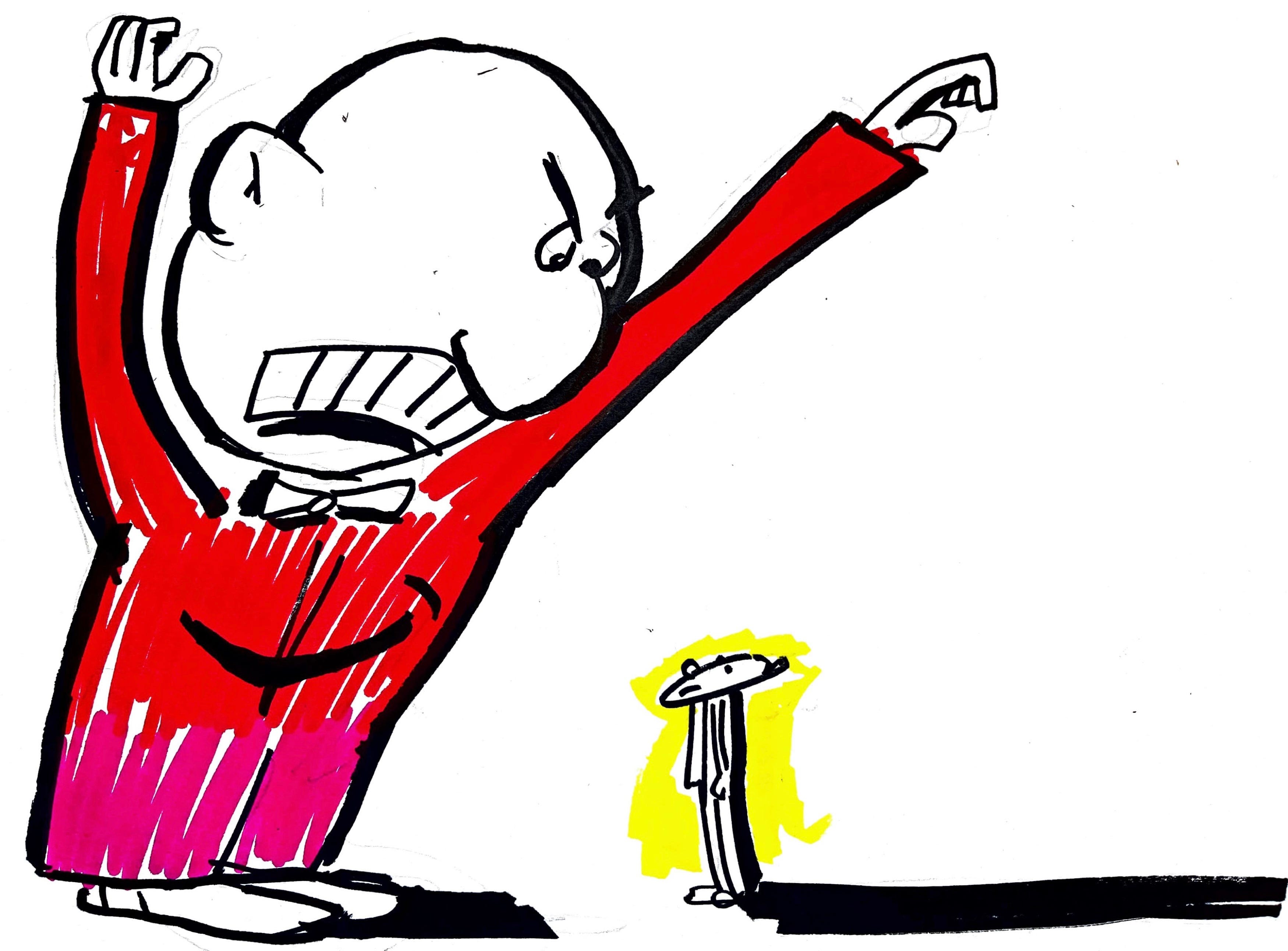
Inflation is out of control! Urgent memo to Biden and the Democrats!
Memo to President Biden (and the Democrats)From: Robert ReichRe: Inflation Prices were 8.5 percent higher last month than they were a year ago, the Bureau of Labor Statistics reported this morning — the highest rate of inflation since 1981. The buying power of Americans is being squeezed more and more each day. You must explain what’s happening and put responsibility where it belongs. As America slouches toward the midterm elections, you need an economic message that celebrates your accomplishments to date – job creation and higher wages –- yet also takes aim at the major abuses of economic power that are fueling inflation and widening inequality.You should put these ten indisputable facts centerstage:1. Corporate profits are at a 70-year high. Yet corporations are raising their prices.2. They are not raising prices because of the increasing costs of supplies and components and of labor -- which are real but expected when an economy goes suddenly from a pandemically-induced deep freeze to meeting the soaring demands of consumers who are emerging from the pandemic. Corporations enjoying record profits in a healthy competitive economy would absorb these costs.3. Instead, they’re passing these costs on to consumers in the form of higher prices. In many cases they’re raising prices higher than those cost increases, using the cover of inflation to increase their profit margins even more.4. They’re doing so because they face little or no competition. If markets were competitive, companies would keep their prices down to prevent competitors from grabbing away customers. As the White House National Economic Council put it in a December report: “Businesses that face meaningful competition can’t [maintain high profit margins and pass on higher costs to consumers], because they would lose business to a competitor that did not hike its margins.”5. Since the 1980s, two-thirds of all American industries have become more concentrated. This concentration gives corporations the power to raise prices because it makes it easy for them to informally coordinate price increases with the handful of other companies in their same industry — without risking the possibility of losing customers, who have no other choice.6. Corporations are using these near-record profits to boost share prices by buying back a record amount of their own shares of stock. (Buybacks reduce a company's shares outstanding, pushing its profit-per-share figure higher.) Stock buybacks hit a new record last year. So far this year they’re on track to exceed that record. In the first two months of 2022, S&P 500 companies have disclosed authorizations to buy back $238 billion in stock -- a record pace, according to Goldman Sachs, which expects $1 trillion of buybacks this year – an all-time high.Chevron engaged in $1.4 billion in stock buybacks and spent $500 million more on shareholder dividends than it did in 2020. This year, the oil giants are planning to buy back at least $22 billion more.7. Most American workers have barely had a wage increase in 40 years (adjusted for inflation). Although corporations have recently given out wage increases in response to the post-pandemic surge in demand, these wage increases have been almost completely eroded by price increases. We now know that wages grew 5.6 percent over the past year — but prices rose 8.5 percent. That means that, adjusted for inflation, wages have actually dropped 2.7 percent.Corporations are handing out wage increases to attract or keep workers with one hand, and then eliminating those wage increases by raising prices with the other. When corporations are enjoying near-record profits, we would expect corporations to pay the higher wages out of their profits rather than to pass them on to consumers in higher prices. But they are not. The labor market is not “unhealthily” tight, as Fed Chair Jerome Powell asserts; corporations are unhealthily fat. Workers do not have too much power; corporations do.8. As a result of all this, income and wealth are being redistributed upward from average working people (many of whom live from paycheck to paycheck) to CEOs and shareholders, including the wealthiest people in America. Billionaires have become $1.7 trillion richer during the pandemic. CEO pay (based largely on stock values) is now at a record 350 to 1 ratio relative to median pay.9. Wealthy Americas are now paying a lower tax rate than the working class. Some are paying no taxes at all.10. Big corporations have accumulated a substantial amount of political power, with which they’ve beaten back lower drug prices, prevented higher corporate taxes, and amassed unprecedented corporate welfare.In short, although the American economy is rebounding nicely from recession, the growing imbalance of economic power is bad for most Americans and for the economy as a whole. This must be addressed through (1) tougher antitrust enforcement, (2) a temporary windfall profits tax, (3) higher taxes on the wealthy and on corpora
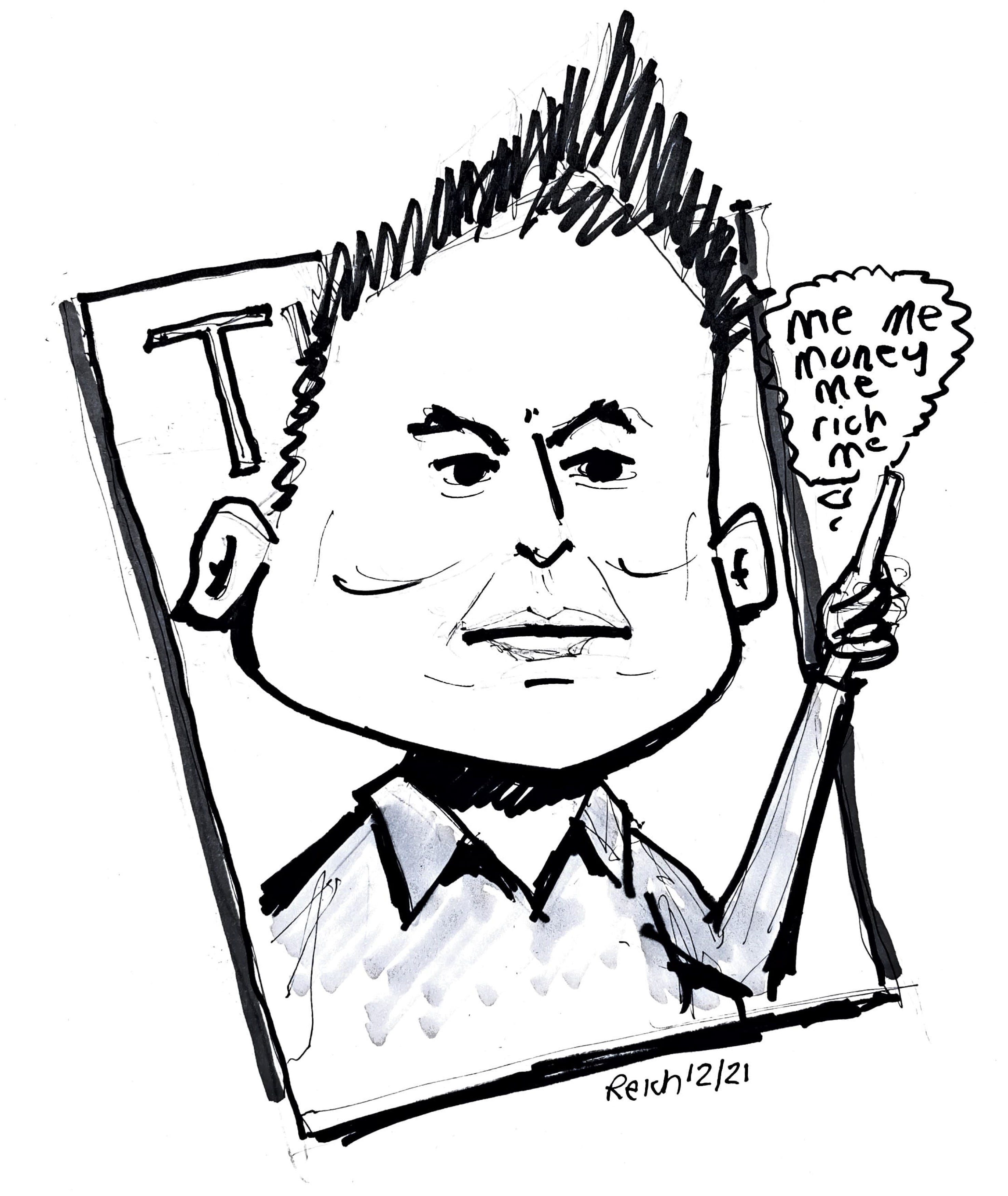
Why Elon Musk has blocked me on Twitter (and now owns the joint)
We begin another gut-wrenching week watching Putin’s barbarity in Ukraine. The Russian people know little about it because Putin has blocked their access to the truth, substituting propaganda and lies. Years ago, pundits assumed the Internet would open a new era of democracy, giving everyone access to the truth. But dictators like Putin and demagogues like Trump have demonstrated how naïve that assumption was.At least America responded to Trump’s lies. Trump had 88 million Twitter followers before Twitter took him off its platform — just two days after the attack on the U.S. Capitol which he provoked, in part, with his tweets. (Trump’s social media accounts were also suspended on Facebook, YouTube, Instagram, Snapchat, Twitch, and TikTok.)Twitter’s move was necessary to protect American democracy. But Elon Musk – the richest man in the world, with 80 million Twitter followers – wasn’t pleased about it. Musk tweeted that U.S. tech companies shouldn’t be acting "as the de facto arbiter of free speech."I would have posted that tweet for you right here, if I had access to it. But ever since I posted a tweet two years ago criticizing Musk for how he treated his Tesla workers, he has blocked me — so I can’t view or reply to his tweets to his 80 million Twitter followers. Seems like an odd move for someone who describes himself as a “free speech absolutist.”Musk advocates free speech but in reality it’s just about power. It’s power that compelled Musk to buy $2.64 billion of Twitter stock, making him the largest shareholder, with a 9.2 percent stake in the company. Last week, Twitter announced that Musk will be joining the company’s board of directors. After the announcement, Musk promised "to make significant improvements" to the platform. (He even changed his investment designation to clarify that he’s not simply a "passive" investor but one who intends to impact the way the company is run.) Yesterday evening, though, it was announced that — contrary to last week’s announcement — Musk would not be joining Twitter’s board. No reason was given but this is typical for Musk. It’s likely part of a bargaining Kabuki dance. Musk wouldn’t have plopped down $2.64 billion for nothing. He probably wants more control. If he is not on Twitter’s board, Musk is not bound by the “standstill” agreement in which he pledged to buy no more than 14.9 percent of Twitter’s stock. Musk now has no restrictions on how much of Twitter’s stock he can buy. I predict he buys more and takes an even more active role trying to influence the platform.By the way, what “improvements” does Musk have in mind for Twitter? Would Musk pressure Twitter to let Trump back on? I fear he would. Musk has long advocated a libertarian vision of an “uncontrolled” Internet. That vision is dangerous rubbish. There’s no such animal, and won’t be. Someone has to decide on the algorithms in every platform — how they’re designed, how they evolve, what they reveal and what they hide. Musk has enough power and money to quietly give himself this sort of control over Twitter. He talks about freedom of speech but his real power is freedom of reach – reaching 80 million twitter followers without accountability to anyone (including critics like me) — and enough money to buy himself a seat on Twitter’s board. Musk has never believed that power comes with responsibility. He's been unperturbed when his tweets cause real suffering. During his long and storied history with Twitter he has threatened journalists and stolen memes. In March 2020 he tweeted that children were “essentially immune” to Covid. He’s pushed cryptocurrencies that he’s invested in. When a college student started a Twitter account to track Musk’s private plane, Musk tried and failed to buy him off, before blocking him. The Securities and Exchange Commission went after Musk after he tweeted that he had funding to take Tesla private, a clear violation of the law. Musk paid a fine and agreed to let lawyers vet future sensitive tweets, but he has tried to reverse this requirement. He has also been openly contemptuous of the SEC, tweeting at one point that the “E” stands for “Elon’s.” (You can guess what the “S” and “C” stand for.) By the way, how does the SEC go after Musk’s ability to tweet now that he owns Twitter?Billionaires like Musk have shown time and again they consider themselves above the law. And to a large extent, they are. Musk has enough wealth that legal penalties are no more than slaps on his wrist, and enough power to control one of the most important ways the public now receives news. Think about it: After years of posting tweets that skirt the law, Musk was given a seat on Twitter’s board (and is probably now negotiating for even more clout). Musk says he wants to “free” the Internet. But what he really aims to do is make it even less accountable than it is now, when it’s often impossible to discover who is making the decisions about how algorithms are designed, who’s filling social media with
My Saturday coffee klatsch with Heather
This morning I had coffee once again with my colleague Heather Lofthouse (who runs Inequality Media) about the events of the week — Putin, Judge Jackson, and Republicans maneuvers, as well as some personal stuff (including something I’ve never before admitted to publicly). Please feel free to join us. This is a public episode. If you'd like to discuss this with other subscribers or get access to bonus episodes, visit robertreich.substack.com/subscribe
Why Republicans are obsessed with pedophilia, gender identity, gay people, and abortion
Yesterday, CEOs from America’s largest oil companies appeared before a House committee probing why they’re raising prices at the pump while raking in record profits and spending huge sums buying back their shares of stock. (Last year, Chevron, Exxon, BP, and Shell spent more than $44 billion on buybacks and dividends, and plan to spend $74 billion this year — money that should be used instead to lower prices at the pump.) It’s price-gouging and profiteering, and we’re all paying for it. Republicans, meanwhile, are focusing on sex. I’ll explain why in a moment, but first consider the extent of the Republican sex obsession.In her recent confirmation hearings, Judge Ketanji Brown Jackson was barraged with questions from Republican senators about her alleged lenient treatment of child pornographers. It was a baseless claim, but that didn’t matter to the Republicans who kept hammering her. In four days of hearings, the phrase ‘child porn’ (or ‘pornography’ or ‘pornographer’) was mentioned 165 times, along with 142 mentions of “sex” or related terms like “sexual abuse” or “sex crimes.”On March 28, Florida’s Republican Governor Ron DeSantis signed a bill banning kindergarten through third-grade public school teachers from talking about sexual orientation or gender identity, calling it an “anti-grooming bill” and accusing opponents of wanting to groom young children for sexual exploitation. (When the Walt Disney Company, Florida’s largest employer, came out against the measure and promised the company would donate $5 million to LBGTQ organizations, DeSantis called Disney’s opposition “radical” and suggested that the Florida legislature cancel Disney’s special status in Florida that essentially makes it a local government.) In late February, Texas’s Republican Governor Greg Abbott ordered state child welfare officials to launch child abuse investigations into reports of transgender kids receiving gender-affirming care. Last May he signed into law a ban on abortions after about six weeks of pregnancy, and gives private citizens the right to sue anyone who helps someone obtain an abortion. Just yesterday, Oklahoma’s Republican House voted overwhelmingly to make performing an abortion a felony, punishable by up to 10 years in prison. The measure now heads to Oklahoma’s Republican governor, Kevin Stitt, who has signaled he’ll sign it into law. The Republican Party, once a proud proponent of limited government, has turned itself into a font of sexual innuendo and legal intrusion into the most intimate aspects of personal life. Protecting children from predators is a worthy aim, to be sure, but the GOP is obsessing about all aspects of sex. Why?First, it’s part of their culture war, and culture wars sell with voters (and the media) eager for conflict and titillation. A culture war over sex sells even better. It lets Republicans imply that Democrats are somehow on the side of sexual “deviants” who endanger the “natural order.” Also, by focusing on sex, Republicans can court both the evangelical right and the rightwing extreme QAnon vote (with its the loony “Pizzagate” conspiracy claim that Hillary Clinton was a pedophile). Most importantly, a culture war over sex allows Republicans to sound faux populist without having to talk about the real sources of populist anger — corporate-induced inflation at a time of record corporate profits, profiteering and price gouging, monopolization, stagnant wages, union busting, soaring CEO pay, billionaires who have amassed $1.7 trillion during the pandemic but who pay a lower tax rate than the working class, and the flow of big money into the political campaigns of lawmakers who oblige by lowering taxes on the wealthy and big corporations and doling out corporate welfare. Oh, and by focusing on pedophilia, gender identity, gay people, and abortion, Republicans don’t have to talk about Trump and January 6. Democratic politicians, wake up! You have a critical opportunity between now and the midterm elections to reframe the national conversation as it should be framed -- around abuses of economic power by corporations and the super rich. Those abuses are worsening. They affect the everyday lives of all Americans. If you fail to do this, Americans will continue to be inundated with Republican “culture war” messages intended to deflect the public’s attention from how badly big corporations and the super wealthy are shafting them. Americans won’t understand how these economic abuses all relate to record amounts of income and wealth at the top, and what must be done to reverse this imbalance (break up monopolies, enact a windfall profits tax, raise taxes on large corporations and the super wealthy, strengthen labor unions, reform campaign finance, stop corporate welfare, and so on). And some of you will lose your jobs in the midterm elections — allowing Republicans to take over the House and Senate. Please share! PS: Here’s what I said yesterday about Big Oil’s profiteering. This is a public ep
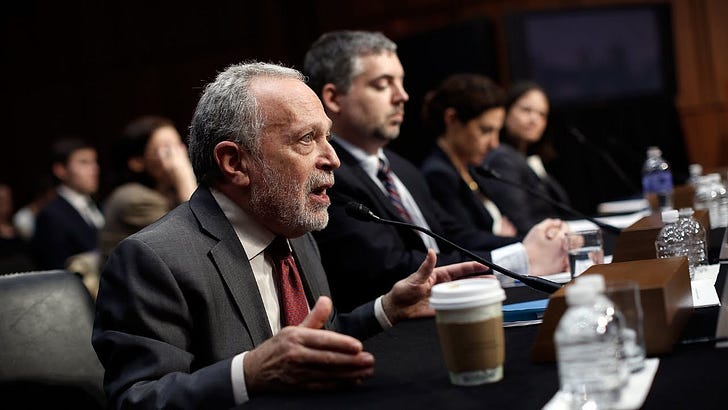
Office Hours: My appearance yesterday before the Senate Budget Committee
Today’s Office Hours discussion question: Is a windfall profits tax a good idea? How could it get the political support it needs? Would this be helpful for the Democrats in the midterms? Background: Yesterday I testified before the Senate Budget Committee about the power of American corporations — now enjoying the highest profits in 70 years — to raise their prices. And I endorsed a windfall profits tax. (You can see my testimony below.) Lindsey Graham told me he “couldn’t disagree with me more.” He and other Republicans on the Committee blamed inflation on Biden and the Democrats whom, they charged, spent too much on measures such as the American Rescue Plan. Senator Sheldon Whitehouse (also on the Committee) has introduced a windfall profits tax on big oil companies that would tax half the difference between their current profits and their average profits between 2015 and 2019, and then remit the proceeds to Americans in quarterly payments. Senator Bernie Sanders (the Committee chair) has introduced a windfall profits tax on all big corporations that would tax 95 percent of their profits in excess of their average profit level from 2015-2019, adjusted for inflation. It would apply only to large companies with $500 million or more in revenue annually, and be a temporary emergency measure, applying only in 2022, 2023, and 2024. Both bills would tax profits, not revenues, so companies that raise their prices for legitimate reasons related to rising expenses would not be penalized. But companies that have chosen to raise their prices (presumably to further enrich their CEOs and wealthy shareholders) would pay the windfall profits tax. Here’s my testimony yesterday:***Some added thoughts, in response to your very thoughtful comments: Yes, Lindsey Graham wanted to cut me off so he could talk about “securing the southern border” rather than about corporate power. That’s the problem in a nutshell. Democrats have an important opportunity between now and the midterm elections to frame the national conversation as it should be framed -- around corporate power to raise prices, price gouging and profiteering, CEO pay that's now reached almost 350-to-1 relative to median worker pay, billionaire gains of $1.7 trillion during the pandemic while most Americans struggled, illegal union-busting by giant corporations such as Amazon, and hugely profitable corporations and billionaires paying little or no taxes. If Democrats don't focus the public’s anger on these economic abuses, Americans will be inundated with Republican “culture war” messaging intended to deflect attention from them. This is a public episode. If you'd like to discuss this with other subscribers or get access to bonus episodes, visit robertreich.substack.com/subscribe
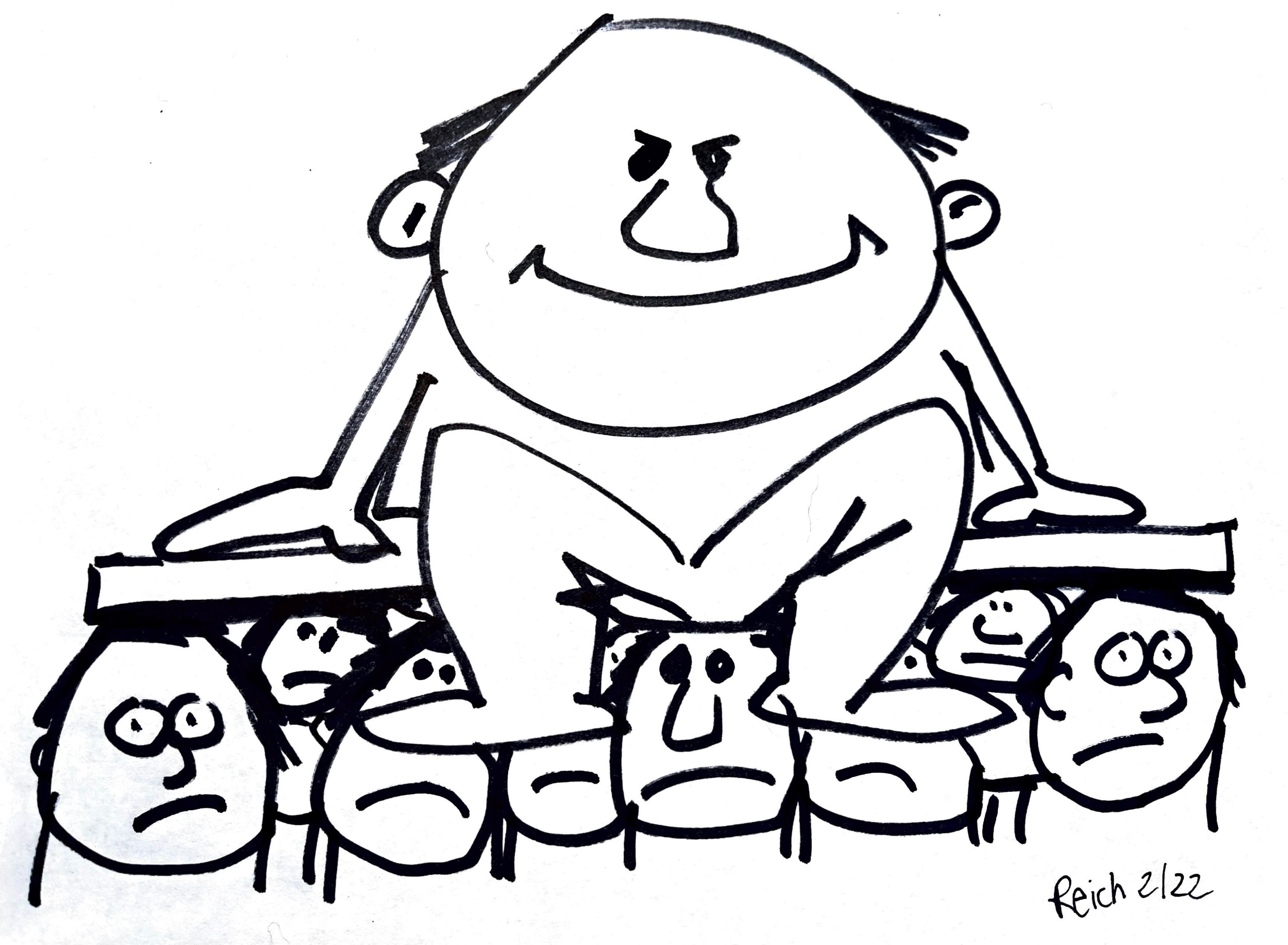
Why Biden's plan to tax the super rich is moving from unlikely to likely
America is on the cusp of the largest inter-generational transfer of wealth in history. As wealthy boomers expire over the next three decades, an estimated $30 trillion will go to their children. Those children will be able to live off of the income these assets generate, and then leave the bulk of them – which in the intervening years will have grown far more valuable – to their own heirs, tax-free. After a few generations of this, almost all of the nation’s wealth will be in the hands of a few thousand family dynasties. Unless Joe Biden’s new tax plan is enacted — the odds of which is moving from unlikely to likely. I’ll explain in a moment. Dynastic wealth runs counter to the ideal of America as a meritocracy. It makes a mockery of the notions that people earn what they’re worth in the market, and that economic gains should go to those who deserve them. It puts economic power into the hands of a small number of people who have never worked but whose investment decisions have a significant effect on the nation’s future. And it is antithetical to democracy. We are well on the way. Already six out of the ten wealthiest Americans alive are heirs to prominent fortunes. The Walmart heirs alone have more wealth than the bottom 42 percent of Americans combined. The richest 1 tenth of 1 percent of Americans already owns almost as much wealth as the bottom 90 percent.The last time America faced anything comparable occurred at the turn of the last century, in the first Gilded Age. Then, President Teddy Roosevelt warned that “a small class of enormously wealthy and economically powerful men, whose chief object is to hold and increase their power,” could destroy American democracy. Roosevelt’s answer was to tax wealth. The estate tax was enacted in 1916 and the capital gains tax in 1922.Since then, both of Roosevelt’s taxes have been eroded by the moneyed interests. As the rich have accumulated more wealth, they have amassed more political power — which they’ve used to reduce their taxes. By now, the estate tax affects only a handful of super-wealthy families that are busily setting up “dynastic trusts” to circumvent what’s left of it. And the capital gains tax has been defanged by what’s known as the “stepped-up-basis-at-death” loophole. More on this in a moment. Last week Joe Biden unveiled two tax proposals that would revive Teddy Roosevelt’s original vision, and could possibly slow or even reverse America’s march toward oligarchy: (1) a minimum income tax that Biden calls a billionaire tax but would in reality apply to households with a net worth of $100 million or more, and (2) a separate tax at death on gains from appreciated assets, even if the assets are not sold. The odds are growing that at least one of these proposals will get through the Senate in April or May via “reconciliation” requiring only a bare majority (i.e., all fifty Democratic senators plus the vice president). I’m told Joe Manchin is mostly on board (which means the other Democratic holdout, Kyrsten Sinema, will sign on as well). Let me go into a bit of detail on each: (1) The minimum tax is a 20 percent levy on households with a net worth of more than $100 million, affecting the top 0.01 percent of earners. It would apply both to taxable earnings and to unrealized capital gains (the increased value of your assets), and would function as a kind of prepayment (analogous to withholding) of taxes that eventually would be owed upon the sale of appreciated assets or death. For example, suppose someone named Mark Zuckerberg owns $100 billion of Facebook stock, for which he paid nothing when he founded the company, and has no other taxable income. For the first year under the Biden plan, he’d owe $20 billion in taxes even if he didn’t sell any Facebook shares. The next year, if his stock increased in value, he’d owe another prepayment equal to 20 percent of any increase in value beyond $100 billion. (There are other provisions to prevent the very wealthy from being taxed twice on the same income.)The Treasury anticipates Biden’s new minimum tax would raise $360 billion in the first 10 years from America’s 20,000 richest households. (2) Biden’s second proposal would close the “stepped-up-basis-at death” loophole. Under today’s tax code, you pay capital gains taxes on the increased value of assets when you sell them. But if you pass your assets on to your heirs, they can sell them and not pay a penny of capital gains. In other words, you escape capital gains taxes by dying. They escape it by inheriting your wealth. (I remember years ago arguing that this loophole should be closed with then Treasury Secretary Lloyd Benson, who at one point pounded his fist on the table and exclaimed “death is an involuntary conversion!”)That’s not all. Under current law, if heirs never sell these assets and they continue to gain value (as they almost certainly will), heirs can borrow against them to pay living expenses and then pass them on to their heirs, who won’t pa
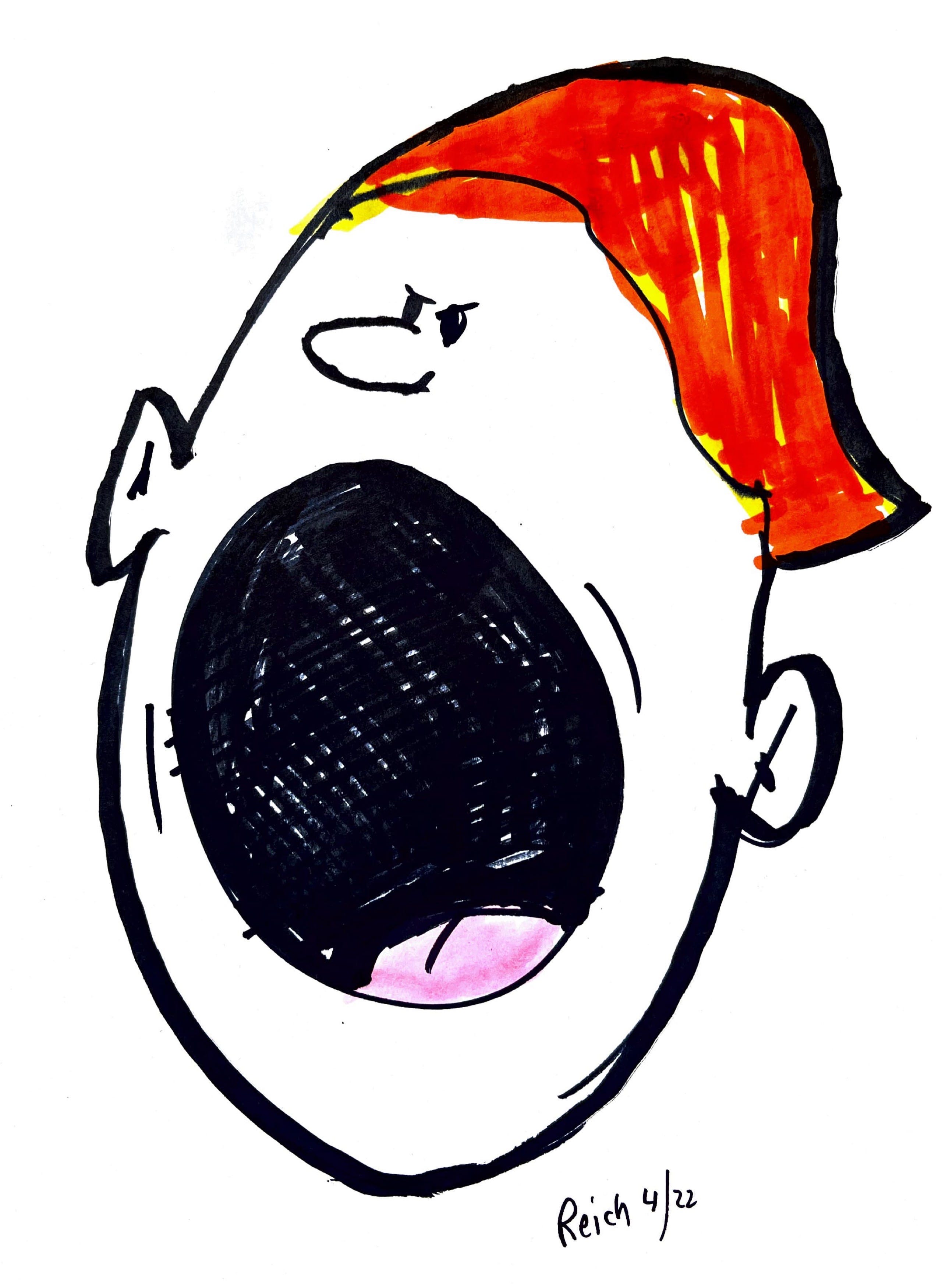
How Trump will win the midterms for the Democrats
I know the conventional wisdom about midterm elections — the party in power loses big — and I’ve lived through enough midterms to know that the conventional wisdom is mostly correct. Does this make Biden and the Democrats toast when it comes to retaining control of the House and Senate? No — especially because of one huge loose cannon aimed at the Republican Party: Donald Trump.About 30 percent of Americans love the guy, but a majority detest him. He’s toxic. As Republican Governor Chris Sonunu said of him Saturday night, “He's f***ing crazy!” Almost every time Trump moves center stage, Republicans’ odds decline. This is especially true in the swing suburbs that will determine the outcome of the midterms. For a few months I thought Trump would stay quiet, but he’s constitutionally unable to keep his big mouth shut. This past week, he trumped his way into the news:He loudly un-endorsed Alabama Rep. Mo Brooks, now running for a Senate seat, who returned the un-favor by disclosing that Trump repeatedly (including recently) pressed Brooks to overturn the 2020 presidential result. Expect Brooks to be called by Congress’s select committee investigating the reasons for the January 6 insurrection.He called on Vladimir Putin to release dirt on the Bidens. Talk bad timing. Putin’s thugs were at that moment committing atrocities in Ukraine. Trump instantly reminded everyone that he had called on Ukrainian President Zelensky to dig up dirt on the Bidens during the 2020 presidential campaign by threatening to withhold U.S. military aide intended to defend Ukraine against Russia, and in the 2016 campaign had called on Putin to release Hillary Clinton’s emails. But in 2016 and 2020 the American public merely considered Putin to be bad news. Now he’s the arch-villain of the world. He gave an incendiary speech at Michigan Stars Sports Center in Washington Township, Michigan, where he criticized Biden's presidency and teased another presidential campaign. "We're gonna bring back law and order," he told the crowd.It was also revealed last week that Virginia Thomas (wife of Supreme Court justice Clarence Thomas) had, in the weeks following the 2020 election, pressed Trump’s chief of staff to do everything possible to reverse the outcome of the election.And last week Congress recommended to the Justice Department that two former Trump advisers, Dan Scavino and Peter Navarro, be criminally charged with contempt of Congress for refusing to appear before the select committee investigating the January 6 insurrection. (This coming Thursday, Trump’s son-in-law, Jared Kushner, is expected to “voluntarily” appear before the committee. He will not be protected by executive privilege.) Wait. I’m not done. Last Monday, federal Judge David Carter ruled that Trump, along with John Eastman (the lawyer who had advised him on how to overturn the 2020 election) had most likely committed felonies, including obstructing the work of Congress and conspiring to defraud the United States. (The January 6 committee – which is weighing making a criminal referral to the Justice Department -- had used a filing in the case against Eastman to lay out the crimes it believed Trump might have committed.) Judge Carter noted that Trump likely knew that Eastman's plan to throw out electoral votes was illegal because the “illegality of the plan was obvious,” and cited strong evidence of a “corrupt mindset,” such as Trump’s phone call to Georgia Secretary of State Brad Raffensperger in which he famously asked the secretary to "give [him] a break" and "find 11,780 votes" (one vote more than Biden's margin of victory in that state).And this was just one week. Remember, the January 6 committee’s report will be released in a few months. Expect a firestorm that may even force Hamlet-like Attorney General Merrick Garland to charge Trump with crimes. (Some argue that America does not prosecute its former presidents. While that’s historically true, before Trump no former president had launched an attempted coup or criminal insurrection.) As if all this weren’t enough to keep him in the news, Trump has placed big midterm election bets on dozens of ballots across the nation, through Trump-branded “endorsements.” This means Trump will be a central player in campaigns just about everywhere.So whether the Republican Party likes it or not (and even if Democrats are reluctant to talk about Trump because political operatives advise them not to) Trump is going to feature big in the upcoming midterms. As a result, the swing suburbs are more likely to vote Democratic – increasing the odds that Democrats will keep control over the House and Senate.This is no guarantee that Democrats will keep control over the House and Senate, of course. As I’ve said countless times, Democrats need an economic-populist message to put them over the top because most Americans accurately believe the economic game is rigged in favor of the super-wealthy and are furious about it — and if Democrats don’t ta

The secret to Amazon workers' extraordinary win
Yesterday was a big day for American workers. I want to start with the remarkable worker victory at Amazon’s giant warehouse on Staten Island and then move to yesterday’s great jobs report — and the real danger lying within it.First, the victory. America’s wealthiest, most powerful, and fiercest anti-union corporation — with the second-largest workforce in the nation (union-busting Walmart being the largest) — lost out to a group of warehouse workers who voted to form a union, by a remarkable 2,654 to 2,131. Even more remarkably, the workers won without any assistance from an established union or professional organizer. If anyone had any doubts about Amazon’s determination to prevent this from ever happening, the corporation’s scorched-earth anti-union campaign in its Bessemer, Alabama warehouse should have put those doubts to rest. In New York, Amazon used every tool it had used in Bessemer, and then some. Many of its techniques are illegal under the National Labor Relations Act (hence the decision of the National Labor Relations Board to hold another election in Bessemer), but Amazon couldn’t care less. It’s rich enough to pay any fine or bear any public relations hit.To put it bluntly, Amazon is one of America’s worst employers. It treats its warehouse workers like dog dung. The company has repeatedly fired workers who speak out about unsafe working conditions or who even suggest that workers need a voice. The corporation doesn’t mind a yearly turnover rate of warehouse employees exceeding 100 percent, because the jobs are designed to induce burnout so workers don’t stay and organize. As its corporate coffers bulge with profits — and its founder and executive chairman practices conspicuous consumption on the scale not seen since the robber barons of the late 19th century — Amazon has become the textbook exemplar of 21st-century corporate capitalism run amok. Much of the credit for yesterday’s victory over Amazon goes to Christian Smalls (see interview below), whom Amazon fired in the spring of 2020 for speaking out about the firm’s failure to protect its warehouse workers from COVID. Smalls refused to back down. He went back and organized a union. It was an extraordinary feat. Talk about David and Goliath. But Smalls had something else working in his favor — which brings me to yesterday’s jobs report from the Bureau of Labor Statistics. The report showed that the economy continues to roar back to life from the COVID recession. With consumer demand soaring, employers are desperate to hire. This has given American workers more bargaining clout than they’ve had in decades. Wages have climbed 5.6 percent over the past year, according to yesterday’s jobs report. The acute demand for workers has also bolstered the courage of workers (such Amazon’s warehouse workers on Staten Island and Starbuck’s baristas) to demand better pay and working conditions, even from the most virulently anti-union corporations in America. Is something to worry about? Not at all. America workers haven’t had much of a raise in over four decades. Since the late 1970s, most of the economy’s gains have gone to the richest 10 percent, largely to the richest 1 percent of the richest 10 percent. It’s about time average workers took home a piece of the pie. Besides, inflation is running so high that even the 5.6 percent wage gain over the past year is far less in terms of real purchasing power. But corporate America believes these wage gains are contributing to inflation. As the New York Time solemnly reported yesterday, the wage gains “could heat up price increases at a time when the Federal Reserve is trying to cool them down.” This is pure rubbish. Unfortunately, Fed chair Jerome Powell believes it. He worries that “the labor market is extremely tight,” and to “an unhealthy level.” As a result, the Fed is on the way to raising interest rates repeatedly in order to slow the economy and reduce the bargaining leverage of American workers. Pause here to consider this: The Commerce Department reported Wednesday that corporate profits are at a 70-year high. You read that right. Not since 1952 have corporations done as well as they are now doing. Across the board, American corporations are flush with cash. Although they’re paying higher costs (including higher wages), they’ve still managed to increase their profits. You see, they have enough pricing power to pass on those higher costs to consumers, and even add some more for themselves. So when American corporations are overflowing with money like this, why should anyone believe that wage gains will necessarily “heat up price increases,” as the Times blindly reports? In a healthy economy, corporations would not be passing on higher costs — including higher wages — to their consumers. They’d be paying the higher wages out of their profits. But that’s not happening. Corporations are using their record profits to buy back enormous amounts of their own stock in order to keep their share prices high.
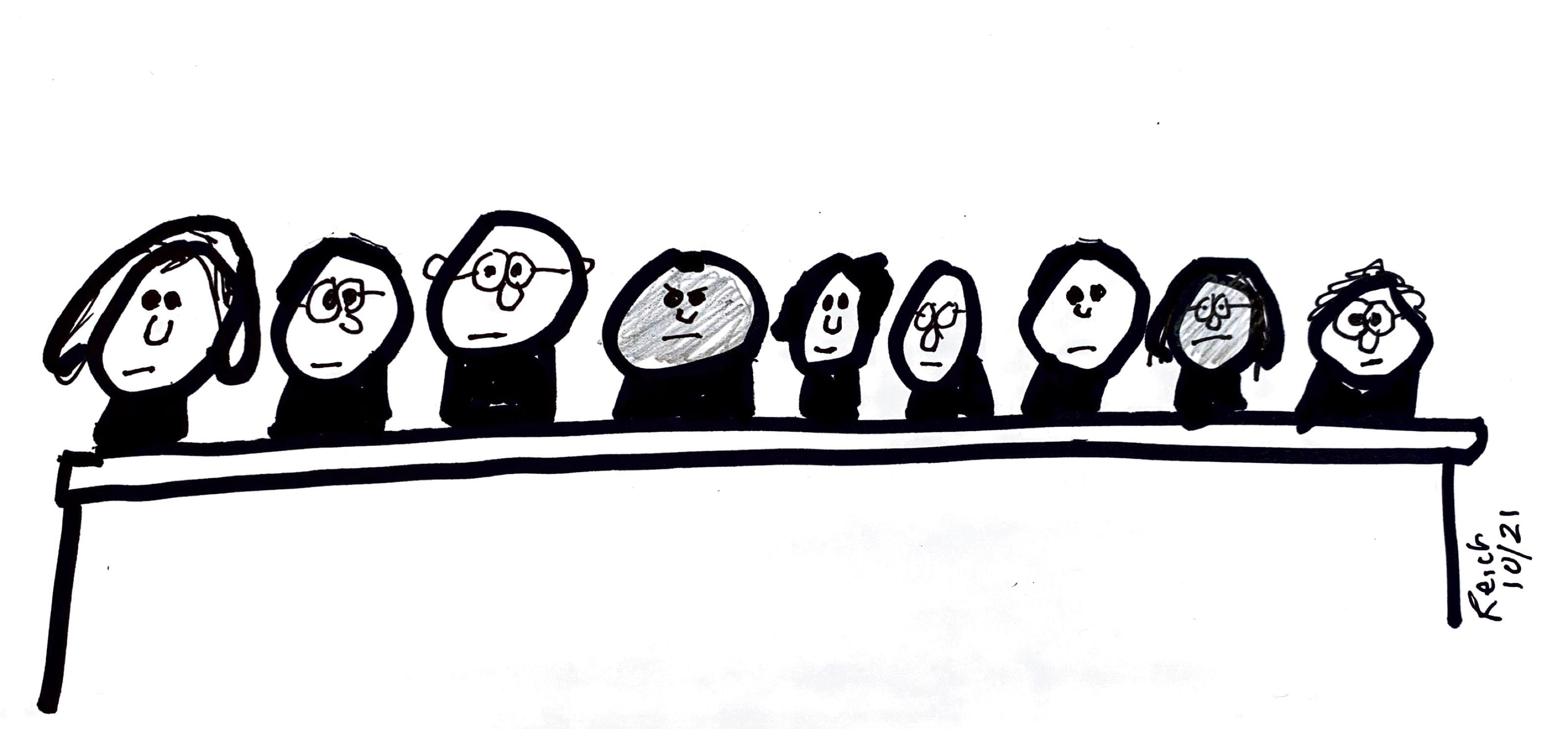
The pending death of the Supreme Court
Andrew Jackson allegedly defied the Supreme Court in 1832 over a case called Worcester v. Georgia, involving Georgia's attempt to apply state laws to Cherokee lands. As the story goes, Jackson announced “John Marshall has made his decision now let him enforce it.” Whether Jackson actually said this is disputed, but it illustrates a fundamental truth about the Supreme Court: It has no power to enforce its decisions. Alexander Hamilton called it the “least dangerous branch” because it has neither the “purse” of Congress nor the “sword” of the President. So what does it have? Nothing but public trust. That trust is now eroding — faster and more dangerously for the Court’s future than at any time in its history. The Supreme Court confronts a profound crisis of legitimacy.Consider:1. After several days of hearings last week on the confirmation of Judge Ketanji Brown Jackson, Republicans on the Judiciary Committee made it clear they had no interest in knowing anything about her, but only making false charges and smearing her with innuendo. Her credentials are impeccable, but their relentless and baseless attack on Jackson’s sentencing in child pornography cases demeaned her — and further eroded the Supreme Court’s standing and integrity. (Although Judge Jackson appears certain to win Senate confirmation, almost all of the Senate’s 50 Republicans will vote against her.)2. Then came the news that Virginia Thomas, wife of Clarence Thomas, had been actively engaged in trying to overturn the outcome of the 2020 election, including being present at the Trump rally immediately preceding the assault on the U.S. Capitol and sending numerous emails to Mark Meadows, then Trump’s Chief of Staff, urging him to find ways to reverse the election. Yet without recusing himself or revealing his wife’s activities, Thomas was the only justice to dissent in the Supreme Court’s decision in January to reject Trump’s request to block documents from being released to the House select committee investigating the January 6 insurrection. 3. The Court’s legitimacy was already under a cloud because of Trump’s and Mitch McConnell’s relentless packing of it. Starting with the blockade of Merrick Garland’s nomination in 2016 and culminating in the rushed confirmation of Amy Coney Barrett just days before the 2020 election, Republicans have signaled that partisanship is at the heart of the court’s decision-making. (Not to forget the right-wing justices who cut off the Florida recount and handed the 2000 presidential election to George W. Bush and the right-wing justices who effectively nullified the Voting Rights Act after Congress voted nearly unanimously to renew it.)All this worries me on several levels. I know the Supreme Court. (I’m fortunate enough to have argued cases before it. I also clerked for the chief judge of the First Circuit, several of whose decisions went to the Supreme Court.) The Supreme Court can be, and has been, a remarkable institution for the public good. America needs a Supreme Court that can be trusted to make difficult decisions — especially when it comes to protecting the rights of individuals and minorities. The political branches cannot do this because at best they reflect the will of the majority, at worst they reflect the will of the wealthy and powerful. Yet the Court can protect the powerless in our society only if it is trusted by most Americans. When in 1954 the Supreme Court decided that racially segregated schools violated the constitutional rights of Black children, many Americans were outraged. They ultimately came around, in part because of the trusted role the Court held in American society. When in 2015 the Court narrowly ruled that the Constitution guarantees a right to same-sex marriage, it also faced blowback. Yet here again, its decision was considered the law of the land. The only person with the stature and responsibility to rescue the Court from its current death spiral is its chief justice, John Roberts. (Those who claim a chief justice doesn’t have power over his colleagues doesn’t understand the Court. A chief has the power to assign the writing of decisions in cases where he’s in the majority. He also has power over countless perks. And he has the informal authority to speak for the Court with the political branches and, unofficially, with the media.)Roberts must do four things:1. Push the Court to accept a code of ethics similar to the code now governing the lower federal courts. 2. Ask Clarence Thomas to recuse himself from all further cases involving Donald Trump or the January 6 attack on the Capitol. 3. Become an outspoken public advocate of the Court’s impartiality and a critic of those who would use it for partisan ends. 4. Openly and clearly ask the Senate to conduct confirmation hearings in ways that respect the impartiality and integrity of the Court. In September 2005, I testified against Roberts’ confirmation to be chief justice because I was not convinced he would adequately prot

Office Hours: How are you staying hopeful in these trying times?
A pandemic that hasn’t ended. Inflation that’s soaring. Putin’s war in Ukraine that could escalate into a nuclear confrontation. A climate crisis that’s worsening. Trump and his followers’ continued attacks on our democracy. I could go on. I don’t know about you, but I’m feeling a degree of stress I don’t remember feeling in a very long time. So here’s today’s Office Hours question: How are you staying hopeful in these trying times? At least, what are your coping mechanisms?Please let us know. I’ll give you my two cents as well. Okay, it’s now time for me to weigh in. Several of you have asked me how I stay hopeful, and what are my coping strategies in stressful times like these. I rely on six.1. Young people. My students (all 750 of them this semester) are mostly around 20 years old. My colleagues at Inequality Media are mostly in their late 20s. In other words, all are about a half-century younger than I am. Their energy, optimism, laughter, and hopefulness are hugely infectious.2. Laughter. I try to find at least five things to laugh at each day (including myself). As I age, I find that the world is brimming with ironies, that the cosmos is deviously humorous, and that most of the people I know or read about are hilarious (whether they know it or not).3. Activism. I not only stay active physically, but also try to help push my small corner of the world toward truth and social justice. The more I do, the better I feel. I love this Substack because it gives me an opportunity to share some thoughts and ideas with you, and hear your own thoughts and ideas. 4. Nature and personal time. I’m blessed to live in a beautiful place, with gorgeous flora and with mountains descending into glorious valleys and to the sea, along with easily accessible trails. Quiet walking through this fabulous environment puts me at ease.5. Dance. There is nothing that lifts my spirits more quickly than clicking on a song by Paul Simon, the Doobie Brothers, Stevie Wonder, Ray Charles, James Brown, Marvin Gaye, Sam Cooke, Buena Vista Social Club, or Dolly Parton – and dancing. My preference is to dance with someone, but I’m perfectly happy to dance alone in my kitchen. 6. History. Not only do I love to read it, but I learn a great deal from reading it – especially the truism that we’ve been here before. Lately I’ve been focusing my attention on the years between 1870 and 1916 – the first Gilded Age, followed by the Progressive Era. I’ve found many parallels between then and now, along with quite a bit that’s encouraging.What I’ve left out and why:Friends? I have them, and sometimes they contribute to one of the six-mentioned coping mechanisms above. But (and here again, probably age-related) I’ve found that too often our get-togethers descend into gripe sessions about the nation, the world, or personal health. Ugh.Family? I love them dearly. But I don’t rely on them to buoy my spirits. That’s too much of a burden to place on them. And, of course, families are complicated in all sorts of ways.Work? I’m trying to cut back on the parts of my work that don’t fit under the six-mentioned coping mechanisms, because they’re mostly meetings about processes or they’re paperwork or they require bureaucratic problems. I don’t really enjoy any of this, and I have less and less time for them.Any of this helpful to you?(Oh, and here’s a video …) This is a public episode. If you'd like to discuss this with other subscribers or get access to bonus episodes, visit robertreich.substack.com/subscribe
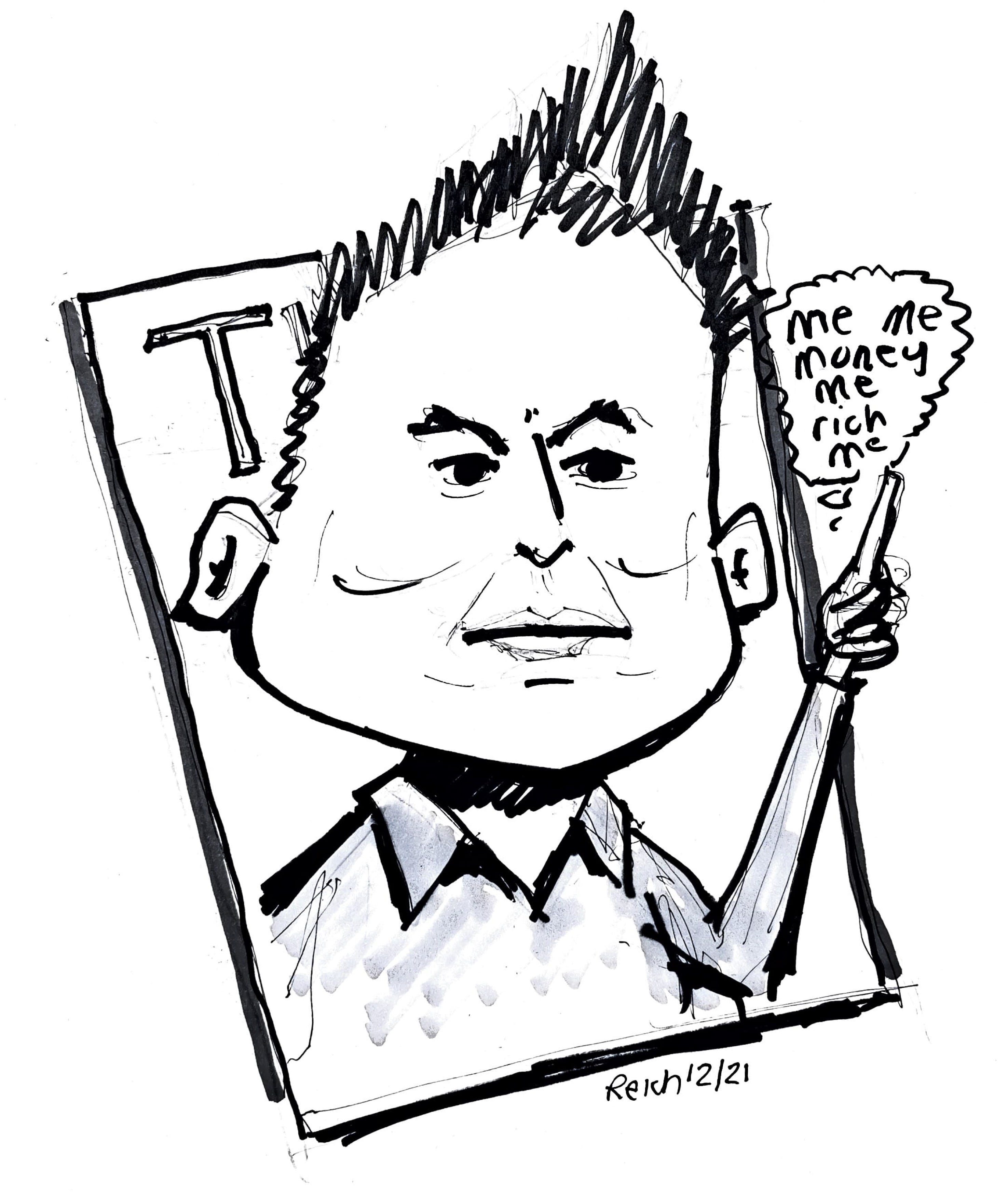
Really? A billionaire tax? Now? Are you kidding me?
President Biden’s budget, which came out yesterday, proposes a new minimum tax of 20 percent on households worth more than $100 million — which the White House says will reduce federal budget deficits by $1 trillion over a decade. The tax would apply only to the top 0.01 percent -- the richest 1 percent of the richest 1 percent. Half of the expected $1 trillion in revenue would come from 704 households worth $1 billion or more.If enacted, it would effectively prevent the wealthiest sliver of America from paying lower rates than middle-class families, while helping to generate revenues to fuel Biden’s domestic ambitions and keep the deficit in check relative to the U.S. economy.Recall that America’s 704 billionaires have increased their wealth by $1.7 trillion since the start of the pandemic in February 2020, while most Americans have struggled to make ends meet. That means the billionaires could theoretically pay for everything Joe Biden and House Democrats have proposed — from childcare to climate measures — and still be as wealthy as they were at the start of the pandemic. Elon Musk’s pandemic gains, for example, could cover the cost of tuition for 5.5 million community college students and feed 29 million low-income public-school kids, while still leaving Musk richer than he was before Covid.The dirty little secret is the ultra-rich don’t live off their paychecks. They live off their stock portfolios. Jeff Bezos’s salary from Amazon was $81,840 in 2020 yet he rakes in some $149,353 every minute from the soaring value of his Amazon stocks, which is how he affords five mansions, including one in Washington DC with 25 bathrooms. (Why would anyone want 25 bathrooms?)So if you want to tax billionaires, you have to go after their wealth. But does Biden’s plan have a snowball’s chance of getting this enacted in the hell called Washington? The problem is the old political chicken-and-egg: A big reason why the super-wealthy have done so well is they’ve bankrolled politicians who alter laws (such as tax laws) to give them even more wealth. They’ve bought armies of lobbyists to keep their taxes minuscule and create tax loopholes large enough to drive their Lamborghinis through.ProPublica’s bombshell report last June showing America’s super-wealthy paying little or nothing in taxes revealed not only their humongous wealth but also how they’ve parlayed that wealth into political power to shrink their taxes. Jeff Bezos, the richest man in America, reportedly paid no federal income taxes in 2007 and 2011. Elon Musk, the second richest, paid none in 2018. Warren Buffett, often ranking number 3, paid a tax rate of 0.1 percent between 2014 and 2018.All previous efforts to tax America’s super-rich have failed amid major political head winds. Republican senators obviously won’t bite the billionaire hands that feed them, and so – yet again – Biden needs every Democratic senator’s vote. But why would any sane person who has followed politics over the last year suppose that Joe Manchin and Kyrsten Sinema will go along? Haven’t we been here before?Yes, except that for months now Manchin has been on the receiving end of unremitting horse dung — not just from progressives but from establishment Democrats who accuse him of torpedoing any chance Biden and the Democrats have of retaining control over Congress after the midterms. Manchin has also been criticized by the mainstream press for taking big money from coal interests and then voting down climate measures (see yesterday’s New York Times front page feature story, here). In other words, Manchin badly needs some cred.Manchin has also expressed concern about the size of the federal budget deficit. And in December, he told the White House he would support some version of a tax targeting billionaire wealth. What really convinces me Biden’s billionaire tax stands a chance is that I doubt the White House would risk another big public loss to Manchin. After getting all hell beat out of them for building public expectations of passing Build Back Better, only to have Manchin kill it, Biden and his staff would not propose another big initiative unless Manchin had already given it the green light. What about Sinema? She’ll go along with whatever Manchin ultimately votes for. So a billionaire tax is by no means dead. Even in this disappointing year, I’m staying hopeful. (By the way, check out our latest video:) This is a public episode. If you'd like to discuss this with other subscribers or get access to bonus episodes, visit robertreich.substack.com/subscribe

Why do Putin, Trump, Tucker Carlson, and the GOP sound so much alike?
In a speech on Friday delivered from his office in the Kremlin, Putin criticized the West’s “cancel culture” which, he charged, is “canceling” Russia -- “an entire thousand-year-old country, our people.” It was the third time in recent months Putin has blasted the so-called “cancel culture.”Which is exactly what Trump, Tucker Carlson, and the GOP have blasted for several years."The goal of cancel culture is to make decent Americans live in fear of being fired, expelled, shamed, humiliated and driven from society as we know it," Trump said as he accepted his party's nomination at the Republican National Convention in 2020.Tucker Carlson, one of Fox News’s most prominent personalities, has charged that liberals have been trying to cancel everything from Space Jam to the Fourth of July.Putin’s fixation on transgender and gay people has also been echoed on the American right. Republican state bills aimed at limiting LGBTQ rights or discussion in schools are soaring. Last fall — months before Texas Republican Governor Greg Abbott threatened to criminalize parents who give their transgender children gender-affirming care — Putin argued that teaching children about different gender identities was “on the verge of a crime against humanity.”Then there’s admiration for Putin himself. Just before Putin ordered a full-scale invasion of Ukraine, Trump deemed him "savvy," "genius," and "smart” for “taking over a country, literally, a vast, vast, location, a great piece of land with a lot of people, and just walking right in.”On his Fox News program Carlson asked, rhetorically, “why do I hate Putin so much? Has Putin ever called me a racist? Has he threatened to get me fired for disagreeing with him?” But Carlson called Ukraine “an obedient puppet of the Biden State Department,” and suggests Putin’s invasion was nothing more than a “border dispute.” Putin’s lies and the lies coming from America’s extreme right are mutually reenforcing. Carlson’s Fox News segments show up in Russian propaganda. And when the American site “Infowars” resurrected an unfounded Russian claim that the United States funded biological weapons labs in Ukraine, Putin repeated the Infowars story.To conclude from all of this that authoritarians think alike is to miss a deeper truth. Putin, Trump, Carlson, and a growing number of rightwing commentators and activists have been promoting much the same narrative — for much the same reason. Remember, Putin was put into power by a Russian oligarchy made fabulously rich by siphoning off the wealth of the former Soviet Union. Likewise, Trump and the radical right in America have been bankrolled by an American oligarchy — Rupert Murdoch, Charles Koch, Rebekah Mercer (daughter of hedge fund tycoon Robert Mercer), Blackstone CEO Stephen Schwarzman, and other billionaires. What do these two sets of oligarchs get in return? Strongmen divert the public’s attention away from the oligarchs’ hijacking of their economies toward cultural fears of being overwhelmed by the “other.” Putin’s MO has been to fuel Russian ethnic pride and nationalism. The Trump-Carlson-radical right’s MO has been to fuel white American nationalism.In both cases, strongmen and their allies have mythologized a “superior” culture (replete with creation stories of blood ties, motherlands, and religion) supposedly endangered by decadent forces intent on attacking and overwhelming it.To Putin, the decadent force is the West. As he put it Friday, “domestic culture at all times protected the identity of Russia,” which “accepted all the best and creative, but rejected the deceitful and fleeting, that which destroyed continuity of our spiritual values, moral principles and historical memory.” Hence, a mythic justification for taking Ukraine back from a seductive but inferior Western culture that threatens to overwhelm it and Russia. The Trump-Carlson-white nationalist narrative is similar: America’s dominant white Christian culture is endangered by Black people, immigrants, and coastal elites who threaten to overwhelm it. The culture wars now being orchestrated by the Republican Party against transgender people, gay people, poor women seeking abortions, and schools that teach about sex and America’s history of racism, emerge from the same narrative as Putin’s culture war against a “decadent” West filled with “sociocultural disturbances.” As does the right’s claim that “secularists” have, in the words of former Trump Attorney General William Barr, mounted “an unremitting assault on religion and traditional values.”These tropes have served to distract attention from the systemic economic looting that oligarchs have been undertaking, leaving most people poor and anxious. Which is why the grievances that Putin, Trump, Carlson, and the GOP use are unremittingly cultural; they are never economic, never about class, and most assuredly not about the predations of the super-rich. Reduced to basics, today’s oligarchs and strongmen (along with their mouthpieces an

Warning: The Fed is aiming a battering ram at the American economy
As Putin’s war shakes up the world economy, the Fed last week raised interest rates by a quarter point and penciled in six more increases by the end of the year. Fed Chair Jerome Powell says he’s ready to do whatever it takes to bring inflation down, including following the example of his predecessor Paul Volcker, who increased interest rates to 20 percent in 1981.Volcker’s rate rise triggered a deep recession and double-digit unemployment. We can debate whether that harsh medicine in 1981 was necessary. What should be clear is that the current inflation is nothing like the inflation of the late 1970s — a time when nearly a quarter of all private-sector workers were unionized and American corporations couldn’t easily outsource production. Today, only 6 percent of private-sector workers are unionized — which means workers have almost no long-term bargaining leverage. And today American corporations can outsource almost anywhere (although China is becoming more complicated, and Russia is now off limits).Inflation is running almost 8 percent annually, which is surely a problem. But it’s not due to permanent wage or price hikes. In fact, it has nothing to do with the business cycle. So expecting the Federal Reserve to remedy today’s inflation by raising interest rates to slow the economy is like trying to cool off on a hot day by aiming a battering ram at your head. Wrong diagnosis. Wrong remedy. The current inflation is the consequence of a perfect storm of unique events that won’t recur — and won’t be remedied by higher rates. We’re emerging from a once-a-century pandemic during which much of the world economy closed down. In March through May 2020, demand evaporated as people retreated into their homes. Because the nation’s (and world’s) productive capacity couldn’t be closed down all at once (productive capacity includes factories, offices, warehouses, and so on, all of which take a while to wind down), the resulting excess of supply over demand caused a deep recession. Now, at the other end, and without much opportunity to buy for the last two years, American consumers are flush with cash (the national savings rate is at its highest level in decades). So they want to buy lots of stuff (and they haven’t yet gone back to spending much on services such as restaurants, hotels, air travel, movies and other places where COVID reigned for two years). Yet the nation’s (and the world’s) productive capacity can’t be fully operational all at once. The resulting excess of demand over supply is causing major inflation. That inflation is being driven by other unique events as well. In housing, the real engine of rising prices is demographics. The huge Millennial generation (the largest in American history), born in the 1980s, is now storming into the housing market after COVID closed their world for two years. Making matters worse, the Great Recession clobbered the construction industry, dramatically reducing the number of available houses to buy or rent. Energy prices are soaring mostly because of Putin’s war (they were rising even in anticipation of it). So are food costs. (Russia and Ukraine together provide about one-quarter of all the planet’s wheat exports.)Another culprit is the pricing power of big corporations. In a White House briefing last fall, National Economic Council Director Brian Deese noted that half of the overall increase in food prices is due to spikes in the cost of beef, pork, and poultry, which has fueled record profits among the four biggest producers that control most of the market. "It raises a concern about pandemic profiteering — about companies that are driving price increases in a way that hurts consumers who are going to the grocery store, and also isn't benefiting the actual producers — the farmers and the ranchers," Deese said.Profiteering is occurring over much of American industry, as I’ve chronicled on these pages, here and here.If you don't believe that corporations are taking advantage of their pricing power and inflation to raise prices, just listen to corporate executives themselves. The Chief Financial Officer of Constellation Brands, the parent company of Modelo and Corona beers, told investors in January that the company wants to “take as much as [we] can” from customers. (Publicly, however, the company has blamed rising material costs for their increased prices.) Here’s another: The grocery food brand Hormel saw a 19 percent increase in their operating income in the first quarter of 2022. Their CFO’s response to these soaring profits? “We’ve done a great job with our pricing.”Of course corporate financial officers want to brag about profits. But if their corporations were actually competing against other corporations in the same industry, they’d absorb cost increases in order to keep their prices as low as possible so consumers didn't abandon them. Today, however, corporations have been raising prices even as they rake in record profits by coordinating price hikes with the ha

Ukraine, climate change, and the common good
Joe Biden is in Europe today, consulting with NATO allies about how to ratchet up the pressure on Putin. I’ve been mulling how we might respond to Putin’s war not just by ratcheting up pressure but also by doing something positive for the world. As Europe and America cope with the energy problems resulting from the war, it strikes me that this is the perfect time to face the climate crisis and conserve energy. I think Biden should be asking Europeans and Americans to make this sacrifice. Let me explain. United Nations secretary general Antonio Guterres said on Monday that the world is “sleepwalking to climate catastrophe” by continuing to rely on fossil fuels, and that nations racing to replace Russian oil with their own dirty energy are hastening the catastrophe. Guterres noted that the climate goals agreed to in Glasgow last year are being neutered by Putin’s war. The pollution that’s dangerously heating the planet continues to increase.Joe Biden promised a rapid transition to clean energy in America but hasn’t started it yet. Legislation to accelerate America’s shift to renewables has been stalled in Congress, largely courtesy of West Virginia coal baron Joe Manchin. Biden has moved on to other priorities, such as containing Putin.But climate change is completely entwined with Putin’s aggression. The world is experiencing the grave consequences of its dependence on oil from dictators like Putin, Venezuela’s Nicolás Maduro, and Saudi Arabia’s repressive regime.So why not make Putin’s war into an urgent invitation to conserve energy? While Ukrainians are on the front line in the battle between democracy and tyranny, shouldn’t the rest of us be summoned to sacrifice in that battle by conserving energy? Shouldn’t we be asked to do everything we can -- from small acts such as turning off lights, traveling less, and reducing meat consumption to larger ones like switching to electric cars and putting up solar panels?Yet Biden has not even asked Americans to conserve. Political pollsters are telling him not to. Lee Maringoff, director of the Marist College Institute for Public Opinion, warns that Biden would face a backlash if he did. “People are becoming turned off to the whole notion of masks, so the message of personal sacrifice – having to alter their behavior in some way – gets into a freedom discussion that the White House doesn’t want to generate right now,” Maringoff says, echoing the views of other political operatives. Rubbish.Asking us to sacrifice is precisely what’s needed now. By asking Americans and Europeans to conserve, Biden would send a clear message that we’re in this together – not just the working middle class and poor who are now being shafted at the gas pump and on heating bills, but all of us duty bound to preserve both democracy and the planet.Why not a “freedom discussion” focused on the true predicate of freedom: the necessity that we all sacrifice for it, as in John F. Kennedy’s famous Cold War message “ask not what your country can do for you, but what you can do for your country.”The common good consists of our shared values about what we owe one another as citizens who are bound together in the same society—the norms we abide by, the sacrifices we make. A concern for the common good—keeping the common good in mind—is a moral attitude. It recognizes that we’re all in it together. If there is no common good, there is no society, no civilization. If the current moment should show us anything, it’s how we tightly we are bound together. Like the ongoing global pandemic, the escalating crisis in Ukraine and the escalating impacts of climate change reveal in stunning clarity the necessity of common sacrifice for the common good. World leaders -- starting with the President of the United States -- should state this clearly and loudly, starting today. What do you think? This is a public episode. If you'd like to discuss this with other subscribers or get access to bonus episodes, visit robertreich.substack.com/subscribe
Six months, and all because of you
Has it been six months already? I hadn’t intended to write every day but with so much going on in the world, I had no choice. One of my hopes when I began this newsletter six months ago was that you’d find sustenance here, particularly during these difficult times. The past six months have been grueling. I’ve felt the same anxieties many of you have felt, spilling over into some sleepless nights. Although the former guy is no longer in the Oval Office and the worst of the pandemic seems behind us (fingers crossed), the dark forces of authoritarianism, bigotry, and violence are still very much with us. I’m getting to be an older man. I’ve served in several administrations. I’ve known and worked with many fine people. I’ve taught two (getting on three) generations of wonderful students. Along the way I have encountered spin, hype, falsehoods, and outright propaganda. But I’ve never before experienced such blatant attacks on the truth as we are now witnessing — both abroad and in America. Getting the truth out and showing what’s really happening is a vital part of what I’m trying to do here. There is no simple solution, but part of the answer is to grow a community like you — people who believe in social justice, human rights, and democracy. Which is why I’m here and presumably why you are.When I post on social media, it feels one-directional. Here it’s more like a conversation. I enjoy reading your comments and am moved by the stories of what brings you here. A few of you, like Jason, who had once been Republican, are drawn here because of arguments that you find logical and clearly expressed. I'm a retired MD & lifelong Republican. I've been noticing a decline in ethics and reality in the Republican party for some time now but was especially stunned after the popularity of Sarah Palin. Then Trump seemed like Sarah Palin on steroids and was even more popular. Trump turned me into a Democrat though I've voted as an independent my entire life. (I've always voted for who I thought was the best person for the job regardless of party). I'm drawn to your posts because you seem to make complete sense and express it such a way as it's so easy to understand.Others of you, like Patrick, a union member, are here because you want to understand how the economy really works. I’m a member of the Teamsters Union and I appreciate your simple explanations of how the economy works. And your encouragement to have conversations with others who has a different perspective.Some of you, like Valinda, have come because you want to make a difference, and you find here a community dedicated to telling the truth and preserving democracy.Like so many others, I am frustrated with a status quo that the vast majority WANT to change, yet seem able to affect so little. Positive change seems so slow, and seems so quickly wiped out. I want to make a difference. I want to have contributed to making a more just and equitable society. Not to have simply grown increasingly bitter or apathetic. Living in Texas, it's particularly difficult to think lasting equality is achievable, and our governor, Abbott, terrifies me. He is as evil as the former guy, but far more capable of achieving his goals, and I suspect he has presidential aspirations. Forming a community aware of the implications of current events and dedicated to fighting growing authoritarianism is important to me. I am a former analyst in the Air Force; I worked to limit proliferation of WMD for 20 years. Now I am a retired/disabled veteran, a mother and grandmother. This is not the legacy I want to leave these new generations.Some of you tell me you enjoy my drawings, such as the Sunday caption contest. Some of you say you are getting a lot out of my Friday class on Wealth and Poverty. Many of you have offered helpful feedback (thanks, and keep it coming!). Whatever your reason for joining me on these pages, I’ve been overwhelmed by your enthusiasm and your kindness — and mostly by your determination to create a better world. Thank you. (And a special thanks to Kara Segal and Heather Lofthouse for their help and insights along the way.)But rather than make assumptions, please tell me: What does bring you here? Also please let me know how these pages can be even better: Don’t hold back on suggestions and constructive criticism! Finally, thanks to so many of you who have joined this community as paying subscribers. If you have found these pages useful but are not a paid subscriber, please consider becoming one (or giving a gift subscription) so we can do even more. And please share this newsletter with others.My abiding thanks,RR This is a public episode. If you'd like to discuss this with other subscribers or get access to bonus episodes, visit robertreich.substack.com/subscribe

Why Trump, Putin, Xi and other dictators make disastrous decisions
Here’s the paradox: The higher you rise in any hierarchy, your decisions are likely to have larger and larger consequences. Yet the higher you rise, the harder it is to get accurate feedback about your decisions. I’ve worked with several presidents. All have made big blunders. I’ve also known and written about CEOs of big corporations who have made terrible mistakes. In every case, they had flawed systems for getting useful, accurate, and reliable feedback. Donald Trump (whom I didn’t work with but watched his every move) had no reliable feedback. Why? Because he surrounded himself with toadies and sycophants who didn’t dare tell him the truth. He demanded that everyone around him confirm his preferred self-image of invincibility. His White House was filled with fawning lackeys (he fired anyone who didn’t grovel). He refused to hear bad news. He rejected the validity of negative media coverage. As a result, Trump made among the dumbest decisions of any American president in history -- suppressing evidence of a potential crime, asking a foreign power for help with his reelection, inciting an attack on the Capitol. Some might say that all this was inevitable; it was built into his character. But his key character flaw was his unwillingness to hear anything negative. None of his horrific acts was necessary. Trump could have accomplished any number of goals far more easily had he not kept digging himself into ever-deeper holes. He was his own worst enemy.Vladimir Putin is in a similar position. He has isolated himself and banned dissenting voices. He has placed obedient lapdogs even in the Fifth Service, which is supposed to provide him intelligence. So, like Trump, Putin has no reality check. According to a new report by a respected independent reporter with sources inside the Kremlin, the Fifth Service was “afraid of angering” Putin, so “simply told him what he wanted to hear.”As a result, Putin’s attack on Ukraine has backfired terribly — on him. He badly overestimated the Russian military and underestimated Ukraine’s capacity to resist. Instead of weakening NATO, his attack has strengthened it. And now that the world’s democracies have cut off Russia’s access to the world banking system, Russia’s foreign exchange reserves have become nearly worthless.Dictators like Putin are particularly vulnerable to inaccurate feedback. Instead of independent truth-tellers, they’re often surrounded by truth-deniers. Rather than experts and investigative journalists, their world is filled with pseudo-scientists and propaganda. In place of a free press, they have agitprop and disinformation.Or look at China’s Xi Jinping. Why would he decide to enter into a “no limits” partnership with Moscow on the eve of Putin’s disastrous military campaign? Talk about blunders. Xi’s alliance with Russia has undermined China’s reputation and aggravated concerns among its neighbors about China’s global ambitions. It’s already prompted Taiwan to strengthen its defenses and pushed other regional powers such as Australia and Japan to declare their own interests in Taiwan’s security.Trump, Putin, Xi — these men aren’t stupid. What’s stupid is their systems for making decisions. They don’t include naysayers. They have no way of eliciting, recognizing, or assessing useful criticism. All are trapped in halls of mirrors that reflect back at them what they want to see and hear.The inverse relation between how high people rise in a hierarchy and the accuracy of the feedback they receive can be overcome if a leader aggressively seeks out dissenting views. But it’s almost impossible to find dissenting views in a totalitarian system where dissent is often punished. One of the great virtues of a democracy is its multiple feedback loops – its many channels for expressing alternative viewpoints and voicing uncomfortable truths. After all, American democracy stopped Trump from doing even more damage than he did.Yet when people like Trump, Putin, and Xi make terrible decisions, the world suffers. Worse: Putin and Xi have the power to blow up the world. This is a public episode. If you'd like to discuss this with other subscribers or get access to bonus episodes, visit robertreich.substack.com/subscribe

My coffee klatsch with Heather
This morning I had coffee with my colleague Heather Lofthouse, who runs Inequality Media. We talked about generational change (boomers; millennials, and today’s children), and the idea of progress. Feel free to pull up a chair. I’ve enjoyed experimenting with this Substack newsletter — including sending you my written posts, drawings, and audio recordings, and exchanging comments with you. Would you find it interesting if I added informal conversations (such as this morning’s coffee klatch with Heather)? Please chime in with thoughts and ideas below, as always. This is a public episode. If you'd like to discuss this with other subscribers or get access to bonus episodes, visit robertreich.substack.com/subscribe

PS: Could Putin pull America back together?
Okay, I’m going to go out on a limb today and suggest something that would have seemed utter nonsense as late as a month ago: I’m seeing the stirrings in Washington of a new era of … I’m not sure what to call it. “Unity” is way too strong. “Bipartisanship” is premature. “De-partisanship” is too clunky. But something new seems to be happening, and Vladimir Putin is responsible. Don’t get me wrong. Democrats and Republicans won’t join hands and sing Kumbaya anytime soon. Mitch McConnell and Kevin McCarthy will continue to ambush Democrats every chance they get. Expect bitter battles over background checks, immigration reform, civil rights protections, and Ketanji Brown Jackson’s confirmation to the Supreme Court. Trump won’t stop telling his big lie. Your Fox News-obsessed Uncle Bob will remain in his hermetically sealed alternative universe.Yet ever since the run-up to Putin’s invasion of Ukraine, I’ve noticed something in Washington that I haven’t seen since in three decades –- a quiet understanding that we’re on the cusp of a new Cold War, potentially even a hot one. Which requires that we join together in order to survive. It’s a subtle shift – more of tone than anything else. I saw it yesterday when Volodymyr Zelensky addressed Congress from Ukraine. When he showed lawmakers a gut-wrenching video of the war’s consequences, many eyes filled with tears. The lawmakers shared, according to Maine’s independent Senator Angus King, “a collective holding of breath.” That Republicans and Democrats shared anything — that they were even capable of a collective emotion — is itself remarkable. With bipartisan support, Ukraine is receiving unprecedented military and humanitarian aid to fight Putin’s war, including anti-aircraft systems that many experts say can defend against bombs and missiles from Russia’s land-based weaponry.Beyond Ukraine, you can also discern the shift in a series of recent across-the-aisle agreements. After literally two hundred failed attempts, the Senate just passed an anti-lynching law. The Senate has also given sexual misconduct claims firmer legal footing with a new law ending forced arbitration in sexual assault and harassment cases. The Senate also just approved sweeping postal reform. And unanimously decided to keep Daylight Savings Time year-round. And it has given the green light to long-awaited reauthorization of the Violence Against Women Act as part of a massive spending bill.I’m hearing from Senate staffers that they’re close to bipartisan agreement to strengthen antitrust laws. Also on a measure to expand semiconductor manufacturing in America, as part of a new China competitiveness bill. And another measure to limit the cost of insulin.Okay, none of this is as dramatic as protecting voting rights or controlling prescription drug costs. But compared to the last few years, it’s extraordinary. (You may not have heard much about these initiatives because the media only picks up on bitter conflict and name-calling.)Something new is happening in Washington, and I think I know why.You see, I came to Washington in 1974, in the Ford administration, and then worked in the Carter administration. The Cold War was raging during those years, serving as a kind of silent backdrop for everything else. Democrats and Republicans had different views on a host of issues, but we worked together because it was assumed that we had to. We faced a common threat.The Cold War had produced an array of bipartisan legislation involving huge investments in America — legislation that was justified by the Soviet threat but in reality had much more to do with the needs of the nation. The National Interstate and Defense Highway Act was designed to “permit quick evacuation of target areas” in case of nuclear attack and get munitions rapidly from city to city. Of course, in subsequent years it proved indispensable to America’s economic growth.America’s huge investment in higher education in the late 1950s was spurred by the Soviets’ Sputnik satellite. The official purpose of the National Defense Education Act, as it was named, was to “insure trained manpower of sufficient quality and quantity to meet the national defense needs of the United States.” But it trained an entire generation of math and science teachers, and expanded access to higher education. The Defense Department’s Advanced Research Projects Administration served as America’s de facto incubator for new technologies. It was critical to the creation of the Internet as well as new materials technologies. John F. Kennedy launched the race to the moon in 1962 so that space wouldn’t be “governed by a hostile flag of conquest” (i.e., the Soviet Union). But it did much more than this for America. Then, in November 1989, the Berlin Wall came down. And in December 1991 the Soviet Union collapsed.Just three years later, Newt Gingrich became Speaker of the House -- and instigated the angriest and most divisive chapter in modern American political history. I was the
Office Hours: What's the Democrats' message?
Welcome to Wednesday, friends.Biden’s advisers are saying that the crisis in Ukraine presents a chance for a reset — Biden’s best opportunity to restore his standing before the November midterms. But what’s the message for the reset?Despite falling coronavirus positivity rates, a bipartisan infrastructure package, and rising employment numbers — and even foreign policy leadership — Biden’s approval ratings remain in the 40s. With inflation soaring and gas prices spiking, the Democrats could soon find themselves in the basement.Biden’s advisers point to the State of the Union address — which emphasized pragmatism over bold progressive goals — as a blueprint for his message in coming months. They note that, according to their research, cutting drug costs was among the most popular proposals in the speech. But this is a policy, not a message. The problem isn’t just Biden. To Democrats, a “message” consists of policies they’ve enacted or want to enact. Republicans don’t bother with policies. For seventy years they’ve stayed relentlessly “on message” with a narrative about Democrats as socialists and communists who want to take away peoples’ freedoms. More recently they’ve also used thinly-veiled racism, xenophobia, misogyny, homophobia, and transphobia to suggest that Democrats are allowing the nation to be taken over by “them.”Democrats offer white papers and they talk in paragraphs. Republicans offer fearful stories and talk in bumper stickers.Republicans have their own message problems, of course. As long as the former guy retains his grip on the GOP, Democrats have a chance to remind up-for-grabs voters what is at stake this year and beyond.So today’s Office Hours question: What should be the Democrats’ message in coming months? (Please give us your thoughts in the comments section below. I’ve got some ideas, and will chime in as well.) This is a public episode. If you'd like to discuss this with other subscribers or get access to bonus episodes, visit robertreich.substack.com/subscribe

How to stop big oil from profiteering off Putin?
Hello friends, and welcome to Tuesday.This morning I filled my car with gas costing over five dollars a gallon. My car is a Mini Cooper that I bought years ago, partly because it wasn’t a gas guzzler. Now it’s guzzling dollars. But when I consider what’s happening in Ukraine, I say what the hell. It’s a small sacrifice. Yet guess who’s making no sacrifice at all — in fact, who’s reaping a giant windfall from this crisis? As crude oil prices hit levels not seen in more than 13 years, Big Oil has hit a gusher. Even before Putin’s war, oil prices had begun to rise due to the recovery in global demand and tight inventories. Last year, when Americans were already struggling to pay their heating bills and fill up their gas tanks, the biggest oil companies (Shell, Chevron, BP, and Exxon) posted profits totaling $75 billion. This year, courtesy of Vladimir Putin, Big Oil is on the way to a far bigger bonanza.How are the oil companies using all this windfall? I can assure you they’re not investing in renewables. They’re not even increasing oil production. As Chevron’s top executive Mike Wirth said in September, “we could afford to invest more” but “the equity market is not sending a signal that says they think we ought to be doing that.” Translated: Wall Street says the way to maximize profits is to limit supply and push up prices instead. So they’re buying back their own stock in order to give their stock prices even more of a boost. Last year they spent $38 billion on stock buybacks — their biggest buyback spending spree since 2008. This year, thanks largely to Putin, the oil giants are planning to buy back at least $22 billion more. Make no mistake. This is a direct redistribution from consumers who are paying through the nose at the gas pump to Big Oil’s investors and top executives (whose compensation packages are larded with shares of stock and stock options). Though it’s seldom discussed in the media, lower-income earners and their families bear the brunt of the burden of higher gas prices. Not only are lower-income people less likely to be able to work from home, they’re also more likely to commute for longer distances between work and home in order to afford less expensive housing. Big oil companies could absorb the higher costs of crude oil. The reason they’re not is because they’re so big they don’t have to. They don’t worry about losing market share to competitors. So they’re passing on the higher costs to consumers in the form of higher prices, and pocketing record profits. It’s the same old story in this country: when crisis strikes, the poor and working class are on the frontlines while the biggest corporations and their investors and top brass rake it in. What to do? Hit Big Oil with a windfall profits tax. Days ago, the European Union advised its members to seek a windfall profits tax on oil companies taking advantage of this very grave emergency to raise their prices. Democrats just introduced similar legislation here in the United States. The bill —introduced by Senator Sheldon Whitehouse and Representative Ro Khanna — would tax the largest oil companies, which are recording their biggest profits in years, and use the money to provide quarterly checks to Americans facing sticker shock as inflation continues to skyrocket. (The bill would require oil companies producing or importing at least 300,000 barrels of oil per day to pay a per-barrel tax equal to half the difference between the current price of a barrel and the average price from the years 2015 to 2019. This is hardly confiscatory. Those were years when energy companies were already recording large profits. Quarterly rebates to consumers would phase out for individuals earning more than $75,000 or couples earning $150,000.)Republicans will balk at any tax increase on Big Oil, of course. (They’re even holding up the nomination of Sarah Bloom Raskin to the Fed because she’s had the temerity to speak out about the systemic risks that climate change poses to our economy. ) But a windfall profits tax on Big Oil is exactly what Democrats must do to help average working people through this fuel crisis. It’s good policy, it’s good politics, and it’s the right thing to do. This is a public episode. If you'd like to discuss this with other subscribers or get access to bonus episodes, visit robertreich.substack.com/subscribe

Helplessness in the face of evil
It’s like watching a three-hundred-pound bully beat up a kid half his size, for no reason — bloodying the poor kid, pulverizing him. Yet you don’t dare try to stop the mayhem because the bully has a gun that he’ll use on you if you intervene. You look for police, but there are none. You round up your friends, who join you in shouting at the bully. But he pays no attention. They threaten that if he doesn’t stop they’ll no longer go bowling with him or invite him out for drinks. Their threats have no effect. The bully continues beating up the kid. Your friends refuse to take further action. They don’t want to provoke his wrath. They’re as afraid of the bully’s gun as you are.By now the kid is desperate. You give him some water. He pleads for a knife. You slip him some brass knuckles. The kid puts up a good fight. You marvel at the kid’s courage and stamina in the face of such brutality. Maybe he can hold the bully off for a while, you think. But the kid’s resistance infuriates the bully even further. The bully clobbers the kid with everything he has. The barbarism is occurring in front of your eyes. It’s revolting to watch. Every moral fiber of your being shouts “do something!” Yet you’re paralyzed. It’s suicide if you intervene, but it’s moral suicide if you don’t. You want to believe the kid can force the bully to retreat, but you know the kid doesn’t stand a chance. You can no longer bear witness to this slaughter. You have to avert your eyes. Or you have to act. What do you do? This is a public episode. If you'd like to discuss this with other subscribers or get access to bonus episodes, visit robertreich.substack.com/subscribe

Putin and Trump have convinced me I was wrong about the twenty-first century
I used to believe several things about the twenty-first century that Putin’s invasion of Ukraine and Donald Trump’s election in 2016 have shown me are false. I assumed:Nationalism is disappearing. I expected globalization would blur borders, create economic interdependence among nations and regions, and extend a modern consumer and artistic culture worldwide.I was wrong. Both Putin and Trump have exploited xenophobic nationalism to build their power. (Putin’s aggression has also ignited an inspiring patriotism in Ukraine.)Nations can no longer control what their citizens know. I assumed that emerging digital technologies, including the Internet, would make it impossible to control worldwide flows of information and knowledge. Tyrants could no longer keep their people in the dark or hoodwink them with propaganda.Wrong again. Trump filled the media with lies, as has Putin. Putin has also cut off Russian citizens from the truth about what’s occurring in Ukraine.Advanced nations will no longer war over geographic territory. I thought that in the “new economy” land was becoming less valuable than technological knowhow and innovation. Competition among nations would therefore be over the development of cutting-edge inventions.I was only partly right. While skills and innovation are critical, land still provides access to critical raw materials and buffers against potential foreign aggressors.Major nuclear powers will never risk war against each other because of the certainty of “mutually assured destruction.” I bought the conventional wisdom that nuclear war was unthinkable.I fear I was wrong. Putin is now resorting to dangerous nuclear brinksmanship.Civilization will never again be held hostage by crazy isolated men with the power to wreak havoc. I assumed this was a phenomenon of the twentieth century, and that twenty-first century governments, even totalitarian ones, would constrain tyrants.Trump and Putin have convinced me I was mistaken. Thankfully, America booted Trump out of office — but his threat to democracy remains. Advances in warfare, such as cyber-warfare and precision weapons, will minimize civilian casualties. I was persuaded by specialists in defense strategy that it no longer made sense for sophisticated powers to target civilians.Utterly wrong. Civilian casualties in Ukraine are mounting.Democracy is inevitable. I formed this belief in the early 1990s when the Soviet Union had imploded and China was still poor. It seemed to me that totalitarian regimes didn’t stand a chance in the new technologically driven, globalized world. Sure, petty dictatorships would remain in some retrograde regions. But modernity came with democracy, and democracy with modernity.Both Trump and Putin have shown how wrong I was on this, too.Meanwhile, Ukrainians are showing that Trump’s and Putin’s efforts to turn back the clock on the twenty-first century can only be addressed with a democracy powerful enough to counteract autocrats like them.They are also displaying with inspiring clarity that democracy cannot be taken for granted. Democracy is not a spectator sport. It’s not what governments do. Democracy is what people do.Ukrainians are reminding us that democracy survives only if people are willing to sacrifice for it. Some sacrifices are smaller than others. You may have to stand in line for hours to vote, as did tens of thousands of Black people in America’s 2020 election. You may have to march and protest and even risk your life so others may vote, as did iconic civil rights leaders like the late John Lewis and Martin Luther King, Jr.You may have to knock on hundreds of doors to get out the vote. Or organize thousands to make your voices heard. And stand up against the powerful who don’t want your voices heard.You may have to fight a war to protect democracy from those who would destroy it.The people of Ukraine are also reminding us that democracy is the single most important legacy we have inherited from previous generations who strengthened it and who risked their lives to preserve it. It will be the most significant legacy we leave to future generations — unless we allow it to be suppressed by those who fear it, or we become too complacent to care.Putin and Trump have convinced me I was wrong about how far we had come in the twenty-first century. Technology, globalization, and modern systems of governance haven’t altered the ways of tyranny. But I, like millions of others around the world, have been inspired by the Ukrainian people — who are reteaching us lessons we once knew. This is a public episode. If you'd like to discuss this with other subscribers or get access to bonus episodes, visit robertreich.substack.com/subscribe

The best thing for American children that nobody's talking about
Among the most heartrending casualties in Ukraine are the children. So far, a million of them have fled the nation. Many are on their own, without parents or relatives to protect them. The 6 million who remain in Ukraine are in grave danger of being maimed or killed. Yesterday Ukraine accused Russia of bombing a children’s hospital. Of all the victims of war, children are the most innocent. If they survive, their physical and psychological injuries may last a lifetime. Children are also the most innocent casualties of poverty. I’ve been so fixated on Ukraine lately that I haven’t shared with you something important we’ve just learned about how to dramatically reduce child poverty here in the United States.From July 15, 2021 to December 15, 2021, the United States conducted a remarkable experiment. It was called the expanded Child Tax Credit. It featured direct monthly payments to families of up to $300 per child under 6 and $250 per month for children between 6 and 17 – phasing out for families earning more than $112,000 a year. We didn’t think of it as an experiment. It was simply part of the American Rescue Plan designed to help Americans survive the pandemic. It turned out to be a real-world experiment because we now know what happened before, during, and after it. This has given us an astonishingly precise understanding of its effects. Before the experiment, America’s child poverty rate was among the highest of all advanced nations. Nearly 16 percent of our children under 5 were impoverished. During the experiment, child poverty in America dropped by roughly a third, down to 12 percent. The number of households with kids reporting not having enough to eat also fell by about a third. After the experiment, the rate of child poverty rose again, from 12 percent to 17 percent. More than a third of families with children in the U.S. now say they are struggling to cover ordinary costs (food, utilities, housing).Naysayers predicted the payments would cause people not to work. That didn’t happen. In fact, researchers found that during these five months self-employment among lower-income families actually increased. Other naysayers said the cost of the program would be prohibitive. Not so. The Congressional Budget Office estimates that permanently expanding the Child Tax Credit would cost $1.7 trillion over the next 10 years. That’s less than what America’s rich and big corporations will save over the next ten years from the Trump Republican tax cut, which went into effect in 2018. Repeal it, and there’s plenty of money to pay for our children. Besides, the future cost to America of not reducing child poverty is astronomical, considering everything from social services to lost productivity.So why did the experiment end? Because the votes of 60 senators were needed to extend it (the filibuster requires sixty votes even to get to an actual vote), and 50 Republican senators and two Democratic senators didn’t want to. At this moment, millions of Ukrainian children are hungry or homeless. Tragically, there is very little we can do for them. At this moment, millions of American children are hungry or homeless. But we can alleviate their suffering. We now know how, because between July 15, 2021 and December 15, 2021 we conducted an experiment that worked. If we were a sane and decent society we would turn that experiment into the law of the land. We still can. Will we? This is a public episode. If you'd like to discuss this with other subscribers or get access to bonus episodes, visit robertreich.substack.com/subscribe

Office Hours: War fever
I’m becoming increasingly worried that a growing segment of the American public is pushing for a war with Russia. Needless to say, that would be suicidal. This morning I saw an open open letter to the Biden administration signed by a group of 27 foreign policy heavyweights, calling for a limited no-fly zone over Ukraine — “starting with protection for humanitarian corridors that were agreed upon in talks between Russian and Ukrainian officials.” The proposal sounds reasonable until you think about how this “limited” no-fly zone would be enforced. NATO would have to engage Russian forces that violate it. That would mean war. There’s also the question of whether Poland will donate to Ukraine Russian-made MiG-29 fighter jets, which Ukraine pilots know how to fly, in return for America supplying fighter jets to Poland. This also brings NATO frighteningly close to war with Russia. So today’s Office Hours question: Should we worry that America and the West are heading toward a war with Russia? If so, how do we avoid it?***Having read through your comments, I want to thank you for your thoughtfulness. I'm as spooked by this as any of you, having spent the first ten years of my life worrying that the Soviet Union would drop a bomb on America at any moment. I even remember urging my father to build a bomb shelter (to which his wise response was "not unless you, Bobby, are willing to kill neighbors who will want to crowd into it").American foreign policy is dominated by two metaphoric enemies -- either Hitler (whom appeasement only encouraged) and Ho Chi Min (whose nationalism had nothing to do with Soviet expansionism). Putin seems to exist more in the former camp, which means we need to do everything possible to make his invasion of Ukraine as painful as possible for him. But there's also an element of ethnic nationalism to his aggression, which suggests he might be willing to settle for Russian-dominated parts of Ukraine and not threaten NATO.I'm no expert in foreign policy, but I do think it important for us to be clear-eyed about all this and succumb neither to war-mongering jingoism that could lead to nuclear annihilation (as exemplified by today's letter from foreign-policy heavyweights calling for a "limited" no-fly zone) nor to a naive isolationism. Secretary of State Anthony Blinken said today that the U.S. wants to get fighter jets to Ukraine “in the right way,” which leaves open the door to helping Poland supply them to Ukraine. Is this a slippery slope? At what point does the U.S. become a combatant?Like many of you, I trust Biden and his foreign policy advisers. I think they've done an excellent job so far. And I'm thankful that the former guy is far from the Oval Office. But I'm still deeply worried. This is a public episode. If you'd like to discuss this with other subscribers or get access to bonus episodes, visit robertreich.substack.com/subscribe

Five ways Putin's war could (possibly) make America better
Nothing good comes from war except, on occasion, the prevention of something even worse. As pressure increases on the Biden Administration to take more aggressive action against Putin, the question is how to minimize the collateral damage to Americans and use the crisis to move toward a more humane future. Here are five possible ways. 1. Help Americans endure higher fuel prices. The best way to stop Putin’s war machine would be to put economic sanctions on anyone buying Russian oil or gas, because oil and gas revenue makes up about half of the Kremlin’s budget. But such sanctions would also drive the prices of oil and natural gas through the roof. (Biden’s decision today to stop imports of Russian oil to the U.S. will have far less consequence because only a tiny fraction of the oil we use comes from Russia.)Gas prices in America are already topping four dollars a gallon (here in California, five dollars). That’s less of a problem for higher-wage workers who can work from home, but it’s a huge burden on lower-wage workers who have to make longer and longer commutes.What to do? Help Americans caught in the energy squeeze. Revive the refundable expanded Child Tax Credit, which enabled millions of poor and working-class families to survive the COVID recession.2. Move the nation toward green energy. Oil companies are pocketing windfall profits while their lobbyists are using the crisis to demand that the U.S. build new Liquid Natural Gas terminals, allow more oil pipelines, and approve new leasing of federal lands for oil drilling. That’s the exact opposite of what we need to do. However we invest in new energy infrastructure, none of it will have an immediate impact on energy prices. The practical longer-term choice is between an energy infrastructure that supports the production of more fossil fuels (such as the additional LNG terminals, pipelines, and oil leases that energy lobbyists are now pushing) or one that moves the nation more quickly to renewable energy sources (such as subsidies for electric cars, batteries, and charging stations). Now is the time to redouble our efforts toward the latter. We need to use this opportunity to build more of the green infrastructure America needs for the long term. Meanwhile, there’s no reason American oil producers should enjoy windfall profits from rising energy prices. Congress should enact a windfall profits tax on them, and use the proceeds for additional green infrastructure. (The European Union is urging member countries to do exactly this. Why can’t we?)3. Trim the military-industrial complex. Though the U.S. and other Western allies have stopped short of sending troops to Ukraine, they are sending weapons. Even Sweden, a non-NATO member, has announced it will send anti-tank weapons, helmets and body armor to Ukraine. Finland has pledged assault rifles and anti-tank weapons. In America, budget analysts expect defense spending in the 2023 federal budget to rise to between 3.5 percent and 4 percent of GDP.All this military spending comes at the expense of domestic priorities in the United States and abroad. It also increases the likelihood of armed conflict. The big winners: U.S. aerospace and defense contractors that are making many of these weapons systems and whose share prices are surging. America’s defense budget is already bloated — bigger than the next ten defense budgets put together. There’s no reason for more defense spending. If anything, we should use the current crisis to reexamine defense spending and make our armed forces more efficient — using the savings to finance more humanitarian aid around the world. 4. Put democracy and human rights at the center of American foreign policy. In one way, Putin’s war is elevating democracy and human rights in U.S. foreign policy. That’s why Biden has unified and mobilized much of the rest of the free world. But in pursuit of oil sources to replace Russian oil, America seems to be recalibrating its emphasis on human rights. That would be a tragic mistake. This past weekend Biden officials met in Venezuela with the government of President Nicolás Maduro. Why? Because Venezuela’s petroleum exports are seen as a potential substitute for Russian oil. But Maduro’s government has been responsible for extrajudicial executions and short-term forced disappearances. It has jailed opponents, prosecuted civilians in military courts, tortured detainees, and cracked down on protesters. Judicial authorities have participated or been complicit in the abuses. Maduro used a state of emergency implemented in response to Covid-19 as a pretext to intensify his control over the population.Last year, a United Nations fact-finding mission concluded that the Maduro regime has committed crimes against humanity. The exodus of Venezuelans fleeing repression and the humanitarian emergency represents the largest migration crisis in recent Latin American history.Biden’s advisers are also discussing a possible visit to Saudi Arabia to help repa

What's the difference between Russian and American oligarchs?
We’re sanctioning Russian oligarchs up the wazoo, hoping it’s a way to get Putin to stop his deadly attack on Ukraine. But for this tactic to work (1) the U.S. and our allies must be able to locate and tie up Russian oligarchic wealth, and (2) Russian oligarchs must have enough power to stop Putin. Let’s take them one at a time: Can we locate and tie up the wealth of Russian oligarchs? Anecdotally, sanctions on the oligarchs appear to be working. Last Sunday, billionaire industrialist Oleg Deripaska (on the U.S. sanctions list) and banker Mikhail Fridman (on the EU’s) both publicly urged an end to Putin’s war. Billionaire businessman Roman Abramovich has put his British soccer club up for sale and vowed to donate the proceeds to “all victims of the war in Ukraine.” Banker and entrepreneur Oleg Tinkov told his 634,000 Instagram followers last week that “innocent people are dying in Ukraine now, every day, this is unthinkable and unacceptable.”But are these sanctions really biting? This is where a comparison of Russian oligarchs with American oligarchs comes in. While Russian oligarchs (Russia’s richest 0.01 percent) have hidden an estimated $200 billion offshore (over half of their financial wealth), American oligarchs — America’s 765 billionaires — have hidden $1.2 trillion (about 4 percent of their wealth), mostly to avoid paying taxes on it. While American oligarchs park their income and wealth in tax havens such as the Cayman Islands, Russian oligarchs have hidden their most valuable assets in the United States and Europe. The reason they do so is telling: Western democracies follow the rule of law. Under such laws, before a government can seize property it must follow lengthy and elaborate legal processes. As a result, American and European governments are finding their hands tied in actually taking control of the assets of Russian oligarchs. American law makes it difficult even to discover what Russian oligarchs own in the United States because they’ve hidden their assets behind complex trusts and shell corporations. American laws governing taxes, corporations, transportation, and banking are wonderfully convenient for the world’s oligarchs. One out of every six aircraft in the United States, for example, is registered through trusts, Delaware corporations, and even post office box addresses, making it almost impossible to discover their true owners. This isn’t an argument against sanctioning Russian oligarchs. It’s just that we need to be clear-eyed about how difficult it is to do so.[Russian oligarch Roman Abramovich’s yacht:[American billionaire Rick Caruso’s yacht:Do Russia’s oligarchs have enough political clout in Russia to stop Putin’s aggression, or perhaps even depose him?American oligarchs have enormous political clout. In the 2012 presidential election (the most recent for which we have detailed data on individual contributions), the richest 0.01 percent of Americans (that is, the richest 1 percent of the richest 1 percent) accounted for 40 percent of all campaign contributions. (See the graph below.)What have American oligarchs got out of these campaign contributions? The lowest tax rates on the highest incomes in over a generation — and the lowest among all wealthy nations. They’ve also gotten an IRS so starved of resources it’s barely able to enforce the law. Russian oligarchs who have pledged loyalty to Putin arguably have less political power in Russia than do American oligarchs in the U.S. In Putin’s Russia, power is exercised by a narrow circle of officials and generals appointed by Putin, whom he has drawn largely from the former KGB. According to several Russian specialists I’ve spoken with over the last few days, this circle has become very small in recent months, now numbering perhaps a half dozen. We should use whatever means at our disposal to make Vladimir Putin end the brutal war he started. But it is proving difficult to use sanctions on specific oligarchs to get Putin to stop. Perhaps we should be more ambitious. My Berkeley colleague Gabriel Zucman recommends that the United States and the European Union freeze all offshore holdings of Russian nationals in excess of $10 million. This would affect about 10,000 to 20,000 Russians who have benefitted the most from Putin’s rule.Meanwhile, blanket sanctions against the Russian economy are having an effect. Over the past week they have caused the ruble to collapse and decimated Russian markets. But the major burden has fallen on ordinary Russians, many of whom have already suffered from Putin’s brutal regime. As we’ve seen in North Korea and Iran, dictatorships don’t depend on popular approval. In fact, widespread hardship can lead to even more repression and violence. We should remind ourselves that Putin is not synonymous with the Russian people. Xenophobia of whatever form has no place in the fight against vicious authoritarianism.PS: Here’s a video that I and my terrific colleagues at Inequality Media did on the meaning and f

Four things you can do for Ukraine
The waitperson where I had breakfast this morning broke down in tears over Ukraine. “I just don’t know what to do,” she said.She’s not alone. I feel the same way. You probably do, too. That one tyrant can cause this much human suffering defies whatever progress we assumed civilization had made since Hitler’s rise almost a century ago. That Putin can wreak such havoc on innocent people, seemingly unconstrained by others in Russia’s government, makes a mockery of modern ideas about governance in even totalitarian regimes. That he has control over a nuclear stockpile capable of annihilating much of humanity lays bare — even more starkly than does climate change — how far humanity has fallen behind in the primal race between technology and survival.But bear in mind several encouraging things. The rich nations of the world that still practice democracy are exercising a unity of resolve not seen in decades. Thankfully as well, we in the United States have as president a person who is sane, thoughtful, experienced, and even-tempered. Can you imagine where we’d be with the former guy? Beyond this, there is no reason to suppose that the grim calculus behind “mutually-assured destruction,” which has so far prevented a nuclear holocaust, has changed. Finally, by all accounts Putin is not having an easy time of it. The people of Ukraine are mounting a fierce resistance. He cannot “win” this war. Even if he establishes a puppet government there, the resistance will continue.So what can you do to help Ukraine? Four things. 1. First, you can contribute to Ukrainian relief efforts. Here are organizations I trust: — Ukraine Crisis Fund. The international humanitarian group is providing food, water and other items to families fleeing violence in Ukraine. Contribute here.— Doctors without Borders. Staffers with the medical relief organization remain in Ukraine and are "seeking ways to respond to the medical and humanitarian needs as the conflict evolves." Offer support here.— ICRC. The Swiss-based organization is supporting the work of the Ukrainian Red Cross in helping those impacted by the war. Donate to the ICRC.— Keep Ukraine’s Media Going is a GoFundMe campaign for journalists around Ukraine that also aims to help reporters relocate and continue their work from neighboring countries. Donations can be made here. 2. Second, you can write your members of Congress expressing your view that the United States should sanction Russian oil and gas, and that you are willing to make the financial sacrifice of higher prices at gas pumps and for home heating oil that will almost certainly result. 3. Third, you can urge your members of Congress to open wide America’s borders to Ukrainians fleeing Putin’s war, and help them transport themselves and their families here. 4. Fourth and finally, whatever your political persuasion, you can put aside your anger and frustration with Americans who disagree with you on other issues and recognize our shared commitment to democracy and human rights and our mutual loathing for the murderous rampage we are witnessing in Ukraine. Even former VP Mike Pence declared last night that “there is no room in this party for apologists for Putin” (drawing another contrast with the Trump wing of the GOP). Bearing witness to this calamity and unambiguously condemning it should, at the very least, be something we can all agree on. This is a public episode. If you'd like to discuss this with other subscribers or get access to bonus episodes, visit robertreich.substack.com/subscribe

Vladimir Putin's despicable war and Jerome Powell's bad inflation plan
If Europe and the United States do what must be done next to contain Putin’s despicable invasion – blocking Russian exports of gas and oil – energy prices will soar. That means consumers will have less money to spend on everything else. This could well push the U.S. economy back into recession.Which makes all the more bizarre Federal Reserve Chairman Jerome Powell’s statement yesterday to the House Financial Services Committee that he will propose increasing interest rates at the central bank’s meeting in two weeks. Really? The Fed plans to whip inflation by throttling the US economy at a time when a war in Europe threatens to engulf it? Yes, inflation is very high. That’s because demand for goods exceeds supply. But inflation will slow as the pandemic winds down and Americans continue to shift their purchases back to services (retail stores, restaurants, hotels, and airlines are already rebounding), and as the supply of goods and components continues to rise to meet demand.Yes, demand is strong. That’s because after two years of pandemic, American consumers have pent-up needs and wants. They’ve also managed to save a bit. But these conditions are also temporary. The household savings rate continues to drop. Government pandemic relief programs are over. Most Americans are back to living paycheck to paycheck.Powell worries about a tight labor market. But a tight labor market improves the bargaining leverage of the bottom half of American workers, who haven’t had much of a raise in 40 years. If the Fed slows the economy, those workers will lose any prospect of a pay increase. If the slowdown tips the economy into recession, they’ll also be the first to lose their jobs. Don’t believe anyone who warns of an “overheated” labor market. The only people whose paychecks have been overheated are in C-suites and on Wall Street. With Putin’s war raging, this is the worst time for the Fed to slow the economy. The war is doing enough damage as is. It threatens to worsen inflation by further disrupting supply chains and pushing energy and commodity prices even higher — thereby forcing consumers to cut back on other purchases. If Europe and the United States block Russian exports of gas and oil — as they should, in order to contain Putin’s barbarity — energy prices will soar, and the US and global economy could fall into recession. (Over the longer term, higher gas and oil prices aren’t a bad thing; they’ll help propel the U.S. economy toward renewable sources of energy.) Raising interest rates at a time like this is like trying to cure a flu with an enema. The underlying problem has nothing to do with permanently excessive demand or permanently limited supply, or with a tight labor market, or with Putin’s war. The real problem is big corporations in America have too much pricing power. As the New York Times pointed out last week, “corporate executives have spent recent earnings calls [with Wall Street] bragging about their newfound power to raise prices, often predicting that it will last.”A better alternative to raising interest rates and slowing the economy would be a windfall profits tax on profitable corporations that have been taking advantage of the turmoil by raising prices -- including energy companies. But such an initiative would have to come from Congress, where the political clout of corporate America -- especially over Republicans and corporate Democrats -- makes it nearly impossible.If Putin’s aggression continues, though, a windfall profits tax isn’t out of the question.(For more on the real source of inflation, see the video below that I just did with terrific my colleagues at Inequality Media about the real source of inflation.) This is a public episode. If you'd like to discuss this with other subscribers or get access to bonus episodes, visit robertreich.substack.com/subscribe
Office Hours: What should we be prepared to sacrifice to stop Putin's aggression?
When I was in elementary school in the 1950s, I was periodically required to “duck and cover” by huddling under my desk in case the Soviet Union dropped an atomic bomb on my town. If I didn’t survive, I was also issued a dog tag with my name and address to help my parents identify my body. (I remember thinking that if the bomb dropped my parents wouldn’t be around to identify me anyway.) The whole thing was terrifying. Years later, when I had my own children, I learned that the only means by which America prevents a far worse nuclear attack — featuring much more powerful bombs capable of reaching anywhere in the United States — is through “mutually assured destruction,” the morbid reality that if Russia launches an attack on us it would be annihilated, as would we. No more duck and cover. Which gets me to today’s Office Hours discussion. Putin’s invasion of Ukraine is escalating. The United States and our allies have already imposed severe economic sanctions, but a dictator can withstand the consequences of sanctions for quite some time (Exhibit A: Kim Jong-un). The most severe sanctions would be on Russia’s oil and gas exports, but imposing them would cause oil and gas prices to soar in the United States at a time when Americans are already facing near record inflation. Should we be willing to make this sacrifice? And what happens if Putin takes over Ukraine, establishes a puppet government there, and then amasses Russian troops along the borders of NATO members Poland, Hungary, Estonia, Latvia, or Lithuania? By treaty, we are obligated to defend these nations. But are we willing to risk full-scale war? And what does war possibly mean between two nations armed with the most nuclear warheads in the world? None of this is pleasant to think about, but we have no choice. Hence this week’s Office Hours question: As a practical matter, what should we be prepared to sacrifice to stop Putin’s aggression? (Please comment below. I’ll weigh in mid-day with some thoughts of my own.)**My two cents. Putin is escalating his attack on Ukraine, now reportedly using vacuum bombs on civilians, which are barred by the Geneva Convention. A humanitarian catastrophe is unfolding in real time before our eyes.Russian gas and oil now come soaked in blood. I do not believe it any longer morally justifiable for the West to purchase them. I agree with Ken and Keith on this. To be sure, cutting off Russian gas and oil will result in substantially higher energy prices in the US and Europe, at a time when inflation is already soaring. Although we are not prepared to sacrifice the lives of Americans, we should be willing to sacrifice our pocketbooks. This is the minimum we should be willing to endure. (We should protect lower-income Americans from the worst economic consequences by enlarging subsidies for heating oil and gas at the pump, for example). One ancillary benefit could be speeding up our conversion to renewable energy. Germany – which is highly dependent on Russian natural gas – has committed itself to 100 percent renewables by 2030, just 8 years from now. We must do the same. It is no longer “green energy” versus Big Oil and Big Coal. American security has now converged with the necessity of slowing and reversing climate change. But what if Putin amasses tanks and troops along the borders of a NATO country? I think our best hope at the moment is that fierce financial pressure — including a ban on Russian oil and gas exports — convinces Russian oligarchs and generals that Putin must be deposed. This is a public episode. If you'd like to discuss this with other subscribers or get access to bonus episodes, visit robertreich.substack.com/subscribe

Who cares about Biden's first State of the Union?
In a few minutes, Joe Biden will give his first State of the Union address. It’s his best opportunity between now and November’s midterm elections to shape the narrative — describing the key choices ahead and explaining where he’s leading America. But there’s far more at stake than mere politics. Biden needs to frame not only what he’s accomplished and wants to accomplish but also what America stands for at this precarious point in our nation’s history. That should be the choice between democracy and authoritarianism. Biden should emphasize that America’s role in the world is to lead democracies against aggressors like Putin. And then he should connect this to voting rights here in America and the dangers posed by the ongoing assault on democracy spawned by Donald Trump. Biden should hold senate Republicans accountable for thwarting every attempt to protect the right to vote — rejecting the comprehensive For the People Act, the John Lewis Voting Rights Advancement Act (which would have restored those parts of the Voting Rights Act of 1965 that the Supreme Court gutted in 2013), and most recently, the Freedom to Vote Act — which was expressly designed to attract at least ten Republicans in order to overcome a filibuster, but did not. Biden should unequivocally state that this intransigence is undermining what generations of Americans have fought and died for — the defining legacy lying at the heart of the nation: our democracy. Biden should also make clear that record levels of concentrated wealth inside America also poses a danger to democracy, as big money engulfs politics. (It wouldn’t hurt to use the quote attributed to the great Justice Louis Brandeis — “America has a choice: We can have great wealth concentrated in the hands of a few, or we can have a democracy, but we cannot have both.”) He could also use this opportunity to show the connection between inflation and increasing levels of corporate concentration and market power — requiring stepped-up antitrust enforcement. At this point in the nation’s history when several existential challenges are converging — Putin’s war and the fearful prospect of nuclear armageddon, COVID, climate change, the attacks Trump has provoked on democracy at home, along with racism and xenophobia — what Biden says tonight could be profoundly important. His address begins in about fifteen minutes. Please watch or listen, and let us know whether in your view he has risen to the occasion. This is a public episode. If you'd like to discuss this with other subscribers or get access to bonus episodes, visit robertreich.substack.com/subscribe

The Putin-Trump Axis
The world is currently and frighteningly locked in a battle to the death between democracy and authoritarianism. Yesterday, Vladimir Putin issued a new threat to the West — telling his defense minister and his top military commander to place Russia’s nuclear forces on alert. It is a new cold war. The biggest difference between the old cold war and the new one is that authoritarian neo-fascism is not just an external threat. A version of it has also taken over one of the major political parties in the United States.The Trump-led Republican Party does not openly support Putin, but the GOP’s animus toward democracy is expressed in ways familiar to Putin and other autocrats. Trump Republicans continue to refuse to acknowledge the outcome of the 2020 election, claiming without evidence that it was “stolen” from Trump. In many states, on the basis of this big lie, they are making it more difficult for people who don’t share their beliefs to vote. In several states they are laying the groundwork for ignoring the popular vote altogether and throwing a future presidential election to Trump or another strongman. They have stopped even pretending to be the party of free speech: They are banning books from schools and prohibiting teachers from talking about America’s struggles against racism and homophobia. Putin’s attack on Ukraine, starting February 24, 2022, and the attack by followers of Donald Trump on the United States Capitol on January 6, 2021 are different, of course, but they resemble one another in their contempt for democratic institutions and their attempts to justify violence by asserting a threat to a dominant racial or ethnic group. Each also represents the logical culmination of leadership by a dangerous narcissist who flagrantly lies about his intentions and his opponents and who sees the world only in terms of his personal power.Donald Trump has long admired Vladimir Putin who, evidence shows, personally authorized a secret spy agency operation to support a “mentally unstable” Donald Trump in the 2016 U.S. presidential election. Believing that a Trump White House would help secure Moscow’s strategic objectives, Russia’s spy agencies were ordered to use “all possible force” to ensure Trump’s victory. Again in the 2020 election, according to a recently unclassified report by the U.S. Office of the Director of National Intelligence, Putin authorized "influence operations” aimed at “supporting Trump” and “denigrating President Biden's candidacy.”Presumably Putin supported Trump in 2016 and in 2020 in part because of Trump’s disdain for NATO. As president, Trump did all he could to undermine the organization, even suggesting the U.S. should withdraw from it. Is it pure coincidence that once Trump was out of office and NATO remained intact, Putin attacked Ukraine?Defending democracy and standing up against authoritarian neo-fascism requires courage. In 2019, Ukrainian President Volodymyr Zelensky refused Trump’s demand for help in rigging the 2020 election in the United States, even after Trump threatened to withhold money Congress had appropriated to help Ukraine resist Russian expansion. Today, Zelensky won’t be bullied by Putin. He turned down America’s offer to evacuate him, saying “I need ammunition, not a ride.” Zelensky’s courage in the face of overwhelming brute force has fortified Ukrainians now defending their country against invaders.Contrast this with the toadies at the Republican National Committee who in February censured Republican Representatives Liz Cheney of Wyoming and Adam Kinzinger of Illinois for participating in Congress’s select committee investigating the events of January 6, and who called the January 6 attack on the Capitol "legitimate political discourse." Also contrast Zelensky’s courage with most elected Republicans who still refuse to stand up to Trump. Just yesterday on national television, Senator Tom Cotton refused four times to condemn Trump for calling Putin “smart” and “savvy” and NATO and the US “dumb.” Make no mistake. Putin’s authoritarian neo-fascism has rooted itself in America. We may be able to prevent Putin’s aggression from spreading to the rest of Europe. But we cannot win a cold civil war inside America without destroying this nation — another of Putin’s objectives when he ordered his spy agencies to help Trump. In the months and years ahead, those of us who believe in democracy, the rule of law, human rights, and truth, must do everything we can to win back our fellow countrymen to these same overriding values. This is a public episode. If you'd like to discuss this with other subscribers or get access to bonus episodes, visit robertreich.substack.com/subscribe

In containing Putin, we must not lose sight of priorities at home
In the midst of Putin’s attack on Ukraine, it’s hard to keep our minds on domestic priorities — such as protecting voting rights, delivering economic security, and fixing our woefully expensive and unfair healthcare system. Yet maybe this is exactly the time to focus on these domestic goals. Doing what’s right for our people strengthens our moral authority to defend democracy and human rights abroad. Protecting voting rights lends credibility to our claims of the superiority of democracy to autocracy. Providing more economic security shows the world that our system is fair and just. Fixing our healthcare system enables more Americans to live fuller and more productive lives. Surely we can afford to do far more than we are now doing. Containing Putin while also attending to our domestic priorities fortifies opponents of tyranny in Russia and elsewhere who know they don’t have the luxury of supporting a vast military while also attending to domestic needs. Last week (which seems like an eternity ago) I testified before Congress on why we need Medicare for All. I’ve posted below a video of my testimony and my responses to followup questions from members of Congress. I can guess what you’re thinking: But what about Manchin, Sinema, and senate Republicans? Maybe you don’t believe there’s a chance in hell of protecting voting rights or strengthening social safety nets or enacting Medicare for All. The window of opportunity never opened wide enough to do any of this, and if Democrats lose the House and Senate it will close. But before you throw in the towel, you should know how strong the green shoots of reform are right now. For example, the powerful Congressional Budget Office, led by a Bush administration economist, just issued a report suggesting how a Medicare for All–style system could fix the mess of our current healthcare system — and save money at the same time. As I told Congress last week, Medicare for All — or some variant of a single-payer system — is inevitable because current healthcare trends are unsustainable. The only real question is how much unnecessary pain, suffering, and cost Americans will have to endure before we get there. Stopping Vladimir Putin from taking over Ukraine will be difficult if not impossible in the short term. Containing his aggressiveness beyond Ukraine will demand great energy and resolve, both from us and our allies. Compared to this, reforming America — so the richest nation in the history of the world improves the lives of most Americans instead of only a super-wealthy elite — is straightforward. It should be part of our strategy for strengthening democracy everywhere. In 1941, on the eve of America’s entrance into World War II, when the darkening shadow of fascism was spreading across Europe, Franklin D. Roosevelt delivered his “Four Freedoms” address to a joint session of Congress. He proposed that people “everywhere in the world” should enjoy the freedom of speech and freedom of worship, and also the freedom from want and freedom from fear. The benefits of democracy, FDR asserted, included economic opportunity, employment, social security, and adequate health care. Roosevelt was speaking both to Americans and to the rest of the free world. He was saying, in essence, that the sacrifices we were about to make should be understood as investments in our collective future. It is much the same today. I hope you have a good and safe weekend, despite all the troubling news in the world. This is a public episode. If you'd like to discuss this with other subscribers or get access to bonus episodes, visit robertreich.substack.com/subscribe