
The Coffee Klatch with Robert Reich
470 episodes — Page 10 of 10

How to talk to people who are 50 years younger
It turns out that most of the people I deal with daily – the people I talk with, meet with, collaborate with, teach, zoom with, and have lunch and coffee with – are 50 years younger than I am. They’re in their mid-20s. I’m in my mid-70s. Most of the time I don’t think about the half-century gulf between us, but occasionally it slams me in the face. As when I catch our reflection in the window of a coffee shop and wonder, just for an instant, who that old man is hanging out with those young people. Or when I make a casual reference to someone like Humphrey Bogart or Archibald Cox and they stare back at me blankly. Or when I refer to “the Rosemary Woods stretch,” or being “Borked” or “swift-boated,” and they don’t have the slightest idea what I’m talking about.Recently we got into a conversation about clothing, and I mentioned that I’d stored my tony jacket in my valise above the chest of drawers in the den. I might as well have been talking ancient Greek.Thank you for subscribing to my newsletter on power, politics, and the real economy. If you’d like to support this week, please consider becoming a paid subscriber. But I miss lots of what they say, too. Yesterday, one of them opined that “inflation is, high-key, skyrocketing right now." I got the skyrocketing part. But high-key? Another told me, reassuringly, that the “vibe” of something I’d written was “immaculate.” I was not reassured. When one asked another if she’d seen me “clap back at Elon Musk," I didn’t know whether to feel complimented or ashamed.This morning one of my graduate students, referring to another who had driven a Mustang to someone’s weekend baby shower, exclaimed “What a flex!"A “flex?” I asked.“A flex! A flex!” she said more loudly, as if she were talking to someone hard of hearing.I am becoming hard of hearing, damnit. But that wasn’t the problem.Face it. A half-century is a chasm in the landscape of living memory. A person who tries to speak across it can seem to warp the time-space continuum. When I was a boy, I remember my father telling me that when he was a boy he watched veterans of the Civil War march in New York City. I was astonished. How could he be that old? How could the Civil War have occurred that recently? Most of my undergraduate students were born after 9/11. They don’t remember a time when the United States was united over anything. They have a hard time believing I’ve lived most of my life so far before the Internet. When I tell my undergraduates that I once advised Barack Obama, they’re somewhat impressed. Labor Secretary to Bill Clinton? Their eyes begin to glaze over. Worked for Jimmy Carter? Not particularly interested. Campaigned for Eugene McCarthy? They look puzzled, as if I’ve entered the misty expanses of ancient history. Sometimes I follow this by telling them I started my career as an assistant to Abraham Lincoln. This used to elicit a laugh. I’m beginning to fear it won’t much longer. But every day I consider myself especially blessed for having the great good fortune to spend most of my time with these wonderful people. They're going to inherit the mess my generation has bequeathed them. But instead of being bitter or angry, they have all sorts of ideas for how to clean it up, fix it, make the world better. And they have the energy and determination to succeed. They keep me optimistic and sane. They keep me young. This is a public episode. If you'd like to discuss this with other subscribers or get access to bonus episodes, visit robertreich.substack.com/subscribe
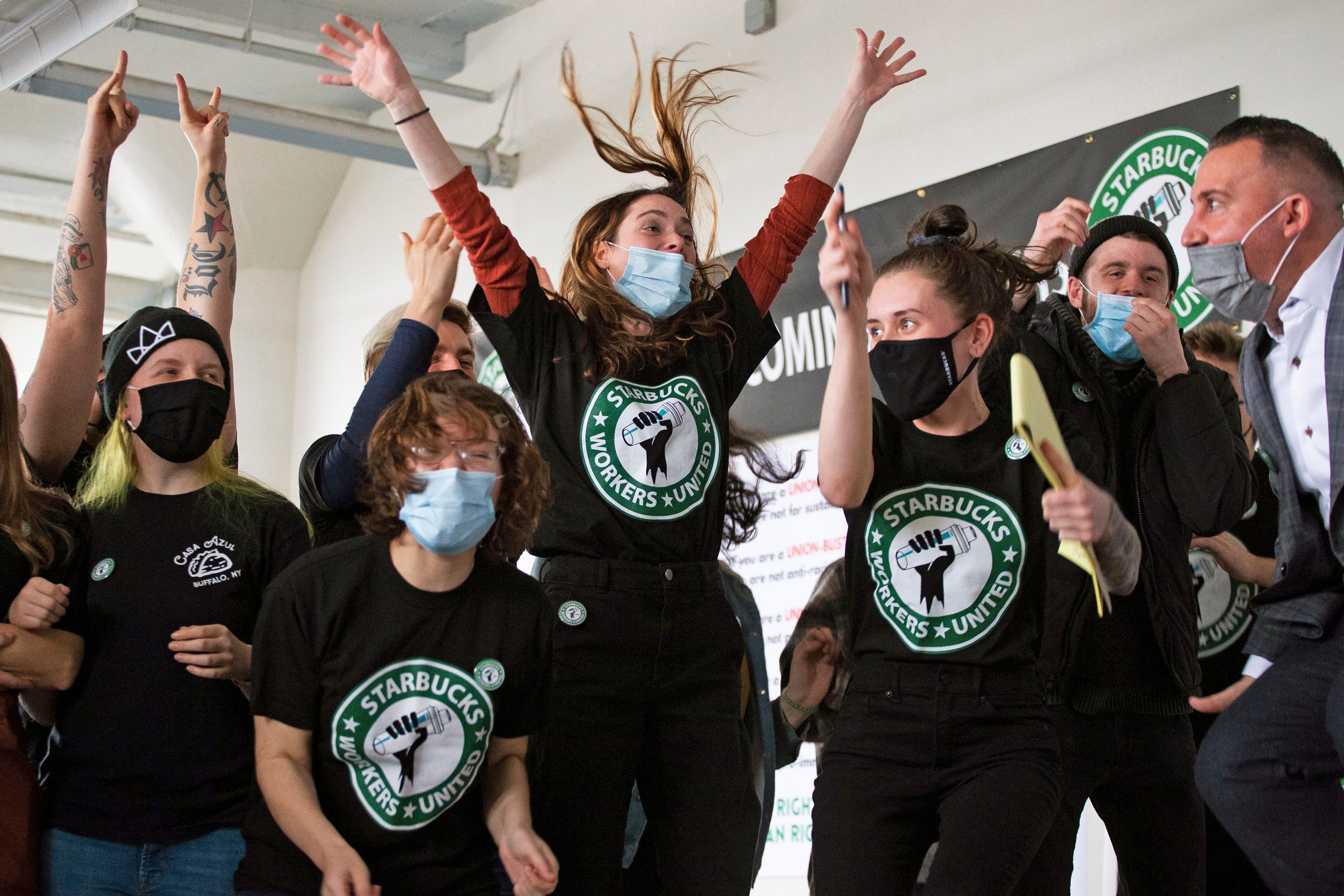
One small step for Starbucks workers, one giant leap for workers across America
Thank you for subscribing to my newsletter on power, politics, and the real economy. If you’d like to support this work, please consider becoming a paid subscriber. Workers in one Starbucks store, in Buffalo, New York, made history yesterday by becoming Starbuck’s first unionized workplace. It’s a watershed for the biggest coffee seller in the world, which operates 8,953 stores in the United States — and which has done everything in its power to keep its workers from forming a union. The vote itself was tiny. Nineteen baristas and shift supervisors voted in favor of unionizing, 8 voted against. But it marked a huge victory, nonetheless. Starbucks had waged a massive anti-union campaign in Buffalo — sending out-of-town managers and even executives into stores to discourage unionizing, closing down some stores, and packing remaining stores with new employees in order to dilute pro-union employees’ voting power. For years, Starbucks workers have complained about the company’s labor practices, claiming that chronic understaffing has created a chaotic work environment, erratic hours, and difficulty in taking sick days. Despite episodic commitments by Starbucks management to change, the complaints have continued. They intensified during the pandemic when overstretched Starbucks employees also had to deal with new health risks and safety protocols.The union election marks one of the highest-profile union wins in memory for U.S. restaurant workers, who are among the least unionized in the country and whose pay and benefits are among the lowest in all of corporate America. It’s certain to encourage more unionizing efforts among workers in restaurant chains.What occurred yesterday at one Starbucks store is part of a much larger pattern — a surge in strikes and labor actions across America. Kellogg’s striking workers are still holding the line and refusing to allow the company to separate employees into tiers (with newer workers getting lower pay and benefits). Today, Kellogg's said it will start hiring permanent replacements for the striking workers. Hiring permanent replacements is technically legal, but rarely done because it can poison labor-management relations for years. Amazon warehouse workers in Bessemer, Alabama will get another chance to unionize (the National Labor Relations Board found that Amazon used unfair labor practices in the recent election there). The United Mine Workers have been striking at the Warrior Met Coal company in Alabama for the last eight months, one of the longest strikes this century.Three thousand student workers at Columbia University have been on strike for six weeks to demand better pay and health care (on Tuesday, at least one hundred members of the Columbia faculty joined them on the picket line). What’s going on? Partly, low-wage workers have more bargaining leverage now than they’ve had in years. As the pandemic recedes (let’s hope it continues to), consumers are spending at a higher rate than they have in over twenty months. To respond to this surge in pent-up demand, employers are seeking workers. But at the same time, workers across America are taking a fresh look at their jobs. Record-high “quit” rates and near record low rates of labor-participation suggest that a significant number are asking themselves if they want to go back to their old jobs — and are answering “no.” Part of the “no” is an unwillingness to settle for their former wages and working conditions — especially in big companies (like Starbucks, Amazon, and Kelloggs) whose profits have been sky-high. (Or even in richly-endowed universities like Columbia.) That “no” is also reverberating across America in the form of strikes. Many of these workers were on the front lines in the pandemic, and now they feel (with some justification) it’s time for their efforts to be rewarded. At a deeper level, I suspect the pandemic itself has caused many people to reevaluate what they’re doing with their lives and to set different priorities for themselves (although I can’t prove this). For years, many big corporations like Starbucks have sold themselves as “socially-responsible” — offering consumers the soothing reassurance that in buying their products they’re somehow advancing the common good. That was always b******t. Corporations exist only to make money. Corporate social responsibility is a jejune form of public relations. Starbucks’s aggressively marketed “socially responsible” business model turns out to be no different. When corporations like Starbucks fight their workers’ legal right to form a union, the PR veil is lifted for all to see what’s really going on. Starbucks calls its workers “partners,” but they’re not in fact partners. They don’t share in the firm’s profits. Between January and September of this year, Starbuck’s revenue soared to $20.9 billion — compared to $17.3 billion in the same period last year. Its president and chief executive officer, Kevin Johnson, made $14,665,575 in total compensation last y
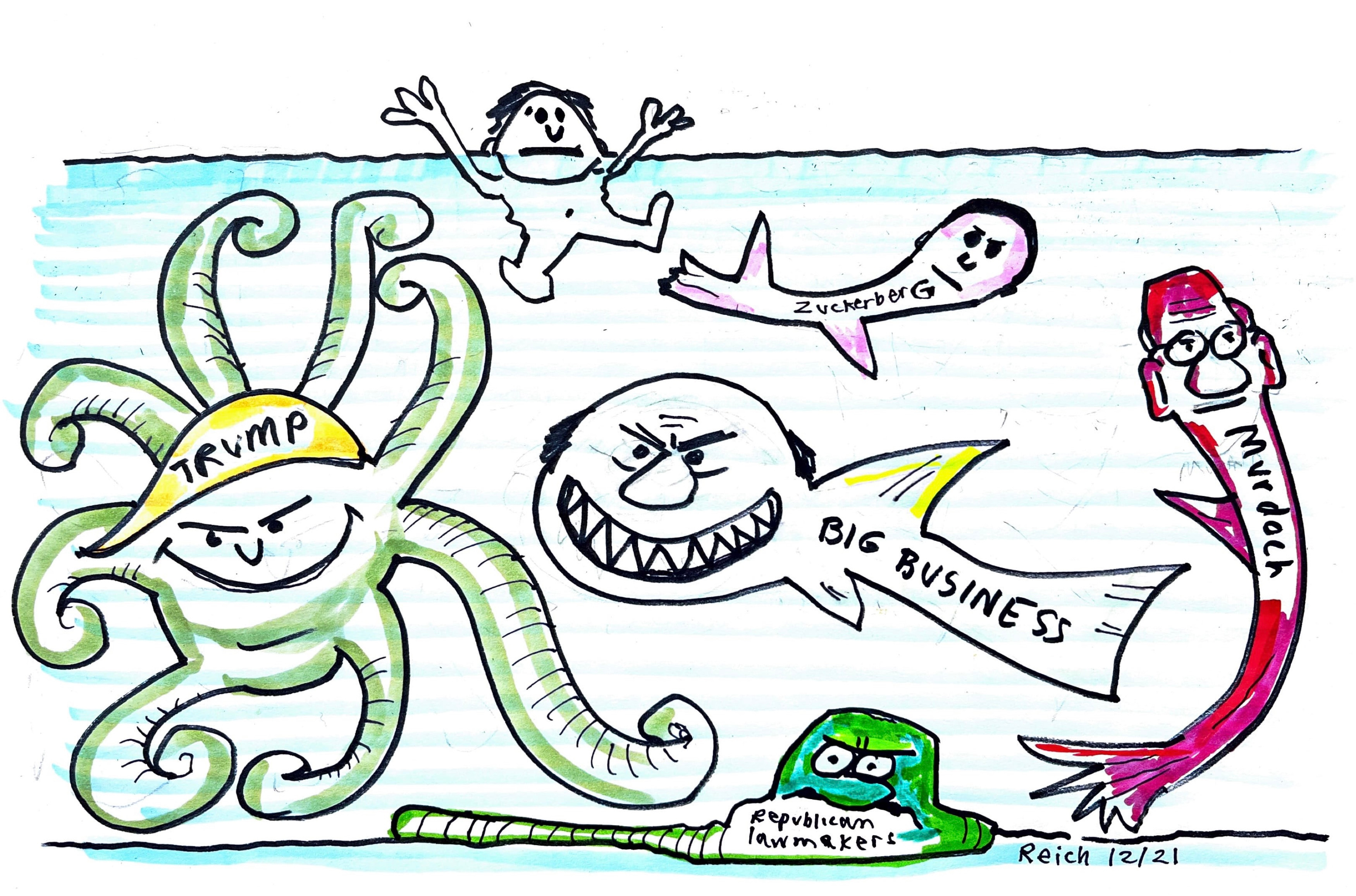
Office Hours: What will American democracy look like in 2031?
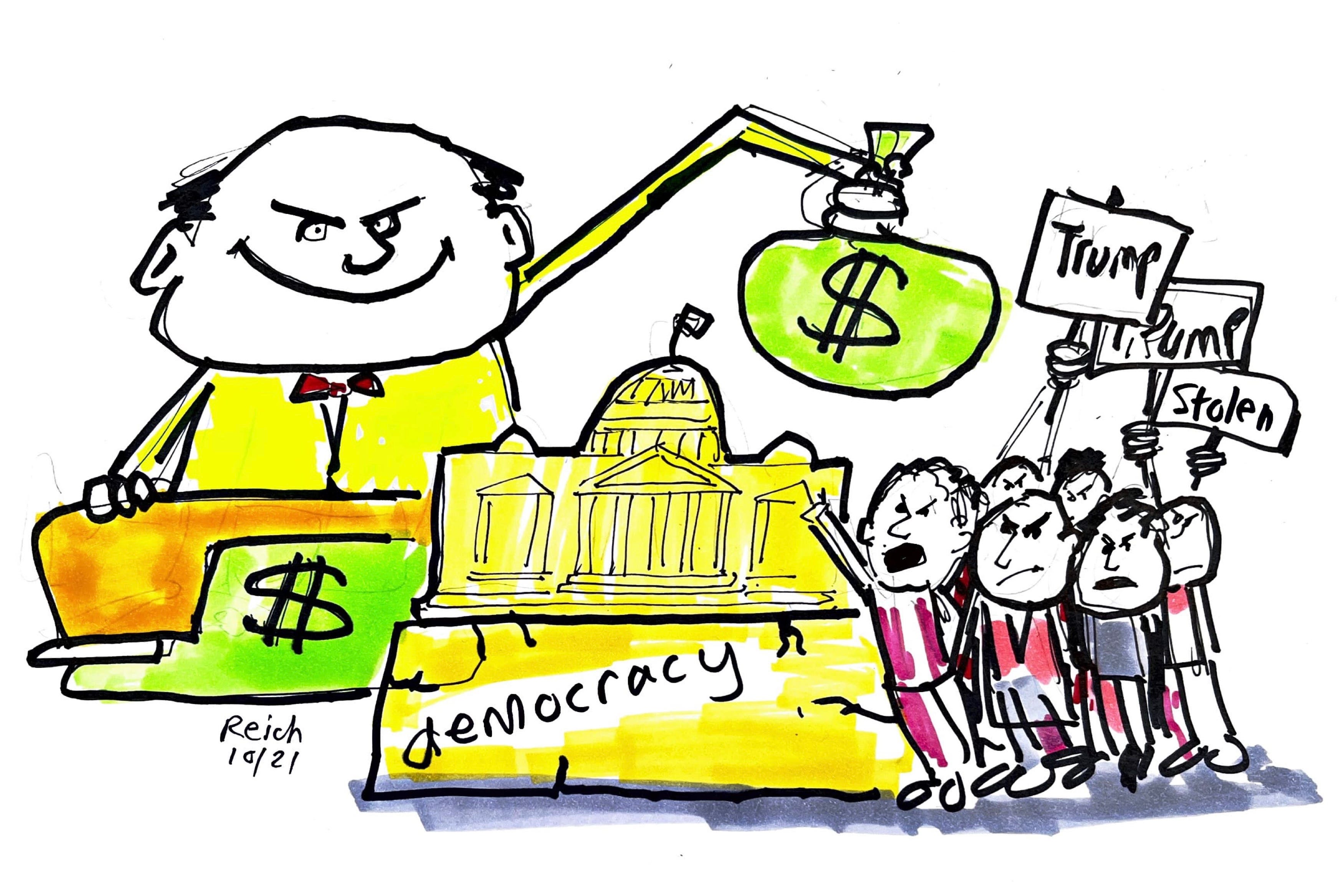
Tomorrow begins Joe Biden’s two-day “Summit for Democracy,” whose avowed goal is to rally the nations of the world against the forces of authoritarianism.Yet some of the authoritarian forces that pose the gravest threat to American democracy (and to other democracies around the world) are homegrown in the U.S. -- such as the former guy’s Big Lie and refusal to concede the 2020 election, his attempted coup, his instigation of the deadly January 6 insurrection, and his open encouragement of Republican state legislatures to suppress votes and take over state electoral machinery. And then, of course, the GOP’s willingness if not eagerness to go along with all this. My newsletter on power, politics, and the real economy is reader supported. Both free and paid subscriptions are available. If you’d like to support this work, please consider a paid subscription. And then there’s Rupert Murdoch’s Fox News and Mark Zuckerberg’s Facebook — both of whose relentless and intentional promulgation of lies and paranoid fantasies have done much to poison the American mind. (Not to be outdone, the former guy is about to launch his own media company, to be headed by Devin Nunes, the crazed pro-Trump California Congressman.) American business groups have been invited to the Summit, despite their nonstop lobbying against proposed voting rights legislation in Congress and their increasing pollution of politics with corporate money.Small wonder that Freedom House’s 2021 Freedom in the World report — which scores countries on a scale of 0 to 100 — has given the United States a score of 83, a major drop from America’s score of 94 just a decade ago.With all this in mind, I thought today’s Office Hours would offer a good opportunity for us to speculate about the future of American democracy. Please answer this question: What will American democracy be like ten years from now unless … [you fill in the blank]?Eager to have your views. As usual, I’ll chime in around 10 am PT, 1 pm ET.***Your comments so far are so thoughtful that you’ve prompted me to jump in earlier than I’d planned. Many thanks for this wonderful forum! First, to summarize points that several of you have made, I see three existential threats to American democracy: (1) Big money, from large corporations and wealthy individuals, that goes into political campaigns and into issue ads. The money is essentially bribing lawmakers. There’s almost no countervailing sources of big money. Labor union contributions don’t come close. (2) Authoritarian, anti-democratic moves by Trump Republicans to rig elections in ways that suppress the votes of likely Democratic voters and give Republican legislators power over election officials – based on the Big Lie that the 2020 election was “stolen,” but really based on the Republican Party’s assessment that demographic trends work against it unless it shrinks the electorate. (3) A media (especially Fox News and Facebook) that lies incessantly to spread outrage, anger, panic, and paranoia in order to boost ratings and revenues. Unless these three threats are contained and reversed, I see little hope for American democracy as we know it. Ten years from now we’ll be an oligarchy. We might still call ourselves a democracy. Hopefully we’ll still maintain the rule of law. But America will a democracy in name only. What can we do? Fortunately, there are four immediate things we can do. But time is wasting. Each can be accomplished now, but each will become harder to achieve in coming months and years as anti-democratic forces gain ground. 1. Get big money out of politics. The Supreme Court is unlikely to reverse its shameful decision in Citizens United vs. FEC and related cases, especially given the current makeup of the Court. And a constitutional amendment allowing government to limit amounts of money spent on campaigns is extremely unlikely. But campaign finance reform is possible, especially reforms that provide matching public dollars for every small donation. Such a reform was in the original “For the People Act.” It can and should be added to the Freedom to Vote Act, now in the Senate. Small versions of it can and should be enacted in your state. 2. Enact the Freedom to Vote Act and the John Lewis Voting Rights Amendment Act. Both are necessary to set national voting rights standards. Both have been passed by the House. Almost every Democrat in the Senate supports them. But because no Republican senator supports them, to be enacted the filibuster must be abolished or at least altered to carve out voting rights. This is where Manchin and Sinema come in. If they fail to join other senate Democrats in this, history will remember them as traitors to the cause of American democracy. 3. Hold Trump and his authoritarian lawmakers accountable for their anti-democratic moves, particularly those that entailed an attempted coup in the months after the 2020 election. Hopefully, the House investigation will reveal the coup in all its disgraceful detail.
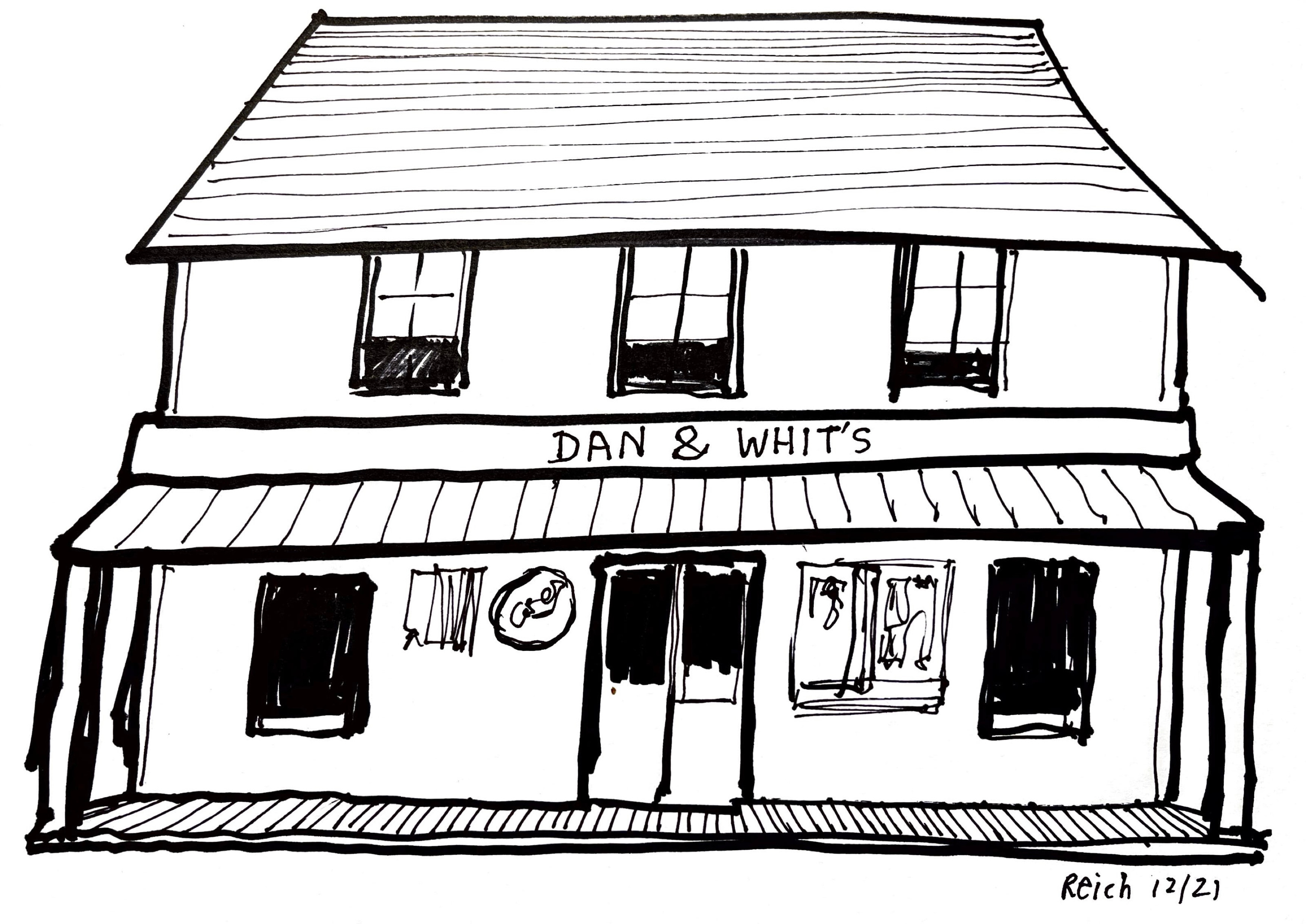
The heart of a community: a small business
I’ve got a special place near my heart for Dan & Whit’s general store in Norwich, Vermont. It was there for me during my undergraduate years in college in nearby Hanover, New Hampshire — often on snowy evenings when I couldn’t get supplies elsewhere. Years later, when my parents moved to Vermont for their retirement, Dan & Whit’s was there for them, too. Like many places around the country, Vermont has been struggling with finding enough workers to fill jobs. But unlike most urban centers, where the obvious answer is to pay workers more, rural towns can’t always count on higher wages to elicit more job applicants because populations are thin and often declining. And unlike profitable national retail chains, mom-and-pop businesses can’t just absorb higher labor costs. And they can’t simply pass them on to customers in higher prices, because small-town customers might not have the ability to pay.So when Dan & Whit’s owner Dan Fraser recently put up a "Help Wanted" sign, the inhabitants of Norwich knew it was bad news. (I never met the younger Dan but I’m sure I met his grandfather, who passed the store on to his father, who passed it on to Dan.) After three generations, Dan would have to close the place down if he didn’t get help. So what was he to do? I heard the rest of the story on the radio. It turned out that Dan didn’t need to do anything. Word went out. Soon, Dan’s customers began applying for the jobs. Rick Ferrell, a local doctor, took on a shift at the register. A retired finance director applied for the deli counter. A nurse, a teacher, a psychology professor, a therapist, a school principal — nearly two dozen customers have stepped up to stock shelves, do the inventory, and clean up the place, so that Dan & Whit’s can remain open. (Virtually all of these new hires are donating their hourly wages to some of Dan’s favorite charities.) I’ve spent a lot of time over the years examining what happens to communities when important businesses close or abandon them — often because some bean counters back in headquarters hundreds or thousands of miles away decide it’s not worth the cost of keeping the businesses going where they are. Economists often praise capitalism’s wondrous “efficiencies” at moving assets to their “highest and best uses.” Well, there’s something to that. But what’s left out of the equation are the social costs of these moves. They can be quite high. Friends, my newsletter on power, politics, and the real economy is reader supported. Both free and paid subscriptions are available. If you’d like to support this work, please consider a paid subscription. Many thanks. When asked why the people of Norwich stepped in to help Dan & Whit’s keep going, employee Dianne Miller said it was "because Dan & Whit's is the heartbeat of this community." Others described it as the "heart of the town." That’s the best quick summary of the social benefits of a place like Dan & Whit’s I’ve ever heard. Communities do have hearts. When businesses at those hearts disappear, more is lost than an economic asset. The community loses a place that allows it to be a community — a place where people meet up, congregate, exchange gossip and information, barter, learn about common problems, sometimes decide to take action. I remember Dan & Whit’s as such a place. I can’t imagine Norwich without it. Luckily, it won’t have to be. But this isn’t just a “feel good” story about one country town coming together to save an iconic general store. It seems to me there’s an important lesson here for all of us, wherever we live. American capitalism is the harshest form of capitalism in all of the world’s advanced economies. It takes almost no account of social costs and benefits. Businesses swoop in and swoop out wherever and however profits can be maximized and losses minimized. But communities are different. They aren’t nearly as footloose as financial capital. They’re built on social capital, which often takes years to accumulate and can’t be cashed in. I think people owe something to businesses that are the hearts of our communities. Maybe we shouldn’t allow big chains or Walmarts to drain our main streets of the commerce they need to survive. (Even if Walmart’s items are cheaper, the social costs of losing the small businesses that undergird our community are often way higher.) Maybe we should donate some of our own time and labor to account for the importance of these core businesses. Maybe those of us who can afford to should buy shares in them, to give them an added financial cushion. At the very least, we owe them our patronage — rather than, say, the Waltons or Jeff Bezos. What do you think? This is a public episode. If you'd like to discuss this with other subscribers or get access to bonus episodes, visit robertreich.substack.com/subscribe
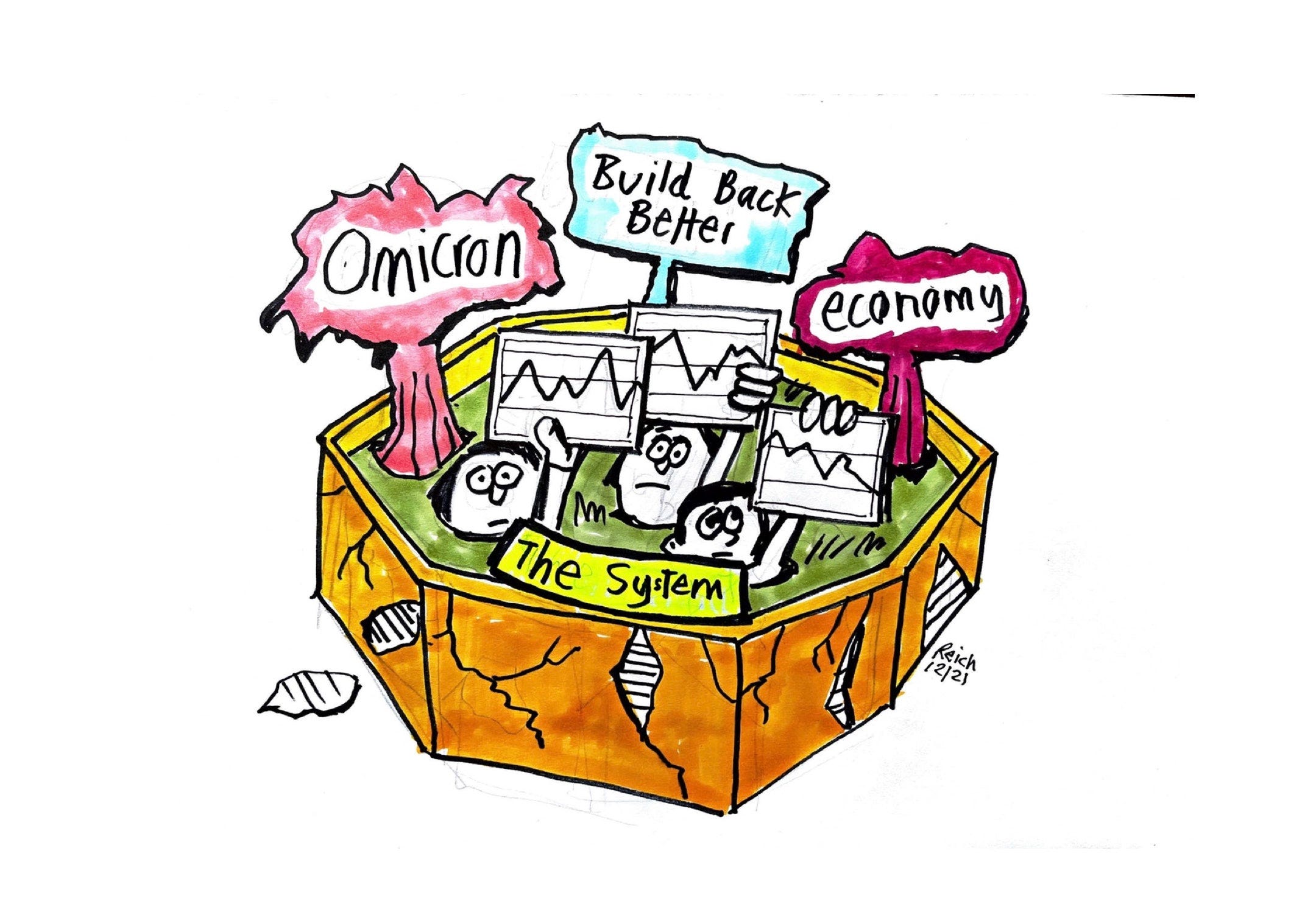
The Week Ahead: A test for the American system
Friends,You will hear lots of reports this week about whether the economy is strengthening or weakening, whether Biden’s “Build Back Better” bill will get fifty votes in the Senate, and whether the Omicron variant of Covid will rapidly spread in the United States. What you will not hear is how closely these three questions are related to each other and to the strength of our system as a whole. Economics, politics, and public health are often treated as separate topics -- each with its own reporters, editors, experts, and analysts. But if we have learned anything over the past 21 months of crisis, it is that these three are intimately connected. In many respects, they suggest we’re at an inflection point similar to the one we were at 21 months ago.It is impossible to know where the economy is heading without knowing where the Omicron variant is heading, because the pandemic continues to dictate economic activity in US and around the world. Omicron is already affecting peoples’ travel plans.It’s impossible to know where the Omicron variant is heading without assessing the strength and agility of our public health system, because that system – from the data collected by the Centers for Disease Control to the responsiveness of states public health officials and local hospitals – will determine how well we contain and survive it, and other variants to come.It’s impossible to assess the strength of our public health system without knowing the capacity of government — including the White House, governors, and our other political institutions — to rise to whatever challenge Omicron may pose, be it getting the public fully vaccinated and tested; getting people to wear masks, quarantine, and take other necessary precautions; tracing their contacts; and creating reasonable incentives for the private sector to develop ever-better vaccines, tests, and means for reducing deaths after infection. The capacity of government depends, in turn, on public trust in our institutions — on social solidarity, on the strength of the fabric of our society. In other words, our wellbeing depends on the capacity of an interlocking economic, public health, and political system. That overall system is especially weak right now because it’s riddled with distrust. Not only are we deeply split as a nation, but many of those with power and wealth have used the last 21 perilous months to siphon off whatever additional power and wealth they could from everyone else -- further eroding trust in all institutions. American large corporations have scored record profits, but instead of lowering prices they’ve been using the specter of inflation to jack up their prices. They’re also using their profits to mount one of history’s biggest lobbing campaigns against Biden’s social and climate policies. And despite promises to the contrary, they’ve resumed funding the 8 senators and 139 representatives who refused to certify Biden’s victory. Meanwhile, billionaire monopolists have increased their wealth by over $2 trillion since February 2020 and are using some of it to fight tooth-and-nail against proposals to increase their taxes (which many have managed to keep at or near zero). Wall Street’s “too-big-to-fail” banks have been using record-low interest rates and the Fed’s indirect subsidies to return to their old gambling ways.Health care has become even less efficient and more costly. Private-equity and hedge funds have used the last 21 months to buy up more hospitals and healthcare facilities, turning them into profit centers (or high-end condominiums). Big Pharma has been using its skyrocketing profits to lobby against allowing Medicare to reduce the prices of prescription drugs. The former director of the Centers for Disease Control accuses Pfizer and Moderna of “war profiteering’’ for refusing to share their technologies.Republican lawmakers have eagerly accepted all corporate bribes, as have many Democratic lawmakers. At the same time, Republican politicians have cowered before Trump’s Big Lie. And rightwing political operatives, editors, broadcasters, and media personalities have used the last 21 months to get richer by exploiting Americans’ fear, uncertainty, and paranoia.All of which have further diminished public trust and weakened the system’s capacity to achieve the common good.The reports you’ll hear this week about the economy, Biden’s “Build Back Better” bill, and the Omicron Variant, will all be slightly beside the point because they don’t address the underlying problem: that our system has become more enfeebled over the last 21 months because it has been exploited for private gain. Which could spell trouble ahead.Wars, depressions, and other national catastrophes sometimes strengthen a society by revealing and fortifying peoples’ common interest, and eliciting common sacrifice. That was America’s experience after the Great Depression and World War II. Yet the crisis we’ve been through since February 2020 seems to have debilitated us as a s
The most important choice ahead
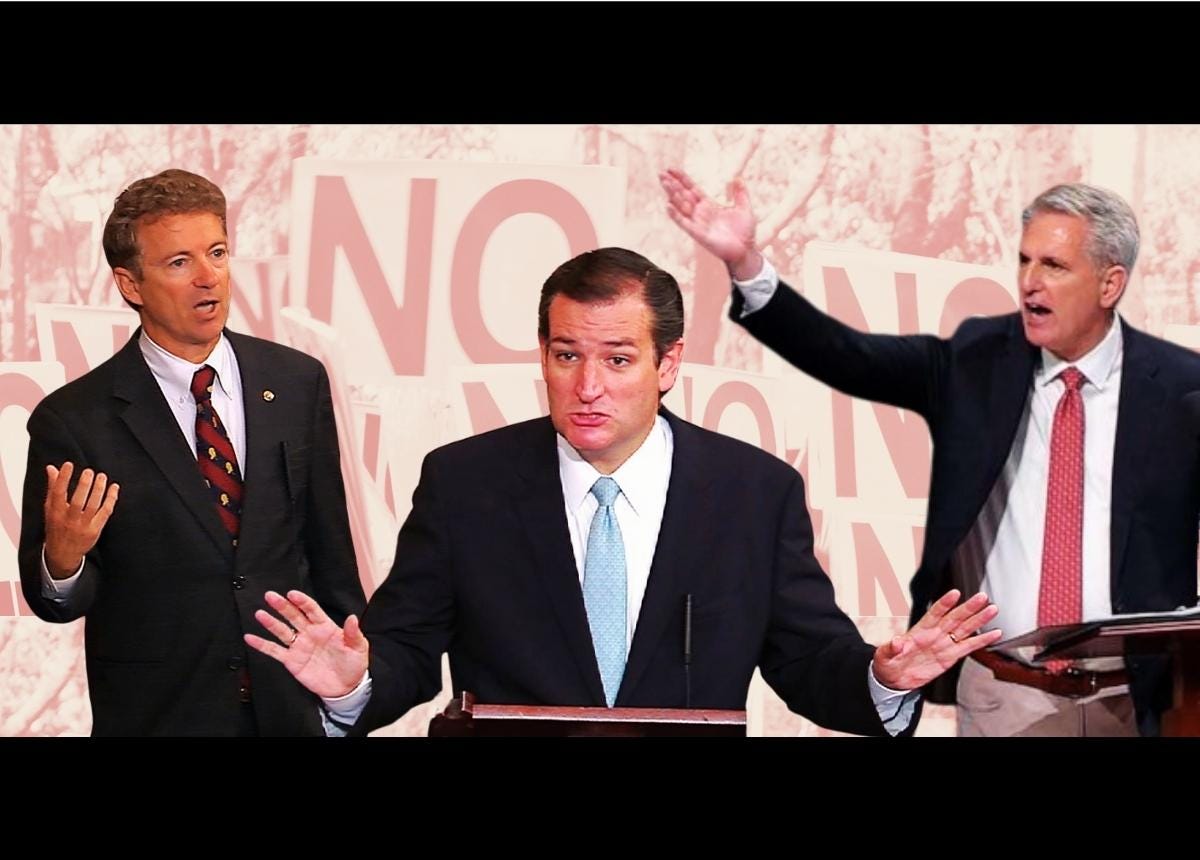
Which of these alternatives sounds more radical to you — abolishing the filibuster to save our democracy, or destroying our democracy to save the filibuster? Make no mistake. This is the choice. And whichever way it goes will be Joe Biden’s most enduring legacy.Not long after Biden assumed the Presidency, Freedom House, a democracy-watchdog group, ranked the state of democracy in the United States below that in Chile, Costa Rica, and Slovakia. Freedom House pointed to the increasing use in the United States of precise gerrymandering, the growing influence of money in American politics, and the continuing disenfranchisement of people of color.Since then, the anti-democratic tide has risen substantially in the United States. Nineteen states have enacted thirty-three laws that make it more difficult for citizens to vote. Several states have replaced nonpartisan election administrators with partisan hacks. In other states, nonpartisan election officials have been threatened and harassed by Trump supporters, causing many to leave their positions. Republican legislatures in states that have begun to swing toward the Democrats, such as North Carolina and Texas, have redrawn electoral maps to disenfranchise communities of color. Legal challenges to the new maps are likely to be unsuccessful, given the increasingly Republican composition of the federal courts.For years, Republican strategists had predicted that any enlargement of the American electorate would work against the election of Republicans. The 2020 election proved them right. Voters turned out in great numbers and sent a Democratic President and a Democratic Congress to Washington. Not surprisingly, Republicans have responded by doing everything in their power to shrink the electorate and make it harder to vote for those they assume will choose Democrats.What will be the nation’s response to this noxious anti-democratic tide? We know there will be a few speeches about America’s commitment to democracy. In the weeks ahead, Joe Biden will be hosting a virtual “Summit for Democracy.” Invitees will represent more than a hundred countries. When he announced the Summit in August, its apparent goal was to reestablish America’s moral authority in the aftermath of Trump’s squalid foreign policy.According to the State Department, the Summit will “aim to show how democracies can deliver on the issues that matter most to people: strengthening accountable governance, expanding economic opportunities, protecting human rights and fundamental freedoms, and enabling lives of dignity.” The State Department goes on to promise that “The U.S. government will announce commitments in areas such as bolstering free and independent media; fighting corruption; defending free and fair elections; strengthening civic capacity; advancing the civic and political leadership of women, girls, and marginalized community members; and harnessing technology for democratic renewal. The United States will also hold itself accountable to these commitments on a global public stage.”But how exactly will the Biden Administration be accountable to those commitments when Republicans at every level are working so hard to undermine them? As Biden said in February, “Democracy doesn’t happen by accident. We have to defend it, fight for it, strengthen it, renew it.”Yet in that fight so far, Biden has been AWOL. He hasn’t used his bully pulpit to inform Americans of the clear and present dangers to democracy now underway. He hasn’t used his administration, including his Justice Department, to push back against the anti-democratic forces. He hasn’t acted forcefully in support of voting rights legislation and against the filibuster. His absence from the fight is fast becoming one of the most glaring omissions of his administration — a moral vacuum that is growing by the day. Last spring, Democrats in the House of Representatives passed H.R. 1, the For the People Act, a set of minimum national election standards intended to eliminate partisan gerrymandering, reduce the influence of money in politics, expand voting rights, and increase election security. But H.R. 1 was stymied in the Senate by Republicans who voted against bringing it to the floor for debate. Senate Republicans also sunk the John R. Lewis Voting Rights Advancement Act, designed to correct the Supreme Court’s 2013 decision in Shelby County v. Holder, that gutted the Voting Rights Act of 1965 and allowed many of the state voter-suppression laws that have been passed since.In September, Democratic senators, led by a group including Amy Klobuchar and Joe Manchin (who says he is committed to preserving the filibuster) presented a new election-related bill, the Freedom to Vote Act. It contains several new provisions to protect election workers, as well as measures in the For the People Act, such as same-day voter registration, a ban on partisan gerrymandering, and a restoration of voting rights to former felons. But in October, Senate Republicans fil
The biggest change during my 50 years in and around American politics
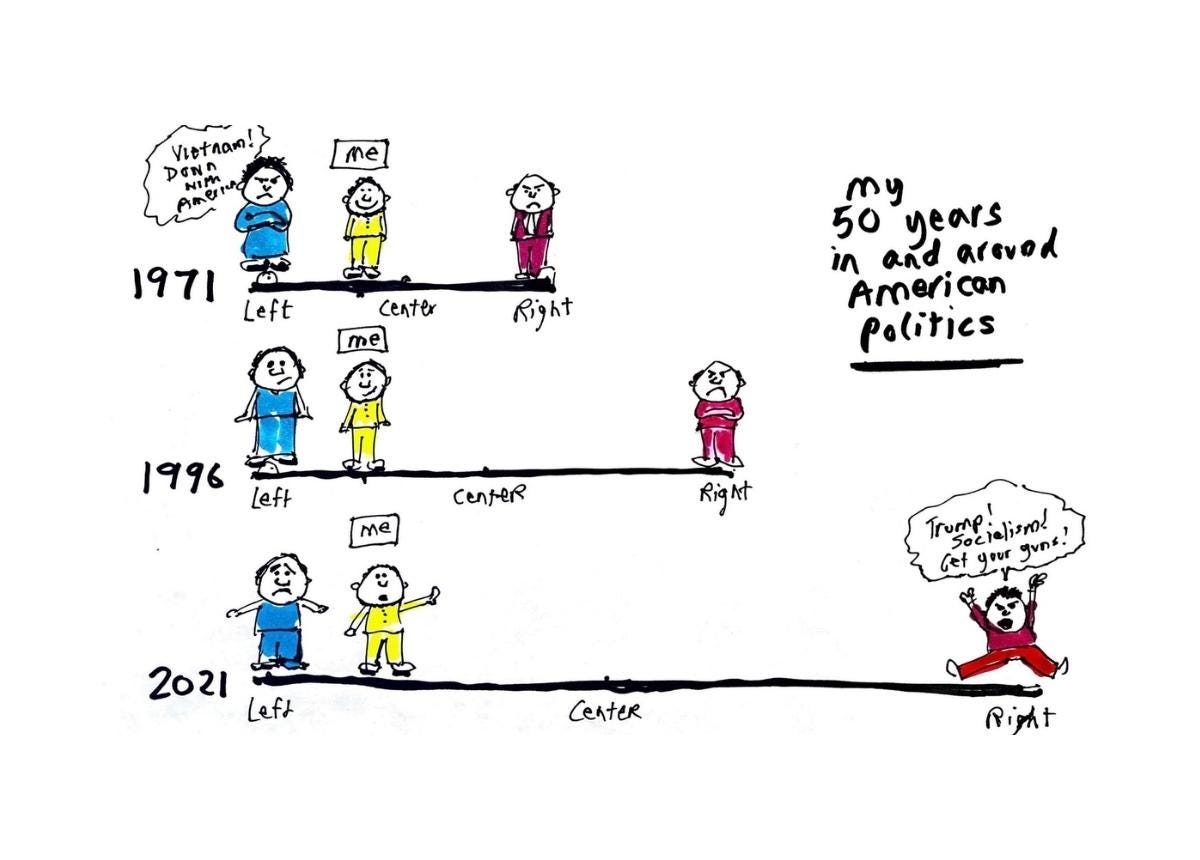
My start in American politics occurred 50 years ago this month, in December 1971, when on winter break from law school I volunteered for the incipient (and ultimately doomed) presidential campaign of George McGovern. My political views then — to grossly simplify them — were that I was against the Vietnam War and the military-industrial complex, strongly supportive of civil rights and voting rights, and against the power of big corporations. At that time, compared with today, the political spectrum running from left to right was short. (See my diagram, just below.) The left was demonstrating against the Vietnam War, sometimes violently. I was committed to ending it through peaceful political means, which was why I supported McGovern. The “right” included liberal Republicans (yes, there really were some) such as Nelson Rockefeller, who would be Gerald Ford’s vice president three years later. The American political spectrum over the last 50 years and my position on it (inspired by a tweet by Colin Wright).Twenty-five years later, I was in Bill Clinton’s cabinet, and the political spectrum from left to right was much longer. The biggest change was how much further right the right had moved — due both to Ronald Reagan and to corporate and Wall Street money bankrolling right-wing candidates and messages. Bill Clinton sought to govern from the “center” (he famously “triangulated”). But the “center” had moved so far right that Clinton ended welfare, cracked down on crime, and deregulated Wall Street. All of which put me further to the left of center — although I had barely changed my political views at all. Which brings me to today, when the spectrum from left to right is the longest it’s been in my 50 years in and around politics. Despite all the howls from the right about “cancel culture” and “woke-ness” on the left, I don’t think the left has moved much from where it was a half-century ago. Nor, frankly, have I. But the right has moved far, far rightward. Donald Trump brought America about as close as we’ve ever come to fascism. He incited an attempted coup against the United States. To this day, he and most of the Republican Party continue to deny that he lost the 2020 election. And they are getting ready to suppress votes and disregard voting outcomes they disagree with. At this rate, I can’t help but wonder where the “center” will be twenty-five years from now. What do you think? This is a public episode. If you'd like to discuss this with other subscribers or get access to bonus episodes, visit robertreich.substack.com/subscribe
A Thanksgiving Toast
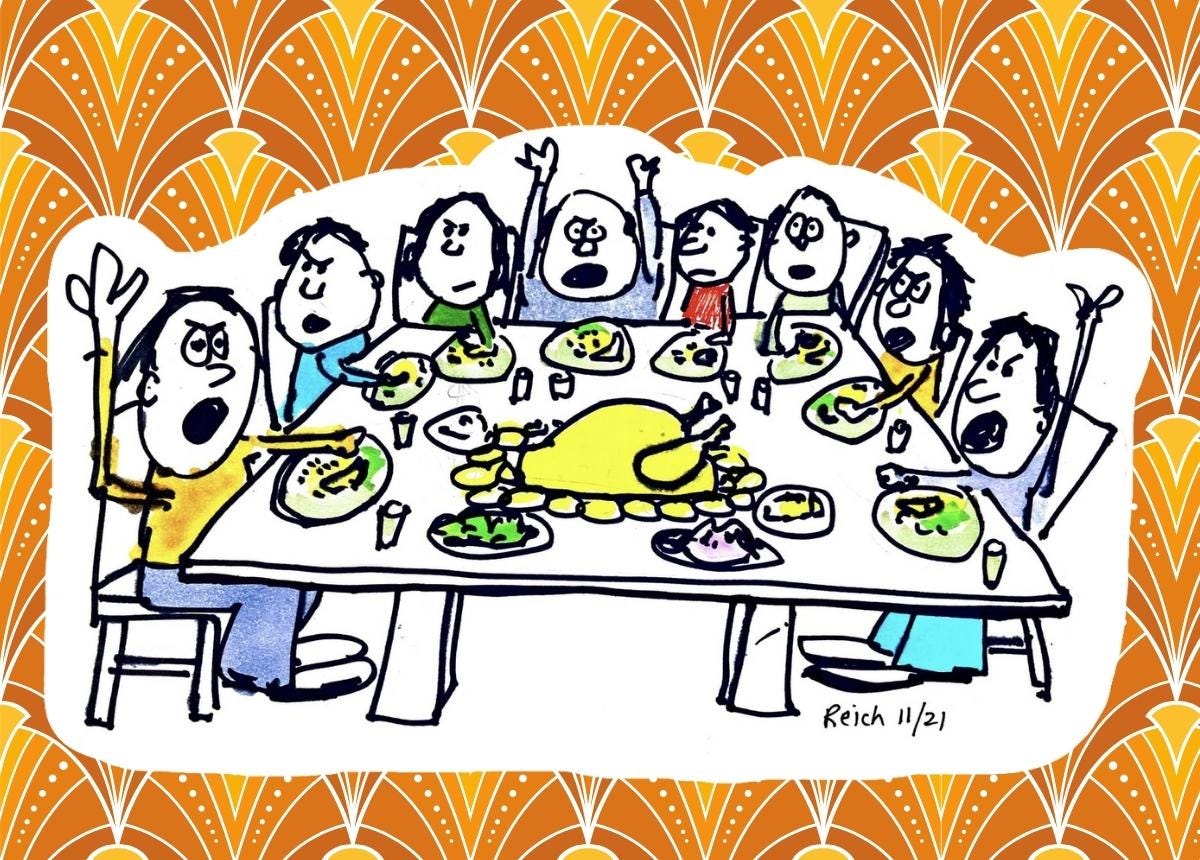
Friends, If your family and friends are anything like mine, there will be lots of talk over turkey dinner. Some of it will be gossip. Some of it will be about sports or jokes or jobs or plans. But a few of your guests (perhaps even you) may want to talk about the distressing state of the nation and the world. Your cousin Sue worries about climate change and how little was accomplished in Glasgow. Your son Jared, back from college, wants to talk about systemic racism. Your Trumpish uncle Bob can’t keep his mouth shut about Biden’s so-called failures in Afghanistan and at the border. Your friend Sid can’t stop worrying about the pandemic, or assault weapons, or hate crimes, or near-record inequality, or the opioid epidemic, or soaring homelessness, or voter suppression. Your daughter Sarah chimes in about the continuing menace of Donald Trump and Republican lawmakers too timid to stand up to him.All are reasons for real concern (except for those of your Trumpish uncle Bob). But I’d hope someone at your table also reminds the gathering that America has gone through very bad times before, and in many ways emerged better.When I graduated from college in 1968, I thought the nation would never recover. Martin Luther King Jr. had been assassinated in April. Robert F. Kennedy was assassinated in June. Our cities were burning. Tens of thousands of young Americans (including several friends) were being ordered to Vietnam to fight an unwinnable and unjust war that ultimately claimed over 58,000 American lives and the lives of over 3 million Vietnamese. The nation was deeply and angrily divided. Later that summer, demonstrators at the Democratic National Convention were met with tear gas. And then in November of that year, Richard Nixon was elected president. But we did recover. We enacted the Environmental Protection Act. Eventually we achieved marriage equality for gays and lesbians. We elected a Black man president of the United States. We passed the Affordable Care Act. In 2018 we elected a record number of women, people of color, and LGBTQ representatives to Congress, including the first Muslim women. Eighteen states raised their minimum wages. In 2020, Trump was sent packing, and Democrats took over the Senate and the House.COVID has been a horror, but Congress created a safety net that prevented millions from falling into deep poverty because of it. More than 70 percent of us are now vaccinated against it. We will soon be investing over $1 trillion repairing our crumbling roads and bridges and creating hundreds of thousands of new jobs. And it seems likely (although far from certain) that American families will get help with childcare and universal pre-K, and more.What about the future? Obviously no one can tell, but there are some reasons for optimism. For one thing, we are on our way toward becoming a nation of startling diversity. Most Americans now under 18 are people of color. In ten years, most under 35 will be. In thirty years, most of us. That diversity will be a huge source of strength — just as our growing diversity has strengthened us since our founding.For another, our young people are determined to make America and the world better. I've been teaching for more than 40 years and I've never taught a generation of students as dedicated to public service and as committed to improving the nation and the world, as the generation I'm now teaching. I should also point out that 60 percent of today’s college students are women, an astounding achievement. It portends more women in leadership positions – in science, politics, education, nonprofits, and in corporate suites. This will also be a great boon to America, and the world.I’m not a technophile but I can’t help being impressed by what science and technology are accomplishing, such as the COVID vaccines that have saved countless lives, and solar and wind energy sources that are rapidly replacing carbon fuels. With the right laws and incentives, science and technology could solve many more of the problems that plague the nation and the world.I don't wish to minimize our current plight. I’m deeply worried about climate change, systemic racism, and growing attacks on our democracy. I’m not going to tell any of my friends or relatives over dinner today that they’re wrong to feel angry or to despair. I have felt my share of anger and despair. But I will remind them of this nation’s resilience, and the many ways the future could be bright. And when we raise our glasses for a toast, I will ask that they never give up the fight for a more just society. Happy Thanksgiving, friends. This is a public episode. If you'd like to discuss this with other subscribers or get access to bonus episodes, visit robertreich.substack.com/subscribe

The Week Ahead: The big split
Official Washington will be quiet this week, but the fallout from the Kyle Rittenhouse verdict will continue to divide America along the Trumpian fault lines of fear, violence, and racism. Closing arguments are scheduled today in the trial of three men charged with the killing of Ahmaud Arbery in Georgia. Though they chased him, they are claiming self-defense because, they say, Arbery tried to get control of a shotgun one of them was carrying. As with the Rittenhouse case, the trial raises questions of how self-defense laws will hold up as guns proliferate. Regardless of how it come out, the case also illustrates America’s deepening split.Congress’s continuing investigation into the January 6 insurrection reveals the same rift, as will the Supreme Court’s expected decision on executive privilege in that investigation, and its likely move to strike down New York State’s law requiring people seeking licenses to carry handguns in public to show a “proper cause,” as violating the Second Amendment.The fault line has now extended into almost every facet of American lawmaking. When the “Build Back Better” bill passed the House late Friday night, 220 out of 221 Democrats voted for it. But all of the House’s 213 Republicans voted against it. Why? The measures in the bill are hugely popular, according to polls. The bill includes the largest expansion of federal child-care assistance in history; free, universal prekindergarten for all American children ages 3 and 4; Medicare benefits covering hearing services; government for the first time being allowed to negotiate some prescription drug prices, aiming to lower the costs that seniors pay for lifesaving medicines such as insulin; and more than $550 billion to combat climate change — promoting greener energy and providing new perks for Americans who buy electric vehicles.But policy popularity may be no match for fear, violence, and racism — which Republicans and the moneyed interests are now diligently exploiting to kill the bill in the Senate. So-called “moderate” Democrats (Senators Joe Manchin and Kyrsten Sinema) have expressed skepticism about its cost and scope. It would be one thing if Manchin’s and Sinema’s reservations were in good faith, but how can they be? Manchin frets about the bill’s effects on inflation even though the bill lowers prices for most Americans of major expenses like childcare, drugs, and healthcare. Sinema says she prefers “legislation that is crafted in a bipartisan way,” but who is she kidding? Mitch McConnell has made clear he won’t allow a single Republican senator to vote for the bill. The votes of every Senate Democrat are needed if the bill is to pass, but Manchin and Sinema are allowing rightwing tropes — and the big money behind them — to divide Democrats. As the New York Times reported yesterday, cash has poured into Manchin’s and Sinema’s political coffers from political action committees and donors linked to Wall Street, Big Pharma, and Big Energy, which have opposed proposals in the bill that Manchin and Sinema helped scale back.The question that keeps haunting me is this: Is an America so deeply divided, and awash in political money that exploits that divide, any longer capable of doing bold things that are broadly popular? The only big thing we continue to do is feed the ravenous military-industrial complex — itself founded on fear, violence, and racism. (Efforts to whip up a new cold war with China conjure up old fears of a “yellow peril.”) Congress is on the verge of giving the Pentagon even more money than the Pentagon and the Biden administration are seeking. The nation’s military tab over the next ten years will be upwards of $8 trillion and is not paid for with expected revenue, in sharp contrast with the $2 trillion cost of the House’s “Build Back America” plan, which would be paid for with tax increases on the wealthy and big corporations.That America is becoming two separate nations is threatening everything we value. The most obvious beneficiaries (besides top executives of big corporations and Wall Street) are Donald Trump, Vladimir Putin, and Rupert Murdoch, who appear to be doing whatever they can to divide us even further.Your thoughts? This is a public episode. If you'd like to discuss this with other subscribers or get access to bonus episodes, visit robertreich.substack.com/subscribe
The BS you're now hearing about how the Democrats can woo back the working class
One of the most important consequences of an election is its effect on conventional wisdom about how the losing political party must change in order to win. After Tuesday’s Democratic loss in the Virginia gubernatorial election and near-loss in New Jersey, I’m hearing a narrative about Democrats’ failure with white working-class voters that worries me because it’s fundamentally wrong.In today’s New York Times, David Leonhardt points out that the working-class, non-college voters who are abandoning the Democratic Party “tend to be more religious, more outwardly patriotic and more culturally conservative than college graduates.” He then quotes fellow Times columnist and pollster Nate Cohn, that “college graduates have instilled increasingly liberal cultural norms while gaining the power to nudge the Democratic Party to the left. Partly as a result, large portions of the party’s traditional working-class base have defected to the Republicans.”Leonhardt adds that these defections have increased over the past decade and suggests that Democratic candidates start listening to working-class voters’ concerns about “crime and political correctness,” their “mixed feelings about immigration and abortion laws,” and their beliefs “in God and in a strong America.”This narrative worries me in two ways. First, if “cultural” messages trump (excuse me) economic ones, why shouldn’t Democrats go all the way and play the same cultural card that Republicans have used for years to inflame the white working class – racism. Make no mistake: Glenn Youngkin’s campaign in Virginia against “critical race theory” – which isn’t even taught in Virginia’s schools – comes out of the same disgraceful dog-whistle tradition.But that’s not the only thing that’s wrong with this new “culture over economics” narrative about how Democrats should woo back the working class. It disregards the shameful reality that the Democratic Party after Ronald Reagan turned its back on the working class.Democrats had control over the White House and both houses of Congress during the first terms of both Bill Clinton and Barack Obama. They scored some important victories, such as the Affordable Care Act and an expanded Earned Income Tax Credit.But both Bill Clinton and Barack Obama ardently pushed for free trade agreements without providing the millions of blue-collar workers who thereby lost their jobs any means of getting new ones that paid at least as well.They stood by as corporations hammered trade unions, the backbone of the working class. Clinton and Obama refused to spend their political capital on reforming labor laws to impose meaningful penalties on companies that violated them or enable workers to form unions with a simple up-or-down votes.Partly as a result, union membership sunk from 22 percent of all workers when Bill Clinton was elected president to fewer than 11 percent today, and the working class lost bargaining leverage to get a better economic deal. The Obama administration protected Wall Street from the consequences of the Street’s gambling addiction through a giant taxpayer-funded bailout but let millions of underwater homeowners drown.Both Clinton and Obama allowed antitrust enforcement to ossify – allowing big corporations to grow far larger and major industries to become more concentrated.Finally, they turned their backs on campaign finance reform. In 2008, Obama was the first presidential nominee since Richard Nixon to reject public financing in his primary and general-election campaigns. He never followed up on his reelection campaign promise to pursue a constitutional amendment overturning Citizens United v. FEC, the 2010 Supreme Court opinion opening the floodgates to big money in politics.What happens when you combine freer trade, shrinking unions, Wall Street bailouts, growing corporate market power, and the abandonment of campaign finance reform? You shift political and economic power to the wealthy and you shaft the working class.Adjusted for inflation, American workers today are earning almost as little as they did thirty years ago, when the American economy was a third its present size.What’s happened to Biden’s agenda for working people – including lower prescription drug prices, paid family leave, and free community college? All have been scrapped. Much of the rest of his agenda is endangered. Why? Because of the power of big money. Big Pharma blocked prescription drug reform. A handful of Democratic senators backed by big money refused to support paid family leave. And so on.Nothing in politics is ever final. Democrats could still win back the white working class – putting together a huge coalition of the working class and poor, of whites, blacks, and Latinos, of everyone who has been shafted by the huge shift in wealth and power to the top. This would give Democrats the political clout to restructure the economy – rather than merely enact palliatives that paper over the increasing concentration of wealth and power in America.

The Week Ahead: Power politics in Glasgow, Virginia, and Washington
If you want to know what’s really going on, don’t pay attention to political speeches or news headlines. Look instead at any underlying reallocation of power — who’s gaining power and who’s losing it — and ponder what these changes mean for the future. Consider, for example, three big upcoming stories this week: The Glasgow climate summit will generate lots of verbiage. But the real question is whether Biden can convince other nations’ political leaders they can trust the United States to do its part. This will be a huge task given Trump’s abandonment of the Paris climate accord, Joe Manchin’s (and oil and coal companies’) recent influence whittling back Biden’s climate agenda, and Friday’s decision by the Supreme Court to hear a case brought by coal companies and 18 Republican-led states to rein in the power of the Environmental Protection Agency to regulate carbon emissions. As to this last point, foreign leaders will note that although the Biden administration had asked the court to delay hearing the case until the EPA finished crafting new carbon emission guidelines, the court rejected the request and decided to hear it anyway. So what does this tell us about the real allocation of power in America as it affects climate change? That power still lies with coal (and oil). Hopefully, this will change, but only if we keep pressure on lawmakers and corporations to move toward a green economy. (Maybe we should also threaten to increase the number of seats on the current retrograde Supreme Court, but that’s a discussion for another day.)Tuesday’s Virginia gubernatorial election is being called a “bellwether” for the midterms. That’s simplistic. Almost no one outside Virginia and Washington, D.C. cares whether Democrat Terry McAuliffe or Republican Glenn Youngkin prevails. Its real significance lies in its effects on two groups of people who will have disproportionate power over the midterm elections: (1) campaign advisors for midterm candidates, especially in “purple” states, who are watching to see whether McAuliffe’s attempts to tie Youngkin to Trump are more effective than Youngkin’s attempts to tie McAuliffe to Biden, and will tailor their messages accordingly; and (2) corporate political operatives, who will channel somewhat more money to Republican candidates in the midterms if Youngkin wins and vice versa if McAuliffe is victorious. (Note that they channeled record amounts of money to Biden and Democrats in the 2020 general election relative to Trump and the GOP, so they’re almost inevitably recalibrating anyway.) A power shift? Too early to tell, but keep your eyes fixed on the message machines in both parties. And keep following the big money. Biden’s social-climate package is the third issue I’m watching this week. The media has fashioned this as a showdown between progressive Democrats and moderates. Rubbish. It’s Joe Manchin and Kyrsten Sinema versus every other Democratic senator and most House Democrats. What’s the endgame? Democrats will come to some agreement — if not this week then soon — because the political costs of failing to do so are just too high given next year’s the midterm elections. But the final result will almost certainly disappoint the progressive wing of the party, which will have to accept far less than it wanted. What does this mean for power in the Democratic Party? The danger is that progressives — who have emerged as the most activist part of party — could feel discouraged from making as strong a grass-roots effort in 2022 as they did in 2020, weakening the Party’s prospects while strengthening the hand of the establishment wing (CEOs, big-money operatives, and the wealthy). What will Biden do to avoid this? He could try making it up to progressives by pushing mightily for voting rights. But to do this, he’ll need to get all Democratic senators to agree to carve out voting rights from the filibuster. Once again, Manchin and Sinema will be critical. Hope you find this helpful. This is a public episode. If you'd like to discuss this with other subscribers or get access to bonus episodes, visit robertreich.substack.com/subscribe

Resilience
I often tell my students that if they strive to achieve full and meaningful lives they should expect failures and disappointments. We learn to walk by falling down again and again. We learn to ride a bicycle by crashing into things. We learn to make good friends by being disappointed in friendship. Failure and disappointment are necessary prerequisites to growth. The real test of character comes after failures and disappointments. It is resilience — how easily you take failures, what you learn from them, how you bounce back. This is a hard lesson to learn for high-achievers who are used to jumping over every hoop put in front of them. It’s also a hard lesson for people who haven’t had all the support and love they might have needed when growing up. In fact, it’s a hard lesson for almost everyone in a culture such as ours that worships success and is embarrassed by failure, and is inherently impatient.Why am I telling you this now? Because we have gone through a few very difficult years — Donald Trump’s racist nationalism and his attacks on our democracy, a painful reckoning with systemic racism, angry political divisions, a deadly pandemic accompanied by a recession, and climate hazards such as floods and wildfires. We assumed everything would be fine again once these were behind us. But we now find ourselves in a disorienting limbo. There is no clearly-demarcated “behind us.” The pandemic still lurks. The economy is still worrisome. Americans continue to be deeply angry with each other. Trump and other insurrectionists have not yet been brought to justice. Democracy is still threatened. And Biden and the Democrats have been unable to achieve the scale of changes many of us wanted and expected. If you’re not at least a bit disappointed, you’re not human. To some of you, it feels like America is failing. But bear with me. I’ve learned a few things in my half-century in and around politics, and my many years teaching young people. One is that things often look worse than they really are. The media (including social media) sells subscriptions and advertising with stories that generate anger and disappointment. The same goes for the views of pundits and commentators: Pessimists always appear wiser than optimists. Another thing I’ve learned is that expectations for a new president and administration are always much higher than they can possibly deliver. Our political system was designed to make it difficult to get much done, at least in the short run. So the elation that comes with the election of someone we admire almost inevitably gives way to disappointment. A third thing: In addition to normal political constraints, positive social change comes painfully slowly. It can take years, decades, sometimes a century or longer for a society to become more inclusive, more just, more democratic, more aware of its shortcomings and more determined to remedy them. And such positive changes are often punctuated by lurches backward. I believe in progress because I’ve seen so much of it in my lifetime, but I’m also aware of the regressive forces that constantly threaten it. The lesson here is tenacity — playing the long game.Which brings me back to resilience. We have been through a difficult time. We wanted and expected it to be over — challenges overcome, perpetrators brought to justice, pandemic ended, nation healed, politics transformed. But none of it is over. The larger goals we are fighting for continue to elude us. Yet we must continue the fight. If we allow ourselves to fall into fatalism, or wallow in disappointment, or become resigned to what is rather than what should be, we will lose the long game. The greatest enemy of positive social change is cynicism about what can be changed. This is a public episode. If you'd like to discuss this with other subscribers or get access to bonus episodes, visit robertreich.substack.com/subscribe
America's real moral crisis
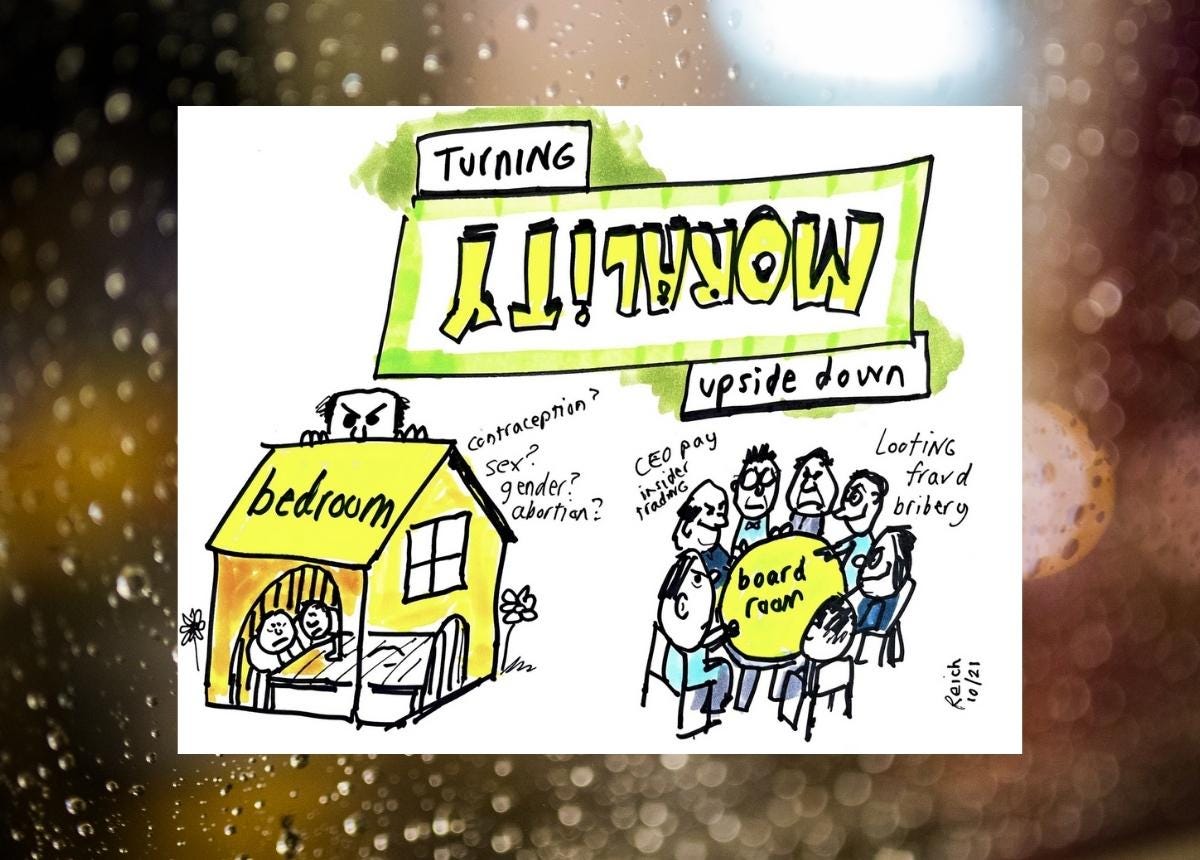
Friends,At a time when the six Republican appointees on the Supreme Court — prodded by Texas, Mississippi, and several other red states — seem ready to reverse Roe v. Wade, it’s important to see the even larger context of what’s at stake. For years, rightwing Republicans have focused their ire on private morality – on the most intimate aspects of peoples’ lives — including abortion, contraception, gay marriage, and which bathrooms and sports teams trans young people choose.But the real moral crisis in America today has nothing to do with private morality. The real crisis involves public morality. Consider, for example:— Several Republican members of the House of Representatives appear to have helped plan the January 6 insurrection. — Top executives of Facebook have knowingly fomented divisiveness and hate in order to sell more ads.— Top executives of Big Pharma are buying off lawmakers to prevent Medicare from using its bargaining leverage to get lower drug prices for all Americans. — Most Republican lawmakers continue to put their party and their careers ahead of American democracy by accepting Donald Trump’s baseless claim that the 2020 presidential election was stolen from him.— A handful of extraordinarily wealthy people are spending unprecedented sums bribing legislators to stop their taxes from increasing and preserve their tax loopholes. They’re also parking their money in secret tax havens.— State lawmakers are passing laws to suppress the votes of likely Democratic voters, and forbidding teachers to tell their students about America’s history of racism.— CEOs of large corporations who now earn 300 times the wages of average workers (up from 60 times forty years ago) are refusing to raise the wages or benefits of hourly workers (whose pay has barely increased in four decades, adjusted for inflation). Meanwhile, they’re off-loading jobs onto so-called “independent contractors” who are cheaper because they get no labor protections. They’re also bribing legislators to give them and their corporations special favors and tax breaks.If these don’t spell a moral crisis, I don’t know what does.I understand why some of you may be reluctant to talk about morality. The right has hijacked the term. And the subject seems uncomfortably close to matters of personal faith and religion. Private moral choices are matters of personal faith and religion — and should stay that way. But public morality is entirely different. I urge you to speak out about it, make a ruckus about it, and loudly condemn corporate executives, Wall Street bankers, and lawmakers who are defying the common good. Take morality back from the radical right — in a way that’s profoundly relevant to the challenges we face today. America’s real moral crisis has nothing to do with people deciding to end their pregnancies, or consenting adults choosing to use contraceptives, or trans young people choosing one bathroom or sports team over another. It has to do with the actions of people in boardrooms and legislative cloakrooms, and the failures of so many who occupy positions of power and public trust to honor the public good. What do you think? This is a public episode. If you'd like to discuss this with other subscribers or get access to bonus episodes, visit robertreich.substack.com/subscribe
The Week Ahead: Crunch time
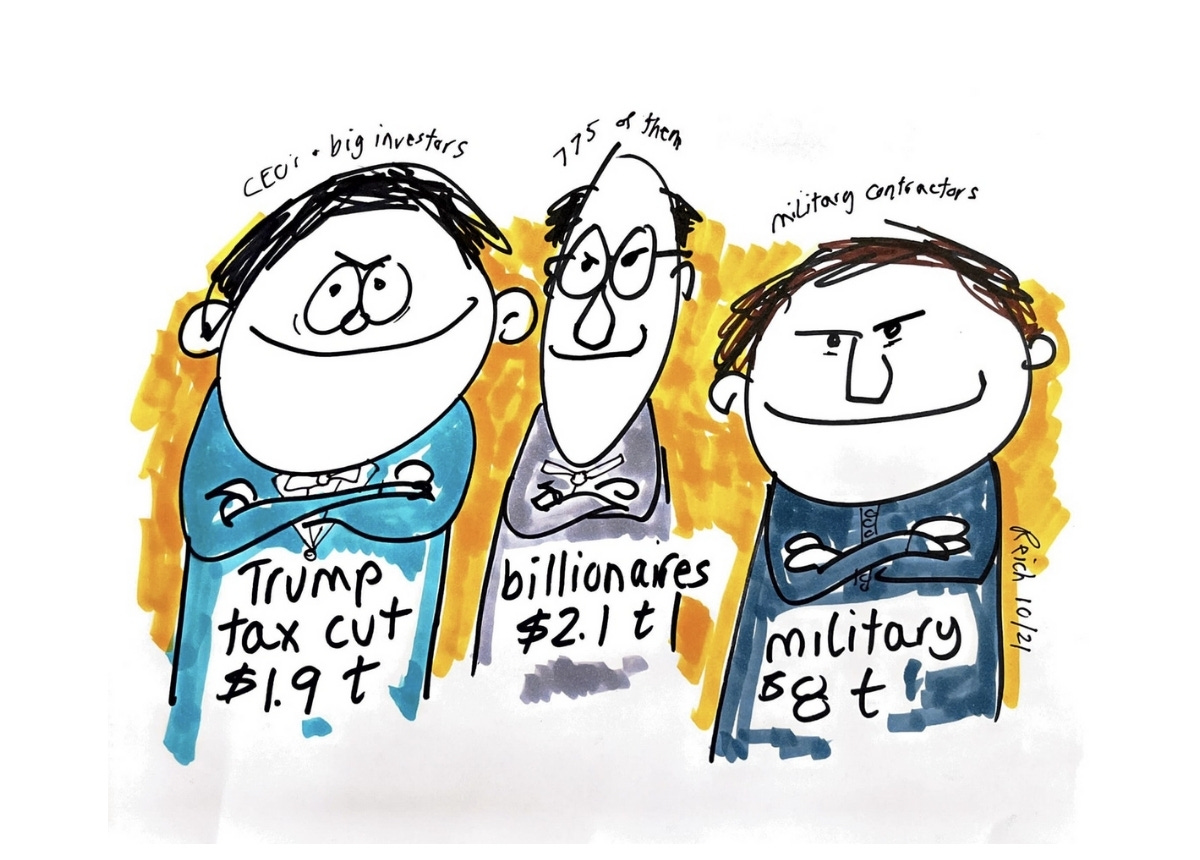
Friends, This week, Democrats either reach agreement on Biden’s social and climate agenda or the agenda may shrink into meaninglessness. The climate measures in particular need to be settled before Biden heads to Scotland for the U.N. climate summit this weekend, so other nations will see our commitment to reduce carbon emissions. Yesterday, Biden met with key Democrats to work out spending and tax provisions. Yet as far as I know, every senate Republican and at least two senate Democrats continue to assert that Biden’s agenda is too costly. This is insane. Compare its current compromise tab of $2 trillion (spread out over the next 10 years) with:--- The $1.9 trillion Trump Republican tax cut that went mostly to the wealthy and large corporations. Americans were promised that its benefits would “trickle down” to average workers. They didn’t. Corporations used them to finance more stock buybacks. The wealthy used them to buy more shares of stock (and shares of private-equity and hedge funds). Clearly, the Trump Republican tax cut should be repealed to pay for Biden’s social and climate package. But no senate Republican will vote for its repeal, nor will Arizona’s Kyrsten Sinema (not coincidentally, recipient of huge amounts of corporate campaign cash).--- The $2.1 trillion that America’s 775 billionaires have raked in just since the start of the pandemic. You’d think that at least a portion of this gigantic sum should help pay for Biden’s agenda since much of it has been the result of monopoly power (eg, Amazon). Kudos to Oregon Senator Ron Wyden, chair of the Senate Finance Committee, for proposing a “billionaires’ tax” (to be paid by people with $1 billion in assets or $100 million in income for three consecutive years). If Sinema has any principles, she’ll support it. --- The nearly $8 trillion we’ll be spending on the military over the next 10 years. The United States already spends more on our military than the next ten biggest military spenders in the world combined. Talk about bloat and waste: That military budget includes eighty-five F-35 fighters costing a total of $1.5 trillion. The F-35 is so plagued with problems that the current chairman of House Armed Service Committee calls it a “rathole,” and the Pentagon’s own official who’s responsible for the acquisition of weapons systems says spending more on it is “acquisition malpractice.” But you don’t hear about this in the media because Democrats routinely join Republicans to vote for bloated military budgets (181 House Dems approved this year’s authorization just last month) — and the media only reports controversy.Yet senate Republicans, along with Sinema and West Virginia’s Joe Manchin, say we can’t afford to spend what’s needed for childcare, education, or paid leave, and we can’t afford to reduce climate change? My friends, this is truly nuts. Please let me have your views: What do you think will happen to Biden’s social and climate agenda? And what do you think the consequences will be? This is a public episode. If you'd like to discuss this with other subscribers or get access to bonus episodes, visit robertreich.substack.com/subscribe

What makes me optimistic about the future?
What’s the single most important thing that keeps me optimistic about the future? To put it simply: my students. I’ve been teaching on and off for the last forty years. Teaching is one of the most gratifying and joyful professions I can imagine. And in all my years of teaching I’ve never taught a generation of students more diverse, more intelligent, and more committed to the public good than the generation I’m now teaching. This isn’t just at Berkeley. In the years leading up to the pandemic I often guest lectured around the country, typically at colleges known as “conservative” (in fact, I’ve made it a practice of accepting invitations from universities in red states). And you know what? I’ve found the same qualities in those students I’ve found in my students at Berkeley. Not only are there more students of color. Also more women (today, 60 percent of undergraduates are women!). More who are the first in their families to attend college. And a profound sense that they want to improve the nation and the world. I consider myself privileged because I find it impossible to be downbeat or pessimistic about what’s to come because of these young people. They know they’ll be inheriting huge problems – structural racism, widening inequality, threats to democracy, public health crises, deep distrust toward all institutions. But they are determined to remedy them. Not all, mind you. But even if a small percentage dedicate their lives to improving our society and healing the world, they will make a stunning difference.May I ask: What makes you optimistic about the future? This is a public episode. If you'd like to discuss this with other subscribers or get access to bonus episodes, visit robertreich.substack.com/subscribe
The two biggest challenges to our democracy
This is a public episode. If you'd like to discuss this with other subscribers or get access to bonus episodes, visit robertreich.substack.com/subscribe

The Great Re-evaluation
Let me share with you in this short podcast some of the things I’ve heard from people in the last few months, which may suggest the first stirrings of fundamental social change. Very interested in your reactions. This is a public episode. If you'd like to discuss this with other subscribers or get access to bonus episodes, visit robertreich.substack.com/subscribe
Personal History: Is it possible for Democrats and Republicans in Washington to be close friends?
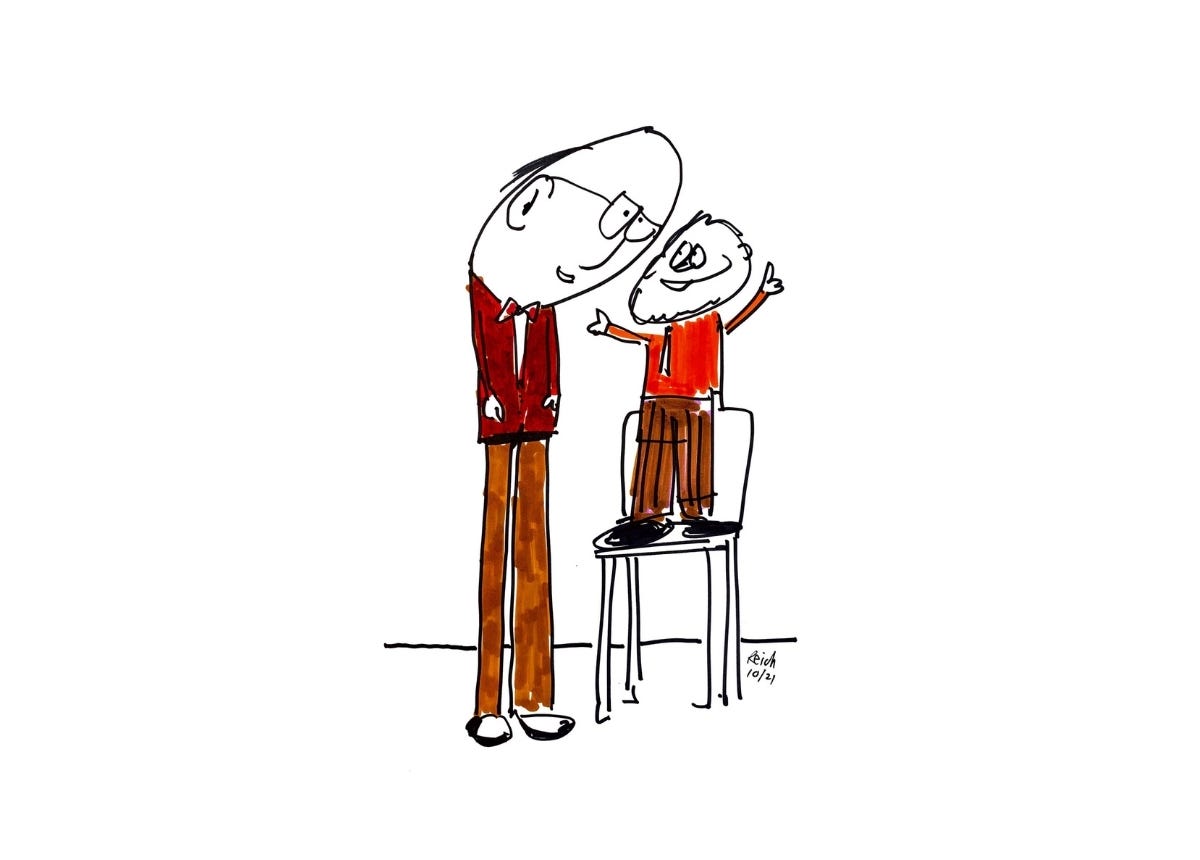
This morning I phoned my old friend Alan Simpson, the former Wyoming senator.Alan and I see eye-to-eye on nothing. He’s a conservative Republican, I’m a progressive Democrat. He’s a fiscal hawk, I don’t worry about the national debt. He thinks Biden has gone too far, I don’t think he’s gone far enough.We don’t see eye-to-eye literally, either. He’s 6 foot 7 and I’m 4 feet 11.But here’s the thing: I love the guy.We struck up a friendship during my years as Secretary of Labor. It began at one of those interminable Washington receptions. He introduced himself and began to talk, but the crowd was so noisy -- and he’s so tall -- I couldn’t hear a word. So I stood on a chair, where our heads were about level.We soon discovered we had one big thing in common: our senses of humor. I found him hilarious. Apparently the feeling was mutual.We planned to get together for lunch, but my staff at the Labor Department was against it. “You haven’t had lunch with most Democratic senators. If you have lunch with Simpson they’ll be insulted,” they warned.His staff was against our lunch, too (he later told me). They said it was inappropriate for a senior Republican senator from one of the most conservative states in America to have lunch with the most liberal member of Clinton’s cabinet. “Your constituents in Wyoming will have a fit,” they warned.So we snuck out for lunch. Neither of our staffs knew where we’d gone. It was the start of a beautiful relationship.This morning we talked about our families and traded a few amusing anecdotes, as we usually do. We also talked about what’s happened to American politics. “They hate each other,” he said, of the current crop of Democrats and Republicans in Washington. Simpson is 90 years old now, but his mind is as sharp as ever. He reminded me that we briefly did a television show together on WGBH in Boston, where we discussed the issues of the week — mixing humor and politics. The show never got much of a following but we had a wonderful time. We called it “The Long and the Short of It.” This is a public episode. If you'd like to discuss this with other subscribers or get access to bonus episodes, visit robertreich.substack.com/subscribe
The Week Ahead: Two high-stakes games of chicken
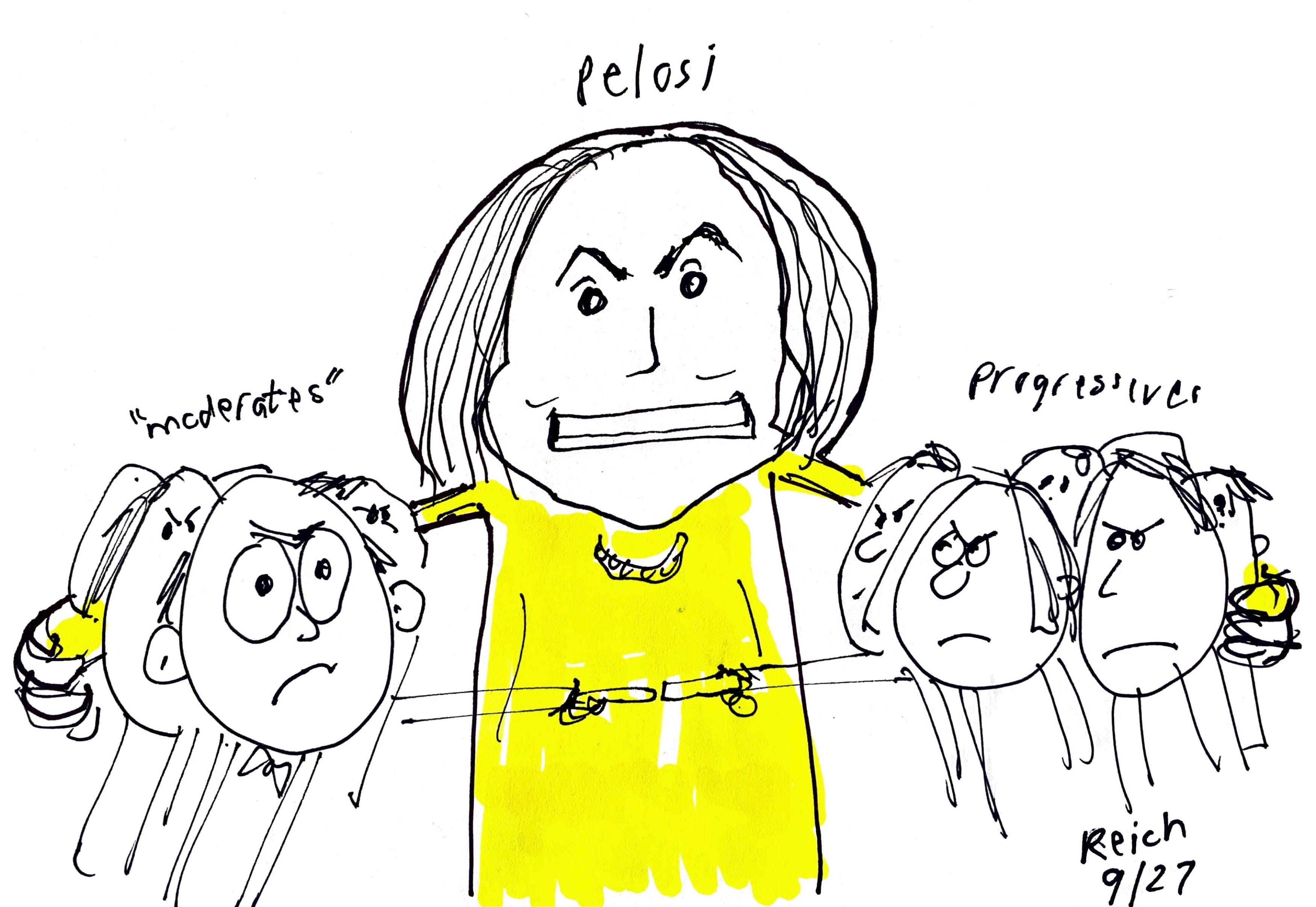
This week, we’re going to witness two high-stakes games of chicken. 1. The first game will be between Senate Democrats and Senate Republicans over raising the debt ceiling and extending funding the government beyond Thursday. These two issues are really quite different: Funding is the more immediate need because if no agreement is reached by Thursday night, the government will shut down. The debt ceiling doesn’t have to be raised until the Treasury runs out of money to pay the government’s bills, which won’t happen until mid or late October. As I said last week, raising the debt ceiling is about paying for spending that’s already occurred. A higher debt ceiling doesn’t authorize new federal spending; it’s about past spending. Raising it simply allows the government to pay its bills. Failure to raise it by the time the Treasury runs out of money would mean a cataclysmic default by the United States, which has never happened before. On the other hand, funding the government is about future spending, starting Friday. Without new funding authority, the government can’t spend a dime. This will result in a shutdown. We have been through several in recent memory (I was in two of them when I ran a cabinet department, and I can tell you they aren’t pretty). Some Americans don’t get the services they depend on. Government workers don’t get the paychecks they depend on. Oh, and there’s a political cost. Generally speaking, the party that voters blame for causing a shutdown is penalized in the next election. (Remember Newt Gingrich?)So what’s behind this first game of chicken? Republicans don’t want to be seen raising the debt ceiling because they want to run in next year’s midterm elections on “fiscal prudence.” (Ironic note: most of the debt piled up since the debt ceiling was last raised came from Trump and Republican lawmakers). And 99 percent of the public mistakenly believes the debt ceiling is about future spending.Which is exactly why Democrats would rather collapse the two issues together, thereby forcing Republicans into the awkward position of either voting to raise the debt ceiling or causing the government to shut down. The House has already bound the two issues together by passing a bill to fund the government through early December that includes an increase in the debt ceiling (as well as disaster relief).In this game, Senate Democrats are daring Republicans to publicly vote against the combined bill – and thereby cause a shutdown. (If Republicans refuse, the only way to avoid a shutdown is for Nancy Pelosi and House Democrats to quickly pass a new resolution without the debt-ceiling provision -- which Senate Republicans have said they’ll sign.)In the meantime – to increase the pressure -- the Office of Management and Budget has given federal agencies instructions for what to do in case of a shutdown.2. The second high-stakes game of chicken this week is between Democrats in the House: between progressives and so-called “moderates.”House Speaker Nancy Pelosi, you may recall, promised that the two giant bills now moving through Congress would be voted on together in the House – the $1.2 trillion infrastructure bill that’s already passed the Senate, and the $3.5 trillion “Build Back Better” plan containing the rest of Biden’s agenda (which can only get through the Senate as a “reconciliation” bill requiring a bare majority). She promised this because House progressives refused to vote for the infrastructure bill without a simultaneous vote on the larger bill, out of fear that moderates would approve infrastructure but then balk at the rest. Yet to be responsive to House moderates, she promised a vote on infrastructure by September 27. (She has now scheduled the vote for Thursday.)The problem, of course, is she can’t deliver on both promises because the $3.5 trillion Build Back Better plan isn’t ready. Yet if Pelosi follows through and schedules a vote on infrastructure without Build Back Better, progressives are threatening to vote against the infrastructure bill — which could kill the infrastructure bill because Democrats have a small 3-vote lead over Republicans in the House, and it’s unlikely Republicans will vote for the bill.But unless Pelosi schedules a vote on infrastructure today (or very soon), roughly a dozen House moderates are threatening to vote against the bigger Build Back Better bill when it comes up.Oy. Here’s the bottom line: Neither of these games of chicken would be as fraught if Democrats were united. But even though they hold narrow majorities in both the House and Senate, they aren’t united. They’re less unified than Republicans. Mitch McConnell and Kevin McCarthy (Senate and House Republican leaders, respectively) simply snap their fingers, and Republicans get in line. But Chuck Schumer and Nancy Pelosi (the Democratic leaders) snap their fingers and Democrats go their separate ways. Biden snaps his fingers and congressional Democrats politely yawn.Why this asymmetry? I suspect it’s
Thanks for joining me
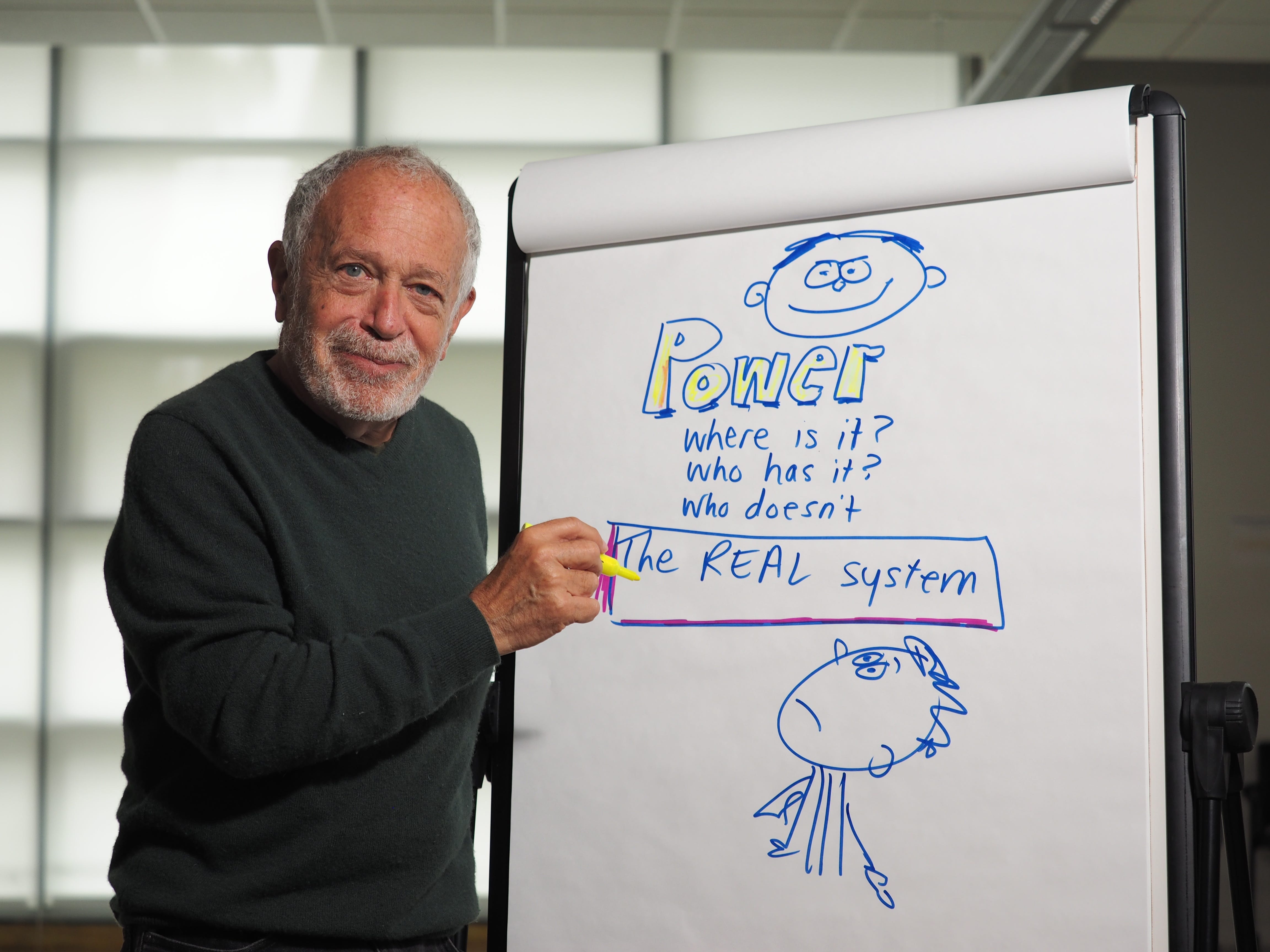
My first week of writing (and drawing) this letter has been everything I hoped it would be, largely because of you. Thank you for joining me in this experiment (and it is an experiment because I’ve never tried anything like it before). I hope you will find it useful — as well as interesting and occasionally even amusing. It’s no secret the past year has been long and grueling. Although I’ve been luckier than most, I’ve felt the same stresses many of you have felt (including some sleepless nights and moments of acute fear). The former guy is no longer in the Oval Office and the worst of the pandemic seems behind us (hopefully), yet the dark forces of authoritarianism and white supremacy are still very much with us, as are growing inequality and corruption. Obviously, there’s no simple remedy. But surely part of the answer is to grow a community of people committed to spreading the truth and contributing to a better world. Which is why I’m here and presumably why you are.But rather than make assumptions, please tell me about yourself. What brings you here? This is a public episode. If you'd like to discuss this with other subscribers or get access to bonus episodes, visit robertreich.substack.com/subscribe