
The Biblio File hosted by Nigel Beale
598 episodes — Page 9 of 12
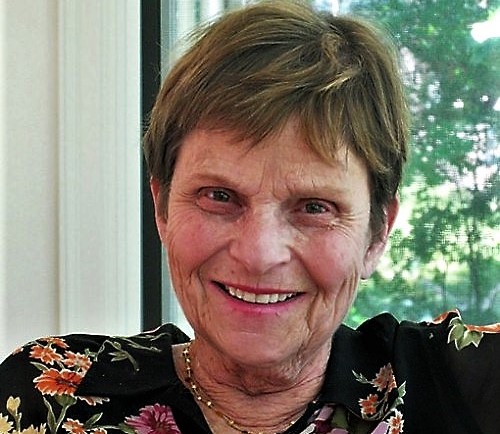
Founder Emilie Buchwald on Milkweed Editions
Founded in Minnesota in 1980 by Emilie Buchwald and R.W. Scholes, Milkweed Editions is one of America's leading independent, nonprofit literary publishers, releasing between fifteen and twenty new books each year in fiction, nonfiction, poetry, and children's literature. Much of its nonfiction is addresses critical environmental issues and works to expand ecological consciousness. Milkweed's authors come from Minnesota and around the world. Today more than one million Milkweed books are in circulation. Collectively they have received more than 190 awards and special designations, including the Los Angeles Times Book Prize for Poetry, two American Book Awards, the Liberatur Prize for Fiction, seven New York Times Book Review Notable Books of the Year, and ten Minnesota Book Awards. Milkweed's mission, which combines an emphasis on the literary arts with a concern for the fabric of society, leads it to be active in the Minneapolis community in ways that demonstrate the social relevance of literary writing. I met with co-founder Emilie Buchwald to talk about the history of Milkweed, and how interested parties might go about collecting its books.

Randy Bachman on collecting guitars, vinyl, and books
Hard not to like Randy Bachman. He's smart, friendly, interested, passionate...and a collector. Why a collector? Because in 1976 his favourite guitar was stolen from a Toronto hotel room, and he wanted to get it back. What? A late-1950s orange Gretsch guitar, the Chet Atkins model.Bachman used it -- "my first real professional guitar" -- on the Guess Who hit Shakin' All Over, and later for Bachman-Turner Overdrive's Takin' Care of Business. He has yet to find it. Not all was lost however. Thirty years of hunting, on and off line, through music stores, pawn shops, websites and garage sales resulted in the world's largest and finest collection of Gretsch electric guitars. This trove of roughly 380 instruments was sold to the Gretsch company several years ago for its museum in Savannah, Ga. I met with Bachman in Ottawa - he was here to promote his new book Randy Bachman's Vinyl Tap Stories, a written telling of stories told on his popular CBC radio program of the same name. Please listen here as we discuss the madness and wonder that is guitar, vinyl and book collecting. Budding collectors: be sure to note the records he suggests you go after.

Allan Kornblum on the Coffee House Press
Coffee House started out as the Toothpaste Press in Iowa in the early 1970s. Founded by Allan Kornblum after taking a University of Iowa typography course with the famed printer Harry Duncan, this small publishing house dedicated itself to producing poetry pamphlets and letterpress books. After 10 years, Kornblum closed the press, moved to Minneapolis, reopened it as a nonprofit organization, and began publishing trade books. In the early 1990s, books such as Donald Duk by Frank Chin and Through the Arc of the Rainforest by Karen Tei Yamashita (a 1991 American Book Award winner) drew national attention and helped cement the press's reputation as a publisher of exceptional works by writers of color. According to Kornblum, Coffee House has actively published writers of color as writers, "as representatives of the best in contemporary literature, first and foremost—then, only secondly, as representatives of minority communities." This could well be the press's most important contribution to American literature. In July 2011, after a two-year leadership transition process, Kornblum stepped down to become the press's senior editor. Chis Fischbach, who began at the press as an intern in 1994, succeeded him as publisher. Coffee House has published more than 300 books, and releases 15-20 new titles each year. It is known for long-term commitment to the authors it chooses to publish, and is currently located in the historic Grain Belt Bottling House in Northeast Minneapolis, where I met with Kornblum to conduct this interview. Please note: Allan Kornblum died in November, 2014

Founder Stan Bevington on the Coach House Press
In 1965, Stan Bevington, moved to Toronto from Edmonton, rented an old coach house, installed an antique Challenge Gordon platen press and set up Coach House Press. Over the years his small publishing house introduced the world to the early works of bpNichol, Michael Ondaatje, Margaret Atwood, George Bowering, Frank Davey, Ann-Marie MacDonald, Anne Michaels and many other important Canadian writers. Known for its experimental production techniques and innovative designs, Coach House has published more than 500 titles of its own since 1965, and printed thousands more for other presses, libraries and art galleries. In addition to employing some of Canada's greatest type and book designers, Bevington also kept Coach House at the forefront of new printing and computer technology advancements, collaborating with artists, programmers and e–book designers. He has lectured at York University and the Rochester Visual Studies Workshop, at the Banff Publishing workshop and Radcliffe at Harvard, and has received numerous grants, prizes, honourary degrees and life time achievement awards for his work in publishing and the Arts. We met in Toronto, outside the Coach House premises, to talk about the history of the Press, and, more specifically, about those books, among the many it has published, that might be of greatest interest to the collector.

George Walker on his Presses, and Wood Engravings
George Walker is a wood engraver, book artist, author, illustrator and educator who has taught courses at the Ontario College of Art & Design since 1985. For over twenty years he has exhibited his wood engravings and limited edition books internationally. Among many book projects, George has illustrated two hand-printed editions written by Neil Gaiman. He is the author of The Inverted Line (2000 Porcupine's Quill), Images From the Neocerebellum (Porcupine's Quill 2007), The Woodcut Artist's Handbook (Firefly Books 2005), and Graphic Witness (Firefly Books 2007). Elected to the Royal Canadian Academy of Art in 2002, Walker belongs to The Loving Society of Letterpress Printers, The Binders of Infinite Love and the Canadian Bookbinders and Book Artists Guild (CBBAG). I met with George and his partner/wife Michelle Hogan-Walker in Ottawa over breakfast. We talked about the various presses that the two of them have owned and operated, about his oeuvre, and his book collecting habit. Finally, we discuss Frans Masereel, Max Ernst , and Laurence Hyde, and the thread that traces Walker's work back to the early part of the last century.

Joanna Skibsrud on controversy surrounding The Sentimentalists
Johanna Skibsrud's debut novel The Sentimentalists won the 2010 Scotiabank Giller Prize and the 2009 Alcuin Award for best designed work of prose fiction, the first book ever to achieve this double win. The Sentimentalists was first published by Gaspereau Press, a highly regarded small press based in Kentiville Nova Scotia, in a print run of 800 copies. The firm had difficulty filling demand for the book after it won the Giller. Chapters-Indigo, Canada's dominant bookstore chain, claimed not to have any of the books in stock anywhere in Canada during the week the Giller was announced. One result was a significant increase in ebook sales; the novel quickly became the top-selling title in the Kobo ebookstore. Within about two weeks Gaspereau announced that it had sold trade paperback rights to Douglas & McIntyre; at the same time it continued to print small runs of the novel in its original format. As if this weren't enough, Giller juror Ali Smith, a British writer, spoke to literary agent and friend Tracy Bohan about the book before it was long-listed. Just days before the long-list was announced, Bohan secured a deal for the rights to distribute the book internationally. She subsequently sold the book to her boyfriend, Jason Arthur, a director of Random House UK imprint William Heinemann. According to The National Post, Andrew Steeves, co-owner of Gaspereau Press, says he received an email from Skibsrud in which "She told me that Tracy Bohan had contacted her and that an author, Ali Smith, had recommended that Tracy read The Sentimentalists." Before the long-list was revealed in September, "Tracy was very interested in making a deal with me that morning." After the long-list was revealed, Steeves admitted, "it looked a little funny to me." I met with Skibsrud in Ottawa. We talked about all of the events surrounding publication of The Sentimentalists (surly already, despite its short life, one of the most storied books in Canadian publishing history) and about the book itself as object. Skibsrud has also published two books of poetry, including Late Nights with Wild Cowboys in 2008. The Sentimentalists was written for her Master's thesis at Concordia University. She lives in Tuscon Arizona.
Etgar Keret on his film Jellyfish
Etgar Keret is an Israeli writer known for his short stories, graphic novels, and scriptwriting for film and television. His first work, a collection of short stories, was largely ignored when it was published in 1992. His second book, Missing Kissinger, a collection of fifty very short stories, was a hit. The story "Siren", which deals with paradoxes in modern Israeli society, is included in the curriculum for the Israeli matriculation exam in literature. Keret has co-authored several comic books, written a children's book (Dad Runs Away with the Circus) and served as a writer for the popular TV show The Cameri Quintet . He and his wife Shira directed the 2007 film Jellyfish, based on a story written by Shira. This is what we talked about when we met earlier this year in Ottawa. Please listen here:

Cheryl Torsney on the urge to collect
Whilst in Texas recently I did what all crazed literary tourists do, I checked around for listings of interesting conferences that were taking place at the time, in the area. The Popular Culture Association was holding one in San Antonio, and this is where I caught up with Cheryl Torsney, (at the time Dean of Hiram College, now Interim Provost and Vice President for Academic Affairs at the State University of New York at New Paltz), who was delivering a paper called Collecting as Pedagogy. We talk about it.

James Keeline on collecting Tom Swift books
James Keeline liked to take apart radios as a young boy. He was also interested in space technology and computers. While in school he worked for a used bookstore. He ended up managing the place and running its web site and computer network. He also started researching and writing about children's series books. His particular interest and expertise is the Stratemeyer Syndicate and its founder Edward Stratemeyer. I met James recently in San Antonio to talk about collecting the Tom Swift series of books.

Kathy Doyle Thomas on the success of Half Price Books
Whilst in the Lone Star state, Texas, I had the opportunity to meet and talk with Kathy Doyle Thomas, Executive Vice President at Half Price Books' headquarters in Dallas. The company has been in business now for almost 50 years and has enjoyed considerable success, some say at the expense of independent used bookstores. I met with Doyle, who, incidentally serves as Chairman of the Retail Advertising Marketing Association (RAMA), a division of the National Retail Federation, to talk about this and other topics of interest to those who sell used and rare books.

Cathy Henderson and Richard Oram on the Alfred A. Knopf Archive
The Harry Ransom Center holds the Alfred A. Knopf, Inc. archive, which includes books published under the Borzoi imprint and books from Alfred A. and Blanche Knopf's personal library. The Ransom Center's Associate Director for Exhibitions and Fleur Cowles Executive Curator Cathy Henderson, and Associate Director and Hobby Foundation Librarian, Richard Oram, collaborated on The House of Knopf, a book that contains collected documents from the Knopf, Inc. archive and is part of the Dictionary of Literary Biography series. It goes for a paltry $547 on ebay...so, instead of buying the book, I decided to travel down to Austin, Texas to interview the authors.

Charles Lohrmann on Top Ten Literary Destinations in Texas
Charles Lohrmann is the editor of Texas Highways, the official travel magazine of Texas. It "encourages recreational travel within Texas and tells the Texas story to readers around the world. Renowned for its photography, statewide events coverage, top weekend excursions, off-the-beaten path discoveries, and scenic destinations, Texas Highways helps readers discover the treasures of the Lone Star State." I met with Charles in Austin and asked him for his top ten literary destinations in Texas. Please listen here for his answer:

Book Scholar George Parker on The Ryerson Press
This from the Loyalist Research Network website: GEORGE L. PARKER was born in Charlottetown, Prince Edward Island, and schooled in Lunenburg and Yarmouth, Nova Scotia. He attended Mount Allison University and Pennsylvania State University, and received his Ph. D. from the University of Toronto. He is Professor Emeritus of the Royal Military College of Canada, Kingston, Ontario, where he taught from 1967 to 1997. He lives in Halifax. Professor Parker has contributed articles on Canadian authors and publishers to Canadian Literature, the Dalhousie Review, the Oxford Companion to Canadian Literature, the Oxford Companion to Canadian History, The Canadian Encyclopedia, and the Dictionary of Canadian Biography. He edited one volume and co-edited another in the four-volume anthology, THE EVOLUTION OF CANADIAN LITERATURE (1973) He is the author of THE BEGINNINGS OF THE BOOK TRADE IN CANADA (1985) and the editor of Thomas Chandler Haliburton's THE CLOCKMAKER, SERIES ONE, TWO, AND THREE (1995). He contributed to all three volumes of the History of the Book in Canada (2004-2007), and has published several chapters of his history of Toronto publishing, 1900-1970, in English Studies in Canada and in the Papers of the Bibliographical Society of Canada. I met with George Parker at his home in Halifax to talk about the history of the Methodist Book and Publishing House and its trade publishing division, Briggs, which later morphed into The Ryerson Press, "one of Canada's most important book publishers during the twentieth century".

Andrew Steeves on the Gaspereau Press
Gaspereau Press was established in February 1997 as a registered partnership by Andrew Steeves and Gary Dunfield. That year the Press published the first issue of its literary quarterly, The Gaspereau Review, and three trade titles. In 2000, Gaspereau relocated to Kentville, Nova Scotia, where a printing press and bindery equipment were installed enabling the firm to produce its own books. By 2004 the Press had nine full-time employees and was publishing ten titles annually. Gaspereau's core philosophy emphasizes a commitment to the importance of the book as a physical object, "reuniting publishing and the book arts". One of the few Canadian publishers that still prints and binds in-house, the firm's books usually sport letterpress-printed covers which feature original artwork, are printed on fine paper and are smyth-sewn. The result is "strong, flexible, attractive books" that are easy to read. I met with Andrew Steeves to talk about his approach to printing and publishing, about his experience with Johanna Skibsrud's The Sentimentalists, and about what he hopes to achieve with his work and in his life.

Charlie Foran on Maurice 'Rocket' Richard
From his website: "Charlie Foran was born and raised in Toronto. He holds degrees from the University of Toronto and the University College, Dublin, and has taught in China, Hong Kong, and Canada. He has published ten books, including four novels [and a biography of Mordecai Richler Mordecai: The Life & Times], and writes regularly for magazines and newspapers in Canada and elsewhere...Charlie has also made radio documentaries for the CBC program Ideas and recently co-wrote the TV documentary Mordecai Richler: The Last of the Wild Jews. A former resident of Montreal, where he was a columnist for the Montreal Gazette and reported on Quebec for Saturday Night Magazine, Charlie currently resides in Peterborough, Ontario, with his family." We talk here about his recent 'brief life' of Maurice Richard - part of Penguin Canada's Extraordinary Canadians series - of how 'The Rocket' was exploited both on and off the ice, and how his proud on-ice ferocity and contrasting silent, off-ice dignity, clashed and coincided with the transformation of Quebec during the second half of the 20th century.

Alex Ross on Modern, Classical and Popular Music and a Need for the New
Alex Ross was born in 1968 and has been the music critic at The New Yorker magazine since 1996. He graduated from Harvard University in English summa cum laude for a thesis on James Joyce, and was a DJ at college radio station, WHRB. His first book, The Rest Is Noise: Listening to the Twentieth Century, a cultural history of music since 1900 (Farrar, Straus and Giroux, 2007) was a National Book Critics Circle Award winner, and made the New York Times list of top ten best books of 2007. He has received a MacArthur Fellowship, three ASCAP-Deems Taylor Awards for music writing, and a Holtzbrinck fellowship at the American Academy in Berlin. In 2011 he will receive the Belmont Prize for Contemporary Music at the Pèlerinages Art Festival in Weimar. His second book, Listen to This, was released in 2010 again by FSG. We met in Ottawa to talk about his approach to criticism, why he writes about music, and the connections he makes between classical, modern, popular and new music.

Michael Gnarowski on Contact Press
Professor, poet, editor and critic, Michael Gnarowski was born in Shanghai, China in 1934. He received his Ph.D. in English literature from the University of Ottawa in 1967. While an undergraduate at McGill, he contributed to, and co-edited, Yes (1956-1970) magazine. He also wrote for and/or edited Le Chien d'or/The Golden Dog (1970-1972), Delta, Golden Dog Press (1971-1985), and Tecumseh Press, and was series editor for McGraw-Hill Ryerson's Critical Views on Canadian Writers Series (1969-1977) and co-edited Canadian Poetry (1977- ) with David Bentley. In 1970 Gnarowski wrote a brief history and checklist of the Contact Press. Here's his entry on Contact in the Canadian Encyclopedia: "Contact Press (1952-67) was founded as a poets' co-operative by Louis DUDEK, Raymond SOUSTER and Irving LAYTON, who were generally dissatisfied with the slight opportunities for publication available to Canadian poets. Contact went on, in the course of its 15-year history, to become the most important small press of its time. Launched at the mid-century, it published all the major Canadian poets of the period, and transformed literary life and small-press activity in Canada by its openness to a variety of poetic styles and its assertiveness of the poet's role in the production of his own work. Beginning before subsidies and government aid to Canadian book publishing had become a mainstay of such activity, Contact was a self-financed act of faith on the part of its founders.While its main thrust was in publishing the new work of individual poets, it produced a milestone anthology, Canadian Poems 1850-1952, co-edited by Dudek and Layton in 1952, and an avant-garde manifesto of young poets published as New Wave Canada: The New Explosion in Canadian Poetry (1966). This was a successor to Souster's Poets 56, which had featured young poets in response to Dudek's query "Où sont les jeunes?"Essentially a "no-frills" press, Contact published handsome, workmanlike books with, on occasion, a mimeographed pamphlet. Its writers ranged from F.R. SCOTT, one of the early moderns, to the newest wave represented by Margaret Atwood, George Bowering. I met with Gnarowski at his home in Kemptville, Ontario to talk about the history, and collecting of Contact Press.

Vincent Lam on Tommy Douglas
Vincent Lam is a Canadian-born member of the expatriate Chinese community of Vietnam. He is an emergency physician in Toronto, and lectures at the University of Toronto. He has also worked in international air evacuation and expedition medicine in the Arctic and Antarctic. His first book, Bloodletting and Miraculous Cures, won the 2006 Scotiabank Giller Prize. We met in Ottawa, during a federal election, to talk about his biography of Tommy Douglas, part of Penguin Canada's Extraordinary Canadians series. Of many interesting observations made during our conversation: two government programs by which Canadians define themselves (old age pensions and universal health care) were introduced during periods of minority government, when the CCF/NDP held the balance of power, and Tommy Douglas's 'socialist' government in Saskatchewan produced balanced or surplus budgets in every one of the seventeen years it was in power.

Margaret Lock on Lock's Press
Locks' Press, according to the Canadian Bookbinders and Book Artists Guild's Ottawa Chapter website, "was founded in 1979. Since then it has printed eleven books, fifteen pamphlets, and twenty-four broadsides. The editions are small, 30 to 80 copies. The press prints mainly illustrated editions of unusual but enduring texts, ranging from classical Greece to the early twentieth century. Fred is the editor and has provided translations for about a third of the titles (from Greek, Latin, Middle English, Provençal, and German). Margaret does the woodcut illustrations, design, typesetting, printing and binding. The character of the press is conservative and scholarly. Most texts are presented in their original spelling and punctuation. Many of the texts have an underlying serious moral. The presentation is enlivened by the illustrations. "Simple, strong, sometimes slightly comic, the woodcuts encourage the reader to reconsider the text, and remember its message." I spoke recently with Margaret about her press, its history, her approach to illustration, her work philosophy, and what she looks for in fine press books.

Olivier Barrot on Les Editions Gallimard
Olivier Barrot has presented the literary program Un livre, Un Jour (A Book a Day) daily on channels France 3 and TV 5 Monde since 1991. In 2009, the year in which he celebrated his 4,000th program, he created Un Livre Toujours (Always a Book), a weekly program devoted to paperback books. Along with Thierry Taittinger, Olivier is the co-founder of 'Senso'. He has been co-director of the magazine since 2001. He has worked as a journalist for Le Monde, where he has written the "Books" and "Travel" sections since 1986, for the Canal+ TV ("demain" (Tomorrow) then "La grande famille" (The Extended Family) from 1988 to 1992) and for Pariscope, as founder-manager of the Parispoche (Pocket-Paris) supplement. Gaston Gallimard, the son of a family of wealthy art collectors, took over the Nouvelle Revue française from his friend André Gide more than 100 years ago, to establish a "publishing counter" and an enduring company which has remained independent and successful ever since. Most major writers – French and otherwise – have appeared in Gallimard's impressive catalogs over the past century. Jacques Rivière, Jean Paulhan, André Malraux, Albert Camus and Philippe Sollers, all worked with Gallimard. The company publishes in all genres – from poems to detective novels – in either its famous white-covered paperbacks or its prestigious Bibliothèque de la Pléiade collection. I met with Olivier in Ottawa to talk about this Gallimard, and how one might best go about collecting its books.

Tom Boss on Copeland & Day and Stone & Kimball
Tom Boss is the owner of Thomas G. Boss Fine Books in Salem, Mass. He has been in business in the Greater Boston area since 1974, specializing in Art Deco, Arts & Crafts, and Art Nouveau books, livres d'artiste, fine bindings, press and illustrated books, the eighteen-nineties, and the decorative arts, as well as in fine art, posters and graphics in these areas. He also stocks and publishes reference books relating to these fields. We met recently at the Boston International Antiquarian Bookfair to talk about the history, and collecting, of Copeland & Day, Stone & Kimball and other similar small publishing firms active in the 1890s in America.

Publisher Jack David on ECW Press
ECW Press is a North American small press book publisher located in Toronto, Ontario. It was founded by Jack David and Robert Lecker in 1974 as a Canadian literary magazine called Essays on Canadian Writing. Its first books belonged primarily to two series - the Annotated Bibliography of Canada's Major Authors (ABCMA) and Canadian Writers and Their Works (CWTW). Throughout the 1980s ECW published a wide range of Canadian literary reference titles, and - in order to stay alive - began to service third-party clients, creating promotional books for corporations. In the 1990s ECW returned to trade publishing; at the time Publishers Weekly recognized it as one of the fastest growing and most diversified independent publishers in North America. ECW now publishes literary fiction, poetry, mysteries, and 'fan-based' pop-culture titles on topics that include professional wrestling, MMA, music, and television and film. Thanks to its transformation, ECW has come to stand for Entertainment. Culture. Writing...or, as Jack David tells us, anything you may wish ECW books have won the Governor General's Literary Award, the Arthur Ellis Award, the Archibald Lampman Award for Poetry, the Heritage Toronto Award, and the Independent Publisher Book Award. The company has published close to 1,000 books which are distributed throughout the English-speaking world and have been translated into dozens of languages.

Joseph Boyden on Gabriel Dumont and Louis Riel
Joseph Boyden (born 31 Oct 1966) is, Wikipedia tells us, a Canadian novelist and short story writer. "He grew up in Willowdale, North York, Ontario and attended the Jesuit-run Brebeuf College School." His father Raymond Wilfrid Boyden, was a medical officer who was awarded the Distinguished Service Order and was the highest-decorated medical officer of World War II. Of Irish, Scottish and Métis decent, Boyden writes about the First Nations heritage and culture. Three Day Road, is a novel about two Cree soldiers serving in the Canadian military during World War I. It was inspired by Ojibwa Francis Pegahmagabow, the legendary First World War sniper. Boyden's second novel, follows the story of Will, son of one of the characters in Through Black SpruceThree Day Road. It won the Giller Prize. He studied creative writing at York University and the University of New Orleans, and subsequently taught in the Aboriginal Student Program at Northern College. He divides his time between Louisiana, where he and his wife, Amanda Boyden, are writers in residence, and Northern Ontario." We met recently in Ottawa to talk about his contribution to Penguin's Extraordinary Canadians series, Louis Riel & Gabriel Dumont (apologies for all the background clammer. It recedes a bit after the first few minutes).

Adrian Harrington on the challenges facing antiquarian booksellers
Adrian Harrington is a noted antiquarian bookseller who specializes in first editions by Winston Churchill, Arthur Conan Doyle, Graham Greene, J.K.Rowling and, particularly, Ian Fleming. He is a Past President of the Antiquarian Booksellers Association (ABA), 2001–2003, and the immediate past President of the International League of Antiquarian Booksellers (ILAB). He has exhibited at major international book fairs around the world, and for the past decade has Chaired Britain's leading rare book event, the summer ABA Book Fair at Olympia, London. We met late last year at the Toronto Antiquarian Bookfair to talk about the challenges that face the antiquarian book trade, notably an aging book collecting and bookseller population, and the closures of many bricks and mortar stores. I start off by asking Adrian what ILAB and others are doing to try to improve the situation.

Richard Charkin on Book Publishing and Great Publishers
Richard Charkin began his career in 1972 as Science Editor of Harrap & Co. He has since held many senior positions in the publishing world with companies such as Pergamon Press, Oxford University Press, Reed International/Reed Elsevier, and Current Science Group. At Macmillan Publishers Limited he served as Chief Executive Officer and Executive Director of Verlagsgruppe Georg von Holtzbrinck. He was also Chairman of Macmillan India Ltd. In 2007 he was appointed Executive Director of Bloomsbury Publishing Plc. with responsibility for operations worldwide, spearheading growth through acquisitions, new publishing and international expansion. He's also a damned fine blogger, and a captivating raconteur. I met Richard at his home in London. We talked in his garden - in competition with the occasional helicopter and airplane - about, among other things, what he considers to be the biggest challenges facing book publishing, and those publishers who he thinks have best met them.

John Randle on The Whittington Press
Born in the mind of John Randle at the age of 14 when he first entered his school's press room, the Whittington Press started life in a disused cottage. Its first book, Richard Kennedy's A Boy at the Hogarth Press, was printed on weekends during 1971-1972 on an 1848 Columbian. Matrix - the Randles' revered annual publication on fine press printing - started out as a planned slim volume of some thirty two pages saddle stitched into stiff covers; the objective was for it to serve as " a means of seeing in print a few short pieces which would not in themselves justify the production of individual titles, but which together might make a worthwhile publication." Matrix 1 grew to seventy two pages, and had to be square backed. With it the Randle's created an environment in which "author, artist and printer, punch-cutter and type-caster "can work separately and together to both nurture and explore each others' skills. The revered annual provides an important platform for typographical dialog among and between fine press aficionados on both sides of the Atlantic Ocean. I met John Randle recently in his repurposed gardener's cottage to talk about his Press, his calling, and his thoughts about the practice of fine press printing.

Gordon Graham on his publishing career
W. Gordon Graham was born ninety some years ago in Scotland. He attended university in Glasgow and after graduation enlisted in the army; he was awarded the Military Cross and Bar for active service in Burma. He started his postwar career as a freelance newspaper correspondent in Bombay writing for, among other publications: Business Week, Chemical Engineering Record, the Christian Science Monitor, and the Glasgow Herald. In 1950 he started augmenting his journalist's income with part-time work as a College and Trade Traveller for the McGraw-Hill Book Company. Six years later he was appointed their International Sales Manager, based in New York. He subsequently moved to London to run McGraw-Hill's European and the Middle Eastern book business. In 1974 he left the company to become Chairman and Chief Executive of Butterworths, where he oversaw a tenfold increase in turn over. He 'retired' in 1990, at which time he became the founder-editor of LOGOS, The Professional Journal of the Book World. I had the privilege of interviewing Gordon Graham at his home in England. Among other things we spoke about his legendary career, and those qualities he thinks best characterize great publishers.

Roderick Cave on The Golden Cockerel Press
The Golden Cockerel Press is one of most important, productive English private presses in the history of fine printing. In 2002 Oak Knoll Press and the British Library co-published the first extensive study of the Golden Cockerel. Written by Roderick Cave, the book is based on interviews and the Press' widely-scattered archives. Responsible in large part for a revival in wood-engraving, Golden Cockerel Press books published between 1920-1960 contain the work of brilliant practitioners such as Robert Gibbings (who owned the Press throughout much of the 20s), Eric Gill, David Jones, Agnes Miller Parker, Eric Ravilious, and John Buckland-Wright. The Press' literary achievement was also significant; it published original manuscripts by writers such as H.E. Bates, A.E. Coppard and T.E. Lawrence. I met with Roderick Cave at the British Library to discuss the works and history of The Golden Cockerel Press.

Richard Greene on his book Boxing the Compass
Richard Greene's Boxing the Compass recently won the Governor General's Award for English Poetry. Here's how the jury saw it: "Richard Greene's Boxing the Compass leaves us feeling unmoored, adrift across time and voice. The matchless long poem at its heart pulls us back to our always-moving selves, on an always-moving earth. We follow him in his offbeat but strangely familiar travels." Here's my review of the book in the Globe and Mail Originally from St. John's, Newfoundland, now living in Cobourg, Ontario, Richard is not only a poet, he's also a biographer, critic and professor of English at the University of Toronto. He edited Graham Greene: A Life in Letters (2007) and has written a biography of British poet Edith Sitwell. Boxing the Compass is his third collection of poetry.

Dianne Warren on her novel Cool Water
"Dianne Warren is best known for her short stories and plays. One of her three published plays, Serpent in the Night Sky, was a GG finalist in 1992, and she has written several radio dramas for CBC. She has published three short story collections – one of which, Bad Luck Dog (1993), won three Saskatchewan Book Awards. Her stories can also be found in numerous anthologies, journals and magazines. A long-time resident of Saskatchewan, she brings to her writing an honest portrayal of people in rural communities, conveying their subtle complexities and deep attachments to family farmland. Dianne Warren was born in Ottawa, and is currently living in Regina." So says the Canada Council. Here's what Dianne has to say about her 2010 Governor General's English Fiction Award winning novel Cool Water

Iain Stevenson on the history, and collecting, of 20th Century British Publishing Houses
Iain Stevenson has worked with Longman, Macmillan, Pinter, Leicester University Press, Wiley, and The Stationery Office. In 1986 he founded the environmental publisher Belhaven Press. He created the award winning MA in Publishing Studies at City University London and was a Professor in the Department of Journalism and Publishing there between 1999 and 2006. He is active on the governing and advisory board of the Publishers Association. Current research is centred upon the history of British publishing and the applications of new technology in publishing, especially e-books and alternatives to the printed monograph in academic and scholarly communication. We met at his offices (which occasionally sound as if they're under siege) to talk about his excellent new book, Book Makers: British Publishing in the Twentieth Century, published by British Library.

Alexander MacLeod on his book of short stories Light Lifting
Alexander MacLeod was born in Inverness, Cape Breton and raised in Windsor, Ontario. His award-winning stories have appeared in a variety of leading journals, some have been selected for The Journey Prize Anthology. He holds degrees from the University of Windsor, the University of Notre Dame, and McGill. He currently lives in Dartmouth, Nova Scotia and teaches at Saint Mary's University in Halifax. Light Lifting, his first book, a collection of short stories, has been shortlisted for Canada's Giller Prize. We met to discuss the work, specifically 'Miracle Mile', the collection's first story. Our conversation touches on technique and themes, the search for significance and meaning, disciplines, how, why and what people care about, and the use of metaphor and pace. Alexander MacLeod photo by Heather Crosby.

Toby Faber on the history of Faber & Faber
Previously managing director of Faber and Faber, Toby Faber is now a non-executive director of the firm and Chairman of its sister company Faber Music. An author in his own right, Faber has written two books Fabergé's Eggs and Stradivari's Genius: Five Violins, One Cello, and Three Centuries of Enduring Perfection, both successful, neither of them published by Faber. Born in Cambridge, England, in 1965, he lives in London with his wife and daughter. We met to talk about his family's renowned publishing firm, its history and how interested parties might best go about collecting its publications. Our conversation took place at Faber HQ in London, specifically at the same table Toby's grandfather Geoffrey frequently sat at years ago with T.S. Eliot, Richard de la Mare and other iconic members of the Faber 'family.'

Frank Newfeld on his career in Canadian Book Design
Frank Newfeld is a Canadian book designer, illustrator, art director and educator. He has designed over 650 books and won more than 170 Canadian and international awards, is a former Vice-President of Publishing at McClelland & Stewart and Head of the Illustration Program at Sheridan College, and Co-founder of the Society of Graphic Designers of Canada Newfeld has written and designed three children's books, two of them published by Oxford University Press and one by Groundwood Books (Douglas & McIntyre). In 2008 his memoir Drawing on Type was published by Porcupine's Quill. We talk here about the origins of his career as a book designer and illustrator, about some of his innovations, about the books he considers his best, and about which of his titles the collector might fruitfully pursue.

Robert Baldock: On the Yale University Press, London
Robert Baldock started working at Yale University Press in London as a history editor in 1985. After serving as editorial director of the publisher's humanities division, and deputy m.d., he was promoted to Managing Director in 2004. His authors on the biography, history, politics, music and religion lists have included Roy Porter, Richard Evans and Diarmuid MacCulloch. Prior to Yale he worked at Weidenfeld & Nicolson and the Harvester Press. We talk here about his predecessor John Nicol, a brilliant editor and designer who developed Yale's art and architecture list, Nicol's triumph Life in the English Country House; about Yale's partnerships with the world's great galleries and museums, its hands-on approach to production, E.H.Gombrich's A Little History of the World (400,000 copies sold, and counting), Strawberry Hill and the Lewis Walpole Library in Connecticut, the Yale series of Younger Poets, the Annals of Communism series, and architectural historian Nikolaus Pevsner's famous guides.

Book Historian Michael Winship on Ticknor and Fields; Houghton Mifflin
Michael Winship is a bibliographer and historian of the book – with special expertise in pre-1940 American publishing and book trade history. He edited and completed the final three volumes of Bibliography of American Literature, for which he received the bibliography prize of the International League of Antiquarian Booksellers, and served as an editor of and contributor to the recently completed 5-volume A History of the Book in America. We talk here, on a windy day (hence the background static) in Haaavud Yaaaad about collecting books published by Ticknor and Fields, later Houghton Mifflin. The best book published by Ticknor and Fields: Life of William Hickling Prescott, by George Ticknor (1864)

Carl Spadoni on McClelland and Stewart
Carl Spadoni is the former Director of the William Ready Division of Archives and Research Collections, McMaster University Library. In 1999, he was awarded the Marie Tremaine Medal by the Bibliographical Society of Canada for outstanding service to Canadian bibliography and for distinguished publication. He is the author of seven books including the Bibliography of McClelland and Stewart Ltd. Imprints, 1909-1985 (with Judy Donnelly). We met during the summer, in Hamilton, to talk about the history of M&S and which books and series from this venerable Canadian publishing house, might be worth collecting.

Ruth Panofsky on the history and collecting of MacMillan Canada
Ruth Panofsky is Professor of English at Ryerson University in Toronto where she specializes in Canadian Literature and Culture, focusing on Canadian authorship and publishing history. She is the author of The Force of Vocation: The Literary Career of Adele Wiseman and is currently preparing a SSHRC-funded history of the Macmillan Company of Canada, 1905-1986. We met this past summer in Toronto to talk about Macmillan, its history and some of the more important books and authors it has published.

Librarian Richard Virr on Book Collecting
Richard Virr was the Head and Curator of Manuscripts at the Rare Books and Special Collections Division of the McGill University Library. We met in Montreal to talk about book collecting, characteristic traits of the book collector, and different kinds of collections, including the Stone and Kimball collection that was purchased by McGill in 1972. It holds most of the books published by Stone & Kimball (1893-1897) of Cambridge, Chicago and New York, a publisher important primarily because of its focus on book quality and design.

Mac Johnson on Collecting Rare Prints
W. McAllister (Mac) Johnson is a retired professor of art history at the University of Toronto. Some years ago he donated his collection of close to 1000 scholarly, art historical titles to the Carleton University Library in Ottawa. The collection is unusual in that it was assembled not by titles, but by categories of art-historical scholarship, including works on provenance and association; technical and theoretical works; museum, exhibition, and auction catalogues; translations and re-editions; connoisseurship (attribution) and criticism; reference works and ephemera. Together the books offer insights into the intellectual, institutional, social, and commercial activity of the art world in France and other European countries in the period spanning the Renaissance to the 20th century. Johnson, an American-born art historian of international repute, taught at the University of Toronto, where he trained two generations of Canadian scholars and curators, as a professor of Art History. The library he has donated to Carleton University represents the material evidence of his scholarly activities over the past four decades. We met to talk about some of the practical approaches, philosophies and joys of collecting.

Jack Rabinovitch on The Giller Prize and how to Pick the Best Novels
Jack Rabinovitch is a philanthropist best known for founding the annual Scotia Bank Giller Prize (named after his late wife, Doris Giller, a former literary columnist and editor at the Toronto Star) for best Canadian novel. Rabinovitch, a reporter and speechwriter who later turned to business, making his fortune in food retailing and real estate, was an executive with Trizec Corporation where he helped develop close to six million square feet of hotel, commercial and retail space. He was Maclean's magazine's man of the year in 1999 and is a recipient of the Order of Canada and the Order of Ontario. This week his membership in the Order of Canada was upgraded to platinum…he is now an Officer of the Order. Part of the citation for this added honour reads: "Jack Rabinovitch continues to lend extraordinary energy to the promotion of Canadian literature. Maintaining a very active leadership role in the administration of the Scotiabank Giller Prize, he has negotiated a partnership that has solidified the Giller as Canada's most lucrative and illustrious literary award. Canadian authors and publishers alike have gained increased sales as a direct result of either a nomination or a win, while the awards have helped to raise the profile of new and lesser-known authors." We met this morning to talk about the Giller, its contribution to the purchase, reading and discussion of Canadian novels, the various strengths and weaknesses of literary juries adjudicating merit, and his choice for 'best' Canadian novel of all time.

Leslie Morris on Collecting the New Directions imprint
Leslie Morris is Curator of Modern Books and Manuscripts at Houghton Library, Harvard University in Cambridge MA and an expert on the New Directions publishing house. I met with her to talk about publisher James 'J' Laughlin "New Directions was founded in 1936, when James Laughlin (1914–1997), then a twenty-two-year-old Harvard sophomore, issued the first of the New Directions anthologies. "I asked Ezra Pound for 'career advice,'" James Laughlin recalled. "He had been seeing my poems for months and had ruled them hopeless. He urged me to finish Harvard and then do 'something' useful." and the history of his venerable firm. Subjects covered include Ezra Pound, dust jacket designer Alvin Lustig, experimental poetry, works in translation - all of which are informed by an underlying desire to get at those books within this publisher's output that might most appeal to the book collector and/or book lover.

David R. Godine on the history and collecting, of his publishing house
Publisher and book collector David R. Godine is the founder and president of a small, independent, eponymous publishing house, located in Boston, Massachusetts. It produces between twenty and thirty titles per year and maintains an active reprint program. Bio: After receiving degrees from Roxbury Latin School, Dartmouth College, and Harvard University, Godine worked for Leonard Baskin, the renowned typographer and printmaker, and master printer Harold McGrath. Going solo in 1970, from the confines of a deserted barn, using his own presses, Godine printed his first books. Most were letterpress, limited editions, printed on high-quality paper. In 1980, the company initiated its children's program. A number of these books have become classics. The company has also published two important series: Imago Mundi, a line of original books devoted to photography and the graphic arts; and Verba Mundi, featuring the most notable contemporary world literature in translation. In 2002, Godine bought most of Black Sparrow Books's backlist. 2010 marked the fortieth anniversary of Godine's multiple award-winning publishing enterprise. We met recently in his office to talk about those books he's most proud of having published, about the books he is, as a collector, most proud to own, and about how best one might go about collecting the Godine imprint. Listen for the church bells.

Tim Inkster on the Porcupine's Quill
Elke and Tim Inkster have made an important and enduring contribution to Canadian literature. In 1974 they founded The Porcupine's Quill (PQL), a publishing house based in Erin, Ontario. Renowned for excellence in design and production, and for taking risks with new, unpublished authors, the firm has helped kick-start the careers of many of Canada's best known writers . PQL publications have won numerous awards and serve as an example to the world of Canadian publishing excellence. Its first title came off the press in 1975: Brian Johnson's only book of poems, Marzipan Lies. Brian Johnson is currently the film critic for Maclean's and "claims to have met Mick Jagger of the Rolling Stones, twice!" (almost certainly an in-joke here that I'm not privy to). Many of the early titles were slim volumes written by poets Tim Inkster had met as a student at the University of Toronto — amongst them Ed Carson who until recently was President of Penguin Canada, and Brian Henderson who is currently the publisher at Wilfred Laurier University Press. I met the Inksters recently in the garden behind their Press House. It butts up against the West Credit River, where this little critter spent most of the morning chopping and hauling lumber from one bank to the other. While he was doing this Tim and I made our way back into the press room to talk about the history of The Porcupine's Quill and how to go about collecting its books. During this discussion we hit on how market forces often influence appearance: namely glossy versus matte finished covers. It was here that Tim got into describing the difficulties he's encountered dealing with Chapters, Canada's one and only big box bookstore.

Mark Samuels Lasner on Collecting The Bodley Head
Collector, bibliographer, and typographer Mark Samuels Lasner is Senior Research Fellow at the University of Delaware Library and a recognized authority on the literature and art of the late Victorian period. A graduate of Connecticut College, he is the author or co-author of among other works, The Bookplates of Aubrey Beardsley (Rivendale Press, 2008), A Bibliography of Enoch Soames (Rivendale Press, 1999), The Yellow Book: A Checklist and Index (Eighteen Nineties Society, 1998), A Selective Checklist of the Published Work of Aubrey Beardsley (Thomas G. Boss Fine Books, 1995), and England in the 1890s: Literary Publishing at the Bodley Head ( Georgetown U Press, 1990). His articles and notes have appeared in the Book Collector, Browning Institute Studies, Notes and Queries, and other journals. He has organized or co-curated exhibitions across the United States. I met with Mark in St. Petersburg, Florida to discuss the history of The Bodley Head and how one might best go about collecting work produced by this publisher.

Prof. David Staines on Northrop Frye and Evaluative Criticism
Prof. David Staines is a Canadian literary critic, university professor (English at the University of Ottawa), writer, and editor. He specializes in three literatures: medieval, Victorian and Canadian. He is editor of the scholarly Journal of Canadian Poetry (since 1986) and general editor of McClelland and Stewart's New Canadian Library series (since 1988). His essay collections, include The Canadian Imagination (1977), a book that introduced Canadian literature and literary criticism to an American audience, plus studies on Morley Callaghan and Stephen Leacock. But it's not for any of this (save a defense of Callaghan in the face of John Metcalf's condemnations) that I sought Prof. Staines' company. Rather it's because he co-edited Northrop Frye on Canada (University of Toronto, 2001). Frye, Canada's most celebrated literary theorist, a man many hold responsible for the dearth of evaluative analysis in Canadian criticism; a man whose thoughts and person Staines knows (and knew) very well; is the reason we met. Please listen to a conversation that reveals the author of Fearful Symmetry and The Anatomy of Criticism as a surprisingly self contradictory critic; speaks to the remarkable talent of Alice Munro and Canada's current stock of strong fiction writers; outlines criteria for acceptance into the New Canadian Library; and identifies some of the best Canadian novels.

Bob Fleck on Oak Knoll Books and Press
Oak Knoll Books – specialists in books on books – was founded in 1976 by Bob Fleck, a chemical engineer by training, who let his hobby get the best of him. Oak Knoll Press, the publishing arm of the business was established two years later. Today, the thriving company maintains an inventory of about 23,000 titles. Specialties include books about bibliography, book collecting, book design, book illustration, book selling, bookbinding, bookplates, children's books, Delaware books, fine press books, forgery, graphic arts, libraries, literary criticism, marbling, paper making, printing, publishing, typography & type specimens, and writing & calligraphy – plus books about the histories of all of these fields. I met with Bob to talk about the story of his company, about his love of books, of A. Edward Newton, of traveling the globe to meet fellow bibliophiles, and of visiting used bookstores.

Richard Holloway on the Monster and the Saint
Richard Holloway is a Scottish writer/broadcaster and former Bishop of Edinburgh in the Scottish Episcopal Church who was educated at Kelham Theological College and the Union Theological Seminary, New York City. Between 1959 and 1986 he was curate, vicar and rector at parishes in England, Scotland and the United States. He then became Bishop of Edinburgh, a position he resigned from in 2000. Now an outspoken commentator on religious belief in the modern world, he is author of more than 20 books, well-known for his support of liberal causes, including human rights for gays and lesbians in and outside of the church. Holloway lives in Edinburgh with his American-born wife Jean. They have three adult children. We talk here about Between the Monster and the Saint, as he puts it: 'a gradual plea for self awareness and forgiveness, and through this, tolerance and compassion toward others.

Adam Thorpe on his novel Hodd, and the Real Robin Hood
Poet, playwright and novelist Adam Thorpe was born in Paris in 1956 and grew up in India, Cameroon and England. After graduating from Magdalen College, Oxford, in 1979, he started a theatre company and toured villages and schools before moving to London where he taught Drama and English Literature. Thorpe lives in France with his wife and three children. His most recent books are a collection of short stories, Is This The Way You Said? (2006); a poetry collection, Birds with a Broken Wing (2007); and the novels The Standing Pool (2008) and Hodd (2009) in which he depicts Robin Hood as a glorified 13th century gangster surrounded by a group of psychopathic thugs, desperate men preying on the innocent. We talked recently in Toronto at the IFOA, about the Robin Hood myth, and our apparent need to create heroes to address injustice, to express indignation, and right the wrongs of an unjust world. In the conversation we riff off William Flesch's contention that fiction satisfies our desire to see the good vindicated and the wicked get their 'comeuppance.'

Carmine Starnino on his poetry collection This Way Out
"Good reviewing," writes Carmine Starnino in the not-to-be-missed introduction to his A Lover's Quarrel Essays and Reviews, "... reviewing that believes in literary failure – is invaluable because by calling one poem good and another less good, and adducing clear reasons for those claims, it offers one writerly interpretation of a particular achievement, and invites the reader to sympathetically tag along; his or her senses momentarily borrowing the reviewer's responses." We met in a somewhat echoey corner of the National Gallery in Ottawa to hold This Way Out up to scrutiny, naming names: which of his poems are good, which bad. In addition: who are the best and worst contemporary Canadian poets. Listen as we walk the walk of A Lover's Quarrel. Photo credit: Gaspereau Press