
The Biblio File hosted by Nigel Beale
598 episodes — Page 6 of 12

Richard Charkin on the challenges facing publishing, Mother Elephants and Codfish
Richard Charkin is a British publishing executive who has worked in the publishing business since 1972. He has held executive positions at Pergamon Press, Oxford University Press, Reed International/Reed Elsevier and Current Science Group, and is the former Chief Executive of Macmillan Publishers Limited and Executive Director of Verlagsgruppe Georg von Holtzbrinck. We met in Bloomsbury, London to discuss some of the challenges Richard sees facing the publishing business. Among other this we talk birth control for books, gatekeepers, the exponential growth of scientific research papers, the continuing success of Harry Potter, hitting it big with best-sellers, the elephant and the codfish strategies, the erosion of copyright laws, salami slices, Brexit, the poverty of authors and demise of public libraries, more authors less money, why British and America editors, aubergines and eggplants, literary agents making work, legal monopolies, Penguin Random House, hardbacks versus paperbacks, Bloomsbury, China and cricket, managed economies and free enterprise, bringing Chinese books in English to the world, Mensch Publishing, Time to Go, Guy Kennaway, how to measure commercial success, publishing assets, and the attraction of combining commerce, culture and creativity.

Anne Fadiman on her father Clifton and The Lifetime Reading Plan
Throughout my twenties I harboured a strong desire to read the Great Books, but it wasn't until I'd finished university and come across Clifton Fadiman's Lifetime Reading Plan at the now defunct Book Den in Ottawa on MacLaren street, that I started to act seriously on the urge. It, and the 100 books recommended, had and continue to have a profound impact on my life. So, I was thrilled to learn that Anne Fadiman had written a memoir about her father called The Wine Lover's Daughter. Anne is an essayist and reporter. The Spirit Catches You and You Fall Down, her account of the cross-cultural conflicts between a Hmong family and the American medical system, won a National Book Critics Circle Award. Ex Libris: Confessions of a Common Reader, is a book about books (buying them, writing in their margins, and arguing with her husband on how to shelve them). At Large and At Small is a collection of essays on Coleridge, postal history, and ice cream, among other topics; it was the source of an encrypted quotation in the New York Times Sunday Acrostic. I met with Anne at the Brattleboro Literary Festival to talk, among other things, about opening sentences, erotic relationships with wine, male chauvinism, wine libraries, 900 bottles of wine, childhood poverty, Columbia University, leaving parents behind, Jewishness, Irving Wallace, cut roots, John Erskine, Great Books, The Lifetime Reading Plan and life lessons, prisoners, oaklings, Information Please, Harpo Marx, a patrician mid-Atlantic accent, translating Neitsche, retrieving wives, lovers that don't disappoint, Simon and Schuster, The New Yorker, multi-tasking, self-deprecation, counterfeits, mailing home toilet paper, hatred of television, open-mindedness and The New Lifetime Reading Plan, and the ability to take hedonistic pleasure in books and wine.

David Frum on Trumpocracy and Trump: The Novel
David Frum is a staff writer at The Atlantic and the author of Trumpocracy: The Corruption of the American Republic. In 2001 and 2002, he was a speechwriter for President George W. Bush. We met in Ottawa and talked about, among other things, his father Murray, a Bernini bronze, African art, reference books, Linda Frum's biography of her (and David's), mother Barbara, the mistrust of optimism, Marcel Proust's Remembrance of Things Past and women, loyalty, how to become an expert in almost anything, the shock of the Great Depression, 2008, immigration, the deterioration of democracy, the role of political books, Trumpocracy, discovery and threats to sue, Trump: The Novel, the Whitehouse Correspondence Dinner, humiliation as a theme, laughter, Bin Laden, moral development and dilemma, Nick Carraway, publishers' advances, David's novel Patriots, Generals Mattis and McMaster, lying, Tom Wolfe, Donald Trump, vanity, Obama, Karen Horney, negative economics, mobilized voters, the Saudis, Trump towers, tax avoidance, Wikileaks, Putin, Deutsche Bank, Stephen Greenblatt's Tyrant, Shakespeare, Presidents born to great wealth, and standing up for the right thing.

Stephen Greenblatt on his book Tyrant: Shakespeare on Politics
Stephen Greenblatt is Cogan University Professor of the Humanities at Harvard University. He is the author of thirteen books, including The Rise and Fall of Adam and Eve; The Swerve: How the World Became Modern; Shakespeare's Freedom; and Will in the World: How Shakespeare Became Shakespeare. He is General Editor of The Norton Anthology of English Literature and of The Norton Shakespeare, has edited seven collections of criticism, and is a founding editor of the journal Representations. His honors include the 2016 Holberg Prize from the Norwegian Parliament, the 2012 Pulitzer Prize and the 2011 National Book Award for The Swerve. Among his named lecture series are the Adorno Lectures in Frankfurt, the University Lectures at Princeton, and the Clarendon Lectures at Oxford. He has held visiting professorships at universities in Beijing, Kyoto, London, Paris, Florence, Torino, Trieste, and Bologna, as well as the Renaissance residency at the American Academy in Rome. We met at the the Brattleboro Literary Festival in Vermont to talk about his most recent book Tyrant: Shakespeare on Politics, in which Donald Trump's name isn't mentioned once. I, however, make a point of mentioning it frequently.

Beowulf Sheehan on photographing authors
"Beowulf Sheehan studied photography at New York University and the International Center of Photography. His childhood love of stories in books and music grew into an adulthood love of storytellers in the arts, entertainment, and humanities. Beowulf makes portraits, communicates ideas, and shares the stories of compelling artists and figures who impact society and culture." His book AUTHOR "captures the essence of 200 writers, historians, journalists, playwrights, and poets from 35 countries, from Roxane Gay to Masha Gessen, Patti Smith to Zadie Smith, Karl Ove Knausgaard to J.K. Rowling, and Jonathan Franzen to Toni Morrison." I met Beowulf at the Brattleboro Literary Festival, and there talked with him about author photographs, Helumt Newton, father's love, drawing characters in stories, storytelling, studying what you don't like, business experience, farting around in your twenties, ICP, leaping into what you love, celebrating your subjects' journeys, making novel pictures, Leslie Jamison's photograph, the sidewalks of New York City, the Donna Tartt opportunity, commercial viability, serious photographs, Vanessa Veselka's tattoo, close reading, Harper Collins, Anthony Bourdain, humility and mutual respect, Iman, and vulnerability.

Librarian John Shoesmith on Canadian Fine Presses
John Shoesmith is Outreach Librarian at the Thomas Fisher Rare Book Library in Toronto, and curator of the 2013 exhibition Death Greatly Exaggerated: Canada's Thriving Small and Fine Press which explored examples of the fine book-making craft in Canada since the year 2000 while nodding to Canada's small presses. We met at the Fisher and talked, among other things, about famed printer and book designer Robert Reid, Fraser Mines Revisited, Kuthan's Menagerie, McGill University Press, the Lande Bibliography of Canadiana, Heavenly Monkey, Barbarian Press, Pericles, Crispin and Jan Elsted, Simon Brett, Gus and Will Rueter, the Aliquando Press, Stan Bevington, Glenn Goluska, Margaret Atwood, Porcupine's Quill, Tim Inkster, Walter Bachinski and Shanty Bay Press, Circus, George Walker, The Book of Hours, the Church Street Press, Gapereau Press, Andrew Steeves, Michael Torosian, Lumiere Press, Hell Box Press, ordering the Death Greatly Exaggerated catalogue, book fairs, and bookplates by Wesley Bates.

Michael Torosian on Photography and his Lumiere Press
Lumiere Press is the private press of Michael Torosian. In the fine press tradition, the books are composed in lead, hand printed and hand bound. The press is devoted exclusively to photography, and each book aspires in its concept, graphic design, and bookmaking craftsmanship to be the manifestation of its artistic content. The shop's first printing press was acquired in 1981, and in 1986 the publishing program was launched with the publication of Edward Weston: Dedicated to Simplicity. I met with Michael in his Toronto workshop. We talk here, among other things, about Edward Weston and his son Cole, simplicity, abstraction, the homage series, self-education, the octavo format, Mohawk letterpress paper, harmony, marketing, Aaron Siskind, modernist photography, idols, completionists, Walter Gretzky, The Complete Photographer, Alfred Stieglitz, composition, the photo album, the book as the medium of photography, Glenn Goluska, privates presses as the vision of individuals, Stan Bevington, antiquarian book dealers, Buffalo NY, instincts and good taste, Printing for Poetry, matching typefaces to the times, recording conversations, a 10-zillion-photograph-a-minute universe; ambition, research and Saul Leiter; Eduard Steichen, and the Lumiere Press archive at the Thomas Fisher Rare Book Library.

Michael Lista on Canadian Poetry and Politics
Michael Lista is an investigative journalist, essayist and poet in Toronto. He has worked as a book columnist for The National Post, and as the poetry editor of The Walrus. He is the author of three books: the poetry volumes Bloom and The Scarborough, and Strike Anywhere, a collection of his writing about literature, television and culture. His essays and investigative stories have appeared in The Atlantic, Slate, Toronto Life, The Walrus, The New Yorker, and elsewhere. He was the 2017 Margaret Laurence Fellow at Trent University and a finalist for the Allan Slaight Prize for Journalism. I met Michael at his home in Toronto to talk about his essays in Strike Anywhere (Porcupine's Quill, 2016) Canadian Poetry, Rupi Kaur, Al Purdy and Wordsworth, common speech and common sense, Carmine Starnino and The Lover's Quarrel, John Metcalf, Leonard Cohen and schmaltz, John Thompson, Dante, Scott Griffin, the Saudi arms deal, Margaret Atwood, MacBeth, long-form investigative journalism, crime reporting, self-interest, radical truth-telling and men crying.

Elaine Dewar on how Canada's best publisher, and its backlist fell into foreign hands
Elaine Dewar – author, journalist, television story editor—has been propelled since childhood by insatiable curiosity and the joy of storytelling. Her journalism has been honored by nine National Magazine awards, including the prestigious President's Medal, and the White Award. Her first book, Cloak of Green, delved into the dark side of environmental politics and became an underground classic. Dewar has been called "one of Canada's best muckrakers and "Canada's Rachel Carson." We met at her house in Toronto to talk about her latest book, "The Handover: How Bigwigs & Bureaucrats Transferred Canada's Best Publisher and the Best Part of Our Literary Heritage to a Foreign Multinational;" about the history of McClelland and Steward, Jack McClelland's love of Canada, Canadian authors and Canadian Literature, government funding of Canadian publishers, nationalist policy, Avi Bennett, the University of Toronto, Penguin RandomHouse, oligopsonies, deep throat, tax credits, improperly given grants, "Puts," $16 million worth of debts, cleverness, Robert Pritchard, diversity of thought, lies, money made re-issuing The Handmaid's Tale, Canada as the first post-national country, benefits of economic nationalism, bureaucrats, how Canada works, Canadian stories, and solutions.

Peggy Fox, former president and publisher of New Directions
Peggy L. Fox is the former president and publisher of New Directions, was Tennessee Williams's last editor, and is James Laughlin's literary coexecutor. She lives in Athens, New York, where we met to talk about, among other things, her career at New Directions, Tennessee Williams, the Chinese poet Bei Dao, Norfolk confetti, contacts and connections, James Laughlin's literary influence, letter writing, re-introducing deceased giants, Barbara Elpler, W.G. "Max" Sebald, Gore Vidal, and New Directions's colophon design.

Richard Minsky on his Book Art and Scholarship
Richard Minsky is an American scholar of bookbinding and a book artist. He is the founder of the Center for Book Arts in New York City. We met in his studio in Hudson, NY to talk, among other things, about the proselytizing of book art, books as metaphors, the art of book covers, publishers' bindings, modernism, art history and the evolution of technology, Will Bradley, the acquisition of books, stamped book covers, gilt, the stamping process, the extraordinary lives of some book cover designers, catalogues and the importance of good photographs, thinking hard and writing about your collection, Amelia E. Barr, the joys of shopping on e-bay, Rochester NY, and the Barbara Slate Archive.

Michel Tremblay on his play Hosanna, Quebec and Separation
Michel Tremblay was born in Montreal in 1942. He studied graphic arts and became a linotypist like his father and brother. He wrote his first play Le Train in 1959 and with it won the 1964 Radio Canada Young Author's Competition. But it was his second play Les Belles-Sœurs that established him as an important writer - the first play to use Joual and feature working class women on the stage, the first of a cycle of plays set in the Plateau Mont Royal district of Montreal. He went on to write a series of novels chronicling life in the Plateau. Throughout his work he examines the difficulties and issues facing homosexuals. Over 50 years he has produced some 36 novels, 26 plays, three musical comedies, three books of short stories, seven film scripts and 3000 characters. His plays have been produced all around the world and he has been awarded the title of Chevalier d'l'ordre des Arts et des lettres de France and the Prix David from Quebec for his body of work. We met in Montreal and talked largely about his play Hosanna, but also about him being Quebec's Balzac, le petit peuple de Montreal, writing dialogue in Joual, the experimental 70s, hating the Quebecois movie Cain, swearing hockey players, the Sheila Fischman, Les Belles-Sœurs, Le Refus Global, incarnating yourself inside your characters, fantastical stories, women's critiques of society, Quebec's identity crisis, Rene Lesveque, Pierre Trudeau, Mordecai Richler, the importance of movies and Fellini's 8 1/2.
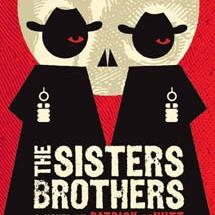
Patrick deWitt on his novel The Sisters Brothers
Patrick deWitt was born on Vancouver Island in 1975. He has also lived in California, Washington, and Oregon, where he currently lives with his wife and son. He is the author of two novels, Ablutions and The Sisters Brothers, which won Canada's Governor General's Literary Award for fiction. Here's how the jury described it: "Brothers Eli and Charlie Sisters are at the centre of this "great greedy heart" of a book. A rollicking tale of hired guns, faithful horses and alchemy. The ingenious prose of Patrick DeWitt conveys a dark and gentle touch." I met with Patrick in Ottawa to discuss his award-winning novel. Listen as we talk, among other things, about mannered language, the Coen Brothers, Charles Portis, horses, psychopaths, masturbation, arts funding and being Canadian. * Update: The Sisters Brothers has recently been made into a movie directed by Jacques Audiard and starring John C. Reilly and Joaquin Phoenix. Patrick's latest novel is French Exit.

Anna Porter on her Career in Canadian Publishing
This from Simon and Schuster: "Anna Porter was born in Budapest, Hungary, during the Second World War and escaped with her mother at the end of the 1956 revolution to New Zealand, where she graduated with an MA from Christchurch University. Like so many young Kiwis, after graduation she travelled to London, England, where she had her first taste of publishing. In 1968, she arrived in Canada, and was soon swept up in the cultural explosion of the 1970s. At McClelland & Stewart, run by the flamboyant Jack McClelland, she quickly found herself at the heart of Canadian publishing. In 1982, she founded Key Porter Books and published such national figures as Farley Mowat, Jean Chrétien, Conrad Black, and Allan Fotheringham. She went on to write both fiction and nonfiction works, including the award-winning Kasztner's Train and The Ghosts of Europe, and has published four mystery novels." We met at the Kingston Writers Festival to talk about her new book, In Other Words, In so doing we touched on blessed lives, absent fathers, grandfathers' stories, Transylvanian dragons, broad swords, New Zealand, education and intense boredom, Collier MacMillan, Robert Graves, communist engineers, Frank Newfeld, Jack McClelland, caring about writers, Canadian culture, colourful language, editors at sales conferences, gimmicks, publishing 100 books a year, mini-skirts and go-go boots, the Canadian establishment, meeting fascinating writers, The Temptation of Big Bear, typos, Bob Fulford, Al Purdy, Margaret Atwood, Conrad Black and Allan Fotheringham; collectible books, Persia, and Iran, Elements of Destiny.

Ian S. MacNiven on James Laughlin, Founder of New Directions
Ian S. MacNiven's authorized biography of Lawrence Durrell was a New York Times Notable Book for 1998. He has edited two collections of Durrell's correspondence (with Richard Aldington and Henry Miller), is the author of numerous articles on literary modernism, and has directed and spoken at conferences on three continents. He is also a past president of the D. H. Lawrence Society of North America and of the International Lawrence Durrell Society. MacNiven resides on the west bank of the Hudson, outside the town of Athens, New York, and this is where we met to talk about Literchoor is my Beat, (FSG, 2014) his biography of New Directions founder and publisher James Laughlin . We also talk about steel, silver spoons, the Choate School, poetry, Gertrude Stein, Modernism, Ezra Pound, prodigious correspondence, the Gotham Book Mart, short stories, New Directions, Harvard, T.S. Eliot, loyalty, William Carlos Williams, office affairs, fine printing, anthologies, the New Classics Series, Delmore Schwartz, Prospectives USA magazine, translations, The Beats, Thomas Merton, Dylan Thomas, mental illness and the bi-polar curse, intuition and recognizing excellence, and childhoods in Suriname.

Adrian King Edwards on selling Second-Hand & Antiquarian Books in Montreal
Adrian King Edwards is the proprietor of The Word Bookstore near McGill University in Montreal; has been for more than 40 years. I met with him at his home to talk books, second-hand versus used, the John Schulman scandal in Pittsburgh, trust, stories, longevity, authors' obscure childrens' books, policemen checking the spices, David McKnight's collection of Canadian literary periodicals, Canadian poetry, letterpress books, changing values, changing definitions of rare, Glenn Goluska, clean organized bookstores, the aging bookseller population, Wescott Books and the student rush.

Terence Byrnes on Photography and the Author Photograph
Through his work as a writer, editor, and photographer, Terence Byrnes came to know and to photograph many Montreal-based writers throughout their careers. "For ten years, he photographed them in places where they felt at home, but not always at ease. 'Most contemporary literary portraits,' Byrnes says, 'are as highly burnished as Playboy nudes or as homespun as family snapshots. When I made these images, I was an interloper the writers had to react to." Closer to Home: The Author and the Author Portrait (Vehicule Press, 2008) "fixes its gaze on writers as we seldom see them. These photographs, and the stories that accompany them, were captured where the writers live, work, or play. The result is a series of portraits that take us inside writers' lives and inside the process of making portraits—all served with a touch of refined literary gossip." Sounds like what we did when I met Terry at his home in Montreal to discuss the book. Among other things we talked about status, 'the thinker' gesture, authority and value, books and bricks, Susan Gillis, photographic crews from Toronto, the proliferation of imagery, the convergence of moving and still images, the diminishing role of the professional photographer, eyes, romanticizing crocks, impressions of presence, Roméo Dallaire, interest curiosity and light, postures, the Montreal Review of Books, Photoshop, negative ego, Annie Leibovitz, trust, Avedon in Texas and caring, achieving control over the world, noticing, Ishmael Reed, Robert Frank, contradiction and great art, sexual harassment at Concordia University, Stephen Fry, and selfies.

Bill Samuel on the history of Foyles Bookstore #10
Bill Samuel is the grandson of the founder of Foyles bookstore and was long-time Vice-Chairman of the company. Samantha J Rayner captures the spirit of the enterprise when she writes "[Foyles] emphasised that trial and error was an integral part of learning what makes for success. Foyles is not just a bookshop – they have tried all sorts of enterprises to generate more revenue: sheet music, musical instruments, literary lunches, book clubs, film production and even aeroplanes!" I met with Bill in his office at Foyles on Charing Cross Road in London to talk about the history of his family's world-famous enterprise. Update: Foyles was bought by Waterstones on September 6, 2018
Priscila Uppal on Canadian Elegies, and Mourning
Priscila Uppal, poet, author, and English professor at York University, challenges traditional psychological and anthropological models of mourning in her new book We Are What We Mourn: The Contemporary English-Canadian Elegy, suggesting that Canadians mourn differently. Traditional models define successful mourning in terms of detachment from the loved one who has died; the ability to cut the strings of grief, and to step into the roles of mothers and fathers vacated by the dead. To become unnecessarily identified with grief and death is, according to traditional views, to fail at mourning. To succeed - to maintain health- one must 'move on;' accept that the dead are gone; celebrate the fact that they are in heaven. All of this Uppal debunks. After reading thousands of Canadian elegies she concludes that mourning, at least in late 20th century Canada, is not about forgetting, but about claiming identity. You are, she says, what you mourn. And we, apparently, mourn our parents in elegies to a much greater extent than do others in the U.S. and U.K., for example, who tend to mark the death of youth more frequently with this poetic form. Many immigrants to Canada didn't know their parents very well; didn't know their countries of origin, didn't learn much about their traditions. In order to take over the roles their parents played - to learn about themselves - many have used mourning as a way to create and recreate the past; as a means to carry on into the future. Art - the elegy - is used as a way to attached to the past, and to connect and incorporate it into the present. What you mourn - what it is you are upset about losing - will determine, according to Uppal, how you see history. We talk about all of these topics, why and how the work of mourning has so drastically changed in Canada during the latter half of the twentieth century, why the contemporary English-Canadian elegy emphasizes connection rather than separation between the living and the dead. Priscila died at age 43 on September 5, 2018

Robert Lecker on literary agents in Canada, past and present
Robert Lecker is a Canadian scholar, author, and Greenshields Professor of English at McGill University in Montreal, where he specializes in Canadian literature. He has held a number of prominent positions in the Canadian publishing industry throughout his career. He co-founded ECW Press in 1977, he co-edited the Canadian literary journal Essays on Canadian Writing between 1975 and 2004, he has edited several anthologies of Canadian and international literature, and he currently heads a literary agency in Montreal, the Robert Lecker Agency. I met Robert in his office at McGill. Among other things we talked about the role of the literary agent, gatekeeping, stamps of approval, how writers should pitch their works to agents, the creative process and saleability, getting the reader to want to turn the first page, literary agents as sales people, art being a collaborative exercise, Matie Molinaro, Doris Hedges, Canada's best writers looking abroad for agents, the importance of the Canada Council, the authors' platform, the New Canadian Library, historically insufficient Canadian copyright laws, Canada's demographic and distribution disadvantages, subsidiary rights, and agents as "editors."

Hugh McGuire on the future of book publishing
Hugh McGuire has been building tools and communities to bring books onto the open web since about 2005. He's the founder of LibriVox.org (free public domain audiobooks, made by volunteers from around the world), Pressbooks (an open source book publishing platform built on WordPress). He's also Executive Director of the Rebus Foundation, a non-profit that is building the infrastructure to support books on the open web, by: building a new collaborative model for creating and publishing Open Educational Resources (OER), and building an open platform for scholarly reading. He lives and works in Montreal. Hugh is the co-editor, with Brian O'Leary, of Book: A Futurist's Manifesto — Essays from the bleeding edge of publishing (O'Reilly) and has talked about the future of publishing around the world, his work has appeared in various places in print, bits and audio, including: the New York Times, Forbes, the LA Times, BBC Radio, the New Yorker, CBC Radio, NPR, Techcrunch, Pando Daily and now, The Biblio File. We talk here about LibriVox's free audio books representing the ideas of the early internet, collaborative communities, bringing the book onto the internet and doing more than just selling them, PressBooks open source software, open textbooks in higher ed, new models of publishing, the Rebus Foundation rebuilding a new open publishing ecosystem, web-based collaboration, open reading platforms, academic publishing, the cost of textbooks skyrocketing, open textbook publishing, the Internet Archive, Brewster Kale, making all the world's information available for free, the value of low-cost education, crappy current literary fiction, eliminating online distractions and replacing Facebook and Twitter.

John Crombie on his Kickshaws Press
Series: Biblio File in France Kickshaws is a private press founded in Paris in 1979 by John Crombie, and Sheila Bourne who often produces artwork for the books. Together they have hand-printed more than 150 small books. The design, typography and materials used to create Kickshaws publications are unusual. As a result it's difficult to define exactly what they are. Among other things, they display a wide range of type-faces and designs, letterpress printing in multiple colours, and unusual formats and bindings, including plastic comb-bindings that enable the pages of a book to be turned in different sequences. As for content, most of the books contain Crombie's poetry or fiction or his translations of French humorist/absurdist writers. These including Samuel Beckett, Alphonse Allais and Pierre Henri Cami. The artwork includes drawings, linocuts and images printed from a variety of different materials including string and wallpaper. Kickshaws publishes books in both French and English. I met with John at his atelier in Charité-sur-Loire, south of Paris. Subjects covered include children's books, UNESCO, Edward Gorey, origins of the word 'Kickshaws', French humorists, Raymond Queneau, One Hundred Thousand Billion Poems, Bertram Rota, Charlene Garry and the Basilisk Press, enthusiasm, multi-choice stories, combining inks, using wallpaper, life intersecting with work, Montparnasse and the Marché de la Poésie in Paris

Maylis Besserie on the art of the Author Interview
Series: Biblio File in France Maylis Besserie is a French radio broadcaster. She works for France Culture, the French national cultural radio station of the Radio France group, where she has produced documentaries and live programming about cultural issues since 2003. Over the years she has interviewed many artists and authors. She currently produces a summer program called la grande table d'été. I met Maylis at her home in Paris. We talked, among other things, about the perfect author interview, pre-packaged answers, specific questions about the text, the writing process, life habits, finding out what moves a writer, how success changes authors, Michel Houellebecq, dead words, special connections, noticing details in the writing across different books, Oliver Twist, the ability of writers to see, immersing yourself in the authors's words and work, using your emotions, provoking; Irish writers, asking about other arts, dealing with who you are, using surprise; voice and emotion, writer problems, lists of key words, being alive and intense, avoiding personal questions, appearance, pregnancy, audience feedback, and the skill of putting into meaningful language things that readers can't.

Krista Halverson on the Shakespeare & Company bookshop in Paris
Series: Biblio File in France Krista Halverson is director of the newly founded Shakespeare & Company publishing house and editor of the first-ever history of the bookstore, Shakespeare & Company, Paris: A History of the Rag & Bone Shop of the Heart. Previously, she was the managing editor of Zoetrope: All-Story, a magazine of fiction and art, published by Francis Coppola and headquartered in San Francisco. I met with Krista at the bookstore to talk about the history of Shakespeare & Company; Sylvia Beach, French bookseller Adrienne Monnier and the spark between them; anglophone ex-pats in Paris, Hemingway, of course, George Whitman, great talent, James Joyce, Ulysses, and Windsor, Ontario; Shakespeare & Company's openness, the scrapbook effect, the book's designer Loran Stosskopf, the Shakespeare & Company cafe, Tumbleweeds, hopeful youth, and the bookstore's new publishing program. 1. The Little Review was founded by Margaret Anderson and published between 1914 to 1929. With the help of Jane Heap and Ezra Pound, Anderson published modernist and other early examples of experimental writing and art in the magazine. It is best known for running a serialization of James Joyce's Ulysses and being sued in 1921 for doing so. Anderson and Heap went to trial over Ulysses's obscene content. Lawyer and patron of modernist art John Quinn defended them at the trial, and lost. The editors each had to pay a fifty-dollar fine. 2. Looks like Proust sealed off the windows in his cork-lined room

Jerry Rothenberg on Editing Poetry Anthologies
Born in 1931, Jerome Rothenberg is an American poet, translator and anthologist, noted for his work in the fields of ethnopoetics and performance poetry. This from Wikipedia: Technicians of the Sacred (1968), which signalled the beginning of an approach to poetry that Rothenberg, in collaboration with George Quasha, named "ethnopoetics," went beyond the standard collection of folk songs to include visual and sound poetry and the texts and scenarios for ritual events. Some 150 pages of commentaries gave context to the works included and placed them as well in relation to contemporary and experimental work in the industrial and postindustrial West. Over the next ten years, Rothenberg also founded and with Dennis Tedlock co-edited Alcheringa, the first magazine of ethnopoetics (1970–73, 1975ff.) and edited further anthologies, including:- Shaking the Pumpkin: Traditional Poetry of the Indian North Americas (1972, 2014); A Big Jewish Book: Poems & Other Visions of the Jews from Tribal Times to the Present (revised and republished as Exiled in the Word, 1977 and 1989); America a Prophecy: A New Reading of American Poetry from Pre-Columbian Times to the Present (1973, 2012), co-edited with George Quasha; and Symposium of the Whole: A Range of Discourse Toward An Ethnopoetics (1983), co-edited with Diane Rothenberg. Rothenberg's approach throughout was to treat these large collections as deliberately constructed assemblages or collages, on the one hand, and as manifestos promulgating a complex and multiphasic view of poetry on the other. Speaking of their relation to his work as a whole, he later wrote of the anthology thus conceived as "an assemblage or pulling together of poems & people & ideas about poetry (& much else) in the words of others and in [my] own words. That imago – that representation of where we've been and what we've lived through – is something in fact that I would stand by – like any poem." ...along with Nicholson Baker, Robert Graves and Laura Riding, pretty well summarizes what we talk about.

Professor Daniel Medin on Books in Translation
Series: Biblio File in France A recent fellow of the Alexander von Humboldt Foundation (Berlin) and visiting researcher at the Centre Interdisciplinaire de Recherches Centre-Européennes (Sorbonne-Paris IV), Daniel Medin joined the faculty of The American University of Paris in January 2010. He has taught German, English and comparative literature at Stanford University, Washington University in St. Louis and the Free University Berlin. He is associate director of the Center for Writers and Translators and one of the editors of its Cahiers series (published jointly with Sylph Editions in London). He is also co-editor of Music & Literature magazine, edits The White Review's annual translation issue, and advises several journals and presses on contemporary international fiction. A judge for the Best Translated Book Award in 2014 and 2015, he served on the jury of the 2016 Man Booker International Prize. We met in his office in Paris to discuss, among other things, translation as it pertains to book publishing, judging international translation prizes - prioritizing literary quality ('best' title wins) vs prioritizing a book on the basis of what winning would do for it (its effect, whether economic, political or symbolic); discoveries, music living due to its interpreter, following Michael Orthofer's Complete Review, Chad Post's Three Percent and Veronica Esposito; Fitzcarraldo Editions, loyalty, commercial pressure, New Directions, Archipelago Books, Transit Books, Olga Tokarczuk's novel Flights, 800 page books, meaning versus style, old versus new generational translations, footnotes, stealth glosses, mystery and google, Haruki Murakami, László Krasznahorkai and Serhiy Zhadan's novel Mesopotamia.

Stephen Weiner on the rise of the Graphic Novel
Stephen Weiner is an award winning writer about comics & graphic novels. He has been writing about comics since 1992, and is the most recognized librarian responsible for promoting graphic novel collections in public libraries & bookstores. He is the director of the Maynard Public Library in Maynard, Massachusetts. His books include: 100 Graphic Novels for Public Libraries, The 101 Best Graphic Novels, Faster than a Speeding Bullet: the Rise of the Graphic Novel, The Will Eisner Companion, The 101 Best Graphic Novels, 2nd edition, The Hellboy Companion, and Faster than a Speeding Bullet: the Rise of the Graphic Novel, 2nd edition. He is also co-editor of the 7 volume series A Critical Survey of Graphic Novels, and author of the novel, Tom's House. I met with Stephen at the Bibliothèque et Archives nationales du Québec (BAnQ) in Montreal. Among other things we talk about the definition of the graphic novel, Art Spiegelman's Maus, Neil Gaiman's The Sandman, outlaw status, boys and libraries, and the top 10 greatest graphic novels of all time.

John Ralston Saul on Extraordinary Canadians and Lafontaine and Baldwin
John Ralston Saul was elected President of International PEN in October 2009 (his term ended in 2015). His award-winning essays and novels have had an impact on political and economic thought in many countries. Declared a "prophet" by TIME magazine, he is included in the prestigious Utne Reader's list of the world's 100 leading thinkers and visionaries. His works have been translated into 22 languages in 30 countries. He has received many national and international awards for his writing, most recently South Korea's Manhae Grand Prize for Literature. He has published (at least) five novels, and is General Editor of the Penguin Extraordinary Canadians project, a series of 17 biographies that reinterprets important Canadian figures for a contemporary audience by pairing well-known Canadian writers with significant historical, political and artistic figures from 1850 onwards. Born in Ottawa, Saul studied at McGill University and King's College, University of London, where he obtained his PhD in 1972. We met in Ottawa in a noisy now defunct bookstore to discuss his editing of the Extraordinary Canadians series, and his authoring of Lafontaine and Baldwin.

Jean Guy Boin on the French Book Publishing Experience
Series: Biblio File in France Economist Jean-Guy Boin is the former Director General of the International Bureau of French Publishing (www.bief.org), the international promotion organization of French books. He has held various positions in the book sector: teacher and trainer, researcher specializing in publishing economics, general administrator of a publishing house of literature and human sciences, head of the department "book economics" department at the Ministry of Culture and Communication. He is the author of two books on "small publishers" (La Documentation française) and has written numerous articles on the economics of publishing, the bookstore and the distribution of the book. We met in the Saint-Germain-des-Prés neighbourhood of Paris, home to fames literary cafes including Les Deux Magots, Café de Flore, and le Procope, bookstores and publishing houses. We talk about, among other things, the French publishing experience, the Fixed Book Price, competition in service not price, books as an industry of supply, droit d'auteur and moral right, literary agents, translation, marketing as king in the U.S., Paul Otchakovsky-Laurens, Hachette, Editions Grasset, Emmanuel Carrere, the Gilbert and Companie bookstores, Amazon, and reading publishers' catalogues. During our conversation Jean-Guy suggests that Richard Charkin thinks that getting rid of the Net Book Agreement in England was a mistake. I spoke with Richard about this. His response: "Bollocks. Absolutely no regrets. The French love regulations! Also, their international horizons are much more restricted than ours. How could we have retail price maintenance in the UK when there is no such thing in USA? US publishers would be flooding our market. Je ne regrette rien!"

Heloise d'Ormesson on Book Publishing in France
Series: Biblio File in France Héloïse d'Ormesson is a French publisher who founded a publishing house that bears her name. She studied comparative literature at Yale University in the United States, where she landed her first job in publishing, and then returned to France to work at Flammarion as director of foreign literature, and subsequently as an editor at Denoël, Laffont, and within the Gallimard group of companies. In 2004, she founded Editions Héloïse d'Ormesson with her partner Gilles Cohen-Solal. She is the daughter of famed French writer Jean d'Ormesson We met at her offices in Paris to discuss, among other things, why so many editors become publishers, a publishers' freedom and control, illustrated covers and French tradition, readers versus customers, the lack of good literary agents in France, Fixed Price and the importance of booksellers; publishing as a cultural industry, Amazon, Heloise's heart and soul, her father Jean, books in the house at an early age, bookshelves as walls and furniture; favourite bookstores, The Scarlet Letter, Mollat in Bordeaux, championing books, the Grand Prix Jean d'Ormesson award, overlooked masterpieces, Jacques Stephen Alexis's In the Flicker of an Eyelid, luck, every book being unique, the lack of a formula for success, and thrills.

Pierre Astier and Laure Pecher on Literary Agents in France
Series: Biblio File in France Pierre Astier and Laure Pecher are co-founders of their own eponymous literary and film agency. Pierre represents mainly French-speaking authors and publishers. After working in the art world for ten years, he created the quarterly short stories magazine Le Serpent à Plumes in 1988. In 1993, together with Claude Tarrène, he set up a publishing house of the same name focusing on contemporary fiction. Laure represents both authors and publishers. After having studied Byzantine philology, she worked for five years at Le Serpent à Plumes as rights manager. In 2002, she started publishing classics with Les Classiques du Monde at Editions Zoé (Geneva). The three of us met in their garden in Le Perche, France where we talked about, among other things, the role of the literary agent, writers festivals and conferences, finding the best most passionate publishers, Archipelago Books and Ove Knausgaard, Elena Ferrante, African authors in France, paradise near Paris, commissioning books, writing workshops, espresso, differences between French and American agents, Eastern European markets, the invasion of American authors, lack of diversity, resistance by French publishers to agents, film rights, musical chairs, translation, author-agent relations, differences between pitching publishers and producers, Andrew Wylie's client list, Aslı Erdoğan, passion and luck, Patrice Nganang, and the most exciting part of the job.

Ashley Obscura on Metatron, Publishing and the Millennial Mind
"Ashley Obscura is a Canadian-Mexican writer, publisher and editor. She is the author of the poetry collections Ambient Technology and I Am Here (Metatron, 2014) and four digital poetry projects: LIGHGHT, How to Be A Rainbow, Aura Halo and Oh, Inverted Universe. The founder and managing editor of Metatron Press, Obscura currently lives in Montreal, Quebec where she holds a Bachelor of Arts in Creative Writing and Professional Writing." We met at her new offices in Montreal and talked about, among other things, smart phones, Saskatoon and open skies, Montreal and multi-culturalism, Concordia University's Creative Writing Program, others' doubt as good ammunition, creating space, new forms of digital poetry, Alt Lit Gossip, how the Internet benefits upstart publishers and poets, Wild "This is happening whether you like it or not" literary readings, making poetry accessible, ambition among Millennials, "Follow your dreams" advice, Rupi Kaur, Instagram poetry, nostalgia, relationships with authors, sex in your twenties, menstruation, vulnerability, poetry and freedom, the importance of publishing poets at the start of their careers, teaching poetry, and mentors.

Elaine Kalman Naves on Robert Weaver, Godfather of Canadian Literature
Robert Weaver (1928–2008) was an influential, well-loved Canadian editor and broadcaster. He was born in Niagara Falls and educated at the University of Toronto, and worked at the CBC where he created a series of radio shows that featured then unknown Canadian writers such as Alice Munro, Mordecai Richler, Timothy Findley, Margaret Atwood, and Leonard Cohen. In 1956 Weaver founded The Tamarack Review, a long-standing Canadian literary magazine. Over the course of his career, Weaver edited more than a dozen anthologies. In 1979 he launched the annual CBC Literary Prize. Elaine Kalman Naves is an award-winning Quebec writer, journalist, editor and lecturer. She's the author of Robert Weaver, Godfather of Canadian Literature. In discussing it we talk about, among other things, Niagara Falls, Toronto, spinster aunts, the love of books and reading, bank jobs, the University of Toronto, Northrop Frye, abortion, CBC Radio, 'Canadian Short Stories,' editing Alice Munro, understatement, anthologies, The Tamarack Review, the popularity of the Anthology radio program, Margaret Atwood, pipe rituals, drinking, Robert Fulford, listening, editorial and critical standards, honesty, the CBC Literary Prize and William Notman.

Glenn Horowitz on the sale and placement of author archives
Glenn Horowitz is an agent in the sale and placement of culturally significant archives to research institutions throughout the United States. Authors, artists, musicians, designers, and photographers he has represented include Norman Mailer, James Salter, Deborah Eisenberg, David Foster Wallace, Vladimir Nabokov, Philip Grushkin, the Magnum Group, Nadine Gordimer, and Danny Fields. I met Glenn in his Manhattan offices. We talked about, among other things, the imaginative packaging of authors' archives, the maturing of research institutions, kaboosing like collections, natural sympathies, technology coming on line, letterpress printing as a nostalgic gasp, the shift to digital, Bob Dylan's archive, the Woodie Guthrie Center, the transformation of Tulsa, the Kaiser Foundation, Bob Woodward and Carl Bernstein, Watergate and the University of Texas, the importance of the creative process, New Criticism, identity politics, the melting of textual studies, the growing importance of ancillary material; Bernard Malamud, Bob Giroux, Strand Bookstore, envy, small versus major research institutes, Michael Ondaatje, Canada's lack of interest in its writers' papers, Margaret Atwood, Robertson Davies, Conrad Black, FDR, and archives as a non-traditional market.

Jonathan Galassi on Editing, FSG, and Book Publishing
Jonathan Galassi is the author of three collections of poetry and a novel, Muse (2015) set in the publishing world. He is also president and publisher of Farrar, Straus & Giroux, and an eminent translator of Italian poetry. We met in his New York office (with the window open) to talk about, among other things, book publishing, Stanley Unwin; convincing, moving, artful voices; the capacity to hear; reading, aesthetic response and shrewdness; Tom Friedman; confidence, style, overpaying for books, reader loyalty, Faber & Faber, Bob Giroux, T.S. Eliot, Mitizi Angel, Elizabeth Bishop, the Random House system, the magical aura of FSG, Giacomo Leopardi, editors becoming publishers, Roger Straus, conglomerates, paperback rights, Hothouse, old maids and cocksmen, Bob Gotlieb, pertinent questions, Marilynne Robinson, fragmented culture and disturbing politics, Trump taking the air out of the publishing business, Rupi Kaur and Instagram poets, diverse cultures, the average age of The New Yorker reader, Amazon reviews, and the rewards of owning books.

Swedish novelist Jonas Hassen Khemiri on Everything I Don't Remember
"Jonas Hassen Khemiri is one of the most important writers of his generation in Sweden. When his debut novel, One Eye Red (Ett öga rött) was published in 2003, Khemiri's eccentric and imaginative prose made a huge splash and reached an audience far beyond traditional literary circles. The book was awarded the Borås Tidning Award for Best Literary Debut Novel and also became an enormous bestseller. Khemiri's equally original second novel, Montecore: The Silence of the Tiger (Montecore – en unik tiger), was awarded the prestigious P.O. Enquist Literary Prize, and won Swedish Radio's Award for Best Novel. Upon its US publication by Alfred A Knopf, The New York Times Book Review dubbed the novel "wondrous." His latest best-selling novel Everything I Don't Remember (Allt jag inte minns), was published in the fall of 2015 and translated from Swedish by Rachel Willson-Broyles the following year. I met Jonas in Montreal at the Blue Met Literary Festival. We talk here about the latest novel, self-publishing, writing first novels, the comedy and tragedy scale, ambivalence, George Saunders, tenderness that doesn't fall into cliche, filtering favourite authors, voices, plays, truth, perspective, Nietzsche, disappearing, Stockholm, Nordic Noir, American accents, love and cliche, writing poorly really well, Karl Ove Knausgård, Proust, sleepwalking, memory, speed, language as power, writing, and uncertainty.

Daniel Mendelsohn on The Odyssey, Identity, Literary Criticism and Memoir
"Daniel Mendelsohn is an internationally bestselling author, critic, essayist, and translator. Born in New York City in 1960, he received degrees in Classics from the University of Virginia and Princeton. After completing his PhD, he moved to New York City, where he began freelance writing full time; since 1991 he has been a prolific contributor of essays, reviews, and articles to many publications, particularly The New Yorker and The New York Review of Books." His multi-award winning books include The Lost: A Search for Six of Six Million (2006); a memoir, The Elusive Embrace (1999); two collections of essays, How Beautiful It Is and How Easily It Can Be Broken (2008) and Waiting for the Barbarians: Essays From the Classics to Pop Culture (2012); a scholarly study of Greek tragedy, Gender and the City in Euripides' Political Plays (2002); a two-volume translation of the poetry of C. P. Cavafy (2009), which included the first English translation of the poet's "Unfinished Poems. Daniel was in Montreal attending the Blue Met Literary Festival when we met to talk about, among other things, his book, An Odyssey: A Father, a Son, and an Epic (2017); the Greek view of the universe; disasters; Odysseus being a jerk; readers and texts; Homer, The Odyssey and anthropology; the fluidity of human identity, and its multiplex, relational nature; time; bored Gods; death and meaning; fathers; New Criticism; autobiography in criticism; being intelligent and interesting versus being right; robots and objectivity; self-knowledge and literature; open heart surgery; stupid good reviews; why memoir is such a strong form; Oprah and shared emotion; Cavafy; preserving culture; crazy families; truth, tragedy and myths; the Titanic, the Kennedys and glamour.

Adam Gopnik on art criticism, love, money and New York
Adam Gopnik has been writing for The New Yorker since 1986. He is a three-time winner of the National Magazine Award for Essays and for Criticism and of the George Polk Award for Magazine Reporting. In March 2013, Gopnik was awarded the medal of Chevalier de l'Ordre des Arts et des Lettres by the French Republic. We met in Montreal at the Blue Metropolis Literary Festival to discuss his book At the Strangers' Gate. Among other things we talk about bookshops, art in the 1980s, the art critic Robert Hughes, George Soros, ambition, Jeff Koons, morality versus mortality, value and money, public and privates selves, monstrous helium balloon personalities, blue rooms and big stores, our sons and daughters and their definition of success, the contradictory impulses of interesting art, the critical calling, Richard Avedon and charismatic mentors, wives, love and Mordecai Richler, Mr. Sensitivo and repertory cinema, married sex and The Civil War, fathers' advice, intellectuals, a benevolent universe, and the secret of writing.

Matthew Zapruder on his book Why Poetry
Matthew Zapruder is a poet, editor, translator, and professor. He earned a BA in Russian literature at Amherst College, an MA in Slavic languages and literature at the University of California, Berkeley, and an MFA in poetry at the University of Massachusetts, Amherst. He is the author of several collections of poetry, including Sun Bear (2014), Come On All You Ghosts (2010), The Pajamaist (2006), and American Linden (2002). His honors include a Guggenheim Fellowship, a Lannan Foundation Residency Fellowship, the William Carlos Williams Award from the Poetry Society of America, and the May Sarton Prize from the American Academy of Arts and Sciences. With Brian Henry, he co-founded Verse Press, which later became Wave Books. He is now an editor with the firm. He's also a guitarist in the rock band The Figments and an associate professor in the Saint Mary's College of California MFA Program in Creative Writing. His most recent book is Why Poetry (2017). We met in his office in Oakland, California to discuss it, and, among other things, Joseph Conrad, life expanding beyond the ordinary, the material of language, painters and paint, troubling representation, the absurdity of using inconsistency to critique a poem; surprise, truth and beauty; genre arguments; poetry being found in translation; strange worlds and words; clarity and the best of intentions; exploring things beyond the bounds of propriety; Terrance Hayes; Keats's 'To Autumn' and Tom Paulin's interpretation of it; sleepwalking and defamiliarization; revealing and making new meaning; Shakespeare; the scariness of silence; being heard and answered; the influence and talent of Frank O'Hara; poets as archivists of language; the vibration of words; the debatability of the colour green; literal reading; perfume advertisements; the death of those close to you; helping people to make their lives better; and making poems that are worth reading.

Anita Engles on the American Bookbinders Museum
Anita Engles is the Executive Director of the American Bookbinders Museum based in San Francisco, California. It's the only museum of its kind in North America celebrating and exploring the culture and tools of bookbinders and bookbinding from its earliest forms through the changes and innovations of the industrial revolution. In addition to the craft and artistry of binding, it focuses on the stories of the men, women, and children who worked in binderies. We sat down in the bookstore at the museum after I had gotten a great tour of the place from docent Madeleine Robins. We talk, among other things, about the process and human experience of bookbinding, the book as IT, the industrial revolution, the tools and unique equipment housed at the museum, funding, the special collection of publisher's bindings, designers, temporary exhibits, founder Tim James, preserving and telling the story of the craft of bookbinding, keeping history alive, artist books, the book arts, and places the literary tourist should visit when in San Francisco.

Founder Andrew Hoyem on the Arion Press
Andrew Hoyem is the creative spirit of the Arion Press. He's a published poet and exhibited artist who occasionally includes his own writings and drawings in Arion books. The concepts for all Arion publications originate with Hoyem, who chooses literary texts, commissions new work from writers and artists he admires, and designs the books, including their bindings and typography. In the Press's livre d'artiste series, he has worked closely with distinguished artists, many of whom come to the Press in San Francisco to work with him on projects. We met at his offices in The Pracidio in San Francisco to talk about, among other things, Dave Hazelwood's Auerhahn Press, the Grabhorn Press, the importance of text pages, Bruce Rogers, Random House's Leaves of Grass (1931), Charles Olson, skunks, The Legion of Honor Museum, Livres d'artistes, artist Fred Martin, solving problems, Moby Dick (1979), ghost stories, perseverance, weekly tours, M&H Type, connecting with interesting people, Hart Crane's The Bridge (2017) and getting the basics right.
Bookseller Kris Arnett on Kona Bay Books in Hawaii
Kris Arnett is the proprietor of Kona Bay Books which is located in Kona on the Big Island of Hawaii. She also owns Hilo Bay Books in, you guessed it, Hilo, which is located on the other side of the Big Island of Hawaii. I met with Kris recently at the Kona location to discuss bookstores. Among other things we talk about books touching everything and everyone, barbers, the Upstart Crow* bookshop in San Diego, Borders, driving across the Big Island, big box stores, suspense and romance, excitement about reading, the stereotype of book people being snobbish, treasure hunting, Hawaiian publishers, Pidgin to da Max, new age and military books, hiring criteria, Mark Twain: Literary Tourist, Gavan Daws' Shoal of Time: A History of the Hawaiian Islands, the 'Powell's of the Pacific,' and going to the volcano. * Reportedly closing in 2018. Lease ends and the area will be redeveloped.

Dave Bull on Japanese Woodblock Carving and Printing
David Bull is an ukiyo-e woodblock printer and carver who heads the Mokuhankan ukiyo-e studio in Asakusa, Tokyo. Born in Britain, Bull moved to Canada at age 5 and lived there until 1986 when he relocated with his family to Tokyo to pursue ukiyo-e. He first discovered Japanese woodblocks while browsing an art gallery in Toronto at age 29. Intrigued, he started making his own prints without formal training. He is known for his work on the Ukiyo-e heroes kickstarter crowd-funding project together with Jed Henry, recreating modern video-game scenes in old-style woodblock prints. The Mokuhankan studio has a shop and offers 'print parties' for amateurs, where they can try the craft of printing. I met Dave at his studio in Tokyo where we talked, among other things, about Toronto's Stuart Jackson gallery, the physical nature of woodblock prints (not the content!), moving to Japan, the "death" of traditional Japanese woodblock printing in the 20th century, ukiyo-e prints as 'low' culture, 'visual letterpress,' French salons, pop culture, cliff-hanger picture books, mixing illustration and text, Hokusai and Manga, Japanese Meiji era, the desirability of "mouth pictures," Video game characters, Washi paper, and the importance of the 18th century book One Hundred People, One Hundred Poems to modern Japanese culture. Check out Dave's extensive library of videos on Japanese woodblock printing here.

Sjon on Poetry and Iceland
Born in Reykjavik in 1962, Sjón is a celebrated Icelandic novelist. He won the Nordic Council's Literary Prize for his novel 'The Blue Fox' (the Nordic countries' equivalent of the Man Booker Prize) and the novel 'From The Mouth Of The Whale' was shortlisted for both the IMPAC Award and the Independent Foreign Fiction Prize. His novel 'Moonstone – The Boy Who Never Was' was awarded every Icelandic literature prize, among them the 2013 Icelandic Literary Prize. His latest published work is the definite edition of the trilogy CoDex 1962. Also a poet, librettist and lyricist, Sjón has published nine poetry collections, written four opera librettos and lyrics for various artists. We talk here about the influence of David Bowie; modernist poetry; self publishing and promotion; the Icelandic penchant for collaboration; the Surrealist metaphor; respect among practitioners of different art forms in Iceland; Guy Madden; magpies; Icelandic folklore and sagas; beginnings and creation stories; dream logic; story-telling and figuring out life; myths and metamorphosis, the Future Library Project; Reykjavik, city of literature; literary tourism; and his forthcoming book CoDex 62.

Alice Notley on Poetry
Alice Notley is a poet whose work has influenced generations of poets; she is considered a pioneering voice on topics such as motherhood, feminism, disobedience and domestic life. Notley has experimented widely with poetic form and has written a book of criticism, a play, and a biography. She has also edited three publications. Her collage art appeared in Rudy Burckhardt's film "Wayward Glimpses" and her illustrations have appeared on the cover of numerous books, including some of her own. With over forty books and chapbooks and several major awards to her credit, she is one of America's most prolific and lauded poets. She lives in Paris, France. We met in Ottawa, Canada to talk about, among other things, the enjoyment, pleasure and necessity of poetry; language, communication, voice, and hearing versus reading; Shakespeare; the difficulty of being a female poet; Sylvia Plath; postpartum depression; John Keats; Homer; reading aloud; suffering, skepticism, fate, the death of those close to you and the world of the dead.

Prof. Eli MacLaren on the Ryerson Press Chap-Books
Eli MacLaren is an Assistant Professor of English at McGill University in Montreal. Subjects taught include Canadian poetry and fiction; First Nations writers; bibliography and the history of the book. We met to discuss an article he wrote for Canadian Poetry entitled 'Significant Little Offerings: The Origin of the Ryerson Poetry Chap-Books, 1925–26'. We talk, among other things, about the literary publishing environment in Canada during the 1920s, Lorne Pierce's idealistic nation building, risk, the desire for a national literature, restrictive copyright laws, Confederation poet Charles G.D. Roberts, Ryerson's Makers of Canadian Literature series, authors covering publishing costs, romantic versus modernist poetry, the arts and craft look of the chap-books, poetry's goal of moving the average reader and making sense of death, author's lives informing their poetry, shining light on neglected works, the origins of chap-books, and the birth of the small press movement in Canada.

Jason Guriel on Poems, Poetry, Criticism and Critics
Jason Guriel is a poet and critic whose work has appeared in such publications as Poetry, Slate, Reader's Digest, The Walrus, Parnassus, Canadian Notes & Queries, The New Criterion, and PN Review. His poetry has been anthologized in The Best Canadian Poetry in English, and in 2007, he was the first Canadian to receive the Frederick Bock Prize from Poetry magazine. He won Poetry's Editors Prize for Book Reviewing in 2009. His essays and reviews are collected in The Pigheaded Soul (The Porcupine's Quill, 2013). Guriel lives in Toronto, Ontario. We met at the Toronto Public Library on College in rooms where the Osborne Collection is kept. The collection was donated in 1949 by the English librarian Edgar Osborne in recognition of the Library's outstanding service to children. We talk among other things about The Pig Headed Soul, the key to being a good critic, poems not poetry, obsessing, 'The Case Against Reading Everything', Carmine Starnino, 'culture' writing, confessional criticism, pop culture essays, the adoration of poet Peter Van Toorn, 'world class' poet Robyn Sarah, the importance of pleasure, thoughts the culture wont allow itself to have, "I don't care about your Life', literary community, honesty in criticism, response to reviews, Chris Wiman, Clive James, Michael Hoffmann's Behind the Lines, William Logan, Jill Bialoski and plagiarism, the Griffin Prize, dirty money, and diapers.
Poet Gillian Clarke on Welsh poetry, truth, and the importance of creativity in education
Gillian Clarke is a Welsh poet, playwright, editor, broadcaster, lecturer and translator. Born in Cardiff in 1937 she has written more than ten books of poetry. In 2008 she was appointed the third National Poet of Wales (Ifor ap Glyn took over in 2016). In 2010 she was awarded the Queen's Gold Medal for Poetry, only the second Welsh person to receive the honour. In 2011 she was made a member of the Gorsedd of Bards and in 2012 she received the Wilfred Owen Association Poetry award. We met several years ago in Swansea, Wales at the Dylan Thomas Centre, where we talked about what is unique about Welsh poetry, the oldest living language in Europe, memorability, truth, Lear's Cordelia, Dylan Thomas's truth and exaggeration, the Welsh accent, Carol Ann Duffy, and the importance of imagination, creativity and music in education.

Prof. Nick Mount on Arrival: The Story of CanLit
I met with Professor Nick Mount at his University of Toronto offices in "Toronto" to discuss his book Arrival, The Story of CanLit. We talk among other things about the pronunciation of Toronto, the non-Toronto-centricity of his book, Alistair MacLeod, the CanLit boom, early Canadian writers publishing first in the United States, novels that are so bad they're good, the 1960s, history turning into myth, academic versus commercial success, reviews of the book, Margaret Atwood's Survival, prosperity versus affluence, 1959 and 1974, economics and the arts, the Massey Report, the Canada Council, universities, Jack McClelland, the influence of Sheila Watson's The Double Hook, Arrival's sidebar star system, the erasure (or not) of Blackness, and Aboriginal works, from the CanLit canon, Austin Clarke, dotted points of light, #metoo and the Bahamas. Photo by N. Maxwell Lander
Zach Wells on his book of essays Career Limiting Moves
Zachariah Wells is the author of three collections of poetry (Unsettled, Track & Trace, and Sum), as well as a children's book Anything But Hank, with Rachel Lebowitz), and a collection of critical essays . He is also the editor of Jailbreaks: 99 Canadian Sonnets and The Essential Kenneth Leslie. His poems have been translated into Bosnian and Spanish and adapted into operatic songs by composer Erik Ross. He lives with his family in Halifax, Nova Scotia. We talk, heartily, here about Career Limiting Moves (Biblioasis, 2013), about my perverse pleasure in reading criticism, Zach's threadbare bathrobe, Paul Muldoon's critical style, Zach's negative review of Jan Zwicky's negative review of negative reviewing, the impossibility of suppressing subjectivity, the anvil of the agon, Zach's snide attack on Andre Alexis. About Michael Lista and Scott Griffin, going easy on friends, Michael Harris's poem 'Concentrate,' Margaret Atwood's Survival, Peter van Toorn, the importance of cutting to the core poems, King Lear, John Clare, the slim, stellar oeuvre of Elizabeth Bishop, and Lisa Robertson's take on Wordsworth's The Prelude