
The Biblio File hosted by Nigel Beale
598 episodes — Page 7 of 12

Ivan Klima on his memoir My Crazy Century
I met with famed Czech writer/novelist Ivan Klima at his home in Prague to talk about his memoir My Crazy Century. Topics covered include the criminal conspiracy of communism, the impact on his life of the Terazin concentration camp, the thrill of freedom, forests, poisonous mushrooms, communist stupidity and lack of common sense, Potemkin villages, political apathy, great literature describing complications in human relationships, fiction as invention not real life, socialism's lack of productivity, Philip Roth's understanding of persecution, the value of old maps, Samizdat literature, Kafka, and the novel Love and Garbage We're joined by Ivan's son, and grand-daughter, to help with translation, and by a squeaky chair, but I don't have to tell you that. Please keep in mind that Ivan is today a man in his late eighties.

Guy Baxter on the Archive of British Publishing and Printing
Guy Baxter has been University Archivist at University of Reading since 2008. His responsibilities include caring for the Archive of British Publishing and Printing, the archives of the Museum of English Rural Life, and the Beckett Collection. Guy has worked in museum archives for over 15 years and has advised on several major research projects including Staging Beckett (AHRC), Giving Voice to the Nation (AHRC) and the East London Theatre Archive/ CEDAR (JISC). He is a Trustee of the Beckett International Foundation. I met him at the Museum to talk about the Printing and Publishing Archive, and the Ladybird books collection and permanent exhibition. Among other things we discussing the importance of correspondence to the publishing business, Mills and Boon, file sets, literary biography, reader reports, Tolkien, Stanley Unwin, chance and serendipity, the importance of a general pubic audience, Agatha Christie, police mechanics using the Ladybird experts series, the appeal of Ladybird books to adults, and their conservative nature, the civil rights movement, a whitewashed view of history, diasporic nature of archives, competition, Ted Hughes, the Harry Ranson Center, critical mass, personal relationships and Samuel Beckett and archives-led study.

John Cole on the history of the Library of Congress
Historian John Cole started working at the Library of Congress as a young man in 1966. Most of his books since have dealt with this venerable institution. We talk here about it's influence on American political and cultural life, about Thomas Jefferson as bibliophile, about books comprising a small part of the library's total collection; capturing, cataloging and digitizing the world's intellectual activity, serving the blind, teaching teachers how to use the collection on-line, subjective collecting, documenting thought and the Library's fine folk life collection.
Stephan Delbos on Prague and Poetry
Stephan Delbos is a New England-born writer living in Prague, where he teaches at Anglo-American University and Charles University. His poetry, essays and translations have appeared internationally in journals such as Absinthe, Agni, Oxonian Review, PEN America, and Zoland Poetry. He is the editor of From a Terrace in Prague: A Prague Poetry Anthology (Litteraria Pragensia, 2011). A collection of visual, music-inspired poems, "Bagatelles for Typewriter," was exhibited at Prague's ArtSpace Gallery in May 2012. His first full-length play, "Chetty's Lullaby," about the life of trumpet legend Chet Baker, has been produced in New York and San Francisco. His co-translation of The Absolute Gravedigger, by Czech poet Vítězslav Nezval, was awarded the PEN/Heim Translation grant in 2015 and was published by Twisted Spoon Press. Deaf Empire, his play about Czech composer Bedřich Smetana, was produced by the Prague Shakespeare Company in 2017. He is the author of the poetry chapbook In Memory of Fire (Cape Cod Poetry Review, 2016), and a founding editor of the online literary magazine B O D Y. I met Stephan at his home in Prague where we talked about why he moved to the city, American poetry during the cold war, the founding and flourishing of B.O.D.Y., the great poets in From a Terrace in Prague and its functioning as a literary guide to the city, prolific surrealist poet Czech Vítězslav Nezval, the definition of surrealist poetry, the importance of reading and translation to the Czechs and Europeans, the impetus behind writing poems, the poetic tools and real life experiences called upon to create 'In Memory of Fire,' and famed Czech composer Bedřich Smetana.
Jean Louis Maitre on Printing and Typographie in Tours, France
Series: Biblio File in France Better known for its wines, the perfection of its local spoken French, it's cathedral and chateau, the city of Tours France also has a surprisingly rich historical connection with printing and typography. I was in Tours recently and visited the Musee de la Typographie. It may be small, but it's full of all sorts of different kinds of old printing equipment and tools, typefaces, woodcuts and handmade paper. As one visitor put it: "Muriel Méchin, the owner takes you on a personal discovery tour of his museum, including printing off some examples for you to take home on a press from the 1800s. I have been to many printing museums, but this is the first I have found that contains compositors tools such as the Moule à Arçon, a hand-held individual character casting device, that was the forerunner of the mechanical Monotype and Linotype machines hundreds of years later. You can actually handle many of the exhibits which most museums forbid. Muriel has published a very informative book which we were able to purchase; it is chock full of historical information and illustrated with photos and drawings explaining the history of a most interesting industry that goes back many hundreds of years. The museum is free." Since Muriel doesn't speak English, I sat down with his colleague Jean Louis Maitre to talk about the museum and the fascinating printing history of the local region. If you like English spoken with a thick French accent, you'll love listening to Jean Louis.
Lauren Elkin on her book Flaneuse
I interviewed Lauren Elkin about her new book Flâneuse: Women Walk the City in Paris, New York, Tokyo, Venice, and London at her apartment in the Belleville neighbourhood of Paris. Stepping off a rather ordinary, noisy street through a large pair of solid French (!) doors, I encountered a lovely, quiet, tree-lined pathway/courtyard en route to "an airy, comfortable writer's home, filled with books, art, plants, and even a piano." To start with, Elkin suggests that the flâneur is "the quintessentially masculine figure of privilege and leisure who strides the capitals of the world with abandon," and that the fl neuse is a "determined, resourceful individual keenly attuned to the creative potential of the city and the liberating possibilities of a good walk." Virginia Woolf called it "street haunting"; Holly Golightly epitomized it in Breakfast at Tiffany's; and Patti Smith did it in her own inimitable style in 1970s New York." Nonetheless since the flâneur has not, historically, been a very precisely drawn male character, we should be free, says Elkin, to define the flâneuse as we see fit, not as a female equivalent, but as an entity unto herself.

Jo Furber on Dylan Thomas and why you should visit Wales
Yes, the background voices are distracting, but what do you expect, we're in a Welsh pub for crying out loud! Well, actually we're upstairs at the Dylan Thomas Centre in Swansea at a bar surrounded by revellers who have just attended a hilarious poetry vs burlesque mashup down the hallway in the Centre's theatre. So everyone is pretty frisky. The performance kicked off the annual Dylan Thomas Festival. Dylan Thomas expert Jo Furber is Swansea Council Literature Officer and curator of the Dylan Thomas Exhibition. She also sits on the board of the prestigious New Welsh Review, the country's foremost literary magazine in English. Listen as she fields every question I hurl at her with racing car driver reflexes and dexterity. Here, listeners, is everything you need to know about Thomas and how and why to visit Wales, if you happen to love his literature and poetry...even if you don't, you're sure to get caught up in the enthusiasm (be sure to listen for one of the revellers offering to buy me a drink about mid-way through the conversation).
David Esslemont on Thomas Bewick, Wood Engraver
Wikipedia tells us that "Thomas Bewick (1753 – 1828) was an English engraver and author. Early in his career he took on all kinds of work such as engraving , making the wood blocks for advertisements, and illustrating children's books. He gradually turned to illustrating, writing and publishing his own books, gaining an adult audience for the fine illustrations in A History of Quadrupeds. His career began when he was apprenticed to engraver Ralph Beilby in Newcastle upon Tyne. He became a partner in the business and eventually took it over. Bewick is best known for his A History of British Birds, which is admired today mainly for its wood engravings, especially the small, sharply observed, and often humorous vignettes known as tail-pieces. The book was the forerunner of all modern field guides. He notably illustrated editions of Aesop's Fables throughout his life. He is credited with popularising a technical innovation in the printing of illustrations using wood. He adopted metal-engraving tools to cut hard boxwood across the grain, producing printing blocks that could be integrated with metal type, but were much more durable than traditional woodcuts. The result was high-quality illustration at a low price." *** In 1978 while working as an artist and printmaker (linoleum cuts, woodcuts and wood engravings), and painting landscapes in oils and watercolours David Esslemont established his own private press in his home town of Newcastle upon Tyne in the north of England. Here he published the first of several books with wood engravings by Thomas Bewick and his apprentices: Thomas Bewick: A Commemoration, John Bewick a Selection of Wood Engravings, Luke Clennell: Bewick Apprentice, and Thomas Bewick: Birds These books were printed by hand on dampened paper on a Columbian press and published in limited editions. Who better then to talk to about Bewick than Esslemont. I travelled out to David's farm in Iowa to discuss Thomas.
Gaylord Schanilec on his press Midnight Paper Sales
Gaylord Schanilec is an American wood engraver, printer, designer and illustrator. He is the proprietor of Midnight Paper Sales press. Schanilec has "set the standard for contemporary artist's books over the last 30 years." His highly collected and unique fine press books explore his interests and experiences as well as his hometown Wisconsin landscape and community. From farming culture and the rivers of the Mississippi to an exhaustive inventory of the 24 species of trees surrounding his home and studio in Stockholm, Wisconsin, Schanilec's wood engravings illustrate local landscapes, historical anecdotes and natural science investigations. He has also featured New York City in two books. Lac des Pleurs is a study of the 22-mile length of the upper Mississippi River known as Lake Pepin. He is currently working on My Mighty Journey, a book inspired by the 12,000-year-long journey of Saint Anthony Falls, the only natural waterfall on the Mississippi River, from Saint Paul to Minneapolis — a distance of ten miles. Schanilec is a frequent lecturer and leads workshops at the Minnesota Center for Book Arts and the University of Iowa. His works can be found in the collections of major academic institutions, libraries and museums. I met with Gaylord at his workshop in St. Paul to talk about his life and work.
David Esslemont on the history of the Gregynog and Solmentes Presses
David Esslemont is an artist, designer, printmaker and bookbinder. He makes books from scratch, most recently about food, and publishes under his Solmentes Press imprint. He was Artistic Director of the University of Wales Gregynog Press from 1985–97 and has won many book design awards including the Felice Feliciano International Award in 1991. Esslemont's work can be found in both private and public collections worldwide. (His archive to 2005 is held at the University of Iowa.) I braved the harsh winter weather to visit David at his farm in Decorah, Iowa. We met in his slightly coolish workshop to talk about the history of the Gregynog Press and highlights of its impressive output, his time there as 'controller,' and the establishment of his Solmentes Press and the prize-winning work he has produced since setting it up.

Margaret Atwood on The Handmaid's Tale, Alias Grace, Harvard and Kingston
In which I talk, in rather rushed fashion, to great Canadian author and "bad" feminist Margaret Atwood about literary tourism: 'place' and her novel MaddAddam, Harvard and The Handmaid's Tale, and the Kingston Penitentiary and Alias Grace, also the real and the imaginary, the unreliability of eye witnesses, following the research, Samuel Johnson, Ernest Hemingway, food and underclothing, bodies, space and smell, plus the importance of plumbing.
Prof. Maggie Hennefeld on Satire in the Age of Trump
November 30, 2017 marked the 350th anniversary of the birth of one the world's great satirists, Jonathan Swift. To honour the occasion I thought it would be fitting to interview an expert on humour, in this, the age of Trump. So I met recently with Maggie Hennefeld, Assistant Professor of Cultural Studies & Comparative Literature at the University of Minnesota, in Minneapolis. We discuss her article Laughter in the Age of Trump that appeared in Flow an online journal of television and media studies.
Scott Griffin on his memoir My Heart Is Africa
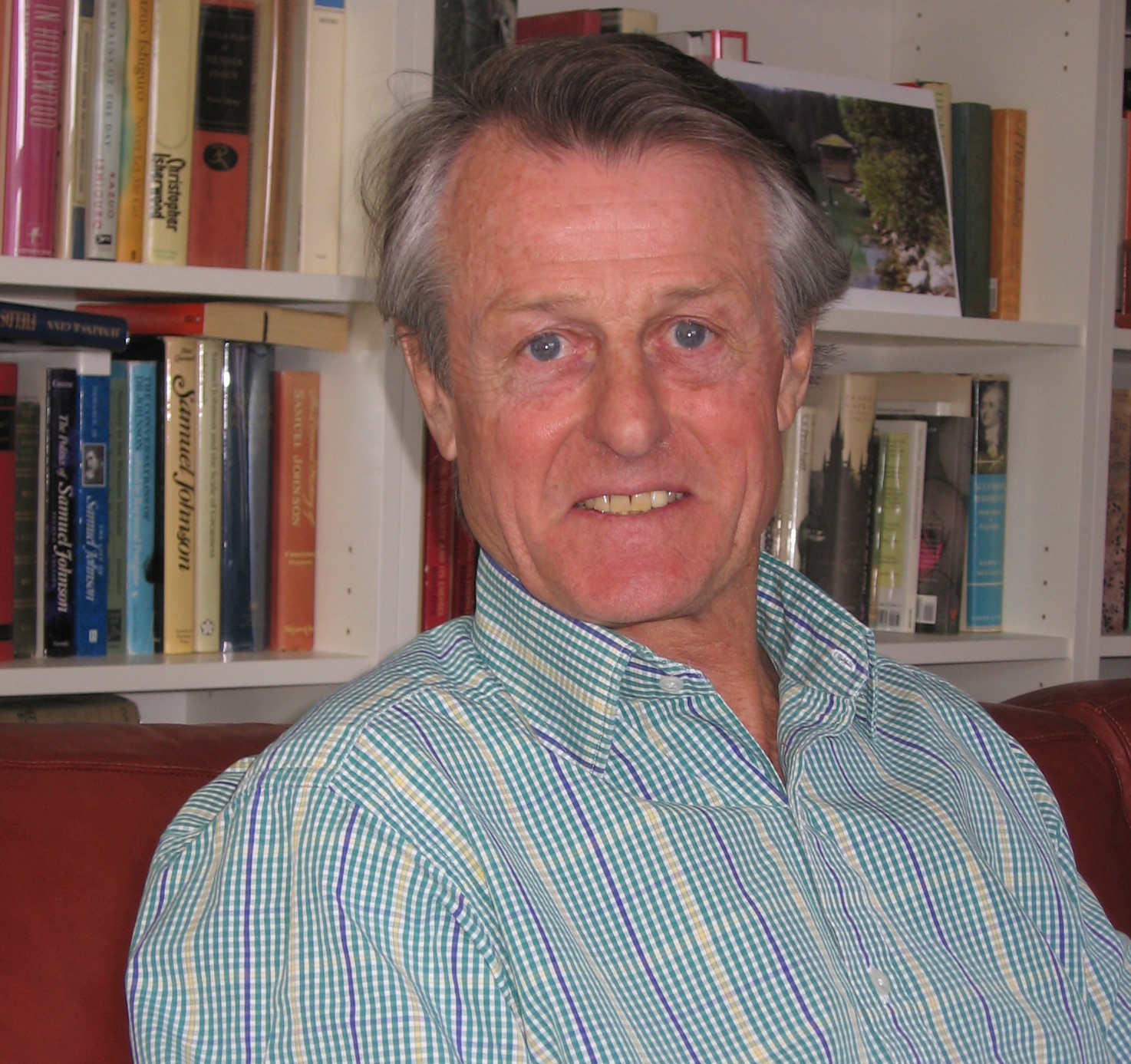
Scott Griffin, (born 1938) is a Canadian businessman and philanthropist best known for founding the Griffin Poetry Prize in 2000, one of the world's most generous poetry awards, and 'Poetry In Voice', a bilingual recitation competition for Canadian high schools. Griffin is chairman, director and majority shareholder since 2002 of House of Anansi Press/Groundwood Books, and Chancellor of Bishop's University. In 2006, Griffin published a memoir entitled My Heart Is Africa that recounted his two-year aviation adventure starting in 1996, working for the Flying Doctors Service in Africa. All royalties from the sale of the book are donated to the AMREF Flying Doctors Service. The book was named to the Globe and Mail top 100 for 2006. We talk about his childhood and time in boarding school, clouds, flying, comparing horses to planes, overcoming fears and breaking away to do something different with your life for a time, calculated risk, the African Medical and Research Foundation (AMREF), the humanity of Africa, the venture capital business, magnesium die-casting, sharing experiences and providing space.

Publisher Simon Dardick on Vehicule Press
I met with publisher Simon Dardick at his home office in Montreal to talk about the history and collecting of his long-running literary publishing house Vehicule Press.

Glenn Dixon on Musical Tourism
Glenn Dixon has published two books. Pilgrim in the Palace of Words: A journey through the 6000 languages of Earth was published in 2009 to rave reviews. His second, Tripping the World Fantastic: A journey through the music of our planet came out in April of 2013. He has also published travel articles and cultural pieces in major publications such as National Geographic Magazine, the New York Post, the Walrus Magazine, the Globe and Mail and even Psychology Today. Glenn has traveled through seventy countries and worked on documentary films in Egypt, Tibet, Russia, Peru, Ecuador, Turkey and many others. He has three degrees including a Masters degree in socio-linguistics. He lives and works in Calgary, Canada.
Marcello Di Cintio on his Literary Pilgrimage to Iran
Marcello Di Cintio is a Canadian writer. He won the 2012 Shaughnessy Cohen Prize for Political Writing for his book Walls: Travels Along the Barricades. The award was handed out on March 6, 2013 at the Writers' Trust of Canada's annual Politics and the Pen in Ottawa. Marcello was born in Calgary, Alberta where he currently lives with his wife, Moonira, and son, Amedeo. We met recently to discuss his literary pilgrimage to Iran, which he wrote about in his book, Poets and Pahlevans, a Journey into the Heart of Iran.

Rae Armantrout on Poetry, Place, William Carlos Williams and San Diego
Rae Armantrout is an American poet generally associated with Language Poets. Armantrout was born in Vallejo, California but grew up in San Diego. She has published more than 10 books of poetry and has also been featured in a number of major anthologies. Armantrout teaches at the University of California, San Diego, where she is Professor of Poetry and Poetics. Armantrout was awarded the 2009 National Book Critics Circle Award for her collection of poetry Versed, published by the Wesleyan University Press. The book later earned the 2010 Pulitzer Prize for Poetry. Armantrout's collection, Just Saying, was published in 2013. She is the recipient of numerous other awards for her poetry including an award from the Foundation for Contemporary Arts in 2007 and a Guggenheim Fellowship in 2008. We met in Ottawa to discuss her poetry, William Carlos Williams, place, and how to be a literary tourist in San Diego.

Michael & Winifred Bixler on Letterpress Printing and Monotype
The Press & Letterfoundry of Michael & Winifred Bixler is "devoted to the craft of fine letterpress printing and traditional book typography. Our extensive collection of English Monotype matrices allows us to cast from 8- to 72-point, classic book typefaces including Bembo, Dante, Walbaum, Van Dijck, Joanna, Perpetua, Garamond, Centaur & Arrighi, Ehrhardt, Fournier, Bell, Baskerville, Poliphilus, Plantin, Gill Sans, & Univers. Work is designed, set, printed, & bound in our shop. We use Vandercook & Heidelberg cylinder presses. Fonts are cast on commission & sold by the pound." I met with Michael and Winifred at their shop in Skaneateles, NY to discuss letterpress printing, and all things Monotype.

David Mason on his memoir The Pope's Bookbinder
I met with David Mason in Kingston to talk about his memoir The Pope's Bookbinder. As the Biblioasis website wordsmiths have it: "From his drug-hazy, book-happy years near the Beat Hotel in Paris and throughout his career as antiquarian book dealer, David Mason brings us a storied life. He discovers his love of literature in a bathtub at age eleven, thumbing through stacks of lurid Signet paperbacks. At fifteen he's expelled from school. For the next decade and a half, he will work odd jobs, buck all authority, buy books more often than food, and float around Europe. He'll help gild a volume in white morocco for Pope John XXIII. And then, at the age of 30, after returning home to Canada and apprenticing with Joseph Patrick Books, David Mason will find his calling." "David Mason boldly campaigns for what he feels is the moral duty of the antiquarian trade: to preserve the history and traditions of all nations, and to assert without compromise that such histories have value. The Pope's Bookbinder is an engrossing memoir by a giant in the book trade—whose infectious enthusiasm, human insight, commercial shrewdness, and deadpan humour will delight bibliophiles for decades to come. "

Matthew Tree on the Best Literary Things to do in Barcelona
Matthew Tree (born December 30, 1958) is a writer in English and Catalan. He has lived in Barcelona since 1984. Apart from publishing both fiction and non-fiction, he is a contributor to various newspapers and magazines such as Catalonia Today,The Times Literary Supplement, Barcelona INK, Altaïr, El Punt Avui and L'Esguard. He has also appeared on various Catalan language radio and TV stations and is current a monthly guest on Catalunya Ràdio's chat show L'Oracle. In 2005 and 2006 he scripted and presented two series of the infotainment programme Passatgers for TV3 (Catalan Public Television). His most recent book, a novel in English, is entitled Snug. It's about a small village in the Isle of Wight which finds itself under siege by Africans who have gone there for that very purpose. I caught up with Matthew recently, on a blustery afternoon, to talk about cool literary things to do while in Barcelona.

George Tremlett on Dylan and Caitlin Thomas
George Tremlett (born 1939) is an English author, bookshop owner, and former politician. According to his own biography, after leaving King Edward VI School Stratford-upon-Avon, he worked for the Coventry Evening Telegraph from 1957 onward as a TV columnist and pop music reviewer. In 1961 he became a freelance rock journalist and in the 1970s wrote a series of paperbacks on pop stars, including The David Bowie Story, the first bio of the musician. He is a biographer of Dylan Thomas and his wife Caitlin. He interviewed Caitlin at her home in Catalonia for the book Caitlin: Life with Dylan Thomas. He has argued that Thomas was "the first rock star." In 1997 he published a book with James Nashold, The Death of Dylan Thomas, which claimed that Thomas' death was not due to alcohol poisoning but to a mistake by Thomas' physician in prescribing cortisone, morphine and benzedrine when Thomas was actually in a diabetic coma. Tremlett runs the Corran Bookshop in Laugharne, Wales "a shrine to the poet"; has since 1982. The shop offers tourist information...and it's where I met George to have this conversation.

Annie Haden on Dylan Thomas, Richard Burton, Swansea and Wales
Wales celebrated the centenary of famed Welsh poet Dylan Thomas in 2014. Annie Haden is an experienced tourist guide and a specialist in the life of Thomas. With over 20 years experience in the tourism sector, Anne uses an easy listening story-telling technique which keeps her tours both interesting and informative. I caught up with her at Morgans hotel in Swansea, Thomas's home town, to talk about poet and place.

Andre Alexis accuses David Gilmour of Racism
I met with Andre Alexis to discuss his novella, A (BookThug, 2013). During our conversation we hit, among other things, on literary criticism, book reviewing, 'Good' and 'Baddeley' literary critics, and David Gilmour and his GG Award winning novel A Perfect Night to go to China, and Alexis's contention that racism is contained in the chapter in this novel entitled "The Pigeon". Please note that, as a condition of making the recording of this conversation public, Alexis's essay entitled "Of a Smallness in the Soul" is being made readily available (as it is right here) to visitors to this web page...and that the point is being made, clearly, that this essay is Alexis's argument for (or demonstration of) the racism contained in ...David Gilmour's chapter entitled "The Pigeon", from his novel, The Perfect Order of Things."

Alberto Manguel on his favourite libraries and bookstores
Alberto Manguel is an Argentine-born writer, translator, and editor, and the author of many books of both non-fiction, including A History of Reading (1996), The Library at Night (2007) and Homer's Iliad and Odyssey: A Biography (2008); and fiction ( News From a Foreign Country Came , 1991). We met at the Kingston WritersFest; I asked him to recount some of his favourite experiences in bookstores and libraries around the world. First he pointed out that libraries and bookstores, in spite of their being public places, are really private spaces that each reader makes his or her own home: a sort of autobiography, where the books that interest you contain words that mirror your own experience. We talk about a Tel Aviv bookstore he visited 60 years ago, bookshop stickers, the reconstructed library of Aby Warburg in Hamburg, and treasures found by chance in used bookstores on Avenida Corrientes in Buenos Aires. Manguel's novel A Return, sketches the character of one of the old booksellers on this street.

Betsy Sherman on Arrowhead and Herman Melville
Herman Melville lived at Arrowhead (so named because of arrowheads found nearby during planting season) from 1850–1863, during which time he wrote some of his best known works: Moby-Dick, The Confidence-Man, and The Piazza Tales, a short story collection named after his porch, of which he wrote: Now, for a house, so situated in such a country, to have no piazza for the convenience of those who might desire to feast upon the view, and take their time and ease about it, seemed as much of an omission as if a picture-gallery should have no bench; for what but picture-galleries are the marble halls of these same limestone hills?—galleries hung, month after month anew, with pictures ever fading into pictures ever fresh. Built in the 1780s as a farmhouse, it was located adjacent to property owned by Melville's uncle Thomas, who Melville visited in his youth. He purchased the property in 1850 with borrowed money and spent the next twelve years farming and writing. Money problems forced him to sell the property to his brother, and return to New York City in 1863 whereupon he eventually found work as a customs inspector. The house remained in private hands until 1975, when the Berkshire County Historical Society acquired it and some of the original 160-acre property. The Society restored most of the house to Melville's period and operates it as a house museum; it is open to the public during warmer months. I visited Arrowhead recently to learn more about why Arrowhead should be on all Literary tourists' bucketlists. Here's my conversation with Executive Director Betsy Sherman

Kelsey Mullen on Edith Wharton and The Mount
The Mount is a historic site and a cultural center inspired by the passions and achievements of Edith Wharton. Designed and built by Wharton in 1902, the house embodies the principles outlined in her influential book, The Decoration of Houses (1897). The property includes three acres of formal gardens designed by Wharton, who was also an authority on European landscape design, surrounded by extensive woodlands. Programming at The Mount reflects Wharton's core interests in the literary arts, interior design and decoration, garden and landscape design, and the art of living. Annual exhibits explore themes from Wharton's life and work. In the summer of 2010, The Mount launched Berkshire WordFest, a gathering of writers and readers staged in one of the most beautiful settings in the Berkshires. I met with Kelsey Mullen, Education and Public Programs Coordinator at the Mount, to ask her why the Literary Tourist might want to venture into this neck of the woods.

Cameron Anstee on the visual canon of Canadian Book Design
From 1959-1964, McClelland and Stewart published a run of poetry books written by Irving Layton, designed by Frank Newfeld, edited by Claire Pratt, and often illustrated with photographs by Sam Tata. They turned out to be among Layton's most famous and influential titles ( A Red Carpet for the Sun [1959], The Swinging Flesh [1961], Balls for a One-Armed Juggler [1963], and The Laughing Rooster [1964]). Cameron Anstee, proprietor of Apt 9 Press and a PhD student in the English Department at the University of Ottawa recently delivered a paper at a Canadian Literature Symposium. It examined the relationship between Layton, Newfeld, and Jack McClelland and positioned it as central to the formation both of a visible canon of Canadian Literature in the 1950s and 1960s, and of Layton's particular public image. The paper looked at Layton's complicated relationship with the Canadian reading public and emerging Canadian literary establishments through a close reading of the book objects. It also considered how Layton was 'branded', the role that Frank Newfeld played in this, and the poet's conflicted responses to Newfeld's designs.

Bill Reese on book selling and book collecting,
This from the Yale University Library website: "William Reese '77 is an antiquarian bookseller living in New Haven, CT. His firm, William Reese Company, founded in 1975 when he was a sophomore, is one of the leading rare book dealers in the world, specializing in Americana, travels and voyages, and literature. He has been active with the Yale Library for many years, funding a number of fellowships in the Beinecke Library. Bill served on the committee to raise funds for the Irving S. Gilmore Music Library and contributed, with his family, the Jackson Family Rare Book Room there, named in honor of his grandfather, John Day Jackson, Class of 1890, who gave Yale its first music library. Bill has also given Yale major collections of 20th-century writers such as Robert Graves and Siegfried Sassoon, as well as books and manuscripts ranging from 18th-century Louisiana to the diary of an interned Japanese-American in World War II. He has also curated four major exhibitions in the Beinecke Library, including their Columbian Quincentenary exhibition in 1992, and the show honoring Paul Mellon's bequest to the Beinecke Library in 2002, both commemorated with published catalogs. He has also funded Beinecke publications such as the recently published Alfred Stieglitz–Georgia O'Keefe correspondence, funded cataloguing initiatives in the Map Collection, and underwritten Yale staff members attending the Rare Book School. Bill has also served on the committee to award the undergraduate book- collecting prize for thirty years. Bill has worked with many book libraries throughout the country on issues of collection development, security, and fund-raising. He serves on the Council of the American Antiquarian Society and the board of the Library of America."

Walter Bachinski on his Shanty Bay Press
Shanty Bay Press was established in Shanty Bay, Ontario, in 1996 as a private press devoted to publishing livres d'artistes in which the texts and the illustrations accompanying them would have equal weight in the design of the books. The press is a partnership: the type-setting, presswork and binding are the work of Janis Butler, the illustrations are by Walter Bachinski, and the editorial, design and publishing decisions are shared. The press's equipment includes a Vandercook SP20, Vandercook Universal 1, double crown Washington hand press (1836),an etching press, and a growing collection of type. I visited the Press to talk with its proprietors, starting with Walter Bachinski. We cover a lot of ground, including personal history, the history of the press, fine press book illustration, design and composition, love of books and book collecting.

Thomas King on myth and storytelling, Lethbridge and the Alberta Landscape
I attended the Kingston WritersFest and interviewed some great authors about 'place' and its relationship to their work. Here I talk with Thomas King about native myth, possibility in storytelling, his love of the Alberta Landscape - especially that which surrounds Lethbridge - and those novels of his which best capture the essence of this spectacular place.

Rod Anstee: Anatomy of a Kerouac Collector
Jack Kerouac is an American icon thanks to his novel On the Road (1957). During the late 1950s, he and fellow members of the Beat generation captured something essential about the American psyche, defining a desire to break away from conformity in search of an alternative form of self-fulfillment. As William S. Burroughs once put it On the Road "sold a trillion Levis and a million espresso machines, and also sent countless kids on the road" (Charters, 1991, xxviii). One of those kids was Ottawa native Rod Anstee who, at age 16, hitch-hiked across the continent, part of a life-long relationship he formed with Kerouac that involved collecting his books and letters, connecting with Beat authors, and writing a bibliography. I met with Rod at his home to get the story; to trace the arc of his collecting experience; to understand as best I could, the core anatomy of a book collector.

Alexander Monker on Collecting Canadian Poetry Books
Alexander Monker is an Ottawa-based collector of Canadian poetry. I met recently with him to talk about his passion for these and other books, and to get some advise on the art of book collecting. We also talk about, among other things, the kindness and knowledge of used/antiquarian booksellers, misspelled book titles online, the Contact, Gaspereau and Apt. 9 Presses, buying what you love, Anglo-Irish novelist Charles Lever, Walter Scott, buying duplicate copies of books for trade, learning all you can about your specialty areas, and sending books to poets for their signatures. Plus many other great book collecting tips.

Abigail Rorer on The Lone Oak Press
Abigail Rorer is a wood engraver, and the proprietor of The Lone Oak Press which publishes limited edition, fine press books using...letterpress & wood engraving. One of Abigail's most delightful books is Mimpish Squinnies: Reginald Farrer's Short Guide to Worthless Plants. "Reginald Farrer (1880–1920) was a British plantsman, plant explorer, & prolific writer who was one of the first to promote rock gardening and alpine plants. The text of Mimpish Squinnies consists of fourteen plant descriptions from Farrer's The English Rock Garden and are of plants that he particularly disliked and described as only he could, with humor, wit, acerbity and anthropomorphism. The title of the book, Mimpish Squinnies, uses two of the many, almost nonsense, words that Farrer employs in some of his descriptions. Accompanying the text are fourteen full-color plant portraits using his descriptions as inspiration along with the structure of the actual plant plus a portrait of Farrer with a short biographical note." Please listen to our conversation about what Abigail does, how she does it, and why she loves it.
Literary Tourist visits Shakespeare & Company in the Berkshires
Founded in 1978, Shakespeare & Company aspires to create "a theatre rooted in the classical ideals of inquiry, balance and harmony; [and] a company that performs as the Elizabethans did — in love with poetry, physical prowess and the mysteries of the universe." Home to more than 150 artists, the company performs Shakespeare in ways which encourage collaboration between actors, directors and designers of all races, nationalities and backgrounds. It also provides training, and develops and produces new plays of social and political significance. The hope is to "inspire a new generation of students and scholars to discover the resonance of Shakespeare's truths in the everyday world, demonstrating the influence that classical theatre can have within a community". Its mission is to establish a theatre company which, by its commitment to the creative impulse, is a revolutionary force in society, which connects the truths of the past to the challenges and possibilities of today, which finds its source in the performance of Shakespeare's plays, and reaches the widest possible audience through training and education as well as performance. I met with Elizabeth Aspenlieder Communications Director/Artistic Associate and Tony Simotes, Artistic Director to talk about why Literary Tourists should visit Shakespeare and Company, and how its programs and plays affect participants and the social and political environments in which they operate.
Rebecca Romney on Las Vegas, Aldus, Aldine, William Pickering and Collecting Fine Press Books
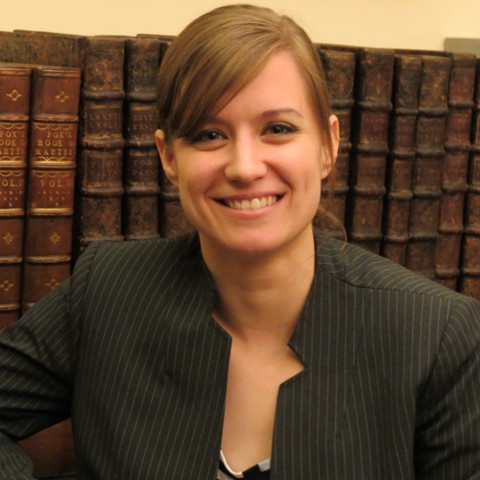
When I met with Rebecca Romney she was the Rare Book Expert on Pawn Stars and Manager at the Las Vegas Gallery of Bauman Rare Books. We talked about what she does, why Bauman's is in town, her blog, Aldine, Aldus the printer, William Pickering's Aldine poet's series, and collecting fine press books.
Peter Michel on Books about Gambling
The University of Nevada, Las Vegas Special Collections Library houses unique, rare, and specialized research material that documents the history, culture and physical environment of the city of Las Vegas, the Southern Nevada region, the gaming industry, and the University of Nevada Las Vegas. The collections include books, pamphlets, posters, serials and periodicals, scrapbooks, archives and manuscripts, maps, architectural drawings, photographs, video and audio tapes. I visited the library recently to talk gambling with former director now Head of Exhibits Peter Michel, for it's here that you'll find "the world's greatest collection of material on gambling and related issues, including books, journals, company documents, and manuscript collections."

Richard Minsky on The Art of American Book Covers 1875-1930
This part was easy. I just clipped and pasted from here. "From ornate floral patterns to cityscapes, the boldest book designs of the Golden Age are gathered here. Readers accustomed to today's more utilitarian bindings will find breathtaking images—gold leaf patterns intricate enough to replicate the shimmer of feathers, forests rendered in rich color and silver, and elegant allusions to Asian art. The diversity and ingenuity of these books will capture the imagination of book lovers and collectors—and anyone who enjoys design. Selecting the most beautifully crafted and influential pieces from his two-volume, limited edition catalog, Minsky uncovers the world behind a lost art. Dividing these breathtaking designs into distinct categories, he discusses the use of silhouettes, pattern, Oriental influence and more. He also reveals key artists, their signature designs and flourishes, the designs they inspired, and the designs that inspired them. Richard Minsky founded the Center for Book Arts in 1974 and has worked for more than 35 years to draw attention to book art and encourage artists in the field. His work has been shown around the world and remains in public collections, including the National Gallery of Art and The Victoria and Albert Museum. He has received many fellowships, grants and awards of recognition, including several from the National Endowment for the Arts." Then came the difficult part: getting Richard to talk about this great 'Art of American Book Covers 1875-1930' project (and if you believe that...).

Barbara Slate on Comics, Graphic Novels, Betty, Veronica and Archie
Barbara Slate is the author of more than 300 comic books and graphic novels. She created, wrote and drew Angel Love for DC Comics, and Yuppies from Hell and Sweet XVI for Marvel. Her first character , Ms Liz, has appeared on millions of greeting cards, in magazines, and on the Today Show; in addition, she wrote the Disney comic classics Beauty and the Beast and Pocahontas, plus more than 60 issues of Mattel's Barbie (winner of the Parent's Choice Award two years in a row), and more than 100 Betty and Veronica stories for Archie Comics. She is the author of You Can Do a Graphic Novel, "a guide to creating graphic novels - presented in the form of a graphic novel - from a veteran in the field." Her new semi-autobiographical graphic novel, Getting Married and Other Mistakes (2012) has been called 'charming and empowering'. In it, a newly divorced narrator encounters many of the social challenges that modern women must face, while undertaking a complicated journey toward finding her inner voice. I met with Slate at her home in the Hudson Valley recently to talk about all of this, and more.

Stephen Motika on New York's Poet's House
Poets House is a literary center and poetry archive - a collection and meeting place in New York that invites poets and the public to join the living tradition of poetry. Free and open to the public, Poets House's 50,000-volume poetry library is among the most comprehensive, open-stacks collections of poetry in the United States. Hosting acclaimed poetry events and workshops, Poets House not only documents the wealth and diversity of modern poetry, it stimulates public dialogue on issues of poetry in culture. I visited Poet's House to speak with Program Director Stephen Motika about why a literary tourist might want stop by here.

Eric Chase on the Greenwich Village Literary Pub Crawl
The Greenwich Village Literary Pub Crawl has been leading tourists into bars rich in bookish history since 1998. Inside each bar, you take a drink and listen as your actor/tour guide tells of the history of the establishment and of the great authors who have hung out, gotten drunk and written there. You'll get recitations from relevant texts and stops at "unique sites that are literary, historical, or alcoholic in nature." Tours start off every Saturday at 2pm, beginning at the White Horse Tavern, 567 Hudson Street and 11th Street, and last for three hours. (Take the 1 train to Christopher Street; Left on w. 10th to Hudson St.; Right/North on Hudson St. to West 11th Street). Tickets are $20, $15 for students/seniors. To make a reservation call (212) 613-5796. I caught up with owner Eric Chase at the White Horse recently to learn more about the Crawl and why literary pilgrimage for many assumes such importance.

Richard Minsky on Artists Books and Traditional Book Arts
Richard Minsky is a celebrated American book artist, bookbinder and scholar who at age 13 got his first printing press. In 1968, he graduated cum laude in economics from Brooklyn College, was then awarded a fellowship at Brown University, got his Master's degree in economics, and then pursued a Ph.D. at The New School for Social Research; two years later he chucked it all for bookbinding, art and music. He studied bookbinding under master bookbinder Daniel Gibson Knowlton In 1974, Minsky founded the Center for Book Arts in New York, an organization dedicated to interpreting the book as an art object using traditional book arts practices. I met with Richard and his graphic novelist partner Barbara Slate at their house in the Hudson Valley for libation and conversation. My objective was to pry artists books apart from these traditional book arts moorings. Listen to how successful I was. Image: Richard Minsky twirling The Philosophy of Umbrellas by Robert Louis Stevenson.

Edward Rutherfurd on his novel Paris and Literary Tourism
Edward Rutherfurd was born in England, in the cathedral city of Salisbury. Educated locally, and at the universities of Cambridge, and Stanford, California, he subsequently worked in political research, bookselling and publishing. Abandoning this career in the book trade in 1983, he returned to his childhood home to write SARUM, a historical novel with a ten-thousand year storyline, set in the area around the ancient monument of Stonehenge. It was an instant international bestseller remaining 23 weeks on the New York Times Bestseller List. Since then he has written six more bestsellers: RUSSKA, a novel of Russia; LONDON; THE FOREST, set in England's New Forest which lies close by Sarum, and two novels which cover the story of Ireland from the time just before Saint Patrick to the twentieth century. In 2009 NEW YORK was published, and in 2013, PARIS. Rutherfurd is the quintessential Literary Tourist. He 'walks' the cities he writes about, researches them, imagines them, and arrives at a personal understanding of them. We talk here about this process, about the importance of learning about the ordinary lives of people from the past, of writing short stories about the places you visit, and about history as reconnaissance and "finding out what happened to the last army that went there".

Karl Laderoute on Why Nietzsche Matters
Without question, Friedrich Nietzsche is the go-to guy for those who want to sound smart at a cocktail party. He's a philosophical superstar, ' the grandfather of postmodernism', an inspiration to thinkers such as Jacques Derrida, Michel Foucault, Gilles Deleuze, Sarah Kofman, and Paul de Man. Nietzsche's popularity lies, according to PhD candidate Karl Laderoute, in his rebelliousness and bombastic style. His aphoristic writing - with its lack of fully articulated argument - spurs students to think critically, says Laderoute, to develop their own views, interpret actively, recognize implicit biases and consider how science, poetry, history, and philosophy operate and intersect. Nietzsche's famous epistemological 'perspectivism' suggests that 'knowing' is simply interpretion from a limited point of view. As very finite beings, humans can only engage in a limited number of cognitive processes at once. This limitation means that we can only consider phenomena, broadly construed as anything happening in the world, in small doses and in particular ways. In other words, says Laderoute, we always examine a phenomenon from some particular perspective, in which some set of interests is at play. Listen as we discuss the implications of Nietzche's powerful world view.

Prof. Nicholas Margaritis on Literary Critic George Saintsbury
George Saintsbury (23 October 1845 – 28 January 1933), though a prolific and influential British literary critic in the late 1800s, is today perhaps best known as the author of a book on wine called Notes on a Cellar-Book (1920). According to Prof. Nicholas Margaritis, Saintsbury deserves a larger modern audience. Why? Listen to his explanation.
Prof. David Southward on Lionel Trilling
Lionel Trilling (1905 – 1975) is one of the best known U.S. critics of the twentieth century. A Professor of Literature and Criticism at Columbia University from 1931 - 1975, his teachings focused primarily on the relationships between literature, culture and politics. His first and best known collection of essays, The Liberal Imagination, was published in 1950. I met with David Southward, a Senior Lecturer at the University of Wisconsin - Milwaukee, in Gatineau, Quebec at the ACTC Annual Conference to discuss Trilling and his approach to literary criticism.
Prof. Edwin Conner on Longinus and the Sublime
"Longinus" is the name given to the unknown literary critic/author who wrote 'On the Sublime' an essay written around 100 CE that examines the work of more than 50 ancient authors. In the essay - of which only an extended fragment remains - Longinus talks of the sublime as a state that reaches "beyond the realm of the human condition into greater mystery." How do authors produce this state in themselves, in their work, in their readers? How do we know it when we see it? Longinus gives us his take on the topic. Prof Edwin Conner presented a paper on Longinus at the Association for Core Texts and Courses (ACTC) Conference held recently in Ottawa. I talk to him here about Longinus's criteria for judging whether or not a work is sublime.

Karla Boos on Dream of Autumn a play by Jon Fosse
Quantum Theatre was founded in Pittsburgh in 1990 by Karla Boos. Her goal was to create a company that incorporated world culture and international trends. Quantum has been a nurturing home for Boos' evolution as an artist and for the hundreds of collaborators that have created Quantum's work. These artists draw upon the resources of image, world languages, mixed media, and the power of non-traditional performance sites. Unique to the region, Quantum's productions are staged in places that aren't theatres. They have become a reflection of Pittsburgh itself, expressing the varying character of the city in places ranging from grand museums to the least likely abandoned industrial sites. Boos often directs, acts and writes for the company. She played a lead role in a play I watched called Dream of Autumn by world renowned Norwegian playwright Jon Fosse. I met Boos after her intense performance to talk about Quantum, Fosse and the play.

Emilio Gil on the History of Modern Spanish Book Design
Emilio Gil is a graphic designer, and founder of Tau Design a firm that pioneered design services, institutional communications, and the creation and development of visual corporate identity programs in Spain. He trained at the SVA (School of Visual Arts) in New York under professors Milton Glaser, James McMullan and Ed Benguiat, and studied curating at Central St. Martins in London. For his 1995 book 'Un toro negro y enorme' (An enormous black bull) Gil won the Laus de Oro award for Editorial Design, the Donside award, and the Certificate of Excellence from the Type Directors Club of New York. He teaches in the Santillana Training Publishing Master's program and is a professor at the University of Salamanca, the University Carlos III and at the University Europea, all in Madrid. In addition to having curated several important exhibitions on the history of graphic design in Spain, he is author of Pioneers of Graphic Design in Spain (Index Book, 2007. Edition in the USA, Mark Batty Publisher), and co-author of The Beauty of Things (Gustavo Gili, 2007). He has been president since June 2009 of AEPD (Spanish Association of Design Professionals). I met with Emilio in his offices in Madrid to discuss some of the great Spanish modern book designers, including Manolo Prieto and Daniel Gil.

Curator Lucy Mulroney on the Grove Press
Strange Victories: Grove Press, 1951-1985 was a major exhibition about the Grove Press that ran at the Special Collections Research Center, Syracuse University Library in Syracuse. Grove was founded by Barney Rosset in 1951 and is one of the world's great twentieth-century avant-garde publishing houses. It's credited with having introduced many important international authors to American readers during the postwar period. The exhibition traced the history of the Press from its involvement in national censorship trials, to publication of politically-engaged works such as The Wretched of the Earth, Red Star over China, and The Autobiography of Malcolm X, and the scandalous and very profitable, "Victorian Library." Grove not only challenged social mores, equality rights, and freedom of expression laws, it also "aggressively deployed savvy marketing strategies, became embroiled in labor union battles, floundered in its own success, and offended the sensibilities of not only "squares," but feminists, Marxists, academics, and many others. Strange Victories tells the complicated story of Grove's many literary and political achievements, whose profound influence on American culture endures today." I met with co-curator Lucy Mulroney while the exhibit was taking place.

Interview with Australian Poet Mark Tredinnick
Mark Tredinnick, winner of the Montreal Poetry Prize (2011) and the Cardiff Poetry Prize (2012), is the author of The Blue Plateau, Fire Diary, and nine other acclaimed works of poetry and prose. He lives in the highlands southwest of Sydney, Australia. Tredinnick is "one of our great poets of place—not just of geographic place, but of the spiritual and moral landscapes as well," according to Judith Beveridge. Of "Walking Underwater", which won the Montreal Prize in 2011, Andrew Motion wrote: "This is a bold, big-thinking poem, in which ancient themes (especially the theme of our human relationship with landscape) are re-cast and re-kindled. It well deserves its eminence as a prize winner." I met with Mark in Ottawa after his appearance at Versefest to talk about, among other things, Japanese water-colours, light, falling water, geography, rain, longing, rhythm, speech, connection, sense making, the shadows that words cast, language as being, the weather, lipstick and pigs.