
The Biblio File hosted by Nigel Beale
598 episodes — Page 10 of 12

Allen and Pat Ahearn on Book Collecting
"The Quill & Brush was established in 1976 as an outgrowth of a part-time business run by Allen and Patricia Ahearn who started collecting and cataloging books in the early 1960s. The Ahearns have over 45 years of experience in the field. At present the Quill & Brush is operated by Allen and Pat and their two daughters, Beth Fisher and Sue Regan. The Quill & Brush specializes in first editions of literature, mystery/detective fiction and poetry, as well as collectible books in all fields. The firm focuses mainly on books published from the middle of the 19th century to the present. Their stock of over 15,000 books is housed in a beautiful library in the Ahearns' home, nestled in the woods at the base of scenic Sugarloaf Mountain in Maryland…" …which is where we met to talk about ebooks and their impact on the future pricing of collectible books, about collecting what others don't; first books; Larry McMurtry, best used book selling practices and much more.

Jane Urquhart reading a poem called The Literary Club

Nicholson Baker on the Future of the Book
Nicholson Baker is an American writer of fiction and non-fiction. As a novelist he often focuses on describing the minute physical detail of our surroundings, straws and escalators for example, writing on provocative topics such as voyeurism, phone sex and planned assassination. Enthusiasts laud his ability to explore and illuminate the human psyche, critics call him a boring gadfly. Much of his non-fiction deals with the printed word, how it's presented, stored, consumed. We talk here about the future of the book, ebooks, the ipad, the Kindle, Brodart dust jacket covers, Daniel Dafoe, bloggers, the CIA, weapons scientists at the Library of Congress, letterpress printing and the pulling of books off shelves.

A.L. Kennedy on how to be Funny
Writer/comedian A. L. Kennedy lives and works in Glasgow and is a Fellow of the Royal Society of Literature. In 2003 she was nominated by Granta magazine as one of 20 'Best of Young British Novelists'. Her novel Day (2007), won the Costa Book of the Year Award. She reviews and contributes to most of the major British newspapers, and has been a judge for both the Booker Prize for Fiction (1996) and The Guardian First Book Award (2001). Her first book, Night Geometry and the Garscadden Trains (1990), a bleak collection of short stories, won several awards including the Mail on Sunday/John Llewellyn Rhys Prize, a Scottish Arts Council Book Award and the Saltire Society Scottish First Book of the Year Award. Other short story collections include Now That You're Back (1994) and Original Bliss (1997), and her novels include: Looking for the Possible Dance (1993); So I Am Glad (1995), winner of the Encore Award, which focuses on child sexual abuse and its consequences in adulthood; and Everything You Need (1999), the story of a middle-aged writer living on a remote island and his attempt to build a relationship with his estranged daughter. We met at the International Festival of Authors in Toronto to talk about humour, the buzz of post-suicide attempts, living as if you are going to die, self esteem, making other worlds, changing reality, fictional rehearsals, Buster Keaton hats, the physicality of great comic actors, storytelling and investing in lies, Lolita, Nicola Six, Shakespeare, Hamlet, Yann Kott, Benny Hill, Blazing Saddles, freedom and child molestation.

Marie Korey on the History of the Book #5
A small college cannot hope to have a large library, but if it sets to work along the right lines it may aspire to the possession of a fine one… A book may be a thing of beauty, and an example of a great craft which we must not allow to die. The means of craft and the aspiration toward beauty live on in our College library. — Robertson Davies, the Founding Master Since its inception in 1963, the Library at Massey College has developed special collections in the History of the Book as well as supporting a working nineteenth-century hand printing shop. The holdings of books and manuscripts include material on the history of printing, papermaking, bookbinding, palaeography, calligraphy, type design, book collecting, and bibliography. The examples of book production range from the fifteenth century to the present, with a particular strength in nineteenth century colour printing and publishers' bookbindings represented in the Ruari McLean Collection. The collections also include the papers of Canadian graphic designer Carl Dair. In 1981, the Library was named for the Founding Master of the College, Robertson Davies, and contains editions and translations of his writings. At the time of this interview Marie Korey was Librarian at The Robertson Davies Library. She is a leading authority on the history of the book. We met to talk about collecting books in this field. I assume the role of a rich (difficult) book collector (easy) with a passion for books about books (very easy) who retains Marie to help him acquire the best of the best possible books and materials found in this category. Here are a few of the 'essential' titles mentioned by Marie: Bury, Richard de (1287-1345) Bishop of Durham, wrote "Philibiblon" which survives in many manuscript copies as well as printed editions. "Dialogue" on Calligraphy and Printing in the sixteenth century, attributed to Christopher Plantin; this contains one of the earliest descriptions of typefounding. There was a facsimile done, with an English translation by Ray Nash published in 1964 under the title: Calligraphy & Printing in the sixteenthe century. Dialogue attributed to Christopher Plantin. Moxon, Joseph (1627-91), hydrographer, instrument maker, author and printer. He began publishing his "Mechanick Exercises" in monthly parts in 1677; the second volume, issued in 1683-84, was devoted to printing and type-founding. It is the first comprehensive manual on the subject in any language. Bosse, Abraham. Traicté des manieres de graver en taille douce. Paris, 1645. Early manual on copperplate engraving. Senefelder, Alois. A complete course of lithography. London: Printed for R. Ackerman, 1819.

Robert Fulford on Book Reviewing
"Robert Fulford is a Toronto author, journalist, broadcaster, and editor. He writes a weekly column for The National Post and is a frequent contributor to Toronto Life, Canadian Art, and CBC radio and television. His books include Best Seat in the House: Memoirs of a Lucky Man (1988), Accidental City: The Transformation of Toronto (1995), and Toronto Discovered (1998)." This is how the man describes himself on his website. I'd only add that I think he is the best of his kind. I sat down with him at his home in Toronto to talk about his long, distinguished career as a Canadian critic/journalist, and about evaluative criticism and what matters most in a book.

Prof Kevin Gilmartin on Critic William Hazlitt
Kevin Gilmartin is a professor of English at California Institute of Technology, and visiting professor at the Centre for Eighteenth Century Studies at York University in England. He is the author of Print Politics: The Press and Radical Opposition in Early Nineteenth-Century England (Cambridge, 1996) and Writing against Revolution: Literary Conservatism in Britain, 1790-1832 (Cambridge, 2007), and the co-editor with James Chandler of Romantic Metropolis: The Urban Scene of British Culture, 1780-1840 (Cambridge, 2005). His essays have appeared in such journals as Studies in Romanticism, ELH, and The Journal of British Studies, and in several essay collections. His research interests include Romantic literature, the politics of literary culture, the history of the periodical press and of print culture, and intersections between literary expression and public activism. We talk at length about 18th century British essayist/critic William Hazlitt.
Richard Coxford on Fine Press Books: History and Collecting
Richard Coxford is the former proprietor of Bytown Bookshop in Ottawa, Canada. He has been collecting fine/press books for many years. We talk here about their history, and the joys and challenges of hunting them down.

Richard Landon: On Collecting Rare Books
Richard Landon is Director of the Thomas Fisher Rare Book Library and Professor of English. He has taught courses on aspects of the history of the book and bibliography for many years in the University of Toronto's Graduate Department of English and the Faculty of Information. Among his publications are Bibliophilia Scholastica Floreat (2005), Ars Medica (2006), 'Two Collectors: Thomas Grenville and Lord Amherst of Hackney' in Commonwealth of Books (2007), 'The Elixir of Life: Richard Garnett, the British Museum Library, and Literary London' in Literary Cultures and the Material Book (2007), and articles in the History of the Book In Canada (2004-2007). We met in his office to talk about his career, the role of a rare books librarian, the Encyclopédie, changes that have occurred in the market place, collecting as scholarship, Charles Darwin, Galileo, Copernicus, the future of the Thomas Fisher collection, ebooks, books about books, unpublished medieval texts and limitless collecting possibilities.

Copyright Expert Bill Patry on Orphans and Pirates
In 1841 Thomas Babington Macaulay observed that "it is good that authors should be remunerated; and the least exceptionable way of remunerating them is by a monopoly. Yet monopoly is an evil. For the sake of the good we must submit to the evil; but the evil ought not to last a day longer than is necessary for the purpose of securing the good." In his new book Moral Panics and the Copyright Wars, highly regarded copyright lawyer Bill Patry concurs with Macaulay, arguing that 'copyright should last only as long as is necessary to ensure that works that would not have been created but for the incentive of copyright are created.' The book at once demonstrates how copyright is a utilitarian government program – not a property or moral right - and deplores the manner in which debate has deteriorated into a battle between oversimplified metaphors; language which demonizes everyone involved – pirates and orphans alike. This has led to bad business and bad policy decisions. "Unless we recognize that the debates over copyright are debates over business models," says Patry, "we will never be able to make the correct business and policy decisions." A former copyright counsel to the U.S. House of Representatives, policy adviser to the Register of Copyright, law professor and author of the definitive 'Patry on Copyright', the man, currently copyright counsel to Google, is a centrist and advocate of balanced copyright laws, and, perhaps most significantly, the owner of a kickin' pair of running shoes Moral Panic concludes with a call not for strong or weak copyright laws but more effective ones, designed to maximize the creation of new works and learning, and minimize obstacles which prevent others from accessing and building upon them. Listen here as Patry, speaking as a concerned, informed citizen not as a Google employee, works his way out from Macaulay's lucidity, a sampling of which I cite to start off our conversation

Jane Urquhart on Lucy Maud Montgomery
Published in 1908, Anne of Green Gables is the first in a series of bestselling novels by Canadian author Lucy Maud Montgomery. Although often dark and complex, and at times racy, the 'Anne' novels are today considered by most to be children's books. Inspired by similar girls' stories of the time, and her own childhood experiences in rural Prince Edward Island, Montgomery's writing has affected generations of women around the world, perhaps none more so than another Canadian, novelist Jane Urquhart, who has just written a biography of Lucy Maud as part of Penguin's Extraordinary Canadians series. We met at her house to talk about the vast disconnect between the work and the woman; depression, lesbianism and gaiety; about place, truth and memory, narrative and culture, confidence and role models.

Cory Doctorow on the Future of the Book
Copyright activist, speaker, teacher (how about 'speacher'…or 'spreacher'), columnist, science fiction novelist, short story writer, co-editor of Boing Boing, and the very manifestation of articulate dynamism, Cory Doctorow was in Ottawa to promote his novel Little Brother. a fast paced, current-day 1984-like polemic calling for teens to subvert security measures, especially those used by governments that claim to "defend my freedom by tearing up the Bill of Rights." As Austin Grossman puts it in the New York Times: MY favorite thing about "Little Brother" is that every page is charged with an authentic sense of the personal and ethical need for a better relationship to information technology, a visceral sense that one's continued dignity and independence depend on it: "My technology was working for me, serving me, protecting me. It wasn't spying on me. This is why I loved technology: if you used it right, it could give you power and privacy…Little Brother argues that unless you're passably technically literate, you're not fully in command of those constitutionally guaranteed freedoms — that in fact it's your patriotic duty as an American to be a little more nerdy." I'm clearly not nerdy enough… incarcerated I am, in fact, by technological illiteracy…incapacitated too…neither machine I used to record my conversation with Cory worked for the full duration of our encounter…they did however capture enough, thankfully, to provide his engaging take on the future of the book, the seeds of its destruction…and mention of a guy with a lemon up his nose. (For discussion of copyright, please listen to a giant in the field, Bill Patry here).

Kate Pullinger on her novel The Mistress of Nothing
Kate Pullinger is a novelist who also writes for film and various digital platforms. Born in Cranbrook British Columbia she went to high school on Vancouver Island, dropped out of McGill University, worked for a year in a copper mine in the Yukon, traveled, and eventually settled in London. Pullinger has written two short story collections; her novels include When the Monster Dies (1989), Where Does Kissing End? (1992), A Little Stranger and most recently The Mistress of Nothing which has just won Canada's GG Literary Award for best English Fiction (to be awarded this evening). She has lectured and taught at, among other institutions: the Battersea Arts Centre, the University of Reading, and Cambridge University, as well as in various prisons. She currently teaches Creative Writing and New Media at De Montfort University, Leicester. The Mistress of Nothing (2009), takes its inspiration from the life of Lucie, Lady Duff Gordon, and is set in nineteenth-century Egypt. I met with Kate in Ottawa. Among other things we talk about what it's like to win the GG, class structures, and the future of the book (check out her website here).

Yann Martel on What Stephen Harper is Reading
Listen here as famed author of The Life of Pi and self proclaimed political gadfly Yann Martel absorbs a barrage of punishing jabs I throw at him over his book What is Stephen Harper Reading? and punches back at a (former) Canadian Prime Minister whom he clearly holds in disdain.
Larry Thompson on the Process of Letterpress Printing
Larry Thompson established Greyweathers Press several years ago because of a "love of beautifully designed type skillfully arranged on a well-proportioned page." His original plan was to print letterpress books only, however, as his enterprise evolved Larry became interested in relief block prints and now includes these in his work. Editorial focus is on the literature both of 19th and early 20th century British and American writers and young, unpublished writers. All printing and typesetting is done by hand on a Vandercook S-219AB proofing press. Books are also bound by hand. I met with Larry in his studio in Merrickville, Ontario (about a half hour drive south of Ottawa) to talk about what he does. Listen as he takes us through the letterpress printing process.

Don Lindgren on Collecting Cooking Books
Researching 'literary' Portland (Maine) before trekking down there, I came across mention of Rabelais Book shop. What an interesting concept it's built upon: the vertical integration of new titles on food, wine, gardening and farming, with rare out-of-print books. Patrons therefore inhabit several distinct categories: Book lovers and collectors from around the globe, food lovers and cooks from around the block. Situated in Portland's East End next door to Hugo's (chef Rob Evans won the 2009 James Beard award for Best Chef Northeast) and within walking distance of half a dozen other great restaurants, including Bresca, Duckfat and Fore Street, the store, in several short years, has become the go-to place for New England's foodies. Hosting author readings, art exhibits, film showings/dinners and Slow Food meetings, the shop is a jointly owned by Samantha Hoyt Lindgren, a former photo editor and pastry chef, and her husband Don, an antiquarian book dealer. I met with Don at Hugo's – we thought it would be quieter there than in the store – to talk food and books…listen for the names of titles you might want to start collecting.

Publisher Tom Doherty on Tor Books
After working his way up through the publishing trade during the 1950s and 1960s, Tom Doherty became publisher of Tempo Books in 1972 and later Ace Books. In 1980 he established his own publishing firm Tom Doherty Associates Inc., with the help of several investors including silent partner Richard Gallen (of Dell Emerald Books fame), and with it the Tor Books imprint. Early Tor titles included Norton's Forerunner; Fred Saberhagen's Water of Thought; Poul Anderson's Winners, Starship, Explorations and Guardians of Time; Keith Laumer's The Breaking Earth, Beyond the Imperium, and The House in November; Harry Harrison's Planet of No Return and Planet of the Damned; Roger Zelazny and Fred Saberhagen's Coils; and Steve Barnes and Larry Niven's Belial Honours during the early/mid eighties included The Prometheus Award for The Probability Broach by L. Neil Smith (1982) and the Nebula Award for Best Novel for Orson Scott Card's Ender's Game (1985). In 1986 Doherty sold his company to St. Martin's Press and TDA/Tor Books became a division of the larger company. Over time the portion of non-SF "mainstream" titles at Tor grew, to a point where, by 1993, they made up more than half the list. As a result a new imprint, Forge Books, was established in order to better market these titles. Tom does a much better job of charting the history of his career and these companies than I have here. Listen and learn how and why he has enjoyed such success; you can just tell how much fun he's had in the business.

Science Fiction Editors David Hartwell and Kathryn Cramer
David Hartwell has worked as a Science Fiction and Fantasy editor for Signet, Berkley Putnam, Pocket (where he founded the Timescape imprint and created the Pocket Books StarTrek publishing line), and Tor (where he headed Tor's Canadian publishing initiative, and introduced many Australian writers to the US market). Since 1995, his title at Tor/Forge Books has been "Senior Editor." He chairs the board of directors of the World Fantasy Convention and is an administrator of the Philip K. Dick Award. He holds a Ph.D. in comparative medieval literature and lives in Pleasantville, New York with his wife Kathryn Cramer and their two children. Each year, with Cramer, he edits two anthologies, Year's Best SF and Year's Best Fantasy. Both anthologies have consistently placed in the top 10 of the Locus annual reader poll. In 1988, Hartwell won the World Fantasy Award in the category Best Anthology for The Dark Descent. He has been nominated for Hugo Award on numerous occasions, and won in 2006, 2008 and 2009. Hartwell has also edited four best novel Nebula Award winners.

Rocky Stinehour on The Stinehour Press
Roderick 'Rocky' Stinehour is a very pleasant, accomplished gentleman from Vermont. He's also recognized internationally as a printer of high repute and a designer of beautiful, scholarly books. His career spans over much change in printing technology and the way in which books are produced and distributed. In 1950, after graduating from Dartmouth College, he, along with his wife and brother, established The Stinehour Press in the village of Lunenburg, Vermont. From modest beginnings the Press flourished thanks to persistence, vision, and the ability to attract skilled passionate co-workers; due to the quality of its books, the company will long be remembered as one of America's finest scholarly publishers. I visited Rocky in the 'Northeast Kingdom'.

Book Artist Claire Van Vliet on the Janus Press
Claire Van Vliet is the owner of the Janus Press founded in 1955 located, since 1966, in Newark, Vermont. Janus Press has to date produced approximately 100 publications — books, pamphlets, and broadsides- , many of them designed, illustrated, type-set, printed (sometimes on paper made by the artist), and bound by Van Vliet herself in a well-equipped studio, printshop, bindery of her own design. Born in Ottawa, Canada, she has lived in the United States since 1947. After graduating with an MFA degree from Claremont Graduate School (1954), Van Vliet traveled in Europe, apprenticing herself for a time as a hand typesetter. During these travels she taught herself etching while working as a craft instructor at the United States European Headquarters in Germany. For the remainder of the '50s and early 1960s she taught printmaking, typography and drawing at the Philadelphia Museum School (now The University of the Arts) and worked as a type compositor for John Anderson, first at The Lanston Monotype Company in Philadelphia, and then at his own Pickering Press in New Jersey. In 1965 to '66 she was hired by the Art Department of the University of Wisconsin, Madison as a Visiting Lecturer in Printmaking. Primarily a publisher of first edition poetry (including the work of Seamus Heaney), Van Vliet pioneered the use of colored paper pulps for book illustration, and more recently has developed a variety of distinctive non-adhesive book structures. Museums that collect Van Vliet's work include The National Gallery in Washington, DC; the Victoria and Albert Museum, The Library of Congress and the Smithsonian Institute. In addition to her many honors, in 1993 the University of the Arts in Philadelphia named Van Vliet an honorary Doctor of Fine Arts. We met in her studio to talk about artist books and a long, outstanding career.

Galway Kinnell on Poetry
Galway Kinnell was born February 1, 1927 in Providence, Rhode Island. He has been hailed as one of the most influential American poets of the latter half of the 20th century. Educated at Princeton and Rochester Universities, he served in the United States Navy, after which he spent several years traveling, in Europe and the Middle East. His first book of poems, What a Kingdom It Was, was published in 1960, followed by Flower Herding on Mount Monadnock (1964). Upon his return to the United States, Kinnell joined CORE (Congress of Racial Equality) as a field worker and spent much of the 1960s involved in the Civil Rights Movement. Social activism during this time found its way into his work – Body Rags (1968), and especially The Book of Nightmares (1971), a book-length poem concerned with the Vietnam War. Other books of poetry include Selected Poems (1980), for which he received both the Pulitzer Prize and the National Book Award, Imperfect Thirst (1996); When One Has Lived a Long Time Alone (1990) and A New Selected Poems (2000), a finalist for the National Book Award; He has also published translations of works by Yves Bonnefroy, Yvanne Goll, François Villon, and Rainer Maria Rilke. Honors include a MacArthur Fellowship, a Rockefeller Grant, the 1974 Shelley Prize of the Poetry Society of America, and the 1975 Medal of Merit from National Institute of Arts and Letters. He has served as poet-in-residence at numerous colleges and universities, and as a Chancellor of the Academy of American Poets from 2001 to 2007. We met recently at his home in Vermont to talk about his work.

Curator Jerry Fielder on the books of Yousuf Karsh
Yousuf Karsh (1908-2002) was born in Armenia in 1908. His photographer uncle, George Nakash, brought him to Canada in 1924. After apprenticing in Boston with John H. Garo, Karsh settled in Ottawa in 1932, where he began his professional career. By 1936 he was photographing visiting statesmen and dignitaries, among them President Franklin Roosevelt. His December, 1941 portrait of a bull-doggish Winston Churchill, symbolizing Britain's wartime resolve brought Karsh international attention. Among the most widely reproduced portraits in the history of photography, 'Churchill' was also one of the first to carry the famous "Karsh of Ottawa" copyright. I met recently with Jerry Fielder, Curator and Director of the Estate of Yousuf Karsh to talk about Karsh and the books that contain his works.
Brad MacKay on Doug Wright, Comics and Graphic Novels
Writer, journalist, comic reader, Cartoon Historian, intermittent blogger, and over-tired family man Brad Mackay is the author of a biographical essay which appears in The Collected Doug Wright Volume One (Drawn and Quarterly, 2009). First of a two-volume set, the book – designed by well known Canadian cartoonist Seth - presents a comprehensive look at the life and career of one of the most-read, best-loved cartoonists of the 1960s. The work draws from thousands of pieces of art, pictures, and letters, plus the artist's own journals, and provides a picture of the British-born Wright as both cartoonist and human being. It follows his artistic development from earliest unpublished works through to the introduction of his most enduring comic strip, Nipper. First published in 1949, a full year before the debut of Peanuts, it memorably captured both the humorous and frustrating side of parenting. I spoke with Brad in Ottawa. We use Wright as a wedge to lever our way into the history of illustration, comics and graphic novels. Toward the end of our discussion Brad provides some tips for those interested in collecting comics and graphic novels.

David Mitchell on experimenting with the novelistic form
This from the incomparable British Council's contemporary writers website: Born in Southport in 1969, David Mitchell grew up in Malvern, Worcestershire, studying for a degree in English and American Literature followed by an MAin Comparative Literature, at the University of Kent. He lived for a year in Sicily before moving to Hiroshima, Japan, where he taught English to technical students for eight years, before returning to England. In his first novel, Ghostwritten (1999), nine narrators in nine locations across the globe tell interlocking stories. This novel won the Mail on Sunday/John Llewellyn Rhys Prize and was shortlisted for the Guardian First Book Award. His second novel, number9dream (2001), was shortlisted for the 2002 Man Booker Prize for fiction. It is set in modern day Tokyo and tells the story of Eiji Miyake's search for his father. In 2003 David Mitchell was named by Granta magazine as one of twenty 'Best of Young British Novelists'. In his third novel, Cloud Atlas (2004), a young Pacific islander witnesses the nightfall of science and civilisation, while questions of history are explored in a series of seemingly disconnected narratives. Cloud Atlas was shortlisted for the 2004 Man Booker Prize for Fiction. David Mitchell lives in Ireland. His latest novel is Black Swan Green (2006) We met in Toronto to talk about experimentation and realism, plot, character and all that good stuff, but also about the greatness of John Cheever, high brow and pulp fiction, good pot boilers, the cosmos, cosmi, connections, melding verbs, platitudinous profundities, critics as platypus taxidermists, poetry in prose, the originalities of happy blunders and cultural juxtapositions, Perec's W, monkeying with structure, planning your funeral, evaluative criticism, and the delightful experience of reading Chekhov's short stories.

Booksellers Joshua and Phyllis Heller on Artist Books
What's the difference between a First Edition, a Fine Press Edition and an Artists' Book? Joshua and Phyllis Heller work with me to help define the boundaries. The two of them established Joshua Heller Rare Books, Inc. in Washington DC, in 1985. The company specializes in "contemporary fine printing and beautifully illustrated books, the Private Press Movement, modern fine bindings, and books about books. [Their] much admired catalogues, illustrated in full color, are distributed to a national and international list of clients." Joshua has lectured widely in the United States and Canada on the art of the book. He helped organize the Art of the Contemporary Book Conference at Ohio State University in 1991, and has: contributed articles on the Private Press Movement to journals such as Fine Print and Imprint; and curated exhibitions of South African botanical artist Elise Bodley, both for the Smithsonian Museum of Natural History and the Audubon Society; he also proposed the first Washington Artists' Book Fair – now a biennial event; and organized the first ever exhibition of fine modern bindings at the Corcoran Museum of Art in Washington DC in 2003. I met the Hellers at their home in Washington, D.C. recently.

John Bidwell on the Morgan Library's Collection
John Bidwell is Astor Curator of Printed Books and Bindings at thePierpont Morgan Library, before which he was Curator of Graphic Arts in the Princeton University Library. He has written extensively on the history of papermaking in England and America. The Printed Books and Bindings collection at the Morgan contains works spanning Western book production from the earliest printed ephemera to important first editions from the twentieth century. Holdings encompass a large number of high points in the history of printing, often exemplified by a lone surviving copy or a copy that is perfect in every way. Areas of strength include incunables, early children's books, fine bindings, and illustrated books. The collection is founded upon acquisitions of Pierpont Morgan, who sought to establish in the United States a library worthy of the great European collections. Among the highlights are three Gutenberg Bibles, works by Lord Byron, Charles Dickens, Edgar Allan Poe, John Ruskin, Mark Twain, Herman Melville, and William Morris, and classic early children's books. The Carter Burden Collection of American Literature, a major 1998 gift, strengthens the Morgan's twentieth-century holdings with authors such as Ted Hughes, Sylvia Plath, Vladimir Nabokov, Gertrude Stein, and Tennessee Williams. I talk with John Bidwell about the collection, what it contains, how it was acquired.
Prof. Joseph Khoury on Succession in King Lear and Hamlet
Shakespeare wrote Hamlet before James l came to the throne. Events in the play reflect many of the real world concerns that Englishmen had about being ruled by a foreigner. At the play's end, Denmark's line of rulers is extinguished, and a foreigner (Fortinbras) takes the throne. James was married to Anna of Denmark, some feared that if he were to attempt a military takeover, he might call on the forces of his brother in law Christian IV of Denmark. King Lear was written after James's succession. At the start of the play Lear is firmly established as king of a united Britain. This reflected James's wish to be ruler of a fully united kingdom. In fact he approached Parliament, without success, in 1607 in hopes of securing a closer political union. The names of the Dukes in King Lear are taken from real life. James had recently made his sons Henry and Charles the Dukes of Cornwall and Albany respectively. In the play Albany is an honest man who realises too late the evil doings of his relatives. Once aware, he works to restore natural order. At the end, hope for the monarchy rests with him, Albany from Scotland, who is free to reunite the fractured kingdom. In this he represents what James wanted to achieve with his succession. Listen here as Prof. Joseph Khoury, of St. Francis Xavier University in Nova Scotia, and I discuss the themes of succession and the divine right of kings in Hamlet and King Lear.

Denise Mina on the Crime & Mystery Genre
Crime novelist Denise Mina is the author of a trilogy of novels set in Glasgow: Garnethill (1998), which won the Crime Writers' Association John Creasey Memorial Dagger; Exile (2000); and Resolution (2001). Sanctum (2002), is the story of a forensic psychiatrist, convicted of killing a serial killer. The Field of Blood (2005) is the first in a new series, the second in the series, The Dead Hour, was published in 2006, and the third, Slip of the Knife, in 2007. Denise also writes short stories, one of which, 'Helena and the Babies' from Fresh Blood 3 (1999), won the Crime Writers' Association Macallan Short Story Dagger. Two short stories and a play, Hurtle (2003), have been broadcast on BBC Radio 4. Her latest play is Ida Tamson. Her lastest novel is Still Midnight (2009). We met in Ottawa where Denise was the international guest of honour at Bloody Words, Canada's national mystery conference. Our conversation cuts a wide swath across the socio-political (alcoholism, the accurate depiction of mental illness, the courage of the mentally ill) the psychoanalytic (detective stories as re-enactments of the primal act) and the technical (cozy endings, realistic puzzles)

Terry Griggs on her novel Thought you were Dead
Terry Griggs is the author of a collection of short stories, Quickening, which was nominated for a Governor General's Award, and two novels, The Lusty Man, and Rogues' Wedding, shortlisted for the Rogers Writers' Trust Fiction Award. She has also written two books for children, Cat's Eye Corner, shortlisted for a Mr. Christie's Book Award and a Red Cedar Award, and most recently a sequel, The Silver Door. In 2003 she received the Marian Engel Award. Born on Manitoulin Island in Lake Huron, she currently lives in Stratford, Ontario. We met in Ottawa to talk about her latest 'farce noir' comic mystery novel, Thought you were Dead, and, as a result about: cartoons, dead flies, Nabokov, Pnin's zany, self-mocking speech and ways, fending off intimacy, how comedy sharpens your judgment, wordplay, names and book titles, the male-female divide, ambiguity, contained chapters, Philip Larkin, naked women on book covers, and The Monkeys' Michael Nesmith's mother who invented liquid paper.

Karl Siegler on Talon and Literary Book Publishing
Karl Siegler is a founding member of the Association of Book Publishers of British Columbia and the Literary Press Group of Canada; he has served as president of the Association of Canadian Publishers twice, and was one of the founding members of the Simon Fraser Centre for Studies in Publishing and its Masters in Publishing Program. He's also the publisher at Talonbooks. Talonbooks has published Canadian poetry and drama since the publishing house was established in 1963. According to some dated, but I'm sure currently applicable stats from the Canada Council the average Canadian drama title sells 594 copies during its first two years in print, the average poetry title sells 405 copies. Karl and I talk here first about the role of a literary publisher, then about how Talon has managed to stay in business for over forty years, and finally about constituencies and the title he is most proud of having published.

Ha Jin on the Writer as Migrant
Ha Jin was born in China in 1956. After Tiananmen Square, he emigrated to the United States. Unlike most exiled writers Ha Jin was not established in his native language; he had no audience in Chinese, and so chose to write in English. He has published three collections of poetry, including Between Silences and Facing Shadows, and three collections of short fiction, Ocean of Words, received the PEN/Hemingway Award, and Under the Red Flag, won the Flannery O'Connor Award. His novel Waiting won the National Book Award for fiction as well as the PEN/Faulkner Award in 1999. In 2004, he published War Trash, which also won the PEN/Faulkner Award. He lives in the Boston area and is a professor of English at Boston University. We met in Ottawa to talk about his first book of non-fiction The Writer as Migrant . Adapted from The Rice University Campbell Lecture he delivered in 2006, the book consists of three interconnected essays exploring the experience of the migrant, 'exiled' writers in relation to their 'home' countries and languages. Alexander Solzhenitsyn, Lin Yutang, Homer, Joseph Conrad , Vladimir Nabokov and others all contribute to the conversation.
Donald Antrim on Fiction and Memoir
This past Spring at the Blue Met Writers Festival, Donald Antrim conducted a workshop entitled: Fiction and Memoir: "Writing Ourselves" It was designed to explore the 'challenging and often frustrating process of reading into one's own work;' and to identify aspects of that work which may have been underdeveloped, unnoticed, or even, avoided. As the syllabus put it: "Fiction and memoir are not, as a rule, brought together in workshops. And yet many of the concerns that are most important to all of us—the technical production of form; the experience of psychological drive within the narrative; and the tangible-seeming, built-from-scratch, moral or immoral world our characters inhabit—are experienced by writers of fiction and memoir. Whatever we write, we may all have cause to wonder about the overt and the embedded evidence of our own experiences, even in works in which autobiographical material is scrupulously occluded. Perhaps, in opening the class to writers of non-fiction and fiction, there will be a fruitful exchange." Donald Antrim is the author of three novels, Elect Mr. Robinson for a Better World: A Novel, The Hundred Brothers and The Verificationist: A Novel. His latest publication is The Afterlife (2006). He lives in Brooklyn, New York. We talk about workshops in general, and what happened in Montreal specifically.

Prof. Rohan Maitzen on George Eliot's Middlemarch
Rohan Maitzen has an Honours B.A. in English and History from the University of British Columbia and an M.A. and Ph.D. in English from Cornell University. Since 1995 she has been a member of Dalhousie University's English Department. Her main teaching area is the Victorian novel; she has a particular admiration for George Eliot and assigns her greatest novel, Middlemarch, whenever possible. I had the pleasure of 'meeting' Rohan online in the comments section of her blog Novel Readings. I admire her smooth flowing, erudite prose and her reaching out to an audience wider than just those sitting in her classroom. Rohan was in Ottawa recently for a 'Learneds' conference. I got to meet her in person and interview her, off the cuff , one on one, about the life and lessons found in Middlemarch.

Robert Bringhurst on Book Design
Born in Los Angeles in 1946, Robert Bringhurst is an award winning Canadian poet, typographer and author. Perhaps best known for The Elements of Typographic Style – a reference book of typefaces, glyphs and the visual and geometric arrangement of type, he is also a respected translator of poetic works from Haida into English. He lives on Quadra Island, near Campbell River, B.C. We met in Ottawa to talk about his definitions of both the book, as articulated in The Surface of Meaning, and typography which should Invite the reader into the text Reveal the tenor and meaning of the text Clarify the structure and the order of the text Link the text with other existing elements Induce a state of energetic repose, which is the ideal condition for reading
A.B. Yehoshua on his novel Friendly Fire
A.B. Yehoshua was born in 1936 to a fifth-generation Jerusalem family of Sephardi origin. His first book of stories, "Mot Hazaken" (The Death of the Old Man) was published in 1962. He was an important member of the "new wave" generation of Israeli writers who differed from earlier writers by focusing on the individual rather than the group. Franz Kafka, Shmuel Yosef Agnon, and William Faulkner were all formative influences. Author of nine novels, three books of short stories, four plays, and four collections of essays, Yehoshua has won the Brenner Prize, the Alterman Prize, the Bialik Prize, the Israel Prize for Literature, the National Jewish Book Award and many, many other international prizes. His most recent novel, Friendly Fire, explores the nature of Israeli familial relationships, personal grief and bitterness. We met recently at the Blue Met Writers Festival in Montreal to talk about the book. Our conversation touches on the Jewish diaspora, hatred and minorities, a two state solution, gestures recognizing good, the metaphor of fire, domestic violence, Apartheid, South Africa, solutions, marriage, and marriages between Arabs and Jews.

M.G. Vassanji on Mordecai Richler
M. G. Vassanji was born in Kenya and raised in Tanzania. Before coming to Canada in 1978, he attended MIT and the University of Pennsylvania, where he specialized in theoretical nuclear physics. From 1978-1980 he was a postdoctoral fellow at the Atomic Energy of Canada, and from 1980 to 1989 he was a research associate at the University of Toronto. During this period he developed a keen interest in medieval Indian literature and history, co-founded and edited a literary magazine (The Toronto South Asian Review, later renamed The Toronto Review of Contemporary Writing Abroad), and began writing stories and a novel. In 1989, with the publication of his first novel, The Gunny Sack, he was invited to spend a season at the International Writing Program of the University of Iowa. That year ended his active career in nuclear physics. Vassanji is the author of six novels and two collections of short stories. He has won the Giller Prize, twice; the Harbourfront Festival Prize; the Commonwealth First Book Prize (Africa); the Bressani Prize and the Order of Canada. We met at the Blue Met Writers Festival in Montreal to talk about his most brief biography of Mordecai Richler for Penguin's Extraordinary Canadians series.The discussion touches on Richler's outsider status, his struggle with and acceptance of Jewishness, making one person's story everyone's story, cities, streets and communities, mothers and fathers, growing out of groups, humble origins, irony, great novels versus journalism, and honesty.
Zoe Heller on her novel The Believers
This from Contemporary Writers: "Zoe Heller was born in London in 1965 and educated at Oxford University and Columbia University, New York. She is a journalist who, after writing book reviews for various newspapers, became a feature writer for The Independent. She wrote a weekly confessional column for the Sunday Times for four years, but now writes for the Daily Telegraph and earned the title 'Columnist of the Year' in 2002. She is the author of two novels: Everything You Know (2000), a dark comedy about misanthropic writer Willy Miller, and Notes on a Scandal (2003) which tells the story of an affair between a high school teacher and her student through the eyes of the teacher's supposed friend, Barbara Covett. It was shortlisted for the 2003 Man Booker Prize for fiction, and was released as a feature film, starring Cate Blanchett and Dame Judi Dench." We met in Ottawa to talk, 'companionably' about her latest novel The Believers.
Nino Ricci on Pierre Trudeau
Nino Ricci's first novel, the best-selling Lives of the Saints, won international acclaim and a host of awards, including, in Canada, the Governor General's Award for Fiction and the Books in Canada First Novel Award, and in England, the Betty Trask Award and the Winifred Holtby Prize. It was followed by In A Glass House and Where She Has Gone, which completed the trilogy that Lives of the Saints began, Testament, co-winner of the Trillium Award, and, The Origin of Species which won Ricci his second Governor General's Award. Born in Leamington, Ontario, to parents from the Molise region of Italy, he completed studies at York University in Toronto, at Concordia University in Montreal, and at the University of Florence, and has taught both in Canada and abroad. We met recently at the Blue Met Writers Festival in Montreal to talk about his most recent work: a brief biography of Pierre Trudeau for Penguin's Extraordinary Canadians series. Topics covered include the Italian Canadian attachment to Trudeau and the Liberals, immigration, gun slingers, alluring leadership qualities, fear of failure, media strategies, bilingualism's mixed legacy, the Charter, budget deficits, the pride of being Canadian, and philosopher-kings.

Margaret MacMillan on Writing History, and Stephen Leacock
Margaret MacMillan was educated at the University of Toronto and at Oxford, where she obtained a B. Phil. in politics and a D. Phil. for a thesis on the British in India between 1880 and 1920. Her books include Women of the Raj, Paris 1919: Six Months That Changed the World, which won the 2003 Governor General's Award, the Samuel Johnson Prize, the PEN Hessell Tiltman Prize, the Duff Cooper Prize and was a New York Times Editors' Choice for 2002, Nixon in China, The Uses and Abuses of History, and most recently Penguin's Extraordinary Canadians: Stephen Leacock. Currently, MacMillan is the Warden of St. Anthony's College, Oxford University. We met recently in Montreal at the Blue Met Writers Festival. I posed a simple question: Referencing the two most recent books you have authored: How do you write history? Please listen here to a comprehensive, enthusiastic answer that addresses research, records, racism, other potential worlds, being of your time, Iraq, lessons, dangers, inevitable biases, humour and Stephen Leacock's legacy.

Author Meir Shalev on Television Satire
Meir Shalev one of Israel's most celebrated novelists, was born in 1948 in Nahalal, Israel's first moshav. He is a bestselling author in Israel, Holland, and Germany; and he has been translated into more than twenty languages. His novels include A Pigeon and a Boy, Fontanelle, Alone In the Desert, But A Few Days, and Esau. Russian Romance (The Blue Mountain) is one of the top five bestsellers in Israeli publishing history. Shalev is often compared to Gabriel Garcia Marquez. Prizes he has won include the Juliet Club Prize (Italy); The Chiavari (Italy); and The Brenner Prize of 2006—the highest Israeli literary recognition awarded for his novel, A Pigeon and a Boy, published in the US by Random House in 2007. I met Meir at The Blue Met Writers Festival in Montreal. We talk here about, among other things, television, satire, The Daily Show, great sentences, labels, Gogol, gardening and farming.

Henrietta Dax on Clarke's Bookshop, Cape Town
Clarke's Bookshop, the most famous in Cape Town, specializes in selling southern African books to universities and libraries that teach and have an interest in same. Established in 1956 by Anthony Clarke, the Long Street shop today remains much the same as it was 50 plus years ago: filled with book-lined, wooden-floored rooms spread over two levels containing an eclectic mix of new and used, rare, out-of-print, academic and popular books sold to customers local and institutions foreign. Catalogues filled with books from, among other countries, Namibia, Mozambique, Swaziland, Lesotho, Botswana and South Africa itself, go out to the likes of Yale University, the Smithsonian Institute, and the African Studies Centre in Holland, twice a year. I spoke with owner Henrietta Dax who for more than thirty years has ventured forth annually to Mozambique, the US, the UK, and other more exotic locales buying, selling, bartering and stockpiling books she thinks will appeal to her customers.

Crime novelist Margie Orford on Writing in Prison
Crime novelist, film director, children's author and award-winning journalist, Margie Orford was born in London and grew up in Namibia and South Africa. She has studied under J M. Coetzee, and worked in publishing with the African Publishers Network. In 1999 she was awarded a Fulbright Scholarship and while in New York she worked on a groundbreaking archival retrieval project, WOMEN WRITING AFRICA: The Southern Volume. She lives in Cape Town, where we met to discuss another of her many projects: Fifteen Men, a collection of writing by South African prisoners, all of whom are serving very long sentences, with whom Margie spent a year leading a creative writing course. This book is the result. We talk about her experience.

M.G Vassanji on his Critics
In a conversation I had with him, Canadian critic, editor and short story writer John Metcalf hauls off on both the Giller Prize and two-time winner M.G. Vassanji; the former for boosterism and an inability to distinguish between good and bad literature (for placing two-time winner Alice Munro in the same category as Vassanji), and the latter for being a person who, 'there's no question,' can't " handle the English language". I met with Vassanji in Montreal at the Blue Met Writers Festival ostensibly to talk about his new Penguin biography of Mordecai Richler (please stay tuned for the audio); but before commencing, I asked him to respond to Metcalf's attacks. Here's what he had to say:

Open Letter's Chad Post: on Publishing in Translation
Open Letter is the University of Rochester's literary publishing house. ' It is dedicated to connecting readers with great international authors and their works. Publishing twelve books a year and running an online literary website called Three Percent, Open Letter is one of only a handful of U.S. organizations with a commitment to cultivating an appreciation for international literature.' 'Chad W. Post is the director of Open Letter, a press dedicated to publishing literature in translation. He also runs Three Percent, an online blog and review site focused on international literature. Prior to starting Open Letter, he was the associate director at Dalkey Archive Press. In addition, he co-founded Reading the World, a unique collaboration between publishers and independent bookstores to promote world literature.' We talk here among other things about the dominance of great non-English speaking novelists, Roberto Bolaño, Julio Cortazar (Hopscotch is one of Post's favourite novels), Jose Saramago and the phenomenon of one-foreign-author-at-a-time, reasons for the success of 2666, why American authors have the inside track, how economics works against translation, and the opportunities that exist in publishing foreign authors.
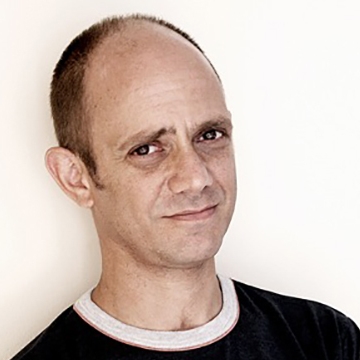
Novelist Damon Galgut on South Africa
Damon Galgut is a writer based in Cape Town. He wrote his first novel, A Sinless Season (1984), when he was seventeen. Small Circle of Beings (1988), a collection of short stories, was followed by The Beautiful Screaming of Pigs (1991), the story of a young white man on military service who suffers a nervous breakdown. The Quarry (1995), was made into a film by a Belgian production company. The Good Doctor (2003), is set in post-Apartheid South Africa, and explores the relationship between two different men working in a deserted, rural hospital. It won the 2003 Commonwealth Writers Prize (Africa Region) and was shortlisted for both the 2003 Man Booker Prize for Fiction and the 2005 International IMPAC Dublin Literary Award. His latest novel is The Impostor (2008). We talk here about national and personal trauma, corruption and realpolitik, the shadow of J.M. Coetzee, South African literature as boundaried by massive inequalities, childhood cancer, ambiguity, the new class system, real world maturity and the need for compromise.

Andre Brink on Life & Writing in South Africa
This from contemporary writers: One of South Africa's most distinguished writers, André Brink was born in 1935. Poet, novelist, essayist and teacher, he began work as a University lecturer in Afrikaans and Dutch Literature in the 1960s. He began writing in Afrikaans, but when censored by the South African government, began to also write in English and became published overseas. He remains a key figure in the modernisation of the Afrikaans language novel. His novel, A Dry White Season (1979), was made into a film starring Marlon Brando while An Instant in the Wind (1976), the story of a relationship between a white woman and a black man, and Rumours of Rain (1978) were both shortlisted for the Booker Prize for Fiction. Devil's Valley (1998) explores the life of a community locked away from the rest of the world, and The Other Side of Silence (2002), set in colonial Africa in the early twentieth century, won a Commonwealth Writers regional award for Best Book in 2003. He has also written a collection of essays on literature and politics, Reinventing a Continent (1996), prefaced by Nelson Mandela. He is Emeritus Professor of English at the University of Cape Town. His latest novels are Praying Mantis (2005) and The Blue Door (2007). His memoir, A Fork in the Road was published in 2009 I met Andre Brink at his home in Cape Town. (His lovely young wife Karina greeted me at the door and led me into his book-lined study). Once seated we talked mostly about his life, about his father, about love and duty, justice, Apartheid, inter-racial sex, J.M. Coetzee, Nadine Gordimer; his love affair with poet Ingrid Jonker, her suicide, her poem 'Plant me a Tree,' English as his second language, Picasso, recommended wines and staying in South Africa despite his nephew having been shot dead by intruders at his home just north of Johannesburg.

Stephen Johnson on Random House Struik
Stephen Johnson is Managing Director of the South African publishing firm Random House Struik. We talk here about the merger, the independence of SABC (the state owned South African Broadcasting Corporation), Cartoonist Jonathan Shapiro, Random House Struik's political power, Apartheid's banning of Anna Sewell's Black Beauty, the current government's under-funding of libraries, political corruption and the loss of early promise, Apartheid by other means, freedom, story-telling and other explanations for South Africa's flourishing publishing sector, the Truth and Reconciliation Commission, Jacob Zuma's shower-head, and plans Johnson has for the future of his company.

John Metcalf on Negative Reviewing
I interviewed Canadian critic/editor/writer John Metcalf on his love of Books and Book Collecting. The same afternoon we also talked about the process of book reviewing, whether or not the use of insult and/or invective is ever justified and if so, when. John is known as a 'blunt' critic; one who tells his un-sugared truths directly, who is not reticent to attack 'with savagery' books he feels 'insult' him. The conversation refers, among other things, to the Salon des Refuses exercise undertaken by Canadian Notes and Queries and The New Quarterly magazines, personal slights, the problem of awarding the same prizes to authors of widely varying talents, and the importance to healthy literary culture of truth-telling critics. (Lengthy sentence alert): There are predictable attacks on M.G. Vassanji, Ann Marie MacDonald, and Robertson Davies here, and there is praise too for many young Canadian short story writers, but perhaps the most evident feature of this discussion is Metcalf's anger, precipitated, I'd say, primarily by a combative dedication to serving a cause larger than himself – excellence in literature – aggravated in small part both by the perceived inability of Canadians to recognize literary greatness, and personal rejection at the hands of this country's 'literary establishment' – bolstered by a natural taste for confrontation and a glee in the fighting of a good fight.

Franschhoek Literary Festival Director Jenny Hobbs
JENNY HOBBS is a novelist and freelance journalist who lives in Franschhoek, South Africa. She is the author of four novels, Thoughts in a Makeshift Mortuary, The Sweet-Smelling Jasmine, The Telling of Angus Quain, and Video Dreams, four non-fiction books, and short stories published and broadcast locally and by the BBC. She reviewed books for many years and has written for and worked on TV book programmes, both as a presenter and interviewer. She's also the Literary Director of the Franschhoek Literary Festival, now in its third year. The event has enjoyed success from its opening page. Last year the Commonweath Writer's Prize chose Franschhoek as the place to announce its winner (Canadian Lawrence Hill). We talk here about how the Festival came about, and what it takes to make it happen.
Dawn Arnold on Northrop Frye and the Frye Festival
Dawn Arnold is Chair of the Frye Festival in Moncton, New Brunswick. Jane Urquhart, Wayne Johnston, Neil Smith, Alexandre Jardin and Miriam Toews are among the many authors who will participate in this year's ten day event. Dawn and I talk here about the history of the Festival, Northrop Frye's thoughts on imagination and new worlds, the benefits to children of learning more than one language, how writing affects understanding, Moncton strip clubs, Acadie, French language childrens' authors, Richard Ford, classroom visits, and inspired students. For more information on this year's Frye Festival please click here.