
The Biblio File hosted by Nigel Beale
598 episodes — Page 12 of 12

William Deverell on how to write Crime Mystery Novels
William Deverell, has been widely hailed as Canada's greatest 'literary mystery' writer. This from his website: "Deverell worked as a journalist for seven years, with Canadian Press Montreal, the Vancouver Sun and the Saskatoon Star-Phoenix, where he was night city editor while at the University of Saskatchewan law school and editor of the student newspaper. As a member of the British Columbia, Alberta and Yukon Bars, he was counsel in more than a thousand criminal cases, including thirty murder trials, either as defender or prosecutor. He is a founding director, former president, now honorary director of the B. C. Civil Liberties Association. His first novel, Needles, won the $50,000 Seal Prize in l979 and the Book of the Year Award in l98l. His subsequent novels include High Crimes, Mecca,The Dance of Shiva, Platinum Blues, Mindfield, Kill All the Lawyers, Street Legal – the Betrayal, and he is author of the true crime book A Life on Trial – The Case of Robert Frisbee, based on a notorious murder trial which he defended…Trial of Passion won Canada's 1997 Arthur Ellis prize in crime writing, and the Dashiell Hammett award for literary excellence in crime writing in North America. " Our conversation explores Deverell's oeuvre in light of the question: How to write a great crime novel? Humour, complex characters, contentious relationships and appropriate use of 'the clock' all feature prominently in Deverell's work, and contribute to what makes it award winning. Twenty odd years ago my wife and I rented a cottage perched at the edge of the Rideau River for a weekend getaway. I cracked Deverell's Dance of the Shiva shortly after arriving. Couldn't get away from it. Couldn't put it down. After finishing it, couldn't understand why Deverell wasn't as popular as Turow, Cornwell, Ellroy or Rendell. Still can't.

David Solway on What makes a Poem Great
In honour of Poetry Month, here is my interview with Canadian poet, critic and political writer, David Solway. We first discuss what constitutes a great poem in the context of 'political' and other agendas that some poets incorporate into their work. According to Solway, great poems consist of authentic, incontestable, memorable language, with vivid power, lapidary quality and prodigious rhetorical flow, which takes time, education, reflection and maturity to work itself into themes of human importance; synoptic views of the complexity of human life; a confluence of eloquent language and major subject which has something important to say and which will resonate with contemporary and future generations. Great poems are like Switzerland, says Solway: candidates must pass through a stringent, careful, fine-meshed filter before they are granted citizenship. It is posterity that decides what is great. Aphoristic memorability and the wish to keep the words alive in the mind determines greatness.

Sally Cooper on her second novel, Tell Everything
Sally Cooper's second novel, Tell Everything,delves into the darkest regions of the human soul, and lends credence to Kipling's line: "The female of the species is deadlier than the male." During our conversation about Tell Everything we discuss topics including: the media and murder, Karla Homolka and Paul Bernardo, …body parts in ponds, Rapunsil and crime plays, three way sex, the blurred, complicated lines of consent, the fear of self revelation, and love, self protection, shame and acceptance, boxes and cameras, novel writing as catharsis, iguanas in snow drifts, crime scene photographs, facing moral issues, true crime magazines, Michael Redhill's short story The Victim, and women being every bit as predatory as men. Sally Cooper grew up in Inglewood, Ontario, population 400. She has an M.A. in English Literature from the University of Guelph, and has published in such places as Shift, Blood & Aphorisms, Carousel, The Globe and Mail, Toronto Star and eye weekly. Her first novel, Love Object, came out in 2002 to critical acclaim. She currently teaches creative writing at Humber College and lives and writes in Hamilton, Ontario.

Owner Kenneth Gloss on the Brattle Book Shop
The Brattle Book Shop, founded in the Cornhill section of Boston in 1825, has been in the hands of the Gloss Family since 1949. Over the years George and his son Kenneth built this shop into one of the largest antiquarian book shops in the United States. Ken is the current proprietor of The Brattle Book Shop. He is a past President of the Antiquarian Booksellers Association of America's New England Chapter. He also sits on the Associate Board of the Boston Public Library. Ken appraises books and libraries for Harvard, Boston University, Boston College, Northeastern, Simmons, Suffolk, Tufts, Babson, Fletcher School of Law and Diplomacy, the FBI and others. He lectures on the antiquarian book field to library groups, historical societies and other book-interested groups throughout the New England area. Appearing on numerous local and national television and radio programs, Ken is often featured talking about books and their values. He also has written many articles on appraising books, book collecting and selling. We spoke in the basement of his venerable shop.

Ray Hinst on Haslam's Bookstore in Florida
Haslam's Books, now Florida's largest new & used book store, was established in St. Petersburg in 1933 by two avid readers, John and Mary Haslam. After World War II they were joined by the second generation, Charles and Elizabeth. The business began to expand. In response to customers' requests, new technical books were added, then Bibles and religious books and finally a complete line of trade books and a large section for children. The business has moved four times to accommodate growth. Today the store covers 30,000 square feet and contains some 300,000 books. To promote books and reading, Charles had a television program on WEDU, the local PBS station, called "The Wonderful World of Books," and reviewed books on WSUN radio. He also appeared as a regular guest on WTOG-TV. Elizabeth operated book fairs at local schools for 25 years and now conducts "field trips" of 'Florida's largest book store' for elementary classes. Both have been active in the American Bookseller's Association (Charles was president from 1978 - 1980). They have taught in Bookseller Schools and written chapters in "The Manual of Bookselling." Both are published authors. In 1973, the third generation came into the business: daughter Suzanne (who also authored a chapter in the "Manual on Bookselling") and husband Ray Hinst a history, classics & military expert. Ray and I talk here about book re-printers, early Baedekers, not collecting your own inventory, the explosion in self-publishing and authors who want bookstores to carry their works and provide signing events, collecting what you like, and the error of passing up on buying opportunities.
Editor Ian Brookes on Chambers Dictionary
Ian Brookes is Editor-in-Chief of The Chambers Dictionary which was first published in 1901 and most recently updated in 2006. We talk here about lexicographers, Samuel Johnson, Scotland, the speed of language change getting quicker, Chambers' unique focus on old, Scottish, literary, historical words with humorous, sardonic definitions, such as mallemaroking and pock pudding, use of the dictionary by crossword puzzle and word game enthusiasts, Wikipedia's Hawaiian roots, the charm of browsing, the influence of rap, urban slang, multiculturalism, and instant messaging, cookery terms and the pain of being a teacher.
Kathryn Court, President, Penguin Books USA on Publishing
Kathryn Court joined Penguin Books in 1977 and became Editorial Director two years later. In l984 she was named Editor in Chief of Viking Penguin and in 1992 Senior Vice-President, Publisher, and Editor in Chief of Penguin Books. She was named President of Penguin Books in August 2000. Authors she has worked with include: Reinaldo Arenas, Andrea Camilleri, J.M. Coetzee, Slavenka Drakulic, Mary Relinda Ellis, Robert Fagles, Josephine Humphreys, Garrison Keillor, Nora Okja Keller, Donna Leon, Mary McGarry Morris, John Mortimer, Richard Rodriguez, C.J. Samsom, Jim Trelease, and William Trevor. We met at BookExpo in New York, and talk here about: the role of publisher, artist Chris Ware's funky Candide cover, new ways of selling things you already own, showing the young that reading can be fun, finding new authors and having faith in them, Andrea Camilleri and the benefit of buying series, hard cover versus soft cover sales, 4000 title backlists that finance front lists, J.M. Coetzee's greatness, sales and distain for interviewers, the need for confidence in young editors in order to convince others that their picks are as good as they say they are, advertising in book review sections and how it doesn't work, how emotional novels and those with voices women can identify with sell best, the three million copy selling The Memory Keeper's Daughter, the sales power of word of mouth, and the joyful intensity of working as part of an editorial team…as a happy few against the world.

Interview with Patrick McGahern on the Antiquarian Book Trade
Patrick McGahern has been selling books in Ottawa, Canada since 1969. His store specializes in used and rare books: Canadiana, Americana, Arctic, Antarctic, Travel, Natural History & Voyages, Illustrated & Plate Books, Irish and Scottish History and Literature. More than 30,000 titles are stocked at the Glebe store. Thousands of rare, scarce and interesting books are offered through their Catalogues which are published six times a year. Almost 10,000 titles are featured in their online database through ILAB (International League of Antiquarian booksellers). I talked with Patrick in his store about the book trade: how it was, how it is, how it will be. About idiosyncrasies, obsessions, buses and booksellers playing psychiatrist and priest; about ILAB and AbeBooks, and finally, about simply doing the work.

Margie Macmillan on Granny Bates Books
Margie McMillan is co-owner of the award winning Granny Bates Children's Bookstore in St. John's Newfoundland. We talk here about longevity and research as a reason for success, the brilliance of Graham Oakley and The Church Mice, the difference between back lists and mid-lists, schools as bread and butter, booksellers as literary critics, driving through the Swiss alps, new products that are called books, movies and cereal.

John Freeman on newspaper book reviews
At the time of this interview, John Freeman was president of The National Book Critics Circle. Founded in 1974, the NBCC is a non-profit organization consisting of nearly 700 active book reviewers who honor quality writing and communicate with one another about common concerns. We met at BookExpo in New York and talked, among other things, about the NBCC's awards program, the blog called Critical Mass, and the Campaign to Save Book Reviews which addresses the alarming shrinkage of newspaper book review sections across North America.

Bernard Margolis on the public library and its history
Bernard Margolis was President of the Boston Public Library (BPL) from 1997-2008. Founded in 1848, the BPL was the first large free municipal library in the United States. Mr. Margolis has served on the Governing Council of the 63,000-member American Library Association (ALA), and has won many awards including "Colorado Librarian of the Year", two John Cotton Dana library public relations awards, and the Kennedy Center for the Performing Arts' "Award of Excellence? for his library-sponsored "Imagination Celebration." He's also a master storyteller as you'll find out. We talk here about libraries as a public good, a culture of words and books designed to help everyone improve their lives, French ventriloquist and originator of the concept of the modern library Alexandre Vattemare (1796-1864), the U.S. as a leader in realizing this concept, immigration and self learning, an informed citizenry as the best defense of liberty, democratic access to information, BPL as the first to have a newspaper room, branch libraries and a separate children's room, the Red Sox and the Yankees, why the ebook hasn't replaced the paperback, Brewster Kahle versus Google and the Internet archive, and the question of whether or not information will be 'free for all' to improve the world.

John Wronoski on the role of the Archives Dealer
John Wronoski is a rare book dealer who specializes in literature, and primary works in the history of ideas in English, German, French, Spanish, and Russian. His shop, Lame Duck Books, contains 'the most significant selection of 19th and 20th century Spanish language literature in the world,' and important originals of 17th and 18th century English poetry. In addition to performing the traditional role of bookseller, John serves as 'agent in the institutional placement of archives' for some of the 20th Century's most important authors. It is in this capacity, as literary archives dealer, that John talks to m here about, among other things: the importance of recognizing value in the rare book trade, paper production in the lives of writers, evident spiritual input in the process of creation; the evaluation, cataloguing, packaging and marketing of manuscripts, the comparative value of long-hand versus typed documents, the compatibility of pen and paper with the flow of thought, the value of hand written/type-written correspondence versus email, rich book dealers getting richer, Frederic Tuten's Tin Tin in the World, loosing $1 million manuscripts, and adoption agencies. (Please note the interview was conducted before the British Library purchased the Pinter archive)
Author Elias Khoury
Elias Khoury is author of eleven novels including Little Mountain and Gates of the City. He is currently professor of Middle Eastern and Islamic studies at New York University, and editor in chief of the literary supplement of Beirut's daily newspaper, An-Nahar. We talk here, at the Blue Metropolis Montreal International Literary Festival, about his latest novel in English Gate of the Sun, of how great literature speaks to what is human and how religion doesn't; of how telling stories helps us to overcome death, and how knowledge helps to overcome power; of keys, loss, hatred and love; of how important the right to story, memory and language is to the existence of a people; of the double tragedy of Palestine in 1948, the real one and the fact that the telling of this catastrophe has not been permitted; of how reading literature helps us discover ourselves and of how literature attempts to give meaning to the meaninglessness of life. www.nigelbeale.com
Peter Behrens on his novel The Law of Dreams
Peter Behrens' short stories and essays have appeared in The Atlantic Monthly, Tin House, Saturday Night, and The National Post and have been anthologized in Best Canadian Stories and Best Canadian Essays. He was born in Montreal and lives on the coast of Maine with his wife and son. We talk here, at the Blue Metropolis Montreal International Literary Festival, among other things about voice and poetry in his debut novel The Law of Dreams, Winner of The 2006 Governor General's Literary Award for Fiction. It tells the story of a young man's struggle to survive the Great Famine in Ireland of 1847. On his odyssey through Ireland and Britain, and across the Atlantic to Canada Fergus O'brien encounters death, violence, sexual heat, 'boy soldiers, brigands, street toughs and charming, willful girls – all struggling for survival in the aftermath of natural catastrophe magnified by political callousness and brutal neglect. ' Think Dickens meets J.M. Coetzee. The book has been hailed by many reputable media outlets including The New York Times and The New Yorker.

Lydia Davis on translating Proust
Lydia Davis is a contemporary American author and translator of French. From 1974 to 1978 she was married to Paul Auster, with whom she has a son. She has published six collections of short stories, including The Thirteenth Woman and Other Stories (1976) and Break It Down (1986). Her most recent collection is not Samuel Johnson Is Indignant, but rather Varieties of Disturbance, published by Farrar, Strauss & Giroux. Her stories are acclaimed for their brevity, poetry, philosophy and humour. Many are only one or two sentences long. We talk here, at the Blue Metropolis Montreal International Literary Festival, about the role of the translator, her Swann's Way, measuring rooms three inches at a time, becoming Proust as an actor might a character, dialogue being more of a translation challenge than description because speech is born of environment and times, and the goal of creating living language that's timeless.

C. S. Richardson on Book Design
C.S. Richardson is an accomplished book designer who has worked in publishing for over twenty years. He is a multiple time recipient of the Alcuin Award (Canada's highest honour for excellence in book design) and a frequent lecturer on publishing, design and communications. A rare bird indeed, he recently published his first novel The End of the Alphabet, and is currently at work on his second. We talk here about C.S. Lewis, the role of the book designer, the award winning Bedside Book of Birds, 'thumbage,' how the best book design is invisible, the best designers currently at work in Canada, the U.S. and Britain, and Balzac and the Little Chinese Seamstress, (published by Chatto and Windus in England, and Knopf in the U.S.), which, according to Richardson, is one of the best designed books in recent memory. Copyright © 2007 by Nigel Beale http://nigelbeale.com
Ottawa Librarian Barbara Clubb
Barbara Clubb is City Librarian and CEO of the Ottawa Public Library, past president of the Canadian Library Association, a member of the International Relations Committee of the ALA/Public Library Association; a director for the Canadian Writers Foundation and Monthly Book Reviewer for CBC Ottawa Radio One. In this fascinating, wide ranging conversation we talk about the role of a city librarian now, at the turn of the 21 century; about library as place…where loitering is okay; accessibility, prescriptive versus reflective provision of information; the move from education to recreation and culture; Harry Potter in plastic; downloading copyrighted books; the zero list; a contest between librarians and Google; leveraging Google; the book as client versus people as clients; nine million items going in and out; and the necessity for librarians to be the opposite of their anti-social stereotype. Copyright © 2006 by Nigel Beale

John Metcalf on the Role of the Short Story Editor
John Metcalf is a highly regarded author who happens to have edited many of Canada's foremost short story writers, including Lisa Moore, Alice Munro, and Michael Winter. Born in Carlisle, England, and educated at the University of Bristol, he emigrated to Canada in 1962. In addition to his own writings (novels, stories and essays), he currently holds the un-salaried post of Senior Editor at the Porcupine's Quill of Erin, Ontario and is the editor of Canadian Notes and Queries. He resides in Ottawa, Ontario with his wife, Myrna. We talk here about the role of the editor, game playing, the placement of words and punctuation, manipulating emotions, unclogging channels between writers and readers, diplomacy, nouns, hammers, electric current, anti-Americanism, ignorant Canadian nationalists and inferiority complexes.

Interview with erotica writer Amanda Earl
Amanda Earl writes erotic fiction in Ottawa, Canada, as much for her own pleasure as anything else. Her stories have consistently been selected for publication in Carroll and Graf's annual Mammoth Book of Best New Erotica. Amanda publishes and writes poetry, is managing editor of the Bywords Quarterly Journal, and hosts Bywords.ca, a website invaluable to Ottawans interested in local literary events. We talk here about the definitions of erotica and pornography (a common joke: "Erotica is when you use a feather. Pornography is when you use the whole chicken), red wine versus white, connecting with and arousing readers, giving pleasure, the act, golden showers, being bad, the Erotica Readers and Writers Association, S&M, compelling characters and work as prostitution.
Churchill Bibliographer Ron Cohen on Bibliography
Ronald Cohen is author of the Bibliography of the Writings of Sir Winston Churchill published in 2006: a 'richly annotated work' containing thousands of entries, with detailed descriptions of each work by Churchill, including information on content, typography,paper, illustrations, maps, facsimiles, bindings, dust jackets, publication and printing history, translations, and library/collection locations, plus circumstances of publication. Cohen's fascination with Churchill began during his time with The Economist in London, shortly after his graduation from Harvard University. He began collecting Churchilliana in 1969. The publication of this major work is the culmination of 25 years' dedicated research. Cohen is the National Chair of the Canadian Broadcast Standards Council, a lawyer, founding Chairman of the Academy of Canadian Cinema and Television, a Genie award-winning film producer, and President of the Friends of Library and Archives Canada. We talk here generally about the art of bibliography, specifically about binding and centriod colour charts, altruism, accessibility, building road-maps, how many bibliographers start off as disgruntled collectors, experiencing the thrill and joy of collecting without having to lay out the dough, bibliography as storytelling, innovative periodical entry descriptions, errata, when to stop, how Cohen always got it wrong, surrendering, and uncharted works bolting from the undergrowth.
Curator David Franklin on Exhibition Catalogues
David Franklin is former Chief Curator at the National Gallery of Canada, Ottawa, and editor of Leonardo da Vinci, Michelangelo and the Renaissance in Florence, a catalogue published by Yale University Press to accompany a major exhibition of the same name held at the Gallery from May 29, 2005 to September 5, 2005. We talk here mostly about the exhibition catalogue as book: what differentiates it from typical works of scholarly non-fiction, the challenges of catering both to the research community and the general public. what is it? A tour guide? A souvenir? A text book? Offering words for works; the drawbacks of publishing to deadline; how, ideally, catalogues should be written after exhibitions take place... But we don't ignore content: the pragmatism of Giorgio Vasari; his art collection; the primacy of drawing in Renaissance Florence; painting as a process of investigation; and the jolting juxtaposition of illuminating essays and academic catalogue entries...

Christopher Pratt Artist Poet
Christopher Pratt is one of Canada's most 'prominent' painters. He is now also a published poet. We talk here, in his home of St Mary's Bay, Newfoundland on the Salmonier River, about his book A Painter's Poems (Breakwater Books, 2005), about parallels between his writing and his art, emptiness, loneliness, cleanliness, juxtaposing real and imagined worlds, getting it right, abandonment, absence and how it draws in readers and viewers, leaving important things unsaid, seasons, a man drawing circles in the sand who, when asked why he does it, responds "Well, I'd be a damned fool if I didn't," and about how creation involves sharing what is most intimate in order to communicate; in order to find out about and connect with the same in others.

Barbara Reid on Illustrating Children's Books
Barbara Reid's plasticine artwork makes her books instantly recognizable. They have won acclaim around the world, and many awards. We talk here about what makes her so good, about great children's book illustrators, the accurate conveyance of emotion, mice in subways, making room for the imagination, chiaroscuro, working in ice cream, wanting to show things to those you love, pony-tails, playing hooky, and war.

Ramona Dearing on her short story collection So Beautiful
Ramona Dearing lives in St. John's, Newfoundland, and is the latest member of the longstanding (and increasingly famous) fiction collective The Burning Rock to publish a collection of short fiction. Dearing works for CBC Radio where she is currently busy putting together a nationally broadcast program featuring young Canadian artists. So Beautiful was published in 2004 by The Porcupine's Quill Press. We talk here about her stories, my favourites, and hers, bodies in bags, judging one's own work, doing the right thing, frustration, Christian brothers at Mount Cashel, dogs, Kafka at the CBC, the importance of radio and the weather to Newfoundlanders, Brad Pitt and parallel plot lines.

Lisa Moore on her novel Alligator
Lisa Moore's fiction has been published widely in literary magazines and in anthologies. Her two collections of short stories, Degrees of Nakedness and Open have received praise for their 'supple sensuality and emotional authenticity.' She lives in Newfoundland. We talked there, and here about her recently published first novel, Alligator, about tea, pine martins, time, the exotic, Tasmania, Cezanne, St. John's as a bowl of oranges, Cubism, being in the present, survival, light, if it's ever okay not to be good, cadence and wit in storytelling, and the colour blue…quite a few things really.

Tim Parks on his novel Cleaver
Here's Tim Parks on his novel Cleaver: "Cleaver comes out of my love of the South Tyrol and a growing awareness/ irritation/ anxiety about the invasive nature of the public voice, the spoken media, in our minds and lives. And of course Cleaver, this charismatic, chaotic, destructive, hatefully likeable man who seemed just right for bringing out all the tensions between the seductive fizz of public life, various family nightmares and the magnificent emptiness of the mountains." We talk about the challenge of being left alone with oneself, being isolated in Italy removed from the buzz, getting above the noise line, the current proliferation of confession with its roots in Rousseau, not wanting to spend time with nice people who have nothing to say, predictable antagonisms in the news media, the awareness that celebrity is vacuous and yet still pursuing it, building reputation even after ceasing to believe there's any meaning in it, and how good novels open space for difficult topics to be discussed with pleasure.

Michael Crummey on the historical novel
Michael Crummey is a Newfoundland-born poet, short story writer and novelist. He is known for his historical fiction. His multi-award winning novel River Thieves depicts the relationship between European settlers and the last of the Beothuk indians in the early 19th Century. The Wreckage tells the story of a young Newfoundland soldier and his beloved during and after World War ll. We talk about Michael's goal of taking the bare facts of historical events and making the people in those events feel real, maintaining a spine of fact, the impossibility of seeing inside what extinction felt like, conjecture, emotional authenticity, false assumptions, the honesty of fiction, and falsehood of factual 'truth,' respect for the reality of people's lives, fiction being best at capturing rich complex weave of lived experience, marketability; The Wreckage, evil, 9/11, boom times in Newfoundland during WWll, and finally, the mistaken expectation of getting facts from historical novels.

James O. Born on Writing Crime Fiction
James O. Born is a Special Agent with the Florida Department of Law Enforcement and author of three best selling crime novels. We talk about his most recent, Escape Clause; about blurbs, putting humour and a human face on the real life experience of cops, how life followed art in this novel, Karma and good moral compasses, the goal of writing compelling prose with surprise endings, cheer leading competitions, smacking people who talk of movie options without deliverying, Jaws, the compulsion to write and the unsurpassibility of Elmore Leonard.

Novelist Tim Winton: In Conversation
Australian Tim Winton wrote his first novel, An Open Swimmer (1982), at the age of 19. It won the Australian Vogel National Literary Award. Born in Perth, in 1960, he is the author of Shallows (1986), a novel set in a whaling town, and Cloudstreet (1991), the story of two working-class families rebuilding their lives. Both won Miles Franklin Awards. The Riders (1995) was shortlisted for the Booker Prize and won a Commonwealth Writers Prize. He is also the author of two collections of short stories, Scission and Other Stories (1987) and Minimum of Two (1987), and co-author of several travel books about Australia, including Land's Edge (1993). His novel Dirt Music (2001), was shortlisted for the 2002 Man Booker Prize. I spoke with him during the Toronto International Writers Festival about his latest book The Turning, a series of linked stories. He seemed tired, a bit bummed about having been away from home for so long. The bloody tape ran out right in the middle of a lovely story he was telling about his converting wood from an old weir into a set of bookshelves for his library. Tim is an extremely likable, self effacing man with interesting ideas about the relationship between writing and music, as you will hear if you choose to listen…
Andrew Miller on Literary Prizes and his novel The Optimists #21
ANDREW MILLER was born in Bristol…in 1960 (induced, according to the family legend, by his mother eating a large supper of fish and chips). At age eleven, having convincingly failed his Eleven Plus, he went to boarding school in Wiltshire…Master of Arts in Creative and Critical Writing from the University of East Anglia in 1991…PhD from Lancaster University…In February 1996, after six years of writing, 'Ingenious Pain' his first novel, won the James Tait Black Memorial Prize, the Grinzane Cavour prize & the IMPAC Dublin Literary Award. Ingenious Pain & his second novel Casanova are being/have been adapted for Film. His novel, Oxygen, was shortlisted for the Booker Prize 2001. His third novel, Oxygen was shortlisted for the Booker. His books have been published in over twenty countries. He now lives in Brighton and believes that on clear days he can see the coast of France. We talk about his novel is THE OPTIMISTS, prizes, Shakespeare, Hardy, Lawrence, stylism, and his looks and wish to be a fat woman. Andrew Miller is as articulate verbally as he is on the page. Listen…don't just take my word for it…

Wendy Duff on the difference between Librarians and Archivists #20
Wendy Duff is Director of Graduate Studies and Associate Professor at the University of Toronto, Faculty of Information Studies. She received her PhD from the University of Pittsburgh. Her primary research interests are user studies, archival description, and electronic records. We talk here about the differences between Librarians and Archivists, and other important 'stuff'.

Jim Roberts on the Evolution of Bookselling #19
Jim Roberts is the owner of Books End Bookstore in Syracuse, New York. We talk here among other things about salt, the AB Bookman's weekly magazine, the emergence and evolution of book-selling on the Internet from Interloc, to Alibris, to Abebooks; collecting General Custer, war books and the histories of American military divisions.

Tim Parks on Prizes, Awards, Coetzee and Rushdie #18
Prizes are ridiculous. Winners are often poor writers. Short lists are political. The whole world kneels before a bunch of Swedish academics who only read books in translation... So what does Tim Parks really think of book awards? Listen up. You'll also get his thoughts on Salman Rushdie and J.M. Coetzee.
Prof. Joseph Khoury on Hamlet, Acts 1 & 2 #17

Prof. Don Nichol on the History of Book Publishing Copyright #16
Dr. Don Nichol is an English Professor at Memorial University in Newfoundland, Canada. He has been researching copyright law and its role in the history of writing and publishing for more than a decade. He is the author of Pope's Literary Legacy, published by the Oxford Bibliographical Society in 1992, and editor, more recently, of The New Foundling Hospital for Wit 1768-1773, a three-volume set containing enhanced facsimiles of some of the 18th-century's most popular and salacious English satire. Nothing too salacious in our conversation, unfortunately, but we do have a rollicking good talk about 18th Century booksellers and authors, the Copyright Act of 1710, copyright libraries, 14 year protection, perpetual monopoly, the famous Alexander Pope and his friend John Gay, Dr. Johnson, and his biographer James Boswell, less famous Andrew Miller, and my new hero, the independent Scottish bookseller/philanthropist Alexander Donaldson, a Warren Buffet of his age. Periodically you'll hear what sounds like an earthquake rumbling in the background…this is nothing more than a soft Atlantic cross-breeze wafting through Don's corner (yes, he's made it) office in the Arts building where the interview was conducted.

Fran Durako on her Kelmscott Bookshop #15
Fran Durako is owner of the Kelmscott Bookshop in Baltimore, Maryland. We talk here about her love of William Morris, fine printing and Victorian book illustration, the transition from book collector to seller, and art as a 'positive necessity of life if we are to live as nature meant us to.'
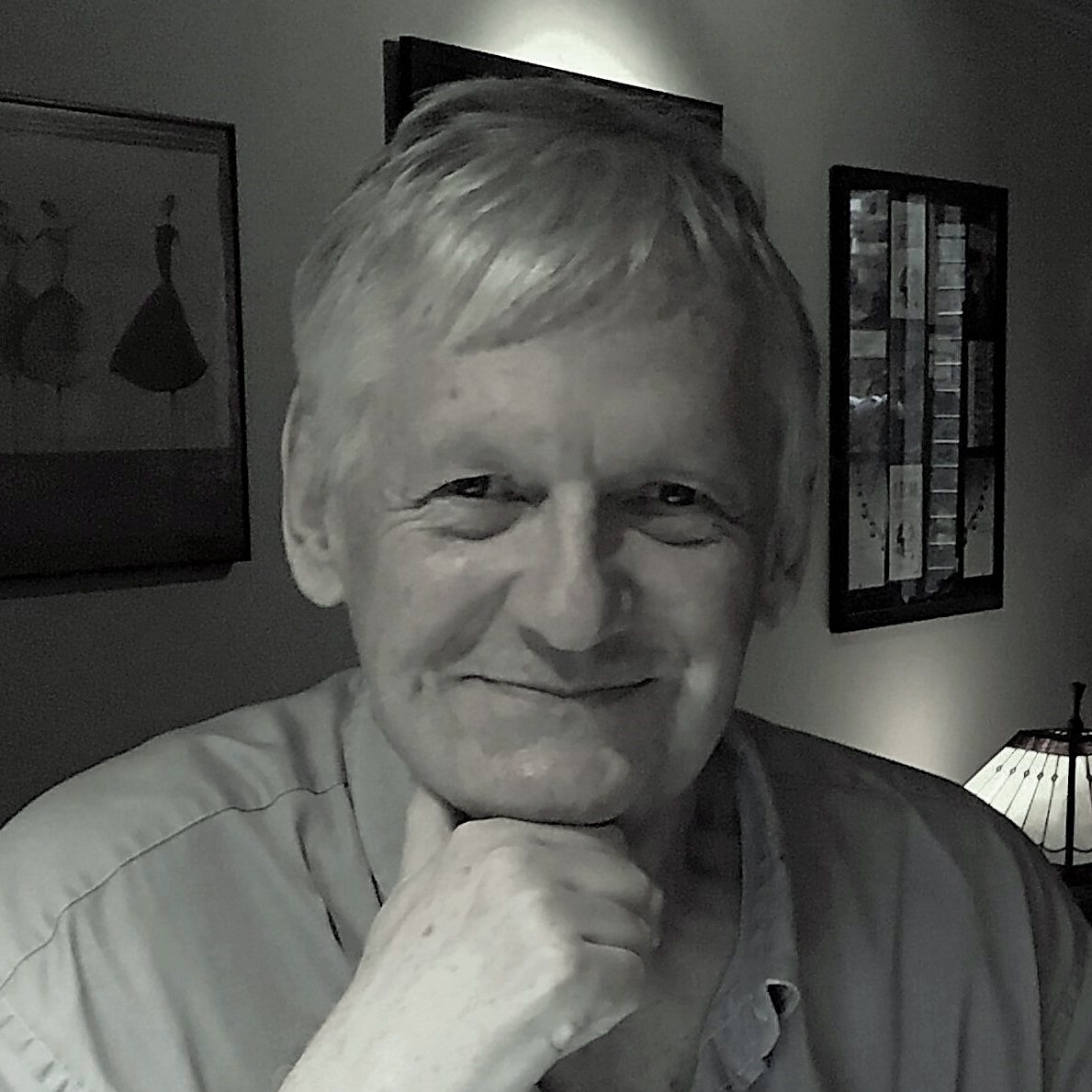
David Gilmour on his novel A perfect Night to go to China #14
Acclaimed Canadian novelist and critic David Gilmour was born in London, Ontario in 1949. His first novel, Back on Tuesday, was published in 1986, followed by How Boys See Girls in 1991 and An Affair with the Moon in 1993. Lost Between Houses, published in 1999, was nominated for the Trillium Book Award. Sparrow Nights, his fifth novel, was published by Random House to rave reviews. His latest novel A Perfect Night to go to China won Canada's 2005 Governor General's Award for Fiction. I met with David in the foyer of the Chateau Laurier hotel in Ottawa the morning after he received his award from the Governor General at Rideau Hall. We talk about winning it, sex, suicide, kids, the perfect woman, wearing spandex at discos and the fact that for him, conquering for women and affirmation are not the same thing. He is a candid, funny, sensitive man worth listening to, plus, in my opinion, Canada's best novelist. Hope the background Christmas carols, and what sounds like a flock of little tweety birds, aren't too distracting…

Martin Levin on the role of the book review editors #13
Martin Levin was for 17 years the popular (particularly at Book Expo Canada where we met) Books Editor at the (Toronto) Globe and Mail newspaper, and, according to Dennis Johnson, founder of MobyLives and co-founder/co-publisher of Melville House, one of the most esteemed in the business. We talk here about namesakes in Tolstoy, guilt, tragedy, sorrow at not being able to review anywhere near all worthy books, blockbusters syphoning money away from deserving titles, getting boys to read books, graphic novels, Canadian literature as post-colonial/nationalist; Cynthia Ozick; post-modern levelling; discerning value; the benefits of competition; the decline of book talk in print; and Thunder Bay, Ontario.

Jamie Byng on Myth and the Art of Publishing #12
Jamie Byng is Publisher at Canongate Books, an independent publishing firm based in Edinburgh, Scotland. Thanks in part to his tireless efforts, and the huge success of its Booker-winning novel Life Of Pi, Canongate won Publisher Of the Year at the British Book Awards in 2003. It won again in 2009. Jamie is also the originator, and (was) first Chair of World Book Night. In 2005 he launched the first in a series of Canongate novellas that feature ancient myths from various cultures reimagined and rewritten. Though the initial titles received mixed reviews, the series was branded by many as "bold" and "ambitious." I met with Jamie at Book Expo 2006 in Washington D.C. We talk here about, among other things, this myth series and his appreciation of mythology; the bible underlying creative imagination and the Western Canon and his skill presenting and capitalizing on the concept; ambiguity; the responsibility we parents have to make the lives of our children interesting, at least; Joseph Campbell; Margaret Atwood; and living without fear.

Peter Ellis London-based Antiquarian Bookseller #11
Interview with used antiquarian book dealer Peter Ellis at his shop on Cecil Court Road in London, England.

Paul Muldoon on Poetry #9
Paul Muldoon is an Irish poet. He has published more than thirty collections and won a Pulitzer Prize for Poetry and the T.S. Eliot Prize. He is Founding Chair of the Lewis Center for the Arts at Princeton University, and was Oxford Professor of Poetry from 1999 to 2004. He has served as both president of the Poetry Society (UK) and as Poetry Editor at The New Yorker magazine. He was in Ottawa, Canada for the April 2006 edition of the Ottawa International Writers Festival. We met at my apartment, where we talked about, among other things: poetry as pemmican; initials, dashed expectations, the movie Ice Age, James Joyce's secular epiphanies, the luck of Shakespeare and Mozart, what constitutes great poetry, judgement, pigs, the depth(s) of Johnny Depp, and hot water bottles.

Derek Walcott on Poetry #8
Nobel Prize winning poet Derek Walcott read at the Blue Metropolis Writers Festival in Montreal several weeks ago. We talk here about England, parents, Ted Hughes, William Blake, combining painting and poetry, the sea, getting laid, and the theme of returning. In addition to experiencing him as an articulate, moving communicator, I also found Derek Walcott to be, like many great men, humble and approachable.

Gill Coleridge on the role of the Literary Agent #7
Gill Coleridge is a partner with Rogers, Coleridge & White, one of the top literary agencies in the world. I spoke with her at the 2006 London Bookfair about how discounting squeezes authors; about the role of the literary agent, how she champions her stable of writers, her bets on hot new literary talent (Peter Hobbs, Adam Thirlwell, Phil Lamarshe, Louise Dean, Jim Younger), plus her thoughts about cake, and suicide.

Neil Wilson, founder Ottawa International Writers Festival #6
Neil Wilson is a former journalist/broadcaster, future publisher, current long-distance runner and founding director of the Ottawa International Writers Festival, considered "one of Canada's greatest literary festivals." We talk about his love of Irish literature and poetry, his founding of the Festival in 1997, what motivates him to do what he does, and this Spring's impressive, Beckett-backed line-up which goes on stage April 17, 2006. We met at my apartment in Ottawa. Copyright © 2006 by Nigel Beale

Faber CEO Stephen Page on the Role of the Publisher #4
Here is my interview with Stephen Page (unparalleled name for a man in his position) CEO and Publisher of Faber and former British Publishers Association President, conducted hurriedly at the 2006 London Book Fair. We talk briefly about the role and necessity of publishing houses, the impact of the Internet, discounting, supermarkets, ebooks, and 3 for 2 band-aids.

Lexicographer Jonathon Green talks Slang #3
Rap as rebellion, slang as hipness, and jargon as obfuscatory exclusionary pretense. These are topics discussed during my interview with world-renowned slang lexicographer Jonathon Green last month at his home office in London, England. And bloody invigorating it was too. We talk about why penises are funny and beat out vaginas, why slang is negative and misogynist and how it carries a kind of inventive cleverness seldom found in the harmless drudgery of every day language. We talk too about Samuel Johnson's political bias, Eric Partridge's connection to my relative Paul Beale, Jonathon's insistence on austere objectivity, and the fact that he simply can't afford to piss around having fun. Jonathon is often referred to as the English-speaking world's leading lexicographer of slang, and has been described as "the most acclaimed British lexicographer since Johnson."
Maggie Knaus on the Rockcliffe Park Book Fair #2
The Rockcliffe Park Book Fair is one of the oldest, biggest, best used-book sales in Ontario, if not Canada. It's a veritable institution. Book dealers travel across the country every year to cash in on the great deals. More than 3500 volunteer hours go into the making of it annually (other schools boast when they get six hundred over the course of a year). Twenty six thousand books were sold last year with the same number left over. The Book Fair is organized with precision and good humour. It takes place during the first week of November each year and always comes off in style. Too bad the people behind it (most of them are women) don't run the country. Maggie Knaus, an exuberant book-lover, mother of two and professional photographer, was the ideal choice to chair the 2006 Fair. We met at my apartment, located near the school in Ottawa's Rideau-Rockcliffe neighborhood, to talk about the history of the Fair, how it operates, some of the events that support it, long-time volunteers, where the leftovers end up, well-known visiting authors, and excited kids.

Entrepreneur Kensel Tracy on Self Publishing #1
I've known Kensel Tracy for 20 years. We met in 1985 when he was in charge of marketing at the Ottawa-Carleton Tourism Commission and I was Membership Director at the Board of Trade. I can't think of anyone I've ever met who is quite as energetic and creative. Kensel is a true marketer. Over the years he has worked with Ottawa's Festival of Spring, Winterlude, Habitat for Humanity and many other good community causes. More recently he has been a business coach helping small companies to market their products and services. About six months ago he decided to self-publish a book called The Ten Commitments to a Better Life. It contains his thoughts on achieving success. I spoke with him about the steps he took to turn his ideas into a smart looking publication