New Books in Literary Studies
2,780 episodes — Page 28 of 56
Ep 148Hiron Ennes, "Leech" (Tordotcom, 2022)
“Soft sci-fi, gothic body horror” is how Hiron Ennes describes their debut novel, Leech (Tordotcom, 2022). But that’s just the tip of the iceberg. Set in an isolated winter chateau, the novel weaves a surreal and atmospheric tale of a doctor who is part of a hivemind parasite, a twisted baron’s family, and a newcomer that threatens to destroy any perceived sense of order. Leech is an exploration of bodily autonomy, trauma, and a desperation to dig up the oppressive structures of the past. It is a multi-layered, multi-threaded slow burn that pays off for the persistent reader as the characters reveal their own monstrous, intertwined attempts at survival in the least hospitable of places. Hiron Ennes is a writer, musician, and medical student based in the Pacific Northwest. Their areas of interest include infectious disease, pathology, and petting your dog. Brenda Noiseux is a host of New Books in Science Fiction. Learn more about your ad choices. Visit megaphone.fm/adchoices Support our show by becoming a premium member! https://newbooksnetwork.supportingcast.fm/literary-studies
Ep 87On Dante Alighieri's "Divine Comedy"
When he was in his late 30s, the Italian poet Dante Alighieri got himself into some serious political trouble and was exiled from his beloved Florence. While in exile, he wrote one of the world’s greatest literary works, the Divine Comedy. In the story, Dante, the main character, must pass through the nine circles of Hell, climb Mount Purgatory, and ascend to Heaven to reach salvation. Along the way he meets all sorts of characters including the Roman poet Virgil, various politicians of his time, teachers from his school, and his one true love. Nassime Chida is a Core Lecturer in Literature Humanities at Columbia University. She is the author of Local Power in Dante’s Inferno. See more information on our website, WritLarge.fm. Follow us on Twitter @WritLargePod. Learn more about your ad choices. Visit megaphone.fm/adchoices Support our show by becoming a premium member! https://newbooksnetwork.supportingcast.fm/literary-studies
Ep 196Stephanie LeMenager and Teresa Shewry, "Literature and the Environment: Critical and Primary Sources" (Bloomsbury, 2021)
Bringing together 100 essential critical articles across 4 volumes, Literature and the Environment: Critical and Primary Sources (Bloomsbury, 2021) is a comprehensive collection of the most important academic writings on ecocriticism and literature's engagement with environmental crisis. With texts by key scholars, creative writers and activists, the articles in these four volumes follow the development and history of environmental criticism, as well as interdisciplinary conversations with contemporary philosophy and media studies. Literature and the Environment includes work by such writers as: Stacy Alaimo, Jonathan Bate, Winona LaDuke, Laura Pulido, Kyle Powis Whyte, Jacques Derrida, Ursula K. Heise, Bruno Latour, Rob Nixon, Ken Saro-Wiwa, William Shakespeare, Leslie Marmon Silko, Henry David Thoreau, Rita Wong. E.O. Wilson, Cary Wolfe and William Wordsworth. Stephanie LeMenager is Barbara and Carlisle Moore Distinguished Professor in English and American Literature and Professor of Environmental Studies at the University of Oregon, USA. She is co-founder (with Stephanie Foote) of Resilience: A Journal of the Environmental Humanities and her previous books include Living Oil: Petroleum and Culture in the American Century (2014). Teresa Shewry is Associate Professor of English at the University of California, Santa Barbara, USA. She is the author of Hope At Sea: Possible Ecologies in Oceanic Literature (2015). Gargi Binju is a researcher at the University of Tübingen. Learn more about your ad choices. Visit megaphone.fm/adchoices Support our show by becoming a premium member! https://newbooksnetwork.supportingcast.fm/literary-studies
Ep 85On George Orwell's "1984"
In 1948, English author George Orwell wrote what would become one of the defining novels of the 20th century, 1984. He was writing in the years following WWII and the beginning of The Cold War. It was a tense time, full of uncertainty and the spectre of Soviet communism loomed. In 1984, Orwell introduced all kinds of terms to describe the dystopian society of his novel, such as “thought police”, “memory hole”, “big brother”, and “unperson.” And in his view, Orwell wasn’t attempting to describe a fantastical world with no correspondence to our own, or even just satirizing the excesses of the Soviet regime. He was sounding a warning to his own society. Priya Satia is the Raymond A. Spruance Professor of International History Professor of History at Stanford University. She is the author of Empire of Guns: The Violent Making of the Industrial Revolution and Time’s Monster: How History Makes History See more information on our website, WritLarge.fm. Follow us on Twitter @WritLargePod. Learn more about your ad choices. Visit megaphone.fm/adchoices Support our show by becoming a premium member! https://newbooksnetwork.supportingcast.fm/literary-studies
Ep 68Ursula Villarreal-Moura, "Math for the Self-Crippling" (Gold Line Press, 2022)
Ursula Villarreal-Moura is the author of Math for the Self-Crippling (2022), selected by Zinzi Clemmons as the Gold Line Press fiction contest winner, and Like Happiness (forthcoming with Celadon Books). A graduate of Middlebury College, she received her MFA from Sarah Lawrence College and was a VONA/Voices fellow. Her stories, essays, and reviews have appeared in numerous magazines including Tin House, Catapult, Prairie Schooner, Midnight Breakfast, Washington Square, Story, Bennington Review, Wigleaf Top 50, and Gulf Coast. She contributed to Forward: 21st Century Flash Fiction, a flash anthology by writers of color, and in 2012, she won the CutBank Big Fish Flash Fiction/Prose Poetry Contest. Her writing has been nominated for Best of the Net, Best Small Fictions, a Pushcart Prize, and longlisted for Best American Short Stories 2015. Recommended Books: Victor LaValle, The Ballad of Black Tom Patricia Highsmith, Deep Water Billy Ray-Belcourt, A Minor Chorus Alejandro Varela, The Town of Babylon Evie Wyld, The Bass Rock Chris Holmes is Chair of Literatures in English and Associate Professor at Ithaca College. He writes criticism on contemporary global literatures. His book, Kazuo Ishiguro as World Literature, is under contract with Bloomsbury Publishing. He is the co-director of The New Voices Festival, a celebration of work in poetry, prose, and playwriting by up-and-coming young writers. Learn more about your ad choices. Visit megaphone.fm/adchoices Support our show by becoming a premium member! https://newbooksnetwork.supportingcast.fm/literary-studies
Ep 195Jennifer Eun-Jung Row, "Queer Velocities: Time, Sex, and Biopower on the Early Modern Stage" (Northwestern UP, 2022)
In a pathbreaking new book, today’s guest, Jennifer Eun-Jung Row, asks how delay and haste in early modern French theater subverts the temporality of heteronormative politics and sexuality. Professor Row is the author of Queer Velocities: Time, Sex, and Biopower on the Early Modern Stage, published by Northwestern University Press in 2022. A Professor of French at the University of Minnesota, Professor Row serves as the co-chair of the Arts and Design and Humanities Imagine for the project "Dreaming up the Change Disability Makes" and leads the CLA Interdisciplinary Collaborative Workshop on “Refusing Disposability: Racial and Disability Justice Toward Another World.” Professor Row’s scholarship has been supported by the National Endowment of the Humanities and a Solmsen Postdoctoral Fellowship from the University of Wisconsin-Madison. John Yargo is Visiting Assistant Professor of English at Boston College. He holds a PhD in English literature from the University of Massachusetts Amherst, specializing in the environmental humanities and early modern culture. His peer-reviewed articles have been published or are forthcoming in the Journal for Early Modern Culture Studies, Early Theatre, Studies in Philology, and Shakespeare Studies. Learn more about your ad choices. Visit megaphone.fm/adchoices Support our show by becoming a premium member! https://newbooksnetwork.supportingcast.fm/literary-studies
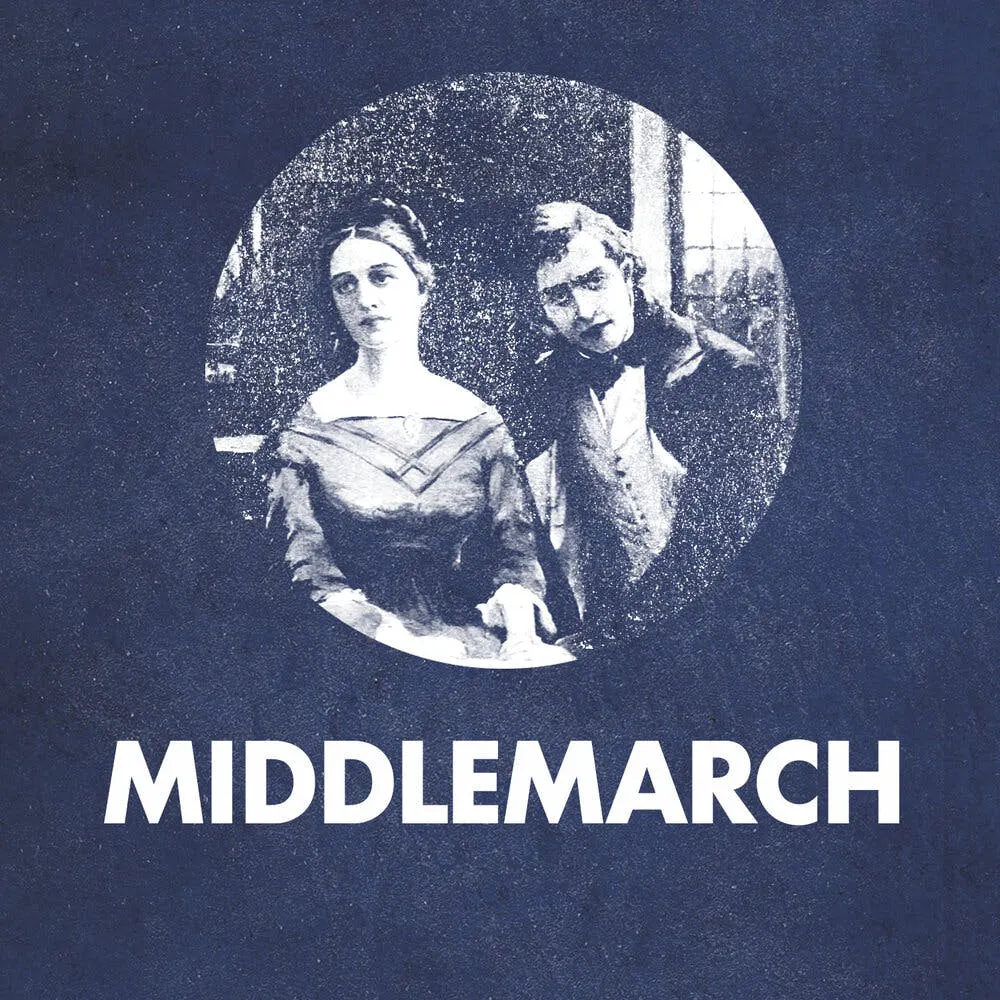
Ep 84On George Eliot's "Middlemarch"
By the time we reach middle age, our lives have taken certain paths. Sometimes these paths are close to what we imagined in our youth. But more often, they’re dramatically different. We come to realize that there are larger, invisible forces that tend to have just as much a say, or more, in how our lives go as we do. In her 1871 novel Middlemarch, the English writer George Eliot explored this experience of ‘middleness’—a time halfway between what has already happened, and what has yet to happen. A time when we feel more sharply our own limitations. Nicholas Dames is Theodore Kahan Professor in the Humanities at Columbia University. He is the author of Amnesiac Selves: Nostalgia, Forgetting, and British Fiction, 1810-1870, and The Physiology of the Novel: Reading, Neural Science, and the Form of Victorian Fiction. See more information on our website, WritLarge.fm. Follow us on Twitter @WritLargePod. Learn more about your ad choices. Visit megaphone.fm/adchoices Support our show by becoming a premium member! https://newbooksnetwork.supportingcast.fm/literary-studies
Ep 193Kate Christine Moore Koppy, "Fairy Tales in Contemporary American Culture: How We Hate to Love Them" (Lexington, 2021)
In the twenty-first century, American culture is experiencing a profound shift toward pluralism and secularization. In Fairy Tales in Contemporary American Culture: How We Hate to Love Them (Lexington Books, 2021), Kate Christina Moore Koppy argues that the increasing popularity and presence of fairy tales within American culture is both indicative of and contributing to this shift. By analyzing contemporary fairy tale texts as both new versions in a particular tale type and as wholly new fairy-tale pastiches, Koppy shows that fairy tales have become a key part of American secular scripture, a corpus of shared stories that work to maintain a sense of community among diverse audiences in the United States, as much as biblical scripture and associated texts used to. In this interview with New Books Network, author Kate Koppy and host Carmen Gomez-Galisteo talk about Fairy Tales in Contemporary American Culture: How We Hate to Love Them and how they are relevant in today’s society, despite some parents’ and educators’ misgivings that they may instill traditional, outdated values into children. Learn more about your ad choices. Visit megaphone.fm/adchoices Support our show by becoming a premium member! https://newbooksnetwork.supportingcast.fm/literary-studies
Ep 339Tara T. Green, "Love, Activism, and the Respectable Life of Alice Dunbar-Nelson" (Bloomsbury, 2022)
Born in New Orleans in 1875 to a mother who was formerly enslaved and a father of questionable identity, Alice Dunbar-Nelson was a pioneering activist, writer, suffragist, and educator. Until now, Dunbar-Nelson has largely been viewed only in relation to her abusive ex-husband, the poet Paul Laurence Dunbar. Love, Activism, and the Respectable Life of Alice Dunbar-Nelson (Bloomsbury, 2022) is the first book-length look at this major figure in Black women's history, covering her life from the post-reconstruction era through the Harlem Renaissance. Tara T. Green builds on Black feminist, sexuality, historical and cultural studies to create a literary biography that examines Dunbar-Nelson's life and legacy as a respectable activist – a woman who navigated complex challenges associated with resisting racism and sexism, and who defined her sexual identity and sexual agency within the confines of respectability politics. It's a book about the past, but it's also a book about the present that nods to the future. Adam McNeil is a Ph.D. Candidate in History at Rutgers, the State University of New Jersey. Learn more about your ad choices. Visit megaphone.fm/adchoices Support our show by becoming a premium member! https://newbooksnetwork.supportingcast.fm/literary-studies
Ep 194Carolyne Larrington, "All Men Must Die: Power and Passion in Game of Thrones" (Bloomsbury, 2021)
“All men must die”: or “Valar Morghulis,” as the traditional Essos greeting is rendered in High Valyrian. And die they do – in prodigious numbers; in imaginatively varied and gruesome ways; and often in terror within the viciously unpredictable world that is HBO's sensational evocation of Game of Thrones. As acclaimed medievalist Professor Carolyne Larrington writes in All Men Must Die: Power and Passion in Game of Thrones (Bloomsbury, 2021), the stories George R.R. Martin brings to life are epic in scope and in imaginative breadth, telling of the dramatic rise and fall of nations, the brutal sweeping away of old orders, and the advent of new autarchs in the eternal quest for dominion. Yet, as her book reveals, many potent and intimate narratives of love and passion can be found within these grand landscapes of heroism, honour, and death. They focus on strong relationships between women and family, as well as among the anti-heroes, the “cripples, bastards and broken things.” In this vital follow-up to her book, Winter Is Coming (also published by Bloomsbury), Larrington explores themes of power, blood-kin, lust, and sex in order to draw entirely fresh meanings out of the show of the century. Carolyne Larringon is Professor of Medieval Literature at University of Oxford, UK. She completed her DPhil in Old English and Old Norse at Oxford and now teaches Old and Middle English literature as well as English and Old Norse-Icelandic languages. Previous publications include books on Norse mythology and literature and another book on the series called Winter Is Coming: The Medieval World of Game of Thrones. Also, Professor Larrington has been awarded the Order of the Falcon by the President of Iceland for her services to Icelandic literature. Carrie Lynn Evans is currently a PhD student of English Literature with Université Laval in Quebec. Learn more about your ad choices. Visit megaphone.fm/adchoices Support our show by becoming a premium member! https://newbooksnetwork.supportingcast.fm/literary-studies
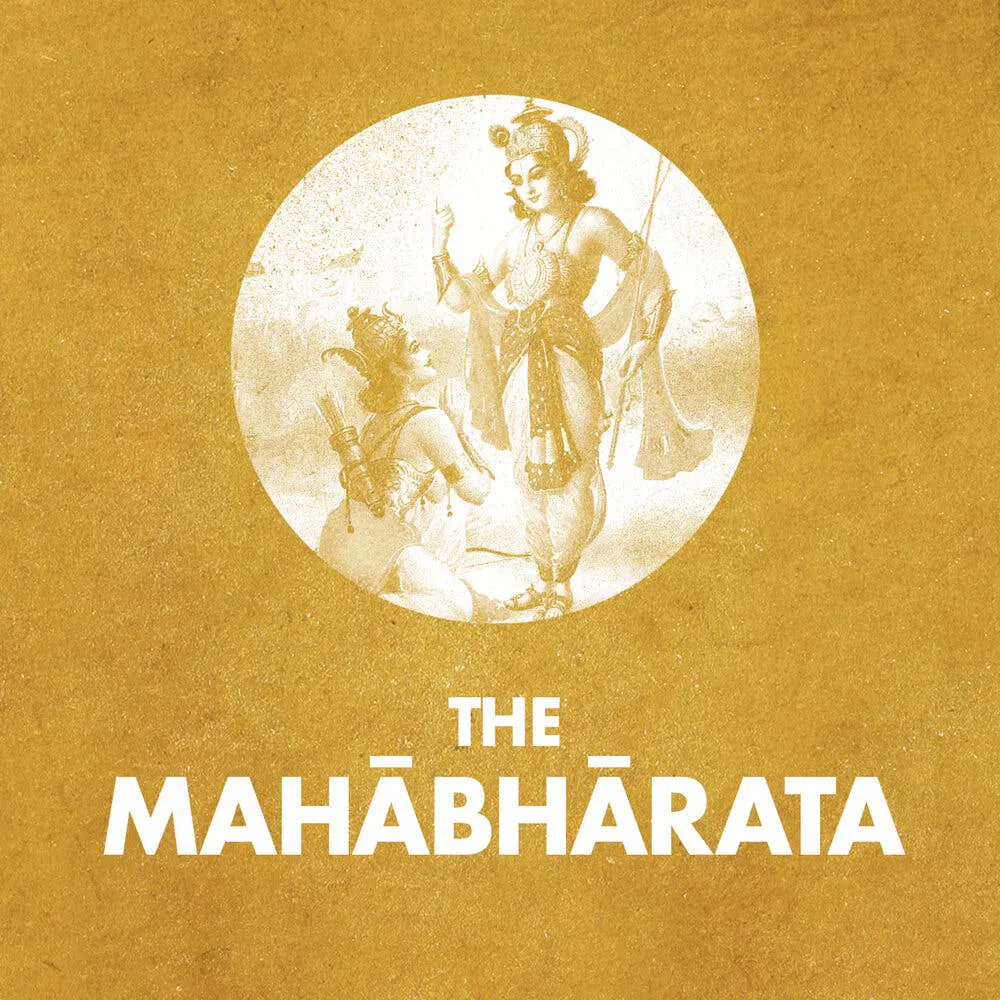
Ep 83On "The Mahābhārata"
When it comes to epic poetry, there’s a strong case to be made that the Ancient Indian story the Mahābhārata is the most epic. Clocking in at around 100,000 verses, the Mahābhārata is roughly seven times The Iliad and The Odyssey combined. This foundational Hindu text tells the story of a war between two sets of cousins who are fighting over who gets to rule their kingdom. The text is said to contain the universe, but it is best to leave it unfinished. Bad things are said to befall those who read it from beginning to end. Nell Shapiro Hawley is the Preceptor in Sanskrit at Harvard University and is the co-editor of Many Mahābhāratas (forthcoming from SUNY Press), a collection of eighteen essays on retellings of the Mahābhārata across South Asian languages and literary genres. See more information on our website, WritLarge.fm. Follow us on Twitter @WritLargePod. Learn more about your ad choices. Visit megaphone.fm/adchoices Support our show by becoming a premium member! https://newbooksnetwork.supportingcast.fm/literary-studies
Ep 165Gary Kates, "The Books that Made the European Enlightenment: A History in 12 Case Studies" (Bloomsbury, 2022)
In The Books that Made the European Enlightenment: A History in 12 Case Studies (Bloomsbury Academic, 2022), Gary Kates looks at the multifaceted significance of bestsellers from the time. Kates explores a crucial innovation of the age: the rise of the 'erudite blockbuster', which for the first time in European history, helped to popularize political theory among a significant portion of the society. Gary Kates is H. Russell Smith Foundation Chair in the Social Sciences and Professor of History at Pomona College. Schneur Zalman Newfield is an Assistant Professor of Sociology at Borough of Manhattan Community College, City University of New York, and the author of Degrees of Separation: Identity Formation While Leaving Ultra-Orthodox Judaism (Temple University Press, 2020). Visit him online at ZalmanNewfield.com. Learn more about your ad choices. Visit megaphone.fm/adchoices Support our show by becoming a premium member! https://newbooksnetwork.supportingcast.fm/literary-studies
Ep 81On Matteo Maria Boiardo's "Orlando Innamorato"
The Italian Renaissance was an era of rebirth in the arts, sciences, engineering, anatomy, and architecture. But also for literature. One of the most influential works from this period was Matteo Maria Boiardo’s epic poem Orlando innamorato. While read by the literate upper classes, Boiardo’s incredible story of knights-errant, adventure, justice, chivalry, and true love became popular among the public through puppet theatre in Sicily. Boiardo combined genres to create a beloved work of art that continues to influence Italian culture today. Jo Ann Cavallo is a professor of Italian at Columbia University. Professor Cavallo has adapted episodes from Orlando innamorato that have been performed in various regions of Italy and New York City. She is also the author of Orlando Innamorato per ragazzi. See more information on our website, WritLarge.fm. Follow us on Twitter @WritLargePod. Learn more about your ad choices. Visit megaphone.fm/adchoices Support our show by becoming a premium member! https://newbooksnetwork.supportingcast.fm/literary-studies
Ep 23Grant Faulkner, "All the Comfort Sin Can Provide" (Black Lawrence Press, 2021)
Today I had the pleasure of talking to Grant Faulkner. We discuss National Novel Writing Month, of which Grant is the executive director, 100 Word Story, of which Grant is a practitioner and editor, and Grant's book of short stories All the Comfort Sin Can Provide (Black Lawrence Press, 2021). Here's a bit about the book, a book I highly recommend you buy and read. "With raw, lyrical ferocity, All the Comfort Sin Can Provide delves into the beguiling salve that sin can promise-tracing those hidden places most of us are afraid to acknowledge. In this collection of brutally unsentimental short stories, Grant Faulkner chronicles dreamers, addicts, and lost souls who have trusted too much in wayward love, the perilous balm of substances, or the unchecked hungers of others, but who are determined to find salvation in their odd definitions of transcendence. Taking us from hot Arizona highways to cold Iowa hotel rooms, from the freedoms of the backwoods of New Mexico to the damnations of slick New York City law firms, Faulkner creates a shard-sharp mosaic of desire that careens off the page-honest, cutting, and wise." Marshall Poe is the founder and editor of the New Books Network. He can be reached at [email protected]. Learn more about your ad choices. Visit megaphone.fm/adchoices Support our show by becoming a premium member! https://newbooksnetwork.supportingcast.fm/literary-studies
Ep 67Amy Fusselman, "The Means" (Mariner Books, 2022)
Amy Fusselman is the author of five books. Her latest, The Means (Mariner Books, 2022), is her first novel. Fusselman’s previous four books, all nonfiction, have been translated into several languages. Her work has been nominated for The Believer Book Award and the University of Iowa's Krause Essay Prize. Her articles and essays have appeared in The New York Times, The Atlantic, The Washington Post, and many other places. She lives in New York City with her family and teaches creative writing at New York University. Book Recommendations: Holly Pelesky, Cleave Violaine Swartz, Papers Sheng Wang, Sweet and Juicy(Netflix Stand-Up Comedy) Chris Holmes is Chair of Literatures in English and Associate Professor at Ithaca College. He writes criticism on contemporary global literatures. His book, Kazuo Ishiguro as World Literature, is under contract with Bloomsbury Publishing. He is the co-director of The New Voices Festival, a celebration of work in poetry, prose, and playwriting by up-and-coming young writers. Learn more about your ad choices. Visit megaphone.fm/adchoices Support our show by becoming a premium member! https://newbooksnetwork.supportingcast.fm/literary-studies
Ep 111Erin Alice Cowling, "Chocolate: How a New World Commodity Conquered Spanish Literature" (U Toronto Press, 2021)
In terms of its popularity, as well as its production, chocolate was among the first foods to travel from the New World to Spain. Chocolate: How a New World Commodity Conquered Spanish Literature (U Toronto Press, 2021) considers chocolate as an object of collective memory used to bridge the transatlantic gap through Spanish literary works of the early modern period, tracing the mention of chocolate from indigenous legends and early chronicles of the conquistadors to the theatre and literature of Spain. The book considers a variety of perspectives and material cultures, such as the pre-Colombian conception of chocolate, the commercial enterprise surrounding chocolate, and the darker side of chocolate's connections to witchcraft and sex. Encapsulating both historical and literary interests, Chocolate will appeal to anyone interested in the global history of chocolate. Learn more about your ad choices. Visit megaphone.fm/adchoices Support our show by becoming a premium member! https://newbooksnetwork.supportingcast.fm/literary-studies
Ep 46Sindya Bhanoo, “Tsunami Bride” The Common magazine (Fall, 2022)
Sindya Bhanoo speaks to managing editor Emily Everett about her story “Tsunami Bride,” which appears in The Common’s new fall issue. Sindya talks about her experience reporting from India after the 2004 tsunami, and how that experience eventually became a story about a journalist in the same position, told from a local’s perspective. She also discusses how the training and techniques she developed as a journalist have shaped her drafting and revision process for fiction, how food often makes its way into her stories, and how her 2022 story collection Seeking Fortune Elsewhere came together. Sindya Bhanoo is the author of the story collection Seeking Fortune Elsewhere. She is the recipient of an O. Henry Award, the DISQUIET Literary Prize, and an Elizabeth George Foundation grant. Her fiction has appeared in Granta, New England Review, Glimmer Train, and elsewhere. A longtime newspaper reporter, she has worked for The New York Times and The Washington Post. She teaches at Oregon State University. Read Sindya’s story in The Common at thecommononline.org/tsunami-bride. Read more from Sindya at sindyabhanoo.com. The Common is a print and online literary magazine publishing stories, essays, and poems that deepen our collective sense of place. On our podcast and in our pages, The Common features established and emerging writers from around the world. Read more and subscribe to the magazine at thecommononline.org, and follow us on Twitter @CommonMag. Emily Everett is managing editor of the magazine and host of the podcast. Her debut novel is forthcoming from Putnam Books. Her stories appear in the Kenyon Review, Electric Literature, Tin House Online, and Mississippi Review. She is a 2022 Massachusetts Cultural Council Fellow. Say hello on Twitter @Public_Emily. Learn more about your ad choices. Visit megaphone.fm/adchoices Support our show by becoming a premium member! https://newbooksnetwork.supportingcast.fm/literary-studies
Ep 236Yigal Bronner et al., "Sensitive Reading: The Pleasures of South Asian Literature in Translation" (U California Press, 2022)
What are the pleasures of reading translations of South Asian literature, and what does it take to enjoy a translated text? Sensitive Reading: The Pleasures of South Asian Literature in Translation (U California Press, 2022) provides opportunities to explore such questions by bringing together a whole set of new translations by David Shulman, noted scholar of South Asia. Together, the translations and the accompanying essays form an essential guide for people interested in literature and art from South Asia. This book is available open access here. Raj Balkaran is a scholar of Sanskrit narrative texts. He teaches at the Oxford Centre for Hindu Studies and at his own virtual School of Indian Wisdom. For information see rajbalkaran.com. Learn more about your ad choices. Visit megaphone.fm/adchoices Support our show by becoming a premium member! https://newbooksnetwork.supportingcast.fm/literary-studies
Ep 66Lynn Steger Strong, "Flight" (Mariner Books, 2022)
Lynn Steger Strong is the author of the novels Hold Still, Want, and Flight (Mariner Books, 2022). Her non-fiction has appeared in The New York Times, Los Angeles Times, New York, The Paris Review, Time, and elsewhere. She has taught writing at The Pratt Institute, Fairfield University, Catapult, and Columbia University and will be the Visiting Fiction Writer at Bates College for the 2022-2023 school year. She was born and raised in South Florida. Recommended Books: Sheila Heti, Pure Color Claire Keegan, Foster Namwali Serpell, The Furrows Giada Scodellaro, Some of Them Will Carry Me Chris Holmes is Chair of Literatures in English and Associate Professor at Ithaca College. He writes criticism on contemporary global literatures. His book, Kazuo Ishiguro as World Literature, is under contract with Bloomsbury Publishing. He is the co-director of The New Voices Festival, a celebration of work in poetry, prose, and playwriting by up-and-coming young writers. Learn more about your ad choices. Visit megaphone.fm/adchoices Support our show by becoming a premium member! https://newbooksnetwork.supportingcast.fm/literary-studies
Ep 473Alexander Des Forges, "Testing the Literary: Prose and the Aesthetic in Early Modern China" (Harvard UP, 2021)
The eight-legged essay (bagu wen) was the one genre of writing that dominated in late imperial China. As the primary mode of expression in which men were schooled, writing and reading shiwen (modern or contemporary prose) epitomized literary production in Ming-Qing China, and it was vitally important for every student, examination candidate, and examiner to master and know the genre intimately — but this genre hasn't yet been approached from a literary perspective. Alexander Des Forges' new book Testing the Literary: Prose and the Aesthetic in Early Modern China (Harvard UP, 2021) does just that. Focusing on literary practice (the work of writing, reading, and commenting), this book explores how features such as literary voice, parallelism, subjectivity, and aesthetic originality were constructed in a genre not typically thought of as literature. Through careful reading, rich analysis, and the deft translation of eight-legged essays, Alex looks at prose aesthetics not as settled conclusions, but as features that prose writers developed, adhered to, and/or contested, all while they developed as a social class of literary producers. Sarah Bramao-Ramos is a PhD candidate in History and East Asian Languages at Harvard. She works on Manchu language books and is interested in anything with a kesike. She can be reached at [email protected]. Learn more about your ad choices. Visit megaphone.fm/adchoices Support our show by becoming a premium member! https://newbooksnetwork.supportingcast.fm/literary-studies
Ep 222Ruth Vanita, "The Dharma of Justice in the Sanskrit Epics" (Oxford UP, 2021)
Ruth Vanita's book The Dharma of Justice in the Sanskrit Epics (Oxford UP, 2021) shows that many characters in the Sanskrit epics - men and women of all varnas and mixed-varna - discuss and criticize discrimination based on gender, varna, poverty, age, and disability. On the basis of philosophy, logic and devotion, these characters argue that such categories are ever-changing, mixed and ultimately unreal therefore humans should be judged on the basis of their actions, not birth. The book explores the dharmas of singleness, friendship, marriage, parenting, and ruling. Bhakta poets such as Kabir, Tulsidas, Rahim and Raidas drew on ideas and characters from the epics to present a vision of oneness. Justice is indivisible, all bodies are made of the same matter, all beings suffer, and all consciousnesses are akin. This book makes the radical argument that in the epics, kindness to animals, the dharma available to all, is inseparable from all other forms of dharma. Raj Balkaran is a scholar, online educator, and life coach. For information see rajbalkaran.com. Learn more about your ad choices. Visit megaphone.fm/adchoices Support our show by becoming a premium member! https://newbooksnetwork.supportingcast.fm/literary-studies
Ep 93Ethnonationalism since 1973: A Discussion with Quinn Slobodian
What’s the relationship between immigration, globalization and demographics? And what is woke particularism? John and Elizabeth turn for answers to Quinn Slobodian, professor of history at Wellesley College and author, most recently, of Globalists: The End of Empire and the Birth of Neoliberalism. In a 2019 discussion that proves eerily prescient of politics in 2022, first discuss Jean Raspail‘s racist 1973 novel The Camp of the Saints, a book whose popularity in certain quarters since its publication might explain how Europe has gone from Thatcher to Brexit, from Vaclav Havel to Viktor Orban. How is this xenophobic screed related to science fiction of the same period–and to John Locke? Pat Buchanan, American early adapter of Raspail’s hate-mongering, figures prominently. They then turn to Garrett Hardin’s “Living on a Lifeboat” and John Lanchester’s recent novel The Wall to work out the ideas of forming a society beyond or beneath the state in less obviously racist terms than Raspail’s. What kind of hard choices need to be made in allocating resources? What claims about hard choices are just a screen for the powerful to make choices that, for them, aren’t actually that hard? Does gold make things more or less nationalized? Finally, in Recallable Books, Quinn recommends Mutant Neoliberalism, edited by William Callison and Zachary Manfredi, for an attempt to really understand the politics of 2016 and beyond; Elizabeth recommends Douglas Holmes’s Economy of Words, an ethnography of central banks; and John recommends Ursula K. Le Guin’s The Dispossessed, a novel of solitary solidarity. Discussed in this episode: The Camp of the Saints, Jean Raspail A Republic, Not an Empire and The Death of the West, Pat Buchanan Dune, Frank Herbert “Living on a Lifeboat,” Garrett Hardin The Lobster Gangs of Maine, James M. Acheson The Limits to Growth, the Club of Rome Libra, dir. Patty Newman “Slaveship Earth & the World-Historical Imagination in the Age of Climate Crisis,” Jason W. Moore The Wall, John Lanchester Mutant Neoliberalism: Market Rule and Political Rupture, eds. William Callison and Zachary Manfredi Economy of Words: Communicative Imperatives in Central Banks, Douglas R. Holmes The Dispossessed: An Ambiguous Utopia, Ursula K. Le Guin Read here: RTB Slobodian Learn more about your ad choices. Visit megaphone.fm/adchoices Support our show by becoming a premium member! https://newbooksnetwork.supportingcast.fm/literary-studies
Ep 324.6 Translation is the Closest Way to Read: Ann Goldstein and Saskia Ziolkowski
In our season finale, Ann Goldstein, renowned translator of Elena Ferrante’s Neapolitan novels, gives a master class in the art and business of translation. Ann speaks to Duke scholar Saskia Ziolkowski and host Aarthi Vadde about being the face of the Ferrante novels, and the curious void that she came to fill in the public imagination in light of Ferrante’s anonymity. In a profession long characterized by invisibility, Ann reflects on her own celebrity and the changing orthodoxies of the book business. Where once having a translator’s name on a book cover would be sure to kill interest, now there are movements to display author’s and translator’s names together. Ann reads an excerpt in Italian from Primo Levi’s The Truce, followed by her re-translation of the autobiographical story for The Complete Works of Primo Levi. She then offers an extraordinary walk through of her decision-making process by honing in on the difficulty of translating one key word “scomposti.” Listening to Ann delineate and discard choices, we are reminded of Italo Calvino’s assertion (echoed by Ann) that translation is indeed the closest way to read. This season’s signature question on “untranslatables” yields another brilliant meditation on word choice and the paradoxical task of arriving at precise approximations. Plus, Ann and Saskia reveal some of their favorite Italian women writers, several of whom Ann has brought into English for the first time. Mentions: --Elena Ferrante --Jennifer Croft --Primo Levi, The Periodic Table --Primo Levi, The Truce, from The Complete Works of Primo Levi --Stuart Woolf, original translator of Levi, If This is the Man --Catherine Gallagher, Nobody’s Story --Italo Calvino --Marina Jarre, Return to Latvia --Elsa Morante, Arturo’s Island --Emily Wilson, only female translator of The Odyssey --Jenny McPhee --Cesare Garboli Find out more about Novel Dialogue and its hosts and organizers here. Contact us, get that exact quote from a transcript, and explore many more conversations between novelists and critics. Learn more about your ad choices. Visit megaphone.fm/adchoices Support our show by becoming a premium member! https://newbooksnetwork.supportingcast.fm/literary-studies
Ep 192Kavita Bhanot and Jeremy Tiang, "Violent Phenomena: 21 Essays on Translation" (Tilted Axis Press, 2022)
Frantz Fanon wrote in 1961 that 'Decolonisation is always a violent phenomenon,' meaning that the violence of colonialism can only be counteracted in kind. As colonial legacies linger today, what are the ways in which we can disentangle literary translation from its roots in imperial violence? In Violent Phenomena: 21 Essays on Translation (Tilted Axis Press, 2022), twenty-four writers and translators from across the world share their ideas and practices for disrupting and decolonising translation. Gargi Binju is a researcher at the University of Tübingen. Learn more about your ad choices. Visit megaphone.fm/adchoices Support our show by becoming a premium member! https://newbooksnetwork.supportingcast.fm/literary-studies
Ep 19Guido Ruggiero, "Love and Sex in the Time of Plague: A Decameron Renaissance" (Harvard UP, 2021)
Today Jana Byars talks to her PhD advisor Guido Ruggiero about his latest monograph, Love and Sex in the Time of Plague: A Decameron Renaissance (Harvard University Press, 2021) over the meaning of love in the early Renaissance. As a pandemic swept across fourteenth-century Europe, the Decameron offered the ill and grieving a symphony of life and love. For Florentines, the world seemed to be coming to an end. In 1348 the first wave of the Black Death swept across the Italian city, reducing its population from more than 100,000 to less than 40,000. The disease would eventually kill at least half of the population of Europe. Amid the devastation, Giovanni Boccaccio's Decameron was born. One of the masterpieces of world literature, the Decameron has captivated centuries of readers with its vivid tales of love, loyalty, betrayal, and sex. Despite the death that overwhelmed Florence, Boccaccio's collection of novelle was, in Guido Ruggiero's words, a "symphony of life." Love and Sex in the Time of Plague guides twenty-first-century readers back to Boccaccio's world to recapture how his work sounded to fourteenth-century ears. Through insightful discussions of the Decameron's cherished stories and deep portraits of Florentine culture, Ruggiero explores love and sexual relations in a society undergoing convulsive change. In the century before the plague arrived, Florence had become one of the richest and most powerful cities in Europe. With the medieval nobility in decline, a new polity was emerging, driven by Il Popolo, the people, fractious and enterprising. Boccaccio's stories had a special resonance in this age of upheaval, as Florentines sought new notions of truth and virtue to meet both the despair and the possibility of the moment. Jana Byars is the Academic Director of Netherlands: International Perspectives on Sexuality and Gender. Learn more about your ad choices. Visit megaphone.fm/adchoices Support our show by becoming a premium member! https://newbooksnetwork.supportingcast.fm/literary-studies
Ep 102Melancholy
In this episode of High Theory, Laura Stokes talks about melancholy. One of the four humors in ancient humoral medicine, melancholy, or black bile, is a fluid substance and spiritual principle that was thought to move within the human body. A proper quantity of black bile allows one to be calm and contemplative, thoughtful and withdrawn. A superabundance produces sadness, indigestion, and a host of other evils. Research is a melancholy practice; scholars are prone to melancholic dispositions. Throughout the episode Laura refers to Robert Burton’s Anatomy of Melancholy, an early modern text that describes the sources, symptoms, and treatments for a surplus of melancholy, in a rather meandering way, with an entire separate disquisition on love melancholy. It was published in multiple versions over Burton’s lifetime – people usually cite the 1638 edition. Laura Stokes is an associate professor of history at Stanford University where they study Early Modern Europe. Their first book Demons of Urban Reform: Early European Witch Trials and Criminal Justice, 1430-1530 (Palgrave Macmillan, 2011) examines the origins of witchcraft prosecution in fifteenth-century Europe against the backdrop of a general rise in the prosecution of crime and other measures of social control. They are currently working on a microhistory of a murder conspiracy within the Basel butchers’ guild at the turn of the sixteenth century, which is really about Early Modern economic cultures. And they run pretty amazing summer reading groups. Image: © 2022 Saronik Bosu Learn more about your ad choices. Visit megaphone.fm/adchoices Support our show by becoming a premium member! https://newbooksnetwork.supportingcast.fm/literary-studies
Ep 77On H. G. Well's "The Time Machine"
When H.G. Wells was growing up in England in the 1860s, science wasn’t part of education or everyday life the way it is now. Even though the 19th century was an era of dramatic technological invention, the professionalization of science was still developing. Wells viewed science as an incredibly powerful force. He knew it could either help or hurt humanity--even with that risk, he believed society should fully embrace science. When Wells wrote his first novel, The Time Machine, in 1895, he kicked off a 50-year-long writing career. He was a pioneer in the science fiction genre, and his stories have inspired generations of audiences, artists, filmmakers, and other writers around the world. Sarah Cole is the Parr Professor of English and Comparative Literature and Dean of Humanities at Columbia University. She is the author of Inventing Tomorrow: H.G. Wells and the Twentieth Century and At the Violet Hour: Modernism and Violence in England and Ireland, among other works. See more information on our website, WritLarge.fm. Follow us on Twitter @WritLargePod. Learn more about your ad choices. Visit megaphone.fm/adchoices Support our show by becoming a premium member! https://newbooksnetwork.supportingcast.fm/literary-studies
Ep 65Kayla Maiuri, "Mother In the Dark: A Novel" (Riverhead Books, 2022)
Kayla Maiuri holds an MFA in fiction writing from Columbia University. Born in the greater Boston area, she now lives in Brooklyn. Mother in the Dark (Riverhead Books, 2022) is her first novel. Recommended Books: Anna Hogeland, The Long Answer Chris Holmes is Chair of Literatures in English and Associate Professor at Ithaca College. He writes criticism on contemporary global literatures. His book, Kazuo Ishiguro as World Literature, is under contract with Bloomsbury Publishing. He is the co-director of The New Voices Festival, a celebration of work in poetry, prose, and playwriting by up-and-coming young writers. Learn more about your ad choices. Visit megaphone.fm/adchoices Support our show by becoming a premium member! https://newbooksnetwork.supportingcast.fm/literary-studies
Ep 136Ryan Poll, "Aquaman and the War Against Oceans: Comics Activism and Allegory in the Anthropocene" (U Nebraska Press, 2022)
In Aquaman and the War against Oceans (University of Nebraska Press, 2022), Ryan Poll explores ways the New 52 reimagining of Aquaman--a massive overhaul and rebranding of all DC Comics--transformed the character from a joke to an important figure of ecological justice. In this series, Aquaman becomes an accessible figure for charting environmental violences endemic to global capitalism and for developing a progressive and popular ecological imagination. Poll argues that The New 52 Aquaman should be read as an allegory that responds to the crises of the Anthropocene, in which the oceans have become a site of warfare and mass death. Poll contends that the series, which works to bridge the terrestrial and watery worlds, can be understood as a form of comics activism by visualizing and verbalizing how the oceans are both beyond the projects of the "human" and "humanism," and simultaneously, all-too-human geographies that are inextricable from the violent structures of capitalism, white supremacy, and patriarchy. The New 52 Aquaman, Poll demonstrates, proves an important form of ocean literacy in particular and ecological literacy more generally. Rebekah Buchanan is a Professor of English and Director of English Education at Western Illinois University. Her research focuses on feminism, activism, and literacy practices in youth culture, specifically through zines and music. Learn more about your ad choices. Visit megaphone.fm/adchoices Support our show by becoming a premium member! https://newbooksnetwork.supportingcast.fm/literary-studies
Ep 331Therí Alyce Pickens, "Black Madness :: Mad Blackness" (Duke UP, 2019)
In Black Madness :: Mad Blackness (Duke UP, 2019), Therí Alyce Pickens rethinks the relationship between Blackness and disability, unsettling the common theorization that they are mutually constitutive. Pickens shows how Black speculative and science fiction authors such as Octavia Butler, Nalo Hopkinson, and Tananarive Due craft new worlds that reimagine the intersection of Blackness and madness. These creative writer-theorists formulate new parameters for thinking through Blackness and madness. Pickens considers Butler's Fledgling as an archive of Black madness that demonstrates how race and ability shape subjectivity while constructing the building blocks for antiracist and anti-ableist futures. She examines how Hopkinson's Midnight Robber theorizes mad Blackness and how Due's African Immortals series contests dominant definitions of the human. The theorizations of race and disability that emerge from these works, Pickens demonstrates, challenge the paradigms of subjectivity that white supremacy and ableism enforce, thereby pointing to the potential for new forms of radical politics. Clayton Jarrard is a Research Project Coordinator at the University of Kansas Center for Research, contributing to initiatives that bridge research, policy, and community efforts. His scholarly engagement spans the subject areas of Cultural Anthropology, Queer Studies, Disability Studies, Mad Studies, and Religious Studies. Learn more about your ad choices. Visit megaphone.fm/adchoices Support our show by becoming a premium member! https://newbooksnetwork.supportingcast.fm/literary-studies
Ep 190Andrea Scheurer, et al., "Entanglements: Envisioning World Literature from the Global South" (Ibidem Press, 2022)
Entanglements: Envisioning World Literature from the Global South (Ibidem Press, 2022) scrutinizes current debates to bring historical and contemporary South-South entanglements to the fore and to develop a new understanding of world literature in a multipolar world of globalized modernity. The volume challenges established ideas of world literature by rethinking the concept along the notion of “entanglements”: as a field of variously criss-crossing relations of literary activity beyond the confines of literary canons, cultural containers, or national borders. The collection presents individual case studies from a variety of language traditions that focus on particular literary relationships and practices across Africa, the Americas, Asia, and Europe as well as new fictional, poetical, and theoretical conceptions of world literature in order to broaden our understanding of the multilateral entanglements within a widening communicative network that shape our globalized world. Dr. Jarula Wegner is Hundred Talents Young Professor of German and Comparative Literature at Zhejiang University in Hangzhou. Dr. Andrea Gremels is Wissenschaftliche Mitarbeiterin at Institute for Romance Languages and Literatures at Goethe Universität at Frankfurt am Main. Gargi Binju is a researcher at the University of Tübingen. Learn more about your ad choices. Visit megaphone.fm/adchoices Support our show by becoming a premium member! https://newbooksnetwork.supportingcast.fm/literary-studies
Ep 183Kedar Arun Kulkarni, "World Literature and the Question of Genre in Colonial India: Poetry, Drama, and Print Culture 1790-1890" (Bloomsbury, 2022)
In 1818, the East India Company defeated the Maratha confederacy, acquiring vast domains in central and western India. Through coercion if not outright violence, the Company transformed many aspects of India's social, economic, and cultural landscape. This book charts one such shifting landscape-Marathi language literary culture-in order to expand the field of world and comparative literature. Kedar A. Kulkarni describes the way Marathi literary culture, entrenched in performative modes of production and reception, especially balladry and epic storytelling, saw the germination of a robust, script-centric dramatic culture, owing to colonial networks of literary exchange and the newfound wide availability of print technology. However, the process was far from a simple mutation of genre. He demonstrates the upheaval that literary culture underwent as a new class of literati emerged: anthologists, critics, theatre makers, publishers, translators, among many others. And, these people also participated in a global conversation that left its mark on theory in the twentieth century. Ultimately, World Literature and the Question of Genre in Colonial India: Poetry, Drama, and Print Culture 1790-1890 (Bloomsbury, 2022) situates Marathi literature within contemporary world literature studies and critiques “eurochronology”- the perceived backwardness of colonial and postcolonial locales when compared with literatures produced in Euro-American metropoles. Reading through archives and ephemera, it demonstrates that literary cultures in colonized locales converged with and participated fully in key defining moments of world literature, but also diverged from them to create, simultaneously, a unique literary modernity. Dr. Kedar A. Kulkarni teaches at FLAME University, Pune. Gargi Binju is a researcher at the University of Tübingen. Learn more about your ad choices. Visit megaphone.fm/adchoices Support our show by becoming a premium member! https://newbooksnetwork.supportingcast.fm/literary-studies
Ep 74On Thucydides' "History of the Peloponnesian War"
Sometime around 450 BC in ancient Greece, a young Thucydides went with his father to hear the historian Herodotus speak. After the lecture, Thucydides announced that writing history was his life’s calling. He later wrote History of the Peloponnesian War, a chronicle of the 27-year civil war between the Athenians and the Spartans. Thucydides believed that history is cyclical, and he saw written history as more than just record keeping. He wanted to know why certain events unfolded as they did. In fact, Thucydides is one of the first Western historians to document a historical event year by year. Professor Richard Billows is a professor of History at Columbia University. He specializes in Ancient Greek and Roman history. He is the author of Before and After Alexander and Marathon: The Battle that Changed Western Civilization, among other books. See more information on our website, WritLarge.fm. Follow us on Twitter @WritLargePod. Learn more about your ad choices. Visit megaphone.fm/adchoices Support our show by becoming a premium member! https://newbooksnetwork.supportingcast.fm/literary-studies
Ep 189Martin Puchner, "Literature for a Changing Planet" (Princeton UP, 2022)
Why we must learn to tell new stories about our relationship with the earth if we are to avoid climate catastrophe. Reading literature in a time of climate emergency can sometimes feel a bit like fiddling while Rome burns. Yet, at this turning point for the planet, scientists, policymakers, and activists have woken up to the power of stories in the fight against global warming. In Literature for a Changing Planet (Princeton UP, 2022), Martin Puchner ranges across four thousand years of world literature to draw vital lessons about how we put ourselves on the path of climate change—and how we might change paths before it’s too late. From the Epic of Gilgamesh and the West African Epic of Sunjata to the Communist Manifesto, Puchner reveals world literature in a new light—as an archive of environmental exploitation and a product of a way of life responsible for climate change. Literature depends on millennia of intensive agriculture, urbanization, and resource extraction, from the clay of ancient tablets to the silicon of e-readers. Yet literature also offers powerful ways to change attitudes toward the environment. Puchner uncovers the ecological thinking behind the idea of world literature since the early nineteenth century, proposes a new way of reading in a warming world, shows how literature can help us recognize our shared humanity, and discusses the possible futures of storytelling. If we are to avoid environmental disaster, we must learn to tell the story of humans as a species responsible for global warming. Filled with important insights about the fundamental relationship between storytelling and the environment, Literature for a Changing Planet is a clarion call for readers and writers who care about the fate of life on the planet. Prof. Martin Puchner is Byron and Anita Wien Professor of Drama and of English and Comparative Literature at Harvard University. Gargi Binju is a researcher at the University of Tübingen. Learn more about your ad choices. Visit megaphone.fm/adchoices Support our show by becoming a premium member! https://newbooksnetwork.supportingcast.fm/literary-studies
Kevin Wilson, "Now Is Not the Time to Panic" (Ecco Press, 2022)
Today I talked to Kevin Wilson about his new novel Now Is Not the Time to Panic (Ecco Press, 2022). Kevin Wilson is the author of two collections, Tunneling to the Center of the Earth (Ecco/Harper Perennial, 2009), which received an Alex Award from the American Library Association and the Shirley Jackson Award, and Baby You’re Gonna Be Mine (Ecco, 2018), and three novels, The Family Fang (Ecco, 2011), Perfect Little World (Ecco, 2017) and Nothing to See Here (Ecco, 2019), a New York Times bestseller and a Read with Jenna book club selection. His fiction has appeared in Ploughshares, Southern Review, One Story, A Public Space, and elsewhere, and has appeared in Best American Short Stories 2020 and 2021, as well as The PEN/O. Henry Prize Stories 2012. He has received fellowships from the MacDowell Colony, Yaddo, and the KHN Center for the Arts. He lives in Sewanee, Tennessee, with his wife, the poet Leigh Anne Couch, and his sons, Griff and Patch, where he is an Associate Professor in the English Department at Sewanee: The University of the South. Recommended Books: Elizabeth Tan, Rubik Gwendolyn MacEwan, Julian the Magician Chris Holmes is Chair of Literatures in English and Associate Professor at Ithaca College. He writes criticism on contemporary global literatures. His book, Kazuo Ishiguro as World Literature, is under contract with Bloomsbury Publishing. He is the co-director of The New Voices Festival, a celebration of work in poetry, prose, and playwriting by up-and-coming young writers. Learn more about your ad choices. Visit megaphone.fm/adchoices Support our show by becoming a premium member! https://newbooksnetwork.supportingcast.fm/literary-studies
Ep 73On Toni Morrison's "Beloved"
In 1987, Toni Morrison published her fourth novel, Beloved, based on the story of Margaret Garner, a woman who escaped slavery with her child. Garner and her daughter were discovered by slave catchers. Rather than have her return to slavery, Garner killed her child. In Beloved, Morrison’s character Sethe has a similar story, but years later she meets a young girl who is the incarnation of the daughter she had killed. When Beloved came out, it immediately became Morrison’s most acclaimed work. It was nominated for the National Book Award and won a Pulitzer Prize in 1988. Beloved examines community, motherhood, identity, slavery, freedom, and our relationship to the past. Amy Hungerford is the Vice President for Arts and Sciences as well as Dean of the Faculty of Arts and Sciences at Columbia University. She is a professor of English and the author of Making Literature Now and The Holocaust of Texts: Genocide, Literature, and Personification. See more information on our website, WritLarge.fm. Follow us on Twitter @WritLargePod. Learn more about your ad choices. Visit megaphone.fm/adchoices Support our show by becoming a premium member! https://newbooksnetwork.supportingcast.fm/literary-studies
Ep 72On Edward Said's "Orientalism"
Beginning in the 17th century, European countries began colonizing countries east of Europe. They imposed their own ideas over local cultures and extracted free labor and resources. One way that European colonizers justified this exploitation was through an academic discipline called Orientalism. In 1978, Edward Said, a professor of literature at Columbia University, published a book of the same name, Orientalism. In his critique, he challenged Europeans’ construction of the so-called “East,” laid bare the biases of Orientalist study, and transformed the course of humanities scholarship. Stathis Gourgouris is a professor of classics, English, and comparative literature at Columbia University. He is the author of books such as Dream Nation: Enlightenment, Colonization, and the Institution of Modern Greece and Does Literature Think?: Literature as Theory for an Antimythical Era. See more information on our website, WritLarge.fm. Follow us on Twitter @WritLargePod. Learn more about your ad choices. Visit megaphone.fm/adchoices Support our show by becoming a premium member! https://newbooksnetwork.supportingcast.fm/literary-studies
Ep 329Neta Yodovich, "Women Negotiating Feminism and Science Fiction Fandom: The Case of the 'Good' Fan" (Palgrave Macmillan, 2022)
How do women balance feminist identities whilst being science fiction fans? In Women Negotiating Feminism and Science Fiction Fandom: The Case of the “Good” Fan (Palgrave MacMillan, 2022), Neta Yodovich, a postdoctoral researcher at the University of Haifa’s department of Sociology, explores the lived experience of feminist women who are sci-fi fans. The book shows their commitments to being both feminists and part of the sci-fi community, even where they face hostility and gatekeeping, personal ambivalences, and the reality of sci-fi as a problematic genre. Adopting an intersectional perspective, the book shows how race, age, and gender all play a role in the way feminist women interpret some of the biggest sci-fi franchises, as well as how they think about iconic characters. Crucially the analysis foregrounds the agency of feminist women sci-fi fans, demonstrating how they are challenging and changing the genre and its fan community for the better. Theoretically and empirically rich and deep, the book is essential reading across humanities and social sciences, as well as for anyone interested in fandom! Dave O'Brien is Professor of Cultural and Creative Industries, at the University of Sheffield. Learn more about your ad choices. Visit megaphone.fm/adchoices Support our show by becoming a premium member! https://newbooksnetwork.supportingcast.fm/literary-studies
Ep 63Lydia Millet, "Dinosaurs" (Norton, 2022)
Today I talked to Lydia Millet about her new novel Dinosaurs (Norton, 2022). Lydia Millet has written more than a dozen novels and story collections. Her novel A Children's Bible was a New York Times "Best 10 Books of 2020" selection and shortlisted for the National Book Award. In 2019 her story collection Fight No More received an Award of Merit from the American Academy of Arts and Letters, and her collection Love in Infant Monkeys was a finalist for the Pulitzer Prize in 2010. She also writes essays, opinion pieces, book reviews, and other ephemera and has worked as an editor and staff writer at the Center for Biological Diversity since 1999. She lives in the desert outside Tucson with her family. Recommendations: Dan Flores, American Serengeti Dan Flores, Wild New World Chris Holmes is Chair of Literatures in English and Associate Professor at Ithaca College. He writes criticism on contemporary global literatures. His book, Kazuo Ishiguro as World Literature, is under contract with Bloomsbury Publishing. He is the co-director of The New Voices Festival, a celebration of work in poetry, prose, and playwriting by up-and-coming young writers. Learn more about your ad choices. Visit megaphone.fm/adchoices Support our show by becoming a premium member! https://newbooksnetwork.supportingcast.fm/literary-studies
Ep 188Erin Webster, "The Curious Eye: Optics and Imaginative Literature in Seventeenth-Century England" (Oxford UP, 2020)
Today’s guest, Erin Webster, is the author of The Curious Eye: Optics and Literature in Early Modern England (Oxford University Press, 2020). A book that casts its attention on the early modern period far and wide, The Curious Eye will be of interest to anyone interested in early modern mathematics, optic technology, poetic theory, and the contested relation of empiricism and empire. Erin is Professor of English at the College of William and Mary. Erin is a former Research Fellow and SSHRC Postdoctoral Fellow in the Humanities, at the University of London, and is the recipient of the Milton Society of America’s James Holly Hancock Award for a distinguished article on the poet. John Yargo is Visiting Assistant Professor of English at Boston College. He holds a PhD in English literature from the University of Massachusetts Amherst, specializing in the environmental humanities and early modern culture. His peer-reviewed articles have been published or are forthcoming in the Journal for Early Modern Culture Studies, Early Theatre, Studies in Philology, and Shakespeare Studies. Learn more about your ad choices. Visit megaphone.fm/adchoices Support our show by becoming a premium member! https://newbooksnetwork.supportingcast.fm/literary-studies
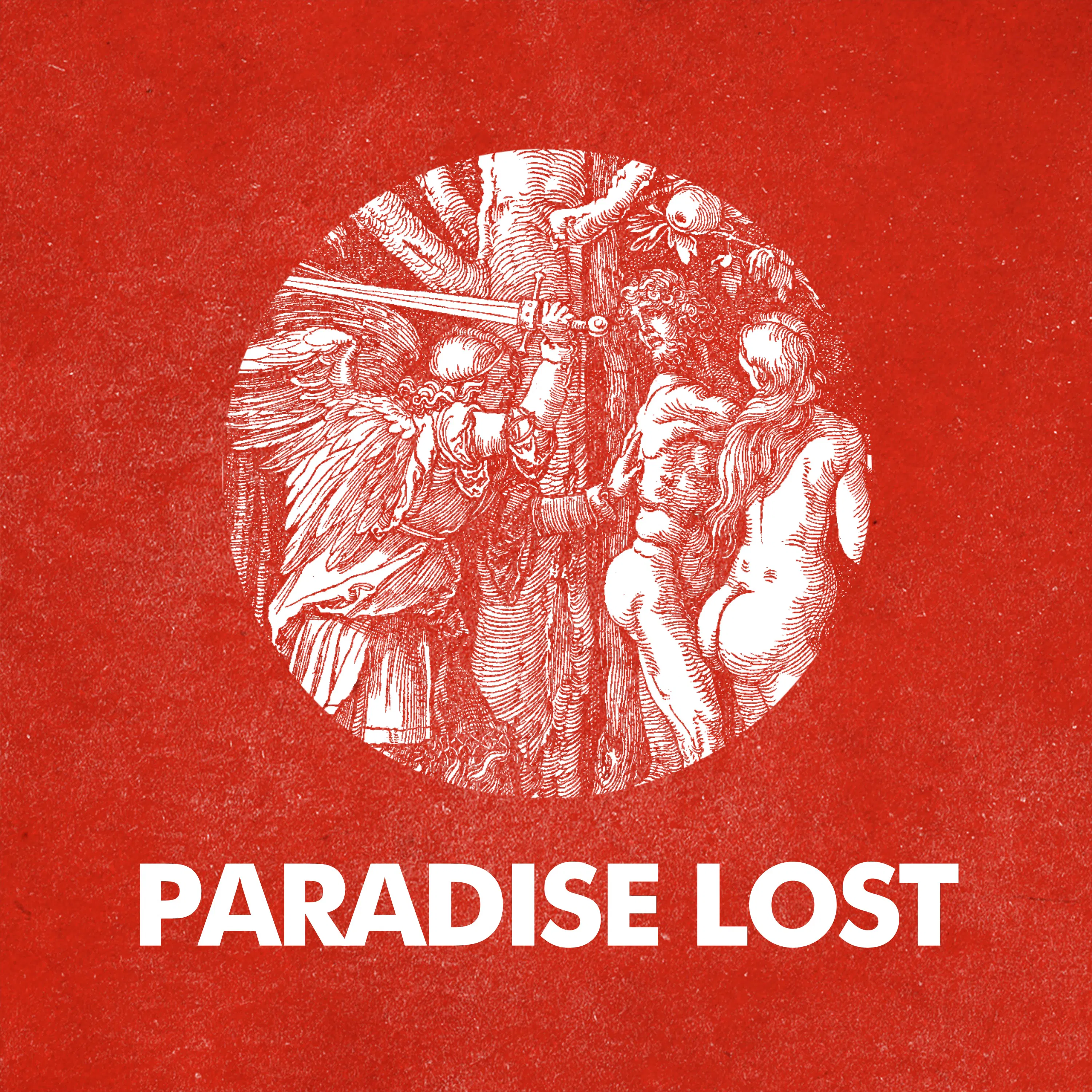
Ep 70On John Milton's "Paradise Lost"
As a young student at Christ’s College Cambridge, John Milton announced to the world that he was going to write the greatest poem that the world has ever seen. He didn’t want to sit among the epic geniuses Homer and Virgil, he wanted to surpass them. Decades later, Milton wrote Paradise Lost, reworking and embellishing the stories of Adam and Eve’s fall from paradise and Satan’s fall from heaven to create what is unquestionably the greatest epic poem written in English. Erik Gray is a professor of English and comparative literature at Columbia University. His books include The Art of Love Poetry, Milton and the Victorians, and The Poetry of Indifference: from the Romantics to the Rubáiyát. See more information on our website, WritLarge.fm. Follow us on Twitter @WritLargePod. Learn more about your ad choices. Visit megaphone.fm/adchoices Support our show by becoming a premium member! https://newbooksnetwork.supportingcast.fm/literary-studies
Ep 304.5 The Best Error You Can Make: Brent Hayes Edwards and Jean-Baptiste Naudy on Claude McKay
What can a French translator do with a novelist who writes brilliantly about the “confrontation between Englishes?” How can such a confrontation be made legible across the boundaries of language, nation, and history? Renowned scholar and translator Brent Hayes Edwards sits down with publisher and translator Jean-Baptiste Naudy to consider these questions in a wide-ranging discussion about translating the Jamaican American writer Claude McKay. They focus especially on the recent translation into French of McKay’s 1941 Amiable with Big Teeth, which paints a satirical portrait of efforts by 1930s Harlem intelligentsia to organize support for the liberation of fascist-controlled Ethiopia. Brent and Jean-Baptiste consider McKay’s lasting legacy and ongoing revival in the U.S. and France. Translating McKay into French, they note, is a matter of reckoning with France’s own imperial history. That history, along with McKay’s complex understanding of race both in the U.S. and abroad, is illuminated in this conversation about one of the Harlem Renaissance’s most celebrated writers. Be sure to check out this episode’s special bonus material for a dramatic, bilingual reading from Amiable with Big Teeth by Jean-Baptiste! Find out more about Novel Dialogue and its hosts and organizers here. Contact us, get that exact quote from a transcript, and explore many more conversations between novelists and critics. Learn more about your ad choices. Visit megaphone.fm/adchoices Support our show by becoming a premium member! https://newbooksnetwork.supportingcast.fm/literary-studies
Ep 9292 Janet McIntosh on "Let's Go Brandon," QAnon and Alt-Right Language (EF, JP)
Elizabeth and John talk with Brandeis linguistic anthropologist Janet McIntosh about the language of US alt-right movements. Janet's current book project on language in the military has prompted thoughts about the "implausible deniability" of "Let's Go Brandon"--a phrase that "mocks the idea we have to mince words." The three of them unpack the "regimentation" of the phrase, the way it rubs off on associated signs, and discusses what drill sergeants on Parris Island really do say. They speculates on the creepy, Dark Mirror-esque similarity between the deciphering of "Q-drops" and academic critique. Turning back to her work on basic training, Janet unpacks the power of "semiotic callousing." Mentioned in this episode: "Code Words and Crumbs," Brandeis Magazine "Crybabies and Snowflakes," Download from Language in the Trump Era: Scandals and Emergencies, edited by Janet McIntosh and Norma Mendoza-Denton, Cambridge University Press, 2020. Theodor Adorno, The Stars Down to Earth. Hofstadter, Richard The paranoid style in American politics." 1964. Lepselter, Susan, The Resonance of Unseen Things: Poetics, Power, Captivity, and UFOs in the American Uncanny. University of Michigan, 2016 Trollope, Anthony. Marion Fay: a Novel. Vol. 29. Chatto and Windus, Piccadilly, 1883. Silverstein, Michael. "Language and the culture of gender: At the intersection of structure, usage, and ideology." In Semiotic mediation, pp. 219-259. Academic Press, 1985. Listen to the episode here Read the transcript here. Learn more about your ad choices. Visit megaphone.fm/adchoices Support our show by becoming a premium member! https://newbooksnetwork.supportingcast.fm/literary-studies
Ep 27Joseph Valente and Margot Gayle Backus, "The Child Sex Scandal and Modern Irish Literature: Writing the Unspeakable" (Indiana UP, 2020)
What can James Joyce, Kate O’Brien, Edna O’Brien, Keith Ridgway, Tana French, and Anne Enright tell us about Ireland’s culture of child sexual abuse? Much, it turns out. In their 2020 co-authored book, Writing the Unspeakable: The Child Sex Scandal and Modern Irish Literature (Indiana UP, 2020), Margot Gayle Backus and Joseph Valente examine the works of these six modern Irish authors, whose writings are both reflections of and engagements with the “open secrets,” “architecture of containment”, and “enigma of sexual violence” in the Free State/Republic. Join us as we chat about psychoanalysis, the struggle to write about child sexual abuse, the anti-trans and homophobic rhetoric of current Florida and Texas “child protection” laws, and the window that literature provides for thinking about Irish history. Averill Earls is the Executive Producer of Dig: A History Podcast (a narrative history podcast, rather than interview-based), and an Assistant Professor of History at St. Olaf College. Learn more about your ad choices. Visit megaphone.fm/adchoices Support our show by becoming a premium member! https://newbooksnetwork.supportingcast.fm/literary-studies
Ep 27Joseph Valente and Margot Gayle Backus, "The Child Sex Scandal and Modern Irish Literature: Writing the Unspeakable" (Indiana UP, 2020)
What can James Joyce, Kate O’Brien, Edna O’Brien, Keith Ridgway, Tana French, and Anne Enright tell us about Ireland’s culture of child sexual abuse? Much, it turns out. In their 2020 co-authored book, Writing the Unspeakable: The Child Sex Scandal and Modern Irish Literature (Indiana UP, 2020), Margot Gayle Backus and Joseph Valente examine the works of these six modern Irish authors, whose writings are both reflections of and engagements with the “open secrets,” “architecture of containment”, and “enigma of sexual violence” in the Free State/Republic. Join us as we chat about psychoanalysis, the struggle to write about child sexual abuse, the anti-trans and homophobic rhetoric of current Florida and Texas “child protection” laws, and the window that literature provides for thinking about Irish history. Averill Earls is the Executive Producer of Dig: A History Podcast (a narrative history podcast, rather than interview-based), and an Assistant Professor of History at St. Olaf College. Learn more about your ad choices. Visit megaphone.fm/adchoices Support our show by becoming a premium member! https://newbooksnetwork.supportingcast.fm/literary-studies
Ep 187Herman Melville, "Moby-Dick" (Oxford UP, 2022)
Today I talked to Hester Blum, editor of a new edition of Moby-Dick (Oxford UP, 2022). "It will be a strange sort of a book, tho', I fear; blubber is blubber you know; tho' you may get oil out of it, the poetry runs as hard as sap from a frozen maple tree;--& to cook the thing up, one must needs throw in a little fancy.... Yet I mean to give the truth of the thing, spite of this." Moby-Dick has a monumental reputation. Less well known are the novel's unexpectedly weird, funny, tantalizing, messy, and wondrous moments. Narrator Ishmael, along with the whaleship Pequod's other meanest mariners, and renegades and castaways, is beguiled into joining Captain Ahab in his vengeful pursuit of the white whale that dismasted him. But along the way, Ishmael takes the reader along many a detour into variegated ways of knowing. In a tone strangely compounded of fun and fury, Moby-Dick brings outlandish curiosity to bear on the multitudinous, oceanic scale of our diverse world. William Domnarski is a longtime lawyer who before and during has been a literary guy, with a Ph.D. in English. He's written five books on judges, lawyers, and courts, two with Oxford, one with Illinois, one with Michigan, and one with the American Bar Association. Learn more about your ad choices. Visit megaphone.fm/adchoices Support our show by becoming a premium member! https://newbooksnetwork.supportingcast.fm/literary-studies
Ep 68On "Grimms' Fairytales"
You probably already know the story of Snow White—as well as Little Red Riding Hood, Briar Rose, The Frog Prince, and so many others. These tales have a rich history of oral storytelling. They’ve travelled through culture, adapted and readapted in each retelling and reaching as far as the popular Disney movies that our kids watch over and over. Jacob and Wilhelm Grimm saw the power of this folklore and made it their life’s mission to compile and preserve it. But while we tend to think of Grimms’ Fairy Tales as stories for children, the themes found in Jacob and Wilhelm’s book can be pretty mature…and a little dark. Columbia professor Annie Pfeifer discusses how the Grimm brothers ended up creating a whole new literary genre and their stories have been shaped and molded throughout history. Annie Pfeifer is an Assistant Professor of Germanic Languages at Columbia University. She has published articles in The New German Critique, German Life and Letters, and the peer-reviewed volumes Que(e)rying Consent and Iran and the West and edited a collection of essays titled “Walk I absolutely Must” in 2019. See more information on our website, WritLarge.fm. Follow us on Twitter @WritLargePod. Learn more about your ad choices. Visit megaphone.fm/adchoices Support our show by becoming a premium member! https://newbooksnetwork.supportingcast.fm/literary-studies
Ep 14Joanna Ebenstein, "Frederik Ruysch and His Thesaurus Anatomicus: A Morbid Guide" (MIT Press, 2022)
Frederik Ruysch (1638-1731) was a celebrated Dutch anatomist, master embalmer, and museologist. He is best remembered today for strange tableaux, crafted from fetal skeletons and other human remains, that flicker provocatively at the edges of science, art, and memento mori. Ruysch exhibited these pieces, along with hundreds of other artful specimens, in his home museum and catalogued them in his lavishly illustrated Frederik Ruysch and His Thesaurus Anatomicus (MIT Press, 2022). This book offers the first English translation of Ruysch's guide to his collection, along with all the illustrations from the original volume, photographs of some his most imaginative extant specimens, and more. Ruysch was at once a brilliant scientist, a preternaturally gifted technician, an esteemed physician, a religious moralizer, and an artist whose prime form of expression was the medium of human remains. His works were sometimes described as Rembrandts of anatomical preparation; today they seem so strange that we can hardly believe that they even existed, much less that they were so popular in their time. His combination of the religious and the scientific, the painstakingly accurate and the extravagantly fantastical, offers vivid testimony of an era in which science overlapped seamlessly with religion and art. Essays accompanying Ruysch's text and images consider such topics as the historical context of Ruysch's work, the paradox of an artist of death whose work engenders the illusion of life, the conservation of Ruysch's specimens, and the shifting ascendancies of romanticism and rationality in the natural sciences. Galina Limorenko is a doctoral candidate in Neuroscience with a focus on biochemistry and molecular biology of neurodegenerative diseases at EPFL in Switzerland. Learn more about your ad choices. Visit megaphone.fm/adchoices Support our show by becoming a premium member! https://newbooksnetwork.supportingcast.fm/literary-studies
Ep 471Ksenia Chizhova, "Kinship Novels of Early Modern Korea: Between Genealogical Time and the Domestic Everyday" (Columbia UP, 2021)
In the face of a Korean cultural world preoccupied with newness, literary output from the more measured and regulated Choson period (1392-1910) can seem difficult to engage with for readers both inside and outside the country. But as Ksenia Chizhova’s Kinship Novels of Early Modern Korea: Between Genealogical Time and the Domestic Everyday (Columbia UP, 2021) shows, a particular genre of late-Chsoson lineage novels reflect not only the staid norms of Confucian patriarchy and heredity, but also a more textured world of unruly emotions, gendered family disputes, calligraphic creativity and scandal simmering under the surface of mundane domestic life. Ed Pulford is an Anthropologist and Lecturer in Chinese Studies at the University of Manchester. His research focuses on friendships and histories between the Chinese, Korean and Russian worlds, and indigeneity in northeast Asia. Learn more about your ad choices. Visit megaphone.fm/adchoices Support our show by becoming a premium member! https://newbooksnetwork.supportingcast.fm/literary-studies
Ep 100Sarah Quesada, "The African Heritage of Latinx and Caribbean Literature" (Cambridge UP, 2022)
The African Heritage of Latinx and Caribbean Literature (Cambridge University Press, 2022) unearths a buried African archive within widely-read Latinx writers of the last fifty years. It challenges dominant narratives in World Literature and transatlantic studies that ignore Africa's impact in broader Latin American culture. Sarah Quesada argues that these canonical works evoke textual memorials of African memory. She shows how the African Atlantic haunts modern Latinx and Caribbean writing, and examines the disavowal or distortion of the African subject in the constructions of national, racial, sexual, and spiritual Latinx identity. Quesada shows how themes such as the 19th century 'scramble for Africa,' the decolonizing wars, Black internationalism, and the neoliberal turn are embedded in key narratives. Drawing from multilingual archives about West and Central Africa, she examines how the legacies of colonial French, Iberian, British and U.S. Imperialisms have impacted on the relationships between African and Latinx identities. This is the first book-length project to address the African colonial and imperial inheritance of Latinx literature. -From the Cambridge University Press website. Anna E. Lindner is a doctoral candidate in the Communication Department at Wayne State University in Detroit, Michigan. On Twitter. Learn more about your ad choices. Visit megaphone.fm/adchoices Support our show by becoming a premium member! https://newbooksnetwork.supportingcast.fm/literary-studies