New Books in Literary Studies
2,780 episodes — Page 26 of 56
Ep 221Tim Harte, "Faster, Higher, Stronger, Comrades!: Sports, Art, and Ideology in Late Russian and Early Soviet Culture" (U Wisconsin Press, 2020)
Dr. Tim Harte's Faster, Higher, Stronger, Comrades!: Sports, Art, and Ideology in Late Russian and Early Soviet Culture (U Wisconsin Press, 2020) looks at sport as artistic subject matter, in late Imperial and early Soviet Russia. In sport, artists found inspiration that could be applied both to improvement of the self and to social progress as artists defined it. In the long run, the constraints of the Socialist Realist aesthetic came to constrain the creative freedom of artists, but until the late 1920's, sport served as a focus of genuine artistic interest, for its own sake and for its ability to provide a reservoir of metaphors that artists could use to make broader, more ideological commentary. Aaron Weinacht is Professor of History at the University of Montana Western, in Dillon, MT. He teaches courses on Russian and Soviet History, World History, and Philosophy of History. His research interests include the sociological theorist Philip Rieff and the influence of Russian nihilism on American libertarianism. Learn more about your ad choices. Visit megaphone.fm/adchoices Support our show by becoming a premium member! https://newbooksnetwork.supportingcast.fm/literary-studies
Ep 203Susan Stewart, "The Ruins Lesson: Meaning and Material in Western Culture" (U Chicago Press, 2020)
How have ruins become so valued in Western culture and so central to our art and literature? Covering a vast chronological and geographical range, from ancient Egyptian inscriptions to twentieth-century memorials, Susan Stewart seeks to answer this question as she traces the appeal of ruins and ruins images, and the lessons that writers and artists have drawn from their haunting forms. Stewart takes us on a sweeping journey through founding legends of broken covenants and original sin, the Christian appropriation of the classical past, and images of decay in early modern allegory. Stewart looks in depth at the works of Goethe, Piranesi, Blake, and Wordsworth, each of whom found in ruins a means of reinventing his art. Lively and engaging, The Ruins Lesson: Meaning and Material in Western Culture (U Chicago Press, 2020) ultimately asks what can resist ruination--and finds in the self-transforming, ever-fleeting practices of language and thought a clue to what might truly endure. John Yargo holds a Ph.D. in English from the University of Massachusetts Amherst. His specializations are early modern literature, the environmental humanities, and critical race studies. His dissertation explores early modern representations of environmental catastrophe, including The Tempest, Oroonoko, and the poetry of Milton. He has published in Studies in Philology, The Journal for Early Modern Cultural Studies, and Shakespeare Studies. Learn more about your ad choices. Visit megaphone.fm/adchoices Support our show by becoming a premium member! https://newbooksnetwork.supportingcast.fm/literary-studies
Ep 202Curtis Runstedler, "Alchemy and Exemplary Poetry in Middle English Literature" (Palgrave Macmillan, 2023)
Curtis Runstedler's book Alchemy and Exemplary Poetry in Middle English Literature (Palgrave Macmillan, 2023) explores the different functions and metaphorical concepts of alchemy in fourteenth- and fifteenth-century Middle English poetry and bridges them together with the exempla tradition in late medieval English literature. Such poetic narratives function as exemplary models which directly address the ambiguity of medieval English alchemical practice. This book examines the foundation of this relationship between alchemical narrative and exemplum in the poetry of Gower and Chaucer in the fourteenth century before exploring its diffusion in lesser-known anonymous poems and recipes in the fifteenth century, namely alchemical dialogues between Morienus and Merlin, Albertus Magnus and the Queen of Elves, and an alchemical version of John Lydgate’s poem The Churl and the Bird. It investigates how this exemplarity can be read as inherent to understanding poetic narratives containing alchemy, as well as enabling the reader to reassess the understanding and expectations of science and narrative within medieval English poetry. Learn more about your ad choices. Visit megaphone.fm/adchoices Support our show by becoming a premium member! https://newbooksnetwork.supportingcast.fm/literary-studies
Ep 365Mark A. Schneegurt, "Anthology of Religious Poetry from the Mexican Inquisition Trials of 16th-Century CryptoJews" (2020)
A century after being expelled from Portugal, cryptoJews in Mexico, false converts to Christianity, could not speak of their beliefs for fear of becoming embroiled in the imprisonment, torture, and death in flames that characterized the Inquisition. Without written texts, the Jewish liturgy lost, clans of cryptoJews created a unique body of religious poetry, connecting them to the Laws of Moses, seeking redemption from sin, or hoping for an escape from their embittered lives. The Carvajal clan was led by Luis el Mozo, an alumbrado, a mystic, and his Judaizing sisters. Once discovered to be secretly practicing Judaism, years of suffering at the hands of the Inquisitors were meticulously recorded in the transcripts of their long demeaning trials. The Carvajal's friends, spouses, children and grandchildren were implicated as Judaizers, with many being reconciled by the Church to secular authorities to be burned alive at massive public ceremonies. The burning of Luis and his sisters was the main attraction for cheering crowds at the auto de f of 1596 in Mexico City. The cruelty of the Inquisitors was matched by their attention to legal detail and testimonies made at trial. Buried within thousands of pages of transcripts, hiding in library special collections of rare books around the world are the only remnants of the religious poetry that sustained cryptoJews hiding in Mexico. Mark A. Schneegurt's Anthology of Religious Poetry from the Mexican Inquisition Trials of 16th-Century CryptoJews uncovers these hidden treasures. Learn more about your ad choices. Visit megaphone.fm/adchoices Support our show by becoming a premium member! https://newbooksnetwork.supportingcast.fm/literary-studies
Ep 5Shakespeare's Life, World and Works 5: How to Read Shakespeare
William Shakespeare, who lived in England from 1564 to 1616, is one of the world’s most popular and most captivating authors. Even four hundred years after his death, his plays still attract audiences around the globe. Why is that? In this course, you’ll learn who Shakespeare was, what kinds of plays he wrote, and what makes his body of work perhaps the greatest work of art ever created. In Episode Five, Professor Smith shares student-tested strategies for approaching Shakespeare’s plays as a first-time reader or audience member. You’ll learn how to engage with the structure, imagery, and poetic verse of Shakespeare’s language and with the particular way that Shakespeare constructs his characters and plots. You’ll also learn why performance is key to discovering the meanings of Shakespeare’s plays--and why there are always new meanings to be discovered. Learn more about your ad choices. Visit megaphone.fm/adchoices Support our show by becoming a premium member! https://newbooksnetwork.supportingcast.fm/literary-studies
Ep 128Book Talk 57: Anne Fernald and Rajgopal Saikumar on Virginia Woolf's "Three Guineas" (1938)
Virginia Woolf’s 1938 provocative and polemical essay Three Guineas presents the iconic writer’s views on war, women, and the way the patriarchy at home oppresses women in ways that resemble those of fascism abroad. Two great Woolf experts, Professor Anne Fernald, editor of two editions of Mrs. Dalloway which she movingly discusses on another Think About It episode, and Rajgopal Saikumar, who is completing a dissertation on Woolf, Hurston, Baldwin and Gandhi and the “duty to disobey” at NYU, explain Woolf’s arguments, the reasons for the shocked response by most of her peers, and why Three Guineas remains so relevant for our time. Uli Baer teaches literature and photography as University Professor at New York University. A recipient of Guggenheim, Getty and Humboldt awards, in addition to hosting "Think About It” he hosts (with Caroline Weber) the podcast "The Proust Questionnaire” and is Editorial Director at Warbler Press. Email [email protected]; Twitter @UliBaer. Learn more about your ad choices. Visit megaphone.fm/adchoices Support our show by becoming a premium member! https://newbooksnetwork.supportingcast.fm/literary-studies
S1 Ep 33The Mesopotamian Connection: Comparing the Bible to Other Literature of the Ancient Near East
Professor Cathleen Chopra-McGowan examines some the incongruities of our Bible in the context of the Ancient Near East, showing how the stories and traditions of Israel resembled and borrowed from those of Babylon and Assyria. She compares the Genesis narrative to two others, the epics of Gilgamesh and Atra-Hasis, especially discussing the universal flood narrative and rationale for sacrifice to show the evolution of our ancestors’ religious practice and thinking about God. Professor Chopra-McGowan teaches courses in the Religious Studies Department at Santa Clara University, including Near Eastern languages, literatures, history, and archaeology, as well as uses of the Bible in contemporary society. Professor Chopra-McGowan’s faculty webpage at Santa Clara University. The earthquake that interrupted our talk St. Crispin’s Day Speech by Kenneth Branagh (Henry V, 1989) Learn more about your ad choices. Visit megaphone.fm/adchoices Support our show by becoming a premium member! https://newbooksnetwork.supportingcast.fm/literary-studies
Ep 353Anthony Reed, "Soundworks: Race, Sound, and Poetry in Production" (Duke UP, 2020)
In Soundworks: Race, Sound, and Poetry in Production (Duke UP, 2020), Anthony Reed argues that studying sound requires conceiving it as process and as work. Since the long Black Arts era (ca. 1958–1974), intellectuals, poets, and musicians have defined black sound as radical aesthetic practice. Through their recorded collaborations as well as the accompanying interviews, essays, liner notes, and other media, they continually reinvent black sound conceptually and materially. Soundwork is Reed’s term for that material and conceptual labor of experimental sound practice framed by the institutions of the culture industry and shifting historical contexts. Through analyses of Langston Hughes’s collaboration with Charles Mingus, Amiri Baraka’s work with the New York Art Quartet, Jayne Cortez’s albums with the Firespitters, and the multimedia projects of Archie Shepp, Matana Roberts, Cecil Taylor, and Jeanne Lee, Reed shows that to grasp black sound as a radical philosophical and aesthetic insurgence requires attending to it as the product of material, technical, sensual, and ideological processes. Henry Ivry is a Lecturer in 20th and 21st Century Literature in the School of Critical Studies at the University of Glasgow. Learn more about your ad choices. Visit megaphone.fm/adchoices Support our show by becoming a premium member! https://newbooksnetwork.supportingcast.fm/literary-studies
Ep 19Kobi Peled, "Words Like Daggers: The Political Poetry of the Negev Bedouin" (Brill, 2022)
For generations, the composition and recitation of poetry has been a key mode of expression among Bedouin populations in the Middle East, reflecting social norms, religious practices, relationships with the natural environment, and tribal histories and politics. In Words Like Daggers: The Political Poetry of the Negev Bedouin (Brill, 2022), Kobi Peled, Professor at Ben-Gurion University of the Negev, analyzes a corpus of poetry collected among the Bedouin of the Negev Desert over the past 100 years for themes of political resistance, dissidence, and reactions to the political changes facing the Negev Bedouin. The poems reveal how the Negev Bedouin responded to and perceived changes in state authority and rule from the late Ottoman period to the contemporary state of Israel. Peled argues that in addition to being a creative and artistic mode of expression, poetry and a close reading of Bedouin poetry can serve as a lens onto Bedouin worldviews, sentiments, and reactions to and participation in processes political formations and state-building undergone in the Negev region during the 20th century. Maggie Freeman is a PhD student in the School of Architecture at MIT. She researches uses of architecture by nomadic peoples and historical interactions of nomads and empires, with a focus on the modern Middle East. Learn more about your ad choices. Visit megaphone.fm/adchoices Support our show by becoming a premium member! https://newbooksnetwork.supportingcast.fm/literary-studies
Ep 172Eric Adler, "The Battle of the Classics: How a Nineteenth-Century Debate Can Save the Humanities Today" (Oxford UP, 2020)
These are troubling days for the humanities. In response, a recent proliferation of works defending the humanities has emerged. But, taken together, what are these works really saying, and how persuasive do they prove? The Battle of the Classics: How a Nineteenth-Century Debate Can Save the Humanities Today (Oxford UP, 2020) demonstrates the crucial downsides of contemporary apologetics for the humanities and presents in its place a historically informed case for a different approach to rescuing the humanistic disciplines in higher education. It reopens the passionate debates about the classics that took place in late nineteenth- and early twentieth-century America as a springboard for crafting a novel foundation for the humanistic tradition. Eric Adler demonstrates that current defenses of the humanities rely on the humanistic disciplines as inculcators of certain poorly defined skills such as "critical thinking." It criticizes this conventional approach, contending that humanists cannot hope to save their disciplines without arguing in favor of particular humanities content. As the uninspired defenses of the classical humanities in the late nineteenth century prove, instrumental apologetics are bound to fail. All the same, the book shows that proponents of the Great Books favor a curriculum that is too intellectually narrow for the twenty-first century. The Battle of the Classics thus lays out a substance-based approach to undergraduate education that will revive the humanities, even as it steers clear of overreliance on the Western canon. The book envisions a global humanities based on the examination of masterworks from manifold cultures as the heart of an intellectually and morally sound education. Eric Adler is a Professor of Classics at the University of Maryland. Adler's scholarly interests include Roman historiography, Latin prose, the history of classical scholarship, and the history of the humanities. Morteza Hajizadeh is a Ph.D. graduate in English from the University of Auckland in New Zealand. His research interests are Cultural Studies; Critical Theory; Environmental History; Medieval (Intellectual) History; Gothic Studies; 18th and 19th Century British Literature. YouTube Channel. Twitter. Learn more about your ad choices. Visit megaphone.fm/adchoices Support our show by becoming a premium member! https://newbooksnetwork.supportingcast.fm/literary-studies
Ep 96Lois Presser, "Unsaid: Analyzing Harmful Silences" (U California Press, 2022)
Harm takes shape in and through what is suppressed, left out, or taken for granted. Unsaid: Unsaid: Analyzing Harmful Silences (U California Press, 2022) is a guide to understanding and uncovering what is left unsaid—whether concealed or silenced, presupposed or excluded. Drawing on a variety of real-world examples, narrative criminologist Lois Presser outlines how to determine what or who is excluded from textual materials. With strategies that can be added to the tool kits of social researchers and activists alike, Unsaid provides a richly layered approach to analyzing and dismantling the power structures that both create and arise from what goes without saying. “…there’s always been a latent importance to absences and silences, and people have been saying that for a long time, but I think this is a time of just trying to get our act together with how we’re going to make strong claims about exclusions and silences and disappearances.” – Lois Presser, author of Unsaid: Analyzing Harmful Silences. Jen Hoyer is Technical Services and Electronic Resources Librarian at CUNY New York City College of Technology and a volunteer at Interference Archive. Jen edits for Partnership Journal and organizes with the TPS Collective. She is co-author of What Primary Sources Teach: Lessons for Every Classroom and The Social Movement Archive. Learn more about your ad choices. Visit megaphone.fm/adchoices Support our show by becoming a premium member! https://newbooksnetwork.supportingcast.fm/literary-studies
Ep 44Gregory Pfitzer, "'Fame Is Not Just for the Fellas': Female Renown and the Childhood of Famous Americans Series" (U Massachusetts Press, 2022)
In “Fame is Not Just for the Fellas”: Female Renown and the Childhood of Famous Americans Series (University of Massachusetts Press, 2022), Gregory Pfitzer examines the editorial and production choices surrounding the biographies of women in the popular children’s book series Childhood of Famous Americans, published between 1932 and 1958. Using conversations and disagreements among authors, editors, readers, reviewers, and sales agents at Bobbs-Merrill publishers, the book tells the story of how female subjects were chosen and what went into writing these histories for young readers of the time. Tensions between “feminism” and “femininity” reflected changing Cold War gender norms, and sources reveal ongoing negotiation of the virtues that the biographies should instill. Pfitzer illustrates how these books shaped children's thinking and historical imaginations around girlhood using tales from the past and considers the influence of the series on readers and American culture more broadly. "Fame Is Not Just for the Fellas" places the series in the context of national debates around fame, gender, historical memory, and portrayals of children and childhood for a young reading public--charged debates that continue to this day. Rebecca Turkington is a PhD Candidate in History at Cambridge University studying transnational women’s networks. Learn more about your ad choices. Visit megaphone.fm/adchoices Support our show by becoming a premium member! https://newbooksnetwork.supportingcast.fm/literary-studies
Ep 171Rens Bod, "A New History of the Humanities: The Search for Principles and Patterns from Antiquity to the Present" (Oxford UP, 2014)
Many histories of science have been written, but A New History of the Humanities (Oxford UP, 2014) offers the first overarching history of the humanities from Antiquity to the present. There are already historical studies of musicology, logic, art history, linguistics, and historiography, but this volume gathers these, and many other humanities disciplines, into a single coherent account. Its central theme is the way in which scholars throughout the ages and in virtually all civilizations have sought to identify patterns in texts, art, music, languages, literature, and the past. What rules can we apply if we wish to determine whether a tale about the past is trustworthy? By what criteria are we to distinguish consonant from dissonant musical intervals? What rules jointly describe all possible grammatical sentences in a language? How can modern digital methods enhance pattern-seeking in the humanities? Rens Bod contends that the hallowed opposition between the sciences (mathematical, experimental, dominated by universal laws) and the humanities (allegedly concerned with unique events and hermeneutic methods) is a mistake born of a myopic failure to appreciate the pattern-seeking that lies at the heart of this inquiry. A New History of the Humanities amounts to a persuasive plea to give Panini, Valla, Bopp, and countless other often overlooked intellectual giants their rightful place next to the likes of Galileo, Newton, and Einstein. Rens Bod is a professor of humanities at the University of Amsterdam. Morteza Hajizadeh is a Ph.D. graduate in English from the University of Auckland in New Zealand. His research interests are Cultural Studies; Critical Theory; Environmental History; Medieval (Intellectual) History; Gothic Studies; 18th and 19th Century British Literature. YouTube Channel. Twitter. Learn more about your ad choices. Visit megaphone.fm/adchoices Support our show by becoming a premium member! https://newbooksnetwork.supportingcast.fm/literary-studies
Ep 16The Editor and Humility: A Conversation with the NYT's Peter Catapano
In this episode we talk with New York Times Opinion Section Editor Peter Catapano, who has edited and published more than 1,000 pieces in The Times and worked with thinkers and writers such as Arthur Danto and E.O. Wilson. Our conversation explores the relationship between writer and editor and the important work Catapano did editing Oliver Sacks’ chronicling his illness and death. Catapano’s The Stone, established in 2010, is the longest-running online series in Opinion, and draws millions of readers each year. John Kaag is Professor and Chair of Philosophy at UMass Lowell and External Professor at the Santa Fe Institute. John W. Traphagan, Ph.D. is Professor and Mitsubishi Heavy Industries Fellow in the Department of Religious Studies at the University of Texas at Austin, where he is also a professor in the Program in Human Dimensions of Organizations. Learn more about your ad choices. Visit megaphone.fm/adchoices Support our show by becoming a premium member! https://newbooksnetwork.supportingcast.fm/literary-studies
Ep 4Shakespeare's Life, World and Works 4: Shakespeare’s Work
William Shakespeare, who lived in England from 1564 to 1616, is one of the world’s most popular and most captivating authors. Even four hundred years after his death, his plays still attract audiences around the globe. Why is that? In this course, you’ll learn who Shakespeare was, what kinds of plays he wrote, and what makes his body of work perhaps the greatest work of art ever created. Episode Four introduces you to the plays--the kinds of stories that Shakespeare wrote, the way he developed as a dramatist over his two-decade career, and the path his works took over four centuries to find their way into your hands. The next part picks up just at this point: now that you have the plays, what do you do with them? Learn more about your ad choices. Visit megaphone.fm/adchoices Support our show by becoming a premium member! https://newbooksnetwork.supportingcast.fm/literary-studies
Ep 230Richard Bradford, "Tough Guy: The Life of Norman Mailer" (Bloomsbury, 2023)
Twice winner of the Pulitzer Prize, firstly in 1969 for The Armies of the Night and again in 1980 for The Executioner's Song, Norman Mailer's life comes as close as is possible to being the Great American Novel: beyond reason, inexplicable, wonderfully grotesque and addictive.The Naked and the Dead was acclaimed not so much for its intrinsic qualities but rather because it launched a brutally realistic sub-genre of military fiction - Catch 22 and MASH would not exist without it. In Tough Guy: The Life of Norman Mailer (Bloomsbury, 2023), Richard Bradford combs through Mailer's personal letters - to lovers and editors - which appear to be a rehearsal for his career as a shifty literary narcissist, and which shape the characters of one of the most widely celebrated World War II novels. Bradford strikes again with a merciless biography in which diary entries, journal extracts and newspaper columns set the tone of this study of a controversial figure. From friendships with contemporaries such as James Baldwin, failed correspondences with Hemingway and the Kennedys, to terrible - but justified - criticism of his work by William Faulkner and Eleanor Roosevelt, this book gives a unique, snappy and convincing perspective of Mailer's ferocious personality and writings. Daniel Moran earned his B.A. and M.A. in English from Rutgers University and his Ph.D. in History from Drew University. The author of Creating Flannery O’Connor: Her Critics, Her Publishers, Her Readers, he teaches research and writing at Rutgers and co-hosts the podcast Fifteen-Minute Film Fanatics (Twitter @15MinFilm). Learn more about your ad choices. Visit megaphone.fm/adchoices Support our show by becoming a premium member! https://newbooksnetwork.supportingcast.fm/literary-studies
Ep 154Drew Morton, "After Midnight: Watchmen After Watchmen" (U Mississippi Press, 2022)
Alan Moore’s and Dave Gibbons’s Watchmen fundamentally altered the perception of American comic books and remains one of the medium’s greatest hits. Launched in 1986—“the year that changed comics” for most scholars in comics studies—Watchmen quickly assisted in cementing the legacy that comics were a serious form of literature no longer defined by the Comics Code era of funny animal and innocuous superhero books that appealed mainly to children. After Midnight: Watchmen After Watchmen (U Mississippi Press, 2022) looks specifically at the three adaptations of Moore’s and Gibbons’s Watchmen—Zack Snyder’s Watchmen film (2009), Geoff Johns’s comic book sequel Doomsday Clock (2017), and Damon Lindelof’s Watchmen series on HBO (2019). Divided into three parts, the anthology considers how the sequels, especially the limited series, have prompted a reevaluation of the original text and successfully harnessed the politics of the contemporary moment into a potent relevancy. The first part considers the various texts through conceptions of adaptation, remediation, and transmedia storytelling. Part two considers the HBO series through its thematic focus on the relationship between American history and African American trauma by analyzing how the show critiques the alt-right, represents intergenerational trauma, illustrates alternative possibilities for Black representation, and complicates our understanding of how the mechanics of the show’s production can complicate its politics. Finally, the book’s last section considers the themes of nostalgia and trauma, both firmly rooted in the original Moore and Gibbons series, and how the sequel texts reflect and refract upon those often-intertwined phenomena. Joel Tscherne is an Adjunct History Professor at Southern New Hampshire University and an Associate Faculty member at University of Arizona Global Campus. His Twitter handle is @JoelTscherne. Learn more about your ad choices. Visit megaphone.fm/adchoices Support our show by becoming a premium member! https://newbooksnetwork.supportingcast.fm/literary-studies
The Diné Reader: An Anthology of Navajo Literature
Today’s book is: The Diné Reader: An Anthology of Navajo Literature, which is the 2022 Before Columbus Foundation American Book Award Winner. The Diné Reader showcases the breadth, depth, and diversity of Diné creative artists and their poetry, fiction, and nonfiction prose, in a wide-ranging anthology. The collected works display a rich variety of and creativity in themes: home and history; contemporary concerns about identity, historical trauma, and loss of language; and economic and environmental inequalities. The Diné Reader developed as a way to demonstrate both the power of Diné literary artistry and the persistence of the Navajo people. The volume opens with a foreword by poet Sherwin Bitsui, who offers insight into the importance of writing to the Navajo people. The editors then introduce the volume by detailing the literary history of the Diné people, establishing the context for the tremendous diversity of the works that follow, which includes free verse, sestinas, limericks, haiku, prose poems, creative nonfiction, mixed genres, and oral traditions reshaped into the written word. This volume combines an array of literature with illuminating interviews, biographies, and photographs of the featured Diné writers and artists. A valuable resource to educators, literature enthusiasts, and beyond, this anthology is a much-needed showcase of Diné writers and their compelling work. The volume also includes a chronology of important dates in Diné history by Jennifer Nez Denetdale, as well as resources for teachers, students, and general readers by Michael Thompson. The Diné Reader is an exciting convergence of Navajo writers and artists with scholars and educators. Our guest is: Esther G. Belin, who is a Diné multimedia artist and writer, and a faculty mentor in the Low Rez MFA program at the Institute for American Indian Arts. She graduated from the Institute of American Indian Arts and the University of California, Berkeley. Her poetry collection From the Belly of My Beauty won the American Book Award from the Before Columbus Foundation. Her latest collection is Of Cartography: Poems. Our co-guest is: Jeff Berglund, who is the director of the Liberal Studies Program and a professor of English at Northern Arizona University in Flagstaff, Arizona, where he has worked since 1999. Dr. Berglund’s research and teaching focuses on Native American literature, comparative Indigenous film, and U.S. multi-ethnic literature. His books include Indigenous Pop: Native American Music from Jazz to Hip Hop (co-editor), and Indigenous Peoples Rise Up: The Global Ascendancy of Social Media Activism (co-editor). Our host is: Dr. Christina Gessler, a historian of women and gender. Listeners to this episode may also be interested in: The Institute of American Indian Arts Esther Belin’s poems on the Poetry Foundation website, including Bringing Hannah Home and When Roots Are Exposed and Blues-ing on the Brown Vibe Sherman Alexie: A Collection of Critical Essays edited by Jeff Berglund and Jan Roush This podcast with Morgan Talty discussing Night of the Living Rez This podcast with Michelle Cyca about Misrepresentation on Campus This podcast with the editor of Tribal Colleges Journal of American Indian Higher Education Welcome to The Academic Life! Join us here each week, where we learn directly from experts. We embrace the broad definition of what it means to lead an academic life, and are informed and inspired by today’s knowledge-producers working inside and outside the academy. Learn more about your ad choices. Visit megaphone.fm/adchoices Support our show by becoming a premium member! https://newbooksnetwork.supportingcast.fm/literary-studies
Ep 9797* Lorraine Daston Books In Dark Times (JP)
Our Books in Dark Times series offered John this 2021 chance to speak with Lorraine Daston of the Max Planck Institute for the History of Science. Her list of publications outstrips our capacity to mention here; John particularly admires her analysis of “epistemic virtues” such as truth to nature and objectivity in her 2007 Objectivity (coauthored with Peter Galison). Although she “came of age in an era of extreme contextualism” Daston is anything but time-bound. She starts things off in John’s wheelhouse with Henry James, before moving on to Pliny the Younger–no, not the scientist, the administrator! Then she makes a startling flanking maneuver to finish with contemporary Polish poetry. John puffs to keep up… Discussed in this episode: Henry James, Portrait of a Lady (Nicole Kidman as Isabel Archer, American abroad, in Jane Campion’s Portrait of a Lady) Pliny the Younger, Letters (“the very model of the good civil servant”) Lisa Ford, Settler Sovereignty Ovid, Tristia Zbigniew Herbert, e.g. Mr. Cogito Wislawa Szymborska View with a Grain of Sand D. H. Lawrence, “Snake” (and other animal poems) Peter Godfrey-Smith, Other Minds (“This [octopus encounter] is probably the closest we will come to meeting an intelligent alien.”) George Herbert, “The Rose“ Olga Tokarczuk, Drive Your Plow over the Bones of the Dead Stanislaw Lem, Solaris (1961) and The Futurological Congress (1971) Listen and Read: 41 RTB Books in Dark Times 13: Lorraine Daston, Historian of Science Learn more about your ad choices. Visit megaphone.fm/adchoices Support our show by becoming a premium member! https://newbooksnetwork.supportingcast.fm/literary-studies
Ep 55Marion Turner, "The Wife of Bath: A Biography" (Princeton UP, 2023)
Ever since her triumphant debut in Chaucer's Canterbury Tales, the Wife of Bath, arguably the first ordinary and recognisably real woman in English literature, has obsessed readers--from Shakespeare to James Joyce, Voltaire to Pasolini, Dryden to Zadie Smith. Few literary characters have led such colourful lives or matched her influence or capacity for reinvention in poetry, drama, fiction, and film. In The Wife of Bath: A Biography (Princeton UP, 2023), Marion Turner tells the fascinating story of where Chaucer's favourite character came from, how she related to real medieval women, and where her many travels have taken her since the fourteenth century, from Falstaff and Molly Bloom to #MeToo and Black Lives Matter. A sexually active and funny working woman, the Wife of Bath, also known as Alison, talks explicitly about sexual pleasure. She is also a victim of domestic abuse who tells a story of rape and redemption. Formed from misogynist sources, she plays with stereotypes. Turner sets Alison's fictional story alongside the lives of real medieval women--from a maid who travelled around Europe, abandoned her employer, and forged a new career in Rome to a duchess who married her fourth husband, a teenager, when she was sixty-five. Turner also tells the incredible story of Alison's post-medieval life, from seventeenth-century ballads and Polish communist pop art to her reclamation by postcolonial Black British women writers. Entertaining and enlightening, funny and provocative, The Wife of Bath is a one-of-a-kind history of a literary and feminist icon who continues to capture the imagination of readers. Learn more about your ad choices. Visit megaphone.fm/adchoices Support our show by becoming a premium member! https://newbooksnetwork.supportingcast.fm/literary-studies
S1 Ep 3Shakespeare's Life, World and Works 3: Shakespeare’s Life
William Shakespeare, who lived in England from 1564 to 1616, is one of the world’s most popular and most captivating authors. Even four hundred years after his death, his plays still attract audiences around the globe. Why is that? In this course, you’ll learn who Shakespeare was, what kinds of plays he wrote, and what makes his body of work perhaps the greatest work of art ever created. In Episodes Two and Three, Professor Smith offers a tour through Shakespeare’s moment in history and through Shakespeare’s life. You’ll learn about the key historical, religious, and cultural changes that shaped the era in which Shakespeare wrote, including the Renaissance, the Protestant Reformation, and the opening of the first ever public theaters in London. Next comes Shakespeare’s own life, with an explanation of why some people have questioned whether William Shakespeare really wrote the plays, and why the particular Renaissance education he received prepared him so well to be a playwright. Learn more about your ad choices. Visit megaphone.fm/adchoices Support our show by becoming a premium member! https://newbooksnetwork.supportingcast.fm/literary-studies
Ep 94Bridget Whearty, "Digital Codicology: Medieval Books and Modern Labor" (Stanford UP, 2022)
Medieval manuscripts are our shared inheritance, and today they are more accessible than ever—thanks to digital copies online. Yet for all that widespread digitization has fundamentally transformed how we connect with the medieval past, we understand very little about what these digital objects really are. We rarely consider how they are made or who makes them. Digital Codicology: Medieval Books and Modern Labor (Stanford UP, 2022) demystifies digitization, revealing what it's like to remake medieval books online and connecting modern digital manuscripts to their much longer media history, from print, to photography, to the rise of the internet. Examining classic late-1990s projects like Digital Scriptorium 1.0 alongside late-2010s initiatives like Bibliotheca Philadelphiensis, and world-famous projects created by the British Library, Corpus Christi College Cambridge, Stanford University, and the Walters Art Museum against in-house digitizations performed in lesser-studied libraries, Bridget Whearty tells never-before-published narratives about globally important digital manuscript archives. Drawing together medieval literature, manuscript studies, digital humanities, and imaging sciences, Whearty shines a spotlight on the hidden expert labor responsible for today's revolutionary digital access to medieval culture. Ultimately, this book argues that centering the modern labor and laborers at the heart of digital cultural heritage fosters a more just and more rigorous future for medieval, manuscript, and media studies. Jen Hoyer is Technical Services and Electronic Resources Librarian at CUNY New York City College of Technology and a volunteer at Interference Archive. She is co-author of What Primary Sources Teach: Lessons for Every Classroom and The Social Movement Archive. Learn more about your ad choices. Visit megaphone.fm/adchoices Support our show by becoming a premium member! https://newbooksnetwork.supportingcast.fm/literary-studies
Ep 12Child's Play: The Seriousness of Children's Literature
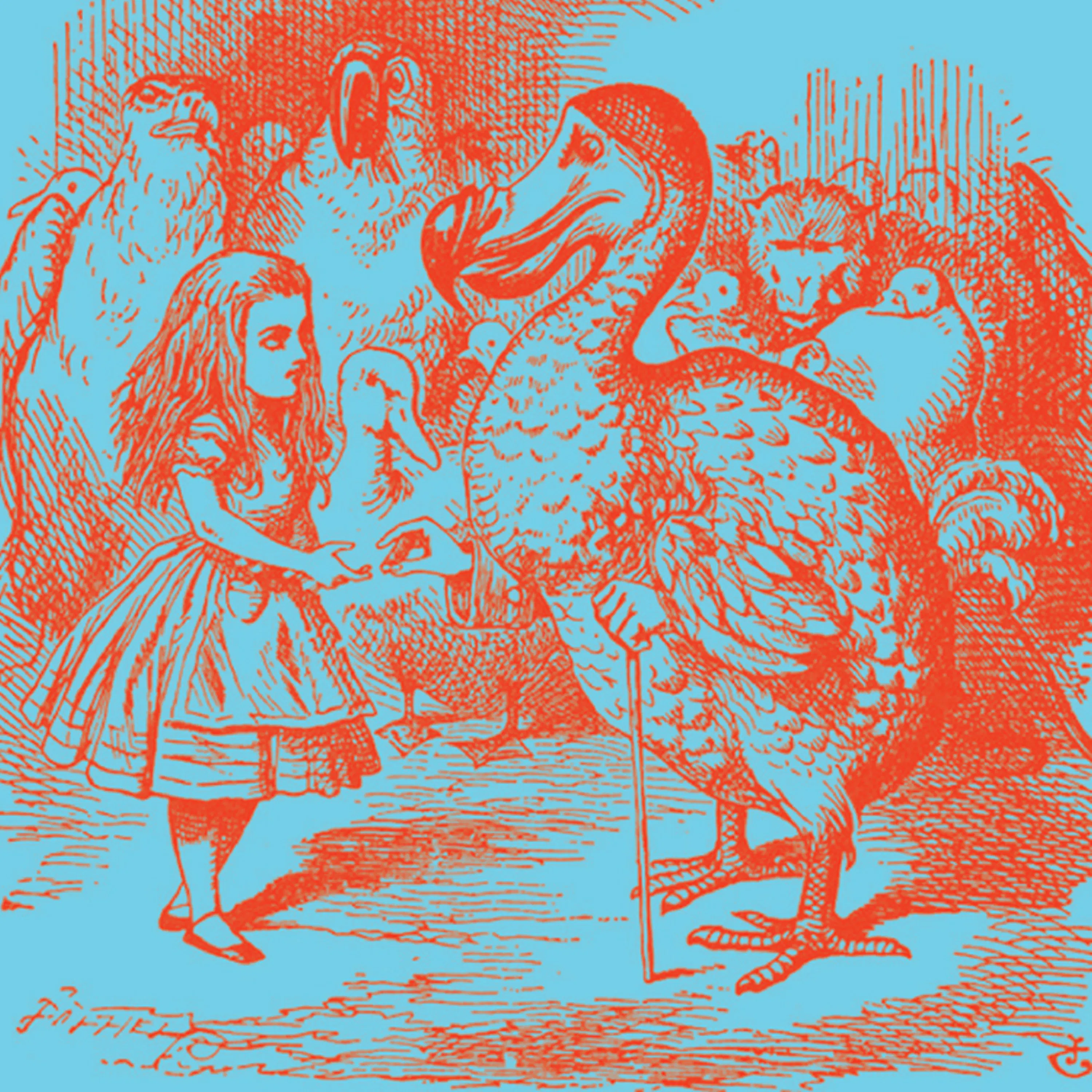
We shouldn’t be dismissive of the popularity of children’s literature among adults, as it is often in these works of fiction that powerful themes such as death, love, and virtue are most deeply and imaginatively explored. Guests Christina Phillips Mattson, Scholar of Children’s Literature Casper ter Kuile, Ministry Innovation Fellow at Harvard Divinity School and co-host of Harry Potter and the Sacred Text MG Prezioso, Contributing writer for Harvard Political Review Learn more about your ad choices. Visit megaphone.fm/adchoices Support our show by becoming a premium member! https://newbooksnetwork.supportingcast.fm/literary-studies
Ep 107Criticism Amplified: New Media and the Podcast Form
This episode is a recording of a short paper presented by Kim and Saronik in the panel “Literary Criticism: New Platforms” organized by Anna Kornbluh at the 2023 Convention of the Modern Language Association. In the paper, they reflect on the nature of the voice in the humanities and the role of the humanities podcast inside and outside institutions. Image: © 2023 Saronik Bosu Learn more about your ad choices. Visit megaphone.fm/adchoices Support our show by becoming a premium member! https://newbooksnetwork.supportingcast.fm/literary-studies
Ep 91Kaiama L. Glover, "A Regarded Self: Caribbean Womanhood and the Ethics of Disorderly Being" (Duke UP, 2021)
In A Regarded Self: Caribbean Womanhood and the Ethics of Disorderly Being (Duke UP, 2021), Kaiama L. Glover champions unruly female protagonists who adamantly refuse the constraints of coercive communities. Reading novels by Marie Chauvet, Maryse Condé, René Depestre, Marlon James, and Jamaica Kincaid, Glover shows how these authors' women characters enact practices of freedom that privilege the self in ways unmediated and unrestricted by group affiliation. The women of these texts offend, disturb, and reorder the world around them. They challenge the primacy of the community over the individual and propose provocative forms of subjecthood. Highlighting the style and the stakes of these women's radical ethics of self-regard, Glover reframes Caribbean literary studies in ways that critique the moral principles, politicized perspectives, and established critical frameworks that so often govern contemporary reading practices. She asks readers and critics of postcolonial literature to question their own gendered expectations and to embrace less constrictive modes of theorization. Anna E. Lindner is a doctoral candidate in the Department of Communication at Wayne State University in Detroit, Michigan. On Twitter. Learn more about your ad choices. Visit megaphone.fm/adchoices Support our show by becoming a premium member! https://newbooksnetwork.supportingcast.fm/literary-studies
Ep 56Seeing Truth in the Speculative: A Conversation with Dexter Gabriel
Historian and author Dexter Gabriel talks about his relationship to truth and memory in his fiction and non-fiction writing. Come for his thoughts on what truth we can find in history and stay for his thoughts about George Washington’s teeth and his affection for astrolabes. Learn more about the Seeing Truth exhibition at our website. Follow us on Twitter @WhyArguePod and on Instagram @WhyWeArguePod Learn more about your ad choices. Visit megaphone.fm/adchoices Support our show by becoming a premium member! https://newbooksnetwork.supportingcast.fm/literary-studies
Ep 347Wout J. van Bekkum, "The Religious Poetry of El'azar Ben Ya'aqov Ha-Bavli (Baghdad, 13th C.)" (Brill, 2022)
Wout J. van Bekkum's The Religious Poetry of El'azar Ben Ya'aqov Ha-Bavli (Baghdad, 13th C.) (Brill, 2022) is a comprehensive edition of Hebrew hymns composed by Eleazar the Babylonian, a prolific composer and scholar who lived in 13th-century Baghdad. His poetic language and style show much affinity with contemporary Sufism. Learn more about your ad choices. Visit megaphone.fm/adchoices Support our show by becoming a premium member! https://newbooksnetwork.supportingcast.fm/literary-studies
Ep 305Oana Serban, "After Thomas Kuhn: The Structure of Aesthetic Revolutions" (de Gruyter, 2022)
Thomas Kuhn’s The Structure of Scientific Revolutions revolutionized the way philosophers and historians of science thought about science, scientific progress, and the nature of scientific knowledge. But Kuhn himself also considered later on how his framework might apply to art. In After Thomas Kuhn: The Structure of Aesthetic Revolutions (De Gruyter, 2022), Oana Serban elaborates on the suggestions and proposals of Kuhn and others to develop a new view of aesthetic and artistic progress and change based in Kuhn’s work. Serban, who is a lecturer in philosophy at the University of Bucharest, adds the key concept of aesthetic validity to the Kuhnian analysis as central to the concept of an aesthetic revolution. The dominance of a particular aesthetic paradigm depends on broadly political factors and are responses to particular ideological questions, such as “What is the relation between humans and God?” Artistic revolutions, in contrast, are stylistic expressions of these ideological frames, such that the norms, values, and styles in art can be transgressive without being Kuhnian revolutions. Carrie Figdor is professor of philosophy at the University of Iowa. Learn more about your ad choices. Visit megaphone.fm/adchoices Support our show by becoming a premium member! https://newbooksnetwork.supportingcast.fm/literary-studies
Ep 75Dan Kois, "Vintage Contemporaries" (Harper, 2023)
Dan Kois is the author of three nonfiction books: How to Be A Family, a memoir; The World Only Spins Foward, an oral history of Tony Kushner's Angels in America (with Isaac Butler); and Facing Future, part of the 33 1/3 series of music criticism. He's a longtime writer, editor, and Podcaster at Slate. He lives in Arlington, Virginia, with his family. Book Recommendations: Luke Healy, Con Artists Peter and Maria Hoey, The Bend of Luck Linnea Sterte, A Frog in Fall Chris Holmes is Chair of Literatures in English and Associate Professor at Ithaca College. He writes criticism on contemporary global literatures. His book, Kazuo Ishiguro as World Literature, is under contract with Bloomsbury Publishing. He is the co-director of The New Voices Festival, a celebration of work in poetry, prose, and playwriting by up-and-coming young writers. Learn more about your ad choices. Visit megaphone.fm/adchoices Support our show by becoming a premium member! https://newbooksnetwork.supportingcast.fm/literary-studies
Ep 15The Fremen in "Dune"
Despite being set in the distant future on a remote desert planet, the story of resource extraction, power, politics, ecology, and religion told in Frank Herbert's sci-fi series Dune bears distinct parallels to real-world history and events. One example of Herbert's real-life inspirations comes in the characters of the Fremen, who Herbert based on both the Bedouin in the Middle East and Native American peoples. How are nomadic Indigenous peoples incorporated into and represented in Herbert's fictional universe, and what can we learn about real people and their history from these fictionalized representations? In this episode, I'm joined by Dune expert Dr. Kara Kennedy to discuss the Fremen of Dune , the inspirations and intentions behind the novels, Orientalism and literary representations of Islam and the Middle East, and what science fiction can teach us about both history and the future. Dr. Kennedy's book Women’s Agency in the Dune Universe: Tracing Women’s Liberation through Science Fiction is available here. Dr. Kennedy writes articles about Dune aimed at a general audience on her blog here. Follow Dr. Kennedy on Twitter @drkarakennedy and @dunescholar Music in this episode: Desert City by Kevin MacLeod. License. Learn more about your ad choices. Visit megaphone.fm/adchoices Support our show by becoming a premium member! https://newbooksnetwork.supportingcast.fm/literary-studies
Ep 25Robin Vose, "The Index of Prohibited Books: Four Centuries of Struggle Over Word and Image for the Greater Glory of God" (Reaktion, 2022)
Robin Vose (St. Thomas University) talks about his new monograph, The Index of Prohibited Books: Four Centuries of Struggle over Word and Image for the Greater Glory of God (Reaktion, 2022), censorship, and the Reformation.The first comprehensive history of the Catholic Church’s notorious Index, with resonance for ongoing debates over banned books, censorship, and free speech. For more than four hundred years, the Catholic Church’s Index Librorum Prohibitorum struck terror into the hearts of authors, publishers, and booksellers around the world, while arousing ridicule and contempt from many others, especially those in Protestant and non-Christian circles. Biased, inconsistent, and frequently absurd in its attempt to ban objectionable texts of every conceivable description—with sometimes fatal consequences—the Index also reflected the deep learning and careful consideration of many hundreds of intellectual contributors over the long span of its storied evolution. This book constitutes the first full study of the Index of Prohibited Books to be published in English. It examines the reasons behind the Church’s attempts to censor religious, scientific, and artistic works, and considers not only why this most sustained of campaigns failed, but what lessons can be learned for today’s debates over freedom of expression and cancel culture. Jana Byars is the Academic Director of Netherlands: International Perspectives on Sexuality and Gender. Learn more about your ad choices. Visit megaphone.fm/adchoices Support our show by becoming a premium member! https://newbooksnetwork.supportingcast.fm/literary-studies
Ep 14Romani Representation in Pop Culture
Roma figures have been an essential part of European folklore, myths, and literary traditions for centuries, with writers from Cervantes to Shakespeare to Victor Hugo drawing on the stereotype of the free-spirited, bohemian "Gypsy." Post-World War II, Roma characters began to appear in a new literary medium: American comic books. Roma heroes and villains alike fill the pages of DC and Marvel comics, with iconic characters like Dr. Doom, Magneto, Scarlet Witch, and Nightcrawler depicted as Roma. Almost exclusively written and drawn by non-Romani, however, these characters are often flawed or stereotypical, or, in recent years, they've been stripped of their Roma identity. Despite this, Roma comic book characters have become an important source of inspiration and empowerment for Roma youth around the globe. In this episode, Roma human rights activist and pop culture expert Vicente Rodriguez Fernandez joins me to talk about depictions of Romani characters in comic books, film and TV, the use of Roma identity as a literary trope, and comics as a tool of empowerment for minority groups. Music in this episode: Desert City by Kevin MacLeod. License. Learn more about your ad choices. Visit megaphone.fm/adchoices Support our show by becoming a premium member! https://newbooksnetwork.supportingcast.fm/literary-studies
S1 Ep 2Shakespeare's Life, World and Works 2: Shakespeare’s World
William Shakespeare, who lived in England from 1564 to 1616, is one of the world’s most popular and most captivating authors. Even four hundred years after his death, his plays still attract audiences around the globe. Why is that? In this course, you’ll learn who Shakespeare was, what kinds of plays he wrote, and what makes his body of work perhaps the greatest work of art ever created. In Episodes Two and Three, Professor Smith offers a tour through Shakespeare’s moment in history and through Shakespeare’s life. You’ll learn about the key historical, religious, and cultural changes that shaped the era in which Shakespeare wrote, including the Renaissance, the Protestant Reformation, and the opening of the first ever public theaters in London. Next comes Shakespeare’s own life, with an explanation of why some people have questioned whether William Shakespeare really wrote the plays, and why the particular Renaissance education he received prepared him so well to be a playwright. Learn more about your ad choices. Visit megaphone.fm/adchoices Support our show by becoming a premium member! https://newbooksnetwork.supportingcast.fm/literary-studies
Ep 56Rousseau's Ideas About Censorship in the Arts
In 1982, the Institute held a multi day discussion of censorship. In this session from the Vault, sociologist Richard Sennett talks about Jean Jacques Rousseau’s ideas about censorship in the arts. The discussion is moderated by Aryeh Neier, and includes Sidney Morgenbesser, Susan Sontag, Joseph Brodskey, Richard Gillman, Frances Fitzgerald, Karen Kennerly, Hans Magnus Enzensberger, and Michael Scammell. Learn more about your ad choices. Visit megaphone.fm/adchoices Support our show by becoming a premium member! https://newbooksnetwork.supportingcast.fm/literary-studies
Ep 349Jonathan W. White, "To Address You as My Friend: African Americans' Letters to Abraham Lincoln" (UNC Press, 2021)
Many African Americans of the Civil War era felt a personal connection to Abraham Lincoln. For the first time in their lives, an occupant of the White House seemed concerned about the welfare of their race. Indeed, despite the tremendous injustice and discrimination that they faced, African Americans now had confidence to write to the president and to seek redress of their grievances. Their letters express the dilemmas, doubts, and dreams of both recently enslaved and free people in the throes of dramatic change. For many, writing Lincoln was a last resort. Yet their letters were often full of determination, making explicit claims to the rights of U.S. citizenship in a wide range of circumstances. Jonathan W. White's To Address You as My Friend: African Americans' Letters to Abraham Lincoln (UNC Press, 2021) presents more than 120 letters from African Americans to Lincoln, most of which have never before been published. They offer unflinching, intimate, and often heart-wrenching portraits of Black soldiers' and civilians' experiences in wartime. As readers continue to think critically about Lincoln's image as the "Great Emancipator," this book centers African Americans' own voices to explore how they felt about the president and how they understood the possibilities and limits of the power vested in the federal government. Omari Averette-Phillips is a graduate student in the department of history at UC Davis. He can be reached at [email protected] Learn more about your ad choices. Visit megaphone.fm/adchoices Support our show by becoming a premium member! https://newbooksnetwork.supportingcast.fm/literary-studies
Ep 27Urvashi Chakravarty, "Fictions of Consent: Slavery, Servitude, and Free Service in Early Modern England" (U Pennsylvania Press, 2022)
In Fictions of Consent: Slavery, Servitude, and Free Service in Early Modern England (U Pennsylvania Press, 2022), Urvashi Chakravarty excavates the ideologies of slavery that took root in early modern England in the period that preceded the development of an organized trade in enslaved persons. Despite the persistent fiction that England was innocent of racialized slavery, Chakravarty argues that we must hold early modern England—and its narratives of exceptional and essential freedom—to account for the frameworks of slavery that it paradoxically but strategically engendered. Slavery was not a foreign or faraway phenomenon, she demonstrates; rather, the ideologies of slavery were seeded in the quotidian spaces of English life and in the everyday contexts of England's service society, from the family to the household, in the theater and, especially, the grammar school classroom, where the legacies of classical slavery and race were inherited and negotiated. The English conscripted the Roman freedman's figurative "stain of slavery" to register an immutable sign of bondage and to secure slavery to epidermal difference, even as early modern frameworks of "volitional service" provided the strategies for later fictions of "happy slavery" in the Atlantic world. Early modern texts presage the heritability of slavery in early America, reveal the embeddedness of slavery within the family, and illuminate the ways in which bloodlines of descent underwrite the racialized futures of enslavement. Fictions of Consent intervenes in a number of areas including early modern literary and cultural studies, premodern critical race studies, the reception of classical antiquity, and the histories of law, education, and labor to uncover the conceptual genealogies of slavery and servitude and to reveal the everyday sites where the foundations of racialized slavery were laid. Although early modern England claimed to have "too pure an Air for Slaves to breathe in," Chakravarty reveals slavery was a quintessentially English phenomenon. Urvashi Chakravarty is Associate Professor of English at the University of Toronto and works on early modern English literature, critical race studies, queer studies, and the history of slavery, Alexandra Ortolja-Baird is Lecturer in Digital History and Culture at the University of Portsmouth. She tweets at @timetravelallie. Learn more about your ad choices. Visit megaphone.fm/adchoices Support our show by becoming a premium member! https://newbooksnetwork.supportingcast.fm/literary-studies
Ep 200Lesley Higgins and Marie-Christine Leps, "Heterotopic World Fiction: Thinking Beyond Biopolitics with Woolf, Foucault, Ondaatje" (Academic Studies Press, 2023)
After more than a century of genocides and in the midst of a global pandemic, Lesley Higgins and Marie-Christine Leps' book Heterotopic World Fiction: Thinking Beyond Biopolitics with Woolf, Foucault, Ondaatje (Academic Studies Press, 2023) focuses on the critique of biopolitics (the government of life through individuals and the general population) and the counterdevelopment of biopoetics (an aesthetics of life elaborating a self as a practice of freedom) realized in texts by Virginia Woolf, Michel Foucault, and Michael Ondaatje. Their world fiction produces transhistorical, transnational experiences offered to the reader for collective responsibility in these critical times. Their books function as heterotopias: spaces and processes that recall and confront regimes of recognized truths to dismantle fixed identities and actualize possibilities for becoming other. Higgins and Leps define and explore a slant, biopoetic perspective that is feminist, materialist, anti-racist, and anti-war. Learn more about your ad choices. Visit megaphone.fm/adchoices Support our show by becoming a premium member! https://newbooksnetwork.supportingcast.fm/literary-studies
Ep 127Book Talk 56: Roosevelt Montás on "Great Books"
Roosevelt Montás is Senior Lecturer in American Studies and English at Columbia University. A specialist in Antebellum American literature and culture and in American citizenship, he focuses mainly on the history, meaning, and future of liberal education. This question motivates his book Rescuing Socrates: How the Great Books Changed My Life and Why They Matter for a New Generation (Princeton University Press, 2021). “Great Books” dominate “the Core” at Columbia University, where undergraduates must complete two years of non-departmental humanities courses. Montás teaches in the Core and was for ten years the director of the Center for the Core Curriculum. From this vantage point, he considers the function of “great books” today, particularly for members of historically marginalized communities like himself. In Rescuing Socrates, he recounts how a liberal education transformed his life as a Dominican-born American immigrant. As many academics deem the Western canon to be inherently chauvinistic and the general public increasingly questions the very value of the humanities, Montás takes a different approach. He argues: “The practice of liberal education, especially in the context of a research university, is pointedly countercultural.” The New York Times praised the book for its compelling argument “for the value of a Great Books education as the foundation for receiving the benefits of everything else a school has to offer.” I spoke with Montás about the complicated value of “great books,” the potential of a humanities education, and his conviction that a teacher in the humanities can trigger for students the beginning of a lifelong investigation of the self. Learn more about your ad choices. Visit megaphone.fm/adchoices Support our show by becoming a premium member! https://newbooksnetwork.supportingcast.fm/literary-studies
Ep 348Roger A Sneed, "The Dreamer and the Dream: Afrofuturism and Black Religious Thought" (Ohio State UP, 2021)
In The Dreamer and the Dream: Afrofuturism and Black Religious Thought (Ohio State UP, 2021), Professor Roger Sneed illuminates the interplay of Black religious thought with science fiction narratives to present a bold case for Afrofuturism as an important channel for Black spirituality. In the process, he challenges the assumed primacy of the Black church as the arbiter of Black religious life. Incorporating analyses of Octavia Butler’s Parable books, Janelle Monáe’s Afrofuturistic saga, Star Trek’s Captain Benjamin Sisko, Marvel’s Black Panther, and the philosophies of Sun Ra and the Nation of Islam, Sneed demonstrates how Afrofuturism has contributed to Black visions of the future. He also investigates how Afrofuturism has influenced religious scholarship that looks to Black cultural production as a means of reimagining Blackness in the light of the sacred. The result is an expansive new look at the power of science fiction and Afrofuturism to center the diversity of Black spirituality. Roger A. Sneed is Professor and Chair of Religion at Furman University in Greenville, South Carolina. His work involves the intersections of African American religious thought and culture, Christian thought and gay male sexualities, and religious ethics. He is a contributor for Huffington Post and has previously published the book Representations of Homosexuality: Black Liberation Theology and Cultural Criticism (Palgrave Macmillan, 2010). Carrie Lynn Evans is a PhD student at Université Laval in Quebec City. [email protected] @carrielynnland Learn more about your ad choices. Visit megaphone.fm/adchoices Support our show by becoming a premium member! https://newbooksnetwork.supportingcast.fm/literary-studies
Ep 55On W. H. Auden
In 1983, ten years after W. H. Auden’s death, the New York Institute for the Humanities organized a series of readings and discussions of his work. In this episode from the Vault, Edward Mendelson, Auden's literary executor, moderates a discussion between Christopher Isherwood and Stephen Spender. Learn more about your ad choices. Visit megaphone.fm/adchoices Support our show by becoming a premium member! https://newbooksnetwork.supportingcast.fm/literary-studies
Ep 3Generation Why?: Do We Need "Generations?"
Who gets to define generational cohorts and do they obscure more than illuminate? Guests Neil Howe, author of Generations Tony Tulathimutte, author of Why There’s No ‘Millennial’ Novel Learn more about your ad choices. Visit megaphone.fm/adchoices Support our show by becoming a premium member! https://newbooksnetwork.supportingcast.fm/literary-studies
S1 Ep 1Shakespeare's Life, World and Works 1: Why Read Shakespeare
William Shakespeare, who lived in England from 1564 to 1616, is one of the world’s most popular and most captivating authors. Even four hundred years after his death, his plays still attract audiences around the globe. Why is that? In this course, you’ll learn who Shakespeare was, what kinds of plays he wrote, and what makes his body of work perhaps the greatest work of art ever created. In Episode One, Emma Smith, Professor of Shakespeare Studies at the University of Oxford, tackles the question, Why read Shakespeare? You’ll learn what makes Shakespeare newly relevant for each new generation of audiences and discover what is unique about Shakespeare’s approach to writing--an approach that lets us not only watch but actually take part in his plays. Learn more about your ad choices. Visit megaphone.fm/adchoices Support our show by becoming a premium member! https://newbooksnetwork.supportingcast.fm/literary-studies
Ep 53Comedies of 'Fair Use': Lewis Hyde on Owning Art and Ideas
In April 2006, The Institute held a two day symposium about copyright and intellectual property, titled Comedies of Fair Use. In this session, Lewis Hyde talks about owning art and ideas. Hyde is a cultural critic and scholar, whose work focuses on the nature of imagination, creativity, and property. He is best known for his books, The Gift: Imagination and the Erotic Life of Property, and Trickster Makes This World: Mischief, Myth and Art. Learn more about your ad choices. Visit megaphone.fm/adchoices Support our show by becoming a premium member! https://newbooksnetwork.supportingcast.fm/literary-studies
S1 Ep 3The Gospels in the Early Church: Evidence for the Chronology and Transmission of the Christian Scriptures
Professor Matthew Thomas returns to explain how we can place the Gospels in time and context using both internal clues (literary evidence) and the external ones (anthropological evidence). These are the first steps on a path of the many centuries of transmission toward the Bible we have today; Matthew Thomas tells why they are so important and where they have led us. The papyrus (P66) of the Gospel of John in the Bodmer Library, Switzerland, can be found here. Learn more about your ad choices. Visit megaphone.fm/adchoices Support our show by becoming a premium member! https://newbooksnetwork.supportingcast.fm/literary-studies
Ep 52Edmund Leach on Roman Jakobson's Contributions to Linguistics
In this episode from the Institute’s Vault, we hear the1982 Gallatin Lecture, in which Sir Edmund Leach discussed the work of Roman Jakobson, who he met in 1960, at Stanford’s Center for Advanced Study in the Behavioral Sciences. Jakobson was one of the pioneers of structural linguistics, and a major influence on Claude Levi-Strauss and Roland Barthes. He taught at Harvard from 1940 until his retirement in 1967. Leach was a British social anthropologist, and the provost of King's College, Cambridge from 1966 to 1979. Learn more about your ad choices. Visit megaphone.fm/adchoices Support our show by becoming a premium member! https://newbooksnetwork.supportingcast.fm/literary-studies
Ep 235Mani Rao, "Saundarya Lahari: Wave of Beauty" (HarperCollins, 2022)
Today I talked to Mani Rao about her translation Saundarya Lahari: Wave of Beauty" (HarperCollins, 2022) Saundarya Lahari is a popular Sanskrit hymn celebrating the power and beauty of Sakti, the primordial goddess. In one hundred verses, it underlines the centrality of the feminine principle in Indian thought. Attributed to Adi Sankaracarya, Saundarya Lahari is a valuable source for understanding tantric ideas. Every verse is associated with yantras and encoded mantras for tantric rituals, and specific verses in the hymn are considered potent for acquiring good health, lovers, and even poetic skills. Raj Balkaran is a scholar of Sanskrit narrative texts. He teaches at the Oxford Centre for Hindu Studies and at his own virtual School of Indian Wisdom. For information see rajbalkaran.com. Learn more about your ad choices. Visit megaphone.fm/adchoices Support our show by becoming a premium member! https://newbooksnetwork.supportingcast.fm/literary-studies
Ep 54Jed Rasula, "What the Thunder Said: How 'The Waste Land' Made Poetry Modern" (Princeton UP, 2022)
When T. S. Eliot published The Waste Land in 1922, it put the thirty-four-year-old author on a path to worldwide fame and the Nobel Prize. "But," as Jed Rasula writes, "The Waste Land is not only a poem: it names an event, like a tornado or an earthquake. Its publication was a watershed, marking a before and after. It was a poem that unequivocally declared that the ancient art of poetry had become modern." In What the Thunder Said: How 'The Waste Land' Made Poetry Modern (Princeton UP, 2022), Rasula tells the story of how The Waste Land changed poetry forever and how this cultural bombshell served as a harbinger of modernist revolution in all the arts, from abstraction in visual art to atonality in music. From its famous opening, "April is the cruellest month, breeding / Lilacs out of the dead land," to its closing Sanskrit mantra, "Shantih shantih shantih," The Waste Land combined singular imagery, experimental technique, and dense allusions, boldly fulfilling Ezra Pound's injunction to "make it new." What the Thunder Said traces the origins, reception, and enduring influence of the poem, from its roots in Wagnerism and French Symbolism to the way its strangely beguiling music continues to inspire readers. Along the way, we learn about Eliot's storied circle, including Wyndham Lewis, Virginia Woolf, and Bertrand Russell, and about poets like Mina Loy and Marianne Moore, whose innovations have proven as consequential as those of the "men of 1914." Filled with fresh insights and unfamiliar anecdotes, What the Thunder Said recovers the explosive force of the twentieth century's most influential poem. Learn more about your ad choices. Visit megaphone.fm/adchoices Support our show by becoming a premium member! https://newbooksnetwork.supportingcast.fm/literary-studies
Ep 340Julia Elsky, "Writing Occupation: Jewish Émigré Voices in Wartime France" (Stanford UP, 2020)
Among the Jewish writers who emigrated from Eastern Europe to France in the 1910s and 1920s, a number chose to switch from writing in their languages of origin to writing primarily in French, a language that represented both a literary center and the promises of French universalism. But under the Nazi occupation of France from 1940 to 1944, these Jewish émigré writers—among them Irène Némirovsky, Benjamin Fondane, Romain Gary, Jean Malaquais, and Elsa Triolet—continued to write in their adopted language, even as the Vichy regime and Nazi occupiers denied their French identity through xenophobic and antisemitic laws. In Writing Occupation: Jewish Émigré Voices in Wartime France (Stanford UP, 2020), Julia Elsky argues that these writers reexamined both their Jewishness and their place as authors in France through the language in which they wrote. The group of authors Elsky considers depicted key moments in the war from their perspective as Jewish émigrés, including the June 1940 civilian flight from Paris, life in the occupied and southern zones, the roundups and internment camps, and the Resistance in France and in London. Writing in French, they expressed multiple cultural, religious, and linguistic identities, challenging the boundaries between center and periphery, between French and foreign, even when their sense of belonging was being violently denied. Julia Elsky is Assistant Professor of French at Loyola University Chicago. Learn more about your ad choices. Visit megaphone.fm/adchoices Support our show by becoming a premium member! https://newbooksnetwork.supportingcast.fm/literary-studies
Ep 51"Gone with the Wind" Revisited
In this week’s episode from the Institute’s Vault, Molly Haskell talks about her 2009 book, Frankly, My Dear: "Gone with the Wind" Revisited, published by Yale University Press. Haskell grew up in Richmond, Virginia, and studied at the Sorbonne. She came to New York in the sixties to work for the French Film office, where she wrote a newsletter about French films. She wrote about movies for the Village Voice, Vogue, and New York magazine. Learn more about your ad choices. Visit megaphone.fm/adchoices Support our show by becoming a premium member! https://newbooksnetwork.supportingcast.fm/literary-studies
S1 Ep 2Who Wrote the Bible? Sorting out the History of the Bible We Have.
Matthew Thomas, theologian and biblical scholar, explains how the Bible got to be the Bible, how confident we can be in its historicity, and on what authority we can trust such judgments. We talk about the languages of the Scripture and their transmission over time, and how we see the emergence of the documents that would later become the Bible already in first-century Christian communities. Professor Thomas teaches Biblical languages and the history of the Bible, Patristics, and Early Christian interpretation of the Scriptures, especially Pauline Theology, at the Dominican School of Philosophy and Theology at UC Berkeley’s Graduate Theological Union. Learn more about your ad choices. Visit megaphone.fm/adchoices Support our show by becoming a premium member! https://newbooksnetwork.supportingcast.fm/literary-studies