New Books in Literary Studies
2,780 episodes — Page 25 of 56
Ep 59Sarah Iles Johnston, "Gods and Mortals: Ancient Greek Myths for Modern Readers" (Princeton UP, 2023)
Gripping tales that abound with fantastic characters and astonishing twists and turns, Greek myths confront what it means to be mortal in a world of powerful forces beyond human control. Little wonder that they continue to fascinate readers thousands of years after they were first told. Gods and Mortals: Ancient Greek Myths for Modern Readers (Princeton UP, 2023) is a major new telling of ancient Greek myths by one of the world's preeminent experts. In a fresh, vibrant, and compelling style that draws readers into the lives of the characters, Sarah Iles Johnston offers new narrations of all the best-known tales as well as others that are seldom told, taking readers on an enthralling journey from the origin of the cosmos to the aftermath of the Trojan War. Some of the mortals in these stories are cursed by the gods, while luckier ones are blessed with resourcefulness and resilience. Gods transform themselves into animals, humans, and shimmering gold to visit the earth in disguise--where they sometimes transform offending mortals into new forms, too: a wolf, a spider, a craggy rock. Other mortals--both women and men--use their wits and strength to conquer the monsters created by the gods--gorgons, dragons, harpies, fire-breathing bulls. Featuring captivating original illustrations by Tristan Johnston, Gods and Mortals highlights the rich connections between the different characters and stories, draws attention to the often-overlooked perspectives of female characters, and stays true both to the tales and to the world in which ancient people lived. The result is an engaging and entertaining new take on the Greek myths. Learn more about your ad choices. Visit megaphone.fm/adchoices Support our show by becoming a premium member! https://newbooksnetwork.supportingcast.fm/literary-studies
Ep 32Laura Kolb, "Fictions of Credit in the Age of Shakespeare" (Oxford UP, 2021)
In Fictions of Credit in the Age of Shakespeare (Oxford University Press, 2021), Laura Kolb examines how Shakespeare and his contemporaries represented credit-driven artifice and interpretation on the early modern stage. It also analyses a range of practical texts—including commercial arithmetics, letter-writing manuals, legal formularies, and tables of interest—which offered strategies for generating credit and managing debt. Looking at plays and practical texts together, Fictions of Credit argues that both types of writing constitute “equipment for living”: practical texts by offering concrete strategies for navigating England's culture of credit, and plays by exploring the limits of credit's dangers and possibilities. In their representations of a world re-written by debt relations, dramatic texts in particular articulate a phenomenology of economic life, telling us what it feels like to live in credit culture: to live, that is, inside a fiction. Laura Kolb is an Assistant Professor of English at Baruch College, the City University of New York. Schneur Zalman Newfield is an Assistant Professor of Sociology at Borough of Manhattan Community College, City University of New York, and the author of Degrees of Separation: Identity Formation While Leaving Ultra-Orthodox Judaism (Temple University Press, 2020). Visit him online at ZalmanNewfield.com. Learn more about your ad choices. Visit megaphone.fm/adchoices Support our show by becoming a premium member! https://newbooksnetwork.supportingcast.fm/literary-studies
Ep 11The Wooden O and the Iron Throne: Game of Thrones and Shakespeare Part 3
Dive into the question of why audiences love Shakespeare’s plays and Game of Thrones so much, despite their depictions of prejudice and violence, and discuss the unique power of tragic art. Learn more about your ad choices. Visit megaphone.fm/adchoices Support our show by becoming a premium member! https://newbooksnetwork.supportingcast.fm/literary-studies
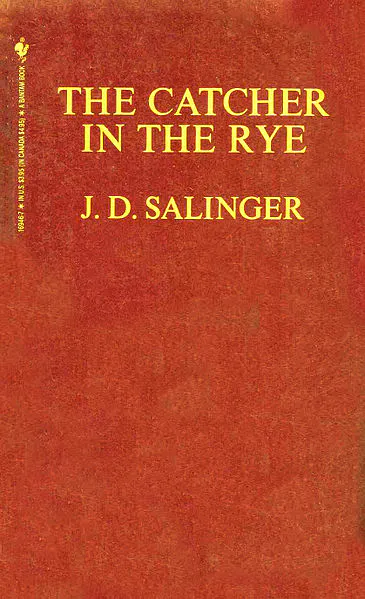
Ep 15Cherished and Cursed: Toward a Social History of "The Catcher in the Rye"
In light of J.D. Salinger's recent passing and on reflection of his literary contributions, The New England Quarterly took a trip back to its December 1997 issue (70:4) and one of the journal's most popular articles. Pulitzer Prize-winner and NEQ editorial board member, Louis Menand interviews author Stephen J. Whitfield on his article "Cherished and Cursed: Toward a Social History of The Catcher in the Rye." They discuss the impact of Salinger, the political and social climate during the time of Catcher, and contemplate how Cold War is viewed today. The conversation was recorded on February 24, 2010. Learn more about your ad choices. Visit megaphone.fm/adchoices Support our show by becoming a premium member! https://newbooksnetwork.supportingcast.fm/literary-studies

Ep 8Book Chat: Comics in Taiwan
For this installment, we had the pleasure of hosting Norbert Danysz, a PhD candidate at Université Lumière Lyon 2. We chatted about recent developments related to comics in Taiwan – the definition of “Taiwan comics”, their typology, and state promotion of this medium with the aim of building Taiwan’s soft power. To find out more about niche and mainstream comics, who reads them, how and for whom they are significant, please listen to this episode! Learn more about your ad choices. Visit megaphone.fm/adchoices Support our show by becoming a premium member! https://newbooksnetwork.supportingcast.fm/literary-studies
Ep 98Stefano Gualeni and Riccardo Fassone, "Fictional Games: A Philosophy of Worldbuilding and Imaginary Play" (Bloomsbury, 2023)
What role do imaginary games have in story-telling? Why do fiction authors outline the rules of a game that the reader will never watch or play? Combining perspectives from philosophy, literature and game studies, Fictional Games: A Philosophy of Worldbuilding and Imaginary Play (Bloomsbury, 2023) provides the first in-depth investigation into the significance of games in fictional worlds. With examples from contemporary cinema and literature, from The Hunger Games to the science fiction of Iain M. Banks, Stefano Gualeni and Riccardo Fassone introduce four key functions that different types of imaginary games have in worldbuilding. First, fictional games can emphasize the dominant values and ideologies of the fictional society they belong to. Second, some games function as critical, utopian tools, inspiring shifts in the thinking and political orientation of the fictional characters. Third, imaginary games, especially those with a magical component, are conducive to the transcendence of a particular form of being, such as the overcoming of human corporeality. And fourth, fictional games can deceptively blur the boundaries between the contingency of play and the irrevocable seriousness of "real life", either camouflaging life as a game or disguising a game as something with more permanent consequences. With illustrations in every chapter, bringing the imaginary games to life, Gualeni and Fassone creatively inspire us to consider fictional games anew: not as moments of playful reprieve in a storyline, but as significant and multi-layered rhetorical devices. Rudolf Inderst is a professor of Game Design with a focus on Digital Game Studies at the IU International University of Applied Science, editor of “Game Studies Watchlist”, a weekly messenger newsletter about Game Culture and curator of @gamestudies at tiktok. Learn more about your ad choices. Visit megaphone.fm/adchoices Support our show by becoming a premium member! https://newbooksnetwork.supportingcast.fm/literary-studies
Ep 368Susan J. Stanfield, "Rewriting Citizenship: Women, Race, and Nineteenth-Century Print Culture" (U Georgia Press, 2022)
Rewriting Citizenship: Women, Race, and Nineteenth-Century Print Culture (U Georgia Press, 2022) provides an interdisciplinary approach to antebellum citizenship. Interpreting citizenship, particularly how citizenship intersects with race and gender, is fundamental to understanding the era and directly challenges the idea of Jacksonian Democracy. Susan J. Stanfield uses an analysis of novels, domestic advice, essays, and poetry, as well as more traditional archival sources, to provide an understanding of both the prescriptions for womanhood espoused in print culture and how those prescriptions were interpreted in everyday life. While much has been written about the cultural marker of true womanhood as a gender ideology of white middle-class women, Stanfield reveals how it served an even more significant purpose by defining racial difference and attaching civic purpose to the daily practices of women. Black and white women were actively engaged in redefining citizenship in ways that did not necessarily call for suffrage rights but did claim a relationship to the state. The prominence of true womanhood relied upon a female-focused print culture. The act of publication gave power to the ideology and allowed for a shared identity among white middle-class women and those who sought to emulate them. Stanfield argues that this domestic literature created a national code for womanhood that was racially constructed and infused with civic purpose. By defining women’s household practices as an obligation not only to their husbands but also to the state, women could reimagine themselves as citizens. Through print sources, women publicized their performance of these defined obligations and laid claim to citizenship on their own behalf. Katrina Anderson is a doctoral candidate at the University of Delaware. Learn more about your ad choices. Visit megaphone.fm/adchoices Support our show by becoming a premium member! https://newbooksnetwork.supportingcast.fm/literary-studies

Ep 7Book Chat: Queering the Anthropocene in Taiwan Sci-Fi
In this episode, we have the pleasure to have Mr Chi Ta-wei, a renowned Taiwanese writer, talk about his acclaimed LGBTQ+ novel, The Membranes. Chi reviews this work which was published in the 90s and provides his reflection on how to re-read the novel in the context of the Anthropocene. We also chat about the influence of Japanese manga and anime on his Sci-fi world-creating and his view on contemporary speculative fiction. Chi further shares with us his thoughts on the next generation of Taiwanese sci-fi novelists. Learn more about your ad choices. Visit megaphone.fm/adchoices Support our show by becoming a premium member! https://newbooksnetwork.supportingcast.fm/literary-studies
Ep 208Emily Steiner, "John Trevisa's Information Age: Knowledge and the Pursuit of Literature, c. 1400" (Oxford UP, 2021)
What would medieval English literature look like if we viewed it through the lens of the compendium? In that case, John Trevisa might come into focus as the major author of the fourteenth century. Trevisa (d. 1402) made a career of translating big informational texts from Latin into English prose. These included Ranulph Higden's Polychronicon, an enormous universal history, Bartholomaeus Anglicus's well-known natural encyclopedia De proprietatibus rerum, and Giles of Rome's advice-for-princes manual, De regimine principum. These were shrewd choices, accessible and on trend: De proprietatibus rerum and De regimine principum had already been translated into French and copied in deluxe manuscripts for the French and English nobility, and the Polychronicon had been circulating England for several decades. John Trevisa's Information Age: Knowledge and the Pursuit of Literature, c. 1400 (Oxford UP, 2021) argues that John Trevisa's translations of compendious informational texts disclose an alternative literary history by way of information culture. Bold and lively experiments, these translations were a gamble that the future of literature in England was informational prose. This book argues that Trevisa's oeuvre reveals an alternative literary history more culturally expansive and more generically diverse than that which we typically construct for his contemporaries, Geoffrey Chaucer and William Langland. Thirteenth- and early fourteenth-century European writers compiled massive reference books which would shape knowledge well into the Renaissance. This study maintains that they had a major impact on English poetry and prose. In fact, what we now recognize to be literary properties emerged in part from translations of medieval compendia with their inventive ways of handling vast quantities of information. Emily Steiner is the Rose Family Endowed Chair Professor of English at the University of Pennsylvania. She is known for her work on medieval literature and middle English literature and culture. Morteza Hajizadeh is a Ph.D. graduate in English from the University of Auckland in New Zealand. His research interests are Cultural Studies; Critical Theory; Environmental History; Medieval (Intellectual) History; Gothic Studies; 18th and 19th Century British Literature. YouTube channel. Learn more about your ad choices. Visit megaphone.fm/adchoices Support our show by becoming a premium member! https://newbooksnetwork.supportingcast.fm/literary-studies
Ep 295Audrey Truschke, "The Language of History: Sanskrit Narratives of Indo-Muslim Rule" (Columbia UP, 2021)
In her layered and theoretically astute new book The Language of History: Sanskrit Narratives of Indo-Muslim Rule (Columbia UP, 2021), Audrey Truschke documents and analyzes a range of Sanskrit texts in premodern India invested in narrating and making sense of Indo-Persian political rule and governance. In a study at once ambitious and razor sharp in execution, Truschke demonstrates the importance of taking seriously the enterprise of Sanskrit historical writing in the premodern period. Historically and geographically expansive, Truschke takes her readers through a delightful tour of Sanskrit texts from a variety of genres to show their incongruity with modern conceptions of religious difference and antagonism between Hindus and Muslims. Through her close readings of Sanskrit historical texts often saturated with poetry and a keen poetic sensibility, Truschke achieves no less than a fundamental reorientation of how we imagine and approach the discipline of history. This meticulously researched and lyrically written book will be of tremendous interest to scholars of South Asia, Religion, and the wider Humanities. SherAli Tareen is Associate Professor of Religious Studies at Franklin and Marshall College. His research focuses on Muslim intellectual traditions and debates in early modern and modern South Asia. His book Defending Muhammad in Modernity (University of Notre Dame Press, 2020) received the American Institute of Pakistan Studies 2020 Book Prize and was selected as a finalist for the 2021 American Academy of Religion Book Award. His second book is called Perilous Intimacies: Debating Hindu-Muslim Friendship after Empire (Columbia University Press, 2023). His other academic publications are available here. He can be reached at [email protected]. Listener feedback is most welcome. Learn more about your ad choices. Visit megaphone.fm/adchoices Support our show by becoming a premium member! https://newbooksnetwork.supportingcast.fm/literary-studies
Ep 143Marion Turner, "The Wife of Bath: A Biography" (Princeton UP, 2023)
Ever since her triumphant debut in Chaucer's Canterbury Tales, the Wife of Bath, arguably the first ordinary and recognisably real woman in English literature, has obsessed readers--from Shakespeare to James Joyce, Voltaire to Pasolini, Dryden to Zadie Smith. Few literary characters have led such colourful lives or matched her influence or capacity for reinvention in poetry, drama, fiction, and film. In The Wife of Bath: A Biography (Princeton UP, 2023), Marion Turner tells the fascinating story of where Chaucer's favourite character came from, how she related to real medieval women, and where her many travels have taken her since the fourteenth century, from Falstaff and Molly Bloom to #MeToo and Black Lives Matter. A sexually active and funny working woman, the Wife of Bath, also known as Alison, talks explicitly about sexual pleasure. She is also a victim of domestic abuse who tells a story of rape and redemption. Formed from misogynist sources, she plays with stereotypes. Turner sets Alison's fictional story alongside the lives of real medieval women--from a maid who travelled around Europe, abandoned her employer, and forged a new career in Rome to a duchess who married her fourth husband, a teenager, when she was sixty-five. Turner also tells the incredible story of Alison's post-medieval life, from seventeenth-century ballads and Polish communist pop art to her reclamation by postcolonial Black British women writers. Entertaining and enlightening, funny and provocative, The Wife of Bath is a one-of-a-kind history of a literary and feminist icon who continues to capture the imagination of readers. Learn more about your ad choices. Visit megaphone.fm/adchoices Support our show by becoming a premium member! https://newbooksnetwork.supportingcast.fm/literary-studies
Ep 207Jessica Rosenberg, "Botanical Poetics: Early Modern Plant Books and the Husbandry of Print" (U Pennsylvania Press, 2022)
Today’s guest is Jessica Rosenberg, who is the author of a new book titled Botanical Poetics: Early Modern Plant Books and the Husbandry of Print (U Pennsylvania Press, 2022). An Assistant Professor of English at the University of Miami, Professor Rosenberg has contributed book chapters to Shakespeare and Hospitality and Ecological Approaches to Early Modern Literature and published articles on “The Poetics of Practical Address” in Philological Quarterly and “The Point of the Couplet” in ELH: English Literary History. Botanical Poetics, a wide-ranging study of print culture around poetry between the years 1568 and 1583, investigates the intersection of literary history and horticultural practice. The book includes new interpretations of Shakespeare’s sonnets and Romeo and Juliet, as well as George Gascoigne’s A Hundred Sundry Flowers and Isabella Whitney’s A Sweet Nosegay. Botanical Poetics offers a variety of fresh concepts for the study of early modern poetry such as “the ecology of small forms” and “slippery poetics.” Not least of all, this book explores what it meant to “read like a pig” in the 1570s. John Yargo is Visiting Assistant Professor of English at Boston College. He earned a PhD in English literature from the University of Massachusetts Amherst, specializing in the environmental humanities and early modern culture. His peer-reviewed articles have been published or are forthcoming in the Journal for Early Modern Culture Studies, Early Theatre, Studies in Philology, and Shakespeare Studies. Learn more about your ad choices. Visit megaphone.fm/adchoices Support our show by becoming a premium member! https://newbooksnetwork.supportingcast.fm/literary-studies

Ep 4Book Chat: Oceanic Writing
In this episode, our host, Ti-han Chang, conducted an interview chat with the ecowriter, Liao Hung-chi about his oceanic and cetacean writings. The interview covers the writer's view on the oceanic narrative formation in Taiwan, his perspective on non-human agency and Hokkien (Hoklo) language employment in literary writing, as well as his dedication in Pacific ocean conservation. The interviewed is conducted in Chinese and translated by Zhan Fe-fei in English, hence tailored to both English and Chinese audience. Learn more about your ad choices. Visit megaphone.fm/adchoices Support our show by becoming a premium member! https://newbooksnetwork.supportingcast.fm/literary-studies
Ep 7T. R. Johnson, "New Orleans: A Writer's City" (Cambridge UP, 2023)
New Orleans is an indispensable element of America's national identity. As one of the most fabled cities in the world, it figures in countless novels, short stories, poems, plays, and films, as well as in popular lore and song. T. R. Johnson's book New Orleans: A Writer's City (Cambridge UP, 2023) provides detailed discussions of all of the most significant writing that this city has ever inspired - from its origins in a flood-prone swamp to the rise of a creole culture at the edges of the European empires; from its emergence as a cosmopolitan, hemispheric crossroads and a primary hub of the slave trade to the days when, in its red light district, the children and grandchildren of the enslaved conjured a new kind of music that became America's greatest gift to the world; from the mid-twentieth-century masterpieces by William Faulkner, Tennessee Williams and Walker Percy to the realms of folklore, hip hop, vampire fiction, and the Asian and Latin American archives. Learn more about your ad choices. Visit megaphone.fm/adchoices Support our show by becoming a premium member! https://newbooksnetwork.supportingcast.fm/literary-studies

Ep 9Once Upon an Algorithm: How Stories Explain Computing
In this episode, Martin Erwig show us how we can find computational concepts inside some of our favorite stories. Picture a computer scientist, staring at a screen and clicking away frantically on a keyboard, hacking into a system, or perhaps developing an app. Now delete that picture. In Once Upon an Algorithm, Martin Erwig explains computation as something that takes place beyond electronic computers, and computer science as the study of systematic problem solving. Erwig points out that many daily activities involve problem solving. Getting up in the morning, for example: You get up, take a shower, get dressed, eat breakfast. This simple daily routine solves a recurring problem through a series of well-defined steps. In computer science, such a routine is called an algorithm. Erwig illustrates a series of concepts in computing with examples from daily life and familiar stories. Hansel and Gretel, for example, execute an algorithm to get home from the forest. The movie Groundhog Day illustrates the problem of unsolvability; Sherlock Holmes manipulates data structures when solving a crime; the magic in Harry Potter's world is understood through types and abstraction; and Indiana Jones demonstrates the complexity of searching. Along the way, Erwig also discusses representations and different ways to organize data; "intractable" problems; language, syntax, and ambiguity; control structures, loops, and the halting problem; different forms of recursion; and rules for finding errors in algorithms. This engaging book explains computation accessibly and shows its relevance to daily life. Something to think about next time we execute the algorithm of getting up in the morning. Learn more about your ad choices. Visit megaphone.fm/adchoices Support our show by becoming a premium member! https://newbooksnetwork.supportingcast.fm/literary-studies
Ep 66The Los Angeles Review of Books: A Conversation with Michelle Chihara and Annie Berke
Today I talked to Michelle Chihara, Editor-in-Chief of the Los Angeles Review of Books and Annie Berke, the Film Editor at the Los Angeles Review of Books. We talked about book reviewing in the age of the Internet and LA literary culture. Caleb Zakarin is the Assistant Editor of the New Books Network. Learn more about your ad choices. Visit megaphone.fm/adchoices Support our show by becoming a premium member! https://newbooksnetwork.supportingcast.fm/literary-studies
Ep 10The Wooden O and the Iron Throne: Game of Thrones and Shakespeare Part 2
Explore the moral tensions and dilemmas that Shakespeare and George R.R. Martin force their audiences to confront, especially in the storylines of their most notable political leaders. Learn more about your ad choices. Visit megaphone.fm/adchoices Support our show by becoming a premium member! https://newbooksnetwork.supportingcast.fm/literary-studies
Ep 376On Chaim Grade’s "The Yeshiva"
Chaim Grade’s novel, Tsemakh Atlas: Der Yeshivah, was originally published in Yiddish in the late 1960s. Considered a landmark of modern Yiddish literature, the novel now known as The Yeshiva, captures the inner life of the pre-Holocaust Lithuanian yeshiva tradition, with protagonists who are steeped in the pietistic Musar movement and tormented by religious doubt. Yehudah DovBer Zirkind is a research fellow at the Herzog Institute for the Study of Hasidism and a graduate student of Yiddish literature at Tel Aviv University. Schneur Zalman Newfield is an Assistant Professor of Sociology at Borough of Manhattan Community College, City University of New York, and the author of Degrees of Separation: Identity Formation While Leaving Ultra-Orthodox Judaism (Temple University Press, 2020). Visit him online at ZalmanNewfield.com. Learn more about your ad choices. Visit megaphone.fm/adchoices Support our show by becoming a premium member! https://newbooksnetwork.supportingcast.fm/literary-studies
Ep 206Ben Davies et al., "Reading Novels During the Covid-19 Pandemic" (Oxford UP, 2022)
Drawing on an ethnographic study of novel readers in Denmark and the UK during the Covid-19 pandemic, Reading Novels During the Covid-19 Pandemic (Oxford UP, 2022) provides a snapshot of a phenomenal moment in modern history. The ethnographic approach shows what no historical account of books published during the pandemic will be able to capture, namely the movement of readers between new purchases and books long kept in their collections. The book follows readers who have tuned into novels about plague, apocalypse, and racial violence, but also readers whose taste for older novels, and for re-reading novels they knew earlier in their lives, has grown. Alternating between chapters that analyze single texts that were popular (Albert Camus's The Plague, Ali Smith's Summer, Charlotte Brontë’s Jane Eyre) and others that describe clusters of, for example, dystopian fiction and nature writing, this work brings out the diverse quality of the Covid-19 bookshelf. Time is of central importance to this study, both in terms of the time of lockdown and the temporality of reading itself within this wider disrupted sense of time. By exploring these varied experiences, this book investigates the larger question of how the consumption of novels depends on and shapes people's experience of non-work time, providing a specific lens through which to examine the phenomenology of reading more generally. This timely work also negotiates debates in the study of reading that distinguish theoretically between critical reading and reading for pleasure, between professional and lay reading. All sides of the sociological and literary debate must be brought to bear in understanding what readers tell us about what novels have meant to them in this complex historical moment. Ben Davies is Senior Lecturer in English Literature at the University of Portsmouth. He is the author of Sex, Time, and Space in Contemporary Fiction (2016); editor of John Burnside: Contemporary Critical Perspectives (2020); and co-editor of Sex, Gender and Time in Fiction and Culture (2011). He has also published articles in journals such as Textual Practice and Critique: Studies in Contemporary Fiction. Christina Lupton is a professor at the University of Warwick and the University of Copenhagen. She is author of three monographs: Knowing Books (2012), Reading and the Making of Time (2018), and Love and the Novel: Life After Reading (2022), and numerous articles on the topics of reading, time use, and the materiality of books. Johanne Gormsen Schmidt holds a PhD in literature from University of Southern Denmark and is currently a postdoc at the University of Copenhagen. She is the author of several pieces in the fields of literary sociology, comparative and Scandinavian literature, and uses of literature. She is editor of the literary journal Passage. Daniel Moran earned his B.A. and M.A. in English from Rutgers University and his Ph.D. in History from Drew University. The author of Creating Flannery O’Connor: Her Critics, Her Publishers, Her Readers, he teaches research and writing at Rutgers and co-hosts the podcast Fifteen-Minute Film Fanatics, found at https://fifteenminutefilm.podb... and on Twitter @15MinFilm. Learn more about your ad choices. Visit megaphone.fm/adchoices Support our show by becoming a premium member! https://newbooksnetwork.supportingcast.fm/literary-studies
Ep 21Helen Solterer and Vincent Joos, "Migrants Shaping Europe, Past and Present: Multilingual Literatures, Arts, and Cultures" (Manchester UP, 2022)
Helen Solterer and Vincent Joos edited volume Migrants Shaping Europe, Past and Present: Multilingual Literatures, Arts, and Cultures (Manchester UP, 2022) examines the sustained contribution of migrants to Europe’s literatures, social cultures, and arts over centuries. Europe has never been a continent bounded by the seas that surround it. In premodern times, migrants imprinted the languages, arts, and literatures of the places where they settled. They contributed to these cultures and economies. Some were on the move in search of a better life; others were displaced by war, dispossessed, expelled; while still others were brought in servitude to European cities to work, enslaved. Today’s immigration flows in Europe are not exceptional but anchored in this longue durée process. Iberia/Maghreb, Sicily/Lampedusa, Calais are the three hotspots considered in this volume. These regions have been shaped and continue to be shaped by migrants; by their cultures; their Spanish, Arabic, Italian, and Somali; their French, English and Mandarin languages. They are also shaped by migrants’ struggles. The scholars and artists who wrote Migrants Shaping Europe, Past and Present compose a new significant chapter in the cultural history of European migration by reflecting on the forces that have put people into motion since the premodern period and by examining the visual arts, literature, and multilingual social worlds fostered by migration. This historically expansive and multilingual approach to mobility and expressiveness makes a crucial contribution: migrants as a lifeblood of European cultures. Kate Driscoll is Assistant Professor of Italian and Romance Studies at Duke University. She is a specialist of early modern Italian and European literary and cultural history, with interests in women’s and gender studies, performance history, and the histories of diplomacy and sociality. Her publications have appeared in The Italianist and the Routledge Encyclopedia of the Renaissance World, with forthcoming research on the intersections across affect, masculinity, early modern poetics, and Baroque opera. Email: [email protected]. Learn more about your ad choices. Visit megaphone.fm/adchoices Support our show by becoming a premium member! https://newbooksnetwork.supportingcast.fm/literary-studies
Ep 81Priscilla Gilman, "The Critic's Daughter: A Memoir" (Norton, 2023)
Growing up on the Upper West Side of New York City in the 1970s, in an apartment filled with dazzling literary and artistic characters, Priscilla Gilman worshiped her brilliant, adoring, and mercurial father, the writer, theater critic, and Yale School of Drama professor Richard Gilman. But when Priscilla was ten years old, her mother, renowned literary agent Lynn Nesbit, abruptly announced that she was ending the marriage. The resulting cascade of disturbing revelations--about her parents' hollow marriage, her father's double life and tortured sexual identity--fundamentally changed Priscilla's perception of her father, as she attempted to protect him from the depression that had long shadowed him. A wrenching story about what it means to be the daughter of a demanding parent, a revelatory window into the impact of divorce, and a searching reflection on the nature of art and criticism, The Critic's Daughter is an unflinching account of loss and grief--and a radiant testament of forgiveness and love. Priscilla Gilman is the author of the previous memoir The Anti-Romantic Child and a former professor at Yale and Vassar. Her other writings have appeared in the New York Times, O, The Oprah Magazine, and elsewhere. She lives in New York City. -Guest Hosted with Professor Corey McEleney, Fordham University Recommended Books: Rebecca Makkai, I Have Some Questions for You Paul Harding, This Other Eden Anne Beattie, Onlookers De’Shawn Charles Winslow, Decent People Claire Dederer, Monsters Chris Holmes is Chair of Literatures in English and Associate Professor at Ithaca College. He writes criticism on contemporary global literatures. His book, Kazuo Ishiguro as World Literature, is under contract with Bloomsbury Publishing. He is the co-director of The New Voices Festival, a celebration of work in poetry, prose, and playwriting by up-and-coming young writers. Learn more about your ad choices. Visit megaphone.fm/adchoices Support our show by becoming a premium member! https://newbooksnetwork.supportingcast.fm/literary-studies
Ep 29Charlie Samuelson, "Courtly and Queer: Deconstruction, Desire, and Medieval French Literature" (Ohio State UP, 2022)
In Courtly and Queer: Deconstruction, Desire, and Medieval French Literature (Ohio State UP, 2022), Charlie Samuelson casts queerness in medieval French texts about courtly love in a new light by bringing together for the first time two exemplary genres: high medieval verse romance, associated with the towering figure of Chrétien de Troyes, and late medieval dits, primarily associated with Guillaume de Machaut. In close readings informed by deconstruction and queer theory, Samuelson argues that the genres’ juxtaposition opens up radical new perspectives on the deviant poetics and gender and sexual politics of both. Contrary to a critical tradition that locates the queer Middle Ages at the margins of these courtly genres, Courtly and Queer emphasizes an unflagging queerness that is inseparable from poetic indeterminacy and that inhabits the core of a literary tradition usually assumed to be conservative and patriarchal. Ultimately, Courtly and Queer contends that one facet of texts commonly referred to as their “courtliness”—namely, their literary sophistication—powerfully overlaps with modern conceptions of queerness. Learn more about your ad choices. Visit megaphone.fm/adchoices Support our show by becoming a premium member! https://newbooksnetwork.supportingcast.fm/literary-studies
Ep 20Marilyn Migiel, "Veronica Franco in Dialogue" (U Toronto Press, 2022)
Since the late twentieth century, the Venetian courtesan Veronica Franco has been viewed as a triumphant proto-feminist icon: a woman who celebrated her sexuality, an outspoken champion of women and their worth, and an important intellectual and cultural presence in sixteenth-century Venice. In Veronica Franco in Dialogue (U Toronto Press, 2022), Marilyn Migiel provides a nuanced account of Franco’s rhetorical strategies through a close analysis of her literary work. Focusing on the first fourteen poems in the Terze rime, a collection of Franco’s poems published in 1575, Migiel looks specifically at back-and-forth exchanges between Franco and an unknown male author. Migiel argues that in order to better understand what Franco is doing in the poetic collection, it is essential to understand how she constructs her identity as author, lover, and sex worker in relation to this unknown male author. Veronica Franco in Dialogue accounts for the moments of ambivalence, uncertainty, and indirectness in Franco’s poetry, as well as the polemicism and assertions of triumph. In doing so, it asks readers to consider their ideological investments in the stories we tell about early modern female authors and their cultural production. Kate Driscoll is Assistant Professor of Italian and Romance Studies at Duke University. She is a specialist of early modern Italian and European literary and cultural history, with interests in women’s and gender studies, performance history, and the histories of diplomacy and sociality. Her publications have appeared in The Italianist and the Routledge Encyclopedia of the Renaissance World, with forthcoming research on the intersections across affect, masculinity, early modern poetics, and Baroque opera. Email: [email protected]. Learn more about your ad choices. Visit megaphone.fm/adchoices Support our show by becoming a premium member! https://newbooksnetwork.supportingcast.fm/literary-studies
Ep 9The Wooden O and the Iron Throne: Game of Thrones and Shakespeare Part 1
Discover the real-life history that inspired Game of Thrones and Shakespeare’s history plays, and learn the distinctive ways in which Shakespeare and George R.R. Martin each transform history into art Learn more about your ad choices. Visit megaphone.fm/adchoices Support our show by becoming a premium member! https://newbooksnetwork.supportingcast.fm/literary-studies
Ep 28Anthony Bale, "Margery Kempe: A Mixed Life" (Reaktion Books, 2022)
Margery Kempe: A Mixed Life (Reaktion Books, 2022) is a new account of the medieval mystic and pilgrim Margery Kempe. Kempe, who had fourteen children, traveled all over Europe and recorded a series of unusual events and religious visions in her work The Book of Margery Kempe, which is often called the first autobiography in the English language. Anthony Bale charts Kempe’s life and tells her story through the places, relationships, objects, and experiences that influenced her. Extensive quotations from Kempe’s Book accompany generous illustrations, giving a fascinating insight into the life of a medieval woman. Margery Kempe is situated within the religious controversies of her time, and her religious visions and later years put in context. And lastly, Bale tells the extraordinary story of the rediscovery, in the 1930s, of the unique manuscript of her autobiography. Anthony Bale is professor of medieval studies at Birkbeck, University of London. He has published many articles and books on medieval literature and culture, including The Jew in the Medieval Book: English Antisemitisms 1350–1500 and a translation of The Book of Margery Kempe. Morteza Hajizadeh is a Ph.D. graduate in English from the University of Auckland in New Zealand. His research interests are Cultural Studies; Critical Theory; Environmental History; Medieval (Intellectual) History; Gothic Studies; 18th and 19th Century British Literature. YouTube channel. Learn more about your ad choices. Visit megaphone.fm/adchoices Support our show by becoming a premium member! https://newbooksnetwork.supportingcast.fm/literary-studies
Ep 638Patricia Saldarriaga and Emy Manini, "Infected Empires: Decolonizing Zombies" (Rutgers UP, 2022)
Let’s talk about zombies! Scholars Patricia Saldarriaga and Emy Manini have produced an engaging and important analysis of the idea of zombies, and how and why these particular monsters are omnipresent in American popular culture, especially these days. Zombies both represent and present ideas about the world in which we live, and Infected Empires: Decolonizing Zombies (Rutgers UP, 2022) examines these connections, helping us consider our relationship to this vision of the “undead” and why these monsters are indigenous to the Americas. Zombies reflect the colonial experience in the Americas, not only those who settled in both North and South America, but also in the approach taken to labor and those who labored. Saldarriaga and Manini examine the zombie as a representation of chattel slavery, which used the human body as a commodity like the other exploited resources in “the new world.” Those who were enslaved were essentially dead labor, according to Marxian conceptions, and the continued exploitation and disposability of workers continues this idea of the use of the undead in the modern world. Zombies as a concept can be seen within neoliberalism as corpses made into commodities, just as other commodities are valued or devalued based on supply and demand. Another avenue of exploration is how zombies live in an ablest world where they have very limited abilities—thus making us consider our own toggling between ableism and disability. In a sense, zombies push on the idea that disability itself is the norm. They represent the way that bodies should not look, with all the insides missing, or on the outside. They also reproduce in rather unique ways—not in the biologically expected way, but in the consumption of others to create more zombies. Thus, in a world with zombies, the patriarchal form of reproduction is replaced, erasing binary sex roles along the way. While we usually consider zombies as horror staples, they are, in fact, science fiction entities, since they are really a kind of futurity. Infected Empires: Decolonizing Zombies explores these myriad ways that zombies are symbolic of so much of what surrounds us in our everyday lives, but also what scares us. Zombies, if we think of them as a future, cause us a great deal of anxiety, since they demonstrate a post-human existence. Zombies regularly show us how we are literally eating ourselves. With the existential threat of global climate change, and the antagonism between humans and the nature world, zombies as metaphor and popular culture trope highlight our fears about the future as well as the long shadow of a colonial and enslaving past. Saldarriaga and Manini systematically explore the many dimensions of why zombies are so entrenched in our imaginaries and what these monsters are teaching us about ourselves and our fears and anxieties. Lilly J. Goren is a professor of political science at Carroll University in Waukesha, WI. She is co-editor of The Politics of the Marvel Cinematic Universe (University Press of Kansas, 2022), as well as co-editor of the award winning book, Women and the White House: Gender, Popular Culture, and Presidential Politics (University Press of Kentucky, 2012), Email her comments at [email protected] or tweet to @gorenlj. Learn more about your ad choices. Visit megaphone.fm/adchoices Support our show by becoming a premium member! https://newbooksnetwork.supportingcast.fm/literary-studies
Ep 484Pei-yin Lin and Wen-chi Li, "Taiwanese Literature as World Literature" (Bloomsbury, 2022)
Owing to Taiwan’s multi-ethnic nature and palimpsestic colonial past, Taiwanese literature is naturally multilingual. Although it can be analyzed through frameworks of Japanophone literature and Chinese literature, and the more provocative Sinophone literature, only through viewing Taiwanese literature as world literature can we redress the limits of national identity and fully examine writers' transculturation practice, globally minded vision, and the politics of its circulation. Throughout the colonial era, Taiwanese writers gained inspiration from global literary trends mainly but not exclusively through the medium of Japanese and Chinese. Modernism was the mainstream literary style in 1960s Taiwan, and since the 1980s Taiwanese literature has demonstrated a unique trajectory shaped jointly by postmodernism and postcolonialism. These movements exhibit Taiwanese writers’ creative adaptations of world literary thought as a response to their local and trans-national reality. During the postwar years Taiwanese literature began to be more systematically introduced to world readers through translation. Over the past few decades, Taiwanese authors and their translated works have participated in global conversations, such as those on climate change, the “post-truth” era, and ethnic and gender equality. Bringing together scholars and translators from Europe, North America, and East Asia, Taiwanese Literature as World Literature (Bloomsbury, 2022) focuses on three interrelated themes – the framing and worlding ploys of Taiwanese literature, Taiwanese writers’ experience of transculturation, and politics behind translating Taiwanese literature. The volume stimulates new ways of conceptualizing Taiwanese literature, demonstrates remarkable cases of Taiwanese authors’ co-option of world trends in their Taiwan-concerned writing, and explores its readership and dissemination. Pei-yin Lin is Associate Professor in the School of Chinese at the University of Hong Kong, Hong Kong. She is author or editor of multiple books, most recently Gender and Ethnicity in Taiwanese Literature: Japanese Colonial Era to Present Day (2021) and Positioning Taiwan in a Global Context: Being and Becoming (2019, co-edited with Bi-yu Chang). Wen-chi Li is Susan Manning Fellow at the Institute for Advanced Studies in Humanities, University of Edinburgh, UK. He and Colin Bramwell won first prize in the 2018 John Dryden Translation Competition. In Taiwan, Li has published three poetry collections as well as co-edited the book Under the Same Roof: A Poetry Anthology for LGBT. Li-Ping Chen is Postdoctoral Scholar and Teaching Fellow in the East Asian Studies Center at the University of Southern California. Her research interests include literary translingualism, diaspora, and nativism in Sinophone, inter-Asian, and transpacific contexts. Learn more about your ad choices. Visit megaphone.fm/adchoices Support our show by becoming a premium member! https://newbooksnetwork.supportingcast.fm/literary-studies
Ep 483Nathan Vedal, "The Culture of Language in Ming China: Sound, Script, and the Redefinition of Boundaries of Knowledge" (Columbia UP, 2022)
What is the nature of language? This is the question that Nathan Vedal’s book, The Culture of Language in Ming China: Sound, Script, and the Redefinition of Boundaries of Knowledge (Columbia University Press; 2022), explores. And ‘explore’ is indeed the best word to describe what this beautifully rich book does, for it looks at how language was conceived, discussed, and debated in a wide range of little-known texts from the Ming and Qing, including works of philosophy, philology, literature, and music. Through this exploration, The Culture of Language in Ming China looks at how a community interested in philology formed in the sixteenth century. More importantly, this book examines Ming philology on its own terms, making the point that constrained disciplinary boundaries around philology and around what constitutes the study of language simply didn’t apply in this period; such restrictions would come later. As such, this book should be of interest to anyone curious in learning more about Chinese intellectual history, the history of the Ming and Qing, and the study of language in East Asia — but also anyone interested in thinking critically about the formation and history of disciplinary boundaries. Sarah Bramao-Ramos is a PhD candidate in History and East Asian Languages at Harvard. She works on Manchu language books and is interested in anything with a kesike. She can be reached at [email protected] Learn more about your ad choices. Visit megaphone.fm/adchoices Support our show by becoming a premium member! https://newbooksnetwork.supportingcast.fm/literary-studies
Ep 8Shakespeare's "Hamlet" Part 3: the Language
William Shakespeare’s Hamlet contains some of the most famous words, images, and characters in all of literature. In this course, you’ll learn Hamlet’s story, explore its lead character’s mind, and hear its key speeches performed and analyzed by world-class Shakespearean actors and literary scholars. In Part 3, Professor Kewes and Professor Palfrey offer detailed close-readings of some of the play’s most significant speeches, including Hamlet’s famous soliloquies. You’ll watch critical interpretation in action as our featured scholars offer contrasting readings of a single speech; you’ll uncover the images and metaphors behind Hamlet’s words that reveal the unique bent of his imagination; and you’ll learn the precise linguistic techniques Shakespeare uses to convey a living mind in the act of thinking. Learn more about your ad choices. Visit megaphone.fm/adchoices Support our show by becoming a premium member! https://newbooksnetwork.supportingcast.fm/literary-studies
Ep 95Patrick Bixby, "Unaccompanied Traveler: The Writings of Kathleen M. Murphy" (Syracuse UP, 2021)
At the time of her death in 1962, Kathleen M. Murphy was recognized as “the most widely and most knowledgeably travelled Irish woman of her time . . . insofar as she let herself be known to the public at all.” An abiding interest in sacred sites and ancient civilizations took Murphy down the Amazon and over the Andes, into the jungles of Southeast Asia and onto the deserts of the Middle East, above the Arctic Circle and behind the Iron Curtain. After the Second World War, Murphy began publishing a series of vivid, humorous, and often harrowing accounts of her travels in The Capuchin Annual, a journal reaching a largely Catholic and nationalist audience in Ireland and the United States. At home in the Irish midlands, Murphy may have been a modest and retiring figure, but her travelogues shuttle between religious devotion and searching curiosity, primitivist assumptions and probing insights, gender decorum and bold adventuring. Unaccompanied Traveler: The Writings of Kathleen M. Murphy (Syracuse UP, 2021), with its wide-ranging introduction, detailed notes, and eye-catching maps, retrieves these remarkable accounts from obscurity and presents them to a new generation of readers interested in travel and adventure. Marci Mazzarotto is an Assistant Professor and Program Coordinator of Digital Communication at Georgian Court University in New Jersey. Her research interests center on the interdisciplinary intersection of academic theory and artistic practice with a focus on mass media, popular culture and avant-garde art. Learn more about your ad choices. Visit megaphone.fm/adchoices Support our show by becoming a premium member! https://newbooksnetwork.supportingcast.fm/literary-studies
Ep 79Daisy Alpert Florin, "My Last Innocent Year" (Henry Holt, 2023)
Today I talked to Daisy Alpert Florin about her new novel My Last Innocent Year (Henry Holt, 2023). Daisy Alpert Florin attended Dartmouth College and received graduate degrees from Columbia University and Bank Street Graduate School of Education. She is a recipient of the 2016 Kathryn Gurfein Writing Fellowship at Sarah Lawrence College and was a 2019–20 fellow in the BookEnds novel revision fellowship, where she worked with founding director Susan Scarf Merrell. A native New Yorker, Daisy lives in Connecticut with her family. Recommended Books: Kevin Wilson, Now is Not the Time to Panic Rachel Aviv, Strangers to Ourselves Elena Ferrante, The Lying Lives of Adults Chris Holmes is Chair of Literatures in English and Associate Professor at Ithaca College. He writes criticism on contemporary global literatures. His book, Kazuo Ishiguro as World Literature, is under contract with Bloomsbury Publishing. He is the co-director of The New Voices Festival, a celebration of work in poetry, prose, and playwriting by up-and-coming young writers. Learn more about your ad choices. Visit megaphone.fm/adchoices Support our show by becoming a premium member! https://newbooksnetwork.supportingcast.fm/literary-studies
Ep 95Freddy Prestol Castillo, "You Can Cross the Massacre on Foot" (Duke UP, 2019)
In 1937 tens of thousands of Haitians living in the Dominican Republic were slaughtered by Dominican troops wielding machetes and knives. Dominican writer and lawyer Freddy Prestol Castillo worked on the Haiti-Dominican Republic border during the massacre, known as "The Cutting," and documented the atrocities in real time in You Can Cross the Massacre on Foot (Duke UP, 2019). Written in 1937, published in Spanish in 1973, and appearing here in English for the first time, Prestol Castillo's novel is one of the few works that details the massacre's scale and scope. Conveying the horror of witnessing such inhumane violence firsthand, it is both an attempt to come to terms with personal and collective guilt and a search to understand how people can be driven to indiscriminately kill their neighbors. Learn more about your ad choices. Visit megaphone.fm/adchoices Support our show by becoming a premium member! https://newbooksnetwork.supportingcast.fm/literary-studies
Ep 356Philip Nel, "Was the Cat in the Hat Black?: The Hidden Racism of Children's Literature, and the Need for Diverse Books" (Oxford UP, 2017)
Racism is resilient, duplicitous, and endlessly adaptable, so it is no surprise that America is again in a period of civil rights activism. A significant reason racism endures is because it is structural: it's embedded in culture and in institutions. One of the places that racism hides-and thus perhaps the best place to oppose it-is books for young people. Was the Cat in the Hat Black?: The Hidden Racism of Children's Literature, and the Need for Diverse Books (Oxford UP, 2017) presents five serious critiques of the history and current state of children's literature tempestuous relationship with both implicit and explicit forms of racism. The book fearlessly examines topics both vivid-such as The Cat in the Hat's roots in blackface minstrelsy-and more opaque, like how the children's book industry can perpetuate structural racism via whitewashed covers even while making efforts to increase diversity. Rooted in research yet written with a lively, crackling touch, Nel delves into years of literary criticism and recent sociological data in order to show a better way forward. Though much of what is proposed here could be endlessly argued, the knowledge that what we learn in childhood imparts both subtle and explicit lessons about whose lives matter is not debatable. The text concludes with a short and stark proposal of actions everyone-reader, author, publisher, scholar, citizen- can take to fight the biases and prejudices that infect children's literature. While Was the Cat in the Hat Black? does not assume it has all the answers to such a deeply systemic problem, its audacity should stimulate discussion and activism. Philip Nel is University Distinguished Professor of English at Kansas State University. His many books include Crockett Johnson and Ruth Krauss: How an Unlikely Couple Found Love, Dodged the FBI, and Transformed Children's Literature (UP Mississippi, 2012), Tales for Little Rebels: A Collection of Radical Children's Literature (NYU Press, 2008, co-edited with Julia Mickenberg), The Annotated Cat: Under the Hats of Seuss and His Cats (Random House, 2007), and Dr. Seuss: American Icon (Continuum, 2004). Morteza Hajizadeh is a Ph.D. graduate in English from the University of Auckland in New Zealand. His research interests are Cultural Studies; Critical Theory; Environmental History; Medieval (Intellectual) History; Gothic Studies; 18th and 19th Century British Literature. YouTube channel. Learn more about your ad choices. Visit megaphone.fm/adchoices Support our show by becoming a premium member! https://newbooksnetwork.supportingcast.fm/literary-studies
Ep 243Justin W. Henry, "Ravana's Kingdom: The Ramayana and Sri Lankan History from Below" (Oxford UP, 2022)
Ravana, the demon-king antagonist from the Ramayana, the ancient Hindu epic poem, has become an unlikely cultural hero among Sinhala Buddhists over the past decade. In Ravana's Kingdom: The Ramayana and Sri Lankan History from Below (Oxford UP, 2022), Justin W. Henry delves into the historical literary reception of the epic in Sri Lanka, charting the adaptions of its themes and characters from the 14th century onwards, as many Sri Lankan Hindus and Buddhists developed a sympathetic impression of Ravana's character, and through the contemporary Ravana revival, which has resulted in the development of an alternative mythological history, depicting Ravana as king of the Sri Lanka's indigenous inhabitants, a formative figure of civilizational antiquity, and the direct ancestor of the Sinhala Buddhist people. Henry offers a careful study of the literary history of the Ramayana in Sri Lanka, employing numerous sources and archives that have until now received little to no scholarly attention, as well as the 21st century revision of a narrative of the Sri Lankan people-a narrative incubated by the general public online, facilitated by social media and by the speed of travel of information in the digital age. Ravana's Kingdom offers a glimpse into a centuries-old, living Ramayana tradition among Hindus and Buddhists in Sri Lanka-a case study of the myth-making process in the digital age. Raj Balkaran is a scholar of Sanskrit narrative texts. He teaches at the Oxford Centre for Hindu Studies and at his own virtual School of Indian Wisdom. For information see rajbalkaran.com. Learn more about your ad choices. Visit megaphone.fm/adchoices Support our show by becoming a premium member! https://newbooksnetwork.supportingcast.fm/literary-studies
Ep 100Kathy E. Ferguson, "Letterpress Revolution: The Politics of Anarchist Print Culture" (Duke UP, 2023)
While the stock image of the anarchist as a masked bomber or brick thrower prevails in the public eye, a more representative figure should be a printer at a printing press. In Letterpress Revolution: The Politics of Anarchist Print Culture (Duke UP, 2023), Kathy E. Ferguson explores the importance of printers, whose materials galvanized anarchist movements across the United States and Great Britain from the late nineteenth century to the 1940s. Ferguson shows how printers—whether working at presses in homes, offices, or community centers—arranged text, ink, images, graphic markers, and blank space within the architecture of the page. Printers' extensive correspondence with fellow anarchists and the radical ideas they published created dynamic and entangled networks that brought the decentralized anarchist movements together. Printers and presses did more than report on the movement; they were constitutive of it, and their vitality in anarchist communities helps explain anarchism’s remarkable persistence in the face of continuous harassment, arrest, assault, deportation, and exile. By inquiring into the political, material, and aesthetic practices of anarchist print culture, Ferguson points to possible methods for cultivating contemporary political resistance. Jen Hoyer is Technical Services and Electronic Resources Librarian at CUNY New York City College of Technology and a volunteer at Interference Archive. Jen edits for Partnership Journal and organizes with the TPS Collective. She is co-author of What Primary Sources Teach: Lessons for Every Classroom and The Social Movement Archive. Learn more about your ad choices. Visit megaphone.fm/adchoices Support our show by becoming a premium member! https://newbooksnetwork.supportingcast.fm/literary-studies
Ep 26Mary C. Flannery, "Practicing Shame: Female Honour in Later Medieval England" (Manchester UP, 2019)
Practicing shame investigates how the literature of medieval England encouraged women to safeguard their honour by cultivating hypervigilance against the possibility of sexual shame. A combination of inward reflection and outward comportment, this practice of 'shamefastness' was believed to reinforce women's chastity of mind and body, and to communicate that chastity to others by means of conventional gestures. Practicing Shame: Female Honour in Later Medieval England (Manchester UP, 2019) uncovers the paradoxes and complications that emerged from these emotional practices, as well as the ways in which they were satirised and reappropriated by male authors. Working at the intersection of literary studies, gender studies and the history of emotions, it transforms our understanding of the ethical construction of femininity in the past and provides a new framework for thinking about honourable womanhood now and in the years to come. Mary C. Flannery is a Swiss National Science Foundation Eccellenza Professorial Fellow at the University of Bern Morteza Hajizadeh is a Ph.D. graduate in English from the University of Auckland in New Zealand. His research interests are Cultural Studies; Critical Theory; Environmental History; Medieval (Intellectual) History; Gothic Studies; 18th and 19th Century British Literature. YouTube channel. Morteza Hajizadeh is a Ph.D. graduate in English from the University of Auckland in New Zealand. His research interests are Cultural Studies; Critical Theory; Environmental History; Medieval (Intellectual) History; Gothic Studies; 18th and 19th Century British Literature. YouTube channel. Learn more about your ad choices. Visit megaphone.fm/adchoices Support our show by becoming a premium member! https://newbooksnetwork.supportingcast.fm/literary-studies
Ep 87Matthew S. Henry, "Hydronarratives: Water, Environmental Justice, and a Just Transition" (U Nebraska Press, 2023)
The story of water in the United States is one of ecosystemic disruption and social injustice. From the Standing Rock Indian Reservation and Flint, Michigan, to the Appalachian coal and gas fields and the Gulf Coast, low-income communities, Indigenous communities, and communities of color face the disproportionate effects of floods, droughts, sea level rise, and water contamination. In Hydronarratives: Water, Environmental Justice, and a Just Transition (U Nebraska Press, 2023) Matthew S. Henry examines cultural representations that imagine a just transition, a concept rooted in the U.S. labor and environmental justice movements to describe an alternative economic paradigm predicated on sustainability, economic and social equity, and climate resilience. Focused on regions of water insecurity, from central Arizona to central Appalachia, Henry explores how writers, artists, and activists have creatively responded to intensifying water crises in the United States and argues that narrative and storytelling are critical to environmental and social justice advocacy. By drawing on a wide and comprehensive range of narrative texts, historical documentation, policy papers, and literary and cultural scholarship, Henry presents a timely project that examines the social movement, just transition, and the logic of the Green New Deal, in addition to contemporary visions of environmental justice. Learn more about your ad choices. Visit megaphone.fm/adchoices Support our show by becoming a premium member! https://newbooksnetwork.supportingcast.fm/literary-studies
Ep 149Maya Phillips, "Nerd: Adventures in Fandom from This Universe to the Multiverse" (Atria Books, 2022)
When Maya Phillips first saw the opening of Star Wars, Episode V: The Empire Strikes Back, she knew her life would change forever. She then spent her formative years loving not just the Star Wars saga but superhero cartoons, anime, Buffy the Vampire Slayer, Harry Potter, Tolkien, and Doctor Who. In Nerd: Adventures in Fandom from This Universe to the Multiverse (Atria Books, 2022), Phillips, a critic at large for the New York Times, presents an incisive essay collection that explores race, religion, sexuality, class, and gender through the lens of pop culture fandoms. Maya Phillips received her BFA in writing, literature, and publishing with a concentration in poetry from Emerson College and her MFA in poetry from Warren Wilson's MFA Program for Writers. Latoya Johnson is an editor, writer, and bibliophile with a master's in humanities. Her research and writing interests include reading in popular culture, the public history of fiction writing, and women in Greco-Roman mythology. Learn more about your ad choices. Visit megaphone.fm/adchoices Support our show by becoming a premium member! https://newbooksnetwork.supportingcast.fm/literary-studies
Ep 21Jangar: The Heroic Epic of the Kalmyk Nomads
Saga Bougdaeva is the translator of the first English version of Jangar (University of California Press, 2023), the heroic epic of the Kalmyk nomads. The Kalmyks are the Western Mongols of Genghis Khan’s medieval empire in Europe. Today, Kalmykia is situated in the territory that was once the Golden Horde, founded by Genghis Khan son’s Juchi. Although their famed khanates and cities have long since disappeared under the sands of the Great Eurasian Steppe, the Kalmyks have witnessed, memorized, and orally transmitted some of the most transformative developments, both victorious and tragic, in the history of civilizations. A tribute to the protectors of the mythical country Bumba, Jangar reflects the hopes and aspirations of the Kalmyk people as well as their centuries-long struggle for cultural survival. Dr. Bougdaeva’s translation is more than a tribute to the artistic creativity and imagination of the Kalmyk people—it is also an important step in their struggle for cultural survival. It was only after centuries of oral transmission that the songs and stories surrounding Jangar were written down. When the first translation, into Russian, finally appeared, Stalin had the entire Kalmyk population deported to Siberia and ordered that their national literature be eliminated from the published world. This Soviet repression has had enormous consequences for world literature, silencing nomadic voices and keeping hidden their distinctive contributions. Maggie Freeman is a PhD student in the School of Architecture at MIT. She researches uses of architecture by nomadic peoples and historical interactions of nomads and empires, with a focus on the modern Middle East. Learn more about your ad choices. Visit megaphone.fm/adchoices Support our show by becoming a premium member! https://newbooksnetwork.supportingcast.fm/literary-studies
Ep 7Shakespeare's "Hamlet" Part 2: Characters and Questions
William Shakespeare’s Hamlet contains some of the most famous words, images, and characters in all of literature. In this course, you’ll learn Hamlet’s story, explore its lead character’s mind, and hear its key speeches performed and analyzed by world-class Shakespearean actors and literary scholars. Part 2 turns from the political to the philosophical and psychological, as Simon Palfrey, professor of English at the University of Oxford, analyzes Hamlet’s character, language, and thought. You’ll learn what makes Hamlet one of the most complex and lifelike characters in literature and what strategies Shakespeare used to create this character. You’ll also explore the play’s deep questions about action, freedom, existence, and death--and learn how questions like these keep Shakespeare’s work open and alive. Learn more about your ad choices. Visit megaphone.fm/adchoices Support our show by becoming a premium member! https://newbooksnetwork.supportingcast.fm/literary-studies
Ep 25Sara Petrosillo, "Hawking Women: Falconry, Gender, and Control in Medieval Literary Culture" (Ohio State UP, 2023)
Fantastic and informative talk with Sara Petrosillo of the University of Evansville about her new book, Hawking Women: Falconry, Gender, and Control in Medieval Literary Culture (Ohio State University Press, 2023). Listen all the way to the end for a great description of the process of hunting with birds! While critical discourse about falconry metaphors in premodern literature is dominated by depictions of women as unruly birds in need of taming, women in the Middle Ages claimed the symbol of a hawking woman on their personal seals, trained and flew hawks, and wrote and read poetic texts featuring female falconers. Sara Petrosillo's Hawking Women demonstrates how cultural literacy in the art of falconry mapped, for medieval readers, onto poetry and challenged patriarchal control. Examining texts written by, for, or about women, Hawking Women uncovers literary forms that arise from representations of avian and female bodies. Readings from Sir Orfeo, Chrétien de Troyes, Guillaume de Machaut, Chaucer's Troilus and Criseyde, and hawking manuals, among others, show how female characters are paired with their hawks not to assert dominance over the animal but instead to recraft the stand-in of falcon for woman as falcon with woman. In the avian hierarchy female hawks have always been the default, the dominant, and thus these medieval interspecies models contain lessons about how women resisted a culture of training and control through a feminist poetics of the falconry practice. Jana Byars is the Academic Director of Netherlands: International Perspectives on Sexuality and Gender. Learn more about your ad choices. Visit megaphone.fm/adchoices Support our show by becoming a premium member! https://newbooksnetwork.supportingcast.fm/literary-studies
Ep 358Winston James, "Claude McKay: The Making of a Black Bolshevik" (Columbia UP, 2022)
One of the foremost Black writers and intellectuals of his era, Claude McKay (1889–1948) was a central figure in Caribbean literature, the Harlem Renaissance, and the Black radical tradition. McKay’s life and writing were defined by his class consciousness and anticolonialism, shaped by his experiences growing up in colonial Jamaica as well as his early career as a writer in Harlem and then London. Dedicated to confronting both racism and capitalist exploitation, he was a critical observer of the Black condition throughout the African diaspora and became a committed Bolshevik. In Claude McKay: The Making of a Black Bolshevik (Columbia UP, 2022), Winston James offers a revelatory account of McKay’s political and intellectual trajectory from his upbringing in Jamaica through the early years of his literary career and radical activism. In 1912, McKay left Jamaica to study in the United States, never to return. James follows McKay’s time at the Tuskegee Institute and Kansas State University, as he discovered the harshness of American racism, and his move to Harlem, where he encountered the ferment of Black cultural and political movements and figures such as Hubert Harrison and Marcus Garvey. McKay left New York for London, where his commitment to revolutionary socialism deepened, culminating in his transformation from Fabian socialist to Bolshevik. Drawing on a wide variety of sources, James offers a rich and detailed chronicle of McKay’s life, political evolution, and the historical, political, and intellectual contexts that shaped him. Articles referenced in the show: Winston James, “Letters from London in Black and Red: Claude McKay, Marcus Garvey and the Negro World,” History Workshop Journal, Issue 85 (Spring 2018), pp. 281-293. Winston James, "To the East Turn: The Russian Revolution and the Black Radical Imagination in the United States, 1917–1924," The American Historical Review, Volume 126, Issue 3, September 2021, Pages 1001–1045. @amandajoycehall is a postdoctoral fellow at Northwestern University in the Department of African American Studies. Learn more about your ad choices. Visit megaphone.fm/adchoices Support our show by becoming a premium member! https://newbooksnetwork.supportingcast.fm/literary-studies
Ep 204Jennifer Clary-Lemon and David M. Grant, "Decolonial Conversations in Posthuman and New Material Rhetorics" (Ohio State UP, 2022)
Decolonial Conversations in Posthuman and New Material Rhetorics (Ohio State UP, 2022) brings together emerging and established voices at the nexus of new materialist and decolonial rhetorics to advance a new direction for rhetorical scholarship on materiality. In part a response to those seeking answers about the relevance of new material and posthuman thought to cultural rhetorics, this collection initiates bold conversations at the pressure points between nature and culture, Indigenous and non-Indigenous, knowing and being, and across culturally different ontologies. It thus relies on a tapestry of both accepted and marginalized discourses in order to respond to frustrations of erasure and otherness prevalent in the fields of rhetoric, writing, and communication—and offers solutions to move these fields forward. With diverse contributions, including compelling pieces from leading Indigenous scholars, these essays draw from political, cultural, and natural life to present innovative projects that consider material rhetorics, our planet, and human beings as necessarily interwoven and multiple. Learn more about your ad choices. Visit megaphone.fm/adchoices Support our show by becoming a premium member! https://newbooksnetwork.supportingcast.fm/literary-studies
Ep 1299James Raven, "The Oxford Illustrated History of the Book" (Oxford UP, 2022)
In 14 original essays, The Oxford Illustrated History of the Book (Oxford UP, 2022) reveals the history of books in all their various forms, from the ancient world to the digital present. Leading international scholars offer an original and richly illustrated narrative that is global in scope. The history of the book is the history of millions of written, printed, and illustrated texts, their manufacture, distribution, and reception. Here are different types of production, from clay tablets to scrolls, from inscribed codices to printed books, pamphlets, magazines, and newspapers, from written parchment to digital texts. The history of the book is a history of different methods of circulation and dissemination, all dependent on innovations in transport, from coastal and transoceanic shipping to roads, trains, planes and the internet. It is a history of different modes of reading and reception, from learned debate and individual study to public instruction and entertainment. It is a history of manufacture, craftsmanship, dissemination, reading and debate. Yet the history of books is not simply a question of material form, nor indeed of the history of reading and reception. The larger question is of the effect of textual production, distribution and reception - of how books themselves made history. To this end, each chapter of this volume, succinctly bounded by period and geography, offers incisive and stimulating insights into the relationship between books and the story of their times. James Raven is Professor of Modern History at the University of Essex and a Fellow of Magdalene College, Cambridge. Formerly he was Reader in Social and Cultural History, University of Oxford, and Professorial Fellow of Mansfield College. He is the author, editor and co-editor of numerous books in early modern and modern British, European and colonial history, including Judging New Wealth (1992); The Practice and Representation of Reading (1996); The English Novel 1770-1829 (2000); Free Print and Non-Commercial Publishing (2000); London Booksellers and American Customers (2002); Lost Libraries (2004); The Business of Books: Booksellers and the English Book Trade (2007); Books between Europe and the Americas (2011); Publishing Business (2014) and Bookscape: Geographies of Printing and Publishing in London before 1800 (2014). Daniel Moran earned his B.A. and M.A. in English from Rutgers University and his Ph.D. in History from Drew University. The author of Creating Flannery O’Connor: Her Critics, Her Publishers, Her Readers, he teaches research and writing at Rutgers and co-hosts the podcast Fifteen-Minute Film Fanatics, found at https://fifteenminutefilm.podb... and on Twitter @15MinFilm. Learn more about your ad choices. Visit megaphone.fm/adchoices Support our show by becoming a premium member! https://newbooksnetwork.supportingcast.fm/literary-studies
Ep 205Jane Hwang Degenhardt, "Globalizing Fortune on the Early Modern Stage" (Oxford UP, 2022)
How were understandings of chance, luck, and fortune affected by early capitalist developments such as the global expansion of English trade and colonial exploration? And how could the recognition that fortune wielded a powerful force in the world be squared with Protestant beliefs about the all-controlling hand of divine providence? Was everything pre-determined, or was there room for chance and human agency? Jane Hwang Degenhardt's book Globalizing Fortune on the Early Modern Stage (Oxford UP, 2022) addresses these questions by demonstrating how English economic expansion and global transformation produced a new philosophy of fortune oriented around discerning and optimizing unexpected opportunities. The popular theater played an influential role in dramatizing the new prospects and dangers opened up by nascent global economics and fostering a set of ethical practices for engaging with fortune's unpredictable turns. While largely derided as a sinful, earthly distraction in the Boethian tradition of the Middle Ages, fortune made a comeback on the English Renaissance stage as a force associated with valiant risks, ennobling adventures, and purposeful action. The early modern stage also reveals how a new philosophy of fortune led to economic exploitation and racialized exclusions. Offering in-depth discussions of plays by Shakespeare, Marlowe, Heywood, Dekker, and others, Globalizing Fortune demonstrates how the history of the English commercial theater--like that of English seaborne expansion--was also a history of fortune. The public theater not only shaped popular understandings of fortune's role in a culture undergoing economic transformation, but also addressed this transformation from a unique position because of its own implication in London commerce, its reliance on paying customers, and its vulnerability to the risks and contingencies of live performance. Drawing attention to an archive of plays dramatizing maritime travel, trade, and adventure, this book shows how the popular stage shaped evolving understandings of fortune by cultivating new viewing practices and mechanisms of theatrical wonder, as well as modeling proper ways of acting in the face of unknown outcomes and contingency. In short, Globalizing Fortune demonstrates how the public theater offered the first modern understanding of fortune as a globalizing commercial and ethical phenomenon. John Yargo holds a Ph.D. in English from the University of Massachusetts Amherst. His specializations are early modern literature, the environmental humanities, and critical race studies. His dissertation explores early modern representations of environmental catastrophe, including The Tempest, Oroonoko, and the poetry of Milton. He has published in Studies in Philology, The Journal for Early Modern Cultural Studies, and Shakespeare Studies. Learn more about your ad choices. Visit megaphone.fm/adchoices Support our show by becoming a premium member! https://newbooksnetwork.supportingcast.fm/literary-studies
Ep 307Timothy Cleveland, "Beyond Words: Philosophy, Fiction, and the Unsayable" (Lexington Books, 2022)
It seems undeniable that language has limits in what it can express – among other philosophers, Wittgenstein famously drew a line of this sort in his Tractatus Logico-Philosophicus. But what is the unsayable or inexpressible? What is interesting, philosophically, about the unsayable? And if if something is unsayable, how can fictional works be related to (if not say something about) it? In Beyond Words: Philosophy, Fiction, and the Unsayable (Lexington Books, 2022)), Timothy Cleveland argues that philosophical interest is not limited to the in-principle unsayable, as many philosophers claim: there is great value in what may be unsayable at a given time, due to epistemic limitations. Cleveland, who is professor of philosophy at New Mexico State University, defends a view in which words rendered in a certain way in fiction – such as in T.S. Eliot’s "The Waste Land" – can acquaint us with, or exhibit to us, experiences that emerge from but are not semantically encoded in the sentences the works contain. Learn more about your ad choices. Visit megaphone.fm/adchoices Support our show by becoming a premium member! https://newbooksnetwork.supportingcast.fm/literary-studies
Ep 222Geoffrey Roberts, "Stalin's Library: A Dictator and His Books" (Yale UP, 2022)
In this engaging life of the twentieth century’s most self-consciously learned dictator, Geoffrey Roberts explores the books Stalin read, how he read them, and what they taught him. Stalin firmly believed in the transformative potential of words, and his voracious appetite for reading guided him throughout his years. A biography as well as an intellectual portrait, Stalin's Library: A Dictator and His Books (Yale UP, 2022) explores all aspects of Stalin’s tumultuous life and politics. Stalin, an avid reader from an early age, amassed a surprisingly diverse personal collection of thousands of books, many of which he marked and annotated, revealing his intimate thoughts, feelings, and beliefs. Based on his wide-ranging research in Russian archives, Roberts tells the story of the creation, fragmentation, and resurrection of Stalin’s personal library. As a true believer in communist ideology, Stalin was a fanatical idealist who hated his enemies—the bourgeoisie, kulaks, capitalists, imperialists, reactionaries, counter-revolutionaries, traitors—but detested their ideas even more. Geoffrey Roberts is emeritus professor of history at University College Cork and a member of the Royal Irish Academy. A leading Soviet history expert, his many books include an award-winning biography of Zhukov, Stalin’s General, and the acclaimed Stalin’s Wars: From World War to Cold War. Morteza Hajizadeh is a Ph.D. graduate in English from the University of Auckland in New Zealand. His research interests are Cultural Studies; Critical Theory; Environmental History; Medieval (Intellectual) History; Gothic Studies; 18th and 19th Century British Literature. YouTube channel. Learn more about your ad choices. Visit megaphone.fm/adchoices Support our show by becoming a premium member! https://newbooksnetwork.supportingcast.fm/literary-studies
Ep 110Index
In this episode of High Theory, Dennis Duncan tells us about the history of the index. At it’s simplest, an index is a table with columns that allow you to match sets of terms, most often topics and page numbers. Google is an index, as was the first bible concordance, completed in 1230 under the direction of a French Dominican scholar named Hugo de Saint-Cher. In the episode, Dennis quotes a line from Alexander Pope’s Dunciad: How index-learning turns no student pale. Yet holds the eel of science by the tail (book 1, lines 279-80) He also references Nicholas Carr’s article, “Is Google Making Us Stupid?” (The Atlantic, July/Aug 2008), and the book based upon it, The Shallows: What the Internet is Doing to Our Brains (Norton, 2011), both of which make an argument against shallow reading that Dennis argues goes all the way back to medieval critiques of the index. In the longer version of our conversation, we talked about Italo Calvino’s If On A Winter’s Night a Traveler. Dennis Duncan is a scholar of book history, translation, and avant-garde literature at the University College London. His book about the history of the index, Index: A Bookish Adventure from Medieval Manuscripts to the Digital Age was published in the US by Norton in 2022. The book includes two indices, once made by indexing software, and the other by Paula Clarke Bain. This week’s image is a portrait of Hugo de Saint-Cher, made by Tommaso da Modena. Image source: Wikimedia Commons. Full citation: Hugues de Saint-Cher († 1263), bibliste et théologien, Paris, Centre d’études du Saulchoir, Actes du colloque 13-15 mars 2000, Brepols, coll. « Bibliothèque d’histoire culturelle du Moyen Âge », n°1, Turnhout, 2004, 524 p., ISBN : 2-503-51721-8 Learn more about your ad choices. Visit megaphone.fm/adchoices Support our show by becoming a premium member! https://newbooksnetwork.supportingcast.fm/literary-studies
Ep 6Shakespeare's "Hamlet" Part 1: the Story
William Shakespeare’s Hamlet contains some of the most famous words, images, and characters in all of literature. In this course, you’ll learn Hamlet’s story, explore its lead character’s mind, and hear its key speeches performed and analyzed by world-class Shakespearean actors and literary scholars. In Part 1, you’ll be guided through a detailed account of the story with commentary by Paulina Kewes, professor of English at the University of Oxford. Professor Kewes lays out the wide-ranging moral and political questions that Hamlet raises and reveals how the play engages with some of the most important historical events of Shakespeare’s time. This summary is told using the language of the play itself, placing key quotations in context to help you understand where these lines come from and what they mean. Learn more about your ad choices. Visit megaphone.fm/adchoices Support our show by becoming a premium member! https://newbooksnetwork.supportingcast.fm/literary-studies
Ep 201Lesley Higgins and Marie-Christine Leps, "Heterotopic World Fiction: Thinking Beyond Biopolitics with Woolf, Foucault, Ondaatje" (Academic Studies Press, 2022)
Note: Sadly, Dr. Marie-Christine Leps passed away before the book came out. Via this conversation, we pay homage to her work that went into the making of this book and to her memories. After more than a century of genocides and in the midst of a global pandemic, Lesley Higgins and Marie-Christine Leps's book Heterotopic World Fiction: Thinking Beyond Biopolitics with Woolf, Foucault, Ondaatje (Academic Studies Press, 2022) focuses on the critique of biopolitics (the government of life through individuals and the general population) and the counterdevelopment of biopoetics (an aesthetics of life elaborating a self as a practice of freedom) realized in texts by Virginia Woolf, Michel Foucault, and Michael Ondaatje. Their world fiction produces transhistorical, transnational experiences offered to the reader for collective responsibility in these critical times. Their books function as heterotopias: spaces and processes that recall and confront regimes of recognized truths to dismantle fixed identities and actualize possibilities for becoming other. Higgins and Leps define and explore a slant, biopoetic perspective that is feminist, materialist, anti-racist, and anti-war. Iqra Shagufta Cheema writes and teaches in the areas of digital cultures, postcolonial literatures, transnational digital feminisms, gender and sexuality studies, and global south film studies. Check out their latest book: The Other #MeToos. Follow them on Twitter. Learn more about your ad choices. Visit megaphone.fm/adchoices Support our show by becoming a premium member! https://newbooksnetwork.supportingcast.fm/literary-studies