New Books in Literary Studies
2,780 episodes — Page 22 of 56
Ep 162Hannah Pittard, "We Are Too Many: A Memoir [Kind of]" (Henry Holt, 2023)
What happens when you come of age in mid-life? Why is so challenging to figure out your own past? Can you find the permission to be weird? (And can you be happy if you don’t?) Memoirist and English professor Hannah Pittard joins us to explore: If the personal is ever too personal. What is a collective memory. The imperfect way we perceive our own experiences. Taking risks in writing and in life. The memoir We Are Too Many. Today’s book is: We Are Too Many, a memoir about a marriage-ending affair between award-winning author Hannah Pittard’s husband and her best friend. An innovative and genre-bending look at a marriage and friendship gone wrong, Professor Pittard recalls a decade’s worth of conversations that are fast-paced, intimate, and reveal the vulnerabilities inherent in any friendship or marriage. She takes stock not only of her own past and future but also of the larger, more universal experiences they connect with—from the depths of female rage to the ways we outgrow certain people. We Are Too Many examines the unfiltered parts of the female experience, as well as the possibilities in starting life over after a catastrophe. Our guest is: Professor Hannah Pittard, who is the author Visible Empire, Reunion, Listen to Me, The Fates Will Find Their Way, and the memoir We Are Too Many. She is a professor of English at the University of Kentucky. Our host is: Dr. Christina Gessler, who is a historian. Listeners to this episode may also be interested in: Becoming the Writer You Already Are, by Michelle R. Boyd Story Genius, by Lisa Cron Writing Down the Bones, by Natalie Goldberg Revise, by Pamela Haag Bird by Bird, by Anne Lamott Academic Life episode with Professor Morgan Talty about Night of the Living Rez Academic Life episode with novelist Erica Bauermeister, who left academia Academic Life episode with Nancy Thayer, an English professor who left academia to write full time Academic Life episode on writing memoir with Dr. Rebekah Tausig Academic Life episode on Shoutin in the Fire with Dante Stewart Welcome to The Academic Life! Join us here each week to learn from today’s experts inside and outside the academy, and embrace the broad definition of what it truly means to live an academic life. Learn more about your ad choices. Visit megaphone.fm/adchoices Support our show by becoming a premium member! https://newbooksnetwork.supportingcast.fm/literary-studies
Ep 233Wayne Deakin, "Modern Language, Philosophy and Criticism" (Palgrave Macmillan, 2023)
Today’s guest is Wayne Deakin, whose new book, Modern Language, Philosophy, and Criticism, has just published by Palgrave Macmillan in summer 2023. Modern Language, Philosophy, and Criticism surveys the varied ways we have tried to make sense of literary texts, from the earliest Greek poetic theories of antiquity up to contemporary anti-critique polemics. Wayne Deakin is professor of English at Chiang Mai University, and is the author of the 2015 book, Hegel and the English Romantic Tradition, also from Palgrave/Macmillan. Wayne’s scholarship has explored commodity fetishism in Thailand, the writings of Coleridge, George Bataille, and Wordsworth, and postcolonialism. John Yargo is Visiting Assistant Professor of English at Boston College. He earned a PhD in English literature from the University of Massachusetts Amherst, specializing in the environmental humanities and early modern culture. In 2023, his dissertation won the J. Leeds Barroll Prize, given by the Shakespeare Association of America. His peer-reviewed articles have been published or are forthcoming in the Journal for Early Modern Culture Studies, Early Theatre, Studies in Philology, and Shakespeare Studies. Learn more about your ad choices. Visit megaphone.fm/adchoices Support our show by becoming a premium member! https://newbooksnetwork.supportingcast.fm/literary-studies
Ep 232Emily Katz Anhalt, "Embattled: How Ancient Greek Myths Empower Us to Resist Tyranny" (Redwood Press, 2021)
As tyrannical passions increasingly plague twenty-first-century politics, tales told in ancient Greek epics and tragedies provide a vital antidote. Democracy as a concept did not exist until the Greeks coined the term and tried the experiment, but the idea can be traced to stories that the ancient Greeks told and retold. From the eighth through the fifth centuries BCE, Homeric epics and Athenian tragedies exposed the tyrannical potential of individuals and groups large and small. These stories identified abuses of power as self-defeating. They initiated and fostered a movement away from despotism and toward broader forms of political participation. Following her highly praised book Enraged: Why Violent Times Need Ancient Greek Myths, the classicist Emily Katz Anhalt retells tales from key ancient Greek texts and proceeds to interpret the important message they hold for us today. As she reveals, Homer's Iliad and Odyssey, Aeschylus's Oresteia, and Sophocles's Antigone encourage us—as they encouraged the ancient Greeks—to take responsibility for our own choices and their consequences. These stories emphasize the responsibilities that come with power (any power, whether derived from birth, wealth, personal talents, or numerical advantage), reminding us that the powerful and the powerless alike have obligations to each other. They assist us in restraining destructive passions and balancing tribal allegiances with civic responsibilities. They empower us to resist the tyrannical impulses not only of others but also in ourselves. In an era of political polarization, Embattled: How Ancient Greek Myths Empower Us to Resist Tyranny (Redwood Press, 2021) demonstrates that if we seek to eradicate tyranny in all its toxic forms, ancient Greek epics and tragedies can point the way. Emily Katz Anhalt is Professor of Classics at Sarah Lawrence College. Her most recent book is Enraged: Why Violent Times Need Ancient Greek Myths, which was selected as one of the Times Literary Supplement's Best Books of 2017. Morteza Hajizadeh is a Ph.D. graduate in English from the University of Auckland in New Zealand. His research interests are Cultural Studies; Critical Theory; Environmental History; Medieval (Intellectual) History; Gothic Studies; 18th and 19th Century British Literature. YouTube channel. Learn more about your ad choices. Visit megaphone.fm/adchoices Support our show by becoming a premium member! https://newbooksnetwork.supportingcast.fm/literary-studies
Ep 231Eliot Borenstein, "Marvel Comics in The 1970s: The World Inside Your Head" (Cornell UP, 2023)
I am excited to welcome Eliot Borenstein to the podcast today to discuss his new monograph, Marvel Comics in the 1970s: The World Inside Your Head, published through Cornell University Press in 2023. Eliot is Professor of Russian and Slavic Studies at New York University. He has published a number of books: Soviet-Self-Hatred: The Secret Identities of Postsocialism (Cornell University Press, 2023); Plots against Russia: Conspiracy and Fantasy after Socialism (Cornell University Press, 2019); Men without Women: Masculinity and Revolution in Russian Fiction, 1917-1929 (Cornell University Press, 2000); and Overkill: Sex Violence, and Russian Popular Culture after 1991 (Cornell University Press, 2008). Marvel Comics in the 1970s focuses on five writers, all born between 1945 and 1948, and their iconic takes on characters and titles: Steve Engelhart’s Shang-Chi and Doctor Strange; Doug Moench’s Master of Kung Fu; Marv Wolfman’s Tomb of Dracula; Don McGregor’s Black Panther and Luke Cage; and Steve Gerber’s Howard the Duck. In particular, the book explores how subjectivity and the self are expressed through the unique medium and genre constraints of 1970s-era Marvel comics. John Yargo is Visiting Assistant Professor of English at Boston College. He earned a PhD in English literature from the University of Massachusetts Amherst, specializing in the environmental humanities and early modern culture. In 2023, his dissertation won the J. Leeds Barroll Prize, given by the Shakespeare Association of America. His peer-reviewed articles have been published or are forthcoming in the Journal for Early Modern Culture Studies, Early Theatre, Studies in Philology, and Shakespeare Studies. Learn more about your ad choices. Visit megaphone.fm/adchoices Support our show by becoming a premium member! https://newbooksnetwork.supportingcast.fm/literary-studies
Ep 146Katherine Giuffre, "Outrage: The Arts and the Creation of Modernity" (Stanford UP, 2023)
A cultural revolution in England, France, and the United States beginning during the time of the industrial and political revolutions helped usher in modernity. This cultural revolution worked alongside the better documented political and economic revolutions to usher in the modern era of continuous revolution. Focusing on the period between 1847 and 1937, Outrage: The Arts and the Creation of Modernity (Stanford University Press, 2023) by Dr. Katherine Giuffre examines in depth six of the cultural "battles" that were key parts of this revolution: the novels of the Brontë sisters, the paintings of the Impressionists, the poetry of Emily Dickinson, the Ballets Russes production of Le Sacre du printemps, James Joyce's Ulysses, and Zora Neale Hurston's Their Eyes Were Watching God. Using contemporaneous reviews in the press as well as other historical material, we can see that these now-canonical works provoked outrage at the time of their release because they addressed critical points of social upheaval and transformation in ways that engaged broad audiences with subversive messages. This framework allows us to understand and navigate the cultural debates that play such an important role in 21st century politics. This interview was conducted by Dr. Miranda Melcher whose doctoral work focused on post-conflict military integration, understanding treaty negotiation and implementation in civil war contexts, with qualitative analysis of the Angolan and Mozambican civil wars. Learn more about your ad choices. Visit megaphone.fm/adchoices Support our show by becoming a premium member! https://newbooksnetwork.supportingcast.fm/literary-studies
S1 Ep 28Shakespeare's "Henry V" Part 2: Characters and Questions
Part 2 opens with a discussion of the history play genre and of how history shapes and constrains the plays’ protagonists. With Professor Stephen Foley, we then explore the complex character of Henry himself, asking why this figure has given rise to so many conflicting interpretations and how Henry’s unique political role should influence the way we judge him. Finally, we trace the arc of the play, from its moral crisis in battle to its sudden shift to romantic comedy, to ask what redemption can be found after the tragic suffering of war. Learn more about your ad choices. Visit megaphone.fm/adchoices Support our show by becoming a premium member! https://newbooksnetwork.supportingcast.fm/literary-studies
Ep 230Kevin Killeen, "The Unknowable in Early Modern Thought: Natural Philosophy and the Poetics of the Ineffable" (Stanford UP, 2023)
Today’s guest is Kevin Killeen whose new monograph, The Unknowable in Early Modern Thought: Natural Philosophy and the Poetics of the Ineffable, has just been published by Stanford University Press. This monograph gathers together a range of early modern sources including the mystic Jacob Boehme, the poet and radical John Milton, the writer and royalist Margaret Cavendish, and the prophet Anna Trapnel. Taken together, these chapter offer a vibrant picture of literary culture’s engagements (sometimes critical, sometimes appreciative) of that which can’t quite be understood by the mind, language, or theology. Kevin Killeen is Professor of English at the University of York. His previous books are the monograph, The Political Bible in Early Modern England (Cambridge University Press, 2017), and the Oxford Handbook of the Bible in Early Modern England, c. 1530-1700 (2015), co-edited with Helen Smith and Rachel Judith Willie. Kevin also is the editor of the journal Renaissance Studies. John Yargo is Visiting Assistant Professor of English at Boston College. He earned a PhD in English literature from the University of Massachusetts Amherst, specializing in the environmental humanities and early modern culture. In 2023, his dissertation won the J. Leeds Barroll Prize, given by the Shakespeare Association of America. His peer-reviewed articles have been published or are forthcoming in the Journal for Early Modern Culture Studies, Early Theatre, Studies in Philology, and Shakespeare Studies. Learn more about your ad choices. Visit megaphone.fm/adchoices Support our show by becoming a premium member! https://newbooksnetwork.supportingcast.fm/literary-studies
Ep 42Robert Mills, "Seeing Sodomy in the Middle Ages" (U Chicago Press, 2015)
Seeing Sodomy in the Middle Ages (University of Chicago, 2015) explores the relation between sodomy and motifs of vision and visibility in medieval culture through the categories of gender and sexuality as we understand them today. Although substantial energy has already been devoted to examining the textual evidence of sodomy in the Middle Ages, Robert Mills's aim here is to add a further visual dimension to these discussions in what amounts to the first large-scale comparative analysis of sodomitical themes in medieval literary and visual art, built around an impressive range of texts and artworks from high and late medieval England, France, and Italy. As Mills shows, sodomy does enter the field of vision in certain contexts, despite being associated with a rhetoric of unmentionability. He shows why sodomy appears when it does and in which media and genres (e.g., commentaries on the Bible and Ovid s Metamorphoses, in manuscript illuminations and sculpture); how it shifts categories as a means of becoming visible (e.g., appearing in narratives involving age difference or gender transformation); and how, as readers/viewers, the process of translating the medieval category of sodomy into the languages of the present is at once a necessity and an impossibility. In a single stroke, Mills revises the way we think about well known medieval literary and visual materials in the light of twenty-first century thinking and the interaction between the visual and the textual, bringing both literary and art historical discourse on the subject to a new level of maturity." Jana Byars is an independent scholar located in Amsterdam. Learn more about your ad choices. Visit megaphone.fm/adchoices Support our show by becoming a premium member! https://newbooksnetwork.supportingcast.fm/literary-studies
Ep 169Mathias F. Clasen, "Why Horror Seduces" (Oxford UP, 2017)
From vampire apocalypses, shark attacks, witches, and ghosts, to murderous dolls bent on revenge, horror has been part of the American cinematic imagination for almost as long as pictures have moved on screens. But why do they captivate us so? What is the drive to be frightened, and why is it so perennially popular? Why Horror Seduces (Oxford UP, 2017) addresses these questions through evolutionary social sciences.Explaining the functional seduction of horror entertainment, this book draws on cutting-edge findings in the evolutionary social sciences, showing how the horror genre is a product of human nature. Integrating the study of horror with the sciences of human nature, the book claims that horror entertainment works by targeting humans' adaptive tendency to find pleasure in make-believe, allowing a high intensity experience within a safe context. Through analyses of well-known and popular modern American works of horror--Rosemary's Baby; The Shining; I Am Legend; Jaws; and several others--author Mathias Clasen illustrates how these works target evolved cognitive and emotional mechanisms; we are attracted to horrifying entertainment because we have an adaptive tendency to find pleasure in make-believe that allows us to experience negative emotions at high levels of intensity within a safe context. Organized into three parts identifying fictional works by evolutionary mode--the evolution of horror; evolutionary interpretations of horror; the future of horror--Why Horror Seduces succinctly explores the cognitive processes behind spectators' need to scream. Mathias Clasen Associate Professor of English at Aarhus University in Denmark. Clasen’s research integrates horror study with the natural and social sciences, in particular human behavioral biology and evolutionary and cognitive psychology Morteza Hajizadeh is a Ph.D. graduate in English from the University of Auckland in New Zealand. His research interests are Cultural Studies; Critical Theory; Environmental History; Medieval (Intellectual) History; Gothic Studies; 18th and 19th Century British Literature. YouTube channel. Learn more about your ad choices. Visit megaphone.fm/adchoices Support our show by becoming a premium member! https://newbooksnetwork.supportingcast.fm/literary-studies
Ep 23Mateusz Świetlicki, "Next-Generation Memory and Ukrainian Canadian Children's Historical Fiction: The Seeds of Memory" (Routledge, 2023)
Mateusz Świetlicki's book Next-Generation Memory and Ukrainian Canadian Children's Historical Fiction: The Seeds of Memory (Routledge, 2023) is the first book monograph devoted to Anglophone Ukrainian Canadian children's historical fiction published between 1991 and 2021. It consists of five chapters offering cross-sectional and interdisciplinary readings of 41 books - novels, novellas, picturebooks, short stories, and a graphic novel. The first three chapters focus on texts about the complex process of becoming Ukrainian Canadian, showcasing the experiences of the first two waves of Ukrainian immigration to Canada, including encounters with Indigenous Peoples and the First World War Internment. The last two chapters are devoted to the significance of the cultural memory of the Holodomor, the Great Famine of 1932-1933, and the Second World War for Ukrainian Canadians. All the chapters demonstrate the entanglements of Ukrainian and Canadian history and point to the role Anglophone children's literature can play in preventing the symbolical seeds of memory from withering. This volume argues that reading, imagining, and reimagining history can lead to the formation of beyond-textual next-generation memory. Such memory created through reading is multidimensional as it involves the interpretation of both the present and the past by an individual whose reality has been directly or indirectly shaped by the past over which they have no influence. Next-generation memory is of anticipatory character, which means that authors of historical fiction anticipate the readers - both present-day and future - not to have direct links to any witnesses of the events they discuss and to have little knowledge of the transcultural character of the Ukrainian Canadian diaspora. Learn more about your ad choices. Visit megaphone.fm/adchoices Support our show by becoming a premium member! https://newbooksnetwork.supportingcast.fm/literary-studies
Ep 229Derek Attridge, "The Singularity of Literature" (Routledge, 2017)
The Iliad and Beowulf provide rich sources of historical information. The novels of Henry Fielding and Henry James may be instructive in the art of moral living. Some go further and argue that Emile Zola and Harriet Beecher Stowe played a part in ameliorating the lives of those existing in harsh circumstances. However, as Derek Attridge argues in this outstanding and acclaimed book, none of these capacities is distinctive of literature. What is the singularity of literature? Do the terms "literature" and "the literary" refer to actual entities found in cultures at certain times, or are they merely expressions characteristic of such cultures? Attridge argues that this resistance to definition and reduction is not a dead end, but a crucial starting point from which to explore anew the power and practices of Western art. Derek Attridge provides a rich new vocabulary for literature, rethinking such terms as "invention," "singularity," "otherness," "alterity," "performance" and "form." He returns literature to the realm of ethics, and argues for the ethical importance of literature, demonstrating how a new understanding of the literary might be put to work in a "responsible," creative mode of reading. The Singularity of Literature (Routledge, 2017) is not only a major contribution to the theory of literature, but also a celebration of the extraordinary pleasure of the literary, for reader, writer, student or critic. Derek Attridge is Emeritus Professor of English at the University of York, UK. He is the author or editor of twenty-five books, including Peculiar Language: Literature as Difference from the Renaissance to James Joyce (Routledge, 2004), The Work of Literature (2015) and, with Henry Staten, The Craft of Poetry (Routledge, 2015). Morteza Hajizadeh is a Ph.D. graduate in English from the University of Auckland in New Zealand. His research interests are Cultural Studies; Critical Theory; Environmental History; Medieval (Intellectual) History; Gothic Studies; 18th and 19th Century British Literature. YouTube channel. Learn more about your ad choices. Visit megaphone.fm/adchoices Support our show by becoming a premium member! https://newbooksnetwork.supportingcast.fm/literary-studies
Ep 228Adhaar Noor Desai, "Blotted Lines: Early Modern English Literature and the Poetics of Discomposition" (Cornell UP, 2023)
Almost every student that will enroll in a college Shakespeare course can expect two things. Students will have to engage with the style and themes of texts that were composed over four hundred years old. And students will have to submit a piece of original writing that is well-organized, has a fresh argument, and cites early modern sources correctly. Rarely do these two tracks of the course inform each other. Adhaar Noor Desai’s new book, Blotted Lines: Early Modern English Literature and the Poetics of Discomposition (Cornell University Press, 2023) seeks to address this disjunction. As Desai shows, the early modern archive proposed strategies and ideas about writing that students and teachers might profitably learn—and sometimes unlearn. The innovative structure of Blotted Lines has an introduction, a coda, and five chapters that pair a topic from early modern poetics with a key writer: style (George Gascoigne), invention (Philip Sidney), revision (John Davies of Hereford), editing (Anne Southwell) and performance anxiety (William Shakespeare). After each chapter, Desai offers a brief conversational “reflection,” which offer a combination of practical teaching advice for the Shakespeare classroom and more expansive discussions about pedagogy in the twenty-first century university. Desai is Professor of English at Bard College and is one of the co-founders of the Experimental Humanities Collaborative Network, an international project that brings together practitioners working at the intersection of technology, social justice, and creative practice. His scholarship has been published in English Literary Renaissance, Philological Quarterly, Configurations, Publicity and the Early Modern Stage, and Teaching Social Justice through Shakespeare. Blotted Lines is his first monograph. John Yargo is Visiting Assistant Professor of English at Boston College. He earned a PhD in English literature from the University of Massachusetts Amherst, specializing in the environmental humanities and early modern culture. In 2023, his dissertation won the J. Leeds Barroll Prize, given by the Shakespeare Association of America. His peer-reviewed articles have been published or are forthcoming in the Journal for Early Modern Culture Studies, Early Theatre, Studies in Philology, and Shakespeare Studies. Learn more about your ad choices. Visit megaphone.fm/adchoices Support our show by becoming a premium member! https://newbooksnetwork.supportingcast.fm/literary-studies
Ep 87Peter Stansky, "The Socialist Patriot: George Orwell and War" (Stanford UP, 2023)
Few English writers wielded a pen so sharply as George Orwell, the quintessential political writer of the twentieth century. His literary output at once responded to and sought to influence the tumultuous times in which he lived—decades during which Europe and eventually the entire world would be torn apart by war, while ideologies like fascism, socialism, and communism changed the stakes of global politics. In this study, Stanford historian and lifelong Orwell scholar Peter Stansky incisively demonstrates how Orwell's body of work was defined by the four major conflicts that punctuated his life: World War I, the Spanish Civil War, World War II, and the Cold War. Young Orwell came of age against the backdrop of the First World War, and published his final book, Nineteen Eighty-Four, nearly half a century later, at the outset of the Cold War. The intervening three decades of Orwell's life were marked by radical shifts in his personal politics: briefly a staunch pacifist, he was finally a fully committed socialist following his involvement in the Spanish Civil War. But just before the outbreak of World War II, he had adopted a strong anti-pacifist position, stating that to be a pacifist was equivalent to being pro-Fascist. By carefully combing through Orwell's published works, notably "My Country Right or Left," The Lion and the Unicorn, Animal Farm, and his most dystopian and prescient novel Nineteen Eighty-Four, Stansky teases apart Orwell's often paradoxical views on patriotism and socialism. The Socialist Patriot: George Orwell and War (Stanford UP, 2023) is ultimately an attempt to reconcile the apparent contradictions between Orwell's commitment to socialist ideals and his sharp critique of totalitarianism by demonstrating the centrality of his wartime experiences, giving twenty-first century readers greater insight into the inner world of one of the most influential writers of the modern age. Peter Stansky is the Frances and Charles Field Professor of History, Emeritus at Stanford University. He has published extensively on the cultural, political, and literary milieu of twentieth-century Britain, including (with William Abrahams) the Orwell biographies The Unknown Orwell (1972) and Orwell: The Transformation (1980), both finalists for the National Book Award. Morteza Hajizadeh is a Ph.D. graduate in English from the University of Auckland in New Zealand. His research interests are Cultural Studies; Critical Theory; Environmental History; Medieval (Intellectual) History; Gothic Studies; 18th and 19th Century British Literature. YouTube channel. Learn more about your ad choices. Visit megaphone.fm/adchoices Support our show by becoming a premium member! https://newbooksnetwork.supportingcast.fm/literary-studies
Ep 413Lia Brozgal and Rebecca Glasberg, eds., "A Jewish Childhood in the Muslim Mediterranean: A Collection of Stories Curated by Lela Sebbar" (U California Press, 2023)
A Jewish Childhood in the Muslim Mediterranean: A Collection of Stories Curated by Lela Sebbar (U California Press, 2023) brings together the fascinating personal stories of Jewish writers, scholars, and intellectuals who came of age in lands where Islam was the dominant religion and everyday life was infused with the politics of the French imperial project. Prompted by novelist Leïla Sebbar to reflect on their childhoods, these writers offer literary portraits that gesture to a universal condition while also shedding light on the exceptional nature of certain experiences. The childhoods captured here are undeniably Jewish, but they are also Moroccan, Algerian, Tunisian, Egyptian, Lebanese, and Turkish; each essay thus testifies to the multicultural, multilingual, and multi-faith community into which its author was born. The present translation makes this unique collection available to an English-speaking public for the first time. The original version, published in French in 2012, was awarded the Prix Haïm Zafrani, a prize given by the Elie Wiesel Institute of Jewish Studies to a literary project that valorizes Jewish civilization in the Muslim world. Translation by Lia Brozgal, Jane Kuntz, Rebekah Vince and Robert Watson. A free ebook version of this title is available here. Learn more about your ad choices. Visit megaphone.fm/adchoices Support our show by becoming a premium member! https://newbooksnetwork.supportingcast.fm/literary-studies
S1 Ep 27Shakespeare's "Henry V" Part 1: The Story
Henry V is one of the most celebrated of Shakespeare’s history plays. In the 1590s, Shakespeare wrote a series of eight plays based on English chronicle history, telling the stories of civil wars and wars abroad, of the rise and fall of kings. Henry V was an English monarch who won great military victories in France in the early 1400s, and Shakespeare dramatizes his famous victory at Agincourt. In this play, Shakespeare gives us the most heroic of his kings — while also showing us the process by which history and heroes are created. In this course, you’ll learn the story of Henry V, hear the play’s key speeches performed and analyzed by world-class Shakespearean actors and literary scholars, and learn what makes Henry V one of Shakespeare’s most enigmatic heroes. In Part 1, you’ll be guided through a detailed account of the story with commentary by Stephen Foley, Associate Professor of English and Associate Professor of Comparative Literature at Brown University. You’ll learn the historical context behind the play and see how Shakespeare structured this war story both to scrutinize the English king and to offer a view of English society as a whole. This summary is told using the language of the play itself, placing key quotations in context to help you understand where these lines come from and what they mean. Learn more about your ad choices. Visit megaphone.fm/adchoices Support our show by becoming a premium member! https://newbooksnetwork.supportingcast.fm/literary-studies
Ep 227Katie Kadue, "Domestic Georgic: Labors of Preservation from Rabelais to Milton" (U Chicago Press, 2021)
Many early modern humanists would balk at the proposition that what they did amounted to housework. They were far more likely to reach for the heroic image of a farmer striving in the fields, as immortalized in the ancient Roman poet Virgil’s Georgics. But, as shown in Katie Kadue’s book Domestic Georgic: Labors of Preservation from Rabelais to Milton (University of Chicago, 2021), the domestic practice of preservation offered a powerful metaphor for the often-menial, often-overlooked labor. These labors from pickling to correcting to tempering were largely imperceptible but were essential to ward off disorder. Domestic Georgic offers fresh close readings of Francois Rabelais’s Gargantua and Pantagruel, Edmund Spenser’s Faerie Queene, Andrew Marvell’s “Upon Appleton House,” Montaigne’s Essays, and John Milton’s Paradise Lost. Through these readings, this study provides a compelling new framework for our understanding of early modern poetics, gender, and labor. Katie Kadue is an incoming professor at SUNY Binghamton and a former Harper-Schmidt Fellow in the University of Chicago Society of Fellows. Her scholarly articles have appeared in Modern Philology, Montaigne Studies, and Studies in Philology, and public-facing work can be found at The Philosopher and the Chronicle of Higher Education. John Yargo is Visiting Assistant Professor of English at Boston College. He earned a PhD in English literature from the University of Massachusetts Amherst, specializing in the environmental humanities and early modern culture. In 2023, his dissertation won the J. Leeds Barroll Prize, given by the Shakespeare Association of America. His peer-reviewed articles have been published or are forthcoming in the Journal for Early Modern Culture Studies, Early Theatre, Studies in Philology, and Shakespeare Studies. Learn more about your ad choices. Visit megaphone.fm/adchoices Support our show by becoming a premium member! https://newbooksnetwork.supportingcast.fm/literary-studies
Ep 66John Kaag and Jonathan van Belle, "Henry at Work: Thoreau on Making a Living" (Princeton UP, 2023)
Henry at Work: Thoreau on Making a Living (Princeton UP, 2023) invites readers to rethink how we work today by exploring an aspect of Henry David Thoreau that has often been overlooked: Thoreau the worker. John Kaag and Jonathan van Belle overturn the popular misconception of Thoreau as a navel-gazing recluse who was scornful of work and other mundanities. In fact, Thoreau worked hard--surveying land, running his family's pencil-making business, writing, lecturing, and building his cabin at Walden Pond--and thought intensely about work in its many dimensions. And his ideas about work have much to teach us in an age of remote work and automation, when many people are reconsidering what kind of working lives they want to have. Through Thoreau, readers will discover a philosophy of work in the office, factory, lumber mill, and grocery store, and reflect on the rhythms of the workday, the joys and risks of resigning oneself to work, the dubious promises of labor-saving technology, and that most vital and eternal of philosophical questions, "How much do I get paid?" In ten chapters, including "Manual Work," "Machine Work," and "Meaningless Work," this personal, urgent, practical, and compassionate book introduces readers to their new favorite coworker: Henry David Thoreau. Learn more about your ad choices. Visit megaphone.fm/adchoices Support our show by becoming a premium member! https://newbooksnetwork.supportingcast.fm/literary-studies
Ep 116The Marketplace of Attention: How Audiences Take Shape in a Digital Age
Feature films, television shows, homemade videos, tweets, blogs, and breaking news: digital media offer an always-accessible, apparently inexhaustible supply of entertainment and information. Although choices seems endless, public attention is not. How do digital media find the audiences they need in an era of infinite choice? In The Marketplace of Attention, James Webster explains how audiences take shape in the digital age. Webster describes the factors that create audiences, including the preferences and habits of media users, the role of social networks, the resources and strategies of media providers, and the growing impact of media measures—from ratings to user recommendations. He incorporates these factors into one comprehensive framework: the marketplace of attention. In doing so, he shows that the marketplace works in ways that belie our greatest hopes and fears about digital media. Some observers claim that digital media empower a new participatory culture; others fear that digital media encourage users to retreat to isolated enclaves. Webster shows that public attention is at once diverse and concentrated—that users move across a variety of outlets, producing high levels of audience overlap. So although audiences are fragmented in ways that would astonish midcentury broadcasting executives, Webster argues that this doesn't signal polarization. He questions whether our preferences are immune from media influence, and he describes how our encounters with media might change our tastes. In the digital era's marketplace of attention, Webster claims, we typically encounter ideas that cut across our predispositions. In the process, we will remake the marketplace of ideas and reshape the twenty-first century public sphere. James G. Webster is Professor in the School of Communication at Northwestern University. Learn more about your ad choices. Visit megaphone.fm/adchoices Support our show by becoming a premium member! https://newbooksnetwork.supportingcast.fm/literary-studies
Ep 115TaTa Dada: The Real Life and Celestial Adventures of Tristan Tzara
Tristan Tzara, one of the most important figures in the twentieth century's most famous avant-garde movements, was born Samuel Rosenstock (or Samueli Rosenștok) in a provincial Romanian town, on April 16 (or 17, or 14, or 28) in 1896. Tzara became Tzara twenty years later at the Cabaret Voltaire in Zurich, when he and others (including Marcel Janco, Hugo Ball, Richard Huelsenbeck, and Hans Arp) invented Dada with a series of chaotic performances including multilingual (and nonlingual) shouting, music, drumming, and calisthenics. Within a few years, Dada (largely driven by Tzara) became an international artistic movement, a rallying point for young artists in Paris, New York, Barcelona, Berlin, and Buenos Aires. With TaTa Dada, Marius Hentea offers the first English-language biography of this influential artist. As the leader of Dada, Tzara created "the moment art changed forever." But, Hentea shows, Tzara and Dada were not coterminous. Tzara went on to publish more than fifty books; he wrote one of the great poems of surrealism; he became a recognized expert on primitive art; he was an active antifascist, a communist, and (after the Soviet repression of the Hungarian Revolution) a former communist. Hentea offers a detailed exploration of Tzara's early life in Romania, neglected by other scholars; a scrupulous assessment of the Dada years; and an original examination of Tzara's life and works after Dada. The one thing that remained constant through all of Tzara's artistic and political metamorphoses, Hentea tells us, was a desire to unlock the secrets and mysteries of language. Marius Hentea, a Romanian-born literary scholar, teaches in the Department of Literary Studies at Ghent University. He is the author of Henry Green at the Limits of Modernism. Learn more about your ad choices. Visit megaphone.fm/adchoices Support our show by becoming a premium member! https://newbooksnetwork.supportingcast.fm/literary-studies
Ep 93Molly Lynch, "The Forbidden Territory of a Terrifying Woman" (Catapult, 2023)
Ada--a woman from Montreal living reluctantly in Michigan--vanishes from her bed one night while her husband Danny is asleep beside her, her young son, Gilles, in the next room. Desperate to locate Ada before Gilles understands what has happened, Danny begins a search. But the feds are already involved: across the country and around the world, mothers are vanishing from their homes. Where did Ada go? What has she gone through? And how does the mystery relate to the forest that she seemed magnetically drawn to? Confronting the role of motherhood and the meaning of home in the wreckage of capitalism and climate change, The Forbidden Territory of a Terrifying Woman (Catapult, 2023) is that rare, dazzling debut that is both thrilling and profound. It is a mystery, a play on myths of metamorphosis, and above all, a story of love--between husband and wife, mother and child--deeply troubled by the future we face. Molly Lynch is a writer. She grew up on the West Coast of Canada and lived in Ireland as a teenager. She worked in Europe and traveled extensively through the Middle East, before studying Literature in Montreal. She did an MFA in Baltimore during the first wave of the Black Lives Matter movement and became involved in community activism against racist policing and apartheid. She now teaches creative writing as well as literature courses on social justice at the University of Michigan. Books Recommended: Hanan Al-Shaykh, The Story of Zahara Anne Enright, The Gathering Chris Holmes is Chair of Literatures in English and Associate Professor at Ithaca College. He writes criticism on contemporary global literatures. His book, Kazuo Ishiguro as World Literature, is under contract with Bloomsbury Publishing. He is the co-director of The New Voices Festival, a celebration of work in poetry, prose, and playwriting by up-and-coming young writers. Learn more about your ad choices. Visit megaphone.fm/adchoices Support our show by becoming a premium member! https://newbooksnetwork.supportingcast.fm/literary-studies
S1 Ep 26Shakespeare's "A Midsummer Night's Dream" Part 3: The Language
In Part 3, Professor Tiffany Stern offers close-readings of some of the play’s most significant speeches. You’ll discover the surprising biblical resonances in a speech by the foolish Bottom and see how the epilogue shifts the play from a story about magic to a magic spell placed on the audience itself. Speeches and Performers: Titania, 2.1, “Set your heart at rest: The Fairyland buys not the child …” (Amanda Harris) Bottom, 4.1, “When my cue comes, call me …” (Dame Harriet Walter) Oberon, 5.1, “Now, until the break of day …” and Puck, “If we shadows have offended …” (Kelly Hunter, MBE) Learn more about your ad choices. Visit megaphone.fm/adchoices Support our show by becoming a premium member! https://newbooksnetwork.supportingcast.fm/literary-studies
Ep 63Lena Henningsen, "Cultural Revolution Manuscripts: Unofficial Entertainment Fiction from 1970s China" (Palgrave MacMillan, 2021)
Lena Henningsen’s Cultural Revolution Manuscripts: Unofficial Entertainment Fiction from 1970s China (Palgrave Macmillan, 2021) is a study of shouchaoben, or hand-written fiction, that entertained Chinese readers throughout the “long 1970s,” a period spanning the Cultural Revolution and its immediate aftermath in the late 70s and early 1980s. These manuscripts, copies of otherwise unavailable, often foreign, fiction and poetry, as well as original novels and poems, were “texts in motion.” They circulated throughout China together with their copiers and readers, youth sent-down during the Cultural Revolution, and often followed characters who were likewise moving, spies and scientists traveling within and beyond China. Moreover, the text itself was just as unstable as its readers and characters were mobile: frequent copying resulted in the proliferation of multiple versions of any given narrative, thus troubling the clear-cut distinction between readers and authors. Henningsen’s careful survey of shouchaoben and related book forms, including “internal publications,” sketches out a lively and cosmopolitan reading culture. In the book, she shows that despite assumptions of cultural insularity and uniformity, paying attention to “reading acts” during the Cultural Revolution period shows that the “long 1970s” are not an abrupt, anomalous rupture in Chinese literary history, but a period that can be more fruitfully described in terms of continuities. Please join me for a conversation with Lena Henningsen in exploring the rich archive of shouchaoben. Make sure to also visit ReadChina, to learn more about Henningsen's European Research Council grant funded research on Reading Acts in China and discover the resources her team has compiled here. Julia Keblinska is a member of the Global Arts and Humanities Society of Fellows at the Ohio State University specializing in Chinese media history and comparative socialisms. Learn more about your ad choices. Visit megaphone.fm/adchoices Support our show by becoming a premium member! https://newbooksnetwork.supportingcast.fm/literary-studies
Ep 106Brian Cummings, "Bibliophobia: The End and the Beginning of the Book" (Oxford UP, 2022)
Bibliophobia: The End and the Beginning of the Book (Oxford UP, 2022) is a book about material books, how they are cared for, and how they are damaged, throughout the 5000-year history of writing from Sumeria to the smartphone. Its starting point is the contemporary idea of 'the death of the book' implied by the replacement of physical books by digital media, with accompanying twenty-first-century experiences of paranoia and literary apocalypse. It traces a twin fear of omniscience and oblivion back to the origins of writing in ancient Babylon and Egypt, then forwards to the age of Google. It uncovers bibliophobia from the first Chinese emperor to Nazi Germany, alongside parallel stories of bibliomania and bibliolatry in world religions and literatures. Books imply cognitive content embodied in physical form, in which the body cooperates with the brain. At its heart this relationship of body and mind, or letter and spirit, always retains a mystery. Religions are founded on holy books, which are also sites of transgression, so that writing is simultaneously sacred and profane. In secular societies these complex feelings are transferred to concepts of ideology and toleration. In the ambiguous future of the internet, digital immateriality threatens human equilibrium once again. Bibliophobia is a global history, covering six continents and seven religions, describing written examples from each of the last thirty centuries (and several earlier). It discusses topics such as the origins of different kinds of human script; the development of textual media such as scrolls, codices, printed books, and artificial intelligence; the collection and destruction of libraries; the use of books as holy relics, talismans, or shrines; and the place of literacy in the history of slavery, heresy, blasphemy, censorship, and persecution. It proposes a theory of writing, how it relates to speech, images, and information, or to concepts of mimesis, personhood, and politics. Originating as the Clarendon Lectures in the Faculty of English at the University of Oxford, the methods of Bibliophobia range across book history; comparative religion; philosophy from Plato to Hegel and Freud; and a range of global literature from ancient to contemporary. Richly illustrated with textual forms, material objects, and art works, its inspiration is the power that books always (and continue to) have in the emotional, spiritual, bodily, and imaginative lives of readers. Brian Cummings is Anniversary Professor at the University of York. Before arriving at York, he was Fellow of Trinity College, Cambridge, and then Professor of English at the University of Sussex. Morteza Hajizadeh is a Ph.D. graduate in English from the University of Auckland in New Zealand. His research interests are Cultural Studies; Critical Theory; Environmental History; Medieval (Intellectual) History; Gothic Studies; 18th and 19th Century British Literature. YouTube channel. Learn more about your ad choices. Visit megaphone.fm/adchoices Support our show by becoming a premium member! https://newbooksnetwork.supportingcast.fm/literary-studies
Ep 193Michael Gray, "Song & Dance Man: The Art of Bob Dylan-Vol. 1 Language & Tradition" (FM Press, 2023)
Song & Dance Man is an established classic, available again for Dylan fans and scholars alike on the 50th Anniversary of the original edition. The work in these three volumes has been called “Monumental, endlessly illuminating.” (Rolling Stone) “Probably the greatest book about the work of a single popular musician ever to have been published.” (London Review Bookshop) and "The definitive critical work." (Evening Standard). Author Michael Gray is recognized as a world authority on the work and career of Bob Dylan; he was the first to consider Dylan’s writing as worthy of treatment as serious art. As author K G Miles said: “People forget that the road to the Nobel Prize was very long, took many years, and began with that book; it began with Michael Gray.” Song & Dance Man is unique in its scope, integrating biographical, literary and musical contexts into a powerful scrutiny of Dylan as songwriter and performer. This first volume contains the foundational and timeless analysis that made this book a classic - looking at how Dylan's writing and performance set in the folk and literary traditions and how it compared to other efforts to write rock and pop songs. It deeply inspects and discusses Dylan's use of language, both his early bursts of complexity and his later move towards simplicity. Included is a special review of the song 'Lay Down Your Weary Tune' which Gray finds particularly effective and impressive, and an over 100-page chapter detailed Dylan's fascination with and use of the pre-war blues. Michael Gray is a critic, writer, public speaker & broadcaster recognised as a world authority on the work of Bob Dylan, and as an expert on rock’n’roll history. He also has a special interest in pre-war blues, and in travel. Song & Dance Man on Twitter. Bradley Morgan is a media arts professional in Chicago and author of U2's The Joshua Tree: Planting Roots in Mythic America. He manages partnerships on behalf of CHIRP Radio 107.1 FM, serves as a co-chair of the associate board at the Gene Siskel Film Center of the School of the Art Institute of Chicago, and volunteers in the music archive at the Old Town School of Folk Music. Bradley Morgan on Twitter. Learn more about your ad choices. Visit megaphone.fm/adchoices Support our show by becoming a premium member! https://newbooksnetwork.supportingcast.fm/literary-studies
Ep 239Anna Schur, "The Letters and the Law: Legal and Literary Culture in Late Imperial Russia" (Northwestern UP, 2022)
The Letters and the Law: Legal and Literary Culture in Late Imperial Russia (Northwestern UP, 2022) explores the fraught relationship between writers and lawyers in the four decades following Alexander II's judicial reforms. Nineteenth-century Russian literature abounds in negative images of lawyers and the law. Literary scholars have typically interpreted these representations either as the common, cross‑cultural critique of lawyerly unscrupulousness and greed or as an expression of Russian hostility toward Western legalism, seen as antithetical to traditional Russian values. The Letters and the Law is the first book to frame the conflict in terms of the two professions' competition for cultural authority. Anna Schur combines historical research and literary analysis to argue that the first generations of Russian trial lawyers shaped their professional identity with an eye to the celebrated figure of the writer and that they considered their own activities to be a form of verbal art. A fuller understanding of writers' antipathy to the law, Schur contends, must take into account this overlooked cultural backdrop. Laced with the better‑known critique of the lawyer's legalistic proclivities and lack of moral principle are the writer's reactions to a whole network of explicit and implicit claims of similarity between the two professions' goals, methods, and missions that were central to the lawyer's professional ideal. Viewed in this light, writers' critiques of the law and lawyers emerge as a concerted effort at protecting literature's exclusive cultural status in the context of modernization and the rapidly expanding public sphere. The study draws upon a mix of well-known and rarely studied nineteenth-century authors and texts—with particular attention paid to Fyodor Dostoevsky and Mikhail Saltykov-Shchedrin—and on a wide range of nonliterary sources, including courtroom speeches, guides to forensic oratory, legal treatises, and specialized press. Anna Schur is a professor of English at Keene State College in New Hampshire. She is the author of Wages of Evil: Dostoevsky and Punishment (Northwestern University Press). Yelizaveta Raykhlina is a historian of Russia and Eurasia and holds a PhD from Georgetown University. She is a faculty member at New York University. To learn more, visit her website or follow her on Twitter. Learn more about your ad choices. Visit megaphone.fm/adchoices Support our show by becoming a premium member! https://newbooksnetwork.supportingcast.fm/literary-studies
Ep 121The Environmental Unconscious
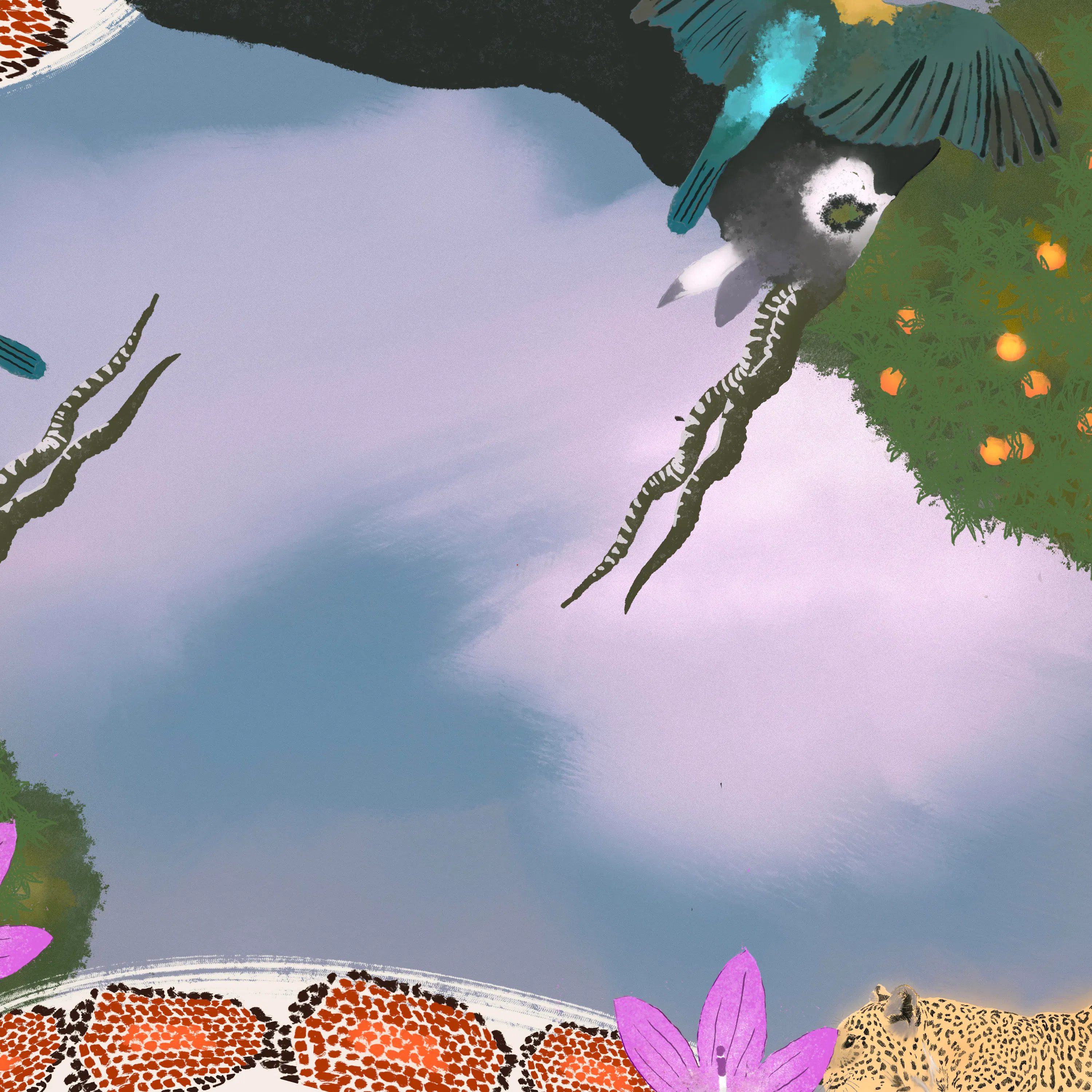
Steven Swarbrick talks about poetic engagement with nature in the work of early modern poets Edmund Spenser, Walter Ralegh, Andrew Marvell, and John Milton. Here language is influenced not by the manifest and the conscious, but the unconscious or void, as understood in Freudian and Lacanian psychoanalytic theory. This work is the basis for his hope for a reorganization of thought in contemporary ecocriticism around a politics of degrowth instead of additive policies that serve to greenwash capitalist economies. Steven Swarbrick is an assistant professor of English at Baruch College, City University of New York. His research interests include early modern literature, contemporary continental philosophy, psychoanalysis, the environmental humanities, and sexuality and film studies. He is the author of The Environmental Unconscious: Ecological Poetics from Spenser to Milton (University of Minnesota Press, 2023) and co-author, with Jean-Thomas Tremblay, of Negative Life: The Cinema of Extinction (Northwestern University Press, under contract). He is currently working on two books: Unknowing Sex: Shakespeare against the Historicists and Destituent Ecology: Libidinal Politics for the Environmental Left. Image: © 2023 Saronik Bosu Learn more about your ad choices. Visit megaphone.fm/adchoices Support our show by becoming a premium member! https://newbooksnetwork.supportingcast.fm/literary-studies
S1 Ep 25Shakespeare's "A Midsummer Night's Dream" Part 2: Context and Questions
Part 2 addresses the play's central questions about comedy, tragedy, and passion by examining its language and plot motifs. Professor Tiffany Stern will guide you through the play’s sometimes dark, sometimes humorous, but always honest exploration of love — where it comes from and why it doesn’t always make sense. You’ll also discover how A Midsummer Night’s Dream reflects the way that Shakespeare’s own company performed his plays, and why that knowledge can help you become a better reader of Shakespeare. Learn more about your ad choices. Visit megaphone.fm/adchoices Support our show by becoming a premium member! https://newbooksnetwork.supportingcast.fm/literary-studies
Ep 58The End of Books: A Lecture by Robert Coover
Robert Coover spoke at the Institute in the spring of 2006. Coover is the author of over a dozen postmodern novels, including The Public Burning and Pinochio in Venice. He was one of the early supporters of electronic fiction, which he defended in “The End of Books,” a 1992 New York Times essay. Coover established Brown University’s MFA program in Digital Language Arts, and teaches courses on experimental narrative and literary hypermedia. Learn more about your ad choices. Visit megaphone.fm/adchoices Support our show by becoming a premium member! https://newbooksnetwork.supportingcast.fm/literary-studies
Ep 45Mary M. McGlynn, "Broken Irelands: Literary Form in Post-Crash Irish Fiction" (Syracuse UP, 2022)
In this interview Mary M. McGlynn, Professor of English at Baruch College, CUNY, discusses her new book Broken Irelands: Literary Form in Post-Crash Irish Fiction (Syracuse University Press, 2022). While the national narrative coming out of Ireland since the 2008 economic crisis has been relentlessly sanguine, fiction has offered a more nuanced perspective from both well-established and emerging authors. In Broken Irelands, McGlynn examines Irish fiction of the post-crash era, addressing the proliferation of writing that downplays realistic and grammatical coherence. Noting that these traits have the effect of diminishing human agency, blurring questions of responsibility, and emphasizing emotion over rationality, McGlynn argues that they reflect and respond to social and economic conditions during the global economic crisis and its aftermath of recession, austerity, and precarity. Rather than focusing on overt discussions of the crash and recession, McGlynn explores how the dominance of an economic worldview, including a pervasive climate of financialized discourse, shapes the way stories are told. In the writing of such authors as Anne Enright, Colum McCann, Mike McCormack, and Lisa McInerney, McGlynn unpacks the ways that formal departures from realism through grammatical asymmetries like unconventional verb tenses, novel syntactic choices, and reliance on sentence fragments align with a cultural moment shaped by feelings of impotence and rhetorics of personal responsibility. Colleen English is a scholar of Irish and Romantic literature based at Loyola University Chicago. She co-convenes the Irish Studies Scholarly Seminar at the Newberry Library. On Twitter. Learn more about your ad choices. Visit megaphone.fm/adchoices Support our show by becoming a premium member! https://newbooksnetwork.supportingcast.fm/literary-studies
Ep 7Alexandra Dane, "White Literary Taste Production in Contemporary Book Culture" (Cambridge UP, 2023)
Despite initiatives to 'diversify' the publishing sector, there has been almost no transformation to the historic racial inequality that defines the field. White Literary Taste Production in Contemporary Book Culture (Cambridge UP, 2023) argues that contemporary book culture is structured by practice that operates according to a White taste logic. By applying the notion of this logic to an analysis of both traditional and new media tastemaking practices, Alexandra Dane examines the influence of Whiteness on the cultural practice, and how the long-standing racial inequities that characterize Anglophone book publishing are supported by systems, institutions and platforms. These themes are explored through two distinct but interrelated case studies-women's literary prizes and anti-racist reading lists on Instagram-which demonstrate the dominance of Whiteness, and in particular White feminism, in the contemporary literary discourse. Jen Hoyer is Technical Services and Electronic Resources Librarian at CUNY New York City College of Technology. Jen edits for Partnership Journal and organizes with the TPS Collective. She is co-author of What Primary Sources Teach: Lessons for Every Classroom and The Social Movement Archive. Learn more about your ad choices. Visit megaphone.fm/adchoices Support our show by becoming a premium member! https://newbooksnetwork.supportingcast.fm/literary-studies
Ep 112Brett Brehm, "Kaleidophonic Modernity: Transatlantic Sound, Technology, and Literature" (Fordham UP, 2023)
What stories remain hidden behind one of the most significant inventions of the nineteenth century? Kaleidophonic Modernity: Transatlantic Sound, Technology, and Literature (Fordham University Press, 2023) reexamines the development of mechanical sound recording technology by charting the orbits of writers, scientists, and artists in France and the United States. Working between comparative literature, the history of science, and urban studies, Dr. Brett Brehm builds a bridge between visual culture and sound studies. Kaleidophonic Modernity places the poet and inventor Charles Cros and his lover, the celebrated concert pianist and salonnière Nina de Villard at the heart of modern aesthetic and scientific vanguards. Cros's scientific endeavors ranged from color photography, to telecommunications, to mechanical sound reproducibility. In his poetry the Surrealists found an ancestor and inspiration. His literary and scientific works prove startling and relevant to predicaments of technological media in his own time and ours. For nearly twenty years Nina de Villard presided over a supremely daring intellectual salon. There, she welcomed manifold literary, artistic, and musical luminaries into a veritable crucible of the artistic avant-garde and precursor to the famous Chat Noir cabaret. Together, these two forgotten but pivotal figures, Cros and Villard, help reframe our thinking on Edgar Allan Poe, Charles Baudelaire, and Walt Whitman, icons of urban modernity who can now be seen and heard in a kaleidophonic light, one that offers a compelling new perspective on modern mediascapes. In elaborating this transatlantic phenomenon, Kaleidophonic Modernity illuminates the prehistory of the phonograph as it intersects with the aesthetics of sound reproducibility, Franco-American literary exchange, Poe’s aesthetic and intellectual legacy, the sounds of modern cities and technologies, and the genealogy of audiovisual experimentation found in such movements as Dada, Futurism, and the sound art of today. Annie deSaussure, holds a Ph.D. in French from Yale University and is an Assistant Professor of French and Francophone Studies in the Department of Languages and Literary Studies at Lafayette College. Her work focuses on minority regional languages, literatures, and cultures in contemporary France, radio, sound studies, and podcasting. Her most recent article on feminist discourses of motherhood in French podcasting is forthcoming in the 2023 special issue, “Podcasting Disruptive Voices,” of CFC Intersections. Learn more about your ad choices. Visit megaphone.fm/adchoices Support our show by becoming a premium member! https://newbooksnetwork.supportingcast.fm/literary-studies
Ep 92Tania James, "Loot: A Novel" (Knopf, 2023)
Abbas is just seventeen years old when his gifts as a woodcarver come to the attention of Tipu Sultan, and he is drawn into service at the palace in order to build a giant tiger automaton for Tipu's sons, a gift to commemorate their return from British captivity. His fate--and the fate of the wooden tiger he helps create--will mirror the vicissitudes of nations and dynasties ravaged by war across India and Europe. Working alongside the legendary French clockmaker Lucien du Leze, Abbas hones his craft, learns French, and meets Jehanne, the daughter of a French expatriate. When Du Leze is finally permitted to return home to Rouen, he invites Abbas to come along as his apprentice. But by the time Abbas travels to Europe, Tipu's palace has been looted by British forces, and the tiger automaton has disappeared. To prove himself, Abbas must retrieve the tiger from an estate in the English countryside, where it is displayed in a collection of plundered art. Tania James is the author of Atlas of Unknowns, Aerogrammes, and Other Stories, and The Tusk That Did the Damage. Her stories have appeared in Freeman’s: The Future of New Writing, Granta, the New Yorker, O, The Oprah Magazine, and One Story, and have been featured on Symphony Space Selected Shorts. The Tusk that Did the Damage was shortlisted for the Dylan Thomas Prize. Tania lives in Washing D.C. where she is an associate professor of English at George Mason University. Recommended Books: Hua Hsu, Stay True Marcy Dermansky, Very Nice Rita Chang-Eppig, Deep as the Sky, Red as the Sea *A video of a period expert playing Tipu’s Tiger at the Victoria and Albert Museum in London is available here Chris Holmes is Chair of Literatures in English and Associate Professor at Ithaca College. He writes criticism on contemporary global literatures. His book, Kazuo Ishiguro as World Literature, is under contract with Bloomsbury Publishing. He is the co-director of The New Voices Festival, a celebration of work in poetry, prose, and playwriting by up-and-coming young writers. Learn more about your ad choices. Visit megaphone.fm/adchoices Support our show by becoming a premium member! https://newbooksnetwork.supportingcast.fm/literary-studies
Ep 135Mark Staff Brandl, "A Philosophy of Visual Metaphor in Contemporary Art" (Bloomsbury, 2023)
Today I talked to Mark Staff Brandl about his new book A Philosophy of Visual Metaphor in Contemporary Art (Bloomsbury, 2023). Brandl is an artist and art historian with a PhD from the University of Zurich. He is an Associate Professor of Art History Emeritus at the Art Academy of Liechtenstein and Higher Professional College for Art in St. Gallen, Switzerland. His work has been shown in galleries and museums in America, Europe, Egypt and elsewhere. Brandl is by his own admission an iconoclast, and somebody who mixes philosophical discourse with more polemical “rants” in advocating for creativity. For instance, as addressed in this episode Brandl does not hesitate to find fault with contemporary artists who take the “cheap out” of relying (too much) on irony, instead of sparking hope; and likewise with collectors of art who often function merely as speculators. Brandl’s approach honors Lakoff and Johnson’s seminar book, Metaphors We Live By, while applying their approach to the visual arts. A notable example is that for Brandl the artist Van Gogh can be thought of in terms of a passionate flame (the metaphor being, passion is hot), with cypress trees that can appear like candles in the way they’ve been painted. To understand how form and content intertwine in art, this episode offers a good jumping off point. Dan Hill, PhD, is the author of ten books and leads Sensory Logic, Inc. (https://www.sensorylogic.com). His latest two books are Blah Blah Blah: A Snarky Guide to Office Lingo and Emotionomics 2.0: The Emotional Dynamics Underlying Key Business Goals. Learn more about your ad choices. Visit megaphone.fm/adchoices Support our show by becoming a premium member! https://newbooksnetwork.supportingcast.fm/literary-studies
Ep 107The Electro-Library with Jared Green (EF, JP)
Way back in 2019, Elizabeth and John were already thinking about collaboration. Here they speak with Jared Green and explore The Electro-Library, a podcast he co-created. Elizabeth, Jared and John play snippets from a recent Electro-Library episode on the decidedly non-podcasty topic of photographs, and use it as a springboard to discuss the different aesthetic experiences of radio, television, film, reading, audiobooks, and podcasts. Which are the easiest and which the hardest artworks to get lost in? Would Frankenstein’s monster be more popular as a podcaster than as a YouTuber? (The answer to that one seems most likely to be yes). The conversation then turns to the difference between artworks that slide in at the ear and those that come in by eye. What kind of world-building is going on on Recall This Book? Which podcasts are like a Wagnerian gesamtkunstwerk and which are more Schubertian, semi-detached and conversational? Then, in Recallable Books, Jared recommends Barthes’s Camera Lucida, Elizabeth recommends the work of Sarah Lewis, and John recommends the Habitat podcast. Discussed in this episode: Lapham’s Quarterly The Lover, Marguerite Duras “The Photograph,” Umberto Eco Various audiobooks, John Le Carré Collected Poems, Prose, and Plays, Robert Frost The Most of P.G. Wodehouse, P.G. Wodehouse “The Dead,” James Joyce Fun Home: A Family Tragicomic, Alison Bechdel Camera Lucida: Reflections on Photography, Roland Barthes Aperture 223, “Vision and Justice,” ed. Sarah Lewis The Habitat Read the episode here. Learn more about your ad choices. Visit megaphone.fm/adchoices Support our show by becoming a premium member! https://newbooksnetwork.supportingcast.fm/literary-studies
Ep 38A Forensic Level of Honesty: Aminatta Forna and Nicole Rizzuto (AV)
Aminatta Forna, author of Ancestor Stones (2006), Happiness (2018), and most recently The Window Seat (2021) joins Georgetown prof. Nicole Rizzuto and host Aarthi Vadde for a wide-ranging conversation about reversing the gaze. Born in Sierra Leone, Aminatta is of Scottish and Malian ancestry and grew up around the world. Her mixed upbringing led her to develop a prismatic view of identity and, though she accepts the moniker of “African writer,” she rejects the double-standard of authenticity it implies. She also chafes against the Conradian image of Africa, which infused so many of her own literary encounters with her home continent. In response to these distortions, Aminatta describes developing a “forensic level of honesty” that allowed her to re-encounter Sierra Leone on her own terms. She also learned to look back at those who would look at her. Reversing the gaze extends not only from Africa to Europe but also to the human-animal divide. Aminatta and Nicole reconsider Western stereotypes around African animal cruelty, what it means to portray animal consciousness, and what the treatment of dogs in Sierra Leone and foxes in London tells us about what those societies value. Finally, Aminatta reads from Ancestor Stones and offers a chilling vision of the civil war in Sierra Leone through the dissociated perspective of a character inspired by the women who lived through it. Listeners will feel the “underground rising” in Aminatta’s memorable phrase. Books Mentioned: -Heart of Darkness, Joseph Conrad -Kazuo Ishiguro -Dr. Gudush Jalloh – veterinarian in Sierra Leone and subject of Forna’s essay “The Last Vet” -Pablo Picasso, Bull’s Head -Forna, Happiness -Forna, The Hired Man -Temne – largest ethnic group in Sierra Leone; also the name of one of the official languages of Sierra Leone. Find out more about Novel Dialogue and its hosts and organizers here. Contact us, get that exact quote from a transcript, and explore many more conversations between novelists and critics. Learn more about your ad choices. Visit megaphone.fm/adchoices Support our show by becoming a premium member! https://newbooksnetwork.supportingcast.fm/literary-studies
Ep 65Grace Elisabeth Lavery, "Pleasure and Efficacy: Of Pen Names, Cover Versions, and Other Trans Techniques" (Princeton UP, 2023)
In Pleasure and Efficacy: Of Pen Names, Cover Versions, and Other Trans Techniques (Princeton UP, 2023), Grace Lavery investigates gender transition as it has been experienced and represented in the modern period. Considering examples that range from the novels of George Eliot to the psychoanalytic practice of Sigmund Freud to marriage manuals by Marie Stopes, Lavery explores the skepticism found in such works about whether it is truly possible to change one's sex. This ambivalence, she argues, has contributed to both anti-trans oppression and the civil rights claims with which trans people have confronted it. Lavery examines what she terms "trans pragmatism"--the ways that trans people resist medicalization and pathologization to achieve pleasure and freedom. Trans pragmatism, she writes, affirms that transition works, that it is possible, and that it happens. With Eliot and Freud as the guiding geniuses of the book, Lavery covers a vast range of modern culture--poetry, prose, criticism, philosophy, fiction, cinema, pop music, pornography, and memes. Since transition takes people out of one genre and deposits them in another, she suggests, it should be no surprise that a cultural history of gender transition will also provide, by accident, a history of genre transition. Considering the concept of technique and its associations with feminine craftiness, as opposed to masculine freedom, Lavery argues that techniques of giving and receiving pleasure are essential to the possibility of trans feminist thriving--even as they are suppressed by patriarchal and antitrans feminist philosophies. Contesting claims for the impossibility of transition, she offers a counterhistory of tricks and techniques, passed on by women to women, that comprises a body of knowledge written in the margins of history. Learn more about your ad choices. Visit megaphone.fm/adchoices Support our show by becoming a premium member! https://newbooksnetwork.supportingcast.fm/literary-studies
Ep 305Masood Ashraf Raja, "Democratic Criticism: Poetics of Incitement and the Muslim Sacred" (Lever Press, 2023)
After the publication of Salman Rushdie’s The Satanic Verses (1988), the poetics of incitement— found in texts originating in the West containing themes and representations of Islam hurtful to Muslims—became an accepted method of textual production in the West. Production of such texts intensified after the attacks of 9/11. Democratic Criticism: Poetics of Incitement and the Muslim Sacred (Lever Press, 2023) by Masood Ashraf Raja urges a new mode of reading, one that permits Western readers to transcend local reading practices in order to, as best as one can, read from the point of view of the Other. Raja argues that the lack of understanding of Muslim responses to the poetics of incitement in the West is the result of a lack of cross-cultural knowledge. He claims metropolitan universities often do not teach the proper social, historical, and religious context required for effectively reading these texts with any form of cultural knowledge. To remedy this, Raja offers and theorizes “democratic reading practices” and new ways for students to engage with texts. A genealogy of the Muslim Sacred is included, thereby giving readers the history and specific knowledge that constitutes an average Muslim reader of these texts, a subject who should be imagined and empathized with when those in the West read works of the poetics of incitement. Democratic Criticism encourages Western readers to develop a deeper understanding of the meaning-making processes of the Islamic world while at the same time encouraging the Muslim readers to read representations of the Islamic world with a more expansive understanding. It will be a helpful tool in creating reading practices that allow both teachers and students of literature to transcend their mode of reading as universal and to read from the perspective of the Other, and allow readers to engage meaningfully with these texts. Students and scholars of world literature, history, and religious studies will find this book insightful and valuable. Iqra Shagufta Cheema writes and teaches in the areas of media cultures, Anglophone literatures, transnational digital feminisms, gender and sexuality studies, and global south film studies. Check out their upcoming books: The Other #MeToos and ReFocus: The Films of Annemarie Jacir. Follow them on Twitter Learn more about your ad choices. Visit megaphone.fm/adchoices Support our show by becoming a premium member! https://newbooksnetwork.supportingcast.fm/literary-studies
Ep 192Roy Christopher, "Boogie Down Predictions: Hip-Hop, Time, and Afrofuturism" (MIT Press, 2022)
Boogie Down Predictions: Hip-Hop, Time, and Afrofuturism (MIT Press, 2022), edited by Roy Christopher, is a moment. It is the deconstructed sample, the researched lyrical metaphors, the aha moment on the way to hip-hop enlightenment. Hip-hop permeates our world, and yet it is continually misunderstood. Hip-hop's intersections with Afrofuturism and science fiction provide fascinating touchpoints that enable us to see our todays and tomorrows. This book can be, for the curious, a window into a hip-hop-infused Alter Destiny--a journey whose spaceship you embarked on some time ago. Are you engaging this work from the gaze of the future? Are you the data thief sailing into the past to U-turn to the now? Or are you the unborn child prepping to build the next universe? No, you're the superhero. Enjoy the journey.--from the introduction by Ytasha L. Womack Through essays by some of hip-hop's most interesting thinkers, theorists, journalists, writers, emcees, and DJs, Boogie Down Predictions embarks on a quest to understand the connections between time, representation, and identity within hip-hop culture and what that means for the culture at large. Introduced by Ytasha L. Womack, author of Afrofuturism: The World of Black Sci-Fi and Fantasy Culture, this book explores these temporalities, possible pasts, and further futures from a diverse, multilayered, interdisciplinary perspective. Alex Kuchma is an MA student in history at York University. He has have researching hip-hop actively and collecting oral histories for more than a decade. Learn more about your ad choices. Visit megaphone.fm/adchoices Support our show by becoming a premium member! https://newbooksnetwork.supportingcast.fm/literary-studies
Ep 226D. J. Taylor, "Critic at Large: Essays and Reviews, 2010-2022" (Shoestring Press, 2023)
Life on Grub Street can be challenging, but it’s not without attendant attractions. One of those is the potential to have a platform to tell the unbidden truth. As the prolific D. J. Taylor writes in the introduction to his new collection of essays and reviews, “One of the heartening features of the literary landscape . . . is how tenaciously the freelance reviewer endures and how regularly, in an age where most people are terrified of saying in public what they really feel about anything, there rises from a newspaper arts section or magazine book column the sound of someone declining to follow the party line.” Critic at Large: Essays and Reviews, 2010-2022 (Shoestring Press, 2023) ranges widely, from contemporary novelists such as Salman Rushdie, to Victorians such as George Gissing, to oddities of the twentieth century such as Brian Sewell, collecting pieces from both British and American publications. Charles Coutinho, PH. D., Associate Fellow of the Royal Historical Society, received his doctorate from New York University. His area of specialization is 19th and 20th-century European, American diplomatic and political history. He has written for Chatham House’s International Affairs, the Institute of Historical Research's Reviews in History and the University of Rouen's online periodical Cercles. Learn more about your ad choices. Visit megaphone.fm/adchoices Support our show by becoming a premium member! https://newbooksnetwork.supportingcast.fm/literary-studies
S1 Ep 24Shakespeare's "A Midsummer Night's Dream" Part 1: The Story
A Midsummer Night’s Dream is one of Shakespeare’s most popular romantic comedies. At the same time, it’s a play that explores the darker and more dangerous side of love. Four young lovers flee into the forest where their romantic entanglements become even more entangled thanks to the magic of the fairy king, Oberon — who also puts a spell on his wife, Titania, so she falls in love with Bottom, a man with an enchanted donkey’s head. In this course, you’ll learn the story of A Midsummer Night’s Dream, discover how the play’s fantastical elements actually represent universal issues in our everyday lives, and hear the play’s key speeches performed and analyzed by world-class Shakespearean actors and literary scholars. In Part 1, you’ll be guided through a detailed account of the story with commentary by Tiffany Stern, Professor of Shakespeare and Early Modern Drama at the Shakespeare Institute. Professor Stern discusses the play’s context, structure, and distinctive mix of comedy and tragedy, as created by the “play-within-a-play” — the “tragic” story of Pyramus and Thisbe performed by one group of characters to celebrate the others’ weddings. This summary is told using the language of the play itself, placing key quotations in context to help you understand where these lines come from and what they mean. Learn more about your ad choices. Visit megaphone.fm/adchoices Support our show by becoming a premium member! https://newbooksnetwork.supportingcast.fm/literary-studies
Ep 94Ida Yoshinaga et al., "Uneven Futures: Strategies for Community Survival from Speculative Fiction" (MIT Press, 2022)
Essays on speculative/science fiction explore the futures that feed our most cherished fantasies and terrifying nightmares, while helping diverse communities devise new survival strategies for a tough millennium. The explosion in speculative/science fiction (SF) across different media from the late twentieth century to the present has compelled those in the field of SF studies to rethink the community’s identity, orientation, and stakes. In Ida Yoshinaga, Sean Guynes, and Gerry Canavan's edited volume Uneven Futures: Strategies for Community Survival from Speculative Fiction (MIT Press, 2022), more than forty writers, critics, game designers, scholars, and activists explore core SF texts, with an eye toward a future in which corporations dominate both the means of production and the means of distribution and governments rely on powerful surveillance and carceral technologies. The essays, international in scope, demonstrate the diversity of SF through a balance of popular mass-market novels, comics, films, games, TV shows, creepypastas, and more niche works. SF works explored range from Riot Baby by Tochi Onyebuchi, 2084: The End of the World by Boualem Sansal, Terra Nullius by Claire Coleman, Watchmen and X-Men comics, and the Marvel film Captain America: The Winter Soldier, to the MaddAddam trilogy by Margaret Atwood, The Dispossessed by Ursula K. Le Guin, The Wandering Earth by Liu Cixin, and the Wormwood trilogy by Tade Thompson. In an era in which ecological disaster and global pandemics regularly expose and intensify deep political-economic inequalities, what futures has SF anticipated? What survival strategies has it provided us? Can it help us to deal with, and grow beyond, the inequalities and injustices of our times? Unlike other books of speculative/science fiction criticism, Uneven Futures uses a think piece format to make its critical insights engaging to a wide audience. The essays inspire visions of better possible futures—drawing on feminist, queer, and global speculative engagements with Indigenous, Latinx, and Afro- and African futurisms—while imparting important lessons for political organizing in the present. Learn more about your ad choices. Visit megaphone.fm/adchoices Support our show by becoming a premium member! https://newbooksnetwork.supportingcast.fm/literary-studies
Ep 23Yoshiko Okuyama, "Tōjisha Manga: Japan’s Graphic Memoirs of Brain and Mental Health" (Palgrave Macmillan, 2022)
Yoshiko Okuyama's book Tōjisha Manga: Japan’s Graphic Memoirs of Brain and Mental Health (Palgrave Macmillan, 2022) defines tōjisha manga as Japan’s autobiographical comics in which the author recounts the experience of a mental or neurological condition in a unique medium of text and image. Yoshiko Okuyama argues that tōjisha manga illuminate otherwise “faceless” individuals and humanize their invisible tribulations because the first-person narrative makes their lived experience more authentic and relatable to the reader. Part I introduces the evolution of the term tōjisha, the tōjisha movements, and other relevant social phenomena and concepts. Part II analyzes five representative titles to demonstrate the humanizing power of tōjisha manga, drawing on interviews with the authors of these manga and examining how psychological or brain-related symptoms are artistically depicted in approximately 40 drawings. This book is highly recommended to not only scholars of disability studies and comic studies but also global fans of manga who are interested in the graphic memoirs of serious social issues. Shu Wan is currently matriculated as a doctoral student in history at the University at Buffalo. As a digital and disability historian, he serves in the editorial team of Digital Humanities Quarterly and Nursing Clio. On Twitter: @slissw. Learn more about your ad choices. Visit megaphone.fm/adchoices Support our show by becoming a premium member! https://newbooksnetwork.supportingcast.fm/literary-studies
Ep 120Rumi, "Gold" (New York Review of Books, 2022)
In this conversation, we discuss Haleh Liza Gafori's masterful new translations of poetry by Rumi, the 13th-century Persian mystic and poet. Rumi's work is well-known in the West, but has often been encountered through the work of translators without direct knowledge of Persian language or culture. Haleh Liza Gafori's intimate knowledge of both, as well as her singer's knack for the sound of language, lends these translations both authoritativeness and beauty. The poems in Gold (New York Review of Books, 2022) are about ecstatic love, both of God and of our fellow human beings. Newcomers to Rumi will discover a new favorite poet, while longtime fans will encounter this major voice of world literature anew. Andy Boyd is a playwright based in Brooklyn, New York. He is a graduate of the playwriting MFA at Columbia University, Harvard University, and the Arizona School for the Arts. Learn more about your ad choices. Visit megaphone.fm/adchoices Support our show by becoming a premium member! https://newbooksnetwork.supportingcast.fm/literary-studies
Ep 335Kelcey Ervick and Tom Hart, "The Rose Metal Press Field Guide to Graphic Literature" (Rose Metal Press, 2023)
Today I interview Kelcey Ervick and Tom Hart about their new collaboration, The Rose Metal Press Field Guide to Graphic Literature (Rose Metal Press, 2023). The book brings together 28 of today’s most innovative creators of poetry comics, graphic narratives, and image-text hybrids. With original craft essays, corresponding exercises, and full-color examples of their work, each contributor offers reflection and instruction informed by their own methods and processes. It’s a beautiful and vibrant book that invites writers, artists, and would-be creators into a feast of play and possibility. Kelcey Ervick is the author of the graphic memoir, The Keeper and other books. Her comics have been published widely, including in The Washington Post, The Believer, and Lit Hub, and two featured comics series of hers have appeared in The Rumpus. She is a professor of English at Indiana University South Bend, where she teaches creative writing, comics, and literary collage. Tom Hart is the author/artist of The New York Times #1 bestselling graphic memoir Rosalie Lightning and of The Art of the Graphic Memoir. He is the executive director of The Sequential Artists Workshop, an organization and school for comics and graphic novels in Gainesville, Florida. Before founding SAW, Tom was a core instructor at the School of Visual Arts in New York City for 10 years. Learn more about your ad choices. Visit megaphone.fm/adchoices Support our show by becoming a premium member! https://newbooksnetwork.supportingcast.fm/literary-studies
Ep 91Anne Berest, "The Postcard" (Europa Editions, 2023)
January, 2003. Together with the usual holiday cards, an anonymous postcard is delivered to the Berest family home. On the front, a photo of the Opéra Garnier in Paris. On the back, the names of Anne Berest's maternal great-grandparents, Ephraïm and Emma, and their children, Noémie and Jacques--all killed at Auschwitz. Fifteen years after the postcard is delivered, Anne, the heroine of this novel, is moved to discover who sent it and why. Aided by her chain-smoking mother, family members, friends, associates, a private detective, a graphologist, and many others, she embarks on a journey to discover the fate of the Rabinovitch family: their flight from Russia following the revolution, their journey to Latvia, Palestine, and Paris. What emerges is a moving saga that shatters long-held certainties about Anne's family, her country, and herself. Anne Berest is the bestselling co-author of How to Be Parisian Wherever You Are (Doubleday, 2014) and the author of a novel based on the life of French writer Françoise Sagan. With her sister Claire, she is also the author of Gabriële, a critically acclaimed biography of her great-grandmother, Gabriële Buffet-Picabia, Marcel Duchamp’s lover and muse. For her work as a writer and prize-winning showrunner, she has been profiled in publications such as French Vogue and the Haaretz newspaper. The recipient of numerous literary awards, The Postcard was a finalist for the Goncourt Prize, winner of the American Choix Goncourt, and it has been a long-selling bestseller in France. Tina Kover is the translator of more than a dozen works of fiction and nonfiction, including Alexandre Dumas’s Georges, and Anna Gavalda’s Life, Only Better. Her translations have twice been nominated for the IMPAC Dublin International Literary Award and she was the recipient in 2009 of a Literary Translation Fellowship from the U.S. National Endowment for the Arts. She is the co-founder of Translators Aloud, a youtube channel that spotlights translators reading from their own work. She lives in the northeast of England. Books Recommended: Daniel Mendelsohn, The Lost: The Search for Six of Six million Patrick Modiano, Scene of the Crime Irene Nemirovsky, Suite Francaise Petra Rautiainen, Land of Ashes and Snow Julya Rabinowich, Me, In between Chris Holmes is Chair of Literatures in English and Associate Professor at Ithaca College. He writes criticism on contemporary global literatures. His book, Kazuo Ishiguro as World Literature, is under contract with Bloomsbury Publishing. He is the co-director of The New Voices Festival, a celebration of work in poetry, prose, and playwriting by up-and-coming young writers. Learn more about your ad choices. Visit megaphone.fm/adchoices Support our show by becoming a premium member! https://newbooksnetwork.supportingcast.fm/literary-studies
Ep 1326Douglas Kerr, "Orwell and Empire" (Oxford UP, 2022)
George Orwell was born in India and served in the Imperial Police in Burma as a young man. Douglas Kerr's book Orwell and Empire (Oxford UP, 2022) is a study of his writing about the East and the East in his writing. It argues that empire was central to his cultural identity and that his experience of colonial life was a crucial factor, in ways that have not been recognized, in shaping the writer he became. Orwell and Empire is about all his writings, fictional and non-fictional. It pays particular attention to work that derives directly from his Burmese years including the well-known narratives 'A Hanging' and 'Shooting an Elephant' and his first novel Burmese Days. It goes on to explore the theme of empire throughout his work, through to Nineteen Eighty-Four and beyond, and charts the way his evolving views on class, race, gender, and authority were shaped by his experience in the East and the Anglo-Indian attitudes he had inherited. Orwell's socialism and his hatred of authoritarianism grew out of his anti-imperialism as The Road to Wigan Pier makes explicit. But this was not a straightforward repudiation or a painless process. He understood that, 'it is very difficult to escape, culturally, from the class into which you have been born.' His whole career was a creative quarrel with himself and with his Anglo-Indian patrimony. In a way that anticipates current debates about the imperial legacy, he struggled to come to terms with his own history. Charles Coutinho, PH. D., Associate Fellow of the Royal Historical Society, received his doctorate from New York University. His area of specialization is 19th and 20th-century European, American diplomatic and political history. He has written for Chatham House’s International Affairs, the Institute of Historical Research's Reviews in History and the University of Rouen's online periodical Cercles. Learn more about your ad choices. Visit megaphone.fm/adchoices Support our show by becoming a premium member! https://newbooksnetwork.supportingcast.fm/literary-studies
Ep 235Ann Komaromi, "Soviet Samizdat: Imagining a New Society" (Cornell UP, 2022)
Soviet Samizdat: Imagining a New Society (Cornell UP, 2022) traces the emergence and development of samizdat, a significant and distinctive phenomenon of the late Soviet era that provided an uncensored system for making and sharing texts. In bringing together research into the underground journals, bulletins, art folios, and other periodicals produced in the Soviet Union from the mid-1950s to the mid-1980s, Ann Komaromi reveals how samizdat helped to foster new forms of imagined community among Soviet citizens. Komaromi’s approach combines literary analysis, historical research, and sociological theory to show that samizdat was not simply a tool of opposition to a defunct regime, but a platform for developing informal communities of knowledge. In this way, samizdat foreshadowed the various ways in which alternative perspectives are expressed to challenge the authority of institutions around the world today. Ann Komaromi is a Professor within the Department of Slavic Languages and Literatures and Acting Director of the Centre for Comparative Literature at the University of Toronto. Her interests include alternative publishing, underground networks and nonconformist literature and art, especially in the Soviet Union after Stalin. Iva Glisic is a historian and art historian specialising in modern Russia and the Balkans. Learn more about your ad choices. Visit megaphone.fm/adchoices Support our show by becoming a premium member! https://newbooksnetwork.supportingcast.fm/literary-studies
Ep 304Yakup Kadri Karaosmanoğlu, "Nur Baba: A Sufi Novel of Late Ottoman Istanbul" (Routledge, 2023)
This conversation is with Brett Wilson, who has composed the first English translation of the classic and controversial novel from late Ottoman Turkey Nur Baba--a classic of modern Turkish literature written by Yakup Kadri Karaosmanoğlu--offers a unique window into Sufi lodges, social dilemmas, and intellectual life in early twentieth-century Istanbul. Wilson’s tranlsation is both lyrical and captivating, and will make for an excellent resource for courses on Sufism and Islam more broadly Inspired by Karaosmanoğlu's personal experiences with Islamic mystical orders, it is a story of illicit romance and spiritual inquiry, depicting a colourful lodge of Sufi dervishes led by a charismatic, yet morally suspect, spiritual master named Nur Baba. The plot follows his attempts to seduce an attractive married woman from an elite family and recounts her dramatic experiences in the life of a Sufi community. The setting shuttles between the grand mansions of Istanbul's elite families and a Sufi lodge where rich and poor intermingle. Exploring questions of gender, morality, and religious bias throughout, it captures the zeitgeist of early twentieth-century modernist thinkers who criticised Sufism for impeding social progress and debated the public roles of women in a rapidly modernising society. Alongside the editor's meticulous translation, Nur Baba: A Sufi Novel of Late Ottoman Istanbul (Routledge, 2023) includes a scholarly introduction, maps, and images, as well as explanatory footnotes that will aid both students and scholars alike. The novel will be of particular interest to those studying world literature, Sufi studies, and Ottoman-Turkish history. SherAli Tareen is Associate Professor of Religious Studies at Franklin and Marshall College. His research focuses on Muslim intellectual traditions and debates in early modern and modern South Asia. His book Defending Muhammad in Modernity (University of Notre Dame Press, 2020) received the American Institute of Pakistan Studies 2020 Book Prize and was selected as a finalist for the 2021 American Academy of Religion Book Award. His second book is called Perilous Intimacies: Debating Hindu-Muslim Friendship after Empire (Columbia University Press, 2023). His other academic publications are available here. He can be reached at [email protected]. Listener feedback is most welcome. Learn more about your ad choices. Visit megaphone.fm/adchoices Support our show by becoming a premium member! https://newbooksnetwork.supportingcast.fm/literary-studies
Ep 6Felipe Valencia, "The Melancholy Void: Lyric and Masculinity in the Age of Góngora" (U Nebraska Press, 2021)
On today’s episode on New Books Network, we're joined by Dr. Felipe Valencia, Associate Professor of Spanish in the World Languages and Cultures Department at Utah State University to discuss his book, The Melancholy Void: Lyric and Masculinity in the Age of Góngora, published by the University of Nebraska Press in 2021. At the turn of the seventeenth century, Spanish lyric underwent a notable development. Several Spanish poets reinvented lyric as a melancholy and masculinist discourse that sang of and perpetrated symbolic violence against the female beloved. This shift emerged in response to the rising prestige and commercial success of the epic and was enabled by the rich discourse on the link between melancholy and creativity in men. In The Melancholy Void Professor Valencia examines this reconstruction of the lyric in key texts of Spanish poetry from 1580 to 1620. Dr. Julia M. Gossard hosts this episode. She is Associate Dean for Research in the College of Humanities and Social Sciences and Associate Professor of History at Utah State University. Learn more about your ad choices. Visit megaphone.fm/adchoices Support our show by becoming a premium member! https://newbooksnetwork.supportingcast.fm/literary-studies
S1 Ep 23Shakespeare's "Julius Caesar" Part 3: The Language
In Part 3, Professor Michael Dobson offers close-readings of some of the play’s most important speeches, including Brutus’s deliberation over Caesar’s assassination and the rival speeches given by Brutus and Antony to “Friends, Romans, countrymen” at Caesar’s funeral — speeches that display the potential power of rhetoric. Speeches and Performers: Brutus, 2.1, “It must be by his death …” (Anton Lesser) Caesar, 3.1, “I could be well moved …” (“I am as constant as the Northern Star”) (Andrew Woodall) Brutus, 3.2, “Romans, countrymen, and lovers, hear me for my cause …” (Anton Lesser) Antony, 3.2, “Friends, Romans, countrymen, lend me your ears …” (Mark Quartley) Learn more about your ad choices. Visit megaphone.fm/adchoices Support our show by becoming a premium member! https://newbooksnetwork.supportingcast.fm/literary-studies