
KZYX News
1,162 episodes — Page 18 of 24
Ep 313The Bike Kitchen has plenty of ingredients
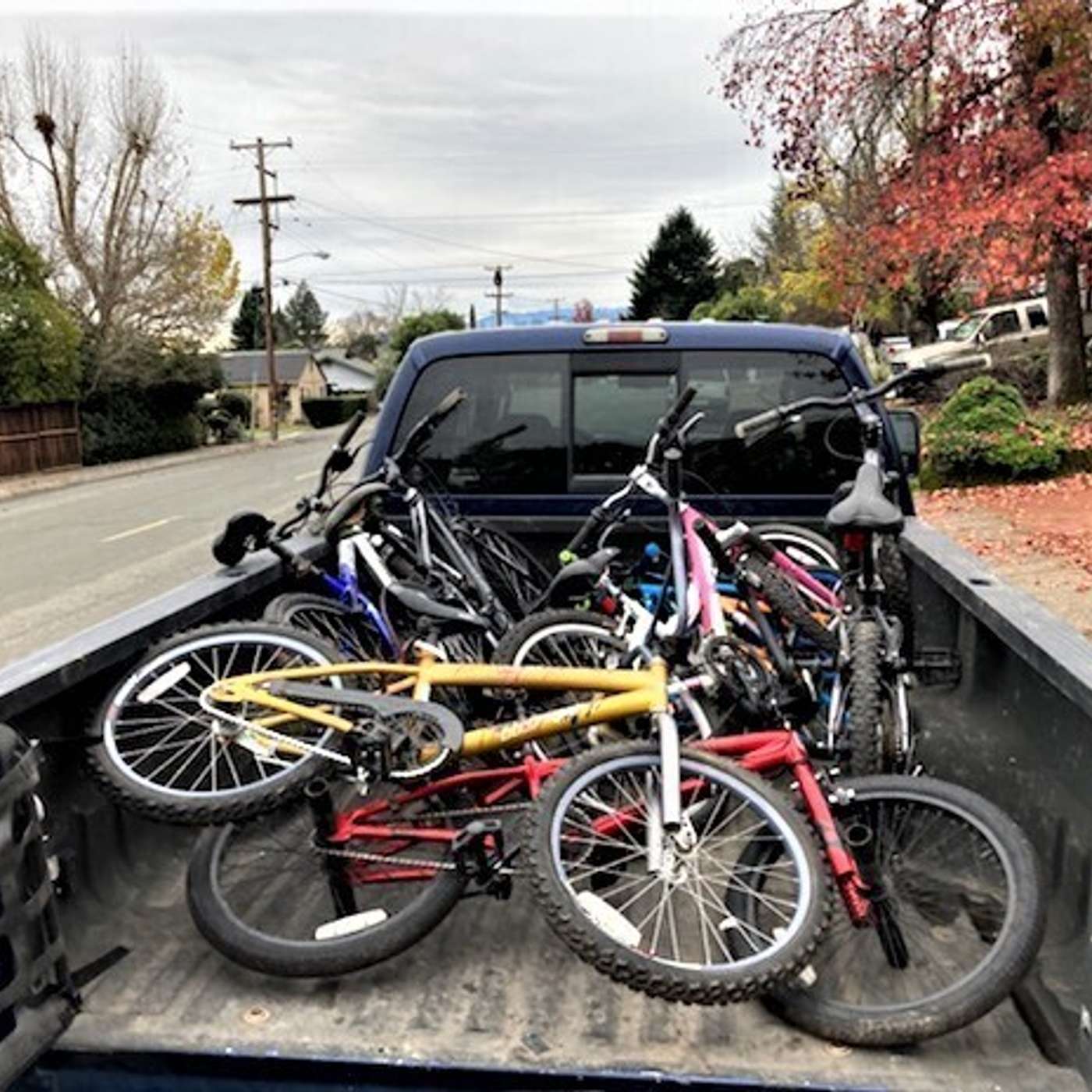
January 4, 2022 — There’s something missing from the Ukiah Farmers Market this time of year…like the market itself, which will be coming back next Saturday, but without one important fixture. The Ukiah Bike Kitchen is heading into its tenth year of fixing bikes for free, coaching aspiring mechanics, and amassing enough bike parts to cancel out global supply chain woes. I’ve never actually taken my 1983 pink Bertoni road bike to the Farmers Market stand, but I love the idea that on any given Saturday, I could. Devin Vagt, one of the Bike Kitchen’s main volunteers these days, assured me that, come spring, that much-missed opportunity will be available again. In the meantime, his two-car garage, which contains exactly no cars, is the Bike Kitchen’s winter headquarters. He handed me a headlamp when I showed up after dark in a light rain, to enthuse about bikes. So the Bike Kitchen still exists. It was founded in 2012 by Lucy Neely and Jen Smart, who worked what Vagt calls ‘grant magic’ to score the money they needed to buy a tool kit, bike trailer, and hire mechanics from Dave’s Bike Shop to train the first volunteers. The Kitchen has donated bikes to the Boys and Girls Club, fire survivors, and the Hopland Tribal Youth Center. And the organization pays a small amount to interns who have volunteered for six Saturdays. But there’s something about working on bikes that’s simultaneously so wholesome, so obsessive, and, it turns out, almost transcendental. Vagt muses on the meditative qualities of truing a wheel, what is kitchen-like about the Bike Kitchen, and learning to accept new features on the roadscape.
Ep 312Cautious optimism for fish in the Eel
January 3, 2022 — It’s a busy time of year for fish in the Eel, with steelhead running, chinook hatching, and coho bouncing back, according to Pat Higgins, director of the Eel River Recovery Project. Ocean conditions have started to improve since the warm water blob of 2015 upended the near-shore ecosystem. That’s a big help for anadromous fish that travel between freshwater and salt throughout their life cycles. Higgins says that, while the numbers are nowhere as plentiful as they were ten years ago, it is the best run in five years.
Ep 311Police videos of Magdaleno beating released
December 31, 2021 — Toby Keith’s anthem to military valor, “Courtesy of the Red, White, and Blue (The Angry American)” was on the radio in Officer Alex Cowan’s police car the day his dash camera recorded him beating a naked, mentally ill man in Ukiah. As Cowan’s colleagues iced their bloodied hands in the aftermath, the singer crooned, “A mighty sucker punch came flyin’ in from the back. Soon as we could see clearly through our big black eye, Man, we lit up your world like the Fourth of July.” The police videos were released Thursday, as a civil lawsuit in federal court winds its way towards trial.Gerardo Magdaleno, who suffers from bipolar disorder and schizophrenia, ran out of psychiatric medications on April first of 2021. He was standing on South State Street, alone, unarmed, and wearing nothing but a wristwatch when Ukiah Police Officer Saul Perez pulled up and shot him with a taser within less than a minute of telling him to get on the ground. According to an amended complaint filed in the US Northern District Court of California last month, Ukiah police officers tasered the severely disabled man four times, punched him 54 times, kneed him four times, once in the groin, kicked him in the head, and emptied an entire can of pepper spray in his face, which amounts to 20-25 applications. Multiple bystander cell phone videos of the incident immediately began circulating on social media. But on Thursday, video from Cowan’s dash camera and Officer Perez’ body camera were distributed to the public.. The civil lawsuit names Officers Saul Perez, Jordan Miller, Alex Cowan and Lieutenant Andy Phillips as defendants. Former Ukiah Police Chief Justin Wyatt and the City of Ukiah are also being sued. Previously, only Perez, who was the responding officer, had been identified. The lawsuit claims discrimination on the basis of a disability, wrongful arrest, excessive force, and inadequate training. Magdaleno’s attorney Izaak Schwaiger wrote that the City of Ukiah and former Chief Wyatt failed to train officers properly to accommodate the needs of the mentally ill, ”despite police interactions with mentally ill individuals being a commonplace occurrence.” He is seeking damages, attorney’s fees, and “injunctive relief requiring the City of Ukiah to adopt national best practices with regard to policing people with disabilities.” Much of the complaint is a description of the videos, including a tally of the blows, taser strikes, and pepper spraying. During an interlude that Perez described on his police radio as “a standoff,” Magdaleno stood up, looked at the sky, and began to whistle. Officer Miller arrived, did not turn on his body camera or his dash camera, and immediately shot Magdaleno with his taser. “You got a taser?” Perez asked him. “Go ahead and deploy it. Yeah. Zap him. I already hit him once.” Miller hit him twice, and both officers shouted at Magdaleno to “get on the ground! Get on the fuckin’ ground!” Cowan arrived just as Miller was administering two knee strikes to Magdaleno’s buttocks. He got out of his car, ran over to where Perez and Miller were holding onto Magdaleno’s arms, and punched him in the back of the head. The day after the incident, the Ukiah Police Department issued a press release containing several characterizations that are not supported by the department’s own videos, including a claim that there were “numerous citizens, including children in the immediate area.” The blows to the head were described as “distraction strikes,” and the statement assured the public that “the technique was ceased” as soon as Magdeleno was handcuffed. But Cowan’s dash camera showed the three officers kicking and punching Magdaleno as he lies unresisting on the ground, being handcuffed. Miller and Perez lift him off the ground briefly, one on each arm, and Cowan shoots him in the back with a taser. Lieutenant Andy Phillips arrives and the men flip Magdaleno onto his stomach. Miller throws himself onto Magdaleno while the other three immobilize him. He proceeds to punch him four times and slap him twice, all in the back of the head. Shwaiger’s complaint registers that the three officers and one lieutenant held him on the blacktop for almost four minutes, during which Magdaleno uttered a phrase that has become familiar in police encounters that end badly. “Let me breathe,” he implored the officers who were wrapping him in a leg restraint and removing the taser barbs. “You can breathe,” an officer assured him, then added a piece of medical misinformation: “You can talk, you can breathe, bro.” The officers were not unharmed. Miller and Perez suffered multiple abrasions on their hands, which paramedics treated at the scene. “I’m pretty sure I hit his fuckin’ tooth, dude,” Perez remarked. “It hurts so bad.” A colleague congratulated him on his “smart move,” in waiting for backup to arrive before tackling Magdaleno. “Yeah, I didn’t want to take him by myself,” Perez laughed. Assistant City Manage...
Ep 310As drought eases, district prepares for dry summer
December 30, 2021 — The drought is still on, in spite of the recent rain and snowfall in the region. But next week, the town of Mendocino, where the situation was desperate just a few months ago, could see a loosening of drought restrictions from a drastic mandatory reduction to a still-significant but much smaller and merely requested reduction. On Wednesday, Ryan Rhoades, the superintendent of the Mendocino City Community Services District, said rain measurements for the current rain year were about 19.03 inches, “which is very good for this time of year.” At a special MCCSD meeting on January 3rd, he plans to recommend changing the status of the water shortage emergency from a Stage Four to a Stage Two. Stage Four has the most stringent measures, including a mandatory 40% reduction, while Stage Two includes a request that residents reduce their water by 15%. Rhoades said that is a reduction from the amount that people were using prior to the drought, no the already-reduced amount. “It’s just reminding people that we’re not completely out of the woods,” he explained. “Please continue to conserve and be responsible with water.” He added that, “people did an incredible job,” complying with the mandatory reductions over the summer. Rhoades is also grateful for the water hauling program that the county and the cities of Fort Bragg and Ukiah pulled together at the end of the summer. The program provided water to people all over the coast, not just in his service district. According to a report that Howard Dashiell of the Mendocino County Department of Transportation presented to the Board of Supervisors earlier this month, a total of 1,291,100 gallons of water were hauled from Ukiah to Fort Bragg. 51% of that was hauled for residential use. The county received a $2 million grant from the state to reimburse its costs for the program, but Dashiell said he expects the costs to come out to $325,000-350,000, including staff time. He estimates that less than $100,000 will come out of the general fund to cover commercial water. The remaining grant money will be available to the county until February of 2023. In the meantime, the MCCSD recently applied to the State Department of Water Resources Urban and Multibenefit Drought Relief Program for over eight million dollars’ worth of grants to upgrade the town’s recycled water system and increase storage. The governor highlighted both strategies in his drought declaration this summer. Rhoades specifically wants to provide more recycled water to the school district, which “reduces their need for potable water for other uses,” he explained. “Basically, it leaves more groundwater for neighbors and other residents.” The other program he’s applied for is an emergency water storage reserve, or a 500,000 gallon storage tank, and money to drill ten wells to fill the tank, as well as an emergency intertie to the school district. The MCCSD didn’t make the cut for the first round of grants, but should find out in February if its projects will be funded in the second round. In the meantime, Rhoades urged everyone to store as much water as they can. “It doesn’t necessarily have to be a 5,000 poly-holding tank or a three-story redwood water tower,” he pointed out. “If you’re using it for human consumption, you want something that is rated and safe to store the water in. But if it’s for agricultural needs, whatever containers are available. And it’s one of the fastest things you can do. Because the projects we’re proposing to do are going to take years to develop.”

Ep 309Save the Redwoods working to conserve local coastal redwoods
December 29, 2021 — Save The Redwoods League Director of Land Protection, Becky Bremser discusses the League’s recent efforts to save 5 miles of coastline and 2250 acres of coastal redwoods in northern Mendocino County.
Ep 308Art Center seeking new artists in the new year
December 28, 2021 – Art Center Ukiah has laid plans to bring in some new artists in the new year. Art Center Ukiah is a non-profit art gallery, run by volunteers, tucked behind the Corner Gallery on State Street in downtown Ukiah. With a mission to support local artists and display local art, the Art Center has ambitious plans for the New Year and hopes its imminent series of exhibits and workshops will entice more people to visit the gallery and participate in upcoming community events. Laura Fogg is a local artist who serves as a volunteer board member of Art Center Ukiah. She explains that the Art Center wants to increase community involvement in the new year. Fogg strategized to design exhibits for the 2022 season that would involve more community members: she reached out to diverse organizations and community leaders and asked them to curate exhibits and workshops on the themes of their choosing to be displayed in the Art Center gallery.This collaborative method yields fresh and provocative results. For example, the National Alliance for Mental Illness, NAMI, will sponser an exhibit on suicide and mental illness. The Pomo Nation will offer an exhibit on sovereignty and safety, and Ukiah City Council Member Juan Orozco will organize an exhibit on immigration. Each of these exhibits will offer free community workshops, too. Fogg offers more details on each upcoming event in the audio report.
Ep 307Rescued donkeys, coming soon to reality TV
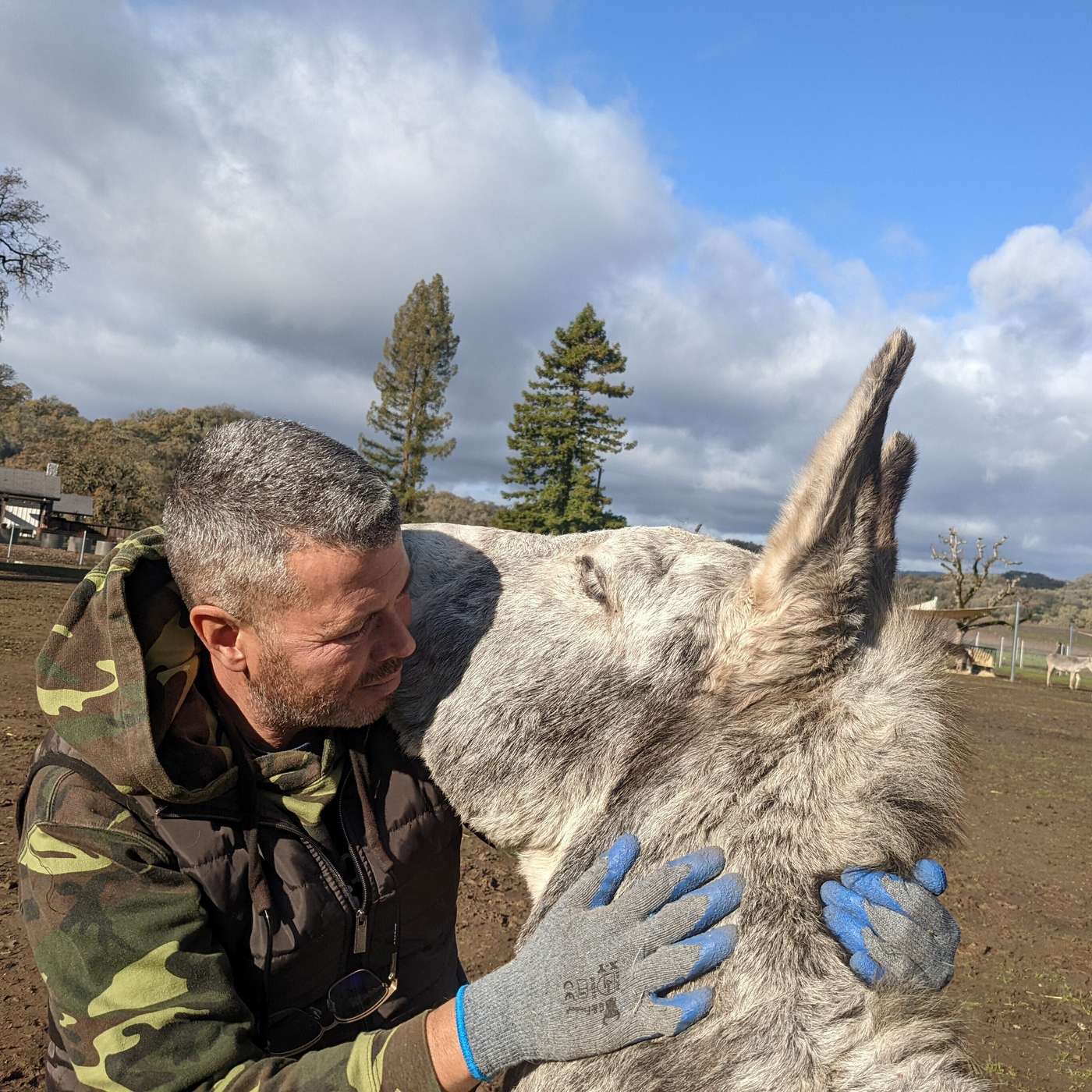
December 27, 2021 — Oscar’s Place, a donkey sanctuary in Hopland named for a cat, is populated by guinea hens, medieval artillery, and dozens of soon-to-be reality TV stars. Ron King is a former New York fashion and media executive who lost his job in the pandemic and decided to devote himself to rescuing donkeys. The 75-acre ranch is named for the memory of a much-beloved pet. Donkeys are charismatic, with their quizzical expressions, big hairy ears, and dainty hooves. They are equines, but their brains, their guts, and their hooves are entirely different from those of a horse, which means they require a different kind of care. They are also profoundly emotional. “They form very strong bonds with each other, and with their human caretakers,” King said during a tour of the premises on Friday morning. Oscar’s Place has had just over eighty donkeys come through. Twenty-nine have been adopted, and six are permanent residents. Not many are available for adoption at the moment, since King wants to make sure they are successfully rehabilitated, both physically and emotionally; that potential adopters have the resources and the fencing to take care of them properly; and that they will be treated as pets, rather than beasts of burden. He also won’t adopt out pregnant females. Most importantly, he will only home them in pairs, even if they are destined to be companions for other animals. “I have promised these donkeys a safe, happy, and healthy life, and I believe that retirement is probably part of that,” he said. “I think donkeys probably do enjoy having a job, but it has to be pretty light. The primary reason people adopt donkeys is to be a pet, and secondarily, they’re great guardians.” While the donkeys he introduced to a visitor were affectionate and docile, nuzzling for treats and leaning into shoulder rubs, King says “donkeys are fierce.” Their bonding tendency means they will protect their friends and family, starting with a unique bray that is often enough to send coyotes in search of a meal somewhere else. Next, they charge. “Usually, a thousand-pound animal charging will deter it,” King explained. “If the coyote still continues, donkeys’ back hips are double jointed. They can kick sideways and backwards. And so if you ever google Donkey vs. Coyote, which I do not recommend, the donkey always wins.” For all that is endearing, unique, and fierce about them, the species is a bit of a modern-day castoff. “Most ancient cities around the globe were built on the backs of donkeys,” King reasoned. “And then we got tractors. Now, in this century, horses win races. Cattle feed a food system. Goats produce milk and meat. So they all serve a monetary value to humans. Donkeys have no monetary value. They’ve just been used, and then discarded. So the donkey has very few advocates.” Viejo, King’s personal pet donkey, is one of the permanent residents. He and his friend Sandy got a vigorous rub as King talked about what he knows and doesn’t know about the animals who show up on the ranch with a variety of conditions. Donkeys end up at auction houses, where their buyers almost inevitably slaughter them, for a variety of reasons. Either their owners or the owners’ heirs surrender them, or people illegally round up wild donkeys and sell them for quick cash. King suspects Viejo was surrendered, because “he came off the truck friendly. I think he is just about perfect.” Sandy, who is heavily pregnant, is food-motivated, so, according to King, “she acts like she’s being sweet. She’s just trying to manipulate you into giving her some food. If you don’t, she will leave you.” King hasn’t entirely lost his fashion sense. He is fully aware that he and Viejo, both silver-haired partial brunettes, go well together. “Photographers seem to like us because we have the same color hair,” he divulged, planting a kiss on Viejo’s forehead. His media senses are still keen, too. Starting in 2022, he promised, “the donkeys are going to be reality TV stars. Several different production companies approached us, and it was very important to me that we understood what our northern star was and what kind of story we’re going to tell. It’s really going to be stories of compassion and joy and some of the heartache that comes from running a donkey sanctuary.” He already knows who the biggest stars are going to be. They’re just outside a high-ceilinged barn, echoing with the cries of guinea fowl. The guineas are supposed to protect everyone from rattlesnakes, and sure enough, at 10:00 in the morning on Christmas Eve, there wasn’t a rattlesnake in sight. They’re not the stars, though. “Donkeys are pregnant for 14 months, so we already know how many babies we’re going to have next year, and that number is 23,” he announced, leading the way into the maternity pasture. “Donkey babies are adorable, and make for really good TV.” They also come in a variety of sizes. Hershey, who is the size of a really big dog, is probably half mini. Which br...
Ep 306Ukiah Police Chief sued in civil court
December 23, 2021 — Noble Waidelich, Ukiah’s new police chief, is being sued in civil court this month for domestic violence that is alleged to have taken place between 2011 and 2015. Madisyn Carley, who is now 20 years old, claims that on numerous occasions, she witnessed Waidelich abusing her mother, Amanda Carley. She is seeking compensatory and punitive damages for wage loss, medical expenses, and loss of earning capacity, in addition to emotional distress. Noble Waidelich and Amanda Carley were then living together as a couple. Amanda Carley was also a law enforcement officer, in the Mendocino County Probation Department. Waidelich did not respond to an email request for comment on this story earlier this week. Anyone accused of a crime is presumed innocent until proven guilty. Michelle Roberts is the director of the Fort Bragg office of Project Sanctuary, a non-profit organization that advocates for, counsels, and houses families who are seeking to escape domestic violence. She told kzyx that law enforcement families experience a high rate of abuse. “Unfortunately, it’s actually quite prevalent, more so than some other professions,” she said. “Both law enforcement and actually military have high rates of domestic violence…there’s varying data, some of it is old, it’s not really really current, but it’s estimated that as many as 40% of law enforcement families have experienced domestic violence.” Concerns about violence and misogyny are not new to the Ukiah Police Department. Former UPD Detective Isabel Siderakis is suing the city, the department, and former UPD Sergeant Kevin Murray for sexual harassment and a hostile work environment. Siderakis claims Murray assaulted her during an out-of-town training and that superiors were unresponsive to her complaints of harassment and discrimination. Murray is no longer on the force, and the District Attorney has charged him with sex crimes against two other women, burglary, and possession of methamphetamine. And in April, multiple videos of Ukiah police officers beating a naked, mentally ill man on the street circulated around the internet. The city and the department did not release any information about whether the officers had been disciplined or suspended, but the responding officer’s name continued to appear on police logs. Waidelich joined the force in 2005 and was promoted to chief in September of this year, following the departure of former Chief Justin Wyatt. Waidelich was investigated twice for domestic violence against Amanda Carley at the time the abuse is alleged to have occurred. In April of 2015, an investigator with the Mendocino County Sheriff’s Office responded to a report by school officials that Amanda Carley’s 13-year-old daughter had told them she had witnessed her mother’s boyfriend head-butting and pushing her. In a 47-page report, investigating officer Andrew Porter wrote that he interviewed Amanda Carley on April 20th. He described her minimizing, evading, changing her story, and denying that she knew the meaning of the term ‘head-butt.’ District Attorney David Eyster told kzyx this morning that on May 4 of 2015, his office returned the investigation to the sheriff’s office for insufficient credible evidence.* The daughter does not appear to have been close to her mother’s boyfriend. Porter’s report includes a text exchange between Waidelich and the teenager, where she wrote, “Do u realize how happy we were before uLu (sic) ruined all of us.” Roberts, of Project Sanctuary, says children are deeply affected by domestic violence. “It has a profound effect on them,” she said. “It can impair their learning abilities, it will impact their social skills, it creates a lot of depression and anxiety in children that witness this violence. I mean, think about it, children are innocent victims. They have no control, or very little control, over their own lives.” Project Sanctuary does offer services to children experiencing domestic violence. In his report, Andrew Porter wrote that prior to his investigation, Waidelich had been subject to an internal police department investigation by Bill Cogbill of Santa Rosa. This investigation had been prompted by colleagues reporting that they had witnessed abuse or that Carley had confided in them, but nothing came of it because Carley denied she was being abused. Porter wrote that his final interview with Carley was on August third of 2015. Four months after the initial, evasive interview, he wrote that she came back to his office, admitted that she had not been truthful, and sent him pictures of injuries she had sustained going back to 2012. On August 18, he sent it back to the District Attorney’s office, but it was never prosecuted in criminal court. Roberts says it’s typical for people experiencing domestic violence to deny it. And leaving the dangerous situation is a decision that has its dangers, too. “The best thing you can do is let your friend or colleague kno...
Ep 305County fees to go up in the new year for cost recovery
Dec 22, 2021 — Fees for many county services are due to go up in mid-January, leading to sticker shock after years of unchanging prices. Last week, department heads made their various cases to the Board of Supervisors as to how bringing up the cost of fees is the only way to achieve cost recovery, or in some cases, retain staff. Environmental health, the sector of public health that covers everything from land use to body art to Boy Scouts facilities, told the board that many of its fees were last adjusted in 2010, when they still didn’t achieve full cost recovery. The covid response was not factored into any of the requests to increase fees. Most of the presentations included highly technical educational material as well as pitches for why they deserved higher fees. Kirk Ford, with hazardous materials in environmental health, explained that his department is seeking fee increases. He wants a 33% increase for underground tank inspections, from $15 to $20, and a 170% increase in the hourly cost for a hazmat spill response requiring two people, from $270 to $730. Back in 2010, the Board decided that full cost recovery would be a major goal in setting the fees for county services. The calculations include the salary and benefits of the person doing the task that’s paid for by the fee, as well as the services and supplies that are needed. Nash Gonzalez, the head of Planning and Building Services, told the board that his department has increased its productivity by 30% in the last year, partly due to the presence of a contractor in the coast office. The department has also hired another planner, who is training in both the coast and inland offices. When Supervisor Glenn McGourty asked about what impact it would have if the county waived the fees for solar installations, Gonzalez said that could cost $175,000 a year or result in the loss of two positions. Brian Hoy, the supervisor of the Consumer Protections department of Public Health, argued for raising fees to hire more staff and pay them well. He said his department is down two people, but found three good candidates. Still, Supervisor John Haschak wondered if raising the fees so much, so suddenly, might discourage people from getting the permits and licenses they need to comply with the law. Gonzalez told him incentives were still outstripping disincentives.
Ep 304County offers boosters at fairgrounds clinic
December 21, 2021 – Wondering what to get yourself or that special someone for the holidays? How about the free gift of a COVID 19 vaccination or booster shot? As Mendocino County experiences new, more transmissible COVID 19 variants, it is more important than ever to protect yourself and your community by getting vaccinated and boosted to fully fortify your immune system to stave off severe symptoms of COVID 19. Mendocino Public Health will offer a holiday vaccination clinic at the Fairgrounds tomorrow, Wednesday, December 22 from 1-5pm for 1st, 2nd and booster doses of Pfizer, Moderna and Johnson and Johnson. Walk-ins are welcome, or appointments can be made at Myturn.ca.gov. A parent or guardian must be present to sign a consent form for minors 12-17 years of age. Adventist Health ER Doctor Drew Colfax, who has been treating COVID patients in Ukiah’s emergency room for almost two years, explains that the new variant of COVID 19, Omicron, poses a significant threat to our community as immunity garnered from vaccines decreases after 6 months, and the new variant is easily transmissible. Dr. Colfax says that a booster shot will restore waning immunity to a more robust level. Dr. Colfax encourages Mendocino County residents to step up and get their boosters.For those who feel that their natural immunity may provide enough protection, or that immunity garnered from a previous infection will stave off severe illness from new variants of COVID 19, Dr. Colfax warns that this will not provide protection against Omicron. Booster doses for all vaccine types, Pfizer, Moderna, J and J are now available in Mendocino County for all adults 18 and up. You can visit your local pharmacy, physician or public health vaccination clinic. Appointments may be needed. For those looking for an easy, fast walk-in option, Mendocino Public health has been offering a weekly, walk-in vaccination clinic at the Ukiah Fairgrounds since July, 2021 According to officials running the program, each of these clinics averages around 300-500 people who are there to get vaccinated or, more currently, to receive their booster shot. As an incentive, a $25 gift card to either Black Oak, Mama’s Cafe, U Top It, Mendocino Book Company, Gateway Games, Sword and Board or Schat’s will be given to each individual who gets a shot at the County clinic at the fairground. Remember, you do not need to be a Mendocino County resident to take advantage of this clinic. If you have out of town friends or family visiting, encourage them to join if they have not yet been vaccinated or boosted. Everyone 12 and up can enjoy this unique holiday outing!
Ep 303Crisis Residential Treatment center opens in Ukiah
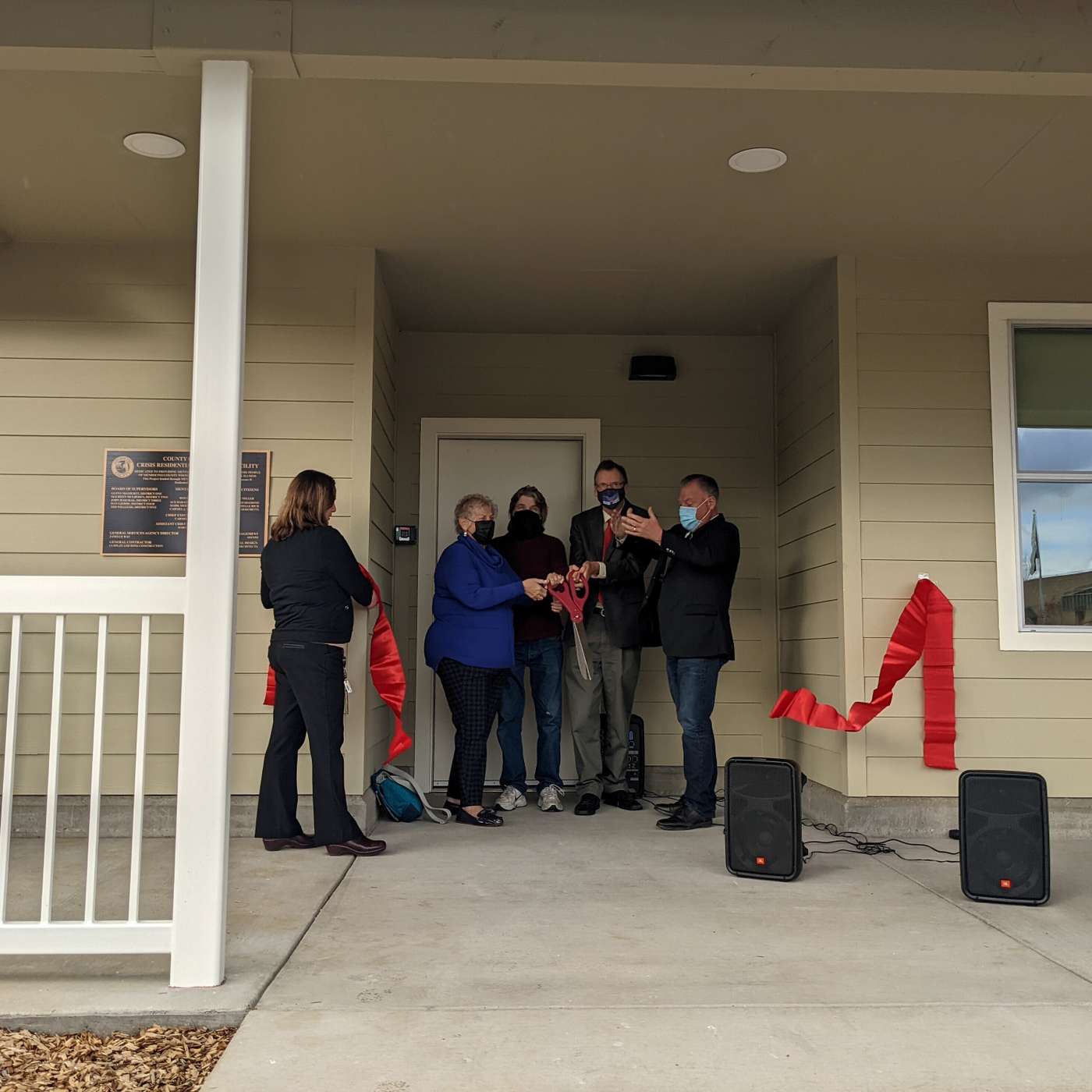
December 20, 2021 – Sometimes the government does work to better serve its people, and when this happens, it is cause for celebration.Therefore, a celebration was held on the afternoon of December 16th when government officials and community members joined together to commemorate the grand opening of the new Crisis Residential Treatment Facility of Mendocino County. Members from the Measure B committee, Behavioral Health, the National Alliance on Mental Illness, Mendocino’s Board of Supervisors, and Redwood Community Services stood together under grey skies to witness the red-ribbon cutting officially opening the new facility on Orchard Street in Ukiah. Neither the rain nor the chill could dampen the palpable joy and sense of accomplishment felt by everyone in attendance who had played a part in bringing this much needed mental health care facility to fruition. Measure B was instrumental in funding the facility. Back in November 2017, over 83% of Mendocino County residents approved to raise the sales tax to finance the construction of behavioral health facilities, and to fund operation costs and services to treat mental illness and addiction. The new Crisis Residential Treatment Facility is one of the first tangible results of Measure B. Funded by Measure B and the Investment in Mental Health Wellness grant, the new facility offers social rehabilitation services in a safe, welcoming, non-institutional, residential setting. The lovely, homey establishment offers an open floor plan featuring a reception room, nurse’s station, bedrooms, bathrooms which are all centered around a large dining room and kitchen area flooded with natural lighting from large windows that look out to the spacious backyard patio. Former Measure B Committee member Jan McGourty, current chair Donna MoschettiBehavioral Health Director Dr. Jenine Miller, and retired sheriff Tom Allman all worked many years on the Measure B committee to bring the CRT to fruition.
Ep 302Diversion without dams: CDFW study suggests possibilities for Potter Valley Project
December 17, 2021 — The Potter Valley Project is in a phase of uncertainty, but a recent feasibility study could be a blueprint for a future that includes a diversion without dams. The deadline for the license application is coming up in mid-April, and PG&E, which owns the project, has made it clear that it does not intend to renew. The coalition seeking to take over the license hasn’t come up with the money it needs to fund the necessary studies. And PG&E is not paying for a costly repair at the powerhouse that drastically reduces the amount of water the project is able to divert from the Eel River into the Russian River and on into Lake Mendocino. The new study, a technical memorandum funded by the California Department of Fish and Wildlife with cannabis taxes, posits a few strategies for decommissioning the dams and building structures to continue seasonal diversions. Darren Mireau, the North Coast Director of California Trout, signaled that he favors the rapid removal option with pumping. (CalTrout is a member of the Two-Basin Partnership, the coalition of entities that has filed a notice of intent to take over the license, but Mireau is not speaking on behalf of the entire Partnership here.) He says sediment, both of the sandy and the rocky varieties, will play a large role in how any of the alternatives is carried out. Sediment buildup that reduced the capacity of the van Arsdale reservoir behind Cape Horn Dam was a large part of the reason Scott Dam and Lake Pillsbury were built in 1922, 14 years after Cape Horn. “You’re goint to have an impact with sediment release, and you could do that once, or you could do that four times,” he said of the rapid removal option, as opposed to the phased approach, which would take place over four years. “And each time has about the same caliber of impact. So it seems reasonable to do it all at once and get past the impact, and get the dam out.” Since the point of dam removal is to protect fish, Mireau added, “We would time it in a way that most of the fish are coming up the Eel River and heading into tributaries, so they’ll be distributed out of the effect zone…like I said, this is a feasibility level study right now, so a lot more detailed study will unfold.” Some options include a partial removal of Cape Horn Dam, but Mireau was unambivalent about CalTrout’s position on Scott Dam. “We will certainly want to remove — or have PG&E remove, to be honest, the entirety of Scott Dam,” he emphasized. “It needs to go. With regard to Cape Horn Dam, it’s a little trickier, because it’s the diversion point for water going into the Russian River, and we’re committed to maintain that reliable water supply…this study is actually groundbreaking for us, because we now have three reliable infrastructures that we think would safely and reliably provide that water supply to the Russian River.” Of the three alternatives, the pumping option would be the cheapest to build, at an estimated cost of $20 million, as compared to $35-$48 million for channel-building options. But the annual projected operations and management costs for the pumping scenario range from $309,000-$359,000, including water delivery costs to Potter Valley of about $284,000 per year. Annual O&M costs for the other two options range from $50,000-$200,000. But Mireau doesn’t have a problem with water users paying the price for the commodity. “Any water diversion at that location is going to have some annual operation and maintenance costs,” he said. “That’s unavoidable. The advantage of the full removal of Cape Horn Dam with that pumped diversion approach is that you get all of the obstruction out of the river that might impair fish passage.That alternative for Cape Horn Dam does that the best. And it does shift the cost, I think, to the water users, instead of the fish side, where it appropriately needs to be.” Reached by phone, Congressman Jared Huffman acknowledged that PG&E ratepayers are likely to get stuck paying for any alternative that ends up being implemented at the project. But he said ratepayers are already paying for hydropower costs, and PG&E is currently operating the Potter Valley Project at a loss of about $9 million a year. What happens next depends on the federal regulators. If surrender and decommissioning is the way forward, it will depend on an order from the Federal Energy and Regulatory Commission. The Two-Basin Partnership is likely to withdraw its notice of intent to apply for the license, according to Mireau. “We’re reasonably certain that will happen in ‘22, at least by the expiration date of the license itself, which is April 14, 2022,” he said. “And then FERC will turn and order PG&E into that surrender and decommission process…and then it’s PG&E, the license holder’s obligation to respond, start developing a plan for that decommissioning, and go forward from there.” Huffman said that, although surrender and decommissioning scenarios do differ, a dam that bl
Ep 301BoS approves jail medical contract, with condition that it be amended soon
December 16, 2021 — The Mendocino County Board of Supervisors approved the contract, including a $3 million increase, with the medical provider for inmates at the county jail this week, with the proviso that the contract be amended to include a mental health clinician. Dr Jenine Miller, the head of the county’s Behavioral Health Department, agreed to work with NaphCare, the provider, on those amendments, and report back to the board in 60 days. Supervisor Ted Williams asked Miller for her assessment of the mental healthcare in the current contract. “Are we completely in compliance, in providing a level of care that meets standards?” he asked. “Without a mental health clinician and expanding mental health services in the jail, no, we’re not,” she replied. “If we approve this contract, with adding the clinician, we’ll be closer to where we need to be, mental health-wise.” She added that there is a number of ways in which the matter can be investigated, if a patient inmate claims they did not receive services. However, there has been at least one instance of a former inmate who complained about requesting a mental health assessment and not receiving it. Williams said some of his constituents have told him that they fear retribution if they report problems in the jail. Miller said that, in addition to a mental health clinician, she would need to take a much closer look at the details of the treatment. “I have made it clear with NaphCare and the jail, for me to really get on board with their contract, we need to do audits,” she insisted. “NaphCare and the jail have agreed, they would be fine with Behavioral Health doing a quarterly audit.” Dr Jeff Alvarez, the Chief Medical Officer at NaphCare, added that the National Commision on Correctional Healthcare does conduct an independent audit every three years and would be back onsite this year. The mental healthcare portion comprises 17%, or less than a fifth, of NaphCare’s contract. Another 17% is the jail-based competency treatment program, which is funded by the Department of State Hospitals. A significant percentage of the inmates are receiving some form of mental healthcare. Dr. Amber Simpler, NaphCare’s Chief Psychologist, broke down the numbers as of Tuesday morning: out of 305 patients, 120 were on antidepressants; 111 had had an evaluation outside of the initial intake process; “and we know about 58 of those individuals were on anti-psychotic medication,” which is the first course of treatment for schizophrenia spectrum disorders. About 46% of the people who had been in isolation also had mental health issues, she reported. Williams pressed to find out how many mentally ill inmates are isolated, often without medication. Simpler said deciding who ends up in what kind of housing is beyond the scope of NaphCare’s responsibilities, but they do inform jail staff if isolation is contra-indicated. Lt. John Bednar, who works in the jail, did not have statistics on how many people have been placed in isolated housing this year, but that their predicament is discussed at regular meetings. “No one is placed on administrative separation for being mentally ill,” he said, adding that inmates are isolated if they are violent or “because they have been, or potentially could be, victimized in the general population setting.” With the contract expiring at the end of the year, not approving it wasn’t really an option. Williams moved approval of the amended contract through the end of 2022, “and direct Dr. Miller to coordinate an amendment to provide mental health services at an appropriate level of care and review mental health patient statistics and report back to the board within 60 days,” he specified. The motion passed unanimously.
Ep 300Activist files hit-and-run report in JDSF
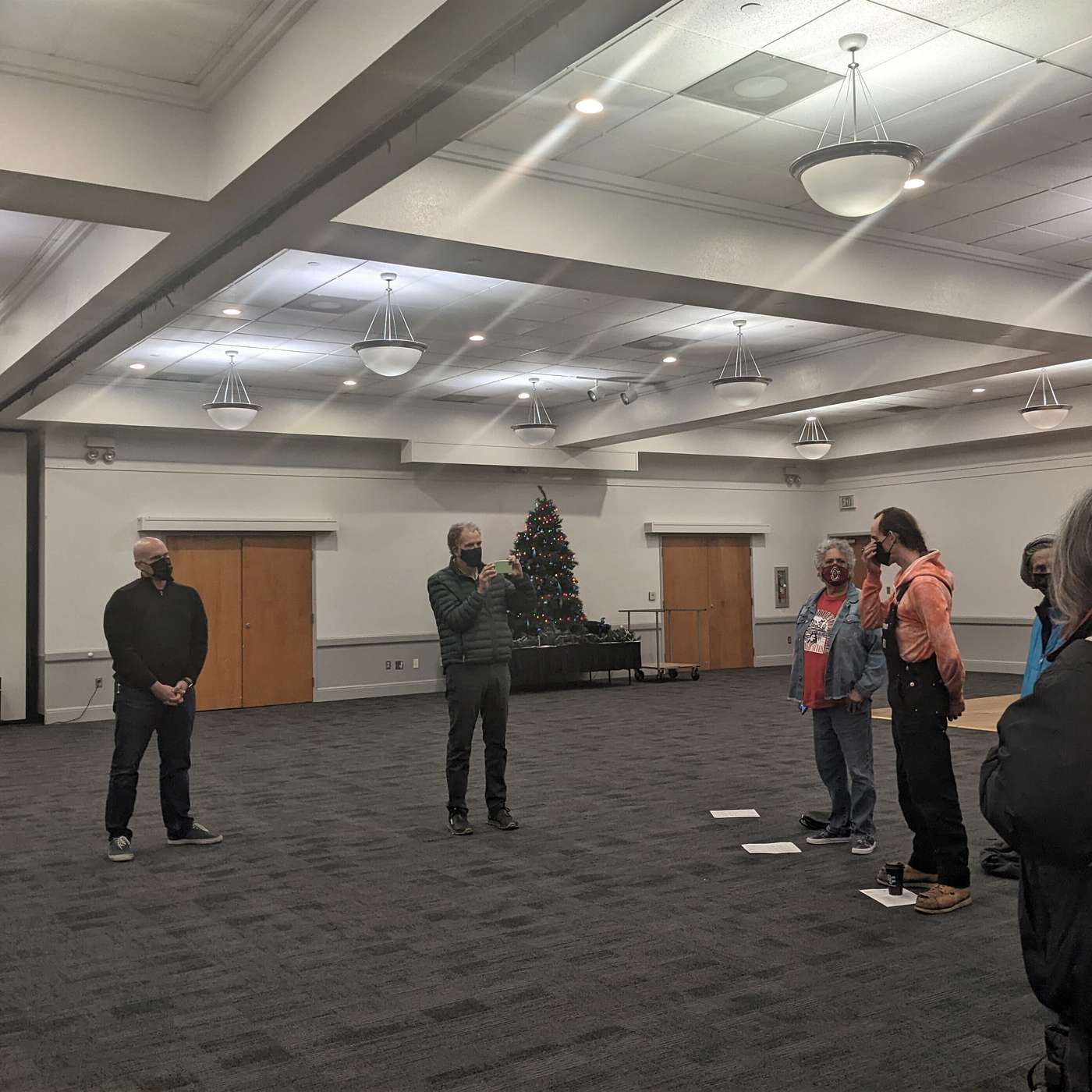
December 15, 2021 — About a dozen activists from a coalition that’s been pushing for a moratorium on logging in the Jackson Demonstration State Forest held an impromptu meeting with Assembly member Wood and Senator Mike McGuire’s field staff in downtown Ukiah Tuesday, asking them to convey their concerns to elected officials. Among them were Polly Girvin, an authorized representative of the Coyote Valley Band of Pomo Indians for government to government consultations with the state; and an activist who said he had been struck by a vehicle while blockading a road early Friday morning. “Vehicular attacks on protestors are very much in vogue,” said the protester, who goes by the name Mama Monkey. “Myself and other citizens were spread across Road 300, just east of the confluence of Roads 300, 350, and 360, near the egg-taking station,” said Mama Monkey. “We were preventing loggers from entering the Red Tail timber harvest plan, and a white four-door Toyota Tacoma with a camper shell and a heavy-looking black metal bully bar after-market front bumper came towards us (we were all wearing high visibility yellow safety vests and making our presence very obvious) and the truck came towards us really quickly, and kind of screeched to a halt just within a few feet of other folks in my group, then reversed direction and altered course to point towards myself…my suspicion is that the person driving miscalculated, expecting me to move out of the way, because I was a little bit more isolated on that side of the road, but I did not move, and I think when he realized that, he started to attempt to slow down, but he was not able to stop in time to prevent his bumper from hitting me in the chest.” In June, Sheriff Matt Kendall wrote a letter to then-CalFire Director Thomas Porter and the Board of Forestry and Fire Protection, saying he was concerned about public safety issues arising from people blocking roads in the forest. He urged the state to take action “to secure a safe working environment,” writing that, “My office cannot take over issues which are the responsibility of the State of California.” In July, Anderson Logging, which was under CalFire orders to stop working in the Caspar 500 timber harvest plan, told Mendocino Unit Chief George Gonzalez that the company wanted to hire private security to protect its workers. CalFire Chief Legal Counsel Bruce Crane told Myles Anderson and his lawyer that according to the Public Resource Code, “CAL FIRE cannot cede control of activities on JDSF, for law enforcement and security purposes, to any person or entity at any time.” Mama Monkey tried to file a report with the Sheriff’s office and California Highway Patrol over the weekend, then overcame initial reluctance and filed a report with CalFire Monday morning. Cal Fire confirmed as much, but did not provide details, as the investigation had just been opened. Mama Monkey provided details of the incident to Wood and McGuire’s representatives. They did not go to the hospital after the encounter, and chose to keep their medical information about the aftermath private. “I’m there to protect the trees for the well-being of everyone, of the loggers just as much as myself, for their children just as much as my children,” they declared. “It’s very sad that certain parties are acting violently, and I feel it’s my duty to make sure they’re held accountable, so they don’t continue to escalate violence.” In his letter last summer, Kendall wrote that he fully supports the right to civil disobedience, but that safety cannot be ensured if activists continue to protest in an active timber sale. “We can see where this is leading, and the outcome will be tragic if action isn’t taken,” he warned. As for Mama Monkey, “What I want is a moratorium on logging within Jackson Demonstration State Forest.”
Ep 299Fort Bragg nursing home in crisis
December 14, 2021 — Sherwood Oaks, the nursing home in Fort Bragg, is in a serious crisis, according to a report by Dr. William Miller, the Medical Director and Chief of Medical Staff at Adventist Health Mendocino Coast. At last night’s meeting of the Mendocino Coast Healthcare District, he told the board that the property, but not the nursing home itself, is in escrow, and the nursing home is desperately short-staffed. Miller said if the California Department of Public Health does not provide emergency nursing staff, the facility could close by the new year. The home also lacks a director of nursing. And Will Maloney, the administrator, is retiring next week. Miller said family members of the 36 residents currently on site would start receiving phone calls apprising them of the situation this morning. He reported that several meetings yesterday yielded assessments of immediate, mid-range, and long-term levels of crisis. After the staffing, there are serious issues of about $1.5 million worth of deferred maintenance on the property and $2 million in outstanding fees due to the state. He sounded something close to a note of optimism when Director Norman Devall asked him if it was possible that the facility would be closed by January 1st. “If the State does not step up and provide emergency relief nursing, then there is that potential,” he acknowledged. “I find it hard to believe that the State would allow that to happen. They did step up and provide the necessary RN staffing during the covid outbreak. I know that the county is very concerned about this, and they are reaching out to their partners in the State to make sure that that never happens. But that is obviously the concern.” The party interested in purchasing the property is Schlomo Rechnitz, who owns 81 nursing homes in the state of California. Rechnitz is the subject of a multi-part investigation by CalMatters reporter Jocelyn Wiener, who has documented multiple instances of how the state’s irregular licensing practices have set the scene for poor infection control protocols, lack of oversight, and multiple injuries and deaths at facilities owned by Rechnitz and his affiliates. Earlier this month, Rechnitz’ lawyer, Mark Johnson, confirmed in an email to KZYX that an affiliate of his client is in negotiations to purchase the property and the building where Sherwood Oaks is located. He added that, “The nursing home remains with the current operator. If and when the transaction is completed, my client will have no role whatsoever in operations of any facility on that site. My client’s role will be solely that of a landlord.” The property’s total assessed value, according to Parcel Viewer, is about $2.8 million. It was last sold in May of 2003. The owner is RBJ and Associates, LLC, which, according to Open Corporate, is linked to Richard Azevedo, of Auburn, California. None of the five phone numbers associated with his name were in working order earlier this month. The property has not been sold yet, according to the county recorder’s online database, which is updated regularly. Miller said it was key to find out how much Rechnitz is willing to put into fixing the property, which is not in great shape. “I do want to say that everything at the moment is in operation, is functional, that the care is safe and good,” he began. “However, these things are challenging in the way that if any of them got worse or broke down, that could potentially lead to some serious problems.” There is an outstanding court order for the facility to come into compliance with ADA requirements. The deadline for that passed about a year ago, and Miller said the upgrades would be about $120,000. The generator also needs to be replaced, which is “about a $200,000 ticket item.” The boiler needs to be replaced, for another $200,000. The heating system needs to be modernized with electric heat pumps, for $500,000. The roof needs to be replaced, at an estimated cost of $150,000. There is also an eight-inch subsidence in the parking lot and underneath a wall in the kitchen, due to an underground fuel tank which was improperly decommissioned in the 70’s, “so now the thing is rusted and collapsed,” Miller explained. “That obviously means that that wall might be condemned. I don’t think the whole facility would be condemned, but possibly the wall and part of the kitchen.” Miller added that a contractor has proposed a solution, which has not been approved by the agency responsible for maintaining safety standards at medical facilities, so an estimate of that repair is not available. Without immediate staffing, though, the residents will have to be relocated, and there is not another qualified facility on the coast. With an aging population, a nursing home could be a flourishing business, but the majority of the Sherwood Oaks residents are on MediCal or MediCare, neither of which offers nursing home operators an appealing margin. Medicare covers 100% of the first 20 days ...
Ep 298“They don’t think about who we go home to” Anti-masking mob storms Ukiah Natural Food Co-op
December 13, 2021 -- What began as an act of civil disobedience in front of a store turned unlawful on Saturday, December 11, when 15 maskless protestors and their children boldly entered The Ukiah Natural Foods Co-op in Ukiah, California, to demonstrate their fury over the need to wear a mask and follow COVID protocol to shop inside the store. Apparently unsatisfied with the Co-op’s online shopping and curbside pick-up option for those who cannot or will not wear a mask, the maskless protesters began their action in front of the entrance doors to the business, holding signs reading “Fauci is a Facist”, “The Mandate is the Beast”, and “Freedom over Fear”. The protest grew unlawful when the group entered the Co-op to purposefully disrupt business. For almost an hour, the angry mob occupied the store. They blocked aisles with their shopping carts so customers could not shop. They allowed and encouraged their children to roam freely through the store opening packages and eating food without paying, they damaged merchandise by filling plastic bags with copious quantities of bulk items which were later abandoned in their carts, and they harassed the staff and customers with fallacies comparing the conditions and policies of the Co-op to Nazi Germany or the Jim Crow era of segregation. Grey Wolf was working at the Co-op cafe during the protest. He described what took place during his work day. “We were flooded with a group of people who refused to wear masks. They were demanding that we check them out. They gathered in a wall by the cash registers and refused to leave unless we checked them out.” The protestors’ tactic is to fill their carts with groceries and inundate the cashiers, who are not permitted to sell items to unmasked individuals. This serves to disrupt business as compliant shoppers are not able to access available cashiers. Ten phone calls and sixty minutes later, the Ukiah Police Department arrived on scene. The protestors left the business, and got a talking-to from the police. When the police left,the protestors cheered for their perceived victory, took a series of group photos holding their signs in front of the store, and took off in their cars. Traumatized, the Co-op staff were left to clean up the mess, discarding a hundred dollars or more of half-eaten food items, and reshelving salvageable merchandise. Unfortunately, the scene was not unfamiliar to Grey. “This is the second time it’s happened in the last month by the same group of people.” Grey, along with other floor staff, had to manage the mob's angry questions. “They were asking questions about what the policies were, what the details were, had any of us read the mandate.They were throwing out comments, calling people Nazis and asking us if we knew anything about the Civil Rights Movement or 1930’s Germany. It was a lot of angry, hateful energy.” Grey notes that the Co-op employees are community members who have no control over Public Health protocol. “There are a couple of high school students who work as cashiers. We have moms. These are the people who work here.” Grey wants the protestors to know that the employees, who had to take the abuse and clean up the mess of over 100 dollars’ worth of trashed merchandise, are not responsible for the mask policy. “I fully respect your right to protest peacefully outside,” he said. “But coming inside, disrupting the flow of business, and agitating the workers who do not have control over this rule, is not respectful.” Sylvia Fogel is another Co-op employee. She explained that the protestors realize that the Co-op will not sell items to unmasked individuals, so the protestors fill carts with food, wait in line to pay, get denied service, and leave the cart and its items behind to be dealt with by store employees. Some of the items had been opened and half-eaten. As a stocker for the store, Fogel was burdened with cleaning up damaged merchandise and throwing away half-eaten food. “They are very disrespectful when they come in. They say things like, ‘It’s illegal to tell us to wear a mask. You’re discriminating against us.’ It makes me really sad for the people who actually have been discriminated against because it’s not discrimination and you are misrepresenting the term. That is not o.k.” Fogel shared how the presence of these unmasked marauders affects her. “I live with my 90-year-old grandma and I worry about her health every day going to work. My household needs my income, so I can’t quit. It scares me when people like this come in. You are putting my Grandma’s life at risk every time!” Fogel found the behavior of the unmasked children particularly disturbing. “The children were even opening up chip bags and running around the store eating them and puffing up their chests at one of our cashiers. It is so disrespectful. It is scary to me that someone would teach their children that.” Aubrey Lowther, another Co-op employee who was working as a cashier during the prot...
Ep 297Rail Trail to expand in the new year
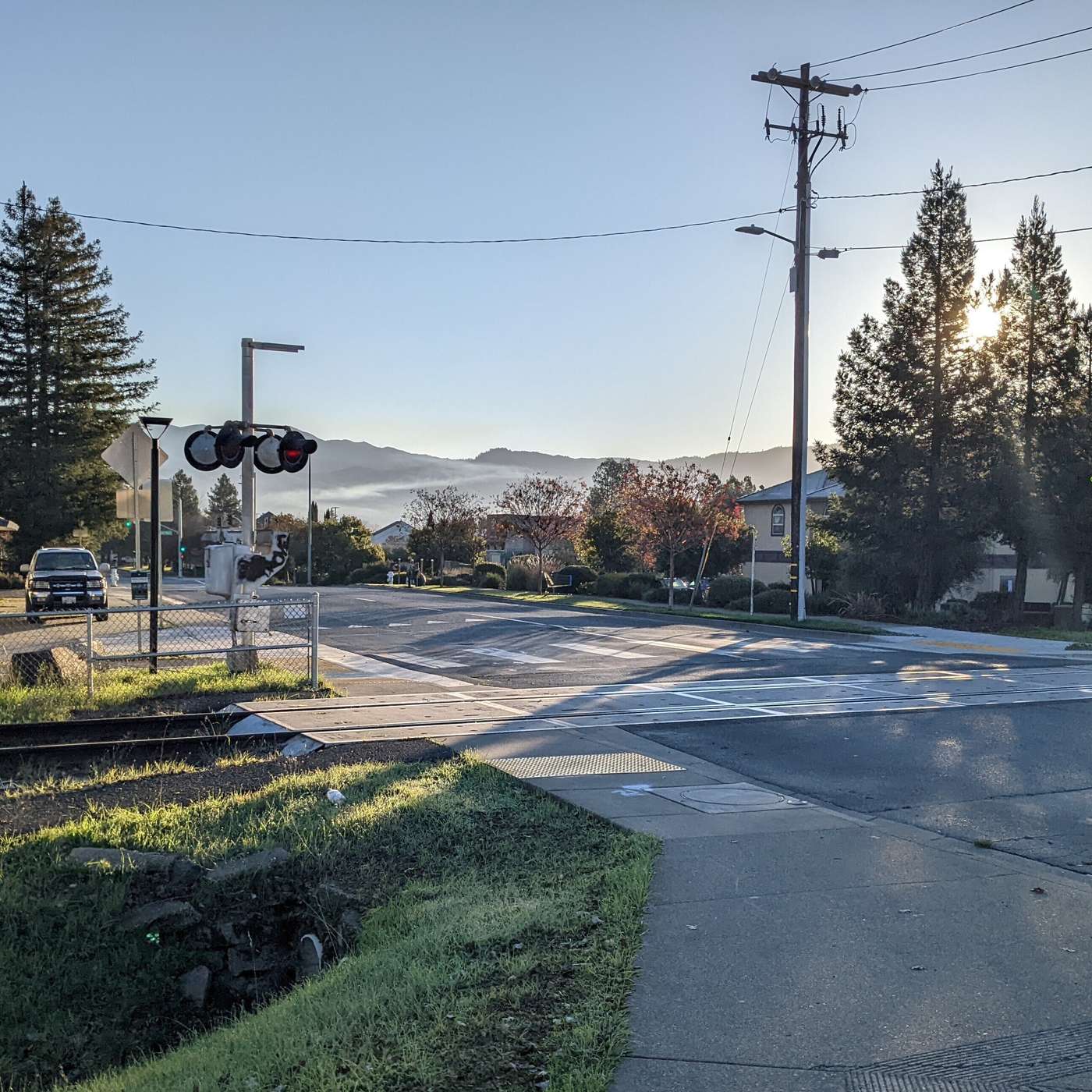
December 10, 2021 — Trails and railroads have been top of mind lately. Last month, the Skunk Train made a controversial move to purchase the Georgia Pacific mill site in Fort Bragg. And the master planning process for the Great Redwood Trail is poised to get going in the new year — under the shadow of the Coal Train, which could stall progress on the trail’s federal application indefinitely. In the meantime, some cities along the former railroad are quietly building segments of trail adjacent to the tracks that run through town, adding benches and plants, turning the old easements into parks. The City of Ukiah has built three segments of the trail, from its northern boundary to Commerce Drive, just south of the airport. Earlier this year, the city got a three and a half million dollar grant from the California Natural Resources Agency’s Urban Greening program to build another two miles south, to Taylor Lane. Andrew Stricklin, the Associate Engineer with the city’s Public Works Department, spoke Thursday morning about the next phase of the trail.

Ep 296Schools host vaccine clinics for kids
December 9, 2021 — The Ukiah Unified School District has partnered with Mendocino County Public Health to host COVID-19 Vaccination Clinics at local elementary schools in November and December for children ages 5-11. The final clinic for this round of first shots took place Thursday, November 9th, at Grace Hudson Elementary school from 3:00 p.m. to 7:00 p.m.
Ep 295A Community Activist Gives Insight Into the Sale of the Fort Bragg Mill Site
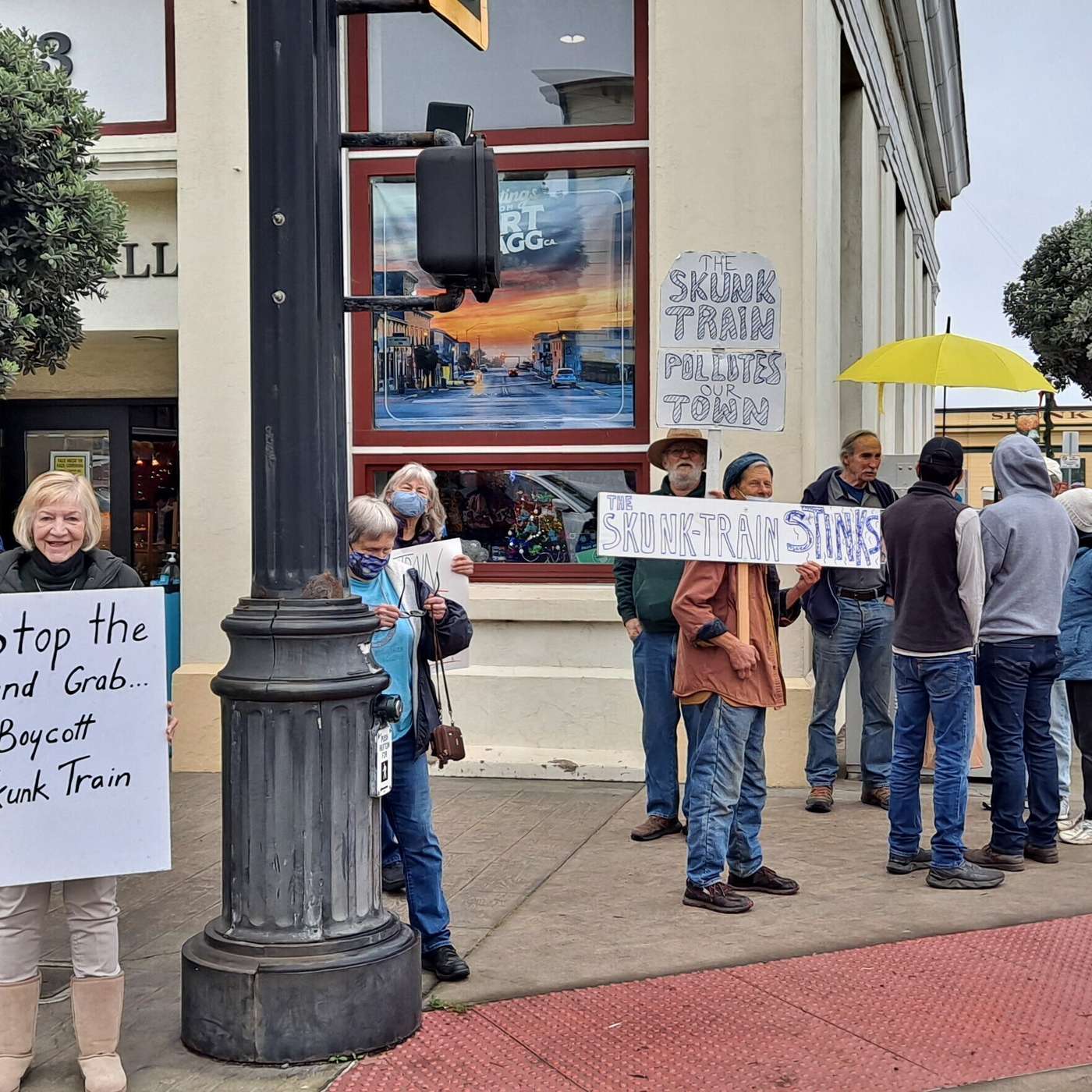
December 8, 2021 -- We revisit the controversial sale of the Georgia Pacific mill site in Fort Bragg to the Skunk Train and its parent company the Mendocino Railway with George Reinhardt, an associate at the non-profit, The Noyo Headlands Unified Design group or NHUDG. NHUDG has been advocating for the mill site clean-up and environmentally friendly reuse plans for over a decade.
Ep 294One step closer to tribal co-management at JDSF
December 6, 2021 — A local tribe learned last week that CalFire has decided to review its management plan of Jackson Demonstration State Forest, with an eye toward tribal co-management with the Sherwood Valley and Coyote Valley Bands of Pomo Indians. Polly Girvin, a longtime advocate for Coyote Valley, says the tribe is ready to get specific. “We have a plan in hand, at our fingertips,” she said. “A habitat management plan, crafted with the Save the Redwoods (League). We are going to be presenting amendments to the Forest Practice Act, amendments to the regulations of the Forest Practice act, and the habitat management plan.” The review is part of a lengthy process, which hasn’t started yet. But last year, Governor Gavin Newsom issued an executive order encouraging State agencies to move toward co-management of tribal ancestral lands that are under the ownership or control of the State. It’s part of an acknowledgement of the violent dispossession of Indigenous people, and it emphasizes access to sacred sites and cultural resources. There are ongoing government-to-government consultations with the Tribe, but Priscilla Hunter, the Tribal Historic Preservation Officer for Coyote Valley, says they haven’t been transparent. “Especially regarding our sacred sites,” she said. “They only tell us so much, and then we come back a second time to review the site...the sites that we have visited have been driven through with trucks, tractors, and they want to use those same roads to continue to destroy our site.” The Tribe has asked for a moratorium on logging in JDSF while the management plan is being amended. The Governor issued his executive order about tribal co-management in September of last year. At this year’s September meeting of the Board of Forestry and Fire Protection, also known as CalFire, outgoing director Thomas Porter recommended a review of the JDSF plan, years ahead of when it was originally going to take place. And Porter said there’s money to carry out co-management and scientific management practices. “Co-management in the context that I am talking about means access to and ongoing dialogue of culturally important plants and animals, and how those can be managed in conjunction with each other’s desires and needs on the landscape,” he told the Board during his Director’s Report. “I think that under the current administration and the direction the State is going, related to tribal engagement, I think that it warrants a review before its regular time for renewal….in the Governor’s budget, we the Department are going to see a $10 million placement of funds that is directed at Demonstration State Forest management, in science as well as increasing the staffing to get back to a place that we haven’t seen since the 1900’s.” Girvin says the tribes could use some staff, too, especially independent archeologists, “because each tribe on its own, they do not have archeologists, cultural resource protection staff,” she said. “What has happened to date is, Tribes have been inundated with THP’s (Timber Harvest Plans), saying there are sites on them, with no ability to have staff to respond. So we’re really going to be demanding some, I would say, reparations. If they’re not going to give the land back, then at least give us some mechanism to help defend the cultural resources there.” Plans for the review of the plan are in the earliest stages, in a newly-created sub-committee to an advisory group that meets twice a year. Two months after the Board of Forestry accepted Director Porter’s recommendation, the Jackson Advisory Group created a sub-committee consisting of JAG members Charlie Schneider and Amy Wynn to start the fact-finding process. State Forests Program Manager Kevin Conway said the sub-committee will bring its information back to the full advisory group at its next meeting in April or May, and, from there, the JAG will develop recommendations to take to the Board of Forestry. Girvin and Hunter said they learned about all this from a third party, in spite of the ongoing government-to-government consultations. Girvin wants those consultations to move beyond the JAG. “We have to go to the very top,” she declared. “To effectively look at changing legislation is on our agenda…we will not be the sub-committee of the Jackson Advisory Group...we’ll soon have to establish a protocol for our government-to-government consultation expanding to include co-management.” Reached by phone on Friday, Keith Gilless, the Board of Forestry chair, said he has not yet received the materials for the review, but that it has been in the Board’s work plan and that he himself has had a long interest in tribal co-management of public lands. He hadn’t yet seen the November 15th resolution by the Mendocino County Board of Supervisors to ask the Governor for a review of the plan for JDSF, but he expects the Governor’s office will send it along. In September, he told Porter he thought the request for a review of ...
Ep 293Skunk Train President Responds to Community Concerns and City Lawsuit
Skunk Train president Robert Pinoli answers questions about their acquisition and plans for the Georgia Pacific Mill Site in Fort Bragg and the City’s lawsuit, short broadcast version.
Ep 292Extended version: Skunk Train President Responds to Community Concerns and City Lawsuit
In this segment Skunk Train president Robert Pinoli answers questions about their acquisition and plans for the Georgia Pacific Mill Site in Fort Bragg and the City’s lawsuit.
Ep 291Tax protest one of many efforts to address cultivation increase
December 2, 21021 — Tax revolts have a storied place in American history, going back to the Boston Tea Party, when the Sons of Liberty set off a revolution by destroying an entire shipment of British tea to protest taxation without representation. More recently, Flow Cannabis Company co-founders Michael Steinmetz and Flavia Cassani invited California cannabis businesses to join them in withholding cultivation taxes until they see real, actionable change, presumably in California’s cannabis tax structure. In a recent article in Medium, they declared that they would recommend to their board that, instead of paying the tax, they place the estimated amount in an escrow account until the change takes place. Steinmetz did not respond to an email or a phone call asking him to comment for this story, though he did speak with the Sacramento Bee shortly after the editorial appeared. The California Department of Tax and Fee Administration recently announced that taxes on flower, leaves, and fresh cannabis per ounce will go up next month, due to inflation. All three taxes rest squarely on licensed cultivators. And so does the risk in the strategy of withholding the tax, according to Omar Figueroa, a longtime cannabis attorney in Sonoma County. “Cultivators are required to pay the cultivation tax when they transfer the cannabis to distribution companies like Flow Kana,” he explained. “So if the distributor does not pass those taxes along to the state (because the distribution companies are supposed to be surrogate tax collectors for the state), if they fail to do their duty, they are putting the cultivators at risk. So cultivators would be wise to make sure that they get receipts showing that they remitted the taxes to the distribution companies, so that they can clear themselves from liability.” There can be severe consequences for failing to pay the cannabis cultivation tax. Under the revenue and taxation code, any licensee who does not pay their taxes is subject to a penalty of half the amount owed, plus the taxes they owe, and could lose their license. “I don’t know who gives them legal advice,” Figueroa added; “but there’s no provision that says if you put the taxes not paid into an escrow account, you don’t have to pay penalties and you don’t get revoked. There’s no such provision in the law.” Local cannabis policy and trade associations are sticking to old-fashioned advocacy and organizing to address the cannabis tax structure.The Origins Council is a non-profit education, research and policy advocacy group that partners with cannabis trade associations, including the Mendocino Cannabis Alliance, all over the state. Executive Director Genine Coleman says there is a robust conversation about the tax structure in Sacramento, and she’s optimistic about the next few months. And Michael Katz, the Executive Director of the Mendocino Cannabis Alliance, says the tax increase does come at a tough time. “This year, even more than last year, there have been challenges in the marketplace due to prices going down (and) substantial oversupply, that didn’t even exist when the previous tax increase was avoided,” he reflected. “The community is really aware of this tax increase and it has really created a lot of frustration.” He gets it, but he’s taking a measured approach to change-making. “The full industry understands the frustration,” he went on, before listing the strategies organizations like his are adopting to address the industry’s top priorities: “ And that includes addressing cultivation taxes immediately, expanding market access immediately (and) providing an opportunity for license fallowing, which would enable cultivators to not continue to pay and operate their cannabis businesses and pay on their licenses, but be able to continue working toward full compliance in such a way that they would not be removed from the program while they’re taking a pause on their cultivation or businesses practices,” he summarized. “And, again, things like normalizing cannabis cultivation as agriculture, which would create parity for cannabis farmers and other farmers, and provide more protections and support just on a fundamental business level. So how do we really approach these issues, with the goal in mind of creating actual change that’s going to benefit folks without having unintended negative consequences that may hurt these people who are already burdened by this system?” As for Figueroa, he respects those who resist a system they view as unjust. But he doesn’t think Flow Cannabis Company is in the same league as the great conscientious objectors. “My mentor Tony Serra was a tax protestor, and went to federal prison three times for refusing to pay war taxes,” he said. “But I don’t think that’s the same situation. Here we have a profit-seeking entity, Flow Kana, that’s all about making money. They’re not objecting to the taxes being used for militaristic purposes. Their objection is that they’re not able to prof...
Ep 290Great Redwood Trail master planning process gearing up
December 1, 2021 — Senator Mike McGuire’s dream of a 320-mile Great Redwood Trail from the San Francisco Bay to the Humboldt Bay is a few million dollars closer than ever to becoming a reality. At a town hall on Tuesday night, he exulted over the funds he plans to tap to bring the project to fruition. “We now have funding to be able to move the Great Redwood Trail forward,” he told listeners, elaborating that this year’s budget act included several items significant to the trail. One, he said, is that it appropriated enough money to pay off the remaining debt from the North Coast Railroad Authority, which owned and operated the northern portion of the railroad to be converted into the trail. Another is $10.5 million to pay for the master planning process, an intricate, years’-long procedure that will lay out the operations and management of the trail. But McGuire’s victory laps alternated with bouts of alarm over the coal train, which he assured listeners will never happen, though it must be taken seriously. The application for the outdoor recreational paradise he’s envisioned for years will be in direct competition with an application by out-of-state business interests to revitalize the railroad and run 800 loads of coal per day through the Eel River Canyon and the Humboldt Bay to overseas markets. McGuire said that the Eel River Canyon contains some of the most geologically fragile areas in North America, and reminded listeners that there are still train cars in the water from a massive landslide that covered the tracks in 1989. It wasn’t the first time. Shortly after the turn of the last century, McGuire said, “the first day that a train was on it, a massive landslide came down over the tracks.” He said the federal government shut down operations after the 1989 landslide. “You will never see a freight train going north through the Eel River Canyon,” he assured listeners. “You can’t make it work financially.” Still, he worries that the threat of the coal train could “tie up the Great Redwood Trail for years on end, saying that they’re going to be able to get this started. The bottom line is, you will ever get a damn train through the Eel River Canyon...and the last thing that we would want to see anyway is an 800-car coal train coming through the Eel River,” or the Russian River, which, between the two of them, supply drinking water to over a million people. Plans to railbank most of the northern segments still need approval from the federal government. Railbanking is building the trail on top of the tracks, which does make it possible to revert the railroad to its original purpose. McGuire said that has only happened on about 20 miles of the 25,000 miles of railroad that have been converted to trails across the country. The southern portion of the trail, from the Mendocino/Sonoma County line to Marin, will run alongside the railroad tracks, which are owned and operated by SMART, the Sonoma Marin Area Rail Transit. The northern portion has been under the purview of the North Coast Railroad Authority. But in September, Governor Gavin Newsom signed SB 69, a bill written by McGuire. Under the new law, as of March first, the North Coast Railroad Authority will be known as the Great Redwood Trail Agency. And starting in July, the State Coastal Conservancy will take over the management of the organization. Several segments of the trail have already been built. But details about how to build the trail in the backcountry, where to put restrooms, how to maintain fire safety, and numerous other concerns, will be outlined in a master plan which is scheduled to get going next year and take three to four years to complete. Karen Geier of the Coastal Conservancy indicated that figuring out what to do about tunnels could be some of the trickier aspects of the master plan. “If there are places where it’s just astronomically expensive to redo the tunnel and a reroute is feasible and makes sense, it’s something we should pursue,” she said. “We also need to look at the tunnels that are still open to make sure they’re still safe, and do a little bit more of an engineering analysis on the safety of the existing tunnels that are open. We’ll see how far we get with that in this master planning process.” Geier and McGuire agreed that current trail-building projects are not in conflict with the master plan. Many jurisdictions are already building trails along the route, including Ukiah, Willits, Arcata, Healdsburg, and Marin and Sonoma Counties. “We certainly don’t want this planning effort to get in the way of trail projects that are already moving forward,” Geier emphasized. “It’s exciting that we are already seeing trails constructed, and we want those to proceed alongside the master planning process that’s going to be happening.”
Ep 289Lone Pine Ranch preserved
November 30, 2021 — The Wildlands Conservancy, a conservation group that buys large tracts of land for preservation all over the state, announced earlier this month that it had succeeded in purchasing close to 27,000 acres along what it calls the Grand Canyon of the Eel River: the $25 million Lone Pine Ranch, which Dean Witter’s family bought in the1940s. Lauren Schmitt, of our sister station KMUD, interviewed Frasier Haney, the Executive Director of The Wildlands Conservancy, about plans to protect the habita and open up the area to outdoor recreation in the next two years. We should note that the Witter family is a generous supporter of KZYX.
Ep 288Partnership possible to resolve wildlife conflict at school
November 29, 2021 — In the two weeks since a mountain lion killed two goats at the high school farm in Boonville, the remaining goats have been listening to a.m. radio all night long, and scarecrows have been giving off offensive odors to deter further losses. But the long-term solution is a high fence, ideally twelve feet tall, with a five-foot visual barrier around the bottom so predators looking for an easy meal won’t be as easily tempted. Project Coyote, an organization dedicated to promoting coexistence between wildlife and humans and their livestock, has offered to get together volunteers to help build a more lion-proof fence at the eight-acre farm, which includes about 15 goats and a herd of sheep. The farm is at the Anderson Valley High school in Boonville, which is a populated area, but it’s also adjacent to a creek, in a corridor where similar attacks have happened in the past. In August, the Board of Supervisors voted 3-2 to end the county’s contract with USDA Wildlife Services, a relationship which, according to Supervisor John Haschak, had already ended. Haschak serves with Supervisor Glenn McGourty on a committee to develop a non-lethal wildlife policy for the county. Wildlife Services offered non-lethal services as well as trapping and killing, which led to lawsuits and controversy. According to Dr. Michelle Lute, the National Carnivore Conservation Manager with Project Coyote, attempts at getting rid of carnivores have far-reaching effects. “You see this a lot with coyotes and mountain lions,” she explained; “where you remove a resident adult, and it opens up a vacancy for a new individual to come in. That new individual may be younger, may not know how to hunt as well, so that can create increased conflict, where there was low potential for conflict in the first place. So that’s why we say the evidence suggests that removing individual carnivores can sometimes increase conflict, despite the purported purpose being to decrease conflict...and that’s why it’s been done, cyclically, for decades and decades, without reduced conflict.” Louise Simson, the new superintendent of Anderson Valley School District, is concerned about safety. She says that during the season when goats and sheep are giving birth, students and staff could be at the farm at all hours. “There was a similar attack, about five years ago, and the animal was trapped,” she said. “And we didn’t have any further incidents. But this is a safety issue, and that’s why I’m involved. I know it’s a very political issue, and there’s many points of view, but my job as a superintendent is to keep the kids safe and that’s why I’m advocating for some help...to me, if there’s an animal with an attack behavior — and this is not an isolated incident, there have been numerous incidents all up and down this creek; that the authorities need to take this into account and maybe look at this as a special situation, because it is on school grounds. However, if that is not to be, I have lots of folks who have given me a lot of advice and no resources. My school district has a $400,000 deficit in operating expenses next year. I’m happy to implement solutions, but those solutions need to come with funding.” Lute says that “if the school is interested in collaborating, we’d happily hold a workshop, virtually or in person, if possible, to talk about additional resources and protections at the school. And we can also help find volunteers if there’s a volunteer workday possible where some enhanced fencing could occur or the pasture and enclosure could be moved away from the creek. As I understand it, the goats are currently grazing pretty close to a creek, which is a natural corridor for all kinds of wildlife, including mountain lions, that like a lot of cover and want to stay away from humans.” Ten days before the November 15 attack, the county put out a request for proposals from potential contractors to provide some non-lethal services. Haschak said, “that’s mostly for those animal encounters of the small type, like the skunk under the house or the raccoon in the dog pen. What we’re looking at, as far as a model, is that the person would go out and visit the site and then provide some expert opinions, but if the person really needs some infrastructure done, like a one-way door put in or some mesh or whatever kind of construction work, that would be outside the county’s purview. So that would be an opportunity for the person to make some more money, outside the contract with the county.” Haschak also suggested saving money by using recycled materials to build a sturdier fence and assembling a lending library of deterrence items so every farmer doesn’t have to stockpile equipment. Simson, the superintendent, says she’s open to partnerships, but when it comes to making improvements on school property, like building a bigger barn, there is a long permitting process that involves multiple agencies. But she thinks fencing is a little more doabl...
Ep 287City of Ukiah Censors Youth Project Mural in Todd Grove Park
by Stacey Sheldon November 25, 2021--The City of Ukiah recently censored the message, “No Human is Illegal on Stolen Land” on the new mural in Todd Grove Park. The mural is the creation of the Ukiah Valley Youth Leadership Coalition, a teen program of the Arbor Center at Redwood Community Services. The teens, with the help of lead artist Josue Rojas, designed a large-scale mural on the theme of immigration, and painted it on the exterior walls of the park’s restroom. When Rojas and the teens arrived at the park on Friday November 12 to finish the mural, they saw something that shocked them. Cat Karpov-Kinrad, one of the teen artists, explained that when the team showed up on Friday to complete the mural, they were greeted by a City official who informed them of the censorship. The teens saw that the message on the mural’s banner had been painted over. Karpov-Kinrad knew the message would be controversial, but did not imagine it would be censored before the mural’s completion. Neil Davis, Director of Community Services for the City of Ukiah, assisted the Coalition in implementing the project and fulfilling the youth’s artistic goals. Together, the Youth Coalition and Davis moved forward on the project. But waiting for approval from the city’s design board and planning commision takes approximately 3 months. Because the Youth Coalition was working with timely grants to fund the project, grants that would expire before the 3 month approval process, Davis suggested the mural be put on boards and installed on the exterior walls of the restroom. This method would result in what would be considered temporary art and would not require the lengthy wait for approval. Problems arose when the Youth Coalition realized they could not install boards on the walls of the restroom, and Davis gave them permission to paint directly on the restroom walls. When objections to the mural’s message were received by the City, Davis was asked to stymie the mural’s progress as it had not received the proper permitting. Ironically, Davis was the one to spray paint over the mural’s message. He is hopeful that the City and the Youth Coalition can dialogue and arrive at a positive resolution. Lead artist, Josue Rojas, spent months helping the Youth Coalition design and paint their mural. He traveled from his home in the Bay area and spent over a week in Ukiah, painting for hours a day, to help the youth meet their deadline to complete the project. His frustration over the censorship is palpable. At the heart of the mural’s controversial message resides the word “stolen” and this word is, perhaps, the source of contention for objectors. Rojas recognizes the difficulty some may feel in acknowledging the painful truths of the mural’s message and our country’s history. Like Neil Davis, Rojas is hopeful that the Youth Coalition and the City will work together and find a mutually satisfactory solution to reinstate the mural’s message, a message he believes can facilitate conversations to help unite humanity in a reverence for Mother Earth and one another.
Ep 286Bridge Installation Delayed by Winter Restrictions in Jackson State
by Alicia Bales November 23, 2021--Jackson Demonstration State Forest is roughly 50,000 acres of public land in the heart of Mendocino County, managed by CalFire. Although these state-owned woods are enjoyed by hikers, mountain bikers, equestrians and foragers, JDSF is not a park. It was once industrial timber land, and continues to be logged by CalFire. A coalition of groups, including the Coyote Valley Band of Pomo Indians and the Mendocino Trail Stewards, have called for a different plan for Jackson State. This summer, direct action protests including tree sits effectively shut down logging. And last week, the Board of Supervisors voted unanimously to ask the governor to review the JDSF management plan in light of the most current science on climate change. Although Mendocino County has been drenched by winter storms in recent weeks, the start of the rainy season does not mean the end of the conflict in the woods. From November 15th to April 1st, winter restrictions are in place to limit, but not stop, the work Calfire can do Jackson State. Crews are not allowed to use ‘ground based equipment’ like tractors or yarders, anywhere but on surfaced roads while soils are saturated from winter rains. Kevin Conway is the Demonstration State Forest Program Manager for CalFire, and Erik Wahl is the Road Manager at JDSF. Part of their plan for winter operations in to install a multi-use foot bridge over Blue Gum Creek, a small watercourse in the heart of the Caspar 500 that flows into Caspar Creek. Last week they took KZYX News on a tour of the site, to clarify when and how the new bridge would be installed. The Blue Gum Trail follows Road 669, and abandoned logging road that was built by CalFire around 50 years ago. The challenge for CalFire is how to deliver the two-ton new bridge to the Blue Gum Creek Crossing. Conway explained that crews can cut down trees and cable yard them under winter operations, and deliver the bridge to the crossing site at Blue Gum Creek. They can’t, however, install the bridge until Winter Ops ends on April 1st, due to winter restrictions on work close to waterways meant to prevent erosion into the creek. It is unclear how logging crews will move the cable yarder into place this winter, since the landing area where they intend to locate the machine is covered with down trees, and they aren’t allowed to take tractors into the area to clear the site during the winter. Wahl and Conway hope that if the community understands more about their recreational work, such as the Blue Gum Creek pedestrian bridge and other trail improvements, that are part of the Caspar 500 timber harvest plan, they might be more supportive of the overall logging plans and less likely to try to slow things down. That was the big message Kevin Conway took away from last Monday’s Board of Supervisors vote for a scientific review of the Jackson Management plan. He looks forward to "re-educating" the Board of Supervisors in a future workshop about Jackson.
Ep 285'Lady Buds' Documentary Premieres in Willits
by Stacey Sheldon November 19, 2021-- On Saturday, November 20th, Willits’ Noyo Theater will host the Mendocino premier of a new documentary film called Lady Buds. The film follows six courageous women from the Emerald Triangle and Bay Area as they emerge from the shadows of the cannabis underground to go legal. But with big money corporations taking over the industry, these trailblazers must now, ironically, fight to survive in an industry they helped to create. One of Mendocino’s own legacy cannabis farmers, Chiah Rodriques, is featured in this documentary. The process of shooting her storyline took more than two years and amassed over 500 hours of footage. The documentary crew set up inside and outside of Rodriques’ home on Greenfield Ranch, and filmed seasons of planting, growing and harvesting on her family’s farm, capturing intimate scenes of her family’s life. Rodriques did not predict the impact the filming would have on her husband and two teenage children. Despite the challenges, she was grateful to be a part of Lady Buds. A common theme running through all six of the women’s stories in Lady Buds is the current challenges Emerald Triangle legacy cannabis workers face as Big Business slowly infiltrates the industry. Big Business harms local cannabis workers as their big money with investment backing allows them to control the market and dictate what sells and at what price. They can weather the economic storms, eat costs, and undercut. Renee Petry, Mendocino accountant for Licensed Cannabis Cultivators and Nurseries, has witnessed the difficulty local farmers face in this new era of legalization and regulation. She encourages local industry workers to continue to attend meetings to help shape legislation, and she reminds farmers that they have useful skills that can translate into other careers if the farming aspect does not serve them any longer. Lady Buds will be released in theaters nationwide on November 26th, and is also available on iTunes.
Ep 284Disaster relief asks for help to keep helping survivors
November 24, 2021 — Local disaster relief has moved to Ukiah. In September, almost five years after opening her doors in a Redwood Valley warehouse, Danilla Sands, the Director of Disaster Resources for United Disaster Relief of Northern California, moved into a new 7200 square foot building on Airport Park Boulevard. It’s in the old Mendocino Animal Hospital, and would-be veterinary clients still stop in almost every day, looking for medications or treatments for their pets. (The new location for the Animal Hospital is 290 East Gobbi Street.) A few other hints of the previous tenant remain, too, like images of paw prints running across the ceiling tiles in the reception area. There are also plenty of hand-washing opportunities, with a sink in every room. Sands, who got used to no running water in the warehouse, exulted over the amenities. “I know it seems kind of silly, like oh, a building with a restroom, but to us, that’s a big deal,” she explained, adding that the building has lots of natural light, central air and heat, washers and dryers, a kitchen, and break rooms for clients and volunteers. That’s in addition to meeting rooms, storage space, shelves, and yet more rooms for the clothing, furniture, toiletries and other items for people who have lost most or all of their possessions in a disaster. Disaster Relief helps survivors with short and long term recovery, or up to five years after the incident. Sands also runs Mendocino Action News and is an occasional contributor to KZYX. She keeps an ear tuned to the scanner, and now, with the proximity to the airport, she gets an extra heads-up when aircraft lifts off for an emergency. But her primary focus right now is on helping her clients, including about 20 people recovering from the Hopkins Fire. “Our most recent, I would say, would be Hopkins, Cache, and Broiler,” she said, reeling off the names of a few of last season’s fires. “But we’re also helping August Complex Fire, Oak Fire, and a couple others still,” she noted. In addition to helping survivors replace the items they lost, volunteers also help cut through bureaucratic red tape by applying for grants and rentals. “We feel like they have enough on their plate, so that’s what we’re here for,” Sands said. One of the first rooms, just past the reception area, is a playroom for kids. On Friday afternoon, the room was strewn with fake money and playthings. “They’ve lost all their toys,” Sands noted, peering in the door. “So they can feel safe and feel like a kid and feel normal while Mom is shopping, if they need.” It’s not all play, though. Clients who have lost everything still need to work — and some are expected to work from home. The new location has two offices where clients can work on their computers, “because some of them are still in these really tiny hotel rooms, some are sleeping in cars,” Sands explained. Clients can also meet there with the Red Cross, which does not have an office in Ukiah. Disaster Relief doesn’t wait for the state to declare a disaster before helping out. “That’s not a factor for us,” Sands said. “The only thing that would change is if it was criminal intent. So if somebody in your house intentionally set a fire, I could not help them out. But I would help out all the other innocent victims in the house.” There is a four-page needs list on the organization’s Facebook page. But right off the top of her head, Sands said rain gear is much-needed right now. And new pillows are welcome all year round. There’s also a room full of donated supplies to put together gift bags for immediate needs. When disaster strikes, Sands and other volunteers fill their vehicles with gift bags and camping gear. “We have a couple clients right now who are still in their cars,” Sands emphasized. “So they need a Coleman stove. They need a down sleeping bag. So we make sure they have those.” She’s grateful for everything the community has provided: washers and dryers, time, money, pallets of goods and a forklift to move them. But now, just in time for the holidays, she has one more item on her wish list. She’s mounting a capital campaign to raise the money for a down payment on the new facility. “The Heart of Gold campaign is to raise $100,000 to secure this building,” Sands said, listing a few of the reasons she wants to stay. “We know it’s a good location. Our donors will see the actual needs list, they’ll run over to the stores nearby, and it’s easily accessible. It’s right off the freeway, so semis can pull in easily to our parking lot, the forklift’s here...this is important.”
Ep 283Maps and mountain lions
November 22, 2021 — The Board of Supervisors adopted a map reconfiguring the county’s district boundaries at a special meeting last week. And wildlife organizations are offering to help, after a mountain lion killed two goats on an outdoor school campus in Anderson Valley. The redistricting effort is a follow-up to the census. It’s meant to even out the population numbers so there is no more than a 10% variation in the number of voters in each district. That’s to ensure fair representation, as is another top criteria, to avoid splitting communities of interest. Since the last census, the fourth district has lost population, while the third has gained. An early draft of the map proposed moving Laytonville from the third to the fourth district, but the community did not support that suggestion. The twelfth draft, which the board of supervisors adopted unanimously on Thursday afternoon, moves Bell Springs Road and part of Spyrock out of the third and into the fourth. In another adjustment, the Brooktrails boundary has shifted to the east. But the Russian Gulch boundary will stay where it is, and southern Caspar will remain in the fourth. Some more complicated multi-district shifts took place in Hopland and southern Ukiah. In an effort to make the fifth district more compact, the populated part of Hopland is now in the first district. Lief Farr, the county’s mapping specialist, explained some of the Tetris-like rearranging that went into redrawing the map. Sometimes two of the top criteria were at odds with one another, as in a brief consideration to add heavily populated areas on the northern and southern ends of Ukiah to the second district. This would have kept communities of interest together, but bloated the population of the city. Supervisor Glenn McGourty noted that the new map consolidates an agricultural community of interest, while preserving a multi-party alliance in terms of water interests. “I’m glad that we have the Russian River villages all together,” in the first district, he said, “which are Hopland, Talmage, Calpella, Redwood Valley, and Potter Valley; and finally, I’m glad that the fifth district still comes down into the Russian River watershed, because I think having three supervisors together working on and aware of Russian River issues makes more of an impact to Mendocino County.” McGourty serves with Supervisor John Haschak on an ad hoc committee to come up with non-lethal solutions to conflicts that humans and livestock have with wildlife. The Board has voted to terminate the contract with USDA Wildlife Services, out of concerns that too many wild animals were being killed. During public comment, Louise Simson, Superintendent of the Anderson Valley Unified School District, told the Board that she has a problem. On Monday evening, she reported, two goats were killed by a mountain lion, and a third was injured. “I am super frustrated with this process for support,” she told the board. “I was able to get a hazing permit, which allows me to make loud noises at a mountain lion...this is a severe safety issue. The support I’ve been given on this is, build a bigger fence, a twelve foot fence, or build a bigger barn. Well, that’s not feasible. My school district is going to be operating at almost a $400,000 deficit next year. And I need some real time, real solutions to keep my students safe.” Dr Quentin Martins of Living with Lions, a research and conservation group in the Mayacamas Mountains, called in to caution that killing a big cat could create a territorial vacuum that often results in more loss of livestock. Although the school is in a populated area, he said its location at the confluence of Mill Creek and Donnelly Creek also makes it a prime thoroughfare for mountain lions. He suggested involving students in an educational project to protect the livestock. Dr. Michelle Lute, the National Carnivore Conservation Manager for Project Coyote, said she is already working with Haschak and McGourty on the non-lethal program. She applauded Dr. Martins’ idea, sympathized with the superintendent, and offered to help. “I hear the superintendent’s concerns about limited resources and how much she can change in the setup, but I just assure her that there are resources to help address the situation,” she said. “I like Dr. Martins’ idea about involving the kids in potentially a new project that would enhance the fencing, enhance the security in a number of different ways, so we can definitely talk about how we can all contribute and pool our resources and our expertise to address the situation.”
Ep 282Jail mental healthcare contract comes up short
November 18, 2021 — The Board of Supervisors declined to approve a $3.5 million increase in the healthcare contract at the county jail this week, which would have brought the agreement total up to just over $19.1 million. But supervisors rebuffed a presentation by top management at Naphcare, which has been providing healthcare to inmates since 2017, calling the documents “thin” and asking tough questions about mental healthcare. NaphCare Chief Psychologist Amber Simpler told the board that about a third of the inmates are on psychiatric medications. But Dr. Jenine MIller, head of the county’s behavioral health department, took a question about what she thinks is missing from the contract. “We don’t have a clinician in Mendocino County Jail,” she said. “That was not part of the original contract. That is something I asked. How did we go without getting at least one mental health clinician within that contract...I think it is something that’s missing.” She added that when she spoke with the contractor in April, she received a quote that adding one to two mental health clinicians would cost anywhere from $160,000 to $350,000. Supervisor Glenn McGourty noted that the current budget allocates $570,000 to mental healthcare services in the jail. “What are we getting for that, and why doesn’t it include someone who does mental health assessments?” he asked. NaphCare COO Susanne Moore told him that money was for the competency restoration program, which trains inmates to understand their legal predicament so they can assist their defense attorneys and stand trial. Supervisor Ted Williams asked about reports he’s heard from his constituents about family members being kept in solitary confinement for long stretches of time without proper medication. He wanted to know why a psychotic inmate patient can’t be forced to accept psychiatric medications. “How many solitary confinements have to do with mental health, and what is the average duration in Mendocino County?” he asked. Simpler had no ready answer to the last two questions, but said the unmedicated solitary confinement was a combination of the physical layout of the jail, much of which is designed for “single cell placement,” patients’ rights, and bureaucratic finagling. “We offer medication, but there are restrictions as to whom we can compel to medication,” she said. “So it’s not that we’re not offering treatment...we have to respect patients’ rights when they say, I’m not going to take this medication,” even if that patient is psychotic. Simpler added that an order to force medication hinges on the jail based competency program. “In certain situations, we go through the steps to notify the courts. We get individuals who are involved in the jail-based competency restoration program. They will come attached with an involuntary medication order. But by and large, trying to involuntarily medicate someone outside of the framework takes a lot of steps, and we’ve been able to do that in some acute situations, but by and large, it’s not something the courts do easily, readily or willingly.” According to Miller, another holdup on forced medication is the professional requirements of the people in charge of declaring the patient inmate incompetent. In Mendocino County, the team that attempts to restore competency to an inmate does not include someone who is qualified to prescribe medications. So if the team fails to render the patient inmate fit for a trial, there is no one who can fill out an order for forced medication. This leads to another round of judicial involvement. “We then have to go back and ask NaphCare after the court order to go through the process to determine the forced order to medicate and then go back to court to get that done. And so it is slowed in Mendocino County because of the processes we have in place, and the professionals that we use don’t allow us to fast-track it as we see in other counties,” she explained In 2017, then-Sheriff Tom Allman recommended NaphCare to the Board of Supervisors because their bid was more than $400,000 lower than their competitor’s, California Forensic Medical Group, which held the contract at the time. And Allman noted that their insurance was better, carrying six million per incident. The Board voted unanimously to ask Miller to work with the sheriff’s office and NaphCare to craft an amendment to the contract that Miller feels she can endorse, before bringing it back to the Board again. They also requested the option of a psychiatric evaluation at intake.
Ep 281Board to develop short-term rental policy
November 17, 2021 — The Board of Supervisors authorized $50,000 for the sheriff’s independent legal advice this week. And on Tuesday, the Board voted unanimously to appoint an ad hoc committee, consisting of coastal Supervisors Dan Gjerde and Ted Williams, to look into creating local policy around short term rentals. Sheriff Matt Kendall previously stated his preference for the local law firm of Duncan James, but the Board was not comfortable with his selection, and chose LA firm Manning and Kass instead. According to County Counsel Christian Curtis, “I think there was a statement that there was no lawsuit. The lawsuit that I’m referring to is the action that is in front of the judge right now, asking that the Board be compelled to provide the sheriff with his attorney of choice.” If the sheriff decides to pursue further legal action against the county, he can seek up to $50,000 worth of legal advice on three issues. One is the consolidation of his IT department within the county’s Information Services department; but the sticking point is a government code concerning the personal liability of an official authorizing a financial obligation on behalf of the county. Kendall fears he could be held personally liable for running up a tab during an emergency without receiving approval first. The sheriff can also call in the law firm for a second opinion about his authority on certain expenses. Because these are disputes between the sheriff and the Board of Supervisors, Kendall and Curtis agree that it would be a conflict of interest for Curtis’ office to represent both parties. Undersheriff Darren Brewster expressed the desire for a three-day meet and greet with the out of town firm, but Curtis noted that Manning and Kass had agreed to bill no more than four hours of travel time. Meanwhile, housing remains an ongoing concern. Short-term rentals are all over the county, but on the coast, where tourism is a major industry, the rentals play a significant role in the local economy. Williams introduced the idea of putting an ad hoc committee to work on coming up with a policy. “I see the need for the county to re-evaluate how it regulates short-term and vacation units in residential neighborhoods,” he began. “We don’t need to get into the details today. This is just to form an ad hoc to look at the issue and bring back facts and options for the full board. I want to state that my preference is not to infringe on the rights of folks in their primary residence, meaning if they have an outbuilding that’s under-utilized, say their kids use it some of the time so they can’t rent it long-term, they bring in revenue at other times of the year...I don’t want to step on their rights. But I think companies, for example a corporation in Santa Rosa buying up housing stock in our county for the sole purpose of creating quasi-hotels is a risk to our community. So I’d like to bring back options and look at how we can better balance the rights of individuals and the rights of community.” Supervisor Glenn McGourty signaled his support, adding, “I think there’s some collateral issues on this, such as noise. This is something I wasn’t aware of, that we don’t have a noise ordinance for Mendocino County...I get complaints about people partying late into the night. If you move into a particular area with an expectation of quietness and serenity, and then having to sacrifice that for somebody who doesn’t even live full time in the area, that seems problematic to me.” Some local people do rely on short term rentals for their personal income. John Gorman shared his thoughts on a balanced approach. “You don’t want to kill the golden goose here, just screaming, deny all rentals,” he urged. Recent census data show that the fourth district lost population in the last decade. Gjerde said there has also been a consolidation of local people to the city of Fort Bragg, at least in part due to short term rental policy and the increasing number of housing units converted to short-term rentals. He noted that in the 1990’s the city of Fort Bragg banned new vacation rentals in residential neighborhoods, which has drawn more people from the outlying areas into town to compete for fewer and fewer available living units. “That’s one of the contributing factors to escalating the rental prices on the coast, is the loss of rentals or just options to buy a home on the coast,” he said. Johanna Jensen is a member of a coastal volunteer advocacy group called Housing Action Team. She shared results from a survey her group distributed, which squared with much of Williams’ introduction. “From the employees’ survey, a full quarter of them said that they are impacted by short term vacation rentals,” she said, and read from a selection of the comments from the survey. “Some of the stories they talked about were quite heartbreaking, things like, ‘vacation homes are destroying our community, my employer has enormous difficulty employing and retaining ...
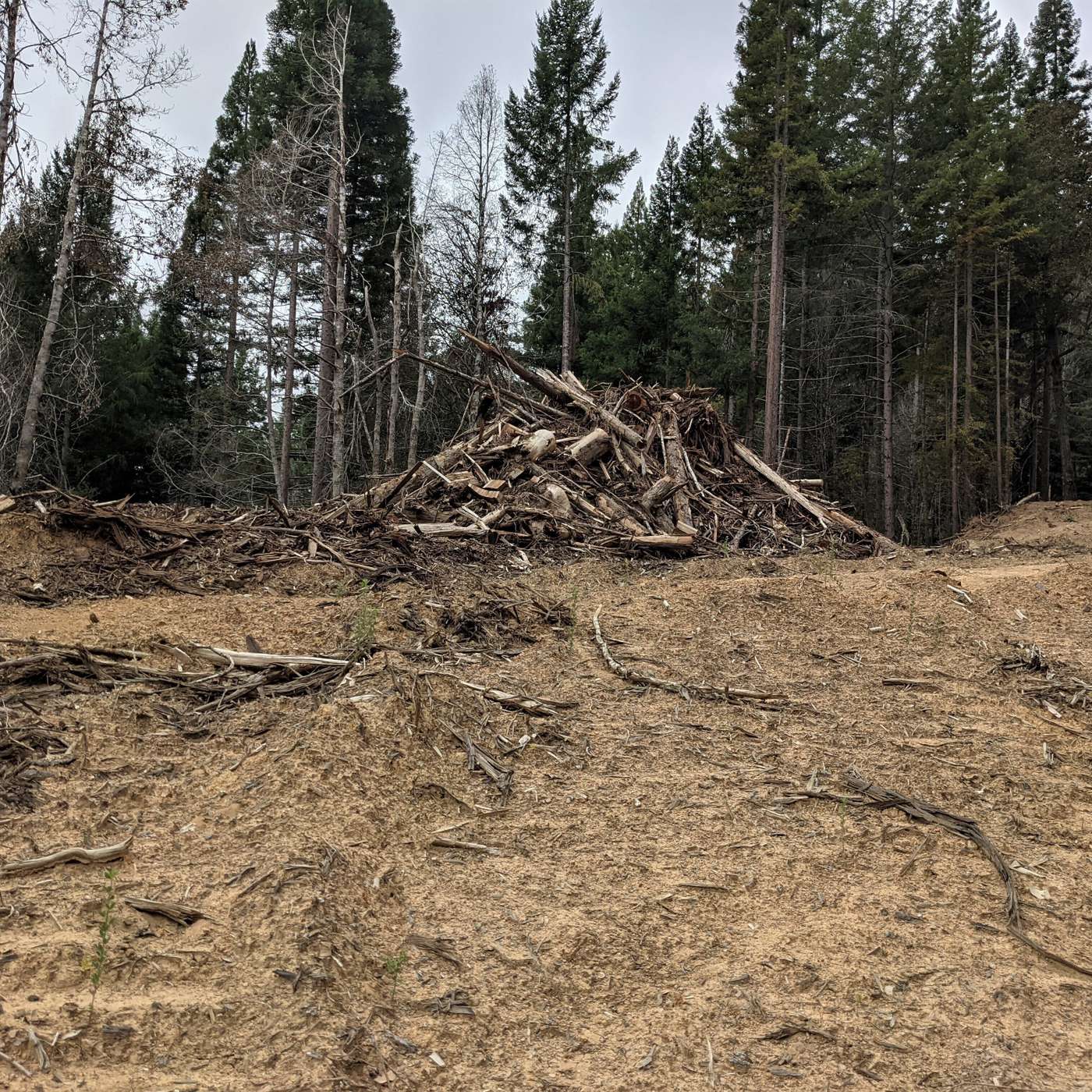
Ep 280Supervisors vote unanimously to request JDSF review
November 16, 2021 — The Board of Supervisors voted unanimously on Monday to pass a resolution asking for a scientific review of the management at Jackson Demonstration State Forest, with an eye toward meeting environmental goals laid out by the governor. County supervisors do not have jurisdiction in the forest, which is managed by Cal Fire under the authority of the state. A moratorium on all logging within JDSF, long a demand of activists, was not under consideration. Priscilla Hunter, former Chair of the Coyote Valley Band of Pomo Indians and current Tribal Historic Preservation Officer, opened public comment, with measured support. “This is a good first step,” she said; “however, there’s a lot of concerns that we have regarding fire, water, and one of our main issues is regarding the restoring of our sacred sites. And if they keep continuing to cut those trees down by those sites, they are continuing to destroy our cultural sites. We can’t even get in there to be able to go up and pray there and see where our ancestors held their ceremonies. It’s very, very hurting.” Fifteen-year-old Sara Rose, a member of the Coalition to Save JDSF, spoke about the future, saying, “The climate crisis has been a huge part of my childhood. I knew from a very young age that it would be the biggest threat to my future...if we do nothing, the climate crisis will be the end of humanity...JDSF is home to thousands of acres of second-growth coast redwoods. These trees sequester more carbon than any other trees on earth. Cutting them down would release hundreds of thousands of pounds of carbon dioxide into our atmosphere, exacerbating the effects of climate change unbelievably. If cut down, they will not regrow in my lifetime.” Marie Jones, the chair of the Mendocino County Climate Action Committee, told the Board that a wide coalition of environmental organizations supports the resolution, and added a few requests about the science. “That research should be peer-reviewed, transparent, and credibly managed by an independent third party,” she declared. Michael Jones, the UC cooperative extension forestry advisor for Mendocino County, called in from where he was conducting research in JDSF on prescribed burns, to say the current management plan is already being used to inform the state’s decisions on climate change. He said JDSF, and Parlin Fork in particular, is the only place where prescribed burns are taking place on a landscape level in the redwood forest. “For example, I have research ongoing here,” he said. “It’s on climate change, it’s on forest management, it’s on wildfire risk, it’s on prescribed fire, all these really high-priority topics. The narrative, and the way this resolution is framed, and the conversation we’re having, is completely ignoring the fact that, as I’ve stated now, the forest is already moving into the research that is informing the statewide policy directives.” When Supervisor Ted Williams asked Dr. Jones if there were any findings in the resolution that he found inaccurate, he said, “I actually do. I disagree with some of the language used. I think that the reductionist argument that the forest is managed primarily for commercial applications is a hundred percent incorrect. I don’t think there has been a THP (timber harvest plan) or a management plan that I have reviewed or been involved in that does not have an aspect of forest restoration, forest management, or research built into it.” But the majority of public comment was supportive of the resolution. William Lemos, co-chair of the Mendocino Trail Stewards, described some of what he’s seen in JDSF, recalling that, “In 2018, just across Road 409 from us, a number of clear cuts took place all the way up to Observatory Hill, and if you want to take a walk and look at those clear cuts, you’ll see slash piles remaining from that 2018 cut. And if you’ve looked at some of the research done by climatologist J.P O’Brien, he sent Google Earth pictures of what’s going on in Parlin Fork, and on that tributary, it looks like dozens of clear cuts are either in the process of happening or have already happened.” Kevin Conway, the JDSF forest manager for CalFire, assured the Board that the forest is in much better shape than it was when his agency took it over, in the 1940s. “So we’re concerned that adopting this resolution as written today will provide legitimacy to this false narrative,” he cautioned the Supervisors. And JDSF is the site of significant economic activity for some people. Bruce Burton, one of the co-founders of the Willits Redwood Company, told the Board that without logging in the Caspar 500 timber harvest plan, he’s had to bring in logs from Santa Cruz and Humboldt Counties. “That represented close to 50% of our consumption for the year,” he said, adding that locally-owned Anderson Logging, which his company had contracted to perform the work, “immediately had to find other work for 40 employees they had assigned to that task....
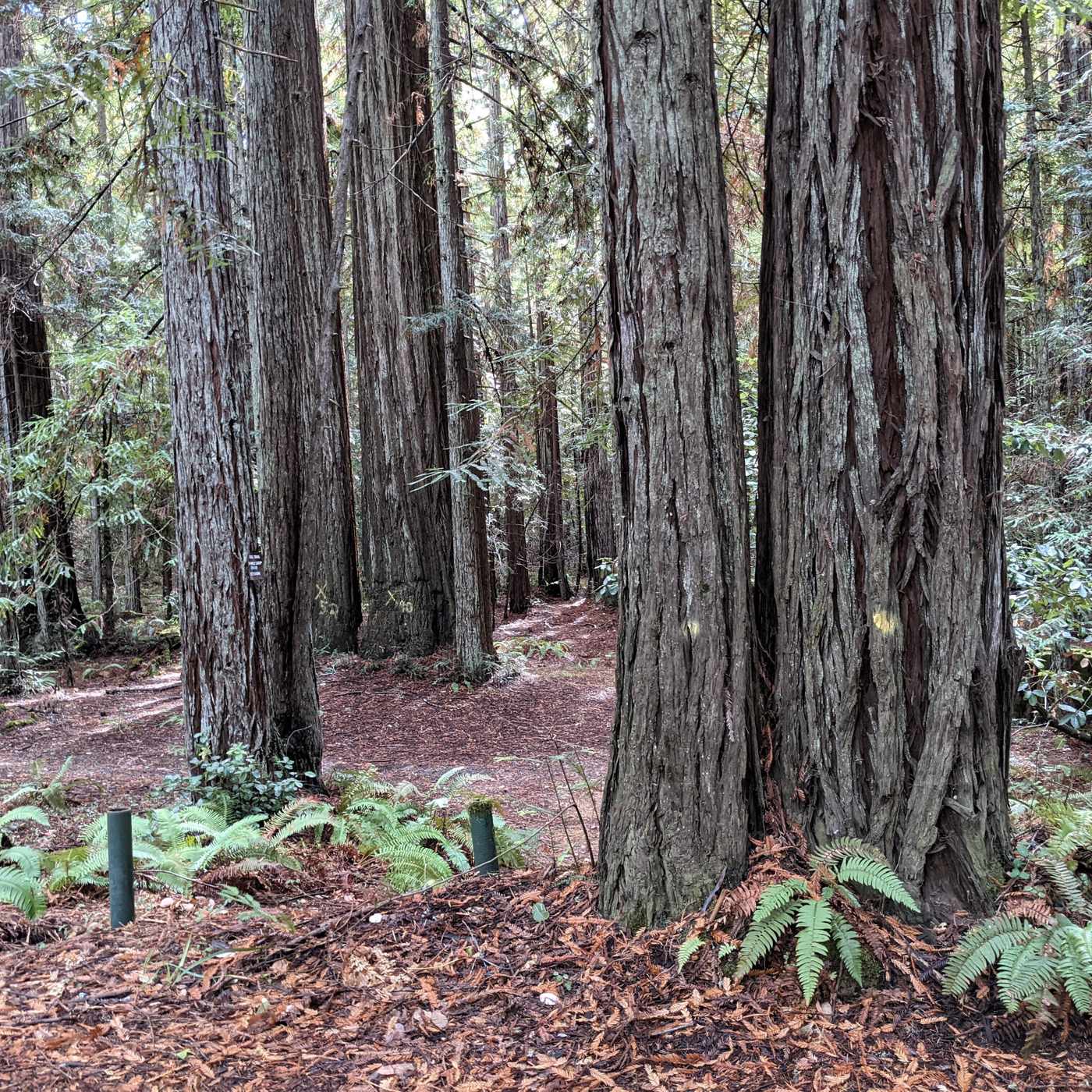
Ep 279"Cautiously optimistic" in Faulkner Park
November 15, 2021 — Community members working to save redwood trees in Faulkner Park met with PG&E representatives and Supervisor Ted Williams on Friday afternoon. Faulkner park is a small county-owned property on Mountain View Road, just a few miles outside Boonville. PG&E contractors have marked dozens of massive trees for removal, citing concerns that the trees will fall on the power lines and cause a fire. But a group of neighbors called the Friends of Faulkner Park has been vocal in its opposition, calling on the company to bury the lines underground, like the fiber optic cable that runs beneath the stretch of road alongside the park. Some have expressed support for direct action. There is no written assurance from PG&E that they will not cut the trees without approval from the Board of Supervisors. County staff attempted to garner a written confirmation of reports that verbal assurances had been made as early as last Tuesday, but were unsuccessful. However, on Friday, Alison Talbott, PG&E’s government liaison for Mendocino and Humboldt counties, told a group of about fifteen people, including Williams, that none of the contested trees would be cut this calendar year. The PG&E representatives were not allowed to take questions from the media, so this reporter was not able to make follow-up queries at the community meeting. Talbott said there will be routine maintenance, like the removal of a large dead madrone right next to the road. Eric Haggerty, the supervisor of the local vegetation management program, said that efforts are underway to look into the possibility of burying the power lines, though some community members were skeptical about the feasibility of installing the infrastructure it would take to service such a system. Williams said afterwards that he was satisfied with the company’s commitment not to cut the trees until the end of the year or, after that, following some collaboration. “Up to this point, I’ve been concerned that trees could be cut as a surprise and we would hear about it until after the fact,” he said. But representatives made no assurances that any work was contingent on the consent of the community or its elected representatives. “I think they gave us as much as they’re authorized to do under their corporate policy,” Williams conceded, expressing his confidence that the workers, some of whom live in the community, “have heard enough community input and have been able to relay it to the point that their bosses realize we have a problem. I think that may escalate it adequate to ensure undergrounding.” Williams was also told he will receive regular reports about routine work being done in the park. So if we hear chainsaws we’ve gotten assurance that they are just taking down the trees that look scary? “I hope so,” Williams said, inviting anyone who hears otherwise to call his cell phone at 937- 3500. He does not know, and representatives did not provide absolute clarity, on the status of any permits for work being done in the park. Clearing trees around power lines is legal under the Forest Practice Rules and several sections of the Public Resource Code. The PRC also requires CalFire permits or exemption notices for timber operations, and lays out certain stipulations about the treatment of slash, winter operation plans, and how to conduct a timber operation around a waterway. PG&E has received notices of violation from CalFire inspectors in multiple counties, including eight such documents from the Santa Cruz/San Mateo unit. According to one notice filed in October of last year in Santa Cruz county, the company had previously prepared utility right of way conversion exemption permits for this type of work prior to June of 2020, but not for more recent work meeting the same definition of timber operations. KZYX has not yet been able to independently verify the permit status of the proposed work in Faulkner Park with CalFire. Though uncertainties remain, some community members, like Steve Wood, who was in the park with his puppy, are cautiously optimistic. “It feels better to me than it did a month ago,” he said. “I have a deep skepticism about PG&E’s veracity when it comes to things like this, so I think I’m encouraged about things a little bit...and I hope the promise of regular reports makes it possible to keep track of where they are with this. But I’m not going to go home and say, okay, it’s all taken care of. That’s for sure. We’re a long ways from that.”
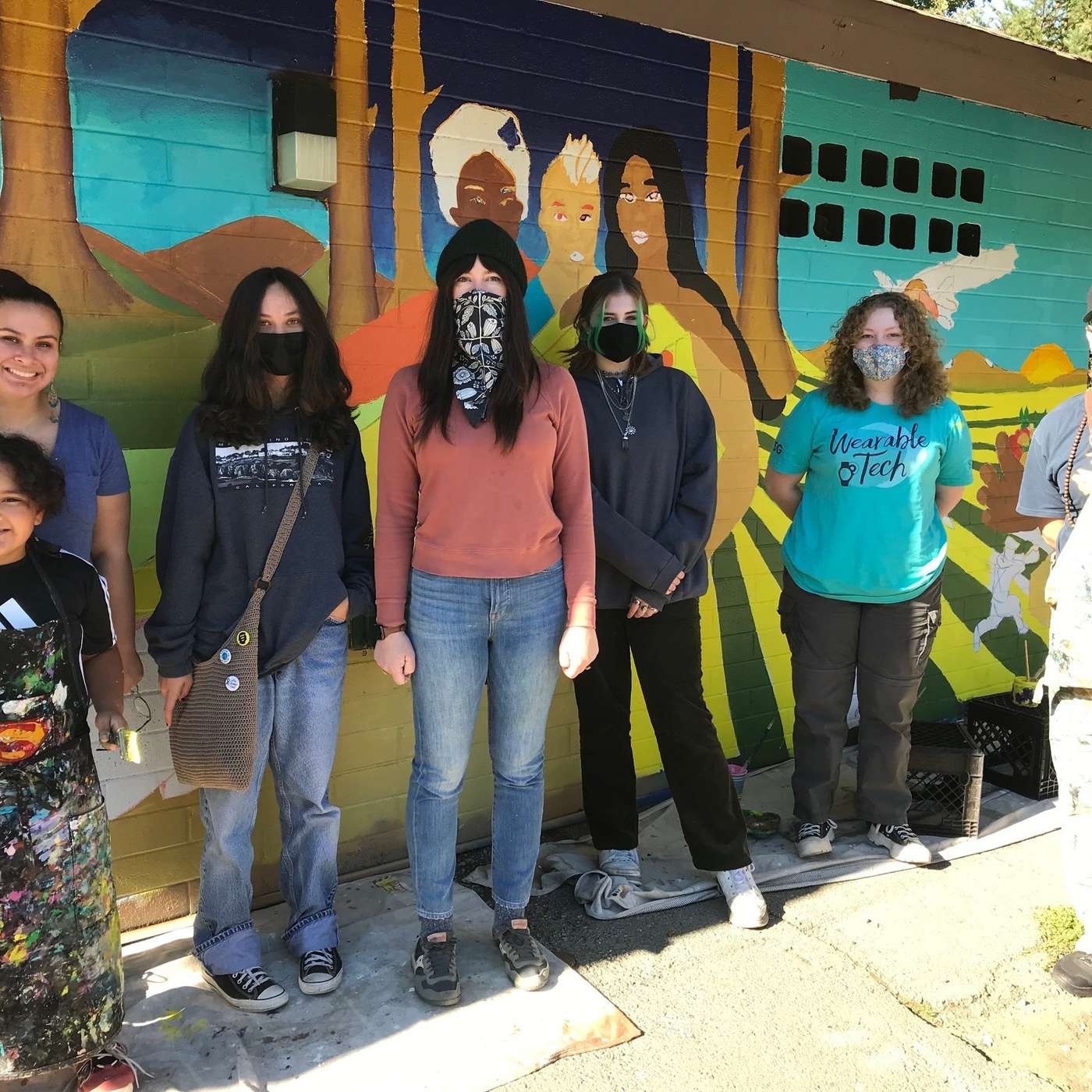
Ep 278New Mural at Todd Grove Park: "No Human Being is Illegal on Stolen Land"
November 11, 2021--By Stacey Sheldon November 11, 2021--The Ukiah Valley Youth Leadership Coalition, a teen program of the Arbor Center at Redwood Community Services, recently unveiled their latest public arts project: a new mural at Todd Grove Park. Thanks to grant money from Drug Free Communities and All Children Thrive, local teens of Ukiah Valley, with the help of lead artist Josua Rojas designed and painted a large scale mural on the exterior walls of the park’s restroom, turning the once unsightly spot into a vibrant work of art. According to Kate Feigin, Program Director of the Youth Coalition, the teens’ vision for creating the mural was, "No human being is illegal on stolen land.” Sofia Knight, a prominent member of the Youth Leadership Coalition, elaborated on the process of fine tuning the mural’s message, noting that the teens initially explored the theme of immigration, which resulted in the realization that no one could be considered “illegal” anywhere, especially on stolen land. Another active member of the group, Anastaysia Ray, said that, unless an individual is Native, "all of us are immigrants and we should not shame others about their right to live peacefully." The colorful mural consists of three sections united by a background landscape. In the center of the mural are three larger than life figures representing Indigenous and immigrant ancestors. Spilling out of the Indigenous Ancestor’s heart center are blood red hearts that morph into protestors dedicated to the seemingly endless fight for justice and equality. To the left of the looming ancestors is a panel representing the struggle of social justice advocates and environmental activists. To the right of the ancestors is a panel honoring the resilience of Indigenous people and immigrant laborers. A Pomo dancer in traditional dress stands in the foreground of the right panel. This dancer is the favorite image of the youngest muralist on the project, six year old Amias Barajas. Bay area lead artist and mentor Josue Rojas has dedicated his life to creating community art throughout the world. Rojas recognizes the power public art can have on viewers when it is designed to engage the community in conversations intended to help them think and evolve into more compassionate human beings. Rojas is impressed with the message of this mural, and by the teen’s passion and conviction. The mural project has not only fired up Rojas, members of the Youth Coalition are also proud of their bold, artistic statement. The Youth Leadership Coalition meets at the Arbor in the Redwood Community Service Center on State Street in Ukiah. New members are welcome.
Ep 275More prescribed fire may be on its way to Mendocino National Forest
For Mendocino County Public Broadcasting, this is the KZYX News for Friday, Nov. 12. I’m Sonia Waraich.Catastrophic wildfires are growing in size every year, threatening lives, communities and entire ecosystems. Historically, the U.S. Forest Service’s approach to managing fires was to suppress them at all costs. Now, the agency is recognizing that intentionally setting low-intensity fires in the forest can help control the way fires burn there in the future by leaving less flammable material on the ground.A few weeks ago, the Forest Service reached an important step in being able to conduct prescribed fires more frequently in Mendocino National Forest. The agency released an environmental assessment for its prescribed fire and fuels management strategy in the forest. It’s been working on the assessment since 2019.The assessment states that the agency can’t control the weather or the way Mendocino National Forest is laid out, but it can control one of the three variables related to wildland fires: the amount of flammable material, or fuels, in the forest.It’s a sunny weekend in October and the U.S. Forest Service is leading a trip through the Mendocino National Forest. They’re taking a group of us through the burn scar of the August Complex fires that happened last year.We get a panoramic view of the forest as we head uphill. Most of it is burnt, but there’s one noticeable patch of green that pops out in the otherwise charred landscape. Amy Galetka is a fuels specialist and she explains how that area is green because of an escaped prescribed fire, known as the Baseball Fire, that burned there a few months before the August Complex. “The only other very small patch of green I found was from a prescribed fire we did in 2019.”Galetka says more prescribed fire projects like that can ensure the forest stays healthy even if an unplanned fire passes through the area. But it’s going to take some time to get to the point where the agency can rely on prescribed fires exclusively. That’s because the forest was historically managed for timber production and, as a result, the way it’s structured doesn’t make much sense from a fire and fuels perspective.“It was originally, I don’t know it was from the 60s or 70s, it’s fairly old, but it was set up as a timber project, so the units, as far as a pure fire and fuels standpoint, made absolutely no sense. They’re small, they’re not continuous. And pretty much none of them survived the fire well.”“The hope going forward is to make the units that we bake make more sense together from a fire and fuels perspective, not necessarily just taking into account timber and then trying to make them more continuous.”The environmental assessment for the prescribed fire and fuels management strategy in Mendocino National Forest is going to allow the Forest Service to do landscape-wide fire management instead of focusing on individual, smaller projects that don’t really end up influencing fire behavior much.But you can’t start conducting those prescribed fires right away. The forest has become overgrown as a result of past management practices. Galetka says thinning needs to be done in those areas first. “Prescribed fire, you have to have very set conditions. If it’s too thick, it’s going to burn too hot or too cold. So it’s really hard to control the fire if the fuels are too thick to begin with. It’s hard enough when the fuels are ideal to get the fire effects that you want and maintain control versus having fuels that are too thick and it just makes it that much harder. You need to have that many more staff to maintain things with prescribed fire. I mean, eventually, once you’ve had a few entries, you’ve done thinning, you’ve had one underburn go through, after that, yeah it gets easier and easier. You can start maintaining everything just with prescribed fire, and it’s not everywhere. Not everywhere needs to have some sort of mechanical intervention first, but most places will.”Ann Carlson is the forest supervisor at Mendocino and she explains why it’s important to burn the slash that results from that thinning in burn piles.“When we’ve gone back and done the visiting of where we’ve done treatment, if we’re only part way through the plan, like we thinned the trees and we have piles underneath, a lot of times you’ll see piles. But we didn’t burn the piles. Then when the wildfire came through, it actually ended up killing the trees. Even though they were nicely spaced, we had these loads of fuels that burned under a wildfire situation versus our controlled pile burning, which then, like you say, we get the right conditions and it doesn’t get too hot.”“You rearranged the fuels, but did not reduce the fuel loading.”“Yeah exactly.”A draft of the environmental assessment is currently available for review until Nov. 22. You can visit KZYX’s Report For America partner The Mendocino Voice at mendovoice.com if you’d like to find out more about the Forest Service’s prescribed fire and fuels strategy
Ep 276Supervisors to take up resolution on management of JDSF
November 12, 2021 — A resolution about the Jackson Demonstration State Forest will be on the agenda for a special Board of Supervisors meeting this Monday. Supervisors Ted Williams and Chair Dan Gjerde are sponsoring a resolution to ask the Governor to evaluate the environmental benefits, including wildfire resilience, of the current management practices in JDSF. The resolution also asks the Governor to align those goals with the state’s climate change commitments and to publish its findings in a report. The item will probably be taken up just a little after 9am. People who would like to comment can send an email to [email protected] or sign up for a telecomment by filling out this form.
Ep 277COVID surge anticipated; Supervisors form PG&E ad hoc
November 10, 2021 — Public meetings will remain remote, in light of increasing covid numbers. Public Health Officer Dr. Andy Coren told the board of supervisors yesterday he fears the rising tally could herald a new surge. And Supervisors agreed to convene an ad hoc committee consisting of Supervisors Ted Williams and Glenn McGourty to look into PG&E’s enhanced vegetation management program.
Ep 274Groundwater survey could lead to new water storage approach
November 9, 2021 — This Thursday, residents around the Ukiah groundwater basin may see a helicopter flying low, hauling a large hoop. It’s part of a state-sponsored program designed to map the geological features of groundwater basins. Katherine Dlubac is an engineering geologist and the project manager for the Department of Water Resources’ stateside Aerial Electromagnetic (AEM) surveys. She laid out some of the ways that information from the surveys can be used, with the larger goal of implementing SGMA, the Sustainable Groundwater Management Act of 2014, which requires local jurisdictions to come up with plans to manage the resource. “It tells us about the aquifer structures,” she said; “where we have thick layers in the subsurface of sands and gravels that allow for water to flow, but also for water to be stored. It also tells us where we have layers of clays and silts, so fine grained materials that inhibit water movement. And so while the AEM data still needs to be combined with other types of data...what it can do is it can provide you a better picture of what’s happening in the aquifer...so that you can make those management decisions of whether you want to try recharging water in the area from the surface, or if you want to try injecting water into the aquifer to store it there as another type of reservoir.” Supervisor Glenn McGourty is part of the local Groundwater Sustainability Agency tasked with gathering as much information as possible to craft the plan. The Ukiah groundwater basin relies mostly on the Russian River, but is also fed by about 160 smaller tributaries. “Any data we get is going to be useful,” he said; “because you can’t usually see groundwater. You have to have some way of measuring it. Often it’s delineated by wells, so you don’t know for sure what you’re looking at. And there are a couple of mysteries, because we don’t really have uniform geology here in the valley. So the two mysteries are, where is the groundwater? And the second mystery is, how does it get recharged? The surface groundwater interface, as we call it, is the thing that’s really hard to understand.” Dlubac says the electromagnetic technology has been around since the middle of the last century, but it was used mostly in mining applications. After Prop 68, a Parks, Environment, and Water Bond passed in 2018, the Division of Water Resources carried out a pilot program in central and Southern California counties to gather data for their groundwater management plans. The survey taking place now will measure basins across the state for the next two years, taking what Dlubac calls “a snapshot” of their geological features. After the two-year survey of “coarse grid data,” she hopes to go back for a finer picture. “When we go in and start collecting fine grids of data, we can start to get more high resolution information about some of the space in between the coarse grid where we didn’t collect information,” she reported. “And that can support defining recharge areas, better understanding where we have clays in the subsurface, where we have subsidence, and other areas that can support the implementation of SGMA.” McGourty is interested in experiments that are currently underway in the Central Valley, on how to store water in the ground, rather than in surface reservoirs. Knowing what kinds of sediments are where could further that approach locally. “The idea would be to divert the river during really high flows and to inundate some parts of the basin where there’s fairly permeable alluvium, gravel, principally,” he explained, adding that the City of Ukiah already uses recycled wastewater to recharge the aquifer. “One of the things we’re not really sure about,” he reflected, adding to the mysteries still to be solved; “is what are the parameters of the river underflow and things like that. So any information about where water is coming from is of interest to us.” Dlubac expects the information from the survey to be available to local groundwater management agencies in about eight months.
Ep 273Portal closes, confusion remains
November 8, 2021 — The online cannabis re-application portal closed late Tuesday night, amid confusion about the final requirements and the fate of incomplete applications. At this point, it’s not clear if those who re-submitted their applications online will be denied a permit if they are missing any documents. Michael Katz, the Executive Director of the Mendocino Cannabis Alliance, sent KZYX an email that an applicant received from the cannabis program in late October, saying that “ALL submissions will be reviewed! We will not be denying applications because we’ve had to ask for additional information that was not clarified ahead of time.” But on the day the applications were due, Katz flagged a line in a reminder email from the program with the opposite message, saying, “Once the portal closes no further materials can be submitted. Please be sure to check your submission materials prior to pressing submit as incomplete applications will be denied.” Katz said that among his members: “the average story is one of confusion, not feeling supported, and being forced to jump through new and poorly defined hoops.” Sarah Hake has heard a similar sentiment among her client base. Hake is the COO of Countervail Inc., which specializes in bookkeeping, tax preparation and legal compliance for people in the cannabis business. She said she was working on 40-50 portal applications for her clients right up to the deadline. She reported that the changing requirements were detailed and often came at the worst possible time, in the middle of harvest during a year when cannabis prices have plummeted. “What you’re telling us is if somebody is deemed incomplete, they’re going to be denied,” she said, outlining the situation. “And then you’re deeming them incomplete for things that they weren’t told were needed, or things that weren’t clearly communicated, or things like a bullfrog management plan, where there’s absolutely no documentation as to what that should include or what that should look like, so we’re all having to guess as to what that should be and then being told that’s not good enough.” Cultivators are required to pay a minimum tax every year, and Hake wondered if her clients would have to pay the tax, even if their applications are eventually denied. And she’s been told she might have to wait until after the first of the year to find out the status of some of those applications. “So now you’ve bumped these cultivators who may get denied through the end of the year into another year,” she said, envisioning the possibility. “Are you going to charge them the minimum tax for that? And they’re feeling taken advantage of in this way, that, oh, you’re just going to charge me the five thousand dollars, and then kick me out of the program. There’s a lot of frustration, and I think a lot of heartbreak and a lot of fear,” she concluded. Kristin Nevedal was promoted from cannabis program manager to cannabis program director on October 19th. CEO Carmel Angelo confirmed that Nevedal still reports directly to the Board of Supervisors. Katz wants more supervisorial involvement to resolve what he sees as a systemic lack of clarity throughout the cannabis program. “The board, minus Supervisor Haschak, has continually chosen not to pursue a committee of any sort to address the myriad issues that are facing the program,” he complained. “When the program manager was promoted to program director, there was no job description posted. The details of that job and what are specifically different about it from the program manager position, that was not provided. Given the confusion around every licensee’s status in the program at the moment, it would be our hope that the county would be willing to have these conversations openly and transparently.” But since the repeal of Chapter 22.18, the cannabis ordinance the board planned to replace 10a17, cannabis has not played its formerly prominent role on the Board of Supervisors agendas. There is a consent calendar item tomorrow about the submission of an application for an $18 million grant from the state Department of Cannabis Control. But most cannabis-related matters have been addressed during public comment, including reports from Nevedal, where supervisors can ask clarifying questions but cannot give direction because no formal discussion has been agendized. Supervisor John Haschak explained his understanding of Nevedal’s comments at the last meeting on October 26, the board’s intent, and how he’d like to resolve any confusion. “The intent of the board is really to get the people in and then process those,” he said. “And I thought that that’s what the cannabis program manager had said, was that they were going to process the ones that had been submitted, even though it’s not possible to deal with the thousands and thousands of documents at the time...So that’s what I hope happens. I think it’s the intent of the board to kind of separate those who aren’t serious about applying...
Ep 271Researchers test prototype with global potential in Jackson Demonstration State Forest
For Mendocino County Public Broadcasting, this is the KZYX News for Friday, Nov. 5. I’m Sonia Waraich.Climate change is intensifying and the window to make changes that can stop that intensification is closing. Many scientists and engineers around the world are racing to invent or improve technology that can mitigate the worst impacts of the climate crisis. One of those technologies is being tested out in our own backyard in Jackson Demonstration State Forest.A little gray fan is whirring on this contraption that looks kind of like an air duct standing at a 45 degree angle. It’s attached to a black barrel with a short, black plastic tube. Behind it, there’s a huge pile of slash, or chopped down trees.“So this is where the residue comes down, and there’s this mechanical system here.”Kevin Kung is a researcher from MIT and one of the people who built this prototype. He’s explaining how the residue that goes into the machine basically gets roasted through a special chemical reaction. Residue is just another word for slash and agricultural waste like coconut shells and rice husks. “And as it goes up, we do inject air at certain places, it’s called oxygening torrefaction, that’s why you can sort of hear the whirring of the blowers, we’re trying to start those right now. Once it goes up, it gets collected in this chamber here, and that’s where the final product is.”The final product is a charcoal-based fertilizer called biochar. That’s not the only thing the prototype makes, but has been a focal point for Kung and another researcher named Vidyut Mohan. The two of them started a company called Takachar to make“Small-scale, low-cost portable systems that can latch onto the back of tractors and pickup trucks that could be deployed to rural, hard-to-access regions.”This prototype offers big hopes for reducing the risk of catastrophic wildfires locally and air pollution globally. It takes things that loggers and farmers would otherwise burn, like slash and agricultural waste, and turns it into things they can sell like biochar.“Biochar is simply charcoal that has been made intentionally for the purposes of adding to soil.”Dr. Caroline Masiello is an expert on biochar from Rice University in Texas. She says people have been putting charcoal in their soil for thousands of years..“When I moved to Houston, I went to the local nursery and I noticed they had big bags of charcoal out and I asked the guy, ‘Hey, so why are you selling charcoal?’ and he said, ‘Oh, you put it in the bad gumbo soil here and things grow better.’”The charcoal-based soil amendments have different properties depending on the type of residue that’s being used to make it.“Biochar made from forestry, from wood products, is going to be extremely low in nitrogen and phosphorus. So you’re not adding a nutrient to the system, but it does add reactive surfaces to the system and those reactive surfaces do a good job of holding onto nutrients.”Biochar also reduces carbon dioxide emissions by taking residue that would have rapidly decomposed and turning it into a substance that decomposes more slowly. “If the lumber industry has sawdust waste, that’s a great source for biochar because that material would decompose to CO2 very rapidly otherwise and if you convert it to charcoal then it’s not going to decompose to CO2.”However, Masiello cautions you have to make sure the trees being used to make biochar weren’t already serving an important role in the forest for it to make sense as a climate strategy.“You wouldn’t cut down an intact forest to make biochar.”Back in Jackson State, Kung explains how most residues in the forest and on farms are often very loose, wet and bulky. That makes them difficult to transport and leads to farmers and loggers doing things that aren’t exactly climate friendly to get rid of them.“So if you are on a farm, often what you have to do is burn down residues in the open air and if it’s in a forested area, the buildup of that residue can exacerbate wildfires. So in both cases it’s not only a waste but also a lot of pollution that could be caused because of the burning and so forth.”The Takachar prototype being tested in Jackson State is supposed to incentivize putting a stop to that polluting behavior. And it isn’t just for use in forests. The technology has already been successfully used in a pilot program with 5,000 farmers in Kenya. Now, the company has a couple of pilots running in Indian rice paddies alongside the one in Mendocino. Kung says the objective is to learn more about adapting what they’ve developed in the lab to real-world settings.“Thinking about, well if people are using this kind of Bobcat, how does it load stuff? And if people are chipping things, then how could we potentially just take the output of that directly into our reactor. So we have to design in a way that’s appropriate for these other machine forms that are working onsite.” Researchers are expecting to demonstrate the prototype for interested community membe
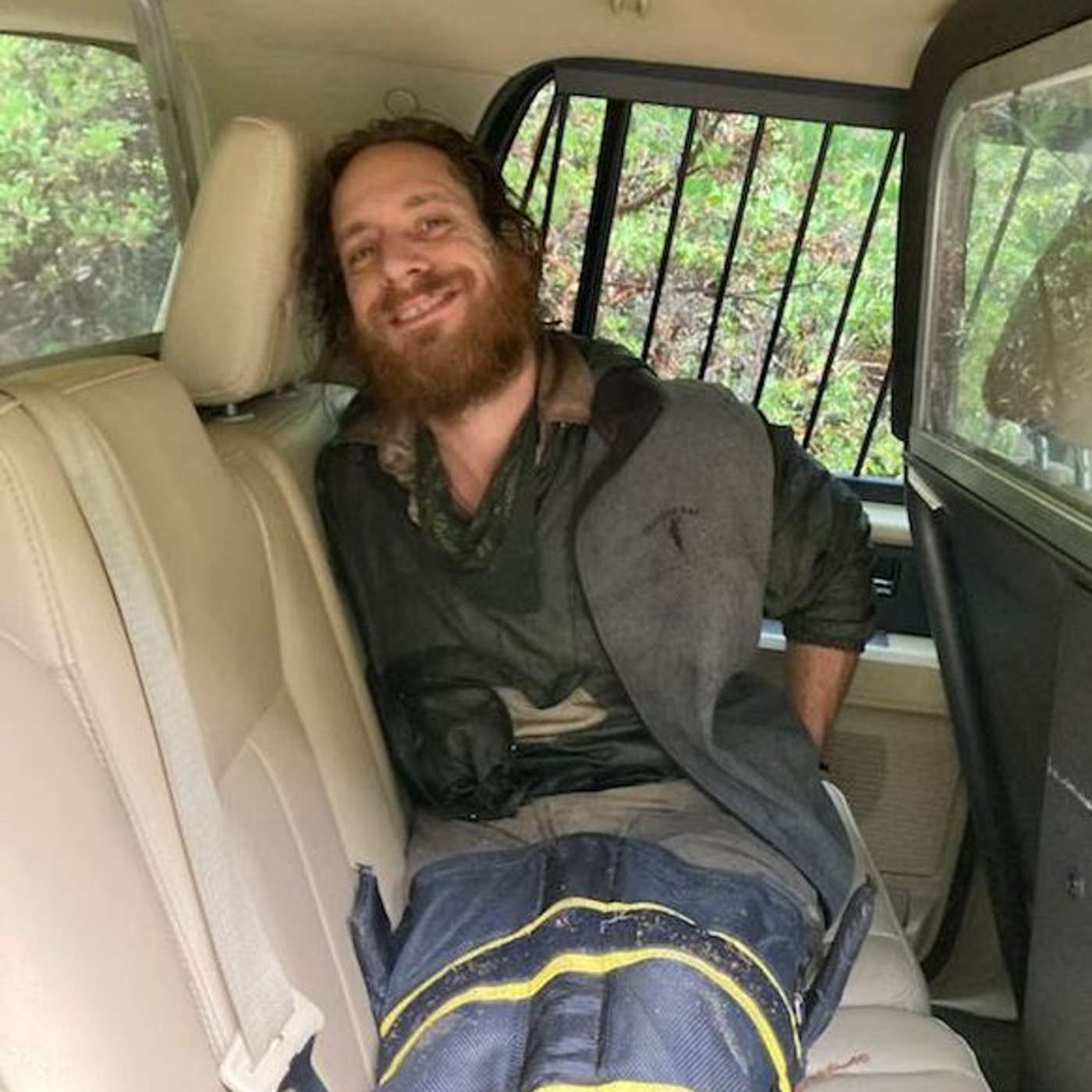
Ep 272William Evers "The Red-Bearded Burglar" Arrested Unarmed in Albion
November 4, 2021--Sheriff Matt Kendall describes the arrest today of William Evers, who has eluded local law enforcement for many months. Evers was apprehended today in Albion with no injuries to himself or Sheriffs' Deputies.
Ep 270Unclear surrender process likely for Potter Valley Project
November 4, 2021 — Time is running out for a regional entity to take over the license for the Potter Valley Project. The Two-Basin Partnership, a coalition of local government and conservation groups seeking to take over the license from PG&E, is unlikely to meet the deadline to submit its application. And funding sources for a costly study plan have not materialized. FERC (the Federal Energy Regulatory Commission) recently refused the Partnership’s request for a little more time. On top of all that, a five or ten million dollar transformer at the powerhouse in Potter Valley is now defunct, causing further uncertainty. The inoperable transformer means that the powerhouse can no longer produce electricity, though a diversion of about 135 cubic feet per second is still possible, using a bypass structure. In a recent letter to the Farm Bureau, Congressman Jared Huffman wrote that “With FERC denying the extension and with no near-term prospects for funding the $18 million study plan, the prospects for securing a FERC license are not good.” Huffman wrote that without money for the studies, “FERC would terminate the license application process and the Potter Valley Project will default to surrender and decommissioning.” He added that in that scenario, “PG&E, rather than the Partnership, would have to pay for the necessary studies and infrastructure changes, including removing Scott Dam.” But Janet Pauli, the chair of the Inland Water and Power Commission and a director on the board of the Potter Valley Irrigation District, says the surrender process is a black box. The IWPC is itself a coalition that is part of the Two-Basin Partnership. “The licensing process is pretty cut and dried,” she said. “But with surrender, you assume that the power production part of the project would no longer exist. But as far as what remains of that existing infrastructure, at this point in time, we really don’t know.” Redgie Collins is the legal and policy director for California Trout, a conservation group which is also a member of the Partnership. CalTrout has advocated for the removal of Scott Dam for years. Collins suspects that PG&E will choose not to repair the transformer. Opinions differ on whether the project would continue to come under the purview of FERC if it can’t generate electricity. But Collins thinks the water diversion from the Eel to the Russian River could continue without the power.``The reality is that in all likelihood we’re moving to a surrender proceeding, which means that the powerhouse is coming out anyway,” he said. “We think that the water rights that PG&E holds right now are sufficient to continue the diversion regardless of power production...and those water rights, we think, will be adequate to move that water over without power generation.” Pauli emphasized that there are still a lot of unknowns. “We don’t understand how any of the diversion structures that exist or are potentially going to be changed would function if Scott Dam is removed, and then the sediments behind Scott Dam would be released into the Eel River. It’s a tremendous amount of sediment that would have to make its way down the Eel River over time and certainly would impact our ability to divert water from the Eel into the Russian. And we have to look at which option is the best for fish passage, too. And I don’t think that that is clear yet. But the issue of diverting water through the project is not just the amount of water. Partly it’s when the water is diverted and when it’s available and how much we would be allowed to divert under certain hydrologic conditions and also with regards to the life cycles of migrating fish.” Collins says that CalTrout has worked with the California Department of Fish and Wildlife to engineer three possibilities for a diversion without the powerhouse, which he expects will be publicly available next month. Any plan will take successful negotiations at multiple levels. Rough estimates for the costs of the potential diversion structure range from $35-66 million, he said, depending at least in part on the outcome of settlement negotiations he hopes will take place between the Partnership and PG&E. Collins is optimistic that federal funding from federal infrastructure negotiations will be available to help ensure the Partnership’s two goals of water supply for the Russian River end of the diversion, and fish passage and habitat restoration for the Eel. “We’re hoping to tap into that growing zeitgeist, and actually fund this project through that work,” he said. But using public money does not quite fulfill Huffman’s assurance that PG&E would pay for infrastructure changes. And there’s no guarantee that the company wouldn’t pass the costs along to ratepayers. “PG&E deserves to pay for every cent of this solution,” Collins agreed.``They’ve been obstinate...so they’re going to have to pay for the $15-18 million that ratepayers could have avoided through an earlier payment to the P
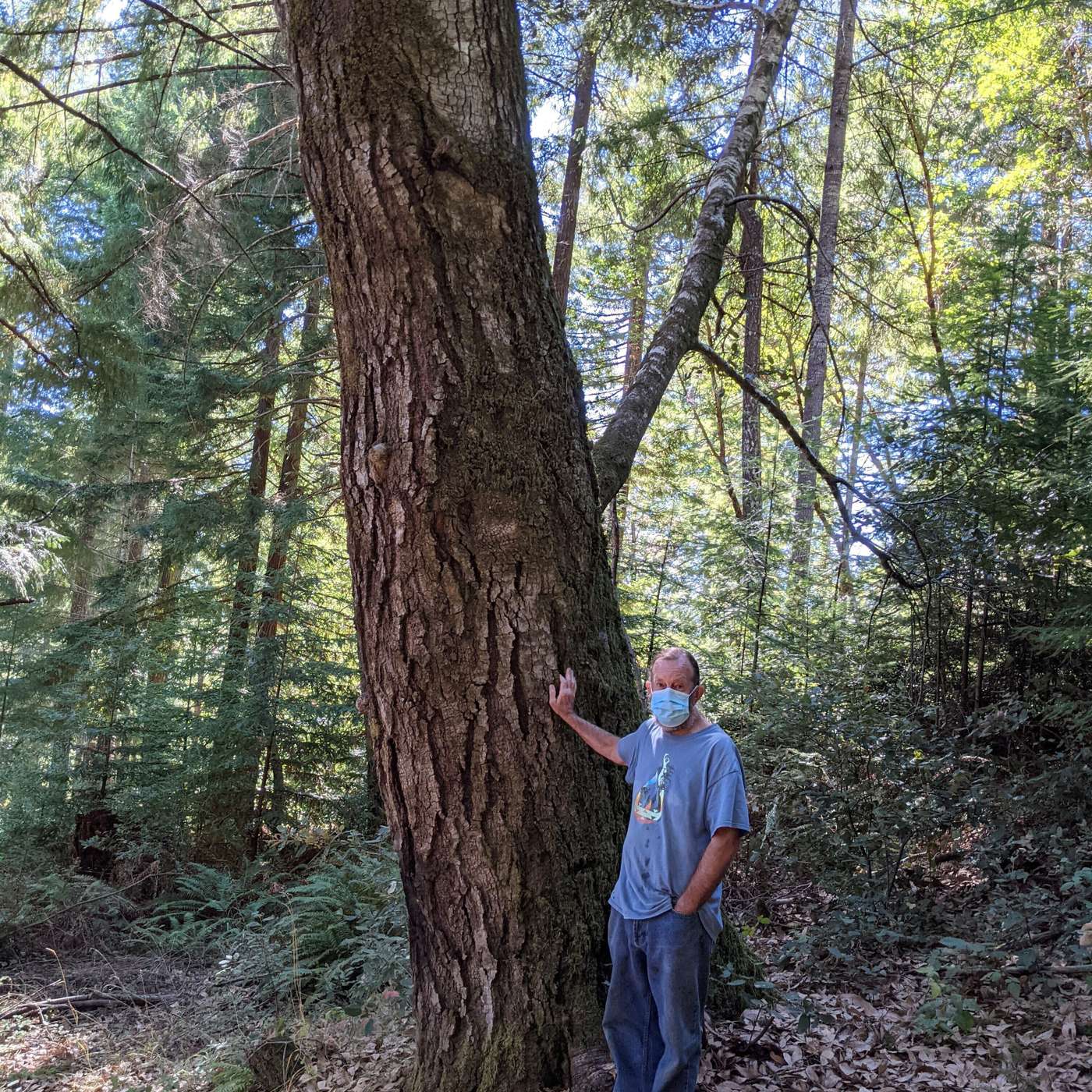
Ep 269Landowner insists on PG&E re-evaluation of marked trees
November 3, 2021 — PG&E crews have been moving through public and private forest lands throughout northern California, taking down thousands of healthy trees within hundreds of feet of its lines. Many landowners believe that if they refuse to allow this work to be done, they, not PG&E, will be liable if the utility’s infrastructure causes a fire that spreads in the surrounding vegetation. But Harry Vaughn, a landowner in southern Humboldt, may have found a way to save the marked trees on land that’s been in his family for generations — and make PG&E pay for it. “We had all these people walking around our property without identifying themselves, and at some point, you just get pissed off,” he said. “You find out what your options are, because the landowner does have options.” Vaughn said PG&E contractors had been on his property almost every day for more than three months, often at odd hours with little or no notice. Crews marked almost 700 trees, many of them high-value Douglas firs. He estimated that he would suffer losses up to $80,000 if the company removed all the trees they had marked along one of the power lines. When I visited at the end of September, he led me around his mushroom farm, his shaded fuel breaks, a salmon restoration project, and a grove of tanoaks that he’s dedicated to scientific studies of sudden oak death. We paused next to a Douglas fir with a big yellow X on its trunk. The tree stood just outside the dappled shade that’s essential to the well-being of the shiitake mushrooms he sells at the farmers market in Miranda. Vaughn also has a non-industrial timber management plan on his 260 acres of mixed canopy. His situation may have taken a turn, with the help of the registered professional forester he hires to writes those plans. The forester also does contract work for PG&E, and has access to the company’s database of marked trees. He and his subcontractors are being paid by PG&E, so at this time, Vaughn is not picking up the tab for any of the work. Meanwhile, the foresters are now engaged in the lengthy process of reviewing the marks that PG&E crews have made. “They’re un-marking a lot of trees, because we’ve had all these arborists that have no training whatsoever in tree species, and they don’t understand forestry in California, and they don’t understand tree species,” Vaughn said. “I’ve had fir trees marked in the database as tanoaks. And it’s really hard to get that mixed up, but the people PG&E have hired can’t even tell the difference between a tanoak and a fir.” Another benefit to having a registered professional forester on staff, says Vaughn, is that he knows how to file a no-work order. “We now have established a no-work policy until we re-evaluate the nearly 700 trees on our property, that no work will be done until we evaluate the mark...now they’ve got to pay foresters to re-mark and re-evaluate. Meanwhile, we’ve got time. These trees have been here for decades. They’ve got time. We’ve got time. I don’t know what PG&E’s rush is.” Vaughn says his foresters will also be on site to supervise the work of the tree crews, once the evaluation is complete. He also indicated that he will only allow a limited number of vehicles and people on wet roads. “We can’t just unleash a bunch of people on our property,” he said. “And we don’t want to damage our roads. They’re wet right now.” He is also demanding that crews disinfect their spikes before they climb trees, so they don’t bring diseases into the forest. Nesting birds are a concern, too. “We have warblers and orioles that nest in these trees,” he observed. “And we can’t be having bird nests cut down. So if it goes into the spring, then we’ll probably have to not allow cutting during spring, during nesting season, until it opens up in June or July.” Vaughn has some advice and encouragement for other landowners. “Go through the phonebook,” he suggested. “Find out who your foresters are in your area, and just start making calls and find out if there’s a forester who will come out and evaluate. You don’t have to let these PG&E contractors on your property without recourse or a second opinion. Or, as we say in science, peer review. My background is in science, and not political science, so I believe in the scientific method and peer review, and not just accepting being bullied and intimidated by PG&E and their crews.”
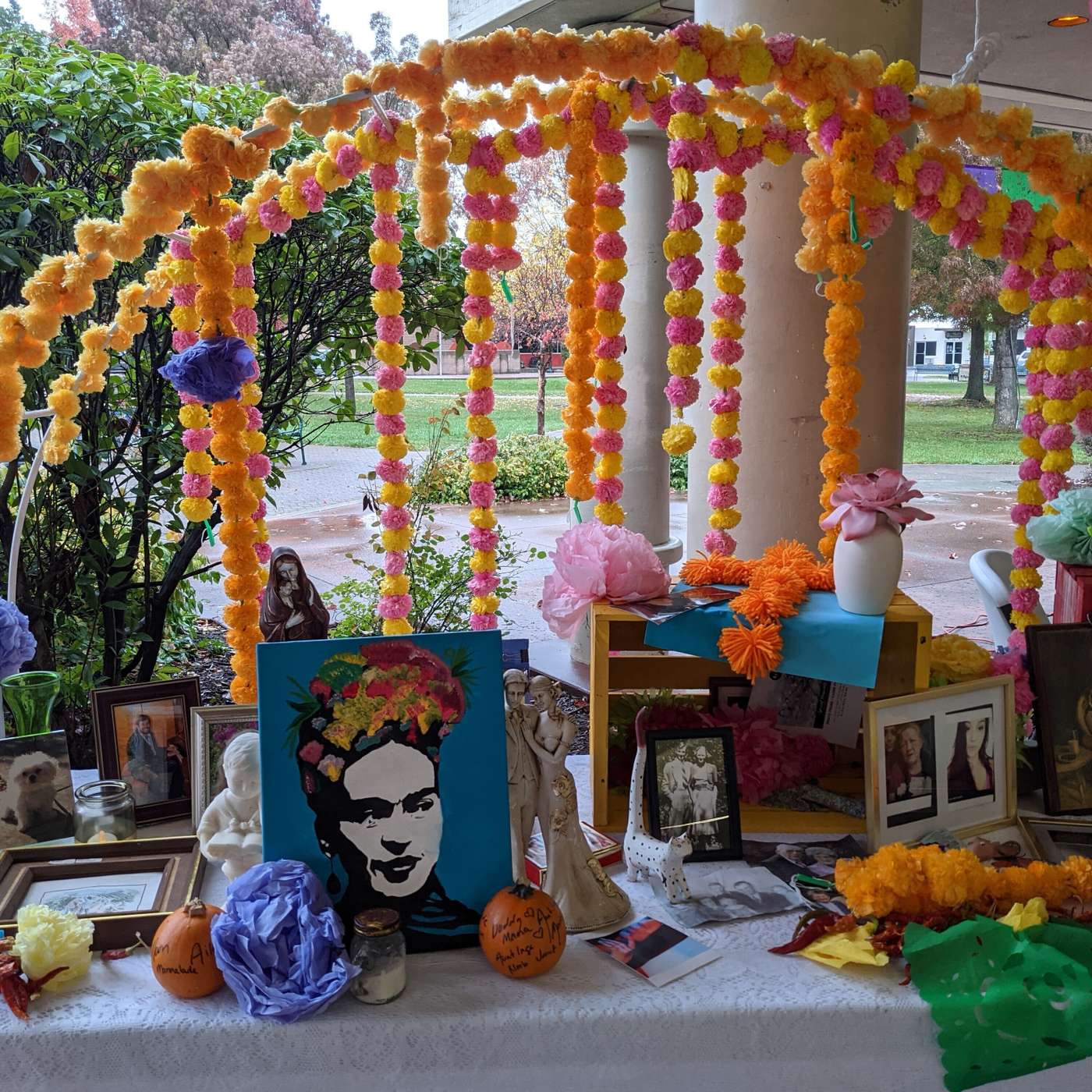
Ep 268Dia de los Muertos celebrates departed loved ones
November 2, 2010 — The city of Ukiah came alive for Dia de los Muertos, with live music, freshly-baked bread, and little girls in colorful skirts with skulls and flowers painted on their faces. Mayor Juan Orozco, who has a full time job as a math teacher, also took on the role of event planner in the lead-up to the celebration. I “We started the event last year, with just a little altar at the City Hall,” he recalled, ducking under an awning out of the rain as Mariachi Hernandez regaled the crowd with strings and horns. “And so we thought we would go all out this year. And every year I suspect will be better and better.” Linda Jacinto is an educator who promotes culture through the bilingual newspaper Dos Mundos. She took a few minutes as the event was getting underway to describe the scene. “You can definitely get a little bit of a feel of what it’s like for people when you’re in Mexico,” she noted. “You’ll see the flowers, so we have the marigolds up on the altars. You’ll see offerings on the tables as well, set up as an altar. You see people smiling, doing arts and crafts. We’re following all the safety protocols, we’re keeping our masks on, it’s an outdoor event. The music is starting to play, so it makes it more vivid, more alive, and that’s what Dia de los Muertos is all about. It’s just to have that hope, have that faith, that life continues, even though you don’t see a body. You don’t see someone here, but their essence is here, you’re connected, you’re part of the cosmos, you’re part of the universe, so you are definitely here forever. And that's the message of Dia de los Muertos: that you will forever live in someone's heart and someone’s memory and somenes’ being.” Ukiah City Councilwoman Josefina Duenas added that the worldwide pandemic has brought a shared grief to all of humanity. That makes it more important than ever to rejoice in the memories of the many people who have been lost in the last year and a half. “We were speaking about what has been happening since the beginning of the pandemic,” she reflected; “and I think that many of us have lost somebody. And we want to gather today as much as possible, thinking about our humanity, about our losses, but also just thinking about rejoicing ourselves, because somehow we are still here and the ones who have departed still have somebody who remembers them.” The two public altars were strung with flowers and mementos and photographs of departed loved ones, both human and animal. This year, images of young people were especially notable. “It’s incredibly sad,” said Supervisor Maureen Mulheren, who was a long-time Ukiah City Councilwoman herself. “Last year we also had a lot of people who passed from COVID, and that was the other important thing to remember, everybody who has lost their lives due to the pandemic. But we also have lost a lot of young people. And there are also some missing people.” She, too, thinks about the cultural importance of community grief and celebration. “I think for families that create an altar at home, it’s an incredibly personal and important way for them to celebrate their culture with their family. But when you have a community altar, you’re really bringing more awareness about the culture and the importance of events like Dia de los Muertos, days that remember everybody in the community.” The celebration was supposed to be outside Civic Center, but was relocated to the pavilion at Alex Thomas Plaza due to the rain. People trickled in slowly at first, but once the music started, every seat was full. Everyone was feasting on Pan de Muerto, little skull-shaped loaves of bread with crossed bones on top, and taking sips of warm ajonjoli, a sweet, thick drink with lots of cinnamon. Mariachi Hernandez, a family of professional musicians, drove in the rain from Philo. The lights from the altars sparkled off their instruments and the lines of silver studs sewn into their gleaming black suits. Orozco first spotted them at the county fair in Boonville. Their presence was a special gift. “Mariachis are very expensive, but what they said to me is that this is a community event and it’s for the people and it’s a good cause. It’s to honor our loved ones, and we’ll do it for free if we have to,” he reported, grateful for their community spirit. “But we are compensating them, at least for gas and food,” he added. It’s an important day for the community to party with their loved ones, the living as well as the dead. Duenas pointed out that happiness can be complicated. And it’s okay to be happy for those whose suffering is over. “We rejoice when somebody is born, but we should also be rejoicing when somebody is gone, because seeing that person sick and suffering, it’s not human,” she said. “I mean, we should be happy to let them go. And that’s what we try to celebrate today. Just to be happy.” Meanwhile, Orozco was pleased with the turnout: with the music, the custom-made Pan de Muerto, and the children performing tradi...
Ep 267Mendocino College Repertory Dance Company Presents "Open Air"
October 28, 2021--Mendocino College Repertory Dance Company will present its upcoming show, Open Air, November 5th, 6th and 7th at the Ukiah campus. Performance Director Eryn Shon-Brunner says the show's title is fitting, as all of the original pieces of this innovative dance performance will unfold outside in different locations on Mendocino College's Ukiah Campus. The outdoor, roving show allows both the audience and performers to enjoy dance and the beauty of Ukiah’s college campus while adhering to Covid-19 safety protocols. Four pieces, ranging in tone from serious to comical to ritualistic, will be danced in four different locations throughout the grounds. The first piece, called “Ragtime,” will take place in the heart of campus at the Pomo Plaza. College dance instructor and choreographer Kirsten Turner presents this 1960’s ragtime ballet as a nod to the famous 20th century choreographer George Balanchine, regarded as the foremost contemporary choreographer in the world of ballet. The next dance, created by students Ari Sunbeam and Jay Haralson, is called “Raising the Bar” and is set on the steps of the College Library, one of the campus’ most stunning architectural buildings. Sunbeam’s choreography is inspired by his observations of nature, in particular the mating rituals of birds and other animals. Following the silliness of “Raising the Bar” is a ritualistic dance choreographed by Pilates instructor Dena Watson Krast called “Cornucopia.” This piece is set under a beautiful grove of giant oaks adorned with colorfully dyed fabrics created by Mendocino College Costume designer Kathy Dingman-Katz, who oversees all the costume pieces in the show. The combination of natural beauty, costuming and dance make “Cornucopia” a feast for the eyes. The final piece of Open Air, choreographed by Schon-Brunner, is called “In the Round” and is danced in an open, grassy field in the middle of campus. Open Air begins each night at 5:00 pm, and tickets are free. The audience is asked to convene in front of the Mendocino’s large theater, called the Center for Visual and Performing Arts.
Ep 266Hopkins fire clean-up, redistricting, move ahead
November 1, 2021 — The cleanup from the Hopkins Fire has a clear path forward now. The State has issued a proclamation declaring the event an emergency, which means the county can probably be reimbursed 75% of what it spends on remediating the damage, including what it’s spent so far. And the Department of Toxic Substances Control is scheduled to begin cleaning up hazardous waste in the burn zone tomorrow. The Redistricting Advisory Commission presented the eighth and ninth drafts of its proposed map to the Board of Supervisors last week, explaining that number nine would adjust the boundaries so that Hopland, which is now in the fifth district, would join Potter Valley and Redwood Valley in the first district. None of the maps has been finalized yet. The deadline for cannabis cultivation applicants to submit documents to the online portal has been extended to 11:59 on Tuesday night, due to power outages during last week’s storm. That deadline means that applications submitted by Tuesday will be eligible for consideration, not just those that had been reviewed by that time. And the misinformation campaign regarding vaccination and masking is in full swing. Numerous members of the public called in to the Board of Supervisors last week to share falsehoods about natural immunity and claim, erroneously, that wearing masks causes health problems. Callers made analogies involving Satanic rituals and the Nuremberg Trials, and used creative terminology like ‘natural killer cells’ to support their arguments about the vaccines’ efficacy. Travis Killmore, field coordinator for the county’s Prevention, Recovery, Resiliency and Mitigation or PERRM team, reported that just a few days before the atmospheric river threatened to sluice debris from the Hopkins burn scar into the Russian River, several organizations including the California Conservation Corps stepped in to provide emergency assistance….
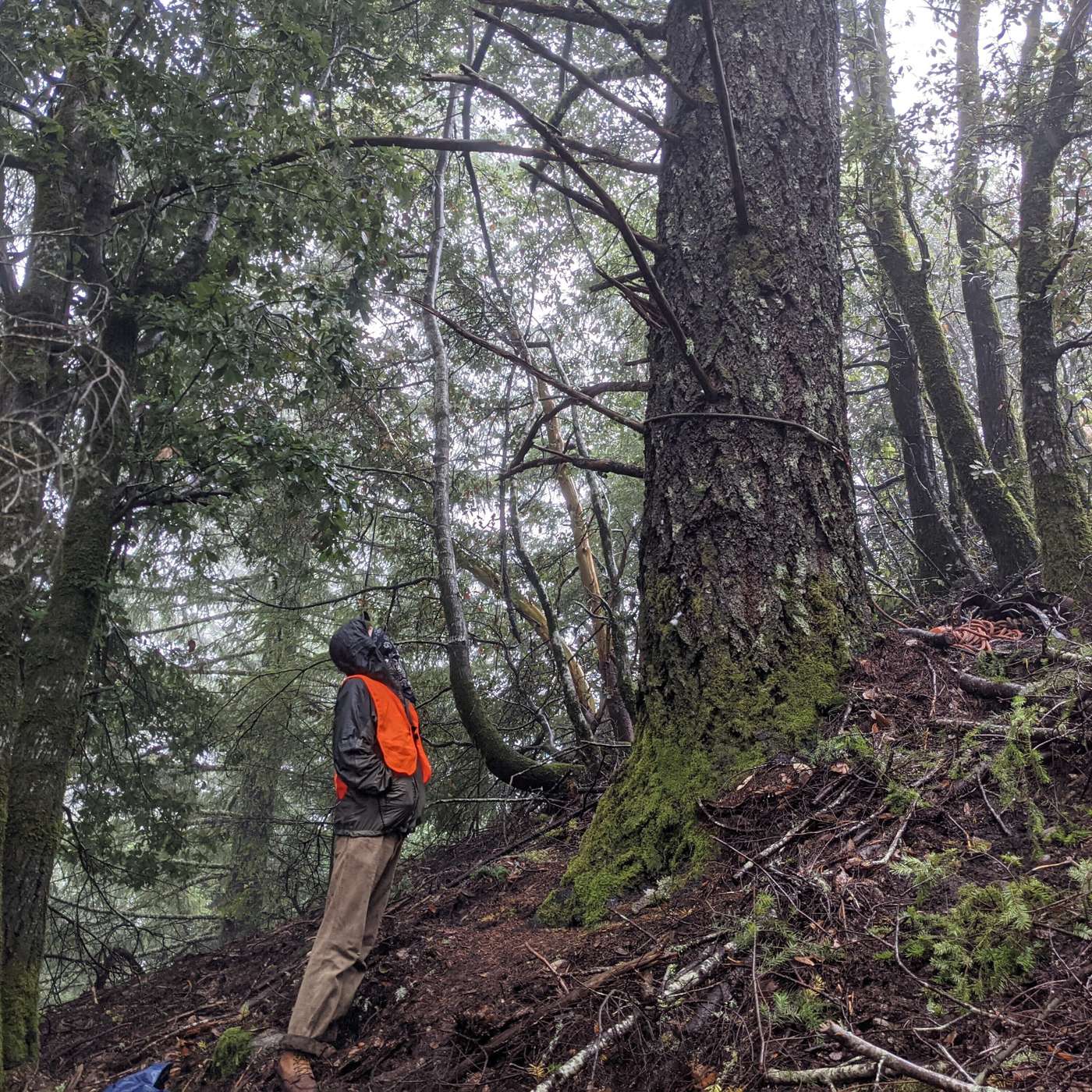
Ep 265Direct action in Humboldt slowing down tree removal
October 27, 2021 — Community members who love Faulkner Park are considering a variety of ways to protect it from PG&E’s plans to cut dozens of beloved redwoods. The company fears that iconic old trees will fall on its poorly maintained infrastructure. Steve Wood, who has walked the trails for years, described why the small county park has such a special place in neighbors’ hearts, and how the trees continue to play an important role when they do fall in a natural environment. “This is one of the most gorgeous parts of the park,” he said, pausing near a marked tree. “A lot of wild azaleas here, huckleberry, all kinds of swamp plants, because this is the original Bear Wallow. I guess at one time, there were actually bears that came here and cooled off in the summertime...when these trees fall, they become kind of nurse trees for the azaleas and the trees that succeed them later on.” Just a few hours away from Faulkner Park, a handful of activists in the Humboldt Redwoods State Park has been dashing up and down Mattole Road for well over a week, halting as much of the work by PG&E contractors as they can. One of them, called Cat, had stationed himself between an old growth tanoak and a large Doug fir on Saturday afternoon, October 23rd, the day before the atmospheric river struck the region. It was already raining steadily. Crews were on lunch, but forest defenders were alert, strategizing how to interfere most effectively. “We’ve saved a lot of trees,” he reflected. “If we weren’t here, this place would have been pretty decimated. Already there’s a lot of trees down. They haven’t gotten to the old growth, but there’s a lot of old growth marked. We’re just trying to save as many trees as we can, until we can get more oversight.” Back at Faulkner Park, Jonas Mathie, who enjoys the trails with his dog, also expressed a desire for more transparency from the company. “I would just like to discuss it and find out where their thoughts were and how they came to this conclusion,” he said. “We the people own the park. With PG&E’s track record and not being a fair player, we should all be very concerned by this, and organize accordingly.” He agreed that “obviously” what is missing is a public comment period. There are no publicly available documents detailing the scale of the company’s timber operations under the enhanced vegetation management program. As of April 2020, PG&E’s near term process for utility maintenance activities to establish best management practices means that the company’s clear cutting (euphemistically referred to as an enhanced vegetation management program), does not trigger CEQA or any permit process. No agency is tasked with issuing take permits or conducting any environmental oversight. Although it has been well documented that the company’s poorly maintained infrastructure has caused multiple catastrophic wildfires, PG&E has been allowed to craft its own wildfire mitigation plan. And that plan consists largely of cutting down thousands of healthy trees, in waterways, on private land, in public parks, and on steep slopes from the border of Oregon to Bakersfield. Mendocino County Supervisor Ted Williams, whose district includes Faulkner Park, reported that PG&E representatives promise to share a cost analysis of its plans for the park with the public soon. But the company doesn’t have much of a track record of sticking with its budget, according to Nancy Macy, chair of the Sierra Club’s Utility Wildfire Prevention Task Force, which released a cost-benefit analysis of the program. “It came out that if you add up the costs of enhanced vegetation management, which is around two billion dollars a year, it costs a whole lot more to cut down the trees and pay the contractors and deal with the slash, than it does to rebuild the infrastructure,” she reported. The task force analysis found that this year, PG&E has already paid two and a half times what it paid for the program last year, which means that, as far as costs go, “we do not know. And that’s the scary thing,” Macy concluded. Some of the neighbors of Faulkner Park have raised the possibility of direct action, like thirteen-year-old Zane Colfax, whose willingness to build a platform in a tree met with approval from neighbor Michelle Parzik, who lives about two miles from the Park on Mountain View Road. There is a tree sitter in the Humboldt State Park, but much of the direct action there consists of walking up to crews who are about to cut down a tree and chatting with them, in order to make it unsafe for them to continue working. On Saturday, a forest defender called Farmer led me up a steep slope to meet some of his friends. His description was apt for any number of sites where PG&E crews are taking down healthy trees. “This could be the poster child for conditions you would want for fire safety,” he said, as the rain intensified. “And they’re planning to remove these mature hardwood trees. That’s going to open up
Ep 264Weekend storm helped but didn't end the drought or fire season
For Mendocino County Public Broadcasting, this is the KZYX News for Friday, Oct. 29. I’m Sonia Waraich.The drought’s been relentless in California over the past couple of years and the past fall was particularly brutal. Dozens of wells went dry in Mendocino. Dried out soil and fuels elevated the risk of wildfires. And reservoir levels and the streamflow in many rivers reached historic lows.But this past weekend the rain came. There are now signs of recovery, but the situation has been so dire for so long that one rainstorm isn’t going to end the drought or fire season. Without more rain, things could dry out and go back to the way they were before the storm hit.The county got anywhere from 4 to 13 inches of rain depending on where you were. That was enough rain for the city of Fort Bragg to rescind its drought emergency. But nearby, the town of Mendocino is holding off on declaring the end to its own. Ryan Rhoades manages the district’s water supply and he says the board decided to maintain its Stage 4 water emergency earlier this week.“It’s still so early in the season and we don’t know how much more rain is coming. While we are happy, we’re cautiously optimistic. Hope for more rain, but prepare for more drought.”Right now the National Weather Service says it’s too early to say whether or not wetter weather systems passing through the West Coast will extend as far south as Mendocino County. This could be the first rain of many or it could be the one of the only significant rainstorms of the season.“Don’t let a little bit of early rain sort of fool you into thinking we’re totally out of the woods because the drought’s not going to return or the drought’s over because that may not be the case.”Rhoades says what’s as important as the amount of rain that falls is the amount of time that rain falls over. Right now the soil doesn’t exactly have the capacity to absorb all of that water because the ground is hard and dry because of the drought.“A lot of that water is just flowing over the surface and over the edge of the cliffs. That’s not helpful because it’s not retaining it in the aquifer.”Despite that, the rain did help some.“I had my first phone call and recorded report of a well that’s recovering. A well that’s been dry for the past couple of months is now producing again. The homeowner was ecstatic. He said, it’s been running for 25 minutes and we have water. So that’s great news. I hope to receive more reports like that.”So far, Rhoades says two people have reported that their wells recovered. That’s good news, but, again, their wells recovering doesn’t necessarily mean the aquifer is being recharged.“While lot of the wells in Mendocino are shallow and they’re under the influence of surface water, a heavy rain might make it look like their wells are recovering but the reality is when you get 4 inches in 24 hours, that’s not enough time for that water to really soak deep into recharge the aquifer.”A similar situation is playing out with the fire season. The rainfall over the weekend allowed firefighters to contain over 90% of the remaining fires in Northern California. But Cal Fire’s Isaac Sanchez says it would be premature to declare fire season over, too. And the drought exacerbates the fire season. That’s because the rain did help in the short term, but the long term is a different story.“That’s something that we need, as well as the snowpack that started to accumulate up in the Sierras. But unfortunately, we’re not expecting much more rain coming up. There’s always a potential for something to change, but I know that we’re going to be dry for the next seven to 10 days with no prospects that I’m aware of at this point anyway, of follow up rain. And ultimately that’s what we want to see. We want to see several rain storms come through before we can really kind of, you know, take a breath essentially.”The National Oceanic and Atmospheric Administration is forecasting it’s going to be dry in Southern California for the rest of this year and going into next. What happens with precipitation in Northern California is still anyone’s best guess. Regardless, it’s going to be hotter than usual across most of California.“If we see another week or two weeks of dry conditions, warm temperatures. The rain that we experienced will, as far as the dead fuel moistures that are out there, it’ll be like it never happened.” Like the rainfall, the temperature in Northern California can go either way over the next few months. But because Cal Fire is a state agency, Sanchez says it makes decisions around staffing based on what’s happening in the entire state. And the southern part of the state isn’t doing so well.“We’re still within a drought, and it takes repeated rainstorm events for us to feel comfortable in reducing staffing and moving over to transitional staffing and winter staffing levels. But as of right now, unless there are follow-up storms that bring more precipitation we don’t anticipate that we’ll be doing transiti