
KZYX News
1,162 episodes — Page 17 of 24
Ep 363BoS discusses water hauling, new plan to lease hybrid cars
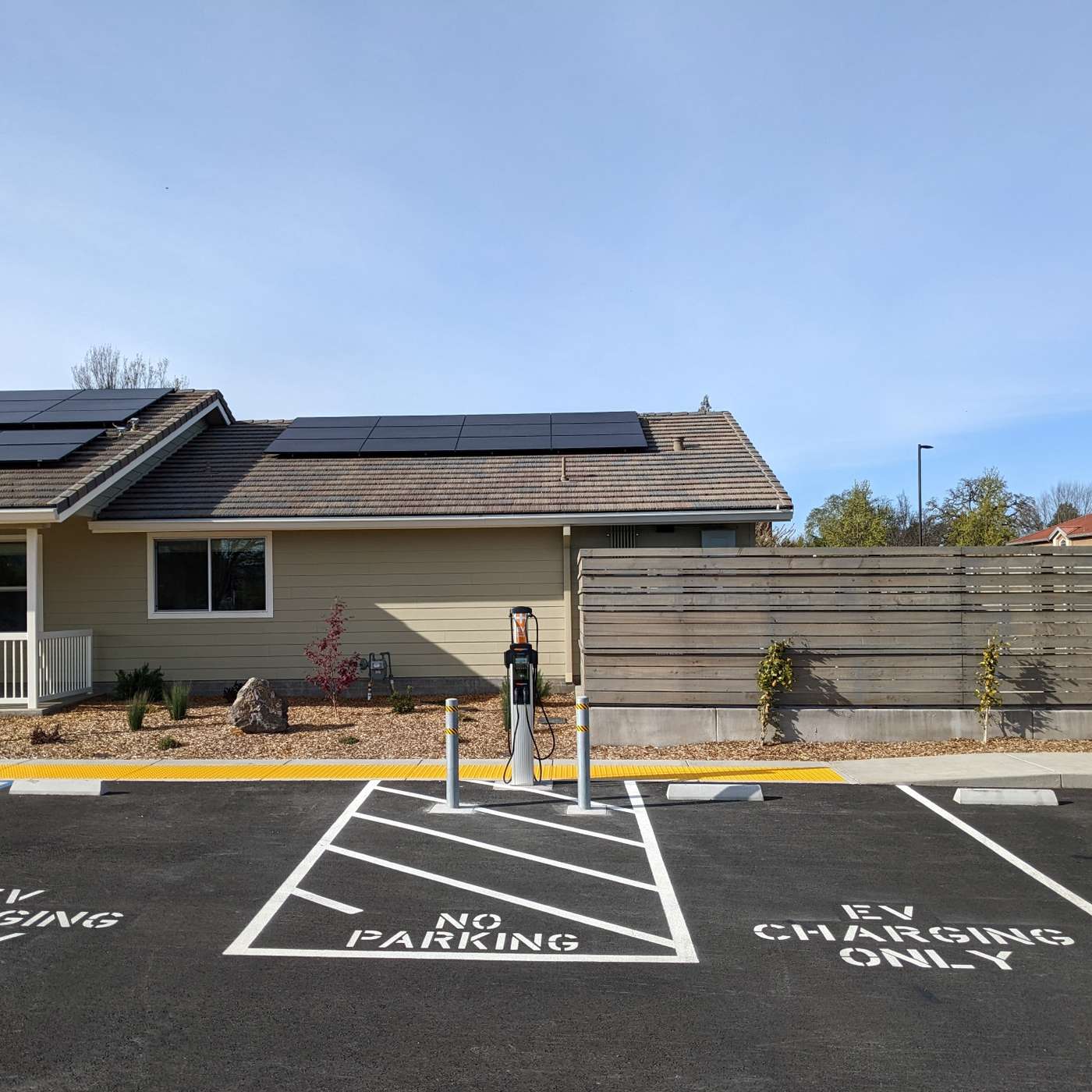
March 21, 2022 — Today is the first day on the job for interim CEO Darcie Antle, whose one-year contract for salary and benefits totaling $338,000 was approved unanimously at last week’s Board of Supervisors meeting. Former CEO Carmel Angelo’s last day on the job was Friday. The board also discussed crafting an ordinance or revitalizing existing rules to regulate water hauling in a way that would ideally curtail diverting water to illegal pot grows while not preventing access to drinking water. And, in an effort to transition away from fossil fuels, the board agreed to start the process for a pilot program to enter a master equity lease plan with Enterprise Fleet Management to replace some of the 55 vehicles in the Social Services Department with hybrids by next year. Staff analysis projects a savings of about a million and a half dollars over the next ten years. Twenty-three of the department’s vehicles are currently eligible for the new lease program, which will consider hybrid options whenever possible. The final draft of the plan is expected by July of this year. The board has directed staff to transition to an all-electric fleet, but more charging stations will be necessary to run all of the county’s nearly 400 vehicles on electricity instead of fuel. At this time, the county government has installed three charging stations with four working chargers at two locations. According to the staff report accompanying the item, it cost $36,000 to install two stations at the jail, both of which are expected to be out of commission for most of next year as construction on the new jail gets underway. The third station, at the crisis residential treatment center in Ukiah, cost about $20,000. Yearly maintenance and data storage at each station is estimated at about $3000. County staff estimates that it would take three to five years to have charging stations at all county offices. Water was also top of mind. Tomorrow’s forecasts for inland Mendocino County are creeping into the eighties, hinting rather broadly at a long, hot, dry summer. Supervisors John Haschak and Glenn McGourty, who are on the drought task force, agreed to form an ad hoc committee dedicated to figuring out how to re-establish a stand-alone water agency. Supervisor Ted Williams emphasized the main lesson from the morning’s budget presentation. “There’s no way to bring this back without a funding plan,” he pointed out. “And I think today we have negative general fund…and you could either propose making some cuts, adding an assessment or a tax, or finding another creative means to source revenue. But I think that the logical next step is, before we can say yes, we need to see where the money is going to come from.” The board agreed to add members to a steering committee to work out how to fund the agency McGourty and Haschak also presented the outlines of an idea to regulate water hauling, a water policy that Haschak explained residents of Covelo and Redwood Valley especially have been calling for. “We’ve heard about these water trucks going at all times of the day, all times of the night,” he reminded his colleagues. “Extracting from sometimes legal sources, sometimes illegal sources, but a lot of times, it’s just unregulated.” The county already has ordinances regulating water extraction and the sale of drinking water. McGourty proposed requiring water sellers to meter their wells and document water sales. Haschak also suggested hefty fines for violations, starting with $1000 for the first violation and climbing to $5000 after three violations. “Because we want to make it so people don’t just say it’s the cost of doing business and continue on,” he explained. Howard Dashiell, the director of the county dept of transportation, assured the board that there is enough money left over from last year’s state grant to haul residential drinking water from Ukiah to Fort Bragg. Private haulers can then carry it to other communities on the coast. State-funded water haulers have to adhere to strict permitting standards. But Williams worried that even enforcing the ordinances that are already on the books could prevent children in his district from having enough water to practice proper oral hygiene. “We may put drinking water companies under,” he opined. “On the coast last year, we had water hauled from inland. I feel pretty bad about the line items for that. It was expensive. And I feel bad about the carbon footprint of hauling water across the county. This year, fuel prices may be double, and we may be looking at more wells going dry…I think what you’re proposing may fix some illicit cannabis nuisance problems in Covelo, but may punish Comptche...I know everybody should be following the books and have a well and maybe a use permit and so forth, (the) reality is that’s not where we’re at. We probably have a lot of water hauling, in the millions of gallons, that’s keeping kids brushing their teeth with drinking water, that could be impede...
Ep 362Sherwood Oaks under new ownership
March 17, 2022 — As of last week, Sherwood Oaks, the only nursing home on the coast, is under new ownership. The buyers, Lucy Xie and Ronald Baldwin, are also the owners of two licensed nursing homes in Hayward, Serenethos Care Center and Saint Anthony Care Center. Although Sherwood Oaks has a license for almost 80 beds, over the past year, the pandemic, a million and a half dollars’ worth of deferred building maintenance, and a national shortage of nurses caught up to it. The facility now has enough staff to care for 32 residents. In the middle of December, Dr. William Miller, the Chief of Staff at Adventist Health Mendocino Coast, laid out three levels of crisis and told the board of the Mendocino Coast Healthcare District that without emergency staffing, the facility could close by the first of the year. New owner Lucy Xie, who is also an RN, said she found out about Sherwood Oaks by reading the Miller Report, Dr. Miller’s regular column on local healthcare. She and her husband talked to some people they knew in the industry, took a trip to Fort Bragg, and decided within just three days to purchase the nursing home. Earlier this week, she said she had already addressed procedural deficiencies at the facility and is planning to upgrade the kitchen as the first of many projects to improve the building. She’s confident that she’ll have the building’s deferred maintenance projects completed by the end of the year. She added she faced similar challenges when she took over the other two nursing homes, but now, with a national shortage of nurses, the biggest hurdle will be hiring staff.

Ep 361County faces potential deficit of $12 million
March 16, 2022 — The Board of Supervisors voted unanimously yesterday to open the chambers to the public on April 19. Remote attendance will continue to be an option, and masking and social distancing will be implemented. Public Health Officer Dr. Andy Coren pointed out that Mendocino County is now a low-transmission community, with mask mandates lifted at schools and hospital beds now widely available. But Interim CEO Darcie Antle opened her quarterly budget report with covid at the top of a long list of why the county is suffering a multi-million dollar deficit.

Ep 360Supervisors bid farewell to CEO, discuss mental healthcare contract
March 15, 2022 — Outgoing CEO Carmel Angelo received accolades from colleagues at the county, state, and congressional levels, as well as some criticism from local gadflies, at her send-off in this morning’s Board of Supervisors meeting. And an agreement with Redwood Community Services to operate the Critical Residential Treatment mental healthcare facility in Ukiah passed narrowly, with Supervisors Glenn McGourty and John Haschak dissenting.

Ep 359Restorative youth court offers options
Ukiah High School Sophomore Cat Karpov Kinrad and twenty other teens participate in the Restorative Justice Youth Council, a newly implemented program sponsored, in partnership, by Mendocino’s Juvenile Probation Office and the Arbor of Redwood Community Services. The Restorative Justice Youth Council is a youth driven program designed to repair the harm caused to all individuals in juvenile crime by encouraging open communication between justice-involved youths and victims, and holding conflicted youths accountable for their actions. It keeps kids out of the parole system and positively connects them to their communities.

Ep 358Whale festival underway
The 2022 Whale Festival March 12 – April 3, sponsored by the Noyo Center for Marine Science, has a mixture of events that will please families, the science minded and those looking for a little adventure this Spring. Sue Coulter talks about the upcoming activities and gives us some insight into their expansion plans at Noyo Harbor.

Ep 357Beloved arts teacher memorialized
A life well lived was enjoyed by Ukiah’s accomplished artist Adele Pruitt, who died late last month at the age of 99. An accomplished painter, art teacher, conservator, restorer, and educational reformer, Pruitt was a respected member of the Mendocino art community whose impressive breadth of work and accomplishments merit recognition. Jayed Scotti, Pruitt’s longtime student and co-worker, remarks on the qualities that made Pruitt a remarkable individual.
Ep 356Noyo Harbor has a new Harbormaster
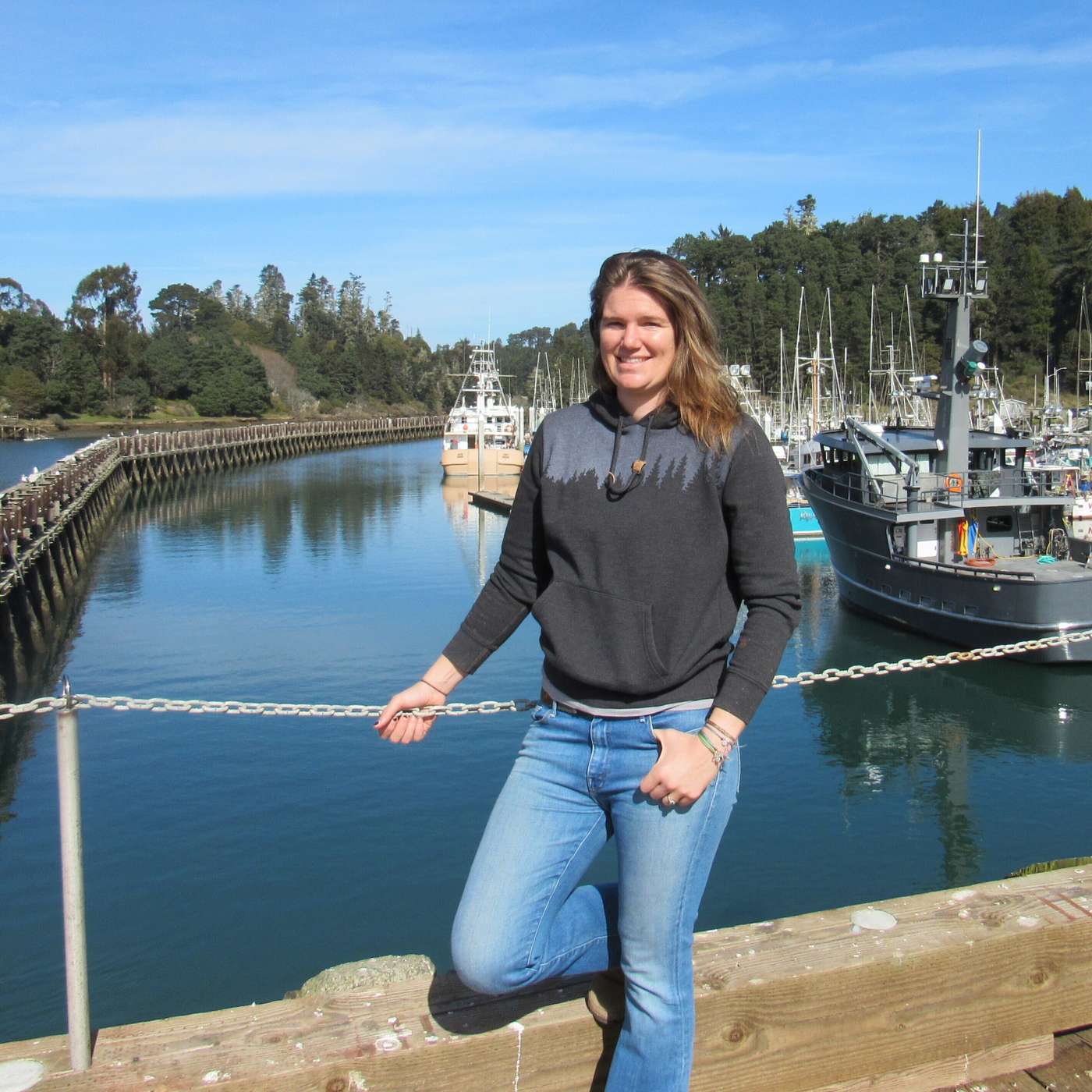
March 8, 2022—Anna Neumann is well known along the coast for her many leadership roles in the fishing industry. She has taken on a new role as harbormaster at the Noyo Harbor. In this interview she explains the role and challenges of being a harbormaster, how the harbor is funded and her plans for the future.

Ep 355Board President Tom Dow talks about the KZYX building project
Mendocino County Public Broadcasting Board President Tom Dow talks with General Manager Marty Durlin about how the station made the decision to purchase a new home, and how how the property at 390 West Clay Street was chosen and financed. This is the first in a series of KZYX Building Reports.

Ep 354Mask mandate downgraded to strong recommendation
March 7, 2022 — The county indoor mask mandate is now a strong recommendation, though the most recent health order consists largely of reasons residents should follow Public Health Officer Dr. Andy Coren’s advice to continue masking in indoor spaces. Businesses are still authorized to request that patrons mask up, and Coren expressed confidence in the community’s judgment after years of education about maintaining the health of the people around them. People do appear to have taken more responsibility for their own testing, which has led to fewer publicly available data points. But Coren stressed that he believes that local hospitals are now less likely to be overwhelmed by covid patients. Schools continue to follow the advice of the California Department of Public Health and the Department of Education, and are not expected to change their masking policy until the fourteenth.

Ep 353Supervisors hold special cannabis meeting
March 3, 2022 — The Board of Supervisors took up a full slate of cannabis issues at its March 2 special meeting, including fallowing, the tax code, an appeals process for application denials, and the proper uses of a seventeen and a half million dollar state grant, which is supposed to help local growers secure annual state licenses. Supervisors directed County Counsel and cannabis program staff to look into what it would take for growers to take a leave of absence from cultivating, without continuing to pay the minimum cultivation tax. The tax was approved by the voters, so any changes will have to be effected with a certain level of finesse. Supervisors also tried to hammer out an appeals process that would cover every contingency. The ad hoc committee even took a break with outside legal counsel in an attempt to work out something that would include all applicants; whether they are in the portal or not; the terms of cost recovery; and whether or not applicants appealing a denial should be allowed to continue growing during the appeal. They expect to review various options at a meeting in May. Cannabis industry representatives called for more transparency and stakeholder meetings with the county cannabis department, but Cannabis Program Director Kristin Nevedal responded that she recently began holding Friday morning meetings about various topics of interest to those in the program. The program has now been promoted to the status of a department, and is attempting to increase its staff of nine to twenty. The name change does not incur additional costs, but it signals that cannabis is no longer within the purview of other departments, as it has been in the past. Letters about tree removal also came up during public comment on off-agenda items. Last month, the cannabis program sent some applicants letters and aerial images of areas where trees had been removed. The letters stated that if applicants failed to provide credible evidence like documents from a licensed professional and lists of the species that had been removed within two weeks, their applications would be denied. Cannabis attorney Lauren Mendelsohn blasted the program for its handling of the issue, calling it “arbitrary and unacceptable.” Nevedal said that a subscription to Planet, the aerial surveillance service utilized by CDFW, could provide archival footage and answer questions about vegetation management. The subscription is $350,000 a year, and is one of the items she proposes to pay for with the local jurisdiction assistance grant. That set off alarm bells for Michael Katz, Executive Director of the Mendocino Cannabis Alliance, who said that “The grant application did not allow for funds to be used for enforcement, and yet, included in the satellite imagery text is that the tools are crucial for managing complaints about participants. So that’s one specific item that certainly is, on the face of it, related to enforcement.” Nevedal said that often people call in complaints about things that aren’t actually happening, and that the imagery could be used to discredit false complaints. Katz also worried about grant money being used to hire full time staff, asking what they would do once the money runs out. Nevedal said cost recovery was written into the budget, and that she expects there will be plenty of work at the cannabis department, what with processing another grant, renewing phase I and phase II applications, and moving into phase III. And she expects the department to play a key role in the county’s economic future. “I’m confident we’ll need staff going forward, as the program expands,” she said. “And I certainly hope that we’ll see changes at the state level that will allow our cannabis businesses to stabilize…I think there’s a lot of opportunity in the future, and I don’t think twenty staff is out of the question, going forward.” Supervisors and county staff blamed much of the difficulty on the mismatch between the state’s regulations, which require extensive environmental review, and 10a17, the county’s cannabis ordinance, which includes a mitigated negative declaration. Supervisor Ted Williams had a question for Nevedal and County Counsel Christian Curtis during one discussion about an attempt to align county policy with state requirements. “I don’t like the recommended action today,” he declared. “If we pause and we have stakeholder input and we have meetings and we decide to go a direction contrary to where the state is trying to steer us, what have we gained?...It seems like we’re all over the place. Do you see room for negotiation with the state, and if not, why would we hold stakeholder meetings? It sounds like a checkmate.” Nevedal said she did not think there was “a heck of a lot of room for negotiation with the state” on its requirement. The Mendocino Cannabis Program holds public meetings every Friday morning at 8:30 am. On March 4, the topics will be program updates, CEQA, and appendix G, a checklist d...

Ep 352Board discusses opening chambers
March 2, 2022 — With local mask mandates set to expire by March fifteenth, the Board of Supervisors is preparing to hear an agenda item about opening meetings to the public. And the board took the first step in diversifying its retirement investments, by agreeing to work up a resolution to start investing some of the county’s five million dollar pension fund with Public Agency Retirement Services, a multiple employer trust that supervisors believe will give them more flexibility than the funds that are in the Mendocino County Employees Retirement Association, or MCERA, which includes retired employees of the court and cemetery districts as well as the county. The board also voted to increase County Counsel Christian Curtis’ compensation and benefits by an estimated 32%, to $327,000 per year and promote him from interim to serving County Counsel. He has been in the interim role since Katharine Elliott’s departure in 2019. A newly created grant-writing division will likely play a large part in a program to secure funding to build housing in communities that want it, especially workforce housing. Supervisors agreed with Planning and Building staff, who asserted that, even more than general plan amendments, the county needs to build out infrastructure for multiple users, especially for water and sewer, if it hopes to accommodate growing housing needs. The Board voted to adopt a resolution recommending social distancing for public meetings, which means zoom, but only after agreeing to revisit the matter with a presentation by public health officer Dr. Andy Coren at a meeting in two weeks. Supervisor John Haschak broached the issue, saying, “It’s time to open the chambers.” The item will be on the agenda on March 15. Supervisors Dan Gjerde and John Haschak agreed to serve on an ad hoc committee to work on the details of the investment with PARS, or Public Agency Retirement Services. Gjerde believes that the new service will give the county more control and more benefits from its pension fund than it now enjoys with MCERA, which includes other organizations.
Ep 351Tribal leader, CalFire lead tours of JDSF
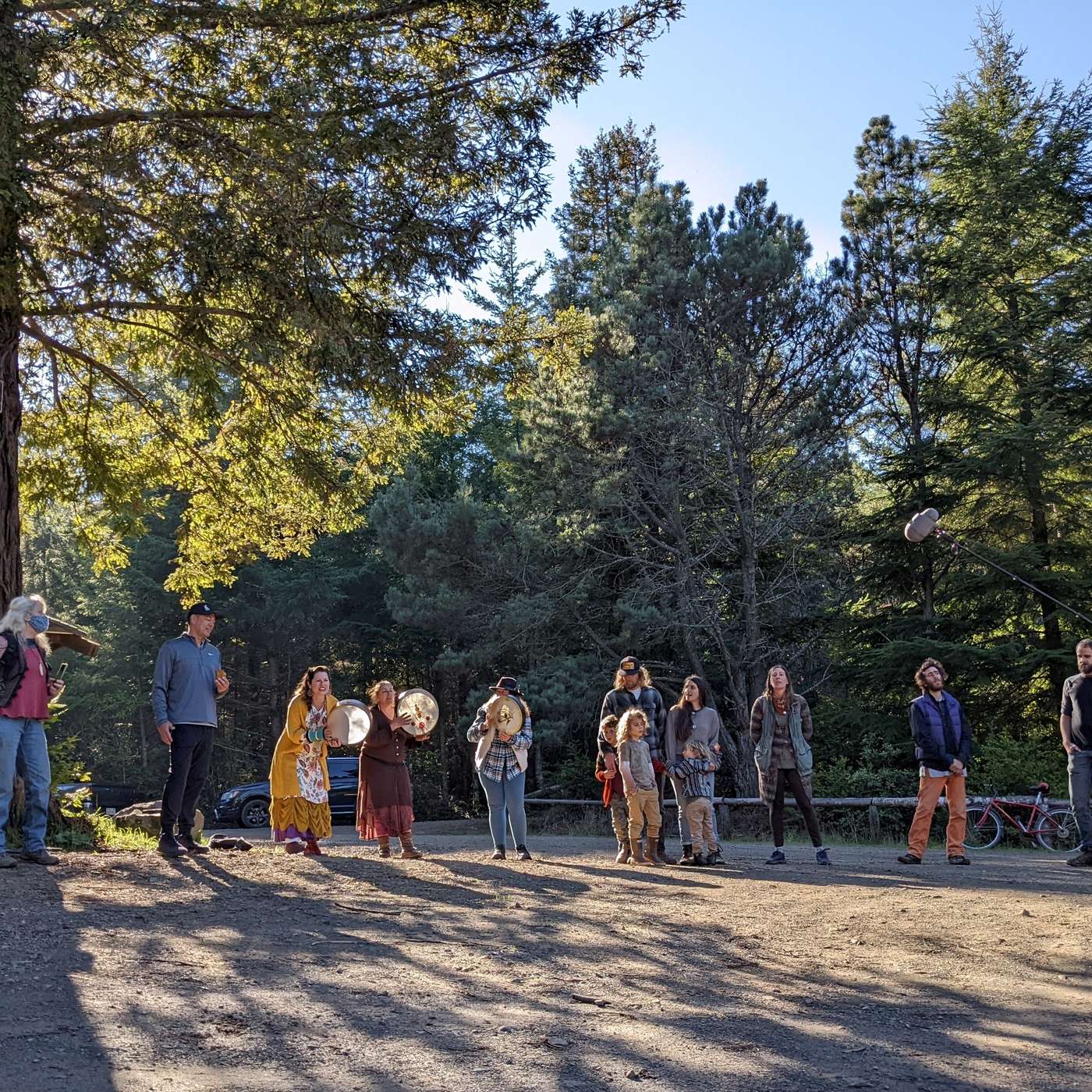
March1, 2022 — Caspar 500, a timber harvest plan in Jackson Demonstration State Forest, has been the site of a lot of activity that’s neither logging nor protests in the last few days. KZYX Program Director Alicia Bales and reporter Sarah Reith review the events.

Ep 350Health officer optimistic
February 28, 2022 — Public Health Officer Dr. Andy Coren delivered an optimistic covid briefing on Friday afternoon, saying that, in spite of a new variant that’s edging its way into the state, he expects to see a significant drop in hospital admissions by the end of March. He may reconsider the county’s universal indoor mask mandate in the next week or so, and he has high hopes for the community health worker model in educating the public as the disease moves towards being an everyday endemic presence in not quite back to normal life. He expects treatments to play a significant role, though presently they are only effective if administered in the first few days of the illness. The state is moving into what’s called a SMARTER plan for handling the pandemic, starting with shots and masks but including elements of awareness and education too. The current number of people in the county who have died from covid is 123. The mask mandate remains in effect locally because hospitalizations remain high. There was one day last week when county hospitals had ten covid patients, and only one ICU bed and four med surg beds available. Coren reported that the outbreak in the jail is over, with no new cases in the last two weeks. And the number of infections among students in public schools has dropped to nearly zero, though there have been a few cases among school staff.

Ep 349Committee calls for more communication
February 25, 2022 — Members of Ukiah’s Diversity and Equity Committee learned about state and federal programs to pay down utility bills for customers whose accounts fell into arrears during the pandemic. They also heard about existing practices to communicate with people who don’t speak English, and made suggestions for improving communications in general. Committee members also examined a posting for a job advertised by the city, and mulled over ways to make it more inviting to racial minorities and people with disabilities.

Ep 348Tree death multi-faceted
February 24, 2022 — Trees along the Mendocino and Sonoma coastline have been falling victim to a rogues’ gallery of foes in the last twenty years, according to Chris Lee, a forest pest specialist with the California Department of Forestry and Fire Protection. Lee spoke to the Mendocino Coast Audubon Society earlier this week about the many factors that have been decimating the coastal trees, including pests, drought, climate change, and land management practices. Bishop and Monterey pines have been especially hard hit, but tanoaks and madrones have also played host to a variety of pathogens, many of them invasive. While Lee said more data points are needed to make decisions about how to respond, his study revealed pathogens that thrive in changing conditions. That’s part of the story about a stand of old Bishop pines on the Sonoma side of the Mendonoma coast, which is where Lee said the puzzle pieces of local tree mortality came together.

Ep 347Cannabis program meets with stakeholders
Feb 23, 2022 — The Mendocino County Cannabis Program is holding public meetings separate from the Board of Supervisors, where participants can explore the often-confusing minutiae of ever-changing cannabis policy in a venue of their own. February 18 was the first Friday morning meeting, where applicants discussed fallowing permits, or what it means to take a break from cultivating without walking away from the program altogether. Much of the discussion revolved around taxes, since participants in one of the fallowing options would continue to be liable for the minimum cultivation tax. And some growers said they’d need a more gradual process for the fallowing to be beneficial.
Ep 346Lethal owl study seeks to determine impacts
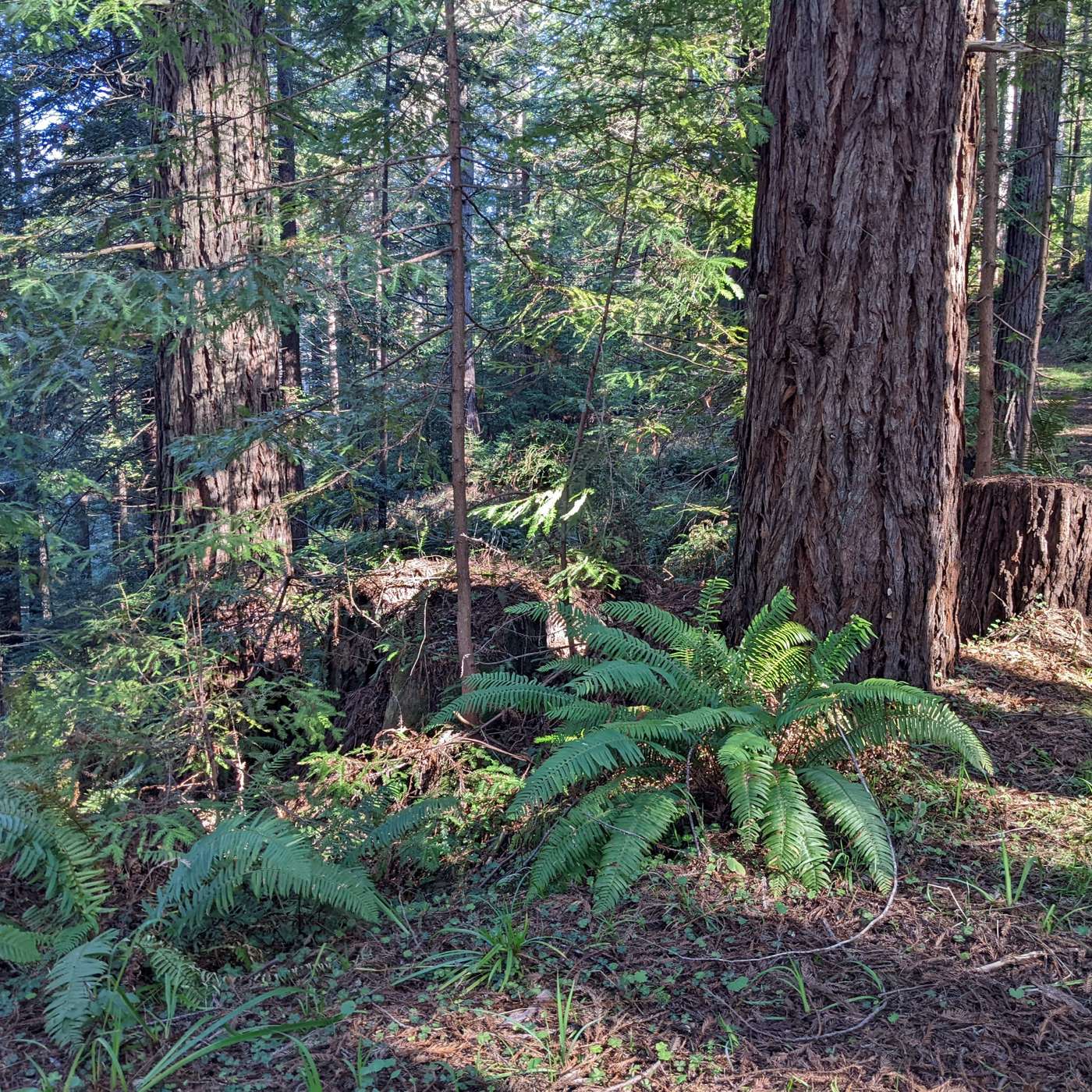
February 18, 2022 — As conditions in the ecosystem change, environmentalists and land managers grapple with increasingly difficult questions about what it means to be stewards of the forest and its inhabitants. A team of scientists from the University of Wisconsin, Madison, is engaged in a study involving the lethal removal of barred owls, which have been out-competing the iconic and endangered northern spotted owls. Barred owls originated in the eastern United States, and they’re larger and much more aggressive than the local birds. They’ve replaced over a dozen pairs of spotted owls in the Jackson Demonstration State Forest, leaving only one known pair.

Ep 345Regulatory agency rebuffs citizens group
February 22, 2022 — A state regulatory agency rebuffed a local group’s complaint about PG&E cutting around power lines last month. The California Public Utilities Commission told the Redwood Valley Municipal Advisory Council that the work around the powerlines on Road A off of Highway 20 “is not in violation of the rules or regulations of the CPUC,” and that the program reduces the risk of fire. Dolly Riley, chair of the Redwood Valley MAC, detailed the journey of the rural neighborhood’s attempt to get the utility to use some other means to increase safety.
Ep 344JDSF supporters gather at courthouse
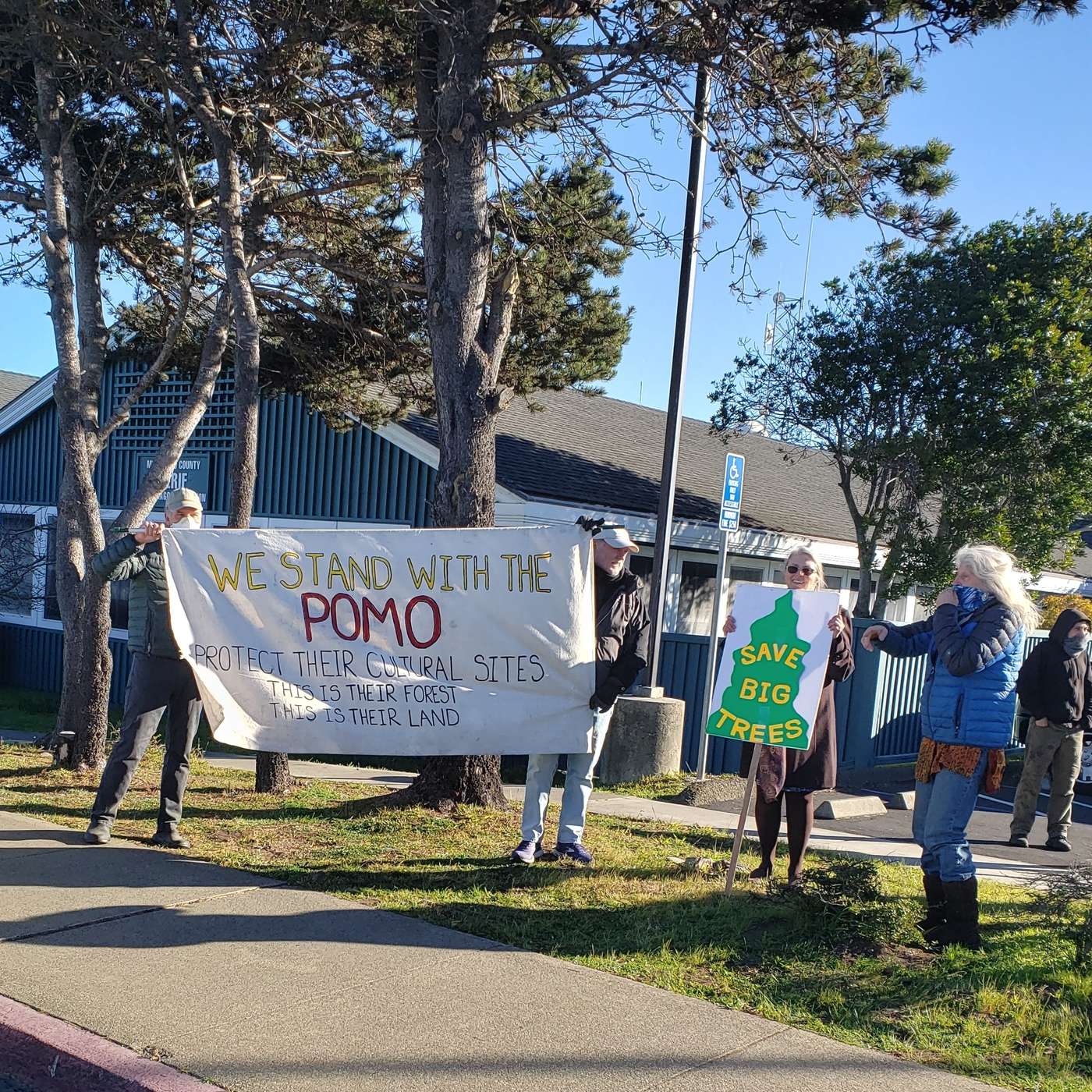
February 21, 2022 — It was cold and windy at 9am on February 15, at the Ten Mile Courthouse on Franklin Street in Fort Bragg, California, where four activists appeared in court. Six activists in total were “citizens arrested” January 10 in Jackson Demonstration State Forest while protesting the timber harvest plan known as Red Tail. This is the first interaction the protesters have had with law enforcement. The four cases are still under review and the other two protesters’ cases are on the docket for February 22. They were blockading an entrance to the logging site. The Save Jackson Coalition activists are calling for a halt to all logging while the forest timber management plan is being reviewed. I spoke with the protesters here for their court appearances and the dozen supporters on site, many holding signs on the sidewalk to show their support.The six activists were given citations for trespassing and false imprisonment, which all are contesting. An activist who calls himself Silver Fox described his experience. “The odd thing about it is that I was not in the restricted area at all. I was in front of the gate, but I was cited for trespassing. The more bizarre charge is false imprisonment. The gate was open behind me so the loggers could have walked past. We are trained non-violently not to impede them in any way, so these charges are very, very strange.” There is a deeper story, and it's why the six felt it was important enough to get arrested. Here's where this issue goes far beyond personalities, and semantics. Lifelong local Michelle MacMillan says that Big River (an estuary in Jackson State Forest) was her backyard growing up. She has come back now to help the Jackson defense with an education in political economics and environmental anthropology. “The six forest defenders that were arrested were arrested in the Red Tail Timber Harvest Plan, which is an old forest development zone, which means there is limitations on the amount of trees they can remove. And the timber harvest plan exceeds those limitations. Letters have been sent, and official statements have been made. But the plan was allowed to proceed regardless.” On June 18, 2019, Governor Gavin Newsom issued Executive Order N-15-19, which acknowledges and apologizes on behalf of the State for the historical “violence, exploitation, dispossession and the attempted destruction of tribal communities” which dislocated California Native Americans from their ancestral land and sacred practices. …to seek opportunities to support California tribes’ co-management of and access to natural land that are within a California tribe’s ancestral land and under the ownership or control of the State of California.” On November 16, 2021, the Mendocino County Board of Supervisors passed a resolution asking for a scientific review of the management at Jackson Demonstration State Forest, with an eye toward meeting environmental goals laid out by the governor. Naomi Wagner, friend and colleague of Judi Bari’s, referred to this order when she said, “In Jackson Forest we have these big old trees, that we need for carbon sequestration, we need them for fire resilience, and we need them for the cultural and spiritual aspects that are found in the archaeology there. Our coalition is Save Jackson forest and we are led by the Pomo tribe, because this is their ancestral territory, so we really take our direction from them, and the direction we are going is actually the direction that governor Newsom is taking.. he has made a directive last fall to all the state land agencies to start doing co-management with the tribes, which means including them in all aspects of managements and listening to the tribes when they talk about traditional ecological knowledge so that’s what we are trying to promote and support in Jackson now, for the directive to be implemented by the board of forestry and by Cal Fire, they are the problem really, they are just dragging their feet, they are stalling, they are not wanting to implement it, and so we have to keep the pressure up. “ On January 19, Calfire Deputy Director of Natural Resources Matthew Reischman said, “Due to delays … no additional timber sales will be offered in 2022.” But this is just a temporary respite for the forest. Save Jackson Coalition responded by saying, “A temporary halt in sales is a great first step. Now we need an official moratorium, and a commitment to fully review the management plan.” For example, Caspar 500 is still under consideration for future logging operations, which is an essential watershed area for any possible future salmon recovery efforts. Long time local Veronica was at the courthouse to support the protesters, and this is what she has to say: “Caspar 500 is in my backyard. A responsibility that this community needs to take on is that this is our forest, this is our home and if the amount of logging continues in JDSF, we are not going to have anything left for our children and our grandchi...
Ep 343Uncertainty remains over future of Potter Valley Project
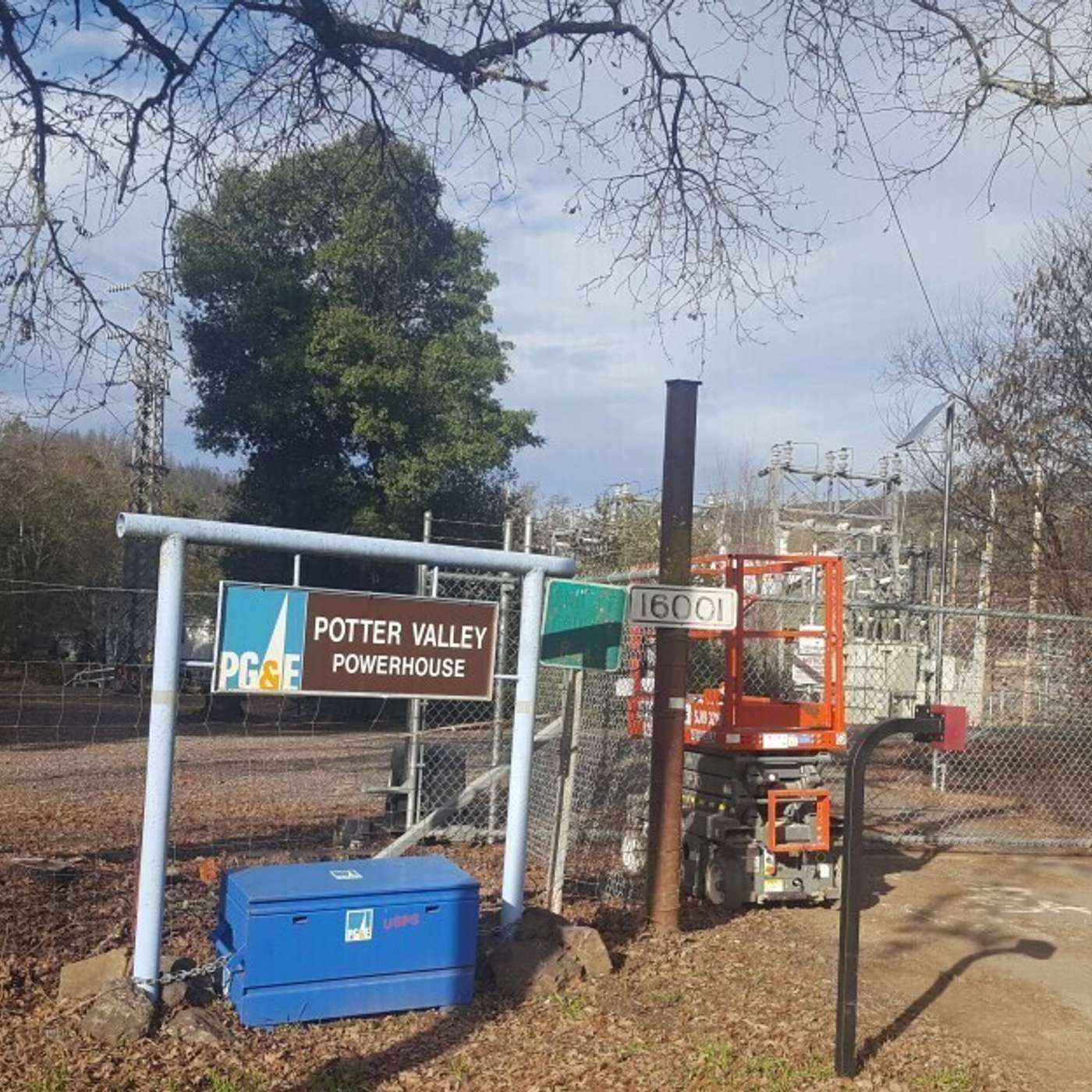
February 16, 2022 — Experts on the Potter Valley Project gave Farm Bureau committee members an update Tuesday night, providing details about flows, preparations for a ballot measure to levy a special tax, and the as-yet scarce information that’s available about what’s next. Devon Jones, the Executive Director of the Mendocino County Farm Bureau, laid the groundwork with some background and up-to-the moment specifics about how much water is coming through the East Fork of the Russian River into Lake Mendocino. Operations at the powerhouse have been significantly reduced due to a transformer failure, which means that since July, water can only come through the project using a bypass channel. That has been around 45 cubic feet per second (cfs), with five cfs contractually obligated for Potter Valley, a 35 cfs requirement for the East Branch leading into Lake Mendocino, and a five cs buffer. Jones reported that when she checked the Calpella stream gauge right before the meeting, she observed that 60 cfs is flowing into Lake Mendocino, probably due to some natural accretion from area creeks. “But this is a substantial reduction from what we would normally see during winter months being diverted for power production coming into the East Fork of the Russian River,” she reminded Farm Bureau members. PG&E still owns and operates the hydropower plant and system of dams and reservoirs that divert water from the Eel into the Russian River. But the license expires in mid-April, and PG&E wants to get out from under the unprofitable endeavor. A regional group that was trying to raise money to study the feasibility of taking over the license announced last month that it will also not be filing an application. (The coalition consists of the Mendocino County Inland Water and Power Commission, which is a five-member joint powers authority consisting of local government and water districts; the Round Valley Indian Tribes, the County of Humboldt, Sonoma County Water Agency, and the environmental non-profit California Trout.) The Federal Energy Regulatory Commission (FERC) is expected to lay out the parameters of what’s likely to be a surrender and decommissioning process once the current license expires. But as Janet Pauli, Chair of the Inland Water and Power Commission explained, that process could take years, during which time PG&E plans to operate on a year-to-year license. The utility has stated that it expects the design and replacement of the transformer to take two years, and that it can recoup the costs after another five years. Possible supply chain disruptions add another element of uncertainty to the process. “They have to continue to run the power plant with the license that’s currently in place on a year-to-year basis,” she said, clarifying that the project is likely to keep operating even if it is in the process of being surrendered. “If it’s going to be surrendered, it has to be absolutely surrendered before they can give up that responsibility,” she emphasized. In another scenario entirely, there is also the possibility that PG&E could salvage the equipment or sell it to another entity that’s interested in taking over the project. However, no one other than the regional consortium of local governments and CalTrout expressed an interest when PG&E announced it wanted to offload the infrastructure. While it is physically possible to increase the amount of water flowing through the project by way of a bypass channel, Pauli said the company is being scrupulous about adhering to the terms of its license. “PG&E has not agreed to increase the bypass flows,” she said. “Fisheries agencies wanted to increase the minimum flows on the Eel River to 300 cfs. In other words, no increase in diversion through the project unless they had 300 cfs coming out of Lake Pillsbury. We dropped below 300 over two weeks ago now, and it continues to diminish. PG&E is not willing to do something that’s not currently allowed in their license.” Pauli added that there was public pressure, too. About thirty letters came in, half of them urging PG&E to increase the flows and the other half arguing against it. Humboldt County and CalTrout, both members of the regional consortium that was trying to take over the license, did not weigh in either way. While many parties regard the removal of Scott Dam in Lake County as a given, the Lake Pillsbury Alliance is prepared to fight for the continuing existence of the lake behind the dam, arguing that it is key to putting out fires in the region. The California Department of Fish and Wildlife funded a study of several different scenarios and methods for continuing the diversion without the dams, but those would not include diversions during the summer. Meanwhile, Pauli said efforts are underway to gauge the public’s knowledge about the water they use, and how much they’re willing to pay for it. A consulting company is sending out polls to property owners within the bounds of t

Ep 342Drought off to an early start
February 15, 2022 — The drought is off to an early start, all around the county. Already, no water is available for agricultural use in Redwood Valley. Fort Bragg has 30% less water than it did this time last year. There is still money available to haul water from Ukiah to the coast again, though a water storage proposal for the town of Mendocino did not get funded with the last round of drought grants. In Potter Valley, fifty cubic feet of water per second is flowing through the powerhouse, which is limping along with damaged equipment. However, users expect 140 cubic feet per second to come through via a bypass channel, starting next month. And things are looking dry in Fort Bragg too, according to John Smith, the city operations manager. Though the city has received more rain this year than last, he said it won’t be enough to recharge the groundwater unless it rains every day for the rest of the winter. Howard Dashiell, the director of the county Department of Transportation, reported that there is still about 667,000 gallons of water in the holding pond in Fort Bragg from last year’s water hauling program. “As the summer goes into the fall, we could haul again,” with funding from the State Department of Water Resources, he said. Lake Mendocino was at just 42,594 acre feet last week, which is about 62% of the target water supply. Still, water must continue to be released in order to satisfy requirements set by the National Marine Fisheries Service to supply water for habitat. At a meeting of the Inland Water and Power Commission right after the drought task force, John Reardon, of the Russian River Flood Control District, gave a quick preview of another possible water storage option that’s being explored on Hensley Creek. He said a biological survey found no endangered species. “There’s reason for guarded optimism there,” he said, adding that he expects the official report to be available in a couple of weeks. Sean White, the director of water and sewer for the City of Ukiah, reported that pear orchards and one vineyard are already irrigating with recycled water. While some fruit trees are already blooming, Chair Janet Pauli said she’s seen dormant watering in other parts of the state, too. “One of the lessons that those of us who farm learned last year is that the drought was so severe we believe we actually had drought-related damage during dormancy, that we could have avoided if we’d had more ground moisture,” she said, adding that during a recent trip along the I-5 corridor, she observed farmers watering walnut orchards that appeared to be completely dormant. With water growing ever more precious, illegal diversions are ever more sternly frowned upon. Supervisor John Haschak gave listeners a heads up that the board is planning to consider an ordinance to regulate hauling water next month, which would require people extracting water and taking it elsewhere to have a permit, business license, hydrology study, and proper tracking logs. The proposed ordinance includes hefty fines for violations. The meeting ended with a final piece of advice — or maybe a secular prayer, from the two supervisors on the drought task force: Think rain, they urged, before logging off. Think rain.
Ep 341Longarm quilter Cindi Jo: graphic artist, designer, community volunteer
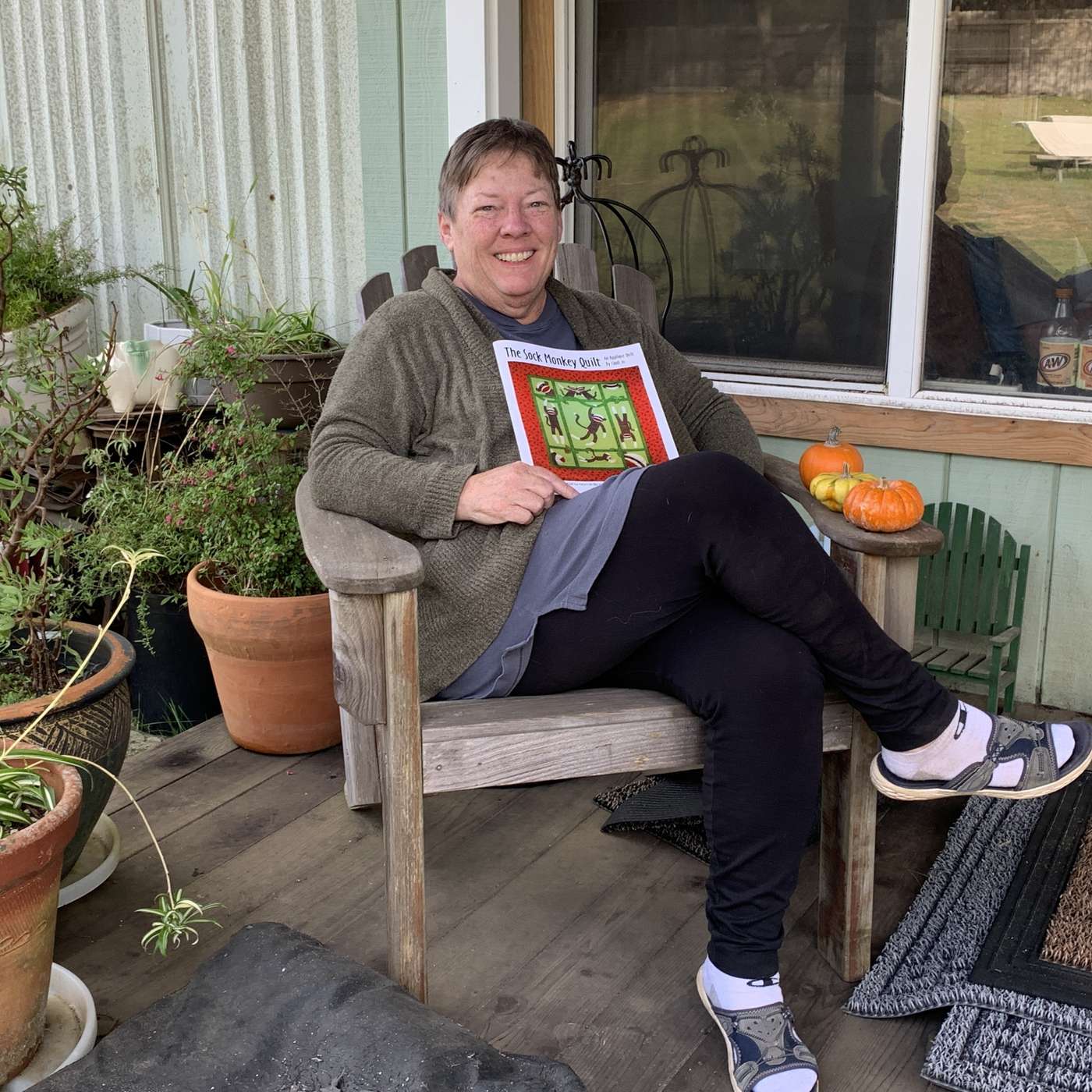
Cindi Jo Willey lives on Point Cabrillo Drive property that has been in her family since the 1870s, when her great great grandparents settled here from Portugal.Through the years, the property has seen many uses. In what was once an auto body and repair shop, Cindi Jo and her husband created her quilt studio, which contains two long arm sewing machines and other sewing equipment, fabric, thread and projects. In the early 2000s, Cindi Jo studied graphic arts at College of the Redwoods in Fort Bragg, adding to her quilting skills.The next step was to apply her new education to the quilting business that seemed to be growing of its own accord.One of her accomplishments was to create a “sock monkey” quilt, based on the popular stuffed toy.Among her many other community activities, Cindi Jo contributed to a KZYX quilt which will be raffled later in the year to benefit the building fund. In a design pieced by Sallie Brown, using KZYX bandannas created by Willi Moore, Cindi Jo did the quilting.

Ep 340The river as muse
February 11, 2022 – The Russian River serves as muse for Sonoma County artist Richard McDaniel in his latest series entitled The Russian River and its Watershed, on display now through March 18th at Ukiah’s Mendocino College Art Gallery. After years of journeying into sections of the110 mile river, McDaniel creates vibrant oil paintings of scenes and seasons of the Russian River as it flows from its headwaters in Mendocino County through valleys, pastures, vineyards and ravines to Jenner’s estuary in Sonoma County where it ultimately meets the Pacific. After a two-year Covid hiatus, Lisa Rosenstreich, Mendocino College art professor and gallery manager, is excited to finally showcase McDaniel’s artwork at the College Art Gallery.
Ep 339Masking orders remain
February 11, 2022 — Indoor masking orders remain in effect in Mendocino County at least until mid-March, due to strained hospital capacity. Public Health Officer Dr. Andy Coren said he “stayed up long hours” deciding whether or not to go along with the state in loosening mask requirements. But after meeting with hospital officials, he decided that, although covid case numbers have dropped, relaxing the rules was not an appropriate response to local conditions.
Ep 338All of JDSF is tribal "cultural landscape"
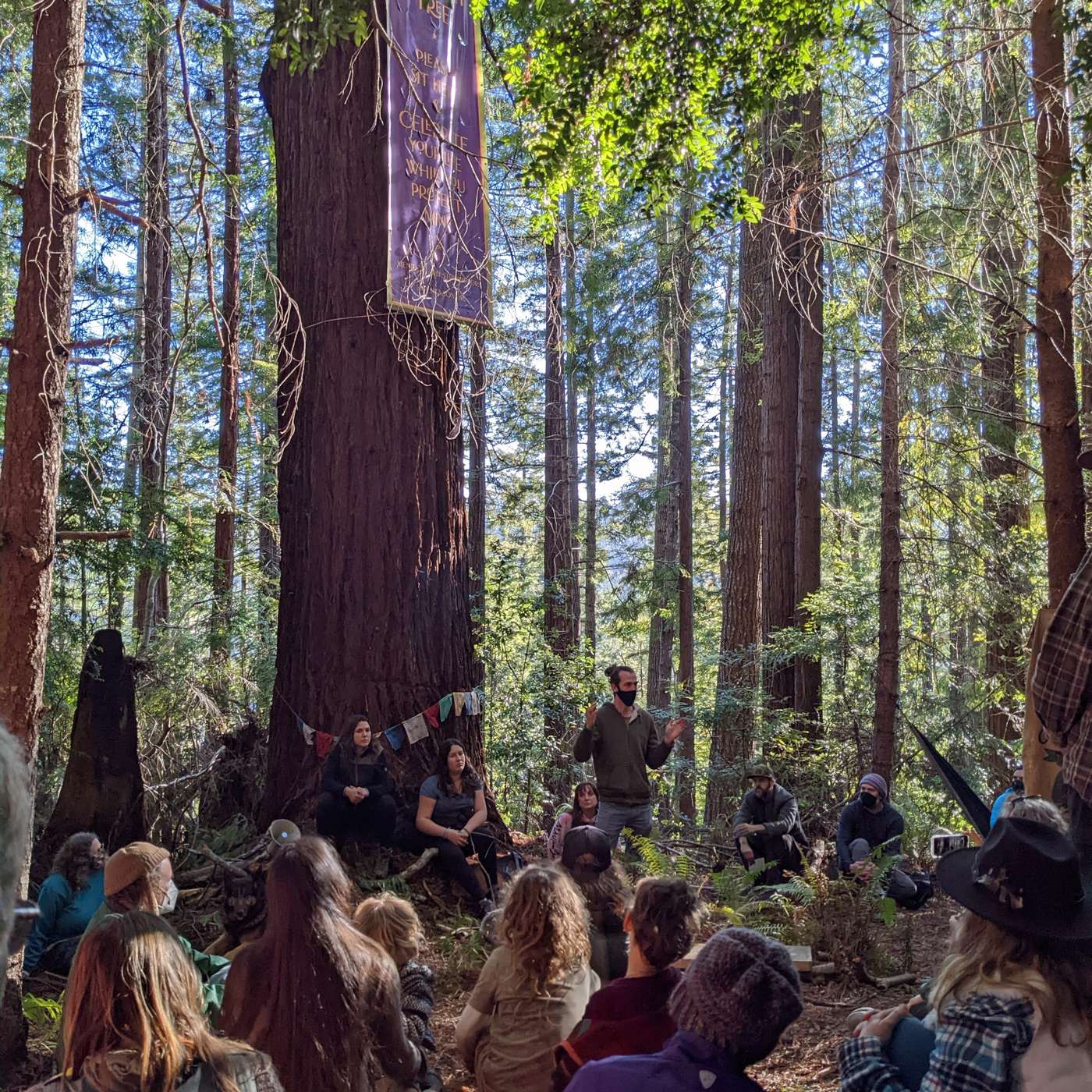
February 10, 2022 — With the international movement to return tribal lands picking up steam, a local tribe is strategizing how to have more of a voice in the management decisions of Jackson Demonstration State Forest, which one ethnohistorian argues is an Indigenous cultural landscape in its entirety. “You have to get out of the mindset of just a site, and into understanding how the whole environment is a site,” said Victoria Patterson, who has filled several volumes with oral histories of local Native American people and curated an interactive exhibit at the county museum about tribes. The Coyote Valley Band of Pomo Indians has sent a letter to Governor Gavin Newsom’s office requesting a moratorium on all timber harvest plans during tribal co-management and management plan revisions. The Board of Forestry decided last year to revisit the management plan to address Native American concerns about biological and cultural resources. Polly Girvin, who is authorized to represent Coyote Valley in government-to-government consultations, spoke earlier this month about the main disruption to tribal sites during logging operations. “All of the sacred sites at Jackson State Forest have been systematically and consistently damaged and re-damaged by road-building activity,” she explained. “Back in 1999 the state commissioned a report. The Betts Report had archeologists out here surveying for the sites. They were in such an appalling state that the archeologists working for the state said there should be no more cutting around these sacred sites until you re-survey their boundaries, and until you come up with a road maintenance plan that will protect them in the future.” JDSF is unceded tribal territory, associated with Pomo and coastal Yuki tribes. There are village sites and evidence of campsites throughout the forest. A waterfall known to have been used for purification has been compromised. But Patterson says the forest is more than just a few sites. “The area was used for literally thousands and thousands of years,” she said. “And it was used by hundreds of people walking back and forth to the coast, yearly or bi-annually or even more frequently, to gather resources that were available on the coast, or to trade inland resources to coastal resources. And as they traveled across, of course they’re walking, and so they were camping, and they were spending the night, and they were gathering things as they walked around and then they went to the coast, where they had summer camps, drying seaweed and fish and so on, and then you had the return to the lowland villages in the wintertime, and so it’s not just like, they would go to the coast for the weekend and then come back home. The whole thing was the home. The whole thing was part of a life cycle, a yearly seasonal round if you will, of gathering.” Girvin says that’s significant, in light of policies stemming from a 2019 Governor’s order. “Pursuant to a state policy edict that came out after the creation of the Truth and Healing Council, all state lands that are the ancestral territory of tribes can be co-managed by the tribes,” she noted. “And that is now in the Governor’s 30x30 policy plan. It goes so far as not just co-management, but actual return of land to tribes.” Patterson hopes more historical understanding will lead to a wider variety of protections. She thinks the appropriate response to the knowledge about sites should be more archeology in JDSF, which she expects will lead to further knowledge. Even Three Chop Village, a well-known site, has not yet been fully investigated. “We’re just discovering more, and as dating techniques become more technical and more accurate, we begin to see the record go back and back and back of when people lived in the forest,” she said. “The idea is to protect the forest. To protect not only the trees, but also the cultural resources. Which involve not just the plants and the animals and the basketry materials and the medicinal materials. But also the cultural connection to those places. The spiritual connection to those places. The mythological connection to those places. All of that has to be considered in a cultural landscape.” When it comes to using that knowledge to contribute to efforts toward tribal co-management and control over the land they historically used, she said, “The idea is to create a conversation between CalFire and the tribes to determine what activities should take place and how they should take place in the forest…what does it mean to run a bulldozer through a house site? What does it mean to destroy a so-called lithic scatter, which is of no merit monetarily, to take away that knowledge from the people whose people it was?” Patterson noted that this is a historic moment for tribes: “Indigenous land returns are happening everywhere, including on the Mendocino coast,” she pointed out. “You have the example of over 500 acres being added to the Sinkyone Intertribal Wilderness by the Save the R...

Ep 337New paintings by long-dead artist arrive at Grace Hudson Museum
February 8, 2022 — It’s hard to get new paintings by an artist who’s been dead for 85 years, but that’s what the Grace Hudson Museum in Ukiah did a few weeks ago. A new exhibit, “The Art of Collecting,” features sixteen paintings by the eponymous artist, donated by a museum on the other end of the state. Director David Burton talked about what happened when he picked up the phone last spring. “Back in May, 2021, I got a phone call from the director of the Palm Springs Art Museum,” he recalled. “And he said, we’ve just gone through a process of doing some strategic planning for our collections, and we think the Grace Hudson paintings we have here might have a better home with you guys in Ukiah. Do you want them?” People who work in museums are always putting together pieces of the past, trying to figure out how to tell the old stories in a new light. Curator Alyssa Boge found that the recent additions bring another perspective to familiar subjects. One of her favorite parts of the exhibit is a series of portraits of John Scott, a Pomo spiritual leader who appears often in Hudson’s work. She painted him in full-color oils as well as bitumen, the liquid tar found in asphalt and thinned with turpentine. “So you can see three different paintings of him, right in a row, which I just kind of love,” she enthused. In the full-color rendering, John Scott is wearing traditional regalia, like the Wy-Li, a woman’s portrait the museum acquired at an auction. It’s regarded as one of Hudon’s finest. “She is wearing a turkey-feather topknot,” Boge explained. “Grace painted a few women wearing a turkey-feather topknot, but this is the first one to enter our collection, which makes it really exciting — and what also makes it exciting is that we have the turkey-feather topknot that Grace painted, most likely…Grace probably would have commissioned someone in the Pomo community to make it for her so she could use it for her paintings.” Burton explained why the museum is careful not to display objects that are actually used in ceremonies, saying, “Certain dances are more for the tribe and not for outsiders, and often regalia that’s worn in those ceremonial dances really shouldn’t be displayed as part of museums or used for a model when a painting is done, which is probably why Grace had this particular one that we see in this painting commissioned.” Museums used to preserve artifacts by dousing them with mercury and arsenic, which made them unsafe to handle. The baskets in this collection were put in a freezer to destroy any pests that may have been inhabiting the fibers or the feathers that adorn them. Some of the pieces are a combination of recent vintage paired with older items, like a tule basket that looks a little like a miniature canoe, stocked with round clay projectiles. In 2010, former Museum Director Sherrie Smith-Ferri commissioned the artist Bev Ortiz to make the basket, while the balls are authentic hunting weapons collected by Grace’s husband John Hudson. “This is a basket that men would use for duck hunting,” Boge explained. “They would use a sling made out of dogbane cordage and tule, and they would sling the balls at the unsuspecting waterfowl. And so this is a hybrid piece of those clay balls that we already had in our collection, versus something we commissioned for an exhibit. So it’s kind of a unique piece in that regard.” The exhibit, being about the art of collecting, ranges widely through the literary and artistic accomplishments of all kinds of people associated with Grace Hudson, be they Pomo basket-weavers, singers, or her own relatives. Since Valentine’s Day is this month, the exhibit also includes a love letter to Hudson’s grandmother Clarina Nichols from her second husband, the newspaper editor George Nichols. Newspapers, writing, photography and social activism had all been in the family for generations by the time Grace Hudson had established her professional reputation. So, it seems, were women with careers. Boge picked up on the story after the correspondence, when George fell sick and Clarina took over his editorial duties at the newspaper. “It was of course quite rare for women to do that,” she noted. “And it also really made her, I think, feel more confident to speak out about the issues that she cared about. And she was really well recognized as a women’s rights activist.” The exhibit, with its new and old works of art, will be open through April 10. “As we were talking about our Pomo collections, it is important for us to make them accessible to Pomo people,” Boge added. “So if anyone is interested, they can send me an email, call the museum, leave a note at the front desk, and we’d be happy to set up a time for people to get back in the collection and see some of the materials that we have.”
Ep 335Surge appears to have peaked
February 7, 2022 — The omicron surge seems to have peaked, though the variant can be hard on children. And more than 200 staff and inmates at the jail have been infected. None have died or been hospitalized, according to Public Health Officer Dr. Andy Coren. At Friday’s briefing, Coren reported that while hospitalizations have plateaued, there was one newborn infant from Mendocino County being treated at UCSF. He presented some numbers of the pandemic’s overall effect on children. While reported case numbers are falling, county hospitals were near capacity last week, a metric that public health is relying on more heavily than numbers in assessing the pandemic. WIth a seven-day lag, Coren expects numbers to fall another 30% this week. Mendocino County’s vaccination numbers are slightly behind those of the state, while the country as a whole lags behind other wealthy nations. Therapeutics are beginning to be available in the county, though they are still scarce. Coren said some are suitable for treating children. Coren ended by urging people again to vaccinate children, wear medical-grade masks, enjoy being outdoors, and prepare for the next surge.
Ep 336Dept of Cannabis Control proposes conflict of interest code
February 3, 2022 — The state Department of Cannabis Control is proposing to adopt a conflict of interest code, in keeping with the Political Reform Act, which prohibits public officials and government employees from using their positios to influence policy decisions that could benefit them financially. The public comment period on the proposed code, which lays out disclosure categories for decision-making employees, opened last week and is open until March 15. Genine Coleman is the Executive Director of the Origins Council, a statewide cannabis advocacy organization. She thinks the proposed code has a lot of potential for protecting professional reputations and engendering trust in an industry that’s still fraught with uncertainty. In a parallel development this week, Mendocino County Cannabis Program Director Kristin Nevedal announced that she’d resigned from her volunteer positions at two advocacy organizations, one of which she co-founded. Though one of them is an industry association, Supervisor Ted Williams, who played an active role in bringing Nevedal to the county, said those positions were what assured him of her expertise in cannabis policy. The cannabis program had exhibited a failure to thrive in various county departments, under a string of unqualified people. Nevedal made her announcement to the board of supervisors, after informing them that the state had just notified her that it was more than doubling the equity grant funding to the county.
Ep 334Potter Valley Project takes another turn
February 4, 2022 — The fate of the Potter Valley Project took a few more turns this week, with a regional coalition declaring it will not file for the license application and PG&E taking steps to operate the project under an annual license until the next development. PG&E, which owns and operates the project, announced in 2019 that it would not renew the license or continue to try to sell it. A regional coalition that includes Mendocino and Humboldt counties, California Trout, Sonoma Water Agency and the Round Valley Indian Tribes was the only entity willing to take on the license, which involves multi-million dollar studies and ongoing maintenance and operation costs. In July, a transformer bank went down in the powerhouse, which severely curtailed the amount of water the project is able to divert from the Eel River into the Russian River. PG&E estimates it would cost five to ten million dollars to custom-engineer a replacement and take two years to replace. On Monday, the coalition sent a letter to the Federal Energy Regulatory Commission, admitting that it was unable to raise enough money for the required studies and that it will not file an application by the time the current license expires in mid-April. Two days later, PG&E informed the coalition leaders that it had decided to “return the powerhouse to full operational status.” PG&E spokesman Paul Moreno said that, although the exact costs are unknown, the company expects to recoup the costs of the repair within five years. Alicia Hamann, Executive Director of Friends of the Eel River, is advocating for a speedy decommissioning process. She has some idea of who will pay for the repairs. “The main transformer bank actually failed in July,” she said. “And there weren’t many folks who were made aware of that right away. So when we found out, Friends of the Eel immediately sent a letter to the California Public Utilities Commission, notifying them that this was happening and giving them a heads up that PG&E may try to replace this infrastructure, and then may seek their approval to get recovery of those costs on the backs of ratepayers, which we think is just totally inappropriate.” Congressman Jared Huffman, who convened an ad hoc committee dedicated to making recommendations about the Potter Valley Project, doesn’t think the repairs will have an effect on the timeline of what he views as the inevitable decommissioning of the project. While he said in the short term, “it’s a sigh of relief for Russian River water users,” he suspects the company made “a cold-blooded business calculation” and decided to make some money generating power “during X number of years it takes to decommission.” With the coalition out of the running for taking over the license, PG&E is responsible for the facility, and Huffman doesn’t think FERC will let them out of their obligations “quickly or cheaply.” Janet Pauli, chair of the Mendocino County Inland Water and Power Commission, said “even if everything had gone perfectly,” it’s doubtful the license would have been completed in time. During the last application process, which lasted from 1972-2006, PG&E operated on annual licenses for eleven years. For now, though, Pauli says, “protecting the diversion has to be our main concern.” The Commission is itself a coalition consisting of the county of Mendocino, the city of Ukiah, the Potter Valley Irrigation District, the Redwood Valley County Water District, and the Russian River Flood Control and Water Conservation District. It’s asked each of its five members for $50,000 to pay for the legal expenses it’s incurred in its efforts to satisfy the requirements to apply for the license. Now it’s pursuing the water rights associated with the project. Just this week, a consultant, Brian Godbey and Associates, sent out a survey to people who are dependent on project water to find out if they’d be willing to pay for it. All of the expenses to secure the water since 2019 have been paid by the public entities in the Commission. Darren Mireau, the North Coast Director for California Trout, thinks there may be a way to continue the diversion without the project. Last year, the California Department of Fish and Wildlife funded a study of three alternatives for diverting water. Mireau favors a scenario that involves removing both dams and pumping water. Operation and maintenance costs are estimated at about $200,000 a year. “Any water management, any water diversion at that location is going to have some operations and maintenance costs, that’s unavoidable,” he said, shortly after the study was released. “The advantage of the full removal of Cape Horn Dam with that pumped diversion approach is you get all of the obstruction out of the river that might impair fish passage…it does shift the cost, I think, to the water users, instead of the fish side, where it appropriately needs to be. In other words, we’re committed to that water supply reliability, but I think the
Ep 333Supervisors repeal cannabis ordinance; no license application for Potter Valley Project
February 2, 2022 — The Board of Supervisors repealed two cannabis policies yesterday, which was also almost the first time cannabis has been included in the crop report. The facilities ordinance was repealed without comment on the consent calendar, after a legal challenge from the Willits Environmental Center about the ordinance’s compliance with the state’s environmental regulations. The board also terminated the moratorium on phase three cannabis cultivation permits. Cannabis advocates expressed measured optimism, saying that would-be permitted growers have been waiting years to apply, but pointing out that many applicants from earlier phases have spent those years in the application process. The state is stepping in with some funds. Cannabis program director Kristin Nevedal announced that the state approved the county’s application for a $17 million grant to help applicants meet environmental requirements. Another $2.9 million in equity grant funding has also been bestowed on the county. Nevedal added that she does not expect the state to claw back the $2.2 million of equity grant money it awarded the county in 2020, as long as applicants have their documents in by the end of the month. In a non-cannabis related development, supervisors unanimously agreed to allocate another $50,000 to the Mendocino County Inland Water and Power Commission for expenses related to the Potter Valley Project. The agenda, which was published last week, specified that the money would be used to continue working toward the potential licensing of the project. PG&E, which owns and operates it, is not renewing its license, and only one group has expressed an interest in taking it over. The Inland Water and Power Commission is a five-member joint powers association that is one member of a larger group, called the Notice of Intent Parties, which has been trying to get the money together to fund the necessary studies to apply for the project license. Just yesterday, the group informed the Federal Energy Regulatory Commission that it will not file a final license application. The letter to FERC says that since November, the group has received two grants from the California Department of Fish and Wildlife and the California Department of Water Resources to evaluate strategies to manage fisheries and water resource management in the Eel and Russian River basins, as well as the feasibility of continuing the diversion in a license-surrender scenario. The group has racked up substantial legal fees, though Supervisor Glenn McGourty said efforts to track down federal money or get PG&E to pay for the studies have been disappointing.
Ep 332Shakespeare "a healing balm" in the time of omicron
January 31, 2022 -- "A Midsummer Night's Dream" is ready for the boards, again. After sheltering in place, vaccines, masks, social distancing, and a limited audience, the drama crew at the Mendocino College Theater are opening their doors on Thursday, February 3, for another chance at the spotlight. The show runs through February 13 -- barring unforeseen events.
Ep 331Fort Bragg remains Fort Bragg
January 28, 2022 — The Fort Bragg City Council heard a presentation this week from a citizens’ commission charged with researching the history of Fort Bragg, its namesake Braxton Bragg, and making recommendations about whether or not the town’s name should be changed. The commission, which met 31 times and spent more than 60 hours discussing the matter, made six recommendations, many of them concerning further dialogue and education, but none of them directly having to do with changing the name. The City Council took no action on the matter.
Ep 330Applications for affordable housing in Fort Bragg closing soon
January 27, 2022 -- The Plateau, a housing development in Fort Bragg offering 69 affordable units, including some for people experiencing homelessness, is near completion and accepting pre-applications until February 2. Applications are available at the Mendocino County Community Development Commission's office in Ukiah at 1076 North State Street in Ukiah, or at their website, cdchousing.org.
Ep 329Supervisors choose interim CEO, location for puff
January 26, 2022 — The Board of Supervisors unanimously selected Assistant CEO Darcie Antle to serve as interim CEO following Carmel Angelo’s departure in March, praising her fiscal acumen and thanking Angelo for her fourteen years of service to the county. The Board also made a long-awaited unanimous decision about the location of the puff, or psychiatric health facility. After a presentation from Eric Fadness of Nacht and Lewis, the firm that drew up plans for the new jail and the Crisis Residential Treatment facility, the board chose to spend just over nineteen and a half million dollars to demolish the building at 131 Whitmore Lane, which is just outside Ukiah city limits, and build a new facility on that location. Fadness said that the building, which was once a skilled nursing facility, has a lot of deficits. In addition to a badly designed flat roof, the windows are breakable, the fixtures and wall-mounted air conditioning units pose a suicide hazard, and the building is not entirely ADA accessible. The county bought the building at a deep discount using state money at the beginning of the pandemic. The original plan was to use it as an alternate housing site for people who didn’t have anywhere else to quarantine. It was also eyed briefly as a recovery and wellness center. Fadness estimated that it would take a little over three years to build the sixteen-bed facility, which will be staffed by a company called Telehealth. The construction and a portion of the operational costs will be funded by Measure B. Covid numbers are higher than they have been at any other point during the course of the pandemic, though positive results from rapid antigen tests are not always included in the official tally. There were no ICU beds available in local hospitals yesterday, and Public Health Officer Dr. Andy Coren told the Board of Supervisors that nursing registries have few available people to send to hospitals in need. One hundred thirteen people in the county have passed away from covid, and Coren expects the number to rise in the next few weeks. There are currently seven outbreaks in the county. None of them are at schools, though absences of students and staff have mounted, due to community transmission.
Ep 328Tribal chair leads tour of JDSF, says forest is stolen Pomo land
January 25, 2022 — Activists held two days of public actions against logging in Jackson Demonstration State Forest on Sunday and Monday, starting with the first of a series of tours offered by a tribal leader. Michael Hunter, Chair of the Coyote Valley Band of Pomo Indians, led about a hundred people through areas that are slated for logging as well as one that was logged four years ago near Caspar. The Board of Forestry is reviewing its management plan with an eye toward tribal co-management, and Hunter is working on building alliances in Indian country. Polly Girvin, who is authorized to represent Coyote Valley in government-to-government consultations, said road-building for logging has long threatened historical tribal sacred sites.
Ep 327Omicron expected to continue well into February
January 24,2022 — The covid outbreak at the jail continues, with 62 cases among the inmates in the last two weeks. Some have recovered in custody, while others have been permitted to finish their isolation periods at home, according to a sheriff’s office press release. Forty-five inmates with covid remain in the jail. Covid testing is now part of the intake process, and new inmates are quarantined for ten days. Inmates and staff are tested twice a week with antigen, or rapid tests. Since last month, 29 jail employees have also tested positive. According to the sheriff’s office, staff and inmates have reported only minor symptoms. At Friday’s covid briefing, Public Health Officer Dr. Andy Coren said that, in addition to the jail, there is also an outbreak at an elder care facility in Ukiah.

Ep 326A field trip to the hatchery with "Proud Papa"
January 21, 2022 — Reporter Stacey Sheldon takes a tour of the fish hatchery at the Coyote Valley Dam, with Facility Manager Danny Garcia, who calls himself a "Proud Papa" to the many anadromous fish he has sent out into the world to propagate the species.
Ep 325No moratorium on logging in JDSF
January 20, 2022 — Timber sales in Jackson Demonstration State Forest are ongoing, despite a decision not to add any new ones this year. The five timber harvest plans that started last year are still in operation, according to Kevin Conway, the State Forests Program Manager. These include Parlin 17, the Chamberlain Confluence, Red Tail, Soda Gulch, and the Caspar 500, where operations were shut down in the summer and remain dormant. Conway said there is no set date yet for picking up again in Caspar 500, saying that resumption of operations in the spring depend on the agency completing mandatory Northern Spotted Owl surveys. He added that the decision to not offer additional timber sales this year is to prevent further closures of the forest. CalFire usually operates between 3-6 timber sales per year, and Conway noted that, “Many of the operations above were not completed in 2021 as scheduled and have been extended into 2022.” At the January 18 Board of Forestry meeting, Matthew Reischman, CalFire’s Deputy Director of natural resources, acknowledged that the agency had taken what he called “a tactical pause.” However, he emphasized that CalFire is not contemplating a moratorium on logging, as the coalition of activists and tribal leaders have been demanding. The Board of Forestry agreed late last year to review the management plan for Jackson, which Vince Taylor, a member of the public who keeps a close eye on Board of Forestry proceedings, says is a replica of the plan from the year 2012.

Ep 324Activists cited for the first time in JDSF
January 19, 2022 — “No additional timber sales will be offered in Jackson this year,” according to the Board of Forestry Director’s report for this month’s board meeting. A brief item in the written report notes delays in last year’s operations and interruptions by protestors. Logging in the Caspar 500 Timber Harvest Plan, which was heavily populated by protestors, has been on hold since June. Protests in Jackson Demonstration State Forest have been effective at shutting down logging, halting timber sales, and now, getting protestors arrested. On January 10, half a dozen activists became the first to be cited since protests began in Jackson, starting with a citizens’ arrest directed by the head of a private security firm. The arrests did not include physical contact, though a logger performing them was filmed asking a female protestor about her recent sexual activity. An environmental law firm that has been critical of logging practices in Jackson sent out a letter on January 18, demanding that CalFire “reassert control and firmly prohibit private security officers in JDSF.” John Andersen of Mendocino Redwood Company confirmed to kzyx in October that the company had hired Lear as a safety contractor. Private security has been expressly forbidden by Bruce Crane, CalFire’s chief legal counsel. In a letter last summer, he told a local logging company that the agency cannot cede law enforcement authority to private security companies or other law enforcement entities. We’ll hear from one of the activists who was cited, a staff lawyer with EPIC, the Environmental Protection and Information Center, and a longtime neighbor to JDSF, describing the area where protestors were arrested, his view of the timber harvest plan, and a photograph he took of Sara Constance Rose, co-founder of the Mendocino County Youth Climate Group, standing in front of a redwood log deck in Red Tail recently.
Ep 323Fort Bragg shoring up water supply with desal plant, state grant funds
January 18, 2022 — Fort Bragg received almost $9 million last month in state grant funds to secure one of its two main water supply lines. The city also brought a desalination plant online last year to supplement its water supply during future droughts. Reporter Michelle Blackwell talked with John Smith, the Fort Bragg Director of Public Works, about both projects.
Ep 322Potter Valley eagles' nest to remain standing
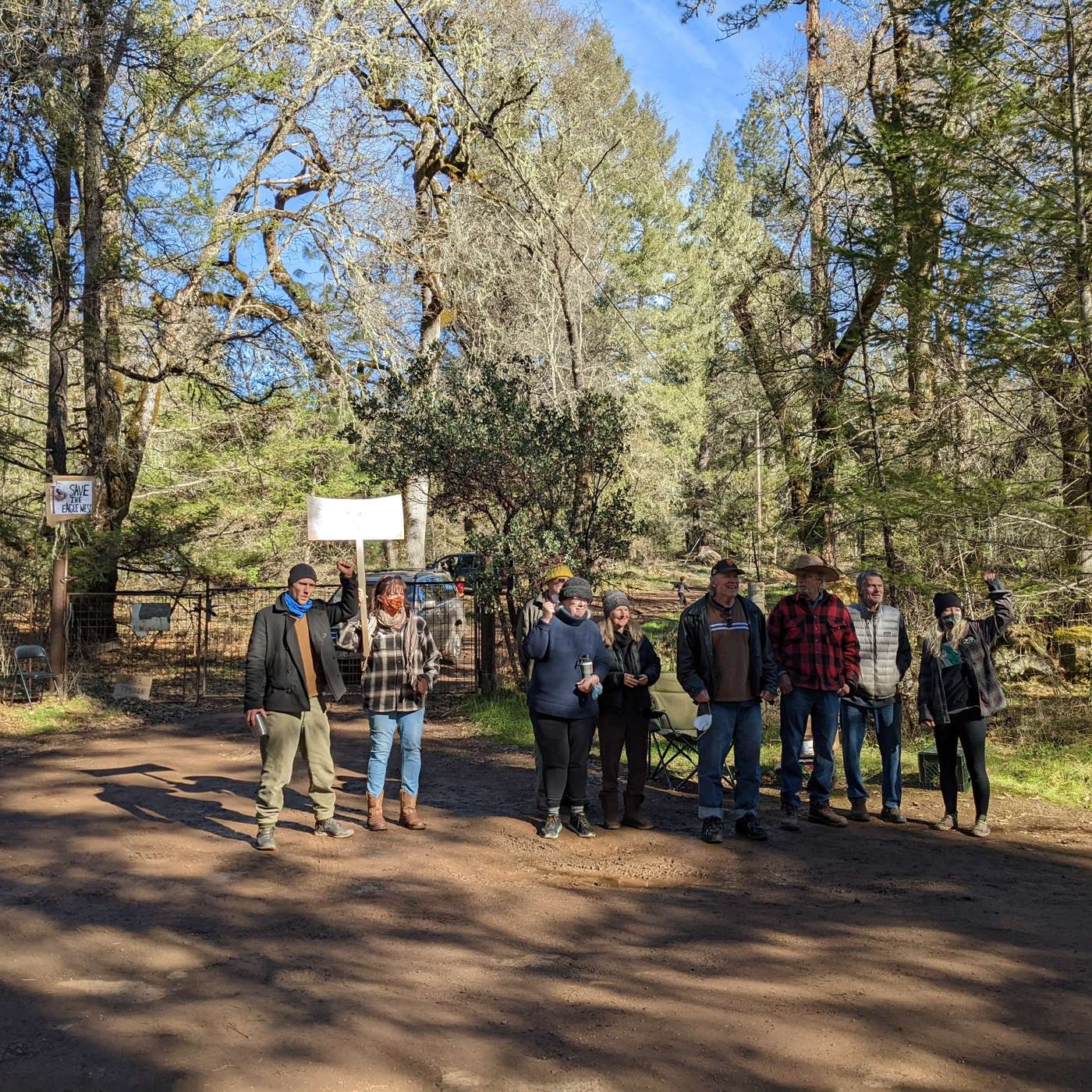
January 17, 2022 — Neighbors and bird-watchers successfully faced down PG&E to defend a bald eagle’s nest in Potter Valley last week. On Wednesday night, Tim Bray, a kzyx programmer and member of the Mendocino Coast Audubon Society, sent out an alert that PG&E planned to cut down the aging Ponderosa Pine that contains the nest, located on a road that runs parallel to the Eel River, not far from Van Arsdale Dam. Bald eagles are no longer on the endangered species list, though they are federally protected. PG&E biologists monitor the area extensively, as part of the licensing requirements for the Potter Valley Project, and their records show the nest has been used since 2011. It is common for bald eagles to build alternate nest sites, and according to PG&E, this pair last used its other nest in 2016. Locals, including Joseph West, a tenant on the property hosting the main nest, say it’s been there for decades. “Lately, I’ve been watching them for seven, eight days, bringing material into the nest,” he reported on Thursday. “I've seen the female sitting above it quite often, looking down into it. They’ve definitely decided that this is where they want to spend their nesting season. They’ve been using this tree, I’d say three out of five years, for the past 25 years” But the tree is in decline and close to a distribution line, which PG&E argued posed an imminent fire threat. Joseph Seidell, another tenant on the property, reported the company for poaching. “We’re in full belief that this is a nesting pair, there could be eggs in the nest, they haven’t told us that there’s not,” he explained early Thursday. “So therefore I felt impelled to make a claim that these birds were going to be killed, or poached…and I was able to call CalTip and report that PG&E was going to take this nest down.” He also hired an independent arborist who examined the tree and concluded that, while it does show signs of a beetle infestation, it shows no signs of structural deficiencies and is a good candidate for mitigations other than removal. Earlier this month, PG&E applied for and received an emergency permit from U.S. Fish and Wildlife to remove the tree before breeding season started on January 15. The property owner, who did not want her name used, complained that the timeline to make a decision was unfair and she wanted to see the permit, which she never did. West summed up much of the general feeling, saying, “Our whole issue is, why did you wait for so long, and why now, that they’re nesting, is this such a big deal?” The presence of the nest does constrain other tree work in the vicinity, according to PG&E spokeswoman Deanna Contreras. While all work is not prohibited, crews would have to use hand tools or low-decibel chainsaws. “During nesting season, there are federal guidelines that we need to follow when it comes to bird activity in an area, yes,” she confirmed. On Thursday morning, a chipper crew and a PG&E biologist arrived with a printout of the email exchange between PG&E personnel and the U.S. Fish and Wildlife biologist, explaining why she agreed to grant the permit. Kate Marienchild, author of “Secrets of the Oak Woodlands: Plants and Animals Among California’s Oaks,” was on hand with some friends. As the chipper truck idled on the other side of the locked gate, Marienchild provided a naturalist’s description of what happened next. “I just saw an adult bald eagle land on a nest on a tall pine tree on the north side of the Eel River in Potter Valley, and perch on that nest for about five minutes, and then fly off,” she reported, within moments of watching the eagle soar off toward the river. The crew turned around and drove off in the direction they came from, as Marienchild laughed and cheered. But it wasn’t Saturday yet. By 9:00 Friday morning, about 15 neighbors were on the scene to help the tenants block the gate. But crews never arrived. An outreach team, consisting of Contreras, an arborist, and the biologist, tried to persuade Seidell to open the gate, at one point saying that, if the tree remained standing, the company would cut the power. The tenants were unfazed. They have generators, backup generators, propane, and wood stoves. Also, Joseph West explained, “I have an attorney who says that the facts are that PG&E can be sued heavily for turning power off after leaving it this late to do anything about this tree. And we have an arborist who says it’s not an immediate threat anyway. An independent arborist. Not one of the tame PG&E ones.” His brother Paul added that he believes, “that this is just their standard threat to have their way and get their tree service in here to cut the tree and to intimidate the residents.” Seidell said he would rather not have to use a generator, but that the sacrifice was worth it. Marienchild was not on the scene that day, though a field representative from Senator Mike McGuire’s office did make an appearance. Both Marienchild a
Ep 321CEO departing in March
January 13, 2022—County CEO Carmel Angelo told the Board of Supervisors last week that she is moving up the date of her retirement, from October of this year to March. Supervisors Maureen Mulheren and Dan Gjerde spoke with kzyx earlier this week about their work comparing the CEO versus the CAO model, and some of their thoughts on finding Angelo’s successor. They’re on an ad hoc committee charged with providing the rest of the board with the information they need to craft an ordinance laying out which model the county plans to use in the future. At this point, the ordinance will be most useful as a job description for candidates. Mulheren and Gjerde plan to present their findings at the next meeting on January 25th. Gjerde, the only supervisor on the board right now who is not in his first term, called Mendocino County’s current ordinance “a bit of a hybrid.” “The principle difference between a CEO and a CAO is under a CA ordinance, supervisors have a little more management, or oversight anyway, of the departments, because they perform annual performance reviews for most of the department heads,” he explained. While Mendocino County’s ordinance specifies that supervisors do conduct these reviews in closed session, Gjerde added that during his nine-year tenure, those reviews had been a little inconsistent. He and Mulheren are planning to recommend a special two-day annual meeting for those reviews, probably at the beginning of the year. If the board does not find a successor for Angelo right away, he thinks there are strong interim options, including Assistant CEO Darcie Antle, head of the finance team that has been successful at bringing in grant money after the fires. “But the full board needs to discuss all of our options before making a decision,” he noted. Mulheren and Gjerde both served on City Councils before becoming supervisors. They reflected on the options of hiring Angelo’s replacement from within the organization or conducting an open recruitment. “That looks like a lot of different things,” Mulheren said, “including that there are multiple positions available across the state, where you are generally trying to attract a small pool of people that are qualified to take on those CEO/CAO positions.” Mulheren and Gjerde both served on City Councils before becoming supervisors, and participated in hiring city managers. Gjerde recalled that during his tenure with Fort Bragg, the City Council had mixed results in hiring two city managers from outside the organization, and that he was pleased with the internal hire. “It depends on the personnel that you have internally, and the risks that you can face, bringing in someone from the outside,” he reflected. “You could hear nothing but praise for someone from the outside, and maybe some of those other agencies may want to see them leave.” Gjerde praised Angelo’s fiscal acumen, saying he believes her legacy will be leaving the county more solvent than it was when she took the helm twelve years ago. Angelo herself sounded a note of caution about the budget, which has seen infusions of state and federal money due to disasters in the past few years. “At some point, the government is going to stop printing money, and we won’t get it,” she declared. “And we were an impoverished rural county before all of these disasters, when all of this money started flowing, and that’s what we will go back to. So I think the board needs to be very clear and really look at the projects over the next three to five years, and honestly, stop spending.” In an in-depth, hour-long interview with kzyx programmer Karen Ottoboni on Wednesday, Angelo listed cannabis as the one growth sector in the county. But she agreed that there are not a lot of grounds to be optimistic about the cannabis markets right now. “I think that we are in a very sensitive spot,” she said. “I don’t think that the cannabis dollars are going to continue to flow…I don’t think that our cannabis program has been very successful when you compare it to surrounding counties…I don’t know that we’re going to be able to pull ourselves out of this hole. We just started out lagging.” But she believes staff and supervisors are in a good position to continue building alliances across the state. Supervisors are serving on influential statewide bodies, and she said that when she goes to meetings of the RCRC (Rural County Representatives of California) and CSAC (California State Association of Counties), she takes her staff with her, “And the reason I bring them is so that they will make those connections themselves. So when I’m no longer going to CSAC and RCRC, come April, the staff, my team, that have been here, that have been developed, they have those connections, and they will continue with those connections.” Mulheren added that she is optimistic about the board and staff working together on some big projects in the new year, including the strategic plan, working out the CEO/CAO ordinance, and consolidating ...
Ep 320Seabirds wrecking on Mendocino coast
January 14, 2022 — Since the beginning of December, over 100 fulmars, a long-lived gull-like seabird with a remarkable nasal apparatus, have become stranded on California beaches, including the coast of Mendocino. Reporter Michelle Blackwell spoke with Sarah Grimes, the Marine Mammal Stranding Coordinator and Educator at the Noyo Center for Marine Science, about the phenomenon and what makes these birds so special.
Ep 319Project Sanctuary holding art contest to promote healthy relationships
January 12, 2022 Project Sanctuary, a non-profit organization assisting victims of domestic and sexual assault, will launch an upcoming educational program on the topic of teen dating violence. With prevention as the goal, Project Sanctuary plans to raise awareness on the topic with school visits in February, and an art contest at the end of January. This two-pronged strategy aims to educate the youth on the dynamics of unhealthy relationships in an effort to stop dating violence. Dating violence is a major adolescent health concern. Youth 16-24 experience the highest per capita rate of intimate partner violence of any age group. We’ll hear from Judy Albert, Project Sanctuary therapist, about toxic relationships and keys to healthy ones.tifies the key to creating healthy relationships. January’s art contest kicks off Project Sanctuary’s teen dating violence campaign. Local teen artists are asked to create and submit artwork that represents healthy relationships by January 24th, and the winning artwork will be used as part of Project Sanctuary’s social media platforms and curriculum throughout the month of February. Angelica Limon, prevention educator for Project Sanctuary, initiated the contest.
Ep 318County on track to reduce food waste in the new year
January 11, 2022 — Organic waste reduction is the focus of a sprawling piece of state legislation due to go into effect this year. SB 1383 requires jurisdictions to drastically cut down on the amount of edible food and food-based waste that goes into the landfill and causes methane gas pollution. In order to contribute to the statewide goals, local composters expect to increase their tonnage by 40%. Solid waste haulers will be responsible for making sure their customers know what goes into the green bins, and starting in 2024, jurisdictions will be expected to start enforcing local ordinances. Cold Creek Compost in Potter Valley currently has organic waste contracts with Mendocino county and the cities, as well as a few in Lake and Sonoma counties. The company is currently permitted to process 50,000 tons of material per year. Sean O’Rourke handles the business’ licensing and permitting as it applies to increase its capacity by 40% and attempts to start another facility in Sonoma County. Amber Fisette, the Mendocino County Deputy Director of Transportation overseeing the Solid Waste Division, says the county is on track, when it comes to composting facilties that take food scraps. And in a few months, Cold Creek won’t be the only game in town…
Ep 317County enters "omicron blizzard"
January 10, 2022 — The county has entered the “omicron blizzard” that’s affecting the rest of the country, according to Public Health Officer Dr. Andy Coren. The only known outbreak at this time is at the jail, where fifteen staff and two inmates have tested positive. There have been 45 exposures at schools, but Coren declined to shut down the Fort Bragg school district after extra-curricular activities resulted in positive tests, saying he did not think it was warranted at this time. Northern California does lag behind the southern and central regions of the state, and omicron, while highly transmissible, appears to be less severe than previous variants. But Coren explained that he is hesitant to be optimistic yet, because the long-term effects of the disease are still unknown. And people keep dying from the virus. As of last week, 106 people were reported to have died from covid in Mendocino County (updated to 109 as of January 10). A new health order, effective February first, adds booster verification to vaccine or testing requirements for emergency and law enforcement personnel, and now includes those working in dental offices and pharmacies. Another health order, also following state and national trends, shortens isolation or quarantine periods from ten days to five days for people who have tested positive or had a close contact with someone who did — provided they test negative and wear a surgical grade mask for the remaining five days. N95 or medical masks are highly recommended, and indoor masking orders statewide have been extended to February 15. Coren also said he has closed a previous masking loophole in the local protocol, which allowed people who are presenting or performing for a vaccinated audience to take off their masks. That is no longer the case. The main strategy for carrying on with a semi-normal life, in terms of employment and social engagements, is testing. But tests, particularly rapid tests, are in short supply. Even PCR tests are running low. Coren said the county distributed 14,000 rapid tests before the holidays, and that local school districts got their allotment ahead of many others in the state. But employers can impose testing requirements beyond those issued by public health departments. State orders are often based on CDC findings and are duplicated in local orders. Testing requirements, sometimes even for those who are fully vaccinated with all three shots, can leave people scrambling for a test they need to get back to work but can’t find. Rapid tests only became widely available to the general public in the US a few months ago. Now their scarcity is just the latest in pandemic-related supply chain woes.
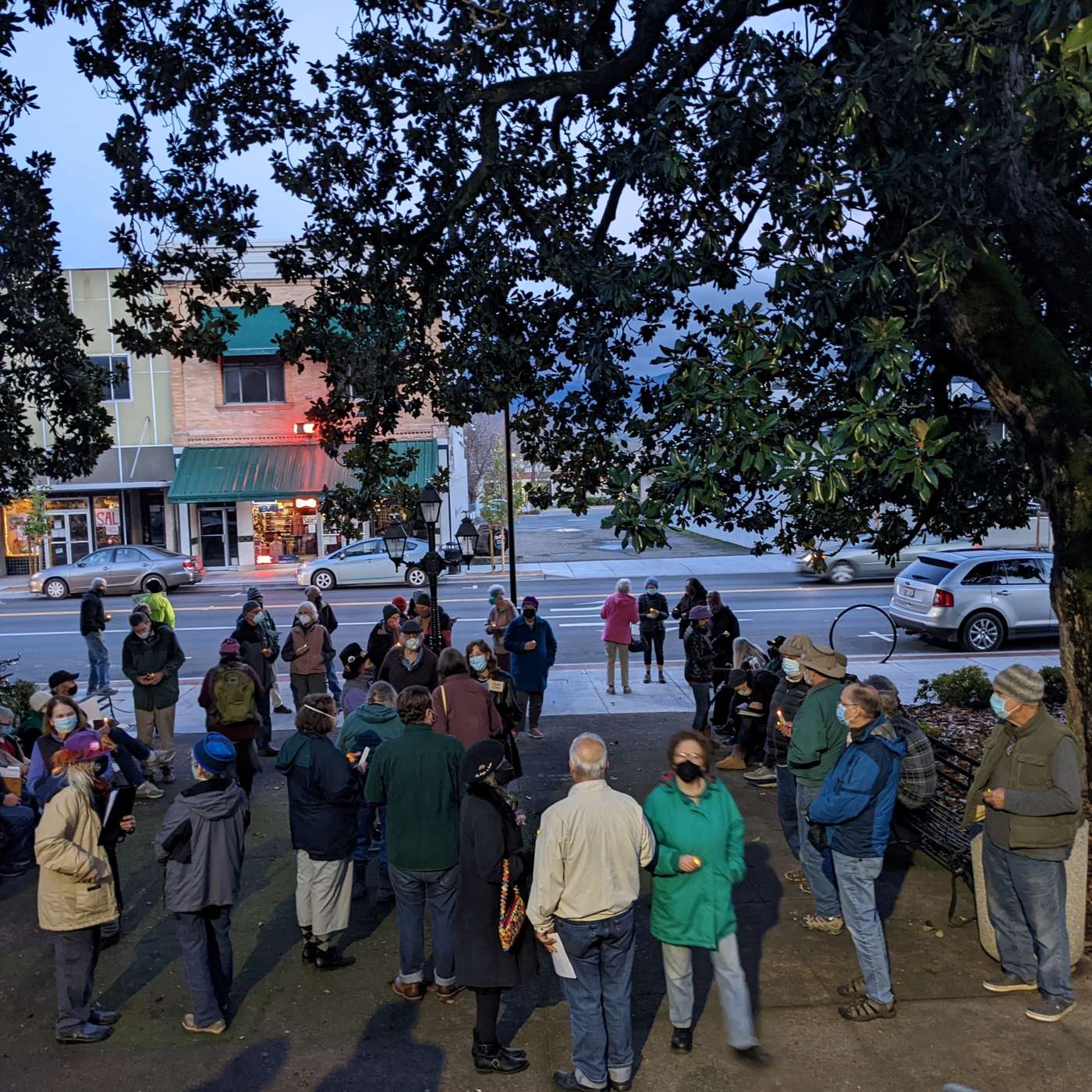
Ep 316Locals gather for Jan 6 candlelight vigil
Jan 7, 2022 — Candlelight vigils took place all across the country last night, in commemoration of the one-year anniversary of the attempt to overturn the presidential election and take over the Capitol by force. Many of last night’s vigils took the form of a call to action, from ending the filibuster to indicting Donald Trump and Rudy Giuliani to supporting Senate bills designed to increase access to the ballot. In Ukiah, 60-70 people gathered in front of the courthouse shortly before dark to listen to remarks by local leaders and a few songs by the Raging Grannies. Ukiah City Council member Juan Orozco and organizer Steve Scalmanini read the details of four Senate bills they urged attendees to support. Third District Supervisor John Haschak shared his thoughts about truth and reconciliation, and the importance of agreed-upon facts. The vigils were sponsored by what Scalmanini called “scores” of organizations, including Public Citizen and Common Cause. He said the initial goal was to have 150 vigils across the country, but that the number swelled to about 300.

Ep 315College prepares students for theater tech careers
January 6, 2022 – Mendocino College’s Theater Arts Department in Ukiah now offers a new, one year certification program in technical theater. This program, called Career in Technical Education, or CTE, teaches stagecraft, sound, lighting, costuming and set design to prepare students to work as behind the scenes professionals in the entertainment industry. Students enrolled in the program take a variety of technical theater courses taught by instructors in the Theater Arts department: Professor Steven Decker teaches stage craft, lighting and set design courses, Professor Rodney Grisanti offers courses in sound engineering, instructor Kathy Katz teaches costume design and construction, and shop foreman David Wolf assists students with building and installing sets, lights, and sound equipment. Steven Decker, Professor and Technical Director of the Mendocino College’s Theater Arts Department, developed this one year Career in Technical Theater program.
Ep 314Conflict of interest decided, contract withdrawn, memorial ordered
January 5, 2022 — The question of a conflict of interest between the sheriff’s office and the Board of Supervisors has been decided. According to a court order signed by presiding Judge Ann Moorman on December 30, there is a conflict of interest with the County Counsel’s office advising the sheriff on issues surrounding information and technology, but not the remaining matters. That includes the question of his personal liability for incurring non-emergency costs that have not been approved by the Board. The judge also denied Sheriff Matt Kendall’s request to hire the law office of Duncan James. And she characterized the Board’s decision in November to hire Southern California law firm Manning and Kass as defiant, interpreting it as “an effort to circumvent the court process.” After a three-week break, the board reconvened for their first meeting of the year, albeit remotely. In the morning session, they voted unanimously to withdraw a contract they approved with acting County Counsel Christian Curtis in the consent calendar at last year’s final meeting. And the Board unanimously approved a $95,000 memorial to fallen law enforcement officers, which will be installed near the flagpole at the sheriff’s office. The monument will be funded with asset forfeiture monies, but the question of where the additional $20-30,000 cost of installing it will come from is still uncertain. Yesterday’s meeting focused largely on organizational details. Supervisor Ted Williams is the new chair, and Supervisor Glenn McGourty is the new vice chair. The Board approved a continuation of remote meetings, in light of the fact that a state of emergency due to covid-19 is still in effect. The question of a conflict of interest between the Board of Supervisors and the sheriff has been bubbling away since last summer, when Kendall cited four reasons he believed the Board should authorize payment for outside legal advice. Two were related to his information technology infrastructure, which he feared would be compromised if it was consolidated into the county’s larger IT system. He also complained that his department’s budget had been reduced. But the biggest issue was a suggestion during budget hearings that he could be held personally liable for cost overruns that had not been approved by the Board. In her write-up of the matter, Judge Moorman concluded that there would be a conflict of interest if County Counsel advised the sheriff about “the law and possible avenues of recourse to resist efforts at partial or total consolidation” of the sheriff's IT department. The sheriff is required by law to satisfy staffing and security requirements that other county departments do not. But Moorman found no conflict of interest regarding the sheriff’s budgetary allocation, which was supplemented by PG&E settlement funds. Moorman wrote that “There is no evidence of a subsequent request to the BOS to re-visit that shortfall, but even if there was and no change was made in the budgetary allocation, that does not give rise to a conflict of interest on the part of County Counsel in advising the Sheriff on the budget process…this conclusion is buttressed by the lack of evidence showing County Counsel has much, if any, involvement in budgetary process or the specific budgetary recommendations to the BOS.” Moorman remarked that “The Sheriff’s decision to seek separate counsel on this issue was motivated by the unfortunate fact that one or more members of the BOS have publicly seemingly threatened to hold him personally liable for any such expenditure(s)” under county policy, which is aligned with Government Code 29601. She decided that it would be reasonable for Kendall to seek advice about incurring “unapproved non-emergency expenditures,” but that the general concern does not rise to a conflict of interest until an actual request or expenditure is made. At their last meeting three weeks ago, the Board approved a four-year contract with Acting County Counsel Christian Curtis, to retain him as head of the department with an annual salary of $192,436. For two years now, Curtis has been compensated at the same rate he was paid as the assistant to former County Counsel Katherine Elliott, who left her position in September of 2019 to take a job with Nevada County. According to Transparent California, in 2019, Curtis was making $179,363 in salary and benefits. His new contract was on the consent calendar in December, though it was pulled for separate consideration. This led to a complaint with the District Attorney about a possible Brown Act violation. Williams explained why he asked his colleagues to rescind the contract and re-approve the last meeting’s consent calendar without the controversial item. “While I do support County Counsel being compensated as such, and I understand that his wages are based on his position prior to his appointment as County Counsel, I think it’s best for the county that i...